Tag: Nicole Bathe

  • Wednesday Rundown: U23 Worlds 10/15 k Classic (Updated)

    Wednesday Rundown: U23 Worlds 10/15 k Classic (Updated)

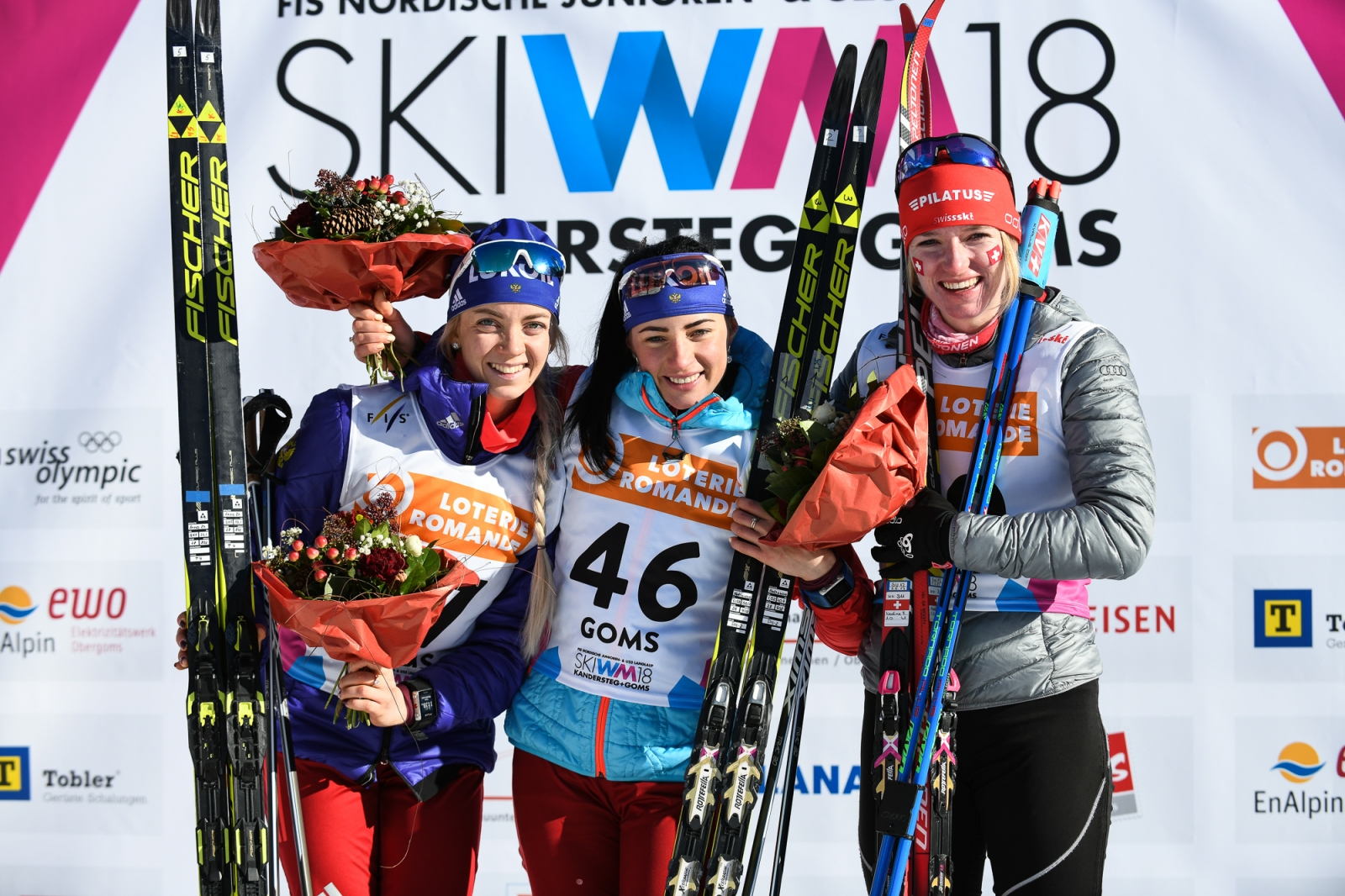
    The women’s 10 k classic podium at 2018 U23 World Championships, with Russia’s Yana Kirpichenko (c) in first and Anna Zherebyateva (l) in second, and Switzerland’s Nadine Fähndrich (r) in third. (Photo: JWSC2018.ch)

    (Note: This article has been updated to include comments from Americans Lydia Blanchet and Ian Torchia.)

    U23 World Championships (Goms, Switzerland): 10/15 k classic

    Russia put two in the top three in both the women’s and men’s races on Wednesday at U23 World Championships in Goms, and for the second-straight race, Canada’s Katherine Stewart-Jones landed in the top 30.

    In the women’s 10-kilometer classic, Russia’s Yana Kirpichenko pulled out a 13.9-second victory over fellow Russian Anna Zherebyateva, finishing with the winning time of 27:46.1 minutes. Switzerland’s Nadine Fähndrich returned to the podium for the second race in a row (after placing second in Monday’s skate sprint), finishing third, 29.6 seconds behind Kirpichenko.

    In Monday’s sprint, Kirpichenko qualified fourth and ended up fifth in the final. She is a bronze medalist in the 15 k skiathlon at last year’s U23 Worlds.

    Stewart-Jones, of the Canadian National U25 Team and National Team Development Centre (NTDC) Thunder Bay, started relatively early on Wednesday in bib 19 and ultimately placed 29th, 3:07.3 out of first. She sped up as the race progressed, from 40th at 2.4 k to 32nd at 5 k and up to 30th at 7.4 k.

    So far in all five races she’s competed in over the last two years at U23 Worlds, Stewart-Jones has finished in the top 30. Her best result is 21st in last year’s 15 k skiathlon, and at the Junior Worlds level, she had a best individual result of 14th in the 10 k skiathlon in 2015.

    American Lydia Blanchet (Dartmouth Ski Team) started fifth on Wednesday and ended up 30th (+3:10.4) after skiing in the top 30 throughout the race. Her Dartmouth teammate Lauren Jortberg followed in 34th (+3:28.9) and Nicole Schneider was 49th (+5:23.8). Julia Kern did not start.

    For Blanchet, a Dartmouth junior, this week marked her first time racing at the Junior/U23 World Championships level. So far, she has placed 32nd in the freestyle sprint and now 30th in the classic distance race.

    “This is my first time racing internationally, and I tried to go into the races with no expectations,” Blanchet explained in an email. “I was excited to get as close as I did to qualifying for the sprint, but it was definitely bittersweet—missing heats by 0.3 seconds left me regretting some of the smaller details of my race. Still, it is really exciting to know that I can compete on the world stage!”

    After the sprint, she made a goal of finishing in the top 30.

    “I really like hilly, rolling courses—especially ones with very technical downhills—and this course definitely fit that bill,” she wrote of the classic distance course. “I am really happy with my race, all things considered. I didn’t feel great while I was racing – my legs flooded pretty hard a few km’s in – but I think I did a good job of holding myself together and staying strong mentally. I know I have the ability to do even better, which is motivating and exciting. I am looking forward to get to ski head-on against the whole field in the skiathlon, and I’m excited to try and pick my way forward from my bib number. I’m also really excited to go home and race carnivals with the Dartmouth team.”

    Canada’s Laura Leclair finished 40th (+4:20.9), Sophie Carrier-Laforte was 43rd  (+4:19.2) and Maya MacIsaac-Jones 47th (+4:47.3) out of 53 finishers.

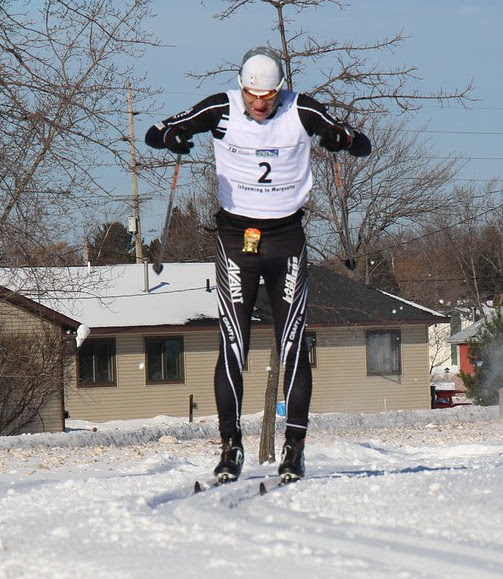
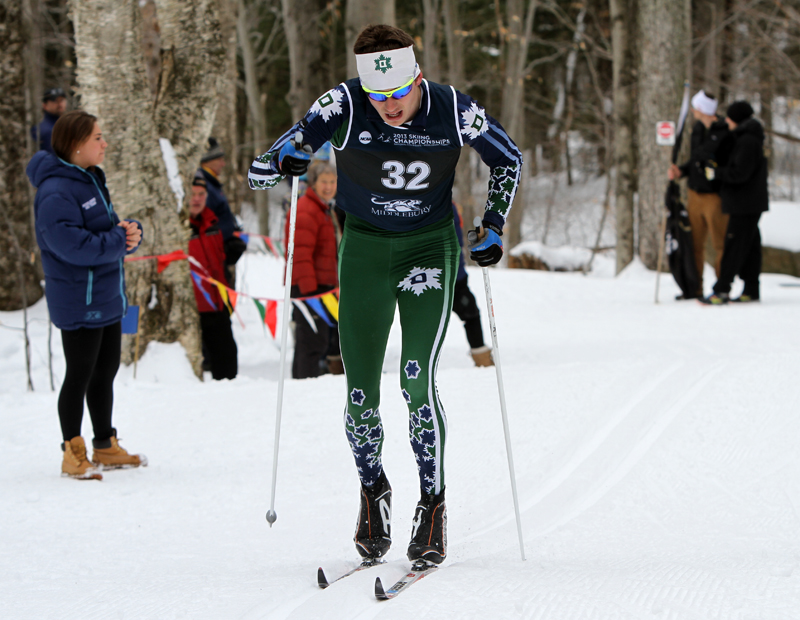
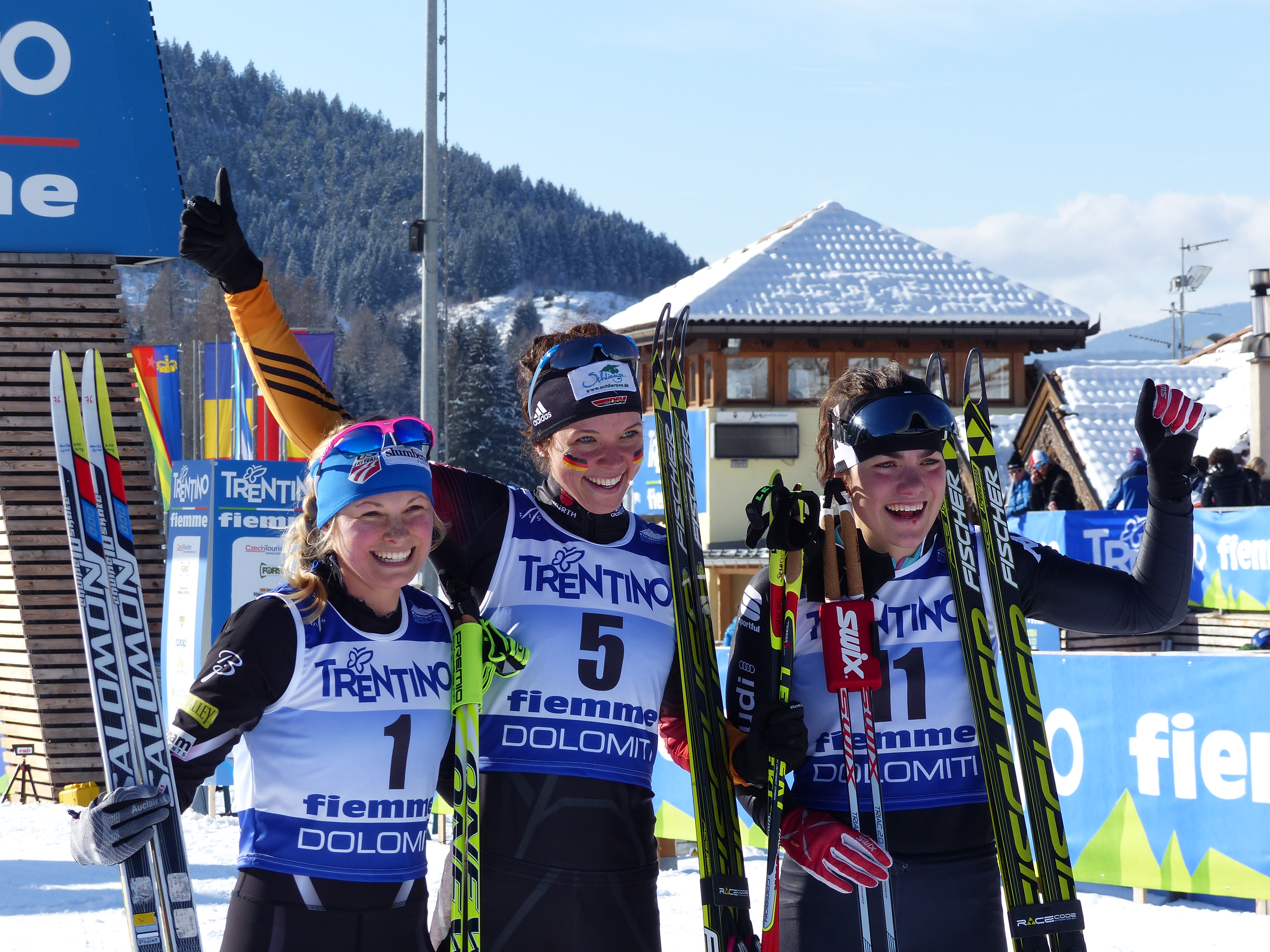
    Nicole Bathe of the Midwest-based Central Cross Country (CXC) Team, who races for Great Britain, placed 37th (+3:43.8), for her second top 40 of the week after placing 39th in the skate sprint.
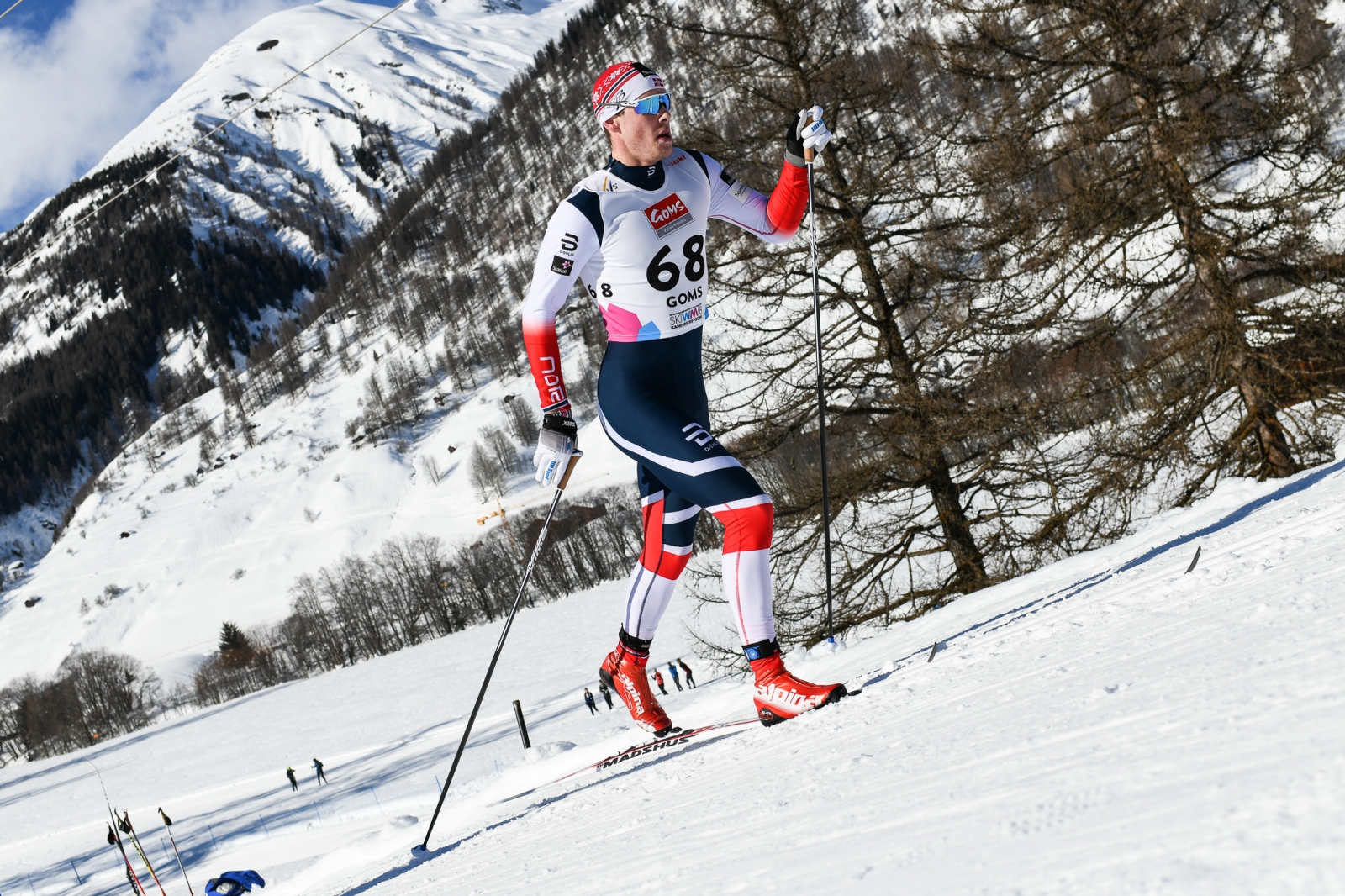
    Norway’s Mattis Stenshagen racing to the win in the men’s 15 k classic at 2018 U23 World Championships in Goms, Switzerland. It was his first gold medal and podium at U23 Worlds (he earned silver two years ago in the 15 k freestyle at Junior Worlds and also gold in the relay that year). (Photo: JWSC2018.ch)

    In the men’s 15 k classic that followed, Norway’s Mattis Stenshagen edged Russia’s Denis Spitsov by 4.8 seconds for the win in 36:28.3. Also for Russia, Ivan Yakimushkin placed third, 35.2 seconds back.

    Canada’s Alexis Dumas, of the Pierre-Harvey National Training Centre (CNEPH) was the top North American in 31st, 2:51.7 out of first. He worked his way up from 40th at 5 k to 35th by 10 k, and finally just 0.2 seconds outside of 30th at the finish.

    American Ian Torchia (U.S. Ski Team D-team/Northern Michigan University) followed in 32nd (+2:55.9) and Bill Harmeyer (University of Vermont) finished 39th (+3:43.3). Also for the U.S., Thomas O’Harra placed 43rd (+4:17.3) and Zak Ketterson was 57th (+5:37.6).

    Torchia, an NMU junior, has been to two Junior Worlds in 2015 and 2016, but this marked his first U23’s.

    “The jump from juniors to U23s is quite a leap. I missed the first year of being a U23 last year due to mono so getting back into international racing was a shock to the system,” he explained in an email.

    As for his goals for the 10 k, he was hoping for a top 15 or 20, but moreover “wanted to race smart and feel good out on the course technically and physically,” Torchia wrote. “This was the hardest course I have ever raced with 600m of climbing throughout the 15k and I was excited to showcase my striding ability out there…

    “However, from the first km I was in the pain cave (even though I didn’t open that fast!) and it was a fight the entire way,” he continued. “I need to work on staying technically strong when hurting and I did not do a good job of executing that today. The eventual second place Russian started as I was looping around for my 2nd lap so I was able to see and feel what a podium performance looks like. Going to have that image in my head throughout the next year!”

    For Friday’s 30 k skiathlon, Torchia wrote that he would be “throwing all place goals out the window and focusing on skiing technically well and racing smart. Looking forward to channeling my last skiathlon in Kazakhstan which went really well [he placed 11th in the 20 k at 2015 Junior Worlds] and moving up from my starting position.”

    Canada’s Gareth Williams finished 41st (+4:00.2) on Wednesday, Philippe Boucher was 45th (+4:22.7) and Ricardo Izquierdo-Bernier 47th (+4:24.3) out of 63 finishers.

    Results: Women | Men

  • CXC’s Center of Excellence Seeks to ‘Study Latest Innovations in the Sport’

    CXC’s Center of Excellence Seeks to ‘Study Latest Innovations in the Sport’

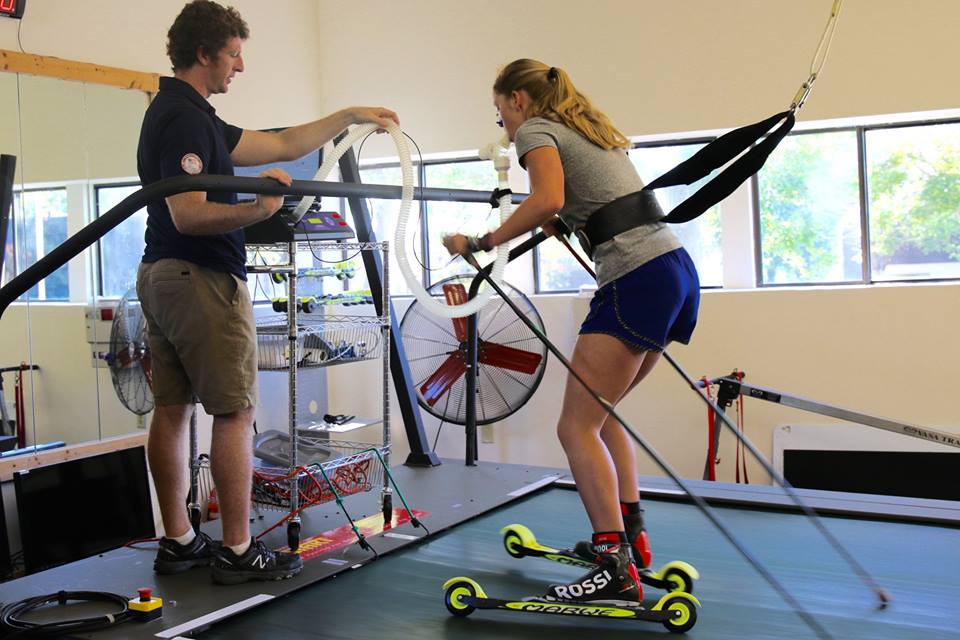
    Central Cross Country (CXC) Junior Development skier Siri Martin (r) gets a mid-summer VO2 max test on the rollerski treadmill at the Center of Excellence in Madison, Wisc. in late July (Photo: CXC Facebook)
    Central Cross Country (CXC) junior development skier Siri Martin (r) gets a mid-summer VO2max test on the rollerski treadmill at CXC’s Center of Excellence in Madison, Wis., in late July (Photo: CXC Facebook)

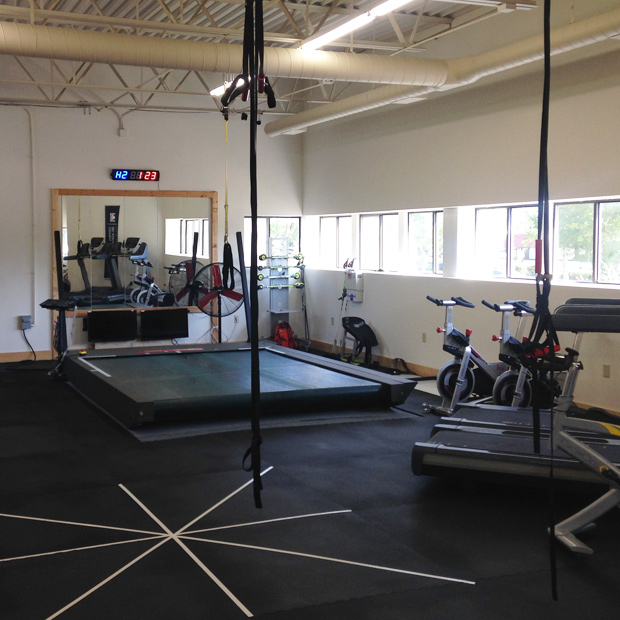
    A glance into any one of the glass windows lining the east side of Central Cross Country (CXC) Academy’s Center of Excellence building might give the impression of the average athlete gym. But if you step across the front threshold or take a peek at the academy’s 360-degree virtual online tour and sport science page, you’ll find much more than treadmills, stationary bikes and medicine balls.

    Located in Madison, Wis., the CXC Center of Excellence also houses a 10-by-12-foot rollerski treadmill, SkiErgs, and an in-house-made, power-pole machine. For many, though, equipment is not the most powerful tool in the center. Rather, it’s the center’s capacity to evaluate and educate its members and non-members alike about nordic skiing.

    Currently, the Center of Excellence offers performance evaluations, as well as fitness testing for lactate and VO2max using the oversized treadmill. Recorded and individualized technique coaching sessions on the rollerski treadmill are also available for those willing to pay $150 dollars per hour. To help athletes gain a better understanding of their body within sport, the center is also presently working on developing a biomechanical analysis software.

    A view of Central Cross Country's rollerski treadmill from the inside of the Center of Excellence (Photo: cxcacademy.com)
    The rollerski treadmill at the CXC Academy Center of Excellence (Photo: cxcacademy.com)

    And CXC recently hired a sport development and education director, Egor Akimov, CXC head coach Andy Keller explained on the phone.

    “He’s got a bachelor’s and PhD from the Russian State University in physical education and sport, so he majored in human physiology, he’s competed over in Russia and then he served on the Moscow Center of advanced sports technology as the head of the science department,” Keller said. “So he’s done a lot of research over in Russia on the biomechanics and stuff like that. He’s kind of leading our center [in Madison], doing a lot of the sessions down there and the technique work.”

    According to the CXC Executive and Athletic Director Yuriy Gusev, the Center of Excellence is approximately 90 percent complete. Anyone from CXC club members, to donors, to CXC team members, and the general public, can access the center at no cost. Rollerski treadmill evaluations cost CXC clubs $250 per day, $150 per hour for all others.

    “We are finalizing a few more partnerships on the sports science program and equipment but will start performing studies in cross country skiing this coming fall,” Gusev wrote in an email. “Our goal is to have top sports science facility to study latest innovations in the sport, potential application in cross country skiing to improve training, recovery and performance.”

    While the CXC elite team, known as the CXC Team, uses the center for testing, its current base in Marquette, Mich. has also led the team to seek out other partnerships. This included collaborating with the Northern Michigan University (NMU) Olympic Training Site, allowing CXC Team members to use the school’s facility and other amenities.

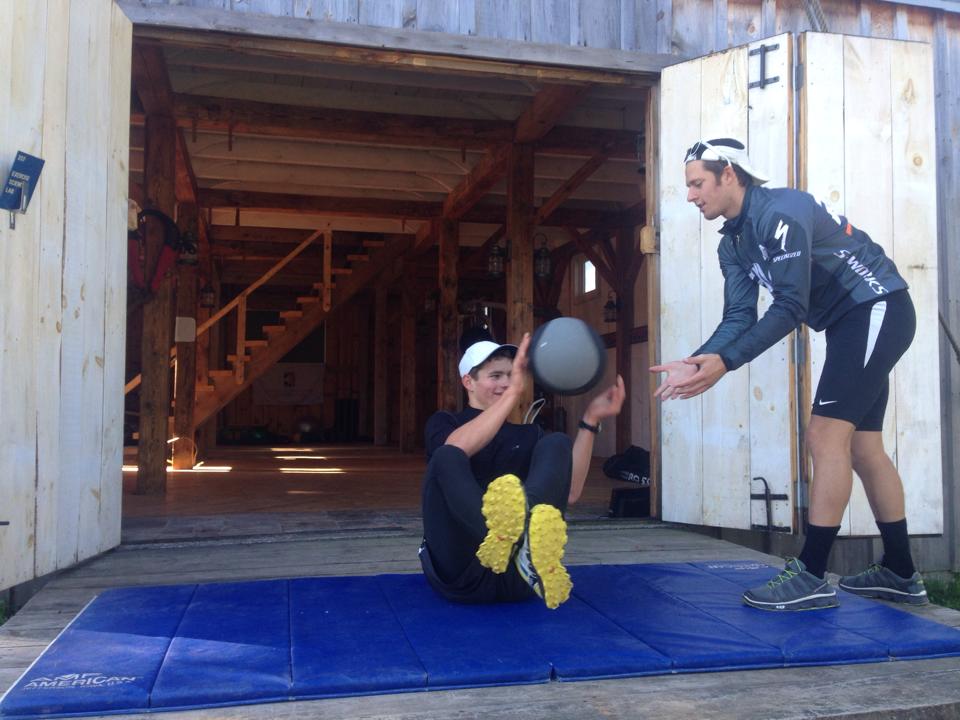
    The newly appointed CXC Team Head Coach Andy Keller (r) works on strength with an athlete outside a barn near Cable, Wis. (Photo: CXC/Facebook)
    CXC Team Head Coach Andy Keller (r) works on strength with Scott Harrison outside a barn near the team’s former home base in Cable, Wis., in 2014. The team is now based in Marquette, Mich. (Photo: CXC/Facebook)

    “This year we moved up to Marquette partly because a lot of the athletes have come from Northern Michigan, but also because there’s quite a bit of opportunity up here,” Keller said. “We’ve kind of partnered up with the Olympic training site located here. So we’ve been able to use the dorms on campus, offer schooling, have a training room and weight facilities available. … [The move to Marquette] has given us a lot more freedom with athlete housing and training opportunities.”

    At present, the CXC Team has three full-time athletes and two part-time collegiate skiers. Kyle Bratrud returned to the CXC elite team for his second year; new full-time members include Dartmouth graduate Oscar Friedman and NMU grad Felicia Gesior. Jan Ketterson, a Dartmouth student currently taking the fall and winter trimesters off to focus on skiing, plans to race for CXC along with Nicole Bathe, presently a student at University of Alaska Fairbanks.

    The growing numbers on the CXC Team was one reason CXC also recently decided to nix its marathon team, Keller explained.

    “That was kind of another thing with refocusing with the marathon team, just my role and what resources I can put out just being by myself,” Keller said. “The main reason why we [ended our marathon team] is we’re trying to make a big push to promote club development.”

    By discontinuing the marathon team, CXC saw an opportunity for athletes to return to their home clubs and promote racing on a more local, community-based level.

    “The athletes that were on our team last year, both our current athletes and our previous athletes that we don’t have on the team anymore, we encouraged them this upcoming year to be a part of the clubs in their local area,” Keller said. “From what I heard in talking to them, most will continue to race in some facet.”

    Chris Pappathopoulos won the men's overall Central Cross Country Marathon Cup last season while competing for the CXC marathon team. (Photo: CXC)
    Chris Pappathopoulos won the men’s overall CXC Marathon Cup last season while competing for the CXC marathon team. (Photo: CXC)

    He added that the team’s reigning CXC Marathon Cup winner Chris Pappathopoulos would likely be supported by companies like Rossignol and Boulder Nordic Sport.

    While former CXC marathon team members like Pappathopoulos will look to return to their local clubs, Keller looks to expand the CXC Team program and podium at U.S. nationals with the athletes he’s currently working with.

    “For a couple years [CXC] was really down and out from the years when we had Jessie [Diggins], Caitlin [Gregg], and Jennie [Bender], all those strong athletes,” he said. “So we definitely want to get back to fighting for SuperTour podiums, fighting for World Cup spots … and in this next year, I think there’s athletes who are on our team that are capable of it.”

    With access to the NMU Olympic Training Site, CXC’s Center of Excellence and new scientific research taking place this fall,  Keller doesn’t doubt CXC as a force to be reckoned with this season and seasons to come.

    “We have the training group, we have the structure and the facilities,” Keller said. “And I think the more excitement we got here, the more we can achieve those goals of being at the top level.”

  • 2014 NCAA Preview: Colorado, Utah, Vermont, and Others Hungry for Title

    Photo: Flyingpointroad.com (All proceeds benefit NNF)
    An NCAA banner hangs at the 2013 NCAA Skiing Championships in Vermont. The 2014 Championships are set to begin Wednesday in Park City Utah. Photo: Flyingpointroad.com (All proceeds benefit NNF)

    FasterSkier’s coverage is made possible through the generous support of Madshus.

    One-hundred and forty-eight. That’s the number of skiers who have descended upon the ski town of Park City, Utah, to participate in the 2014 NCAA Skiing Championships. The championships will be hosted by the University of Utah, who last had the honor in 2000. The four day event, which consists of two alpine and two nordic races, begins Wednesday and continues through Saturday.

    The cross country portion of the event will take place at Soldier Hollow in Midway, Utah, the site of the 2002 Olympic Games and many national events, including the 2014 U.S. Cross Country Championships.

    The weather in Utah looks to be warm and wet with highs in the mid 40s to lower 50s and precipitation expected on Thursday and Friday, making for tricky waxing and racing conditions. 

    Given the nature of course, sloppy conditions, the field, and the stakes, the competition is set to be fierce. Several schools will be in the hunt for the title of america’s fastest skiing school, but only one will walk away with the championship title.

    Last year at the 2013 NCAA Championships in Ripton, Vt., it was the University of Colorado that came out on top followed by the University of Utah and the University of Vermont. Colorado’s chances in Utah seem a more slim in 2014, as they were unable to win a collegiate weekend all season. However, with a strong showing for men’s nordic, the Buffs may be able to make up for their other weaknesses.

    The University of Utah is hungry to break a three-year-streak of finishing second at NCAAs. After winning last weeks Rocky Mountain Intercollegiate Ski Association (RMISA) Championships, Utah goes into this week’s races with confidence and energy. Having the home advantage should certainly help Utah as well. However, if they want the title that’s slipped out of their hands the past three years, they’ll have to rely less on their alpine team and see better results from their nordic squad.

    It would be asinine to discount the University of Vermont, whose skiers have been looking especially strong this year. In the 2012 Championships they demonstrated that they could tackle western altitudes with ease in Bozeman, Mont. And with Soldier Hollow looking to be warm and wet this week, the conditions may favor eastern skiers who are used to rough easter weather.

    The East

    The eastern skiers are as strong as ever this year with the undefeated University of Vermont setting its sites on another NCAA victory. The 2012 champions have a strong team in both alpine and nordic which has contributed to their uncontested dominance this season.

    Anja Gruber (University of Vermont) racing to fourth in Saturday's 10 k classic mass start at Soldier Hollow for her best U.S. nationals result by more than 20 places. (Photo: Bert Boyer/http://bertboyer.zenfolio.com/) All proceeds from photo sales will be directly donated to NNF.
    Anja Gruber (University of Vermont) racing to fourth in the 10 k classic mass start at Soldier Hollow for her best U.S. nationals result by more than 20 places. (Photo: Bert Boyer/http://bertboyer.zenfolio.com/) All proceeds from photo sales will be directly donated to NNF.

    The east finds its greatest strength in its women. Anja Gruber, a native of Germany, has been UVM’s shining star this year, and finishes the regular season as the top-ranked skier in the Eastern Intercollegiate Ski Association (EISA). Last year’s NCAA 5 k classic champion, she placed fourth at the 2014 U.S. nationals at Soldier Hollow on the same course where the NCAAs are being held. Throughout the season the senior has been a top contender in the EISA circuit, consistently winning all but one classic race and finishing in the top three in every freestyle race.

    UVM’s talent doesn’t stop there, with sophomores Linda Danvid-Malm of Umea, Sweden and Stephanie Kirk of Anchorage, Alaska, showing that Gruber isn’t the only catamount with claws. Danvid-Malm has been dominant in freestyle, winning three out of six EISA races this season. Kirk, who competed in Italy as part of the U23 World Championships, has been a consistent performer as well highlighted by a spectacular win in the 15 k skate mass start at the EISA Championships at Middlebury College last weekend.

    Annie Hart of Dartmouth College has been the only real threat to Vermont’s dominance all season, having been the only non-UVM woman in the east to win a scored collegiate race this season. Consistently on the podium in classic races, Hart finally saw her hard work pay off at the EISA championships when she won the 5 k classic. With the same event being held on Thursday, Hart is hungry for a national championship title. Corey Stock, also of Dartmouth, has had a decent season as well, ranking fifth in the eastern points standings.  

    While not as dominant as their women, the UVM men shouldn’t be taken lightly. Their lead skier, Scott Patterson of Fairbanks, Alaska, has won three of the six collegiate races he’s participated in this season. Patterson made the headlines earlier this year when he riskily tried to break away from the men’s field in the 30 k mass start. Unsurprisingly, the move failed on the national level, but a similar move with in a collegiate field may be what Patterson needs to secure a title..

    Sophomore Jorgen Grav is another UVM skier to watch in Soldier Hollow. The Oslo, Norway native finished fifth in the EISA rankings, followed by teammate Rogan Brown of Durango, Colo., in sixth.

    Silas Talbot (DAR)
    Silas Talbot of Dartmouth racing in the 2013 NCAA Championships at Middlebury, Vermont.

    Two Dartmouth College skiers have the chance to dethrone the dominant catamounts. Paddy Caldwell and Silas Talbot have both been atop the results this year both winning multiple carnival races. Caldwell skied to a convincing win in the men’s 20 k freestyle at the ESIA Championship and was named 2014 rookie skier of the year for the region.

    A notable emission from this year’s NCAA Championships will be Ben Lustgarten of Middlebury College. Lustgarten had a spectacular year which started with strong skiing at the 2014 U.S. National Championships, continued with racing at the U23 World Championships, and finished with a win in the 10 k classic (by 50 seconds!) at the EISA Championships. Lustgarten would have been a top contender in Soldier Hollow this year but due to an knee injury he sustained in the 20 k mass start at the EISA Championships the senior will be on the sidelines.

    The West

    Unlike the east, there has been no clear contender for the top spot in the west. At the beginning of the season it looked as if the University of Denver might be ready for another NCAA Championship, but by the time the RMISA Championships was over last week, Denver had finished fourth, roughly 60 points behind the winner, the University of Utah. Despite the end-of-season falter, Denver still held the top spot in the regular season standings demonstrating their potential.

    Sylvia Nordskar (University of Denver), fourth
    Sylvia Nordskar of the University of Denver racing in West Yellowstone, Montana earlier in the 2013/2014 season.

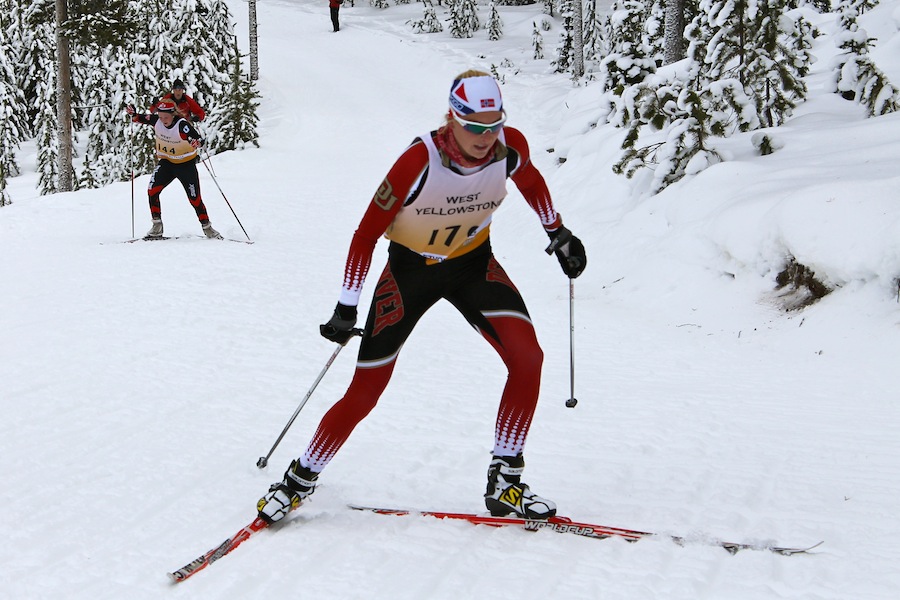
    Sylvia Nordskar of Bærum, Norway, is the most-likely woman from the West to capture an NCAA title. The University of Denver freshman has either won or placed second in every collegiate race that she has competed in this season and has no signs of stopping.

    Senior Makayla Cappel, a Sun Valley native skiing for Denver, became a late-season standout after winning the 5 k classic and taking third in the 15 k freestyle mass start at the RMISA Championship in Minturn, Colo. After dealing with illness upon her return from the World University Games in Italy, Cappel recovered from a slow start to her season to rocket herself onto the first team All-RMISA. Rounding out the Denver women is Silje Benum, who has also had many top finishes this season.

    Only two non-Denver skiers have been able to top Nordskar this season. The first is Marine Dusser of the University of Alaska Anchorage, who was third in the women’s 15 k in 2013 and has had several wins in the RIMSA circuit this year. The second is Slovenian Eva Severrus of the University of New Mexico, a freshman who has helped New Mexico improve its standings in the west.

    Sloan Storey of the University of Utah is another western woman to watch. Storey joined the U.S. contingent at the Junior World Championships in Italy earlier this year and made first team All-RMISA after and exemplary collegiate season.

    Rune Oedegaard (CU) 8th place classic
    Rune Ødegaard racing in the West Yellowstone Super Tour.

    Like its women’s team, the Denver men were the top team in the west during the regular season. The trio of Moritz MadlenerPierre Guedon and Trygve Markset made the Pioneers proud in 2014 and hope to continue the trend into the NCAA Championships. However, they’ll need to have a better performance than they did at the RMISA Championships, where they garnered only 46 points compared to the University of Colorado’s 93.

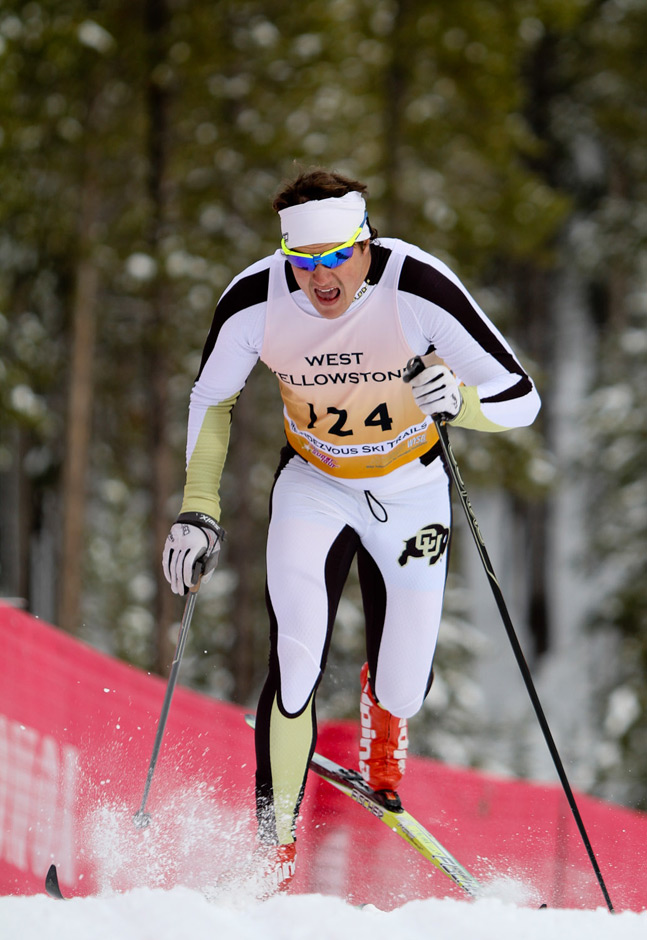
    Norwegians Rune Ødegård and Mads Strøm, a junior and freshman, have been the top skiers from Colorado throughout the latter half of the 2014 collegiate season. After sitting out the first two weekends of collegiate racing the duo has consistently been in the top five. Ødegård won last year’s 10 k classic at the 2013 NCAA Championships and looks to continue that success into 2014.

    The University of Utah men have shown that the best skiers in the west aren’t just based in Colorado. Niklas PerssonOscar Ivars, and Noe Bellet have all performed well this season, garnering spots on the second team All-RMISA. However, all three will need to up their game if they want to outpace the Catamounts and the Buffs.

    Colorado, Denver, and Utah have had steady competition from the 2013 RMISA skier of the year, Lukas Ebner of the University of Alaska Anchorage. The senior, who hales from Germany, hopes to build on a season that has included multiple podiums.

    Central

    The Central Collegiate Ski Association (CCSA) has traditionally trailed the east and west in terms of results at past NCAA Championships, which is reflected in the small numbers of qualifiers from the region. Despite that fact, there are several top performers who have a chance at an NCAA podium in Utah. 

    Rosie Frankowski of Northern Michigan University in the 20 k freestyle mass start at U.S. Nationals at Soldier Hollow.
    Rosie Frankowski of Northern Michigan University in the 20 k freestyle mass start at U.S. Nationals at Soldier Hollow.

    Rosie Frankowski, a senior of Northern Michigan University, has had an excellent season and looks to continue her speed into her time in Utah. Frankowski finishes her regular season as the top skier in the CCSA.

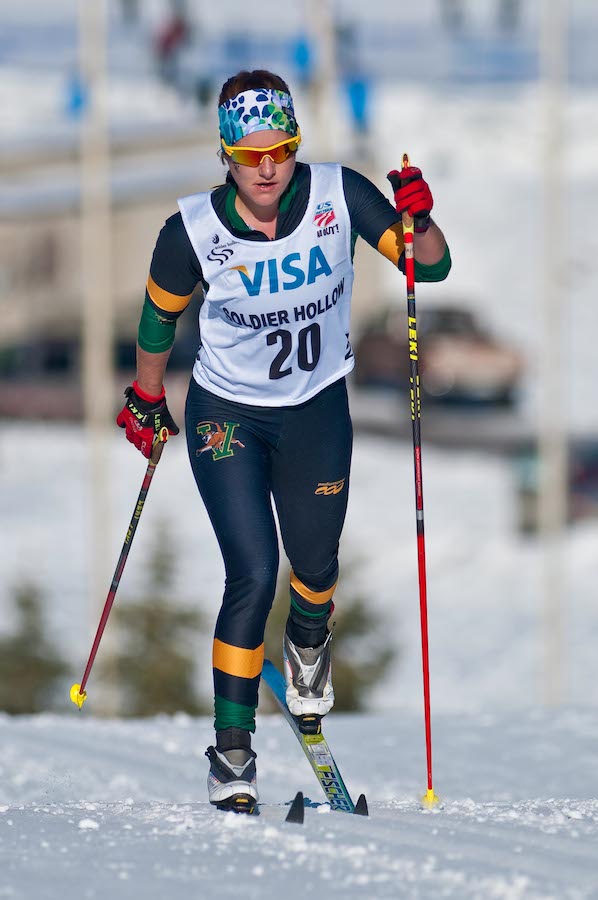
    Freshman Nicole Bathe of University of Alaska Fairbanks has turned out to be quite the powerhouse in classic races. Bathe has had excellent start to the season after finishing third in the classic sprint at the 2014 U.S. Cross Country Championships.

    Fellow Fairbanks  teammate Logan Hanneman looks to be the top male competitor for the CCSA in Utah. The junior finished fifth in the freestyle sprint at U.S. Nationals earlier this season.

    Whether Colorado can reclaim its title, Utah can snap its second place curse, or Vermont use the sloppy conditions to their advantage, the NCAA Championships will be an exciting display of talent from the fastest skiers in the country.

    The 5 k and 10 k classic will take place this Thursday at 10 a.m. and 12 p.m. MST. The Championships will conclude with the 15 k and 20 k freestyle mass starts on Saturday, also at 10 a.m. and 12 p.m, MST. Watch the action unfold live on the NCAA site and check FasterSkier for reports.

  • Diggins Charges to Second in U23 Freestyle Sprint, Bjornsen Leads U.S. Men

    Jessie Diggins (U.S. Ski Team) skiing to first place in the qualification round of Wednesday's freestyle sprint. She finished second overall in the finals, a best-ver finish at a Junior/U23 World Championships. (Photo: FlyingPointRoad.com)
    Jessie Diggins (U.S. Ski Team) skiing to first in the qualification round of Wednesday’s freestyle sprint at U23 World Championships in Val di Fiemme, Italy. She finished second overall in the finals, a best-ever finish at U23 World Championships. (Photo: FlyingPointRoad.com/Proceeds go to the National Nordic Foundation)

    Jessie Diggins once again demonstrated that she’s a skier with a lot of heart at the 2014 U23 World Championships in Val di Fiemme, Italy. On the same course where she earned a historic gold in the World Championship team sprint with Kikkan Randall in 2013, the 22-year-old was once again the talk of Lago di Tesero as she powered through the rounds of the 1.2 k freestyle sprint.

    With perfect conditions blessing the quaint Italian village of Tesero, Diggins started the day with a blistering pace that was boosted her to top of the field in qualification. Continuing to build confidence and speed, she just kept going.

    Deciding to go hard from the sound of the gun, Diggins sped to the front of the pack in her quarterfinal, semifinal, and the A-final en route to her silver medal. Although she breezed through her quarterfinal, the semifinal proved more challenging.

    Jessie Diggins (l) was second in Wednesday's freestyle sprint at the U23 World Championships in Val di Fiemme, Italy. She was joined by Germany's Elisabeth Schicho (c) and hometown skier Giulia Stuerz (r). (Photo: Gerry Furseth)
    Jessie Diggins (l) was second in Wednesday’s freestyle sprint at the U23 World Championships in Val di Fiemme, Italy. She was joined by Germany’s Elisabeth Schicho (c) and hometown skier Giulia Stuerz (r). (Photo: Gerry Furseth)

    Trying to save energy, the Minnesota native relaxed at the top of the main hill, allowing her competitors to step in behind her, draft, and then slingshot around her into the finish. She finished third in her heat, hopeful that the other semifinal would be slower.

    Fortunately for Diggins, her heat was significantly faster and she was the first lucky loser into the A-final.

    Diggins knew that in order to perform well in the final, she needed to learn from her previous mistakes and take her strengths into account. “In the final I knew that I hadn’t been skiing the finishing lanes very well today but if I could tire people out, that was going to be my chance to win it,” said Diggins in an interview.

    Tire them out she did. One by one her competitors dropped until it was just Elisabeth Schicho of Germany who clung to the heels of the charging American.

    Coming down the hill, Schicho blew by Diggins and after that the German “just skied off.”

    Despite being unable to hold her lead, Diggins was extremely happy with best ever finish at a Junior or U23 World Championships.

    Diggins’ main goal was to make the heats and have fun in the process. After coming off a large training week, Diggins was fatigued and she knew she wasn’t at her best. Despite her tiredness, there were valuable lessons to gain from the sprint.

    “It was so good to practice dealing with pressure and use this as a tune up race to get more experience,” she said “All I wanted to do was to make the final, get the experience, and get the tactical practice.”

    Annie Pokorny (SMST2) skiing in the qualification round of Wednesday's freestyle sprint at the U23 World Championships in Val di Fiemme, Italy. Pokorny finished 28th, a career-best international result. (Photo: NNF/Flyingpointroad.com)
    Annie Pokorny (SMST2) skiing in the qualification round of Wednesday’s freestyle sprint at the U23 World Championships in Val di Fiemme, Italy. Pokorny finished 28th, a career-best international result. (Photo: FlyingPointRoad.com/NNF)

    Roughly a week and a half out of Sochi, it certainly didn’t hurt the U.S. Ski Team member to receive a confirmation that she can ski well even when she isn’t feeling up to par.

    “This has been a great confidence booster going into Sochi knowing that when I hit my peak I’ll have more energy. Gaining the experience of skiing through to the finals has really great for me because it’s been so long since I’ve been in finals.”

    The freestyle sprint is Diggins only race at the U23 World Championships, and she will return to train with the U.S. Ski Team to prepare for the Olympic Games in Russia.

    The only other American to make the heats was Annie Pokorny (SMST2) who earned her best international result to-date after qualifying 28th and finishing in the same position.

    “When we woke up, the valley was sunny for the first time since we arrived, so I had a feeling that, whether for me or my teammates, today would be a good day,” said the Spokane, Washington native in an email. “Today was my first time starting an international championship sprint, so I focused most on keeping myself calm before the qualifier. I’ve been focusing more on sprinting this year, and wanted my races to speak to that.”

    Rounding out the American women’s results were Elizabeth Guiney (Craftsbury GRP) who finished 39th and Mackenzie Kanady (UAA) who placed 40th.

    In the U23 men’s 1.5 k two Americans cracked the top 20. Erik Bjornsen of the U.S. Ski Team and Tyler Kornfield of APU finished 18th and 19th after finishing fourth in each of their heats.

    Erik Bjornsen (U.S. Ski Team) in the qualification round of the freestyle sprint at the 2014 U23 World Championships in Val di Fiemme, Italy. Bjornsen finished 25th in qualification and 18th in the finals. (Photo: Flyingpointroad.com)
    Erik Bjornsen (U.S. Ski Team) in the qualification round of the freestyle sprint at the 2014 U23 World Championships in Val di Fiemme, Italy. Bjornsen finished 25th in qualification and 18th in the finals. (Photo: Flyingpointroad.com/Proceeds go to the National Nordic Foundation)

    Bjornsen who is also headed to Sochi in the coming weeks wasn’t pleased with his result, but viewed it as a learning experience.

    “The two guys that won my heat ended up going 2-3 in the final so that’s a good sign. I took some notes on how I think I can improve, for now I will put those in the safe and try to just focus on tomorrow,” said Bjornsen, who won the 15 k classic at U.S. Nationals earlier this month. “I know that tomorrow is another great opportunity to have a good result.”

    Unlike Diggins, Bjornsen isn’t treating the Championships as a tune up for Sochi. Instead he plans on racing as he normally would, aiming to earn his best results in the two distance races.

    A two-time classic sprint national champion in 2010 and 2012, Kornfield was excited that this was his first time qualifying for the heats in the three years that he’s been to the Junior/U23 World Championships.

    “I am definitely happy to be in the mix, but I know that I am capable of more. There were portions of the course that I was dead even with the field, but it was when I got boxed in that I lost time,” he said. “I may have had better days over the past few weeks, but I felt like my fitness did not hold me back today.”

    Ben Saxton (SMST2) finished just outside of the top 30 in 33rd. He was followed by Benjamin Lustgarten (Middlebury) in 48th.

    In the junior men’s 1.5 k Cole Morgan was the only American to advance to the heats, after qualifying in 14th position. Morgan, who ended his day in 17th, was motivated by his good qualification result because it showed him that he “could be competitive in the rounds.”

    The University of Vermont skier had only raced internationally once before Wednesday’s race, but didn’t let the advanced level of competition get to his head. “I don’t like to think of international racing as anything different,” he wrote in an email. “Regardless who is racing you just have to go out there and race your own race. Getting hung up on where the other skiers are from is only going to hurt your chances.”

    Patrick Caldwell (SMS) followed Morgan in 39th. Jack Hegman (UVM) and Thomas O’Harra (APU) were 53rd and 54th.

    The American junior women were unable to place any of their starters in the top 30. The top finisher was Stephanie Kirk (UVM) finishing 36th. She was followed by Marion Woods (AWS), Sloan Storey (UU), and Nicole Bathe (UAF) in 51st, 54th, and 56th.

    The Americans will continue racing in Val di Fiemme Thursday with the 10 k and 15 k classic for the U23 skiers.

    U23 Women’s Freestyle Sprint Results

    U23 Men’s Freestyle Sprint Results

    Junior Women’s Freestyle Sprint Results

    Junior Men’s Freestyle Sprint Results 

  • Junior Nationals: Intermountain Wins Close J1 Girls Relay; Rocky Mountain Boys Prevail

    Junior Nationals: Intermountain Wins Close J1 Girls Relay; Rocky Mountain Boys Prevail

    Intermountain (l) racing for first (and finishing second to Norway) in the J1 boys 3x3.3 k relay on Tuesday at 2013 Junior Nationals in Fairbanks, Alaska. (Photo: facebook.com/pages/JN-2013-Fairbanks/153097771413595)
    Rocky Mountain (front left) racing for first (and finishing second to Norway) in the J1 boys 3×3.3 k relay on Tuesday at 2013 Junior Nationals in Fairbanks, Alaska. (Photo: facebook.com/pages/JN-2013-Fairbanks/153097771413595)

    (Via jn2013fairbanks.us)

    FAIRBANKS, Alaska — Often relay races come down to a drag race on the homestretch.

    Not on Tuesday, however, at the U.S. Cross Country Junior Nationals at Birch Hill Recreation Area.

    Of the six 3 x 3-kilometer classic relays contested for national championships — two each in the Junior 1, J2 and Older Junior divisions — only two were decided by less than 30 seconds and only one was up for grabs on the final straightaway. That race was the girls Junior 1 event, in which Intermountain edged Midwest by 3.7 seconds and Alaska by 4 seconds.

    IM anchor Annika Miller, of McCall, Idaho, passed Nicole Bathe of Midwest shortly after reaching the top of the grueling Sidewinder climb with just over a kilometer remaining.

    “That hurt,” Miller said of the long, gradual climb.

    Then she held off Bathe and a hard-charging Marion Woods of Alaska. Miller hung on after looking back to check on her pursuers’ whereabouts.

    “The uphill finish was just a killer,” Miller said.

    Intermountain won gold in 34:11.5 while Midwest edged Alaska by 0.3 seconds in 34:15.2. Alaska rallied to reach the podium after finishing the first of three legs in 14th place.

    Despite their younger age, the J1 girls proved much more competitive than their OJ counterparts, as remarkably eight of the top nine teams came from the J1 division. Both groups raced at the same time but results were then separated by division.

    Topping all squads was the Norwegian J1 trio of Lotta Weng, Tiril Weng and Lisa Kvamme with a superlative time of 33:07.8. Norway, however, is entered in the guest class and not eligible for placement on the U.S. podium. But the Norwegian girls again showed they are in a class of their own by almost immediately leaving the rest of the field behind.

    The boys J1 race featured a similar situation in that the top American team, Rocky Mountain, was chasing squads from Norway and the Older Junior division.

    Rocky Mountain — with Keegan Swirbul, Evan Weinman and Cal Deline — handled the domestic J1 competition for gold in 28:42.

    “My teammates crushed it. I couldn’t have been handed off in a better spot,” said Deline, who was tagged having a huge lead on New England and just a half-second deficit to Norway’s J1 guest team.

    Deline, wearing a hat with a Swedish flag that he traded for recently in Europe, attempted to catch a ride with Norway’s anchor Mattis Stenshagen.

    “It was an opportunity to try and hang on, but he was going too fast for me,” Deline said.

    Norway was the first J1 team across the line in 28:13. New England placed second among U.S. teams in 29:21 and Alaska earned bronze in 29:35.

    Wednesday is a day reserved for training and rest. The championships resume Thursday at 11:45 a.m. with 1.25-kilometer freestyle sprints.

    Complete results