From the FasterSkier archive — posts syndicated from athletes’ and coaches’ own blogs between 2004 and 2012, kept online as published. Current coverage is at fasterskier.com.

Tag: Nicole Resch

  • IBU Announces Executive Board Nominees, Sanctions Handed Down by IOC

    IBU Announces Executive Board Nominees, Sanctions Handed Down by IOC

    The International Biathlon Union (IBU) had a busy week at its headquarters in Salzburg, Austria, as evidenced by a number of announcements made through press releases.

    First came the news of the IBU Congress’s executive board nominations. Notably, one man and one woman made the final cut for position of IBU president: Olle Dahlin, a current executive board member and chairman of the Swedish Biathlon Federation, and Baiba Broka, president of the Latvian Biathlon Federation.

    Anders Besseberg previously served as president of the IBU since its inception in 1993, but stepped down this past April as a result of a police investigation related to accepting Russian bribes in exchange for concealing Russian biathlon doping cases. Secretary General Nicole Resch was suspended as a result of the scandal as well, but both have denied any wrongdoing, according to Inside The Games.

    The IBU’s board and committee elections will be conducted Sept. 5-9 at the 13th Regular IBU Congress in Porec, Croatia. Two current North American board members, Dr. Jim Carrabre of Biathlon Canada (who ran for IBU president in 2014) and Max Cobb of US Biathlon, are running for re-election. (Scroll down for complete list of candidates.)

    The current IBU vice president for development, Dahlin is considered the favorite for the IBU presidency.

    “I have chosen to stand for election because I believe I can make a great contribution to the IBU’s vital development work and, because I have been a member of the IBU board recently,” Dahlin said in late May, according to a press release. “I have a clear image of what needs to be done. This means the start-up phase will be short. I have led different types of change processes throughout my career as a business leader, so I feel certain that I can provide good leadership in this. We will produce and get support for an operating/strategic plan in the IBU’s fields of activity and develop and adapt the organisation to ensure it is implemented.

    “Many of the member nations have great confidence in Sweden, and we are represented at different levels within the IBU,” he continued. “The work we have carried out in the Swedish Biathlon Federation over the last few years is also experience that will be beneficial when producing an operating plan for the IBU. I can also see that there is potential to increase the level of transparency and democracy in the IBU’s activities.”

    In addition to serving as president of the Latvian Biathlon Federation for the last four years, Broka is a politician and jurist who was Latvia’s minister of justice in 2014. She is also a member of the IBU legal committee.

    “At the moment, there is a need for change,” Broka told SportaCentrs.com, according to a loose translation. “I have been working in the Legal Committee of the IBU for four years, I have seen a lot of problems between Sochi and PyeongChang. I have seen a lot of things to do, many of my suggestions to change in the statutes have already been taken into account, the situation with doping scandals, in terms of good governance of the organization. To a great deal, the IBU has so far not paid attention and now it is apparent that it is missing. My legal experience would be useful.

    “We have done a lot and there is still a lot to do,” she continued. “The environment must be created around the athlete so that he entrusts the federation, and the Member States want to see what the structure is and how decisions are made about the finances.”

    On Wednesday, the IBU publicized that it had been cut off financially by the International Olympic Committee (as a result of the Besseberg/Resch scandal) and was onboard with steps toward reform, including an external audit of its anti-doping program.

    “The International Biathlon Union (IBU) was informed by the International Olympic Committee (IOC) that it will not receive any direct financial payments from the IOC until certain requirements concerning IBU’s governance are fulfilled,” a June 13 press release stated. “The IBU regards the decision by the IOC as an encouragement to implement the governance reform steps it has already agreed on in its IBU Executive Board Meetings. These include an external audit of the IBU anti-doping program conducted by the Institute of National Anti-doping Organizations (iNADO)  and the establishment of an IBU Ethics Commission (see press release here). The IBU is confident that the requested reports about IBU’s anti-doping programme, its governance reforms and the summary of actions taken by the IBU Independent Working Group, regarding the Moscow LIMS and related data disclosed by WADA, will be to the satisfaction of the IOC.”

    Candidates for 2021 and 2023 IBU World Championships were also announced. Only Pokljuka, Slovenia, bid for 2021 World Championships, as opposed to two cities bidding for 2023: Nove Mesto, Czech Republic, and Oberhof, Germany.

    Candidates for IBU President (all in alphabetical order):

    BROKA, Baiba (LAT), Latvian Biathlon Federation

    DAHLIN, Olle (SWE), Swedish Biathlon Federation, current EB Member

    Candidates for IBU First Vice-President:

    BOYGARD, Tore (NOR), Norwegian Biathlon Association

    HAMZA, Jiri (CZE), Czech Biathlon Union

    MAYGUROV, Victor (BLR), Biathlon Federation of Belarus, incumbent

    LEHOTAN, Ivor (SVK), Slovak Biathlon Association, current EB Member

    Dr STEINLE, Franz (GER), German Ski Federation (DSV)

    Candidates for IBU Vice-President Finances:

    LÄHDESMAKI, Kalle (FIN), Finnish Biathlon Association

    Dr LEISTNER, Klaus (AUT), Austrian Ski Federation (ÖSV), incumbent

    Candidates for IBU Executive Board (6 seats):

    BOYGARD, Tore (NOR), Norwegian Biathlon Association

    BROKA, Baiba (LAT), Latvian Biathlon Federation

    BUDZISHVILI, Nikoloz (GEO), National Biathlon Federation of Georgia

    Dr CARRABRE, James (CAN), Biathlon Canada, current EB member

    COBB, Max (USA), United States Biathlon Association, current EB member

    FARCNIK, Tim (SLO), Ski Association of Slovenia

    Dr FLANAGAN, Grant (AUS), Australian Biathlon Association

    GERASIMUK, Dagmara (POL), Polish Biathlon Association

    HAMZA, Jiri (CZE), Czech Biathlon Union

    Dr KASASHI, Kumiko (JAP), Japan Biathlon Federation

    KIM, Nami (KOR), Korea Biathlon Union, current EB Member

    LÄHDESMAKI, Kalle (FIN), Finnish Biathlon Association

    LEHOTAN, Ivor (SVK), Slovak Biathlon Association, current EB Member

    MAYGUROV, Victor (BLR), Biathlon Federation of Belarus, incumbent First Vice-President

    PALLHUBER, Erika (ITA), Italian Winter Sport Federation (FISI)

    Dr STEINLE, Franz (GER), German Ski Federation (DSV)

    VOLODYMYR, Brynzak (UKR), Biathlon Federation of Ukraine

    Bid venues for the 2021 IBU World Championships:

    POKLJUKA, Slovenia

    Bid venues for the 2023 IBU World Championships:

    NOVE MESTO, Czech Republic

    OBERHOF, Germany

    Candidates for the IBU Technical Committee (10 seats):

    BERGER, Franz (AUT), current TC Member

    BERNAT, Tomas (POL)

    HÖNIG, Gerald (GER)

    ILIEV, Ventzeslav (BUL)

    KORDEZ, Matej (SLO), current TC Member

    KORPELA, Kari (SWE), current TC Member

    LEE, Keunno (KOR)

    LEITGEB, Lorenz (ITA), current TC Member

    NAZAROVA, Olga (BLR)

    RICARDAS, Griaznovas (LTU)

    RIIHIVUORI, Tomi-Pekka (FIN)

    SAENGER, Max (USA)

    SIMOCKO, Radovan (SVK)

    VASSALLO, Christophe (FRA), current TC Chairman

    VLASTIMIL, Jakes (CZE), current TC Member

    ZAHKNA, Hillar (EST)

    Daniel Böhm (GER) has already been confirmed as the athletes’ representative in the IBU Technical Committee.

    Bids to host the 14th Regular IBU Congress 2020:

    Czech Biathlon Union, Prague

    Biathlon Union of Serbia, Zlatibor

    The two incumbent elected auditors, Ray Kokkonen (CAN) and Juha Viertola (FIN), are the only two nominations for the 2018-2022 term for this position.

  • Police Raid IBU Headquarters, Investigating President and Secretary General (Updated)

    Police Raid IBU Headquarters, Investigating President and Secretary General (Updated)

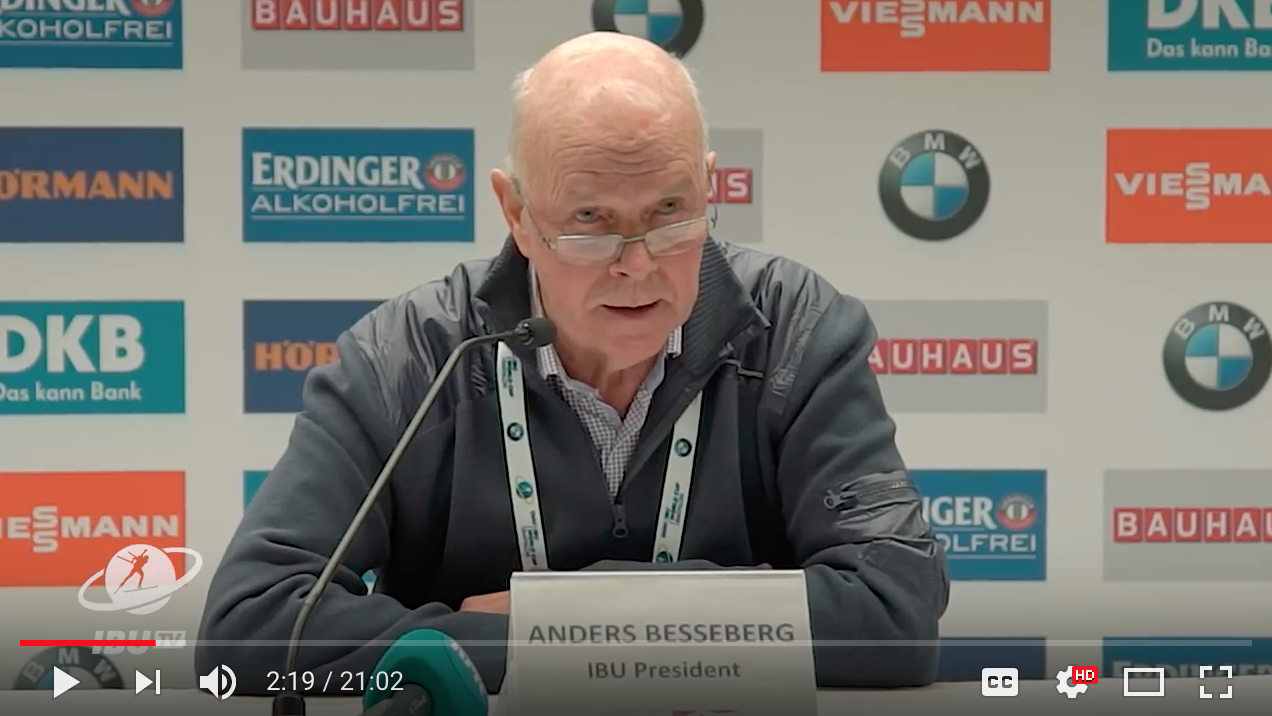
    IBU President Anders Besseberg speaking at a press conference in 2017. (Screenshot: IBU TV)

    Note: This article has been updated with information about bribes as reported by Le Monde on Wednesday.

    Austrian police raided the headquarters of the International Biathlon Union (IBU) in Salzburg on Tuesday night and into Wednesday. According to Austrian press, the investigators were acting on behalf of the Business and Corruption Prosecutor’s Office and were particularly concerned with computer evidence.

    The IBU released a statement on Wednesday, revealing that the search was part of an investigation into President Anders Besseberg and Secretary General Nicole Resch. Resch has taken an immediate leave of absence, and Executive Director Martin Kuchenmeister has taken over as Acting Secretary General.

    Full details into the reason of the investigation remain unclear, but it is at least tangentially related to doping.

    On Wednesday, the French daily Le Monde broke new information it obtained from a 16-page confidential World Anti-Doping Agency (WADA) report, which was released in late 2017. Besseberg and Resch are being investigated for accepting Russian bribes in regards to the nation’s doping case. The bribes were to the tune of a few hundred thousand dollars, and Alexander Kravtsov, the Russian Federation’s chef de mission at the Sochi Olympics, is quoted as saying that a suitcase can hold up to $400,000 dollars. The Russian Federation also allegedly promised members of the IBU Congress between $25,000 and $100,000 Euros.

    In that report, WADA cited the following: “Mr. Besseberg’s unalterable support for Russian interests, the suspicious management of the biological passport’s obligations by Ms. Resch and the initial allocation of World Championships from 2021 to Russia.”

    WADA communications director James Fitzgerald confirmed to Norway’s NRK broadcaster that WADA’s Intelligence and Investigations unit had exchanged information with Norwegian and Austrian police, as well as Interpol. He stated that as a result, police were also involved in Norway (Besseberg’s home country) on Tuesday.

    And indeed, on the same day Norwegian broadcaster NRK published an interview with Russian whistleblower Grigoriy Rodchenkov alleging that the IBU had covered up blood passport violations by Russian athletes.

    However, the investigations may also be linked to broadcasting rights, with the European Commission announcing that raids had been carried out in relation to antitrust laws on the same day, although they did not mention biathlon specifically.

    “The European Commission can confirm that on 10 April 2018 its officials carried out unannounced inspections in several Member States at the premises of companies active in the distribution of media rights and related rights pertaining to various sports events and/or their broadcasting. The Commission has concerns that the companies involved may have violated EU antitrust rules that prohibit cartels and restrictive business practices (Article 101 of the Treaty on the Functioning of the European Union). The Commission officials were accompanied by their counterparts from the relevant national competition authorities.”

    According to the Le Monde article, the IBU has emphasized that it is taking these investigations “extremely seriously” and “cooperating fully”. Resch, 42, was reportedly suspended from her office at her request. The head of the IBU since 1992, Besseberg recently announced that he would not seek re-election at the 2018 IBU Congress in September.

  • Kazakhstan Team Raided in Doping Investigation at Biathlon Championships

    Kazakhstan Team Raided in Doping Investigation at Biathlon Championships

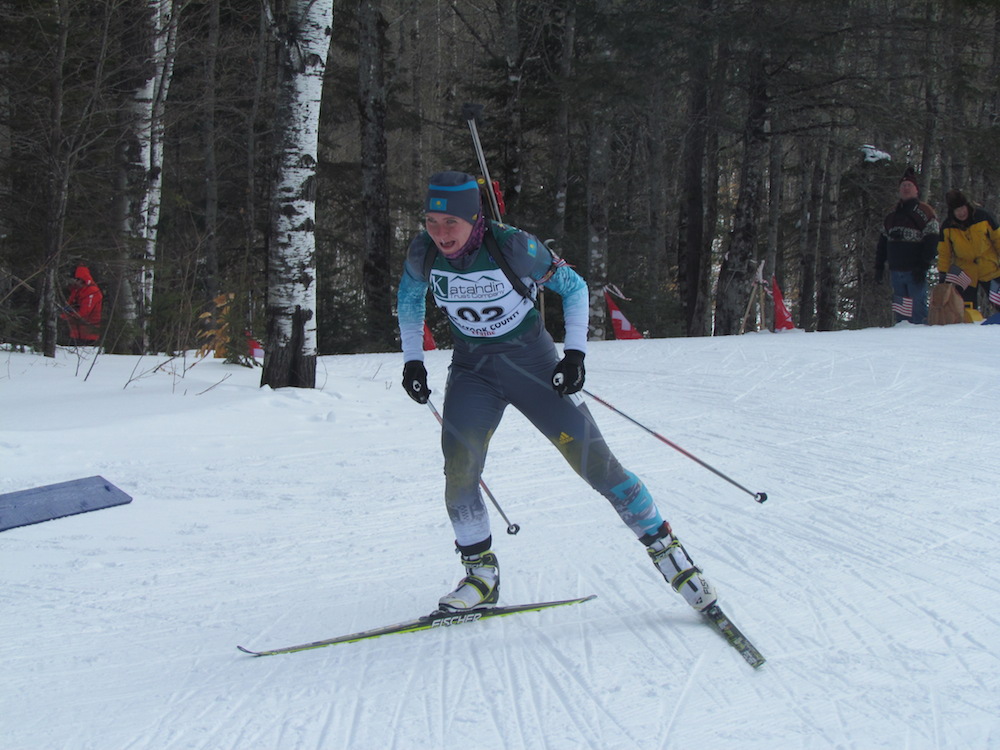
    Kazakhstan's Galina Vishnevskaya on her way to winning the pursuit at 2014 IBU Junior World Championships. Vishnevskaya is not a member of the senior national team which is being investigated for doping. (Photo: Katrina Howe)
    Kazakhstan’s Galina Vishnevskaya on her way to winning the pursuit at 2014 IBU Junior World Championships in Presque Isle, Maine. Vishnevskaya is not a member of the senior national team which is being investigated for doping. (Photo: Katrina Howe)

    Austrian police raided the lodgings of Kazakhstan’s national biathlon team outside of Hochfilzen, Austria, on Thursday morning. The Kazakh team is there to compete at World Championships, where they finished 11th in the opening competition, a mixed relay, later in the day.

    “Numerous medical devices and medications were seized,” the Criminal Intelligence Service of Austria wrote in a statement translated by the International Biathlon Union. “The investigations are still underway.”

    Apparently, a month ago someone spotted a minivan of people tossing a cardboard box in the trash at a gas station in another part of Austria. Team accreditations in the box linked it to the Kazakh squad, and the other items were alarming: according to the Associated Press, it contained needles, materials for infusions, and ampules of medicine, along with written notes indicating that doping was taking place.

    “We are not worried,” Manas Ussenov, the Secretary General of the Kazakh Biathlon Association, said according to the BBC. “They found in the room of our doctor some medicine. But according to our doctor, we have all the documentation for these medicines.”

    On Thursday, 30 police personnel descended on the hotel in Hochfilzen and collected medicine, equipment, and cell phones from the Kazakh team. After the mixed relay all the team members were given anti-doping tests.

    Austria has strict criminal laws about doping, which is part of what spurred the police investigation.

    “We fully trust the investigations by the authorities,” International Biathlon Union Secretary General Nicole Resch told the AP. “Until now, we don’t know if banned substances or banned methods are involved. Only then we can take measures.”

    The team is not suspended at the moment.

  • Eberhard Starts 2017 with Oberhof Sprint Win; IBU World Cup Skiers Call Special Meeting

    Eberhard Starts 2017 with Oberhof Sprint Win; IBU World Cup Skiers Call Special Meeting

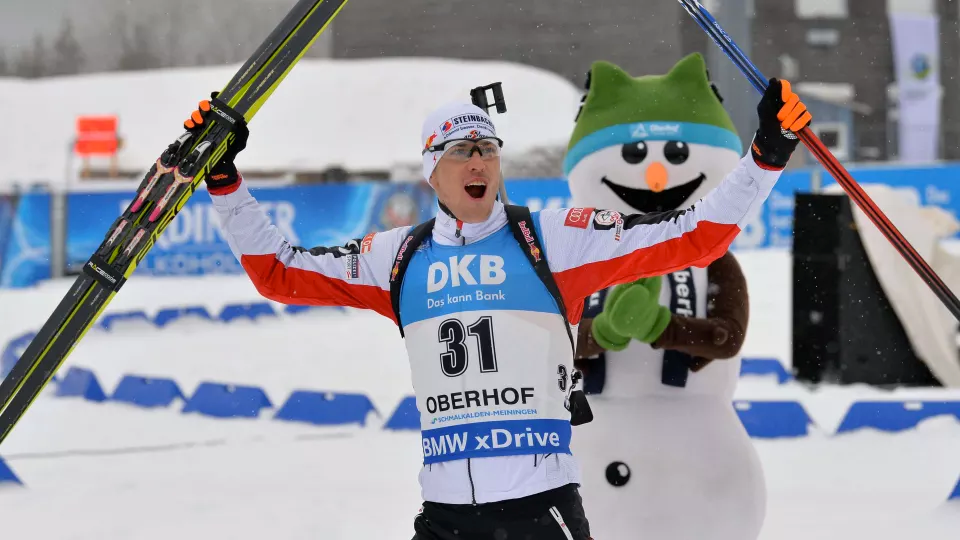
    Austria’s Julian Eberhard celebrating his victory in the men’s 10-kilometer sprint at the 2017 IBU World Cup in Oberhof, Germany. (Photo: IBU)
    Austria’s Julian Eberhard celebrating his victory in the men’s 10-kilometer sprint (along with the Oberhof snowman) at the 2017 IBU World Cup in Oberhof, Germany. (Photo: IBU)

    Even Martin Fourcade is a mere mortal who can’t win every race he competes in. After winning the first three sprints of the 2016/2017 season and five races in a row, for once the French biathlon star had to settle for an eighth place after uncharacteristically missing three targets in his standing shooting stage.

    That left an opening for other athletes to shine on Thursday afternoon in the men’s 10-kilometer sprint at the International Biathlon Union (IBU) World Cup in Oberhof, Germany. Austria’s Julian Eberhard seized the opportunity and won the second sprint of his career in a time of 26:57.5 minutes, skiing the second-best course time, ahead of the Czech Republic’s Michal Slesingr (+10.8) and Italy’s Dominik Windisch (+40.3). All athletes on the podium had to ski one penalty lap.

    “I rescued myself into the finish with my last power,” Eberhard told Austrian broadcaster ORF. “The competition could not have been any longer. Of course I am overjoyed now. That was an important victory, also regarding the World Championships at home in Hochfilzen [in February].”

    A year ago, all races in Oberhof had to be canceled due to a lack of snow. After the organizers invested significant resources in snow-farming and storage capacities over the summer to prevent that from happening again, ironically two days ago the first heavy snowfalls of the season and one of the most severe winter storms in a decade that devastated the northern coast of Germany posed different challenges for the organizers: additional volunteers were needed to help prepare the tracks overnight, or simply to sweep snow off the seats in the arena.

    “The conditions were really difficult,” Eberhard said during the post-race press conference. “Because there was a lot of fresh snow, and a lot of wind. But I like that. So I think it was a difficult but really good day for me.”

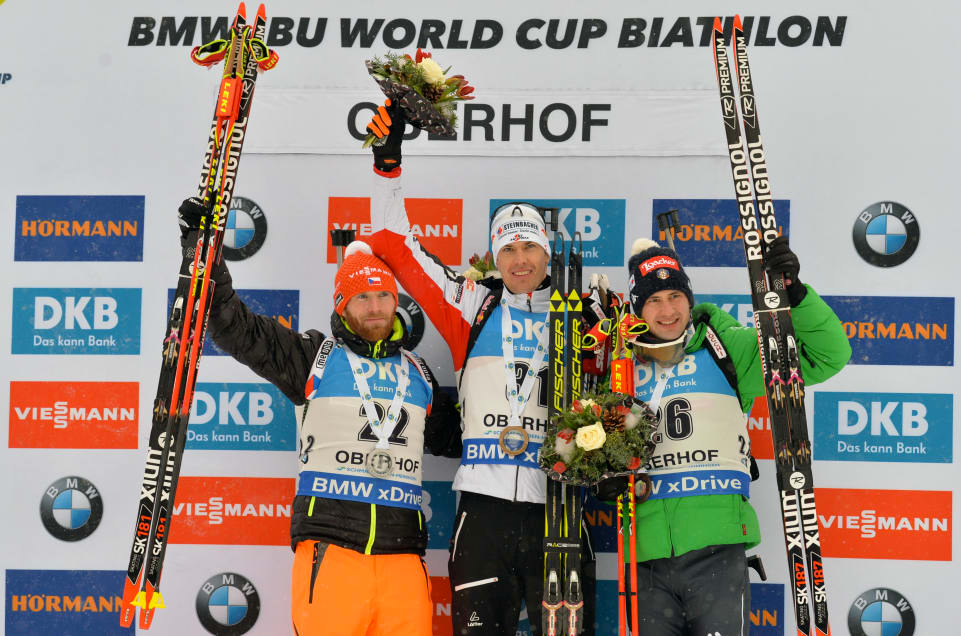
    (Left to right): Czech Republic’s Michal Slesingr (second place), Austria’s Julian Eberhard (first place) and Italy’s Dominik Windisch (third place) on the podium for the men’s 10-kilometer sprint at the 2017 IBU World Cup in Oberhof, Germany. (Photo: IBU)
    (Left to right): Czech Republic’s Michal Slesingr (second place), Austria’s Julian Eberhard (first place) and Italy’s Dominik Windisch (third place) on the podium for the men’s 10-kilometer sprint at the 2017 IBU World Cup in Oberhof, Germany. (Photo: IBU)

    “Today, I was quite relaxed during the race,” Slesingr said at the press conference when asked about the difference to last racing at home in Nove Mesto. “Because I did not think about that race before too much. It was like I’m just going around the stadium and think ‘whatever, let’s do the race’. So I didn’t feel any pressure today.”

    Slesingr smiled when asked if training in Oberhof during the summer maybe gave him an advantage, clarifying that his team mainly comes there to train in a ski tunnel near the venue.

    “We don’t use the shooting range outside too much, so I can’t say that it helped us. In the tunnel you always have perfect conditions for shooting. No wind, no snowing like today.”

    Late in the field in bib 70, Italy’s Lukas Hofer challenged for the podium after shooting clean, but he missed the time set by his teammate Windisch by one-tenth of a second at the finish (+40.4). It was Hofer’s best individual result since the 2013/2014 season, and Windisch’s second-career podium.

    “Like an old saying… Start your day right… we just say “Start your year right” Hofer posted on social media with a picture of the Italian team celebrating the third and fourth place.

    “I watched it while I was in the changing room,” Windisch recalled during the press conference. “When I saw that he was with me, at the same time, I thought maybe he will beat me. But at the end of the competition maybe I was a little bit faster. I am happy, but most of all I am happy for the whole team because this is a really good position for Italy. […] I really thought that someone would beat me, so until the end I was very surprised. And I still am.”

    Behind Windisch and Hofer, Germany’s Erik Lesser finished fifth (+41.2) with two penalties in standing, after shooting clean and taking the lead following the prone stage. He was satisfied with the result, but the athlete living and training near Oberhof gave some insights into how difficult it can be to race in front of a raucous home crowd.

    “I can’t complain about the fifth place,” Lesser told German broadcaster ZDF. “Especially with two misses I absolutely have to be satisfied with the result. On the course everything I worked for during the last days panned out. […] But I am a little annoyed about the two misses in standing. In Nove Mesto, we talked about the home field advantage for the Czech Republic, and then you see Gabriela Koukalová shoot 0+3 [in the sprint there], and I believe that’s how I also felt today in the standing stage. It was very quiet, I hit the first shot, and then there comes such a noise [from the stands] to the shooting range that it got me a little bit out of my concentration, which must not happen, so I am a bit angry about that.”

    “Conditions were not easy,” Martin Fourcade told ZDF about his shooting woes with three penalties on his way to an eighth place (+51.3). “I was struggling with the wind. It was not easy. This is not an excuse, but I had my zeroing on the [lane position] target number one and it was quite easy for the prone shooting, but we had no wind for the standing [in target practice] and it was something I didn’t succeed to manage for my standing position in real wind conditions.”

    Fourcade limited the damage for the following pursuit by once again skiing the fastest course time.

    Three North Americans Onto the Pursuit

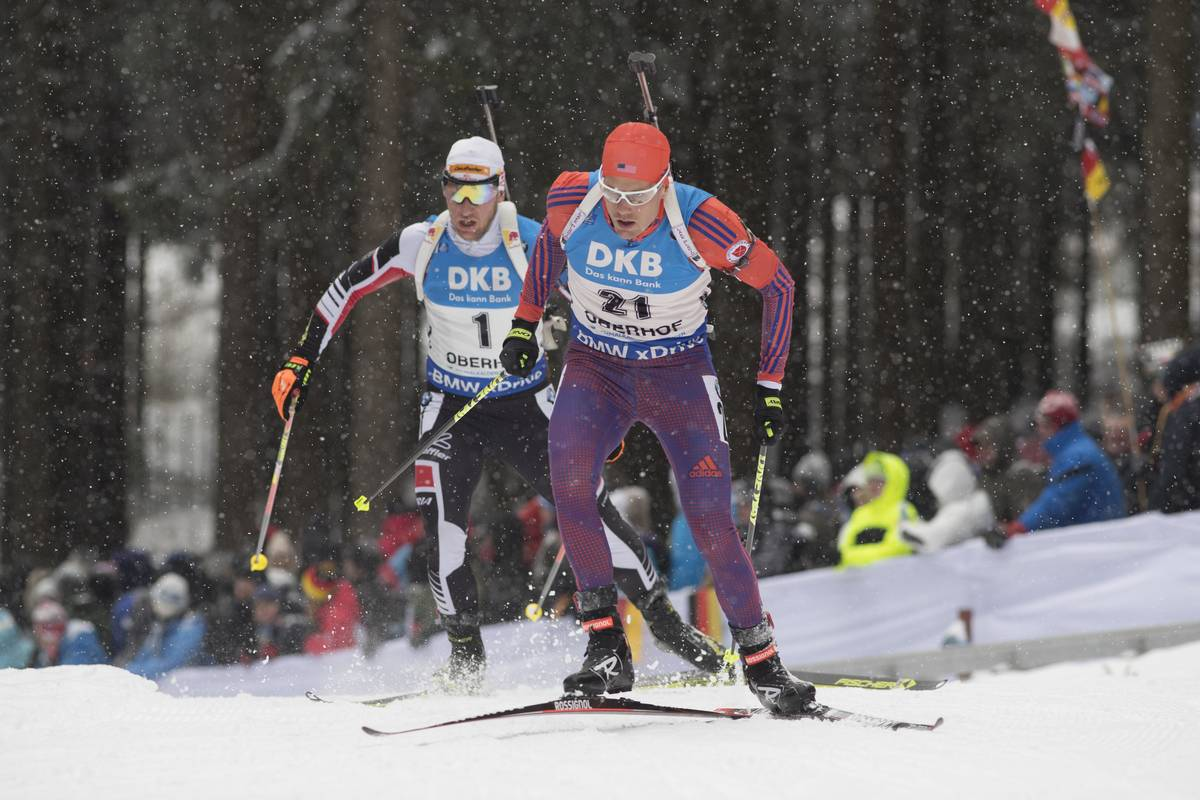
    US Biathlon’s Tim Burke (21) on the course during heavy snowfall during the men’s 10-kilometer sprint at the 2017 IBU World Cup in Oberhof, Germany. Behind him is Austria’s David Komatz. (Photo: USBA/NordicFocus)
    US Biathlon’s Tim Burke (21) on the course during heavy snowfall during the men’s 10-kilometer sprint at the 2017 IBU World Cup in Oberhof, Germany, leading Austria’s David Komatz. (Photo: USBA/NordicFocus)

    The best North American in the difficult conditions was Tim Burke, who finished 35th (+1:51.8) with two penalties (0+2).

    “The heavy snow and gusty wind made for a challenging race today,” Burke said according to a US Biathlon press release. “We were lucky that the snow stopped right before the start today, but this also made for some challenging conditions on the track throughout the race. I feel like I was lucky in prone with having little wind, but standing was a real fight with strong wind and it took me a long time to get all five shots off.”

    “Overall, I was pleased with my shooting performance today considering the windy conditions,” he added. “Unfortunately, I am far off my normal ski shape. I had one of my best training years, so I am a bit confused as to why I have been so flat racing, but I am confident that it will eventually come around. If we continue to have strong winds here in Oberhof, Saturday’s pursuit should present some great opportunities to move up.”

    Also for the U.S., Russell Currier placed 46th (+2:15.1) with three penalties (1+2), qualifying for his second pursuit of the season.

    In his return to the IBU World Cup after missing the first races of the season due to mononucleosis, last year’s junior world champion Sean Doherty finished 80th with three penalties (+3:20.2), missing out on the top 60 to qualify for Saturday’s pursuit.

    Lowell Bailey is skipping the races in Oberhof for a training block at home in Lake Placid, N.Y. He plans to join the team again next week for the World Cup in Ruhpolding, Germany.

    “I planned to skip Oberhof earlier this year when we laid out the seasonal training plan,” Bailey explained in an email to FasterSkier. “I wanted to put in a solid three-week block of training during the middle of the season so that I’m hopefully set up well for World Champs and the last half of the season. It’s tough to voluntarily sit out, but I think it is the right decision, and I hope it will pay off later on in the season.”

    For Biathlon Canada, Scott Gow had the best result of the day in 43rd (+2:11.9) with one miss (0+1) and was the only Canadian to qualify for the pursuit. Macx Davies finished 68th (+2:51.1) with two penalties (0+2), just ahead of teammate Brendan Green in 69th (+2:58.0) with four misses (3+1).

    In his second World Cup after one appearance last season in Presque Isle, Maine, Canada’s Matthew Hudec finished 90th (+3:50.8) with one penalty (0+1), and Christian Gow with three penalties (1+2) was 92nd (+3:54.7) in the field of 102 starters.

    The other regular North American team members, Canada’s Nathan Smith and US Biathlon’s Leif Nordgren, have not yet returned to the World Cup.

    Athletes-Only Meeting Regarding McLaren Report

    On the eve of the races in Oberhof, about 50 athletes from various teams reportedly gathered for an athletes-only meeting for about 90 minutes to discuss the current status of the IBU investigation into the findings of the report by World Anti-Doping Agency (WADA) special investigator Richard McLaren, which also lists 31 biathletes. From the side of the IBU, Secretary General Nicole Resch was present for about 15 minutes to discuss the current status of the internal IBU investigation and answer some of the most pressing questions from the athletes, before she was asked to leave the meeting again.

    Afterwards, few athletes in attendance wanted to go on record to the media about any details of questions and demands made towards the IBU before a concrete, common position had been agreed upon and written up for communication.

    From public statements by several athletes after the race on Thursday, it could be inferred that nations losing starting quotas in cases of multiple doping violations or organized manipulations could be one of them.

    Slesingr, reportedly one of the organizers of the meeting, along with Martin Fourcade and some others, told the gathered media members that the athletes don’t plan to boycott World Cup races, at least in Oberhof, but that “depending on how the IBU reacts [to our demands] we will then decide how we can increase the pressure again.”

    Furthermore, Slesingr explained that they have asked the IBU to state how many of the biathletes mentioned in the McLaren report are still active in IBU-sanctioned events, seemingly a topic that is contentious among the athletes potentially having to race against athletes under investigation.

    “We don’t want exact names, but a number,” he said. “Our demands mostly deal with how to protect our sport from doping and corruption in the future.”

    From the Russian team, the most prominent athlete present was Anton Shipulin, according to reports by German broadcasters ARD and ZDF.

    “I was asked many questions, but I also have more questions than answers myself,” Shipulin afterwards told the media, according to a translation. “I don’t want to wash dirty laundry in public. I asked all athletes for patience and to wait until after the IBU investigation. I can only say for myself: I have never doped. All my samples are clean.”

    “I don’t want to make statements regarding individual names,” Secretary General Resch told ZDF after the athletes’ meeting and a second one with team coaches. “We currently have to generate proofs out of the evidence, and I don’t know yet for which ones we will be able to succeed with that. And for someone where we don’t have concrete evidence available, dragging that name through the media as a positive doping case would be irresponsible and unprofessional. We don’t want to do that.”

    “It was a really constructive meeting yesterday,” Germany’s Schempp told ZDF when questioned about the situation after the sprint race. “Because the whole procedure was explained to us, the athletes, by the side of the IBU. That they are also not having an easy time with that, and that one should keep calm for some time. They are doing their best to clear that up, and to really not draw premature conclusions. I also believe that would be the wrong approach. We will see how that progresses, and will closely observe that, but I think this won’t have been the last meeting.”

    “In general this is not about pointing fingers at the Russians,” his teammate Lesser told ZDF. “This is about fighting the basic evil of doping with all force. The IBU has to define its own marching order for that, how it internally wants to deal with that. And I hope that this will be tackled with maximum force, that starting quota spots are being taken away after multiple offenses, and then you have to punish the nation and not just the individual athlete. And I hope the IBU will figure that out some time and go after that.”

    Races in Oberhof continue on Friday with the women’s 7.5 k sprint, followed by the men’s and women’s pursuits on Saturday. The times back to the winner from the sprint carry over into the pursuit race.

    Results

  • FIS on What’s Next Regarding Russia (Updated)

    FIS on What’s Next Regarding Russia (Updated)

    Alexander Legkov after winning the Olympic 50 k in 2014. He didn't have that feeling often in the 2015 season.
    Russia’s Alexander Legkov after winning the Olympic 50 k mass start at the 2014 Sochi Winter Games.

    (Note: This article has been updated to include the IBU’s official statement in response to the McLaren report, published in an IBU press release on Friday.)

    What’s a sports federation to do when informed that 13 of its athletes (skiers — not distinguished by discipline, whether it be cross-country, nordic combined, jumping, alpine or freestyle) were involved in the cover-up of positive doping tests between 2011 and 2015? Or even 10 — the amount of Russian biathletes’ samples found to have been “disappeared” by the Moscow anti-doping laboratory during that time period?

    The good news for an international sports federation like the International Ski Federation (FIS) is, they’re dealing with winter sports in summer. That buys them more time to make a plan of action when deciding how to deal with the allegations against Russia and its systematic doping confirmed in the McLaren report earlier this week.

    In response to the 97-page independent report, which made no recommendations for action and left it up to the World Anti-Doping Agency (WADA), the International Olympic Committee (IOC), international sports federations (IFs), and relevant authorities moving forward, WADA’s executive board outlined seven recommendations for affected federations. Most prominently, they called for a complete ban on Russian athletes from the upcoming Summer Olympics and Paralympics in Rio de Janeiro, Brazil.

    The IOC Executive Board then came out with a list of “provisional measures” of its own, applicable until further review this December. Among the measures, it asked Professor Richard McLaren to share the names of the Russian athletes implicated in the “disappearing positive methodology” (i.e. the 13 skiers and 10 biathletes) with their respective IFs, and for all winter sports federations to “freeze their preparations for major events in Russia, such as World Championships, World Cups or other major international competitions under their responsibility, and to actively look for alternative organisers.”

    So how is FIS moving forward? For starters, they are relieved to have more time to process these findings than, say, a summer Olympic sports federation.

    “As far as the winter sports federations are concerned, I don’t think I need to repeat the fact that the whole situation is utterly, utterly, shocking, appalling,” FIS Secretary General Sarah Lewis, also the secretary general of the Association of International Winter Sports Federations (AIOWF), said on the phone Wednesday. “It is totally against all of the values that we believe sports stand up for and that it’s built on trust, on fair play, on demonstrating personal excellence…”

    Because at least six of the seven winter IFs were mentioned in the report, decisions on how to move forward will be made at a previously scheduled AIOWF meeting in early August at the IOC session in Rio.

    “This will clearly be the main item on the agenda so that we can all address this jointly, commonly, exchange information, exchange positions, and potentially there can even be areas where we can undertake some management matters together as well in order to try to expedite and consolidate the process,” Lewis explained. “That’s what we’ve agreed to do because our season isn’t immediately around the corner and [the] Olympic Games on our doorstep, as is the case for the summer sports. In fact, this time next week, I’ll be on my way to Rio and meeting the IOC already at the end of next week in order to be able to obtain more detailed information.”

    In terms of what information FIS currently has, Lewis explained that it “is in the process of obtaining information about specific names of athletes and/or other persons who may be subject to an anti-doping rule violation.”

    Once information is obtained from WADA to follow up on, FIS will then proceed with results management based on FIS rules and the WADA Code, and will do so on an individual, case-by-case basis, she added.

    “How the process works, if there are any tests connected with the Olympic Winter Games, which of course the investigation was centered around, then it’s the IOC’s responsibility to undertake the results management there,” Lewis said. “But what will be addressed is whether this can be addressed in a joint way with the respective international federation when the IOC has to carry it out anyway. The IOC only has the authority to be able to sanction the person related to their participation at the Olympic Games and then they give then the task to the respective international federation to follow up with any further sanctions and procedures under their jurisdiction.”

    When it comes to freezing events, such as Cross-Country World Cup finals in Tyumen, FIS has eight major events across its sports previously scheduled in Russia. They are now suspended until further notice to comply with what Lewis explained as an immediate measure from the IOC.

    As for seeking alternate venues, Lewis said that’s premature.

    “The decision of the IOC Executive Board hasn’t even been communicated for 24 hours, and I haven’t been dealing specifically with whether there are other organizers who have already offered to step in. That’s in the hands of our cross-country management,” she said. “One thing is freezing the events now and it’s quite another story whether it’s going to be necessary to reassign events. But in any case, don’t worry, there won’t be a shortage of organizers for the [events]. Everyone wants to do the best thing for the sport and be committed to it. And for sure, other nations will be ready to rally around to ensure that the athletes and the World Cup circuits are not affected, should it be necessary.”

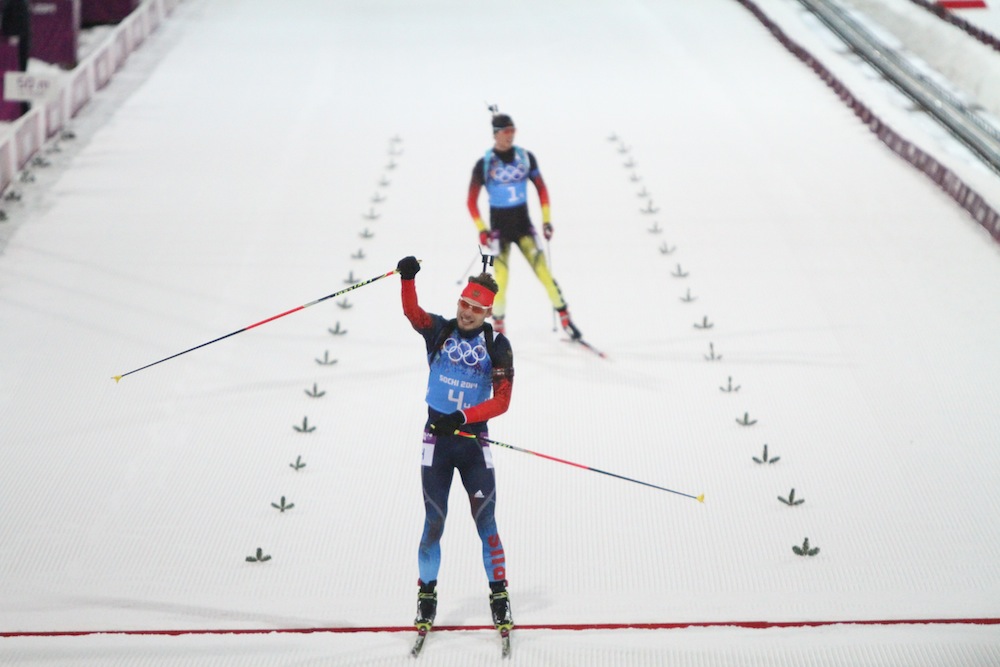
    Russian anchor Anton Shipulin celebrates his team's gold medal in the men's relay over Germany's Simon Schempp. Austria was third.
    Russian anchor Anton Shipulin (front) celebrates his team’s gold medal in the men’s biathlon relay at the 2014 Sochi Olympics. Germany’s Simon Schempp anchored his team to second and Austria placed third.

    In an email seeking a comment on the McLaren report, International Biathlon Union (IBU) Secretary General Nicole Resch responded on Wednesday, “Due to travelling I did not have the chance to read the full report yet.”

    Resch did not respond to a follow-up email requesting to speak with another IBU spokesperson.

    The IBU released a statement on Friday, noting: “The IBU is truly appalled and deeply saddened by the findings of the McLaren Report (IP Report).

    “The IBU has always emphasized clean sport, fight against doping and protection of clean athletes as its top priorities,” the press release continued. “We will therefore carefully evaluate this report and the recommendations of the IOC and will proceed with investigations concerning references to biathlon included in the IP Report. If and when appropriate, the IBU will not hesitate to open disciplinary proceedings against bodies or persons subject to infringements of the IBU Anti-Doping Rules.”

    Lowell Bailey, a U.S. Biathlon team veteran and IBU Athlete Representative, said he was awaiting an official statement from the IBU as of Wednesday.

    “The McLaren report specifically says that they advise that no international federation should hold international competition in Russia,” Bailey said on the phone. “So in my mind, I think a strong response from the IBU, something that would be a definitive sign that they are very much supporting and fighting for clean competition would be to ban the upcoming Tyumen [World] Cups. I think that’s the least they can do at this point, is to show that, no, we are not complicit, we are not OK with this and as a punishment, we’re moving the World Cup…

    “I think it’s just really unfortunate if we are outwardly saying, as a sport, ‘We hear you, WADA, and we are very much against doping and we are trying to clean up our sport,’ then in the same 12-month period to go and hold a World Cup in that country, which is in violation of the WADA code. I think that’s a double standard,” he added. “So I’m hopeful that the IBU will do the right thing…”

  • International Biathlon Union Fines Russia for Doping Infractions (Updated)

    International Biathlon Union Fines Russia for Doping Infractions (Updated)

    Targeted testing based on data from the IBU's Athlete Biological Testing program led to the suspension of Irina Starykh, above, and another Russian biathlete for blood-doping. The IBU fined Russia for a cluster of doping cases.
    Targeted testing based on data from the IBU’s Athlete Biological Testing program led to the suspension of Irina Starykh, above, and another Russian biathlete for blood-doping. The IBU fined Russia for a cluster of doping cases.

    The doping cases of Russian biathletes Ekaterina Iourieva, Irina Starykh, and Alexander Loginov have finally wrapped up, with the International Biathlon Union fining the Russian Biathlon Union 100,000 Euros.

    All three doping cases were resolved in June with Iourieva banned for a total of twelve years, Starykh for a total of three years, and Loginov for a total of two years, based on repeat infractions on the part of the two women.

    “Earlier the RBU was fined €50.000 for Anti-Doping Rules violations in 2009,” the IBU stated a press release. “The current fine amount for the RBU is the highest possible financial sanction which is provisioned by the IBU Disciplinary Rules.”

    It’s unclear when the idea of a fine originated, but IBU Director General Nicole Resch stated in an email that the issue first came before the Executive Board at their meeting this month.

    “The fine was put on the agenda for the Executive Board in early November, after the decisions of the Anti-Doping Hearing Panel were final in July 2015,” she wrote.

    That means that the fine was placed on the agenda before the release of the World Anti-Doping Agency Independent Commission report was released showing state-sponsored doping in Russian track and field, although two documentaries by German filmmaker Hajo Seppelt had already brought the issue into the public eye.

    “We had to wait until the hearing panel made their determination ( they are an independent board) and then we needed to convene the Executive Board to discuss the situation and determine the punishment,” Jim Carrabre, the Vice President for Medical Issues, wrote in an email to FasterSkier. “Since this was Russia’s second offense where where  more than one athlete doped in a year, we decided to levy the maximal fine. I anticipated this the moment we knew that we caught them. It had no bearing on ARD or WADA.  This was prior to Sochi. The timing looks like we might be responding like this because of the WADA report but it has no bearing on it.”

    Lowell Bailey (USA) leading Alexander Loginov of Russia in a World Cup competition where Loginov placed just ahead of him on the podium. Bailey doesn't think that two-year bans, or the 100,000 Euro fan, will deter anyone from doping. (Photo: USBA/NordicFocus.)
    Lowell Bailey (USA) leading Alexander Loginov of Russia in a World Cup competition where Loginov placed just ahead of him on the podium. Bailey doesn’t think that two-year bans, or the 100,000 Euro fan, will deter anyone from doping: “A doping fine should be more than a small line-item expense.” (Photo: USBA/NordicFocus.)

    Yet IBU President Anders Besseberg said that the fine did not mean that the Russian Biathlon Union itself had promoted doping.

    “I would not say that the Russian Biathlon Union engaged in deliberate doping,” he told Norwegian broadcaster NRK. “I’ve said it before and I’m not afraid to say it again: in Russia and some other countries there has been a lack of culture when it comes to doping… This hurts, but it’s also no secret that in the past five to six years most of the positive samples are from Russian athletes. When we then have the opportunity to give them such penalties, we do it.”

    It’s hard to pin down a number for the budget of Russian biathlon, since it is funded by a combination of different sources. Going into the 2014 Olympics, when it was still headed by billionaire Mikhail Prokhorov, U.S. Biathlon CEO Max Cobb estimated that the Russian budget might be ten times as big as his own $1.6 million budget.

    If so, that would make the fine 0.6% of the Russian team’s resources.

    “I think the fines AND the probation periods should be MUCH bigger, perhaps by a factor of 10,” U.S. biathlete Lowell Bailey wrote in an email. “Russia spent $51 billion on the Sochi games… Does anyone really think that a €100,000 fine to one of their biggest [national governing bodies] is going to make any meaningful difference? Especially when it is now clear how intertwined the Russian government and sports committee are with their Olympic NGB’s?  A doping fine should be more than a small line-item expense. It should be enough to seriously injure a program for years… Something that will make them think twice the next time they decide to cheat.”

    In an interview with the German media company T Online, Resch said that there are now no more pending doping cases within the IBU, and that the organization had begun the process of redistributing prize money. The Russian federation must pay back prize money won by the banned athletes.

    “With regard to the Loginov case, I have not been contacted directly, but I expect this will all get taken care of in the next couple of weeks,” Bailey wrote in an e-mail. “I can’t even believe a two-year ban is all these athletes get! Obviously, in the case of Iuorieva, the two-yr ban wasn’t much of a deterrent the first violation since she clearly just went back to doping as soon as she was eligible to compete again.”

    Resch defended the IBU’s antidoping program but also said the organization would be taking some new approaches to update it.

    “For the future we will increasingly cooperate with the WADA-certified NADOs, and increase the number of tests for growth hormones and improve our intelligence through the cooperation with the WADA Blood Passport experts even further,” Resch said, according to a translation. “I have confidence in our internal medical intelligence for the testing strategy – the figures from the past speak for it.”