Tag: Nikolay Morilov

  • Valjas Rebounds from Illness with Eighth in Lahti

    Valjas Rebounds from Illness with Eighth in Lahti

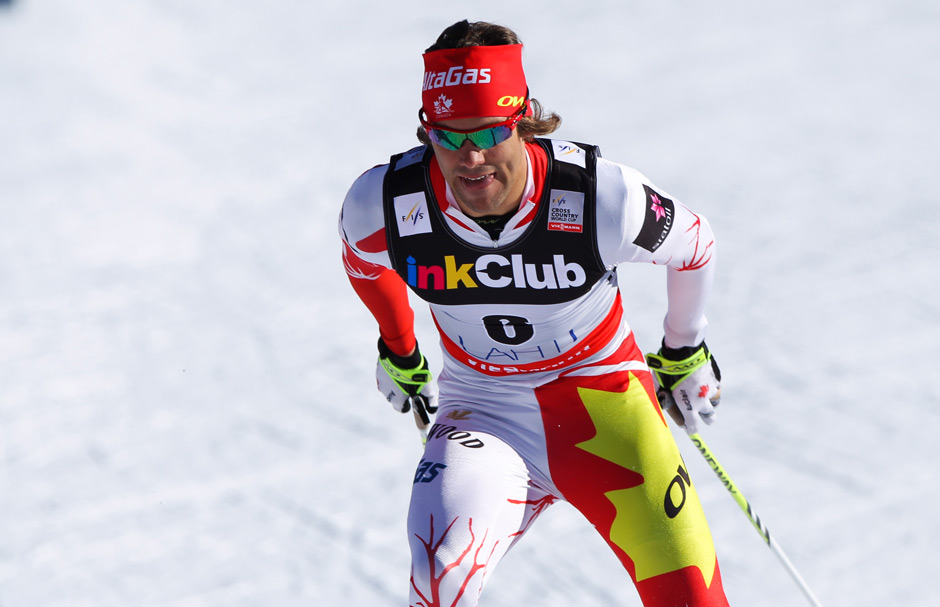
    Len Valjas (CAN) en route to a eighth-place finish in the freestyle sprint in Lahti, Finland, on Saturday. Photo: Fischer/Nordic Focus.
    Len Valjas (CAN) en route to a eighth-place finish in the freestyle sprint in Lahti, Finland, on Saturday. Photo: Fischer/Nordic Focus.

    Len Valjas (CAN) led the Canadian men on Saturday in Lahti, Finland, with an strong eighth place finish.

    His performance was just as fueled by frustration as it was fitness. Valjas toed the line today after a miserable run of sickness.

    “I was sick for nine days,” he said. “I had strep throat, then a chest cold, and laryngitis. It felt good to get out of bed.”

    The timing of the sickness couldn’t have been worse, as it forced him to sit out World Championships in Val di Fiemme, Italy, last week.

    “It sucked,” Valjas said. “We planned for two years for worlds, but that stuff happens. And now all I can do is have a good spring.”

    Prior to the World Championships, Len showed strong signs of form in Davos, notching a sixth place finish. Twenty-one days hence, in a different technique, a strong result was anything but assured. Valjas, however, was quietly confident.

    “I know the shape is there, I felt good in Davos before worlds. All I did at Worlds was rest.”

    Valjas delivered a strong qualification, finishing in 2:26.37, just 1.85 seconds off the pace of frontrunner Gleb Retivykh (RUS).

    The course, just 1.55 k long, favored pure sprinters, in contrast to the longer courses on the circuit like Sochi or Davos.

    “It was a short, fast course — a real sprint course,” Valjas said. “It was a nice change from Sochi and a few of the other ones that were super long.”

    The track, lacking steep walls or a decisive climb, demanded a strong V2 and V2-alternate rather than a dynamic V1. Valjas, who missed out on Quebec’s gentle terrain, welcomed the change in profile.

    “I like the fact that the hills aren’t that steep, so it’s a lot of 1-skate,” he said. “It’s nice having a skate sprint on a gradual course.”

    The shortened, narrow track favored a strong start. Valjas was seeded in the third quarterfinal heat, and the start was full gas right from the gun.

    “The quarterfinal was crazy fast,” Valjas said. “I had two Norwegian distance skiers in my heat, so they knew their only way to get through was to push the pace. It was surprisingly fast and it made me a bit tired.”

    Sindre Skar (NOR) took the pace right from the gun along with compatriot Finn Hagen Krogh (NOR). Vajas kept his head and settled into fourth position leading into the first hill.

    Over the roller, Valjas ate up the track and closed the space on the charging Norwegians, but fell back going through the switchback leading into the finish.

    Instead of fading in the final stretch, Vajas charged. “I had a good kick in the last 100 meters of the quarterfinal and I was able to go from fifth to third,” he said.

    Finn Haagen Krogh took the quarterfinal, with the trio of Jovian Hediger (SUI), Valjas and Skar stretching for the line just behind in a photo finish. Valjas was awarded third place for his lunge and a lucky loser position.

    It was a last-grasp effort to get through, but Valjas was pleased, saying, “My legs were heavy for the semifinals, but I was happy to get that lucky loser spot.”

    In the semifinal Valjas was seeded in the far lane and pitted against Retivykh, the qualification winner, a resurgent Ola Vigen Hattestad (NOR), hard-charger Jovian Hediger (SUI), and outsiders Anton Lindblad (SWE) and Nikolay Morilov (RUS).

    The fatigue of Valjas’s quarterfinal charge immediately manifested itself.

    “In the semifinals my legs felt a bit heavy, so I was stuck at the back again, my usual spot,” Valjas said.

    On a longer course, a slow start can be remedied. On Lahti’s course, a slow start is usually fatal. Hattestad assumed leadership duties from the start, and Valjas drifted to the back of the pack.

    Into the switchback leading into the finish Valjas trailed in last postion without enough track to reclaim some places.

    “The finishing straight was just not long enough for me to get the top two guys,” Valjas said.

    Valjas was awarded fourth place after a photo finish with Nikolay Morilov.  The heat finished in 2:25.21, which wasn’t fast enough to get through to the final, ending Valjas’s day.

    With an eighth place finish, the Canuck moved up to sixth overall in the World Cup sprint standings with 198 points, just 12 points behind Dario Cologna (SUI).

    “I’m happy with today’s race,” Valjas surmised. “I moved up in the overall. I’m sixth in the overall, so I’d like to hold on to that in the next two sprints.”

    Canadian national team coach Louis Bouchard was pleased with Valjas’s performance.

    “It was really good for Lenny,” Bouchard told FasterSkier. “It was a good race. He did well in qualification, he was strong. He was missing a little, but it was good, definitely.”

    Valjas won’t take part in tomorrow’s 15 k classic examination. He’ll rest up in preparation for Wednesday’s sprint in Drammen, Norway.

    Fellow Canadians Jesse Cockney, Alex Harvey, and Graeme Killick also took part in Saturday’s race, but failed to qualify for the heats.

    Cockney was subdued in his assessment of his race, saying, “the qualifier was really close to perfect, I maybe didn’t feel amazing but I had a good warmup and parts of the course felt really strong. The short course was good but I would have preferred more climbing.”

    Cockney was the next-best Canadian behind Valjas, finishing in 50th place in a time of 2:30:46, 5.94 seconds off the pace.

    Alex Harvey, the recent World Championships bronze medalist in the classic sprint, finished 56th place but was unavailable for comment at press time. He finished in 2:31.34, 6.82 seconds out of first.

    Bouchard expected as much, saying, “Alex knew a little bit before that it was a really short sprint. He’s never been good there. He needs a long sprint to be good.”

    Harvey will take part in the individual 15 k classic tomorrow.

    Michael Somppi finished the qualifier in 74th position. The 24-year-old was not happy with his performance.

    “The race didn’t go well,” Somppi said via email. “I felt good warming up and thought I skied the first half OK, but some nervous tension got the better of me over the second half of the course.”

    Somppi will be racing on Sunday and looks to get more comfortable on the World Cup circuit.

    “I think my form is as good as it’s been all season and I just need to get past the nervous feelings of racing World Cups in Europe.  I am racing tomorrow and hope to get more comfortable in a World Cup racing bib,” Somppi said.

    Notable absentee Devon Kershaw won’t race in Lahti, and is taking the weekend in order to recuperate after a tough world championships.

    “Devon is not here,” coach Bouchard said. “The strategy for him is to take some rest before the final World Cups. We think the rest and recovery time for him will be good for the rest of the winter. He will be in Drammen.”

    Results

    — Audrey Mangan contributed reporting.

  • Kershaw Stuns Morilov for Sprint Win

    Kershaw Stuns Morilov for Sprint Win

    Decon Kershaw celebrates with a little air guitar after winning in Szklarska Poreba (POL). Photo: Fischer/Nordic Focus.

    School was in session on Saturday in Szklarska Poreba, Poland with Nikolay Morilov (RUS) conducting class. Unfortunately for him, the lesson was of the classic “learn from my mistakes” variety.

    Morilov, currently ranked third in the Sprint Cup, made a bold move over the top of the lone climb on the 1.6km sprint course, opening a large gap in the skate event.

    Appeared headed for career-victory number two, Morilov pulled up early to celebrate, only to have the whirling dervish that is Devon Kershaw (CAN) come whizzing by in the final meter to take the win.

    Kershaw has taken his game up a level over the last several weeks, with four podiums in his last six races, including two victories.

    The course in Poland favored the Canadian’s style (whether intentional or not) of starting slowly in sprint heats before working his way up and attacking at the end.

    Mostly flat early, with just the one climb in the middle prior to a long, and technical descent to the stadium, the tactic of the day was a conservative pace.

    Kershaw’s teammate Alex Harvey, who crashed out in the quarterfinals told FasterSkier that “after skiing the qualifier, I knew the first half of the course would mean nothing in the heats,” adding that the early portion of the race was mainly about conserving energy.

    As most of the racers appeared to agree with this analysis, Kershaw was not at a disadvantage despite leaving the gate at the back of the pack.

    Morilov led into the climb, and in a move reminiscent of the 2010 Olympics when teammates Nikita Kriukov and Alexander Panzhinskiy surprised the field early on the climbs to open an un-closable gap, he pulled away over the top and into the descent.

    The lead stretched to 20 meters, and the chasers, led by Ola Vigen Hattestad (NOR), the man who placed fourth in that Olympic race were left scrambling.

    Morilov lost a few meters entering the finish stretch, but looked safe with just 100 meters to go.

    The racers accelerated to full sprint, and while Morilov, depleted from his early push gave back some ground, the nobody was closing fast enough.

    At least not on the inside of the stretch—in a repeat of his semifinal, Kershaw sprang out of the group when the course expanded into the finish lanes, finding space on the far inside, and accelerated to an improbable high gear.

    Speed in skiing is almost always relative, and the only accurate metric is generally the visual of which skier is faster. Based on such standards, Kershaw might have been approaching warp speed as he made the other top sprinters in the world appear to be moving in slow motion.

    “I’ve haven’t seen a race like that with such drastic speed differences,” Canadain Head Coach Justin Wadsworth wrote in an email to FasterSkier, calling the finish “maybe the best final stretch speed I’ve ever seen.”

    Morilov, in a scene so unreal, it would never make the big screen, approached the line, turning to his right to check for challengers.

    He likely saw Hattestad, still a good five meters back on the outside, and maybe caught a glimpse of a hard-charging Matias Strandvall (FIN). But certainly no one who would threaten the win.

    But the simple fact that one more lane remained, to Morilov’s left, was the difference. Replays show the Russian stand up, allowing his skis to glide out as he begins to raise his arm in a victory celebration. For those watching, either in person, or on television, there was no surprise.

    Kershaw was in plain view, rocketing down the trail. As soon as Morilov relaxed, the impossible became reality.

    Kershaw lunged hard easily stretching past Morilov, whose fist pump turned to a gesture of disbelief, an emotion that immediately shifted to frustration as he slammed his glasses to the snow as the Canadian strummed his air guitar in a now-predictable victory salute.

    Wadsworth believes that Kershaw would have taken the win regardless of Morilov’s mistake, saying “I think he would have won no matter what because Morilov was seizing up. He was paying hard for his early push.”

    Some might disagree as it is hard to imagine that a few more strides would not have been enough to gain back the inches Morilov needed, but that is neither here nor there.

    Kershaw continues to close the gap on second in the overall World Cup, now trailing an idle Petter Northug by just 146 points. With Northug planning on skipping several more World Cup events, Kershaw is in good position to continue moving up.

    He also picked up valuable points on his closest competitor behind, Marcus Hellner (SWE).

    “He’s in shape now, and he’s done a great job keeping the power up throughout the winter with strength training, so I’m not too surprised by his speed,” Wadsworth said of Kershaw. “When the guy is on he can produce a lot of power.”

    Kershaw did not respond to requests for comment on his race.

    Hattestad crossed the line in third, holding off Strandvall at the line.

    Of Note:

    – Teodor Peterson (SWE) the Sprint Cup leader, remained in that position despite placing seventh.

    – Morilov is third in the Sprint Cup, missing out on taking over second from teammate Alexei Petukhov.

    – Morilov not only lost a chance for his second career World Cup victory, he also ends the day out 5000 Swiss Francs (~ $5000) and 20 World Cup points.

    – Overall World Cup leader Dario Cologna was eight and has all but locked up the 2012 title.

    – 20-year-old Baptiste Gros (FRA) set a career-best by placing 13th. It was the second time this season he cracked the top-20. The Frenchman has just seven individual World Cup starts to his name. He skied aggressively in his quarterfinal, holding good position before fading in the finish.

    – Another relative unknown, Hans Petter Lykkja (NOR), led that quarterfinal  for much of the race before slipping back to last in the heat. Lykkja, one day shy of his 28th birthday was making his first World Cup start of the season, and the 21st of a World Cup career that began back in 2007.

    Complete Results 

    Men's sprint podium in Szklarska Poreba (POL): Nikolay Morilov (RUS, 2nd place – left), Devon Kershaw (CAN, 1st place – middle) and Ola Vigen Hattestad (NOR, 3rd place – right). Photo: Fischer/Nordic Focus.
  • Russia, Petukhov Take Revenge in Rough and Tumble Team Sprint

    Russia, Petukhov Take Revenge in Rough and Tumble Team Sprint

    Alexey Petukhov (bib 1) on his way to victory in the team sprint in Milan, Italy.

    MILAN, Italy – You would have to be a fool to get between Alexey Petukhov and the podium too many times in one weekend, but we will never know what would happen thanks to Nikolay Morilov.

    The Russian duo, anchored by Morilov, skied to a convincing win in the men’s team sprint in the downtown Milan Parco Sempione on Sunday, besting Swedes Calle Halfvarsson and Teodor Peterson and Italians David Hofer and Fulvio Scola.

    Peterson prevented Petukhov form making a run at the podium in Saturday’s individual sprint, cutting the Russian off in the last 300 meters and causing a crash.

    The two did not line up for the same legs in the team sprint finals, and Morilov made sure he was well clear off the front for the homestretch.

    The narrow course, identical to the two lap individual event of the previous day, was fast and icy after temperatures dropped overnight, and remained cool throughout the day.

    The exchange zone.

    This made for fast and furious racing, with the flat terrain leaving little opportunity for rest.

    The semifinals featured one major crash, with four teams going down—for the first time in two days of racing there were skiers with plenty of room to move, if only because the pack had left them behind.

    Only Germany II was unable to get back in contact, and subsequent incidents were less significant, involving tight corners and vigorous jostling for position.

    Petukhov took the Russians out fast in the finals, the one place safe from any contact. The pace was fast from the start, but tended to drop on the tighter corners and through the second 650-meter lap.

    Any respite was short-lived, however. After the tag, the field accelerated hard in order to gain position heading into the first corner.

    The transition zone was the crux of the race—a smooth exchange could catapult a team into the lead, while even a small misstep would relegate a skier to the back of the pack.

    The wide stretch immediately following the tag provided room to pass, and as any good ski fan knows, hell hath no fury like a sprinter with an opening.

    The pattern repeated throughout the race—hard attack from the tag, a dropped pace as the round progressed—at least until the final two legs.

    Halfway through the race, Norway skied two abreast, controlling the race. If this were an individual sprint or the conclusion of the distance race, they would have been sitting pretty.

    But the transition eliminated any surety.

    The final tag-off.

    Morilov came out of the fourth tag with purpose, ducking into third behind Norwegians Eirik Brandsdal and Tomas Northug as the race headed out to the far part of the course.

    A loud roar greeted the pack as the skiers swung back into the stadium area, Hometown favorite Federico Pellegrino had slipped into the lead, and set the pace down the homestretch.

    The glory was shortlived, however, as Russia began to take control of the race.

    The pace continued to increase, and a number of skiers began to show the strain. When Petukhov took over for his final leg, he kept the pressure on, even opening a gap on the gradual grade up to the lap.

    Gloeersen managed to get back on, but was in no position to make a move of his own.

    Morilov took over for the final lap, with an inconsequential lead time-wise, but with the pack beginning to string out behind, the competition was thinning.

    The last kilometer would not be a race of pure speed—the man with the most left in the legs to best endure two and a half more minutes of effort would be the victor.

    Morilov remained in command with Peterson behind.

    Through the final lap, Scola brought forth another bout of bell ringing and shouting from the home crowd when he cleared into third.

    Brandsdal fought valiantly, but Saturday’s winner could not close the gap.

    Morilov leading the sprint to the finish.

    The podium, if not the exact ranking on it, was decided even before the race hit the homestretch.

    Morilov easily held his lead, and Scula could not overtake Peterson.

    “I pushed hard in front and nobody could attack me on the final straight” Morilov summed up his race succinctly.

    Petukhov currently leads the Sprint Cup and has been exceptionally strong in skating, despite some bad luck.

    Scola and Hofer in front of the home crowd.

    The pair teamed up at the Vancouver Olympics to win bronze, though on Sunday, the two teams that bettered them were not present.

    The Italian crowd could not get enough of the charismatic Scola, who wore a clown-like hat in the Italian colors to the podium ceremony after skiing a victory lap with Hofer in front of the appreciative throngs.

    “It was a fantastic race,” Hofer said afterward. “I was never on the podium in an Italian city before.”

    Norway I settled for a relatively distant fourth, well back of the final run for the finish, while Northug died hard in the last 500 meters, dropping Norway II abck to 8th.

    World Cup racing continues next weekend in Oteppaa, Estonia with an all-classic weekend. Saturday features an individual sprint, and Sunday a 15km individual start.

    Complete Results

    The men's team sprint podium: 1. Russia 2. Sweden 3. Italy.


  • Morilov Waits, Then Pounces for Skate Sprint Win in TDS Stage 6 in Toblach

    Morilov Waits, Then Pounces for Skate Sprint Win in TDS Stage 6 in Toblach

    TOBLACH, Italy – Were the Russians drinking vodka in their wax cabin after Nikolay Morilov won Stage 6 of the 2012 Tour de Ski on Wednesday?

    “A little, yes,” said Mikhail Lukertsenko, one of the team’s staff. “It’s a victory.”

    Morilov, a 25-year-old Olympic medalist, foiled the Tour heavyweights and big names on the homestretch here, using a combination of perfect tactics, timing, and power.

    Petter Northug (NOR) was second, missing out on the victory by a split second after what he called an “embarrassing” final sprint, while Dario Cologna (SUI) was third, maintaining the tight overall Tour standings and setting up a potentially epic showdown on Thursday.

    Lunge for the Line, Morilov and Northug

    Northug and Cologna are now separated by just 13 seconds heading into Stage 7, the Tour’s queen stage: a 35-kilometer point-to-point race that sends athletes up, then down some 2,000 vertical feet.

    That queen stage has been a focal point for athletes, fans, and media since the Tour moved to Italy on Monday, but the skiers first had to get through Wednesday’s race.

    The skate sprint course—essentially two promenade laps around the stadium here, with a couple of hills thrown in—placed a premium on tactics, especially in the men’s race. Nearly all the heats featured tight pack skiing, with any gaps that opened on the climbs quickly closed down by chasers on the ensuing descents.

    “Everybody’s attacking over the hill, but with four or five in the group, you have the advantage,” said Northug.

    Climbing, Sprint Final

    It seemed like nearly all the winners of the heats came from behind, and Cologna’s racing was the perfect example—he said he tried to save energy today by skiing at the back, and yet still managed to advance all the way to the finals by surging on the homestretch in his quarterfinal and semifinal heats.

    “It was my goal to be fast in the last hundred meters,” he said.

    The Russians aren’t known for their tactical savvy—they often try to win sprint finals from the front, a tactic unsuited to the course in Toblach.

    But on Wednesday, Morilov and his teammate, Alexey Petukhov, did something unusual: they waited. While both Russians went to the lead of the final heat nearly from the gun, their pace was deliberate, according to Canadian Alex Harvey, who finished sixth.

    “I was surprised in the final, because usually the Russians, especially Petukhov and Morilov…they just take off,” he said. “That’s how they race usually, so I was like, ‘why are they doing that?’ They started fast in the first ten seconds, but then they just sat.”

    Over The Top, Northug Ahead

    Morilov and Petukhov actually let Northug lead the last half of the race, over the top of the last climb and into the final corner. It wasn’t until the men entered the homestretch that Morilov surged, moved up alongside Northug, matching him stride-for-stride, and finally edged him by two feet with a lunge at the finish.

    While Morilov’s patience may have surprised Harvey, the Russian is actually considered the coolest of the team’s sprinters, according to Juri Frolin, Morilov’s personal wax technician.

    “Morilov might be the wisest sprinter on our team,” Frolin told FasterSkier through a translator. “He always analyzes the race, thinking where he should be, and how he should be.”

    With Morilov’s win, the Russian men are now two for two in sprints on the Tour, with Nikita Kriukov taking Saturday’s classic race in Oberstdorf, Germany.

    Many of the Russian sprinters dropped out after Wednesday’s race—the last sprint on the Tour—but the team hasn’t disappointed, with Petukhov and Morilov completing a clean sweep of the podium in Oberstdorf.

    While the athletes are clearly fit, they’ve also been aided by a respected 12-man wax crew turning out fast skis.

    That staff was bolstered by the addition of five Estonians this spring in Urmas Vyalbe, Margo Pulles, Eero Bergman, Sergey Lopukhin, and Lukertsenko. The five men went to Russia en masse as part of an exodus of the Estonian squad’s support staff, following the retirement of stars Jaak Mae and Andrus Veerpalu.

    Lukertsenko said that the switch has been rewarding, since the Russian squad is deeper.

    “Estonian athletes are good as well, but here: victory and another victory, and victory and another victory,” he said. “It pushes the waxers harder.”

    –Topher Sabot contributed reporting.

    Morilov After Win

    Complete results

  • Rain Can’t Stop Russians; Kriukov Leads Sweep in Stage 3

    Rain Can’t Stop Russians; Kriukov Leads Sweep in Stage 3

    Kriukov with a relaxed victory lunge.

    OBERSTDORF, Germany – If anyone was going to embrace Saturday’s downright nasty weather in the third stage of the 2012 Tour de Ski, it was the Russians.

    The interminable rain and snow here may have gotten to some of their competitors, but it failed to even dampen the energy of Nikita Kriukov, Alexey Petukhov, and Nikolay Morilov, as the Russian trio swept the podium in the classic sprint.

    “Russian peoples like different weather,” Kriukov told FasterSkier after the race. “Ten [degrees], or minus 30—no problem!”

    Athletes from all teams struggled to stay warm and dry throughout a long afternoon of sprinting. For most of the day, it was roughly a degree above freezing, and pouring rain.

    Petukhov wore an Adidas-branded poncho during warm-ups; others donned full rain suits. Justyna Kowalczyk said she spent most of the day in her car, while others simply rotated through entire bags’ worth of clothing.

    “I brought, like, all my clothes,” said Simi Hamilton (USA). “I filled up my whole pack.”

    The Russians, though, were unperturbed. Of the 30 qualifiers for the heats, eight wore the country’s red-and-blue suits, with Petukhov notching the fastest time and five Russians packing the top 10.


    Petukhov winning the qualification.

    And they weren’t just strong in the qualification round: four of the them—the three podium finishers and Dmitriy Japarov—made it to the finals. Alex Harvey (CAN), who was victimized by Morilov in his quarterfinal heat, said that there was no doubt that the Russians were sharp.

    “Off the start they were way quicker than anybody,” he said. “It looked like they were way stronger than anybody else on the top of the hill. The Russians are in good shape.”

    In the finals, Kriukov, Petukhov, Japarov, and Morilov all faced off against Petter Northug (NOR) and Dario Cologna (SUI), the two heavyweights who currently sit first and second in the overall Tour standings.

    Northug had looked strong all day after taking second in qualification. But by the finals, he looked a little worn out: he’d lost his hat, and was braving the Oberstdorf weather bare-headed. While the Norwegians are typically fastidious when it comes to details like staying warm and dry between rounds on a cold, wet, day, their team doctor said things hadn’t gone perfectly.

    Northug, second in qualification.

    “I don’t think we were good enough today,” said the doctor, Kjell Vegard Mykland.

    The Russians had another advantage, too.

    Northug had had to dig deep in a tough race and sprint finish in Friday’s Stage 2. But Kriukov, Petukhov, and Morilov—all sprinters—had been able to ski at their own pace.

    “Yesterday was very hard, and very difficult track. Fifteen kilometers,” Kriukov said after Saturday’s race. “For Mr. Northug and all the other athletes, very tough. Today, for me and for the other sprinters, I think it was a little bit easier.”

    If Northug had the energy to pull his typical antics on the finishing straight, he never had the opportunity to demonstrate it. The three Russians had already started pulling away when Northug appeared to stick a pole between his legs and crashed, ending his hopes of a podium on the day.

    Kriukov, Petukhov, and Morilov then battled it out on the homestretch, with Kriukov emerging the winner with enough time to raise his arms and mug for cameras at the finish.

    Kriukov chalked up the Russians’ success to training that the sprinters do together. In an interview with the news agency ITAR-Tass, coach Yuriy Kaminsky said that everything came together for the team.

    3 Russians in the semis.

    “It all coincided: the wax, very good fitness, and we were able to recover from yesterday’s race,” he said. “What can I say? We won outright.”

    With his sixth place in the finals, Northug remains in the overall lead of the Tour, with a four-second cushion over Cologna and 15 seconds on Japarov in third.

    After a long afternoon in the rain, Northug told Norwegian broadcaster NRK that he wouldn’t be spending too much time celebrating New Year’s Eve.

    “I think I need to go to sleep early,” he said.

  • Cologna Wins First World Cup Sprint, Primed For Tour

    Cologna Wins First World Cup Sprint, Primed For Tour

    With two overall World Cup titles, two Tour de Ski victories, and an Olympic gold medal, it is hard to believe that there is anything Dario Cologna (SUI) has not won.

    But before today, Cologna had never stood atop the podium in a World Cup sprint race.

    On a short yet challenging Rogla sprint course, Cologna showed he is in good position to defend his Tour de Ski title.

    Cologna placed second in the 14km mass start on Saturday, losing out in a sprint with rival Petter Northug (NOR). Today he did one better.

    With Northug opting to sit out, Cologna bested a strong field that included numerous sprint specialists, including Nikolay Morilov (RUS), who placed second, and Anders Gloeersen (NOR), who was third.

    Cologna kicked off the day on the right ski, qualifying in third, just ahead of Gloeersen and behind Sprint Cup leaders Alexei Petukhov (RUS) and Morilov.

    The course was ideal for the strong Swiss star, winding down for the first half, before climbing steeply to a long gradual uphill finish run.

    Cologna led early in a final that was made up of himself, Morilov and four Norwegians.

    Morilov took over and attacked hard on the steep hill, replicating his tactics from the earlier rounds. And while he was able to open a gap on the stampeding herd of red suits behind, Cologna was not to be shaken.

    They crested the hill, and once on the gradual terrain, Cologna extended his long, smooth stride and easily skied away for the win.

    Gloeersen came across well clear of teammates Paal Golberg, Ola Vigen Hattestad, and Erik Brandsdal, who got tangled early on and lost contact with the group.

    Cologna matched up with sprint specialist Hattestad in every heat. The Norwegian was on top in the quarterfinal, but Cologna was the best when it counted.

    “It was a great day,” Cologna said after the race. “It looks like I’m in good shape now in the right moment before Tour de Ski.”

    He closed the gap on Northug in the overall World Cup standings, and now trails the Norwegian by 92 points.

    Sprint Cup leader Petukhov was eliminated the semifinals. He was toward the back until the end, and the course was not conducive to his usual strategy of skiing off the front from the gun. He holds a 30 point lead in the sprint standings over Teodor Peterson (SWE).

    Despite the technical downhill, there was little obvious drama on course outside of good clean head-to-head racing. The only exceptions were Brandsdal’s mishap in the finals, and American Andy Newell getting pushed around in his quarterfinal.

    Newell qualified in a solid 10th, but was eliminated in the quarterfinal’s and placed 21st on the day.

    Simi Hamilton led all North Americans with his first World Cup top-10.

    Hamilton advanced to the semifinals as a lucky loser when he was out-lunged at the line, and then came up just short in the next heat. He showed good form, qualifying seventh despite participating in just his second sprint of the year due to illness.

    The Canadians qualified all three of their sprint threats—with Alex Harvey, Devon Kershaw, and Len Valjas all contesting the quarterfinals. None of them, however, was able to advance with Kershaw placing 15th, Valjas 18th and Harvey 19th.

    A full report on the North American men will follow.

    Complete Results

  • Petukhov Edges Swedes For Sprint Gold in Davos

    Petukhov Edges Swedes For Sprint Gold in Davos

    Alexey Petukhov (RUS) on his way to his first World Cup victory of the season. Photo: Fischer/Nordic Focus.

    Davos, Switzerland — The Russians are coming.

    On a beautiful blue-sky day in Davos, Switzerland, Russian sprint-specialist Alexey Petukhov picked up his first win of the season in the 1.5 k sprint freestyle World Cup.

    Petukhov skied clear of the competition, leaving Swedes Teodor Petersen and Emil Joensson scrambling for second and third, respectively.

    While Petter Northug (NOR) crushed the field by nearly a minute in the 30 k on Saturday and was considered by many to be the favorite in Sunday’s sprint, early in the day, it appeared an upset was in the making. After qualifying 20th, Nothug was placed in the first quarter-final, and barely managed to drag himself back into contention. He fired up his trade-mark finish stretch acceleration to nab second place in a close lunge with Denis Volotka (KAZ).

    The second quarter-final featured none other than Alexey Petukhov, the Russian who was dominant in Dusseldorf, as well as Canadian Len Valjas, who qualified in 14th, and strong early-season sprinter Teodor Petersen (SWE). On the very first lap the Russian made it clear that he didn’t want to be messed with, and attacked hard.

    Emil Joensson (SWE). Photo: Fischer/Nordic Focus.

    On the second lap, the congested 180-degree corner claimed its first victims of the day, as Valjas and Anders Gloeersen (NOR) collided, with both going down in a heap at a crucial point in the race. That opened the door for Petersen, who leapt into second place, advancing behind Petukhov, who cruised to a comfortable 1.8 second margin over the Swede.

    Emil Joensson made his much-anticipated debut in the third quarter-final of the day, and last years’ Sprint Cup winner appeared tentative in his first action, as the first lap was a slow pace.

    But then the tight turn swallowed another skier, as Finn Hagen Krogh (NOR) got tangled up with Italian Loris Frasnelli just as Joensson attacked the uphill. Only Nikolay Morilov of Russia was able to keep it close, finishing second and qualifying through to the semis.

    While every heat in Davos was jammed with fast men, the fourth quarter-final featured possibly the fastest six skiers, at least on paper.

    Home-town hero Dario Cologna (SUI) was joined by gigantic Swede Jesper Modin, David Hofer (ITA), and Canadian World Champion Alex Harvey.

    As would be expected given the calibre of the skiers, the heat was tight throughout. On the second lap, Cologna attacked on the uphill, but Harvey countered with a strong push over the top, gliding past the Swiss favorite on the downhill, while Hofer ate up the meters to leaders quickly. Harvey rounded the corner and headed for home well clear of the action, while Cologna withstood Hofer’s late challenge to secure second, to the delight of the crowd.

    Devon Kershaw on his way to 4th in Davos. Photo: Fischer/Nordic Focus.

    Meanwhile, in the final quarter of the day, North Americans faced off. Andy Newell (USA) had a blistering-fast 3rd-place qualifier, while Devon Kershaw (CAN) was at the other end of the spectrum, barely squeaking into the heats in 28th position. Paal Golberg (NOR), who notched a bronze medal in Dusseldorf last weekend, and young Italian Federico Pellegrino rounded out the group.

    After a terrifyingly slow start (if you’re a Canadian fan) Kershaw worked his way up the field behind Newell and Golberg, who were trading leads on the first lap.

    Golberg stretched out the field as they headed for lap two, and Pellegrino stayed with him, and the two stayed away from the others, finishing 1-2. Newell and Kershaw duked it out to the bitter end of the finishing straight in an epic battle that culminated with the Canadian winning the lunge to finish third ahead of Newell’s fourth.

    The distinction ended up being huge — Kershaw was awarded a lucky loser spot for his efforts, while Newell ended his day in 16th.

    The Canadian received some much needed-rest, as the first semi-final was packed with Russians Nikolay Morilov, Alexey Petukhov, and surprising Gleb Retyvkh, as well as Petersen and Northug.

    Petter Northug coming out of a corner. Photo: Fischer/Nordic Focus.

    In the initial stages, Petukhov again made it clear that he was leaving nothing to chance, getting to the front and controlling the pace before attacking with a big move heading into the second lap. Northug was languishing in sixth place at the back of the pack, but started to move up as the group attacked and then crested the hill. Running down to the finish, Northug charged again, eating up ground with his powerful hop-skate. However, after dispatching Volotka and Petersen, the Norwegian ran out of real estate, finishing third in a very close lunge with Morilov — but with a  good enough time to pick up one of the lucky loser spots.

    The second semi-final could easily have counted as a final on any given day on the World Cup. With Cologna, Harvey, Kershaw, Joensson, Golberg, and Pellegrino, and just two (potentially four) spots in the final on the line, it was clear that someone was going to go home disappointed.

    And in the first corner, the decision was made — Pellegrino and Harvey got tangled up rounding the bend, and while neither went down, it was enough to hold them back.

    While one Canadian struggled, the other shone. Kershaw hammered over the crest of the hill and glided to the front of the pack, and then put the hammer down as they headed into the second lap. Joensson responded, holding tight to Kershaw as they attacked the hill, and squeezed by the Team Sprint World Champion on his way to winning the heat. Kershaw finished second, placing him in the final for the first time this season, while Cologna finished 3rd — not good enough to put him through to the final.

    As the men lined up for the final, you could sense the disappointment in the stadium — with Cologna’s elimination in the semis, and Northug’s advancement via lucky loser, Norwegian fans sensed something spectacular was in the offing.

    And they were right, as Petukhov and  Morilov headed straight to the front following the gun, while Kershaw and his trademark slow start trundled out in sixth.

    Petukhov, triumphant. Photo: Fischer/Nordic Focus.

    By the end of the first lap, Petukhov was in the lead, and across the long straight the Russian hammered out a big gap, leaving two dozen meters back to his pursuers, Sweden’s Joensson and Petersen. But the bearded Russian faded as he headed to the home stretch, and it briefly appeared that the chasers might have a shot, but he held the lead to collect the gold.

    Behind him, Petersen and Joensson were caught in a tight battle for silver, in which Petersen emerged victorious, while Joensson had to settle for third. Kershaw finished fourth — his best placing on the World Cup this season — besting Northug, who tried desperately to close on the finishing straight.

    In his first race back on the World Cup after a serious leg injury, Joensson said he was worried about how the injury would affect his performance.

    “After my injury I was extremely nervous,” said Joensson in the post-race press conference. “I was very lucky to even be a little close today — I was extremely unsure of how I would respond.”

    Joensson said that for the last three months he had mostly trained with his girlfriend Anna Haag, a fellow World Cup skier on the Swedish team.

    “I have been beating her in training no problem,” he joked.

    For Petersen’s part, the young Swede was happy with his day, but surprised by the ferocity of Petukhov’s attack.

    “I didn’t expect the hard push he made,” Petersen said after the race. “I did what I could, but not strong enough.”

    Petersen also said he felt the course was tough, especially considering it was at altitude, and that he tried to ski as controlled as he could.

    “It was a great victory here,” said Petukhov after his decisive win. “I was glad that Petter was also in the final and that we could have a competition against each other.”

    Full results.

    Petersen, Petukhov and Joensson on the podium. Photo: Fischer/Nordic Focus.