From the FasterSkier archive — posts syndicated from athletes’ and coaches’ own blogs between 2004 and 2012, kept online as published. Current coverage is at fasterskier.com.

Tag: Nina Kemppel

  • For U.S. Skiing, Minneapolis is a High-Water Mark

    For U.S. Skiing, Minneapolis is a High-Water Mark

    This coverage is made possible through the generous support of Marty and Kathy Hall and A Hall Mark of Excellence Award. To learn more about A Hall Mark of Excellence Award, or to learn how you can support FasterSkier’s coverage, please contact info@fasterskier.com.
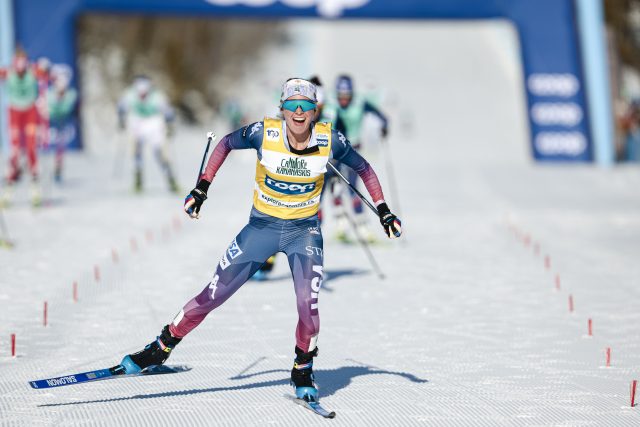
    Jessie Diggins has led the way for U.S. skiing in recent years. But the team’s success is now blossoming to include many other athletes. (Federico Modica/Nordic Focus)

    MINNEAPOLIS — The last time cross-country ski racing’s most elite race circuit, the World Cup, traveled to the United States from Europe, Jessie Diggins was nine years old.

    At the time, in 2001, the fastest American woman on skis was Nina Kemppel, an Alaskan nearing the end of her career.

    It’s hard to imagine the obstacles that athletes of Kemppel’s generation had to face.

    Kemppel trained for most of her career without the support of teammates or a local club. On the World Cup, the U.S. team might have had a one- or two-man paid ski tuning staff, and sometimes, Kemppel had to wax her own skis herself.

    “It was daunting,” Kemppel said by phone Friday. “But amazingly impactful, I think, in shaping my career.”

    The World Cup returns to the U.S. this weekend, with a pair of races in Minneapolis. And the events mark an appropriate occasion to step back and reflect on just how far American cross-country skiing has come since the last time the circuit was here.

    Let’s be honest: The sport is still on the fringes. The average resident of Manhattan or even Michigan would say, “Jessie Who?” if you asked them about the three-time Olympic medalist. But there’s almost no comparison between the U.S. Ski Team of 2001 and the squad that’s gathered to compete in the races here.

    Today’s athletes travel across Europe supported by a paid crew of ski technicians who drive a converted semi trailer to work out of each race weekend.

    An array of regional club teams provide groups of racers with structured training and coaching during the spring, summer and fall.

    A nonprofit organization, the National Nordic Foundation, raises hundreds of thousands of dollars to subsidize expenses that elite racers rack up traveling to training camps and competitions.

    And the Americans currently rank third in the International Ski Federation’s “Nations Cup”—a measure of a country’s success over the course of the season to date—behind Norway and Sweden and just ahead of Finland.

    “I think when I came back to work for the U.S. Ski Team in 2006, we were 15th in the Nations Cup,” Chris Grover, U.S. cross-country program director, said recently. (The ski federation’s statistical database doesn’t reach that far back.)
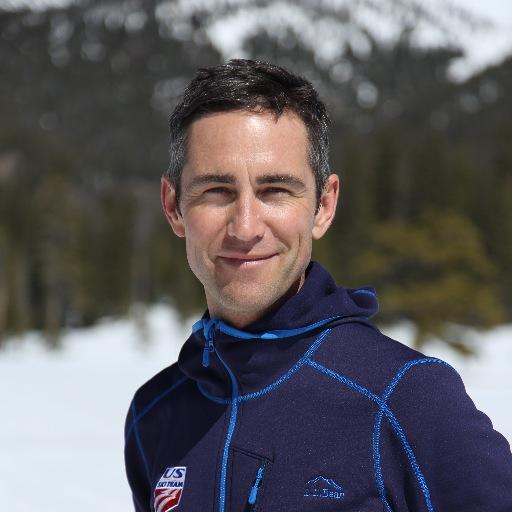
    Chris Grover


    “Consistency, and actually, investment—that’s really what it comes down to,” Grover added. “Gradually expanding the program, letting it be more comprehensive. The club coaches keep getting better, the clubs keep getting stronger.”

    While the past few years’ Olympic medals from Diggins and Kikkan Randall have thrilled fans, perhaps the most exciting thing happening in the U.S. program today is its depth.

    In the past, the Americans have had a few athletes at a time capable of mixing it up on the World Cup, or challenging for the podium. But now, there are multiple athletes of each gender who are contending for top 20s.

    On the women’s side, veterans Diggins, 32, and Rosie Brennan, 35, have become regulars on the podium. Sophia Laukli, who’s just 23, won her first World Cup earlier this year, in a race up the Alpe Cermis in Italy, and she again challenged the sport’s fastest women at a race in Canada last week. Julia Kern, 26, has landed on the podium in previous years and regularly vies for the top 10 in sprinting, her strongest discipline.

    On the men’s side, 24-year-old Ben Ogden was the International Ski Federation’s top-scoring young athlete last year, and had his first-ever top-three World Cup finish in December. That was weeks after another huge talent, 23-year-old JC Schoonmaker, also finished on the podium for the first time, in Sweden. Gus Schumacher, 23 and a former world junior champion, has had his own breakout season, including a fourth-place finish last month.

    The list goes on. And even younger athletes than those have been scoring huge results at the junior level. No fewer than three Americans—Sammy Smith, 18, Haley Brewster, 20, and John Steel Hagenbuch, 22—notched medal-winning performances this month at the world under-23 and junior world championships in Slovenia.
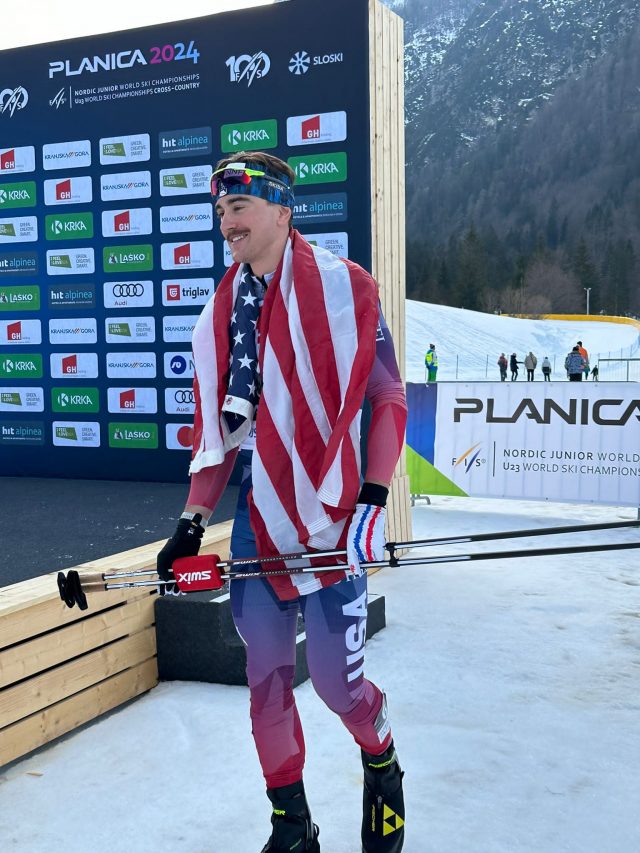
    John Steel Hagenbuch after winning a bronze medal at the under-23 world championships in Slovenia this month. (Greta Anderson)

    “We just have so much more depth, in the women’s side and on the men’s side,” said Andy Newell, the retired U.S. sprinter who’s coaching in Minneapolis this week. “It’s a testament to the ski culture in the U.S.”

    There’s still plenty of work to do. Some of the lower-ranking American athletes who competed on the World Cup in Canada last weekend had to shell out their own money, or resorted to crowdfunding, to cover some of their expenses. Innumerable children are still shut out from participating in the sport because of the steep price of equipment and limited capacity of coaching programs.

    Nonetheless, this weekend’s races—expected to draw some 30,000 fans, with a strong likelihood of a Diggins podium—will be a new high water mark for the sport in America, and a reminder of the enormous progress it’s made in the past two decades.

    “It’s everything, right?” Brennan said at a news conference at the Minneapolis race venue, referring to financial support, professionalism, and teamwork.

    “I find myself telling some of these kids quite often what it was like back in the day. It’s truly insane, what’s happened,” Brennan said. “It’s really important to take a second and think about that. It’s something I try to do periodically, just to gain some perspective. And it allows me to have so much gratitude for all the work that everyone has put in—team staff, and support, and the community—to make something like this happen. And to make us be a team that actually has a chance of winning these races this weekend.”
  • Skiers Take on Mount Marathon, and other Running Race Roundups (Updated)

    Skiers Take on Mount Marathon, and other Running Race Roundups (Updated)

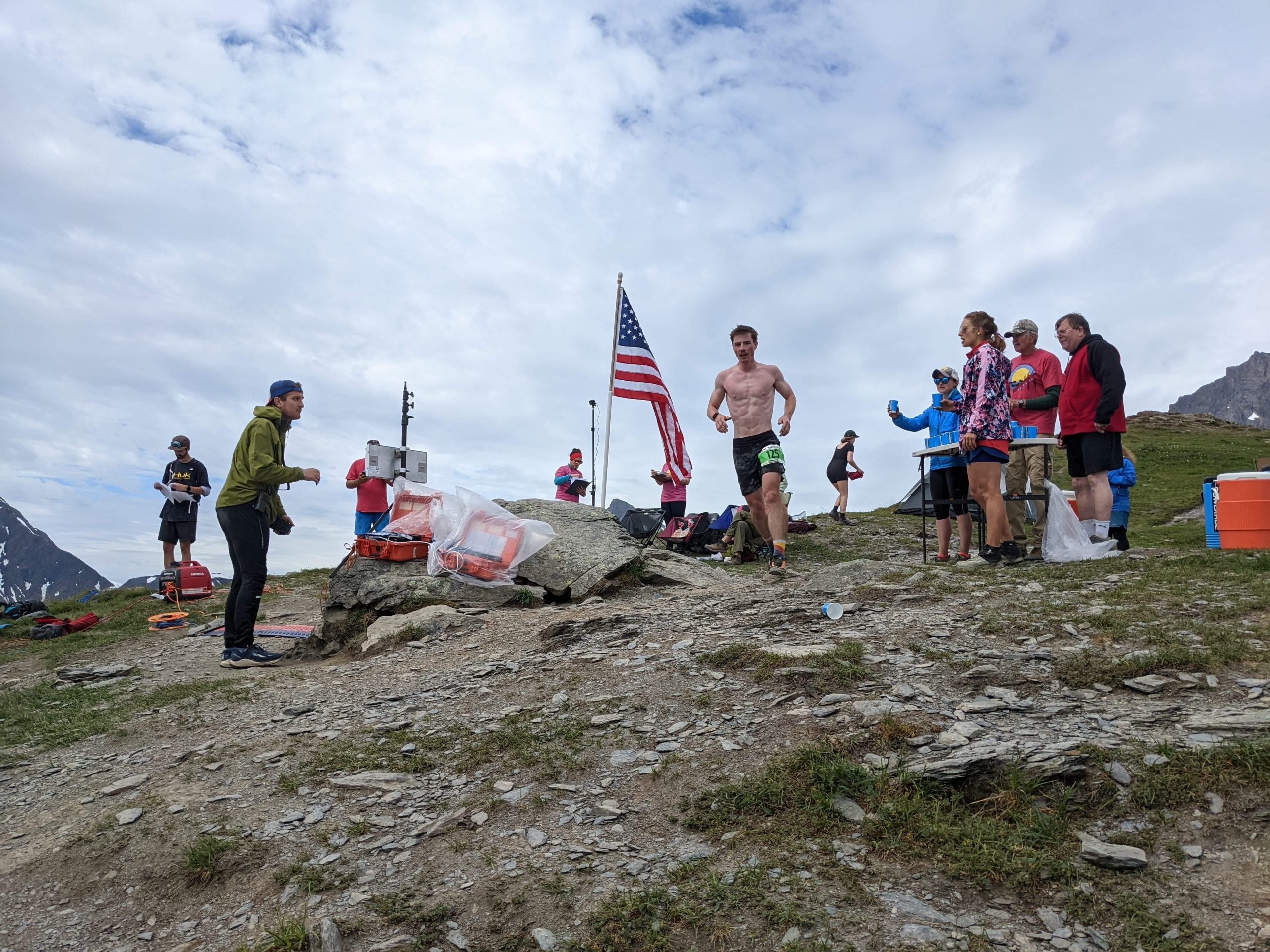
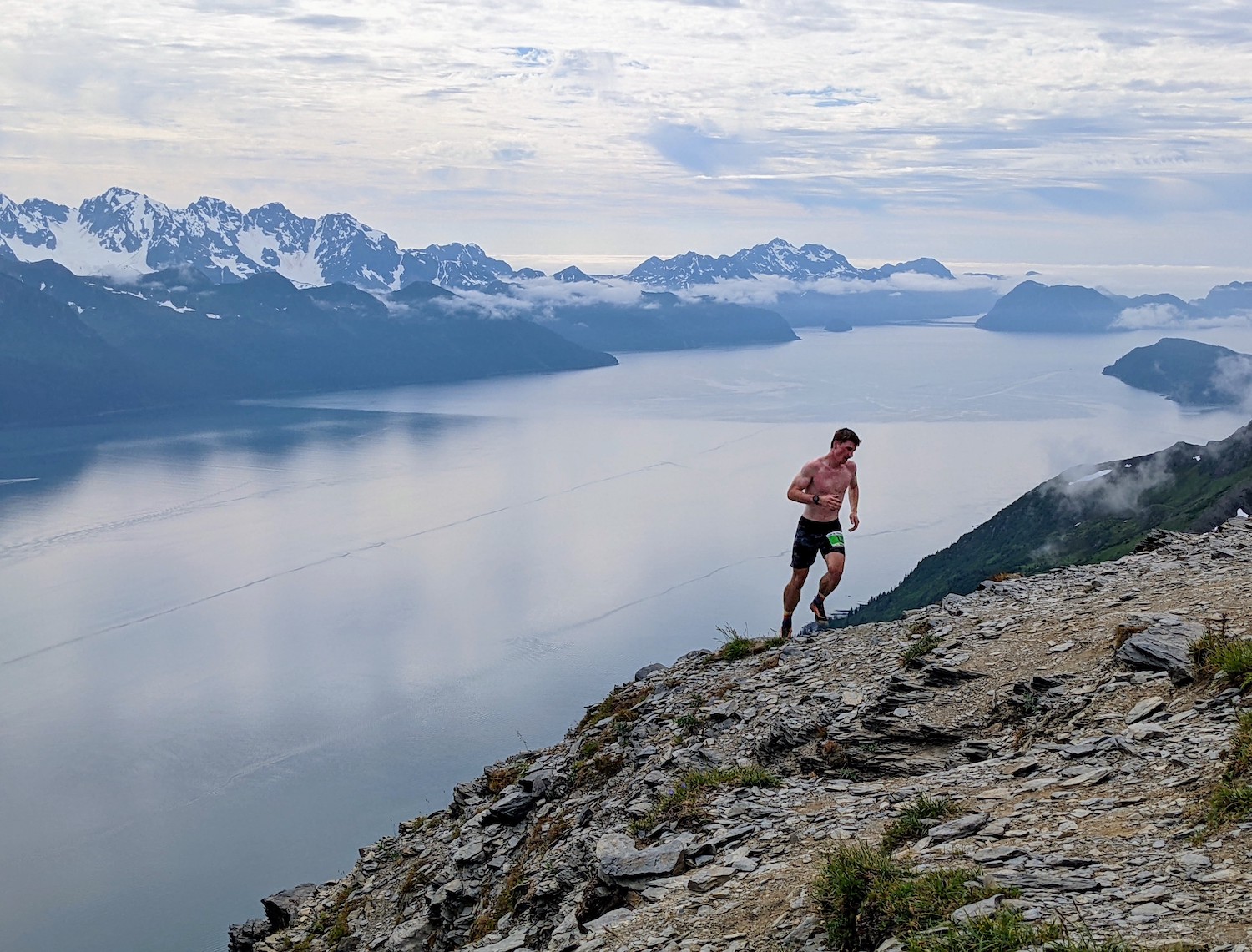
    Thomas O’Harra (APU) approaches the turnaround point in the 2022 Mt. Marathon race above Seward, Alaska. (photo: Anna Engel)

    Occurring annually on the 4th of July, and touted as the toughest 5 k on the planet, the 94th edition of the Mount Marathon race took place this past Monday in Seward, AK. Needless to say, the race is a storied tradition, beginning with its first “official” running in 1915. Over the years, participation has increased to such an extent that these days there are a number of complex ways for race entrants to register, including selection through a lottery system, petition for a race spot, or even buying a bib at a last-minute live auction. 

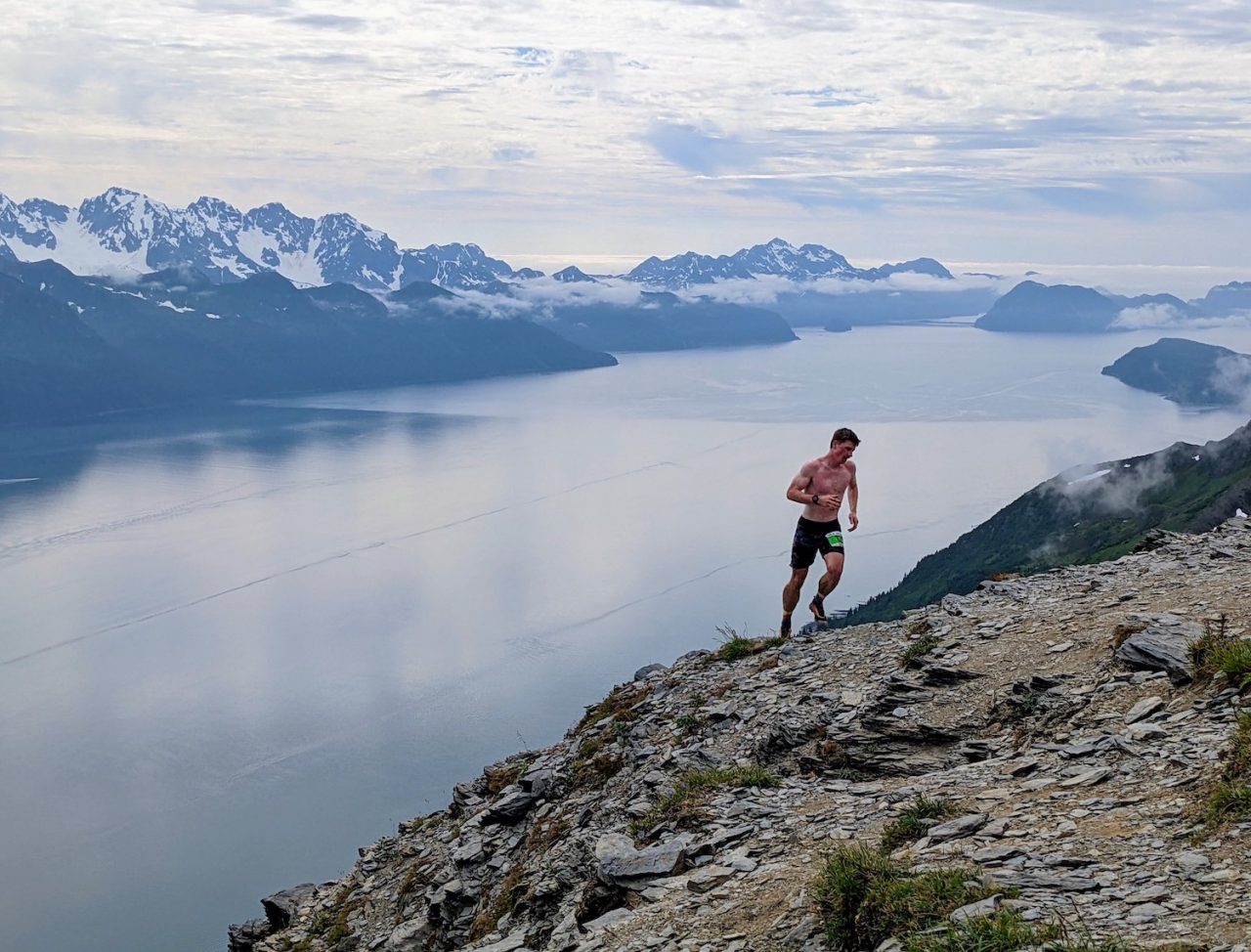
    There is no set course up the mountain itself. Racers start on city streets, at sea level, and run through town for half a mile before starting the climb and heading straight up the mountain. During the climb, athletes cover roughly 2,675 vertical feet of climbing in less than a mile (0.9 to be exact). Once they’ve crossed the timing mat around the false summit at Race Point, they turn around and descend that same steep slope via a slightly different route. A junior boys and girls race is also run, in which the participants only ascend partway up the mountain before turning around.

    Runners bomb down scree back towards Seward and Resurrection Bay after turning around at Race Point. (Photo: Walker Hall)

    This steep and challenging course has seen a number of nordic skiers succeed, including current men’s record holder, David Norris (41:26). Norris has won the race all three times he entered and took the record from mountain master, Kílian Jornet (41:48). Four-time Olympian, Nina Kemppel, holds the record for most race wins at an impressive nine victories. And until this year, three-time Olympian, Todd Boonstra was the oldest victor at age 41. However, at the conclusion of the 2022 edition of Mount Marathon, that crown went to a new champion. 

    The men set off at 11 a.m. local time and Max King of Bend, Oregon, took this year’s victory in a time of 43:37. At the age of 42, he became the oldest winner in the race’s long history. 

    Behind King, APU skier Thomas O’Harra placed second in his Mount Marathon debut. “I really didn’t expect to do as well as I did,” shared O’Harra. “It’s such a strong field, even without David [Norris] racing this year.” 

    Just a few weeks before O’Harra took top spot in the Bird Ridge Hill Climb, so he had confidence heading into the uphill section of Mount Marathon. “I knew that I was in good shape for the climb at least, after Bird Ridge, so I figured that I could be in the top three to the top and then the downhill was a total unknown to me. I practiced it once, a week before the race, but I’ve never raced a downhill like that before so I had no idea what to expect.”

    Thomas O’Harra (APU) rounds Race Point in second place in the 2022 edition of Mount Marathon (Photo: Anna Engel)

    Plummeting down the scree slope, O’Harra said his main goal was to stay on his feet and not get hurt. “I was shocked that I was still in second coming off the mountain and suffered my way down the road to the finish, where I managed to sneak under 45 minutes, which was a kind of secondary, if-it-goes-well goal,” said O’Harra. “[It was a] super fun time though, the closest running race I’ve ever done to the Birkie, and I’m stoked to come back and race again next year!”

    Canadian skier and current Ute (athlete at the University of Utah), Sam Hendry, finished second behind Norris in 2021. This year, Hendry placed 7th with a time of 47:39. Hendry shared that this year’s Mount Marathon “was a bit of a disappointment.” He continued, “I finished second last year and was really hoping for a strong result again. With some busy travel getting up to Alaska, I didn’t have the best preparation and my legs were just a little off.” Hendry raced both the Vertical Kilometer (VK) and 26 k at the Broken Arrow Skyrace mid-June and placed fourth in both, besting King by nearly a minute in the 26 k. Hendry said, “I had some good results there, and plan to add some more running competitions to the calendar for later in the summer. I really enjoy getting some competitions in during the summer and getting to feel stressed and nervous.” 

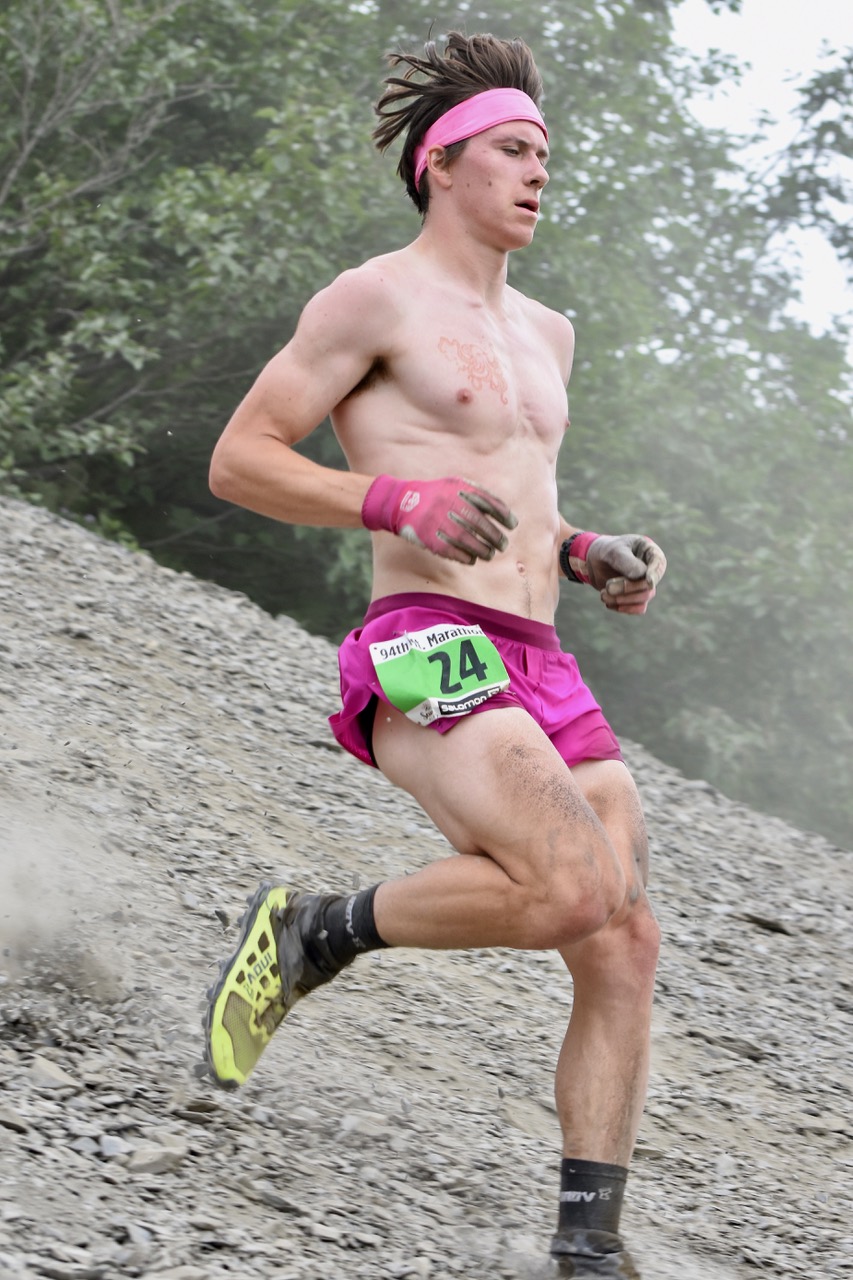
    Michael Earnhart descends a dusty slope towards Seward (Photo: Jim Jager)

    New U.S. D-Team member and APU skier, Micheal Earnhart, finished his day in 15th (49:45). He wrote to FasterSkier, “I wasn’t stoked with my results by any means but I am happy that I’m at a point in my career where top-15 at Mount Marathon can be a bad day.” Earnhart was quick to praise his teammate’s success saying, “My main takeaway was how impressive it was to see my APU teammate, and race rookie, Thomas O’Harra get second place. Definitely a strong day for APU and skiers in general which is always fun to see.”

    Fellow U.S. Ski Team athlete Luke Jager was shortly behind Earnhart in 18th.

    With the men’s race concluded, the focus turned to the women, who started at 2 p.m. local time. (The men and women now race in the flagship afternoon slot in alternate years.) Breaking the seven-year-old women’s record, Allie McLaughlin of Colorado earned the victory in a time of 47:09. Previously held by Swedish runner, Emelie Forsberg, with a time of 47:48, McLaughlin created a margin of 39 seconds in her favor. 

    Rosie Frankowski, who finished 4th in 2021, and is perhaps one of the fastest climbers out there, came in sixth this year (53:19). Racing Mount Marathon for the first time, newly named U.S. Ski Team A-Team member, Novie McCabe placed 8th (56:27). About her race, McCabe shared, “Mount Marathon was crazy! So hard, but a very cool experience for sure. I’m pretty happy with it. I was nervous about the downhill and was honestly pretty happy with myself for just doing something a bit out of my comfort zone.” 

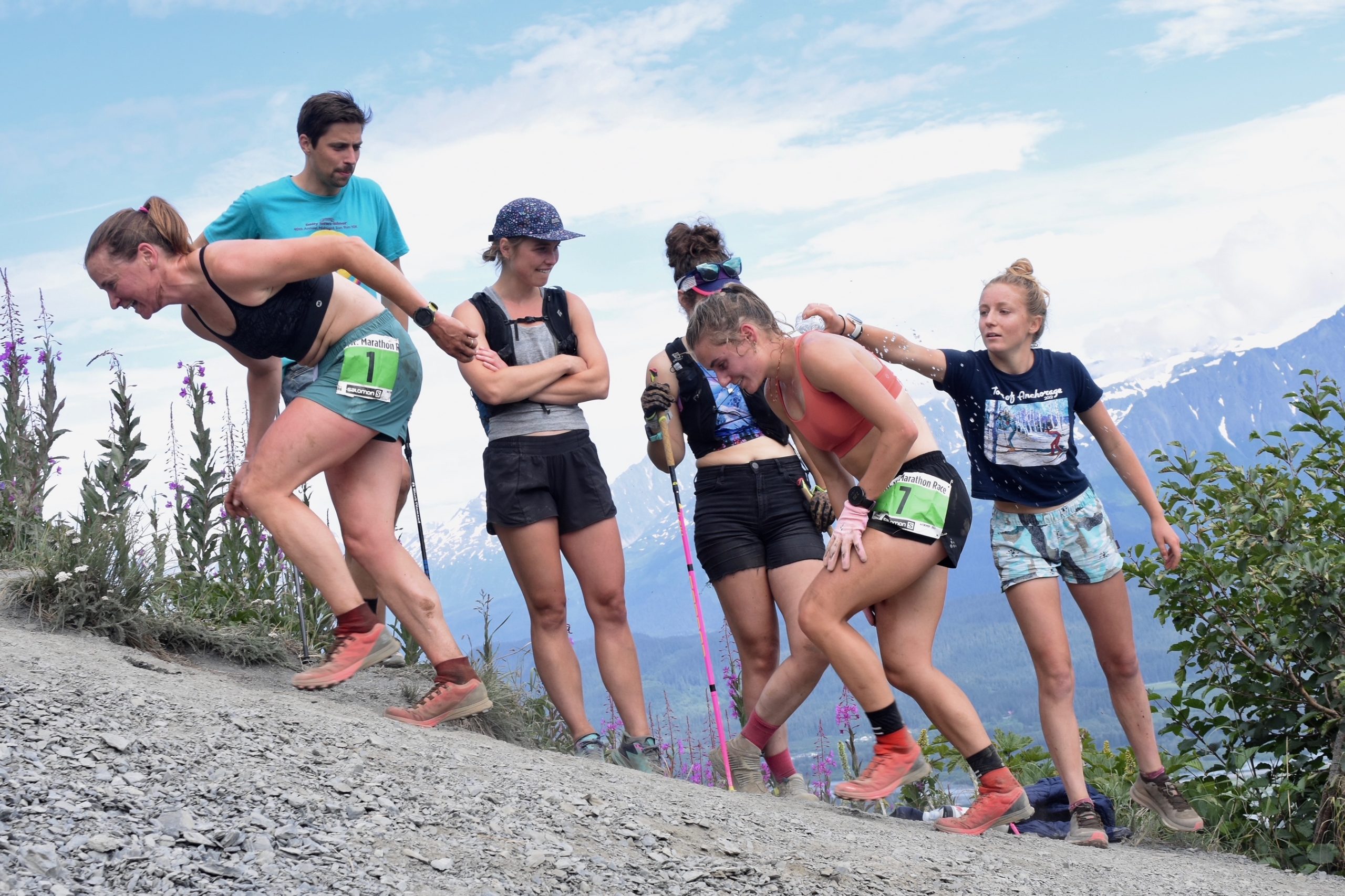
    After racing the junior girls event, Dashe McCabe waters her sister, Novie (bib #7), on the climb (Photo: Jim Jager)

    Kendall Kramer of UAF finished just outside the top-ten in 11th position (57:12). Kramer finished 9th last year (56:50) and was the junior girl’s race champion in 2018 (34:05). 

    Full race results of all the Mount Marathon events can be found here. 

    In other racing news, U.S.A. Track and Field Mountain Running Championships (USATF) in Wilmington, NY at the beginning of June saw two 2022 Beijing Olympians competing. Sophia Laukli finished third in a time of 1:29:03., and Caitlin Patterson came in sixth (1:35:52.3). Results for that event can be found here. 

    The Loon Mountain Race hosted Vertical U.S. Mountain Championships on July 10th, which a number of nordic and biathlon athletes attended. Alex Lawson representing Craftsbury Green Racing Project finished third, and posted the second fastest time on the “Upper Walking Boss,” a 40% grade ski hill for a half-mile at the end of the race.

    Jake Brown (also of CGRP) had the second fastest time on the “Upper Walking Boss” and finished 9th overall. Full results for the event can be found here.

    The Cirque Series mountain race circuit kicks off this coming Saturday (July 16th) at Brighton, UT. With a schedule of six U.S. based races taking place over the next few months nordic ski fans should keep an eye out for familiar names near the top of the results sheet.

  • Opening Acts in PyeongChang: USST Press Conference and Catching Up with Sargent

    (From left to right) U.S. Ski Team members and 2018 Olympians Rosie Brennan, Kikkan Randall, Sadie Bjornsen, Jessie Diggins, Erik Bjornsen, and Ida Sargent posing after their intro press conference on 2-7-18. (Photo: Flyingpointroad.com)

    FasterSkier would like to thank Fischer Sport USA, Madshus USA, Concept2, Boulder Nordic Sport and Swix Sport US for their generous support, which made this coverage possible.

    ***

    PYEONGCHANG, South Korea — Sitting one-by-one across the stage dressed in what appeared to be the brightest of bright white tops, Kikkan Randall, Jessie Diggins, Rosie Brennan, Ida Sargent, and the Bjornsens (both Erik and Sadie) held court for the attending media Wednesday afternoon at PyeongChang’s mountain cluster media center. All athletes are members of the U.S. Ski Team (USST) and 2018 Olympians.  

    Randall, the seasoned vet, fielded a spectrum of questions centered around her role as the foundational piece of the U.S. women’s cross-country-ski juggernaut. It’s the Anchorage-based skier’s fifth Olympic Games.

    Back in 2002, when Nina Kemppel competed in her last of four Games for the U.S. cross-country ski team, Randall, as part of the same 2002 Salt Lake squad, was beginning her own five-Olympiad odyssey. Sixteen years later, Randall could reflect on being, at times, a lonely success story on the women’s side, to the present, when on the most recent World Cup weekend in Seefeld, Austria, two U.S. women scored wins: Sophie Caldwell in the freestyle sprint, Diggins in the 10 k mass start skate.

    Jessie Diggins and the media swarm during her intro press conference at the 2018 PyeongChang Olympic Games. (Photo: Flyingpointroad)

    As much as the press was there to see a champ like Randall, they also were captured by Diggins’s spunk and verve. Erik Bjornsen took it all in after stating in his intro that this was his first press conference. He proceeded to take out his smartphone and unabashedly capture a few panning video shots of the scrum of reporters there to learn more about the U.S. cross-country team poised to make history in South Korea.

    For those who follow the sport and in particular the U.S. women, much was said about the “team” and their devotion to it. But each athlete also spoke of their personal goals and ambitions.

    After the main press conference, when athletes took one-on-one questions, FasterSkier had an opportunity to check in with Brennan, Erik Bjornsen and Sargent.

    2018 is Brennan’s first Olympics, yet she arrives with a broad scope of World Cup experience to draw from. She scored two top-20’s in successive World Cup 10 k freestyle races in Davos, Switzerland and Toblach, Italy. She nailed a 15th place in the Tour de Ski’s opening skate sprint. It was a solid Period 1 on the World Cup for Brennan.

    Much has been written about the U.S. women’s collective prospects in the 4 x 5 k relay. That team, which could include more names than the four-member team is alloted, is still not set in stone.

    Asked if she would be approaching her first race opportunities as a demonstration to the coaches of her overall fitness, Brennan was anything but coy.

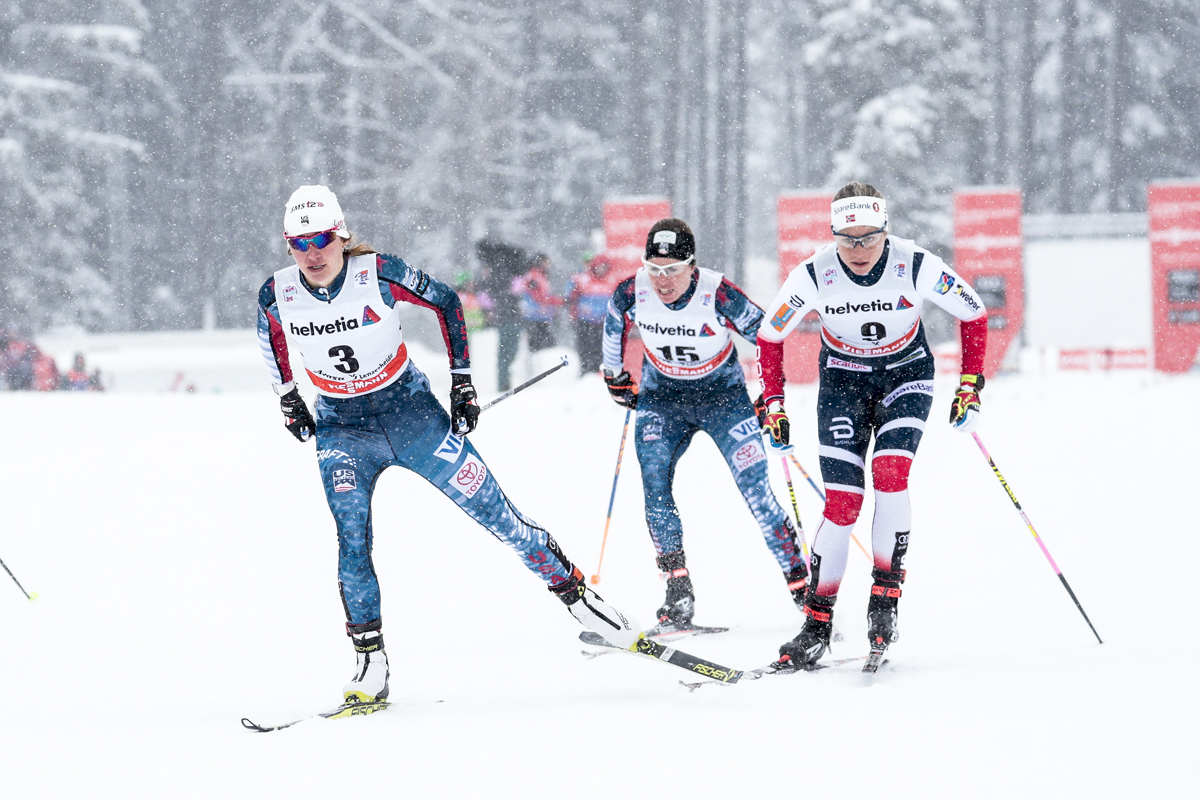
    Sophie Caldwell (3) leading her U.S. teammate Rosie Brennan (15) and Norway’s Astrid Uhrenholdt Jacobsen in the quarterfinal of the women’s freestyle sprint at Stage 1 of the 2018 Tour de Ski in Lenzerheide, Switzerland. (Photo: Fischer/NordicFocus)

    “I have been struggling the last few weeks since the TdS with my own racing,” the 29-year-old Brennan said. “And so at this point I am just hoping to had enough time to turn my form around and to race better myself. I obviously don’t want to be part of a relay team that I’m going to let down. So I want to be in my best shape before I even think about that. That is one of my goals and I hope I’ve had some time to turn my shape around. But I think at this point, I am looking for every opportunity to race that I can get to show that I have turned this around and that I am ready and then will start looking at that relay spot.”

    Most recently, Brennan struggled in Seefeld’s 10 k skate mass start, finishing 53rd. Brennan also after completed the Tour de Ski (TdS), which concluded Jan. 7. Understanding that maintain high level fitness on the World Cup is a challenge few master, Brennan said the TdS had sapped her energy.

    “Just a little more fatigue than I expected from the Tour despite the fact that we only had six and half races,” Brennan acknowledged. “There were a lot of weather events so everything was a little more energy intensive and a little hectic. I came in with a lot more training than I have in the past, I trained a little harder during Period 1 in hope to be sharp for the Olympics, and I think I didn’t respect that as much as should have and was a little tired afterwards. And also fighting a little illness and things like that. I am feeling a lot better now and I hope a little rest is all I needed.”

    For Erik Bjornsen, who is experiencing his second Olympics after racing three individual events and the 4 x 10 k relay in Sochi, these Games could become a stepping stone. In Seefeld, Bjornsen placed ninth in the 15 k mass start skate. If Bjornsen’s positive energy in the press conference was any indication, he might be trending into rarefied air on the men’s side.

    “I think I could have some good performances,” Bjornsen, 26, said. “I don’t have the pressure that everybody else does, but I do have have the potential to put in some really solid results.”

    (Left to right) USST members and 2018 Olympians Ida Sargent, Erik Bjornsen and Kikkan Randall during thier intro press conference on Wednesday at the PyeongChang Games. (Photo: Flyingpointroad)

    Last year at the Nordic World Championships in Lahti, Finland, he and teammate Simi Hamilton placed fifth in the team sprint. In PyeongChang, the course remains championship-tough, but athletes are more exposed to the elements as the tracks were built on a hilly golf course.

    “Of course, I’m really excited for the team sprint,” Bjornsen said. “And these courses, I’ve been out there once, it is a little early to say. It seems good. It is a golf course, but there are some big climbs, which I like. I like hard-work sections but there are also some flatter sections, which suits a big guy like myself. And then having wind, I was joking before, it should be good for the guys that are chasing.”

    Then let’s talk about tough and gritty. Topping the list would be Sargent. If you missed this, here’s the short version. Back on Jan. 27, prior to her start in Seefeld’s skate sprint qualifier, Sargent fell and broke her thumb.

    “It was a complete clean break,” Sargent, 30, stated. “Every pole plant was very painful. But actually, I felt like my brain was a bigger a detriment because it happened 15 minutes at most before the start and I knew that something was wrong. I was thinking the whole time, ‘This is bad, this is bad.’ I could feel the pain and was thinking that something very serious was going on.”

    On her literal whirlwind of treatment, Sargent flew to Vail, Colorado, for surgery on her thumb at The Steadman Clinic.

    “I had a plate inserted and seven screws securing this plate,” Sargent explained during a follow-up phone interview on Thursday. “So good hardware in there, and an amazing surgeon. My surgeon was very confident; he has done this before, and he knew that the plate was extremely secure so that he wasn’t at all concerned about it moving or not me not having  the stability. I think he ended up using a slightly larger plate just to make sure it was plenty secure.”

    The next morning, post-surgery, Sargent was cleared for active recovery to increase her mobility and bring down the swelling.

    “Two days later I was skiing, doing some one pole and some two pole,” Sargent added. It was incredible to me that they can take a clean break and fully stabilize it.”

    Sargent was clear when asked if there’s anything she cannot do.

    “Nope,” she said. “The only restriction is just personally managing the pain when I ski. The bone is not fused together yet, that eventually will happen. I also obviously have the trauma of having screws put into the bone and there is the swelling, but that has been going down. I have been working with Zuzanna Rodgers here in Korea. We have working on some exercises and some massage to reduce the swelling.”

    Ida Sargent (5) leads her semifinal heat and teammates Jessie Diggins (4) and Sophie Caldwell (9) around a corner at this season’s Davos World Cup. (Photo: Reese Brown / U.S. Ski & Snowboard)

    It is cold here in PyeongChang. It’s a dry cold, but when temps are slow to budge from the single digits and eventually warm to the low teens, cold is cold. Most people with surgical procedures requiring the insertion of metal plates claim cold temps can complicate their sensations. Here in Korea, that seems not to be a problem for Sargent.

    “I was talking with someone yesterday who has a plate in their hand as well, and they feel the cold,” Sargent said “I don’t think I feel it because I still have a fair amount of swelling on top of the plate at the moment. So I think that that is providing some increased insulation. That is the bonus of that maybe. I haven’t felt the cold from it.”

    Sargent stated she was scheduled to race next Tuesday’s classic sprint.

    “As long as I am feeling like my thumb is good to go and I feel confident in my ability to ski well with it, I’ll be racing that,” Sargent explained. “The sprint is on Tuesday, so I still have five days or something at this point That is the plan right now and putting the full focus on being recovered and ready for that day.”

    The 2018 PyeongChang Olympics begin Saturday with the women’s 15 k skiathlon.

  • 2011 Tour of Anchorage

    2011 Tour of Anchorage

    Tour of Anchorage – 2010

    In its 24-year existence, the Tour of Anchorage cross-country ski race, hosted by the Nordic Skiing Association of Anchorage, has grown from just a few hundred participants to almost 2,000 ski- enthusiasts—making it one of the largest ski races in North America. This year’s event, slated for March 6th, will start at the foot of the Chugach Mountains and wind through beautiful birch and aspen forests, around the University of Anchorage campus, through Anchorage’s midtown and along the shores of Cook Inlet to the finish line at Kincaid Park’s world-class Nordic center. The Tour includes distances and waves for all levels of skiers including world class racers. Distances include 25K freestyle, 25K classic, 40K freestyle, and 50K freestyle divisions.

    With hundreds of kilometers of groomed trails weaving their way through town, Anchorage’s winter-sports community is truly unique. During the first week of March Anchorage transforms itself for a festive celebration of winter with the annual Fur Rondy festival, the ceremonial start of the 1,000-mile Iditarod Dog Sled race and, finally, the Tour of Anchorage.

    Come ski the Tour of Anchorage on March 6th and see why this winter city has developed top Olympic Nordic skiers Kikkan Randall, James Southam, Nina Kemppel and Holly Brooks. Please visit www.tourofanchorage.com for more information. Register by January 1st and save!

    2007 Tour of Anchorage