From the FasterSkier archive — posts syndicated from athletes’ and coaches’ own blogs between 2004 and 2012, kept online as published. Current coverage is at fasterskier.com.

Tag: Nina Seeman

  • The University of Utah Claims the 2025 NCAA Championship

    The University of Utah Claims the 2025 NCAA Championship

    This article was made possible through the generous support of our voluntary subscribers.  If you would like to see more articles like this one, please support FasterSkier with a voluntary subscription.  

    The sun came out on Saturday at Dartmouth’s Oak Hill Ski Center in Hanover, New Hampshire. The best collegiate skiers in the country gathered in Hanover, New Hampshire, for a week of racing at the NCAA Championships. The final races of the week were the nordic distance races, 20km freestyle for both the men and women. University of Utah’s Joe Davies skied away with the national title on Saturday, much like how his team gapped the competition.

    Though Utah’s nordic and alpine teams combined points ultimately created an unclosable gap, the championships started off close. In the first nordic races, the 7.5km men’s and women’s classic race, it was the host school Dartmouth who had the top racers.

    Dartmouth College’s John Steel Hagenbuch skied to a 15 second victory on his home trails in the 7.5 k Classic at the NCAA Championship on Thursday. (Photo: Tobias Albrigtsen)

    In the men’s 7.5km classic race, Dartmouth’s John Steel Hagenbuch won by 16 seconds over UVM’s Finn Sweet. It was his second NCAA title, having won the 7.5km skate competition in 2024. Steel Hagenbuch’s teammates Luke Allen and Cooper Camp finished 4th and 9th, respectively. They combined for 93 points, besting Utah by nine points. Rounding out the podium was Utah’s Joe Davies, who just days before the competition was in Trondheim, Norway, racing in the World Championships skiathlon. Competing under the Great Britain flag, he finished 24th, 1:31.8 behind Johannes Klaebo.

    Utah earned their first individual win of the 2025 NCAA championships when Erica Laven won the 7.5km women’s classic race. Annie McCulgan of UVM finished second and Dartmouth placed three in the top eight. Jasmine Drolet, Ava Thurston and Nina Seeman finished third, fourth and eighth, respectively. The Dartmouth women tallied 88 points for a slim two-point edge over Utah.

    Utah’s Erica Laven took home the women’s 7.5 k Classic individual title by 11 seconds on Thursday. (Photo: Tobias Albrigtsen)

    As the competitions continued at the Dartmouth Skiway, Utah’s men’s and women’s alpine teams both scored the most points in the Giant Slalom. They opened up a sizable lead that would be incredibly difficult for the trailing Dartmouth and University of Colordao to close.

    After Davies took control of the men’s 20km freestyle on Sunday, that lead became impossible to catch.

    Utah’s Joe Davies took command of the Men’s 20 k Freestyle, skiing to a 1:10 victory and leading Utah to the NCAA Championship. (Photo: Tobias Albrigtsen)

    Oak Hill has undergone major renovations in the past few years, and the newly homologated races loops were on full display during the championships. The configuration is such that fans can see racers in multiple spots, so as the laps ticked away during the 20km, fans watched as Davies pulled farther and farther away from Steel Hagenbuch, ultimately winning by over a minute. It’s his second NCAA title. His first was in 2023 at the 10km skate in Lake Placid, when he was a sophomore racing for UAF. That year, Steel Hagenbuch finished second.

    Having Davies and Steel Hagenbuch leave the championship with one win each is fitting. They’ve dominated their respective sides of the country and met at NCAA’s to jockey for podium positions over the last couple of years – all while benefitting from the relatively new mentality that allows collegiate skiers to compete in both college races and on the World Cup, instead of having to choose between domestic and international competition.

    For Steel Hagenbuch, it’s extra sweet to have gotten a win at home. Though he grew up in Idaho, he comes from a family of Dartmouth athletes and has added greatly to that legacy.

    After the men finished, the competition was still close for who would finish runner-up in the team competition: Dartmouth had a 14-point lead over Colorado.

    Erica Laven (UU – left) and Kendall Kramer (UAF – right) distanced themselves from the rest of the field during the NCAA Championship Women’s 20 k Freestyle. (Photo: Tobias Albrigtsen)

    It didn’t take long for Kendall Kramer of UAF and Erica Laven of Utah to create a gap over Colorado’s Tilde Baangman and Denver’s Lea Wenaas. Behind them was a dense chase pack. But once Kramer decided to go, she was gone. She skied in total control, her crisp tempo unchanging over Oak Hill’s rigorous climbs. She finished 35 seconds ahead of Laven, taking a bow as she came across the line. This has been an impressive year for Kramer in the 20km: In February, she won the 20km at U.S. Nationals in Anchorage.

    Eventually, Kendall Kramer (UAF – right) decided it was time to make a move on Erica Laven (UU – left), skiing to a 35-second victory for the individual Women’s 20 k Freestyle NCAA Championship. (Photo: Tobias Albrigtsen)

    After all had finished, the points were tallied. Colorado, who won the NCAA team title in 2024, had two women in the top 10 in the 20km to Dartmouth’s one. They scored 20 more points than Dartmouth in the women’s race to overtake them and finish in second for the week-long team competition.

    The NCAA Championships are dominated by the Western schools – Utah has now won six of the last seven championships. So to see Dartmouth finish runner-up on their home turf, in a star senior’s year, on that sugary, spring East coast snow, would’ve felt like a fitting end to this story. But even though it’s not the result they wanted, it takes nothing away from what was accomplished at Oak Hill, and the successful championships they hosted there.

    “The transformation of Oak Hill is a game-changer for us,” Dartmouth head coach Cami Thopmson told FasterSkier via email. To have good training on reliable snow less than 2 miles from campus makes a huge difference. We knew how the course would ski, where it would be particularly challenging, what line to take, and what places would be best to make a move on the field. Our athletes used that knowledge to their advantage.”
    There was lots of great energy at Oak Hill for the final day of the 2025 NCAA Championship. (Photo: Tobias Albrigtsen)
    “We are really proud of the team, it is tough to manage the expectations and all the extra energy that goes into racing at home, especially with final exams looming.  The seniors have had this week to look forward to since they showed up on campus four years ago. I think it far exceeded their expectations,” Thompson told FasterSkier via email.
    “We had a very solid finish in the end, but it is hard to go from leading at one point to 3rd with only a 5-point gap. That is sport though and we know that every one of our athletes raced their hearts out.”

    Complete NCAA Championship Results


  • In Bozeman, Jim Bridger Rollerski Races Look to Bring Summer Competition to the West

    In Bozeman, Jim Bridger Rollerski Races Look to Bring Summer Competition to the West

    Logan Diekmann, Nina Seeman win on the streets of Bozeman, and BSF’s Rollerski races look to harness the momentum of summer training out West. Featuring Results and Video Highlights.

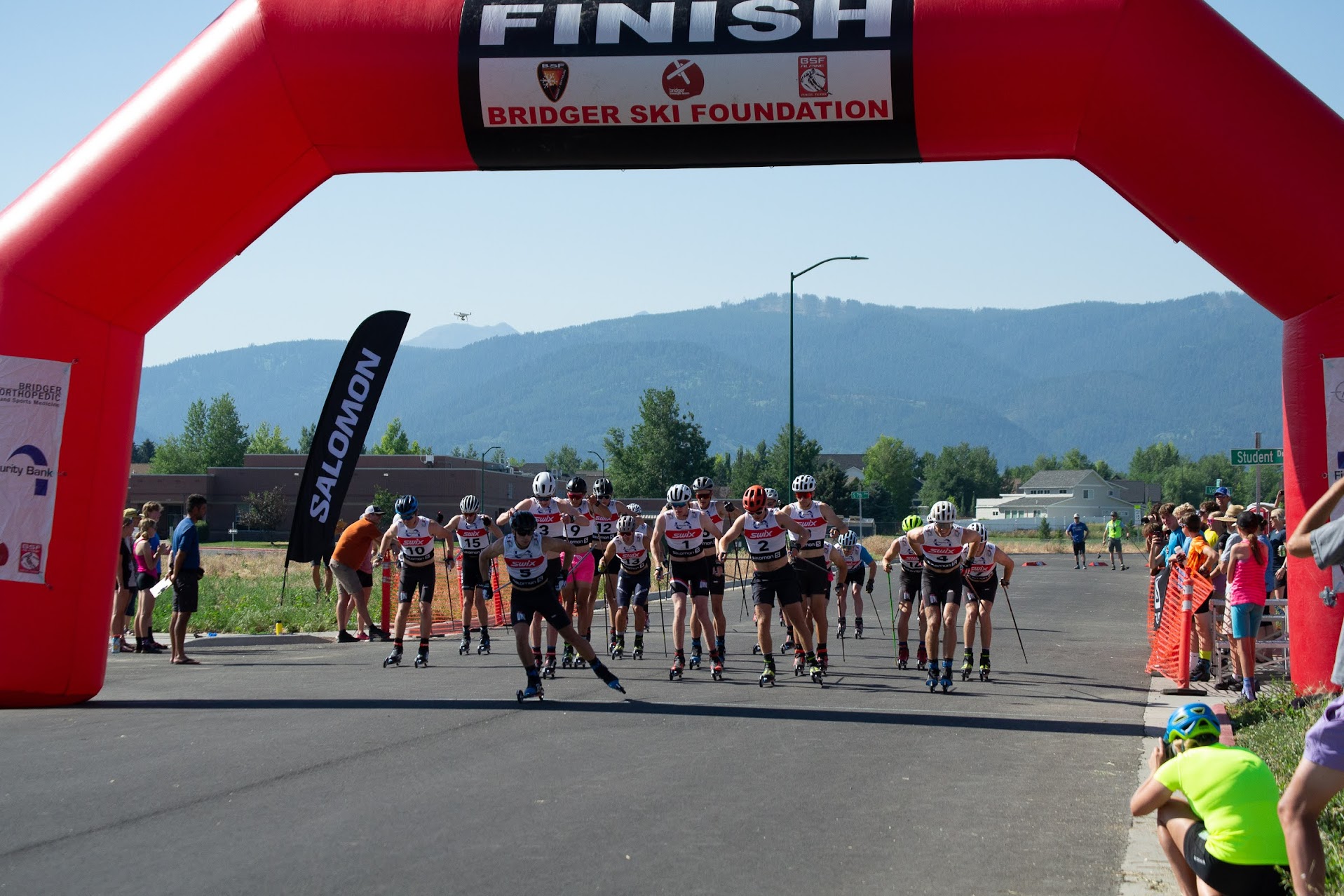
    Men’s Open field rolls out at last weekend’s Jim Bridger Rollerski Races, held in Bozeman, MT (Photo: Jenny White/BSF).

    BOZEMAN – Jim Bridger was a mountain man. One of those figures born firmly entrenched in the old ways back East, before he split for the Mountain West for something new. A character to chart a theme pervasive through the American vision of the West – that ability to make something new and pursue it with everything you got.

    It’s a tortured and uncomplicated metaphor (Bridger was one of the first white men into the intermountain West, but of course, wasn’t the first person to exist there). But if you were going to distill that character, and tap in purely to that “Pioneer, O Pioneer” spirit, you could do worse than the Bridger Ski Foundation (BSF) Pro Team Head Coach Andy Newell.

    For most of the 21st century, Andy Newell was a metonym for the very top of American men’s skiing. Through four Olympics, 220 World Cup starts, and breakthroughs every step of the way, Newell was there, making the in-roads that a generation of men’s skiers is now picking up on. Newell retired from racing in 2018, and in just four years has quickly transitioned his ebullient energy into setting up a coaching consulting business, Nordic Team Solutions, expanded BSF’s Nordic programming to include a successful Pro Team, and made Bozeman’s mountains and plains a popular training ground for collegiate athletes during their summers.

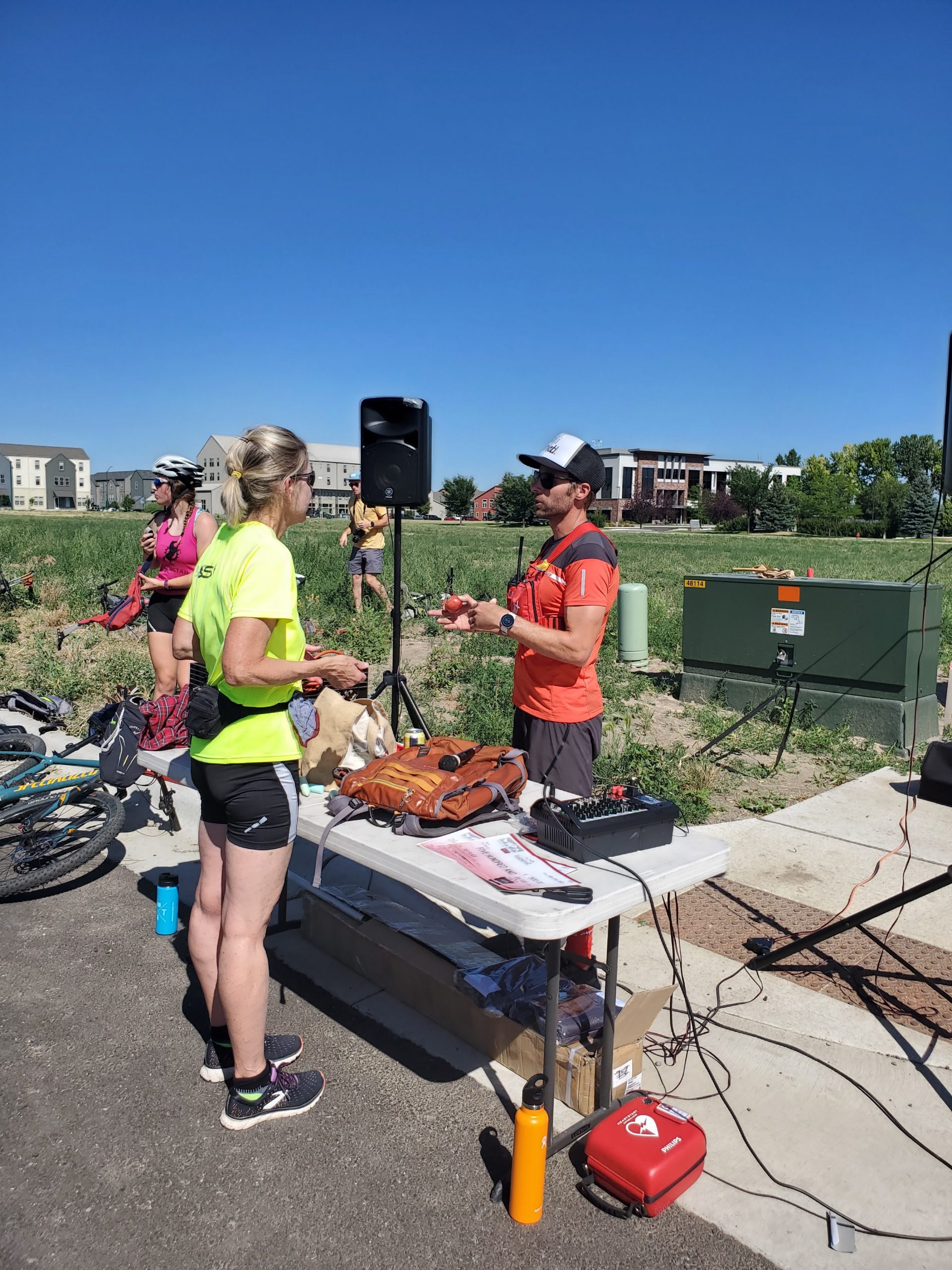
    Andy Newell in his latest roll as Race Director last Saturday in Bozeman. (Photo: Jenny White/BSF).

    Long home to an established nordic community with Montana State’s NCAA program and BSF, the efforts of Newell and the athletes he works with have been based in an effort to re-think and try out approaches to skiing development, training, and culture in Bozeman, and in the larger U.S. Ski Community. And in the latest example, that meant looking at a nearly 30-year-old BSF-held running race and saying, why not add a rollerskiing event?

    The 29th annual Jim Bridger Trail Run last weekend then, also marked the 1st annual Jim Bridger Roller Ski Races. And the impetus, as for many things with Andy Newell, was to simply go all in on nordic in the pursuit of promoting the sport. “I’ve always loved racing the big European rollerski races like Blink and Toppidrettsveka. I thought this would be a fun opportunity to pair a legit rollerski event with a trail run and host them back-to-back. Having races like this is a great development tool for athletes” said Newell, in an email to FasterSkier. The races also acted as a fundraiser specifically for the BSF Pro Team, which has been one of the fastest growing and competitive programs in the U.S. since it was founded. Something that Newell talked about at length with FasterSkier earlier this summer.

    Andrew Morehouse, BSF’s Nordic Program Director also added that the impulse to bring rollerski races inspired by those in Scandinavia to the United States is one that has been successful in the East and Midwest, but hasn’t found its way out West quite yet, “We’ve seen the success of roller ski races in the East and have talked within the Intermountain Division of how we can create a meaningful roller ski race series for our athletes in the West. I think this race, along with the Schutzenski Festival in Utah (to be held at Soldier Hollow during the US Ski Team’s Fall Camp there this October), is a great step towards that goal.”

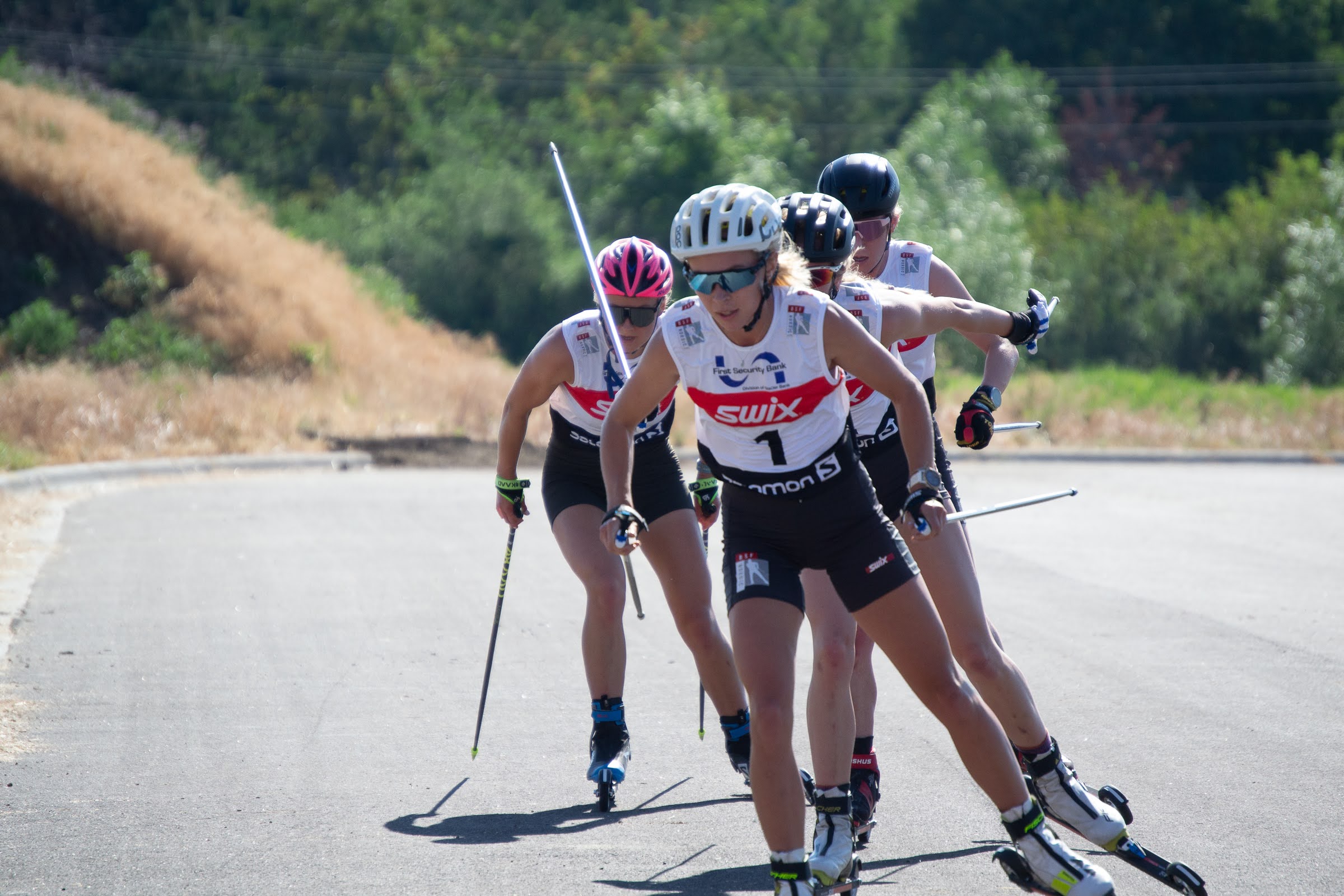
    The Women’s Open field goes into a corner during their 12 k race in Bozeman last Saturday. (Photo: Jenny Smith/BSF).
    Inaugural Jim Bridger Rollerski Race Report

    In the pursuit to bring top-level rollerski racing to the hot, dry, and high Mountains out west, BSF’s efforts were a success.

    A field full of BSF’s Pro and Comp (U14-U20) program athletes, along with racers from across the Intermountain West and a strong contingent of collegiate racers sure to show up on Eastern Carnival result sheets this winter made for an incredibly competitive and robust field.

    They raced distances of either 6 k for the U16/U18 fields, or 12 k for U20/Open field on a 1.5 k loop that took them around the streets south of the Montana St. campus in Bozeman. The design was in line with the vision of promotion for the event, “high speed, multi-lap races right in [town] to make it spectator friendly and exciting,” said Newell. As with many roller ski events, racers also were provided matched skis, in this case from sponsors Swix and Solomon.

    All races were skate, and with relatively flat terrain on course, that made for an event in which there was hardly a V1 to be seen. This was a day for V2, and a great opportunity for athletes to work theirs at max-effort next to other skiers and see where they can tweak their power application and tempo. Rollerski races, by design, are meant to be a stepping stone in training on the way to next winter, after all.

    The early going in both the men’s and women’s open field were tight-packed affairs. Racers hemmed and hawed through tight-corners to bring the top-end of the field together, until slowly but surely, those lead packs became smaller and smaller.

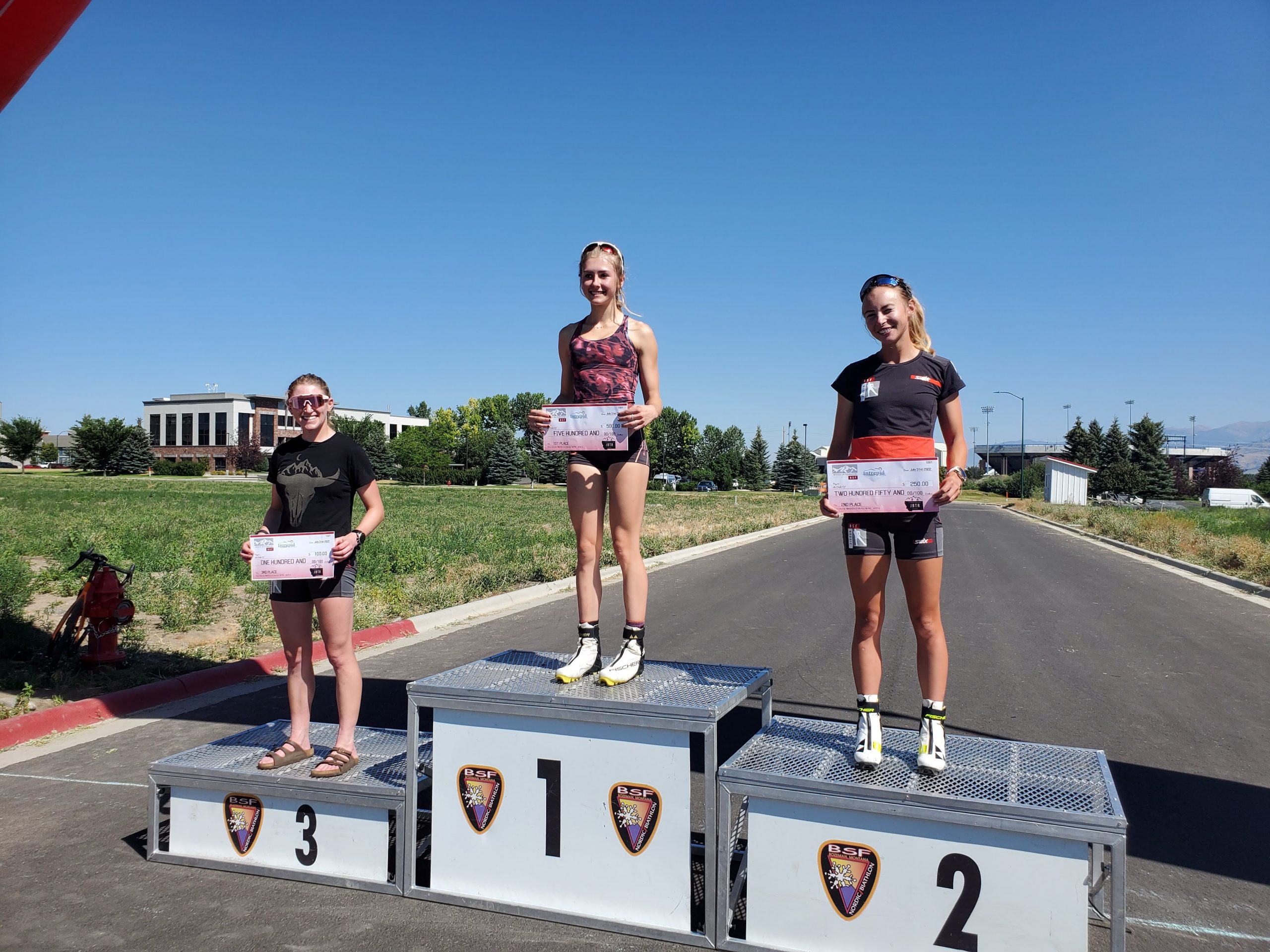
    In the women’s field, the last couple laps saw a group containing Dartmouth College (DAR) skier Nina Seeman, along with BSF Pro members Mariah Bredal and Sarah Goble gain an advantage. There was nothing between them until the race’s end, when Seeman and Bredal broke for a final sprint, and Seeman came away the winner (27:58). Bredal finished second (27:59), with Goble coming in shortly after (28:07) to complete the podium.

    Mariah Bredal (BSF) leads the Women’s field. Bredal finished 2nd overall to Nina Seeman (Dartmouth), tucked in 2nd place here. (Photo: Jenny Smith/BSF).

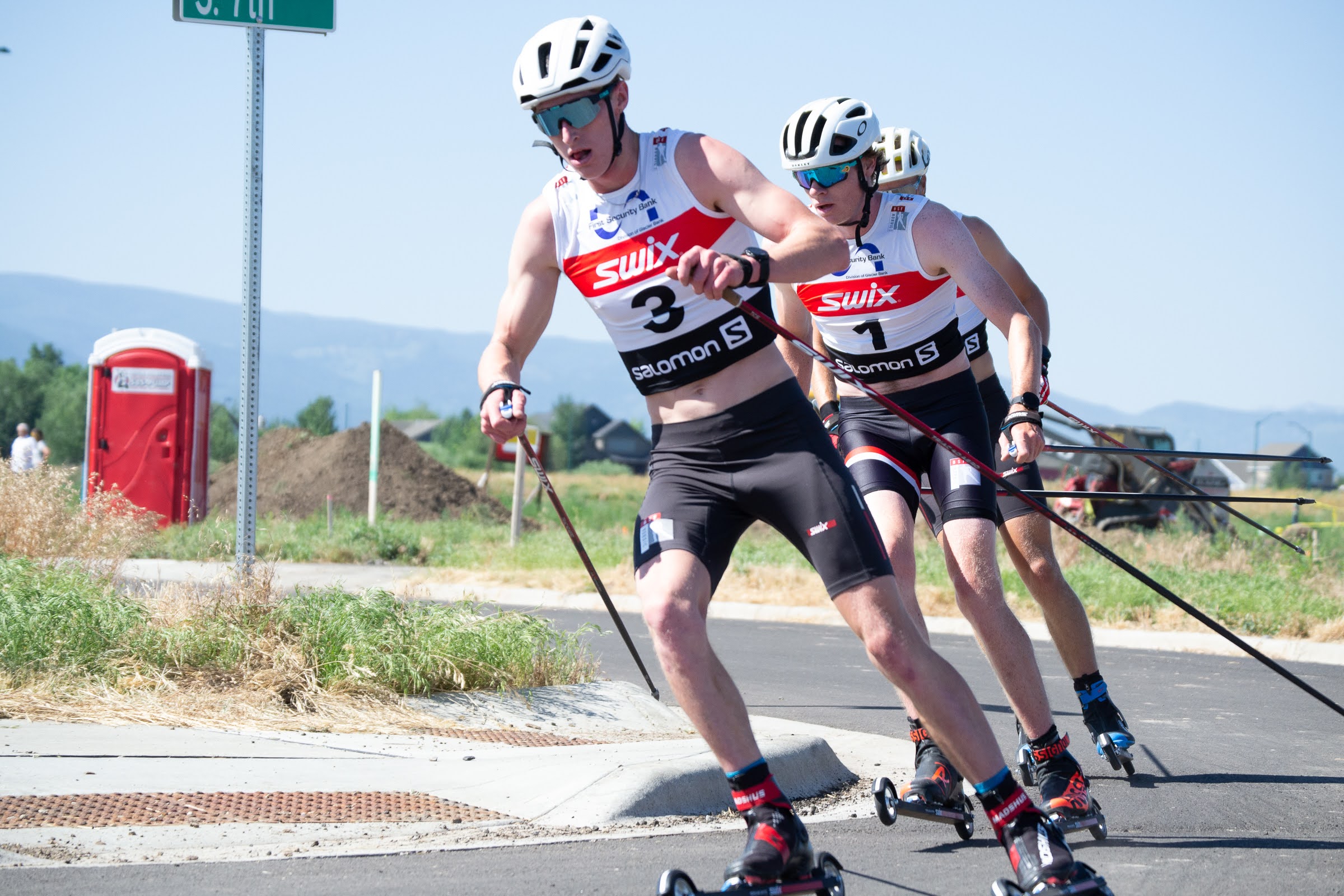
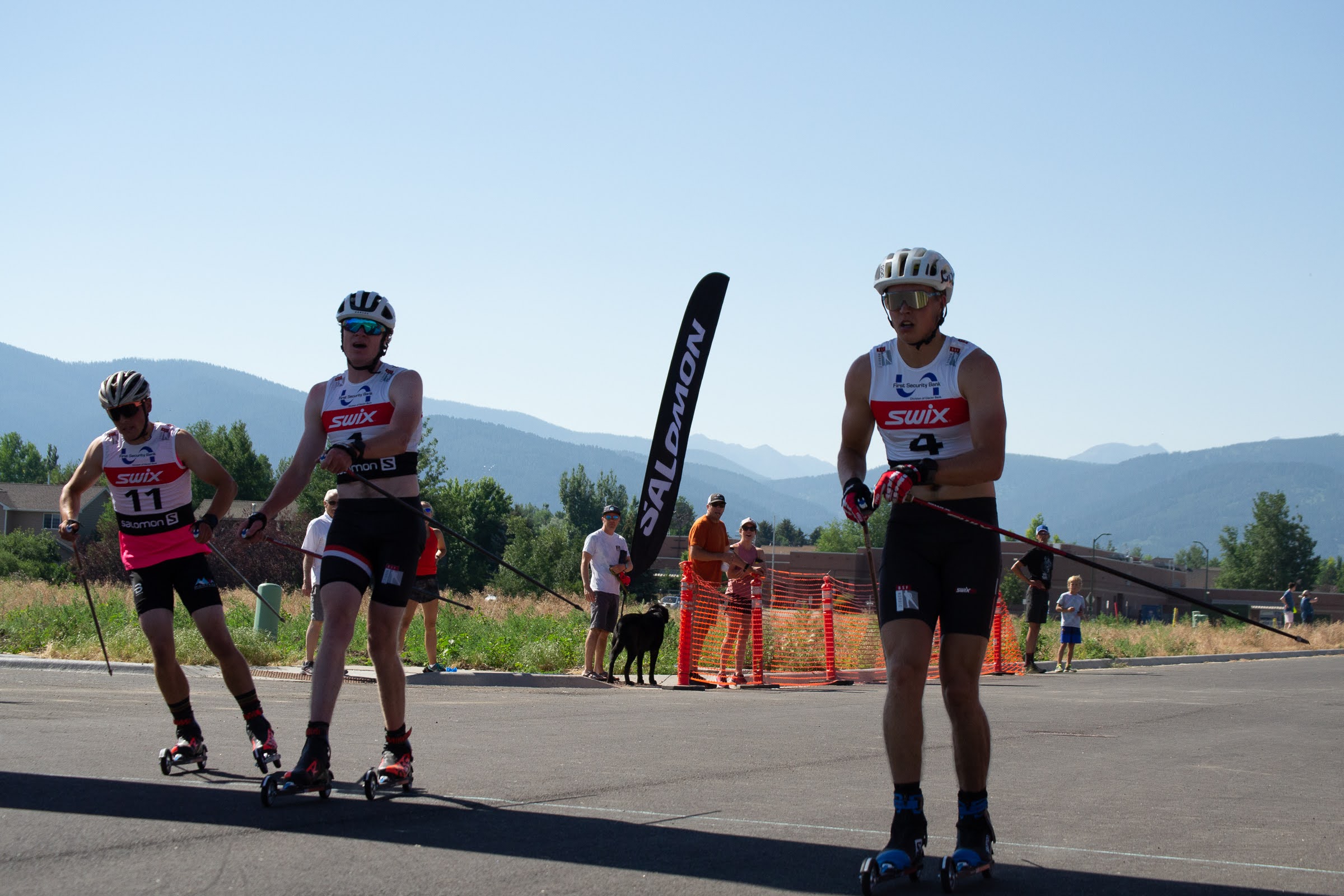
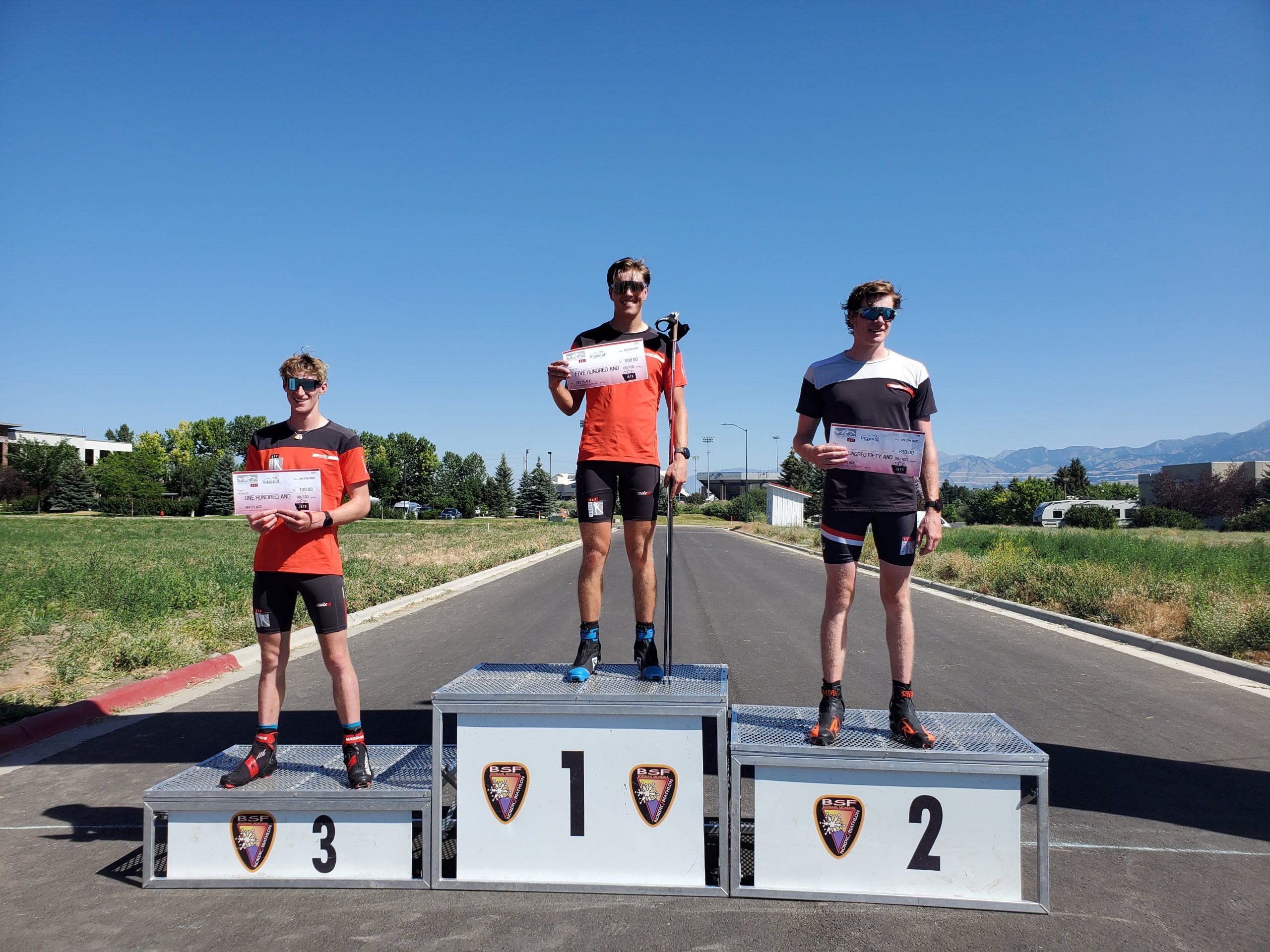
    The men’s field saw a similar battle at the finish between three of BSF Pro’s leading lights. Into the final lap, Logan Diekmann, Finn O’Connell and Reid Goble were locked into a pack, with the promise of a true sprint all but assured for spectators. Goble found himself leading the pack for most of the lap, with O’Connell taking second wheel and Diekmann in third. Diekmann and O’Connell then launched their attack from behind their would-be lead-out, with Diekmann putting just enough gap over the line that the rare (and dangerous) rollerski lunge finish wasn’t needed. Diekmann in first (24:44), O’Connell in second (24:45), with Reid Goble rounding out the podium in third place (24:57).

    Above – Reid Goble (BSF) leads Finn O’Connell (BSF) and Logan Diekmann (BSF) in the final lap of the Men’s Open 12 k. Below – Diekmann takes the sprint finish ahead of O’Connell. (Photos: Jenny White/BSF).

    In the 12 k U20 Women’s race, St. Scholastica (CSS) skier Mia Case took the win over Park City’s Elena Grissom in second, and Sidney Benyon. The 12 k U20 Men’s race BSF’s Phin Fischer took first place ahead of Sumner Cotton (BSF) in second and third place Soren Davidson (BSF).

    The inaugural BSF roller ski races were filled with fields of those who will find themselves at the top of NCAA, SuperTour, and even perhaps a World Cup this winter. That’s not bad for an inaugural running on the southside streets of Bozeman, and is yet another marker of the city, and Bridger Ski Foundation’s growth and development into a leader in the country’s ski community.

    Many skiers then showed up to put impressive results up in Sunday’s Jim Bridger 10-mile Trail Run. Reid Goble (BSF) placed second overall (1:20:24), Peter Wolter (Sun Valley) was third (1:21:17), and Finn O’Connell (BSF) fourth (1:22:24). Mariah Bredal won the Women’s race (1:26:59), with Hannah Rudd (BSF) third (1:35:03), and Sarah Goble (BSF) fourth (1:37:37).

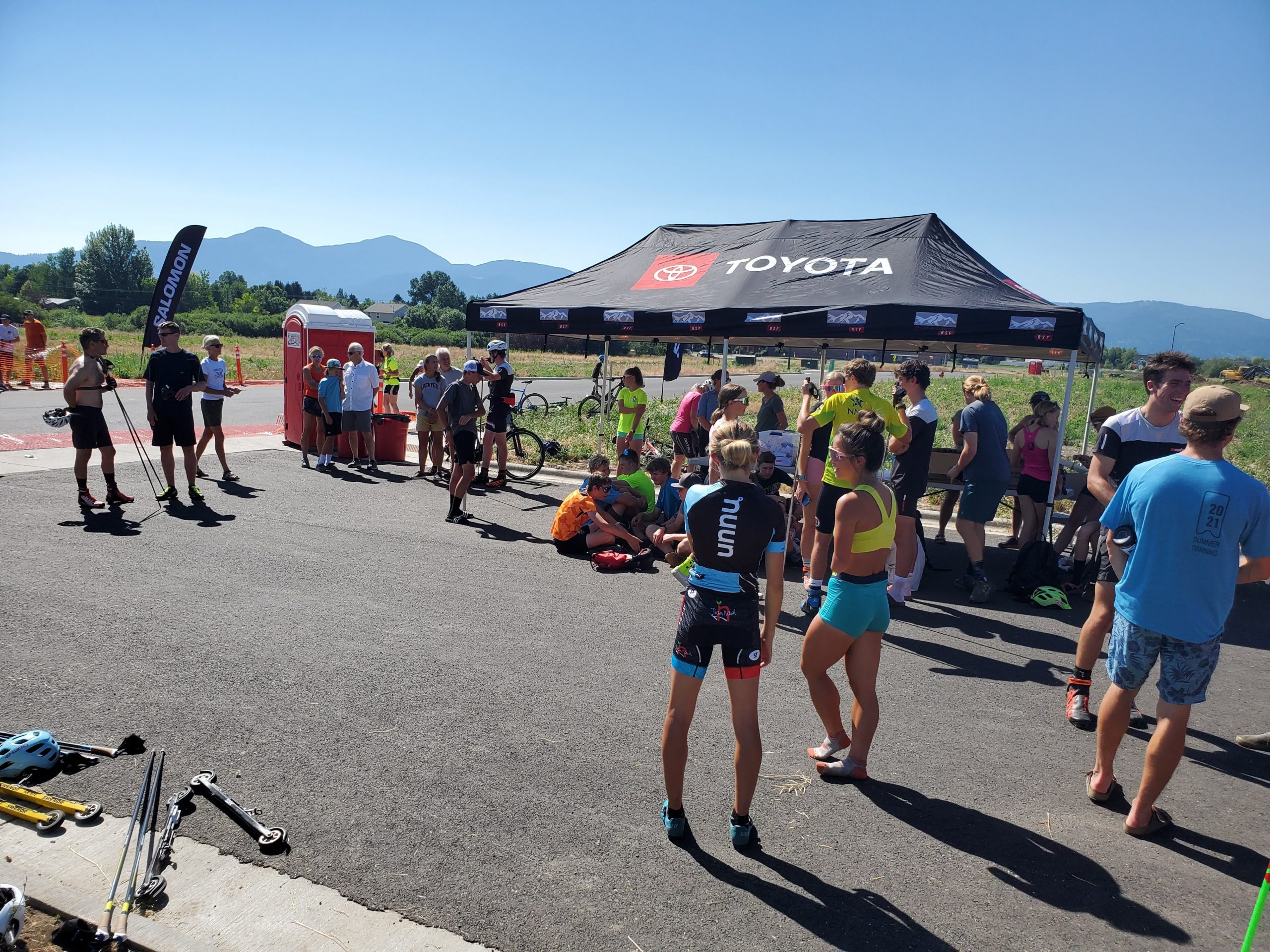
    The BSF, and Bozeman, Nordic community together in Bozeman for some rollerski racing. (Photo: Jenny Smith/BSF).

    Junior Rollerski Results:

    U18 6 k Women:

    1st Natalie Nichols

    2nd Elsa Futch

    3rd Keely Fischer

    U18 6 k Men:

    1st Woody West

    2nd Jasper Jacobson

    3rd Nate Strubel

    U16 Women:

    1st Izzy Waters

    2nd Necia Nichols

    3rd Olivia Nelson

    U16 Men:

    1st Lucan Fascio

    2nd Colton Petsch

    3rd Ian Carmack

    Full Running Results here

    Video Highlights!

    Men’s Open Field podium. 1st – Logan Diekmann (BSF). 2nd – Finn O’Connell (BSF). 3rd – Reid Goble (BSF).
    Women’s Open Podium. 1st – Nina Seeman (Dartmouth). 2nd – Mariah Bredal (BSF). 3rd – Sarah Goble (BSF). (Photo: Jenny White/BSF).