From the FasterSkier archive — posts syndicated from athletes’ and coaches’ own blogs between 2004 and 2012, kept online as published. Current coverage is at fasterskier.com.
In this episode, we chat with Hailey Swirbul, who – at just 24 years old – has been competing at the top end of the sport for quite some time. A bronze medal in the 4 x 3.3k relay at the 2017 Junior World Championships in Soldier Hollow put Hailey – and relay teammates Julia Kern, Hannah Halvorsen, and Katherine Ogden – on the map in a big way in US Skiing. Hailey has gone on to spend the better part of the last four years racing on the World Cup, earning 48 World Cup starts and one individual podium in the 10k skate in Davos in 2020. She’s currently preparing for the upcoming World Championships in Planica, Slovenia, which starts on February 22nd.
Following last year’s Beijing Olympics, Hailey opened up about the contrast in expectation versus reality in the Olympic experience, and how the high stress, high pressure environment of life in Europe, particularly in the lead-up to the Olympics, negatively impacted her mental health and felt increasingly unsustainable. She questioned whether she wanted to keep skiing at all, but eventually decided to keep at it, with a new approach. She took a full time engineering job in the summer, and decided to forego period one and two on the World Cup, racing the SuperTour and US Nationals domestically instead.
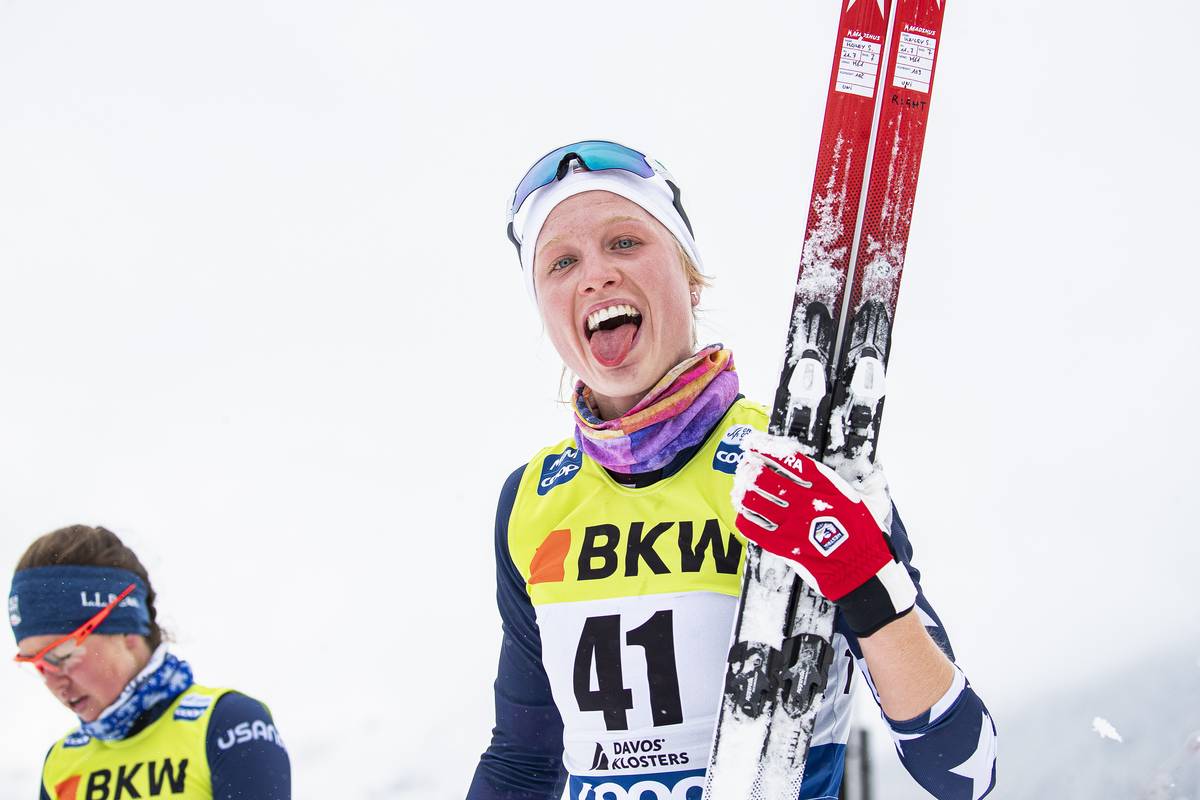
Hailey Swirbul enjoys her time in the leader’s chair after a solid performance in the 10k skate in Davos in December 2021. (Photo: NordicFocus)
As we discuss, this approach has rejuvenated her love for the sport and her motivation for the training and sacrifices it requires. And, it’s contributed to an outstanding season of racing, both domestically and internationally. She remains the SuperTour Leader as of recording, having earned a spot on the podium in all but one event, and swept all four events at the National Championships in Houghton, MI in early January. She seamlessly transitioned back onto the World Cup in Les Rousses, FRA where she raced into the semifinal of the classic sprint, followed by a top-20 result the following day in the 20k mass start classic. She qualified for the sprint heats again the following weekend in Toblach, ITA, was 26th in the 10k free the next day, and capped off the long weekend by scrambling for the US women’s relay team, which ended the day in bronze medal standing.
Thanks for listening, and thanks to Concept2 for supporting this podcast.
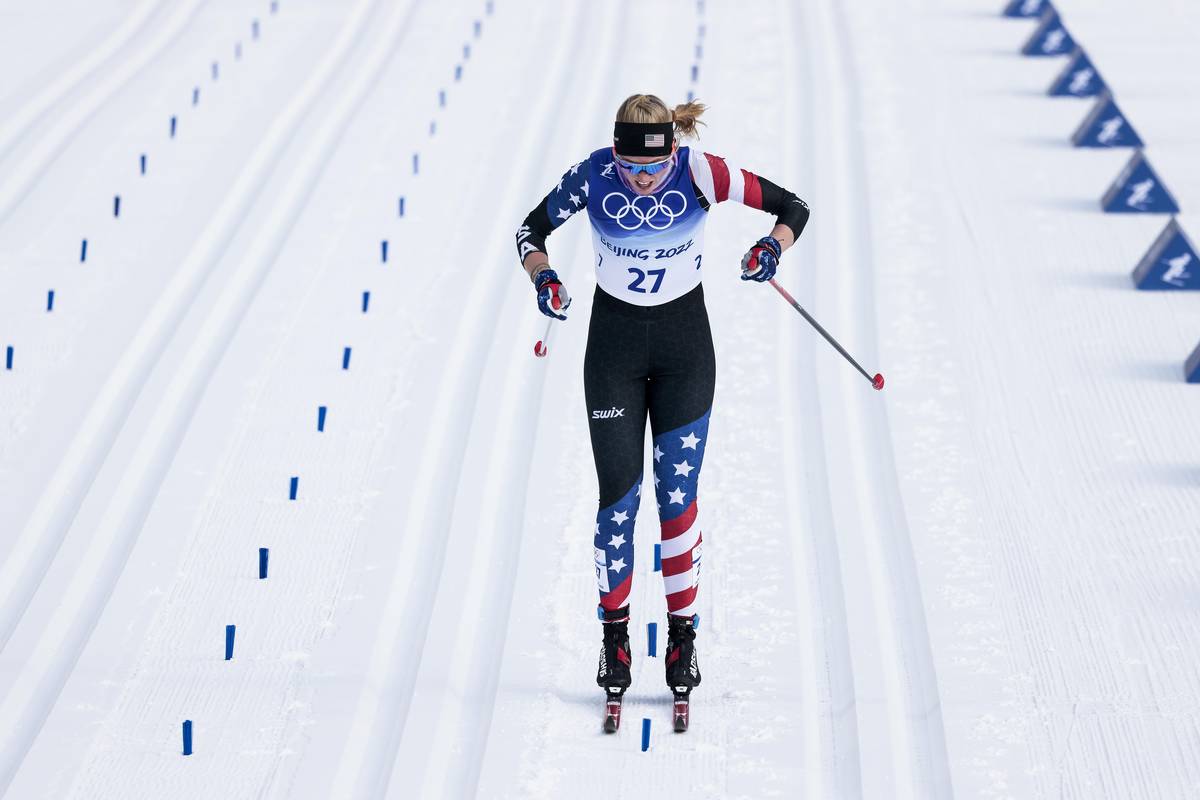
Hailey Swirbul pushes to the finish of the 10 k individual start classic during the 2022 Olympic Winter Games. (Photo: NordicFocus)
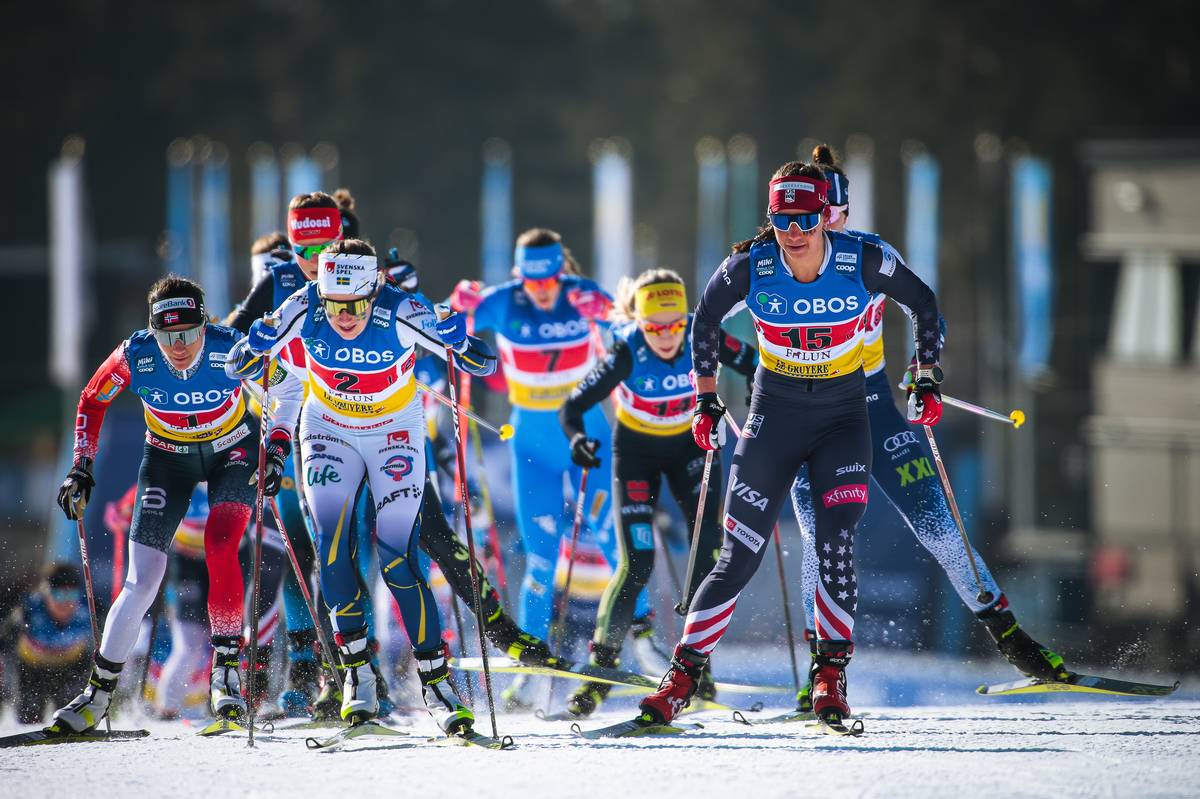
Julia Kern leads the pack during the first leg of the 4 x 5 k mixed relay in Falun, SWE in March 2022. (Photo: NordicFocus)
At 24-years-old, Julia Kern is quickly becoming a seasoned veteran in her 7th year on the U.S. Ski Team. However, her career trajectory has been stepwise, not exponential.
After making breakthroughs during the 2019-20 season, including her first World Cup podium in a skate sprint in Planica, Slovenia, she faced injuries and setbacks heading into the following season in 2020-2021, leaving her walking away from that season feeling disappointed in both her World Cup and World Championship racing. Reflecting on her takeaways in an interview that summer, she said “Progress isn’t linear from season to season.”
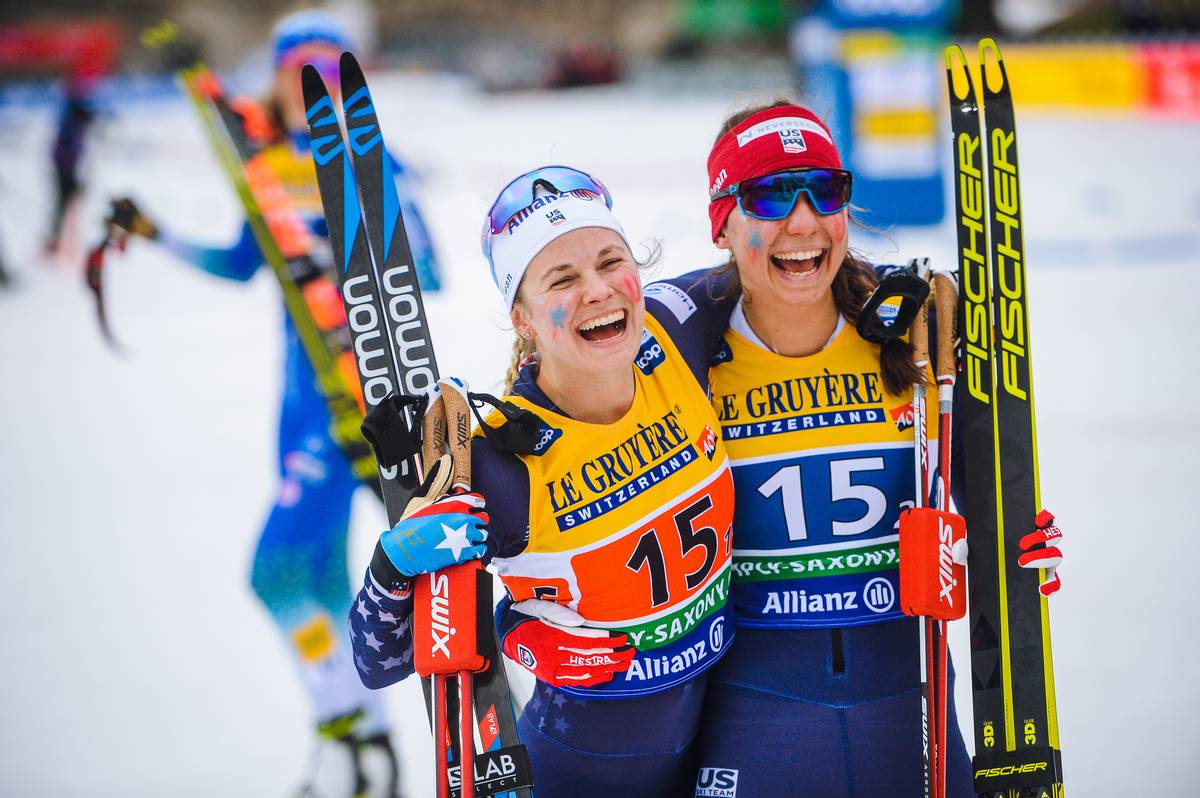
Hailey Swirbul (bib 19) and Julia Kern embrace at the finish of their first Olympic appearance in the 15 k skiathlon. (Photo: NordicFocus)
Recently named the recipient of the US Nordic Olympic Women’s Gold Rush Award for her grit and grace as a professional skier, Julia has demonstrated what it takes to rebound, reframe, and move past these challenges. As she describes in this conversation, the start of Julia’s 2021-22 race season happened in fits and starts – some strong early-season results with promising body sensations followed by a series of untimely mild illnesses. After catching a cold midway through the Tour de Ski in early January, she suddenly was faced with the reality that she would not have any opportunities to race until arriving in Zhangjiakou for the Olympics over a month later – the longest race break of her career.
Her first Olympic appearance took place in the opening event, the 15 k skiathlon, where Julia finished 53rd. The individual freestyle sprint three days later was her goal race; Julia qualified in 14th and raced a gutsy quarterfinal, ultimately finishing fourth in the heat and 18th overall on the day. A myriad of factors left her wanting more from this first Olympic experience, though she approached it without placing high expectations on herself.
Jessie Diggins and Julia Kern take second in the team sprint in Dresden, GER in December 2021. (Photo: NordicFocus)
Rebounding once more after the Games, Julia began a tear of World Cup sprints in Period IV. She was 8th in the freestyle sprint in Lahti, 7th in the classic sprint the following week in Drammen, and finished just off the podium in fourth in the World Cup Finals in Falun. From there, she headed to Whistler to finish the season at the joint Canadian National Championships and U.S. SuperTour Finals, where she took second to Jessie Diggins in Jessie’s signature 5 k freestyle event, and won the remaining three races.
During this conversation, Julia discusses the highs and lows of the season, as well as how she has been able to compartmentalize and move past setbacks over the past few years of navigating the transition to the World Cup. We also discuss her start in the sport, why the Stratton Mountain School (SMS) T2 Team has been a good fit for her, and how leaning into other creative outlets, passions and work helps energize her for the long haul.
Thanks for listening and thanks to New Moon Ski and Bike for supporting this podcast.
Julia Kern races the quarterfinal of the individual freestyle sprint in Zhangjiakou during the 2022 Beijing Olympic Winter Games. (Photo: NordicFocus)
Though the FasterSkier team would select other highlights from the 2022 Beijing Olympic Games, one of the most read articles we produced featured the responses of members of the ski community to a story published on February 8th by the New York Times, which included the following quote:
“In a sport that has so many women with massive shoulders and thighs, Diggins looks like a sprite in her racing suit, and it’s not clear exactly where she gets her power. But the power is there, as she flies up hills, and comes off climactic turns with a burst. On the downhills, she tucks low and cuts through the air.”
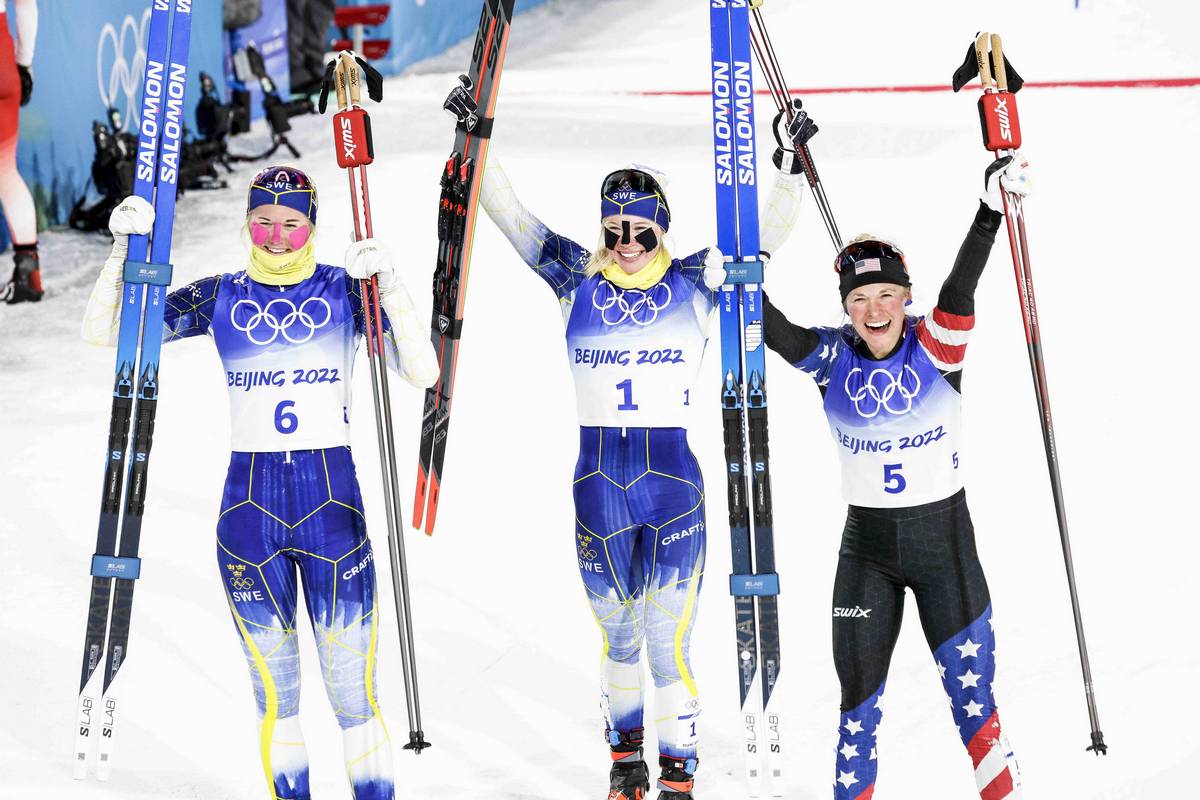
The women’s Olympic 1.5-kilometer freestyle podium: Sweden’s Jonna Sundling took gold ahead of teammate Maja Dahlqvist and American Jessie Diggins. (Photo: NordicFocus)
Following the initial backlash sparked by the quote has prompted a number of insightful conversations – and questions – on how athletes, men and women, are portrayed by the media, whether there is room for descriptions or comparisons of athletes’ bodies to narrate a scene for a reader, and how the landscape of sports media has shifted with time.
For this discussion, FasterSkier brought together a panel that spans both the athlete and media perspective on the issue.
Perhaps needing the least introduction for this audience, the first voice you’ll hear belongs to Rosie Brennan. In addition to her role as one of the top American cross country skiers for more than a decade, Brennan is also an advocate for the organization Voice in Sport which provides mentorship for developing female athletes across all sports. And she was a member of the women’s Olympic skate sprint final in Zhangjiakou, taking fourth place just behind Diggins, the race which sparked the discussion in the first place.
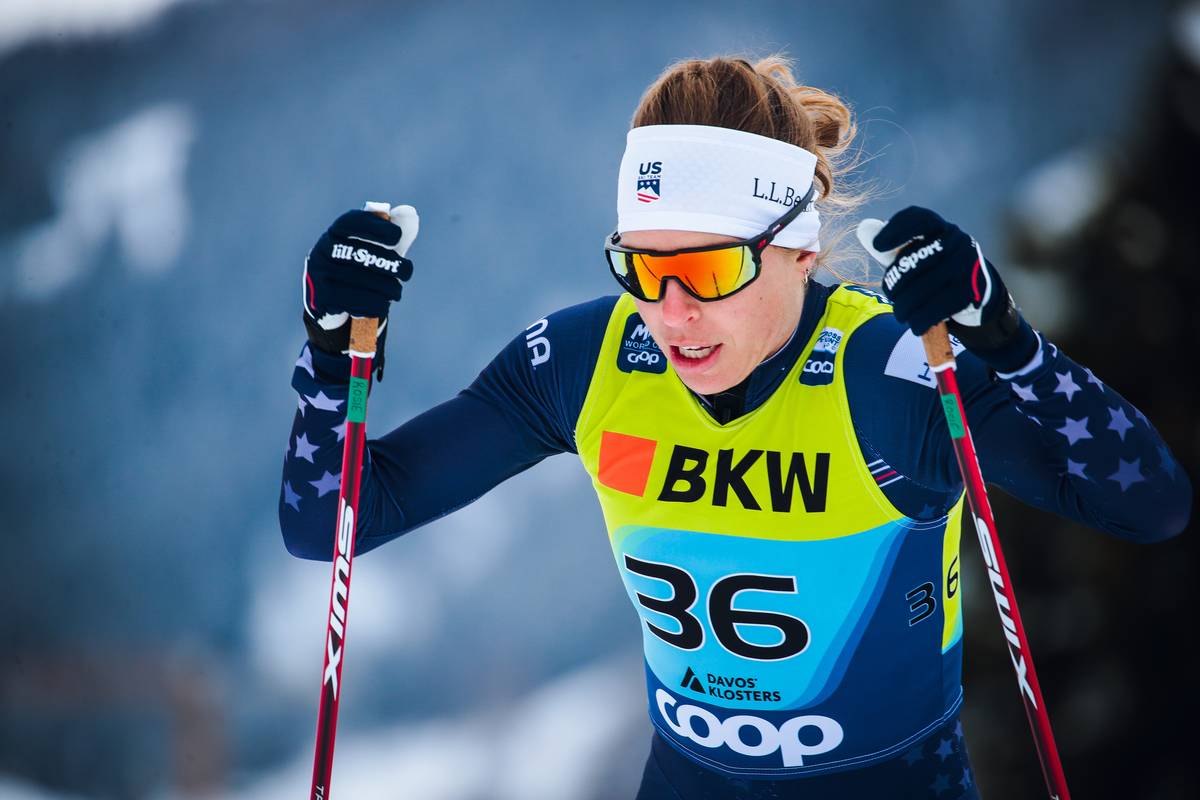
Putting together another highlight weekend in Davos, Rosie Brennan skis to 4th in the 10k individual start skate. (Photo: NordicFocus)
The second belongs to professional trail and ultra runner Corrine Malcolm, whose first go at professional endurance sport was in biathlon, from which she retired in 2014 after experiencing overtraining syndrome, likely coupled by relative energy deficiency in sport (RED-S). Alongside her athletic career, Malcolm has become a coach for other endurance athletes, while also becoming an advocate for women in sport, and has also engaged with this topic from the media side of the coin while calling some of the top ultra running events worldwide, including the Western States Endurance Run in California and the Ultra Trail du Mont Blanc (UTMB) which begins and ends in Chamonix, France. She’s also the co-host of an engaging podcast called Trail Society, which dissects challenging topics in the trail and ultra-running space.
Biathlete turned professional trail and ultra runner Corrine Malcolm discusses body comments in the media on the Nordic Nation podcast. (Courtesy photo)
We’ve also got Brian Metzler, an award-winning veteran journalist and author in the endurance space who currently writes for a number of publications including Outside, Competitor, Women’s Running, Triathlete, and Trail Runner magazines. Writing with perspective from his own athletic career, Metzler is Colorado Running Hall of Fame inductee (2015) who adventures on foot, ski, and sometimes alongside a burro, throughout the high country of Colorado.
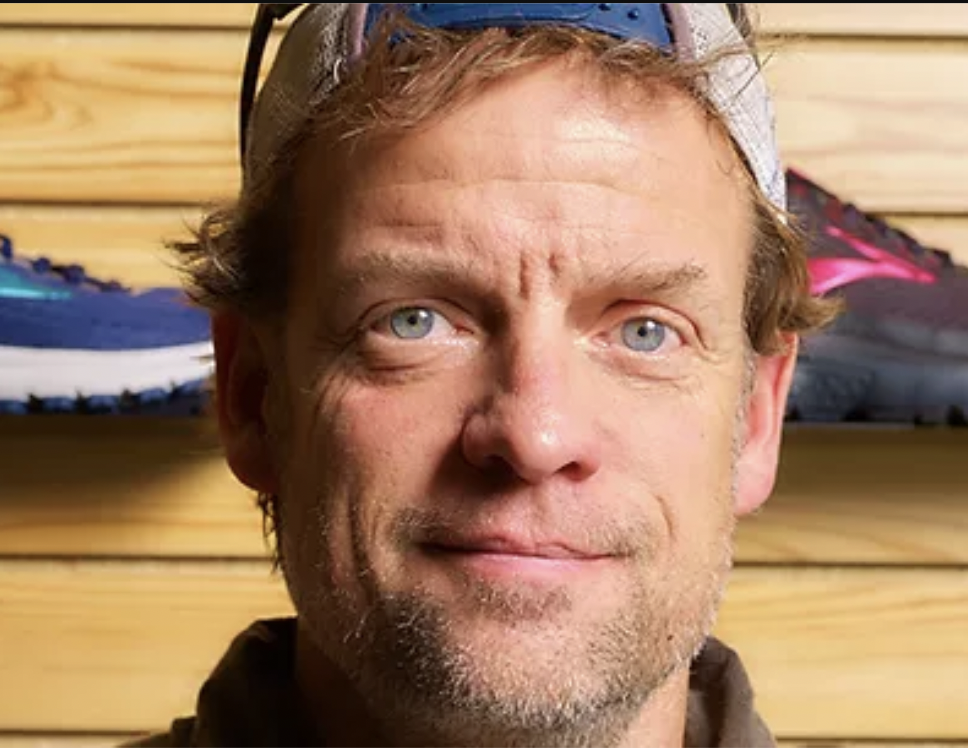
Long-time sports journalist and author Brian Metzler joins FasterSkier’s panel to discuss body comments in the media. (Photo: brianmetzler.com)
Lastly, you’ll hear a cameo from our own Nat Herz, on lunch break from his “real job” as a full-time reporter for the Anchorage Daily News. Having written for FasterSkier from 2009 through 2015 before making a return this year as our 2022 Olympic Correspondent and co-host of the Devon Kershaw Show, Herz shares insights from his time covering cross country skiing paired with those from behind a very different desk.
Some of the talking points discussed include:
Initial responses to the NY Times story
A writer’s responsibility to be informed on the sport being covered, in addition to the physical and/or mental health challenges that may be pervasive in that setting
Differences between American and European media, and shifts in focus, norms, or trends in sports media
Differences, or lack thereof, of covering athletes of different genders
Please note that the Craftsbury Green Racing Project Ski and Biathlon teams and U23 summer programs are currently accepting applications for the upcoming training year, which will close on April 10th. Click here for more information.
Jessie Diggins (USA) and Rosie Brennan find their position in the early moments of the women’s freestyle sprint final. (Photo: NordicFocus)
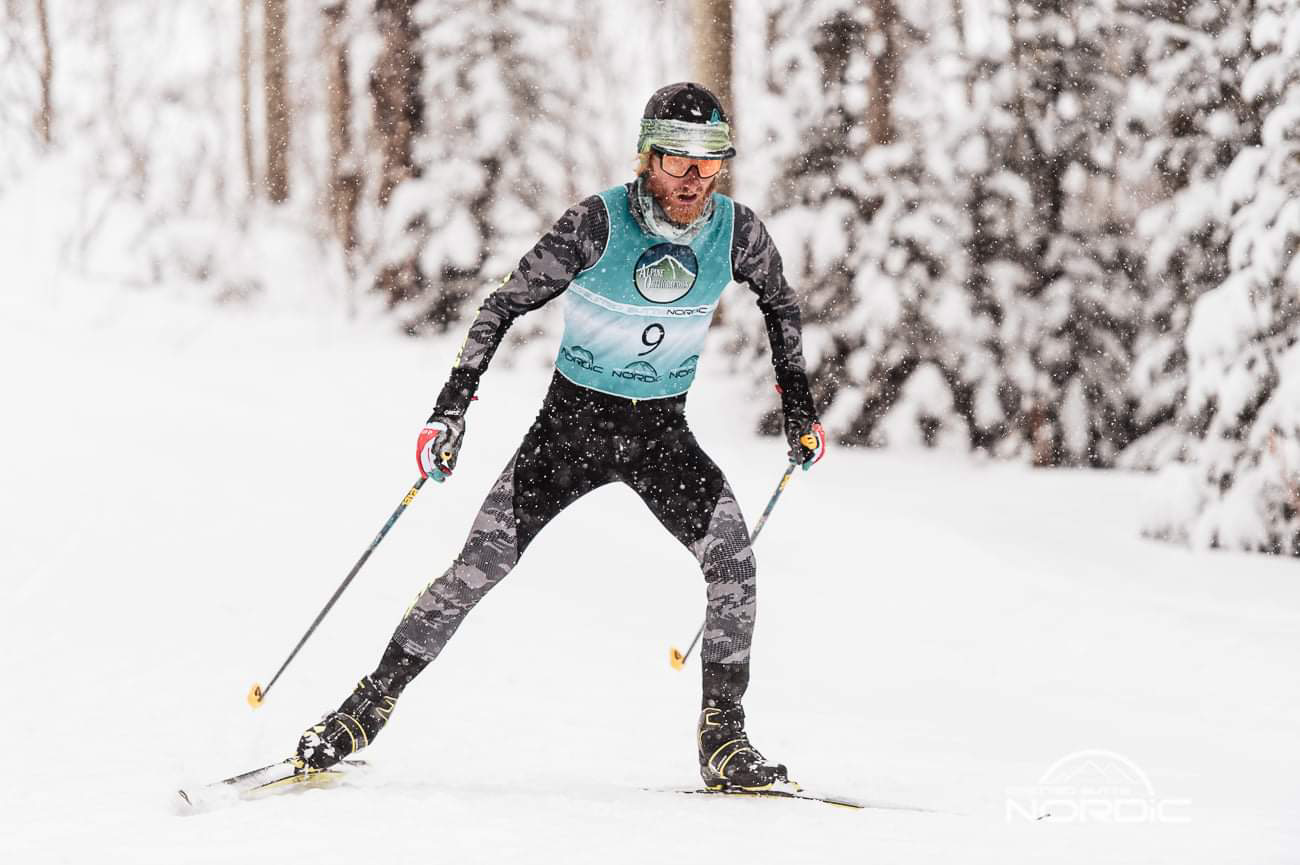
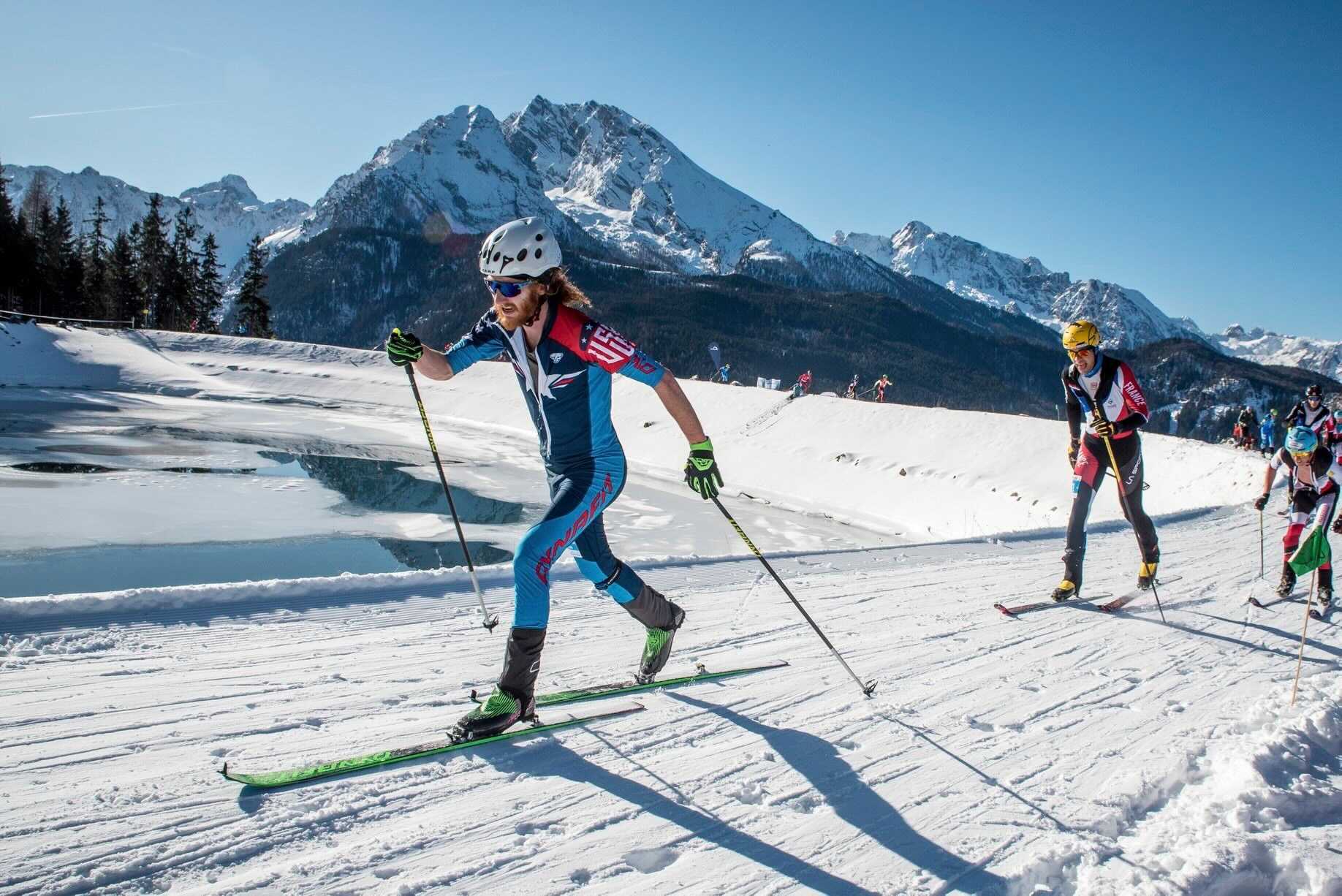
If you have the good fortune to spend time in the Gunnison Valley of Colorado, perhaps on Crested Butte Nordic’s extensive trail system, exploring the Elk Mountain backcountry on mountain bike or skis, or taking laps on Mount Crested Butte, you may cross paths with a friendly red-haired resident who is likely moving faster and breathing easier than you are. Known locally as an aerobic machine, 25-year-old Cam Smith embraces all mountain sports as training to support his burgeoning development as an elite ski mountaineering (SkiMo) racer.
Cam Smith gaining ground.
Originally focused on running, Smith moved from Illinois to study exercise science at Western Colorado University in Gunnison. Embracing everything the school’s mountain sports program had to offer, Smith began trail running, mountain biking, cross country skiing with the USCSA program, and was convinced by his older sister, who was also attending Western, to be her teammate for the 40 mile Grand Traverse ski race from Crested Butte to Aspen.
Flash forward through a few years of dedicated skill development and steady progress: Smith was a member of the 2019-20 US Ski Mountaineering Association National Team and won two events at the 2020 National Championships, the uphill only vertical race in just under 20 minutes and the longer individual race which lasted 3 hours 48 minutes. (Because of the pandemic and a lack of qualifying events, a national team was not selected this season.)
Smith was selected to compete in the World Championships in 2017 and 2019, racing in additional World Cup races in the 2018-2020 seasons. His best international finishes to date include an 8th place finish in the team race at the 2019 World Championships in Villars-sur-Ollon, Switzerland with partner John Gaston, and a 7th place World Cup team finish racing with Rory Kelly. Individually, he’s taken 18th in the vertical race at the 2019 World Championships, and 20th in a 2020 World Cup vertical race in Jennerstier, Germany.
Remaining fit and sharp, Cam Smith racing on his home trails in Crested Butte. (Photo: Crested Butte Nordic)
Alongside his 20-plus hour training weeks (often with astounding amounts of vertical gain), Smith plays a variety of roles within the Crested Butte community, including coaching the masters’ performance groups and youth programs at CB Nordic, assisting adaptive athletes on the mountain through the Crested Butte Adaptive Sports Center, and teaching strength and conditioning classes at a local gym.
In response to the pandemic, Smith shifted his focus to the well-established local racing opportunities. Instead of chasing a World Cup top-15, he made a goal of setting a new course record on what he calls “The Elk Mountain Classics”: the Gothic Mountain Tour in Crested Butte, the Power of Four in Aspen, and the Grand Traverse. Smith also hopped into two of the CB Nordic town series interval start skate races, winning each.
At the time of our call, Smith had checked two of the three course record boxes: dropping the Gothic Mountain Tour record by over ten minutes to 3:37:06, and the Power of Four record by thirteen to 4:15:21 with World Championship partner John Gaston. As cross-country skiers well know, conditions on the day impact the possibility of chasing these records, but the results are nonetheless a testament to fitness and strength. Smith was lucky enough to have the two factors align symbiotically on the day.
Given his humble and easygoing nature, he probably wouldn’t tell you about any of this unless you knew to ask.
Smith also looked outside athletic development for his season goals. Dedicating his training and race performance at the Grand Traverse to Living Journeys, a local nonprofit that holistically supports individuals with cancer and their families during treatment, Smith set out to raise $15,000. This goal has already been exceeded; however, if you’d like to support his cause, you can donate here.
It also turns out Smith and his partner for the Grand Traverse, Tom Goth, set a new course record in 6:06:24 on Saturday.
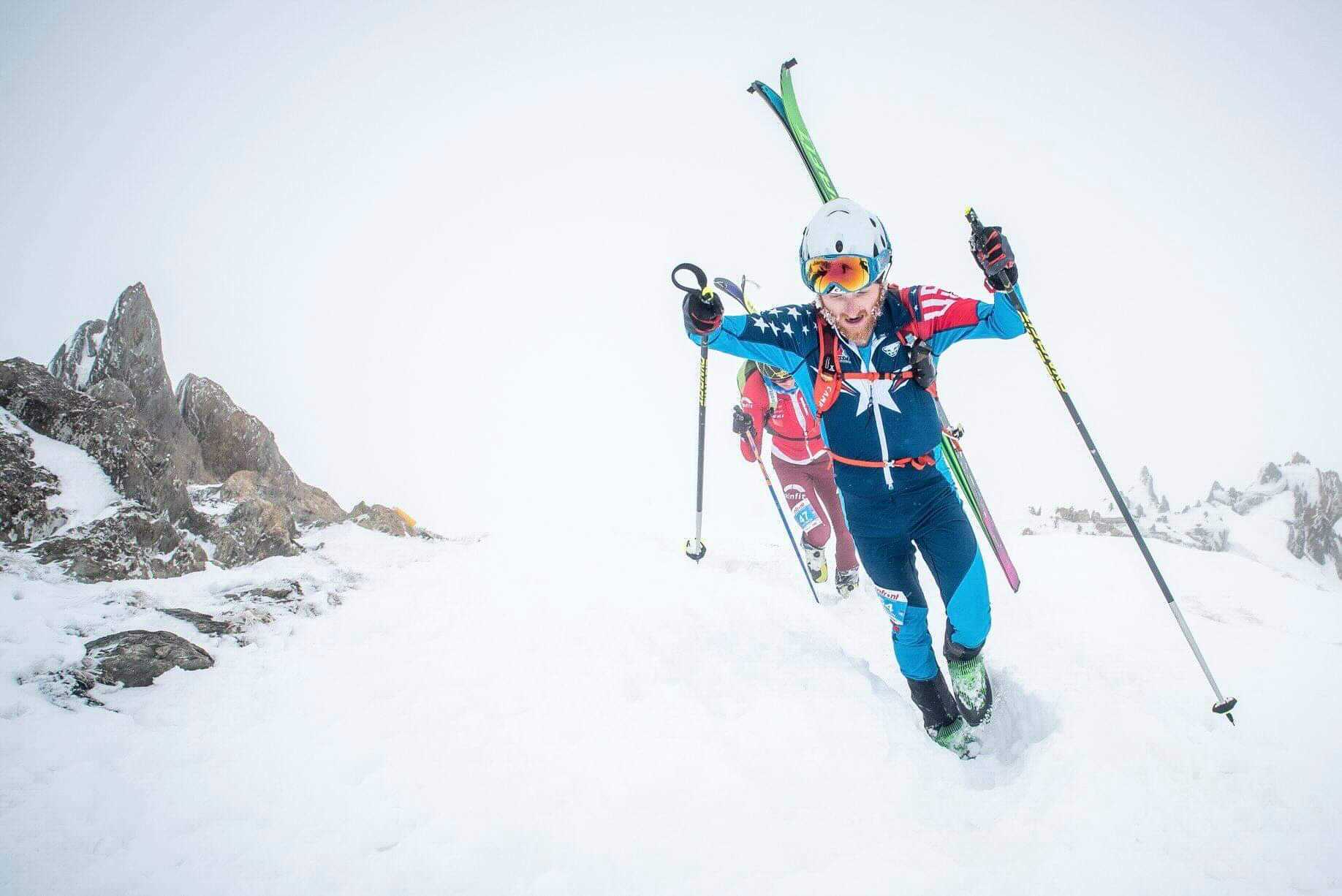
Cam Smith striding along and representing the U.S. in Europe.
In this conversation, Smith shares more about his development from mountain-sport-newbie to national champion. We also discuss how he still includes nordic skiing to support his SkiMo training, and how a versatile approach to yearly training paired with some sport-specific blocks could serve masters athletes focused on premier races like the Birkie.
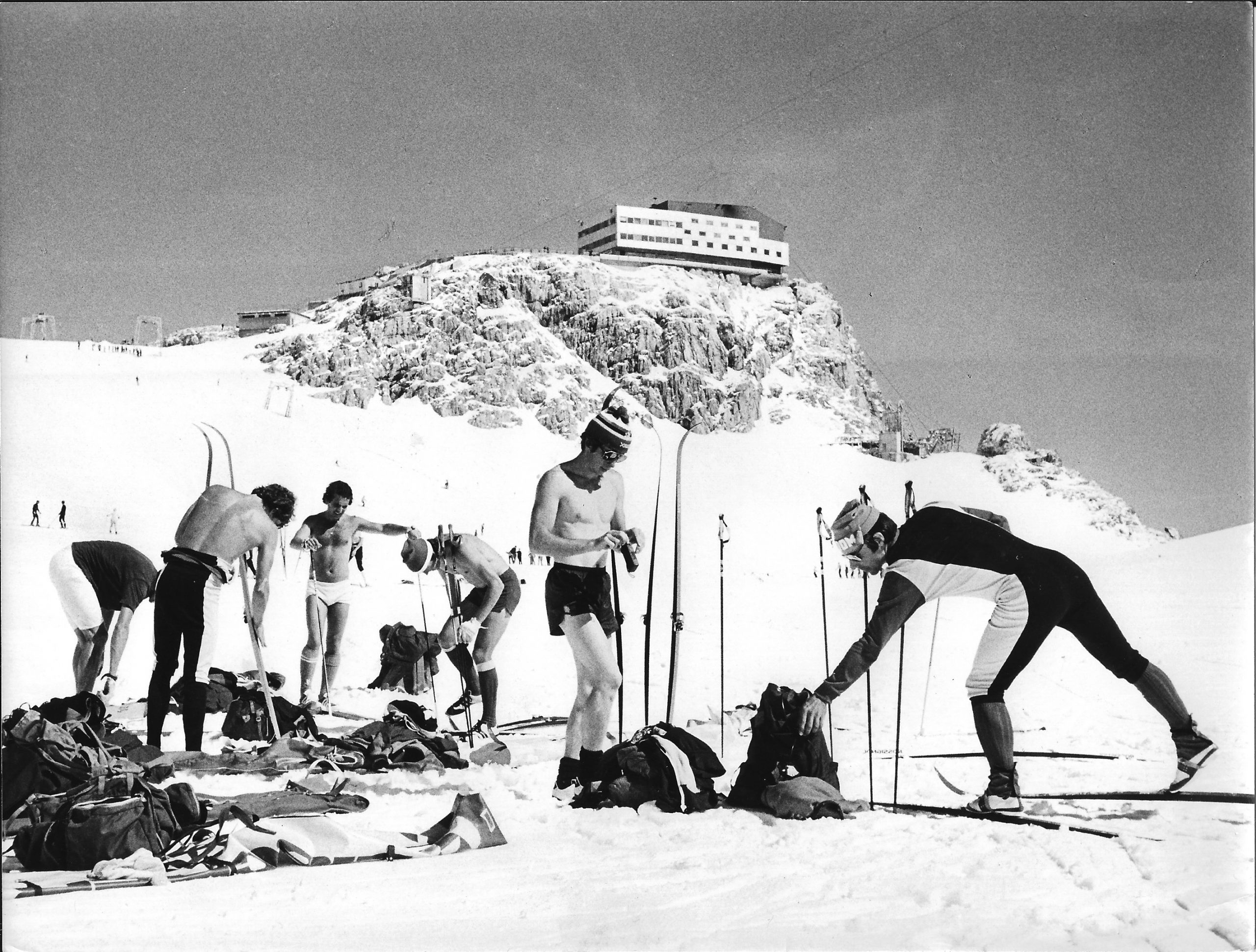
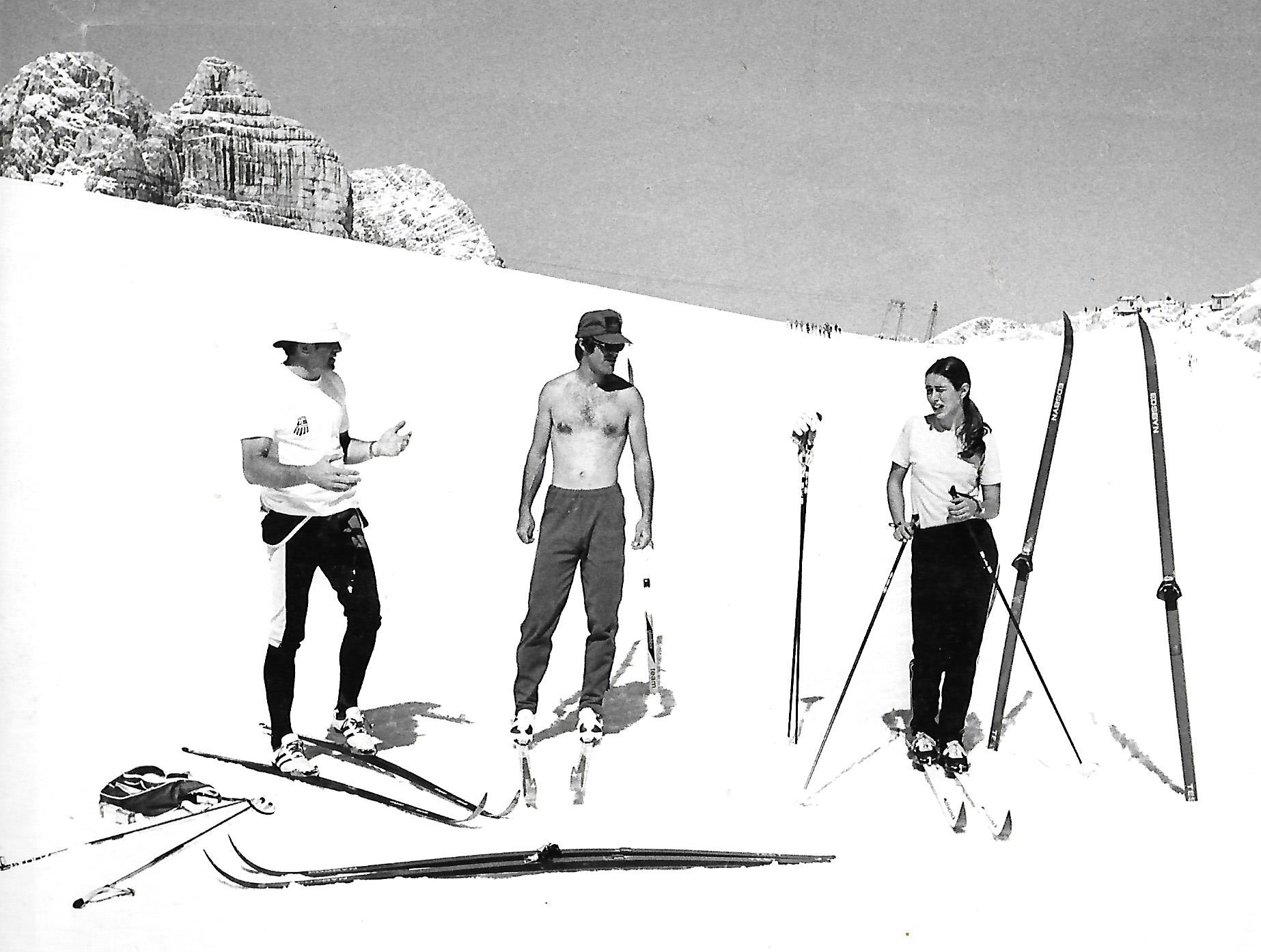
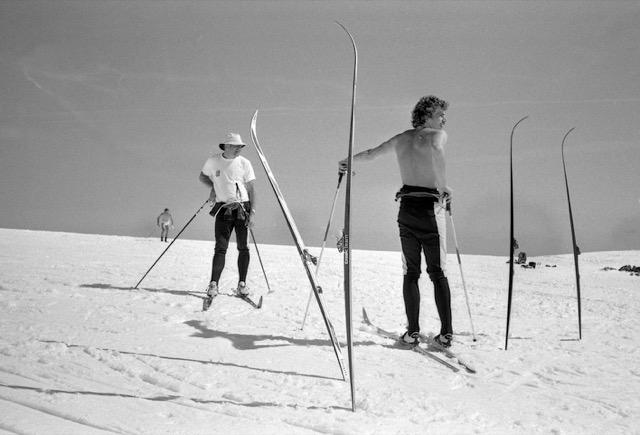
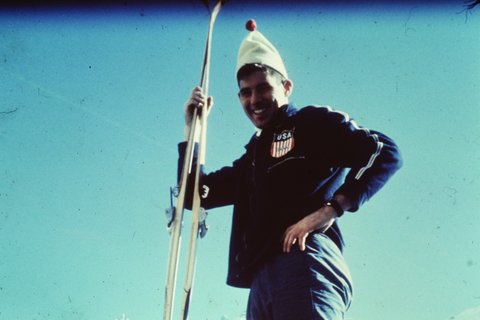
U.S. Ski Team, 1976, on the Dachstein Glacier. (Photo: Courtesy Marty Hall)
A lack of on-snow opportunities. Although a major first-world problem, that’s been on the mind of some this offseason. Here and there, we’ve published stories about a strict dryland diet for elite skiers this season. Meaning, no on-snow training. Mostly, that strict diet has applied to North Americans who normally access snow in late spring and summer at a variety of venues.
The Haig Glacier and its Beckie Scott High Altitude Training Center have been a Canadian go-to for years. The same can be said for APU’s Thomas Training Center on Alaska’s Eagle Glacier. In Europe, where glacier infrastructure is more common, access to higher altitude snow in summer has been part of the elite cross-country skier training plan for decades. Austria’s Dachstein Glacier and it’s groomed nordic trails are a world-class benchmark for those seeking summer snow.
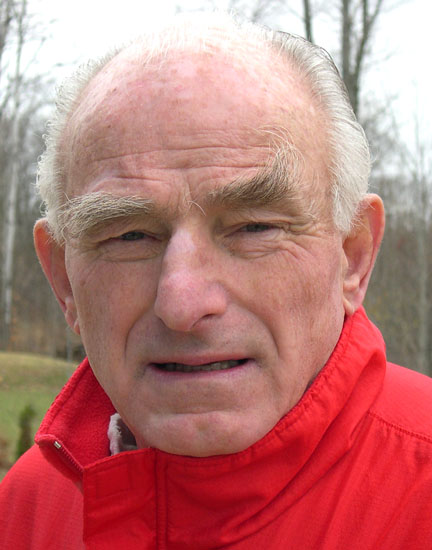
Former U.S. and Canadian National Team Coach Marty Hall
Which brings us to 83-year-old Marty Hall. For those who a new to ski racing, Hall was both a U.S. and Canadian head cross-country ski coach and groundbreaker. He was and still is keen on expanding his knowledge. That was the case in the mid-’70s when Hall began taking U.S. skiers to the Dachstein as part of his plan to expose athletes to European training methods.
1976 on the Dachstein Glacier: Marty Hall (left), women’s coach Rob Kiesel (center), Lynn Spencer-Galanes (right). (Photo: Courtesy Marty Hall)
In this episode, we speak with Hall to learn about the first trips to the Dachstein and how it all came about. It’s part history lesson, part walk down memory lane.
Thanks for listening and stay safe out there.
Marty Hall (left) Doug Peterson (right). (Photo: Courtesy Marty Hall)
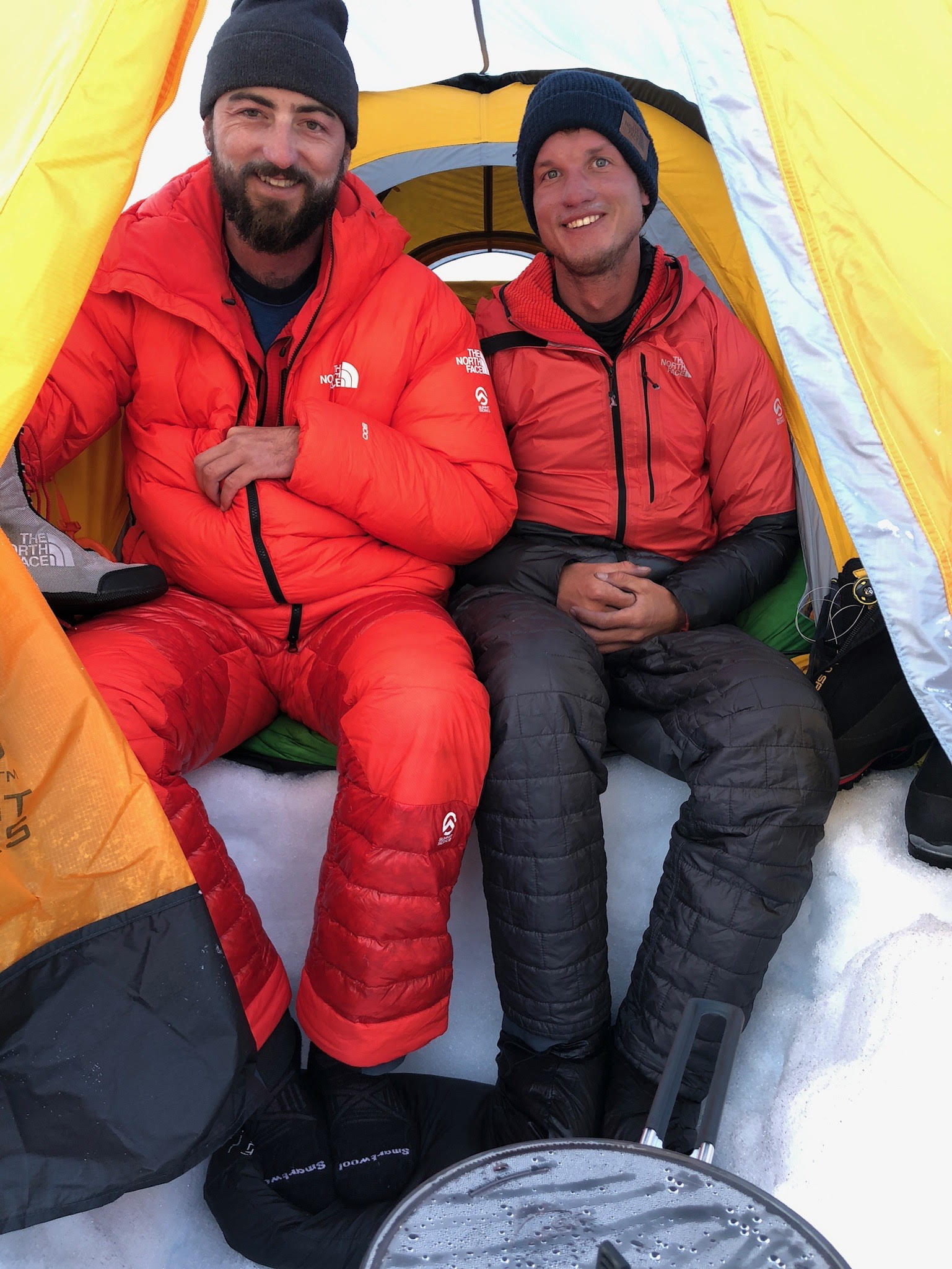
Jim Morrison navigating the Lhotse face. (Photo: Nick Kalisz)
Something a bit different on the podcast today. In the spirit of high mountains and the autumn season which is often the time many seek any iteration of mountain film. During normal times, we flock to touring mountain film festivals to celebrate. You know, solid storytelling and vibrant images to help us dream a bit bigger.
Some of you may have already watched LHOTSE, a film featuring ski mountaineers Hialree Nelson and Jim Morrison as they complete the first descent down the steep and scratchy Lhotse Couloir in the Nepal Himalaya. It’s a film that featured at the upcoming Banff Virtual Mountain Film Festival. Let’s just say the film has it all: A compelling tale to tell, lovely mountain backdrops, the thinnest of air, and two athletes in Nelson and Morrison living in the moment.
Dutch Simpson (left) and Nick Kalisz (right). Creative minds behind the Lhotse film. (Courtesy photo)
With all this in mind, I followed my curiosity. I wanted to know more about who captured the footage and crafted the film. That led me to filmmakers Dutch Simpson and Nick Kalisz. Both are spirited creatives who also happen to be mountain savvy. We spoke to Simpson and Kalisz to learn about their experiences on the project and how they captured a now storied ski descent. We should note, the scale of the climbing and ski expedition, which went down in September 2018, was by all measures minimalist. The typical climbing season on Everest, which is close to the summit of Lhotse, is in April and May. By September, these mountains are ghost towns by comparison. If you are looking for more information on the ski descent, National Geographic provides.
Moving in big terrain during the Lhotse shoot. (Photo: Dutch Simpson)
Thanks for listening and we hope you enjoyed this small diversion from talk associated with the skinny skis.
Thirty two years old and wise as wise can be. Clare Egan brings a calm intellect to the sport of biathlon. Speaker of many languages and head of the International Biathlon Union’s athlete committee, Egan is respected by her peers for on-snow performances as well as her leadership in the IBU board room.
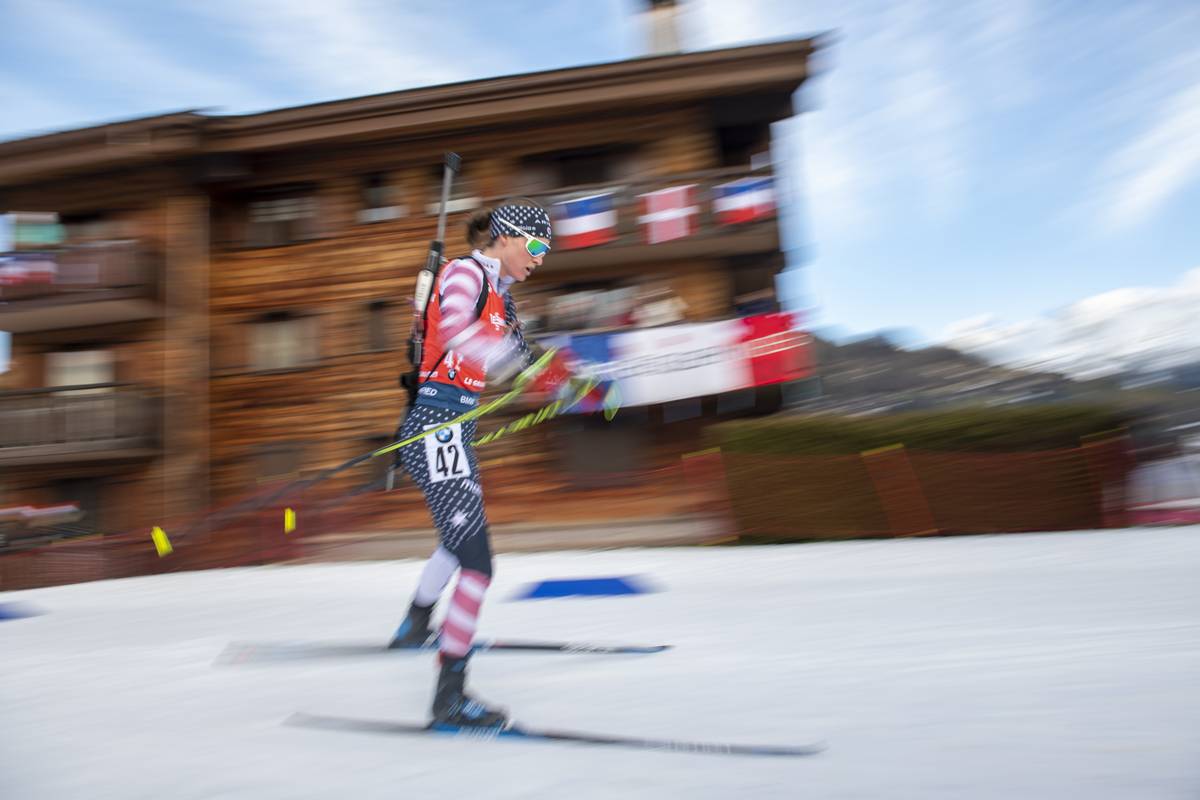
U.S. Biathlon’s Clare Egan on her way to 29th in the women’s 10 k pursuit in Annecy-Le Grand Bornand, France. (Photo: NordicFocus)
We spoke to Egan earlier this month as she was training in Antholz, Italy with U.S. women’s head coach Armin Auchentaller. The real gist of the conversation was to determine how she had been coping with the pandemic and making a go of it as the race season nears. Like many of us, there have been ups and downs…but mostly ups. You can hear more on the podcast.
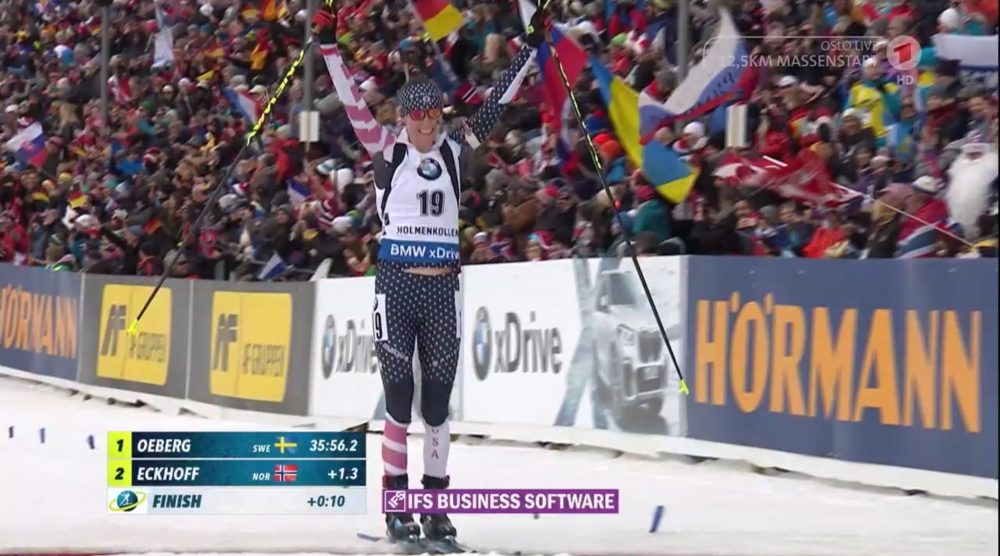
Clare Egan crossing the line in Oslo for third place in the 2019 12.5 k mass start. (Photo: ARD screenshot)
In this episode of Nordic Nation, we speak all things trail design with John Morton. Based in Vermont, and global in perspective, Morton provides insights into the literal ups and downs of trail design and how full-blown nordic centers and small scale trails can bring a modern vibe to an old-school sport. He runs Morton Trails locally but has a global reach with projects based in China.
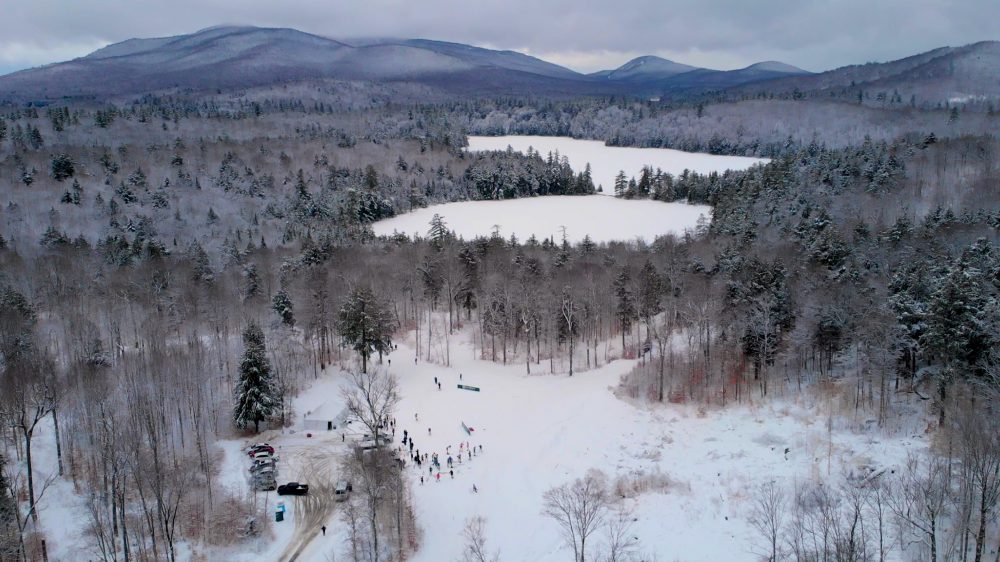
A vision for a nordic sport future – an aerial shot of a portion of Paul Smith’s campus.
Morton’s ski resume is lengthy. And true to form, Morton stuck to trail design during our conversation. He failed to mention he is a two-time Olympic biathlete, served a tour of duty in South Vietnam, coached collegiate skiing, and remains an all-around ski enthusiast. This is really just the tip of the iceberg.
Mid-Summer and mid-fishing session, we connected with Great Britain’s Andrew Musgrave near his home in Trondheim, Norway. Musgrave underwent surgery on both Achilles tendons recently and is on the mend.
In this episode, we discuss his comparatively down season last year, his plans to remain healthy, and how excited he was during the interview to spot what he described as a weasel swim past.
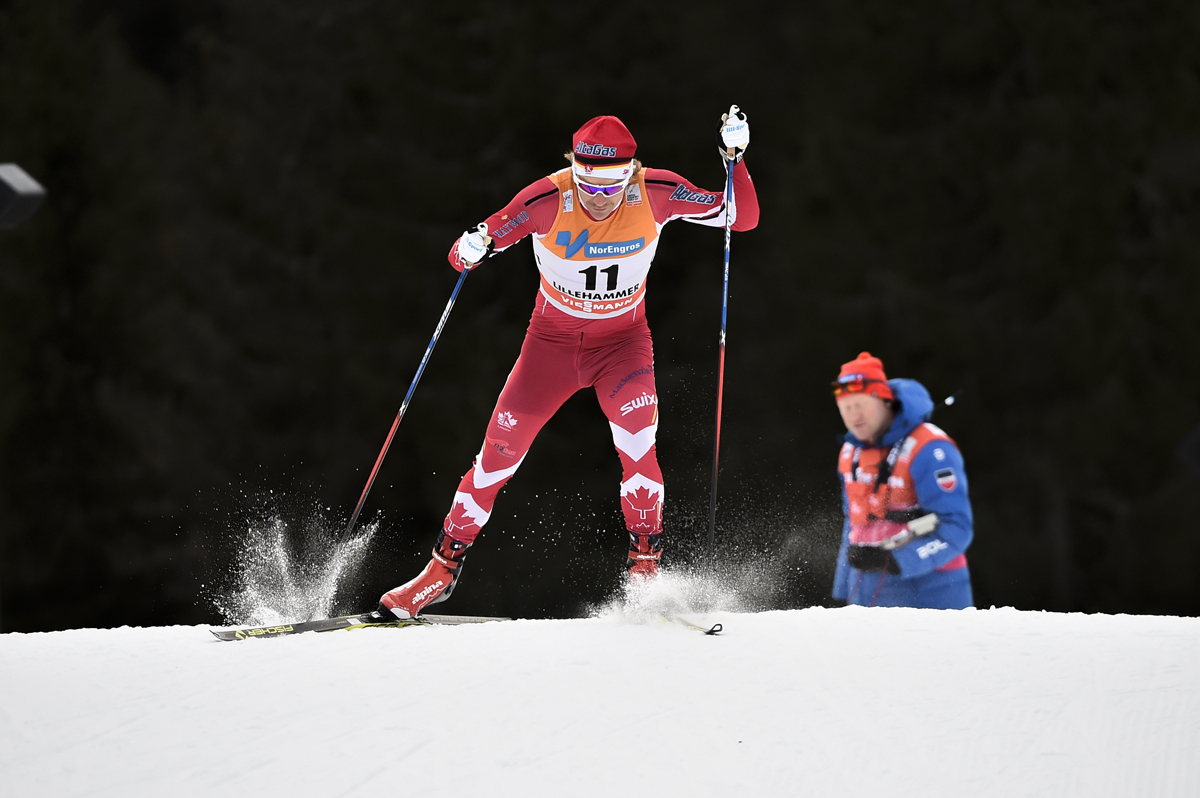
Andrew Musgrave of Great Britain placed 18th in the 30 k skiathlon in Lillehammer, Norway. (Photo: NordicFocus)
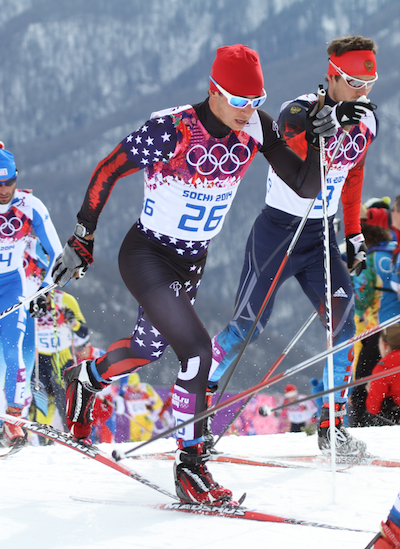
Noah Hoffman (U.S. Ski Team) racing to 35th in the 30 k skiathlon at the Olympics in Sochi, Russia.
As we all know, the COVID-19 global pandemic has left the world scrambling to adapt to the many challenges of slowing the spread of the virus. In the world of Olympic sports, the ripple effect has disrupted the efforts of anti-doping agencies worldwide to conduct the athlete testing normally relied upon to hold athletes accountable to abiding by the rules surrounding banned and controlled substances. Most international antidoping agencies have halted testing since mid-March as the invasive and close-contact nature of collecting samples posed a threat to both athletes and testers.
This causes concern that athletes inclined to cheat might abuse the situation, taking advantage of the opportunity to use illegal substances to improve their performance potential when competition is able to resume.
To address the lack of testing, the US Antidoping Agency (USADA) rolled out a pilot virtual testing program called Project Believe 2020 where athletes could provide a urine sample and blood spot test with an antidoping agent present on a zoom or FaceTime call.
For further insight into this topic, FasterSkier connected with two-time Olympian and long-time US Ski Team Member Noah Hoffman, who has become involved with USADA’s antidoping education program since retiring from skiing. Hoffman also recently wrapped up his second year at Brown University and we discuss his academic interests and the experience of being a college student during the COVID shutdown. Thanks for listening.
A slight reshuffling of positions at U.S. Ski and Snowboard and longtime coach Matt Whitcomb has a new title: Head Coach. Whitcomb held the title of World Cup Coach last season.
Matt Whitcomb. (Photo: Twitter)
As the pandemic took hold in mid-March here in the U.S., Whitcomb holed up at his cabin in rural Vermont for a two-week solo quarantine. We caught up with Whitcomb via phone on April 23 from his cabin. This was a broad ranging interview. We discussed how teams monitor athlete health, recent U.S. Ski Team nominations and aged-based criteria, and how the team may modify its training in light of the pandemic.
If you have any questions or concerns, you can contact Whitcomb directlly via email or phone. Below is his contact information.
Independent of one another, Brian Gregg and Matt Liebsch are always to be feared as they line up for a ski race. Now in their mid-thirties, their lives have transitioned to other responsibilities that include partners, children, and full-time work. Yet, in the highly competitive world of elite-level ski racing, these two have maintained a healthy friendship and are fast and furious training partners.
We could spend time noting their accomplishments on the ski tracks – but that would be another story. They are accomplished. But when speaking to them both, it is clear that each wants the other to succeed and in fact, they understand their friendship and training have made them both faster. Although defining themselves as ‘master-blasters’, Gregg was second overall and Liebsch third in last season’s American Birkebeiner. Gregg lost out by a toe to Akeo Maifeld-Carucci, while Liebsch faded slightly down Main Street in Hayward to place third, 8.5 seconds back. So ‘master-blaster’ or not, these two are still fast and competitive.
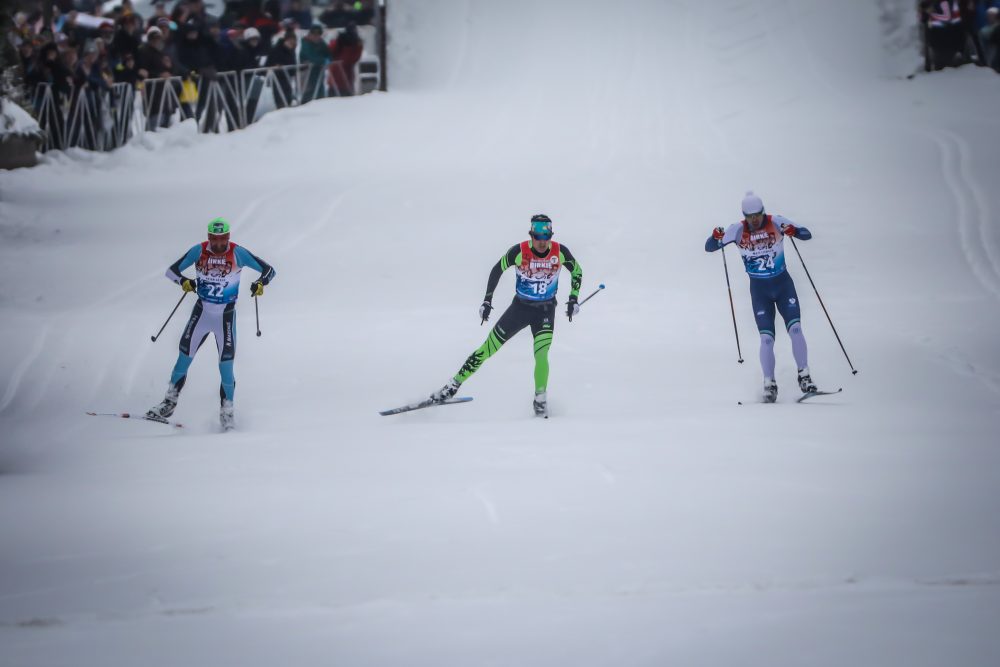
Akeo Maifeld-Carucci in green, Brian Gregg (left), and Matt Liebsch (right) down Main Street in Hayward, WI. (Photo: James Netz)
So maybe get inspired, find your own best bud, become a better person and get faster together too.
In this episode, we connect with John Munger, Executive Director of the Loppet Foundation in Minneapolis and Garrott Kuzzy, former U.S. Ski Team member who grew up near Wirth Park. From impressions of Wirth back-in-the-day to exploring how the World Cup ended up in Minneapolis, we drill down on most (but not all) things Minneapolis World Cup. That event goes down on March, 17. We cover the cost of hosting, infrastructure demands, and how the pieces are coming together a few months out from the event. Thanks for listening.
If you’ve been following along with the global ski scene and wax, you know this: perfluorinated waxes have been a hot button topic. From issues with importing into the U.S., stories on potential health and environmental risk, and new “green” wax products coming on-line…it’s been hard to keep up with trends. The International Ski Federation announced last month that it would move towards a fluoro-free race series next year. That caught the surprise of many — it was expected that any potential fluoro ban would come down after the 2022 Winter Olympics.
Norwegian Journalist John Rasmussen is our guest on Nordic Nation (Courtesy photo)
Perhaps the most wide-ranging series on fluoro use in the cross-country world was published this fall by Norwegian newspaper Dagbladet. The series was multi-faceted. It explored fluoro use and personal stories about illness and even death, and industries response to upcoming EU regulations on C-8 chemistry.
We spoke to one of the lead journalists involved with the project, John Rasmussen. He’s based in Oslo and among his beats, is covering the World Cup.
Here’s a link to the story series. But keep this in mind: Google Translate often offers rough approximations when translating Norwegian to English.
Devon Kershaw, for many years, was a go-to on the World Cup for Canada. He won a gold medal at the 2011 World Championship in the team sprint with Alex Harvey and finished second in the World Cup overall in 2012. He is accomplished.
Devon Kershaw. Vintage 2016 in Lillehammer. (Photo: Fischer/Nordic Focus)
He is also a student of the sport. That was evident last season as he helped Eurosport with its television broadcast coverage of the 2019 World Championships. Watching Kershaw provide race previews each day was a highlight. It made sense to ring him up and get his thoughts on the upcoming World Cup season. Learn about online casino "Mr Bet" in this page and its main important parameters – what is the license for activity, information about bets, minimum bet and maximum bet, about the minimum and maximum deposit when replenishing an account at a time, what is the minimum and maximum withdrawal of money from the Mr Bet casino per day, per month , in Week. See the level of traffic on the site "Mr Bet" for 3 months to understand the activity of the players. Carefully review the list of countries where the casino can legally operate.
Never shy with analysis, Kershaw is a good listen.
It’s a long way from Ruka, Finland to Canmore — the site of the closing races for this season. Onward. (Here’s a link to our map infographic for the 2019-2020 World Cup.)
Charlotte Kalla (R) and Ida Ingemarsdotter won the team sprint at the 2011 World Championships.
For many years, Imgemarsdotter was a Swedish World Cup staple. She’s a two-time medalist at the Olympics and a down to earth Swede, as we learn about her recent moose hunt in the podcast.
Her career was an arc of steady improvement which eventually saw several young Swedish skiers not simply emerge but burst onto the World Cup scene to challenge Norway’s dominance.
2013 image of Ingemarsdotter in bib 26 at the Asiago, Italy World Cup.
U.S. scramble skier Sophie Caldwell (r) chases Sweden’s Ida Ingemarsdotter in the semifinals of Wednesday’s Olympic 6 x 1.3 k classic team sprint in Krasnaya Polyana, Russia. Caldwell and teammate Kikkan Randall made the final and placed eighth overall, while Sweden won bronze.
Ingemarsdotter at the 2012 Tour de Ski Oberhof, Prologue.
Back in 2015, prior to her first go at a World Championships, Rosie Brennan was asked this: What’s your biggest motivation while racing?.
“I am most motivated by wanting to show that my hard work was worth it, that I did everything I could to go as fast as I could,” Brennan replied at the time. She was twenty six years old then, and now at 30 years old, the Park City native grinds away, still doing the hard work.
Rosie Brennan of the U.S. placed 10th in the women’s World Championship 15 k skiathlon in Seefeld, Austria. (Photo:John Lazenby/lazenbyphoto.com)
Brennan, a current member of the U.S. Ski Team’s A-Team, has had an on-again off-again career with the national team. She has, however, been a rock on the APU elite team where she’s surrounded herself with some of the nation’s top cross-country athletes.
In 2018, despite being nominated to the Olympic team, she developed a nagging virus that sapped her energy. She eventually returned to form — last season her best World Cup campaign to date. She ranked 27th in the distance standings and popped a career best sixth place in the Davos, Switzerland 10-kilometer skate.
We spoke to Brennan for the podcast as she finished up a ski team training camp based in Park City. We spoke about her recovery from illness and her role as an athlete representative at U.S. Ski & Snowboard.
In this episode, we connect with Max Cobb, the CEO of U.S. Biathlon. He also sits on the International Biathlon Union’s (IBU) Executive Board. When we spoke, he had just returned from the IBU’s “historic” Extraordinary Congress which took place from October 18th-20th, in Munich.
A 2016 photo of Max Cobb, the president and CEO of U.S. Biathlon. (Photo: Nordic Focus)
The IBU has been rocked in the recent past by internal mismanagement and doping scandals. Rather than succumb to the inertia associated with systemic change, the IBU has reset and begun reforming. Part of that reform manifested in Munich with the formalization of a new Integrity Code and what is called the Biathlon Integrity Unit.
Cobb discusses some of these changes and how the IBU is evolving for the better.
Vegard Ulvang at fifty six years old remains an icon in Norway. With Olympic and Championship medals, a World Cup Overall title in 1990, he’s in the lineage of Norwegian skiing royalty.
Away from the tracks, Ulvang began and then sold a profitable clothing company. He fills his time making documentaries and television features. He is also, as you’ll hear at the top of the interview, committed to living a life of exploration, calculated risk, and adventure. The South Pole, Northwest Passage, and monumental kite-skiing expeditions to Greenland have shaped his post-racing life.
Six-time Olympic medalist and FIS cross-country chairman, Vegard Ulvang of Norway, after his first American Birkebeiner in 2012. (Photo: Darlene Prois/American Birkebeiner)
Ulvang is still connected to international sport as the chairman of the executive board of the International Ski Federation’s (FIS) cross-country committee. He’s been in this role since 2006. Coordinating the World Cup calendar, juggling race format changes, rule upgrades, and evolving wax protocols as government regulations come into play – they all filter through Ulvang. He is often quoted in Norwegian media when it looks for guidance on how to interpret the state of skiing today.
As the Northern Hemisphere slowly tilts towards shorter days and colder temps … and hopefully snow… we spoke with Troy Taylor at U.S. Ski & Snowboard. Taylor’s official title is that of High Performace Director. What that means is he helps coordinate the multiple moving parts involving sport science for the portfolio of teams at U.S. Ski & Snowboard.
Troy Taylor, High Performance Director for US Ski & Snowboard. (Photo: courtesy of Troy Taylor)
Taylor has been in this role with U.S. Ski & Snowboard since 2015. He first worked for U.S. Ski & Snowboard in the run-up to the 2006 Olympics. Admittedly, he is enjoying the weather attributes of Utah’s sunny high desert as he is based in Park City, Utah. He originally hails from less sunny England.