Tag: Northern Michigan University

  • “Being a Champion of the World, Not a World Champion”: Inside the Norwegian Model of Lifelong Sport with Trond Nystad

    “Being a Champion of the World, Not a World Champion”: Inside the Norwegian Model of Lifelong Sport with Trond Nystad

    When Trond Nystad talks about Norway’s athletic success, he doesn’t start with medals or podiums. He begins with children — specifically, children who love to play.

    “The model of Norwegian sport,he says,is to have as many kids as possible, for as long as possible, and try to make them as good as possible.That simple mantra, lived out in ski clubs from Tromsø to Trondheim, is what he believes keeps Norway at the top of the endurance-sport world.

    It’s about being a champion of the world, not a world champion,Nystad explains.The focus is on learning, mastering things, having fun — not on winning.”

    Trond Nystad (Photo: NordicFocus)
    A System That Lives Its Values

    Nystad has coached at nearly every level — from college programs at Northern Michigan University and the University of Denver to national teams in the U.S., Germany, Austria, Switzerland, and Norway. He’s seen systems that thrive and systems that sputter. What sets Norway apart, he says, isn’t a secret training formula but the culture that surrounds young athletes.

    “In Norway, the principles of long-term athlete development — the LTAD model — are lived, not just written,he says.

    “In some places, LTAD is a document. In Norwegian clubs, it’s a way of life. Coaches and parents make sure kids master skills, become independent, and most importantly, have fun.”

    That lived philosophy keeps kids skiing, running, and playing far longer than in most countries.Every country that has success over a longer period of time has figured out how to lure kids into sport and keep them there,he says.If you have a lot of kids and you teach them a lot of skills, they’ll be driven and have fun. Then it’s easy to talk about high-level training later — because you start with the right foundation.”

    The U.S. Comparison: Knowledge Is Not the Issue

    Nystad has deep respect for the American coaching scene — he spent years building programs here and still closely follows U.S. skiing.The U.S. has a lot of really good coaches,he says.Sometimes the issue isn’t knowledge. It’s that cross-country skiing doesn’t attract as many kids because it has to compete with other sports.”

    The challenge, he believes, is not to clone Norway’s system but to borrow its spirit.We need more skiers, and we need to take care of them,he says.Make sure they have so much fun developing that they don’t want to quit.”

    That message — that development is not linear, and that joy is a strategic asset — could resonate in American junior clubs.If you have fun and learn mastery,Nystad says,success will come. But if you chase results too early, you lose too many kids.”
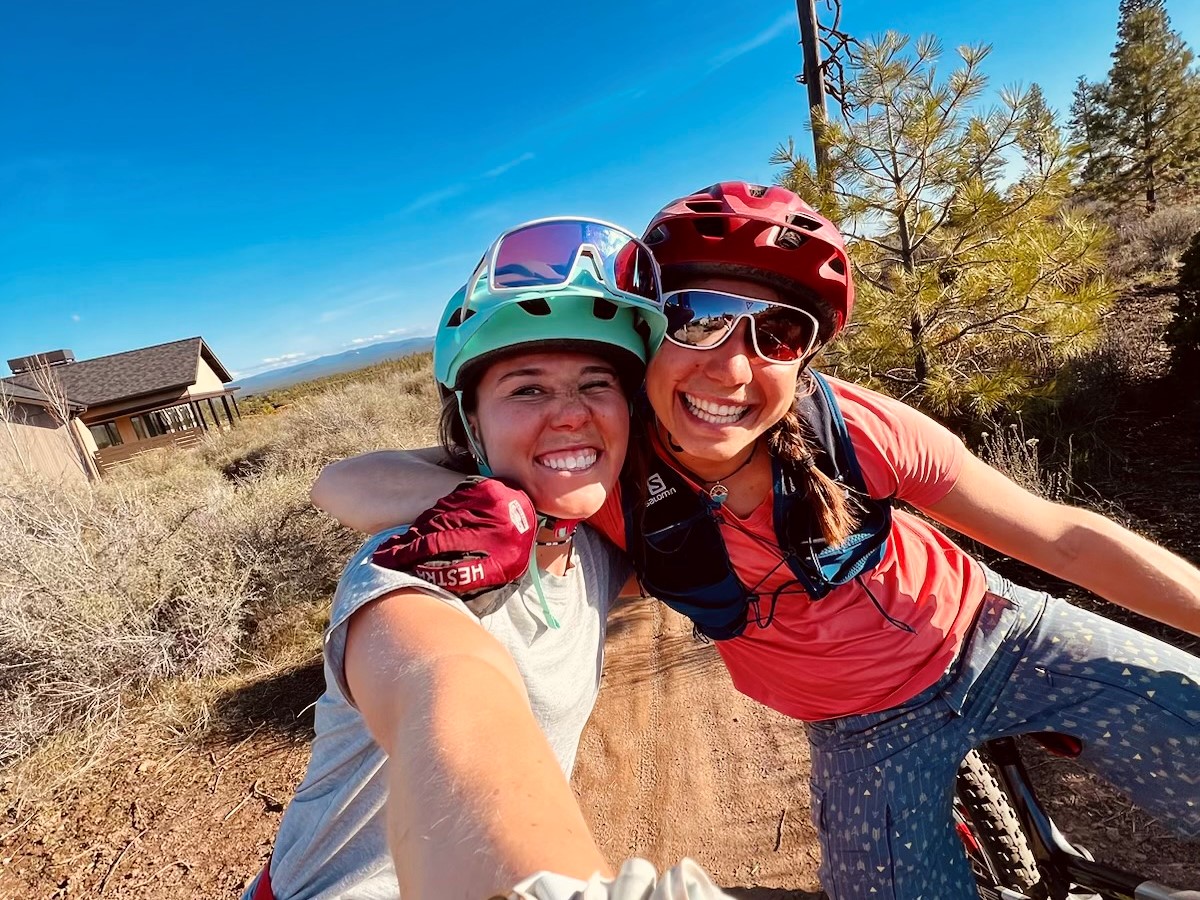
    Like many elite skiers, Lauren Jortberg and Julia Kern enjoy mountain biking opportunities for a change of pace. (Photo: Julia Kern)
    Against Early Specialization

    Asked when Norwegian athletes begin to specialize, Nystad laughs gently.Focus and specialization are a little bit mutually exclusive,he says.You can be focused and still do more than one sport.”

    Most Norwegian kids, he explains, play several sports until age 15 or 16 — sometimes even longer.When they’re 18 or 19, they might focus on one main sport and keep a couple on the side — running and skiing, for example, or cycling and skiing,he says.It’s part of the culture. People are active.”

    The danger, he warns, comes from well-meaning adults.A lot of parents try to self-realize through their kids,he says.

    “They want them to specialize early, to do everything right. In the end, the kids are sick of it, have no fun, and they quit.”

    His takeaway is simple:Kids are not miniature adults. They’re kids. Let them be kids as long as it makes sense. Life gets serious soon enough.”
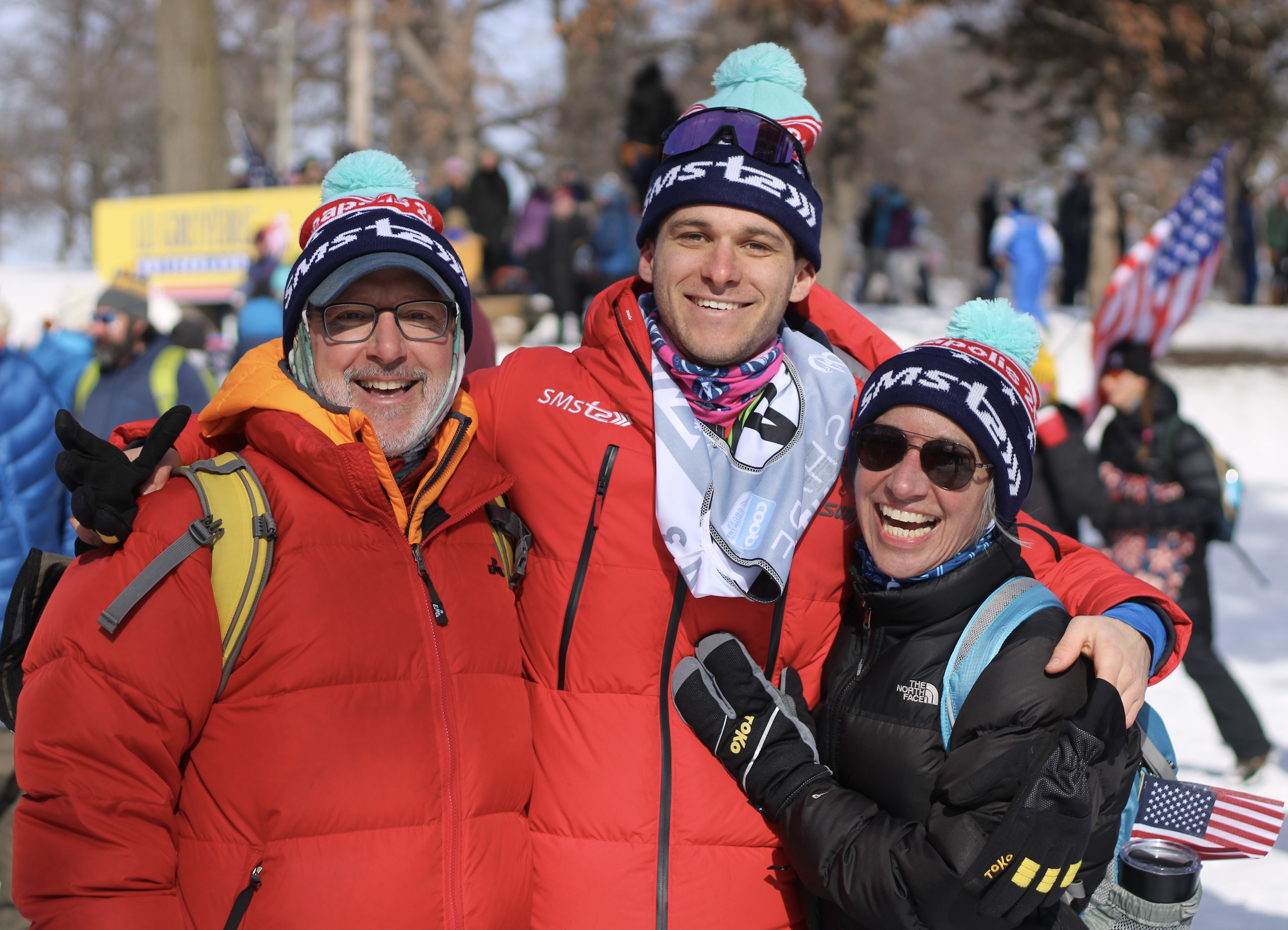
    Adam Witkowski poses with his parents after unexpectedly racing a World Cup in Minneapolis in 2024. (Nathaniel Herz/FasterSkier)
    The Role of Parents: Mentors, Not Managers

    Nystad, as a father himself, knows firsthand how difficult it is to strike that balance of knowing when it is time to commit.Sixteen is just a number,he says. Some sixteen-year-olds are grown up; they can form their own opinions and take ownership. Others can barely wipe their own ass,he says with a laugh.

    “But in the end, the kids have to decide for themselves. It has to be something that’s rewarding for them. Our job as parents is to support them — to help them make fewer mistakes, to be mentors along the way.”

    That mentoring role — guiding but not controlling — is something Nystad sees as critical for the next generation of athletes.We’re supposed to help them realize their dreams and develop,he says.Not to live our dreams through them.”

    “Keep It Simple”: Trust the Body, Not the Gadgets

    In an era dominated by data, GPS, and lactate meters, Nystad is refreshingly old-school. He’s not anti-science — he’s trained with and coached some of the world’s most analytically minded teams — but he cautions against what he callsnumbing the senses.”

    “The reason to measure is to understand,he says.You measure to confirm your subjective feelings — not to replace them.”

    “If you’re tired, you sleep. If you’re hungry, you eat. If you’re thirsty, you drink. Those are subjective feelings — and they’re more important than any data you can measure,he explains.

    “Most devices today are not 100 percent correct. Your body usually is.”

    For Nystad, training success comes from continuity, not complexity.The KISS principle applies — keep it simple,he says.In endurance sports, you have to train with continuity for a long time and be patient. Don’t screw things up. Control gives continuity, and continuity is everything.”

    Fun as a Foundation for Longevity

    Nystad lights up when the conversation turns to lifelong sport.If sport or physical activity makes us happy, we’ll prioritize it,he says.Talking about training doesn’t make you better — actually doing it does.”

    He encourages athletes — elite or recreational — to reframe movement as a privilege, not a chore.We should appreciate every day we get to move,he says.

    “It means we’re healthy, we have the time, we can afford the equipment. That’s a luxury we need to appreciate more.”

    For parents juggling work and family, his advice is pragmatic:Maybe it’s better to go for a one-hour run first, and then drink your beer and watch Netflix,he says with a grin.It’s just about organizing your day so you get your little quick fix of physical activity.”

    The Norwegian Definition of Success

    For someone who’s coached Olympic medalists, Nystad’s definition of success has nothing to do with results.I can’t even remember what happened last winter,he admits.Success has nothing to do with medals or wins. I’m happy as a coach when the athletes are happy — when they’ve developed as athletes and as human beings.”

    He sees coaching as a human project as much as an athletic one.I always try to build teams where people work together, respect each other, and do their best. That’s success. If we treat each other well and do the job the best way we can, we’ll reach our potential. Reaching your potential — as a human or as an athlete — that’s success.”

    It’s a deeply Norwegian sentiment, one echoed across their sports system: the process matters more than the podium.
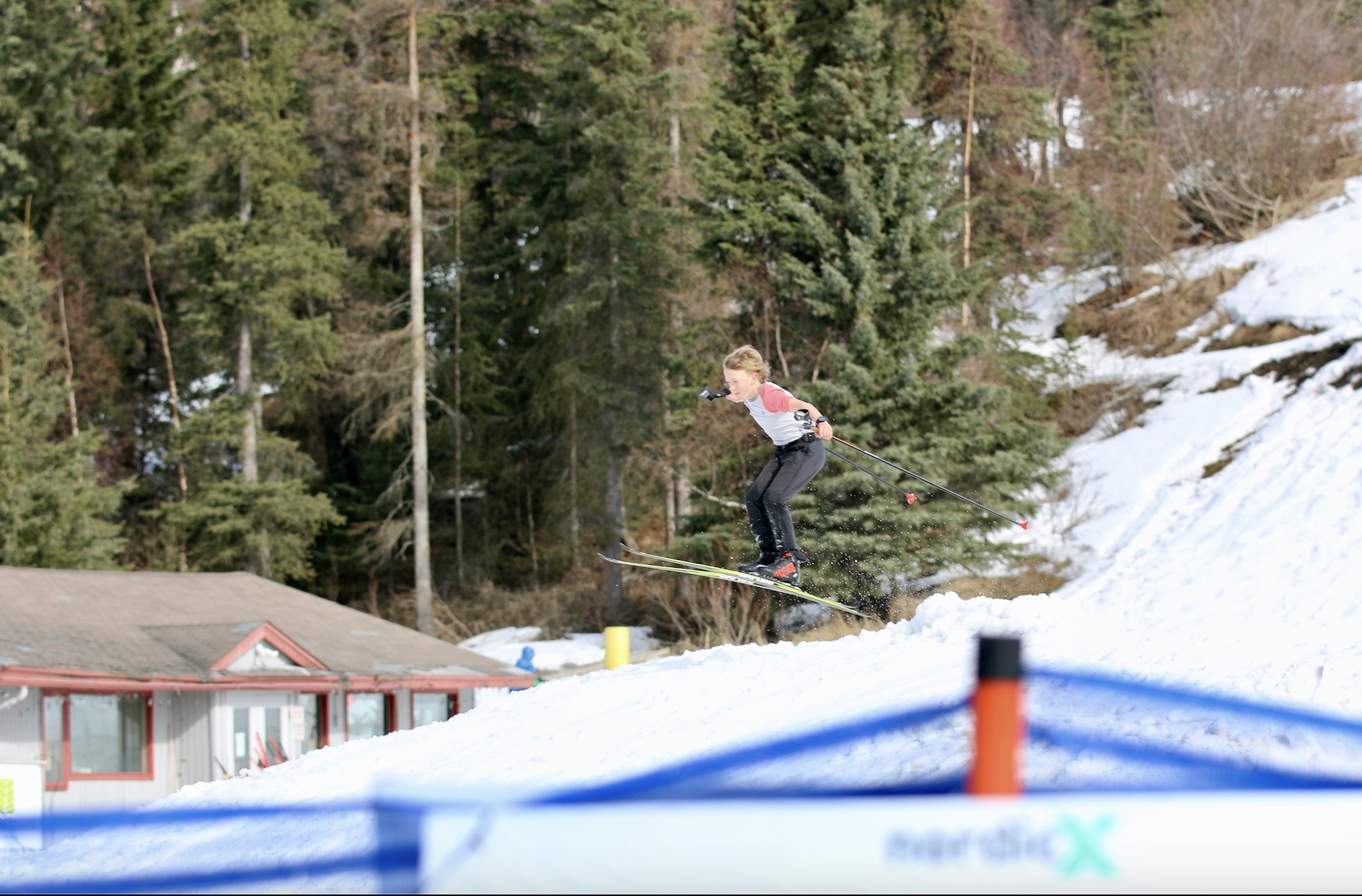
    One of many kids enjoying the features on the course and in the Kiddie Cross terrain park at NordicX in 2022. (Photo: Eric Maurer / NordicX)
    Lessons for U.S. Clubs and Coaches

    Nystad believes that U.S. programs can apply these lessons without mimicking Norway wholesale.The principles are the same,he says.It’s about creating an environment where kids master things, have fun, and stay in sports longer.”

    That may mean rethinking whatdevelopmentlooks like.Most of the time, we lose more than we win,he says.So it’s okay to have a bad race or a bad day. Focus on skill development and mastery — even when things aren’t going well. If it’s fun, and you keep mastering skills, success will come.”

    He also urges patience from young athletes.A big mistake is intensity control,he says.They go too fast on the easy sessions and too fast on the hard sessions. They believeno pain, no gain,but endurance sport doesn’t work like that. The best athletes are the ones who train a lot — and train smart.”

    Technique, Mastery, and Play

    Skiing, Nystad reminds us, is as much art as science.Especially in skiing, which is such a technical sport, the quality lies in doing things right — not just going hard,he says.I see so many people skiing with music in their ears, talking, doing all kinds of things, instead of focusing on perfecting technique.”

    He encourages athletes toplaywith movement:No one tells us how to do it. We can choose the way that fits our body and our strength,he explains.If more people would play with technique, be conscious of their technical and pacing choices, the outcome would be better for most people.”

    Astrid Oeyre Slind (NOR) on her way to a second-place finish in Cogne, Italy. (Photo: NordicFocus)
    The Lifelong Athlete Mindset

    At 55, Nystad continues to coach, ski, and move daily — not out of obligation, but joy.If you train right, take care of yourself physically, mentally, nutritionally — and have a blast doing it — there’s no limit to how long you can be good,he says.

    “The moment you start thinking it’s a sacrifice, or that it’s boring — that’s when your career starts to end.”

    He cites examples like Hilde Gjørum, who earned her first Olympic medal at 43, and Astrid Øyre Slind, who made her first Norwegian World Championships team at 34 and won her first World Cup at 37.There are lots of stories like that,he says.Everyone can keep getting better — if you love what you do.”

    Looking Ahead: A Sustainable Future

    Nystad’s final reflections return to sustainability — both of snow and of sport.Obviously, we’ll have issues with snow,he says.Snow storage and snow farming are becoming normal in Europe, and that will change the sport. But cross-country skiing will survive. It’s a great sport — full-body, low-injury, healthy.”

    The real challenge, he believes, is getting people to participate.We need to sell it for all it’s worth and get more people involved,he says.If we can bring more people into skiing — kids, families, anyone — the rest will take care of itself.”

    The Takeaway:Master the World”

    For Nystad, the essence of sport is not the stopwatch, but the spirit.The focus,he repeats,is on mastering the world — being a champion of the world, not a world champion.”

    It’s a mindset that turns every trail into a classroom, every race into a chance to learn. And perhaps that’s the real secret behind Norway’s golden age of endurance: a culture where success isn’t measured in medals, but in how many people can’t wait to clip into their skis again tomorrow.

    Trond Nystad, the coach of the Norwegian men’s cross-country ski team, takes questions from the media after the relay at the Sochi Olympics.
  • With Dreams Chased and Achieved, Adam Martin Retires from Professional Skiing

    With Dreams Chased and Achieved, Adam Martin Retires from Professional Skiing

    Adam Martin strides at the 2022 Holmenkollen 50 k classic in Oslo, Norway. Martin finished 26th in his third Holmenkollen in March, and recently announced his retirement. (Photo: NordicFoucs).

    Adam Martin’s skiing has always tended to be best described in conjunctions rather than disjunctions. He could do this and he would do that.

    Or, that’s always how his mentors looked at it. My most distinct memory of Martin is from a CXC (Central Cross Country Skiing) camp about a decade ago when Sten Fjeldheim, then Martin’s coach at Northern Michigan University (NMU), gathered a group of us J2s (U16) around in the lobby of the old Telemark Lodge and said, “there’s proof you can be an All-American caliber skier and have a 4.0 GPA too,” pointing to Martin as the example.

    That stuck with me as I watched him as a US skiing fan for years. Martin was giving it everything he could in everything he did, and the juxtapositions that produced were inspiring in their absurdity.

    He would run a combined bike/run hill climb and beat all but one of the cyclists. He would win a local 5 k while pushing for pro runner–caliber paces (seriously, he ran a 14:34). He would compete on the World Cup, and his best result would consistently come at its longest and hardest race – the Holmenkollen 50 k.  

    That pattern strung along almost a decade from his high school career to its final, most striking juxtaposition: Martin had his best season ever in 2021/2022, and now he will retire from professional skiing.

    The pattern held all the way through. He gave it all, in every way, and at everything the ski world had to offer.

    It was exemplary of his philosophy of inclusiveness, of an and; a persistence in bringing in others’ ideas, their accomplishments, their experiences in skiing, learning what he could, and channeling it all into his performance out on the course.

    That stance towards thoughtfulness and inclusion could be figured as an essence to Adam Martin the skier. Something that reached all the way back and followed him all the way through. When we spoke a couple weeks after his retirement, that was the timescale he reached for. “I was lucky to grow up in the nordic skiing community that I did, with a lot of great people helping me in the sport, both getting into it and supporting me today,” Martin said.

    Adam Martin strides through the woods in Falun, Sweden, during a 15 k classic in January 2021. (Photo: NordicFocus)

    That nordic community was the one in Martin’s hometown of Wausau, Wisconsin. He first came to skiing as a 10-year-old there – venturing out on skis after the local skating rink shut down and left his then favorite sport, figure skating, an impossibility. “It was a good winter so there was good skiing at 9-mile (Wausau’s trails) for all of March. My mom took me out once or twice a week for a whole month and I think we progressively worked up to 20 k at the end of the ski season. And that was big for me. I didn’t think about figure skating after that.”

    It was an understated but persistent start in the sport that matched the ski community that Martin would grow up in. An old timber-boom relic in Wisconsin’s Northwoods, Wausau hums along as a city of 38,000 marked most prominently by Rib Mountain, an erratic that signals that glaciers crept across the land there, carving up knolls and hills under the forests that now surround it. It is as perfect ski terrain as you’ll find in the Midwest. Granite Peak, one of the oldest lift-served ski hills in the country, calls one side of Rib Mountain home. Characteristically of Martin, when I asked him if he skied there as a kid he replied “Never downhill. I used to ski up it after the lifts closed in high school though.” Martin was instead drawn into skiing by the rolling terrain at Nine-Mile County Forest, a network of trails a mile south of Rib Mountain that had already been home to a couple generations of nationally competitive skiers .

    Before he joined those ranks though, Martin signed up for the Wausau Night Gliders, the community’s youth program coached by Rachel and Greg Kresse. “We met twice a week, and I was just so excited to see and learn different things in the sport. I remember the first time we learned to skate, and was like thinking, ‘could you V2 in a race?’ Because at that point I was just doing one technique. That was the clincher, I decided I wanted to race. I wasn’t even doing particularly well in the beginning, and getting extremely nervous, but I do remember one race at 9-mile where I had one of my experiences hitting the ‘flow state’ and that was it after that. I was totally hooked on that experience.”

    From there, Martin started to look down the road at skiing. Standing there metaphorically, he saw skiers doing what he would one day hope to do. “[In Wausau] the Hugus brothers were three or four years older than me. When I was in 8th grade Ben [Hugus] won the state Championship. One of them was getting top 10s at Junior Nationals, and then I was good friends with Matt and Chris Nichols who were around my age. I had a lot of great competition in Wausau, and in Wisconsin too. I remember Dylan McGarthwrite (from Hayward) making the Scando (Nordic Nations U18) trip when I was a freshman in high school, and I was really hyped up about that.”

    After gaining that preview of the Wisconsin nordic world, Martin would chase down each and every one of those goals reached by his role models. By the time he was a freshman in high school, he was qualifying for Junior Nationals. Then, he won the Wisconsin high school state meet, and then qualified for the U18 Scandinavian Cup trip with US Ski & Snowboard. With dreams realized and only good things ahead, Martin decided to go all in on skiing.

    Adam Martin pushes over the line during a 15 k classic in Falun in February, 2020. (Photo: NordicFocus)

    His time, and his place in Wausau, were serendipitous in presenting a ready-made opportunity in his own backyard. In the early 2010s, the Midwest was home to a grouping of skiers who would go on to define their generation of American skiing. Martin headed to the CXC Elite Team, where an orbit of skiers that included Jessie Diggins and Kevin Bolger, along with coaches like Jason Cork, Igor Badamshin and Bryan Fish, were all forging the philosophies and approaches to skiing that would eventually influence the direction of US skiing for years to come.

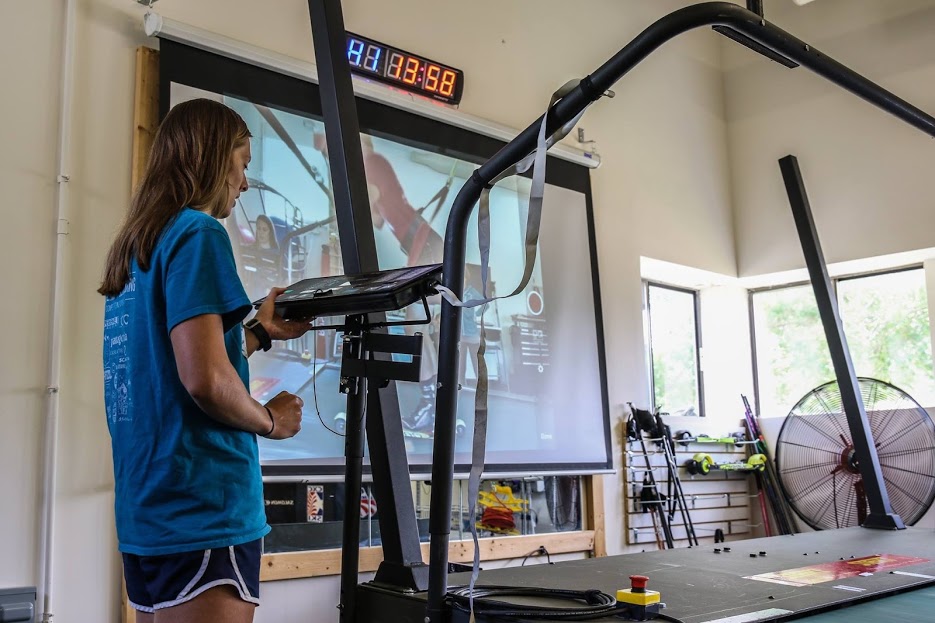
    That it was happening was almost hidden by the shabby surroundings in which they were pushing forward. After joining up with CXC, Martin split his time between Wausau, and CXC’s main training site at the Telemark Lodge in Cable, WI. The training environment was spartan, but the facilities couldn’t even strive for that aesthetic – they were just run down. The VO2Max-fitted treadmill hung out in what used to be a shop floor in the Lodge’s old mall, most athlete accommodations still donned the dull color tones of the 1970s, and the old Telemark World Cup trails were overgrown and uncut.

    It was out of the way, but it was also all about skiing, which let Martin fully lean into his developing thoughtfulness towards his technique and his training. “I took a lot of cues from Igor [Badamshin] there. The thing that stood out for me was that he was so joyful about skiing, and that joy could extend to looking at every little aspect of things. He’d point out a little thing in technique, and would get incredibly excited about it, and that was contagious.” (Badamshin passed away in 2014; read a FasterSkier tribute to him here). 

    That attitude extended to new areas of interest too for Martin, who began to take an amateur’s interest in the sports science behind cross-country skiing. “I just bought a standard exercise physiology textbook and think I like read it cover-to-cover. … I started reading all sorts of exercise physiology, and still do.”

    Martin’s post-grad year was a fruition and a starting point. Going into a year at CXC, Martin was a skier whose results indicated a huge amount of physical talent and mental intelligence. Then, somewhere in the Wisconsin Northwoods, they melded together, and Martin formed a full-on focused approach to skiing.

    But there was a paradox at play too. In developing this holistic approach to skiing, Martin realized he had let go of fitting skiing into his holistic approach to life. “Just focusing on skiing and putting all that pressure on one avenue of my life did not work for me. I really needed to challenge myself mentally and take the pressure off skiing after that post-grad year.”

    That led Martin to another natural stopping point in his skiing career, college skiing at Northern Michigan University (NMU) under coach Sten Fjeldheim. “I really fell in love with the sport again under the tutelage of Sten, and with the incredible team environment there.” NMU had long been a waypoint for talented Midwestern juniors – the path that stemmed from JNQ wins to Marquette seemed almost ubiquitous. That meant Martin joined up with a group of teammates that could help him push and be pushed by him.

    Adam Martin tags Craftsbury Green Racing teammate Caitlin Patterson during a March, 2022 4 x 5 k mixed gender relay in Falun, Sweden. (Photo: NordicFocus)

    Like he had when he was a young skier in Wausau, he looked ahead to see what and where his teammates were achieving results, and found cues he could take, saying that “When I was a sophomore, Kyle Bratrud won the 15 k skate at Nationals in Houghton. He was a year older than me and that really opened my eyes to say ‘ok, we can do this. That level is achievable.’”

    With that long view of what he wanted to accomplish, Martin also found in Sten Fjeldheim a coach perfectly matched to the detailed approach to skiing he had formed. Fjeldheim at the time was somewhere between elder statesmen and guru in his career, which meant that the years that Martin was beyond in his skiing knowledge had found a home. “Oftentimes, before a workout, [Sten] would explain exactly why we were doing it, why we needed to execute it a certain way, and what the physiological effect would be for doing that. That was exciting to me, and it worked really well with how I looked at ski training.”

    As important as his coach was the skiers that Martin called teammates during his time at NMU. “That was a rare team environment, we were all super competitive with each other but in a super constructive manner.” During his four years, Martin was part of teams that included former, present, and future US ski team members with Ian Torchia, Zak Ketterson, Kyle Bratud, and biathlete Jake Brown. At the NCAA Championships in 2016, he, Torchia, and Brown combined to put NMU at the top of the team scoring – all earning All-American status in the process. Across both the 10 k Classic and 20 k Skate races, he and Torchia were the top American-born athletes in collegiate skiing. 

    When Martin graduated in 2017, it was also with a distinction that marked a whole other focus during his time at NMU. He had two degrees  – one in mathematics and one in computer engineering. He had taken what he learned about himself during those post-grad days in Wisconsin, moved on up to the U.P., and nailed it.

    Adam Martin (NMU) racing to a American-leading 23rd in men’s 15 k classic at 2016 U23 World Championships in Rasnov, Romania. (Photo: Pete Leonard)

    With a 23rd in the 2016 U23 World Championships 30 k Freestyle, there were plenty of professional clubs that were interested in seeing Martin continue his skiing career. And he was up for it, if he could continue to take the holistic approach that had seen skiing not be “the only thing” in his life. From a far-flung corner of Vermont’s Northeast Kingdom, a call came in from Pepa Miloucheva, the coach at Craftsbury Outdoor Center’s Green Racing Project. The GRP was a top-level, proven club, and also one uniquely structured to have its athletes take an active role in the sustainability and outdoor recreation–focused activism of the Outdoor Center. “It just made sense,” said Martin on his decision to head to Vermont after graduating. “I was getting into a program that was more than just training…I was able to work with them, take the GRE, take grad school classes, and make it feel like NMU where I was very challenged.”

    Again, Martin had put himself in a place where skiing was the thing. A small pocket of rolling hills that were a little bigger than the ones he started out on in Wausau, but rolling, nonetheless.

    On the skiing front, things continued to progress for Martin after joining the CGRP. He made his World Cup debut at the 2018 opener in Ruka, where he placed 51st in the 15 k Classic. That season he also notched a pair of 2nd places at US Nationals in the 15 k Classic and the 50 k Classic, while earning consistent World Cup starts throughout that 2018-19 season. Those World Cup appearances culminated in a season-high 31st place at the Holmenkollen 50k marathon in March 2019. It was Holmenkollen that year which provided another one of Martin’s realizations about himself as a skier. “I started to learn that my strength as a cross country skier is that my physiology is really geared towards distance – it’s definitely not speed or transitions. Holmenkollen specifically has these grinding features that make you get to your VO2 max and have to stay there for a long time. It’s almost a perfect physiological stress for me.”

    Adam Martin during the Holmenkollen 50 k in 2020. (Photo: NordicFocus)

    That further stuck out to Martin especially when he returned to the Holmenkollen race the next season, in 2020. “In 2020, it was a low snow year, so we had to do a different course than the traditional 8 k, and it was more focused on transitions. I just learned again, in one race, a lot about myself as a skier. I was just happy to finish.”

    That Holmenkollen marathon also marked the end of normalcy in skiing for the next couple of seasons to come. “That was my last race on the World Cup before the pandemic, and then I came home to do the SuperTour in Minneapolis right before the World Cup, and I won. It was my first SuperTour win, and then the pandemic happened.”

    Martin was in a weird spot. The markers that he had traditionally used to gauge and reach for new heights in his skiing career would suddenly disappear over the course of the next season. He was making progress, but the road didn’t have as many markers as it did before.

    “[The pandemic] was something everyone dealt with differently, right? But I think for me, the big challenge was that the Craftsbury program is traditionally very communal and very close knit. It’s a big group of athletes – like 30 between our skiers and rowers – and traditionally we’re eating in a dining hall, working together, working out together, and sharing the same gym. That was a super vulnerable situation to COVID, so we went from super communal to basically not going into public buildings for that first year.”

    Adam Martin races a frosty 15 k in Falun, Sweden in January, 2021. (Photo: NordicFocus)

    It was as if someone flipped a switch on the type of training environment that Martin had been in since his days at CXC. His training grounds had always been out of the way geographically, but always included the ability to bounce ideas off his teammates and coaches, to try out new things, and to get feedback then and there. They also had always included a full race schedule, which due to a combination of the COVID situation locally in Craftsbury and Vermont state safety policies, became an impossibility the next season.

    When Martin could race, it was internationally. “I was lucky to get a start on the World Cup at Davos in December, but while I was gone, the state of Vermont changed the rules around COVID travel. (At the time, COVID cases were undergoing a spike.) I got back and I couldn’t be on the ski trails in Craftsbury while I quarantined unless it was like before 7am or after 6pm at night. I knew I was lucky to be getting racing in, but it brought restraints that forced you to adapt your training.”

    Martin credits the imperatives surrounding COVID compliance with giving him a new adaptability to his training approach, even if the changes he made were more informed by what they always had been – his coaches, his intuition, and his constant searching for knowledge that would lead to improvement. “I think there was some changes in those two years that helped me make some big improvements that were probably independent of COVID, but came about because I felt like the pressure was off again for the first time in a while.”

    That intermittent COVID season’s lessons would all come to a fruition in Martin’s skiing at the start of the 2021-22 season. Martin started his season on the US SuperTour circuit, and the SuperTour circuit was to begin in the Midwest. That, for Martin, brought back an extra level of familiarity to the return of a regular racing schedule in 2022. “I was so happy to win that first SuperTour in Cable (in the 15 k Classic).”

    The early part of the season also saw him call to mind some of the moments that he had once seen teammates achieve back when he was based in his home region. When he came out of the first SuperTour period in 2nd place overall, behind former teammate Zak Ketterson and barely missing out on the automatic World Cup start Ketterson earned, Martin turned towards US Nationals in Soldier Hollow in January.

    There, on a sunny Utah day, he won the 15 k Classic, a moment that was “particularly awesome, since it was what I watched Kyle Bratrud do at Houghton.” Over seven years, Martin had had the revelation about who he skied with, and then chased down that moment for himself.

    Adam Martin at 2022 Nationals in Soldier Hollow. Martin would become a National Champion in the 15 k Classic, a goal he set 7 years earlier after watching then NMU teammate Kyle Bratrud accomplish the feat. (Photo: Tobias Albrigtsen / @untraceableg)
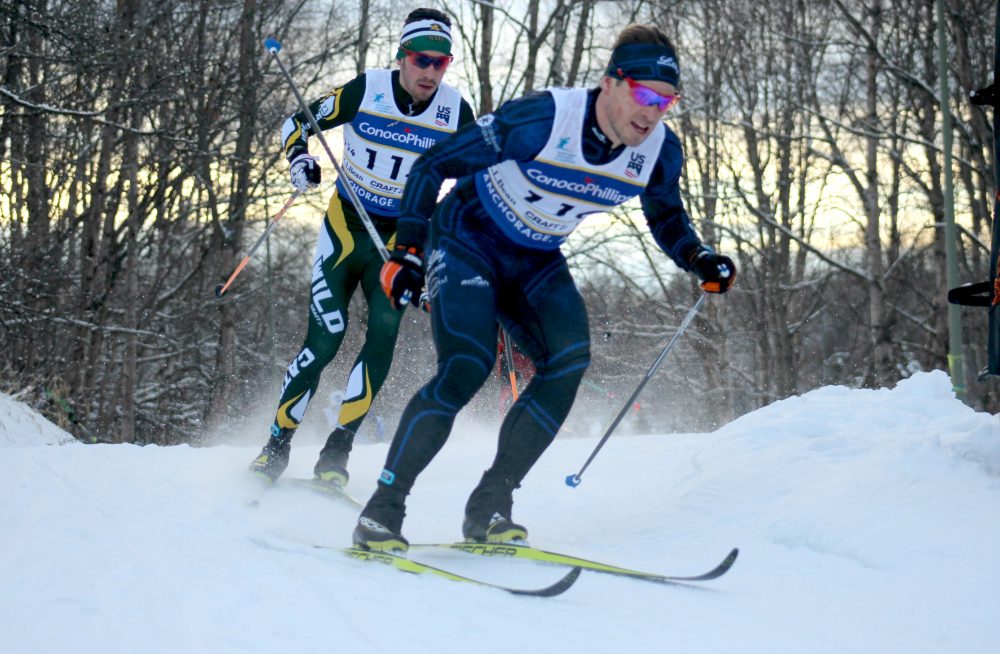
    His National Championship and SuperTour results would, in nearly any other season, have seen him shortly to the start line of a World Cup. But for a second winter in a row, COVID was surging (this time as part of the Omicron wave). A slate of World Cups were canceled in January, and the Olympics in February took out any flexibility in the US Ski Team’s lineup. In the Olympic qualifying period, Martin was just behind Scott Patterson for 2nd place in the standings. With a more competitive field than ever before, Martin just missed out on qualifying for the 2022 Beijing team.

    From there, he would continue to race the SuperTour, with his consistency throughout the whole season earning that series’ overall title, which he capped off with a win in the 15 k classic at SuperTour finals in Whistler. He also would get the nod to race the final World Cup period in March. A period that included, once again, the Holmenkollen marathon.

    Martin had a memory and a goal. “I had been 31st there my first time, so I wanted to notch a top-30 finish. I looked at the points list and my bib and knew it was going to be a challenge, but the way the race went out I felt like I could hang onto the pack a little longer than I had before, and with the course being one I knew I liked, I just skied with a confidence that I might not otherwise of had.” That effort and that approach, as it had throughout his career, saw him through to accomplishing his goal. Martin finished in 26th.

    Martin could continue like that – setting goals that, through the constant refinement of his approach to skiing, he would surely accomplish. But that’s where the paradox of his approach comes in again. In powering his skiing through a fine-tuned balance between focus on skiing and focus on other aspects of life, there came a time when the balance would shift towards life. For Martin, that moment is one he says has come:

    “What was important to me in professional skiing is giving it everything I have, and that requires a lot of sacrifices. It’s important to me that I’m giving my best effort, and now I give that to other things in my life. I had so much fun this season, and don’t have to step away with any bitter taste in my mouth. Skiing will always be there – I’ll be doing the Birkie or the Noquemanon next year I’m sure, but I’m ready to push myself in a different sense.”


  • Constant Nordic Motion : Sten Fjeldheim Retires

    Constant Nordic Motion : Sten Fjeldheim Retires

    NMU coach Sten Fjeldheim retires after 35 years at the school. (Photo: Courtesy NMU)


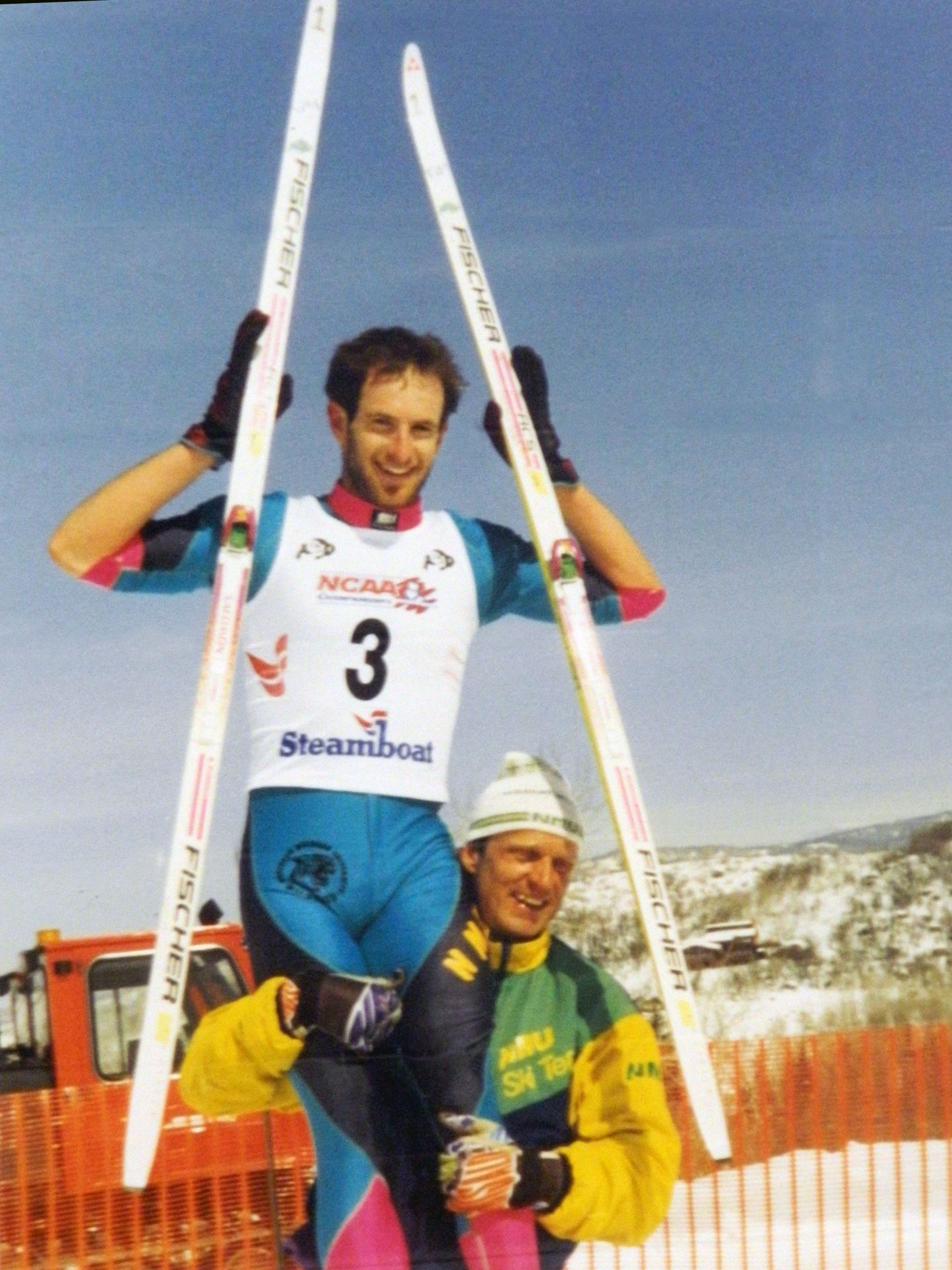
    Sten Fjeldheim, the cross-country ski coach at Northern Michigan University announced his retirement on March 30th. He coached and mentored at the school for 35 years. This piece from The Mining Journal speaks to Fjeldheim’s legacy and the many accolades NMU skiers achieved under his tutelage. Below are thoughts about Fjeldheim from former NMU skier, U.S. Ski Team athlete and Head Coach, Peter Vordenberg. According to a NMU press release, Fjeldheim had this to say about Vordenberg’s 1993 individual NCAA National Championship: “Of course Peter Vordenberg winning the NCAA National Championship in 1993 I’ll never forget. We had just moved into the NCAA in 1992 and to have a national champion a year later was really exciting.”

    ***

    Sten is a pure jolt of electric fire. He is energy.  

    Sten has spent decades electro charging hundreds and hundreds of ski racers.  Electricity doesn’t pass from one to another without a jolt, without that shock, that zap, that spark. Electricity doesn’t amble, it jumps. Zip!  

    It crackles.  It singes, burns, ignites.  

    Get shocked, and you can taste it, smell your own hair on fire. Sten is fury and passion and joy and love. Sten Fjeldheim can drive without looking. 

    In my day he could beat almost everyone on the team and most of the rest of the racers in the U.S. too. At Senior Nationals back in the early ‘90’s, I recall Sten waxing team skis late into the night, kick waxing in the morning, shepherding the team on course to race and then pulling his own bib on. I want to say he was top-10. I’m certain he then drove the van back to the hotel without looking at the road once, telling outrageous stories the whole way. That’s how I remember it.

    The vein. That’s what we called it when Sten got mad. He was balding in that Scandinavian sort of way; blond hair pulling back off his forehead but still flowing behind.  The vein descended as a zig-zag lightning bolt from upper temple to down near his eye. Seeing that vein bulge out was not a good thing. 

    Fire heats, and fire burns.  

    The vein meant you were about to get burned. Sometimes that fire got you out the door, lit a fire under your butt, as the saying goes.  And as the saying goes, Sten’s passion for skiing spread like wildfire. Sten is the ignition point. From there the whole team catches it, passes it, from one to the next until the whole team is on fire. That’s how a team gets hot. That’s how a team gets on fire. You need someone to light it and fan the flames, and that someone is Sten.

    I don’t have any facts. Which is something that wouldn’t slow Sten down either.  So here it goes. I am pretty sure the NMU Wildcats have won more NCAA cross-country ski titles than any other team. I mean cross-country only, rather than combined with alpine. And what about homegrown NCAA champions? I mean American kids – has anyone coached more American kids to NCAA titles? I doubt it. 

    I’m not going to count.  Electricity doesn’t stop to count. 

    I can’t imagine Sten not coaching. What does electricity do when it stops moving?  Static electricity doesn’t stay static for long, get close enough and Zang!  I’m not getting anywhere near the U.P. if Sten is retired.

    I never saw Sten sit still. I’m really trying hard to remember a single time. I can’t.  I’ve never seen it. Most of my memories of Sten are out skiing, running or rollerskiing. Some of the best times of my life, running through those vibrant colors of a U.P fall with Sten and my teammates, everything on fire, exhilarating, vibrating, charging down those sandy trails through the woods.  

    And come winter flying along the trails up and over those punchy Midwestern hills just knowing we were on the right track to success. Just knowing it. I recognize that now as what people call faith. It was something you felt, something you just knew. 
    Sten could have been a preacher. Fire and brimstone style, getting the whole congregation speaking in tongues, believing in themselves as ski racers, leading us to some kind of ecstatic snake worship type thing. Yes, he could have been a snake oil salesman too. 
    It’s hard not to believe in something when it’s backed by pure electric fire. I’m talking about passion. Sten loves skiing so much you fall into it too. Maybe not everyone did. But, I was in the front row, waving my hat in the air, shouting amen, hallelujah and praise be.  

    But it wasn’t really like that. Sten wasn’t preaching so much as living it with you.  We trained together, dreamed together.  He pulled you in with him, didn’t stay up above. That’s for sure.  

    If there was a fight, Sten was in the middle of it. He is a human and all the humans I know come in somewhere less than perfect, Sten included. Me included too, and same with you. Imperfection never stopped any preacher from preaching. I promise you that, and Sten isn’t a preacher, just a guy who really, really loves ski racing and is a genius for sharing that passion. And it was more than a passion for ski racing it was a belief in you. He believed you could do it so much you started to believe it too and before long you just knew it. 

    I came to NMU in fall of ’91 never having made the Jr. World Team. By winter of ’92, I was on the Olympic team. In ’93 I won the NCAA championship for the Wildcats.  It was the first of many for NMU skiing. I’m proud of that. 

    I like to think I added to the intensity of the fire, stoked the flames up a little higher.  Later, I certainly brought some of that Fjeldheim intensity to my own coaching with the National Team and again I’m proud of that. I like to think I helped bring the flames up higher there too. I owe much of that fire to Sten.  I carried it with me for many years. That’s what I wanted to do. If there is one thing I learned from Sten it is this: If something is going to happen, you have to want it to happen first and want it bad.

     “You have to want it!” – Sten Fjeldheim.

     Thank you Sten.  U.S cross-country skiing owes you much.  I sure do. 


    The author hoisted by Fjeldheim after the 1993 NCAA win. (Photo: Courtesy NMU)
  • Quick Hit Athlete Check-Ins from Under 23 Worlds: Ian Torchia

    Quick Hit Athlete Check-Ins from Under 23 Worlds: Ian Torchia

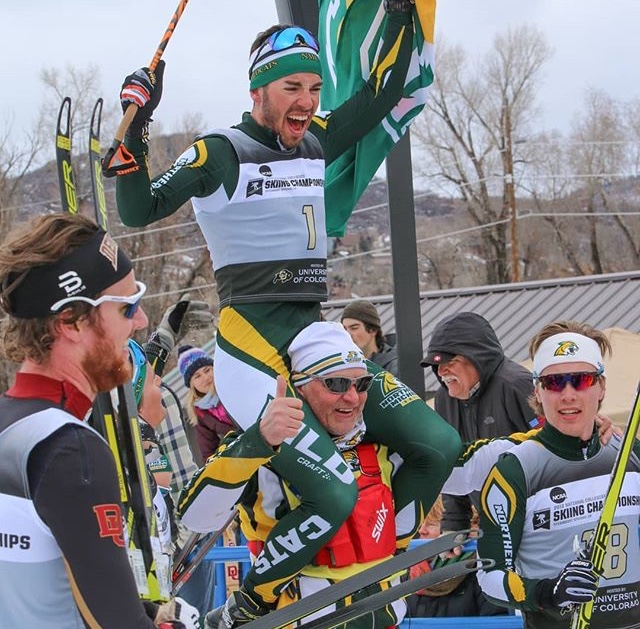
    Ian Torchia (1) on the shoulders of Northern Michigan University Head Coach Sten Fjeldheim after he won the men’s 20-kilometer freestyle race at 2018 NCAA Skiing Championships in Steamboat Springs, Colorado. (Courtesy photo)


    Cycling back before you know it — it’s the International Ski Federation (FIS) 2019 Nordic Junior/U23 World Championships in Lahti, Finland which gets rolling with a U20 classic sprint this Sunday. In our quest to check in with some North American athletes in Finland, we emailed a list of quick hit questions. Up first, twenty-two-year-old Ian Torchia who skis for both Northern Michigan University and the U.S. Ski Team Development Team. Torchia participated at World Juniors in 2015 and 2016, and the 2108 World U23 Championships where his best result was a 27th in the 15 k/15 k skiathlon. At World Juniors in 2015 Torchia placed 11th in the 10 k /10 k skiathlon, and 15th in the 2016 World Juniors 15 k freestyle. 


    ***


    1) How did you pass the time on your flight to Europe?

    I slept the entire flight, middle row to myself!

    2) What are you reading? Choose both a book and magazine.

    I’m reading Endure by Alex Hutchinson and also the New York Times to keep updated with facts about the lovely President we have at the moment.

    3) How are you approaching this Worlds differently than those in the past?

    I’m coming in more relaxed but also more focused on executing my training and racing plans.

    4) What are some “performance goals” going into the races you are focusing on?

    I would like to ski 2 strong distance races as I felt I have not truly expressed my shape yet this year.

    5) What races are you focusing on?

    15k Freestyle Individual Start

    6) Who best supports you when a race doesn’t go the way you envisioned?

    My girlfriend, Kameron Burmeister.

    7) Who is the first person you call/text/email…etc. when the race goes well?

    My girlfriend, Kameron Burmeister.

    8) How do you best deal with external pressure to perform?

    I focus on the little things that add up to make training and races go well.

    9) How do you best deal with internal pressure to perform?

    I distract myself until 2 hours before the race so I don’t waste energy being too amped up.

    10) What type of “fun” are you looking to have outside of skiing in Lahti?

    The currently closed ropes course here at Vermauki 😉


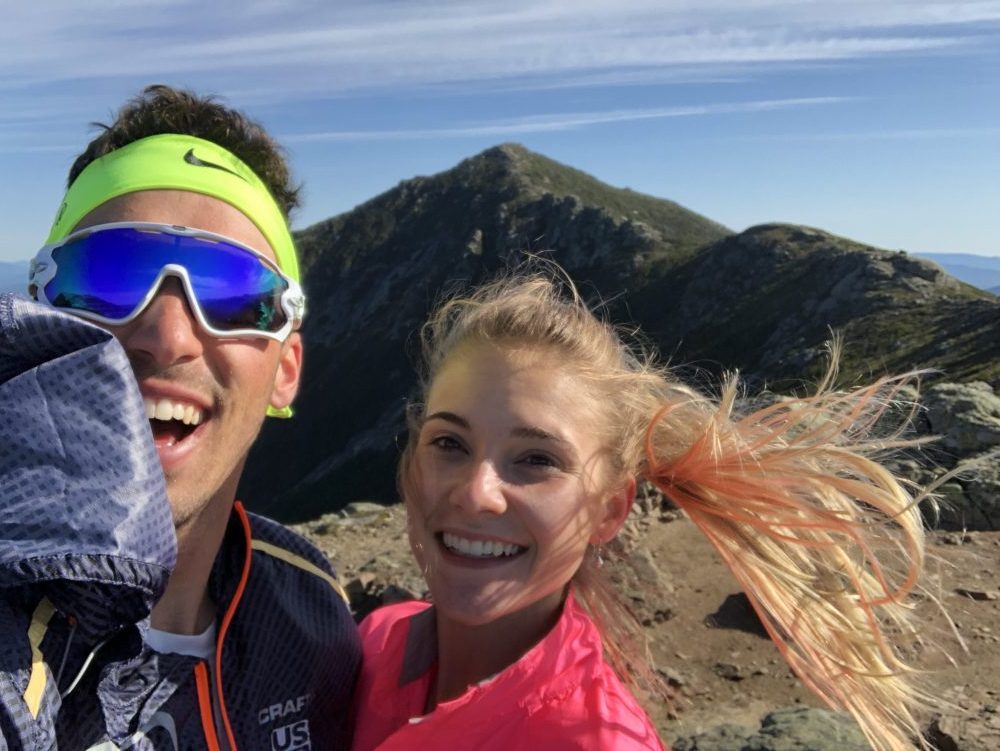
    Ian Torchia (l) with girlfriend, Kameron Burmeister, hiking in Franconia Notch, N.H., during an East Coast road trip they took in June. (Courtesy photo)


  • Torchia on the Ups, Downs and All He’s Learned Since His First USST Nomination

    Torchia on the Ups, Downs and All He’s Learned Since His First USST Nomination

    Ian Torchia (front) leading L3 intervals with the Stratton Mountain School (SMS) team in June. (Photo: Pat O’Brien)

    Two summers ago, with just five miles left of the Marquette Trails Fest 30-mile mountain bike race, all Ian Torchia could hear in his head was the voice of Krystof Kopal, his Northern Michigan University (NMU) teammate, snidely saying, “You drop out again?”

    Fifteen minutes earlier, Torchia had careened into a tree. After dusting himself off, he remounted his bike, but not before noticing his left wrist was badly injured.

    For a moment, Torchia considered pulling out of the race. Thoughts of Kopal, however, kept his feet on the pedals. A few months earlier, Kopal had given Torchia ceaseless verbal flak for dropping out of the 2016 Spring Series 50-kilometer ski race due to cramping. 

    “[Kopal] was playing in my head … so I finished the last five miles with a broken wrist,” Torchia, now 22, recalled on the phone this summer, noting that it wasn’t until after he had finished the race that he found out it was broken.

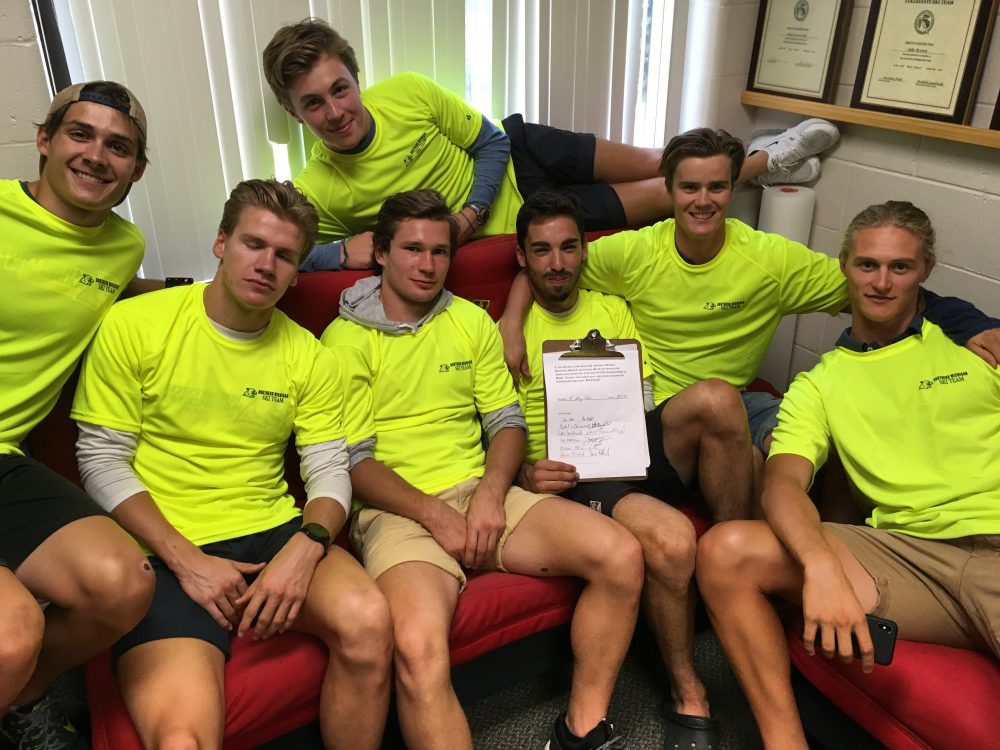
    The NMU men’s ski team with Ian Torchia (third from r) in late August. According to Torchia, the paper he’s holding is a contract. “If we win [the] team NCAA title [this winter], they get to tattoo my gluteus maximus,” Torchia wrote. (Photo: Andy Keller)
    Shortly after, Torchia had his wrist examined by doctor and was told he would need to have surgery. The procedure — scaphoid fixed via percutaneous fixation–left Torchia in a cast. 

    About a month before his crash, Torchia had been nominated to the U.S. Ski Team (USST) D-team and invited to two national-team training camps that summer. Torchia had intended to attend both camps, regardless of whether his wrist was healed or not.

    Fourteen days after his accident, Torchia departed Marquette, Michigan, his “home” since he began attending NMU in 2014, and headed for Eagle Glacier, Alaska, the location of the first USST camp.

    On the glacier, he skied with either one pole or none at all. When he returned to Marquette, the pattern continued for another two months. It wasn’t until the end of August that he had his cast removed. 

    “I kept training super hard with the broken wrist,” Torchia said.

    All that training led Torchia to what he recalled as being “in pretty good shape” leading up to November. Then things started to go south. Fast. Right around Thanksgiving, Torchia was exhausted and experiencing severe night sweats.

    buy inhalers

    “If you type in ‘mono’ on Google and look at the symptoms, I probably had seven out of the eight,” he said. “But I at the time was thinking ‘It’s just a bad virus. It will pass.’ ”

    The symptoms continued. Torchia’s girlfriend suggested he get tested for mononucleosis. He didn’t. 

    “I didn’t want to believe her,” Torchia said. 

    Soon enough he had to. In mid-December, hypothermia forced him to drop out of a race. At 2017 U.S. Cross Country Championships in Midway, Utah, he felt sluggish and “off” during training, so he visited a walk-in clinic in Park City. The doctor tested for mono, and the results came back positive. 

    “The doctor was kind of nonchalant about it,” Torchia said. “He came in and was like, ‘Oh yeah, you’ve got mono, but nordic skiing isn’t a contact sport so you should be good to go and ski at nationals. I was like, ‘Oh, sweet…that’s not how it works.’ ”

    Following the diagnosis, Torchia decided to skip nationals and return to his hometown of Rochester, Minnesota, for the holidays. He stopped exercising for a month before gradually returning to training.

    “A lot of different skiers messaged me saying, ‘On this return, you need to take it really easy,’ ” Torchia said. (One of those skiers included Tad Elliott, who caught the Epstein-Barr virus in 2014 and went on to win a national title in 2016).

    Torchia took their advice, as well as that of his NMU head coach, Sten Fjeldheim, who has helped other athletes diagnosed with mono safely return to training. The two worked out a meticulous day-by-day plan for Torchia’s return. Torchia redshirted the 2017 college season, but by March, he was back on skis.

    “I wasn’t really thinking about what other people thought,” Torchia said when asked if he was worried whether others were questioning his USST nomination during that time.

    “I was thinking more about the next steps,” he continued. “Like the day to day, ‘Oh, my morning heart rates are going down,’ or ‘This next weekend I can start running again.’ … I think before [mono], I was riding really high on skiing, and it was … a big, big part of my life. Getting mono kind of let me take a step back and realize, OK, there are other things [besides skiing].”

    Ian Torchia (1) on the shoulders of Northern Michigan University Head Coach Sten Fjeldheim after he won the men’s 20-kilometer freestyle race at 2018 NCAA Skiing Championships in Steamboat Springs, Colorado. (Courtesy photo)

    Mono not only gave Torchia a little perspective, but also an extension on his time to compete in college. By redshirting in 2017, Torchia retained eligibility to compete in 2018 (as a junior) and 2019 (as a senior). In his fifth year at NMU, he is currently working toward a master’s degree in exercise science.

    This past March, he won the 20 k freestyle at NCAA Skiing Championships to become NMU’s seventh NCAA champion in program history. In the other race at 2018 NCAA’s, the 10 k classic, he placed fifth for All-American status. Earlier last winter, Torchia qualified for and competed at U23 World Championships in Goms, Switzerland.

    “I try to look at the positives that mono brought,” Torchia said. “That first season of being on the USST brings a lot of pressure and inadvertently getting mono kind of lessened that. Afterward, when I got renominated to the team [last spring], I was like, ‘OK, they’ve given me this second chance, so I need to take it.’ ”

    Torchia was renominated to the D-team for 2017/2018 and again this past spring for the 2018/2019 season. After his third-straight nomination, he approached his summer with revitalized vigor. For the first time since enrolling at NMU, he decided to spend some time training outside of Marquette, largely as a result of a wedding invitation from his USST teammate, Erik Bjornsen. In July, Bjornsen and Marine Dusser were married in Villard-de-Lans, France.

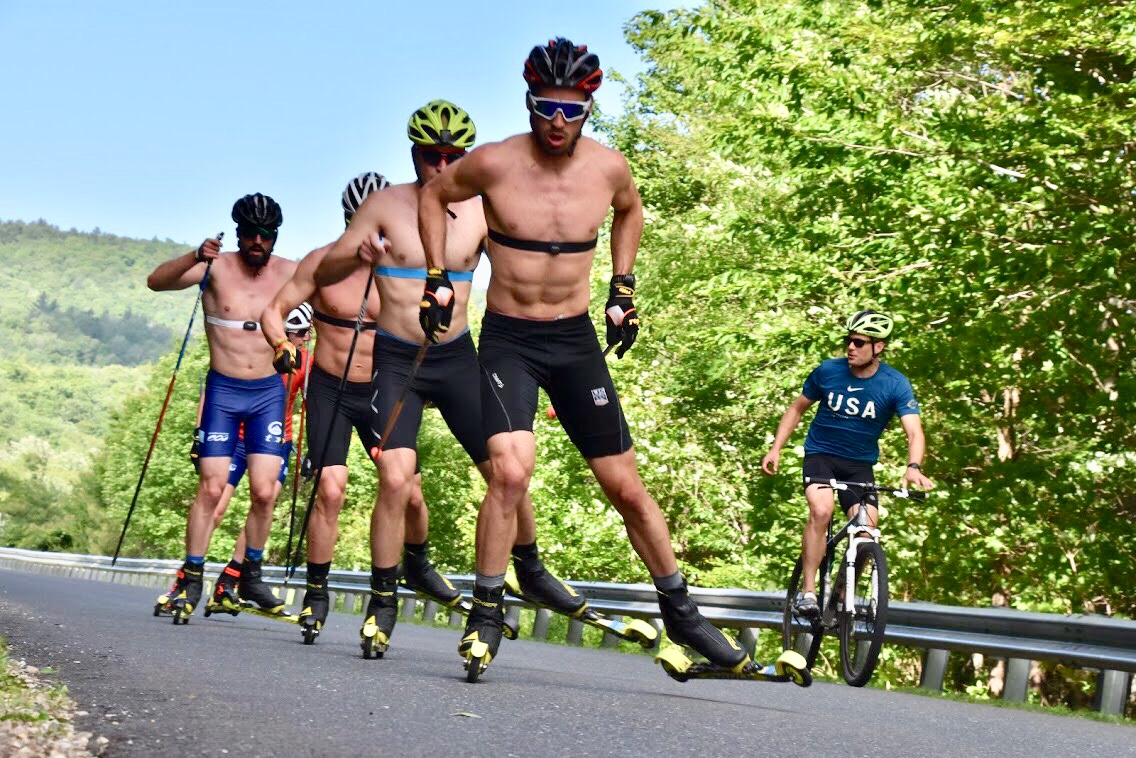
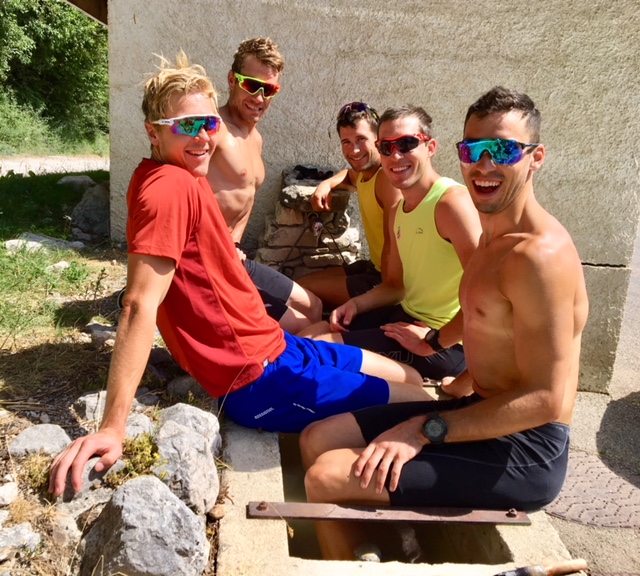
    Right to left: Ian Torchia, Paddy Caldwell, Adrien Backscheider, Simi Hamilton, and Erik Bjornsen during a post-interval cool down in Villard-de-Lans, France. (Courtesy photo)

    “After getting Erik and Marine’s ‘save the date’, I knew there was no way I was missing the wedding,” Torchia explained.

    After the wedding in early July, Torchia remained in France for the USST men’s training camp. The camp lasted 10 days and featured what Torchia described as “hard rollerski intervals and epic mountain runs.”

    He was accompanied by three teammates, Bjornsen, Simi Hamilton and Paddy Caldwell, and their coach Chris Grover. French national-team member Adrien Backscheider joined the group for interval sessions.

    Following the camp, Torchia had made arrangements to stay in Europe for another two and a half weeks, which was partially prompted by his Norwegian teammates at NMU. Over the years, many had encouraged him to travel to Norway and compete in the famed Lysebotn Opp, an uphill rollerski race in Norway’s Blink ski festival.

    Before heading to Sandnes, Norway, for Blink, Torchia made two stops. First, Oslo, where he stayed with his former NMU teammates Fredrik Schwencke, a native of the city, and Kristen Bourne, an American citizen currently training with the Lyn Ski Club in Olso.

    “Pretty lucky to have so many great friends and teammates that put me up throughout the trip,” Torchia wrote in an email.

    Torchia spent a week in Oslo before traveling to Kragerø, where he visited his current NMU teammate Mathias Aas-Rolid. A native of Redalen, Norway, Rolid has a cabin in Kragerø that he opened up to Torchia for “a pre-Blink training camp”.

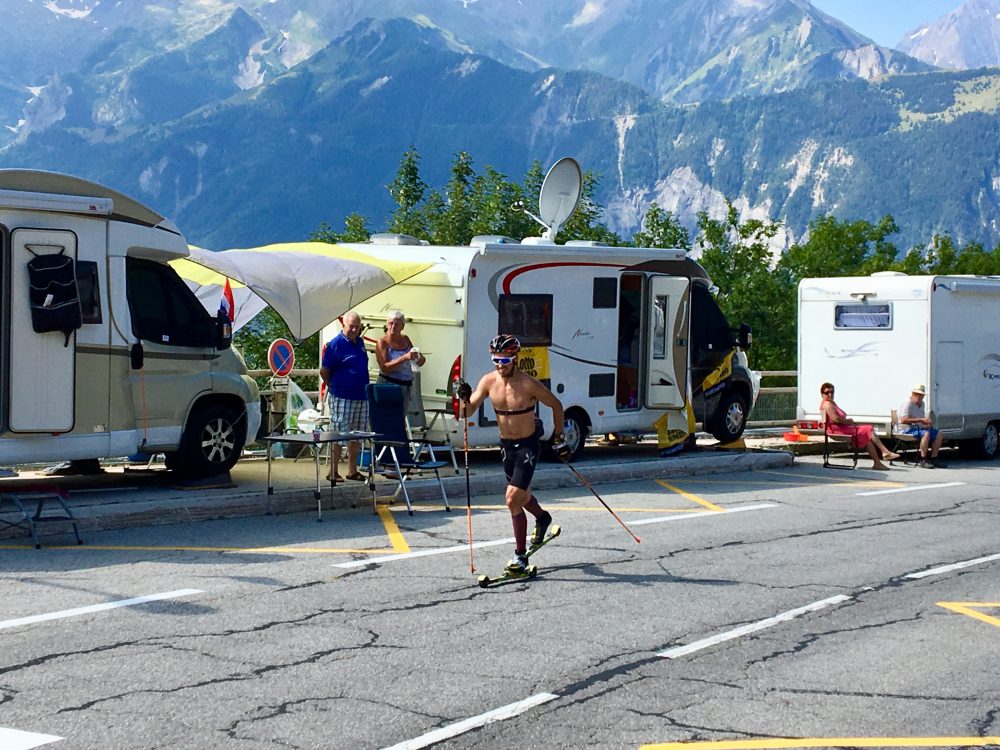
    Ian Torchia rollerskiing up Alpe d’Huez, two days before the Tour de France on July 17, 2018. (Photo: Chris Grover)

    Following Kragerø, Torchia headed to Sandnes for the Blink races. Canadians Evan Palmer-Charrette, Scott Hill and Bob Thomson had rented an Airbnb in Sandnes for the weekend, and keeping with his summer nomadic style, Torchia crashed on their couch during the festival.

    tetracycline buy online, betnovate

    tetracycline buy online, betnovate

    He competed in the 60 k distance race as well as the Lysebotn Opp. The 60 k was what Torchia referred to as “an add-on to the main focus of Lysebotn.

    “For the 60, I made a big blunder by not bringing a water pack and counting on getting feeds along the race course,” he recalled. “Turns out trying to get a feed from a stationary volunteer at 20+ mph is not very effective.” 

    Without feeds, Torchia explained that he “bonked” halfway through the 60 k and ended up finishing 55th. The result left him ready to “turn it around” for the 7.5 k Lysebotn Opp the next day. He managered to position himself well early on in the race’s mass start and within the first kilometer, found himself with the likes of Russia’s Sergey Ustiugov and Finland’s Iivo Niskanen.

    “After the 1 k tunnel, I passed Ustuigov and Niskanen and probably got a little too excited and blew my load about 2 k from the finish,” Torchia wrote of his Lysebotn start. “ ‘Twas a long 2 k in from there and almost managed to catch Harvey but just missed the auto qualifying for the mass start (top-10) by about 15 seconds. I’ve never done a rollerski race, period, so competing in Norway in the strongest field they’ve ever had was a hell of a way to start.”

    Torchia placed 13th, just over 2 minutes behind the winner (and 2018 Olympic skiathlon gold medalist) Simen Hegstad Krüger of Norway and 15 seconds behind Canada’s Alex Harvey, who placed 10th.

    Torchia’s summer adventure ended after Blink, and he flew back to the U.S. on Aug. 6.

    “Getting to do intervals with Adrien Backscheider, [South Korean/Norwegian skier] Magnus Kim, and then race with a World Cup field at Blink served me a big piece of humble pie but was a good indicator that the summer progress[ed] well,” Torchia wrote.

    Torchia is now back in Marquette, focused on school and skiing. Beyond college races, Torchia is targeting 2019 U.S. nationals in Craftsbury, Vermont, 2019 World Championships in Seefeld, Austria, and 2019 World Cup Finals in Québec City.

    “It’s been some ups and downs and definitely a learning experience,” Torchia said of the years since he was first nominated to the USST. “But it’s made me stronger in the process.”

    Ian Torchia (l) with girlfriend, Kameron Burmeister, hiking in Franconia Notch, N.H., during an East Coast road trip they took in June. (Courtesy photo)
  • U.S. Ski Team’s 2018/2019 Nominations

    U.S. Ski Team’s 2018/2019 Nominations

    On Thursday, U.S. Ski & Snowboard released its roster for its 2018/2019 national cross-country team nominations, and the list includes five returning A-team members (four women and one man), an all-male B-team, and seven athletes on the D (development) team.

    Noticeably missing from last year’s World Cup squad are retirees Kikkan Randall, Liz Stephen and Andy Newell (the latter of which isn’t exactly retiring), and Rosie Brennan.

    Kevin Bolger (Sun Valley Ski Education Foundation) during his debut World Cup race weekend in Lahti, Finland, last March. There, he placed 11th in the freestyle sprint and 54th in the 15 k classic. (Photo: Fischer/NordicFocus)

    Simi Hamilton leads the men’s team as its lone A-team member, while Sadie Bjornsen, Sophie Caldwell, Jessie Diggins, and Ida Sargent are all back on the A-team. The B-team includes three returners — Erik Bjornsen, Paddy Caldwell and Scott Patterson — as well as 25-year-old rookie Kevin Bolger, out of the Sun Valley Ski Education Foundation (SVSEF), who was named to the team after some breakthrough World Cup results last season.

    All four of last year’s D-team were renominated, namely 2018 NCAA champions Katharine Ogden (who swept both races at the collegiate championships) and Ian Torchia, Julia Kern and Hannah Halvorsen. Joining them are three athletes who broke through at 2018 Junior World Championships: Hailey Swirbul, Ben Ogden and Gus Schumacher.

    Seven of the 16 nominees train with the Stratton Mountain School (SMS) in Vermont. Six others are based out of Anchorage, Alaska; five train with Alaska Pacific University (APU) while the 17-year-old Schumacher hails from the Alaska Winter Stars. The Craftsbury Green Racing Project has one athlete on the team (Sargent), as does SVSEF (Bolger). Torchia is entering his senior season at Northern Michigan University.

    Here’s the U.S. Cross Country Ski Team’s nomination list. The team will be officially named this fall.

    U.S. Ski Team 2018-19 Cross Country Nominations
    (Hometown; Club; Birthdate)

    A TEAM
    Men
    Simi Hamilton (Aspen, Colo.; Stratton Mountain School Elite Team; 5/14/87)

    Women
    Sadie Bjornsen (Winthrop, Wash.; Alaska Pacific University Nordic Center; 11/21/89)
    Sophie Caldwell (Peru, Vt.; Stratton Mountain School Elite Team; 3/22/90)
    Jessie Diggins (Afton, Minn.; Stratton Mountain School Elite Team; 8/26/91)
    Ida Sargent (Orleans, Vt.; Craftsbury Green Racing Project; 1/25/88)

    B TEAM
    Men
    Erik Bjornsen (Winthrop, Wash.; Alaska Pacific University Nordic Center; 7/14/91)
    Kevin Bolger (Minocqua, Wisc.; Sun Valley Ski Education Foundation; 4/11/93)
    Patrick Caldwell (Lyme, N.H.; Stratton Mountain School Elite Team; 2/18/94)
    Scott Patterson (Anchorage, Alaska; Alaska Pacific University Nordic Center; 1/28/92)

    D TEAM
    Men
    Ben Ogden (Landgrove, Vt.; Stratton Mountain School; 2/13/00)
    Gus Schumacher (Anchorage, Alaska; Alaska Winter Stars; 7/25/00)
    Ian Torchia (Rochester, Minn.; Northern Michigan University; 3/8/96)

    Women
    Hannah Halvorsen (Truckee, Calif.; Alaska Pacific University Nordic Center; 2/19/98)
    Julia Kern (Waltham, Mass.; Stratton Mountain School Elite Team; 9/12/97)
    Katharine Ogden (Landgrove, Vt.; Stratton Mountain School; 11/17/97)
    Hailey Swirbul (Aspen, Colo.; Alaska Pacific University Nordic Center; 7/10/98)

  • FasterSkier’s Collegiate Skiers of the Year: Katharine Ogden and Ian Torchia

    FasterSkier’s Collegiate Skiers of the Year: Katharine Ogden and Ian Torchia

    Katharine Ogden (left) and Ian Torchia (right) are FasterSkier’s 2018 Collegiate Skiers of the Year. (Photos: Dartmouth Sports/Clarkson Creative & XTS Photography)

    With the 2017/2018 season officially in the rearview, FasterSkier is excited to unveil its annual award winners for this past winter. Votes stem from the FS staff, scattered across the U.S., Canada, and Europe, and while not scientific, they are intended to reflect a broader sense of the season in review. This set of honors goes to outstanding college athletes in cross-country skiing. 

    ***

    Katharine Ogden, Dartmouth College

    Katharine Ogden skiing fast doesn’t exactly surprise anyone. A medalist in both individual and relay events at last year’s World Junior Championships, the Stratton Mountain alum and U.S. Ski Team “D” team member won half of the women’s races on the Eastern Intercollegiate Ski Association schedule this season, including the final three individual races of the year.

    But when the Dartmouth skier swept both races at NCAA Championships, first winning the 5 k classic by a stunning 46.9 seconds, then taking the 15 k skate by 38.4 seconds, that was something else.

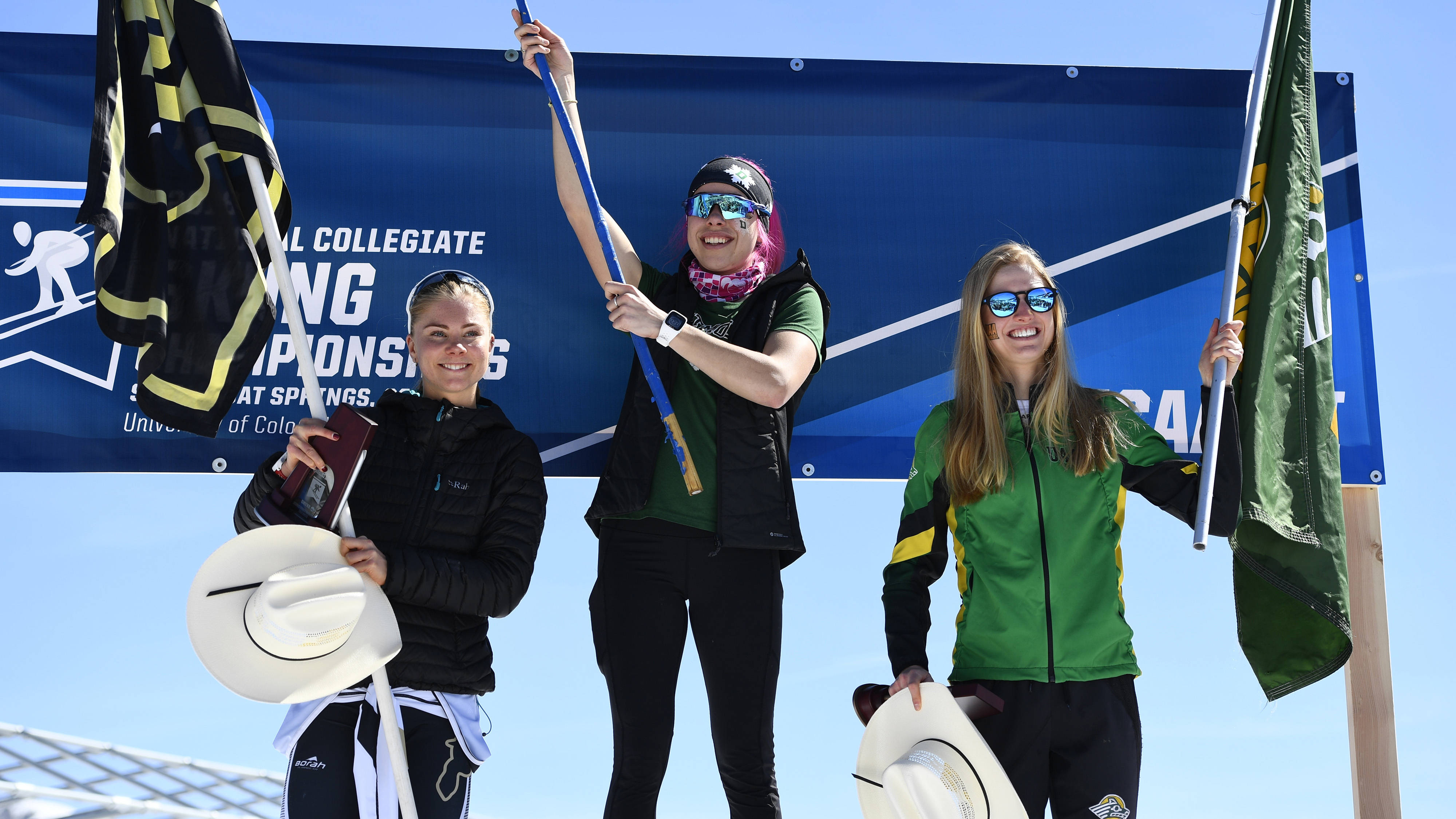
    The women’s 5 k classic podium at 2018 NCAA Skiing Championships in Steamboat Springs, Colorado, with Dartmouth’s Katharine Ogden (c) in first, Colorado’s Anne Siri Lervik (l) in second, and University of Alaska Anchorage’s Hailey Swirbul (r) in third. (Photo: Clarkson Creative/DartmouthSports.com)

    “I was definitely a little stressed because I didn’t know if I could hold that pace or if they would catch up to me, and it’s usually kind of a sketchy strategy to be skiing by yourself, so I kind of knew that in the back of my mind too,” Ogden told The Dartmouth of her mid-race decision to make a move after the 5 k mark of the mass start, when it then turned out that nobody went with her.

    The last time an American topped both women’s races at NCAA Championships was a decade ago, and though both 2007 titles were taken by a Lindsey, they weren’t the same one: Lindsey Williams and Lindsey Weir, both of Northern Michigan University.

    It wasn’t since 1990 and 1991, when Laura Wilson of UVM swept NCAA’s, that the same American woman had won both races.

    “Katharine absolutely wanted this one, and she really likes to win,” said Cami Thompson Graves, the Dartmouth Director of Skiing and women’s Nordic head coach, in a press release after Ogden’s second title. “She wasn’t about to let a fall slow her down, she has such a great competitive fire.”

    Despite Dartmouth’s strong history of women’s skiing – alums Sophie Caldwell, Ida Sargent, Rosie Brennan, and Susan Dunklee competed in the 2018 Olympics alone, with many more alums at previous Games –  Ogden was actually the first female Big Green cross-country skier to take an NCAA title.

    “One day I would love to be one of the Dartmouth alums racing in the Olympics,” she said in a Dartmouth press release. “A lot of the reason I decided to come here for school had to do with growing up with Sophie Caldwell and seeing what a positive experience she had at Dartmouth.”

    Ian Torchia, Northern Michigan University

    Likewise, Ian Torchia has been a top junior athlete for the U.S. for some time now. By the time he went to NCAA Championships, he had already been to U23 World Championships, where his 27th- and 32nd-place finishes were the top American results in the 30 k skiathlon and 15 k classic, respectively.

    Although he is enrolled at Northern Michigan University and trains there with the team, college racing was not his number one goal this season. Torchia won a 15 k skate NorAm in Sovereign Lake, British Columbia, early in the season in pursuit of those higher goals.

    The men’s 15 k freestyle podium on Day 2 of the NorAm opening weekend at Sovereign Lake near Vernon, B.C., with Ian Torchia (NMU/USST D-Team) in first, Jack Hegman (SVSEF) in second, Brian McKeever (Canadian Para-Nordic Team) in third, Kevin Bolger (SVSEF) in fourth (far left), and Adam Martin (Craftsbury GRP) in fifth (far right). (Photo: Peggy Hung)

    “My main goal for the season was to have a strong start to the season so I could qualify for U23s and the Olympics,” Torchia wrote in an email last week. “Competing in Yellowstone and Silver Star was a first for me, and coming into Nationals in the first spot on the Olympic qualifying list was exciting and nerve-wracking. Unfortunately, I had some sub-par racing at Nationals and missed the Olympics but qualified for U23s. I was definitely satisfied with the efforts I put in at U23s, but not with my execution and results. Finishing barely in the top 30 was not was I was hoping for but racing alongside guys who have gotten top-10’s on the World Cup was definitely motivating and gave me a real idea of where I need to be and what I need to do to get there.”

    Coming back from Europe, he had to re-tool and had a solid training camp in Steamboat Springs before NCAA’s.

    There, he finished fifth in the 10 k classic, the top American 46.2 seconds behind race winner Martin Bergström of Utah.

    And in the 20 k skate mass start, he took his first NCAA title, holding off Alvar Alev of the University of Colorado by just two seconds, with Eivind Kvaale of Denver University another two seconds back.

    “The first two laps of the race were very slow and it took patience to follow Coach Sten [Fjeldheim]’s plan of not leading,” Torchia wrote. “The Denver guys led it out on lap three and started gradually pushing the pace. On the final lap, people started throwing down and I was able to cover moves until 2.5 k to go when I gradually pulled the trigger. Alvar Alev from Colorado went on the final uphill and I was able to hang with him into the 2 k downhill. Coming into the final downhill he slingshotted by me but I was able to overtake him before the final turn and sprint faster than I’ve ever sprinted before for the win! I am not known as a sprinter on our team, so I was definitely nervous with a big group around me. But Sten has always told me that a sea level distance guy can outsprint an altitude sprinter, as training at lower elevation is beneficial to speed training.”

    Torchia was the first American in three years to stand atop the NCAA podium; the last guy to do it was U.S. Ski Team teammate Patrick Caldwell in 2015. University of Alaska Anchorage’s Hailey Swirbul said that the international flavor of college racing is fantastic and helps her prepare for international competition and to be a better skier.

    But to win NCAA’s as an American is still a perk.

    “I definitely did not think about it before the race, but after it was pretty cool to think about the rarity of American winners,” Torchia wrote. “Fun to share it with my buddy Paddy Caldwell!”

    Honorable Mention: Zane Fields, Colby College

    Colby’s Zane Fields (left) racing at NCAA Championships last season. This season, he became the school’s first cross-country skiing All-American.

    And on the men’s side in the East, one of the biggest revelations was the Colby squad. Andrew Egger qualified for U23’s and finished 47th in the sprint there, the second American. (“To be honest, making the U-23 World Championship team wasn’t really on my radar when I decided to go to Alaska [for U.S. Nationals]… That said, my goal standing on the start line of the sprints was to win,” Egger told the Colby sports department.)

    On the college circuit, though, it wasn’t Egger who was making Colby history. Zane Fields demolished carnival after carnival, sweeping all five skate races before also winning the final classic race of the eastern season. At NCAA’s, the Colby junior finished sixth in the 20 k skate.

    It was the best season-long tally by any Colby skier ever, and that final race made him Colby’s first male All-American in cr0ss-country skiing.

    “This season has been a dream,” Fields said in a Colby press release after the 20 k. “If you had told me two months ago that things would unfold the way they did, I wouldn’t have believed you. While the sport is an individual one, I have the greatest coaches and team supporting me through every race.”

    As a team, the Colby men finished third in two races this season behind Fields, and had a number of fourth- and fifth-place finishes.

    “This has been the most fun year of skiing I have ever had,” Fields said in the press release. “The season is one that certainly makes the 500-plus hours of training and sacrifices worth it. I’m excited to see what my team and I can accomplish next year.”

    Honorable Mention: Alayna Sonnesyn, University of Vermont

    Those half of the EISA carnival races that Katharine Ogden didn’t win? They went to UVM’s Alayna Sonnesyn, who dominated the first half of the season and won three skate races and two classic races.

    Sonnesyn also had a stellar U.S. Nationals earlier in the season, finishing eighth in the skate sprint and sixth in the 20 k classic; all but one of the skiers ahead of her in that race (winner Hedda Baangman of Sweden) went to the Olympics.

  • Under 23 Questions: Zak Ketterson

    Under 23 Questions: Zak Ketterson

    Zak Ketterson (Northern Michigan University) racing at the CCSA opener in Houghton, Michigan. (Courtesy photo)

    In an effort to showcase the North Americans who competed at last week’s International Ski Federation (FIS) 2018 Nordic Junior/U23 World Championships in Goms, Switzerland, we asked those qualifying athletes several questions about themselves — actually, we had them fill in the blanks. Here we have 20-year-old Zak Ketterson, of Northern Michigan University, who represented the U.S. at his first U23 Worlds (after competing at 2016 Junior Worlds in Romania).

    Last week in Goms, Ketterson placed 57th in the 15 k classic and 65th in the freestyle sprint.

    ***

    “My full name is Zak Eduard Ketterson, but you can call me Zak.

    I was born and raised in Bloomington, Minnesota, and I learned to ski at my high school in 7th grade. .

    I spent the time between U.S. nationals and Junior/U23 Worlds training at home and at NMU.

    The funnest workout I did in the last training year to prepare for this was tanning in Cannes, France, with my Norwegian NMU teammates and Leo Hipp.

    This is my second time in Switzerland and fourth time racing internationally, and so far it’s been very focused.

    One difference I’ve noticed between Switzerland and the U.S. is better manners at dinner.

    Skiing and racing in the Alps is picturesque. Usually racing at altitude is fine for me because I tend to adjust fine. There are infinitely less mountains around where I live.

    One of the things I’m most excited about for Junior/U23 Worlds in Goms is the opportunity to race successful World Cup skiers.

    One race I’m especially targeting there is the 15 k classic.

    I really hope I can chat/make friends with someone from Russia and ask them what’s in the water over there.

    My favorite thing at the breakfast where we are staying is that it is basically the same as NMU.

    Fondue is overrated. The cheese here is really good but not that different from the U.S. And the chocolate — haven’t had any chocolate, won’t have any chocolate.

    If I had a totally free day here and didn’t have to worry about race fitness or training, I’d spend it tanning outside and hiking up one of the biggest mountains.

    The best way to follow me on social media is on Instagram @zaketterson.”

    https://www.instagram.com/p/BeVUygHHWhV/?taken-by=zaketterson

  • Under 23 Questions: Nicole Schneider

    Under 23 Questions: Nicole Schneider

    Northern Michigan University’s Nicole Schneider (2) leads UVM’s Alayna Sonnesyn and Dartmouth’s Lauren Jortberg (r) in the 15 k freestyle mass start at 2017 NCAA Skiing Championships in Jackson, N.H.

    In an effort to showcase the North Americans who competed at last week’s International Ski Federation (FIS) 2018 Nordic Junior/U23 World Championships in Goms, Switzerland, we asked those qualifying athletes several questions about themselves — actually, we had them fill in the blanks. Here we have 20-year-old Nicole Schneider, of Northern Michigan University, who represented the U.S. at her first U23 Worlds (after competing at 2016 Junior Worlds in Romania).

    Last week in Goms, Schneider placed 40th in the 15 k skiathlon, 44th in the freestyle sprint and 49th in the 10 k classic.

    ***

    “My full name is Nicole Schneider.

    I was born and raised in Plymouth, Minnesota, and I learned to ski at French Park with the Minnesota Youth Ski League.

    I spent the time between U.S nationals and U23 Worlds training with my teammates and working with professors to make sure I don’t fall behind in my classes!

    The hardest workout I did in the last training year to prepare for this was 45 seconds on by 15 seconds off bounding intervals up Mount Marquette with my training partners.

    Nicole Schneider training in late January in Goms, Switzerland. (Photo: Hannah Rudd)

    This is my first time to Switzerland and third time racing internationally, so far it’s been the most beautiful country I’ve ever been to.

    One difference I’ve noticed between Switzerland and the U.S. is the copious amount of snow there is here. Seriously. The snowbanks are taller than me!

    Skiing and racing in the Alps is challenging. Usually racing at altitude is hard for me because I live at sea level! But I came to the precamp here so I’ve had no problems adjusting.

    One of the things I’m most excited about for U23 Worlds in Goms is to see how I stack up against the other girls my age.

    One race I’m especially targeting is the skiathlon because I’ve never done one before!

    I really hope I can make friends with someone from Norway and ask them what their secret is.

    My favorite thing at the breakfast where we are staying is the coffee.

    Fondue is… still haven’t had it here yet! The cheese here is exceptional. And the chocolate is to die for.

    If I had a totally free day here and didn’t have to worry about race fitness, I’d spend it alpine skiing in the Alps.

    The best way to follow me on social media is on instagram at @colieschneider.”

    https://www.instagram.com/p/Bec5CazAjpJ/?taken-by=colieschneider

  • Under 23 Questions: Ian Torchia

    Under 23 Questions: Ian Torchia

    Ian Torchia (NMU/USST) crust cruising with Bernie Nelson (not shown) their second day in Goms, Switzerland. (Photo: Bernie Nelson)

    In an effort to showcase the North Americans competing at this week’s International Ski Federation (FIS) 2018 Nordic Junior/U23 World Championships in Goms, Switzerland, we asked those qualifying athletes several questions about themselves — actually, we had them fill in the blanks. Here we have 21-year-old Ian Torchia, of Northern Michigan University (NMU) and the U.S. Ski Team D-team, who’s representing the U.S. at his first U23 Worlds. 

    On Friday, Torchia placed 27th in the 30 k skiathlon for his best finish of the week after finishing 32nd in the 15 k classic on Wednesday in Goms.

    ***

    “My full name is Ian Michael Torchia, but you can call me Torch.

    I was born and raised in Rochester, Minnesota, and I learned to ski at Eastwood Golf Course.

    I spent the time between U.S. nationals and Junior/U23 Worlds skiing and sleeping.

    Ian Torchia (l) follows Kris Freeman on a downhill during the men’s 30-kilometer classic mass start at the 2018 U.S. Cross Country Championships in Anchorage, Alaska. Torchia went on to place 12th.

    The dumbest workout I did in the last training year to prepare for this was a 6 hour OD with me, myself, and I.

    This is my first time in Switzerland and third time racing internationally, and so far it’s been A1.

    One difference I’ve noticed between Switzerland and the U.S. is lack of directions.

    Skiing and racing in the Alps is beautiful. Usually racing at altitude is great for me because I’m a small guy. There are huge mountains around where I live (Marquette Mountain, Sugarloaf, Hogsback).

    One of the things I’m most excited about for Junior/U23 Worlds in Goms is racing Russians.

    One race I’m especially targeting there is 30 k skiathlon.

    I really hope I can chat/make friends with someone from USA and ask them to steal Zak Ketterson’s white noise machine so I can sleep in silent peace.

    My favorite thing at the breakfast where we are staying is granola, also for lunch and dinner.

    Fondue is unavailable. The cheese here is Le Gruyere. And the chocolate is for my girlfriend.

    If I had a totally free day here and didn’t have to worry about race fitness or training, I’d spend it crust cruising with Bernie Nelson.

    The best way to follow me on social media is on Instagram @fullytorched.”

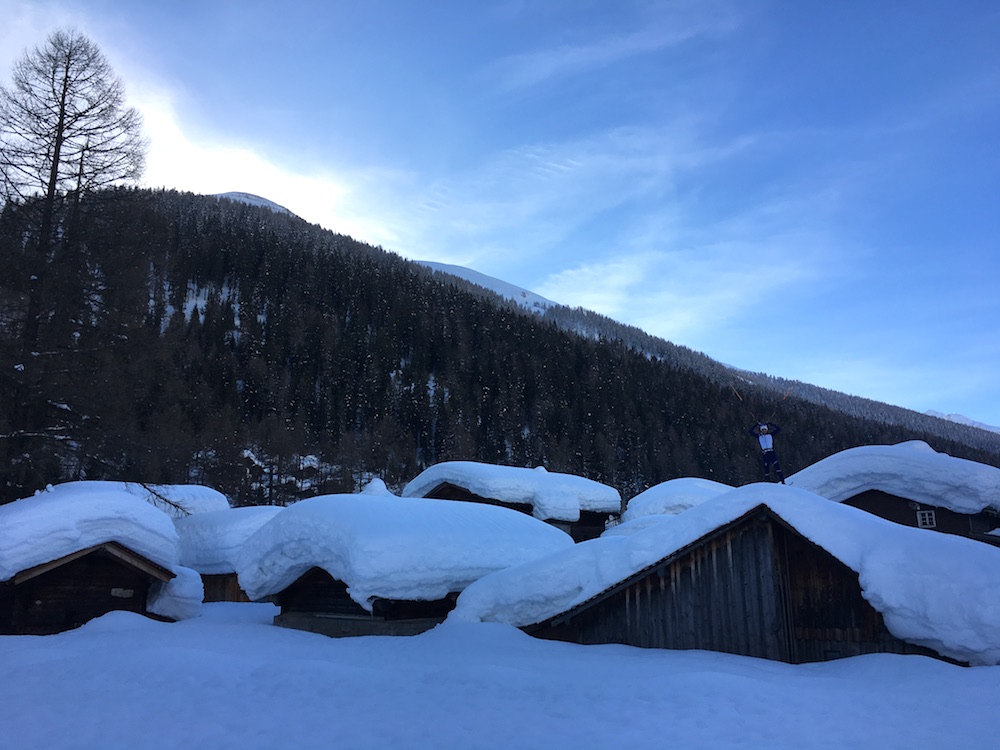
    Ian Torchia (NMU/USST) during a crust cruise in Goms, Switzerland. Enough snow to ski up on a house! (Photo: Bernie Nelson)
  • Reese Hanneman Wins Qualifier, Second Sprint Title of Week at Nationals

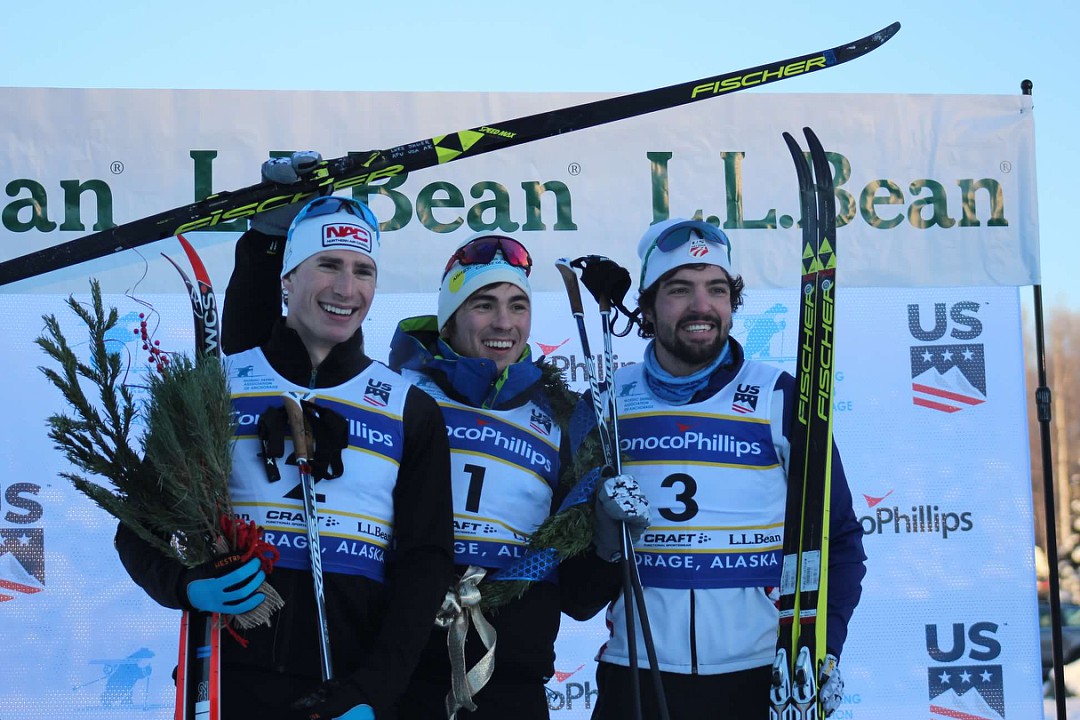
    Left to right: Tyler Kornfield (APU), Reese Hanneman (APU) and Ben Saxton (SMS) as the top three finishers in the men’s 1.6 k classic sprint final on Monday, the last day of 2018 U.S. Cross Country Championships in Anchorage, Alaska.

    ANCHORAGE, Alaska — No two races are exactly alike, the saying goes, and there’s a lot of truth to this cliché. But if you step back just a little bit, two race days can start to look awfully similar to one another.

    For example, for the second time this week, a Hanneman brother won the sprint qualifier, Reese Hanneman won the final, and Alaska Pacific University (APU) put three athletes in the final and two on the podium on a perfect day for sprinting at Kincaid Park. That was the story on Monday, when Reese Hanneman led teammate Tyler Kornfield and Ben Saxton of the Stratton Mountain School (SMS) Elite Team across the line in the men’s classic sprint at 2018 U.S. Cross Country Championships. But it was also the case on Friday, when Reese was first and Kornfield was third in the freestyle sprint. It’s been a good week for the Hanneman family.

    The classic sprint, the final race of this year’s U.S. nationals, had a slightly more subdued feel than the three that preceded it.

    The fields were 50 percent smaller; a combined 160 athletes skied in the qualifier on Monday compared to 337 on Friday, as many juniors opted out of a race whose results did not bear on qualification for international trips and championship teams, and some athletes had already left town. The spectator numbers were smaller, measuring in the dozens rather than the hundreds after three days of packed parking lots and raucous crowds, as the first day of school following winter break sent local students back to the classroom. And the athletes were tired, too, after a full week of racing.

    “I was just running on fumes out there, especially after the 30 k yesterday,” fifth-place finisher Kevin Bolger, of the Sun Valley Ski Education Foundation (SVSEF) told FasterSkier after the men’s final.

    But cross-country skiers are nothing if not resilient, and so, just after 10 a.m., Dakota Blackhorse-von Jess (Bend Endurance Academy) once again led 95 men out onto the qualifying course at 15-second intervals. The temperature was 10 degrees Fahrenheit, according to the display on the stadium scoreboard. The sun had yet to rise and start burning off the morning’s dense fog. It felt cold.

    It’s a very quintessential Alaskan day,” women’s domestic podium bronze medalist Becca Rorabaugh (APU) said after. “It’s like an Alaska temperature, and I feel like a lot of the Alaskan teams have great skis, it’s hard-wax skiing, and it’s just a classic race day. It’s very Alaskan.”

    Hanneman Brothers Headline Qualifier

    https://www.instagram.com/p/BdsyQTkB945/

    APU skiers did very well in the time-trial portion of the morning, which has added, if not exclusive, significance for Olympic qualifying purposes slightly a month before the 2018 Winter Olympics begin in PyeongChang, South Korea.

    Reese Hanneman, 28, who grew up in Fairbanks, covered the brand-new, 1.6-kilometer sprint course in 3:21.93, a time good for the fastest qualifying mark on the day. And he did so by nearly three seconds. Next best was his APU teammate and younger brother, Logan Hanneman, 2.84 seconds back. Third was his APU teammate Tyler Kornfield, 4.23 seconds off Reese’s mark.

    Alaska Pacific University’s Reese Hanneman during the men’s 1.6-kilometer classic sprint heats on Monday at 2018 U.S. Cross Country Championships in Anchorage, Alaska. Hanneman won the qualifier and eventually, the final for the national title.

    The brothers Hanneman are skiing qualifiers well these days, to put it mildly. Logan, 24, won Friday’s sprint qualifier, with Reese qualified third.

    In light of the bonus points awarded for U.S. nationals podium performances, FasterSkier’s unofficial calculations put Logan first on the 2018 Olympic Winter Games domestic sprint qualifying list, with 80 points (45 for first at U.S. nationals and 35 for second), and Reese second, with 71 points (45 for first and 26 for third).

    In Monday’s classic sprint, Benjamin Ogden (SMS) was fourth in qualifying, 5.12 seconds back. Blackhorse-von Jess was fifth (+5.16), Zak Ketterson of Northern Michigan University sixth (+7.56), Cole Morgan (SVSEF) seventh (+7.61), David Norris of APU eighth (+7.85), Saxton ninth (+7.88), and Bolger tenth (+9.09).

    Just like the skate sprint, Brian Gregg, of Central Cross Country (CXC), Loppet Nordic Racing (LNR) and Team Gregg, was the final athlete to make the heats, 16.53 seconds back in 30th.

    “I would say all the top sprinting guys, everyone’s focusing kind of on the qualifier, more so than normal,” Reese said on Friday after he had qualified third in the skate sprint. “There’s no margin for error, and you just have to ski it absolutely as fast as possible. It’s definitely different tactics than in the heats… but if you’re fast, you’re fast.”

    Reese Hanneman Wins Everything En Route to Final

    On Monday, Reese was pretty darn fast. He won his quarterfinal, the first of the day, as well as his semifinal, the first of the day, to make the final with the maximum amount of rest possible. And then, of course, he won the final as well for his fourth national title — and second of 2018 nationals.

    In the day’s first quarterfinal, Reese was in the lead by the first turn at 200 meters, followed closely by Bolger. The two of them had a big lead by the time they were coming off Gong Hill. The rest of the field caught up to them somewhat by the finish, but Reese and Bolger still took the top two spots with relative ease.

    In the second quarterfinal, U18 skier Ogden led the field into the first turn, with Morgan and Bill Harmeyer, of the University of Vermont, right behind. Ogden was still into the lead coming back into the stadium, but Kris Freeman (Caldwell Sport) had caught up into third. Coming into the finish, Freeman won a four-way lunge for second over Thomas O’Harra (APU), Ben Lustgarten (CGRP), and Harmeyer. O’Harra’s third place in a fast heat was good enough to send him on to the semifinals with the day’s first lucky loser spot.

    In the third quarterfinal, Andrew Egger (Colby College) took the lead out of the stadium, but it was Blackhorse-von Jess in the top spot by the time they came back. Blackhorse-von Jess entered the finishing stretch with a 10-meter lead. Ketterson took second, 1.2 seconds back, with Egger another second back by the finish.

    From left to right: Logan Hanneman (APU), Like Jager (APU), Ben Saxton (SMS Elite Team) Nick Michaud (BSF), Scott Patterson (APU), and Jack Hegman (SVSEF) at the start of their quarterfinal in the men’s 1.6-kilometer classic sprint on Monday at 2018 U.S. Cross Country Championships in Anchorage, Alaska.

    In the fourth quarterfinal, Saxton and Logan Hanneman left the stadium with the early lead, alongside a quick-starting Luke Jager (APU), one of three U18 skiers who made the senior heats. It was Saxton in the lead coming back to the stadium two minutes later, with Logan leading Jager. Saxton came into the finishing stretch with a healthy lead, but Logan made a powerful move to pull around him and come alongside. Saxton won the heat by 0.37 seconds over Logan. Yesterday’s medalist, Eric Packer (APU), was out in third.

    The fifth quarterfinal was heavy on local pride, with three APU skiers and a fourth from University of Alaska Anchorage. Erik Axelsson (Montana State University) led Kornfield and Logan Diekmann (University of Utah) into the first uphill. But two minutes later it was all APU, with Kornfield, David Norris and Forrest Mahlen with a sizeable lead on the rest of the field. Kornfield took the win; Mahlen came around Norris for second, but Norris moved on with the day’s other lucky loser spot. Axelsson was nearly five seconds back of Norris in fourth.

    In the first semifinal, Blackhorse-von Jess flashed his ski speed and momentum by dropping into a tuck within the first 200-meter straightaway in the stadium, then still led the field over the top of the first, smaller climb. Ogden and Reese Hanneman were nearby. When they returned to the stadium, Reese had a 20-meter lead over Ogden on the downhill. As happened throughout the day, though, that lead shrank to half that size by the time the skiers entered the finishing stretch. But Reese still had the lead, which he held to the finish. Bolger was second, 0.32 seconds back. Ogden was relegated for obstruction.

    The second semifinal featured a predominantly blue color scheme, between four suits from APU and the blue accents on Saxton’s SMS suit. Saxton again led out of the stadium, with Ketterson and Kornfield close by. By the time they came off Gong Hill two minutes later, it was Kornfield in the lead, with Ketterson close behind him. Kornfield led into the finishing stretch, but Ketterson overtook him to place first in the heat.

    Behind them, Logan Hanneman made a strong push for third. He closed down Saxton, edging him by 0.04 seconds for third behind Ketterson and Kornfield. In practice, both Logan and Saxton advanced to the final as lucky losers; Norris’s fifth place in this heat would have won the day’s first semifinal by nearly a second.

    Reese Hanneman Wins Final, Again

    Slightly after 2 p.m., six men lined up in the south end of the Kincaid Stadium. From racer’s left to right, it was Logan, Kornfield, Ketterson, Reese, Bolger, and Saxton in the starting blocks. The sun was out, the temperature was in the high teens, and the course was firm and fast. There was no wind. Conditions were once more basically perfect.

    The field had a clean start at the sound of the starter’s pistol, double poling in six separate lanes over the first 200 meters slightly downhill through the stadium. As the racers turned right to go up the first hill it was the Hanneman brothers in the lead, with Kornfield immediately behind them and Ketterson to Kornfield’s right. The pack double poled up the first part of the climb, then strode up and over the top of the hill.

    A quick descent followed, then a high-speed, double-pole section leading to the start of the course’s main hill. Reese pushed the pace going up the hill, and not everyone was able to respond.

    “I basically started at the base of the big climb,” Reese recalled of the 24-meter vertical gain B-climb in the middle of the sprint course. “I just kind of led in the climb and then just threw down the hammer and just tried to drop everyone going up that thing, and just continue to pound it over the top and take it all the way home.”

    The largest climb on the course is “tough for classic skiing,” Bolger explained. “That hill definitely adds a different dynamic to your whole approach to every heat you do. To be able to ski up that hill four times, strong, it’s a challenge.” (Bolger added that he didn’t think anyone would have attempted to double pole a hill of that size, saying that “it’s a challenging enough hill to where it’s going to rule out double poling for anyone.” But just to be sure, race organizers placed a no-double-pole technique zone up the entire length of the climb for both the qualifier and the heats.)

    By the time the field descended the waterfall downhill back into the stadium, Reese had a substantial gap over Kornfield, who in turn had a sizeable lead over Ketterson.

    Kornfield made up some of this gap going down and around the final 180-degree turn, but Reese still entered the final straightaway with a sizeable lead. Saxton had moved into third, ahead of Ketterson, by the time they reached the 100 meters to go mark.

    Reese Hanneman (1) of Alaska Pacific University celebrates his second sprint title of the 2018 L.L.Bean U.S. Cross Country Ski Championships on Monday with a win in the classic sprint final, just ahead of teammate Tyler Kornfield (r) in Anchorage, Alaska. Ben Saxton (SMS Elite Team) rounded out the podium in third. (Photo: Michael Dinneen Photography)

    Kornfield barreled down the slight uphill of the finishing straight with grace and fury, closing in on Reese with each extension of his lanky frame. But he was still in the same finishing lane as his APU teammate, getting closer to Reese, but still immediately behind him. With roughly 20 meters to go, Kornfield moved one lane to his left, then lunged as he approached the finish. But Reese’s lead was still too much, and he crossed the finish with his second sprint national title of the week.

    Reese’s time for the final was 3:20.62. Kornfield was 0.2 seconds back in second.

    Some distance behind them, Saxton crossed the finish line in third, 4.78 seconds back of Reese, with a slight lead over Logan and Bolger. Ketterson finished sixth, 6.83 seconds back, in his second sprint final of the week.

    “I can’t let off at all,” Reese said, when asked what he was thinking when coming down the final stretch of a national championship classic sprint with a narrow lead over Kornfield, who won the men’s 30 k classic mass start in an all-out effort to the line the day before.

    “He is obviously on super-good form right now,” Reese continued. “I just have to know that I have a little more speed than he does. … But he’s really cranking right now. He is skiing great, but it definitely motivated me to know to just drive that thing so hard in the final.”

    The second national title in as many races was “an answer to a lot of prayers from this morning and in the heats,” Reese said. “I just feel really lucky and stoked that I could put it together and be in such good form right now in January. It was a great day, an amazing day.”

    Tyler Kornfield leads his APU teammate Forrest Mahlen in the men’s 1..6 k classic sprint on Monday at 2018 U.S. Cross Country Championships in Anchorage, Alaska.

    Although Kornfield was second today, he “probably got the all-around performance of the week for the men,” Reese said of his teammate. Kornfield reached the podium in every race this week save the opening 15 k freestyle individual start, where he was 14th.

    Kornfield’s race series was “a dream come true a little bit,” Kornfield told FasterSkier, “a little unexpected, but I knew I had it in me. The start of the season didn’t go as planned, I got sick for a month before it started, I also sprained my wrist for another month and so I was pretty frustrated with the lack of performances, but I knew there was something there and it was just a matter of time.”

    “In this sport there are a lot of ups and downs,” he continued, “and it’s really easy to get caught up in the downs and not realize that just because you have a few bad races doesn’t mean you lose your ability to succeed, so just have to keep your head up and keep trying and hoping for the doors to open.”

    When it comes to possibilities for potential Olympic selection, “I don’t know anything,” Kornfield said. “I can let you know in a couple weeks.”

    Mathematically speaking, Kornfield currently ranks second to APU teammate Scott Patterson on the most recent version of the Olympic selection distance points list, which reflects both distance races from U.S. nationals.

    For now, Kornfield plans to leave Alaska on Tuesday (that is, today) for a previously planned trip to Austria. He plans to work out precisely what races he will contest soon; he had planned on racing a Ski Classics marathon, but is currently uncertain where he will be racing next.

    While Kornfield’s week at U.S. nationals exceeded his expectations, Monday’s third-place finisher, Saxton, didn’t have the week he was hoping for.

    “I came here, like many people, with goals of heading to Korea and representing the country racing in the Games,” Saxton said after the final. “I fell short of that this week and that’s nothing to be ashamed of, but I was really disappointed I wasn’t in the mix as much as I would have hoped to be. This week was difficult because I don’t feel like I put forth a representative effort.”

    Saxton was quick to offer sincere congratulations to the skiers who had had more success this week.

    “I am incredibly proud to know and am happy for Logan and Scott and Reese and all of the other champions from this week,” he said, “and incredibly happy that those are going to be the skiers going to over to represent us. I think it’s just, from a personal standpoint, people can understand I was disappointed not to feel like I had my absolutely best days out there, but I am really proud to end the day on a podium, representing the hard work that all my teammates and my coach and the program at Stratton have done all year, and to reward them for that work and that effort is a great feeling.”

    Saxton also enjoyed the “playground mentality” of the sprint day.

    “I think a lot of the times racing we can get lost in the technical aspects of it,” he mused, “but one of the reasons I love racing heats so much is, it just kind of reminds me of being back in elementary school and pointing to something in the far end of the playground, basketball hoop, or whatever it is, and just saying, ‘Let me race you there.’ And there’s no rules, there’s no anything, it’s just the feeling of you and the other person just going all out, and that’s a beautiful way to live and that’s a beautiful way to compete, and sprints are a wonderful thing like that.”

    Strong Alaska Performances Throughout the Week

    What a difference a year makes. One year ago this week, in the classic sprint at Soldier Hollow, APU didn’t put any athletes into the heats for the first time in at least a decade, done in by a combination of illness, seeding, weather conditions, and wax choice. This time around, head coach Erik Flora’s squad sent eight men through to the heats, six to the semifinal, three to the final, and two to the podium.* 

    The classic sprint capped a successful week for APU, and for Alaskan skiers more generally. Caitlin Patterson, who skis for CGRP, took all four gold medals for the women. Then APU skiers took all four golds on the men’s side, between Scott Patterson on Wednesday, Reese on Friday and Monday, and Kornfield on Sunday. Chelsea Holmes, Kornfield again, Hannah Halvorsen, Rosie Frankowski, Eric Packer, Becca Rorabaugh, and Kornfield again also stepped on the domestic podium for APU. All told, that’s 15 out of a possible 24 medals going to athletes who hail from or ski in Alaska.

    (Although if you slice the data another way, there were also seven out of 12 possible medals in women’s races won by CGRP, between Patterson’s quadfecta and Kaitlynn Miller’s trifecta.)

    This week’s results “just show the depth” of the team, Reese told FasterSkier after his race. “It speaks to the hard work of our coaches, especially Erik Flora. That guy will not be outworked, he just puts so much into us. I’m just really happy that we can have a week like this and go four for four in the men’s with APU, just to show that what he is doing works and how hard he works for us. … To get to this point that we can do that and crush all week and just give them a good show is really rewarding.”

    “We’re all Alaska born-and-raised,” Reese added of the APU men. “Can’t beat that.”

    *(Full disclosure, this reporter skis on the APU Masters team, and receives direct coaching from Flora roughly once a year at Masters Camp.)

    Results: Final | Heats | Qualifier

    — Gabby Naranja and Ian Tovell contributed

    Highlights video by Max Romey Productions

    Replay on U.S. Ski & Snowboard live feed (start at roughly 1:21:00 into the video for the men’s final)

  • Wednesday Workout: Making a Mountain King with Felicia Gesior

    Wednesday Workout: Making a Mountain King with Felicia Gesior

    NMU alumnae Felicia Gesior (far left) and Caitlin Gregg (far right, blue shoes) during a fall training session with the Northern Michigan University (NMU) women’s ski team in 2016. (Courtesy photo)

    This week’s Wednesday Workout comes from Central Cross Country (CXC) Team member Felicia Gesior. In her second year with CXC, Gesior, 24, is currently working on coordinating the Bergkönig Trail Run, an annual event that began six years ago to raise money for post-collegiate CXC skiers. Race registration and information can be found here.

    ***

    Bergkönig. In German, it translates to “mountain king”. In 2011, it translated to the perfect name for the trail run Northern Michigan University (NMU) alums Maria Stuber and Bryan Cook were launching in an effort to fund their ski racing with Central Cross Country (CXC).

    Both Stuber and Cook had been brainstorming a name to make the event, with 5- and 10-kilometer races, stand out from others in the mid-eastern Wisconsin area. Intending to email her brother for an outsider’s opinion, Stuber explained she accidentally sent a message to a “random guy” by the name of Thomas Stuber hailing from Germany. Thomas immediately informed Maria that she had the incorrect Stuber, but not before suggesting the trail run be called Bergkönig. In lieu of the erroneous email, the Bergkönig bank account and Bergkönig Trail Run began.

    “Our goal was to give back to the local community, raise money for our winters, and create some awareness for the sport,” Stuber explained in an email to FasterSkier. “After a few years it became a big race and we felt fortunate to be able to rely on it for financial support every year.  It was one of the factors that allowed up to keep ski racing as long as we did … something we are really proud of. We didn’t want to see it go away after we were done racing so we kept doing it for a couple years and put the money in a bank account to help future skiers with similar aspirations that needed funding.”

    Felicia Geisor (CXC Team) at 2017 U.S. nationals in Soldier Hollow in January. (Courtesy photo)

    One of those future skiers included CXC’s Felicia Gesior. Five years after the inaugural Bergkönig, Gesior, originally from Waukesha, Wisconsin, qualified for the 2016 U23 World Skiing Championships in Rasnov, Romania, and the Bergkönig extended its connections beyond Germany and the continental U.S. That year, it granted Gesior a round-trip plane ticket to get her to Romania.

    “It was SO COOL for us to be able to send Felicia that check!” Stuber wrote.

    This year, Gesior, a 2016 NMU graduate now in her second season with CXC, will be in charge of coordinating the very race that helped her get to U23 Worlds. Proceeds from this race will help cover her travel and ski expenses as well as go toward that “Bergkönig Scholarship Fund that will assist future generations of Wisconsin Skiers pursuing Olympic dreams after college,” the event’s website states.  

    Stuber, head nordic coach at the College of St. Scholastica, and Cook have stepped back this fall, though they both plan to drive down from Duluth, Minnesota, for the event. The race is scheduled for Nov. 11 in Delafield, Wisconsin, on the hilly trails of Lapham State Park, a course Gesior, Stuber and Cook all trained on as Peak Nordic skiers in high school.

    “Many of the [Peak Nordic] coaches are the same today as they were when I was in high school and they went way above and beyond to support me throughout my entire career,” Stuber noted. “We are all so proud of this place that we would go to great lengths to see Felicia represent us at the highest level of U.S. skiing.”

    Felicia Geisor on graduation day at Northern Michigan University in the spring of 2017. (Courtesy photo)

    Gesior has been training in Marquette, Michigan, this summer and fall under the guidance of the CXC Team’s new head coach Eliška Hájek Albrigtsen. Most of Gesior’s goals revolve around U.S. SuperTour races and U.S. nationals in January. She views being an American woman on the domestic race circuit as “an exciting time” with “everyone pushing to new levels.”

    “Every time I have the opportunity, like at U.S. nationals, to race against those elite girls that’s just excellent because they’re pushing the whole field,” Gesior said on the phone last month.

    When she isn’t training, Gesior substitute teaches at local schools in Marquette. The work not only serves as a supplemental income, but also as way for her to stay connected to her post-skiing career — she has a degree in education from NMU. She also plans to help with CXC’s ‘Nordic Rocks’ for Schools program, an initiative that aims to get more youth involved with nordic skiing.

    “That’s one of CXC’s major goals is to get Nordic Rocks in more of the schools. My relationship is getting it into Marquette this year,” Gesior explained, adding that the program has donated up to 30 pairs of nordic skis to more than 200 elementary schools.

    “Kids can put them on with their snow boots and then they can walk literally from the gym outside to the door … You can imagine all these little kids, it’s hilarious,” she said. “So that’s just another side thing where I can connect my two passions together.”

    Beyond training and teaching, the Bergkönig will be the most forthcoming of Gesior’s fall focus, along with the Level 4 ski-walking intervals she recommends as race prep for the Bergkönig trail’s hills. May the best Mountain King win.

    The Workout: “Marquette Mountain Repeats”

    Type: Level 4 Ski Walking Intervals

    The workout should be hard to complete with a focus on an elevated heart rate and mental fortitude. Gesior usually incorporates this workout into her plan towards the end of her summer training cycle and and continues doing it once a week through the fall.

    She suggested doing this workout without ski poles to prevent building up too much lactate while climbing.

    “The best part about this workout is that you do not get as much lactate build up as you might on a bounding workout because you don’t have poles in your arms,” Gesior wrote in an email. “Instead, you can push your heart without building up too much lactate. This is a good workout during a week that you don’t want to necessarily build lactate but still want to get in a hard effort.”

    Terrain: Small alpine hill (should take 4-5 minutes to ascend; Geisor recommends no more than 6 minutes)

    Warmup: 20-25 minutes jogging with a couple minutes of Level 3 toward the end of the warmup followed by strides

    The set: 5-8 x 4-minute ascents; off time is amount of time it takes to descend the hill

    The first 4-minute set should be done at the high end of a Level 3 pace. Each consecutive set should be done slightly faster.

    “This workout is an interval ski walking workout so you ski walk up the hill swinging your arms as if you are classic skiing and you should be going at Level 3-plus into Level 4,” Gesior explained.

    Cool down: 20-30 minutes easy jogging

    Total time: 1.5  to 2 hours

    Gesior’s Golden Rules: 

    1. Record; don’t get wrecked. Since each ascent should be faster than the previous one, Gesior indicated that recording times should not be overlooked, nor should going to hard from the start. “It is important to keep track of your times on each interval because you want to have your last ones be faster than your first ones,” she wrote. “You want to do the first one starting in L-3 and then you go for a faster time on each consecutive interval. The majority of the intervals are done in Level 4 and you should strive to push the pass towards the end of each interval as well as the last few intervals in your set.”
    2. Make mental note. Don’t be afraid to use the intervals as practice for pushing past negative thoughts that might pay visit during competitions. “You should be focusing on your mental toughness that you tap into during races,” she wrote. “You should remember to use good ski walking technique in your legs as well as using your arms as if you were striding.”
  • Eliška Albrigtsen (Formerly Hájková) Heading Three CXC Programs

    Eliška Albrigtsen (Formerly Hájková) Heading Three CXC Programs

    Eliška Hájek Albrigtsen (formerly Hájková, front right) with Madison Nordic Ski Club’s Trail Kids this summer.(Photo: Tobias Hájek Albrigtsen)

    Many mornings, Eliška Hájek Albrigtsen’s husband, Tobias Albrigtsen, has to peel her out of bed. Living the life of an early bird like her spouse is nowhere near the top of her list — partly because she spends most nights prodding her hubby awake as he finishes his work, partly because she is strung out between four jobs of her own.

    Being in charge of three ski programs while assisting a fourth is not where the 29 year old envisioned herself when she moved to Madison, Wisconsin, this past June to work for Central Cross Country (CXC). But a lot can change over the course of a summer and for Albrigtsen (formerly Hájková), a lot did.

    After relocating to the Badger State’s capital from Lake Tahoe, California, to serve as CXC’s Community Olympic Development Director, Albrigtsen’s responsibilities began to accrue.

    It started with the addition of coaching CXC’s online master’s program. Then she had an interest in helping with CXC’s Paralympic and adaptive athletes. Finally, in late August, Andy Keller left his head-coaching position with the CXC Team to join Northern Michigan University (NMU) as an assistant coach, and Albrigtsen was in a prime spot to take over the reins. 

    “When Andy took the assistant coaching job at NMU, it was kind of natural that I got the CXC Team head coach position,” Albrigtsen, a Czech Republic native, said during a recent phone interview. “For me, it’s not like a big promotion, it’s just more stuff to do while I still do all the stuff I was doing before. I have a lot of responsibilities all of a sudden that I didn’t start with.”

    Among those responsibilities, she has been busy making informative videos for CXC Academy under the job title of Community Olympic Development Coach.

    Getting stuff done — and a lot of it, efficiently — seems to be somewhat second nature for Albrigtsen. Back in 2016, she placed sixth in the senior women’s distance race at U.S. nationals, despite having three jobs and indicating that the only training she had done in preparation was with her Boulder Nordic Junior Racing Team (BNJRT) athletes during practice sessions.

    While attending the University of Colorado-Boulder (CU), she finished in the top 10 of 45 out of 48 races over the course of her college career, according to a CU press release, all while maintaining above a 3.5 grade-point average.

    Eliska Hajkova (CU), racing against Sophie Caldwell (Dartmouth) and Corey Stock (CSU) during a sprint semifinal in 2012. Hajkova graduated in 2013 and after marrying, changed her last name to Hájek Albrigtsen. (Photo: James Doucett)

    After three seasons coaching the BNJRT in Colorado, Albrigtsen moved to Kings Beach at the north end of Lake Tahoe last year, where the juggling act continued. There, she served as the head coach for Tahoe XC, while also volunteering with the Auburn Ski Club’s elite athletes, taught private ski lessons for Tahoe Donner, coached an online master’s program, and once again raced U.S. nationals, placing 12th in the 20 k classic mass start

    She’s also raced more than two dozen World Cups, most recently in 2014.

    Though Albrigtsen indicates that she “never stops officially training or racing” this year might be a little different as it will be her first season coaching senior elite skiers. Still, the idea of more challenging practice sessions is enough to draw her in, even if it means scaling back her training a bit. As a coach she brings not only race experience, but the empathy and understanding of an athlete.

    “With U14 kids, I mean, I was challenging them, but I was not getting challenged,” she reflected. “I think being challenged as a coach, being able to hang out with your athletes, you really see and you can really feel their pain. When you’re right on their butts and doing every exercise, you can see, ‘OK, I know that in the Level 4 on the fifth minute, during the sixth interval you died, so let’s figure that out.’ I think that’s one of my powers, that I can really be there when it’s happening.”

    When asked of her strengths as a coach, CXC Executive Director Yuriy Gusev was quick to respond.

    “Her racing experience, number one,” he said on the phone. “And [she’s] just very energetic and hardworking and organized.”

    Albrigtsen will work with three CXC Team skiers this winter: Felicia Gesior, Kyle Bratrud and Sam Elfstrom. All three graduated from NMU, are currently based out of Marquette, Michigan, and will set their focus on the first few SuperTour races and U.S. nationals before re-evaluating their season goals. The fourth CXC Team member, Nichole Bathe (who graduated from the University of Alaska Fairbanks) remains on roster, but headed to Europe earlier this fall to train in Norway with a goal of making the 2018 Winter Olympic Games for Great Britain’s national team.

    Until the first week of SuperTour racing in early December, the amount of time the other three CXC elite skiers and Albrigtsen work together will depend on the athletes. Albrigtsen wanted to keep the summer and fall schedule fairly flexible so her athletes would not feel restricted in the amount of paid work or fundraising they could accomplish while training for the upcoming season.

    For example, Gesior made a trip to Madison earlier this fall for a training session on CXC’s rollerski treadmill with Albrigtsen, but will spend most the next few weeks training in Marquette and preparing for a fundraiser she’s organizing: the Bergkönig trail run on Nov. 11. The event features 10 k, 5 k and 1 k races and was originally created by Maria Stuber and Bryan Cook in an effort to raise money for local cross-country skiers looking to continue their ski careers post-college.

    Gesior also works as a substitute teacher in Marquette, and most of her training this summer and fall has been with the NMU women’s team. Similarly, Bratrud and Elfstrom train with the NMU men’s team.

    Felicia Geisor of the CXC Team prepares to hop on the treadmill in early September. (Courtesy photo)

    “I think that’s OK that they follow [NMU],” Albrigtsen said, “That’s kind of the program that really took them where they are and they have something to top it. They don’t train like college skiers; I mean, it’s their job right now so they do train more. But the base is very similar and [NMU Head Coach] Sten [Fjeldheim] is being really nice about allowing them to train with them. Not all college coaches are that way, so we’re definitely really lucky.”

    According to Gusev, partnerships like the one CXC has with NMU and other programs in the Midwest are the reason for CXC’s expansion. Over the last decade, he said CXC has grown from a $50,000-dollar organization to a million-dollar one.

    “It’s all of those partnerships,” Gusev said of the CXC programs’ continued growth. “They’re incredible organizations so we’re able to work with all of them together and help them work together.”

    The organization hopes to continue its expansion with the addition of a $12-million-dollar training complex just outside the Madison suburb of Middleton, Wisconsin, which is currently in the planning stages. The facility would not only include a competition venue, but snowmaking equipment, a lit rollerski loop, and 30,000-square-foot facility open for recreational use as well.

    The idea behind the complex, Gusev indicated, would be to provide CXC athletes with a training venue, while simultaneously encouraging community members to get outside and active, using skiing as an example. The center already has one complex, the CXC Center of Excellence in Madison, complete with rollerski treadmill. 

    “With the CXC Team, our number-one goal is to support the athletes that need the support. That’s as simple as that,” Gusev said. “But overall, our goal as an organization is to grow the sport at all levels.”

    To Albrigtsen, the new facility is another reason Madison and CXC seemed like a good choice for her and her husband, Tobias, who is CXC’s media and communications coordinator, when moving from Tahoe to the Midwest. That, and the cost of living. 

    “We always talk about what can Midwest offer that other regions can’t. We don’t have the mountains, we don’t have the best winters, but what we really have is the best quality of life,” Albrigtsen said.

    “You can live much cheaper here than anywhere else in U.S. and still make somewhat good money,” she continued. “Not everybody, especially in the U.S., there’s maybe 10-15 people who can do this professionally and get paid being skiers, otherwise you have to work and that’s something Midwest does have to offer. You can have a normal life and be a skier. You can do it here.”

    While Albrigtsen’s “normal life” is somewhat busier than others might prefer, she is in no way deterred.

    “I am a total sport addict, and I think every coach has to be, otherwise it’s not really worth it,” she said. “Tobias and I, we’re just trying to do what we love and give something back.”

    Give something back, and get a little training in at the same time, even if it’s in between her multiple jobs.

    “My motivation is also to fit in my jeans, wearing tight dresses,” Albrigtsen added with a laugh. “I have a five-year-younger husband so I have to take care of myself.” 

    Eliska Hájek Albrigtsen (formerly Hajkova) leading a Fourth of July run with Madison Nordic Ski Club’s Trail Kids this summer. (Photo: Tobias Albrigtsen)
  • With Two Degrees in Hand, Martin Chooses Craftsbury GRP

    Northern Michigan University senior Adam Martin (l) receiving the 2017 NCAA Elite 90 award for having the highest cumulative grade-point average (4.0) at this year’s NCAA Skiing Championships. (Photo: Flyingpointroad.com)

    On the eastern side of the Northern Michigan University (NMU) campus, where Fair Avenue and Presque Isle Ave intersect, a righthand turn presents visitors with a view of the Berry Events Center and the school’s 26-year-old Superior Dome — a semi-Star-Trek-like outcropping in an otherwise conventionally secular setting. Between the two recreational buildings sits another building, the college’s Physical Education and Instructional Facility (PEIF). Designed predominantly as a practice venue for basketball players, the complex attracts other NMU athletes: nordic skiers.

    Skiers who crossed the PEIF threshold glanced fleetingly at the fluorescent-lit, green-and-white basketball courts before heading toward the real reason they’d entered the building’s glass doors, the nordic-ski room.

    Like any ski room, wax benches line the walls and the slight smell of particle board hangs in the air. Skis from the 1970s wait on one wall in an eternal yearning for snow. Certificates honoring the school’s former and current All-American athletes create a collage with newspaper clippings taped here and there. Race bibs and posters scrawled with faded signatures from national champions and graduated NMU Olympians cover any remaining open space.

    Adam Martin racing at 2010 Junior Olympics in Presque Isle, Maine. (Photo: FlyingPointRoad.com)

    As a prospective student sitting on one of the couches that corners the room, Adam Martin was struck by the number of athletes’ names honored and the extent to which many of them took their cross-country careers. An 18 year old in the midst of training with the Central Cross Country (CXC) post-grad program at the time, Martin’s visit was the result of a scouting search by NMU Head Nordic Coach Sten Fjeldheim, the ski room an auspicious scene to any dedicated skier.

    Still, Martin never guessed that three years after enrolling at the university, he would be an adorned member of its accolades — earning four All-American National Collegiate Athletic Association (NCAA) results before graduating in 2017. The results weren’t what he’d expected, nor were they even really part of his plan.

    “I’m not totally into setting very specific outcome goals,” Martin, a Wausau, Wisconsin, native, explained on the phone from New Zealand in late August. “I try to focus a lot more on becoming a better skier, becoming  more fit and really focus more internally on improving myself and then seeing where that puts me at the end of each year.”

    That being said, by the end of his junior year at NMU, Martin had earned All-American status in both classic and freestyle races. He also competed at the 2016 Under-23 World Championships in Rasnov, Romania, leading the U.S. junior men in 23rd in the classic distance race. To top it all off, earlier that same season he raced to third place in the 15-kilometer classic at the 2016 U.S. nationals in Houghton, Michigan.

    Before that nationals podium, Fjeldheim tallied Martin’s on-snow time as minimal. The team had not skied on snow until the week competitors arrived in Houghton. In all likelihood, the top contenders Martin faced had logged anywhere from two to three times as much — many of them had already raced two SuperTours, one in West Yellowstone, Montana, and the other in Sun Valley, Idaho.

    “I really feel like a lot of athletes these days, they’re distracted,” Fjeldheim said during a recent phone interview. “I think you need to have a lot of mental energy to be a ski racer and you’re getting it sucked out of you by reading all this, I’m not talking about scientific research, I’m talking about stuff. You know, so and so is doing this, so and so is doing that. … You’re not thinking about it in terms of what you need to do and what works for you … It’s not about being able to be on a glacier 24/7. It’s not about being able to be on snow … a lot of U.S. skiers can’t.

    “Adam had his best U.S. nationals when he had five days on snow,” Fjeldheim continued. “How do you explain that? Because it’s from May through December that matters.”

    Martin spent his summers training in Marquette, Michigan, with his then-teammates Kyle Bratrud (now a member of the CXC Team coming off a 2017 national championship), Ian Torchia (now a senior at NMU and a second year nominee to the U.S. Ski Team D-team), and Sam Elfstrom (a 21 Title Defender), among others. Martin turned down internships so he could ski. He made skiing his life, not his results.

    Adam Martin at a Glance:
    Name: Adam Martin
    Nickname: Marty
    Age: 22
    Hometown: Wausau, Wisconsin
    When I’m not skiing I’m most likely:
    -Working on a computer project for the Outdoor Center
    -Gaming with the boys
    Most Bad A** Moment: Going for a 3-hour run with my Dad, Fredrik Schwencke, and Ian Torchia at 4:30 am before college graduation.
    Most Embarrassing Moment: Showing up at college graduation sweaty.
    Self-Identified Spirit Animal: A Marten
    Favorite Music Genre: Game of Thrones Soundtrack
    Superpower: I can eat a large Little Caesars pepperoni pizza in under 4 minutes.
    Most Influential Mentor: Sten Fjeldheim

    In his senior year, he once again earned All-American (top 10) honors in both the NCAA classic and freestyle competitions, and competed at the 2017 U23 World Championships in Midway, Utah.

    “From a dedication standpoint, I think I pursued skiing as well as I could, had I set that goal [of a nationals podium or an All-American finish],” Martin said. “Had I really said specifically that I wanted to do those, I don’t think it would have changed anything in a positive manner.”

    Fjeldheim reflected that any time Martin walked into his office, he knew a slew of questions would follow. Martin regularly prodded him, researched Fjeldheim’s answers and returned with more questions. The curiosity stemmed from a desire to not only understand his training, but arm himself for the future.

    “Never a lack of questions from Adam, he really dug into it,” Fjeldheim said. “He empowered himself with a pretty big body of knowledge about physiology, technique and race strategy.

    “It was enlightening for me,” Fjeldheim, an NMU staple for the last 31 years, continued. “Having this young whippersnapper, can-do, nothing-can-stop-me type of kid.”

    As a kid himself, Martin, who turns 23 next month, began skiing at an early age with his parents, not getting competitively involved until his middle-school years. By the time he reached high school his skiing only got stronger, his interest in it as well. He was the state champion his senior year, before taking a gap-year in Hayward, Wis., training partially with the CXC team.

    “I didn’t race very well that year,” Martin reflected. “In terms of putting things in perspective, and maybe even maturing a little bit, though, I’m very glad I did it.

    “Somewhat ironically, because I think most people consider taking time off just to ski as giving up a part of your academic career, I think for me it had quite the opposite effect,” Martin continued. “I really appreciated academics more and put a tremendous amount more time into my academics in college than I did in high school.”

    Adam Martin, a recent graduate of Northern Michigan University, racing to 15th in the men’s 30 k skiathlon at 2017 U23 World Championships at Soldier Hollow in Midway, Utah. It was his first top 20 in two U23 Worlds appearances. (Photo: Flyingpointroad.com)

    While at NMU, Martin studied mathematics and computer engineering, eventually earning degrees in both. Along with being a double major, Martin’s four-year grade point average topped out at 4.0, earning him a nomination from the College Sports Information Directors of America’s 2017 Academic All-America First Team and the 2017 NCAA Elite 90 Award.

    Still, even if Martin made his studies look easy, they took effort on his part. His missed many classes for training, 10 alone this past spring for U23 World Championships (which he jocosely pointed out in a FasterSkier profile was still less than last year). He met with instructors outside of class, making his skiing work in large part due to his diligence and his rapport with professors.

    “I was very fortunate at NMU,” Martin explained. “The math department is pretty small and I knew all my professors on I’d say on a personal level, so they were extremely understanding of me going to ski races. I developed a certain amount of respect from them. They let me [leave class] because they trusted that I’d figure things out.”

    Martin’s skiing would not be bogged down by school, and vice versa. The two went hand-in-hand, he could keep his mind off one and become consumed by the other. If Martin’s situation was unique, it wasn’t because of the subject he studied.

    “Find a situation where you have a good relationship with your professors and they’re more than just a person in a lecture hall. I think that’s super important,” Martin said of balancing academics with skiing.

    Adam Martin (2) racing to sixth in the men’s 20 k freestyle mass start at 2017 NCAA Championships on March 11 in Jackson, N.H. (Photo: Flyingpointroad.com)

    In deciding his next steps after college, Martin decided that if he were to pursue a profession in skiing, it would be now rather than later. In his search for a ski program, the inquisitive nature that guided his undergraduate years directed him once again: Where would he see himself get the most out of his skiing? What did he need as a skier and what did each program have to offer?

    Last winter, he found his answer. Nestled in northern Vermont, the Craftsbury Green Racing Project (CGRP) presented itself as a clear solution. Not only did he connect with CGRP Head Coach Pepa Miloucheva, but the program was also financially favorable to him. Under the CGRP, his lodging and food would be covered by the Craftsbury Outdoor Center (COC) and much of his training and race travel by Concept2.

    “I looked at a couple different programs and talked to Pepa in the winter and was very impressed with what she had to say in terms of what she thought I needed to do to get better, how perceptive she was of where I was at without me explaining very much, just from watching me race,” Martin said.

    “Additionally, the Green Team is incredibly well funded. It’s one of the most professional ski teams I think you’ll find in the U.S. and it’s pretty cool to be on a team like that, to feel like you’re absolutely taken care of,” he continued. “That’s a large amount thanks to [COC owners] Dick Dreissigacker and Judy Geer and their support with the Outdoor Center and Concept 2.”

    Four years of college tuition in the back of his mind, CGRP offered not just security, but independence. He would not need to turn to his parents nor spend all his spare time working a second and third job, though he currently works on small-scale computer projects for the Outdoor Center.

    Craftsbury Green Racing Project teammates Adam Martin (r) and Ben Lustgarten during a summer track workout. (Courtesy photo)


    “Obviously my parents are extremely supportive, they have to be for me to have made it this far in skiing, but after graduating college, it’s not really an ideal situation for me to have to ask for a ton of support from them,” Martin explained. “So finding a team that covers all this was a huge help and pretty important in terms of not having to worry about that on top of training.”

    Most recently, Martin made the trek to New Zealand for a month-long on-snow camp with the CGRP. He has been working with Miloucheva as well as his Craftsbury’s teammate Ben Lustgarten, who joined the CGRP at the start of last season. On its website, the team lists 12 athletes, four of which are men.

    “He is really great to work with,” Miloucheva wrote of Martin in an email. “Very motivated, works really hard to improve every detail of his technique and fitness, asks lots of questions and always the right ones, which means he thinks about what I say and what I ask him to do. And he is genuinely nice person.”

    While Martin acknowledges that many U.S. skiers are aiming for the 2018 Winter Olympics in PyeongChang, South Korea, his skiing goals, like the equations he works with, tend toward the conceptual as opposed to concrete.

    “I have not set that specific goal, although I certainly will try to be in my best shape during the qualifying period … and give myself as good of a chance as I can,” he said. “Beyond that, while I’m pursuing skiing, I think my goal would be I would like to strive to be a competitive World Cup distance racer … whatever avenues would lead towards that.”

  • Under 23 Questions with Adam Martin

    Adam Martin (Northern Michigan University) racing to 15th in the men's 30 k skiathlon on Saturday at 2017 U23 World Championships at Soldier Hollow in Midway, Utah. It was his first top 20 in two U23 Worlds. (Photo: FlyingPointRoad.com)
    Adam Martin (Northern Michigan University) racing to 15th in the men’s 30 k skiathlon on Saturday at 2017 U23 World Championships at Soldier Hollow in Midway, Utah. It was his first top 20 in two U23 Worlds. (Photo: FlyingPointRoad.com)

    In an effort to showcase the North Americans competing at this week’s International Ski Federation (FIS) 2017 USANA Nordic Junior World Championships and U23 Cross Country World Championships at Soldier Hollow in Midway, Utah, we asked those qualifying athletes several questions about themselves — actually, we had them fill in the blanks. Here we have 22-year-old Adam Martin, of Northern Michigan University, who’s representing the U.S. at his second U23 Worlds.

    On Saturday, he raced to 15th in the men’s 30 k skiathlon, and on Thursday, he placed 22nd in the men’s 15 k freestyle.

    ***

    “My full name is Adam Gregory Martin, but you can call me Adam. I was born and raised in Wausau, Wis., and one thing you should know about my hometown is that it is home to Granite Peak Downhill Ski Area, which was one of the first ski areas in North America when it was founded in 1937.

    Adam Martin (Northern Michigan University) racing to 22nd in the men's 15 k freestyle at 2017 U23 World Championships at Soldier Hollow in Midway, Utah. (Photo: FlyingPointRoad.com)
    Adam Martin (Northern Michigan University) racing to 22nd in the men’s 15 k freestyle at 2017 U23 World Championships at Soldier Hollow in Midway, Utah. (Photo: FlyingPointRoad.com)

    I started cross-country skiing when I was in 4th grade, thanks to my parents. I currently train in Marquette, Mich., with Northern Michigan University.

    If I’m not skiing, you might find me trail running or, if it’s a special occasion, studying. If I had to pick a favorite book, it would be ‘The Secret Race‘.

    One of the things I’m most excited about for U23/Junior Worlds at Soldier Hollow is Café Rio. One race I’m especially targeting there is the skiathlon.

    The best advice anyone ever gave me about skiing or racing was ‘Don’t worry about pushing yourself too hard. If you drop dead, I’ll make sure you get back to your family.’

    One of the best race memories I have is trying to hang onto faster skiers who have caught me in interval start races.

    If I could meet one World Cup skier, it would be Ingvild Flugstad Østberg (DM me, Instagram handle below).

    If I don’t end up being a professional skier, I’ll probably be a software engineer.

    I’m missing 10 days of school to be here, and my professors are probably thinking, ‘That’s less than last year.’

    You can follow me on Instagram @adam.martin.94.”

  • 17 Questions for 2017: Jake Brown

    17 Questions for 2017: Jake Brown

    Jake Brown: "Finished my biggest volume week of the year with a mini-training camp around Mount Mansfield with college teammate Liam John. This was the last summit of the last over-distance." (Courtesy photo)
    Jake Brown: “Finished my biggest volume week of the year with a mini-training camp around Mount Mansfield with college teammate Liam John. This was the last summit of the last over-distance.” (Courtesy photo)

    Welcome to “17 Questions for 2017”, where we are catching up with American and Canadian national-team members before the beginning of the winter season.

    ***

    Jake Brown’s move to Lake Placid wasn’t his first major relocation in recent years: after helping NCAA Division III Saint Olaf win a cross-country running championship, Brown used his final year of ski eligibility to join midwest behemoth Northern Michigan University, where he won the 10 k skate at NCAA Central Regional Championships by over a minute last season. He also became an NCAA All-American and placed sixth in the 30 k skate at U.S. National Championships.

    But Brown has let his International Ski Federation license lapse, picked up a rifle, and moved again. He joined the U.S. Biathlon Association’s X-team this year, after being identified by team staff as a potential talent worth developing.

    Brown had his first on-snow biathlon race in West Yellowstone two weeks ago.

    “I hopped in the biathlon race- overall it was a good opportunity to feel fast with snow underfoot and to get in a hard effort and my first on-snow biathlon race,” he wrote in an email.

    Despite now competing in a new sport, the joys of the West Yellowstone Ski Festival are familiar ones: seeing your community all in one place (mostly).

    Jake Brown competing in his first ever on-snow biathlon race in West Yellowstone, Montana. (Courtesy photo)
    Jake Brown competing in his first ever on-snow biathlon race in West Yellowstone, Montana. (Photo: Alex Larsen)

    “Great vibes and it’s a blast to see a big chunk of the ski community come together,” he wrote. “I was helping coach the Duluth area high school trip and training around the coaching. As a former Minnesota high school skier I really enjoy hearing the kids talk about who might make it out of their section and earn the right to race on the legendary state meet course at Giants Ridge!”

    More recently, Brown finished ninth in both the 10 k sprint and 15 k mass start at biathlon NorAms in Canmore, Alberta.

    1. Biggest change in your life in the last five or so months since the ski season ended?

    I picked up a rifle, put it on my back, and started biathlon after moving to Lake Placid in June.

    2. Biggest change in your training?

    The simple switch in focus from cross-country to biathlon has meant more intervals and easy rollerskiing on a loop, with twists and turns rolling up and down. Aside from the obvious, shooting bullets at black targets after each interval, this means a more targeted focus of working on transitional skiing instead of just pounding away straight up a hill. As a runner-turned-skier, mastering the technical aspects of the sport- including transitional skiing- is an aspect at which I can still improve.

    3. Major areas of improvement you’ve seen so far?

    I have so much appreciation for the work a dedicated biathlete has to put in to improve their shooting and consistency. When I reflect on my progress I can see I’ve taken quite a few clicks up since June- my range time is light years faster, my standing is more stable, and my prone group is getting smaller. However it hasn’t been without work, and when I see where the elite biathletes on our team are and the work they’ve put in to get there I am humbled. I’ve also learned how to ski a biathlon race differently; as my teammate Max Durtschi told me when I first started in June, “this isn’t skiing and shooting- this is biathlon.”

    4. Whom you’ve been working closest with this offseason (coaches or training partners)?

    Jake Brown competing in rollerski trials in Jericho, Vermont, in October. (Photo: Karen Brown)
    Jake Brown competing in rollerski trials in Jericho, Vermont, in October. (Photo: Karen Brown)

    I work most closely with Jean Paquet, the USBA development coach. I’m always impressed when Jean jumps in a workout- trying to hang onto his back wheel during a 70-mile road ride was one of the most joyfully painful experiences of my summer.

    This year has been a fantastic opportunity for me to learn from all the veteran US biathletes- I’ve been lucky to train with each and pick their brains for sage biathlon wisdom. Paul Schommer, a good friend of mine, joined the X-team in August and is who I train with most. He picked up biathlon a year before I and we are close in ski times, so chasing him in shooting is a really valuable challenge for me.

    5. Best trip in the last five months (and why)?

    Over the summer my cousin got married in Seattle, which served as a mini-family reunion. I don’t see my extended family often, so when I get the chance it’s always special.

    6. Favorite cross-training?

    Mountain running. I prefer basketball or climbing for an active recovery day.

    7. Favorite non-athletic activity or pastime this summer?

    Life at the training center can become repetitive, so on occasion I’ll venture into the Adirondack park for a short backpacking excursion. There’s nothing quite like a night in the peace of wilderness to reset your mind, body, and spirit.

    8. Song that was your jam this summer?

    Racers (left to right) Kyle Bratrud of CXC and Northern Michigan University's Adam Martin and Jake Brown, along with Team Freebird's Kris Freeman, chasing a break away group of Brian Gregg (Team Gregg/Madshus) (not shown), Tad Elliot (Ski and Snowboard Club Vail) (not shown), and Kevin Sandau (AWCA) (not shown) half-way throught the second lap of the men's 20 k freestyle mass start race on Thursday at U.S. nationals in Houghton, Mich. Bratrud went on to place tenth overall, Martin fourth, Brown sixth, and Freeman ninth.
    Racers (left to right) Kyle Bratrud of CXC and Northern Michigan University’s Adam Martin and Jake Brown, along with Team Freebird’s Kris Freeman, in the men’s 20 k freestyle mass start race at 2016 U.S. National Championships in Houghton, Mich. Bratrud went on to place tenth overall, Martin fourth, Brown sixth, and Freeman ninth.

    Whatever heavy metal Jean plays in the weightroom.

    9. All time favorite race moment?

    Skiing in the lead pack towards the end of the 2013 Birkebeiner; Matt Liebsch turns and points between himself, Brian Gregg, Sylvan Ellefson, and I and says “For America.” I may or may not have peed my pants I was so excited. To me those guys were legends.

    10. First thing you pack in your bag when you leave for Europe?

    Whenever traveling for skiing I make sure to put my boots in my carry-on. I learned that the hard way after my ski bag, boots included, failed to make it to Lake Placid (when NCAAs were there in 2015) until the day before the first race. I have yet to ski race in Europe, so I hope to get the chance to put others’ packing tips to use soon.

    11. Venue/event you’re most excited to visit this season?

    Mount Itasca in Coleraine, MN. It’s the first true test of the year and a challenging course (if they have natural snow) in my home state. I can’t wait for it all to start.

    12. Who will win the World Cup title this year?

    Tim Burke and Susan Dunklee. I pick with my heart.

    13. Biggest sacrifice you feel you’ve made choosing this career path? 

    I certainly wish I could spend more time with family and friends, especially those who don’t ski and those who live back in MN.

    14. If you could change one thing about your sport, what would it be?

    Lowell Bailey (l) chasing Jake Brown during the men's sprint at the 2016 US Biathlon National Rollerski Championships on Aug. 13 in Jericho, Vt. (Photo: Katrina Howe)
    Lowell Bailey (l) chasing Jake Brown during the men’s sprint at the 2016 US Biathlon National Rollerski Championships on Aug. 13 in Jericho, Vt. (Photo: Katrina Howe)

    Increased access to biathlon, especially in the USA. I’d love to see any youngster be able to bike across town to the local biathlon range, pop on his skis, grab a club-owned rifle, and give the sport five shots. Of course that’s a dreamlike scenario, but developing a passion takes time, and if we want biathlon to grow in this country we need to inspire the next generation. I think the US Ski Team has done an impressive job of developing those passions- they’re a great example for biathlon to follow.

    15. What did you have for breakfast this morning?

    An egg and oatmeal with banana, yogurt, and almond butter. It’s usually oatmeal with whatever I find to put in it. Orange juice to wash it down.

    16. In 5 years, I’ll be ____?

    Skiing, trail running, climbing, triathloning, canoeing, and enjoying the great outdoors in any way possible.

    17. In 50 years, I’ll be ____?

    Skiing, trail running, climbing, triathloning, canoeing, and enjoying the great outdoors in any way possible. Plus skiing my 45th Birkie and waxing skis at Giants Ridge for the Minnesota State High School ski meet.

    Jake Brown coming into the shooting range in Canmore, Alberta, during this weekend's NorAm sprint. (Photo: Daniel Guay)
    Jake Brown coming into the shooting range in Canmore, Alberta, during this weekend’s NorAm sprint. (Photo: Daniel Guay)
  • Eyes on Lahti 30 k and Feet Firmly in Midwest, Caitlin Gregg Ramps Up

    Eyes on Lahti 30 k and Feet Firmly in Midwest, Caitlin Gregg Ramps Up

    Caitlin Gregg (left) doing spadework with a Central Cross Country camp in Marquette, Michigan-- home of her alma mater, Northern Michigan University. (Photo: Team Gregg/Facebook)
    Caitlin Gregg (left) doing speedwork with a Central Cross Country (CXC) camp in Marquette, Mich., home of her alma mater, Northern Michigan University. (Photo: Team Gregg/Facebook)

    Fifteen years into her international racing career, Caitlin Gregg is still learning.

    2015 was a breakthrough for the Minnesota-based cross-country skier, who won World Championships bronze in the 10 k freestyle.

    But the next season was one of frustration: the first half spent spinning her wheels on the World Cup, never feeling quite right, and then a trip home to re-tool midseason (and win another American Birkebeiner) before ultimately finishing 33rd in the Ski Tour Canada.

    “It’s so hard when you have such a good end to a season and you’re so fired up and so motivated,” Gregg said in an interview this week. “You think you’re invincible and you’ve figured it all out. I write my own training plan, and I think I got a little excited and did a little too much intensity and a little too hard. My [Level 3 sessions] were just a little too hard. You learn from those mistakes.”

    Gregg, 35, is taking those lessons and applying it to this year’s big goal: racing the 30 k freestyle at 2017 World Campionships in Lahti, Finland.

    “I wanted to do the 30 k at the Olympics and didn’t make it,” she said. “The calendar has that race again at World Championships. To get there is never a guarantee. But speaking to [U.S. Ski Team Head Coach Chris] Grover, he obviously published some criteria and my path fits with what the Ski Team said is how to get there. I’m going to go off of what they said, which is leading the domestic SuperTour and having a strong showing at nationals.”

    Caitlin and Brian Gregg at a training camp in Michigan's Upper Peninsula. (Photo: Team Gregg/Facebook)
    Caitlin and Brian Gregg at a training camp in Michigan’s Upper Peninsula. (Photo: Team Gregg/Facebook)

    This summer, Gregg’s training has been initially based on volume and more Level 3. A few weeks ago she started incorporating more intensity and time trials, and is pleased with her fitness.

    “I wouldn’t say that I’ve done anything revolutionary in my training this year … but the time trials have been going great,” she said. “I’ve had a bunch of PR’s.”

    The strategic shift after last season has also meant staying closer to home. Gregg was named to the U.S. Ski Team after her World Championships performance. Partly as a result, she and her husband, 2014 Olympian Brian Gregg – a duo who bill themselves as Team Gregg – spent a big chunk of last year in Park City, Utah.

    Gregg has no regrets about that experience, but the couple decided to get back to their roots in the Twin Cities this year instead of going back out West.

    “I really wanted to be home this summer and spending as much time as possible with my home team, Loppet Nordic Racing,” Gregg explained. “My training camps this year were with the LNR crew, which was really fun. It brought us to Hayward, Wisconsin, and Marquette, Michigan, and we ended up doing one camp in Park City. It was a busy summer with a bunch of camps.”

    Much of that training ended up being with the LNR junior team.

    “Piot [Bednarski] runs a pretty good operation in the sense that these kids are working hard,” she explained. “It’s not about just showing up at practice to say you were there. It’s about really putting in the work… They are skiing at a super incredible level.”

    The trip to Park City, for instance, was partly because 2017 World Junior and U23 Championships will be held at Soldier Hollow. Gregg said she was “so excited” for the U.S. juniors who are preparing, dreaming, and fighting for the chance to compete there on home soil.

    Gregg built on the juniors’ energy and used creativity to fit her training plan in alongside theirs.

    “I was able to utilize slower wheel speed or weight vests, or I might do a couple extra intervals at the end while the girls cheered for me, or jump in with the boys for a workout,” she said. “It was really fun to have a consistent group of athletes to work with and a similar program all year.”

    Gregg – who along with her husband has long been involved with local club teams as well as the mentoring program In The Arena – is becoming more and more serious about coaching in and of itself.

    So the idea of training alongside area juniors was one she latched onto.

    Caitlin Gregg picking up the win in the 13.1 k Surly Brewing Loppet. (Photo: Team Gregg/Facebook)
    Caitlin Gregg picking up the win in the 13.1 k Surly Brewing Company Trail Loppet last weekend; Brian Gregg won the men’s 13.1 k. (Photo: Team Gregg/Facebook)

    “My hope was to be an elite athlete who these guys could have an opportunity to train in the mix with, and really almost be an opportunity that they could be following me as much as possible,” she said. “I think that makes a big difference for them. I think it was a really good for both me and them.”

    Another piece of the coaching puzzle came from involvement with Central Cross Country camps, including in Marquette, Michigan, where she could reconnect with her college coach Sten Fjeldheim at Northern Michigan University.

    “I’ve decided that I love the coaching and I want to get more experience coaching, so there was an opportunity to go up there and see, from a little bit of an outside perspective, how Sten and [assistant coach] Shane [MacDowell] are running their program,” she explained.

    That also meant checking in with a number of Loppet Nordic Racing athletes who had moved on to Northern Michigan University.

    “This summer we had about ten girl from LNR actually going to ski in college,” Gregg said. “That is awesome. I owe so much to my opportunity to ski in college, both from an athletic standpoint and to get a scholarship to be able to go to school. So it really meant a lot to me to see these girls want to continue racing. And also how many of them got scholarships. It makes me feel good seeing that impact transfer over to them.”

    As for the path Gregg’s own college career started her down, she’s still chasing Lahti.

    “The girls on the ski team, they are so strong right now in so many different areas,” she admitted. “But there’s the potential that they don’t all want to race the 30 k at the end of the championships. So there could be an opportunity there.”

    Team Gregg plans to start the season in West Yellowstone, Mont., even though it’s not a SuperTour this year.

    “We are really happy because we have so many incredible sponsors which are based here domestically,” Gregg explained. “We race on the World Cup, the Olympics, World Championships, but we are really supported by the companies as domestic-level athletes so it’s awesome for us to be able to race here and showcase how grateful we are for the products. West is always a great opportunity to do that, a great time for U.S. skiing to get together.”

    After that it will be the SuperTour circuit and U.S. Nationals, in a bid to land atop the domestic ranking list and get named to the World Championships team.

    Not everything is under Gregg’s control; even if she is leading the SuperTour, it all comes down to how big of a team the U.S. ends up taking to World Championships.

    And Gregg has been on both sides of that decision. In 2014 she was left off the Olympic team, and in 2015 she was taken to World Championships and competed in just one race, earning that bronze medal.

    “There always exists something where you have the other athletes just racing in Europe, and you never go head to head with them,” Gregg said. “I think the fittest year of my career to this year was that year of the 2014 Olympics, and that’s a hard call. You just never know. And I can’t imagine it’s easy for them to make a decision.”

    At this point, Gregg is simply going all out.

    “I think it’s fair and I just have to put my trust and my belief in it,” she said of the criteria. “And hopefully they decide to take some extra athletes besides the national team.”

  • Wednesday Workout: Basketball ’21’ with CXC’s Kyle Bratrud

    Wednesday Workout: Basketball ’21’ with CXC’s Kyle Bratrud

    Kyle Bratrud of Central Cross Country competing during U23 World Championships.
    Kyle Bratrud of Central Cross Country competing during U23 World Championships.

    With spring in full swing, FasterSkier presents a workout from Central Cross Country (CXC) skier Kyle Bratrud, who finds making like former NBA Los Angeles Lakers star Kobe Bryant is not only important for switching up regular ski-training routines, but also working in early season coordination, competition and college-style fun.

    ***

    Free throws, foul lines, farcical slights? Though streetball-court commonalities such as these don’t often make their way into nordic workouts, there are occasions when it’s acceptable for them to be a part of the training plan.

    According to CXC’s Kyle Bratrud, spring ski training is sometimes best achieved by making it swish.

    After graduating from Northern Michigan University (NMU) last year and joining the CXC program for the 2015/2016 season, Bratrud, who currently lives in Marquette, Mich., frequently finds himself on the NMU basketball court, gearing up for a game of “21” against a few of his former college ski-team teammates.

    “It’s spring time so we try to do stuff a little different than ski training,” Bratrud explained on the phone. “After a strength session in the spring, we will finish by going back to our ski room and there are basketball courts right outside of our ski room so we play there; it’s pretty convenient.”

    For Bratrud and his NMU basketball ski buddies, the game of choice is “21”. In Bratrud’s version, each player is his/her own ‘team’ and in order to win, an individual player must score 21 points. Much of the rest of the rules are the same as regular basketball, with the exception of what Bratrud called ‘tips.’

    “If you shoot and the ball goes off the rim, [another player] can shoot it — they have to be off the ground, [the player] can’t be standing on the ground when they shoot it — but if they shoot it back in and make it, then you get tipped and you go back to zero points,” Bratrud explained.

    Essentially, the ‘tips’ rule follows that, if an individual misses a shot and another individual rebounds the shot in, any points the original shooter had accumulated are reduced back down to zero.

    “In that way, the game can take anywhere from an hour to many hours,” Bratrud said. “Sam [Elfstrom] and I are often on the basketball court an hour after everyone else. There are days where we’re in there and we have to get kicked out.”

    As indicated by Bratrud, having players around like Elfstrom, an incoming senior on the NMU ski team, is motivating for many reasons.

    “We’re both the most competitive,” Bratrud said of Elfstrom. “He knows that I hate losing to any of them and especially to him … There are a lot of times where Sam and I play this game or a few games, for two to four hours.”

    While not many are easily enticed by a four-hour game of basketball 21,  Bratrud points out that there are benefits for those who hold out for the last few hoops.

    “I think the game is really good,” Bratrud said. “Whenever we go to any camps where [U.S. Ski Team Development Coach] Bryan Fish is playing, he always goes extremely hard and he always likes to talk about how the mobility and the hand eye coordination is good for us because it’s not something that a lot of skiers necessarily do.”

    Bratrud also finds that taking a mental break from ski training by playing hoops in the spring, is well-justified.

    “It’s something nice in the spring where if the weather kind of sucks and you don’t really want to go out and train, you can just play basketball inside,” Bratrud said. “This way, you can still get a workout in and not feel like you had to apply any mental effort to training.”

    The Workout:

    – Find a group of nordic skiers (or any athletes) with some knowledge of basketball and a decent amount of competitive spirit

    – As a precursor to hitting the court, hit up the gym

    – Review a few rules of the game

    – Savor competing with fellow cross-country skiers in something other than skiing

    Total Workout Time: Depends on the competitive level of other players, but Bratrud says if they’re anything like Elfstrom, expect a two- to four-hour game

    Bratrud’s Top-Two Tips for Spring Basketball

    1. Don’t Shirk the Right Shoes. The right footwear, Bratrud indicates, can make or break a spring basketball experience. “A lot of us start out by running around in Nikes or running shoes, but the traction isn’t great,” he said. “Basketball shoes definitely help.”
    2. Test your ‘Trash-Talk’. Sharp shooting isn’t quite complete without witty wisecracks. “We have music in there sometimes,” Bratrud said. “But generally, it’s just trash talking basketball. That’s a good time.”
  • Hanneman Rides Confidence and Finishing Punch for U.S. Nationals Skate Sprint Title

    Hanneman Rides Confidence and Finishing Punch for U.S. Nationals Skate Sprint Title

    APU’s Reese Hanneman (Bib No. 101) leads Bend Endurance Academy’s Dakota Blackhorse-von Jess (Bib No. 104) as well as (back: left to right) Miles Havlick (SVSEF),  Evan Palmer-Charrette (NDC Thunder Bay), Fredrick Schwencke (NMU), and Julien Locke (Team Black Jack) during the final of the men’s 1.5 k freestyle sprint on Monday at U.S. nationals in Houghton, Mich.
    APU’s Reese Hanneman (Bib No. 101) leads Bend Endurance Academy’s Dakota Blackhorse-von Jess (Bib No. 104) as well as (back: left to right) Miles Havlick (SVSEF), Evan Palmer-Charrette (NDC Thunder Bay), Fredrick Schwencke (NMU), and Julien Locke (Team Black Jack) during the final of the men’s 1.5 k freestyle sprint on Monday at U.S. nationals in Houghton, Mich.

    HOUGHTON, Mich. — With close to a 500-meter incline to the finish, rounding the same course potentially four times in head-t0-head heats and a qualifier, Monday’s 1.5-kilometer freestyle sprint at U.S. Cross Country Championships proved a test beyond sheer fitness and tact. For overall race winner, Reese Hanneman of Alaska Pacific University (APU), it was combination staying smart, smooth and relaxed.

    “I was just trying to stay relaxed [through the heats],” said Hanneman, a 2014 classic sprint national champion, after notching his second sprint title on Monday. “I know that I’m in great sprint form right now. I have the acceleration, I have the power and I was just trying not to use that unnecessarily early. This finish is very long and very uphill so it takes a big punch in order to make it to the line first.”

    The fastest qualifier in a time of 3:18.07, the 26-year-old Hanneman held his own in first all the way through the men’s final.

    “I could tell all day watching Reese that he was very comfortable,” runner-up and defending skate champion Dakota Blackhorse-von Jess, of the Bend Endurance Academy, said in a post-race phone interview. “He’s skiing really well right now.”

    In his quarterfinal, Hanneman was first out of the start and in the lead as the group headed out onto the 1.5 k course. Rounding the final corner, again it was Hanneman in first, followed by Canada’s Alexis Turgeon (Skinouk/Quebec Ski Team) close to 10 meters behind.

    Hanneman won that heat in 3:18.07, while Michigan Tech’s Didrik Elset, chose the left outside lane to overtake Turgeon, ending up 0.31 seconds behind Hanneman for second in the quarterfinal. 

    Hanneman and Elset met again in the same semifinal, along with Blackhorse-von Jess, Brian Gregg (Team Gregg), Canada’s Michael Somppi (NDC Thunder Bay), and Silas Talbot (Alaska Winter Stars).

    Canadian Julien Locke (l) (Team Black Jack) challenges Eric Packer (APU) at around 400-meters to the finish of the semi-final for the men’s 1.5 k freestyle sprint on Monday at U.S. nationals in Houghton Mich. Locke went on to finish third overall (+2.89). Canadian Evan Palmer-Charrette (Bib No. 128) also advanced to the final and finished sixth overall (+12.93).
    Canadian Julien Locke (l) (Team Black Jack) challenges Eric Packer (APU) at around 400-meters to the finish of the semi-final for the men’s 1.5 k freestyle sprint on Monday at U.S. nationals in Houghton Mich. Locke went on to finish third overall (+2.89). Canadian Evan Palmer-Charrette (Bib No. 128) also advanced to the final and finished sixth overall (+12.93).

    Hanneman and Elset led out of the start gate, with Blackhorse-von Jess and Gregg tucked in close behind them. However, it was Hanneman once more who led the final uphill stretch to the finish, with Blackhorse-von Jess skiing right on his ski tails.

    Gregg managed to close the gap to the front two, and the three lunged for the line with Hanneman finishing first in 3:17.42, 0.21 seconds ahead of Blackhorse-von Jess in second, and 0.33 seconds ahead of Gregg in third.

    As Gregg waited to see if his time would be fast enough for a “lucky loser” spot in the final, the second semifinal, with APU’s Eric Packer and Logan Hanneman, Northern Michigan University’s Fredrik Schwencke, Miles Havlick (Sun Valley Gold Team), and Canadians Julien Locke (Team Black Jack), and Evan Palmer-Charrette (National Development Centre Thunder Bay) stepped up to the line.

    Schwencke and Havlick led from the start with Packer, the two Canadians, and Logan Hanneman (Reese’s younger brother) not far behind.

    Packer cornered into the final stretch in first, but with approximately 150 meters to go, Schwencke made the pass on Packer’s right while Locke moved into the left lane. Palmer-Charrette moved in behind Locke, while Havlick challenged Schwencke on the right.

    In a four-way lunge for the line, Scwencke won the second semifinal win in 3:17.04, while Havlick finished just 0.07 seconds after. The third- and fourth-place efforts by the two Canadians, Locke (+0.14) and Palmer-Charrette (+0.27), proved worthwhile, as they both earned the two available lucky loser spots in the final. 

    Fredrick Schwencke (NMU) leads Miles Havlick (SVSEF) and Haakon Hjelstuen (Lyn Ski) around the final corner before the last 500-meter incline to the finish during their quarterfinal of the men’s 1.5 k freestyle sprint on Monday at U.S. Nationals in Houghton, Mich.
    Fredrick Schwencke (NMU) leads Miles Havlick (SVSEF) and Haakon Hjelstuen (Lyn Ski) around the final corner before the last 500-meter incline to the finish during their quarterfinal of the men’s 1.5 k freestyle sprint on Monday at U.S. Nationals in Houghton, Mich.

    “In both the quarter and semi, I stayed pretty relaxed during the first two thirds of the course and was at the back of the pack,” Palmer-Charrette, 21 said. “After saving my legs off the start, I was able to work my way up after the main climb through the finishing stretch to the front, or close to the front.” 

    The action for Palmer-Charrette and the five other finalists — Hanneman, Blackhorse-von Jess, Locke, Schwencke, and Havlick — continued as they lined up for the men’s final. 

    Hanneman and Havlick took it out from the starting gate, with Havlick moving to the front for the first part of the course.

    “I was leading on the lower part of the course and then I just kind of ran out of steam on the top part,” Havlick recalled. “Obviously these sprint races are some of the toughest days, but I was psyched to be in the final for sure.” 

    After Havlick led the first part of the final, Hanneman made his move during the second large climb on the course.

    “I was in second up the first climb and then there was a little downhill and I tried to work that corner and I was able to slingshot around and get my own lane up the second climb,” Hanneman said.

    From that point on, the past classic-sprint champ and last year’s early season SuperTour leader gained momentum for the finish.

    “The final didn’t really break up until the second main climb, then Reese Hanneman really pushed the pace and opened the field up a bit,” recalled Palmer-Charrette, who placed sixth overall.

    As Hanneman rounded the final corner in first, Blackhorse-von Jess raced into the righthand lane, challenging him for the win.

    “I built a little gap and Dakota was able to get away from the rest of the guys and he bridged up to me,” Hanneman said. “Then we came into the final lanes and I was ahead and he kicked and pulled up next to me and I was able to kick again and put the hammer down in the last 30 meters and get away from him.” 

    Hanneman took the final win in 3:15.14, while Blackhorse-von Jess finished 0.35 seconds behind him.

    “I’m pretty pleased to finish the day on the podium, fighting for the win,” said 29-year-old Blackhorse-von Jess.

    Left to right: Overall winner Reese Hanneman (APU), ahead of Dakota Blackhorse-von Jess (Bend Endurance Academy) and Brian Gregg (Team Gregg/Madshus) during their semi-final of the men’s 1.5 k freestyle sprint on Monday at U.S. Nationals in Houghton, Mich.
    Left to right: Overall winner Reese Hanneman (APU), ahead of Dakota Blackhorse-von Jess (Bend Endurance Academy) and Brian Gregg (Team Gregg/Madshus) during their semi-final of the men’s 1.5 k freestyle sprint on Monday at U.S. Nationals in Houghton, Mich.

    “I don’t think I’ve been in fifth place in a heat in a normal SuperTour or a nationals championship in a long time, and I was in fifth place today at one point and that’s cool,”  added Blackhorse-von Jess, who won both sprints at last year’s nationals. This year, he won the SuperTour classic sprint in Sun Valley, Idaho, in early December.

    “There’s a lot more moving around. There’s a lot more jostling for position. There’s more sprinting going on and it makes racing fun,” he said.

    Finishing 2.89 seconds after Blackhorse-von Jess was Locke in third for his first-ever U.S. nationals podium.

    “Today was fun,” Locke, 22, said. “We have our U23 World Champ trials next week so today was mostly just to see how my shape is and have a good race before that event. I’ll race the sprint on Saturday here and hopefully I can podium again”

    Palmer-Charrette is also looking for a top result at Canada’s U23 World Championship trials Jan. 14-17 at Lappe Nordic in Thunder Bay, Ontario.

    “It was a good day for Evan,” NDC Thunder Bay head coach Timo Puiras wrote in an email. “His shape has been steadily improving all race season and I look forward to seeing how he will race at the World U23 Trials on his home trails in Thunder Bay next week.”

    In his first skate-sprint final, collegiate skier Schwencke raced to fourth overall, 4.27 seconds after Hanneman.

    “I’ve never in my whole career of skiing qualified for a skate sprint so it was pretty fun to be in the final,” Schwencke said.

    “After the qualifier and the quarterfinal, everything was just a bonus,” the 23-year-old Norwegian added. “It was an amazing day.”

    Havlick finished fifth (+6.29) and Palmer-Charrette took sixth (+12.93).

    While it’s no secret that Hanneman will leave this race as the name to beat, he remains elusive about the pre-race sound beats that helped him come into his own.

    “It wasn’t Justin Bieber, we’ll just say that,” said Hanneman with a smile. 

  • FasterSkier’s Collegiate Skiers of 2015: Kyle Bratrud and Veronika Mayerhofer

    FasterSkier’s Collegiate Skiers of 2015: Kyle Bratrud and Veronika Mayerhofer

    Kyle Bratrud and Veronika Mayerhofer are FasterSkier's collegiate skiers of the year.
    Kyle Bratrud (l) and Veronika Mayerhofer (r) are FasterSkier’s collegiate skiers of the year.

    With the 2014/2015 season officially in the rearview, FasterSkier is excited to unveil its annual award winners for this past winter. Votes stem from the FS staff, scattered across the U.S. and Canada, and while not scientific, they are intended to reflect a broader sense of the season in review. 

    We kicked off the series Monday with awards for Junior Skiers of the Year (SOTY), Katharine Ogden and Sean Doherty. This second set of honors goes to outstanding male and female skiers on the U.S. NCAA collegiate circuit. 

    ***

    Kyle Bratrud, Northern Michigan University

    For a 22-year-old, Kyle Bratrud had a momentous 2015 season.

    The Northern Michigan University skier came out swinging at the 2015 U.S. Cross Country Championships, winning the 15 k freestyle individual start by 5o seconds over veteran Kris Freeman. The win and his subsequent bronze in the 30 k classic mass start started Bratrud on a whirlwind European adventure that would take him from competing at the U23 World Championships in Kazakhstan to being the second-youngest member of the American FIS Nordic World Ski Championships team in Sweden.

    Kyle Bratrud collapses after his 51-second win in the men's 15 k freestyle at the 2015 Cross Country Championships in Houghton, Mich.
    Kyle Bratrud collapses after his 51-second win in the men’s 15 k freestyle at the 2015 Cross Country Championships in Houghton, Mich.

    Entering the season, the Eden Prairie, Minnesota native told FasterSkier that his goals for the year were to qualify for the U23 World Championships and earn a podium at the NCAA Championships in Lake Placid, N.Y. After his successful week at U.S. Nationals it was clear that the NMU senior was well on his way to completing his goals. At the U23 World Championships, Bratrud’s best finish was 19th in the 15 k freestyle.

    When the USST announced its World Championship team in late January many were surprised and pleased to see Bratrud’s name on the list. According to USST Head Coach Chris Grover, the decision to select Bratrud was an investment in the future.

    For Bratrud, his selection was a major step in his career that offered valuable experience in the year before he jumped into professional racing. “This is a gigantic accomplishment for me and not necessarily something that I targeted going into this year. I really think this is a step in the right direction towards accomplishing my goal of making the USST,” he wrote in late January. “I am super stoked to see how the big boys race and hopefully I can contribute to the team in some way! It will be a great step in my ski career.”

    At World Championships Bratrud raced the 15 k freestyle individual start and as the third leg of the men’s 4 x 10 k relay. The relay was significant for the 22-year-old as it provided him with international experience that is extremely rare for a collegiate skier.

    “They asked me if I wanted to be in it and I said sure. I was flattered,” he said after the relay. “It’s another race on the international stage for me so I was all for it. I knew I was going to get my butt kicked around a little bit out there but that’s how you get better, racing these guys.”

    Bratrud returned to the U.S. after what he called an exhausting European tour and arrived in Lake Placid for the NCAA Championships. He raced to seventh in both the 10 k freestyle and the 20 k classic. He was the first American in the mass start.

    Bratrud will graduate from Northern Michigan University this spring. He plans to race for the CXC elite team in the 2015/2016 season.

    Veronika Mayerhofer, University of Utah

    University of Utah's Natalia Mueller (l) and Veronika Mayerhofer (r) at the 2015 U.S. Distance Nationals 30 k freestyle mass start in Sun Valley, Idaho as part of the year's SuperTour Finals . (Photo: flyingpointroad)
    University of Utah’s Natalia Mueller (l) and Veronika Mayerhofer (r) at the 2015 U.S. Distance Nationals 30 k freestyle mass start in Sun Valley, Idaho as part of the year’s SuperTour Finals . (Photo: flyingpointroad)

    It’s clear that Veronika Mayerhofer is an unassuming and good-natured person. If you meet her in a ski race, however, watch out – the University of Utah skier is always a threat and has the experience to back it up. Her achievements aren’t surprising, as the 22-year-old has competed for the Austrian National Team and raced at the 2013 FIS Nordic World Ski Championships and the 2014 Winter Olympic Games.

    In her first year as a Ute Mayhofer rose to the top a strong field of international and domestic collegiate women. She ended the regular season ranked second in the Rocky Mountain Intercollegiate Ski Association (RMISA) and earned the year’s Women’s Nordic MVP award for the region. She was the only skier to finish in the top five of all regular season races.

    At the NCAA Championships in Lake Placid, N.Y. the Austrian won the 5 k freestyle individual start by a large 13.2 seconds and finished second in a sprint finish at the end of the 15 k classic mass start.

    “It’s my first year of college racing and I was so happy that I could go to the NCAAs,” Mayerhofer said after her NCAA 5 k win. “I really enjoyed it so much because it is so much for the team and not just individual racing, because cross country skiing is so much on your own. It’s maybe less pressure and everyone is so happy for you.”

    Mayerhofer’s impressive skiing led the University of Utah women – including Sloan Storey and Anna-lena Heynen – to earn the most team points in both of the NCAA women’s nordic races. Their strong performances contributed to a third-place finish for the Utes.

    The Austrian’s season didn’t end there. She competed at the 2015 U.S. SuperTour Finals in Sun Valley, Idaho, skiing amongst the best American skiers throughout the entire week. Her strongest performance was perhaps in the mixed team relay where she brought her team from a far seventh to first. She posted the fastest third leg and overcame a charging and motivated Chelsea Holmes (APU) in the process.

    In addition to FasterSkier’s Colliegiate Skier of the Year Award, the 22-year-old was also named the United States Collegiate Ski Association’s skier of the year. Mayehofer will return as a sophomore to the University of Utah in the upcoming season.

    Honorable Mentions:

    Patrick Caldwell, Dartmouth College

    Caldwell also had a breakthrough season that rivaled Bratrud’s. The Vermont native raced to third in the 15 k freestyle at U.S. Nationals which was enough to earn him a spot on the U23 World Championships team. In Kazakhstan Caldwell finished 15th in the 15 k freestyle and 20th in the 30 k skiathlon. Throughout regular the season, Caldwell won all but one of the Eastern Collegiate Ski Association races at which he was present. At the NCAA Skiing Championships, Caldwell won the 10 k freestyle individual start to cap a largely dominant season. He finished 10th in the 20 k classic mass start.

    Emilie Cedervaern, University of New Mexico

    Cedervaern finished the 2015 season as the RMISA’s top-ranked woman. Over the course of the regular season the Lobo earned seven podiums, four of which were wins. She continued her dominance into NCAA’s where she placed third in the 5 k freestyle and won the 15 k classic in a sprint finish over Mayerhoffer.

    ***

    See also: Junior SOTY