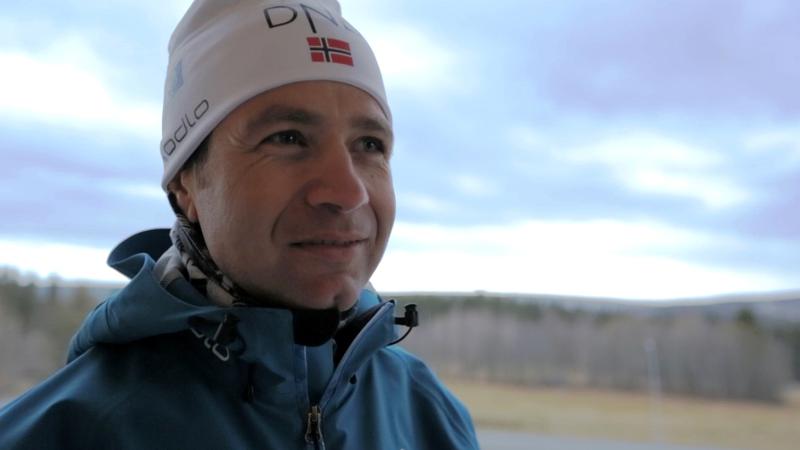
Sivert Guttorm Bakken (NOR) racing the IBU World Cup Biathlon mass start in Annecy-Le Grand Bornand (FRA) on December 21st, 2025. (Photo: Thibaut/NordicFocus)
New details have emerged in the investigation into the death of Norwegian biathlete Sivert Guttorm Bakken, who was found dead in his hotel room in Lavazè, Italy, on December 24. Bakken was 27 years old and had previously been regarded as one of Norway’s most promising biathletes.
According to Langrenn.com, Italian authorities discovered Bakken wearing an altitude-training mask when they arrived at the scene. The information has been confirmed by Italian police and communicated to the Norwegian Biathlon Federation.
The federation emphasized that the presence of the mask raises questions but does not yet provide answers. Officials have stated that they do not know how long the mask had been in use, where it was obtained, or whether it had any connection to the cause of death. An autopsy is scheduled to determine the official circumstances, and authorities have urged caution while the investigation continues.
Sivert Guttorm Bakken (NOR) racing the IBU World Cup Biathlon Pursuit in Annecy-Le Grand Bornand (FRA) on December 20th, 2025. (Photo: Thibaut/NordicFocus)
Altitude—or hypoxic—training masks are sometimes used by endurance athletes to restrict airflow and increase breathing resistance. They are marketed as tools to simulate high-altitude conditions. However, sports science research has consistently shown that such masks do not replicate the physiological effects of true altitude exposure, such as reduced oxygen availability in the blood. Instead, they primarily increase the work of breathing, and their benefits—and risks—remain debated within the endurance sports community.
Norwegian Biathlon Federation representatives described the situation as deeply tragic and asked for restraint and respect for Bakken’s family and loved ones as more information becomes available. Crisis support resources have been made available to athletes, staff, and those close to Bakken.
Further updates are expected after the forensic investigation is completed.
Sivert Guttorm Bakken (NOR) racing the IBU World Cup Biathlon Sprint in Oestersund (SWE) on December 6th, 2025. (Photo: Nordnes/NordicFocus)
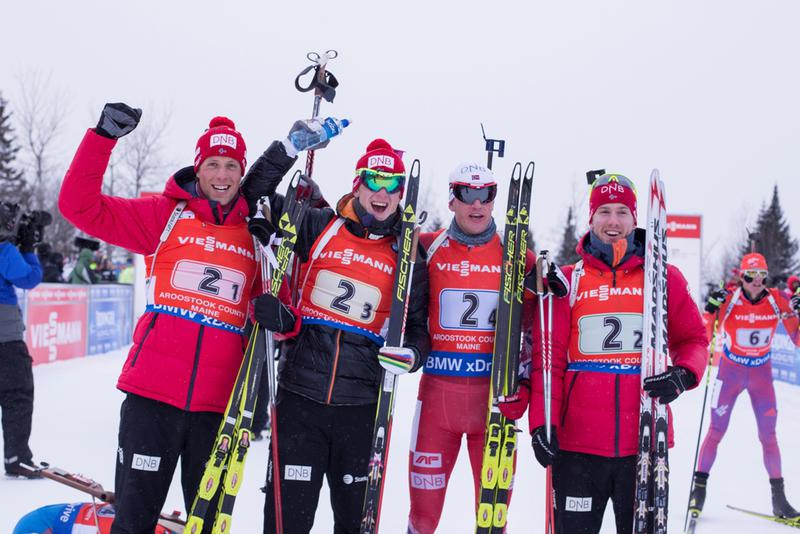
Norway won the men’s 4 x 7.5 k relay at the 2016 IBU World Cup in Presque Isle, Maine, with (from left to right) Lars Helge Birkeland, Johannes Thingnes Bø, Tarjei Bø, and Erlend Bjøntegaard. (Photo: IBU/NordicFocus)
The Norwegian biathlon team is coming off of a high note last season, when they hosted World Championships in Oslo and saw gold-medal performances from Tiril Eckhoff, Johannes Thingnes Bø and both its men’s and women’s relay teams. The legendary Ole Einar Bjørndalen also picked up an individual silver medal to add to his collection.
The team’s task now is about keeping up the intensity and building towards the 2018 Olympics in PyeongChang, South Korea. One target metric: to have both its men’s and women’s teams ranked in the top two at the end of the year.
Last season, the Norwegian men won the Nations Cup and its women ranked seventh.
“This will probably, to some degree, become a sort of ‘in-between’ season,” Norwegian Biathlon Association President Erlend Slokvik recently told FasterSkier on the phone. “But athletes that didn’t perform as well as they had wanted will probably be extra motivated to do well this season. There was also a bigger focus on peaking in the World Championship [last season], because being part of one in your home country is sort of like an Olympics.”
Erlend Slokvik, president of the Norwegian Biathlon Association (NSSF). (Photo: NSSF)
Slokvik was elected president in May after having served as first vice president for the last eight years. He coached the Norwegian biathlon teams from the spring of 2000 to the spring of 2002, during which time the Norwegians won eight medals at World Championships and six medals at the Olympic Games in Salt Lake City, Utah.
After his election, Slokvik emphasized that having the world’s best biathlon team was important in order to attract sponsors, continue good recruiting and development of top-level athletes. He wanted to focus especially on coaches’ education and the development of new biathlon arenas to help towards this goal.
While biathlon is already a very popular winter sport in Norway, the federation is also aiming to build from its grassroots and development levels after Oslo.
“We have noticed a greater interest to some degree, but biathlon has been a popular sport for a long time, one of the most popular in the country, so there is a limit to how much of an increase we can see,” Slokvik explained. “But there has definitely been an increase, which is something we see in, for example, ticket sales for World Cup events … There is good recruiting in many places and the World Championship definitely contributed to that. We did a recruiting tour in connection the championships, which Tora Berger among others were part of and this definitely had an effect on recruiting.”
While the usual suspects are expected to contribute to the national-team results this season, there are opportunities for newcomers, like Marte Olsbu, who had something of a breakthrough at the Oslo World Championships, finishing seventh in the mass start and turning in strong legs in the mixed and women’s relays.
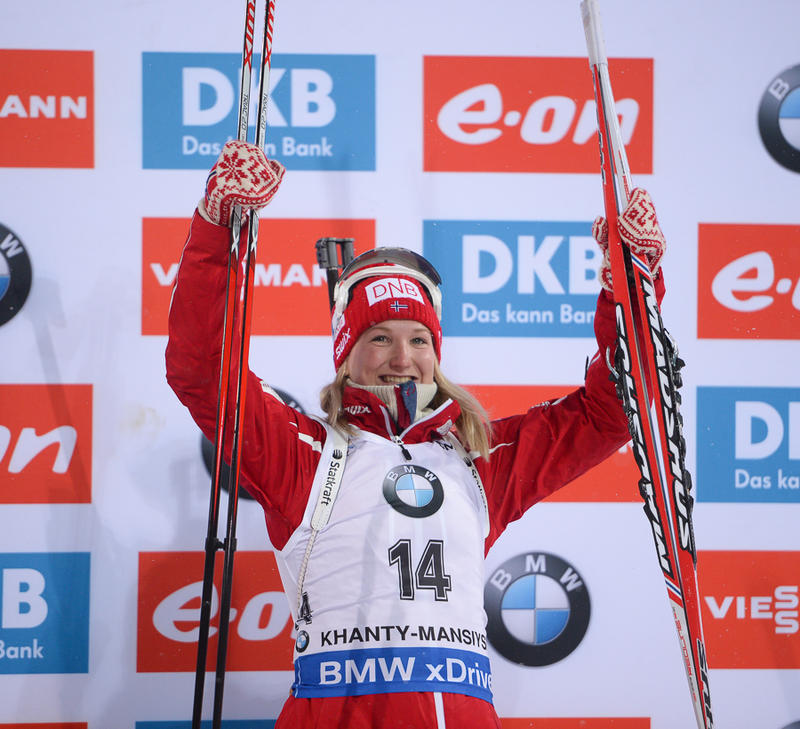
Norway’s Marte Olsbu celebrates her first IBU World Cup podium after placing third in the women’s sprint last March in Khanty-Mansiysk, Russia. (Photo: IBU/Evgeniy Tumashov)
“In the men’s team, we have the ‘big four’ (Emil Hegle Svendsen, Bjørndalen and Tarjei and Johannes Bø) whom we expect to do well, as for the rest of the team we’re hoping that more and more athletes will stabilize on such a high level,” Slokvik said. “In the women’s team we hope that Marte will stabilize on a level close to Tiril [Eckhoff]. She won the sprint and pursuit rollerski national championships, so she is in good shape.”
While the team did almost entirely dryland training through October, it is now transitioning to a new phase.
“A lot of it has been threshold training, and preparation for shooting with an elevated heart rate,” Slokvik said. “Because of that the athletes haven’t done as much high-altitude training and instead spent time in lower elevation. They are in Trysil [Eastern Norway] now training in good conditions. They’ve spent time in France, for example in October, normally they would have spent time [on the glacier] in Val Senales, where they ski in high altitudes, but not this year. This [lower altitude] has allowed for more specific biathlon training, such as skiing with higher heart rate and shooting.”
While the Norwegian biathlon has steered clear of the doping scandals that deeply impacted its cross-country counterparts this summer and fall, those events prompted the federation to review its policies towards medication for athletes.
“We’ve gone through our routines and been clear in our communication with athletes, who have become even more aware of what they should do and not do,” Slokvik said. “Basically we followed already established routines.”
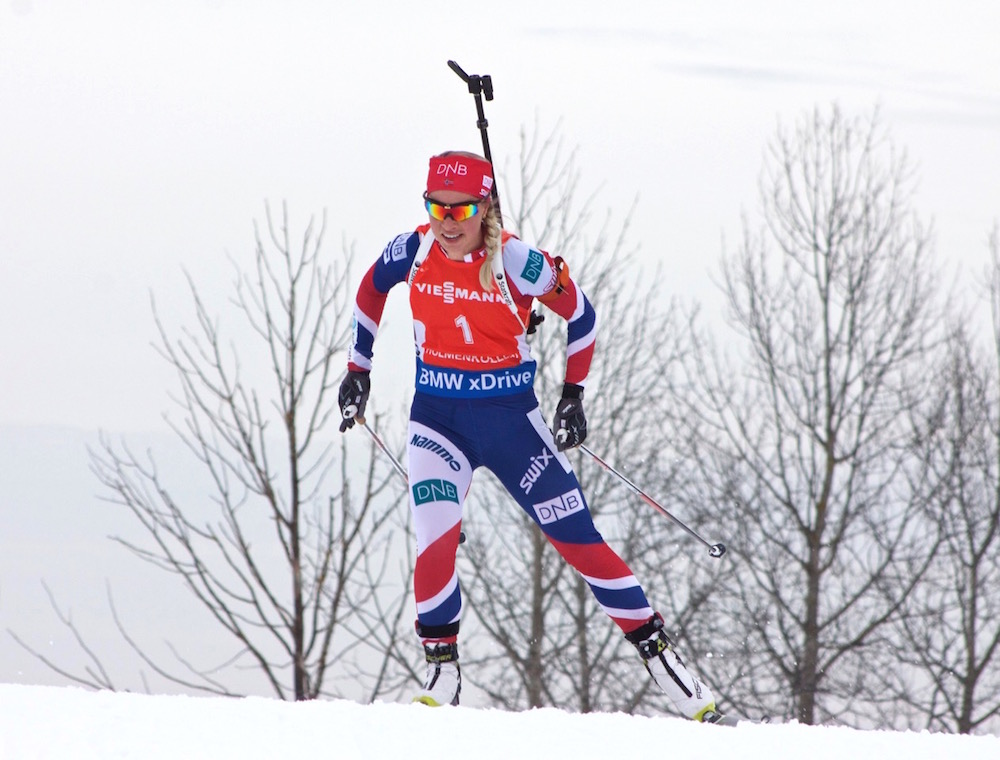
Norway’s Tiril Eckhoff racing to 25th in the mass start at 2016 IBU World Championships in Oslo, Norway. Eckhoff recently told Aftenposten that she stopped taking her asthma medication because she no longer needs it.(Photo: JoJo Baldus)
It has caused some stress and worry: Eckhoff said in an interview with Aftenposten that she has stopped taking her asthma medication. But it’s not because doing so was breaking any rules, Slokvik said.
“Since the news of [Martin Johnsrud] Sundby’s situation and the team’s use of asthma medication, athletes even with a diagnosis have been suspected and she didn’t want to contribute any more to that,” he explained. “Tiril has a diagnosis, but the severity of [her asthma] at the present time isn’t at a level where she wouldn’t be able to function without the medication. If it had, she wouldn’t have stopped taking it.”
The first competitions of the biathlon season are approaching on Saturday in Sjusjøen, Norway. Is the host team primed for improved performances over last year?
If those goals of being one of the top two teams in the world are any indication, it’s likely.
“We feel that this is a realistic goal, and it was set based on past performances,” Slokvik said.
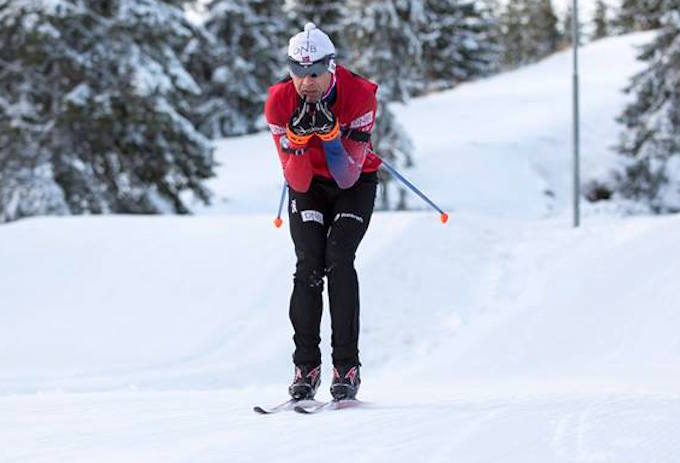
Norway’s Ole Einar Bjørndalen, 41, training at Natrudstilen in Sjusjøen, Norway, before the preseason biathlon races there in November. (Photo: Stefano Zatta/Madshus)
Ole Einar Bjørndalen opened his 23rd World Cup season with a victory on Wednesday, winning the 20-kilometer individual in Östersund, Sweden. The victory, which was technically his 94th World Cup win, came almost 20 years after he won his first World Cup in January 1996.
The 41-year-old Norwegian biathlete is the winning-most winter athlete in history with more Olympic medals and world champion titles than anyone else. With eight Olympic golds and 19 World Championships wins, the 2016 World Championships in Oslo, Norway, remain his over-arching goal. To become a world champion on home turf in Holmenkollen, a feat he has yet to achieve, would be the jewel of his crown.
After two decades of competing at the top level, the King of Biathlon took some time to reflect on the changes and developments in the sport in an exclusive interview with FasterSkier.
“The overall level of the athletes has changed a lot. When I first started, there were a lot fewer who skied really fast,” Bjørndalen said at the Madshus factory on Nov. 26 in Biri, Norway.
A Madshus athlete since 2004 (and a Rossignol skier before that), he said he believes both the improvements in equipment and increasing professionalism across the field have contributed to raising the overall level of international racing.
More refined
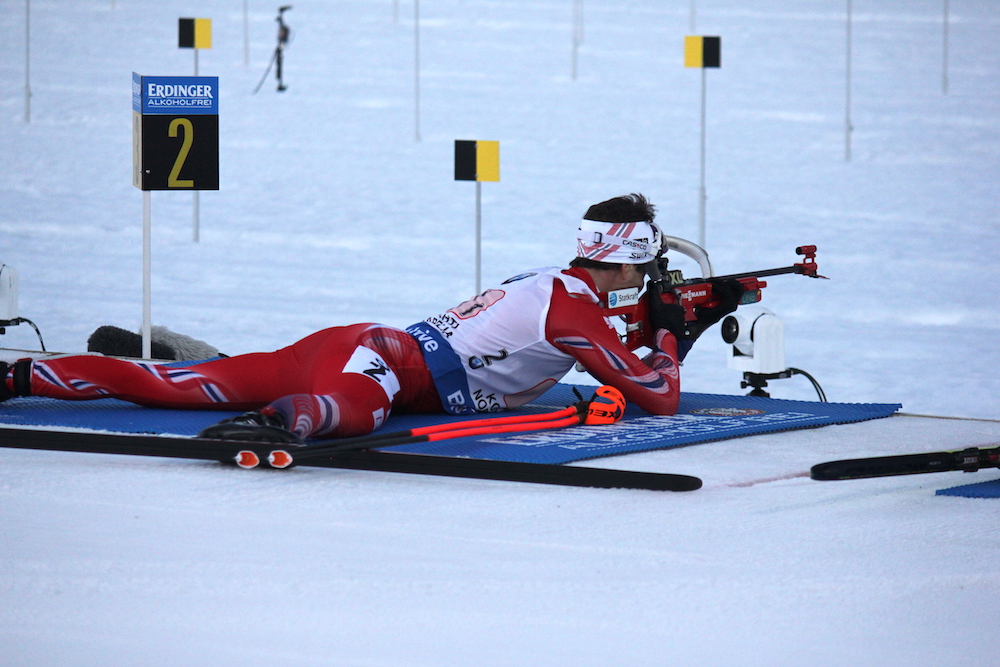
Ole Einar Bjørndalen takes aim during the 2015 IBU World Championships in Kontiolahti. (Photo: Norges Skiskytterforbund/NSSF)
One of the biggest changes was the transition from coarse-bore to fine-bore rifles, which occurred about five years before Bjørndalen started on International Biathlon Union (IBU) World Cup.
“We have used the same weapon and the same mechanical setup during the entire time I’ve been active,” Bjørndalen said, noting that the weapon change made the shooting times drop significantly.
“[Norwegian biathlete] Eirik Kvalfoss would use a minute to shoot one series. These days, none of the best racers use more than 20 seconds,” he added.
The venues have also become bigger and better, and attract more spectators, which also contributes to the growth of the sport.
“Now, there are never less than 5,000 spectators at the stadium at World Cup races, and often we will have more than 35,000,” Bjørndalen said.
Less natural snow and more manmade
Over the years, Bjørndalen has seen the climate change and noticed less snow than when he first started racing. While the lack of snow often affects the venues and events, but he said organizers are making due.
“The climate change has been here for a while, especially in Germany and Central Europe. There is definitely less snow, but at the same time, the organizers have become very good at making snow, storing snow and developing strategies to handle the changes,” he said.
“Manmade snow is very good in that it is very predictable, and it often provides more even conditions for everyone than natural snow,” he added. “With manmade snow, it doesn’t matter as much whether you start early or late in the competition.”
Better gear
Above all, he said the evolution of the equipment has been the biggest factor driving the sport forward.
“With the skis in particular, it seems like there is a small revolution almost every season,” Bjørndalen said. “Skis are now a lot lighter, more stable and faster, and there are entirely different materials used for both bases and construction than when I first started racing.”
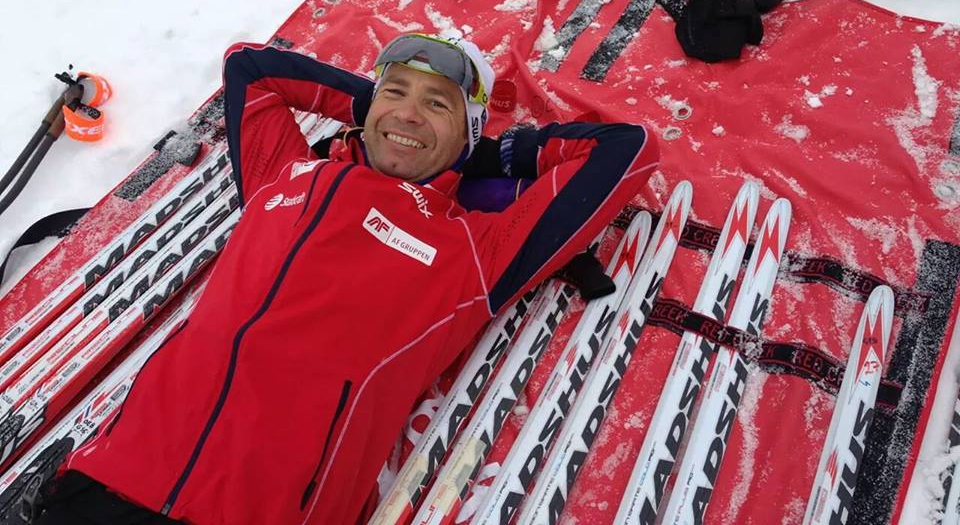
Ole Einar Bjørndalen testing skis in Beitostølen in the spring of 2014. (Photo: Per Wiik/Madshus)
In his mind, moving to shorter, flatter tips was one of the biggest improvements in skis, and he played a key role in that development.
“I was one of the first to cut my tips, and I shortened them by five centimeters,” he said. “That cut delivers a much faster return of the ski, and you’re ready to make a new push and stride sooner. We beat Fischer to the punch on that. I cut my tips about two weeks before they were going to launch their hole-tip. I’ve been told that this caused a bit of chaos and confusion at Fischer. They didn’t know what to think of my tips.”
Ski boots have also made some leaps since Bjørndalen started racing, becoming both stiffer and lighter and better suited for skating.
“With the new integrated carbon sole construction that came last season, the boots are even stiffer and still lighter,” he explained. “And with less material, you have better contact with the snow and more control of the ski.”
The combination of all the equipment improvements has contributed to the biathletes both skiing and shooting faster than 20 years ago, but that doesn’t diminish the amount of work today’s athletes put in each day.
According to Bjørndalen, athletes now put in far more training hours at the range and on physical conditioning than when he started racing in the 1990s.
Product development adds a dimension
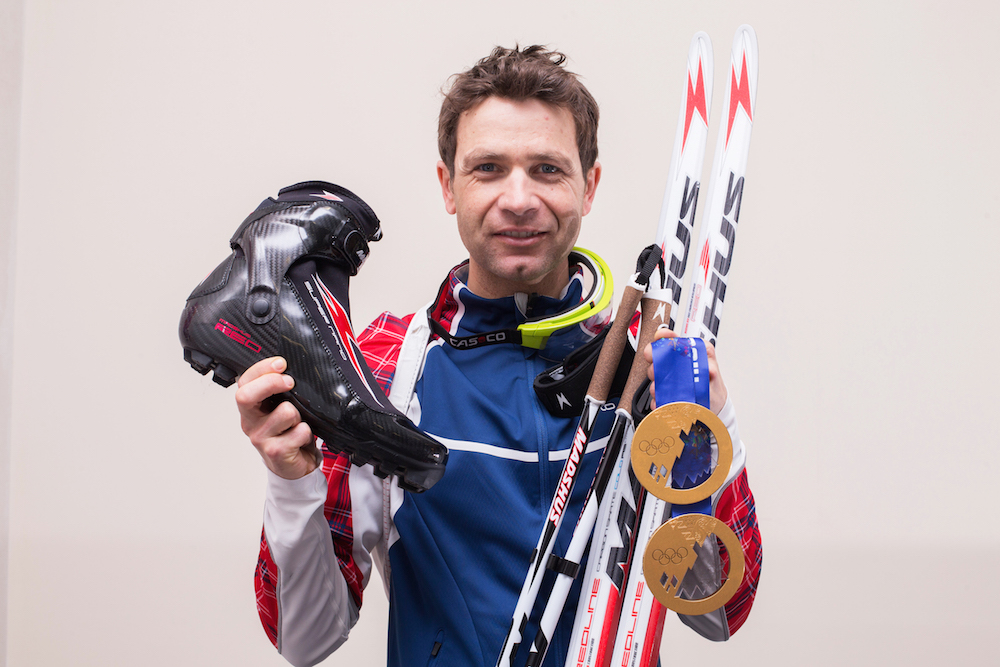
Ole Einar Bjørndalen with his medal haul from the Sochi Olympics. The Norwegian won gold in the 10 k sprint and mixed relay. (Photo: Madshus/NordicFocus)
Being involved with the factory and the Madshus product development team is important to Bjørndalen, as is sharing his experiences and contributing to the advancement of the sport, which he said gives his career an added dimension and motivates him.
“You can put is this way: sport is training, and equipment is development,” he said. “Biathlon is still a young sport, and there is a lot more to gain. To be a part of that development is extremely exciting to me.
“Being an active part of the research and development, and being included and involved in all the processes is a major reason why I switched equipment,” he said of his switch to Madshus in 2004. “Madshus is really on the cutting edge of equipment, they are extremely good at research and development and the process from idea to innovation is fast.
“With Madshus, you call and discuss an idea, and 24 hours later, their product engineers are after it,” Bjørndalen said. “With other brands, it can take weeks.”
From 200 to 2 pairs of skis
Bjørndalen is known for being a stickler about details in everything he does, and equipment is no exception. He is interested in both waxing and tuning, and he takes his time selecting the skis for his quiver.
“I am interested in waxing and the technical aspects of tuning skis. I do a lot of waxing with my training skis, but for races I don’t get to spend much time in the wax room,” he said.
However, picking skis for each competition is the responsibility of the athlete. Generally, Bjørndalen brings two pairs of skis to the venue the morning of a race, and there is a lot of effort that goes into picking those pairs.
“I typically test 10 to 12 pairs of skis the day before a race, and prior to the race season, I test maybe 200 pairs in order to find those 10 to 12 pairs that stand out,” he explained. “All the top racing skis are really good. But some pairs are damned good, and those are the ones I’m after. Some seasons I have to test more to find them, sometimes I find them right away.
“Sport is training, and equipment is development. Biathlon is still a young sport, and there is a lot more to gain. To be a part of that development is extremely exciting to me.” — Ole Einar Bjørndalen, Norway’s winning-most Winter Olympian and 19-time world champion biathlete
“The Redline series was a huge step up for the whole industry when they entered the market three seasons ago, especially the classic skis,” he added. “The difference between the Redline classic skis and their predecessor is substantial.”
He would know. Although all biathlon competitions are skate races, Bjørndalen spends a lot of hours on kick wax.
“I do a lot of classic skiing, which is really important in order to get better at skating,” he said.
The seasoned veteran is known for constantly seeking new insights and research on everything from training and equipment, to diet and lifestyle, to gain the split-second margin that separates the winner from the rest of the field.
However, in the first World Cup race of his 23rd season, Bjørndalen won by more than a hair. He didn’t miss a single target. The last time he raced a perfect 20 k was ten years ago. He skied like a tornado with perfect technique, milking each glide and getting the most from every push off. At the end of the day, Bjørndalen was almost half a minute ahead of second place.
“I had not expected that I would do so well, but I know I’m in good shape,” Bjørndalen told NRK at the time. “I don’t have too many secrets. I have strong motivation. Maybe that’s the secret.”
The most decorated Winter Olympian of all time, Norway’s Ole Einar Bjørndalen during a 2013 interview in Östersund, Sweden. (Photo: IBU/Biathlonworld TV)
No one’s telling Ole Einar Bjørndalen when to call it quits. At 41, the Norwegian biathlete — dubbed the King of Biathlon with the most medals of any Winter Olympian — is just hitting his stride after an offseason hindered by illness, and he remains focused on the 2016 IBU World Championships in Oslo, Norway.
He placed third in a recent skate race against fellow national team members at the upcoming World Championships venue at Holmenkollen. It was the first test of his race form after he missed six weeks of training this summer.
“It is better than expected,” he told NRK after the race, noting that he hadn’t logged many hard training sessions since March.
Bjørndalen feared his goal for winning gold at a World Championships on home soil — the one accolade that alludes him — was in jeopardy after a long bout with a bacterial infection. He skipped the national team’s altitude camp earlier this month and has been monitoring his progress carefully, planning ahead half a month at a time.
“I’m running tests every 14 days. It follows the shape and development, and what I can tolerate in training,” he said. “I take just 14 days at a time so I work out from there.”
Tests involve lactate profiles to measure his response to workouts. He said he’s been getting the indicators he’s been looking for, giving him green lights to go ahead with his training.
“When I get the message that I can travel to [greater] heights, then I travel to altitude,” he said. In previous seasons, Bjørndalen trained hundreds of hours at high elevations, according to Aftenposten.
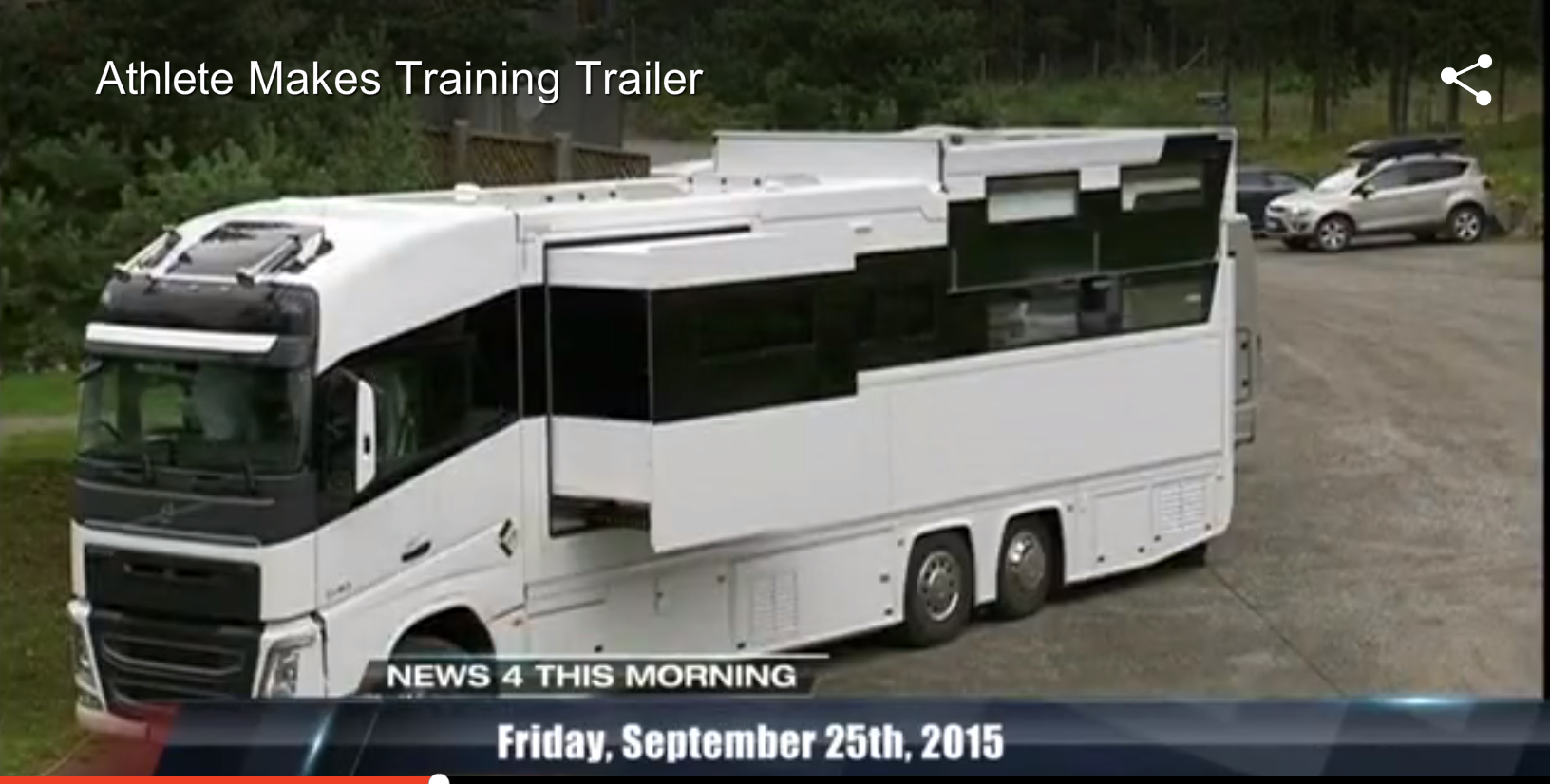
His roadside companion: Ole Einar Bjørndalen’s 20-ton RV, which includes a rollerski treadmill and enough room for a shooting range. (Photo: WTVY video)
He resolved that this would be his focus season a while ago, and to help him achieve his goals, he added a 20-ton custom RV — complete with three drivers, a rollerski treadmill, six beds, a kitchen, bathroom, 690-gallon water tank, and room for a laser-gun shooting range — to his fleet.
“I’ve thought about it for over five years and worked on it for two years,” he told Norway’s TV2 of the recreational vehicle designed to meet his training needs when the weather keeps him inside. “The dream has been to bring the training to a new level.”
Even after dominating biathlon for 20 years, Bjørndalen said dreams are what makes him tick.
“If you do not have dreams, it is not worth holding on,” he told Aftenposten, according to a translation. “There are those dreams you have in mind at every jog and each hard workout.”
Asked specifically about his training over the years, he said, “There is no hocus pocus. I really just followed a training schedule that we know has worked for 25 years. It is a program of rowing and cross-country skiing. I really do only what the old guys in cross country has been doing for a long time.”
As for his plans for two seasons out in 2016/2017, Bjørndalen indicated he might back off training.
“I’ll look at my life,” he said. “In many ways it has been put on hold for 20 years.”
OSLO, NORWAY- Swix Sport announced a three-year partnership with the Norwegian Biathlon Association. “It comes at an exciting time,” described Ulf Bjerknes, CEO of Swix Sport, “Norway is home to many up and coming biathletes and Swix will be investing in all levels, from juniors to elite athletes in advance of the 2016 Biathlon World Championships at Holmenkollen. Swix product developers have already begun working with Norway’s elite athletes to create new, specially adapted biathlon equipment. Three examples are the new X1 glove, developed in partnership with, Norwegian biathlon star, Tarjei Bø, a new X-fit biathlon specific pole strap and a new national team racing suit. The sponsorship agreement between Swix and the Norwegian Biathlon Association will run for four years from today’s date. The agreement relates to clothing for both training and competition.