Tag: Norwegian Cup

  • Closing the Gap: Racing in the Dark

    Closing the Gap: Racing in the Dark

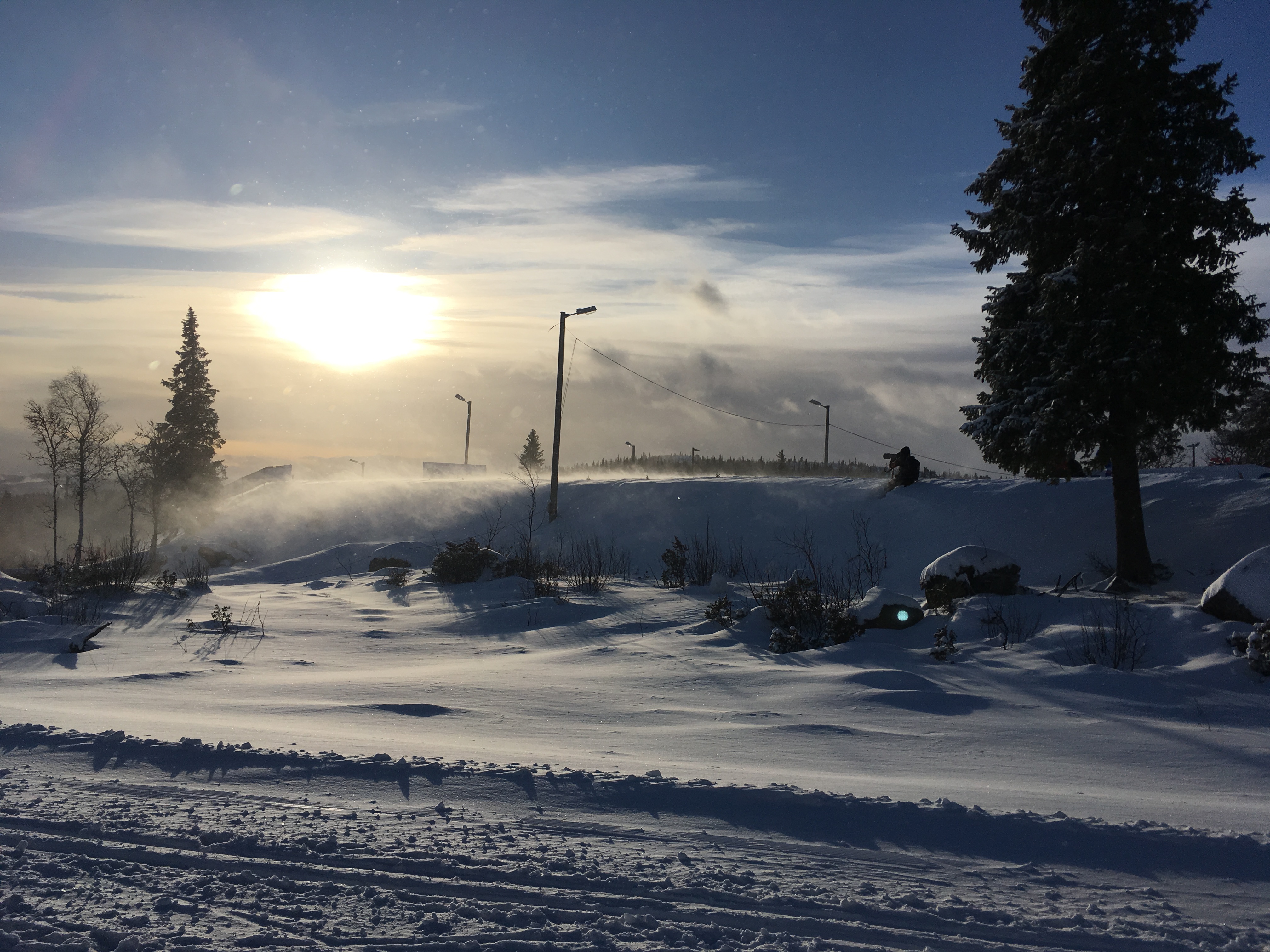
    Soft Scandinavian Cup track as seen last weekend at the Dec. 15-17 Scando Cup in Vuokatti, Finland, “the same conditions for Sundby all the way down to me,” author Maks Zechel writes.

    Editor’s Note: The following is part of a series proposed by Maks Zechel, a 20-year-old Canadian cross-country skier embarking on his first season training abroad. In August, he made the big move to Norway, where he’ll be training and racing with Team Asker for the entire winter. Through these updates, Maks hopes to share his personal “observations, stories and lessons learned” to help close the gap between North American and Scandinavian nordic skiing. Previous posts: #1, #2, #3#4#5#6, and #7.

    ***

    Part 1: Vuokatti

    It’s Thursday morning and I’m in the Oslo airport, waiting to catch a flight to my second Scandinavian Cup race weekend of the winter. I haven’t seen the sun yet and, from what I’ve heard, my destination of Vuokatti, Finland, doesn’t look much like a Caribbean postcard either.

    Two flights and an hour on a bus later, we arrive in Vuokatti. There is something about 3 p.m. total darkness that I suspect I will never grow accustomed to; it’s the impending sense of urgency that I need to go to bed soon. Or maybe that’s just coming from the fact that I still have to check into the hotel, ski the race loop, test skis, eat dinner, and then write my final exam for my online university course. By the time I start my exam, and reboot my laptop after it crashes, it’s 8 p.m. … classic.

    We wake up before the first race in the dark. The sun allegedly rises into the cloudy, snowy sky at 9:59 a.m. and sets at 2:07 p.m. Despite our noon start time, the trails remain cast in dusky shadows, and the entire race loop, and ski jumps overlooking the stadium, remain lit 24/7. For the record, I spent approximately 72 hours in Finland, and I can’t confirm that the sun actually touches that part of the world; for all I witnessed they might just brighten the streetlights every morning.

    We jog a few hundred meters from the hotel to the race site, located by the Vuokatti Olympic training center. All the racers are staying in two large hotels within walking distance of the race site, which creates an exciting “athlete village” atmosphere. Vuokatti is an epic training and racing location with 7.5 k+ of lit world class ski trails, early season snow making, a ski tunnel, and ski jumping and biathlon venues. Nordic countries don’t seem to like hosting races anywhere with a big chalet, or with any chalet at all, so we set up base in the snow. Luckily for us, the infamous Finnish cold weather decided to leave for the weekend. The stadium is tiny, hardly wide enough for a finishing straight, miniscule individual start corral, and a lap lane. It’s easy to feel lost amongst the tall, uniform pines of a snowy Finnish forest, but the Vuokatti course has something for everyone. Each day, 200-250 participants are on the senior men’s start line, with Norway, Sweden and Finland well represented; the top 100 doesn’t get more competitive than this anywhere in the world.

    As I’m warming up for my 15 k skate race, I have never recognized so many people that I’ve never seen before in real life: “Oh hey random Norwegian skier, congrats on beating your 3000-meter track PB this summer! By the way, say hi to your dog for me.” The potential for a seriously awkward conversation with one of my idols is too high, so I try my best to avoid in-awe-eye-contact…
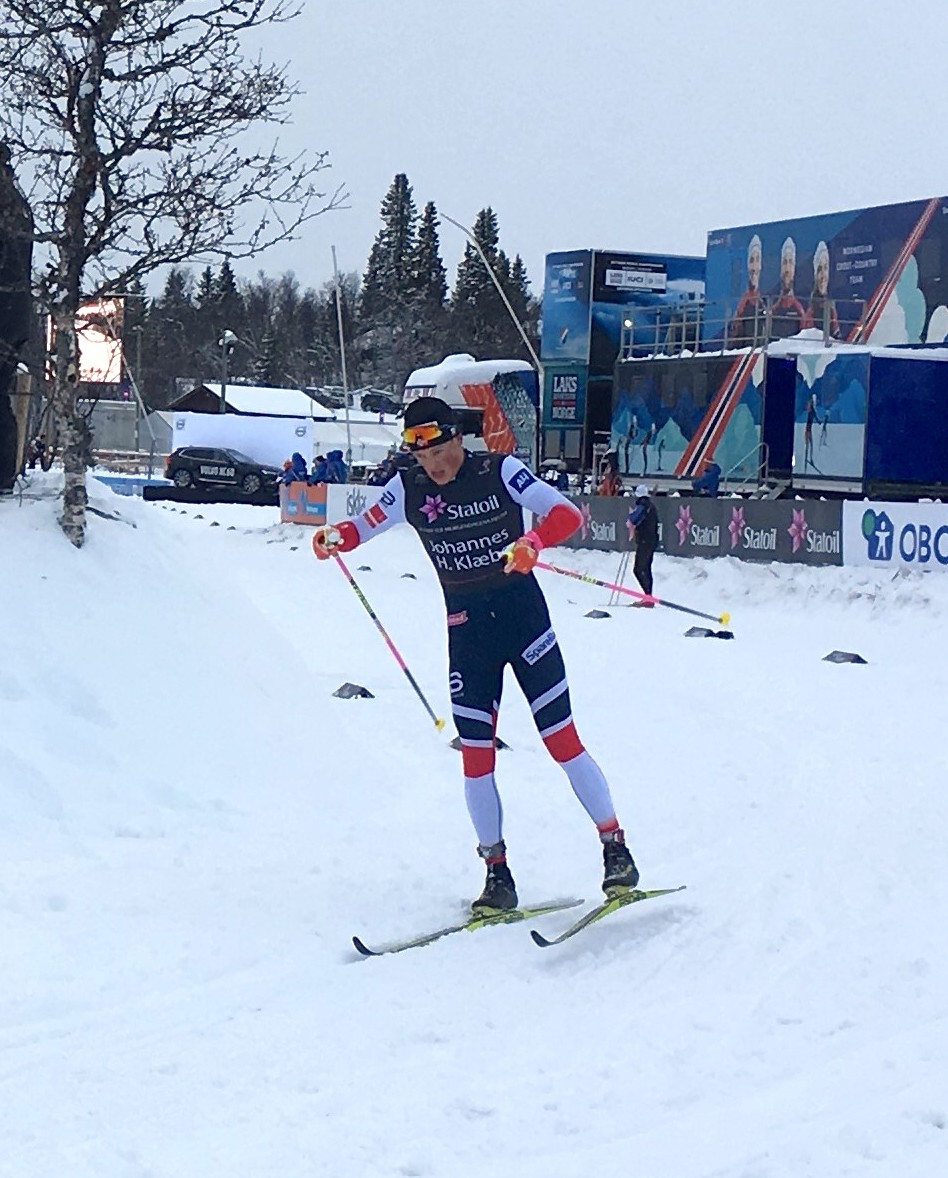
    Norway’s Johannes Høsflot Klæbo in his debut race of his record-setting 2017/2018 season. In eight World Cup starts so far, he’s won seven of them. Here he’s shown racing at Norway’s FIS season opener in Beitostølen last month. (Photo: Maks Zechel)

    At the end of the first day our teammate, Erland, placed 19th, with Ryan and I at 107th and 132nd. After racing in the Beitostølen Scandinavian Cup and Gålå Norwegian Cup race weekends in November, it remains hard to swallow our pride as we race better than we ever have, but still fall far short of our lofty goals.

    However, the lessons that we learn in every international race that we compete in are crucial to our development. During the 15 k classic race in Vuokatti, my teammate, Eirik, was caught by the eventual top-two skiers of the day, Ristomatti Hakola (Finland) and Martin Nyenget (Norway). Eirik is a strong double poler, so he was impressively able to stay with them until the set of steep hills in the last 2 k of the course, where they put around 50 seconds into Eirik per lap. What he was unable to match, was the insane power that Hakola and Nyenget were kicking their skis with, giving them big glides on even the steepest pitches where I had to run out of the tracks

    Racing with athletes who are able to ski at this level creates an unforgiving racing environment if you are unable to push yourself to new heights. After a poor race, the performance is reflected by a drop of dozens of spots down the results sheet. Scandinavians respect the high level of these races and they know that there are hundreds of skiers working just as hard as them, ready to take their place if they don’t race fast. Poor races by even the best cause them to disappear down the results (Petter Northug finished 17th in a Norwegian Cup race this winter). Although Erland is an incredible skier who is capable of top-20 Scandinavian Cup results, he had placings of 89th and 47th in Beitostølen. This is nothing to be ashamed of, but the results clearly represented that he was not in top form at the time. Good performances are rewarded in the opposite manner. That is the nature of these races, where 1 minute gained or lost can mean 30-50 spots. In the Vuokatti sprint, the top-30 men in qualifying were all within 5.87 seconds, with the top 58 within 10.55 seconds, and top 84 within 15.15 seconds. The reality is harsh, but it feels productive to know exactly where I stand against the best.

    World Cup racing is ridiculously hard, and that is a lesson that should be experienced as early as possible. When I was 132nd in the 15 k skate race in Vuokatti, a good race for me, it felt like a smaller reward than I was used to for my efforts. It’s easy to feel overwhelmed by the sheer number of competitors, but it helps to look at the time gap when looking for achievable next steps. In this race I was 4:38 minutes behind race winner, Daniel Stock (Norwegian skier with a World Cup podium from last year). It’s a lot over a 38-minute race, but if I can shave off 1 minute by the end of the season, then I’m in the top 100. Wherever I place, at the end of the day I know how far away I am from top World Cup contenders. Doing these races doesn’t make getting fast easier, but it does put into perspective exactly how much my efforts and improvements mean on an elite level.

    Every weekend these races feel a little more familiar, a bit more like home. The competition is intimidating, but every race still has the same enthusiastic community of athletes, volunteers, coaches, wax techs, friends, and families that we are used to in Canada. In Beitostølen, a stressed Ryan was enthusiastically interviewed four minutes before his race start and the NRK commentators talked about our goals in Norway and this FasterSkier blog for over a minute on national television. In Vuokatti, the race announcer introduced us as the two Canadians living in Asker, Norway, with their goal of becoming two of Canada’s best World Cup skiers. It’s flattering to be known like this, despite struggling to come even close to the top 100, and it makes us feel like we belong. Soon enough we will make sure we are known for more than just booking a couple of plane tickets to Norway.

    Part 2: Getting to the Top
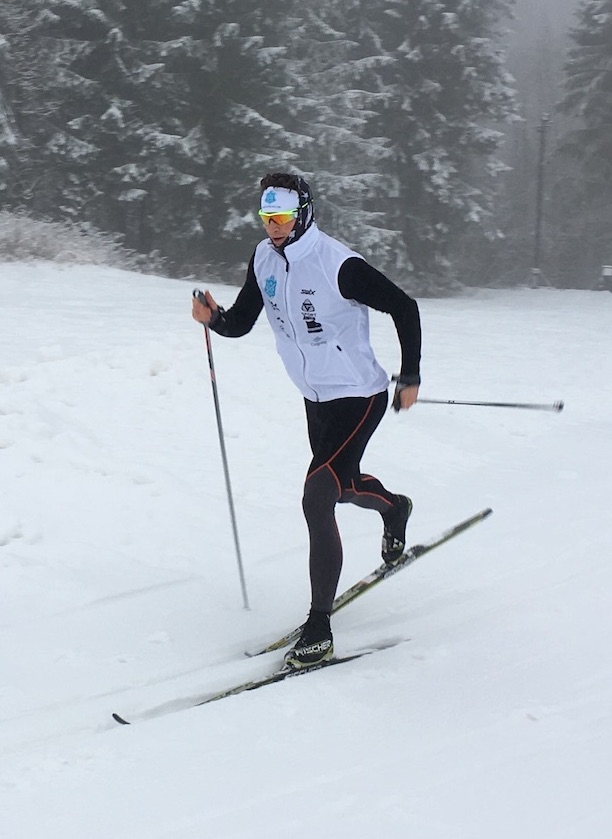
    Author Maks Zechel repping the Asker Skiklubb white and blue.

    Racing in Scandinavia is like getting on the freeway out of the city at 5 p.m. on the Friday of Thanksgiving weekend; everyone is heading in the same direction, and no matter who you are, you have to be patient and observant in order to seize the opportunities that will bring you to the front of the never-ending queue. In Canadian racing, we often lack this traffic, and this causes skiers to race at their own level, because there aren’t enough skiers of similar abilities to push each other to the top. I believe that it is still possible to become a great skier from racing in North America, but we have to be prepared to take even bigger risks than our Scandinavian counterparts, as we can be sure that they are encountering far more opportunities than us.

    From my experiences watching NorAm, SuperTour, Scandinavian Cup, and World Cup results, the best skier of the day will often win a three-lap 15 k with a certain order of lap times: the first lap is the fastest to take advantage of fresh legs, the second lap is the slowest, and the the third lap is the second fastest. These margins are small, but they indicate a skier who has skied a smart and controlled race, riding the edge of blowing up in order to expend energy perfectly and close fast where weaker skiers tire. This is how a winner skis a race. The skiers who don’t win the race ski differently because they are not at the same level. If they ski in the same controlled manner, they fall short of the win because they cannot maintain the same pace/execute the same pace changes. A dark horse who is trying to win, or merely trying to break through the ranks, gives everything in an effort to ski at a level that is higher than they can actually maintain. They may try to go out as hard as possible, risking blowing up early with the hope that they will be able to maintain a “suicide pace”. The skiers who don’t control the race usually ski with positive splits, becoming slower each lap on a good day, because if their splits are negative it means they will lose too much time at the start of the race.

    In North America, we get comfortable skiing like winners. The shock comes when we try to make the jump to World Cups, and we suddenly have to relearn how to ski like developing skiers, to ski like we are trying to break through to the top.

    Here’s a fact: nobody comes to World Cups from North America and starts winning right away. The jump is too big to make all at once. Scandinavians can sometimes go straight to the top, because they had to grow up skiing like losers, or at least skiing like winners who had to fight against 30 other winners every race. The issue is that North Americans begin to relearn the lessons of devastating time gaps at an important point in their careers, when ideally they would be fighting competitively for coveted World Cup top 30s. We’re not developing as much as we could at home, because we’re not desperately fighting just to come top 50 or top 100 as juniors and U23s. Not to say that you can’t develop hugely between the ages of 25 and 35 (many do), but we rarely see this happen in North America because the attrition rate of skiers in that age range is so high. Many skiers never see their full potential realized.

    In North America, we get comfortable skiing like winners. The shock comes when we try to make the jump to World Cups, and we suddenly have to relearn how to ski like developing skiers, to ski like we are trying to break through to the top.

    In Vuokatti, numerous small skiing nations were well represented, countries that we North Americans would see as “lesser” skiing nations, when in fact they’re doing things better than us. The Vuokatti Scandinavian Cup saw a large contingent of Chinese national-team skiers compete, and at Beitostølen, Japan was well represented. I even saw a couple of Mongolian skiers in Finland. These national-team skiers are consistently starting Scandinavian Cups in their pursuit of becoming competitive on the World Cup (zero Chinese skiers started the Toblach World Cup, while 10 Chinese men and women started in Vuokatti the same weekend). These small skiing nations recognize that they cannot develop all of their athletes through World Cup starts, so they send their remaining skiers to the next best thing. This mentality has led Japan to produce podium-capable World Cup skiers such as Masako Ishida and top 15 contenders such as Keishin Yoshida.

    We need to fill up our quota spots on the World Cup, but for the rest of us, Scandinavian Cups are an equally good opportunity to develop. A month of World Cup racing can cost a Canadian National Team member upwards of $5,000 Canadian dollars (not including flights). Last winter Team Hardwood Elite ran a one-month trip from Canada to Norway for $2,700 CAD (flights included) per athlete, where they raced nine Scandinavian- and Norwegian Cup-level races. We shouldn’t scoff at local-level Norwegian races either, which can be found all over the country every weekend of the winter. Sondre Turvoll Fossli, a World Cup medalist, won a local race, with a senior men’s field of 12, in Lier, the same weekend as Toblach and Vuokatti. At a local race in Konnerud the weekend before, I was bib number 1051 as the last starter of the day. Only 17 senior men raced, but the winner has placed top five in Norwegian Cups.

    Many North American skiers want to break through on the World Cup, but there are limited World Cup starts that offer a small and difficult opportunity for us to impress on a stage that we have never experienced before. The chances of breaking through this way have proven nearly impossible for numerous talented North Americans. For the countless incredible skiers who didn’t even receive those World Cup opportunities, the chance of World Cup success is a long-dissolved dream. This builds the impression that only a select few North American skiers can ever be great. This is untrue. The truth is that only a select few will ever break through when offered a handful of World Cup-level racing opportunities. The truth is also that us remaining North Americans have the ability to achieve that same level, but we must do so more patiently and down a less traditional path. If you truly want a chance at becoming competitive on the World Cup, you don’t have to fight for years to qualify for a World Cup development experience that most of us cannot afford. Instead you can race as many Scandinavian/Norwegian Cups as you like, every year, at a far cheaper cost, which will allow you to race against skiers who are already at the World Cup level that many of us dream to achieve. These skiers are no more talented than our skiers, they just have had the time and the countless opportunities to race at a level that most of us never have the chance to see.

    This leaves an important question: who is left to race in North America? It is hard to develop our best senior athletes to become World Cup podium contenders, it is harder still to do this in such a way that will allow all of our younger skiers to develop, too. My experience in Norway has been a positive one so far, and I will continue to promote what I am doing. But I should not have to come to Norway to develop. The simplest way for an individual to learn to race like the Scandinavians is to come to a country like Norway, but by individually developing overseas, we put a stop to the widespread development that we could be doing back home.

    Norwegians are successful at skiing because they love it; skiing is everywhere in Norway, and for that reason Norwegians never have to go far from home to ski fast. Top Norwegian skiers race in local races because they know that good racing is great development, no matter who you’re racing against. If we want races to be competitive, then it’s up to us to race fast.
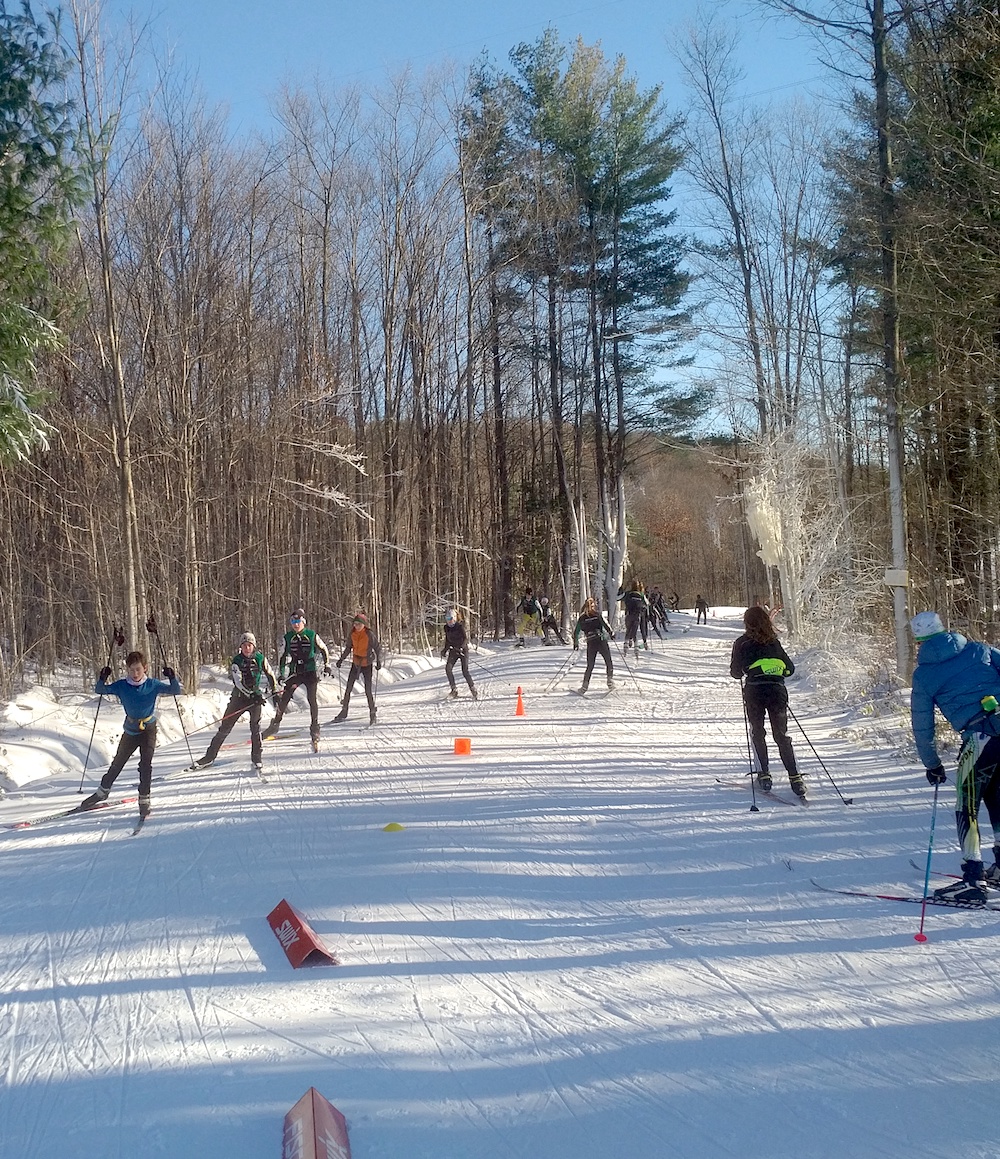
    Youth and masters alike getting some early season ‘ k’s in on Nakkertok Nordic’s “Nakkertrak” on opening day Nov. 11, 2017. (Photo: Nakkertok Ski Club)

    My home club, Nakkertok Nordic, was able to purchase snowmaking equipment last year. Due to the enthusiasm and incredible dedication of the parents and volunteers who are the backbone of Nakkertok, they were able to host two early season race weekends this year, just outside of Ottawa (a city of 900,000 people). Ottawa is in an excellent central location for Eastern Canadians and Americans. The same weekend as the Dec. 15-17  NorAm race weekend in Rossland, over 200 people raced the Candy Cane Cup on the “Nakkertrak” early season snow loop. In the future, I see this becoming a main event in an early season racing series, where athletes race in Craftsbury, Vermont, at their annual early season races, then drive the mere four hours to Ottawa for two back-to-back high level FIS races. Eastern Canada and the U.S.A. are full of the skiing culture that makes Norway so great, our issue is that we fail to coordinate to create the fantastic race opportunities that we could have. Many top Canadian skiers already travel to Craftsbury at the beginning of the winter to be in a race where Patrick Caldwell takes the win and the field is deep with professional, university, high-school, and part-time racers of all levels. There is a fear in Canada of burning young athletes out by letting them race up. I agree, we shouldn’t just allow our “prodigies” to race up; I think that everyone from age 16 and up should race together. Development as a skier is only loosely correlated to age, and I am grateful at every training session with Team Asker for the young junior skiers that kick my butt in workouts. Our egos have to be thrown aside, because the more we segregate our racing categories, the less we can help each other get faster in the way that the Norwegians do.

    The simplest way for an individual to learn to race like the Scandinavians is to come to a country like Norway, but by individually developing overseas, we put a stop to the widespread development that we could be doing back home.

    Many Norwegian skiers race almost every weekend, all winter long. We have to create these same local racing opportunities, and if we make them accessible, they will soon turn into world-class events. Nakkertok took a race, which has simply been a club time trial in past years, and turned it into a CPL (Canadian Points List) level race with a field of 68 open men and 45 open women in one year (that is a bigger field than the Rossland NorAm). The depth of such events, with their diverse assortment of competitors, creates an environment where both our top racers and our developing racers can grow. An athlete is much less likely to quit skiing if they are regularly racing in a field with dozens of skiers at their level and with similar ambitions of going to university or working full time, all while skiing as fast as they can. Because you know what, racing is really fun, but only if it is a commodity made accessible to every North American skier, not just our Olympic hopefuls.
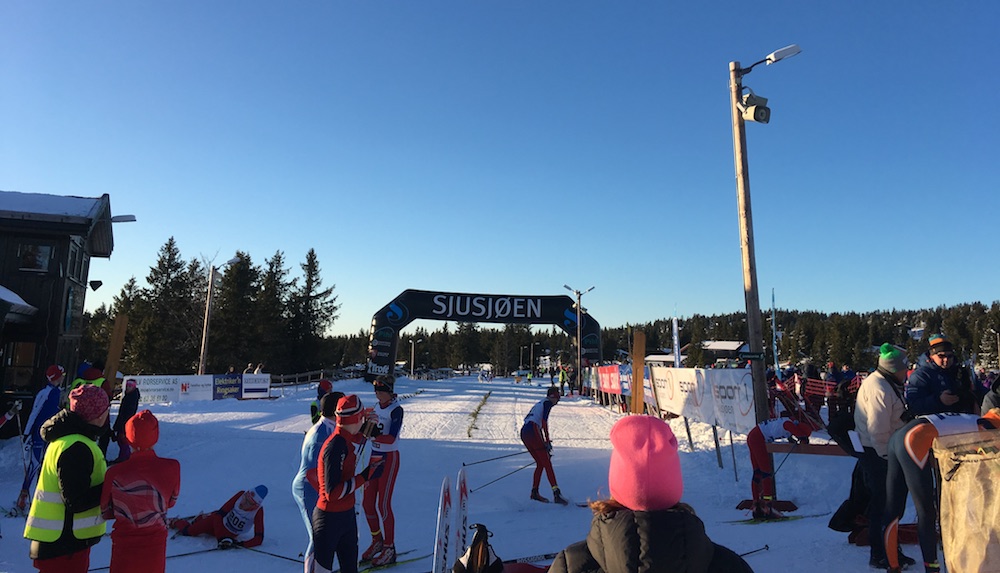
    A local race in Sjusjøen, Norway, with hundreds of racers of all ages. (Photo: Maks Zechel)

    About Maks: Maks Zechel is a competitive cross-country skier who secretly wants to become a professional mile runner. He loves hiking and going on canoe trips with his family, as well as peanut butter cups in ice cream. Johan Olsson is his favourite skier and he hopes to race the Cortina-Toblach stage of the Tour de Ski one day. He enjoys writing about his experiences. Follow him on Instagram @makszechel.
  • Closing the Gap: Brain Training

    Closing the Gap: Brain Training

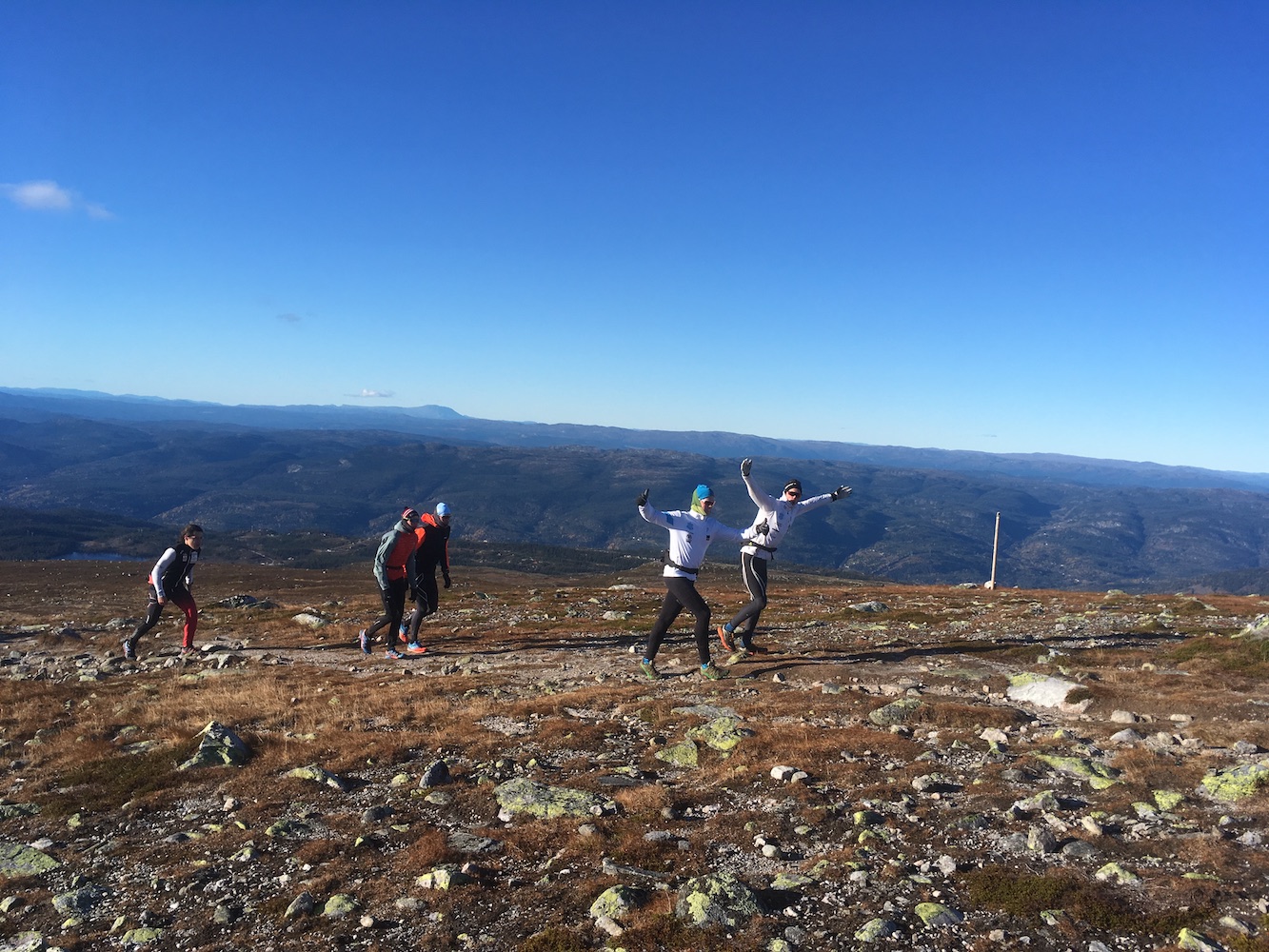
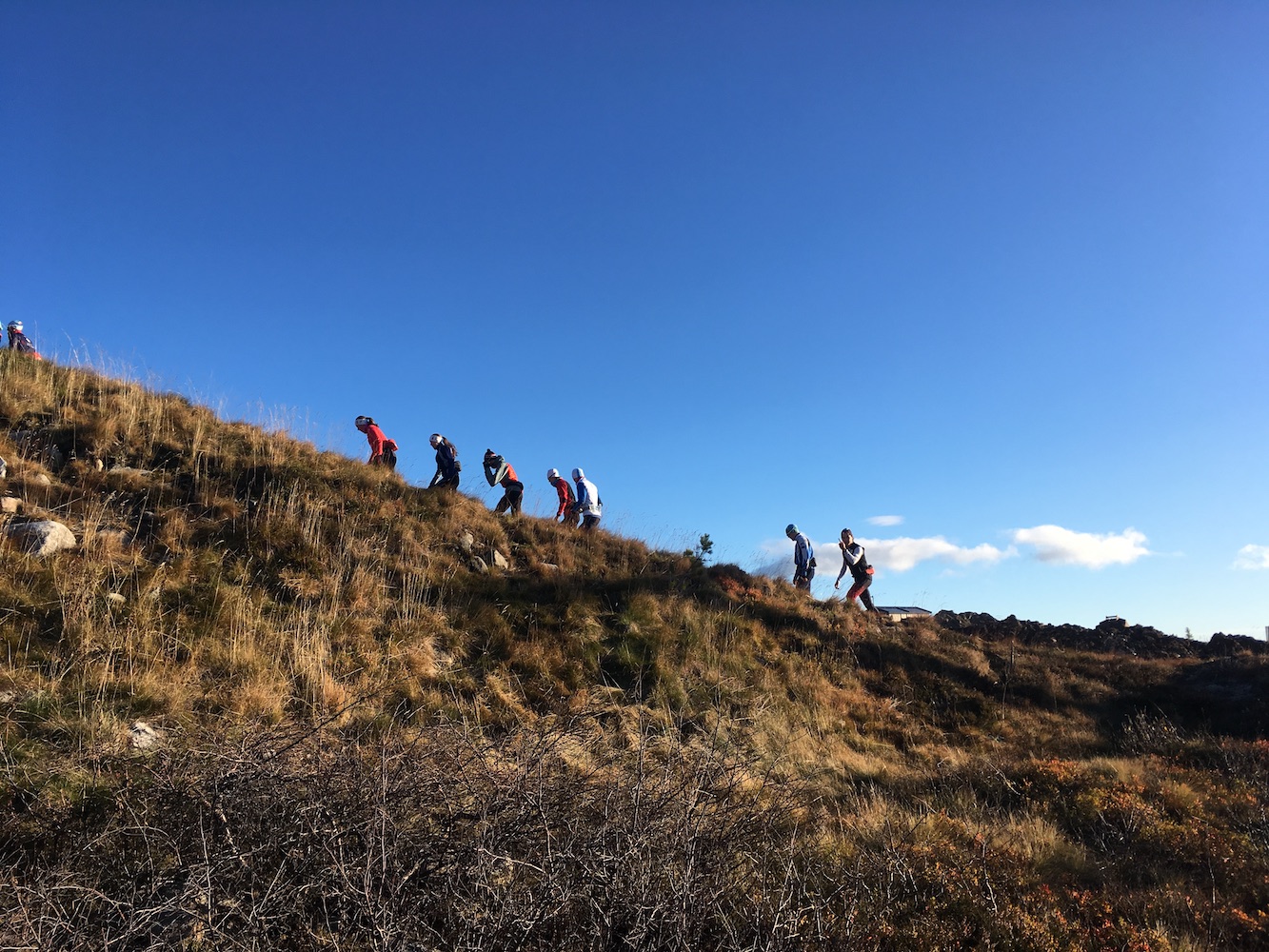
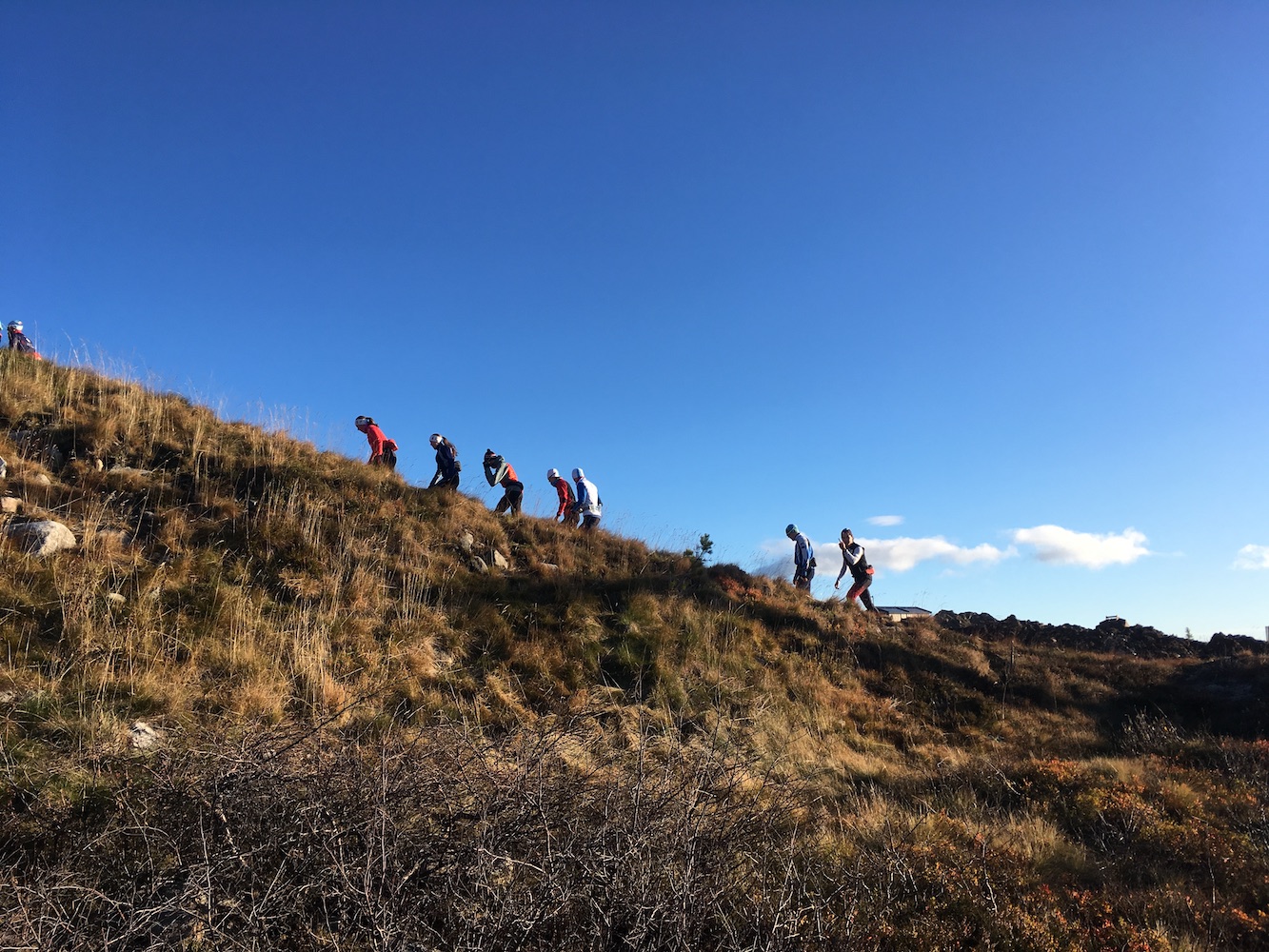
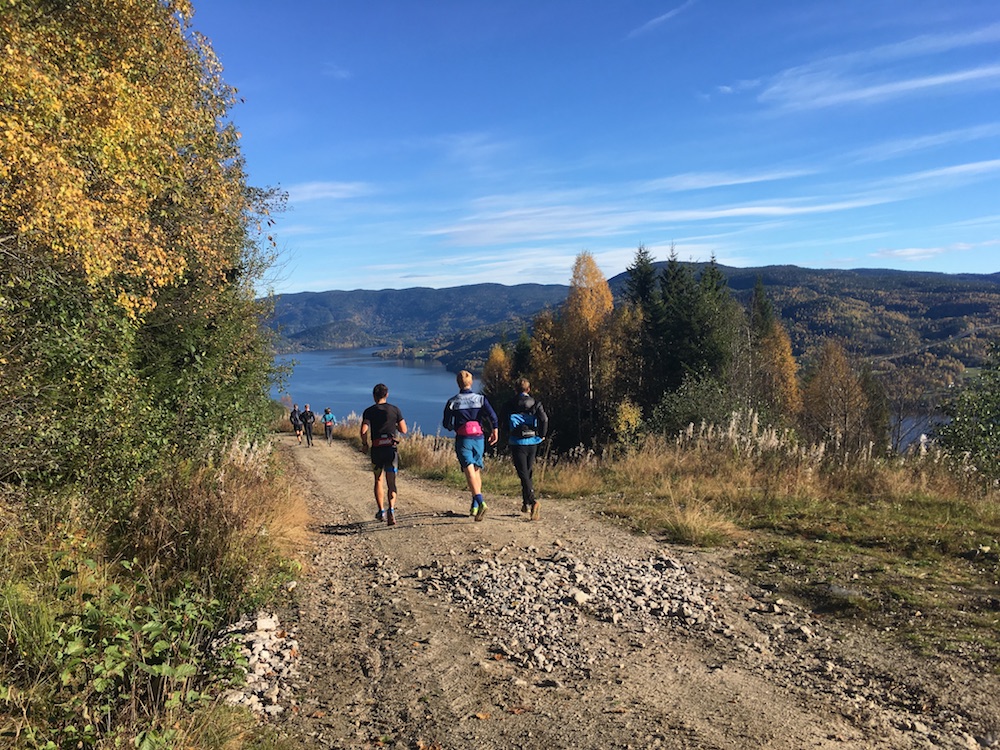
    “Norwegian fjell running.” Team Asker doing some dryland mountain training during a training camp in Norefjell, Norway. (All photos: Maks Zechel)

    Editor’s Note: The following is part of a series proposed by Maks Zechel, a 20-year-old Canadian cross-country skier embarking on his first season training abroad. In August, he recently made the big move to Norway, where he’ll be training and racing with Team Asker for the entire winter. Through these updates, Maks hopes to share his personal “observations, stories and lessons learned” to help close the gap between North American and Scandinavian nordic skiing. Previous posts: #1, #2, #3#4#5and #6.

    ***

    There is something about passion that drives people to push boundaries like nothing else. For many Canadians, this passion lies in hockey. If it’s January and you aren’t within walking distance of at least two outdoor hockey rinks, you probably don’t live in Canada.

    I’ve never been a huge hockey fan, but regardless I still went through a phase as a 9 year old when I practised my stick-handling skills religiously, making marks against the garage door or the basement wall. Black marks and dented aluminum are the proud checkmarks of passionate Canadian youth (and the source of endless frustration for Canadian parents). Canadian hockey drives youth and even adults to fervently practice a sport that only a small percentage will ever play professionally. Even on a weekday night in the middle of winter, if you bring a stick and skates to any Canadian outdoor rink, you will be allowed to join a game of shinny. No matter your gender or age, whether you claim to have been a AAA hockey legend or have never skated before, whether your family has lived in Canada for generations or if you are a newly landed immigrant, Canadians are brought together by something that transcends sport.

    National passion for a sport ensures that a large and diverse percentage of the population will actively pursue that activity in a multitude of ways. It encourages creativity and innovation. Similarly to hockey in Canada, albeit on a smaller scale, there are an astonishing number of Norwegian skiers who dedicate much of their time to just training and racing fast, even without sponsorships or national-team status.

    This creates a field of close to 500 open men at the Norwegian national championships. In the 10-kilometer skate race at last year’s national championships, the top-100 racers were separated by 1:47.6 minutes, the top 200 by 2:33.2 minutes, and the top 300 by 3:31.7 minutes (note that the conditions were fast that day). The medal winners, and many of the skiers far off the podium, were World Cup, World Championship and Olympic medalists (Anders Gløersen won, Martin Johnsrud Sundby was second, Emil Iversen was 11th, Sjur Røthe was 32nd (full race results here). The depth of field at Norwegian and Scandinavian Cups and national-championships races rivals that of World Cup races, with many believing it to be more difficult to crack the top 30 in the aforementioned three than it is at most World Cups.

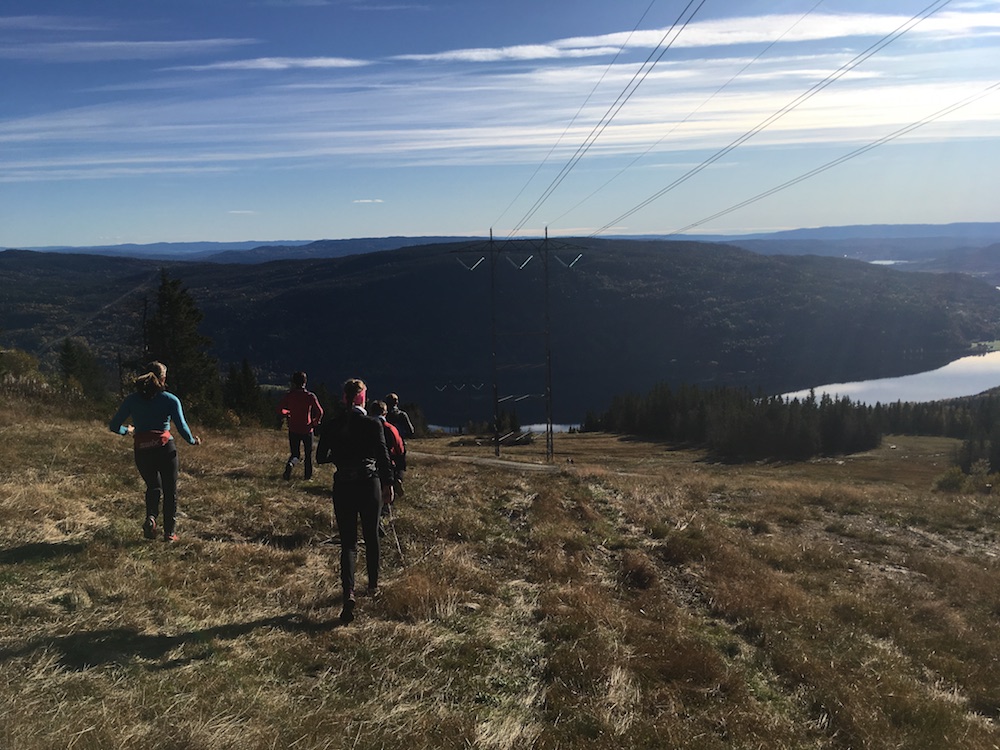
    Team Asker skiers recover as they run down an alpine ski slope during 10- x 4-minute Zone 4 bounding intervals, with one minute rests in between, at a recent training camp in Norefjell, Norway.

    The success that we see in the Norwegian senior ranks begins with Norway’s junior skiers, and I am lucky enough to be training partners with some of these top-level athletes. One of Team Asker’s most successful junior skiers, Harald, has two medals from last year’s Junior World Championships. To put his level of skiing into a senior-racing perspective, he was 26th in the previously mentioned 10 k race at the Norwegian nationals — as an 18 year old.

    It can be deceptive to see skiers who still look quite young, but to know that they are already skiing fast enough to potentially crack the top 30 on a World Cup. I believe that much of this ability stems from the incredible amount of maturity in Norwegian junior racers, although not necessarily in the traditional sense. Not all of them are obsessive about the small things; I have seen top Norwegian skiers down two Cokes per day at training camps, eat Nutella for breakfast and stretch as little as possible. Their maturity becomes apparent in how they approach training and races, ready to learn to push their bodies in the best way that they can.

    With more skiers, you see more body types and different minds. My teammates have told me to expect many funny styles of double poling when I race Norwegian and Scandinavian Cups this winter. Already at the junior level, skiers spend hours working on their double-pole technique, not just doing exactly what their coaches told them to do, but practising different movements and seeing how it works for them. Double poling is a simple motion, in theory, but with different body types you can have countless different styles of double poling that all produce the maximum amount of power for those individual skiers.

    With Team Asker, we discuss technique with our coach and we do group-technique sessions, but then we are encouraged to try things out by ourselves and see how we can adapt those basics of power transfer to how our individual bodies work. The same goes with training plans. The spectrum of what type of training makes someone ski fast is all over the place, and that is something that many Norwegian skiers seem to accept. Some athletes on Team Asker disagree with certain things that our coach says, but they are not criticized for this and are supported in altering their training as they see fit, although they are encouraged to discuss why they are making these choices.

    In Canada, I have often heard repeated “golden rules” to technique and training, things that are accepted by most coaches across the country. In Norway, I learn a new philosophy every time I speak to a different coach or athlete. For some skiers, it is important for them to train long and slowly in Zone 1 so that they have the energy to focus on interval workouts. Other skiers do short Zone 1 workouts, but push the workouts so that they are in high Zone 1 or low Zone 2, skiing closer to competition speed. Many skiers do sprints with every workout, even long runs, while others add sections of Zone 3 pickups in the middle of their easy workouts. I have a teammate who builds up to a period in the training season where he is doing 30 short sprints per day. I know Norwegian 16 year olds who are training more than 1,000 hours per year, but there are also World Cup skiers who are barely training 600 hours.

    Team Asker finishing a combo rollerski/run workout at recent training camp in Norefjell, Norway.

    Some people think that too much base training (slow Zone 1) is a waste of time, so they do the bare minimum that is required to be able to absorb intensity training and the long race season. Johannes Klæbo’s big breakthrough in the past couple of years is said to have come from an emphasis on strength and sprint training, while Petter Northug has long sworn by doing intervals in “myra” (spongy and uneven bog/marsh), but for some people, those same things will make little difference to their speed on snow. Talent may have helped them in the beginning, but whether it was Klæbo or Northug, they didn’t reach the top level through talent alone, but by perfecting all the things that make them fast.

    There are skiers, some point to Therese Johaug, who many think could do almost any type of training, and they will be fast simply from general fitness, but for most people training is not so simple. Fortunately for us mortals there is no limit to what we can achieve, so long as we are willing to take chances and use our brains rather than just succumbing to that “training junkie gene” that so many skiers possess. Each one of us is so different, that it is not possible for us to do the same things and achieve the same results.

    Over and over I have heard coaches and athletes, who go to Scandinavia for a few weeks to learn the “secrets” of the best skiers in the world, come back and confidently tell us Canadians that “they do the same training as us” and therefore we can be just as fast as them. I agree that we can be just as fast, but from my first three months in Norway, I can tell you that we do not train anything like the Norwegians. We may do similar bounding, rollerskiing and running workouts, but training in Norway is taken to the highest level by the competitive dialogue that takes place among young skiers, old skiers, back of the pack skiers, and top skiers. From my perspective, training innovation and experimentation doesn’t happen in North America on the same small scale level as it does in Norway.

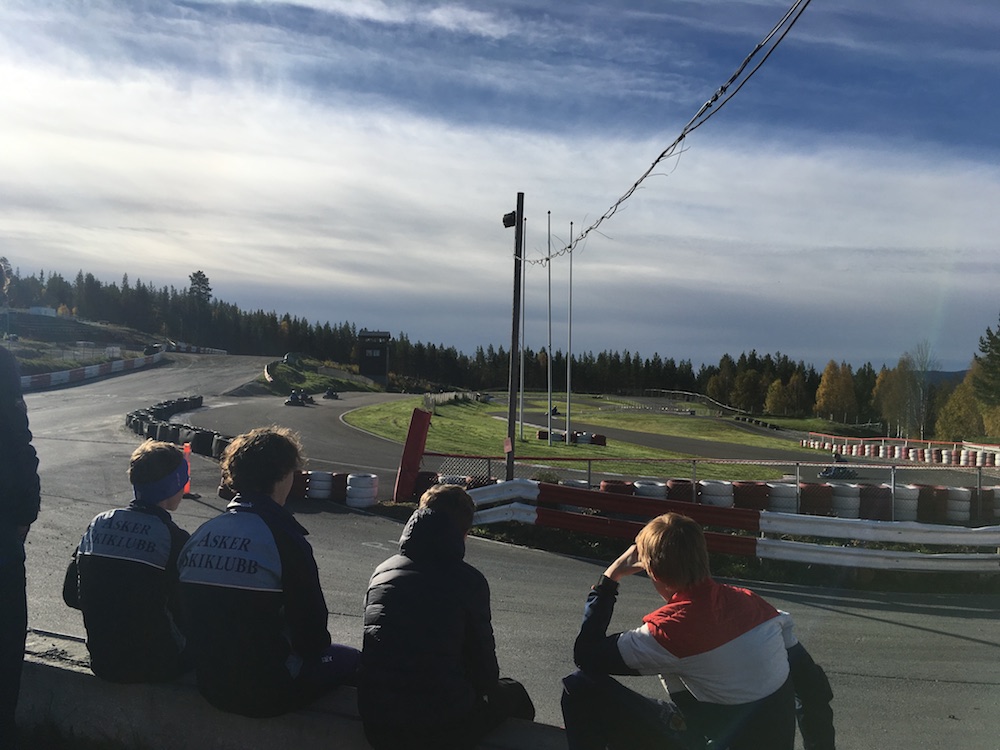
    The go-kart track where Team Asker held “King’s Court” style rollerski skate sprints (8 x approximately 1:30 minutes) during a recent training camp in Norefjell, Norway.

    In Canada we look to those that are better than us, whether they are national-team members or World Cup skiers, and try to copy them from afar. This puts us decades behind the competition. A lot of the technique innovations that we will see on the World Cup in the next two decades will have come from the Norwegian junior skiers of today, but by the time North American skiers take note of these changes, and adjust their training, the next generation of Norwegian juniors will already be working on the technique advances for the next decade.

    When I first came to Norway, the first thing I did was try to copy how the best skiers on the team double poled. I copied them for 12 weeks, but every time I looked at video footage of myself, I still looked completely different. It wasn’t until my coach explained a miniscule timing difference to me that I understood what the others were doing differently. With the switch flicked, my double poling has improved because of things that I could not figure out just by watching others ski. It is this type of interaction, between skiers and coaches of all levels, that causes breakthroughs in technique. Not all club-level coaches in Norway look to the Norwegian national team for advice on all aspects of skiing. Many coaches disagree with the common consensus on technique and training, and this opens up the discussion which is so important to moving forward.

    Most skiers love to talk about technique and the finer aspects of skiing, but when I was in Canada, I found these discussions usually revolved around what faster people were doing. In Norway I find myself having more discussions on what we individually think we should be doing, and even if someone is superior at a certain aspect of skiing, they are usually eager to try what someone else thinks might be better.

    As “Mad-Eye Moody” from J.K. Rowling’s Harry Potter series would say, “Constant vigilance!” and adjustment are required in all aspects of our training if we want to succeed. We have to seek variation in training, and learn together to discover the things that make us go fast as individuals, or else we suffer individually under the repetition of uniform training that cannot meet all of our needs.

    Norwegian Phrase of the Week:

    Norwegian: “Jeg er ut å mate.”

    Google Translate: “I’m out to feed.”

    True meaning: “I am training a lot.” (slang)

    Team Asker during a long run through the mountains at a recent training camp in Norefjell, Norway.

    ***

    About Maks: Maks Zechel is a competitive cross-country skier who secretly wants to become a professional mile runner. He loves hiking and going on canoe trips with his family, as well as peanut butter cups in ice cream. Johan Olsson is his favourite skier and he hopes to race the Cortina-Toblach stage of the Tour de Ski one day. He enjoys writing about his experiences. Follow him on Instagram @makszechel.
  • Closing the Gap: Meet Maks Zechel, A Canadian in Norway

    Closing the Gap: Meet Maks Zechel, A Canadian in Norway

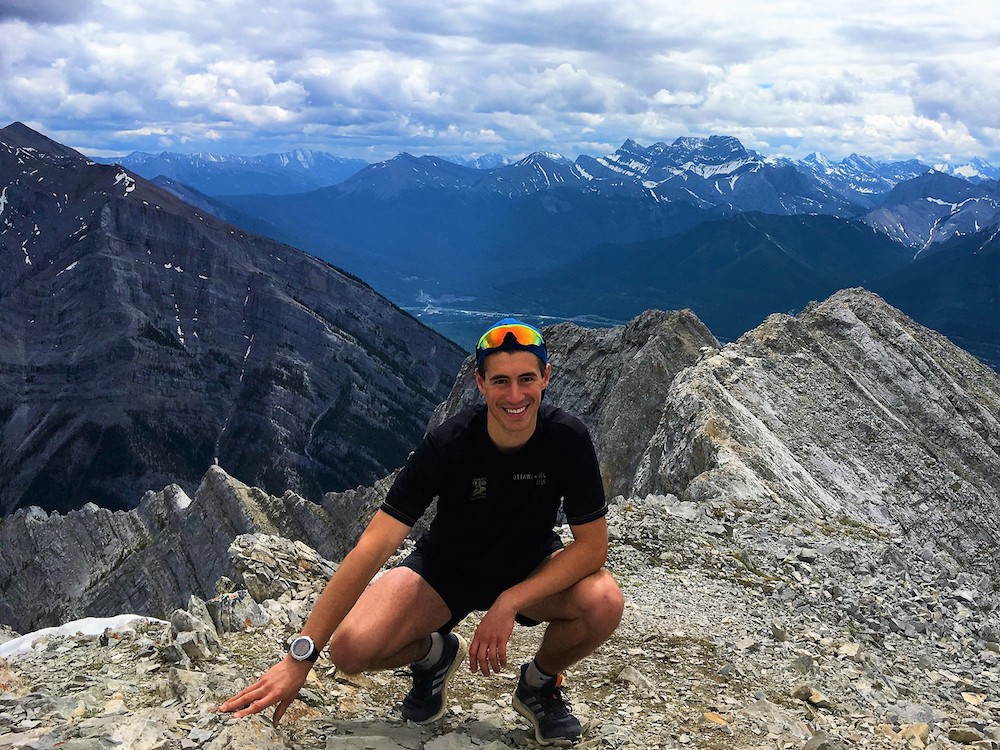
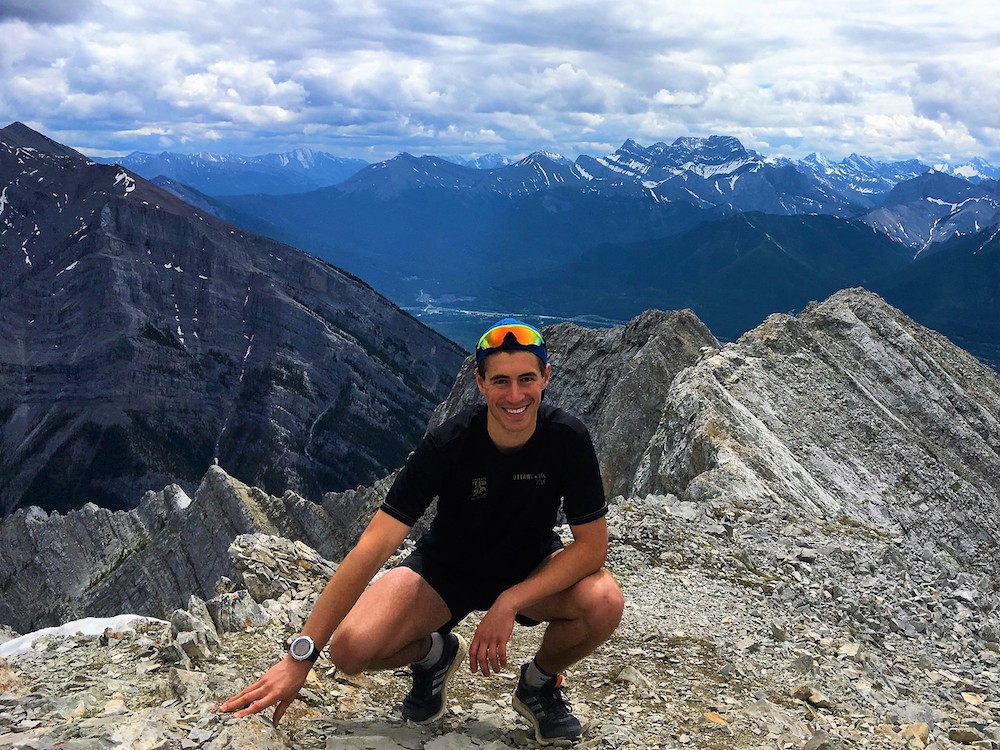
    Author Maks Zechel hiking in Canmore. The 19-year-old skier recently left Nakkertok Nordic in Ottawa to spend the next ninth months living and training in Norway. (Courtesy photo)

    Editor’s Note: The following is the first post of a series proposed by Maks Zechel, a 19-year-old Canadian cross-country skier embarking on his first season training abroad. He recently made the big move to Norway, where he’ll be training and racing with Team Asker for the next nine months. Through these updates, Maks hopes to share his personal “observations, stories, and lessons learned” to help close the gap between North American and Scandinavian nordic skiing.

    ***

    Intro

    I am a 19-year-old Canadian cross-country skier who moved to Asker, Norway on Aug. 1, 2017, to pursue my goal of qualifying for, and being competitive on, the World Cup circuit in the coming years. The World Cup is a big stage, one that I am not even close to being ready for. Many North Americans, if given the chance, race World Cups because it is a wonderful opportunity that is almost impossible to turn down. But for many skiers, these chances do not lead to further success because they are not prepared for the intense level of competition that is World Cup ski racing. One of the issues is that North American skiers do not develop in close proximity to the world’s best skiers. We don’t know how fast a top World Cup skier races because we are never in the same races. Norwegian skiers are exposed to this level of skiing, even just through observance, during their entire ski careers.

    This is the introduction to my series of observations, stories, and lessons learned as I live in Norway and train with Team Asker for the next nine months. I want to make it easier for other Canadians and Americans to come to Norway by making as many connections as I can and I hope to make them feel a little bit closer to the environment that the world’s best skiers grow up in. I am here to be in races that have a depth going all the way from your average junior skier to last weekend’s World Cup medalists so that I can attempt to pick away at the visible steps that lead to World Cup success. If we can be a bigger part of the Norwegian ski scene and see the environment that produces skiers like Martin Sundby and Heidi Weng, maybe that will erase some of the barriers that we see when trying to chase down seemingly “otherworldly” athletes.

    Post 1: Why Norway?

    Maks Zechel finding his name all over Norway. (Courtesy photo)

    I just moved to Kenya to pursue my dream of running a sub-two hour marath– I just moved to Norway to pursue my passion for competitive cross-country skiing. Just two days have gone by since I arrived, and I already love it here.

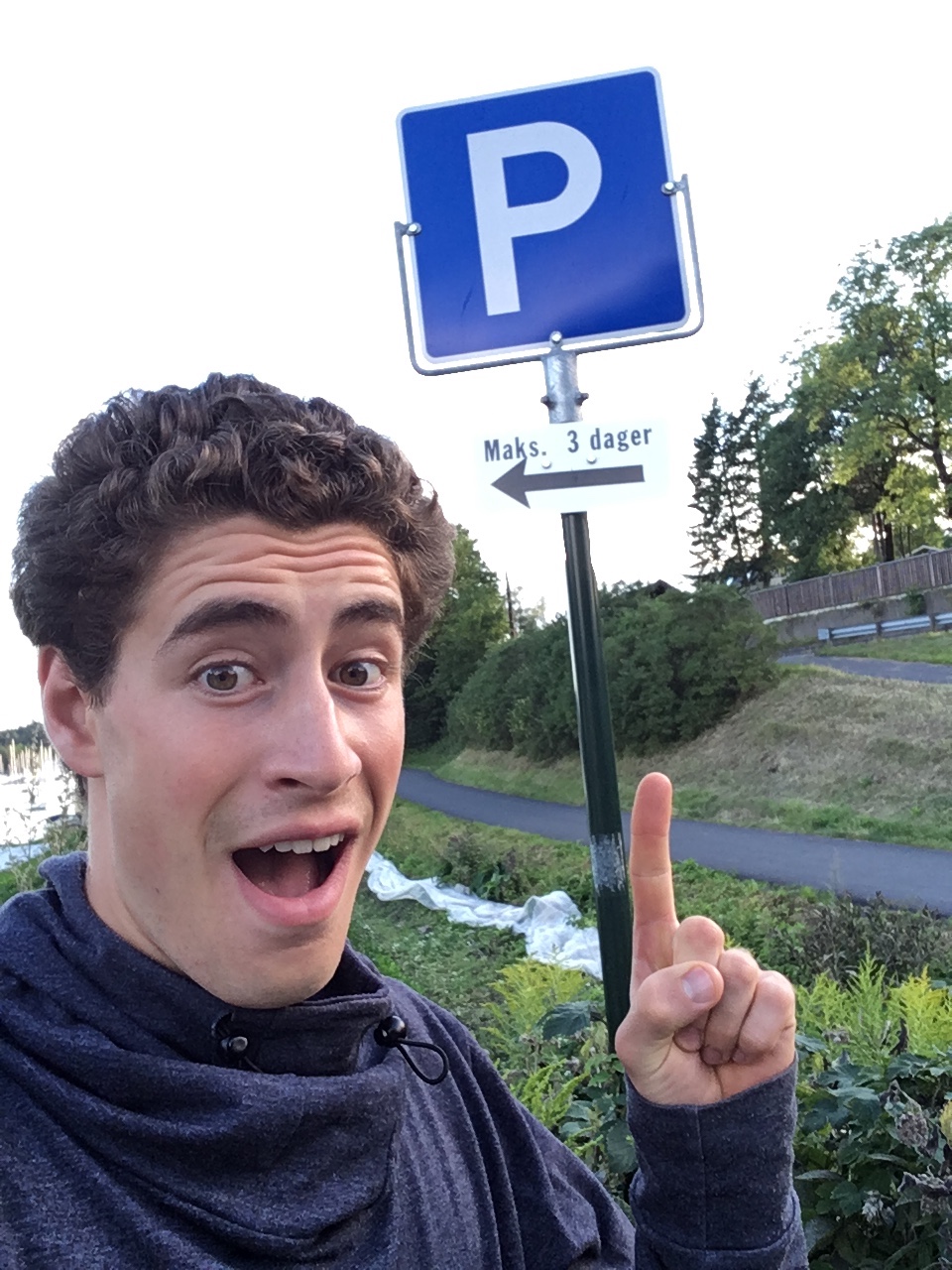
    In Asker, Norway, my name is written in greeting on signs all over town! Well, maybe they are not greeting me. It is actually one sign by the beach saying that you can only park there for a “Maks.” of three days (maximum=maksimum in Norwegian), but hey, it is a step up from people thinking my name is a typo.

    My name is Maks Zechel, and I am a Canadian skier who is made unusually happy by Norwegian signs. I learned how to ski at Cypress, just outside of Vancouver, at around the same time that I started walking. Since then I have lived in York, England; Zurich, Switzerland; Kingston, Canada; Freiburg im Breisgau, Germany; and most recently, Ottawa.

    I started racing with Nakkertok Nordic, based just outside of Ottawa, when I was 11 years old. Once per week, my parents (both avid skiers) younger sister, and I would drive two and a half hours to Ottawa from Kingston so that we could all go skiing and I could train with Nakkertok. Being the biggest club in Canada, Nakkertok made me fall in love with skiing, as I always had one or two dozen skiers my age to train with. There is not much skiing in Kingston, so once I graduated from high school I moved in with some friends in Ottawa and took advantage of training with teammates and getting on snow more than once per week.

    Over the past two years, I have studied part-time at the University of Ottawa, raced in Switzerland and Austria, skied on the Dachstein glacier in August, skied at Sunshine (near Canmore) in May, raced in Park City, trained and raced in Silver Star, and had various other amazing opportunities all over Canada and the U.S. All of this thanks to my incredibly supportive parents, who somehow rarely get frustrated by how excited I get over World Cup predictions based off of Lysebotn Opp results, or how this insignificant change in my double poling is going to make me race like Alex Harvey. As you can see, I like skiing…

    Maks Zechel and friends skiing in Campra, Switzerland, this past February. (Courtesy photo)

    Coming to Norway is something I have thought about for the past two years. I have come here with the goal of learning as much as I can from training and racing with the Norwegians. This season I will be racing at the Scandinavian/Norwegian Cup level and focusing on my personal development.

    As many Canadians can attest to, it is hard to go from racing solely in North America to racing on the World Cup. European ski racing is unrivaled by anything we see in North America and — because of the distance separating us — we are not often exposed to that level of competition. By familiarizing myself with the European competition atmosphere, I hope to set myself up for success and show others back home what I have learned. As a first-year senior, I still have far to go, but I am here to learn and hopefully improve. Getting a start on a World Cup is not an opportunity that many Canadians receive; if I ever get such a chance, I want it to feel like a step, not a near impossible jump, up from my regular races.

    Another reason that I have moved to Norway is, strangely enough, to reduce my skiing costs. In Canada it costs a ridiculous amount every year to fly to early season skiing opportunities, to train with other fast skiers at camps, and to attend as many high level races as possible. Despite all of these flights, I have still found it difficult (even as a junior) to fill my race calendar with enough opportunities to race at a high level. In Canada, the entire season is mostly centered on our World Junior/U23 qualification races that happen in January. Before that, we have two NorAm race weekends that happen in December. Everyone gets fired up for these fun and exceptionally well-organized races. However, once January is over and you have not qualified for anything yet, there are few races with deep fields left until Nationals at the end of March. Some opportunities exist, like SuperTours and Carnival races in the U.S., but they are infrequent, far away, or they overlap with Canadian races.

    In Norway, once you have bought your plane ticket, there are regular high-level races, within driving distance, from mid-November until mid-April. The fields are deep, with most of the Norwegian World Cup team racing the Beitostølen Scandinavian Cup in November, and you are paying for a weekend trip within driving distance instead of flying away for ten days in Park City. Food in Norway has so far been reasonable; some things are more expensive and you should not expect to be buying “Costco-style”, but you can eat well without breaking the bank. Rent is expensive in some parts of the country, but through connections and a bit of luck you can make things work. I was particularly lucky and am paying $634 Canadian dollars (about $501 U.S.) per month for an adequate basement apartment.

    Planning my trip to Norway was filled with days of excitement, but also with days of doubt that things would ever work out. From the start I knew that I was going to see this through to the end, so with a lot of willpower, and even more help from others, I am now finally in Norway. In my next post I will share my first impressions of Norway and explain how I was able to make it to Norway and join Team Asker, my new ski team!

    Norwegian Phrase of the Week: “Hilse på!”

    = What you say to a dog if you want to shake its paw. Literally: “Greet”

    (Lesson brought to you by Kira, the dog who lives upstairs).

    ***

    About Maks: Maks Zechel is a competitive cross-country skier who secretly wants to become a professional mile runner. He loves hiking and going on canoe trips with his family, as well as peanut butter cups in ice cream. Johan Olsson is his favourite skier and he hopes to race the Cortina-Toblach stage of the Tour de Ski one day. He enjoys writing about his experiences. Follow him on Instagram @makszechel.
  • In Their Eyes: A Norwegian Junior Team’s International Exchange with Sugar Bowl

    In Their Eyes: A Norwegian Junior Team’s International Exchange with Sugar Bowl

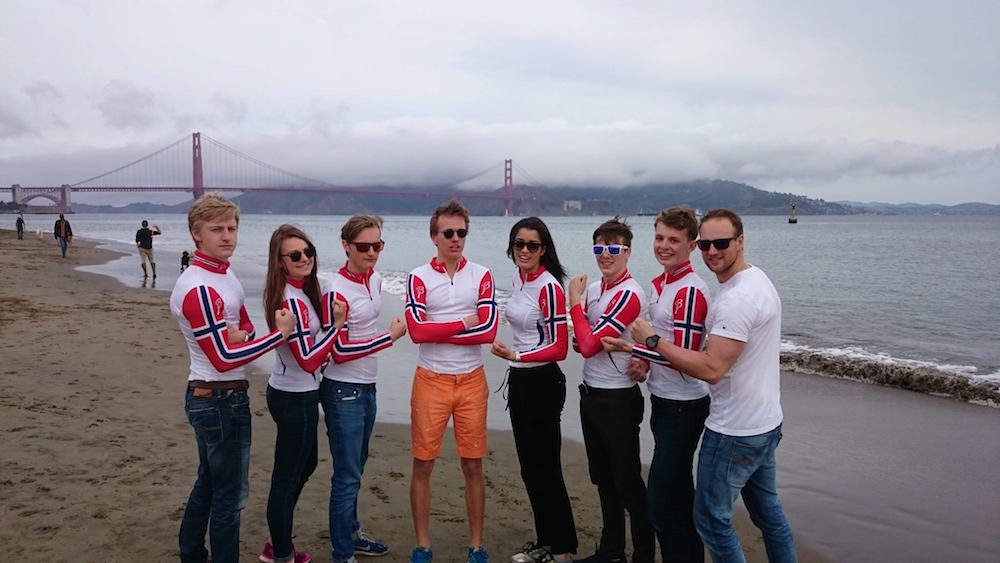
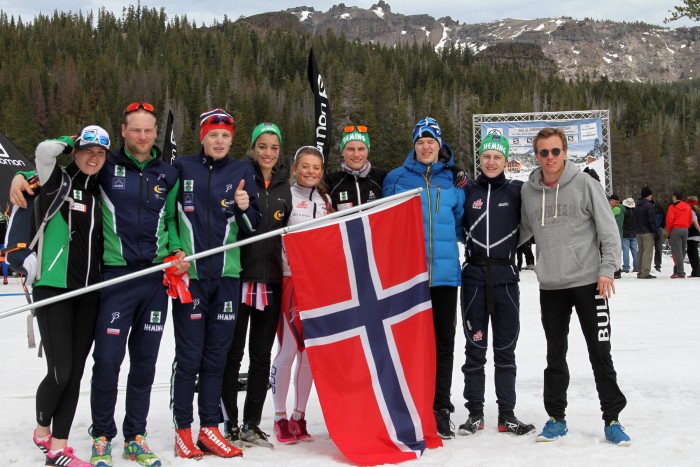
    A team photo of the Heming IL junior contingent that competed at 2015 Junior Nationals in Truckee, Calif.., taken in front of Golden Gate Bridge in San Francisco. (Courtesy photo)
    A team photo of the Heming IL junior contingent that competed at 2015 Junior Nationals in Truckee, Calif.., taken in front of Golden Gate Bridge in San Francisco. (Photo: Björn Ilsemann)

    Note: The following was submitted by Björn Ilsemann, a coach with the Norwegian College of Elite Sports and Heming IL. If you have a team camp or training recap that you’d like to share, please email info@fasterskier.com

    ***

    Earlier this year, U.S. junior nordic skiers from Sugar Bowl Academy competed in the Norwegian Cup and Sprint Junior Nationals, and then welcomed a team from the Oslo ski club of Heming IL to U.S. Junior Nationals in Truckee/Tahoe, Calif.

    It was at the U16 camp last summer when Sugar Bowl Academy coach Martin Benes and Björn Ilsemann from the Norwegian College of Elite Sports and the ski club of Heming decided to do an exchange to race both countries’ junior nationals (JNs). Martin had a lot of experience travelling and racing, both as a skier and as a coach. Björn had done similar exchanges before, leading a group to JNs in Fairbanks in 2013 and hosting several groups of US skiers for Norwegian JNs.

    The plan was easy: The participating  skiers from Sugar Bowl would live with families and train with Heming skiers for a week, and then race a Norwegian Cup weekend and the Junior Sprint Nationals. The Norwegians from Heming would then come over to Truckee and race USJNs.

    During the earlier winter months, the dream became a plan, and in the first week of February, five excited skiers and two coaches embarked a plane heading to Oslo. After being picked up at the airport, the group of skiers from Sugar Bowl and coach Caitlin Bernstein were quickly becoming familiar with how Norwegian skiers in Oslo live and train. Hundreds of kilometers of lit tracks, a five minute subway ride to freshly-groomed tracks and hot chocolate at cabins far out in the backcountry became daily business.

    After an easy Monday recovering from the inevitable jetlag, Björn took the group on three-hour-plus ski in the backcountry on Tuesday morning, followed by a strength and coordination training with his group of skiers at the Norwegian College of Elite Sports. After a quick shower, we headed to town for pizza and the arrival of the last two members of the group who came in from the J1 trip in Sweden, Hannah Halvorsen and coach Martin Benes.

    On Wednesday, the gang did an easy morning ski in the World Cup tracks at Holmenkollen, and met with the junior skiers from Heming for a short-but-hard sprint training session in the evening. Thursday was easy again, the U.S. kids watched a race of the Biathlon World Cup at Holmenkollen and did a rest ski before the Norwegian Cup races on Friday.

    The venue of the Norwegian Cup was pretty close to Oslo — about an hour by car. While the skiers and coaches were shuttled early that morning, you could feel the excitement build up in everybody. But still, no one had expected such a circus of countless wax trailers, big tents and wax cabins, and the intimidating number of close to 1,000 participating junior skiers.

    No one had expected such a circus of countless wax trailers, big tents and wax cabins, and the intimidating number of close to 1,000 participating junior skiers.

    The tracks were really hard and the competition was even harder, but the athletes from Sugar Bowl put up a good fight! To be fair, jetlag and maybe a little nervousness can be blamed a little bit, and the skiers finished in the second halves of their fields. A well-organized race and a lot of help from the wax techs from Heming made the day a good experience anyway.

    Hannah Halvorsen (Sugar Bowl Academy) winning the final at Norwegian Junior Sprint Nationals at Nes Skianlegg in Norway. (Photo: Björn Ilsemann)
    Hannah Halvorsen (Sugar Bowl Academy) winning the freestyle-sprint final at Norwegian Junior Sprint Nationals at Nes Skianlegg in Norway. (Photo: Björn Ilsemann)

    On Saturday, the Norwegian Junior Sprint Nationals went underway. With good skis again from the Heming techs, the Sugar Bowl athletes did an amazing job racing and were close to advancing from the prologue.

    Halvorsen, who didn’t race on Friday, didn’t seem very nervous or intimidated by the strong field and managed to win the prologue by two seconds! She didn’t stop there, dominating her quarterfinal and semifinal as well. In the end she stormed into the finish and crashed over the line to win the Norwegian Junior Sprint Nationals!

    On Sunday we raced a classic distance, again as part of the Norwegian Cup. The gang was still excited and had a great day at the venue, which was crowned by a sixth-place finish by Hannah!

    Everyone among the U.S. and the Norwegian skiers who participated in this first part of the project agreed that the trip was a great success. The athletes from Sugar Bowl Academy really got a taste of how it is to live a World Cup-athlete’s routine, and I’m sure they want more of that!

    Almost exactly a month later, the Norwegian skiers and coaches packed their bags and set out on the 20-hour journey to USJNs. With a van crammed full of skis and a joyful gang of seven skiers we drove on highways five-times bigger than at home, but managed to arrive safely but late at night at Truckee.

    With a van crammed full of skis and a joyful gang of seven skiers we drove on highways five-times bigger than at home.

    After having slept way too little, as we felt, we skied our first time on West Coast-snow on Tuesday. The plan was to acclimate to altitude (at home we ski at sea level) and the heat (it was over 25 degrees Celsius warmer than in Norway), and to ski easy with some tiny intervals. That worked nicely, and we felt very welcome by absolutely everybody.

    We considered the first distance race of the JNs on Wednesday as “too dangerous to race hard” in terms of altitude, and decided to ski in a Level 2-3 pace and just do what feels right. All of the skiers felt good, and we had great skis thanks to the help of the Far West test team and our “local,” Martin Benes.

    A Norwegian team photo from 2015 U.S. Junior Nationals in Truckee, Calif., taken after the relay. (Photo: Petter Anderssen)
    A Norwegian team photo from 2015 U.S. Junior Nationals in Truckee, Calif., taken after the relay. (Photo: Petter Anderssen)

    Thursday was easy again, with intervals a little harder than Level 3 and close to a 5 k race pace. The Norwegian athletes used the evening to shop and discover the local food, while the coaches did a presentation on how Norwegian skiers progress from junior to senior skiing, followed by an interesting discussion. The evening ended with a big feast of Mexican food and fun at one of the parents’ houses.

    Friday was the day of the mass start race. The Norwegians had good skis and skied in the front part of the field for the two first loops. Then the altitude and heat took its toll, and one of the Norwegian skiers had to quit and even seek medical attention. The others plowed on, and finished on first and seventh in the U18 field. For the U18 girls, our sole competitor that day Ellinor Høgberg put up a good fight against the U.S. girls, and finished seventh in a really strong field.

    On Saturday, relay day arrived. We gave our best and raced hard, but the U.S. skiers were too strong and we finished sixth for both the U18 boys and the U20 girls.

    Maybe that was because my skiers were already looking forward to the banquet? The evening came, and everybody enjoyed the food and the talks with fellow skiers and new friends.

    The trip home went well, and after some days with jetlag we were back on our skis and racing again. Every single one of my skiers, including us coaches, will remember the trip as an experience for life.

    Every single one of my skiers, including us coaches, will remember the trip as an experience for life. 

    We have to thank Martin Benes and Caitlin Bernstein from Sugar Bowl, as well as all the parents and skiers who participated and helped with this project. Special thanks go to Bryan Fish from USSA and James Southam from NNF, for all your help and support! We also have to thank Joey Caterinichio from USSA for making things work and the discussion, the organizing committee at JNs for letting us participate, and August Teague from Far West for invaluable help and advice in the wax cabin.

    In the end, we want to give a big thank you to U.S. skiing for having us over, for skiing with us and for showing us how much joy and pleasure skiing gives you. Thanks also to Sugar Bowl for coming to Norway, and especially to Hannah for kicking [butt] while you were over here!

    The Norwegian junior team at 2015 U.S. Junior Nationals in downtown Truckee, Calif. (Photo: Ellinor Høgberg)
    The Norwegian junior team at 2015 U.S. Junior Nationals in downtown Truckee, Calif. (Photo: Ellinor Høgberg)
  • Koos Hauls into Second Place in Norwegian Cup Sprint

    Koos Hauls into Second Place in Norwegian Cup Sprint

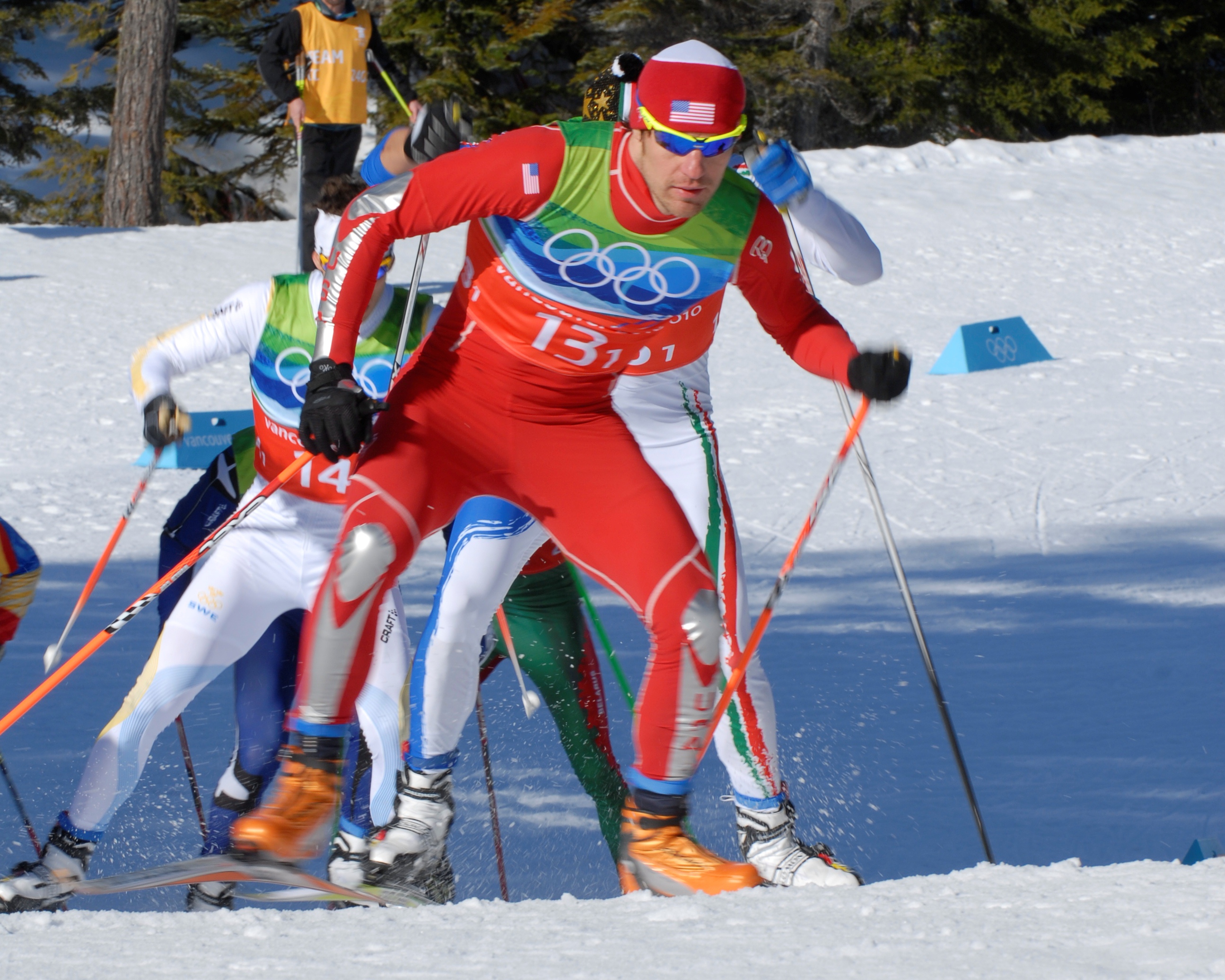
    Torin Koos at the 2010 Olympics sprint race. (Photo courtesy of Kent Murdoch)

    GÅLÅ, Norway – Cold weather is not the only thing that can clutter up the race routine, as Torin Koos of the Methow Olympic Development Project (MODT) experienced at a domestic Norwegian sprint race on Saturday morning. While frigid temperatures delayed the start for an hour, the fact that the coaches’ meeting was in Norwegian only caused additional problems for the former US Ski Team racer.

    “Probably the most exciting, or frustrating, part of the day for me came three minutes before the start,” Koos told FasterSkier, explaining that he had asked about timing chips at the coaches’ meeting. However, something got lost in translation, and Koos still needed one. That made for an unusual last-minute warm-up.

    “There was definitely some miscommunication, and I had to get my best steeplechase on right before my start, running from the start gate to the second story of a building, then back. I made it just in the nick of time, but probably skied the prologue with a bit too much adrenaline!”

    Turns out adrenaline might not be the best prerace cocktail for Koos. He was 11th in the qualifier, which both Koos and MODT coach Scott Johnston felt was less than what Koos is capable of. However, you only need to qualify to advance to the rounds, and with the skis and wax nailed, Koos calmed down from the morning’s rat race and worked the 1,848-meter sprint course to his advantage.

    “In the rounds, I felt quite good and was staying out of trouble and moving through the quarters and semis with hard but in control efforts,” Koos said. In the final heat, he was racing against Sindre Wiig Nordby from Team Sector Alarm for the top of the podium (ed. one of the top private Norwegian elite development teams).

    “I came into the final uphill in third place, when Sindre Wiig Nordby made a monster push off the front. I came off the climb in second, and then fought to get into Sindre’s draft over the last rollers,” Koos said, noting that he almost had it nailed. “With 100meters to go, I came around Sindre. Seventy-five meters to go I was in the lead, but in the last 50 or so he powered back a meter or two to take the victory.”

    Koos was still content about his second place, especially considering the traveling he’s had to do, as well as the cold and the early season. Stain Hallen was third, Britain’s Andrew Musgrave fourth, Martin Hammer fifth and Tobias Dahl Fenre was sixth in the final heat.

    “Before coming over to Norway, I thought it’d be quite special to win a Norwegian Cup. This time, I was very close. Also, every week I’m getting better and better, and with this, the stoke is high for the real part of the season that awaits me,” Koos told FasterSkier.

    On track

    From coach Scott Johnston’s perspective, the Gålå sprint race was a good indication of what Koos has to offer, and a confirmation that he has learned a trick or two himself in the wax trailer.

    “Temps were very cold, and the start was postponed three times before finally getting off at 11, after the TD held the thermometer in his armpit and was able to read -17.5C. I was psyched when they decided not cancel because I knew we finally had good skis,” Johnston said, noting that he secretly felt like he won the lottery with the race still a go.

    “I pretty much nailed it, and for a change, Torin had as good skis as anyone on the course. While I’d like to take some credit it may have been more luck than skill. The chemists at Toko had as much to do with our success today as I did,” Johnston explained.

    Steady progression

    While Johnston was pleased that Koos qualified despite the hurdles, the ever-critical coach always finds something to improve on.

    “Torin’s qualifier was still not up to snuff again, and he finished 11th. The good news is that the speed and endurance are both there in good measure,” Johnston said, pointing out that the basic premises for success are there.

    “His ability to ski with, or out-ski, the fastest qualifier of the day has been in evidence during each race,” Johnston said of the three events Koos has raced so far on the “2010 MOD Tour de Scandinavia.”

    At his season opener at Beitostolen two weeks ago, Koos was already showing signs of promise, despite not nailing the wax until the heats, Johnston said.

    “At Beito, he managed to make a big move from fifth place to come even with the fastest qualifier and eventual winner, [John Kristian] Dahl, before getting pinched into third in the last corners to the finish,” he said.

    Last weekend in Finland, Koos out-skied the fastest qualifier in two heats. Only in the final, with a change in strategy, did he get boxed into fourth. This weekend, Koos was sharper yet, despite his 11th place in the qualifier.

    On Saturday, Johnston said, the fastest qualifier–who was 7.7 seconds ahead of Koos–and the eventual race winner was in each of Koos’s three heats.

    “Torin won the quarterfinal…was two meters back in second place in the semifinal, and only six inches back in final,” Johnston said, noting that the field was setting a wicked pace from the start.

    “To give some idea of the speed being skied in these races, [Saturday’s] very intelligent course was 1,848 meters, and the typical time, per kilometer, of the qualifier and heats was 1 minute and 36 seconds. That’s right: 1:36!”

    Koos will head back to Washington soon, but he still has another week in Europe, in which he travels to Duesseldorf, Germany, for next weekend’s World Cup sprint races.