Reporting by: Aidan O’Donnell
This reporting costs money. Please support this coverage with a voluntary subscription (below) so FasterSkier can provide this level of access to the sport we all love year-round.
Reporting by: Aidan O’Donnell
This reporting costs money. Please support this coverage with a voluntary subscription (below) so FasterSkier can provide this level of access to the sport we all love year-round.
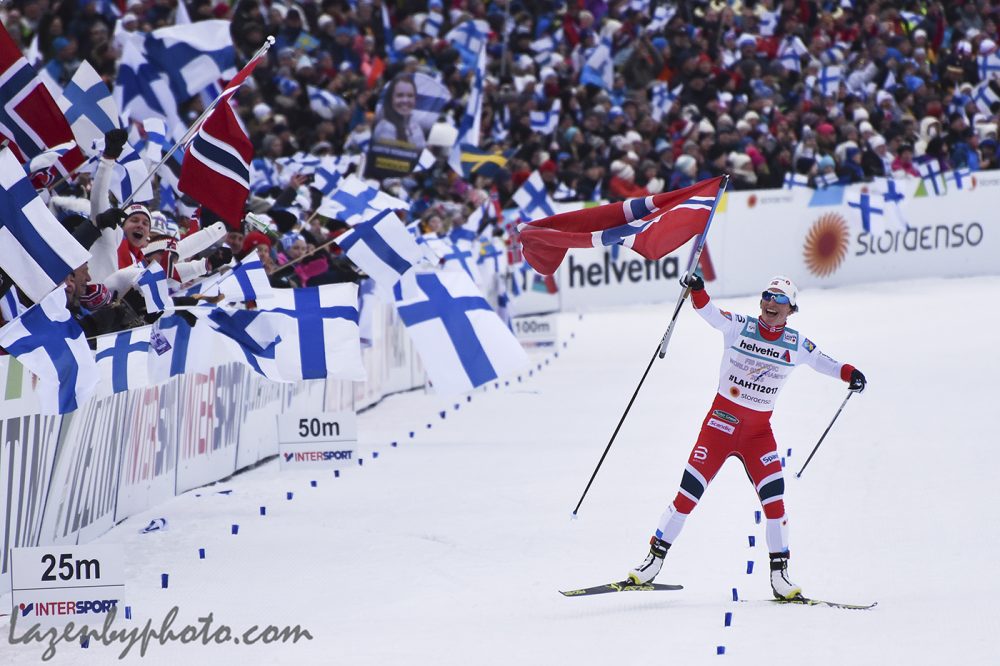
Welcome to World Cup Windup, where we check in with the top-10 teams from last year’s FIS Cross Country World Cup tour before the season starts with the Ruka Triple in Kuusamo, Finland, on Nov. 24.
NORWAY
Overall in Nations Cup Last Year: First, by a landslide: 13,383 points to 7,053 by runner-up Sweden.
Women’s Ranking 2016/2017: First
Men’s Ranking 2016/2017: First
Who’s Back:
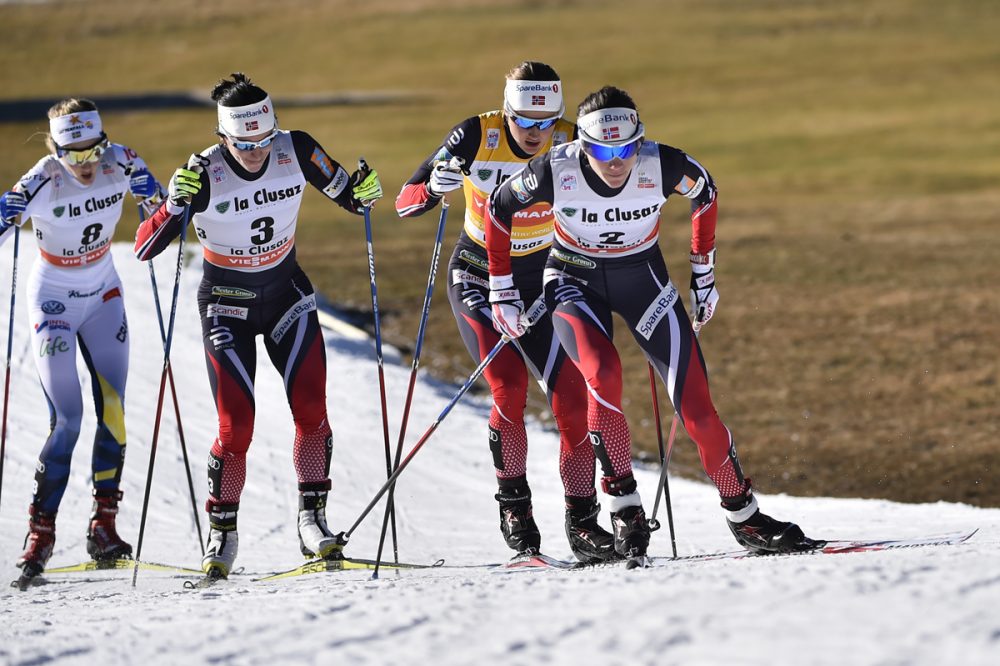
Overall World Cup winners Martin Johnsrud Sundby and Heidi Weng; Sprint Cup winners Johannes Høsflot Klæbo and Maiken Caspersen Falla; World Cup race winners Finn Hagen Krogh, Emil Iversen, Sindre Bjørnestad Skar, Pål Golberg, Eirik Brandsdal, Ingvild Flugstad Østberg, and Marit Bjørgen, And that’s just the skiers who won World Cups last season. There’s also other folks like, oh, Petter Northug and Astrid Jacobsen, who didn’t pick up individual wins last season but are probably pretty hungry.
Who’s Missing:
Therese Johaug. The world champion and two-time World Cup overall champion is still sitting out a doping ban for using a lip cream containing a prohibited steroid.
Other than that, athletes usually don’t retire just before an Olympics, so pretty much everyone is back.
Pre-Season Results:
None of the national team members have raced at the pre-World Cup competitions so far, but Chris Andre Jespersen picked up a win in Bruksvallarna, Sweden. Look for many more Norwegians to compete at their home opener in Beitostølen this coming weekend.
The second World Cup stop of the season is in Lillehammer, so the Beitostølen races will also likely determine who gets to compete as part of the “nations group” there, the host country’s extra bunch of quota spots.
Recent Drama:
Oh, there’s always something, isn’t there? For Norway, it’s about the Olympics. With just four starting spots per race and so many top skiers, it will be a tough fight to get named to the Olympic team.

Emil Iversen, for instance, remembers how he fell twice at last year’s World Championships, including in the team sprint, where he ruined a good chance at a win given to him by teammate Johannes Høsflot Klæbo. He says he is feeling good, but he wants to redeem himself from Lahti and that’s no easy feat. “Everyone says they have never been stronger,” he told NRK. “Being in the squad should be within reach, but getting all the race starts I want will be incredibly hard.”
Another drama: who will ski the relay. Petter Northug anchored both the 2010 and 2014 Olympic relays for Norway, but the team’s head coach has already decided that in 2018 the honors should go to Finn Hagen Krogh, who did a stellar turn to secure relay gold at 2017 World Championships.
Marit Bjørgen was sick a few weeks ago, but is feeling better now. She says that she dreams of being in good enough shape to fight for six medals at the Olympics in February.
Astrid Jacobsen, meanwhile, has changed her training and is in some ways imitating alpine skiers, focusing more on balance. “It’s hard to believe that you can improve oxygen capacity or become more persistent by exercising even more,” the 30-year-old said. “I have a thorough fitness already. I think there’s more to gain by catching up with new things… If I get a little better in this area and get better on the skis, I can be a little more efficient. Better efficiency will produce much better results than better capacity would.”
Otherwise, a few skiers are not in the shape they’d like to be in at this point in the season.

Didrik Tønseth got a bad concussion after a rollerski crash in Livigno, Italy, in early September, and had to miss a considerable amount of training. (Reminder: always wear a helmet while rollerskiing!) He skipped a recent high-elevation training camp because he sometimes still has headaches; he is otherwise doing some hard training again. Tønseth was part of the gold-medal relay team from 2017 World Championships but is worried about qualifying for the Olympics. “It’s a season where you have to do well before Christmas,” he told NRK, according to a translation. “It already counts from Kuusamo… so there is no favorable situation. I’m not completely satisfied.”
Best Social Media Presence:
The Norwegian ski stars generally don’t use Twitter much, but a few have great Instagram presences.
Unsurprisingly, the Norwegian who is best at conveying his brand on social media might be Petter Northug. When the IOC made the decision to disqualify several Russian athletes from the 2014 Olympics for doping – including the silver-medal men’s relay team – this was the response from Northug, who had anchored the Norwegian relay team which had finished fourth, failed to medal, and otherwise caused great soul-searching in the country:

Given the drama over who will anchor the men’s relay team in 2018, Northug is taking even one more laugh with this post.
But if it’s not satire and gamesmanship you’re after but rather smiles and a peek inside the women’s team, who from this perspective seem to be genuine friends, follow Heidi Weng on Instagram.
You might alternatingly find Niklas Dyrhaug modeling suits or shooting moose on his Instagram account, while Astrid Jacobsen’s Instagram feed often highlights the role of her dog in her life – and one of those roles is training buddy.
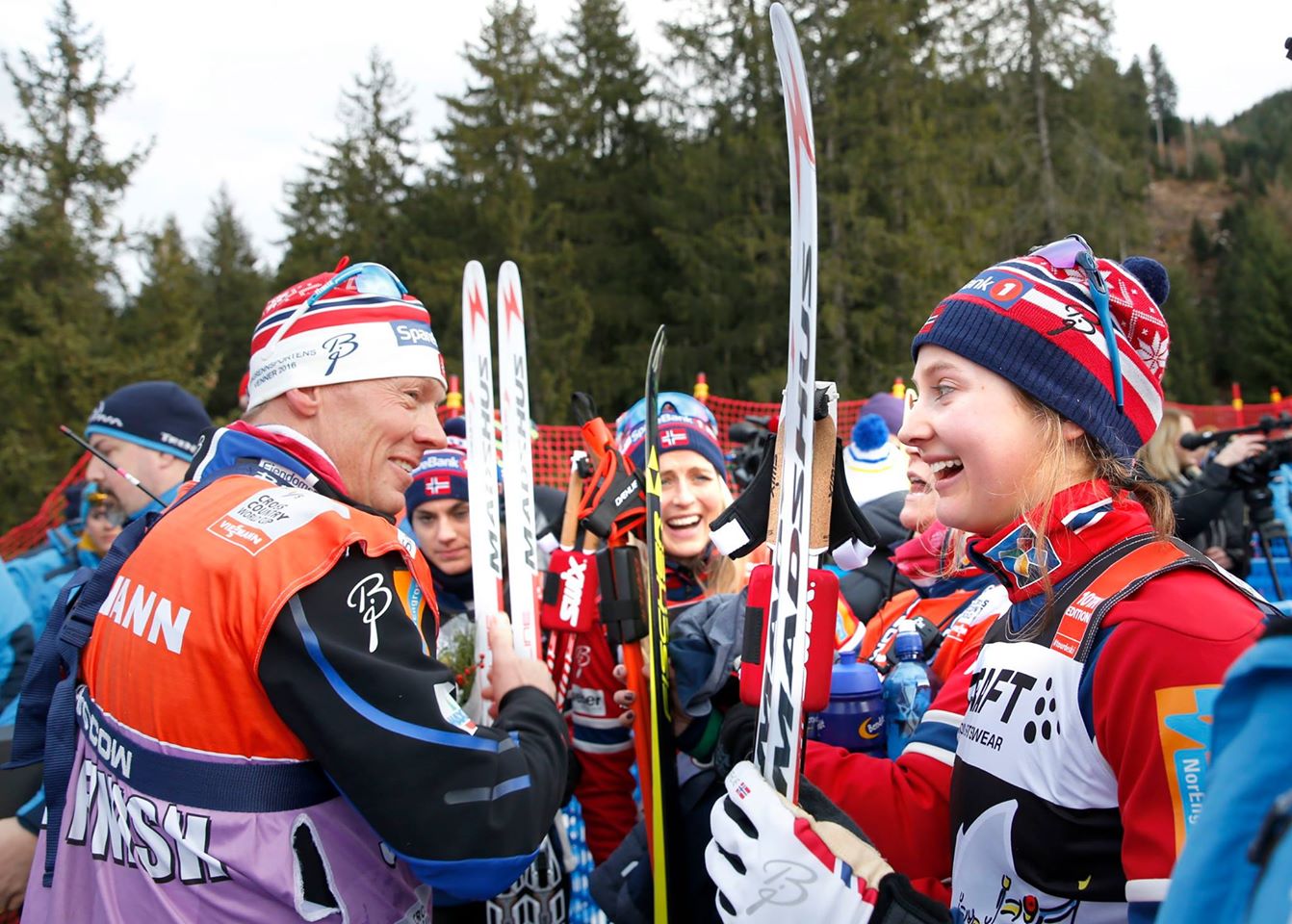
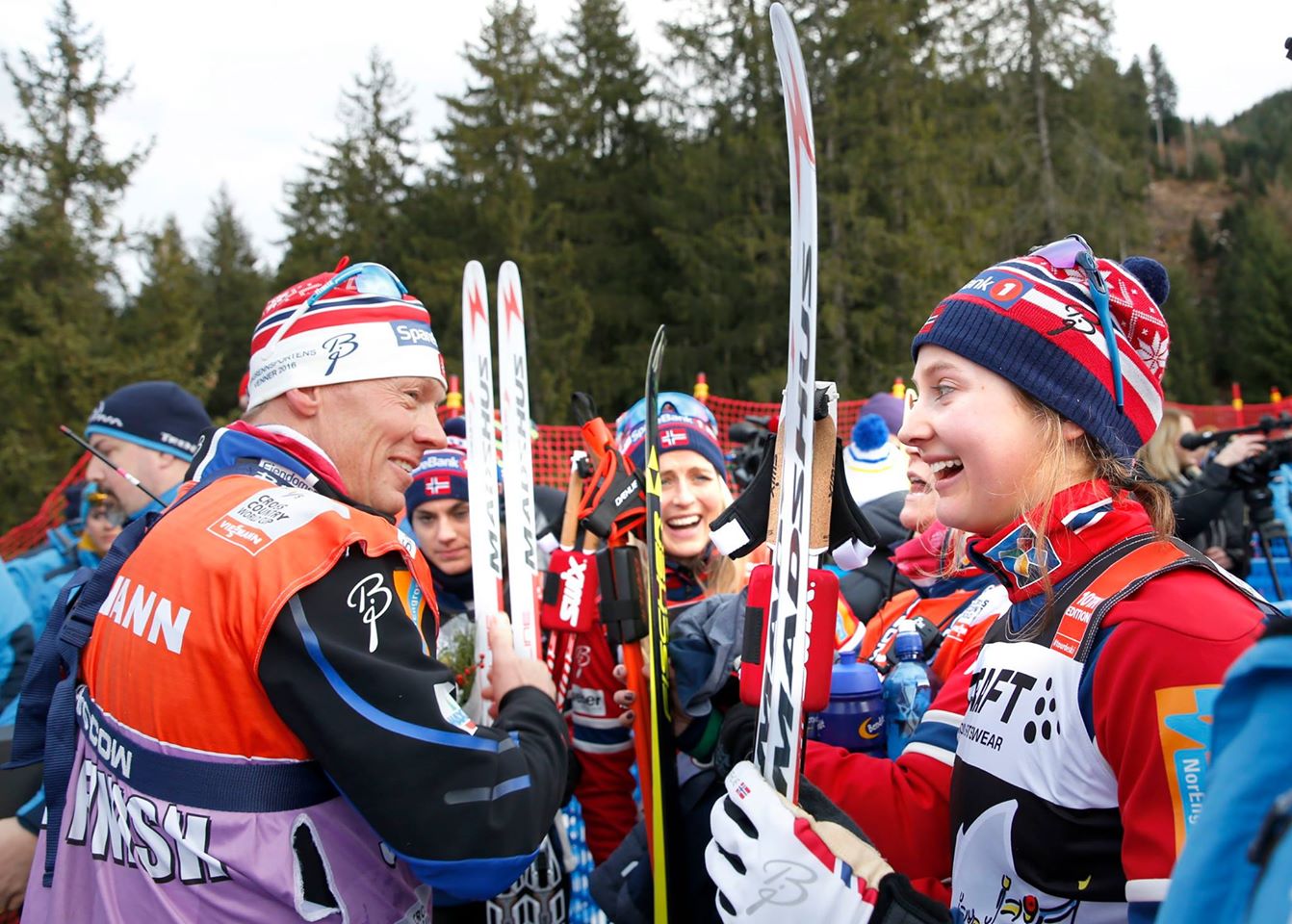
Proud moments are not always performance based. After leading the Norwegian women’s cross-country team to 47 World Championship and Olympic medals — for a total of 23 gold — over the past 10 years, it was not the results that have meant the most to Egil Kristiansen, the Norwegian national team women’s coach who announced his resignation Sunday via a team press release. It was the pressure he, his athletes, and Norway put on others to push themselves in the sport.
“It’s actually what we have managed to achieve,” Kristiansen told NRK, according to a translation, of his proudest coaching moment during the last decade with the team. “Managing to keep the pressure up, regardless of whether the results are bad or good; to do the damn job one hundred percent anyway. Not being dragged down by a poor outcome, or about to take off for good results. To paint on paint anyway.”
Kristiansen, 50, began heading up the women’s team in 2006, after working as an assistant coach under Svein Tore Samdal. The next 10 years are history.
In 2009, Kristiansen coached the now-retired Kristin Størmer Steira to silver in the women’s 15-kilometer pursuit at World Championships in Liberec, Czech Republic.
In 2010, he helped Norwegian Marit Bjørgen to her first Olympic gold at the Vancouver Olympics in the women’s classic sprint. She went on to achieve four more medals at those Olympics after that, including two more gold. Prior to Vancouver, Kristiansen worked with Bjørgen for 10 years and would work with her for five more.
“Egil has meant a lot to me,”Bjørgen told VG.no during a press conference, according to a translation. “There has been a security for me to have him there … He’s been a crazy good leader, a manager type that has gathered the group.”
Beyond Bjørgen and Størmer Steira, Kristiansen has worked with numerous other Norwegian superstars, including Olympics or World Championships medalists Therese Johaug, Maiken Caspersen Falla, Heidi Weng, Ingvild Flugstad Østberg, Vibeke Skofterud, and Astrid Uhrenholdt Jacobsen.
Norway’s “Coach of the Year” in 2011, Kristiansen said he’s ready to move forward and feels the the Norwegian women’s team should as well.
“I feel privileged to have worked with the world’s best cross-country skiers,” Kristiansen told Aftenposten, according to a translation. “But I’ve determined that it’s time to move on. As a coach, it is difficult to always give one’s best to the same group athletes over many years. Therefore, I believe this is the right time to resign, and it will help the athletes receive new inspiration.”
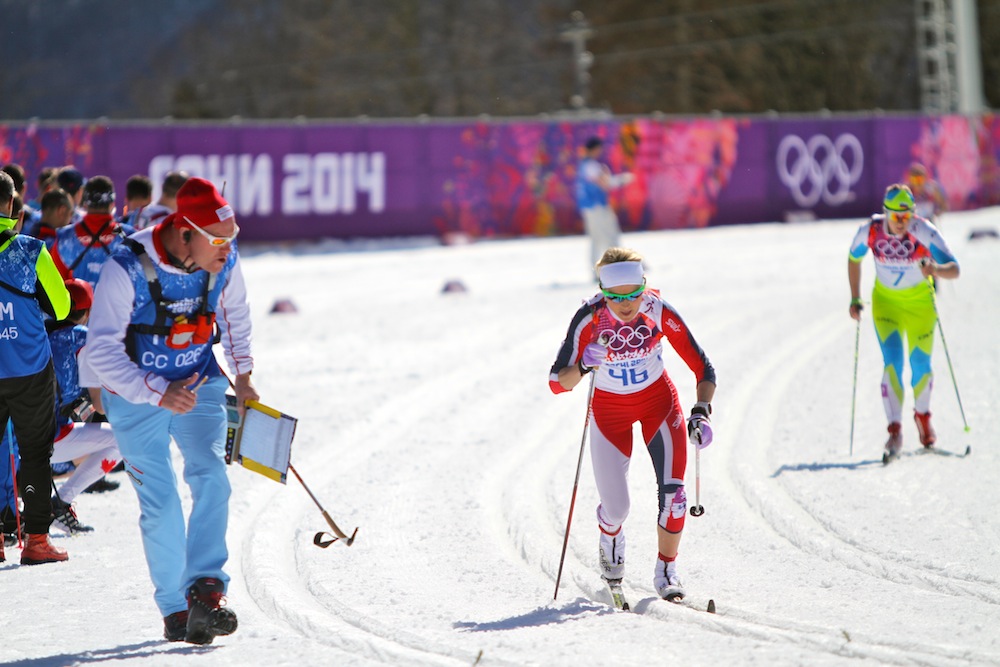
There is no official word as to who will look to replace Kristiansen’s shoes. Women’s sprint coach Roar Hjelmeset has said he’s interested in filling in, but only for a year.
“I‘ve said I want to be national coach a one year period for women. The problem is that they were looking for someone who can train [through the] Olympics in 2018,” Hjelmeset, who first coached national-team juniors in 2008 then the women’s sprint team since 2011, told NRK.
National team director Vidar Løfshus indicated that Kristiansen’s successor must be willing to make a commitment through the 2018 Winter Olympics.
“I was prepared that [his decision] could go either way, hoping of course that he would continue,” Løfshus said to Langrenn, according to a translation. “To sum up his time as coach of the national team will be the one long tribute.”
Hetland Takes Over Norway’s Men’s National Team
Kristiansen’s resignation is not the only change in the nexus of Norwegian nordic skiing. Tor-Arne Hetland was hired this spring as the new men’s cross-country coach.
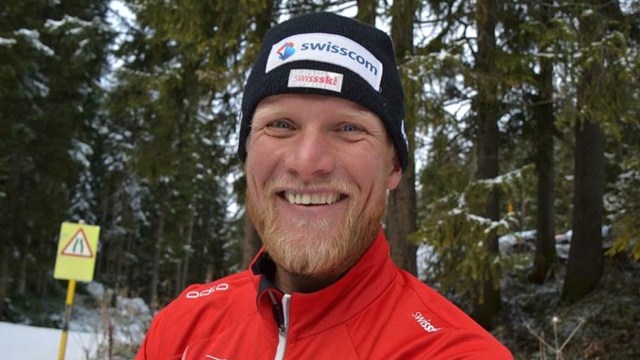
A 2002 Olympic gold-medalist sprinter, Hetland, who competed for Norway, previously worked as a national coach for Germany, Switzerland and Canada before assisting the Norwegian team last season under former men’s coach Trond Nystad.
“Trond has been generous and given me great responsibility allround team this season,” Hetland told Skiforbundet, according to a translation. “I want to continue a culture where athletes together take responsibility for their own training and development. Created to be the best trained and set a standard that new generations of skiers want to strive for. I look forward to continue working with the team and with the rest of the support develop each athlete so that they can bring out their maximum potential.”
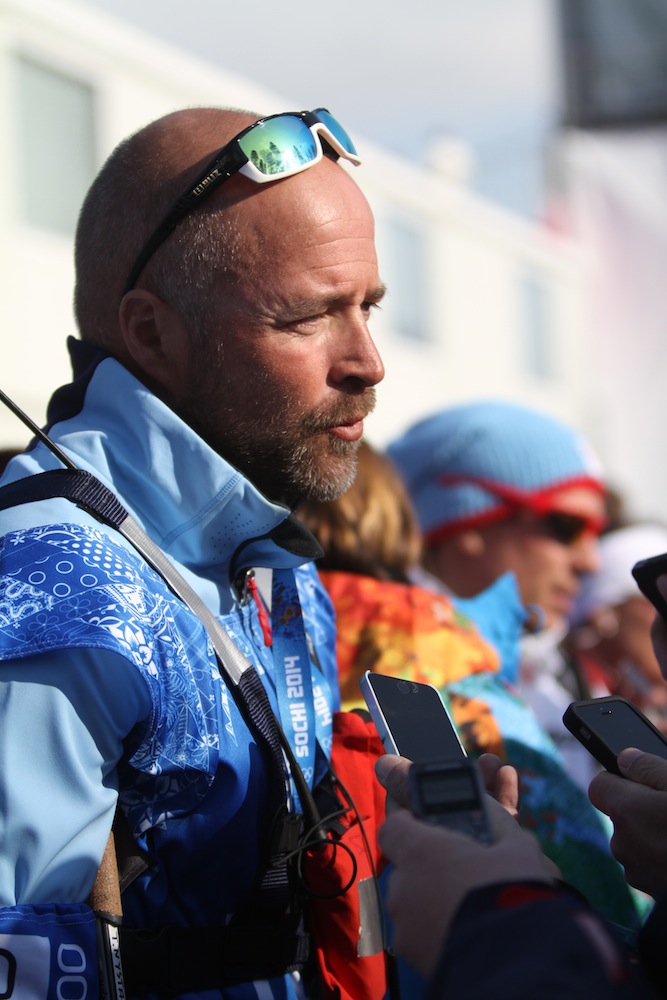
Nystad, 45, had been the head coach for the men since 2011, working with his twin brother Knut Nystad, Norway’s head wax technician. Trond had previously coached the U.S. and Swiss teams.
Nystad’s contract with the team ends May 31. Earlier this month, he dispelled rumors that he would advise Russia’s Alexander Legkov this winter. Rather, after spending what he estimated to be nearly 250 days on the road in the last five years, Nystad wanted to focus on being a dad.
“Nothing is certain, nothing is excluded, but in relation to their family situation is probably not wise to continue with 240-250 days of travel,” he told NRK. “But I still want to work with sport.”
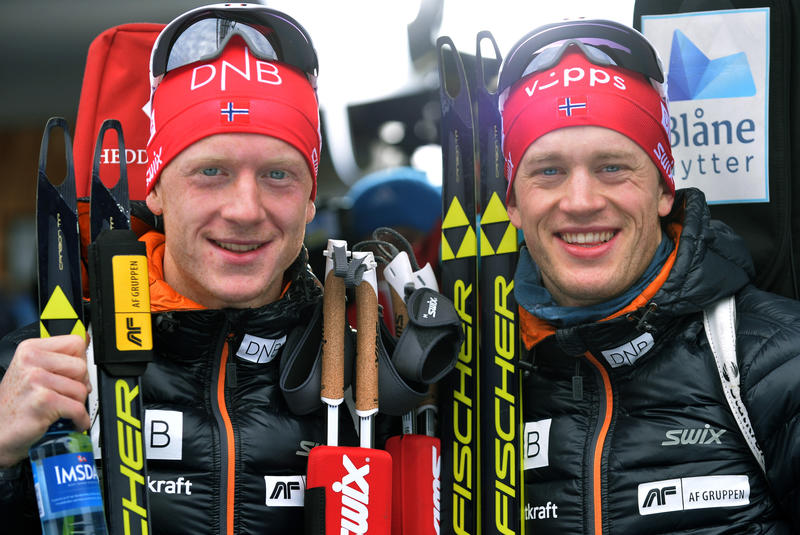
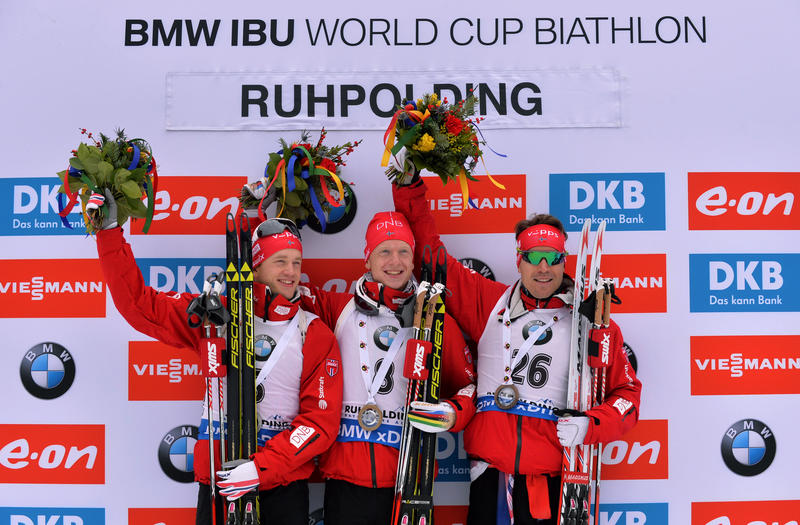
The Norwegian biathlon team must have used the holiday break well, as evidenced by their men’s podium sweep in Friday’s 10-kilometer sprint in Ruhpolding, Germany, the first IBU World Cup of the new year.
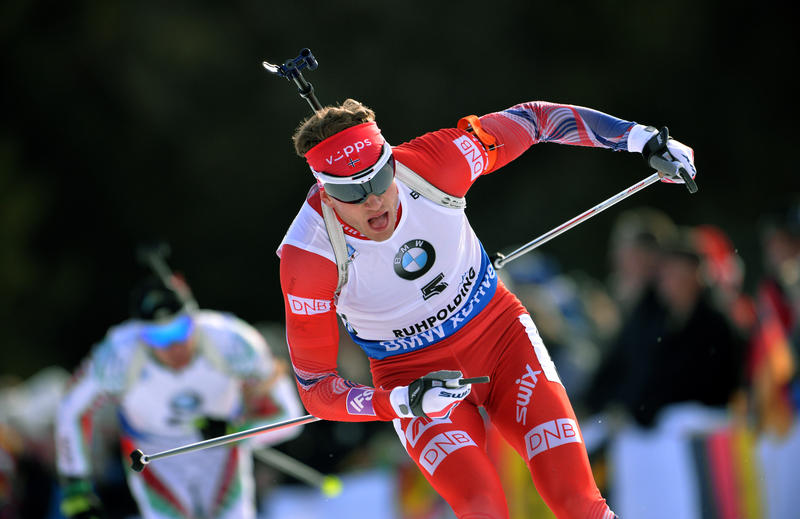
Twenty-two-year-old Johannes Thingnes Bø started early in bib 8 and won the race in 21:57.5 minutes, supplanting his brother Tarjei, six years his elder, by 3 seconds after Tarjei started three positions earlier and held the lead until then.
No other athlete could beat the Bø brothers. Emil Hegle Svendsen in bib 26 completed the podium sweep for Norway, finishing 7.6 seconds back in third. The last time Norway took all of the top-three spots was eight years ago during the 2007/2008 season at a sprint in Hochfilzen, Austria.
Johannes Bø also won last season’s sprint in Ruhpolding, thus repeating the feat after a slow start to the season — by his standards.
On a sunny day with essentially no wind on the shooting range, and skiing on an artificial snow loop that had become firmer overnight due to light rain, the Bø brothers and Svendsen all shot clean through both stages.
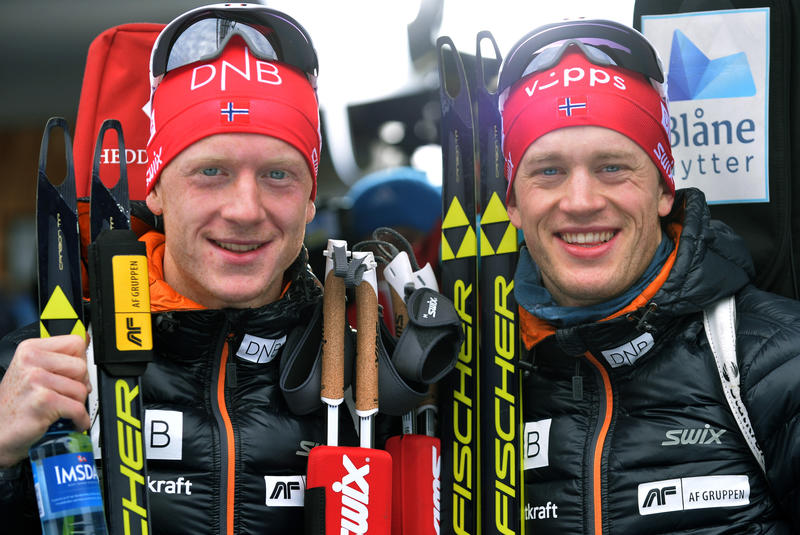
“[Over Christmas] we were just home training … relaxing mostly,” Johannes said during an English interview with his brother with German TV broadcaster ARD. “Watching Christmas movies, eating good food, we relaxed and trained.”
“It’s not so often we take the triple,” added Tarjei. “But today it was a really good, also really relaxed team. Really good skis. Our focus is World Champs in Oslo [in March]. Before Christmas we tried to be too fast. Now we have to wait with our energy to still be good in February.”
Asked about the harmony in the family as competitors, the brothers shared a laugh.
“For me it’s OK, but uh…,” joked winner Johannes, pointing to his brother.
“It’s always some seconds, like in Kontiolahti at the World Champs [last season],” Tarjei replied. “Today it was so close, we shot clean, skied fast … I don’t know what to do. Three seconds. I hope tomorrow [in the pursuit], maybe I can beat him.”
“I have eight or nine World Cup victories. He has one less than me,” Johannes concluded.
“It’s not so often in biathlon when you get three athletes from the same country on the podium,” Svendsen noted in an IBU press release. “It is nice to be here today with the two brothers. This is the best PR we can get for the World Championships. I think it’s going the right way. I am feeling better and better.”
Germany’s Simon Schempp, who has made Ruhpolding his home and is currently third in the overall World Cup standings, did not start due to a cold.
“Of course it’s sad,” commented his coach Mark Kirchner told ARD. “He doesn’t feel too bad, it’s rather a localized infection. But of course his own ambition by now is that when he is starting, he wants to attack the podium, and even just 98 percent of your ability is not enough for that, so that’s why he is not starting today.
“We will observe the situation,” Kirchner continued. “The earliest possible return date is for [the mass start] Sunday, but we won’t force it. The season is long, there are many other goals.”
Similarly, Norway’s superstar Ole Einar Bjørndalen also sat out Friday’s sprint due to an unspecified illness.
As a result France’s World Cup leader Martin Fourcade, despite not feeling well, either, came closest to preventing the Norwegian trifecta. He posted the best course time in the field, but couldn’t overcome a miss on the third target in his prone shooting stage and the resulting penalty lap.
Fourcade crossed the line in fourth place, 10.9 seconds back and just 3.3 seconds off the podium. However, he still collected 43 additional valuable points in the overall ranking (and likely more on Saturday when his toughest competitors, Schempp and Bjørndalen, will not be able to start the pursuit) to widen the gap.
“It was a strange race for me. I was sick last night, I had stomach problems,” Fourcade said in an English interview with ARD. “I was a bit worried this morning, then when I looked on the start list I saw the second [in the World Cup ranking, Bjørndalen] and the third [Schempp] would not race, so to catch some points I decided to start. But my feeling was not so good, and I did a stupid mistake in the prone, that’s why Norway has all three on the podium.
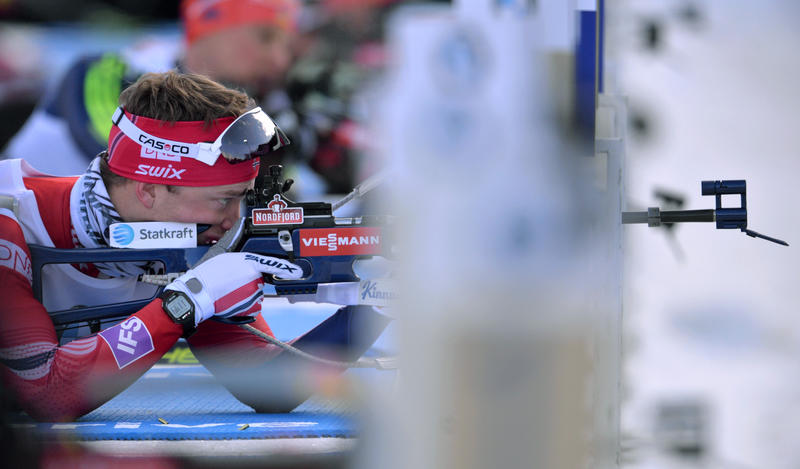
“But they were good,” he continued. “Johannes I think wanted revenge after a strange December month. The same for Emil. That’s good for Norway, they had a huge team result, but that is not a surprise for me.”
Questioned again if he started mainly to increase his World Cup lead, he added: “Yeah, I don’t like to start in that condition, but I woke up and … with my experience even if you are not good to win it, you still have to compete. Now it’s two more competitions without points for Simon and Ole Einar, and I think that’s too much for them [to come back from] even if I am not in super-shape tomorrow because I was sick today.
“That’s the strange thing about the Overall World Cup,” Fourcade said. “Even if you are not good, you have to compete. That’s something I do even if I don’t like that, and I know it’s not good for my body.”
Behind the Norwegians and Fourcade, the Austrian men’s team had their best performance of the season, claiming the next three spots mainly helped by also achieving clean shootings. Sven Grossegger recorded the best individual World Cup result of his career in fifth, 24.4 seconds back, after placing 10th in a sprint during the 2011/2012 season. Teammates Simon Eder was in sixth (+27.5), and Dominik Landertinger took seventh (+39.8).
“I felt good skiing right from the start,” Grossegger said after the race, according to an Austrian Ski Federation press release. “Today were fast, icy conditions. That just suits me. During the shootings I was working well and was focused. In standing position I had a little luck with one shot.”
Smith 15th; Six North Americans Qualify for Pursuit
Early in the holiday break, the International Biathlon Union had announced that the fourth World Cup would be relocated to Ruhpolding, after warm weather conditions made it impossible to produce artificial snow at the originally scheduled location in Oberhof, Germany. Thus Ruhpolding is in the rare situation to be hosting back-to-back World Cups in the same location (ironically, it finally snowed in Oberhof last week, which might have allowed organizers to groom a track, but the decision had already been made).
Biathlon Canada again brought a full men’s roster to the sprint, filling all the five spots allowed for them this season (on the men’s side, only Czech Republic, Germany, France, Norway, and Russia currently have six).
Nathan Smith, the top North American male in the World Cup standings in 13th overall, also had the best result on Friday, finishing in 15th place (+59.9). Unlike most of his teammates, he had not traveled home for the holidays, instead training in France.
On Friday, he started early in the field in bib 7 and clocked the best initial split times. After a fast-and-clean prone stage, he took the lead, ahead of eventual second-place finisher Tarjei Bø, and only Johannes displaced him at the split, leaving the range later.
In standing, Smith missed two targets and the two resulting penalty laps set him back.
“I started off really strong with a clean prone, which put me in second spot going into my standing,” he explained.
“I knew I was in medal contention and I let those thoughts become a distraction,” Smith said, according to a Biathlon Canada press release.
Overall he skied the seventh-fastest course time of all athletes.
“My skiing was good enough for a medal today, but 10/10 (shooting) is a requirement when conditions are perfect,” he added.
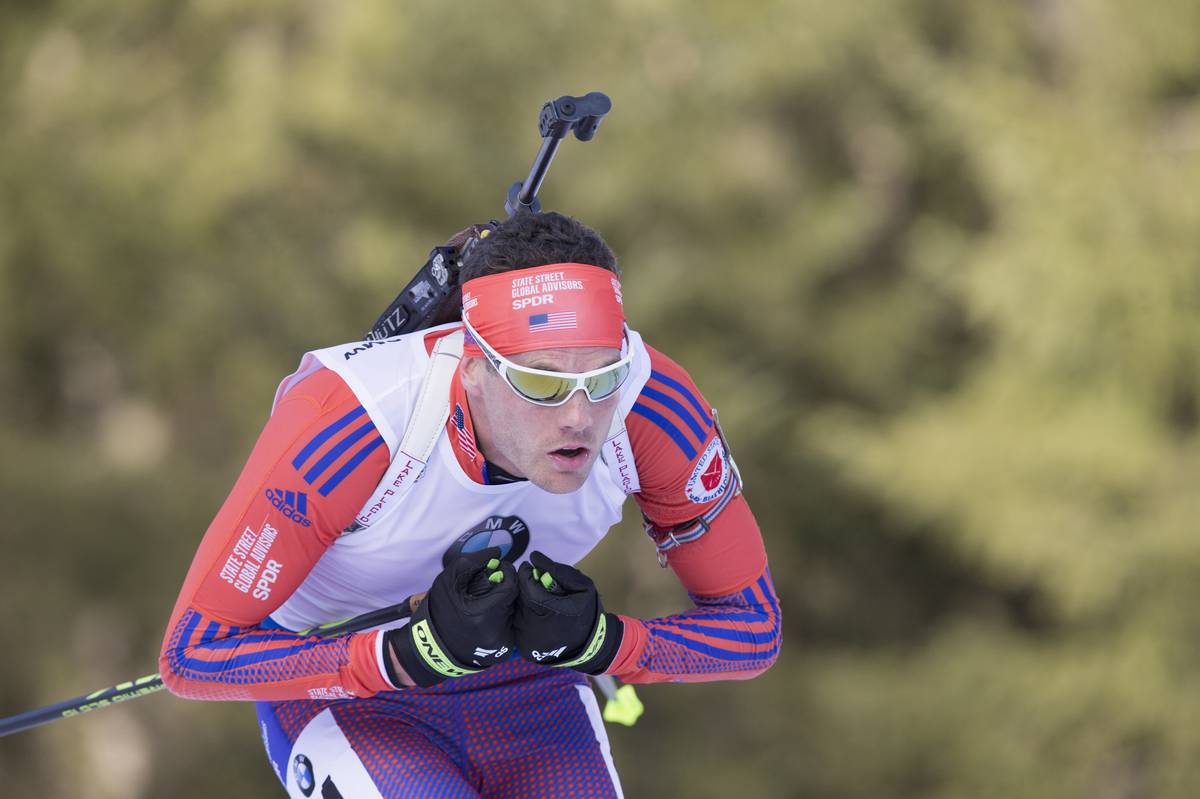
In contrast to the Canadians, the U.S. men only had two athletes start Friday with Tim Burke and Lowell Bailey. Sean Doherty opted for a longer training period block over the holidays in preparation for Junior World Championships in February in Cheile Gradistei, Romania, according U.S. Biathlon Chief of Sport Bernd Eisenbichler. Doherty plans to join his teammates in Ruhpolding on Sunday.
Leif Nordgren was assigned to the IBU Cup team, joining Wynn Roberts, Casey Smith, and Max Durtschi. They will compete this weekend in Nove Mesto, Czech Republic.
According to a press release, US Biathlon plans to call up “an additional athlete per gender” for World Cups 5-6 following this weekend’s IBU World Cup.
Starting shortly behind Smith in bib 11, Burke managed to clean his prone shooting before missing one shot in standing, finishing in 18th, 1:01.3 minutes back.
“The approach to the shooting range is pretty easy here so I knew there would be a lot of good, fast shooting,” Burke explained in an email. “I just tried to stay aggressive in the range and not give up too much time on the shooting mat.”
Overall he recorded the 31st-fastest shooting time. Out on the course he was able to improve his position on each of the three rounds compared to the field, closing out strong with the 13th-fastest final loop and recording the 17th-best overall course time.
“I had not been home for the holidays in a few years so it was a nice change of pace for me,” Burke added. “I definitely still felt a little jet lagged in the race today, but I feel like my body responded well. I expect to feel better with each race, especially since I did not do too much intensity training over the break.
“I would normally hope for a better place in the sprint with one penalty, but considering my recent travel and that this not my favorite course, I am pleased,” he continued.
Closer to the middle of the field of 102 starters in bib 40, Lowell Bailey also recorded a single miss in the standing stage (0+1), but his overall course time ranked 45th time, putting him in 33rd at the finish, 1:01.3 minutes back and one spot behind the winner of the last race of 2015, France’s Jean-Guillaume Béatrix.
One place behind Bailey in 34th was 22-year-old Canadian Christian Gow (+1:03). He managed to clean both stages for a World Cup career best, giving him seven more points in his overall World Cup standing. He improved on his 37th place in the sprint in Pokljuka, Slovenia, just before the holiday break, as well as 39th in a pursuit in Hochfilzen, Austria, earlier this season.
“I am really happy with the race today,” Gow wrote in an email. “It feels great to put out another personal best and also to be in a good position for the pursuit! I am quite surprised by the result today, as I have not had a very productive break since the last World Cup. I, unfortunately, got sick right after Christmas and also took a fall injuring my ribs. Between those two things, I haven’t been able to do intensity until yesterday’s race prep, and that did not go too well for me. Today was a really nice surprise to see that my ski shape didn’t fall off too much despite all of that!”
His older brother Scott Gow finished the sprint in 47th (+1:48.1) with two penalties (1+1), and teammate Macx Davies placed 55th (+1:53.5) with a single prone miss and one in standing as well.
The fifth Canadian, Scott Perras competed in his first World Cup race of the season and placed 72nd (+2:27.5), after two prone penalties (2+0).
Perras replaced Brendan Green for the race, who “has been nursing a small injury,” according to Biathlon Canada’s High Performance Director Eric de Nys. Green is expected to be back for next weekend’s World Cup races in Ruhpolding.
Only Perras missed the top-60 cut for Saturday’s pursuit.
“It was a decent day considering the athletes hopped off the plane on Monday and training has been limited with the lack of snow,” de Nys wrote in an email. “We will look to improve on these results in the coming days.”

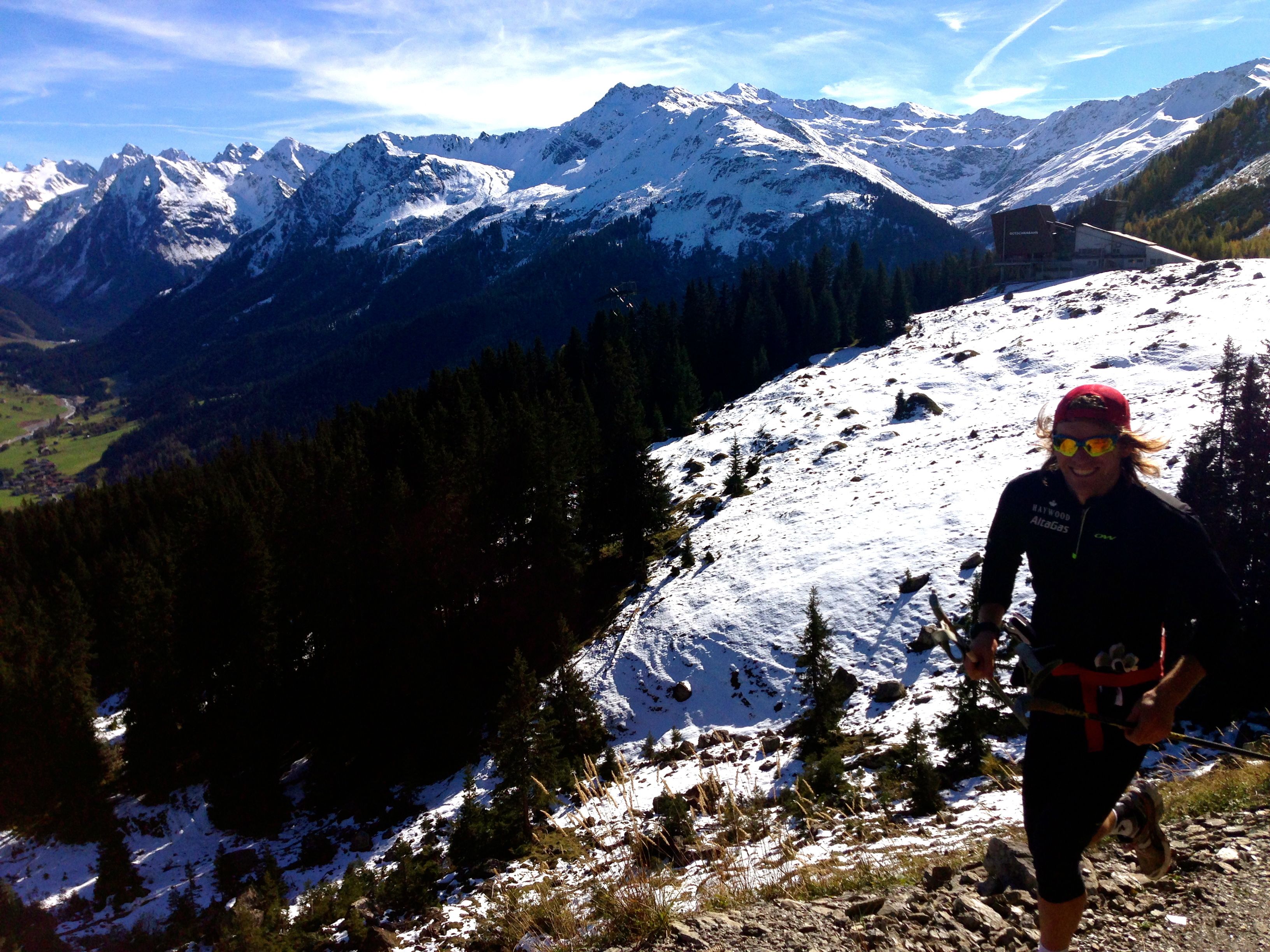
With his ninth consecutive World Cup season in the bag, Devon Kershaw, 30, could finally put his feet up this spring and think about 2012/2013 – not that he necessarily wanted to.
It wasn’t easy reliving that fateful stumble down a flight of stairs in Bruksvallarna, Sweden, in which the Canadian national-team skier tore a ligament in his foot a weekend before the season started. Unable to run for several months, he taped the afflicted area around his ankle and pushed through every ski race – refusing to publically acknowledge it or use it as an excuse.
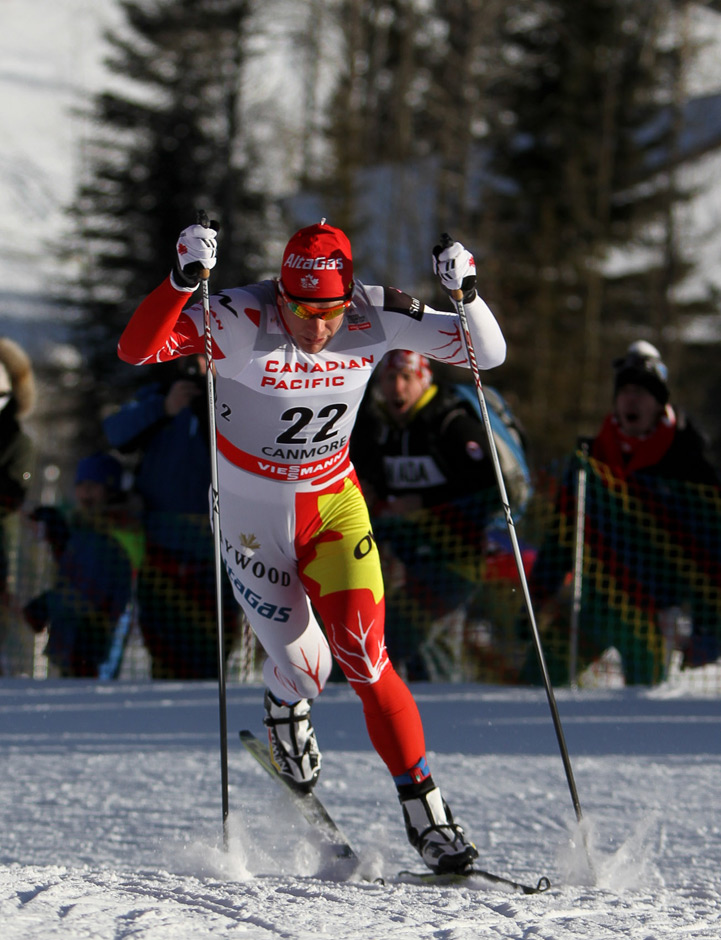
Things perked up about midseason (he placed eighth in two World Cup sprints in February and narrowly missed the World Championships team-sprint podium with teammate Alex Harvey in March), but ultimately, Kershaw finished farther back than he had hoped: 27th in the overall World Cup, compared to second in the world the year before. He ranked 42nd in distance events, his worst showing since 2007, but was better in sprints: 22nd, down from seventh in 2011/2012.
All too aware of his results, Kershaw needed answers and had a good idea where to find them.
“I’m a pretty big journaler,” he said on the phone from Davos, Switzerland, where he was getting acclimated earlier this month before a high-altitude camp in Val Senales, Italy. “But I haven’t taken much time going back to read what I write.”
Thumbing through his entries, Kershaw took a particularly close look at his thoughts on World Championships in Val di Fiemme, Italy. He considered the team sprint the best race of his season, but the rest of his performances there “a disaster.”
“That was a big slap in the face,” he said. “When I got back in Canada in the spring, I met with [head coach] Justin [Wadsworth] a lot, went back to my journals, met with the sports psychologist. … I realized how poor of place I was in for many, many months and how my decision-making was horrible. I was like, ‘Wow.’ ”
His musings weren’t limited to sports, but also included personal reflections.
“I wasn’t in a good place mentally,” he said. “I wasn’t sleeping great. With some of the things going on in my life, I shouldn’t have been racing as well as I was … There’s a lot that wasn’t going that well, but at the time I was just trying to stay so positive because you want to make the most of every day.”
By nature, Kershaw is an optimist. He’s been dating Kristin Størmer Steira, one of Norway’s best distance skiers, for more than a year and said she’s had a tremendous impact on him.
“I’ve been known to exaggerate a bit and make mountains out of molehills, and Kristin’s super, super grounded and a calming influence on me,” he said “As a person she’s got great, great perspective so it’s awesome to be around her.”
Glancing at his schedule this year, Kershaw felts a pang of the in-season blues. He had been doing this for a long time, often the same training camp after another, and now he had a girlfriend who lived thousands of miles away in Norway.
Steira, 32, visited him in Canmore, Alberta, in late July and trained with the Canadian women’s team through early August. Then, the couple parted ways, knowing they’d see each other in November. That didn’t sit well with Kershaw.
“I’m old; I’m 30 and that’s a bit too long,” he said. “It’s not the best way to be in a great frame of mind heading into the racing season when you’re missing someone that you really care about.”
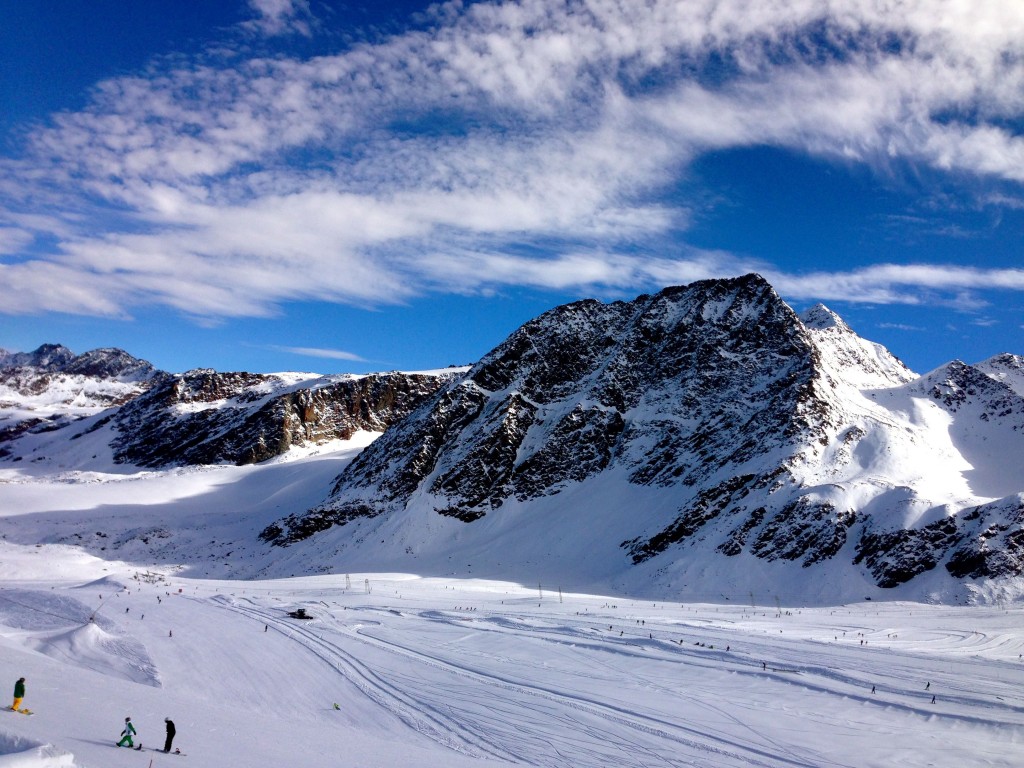
Steira suggested he come to the Norwegian-national team camp in Val Senales in late October, then spend the rest of November with her in Norway. Reasoning he might as well ask, Kershaw contacted his former national-team coach, Steinar Mundal, who left Canada to coach the Norwegians in 2007. Mundal was open to it, Kershaw asked Wadsworth if he was, too.
A former U.S. Ski Team member who crossed borders and married Canadian Olympic gold medalist Beckie Scott, Wadsworth understood. He and Kershaw turned to Norwegian head coach Trond Nystad, who coached the U.S. team until 2006, to work out the specifics.
“I made sure for Trond to ask the boys if it’s OK if I’m there because, I don’t know, I don’t want to piss anyone off,” Kershaw said.
On his first full day in Val Senales – his first time on the glacier that soars more than 3,200 meters (10,000 feet) into the atmosphere – Kershaw tweeted, “First impressions … ? I don’t miiiiiiiiiinnnnnnddddd it. #feelsgoodtobeskiing.”
“I’ve been in the game for a long time so its nice to have something to look forward to, seeing Kristin was the main thing, and training in a different environment in the fall is something to look forward, too,” Kershaw explained on the phone.
From Oct. 20 to Nov. 6, he expected to see the Swedish national team there, along with the Swiss, and more than 50 Norwegians between the distance, sprint and U23 teams. More familiar with Norway’s sprinters than its distance skiers, Kershaw said he was invited to a couple workouts and would primarily train with the distance team.
“That’s [the] thing about being a little older, I’m not in high school and trying to bring my lunch tray to a table and say, ‘Hey, can I sit here?” Kershaw joked.
“I’m really not that concerned. I’m not there to rock any boats or do anything; I’m there do to my thing.”
For the last five or six days, Wadsworth planned to join Kershaw in Val Senales to make sure he stuck to his training regimen. The two received the Norwegians’ camp outline a couple months ago and planned accordingly to make sure it jived with Kershaw’s plan.
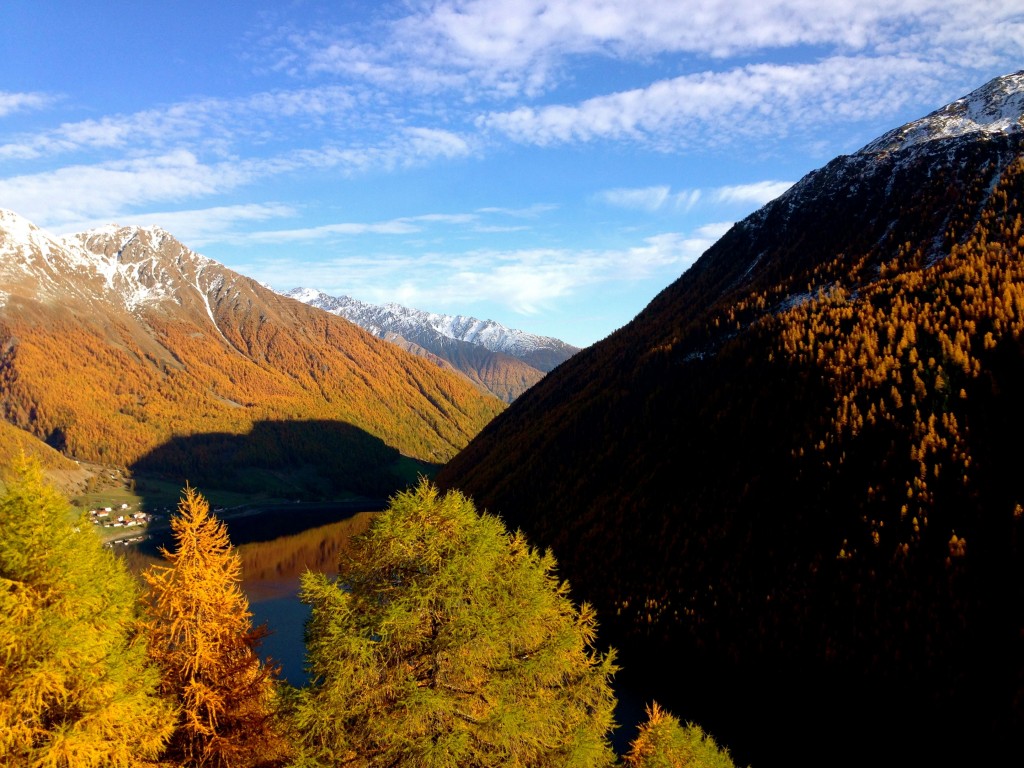
“It’ll be hard, but nothing groundbreaking,” Kershaw said. “The plan looks pretty similar to what I do back in Canada: skiing in the mornings … then, in the afternoons doing some runs or rollerskis.”
But most importantly, he’d be getting that skiing feeling back every day. That’s what Kershaw said he needs before his first races in late November at the World Cup opener in Kuusamo, Finland. He’ll stay with Steira at her home in Oslo, Norway, until then.
“I’m here ’til late March so it’s a long haul,” Kershaw said. “Packing up from Canada, it’s tough, [but] I’ve been doing this for a long time and I’ve spent five months in Europe before; what’s the difference with a couple extra weeks? My girlfriend is Norwegian and that’s important. A happy skier is a skier that usually races fast.”
As for how he’s feeling now, almost a year after he tripped in a pair of loosely tied sneakers and tore a ligament around his ankle, Kershaw said he’s in a much better place – physically and mentally. Last February, he said his foot wasn’t the sole reason for the sub-par start to his season.
“There were a lot of other factors, too,” Kershaw said.
Now, he feels more settled.
“My life’s a lot calmer,” he said. “I’ve taken care of a lot of things that were in flux the last couple years. You want to win every year and you want to win every season so when you have a little bit of a disappointing season, it’s not great, but we learned a lot and we’re a lot better at calculating what we can and can’t do. I tried to do a lot with not a lot of energy and it bit me in the ass.”
Leading up to Kershaw’s third Olympics – the 2014 Winter Games in Sochi, Russia – he’s excited and not entertaining retirement.
“I’ll continue to race through 2015,” he said. “This isn’t going to be a season where it’s like, ‘Oh, it’s over.’ Moving forward, as long as I’m really enjoying what I’m doing and can wake up every day with a passion and excitement to do what I’m doing, that’s kind of what’s driven me through my career, then I’ll continue racing.”
Almost four years ago in Vancouver, B.C., Kershaw and Harvey placed fourth in the team sprint for the best Olympic finish by Canadian men. A year later, they won the same event at World Championships.
“I actually don’t feel much pressure,” Kershaw said of Sochi. “No one can put more pressure on myself than myself. Last year I piled on pressure on myself, and what did that get me? Nothing. Hopefully I’ve learned lessons.”
This time around, he said he’s better prepared and more realistic. “I hope to have some great races, but I’ll also have some miserably awful races, too. I’ll have some OK races, and that’s how most seasons look for most people.”
That’s where his “dorky” journals help him in pointing out trends, Kershaw said.
“It’s ski racing and I’m trying my best,” he explained.
That said, he wants an Olympic medal – and if he can’t capture one, he’ll be happy if any of his teammates do.
“No Canadian man has ever stepped on the podium and that sucks,” he said. “We’re better than that and the times is now. If it’s me, awesome. If it’s Alex, that’s just as good. … We really, really want to bring and Olympic medal back for Canada and I don’t care [which nordic events] it comes from.”
“Is this my last Olympics? I don’t know, we’ll have to see,” Kershaw added. “Predominately, I look at [last] season as horrendous, and if the season’s like that again, there’s a lot of other things I’d like to get done. … [But] our team is just so fun to be around. I love those guys like brothers.”
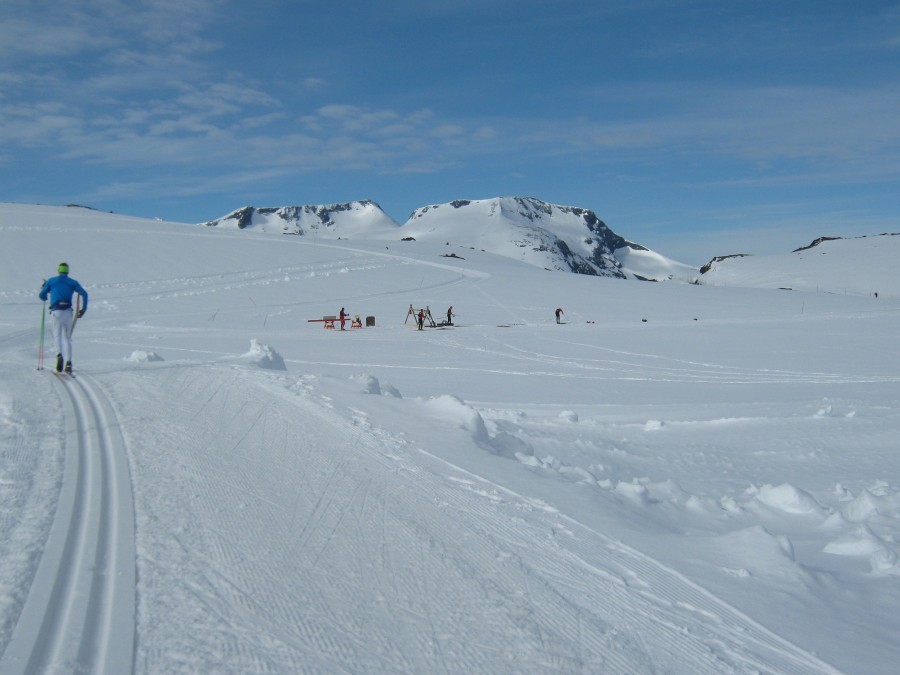

Two weeks ago, Kris Freeman and Noah Hoffman weren’t exactly sure what they were in for before flying to Norway, but they were excited. The two had been invited to a Norwegian national team training camp, and without much else besides their bare necessities, they headed to the snowfields of Sognefjell.
On June 3, the two U.S. Ski Team (USST) members jumped into action with the Norwegian men’s squad, kicking things off Sunday afternoon with at 2 ½-hour skate. The next day, Freeman and Hoffman spent five hours on snow, and the day after that, completed a two-hour skate with 20 kilometers at Level 3. They capped Tuesday afternoon with a two-hour classic ski, and ended up logging nearly 23 hours that week.

While both appreciated the volume training and generosity of the Norwegian team, which included Freeman and Hoffman in all their sessions, they were ready for an off day by the end of camp. Given that opportunity last Saturday, they ventured on what Freeman called a “crust cruise.” Two hours and one gigantic climb later, Freeman and Hoffman had gone much farther than they bargained for, but were glad they did so.
“It was the most scenic ski I have been on in years,” Freeman wrote in a blog post. “And we only got lost once.”
FasterSkier recently spoke with Freeman, Hoffman and Simi Hamilton, all of which were staying at Sognefjell’s remote mountain lodge. A recent addition to the USST A-team, Hamilton arrived Monday with Burke Mountain Academy as a guest coach on their two-week Scandinavian junior trip. He was helping his girlfriend, Kate Barton, who was leading the camp in place of the academy’s head coach, Pete Phillips.
On Wednesday, Freeman and Hoffman left Sognefjel,with Freeman heading home and Hoffman continuing on in Lillehammer, Norway. Hamilton said he’d be in Norway until June 22.
FasterSkier: Simi, how do you get involved with this trip?
Simi Hamilton: They just needed someone else to tag along to help out with driving [including a two-hour trip to Sognefjord, Norway] and a couple of things with coaching. So I got a free trip over here and get to train and get to hang out with a bunch of immature-but-fun 15 year olds. It’s a good thing.
FS: Have you been to Sognefjell before?
SH: I’ve been here a couple times before, but it’s been probably about eight years since I was here last. I haven’t been here in a while, but it’s great. It’s a cool spot and it’s really nice living right on the trails. I got out [to ski on Tuesday] afternoon. I was later informed that this is the worst [snow] that they’ve had in a couple weeks, but I find it’s still pretty good. They have a ton of snow up here, which is really nice.

FS: Kris, what have the conditions been like for the past week and a half?
Kris Freeman: When we first got here, we had probably three days where it was snowing and raining and pretty cold, and then the last five days I’ve been in shorts and a T-shirt.
The snow has been phenomenal for this time of year. They’ve taken really good care of it; they’ve salted once or twice a day a day. The day where Hoff and I [toured] the mountain, it was pretty ideal crust training so I’ve got no complaints. Scenic and pristine.
FS: How was training with the Norwegians?
KF: I have a history of working with [Norwegian men’s coach] Trond [Nystad] when he was the coach of the U.S. Ski Team, and he was very helpful. Noah and I weren’t able to travel over here with a form bench or an iron or any of those things, and [Nystad] helped with those, which was very nice, gave us his training schedule. We were invited to every session. They took video of us, gave us technical advice. They treated us like members of the team, which was very, very generous.
The athletes are friendly. Everything’s pretty professional out there. Not a lot of conversation while skiing, but they’re generally welcoming.
FS: How’s your Norwegian fluency?
KF: Absolutely non-existent.
SH: I think that goes for all three of us. It’s hard because everyone speaks English well, so it seems like you never need to speak Norwegian. I think all of us could probably agree that it would be great if we could speak Norwegian, but there really isn’t a use.
KF: I can’t even pronounce half the guys on their team, their names, properly.

FS: How big was the group?
KF: There wasn’t like a line of guys going around. For the most part on the distance days, people kind of did their own thing. I skied mostly with Eldar Rønning, Martin Sundby and Sjur Røthe (laughs as he says final name). That’s not how you pronounce it, but I’m going to say ‘Sur Roth’ because I’m American.
FS: Noah, how’s the training been?
NH: It’s been awesome. I really felt like it was good to ski with and train with the Norwegians. I learned a lot in terms of some things those guys do differently than me, some great technical advice from their coaches and being able to ski behind those guys. We had two really productive threshold sessions. I just felt like it was a huge opportunity. I feel like it was a little overwhelming; maybe I need to go home and evaluate what I think is going to be super beneficial to carry forward and what I think maybe we do a little better in the U.S.
FS: What’s one big difference between the way Americans and Norwegians train?
NH: The big thing for me is that they train harder at camps than they do at home. They train hard at home, but they take some time to recover after camps. How we approach camps in the U.S. is we’ve always kind of done a sustainable [effort], so it’s just part of your training and more or less similar to what you’re doing at home. So that was a different concept.
It was a really big load for me doing their schedule. It was two five-hour days, two threshold sessions, so it was a total of like 22 hours-ish in five and a half days so it was a lot. That was kind of something that stood out.

FS: How are you feeling?
NH: I’m starting to get a little tired. Zach Caldwell is here now, who Kris and I both work with in a coaching capacity and on skis, so I’ve kind of switched gears a little bit towards technique and basically backed off the load significantly. That’s been kind of a nice change of pace at the end of camp here.
KF: I’ve kept the volume and I’ve basically kept the Norwegian schedule going for the whole time here. I still feel good, but I’ve had enough skiing here and I’m ready to go home. I’ll be home for four or five days and then I have my first Maine Winter Sports camp. (Note: Freeman took the train to Lillehammer on Wednesday and flew out of Oslo on Thursday morning. Hoffman was headed to Lillehammer to work with Caldwell before flying home on Saturday.)
FS: Noah, is there still a possibility that you’ll get some pointers from Thomas Alsgaard (Norway’s five-time Olympic gold medalist)?
NH: He’s been up here [in Sognefjell] a little bit. I have been able to ski behind him a little bit, I know Kris has done that as well and that’s been great. I have not actually talked to him at all (laughs), but just skiing behind him has been a great opportunity. I’m going to stay a extra couple nights in Lillehammer and visit the Madshus factory and continue to work on Zach on technique, switching to dryland rollerskiing.
FS: Before I forget, how are the accommodations in Sognefjell?
KF: Rustic. … It’s fun, it’s quaint. They’ve only got four toilets for the whole men’s wing and three showers. I’ve never been into communal men’s showers.
(Note: Freeman estimated there were 25 men staying at the lodge at a given time. The women stayed in a separate wing with their own facilities, which were apparently nicer than the men’s, he said.)
The food’s been good and the skiing’s been good, and that’s the important thing.
***
Related story: Freeman, Hoffman Invited to Norwegian Training Camp