This reporting costs money. Please support this coverage with a voluntary subscription (below) so FasterSkier can provide this level of access to the sport we all love year-round.
Tag: Norwegian national ski team
-
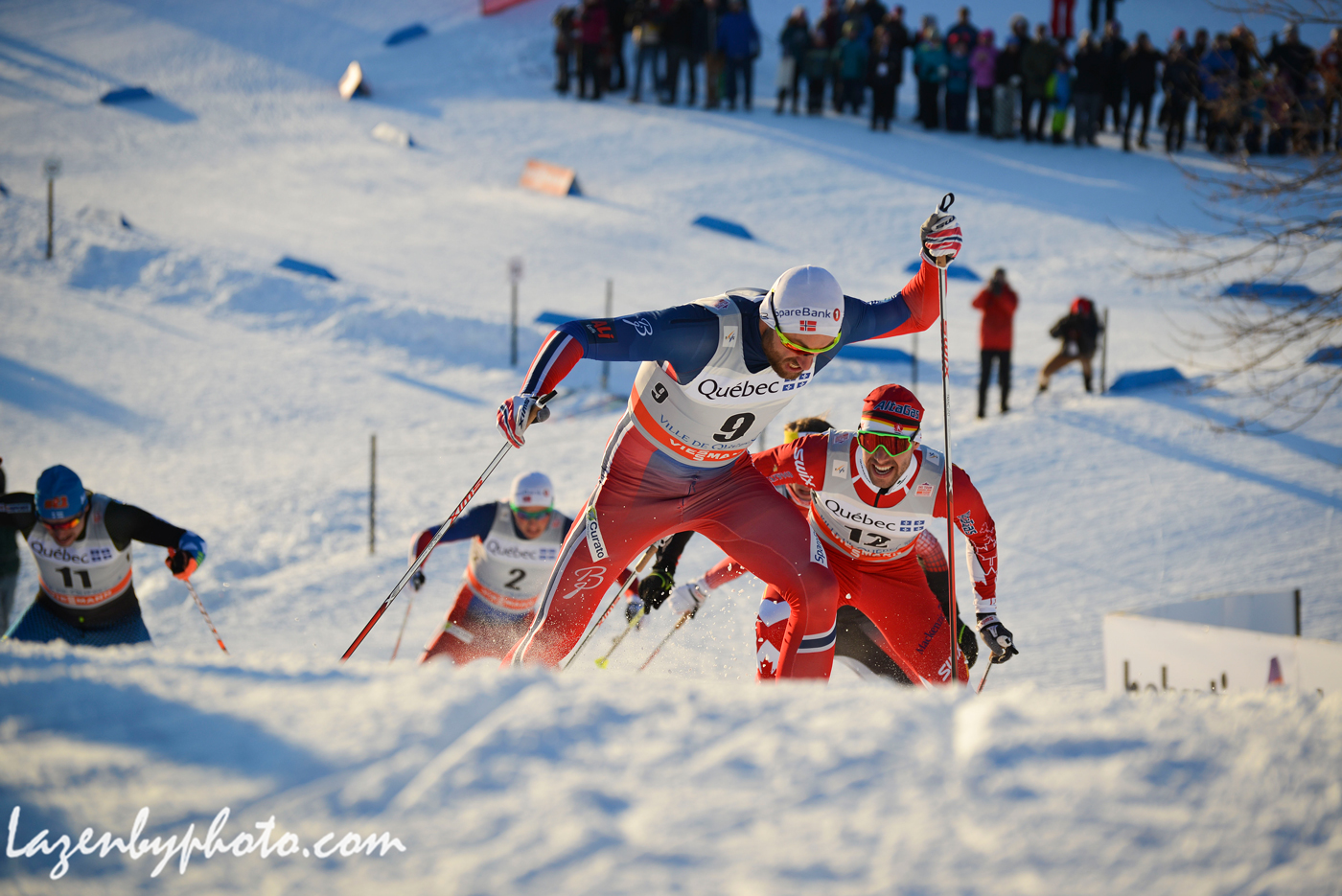
Petter Northug jr.; The Curtain Closes on the Champion’s Show
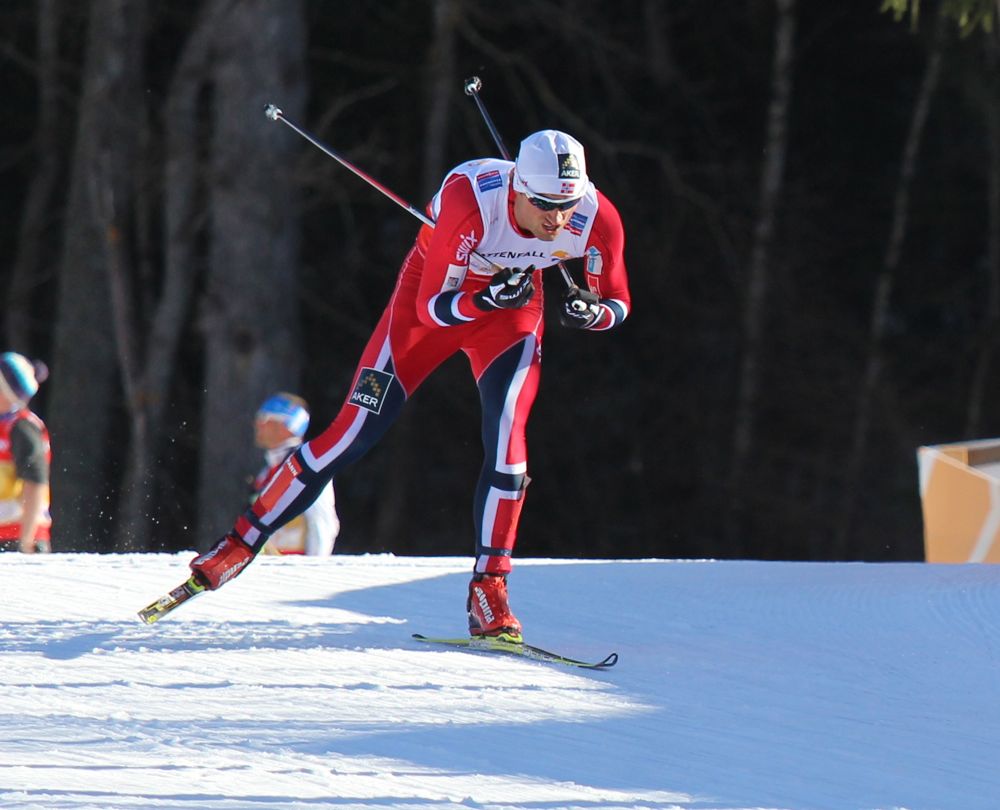
Northug during the 2013 men’s 4×10 k relay at the World Championships in Val di Fiemme, Italy. It is accurate, the way time ticks away, to say that it was an eternity ago when Norway’s Petter Northug jr. splashed onto the Word Cup scene to the delight of fans and the paparazzi.
According to the International Ski Federation (FIS) data base, Northug stepped to the top of the podium in only his eighth World Cup start. In the 2005/06 season, he placed first in Falun, Sweden’s 2 x 10-kilometer pursuit. There would be 37 more World Cup wins. Counting the total number of podiums and relying on raw numbers alone might understate the force of Northug’s impact on the sport.
To be sure, the numbers place Northug’s name in the conversation about all-time greats. He won four Olympic medals, two of them gold. Added to the medal vault are an outrageous 16 World Championship medals. Incredibly, 13 are gold.
Northug won the World Cup overall in 2010 and 2013. The Tour de Ski in 2015 fell to him after Martin Johnsrud Sundby was subsequently stripped of his title.
At thirty-two-years old, Northug announced his retirement at a press conference in Trondheim, Norway on December 12. Petter the King is no longer.
Although Northug has been in decline, it’s been a slower fade then perhaps we think. Here’s a quick refresher: just two seasons ago, in 2016, Northug had 10 World Cup podiums. The year before that, in 2015, he notched seven podiums including three wins. Not quite his string of podiums from 2010 to 2013 when he had 16, 12, 11, and 13 World Cup podiums respectively, but stout nonetheless.
A single Northug-type-season could be career defining for an athlete outside the pressure cooker of cross-country expectations that is Norway.
Let’s take a moment for some chills. The first embedded video is of Northug being trademark Northug. It’s a 50-kilometer classic in Falun, Sweden. Berzerk fans. A World Championship stage. And Northug waits. And waits … until the closing moments to make his move. The measure of victory may not seem like total domination – Northug wins a 50 k 2:26.02.1 hour race by meters — but the vibe sure feels like total domination. It also seemed inevitable: Northug lurked, almost forgotten unless you were paying attention, and his progress toward the front and eventual surge seemed almost predictable. No one who saw it could have been surprised. Such was Northug’s presence in the pack during the closing kilometers with big wins on the line. That was Northug.
And there’s this finish in Drammen, Norway from March 2017. Home crowd. The captive theater of a contained urban stage. Northug performs as if an Academy Award was on the line. Down the stretch, Northug kills. He wins his quarterfinal in dramatic fashion. He doesn’t simply slide across the line letting his closing double pole speed speak for itself. He slots in front of an incoming field that charges head-on. Despite his virtuoso quarterfinal, Northug placed 8th on the day. But what I recall from that day on the ground in Drammen was Northug. The posturing stuck with me. Without the posturing, he’d be a different kind of champion. Not better or worse, but not Northug.
That was Northug. A bit of Icarus flying too close to the sun, and just enough raw classy skiing to ingratiate himself to those who love the sport for its woolen-woodsy roots and humble personalities. And the moments he would almost dramatically gear down to V1 when most of his competitors maintained a V2. It was almost as though he was telling them the pace was such he didn’t particularly need to use a big gear. Northug communicated whatever he wanted with his skiing.
“He was always a controversial figure on the World Cup, and he was never boring,” U.S. Ski Team Head Coach Chris Grover emailed. “We’ll miss the explosive come-from-behind finishes, the other-worldly athletic performances, the occasional unsportsmanlike conduct, and the feeling of celebrity that came with having Petter at a race. When he was at his peak, he demonstrated that he could win every discipline almost at-will. His mid-race antics endeared him to millions and pissed-off countless others. His legacy is easily visible not only in the showmanship playbook of other top athletes (Klæbo in particular), but in the way in which so many athletes currently ski. Petter literally changed the technique of a generation of ski racers. He brought excitement and attention to our sport by creating a story within the story. We will miss him.”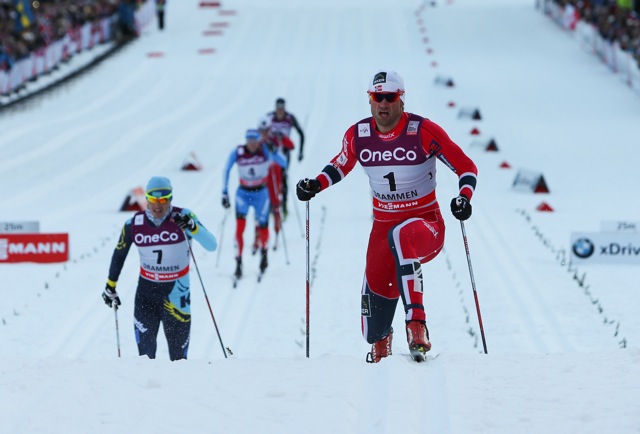
Norwegian Petter Northug (r) edges Kazakhstan’s Alexey Poltoranin by 2.15 seconds in the 2013 1.3 k classic sprint at the World Cup in Drammen, Norway. (Photo: Fischer/Nordic Focus) Northug’s gravitational pull was immense. His rockstar sensibilities made him a RedBull athlete. A sponsorship deal often reserved for big-line skiers propped atop Alaskan spines with a heli, not cross-country skiers.
In May of 2014, the lifestyle caught up with Northug. He was speeding in his vehicle while under the influence of alcohol when he crashed. Northug’s passenger was injured. Northug also fled the scene and initially stated the passenger was driving at the time of the crash. Northug was ultimately charged for a DUI and found guilty of all charges brought against him. (Norway is a culture that takes DUIs and drinking seriously.)
Throughout the middle of Northug’s career his discontent with the Norwegian National Team made headlines: bad boy and buttoned up ski federation cannot make nice.
As Northug matured, and presumably began to understand his historic place in the sport and in Norwegian ski culture, he made amends with Norway’s hierarchy of skiing.
Northug’s slow fade has been like a dimming star: we know it’s still there, it shines bright, but it’s simply not what it was. As of this season, Northug was, in fact, included on the roster of the Norwegian sprint team. He did not appear in any World Cups this season.
At his press conference Wednesday, Northug was moved to tears as he reflected on his decision to retire, his career, and the importance of his two younger brothers — Evan Northug (23) and Tomas Northug (28).
Norway has new heroes on the ski tracks. Some with flare. Some simply a big set of lungs. None of them Northug.
-
With Biggest Names Out, Østberg & Tønseth Top Beito Opener

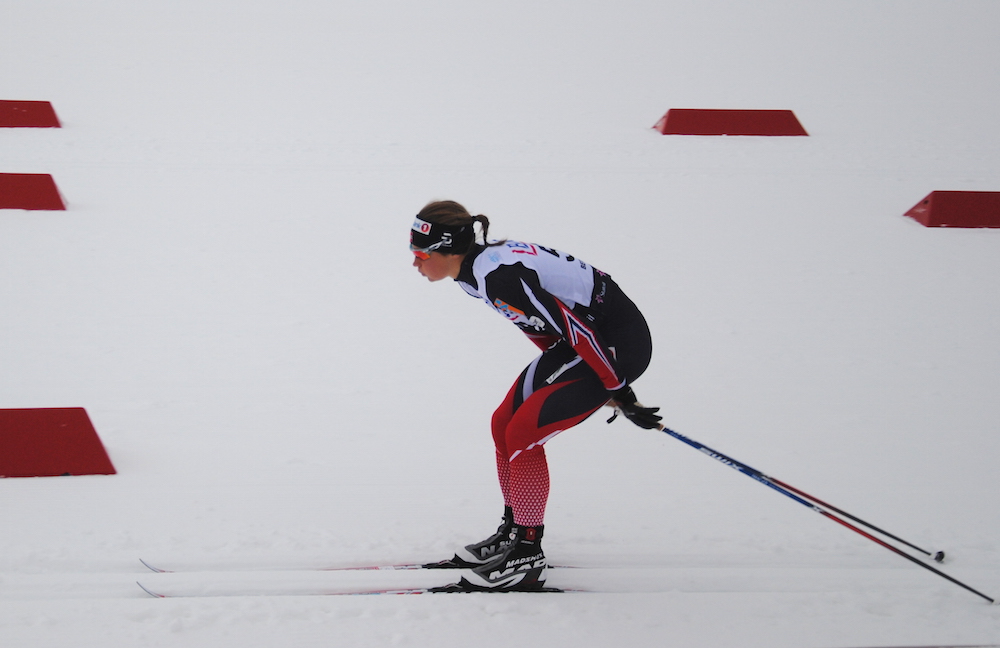
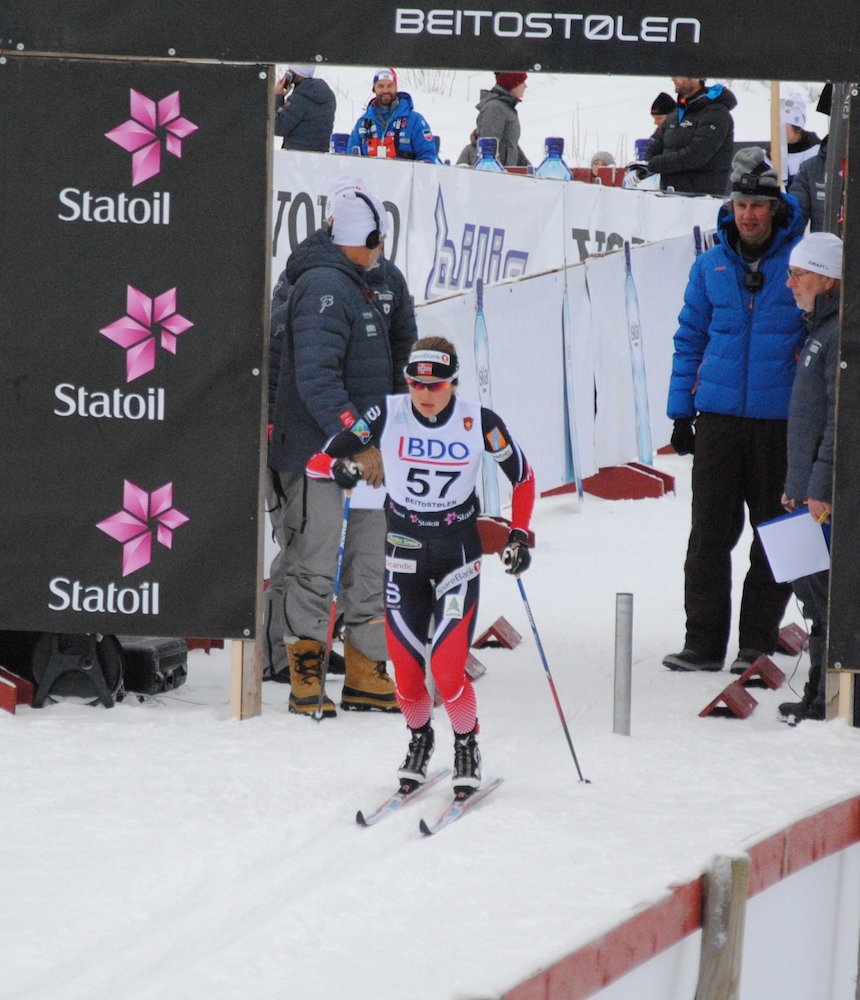
Ingvild Flugstad Østberg (Norway) out of the start in her country’s first FIS race of the 2016/2017 season: the 10 k classic in Beitostølen on Friday. (All photos: Aleks Tangen) BEITOSTØLEN, Norway — Friday’s International Ski Federation (FIS) season opener in Beitostølen, with most of the Norwegian cross-country team participating, became a demonstration of strength by Norway’s Ingvild Flugstad Østberg.
With Therese Johaug suspended for the first part of the season and Marit Bjørgen out with a cold, Østberg led the race from start to finish and completed the 10-kilometer classic individual start in 26:47.4 minutes. She progressively increased her distance over teammate Heidi Weng, who started just 30 seconds ahead of her, leading her by 6.2 seconds at 2.1 k and 13.2 seconds at the finish.

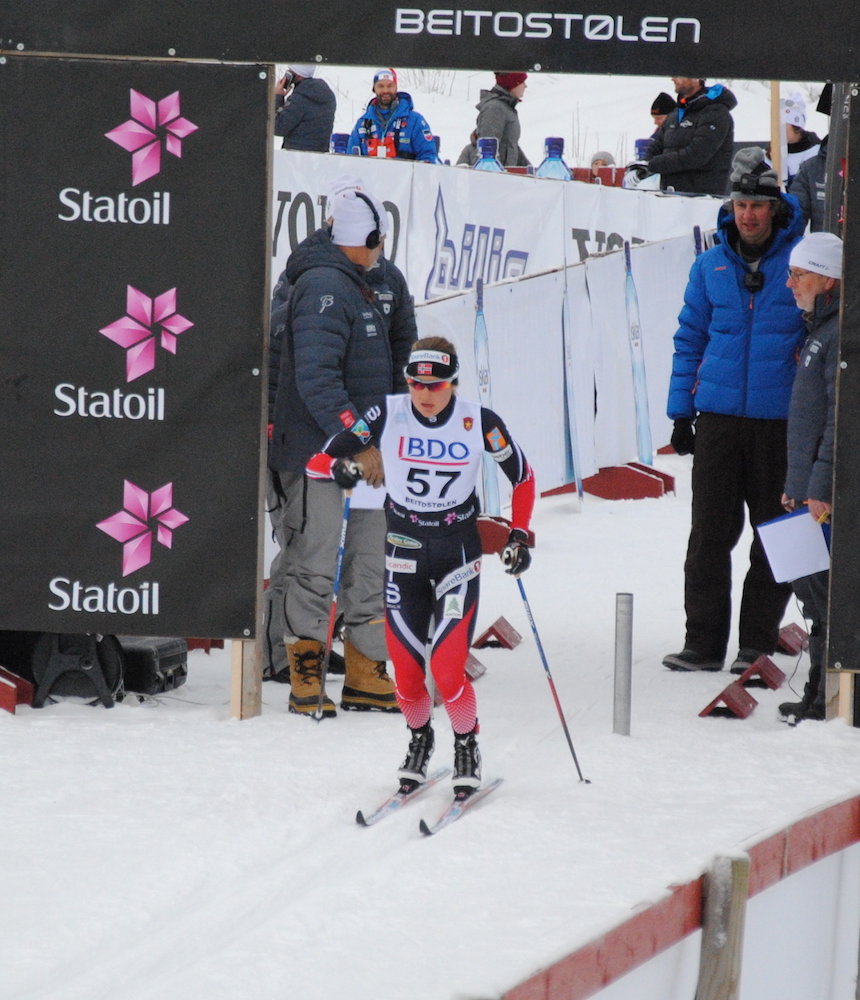
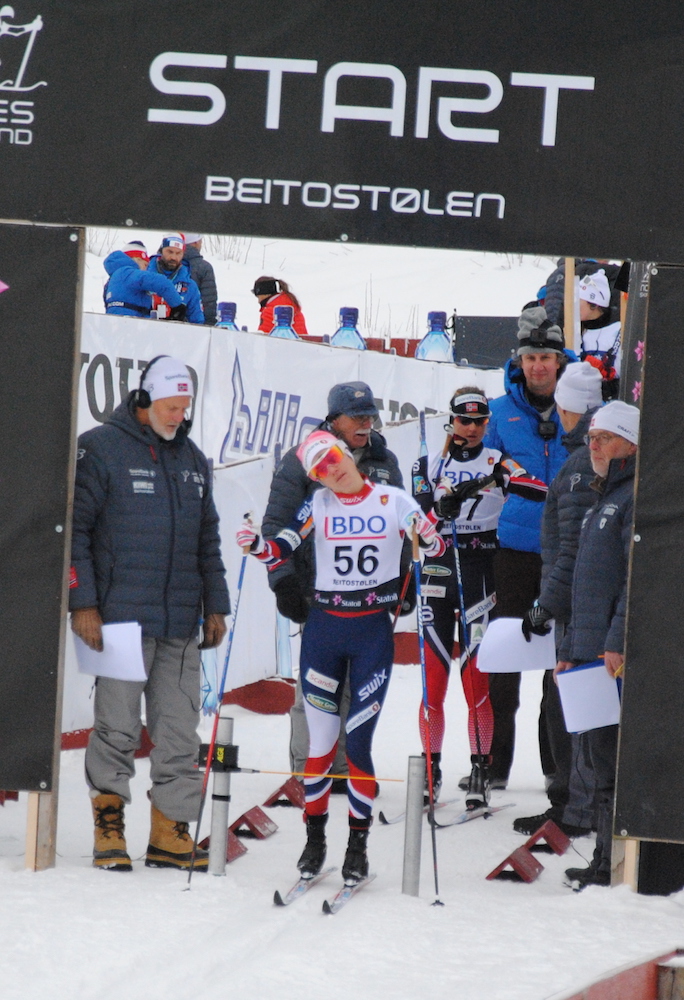
Heidi Weng at the start with Norwegian teammate Ingvild Flugstad Østberg behind her in the FIS season-opening race in Beitostølen, Norway. (Photo: Aleks Tangen) After the race, Østberg told Aftenposten that Johaug gave her some valuable advice just a day earlier. She said they spoke Thursday and Johaug offered some tips, encouraging her to focus on technique rather than worry about her form at this point in the season. Østberg said she told her to go for it and see how things turn out.
She took that advice to heart and came away with a victory. Østberg said it was strange not having her at the races, but she channeled her inner Johaug and focused on a strong start.
“It tends to work for her here, then I thought that I should try, too,” Østberg said, according to a translation.
“I’m usually a little slow in Beitostølen, but not today,” Østberg told NRK. “I had good skis and a body that played along. It was a good day. I’m very happy that I was able to ski well. Of course I got tired toward the end and consequently my technique deteriorated, but I felt that had good control over my opening so I’m happy.”
Notably, Østberg became the first woman other than Johaug or Bjørgen to win an opening race at Beitostølen since 2003.
“They would have probably been strong had both been here, but one cannot do anything about those who aren’t here,” she said.
The Norwegian national-team women swept the top nine, with Astrid Uhrenholdt Jacobsen coming on strong in the final third of the race for third place, 1:06.4 behind Østberg. Throughout much of the race, her split times ranked fourth of 55 finishers, behind Østberg, Weng and Kathrine Harsem.
Afterward, Jacobsen told Aftenposten that she thought she would finish farther back, noting the first races of the season are often the hardest.
“Third is far above my expectation; I had not thought that I would start there,” she said, according to a translation.

Ingvild Flugstad Østberg (Norway) double poling out of the start in her country’s first FIS race of the 2016/2017 season: the 10 k classic in Beitostølen on Friday. At just one point in the day, Østberg’s time ranked second: at 1.2 k, where Harsem was 1.5 seconds faster.
“I’m a little surprised it worked this well,” Østberg told NRK after the race. “I’ve felt good all through the summer and fall, but during the last week I’ve felt kind of heavy, but then I suppose I just fooled myself.”
American Cambria McDermott, a former Montana State University skier who graduated this spring, finished the race in 44th, 5:05.3 behind Østberg. After spending the summer training with Henning Skilag and representing the Norwegian club during the race, she told FasterSkier afterward that “it was really cool to see so many fast women. I felt slower by comparison, but it was really fun. It’s an awesome course.”
McDermott, 23, is currently taking classes at Nord University in Meråker, a small town near Trondheim. When asked about the level of competition in U.S. collegiate skiing compared to Norway’s first FIS race of the season, she said, “I think NCAAs was really good preparation for these kinds of races. There are a lot of international racers at NCAAs and they bring a lot of competition to those races, but here, there are the best skiers in the world in this race, so I think it’s hard to find a race that matches that.”
She’ll continue to race for Henning Skilag in Europe for most of the season, competing in most of the Norwegian and Scandinavian Cups before heading back to the states for U.S. nationals in early January.
“I’m excited for tomorrow,” she said of Saturday’s 10 k freestyle in Beitostølen. “I like skating and it’s a little less complicated than classic skiing with the wax and everything.”

Canada’s Madison Fraser (Team Hardwood) racing to 50th in the women’s 10 k classic FIS race on Friday in Beitostølen, Norway. (Photo: Aleks Tangen) Canadians Madison Fraser (50th place, +6:33.8) and Isabella Howden (55th, +8:21.6) also competed on Beito’s opening day. After the race, Fraser, of Team Hardwood, said she felt good about her effort.
“It was the first race I’ve done at this level,” she said. “So, really cool to see my name on the same list as Weng and Østberg, but it was hard, but nice course, really flowy. It felt good to get some intensity in. This is our first race over here.”
Reflecting on how she tackled the course, the 20-year-old, first-year senior described two big hills at the back of the course.
“I think that gritting down that extra bit and I was able to stride up the whole thing,” Fraser said. “Some people would hop out and start stepping, which is slower and more energy, so I was happy with that and stepped all the corners, so yeah, I was happy with how I handled everything.”
When the Cat’s Away… Tønseth Wins
In the men’s 15 k classic, Norway’s Didrik Tønseth capitalized in the absence of his team’s leading skier, Martin Johnsrud Sundby (out with a sore throat), beating out 140 men while double poling the entire three-lap course to win in 37:31.9.
Tønseth told NRK after that he was in “disbelief” at the conditions, with a heavy snowfall blanketing the course after the women’s race. He switched to skate skis one minute before the start, and said it worked well.
“It’s awesome to win … it’s good to put others in their place,” he said, according to a translation.
Starting 12 minutes earlier than Tønseth in bib 125, Norway’s Tord Asle Gjerdalen also double poled the entire course and rose from the seventh-ranked time at 4.9 k to second at the finish, 15.7 seconds back.
“It snowed a lot, but I think it was the right decision to skate,” Gjerdalen told NRK, according to a translation.
“When the cat’s away, the mice will play,” he added, taking a playful dig at Sundby.
All of the eventual top-six men double poled, with Norway’s Morten Eide Pedersen finishing third (+24.5) after opening with the fastest 4.9 k split, then ranking second at 9.8 k. A fourth Norwegian, Sjur Røthe took fourth (+33.2), Great Britain’s Andrew Musgrave broke up the sweep in fifth (+40.0), and Petter Eliassen (Norway) placed sixth (+45.4).
Meanwhile, Norwegians Pål Golberg and Petter Northug chose grip wax. While Golberg cracked the top 10 in ninth (+1:19.4), Northug ended up nearly four minutes back in 74th, approaching the finish line with a sedative pace that seemed more like a conscientious choice than a consequence of low physical conditioning.
After the race, an NRK interviewer said to Northug, “You look very smart for someone who finished 74th.”
Northug, looking as calm as he did during the final part of the race, answered, “You can interpret that the way you want. I believe I have good control even if it doesn’t look like it.”
A number of Canadian juniors competed on Friday, with Jack Carlyle, of the Thunder Bay National Development Centre (NDC), leading them in 116th (+5:32.4).
“The competition is super-fierce, which is super cool to see, but it’s not like they’re super human,” the 23-year-old Carlyle said. “It’s just that they’re very fit and fast, but it’s nothing untouchable, it’s cool to see and be a part of that.”
“The competition is super-fierce, which is super cool to see, but it’s not like they’re super human.” — Jack Carlyle (Thunder Bay NDC), after placing 116th in Beitostølen
His NDC teammate, Scott James Hill placed 131st (+6:25.1). Behind him, Ryan Jackson, of Team Hardwood, finished 135th (+7:06.3), Joey Foster (Pierre-Harvey Training Centre) was 139th (+8:17.5), and Kieran Jones (Team Hardwood) was 140th.

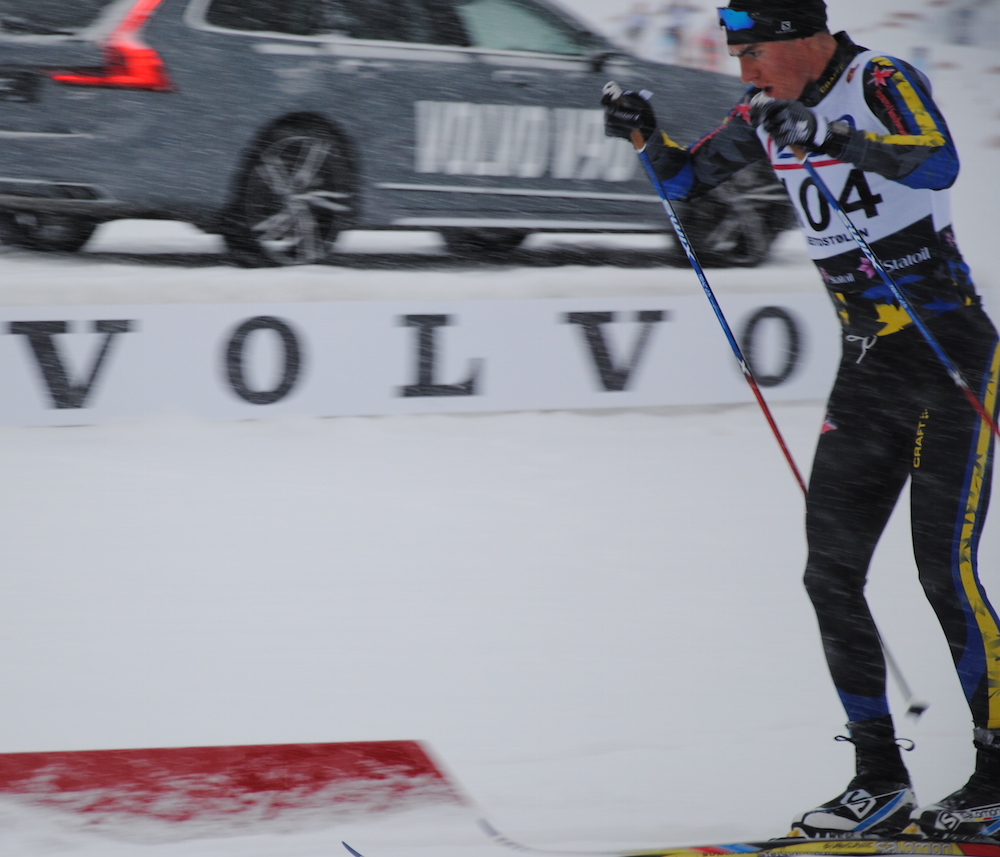
Canada’s Scott James Hill (NDC Thunder Bay) racing to 131st in the FIS season-opening 15 k classic in Beitostølen, Norway. (Photo: Aleks Tangen) Like his Canadian teammates, Jackson chose kick wax and explained that too much grip probably affected his overall performance.
“I unfortunately lost a little bit of time on each downhill, which I really couldn’t afford to do,” the 19-year-old from Midhurst, Ontario, said. “I need to be on top of my game to compete with these guys. It’s a tough competition, but when things don’t come together, you lose a couple of seconds here and there, it’s too bad.”
Asked how he liked the course, Jackson said he loved it.
“I really liked how balanced it is. There’s a lot of spectators around the course so you’re always seeing people,” he said. “My favorite parts were probably the climbs.”
Foster described his race as a “real hard one”.
“My skis weren’t running nearly as quick as I needed them to be,” he said. “I think I went with too much grip and they just started dragging a lot. People were making up big time on me in the downhills.”