Tag: Norwegian Olympic Committee

  • The Run Is Over: Bjørndalen Not Named to Norway Olympic Team

    The Run Is Over: Bjørndalen Not Named to Norway Olympic Team

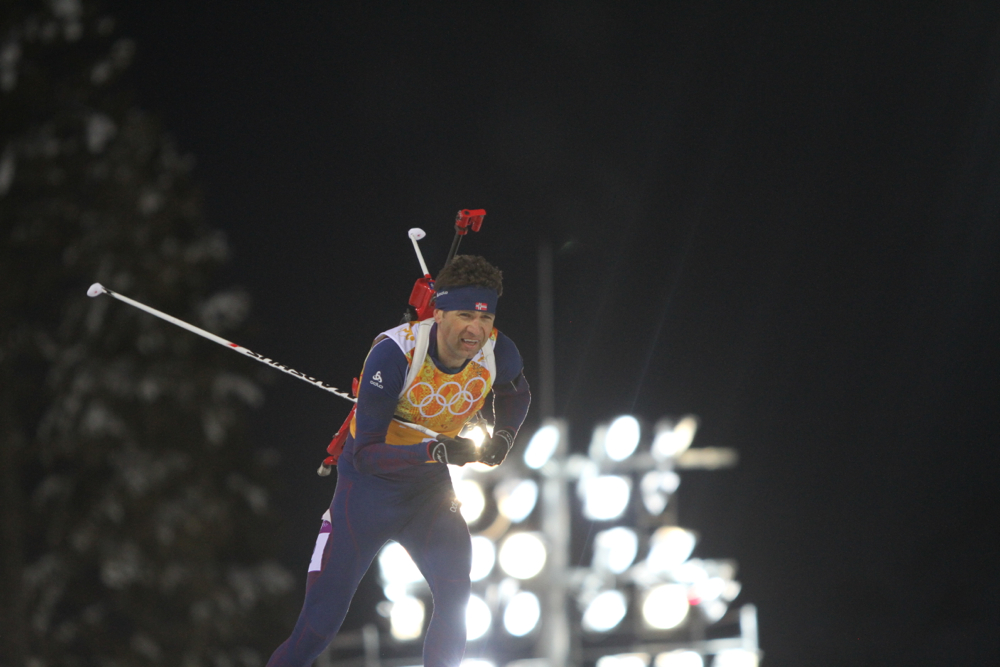
    Ole Einar Bjørndalen out on the trails at the 2014 Olympics, where he won gold in the sprint and the mixed relay.

    For the first time since 1992, Ole Einar Bjørndalen will be doing the same thing as you come Winter Olympics time: he’ll be watching it.

    Okay, not just like you, but Bjørndalen – who made his Olympic debut in 1994 and went on to become the most successful Winter Olympian of all time with eight gold and five other medals – won’t be on the Norwegian biathlon team.

    Instead, the husband of Belorussian superstar Darya Domracheva will be watching her. The couple have a 15-month-old daughter together.

    Domracheva won three gold medals at the 2014 Olympics in Sochi, Russia, and will be trying to make more history for her country. She has already won half of Belarus’s total Winter Olympic gold medals in the time since the country left the Soviet Union.

    After taking a break for the 2016 season, Domracheva returned and won silver in the pursuit at 2017 World Championships; this season, she has already won a World Cup sprint.

    While she takes the start line, Bjørndalen won’t. It’s not from lack of trying. He competed in four World Cup weekends this winter and was intending to go to PyeongChang.

    He even resigned from a position on the International Olympic Committee’s Athlete Commission to focus on preparing for the Games.

    But his top finishes this season came in Östersund, Sweden, with a pair of 18th-place results.

    That’s not enough for the Norwegian team. In an announcement on Monday, the Norwegian Olympic Committee named Johannes Thingnes Bø, Tarjei Bø, Emil Hegle Svendsen, Lars Helge Birkeland, Erlend Bjøntegård, and Henrik L’Abee-Lund as the men’s biathlon team for PyeongChang.

    “I think it would be wrong to take Bjørndalen [to the Olympics],” Norwegian Biathlon Head of Sport Per Arne Botnan told NRK. “We will go with athletes to the championships so that they perform. He is not at the level he has been before previous championships. It would be unfair if we didn’t include those who have fulfilled the Olympic criteria.”

    Johannes Bø has won seven World Cups this season, and Tarjei Bø one; they sit second and fourth in the overall World Cup rankings. Svendsen has a podium and three fourth-place finishes, while Bjøntegård and L’Abee-Lund have each finished twice in the top ten, and Birkeland once in the top ten.

    Critics were somewhat skeptical of Bjørndalen’s push for the 2014 Olympics, but there he opened the Games by winning the 10 k sprint.

    He thinks he could do it again.

    “I could take a medal at the Olympics,” Bjørndalen told Norwegian broadcaster NRK, according to a translation. “But there are others who are taken onto the team. I have not shown good form and have delivered poor results.”

    “Unfortunately, [Bjørndalen] has not met the requirements, and there are other athletes on the team who have performed better and fulfilled the criteria,” Tore Øvrebø, senior vice president of the Olympic Committee, wrote in the organization’s statement on Monday, according to a translation. “These athletes obviously deserve the opportunity to participate in PyeongChang.”

    According to NRK, there were arguments between the Olympic Committee – who wanted Bjørndalen in South Korea – and the biathlon federation, which had made the decision that he didn’t qualify.

    Bjørndalen is on the Norwegian roster for the next IBU Cup races. According to the International Biathlon Union database, he has never before competed on the second-tier circuit.

    “The motivation is no less, even if I don’t go to the Olympics,” Bjørndalen insisted to NRK. “It’s just getting my body going, and I hope it responds to training now.”

    On the women’s side, Marte Olsbu, Synnøve Solemdal, and Ingrid Landmark Tandrevold have qualified for PyeongChang. The 2014 bronze medalist in the mass start, Tiril Eckhoff, has not yet finished in the top 20. But while the men’s team is filled, two more women should be chosen for the team after this week’s World Cup competitions in Antholz, Italy.


  • FIS Appeals Johaug Decision, Seeking Longer Sanction

    FIS Appeals Johaug Decision, Seeking Longer Sanction

    Norway’s Therese Johaug leads teammate Heidi Weng up a climb during the women’s 10 k freestyle pursuit in Quebec City in 2016. Johaug is currently serving a 13-month doping suspension, but the duration of the ban may yet change. (Photo: FlyingPointRoad.com/NNF)

    The International Ski Federation (FIS) is appealing the suspension of Norwegian cross-country skier Therese Johaug. The organization asks for a longer sanction than the-13 month ban she was initially served by the Norwegian Olympic Committee.

    Johaug tested positive for the banned steroid clostebol, which was an ingredient in a lip cream she used to treat a combination of sunburn and cold sore. The Norwegian Olympic Committee had decided that this merited a 13-month suspension, which would see Johaug returning to team training in September and then cleared to compete in the 2018 Olympics.

    The standard penalty for a positive test is a four-year ban, but the length may be reduced if there is deemed to be no significant fault by the athlete. As FasterSkier noted at the time, even considering reductions, 13 months is an unusual duration for a suspension. Many suspensions are in one-year increments, or else in three-month increments for shorter suspensions.

    The concept of strict liability applies to doping cases.

    “The principle of strict liability is applied in situations where urine/blood samples collected from an athlete have produced adverse analytical results,” WADA writes on its website. “It means that each athlete is strictly liable for the substances found in his or her bodily specimen, and that an anti-doping rule violation occurs whenever a prohibited substance (or its metabolites or markers) is found in bodily specimen, whether or not the athlete intentionally or unintentionally used a prohibited substance or was negligent or otherwise at fault.”

    The Norwegian Olympic Committee had decided that Johaug bore reduced fault. In her hearing testimony, she said that a team doctor had given her the medication and told her that it contained no prohibited substances.

    FIS found this claim insufficient to mitigate Johaug’s responsibility, and the federation is heading to the Court of Arbitration for Sport. The World Anti-Doping Agency (WADA) may still also decide to join the appeal.

    “The Committee, when issuing the 13 month suspension, found that Therese Johaug had committed an Anti-Doping Rule Violation and held that she acted not without no fault, but rather with no significant fault,” FIS wrote in a press release. “The evidence before the Committee established that the use of the banned substance was unintentional and based upon the advice of a trusted and reputable doctor. However, the FIS Doping Panel has found that the sanction imposed is on the low end of the range of reasonable sanctions and fails to adequately reflect the fact that the athlete Therese Johaug failed to read the doping warning label printed in red on the package despite the fact that the medication was unknown to her and was purchased in a foreign country.”

    Johaug’s lawyer, Christian Hjorth, told Norwegian broadcaster NRK that Johaug was “disappointed and sad” with the move by FIS.

  • Johaug Receives 13-Month Ban for Positive Doping Test

    Johaug Receives 13-Month Ban for Positive Doping Test

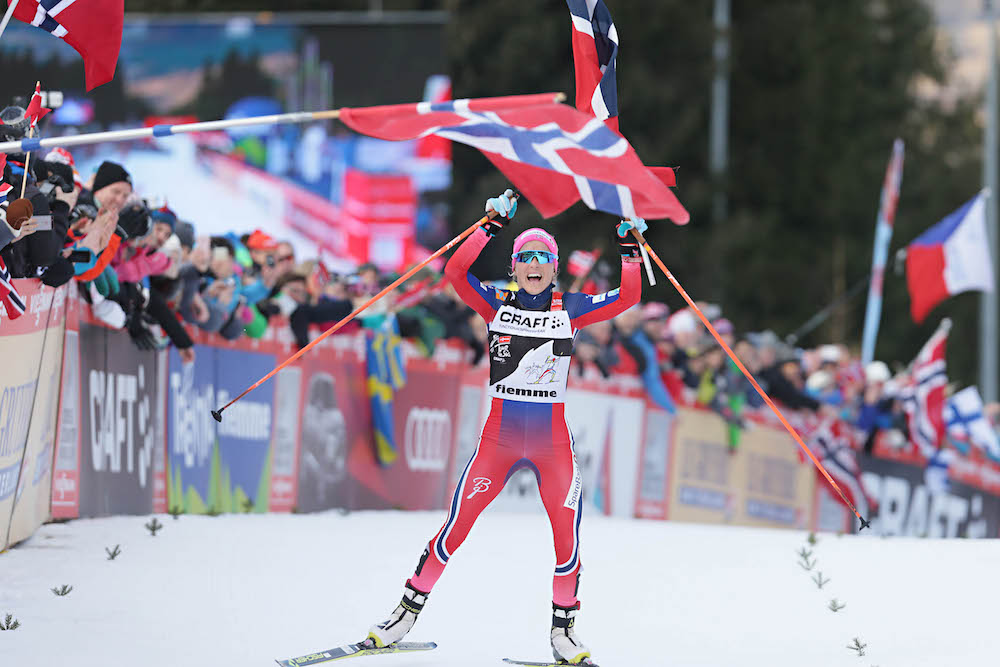
    Norway’s Therese Johaug approaches the finish of the 9 k final climb at the last stage of the 2016 Tour de Ski with enough time to grab a Norwegian flag and celebrate her win. The Norwegian is now serving a 13-month ban for doping. (Photo: Fiemme World Cup)

    The Norwegian Olympic Committee today issued its ruling on Therese Johaug, the cross-country ski star who tested positive for the steroid clostebol.

    “Therese Johaug… loses the right to participate in competitions and organized training, and the right to be an elected or appointed officer, for a period of 13 months, effective from the date the suspension was imposed, 18 October 2016,” the Committee posted in a statement on its website, according to a translation

    Johaug, Anti-Doping Norway (the organization which collected the doping sample), the International Ski Federation, the International Olympic Committee, and the World Anti-Doping Agency could each appeal the ruling to the Court of Arbitration for Sport if they find the penalty to be inappropriate.

    The standard penalty for a positive test is a four-year ban. This length may be reduced in cases where no significant fault by the athlete is identified: athletes have “strict liability” for any prohibited substance which enters their bodies, but the length of the punishment is somewhat adjustable.

    Johaug used a lip cream containing clostebol to treat a severe sunburn. Anti-Doping Norway recommended a 14-month ban.

    Martti Uusitalo, a board member of the International Ski Federation, told Finnish paper Ilta Sanomat that while the federation has not yet made a decision, he thinks they are likely to appeal.

    This 13-month penalty doesn’t come from the WADA or CAS rules for how decisions should be made,” he said, according to a translation. “Therefore it is best for all parties that the [Court of Arbitration for Sport] professionals examine the process.”

    If the 13-month ban stands, the timeframe would see Johaug ready to compete for the 2017-2018 World Cup season and the 2018 Olympics in PyeongChang, South Korea. While she has not participated in any official national team activities during her suspension, Johaug did go to PyeongChang to train around the time that the World Cup swung through last weekend.

    Suspended athletes are allowed to return to official training two-months before their bans are complete. Norwegian team head Vidar Løfshus told NRK that it will be beneficial for Johaug to be able to rejoin the team starting next September.

    She had been hoping to be able to compete in this season’s World Championships in Lahti, Finland, a scenario that now seems impossible.

    https://www.instagram.com/p/BP8m2bYBHG-/

  • Anti-Doping Norway Seeks 14-Month Suspension for Johaug, Case Ongoing

    Anti-Doping Norway Seeks 14-Month Suspension for Johaug, Case Ongoing

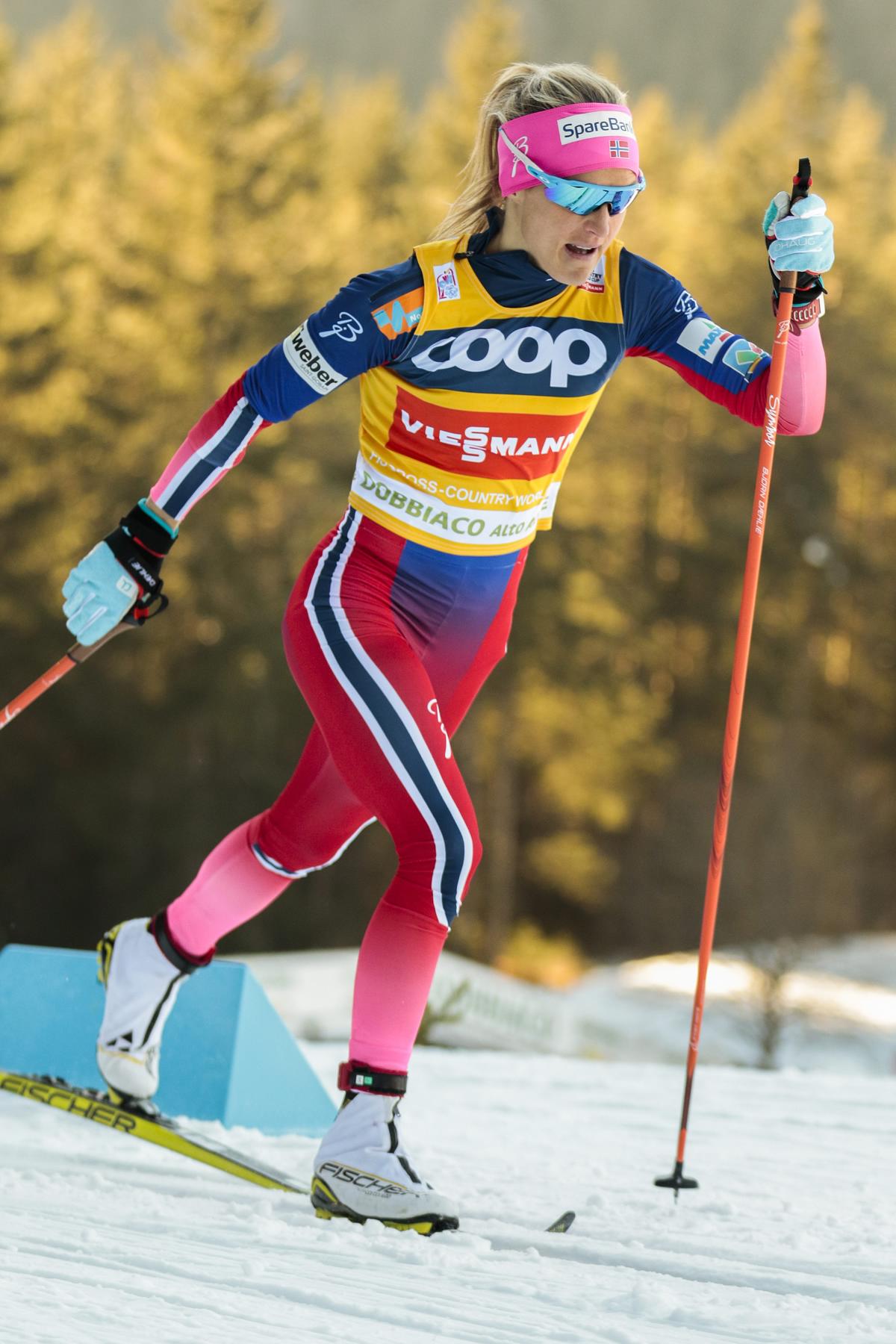
    Norway's Therese Johaug racing to a 28.2-second win in the Toblach World Cup 10 k classic in December 2015. (Photo: Fischer/NordicFocus)
    Norway’s Therese Johaug racing to a 28.2-second win in the Toblach World Cup 10 k classic in December 2015. (Photo: Fischer/NordicFocus)

    The doping case of Norwegian cross-country skier Therese Johaug has come to at least a temporary conclusion, with Anti-Doping Norway recommending a suspension of the star athlete for 14 months.

    Johaug tested positive for the steroid clostebol in a urine sample taken in mid-September. She explained in a press conference that she had been using a lip cream to treat a severe sunburn, and the drug — purchased and provided to her by a team doctor from a pharmacy in Livigno, Italy — contained the banned medication, which is a common ingredient in skin treatments.

    “We have recommended a 14-month ban and that will be sent to the disciplinary panel of the Norwegian Olympic Committee,” Anti-Doping Norway official Niels Kiaer told Reuters. “I expect they will have a hearing in February.”

    The proposed ban would be retroactive to Oct. 18 and last until Dec. 18, 2017, two months before the Winter Olympics in PyeongChang, South Korea.

    NRK reports that the casefile and the recommendation from Anti-Doping Norway will be sent to the Norwegian Olympic Committee, and that Johaug has three weeks to provide her own comment and defense to the disciplinary panel.

    Until that panel issues a decision, Johaug will retain her provisional suspension. It is appearing increasingly unlikely that she will compete at World Championships in Lahti, Finland, in February.

    Johaug had tried to defend herself by saying that she had trusted the judgement and knowledge of the team doctor, Fredrik Bendiksen, and thus had not felt the need to check the ingredients of the medication against the World Anti-Doping Agency (WADA) Prohibited List herself.

    But Anti-Doping Norway was not convinced that she was blameless. Kaier told the Associated Press that “she could have avoided the case by checking the medicine,” since the product is required to be marked with a sticker indicating that it contained a banned substance in order to be sold in Italy. The World Anti-Doping Code has a requirement of ‘strict liability,’ meaning an athlete is responsible for whatever enters their body, whether it is intended to enhance performance or not.

    However, Anti-Doping Norway didn’t completely reject Johaug’s story. The 14-month ban they recommend is a reduction compared to the four-year ban which is standard in intentional doping cases. Anstein Gjengedal, the head of Anti-Doping Norway’s prosecution panel, told NRK that the reduction was because they believed Johaug had not intended to dope.

    Johaug indicated in a Norwegian Ski Federation press release that she will fight the recommended suspension.

    “I take this with a heavy heart, but I accept the circumstances as they are right now,” she said. “I am focused on whats most important, which is working toward a full acquittal. I look forward to a thorough and full treatment of this case as quickly as possible.”

    Anti-Doping Norway wrote that the Bendiksen might be guilty of “negligence,” and that the investigation against him would proceed.

    “So far in this process I have focused on being thorough and honest,” Bendiksen said in the Norwegian team press release, noting that he had been expecting an investigation. “I have already given a detailed statement both to Anti-Doping Norway and during the Ski Federation’s press conference last Thursday. I will continue to be available for Anti-Doping Norway so that all sides of the matter receive adequate attention.”

    The Associated Press translated a reaction from Poland’s Justyna Kowalczyk on Twitter, saying she looked forward to responses from the International Ski Federation (FIS) and WADA, and ending with a hashtag that translates to opening a bag of popcorn.