From the FasterSkier archive — posts syndicated from athletes’ and coaches’ own blogs between 2004 and 2012, kept online as published. Current coverage is at fasterskier.com.

Tag: Norwegian Ski Federation

  • Development in Norway Isn’t Just a Plan. It’s a System.

    Development in Norway Isn’t Just a Plan. It’s a System.

    This article was made possible through the generous support of our voluntary subscribers. If you value coverage like this, please support FasterSkier with a voluntary subscription.

    Johannes Hoesflot Klaebo (NOR), Emil Iversen (NOR), and Martin Loewstroem Nyenget (NOR), (l-r) during the final kilometers of the Olympic 50 k classic. (Photo: Vanzetta/NordicFocus)

    A review of a recently published paper from Norway, “Long-term development culture for sustainable Olympic success: Lessons learned from Norwegian cross-country skiing” by Jacob Walther and Øyvind Sandbakk, is worth the time.

    Long-term development culture for sustainable Olympic success: Lessons learned from Norwegian cross-country skiing – ScienceDirect

    We’ve all heard enough about Norway. But this one simply cuts through some misconceptions, and it is worth the time to review. It strips away the mythology and gets back to what actually drives development and ultimately elite performance. Norway isn’t operating with better information. They’re more disciplined about applying what most programs already understand, and more consistent about what they refuse to do.

    The paper addresses this immediately and directly.  There is no “Norwegian method.” No magic interval session. No secret intensity zone you can implement and expect results. What they have is a system. And more importantly, a system built around their culture.

    We tend to frame their success in physiological and technical terms.  It’s not physiology, technique, health management, or mental health; they are all part of it, but they don’t explain the system. Most programs know early specialization is risky and inaccurate. Most coaches understand long-term development and the need to build training slowly and in phases based on training age. The difference is that Norway holds the line on it.

    The elements are not new. Delay early selection. Encourage multi-sport participation, and integrate sport science into daily coaching. Invest in coach education. Treat athlete health as part of development, not something that gets in the way of it. The result isn’t just better elite athletes.  It’s broader mass participation, more informed training, and a deeper pool of athletes and families engaged in the sport.

    Norway’s Johannes Høsflot Klæbo won his first World Cup at 20, in the men’s 1.6 k freestyle sprint in Otepää, Estonia, in 2017. (Photo: Fischer/NordicFocus)

    The paper uses Johannes Høstflot Klæbo as a case study. At 15, he placed 101st at junior nationals. Years later, he’s the most decorated Winter Olympian of all time. That’s a compelling outcome. But the value isn’t the result. It’s what the system expects and allows.

    In most programs, that athlete gets filtered out early. In Norway, they stay in longer. That’s the point. This isn’t about identifying talent earlier and directing resources and opportunities at those. It’s about not eliminating talent identification too soon. That requires patience, cooperation among club programs, trust in the system, and a willingness to ignore short-term validation.

    That’s where the Norwegian model sets itself apart. The turning point came in the lead-up to the 1994 Winter Olympics. Norway didn’t discover new physiology or invent new training methods. They organized themselves differently. They centralized expertise, embedded sport science into coaching, collected experience and training data across all Olympic Sports, and aligned the ski federation from the national team down to the club level.

    Olympiatoppen sits at the center, not as a lab removed from the field, but as part of the training process. It doesn’t drive the system, but it informs and shapes it. That balance matters. Norway didn’t just add sports scientists. They used sports science to improve coaching. At higher levels, many coaches are trained in exercise physiology. That reduces misinterpretation and creates consistency over time.

    Long-term development in Norway isn’t a slogan. It is intentionally implemented. It follows physiology. Peak endurance performance arrives in the late 20s, after years of consistent training. They don’t challenge that reality; they built their whole system around that reality.

    You see that athletes stay in the sport longer, as evidenced by high-level FIS races in Norway. Hundreds of skiers are over 25-30 years old. They build general capacity before narrowing focus. Skill development has time and the room to engrain. Training isn’t rushed. Volume and intensity progress over years, not seasons. Junior results are not used as a sorting mechanism.

    And this is where most systems break down. They say development matters, so select early and train accordingly. In Norway, youth championships are not selection events. They are part of the development process. The culture reinforces it. Clubs and schools coordinate so athletes can participate in multiple sports. Athletes regularly move across multiple ski disciplines. The recruitment base stays broad, and the system stays resilient.

    Norway hasn’t eliminated selection; they’ve delayed it and minimized its consequences. That distinction matters. What gets labeled as “talent” at 14–16 is often early maturation, better support, or more exposure, not long-term potential. Norway avoids that trap by not falling into it. While many other systems double down on it.

    Another principle sits underneath all of this: athlete health, physical and mental, comes before results. Training is managed for long-term progression. Training loads increase gradually over the years. High intensity is controlled, and low intensity dominates most of the training. The goal is adaptation over time, not accumulation in the short term.

    The paper also points to emerging pressure on this model. Rising costs, shifting societal trends, increasing early specialization, and changes in team structures all push against it. These aren’t theoretical concerns. There are real pressures that can erode the system if they’re not managed.

    Harald Oestberg Amundsen (NOR), Johannes Hoesflot Klaebo (NOR), and Einar Hedegart (NOR), (l-r) share the 20 k Freestyle Mass Start podium at the final World Cup in Lake Placid (USA) to end the 2025/2026 season. (Photo: Modica/NordicFocus)

    So what carries over?

    We can’t copy Norway. That misses the point. The lesson is alignment. Align incentives with long-term outcomes. Integrate sports science into coaching to improve the coach’s work. Build systems that allow athletes time to develop. And hold the line when short-term pressure starts to dictate decisions.

    Many countries can point to a standout athlete. But if success depends on outliers, unusual resilience, unusual support, unusual talent, you don’t have a system. You have anecdotes. Norway produces depth, that is, the expectation and the standard.

    There’s no secret session here. What they’ve built is a system that connects coaching and science, commits to long-term development, creates space for late progression, and maintains consistency over time. Not what they’re doing this week or next week, but what the athletes are doing ten years from now.


    Help Support Our Olympic Coverage!

    If you value the thoughtful work and access FasterSkier provides, please consider becoming a Voluntary Subscriber. Your support directly fuels our work to cover the people, places, and moments that make our sport special.

    Join the FasterSkier community!


  • Case Closed: Klæbo Asks Norwegian Ski Federation to Rescind Appeal After his DQ in the Championship 50 k

    Case Closed: Klæbo Asks Norwegian Ski Federation to Rescind Appeal After his DQ in the Championship 50 k

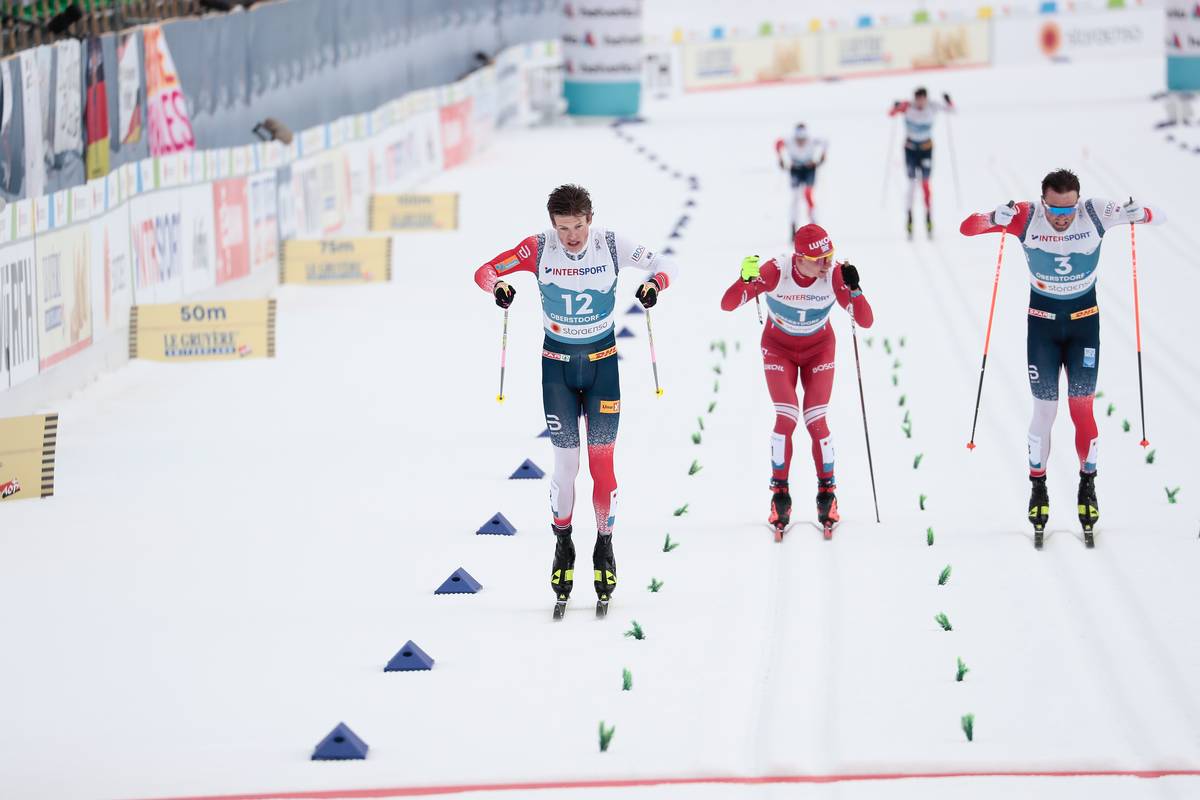
    The closing stages of Sunday’s 50 k classic mass start. Klaebo was eventually DQ’d for obstructing Alexander Bolshunov (bib 1). Norway’s Emil Iversen was declared the winner (left to right). (Photo: NordicFocus)

    “Go back and watch the video,” is something I have heard and done maybe 100 times collectively since the men’s 50 k mass start classic concluded with a winner then a DQ, then another winner on Sunday as the 2021 World Championships slammed the door on competition.

    To say it was a bizarre scene would be an understatement as Norway’s Johannes Høsflot Klæbo and Russia’s Alexander Bolshunov rocketed into and around a sweeping left-hand curve and into the final straight in Oberstdorf. Here’s what I wrote to describe the scene on Sunday:  

    “No matter how you look at it, pro-Russia, pro-Norway, pro-fun racing, Bolshnov went wide to close the door on Klæbo, and the Norwegian sprinter nearly lost his balance dodging V-boards, ski tips, and Bolshunov’s physical presence. During the brush-up, with no crowd noise, you can hear Bolshunov’s pole crack with the bottom half falling to the ground after he stuck it between his legs.

    “As Klæbo and Bolshunov re-centered, both now with barely enough room to push the pedals down, the drag race ensued with, as one might guess, Klæbo winning and Bolshunov, with one effective pole, losing ground. It looked like this: Klæbo as the 2021 championship sprint champ and 50 k classic champion in 2:10:52.2. Iversen, for his part, closed in down the straight and passed Bolshunov for second place (+0.7), with the Russian crossing third (+1.4) while slamming his now-dysfunctional pole to the snow.”

    After watching the race, watching slo-mo on the rewindable live-feed, and listening in on Devon Kershaw and Alex Harvey discussing the details of the rumble in Oberstdorf, the case seemed maybe a few degrees clearer in terms of who had the right of way. If you are looking for a 3000-word treatise on the FIS rules and how obstruction in and near the finishing lanes has been interpreted, this is not it. We hope to have something for you next week. For now, social media appears to be a rife environment for opinions and speculation.

    After the race, when Klæbo had been disqualified, the Norwegian Ski Federation (NSF) intimated they would appeal the race jury’s decision to DQ Klæbo for obstructing Bolshunnov. That appeal came from the NSF, reportedly, on Tuesday. On Wednesday, with a post on Instagram, Klæbo informed the public he asked the NSF to rescind the appeal. The NSF is bowing to the skier’s wishes.

    Klæbo wrote:

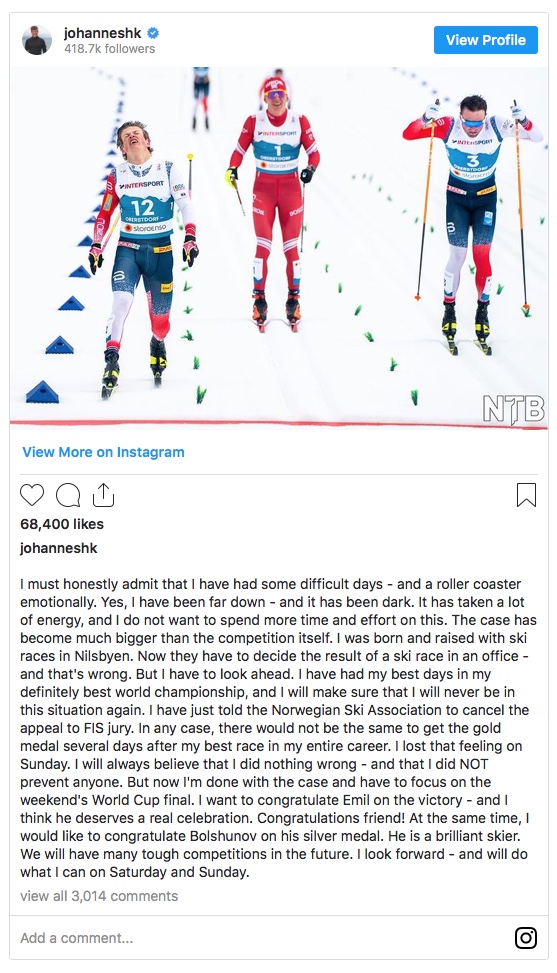
    I must honestly admit that I have had some difficult days – and a roller coaster emotionally. Yes, I have been far down – and it has been dark. It has taken a lot of energy, and I do not want to spend more time and effort on this. The case has become much bigger than the competition itself. I was born and raised with ski races in Nilsbyen. Now they have to decide the result of a ski race in an office – and that’s wrong. But I have to look ahead. I have had my best days in my definitely best world championship, and I will make sure that I will never be in this situation again. I have just told the Norwegian Ski Association to cancel the appeal to FIS jury. In any case, there would not be the same to get the gold medal several days after my best race in my entire career. I lost that feeling on Sunday. I will always believe that I did nothing wrong – and that I did NOT prevent anyone. But now I’m done with the case and have to focus on the weekend’s World Cup final. I want to congratulate Emil on the victory – and I think he deserves a real celebration. Congratulations friend! At the same time, I would like to congratulate Bolshunov on his silver medal. He is a brilliant skier. We will have many tough competitions in the future. I look forward – and will do what I can on Saturday and Sunday. 

    Emil Iversen remains the 50 k champion, Bolshunov the silver medalist, and Norway’s Simen Hegstad Krüger the bronze medalist. At these championships, Klæbo won the individual sprint, the team sprint with Erik Valnes, anchored Norway’s win in the 4 x 10 k relay, and placed fourth in the 30 k skiathlon.   

    For fans, this latest episode between two historic figures in cross-country skiing adds plenty of drama for the weekend’s closing distance races in Engadin, Switzerland – a 15 k mass start classic and 50 k skate pursuit. 


  • Trying to Catch-Up on the Whirlwind of World Cup News

    Trying to Catch-Up on the Whirlwind of World Cup News

    Val di Fiemme settles in for another year. The 2021 TdS final stage awaits. (Photo: NordicFocus)

    The Norwegian newspaper Dagbladet published a story Monday claiming the Norwegian Ski Federation would not send cross-country skiers to any remaining World Cups before the World Championships starting on February 23, in Oberstdorf, Germany. No official statement has been published by the Norwegian Ski Federation regarding a long-term Norwegian World Cup hiatus. Although, Dagbladet claims that is imminent.

    It appears the rationale for a total withdrawal from World Cup races through February appears premised on rules applied to those leaving Norway and traveling to a “red zone” (regions where rates of transmission are high). Upon returning to Norway from a “red zone”, travelers must quarantine for ten days. The new governmental guidelines were posted on December 4, and extend until January 15. Such a lengthy quarantine, some have suggested, could impact an athlete’s preparations for the 2021 World Championships. (It is FasterSkier’s understanding that skiing/training would be allowed during the ten-day quarantine.)

    According to the translated Dagbladet article, “The Norwegian Ski Association will not work to change the Norwegian quarantine provisions which in practice make it impossible to go international for Norwegian ski stars: The requirement for a 10-day quarantine with strict restrictions for training after a stay in so-called “red” countries, definitely puts Norway out of the World Cup.”

    “This means that the Tour de Ski goes without Norwegian participation and that no Norwegian skiers will in principle go to any of the World Cup races that will be held before the start of the World Cup in Oberstdorf on 24 February,” claimed Dagbladet.

    Dagbladet also reports that despite Norway’s pressure to reduce the number of races at the Tour de Ski, there was no compromise.

    Swedish broadcaster SVT Sport also published a piece noting that Norway, Finland, and Sweden had advocated for changes to the Tour de Ski schedule.

    “Sweden, Norway, and Finland wanted to see changes in the Tour de Ski’s structure. They wanted the tour to be decided in one country, in a maximum of one or two places, to reduce travel. But that will not be the case,” explained the translated SVT Sport article.

    Catching his breath while Norwegian flags are waved, Johannes Høsflot Klæbo takes the win in the 1.5-kilometer classic sprint during the 2020 Tour de Ski. (Photo: NordicFocus)

    The Norwegian Ski Federation has released a statement explaining their reasons for not partaking in the Tour de Ski.“The health of athletes and support staff is our most important priority,” says cross-country manager Espen Bjervig according to a translation of the press release. “The risk involved in exposing a squad to Covid-19 weighs heaviest in the decision not to participate in the Tour de Ski. The main goal for cross-country skiing this season is the World Championships in Oberstdorf, continuds the cross-country manager who is concerned with being the best possible preparation for the championship with healthy athletes and support staff.”

    FIS communicated Monday a statement clear in its intent, that the Tour de Ski goes on as planned: “Green light for FIS Tour de Ski,” was the FIS messaging.

    “The FIS Tour de Ski remains as scheduled and was given green light as all health prevention plans of the local organizers in Val Müstair (SUI), Toblach (ITA) and Val di Fiemme (ITA) were approved by the respective governments,” wrote FIS.

    In the FIS press release, the block quote below was attributed to Pierre Mignerey, FIS Cross-Country Race Director:

    “All stakeholders have the responsibility to keep the World Cup stage a safe place. Overall, the organizing committees have done extraordinary work to fulfill special needs and a healthy work environment for the World Cup family. The coordination between the organizers of the Tour de Ski stages and FIS has been transparent from the beginning and therefore we are looking forward to go ahead as scheduled.”

    Last week, it was reported that Norwegian star skiers Johannes Høsflot Klæbo, Emil Iversen, and Heidi Weng held serious concerns about the long-term adverse health effects if they were to contract the virus and the varying degrees of fidelity to the safety protocols in Ruka. Prior to Norway pulling away from the World Cup, Klæbo, Iversen, and Weng independently decided to take a break from international racing. Weng withdrew after the first race in Ruka; Klæbo and Iversen publicly announced their World Cup hiatus after the racing in Finland had concluded. 
    After the first World Cup weekend in Ruka, Finland, three leading cross-country ski nations, Norway, Sweden, and Finland, temporarily withdrew from the International Ski Federation (FIS) World Cup race series. The teams cited a lack of satisfaction with Covid-19 safety protocols in Ruka. FasterSkier is unaware of any positive Covid tests associated with the event, which also included Nordic Combined and ski jumping.
  • Norway Withdraws from December World Cups

    Norway Withdraws from December World Cups

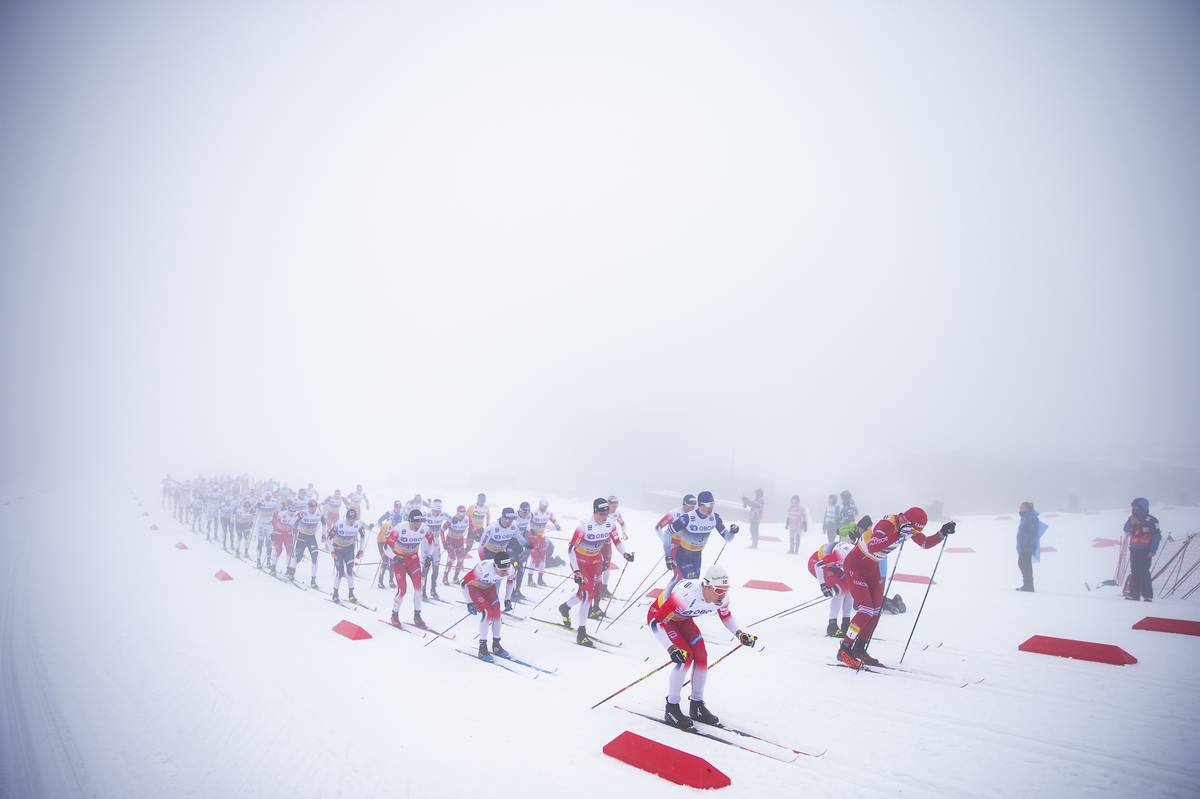
    The start of the 2020 Holmenkollen 50k. (Photo: NordicFocus)

    Norway is pulling athletes from World Cup competitions through at least the holiday break. This was widely reported Tuesday in the Norwegian press.

    The Norwegian race hiatus includes stops in Davos, Switzerland, and Dresden, Germany.

    “We do not know the consequences of infection in a fitness practitioner, who is dependent on good lung capacity, yet. Therefore, it has been the number one priority not to get an athlete infected, because it can ruin the season and possibly the career,” said Norway’s Cross-country manager Espen Bjervig to Norwegian broadcaster NRK.

    For now, NRK is reporting that Norway’s Ski Federation has not committed to sending athletes to the Tour de Ski, which begins on January 1. NRK writes, according to a translated article,”The Norwegian Ski Association adds that there are no plans for Norwegian participation in the Tour de Ski as the situation is now.”

    FS will update with any new information.


  • The Sun Has Set: Norway’s National Cross-Country Team Experiences Deep Financial Cuts

    Athlete training in Lillehammer, Norway
    prior to the FIS World cup. (Photo: NordicFocus)


    On Tuesday morning, the Norwegian Ski Federation (NSF) and announced a new sponsorship agreement, set to begin on 1 May. Sparebank will remain the federation’s title sponsor for 10 million kroner, approximately US $950,000. It’s a two-year agreement with an option for a three-year extension.

    The amount is a reduction from the 15 million kroner (US $1,416,750) in the previous contract.

    Norwegian Ski Federation Logo

    The new deal comes at a time of uncertainty as global economies sputter due to the coronavirus pandemic. In part because of the economic crisis and partly due to sponsorship losses, the NSF slashed its 2020 budget by 50 million Norwegian kroner, approximately $4,800,000. On Friday, the federation issued a press release published by langrenn.com announcing a layoff of 96 employees, two-thirds of its workforce. The remaining workers have taken pay cuts as they cope with a changed financial landscape.

    Before Christmas, Sparebank and the federation had ceased sponsorship discussions. According to langrenn.com, “a few weeks ago” negotiations resumed. 

    With reduced funding, the national team athletes will lose their annual training stipends of 120,000 kroner. Stars such as Johannes Hosflot Klæbo and Therese Johaug may not be affected by this loss, but it could be significant for other athletes.

    In the new agreement, Sparebank retains prime space on athletes’ headgear, but little else. Previously, sponsorships were organized top-down: Norwegian athletes had to sign a non-compete agreement covering around 80 different brands, with only minor opportunities to procure their own sponsorships.

    With the loss of the stipend, athletes are free to find their own sponsorships. Marketing themselves may enter into the work-life-training balance.

    “They have the opportunity to [recoup the lost stipend] by going out and selling themselves,” said Espen Bjervig, the federation’s cross-country manager. “It may not be the best timing the way the market is now. But I think the athletes have a strong foundation especially locally. In addition, the clubs of the athletes may also have the opportunity to use their sponsorship on the athletes,” said Bjervig to NRK. “But if there are athletes who are struggling to get sponsors, then we will see what we in the Ski Association can help with.”

    Veidekke, a prominent civil engineering company, also ended its sponsorship of the ski federation. In an article on the Finnish outlet is.fi, Helge Dieset, Veidekke’s communications director, said that the company had decided to cease sponsorship at the end of the year, before coronavirus.

    Along with 13 other businesses, Veidekke had been a co-sponsor, a tier below the title sponsor. They sponsored not only the national sprint team: some of their money supported the federation’s five regional development teams.

    Even before the current budget crisis, team management had already intended to reduce the size of the national team, due to reduced quotas on the World Cup and in the Olympics. 

    In the linked article, former Norwegian skier and current cross-country analyst on Norwegian television, Petter Soleng Skinstad speculated that veteran athletes might be the first to feel the axe: “Probably it is first and foremost established top runners who will disappear out of the A team.”  

    As the federation sorts out its future, athletes are training individually. According to Ski-Nordique.net, national team training camps had already been postponed until July at the earliest.

    Before the new deal with Sparebank, Håvard Solås Taugbøl, of Lillehammeer SK, told Ski-Nordique, “This is a very critical situation. We hope that another sponsor can come and help [the] regional teams, which are so important for the development and motivation of young people.” In 2020, Taugbøl earned three World Cup sprint starts.

    With the layoffs announced last Friday, “The goal now is to take quick enough measures to secure jobs so that we can resume normal operations and continue as normal as possible when this is over,” said NSF secretary general Ingvild Bretten Berg. “We have talented and committed employees in [NSF]. In a difficult time not only for us, but also for many around us, it is important to take care of each other as best we can.”

  • The Devon Kershaw Show: Out of Quarantine and a Dive into the News Cycle

    The Devon Kershaw Show: Out of Quarantine and a Dive into the News Cycle


    Kershaw is free from quarantine and back at home in Lillehammer. As we all know, the race season has been shut down. That means it’s time to discuss news items of note. Like…the “flexing” of some skiers as they ski an un-godly number of kilometers, Stina Nilsson’s switch from cross-country to biathlon, the Norwegian Ski Federation’s financial crisis, and, the retirement of Norway’s Eirik Brandsdal.

    (The U.S. Ski Team’s Erik Bjornsen also announced his retirement via Instagram. That news broke after we recorded the show.)

    **And, yes folks, you’ll hear some explicit content in this episode**…around the 30:30 mark.

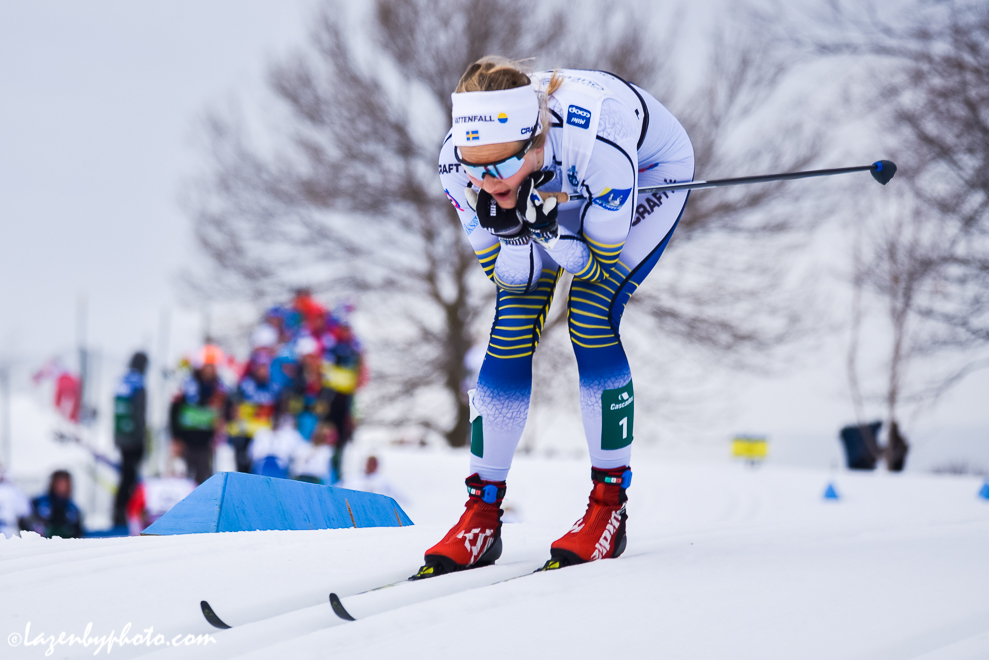
    Sweden’s Stina Nilsson tucking during the 10 k mass start classic in Québec City. (Photo: John Lazenby/lazenbyphoto.com)


    Norway’s Eirik Brandsdal (2) crossing the line first for his first World Cup victory in two years in the men’s 1.2 k classic sprint on Wednesday at the last World Cup classic sprint of the season in Drammen, Norway. He beat out fellow Norwegian Johannes Høsflot Klæbo (l) and Russia’s Sergey Ustiugov (10), respectively, for his first win since the 2015 Drammen classic sprint. (Photo: Fischer/NordicFocus)

    Thanks for listening and we hope all of you are doing ok out there.


  • Norway out for North American World Cups due to Covid-19 Precautions

    According to several news reports, including a story from Norwegian Broadcaster NRK, the Norwegian Ski Federation has pulled its World Cup team from competing at the upcoming North American series of World Cups.

    “It is a total assessment of the situation we see in Norway and the rest of the world. We do not want to contribute to more infection,” cross-country manager Espen Bjervig told NRK according to a translation.

    It was also announced on Tuesday that the Norwegian Birkebeiner has been cancelled.

    This is a developing story.

  • International News: Norway Bans 16 & Under Fluoro Use, Ustiugov Breaks Thumb (Updated)

    International News: Norway Bans 16 & Under Fluoro Use, Ustiugov Breaks Thumb (Updated)

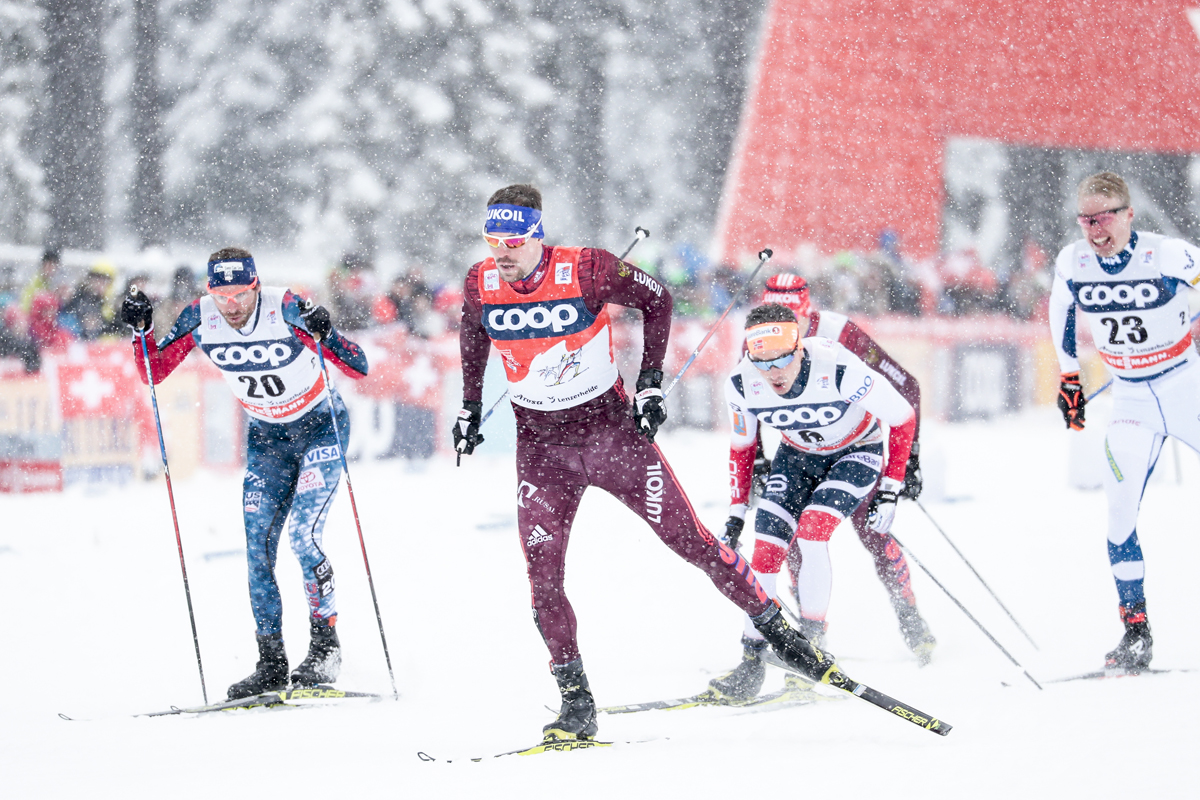
    Russia’s Sergey Ustiugov (front) leads American Andy Newell (20), Norway’s Finn Hågen Krogh, Russia’s Andrey Larkov (behind Krogh), and Finland’s Iivo Niskanen in Quarterfinal 1 of the Tour de Ski 1.5-kilometer freestyle sprint on Saturday in Lenzerheide, Switzerland. Krogh won that heat, Ustiugov finished second, Larkov was third, Newell fourth, and Niskanen fifth. Ustiugov went on to win the men’s final while Krogh placed fifth overall. (Photo: Fischer/NordicFocus)

    This article has been updated to include quotes from Torbjørn Skogstad.

    Here are a few international news items of note:

    According to an October 21, press release from the Norwegian Ski Federation, fluorinated wax products are banned from all race classes up through the age of 16. The decision came down from the federation’s Cross-Country Committee and will be enacted this season.

    The no-fluoro policy will be enforced by testing skis for fluorinated products.

    “We will use a tape under the athlete’s ski before start,” Torbjørn Skogstad, chairman of Norway’s Cross-Country Committee, wrote in an email. “Then we will send the test-tape to a laboratory in Germany. After a week or so we will get the results from Germany weather there is fluoro on the sole to the ski. This test will be done in cooperation to a Norwegian company called NILU.”

    Testing will occur on the day of competition. Positive results will be communicated approximately a week after testing to clubs and individuals in violation of the fluoro ban. 

    A positive test for the use of fluorinated wax in the specified age group categories carries with it no penalty. “The ban is based on trust,” Skogstad said, according to a translation of the press release.

    “There are several reasons why we don´t want sanctioning towards the athletes,” Skogstad wrote to FasterSkier. “First we are talking about children up to 16 years old and most of them are not preparing their own skis before a race. Second, this method for testing is still developing. As long as we don´t have a method that immediately can give us a result of the test, we think it will be wrong to punish the athlete a week after the competition.”

    From Russia, the website skisport.ru reports that Sergey Ustiugov is at risk of missing the opening World Cups due to a broken thumb. Ustiugov reportedly injured his thumb while rollerskiing in Val Senales, Italy.

    As of press time, Ustiugov was scheduled to have surgery in Moscow. The Russian skier is a two-time gold medalist at World Championships and the 2017 Tour de Ski overall winner. Ustiugov was banned from the 2018 Winter Olympics.


  • Norway’s New Junior Coach, Former SMU Runner Monika Kørra

    Norway’s New Junior Coach, Former SMU Runner Monika Kørra

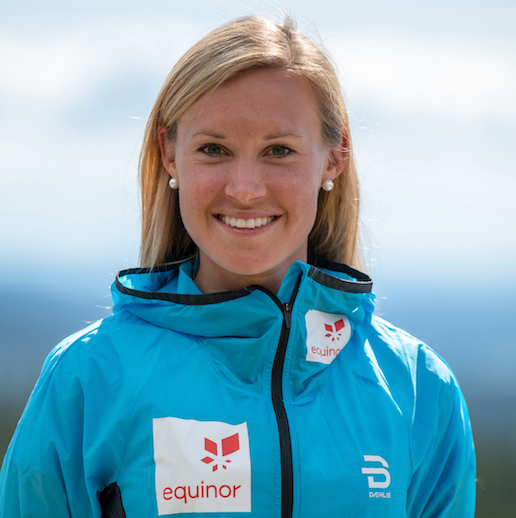
    Norway’s new National Junior Team Coach Monika Kørra. (Photo: skiforbundet.no)

    In early August, Norwegian Monika Kørra was named Norway’s national junior team coach, an under-the-radar, nordic news event that resonates. Kørra, a 29-year-old accomplished runner and cross-country athlete in Norway, comes to the job with an undergraduate degree from Southern Methodist University in Dallas, Texas, and a master’s in coaching and sport psychology, which she completed in Oslo this summer.

    Kørra’s primary athletes are 12 junior skiers (six boys and six girls) that comprise Norway’s National Junior Team. Organizing camps, writing training plans, coordinating with an athlete’s club coaches, and competition travel are just a few of Kørra’s primary responsibilities. Like any coach, she’ll be the travel agent, psychologist, ski organizer, and team motivator.

    Kørra is also a trailblazer along with Brit Baldishol, a longtime Norwegian Ski Federation coach and now the federation’s ski development manager. Baldishol has been employed by the federation since 1999.

    Norwegian junior team coach Monika Kørra speaks at a recent Norwegian Ski Federation conference. (Photo: Ørn Borgen/NTB scanpix)

    “Until I was hired, Brit has been the only female coach at the higher level within skiing in Norway,” Kørra told FasterSkier in a phone interview. “And now with this position, I am the only one. The only female.”

    Baldishol, having been immersed in Norway’s ski culture for decades, understands change can be slow.

    “It is not equal yet,” Baldishol said of the dearth of female coaches at the elite level in Norway. “We started because I have been the junior national coach before so I know about that position. I know we can do this and our teammates can do this job. It is not that you can do a better job because you are a male. It depends on what you are looking for. For us, I think it is more important that we look for a coach that can be a good coach for different types of athletes.”

    Kørra posited that women may have been reluctant in the past to take on demanding coaching positions due to the travel demands and an emphasis placed on technical ability.  

    “I think is what we value the most about the coaches in skiing is more the technical side of things,” Kørra said. “The way I see it is that to work with people, to see all the people, you need to be able to really communicate with them. The more feminine qualities in coaches might have been maybe not valued as much as the technical side.”

    Baldishol emphasized that Kørra comes into a stable system with well-established technical norms to develop athletes.

    “This is a job we have done for many years and we have this book we use for all the coaches that tells about the philosophy and what is important in Norway for being a good athlete and what we believe are the proper steps,” Baldishol explained. “We do not take shortcuts, but take it step by step for how to develop.”

    Despite the time-worn and successful pathway, Norway felt a need to broaden leadership opportunities for women in skiing. Last winter, it launched a three-year mentorship program called “Skiing Leaders of Tomorrow”. Kørra was part of the initial mentee group.

    “They selected 20 women to attend this program to help them reach their goals, to become leaders in the form of trainers or coaches within an organization,” Kørra said.

    Baldishol, who serves as a mentor in the “Skiing Leaders of Tomorrow” program, revealed that Kørra, early on, stated she aspired to become Norway’s national junior coach.

    “When this position was announced, she had to apply because everybody expected that she would apply for this job,” Baldishol recalled. “And she did it. She went all the way because she had great interviews. But we started this program because we need to have more female coaches to believe that they can have this as a full-time job.”

    Monika Kørra during her SMU running days (Photo: SMU Athletics)

    Growing up in Løten, Norway, Kørra became an exceptional summer and winter athlete as she matured. Her running times gained the interest of major collegiate track and field programs in the U.S., and she was offered an athletic scholarship to Southern Methodist University (SMU) in Dallas. She accepted and specialized in the 3,000-meter steeplechase, 10 k and 5 k.

    “I think what drew me to the U.S. was how I was able to combine sports with school and how I saw that everyone was having a great time as a team in the U.S.,” Kørra said. “Within the running community in Norway, it is not that much of a team sport, it is more individual. That was the thing that drew me to the U.S. to run. And I had a great time, time of my life in the U.S. I don’t regret that for one second. It was a great experience.”

    Kørra’s perspective on life goes well beyond sport. During her freshman year at SMU, she survived a horrific sexual assault and later wrote a book about it.

    But she separated that moment from the rest of her experience living in Dallas. According to an ESPN article written about her in 2012, she loved both the school and the city.

    Kørra told FasterSkier that she discovered a team ethos at SMU that she’ll apply in her role as a national-level coach.

    Although still a daily runner or skier depending on the season, Kørra gravitated towards ski coaching.

    “I loved how in skiing … you have all types of people, all types of body types, that can race well when they are skiing,” Kørra said of how she chose skiing. “And that is one thing that fascinates me is how different people can still be good at something.”

    Norway certainly expects podiums, medals and meteoric nordic stars. That is the unrelenting pressure from the federation and the nation. When speaking with Kørra, her commitment to the whole person when considering her athletes became clear. Her core values transcend medal count. She emphasized her duty to foster adults who themselves contribute beyond just fast splits on the ski tracks.

    “I think one of the most important things are my values, what I stand for,” Kørra said of her coaching philosophy. “How I focus on the fact that I want to help these athletes grow as people as well as athletes, and the way that I might choose to see everyone and I want to help everyone. I think there is a lot about my background and experience that I bring along to the job and how I love coaching. I live for it. I breathe for it. … I think I show that in coaching, and I think people value that.”

  • How Blinkfestivalen Began and Where It’s Headed

    How Blinkfestivalen Began and Where It’s Headed

    Racers crest a hill at the 2018 Blink rollerski festival in early August in Sandnes, Norway. (Photo: Axelar / Arild Aarnes / Skifestivalen Blink Facebook)

    In 2005, Norway’s government-owned broadcasting network, NRK, lost production rights for its national football league. In search of a new program to air in place of summer soccer games, NRK, which still held broadcast rights for biathlon and cross-country skiing, approached the Norwegian Ski Federation and the Norwegian Biathlon Federation with a question: Could they find an organizer willing to create a large summer event encapsulating the winter sports of biathlon and nordic skiing?

    NRK’s answer came in Arne Idland.

    Idland was serving as the team manager for the Norwegian Biathlon Federation at the time and had planned to finish his term that same year. The 2006 Winter Olympics had just wrapped up, and Idland was ready for a change.

    Before stepping out of his role with Norwegian Biathlon, Idland become the chief of sport for Norway’s Blink Ski Festival, known as Blinkfestivalen.

    “I spent my last months in the biathlon federation just thinking about Blink,” Idland said in a phone interview.

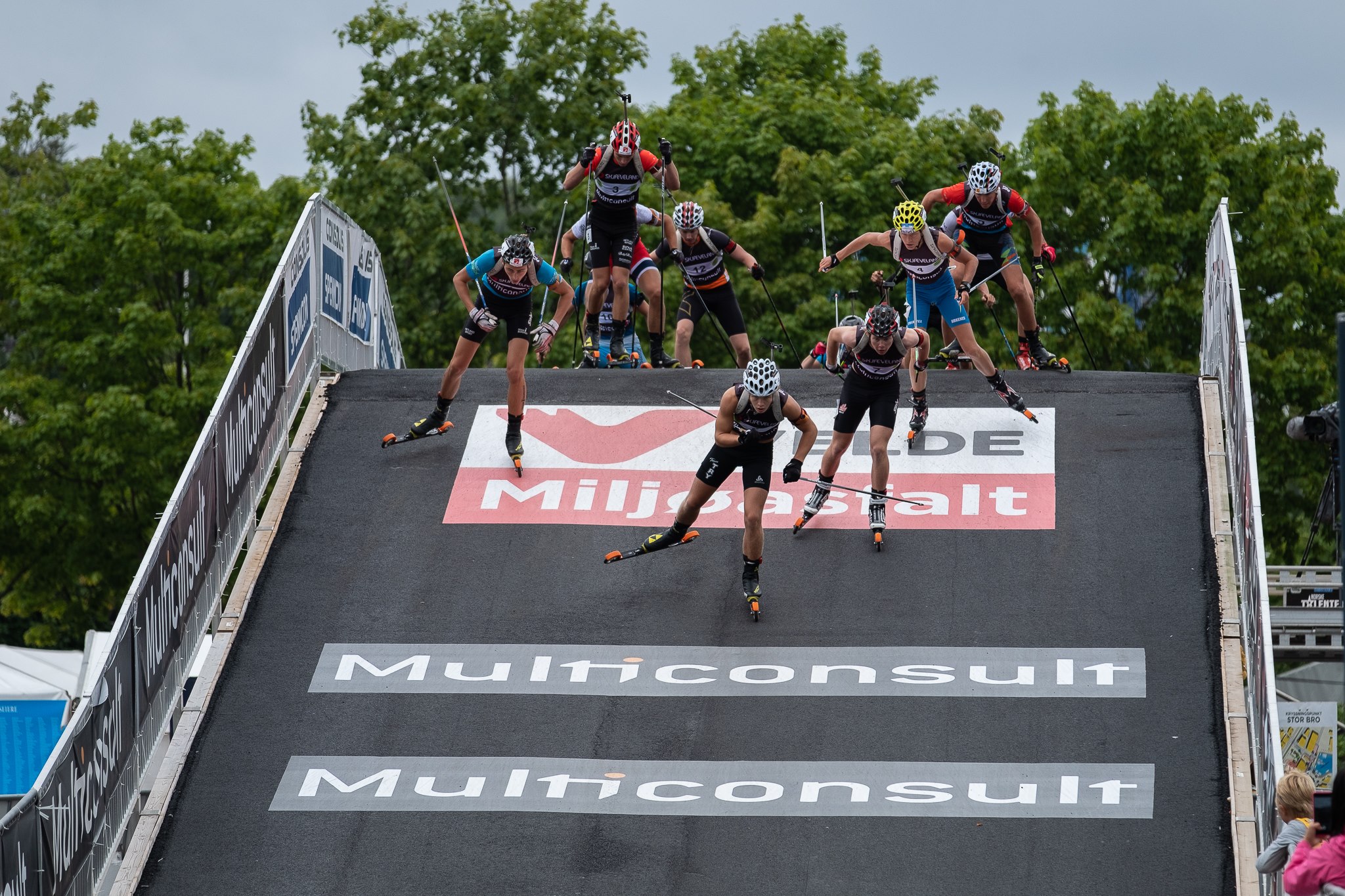
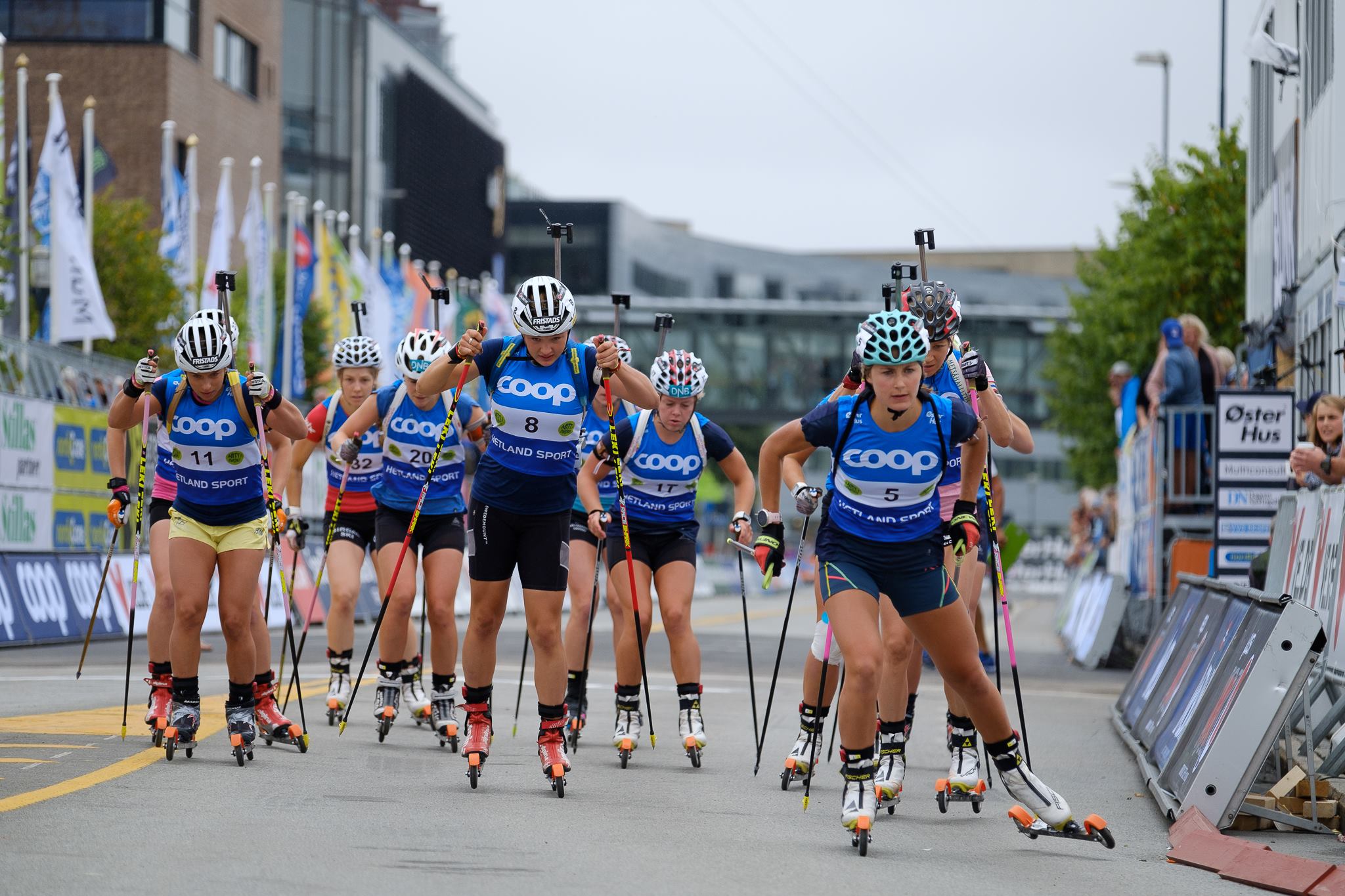
    Biathletes racing in downtown Sandnes, Norway, during the 2018 Blink Ski Festival in early August. (Photo: Axelar / Arild Aarnes / Skifestivalen Blink Facebook)

    Originally from the city of Sandnes himself, Idland said he chose the municipality as a host city for Blink because, at the time, Sandnes “had no big events.”

    Since its inception in 2006, Blink has grown, becoming a premier international rollerski event. Organizers spent a grand total of 23 million Norwegian Kroner (about $2.75 million U.S. dollars) on this year’s Blink rollerski festival. That’s up from approximately 6,000,000 Norwegian Kroner (nearly $720,000 U.S. dollars) in its inaugural year.

    Even with the high price tag, Idland indicated that everything at Blink — entry, exit, and post-event concerts — are free. An estimated 70,000 thousand spectators attended Blink, and not one paid to get in.

    “That has been maybe one of the major key factors to our growth and our success,” Idland said. “Everything is free. We even have free concerts. No tickets to come in and that is the same today as it was at the start. Everybody can come and go just as they want.”

    But how has the city been able to sustain a “free” and accessible race to the public? Sponsors, Idland explained. Through their financial backing, Idland and three others staff members are paid to work full time, year round on Blink.

    When festival time rolls around, local cross-country and biathlon clubs near Sandnes pitch in to organize the multi-day event. And their time is paid. About 600 club members worked at this year’s Blink, and in total, were paid 750,000 Norwegian Kroner (about $90,000 USD).

    “That’s the most important income on an annual basis for the clubs,” Idland said. “It’s also a window to show all the people the sport and to get young kids and youth to start with biathlon and cross-country.”

    Much of Blink revolves around the concept of sport promotion, as opposed to pulling in dollars.

    “One major thing with Blink is that Blink is open for everybody,” he said.

    The festival not only includes an elite race series, but also junior and youth categories in both the biahtlon and cross-country divisions. Idland estimated that 3,000 children participated in Blink camp activities this year and 1,200 juniors entered Blink competitions. Last week, athletes from Russia, Italy, France, Sweden, Great Britain, Finland, Canada, and the U.S. made the trek to Sandnes to participate.

    “We have everything from — maybe you are four years old trying rollerskis for the first time — up to the athletes like [Martin Johnsrud] Sundby and [Therese] Johaug and the other big names,” Idland said. “It’s not only a show for the big stars. It has been important both for the development of the Norwegian Ski Federation and also for the youth and juniors.”

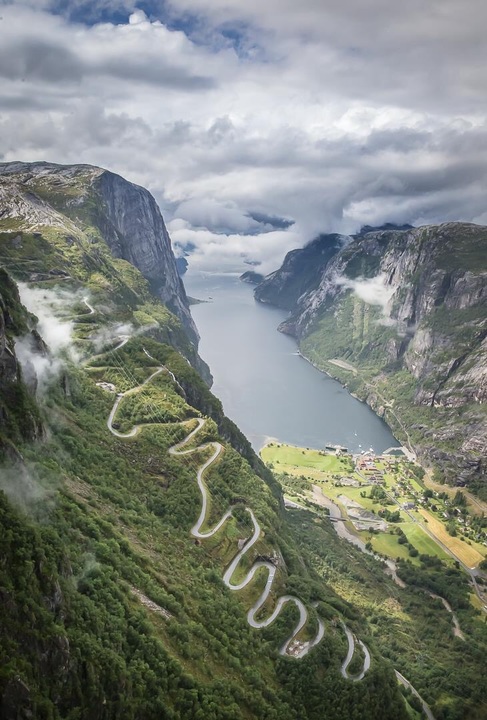
    The 7.5-kilometer race course for the Lysebotn Opp, an annual hill climb at the Blink Ski Festival in Lysebotn, Norway. (Photo: Blink Ski Festival/ Facebook)

    As Blink looks to develop Norwegian skiers, it also continues to develop its race series program. In 2010, organizers added the Lysebotn Opp uphill race, which begins in the fjord town of Lysebotn before climbing 640 meters above sea level.

    Three years ago, they introduced the Blink Classics distance races, which were 50- or 60-kilometers long for elite women and men, starting in the city center of Ålgård and finishing in Sandnes.

    Organizers have also been keen on safety for the high-paced rollerski events on asphalt. Few of its courses feature any steep downhills, all of its courses are fenced off to spectators, and every competitor must use the same speed of rollerskis. This year, Blink provided 1,000 unused rollerskis for racers. Next year they will do the same, with even slower wheel speeds, set to the same speed.

    “So next year we will use IBT 4, which are the slowest skis we have,” Idland said. “That is mainly for the safety, but also we also want the strongest athletes to win. The slower rollerskis you have, the more similar it is to winter time.”

    Winter is not something Blink hopes to compete with, Idland said. Climate change, however, may moot that point.

    “We do not want to become a threat to the traditional skiing on snow,” Idland said. “But … the winters get a little bit shorter and maybe also have to go a little further up in the mountains to find the snow, so I think rollerskiing will become more and more important as a supplement for skiing. Not instead of skiing, but maybe you do more rollerskiing.

    “We do not want to be a threat to the FIS World Cup either,” Idland continued. “We can play along with both FIS and the IBU. If at one time in the future there should be an interest that they would do something together with Blink, we would of course sit down and have a discussion with the FIS and the IBU.”

    Hopefully, that future interest is one made by choice.

    ***

    Related: Blink Ends with Jam-Packed Friday/Saturday | 2018 Lysebotn Opp | 2018 Blink Classics

  • Nordic Nation: The ‘Take a Bow’ (50th!) Episode with Marit Bjørgen

    Nordic Nation: The ‘Take a Bow’ (50th!) Episode with Marit Bjørgen

    The stats are simply mind-boggling. Essentially, Norway’s Marit Bjørgen has the mostest. The most decorated Winter Olympic medalist: 15 total medals, eight gold, four silver, and three bronze — over five Olympiads from 2002 to 2018. The most World Championships bling: 26 total medals, 18 gold, five silver, and three bronze. Bjørgen won 114 individual World Cups and podiumed 184 times on the World Cup.

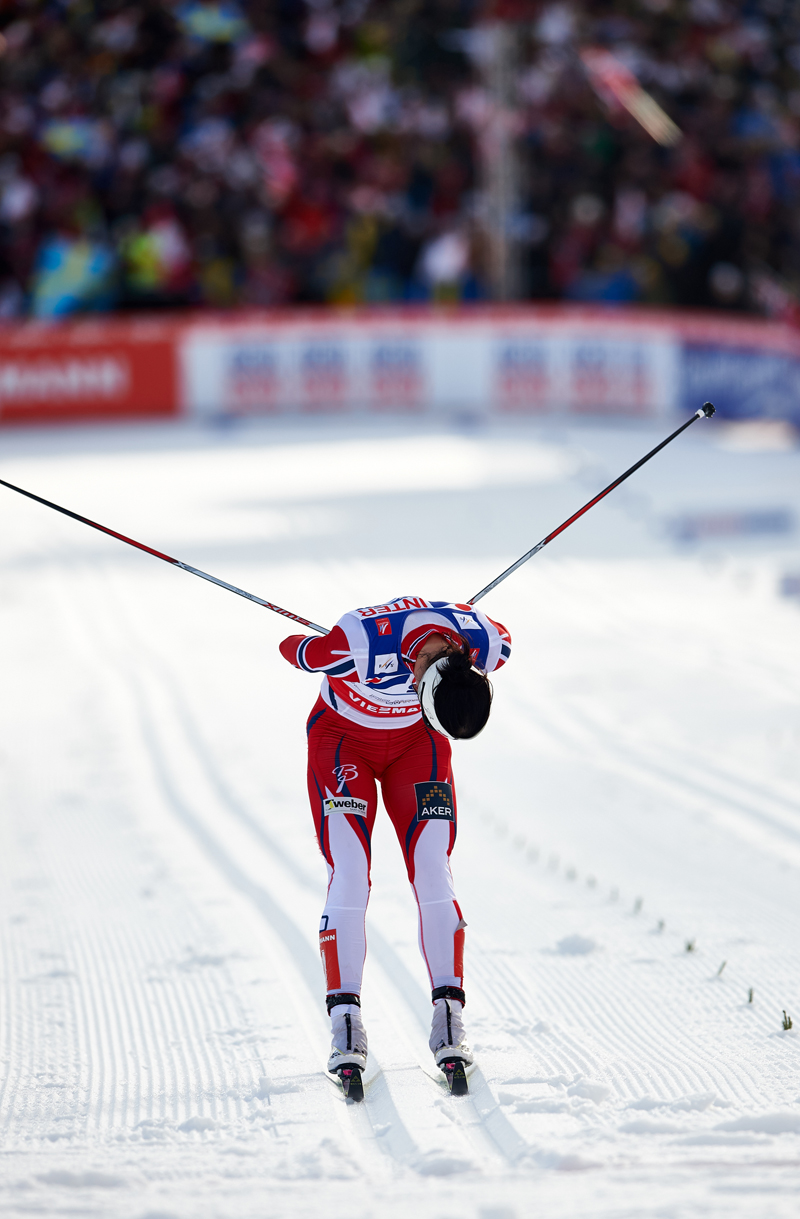
    Take a bow. Marit Bjørgen of Norway winning the 30-kilometer classic mass start at 2015 World Championships in Falun, Sweden. (Photo: Nordic Focus/Fischer)

    Maybe something more sentimental for the core Norwegian fan, this past March, Bjørgen won a record seventh Holmenkollen 30 k. And she won that in un-Bjørgen like style by coming from behind to reel in a speedy Jessie Diggins.

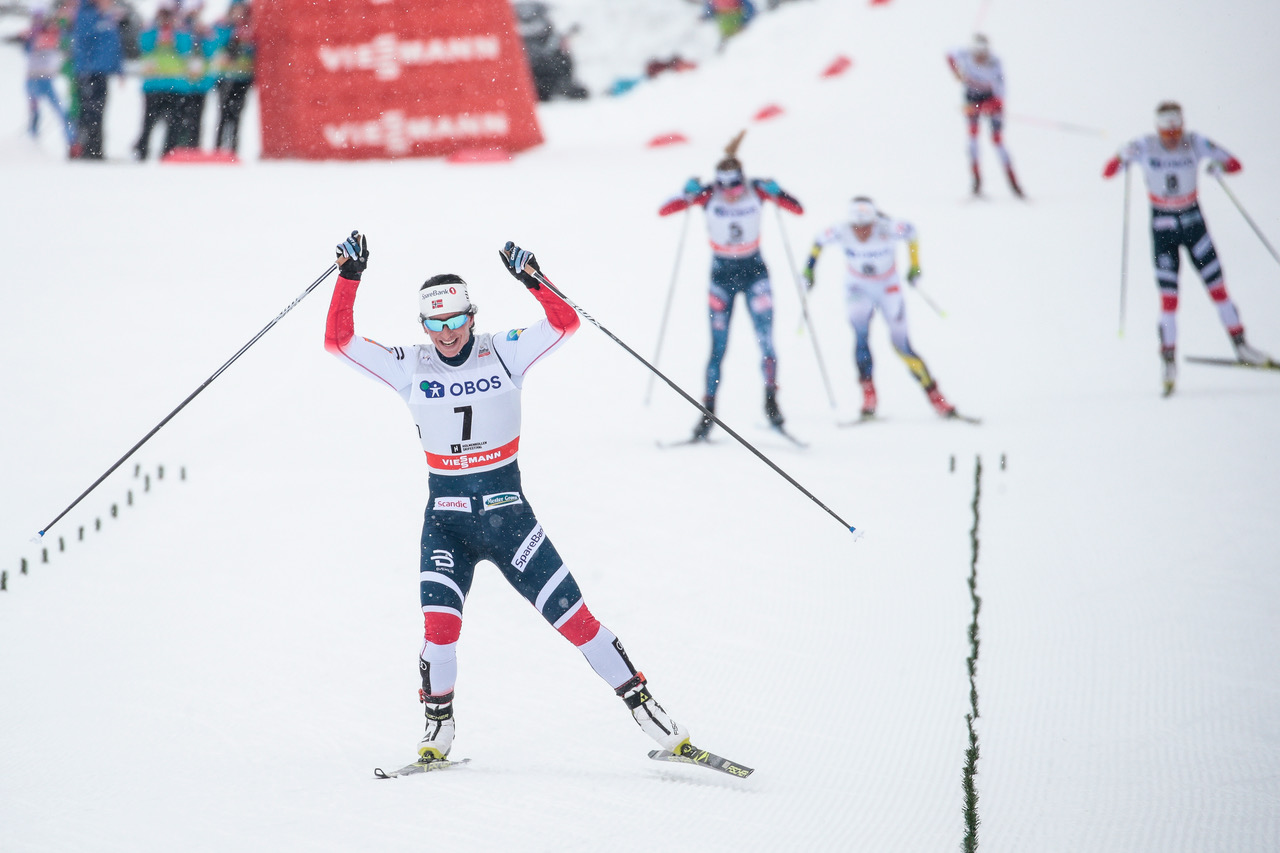
    Norway’s Marit Bjørgen celebrates her seventh Holmenkollen 30 k victory in Oslo, Norway, ahead of American Jessie Diggins, Norway’s Ragnhild Haga (not shown) and Sweden’s Charlotte Kalla. (Photo: Fischer/NordicFocus)

    This brings us to the point that this is the 50th episode of Nordic Nation. So, we wanted to go big. Really, no one is bigger than Bjørgen in the sport. In this ‘Take a Bow’ episode with Marit, we cover motherhood, training, racing, the media, and growing up in a small Norwegian club with three racers. The newly retired Bjørgen, 38, was interviewed last Tuesday, July 10.

    Enjoy.

  • A New Dawn for Diggins: Learning to ‘Do it for myself’

    A New Dawn for Diggins: Learning to ‘Do it for myself’

    Jessie Diggins (U.S. Ski Team) loving on her Salomon boards after placing second in Tuesday's 10 k skiathlon at Stage 3 of the Tour de Ski in Oberstdorf, Germany. (Photo: Salomon/NordicFocus)
    Jessie Diggins (U.S. Ski Team) loving on her Salomon boards after placing second in Tuesday’s 10 k skiathlon at Stage 3 of the Tour de Ski in Oberstdorf, Germany. (Photo: Salomon/NordicFocus)

    A little more than four years ago, a group of women clad in all black race suits and bib 3 huddled in an athlete warming room. The muffled voice of an announcer speaking in Swedish could be heard broadcasting outside, an English translation relaying the same message: 10 minutes to start.

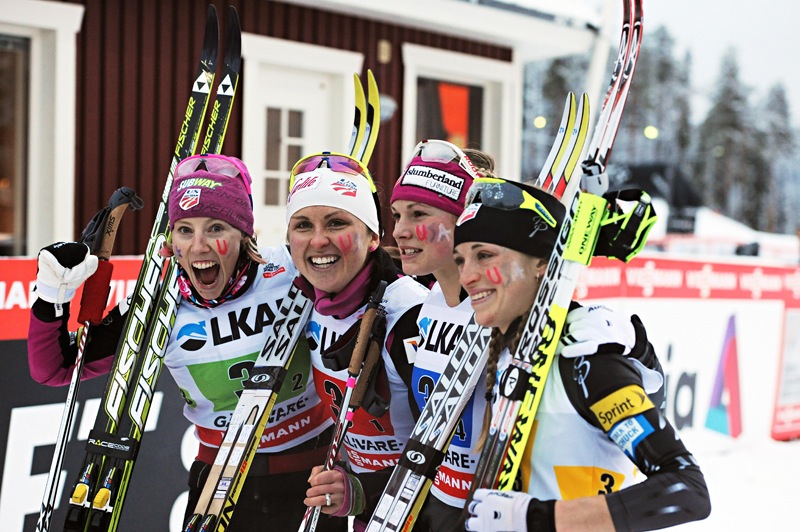
    The quartet departed the building, four blondes — one highlighted pink — headed for the start gate. A pass through a patch of sunlight revealed a second similarity. Cheeks swiped in sparkles, artwork courtesy of the then and now, youngest U.S. Ski Team (USST) A-team member, Jessie Diggins.

    Diggins would go on to anchor the team in what became a historic cross-country World Cup relay for the U.S. — it was the first time an American women’s team reached the podium, with the group finishing in third overall.

    The U.S. women (l-r Kikkan Randall, Holly Brooks, Jessie Diggins, and Liz Stephen) after their first ever World Cup relay podium in November 2012 - the team is confident they can get back. (Photo: Fischer/NordicFocus)
    The U.S. women (l-r Kikkan Randall, Holly Brooks, Jessie Diggins, and Liz Stephen) after their first ever World Cup relay podium in November 2012. (Photo: Fischer/NordicFocus)

    It could be said that the game-face glitter and a give-it-all relay leg performance from Diggins was the kickstarter of her World Cup career.

    For the next few years, team races such as the above, would become some of the Afton, Minn., native’s favorite, and arguably, better performances. Her first individual podium came almost exactly a year ago at the 2015/2016 Tour de Ski.

    “For years, I would pull out these awesome performances on relay day and I was like, ‘Oh my God, where did that come from?’ ” Diggins said during a phone conversation in November.

    Now, at 25 years old, Diggins has reached the World Cup podium 13 times. Of the eight individual podiums, six occurred last season. The other two more recent: her win in the 5 k freestyle race last month and her second place finish  in Tuesday’s Stage 3 skiathlon in Obsterdorf, Germany.

    With close to five years of World Cup racing now under her belt, Diggins explained that while her love for team racing and facepaint has not changed, her mental approach toward individual races has. Part of the difference stemmed from her discovery that her individual effort is no less important than the one she puts forth for the team.

    “I finally realized it’s OK to race that hard in an individual race, too,” she said. “Like that doesn’t make me a bad person for wanting to do it for myself and for my hometown and for all the people cheering for me.”

    That said, Diggins is not bent on lining up and looking for the win at the start of every ski race this season. Her focus, as she indicated, will be where it matters: the Tour de Ski — which she currently ranks fifth in — and 2017 World Championships in Lahti, Finland.

    “You’re not going to be able to race to the point of being barely conscious 40 times,” Diggins said, predicting that, if this season matches last year’s competition count, she’ll probably tackle close to 40 ski races. “I’m going to get ready for the big races, like the tours, World Championships, the ones that are the most important to me.”

    Left to right: American Jessie Diggins along with Norway's Kari Øyre Slind and Ragnhild Haga after a strength training session with the Norwegian Ski Federation this summer. (Photo: Roar Hjelmeset)
    Left to right: American Jessie Diggins with Norway’s Kari Øyre Slind and Ragnhild Haga after a strength training session with the Norwegian ski team this summer. (Photo: Roar Hjelmeset)

    A firm believer in the role every individual plays within the team structure, Diggins described her part within the women’s USST as that of a “spark plug.” While some individuals show strength in race analytics, others psychological breakdown, hers comes as enthusiasm for the sport itself, which includes her signature sparkles.

    “You know, everyone has very unique skills that they bring to the table and mine is energetic optimism,” Diggins said. “I’m kind of the cheerleader of the team, if you will, covered in glitter. My job is to make the team, get people excited about what we’re doing.”

    Diggins does her job well. As an athlete ambassador for Fast and Female, once again aiding with the ‘dance and endurance’ station at this fall’s annual event in Park City, Utah, she acted as inspiration for more than 160 girls in attendance.

    Her enthusiasm for the sport is also proactive. Before last season came to a close, she approached the Norwegian women’s head coach at the time, Egil Kristiansen, at the Ski Tour Canada, proposing the notion of her joining his Norwegian team for a summer training camp.

    Three months after her conversation, Diggins received an email from Norway’s new women’s head coach, Roar Hjelmeset, listing training camps she could attend.

    “If you want to be the best, why not go train with the best?” Diggins said of why she chose Norway.

    With many of the Norwegian women a similar age as herself (to include some of Norway’s leading talent: Heidi Weng, Maiken Caspersen Falla and Ingvild Flugstad Østberg), and the potential of racing alongside these same athletes for the next few years, Diggins also saw an opportunity to create connections as more than just competitors.

    “If you want to be the best, why not go train with the best?” — Jessie Diggins on spending a week training with the Norwegian national team

    “Why not make good friends and have a coffee buddy in between races on the World Cup?” Diggins said. “I love making friends and learning more cultural things. It’s about more than just skiing, I guess, for me.”

    Her time in Norway gave her more than just a few extra World Cup coffee buddies. She was also able to compare notes on Norway’s training strategies with those of the U.S. What she found was, surprisingly, there were no big secrets. Much of the training she did with the Norwegians mirrored work she’d  done at camps on North American soil. 

    “The training we did over there in Norway was almost identical to what we did at our Bend camp,” Diggins said of the U.S. Ski Team’s annual spring camp. “We just need to believe in ourselves as a nation and know that eventually we will get there too.”

    It wasn’t that her Norwegian counterparts were doing more intervals than what she was used to or even longer. What it did come down to, according to Diggins, was the complete conviction with which they approached their training plan, even if it meant doing less than others around them.

    “They go into every workout with this awesome confidence, like what I’m doing today is the right thing for me and it’s going to make me faster and I’m going to kick ass,” Diggins said. “It’s just a really good mindset I really admire.

    “It’s really hard because a lot of us are wired in that more, more, more, more is better,” she added. “It’s my job to train, so I’ll just train a ton. But it doesn’t always make you faster, unfortunately. Or else it be super easy and we’d all be winning World Cups.”

    As she continues to become a regular podium contender and challenger of Norwegian names, Diggins proves that the trust she has placed in her training is not to be taken lightly. With another individual win added to her first one from last year, Diggins doesn’t doubt her ability do it for herself or her team. 

    “Last year was a big confidence boost,” she said. “Now [coming into this season], I know that I can do it, because I’ve done it before.”

    ***

    We asked Diggins to give our ’17 Questions for 2017′ a go. Here are her responses:

    1. Biggest change in your life in the last five or so months since the ski season ended?

    Not a whole lot has changed! I’m still a ski bum living out of my suitcase, and the longest I’ve been in one place was 3 weeks in a row. I guess the biggest change is that I can now pack up my life in under an hour (yep, I clocked it).

    2. Biggest change in your training?

    I’m still slowly getting better at finding the line between training a lot and recovering from it before moving on, and paying a lot of attention to how I’m feeling day to day is something that’s helped me a lot over the past year.

    3. Major areas of improvement you’ve seen so far?

    Classic technique! I’ve been putting a lot of work into classic over the years and I’m finally feeling as comfortable striding as I am skating. I can’t believe I just wrote that.

    4. Whom you’ve been working closest with this offseason (coaches or training partners)?

    I work with a lot of people! Jason Cork has been my personal coach (and tech!) for a looooong time, and I also train and work with the USST coaches and athletes. I spend the summer bouncing between USST camps and living and training with my teammates at SMS and our SMS team coach, Pat. Basically, I love working with everyone. I even got a special trip to Norway to train with their National team girls, and I had such a great camp with them. I firmly believe that the more we can get together and help each other get better and faster, the better everyone will be!

    5. Best trip in the last five months (and why)?

    I have a serious thing for New Zealand. We had another amazing training camp there this August, and I love everything about that country! The training was amazing with 35km of groomed trails, the food was spectacular, the views were inspiring and the people were super friendly.

    6. Favorite cross-training?

    I like long adventure runs. Point to point, NOT out and back, please.

    U.S. Ski Team A-team member Jessie Diggins (r) with her boyfriend, Wade, during a trip to Winnipeg, Canada this summer. (Photo: Jessie Diggins)
    Jessie Diggins (r) with her boyfriend, Wade, during a trip to Winnipeg, Manitoba, this summer. (Courtesy photo)

    7. Favorite non-athletic activity or pastime this summer?

    Spending time with my boyfriend in Boston, and my family in Minnesota! There are a lot of pretty amazing people in my life, and I like being around them as often as I can.
    8. Song that was your jam this summer?

    “Handclap” by Fitz and the Tantrums got me through my own set of glacier skiing tantrums 🙂 

    9. All-time favorite race moment?

    OH man. There are so many! Every relay I’ve ever been a part of is a great memory for me…even the times we really blew it 🙂 But it’s a tie between the moment I crossed the finish line and barreled right into Sophie, Sadie and Liz’s arms in Nove Mesto, and when Kikkan and I won the World Champs team sprint relay. Those were days when the whole team was jumping up and down!

    10. First thing you pack in your bag when you leave for Europe?

    Glitter. Aeropress coffee maker.  Peanut butter/Almond butter and American Gum (I swear, it’s different. And very important!). But the first thing is always glitter for race days

    11. Venue/event you’re most excited to visit this season?

    I am really excited to see the new one in Ulricehamn, Sweden. It’ll be fun to see a new place!

    12. Who will win the men’s and women’s World Cup titles this year?

    Your guess is as good as mine!

    13. Biggest sacrifice you feel you’ve made choosing this career path?

    Being far away from the people I love in my life. I’m a cuddly, got-to-be-with-you-there-in-person kind of person, and it’s hard to be gone so much. Thank goodness for Skype, but it’s not the same when you really need a hug from home.

    14. If you could change one thing about your sport, what would it be?

    Have more World Cups in North America, and finally bring some back to the US! Our sport is growing and it would be incredible to bring all the exciting action back home to keep the next generation of skiers fired up.

    15. What did you have for breakfast this morning?

    Oatmeal with berries, nuts, yogurt and local honey made by my friends at home! Lucky me.

    16. In 5 years, I’ll be ____?

    Still racing the World Cups, of course!

    17. In 50 years, I’ll be ____?

    Embarrassing my grandkids by dressing up, glittering my cheeks and skiing the Slumberland American Birkie.

  • Pettersen: ‘I Understand Why You Doubt,’ But Norwegian Ski Team Doesn’t Dope

    Pettersen: ‘I Understand Why You Doubt,’ But Norwegian Ski Team Doesn’t Dope

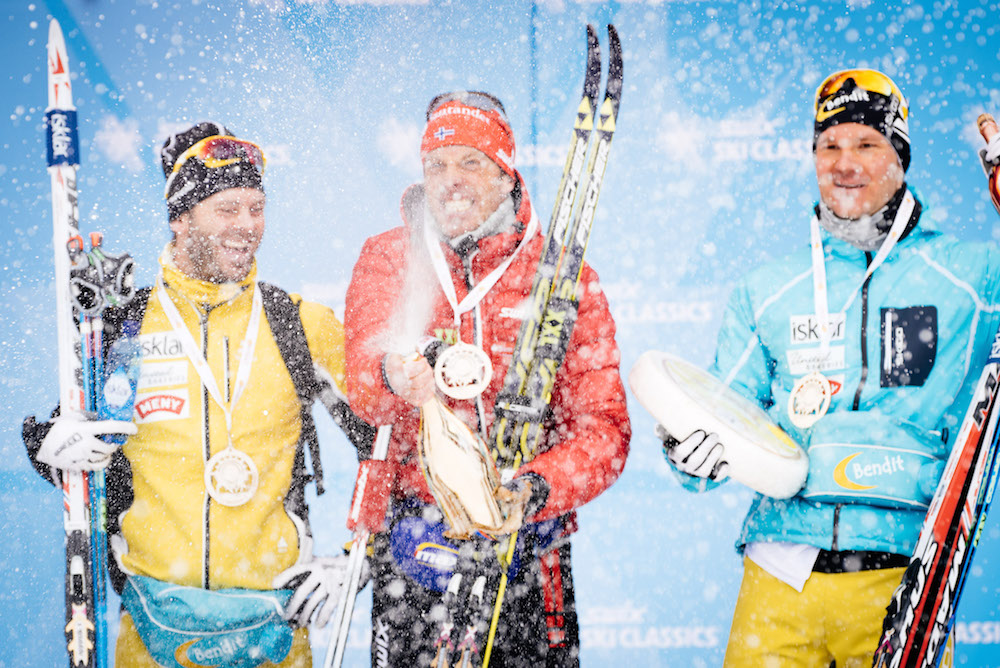
    Øystein Pettersen (right) of Team United Bakeries after placing third in the 2014 La Sgambeda Ski Classics race in Livigno, Italy, behind Team Santander's Anders Aukland (c) and Team United Bakeries teammate Johan Kjølstad (l). (Photo: Ski Classics)
    Øystein Pettersen (right) of Team United Bakeries after placing third in the 2014 La Sgambeda Ski Classics race in Livigno, Italy, behind Team Santander’s Anders Aukland (c) and Team United Bakeries teammate Johan Kjølstad (l). (Photo: Ski Classics)

    Norwegian cross-country skier Øystein Pettersen posted the following essay on his Facebook page last week. He felt a need to respond to discussion about doping (or not) by the Norwegian national ski team after the cases of Therese Johaug and Martin Johnsrud Sundby. With his permission, we are posting an English translation for the North American ski community.

    “I am glad that some are interested in the truth and not only speculation,” Pettersen wrote in an email to FasterSkier. “I have nothing to hide and am more than willing to answer any questions.”

    Pettersen, age 33, is currently a member of the newly-formed BN Bank Ski Classics team. Nicknamed “The Sausage” (“Pølsa”), he previously represented Team United Bakeries, won the 2015 La Diagonala and finished third in the Marcialonga. Before that, he was a member of the Norwegian national team, where he accumulated six World Cup sprint podiums and won Olympic gold with Petter Northug in the 2010 team sprint in Vancouver, British Columbia. Despite being Norwegian, he says that his favorite Ski Classics event is Sweden’s Vasaloppet.

    ***

    “There is a wind blowing in Norwegian cross-country skiing.

    It blows on many fronts and it is equally sad as it is self-inflicted. I will not say anything about the cases in question, for the simple reason that I have no idea what has happened. I won’t comment on anything about the handling of cases. It is not my responsibility, and the last thing this debate needs is yet another expression of opinion without enough knowledge. But I feel it’s appropriate to talk about how I experienced my time in Norwegian Ski Federation (NSF) and how my practice was around these doping regulations.

    Short backstory, I have been skier my entire adult life. Never been the world’s best, perhaps never will be. Eight years in the national team at senior level, and been on a number of other teams out there.

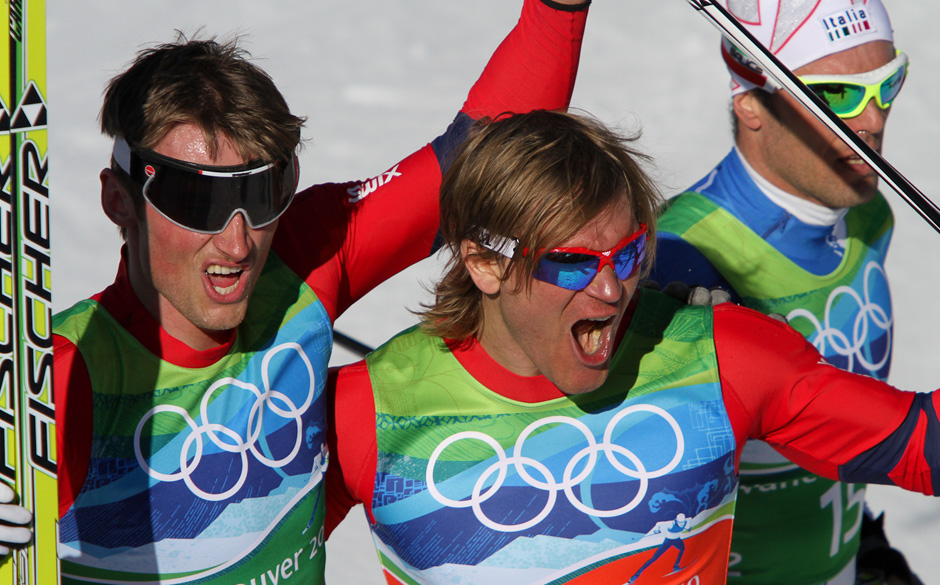
    Petter Northug and Oystein Pettersen celebrate their gold medal in the 2010 Olympic sprint relay.
    Petter Northug (l) and Øystein Pettersen celebrate their gold medal in the 2010 Olympic team sprint.

    In today’s VG I was interviewed and yes, it’s true that what happened Therese could have happened to me. Call it naive, call it irresponsible, call it whatever you want, but I never checked anything I got from the doctor during my time on the national team.

    The reason for this? As long as I have known it, the culture of cross-country Norway has always been founded on hard and honest work. Doping and bending the rules have never been accepted. For this simple — but also strong — reason, I never had any reason to believe that I would ever be breaking doping regulations by taking something I got from my NSF doctor. I salute the support I received from the federation. They worked like crazy for me to have the best possible conditions to be able to reach my sporting goals.

    Doping was never even an issue. It was never a case of bending the rules or trying to take advantage of regulations. If I was sick and needed antibiotics, it was never in my mind that I would get something that was not allowed. The same was true, for example, with anti-inflammatory agents I might need for overuse injuries. Or asthma medicine for that matter. (Ed note: Pettersen has taken asthma medication since he was a child.)

    Call it blunt, call it naive, call it irresponsible of me, call it what you will. I look at it as trust, respect, and I never had any reason to doubt.

    The consequences for Johaug sadly have become catastrophic from a simple human error. I will not judge anyone, speculate or place blame. I’m just saying that if my doctor had made the same mistake, I also would been caught in the same trap.

    NSF’s support is fantastic. My experiences were so positive that I became lazy. It is perhaps the only objection against the system. In my case, it led to the situation I never made extra checks.

    I do not know if this was only the case for me. Maybe I’m the laziest of everyone, but it gets to my second comment.

    What I know is that as I write this, I am dealing with an inflammation in my heel. In connection with this injury, I was prescribed an anti-inflammatory agent by a sports physician here in Lillehammer. He knows who I am and what I stand for, I know the same about him. I did not check if there was anything frightening in the package he gave me. Had the Johaug case not come up, I probably wouldn’t have even considered it either.

    This case is a “wake up call” for all athletes to take responsibility for what we use.

    When I look at NRK and see that 24 percent of you (the Norwegian public) think Norwegian cross-country skiers are doping, it makes me sad. But I can understand that you doubt in light of recent events. Therefore, I am very interested in being open. Is there anything you or the media are wondering about around my training, my use of medication, my routines involving ski racing? Do not hesitate to contact us.

    There are sides of Norwegian cross-country skiing that are not so positive. Eating disorders, overtraining, stress, pressure, the equipment arms race and much more. But doping, this is not part of the Norwegian cross-country sport. If it is, I am the most naive, blue-eyed soul and I will retire from the sport immediately.

    Now I’m going out to train. I love the cross-country skiing lifestyle and I love its development.

    Have a good day!

    -Pølsa”

    — Erik Stange contributed translation

    Livet! #bnbank #multiconsult #urbanwithsony

    A photo posted by Øystein pettersen (@oeysteinpettersen) on

  • Nordic Nation (FS Podcast): Chelsea Little on the Latest; There’s WADA, FIS, Sundby, & Johaug, Too

    Nordic Nation (FS Podcast): Chelsea Little on the Latest; There’s WADA, FIS, Sundby, & Johaug, Too


    'Nordic Nation' Fasterskier Podcast

    For years, Norway emitted a strong message, and it went something like this: we’re a paragon of clean sport and clean athletes who happen to dominate the cross-country ski world. Within the last three months, that image has been tarnished. Norway’s leading skiers Martin Johnsrud Sundby, and as of this past week, Therese Johaug, are embroiled in separate doping violations. And along with that news, sport-governing bodies like the World Anti-Doping Agency (WADA), the International Olympic Committee (IOC), and the International Ski Federation (FIS) are attempting to muddle through a post-McClaren Report world.

    FasterSkier editor-at-large, Chelsea Little on a trail run in Switzerland. Little is based in Zurich, Switzerland. (Courtesy photo)
    FasterSkier Editor-at-Large Chelsea Little on a trail run in the Alps. Little is based in Zurich, Switzerland. (Courtesy photo)

    In this podcast episode, FasterSkier Editor-at-Large Chelsea Little gets front billing as she dives into some of her recent reporting involving nordic sport, doping and how to move forward. Little also gives some context to the Sundby case and fills us in on some of the details swirling around Johaug’s positive doping test.

    From the 20,000-foot perspective, the leaders of anti-doping, presumably institutions like the IOC and WADA, continue to figure out how best to protect sport and athletes, and their own interest. After the IOC’s recent meetings where they issued a statement, or what they call a declaration, describing cultural norms of a new WADA, Little was still unsure how to decipher how the instututional players will modernize.

    Little remarked that the language within the document is vague. “And somebody has to sort of get to the bottom of what that actually means, if you think that they know what that means,” Little said.

    Razor-sharp logic to describe the back and forth world of doping in sport.

    Click the play arrow below to listen to the podcast.

  • Johaug Tests Positive for Anabolic Steroid After Using Sunburn Cream Recommended by Team Doctor

    Johaug Tests Positive for Anabolic Steroid After Using Sunburn Cream Recommended by Team Doctor

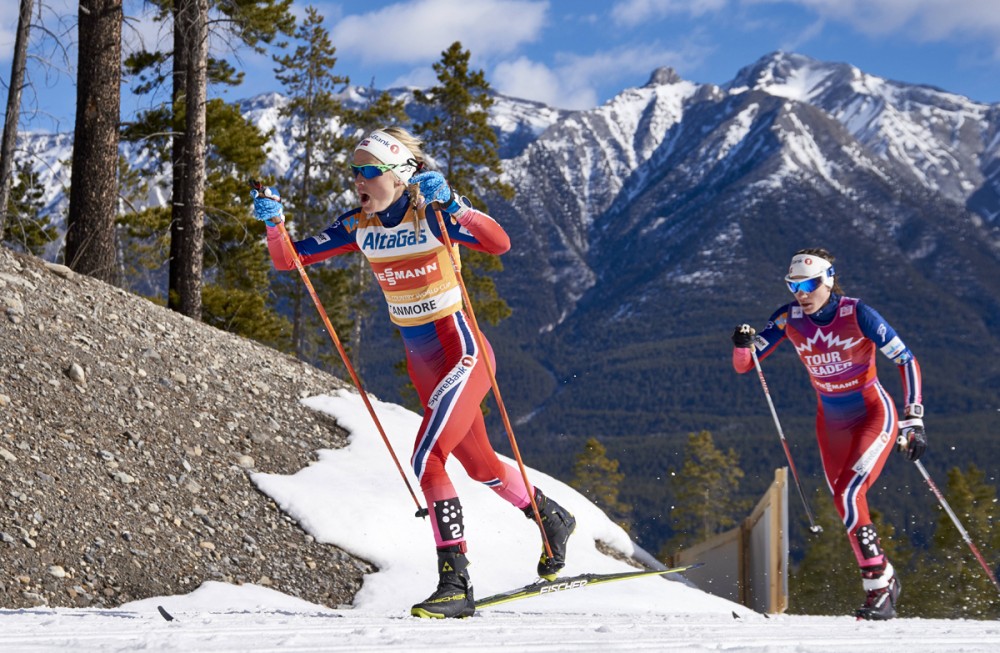
    Therese Johaug and Norwegian teammate Heidi Weng during the women's 15 k skiathlon  in Canmore, Alberta. The competition was part of the Ski Tour Canada, one of many World Cup events Johaug won last season. (Photo: Fischer/NordicFocus)
    Therese Johaug (l) and Norwegian teammate Heidi Weng during the women’s 15 k skiathlon in Canmore, Alberta. The competition was part of the Ski Tour Canada, one of many World Cup events Johaug won last season. (Photo: Fischer/NordicFocus)

    The Norwegian Ski Federation has announced that cross-country skier Therese Johaug, an Olympic and World Championships gold medalist and two-time winner of the overall World Cup title, has had a positive drug test.

    According to the federation, Johaug had severely sunburned her lips while training at high altitude in Seiser Alm, Italy, in August.

    The damage can still be seen in a photo she posted to Instagram over the weekend.

    Tok med jordbærpikenes kyllingsalat hjem til Dalsbygda #minfavoritt #høst #makeitpossible #huaweinorge

    A photo posted by Therese (@johaugtherese) on

    After the team moved to nearby Livigno for a mid-elevation camp, team doctor Fredrik Bendiksen noticed Johaug’s condition. He bought two creams at an Italian pharmacy and assured Johaug that neither contained substances on World Anti-Doping Agency’s Prohibited List.

    The first cream she used did not help her sunburn. So she switched to the second. It helped – but it also contained clostebol, an androgenic anabolic steroid which is in fact banned.

    Johaug was visited by doping control officers on September 16 – where she declared the lip cream, called Trofodermin, on a form listing what medications she was using – and was informed of her positive test on October 3. The test was ordered by Anti-Doping Norway, which will proceed with her case.

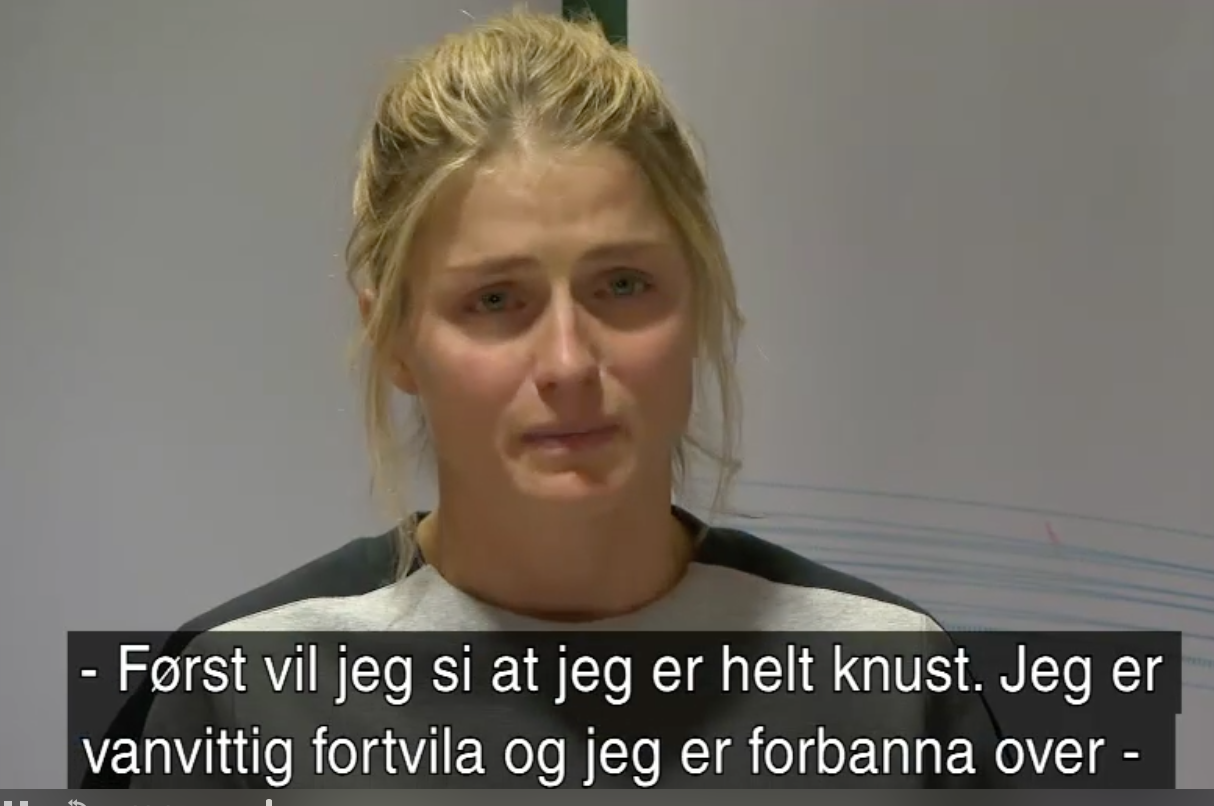
    Therese Johaug during a press conference on Thursday announcing her positive doping test.
    Therese Johaug during a press conference on Thursday announcing her positive doping test.

    The news was made public by the ski federation on Thursday morning. Johaug had a live press conference on NRK, Norwegian state television, around noon (Norwegian time) on Thursday.

    In the statement released Thursday morning by the federation, Johaug described her feelings.

    “I am completely devastated and in despair to have ended up in this very demanding and to me unreal situation,” she said, according to a translation by the International Ski Federation.” I see this as unfair and totally undeserved, even though I am obviously aware of the liability that I have as an athlete for the medication that I use.”

    In the press conference, she said that this had been “the worst week of my life.”

    Clostebol is commonly used to treat skin conditions. But it is also performance-enhancing. Clostebol was initially developed in East Germany and used by athletes there to gain an athletic advantage. It is a derivative of testosterone, but is considered a weak anabolic agent compared to some other steroids.

    A number of athletes across nationalities and sports – ranging from professional baseball and soccer to international Olympic sports like track and field, weightlifting, and beach volleyball – have tested positive for the clostebol.

    The test for clostebol is fairly sensitive, and a number of athletes have tested positive despite never taking the drug as a medication. For instance, the drug is also used to promote growth in livestock (particularly in countries where the use of growth hormones is prohibited) and there are documented cases of test subjects who had never taken the drug having it show in urine samples after eating meat from animals raised on the substance.

    Clostebol also has applications for gynecological care, and there are other documented cases where an individual has tested positive after having sexual intercourse with a partner who is using the drug in a medication.

    Norway's Therese Johaug after winning the 10 k classic mass start at Stage 5 of the Tour de Ski in Oberstdorf, Germany, in January. (Photo: Marcel Hilger)
    Norway’s Therese Johaug after winning the 10 k classic mass start at Stage 5 of the Tour de Ski in Oberstdorf, Germany, in January. (Photo: Marcel Hilger)

    But a number of cases have been the result of athletes simply using topical skin creams without checking to see whether any of the ingredients were prohibited. In this case, it is clear that Bendiksen made a mistake in obtaining the medication. A simple online search would have revealed that clostebol was an active component of Trofodermin.

    Bendiksen has taken complete responsibility for the mistake.

    “Therese is an amazing, conscientious person and performer who is careful and precise in everything that she does,” he said, according to a translation. “The most important thing for me to do now, is to do everything I can to make sure she is not punished for using a cream which I assured her was legal to use.”

    At the same time, Johaug said that she took responsibility for following Bendiksen’s recommendation. She explained that she had asked whether the cream had any prohibited substances in it, was told that it did not, and trusted her team doctor.

    She tried to strike a balance by saying that she was responsible for the decision not to check the drug’s contents against the WADA list herself, she also “has zero guilt.”

    “To get an undeserved positive test, it’s an athlete’s worst nightmare,” Johaug said.” But I will fight everything I can and show that I am innocent in this matter.”

    Norwegian team doctors believe that Johaug would not have had enough of the substance in her system to affect her performance anyway. The case is ongoing and a suspension has not been issued, but a case from 2005 before the International Swimming Federation (FINA) resulted in a reduced sentence for a 15-year-old swimmer who had used the medication in a skin cream and successfully argued that she did not gain any performance advantage from it.

    The federation reportedly canceled a major season kickoff event scheduled for Thursday. Instead, the cross-country committee is meeting to decide how to handle the situation.

    For Norway, the news comes after a long summer of doping controversy. Several-time men’s World Cup winner Martin Johnsrud Sundby was suspended for two months for using a too-high dose of the asthma medication salbutamol.

    When that made news – 18 months after the positive tests had taken place, generating widespread outrage – several other Norwegian athletes came forward to say that they had been instructed to take the same doses of medication despite the fact that they did not even have asthma.

    The ski federation is clearly trying a different crisis management strategy this time around. Rather than delaying, Johaug held the press conference soon after learning the news herself.

    Whether that is due to the preferences of the federation or the athlete is unclear. The federation had reportedly urged Sundby to go public earlier in his appeals process, but he had refused.

    Now, after months of denying responsibility for the high doses of asthma medication he had been prescribed by a team doctor, Sundby has apologized and said he was “100% responsible”.

    The ski federation, meanwhile, is facing a nightmare. President Erik Røste said in the press statement that he was “concerned that Norwegian cross country have again ended up in such a demanding situation.”

    And once again, it appears that the doping violation was the result of an athlete following advice of a team doctor. Røste said that the federation would look into how to prevent the problem from continuing.

    The news also comes at a bad time for Norway as their Minister for Culture, Linda Hofstad Helleland, is bidding to become the vice president of the World Anti-Doping Agency.

    For Johaug, Seiser Alm has become quite a significant place for her, and not in a positive way: in 2015, she broke her hand while running there.

  • Doping News: Sundby Defends Asthma Meds; WADA Hacked; IBU Clears Meldonium Athletes

    Doping News: Sundby Defends Asthma Meds; WADA Hacked; IBU Clears Meldonium Athletes

    Norway's Martin Johnsrud Sundby qualified 11th and went on to place fourth in the final of the 1.2 k classic sprint at Stage 4 of the Tour de Ski in Oberstdorf, Germany. Now, he not only leads the overall Tour standings, but the Sprint Tour standings as well. (Photo: Marcel Hilger)
    Norway’s Martin Johnsrud Sundby at the 2016 Tour de Ski. (Photo: Marcel Hilger)

    As Norwegian skier Martin Johnsrud Sundby continues to consider whether to appeal his doping ban to the Swiss Supreme Court, both he and the World Anti-Doping Agency (WADA) are speaking publicly about the case.

    Sundby was banned for two months for using the asthma medication salbutamol through a nebulizer. Although the drug is legal at low doses or with an approved Therapeutic Use Exemption (TUE), Sundby had not applied for such an exemption and had used it at a high concentration through the device.

    The International Ski Federation (FIS) had initially acquitted Sundby, but WADA appealed the case to the Court of Arbitration for Sport (CAS) and won. The ski champion lost his 2015 Tour de Ski title as well as the 2015 overall World Cup title, although his two-month ban was shorter than most punishments in doping cases.

    In Norway’s Aftenposten newspaper, Sundby said that he now regretted keeping the case a secret until WADA won its appeal rather than speaking out about it earlier.

    FIS rules do not require acquittals to be made public, but Aftenposten revealed that the Norwegian Ski Federation had even gone as far as having its communications manager, Espen Graff, draft a press release after FIS cleared Sundby. The federation strategized that it would be better to get ahead of the case in the media sphere.

    But Sundby stopped the plan from going forward, instead waiting to see the result of WADA’s appeal. He now says he believes that if he had gone public after the acquittal, it would have discouraged WADA from appealing at all.

    In the same piece, Sundby said that his failure at 2015 World Championships in Falun, Sweden, was due to the case. He had learned of his positive tests in January and the stress caused him to get sick and miss most of the Championships, then turn in what was by his standards an unimpressive performance in the 50 k.

    At issue in the case is whether asthma medication is performance-enhancing at high concentrations. The drug, salbutamol, is also banned because it is a masking agent.

    Speaking about the case publicly for the first time, WADA Scientific Director Olivier Rabin told Norwegian newspaper VG that the drug did indeed have benefits for athletes.

    “The latest research shows that large doses can have an effect,” he said.

    Previous research had indicated that at recommended therapeutic doses, salbutamol did not affect healthy airways. That is, the drug could not relax muscle that was not constricted, for instance by asthma or exercise-induced bronchoconstriction.

    Martin Johnsrud Sundby of Norway (right) training with Canadian athletes in Livigno, Italy, earlier this month. (Photo: Alex Harvey/Instagram)
    Martin Johnsrud Sundby of Norway (right) training with Canadian skiers in Livigno, Italy, earlier this month. (Photo: Alex Harvey/Instagram)

    However, the drug does not work only in lung tissue, and that appears to be part of the argument against high doses.

    Jørgen Jensen, a professor at the Norwegian School of Sport Sciences, suggested to VG that the drug may affect skeletal muscle, increase muscle growth and speed recovery. He cited research showing that the class of drugs, beta-2 agonists, appears to be more beneficial to sprinting and power events than to endurance performance.

    Sundby finished his two-month ban and recently rejoined the Norwegian national team in Livigno, Italy, for a training camp which included joint sessions with the Canadians.

    But the case continues to reverberate in the ski world. Russian World Cup skier Evgeniy Belov accused the Norwegians of corruption since there was a long gap between Sundby’s positive test in January 2015 and the resolution of his case at CAS, which allowed him to complete the whole next season with no competitors the wiser as to his case.

    His two-month suspension during the summer also didn’t affect a competition season.

    “I think it’s obvious [why this happened],” Belov said, according to Inside The Games.

    Meanwhile, Swedish star Charlotte Kalla said that she welcomed more research into the effects of the drug, but that athletes who had asthma should be able to take what medication they needed in order to compete at a normal level.

    Other Doping Notes

    The International Biathlon Union (IBU) has cleared three athletes who had tested positive for the heart medication meldonium in early 2016. Eduard Latypov of Russia, Artem Tyshchenko of Ukraine and Eva Tofalvi of Romania will not serve suspensions because, as the Anti-Doping Hearing Panel concluded, “they bear no fault” in having the drug in their bodies.

    The panel did not find evidence that they took the drug after the Jan. 1 date when it was added to the Prohibited List, and decided that they could not have known that it would stay in their bodies for a longer period of time. All three athletes will have relevant results canceled, but are free to return to competition.

    Meanwhile, Russian hackers continue to leak files stolen from WADA’s databases, primarily showing Therapeutic Use Exemptions for athletes who competed in the 2016 Summer Olympics in Rio de Janeiro, Brazil. Some data also show positive drug tests in Rio for the same substances.

    Several of the cases involved salbutamol and other asthma medications; one TUE was for a drug to treat attention-deficit hyperactivity disorder. Perhaps the majority involved anti-inflammatory medications which are commonly used to treat injuries, but are banned without a TUE.

    Data on 29 athletes from a variety of countries has been released so far, but the records of all 10,000 athletes who competed in Rio may be compromised.

    “Given this intelligence and advice, WADA has no doubt that these ongoing attacks are being carried out in retaliation against the Agency, and the global anti-doping system, because of our independent Pound and McLaren investigations that exposed state-sponsored doping in Russia,” WADA Director General Olivier Niggli said in a press release. “We condemn this criminal activity and have asked the Russian Government to do everything in their power to make it stop. Continued cyber-attacks emanating from Russia seriously undermine the work that is being carried out to rebuild a compliant anti-doping program in Russia.”

    Although law enforcement has asserted that the hacks originated in Russia, the country’s Minister of Sport, Vitaly Mutko, denied it.

    “How can you prove that they are hackers from Russia? You blame Russia for everything,” he told The Telegraph.

  • Norwegian Ski Team Recommended Nebulizer Use by Healthy Athletes, Say Anonymous Skiers

    Norwegian Ski Team Recommended Nebulizer Use by Healthy Athletes, Say Anonymous Skiers

    Norway's Martin Johnsrud Sundby during the men's 15k skate leg of the Ski Tour Canada in Canmore, Alberta. Sundby may not be the only Norwegian athlete who used a nebulizer to take asthma medication - even healthy athletes were apparently recommended to do so. (Photo: Fischer/Nordic Focus)
    Norway’s Martin Johnsrud Sundby during the men’s 15 k skate leg of the Ski Tour Canada in Canmore, Alberta. Sundby may not be the only Norwegian athlete who used a nebulizer to take asthma medication — even healthy athletes were allegedly recommended to do so. (Photo: Fischer/Nordic Focus)

    As Norwegian skier Martin Johnsrud Sundby has decided to appeal his doping ban to the Swiss Supreme Court, stories have emerged suggesting that the Norwegian Ski Federation recommended that healthy skiers use salbutamol nebulizers – the same drug and method Sundby was issued a two-month ban for – as preventative therapy to maximize performance.

    That suggests that a number of Norwegian athletes might have engaged in the same behavior which got Sundby in trouble in the first place. No other doping cases are known to exist from the Norwegian team. However, the International Ski Federation (FIS) rules mean that if an athlete had been caught with high levels of salbutamol like Sundby, it may have been kept quiet.

    After Sundby’s ban, men’s national team coach Tor Arne Hetland told FasterSkier that “we will not do the same mistake again.”

    But what of the past? Norway’s TV2 talked with several cross-country skiers who say they were told by the national team to use nebulizers, even though they did not have asthma. A nebulizer delivers beta-2 agonists, drugs which help relax muscles in the airways. Such medications are banned for use by athletes up until a threshold dose.

    TV2 would not reveal the identity of the athletes, but reported that one said they were “mildly surprised” to be offered the drugs even though they were not having difficulty breathing.

    In the same piece, national team director Vidar Løfshus said that this constituted “preventative care” to make sure that no athletes had airway obstructions.

    Evidence suggests that salbutamol cannot help breathing for athletes who are not having an airway constriction, such as that caused by asthma. But beta-2 agonists, as a class of drugs, can also be used as masking agents for other drugs, and can have androgenic effects (like steroids) when used in high doses.

    The Norwegian Ski Federation announced on its website that it would be conducting a full review of medication use policies in the wake of the scandal.

    Erik Røste, the president of the federation, said that he expected that healthy athletes would not have been prescribed medication, but sought to clarify whether his assumption was true. The investigation will be carried out by people not affiliated with the federation in order to maintain independence. Anti-Doping Norway has been consulted about assisting.

    Røste also said that he was concerned that the stories could damage the reputation of the federation.

    That seems to be already happening. Swedish national team doctor Per Andersson told Swedish media that prescribing medication to healthy athletes was a “dangerous path”.

    Meanwhile, Sundby had been sanctioned for using high concentrations of salbutamol via a nebulizer. FIS had initially not suspended him, but the World Anti-Doping Agency (WADA) appealed the case to the Court of Arbitration for Sport (CAS), which banned him from competition for two months. Because some results were invalidated, Sundby lost his 2015 overall World Cup title as well as the overall Tour de Ski win.

    CAS is the highest governing body in sports, and decisions cannot be appealed or overturned. However, Sundby decided to appeal the case to a non-sports body, the Swiss Supreme Court, because he felt that the judgement was unfair. He told Norwegian media that he was “not guilty.”

    Based on WADA rules, the maximum amount of salbutamol that is allowed to be inhaled is 1600 micrograms over 24 hours. Sundby’s samples taken Dec. 13, 2014 after the 15-kilometer classic in Davos, Switzerland, and Jan. 8, 2015 after the 25 k freestyle pursuit at the Tour de Ski in Toblach, Italy, and analyzed by a WADA accredited laboratory exceeded those limits.

    His case hinges on a few words, as Sundby and the Norwegian medical team believe that the WADA limit applies only to medication taken in an inhaler, while Sundby used a different device, a nebulizer.

    As an athlete with a documented history of asthma, Sundby likely could have received a therapeutic use exemption (TUE), which may have allowed the nebulizer use. But he did not apply for one, and such exemptions cannot be obtained retroactively.

  • National Nordic Foundation Preview of 2016 International Junior Camp

    NNF logo

    (Press release)

    From August 6-18, a select group of US junior skiers will be in Scandinavia for the International Junior Camp, an annual event hosted by the Norwegian Ski Federation. For the second year in a row, the National Nordic Foundation (NNF) is proud to provide funding to make this unique opportunity possible, working in association with the US Ski and Snowboard Association (USSA).

    The International Junior Camp brings together the world’s best junior cross country skiers (born 1997-1998), not only providing an opportunity to work with top World Cup coaches and athletes but also to see how their peers from around the globe are preparing for next season. “The level of top international junior racing is evolving right now,” says trip leader and US Cross Country Development Coach Bryan Fish. “The level and expectation is shifting upward and we need to show our top juniors first-hand.” Training will include intervals through a bog, technical instruction on rollerskis, a running time trial, rollerski race and strength sessions.

    Sweden, Finland, Italy, Canada and Norway are among the nations that will have athletes in attendance. A total of 15 countries participated last year with more expected for 2016. “It will be the job of our athletes and coaches to bring this information stateside and distribute it,” says Fish. Seven athletes and two coaches from the US are attending the International Junior Camp for 2016.

    Unique for 2016 is an emphasis on female participation. Not only is there a minimum requirement for female athletes, but at least one of two coaches from each represented nation is required to be female as well. “We have made great strides with our women’s programs,” says Fish, “however that is not necessarily true across all World Cup skiing. The depth of field in World Cup [racing] is still greater in the men’s field and Norway is stressing gender equity at the International Junior Camp this season.” Fulfilling the requirement for a female coach, Bernie Nelson, of the Bend Endurance Academy will complete the coaching staff for the United States.

    The camp officially kicks off on August 10 with a rollerski race in Hamar, Norway; but the US contingent will be arriving to Scandinavia a few days early to adjust to the new time zone and to have a few days on snow at the ski tunnel in Torsby, Sweden.

    The International Junior Camp, and other Pillar Projects like it, are central to the NNF’s mission to support athletic excellence in developing Nordic athletes in the United States. “The NNF is the sole American funding for this project,” says Bryan Fish. “The athletes personally pay for their flights and a small portion of their room and board, but the NNF is keeping the costs of this project very attainable for these athletes.”

    Seven NNF athletes (4 women and 3 men) will be attending this year’s International Junior Camp. Selection criteria for camp attendees restricted the age group to athletes born in 1997 and 1998; international performances (e.g. U18 trip, World Juniors and OPA Cup) were primary criteria for selection in conjunction with domestic racing performance and national ranking. A discretionary selection policy was also in place for selections.

    Check out NNF.ski as well as the NNF’s Facebook and Instagram pages for exclusive International Junior Camp updates and content!

  • Wednesday Workout: Diggins Dives into Norwegian Camp, Leaves with Big Takeaways

    Wednesday Workout: Diggins Dives into Norwegian Camp, Leaves with Big Takeaways

    The women's Norwegian national team and Diggins (second from right) during a classic rollerski workout late last month in Norway. (Photo: Roar Hjelmeset)
    The Norwegian national women’s team and U.S. Ski Team member Jessie Diggins (second from right) during a classic rollerski workout late last month in Norway. (Photo: Roar Hjelmeset)

    Update: This article formerly read that the Norwegian national team training camp took place in Farstad, Norway. The camp was actually held in Svarstad Vestfold, Norway and the article has been updated accordingly. 

    Booking a plane ticket for a 10-hour overnight flight seldomly stirs airline passengers to jump for joy. Yet when current U.S. Ski Team member Jessie Diggins clicked the ‘buy’ button for a red-eye flight to Oslo, Norway, departing June 18, she couldn’t contain her excitement. The Afton, Minn., native had spent plenty of time lunging to the line competing against Norway’s fastest nordic women, but the opportunity to work out with them as a training partner and short-term teammate was altogether new.

    Diggins’s Norwegian Ski Federation (NSF) camp invite stemmed from a conversation she had with Norway’s women’s coach at the time, Egil Kristiansen. Following the final races of the Ski Tour Canada this past March in Canmore, Alberta, Diggins, 24, approached Kristiansen and asked about the possibility of joining one of their camps. Despite his initial response, she remained determined in convincing him the value of international shared training experiences.

    Left to right: Norwegian Ragnhild Haga, American Jessie Diggins, and Norwegian Maiken Caspersen-Falla at the top of a mountain hike during one of the Norwegian National Team camps in late June. (Photo: Courtesy Photo)
    Norway’s Ragnhild Haga (l) and Maiken Caspersen Falla (r) with U.S. Ski Team member Jessie Diggins at the top of a mountain hike during one of the Norwegian team’s camps in late June. (Photo: Jessie Diggins)

    “I said, ‘Hey, you know I’m always looking for ways to make summer training exciting, new and adventurous, and if you have a spot open at any of your camps, I would really love to come,’ ” Diggins recalled on the phone Monday, back at her training base in Vermont.

    “The coach laughed, and then I was like, ‘No, I promise I’ll have a great attitude.’ And we started talking and he was like, ‘You know, we we’re actually thinking we might start inviting a new athlete to camps,’ ” she explained. “Previously the [Norwegian team] never really did that.

    Three months later, Diggins found herself opening a forwarded email from the new Norwegian women’s coach Roar Hjelmeset with a list of available national-team camps for her to attend.

    “They sent [U.S. women’s coach] Matt [Whitcomb] the official [invite] … and I booked my ticket the next day,” Diggins said. “I flew to Oslo on the night of the 18th … and I stayed with Astrid [Uhrenholdt Jacobsen] then I drove with her and Roar to the camp.”

    Diggins kicked off her weeklong adventure with a rollerski in Drammen, Norway, the site of her first World Cup race before the Oslo World Championships in 2011.

    “It was really funny that my first World Cup race happened to be this place where I was [now] coming to do intervals with the Norwegian girls,” Diggins said.

    After that, athletes piled into the vans and made the remaining 45-minute drive up to Svarstad Vestfold, Norway, where the rest of the camp took place. During the next six days, Diggins immersed herself in the team’s workouts, discovered the difference between the Norwegian women’s training plans and those of the U.S. women, and baked banana bread with the team.

    “If you’re a guest at a camp, you go there willing to work,” Diggins said. “At least I can do that. I’m willing to work, I’m ready to be there, I’m ready to just be jumping. Whatever they do, I’ll do, too. And that was really fun; that was the best part … I just tried to be as much a part of the team as possible.”

    Team ‘Norge’ Sample Workout: Distance rollerski, ending with pickups

    Length: 2 hours

    End with: Set of 5 x 10-second pickups, done about three-fourths of the way through the workout. Start head-to-head for the pickups.

    Diggins’s Top-Three Takeaways from Training with Norway:

    1. Training is Training. “The biggest thing I found out right off the bat was that there really ARE no training secrets. In all the big ways, we train exactly the same as the Norwegians, which was really awesome (and reassuring) to find out,” Diggins wrote in a blog post. “The training plan for the camp was almost identical to one we would have at our training camps – a mix of long slow distance training, L3 and L4 intervals, strength and speed training.”

    2. Don’t Be Afraid to Take Charge. According to Diggins, the Norwegian women hold eight camps throughout their training season, with two weeks “on their own” in-between. Post-training camp, the Norwegian women evaluate their own needs and write their own training plans for those two weeks in between camps. “The Norwegian girls, they are their own main coach in between camps,” Diggins said, “which I think is really cool because at the end of the day, you are the one in your body. You’re the only one who knows, oh, my legs are really tired, I shouldn’t do bounding I should just double pole or something. So I think it’s really cool that they take charge that way.”

    3. Tally Your Worth as a Teammate. “The skill and ability to be a great teammate is often under-valued but can make the biggest difference in how you look back on your career and feel about your work as an athlete,” Diggins wrote on her blog.

  • Røthe Wins Beitostølen 15 k by Nearly a Minute; Sundby DQed

    Røthe Wins Beitostølen 15 k by Nearly a Minute; Sundby DQed

    Sjur Røthe (Norwegian National Team) double poling his way to a win in the first race of the 2015/2016 season, a 15 k classic FIS race in Beitostølen, Norway. (Photo: Eirik Lund Røer/SKIsport)
    Sjur Røthe (Norwegian National Team) double poling his way to a win in the first race of the 2015/2016 season, a 15 k classic FIS race in Beitostølen, Norway. (Photo: Eirik Lund Røer/SKIsport)

    What’s the first race of the season without a little drama?

    Norway’s defending World Cup champion Martin Johnsrud Sundby got DQed in Friday’s 15-kilometer classic race, one of the first International Ski Federation (FIS) races of the season, in Beitostølen, Norway. Germany’s Tim Tscharnke was also disqualified, along with a 27-year-old Norwegian club skier Daniel Myrmæl Helgestad, of Henning SL.

    According to a media announcement from the Norwegian Ski Federation, the jury ruled all three skated in the deteriorating tracks. FasterSkier obtained video of each apparent violation.

    “I don’t really know when and where the jury might have seen this infraction,” Sundby, 31, said in a post-race TV interview with NRK.

    The final starter out of 143 men, he had initially posted the winning time — and did so with a broken rib.

    “I don’t agree with [the jury’s] decision, but there is no point in arguing about it,” Sundby continued. “There were a lot of racers on the course, and when I started as number 143, the tracks were chewed up. I don’t know, maybe the jury had decided that they wanted to show that they are going crack down hard on any violation of the skating rule. The good thing is that my body felt good, the rib felt fine and I felt like I had a good race. It’s good to see that focusing on double poling pays off.”

    He was one of several who raced the four-lap time trial on skate skis. One of his fellow national-team members, 27-year-old Sjur Røthe took the win in 37:59 by double poling the entire course as well. He beat runner-up Martin Løwstrøm Nyenget of the Lillehammer Skiklub by 51 seconds, and Hans Christer Holund (Lyn Ski) was over a minute back in third (+1:08.7).

    Germany's Jonas Dobler leads Tord Asle Gjerdalen in the first race of the 2015/2016 season, a 15 k classic FIS race in Beitostølen, Norway. Dobler finished eighth and Gjerdalen was 15th. (Photo: Eirik Lund Røer/SKIsport)
    Germany’s Jonas Dobler leads Tord Asle Gjerdalen in the first race of the 2015/2016 season, a 15 k classic FIS race in Beitostølen, Norway. Dobler finished eighth and Gjerdalen was 15th. (Photo: Eirik Lund Røer/SKIsport)

    “I didn’t think I would win this race today, not before the race and not even after I had finished,” Røthe told TV reporters. “But it’s fun to win ski races.”

    He said the best part was winning by exclusively double poling. The 139th starter, his 1.6 k time ranked eighth. He was up to first by 2 k, then slipped 14 seconds back to third at 3.8 k, and finally took control of the race for good at 5.4 k. That is, after Sundby was factored out of the results.

    “I just now heard that Martin was disqualified, and it’s too bad he did,” Røthe said in the TV interview. “Yes, the tracks were not perfect and the conditions were a bit rough in places, but when you choose to double pole the course, you have to be extra diligent, especially now that they warned us all about being stricter than before.

    “I’m really excited to win by double poling only,” he added. “The decision to go without kick wax was a combination of a couple of factors. The tracks and the snow conditions were tricky, and because of my back trouble, I was concerned that my wax would slip and I would re-injure my back. So I decided to just double pole.”

    After leading at 1.6 k and hanging within the top three throughout the race, Nyenget, 23, was happy to finish on the podium.

    “Whether I was second or third really didn’t matter so much,” he said. “It was great to have a good first race here, and see that the training I’ve put in this summer and fall is making a difference. It’s mostly important for my confidence, but I hope I will be able to ski lots of World Cup races this season and compete against the best in the world.”

    Norway swept the top seven, with Jonas Dobler of Germany placing eighth. Canada’s Devon Kershaw finished 33rd, 2 1/2 minutes back from Røthe.

    Results

    Race website

    — Inge Scheve contributed reporting