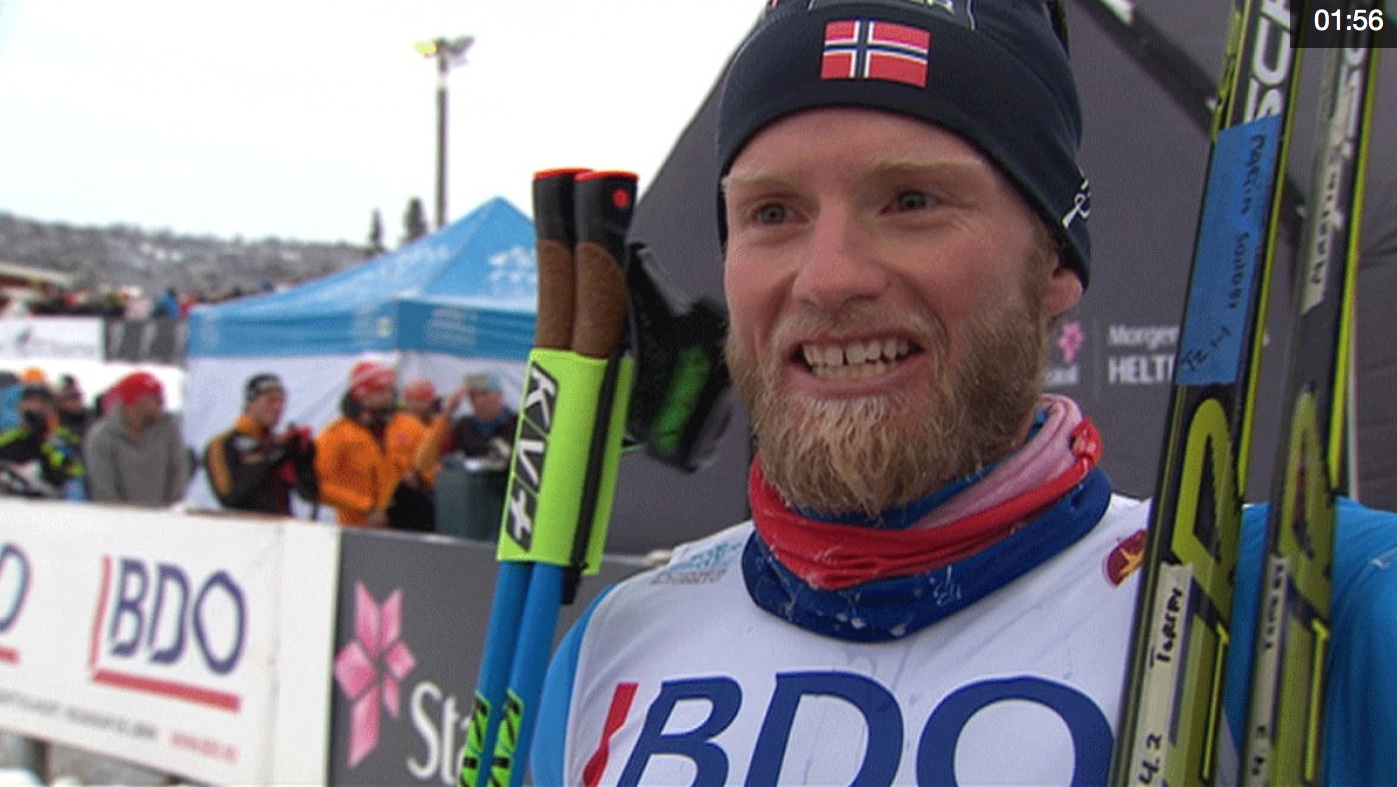
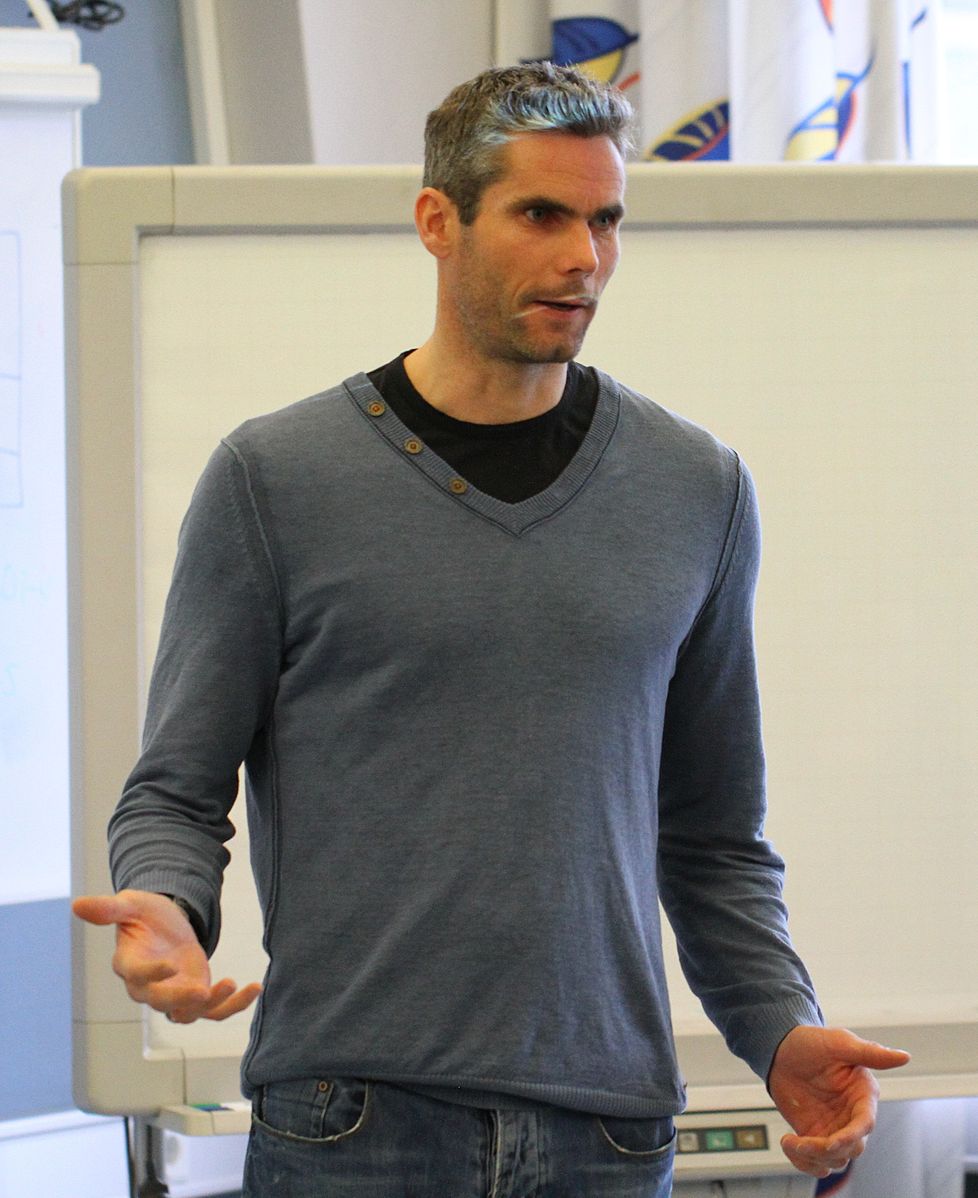
Tag: NRK

  • With eroding control, FIS bans Russia and Belarus in belated reaction to threatened protest-cancellation of World Cup events in Norway and Sweden

    With eroding control, FIS bans Russia and Belarus in belated reaction to threatened protest-cancellation of World Cup events in Norway and Sweden

    Today the International Ski Federation (FIS) banned all Russian and Belarusian athletes and officials from taking part in any remaining FIS competitions. The press release stated, “The FIS Council decided unanimously in line with the IOC recommendation, that with immediate effect, no Russian or Belarusian athlete shall participate in any FIS competition at any level through the end of the 2021-2022 season.”
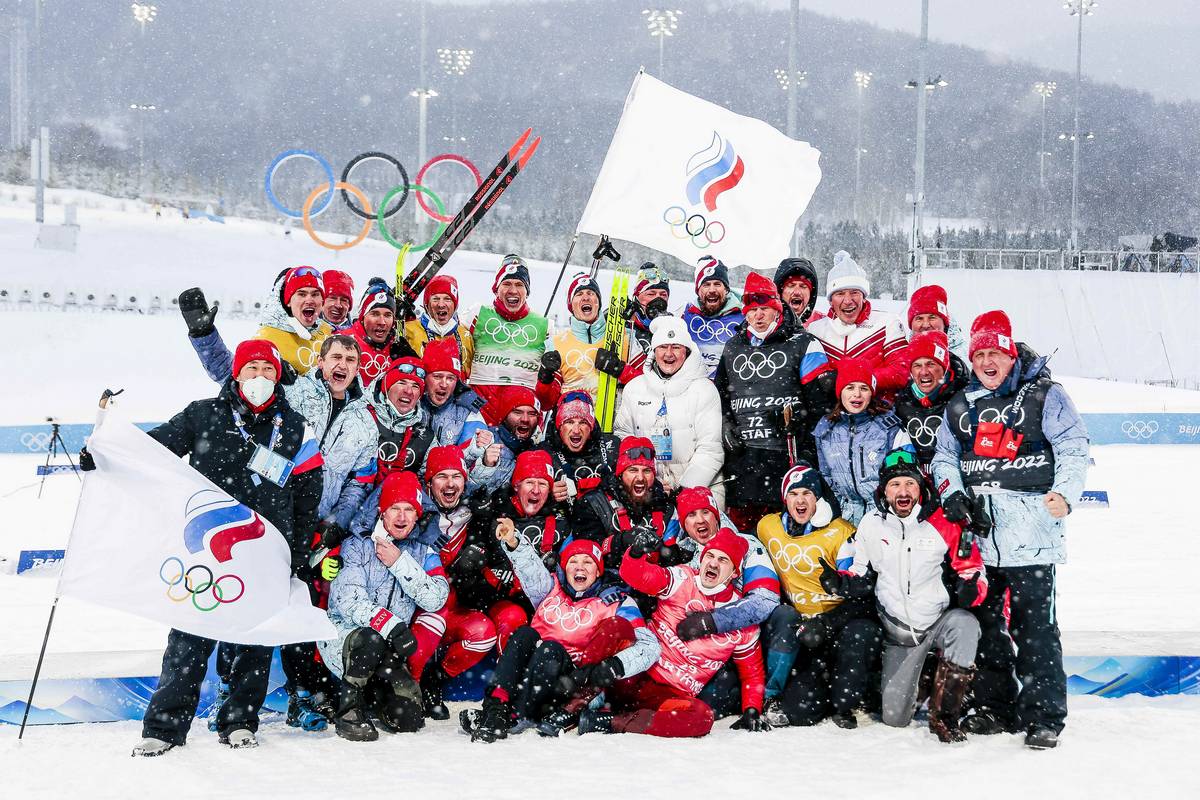
    The Russian team celebrates a dominant performance at the men’s 4 x 10 k relay during the 2022 Olympic Winter Games. (Photo: NordicFocus)

    The belated decision came after a power struggle between the Norwegian Ski Association and FIS, roiling the ski world and casting doubt upon the remainder of the World Cup season. 

    On Saturday, February 26th the board of the Norwegian Ski Association decided in a special meeting to uninvite Russian and Belarusian athletes from its upcoming World Cup races in Drammen and Holmenkollen. The position of the Ski Association was clear: “We do not want their participation.” 

    However, the Norwegian Ski Association and the event organizers lacked the authority to bar athletes, and FIS stood by their position of allowing all athletes to compete, telling NRKThe FIS board has been clear in its approach to Russian athletes in all FIS competitions… national federations and local organizers should not exclude athletes on the grounds of gender, race, nationality or sexual orientation.”

    On Monday, February 28 the Russian cross country ski team arrived in Oslo despite their lack of welcome and were met by Norwegian reporters at the Gardermoen airport. The athletes declined to speak, but Bolshunov’s coach, Yuri Borodavko did. “Well, it’s a terrible situation,” Borodavko told NRK. “War is always terrible. No one has ever wanted a war, not even us. Thank God there are sensible people with common sense, who do not give in to the panic that is now spreading throughout the world, and it is the leaders of FIS.”
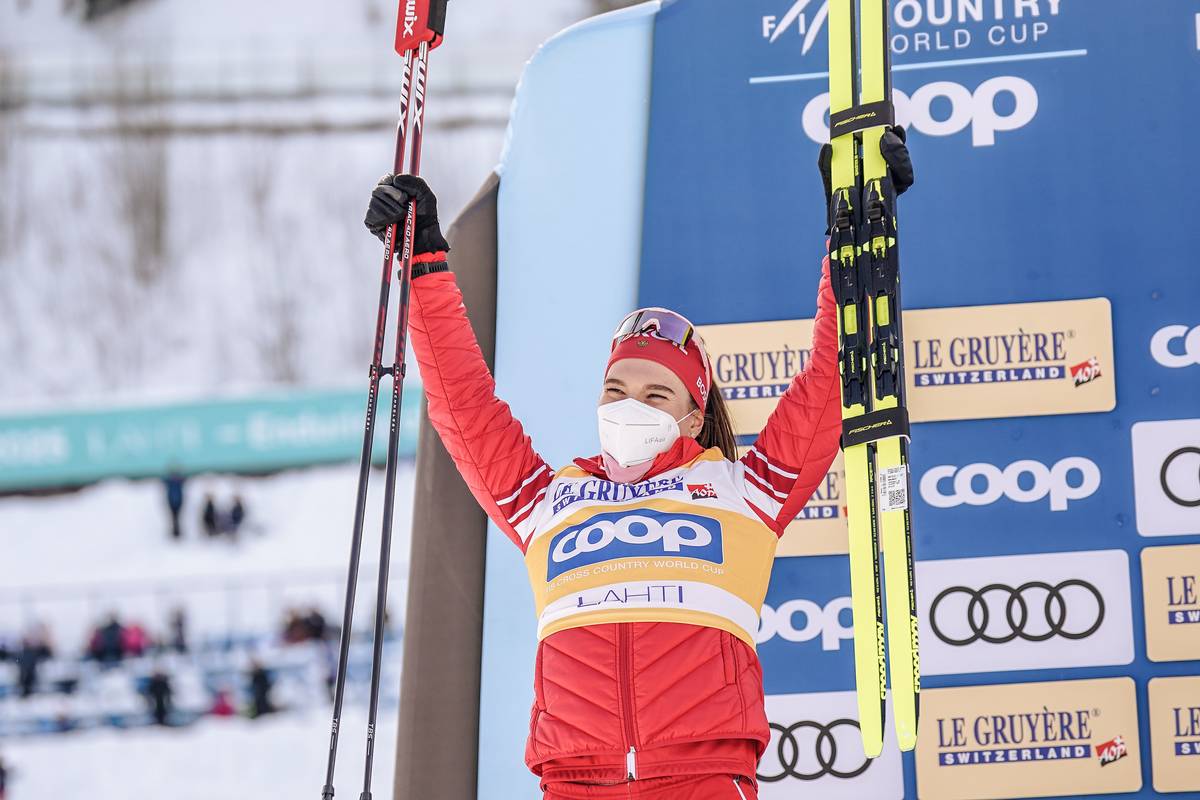
    Russia’s Natalia Nepryaeva steps onto the podium following a second place finish in the 10 k classic in Lahti. (Photo: NordicFocus)

    On Monday the Ski Associations for Norway, Sweden, and Finland wrote to FIS to ask for the exclusion of Russian athletes. Later in the day, the International Olympic Committee (IOC) revised their advice and requested the exclusion of Russian and Belarusian athletes.

    [The Ski Associations] letter was somewhat surprising to us,” said FIS Secretary General Michel Vion.

    FIS, seemingly unable to move in tandem with events, made no response, and Vegard Ulvang pushed the Norwegian Ski Association to carry through with the refusal to host Russian athletes, saying, “It is a decision that FIS should have made. When they do not take it, it is we [Norway], who own the event, who must take it. If FIS disagrees with the decision, they can take the World Cup from us, it is a risk we should take. Then we will also force FIS to take active action.”

    With no word from FIS, the Norwegian Ski Association hosted a series of crisis meetings on Monday night and early Tuesday morning, during which the organization decided to override FIS and ban all Russian and Belarussian athletes from competing, regardless of the consequences of the action. 

    “We had hoped that FIS would come to that decision on behalf of the entire ski sport,” said Norwegian Ski Association President Erik Røste, “But now the Ski Association can not wait any longer.”

    FIS Secretary General Vion dismissed the position of the Norwegians saying, “We received some emails, with inquiries that were not reality-oriented. The Norwegian Ski Association does not have the authority to cancel anything or to exclude athletes. They express a wish that there will be no Russian athletes, but it was just a wish.”

    The Russian ski team, training in Holmenkollen on Tuesday morning confirmed that they would leave Norway and not participate in the World Cup. “Let our rivals compete,” Borodavko told VG. “Let’s just say they are not our friends and not comrades.” 

    With the decision effectively already taken, FIS seized the moment at noon Central European time on Tuesday and banned the Russian and Belarusian athletes and officials.I am very happy that FIS ended up in that position,” said Røste, adding, “It has taken too long, it could have come earlier.”
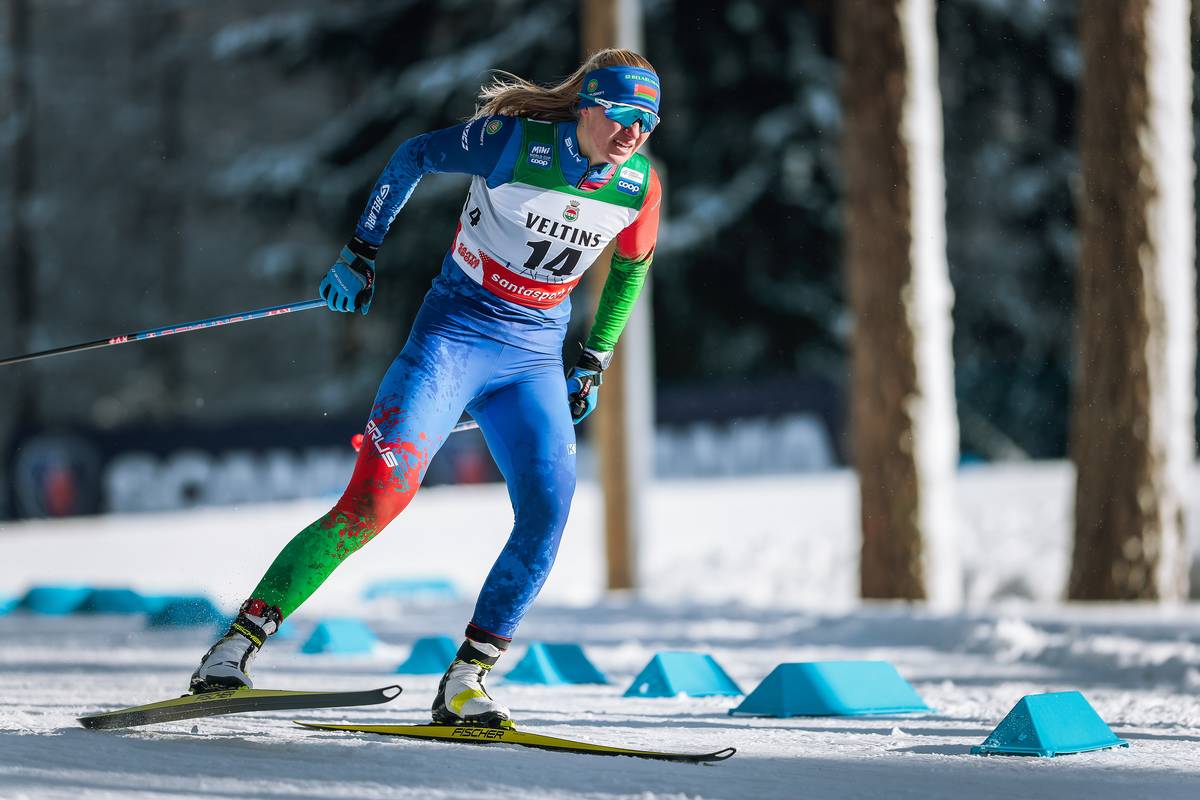
    Belarussian athlete Hanna Karaliova races the freestyle sprint qualifier last weekend in Lahti, FIN. (Photo: NordicFocus)

    The FIS decision narrowly averted the likely cancellation of the remaining World Cup races and the flight of sponsors. 

    Geirr Kihle, the event organizer of the Drammen city sprints this Thursday had urged fans to come to the event in the blue and yellow of the Ukrainian colors. He said he hoped the public’s reception to the Russian athletes would be, “to put it a little simply, sour.”

    On Tuesday morning, Drammen said they would withdraw from hosting the race if the Russian athletes were not banned. 

    Pressure on FIS also came from Coop—the title sponsor of the World Cup. “We have given FIS clear guidelines for what we believe,” said Takle Friis, the Director of Communications for Coop to VG. “They must respond immediately. In sympathy and solidarity with Ukraine, we can not accept that the Russian team will go to the World Cup.”

    Coop will adopt the Ukrainian colors for their logo on race bibs, and are working to change trailside billboards at Holmenkollen to promote donations to the Red Cross. 

    Sponsorship deals for Russian athletes also began to evaporate. Brav, the parent company of Swix and Toko announced on Monday that effective immediately, it will end all business in Russia and sever ties with Russian athletes. 

    The conflict between the sporting associations and FIS is yet another note in a habit of day-too-late decision making by the governing body of world skiing. Following the Russian invasion of Ukraine, the US ski team along with Norway, Sweden, and Finland all declared that they would not send teams to the scheduled World Cup Finals in Tyumen, Russia. After a day of urging FIS to act, the following day FIS canceled all remaining events in Russia. By then, it was already a moot point—no one was going. 
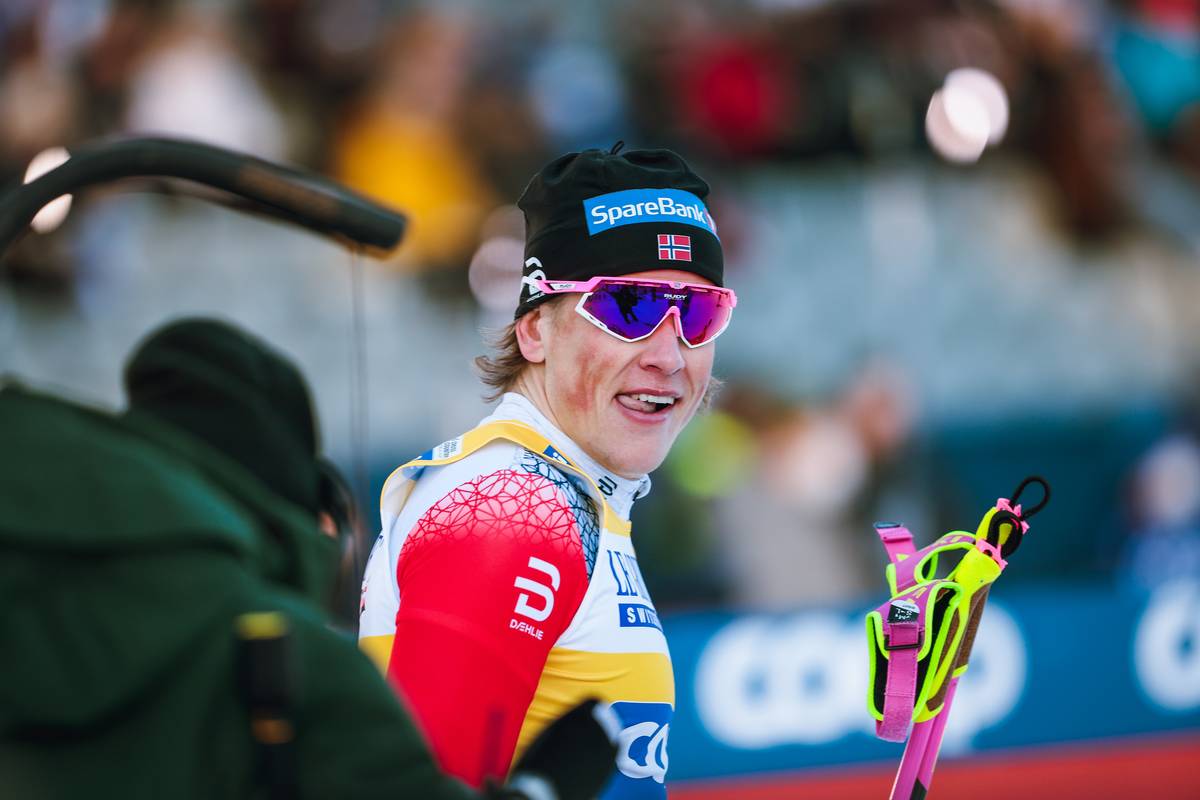
    Johannes Høsflot Klæbo enjoys a victory in Lahti’s freestyle sprint. (Photo: NordicFocus)

    Johannes Klæbo has been perhaps the most outspoken athlete on the issue. On Monday, he told VG “I think it is both cowardly and weak that FIS does not make the decision to deny Russia participation in Norway and in the World Cup. FIS should have done as Ski Classics [did] – and said no to Russia.”

    The Visma Ski Classics, a rival circuit to that of FIS World Cup, moved swiftly on Monday to remove Russian skiers from the Vasaloppet and the season long competition. 

    The FIS decision came too late for some quarters: Ӧstersund announced that there was no longer sufficient time to get a budget and sponsorship ready to host the World Cup Finals. 

    A day earlier, the municipality of Ӧstersund, which owns the ski trails, declared that they would bar the use of the ski trails for the event if FIS did not ban Russian athletes. 

    The World Cup will now likely end a week earlier than scheduled in Falun, Sweden on March 13th. 

    The late decision from FIS stoked grumbles that the federation may be overly beholden to Russian interests. As Drammen race organizer Geirr Kihle put it about sport federations in general, “Those who are called the ‘high lords’ have a hard time deciding. It is very common for Russians to sit on the boards. They are involved in deciding and will probably almost veto if they do not get what they want.”

    Norwegian newspaper Dagbladet also questioned the interests of new FIS President Johan Eliasch, the Swedish-British billionaire and former CEO of the ski company HEAD. Dagbladet challenged Eliasch’s record of supporting Russian tennis star, and HEAD athlete Maria Maria Sharapova, after tested positive in 2016 for banned substance Meldonium. Eliasch at the time saidHas WADA something against Russia? I believe they do.”

    The assertion that FIS is biased towards Russia was refuted by Secretary General Vion who replied to the NRK question, “Of course not! How can you say that?” He pointed out that Elena Valbe, the head of Russian skiing, is the only Russian to sit on the 19 member council. 

    Nevertheless, the situation is far from resolved. NRK ​​commentator Jan Petter Saltvedt rejected the phrasing that FIS used to ban the athletes which focused on athlete safety and in his words, lacked “the essential thing, namely the condemnation of Russia’s invasion.”

    “The whole reasoning is untrustworthy and deficient,” argued Saltvedt. “Many questions remain about what kind of power struggle this has been and what FIS leaders really think about this.”

    The cautious wording from FIS likely has much to do with an expected appeal by the Russians in the Court of Arbitration for Sport (CAS). 
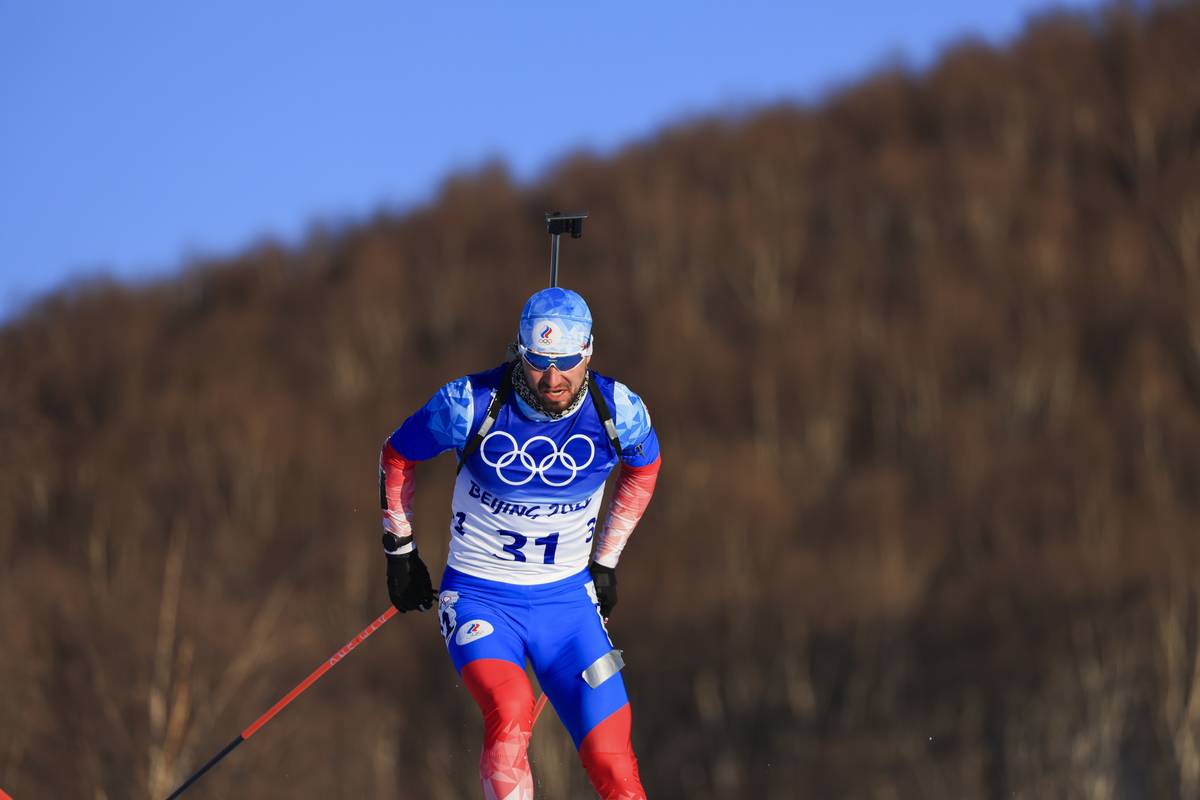
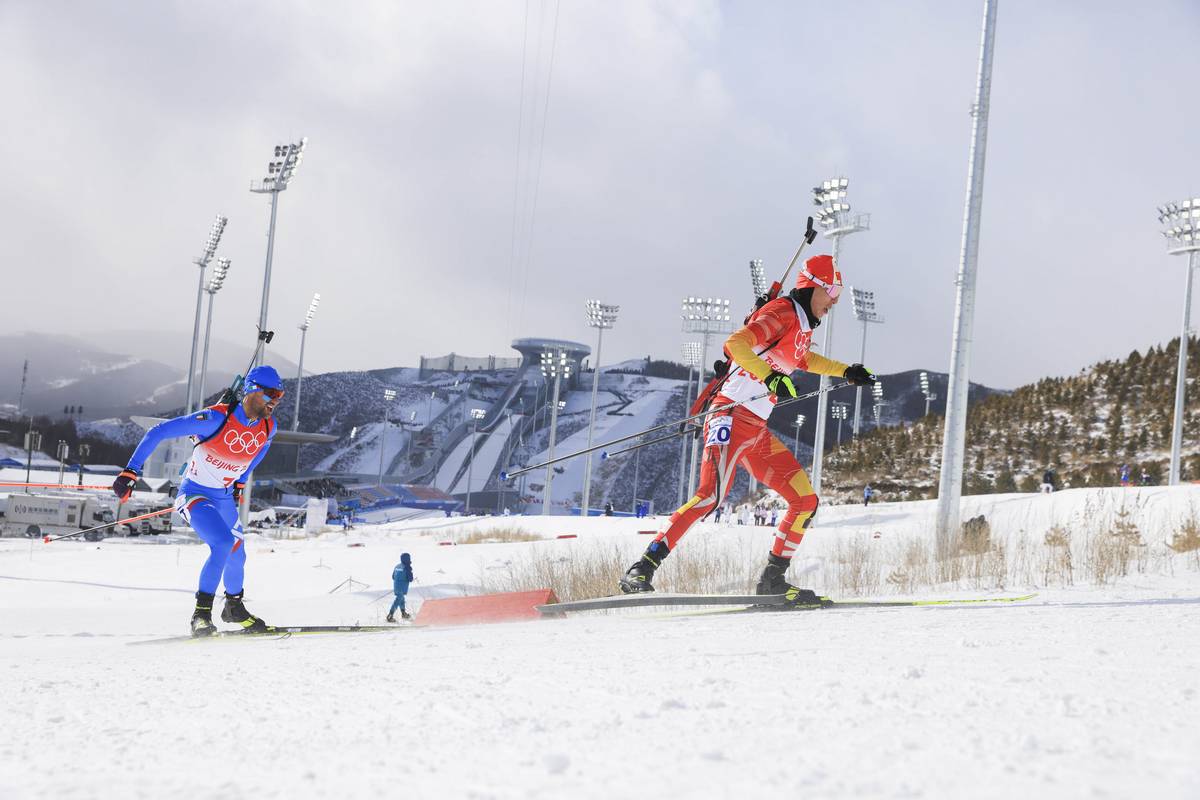
    Russian biathlete Alexander Loginov competes in the men’s individual competition during the 2022 Beijing Olympic Winter Games. (Photo: NordicFocus)

    When the International Biathlon Union decided on Saturday to require Russian athletes to compete under a neutral flag, their team promptly withdrew from the World Cup, stating, “We are furious at these illegal actions of the IBU and will defend the rights of our athletes and the rights of the RBU as a member of the International Federation.”

    The case is expected to end up in CAS, and there is a likelihood that the same will occur in cross country skiing. 

    The Russian team will leave Norway on Wednesday, reported Borodavko to NRK. “When you start to mix politics into the picture,” Borodavko said, “there is something we can not accept, so therefore we go back.” With no flights between Europe and Russia, their journey home will likely route them through Turkey. 

    The manner in which FIS came to the decision will likely deal a blow to its credibility, managing in a single stroke to alienate both its Scandinavian and Russian partners. FIS has struggled to rise to the challenge that this season has presented, with previous misses being the COVID related cancellations of World Cup races in France and Slovenia, an impromptu shortening of the men’s Olympic 50 k, and a belated cancelation of the World Cup Finals in Russia. 

    Things take time,” Klæbo said on Friday, adding, “But I certainly think we do not have to wait until the longest every single time.” 

    Jens Burman of Sweden may have summed it best to Aftenbladet on Tuesday morning before FIS’s announcement. “In principle, everyone has excluded them, but not FIS. You are almost a little ashamed.”
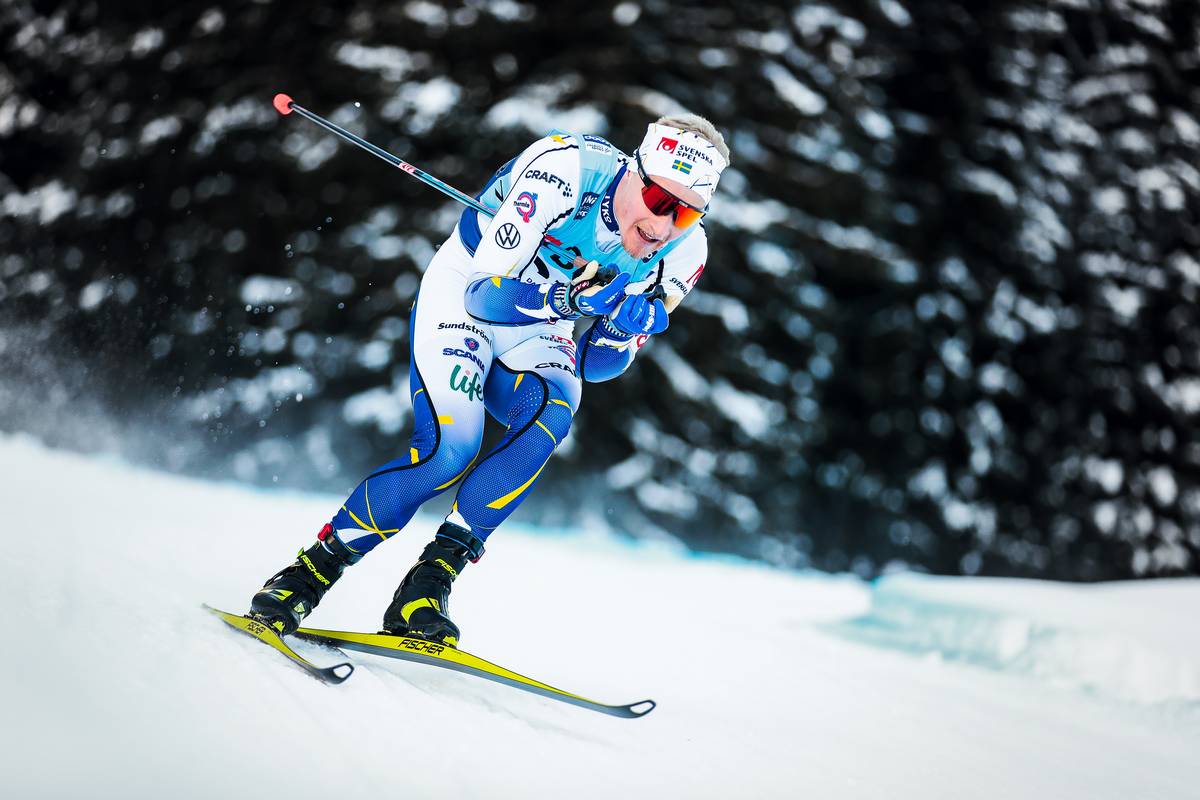
    Sweden’s Jens Burman races the 15 k skate during a December 2021 World Cup in Davos, SUI. (Photo: NordicFocus)
  • Russian athletes expected to compete in Norway despite Norwegian Ski Association message that they are not welcome

    Russian athletes expected to compete in Norway despite Norwegian Ski Association message that they are not welcome

    On February 26th, the Norwegian Ski Association (NSA) released a statement indicating that in light of the nation’s recent invasion of the Ukraine, Russian participation was not welcome at the upcoming World Cup sprint races in Dramman or the storied Holmenkollen distance races outside of Oslo. In addition to these cross country events, Norway is scheduled to host competitions in alpine, nordic combined, and ski jumping, including the World Ski Flying Championships in Vikersund. 

    A press release shared by Norwegian news source NRK stated: “The board of the Norwegian Ski Association has today discussed the situation related to Russia’s invasion of Ukraine, and how this affects the upcoming World Cup races and the world championship in Norway. The Norwegian Ski Association’s message to Russia and Russian athletes is crystal clear; We do not want their participation!”

    NSA president Erik Røste told NRK that a request had been made to the International Ski Federation (FIS) to officially bar the Russian program from participating, but as of Saturday, FIS had not taken action to comply with the request, instead pointing to the official cancellation of remaining FIS events held in Russia. 

    “The attack on the Ukrainian people and the great suffering we see pictures of now, the sport can not remain passive and be neutral,” Røste said of the request. “Therefore, the board of the Norwegian Ski Association was clear that this must have consequences beyond what has already been decided. Therefore, we will send a clear and distinct signal to FIS that we do not want Russia and Russian athletes to participate in competitions in Norway in the coming weeks.”

    Ultimately, it is up to the board of FIS whether Russia will be allowed to compete in the remainder of World Cup events. A response NRK received via email today stated: 

    The FIS board has been clear in its approach to Russian athletes in all FIS competitions. To ensure fair and inclusive competitions at all FIS events, national federations and local organizers should not exclude athletes on the grounds of gender, race, nationality or sexual orientation.”

    Alexander Bolshunov (RUS) wins the 2020 Holmenkollen 50 k in the fog, ahead of Norway’s Simen Hegstad Krüger. (Photo: NordicFocus)

    As such, no Russian athletes or coaches have been denied entry to Norway, and Stefan Marx, the general manager of Holmenkollen ski festival, indicated there is little more that the organizers can do to prevent Russian participation in the events.

    “We must let them participate,” Marx said to NRK. “Those who FIS and the Norwegian Ski Association say must be allowed to participate. We do not have the authority to refuse anyone to participate, but we have supported the Ski Association and the Sports Association’s position. It is up to FIS or the authorities to decide, but we are clear in our support for the Ski Association’s proposal that Russian athletes are not wanted due to violations of international law that have been committed.”
    After flying from Helsinki following the Lahti World Cup races, Russian teams have begun to arrive in Norway. When pressed by the media upon his arrival, World Cup distance leader and favorite for the upcoming 50 k classic at the Holmenkollen, Alexander Bolshunov chose to remain silent. NRK did, however, receive comments from multiple Russian coaches, including head coach Marcus Cramer who felt that sport and politics should be kept separate.

    “​​What do sports and athletes have to do with this situation? It’s really tough. I just get sad that the Norwegian association thinks like that. We really have a good communication between us. With everyone who works there. It’s sad to hear this, especially when they take it to the press and not us first,” said Cramer.

    Another Russian coach, Jegor Sorin, who had been working at the Junior/U23 World Championships in Lygna, NOR and planned to join the Russian team in Oslo, echoed that Russian athletes should not be held accountable for the 

    I am very upset that the Norwegian association wants this,” Sorin told NRK. “I can understand that no one wants to travel to Tyumen for the World Cup, but I do not know what happens to us… We are Russian athletes. We are here, we are not in any war. We are athletes, not soldiers. Maybe they think we have weapons. We want peace and for me this is very strange.”

    Alexander Bolshuonv is photographed with his four Olympic medals from the 2022 Games, with one event remaining. He would leave the Games with three gold medals, and a total of nine Olympic medals including those won in 2018. (Photo: NordicFocus)

    Though the Russian coaches focused on a separation between sport and politics, others have pointed out the direct ties between sporting success and military recognition. Used as an example, Bolshunov and Denis Spitsov were promoted to the rank of captain in Russia’s National Guard in recognition of their success during the 2022 Olympics. Bolshunov, who has earned a medal in each of his nine Olympic appearances, including three gold medals in Beijing, received additional honors in the form of the Alexander Nevsky Order, given in recognition of “special service for the fatherland.”

    FIS cross-country committee leader, Vegard Ulvang told NRK, “Russian athletes are [military] officers. This makes the symbolic value [of their participation] even greater.”
    A similar statement was made by Global Athlete representative and former U.S. Ski Team athlete Noah Hoffman. 

    “While I feel for the individual athletes, all Russian skiers should be banned from the FIS Cross Country World Cup for the rest of the season,” Hoffman tweeted. “Their results are used to drum up nationalism and bolster the Russian State. Allowing them to compete aids Russia. #StandWithUkraine.”
    Ulvang is urging a stronger response from the Norwegian Ski Federation, suggesting that they relinquish the FIS World Cup status of the events at the Holmenkollen in order to gain the authority to prohibit Russian participation.

    Jan Petter Saltvedt, a Sports Commentator for NRK described Ulvang’s statements as a “moral ultimatum.”

    “Ulvang demands an open rebellion from NSF against his own superiors,” Saltvedt said. “And he should get it. Vegard Ulvang puts so much pressure on the Norwegian Ski Association that they can not help but act… At the same time, he expresses a very strong and clear criticism of FIS, where he himself is one of the powerful committee leaders, but still does not feel he is heard at all.”

    Norwegian athletes who have been asked for comment have given mixed responses, often acknowledging the complexity of the issue and whether the athletes themselves should be at fault for government decisions.

    Among those with a clear stance, Erik Valnes spoke of disallowing Russian participation. “There is a heavy symbolism in it. It would send a signal. Since [Bolshunov] is [a captain of the Russian National Guard], they have already mixed sports and politics in a way. It is difficult. It is a great pity that it will be like that.”

    Erik Vales and Johannes Høsflot Klæbo earn gold in the classic team sprint during the 2022 Beijing Games. (Photo: NordicFocus)

    Johannes Høsflot Klæbo also spoke in support of the NSA urging FIS to remove Russian athletes from competition.

    “As an athlete, you want the best to start. We train all year to compete and then you want the best to participate,” Klæbo said to NRK. “At the same time, I support the attitude of the ski association now. There is no doubt about what is happening in Ukraine, and Russia must be condemned. I strongly condemn it and I think it is good that the association takes a stand.”

    Therese Johaug acknowledged that athletes may not have direct involvement in the military actions of Russia, speaking instead to their role in representing their country through sport.

    I feel sorry for the athletes, first and foremost, I understand that they have nothing to do with this,” Therese Johaug told NRK after narrowly winning Lahti’s 10 k classic over Russian Natalia Nepryaeva. “But on the other hand, I think it is completely wrong. They front their country and the flag both on the chest and on the forehead. And that a country should also ravage the sports arena and fight for victories and front their country in the situation we are in – I think that is completely wrong.”

    Therese Johaug voices her thoughts on Russian World Cup participation following her win in Lahti’s 10 k classic. (Photo: NordicFocus)

    The stance is not unanimous amongst the Norwegian team. Sindre Bjørnestad Skar, who took third in Lahti’s freestyle sprint, spoke to the unfairness for Russian athletes.

    “Of course, I am 100 percent against everything that is happening between Russia and Ukraine now. It is completely inconceivable. But then I also do not think that the fact that they have a Russian passport, means that they should be punished and deprived of the opportunity to do their job. In a way, I think that is a bit unfair too,” Skar told NRK

    For the time being, no further changes in Russian participation have been reported. FasterSkier will continue to follow this story as it evolves over the next few days. World Cup classic sprint races are currently scheduled in Drammen Thursday, with the women’s 30 k mass start classic in Oslo happening Saturday March 5th, followed by the men’s 50 k on Sunday. 

  • The Chinese Ski Team’s Path to Beijing (Part 3)

    The Chinese Ski Team’s Path to Beijing (Part 3)

    This is the final installment of a three-part series on the development of the Chinese ski program. Click here to read part 1 and part 2.

    Part 3: Olympic Hopes and Misgivings in Norway

    For the Chinese cross country ski team, the 2022 Beijing Olympics opened with a blaze when Dinigeer Yilamujiang was selected to co-light the Olympic flame. It was an enormous honor for the twenty year old cross country skier from Altai, China with Uyghur roots. Yet her ethnic background overshadowed the moment, and, like so many aspects of the Chinese cross country skiing project, the ceremony meshed sporting aspirations with political theater.

    China’s Dinigeer Yilamujiang (CHN) races the freestyle sprint qualifier during the 2022 Olympic Winter Games in Zhangjiakou. (Photo: NordicFocus)

    Dinigeer, known as Dini on the ski circuit, is a rising star on the Chinese ski team. She is one of the few of the team’s new generation that grew up with skiing, and her father had hopes of becoming a great skier himself, and later became a coach. 

    Dini’s father Mulaji Yilamujiang, never expected her to become a professional athlete. That began to change when at age twelve, Dinigeer competed in a regional race and a competitive chord was struck. “She wanted to win the race like a professional athlete and get on the podium,” Mulaji recounted to Chinese news outlet Xinhua.

    It was hardly surprising then that when Kristian Bjune Sveen took the job as coach of the Swix China team in 2017, he picked fifteen year old Dini. 

    Since then, her success has by any measure been extraordinary: At the 2020 and 2021 Junior World Championships, Dinigeer proved that she was among the best in her age group, finishing 5th and 6th respectively in the 5k distance. 

    Chinese cross country skier Dinigeer Yilamujiang (bib 17) races a December, 2020 team sprint in Dresden, Germany. (Photo: NordicFocus)

    Together with her teammate Bayani Jialin—who had no prior skiing experience before joining Sveen’s team—the two have skied together on the World Cup to top ten team sprint finishes and top thirty in individual sprints. 

    “Going from being an untrained person to being able to beat half the Norwegian national team and become a top 30 in a sport you [didn’t] know existed,” Sveen told NRK, “it is objectively completely insane!”

    Liu Rongshen is another twenty year old Chinese skier that has impressed early in the Games. Originally a runner from Yunnan, he was “one of the athletes that came to Meråker [in] March 2019,” wrote Tor-Arne Hetland to FasterSkier. Liu finished 38th in the men’s skiathlon, some 16 seconds ahead of Johannes Klæbo. “Pretty [impressive] that he never had been on skis before he came to Norway,” Hetland wrote, adding, “Maybe in the sprint China can have athletes in the semi-finals.”

    Hetland’s prediction nearly came true when Wang Qiang—China’s best sprinter and medal hope—qualified in 5th in the men’s sprint and appeared to have advanced out of his quarterfinal heat only to be ruled out due to obstructing another skier. 

    In biathlon, the women are led by Meng Fanqi—one of the best sharpshooters on the circuit—as well as Chu Yuanmeng and Zhang Yan. All three are top class on the range, and with a home snow advantage, and fast skis provided by Norway, a relay medal remains a tangible, if distant, prospect. 

    Although some juniors such as Dinigeer Yilamujiang spent the last few winters in Norway, much of the Chinese cross country team has been based in China since the start of the pandemic. 

    To compensate for the lack of international racing for their homebound skiers, Russian second tier racers were hired to come to China for extended periods and enliven national races and ski with Chinese athletes. 

    Wang Qiang (CHN) takes an early lead in the men’s team sprint semifinal during the 2022 Olympic Winter Games. (Photo: NordicFocus)

    To the Chinese skiers advantage was sole access to the Olympic courses in Zhangjiakou ahead of the Games, although their coach Bernhard Rønning dismissed this assertion to Dagbladet, saying that while they had trained and competed in the area “not so much in the Olympic tracks.”

    Still, the team was not without excellent training opportunities, with ready access to altitude, year round skiing in the Beishan tunnel, and “the best equipment,” according to Max Volkov, coach of the Chinese distance team.

    Volkov, the former assistant coach to Alexander Bolshunov, joined a talented coaching staff in China, including his compatriot and former Olympic champion Nikita Kriukov, who trained their sprint team. 

    Magnus Frodahl worked with the Nordic combined team, and former Norwegian World Champion Terje Langli ran the Chinese cross country teams wax service, and trained in two apprentices, Li Xin & Wang Yihan. 

    Rounding out the core foreign coaches for the cross country team were Ole-Marius Bach, Bernhard Rønning, and Kristian Bjune Sveen.


    Bjørndalen

    The highest profile coaches to sign on to the Chinese Olympic project were Ole Einar Bjørndalen and his wife, former Belorussian biathlete Darya Domracheva. The two joined in 2019. 

    After the pandemic interrupted their debut season with the team, Bjørndalen rejoined his squad in China during the summer of 2020.  

    There, even for a legendary biathlete, the work was anything but glamorous. That summer, Bjørndalen worked daily from six in the morning to eleven at night. Each time he entered China he had to undergo a 17 day quarantine. Always the athlete, Bjørndalen ran 20 k a day inside his hotel room, running the length of the room around one thousand times. 

    The biathlon team spent the 2020/21 season training in China inside of an intense bubble. “There is no question of anyone coming in,” Bjørndalen told NRK, “And if you are going out on an errand in Beijing, it is straight into the corona quarantine.”

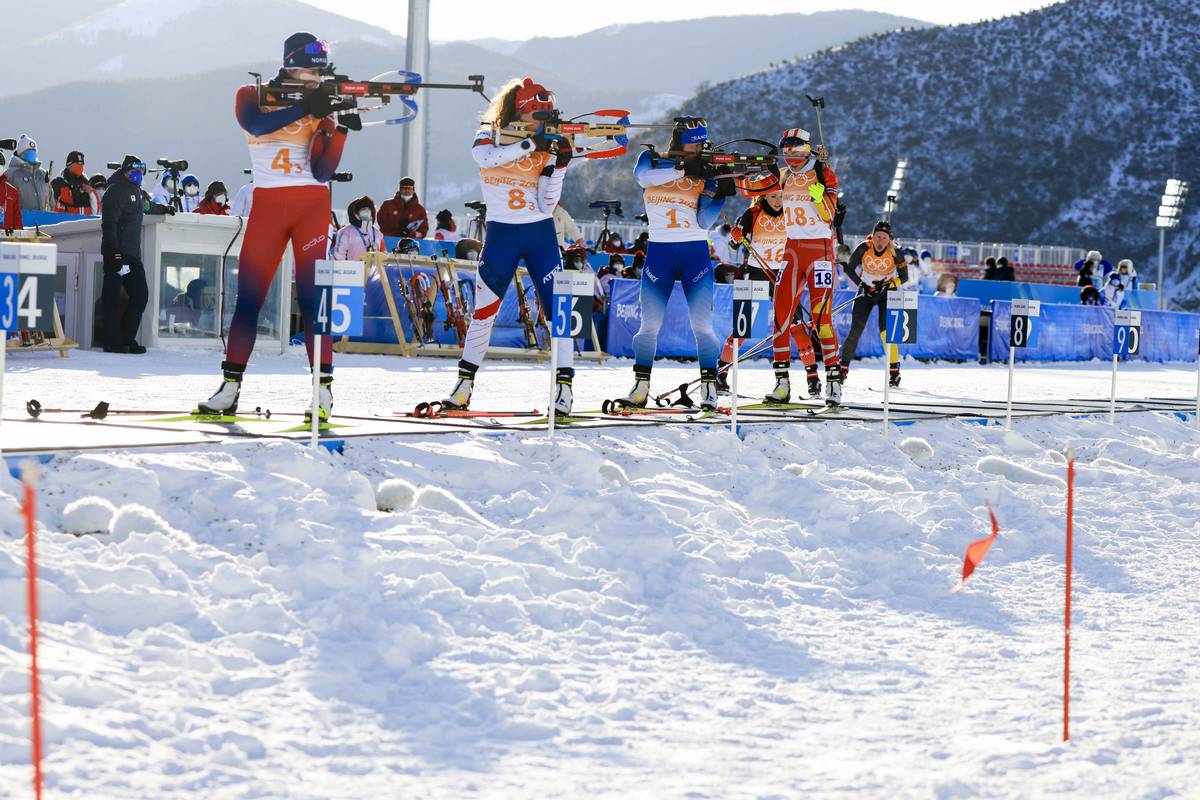
    Chinese biathlete Ding Yuhuan (bib 18) takes aim during the women’s relay in Zhangjiakou. (Photo: NordicFocus)

    That winter, Chinese President Xi Jingping visited the team. “I think he liked biathlon,” Bjørndalen said in the article.

    According to NRK, Xi’s visit to the Biathlon camp underscored the expectations to deliver results. “We have set ourselves the goal of winning a medal in the relay,” Bjørndalen explained, adding, “It’s a pretty horrible goal, but anything is possible.”

    The work of the famous duo has been apparent on the IBU World Cup, which China returned to this winter. US Biathlete Clare Egan said, “They’ve really done an incredible job bringing the athletes up. It’s funny because Daria [Domracheva] has a very unique and beautiful, graceful ski style and now all of the Chinese women, half the time I think they’re Daria when they go by me, they all ski exactly like her.”

    The shooting prowess of the Chinese biathletes is exceptional according to Egan. “They’re incredible, incredible precision shooters. I have to imagine that their team hit percentages are at least as high, if not higher, than any of the other teams.”

    “The reason they’re not winning medals is because they’re not quite there with the ski speed,” Egan said, “Even though they’ve really improved a lot.”

    When Bjørndalen took the job he ensured his athletes would have competitive skis by signing a deal with the Norwegian biathlon team to wax their skis through to the Olympics. 

     Tobias Dahl Fenre, the head waxer for the Norwegian biathlon team, said of the wax deal, “We do not share the expertise. It will be in Norway. We employ Norwegian waxers in the Norwegian system.”  

    The deal, worth an undisclosed sum, allowed the Norwegian biathlon team to hire four more techs, bringing their service team size to fifteen. 

    Egan said the results of the wax partnership were clear on the IBU World Cup. “It’s cool to see them have a chance on skis because previously when they were waxing their own skis, they just didn’t have that background to be internationally competitive. Now sometimes they’re passing us on the downhill.” 

    Cheng Fangming (CHN), races the men’s relay during the 2022 Olympic Winter Games. (Photo: NordicFocus)

    While the work of Bjørndalen, Domracheva, and Sveen have impressed, for the foreign coaches working in China, the experience varied. 

    For Kristian Bjune Sveen, who took the job with Swix China when he was twenty five years old, the experience had been positive, if exhausting. “I work around the clock, every day, and have almost no privacy,” he told NRK. Nevertheless he said it was “an insanely exciting job. It is a coach’s dream to be able to design a plan that you want.”

    Sveen felt that he would not find another opportunity to influence a whole skiing culture in the way that he could in China, and fretted that the next job wouldn’t match the significance of his present work. “It’s almost like I’m not sure if I want to be a coach again after this,” Sveen said. “These are athletes I think can be the best in the world.”

    Others had more jaundiced views of coaching in China. When Anita Moen’s athlete’s were recalled abruptly in December 2019, the pandemic prevented her from rejoining her team until the following August. 

    “By then, five months had passed without me having been a coach for them,” Moen recounted. “That was when I noticed the change. The basic work we had done, and on which we made such great progress, was destroyed.”

    Moen’s athletes had returned to a Chinese sport system marked by authoritarian control. The result had a big effect on her. 

    “I knew these athletes very well,” she said. “I did not need to talk to them. I could see it in their eyes…The joy I had seen was gone.” Moen found the experience troubling, and decided to end her involvement.

    A non disclosure agreement had prevented her, (as well as many other coaches) from discussing the team’s work. Through these legal tools, much of what the Chinese team has been up to in the last year and half has remained opaque.


    Soul Searching

    As the Games crept closer, so did criticism of China’s human rights record. In Norway, the agreement to help the Chinese skiing programs became a contentious topic, with anxiety over whether the work of some one hundred coaches, techs, and physios was done in the service of expanding the sport, or rather a massive nation branding campaign to distract from China’s human rights abuses. 

    Had Norway, the home of the Nobel Prize and defender of human rights, sacrificed its moral center for a trade agreement masked by a feel-good ski coaching story? 

    That was the argument made by John Peder Egenæs, the head of Amnesty Norway, who suggested to NRK that China’s 2019 hiring of Bjørndalen—the most popular athlete in Norway—as the head coach of their biathlon team was part of a “big political game.” 

    Egenæs believed that the Olympics were being used to “launder a deplorable human rights record,” and feared that Bjørndalen would be used as an “ambassador for [Norway] to forget the negative sides of China.”

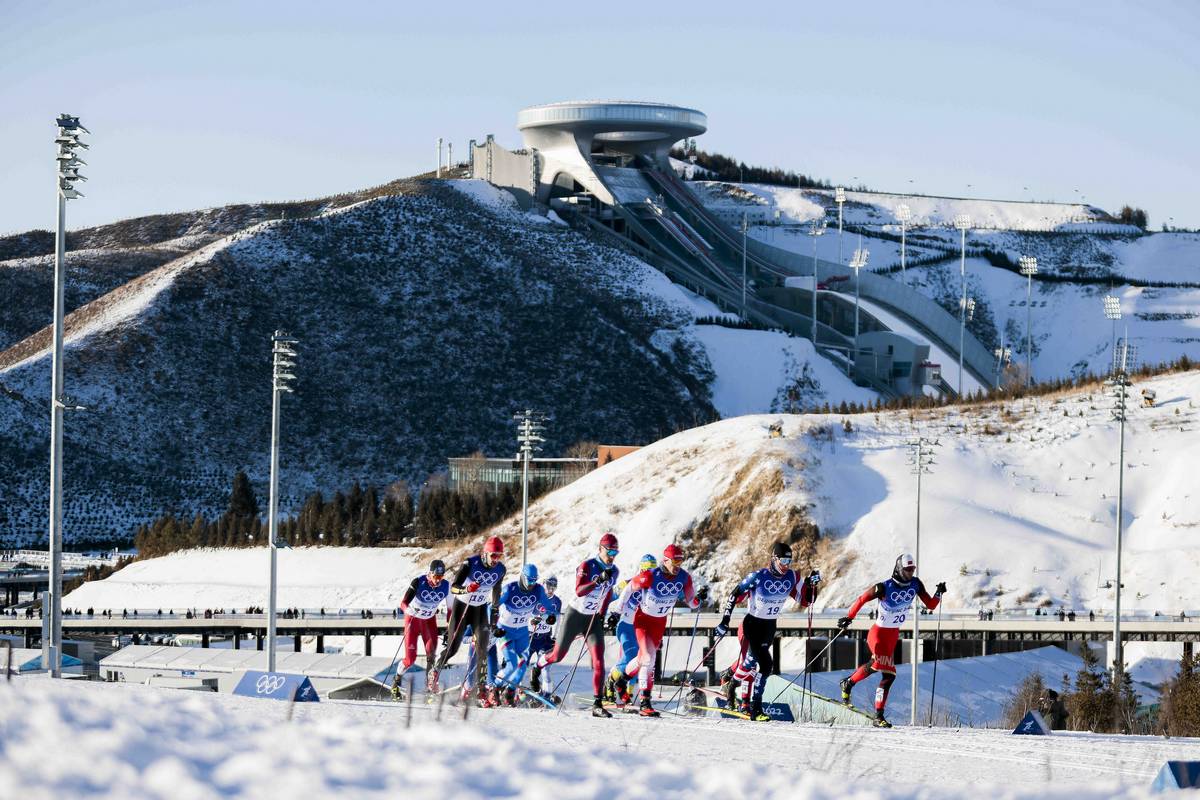
    China’s Jincai Shang (bib 20) leads the men’s semifinal of the classic team sprint in Zhangjiakou. (Photo: NordicFocus)

    Bjørndalen disagreed with the criticism, and told NRK, I do not feel any political game in what I do. I focus on the skiers I have and do not have any dialogue about any propaganda with any leader.”

    Sports commentator Andreas Selliaas fretted about the whole agreement, saying to Aftenposten, “I do not think Norwegian sports really know what they are involved in. This is not about skiing, but about nation building and domestic politics in China.”

    Questions began to be raised about why the Sports Confederation was not consulted prior to the 2017 agreement. “The sport was thrown in like a meat bone to the Chinese,” was the assessment of Gudmund Skjeldal, a former Norwegian national team skier. 

    Tom Tvedt, the former President of the Norwegian Sports Confederation believed that the agreement had overstepped the historic divide between Sport and State, saying, “In this area, the independent, free sports movement was abused.”

    In an op-ed to Aftenposten, a group of PhD students at the Norwegian Sports Academy wrote, “Perhaps the point is not whether we, a tiny country, can influence the gigantic China. There is something called losing one’s soul. There is something more important than Olympic gold medals. It’s something more important than salmon, even.”

    The authors pointed to the history of Norwegian sports resisting oppression, and ski jumping hero Birgir Ruud, who refused to organize competitions during the Nazi Occupation and was imprisoned.  

    “So one might like to ask:” The authors wrote rhetorically, “[Why didn’t] Norwegian sports protest against being forced to cooperate with such a totalitarian power as China?”

    The answer, they suggested, had much to do with funding

    Others asserted that Nordic skiing needed China to survive in the future. In a story in Aftenposen, Rønning said, “If you bring China with you, you have almost saved the sport of cross-country skiing.”

    Tvedt disagreed. “It’s really a disaster. Both for sports and Norwegian democracy.” 

    Skjeldal and others have called for the Norwegian Parliament to investigate the matter. That the calls of alarm came at the doorstep of the Olympic Games may be telling. 

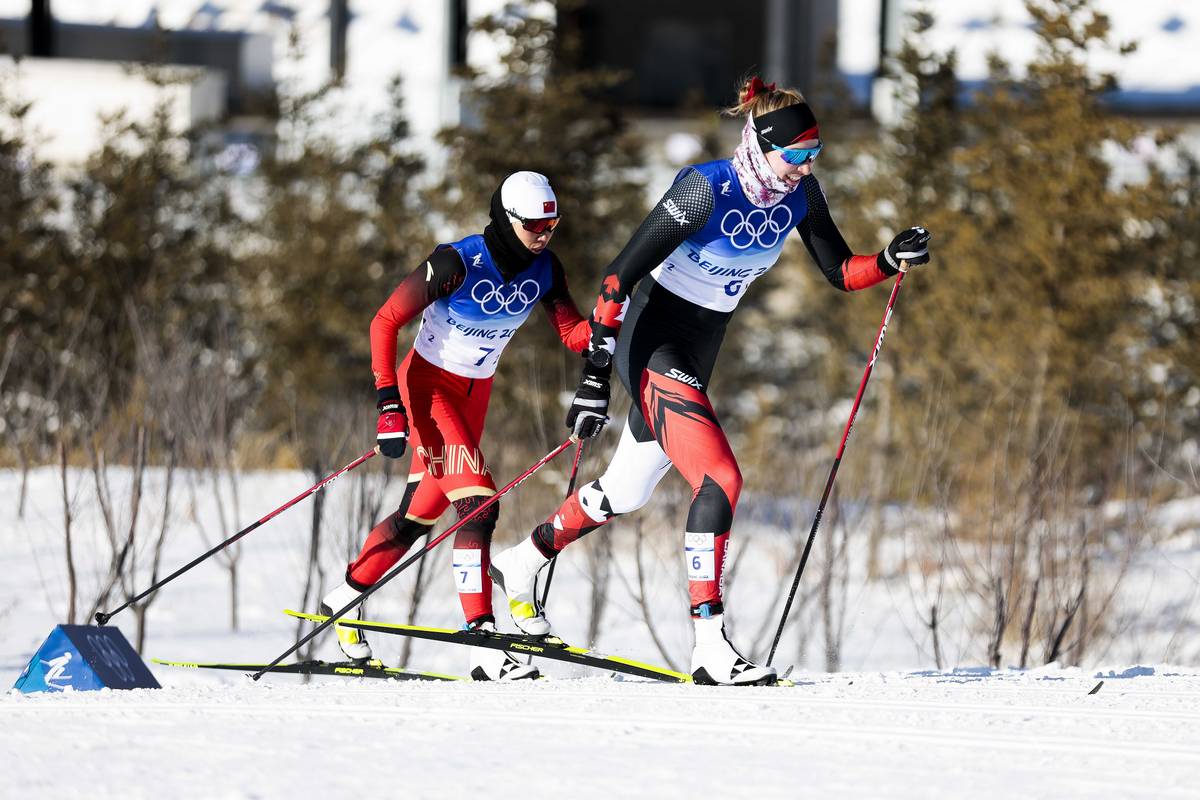
    Li Xin (CHN) follows Dahria Beatty (CAN) during the classic team sprint semifinal. (Photo: NordicFocus)

    While Norway wrestled with the ethics of their nearly completed sports agreement, the Chinese cross country ski team faced controversies over the diversity of the team’s athletes that include ethnic Uyghur, Kazakh, and Tibetan skiers. 

    The diverse team has been celebrated by Chinese State Media and questioned abroad. As a Uyghur athlete, Dinigeer Yuliamujiang is the prime example. She gained international fame overnight by lighting the Olympic torch—but not as a skier. Instead she has been viewed symbolically as Beijing’s defiant and brazen counter to charges of an ongoing Uyghur genocide. 

    Dini’s teammate, Bayani Jialin, is an ethnic Kazakh, and Chen Zhendui (whose Tibetan name is Tsering Damdul), made history by being one of the first Tibetans to compete for China at the Winter Olympics. He too was caught in the furor of the Tibetan exile communities’ protest against the Games over human rights abuses and an Olympic inspired crackdown in Tibet.

    The push and pull of dueling narratives has put the young and unseasoned skiers in an impossible position as they seek to make good on the far fetched expectations of medaling on home snow. 

    Chunxue Chi (bib 16) skis the scramble leg of the women’s 4 x 5 k relay for China. (Photo: NordicFocus)

    The Chinese skiing project is something of a looking glass, with those involved seeing in it what they wish to see. For Moen, who had grown close to the athletes under her care, the project represented a lost opportunity.

    Imagine if we could have the Chinese athletes here in Norway most of the time, in all these years,” she pondered. “Then I think the whole project could have been very, very exciting. Because they had such extreme progress that they could [have] continue[d]. There could have been results that would have been sensational.”

    Whether or not Chinese athletes in the Nordic disciplines manage to medal remains to be seen. The Games will mark the culmination of an expansive and unprecedented experiment in cross country skiing. 

    Historians of the future may well parse out the significance that a few hundred novice Chinese skiers and their Norwegian coaches had on the course of geopolitics. For now, all we can do is watch them race. 


  • The Enigma of Zhangjiakou and the Kuyangshu Nordic Center

    The Enigma of Zhangjiakou and the Kuyangshu Nordic Center

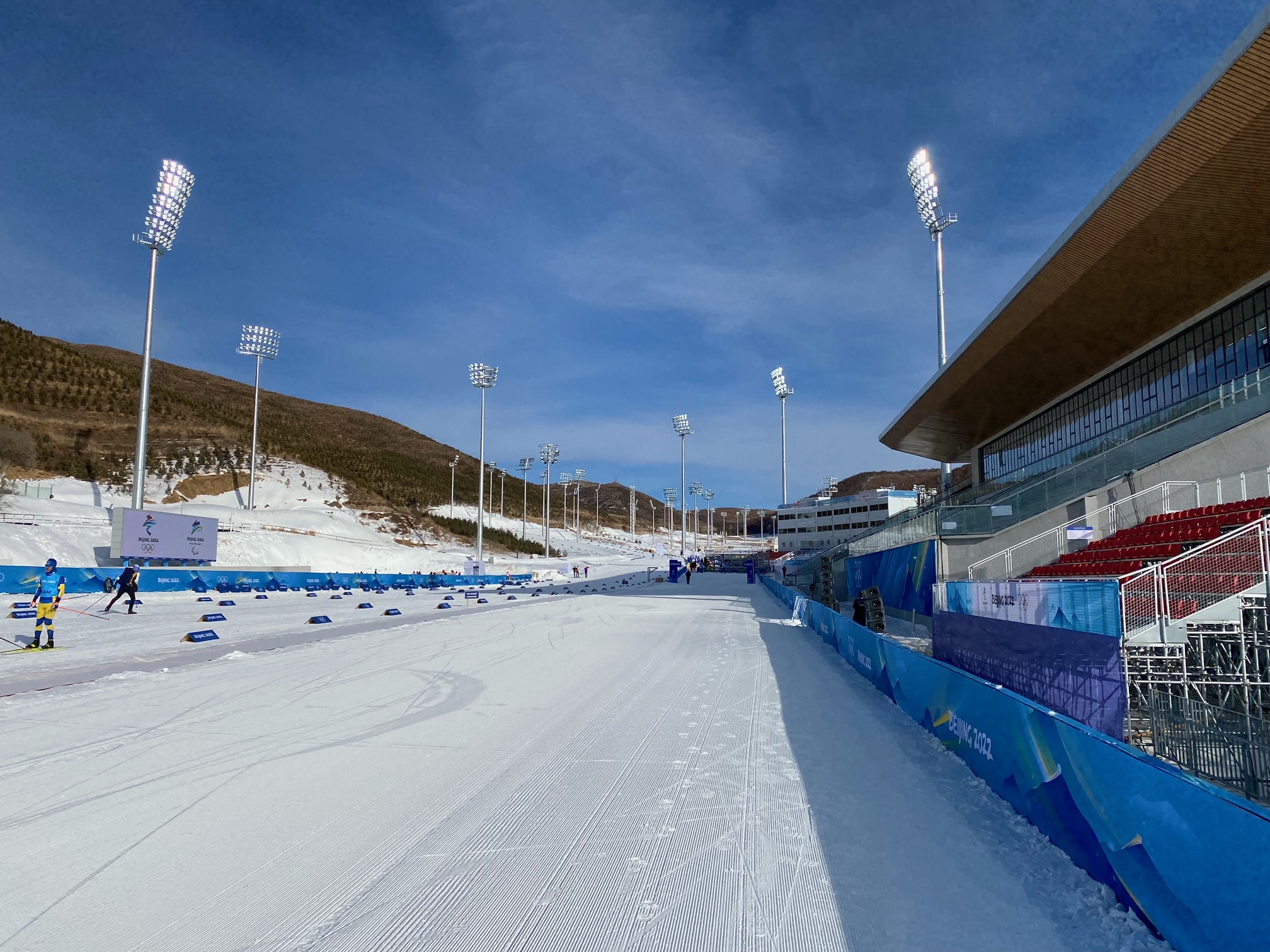
    A scene from the biathlon stadium in Zhangjiakou. (Photo: Federico Fontana, US Biathlon)

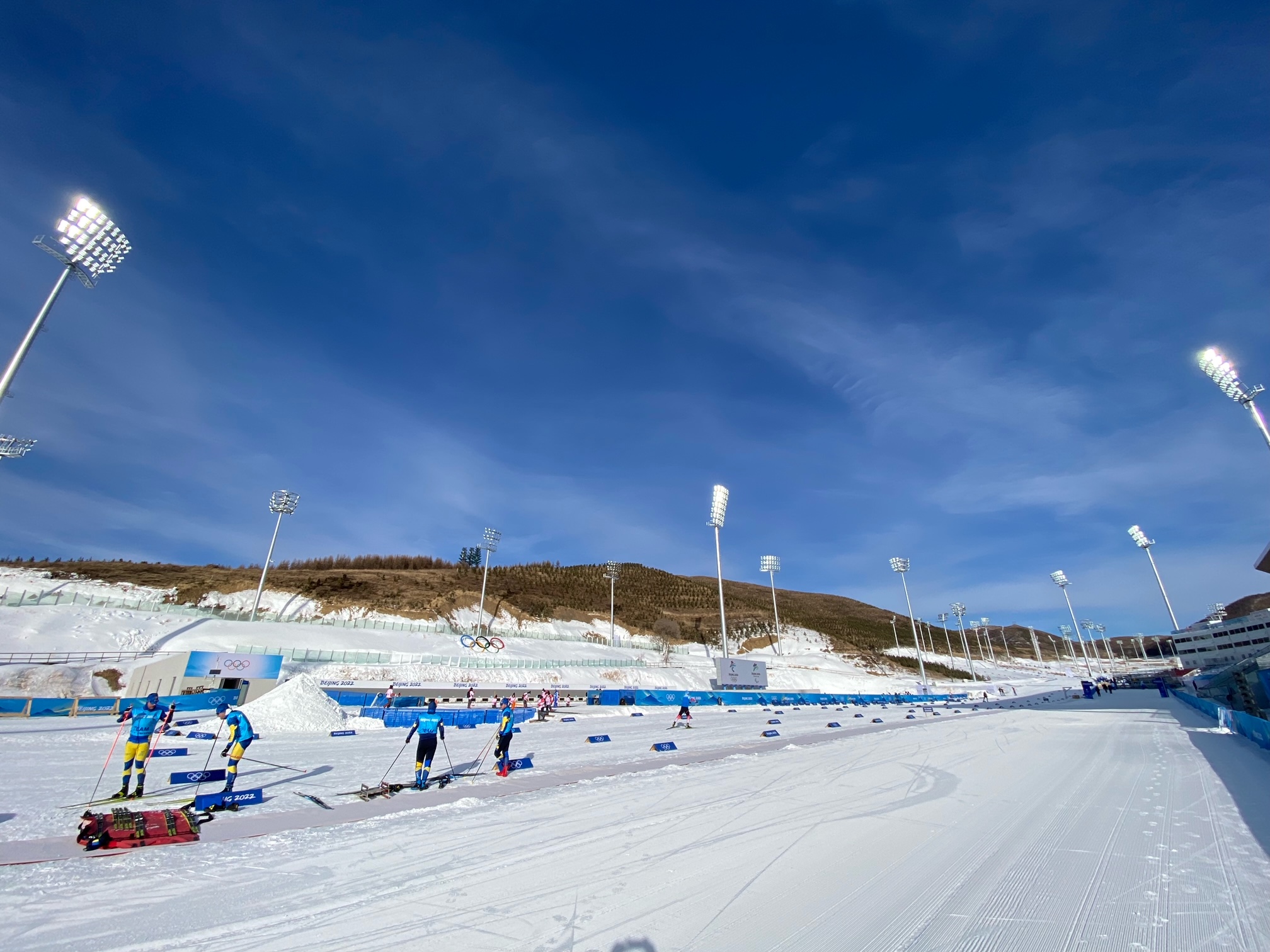
    The ski trails at the Zhangjiakou Olympic venue – completed during the pandemic – will be seen with fresh eyes for most athletes and service staff as they arrive ahead of the 2022 Games. For service teams that often prepare years in advance of an Olympics, the uncertainty surrounding Zhangjiakou, from its weather to its snow, is a new phenomena. What is certain is that climatically, there is the potential for some very interesting conditions

    Clare Egan of the US Biathlon Team said, “we know it’s going to be really cold and really windy, and pretty bad conditions generally for biathlon, but we’re gonna make the best of it, I guess.”

    Ole Einar Bjørndalen, Head Coach of the Chinese Biathlon Team who spent all of last winter with the team in China, told NRK that it was a struggle to manage training during weeks of thirty below temperatures. Then, in March and April, three sandstorms blew through, filling the sky all the way to Beijing with a thick ocre haze of desert particulate. 

    Meteorologically, Zhangjiakou is not situated in an enviable position. The ski trails are nestled in an open valley within a high arid plateau. This mountain range is the first barrier in the path of Siberian winds that blow out of the Lake Baikal Basin—one of the coldest areas on earth—and across the Mongolian Steppe and the desert of Inner Mongolia. If the winds are strong enough, they pick up sand and grit and deposit their cargo along the way. 

    A sandstorm, should one occur, would be a dramatic twist at the Olympics. Anders Högberg, coach of the Swedish men’s national team, has experienced sand snow while racing in China. “I have, in Inner Mongolia, skied when sand colored the snow yellow,” Högberg said in an interview with the Swedish publication Aftonbladet. “…If there is a sandstorm in the middle of a competition, it will probably be canceled or moved forward, but I can imagine that [there] will still be a mixture of sand in the snow.”

    Former Danish skier Troels Hein Bünger raced in China during his career and described the snow as being so dry “that you cannot make an honest snowball. If sand is added, the quality of the substrate will only get worse.”

    Bünger said the effect was the same as rubbing sandpaper across the skis. He believed that the Games have the potential to be “the slowest Olympics in recent times,” comparable only to races in the wooden ski era. 

    While dirty snow will certainly be a concern among service crews, plans are in place to tackle the problem, built on experience from previous sandy championships such as PyeongChang 2018 and Oberstdorf 2021. 

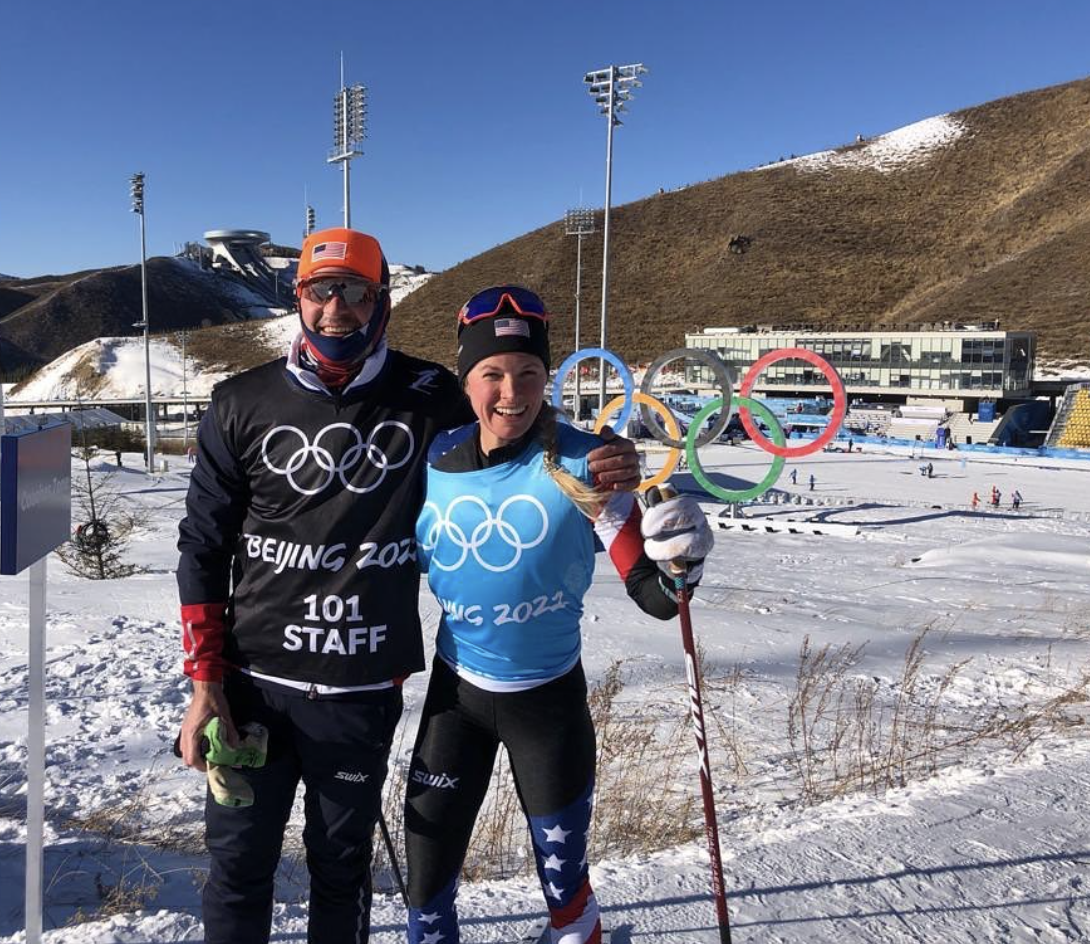
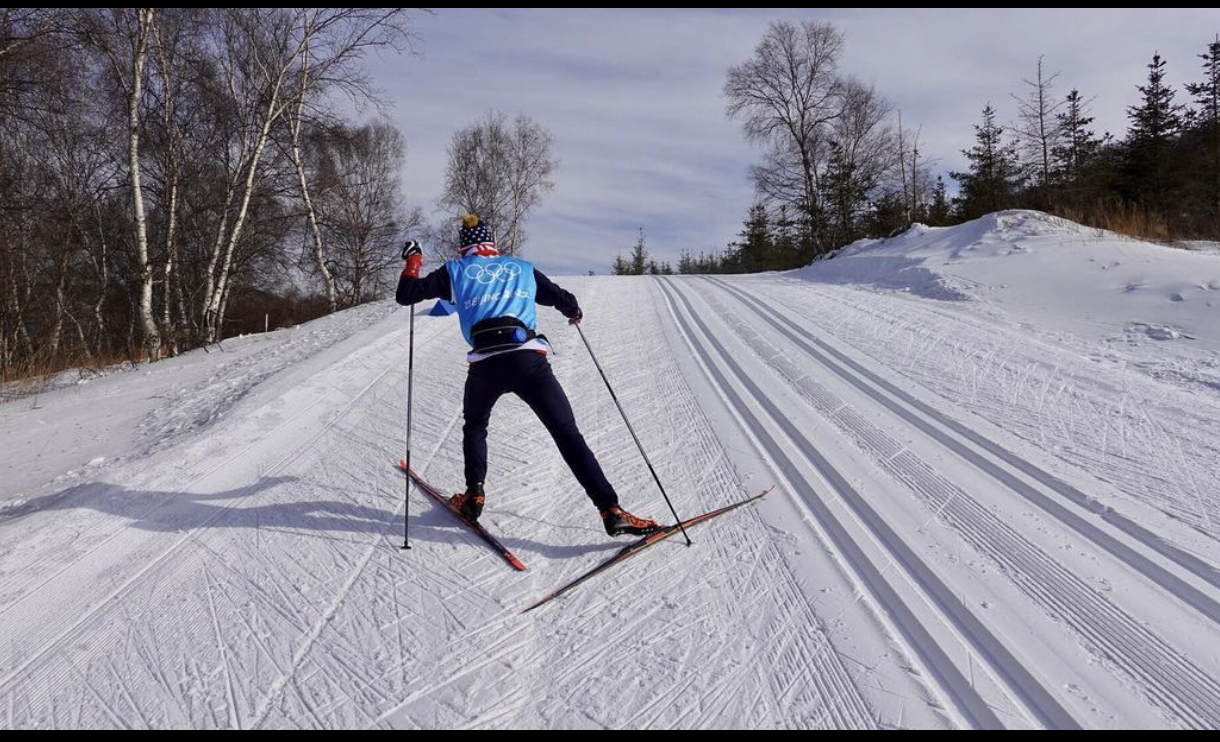
    Jessie Diggins and her coach and wax tech Jason Cork snap a photo in front of the Olympic rings after a first intensity session at the Olympic venue in Zhangjiakou. (Photo: Instagram @jessiediggins)

    US Ski Team Coach Jason Cork said in an email that the team is not “especially worried about the ‘sand’ at the venue. We’ve gotten reports that it’s similar to PyeongChang – snow which is dirty with fine particulate, rather than large grains. We’ll deal with it the same way we deal with dirty snow all over the world: Good cleaning of the skis after they’ve been used, and a lot of testing to identify waxes and structures which repel the contamination as much as possible.”

    Staff on the Finnish ski team went a step further during their reconnaissance trip in late December. The Finns took snow samples to be melted and carried home for analysis. “I don’t know how much it will ultimately benefit, but everything possible needs to be done,” Logistics Manager Matti Haavisto said to Yle. “We want to know what particles are in the snow, what kind of contaminants. The snow is dirtier here than in Europe.”

    Tobias Dahl Fenre, head of ski service for the Norwegian Biathlon team, suggested to NRK that the procedure at the Beijing Olympics for his team would be much the same as in PyeongChang: Daily grinding of skis. 

    For nations without a grinder on site, this could pose a problem. 

    One way to address the problem is to send over a vast quantity of skis. This is the method embraced by the Norwegian alpine team, according to NRK. Due to the labor of grinding and tuning alpine skis, they have opted to send as many as 70 pairs per athlete, a number Norwegian skier Aleksander Aamodt Kilde calls “completely crazy.”

    While Zhangjiakou may be known for biting cold snaps, brisk sand laden winds, and almost no natural snowfall, that is not always the rule. Conditions may also be ideal, with sunny warm days and cold nights. In an interview with a Finnish news outlet, Teemu Lemmettylä, a biomechanist who visited the site in December on behalf of the Finnish Ski Association, described perfect conditions: overnight temperatures fell to 14 Fahrenheit and warmed in the day to around freezing. 

    In any case, to the service teams’ advantage is the likelihood the snow will be entirely artificial. Zhangjiakou receives only a few centimeters of natural snow per winter, meaning the trails will have a uniformity not always seen at other sites where natural and artificial snow meld. The consistency of the snow has allowed Norway to look for solutions at home

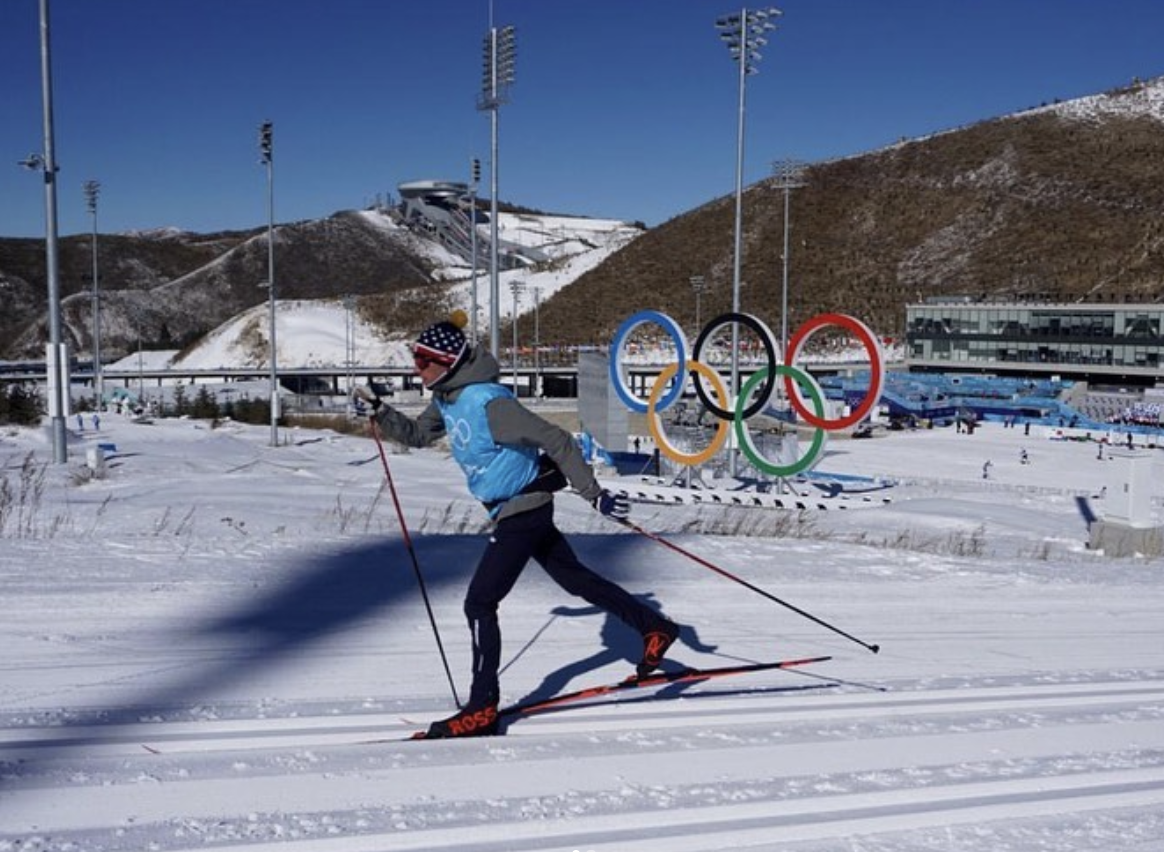
    Scott Patterson trains on the Olympic courses after arriving in Zhangjiakou. (Photo: Instagram @scottgpatterson)

    This poses an odd conundrum for wax teams, as the ‘unthinkable scenario is not necessarily a sandstorm, but natural snowfall,’ as Norwegian Cross County Director Espen Bjervig put it to Aftonbladet.

    Bjervig also outlined his most dire service concern at the Olympics: “What we fear most is that there is some natural snow and that it can blow sand into the track. We have no experience [with] that. It’s new.”

    Yet all is not easy with snow making at Zhangjiakou either. Reuters interviewed Jacques Fournier, a Swiss snowmaker working at the cross country venue. “The main challenge is to make the snow as wet as possible in the drier local conditions to keep it on the track,” Fournier said, along with controlling “the evaporation during the snow production and [making] sure to store it in the track as compactly as possible.” 

    Snow that is made too dry will either disappear, or fail to bond together, and allow the winds to blow it away. The solution is wet, sticky snow that is heavily compacted by grooming to withstand the winds. 

    As a result, snowmaking in the local conditions requires more water than usual. The ground must be soaked first to freeze the ground, and much water is lost to both evaporation and winds. 

    The reliance on snowmaking at the 2022 Olympics, which is essentially being held in a cold desert, has been criticized from an environmental standpoint. Staging the Games will reportedly require estimates of between 49 and 528 million gallons of water over the various venues. If the later estimate is accurate, it would be enough water to blow snow on a twenty foot wide trail for more than 4,000 kilometers — a use of water resources that has been questioned considering that the region relies in part on water pipelines and desalination plants to supply its needs.

    For athletes, the altitude of Zhangjiakou has been a priority for preparations over the last two years. The trails are at an elevation between 5,419 feet to 5,643 feet. The venue is strikingly similar in design and setting to Soldier Hollow in Utah, and designed by the same person: John Aalberg. In terms of elevation, Soldier Hollow trails average 100 feet higher than Zhangjiakou. 

    In an email to FasterSkier, John Aalberg noted the resemblance of the two venues: “Of all the [Olympic] courses in the last 24 years (since I have been involved in Games courses), the 2022 courses are most similar to the Soldier Hollow courses. Perhaps this is because I designed/co-designed both of them, but the terrain, elevation, and climate are also quite similar. Both courses are very spectator friendly, have ‘skiable’ uphills (good for diagonal striding), etc.”

    If anything, Aalberg improved upon the course design of Soldier Hollow, writing, “I was able to design an even better finish for these 2022 courses, with both a long uphill (similar to Hermod’s Hill), an exciting downhill right above the stadium, and a small uphill coming into the stadium (the high speed coming into the Soldier Hollow stadium is not optimal).”

    Aalberg also listed the features that he thought made the upcoming Olympic venue unique: “a ‘velodrome’ downhill corner coming back down towards the stadium leading up to the final 500 meters,” as well as wide and “fair” uphills, a “quite easy sprint course” that is the same for both men and women, and the “tens of thousands of trees planted adjacent to the courses.”

    Scott Patterson trains on the Olympic courses after arriving in Zhangjiakou. (Photo: Instagram @scottgpatterson)

    For ski service crews, mundane issues may be the most pressing. In an interview with ABC News in Norway, Fenre, the head of Norway’s biathlon team, said “snow conditions are definitely what worries me the least. I am most concerned about logistics and that we get wax and equipment through customs. If we are in China at the right time with the right equipment, I am very happy.”

    To that end, Finland sent a grinder and wax supplies to China in October, and teams have acknowledged that a resupply during the Games may not be possible.

    In December many teams, including US Biathlon, sent service staff to investigate the venue in China for the first time. Prior to that, the only information available to athletes was a video taken by the team that installed the biathlon targets last winter. The snowmobile video “circulated quite a bit,” said Clare Egan. “Between that and the course map and profile map you can get an idea.”

    In Finland, preparations went further. The Vuokatti Ski Team built a virtual race track with expertise from local universities. Katri Lylynperä skied the virtual track so many times she told Yle that she “already knows the track…”

    Information on the course has arrived in the US Biathlon camp after the team’s wax techs traveled to China the week after Christmas and “took a [ton] of pictures and video,” Egan said. 

    That course intel was shared with the US Ski Team, according to Jason Cork, who wrote, “We’ve spent a lot of time looking at the course homologation maps to help identify training courses that come close to the climbs we’ll see there.” 

    Weather conditions are also on the mind of US Ski Team coaches. “Of course, we’re watching the weather reports and forecasts a lot,” wrote Cork. “We’re going into the venue with about as much information as every other team (barring the Chinese), so I don’t think we’re at any disadvantage.” 

    Federico Fontana, the head of race service for the US Biathlon Team described the biathlon trail in an email to FasterSkier from the Olympic venue. “The course is technical, and challenging, we don’t really have long and extremely steep climbs, but a lot of transition and false flat parts.” Fontana added, “In my opinion a very crucial part of the course is the part behind the range before the fast downhill [heading to] the final 200m or range entrance.” It is there, Fontana thought, that many races will be decided. 

    A scene from the biathlon stadium in Zhangjiakou. (Photo: Federico Fontana, US Biathlon)

    Wind will be a key factor in biathlon, “not just for shooting but for skiing as well,” wrote Fontana, who described a consistent wind blowing through the valley. In the first half of the course biathletes will enjoy a tailwind, but when they turn back to the stadium and range there will be a strong headwind. 

    “In December when [we were] here testing skis we “had every day [a] strong wind,” wrote Fontana, adding, “and it‘s a very cold wind! Skiing alone back to the stadium can be a problem. It’s a very challenging course, not for everyone.”

    While many teams placed a premium on an early reconnaissance of the Zhangjiakou, Stein Olav Snesrud, head of Norway’s cross country service team told ABC News in Norway that he doubted the early tests would be very relevant to the conditions the athletes will experience in February. “What we have learned is that a lot happens… throughout January,” he said. “It has been shown… that the conditions you test long before a championship are not necessarily the ones that apply when the Olympics are held. There was a big difference [in conditions] before the Olympics in [PyeongChang]… and then it was completely different [at] the Olympics.”

    Whatever the conditions occur at the Zhangjiakou venue over the course of the Olympic Games, surprises are likely to await. 


  • News Roundup: World Cup Cancellation, Canadian Olympic Trials, US Biathlon Olympic Team Naming, and Illegal Use of Fluorinated Waxes in Falun

    News Roundup: World Cup Cancellation, Canadian Olympic Trials, US Biathlon Olympic Team Naming, and Illegal Use of Fluorinated Waxes in Falun

    Here’s a quick and non-exhaustive look at some recent news in the world of nordic sports. 

    World Cup Cancellation in Les Rousses, FRA and Planica, SLO

    Earlier this week, the FIS announced the cancellation of the final World Cup stop before the 2022 Olympic Games in Beijing, which were scheduled for the 21st to 23rd of January in Planica, Slovenia. This news arrives a week after the cancellation of the Les Rousses, France mini tour, which would have taken place this upcoming weekend. Both cancellations were made based on rising numbers of coronavirus infections with the omicron variant.

    “Due the current acute development of the pandemic in Slovenia, the safety of stakeholders involved at those large scale events could not be guaranteed,” the FIS wrote in the media release.

    Julia Kern tags Sophie Caldwell Hamilton during a December, 2019 team sprint in Planica, Slovenia. (Photo: NordicFocus)

    Of the event stakeholders, athletes in particular would be at heightened risk of a COVID-19 infection that could jeopardize their ability to participate in the upcoming Olympic Games. Surrounding travel to Beijing/Zhangjiakou and admission into the Olympic venue “bubble”, strict coronavirus testing and management protocols will be enforced. Should an athlete test positive within a critical window before travel, they may be unable to attend the Games regardless of the severity of their illness. 

    FasterSkier will cover the topic of athlete safety and COVID-19 risk mitigation separately; stay tuned. 

    Canadian Olympic Trials Wrap Up in Canmore, AB

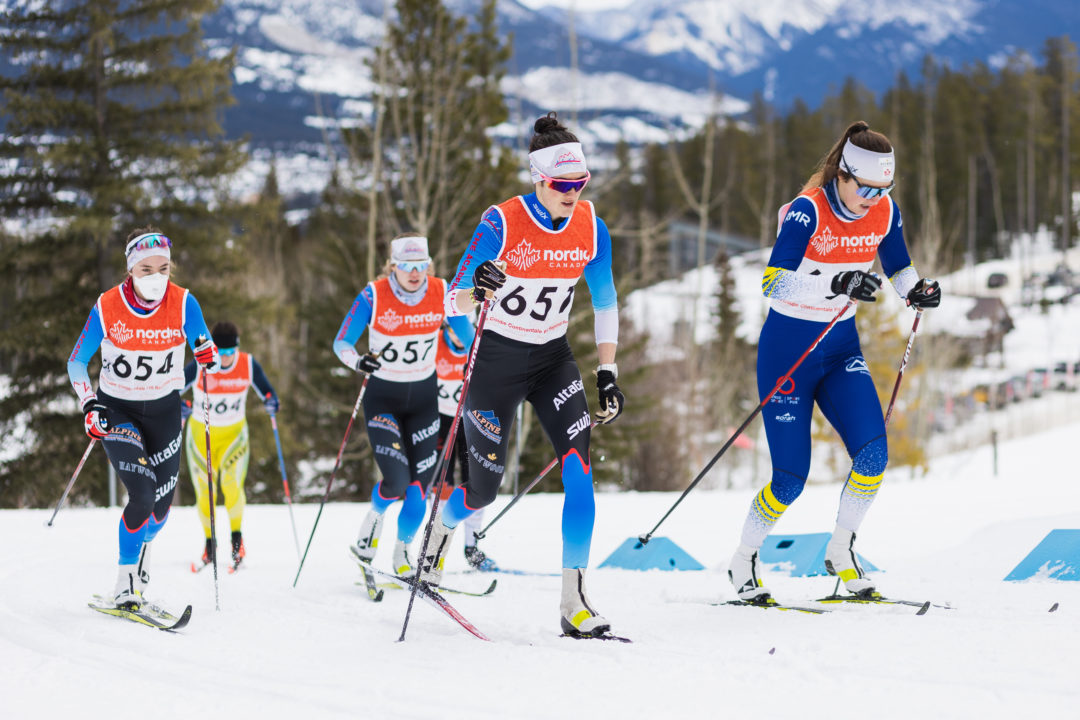
    The Canadian Olympic trials were held over the last week at the Canmore Nordic Centre Provincial Park in Canmore, Alberta. The event schedule, which mirrored the U.S. Cross Country Championships in Soldier Hollow, included a freestyle sprint, an individual start 10/15-kilometer classic, 15/30k individual start skate, and finished with a classic sprint. These competitions directly influence the selection of Nordiq Canada’s Olympic team. 

    FasterSkier will provide full coverage of these events in the coming week, but here’s a quick recap of results. 

    Jan 6th Freestyle Sprint: 

    Laura LeClaire won the women’s freestyle sprint, narrowly beating Cendrine Browne who took second. A few meters behind, Olivia Bouffard-Nesbitt crossed the finish line in third. 

    In another close finish on the men’s side, Antoine Cyr took the win ahead of Russell Kennedy, with Pierre Grall-Johnson in third. 

    Results

    Phillipe Boucher races the 30k skate during the 2022 Canadian Olympic Trials in Canmore, Alberta. (Photo: NordiqCanada/Nathanial Mah)

    Jan 8th 10/15k Classic: 

    In the classic distance event, Cyr doubled up on his victory, taking the 15k classic win in 41:12.0. Rémi Drolet skied the second fastest time on the course (+26.0), with Russell Kennedy rounding out the men’s podium in third (+36.8). 

    For the women, Katherine Stewart-Jones took the women’s 10k classic win in 34:29.6, with Dahria Beatty 0.5 seconds off her mark in second place. Browne was third on the day (+20.6) to finalize the women’s podium. 

    Results

    Jan 9th 15/30k Skate:

    In the following day’s distance skate race, the women’s podium looked quite similar to the distance classic podium. Stewart-Jones again took the win in 39:47.4, this time with Browne in second (+18.7), and Beatty in third (+42.0).

    On the men’s side, Kennedy advanced to the top spot of the podium, winning the 30k skate by a significant margin in 1:11:54.4. Phillipe Boucher was next to the line in second (+1:35.9), with Cyr in third (+3:34.2) following another sizable gap.

    Results

    A scene from the women’s classic sprint during 2022 Canadian Olympic Trials in Canmore, Alberta. (Photo: NordiqCanada/Nathanial Mah)

    Jan 11th Classic Sprint:

    On the final day of racing, Xavier McKeever earned his first podium of the week. After setting the fastest time in qualification, McKeever made his way through the heats to win the event in 2:55:50. Cyr took the second spot for men (+0.97), with Drolet racing onto his second classic podium of the week in third (+3.86). 

    For the women, Bouffard-Nesbitt again found herself on the sprint podium, smashing the women’s final in 3:22.46, and winning by a large margin over second place Stewart-Jones (+4.78). Third place was Laurence Dumais (+7.82), to close out the women’s podium. 

    Results

    Media releases and more information can be found at NordiqCanada.ca.

    US Biathlon Olympic Team Naming

    On January 9th, U.S. Biathlon announced final selections for the 2022 Olympic Team, which includes four men and four women. 

    In alphabetical order, the team includes: Jake Brown (St. Paul, Minn./Craftsbury Green Racing Project & USBA), Sean Doherty (Center Conway, N.H./National Guard Biathlon & USBA), Susan Dunklee (Craftsbury, Vt./Craftsbury Green Racing Project & USBA), Clare Egan (Cape Elizabeth, Maine/Craftsbury Green Racing Project & USBA), Deedra Irwin (Pulaski, Wis./National Guard Biathlon & USBA), Joanne Reid (Grand Junction, Colo.), and Paul Schommer (Appleton, Wis./Team Crosscut & USBA). 

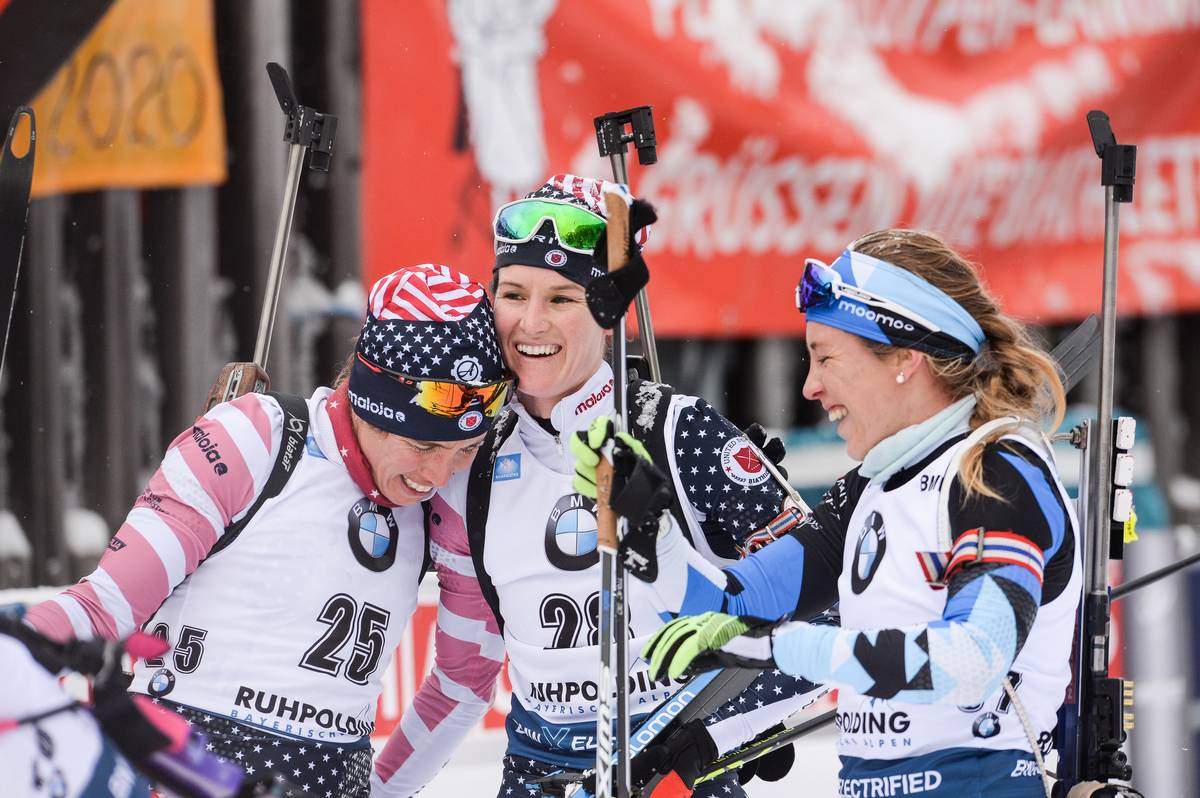
    Susan Dunklee (bib 25) and Clare Egan (bib 28) after the women’s pursuit in Ruhpolding on January 20th, 2020. (Photo: NordicFocus)

    More information can be found in this press release on FasterSkier, or at the U.S. Biathlon page on TeamUSA.org

    Cross-country team naming is scheduled for Tuesday January 18th, with an update on the final U.S. men’s quota on Thursday the 20th. 

    The FIS Confirms Illegal Fluoro Use at Scandinavian Cup Races in Falun, SWE

    The Norwegian news outlet NRK reported Monday that Pierre Mignerey, FIS Cross Country Race Director, confirmed suspicions that C8 fluorocarbons had been used in competition during the weekend of Scandinavian Cup races in Falun, Sweden between January 7th-9th. These products have been banned from use and sale in the EU due to their environmental and human health risks; the chemical compounds contained in these perfluorinated waxes do not break down over time and are known carcinogens. 

    With the aforementioned cancellation of upcoming World Cup events, this weekend of racing in Falun saw a competitive field, including names like Swedish sprint-phenoms Maja Dahlqvist and Jonna Sundling, and Norwegian standouts Håvard Solås Taugbøl and Sindre Bjørnestad Skar. 

    “I read an email this morning from the Chief Justice. It was a report about what happened in Falun and which must be discussed at the highest level,” Mignerey told NRK. “The report states that there were rumors and that the rumors were confirmed. Some have admitted that they used C8 products. But why they did it and how, it is not stated in the report.”

    Mignerey declined further comment as to who had been accused or confirmed of cheating, and the extent of the allegations that had been made. 

    FIS Race Director Pierre Mignerey measures the temperature on course during the 2021 opening World Cup weekend in Ruka, FIN. (Photo: NordicFocus)

    At this time, there is no method of testing for these substances during competition. A trust-based agreement has been signed by each national federation stating that their team will not use illegal products, however, violations such as what took place in Falun feed suspicions as to whether teams are adhering to the agreement.

    “Everyone has signed the letter and said that they will not use it in FIS competitions,” said Mignerey in the NRK report. “The problem is that there is nothing about the use of such fluorine products in the competition rules and thus the rules are not formally broken. The jury on the spot can not do anything about the case… But it is not fair behavior. This must be raised to the FIS council or FIS court, if we want to do something about it.”

    A comment from both Taugbøl and Skar was included in the NRK article. Both stated that they had not heard rumors of this cheating or volunteered their own concerns. 

    “I have not heard anything,” said Taugbøl through translation. “But both me and Sindre probably agreed on Saturday that we did not have completely optimal skis. But nothing more than noticing that others had better skis. It is not possible to speculate whether it was illegal fluoride. There will be ski differences anyway.”

    “I have not heard anything either,” seconeed Skar. “I went to two races this weekend where I experienced that I did not have fast enough skis both days. That’s the only thing I can say about it. But I have neither suspected nor heard anything.”

  • NRK and Expressen Report Fluoro Testing Device Flawed

    NRK and Expressen Report Fluoro Testing Device Flawed

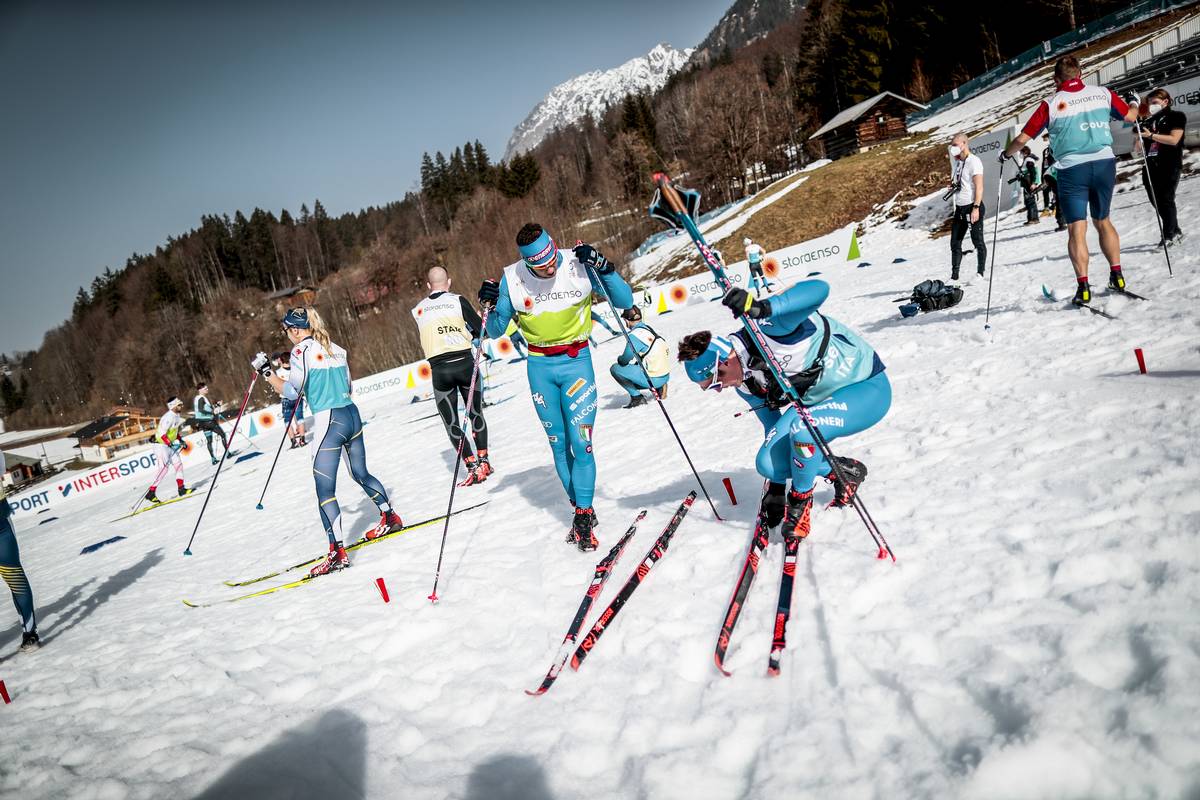
    Picking skis: that’s part of the speed equation. Italy tests skis at the 2021 World Championships. (Photo: NordicFocus)
    But what happens in the wax bus matters too: Sweden’s biathlon wax bus flexes. (Photo: NordicFocus)

    Over the past few years, FasterSkier has reported on per-fluorinated waxes, powders, liquids, and pastes. Entities like the Environmental Protection Agency (EPA) and Europe’s equivalent, the European Environment Agency, are phasing out eight-chain fluorocarbons. We know, after diving into the scientific literature, the evidence suggests these compounds are not good for your health, and they persist in the environment as they do not readily breakdown into inert substances.

    We also know that skiers love fluoros. Per-fluoros simply make skis faster, especially when the snow is near its melting point and/or dirty. If you have been reading this site for maybe a year, you are probably aware of the speed benefits per-fluors bestow, and their environmental and health costs.

    As the world turns, so too do the vagaries of regulating per-fluorinated ski speed products. In November 2019, the International Ski Federation (FIS) announced a discipline-wide ban on fluoro waxes for the 2020-2021 season.

    That ban was later delayed until 2021-2022. The reason for the delay, given in October 2020 just a month before the start of the cross-country World Cup, was that the apparatus for testing ski bases for fluoros was flawed.

    (Not to confuse things further, but it is worth mentioning, races solely sanctioned by U.S. Ski & Snowboard this season were fluoro-free. FIS-sanctioned races permitted fluoros.)

    With the end of the cross-country World Cup last weekend in Engadin, Switzerland, comes renewed debate in Europe about the proposed fluoro ban and the efficacy of testing ski bases tainted with per-fluoros. Two news outlets, NRK in Norway, and Expressen in Sweden are reporting that the ban for 2021-2022 is in jeopardy.

    In the translated Expressen article, Sweden’s head of ski service, Petter Myhlback said this about a World Cup weekend in Falun, Sweden last January during which the fluoro-detector was tested in the field: “Yes, we did test measurements then – and it was quite messy. … We felt no security in those measurements. It was results that just swung up and down. Criss-cross.”

    Myhlback continued, “We had skis that were completely non-fluorinated, and some that were highly fluorinated. But … some of those who were highly fluorinated got the green light – and some of the non-fluorinated on the contrary.”

    In the article, Expressen quotes FIS cross-country competition director Pierre Mignerey as saying the FIS Council will need to make a decision and it is his understanding that, “there is a desire to wait until after the Olympics.” They also quote Mignerey as stating, “No. What we saw in Falun clearly showed that it is not good enough,” when asked about the efficacy of the testing device.

    The NRK article quotes Norway’s head of ski service, Stein Olav Snesrud, as also noting flaws in the testing device. NRK writes that Snesrud handed over eight pairs of skis in what was a blind test in Falun.

    According to the translated article, which has been lightly edited for clarity, the following combinations of Norwegian skis were tested:

    • A series of a total of 16 skis, eight pairs, on which fluoride powder was applied many times.
    • Some of these skis were also washed, they put on fluoride cleaner and later put on fluorine-free wax both two, four, and six times. They used fluorine-free spray sliders. In total, there were eight different lubrication options.

    Snesrud goes on to say that he received the results from the Falun tests. “I have to say that they are far away,” said Snesrud in the translation. “Based on the tests they did in Falun, they are nowhere near having a working device.”

    The NRK article indicates the results were off. “Five of the skis that came back and marked ‘no fluoride’ are skis that have only been given one layer of glider over the fluorine powder,” Snesrud said. “On two skis in the same pair, which have received the same treatment, they have found fluoride on one ski and nothing on the other. Then there are four out of 16 skis with no clear answer. There is far too much variation in those answers.”

    Snesrud also claimed that some fluoro-free skis handed over for testing were dinged as positive for fluoros.

    Another chapter in the saga of flouros will certainly be written soon.

  • How Blinkfestivalen Began and Where It’s Headed

    How Blinkfestivalen Began and Where It’s Headed

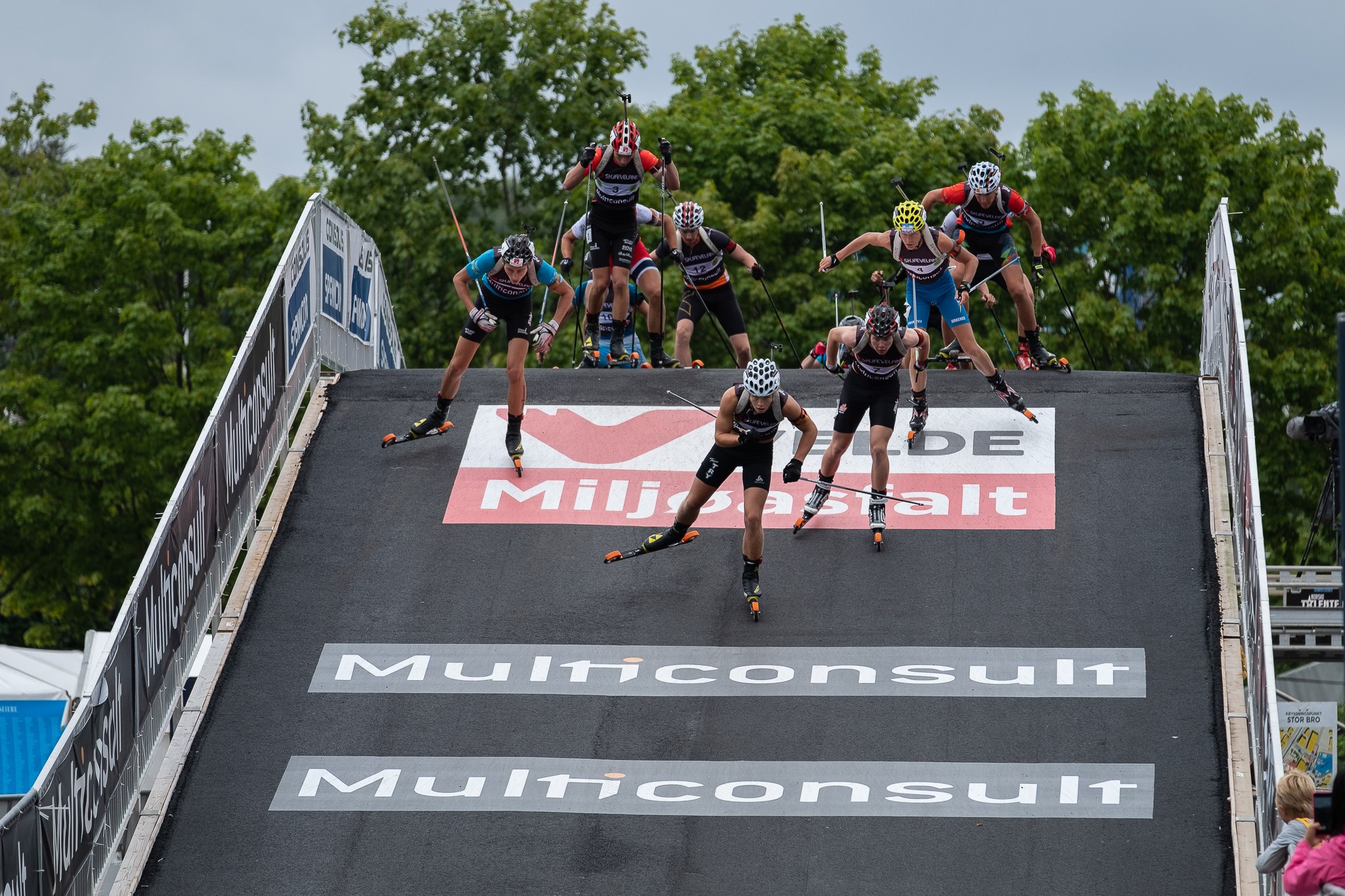
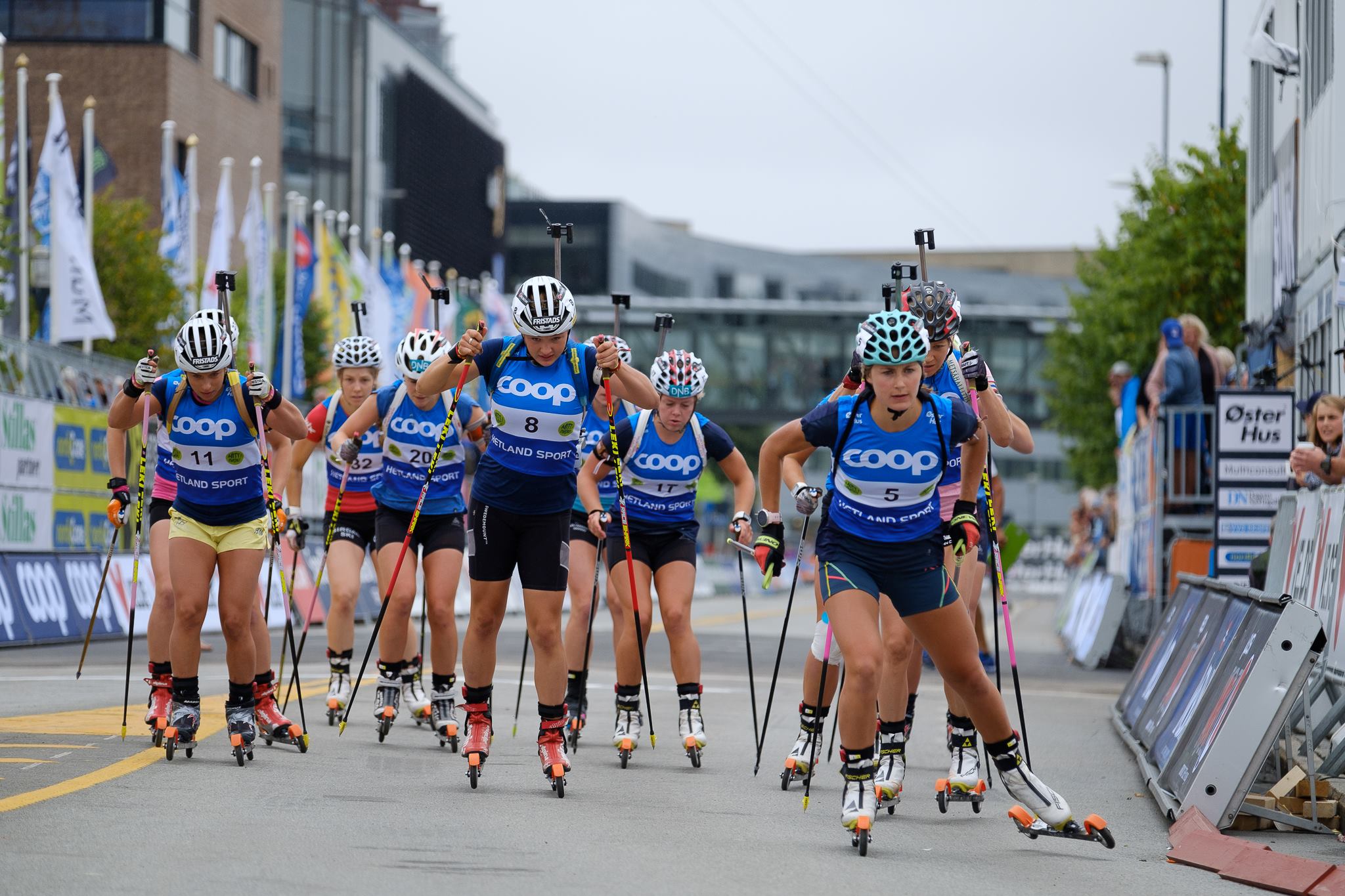
    Racers crest a hill at the 2018 Blink rollerski festival in early August in Sandnes, Norway. (Photo: Axelar / Arild Aarnes / Skifestivalen Blink Facebook)

    In 2005, Norway’s government-owned broadcasting network, NRK, lost production rights for its national football league. In search of a new program to air in place of summer soccer games, NRK, which still held broadcast rights for biathlon and cross-country skiing, approached the Norwegian Ski Federation and the Norwegian Biathlon Federation with a question: Could they find an organizer willing to create a large summer event encapsulating the winter sports of biathlon and nordic skiing?

    NRK’s answer came in Arne Idland.

    Idland was serving as the team manager for the Norwegian Biathlon Federation at the time and had planned to finish his term that same year. The 2006 Winter Olympics had just wrapped up, and Idland was ready for a change.

    Before stepping out of his role with Norwegian Biathlon, Idland become the chief of sport for Norway’s Blink Ski Festival, known as Blinkfestivalen.

    “I spent my last months in the biathlon federation just thinking about Blink,” Idland said in a phone interview.

    Biathletes racing in downtown Sandnes, Norway, during the 2018 Blink Ski Festival in early August. (Photo: Axelar / Arild Aarnes / Skifestivalen Blink Facebook)

    Originally from the city of Sandnes himself, Idland said he chose the municipality as a host city for Blink because, at the time, Sandnes “had no big events.”

    Since its inception in 2006, Blink has grown, becoming a premier international rollerski event. Organizers spent a grand total of 23 million Norwegian Kroner (about $2.75 million U.S. dollars) on this year’s Blink rollerski festival. That’s up from approximately 6,000,000 Norwegian Kroner (nearly $720,000 U.S. dollars) in its inaugural year.

    Even with the high price tag, Idland indicated that everything at Blink — entry, exit, and post-event concerts — are free. An estimated 70,000 thousand spectators attended Blink, and not one paid to get in.

    “That has been maybe one of the major key factors to our growth and our success,” Idland said. “Everything is free. We even have free concerts. No tickets to come in and that is the same today as it was at the start. Everybody can come and go just as they want.”

    But how has the city been able to sustain a “free” and accessible race to the public? Sponsors, Idland explained. Through their financial backing, Idland and three others staff members are paid to work full time, year round on Blink.

    When festival time rolls around, local cross-country and biathlon clubs near Sandnes pitch in to organize the multi-day event. And their time is paid. About 600 club members worked at this year’s Blink, and in total, were paid 750,000 Norwegian Kroner (about $90,000 USD).

    “That’s the most important income on an annual basis for the clubs,” Idland said. “It’s also a window to show all the people the sport and to get young kids and youth to start with biathlon and cross-country.”

    Much of Blink revolves around the concept of sport promotion, as opposed to pulling in dollars.

    “One major thing with Blink is that Blink is open for everybody,” he said.

    The festival not only includes an elite race series, but also junior and youth categories in both the biahtlon and cross-country divisions. Idland estimated that 3,000 children participated in Blink camp activities this year and 1,200 juniors entered Blink competitions. Last week, athletes from Russia, Italy, France, Sweden, Great Britain, Finland, Canada, and the U.S. made the trek to Sandnes to participate.

    “We have everything from — maybe you are four years old trying rollerskis for the first time — up to the athletes like [Martin Johnsrud] Sundby and [Therese] Johaug and the other big names,” Idland said. “It’s not only a show for the big stars. It has been important both for the development of the Norwegian Ski Federation and also for the youth and juniors.”

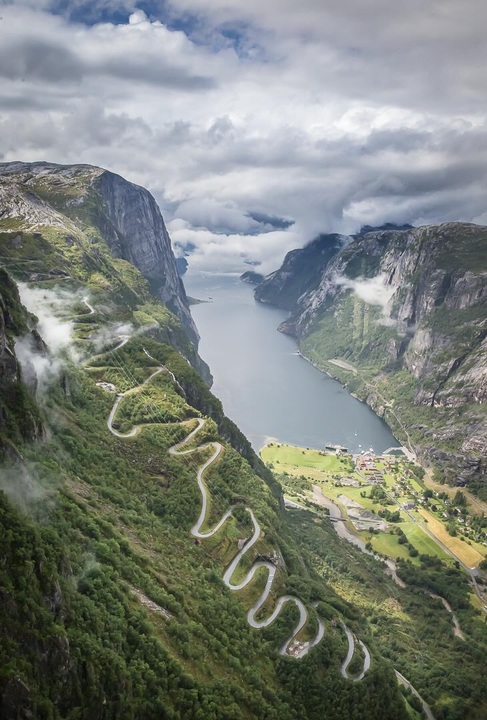
    The 7.5-kilometer race course for the Lysebotn Opp, an annual hill climb at the Blink Ski Festival in Lysebotn, Norway. (Photo: Blink Ski Festival/ Facebook)

    As Blink looks to develop Norwegian skiers, it also continues to develop its race series program. In 2010, organizers added the Lysebotn Opp uphill race, which begins in the fjord town of Lysebotn before climbing 640 meters above sea level.

    Three years ago, they introduced the Blink Classics distance races, which were 50- or 60-kilometers long for elite women and men, starting in the city center of Ålgård and finishing in Sandnes.

    Organizers have also been keen on safety for the high-paced rollerski events on asphalt. Few of its courses feature any steep downhills, all of its courses are fenced off to spectators, and every competitor must use the same speed of rollerskis. This year, Blink provided 1,000 unused rollerskis for racers. Next year they will do the same, with even slower wheel speeds, set to the same speed.

    “So next year we will use IBT 4, which are the slowest skis we have,” Idland said. “That is mainly for the safety, but also we also want the strongest athletes to win. The slower rollerskis you have, the more similar it is to winter time.”

    Winter is not something Blink hopes to compete with, Idland said. Climate change, however, may moot that point.

    “We do not want to become a threat to the traditional skiing on snow,” Idland said. “But … the winters get a little bit shorter and maybe also have to go a little further up in the mountains to find the snow, so I think rollerskiing will become more and more important as a supplement for skiing. Not instead of skiing, but maybe you do more rollerskiing.

    “We do not want to be a threat to the FIS World Cup either,” Idland continued. “We can play along with both FIS and the IBU. If at one time in the future there should be an interest that they would do something together with Blink, we would of course sit down and have a discussion with the FIS and the IBU.”

    Hopefully, that future interest is one made by choice.

    ***

    Related: Blink Ends with Jam-Packed Friday/Saturday | 2018 Lysebotn Opp | 2018 Blink Classics

  • Skofterud Found Dead After Jet Ski Accident (Updated)

    Skofterud Found Dead After Jet Ski Accident (Updated)

    Norway’s Vibeke Skofterud (2) leading the pack in a 2012 World Cup in Canmore, Alberta.

    Note: This article has been updated to include more detail about Vibeke Skofterud’s accident as well as comments from her partner, Marit Stenshorne.

    A former member of Norway’s prestigious national ski team and a gold medalist in the 2010 Olympic 4 x 5-kilometer relay, Vibeke Skofterud, 38, was found dead on Sunday morning after a jet ski accident near an island in southern Norway.

    According to NRK, Skofterud was reported missing around 1 a.m. Sunday morning, but it took a rescue boat until 11:30 a.m. to find her. She was found on the island of St. Helena outside of Arendal and declared dead at the scene. On Monday, police said they believed she died around midnight when her jet ski hit land, according to multiple news reports. No one else was believed to have been involved with the accident and she had been alone on the personal watercraft.

    On Saturday night, Skofterud reportedly posted an Instagram video of herself and her partner jet skiing in the Arendal area and later posted another video of the two at a music festival in Arendal.

    According to News in English.no, her partner, Marit Stenshorne, reported Skofterud missing after the concert when Skofterud didn’t return to their cabin on another local island, Tromøya, where they had just begun vacationing.

    Stenshorne posted about the tragedy on Instagram on Sunday: “Vibeke my great love, my girlfriend, my lover, my hero, my mentor and best friend. We said: the two of us forever. We were going to become old and wrinkly together. Life will be so sad and difficult without you. You gave me so much positivity, gratefulness, laughter, joy, knowledge and love. Love you @vibekeskofterud.”

    Skofterud was one of Norway’s top female skiers from 2001 to 2015, reaching the podium 15 times as an individual. In multiple World Championship relays, she earned two golds, one silver and a bronze medal between 2005 and 2011. She competed at two Olympics, 2002 and 2010, posting a best individual result of eighth in the 30 k classic in Salt Lake City. She retired in August 2015.

    Police said they had called in Norway’s national accident investigation board, but explained it may take several weeks to determine what happened to Skofterud. As of Monday, they suspected darkness and high speed as probable causes. Lightning, thunder and heavy rain in the area on Saturday night may have contributed to poor visibility.

    “We’re examining the [jet ski], the area and the deceased,” Bård Austad, operations leader of the Agder Police District, told NRK. “We’re also questioning any witnesses.”

    — Aleks Tangen contributed reporting

    Two days ago, Vibeke Skofterud posted a photo of herself rollerskiing and captioned it with a hashtag: #passionforlife. (Photo: Instagram)
  • Østberg Takes Tour Lead with 5 k Classic Win; Diggins 8th, 6th Overall

    Østberg Takes Tour Lead with 5 k Classic Win; Diggins 8th, 6th Overall

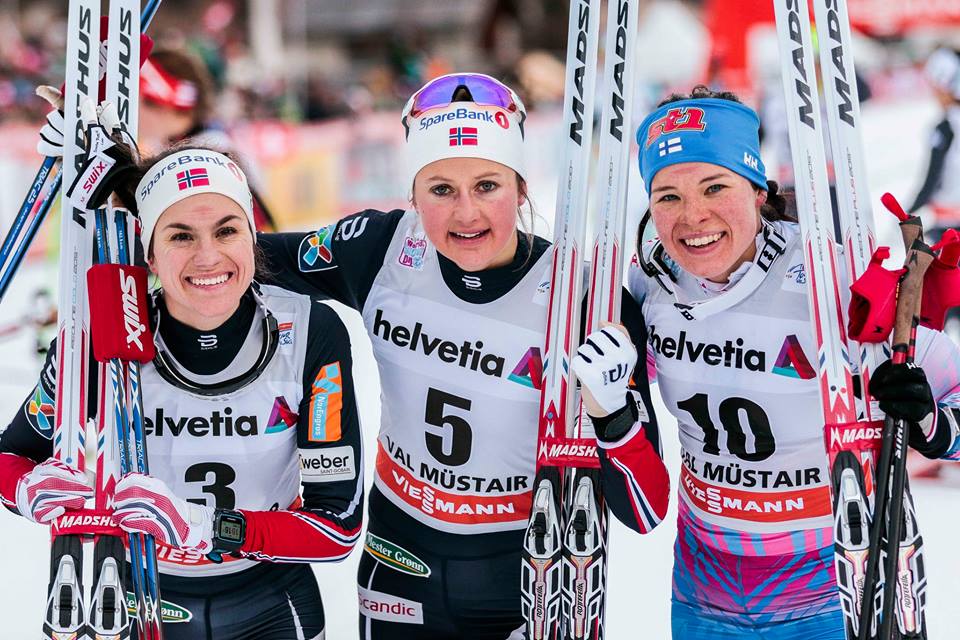
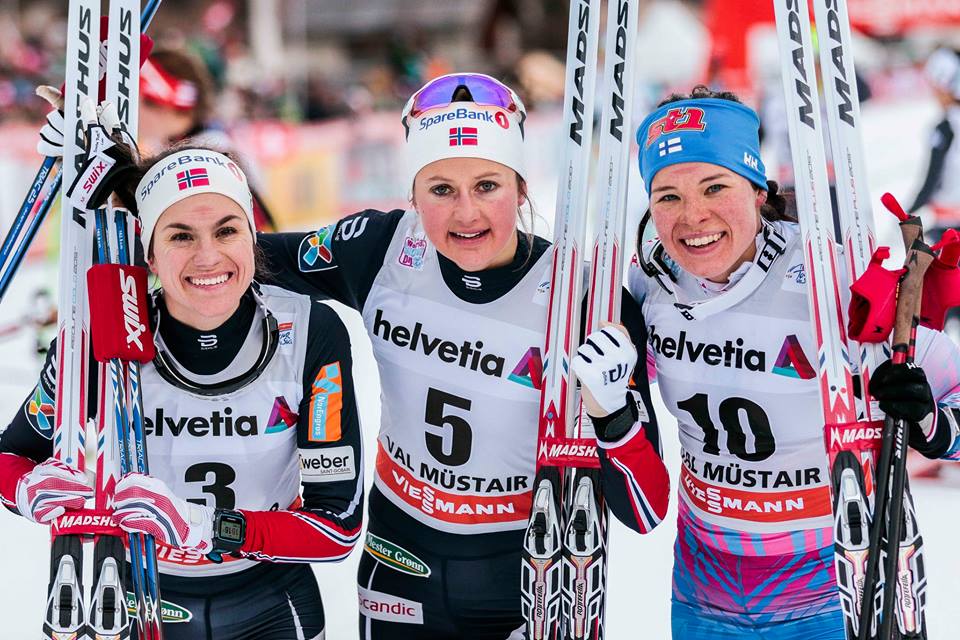
    Left to right: Norwegians Heidi Weng and Ingvild Flugstad Østberg along with Finland's Krista Pärmäkoski on the podium for the women's 5-kilometer classic mass start on Sunday, Jan. 1 2017 in Val Müstair, Switzerland. (Photo: Fischer/Nordic Focus)
    The Tour de Ski Stage 2 women’s podium on Sunday with (from left to right) Norway’s runner-up Heidi Weng and winner Ingvild Flugstad Østberg, and Finland’s third-place finisher Krista Pärmäkoski in the 5-kilometer classic mass start in Val Müstair, Switzerland. (Photo: Fischer/NordicFocus)

    Maybe it was because she wanted redress. Maybe it was because there was less pressure to perform. Or maybe it was because the yellow Tour de Ski (TDS) leader’s bib was with Sweden, calling her Norwegian name.

    Whatever it was, when Ingvild Flugstad Østberg lined up for the women’s 5-kilometer classic mass start on Sunday in Val Müstair, Switzerland, she was ready to race for the win.

    After being eliminated in the semifinal of Saturday’s freestyle sprint, the 26-year-old turned the lost chance at a podium into an opportunity to prove her place as a top contender.  

    “I was irritated with myself after yesterday,” Østberg told NRK.

    “Such a result sometimes makes you give your best,” she added, according to a International Ski Federation (FIS) press release.  

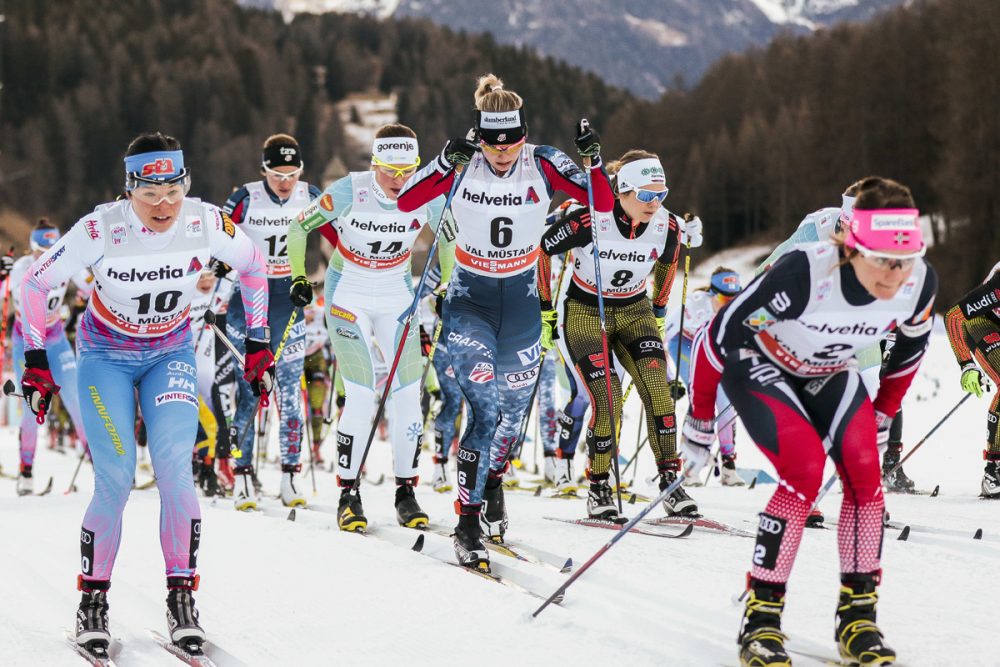
    American Jessie Diggins (bib 6) chases down Norway's Maiken Caspersen Falla at the start of the the women's 5-kilometer classic mass start on Sunday, Jan. 1 2017 in Val Müstair, Switzerland. (Photo: Fischer/Nordic Focus)
    American Jessie Diggins (6) chases down Norway’s Maiken Caspersen Falla (2) at the start of the the women’s 5-kilometer classic mass start on Sunday in Val Müstair, Switzerland. (Photo: Fischer/NordicFocus)

    Wearing bib 5, Østberg had her Norwegian teammates, Maiken Caspersen Falla in bib 2, Heidi Weng in bib 3, and Kathrine Rolsted Harsem in bib 4, as well as the Stage 1 TDS leader, Stina Nilsson to chase down.

    That didn’t stop Østberg from rallying to the front off the gun, leading the mass of skiers through the first lap, with Weng just behind. As the women started their second lap of the 2.5 k course, a gap began forming between the Norwegians and a second front group, Nilsson and Finland’s Krista Pärmäkoski.

    Moving up through the pack into the top 10 by lap one was Finland’s Anne Kyllönen, who started in bib 29, as well as her Finnish teammate Laura Mononen, who started in bib 19.

    Switzerland’s Nadine Fähndrich, who started in bib 15, had also joined the front chase group, along with her Swiss teammate Laurien van der Graaff (bib 7). Just behind the Swiss duo was American Jessie Diggins (bib 6) positioned in eighth. Diggins’s U.S. Ski Team (USST) teammate Sadie Bjornsen, who had started in bib 21, had burned her way up to ninth.

    Bjornsen’s hot start, however, didn’t last. The American began to fade, falling back into the low 20’s and eventually just outside of the points in 35th, where she ended the day.

    “I was behind Nadine [Fähndrich] and Laurien [van der Graaff] and picked the innermost track, so in principle the best lane, and exactly on that lane Bjornsen bonked, totally, she couldn’t move anymore,” Switzerland’s Natalie von Siebenthal said during a television interview. “And I couldn’t get past left or right. Then the other athletes started to go by on my left.”

    USST Women’s Coach Matt Whitcomb explained that hard start was part of Bjornsen’s plan. The way her body reacted was not.

    “She took it out aggressively, which we told her to do and is always encouraged to do and just didn’t feel good today,” Whitcomb said on the phone after Sunday’s race.

    Bjornsen explained that while the result was not what she hoped for, she is ready to move forward with no weight on her shoulders.

    “Today was a day to forget and refocus,” Bjornsen wrote in an email. “I had a strong start, and felt great, but felt like I was working extra hard with some potentially slow skis. As soon as I crossed the red line, I wasn’t able to recover as I was hoping, and suffered a pretty bad explosion … Now I am focused on the next two events in Germany, and will hopefully find the good shape I know I am capable of!”

    Maintaining position was the name of game for the remainder of the race for those still in the top 10, with Diggins sticking to her spot in eighth and Østberg holding off any attack attempts from Weng.

    “I’ve been struggling a bit with the high altitude here,” Weng said according to a FIS press release. “Before the race I was afraid about the downhills but I’m happy I did not fall.”

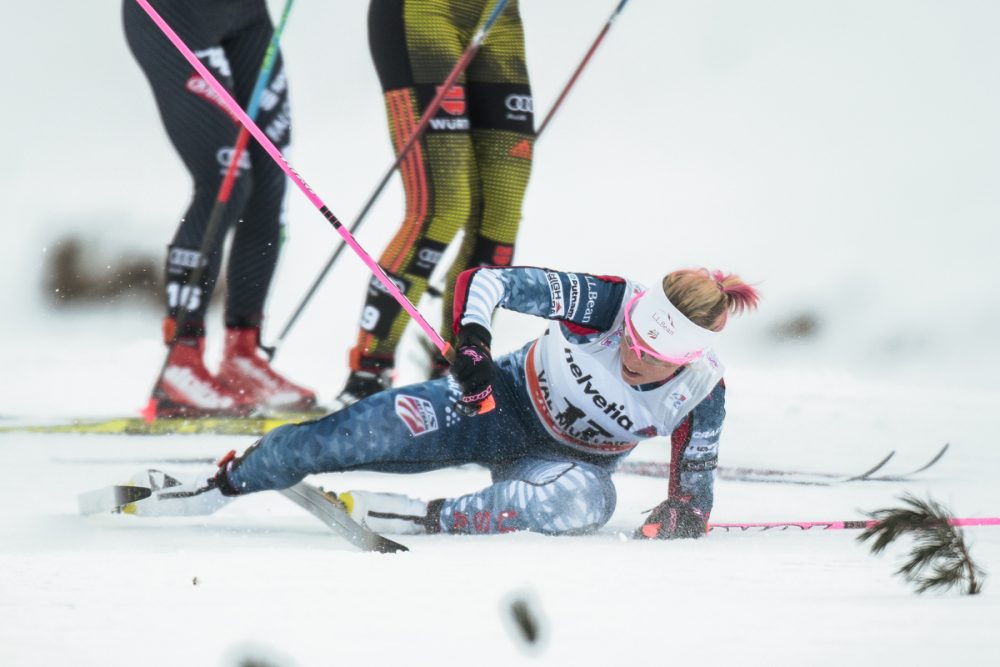
    While Weng was able to avoid any crashes, American Kikkan Randall was not so lucky. Though she had been skiing around 15th for most of the first lap, after starting in bib 17, she fell and had to make her way back into the top 20.

    American Kikkan Randall after a crash a little over halfway through the women's 5-kilometer classic mass start on Sunday, Jan. 1 2017 in Val Müstair, Switzerland. (Photo: Fischer/Nordic Focus)
    American Kikkan Randall after a crash just over halfway through the women’s 5-kilometer classic mass start on Sunday in Val Müstair, Switzerland. (Photo: Fischer/NordicFocus)

    “My shape feels a lot better and sharper than it did in period one of World Cup,” Randall wrote in an email to several media outlets. “Really pumped to feel my race gears coming around and loving the chance to race, race, race!”

    “It was so cool to watch an athlete have a breakthrough like that,” Whitcomb said of Randall’s performance. “To start off the Tour with two good races in the points, we all feel really good about that and the team is really proud of her.”

    Eventually, with a close to 20-meter gap, Østberg finished first for the win in 13:21.2 minutes. Weng claimed second place, seven seconds back, while third went to Pärmäkoski who finished 11.4 seconds after Østberg.

    Diggins crossed 32.6 seconds after Østberg for eighth.

    “It was tricky to pace and if I could do it again I would have paced it slightly differently, but I was happy with my skis and I’m chipping away at that striding technique!” Diggins wrote in an email. “Overall I think I’m in a solid place for the tour and I’m really looking forward to the next set of races!”

    Randall was the second American after Diggins in 15th (+42.4) followed by Bjornsen, who placed 35th (+1:02.6) in a photo finish with Slovenia’s Petra Novakova. Also racing for the U.S., Sophie Caldwell placed 38th (+1:09.4), Rosie Brennan 39th (+1:10.5), and Liz Stephen 44th (+1:21.2).

    “There’s not a whole lot of movement that’s possible in a 5 k classic mass start … when you’re starting out of the top 20,” Whitcomb said. “Rosie and Liz were fighting from the back. … For their position in the start, I thought they skied phenomenally.”

    As the USST makes its way to Oberstdorf, Germany, for the third and fourth stages of the Tour — a 10 k skiathlon and 10 k freestyle pursuit — Whitcomb remains positive of where the U.S. women are currently positioned. Diggins currently sits in sixth in the overall Tour standings, 1:01 minutes behind Østberg, Randall 15th (+1:45.9) and Bjornsen 25th (+2:05.4). Caldwell, who is ranked 22nd overall (+2:03.3), planned to withdraw from the Tour after Sunday. Brennan in is 41st (+2:33.1) and Stephen 46th (+2:49.9).

    “We don’t put any specific goals or demands for any athlete on any one particular race,” Whitcomb explained. “What we try and do is link together as many quality races in a row as we can. If you can string together a bunch of decent days, and then pop one great one, it can move you way up in the tour.”

    Østberg now leads the Tour followed by Weng 10.3 seconds back in second and Nilsson in third (+23.8).

    Results | Tour standings (through Stage 2)

  • The Votes are In, Russia Awarded 2021 IBU World Champs Despite Controversy

    The Votes are In, Russia Awarded 2021 IBU World Champs Despite Controversy

    Russia’s Anton Babikov lunges across the line ahead of teammate Evgeniy Garanichev in the men’s pursuit race at the 2016 Open European Championships. (Photo: IBU)
    Russia’s Anton Babikov lunges across the line ahead of teammate Evgeniy Garanichev in the men’s pursuit race at the 2016 Open European Championships in Tyumen, Russia. The venue just won the hosting rights for 2021 World Championships. (Photo: IBU)

    Note: In an interview with the Associated Press which was published the day after this story, IBU President Anders Besseberg suggested that if Russian biathletes’ anti-doping samples from the Sochi Olympics came back positive during the re-testing process, Tyumen’s hosting rights for World Championships 2021 could be revoked.

    In July, the McLaren report dropped and the world learned that Russia had implemented a systematic doping program before the 2014 Winter Olympics in Sochi, Russia.

    Then, there had been a parallel systematic program to cover it up, directed by Russia’s Ministry of Sport and its state security service. That had led to the infiltration of the International Olympic Committee (IOC) on-site anti-doping laboratory.

    In the wake of the scandal, the IOC Executive Board suggested several guidelines for how to handle Russian winter sports. Among them was a call on “all International Olympic Winter Sports Federations to freeze their preparations for major events in Russia, such as World Championships, World Cups or other major international competitions under their responsibility, and to actively look for alternative organisers.”

    And yet, over the weekend the International Biathlon Union (IBU) Congress, which includes 49 possible voting countries, voted to award 2021 World Championships to Tyumen, Russia. The venue in western Siberia will also host World Cup competitions in March 2017, and 2017 Youth and Junior World Championships in Ostrov, Russia, are also moving ahead as planned.

    And the IOC did not object. What changed?

    “Not only was it surprising, but it was also shocking that [Tyumen] got 25 votes,” Bernd Eisenbichler, chief of sport for the U.S. Biathlon Association (USBA) and the voting representative for the U.S. at the Congress, said in an interview on Tuesday. “I want to state that it is wrong. It is a very disappointing outcome of the vote.”

    “It is a country that is under investigation and the IOC has in fact warned against giving new events to the country — that half of the delegates don’t understand what this means for the young international biathletes is disappointing,” Erlend Slokvik, president of the Norwegian Biathlon Federation, told his country’s NRK television station.

    Public vs. private attitudes on Russia

    Apparently, while stating one thing publicly – that plans for major competitions in Russia should be frozen – the IOC was telling winter sports federations something different.

    A still from the candidature video of Tyumen, Russia, which won the hosting rights for 2021 Biathlon World Championships. The International Olympic Committee had previously recommended that no major competitions be awarded to Russia until it comes into compliance with the WADA Code.
    A still from the candidature video of Tyumen, Russia, which won the hosting rights for 2021 Biathlon World Championships. The International Olympic Committee had previously recommended that no major competitions be awarded to Russia until it comes into compliance with the WADA Code.

    The IOC will not hesitate to take the toughest sanctions available against any individual or organisation implicated,” IOC President Thomas Bach said in July after learning about Russia’s widespread doping at the 2014 Olympics.

    Once amongst its stakeholders, the IOC seems to sing a different tune, one which could hardly be described as the “toughest sanctions available.”

    Last month, all seven international winter sports federations met with the IOC and World Anti-Doping Agency (WADA) in Rio de Janeiro, Brazil. All seven had competitions scheduled for Russia in 2017, and they wanted clarification about what to do.

    What they got was the go-ahead to continue working with Russian organizing committees.

    “They said, all competitions given to Russia which are taking place this winter, they should go on as planned,” IBU President Anders Besseberg told FasterSkier on the phone Tuesday. “This is what the IOC Sport Director clearly stated. About awarding them new competitions, the answer was also very clear. When they applied for this bidding process and it was in progress [before the McLaren report dropped], then this should also go the normal way.”

    Secretary General of the International Ski Federation (FIS), Sarah Lewis confirmed this account of events in an email to FasterSkier.

    Unlike competitions slated for this winter, 2021 is a long way off. World Championships easily could have gone somewhere else. Although the bid process was already started and Tyumen had filed its candidacy before the McLaren report came out, there were two other cities bidding, Nove Mesto in the Czech Republic and Pokljuka in Slovenia.

    Yet sources told InsideTheGames that at the Rio de Janeiro meeting, the IOC specifically said that the Tyumen biathlon bid could go on.

    Tyumen’s candidature video for the Congress can be watched on YouTube.

    “There were three very correct candidates,” Besseberg said. “And there was a vote.”

    When asked about how Tyumen had won the election given the ongoing discussion of sanctions, Besseberg objected.

    “I am not the right person to ask,” he said. “It’s the Congress who is the highest authority in the IBU, it is the delegates in the Congress.”

    Who voted for Tyumen?

    And so, what did the delegates think?

    In his remarks to the Congress at its opening, Besseberg explained that Tyumen’s candidacy was not against any IOC guidelines. That caused a stir.

    Germany’s Florian Graf competing in the men’s 15-kilometer mass start at the 2016 Open European Championships in Tyumen, Russia, on his way to winning the gold medal. (Photo: IBU)
    Germany’s Florian Graf competing in the men’s 15-kilometer mass start at the 2016 Open European Championships in Tyumen, Russia, on his way to winning the gold medal. (Photo: IBU)

    “This was very surprising because there was no official statement by either the IBU or the IOC before the congress,” Eisenbichler said. “I discussed with a few friends in other federations about this topic. I got the sense that we were pretty much in agreement.”

    Regardless of IOC rules, some feel that biathlon and cross-country skiing should be especially wary of Russia, since they were acutely stung by the allegations in the McLaren report. That investigation implicated 10 biathletes and 13 cross-country skiers.

    “The McLaren report is very clear and detailed about what happened in Sochi and mentions biathlon explicitly as one of the sports,” Eisenbichler wrote in an email. “As long as there are not clear signs, facts and proof about different future behavior, it is not time to have Russia get awarded a Biathlon World Championships.”

    There has been no news on re-testing of the anti-doping samples in Sochi, and no revelation of which athletes might have been involved.

    Clearly, however, there are two lines of thinking on the matter. There are those, like Eisenbichler and Norway’s Erlend Slokvik, who would never vote for Tyumen.

    “The IOC letter, I disagree that the IOC took this step after [previously] declaring that the competitions should be frozen and should not be further planned on,” Eisenbichler said. “I’m not in favor of it. So that did not change anything, that I would vote for it or not.”

    Murray Wiley, the president of Biathlon Canada, could not be reached for comment, but Canada’s national-team coach Roddy Ward said he was disappointed with the decision.

    “Back here in Canada, we have been discussing where they would move [the Tyumen World Cup weekend] to this winter, given our assumption it must be moved after the McLaren report,” Ward wrote in an email. “After all, how can we race in Russia when that has come to light? However, not only does [the World Cup] remain but the IBU has now rewarded Russia with WCH2021!! This is a massive slap in the face to clean athletes.”

    But then there are those who would vote for it.

    “Western Europe understands that this is not good for the younger international biathletes,” Slokvik told NRK. “There are many nations that are distraught … It’s the small nations from Asia and the old East block that voted for Tyumen.”

    Either way, minds appeared to be made up. After his presentation on the new IOC recommendations, Besseberg said he had welcomed discussion.

    “They were asked if they had any questions about it and there was not a single question,” Besseberg said.

    What now?

    Eisenbichler had little doubt that the Tyumen organizing committee would do a good job with the championships.

    The venue hosted 2016 Open European Championships, and although neither the U.S. nor Canada attended (nor a number of other countries), reports from those who did compete were positive. Tyumen also hosts a Champions show race, so many top competitors have been there for the cash-rich prize money. Simon and Martin Fourcade of France both tweeted their support for Tyumen along with Antholz, Italy, which was awarded 2020 World Championships.

    “Perfect places to race,” tweeted Simon Fourcade.

    The local organization is not what concerns Eisenbichler, who heads the U.S. national team along with domestic development.

    “Hopefully the future will be showing us that Russia does a different job than they did in Sochi,” he said. “But the McLaren report is very clear. I just think that now, with all the news that we got from the report, it’s the wrong signal to the sports world, to the fans, to the youth athletes, to all the athletes who are fighting for clean sports, that it’s a very wrong signal to reward them right now with that event.”

    The biathlon world is also waiting for the other shoe to drop, to find out whether or which of the Russian stars had doped in 2014.

    “The McLaren report showed systematic doping in Sochi, with Russian biathlon and x-c implicated,” Ward wrote. “I have been waiting to hear from the IBU how they would respond to the report and I hoped it would be by throwing their weight behind clean sport and punishing Russia… The IBU have made it very clear now that Russia is above anti-doping, that they can get away with anything and that what they did in Sochi totally acceptable.

    “Biathlon and all Olympic sport is in a dangerous time,” Ward concluded. “We are losing all credibility. IOC and IBU need to take a strong stand against doping and with the decision to award Russia with [World Championships] they have done the exact opposite.”

  • Bjørndalen is Back: Norway’s Biathlon King Looks Towards Oslo, with 20-Ton RV in Tow

    Bjørndalen is Back: Norway’s Biathlon King Looks Towards Oslo, with 20-Ton RV in Tow

    Ole Einar Bjørndalen in 2013 in Östersund, Sweden. (Photo: IBU/Biathlonworld TV)
    The most decorated Winter Olympian of all time, Norway’s Ole Einar Bjørndalen during a 2013 interview in Östersund, Sweden. (Photo: IBU/Biathlonworld TV)

    No one’s telling Ole Einar Bjørndalen when to call it quits. At 41, the Norwegian biathlete — dubbed the King of Biathlon with the most medals of any Winter Olympian — is just hitting his stride after an offseason hindered by illness, and he remains focused on the 2016 IBU World Championships in Oslo, Norway.

    He placed third in a recent skate race against fellow national team members at the upcoming World Championships venue at Holmenkollen. It was the first test of his race form after he missed six weeks of training this summer.

    “It is better than expected,” he told NRK after the race, noting that he hadn’t logged many hard training sessions since March.

    Bjørndalen feared his goal for winning gold at a World Championships on home soil — the one accolade that alludes him — was in jeopardy after a long bout with a bacterial infection. He skipped the national team’s altitude camp earlier this month and has been monitoring his progress carefully, planning ahead half a month at a time.

    “I’m running tests every 14 days. It follows the shape and development, and what I can tolerate in training,” he said. “I take just 14 days at a time so I work out from there.”

    Tests involve lactate profiles to measure his response to workouts. He said he’s been getting the indicators he’s been looking for, giving him green lights to go ahead with his training.

    “When I get the message that I can travel to [greater] heights, then I travel to altitude,” he said. In previous seasons, Bjørndalen trained hundreds of hours at high elevations, according to Aftenposten.

    His roadside companion: Ole Einar Bjørndalen's 20-ton RV, which includes a rollerski treadmill and enough room for a shooting range. (Photo: WTVY screen shot)
    His roadside companion: Ole Einar Bjørndalen’s 20-ton RV, which includes a rollerski treadmill and enough room for a shooting range. (Photo: WTVY video)

    He resolved that this would be his focus season a while ago, and to help him achieve his goals, he added a 20-ton custom RV — complete with three drivers, a rollerski treadmill, six beds, a kitchen, bathroom, 690-gallon water tank, and room for a laser-gun shooting range — to his fleet.

    “I’ve thought about it for over five years and worked on it for two years,” he told Norway’s TV2 of the recreational vehicle designed to meet his training needs when the weather keeps him inside. “The dream has been to bring the training to a new level.”

    Even after dominating biathlon for 20 years, Bjørndalen said dreams are what makes him tick.

    “If you do not have dreams, it is not worth holding on,” he told Aftenposten, according to a translation. “There are those dreams you have in mind at every jog and each hard workout.”

    Asked specifically about his training over the years, he said, “There is no hocus pocus. I really just followed a training schedule that we know has worked for 25 years. It is a program of rowing and cross-country skiing. I really do only what the old guys in cross country has been doing for a long time.”

    As for his plans for two seasons out in 2016/2017, Bjørndalen indicated he might back off training.

    “I’ll look at my life,” he said. “In many ways it has been put on hold for 20 years.”

  • Northug Off the Norwegian Roster, Out for World Cup

    Northug Off the Norwegian Roster, Out for World Cup

    Petter Northug anchoring the Norwegian men's relay to gold at the 2015 World Championships in Falun, Sweden. As of Sept. 14, 2015, Northug is no longer part of the Norwegian team and will not be able to compete on the World Cup or Tour de Ski this season. (Photo: Fischer/NordicFocus)
    Petter Northug anchoring the Norwegian men’s relay to gold at the 2015 World Championships in Falun, Sweden. As of Sept. 14, 2015, Northug is no longer part of the Norwegian team and will not be able to compete on the World Cup or Tour de Ski this season. (Photo: Fischer/NordicFocus)

    Petter Northug, his manager, Åre Sørum Langås, and company are taking a hard look at the season ahead after they failed to reach an agreement with the Norwegian ski federation. The federation announced Monday that it would move ahead with planning its 2015/2016 season without Northug after the 13-time world champion and two-time Olympic gold medalist turned down its offer to let him compete with the same “athletic freedom” as last season, according to NewsinEnglish.no.

    Instead, the national team is focused on “those skiers who have signed an agreement” with the federation and it will not take “any further initiative towards Petter Northug” or his primary personal sponsor, Coop, a Norwegian grocery store chain.

    All of this means the 29 year old won’t ski for Norway at the World Cup or Tour de Ski this season, and without the team’s blessing, he won’t be able to compete at all.

    At a board meeting last weekend, Torbjørn Skogstad, head of the federation’s cross-country committee, told the federation that neither Northug nor Coop accepted the terms drawn up in June, which were the same as last year and would have allowed him to keep his corporate sponsorship with Coop until the start of the season in November, according to the federation. After that point, “he then would have to commit himself to the national team and its sponsors throughout the season [until April], with the same rights and obligations as all the other skiers on the team,” according to the federation.

    For now, he’s off the national team, and based on previous musings to the media, Northug could be racing marathons exclusively this winter.

    His manager, Langås, told NRK that they are waiting to issue an official response to the federation’s decision.

    “We register that the ski federation has issued a press release,” Langås said. “We will come with an accounting of this in a few days. Apart from that I have no comment today.”

  • Marit the Mom: Before and After Baby

    Marit the Mom: Before and After Baby

    Therese Johaug, Marit Bjørgen, and Heidi Weng (l-r) sweeping the podium of the 2015 Tour de Ski (Photo: Val di Fiemme/www.fiemmeworldcup.com)
    Marit Bjørgen (c) led a Norwegian sweep of the 2015/2016 Tour de Ski podium, with teammates Therese Johaug (l) and Heidi Weng (r) placing second and third, respectively. They finished the season in that order as well, with Bjørgen winning the overall World Cup, Johaug placing second and Weng placing third. (Photo: Val di Fiemme World Cup)

    Lately, life is looking a little different for Marit Bjørgen, Norway’s most decorated female cross-country skier. The six-time Olympic gold medalist and 14-time world champion is due to have her first child in December. While Bjørgen, 35, won’t officially be a mom until then, if you ask her teammates, she’s already filled the role.

    Heidi Weng grew up watching Bjørgen. Now 24, Weng as one of the most competitive women on Norway’s national team is hoping to make the next leap in the overall World Cup standings without Bjørgen to contend with.

    “I’ve learned from a lot of people, but I think I’ve learned the most from Marit,” Weng told the Norwegian newspaper Aftenposten in August. Weng finished third overall last season; Bjørgen won the 2015/2016 World Cup outright and their teammate Therese Johaug placed second.

    “Heidi has always been very close to Marit Bjørgen. Bjørgen is like a mom to her,” Weng’s mother, May Bente Weng, said.

    “I think it’s like that for a lot of us on the team,” Weng explained. “[Marit] is the one who has been in the game the longest, and she has solid routines for everything. She is very confident. It’s not just me saying this, most of us think that.”

    Norway's Marit Bjørgen striding to a 17-second win on March 8 in the final classic distance race of the season, the women's 10 k classic at the World Cup in Lahti, Finland. (Photo: Fischer/NordicFocus)
    Norway’s Marit Bjørgen striding to a 17-second win in the final classic distance race of the 2014/2015 season, the women’s 10 k classic on March 8 at the World Cup in Lahti, Finland. (Photo: Fischer/NordicFocus)

    Like most of her teammates, Weng has learned from Bjørgen by chasing her in workouts and mimicking her technique.

    “Technically, I’ve become a much better skier. Skiing behind her has helped me a lot,” said Weng, who’s focusing on the Tour de Ski in January and the Canadian World Cup tour in March.

    Meanwhile, Bjørgen, headed into her third trimester of pregnancy, has backed off the hard workouts and, according to Aftenposten, plans to join a few more camps before easing off more.

    “I think we’ll do fine without her,” Weng said. “It’s not like we lose her. But it will be strange that she’s not there on all the workouts and that she wont be winning all the races.”

    But she will be back — with 2017 World Championships as her main target — and plans to compete again as soon as 10 weeks after giving birth.

    “I hope to be back as early as March,” Bjørgen told NRK last week during a team camp in Livigno, Italy.

    “I think it certainly is possible, but it is difficult to say in advance,” she said more specifically of her return to racing in that time. “I am in very good shape, and I don’t think it will mean much losing three months of training.”

    She’ll focus on racing closer to home first, which means the Tour of Canada is probably out. Bjørgen told NRK she thought it was a “shame” to have the final World Cup races in Canada.

    “It could instead be in Holmenkollen, Falun and Lahti in March, but that’s not the case this year,” she said, according to a translation. “To travel to Canada with a little one … I will probably be back in Norway.”

    She added that it’s tough to prepare for the unknown.

    “I’m going into something completely new,” she said. “Getting a small child means a new life. It changes a lot. But I have a plan to get back to the World Championships in Lahti.”

  • Bjørgen Announces Pregnancy, Plans to Skip Upcoming Season

    Bjørgen Announces Pregnancy, Plans to Skip Upcoming Season

    Marit Bjørgen of Norway celebrates her 2015 Tour de Ski victory at the finish line of the final stage in Val di Fiemme, Italy (Photo: Val di Fiemme/www.fiemmeworldcup.com)
    Marit Bjørgen of Norway celebrates her 2015 Tour de Ski victory at the finish line of the final stage in Val di Fiemme, Italy (Photo: Val di Fiemme/www.fiemmeworldcup.com)

    The queen of cross country skiing will have an heir to her throne come December, and if all goes according to plan she will be back to ruling the World Cup by 2017.

    Six-time Olympic gold medalist and 14-time world champion Marit Bjørgen announced Tuesday in a press conference that she is pregnant with partner Fred Børre Lundberg. Bjørgen’s baby is due in December, the height of the 2015/2016 season, and the Norwegian plans to sit out the entirety of the season.

    “I’ll drop a bomb. I will become a mom in December,” she said at the beginning of the press conference according to a translation from Norwegian broadcaster NRK Sport

    The news comes as a surprise to the international nordic community, especially after Bjørgen assured journalists in April that she would compete in 2015/2016 season and had no plans regarding retirement. “I have used the spring to think a little, and I am now sure that I’m a hundred percent ready to put down the work needed to continue my career,” she said at the timeAccording to NRK Sport, even Bjørgen’s mother was surprised when her daughter informed her of the news.

    Bjørgen told her fellow Norwegian National Team members two days before the press conference to much celebration. Teammate Therese Johaug, who joked she would be the child’s “spare aunt,” said that the news was emotional for both her and the team. “First and foremost, I am so incredibly happy at Marit their behalf. I knew it when she told the team on Sunday and also when she told here today that I get tears in my eyes thinking of it,” she said at the press conference according to NRK SportBjørgen said that she will do her best to attend team meetings and be as supportive as possible throughout the remainder of the year.  

    The overall 2014/2015 World Cup winner’s absence in the upcoming season creates a power vacuum on the circuit, giving skiers like fellow Norwegians Johuag and Heidi Weng the opportunity to take up her mantle. Bjørgen won her first Tour de Ski in 2015 and her removal from the event gives Johaug a clear path to another victory. The U.S. Ski Team’s Liz Stephen, who finished fifth in the 2015 Tour, also has a greater opportunity to earn America’s first overall podium in the event with Bjørgen gone.

    Women’s World Cup skiers shouldn’t get too used to Bjørgen’s absence, as the 35-year-old plans to return to skiing in the 2016/2017 season. While at this time it is unclear whether that would mean the entire season or the latter half, Bjørgen believes that she’ll be competing at the 2017 World Championships in Lahti, Finland and at the 2018 Olympics is PyeonChang, South Korea.

    “There are not so many ski runs in the winter, but I’d like to come back in 2017 if things work well,” she said.

  • Krogh Comes Up Big with Second-Straight Win, First Distance Victory in Östersund World Cup

    Krogh Comes Up Big with Second-Straight Win, First Distance Victory in Östersund World Cup

    Norway's Finn Hågen Krogh in the leader's chair during the men's World Cup 15 k freestyle on Sunday on Ostersund, Sweden. Krogh won by 13.5 seconds for his second-straight win of the weekend. (Photo: FIS Cross Country/Instagram)
    Norway’s Finn Hågen Krogh gives a thumbs up in the leader’s chair during the men’s World Cup 15 k freestyle on Sunday on Ostersund, Sweden. Krogh won by 13.5 seconds for his second-straight win of the weekend. (Photo: FIS Cross Country/Twitter)

    Finn Hågen Krogh’s only 24 years old and he’s been on the World Cup circuit since 2011, yet he’s one of those names we’ve been hearing a lot of lately.

    Finn Hågen Krogh (c) of Norway after winning his the World Cup classic sprint on Saturday in Ostersund, Sweden, ahead of Canada's Alex Harvey (l) in second and fellow Norwegian Timo Andre Bakken (r) in third. Krogh went on to win Sunday's 15 k skate as well. (Photo: Fischer/NordicFocus)
    Finn Hågen Krogh (c) of Norway after winning his the World Cup classic sprint on Saturday in Ostersund, Sweden, ahead of Canada’s Alex Harvey (l) in second and fellow Norwegian Timo Andre Bakken (r) in third. Krogh went on to win Sunday’s 15 k skate as well. (Photo: Fischer/NordicFocus)

    This weekend, the Norwegian made headlines twice at the Östersund World Cup, winning both individual races with the classic sprint on Saturday and the 15-kilometer freestyle on Sunday.

    But perhaps the bigger news is that Krogh — the Sprint World Cup leader — isn’t really known as a distance guy, and Sunday marked his first World Cup distance win.

    “He’s Norway’s strongest skier now,” Sweden’s Calle Halfvarsson said an interview with NRK, according to a translation. “I’ve been waiting for this and am not surprised. He has been good a long time, but now he has really turned [the corner].”

    According to Krogh, who won a freestyle sprint in Davos, Switzerland, and made the podium in four individual World Cup races in December, this was all part of his plan. He skipped the Tour de Ski, then placed second in the freestyle team sprint his first weekend back racing in Otepää, Estonia, with teammate Anders Gløerssen.

    Krogh then sat out the World Cup in Rybinsk, Russia, and just under a month later, he was back on top in the last World Cups before World Championships begin this week in Falun, Sweden.

    “The plan has worked well so far,” Krogh told NRK.

    “I’m in good shape and had little gunpowder in the end,” he added, referring to his second-straight World Cup win on Sunday.

    On a hilly three-lap course in Östersund, Krogh made yet another calculated approach and started conservatively, posting the eventual 17th-ranked time through the 1.8 k checkpoint. However, by 8.3 k, he was where he needed to be, in second, 8.4 seconds behind Norway’s Hans Christer Holund, who led through those timing points.

    Holund, 26, thrust himself into the spotlight with some of the fastest splits all day, overtaking Swede Johan Olsson’s time by 18.3 seconds at 8.3 k. Holund started 30th and Krogh went out 49th on a minus-4-degree Celsius afternoon (25 degrees Fahrenheit), and Krogh gradually picked away time at the gutsy Norwegian.

    At 5 k, Krogh was up to third, 9.7 seconds behind Holund and France’s Robin Duvillard in bib 45, respectively.

    Holund powered through the finish to take the lead by 48.4 seconds over Lukas Bauer of the Czech Republic, who had previously topped Sweden’s Martin Johansson. Seconds earlier, Johansson in bib 25 unseated Japan’s Keishin Yoshida in bib 24 before Yoshida had the chance to enjoy the leader’s chair.

    Holund remained in the hot spot for some time, as Olsson came up 6.4 seconds short to initially finish second after him. Meanwhile, Krogh took control at 11.8 k, clocking through 3.2 seconds faster than Holund. At the final 13.3 k checkpoint, Krogh had increased his lead to 7.6 seconds over Holund.

    He finished 19.7 seconds ahead to bump Holund to second. After starting 61st, Sweden’s Marcus Hellner came through with the second-fastest time, 18.9 seconds after Krogh and 0.8 seconds ahead of Holund. Then it was France’s Maurice Manificat who pushed hard in the last several kilometers for second, coming up 13.5 seconds short of Krogh but finishing second overall.

    Hellner ended up third and Holund narrowly missed the podium in fourth.

    “I didn’t expect that I could win today,” Krogh told FIS after the race. “I just focused on my race plan and tried to ski fast at the end of the race and it worked. … I felt a little tired from yesterday’s sprint but I was prepared to race both races this weekend so I could show how good my shape is.

    “I hope it’s enough now for a start at the World Championships,” he added.

    Manificat started 71st and was able to see both Krogh and Martin Johnsrud Sundby, the overall World Cup leader from Norway, at different parts of the race, which he explained helped.

    “I knew I was having a great race,” he told FIS after achieving his first non-stage World Cup podium since December 2013.

    At 1.8 k, Manificat’s time ranked seventh, and he was up to third, 3.5 seconds behind Krogh by 8.3 k. With just over three kilometers to go, he remained in third, 1.2 seconds behind Holund and 4.4 seconds back from Krogh, and he was up to second, 5 seconds back, by 13.3 k.

    “I really like this course. The climbs are very natural and it feels like a real track in the forest,” he said. “The spectators were great along the course. I think I saw a jacuzzi.”

    One of the local favorites, Hellner paced himself from the 10th-fastest split at 1.8 k to sixth fastest at 13.3 k. With a strong last kilometer and a half, he secured his first podium of the season.

    “It’s always nice to race in Sweden,” he told FIS. “You can feel the energy from the crowd and it’s nice to be on the podium here. It is good for the confidence heading to Falun.”

    Hellner added that he plans to race the skiathlon, 15 k freestyle and team relay at World Championships.

    “I am not sure I will do any other races as I haven’t been able to race too much this season without getting tired,” the 29 year old said. “So I will focus on those.”

    Two Swedes finished in the top five with Olsson in fifth (+26.1). Norway’s Didrik Tønseth and Niklas Dyrhaug finished sixth (+28.5) and seventh (+29.2), respectively, and Duvillard ended up eighth (+29.7) after fading to 17th at 8.3 k. Russia’s Alexander Legkov took ninth (+32.1), and Chris Andre Jespersen was the fifth Norwegian in the top 10 in 10th (+34.9).

    Two other Norwegians finished just outside the top 10 with Gløerssen in 11th (+35.2) and Sundby in 12th (+39.3). Switzerland’s Dario Cologna placed 13th (+42.1), and early podium contender Andrey Larkov of Russia was 14th (+43.6). Great Britain’s Andrew Musgrave was 15th (+44.6), 0.3 seconds ahead of Norway’s Petter Northug in 16th.

    Halfvarsson finished 21st (+1:00.3), Bauer 22nd (+1:08.1), Norway’s Sjur Røthe 23rd (+1:09.1), Johansson 24th (+1:09.7), and Yoshida 25th (+1:11.2).

    Results

  • Barbro Kvåle, 22, Breaks Through in Beitostølen Classic Sprint

    Barbro Kvåle, 22, Breaks Through in Beitostølen Classic Sprint

    A stunned Barbro Kvåle after winning Sunday's FIS classic sprint by 0.3 seconds in Beitostølen, Norway.  (Photo: Photo NTG Lillehammer)
    A stunned Barbro Kvåle after winning Sunday’s FIS classic sprint by 0.3 seconds in Beitostølen, Norway. (Photo: Photo NTG Lillehammer)

    Barbro Kvåle, a 22-year-old Norwegian junior world champion in ski orienteering, joined the ranks of national-team stars Therese Johaug and Marit Bjørgen, who won the Beitostølen distances races this weekend. On Sunday, Kvåle, now on Norway’s U23 cross-country team, came from behind to win the women’s 1.2-kilometer classic sprint by three-tenths of a second.

    With meters to go in the final, she passed Norway’s Kari Vikhagen Gjeitnes to seize the early season International Ski Federation (FIS) victory in 2:56.8. Gjeitnes, 29, took second and Kvåle’s best friend Kathrine Harsem was third just 0.2 seconds later.

    She’s a really laid-back personality,” Harsem said of Kvåle to NRK. “She’s a really good friend, and we can talk about everything, or nothing at all. As a skier, she’s just amazing on the mental level.”

    Norwegian Olympic gold-and-silver medalist Ingvild Flugstad Østberg finished fourth, 0.9 seconds after Kvåle. A previous winner of Beitostølen’s classic sprint (in treacherous conditions), Slovenia’s World Cup sprinter Katja Visnar placed fifth (+4.9), 1 second ahead of Germany’s Victoria Carl.

    Kvåle, who qualified 15th out of 42 women — nearly 6 seconds behind Visnar as the qualifier winner (in  2:48.91) — had never been in a sprint final before, and certainly not with an Olympic champion or World Cup favorite.

    “This was insanely fun. I just wanted to go for it,” Kvåle told NRK. “I know I have a strong sprint finish, but I never imagined that I would actually win.”

    When asked if she could describe the feeling, she simply said, “No.”

    “I know I have a strong sprint finish, but I never imagined that I would actually win.” — Barbro Kvåle, 22-year-old Norwegian U23 team member, after winning Sunday’s classic sprint in Beitostølen

    In her last season as a U23, her larger goals this season involve U23 World Championships in Kazakhstan.

    A member of Norway’s rookie team, she said she’s always playing catchup with the veterans.

    “In all the hard sessions, I’ve gotten beaten,” she told NRK. “But I have come closer and closer in autumn..”

    Asked if this was her biggest win so far, she said: “Yes! Are you crazy?”

    One of Barbro Kvåle's Instagram selfies from last week. (Photo: Instagram/barbrokvale)
    One of Barbro Kvåle’s Instagram selfies from last week. (Photo: Instagram/barbrokvale)

    Harsem said Kvåle likes putting herself out there on social media.

    “She posts a lot of self-promoting stuff on Instagram and Twitter, which people in general thinks is really stupid. But I kind of like it, because she dares to be herself,” Harsem said. “She’s honest and loyal, not your typical girly-girl. She’s a bit tomboy-ish, and I like that.

    Østberg, who dominated all the heats and looked like she had the victory in the bag leading the final six women into the stadium, was outsprinted on the final meters. She was less than a second behind Kvåle, but ended up fourth and couldn’t disguise her disappointment.

    “I have to admit that I’m a bit disappointed,” Østberg said. ‘The three other girls were stronger than me. I guess I’m not meant to be on the podium at Beitostølen.”

    She placed fifth in Saturday’s 10 k freestyle — her first FIS race of the season.

    “I haven’t usually been in perfect sprint shape early in the season, so I have to look forward,” Østberg added. “There are new races next week. I will have to try to dig deeper and find that little extra as the season progresses.”

    Results | Complete results

  • Johaug Bests Bjørgen in Beito FIS Opener

    Johaug Bests Bjørgen in Beito FIS Opener

    Therese Johaugs reacts when reporters show her a photo of herself and Marit Bjørgen from eight years ago in Beitostølen, the same place where Johaug won the opening race of the season on Friday. (Photo: NRK)
    Therese Johaugs reacts when reporters show her a photo of herself and Marit Bjørgen from eight years ago in Beitostølen, the same place where Johaug won the opening race of the season on Friday. (Photo: NRK)

    Therese Johaug started cracking up when reporters at Friday’s International Ski Federation (FIS) race in Beitostølen, Norway, showed her a photo of herself and Marit Bjørgen from eight years ago, also in Beitostølen.

    The Norwegian national-team member was 18 at the time.

    Marit Bjørgen (l) and Therese Johaug with their gold and silver medals from the 2011 World Championships 15 k in Oslo, Norway. (Photo: Wikimedia Commons)
    Marit Bjørgen (l) and Therese Johaug with their gold and silver medals from the 2011 World Championships 15 k in Oslo, Norway. (Photo: Wikimedia Commons)

    “Oye … a lot has happened since then,” Johaug told NRK with a laugh. Now they’re not only best friends, they’re each other’s fiercest competitors.

    On Friday, Johaug, 26, won the 10-kilometer classic in 26:36.1 minutes, 24.7 seconds ahead of Bjørgen in second. Like fellow Norwegian Martin Johnsrud Sundby, she won last season’s Tour de Ski as well as the overall World Cup title.

    Six years ago, she was a junior competing in Beitostølen for the first time. She told reporters she had the same photo hanging on her wall at home.

    Now she’s won the Beito distance opener for three consecutive years. Last year, Bjørgen didn’t compete; Johaug beat another teammate —Astrid Uhrenholdt Jacobsen — by more than 54 seconds for the win. In 2012, Johaug topped Bjørgen by 52.2 seconds. This was her fourth-straight time winning Beito’s 10 k classic, according to VG.

    On Friday, Bjørgen led through 2 k, 2.7 seconds ahead of Johaug. By 6 k, Johaug took hold with a 5.3-second lead over Bjørgen and stayed in front to secure the first win of the season.

    “It felt good; I managed to calm myself down and think, time and power,” Johaug told NRK, according to a translation. “It was fun to get it when I have worked so much this fall and along.”

    We have talked a lot about calming down … and trust that I’m fast enough, rather than skiing with my shoulders at the ear level and increasing the turnover. That doesn’t make you fast.” — Therese Johaug, after winning Friday’s 10 k classic FIS race in Beitostølen

    Norway's Therese Johaug pushes for bronze in the women's 10 k classic individual start on Thursday at the 2014 Olympics in Sochi, Russia.
    Johaug racing to bronze in the women’s 10 k classic at the 2014 Olympics in Sochi, Russia.

    Since last season, she’s been working on her upper-body strength and spent long hours in the weight room and on the rollerski treadmill, she told VG. She also credited her psychologist, Britt Tajet-Foxell, for helping her progress.

    “[The training] is paying off, and that’s really fun,” she said, according to a direct translation. “We have talked a lot about calming down and taking time to complete each kick and each pole plant, and trust that I’m fast enough, rather than skiing with my shoulders at the ear level and increasing the turnover. That doesn’t make you fast. Today I felt like I managed to do that, and that I was rewarded all the way.” 

    “Today, Therese was impossible to beat,” Bjørgen told VG.

    As for how she felt: “It hurt, but that is somewhat expected,” Bjørgen said to NRK, adding that she felt normal, like in recent years.

    “It’s not just anyone I measure myself against, so I know what I did today is good,” she told NRK.

    “Next weekend it can be turned upside down,” Norwegian women’s coach Egil Kristiansen said. “Therese skied great today.”

    Norway’s Heidi Weng took third, 44.8 seconds behind Johaug and 20 seconds back from Bjørgen. Germany’s Stefanie Böhler placed fourth and Martine Ek Hagen of Norway was fifth.

    Rounding out the top 10, Katerina Smutna (Austria) was sixth, Claudia Nystad (Germany) finished seventh, Barbro Kvåle (Norway) emerged in eighth, Victoria Carl (Germany) was ninth, and Kari Vikhagen Gjeitnes (Norway) took 10th.

    Jacobsen finished 14th.

    “I’m not in good shape,” she told NRK. “It was hard all the way, and I feel half-empty. … There is a way to go forward; I know that it is there.”

    Racing continues with 10/15 k freestyle races on Saturday and a classic sprint on Sunday.

    Women’s results

  • Déjà Vu: Sundby Picks Up Where He Left Off, Wins Beitostølen 15 k

    Déjà Vu: Sundby Picks Up Where He Left Off, Wins Beitostølen 15 k

    Martin Johnsrud Sundby during an interview with NRK after Friday's 15 k classic FIS race in Beitostølen, Norway.
    Martin Johnsrud Sundby during an interview with NRK after Friday’s 15 k classic FIS race in Beitostølen, Norway.

    Defending overall World Cup champ Martin Johnsrud Sundby took it to his Norwegian teammates on Friday in an opening International Ski Federation (FIS) race in Beitostølen, Norway. The 30-year-old Sundby won the 15-kilometer classic in 37:15.1 minutes, beating out runner-up Didrik Tønseth by 22.9 seconds and Petter Northug in third by 25.8 seconds.

    According to VG, Northug led the men’s race by 4.2 seconds at 2 k, but Sundby reined him in, taking a 7.1-second lead by 6 k. By 12 k, Northug was some 20 seconds off Sundby’s pace, but he kept plugging to narrowly miss second to Tønseth by 2.9 seconds.

    “It is reassuring that Petter has trained and done well,” Norwegian National Team Head Coach Trond Nystad told VG afterward.

    Northug, 28, recently signed a contract with the national team just before the start of the season.

    “That he is fast skiing is no surprise,” Nystad added. “Martin has been superb at training throughout the year.”

    And while Northug breezed by reporters at the finish, responding to a few questions with brief answers like, “Fine,” “No,” and “I don’t know,” NRK described Sundby as happy to talk about his race.

    “It was ‘average,’ nothing exceptional,” Sundby said, according to a direct translation.  “I was extremely nervous. We messed around a lot, but it was insanely cool to be ski racing again.

    “It means a lot for my confidence, and good feedback on the training I’ve put in this season,” he added.  “I’ve been very curious about how much my body can handle all spring and summer. At least the first ski race went OK, so it remains to be seen as the season progresses. However, this was my world-champion effort, so I still have to climb a few more steps on the ladder.”

    “It was insanely cool to be ski racing again.” — Martin Johnsrud Sundby, after winning Friday’s 15 k classic FIS race in Beitostølen, Norway

    Sundby won the Tour de Ski last season as well as the 2013/2014 World Cup. But being the best last season won’t cut it this winter, Sundby explained. As a result, he increased his overall training volume from 1,000 hours last season to 1,150 hours this season.

    Norwegian Olympic champion Thomas Alsgaard in April 2013 in Mosjøen, Norway. (Photo: Wikimedia Commons/Bysprinten Mosjøen)
    Norwegian Olympic champion Thomas Alsgaard in April 2013 in Mosjøen, Norway. (Photo: Wikimedia Commons/Bysprinten Mosjøen)

    For Tønseth, 23, Friday marked his first podium in any race since a Scandinavian Cup 15 k freestyle last December. The week before that, he placed third in last year’s Lillehammer World Cup 15 k classic.

    “It’s been a long time since I’ve been on the podium,” Tønseth told VG. “Well, to start.”

    Norway swept the top nine with Chris Andre Jespersen placing fourth, Petter Eliassen in fifth, Niklas Dyrhaug in sixth, Anders Aukland in seventh, Kristian Tettli Rennemo in eighth, and Per Kristian Nygaard in ninth. Germany’s Tim Tscharnke placed 10th out of 167 men.

    Norwegian great, 42-year-old Thomas Alsgaard raced — for the first time in Beitosølen in 12 years — placing 159th.

    “There was not much work today … but it was fun to compete again,” Alsgaard told NRK. “I promise I’ll be better than this before season’s end.”

    Men’s results

  • Alsgaard Dishes in New York City Diner

    With six Olympic and nine World Championship medals, Norway's Thomas Alsgaard is one of the most successful cross-country skiers in history.

    NEW YORK — After Norwegian ski legend and five-time gold medalist Thomas Alsgaard, 39, decided not to run the New York City Marathon, he met with FasterSkier’s Nat Herz on Saturday at a diner on Broadway.

    He said his legs weren’t ready for the 26.2-mile grind, a decision he came to after trying to run for two hours in Central Park on Friday. After an 1 1/2 hours, he had to walk back.

    On Sunday, Alsgaard said he would be cheering on his wife, Rønnaug Schei Alsgaard, and a coworker from NRK, the Norwegian national broadcaster.

    Over a cup of coffee in Manhattan, Alsgaard talked about his last-minute decision not to race and his life as a T.V. commentator and manager for Team United Bakeries, a Norwegian distance ski squad.

    FasterSkier: What’s going on with your legs?

    Thomas Alsgaard: I’ve never, through my career, had any difficulties with my legs and I’ve run a lot … and never any problems. But now, after I quit in 2003, I haven’t run much, so this year I decided to try to run some races again because I liked it. I decided this spring to go for the New York marathon, so I started to run a lot this summer. I don’t know, being away from running too long, I guess, and then starting too hard, suddenly I got a lot of problems.

    FS: What have you been doing outside of training while you’re here?

    TA: Today, I’m around visiting some wine shops. I bought a lot of wine (laughs). So I’m going to eat some good food and try to see a lot of things, but all my friends are running, so they can’t walk all around all day. They have to rest and prepare, so it’s a little bit boring walking around by myself.

    (His wife finished the marathon in 3:20:44 on Sunday; her goal was between 3:20-3:30).

    FS: Has anyone recognized you?

    TA: No (laughs). That’s actually nice.

    FS: What are your race plans for skiing this year?

    TA: I’m going to do some of the FIS marathon-cup races. I do run my own team still, so my main goal is to organize everything and make them fulfill their dreams, and then when I have time, I will take part myself.

    Alsgaard in competition.

    I do a lot of training, but I don’t train for the competitions anymore. I train because I like to feel in good shape, and then I take part in some competitions. If I have time to prepare and I feel strong, then maybe I can fight for victories, and if not, that’s fine.

    I’m comfortable being number 20 or number 30. It took some years, but now I don’t bother. I’ll do the Vasaloppet and the Birkie. I will do the Norwegian championship, one race. I take part in the 15 k, and then I [commentate] the rest.

    FS: Last year, you got fourth in the 15 k and then you went into the commentating booth, right?

    TA: Yeah, they had us do the race and commentate the rest of the race. But the result was a little bit too good, so it became kind of comic. It was nice; it was cool.

    FS: As the manager of Team United Bakeries, what exactly do you do?

    TA: I have to get all the money. I do all the bookings: flight tickets, hotels. I try to do everything, so the other guys can just focus on training and preparing.

    FS: Is it easier to get funding for your team because of who you are?

    TA: For sure, that’s easier. That was also one of the reasons why I started a team, because I have some possibilities. Other racers with no names, they don’t have it. I wanted to do some races for myself, and I saw that I could use my name and build up a bigger team with more money and try to help other racers.

    FS: Do you have some young racers?

    TA: No (laughs), they are not very young. I think the young racers, the young talent, should go for the World Cup, or their goal should be the World Championship, Olympic Games. Then after some years, if they don’t succeed, they can start with the long-distance races, I think. That’s why most of the marathon-team racers today are 25, 26 and up to 40.

    FS: How do you select your team members?

    TA: Basically by my feeling in my stomach. If I think they have potential. I don’t care so much about the results they already have, but if I can see potential and I think that you can do a lot more, then I would like to use a lot of money on you. The head [mindset] is most important; training, technique, all those details, you can learn, but if you don’t have the right head, the right will, then it’s difficult.

    I’ve done this since I was 3 years old, so I think I have some experience. I think it’s more important to just watch them, talk to them, see how they do things, try to get a feeling for how they think, their philosophy, things like that.

    It’s the big picture. I just get a feeling that you can do a lot more with a little bit of help – then you get the chance. Sometimes, it works; sometimes, it’s impossible. Some racers just don’t get it or don’t do it.

    FS: Do you do some coaching?

    TA: Not like a regular coach. I’m just there, being with them, training together with them, trying to make some discussions, trying to make them think for themselves and get their own ideas. I don’t like to go to an athlete and say, ‘Listen, don’t do that, do this.’ I don’t believe in that. If you believe in what you’re doing, then it comes from your heart and you are very likely to succeed.

    FS: You log all of your training online. Do people interact with that?

    TA: I try to make a system where that’s not possible, because I don’t have time for all the questions. I just put out everything I do, every thought I have during training, and leave it to people from there.

    But training diaries are extremely popular in Norway. Last year we had 600,000 people watching over the course of the year. I think 600,000 is crazy. Cross-country skiing in Norway and Sweden is so incredibly popular now.

    We try to make a lot of articles on our home page, and videos. We write a lot about our training and what we’re doing, and we try to help people a lot.

    FS: Would you consider coaching at another level, like with the national team?

    TA:This question has been asked a lot of times, but, I don’t know. To become a coach for the national team, it’s even more traveling and more work than being an athlete. I would rather do a really serious comeback. But right now, I’m not willing to spend that much time. I like it the way it is now. I use some time on the sport and I really enjoy that, but I also want to do a lot of other things. I like to see my family

    Alsgaard (second from right), with, from left, Oystein Pettersen, Kikkan Randall, and Ella Gjomle.

    (laughs). The time is absolutely not right for that sort of work.

    FS: But do you think you might try for a comeback, maybe in a few years?

    TA: No, I think it’s perfect right now. I train when I want to train and I do what I like to do, and I take part in some races for fun.

    FS: Do the Norwegian coaches, like Trond Nystad and Vidar Løfshus, come to you for advice?

    TA: Not very often (laughs). [The coaches] should have, maybe, not only me, but they should have been more eager to talk to all the racers that have done well in the past, like Bjørn Dæhlie and Vegard Ulvan. There are a lot of good racers in Norway with good results, but it’s very rare that they contact them.

    As a commentator, I stay in touch with both the racers and the trainers, so I do know a lot about what they’re doing. I think they’re doing a lot of good things. A lot of things from the ’90s have disappeared; I think the coaches now are a lot more in control.

    In the ’90s we used to have the control of ourselves. It was the eight racers who discussed what to do in every training session, and our coaches were just looking over everything and making everything OK.

    FS: Is it good that the coaches are in more control?

    TA: It could be good; it could also be not so good, because the racers have a lot of experience themselves, and if they’re not used to thinking for themselves, a lot of good ideas may never see the light.

    FS: In what area do you think Norway’s national team could improve?

    TA: (Laughs). They do a lot of things very good, I think. But it’s always very important to be curious and always try to ask questions when you meet people, no matter if they have been good skiers or not. Ole Einar Bjørndalen is a very good example. He asks a lot of questions to everyone he meets every day, always curious, trying to pick up some details, trying to learn. That’s an area, I think, maybe they could work harder.

    FS: Are you close with any of the athletes?

    TA:Not very much. I meet them during some races that I commentate, and sometimes, when I’m training during the summer. Petter Northug will also be a guest on Team United Bakeries when he takes part in the

    Petter Northug will work with Alsgaard's Team United Bakeries when he competes in marathon races this winter.

    Vasaloppet and the Marcialonga. I worked that out with the national team.

    FS: How would you compare yourself to Northug, personality-wise?

    TA: It’s a different time, but of course, we have a lot of things in common, but we have a lot of things that are very different too. I think the main philosophy in training and in competition, preparing, is very similar. Our life outside is very different.

    FS: Do you wish you could have raced against him when you were younger?

    TA: I don’t know (laughs). Probably not. He’s very strong.

    FS: Besides Northug and Marit Bjørgen, who do you think has the most potential on the Norwegian team?

    TA: We have a lot of young talent in Norway, but which one of them will succeed is difficult to say. The only thing I do know is there will be another Marit Bjørgen and there will be another Petter Northug. After Pål Gunnar Mikkelsplass, everybody said, ‘Who could take over after him?’ and then Vegard Ulvang came, Bjørn Dæhlie came.  After Bjørn Dæhlie, everybody said, ‘Who can take after him?’ There will always be new stars and new good racers.

    FS: What do you think about the possibility of Norway hosting the 2022 Olympics?

    TA:Of course, I would like to have the Olympics Games be back in Norway. You saw the last

    Alsgaard racing to a gold medal in the Lillehammer Olympics in 1994.

    championships in Norway — Lillehammer, Trondheim and Oslo — with all the enthusiasm, all the people, all the crowds. Norway and Sweden are the perfect places for cross-country skiing championships.

    Why put it in, Pyeongchang [South Korea, the site of the 2018 Olympics] when nobody bothers? It’s stupid. Same thing in Thunder Bay, they put the [1995 World Championships] in Thunder Bay to try to make the sport popular there. I don’t think that really happened. I think it’s better to have the championship in places where the sports are popular. I have not met one person who is looking forward to Pyeongchang (laughs).

    FS: But isn’t it good to have races in new places at least occasionally, to keep the sport growing?

    TA: I haven’t seen that has happened. It doesn’t seem to work.

    FS: But Canada does have some strong skiers, with Alex Harvey and Devon Kershaw.

    TA: Not because of Thunder Bay, I think.

    Canada has a very strong team now. What they did in Oslo was very good, very good for the sport and an extremely strong performance by Alex Harvey. He is one guy that could have the potential to be even faster than Northug.

    FS: Was the news about Estonia’s Andrus Veerpalu being found guilty for doping disappointing?

    TA: It’s very disappointing. I raced with him for many years, and I did know him a little bit. Not very close friends, but still, I think it’s a huge disappointment.

    Still, I think the Finns were maybe worse; they were our very close friends. I don’t know, it’s a big betrayal.

    FS: Do you think doping is less of a problem today than it was when you were racing?

    TA:I think it’s much more fair now, much more clean now then it was in the ’90s and the ’80s. Although anti-doping has done a lot, it’s still very difficult to make it completely clean. But it is much better than it

    Alsgaard says he thinks Alex Harvey has the potential to be faster than Petter Northug.

    has ever been. All these doping cases are very sad, but it’s also kind of a good thing. It shows everybody that the system works and if you cheat, you are going to be caught and put out of the sport.

    FS: How do you think FIS has done in making the sport television-friendly while still preserving tradition?

    TA: I have a hard time seeing that the mass start is more exciting on T.V. than the individual start. If the production is good, it could be very, very exciting, but usually the production is bad and it’s impossible to follow the race. But if you have a very good production, individual start is the most exciting thing you can have.

    FS: What needs to happen for the production to be better?

    TA: I think NRK and the Swedish television made an excellent production for individual starts, so I would like to get back to that. Biathlon has one company that produces every race, so it shouldn’t be too hard. To commentate a 50 k mass start, it’s tough.

    FS: I know–we have to write about it.

    TA: There is at least a half an hour where nothing happens. For T.V. it’s half the work to film the mass start.

    FS: So there are more cameras and more resources needed to film the individual starts, but could FIS make that happen?

    TA: I think T.V. wants to use less money, and FIS follows. They could change it, but still they have to have television. Without television you can’t sell anything. My wish is to go back to individual start, but I know that will never happen.

    FS: When do you fly home?

    TA: Tuesday.

    FS: Did you bring rollerskis?

    TA: No, too much luggage.

  • Fighting Over Tears on Public TV

    In a book published in Norway on April 12, John Northug – Petter Northug’s father and manager – says he has never witnessed a more severe invasion of privacy than what he saw when the Norwegian government-supported TV station NRK transmitted Northug’s victory tears from the finish line at 2011 World Championships in Holmenkollen in February.

    Sunday February 27, 2011, Petter Northug became the World Champion of the 30K mass start pursuit. It was Northug’s first World Championship gold medal in Holmenkollen. National team head coach Morten aa Djupvik was equipped with a miniature microphone from NRK when he went over to Northug in the paddock. The world Champion was crying, while his dad John displayed his joy on live on VGTV from the stands.

    Already the next day John Northug announced to the Norwegian online newspaper VG Nett that he was upset with the national TV station’s handling of the situation. In a book launched this week titled “Gull og Grønne Svensker” (literal translation: “Gold and Green Swedes”) written by Thorkild Gundersen, a journalist writing for the men’s magazine “Vi Menn” (translation: “Us Men”), the manager/dad is lashing out at the media and NRK in particular.

    “This is exactly what we’ve worked so hard at – protecting him the first seconds after he crosses the finish line, allowing him some privacy and staying out of his intimate zone right after the race is over. Now, I don’t think this incident damaged Petter’s image, but at the same time, I think NRK is going far across the line by broadcasting the sound track along with the images, and showing it on TV at the same time as they filmed Petter’s reaction to the broadcast from the couch in the TV studio. This is about the principle of privacy,” John Northug says in the book.

    Petter Northug was shown the footage of himself on the couch while he was in the studio with NRK reporter Espen Graff a few hours later, without knowing that NRK filmed him crying.

    “When I was sitting there on the couch I didn’t particularly enjoy the footage and the sound track. But it wasn’t something that made me mad at NRK, I was just so incredibly happy over the gold medal that I gladly handled seeing myself cry on TV,” Petter Northug said in the book.

    “The inconvenience of seeing myself sob on TV was something I just decided to forgive and forget. There was so much more left of the Championships and I just thought it would be stupid to spend any energy on being annoyed,” he explained.

    However, John Northug experienced the episode as extremely invasive.

    “It felt like an extreme invasion of privacy as it was happening. And to put it bluntly: After dealing with ‘Se og Hør’ (Ed. Norway’s Number 1 celebrity magazine) trailing our footsteps for five years, we’ve become used to a fair amount of media presence, but nothing they have done has been anywhere close to this,” John Northug said.

    Norwegian Ski Association’s media spokesman Otto Ulseth explained that he had a stern discussion with Norwegian national coach Morten Aa Djupvik after this incident.

    “Morten apologized to Petter immediately after we had talked,” Ulseth said to VG.

    NRK sports editor Rune Haug also apologized.

    “We understand the issue John Northug brought up, and we recognize that we used bad judgment in this case by not informing Petter Northug about what he would see from the couch in the TV studio that night. I can understand that Petter felt a little caught off guard,” Haug said to VG.

    Norway’s national team director Åge Skinstad explained that in general, they are careful about using microphones around the racers.

    “This is an incident we quickly put behind us. The microphone Morten was wearing was the last thing he was thinking about when he ran out to greet Petter in the paddock after the race,” Skinstad recalled.

    From VG.no, April 12, 2011 By Camilla Vesteng, translation by Inge Scheve