Tag: NSAA

  • Elite Programs Ramp Up for Modified Training

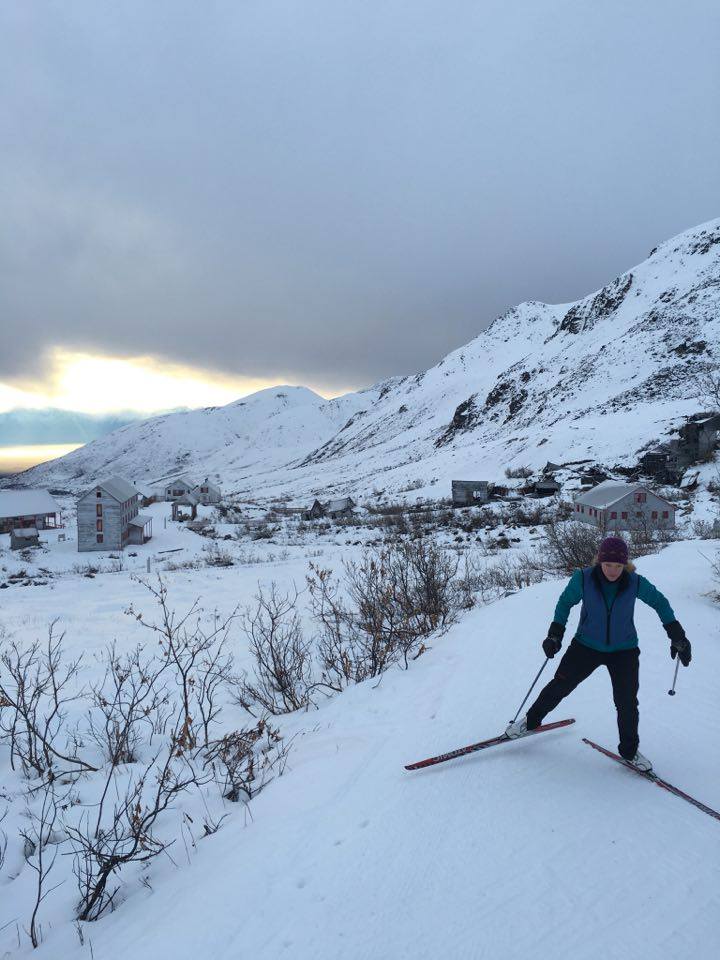
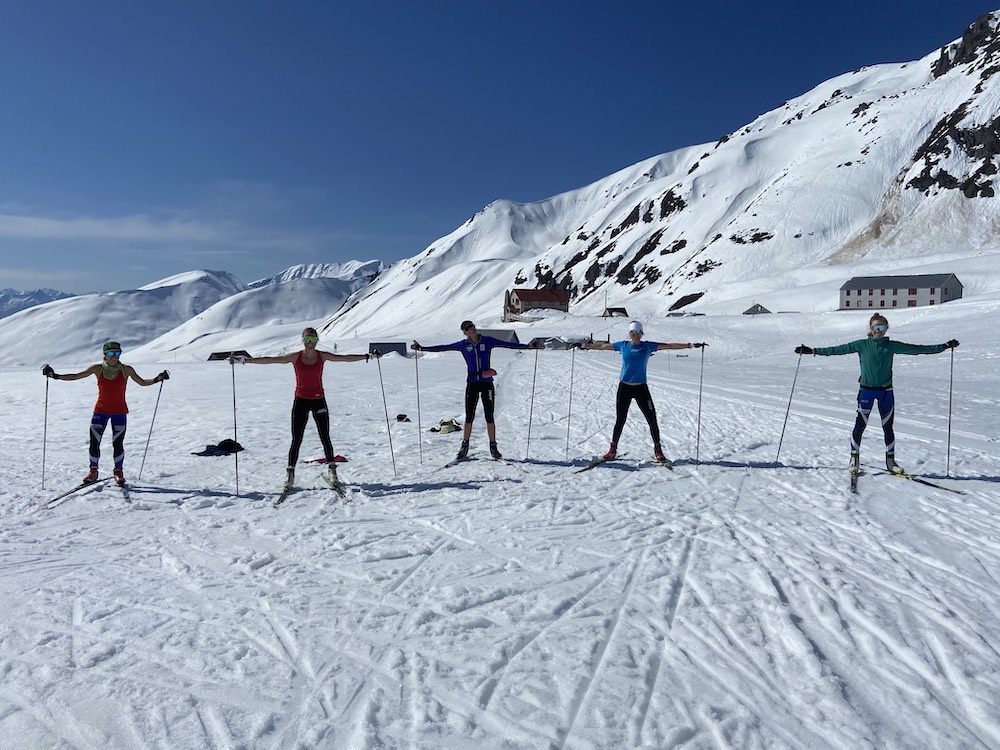
    From left, APU athletes Rosie Frankowski, Sadie Bjornsen, Hailey Swirbul, Becca Rorabaugh, and Caroline Brisbois maintain a healthy distance while skiing at Hatcher Pass on May 13, 2020. (photo credit: ?)
    From left, APU athletes Rosie Frankowski, Sadie Bjornsen, Hailey Swirbul, Becca Rorabaugh, and Caroline Brisbois demonstrate a healthy distance while skiing at Hatcher Pass on May 13, 2020. (Photo: Courtesy Sadie Bjornsen)

    Although the training cycle has officially begun, it decidedly has a different vibe and look. Adding some complexity to our short-term new normal are a crosshatch of state, county, and city regulations as it relates to mitigating the community spread of Covid-19. The core question elite cross-country ski programs are asking is this: How can we most responsibly promote safe and effective training for their athletes? 

    (The United States Olympic & Paralympic Committee (USOPC) has released a document titled Return to Training Considerations Post-COVID-19  This document provides useful information for organizations reopening.)

    FasterSkier reached out to four programs in the U.S. — the Craftsbury Green Racing Project (CGRP), Stratton Mountain School’s SMS T2 team, SVSEF’s Gold Team, and Alaska Pacific University Nordic Ski Center’s Elite Team to gauge how athletes can train within the context of their regional social distancing guidelines. The answers are complex. And as each respondent stated, no one single person or group has all the right answers other than to stay informed and err on the side of safety. 

    Craftsbury Green Racing Project

    Head CGRP coach Pepa Miloucheva responded to our query. Craftsbury’s team is located in Northeastern Vermont, a rural and isolated region. When Miloucheva responded on May 8, the Craftsbury Outdoor Center remained closed to the public. Along with key staff, those GRP athletes and coaches that live on campus year-round continued to be in residence. This group includes coaches and athletes from the ski, biathlon, and rowing teams. 

    “Most of us that didn’t go anywhere this spring have been in strict isolation since March — no store trips or anywhere else. Skiers and biathletes live in the same house, their food is ordered through the center, athletes cook in the house and do train together, but still try not to be in more than 2-3 people groups,” explained Miloucheva.

    Several athletes were home with their families. Among them were Akeo Maifled-Carucci and Caitlin Patterson — both had been with their respective families in Bozeman, Montana. They returned to Craftsbury in mid-May. Miloucheva wrote that returning athletes will be quarantined for two weeks before they are allowed to move into team housing and join group practices.

    “We do not share any buildings use with the rest of the center staff and if any work-related interactions are only by keeping a safe distance, wearing masks, and following all safety rules and regulations. This said, honestly we don’t have much of those really, we pretty much just interact between ourselves right now.”

    Gold Team

    Sun Valley and surrounding Blaine County, Idaho were early Covid-19 hot spots. Since early March, community members there have been acutely aware of grim realities of community spread. Since then, the caseload has leveled off. 

    According to Chris Mallory, Gold Team head coach, his core unit of skiers have not had group training sessions for the past two months. However, with the canceled racing in March, Mallory said several of his athletes extended their on-snow training north of their home base in town. Like many adapting to the modified season, high volume was the trend for March and April training.

    “It was unfortunate the race season got cut short, but it allowed for two months of big volume to finish out the season,” Mallory emailed. “So we’re starting up training a little later than normal this year and for now, coaches are directing workouts remotely. We’re looking to get programming going closer to normal in June, but some things will be structured differently.”

    Mallory explained that training group size will be kept below 10 athletes and the norm of committing in a team van will be held off for the near future. 

    “So we won’t have big cross-team training sessions for a while, unfortunately. We’ll also pick training locations such as Trailheads which are off the beaten path or sections of the bike path which see less traffic for rollerskiing, so physical distancing can be easier to achieve.  We might have a partner gym opening up in a week which will allow for some strength training to occur for our Gold Team, but we’re also putting some effort into creating an outdoor strength area outside the Lake Creek ski hut as well.” 

    SMST2
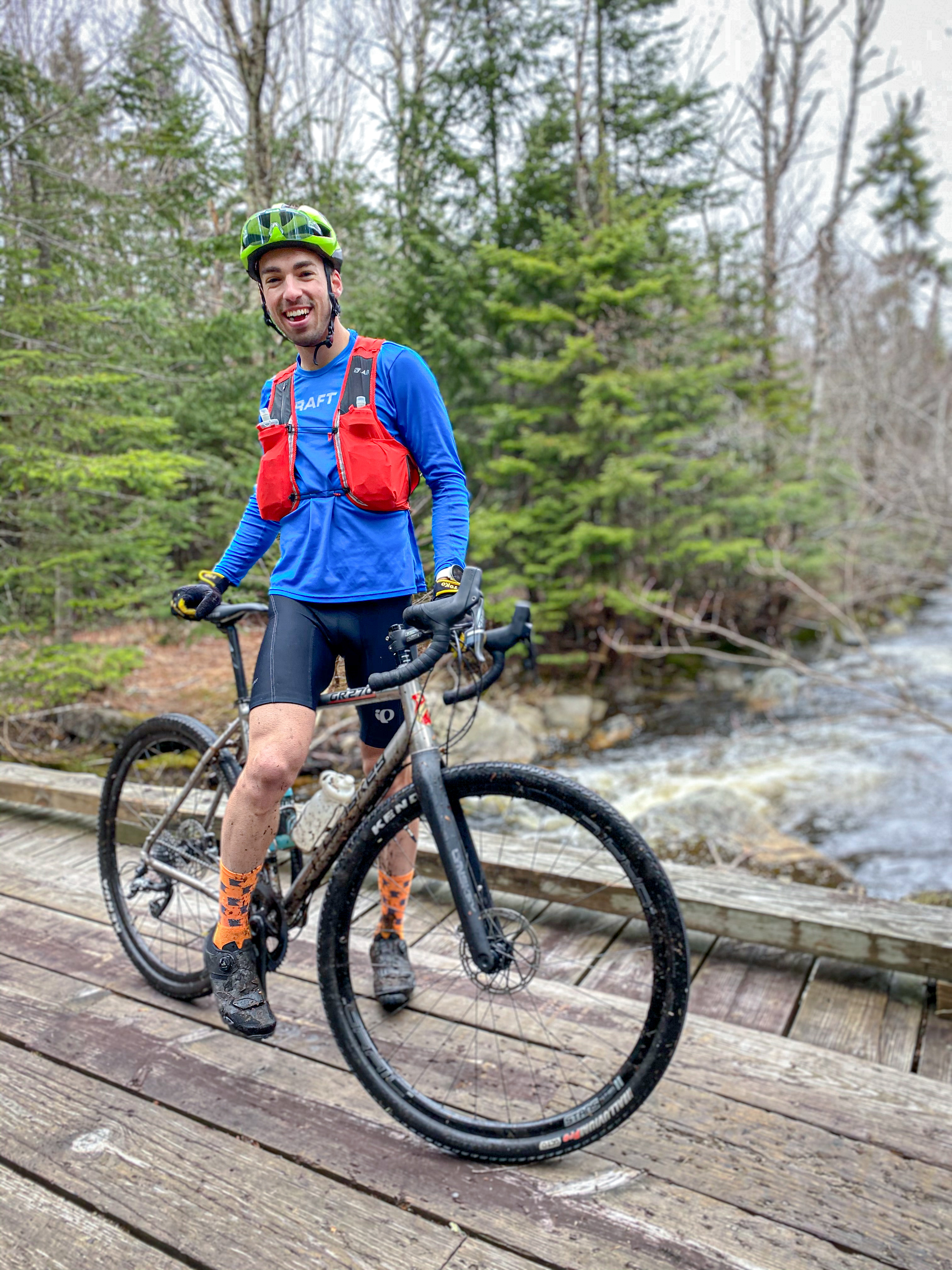
    SMST2 skier Ian Torchia on a recent VT. ride. (Photo: Courtesy Ian Torchia)

    Nestled in southern Vermont, the Stratton Mountain School offers an idyllic campus for the SMST2 team. This spring, as the pandemic and its accompanying restrictions unfolded, the state-mandated that both residents and non-residents traveling into Vermont must self-quarantine for 14 days. That rule was recently extended until June 15.

    Some SMST2 athletes are currently out of state, while others, like Ian Torchia, have remained in the Stratton area since the end of the season. Ben Ogden and new SMST2 skier Bill Harmeyer returned to their Vermont homes to remotely finish out the academic year at the University of Vermont.  

    “Initially we were thinking where do you want to be for a two-week self-quarantine,” Patrick O’Brien, SMST2’s head coach said in a call. “Thankfully we also thought about where do people want to be for an extended period of time this spring. And many people already had plans in place — knowing we may be in this for a longer period of time than we were thinking at the beginning of March.”

    As June approaches, O’Brien explained that he too has begun defining how training will look, and how to best integrate athletes into specific training groups. 

    “First and foremost in my mind is what can we legally do, what can we responsibly do, and what are the creative solutions that we can come up with? And understanding again that no one here has a crystal ball; we can look at models, we can look at forecasts, we can monitor the situation but it is going to be a moving target,” said O’Brien. “So really what we are trying to do is find a balance. We are trying to be fully compliant and very safe and cautious and also monitor the situation locally.”

    Harmeyer, who had been self-quarantined in Burlington, drove to Stratton recently to begin his full-time training. Due to his limited exposure while in Burlington, he was allowed to integrate with a small training group. Ben Saxton, on the other hand, recently flew back to Vermont from the Midwest. According to O’Brien, he is self-quarantining for the required 14 day period.

    For the time being, O’Brien envisions training groups organized around pods – another word he used interchangeably for families. Athletes living together will be considered training pods where they are able to be in close proximity to one another. O’Brien acknowledged this arrangement will be closely monitored and reassessed. 

    “We need to track and see what seems responsible for group training, but again we want to make sure people are safe and healthy and if we operate in these small groups, and everyone in that group is a ‘family member’, then we know that they are OK to go out and do stuff together. What we want to do is be creative in our approach to these challenges, but really we want to be reasonable.”

    Although Vermont’s shelter-in-place order was extended to June 15, it currently allows for outdoor exercise.

    “Every challenge presents an opportunity,” O’Brien said. “We are not going to jump on a plane and go to a bunch of different training camps. That doesn’t prevent us from having high-quality training locally. It presents an opportunity. And reaffirms a model of working together and training together.”

    Alaska Pacific University Nordic Ski Center

    Anchorage is typically a very good place to be a cross-country skier. While so much else has changed in the world this spring, this fact has remained a reassuring constant for the athletes of the Alaska Pacific University Nordic Ski Center (APUNSC) Elite Team, as well as the greater Anchorage ski community. There was seasonal weather, both snow and cold, in the second half of this winter, leading to a sea-level snowpack that lingered well into April. Trail grooming is performed by a nonprofit group, Nordic Skiing Association of Anchorage, that relies on voluntary donations rather than mandatory trail passes while grooming on public land, so grooming continued unabated through March and into late April. And public health-wise, Alaska’s isolation, coupled with a relatively aggressive early response, has led to, so far, consistently low COVID-19 numbers throughout the state, currently the lowest gross numbers of any state and the third-lowest per-capita infection rate behind Hawaii and Montana.
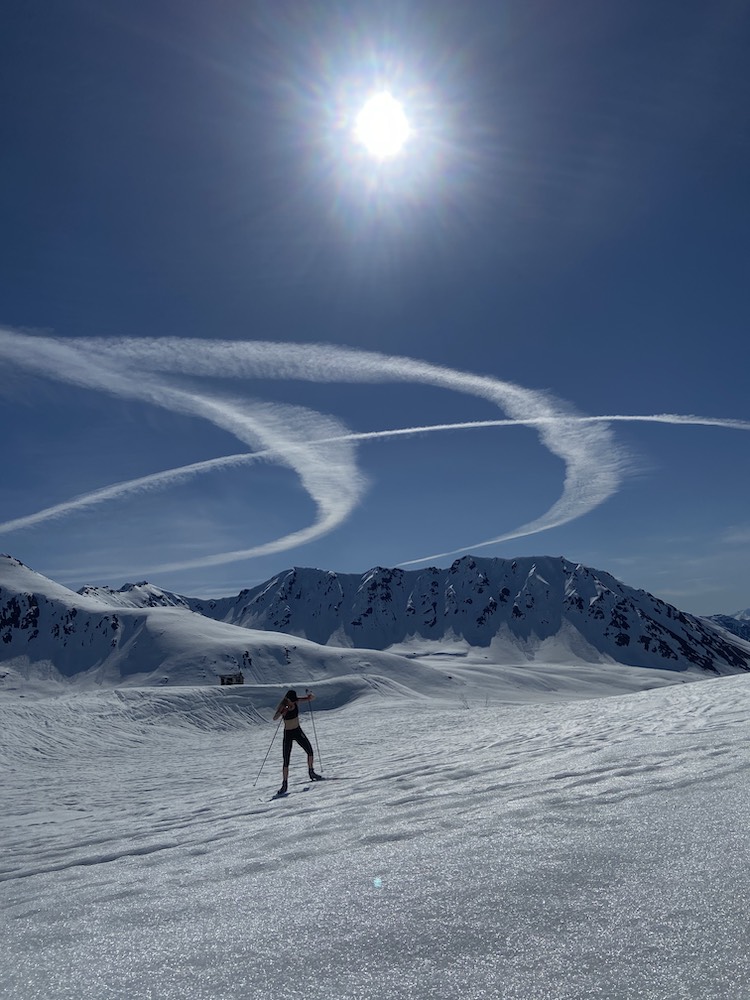
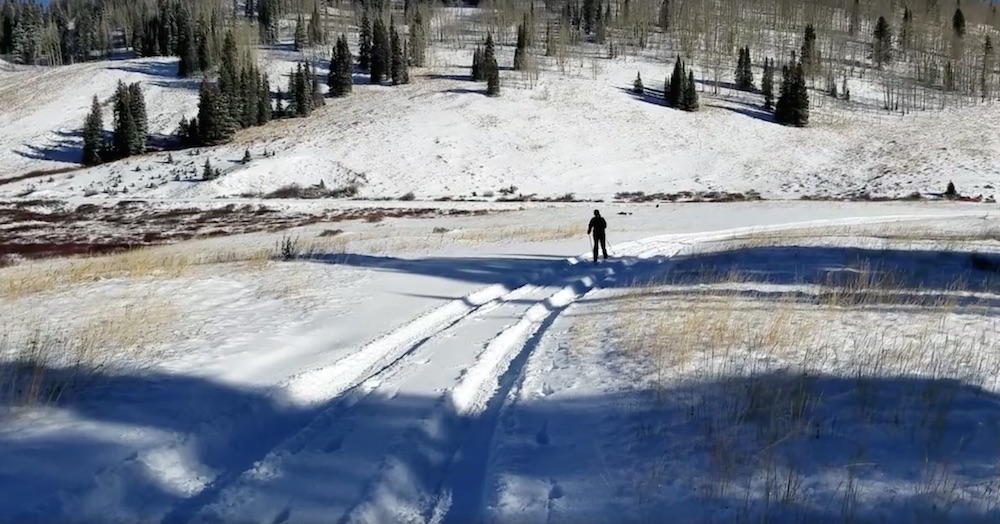
    Hailey Swirbul (APU/USST) skis at Hatcher Pass on May 13, 2020. (photo credit: ?)
    Hailey Swirbul (APU/USST) skis at Hatcher Pass on May 13, 2020. (photo credit: Sadie Bjornsen)

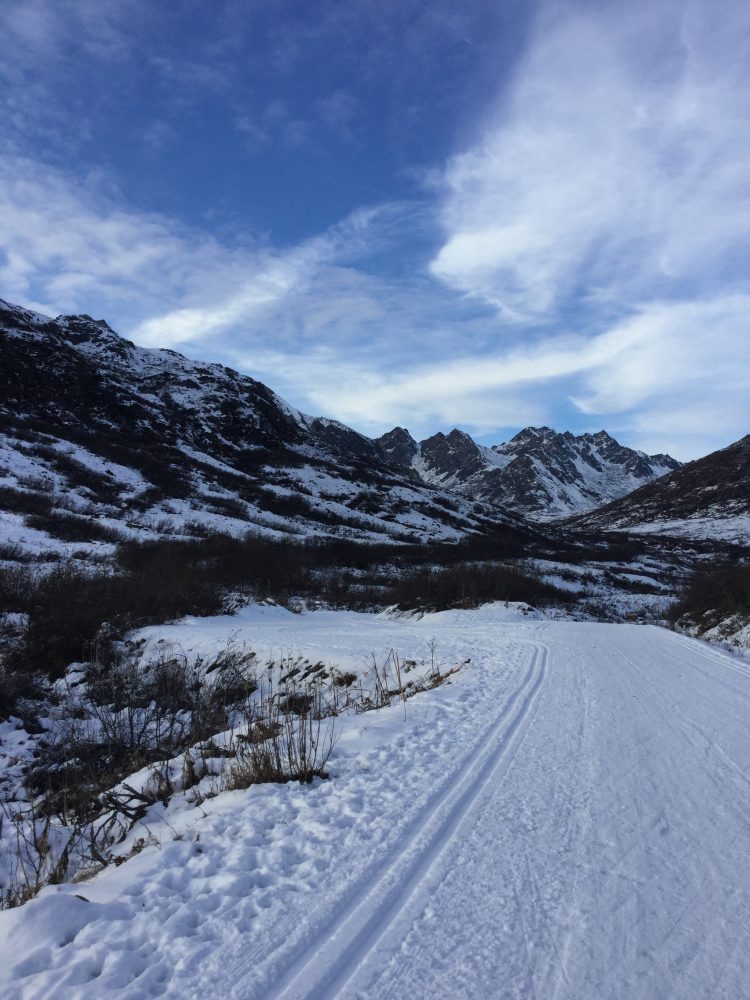
    Put it all together, and APU athletes were enjoying groomed skiing at sea level through April 23, with world-class crust skiing coming on line around the time the in-town ski season was winding to a close. (Any April training happened unofficially and in smaller groups, in deference to both the overall training schedule and health mandates in effect at that time. Although a group of four APU athletes did hunker down together in the APU Ski House starting in mid-March, forming a de facto family unit and training group in which half the people were a member of the U.S. Ski Team.) A 75-minute drive away, fellow nonprofit Mat-Su Ski Club has been grooming the trails at Independence Mine, in the Hatcher Pass area, since last October 5… and with a snowpack that currently measures around four feet, is still going. It’s hard to prove a negative, but APU skiers currently enjoy ready access to what are likely the only groomed nordic trails on the entire continent right now.

    Here’s Erik Flora – longtime Alaska Pacific University Nordic Ski Center head coach, sometime trail groomer, and consistently an archetypal do-it-all coach – with a recent email giving an official update on the APU Elite Team:

    We have learned that the logistics of keeping our athletes safe while following COVID-19 state mandates has been at the forefront of the APUNSC program. Our core is based around health and wellness, and the safety of our program members is our top priority at all times, similar to other ski communities. APUNSC has had an advantage of having trails and snow on the mountains minutes from our doors to continue training, even in times of quarantine.

    “Nordic Ski Center Elite training program began on May 1. We were fortunate that State of Alaska quarantine and social distancing mandates began to lessen at the beginning of May, allowing the Elite Team to be able to begin training in smaller groups outside in the mountains. The Elite team wore face mask or buffs and kept the mandated 6-10 ft separation while outdoors. 

    “At first, groups of 20 were allowed to hit the trails with a mandated 6-10 feet of separation for active workout sessions. We wore masks when training and avoided crowded parking lots and trailheads where we could. 

    “Once phase 2 [of state health mandates] hit a week ago, it allowed now the entire Elite Team to be able to head into the mountains to train and ski. Hatcher Pass has been an area where Crust Skiing is at its best with longer days and blazing sunshine. The grooming has been incredible thanks to the work of Nordic Ski Club of Anchorage and the Mat-Su Ski club. The Elite athletes still uphold the 6-10 ft separation when training. The athletes are happy to be together as a team again, and with that comes the responsibility to treat allowances with respect and not take it for granted. We are living and training as athletes in a time where our community could fall back to strict quarantine.  

    “We’ve stayed away from indoor training as a team in gyms, as not only is the safety of our team top priority, but the team has excelled in their own in-home conditioning and in getting outside to hit the trails. Only if necessary, for some athletes rehabbing, will we recommend using an indoor gym for conditioning and training.  

    “APU Nordic Ski Center typically runs 3 elite training camps [each summer] on Eagle Glacier at the Thomas Training Facility outside of Girdwood, Alaska. We will revisit whether Glacier camps will resume based on the climate of COVID-19 Adjustments.”

    (For any Outside readers salivating over the prospect of May skiing and thinking of booking a cheap plane ticket north, please note that a 14-day quarantine requirement remains in effect for anyone traveling into Alaska from out of state, and that Alaska State Parks is likely to plow the road up to Independence Mine in early June.)
  • Gus Schumacher Leads the Way in First Besh Cup Weekend

    Gus Schumacher Leads the Way in First Besh Cup Weekend

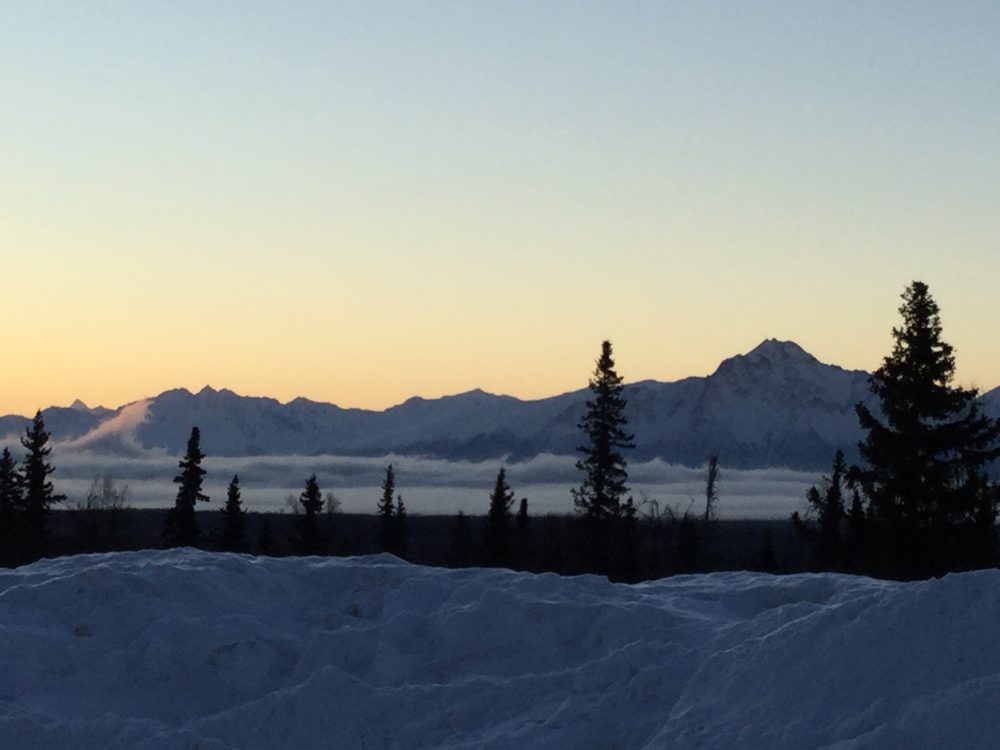
    The Chugach Mountains and a winter sunrise, seen in this file photo view from the parking lot at Government Peak Recreation Area, Palmer, Alaska, in February 2018. (photo: Gavin Kentch)
    The Chugach Mountains and a winter sunrise, seen in this file photo view from the parking lot at Government Peak Recreation Area, Palmer, Alaska, in February 2018. (photo: Gavin Kentch)

    Note: FasterSkier is accepting submissions for regional race reports, including for juniors racing. If you would like to see a particular race circuit covered and have the writer with the will to do it, please have them email info@fasterskier.com. Be sure to include a link to results, and preferably a few original race photos with proper credits.

    GOVERNMENT PEAK RECREATION AREA, outside Palmer, Alaska — On a day that had a decidedly old school feel, one of the state’s newest racing venues took center stage, as Government Peak Recreation Area successfully hosted the opening Besh Cup races of the 2018/2019 Junior Nationals qualifying series this past weekend on less than a week’s notice.

    Saturday morning saw U18 boys and up cover 15 kilometers, on a hilly two-lap course; U18 girls and up raced 10 k, on an even hillier two-lap course. It was classic technique, it was interval start, it was cold, and the trees were draped with fresh snow. It felt like a World Cup race circa 1990.

    Senior women Hailey Swirbul, Rosie Frankowski, and Lydia Blanchet. (photo: courtesy CCAK)
    Senior women Hailey Swirbul, Rosie Frankowski, and Lydia Blanchet. (photo: courtesy CCAK)

    The comparison isn’t totally bathetic, given the overall leaderboards for Saturday’s races: Rosie Frankowski, Hailey Swirbul, and Kendall Kramer for the women, and Gus Schumacher, Luke Jager, and Hunter Wonders for the men. That’s an Olympian and a three-time World Juniors medalist for the women, and three-fourths of this spring’s breakthrough World Juniors silver medal relay team for the men. Oh, plus the 16-year-old Kramer, who was third in the junior women’s 5 k classic mass start at 2018 U.S. Cross Country Championships and who may have a pretty bright future in this sport herself.

    Saturday: distance classic races

    Male racers set out at 11 a.m. Saturday morning from the compact stadium at Government Peak Recreation Area (GPRA), a labor of love by the Mat-Su Ski Club and the Palmer and Wasilla ski community over the past ten years. They headed out on a course that is a poor man’s Davos distance course, with consistent climbs and V2-able false flats for the first two-thirds of the loop, giving way to a working downhill and a sharp drop back to the stadium. Or to just below the stadium, actually; the course ends with a grueling B-climb immediately before the finish (see next picture, below right). The obvious challenge is to pace the uphills easily enough the first time to ski the downhills and flats efficiently, then do the same thing a second time in lap 

    After roughly 80 racers had covered two 7.5 k laps in the day’s first race, leaving the stadium at 30-second intervals, it was Schumacher who had done this most efficiently, covering 15 k in 43:23.11. Jager (+12.36) and Wonders (+26.53) made up the overall podium. The top three senior athletes were Wonders, Logan Hanneman (fourth overall), and Tyler Kornfield (fifth).

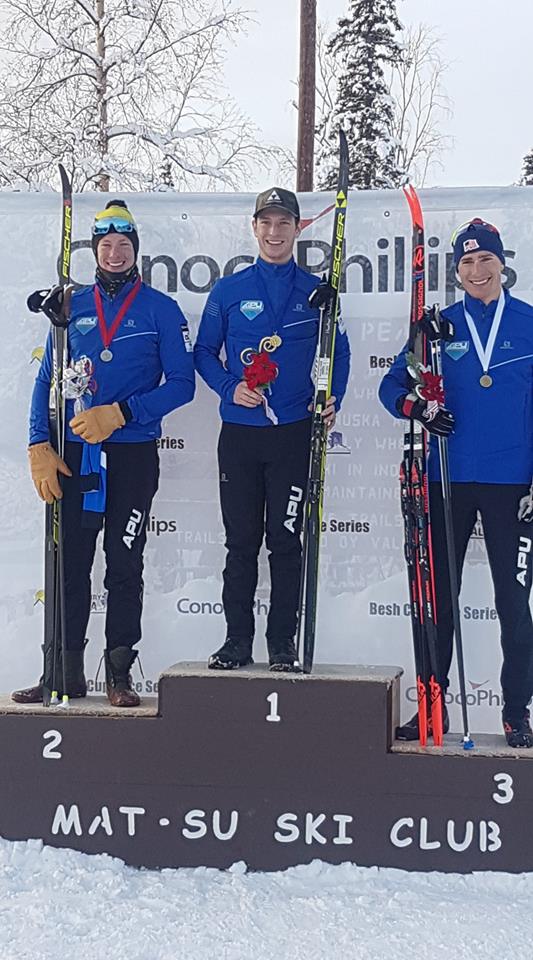
    The top three U20 racers on the day were Schumacher, Jager, and Ti Donaldson, who was seventh overall. Leading the U18 racers were Zanden McMullen (15th overall), Everett Cason (16th), and Max Germain (19th). 50-year-old Adam Verrier, a 1994 Olympian, was the top Master in 47th. Behind Schumacher, who skis for Alaska Winter Stars, in first, Alaska Pacific University (APU) showed its depth by putting six skiers in the top 10 and 10 in the top 16.

    Part of the final climb leading back up to the stadium on the comp loop, seen in this file photo view from Government Peak Recreation Area, Palmer, Alaska, November 1, 2018. (photo: Gavin Kentch)
    Part of the final climb leading back up to the stadium at the end of the Government Peak comp loop, seen in this file photo view from November 1, 2018. (photo: Gavin Kentch)

    The day’s second race saw 43 women, age U18 and up, take on two laps of the Davos-lite 5 k course described above. Two laps of 5 k at Government Peak is in many ways harder than two laps of 7.5 k, as the longer course adds 2.5 kilometers of gently rolling terrain near the end of the homologated (or perhaps homologation-pending) 5 k course. The 5 k course has no such recovery intermezzo, and the final climb of the first lap segues into the first climb of the second lap for a difficult extended climb with negligible recovery.

    After two laps and 10 k classic, the day’s last starter, Rosie Frankowski, posted the fastest time, finishing in 32:28.01. (While snow conditions are obviously extremely variable from one venue and race to the next, making time comparisons unreliable, and Frankowski did not have World Cup skiers in front of her to chase on Saturday, the fact that Frankowski has previously skied a World Cup 10 k classic in 27:44, on a homologated course in Falun with 365 meters of total climb, suggests that the new Government Peak comp loop deserves respect.)

    Frankowski’s APU teammate, Hailey Swirbul, was second on Saturday, 22.39 seconds back. Kramer (+1:42.15) was third, ahead of a top-10 otherwise composed of skiers from the University of Alaska Anchorage and local Dartmouth College skiers home for winter break.

    buy flonase online

    The top three senior athletes were Frankowski, Swirbul, and Lydia Blanchet, who was fourth overall. The U20 podium was Jenna Difolco (seventh overall), Molly Gellert (17th), and Maggie Meeds (23rd). Somewhat ahead of them were the three fastest U18 skiers: Kramer, Adrianna Proffitt (11th), and Ivy Eski (14th). M4 skier Alison Arians, in 18th, was the top Master.

    U16 girls Katey Houser, Marit Flora, and Victoria Bassette. (photo: courtesy CCAK)
    U16 girls Katey Houser, Marit Flora, and Victoria Bassette. (photo: courtesy CCAK)

    Next out on the course were 51 U14 and U16 boys, who did a single lap of the comp loop. U16 skier Aaron Maves, like Frankowski before him, lived up to his top seeding, finishing one lap in 16:35.99. Second and third went to Konrad Renner (+18.99) and Eli Merrill (+36.83), also both U16 athletes. The top U14 skiers in this race were Skyler Amy (22nd overall), Murphy Kimball (23rd), and Aven Elsberg (26th).

    Moments later came the start for the first of 49 U14 and U16 girls, as organizers efficiently put roughly 250 total athletes out on course at a venue that is a one-hour drive from Anchorage and sees a mid-December sunrise some time after 10 a.m. U14/U16 girls likewise did one lap of the 5 k comp loop.

    Quincy Donley had the highest seed and final start position for this race, but 5 k later it was penultimate starter Marit Flora who took the victory. Flora finished in 18:23.47. Donley was 22.78 seconds back in second. Meredith Schwartz (+48.59) was third.

    All three podium finishers were U16 girls. The top three U14 finishers in the race were Heidi Schumacher (12th overall), Sammy Legate (15th), and Zarah Laker-Morris (24th).

    Sunday: distance freestyle races

    After the U12, U10, and U08 skiers finished up the first day’s races, and the afternoon’s sunset time of 3:33 p.m. threatened, volunteers took down the course, coaches packed up waxing equipment, and tired racers began the trek back to Anchorage homes or Mat-Su hotel rooms. The first volunteers were officially on site by 7:30 a.m. Sunday morning to assist with parking, although doubtless some people had returned to the venue by long before then.

    Day two of racing brought some differences – freestyle instead of classic, shorter distances, and slightly warmer temperatures – but more repeat podium finishers than not across the day’s races.

    The first division on course was again U18 boys/U20/Seniors/Masters men, this time with 78 starters going out at 15 seconds apart. Sunday’s skate race was 10 k freestyle interval start, twice around the 5 k comp loop (precisely the same as the senior women’s 10 k classic the day before). The top three overall were unchanged from Saturday’s 15 k classic: Gus Schumacher, then Jager, then Wonders, the World Juniors silver-medal relay team united once more. Schumacher’s time on Sunday was 26:17.07. Jager (+15.56) and Wonders (+42.74) were the only other two athletes to break 27 minutes on the hilly course.

    U16 boys Josh Baurick, Konrad Renner, and Aaron Maves. (photo: courtesy CCAK)
    U16 boys Josh Baurick, Konrad Renner, and Aaron Maves. (photo: courtesy CCAK)

    The U20 leaders on Sunday were again Schumacher, Jager, and Donaldson, who was fourth overall. The senior podium was Wonders (third overall), Thomas O’Harra (fifth), and Forrest Mahlen (sixth). Best times for U18 skiers went to McMullen (seventh), Cason (11th), and Germain (16th), precisely the same U18 podium as in the 15 k classic. Much as on Saturday, behind Alaska Winter Stars skier Schumacher in first, APU placed seven athletes in the top 10.

    The first Master, among eight Masters finishers on Sunday, was M1 skier Cody Priest, 30, a former skier and runner at the University of Alaska Fairbanks, in 25th overall.

    Soon after the last of the Senior men collapsed across the finish line, the first of the U16 boys headed out for one lap of the 5 k course. (All races on both days were interval-start.) First on Sunday was Renner (15:21.27), improving on his second-place finish from the day before. Josh Baurick (+9.17) was second, with Maves (+17.20) staying on the podium but moving down to third after his victory on Saturday.

    Next up were 43 U18 girls/U20/Seniors/Masters women. Neither Frankowski nor Swirbul raced on Sunday, but their APU teammate Jessica Yeaton, who skis domestically with APU but competes internationally for her native Australia, did after not racing on Saturday. Yeaton was seeded third in the 5 k skate but ended up first, covering one 5 k lap in 14:47.25. Kramer (+26.15) moved up to second overall on Sunday, with Emma Tarbath (+46.32) third, barely a second ahead of Lydia Blanchet in fourth. Anna Darnell was the fifth and final woman to break 16 minutes on the hilly course.

    The senior women’s podium was Yeaton, Tarbath, and Blanchet. The top three U20 finishers were Jenna Difolco (seventh overall), Molly Gellert (ninth), and Emma Jerome (21st). The top three U18 finishers were, again, Kramer (also second overall), then Ivy Eski in eleventh overall, barely ahead of Annika Hanestad in twelfth. Arians (15th) was again the first Master.

    U14 boys were the next race out on the course. Sunday brought a 3.75 k skate, on a course that covered most of the 5 k comp loop used throughout the weekend, but elided one major climb and the only rolling section from the top part of the course. The technique and the distance were different, but the U14 podium was precisely the same as on Saturday: Amy (13:29.76), then Kimball (+2.05), then Elsberg (+7.19).

    U18 girls Ivy Eski, Kendall Kramer, and Annika Hannestad. (photo: Gavin Kentch)
    U18 girls Ivy Eski, Kendall Kramer, and Annika Hannestad. (photo: Gavin Kentch)

    Finally, U14 and U16 girls headed out on the same 3.75 k loop. Marit Flora took her second victory of the weekend by a substantial margin, finishing in 12:13.98. Katey Houser (+30.59) and Victoria Bassette (+32.64) collected their first podia of the weekend.

    The overall podium was again all U16 racers. The U14 leaders were Legate (tenth overall), Heidi Schumacher (16th), and Nora Hulse (24th).

    Reflecting the depth of skiing in southcentral Alaska, the roughly 250 entrants for the weekend’s races included a healthy six former Olympians (Rosie Frankowski, Logan Hanneman, Tyler Kornfield, Adam Verrier, Casey Wright, and Jess Yeaton) and four World Juniors medalists (Gus Schumacher, Luke Jager, Hailey Swirbul, and Hunter Wonders), as well as additional senior national championship podium finishers, most of the rest of the APU Elite Team, a dozen or more NCAA skiers, and scads of past Team Alaska Junior National members.

    Both races were FIS races, as well as certified for National Rankings List purposes by U.S. Ski & Snowboard. FasterSkier unofficially calculates the USSA penalty at a healthy 41.99 points for the men’s distance races.

    Thoughts on the weekend

    Two common themes emerged after talking with a handful of the weekend’s podium finishers: One, these races are a good introduction to the season and to bigger races still ahead. And two, the new Government Peak courses are great. But hard.

    As two-time U18 champion Zanden McMullen told FasterSkier Sunday afternoon, “Yesterday I was definitely hurting in the race, but I was proud to come out on top. I definitely felt a lot better today. I’m pretty happy going into the season, where I am; I still have a little work to do before Senior Nationals, but I’m super excited.”

    U20 men Luke Jager, Gus Schumacher, and Ti Donaldson. (photo: courtesy CCAK)
    U20 men Luke Jager, Gus Schumacher, and Ti Donaldson. (photo: courtesy CCAK)

    Two-time overall champion Gus Schumacher expressed similar sentiments, telling FasterSkier, “I wanted to use [these races] to get into racing more, and get some more races under my belt, so I felt better at the bigger races. But obviously, to get into good racing shape, you want to be trying to race as best you can, so that was kind of the goal, to be able to start getting my racing speed to its top level.”

    Schumacher, who is undefeated in five local races this year, including the Race to the Outhouse #1 hill climb at Hatcher Pass the preceding weekend and a sprint and distance race in Fairbanks in the Alaska Nordic Cup in early December, described his current shape as “pretty good.” He elaborated that he plans to add some more intensity soon, but thinks that he is “coming into my race form, and it looks pretty good. Good to have these fast boys around me to push me every day.”

    Schumacher plans to do some trials with Alaska Winter Stars, possibly collaborating with APU, before flying to Craftsbury on December 29th for senior nationals.

    Two-time U18 champion (and double overall podium finisher) Kendall Kramer sounded similar notes, but was somewhat more introspective when asked what her weekend results told her about her current fitness and the upcoming race season.

    “I got invited to a lot of national camps this summer,” Kramer said to FasterSkier, “and I think being exposed to so many different training groups and training styles – I really diversified how I trained this year, and so I’m happy that it’s working out for me. It’s less stressful, and I’m putting less pressure on myself.”

    Kramer, who had never previously raced at Government Peak, described the new courses as “really, really tough.” She seemed to recognize that the course profile was advantageous to her, while stopping short of actually saying that she had enjoyed them when asked if she had liked the courses: “I mean, yes, being super small and light and getting up hills – I wouldn’t pick this venue, necessarily. But I think it was good for me.”

    Ivy Eski, who claimed a pair of U18 podium finishes on the weekend, was more effusive.

    buy zyrtec online

    “I love it,” she told FasterSkier. “It was really fun. I definitely want to race here again. The courses are amazing.”

    Eski also praised the “really good snow and super good grooming,” calling it “overall really a great weekend.”

    U18 boys Everett Cason, Zanden McMullen, and Maxime Germain. (photo: courtesy CCAK)
    U18 boys Everett Cason, Zanden McMullen, and Maxime Germain. (photo: courtesy CCAK)

    And McMullen, who had also never raced at this venue, similarly said of the new courses, “They’re tough, but I like them. You definitely have to be on top of it to be able to push it and go fast.”

    Are they as hard as a nationals course? he was asked. “I definitely think they could be,” said McMullen, who has raced throughout the U.S. as well as in Finland. “Because if you don’t ski it correctly, you could be hurting.”

    * * *

    The overall success of the weekend is noteworthy only in light of two facts: That the Mat-Su Ski Club had never hosted an event at this level before, and that it did so on less than a week’s notice, as poor trail conditions throughout southcentral Alaska forced governing body Cross Country Alaska (CCAK) to have a series of competition committee meetings and teleconferences during the week of December 3 to decide where in the state to send 250 athletes and their parents for a weekend of racing. (Anchorage and Fairbanks are a six-hour drive apart, nearly the twice amount of daylight in Fairbanks in mid-December; the decision to move a race weekend is not made lightly.)

    On Sunday evening, December 9, CCAK announced the decision of the Competition Committee to have the opening Besh Cup weekend at the Government Peak ski trails. Six days later, skiers were pouring into the carefully managed, not-really-large-enough parking lot for the weekend’s first race, with overflow parking stretching hundreds of yards down one side of the access road. Notwithstanding the venue’s youth and the Mat-Su Ski Club’s relative inexperience, all races on both days appear to have gone flawlessly. (Full disclosure, this reporter contributes money to Mat-Su Ski Club for grooming each year, but was not otherwise involved in organizing or supporting these races save for paying an entry fee for both days to race as a Masters athlete.)
    The Mat-Su Ski Club, which pulled off two days of impeccable grooming without the aid of large-scale grooming equipment, is currently fundraising for the purchase of a PistenBully groomer.

    Senior men Logan Hanneman, Hunter Wonders, and Tyler Kornfield. (photo: courtesy CCAK)
    Senior men Logan Hanneman, Hunter Wonders, and Tyler Kornfield. (photo: courtesy CCAK)

    Next up

    Besh Cup racing for Team Alaska selection continues with two more weekends of racing, currently scheduled for Soldotna on January 19-20, 2019, and Fairbanks on February 2-3. There are traditionally two interval-start distance races, two mass start distance races, and two sprint races throughout the six-race Besh Cup series, three races each of skate and classic. CCAK will announce future race details in advance of upcoming race weekends, after atypically starting the season with two consecutive interval-start distance races due to the last-minute move to Government Peak.

    2019 Junior Nationals will be held at Kincaid Park in Anchorage from March 9-17, 2019. Recent snowfall has brought the trails there from, as CCAK recently described them, “ice/grass rinks” to skiable within the past week (that is, after the decision was made to move the races).

    While relatively warm temperatures hindered the Nordic Skiing Association of Anchorage (NSAA)’s ability to make snow through the early winter, leading to NSAA running the snowmaking system for only 48 hours through November 28, the snowmaking system did survive the 7.0 earthquake of November 30 unscathed, NSAA Business Manager Erin Beam told FasterSkier in an early-December email. “NSAA has tested it since the earthquake, and there are no apparent damages or problems,” she wrote at the time. “It’s certainly incredible it wasn’t worse.” NSAA has made some snow at Kincaid within the past week or so, in addition to grooming the natural snow on most trails.

    Results and media: Saturday classic (all races) | Sunday skate (all races) | FIS results (all races) | Current 2019 Team Alaska points list | CCAK podia photo albums: Day 1, Day 2

  • 2018 Tour of Anchorage Arrives Sunday

    One of North America’s biggest, and Alaska’s favorite, races celebrates 30 years


    2017 Tour of Anchorage

    More than 700, including Olympians, expected to compete; registration still open

    WHAT: 2018 Tour of Anchorage

    WHEN/WHERE: Sunday, March 4. Starts: 50K at 9:30 a.m., 40K at 10:30 a.m., Service High School; 25K classic at 11 a.m., 25K freestyle at noon, APU University Lake. All races end at Kincaid Park stadium.

    REGISTRATION/MORE INFORMATION:www.anchoragenordicski.com/races/tour-of-anchorage/

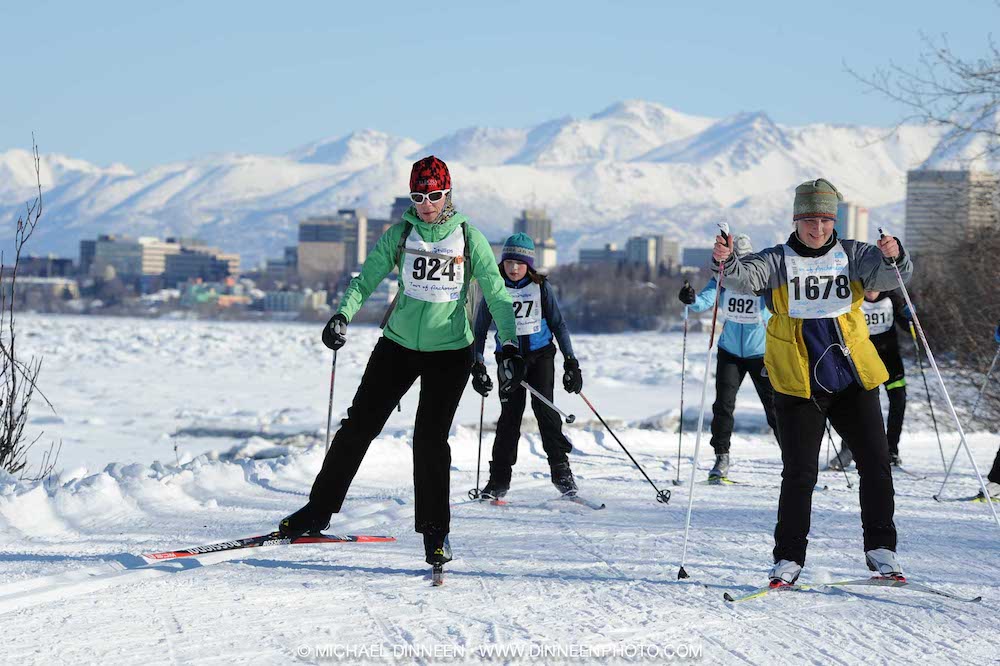
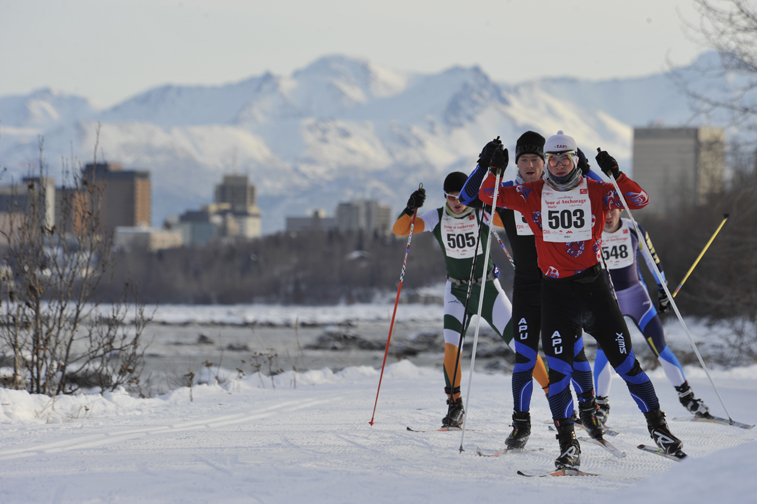
    ANCHORAGE – Alaska’s Nordic ski community celebrates ski racing and generations of standout Alaska athletes at the 30th annual Tour of Anchorage, the spring skiing festival and one of North America’s most popular ski races, which takes place Sunday, March 4.

    Hosted by the Nordic Skiing Association of Anchorage and supported by this year’s signature sponsor ConocoPhillips, the Tour features three distances ­– 25-, 40- and 50-kilometers – for hundreds of skiers of all skill levels. Courses span Anchorage’s world-class trail system, crossing urban and natural segments, and passing festive aid stations that create a celebratory community vibe. The party continues at the Kincaid Park finish area with music, entertainment, food and drink from 49th State Brewing Company, Great Harvest Bread Company and Kaladi Brothers Coffee.

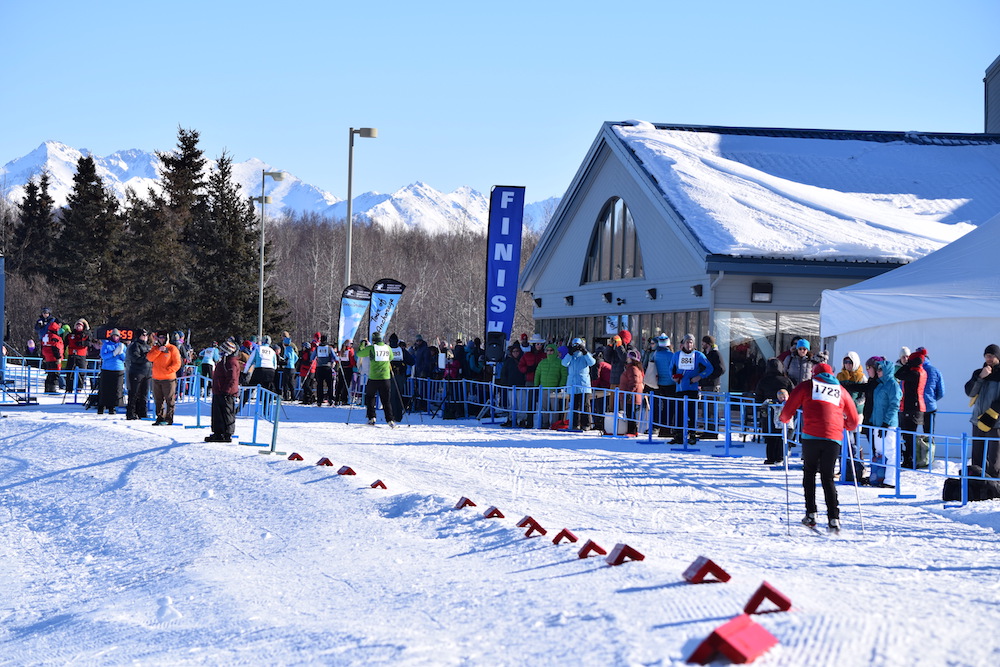
    The Tour of Anchorage finish at Kincaid Park. (Photo: Jan Hazen)

    Recent seasons of low snow in Southcentral threatened the Tour’s 30-year run, but the event carried on. This season’s event promises plenty of snow, inspiration and enthusiasm following fresh snow and the success of Alaska skiers at the Winter Olympic Games.

    “We are thrilled that abundant recent snowfall has created such great course conditions,” said Matias Saari, race director. “The Tour allows all types of skiers to traverse an urban environment by way of tunnels, bridges and greenbelts.”

    At least one 2018 Olympian, Jessica Yeaton, will compete in this year’s Tour while other Alaskans who competed in high-profile 2018 national and world events are expected to race. Half of 2017’s top 50K Tour finishers represented the U.S. at the Olympics – Rosie Frankowski won the women’s race; Reese Hanneman and Tyler Kornfield placed second and third, respectively, in the men’s 50K.

    But one of the Tour’s most distinctive features is that it attracts all types of skiers: octogenarians to elementary school kids, elites to weekend warriors. More than 100 current entrants are 18 or younger, while nearly as many are 59 or older. At 87 years old, Reno Deprey is back to ski the 25K classic while Bruce Talbot, the only person to have skied all 29 Tours, returns for the 40K freestyle.

    More than 700 skiers are expected to participate, including over 100 from outside Anchorage. Registration opportunities are still available. Register and learn more about the race at www.anchoragenordicski.com/races/tour-of-anchorage/.

    Bib pickup is noon-7p.m. Friday and 10 a.m.-noon Saturday at the APU Moseley Center.

  • Anchorage to Host 2018 L.L.Bean U.S. Cross Country Championships Jan. 3-8

    (Photo: Charlie Renfro)

    America’s top skiers hit Kincaid Park January 3-8

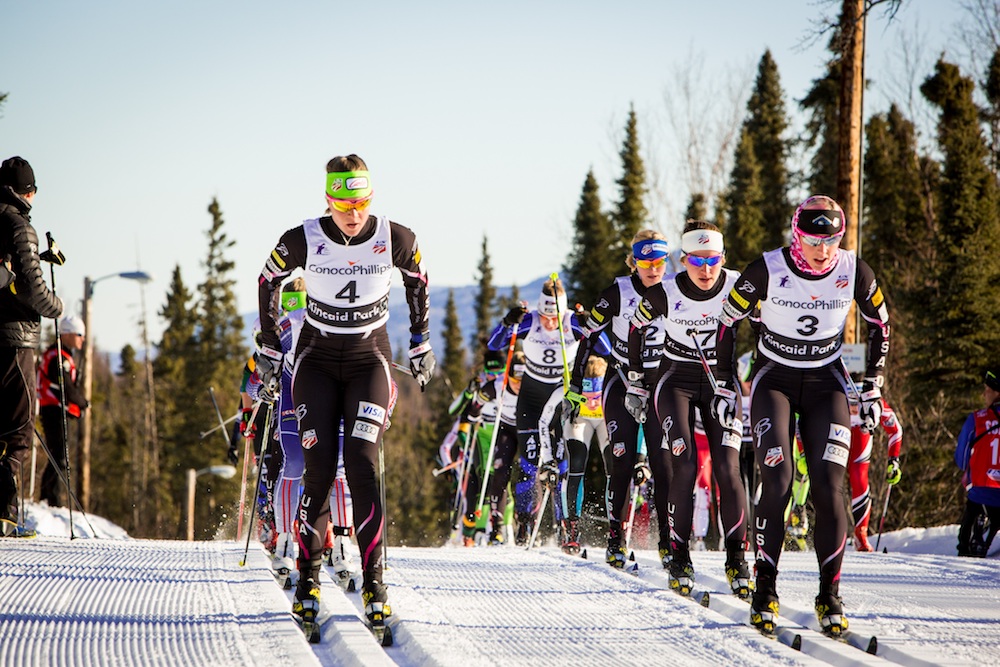
    ANCHORAGE, AK (Courtesy of U.S. Ski & Snowboard) – Top cross-country skiers from across America will compete for national titles, FIS Junior World Championship spots and potential Olympic berths at the 2018 L.L. Bean U.S. Cross Country Championships January 3-8. All events will take place at Kincaid Park. U.S. Ski & Snowboard will also carry a live stream of the events on its Facebook page (www.facebook.com/usskiandsnowboard/).

    Alaska is a hotbed for cross-country skiing and past U.S. Championships in Anchorage have attracted large fields. The Alaskan city most recently hosted the event in 2010. The U.S. Championships are being organized by the Nordic Skiing Association of Anchorage.

    The week’s competitions feature two freestyle and two classic events for both men and women. The top American in each race will be crowned national champion. Results from the freestyle races and the classic distance events will be used to determine the teams for the 2018 FIS Junior & U23 World Ski Championships in Goms, Switzerland January 28-February 3.

    “The U.S. Championships is a stop for our top domestic skiers seeking not just U.S. titles but spots on international teams,” said U.S. Ski & Snowboard Nordic Domestic Program Director Robert Lazzaroni. “Anchorage is an excellent venue as the event will capture the great enthusiasm we have for cross country skiing in Alaska.”

    “Anchorage has an amazing infrastructure for cross country skiing,” said organizing committee chair Joey Caterinichio. “Events such as the U.S. Cross Country Championships help keep the circle of cross country skiing alive and give our youth an atmosphere to thrive in at all levels of skiing and to witness the pinnacle of U.S. racing.”

    All races in Anchorage are also part of the 2017-18 SuperTour and points will count towards the overall SuperTour titles, Olympic Winter Games selection and international World Cup starts. The long distance and team championships will take place March 23-28 in Craftsbury, Vermont.

    While primary selection for the 2018 Olympic Cross Country Team will come from World Cup races, some final spots will be determined from results in Anchorage. The Olympic team nominations will be announced the week of January 23.

    More information on the 2018 L.L. Bean U.S. Cross Country Championships can be found at www.usskiandsnowboard.org and www.usnationals2018.com. For updates, also visit the event’s Facebook page at www.facebook.com/xcusnats2018/ .


    2018 L.L.Bean U.S. Cross Country Championships

    All races at Kincaid Park; schedule subject to change


    10 a.m.-2 p.m. Wednesday, January 3

    Men’s 15k freestyle

    Women’s 10k freestyle


    10 a.m.-4 p.m. Friday, January 5

    Men’s and women’s freestyle sprints


    10 a.m.-3 p.m. Sunday, January 7

    Men’s 30k classic mass start

    Women’s 20k classic mass start

    Junior men’s 10k classic mass start

    Junior women’s 5k classic mass start


    10 a.m.-4 p.m. Monday, January 8

    Men’s and women’s classic sprints


    Find a full schedule at www.anchoragenordicski.com/wp- content/uploads/2017/11/2018- US-Nationals-Event-Schedule- Coast.pdf.

  • NSAA’s Season Begins Oct. 1

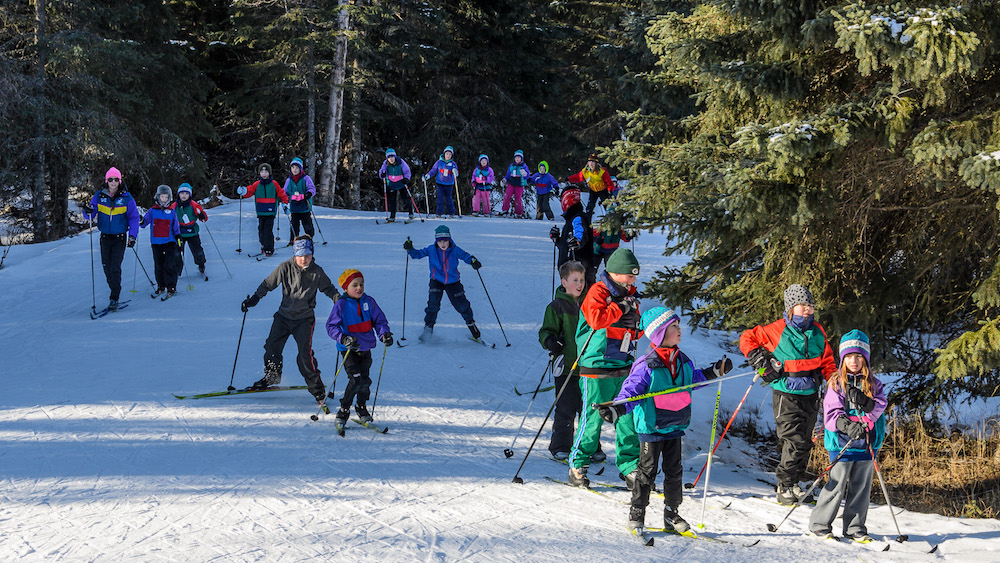
    NSAA’s Junior Nordic skiers at Kincaid Park in Anchorage, Alaska, in March 2014. (Photo: Dave Ward)

    (Press release)

    NSAA’s season begins October 1 with improved Junior Nordic and Ski Train programs

    A new and exciting season of events, activities and healthy outdoor opportunities for Southcentral Alaska residents of all ages begins Sunday, October 1, when the Nordic Skiing Association of Anchorage (NSAA) kicks off its 2017-18 season programming. NSAA opens the season by introducing new leadership and details for two of its most popular community programs: Junior Nordic and Ski Train.

    NSAA Junior Nordic is a longtime and beloved community program committed to instilling active lifestyles and a love for skiing, trails and the outdoors in hundreds of Anchorage-area kids every winter. NSAA recently named Shannon Donley as the program’s new director. Junior Nordic skiers and coaches will also have a fresh look this season thanks to ConocoPhillips and UBS Financial Services, which have generously provided the program with new jackets.

    The first of two eight-week Junior Nordic sessions starts November 13, but registration begins on October 1. Sessions are offered at Kincaid Park, Hillside and Russian Jack Springs Park. To ensure effective coach-to-skier ratios and meet the various needs of families and young skiers across Anchorage, NSAA has added afterschool sessions at Hillside and Kincaid Park to complement the traditional evening slots. Session prices are $185. Learn more and register at www.anchoragenordicski.com/junior-nordic.

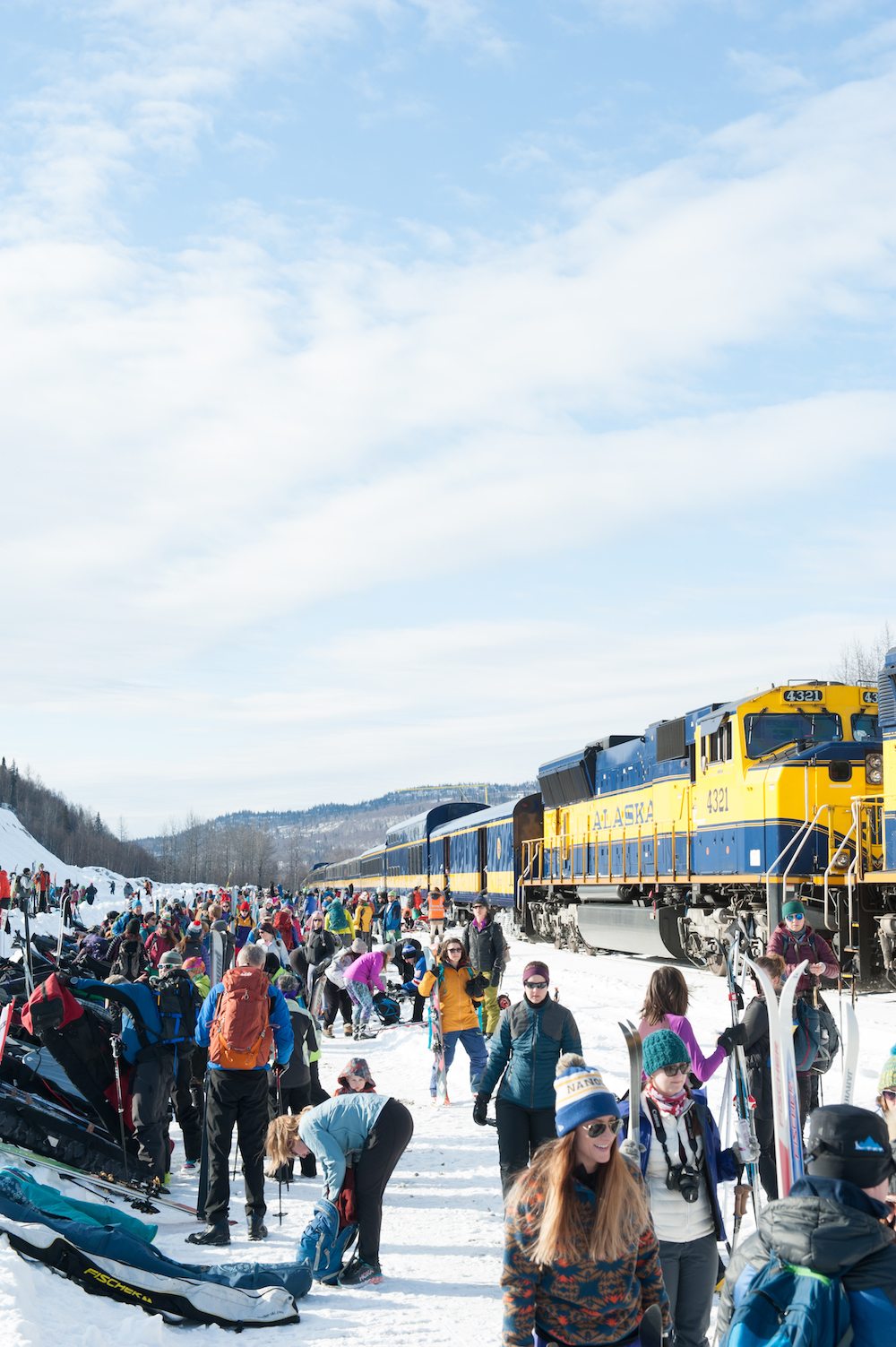
    The Ski Train as seen March 11, 2017. (Photo: Twisted Branch Photography)

    Another NSAA institution is getting an upgrade this season: Ski Train! The basics remain the same for the wildly popular annual event: a scenic, unforgettably fun 200-mile ride aboard the Alaska Railroad will deliver skiers, snowshoers and winter recreationists of all ages and skill levels to an awesome location for outdoor adventures. New this season: Ski Train will exclusively offer table seating dome cars to guarantee great views and comfort for every passenger.

    Ski Train 2018 arrives March 24 but tickets go on sale October 1. Family pricing and extra perks are added values this season thanks to Trek Store of Anchorage, REI, Matanuska Brewing Company, Glacier Brewhouse Brewery, Alaskan Brewing Company, Wild Scoops, and Conrad Houston Insurance. Tickets start at $140 for adults and $115 for 11 and under, and are available at www.anchoragenordicski.com/events/ski-train. Buy soon; they sell out fast.

    For 53 years, NSAA has maintained more than 150 trails and provided Nordic skiing programs that encourage healthy activities and lifestyles for all Alaskans. Community support and proceeds from programs and events help fund these efforts. Learn more about NSAA Junior Nordic, Ski Train and other NSAA programs and events at www.anchoragenordicski.com.

  • Flying Farther: Developing Ski Jumping and NoCo, USA Nordic Style

    Flying Farther: Developing Ski Jumping and NoCo, USA Nordic Style

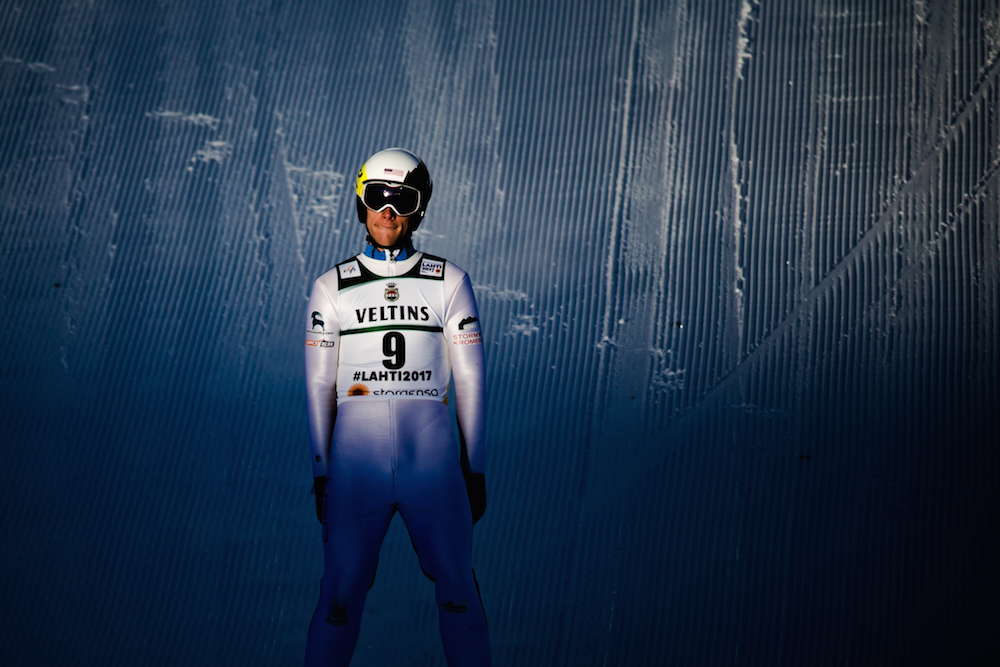
    American Ben Berend after jumping to 22nd in the nordic-combined individual/normal hill competition at 2017 FIS Nordic World Ski Championships in Lahti, Finland. He went on to place 41st in the 10 k to end the day on Feb. 24.

    Three years ago, U.S. Ski and Snowboard (formerly known as the U.S. Ski and Snowboard Association, or USSA) officially dropped nordic combined from its funding rolls. It was a potentially big blow and flat-liner moment for a program coming off one the most successful runs in U.S. nordic sports history. As recently as 2013, the foursome of Todd Lodwick, Billy Demong, Bryan Fletcher, and Taylor Fletcher earned bronze in the team event at World Championships in Val di Fiemme, Italy.

    Now, under the umbrella of USA Nordic, and two World Championships and nearly two Olympics removed from that seismic restructuring, American ski jumping and nordic combined are way beyond life-support mode.

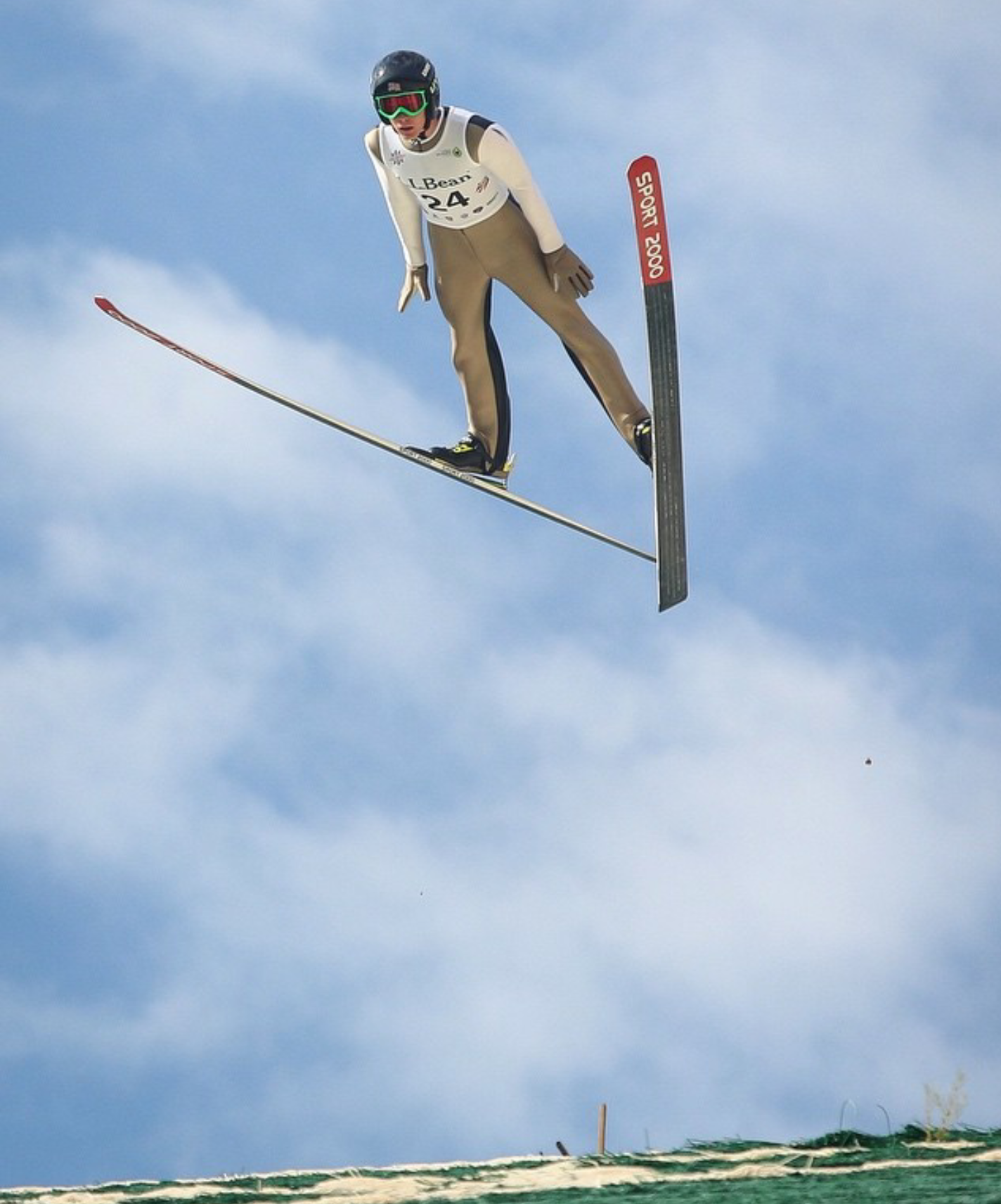
    Koby Vargas (Park City Nordic Ski Club) jumping at 2016 U.S. nationals in Park City, Utah. (Courtesy photo)

    “What we see, and we see this across sport and the larger picture of health, is that we have less young athletes participating in sports these days,” said Jed Hinkley, sport development director for USA Nordic. “It’s not unique to any specific sport — it is across the board. There are some exceptions to that and I would say ski jumping and nordic combined are an exception to that.”

    Hinkley has been on the job since last summer. He’s seen his mission morph from grasping member clubs’ capacity, infrastructure, and financials to determining how to attract athletes and retain them.

    “I know our numbers are heading in a positive direction, but we still do see a fairly big drop off as athletes enter their teen years,” he said. “I would say that my role has shifted a little bit to be more athlete development around the U20 level —  to try to keep athletes in the sport longer.”

    According to Hinkley, ski jumping is experiencing a resurgence in the U.S. In 2014, USA Nordic began organizing a regional jumping competition, the US Cup Junior Series. Three of the four regions tracked by USA Nordic — Central, West and Alaska — experienced significant growth in participation. The only outlier was the East, which canceled its end-of-season jump competition due to severe weather. Hinkley believes that cancellation skewed the data downward.

    Data collected for the series tracks boys and girls ages U10 (under 10) to U16. Between 2016 and 2017, the Central region increased participation 49 percent, the West percent, and Alaska 192 percent.

    From a global perspective, the U.S. appears to be on a path to fostering a legitimate nordic-sport pipeline. Hinkley admits his data collection methodology relied in part on the “brother of a friend of a brother’s mechanic model,” but his information appears promising.

    “To the best of my knowledge, Norway and Germany are one and two for numbers in ski jumping and nordic combined,” Hinkley said. “From what we can figure out, it appears that the U.S. is the third-largest ski jumping and nordic combined nation in the world. There is one country that I don’t have numbers for that could outrank us, that being Poland, because they have such a huge love for ski jumping. It appears our numbers are higher than Slovenia, Austria and Japan, which are all part of the jumping and nordic-combined powerhouses.”

    Jumping and nordic combined are resource-intensive sports — they both require what can be costly jumping infrastructure. Two regions have taken different approaches to ski jumping viability.

    In Anchorage, Alaska, two women spearheaded a regional revival. As part of the Nordic Skiing Association of Anchorage (NSAA), Karen Compton and Vivienne Murray, along with a core group of volunteers, now respond to daily emails, shuttle athletes, and supply and maintain loaner equipment in an effort to expose young athletes to jumping.

    “When we started there were only three other boys jumping and a burned-out coach who quit shortly thereafter,” Compton said on the phone from Anchorage. “There just wasn’t anyone involved in the program, and I ran around a got some friends have their kids come and try it out because it’s only fun if your friends are doing it along with you. Vivian was one of the friends I asked. Her kids liked it and at the end of the season, which was just a few months, we talked about it and we decided the two of us would take it on and resurrect the program.”

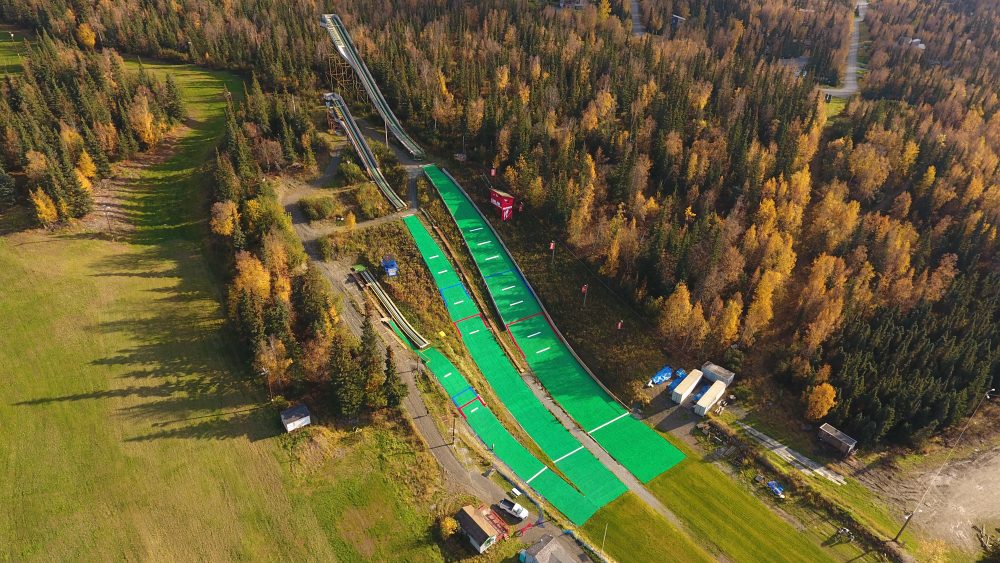
    The Karl Eid Ski Jumping Complex in Anchorage, Alaska, which completed a retrofit in 2016. The three jumps pictured are now modernized with summertime jumping available to the athletes. (Photo: NSAA)

    In 2012, Compton and Murray began co-chairing a grant-writing and fundraising campaign. By 2016 they had raised enough funds to rehabilitate the jumps at Anchorage’s Karl Eid Ski Jumping Complex. The complex now boasts a modernized 10-20 meter combined jump, and 40-meter and 65-meter jumps, respectively. Under NSAA, Team AK Ski Jumping/Nordic Combined has upwards of 70 kids jumping each winter.

    Perhaps more importantly to developing higher-level jumpers, the modernization efforts allowed NSAA to plasticize the jumps’ in-runs to facilitate summertime jumping.

    “[Anchorage] has been a good model to recruit, maintain, and make the sport fun,” Hinkley said. “They do a lot of social stuff outside of the jump hill, and organization-wise they are creating a welcoming environment and a professional organization. … I think what they are doing really well is they are a part of NSAA, which is all of cross-country skiing in Anchorage. They work collaboratively with the cross-country side and they are all in it together. I think in a lot of places, historically, there has been a divide between ski-jumping clubs and cross-country clubs, whereas in Anchorage there is an awesome collaboration.”

    Anchorage came to the table with jumps in place. The Midwest boasts two from-the-ground-up success stories.

    Red Wing, Minn., is developing a new Olympic-size jump on land owned by the Prairie Island Indian Community. “It’ll be a state-of-the-art facility with potentially cross-country trails at the base. And they want to do things like World Cups, FIS Cups, Grand Prix,” Hinkley said.

    On a smaller but no-less-significant scale, a dedicated group in Cameron, Wis., built a 7-meter snow jump. That group collaborated with the well-established Flying Eagles Ski Club, a nationally recognized ski jumping club in Eau Claire, Wis.

    The Pipeline

    How bright is the future when it comes to international potential? On the U.S. men’s ski jumping side, four athletes were recently named to the its national team. Sixteen-year-old Kevin Bickner, who began jumping in Illinois but now lives in Park City, Utah, is the only A-team member. Bickner jumped to a 15th place on the World Cup this past March in Vikersund, Norway. In doing so, he jumped 244.5 meters, which was an American distance record, according to a USA Nordic press release.

    Rounding out the men’s jumping team are three B-team members: Casey Larson (18), Michael Glasder (28) and William Rhoads (22). At last year’s Junior World Ski Championships, Larson placed eighth in the individual normal-hill competition.

    “With men’s jumping, we have seen quite a phenomenal turnaround,” said USA Nordic Executive Director Billy Demong. “In participation for both women’s and men U14 levels, but for the national team, we have some guys who are really good. In fact, Kevin Bickner has had the best results in over a decade. And cumulatively the team scored more points last year than over the previous twelve years combined. They also had the best team-event finish since 1985, so there’s a solid group of four athletes.”

    Demong also noted that keeping U20 skiers involved with the sport remains a priority. For scoring criteria as it relates to national-team selection, USA Nordic begins scoring at the more competitive (larger field size) Continental Cup competitions. He explained that success at the Continental Cup indicates a positive trajectory. The C-team is organized as a U24 program, essentially allowing older athletes an incentive to invest and remain in the sport. The C-team is comprised of two skiers, Nicholas Mattoon (22) and AJ Brown (22).

    “We give our athletes a little more time to develop,” Demong said. “I think that’s partially why we are seeing the change. We are providing resources and opportunities for a greater group of athletes and at a higher level than it has been.”

    This season, the U.S. Nordic Combined team will be led by A-team returners and brothers Bryan Fletcher (31) and Taylor Fletcher (27).

    Last winter, the nordic-combined team was bottom heavy on the age-and-experience spectrum, with the Fletcher brothers being obvious outliers. U.S. Nordic Combined lacked the World Cup quota spots to expose several young skiers to that level of competition beyond domestic races and Junior World Championships .

    U.S. NoCo’s Stephen Schumann (28) passing on the outside, en route to 10th in the normal hill/10 k at 2017 Nordic Junior World Championships at Soldier Hollow in Midway, Utah. (Photo: U.S. Ski Team/Steven Earl)

    “One of the hopes is that we are able to start increasing the quota on the World Cup as well as the Continental Cup,” Demong said. “Last year, we had five different individuals score a top 10 on the Continental Cup, I believe. That’s unusual to have that much depth at that level. And what we need now is for some of those guys to transition into the World Cup.”

    Adam Loomis (25), Ben Berend (21), Ben Loomis (19), Jasper Good (21) and Stephen Schumann (17) comprise the Nordic Combined B-team. Grant Andrews (19) is the sole C-team member.

    The fleet of skiers following the Fletchers have time on their side in terms of World Championship and Olympic cycles, yet their recent junior-level results maintain the team’s emerging optimism. At the most recent Junior World Championships at home in Park City and Midway, Utah, U.S. Nordic Combined tallied two top-10 performances. Schumann placed 10th in the 10-kilometer Gundersen, and Ben Loomis finished ninth in the 5 k.

    “There is a big group behind Schumann and Ben Loomis,” Demong explained. “I think in one of the qualifying events in Park City, there were six or seven of them that all finished within a minute, so pretty good size crew for a little sport.”

    This April, USA Nordic formalized its efforts to keep promising athletes in an organized pipeline. Demong said it expanded its junior-national teams for both ski jumping and nordic-combined to include top athletes in the U16 to U20 range. USA Nordic also has national-development camps planned for this summer.

    “I think it is a very nice transition from the Junior National team to National Team the way we have built it out, because we set our own criteria for the teams we fund,” Demong said. “Ideologically we are trying to give the U20’s a reason to continue competing and skiing in the critical 18-, 19-, 20-year-old ages and that this is something really worth investing in.”

  • NSAA Dozer Days Celebrates Anchorage Trails, Trail Work

    NSAA Dozer Days Celebrates Anchorage Trails, Trail Work

    Two-day, two-location community event celebrates summer, raises funds for vital trail work equipment

    (Press release)

    ANCHORAGE – Nordic skis are tucked away but Anchorage’s world-class trail system is buzzing with hikers, bikers, runners, walkers and nature lovers. To commemorate Summer Solstice and Anchorage’s trails, and raise funds for critical trail work, the first NSAA Dozer Days events debut at two popular Anchorage trailheads – 5-7 p.m. Wednesday, June 21, at the Raspberry Road parking lot at Kincaid Park; and 5-7 p.m. Thursday, June 22, at the Abbott Road parking lot for the Hillside trails. The free events will feature kids activities, door prizes and music, as well as free locally brewed root beer and food.

    Dozer Days will build awareness of NSAA’s important summer trail work, which requires heavy duty equipment and talented staff working in all seasons. The events spotlight Anchorage’s trails and outdoor community, give trail users and families a chance to learn more about NSAA’s extensive summer trail work (and check out an NSAA PistenBully and other cool equipment!), and support NSAA in its drive to raise $15,000 for the purchase of a bulldozer to bolster its summer trail work. Learn more about the Dozer Days fundraising drive at www.anchoragenordicski.com.

    NSAA uses machinery to combat erosion, ruts and growth which keeps trails sustainable for all users. NSAA Operations staff will be on hand at both events to talk about their year-round, behind-the-scenes trail work.

    Anchorage’s trail history is rooted in hundreds of NSAA volunteers. Since the early ‘60s, dirt, sweat, planning and passion have built Anchorage’s world-class trails, particularly Kincaid Park where many of these early volunteers have trails named after them. Following the trail design and construction era, NSAA is now focused on caring for and strengthening the trail system with regular, extensive maintenance to ensure sustainability for years to come. This is hard work that requires heavy equipment and skilled labor.

    NSAA thanks Eagle River’s Odd Man Rush Brewing for the root beer.

    For more than 50 years, NSAA has promoted healthy lifestyles and all forms of Nordic skiing, as well as introduced Alaskans to cross- country skiing through learn-to-ski programs, ski races and events. NSAA also grooms and maintains more than 150 kilometers of trails in the Anchorage area. Learn more about NSAA at www.anchoragenordicski.com.

  • 2017 Tour of Anchorage Returns on Sunday

    (Press release)

    The newest installment of the community’s biggest ski event marks 100 years of ski racing in Anchorage

    ANCHORAGE – Nordic skiers from around Alaska and beyond will celebrate snow and 100 years of ski racing in our community at the Nordic Skiing Association of Anchorage’s premier event, the Tour of Anchorage on Sunday, March 5. This year’s event will also mark the first traditional Tour in three years – low snow the past two seasons forced organizers to alter the usual event. That won’t be a problem this year as skiers are excited to revisit the Tour’s 25-, 40- and 50-kilometer races across town.

    Rich in history and unique in its courses, the Tour of Anchorage brings together cross country skiers of all ages and abilities to enjoy Anchorage’s beautiful trails and participate in one of North America’s largest ski races. The 2017 Tour of Anchorage is proud to be sponsored by Conoco Phillips.

    This year is extra special as it marks our 100th anniversary as a skiing community. The first local ski races, documented in 1917, consisted of 5-mile loops that started and ended downtown on 4th Avenue. Skiing took place on the streets in those days, plowing was minimal and trails were often the result of dogsled, foot and horse travel, and skis. We’ve come a long way since then.

    Tour of Anchorage Coastal Trail (Photo: Joshua Borough)

    The Tour offers skiers the 25K classic, 25K freestyle, 40K freestyle and 50K freestyle events. Skiers of all abilities, from new skiers to elite racers, enjoy this unique community experience.

    Tour of Anchorage bib pick up is noon-7p.m. Friday and 10 a.m.-noon Saturday at the APU Moseley Center. Race start times on Sunday for 50K: 8:30 a.m. at Service High School; 40K: 9:30 a.m. at Service High School; 25K Classic: 10 a.m. at APU; and 25K Freestyle: 11 a.m. at APU. Finish line festivities at Kincaid Park will feature music, entertainment and post-race food and beverages thanks to 49th State Brewing Company, Great Harvest Bread Company and Kaladi Brothers Coffee.

    There are still opportunities to participate. Register and learn more about the race at www.anchoragenordicski.com/races/tour-of-anchorage/.

  • U.S. Thanksgiving Camp Guide: Where The (Skiable) White Stuff Is

    U.S. Thanksgiving Camp Guide: Where The (Skiable) White Stuff Is

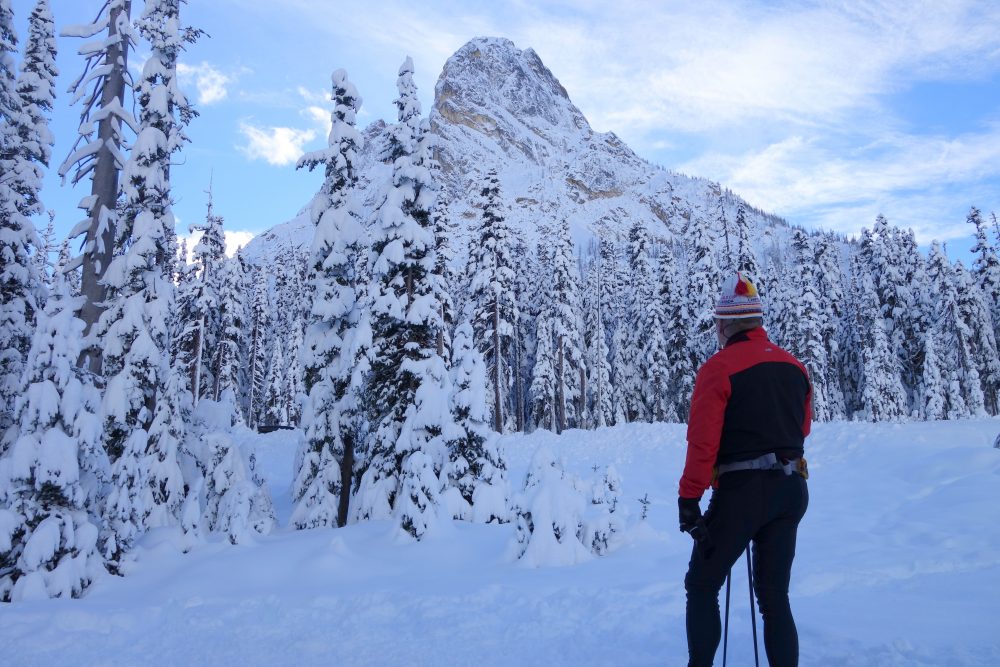
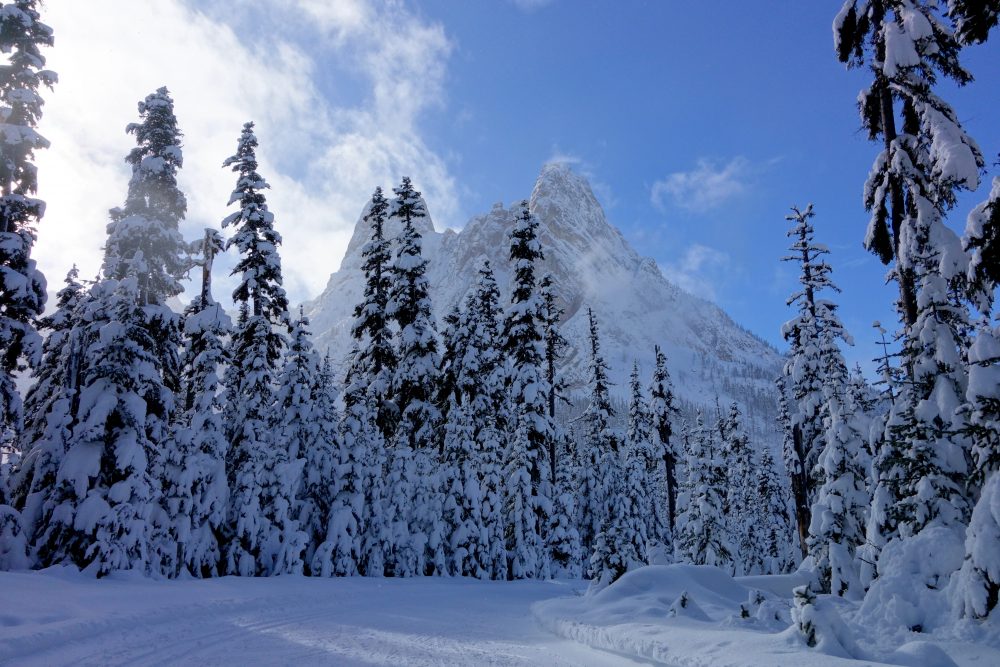
    Skiing under Liberty Bell, Washington Pass, Nov., 2016. (Courtesy photo)
    Skiing under Liberty Bell on Washington Pass in November, 2016. (Methow Trails courtesy photo)

    Natural snow is where it’s at, unless there’s none to be found. In high-elevation places like West Yellowstone, Mont., (roughly 6,600 feet above sea level) and Crested Butte (nearly 9,000 feet), November skiing is almost always a given — which is why those venues have hosted Thanksgiving-week ski camps for 16 to 30+ years. And they are again this year, while looking to the skies and weather forecasts in hope of more snow — much more.

    While there are only two well-known Thanksgiving camps currently being held in the U.S., there are dozens of other places around the country you can likely go skiing. We did our best to present some of the most dependable options, so at the very least you can plan a future trip on snow this time next year. No offense to the in-laws, but wouldn’t you rather be skiing on Thanksgiving? Stay tuned for our Canadian early skiing edition, and feel free to share your favorite November ski spot in the comments section below.

    ***

    What: Yellowstone Ski Festival

    Where: West Yellowstone, Montana

    A rendezvous point at the Rendezvous Ski Trails in West Yellowstone, Mont., during last year's Yellowstone Ski Festival. (Photo: YSF)
    A rendezvous point at the Rendezvous Ski Trails as seen last year in West Yellowstone, Mont., during the 2015 Yellowstone Ski Festival. (Photo: 2015 courtesy photo)

    Website: http://www.skirunbikemt.com/yellowstone-ski-festival.html

    When: Tuesday, Nov. 22 – Saturday, Nov. 26, 2016

    How many years running: Over 30 years. “It started with Drew Barney, Torbjorn Karlsen and Dick Hunt back in the 1980s as a Fall Camp, offering clinics for coaches and citizen racers looking to improve their technique,” West Yellowstone Ski Education Foundation Program Director Moira Dow explained. “Over the years, the camp grew into one of the top training camps available to the cross-country ski community.”

    Skiers at the trailhead of the Rendezvous Ski Trails in West Yellowstone, Mont., on Monday, Nov. 21. (Photo: FBD)
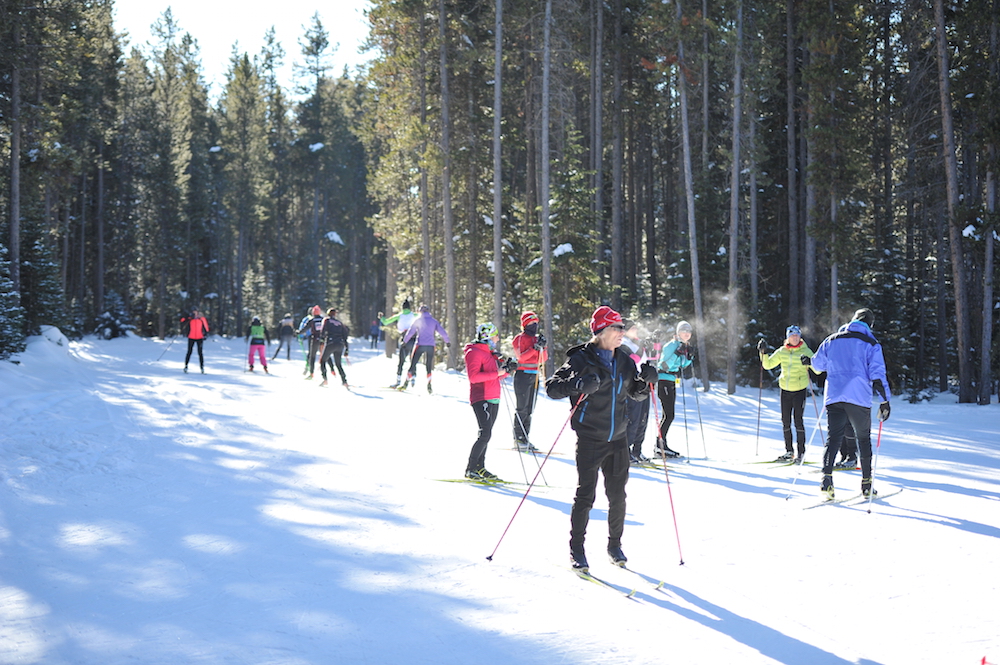
    Skiers at the trailhead of the Rendezvous Ski Trails in West Yellowstone, Mont., on Monday, Nov. 21, 2016. (Photo: FBD)

    Target audience: Open to the public and all levels of skiers.

    Anticipated participation: Around 2,500. “We think it might be a little bit lower this year because of the late snow and the lack of the SuperTour,” Dow noted. “Last year we had a lot. We had really really early snow last year. Around 3,500 in years past.”

    Advance reservation required? Yes for clinics and races. Online registration only. “The competitive events and the clinics all require you to be pre-registered, but all the evening events are open to the public,” Dow said.

    Trail pass rates: $55 for the month of November for adults. $26 for kids, which is 10 and under. Day passes are $12 and $6

    Grooming report: Approx. 20-25 k groomed as of Monday, Nov. 21.

    More details | Webcam

    A young skier darts out of the start at the Yellowstone Ski Festival last year in West Yellowstone, Mont. (Photo: YSF)
    A young skier darts out of the start at last year’s Yellowstone Ski Festival in West Yellowstone, Mont. (Photo: 2015 courtesy photo)

    What makes this camp unique?

    “Good, early, reliable snow,” Dow said.

    “Also it’s a place where skiers from all across the country, juniors to seniors to masters, come together,” she added. “… And as a junior, that’s pretty unique to get to be able to do that. And also to see all the equipment from vendors and see wax clinics. To have all of the elements in one spot is one of the most unique things about this camp.

    “We’re a tiny town out in the middle of nowhere,” she continued. “Our ability to put on such a big event, is, in my opinion, probably one of the most unique aspects of our camp. We are almost entirely volunteer run. The fact that the people who run the festival have little to no experience cross-country skiing, but put on these races, is just flabbergasting to me. It’s pretty incredible.”

    Special events: See website for complete lineup of clinics and more, including:

    • Presentation:  Wildlife photographer Tom Murphy
    • Yellowstone Historic Center presents The Ski Hero Soldiers of Yellowstone
    • Whiskers, Whiskey, and Waxing featuring whiskey tasting samples from Willie’s Distillery of Ennis, MT
    • Branch Beer Bash:  Micro and craft beer tasting
    • Presentation:  Kaatsu Training by Doug Barnard
    • Winter Wildlands Alliance Backcountry Film Festival
    • Women, Wine, and Waxing
    • Keynote speaker Ruff Patterson
    • Yellowstone Ski Festival Social

    — Gabby Naranja

    ***

    What: Crested Butte Nordic Thanksgiving Camp

    Where: Crested Butte, Colorado

    Crested Butte Nordic Center: Pretty much right downtown. (Courtesy photo)
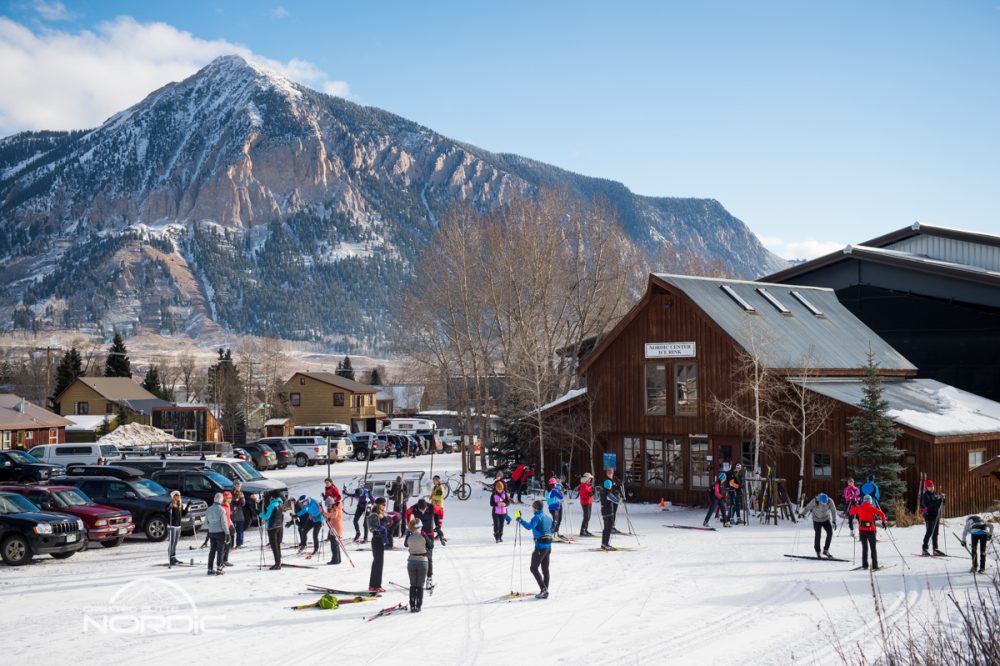
    The downtown-based Crested Butte Nordic Center. (2015 courtesy photo)

    Website: https://cbnordic.org/thanksgivingnordicskicamp/

    When: Wednesday, Nov. 23, to Sunday, Nov. 27, 2016

    How many years running: 16 as an official, organized camp: “In case of a low-snow year, like our current situation, we have a low-snow venue called Lily Lake and that’s up on Kebler Pass which is six miles West of town,” said Drew Holbrook, marketing director for Crested Butte Nordic.

    Skiing at Lily Lake in Crested Butte, Colo., on Nov. 18, 2016. (Photo: CB Nordic/Facebook video)
    Skiing at Lily Lake in Crested Butte, Colo., on Nov. 18, 2016. (Photo: CB Nordic/Facebook video)

    The road up to Kebler Pass is maintained by the county. Individuals or groups can drive up to the pass, but carpooling is encouraged when the low-snow option is in play.

    “We have vans to shuttle people up to try and minimize traffic and congestion — it’s kind of like a similar situation in terms of people (but not as and because not quite as many people) as driving up on the South Plateau outside West Yellowstone, so we shuttle people up there. For the people taking clinics we shuttle them all up in vans.”

    The Lily Lake area receives 600 inches of annual snowfall and no trail pass is required. As of Nov. 18, Lily Lake had received nearly six inches of snow.

    The Nordic Center located in town is also prepared for low snow, according to Holbrook. “Just in the last three years we have had the trail right next to the Nordic Center in town, called Ruthie’s Run, homologated re-engineered. So it’s seeded with grass, it is mowed and basically we can groom that with literally six inches of snow or so. It’s kind of interesting because it snows a lot more up on Kebler Pass at Lily Lake, it might snow two feet up there and only six inches in town, but it’s easier to actually groom on Ruthie’s down in town if we get the snow. Lily Lake is on Forest Service property, so we have to wait until there is a foot of snow before we are allowed to groom up there.”

    Crested Butte Thanksgiving Camp - Not just for Big people. (Courtesy photo)
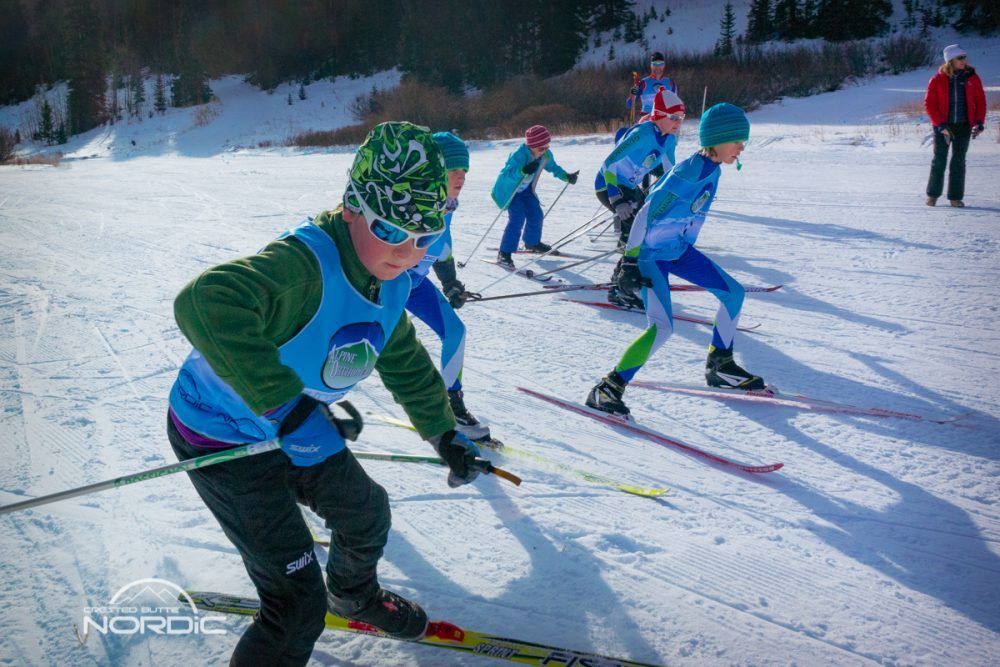
    Crested Butte Thanksgiving Camp: not just for big people. (2015 courtesy photo)

    Target audience: All ages and abilities. New skiers are encouraged to come try the sport out.

    Anticipated participation: Holbrook expects 60 participants for the clinics offered. A round-robin classic “refresher” will be held Thursday, Nov. 25, with full-day clinics on the 26th and 27th.

    Advance reservation required? Strongly encouraged. “For the clinics it is best to sign up ahead of time,” Holbrook said. “We never get too many people signing up until it starts snowing, but they do fill up. You might get lucky the morning of and come into the Nordic Center and sign up and get a spot, no guarantees.”

    Trail pass rates: $20/day, skiers 17 & younger ski free. $150 for a 10-punch transferable pass.

    Grooming report: Lily Lake is receiving snow. The low-snow option looks more than promising.

    What makes this camp unique? “One thing that makes it unique, Lily Lakes is a great locals’ place to ski,” Holbrook said. “It’s pristine and scenic. And of course, its great skiing from the Nordic Center in town, too. There is plenty of room on the trails for everybody, you are not getting swarmed by people and not being able to do your workout. It’s easy to get in a good ski.”

    Special events: 

    • Ski Free Day: Wednesday, Nov. 23 at the Crested Butte Nordic Center
    • Crested Butte Mountain Resort “Donation Day”. Donate some money, you decide the amount, and ski with a little help from gravity at the downhill area. All proceeds support the Crested Butte Snowsports Foundation
    • Round-robin refresher clinic: Thursday, Nov. 24
    • U16 Junior Training Camp: Nov. 25-27
    • Alley Loop Race Series (Race #1) 5 k & 10 k skate
    • Winter Kick-Off Party (Saturday night): Fundraiser for Crested Butte Nordic, tickets $25/adult,$15/children. (Author’s note: Crested Butte throws fun parties.)
    — Jason Albert

    ***

    NOT CAMPS, PER SE, BUT YOU’RE PROBABLY WONDERING ABOUT:

    ALASKA

    Fairbanks

    Birch Hill Ski Area, in Fairbanks, is probably the most reliable spot in North America for groomed early-season skiing. This is the venue that once held a FIS race on Nov. 2. Temperatures are reliably cold, and any snow that falls tends to stay. The Nordic Ski Club of Fairbanks grooms approximately 35 k of trails at Birch Hill. The trails are meticulously maintained in summer, if not manicured, and are justly renowned for their ability to provide good skiing after mere inches of snowfall.

    University of Alaska Fairbanks skier Alex Eckert skis in the Alaska Nordic Cup in Fairbanks, Alaska, on Nov. 19, 2016. (Photo: Max Kaufman)
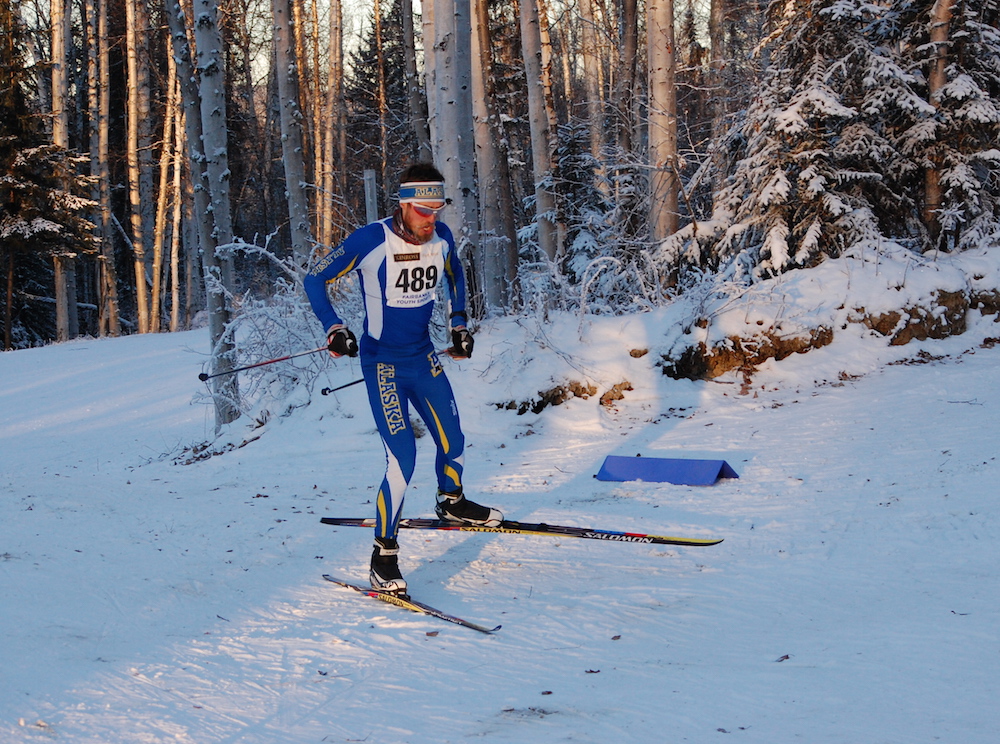
    University of Alaska Fairbanks skier Alex Eckert racing in the Alaska Nordic Cup FIS races in Fairbanks, Alaska, on Nov. 19, 2016. (Photo: Max Kaufman)

    Birch Hill again held FIS races on the recent weekend of Nov. 19-20. It had snowed approximately 5″ total in Fairbanks this winter by that point. Weekend racers – and there were hundreds of them, from kindergarteners without poles to the APU Elite Team – skied on trails that had been packed and dragged to create a base of approximately 2″. There were admittedly some leaves and dirt showing through in places – but, crucially, it was leaves, not rocks. Most skiers in the FIS/USSA class of the weekend’s races competed on their prior-generation, few-years-old race skis.

    Locals consistently described the conditions, which led half the APU Elite men’s team to make the trek north from Fairbanks for the weekend, as among the worst mid-November conditions in living memory.

    Anchorage and nearby

    Under normal conditions, as measured by a 30-year average, Anchorage around Thanksgiving is a nordic nirvana. There are at least 40 kilometers of groomed trails at Kincaid Park, on the west edge of town, and another 16 k at Hillside, on the east edge of town. (16 k are lit at Kincaid, and 8 k are lit at Hillside.) The two ski areas are connected by a network of dozens of kilometers of additional trails (also groomed, or at least snowmachine dragged), ranging from moose-dense forest to urban greenbelt, including the Coastal Trail, which runs along the shores of the Pacific Ocean for most of its 15 k. You can ski from Hillside up into the Chugach Front Range, and from the frontcountry into true backcountry. Around 20 miles out of town to the north, Beach Lake has another 20 k of groomed trails (nine of them lit). 40 miles to the south, Girdwood boasts a growing trail network of around 10 k total, including a competition-level 5 k loop. All trails are open 24/7, and there is no trail fee for any of them.

    Hillside ski trails in Anchorage, Alaska, on Oct. 22, 2016, before the rains came. (Current conditions are far worse.) (Photo: Gavin Kentch)
    Hillside ski trails in Anchorage, Alaska, on Oct. 22, 2016, before the rains came. (Current conditions are far worse.) (Photo: Gavin Kentch)

    Judging from the last three winters, however, Anchorage sadly simply cannot be recommended as a viable option for Thanksgiving snow in these days of climate change. While all three winters saw the first snowfall in October or early November, and some period of good skiing immediately thereafter, all three gave way to wind and rain by Thanksgiving week. As of the weekend of Nov. 19-20, 2016, Anchorage has no natural snow on the ground at Kincaid, a 1-2″ base of bulletproof sheet ice at Hillside, and skritchy skiing on a local golf course. On the bright side, the trail running is amazing (bring your Icebugs), and the nordic skating is world class.

    Kincaid has limited snowmaking capabilities, which are capable of covering a loop of as much as 3-4 k centered around the main stadium area. (This is where over 95 percent of Anchorage ski races have occurred over the last two winters.) The Nordic Skiing Association of Anchorage (NSAA) turned the snowguns on briefly on Nov. 16, then again on Nov. 18. Recent cold temperatures have allowed them to operate continuously since. NSAA stated on Sunday morning that there were no trails open for skiing yet, but that they were “getting closer” to opening the first loop and had reached the stage where the PistenBully was starting to move snow around. A loop of approximately 2 k was opened amidst single-digit temperatures on Thanksgiving morning, Nov. 24.

    In a recent email to FasterSkier, NSAA Program Manager Tamra Kornfield addressed the possibility of, for example, guaranteeing skiable snow by Thanksgiving in exchange for attracting skiers and generating user fees. Kornfield wrote, “The theory of trail fees has been discussed for many years, but currently our ski trails are on Municipal Park land, and we cannot charge to access these parks. However, I can say that the snowmaking system was designed to extend the ski season, not create it from scratch, so I do foresee doing more to fundraise for this great expense that has now saved the last two ski seasons.”

    Mat-Su Valley

    Archangel Road above Palmer, Alaska, on Nov. 4, 2016 (current conditions are better than this). (Photo: Gavin Kentch)
    Archangel Road above Palmer, Alaska, on Nov. 4, 2016 (current conditions are better than this). (Photo: Gavin Kentch)

    The Matanuska–Susitna Valley, approximately one hour outside of Anchorage on a major highway (call it up to 90 minutes to the ski areas discussed here), has been described on this website as having “the season of winter that starts in the fall and ends in the spring.” That’s pretty fair.

    The Mat-Su Ski Club, including the redoubtable Ed Strabel and sometime FasterSkier contributor Jeff Kase, typically groom 7 k of Bill Spencer-designed trails at Government Peak Recreation Area (to be expanded as soon as next summer), 7.5 k (one-way) on Archangel Road, and 5 to 10 k at Hatcher Pass. Archangel Road hosted one of the last North American ski races of 2015/2016 and one of the first of 2016/2017. Hatcher Pass is a truly special place, as the groomed trails wend their way past the historic buildings of an old gold mine nestled in a bowl in the Talkeetna Mountains. “Imagine skiing through an Old West ghost town turned collectible Christmas village,” local Master and English professor Shannon Gramse once wrote in these pages.

    Skiing at Hatcher Pass, above Palmer, Alaska, on Nov. 20, 2016. (Photo: Nat Herz)
    Skiing at Hatcher Pass, above Palmer, Alaska, on Nov. 20, 2016. (Photo: Nat Herz)

    As of Nov. 19, Government Peak (a one-hour drive one-way from central Anchorage), which is at a lower elevation than the other two areas, did not have enough snow to ski on. Archangel Road (75-minute drive) had a base of approximately 4-5″, but it is bulletproof hardpack that should provide a reliable base until spring. The Mat-Su Ski Club has been grooming there several times a week, and the skiing is good to superb. The Mat-Su Ski Club also groomed Hatcher Pass (90-minute drive) over the weekend.

    Trail fees and current conditions

    All trails described in this article are open 24/7. None of the trails charges a trail fee or requires a pass. Alaska skiers tend to make voluntary yearly donations in lieu of a trail pass. Donations are gratefully accepted by the Nordic Skiing Association of AnchorageMat-Su Ski Club, and Nordic Ski Club of Fairbanks.

    Here are trail maps for the AnchorageMat-Su, and Fairbanks trails.

    For the best information on current trail conditions, including formal grooming reports when available: Anchorage (official NSAA and user-generated), Mat-Su, and Fairbanks.

    — Gavin Kentch

    WASHINGTON

    Then there are the possible Northwest options for early season skiing, including the well-known:

    Bluebird on Washington Pass, Nov., 2016. (Courtesy photo)
    Bluebird day on Washington Pass in November 2016. (Methow Trails courtesy photo)

    Methow Valley

    “I giggle about the current skiing up at Washington Pass which is a the top of the North Cascades Highway,” said Kristen Smith, marketing director for Methow Trails based in Winthrop, Washington. “What they have groomed is almost exactly one mile or a 1.6-kilometer loop. It goes out to the Washington Pass overlook, which is stunningly gorgeous. I mean the whole ski is the most beautiful, their probably can’t be a place anywhere in the world that has more beautiful scenery than this, on this little loop.”

    Smith explained the loop is being groomed for skate and classic. “It’s a handful of super-dedicated locals who do the grooming completely on their own and you don’t pay to ski there,” Smith said.

    But here’s the important beta: call or check online before you head to the Methow or think you might ski at the top of Washington Pass. The Washington Department of Transportation is closing the pass temporarily due to possible hazardous weather and avalanche conditions as of Monday, Nov. 21.

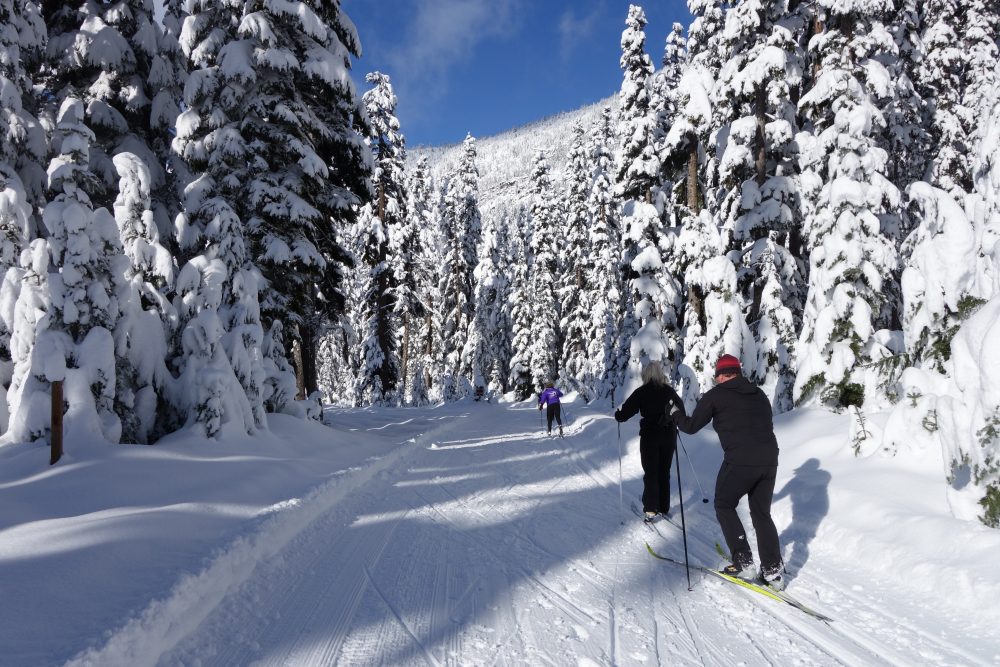
    Skiing at Washington Pass, Nov., 2016. (Courtesy photo)
    Skiing at Washington Pass, Nov., 2016. (Courtesy photo)

    “It will not mean a loss of skiing,” Smith explained in the event the pass is closed for the season. “If the gate is closed farther down on the road to Washington Pass, they will start to groom different areas that we can still access. So to get the snowfall that is expected, they will start to groom just start to groom a bit lower, but bigger loops than what we have up there at Washington Pass. If we are really lucky we will get a big snowfall here on the valley floor and then Mehto Trails who I work for, we will start grooming our system. And we are all set and ready to go the moment we get six inches of snow we will start grooming our trails here.

    Where: Washington Pass/Methow Valley, Washington

    Website: www.methowtrails.orgwww.wsdot.wa.gov/traffic/passes/northcascades

    Elevation: 5477 ft / 1669 m

    (As of Monday, Nov. 21)

    Temperature/weather: Not Available

    Conditions: Pass is closed. SR 20, the North Cascades Highway, is closed from milepost 134 to milepost 171 due to impending weather and potential increasing avalanche hazard.

    Restrictions Eastbound: Pass Closed

    Restrictions Westbound: Pass Closed

    — Jason Albert

    EAST-COAST SNOW? 

    While they’re often among the last to get on natural snow, let’s throw eastern skiers a bone. Wintry conditions exist in New England and northeastern New York. While we can’t list them all (and are obviously unable to cover all the open nordic centers across the country), here are a couple weather-dependent options in this region’s “North Country”.

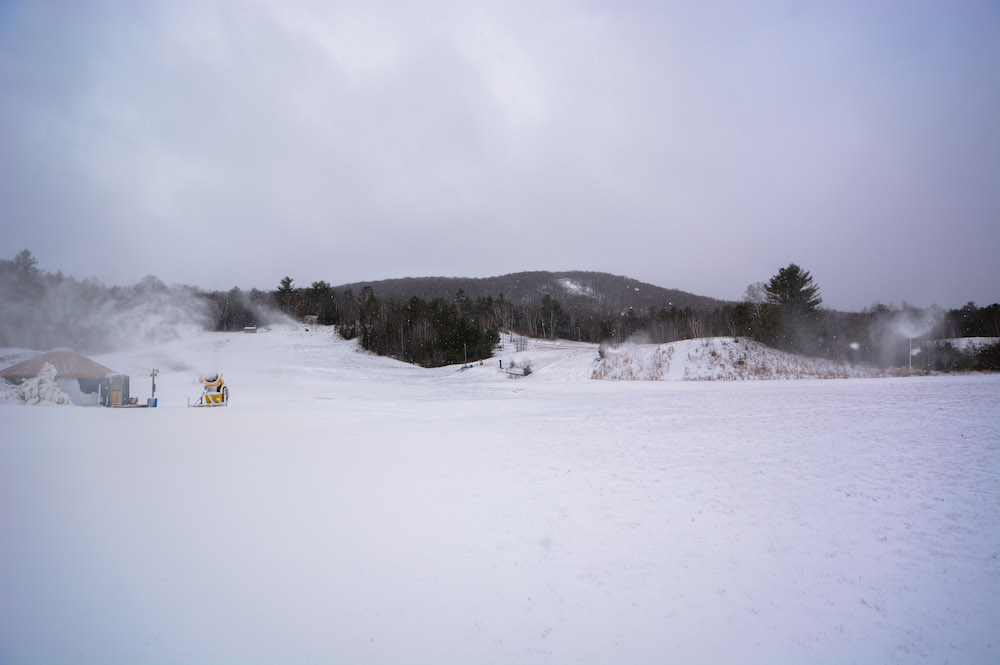
    Snow guns roar at Gore Mountain's Ski Bowl in North Creek, N.Y., on Monday morning, Nov. 21, 2016. (Photo: Mike Pratt)
    Snow guns a’blazing at Gore Mountain’s Ski Bowl in North Creek, N.Y., on Monday morning, Nov. 21, 2016. (Photo: Mike Pratt)

    Gore Mountain Ski Bowl

    According to general manager Mike Pratt, Gore Mountain in North Creek, N.Y., expects to open its newly homologated ski bowl on Friday, Nov. 25. Gore’s new 4.24-kilometer trail network includes 3.19 k of trails with snowmaking.

    “We should have quite a bit of terrain for an opening weekend,” Pratt wrote in an email, adding that they’re hoping for trails A, B, C, and G, which would amount to a total of 2.3 k. “The open stadium could accommodate more lanes if needed, but next week’s weather will ultimately determine how much terrain is available.”

    This Friday through Sunday at the Ski Bowl, the Hudson United Race Team (HURT) is holding a three-day ski camp for its junior members.  Skiers of all ages not associated with the club can buy a day pass and ski on the trails as well.

    “We set up this camp as a way to highlight what Gore has been doing,” HURT coach David Kvam explained.

    Craftsbury

    Then there’s the Craftsbury Outdoor Center, the Northeast Kingdom’s iconic ski center. Although the ski trails were dry as of Nov. 18, the forecast has potential. According to Craftsbury’s Marketing Director Sheldon Miller, the National Weather Service issued a winter storm warning for six to eight inches of snow by the end of Monday. Asked about snowmaking, Miller replied, “We’re looking for cold and dry for snowmaking, but there’s definitely some potential this week. We do need 28 [Fahrenheit] at a minimum, but colder is always better.”

    With overnight temperatures forecast for low to mid 20s Sunday through Thursday, the weather looks inclined to support snowmaking.

    Craftsbury has Masters’ Camps planned for Dec. 1-4 and and 8-11. More info: http://www.craftsbury.com/skiing/ski-camps-and-group-sales/masters-camps/

    Prospect Mountain

    Elsewhere, Prospect Mountain in southern Vermont received snow. According to their conditions page, they’re closed, but Zach Caldwell posted this photo montage on Sunday:

    Great first ski of the season at Prospect Mountain in Woodford, VT. Lots of smiles all around.

    A photo posted by @caldwell_sport on Nov 20, 2016 at 1:50pm PST

    According to Prospect Mountain Nordic’s Facebook page, Prospect opened Monday after receiving 26 inches of snow, the most in Vermont and Northeastern New York.

    As of Tuesday, Prospect reported more than 28 inches of packed powder. Current conditions

    Mt. Van Ho

    A skier skates on freshly groomed powder at Mt Van Hoevenberg last Sunday, Nov. 20, in Lake Placid, N.Y. (Courtesy photo)
    A skier skates on fresh powder at Mt Van Hoevenberg last Sunday, Nov. 20, in Lake Placid, N.Y. (Courtesy photo)

    In Lake Placid, N.Y., Mt. Van Hoevenberg reported “beautiful packed powder” and 30 kilometers of skiing open on a 7-inch base. Current conditions

    Josie's Cabin, Mt. Van Hoevenberg's ski-to destination, will be open for Thanksgiving. (Courtesy photo)
    Josie’s Cabin, Mt. Van Hoevenberg’s ski-to destination, will be open for Thanksgiving. (Courtesy photo)

    “The Olympic Cross Country ski trails of Mt Van Hoevenberg have been graced with just under two feet of snow in the last few days,” nordic program manager Kris Cheney-Seymour wrote in an email. “We have a little over 30k of trails groomed very good skiing.  Classic tracks are set on varied terrain.”

    The lodge is open with rentals and a snack bar for Thanksgiving, along with Josie’s Cabin, a “ski-to destination.” and a ski-to destination

    “Upgrades over the last two summers on the famous Ladies 5k have allowed for the earliest opening of this trail in our history,” Seymour continued. “Our 5k homologated loop will be the primary course for the upcoming 2017 Junior National Championships hosted here this March.”

    — Peter Minde & Alex Kochon

    ***

    WE WANT PHOTOS! Share your Thanksgiving week ski photos with us by emailing info@fasterskier.com (please note when and where they were taken). We’ll post our favorites to Instagram, and if you’d like to share a firsthand trail report from your favorite spot or nordic center, do so in the comments below!

  • Norris Wins 10-Lap Anchorage Tour; Brooks Tallies Third Title

    Norris Wins 10-Lap Anchorage Tour; Brooks Tallies Third Title

    APU teammates Lauren Fritz (l) and Holly Brooks racing for the win at the 2016 Anchorage Tour in Kincaid Park on March 6. Brooks won and Fritz placed second. (Photo: Rob Whitney)
    APU teammates Lauren Fritz (l) and Holly Brooks racing for the win at the 2016 Anchorage Tour in Kincaid Park on March 6. Brooks won and Fritz placed second. (Photo: Rob Whitney)

    ANCHORAGE, ALASKA – A first-time racer and a former champion returning after a long absence skied to convincing victories in the Anchorage Tour Festival 30-kilometer race, née Tour of Anchorage 50 k, at Kincaid Park on Sunday. David Norris, last seen coming out of a group sprint to win the American Birkebeiner two weeks ago, and Holly Brooks, previously seen in two Olympic games but not at this race since 2009, each won by roughly three minutes on a sunny morning at Kincaid.

    The Tour of Anchorage is traditionally a 50-kilometer, point-to-point race, ranging from the Chugach foothills on the east side of town to Kincaid Park at the west edge of the Anchorage metropolitan area.  In between, racers traverse ski trails, city greenbelts, and bike trails until they reach the Coastal Trail multiuse trail, at which point they cover 15 k along the shores of the Pacific Ocean before ascending a hill to finish at Kincaid.  It is truly a tour through the heart of Anchorage.

    This year’s race, like every other race held under the auspices of the Nordic Ski Association of Anchorage (NSAA) in this snow-sparse winter, occurred exclusively on the snowmaking loop centered on the Kincaid Stadium.  This year’s Tour presented 10 laps around a 3 k course, making for a 30 k freestyle race.  It was more a Tour of the Snowmaking Loop than a Tour of Anchorage.  Conditions on the course were very good at the outset, with recent fresh snow mixed into a solid base of manmade snow, though the steepest uphills and downhills broke down into sugar snow over glare ice by midway through the race.

    David Norris (APU) racing to his first Anchorage Tour win at Kincaid Park on March 6. (Photo: Rob Whitney)
    David Norris (APU) racing to his first Anchorage Tour win at Kincaid Park on March 6. (Photo: Rob Whitney)

    Norris, who skis for Alaska Pacific University (APU) and who won the men’s race by nearly three minutes in 1:14:51.0, seemed undeterred in his first time racing the Tour of Anchorage.  In an email, he wrote, “This would have been my first year to do the actual Tour. … Due to the low snow year I was glad to have the Tour Festival 30km race on the manmade loop. I am glad the NSAA hosted the event even though we couldn’t do the formal course.”

    The men’s podium was all APU blue.  Jack Novak was second in 1:17:32.9.  Andre Lovett followed roughly a minute later in 1:18:27.9.

    Norris skied most of the race by himself, after breaking away from Novak late in the first lap.  Norris wrote of his race strategy, “I went out hard from the start to practice that kind of effort. Jack stayed with me for almost the entire first lap before settling in.”

    Norris had no other immediate competitors for the remaining nine laps and 27 k.

    But with a field of 148 skiers on a 3 k loop (60 racers for the 30 kilometer race and 88 for the contemporaneously held 15 kilometer race), Norris had plenty of company out there.  As Norris graciously wrote, “I thought I skied steady and was able to re-accelerate through corners or after congestion due to all the different levels of racers on a short 3km loop.  I really apologize if I ever startled anyone while making a pass.  I tried to be really careful not to be a jerk while making passes today.”

    “I tried to be really careful not to be a jerk while making passes today.” — David Norris, after winning 2016 Anchorage Tour 30 k

    While Sunday was the first time in this race for Norris, a Fairbanks native, the 2016 Tour marked a homecoming of sorts for Anchorage’s Holly Brooks.  Brooks won the flagship 50 k Tour in both 2008 and 2009, at a time in her ski career when she was an APU coach first and a competitive skier second.  Better results, a spot on the U.S. Ski Team, and nomination to the 2010 and 2014 U.S. Olympic teams famously followed.  Brooks then spent last winter traveling the world, competing in the FIS Marathon Cup/Worldloppet series on three continents.  She is now pursuing a degree, buying a house, and likely training somewhat less.  But she is still winning ski races.

    Brooks, who remains affiliated with APU, finished first among the women in 1:24:46.1.  Her main competition came from fellow APU skier Lauren Fritz, who finished slightly less than three minutes back in 1:27:39.0.  Citizen racer Sally Hokanson was third in 1:40:21.4.

    While Norris went out hard from the start and gapped Novak early, Brooks and Fritz skied together for a majority of the morning.  Brooks started to pull away about three quarters of the way through the race, she recounted in an in-person interview.  

    “It might have been on lap 7 of 10.  It was on [the downhill on] the backside [of the course], because my skis were running pretty well,” she said. “I noticed I had a little bit of a gap.  I just put a few extra strides in and a good tuck and a big push, and opened up a little bit of a gap.”

    Holly Brooks (l) and Lauren Fritz, both APU, after placing first and second, respectively, at the Anchorage Tour in Kincaid Park on March 6. (Photo: Rob Whitney)
    Holly Brooks (l) and Lauren Fritz, both APU, after placing first and second, respectively, at the Anchorage Tour in Kincaid Park on March 6. (Photo: Rob Whitney)

    Brooks kept her lead to the finish, aided by her own observations and splits from others.  

    “There’s a little out and back, where you can kind of get an idea if someone’s there or not, so I saw her there the first time after I’d made the move,” Brooks said.  “And then I got a couple of back splits after that that I had a little bit of a gap.”

    Brooks appreciated the chance to be back racing on home soil, after many winters spent skiing anywhere but in Alaska.  

    “It’s nice to be home,” she said.  “I had my husband out here giving me feeds, so that’s always fun, and a lot of local people out there on the course too.  There was a lot of traffic out there today, the 30 k and the 15 k on the same loop, and some of the downhills were a little sketchy with the traffic, but it was manageable.”

    A Kincaid lap race may not be particularly exciting, but it was certainly a change of pace from Brooks’ schedule last spring.  When asked where she had been one year ago this month, the peripatetic Brooks had to think for a while before answering.  

    “Last year I wasn’t home for another five weeks,” she finally said.  “Let’s see… I was at the Engadin this weekend last year I think.  And then after that I think there was the Norwegian Birkie. And then, I can’t remember if there was something between that and going to Siberia.  So, a much different year.”

    While Norris was racing the Tour for the first time, the rest of the day’s podium finishers were no strangers to this race.  Among the men, second-place finisher Novak won the race in 2015 (when it held as a criterium with a 50-minute time limit), and was third in 2014.  On the women’s side, second-place Fritz was also second in 2014.  And third-place Hokanson was second in the 2015 criterium, and (as Sally Johnson) won the 25 k classic race in 2008.

    So what are the winners’ plans for the rest of the season?

    “I will be training in Fairbanks until I leave for Spring Series in Vermont, which will conclude my season,” Norris wrote. “My season has progressed and I think I have made a good step forward. My goal at the beginning of the season was to earn a spot on the Canadian Tour World Cups, but with just average races in December and November I wasn’t able to secure a position.”

    Meanwhile, Brooks had upcoming spring marathon racing goals, including either the Kachemak Bay Nordic Ski Marathon in Homer or the Sonot Kkaazoot in Fairbanks. But as of early Sunday afternoon, standing in the Kincaid parking lot, the March sun finally taking the chill off what had been a brisk morning, she had more immediate plans.  “Oh, and I’m anxious for that sauna to get nice and hot,” she observed, gesturing toward a portable sauna that had been towed into the parking lot next to the beer garden.  “And the barrel hot tub.”

    Overall results

  • NSAA Seeking Executive Director

    NSAA Seeking Executive Director

    NSAA Nordic Skiing Association of Anchorage
    NORDIC SKIING ASSOCIATION OF ANCHORAGE (NSAA) mission is to:

    Promote all forms of Nordic skiing as a healthy individual and family activity.

    CORE VALUES: Quality – Sustainability –Managed Risk – Balance – Family – Healthy

    The Nordic Skiing Association of Anchorage (NSAA) is looking for a new Executive Director. This is a full time, year-round position directing a dynamic Alaskan non-profit with a budget of $1.3 million.

    JOB TITLE: Executive Director

    REPORTS TO: NSAA Board of Directors

    FLSA STATUS: Full-time, exempt

    LOCATION: Anchorage, Alaska


    SUMMARY OF POSITION: The Executive Director is responsible for the day-to-day operations in a manner that supports the mission and values of NSAA. Responsibilities include, but are not limited to fiscal planning and management, fundraising and resource development, and employee relations and personnel management. Work with the board, staff and volunteers to support NSAAs strategies and core programs which include: year-round trail system maintenance, event hosting, athlete development programs, competitive and recreational Nordic skiing, and land protection. Successfully complete other duties as assigned.


    RESPONSIBILITIES & DUTIES:

    BOARD PARTICIPATION/RELATIONS

    • Participate with the board in the strategic planning of the organization in response to developing needs of the community.
    • Maintain regular communication with the Board of Directors and inform the board of current trends, issues, problems, and activities in the organization to facilitate good decision and policy making. Prepare written reports to the Board of Directors that include both fiscal and programmatic aspects of NSAA’s operation.

    FISCAL PLANNING & MANAGEMENT

    • Ensure sound fiscal operations of the organization including timely, accurate and comprehensive development of an annual budget and its implementation.
    • Ensure the organization operates within budget; oversee processing of payroll, accounts payable and receivable, and contract administration.
    • Secure funding from various sources in order to ensure duration and longevity of the organization; oversee preparation of grant applications, and proper reporting and tracking of all grants. Maintain and enhance sponsor relationships.

    PERSONNEL

    • Ensure the attainment of organizational objectives through the selection, development, motivation, and evaluation of performance of staff.
    • Comply with applicable employment laws and best practices in employee relations.
    • Work effectively with volunteer base of several hundred to meet the needs NSAA programs and events.

    RELATIONSHIPS & OUTREACH

    • Promote and grow NSAA membership through strategic outreach initiatives.
    • Maintain a collaborative relationship with other entities and individuals including other ski clubs, coaches, and volunteers.
    • Develop and maintain relationships with current and potential funding organizations and donors and key partners in the community.
    • Serve as spokesperson for NSAA; oversee internal and external communications including but not limited to newsletters, social media, promotional materials, NSAA website, and communication with members, volunteers and donors.
    • Provide oversight and support of NSAA events. Develop strategies to market and promote the organization.

    OPERATIONS

    • Supervise staff and volunteers in planning, implementing and evaluating program for the day-to-day operations subject to the policies and procedures; delegate responsibilities as appropriate.
    • Conduct operations in accordance with requirements of funding agencies, grant award conditions and established policies and procedures.
    • Oversee rental and maintenance of NSAA property in Hope, Alaska.
    • Ensure compliance with federal, state and local regulations including submitting reports as requested and proper document retention.

    SKILLS & ABILITIES REQUIRED:

    • Know, support and sustain values, programs and objectives of NSAA.
    • Previous executive, nonprofit leadership experience. Excellent analytical, organizational development, finance and budget management, administration and personnel/HR management skills are essential.
    • Proven track record of building and maintaining relationships with key stakeholders including funders and volunteers.
    • Previous fundraising experience including grant writing, tracking and reporting.
    • Strong communications skills, both oral and written, with ability effectively utilize social media for the benefit of the organization.
    • Proficiency using Microsoft Office Suite software and internet protocols.

    CORE COMPETENCIES:

    • Ability to coordinate, inspire and lead internal and external stakeholders.
    • Ability to work in a dynamic environment; deal effectively with frequent changes in priorities, delays or unexpected events and delegate tasks as necessary.
    • Ability to be self-motivated, detailed oriented, meet deadlines and prioritize work.
    • Ability to work independently, think strategically, exercise judgment, act with integrity
    • Ability and desire to be an effective team member.

    QUALIFICATIONS: Competitive applicants will have the attributes listed above and a background in skiing. A bachelor’s degree in a business administration or related field is highly desired. A successful candidate must have nonprofit management experience, an understanding of development and an established record of strong relationships with donors.

    NOTE: Any description of work is a picture of the major responsibilities of a position at a given point in time. Jobs are dynamic and assignments/priorities may change. The primary purpose of this description is to outline and communicate key tasks and expectations for the position. This description does not imply or create a contractual relationship. NSAA is an at-will employer.


    TO APPLY: Send cover letter and resume via email to nsaa.job.opening@gmail.com by June15, 2013. For more information about the organization, please visit www.anchoragenordicski.com.