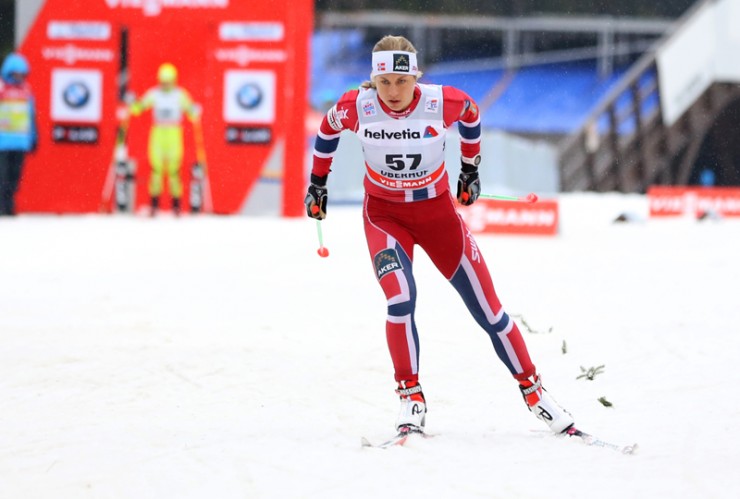
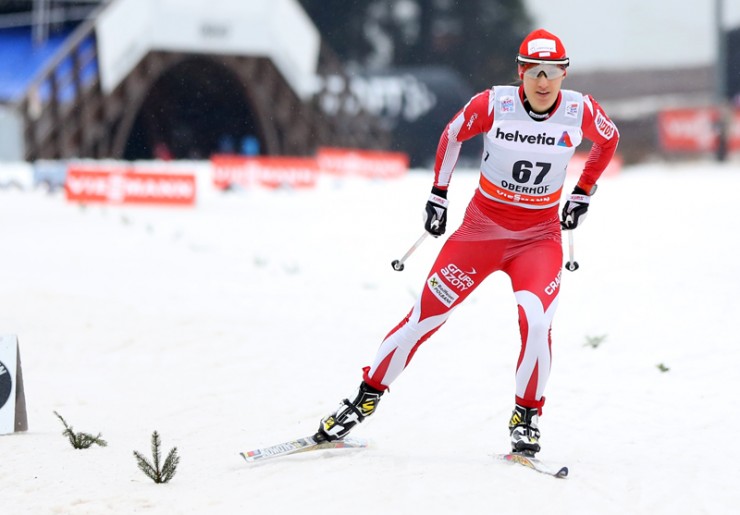
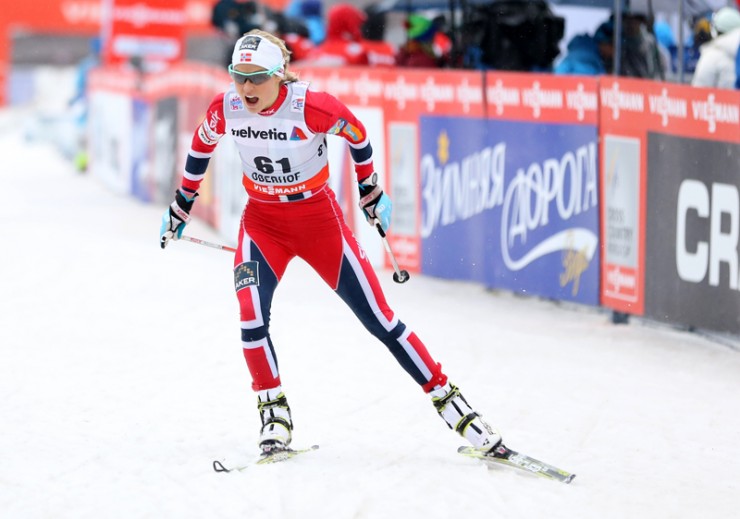
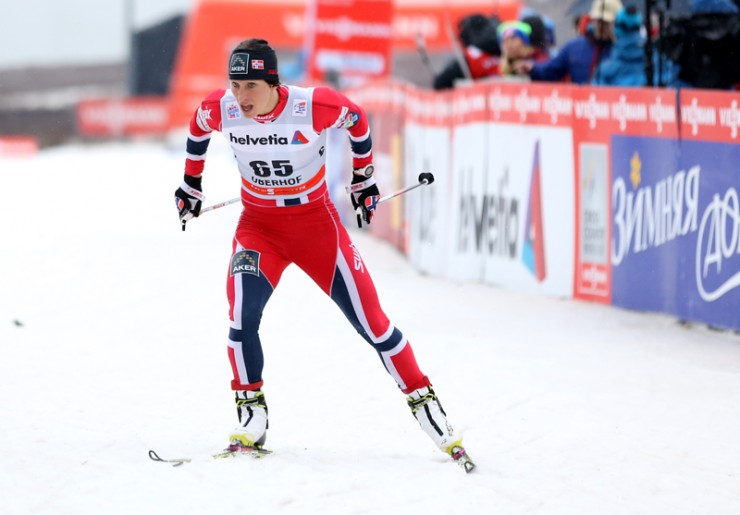
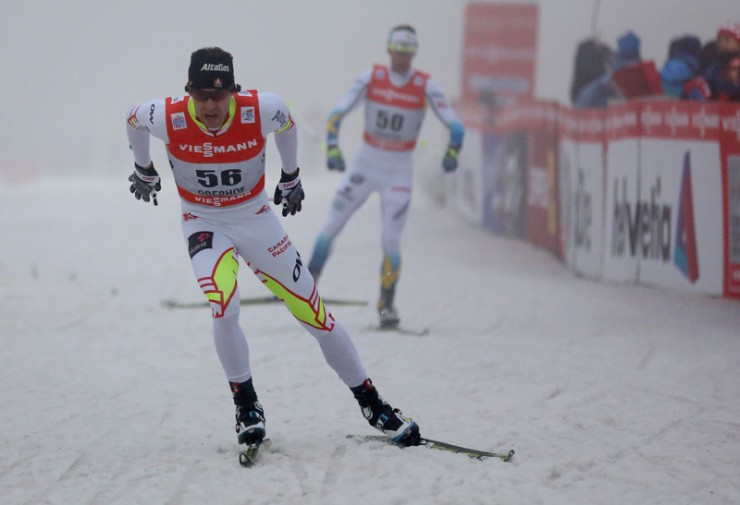
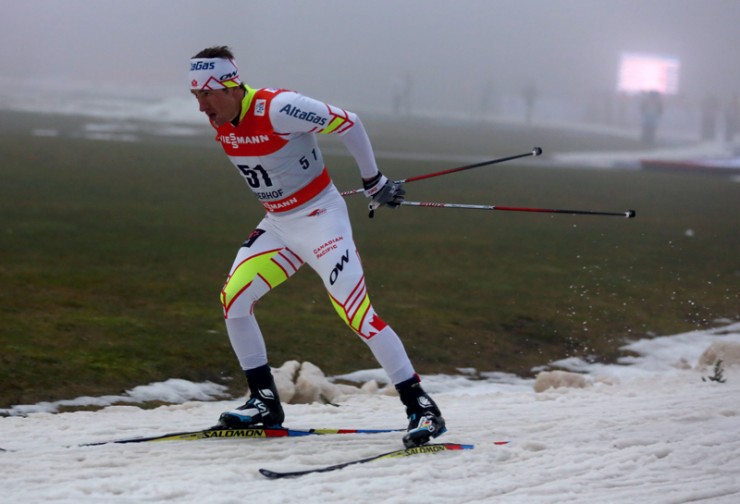
Photos from yesterday’s opening to the Tour de Ski in Oberhof, Germany, where racers faced warm, wet, and slushy conditions in the prologue to the Tour, which consisted of a 3 k for the women and a 4.5 k for the men.
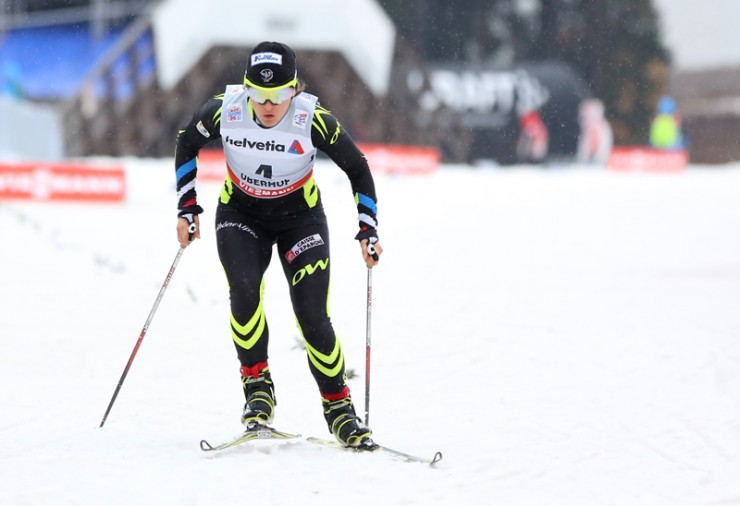
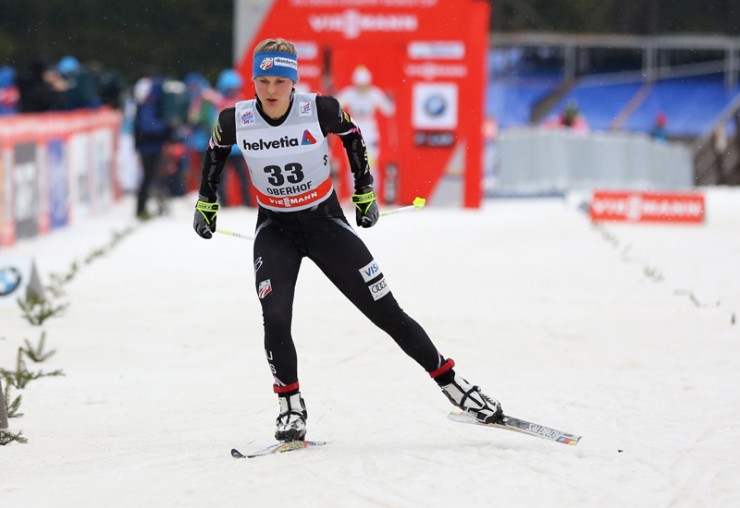
Celia Aymonier (FRA) racing in the women’s 3 k prologue. (Photo: Marcel Hilger)
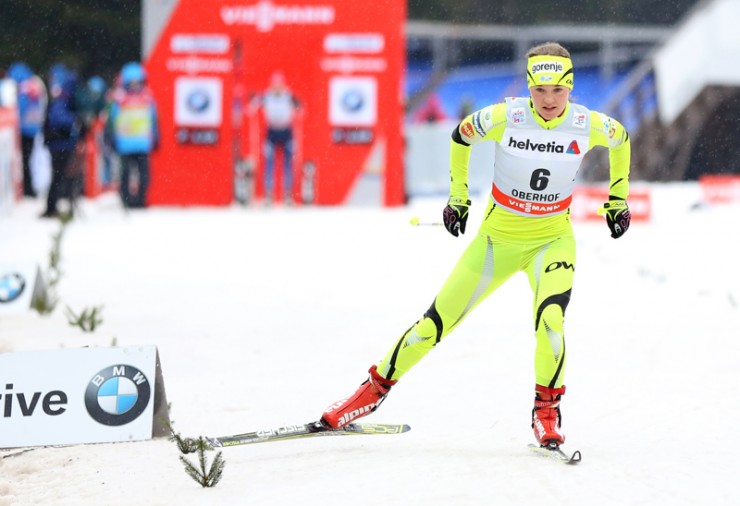
Alenka Cebasek (SLO) en route to an eighth place finish. (Photo: Marcel Hilger)
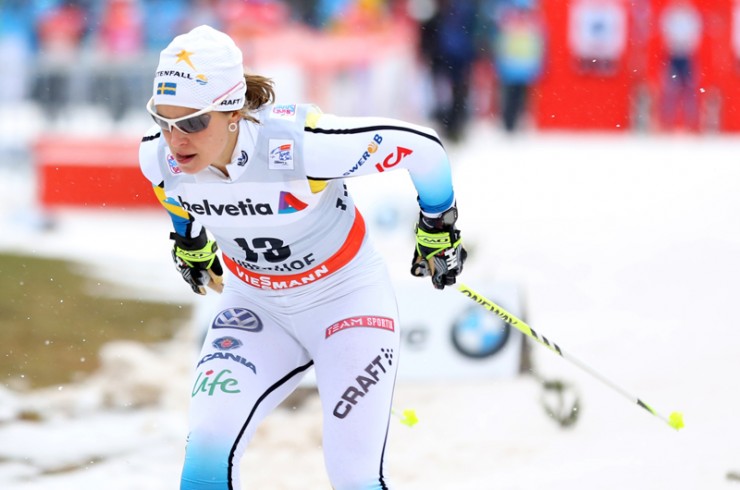
Anna Haag (SWE) in the Tour de Ski prologue. (Photo: Marcel Hilger)
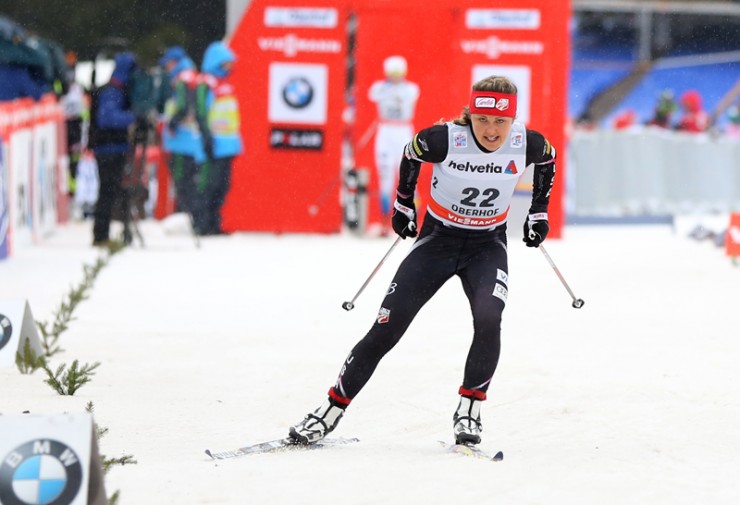
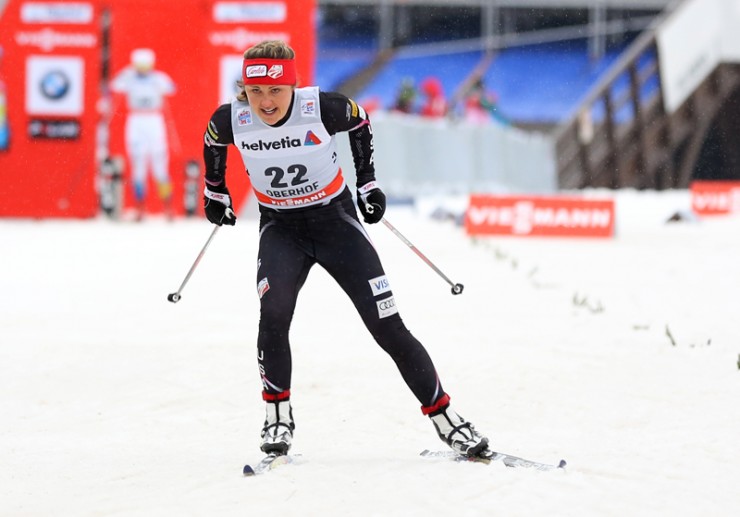
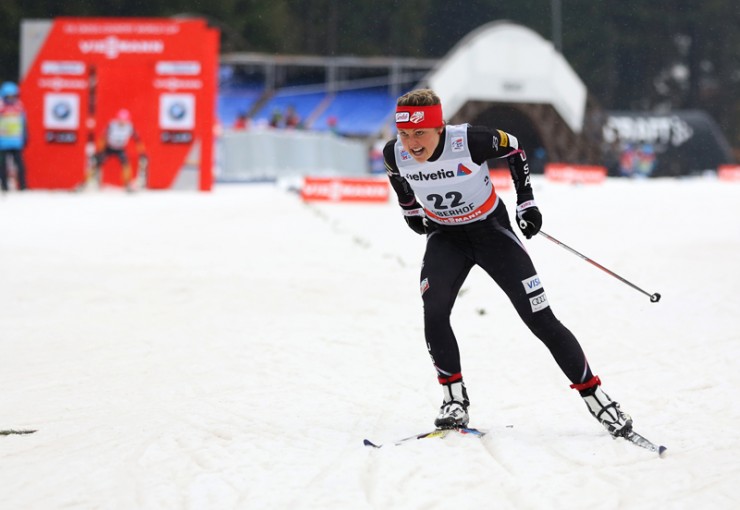
Holly Brooks racing to 20th in the women’s 3 k prologue. (Photo: Marcel Hilger)
Holly Brooks in the Tour de Ski prologue. (Photo: Marcel Hilger)
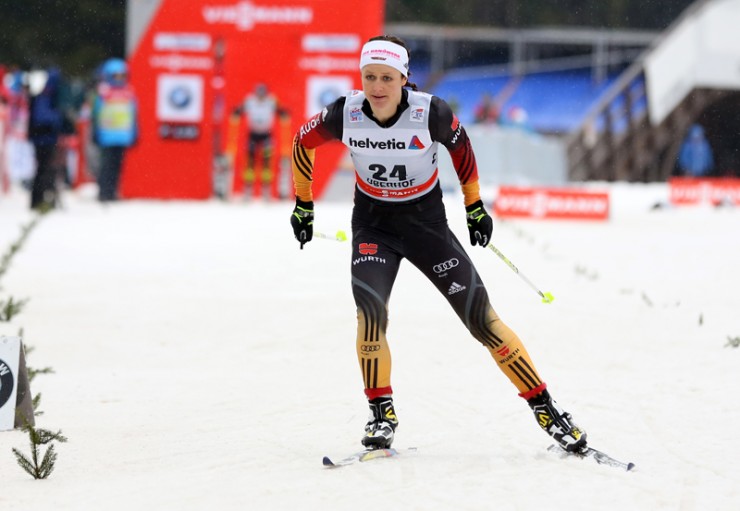
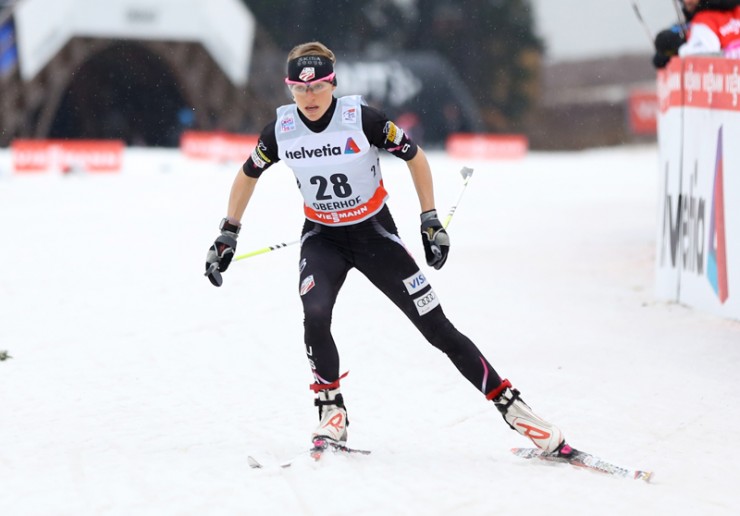
Katrin Zeller (GER) in the Tour de Ski prologue. (Photo: Marcel Hilger)
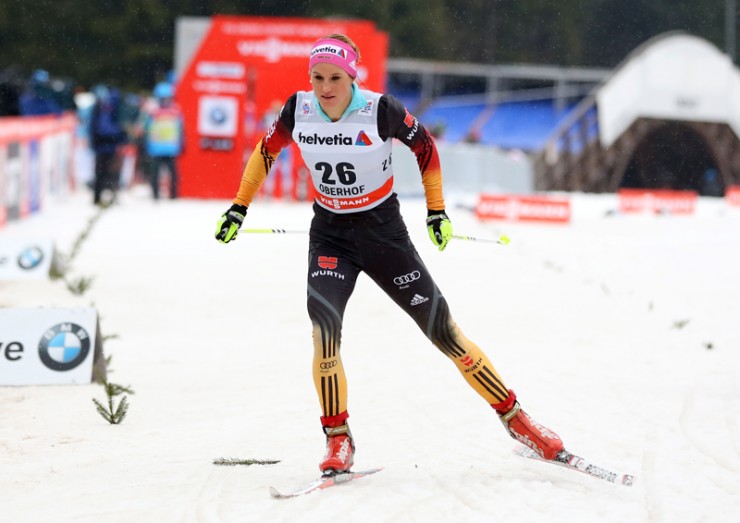
Nicole Fessel (GER) racing to 26th place. (Photo: Marcel Hilger)
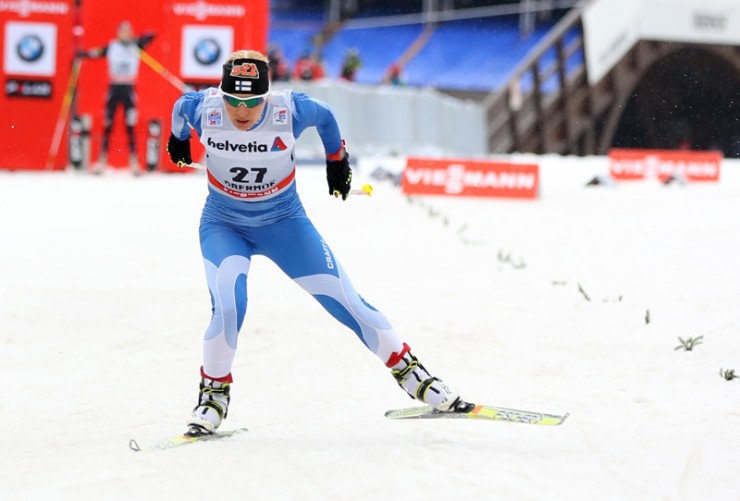
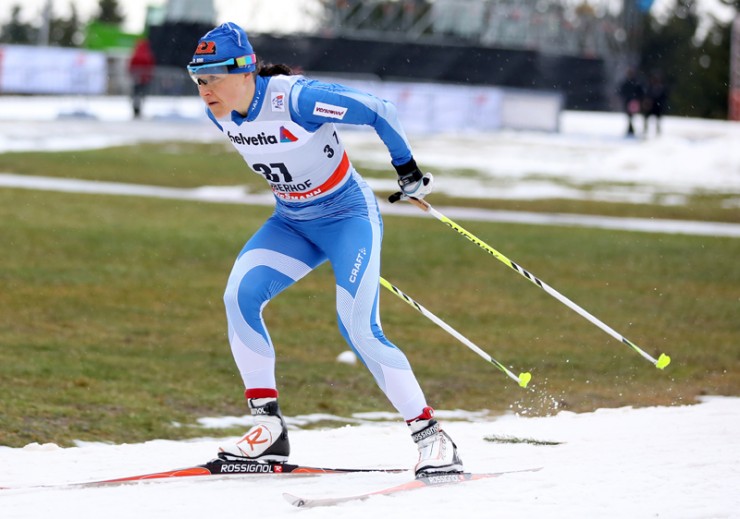
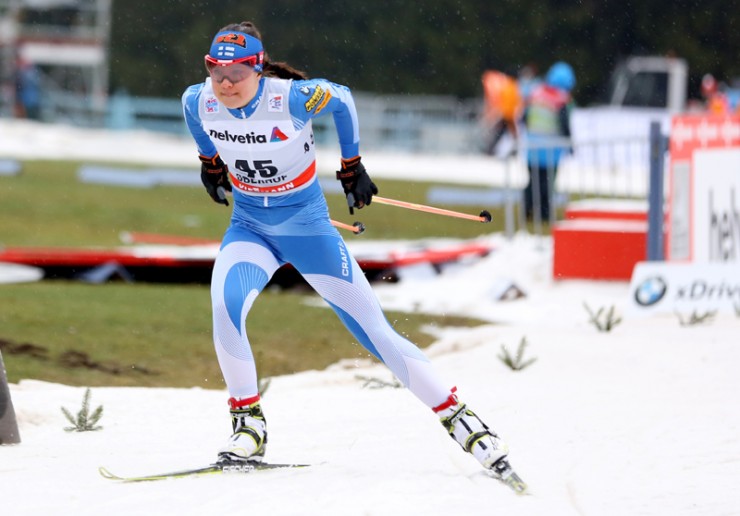
Riita-Liisa Roponen (FIN) en route to a 15th place finish. (Photo: Marcel Hilger)
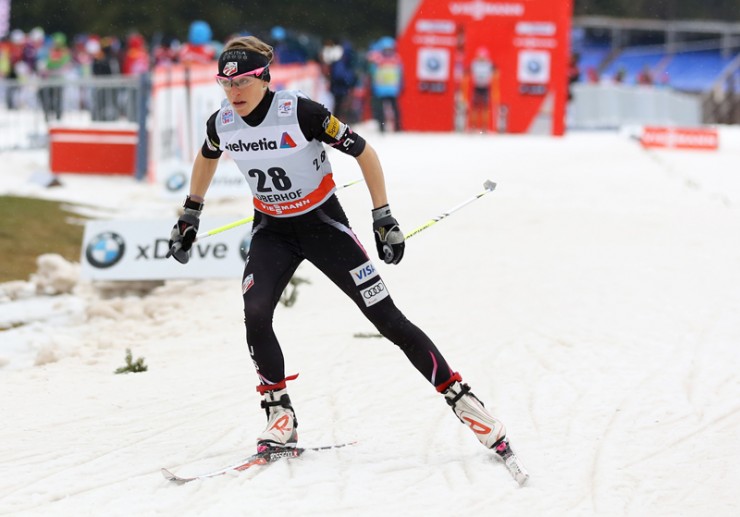
Liz Stephen Racing to 34th in the women’s 3 k prologue. (Photo: Marcel Hilger)
Holly Brooks navigates the slushy conditions. (Photo: Marcel Hilger)
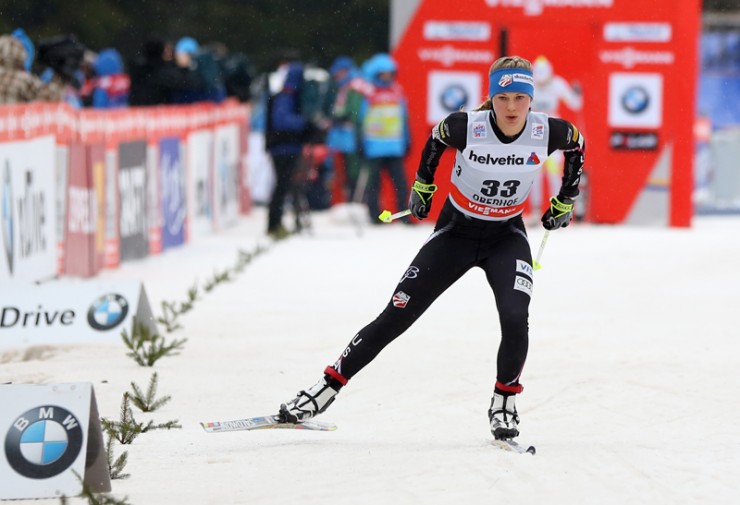
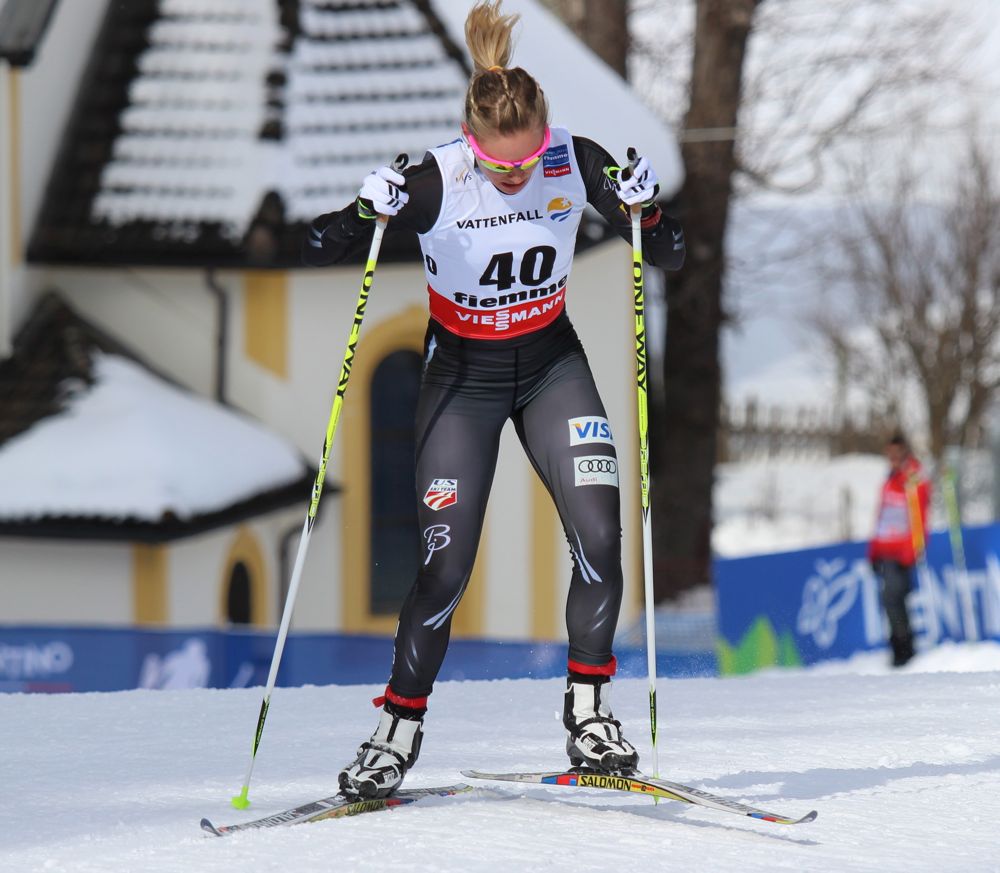
Jessie Diggins (U.S. Ski Team) on her way to tying a World Cup career best of fifth in Saturday’s 3 k freestyle prologue at Stage 1 of the Tour de Ski in Oberhof, Germany. She placed 18th in Sunday’s freestyle sprint for 14th overall in the Tour through two stages. (Photo: Marcel Hilger)
Jessie Diggins (U.S. Ski Team) on her way to tying a World Cup career best of fifth in Saturday’s 3 k freestyle prologue at Stage 1 of the Tour de Ski in Oberhof, Germany. She placed 18th in Sunday’s freestyle sprint for 14th overall in the Tour through two stages. (Photo: Marcel Hilger)
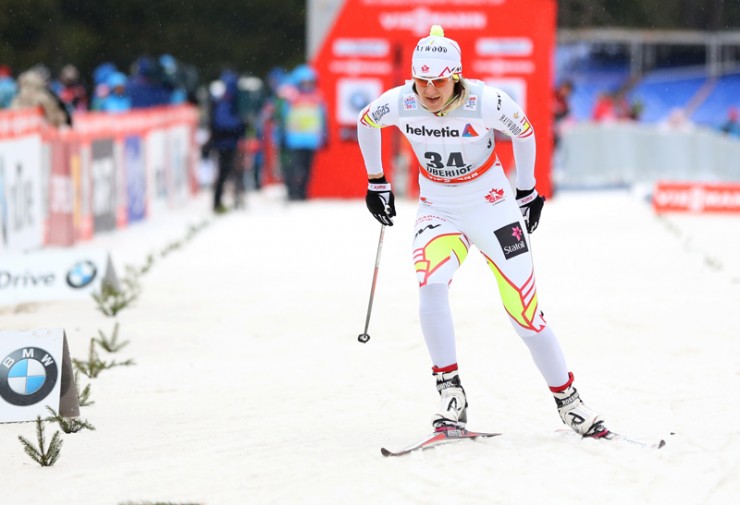
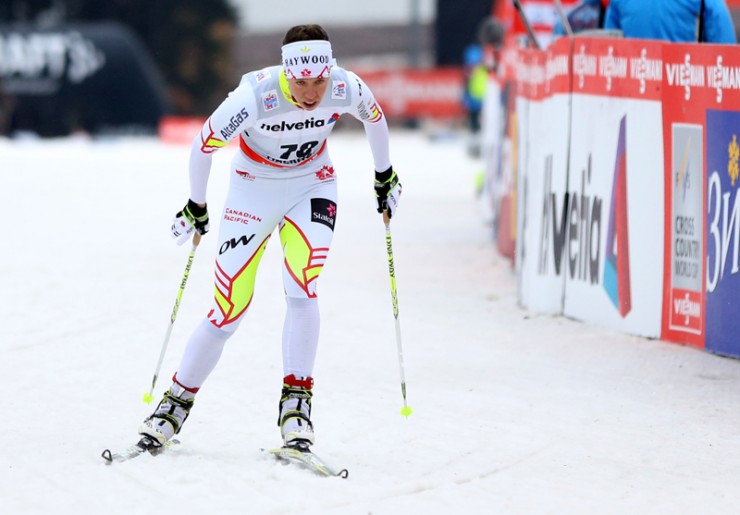
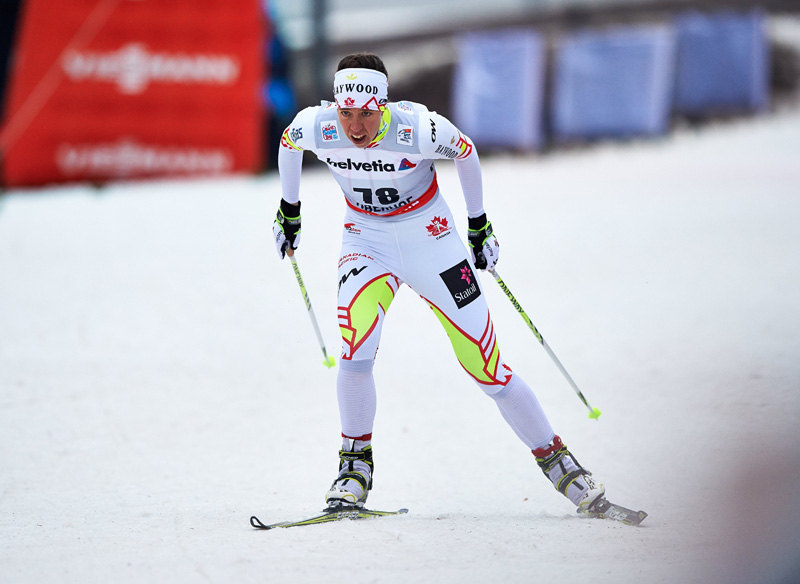
Daria Gaiazova racing in the 3 k prologue. (Photo: Marcel Hilger)
Liz Stephen (U.S. Ski Team) on her way to 34th in Saturday’s 3 k freestyle prologue at the first stage of the Tour de Ski in Oberhof, Germany. (Photo: Marcel Hilger)
Aino-Kaisa Saarinen (FIN) en route to her seventh place finish. (Photo: Marcel Hilger)
Kerttu Niskanen (FIN) finished 10th in the 3 k prologue. (Photo: Marcel Hilger)
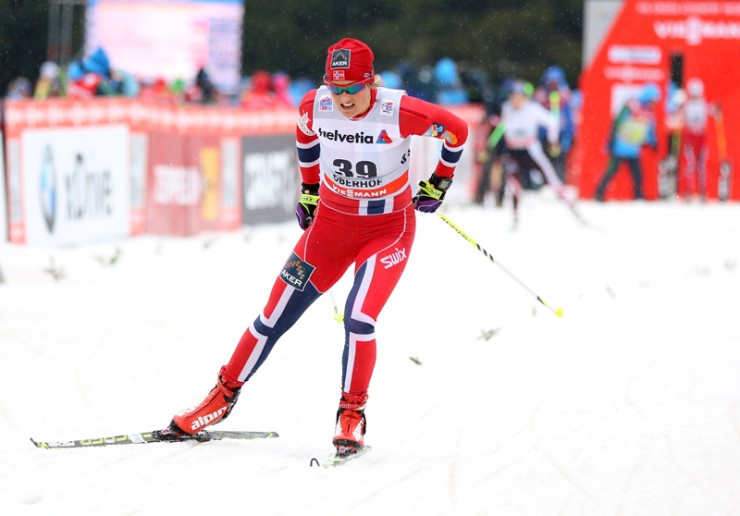
Vibeke Skofterud (NOR) racing through the warm and wet conditions. (Photo: Marcel Hilger)
Jessie Diggins looks on at fellow racer, Dasha Gaiazova while she catches her breath at the finish. (Photo: Marcel Hilger)
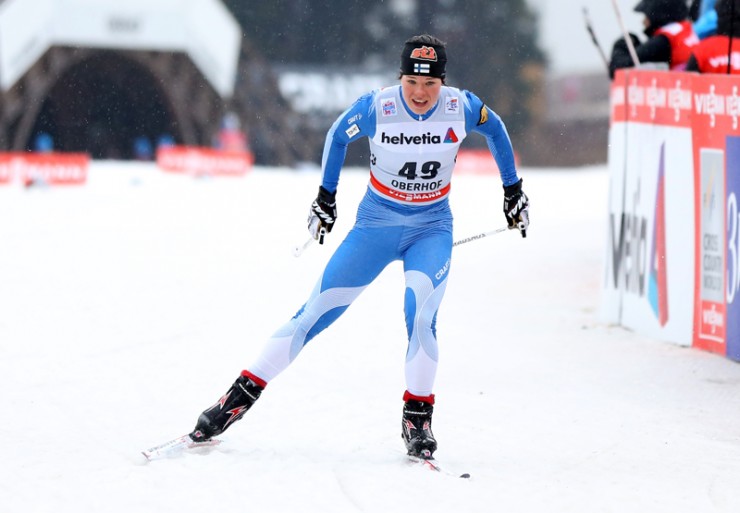
Krista Lahteenmaki (FIN) in the women’s prologue. (Photo: Marcel Hilger)
Astrid Jacobsen (NOR) racing to third place in the Tour de Ski opener.(Photo: Marcel Hilger)
Sylwia Jaskowiec (POL) racing to third place. (Photo: Marcel Hilger)
Therese Johaug (NOR) en route to an 11th place finish. (Photo: Marcel Hilger)
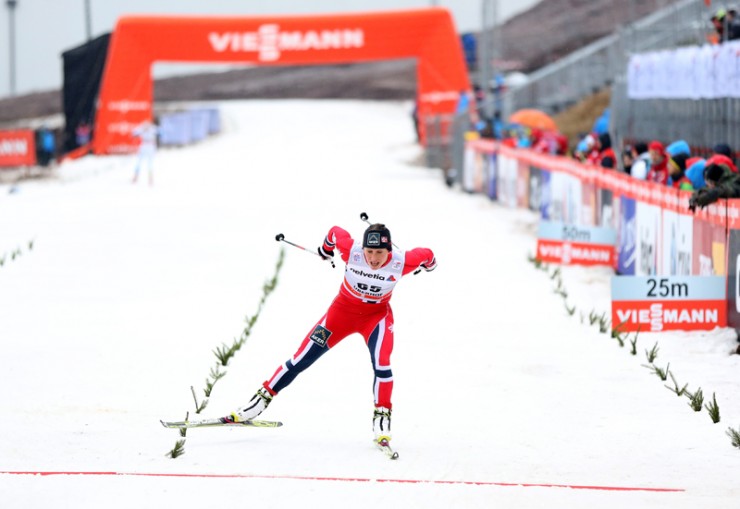
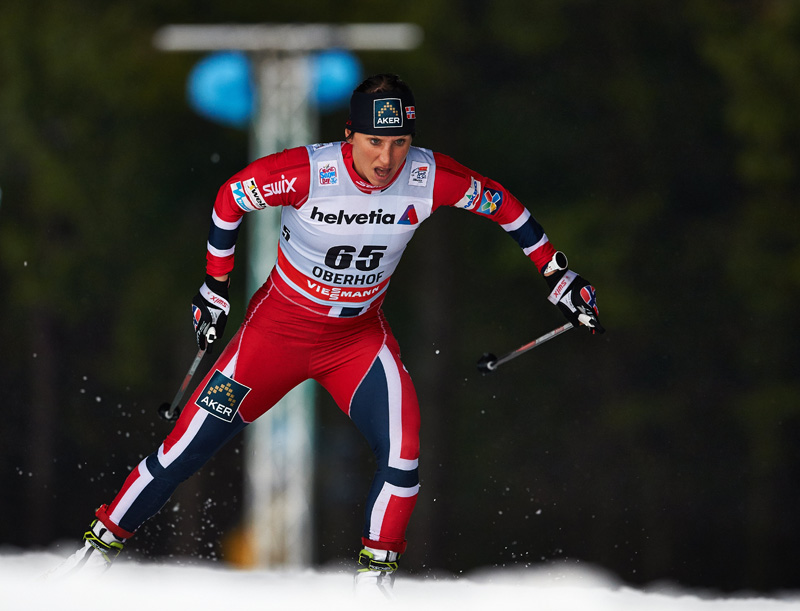
Marit Bjørgen (NOR) en route to her prologue win. (Photo: Marcel Hilger)
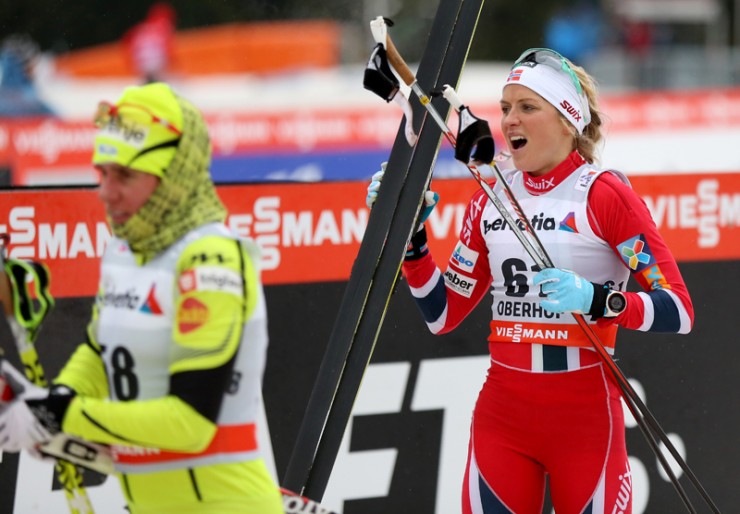
Therese Johaug (NOR) cheers from the finish. (Photo: Marcel Hilger)
Marit Bjørgen (NOR) crosses the finish line. (Photo: Marcel Hilger)
Perianne Jones racing to 47th place for Canada. (Photo: Marcel Hilger)
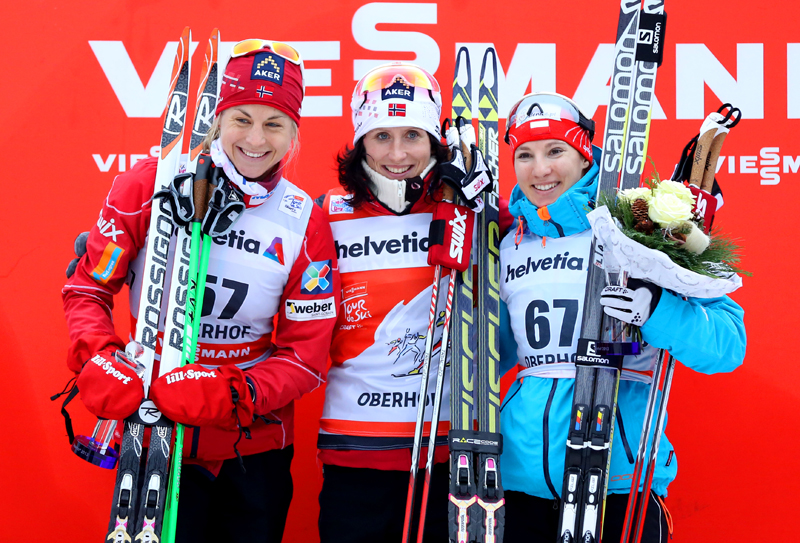
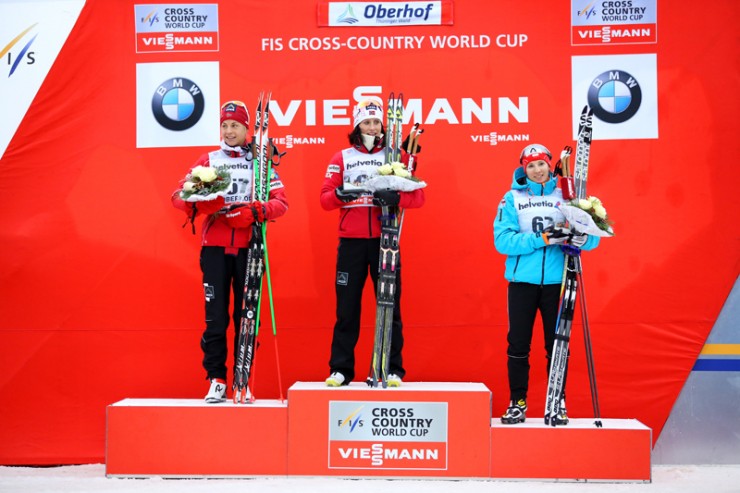
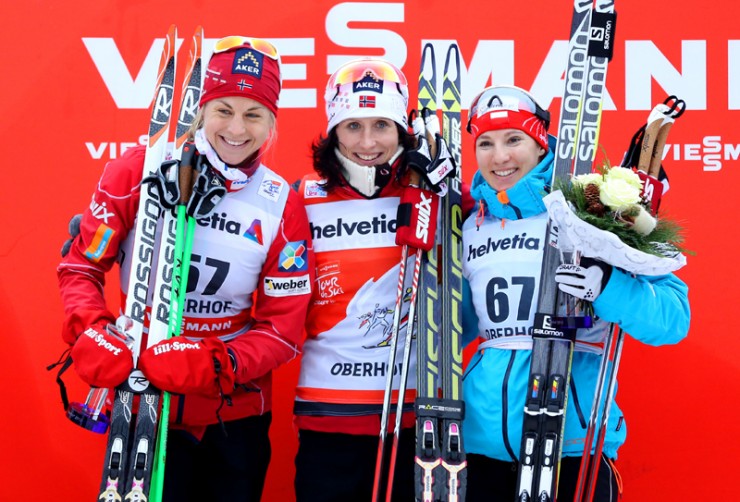
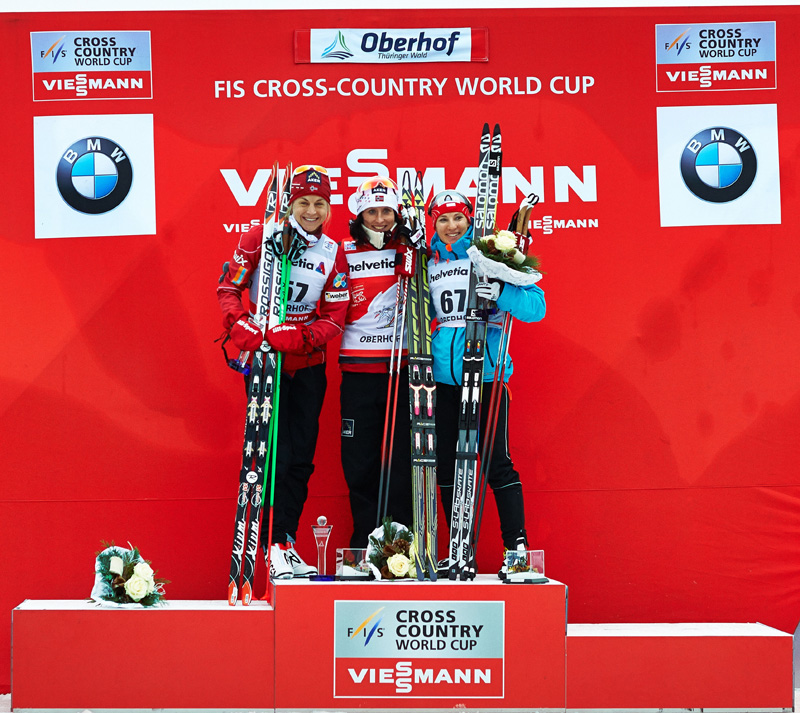
Marit Bjørgen (NOR) sits atop the women’s podium. She won by 1.9 seconds over teammate Astrid Jacobsen (NOR). (Photo: Marcel Hilger)
The women’s podium: Astrid Jacobsen (NOR), Marit Bjørgen (NOR), and Sylwia Jaskowiec (POL). (Photo: Marcel Hilger)
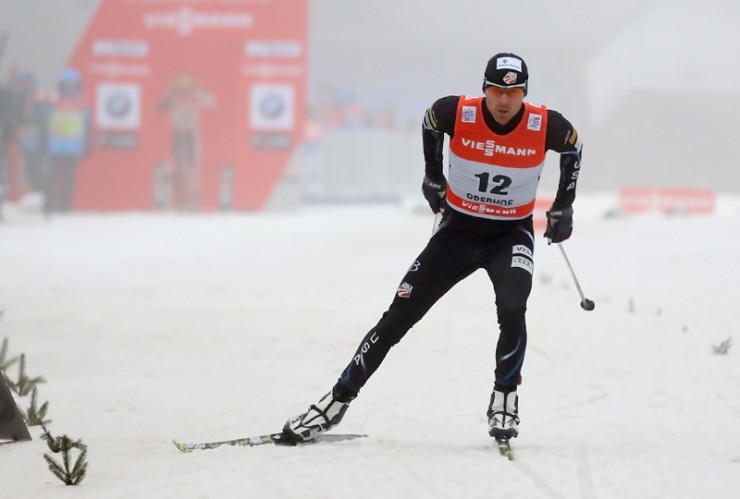
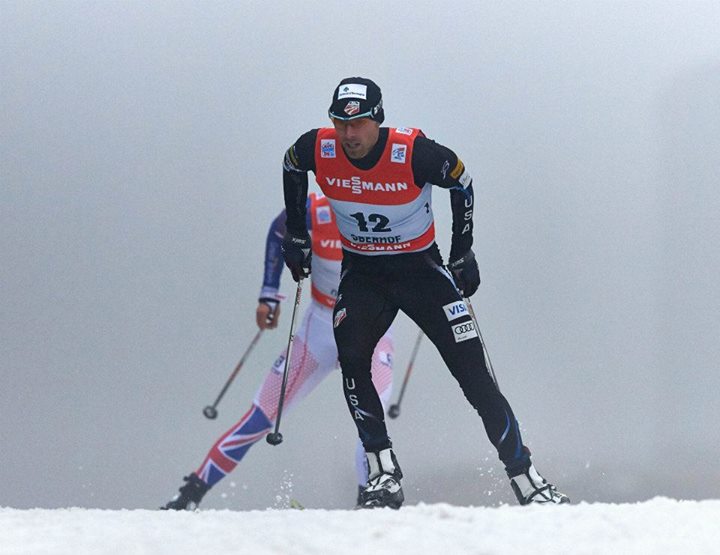
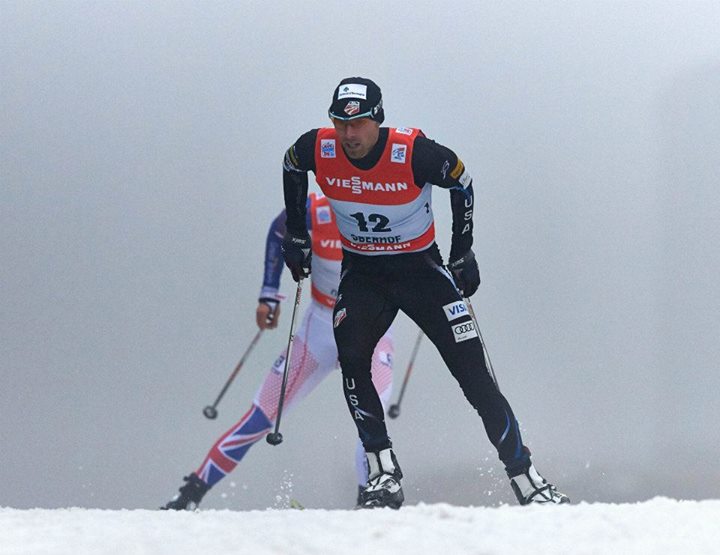
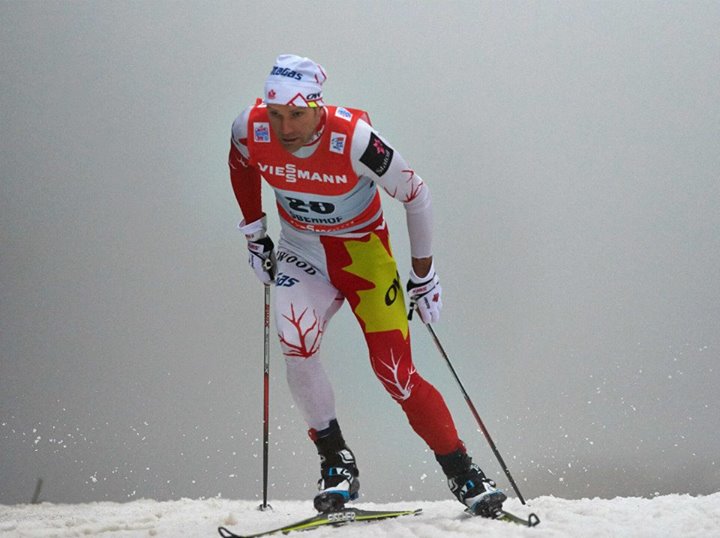
Andy Newell racing to 20th in Saturday’s 4.5 k freestyle prologue on the first day of the Tour de Ski in Oberhof, Germany. On Sunday, he notched 10th in the 1.5 k freestyle sprint. (Photo: Marcel Hilger)
Devon Kershaw en route to second place. (Photo: Marcel Hilger)
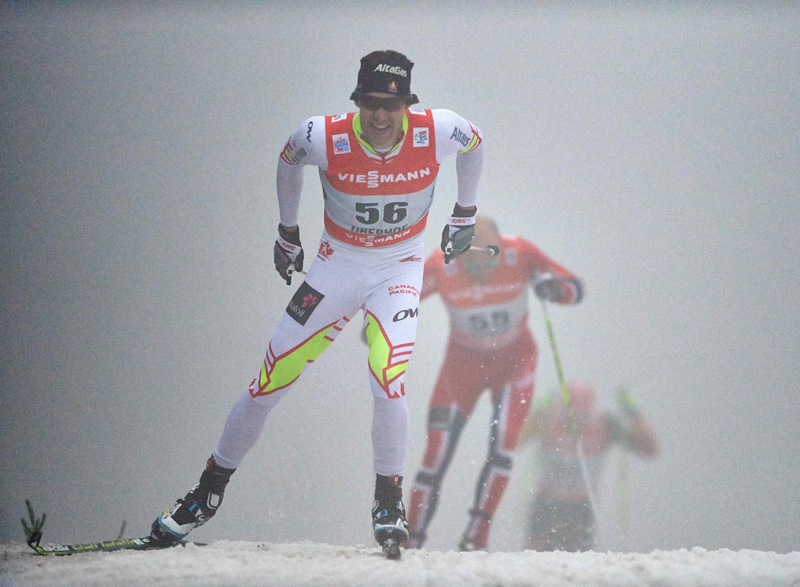
Ivan Babikov in the Tour de Ski 4.5 k prologue. (Photo: Marcel Hilger)
Alex Harvey racing to his prologue win in the Tour de Ski. (Photo: Marcel Hilger)
Ivan Babikov skiing to a respectable 26th place. (Photo: Marcel Hilger)
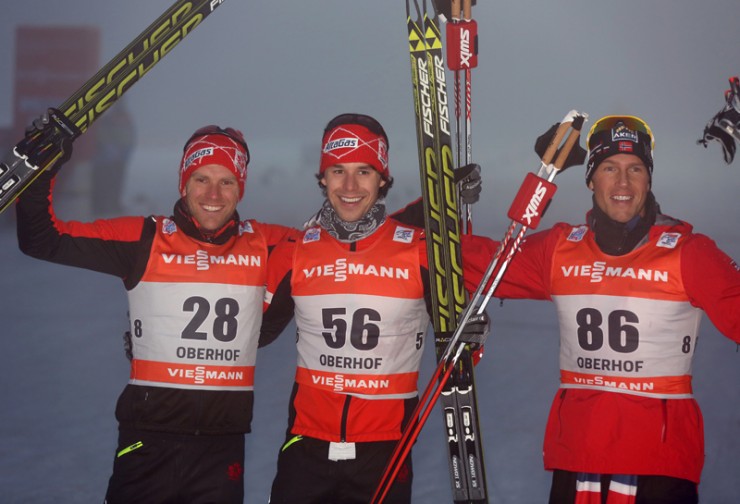
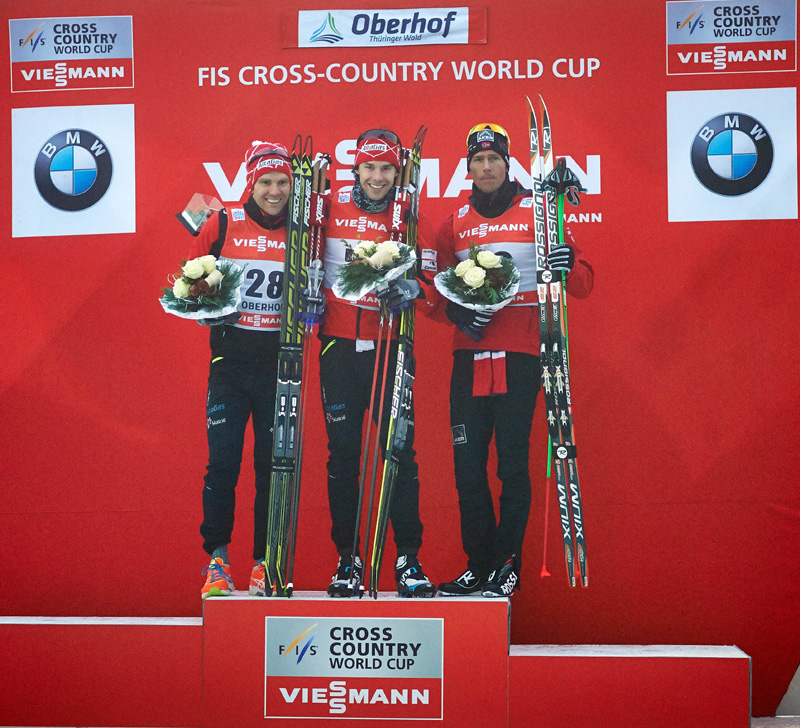
2013/2014 Tour de Ski Prologue Oberhorf, Germany. The men’s podium: Devon Kershaw, Alex Harvey, and Chris Jespersen (NOR). (Photo: Marcel Hilger)
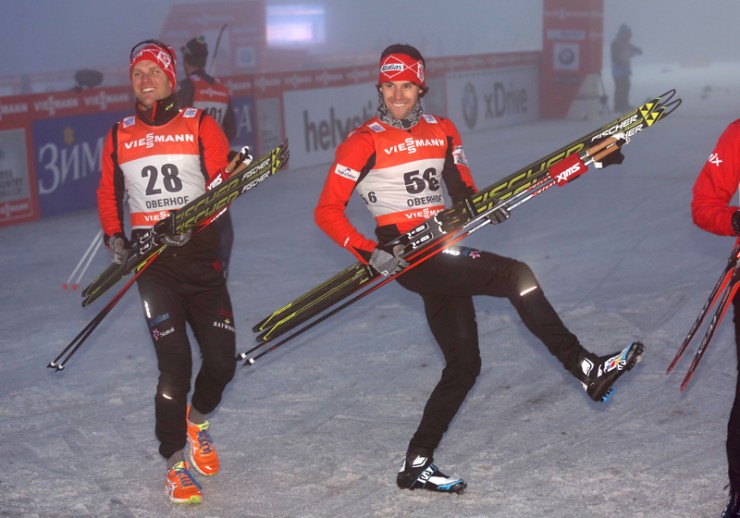
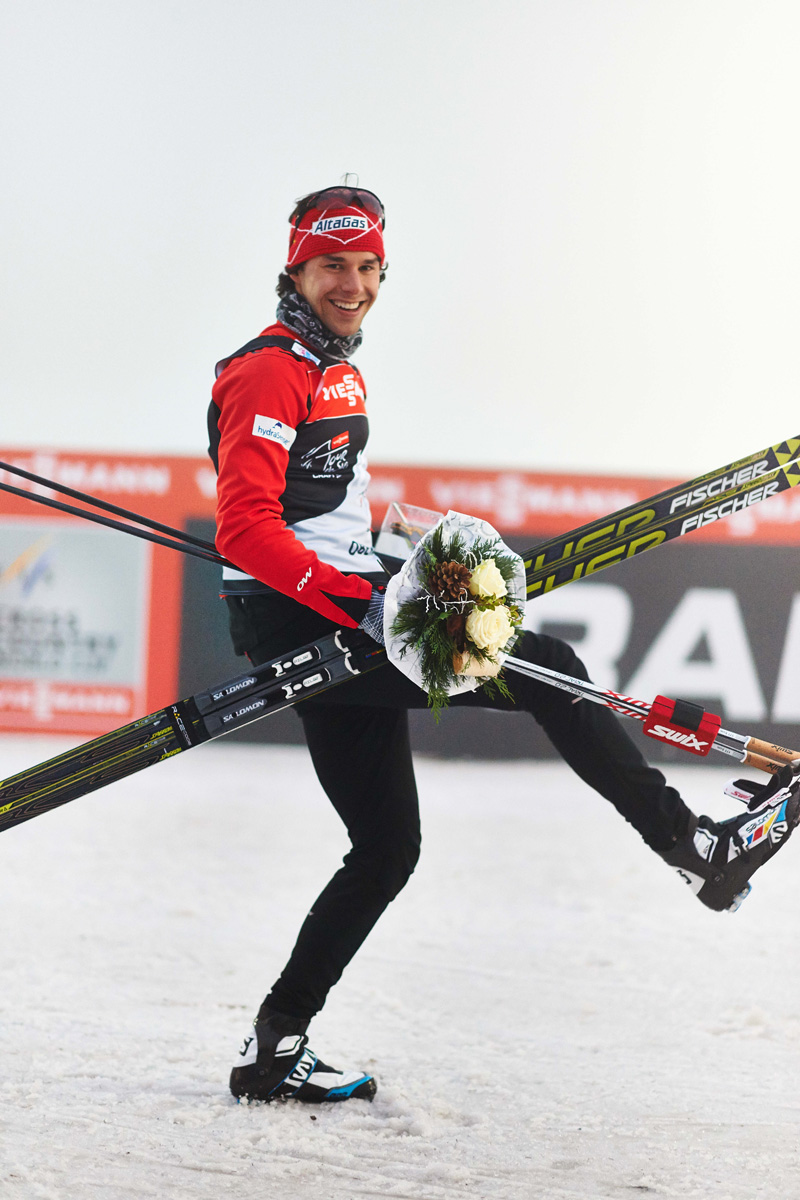
Devon Kershaw and Alex Harvey Celebrate their 1-2 finish in the Tour de Ski prologue. (Photo: Marcel Hilger)
Jessie Diggins (U.S. Ski Team) racing to 23rd in the women’s 10 k freestyle at 2013 World Championships in Val di Fiemme, Italy. On Saturday, she started the Tour de Ski with her best-ever stage result of fifth in the 3 k freestyle prologue.
Note: This recap has been updated to include quotes from Andy Newell.
Whether the distance is 3 or 4 ½ kilometers, it’s all a blur when you’re pushing from start to finish. Prologues have no additional rounds, no time to hold back, yet a racer stands to lose everything if they go out too hard.
The first of seven stages in the Tour de Ski, Saturday’s freestyle prologue was no different. Jessie Diggins didn’t hear splits as she rounded the 1.5 k course twice in Oberhof, Germany; her U.S. Ski Team (USST) coaches had told the athletes beforehand that they wouldn’t call out information during the individual start. Even if they did, there was hardly time to think, let alone change a pacing strategy.
Diggins distinctively remembered two points of her 3 k race. First, she heard the Caldwells – her teammate Sophie Caldwell’s mother, father, sister and brother – cheering while hanging over the fence.
Sophie Caldwell (c) with her sister Isabel and brother Austin at the World Cup in Asiago, Italy. (Photo: Austin Caldwell)
“I’ve never heard Izzy so loud; it was awesome,” Diggins said of Caldwell’s sister. “The other person I heard was [coach Jason] Cork yelling at the top of one of the hills.”
His cues were exactly what the 22-year-old Minnesota native needed: push over the top, remember technique. Diggins was trying to get on top of her poles throughout the race and she was pretty sure it worked, even in the slushy snow on a rainy afternoon.
“I’m one of those girls that tries really hard, but isn’t always very efficient,” Diggins said.
She churned out a fifth-place performance, tying her career-best World Cup individual finish (from two seasons ago in the 10 k freestyle mass start in Rybinsk, Russia). Last year, Diggins opened the Tour with 62nd in the 3 k freestyle prologue in Oberhof. She went on to place 50th in the classic pursuit there, then 21st in the overall Tour.
This time around, she’s set a goal for a solid overall performance.
“I don’t need any ‘A’-plus days, but if I can get some ‘B’-plus days … it’ll be a really good Tour,” she said.
Saturday was a good start. Starting 33rd of 80, Diggins crossed the line with the fastest time by 1.5 seconds over Slovenia’s Alenka Cebasek, who ended up eighth behind Norwegian winner Marit Bjørgen. Her split through 0.8 k held up as the third-fastest overall and she ranked fourth through 2.3 k, finishing 9.2 seconds after Bjørgen in fifth.
“Every once in a while I would pop my head out to see if I had been knocked out of the top three and if so I could go and get pants.” — Jessie Diggins, fifth
But for about 15 minutes, Diggins was the top dog. Soaked and freezing in the 36-degree temperatures, she would’ve loved to warm up in a large blanket while sitting in the leader’s chair. However, there was no leader’s chair.
“This is probably the one time that I could make it … and they didn’t have a leader’s chair,” she said with a laugh.
Instead, Diggins waited in the finish-area changing tent – but she didn’t have any clothes to change into. FIS media coordinator Jeff Ellis told her to stick around in case she made the podium.
“Every once in a while I would pop my head out to see if I had been knocked out of the top three and if so I could go and get pants,” Diggins said. “It wasn’t until the end there that I realized I was fourth.”
The 65th starter, Bjørgen bumped Diggins to fourth behind Germany’s Denise Herrmann. Poland’s Sylwia Jaśkowiec in bib 67 bested Herrmann’s time by 1.4 seconds for third, Herrmann moved to fourth, and Diggins finally settled in fifth.
“I was psyched,” Diggins said after taking some time to celebrate, then refocus for Sunday’s freestyle sprint in Oberhof. “Since the Tour’s so long you don’t have time to dwell on any one race so it was like, ‘Sweet, that was awesome. It was a good race … and I learned some things for tomorrow, and now it’s time to eat and change and get ready.’ ”
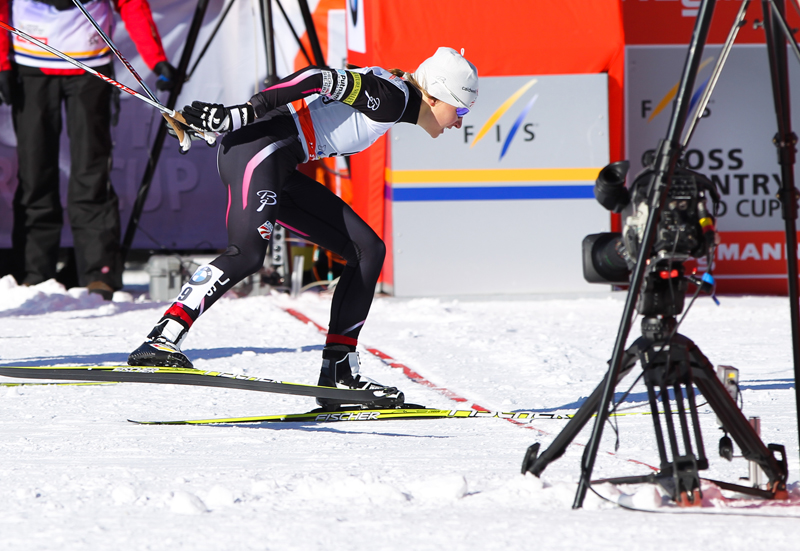
Sophie Caldwell racing to a career-best ninth two weekends ago in the freestyle sprint in Davos, Switzerland. On Saturday, she tied the result in the Tour de Ski 3 k freestyle prologue. (Photo: Fischer/Nordic Focus)
Her teammate, Caldwell also tied a personal best of ninth in her first Tour de Ski. The 54th starter, she ranked third through 0.8 k and was fifth at the finish, 2.6 seconds behind Diggins in first.
“We had really fast skis today,” Caldwell wrote in an email, a notable bonus on a course that broke down with every lap.
After opening hard, she felt fast and Cork confirmed that she was in third less than a kilometer in.
“I thought that was awesome, but it was also at .8k, so I knew times were probably tight and that it could shift around a lot after that,” wrote the 23-year-old Caldwell. “When I came around the 2nd lap, my dad cheered something along the lines of ‘you’re flying!!!’, so I thought I could be having a good race, but that could also just be my dad being nice.”
Through 2.3 k, she was 10th fastest overall, turning it up for the final 700 meters.
“I’m not sure exactly what about this distance, course, or conditions suited me, but I think it paid to relax and try not to be frantic out there,” she explained. “I had been fighting a little sickness since Davos and was really tired after Asiago. I took a few days really easy or off and just enjoyed time relaxing with my family over Christmas. I wanted to come into the tour recharged and healthy and I think I was able to accomplish that by taking the week really easy.”
As for the rest of the Tour, Caldwell plans to take it day by day. She’ll race Sunday in Oberhof and probably the following freestyle sprint on Tuesday in Lenzerheide, Switzerland, but she might drop out before or after the 10 k classic on Jan. 1.
“My goals are to focus on recovering well and getting in a lot of good racing,” she wrote.
Teammate Holly Brooks decided to start the Tour as well after what she described as “an abnormally slow start to the season.”
“I felt like I needed more racing to get up to speed,” Brooks wrote. “Besides the tour provides lots of race chances and that’s why I train so hard year round!”
Brooks finished 21st on Saturday, 21.4 seconds back from Bjørgen, after leading through 0.8 k as the 22nd starter. Her time there stood as the ninth fastest.
“I had a good split at .8k today so perhaps it will bode well for tomorrow’s one lap race!” Brooks wrote. “I feel like I’m headed in the right direction. While not ecstatic with my result today I have to be satisfied because it’s [my] best result this season to date. That said, last year in this race I was 11th and in the Falun skate prologue I was 7th so I was hoping for better.”
Above all, she was excited for Diggins and Caldwell and thankful that Oberhof race organizers were able to host the event with above-freezing temperatures and no natural snow.
“I just heard this evening that the base of our course came from crushed ice from a fish processing plant 500 [kilometers] away!” she wrote. “They are putting some serious resources into making this happen!”
The other U.S. woman who plans to race the entire Tour, Liz Stephen placed 34th (+25.1). With the 44th-ranked time through 0.8 k, she improved to 35th by 2.3 k.
“My goal was to build into the race,” Stephen wrote. “I had the goal of being in the top 30, but was just out, and I am happy with my performance today. The conditions were tough for everyone, but the organizers have worked some sort of magic to have been able to pull these races off at all. I am really impressed given the weather they have been given so far this winter.”
In the men’s 4.5 k prologue, Americans Andy Newell placed 20th, Simi Hamilton 42nd and Noah Hoffman 82nd out of 106 finishers.
“The team’s performance was amazing today,” Stephen wrote. “To have Jessie and Sophie both in the top 10, Holly and Newell in the points and Simi and I just out is a good day. Noah’s days are coming, but first we distance skiers need to channel our sprint gears!”
They’ll have a chance in Sunday’s 1.5 k freestyle sprints – the same one-lap race for the men and women.
“I am really excited to get my skate sprinting on,” Stephen wrote. “I have hopes of qualifying like I was able to do last year, but these are big fields here so far, so I will have to do everything just right, but really fun to get two chances in a row to try out some strategies.”
Newell Leads U.S. Men in 20th
Newell was a strong early starter in bib 12, posting a top-10 time through 0.8 k. Skiing with Great Britain’s Andrew Musgrave for his first two laps, Newell went on to finish 20.4 seconds behind Canadian winner Alex Harvey and less than seven seconds off the podium. Musgrave tied two Russians, Evgeniy Belov and Alexander Legkov, for 17th, which put Newell as the next finisher in 20th.
“I felt pretty good out there and started right as Musgrave was lapping through,” Newell wrote. “I
Andy Newell (U.S. Ski Team) racing to 20th in the 4.5 k freestyle prologue, the first stage of the Tour de Ski. (Photo: Fischer/Nordic Focus)
thought about jumping in behind him because there were some points on the course where the wind was really ripping, so it would have helped to follow someone. Pacing is so important in a short distance race like this so I decided I just couldn’t chance skiing someone else’s pace, so ended up pulling him around for a lap or two.
“It was my goal to be in the top 15.. and it turns out I was .7 seconds from 15th,” he added.
Hamilton started last and hovered around the mid-40s throughout the race before finishing 3.5 seconds out of 30th.
“I’m happy with how today turned out, although being only 3 seconds from my first distance points is kind of a hard pill to swallow,” he wrote. “It was tough skiing out of the back as conditions were deteriorating a bit throughout the day, but that’s just something I’ll have to deal with for a bit as I recover from the fact that illness allowed me to only ski 3 distance races last year.”
With three laps to tackle, Hamilton reflected that he might have been too conservative the second time around.
“It was hard to find relaxation at any point in the course because of the terrain and the conditions, and I felt like I lost some valuable seconds because of that,” he added. “Tomorrow should be a good day. It’s a short course that should suit me well.”
Canadian Women Finish Strong
Two Canadian women plan to do the first few stages of the Tour, and Dasha Gaiazova led them in 37th, 1.8 seconds behind Stephen and 3 seconds out of 30th. Perianne Jones was 47th, another 1.9 seconds back.
“Both the ladies finished strong; they finished last half a k with quite good speed,” Canadian Head Coach Justin Wadsworth said. “That’s a good sign for fitness, a good sign that they’re coming back. I want them to do these first three stages and do the process, too. We’re still aiming for Sochi, so every race we’re aiming to be the best we can in all respects, but they both put in solid races today and I’m really happy with how they finished the last part of the race.”
Perianne Jones, who finished 47th, racing in her third international race of the season. (Photo: Fischer/Nordic Focus)
In an email, Jones explained she could’ve started harder, but was cautious in her third international race of the season.
“After not having done too much hard work longer than a few minutes in the recent months I was maybe a little bit apprehensive,” she wrote. “I was able to ski faster on the second lap, which came as a bit of a surprise. It’s a good sign that my fitness is coming.
“When I knew the finish line was around the corner I definitely dug deep and used every last bit of energy I had,” she added. “Tomorrow I’ll be doing that right from the start! … Although the result wasn’t great today it was a positive indicator for me that things are coming around, and I had much better feelings than last weekend, so I can’t wait for these next two races.”
Alex Harvey racing to first in the men’s 4.5 k freestyle prologue on Saturday, the first of seven stages in the 2013/2014 Tour de Ski. His teammate Devon Kershaw (not shown) placed second to make for a historic 1-2 finish for Canada. (Photo: Fischer/Nordic Focus)
Alex Harvey and Devon Kershaw topped the podium Saturday in the 4.5-kilometer freestyle prologue in Oberhof, Germany, the first of seven stages in the nine-day Tour de Ski.
Dogged by a slower start to their season than they would have liked, the Canadians announced that they are back on form after weathering drizzly conditions to achieve their nation’s first 1-2 finish in an elite international event.
Canadian Alex Harvey celebrates his second career individual World Cup stage win on Saturday after taking first in the 4.5 k freestyle prologue on the first day of the 2013/2014 Tour de Ski. Harvey captured the leader’s bib just 4 seconds ahead of teammate Devon Kershaw in second. (Photo: Fischer/Nordic Focus)
With the air temperature around 2 degrees Celsius (36 Fahrenheit), and three laps of a 1.5 k loop on dirty manmade snow, the race was not so much topographically difficult as it was technically challenging to find the best snow and maintain technique.
During his warmup, Harvey focused on finding the fastest path through the slush.
“When I skied the course before the race that’s all I did, we just skied a couple laps looking for the hard, firm snow, the clean snow, too,” he said on the phone after winning Saturday’s race for his first individual top 10 of the season. The last time the 25-year-old Harvey won a World Cup event was in the 3.3 k freestyle prologue at 2012 World Cup Finals in Falun, Sweden.
On Saturday, he won it by 4.1 seconds over Kershaw, his teammate and friend, in 9:03.4. A late starter, Norway’s Chris Jespersen couldn’t come close enough and placed third, 10.6 seconds behind Harvey.
There were initially concerns that the course might slow as the race progressed, but instead, pacing proved crucial, and the early pace setters faded on their final lap.
Jens Ericksson of Sweden was an early leader, setting the splits and fastest-finishing time until Austria’s Bernhard Tritscher came through 2.3 k three-tenths of a second faster. However, Tritscher could not maintain that pace and ended up 27th. Kershaw’s 2.3 k time ranked ninth. Hammering hard late in the race, Kershaw swept into the finish in first place, ousting Ericksson from the top spot by 11.4 seconds. Kershaw’s finishing kick was strong enough that he gained five seconds on the Swede in the last 700 meters.
“I really wanted to ski into the race, even though it’s a prologue, that’s not usually my style,” Kershaw said. “When I’m on the podium on the World Cup I’m usually very aggressive and attacking, but it’s just been so hard to believe in myself lately that I just had to ski into it.”
A couple minutes in, Kershaw quickly realized that he could go faster.
“Like ‘Nope, the body is actually there and I have to actually take this chance and go for it’ because you don’t get those kinds of feelings racing every day,” he said. “From there I just attacked, and when I went across the line in first I was surprised, but I think the most surprising thing was I didn’t think it would hold for anything, I thought it would be a great race for me, maybe top 10 or something, but to finish the day second and have only Alex beat me was a real shocker for me.”
After Kershaw, France’s Robin Duvillard crossed the line, visibly frustrated as he looked at the clock and saw his time was 9.7 seconds slower than Kershaw’s to put him in second for the moment. The likes of Germany’s Axel Teichmann (who ended up 33rd) and Sweden’s Anders Södergren (24th) also could not come close to matching Kershaw’s time.
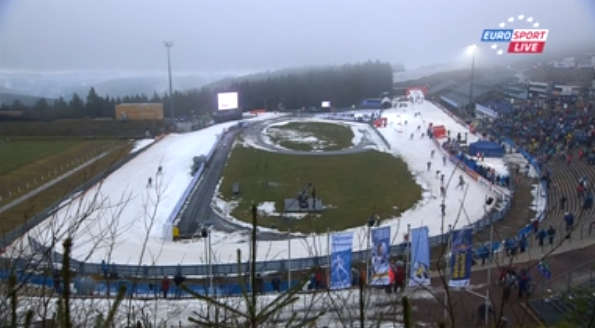
Throughout the race, a fog continued to steadily descend on the Oberhof track, as soaked spectators tried to make out the action and view the stadium TV screen through the mist. The slushy snow was difficult on ski poles as well, with Norway’s Tord Asle Gjerdalen breaking a pole and then missing the hand off of a spare, which cost him seconds and ultimately put him in 58th of 106 finishers.
Harvey started the race under control and steadily sped up. He nearly tangled with Germany’s Tobias Angerer, who started just as he came through the stadium on his second lap, but the incident didn’t throw him off.
At 2.3 k, Harvey was 3.8 seconds down on Tritscher’s time, and in the running in a tightly grouped race.
“I was getting splits off of the guy that started ahead of me, so I knew I was just one or two seconds off the pace early on,” Harvey said. “I knew at one point starting my last lap, I was like one second or maybe equal to Devon according to [coach Justin Wadsworth’s] splits and then I just went hard on the last lap.”
That was his strategy: conserve to have enough to go all-out for the last 1.5 k.
“It’s a really flat prologue, but I think it makes it really hard because there’s no recovery at all,” he explained. “I wanted good juice for the last lap, and I think it paid off. ”
The difficult snow also brought out a number of different technical styles for dealing with the conditions, many of them rough and at a high tempo. Harvey looked to be skiing smooth with a lot of glide, much like Kershaw had skied, and his final lap powered him into first, four seconds ahead of Kershaw.
Some skiers complained about the conditions in Oberhof with Norway’s Martin Johnsrud Sundby telling NRK before the race that it was a “parody” of cross-country skiing. Harvey, on the other hand, found the conditions this year better than last year’s prologue at the same venue.
“Last year it was so sugary in the stadium, and this year it was still sugary but not as deep,” Harvey said. “I actually think the rain kept it more stable. For me, I was gliding the same or just a bit more because I was pushing more at the end.”
After Harvey finished, no late starters could threaten his lead. Russia’s Illia Chernousov started 66th and finished third before Jespersen, continuing his impressive form, bested him by 3.2 seconds.
A Norwegian favorite, Petter Northug started late in the race with a explosive exit out of the start and a fast early pace. At 2.3 k he was 0.8 seconds ahead of Harvey’s split and appeared to be a threat. It was not his day though, and the Norwegian looked visibly tired as he finished 23.6 seconds behind Harvey in 24th.
Besides Harvey and Kershaw’s historic finish, Canadian Ivan Babikov posted his best prologue finish of 26th (+24.8).
Andy Newell led the American in 20th, Simi Hamilton was 42nd, and Noah Hoffman 82nd for the U.S. Ski Team.
Harvey called his victory a surprise.
“I wanted top five … I was sixth last year,” he said. “I’ve been good in prologues in the past so I was hoping for top five, maybe podium but the win was a bit of a surprise for sure.”
Devon Kershaw racing to second, his first top 30 of the season, in the opening stage of the Tour de Ski — the 4.5 k freestyle prologue — in Oberhof, Germany. Kershaw placed second to teammate Alex Harvey in a historic 1-2 finish for Canada. (Photo: Fischer/Nordic Focus)
For Kershaw, placing second in the first race of his eighth Tour de Ski was important to his self belief. In 2011, he won four medals at the Tour, but had yet to crack the top 30 this season.
“My confidence has been really shaken this year,” Kershaw said. “I know I’ve done great training and great preparations, but the feeling while racing just hasn’t been there. So today, even though I’ve been feeling really great all week, I was having a hard time trusting those feelings. It was like really, ‘Do I really feel good? I haven’t felt good in awhile so I hope so.’ ”
He’s written some of his results off to “really, really hard” training, but he didn’t expect to be so far off the pace in and back from the leaders in each of his Period 1 races.
“That’s been really hard on me mentally, to be honest,” he said. “Last year was a tough season for me and I know I did great preparations all year in the off season, so it’s just really hard to be patient and stay believing in myself. But this week something clicked after [the World Cup in] Asiago.”
There, Kershaw came as close to making the points as he has all season, placing 33rd in the classic sprint.
For Kershaw, Saturday’s race was something of a moment of truth.
“I felt good in the warm up and [thought] if I don’t have these good feelings in the race, then I’m totally lost and I don’t understand cross-country ski racing anymore,” he said. “Then the race happened and those good feelings remained.”
Canada’s head coach, Wadsworth has been confident that these results were on their way throughout the first period of World Cup racing.
“You’re always surprised to go one, two, even when things are going really well,” Wadsworth said. “It was a bit of a surprise for sure, but I knew after the first workout the guys did in Davos and they all said they felt good, that everything was leading in the right direction. We know where the fitness was and it’s starting to show now in the results.”
For the Canadian team, their standout results in the prologue are nothing new. At World Cup Finals in 2012, Harvey and Kershaw placed first and third.
Harvey said the prologue’s format suits them.
“We’re good at distance and sprinting and the prologue is right in between there,” Harvey said. “But I also think that with the prologue, you get super filled with lactate and you need to hold onto your technique, and I think we worked really hard in the summer on technique and things like that and pacing, too. We really work on building in interval sessions, we do the last two or three really fast. I think in the prologue that’s what you want, to have the last kilometer or two really fast, so I think that can explain that.”
Wadsworth also praised the work of the team’s wax technicians.
“Our skis were really good,” he said. “Our wax technicians did an amazing job with the skis so that helped for sure.”
He also tried to lessen the emphasis on results in a pre-race team meeting Friday night.
“I told the athletes to do two things: one is to do a really good process, and that means thinking about the warmup, technique, everything, the same stuff you do when you’re doing a hard workout,” Wadsworth said. “The second thing is to just really fight no matter what, I don’t care if you guys get 80th tomorrow, if you show me you warmed up well and did everything and you can fight, then we’ll be satisfied. I really wanted to pull the thinking away from the results.”
For Kershaw, the Tour remains a “day-by-day thing,” he said. “It is all for Sochi, even though I had a great start today that’s wonderful and it’s actually really nice for my head, but it is prep for Sochi. Justin and I decided after having a bit of a tough start that we’ll re-evaluate midway through the Tour whether we keep going or not. I love the Tour though, it’s my favorite race, and all the events are good for me, if I’m in shape and I’m in shape today, but we’ll see what tomorrow brings.”
In other news, Kershaw arrived in Oberhof with much less hair than he had in Asiago.
“I had a couple days in Davos were the temperatures were warm, and it just got in my eyes on an intensity session on Christmas and was just all round unruly,” he said. “So I went to the massage therapist we have here, Scott Edmunds, and I was like, ‘Man can you help me cut this a little shorter?’ One thing led to another, and the next thing you know it’s all gone. I’ll tell you right now, it felt so good today racing without having hair jamming in my eyes. Sometimes you do have to change it up.”
The Tour continues Sunday with a 1.5 k freestyle sprint on the same course as the prologue. Harvey’s Tour is now aided by his possession of the leader’s bib and a 15-second time bonus, but he has no intention of contesting the title in the final climb up Alpe Cermis in Val di Fiemme, Italy, next weekend. His back can’t take it, and even if it can, he’s usually cautious about it.
Alex Harvey (c) atop the podium with teammate Devon Kershaw (l) and Norway’s Chris Jespersen (r). (Photo: Fischer/Nordic Focus)
“I’m not planning on finishing,” Harvey said. “Just like last year I’m planning to do everything but the last climb, but for tomorrow I’m hoping to have another solid day. Top five, top ten, the shape is good and it’s going to be the exact same course, so I’m hoping to fight up there. But it’s sprinting so anything can happen.”
Also of note: Canada’s fourth man, Lenny Valjas is on his way back to Canada on Sunday to rehab his knee after surgery this summer.
“The knee hasn’t been great lately, and with the first three stages being skating, that puts a lot of stress on his knee and we just felt that it’s really better for him to go back to Canada and start the rehab process again,” Wadsworth said. “He was getting to the point in Kuusamo [Finland] were it was pretty good, but since then his leg has started to atrophy a bit, and we need to get him back on track.
“Once we saw the schedule with the Tour, all things pointed for him to go back to Canada and work with our trainers there and really try and get him ready for Sochi. The guy’s an amazing talent, and it’s not like he hasn’t been doing anything, he’s been racing and training, he just really needs to get his leg back where it should be. We got him out on the first reasonably priced flight, so he’s going to head back tomorrow.”
Norway’s Marit Bjørgen racing to victory in the opening 3 k freestyle prologue of the 2013/2014 Tour de Ski in Oberhof, Germany. (Photo: Fischer/Nordic Focus)
Saturday morning was sunny in Oberhof, Germany. Jessie Diggins probably wasn’t the only one surprised to wake up to that, and she and the U.S. women’s team packed raincoats anyway.
“I’ve actually never seen the sun in Oberhof,” Diggins said on the phone later Saturday.
It started raining well before the 2 p.m. start of the women’s 3-kilometer freestyle prologue – the first of seven races in the Tour de Ski. Organizers emergency salted the course to keep the few precious uphills on the 1.5 k course in tact, and “there were apparently 300 dudes out shoveling the snow from the woods,” Diggins said.
The track at Oberhof, Germany, the first of three venues in the 2013/2014 Tour de Ski.
She, for one, was impressed. Had they not added snow to the manmade track and re-salted the course, course times would’ve been 30 seconds slower – easily.
The 65th starter out of 80, Norway’s Marit Bjørgen quickly accelerated along the flat-and-twisting course. The rain stopped just before the women’s race, but it wasn’t pretty out there. The snow felt slow, even for Bjørgen, and without time or much use for splits in an all-out 3 k, it was hard to know how one was doing.
With each passing checkpoint, it became evident that Bjørgen was on her way to the podium. At 0.8 k, she was two-tenths of a second faster than 23-year-old teammate Ingvlid Flugstad Østberg (first at the time, she ended up 13th). By 2.3 k, Bjørgen, 33, had extended her lead by 2.5 seconds on another Norwegian at least seven years younger than her, Astrid Uhrenholdt Jacobsen.
“I found it difficult to find the right speed along the way,” Bjørgen told NRK, according to a translation. “I thought to myself, ‘This can not go fast. This does not go fast.’ ”
Norway’s Marit Bjørgen (c) in first, teammate Astrid Jacobsen (l) in second, and Poland’s Sylwia Jaskowiec in third at the 3 k freestyle prologue, the first stage of the 2013/2014 Tour de Ski. (Photo: Fischer/Nordic Focus)
But she willed her way to the finish and held her speed for the duration, winning in 6:34.4 minutes, bumping Jacobsen out of the non-existent leader’s chair by 1.9 seconds. The 57th starter, Jacobsen, 26, ultimately placed second.
Earlier in the race, Diggins in bib 33 finished with the fastest time of 6:43.6, besting Slovenia’s Alenka Cebasek by 1.5 seconds. Soaked to the core, Diggins said she kept poking her head out of the changing tent to see if she was still in the lead, or in the top three once Jacobsen came through 7.3 seconds faster. Two starters after Jacobsen, German Denise Herrmann edged Diggins by 0.8 seconds for second place at the time, then Bjørgen bumped Herrmann back and Diggins off the podium.
A Polish woman other than Justyna Kowalczyk made the podium in third, as 27-year-old Sylwia Jaśkowiec captured a career-best third, 7 seconds behind Bjørgen. The 67th starter, she moved Diggins to fifth, another 2.2 seconds back.
“This was a big surprise for me. I’m very happy,” Jaśkowiec said in a press conference.
Bjørgen congratulated her. “It’s great to have a new Polish girl on the podium,” she said at the press conference.
On Saturday morning, Kowalczyk, the overall winner of the last four Tour de Skis, announced on Facebook that she was withdrawing from this year’s eighth edition of the Tour. The decision came from her frustration with Tour organizers who changed several races due to low-snow restrictions – making five of seven races freestyle.
A perennial rival, Bjørgen wasn’t happy, either. Norway has yet to win the Tour, and with Bjørgen and teammate Therese Johaug as two strong favorites, this isn’t the way they wanted it.
“Possible victory, mine or Therese, has no taste or value without Justyna,” Bjørgen told NRK, according to a translation.
Johaug finished 11th on Saturday, 13.1 seconds behind Bjørgen, despite a fast start in which she clocked the sixth- and ninth-fastest intermediate checkpoint times. Bjørgen gained 15 bonus seconds for the win, putting her 28.1 seconds ahead of Johaug in the overall Tour.
With back-to-back freestyle sprints next – Bjørgen’s forte – that’s not necessarily the greatest start for Johaug.
“I’m not stopping,” Johaug told NRK. “I’ve been training for sprints, so it will be good.”
After Diggins, three Finns made the top 10 with Anne Kyllönen in sixth, Aino-Kaisa Saarinen in seventh and Kerttu Niskanen in 10th. Cebasek finished eighth and American Sophie Caldwell tied her individual World Cup best (like Diggins) in ninth, 11.8 seconds back from Bjørgen.
“It was a great way to start for sure,” Diggins said. “It was really sweet to see Sophie do so well and see the other girls start the Tour strong. Our skis were rocketing; it was amazingly fast.”