Tag: Oestersund

  • Notes And Quotes: Östersund Mixed Relay Edition

    Notes And Quotes: Östersund Mixed Relay Edition

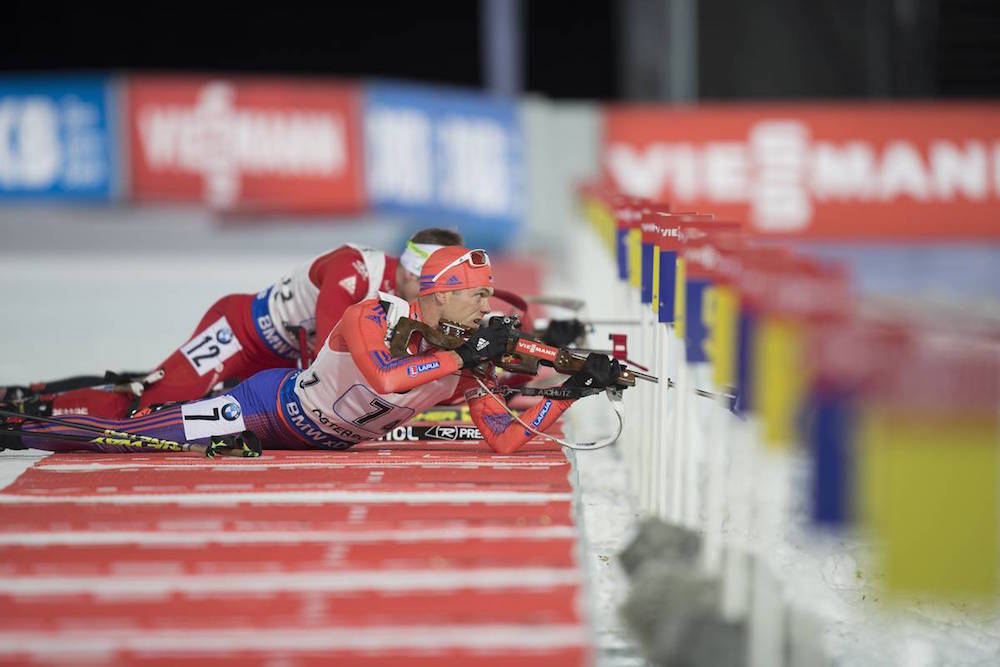
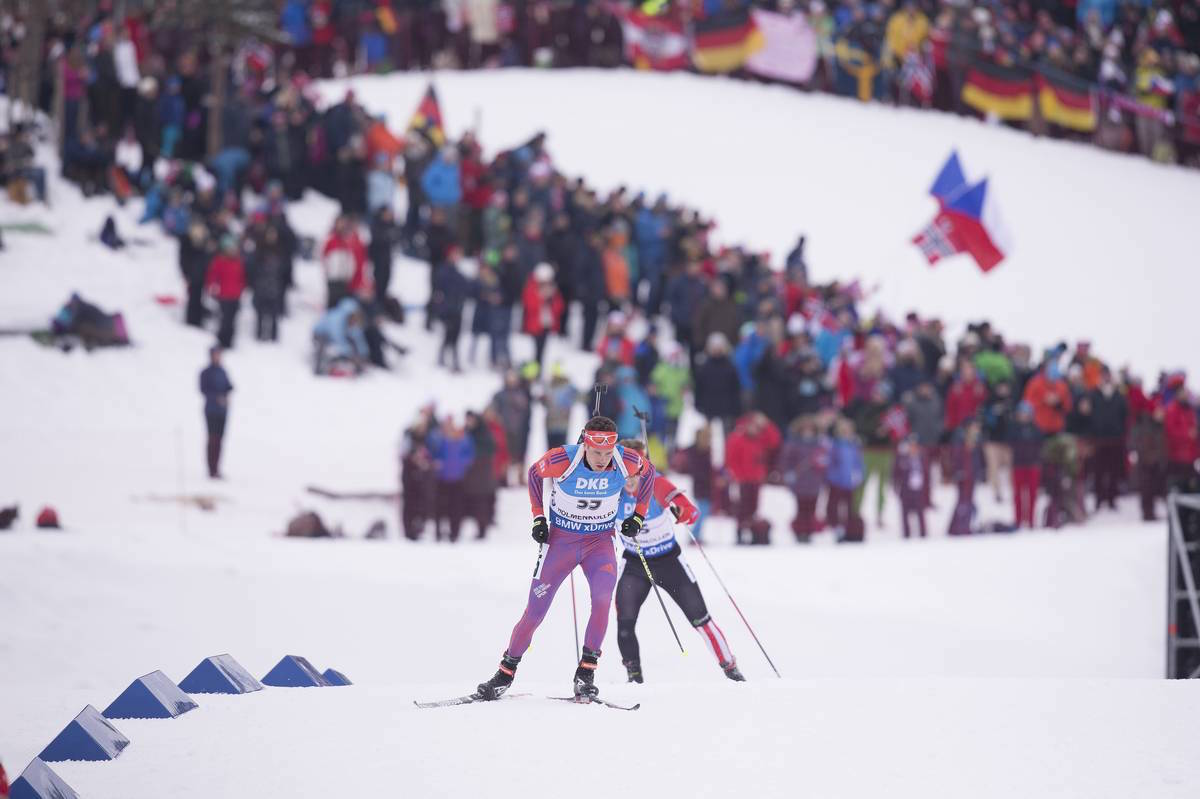
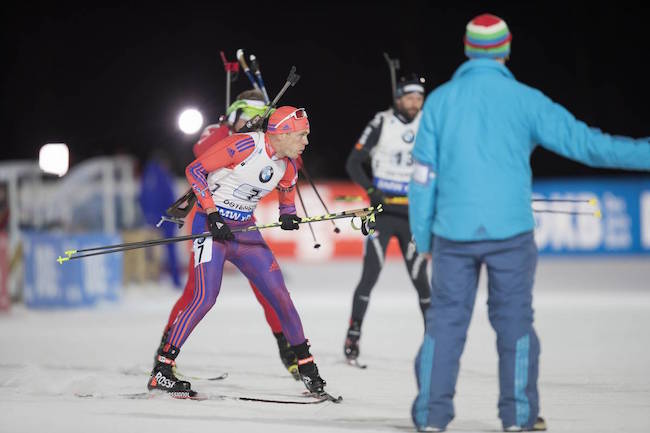
    Biathlete Tim Burke coming into the shooting range during the mixed relay in Oestersund, Sweden, on Sunday. The United States ultimately finished eighth in the competition. (Photo: USBA/NordicFocus.com)
    Biathlete Tim Burke coming into the shooting range during the mixed relay in Oestersund, Sweden, on Sunday. The United States ultimately finished eighth in the competition. (Photo: USBA/NordicFocus.com)

    The IBU World Cup kicked off in Östersund, Sweden, on Sunday, with a doubleheader of mixed relay action. Perhaps not surprisingly, two of the most dominant teams of last season picked up wins: Norway and France.

    Norway topped the 2 x 6 k + 2 x 7.5 k mixed relay, with the United States team of Susan Dunklee, Clare Egan, Lowell Bailey, and Tim Burke eighth (+2:38.5) and the Canadian team of Julia Ransom, Megan Tandy, Scott Gow, and Brendan Green 22nd (lapped).

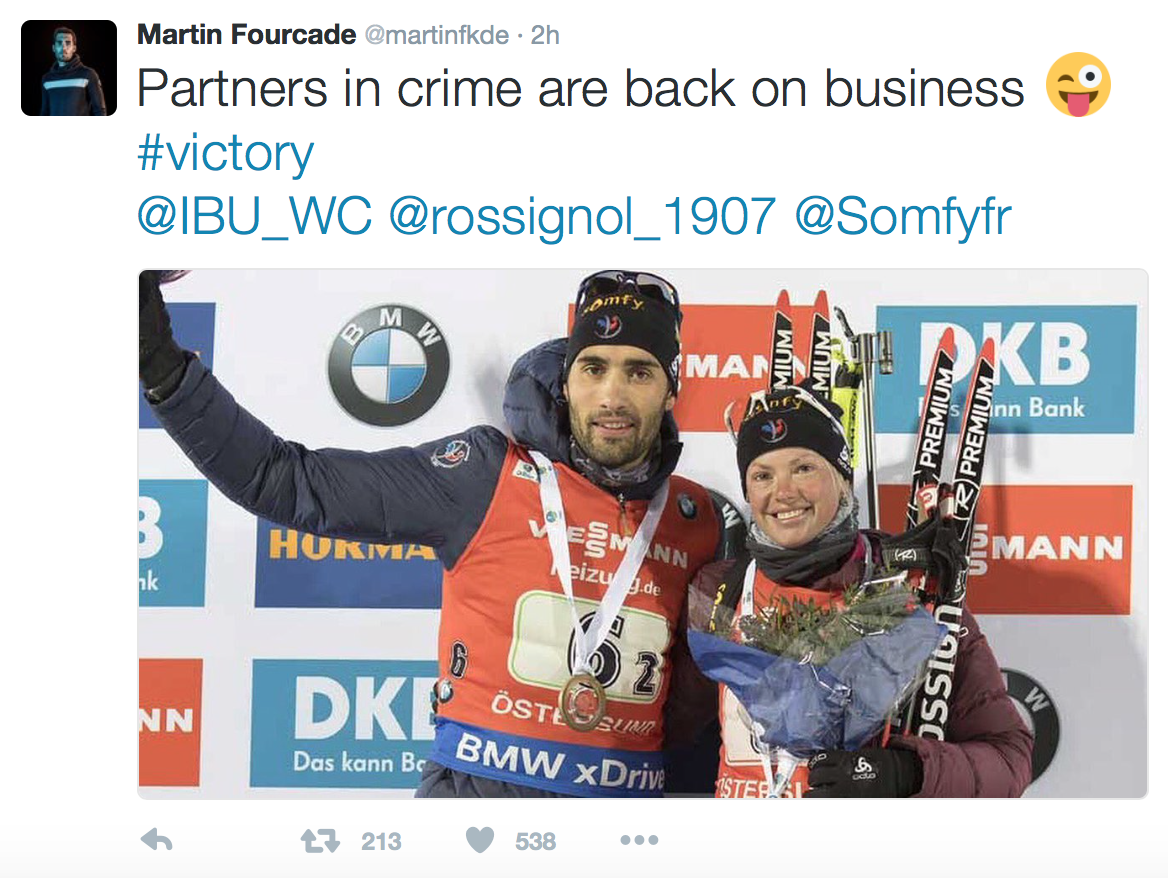
    In the single mixed relay, French dream duo Marie Dorin Habert and Martin Fourcade came out on top. Canada’s Rosanna Crawford and Nathan Smith finished seventh (+1:44.7) and Americans Joanne Reid and Leif Nordgren 19th (lapped).

    Besides being the first race of the season, with all of the excitement and jitters that entails, Östersund had some big wind gusts in store for the World Cup field. Here are some reactions from the North American competitors.

    On Testing Ski Speed for the First This Season

    “The first race of the season is always an unknown, and a good way to let out the opening season jitters… I’m feeling pretty good about my prep and where I am right now, so I’m optimistic about the individual race in a few days. It’ll be a good way to really test the body and see what I can pull off in the range.”

    -Scott Gow (CAN)

    “You never know where you’re going to be going into the first race of the season. You do all this hard work and no matter how well you did it over the summer, there’s always this uncertainty for the first race. I was certainly hoping that I would be around here.”

    -Susan Dunklee (USA), who led the mixed relay field at the first tag

    “I knew there was a good chance that Susan would tag me in first place, so I was prepared for that scenario. She has led the first leg many times before, plus I witnessed firsthand the significant improvements she made over the summer, so I know she is at a very high level and I think we will see many more great things from her this winter.”

    -Clare Egan (USA), who took the tag

    “I did not expect to stay in front for as long as I did (about 1k), nor to be able to stay with the other women once they passed me. But I felt very comfortable in the lead pack, and that was a welcome confirmation that my summer training went well and that I am in great shape. No matter what stage of development you are at, it is a pivotal moment when you realize that the superstars are not superhuman. That happened yesterday for me!”

    -Egan

    What About Shooting Speed?

    “The biggest thing I was waiting to see was the shooting speed because I’ve put a lot of effort into bringing my shooting times down over the summer and I think that has paid off quite a bit. I mean, I missed three targets and had to use three spares so that slowed me down a little bit, but the rest of the shooting times were pretty quick… In the past I don’t think I would have had the chance of being tagging off in the lead with three spares, and now because my shooting speeds are a little bit faster it makes it possible, which is really cool.”

    -Dunklee

    “I think the single mixed especially, because the ski length is the same as a [cross-country] sprint, has more focus on fast shooting and fast hand loading (the single bullet you load in a relay when you miss a shot), and I don’t have either of those skills down completely yet.”

    -Joanne Reid (USA)

    On Wind

    “When I came in for standing the wind had picked up and many of the athletes around me used all three spares and a few ended up in the penalty loop with me. The wind was part of my problem, but additionally I was nervous. There is a catch-22: if you are not confident, it’s almost impossible to shoot well, but if you don’t shoot well consistently, it is almost impossible to be confident. I am trying to work around that!”

    -Egan, who cleaned prone with no spare rounds but was stuck with two penalty loops in standing

    “Prone was somewhat normal for myself, with the windy range calling for one more spare. However, I think jet lag caught up to me a bit, making for a hard time on the skis, and an absolutely terrible time in the range (standing). I think it was a lack of mental sharpness that caused standing to unravel, which was not only disappointing but embarrassing because I know I’m better than that!”

    -Julia Ransom, who led things off for Canada and also had two penalty loops in standing

    On Ice

    “It was really good snow cover, but it rained a couple days ago and so all the sidewalks around town are still just sheet ice, and sheet ice under the snow. Some of the downhills, right in the corner where you want to turn you have to be really careful because you’re going to skid out. And also some of the uphills you had to be really careful about which side of the hill you went on, because some of it was all the snow on top was scraped off and it was sheet ice so that was tricky.”

    -Dunklee

    “Three people fell in front of me in the first lap alone.”

    -Reid

    “After my last shooting as I was rushing to get out of the range so I could go and tag to Nathan, I hit one of those ice patches and slipped as I was trying to put my pole on, and it just fell out of my hand. I was able to grab it really quick, but it’s still something that kind of throws off your rhythm. Luckily I didn’t have to go ski a whole loop, I just had to tag Nathan right away!”

    -Rosanna Crawford (CAN)

    “It was definitely tricky this evening with a lot of icy patches. My lower legs are feeling quite strained and a little painful now.”

    -Nathan Smith (CAN)

    On No-Man’s-Land

    “I was tagged fairly far back and unfortunately there weren’t very many people around me. There was one athlete about 30 seconds ahead and another about 30 seconds behind, so I was fighting to catch up to one and fighting to stay ahead of the other. For my leg of the race I was just trying to have a good personal performance and try to make up time where I could.”

    -Gow

    On Teammates

    “Today I am starting fresh and coming up with a plan to try to mitigate what happened yesterday for future performances. It’s always hard having those bad days when others are counting on you, but I am lucky to have such awesome, understanding teammates.”

    -Ransom

    “It’s hard to start out the season with a relay, since there’s more pressure than usual – there are other people depending on your ski speed and shooting accuracy… I don’t know which is worse- being the person that has to go into the penalty lap in the relay, or having to watch your relay teammate go into the penalty lap-yikes!”

    -Reid, who had a penalty loop in her first shooting stage

    Racing continues in Östersund on Wednesday with the women’s 15 k individual and on Thursday with the men’s 20 k individual.
  • French Dream Team Tops IBU Single Mixed Relay; Canada 7th

    French Dream Team Tops IBU Single Mixed Relay; Canada 7th

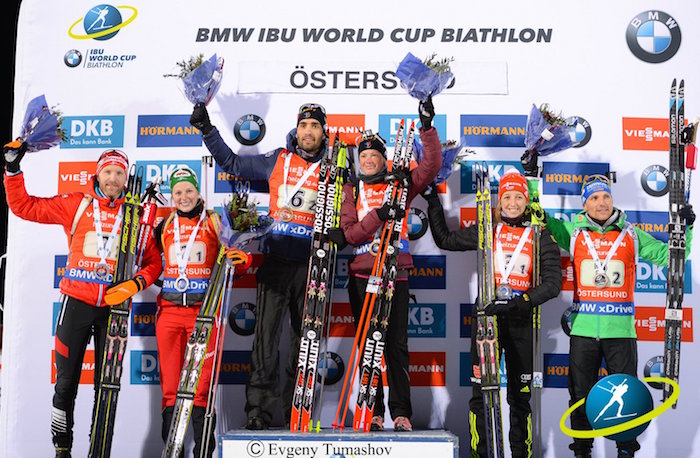
    On the podium in the single mixed relay: team France (Martin Fourcade and Marie Dorin Habert), Austria (Simon Eder and Lisa Theresa Hauser), and Germany (Erik Lesser and Franziska Preuss). (Photo: IBU/Evgeny Tumashov/Twitter)
    On the podium in the single mixed relay: France (Martin Fourcade and Marie Dorin Habert), Austria (Simon Eder and Lisa Theresa Hauser), and Germany (Erik Lesser and Franziska Preuss). (Photo: IBU/Evgeny Tumashov/Twitter)

    By mid-afternoon in Östersund, Sweden, on Sunday, Norway had already claimed a win in the mixed relay. But there was another event still on the schedule: the single mixed relay, a relatively new format with just one man and one woman per team, skiing short loops of a kilometer and a half. Each athlete skis and shoots twice, then tags off, then repeats: two relay legs each for a total of eight shooting bouts.

    While Norway had put their best athletes in the traditional mixed relay — perhaps because it is a World Championships event, unlike the newer format, and some teams considered it important to have relay teams begin to gel — a few other countries had decided to put all their eggs in the single mixed relay basket.

    Namely: France, who paired the two most successful athletes of the 2016 IBU World Championships into one team toeing the start line. Marie Dorin Habert was never far from the lead, and by the time Martin Fourcade crossed the finish line 16 seconds clear of second-place Austria, he made it look like just another training session.

    “The single mixed relay is that kind of competition when you have to be in both: a good shooter and good skier,” Fourcade said in a post-race press conference. “I am satisfied about my fast prone shooting.”

    The French pair used just four spare rounds total across the eight shooting stages, representing some of the best shooting of the field.

    “As we all know, Fourcade and Marie Dorin are a tough pair to beat,” Canada’s Nathan Smith wrote in an email.

    screen-shot-2016-11-27-at-10-03-05-pm

    Second place went to Austria’s Lisa Theresa Hauser and Simon Eder, who, like the French, were nearly perfect on the range; the pair combined for six spare rounds. Eder, a constant threat for individual wins, had the crux performance in the anchor leg to hold off Erik Lesser of Germany. But it was 22-year-old Hauser, who had her first two World Cup top-10s last season, who surprised by turning in the fastest third-leg time of the field.

    “Of course it is great to stand on the podium already in the first race,” she said in an Austrian Ski Association press release. “Today the second loop on the first leg was surely the hardest to race, because the tempo was extremely high at the start.”

    Lesser and German teammate Franziska Preuss finished third (+25.2).

    “I am happy that I came through the shootings fine today,” Preuss said in an interview with German television station ZDF. “I tried to shoot fast because it’s a single mixed relay, and two misses is alright. I already noticed during the summer that I took a step forward, became more consistent, technically clean in my skiing, and just going all-out.”

    Canada followed France and Austria in putting their top athletes in the two-person race, and the strategy had previously paid big dividends. Last season, Rosanna Crawford and Nathan Smith had a breakthrough in this event and finished second in Östersund, the first relay medal ever for the team. The pair were together again on Sunday, and ended up seventh (+1:44.7).

    Crawford led out of the start and stayed out of trouble in the chaotic mass start, but then used two spare rounds in her first prone.

    “I really wanted to start strong and get to the front of the pack so I could control things a little bit more, and I’m happy with how I executed that part of my race,” Crawford wrote in an email. “I struggled a little bit with prone today but had some solid standing which was nice… my first loop I felt quite strong and then things just got a little bit slower from there, some heavy concrete-feeling legs. We got here from Canada late Wednesday evening, so still dealing with a bit of jet lag.”

    Despite feeling heavy, Crawford had the fifth-ranked times for both of her relay legs; Smith’s were ranked 10th and 13th.

    “We knew that a medal would be possible today but everything would have to go our way like last year,” Smith explained. “Rosanna was definitely strong enough to put us in contention. If I had felt better and perhaps using a couple less spares it would have been possible to threaten for a podium. It also seems like a few more teams put their strongest two athletes in the mix this year.”

    Smith mentioned that he had been dealing with fatigue in the last few weeks before leaving for Europe, but thought that he had his health sorted out. Nevertheless, it remains to be seen whether he would get off to the same start that saw him place ninth in the sprint this opening week in both 2015 and 2014.

    “I had some good feeling intensity sessions shortly before travelling to Europe,” he wrote. “I’ve generally had some strong results in Östersund the last few years. However this has only been the case maybe 50% of the time in the relays, so I know not to be overly concerned with perhaps a rougher than hoped-for start physically.”

    Crawford is also hoping for strong performances when individual racing kicks off later in the week. She won two trials races in Canmore, Alberta, before leaving for Europe, as well as two cross-country ski races against some of Canadian national team.

    “Even though I had some strong races in Canmore, it’s hard to know how you’re going to compare against the Europeans,” she wrote. “This race is so short and so quick on such a small loop that it’s hard to know how this will relate to our longer individual races. I think it was a really good opportunity to blow out the cobwebs and get ready for the races for the rest of the season. I learned a few things about shooting that I need to work on and am happy to have two days to fine-tune those things.”

    The American team of Joanne Reid and Leif Nordgren had a penalty loop and seven spare rounds, finishing 19th; they were lapped before completing the race course.

    Results

  • Bjørndalen Up To Old Tricks As Norway Strikes Gold in IBU Mixed Relay

    Bjørndalen Up To Old Tricks As Norway Strikes Gold in IBU Mixed Relay

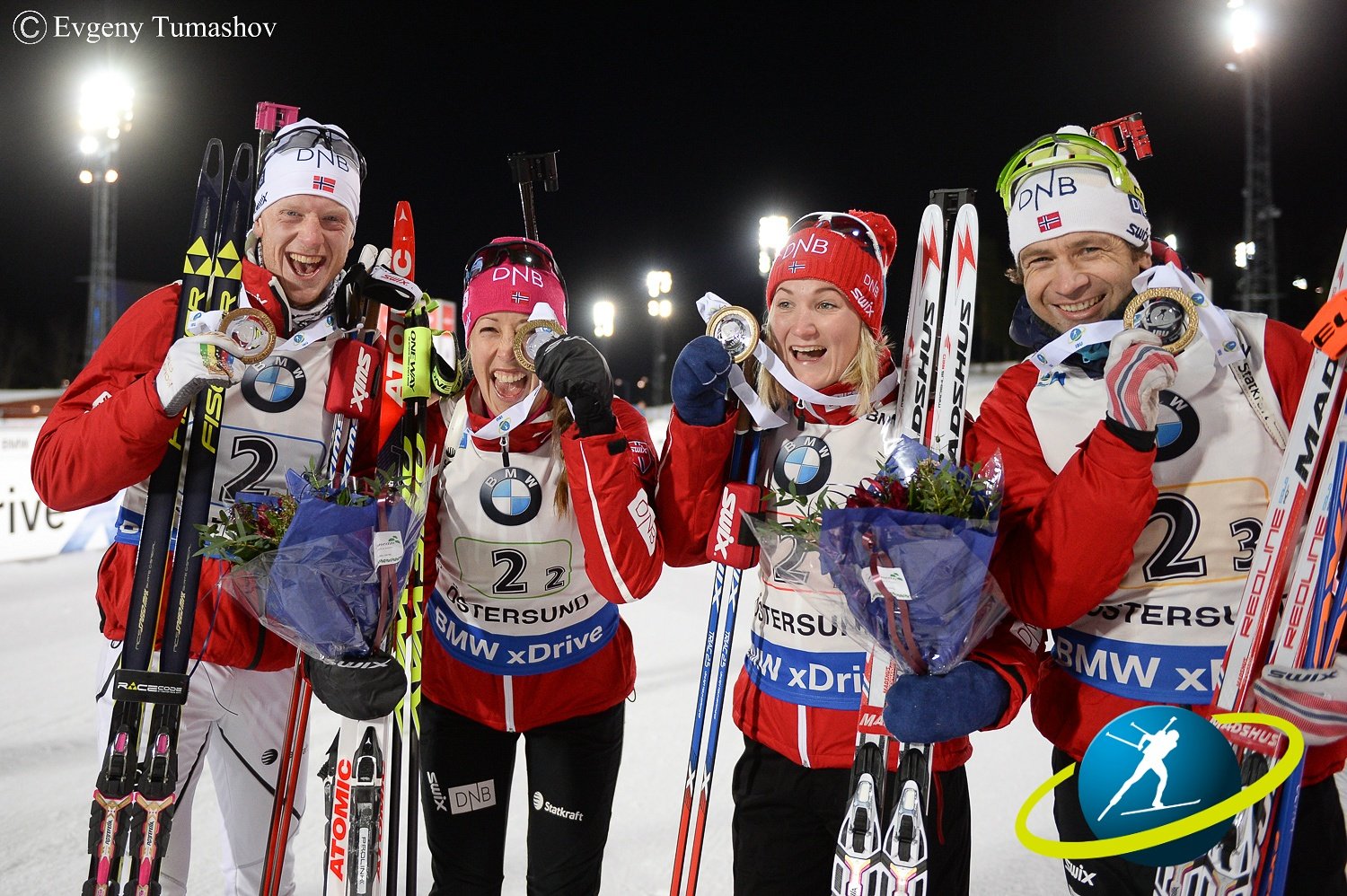
    (l-r) Norway's Johannes Thingnes Bø, Fanny Horn Birkeland, Marte Olsbu, and Ole Einar Bjørndalen celebrate after winning the first race of the 2016-2017 biathlon World Cup season, a mixed relay in Ostersund, Sweden. (Photo: IBU/Evgeny Tumashov/Twitter)
    (l-r) Norway’s Johannes Thingnes Bø, Fanny Horn Birkeland, Marte Olsbu, and Ole Einar Bjørndalen celebrate after winning the first race of the 2016/2017 biathlon World Cup season, a mixed relay in Östersund, Sweden. (Photo: IBU/Evgeny Tumashov/Twitter)

    It’s a new season on the International Biathlon Union (IBU) World Cup, but the Norwegian biathlon team made it clear that they didn’t want anything to change: just as they won the World Cup mixed relay trophy in 2016, they picked up a 33.7-second win in the event in Östersund, Sweden, on Sunday to kick off the new year.

    And just as he had so many times before, it was Ole Einar Bjørndalen — the “King of Biathlon” — who provided one of the crucial contributions for the Norway team, bringing them a lead that his teammates would never relinquish.

    The Norwegians were one of just three relay teams all afternoon to avoid the penalty loop, but things didn’t start out so auspiciously. Marte Olsbu used a spare round in the first prone stage, dropping to eighth.

    But despite missing again in standing, she left the range in first place, then held on to the lead almost to the exchange, where she tagged off 0.1 seconds behind Susan Dunklee of the U.S.

    Twenty-one-year-old Anna Magnusson of Sweden was also in the lead pack, tagging off 0.6 seconds back and making for a tough fight on the last loop.

    Susan Dunklee (US Biathlon) racing in Sunday's mixed relay, the first race of the 2016/2017 IBU World Cup season, in Östersund, Sweden. (Photo: USBA/NordicFocus)
    Susan Dunklee (US Biathlon) racing in Sunday’s mixed relay, the first race of the 2016/2017 IBU World Cup season, in Östersund, Sweden. (Photo: USBA/NordicFocus)

    “I was really impressed with Sweden being right up there on the first loop, too,” said Dunklee, who had a similar battle with Olsbu in the mixed relay at 2016 IBU World Championships. “The three of us were just duking it out that whole last loop. I flooded my system a little early with lactic acid on one of the early hills… but then I came back and caught them towards the end of that lap and we all came in together. Yeah, it was fun!”

    Norway’s second athlete, Fanny Horn Birkeland, held the lead for several kilometers, but was one of many women felled by the wind in the second-leg standing stage. Birkeland used all three spare rounds to knock down her targets, and yet only fell 9.3 seconds out of the lead; at this point all but one team in the field had used at least four spare rounds, and some had used many more.

    Birkeland wasn’t thrilled with her shooting, but knew it was good enough to get the job done.

    “It was an acceptable leg,” she told Norway’s NRK broadcaster.

    Clare Egan was another casualty of the wind. The American had taken the tag from Dunklee in first place, and maintained a sixth-place position close to the leaders at the halfway point of her race. But with two penalty laps in standing, she dropped to 13th, 1:39.9 from the lead.

    “Clare had a fantastic first half of her race,” Dunklee said. “I was really impressed that she stayed with the pack in the prone, and shot clean under that pressure. I think the pieces are there and they’ll come together later in the season for us as a team.”

    By the next tag, Italay’s Dorothea Wierer had put together a small 4.9-second lead over Birkeland. Lukas Hofer, the first man out of the exchange zone, had a near-perfect start for Italy, extending his lead over the first loop and then using one spare round to clean his targets, finishing his shots before anyone else had even begun shooting.

    But Norway’s Bjørndalen was steadily chasing, and on the second loop began to close ground. By the time the two came into the range for standing, it was a close race and Bjørndalen showed that despite being 42 years old, he still has the instincts and strength that have earned him well over 90 World Cup wins.

    Hofer and Bjørndalen traded shots, cleaning one target after another, and Hofer began to leave his mat before realizing that his last target hadn’t actually fallen. Bjørndalen hit five for five and left with the lead, but Hofer had to use all three spare rounds to knock down that one target.

    “I felt really good all the first four shots, and I was so sure I cleaned the last one, I was about to put the rifle back on,” Hofer lamented in the post-race press conference.

    In the meantime, Benedikt Doll of Germany finished his shots and headed out on course in second place, 25.4 seconds behind Norway.

    “There was a tricky wind today, which was noticeable in the standing shooting,” Bjørndalen said in a television interview with NRK. “For my part it went all right today. It ‘worked out’ and I was able to do what I was supposed to do.”

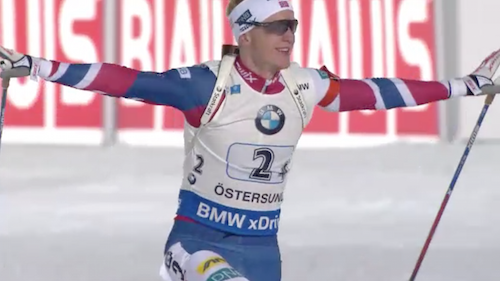
    Johannes Thingnes Bø of Norway "flies" across the finish line to win the mixed relay in Östersund, Sweden.
    Johannes Thingnes Bø of Norway “flies” across the finish line to win the mixed relay in Östersund, Sweden.

    Bjørndalen tagged off to Johannes Thingnes Bø, who cruised around his first loop and then missed his last target in prone. He easily cleaned it with a single spare round, however, and was back on his way.

    In standing, Bø put on a clinic and had one of the fastest range times of the day while cleaning all five targets.

    “The last leg is very hard, and I haven’t done it so many times,” Bø said in a press conference. “When I was starting alone the pressure was off, and I wanted to do my own race. I tried to gain some seconds from the very start.”

    Arnd Peiffer likewise held Germany in second, using one spare round in prone and none in standing.

    “I was pretty much alone the whole time, but I received pretty good information from the coaches, so I could find a good speed,” he said in an interview with Germany’s ZDF broadcaster. “In prone I was a bit hectic, also because it wasn’t so easy today, the wind was changing back and forth. Already during the zeroing [target practice] I had a few problems. So I was a bit insecure and unfortunately shot the last one away, but was able to hit the first spare. Overall I think it worked out pretty well today.”

    So just like Norway, the German team had stayed out of the penalty loop and used just six spare rounds total.

    “I have to say they worked really well at the range today,” German men’s coach Mark Kirchner told ZDF. “It was not so easy, with changing winds you had to be wide awake. You can’t complain if you need just one spare each.”

    The most exciting finish of the day was the race for third place between Russia – a team which had bounced between fifth and seventh for much of the race – and Italy. Anton Shipulin pulled the Russians from seventh into fifth and then into third with two perfect shooting stages and the fastest ski time of all anchor leg skiers.

    But Dominik Windisch of Italy was eager to make up for his teammate Hofer’s shooting collapse and after leaving the range just a few seconds behind Shipulin after standing, managed to catch up and stick on him like glue. Windisch looked labored as the two flew around the course, but he knew that the venue has a downhill finish.

    Windisch shadowed Shipulin down the hill, then used a slingshot of momentum to fly past into the finishing straight and outsprint the Russian to secure third place for Italy, +44.2.

    Tim Burke (US Biathlon) during his prone stage of the mixed relay, the first race of the 2016/2017 IBU World Cup season. The U.S. anchor, Burke brought his team from 10th to eighth at the finish. (Photo: USBA/NordicFocus)
    Tim Burke (US Biathlon) during his prone stage of the mixed relay, the first race of the 2016/2017 IBU World Cup season. The U.S. anchor, Burke brought his team from 10th to eighth at the finish. (Photo: USBA/NordicFocus)

    As for the U.S., Egan had already moved from 13th up to 12th by the time she tagged to Lowell Bailey, who brought the team into 10th. Tim Burke then brought them up into eighth place, despite three spare rounds.

    “I was happy with my shooting from the clip in standing but disappointed that I needed three extras to get the last [standing] targets,” Burke wrote in an email. “I tried to push the pace on the first two spares and just missed with both. On the third extra round, I really took my time to make sure I hit because I knew there was no one to catch in front and that I would lose a few places if I missed… I just need to be a bit more relaxed with the extras in the future.”

    Burke had the fourth-fastest course time of the anchor-leg athletes, and said that while he “did not feel at my absolute best”, his ski speed was where he wanted it to be at this early point in the season.

    “It certainly was not our best race or perfect race, but a good sign that we can fight for the podium later in the season if we all have an ‘on’ day,” Dunklee said. “So that’s exciting to know.”

    “Going into the race I know we all hoped for a better result,” Burke agreed. “[But] in years past, we could have been 15th place with this shooting, so we are encouraged by that improvement and we know more is possible in the future.”

    The Canadian team was never really in the picture after leadoff athlete Julia Ransom skied two penalty loops in the opening standing stage. Megan Tandy and Scott Gow had shooting troubles of their own, and the team was sitting in 22nd place with those two penalty loops and 11 spare rounds before being lapped and pulled from the race.

    Results

    – Harald Zimmer, Aleks Tangen and Ian Tovell contributed

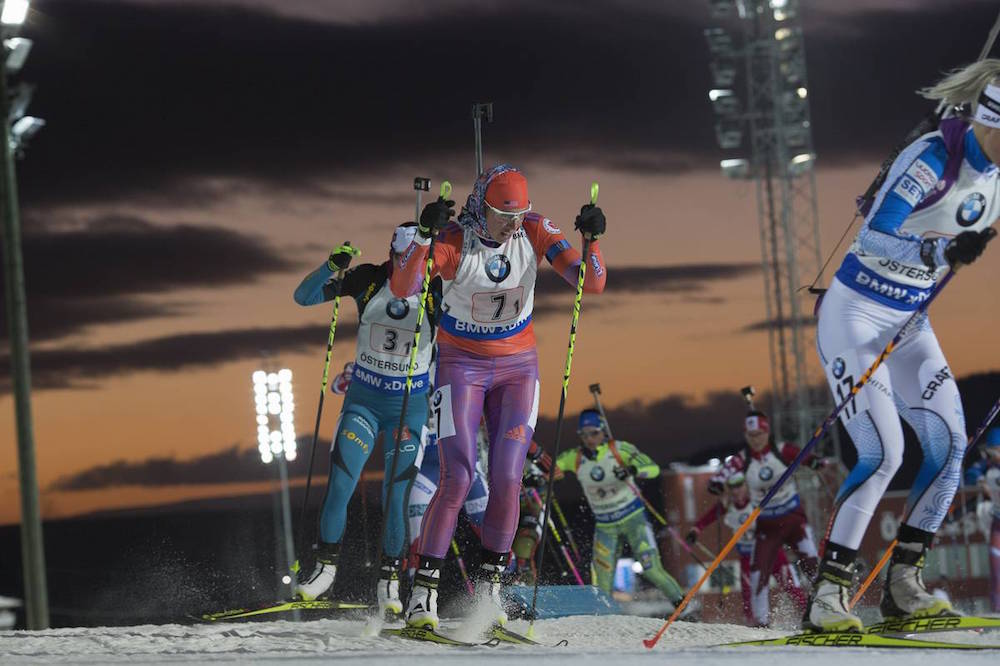
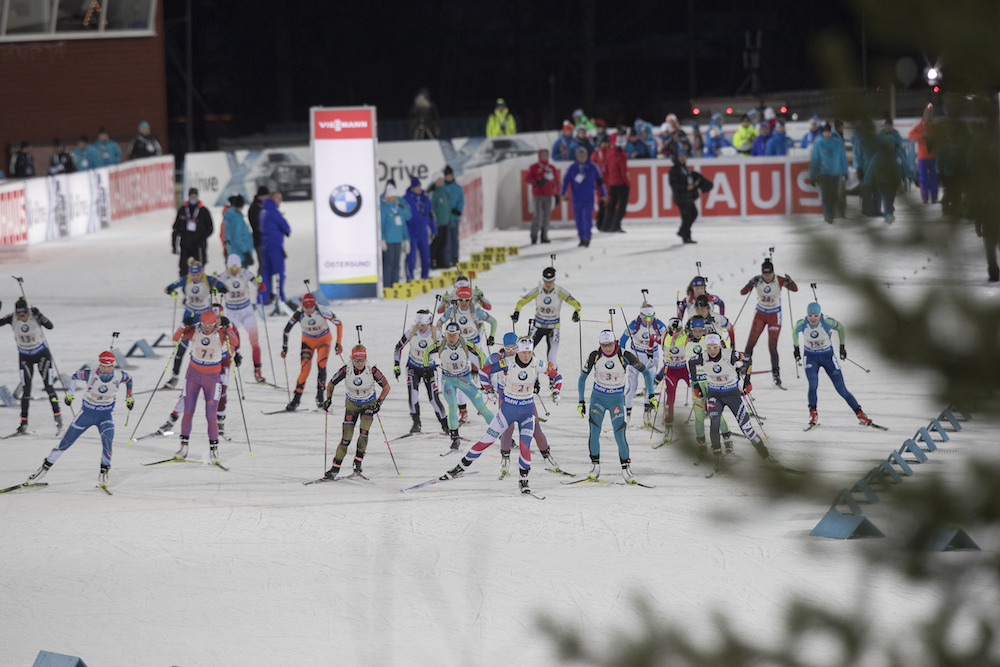
    The field leaves the start in the mixed relay in Ostersund, Sweden, on Sunday. (Photo: USBA/NordicFocus.com)
    The field leaves the start in the mixed relay in Östersund, Sweden, on Sunday, with American Susan Dunklee in bib 7. (Photo: USBA/NordicFocus.com)
  • ‘Macx The Man’ Davies Dives into Season with Big Aspirations

    ‘Macx The Man’ Davies Dives into Season with Big Aspirations

    Macx Davies of Canada racing to 10th in the IBU World Cup 10 k sprint in Ostersund, Sweden, last December. It was his career-best result by 30 places. (Photo: Biathlon Canada/NordicFocus)
    Biathlon Canada’s Macx Davies racing to 10th in the IBU World Cup 10 k sprint in Östersund, Sweden, last December. It was his career-best result by 30 places. (Photo: Biathlon Canada/NordicFocus)

    In one of the first races of the 2015/2016 season, Canadian biathlete Macx Davies scored his first World Cup top-10 finish, besting his previous top result by more than 30 places.

    It was a bit of a game-changer for the Calgary native, then just 22 years old.

    “Normally I don’t hit my stride till after Christmas, so to come out of the gate with my first World Cup points and a top 10 was a crazy start to the season,” he wrote in an email last week. “Which also made it hard to try and repeat that performance throughout the season.”

    On that day last December in Östersund, Sweden, Davies became just the third active member of his men’s World Cup team to have a top 10.

    And yet in a topsy turvy season which saw Canada notch a number of first-evers, his place among the team wasn’t so clear.

    A few months later, Davies watched from the sidelines as his four teammates Christian Gow, Nathan Smith, Scott Gow, and Brendan Green locked up a bronze medal in the men’s relay at World Championships. Davies hadn’t been named to start that day.

    Canadian biathlete Macx Davies raced to his second-best IBU World Cup result of 25th in the men's 10 k sprint in Canmore, Alberta. (Photo: Daniel S. Guay)
    Canadian biathlete Macx Davies raced to his second-best IBU World Cup result of 25th in the men’s 10 k sprint in Canmore, Alberta. (Photo: Daniel S. Guay)

    “Watching from the sidelines was one of the most conflicting experiences I have ever had,” Davies wrote. “On one hand I was super excited for the guys and for the whole team to have such an achievement, but on the other I was disappointed that I was on the sidelines watching, not racing.”

    There were a few possible reactions. One would have been to retreat and assume that the four-man team was set in stone going forward. Another would be to try to get onto it.

    “My motivation did waiver after their performance for a while, but now I know I am stronger because for it and I am truly happy for them,” Davies explained. “Also I am determined to be a part of the next record-breaking performance from this team.”

    He’d had other high points of the season — racing the World Cup on home turf in Canmore, Alberta, where he finished 25th in the sprint, for instance.

    That same weekend, he teamed up with Rosanna Crawford, Sarah Beaudry and Brendan Green to finish sixth in the mixed relay, tying the best result a Canadian team has ever had in the event.

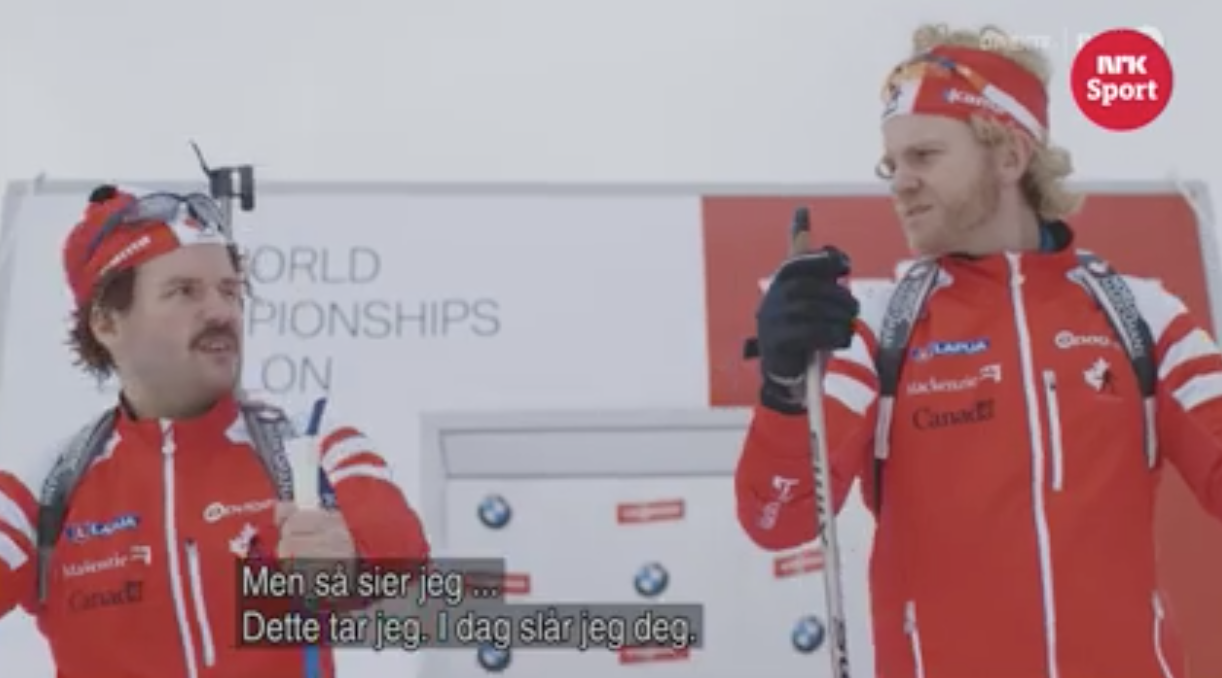
    And Davies became something of a media personality when Norway’s NRK broadcaster produced a mockumentary of him beating teammate Christian Gow to win a World Championships race, based on a finish-line interview in Oslo. (The original segment is available to view only in Norway, but you can find other versions online under the title “Macx The Man”.)

    Macx Davies and Christian Gow trash-talking on the start line, as dramatized by NRK.
    “Macx Davies” and “Christian Gow” trash-talking on the start line, as dramatized by Norwegian comedians on NRK.

    “I did not think I would have this kind of following until I was on the podium a couple times, but it has been fun having people ask for my picture and autograph,” Davies wrote. “I never really thought that I would be the best known Canadian because of my dance moves or my interviews.”

    (He’s also known for his beard.)

    Off-trail hijinks aside, his biathlon chops did notch Davies an A-team nomination this spring (which Biathlon Canada calls its “Eh!” team), and he has continued to train with Smith, Green and the Gow brothers. It was the first time he and Christian Gow — now both 23 years old – were named to the A-squad.

    “We trained together everyday for the last few years anyways, but having all the men on the ‘Eh’ team means we are all closer now,” Davies wrote. “We had always been training with Brendan, Scott and Nathan, but the difference this year was that Christian and I were keeping up with those guys.”

    Davies has already had his first taste of international competition this season, with the Canadian team trials races in Canmore on the Frozen Thunder loop. The American and Ukrainian men’s teams were on hand to beef up the level of competition. While Davies was pre-qualified for the World Cup, putting on a bib still gave him a sense of where he was at.

    Davies finished 14th and fifth in the two sprint races in Canmore, the fifth and third Canadian on the two days, respectively.

    Tim Burke of the United States leads Canada's Macx Davies in the World Championships 10 k sprint in Oslo, Norway. At his first senior World Championships, Davies finished 58th, then moved up to 53rd in the pursuit. (Photo: US Biathlon/NordicFocus)
    Tim Burke of the United States leads Canada’s Macx Davies in the World Championships 10 k sprint in Oslo, Norway. At his first senior World Championships, Davies finished 58th, then moved up to 53rd in the pursuit. (Photo: US Biathlon/NordicFocus)

    “The trials were challenging for me,” he wrote. “I had a hard time shooting both days and was struggling with the hot weather (10+ degrees [Celsius]). But I am happy with my skiing in those races, and I know that my shooting is getting better. I think you can read into those results as a base line from which this season will only improve upon.”

    Davies is dead serious about doing even better this season than he did last year.

    “I am looking at breaking into the top six a couple times as well as trying to stay within the top 25 [overall] for the season,” he wrote. “These goals are not going to be easy, but I think they are within my abilities and will be excited to see them come true.”

    For now, Davies is heading back to Östersund, where he got that first top 10, to start off this World Cup season. When asked how he had gotten that notable result, Davies made it clear that he could do it again.

    “Really I made that big jump by seizing the opportunity of bad weather to leapfrog my best results,” he explained. “Hitting 10 out of 10 that day was like 12 out of 10 on a normal day. What it means is I can use anything to my advantage, so watch out!”

    We asked Davies to give our ’17 Questions for 2017′ a go. Here are his responses:

    1. Biggest change in your life in the last five or so months since the ski season ended?

    Moving in with my girlfriend

    2. Biggest change in your training?

    Going to New Zealand for 3 weeks.

    3. Major areas of improvement you’ve seen so far?

    Ski technique and shooting accuracy

    4. Whom you’ve been working closest with this offseason (coaches or training partners)?

    My coach Matthias Ahrens

    5. Best trip in the last five months (and why)?

    Weekend getaway to Emerald Lake Lodge

    6. Favorite cross-training?

    Mountain Biking

    7. Favorite non-athletic activity or pastime this summer?

    Leather working

    8. Song that was your jam this summer?

    Una Mattina by Ludivico Einaudi

    9. All-time favorite race moment?

    Competing at home in Canmore

    10. First thing you pack in your bag when you leave for Europe?

    A comfy sweater

    11. Venue/event you’re most excited to visit this season?

    PyeongChang

    12. Who will win the World Cup title this year?

    Martin [Fourcade], he just seems in a league of his own.

    13. Biggest sacrifice you feel you’ve made choosing this career path?

    My education

    14. If you could change one thing about your sport, what would it be?

    More Dancing

    15. What did you have for breakfast this morning?

    Eggs and yogurt

    16. In 5 years, I’ll be ____?

    Overall World Cup winner.

    17. In 50 years, I’ll be ____?

    Retired and living in the mountains, in a house that I built.

  • Bjørndalen Perfect in Östersund 20 k, Wins 94th World Cup (Updated)

    Bjørndalen Perfect in Östersund 20 k, Wins 94th World Cup (Updated)

    A 41-year-old Norwegian legend shot 20 perfect shots and skied faster than all but nine men on the biathlon World Cup circuit today. Ole Einar Bjørndalen claimed his 95th World Cup win.
    A 41-year-old Norwegian legend shot 20 perfect shots and skied faster than all but nine men on the biathlon World Cup circuit today. Ole Einar Bjørndalen claimed his 95th World Cup win.

    Just hours before Wednesday’s 20-kilometer individual competition in Östersund, Sweden, Ole Einar Bjørndalen was expressing doubt about his season.

    He wasn’t sure he would be selected for Norway’s World Championships team, he told Norwegian broadcaster NRK. The 41 year old lost six weeks of training this summer due to a respiratory infection.

    But come race day – the first individual World Cup race of the season – the winningest Winter Olympian in history was back on his game.

    Bjørndalen shot 20 for 20 and won the 20 k individual competition by 27.1 seconds over Simon Schempp of Germany, who had one penalty. Alexey Volkov of Russia was third, 38.2 seconds back, also with clean shooting.

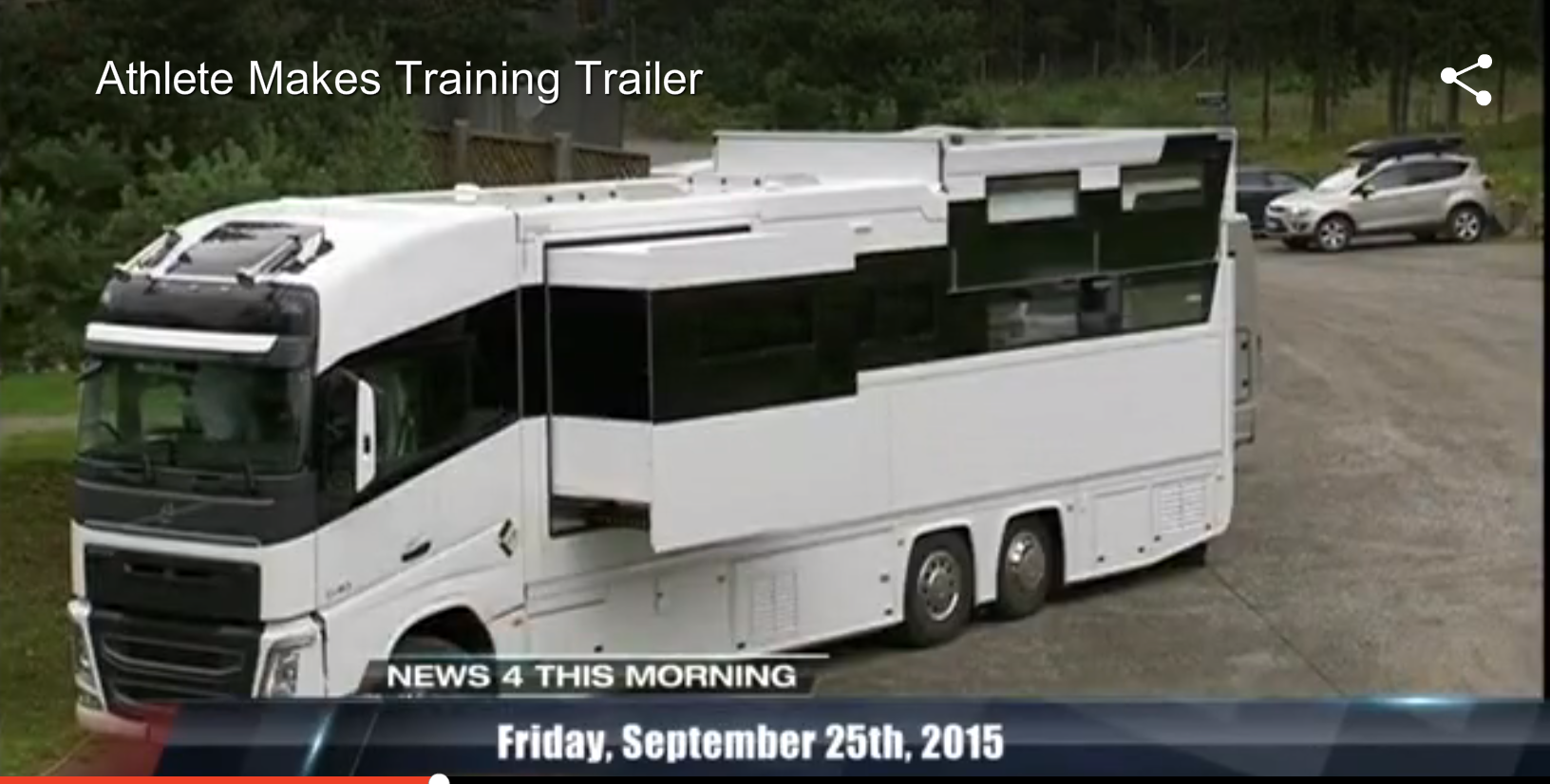
    His roadside companion: Ole Einar Bjørndalen's 20-ton RV, which includes a rollerski treadmill and enough room for a shooting range. (Photo: WTVY screen shot)
    His roadside companion: Ole Einar Bjørndalen’s 20-ton RV, which includes a rollerski treadmill and enough room for a shooting range. Read more here. (Photo: WTVY screen shot)

    It’s his 94th World Cup win in a notoriously up-and-down sport.

    “It’s the best thing I could have done,” Bjørndalen told NRK after the race. “Everything works, so I’m very happy today.”

    Inititial counts had taken this as his 95th victory. But the International Biathlon Union changed its rules prior to the 2014 Olympics so that Olympic gold medals are no longer counted as World Cup victories.

    That means that Bjørndalen’s five individual Olympic gold medals from previous Games are counted in his tally, but his most recent one from Sochi is not.

    “The [Olympics] are in many aspects, a different event than the typical World Cup event,” the IBU wrote in a press release explaining the situation. “The biggest difference is the number of athletes on the start. So called start quotas are not the same as in the World Cup circuit. For example: in biathlon, the top five nations in our sport (based on Nations Cup Score) are entitled to start up to 6 athletes but only 4 will get the right to start at the OWG… Bottom line: Bjørndalen has 94 official World Cup Biathlon victories.”

    The veteran had a good race going, leading through three clean stages. He took his time on the final shooting stage, drawing a few deep breaths before taking the fourth shot. The King of Biathlon was cautious.

    The fourth target was knocked down.

    Another few deep breaths.

    The fifth and last target fell.

    Bjørndalen let out a shout of satisfaction before leaving the shooting range with a nearly 20-second lead on Volkov. While Schempp was able to move from third to second over the final four kilometer loop, Bjørndalen held his own and took the win comfortably.

    Ole Einar Bjørndalen: ready for another new season - and maybe more? (Photo: Madshus)
    Ole Einar Bjørndalen: ready for another new season – and maybe more? (Photo: Madshus)

    His ski time was the 10th-fastest on the day.

    “I had not expected that I would do so well, but I know I’m in good shape,” Bjørndalen told NRK. “I don’t have too many secrets. I have strong motivation. Maybe that’s the secret.”

    Bjørndalen pumped his fists and celebrated at the finish line, a more emotional display than he sometimes puts on.

    He had started with a late bib, as had Volkov, which meant that when Schempp crossed the finish line it had been with a big lead – well over a minute. At the time, a victory for the German had seemed very possible.

    He had bumped out Norway’s Emil Hegle Svendsen and France’s Quentin Fillon Maillet, who ended up tied in a dead heat for fourth, 1:44 back from Bjørndalen and both with two penalties.

    Bjørndalen had announced that he would retire after World Championships this season, which will be held in Oslo.

    He had been thinking of calling it quits after the 2014 Olympics in Sochi, Russia, where he won a gold medal in the sprint as well as in the mixed relay. But the home Championships were too tempting.

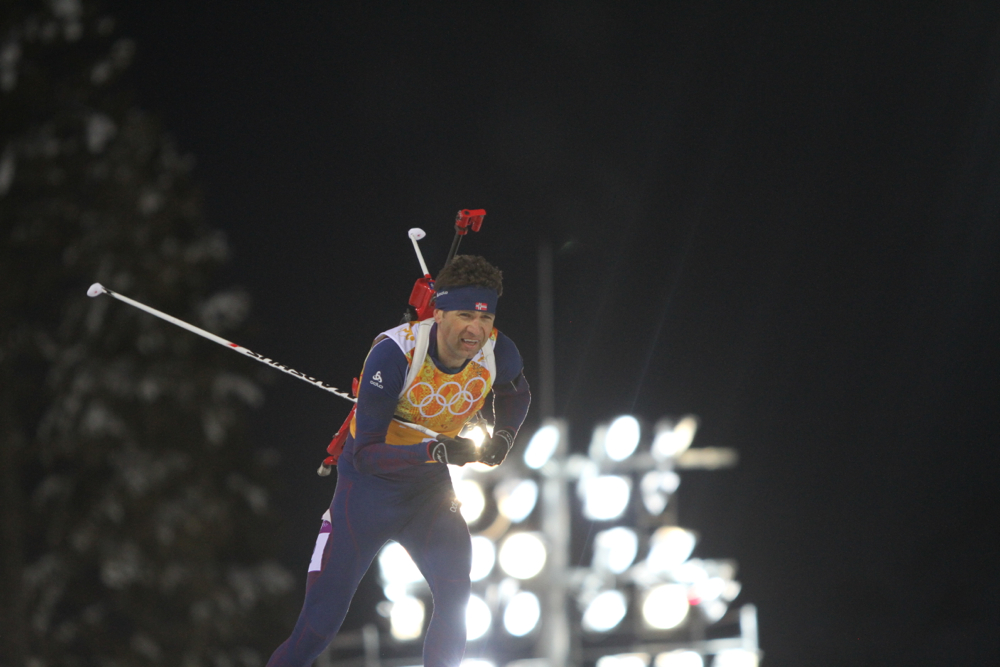
    Ole Einar Bjørndalen out on the trails at the 2014 Olympics, where he trounced the decades-younger competition.
    Ole Einar Bjørndalen out on the trails at the 2014 Olympics, where he trounced the decades-younger competition.

    Now? His teammates think he could even go for one more Games.

    “That’s impressive,” teammate Johannes Thingnes Bø, himself a World Champion, told Norway’s VG newspaper. “I cannot fathom him. It is unexpected that he wins, but in a way it’s not, either. He is Mr. Biathlon and is at home wherever he is in the world. I would not be surprised if he continues to 2018 either. Now he tastes the blood on his teeth.”

    Bø’s older brother Tarjei agreed. Assumed to be the fittest and strongest Norwegian coming into Wednesday’s race, Bø instead finished 22nd and gave kudos to his older teammate.

    “What is there to say?” he asked VG. “I am proud to be teammate Ole, with such a hard guy as he is. He comes back time and again. Today it is particularly impressive with the first races of the season, it’s challenging conditions and he has had a tough break in summer.”

    Martin Fourcade of France says he’d believe anything.

    “Before Sochi I said I didn’t think he could get gold anymore,” he told NRK. “I had to shut my mouth and apologize. So I won’t say anything anymore… To be honest, I think he’s going to continue until the Olympics in 2018. But he knows it’s not going to be every day that he wins races and gets the yellow bib. It must be a huge dilemma for him if he should continue or not.”

    Results

  • Weekend Roundup: And So It Begins

    Weekend Roundup: And So It Begins

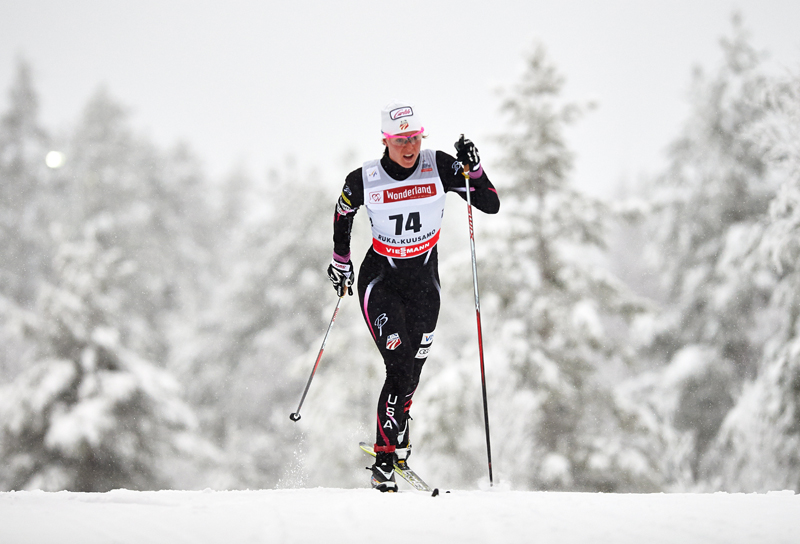
    Sadie Bjornsen (USA) on her way to seventh place.  Photo: Fischer / Nordic Focus.
    Sadie Bjornsen (APU/USST) on her way to seventh place in Satuday’s 5 k classic. (Photo: Fischer / Nordic Focus)

    The official beginning to the 2014 racing season didn’t disappoint with tons of exciting nordic action taking place across the globe. The World Cup kicked off in all three nordic disciplines, including the highly anticipated Super Tour races in West Yellowstone, Mont., which FasterSkier covered on-site.

    World Cup racing began on Friday with the classic sprint as the first leg of the Ruka Triple mini-tour in Kuusamo, Finland. Kikkan Randall (APU/USST) come out firing with a second-place finish, her best in a World Cup classic sprint. Justyna Kowalczyk won it, looking as strong as ever. Sadie Bjornsen (APU/USST) dominated in the qualifier in third and finished the day in 26th, and teammate Ida Sargent finished 16th. On the men’s side, Eirik Brandsdal of Norway overcame Anton Gafarov and Teodor Peterson to win the first World Cup race of the season. Andy Newell was the lone North American to qualify and finished the day in 24th.

    Bjornsen demonstrated that Friday’s result was not a fluke by finishing seventh in the 5 k classic on Saturday, followed by Randall in 15th. Kowalczyk won the race with the Norwegian duo of Marit Bjørgen and Therese Johaug in hot pursuit. Lukas Bauer won the 10 k classic, followed closely by Eldar Rønning. Canadian Ivan Babikov and Noah Hoffman (USST/SSCV/Team HomeGrown) were the only two North American men to crack the top 30, finishing 21st and 28th respectively.

    On the final day of action in Kuusamo, Bjørgen captured her fourth-straight Ruka Triple title, besting Swede Charlotte Kalla and teammate Johaug by nearly 20 seconds in the 10 k pursuit. For the U.S., Randall, Jessie Diggins (SMST2/USST), and Liz Stephens (Burke/USST) respectively recorded the seventh, eighth and ninth fastest times of the day, with Randall finishing fifth overall. Hoffman made major waves and skied the fastest time in the men’s 15 k, rising from 38th to ninth in the mini tour. Norway’s Martin Sundby won the Ruka Triple, just 12 seconds ahead of Hoffman.

    The U.S. SuperTour opened in West Yellowstone and Team Gregg dominated. The Midwest couple, Caitlin and Brian Gregg conquered the field with Caitlin winning both Friday’s skate sprint and Saturday’s 10 k skate (by over a minute and 20 seconds) and Brian taking second overall in the 15 k skate (to Norwegian Mads Strøm, a University of Colorado freshman).

    The International Biathlon Union (IBU) World Cup opened on Thursday in Östersund, Sweden, with a 20 k individual, which France’s Martin Fourcade won. Canadian Jean-Philippe Le Guellec finished an impressive fourth and teammate Nathan Smith placed 16th.  More impressive results followed, with American Tim Burke notching third in Saturday’s 10 k sprint behind winner Fourcade. Teammate Lowell Bailey finished 14th, and Susan Dunklee was 16th in the women’s 7.5 k sprint on Friday. Sunday’s pursuit races were canceled due to inclement weather.

    In nordic-combined action in Kuusamo, American Taylor Fletcher posted the fastest time in his anchor leg to give the U.S. seventh in the 4 x 5 k team event.

    FIS Cross-Country World Cup, Kuusamo, Finland (results)

    Friday’s Classic Sprint | Men’s Report | Women’s Report |

    Saturday’s Classic 5 k and 10 k | Men’s Report |North American Men’s Report |North American Women’s Report|

    Sunday’s 10 k and 15 k Pursuits | Men’s ReportWomen’s Report | Canadian report |

    Super Tour, West Yellowstone, Mont. (results)

    Friday’s Skate Sprint | Men’s ReportWomen’s Report |

    Saturday’s Skate 10k and 15 k | Men’s ReportWomen’s Report | Men’s Photo Gallery | Women’s Photo Gallery

    IBU Biathlon World Cup, Östersund, Sweden (results)

    Thursday’s 15 k and 20 k | Men’s Report

    Friday’s 7.5 k Sprint | Women’s Report |

    Saturday’s 10 k Sprint |Men’s Report |

    FIS Nordic Combined World Cup, Kuusamo, Finland (results) | RecapInterview

  • Zidek Wins Biathlon World Cup Opener; Spector a Sensational 25th

    Laura Spector racing in a relay last season.

    The biathlon World Cup opened in parasite-infested Ostersund, Sweden on Wednesday, with the country’s own Anna Carin Zidek riding clean shooting through four stages to a nine-second win over France’s Marie Laure Brunet in the 15 k individual competition. Hometown favorite Helena Ekholm finished third.

    Further down the results sheet, but not too much further, Laura Spector led the U.S. with a 25th-place finish. It was the best race of her career, and the best U.S. World Cup finish since Haley Johnson’s 21st-place effort in Pokljuka, Slovenia, in December of 2009.

    Zidek told IBU News that she hadn’t expected to win the race.

    “I did not have much in the way of expectations today,” she said. “My shape has not felt the best, nor has my shooting been very good. So I went into the race to do what I could – do my best. My shooting felt incredibly good today, though.”

    And indeed it was; Zidek was one of only three women in the entire 95-racer field to shoot clean.

    Brunet, who missed one shot in the first prone stage and one shot in the last standing stage, had the fastest ski time on the day. In an individual race, one minute is added to a competitor’s time for each missed shot – much longer than it takes to ski a penalty loop in other race formats. It was this penalty system that kept Brunet out of the win.

    However, she wasn’t entirely disappointed, telling IBU News that she was “very, very happy to finish second.”

    Spector was similarly pleased with her efforts. It was largely her shooting that got her into the top 30. Her ski time was only the 65th-fastest on the day, but she only missed one shot out of twenty. Only six of the women above her in the results shot as well or better.

    “It was not only my best race when it comes to shooting, it also was my best race ever,” she told the U.S. Biathlon Association in a press release. “So, of course I feel great about that.”

    Spector’s result is perhaps all the more impressive because she is currently enrolled at Dartmouth College and will be taking her final exams for the term later this week in Ostersund.

    Previously, Spector’s best results were a pair of 58th-place finishes at World Championships in Pyeong Chang, Korea in 2009.

    And for the U.S. women, there have only been a handful of top-thirty results since before the last Olympic cycle began. Johnson had one top-30 World Cup finish in early 2009, and one at the World Championships in Korea. Lanny Barnes finished 23rd at the Vancouver Olympics and 15th in a World Cup in Oestersund in 2006, and Sarah Konrad finished 30th at a World Cup in Oslo, Norway, in 2006.

    In short, Spector’s performance in Sweden on Wednesday was something that the U.S. women have, in the past, only had the chance to enjoy once or twice a year, if at all. The last banner year was 2004, when Rachel Steer had four top-20 performances and Tracy Barnes was top-30 in a pair of World Cups in Slovenia.

    The other U.S. woman in the race was Sara Studebaker, the only woman to have pre-qualified for the first period of World Cups. She suffered from an infection of the parasite cryptosporidium last weekend, as did many biathletes and residents of Oestersund, which affected her performance today. Studebaker finished 72nd, with three missed shots and the 78th-fastest ski time.

    “Today I woke up feeling much better, but still pretty tired,” she told FasterSkier in an e-mail. “During the race, my stomach was a little upset, but the main issue was my energy level.  I was definitely running on empty the last couple laps. The worst is definitely over, and I’ve been feeling better each day since Monday, so I’m optimistic about [Friday’s] sprint.”

    “My race today was good, given my feeling,” Studebaker continued. “I am glad I started; it feels good to have one race out of the way.  I am happy with my shooting, though I wish I would have shot a little better in my last stage [where she missed two shots]! My misses were close though, and I know my shooting is solid right now, so that’s a great confidence builder going into the season. I am very positive about my skiing right now, also. I feel like I’m in good shape, and when I’m able to give 100 percent, I know I will be able to have some good results.”

    Zina Kocher led the Canadians with a 49th-place finish. For Kocher, who finished just outside of the top 30 in the overall World Cup last year, it wasn’t the best start to the season. She was followed by Rosanna Crawford in 69th and Megan Imrie in 83rd. Imrie struggled on the range, missing six shots.

    The men’s World Cup season kicks off Thursday, and racing continues in Oestersund through Sunday.