From the FasterSkier archive — posts syndicated from athletes’ and coaches’ own blogs between 2004 and 2012, kept online as published. Current coverage is at fasterskier.com.

Tag: Offseason

  • An Unlikely King: Ski Classics Champ Eliassen on the Secret to His Successful Rookie Season

    An Unlikely King: Ski Classics Champ Eliassen on the Secret to His Successful Rookie Season

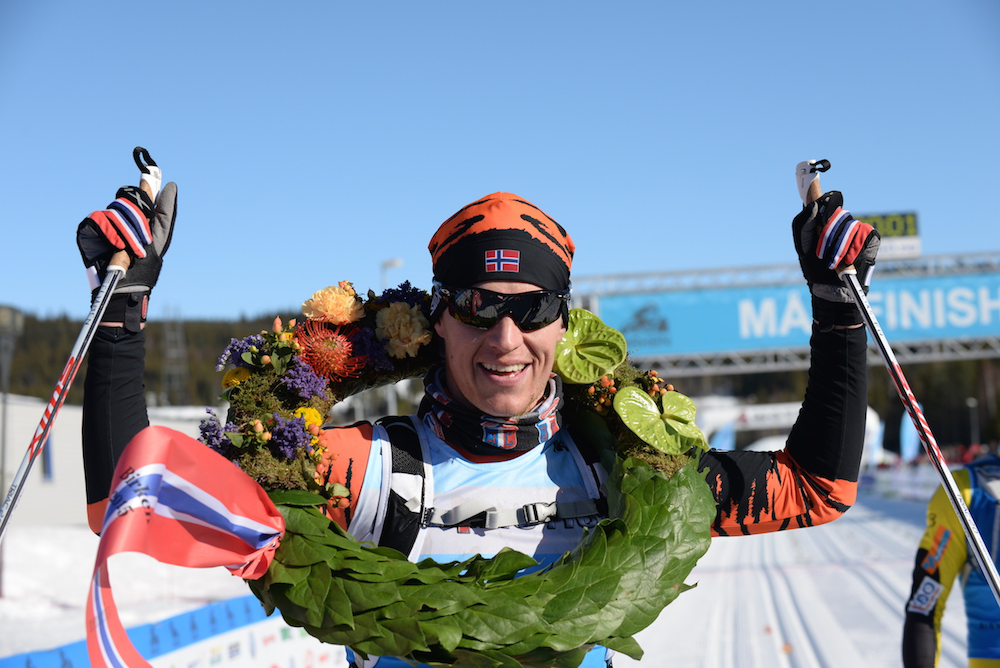
    Petter Eliassen after double poling his way to a victory at the Norwegian Birkebeiner on March 22. The 29-year-old Norwegian went on to win the 2014/2015 Ski Classics title in his first season on the circuit. (Photo: Kent Murdoch)
    Petter Eliassen after double poling his way to a victory at the Norwegian Birkebeiner on March 22. The 29-year-old Norwegian went on to win the 2014/2015 Ski Classics title in his first season on the circuit. (Photo: Kent Murdoch)

    How did Petter Eliassen do it? A month ago, the 29-year-old Norwegian from Trondheim double poled his way to a victory in the Norwegian Birkebeiner and went on to win the final Ski Classics race of the season — Sweden’s Årefjällsloppet — to claim the overall 2014/2015 Ski Classics title. It was his fourth-straight win on the circuit, making him the first racer to do so in Ski Classics history.

    FasterSkier recently spoke with Eliassen, a Norwegian national team member two seasons ago, on the phone, and he happily shared his training strategies. The following interview has been translated from Norwegian to English.

    A rookie to the long-distance circuit, he was content with the opening of his season, placing among the top 10 in the first five races of the Ski Classics series.

    But Eliassen did not expect to close the season with a four-race winning streak — starting with the König Ludwig Lauf in Germany on Feb. 2, then a Vasaloppet win in his very first attempt at the legendary 90-kilometer classic race in Sweden on March 9. He won the Norwegian Birkebeiner on March 21, and finished the season off with a final victory in the Årefjällsloppet on March 28.

    And he certainly didn’t expect to win the overall circuit crown in his first try. Eliassen beat established elite racers, such as the Aukland brothers of Norway, and former Vasaloppet champions, like Norway’s John Kristian Dahl and three-time Vasa Champion Jörgen Brink of Sweden, as well as a long list of merited marathon specialists, including Sweden’s Jerry Ahrlin, Oskar Svärd and Daniel Tynell, and Czech super-veterans Lukáš Bauer and Stanislav Řezáč.
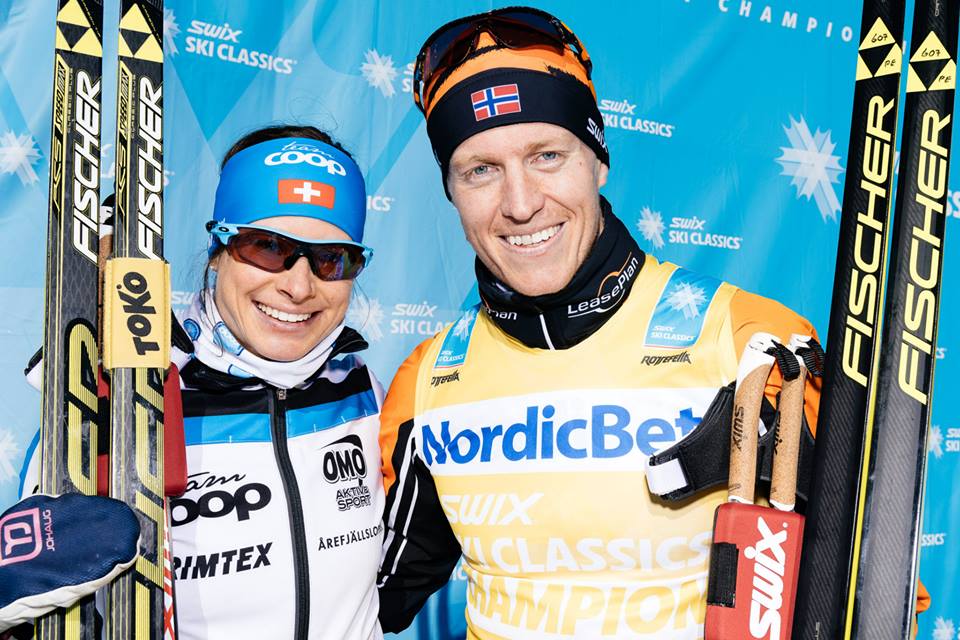
    Seraina Boner (l) of Switzerland and Team Coop and Petter Eliassen of Norway and Team LeasePlan Go won the Årefjällsloppet on March 28, the last of nine events in the 2014/2015 Swix Ski Classics marathon series. (Photo: Ski Classics)
    Petter Eliassen (r) of Norway and Team LeasePlan Go and Switzerland’s Seraina Boner (l) of Team Coop won the Årefjällsloppet on March 28, the last of nine events in the 2014/2015 Swix Ski Classics marathon series. (Photo: Ski Classics)

    What’s your key to marathon success?

    “I definitely benefit from years of racing experience,” Eliassen said, adding that the support and depth on Team LeasePlan Go made a difference. “We have a support crew and a race team that is very experienced and very well run. That’s huge both prior to the races and also in the offseason.

    “Training-wise, I have done much the same leading up to this season as I did when I was on the national team. We do a lot of volume and some strength, but I have focused a bit more on double poling than I used to and much less on skating,” he said, adding that he does miss skating.

    “I enjoy skating, and I still do some skate workouts throughout the season, but it’s definitely not the main part of the volume.”

    While the Ski Classics organizers have not ruled out including freestyle events to the race schedule in the future, Eliassen doesn’t see that happen in the near future.

    “So many of the established long-distance elite racers are highly specialized and spend so much of their training effort on perfecting their double-pole technique and strength that I think they would object,” he said.

    Practice your weaknesses, race your strengths

    While double poling isn’t his specialty, Eliassen is constantly trying to improve that aspect of his classic technique. He explained his team spends many of its group workouts focusing on tight finishes and does a lot of intense intervals in all kinds of terrain to prep for those.

    “My favorite terrain is uphill. But many of the Ski Classics events have flat or even slight downhill finishes, so we spend a lot of time on that,” he said.

    His race strategy is to determine how the race will play out well ahead of the finish line to avoid a double-pole showdown.

    “I always go into the race with the intention to stay with the lead group as long as I can, but I try to pull away while there is still some distance to go and preferably in terrain that I’m good at,” he explained.

    Skiers are made in the summer

    During the season, Eliassen generally puts in one or two double-pole workouts per week, which last from one to three hours depending on how he feels and how much time there is between the races. When there are several weeks between events, he does longer workouts, and when the races come like rapid-fire, his main focus is recovering from one event to the next.

    But the bulk of his double-pole training is completed even before the snow falls. During the dryland season, Eliassen and his teammates log several long rollerski workouts each week, with two to four hours of double poling.

    “I am definitely not the one who logs the most volume on our team, but in the summer, I do at least two of those each week,” he said.

    While rollerskiing isn’t his choice dryland workout, he loves running and also puts in a fair amount of time on his bike.

    “I have to admit that my favorite summer workouts are long runs in the mountains. That’s where I really feel at home,” he said.

    Strength and recovery

    Eliassen stressed that plenty of variety was the key to staying injury free, along with a healthy dose of general strength, flexibility and recovery.

    “It’s really important to do a lot of core strength in order to protect your back, shoulders and arms,” he said. “Also make sure to stretch. When you do a lot of ski-specific and double-pole specific training, you tend to get very tight, especially in the front of your body.

    “And definitely make sure you allow yourself plenty of recovery time between the hard and long workouts, especially the rollerski double-pole sessions,” he added, pointing out that tendinitis issues often are a result of overuse and under-recovery.

    In terms of building double-pole specific strength, he believes in simply double poling a lot.

    “I don’t do any of the double-pole machines … I know a lot of skiers use them, but I believe there are several training methods that will lead to success, and so far, I haven’t used those,” he said.

    If it ain’t broke, don’t fix it

    Based on his experiences and results from his rookie season on the marathon circuit, Eliassen planned to continue with his training plan from last season.

    “I will train mostly the same way as I did prior to this season, but of course, I will try to improve my test results even a little bit more,” he said.

    Generally, Team LeasePlan Go does a one-week training camp each month during the dryland season, and in between, its athletes train independently.

    “We live all over the country, so it’s nice to meet on a regular basis, but I also enjoy the flexibility of setting my own training schedule,” Eliassen said.

    “I think the marathons really is my arena,” he added with a smile.
  • Put to Work in Nicaragua, Nine Canadians Got Dirty for Skiers 4 SchoolBOX

    Put to Work in Nicaragua, Nine Canadians Got Dirty for Skiers 4 SchoolBOX

    Jones hard at work
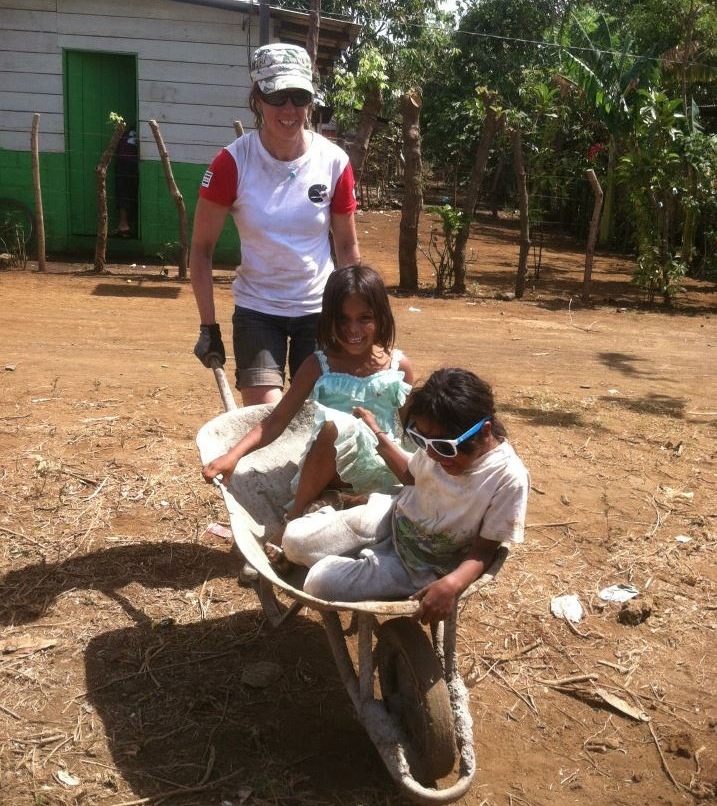
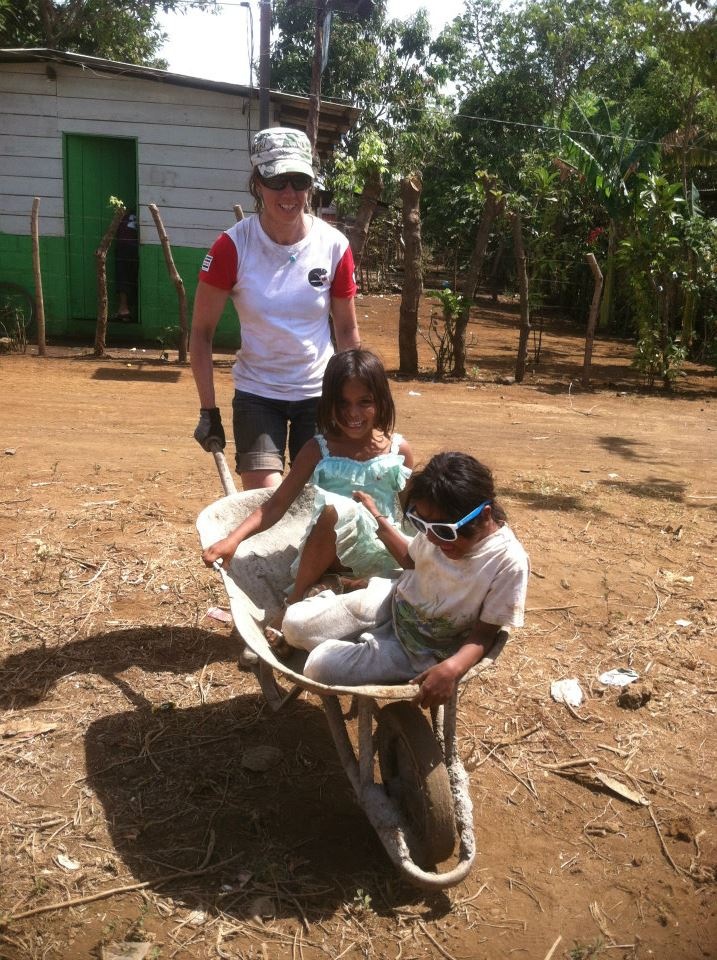
    Perianne Jones hard at work. (All photos from SchoolBOX)

    Life as a competitive skier is a full-time job. Beyond eating, sleeping and training, skiers usually spend a solid chunk of time drumming up financial support to cover some, if not all, of their skiing-and-life expenses.

    Last year, nine Canadian cross-country skiers put their needs aside for the time being to fundraise for a charity completely unrelated to their sport. SchoolBOX is an Ontario-based nonprofit focused on building elementary schools in impoverished areas of Nicaragua.

    Headed by two-time Olympian Perianne Jones, the group of skiers known as “Skiers 4 SchoolBOX” raised money last year then travelled to Nicaragua this spring to dive into the construction.

    Getting started

    Jones’s connection to SchoolBOX started in her hometown of Almonte, Ontario. A longtime friend of one of the nonprofit’s founders, Jones — like others in her small town — was supportive of local causes. She had been one herself as an up-and-coming nordic skier shooting for the Olympics. She decided to pay it forward to a third-world support group, founded in 2006, aimed at making education possible for children.

    “There was a fundraising run before the Olympics in 2010 for me [in Almonte],” Jones reflected on the phone earlier this month. “I didn’t want the money to be only for me so I decided to split the money from that with SchoolBOX. I think that was where things started.”

    As part of their school-building program, SchoolBOX makes an effort to connect groups of North Americans to their projects, inviting people to take part in fundraising and volunteering on the ground in Nicaragua. Jones wanted to assemble a group of skiers.

    But the stars would not align for this larger-scale partnership between Jones and SchoolBOX until after the 2014 Sochi Olympics.

    “I always wanted to do more with them, but the timing never lined up until after the Games,” she said.

    She started planning her first trip to Nicaragua’s Masaya region last spring.

    Mark and Olivia
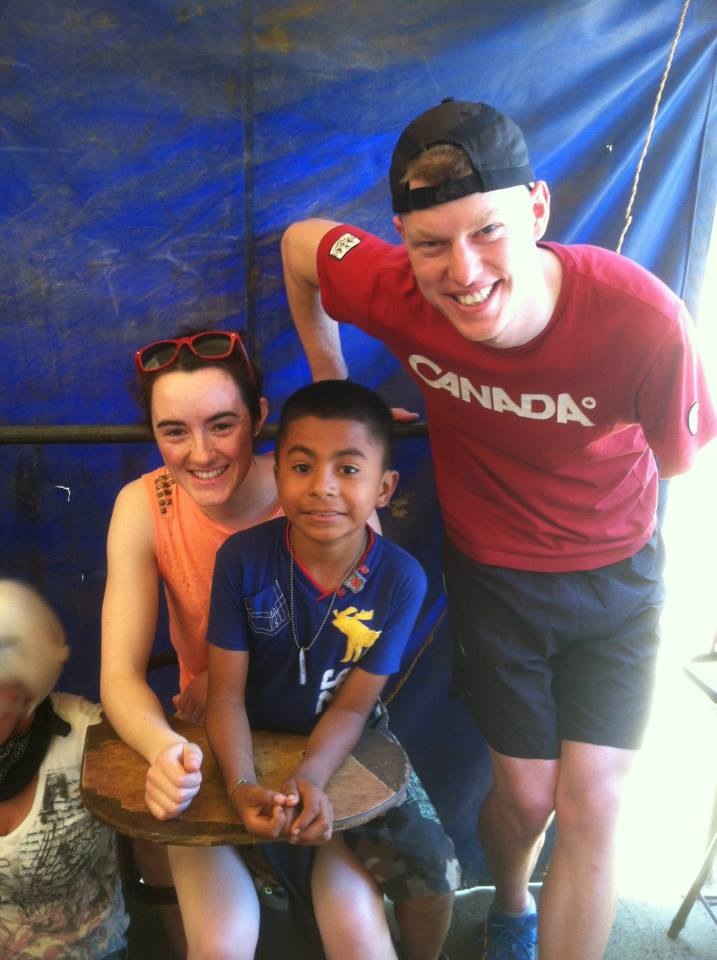
    Olivia Bouffard-Nesbitt and Mark Arendz hanging out with the locals. 

    The athletes

    One would imagine that it might be hard to sell the idea of volunteering manual labour in a foreign country, especially considering the fact that each volunteer is responsible for their transportation to and from that place.

    But according to at least two of the participating skiers, that was not the case — the decision to help out was spontaneous.

    “It actually just happened really quickly, kind of on a whim,” said Olivia Bouffard-Nesbitt of Rocky Mountain Racers. “I was over at Zoë [Roy’s place] doing, I dunno, something crafty, and she was like, ‘Hey, so I’m going to Nicaragua in April for Skiers 4 SchoolBOX and Peri wants us to commit today if you wanna come.’ I didn’t even hesitate.”

    Before earning silver and bronze at the 2014 Sochi Paralympics, Mark Arendz of Canada’s Para-Nordic Team was planning ahead last year for what he’d do after the Games and learned about Skiers 4 SchoolBOX on Facebook.

    “I chatted with Perianne Jones, and before our conversation was over I was in,” he said.

    In addition to Roy, Bouffard-Nesbitt and Arendz, Emily Nishikawa, Gerard Garnier, Stuart Harden, Ruth Tamas, and Jones’ husband, Joel Jaques, also signed up by April 2013.

    Then they started fundraising.

    Finding the funds

    “Definitely the biggest thing was coming up with the money to make it happen,” Jones explained.

    Each person in the group had to raise about $1,000, and in an effort to do so, they planned a fundraiser for last fall in Canmore, around the time of Frozen Thunder. According to Bouffard-Nesbitt, the fundraiser didn’t go quite as planned.

    “We put a decent amount of effort into the event itself, but we didn’t do a very good job making sure people were gonna come,” she said. “We had a band, drinks, food and a really good silent auction. When you have a lot of Olympians in the group you get good silent-auction stuff. … After the event, it was pretty much up to each of us to go out and collect our shares of the money.”

    Volunteers had to pay for their own flights.

    “We were fundraising for the part where we were actually on the ground in Nicaragua,” Jones said. “Mostly the money was for the school project itself. They have a construction crew that they pay down there, so they make sure that they’re providing jobs for Nicaraguans and helping them out that way.”

    Training in Nicaragua

    The skiers were in Nicaragua this spring, from April 3 to April 10. Many of them stuck around a bit longer to explore the country.

    “After an Olympic cycle, I think everyone just wanted to shake things up and do something different,” Jones said.

    Because the trip happened at the start of the offseason, everybody was content to enjoy their time away from ski training. Beyond the grueling work of removing dirt from the ground, physical activity was kept to a minimum and consisted of activities such as Roy’s “Tarahumara runs,” according to Bouffard-Nesbitt, (like in Born to Run).

    “Basically they’re twelve-minute runs and it’s kind of like parkour I guess,” she said. “You just go and you do whatever you want and each person takes a turn leading. So you jump off benches and do summersaults and run around posts and do cartwheels and stuff.”

    Digging the hole
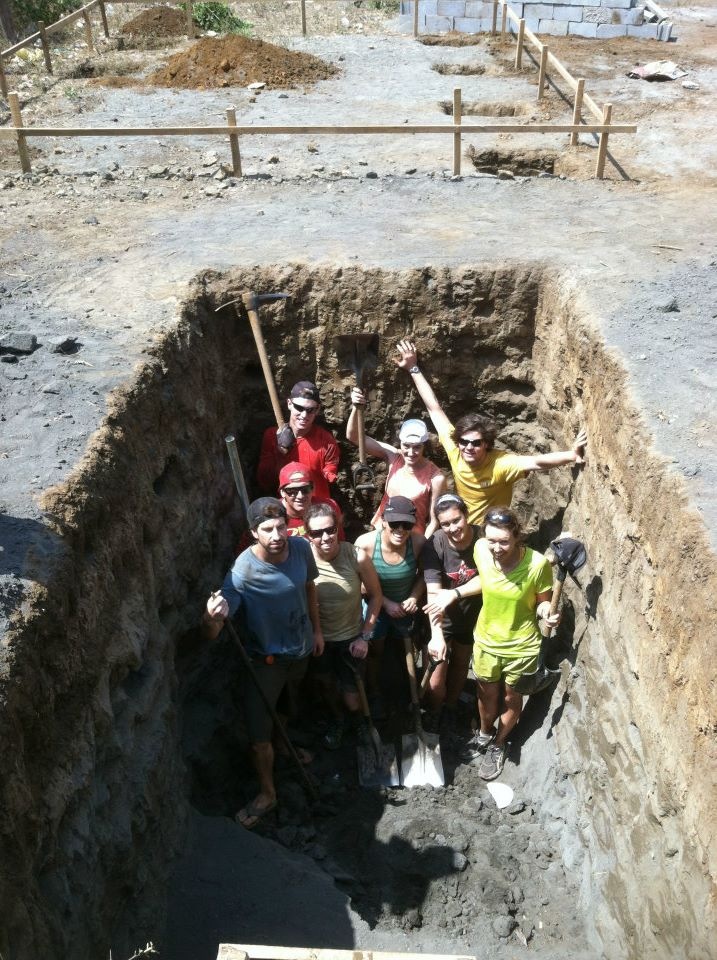
    The nine Canadian skiers dug a big hole for the school’s septic system.

    Building the school

    Upon arrival in Nicaragua, the first day of work started after a night’s sleep and a long drive, to the construction site, in the morning.

    “We were driving down this narrow, super-bumpy dirt road and we turn a corner and there’s this crowd of children standing there,” Bouffard-Nesbitt recalled. “They’re jumping up and down and they had our names printed out on paper that they were holding up.”

    After the warm welcome, it was time to get to work: in their week there, the skiers’ goal was to dig of a big hole for the school’s septic system.

    “The hole that we dug was 3-meters deep, 2-meters wide and 3-meters long. By the end we needed a ladder to get in and out of it,” Jones said. 

    “Mostly what we raised money for was for a sports field, but just so it happened, for the period of time we were there, what they needed done was digging this big hole. Some of the dirt from the hole went to the sports field eventually.”

    The students

    Throughout the week it became clear that the children who would be attending the school had a deep desire to be a part of building it.

    “They were so invested in it,” Jones said. “Some of the older kids would come out and grab our shovels and get down in the hole and dig with us. They were really keen to help. When you don’t have a place to learn, you really want that kind of thing. I think for a lot of us, it’s a given.”

     “Some of the older kids would come out and grab our shovels and get down in the hole and dig with us. … When you don’t have a place to learn, you really want that kind of thing. I think for a lot of us, it’s a given.” — Perianne Jones, Skiers 4 SchoolBOX leader & two-time Canadian Olympic cross-country skier

    But it wasn’t all tough work around the construction site. Usually around midday, the hole-digging would wrap up and the skiers would spend time playing with the kids. 

    “One of my favourite memories has to be the soccer-baseball game we had the last day with everyone,” Arendz said. “The construction workers, volunteers, community members and kids — a great time playing but also watching everyone else enjoy themselves.”

    Emily Nishikawa with some potential students.
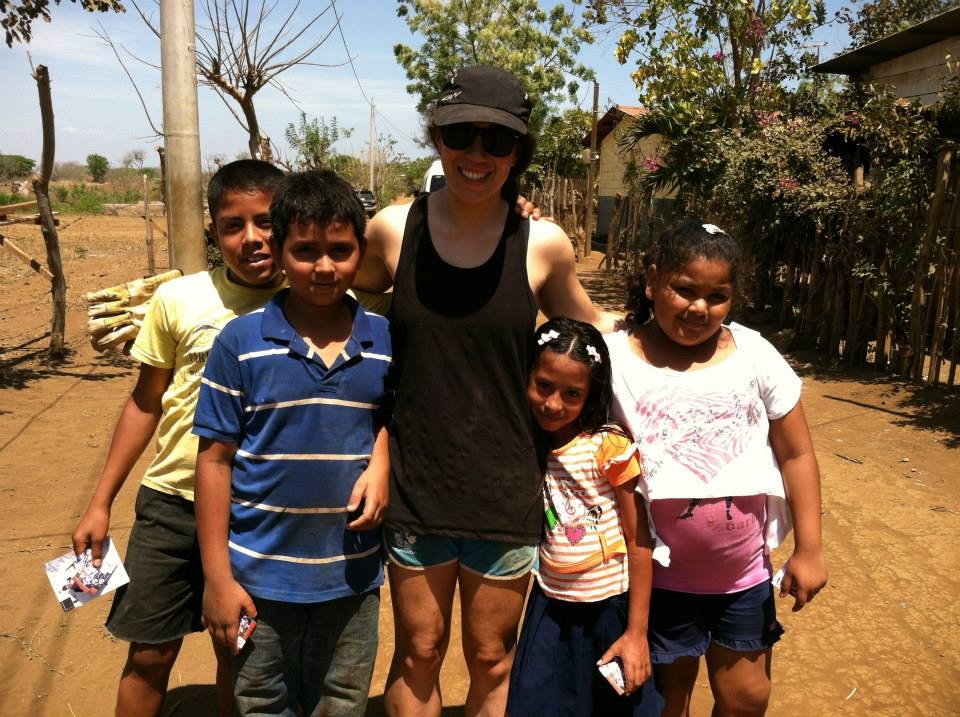
    Emily Nishikawa with some potential students.

    More than just construction work

    “We realized after a couple days at the work site that the people at SchoolBOX saw just as much value in having outsiders come and play with the kids, rather than just, like, digging a hole the entire time” Bouffard-Nesbitt explained.

    “It means a lot to the kids to see that people are coming all the way from Canada and that people care that much about their school,” she added. “In turn, it makes them care about their school. All the kids who attend do so by choice, so the more they’re invested in their school the better.”

    In Nicaragua these schools are more than just the average learning place. They act as a community centre through which other opportunities arise.

    “Once you have a school in a community it opens the doors for all kinds of other things you can have,” Jones said. “Once you have a school you can have a food program as well.”

    The future

    On April 10, the skiers departed — some back to Canada and others to explore other parts of Nicaragua. Their part of the project was finished but the work on the school would continue until the end of July, at which point, to the excitement of everyone involved, the school was completed.

    So will there be more Skiers 4 SchoolBOX projects in the future?