From the FasterSkier archive — posts syndicated from athletes’ and coaches’ own blogs between 2004 and 2012, kept online as published. Current coverage is at fasterskier.com.

Tag: olympic team sprint

  • Chris Hecker and the Moment the Sun Came Out

    Chris Hecker and the Moment the Sun Came Out

    This article was made possible through the generous support of our voluntary subscribers.  If you value coverage like this, please support FasterSkier with a voluntary subscription.

    If you are a parent or coach and have been responsible for waxing skis for an important race — a state championship, a Junior National Qualifier — you know how stressful that can be. Now imagine it’s the morning of the Team Sprint at the Olympics, and you are responsible for Gus Schumacher’s skis. Feel your blood pressure rising yet?

    Welcome to the life of Chris Hecker, the US Cross-Country Ski Team service tech who leads the glide program and is Schumacher’s personal tech. Hecker, at this point, knows Schumacher well and that he has logged nearly 1,000 hours of training annually for years, and that he has dreamed of this specific day since the end of last season.

    “One of the most stressful moments actually came [on race day], about 45 minutes before the Men’s Team Sprint. I had selected the race skis for Gus and felt confident in the decision. At the time, it was clearly the best pair for the conditions.”

    Everything seemed to be playing out as Hecker had hoped, but then everything changed.

    “Then, about five minutes later, the sun came out. The course started to break down and got noticeably wetter. I still had a few minutes before beginning to wax, so I decided to run one more quick test. In the ten minutes between tests, the two top pairs kept getting closer and closer in performance.”

    These are the moments when experience, confidence, and a little tech magic can make or break a race. “In the end, I chose what was technically Gus’s second-best pair at that moment,” Hecker recalled. “As more athletes skied and the temperature continued to rise, there’s a good chance those skis actually became the faster option anyway.”

    Hecker was quick to point out that “Gus and Ben were on another level. Regardless of which skis Gus raced on, I’m confident the result would have been the same. They were [racing] on another level.”

    We may never really know, but maybe that decision did have something to do with Schumacher and Ben Ogden winning silver in the Team Sprint? For Hecker, it was a choice that was actually years in the making.

    Guided by family and noted mentors

    Hecker grew up in a family of skiers; his father, Mike, was a Pelton ski and Exel pole rep in the Midwest and had Chris on skis when he was just nine months old, “shuffling around and falling down.” Mike and his wife would pack the entire family, including Chris and his older brother Jeremy, and spend weekends traveling to different ski shows and venues. The parents told Chris and Jeremy it was their ‘vacation’, but in reality, it was just a family deeply invested in both the industry and the lifestyle.

    “So we were skiing from a really, really early age, and then we got into racing,” said Chris. When Chris was in middle school and high school, he raced for Anoka High School, in Minnesota, a northern suburb of Minneapolis. After graduating in 2013, he headed to St. Scholastica in Duluth, where he raced for three years under Chad Salmela and, in his senior year, under Maria Stuber.

    After graduating from St. Scholastica in 2017, Hecker took a job with Rex Ski Wax for the 2018 / 2019 season.

    “I worked with them for a year, spent a year on the World Cup being their racing service manager and research and development, kind of lead testing for all the new products, testing all the old products, and then walking around and working with the teams and saying, What do you need from us?”

    Hecker made himself available to World Cup teams, asking which products he could help with and which they thought were working well and which needed improvement. He continued this work for three full seasons before starting with the US Ski Team in 2020; this is now his sixth full season with the team.

    Two brothers… “Give me something weird.”

    Chris’s older brother, Jeremy, has kept the family tradition alive too, serving as a full-time employee of Pioneer Midwest and, in addition, as the domestic rep and race service lead for Rex ski wax.

    “We talk multiple times a week, and we get really deep into the weeds,” says Chris, who gives his brother lots of respect and praise. “He’s a really good wax tech, and sometimes you just need an idea from an outside source.”

    So when waxing domestically, Jeremy will ask his brother at the World Cup, “Give me something weird, give me something random to go out and test,” because he has all the normal, routine choices down.

    “He’ll always ask me for one random suggestion to try out for some of those race weekends. And sometimes it works, and sometimes it doesn’t.”

    For the most part, the two brothers talk about local races and how Jeremy can better support local skiers, since the products Chris is working on for the World Cup aren’t available to domestic skiers.

    “But it is also fun to talk about, when we have a really good day, like in Goms, or a really good day, like in the Val de Fiemme, on the final hill climb.”

    When that happens, Jeremy can spot it on the livestream and will call up Chris and ask, “Oh, what’d you guys do differently!”

    A lot more than two pairs of skis… like over 100

    In addition to being Schumacher’s personal tech, Chris Hecker is also responsible for Novie McCabe when she is on the World Cup and when she raced at the Olympics.

    In addition, Hecker is responsible for managing both athletes’ ski fleets. For McCabe, that means 38 pairs of skis and another 65 pairs for Schumacher, but even that can be variable, “like, Gus gets a ski [from Rossignol] maybe every other weekend or every third weekend because they’re always coming out with new prototypes and new skis.”

    McCabe is a Fischer-sponsored athlete, and they are admittedly a bit more controlled on allocating skis, but if Hecker and McCabe decide to “knock out a bad ski,” they can give it back to them and get another for her quiver.

    The new Rossignol skis arriving can introduce many more variables for Schumacher and Hecker to consider. As Hecker says, “ it can be new base material, new grinds, new core materials… the construction of the ski can be different.”

    Every little tweak has a purpose, “maybe it’s an easier kicking classic ski, maybe it’s a faster base material on a state ski.” As Hecker continues… “Maybe it’s a different laminate on a zero ski,” and what becomes quickly obvious is that all of these subtle variations make for endless possibilities.

    Building a rapport

    Hecker and Schumacher have been working together for two years now. Last season, Hecker was not responsible for another athlete, so he could focus on Schumacher, and the two quickly bonded.

    From the beginning, “working with him was really fun,” said Hecker . “We were trying to build a rapport as a new athlete and tech combination between the two of us.”

    Schumacher’s previous tech had left for the Swiss Biathlon Team, but Hecker and Schumacher found a lot of success last season with several top 10s and a podium in Falun, Sweden. As they started this season, they got right back to work.

    “Then starting this year, it was like jumping right back into it.” The two had a full year of experience to build on, and the dialogue and descriptions began to get more dialed, which is critical in the relationship between a tech and an athlete.

    Hecker began to know what Schumacher “likes for kick in skis, what feeling and stability he likes on skate skis,” and the two have been able to build that “innate rapport” which leads to a trusting relationship.

    As Hecker puts it, “[Schumacher] is one of the most astute athletes that I’ve worked with. He always comes with a question or two on race day. ‘Do you think we should try testing over on this side of the course instead of that side of the course, because I’m really trying to execute a plan here. Can we try focusing on glide for this half of the course, and maybe do a couple of glide outs here?”

    Hecker continues to describe how impressed he is with Schumacher as an athlete:

    “And so he’s always equally thinking as a wax tech and as an athlete when we’re out skiing together, and he’s really trying to dissect where the best places to test are. And it’s not just my job to revive the skis for him, but it’s also his job to pick the correct skis for him. And so he needs to know almost as much as I do about his skis and what is working and why it’s working, because ultimately we have to come to the decision together. He is racing, not me, and so we have a really cool relationship together to kind of pick and choose what we want to race on as a team.”

    Learning what he likes instead of what you like

    At this level, picking the right ski for an athlete is not just about what is fastest. It is also about picking a ski that responds the way the athlete prefers, and that matches the way a skier races.

    For Schumacher, that means a ski that is “extremely stable and forward tracking.” Hecker knows the way Schumacher skis, and how “when he pushes off to the left or to the right, and he goes fully onto one ski, he wants it to go straight.”

    “He doesn’t want the tip to move at all. He just wants it to point and shoot straight.”

    That isn’t a characteristic Hecker is personally always looking for in a ski, but he knows that’s what Schumacher wants. “So when I’m looking and testing without him some days, I say, ‘Okay, this ski is for sure going to be moving on because this feels better for him.’ And so we kind of have differing opinions sometimes on feeling, because I like a slightly different ski.”

    For Hecker, though, what is most important is that he understands not just what will ski fast, but also what will work best for Schumacher in different conditions, based on how he will race.

    “On a really firm course, he’ll look for this ski that just goes straight. And I think the reason why he likes that is that he will free skate a lot and likes being able to just push with his legs. And he’s so strong at that, and so relaxed when he does it, and so he can conserve a lot of energy.

    So it’s a really cool technique change from him, because I don’t think a lot of people utilize that on the men’s field. You see a lot of people always V2ing, and you’ll see him kind of free skating in the middle of the pack, just relaxing his upper body and giving half of his body a rest.”

    Inside the wax truck: how race morning actually works

    On a stable day, glide testing is fairly methodical.

    “We usually have four fleets of skis that go out,” Hecker explained. “Eight structure skis, eight paraffin skis, eight topping skis, and four to six application skis.”

    Before any athlete even gets to the venue, there is what the service team calls a “thinking period.” Jason [Cork], Tim [Baucom], Hecker, and anyone else in the truck who wants to join in, gather around a table with wax options.

    “We’ll put maybe 10 to 12 waxes in,” Hecker said. “Eli [Brown] might give us a wax. Oleg [Ragilo], our head of service, might give us a wax. Bernie [Nelson] might give us a wax. Then at the end of the table, it’s on me to narrow it down.”

    Ten or twelve become eight after the team removes the overlapping options. Some are eliminated because something similar tested better earlier in the week. Predictability and durability matter as much as outright speed.

    Structure follows a similar pattern. Baucom pulls 10 or 12 patterns before narrowing to eight that fit the day’s snow. The brainstorming narrows the options, then the skis go outside for testing.

    When results come back, they’re measured in inches and sometimes just two or three separate first from third.

    “If there are three that are really close,” Hecker said, “we might race on third place. Even if it’s two inches behind.”

    Because two inches in early testing might not matter if the wax is more durable, safer, or better, as temperatures rise and the track grows glazy under the skis of a throng of World Cup skiers.

    “It’s up to us to make a call,” Hecker said. “This is the wax we’re going to run today, even though it may not have won.”

    Once the athletes start warming up and testing skis, the techs have to add that feedback to the equation as well. Often, Hecker has one ear tuned to Gus’s feedback and the other to the incoming results.

    “When Gus is racing, a lot of these tests are going on,” he said. “I have to have my head on both testing skis with Gus, but also on the results that are coming in.”

    A call might come mid-session: pair 47 instead of pair 45. At this level, it’s small changes, constant recalibration, and decisions layered on decisions.

    For spectators, the race begins at the gun. For the glide team, it began hours earlier — likely in the dark — and never really stops until the racers reach the first checkpoint in the race and the team knows whether their choices put them in the race or not.

    “It’s definitely the hardest part of this job.”

    For Hecker, this will be his last season as part of the US World Cup service team.

    “It’s been a thing that I decided at the end of the year last year,” Hecker said. “I gave a fairly big heads up to the team in Bend in April.”

    This season marks the end of a third Olympic cycle for Hecker, but it is not that moments like the Olympic Team Sprint are wearing him down. That is not the hardest part of the job. The hardest part of the job is being away from his wife, Katie, family, and his dog.

    “It’s time to be at home with my wife and be more with my family and be back at home with my dog. And, yeah, right now it is time to retire after this year, and we’ll see what happens after that.”

    Like other staff and coaches on the US Ski Team, Hecker was able to sneak home twice so far this season, but those opportunities are few and far between.

    “Yeah, it’s, it’s definitely the hardest part of this job, not that waxing isn’t hard, but being away from your family, being away from loved ones for so long. It’s really hard.”

    This decision wasn’t made lightly because there are many things about being on the World Cup that Hecker will miss. Most significantly, the US Ski Team has done an amazing job creating a unified family.

    “It’s hard because this team is like a second family. Being away from these guys for long stretches is tough. I love working with them. When you like the person you’re rooming with every weekend, that means something. So leaving the team feels like leaving family.

    But I know it’s the right decision for me. I’m getting tired. There was a time when traveling to Europe was exciting, going to new venues, seeing new places. That was fun.

    Now it’s, ‘Okay, we’re going back to Val di Fiemme. We’re going back to Oberhof. We’re driving the wax truck to Oslo again.’ Last year, I realized I wasn’t looking forward to the travel anymore. I’d be excited once I got there, but the constant moving was wearing on me. That’s when I knew it might be time.”

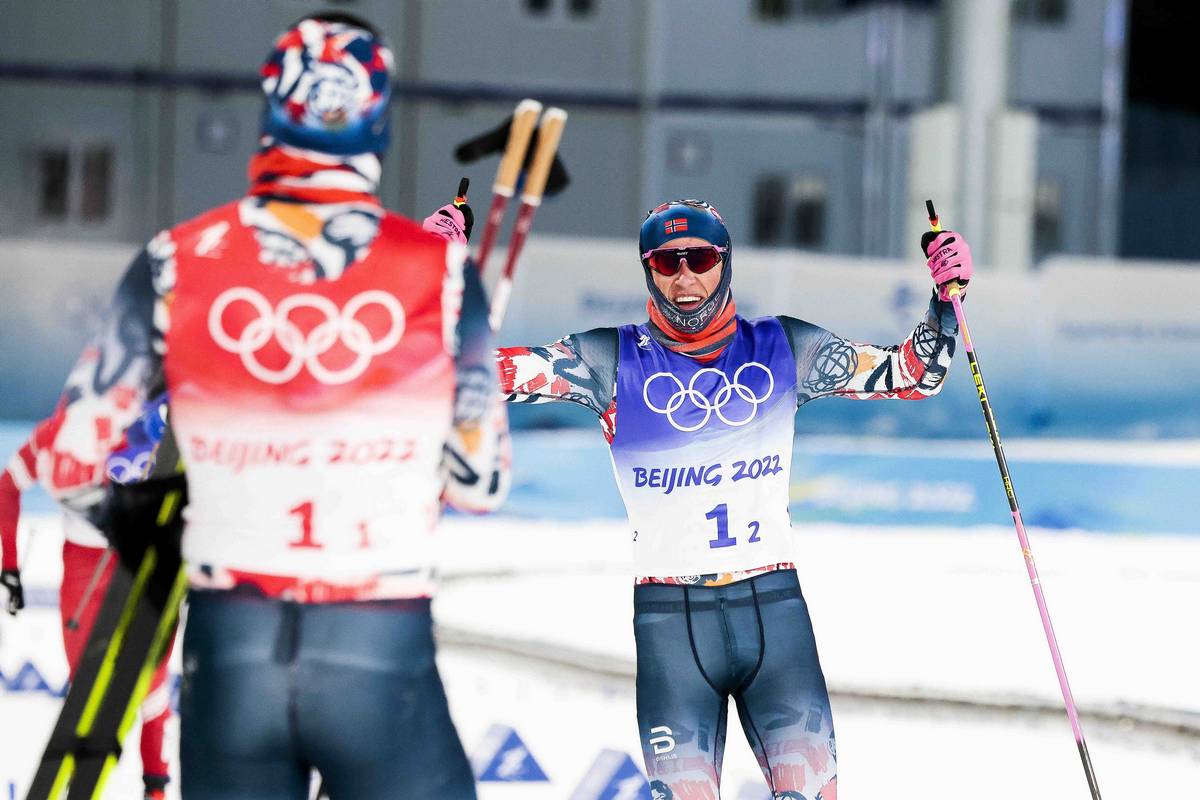
    Gus Schumacher and Ben Ogden (USA), (l-r) celebrate their Olympic silver medal in the Team Sprint in Tesero, Italy. (Photo: Vanzetta/NordicFocus)
    On another level

    When the sun came out in Italy last Wednesday morning, it forced a decision. A choice was made to go with a slower pair of skis, but that decision was not a whim; it was not a swing for a bases-loaded grand slam to win the World Series. It was choosing an option that presented itself through a trusted process, through seasons of tested routines, and having the experience to trust instinct.

    By the time Gus Schumacher and Ben Ogden pushed off the line in the Team Sprint, the work had already been done, in the dark, in the truck, in inches measured on a test lane. Structures narrowed from twelve to eight, waxes debated and eliminated.

    The silver medal will always belong to the athletes. They were, as Hecker put it, “on another level.”

    But long before Schumacher chased down Johannes Høsflot Klæbo on the anchor leg, before the crowd roared in excitement, before the final sprint up the Zorzi Climb, there was a moment when the sun came out, and a technician had to make a decision.

    And one detail to remember when the story of the 2026 Olympic Team Sprint is retold for years to come is that the United States service team, on that day, was also ‘on another level.’


    Help Support Our Olympic Coverage!

    FasterSkier will have our own Nat Herz on the ground at the Olympics, which, to be honest, is a very big financial lift for us. If you value the thoughtful work and access FasterSkier provides at championships like this one, please consider becoming a Voluntary Subscriber. Your support directly fuels the work we do to cover the people, places, and moments that make our sport special.

    Join the FasterSkier community!


  • Olympic Preview, Sort Of—USA Third in Goms Team Sprint

    Olympic Preview, Sort Of—USA Third in Goms Team Sprint

    This coverage is made possible through the generous support of Marty and Kathy Hall and A Hall Mark of Excellence Award. To learn more about A Hall Mark of Excellence Award, or to learn how you can support FasterSkier’s coverage, please contact info@fasterskier.com.

    It was a good day at the office, a stunning office, for Ben Ogden (USA) in Goms, Switzerland. (Photo: Authamayou/NordicFocus)

    For the skiing stars of Norway, World Cup victories are commonplace—almost expected. For the skiers of most other nations, any World Cup podium appearance is a career-defining event. That said, some of the most interesting World Cup racing takes place on those days when the strength of the field is re-shuffled, when a few notables stay home, when a few teams re-arrange their rosters. Those are days when World Cup podiums will still be filled, and a greater number of teams know they can rise to that occasion. Still, it’s not a straightforward task, and many teams find themselves stumbling over the challenge rather than rising to the top. Today was a day that the USA saw this opportunity, and rise they did . . .

    Norway may have won today’s Team Sprint (though with Harald Oestbeg Amundsen and Einar Hedegart are a team that’s unlikely to contend for this same win when the Olympics begin in Val di Fiemme), and Italy may have flown second across the finish on the wings of Federico Pellegrino (a performance he would hope to repeat in front of his countrymen in the Olympics), but it was the third-place effort of Team USA’s Ben Ogden and Gus Schumacher that really drew attention. The circumstances of the day offered them an opportunity to ascend to a World podium; they grabbed that opportunity with both hands. It’s great to see American men on World Cup podiums, even greater to see them earn that position with such fortitude and skill.

    “Today was a pretty full field,” said Ogden. “But there was no Klaebo today. There definitely will be Klaebo in Val di Fiemme. I’m sure that some teams will put up different athletes on their Team Sprint than they did today, but it’s really one of those things that’s not worth dwelling on until the time comes to actually seethe start list, to go out and get it done.”

    The day started with Gus Schumacher (USA) having a great qualification for the Team Sprint in Goms, Switzerland. (Photo: Authamayou/NordicFocus)

    The Alpine municipality of Goms, Switzerland (population 1,160) was the venue for a staging of an event that will take place in the Olympic Games in Val di Fiemme—the Freestyle Team Sprint—but today’s race was not exactly a dress rehearsal for that Olympic race. Specifically, the cast of characters is likely to change in the Olympics even as the strategy employed by today’s winner, Team Norway, is likely to remain the same. They’ll set the pace, they’ll stay at the front (and out of trouble). They’ll accelerate in the penultimate leg. They’ll hope to give Johannes Hoesflot Klaebo a lead at the beginning of the anchor leg. They’ll rely on Klaebo to remain unbeatable in any Freestyle Sprint where he enters the finishing straightaway with a lead. We really do expect this Olympic event to follow that script. Even so, many questions remain. Who will team with Johannes Hoesflot Klaebo in what is likely to be the gold medal favorite team? And who will the USA field as its Team Relay pair? Will Schumacher team with Ogden? Or will coaches choose another combination of abilities? Will Pellegrino and Elia Barp continue to be factors in the finishing straightaway? And which other teams will arrive with hopes of a medal: Finland? Switzerland? Sweden?

    “If history is any indicator, then Norway leading and everyone else following will likely (repeat as a strategy) at the Olympics,” said Ogden. “Val di Fiemme is definitely a harder course, so I anticipate it being something like that. Championship Team Sprints are definitely intense; it’ll have some similarities to today, and probably many differences.”

    Individual qualifying saw USA 1—comprised of likely Olympic teammates Ben Ogden and Gus Schumacher—as the third fastest qualifier. They would be joined in the 15-team Final by USA 2’s JC Schoonmaker and Zanden McMullen (who would finish 11th on the day).

    Home-team, Switzerland 1, was the top qualifier thanks to the efforts of seasoned Sprint competitors Janik Riebli and Valerio Grond (though packing a Team Sprint team with a pair of true sprinters is usually not considered to be the best way to excel in this event—Switzerland 1 would top all qualifiers, but would finish sixth on the day). Switzerland’s fast qualifying standard was followed by Norway 1’s Harald Oestberg Amundsen and Einar Hedegart, both of whom were recently named to the Norwegian Olympic team, but neither of whom are likely to appear in this event in Milano-Cortina. Fourth fastest qualifier was Italy 1’s Elia Baro and Federico Pellegrino who are likely to team up when the Olympic Team Sprint takes place in their homeland.

    Ben Ogden (USA) also had an excellent qualification for the Team Sprint – together with Schumacher, they posted the third-fastest time. (Photo: Authamayou/NordicFocus)

    A Plan to Follow—Easier Said than Done

    For some teams, Goms’ Team Sprint was an Olympic dress-rehearsal, for other teams, a consolation prize. Norway 1 had the potential to take a World Cup win, but they will certainly NOT be the Olympic duo that Norway fields in this event (that spot being reserved for Johannes Hoesflot Klaebo and (presumably) his gold medal partner from Beijing, Erik Valnes). Norway 2 was comprised of Ansgar Evensen and Even Northug, two of the world’s best sprinters who, nonetheless, found themselves overlooked when Norway selected its team of Olympians. While the skiers of Norway 2 may have hoped to prove that they belonged on the Olympic Team, their efforts fizzled in Goms. Norway 2 would place 15th, last among starters in the Team Sprint final.

    Norway 1, on the other hand, performed as expected. Amundsen led out Leg 1, keeping the pace high and keeping himself out of trouble. He was followed by Riebli, Barp, and Ogden. Ogden tangled skis briefly with Barp as they entered the exchange, but both skiers shook it off masterfully. Norway 1 continued to lead.

    Norway kept the pressure on to keep things stringed out. (Photo: Authamayou/NordicFocus)

    Ogden tagged Schumacher to begin Leg 2. Schumacher seems a logical choice to team with Ogden in the Olympic Team Sprint, a pairing suggested by the tactic of pairing a sprinter with a seasoned, fast-skiing all-rounder who can navigate in a tight pack and not get dropped. American Olympian, Jack Young, is a world-class freestyle sprinter, but even though it’s called the “Team Sprint,” there’s no use in fielding a team of two pure sprinters. The only sprint that matters is the one to the finish line at the end of the final leg. Before then, each teammate’s job is simply to steer clear of trouble, to hang on to the pace, and to not get dropped. More than perhaps any of his US Olympic teammates, Schumacher fits that bill.

    “The first leg was pretty chill,” said Schumacher. “I found myself a little far back after our tag, but made a good move on the fast corner.”

    “The second leg was pretty fast,” Schumacher continued. “But we still had a group, so it wasn’t too bad. We held the gap to Norway, which is good. Norway was definitely trying to string everyone out. They were really impressive, but we’re not far off. And I think. if the right person was in a good position, they probably could have held that. With Norway, that’s something to think about for the future.”

    Schumacher knows his role, and in Goms’ Team Sprint he skied it brilliantly. Through Leg 2, he remained in contact, preserving energy as Norway 1’s Hedegart set the pace at the front followed by Switzerland’s Grond and Sweden’s Edvin Anger. Leg 3 began with no changes in leaders, and with Ogden remaining solidly in contact with the top five. Amundsen continued to set the pace for Norway followed by Riebli and Barp.

    Einar Hedegart (NOR) clearly was racing with something to prove to the Norwegian team coaches about his place in the Olympic Team Sprint with Johannes Hosflot Klaebo. (Photo: Authamayou/NordicFocus)

    Leg 4 saw Hedegart stringing out the pace while Schumacher continued to mark the skiers at the front. The field began to string out, with Schumacher keeping USA 1 in contention.

    Leg 5 is where the field expects Norway to make a move; Amundsen did not disappoint, storming off the front even before the field had left the flat terrain around the exchange zone. By the time he reached the course’s first uphill, Amundsen enjoyed a lead of 30 meters. Rather than chase him in vain, the chase group—led by Barp—sat up a bit to preserve energy. Norway had earned a gap as Amundsen tagged Hedegart to begin the anchor leg. The rest of the field would fight for second and third.

    The way the Americans set up today’s relay team—with the sprinter, Ogden, leading off and the all-rounder, Schumacher, finishing—showed that Team USA may realize that the Olympic version of this event will NOT come down to a finishing line sprint, but to a final-leg high-speed dash that sheds sprinters and leaves all-rounders leading the way to medals. This may be the scene in a few weeks—Schumacher dueling Pellegrino in the final leg. If so, then today was a bit of a dress rehearsal after all. On the first of the final leg’s two uphills, Schumacher tried desperately to cross the gap to Amundsen. It was a bold ploy, but one that a fast distance skier needed to try in order to shake Pellegrino. Pellegrino shadowed Schumacher, but seemed to struggle in doing so. Over the second uphill, and Pellegrino struggled again under Schumacher’s re-application of pressure . . . but in order to beat a sprinter you need to drop a sprinter.

    Gus Schumacher (USA) kept the pressure on, leading the chase group behind Norway. (Photo: Authamayou/NordicFocus)

    Ahead of them, Hedegart show-boated playfully at the finish line, taking off his poles and sheathing them like a sword after a successful duel. Pellegrino undid Schumacher in the finishing straightaway—a cagey veteran having played his hand with seasoned mastery. Schumacher shrugged across the finish line in third, having done all he could to lengthen the sprint in an attempt to take the sting out of Pellegrino’s sprint.

    “Pellegrino is a super strong sprinter,” said Schumacher.” Today, he basically made me pull through. I didn’t want to mess around with a big bunch sprint, and I’m glad I didn’t. I’m fine with him beating me in the end. But, yeah, we’ll see how it plays out in Val di Fiemme. I think I can beat him if I can get a good draft. We’ll see; you need drop him before the finish line. I guess you just have to go faster! But he’s also a great distance skier, so that’s a tough one.”

    “Having Gus in the second leg felt good for me,” said Ogden. “He’s really good at positioning, and super strong and fit, and he’s going to have legs at the end when it matters . . . Today was just to try something and learn from it. I think that we thought it was a natural thing to try. We went with it today, and it worked out well.”

    After all the strategizing, all the jockeying, all the surging, all the positioning, it’s a skier like Pellegrino—a world-class sprinter who can also contend in distance races—who is the ideal finisher for a Team Sprint. Approaching the Olympic Team Sprint in his home country—and hoping for a gold medal in front of his countrymen—Pellegrino still has one major obstacle to overcome: Klaebo is the one skier who has proven to be even faster, even more durable than Pellegrino. If the Italian wants to claim gold on home turf, he’ll need to beat the best of all time in order to do it . . . but that will be the same for any skier who hopes to claim gold in any event when the Olympic races are run in Val di Fiemme.

    Gus Schumacher (USA) and Ben Ogden (USA), (l-r) proved they are true contenders for a medal in the Team Sprint at the Olympics. (Photo: Authamayou/NordicFocus)

    While the cast may be different when this event is staged at the Olympics of Milano-Cortina, the script is likely to be strikingly similar. If so, then Team USA will be there hoping. To recreate the tactics, the speed, the strength, and the brilliance that took them to a third place finish today in Goms. Ironically, today’s Norwegian winners are not likely to be offered the chance to pursue Olympic gold in this same event. When asked whether he thought this dominant performance ahead of numerous teams likely to contend in this event in Val di Fiemme could cause Team Norway to reconsider their starters in the Olympic Team Sprint, Hedegart was playful, yet again.

    “Message sent,” grinned Hedegart. “I hope the message is received.”

    Chance of Hedegart becoming the face of Team Norway in season’s to come? Quite high, it appears. Chance of Hedegart replacing Valnes (as Klaebo’s teammate) in Norway’s Olympic Team Sprint? Far less likely . . . but much could happen between the World Cup finish line in Goms and the Olympic starting line in Val di Fiemme.


    Goms World Cup Men’s Freestyle Team Sprint QUALIFYING

    Goms World Cup Men’s Freestyle Team Sprint RESULTS


    Help Support Our Olympic Coverage!

    FasterSkier will have our own Nat Herz on the ground at the Olympics, which, to be honest, is a very big financial lift for us. If you value the thoughtful work and access FasterSkier provides at championships like this one, please consider becoming a Voluntary Subscriber. Your support directly fuels the work we do to cover the people, places, and moments that make our sport special.

    Join the FasterSkier community!


    Federico Pellegrino (ITA), Elia Barp (ITA), Harald Oestberg Amundsen (NOR), Einar Hedegart (NOR), Gus Schumacher (USA), Ben Ogden (USA), (l-r) share the Team Sprint podium in Goms, Switzerland. (Photo: Authamayou/NordicFocus)
  • Goms Wasn’t the Answer — It Was the Test

    Goms Wasn’t the Answer — It Was the Test

    This coverage is made possible through the generous support of Marty and Kathy Hall and A Hall Mark of Excellence Award. To learn more about A Hall Mark of Excellence Award, or to learn how you can support FasterSkier’s coverage, please contact info@fasterskier.com.

    Leg one gets started in the Women’s Team Sprint in Goms, Switzerland. (Photo: Authamayou/NordicFocus)

    There are World Cup races that arrive like answers, and others that arrive like mirrors. The women’s freestyle Team Sprint in Goms belonged firmly to the second category — not because the results were unclear, but because nearly everyone on the start line arrived with something else already decided.

    This was the last World Cup before the Winter Olympics in Milano–Cortina, and teams have been finalized. In Switzerland, the focus shifted from selection to tactical rehearsal, testing legs, patience, and restraint before Olympic stakes.

    That context hung over the Team Sprint from the opening qualification prologue to the final exchange. For some, the day was about execution. For others, survival. And for the U.S. women, it was an afternoon shaped as much by what wasn’t raced as what was.

    Jessie Diggins, focused on the Overall World Cup and conserving energy for February, sat out. Sweden, which has recently dominated sprinting, also left its top women on the bench. Their absences reshaped opportunity and increased ambiguity in a race where errors are costly.

    Julia Kern (USA) during qualification. (Photo: Authamayou/NordicFocus)

    A Course That Punishes Early Optimism

    Goms’ team sprint course was unforgiving. The moderate altitude, demanding climbs, and relentless rhythm tested the athletes in each of the individually timed qualification prologues. The top-16 teams advanced, then raced six alternating laps marked by tag zones, tempo shifts, and mounting fatigue.

    “It was definitely a rude awakening,” said Julia Kern, who returned to racing after a short training block at home in Vermont. “I think a lot of people felt that way — the qualifier was brutal, especially with such a long climb at semi-altitude.”

    Kern’s reset after the Tour de Ski was intentional. “The first week I focused on recovery, and the second week I finally got in a training week for the first time this season,” she said. “The snow conditions were awesome, which made it even better. But my body isn’t fully sharp yet, which is to be expected after some training and traveling back over to Europe.”

    That combination — fitness returning, sharpness still arriving — defined much of the U.S. women’s day.

    Kendall Kramer (USA) during the team sprint qualification in Goms, Switzerland. (Photo: Authamayou/NordicFocus)

    Two U.S. Teams, Two Very Different Races

    The United States entered two teams into the final.

    Team One paired Kern with Sammy Smith, a first-time Olympian whose rise this season has been defined by composure as much as speed. Team Two brought together Lauren Jortberg and Kendall Kramer, both newly named to their first Olympic team — and both still absorbing what that meant.

    For Jortberg, the Olympic nomination landed at the end of a season built on restraint.

    “I made a really conscious decision this year not to focus too hard on Olympic qualification itself,” Jortberg said. “I didn’t really think the Olympics were on the cards for me. I made a lot of big changes — a new ski brand, a team change, moving to a new country — so I just focused on the process.”

    That process had worked. She arrived in Goms feeling strong.

    “Today, I was really happy with the sprint qualifier — probably my best World Cup qualifier so far,” she said. “Time-wise, it was strong, and I knew going into the race that I was feeling good physically.”

    Then, just minutes later, it unraveled.

    Lauren Jortberg (USA) gets aero in Goms, Switzerland. (Photo: Authamayou/NordicFocus)

    The Moment Team Sprints Turn Cruel

    On Jortberg’s opening leg of the final, the pack compressed into one of the course’s tighter corners. The decision window was measured in fractions of a second.

    “Coming into a corner, I got tangled up with another skier,” Jortberg explained. “In that split second, it was either ski into their gear or crash. That’s just part of team sprint racing — it’s really tight skiing.”

    She went down. The gap opened immediately.

    For Kendall Kramer, suddenly tasked with damage control, the calculation shifted from ambition to probability.

    “I knew things happen in team sprints all the time — broken equipment, falls, tangles, people bonking,” Kramer said. “So I didn’t get discouraged or feel like we were completely out of it. You never know how a race can change.”

    But races do not always cooperate.

    “Not many crashes happened today,” Kramer said. “I think for both of us, being able to draft and roll with the group pace would have helped a lot.”

    Jortberg knew the consequences instantly. “It creates a huge gap, and that’s really hard in a team event because it affects your teammate,” she said. “It makes it even sadder when you know you’ve put them in that position.”

    Both athletes made the same strategic choice: do not burn the weekend to save a result that no longer exists.

    “It didn’t make sense to burn all our matches trying to close such a big gap,” Jortberg said. “We both have more important races coming up.”

    For Kramer, the day still mattered.

    “Just qualifying and getting to experience my first World Cup sprint day was really cool,” she said. “I learned a lot from it.”

    Julia Kern (USA) tags Samantha Smith (USA)  during the Team Sprint in Goms, Switzerland. (Photo: Authamayou/NordicFocus)

    Team One: Learning While It’s Still Allowed

    Up front, Kern and Smith stayed clear of trouble, navigating a race whose pace was notably more controlled than many recent team sprints.

    “The pace was more controlled, so it’s hard to say exactly how that will play out in the future,” Kern said. “But it was good practice finding places to relax — and also learning that you need to be near the front to avoid tangles. I had two close calls on the first lap where I lost positions, which wasn’t ideal.”

    Smith, meanwhile, looked comfortable doing exactly what Olympic team sprints demand: staying patient until patience becomes aggression.

    Samantha Smith (USA) the Team Sprint qualification in Goms, Switzerland. (Photo: Authamayou/NordicFocus)

    “Team sprints are my favorite event,” Smith said. “The format is so unique and challenging. It rewards consistency and composure balanced with speed and execution.”

    This was her first time racing consistently at the front in a World Cup team sprint.

    “I loved trying to match other racers’ moves, learning how the pacing changes lap to lap, and figuring out the best time to attack,” she said. “Every race is a learning opportunity, and I definitely took a lot away from today.”

    The most important lesson, she said, was restraint.

    “In a format like the team sprint, it’s so important to stay relaxed and patient,” Smith said. “You have to save enough so you can really push on that final lap.”

    Julie Bjervig Drivenes (NOR), Coletta Rydzek (GER), Tiril Udnes Weng (NOR), (l-r) all come to the finish in Goms, Switzerland. (Photo: Authamayou/NordicFocus)

    Germany Executes, Cleanly and Calmly

    While much of the field experimented, Germany arrived with a plan — and executed it.

    Speaking to the FIS broadcast after the race, Laura Gimmler explained the approach.

    “It was a pretty hard race here,” Gimmler said. “The plan was to slow a little bit in the first loop, save energy, and then build up from round to round so I could work for Coletta and let her save energy for her strengths.”

    Her teammate echoed the sentiment, crediting positioning and trust.

    “I knew I had a strong Laura who could make positions,” she said. “We worked for it.”

    The strategy paid off. Germany stayed composed as others faded, and when the final lap arrived, they were exactly where they needed to be.

    “It’s always nice to be on top of the podium,” one of the pair said via the FIS broadcast. “Confidence before the Olympics? We’ll see — but winning always helps.”

    Laura Gimmler (GER) and Coletta Rydzek (GER), (l-r) celebrate the Team Sprint victory in Goms, Switzerland. (Photo: Authamayou/NordicFocus)

    Olympic Reality, Briefly Revealed

    It would be easy to dismiss Goms as an incomplete picture. Sweden’s absence loomed large. Diggins’ absence larger still. The Olympic team sprint in Val di Fiemme will not be controlled. It will not be forgiving. And it will not wait for mistakes to resolve themselves.

    But that is precisely why this race mattered.

    “This course is very hilly, just like Val di Fiemme,” Kern said. “It was good practice to feel how the load accumulates through the rounds.”

    For Smith, the day confirmed belief as much as readiness.

    “It’s been a dream of mine to ski in the Olympics for as long as I can remember,” she said. “Now it’s real — and this weekend is about building momentum.”

    For Kramer, the meaning is still arriving.

    “It’s been really special to feel the pride from my hometown,” she said. “I don’t think it’s fully sunk in yet.”

    And for Jortberg, the crash did not undo the season that carried her here.

    “I’m happy to feel like I’m getting back into the groove,” she said. “Reminding myself that I can compete with the best.”

    Team USA with Kendall Kramer (USA), Samantha Smith (USA), Lauren Jortberg (USA), Julia Kern (USA), (l-r) at the finish of the Team Sprint in Goms, Switzerland. (Photo: Authamayou/NordicFocus)

    What Goms Did Answer

    Team sprints are rarely remembered for who sat out. They are remembered for who navigated chaos best — and who learned quickly enough to let the rest go.

    In Goms, the U.S. women did not leave with a podium. They left with something arguably more valuable at this stage: clarity. About tactics. About limits. About how quickly Olympic margins appear.

    There will be no controlled pacing in Val di Fiemme. No absent favorites. No allowance for first-lap tangles.

    But there will be familiarity — with fatigue, with pressure, and with each other.

    In the final World Cup weekend before the Olympics, that may have been the most important result of all.


    Goms World Cup Women’s Freestyle Team Sprint QUALIFYING

    Goms World Cup Women’s Freestyle Team Sprint RESULTS


    Help Support Our Olympic Coverage!

    FasterSkier will have our own Nat Herz on the ground at the Olympics, which, to be honest, is a very big financial lift for us. If you value the thoughtful work and access FasterSkier provides at championships like this one, please consider becoming a Voluntary Subscriber. Your support directly fuels the work we do to cover the people, places, and moments that make our sport special.

    Join the FasterSkier community!

     

    Astrid Oeyre Slind (NOR), Julie Bjervig Drivenes (NOR), Coletta Rydzek (GER), Laura Gimmler (GER), Karoline Groetting (NOR), Tiril Udnes Weng (NOR), (l-r) take the Team Sprint in Goms, Switzerland. (Photo: Authamayou/NordicFocus)
  • Cyr and Ritchie faked it til they made it – to the best classic team sprint finish in Canadian men’s history

    Cyr and Ritchie faked it til they made it – to the best classic team sprint finish in Canadian men’s history

    During the opening weekend of World Cup racing in Ruka, FIN back in November 2021, Canada’s Antoine (Tony) Cyr popped an 11th place finish in the first distance race – a tough 15-kilometre classic won by Finland’s Iivo Niskanen, now a gold medalist in the event. 

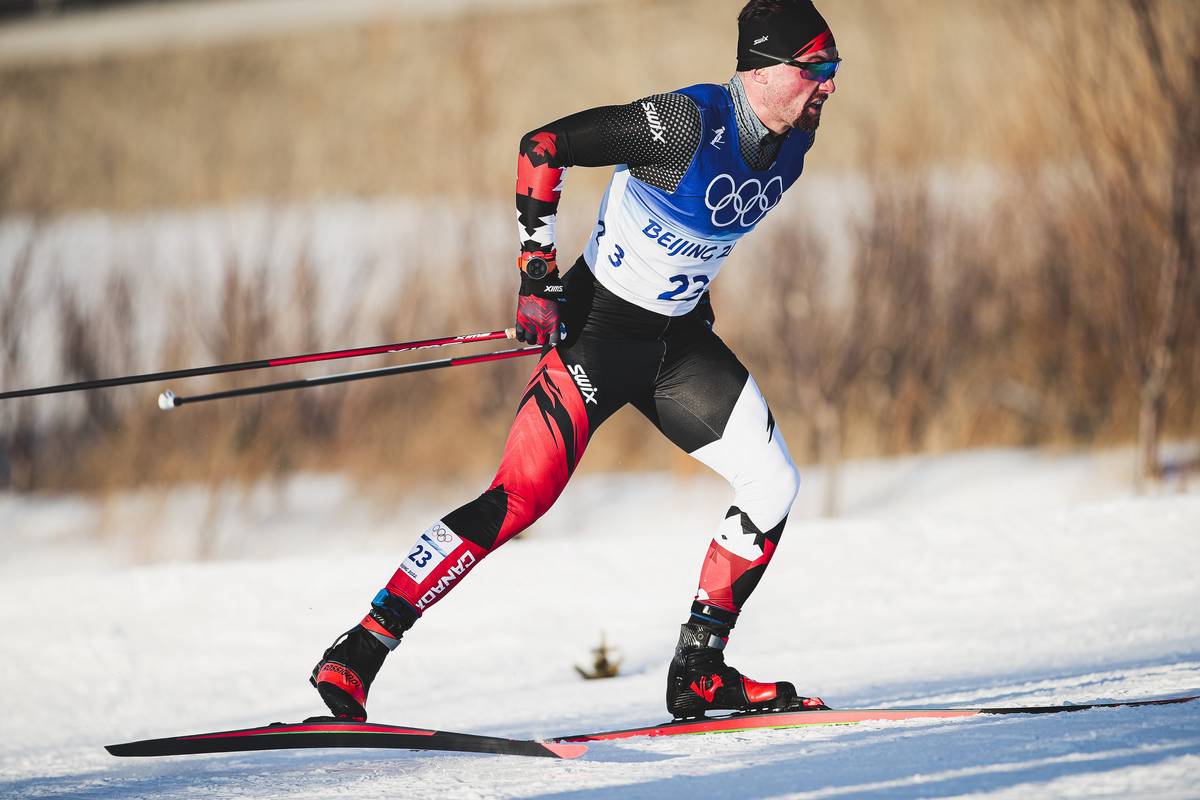
    Antoine Cyr (CAN) pushes around a the curve as he helps the Canadians to 5th in the classic team sprint during the 2022 Olympics. (Photo: NordicFocus)

    After the race, Cyr wrote to FasterSkier that the course had suited him with its long uphills and frigiddig conditions; temperatures were near zero degrees Fahrenheit ( -17 C). “Cold weather is good for us Canadians,” he said. Cyr repeated his strong showing in Ruka the next day, placing 12th in the skate pursuit. 

    Flash forward through a number of subsequent racing highs and lows, and Cyr found himself in similar circumstances: on classic skis in single digit temps, with an arduous course designed to test the mettle of the best in the world.

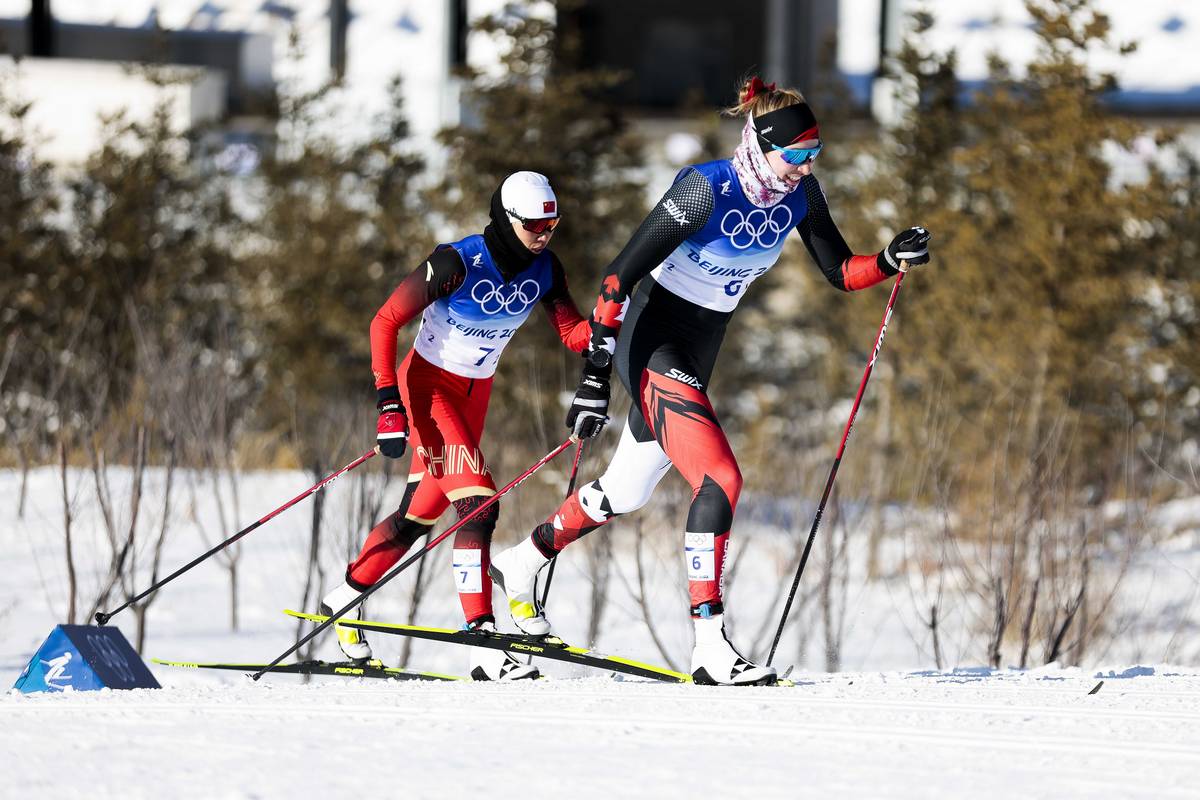
    Cyr was awaiting one final tag in the Olympic team sprint from partner Graham Ritchie, still amidst the lead group of eight teams, racing with some of the top names in the sport toward an Olympic medal. After receiving the tag, Cyr did his best to keep Canada in contact with the leaders, who began to surge, breaking apart this lead group as the list of medal contenders dwindled to three teams. 

    Along with William Poromaa of Sweden, Cyr lost contact with the top-three, tagging Ritchie for the final leg of the race in fifth, a position Ritchie held through the finish to cross the line in 19:45.3, only +22.3 back from the Norwegian gold medalists Johannes Høsflot Klæbo and Erik Valnes. 

    Graham Ritchie (CAN) double-poles toward the finish of the men’s team sprint. (Photo: NordicFocus)

    It was the best men’s result in a classic team sprint in Canada’s rich Olympic history. At the event’s debut in the 2006 Torino Games, which was competed classic, Devon Kershaw and George Grey took 11th in the team sprint for Canada, while Beckie Scott raced with Sara Renner to win a silver medal. Kershaw lined up with Alex Harvey at the following Games in Vancouver in 2010 for the skate team sprint, just missing the podium in fourth.

    “This is so incredible to pull this off and throw down such a good result for Canada,” Cyr told Nordiq Canada after the race. “It’s overwhelming, especially to do this with such a good friend like Graham. It is really special.”

    Graham Ritchie and Antoine Cyr celebrate 5th place in the classic team sprint during the 2022 Olympic Winter Games. (Photo: Laura Leclair)

    Both 23-years-old and competing in their first Olympic Games, the Canadians had been looking for more than the results they’ve had thus far in Zhangjiakou. A pre-Olympic camp at a similar elevation in Sovereign Lake/SilverStar reportedly went well, and tight COVID safety protocols had kept the athletes healthy, allowing them to safely enter the Olympic bubble. 

    While the opening races ultimately did not feature the Canadians vying for top-10 finishes, Cyr and Ritchie could look back on the 2021 World Championships in Oberstdorf, Germany, where they took seventh for Canada in the freestyle team sprint. 

    Ritchie told FasterSkier in the mixed zone that they knew from this experience that they would need to be in the top-four in the semifinals to advance safely into the final. They had done it in the World Champs and they believed they could do it again in the Olympics. 

    “We know we had it in us, we just knew we had to race smart and race hard and have a good day,” Ritchie explained. “So [I’m] super proud of Tony and me to be able to work together and use our experience to push through that semi and end up giving our shot at a good race in the final.”

    Graham Ritchie (CAN) races at the front of the pack at the start of the men’s classic team sprint in Zhangjiakou. (Photo: NordicFocus)

    So far in the Games, Cyr has raced every event, but had not cracked the top-30 individually. Ritchie sat out the skiathlon and 15 km classic, and finished as the top-Canadian in 34th in the freestyle sprint, just off the time needed to make the heats. Racing the first two classic legs of the 4 x 10 km relay, Canada finished 11th out of 12 teams that completed the race. It’s not the makings of an underdog story about a small nation in a rebuilding phase after a string of notable retirements that one might drum up.

    “I think we put every other race in the back of our minds and just knew we [could have] a good day,” Ritchie told FasterSkier on the team’s confidence in spite of sub-optimal results. “Tony is an exceptional classic skier. And myself and him are both – we know we can pull off a sprint. So we really put those other races behind us and were only focused on today…

    “But then I mean to be on the last lap, with the podium right there,” Ritchie continued dreamily, as if still feeling the thrill. “That was pretty eye opening.”  

    Though he acknowledged the challenge of facing the likes of Klæbo, Joni Maki (FIN), and Alexander Terentev (ROC) in the last lap, who eventually took the gold, silver, and bronze medals, respectively, Ritchie shared that the possibility of a Canadian medal crept into his mind in the final lap. Moreso, it planted a seed for what might be possible in the future. 

    “I mean, during the race, I definitely thought about it. Like you could see it right there… And I mean, we’re both 23 years old. We’ve got a lot of racing left in us. So yeah, that was a big race for us. And we’re really looking forward to seeing what we can do in the future here for Canada.” 

    In the mixed zone, World Cup competition coach Erik Bråten also spoke to the team’s ability, particularly in Cyr’s case, to put aside the early results of the Games and take on a “fake it till you make a kind of attitude today. And just push through it.”

    Speaking to the difference makers that led to this outstanding result, Bråten projected that Cyr had skied among the “top-three technically”, particularly when striding up the 400 meter A-climb, which rose 30 vertical meters to the high point of the course midway. 

    Antoine Cyr (CAN) matches Iivo Niskanen (FIN) up the climb during the classic team sprint in Zhangjiakou. (Photo: NordicFocus)

    Though Cyr had raced the odd legs of the team sprint during the World Championships and was second in the classic sprint final during the Canadian Olympic Team Trials in January, having also won both the freestyle sprint and the 15 km classic earlier in the trials, Bråten deliberated the matchup he would enlist for the team sprint until official selections were due.

    “For me, this team was pretty clear before we went here. But Tony’s been struggling a little bit. And Graham hasn’t been his maximum self here either, but I felt like he did decent enough in the [freestyle sprint]. I know Tony – the potential he has. And I felt like –  we plan for success. And I think on the best day, he was the right man for the day. We don’t plan for people to have a bad day. And he had an amazing day. He showed us what he could do out there. So I just think everything came together in a perfect way.”

    This coming together means more than just a new best Olympic result in the classic team sprint for the Canadian men. Bråten stated emphatically that it is a result that could spark a return to international success for Canadian cross country skiing, elevating every level of the development pathway.

    “I think it’s extremely important. It’s important for all the athletes back home in Canada, seeing what’s possible. It’s important for coaches, the coaches of these athletes, knowing what’s going on, knowing what it takes to get this result. And they’re so young, they can do even better next year, and so on. So it’s just a trickle down effect that can be quite big both financially, but also, of course, information and knowledge wise. They know what they did to get to this level. Well, that can be shown down [the development pathway] as well.”  

    That said, feeding the development pipeline and supporting the athletes within it requires resources. While some aspects of elite level cross country skiing are relatively low cost, Canada is limited by its budget in what it can do for athletes aiming for the top.

    “The man on the boards [is] the most important person,” Bråten said simply. “Any female or male who wants to be good, the most important thing you do is just get out there and do the work, which is free. Of course, there’s equipment involved, but the work is mostly free… However, there’s so much behind this. What do you put on the boards? Which boards do you have in the first place? Are you getting the coach, physiologists, ski support you need? And  we’re good enough to do this, apparently, but…”

    Bråten trailed off before gravely stating, “One Norwegian athlete is the same budget as our entire team.”

    Graham Ritchie skis to 34th in the freestyle sprint qualifier during the 2022 Beijing Olympic Games. (Photo: NordicFocus)

    “It’s tough,” he continued. “So, for sure, we wouldn’t hurt getting a little bit more financial support.”

    Ultimately, he has confidence in the team he is supporting, and in particular in Cyr and Ritchies outlook heading into the upcoming 2023 World Championships, which will be held in Planica, Slovenia beginning in late February.

    “There’s no reason they can’t fight for at least a medal, and why not just go gold if you’re going to go for bronze?”

  • The Devon Kershaw Show: Team sprint showdown in Zhangjiakou

    The Devon Kershaw Show: Team sprint showdown in Zhangjiakou

    Wednesday’s Olympic team sprint offered another thrilling set of races at the venue in Zhangjiakou — we’re back to break down an epic performance by the German women, a critic-silencing race from Norway in the men’s event and a U.S. women’s result that left a medal just out of reach.

    Thanks to everyone for sending in questions and feedback — we’re trying to keep our heads above water on the homestretch here, but you can be sure Devon will still have plenty to say post-Games. In the meantime, you can get us at devon@fasterskier.com and nat@fasterskier.com.

    Katharina Hennig and Victoria Carl win gold for Germany in the classic team sprint. (Photo: NordicFocus)
  • Germany outsprints Sweden and the ROC for gold and a second team medal; Brennan and Diggins fifth for USA

    Germany outsprints Sweden and the ROC for gold and a second team medal; Brennan and Diggins fifth for USA

    This World Cup coverage is made possible through the generous support of Marty and Kathy Hall and the A Hall Mark of Excellence Award.  To learn more about A Hall Mark of Excellence Award or to learn how you can support FasterSkier’s coverage please contact info@fasterskier.com.

    The team sprint: two skiers racing three laps each at roughly 1.5-kilometers a piece with a long climb thrown into the middle of the course and temperatures in the single digits Fahrenheit. It boils a sport that already requires both power and endurance down to its essence.

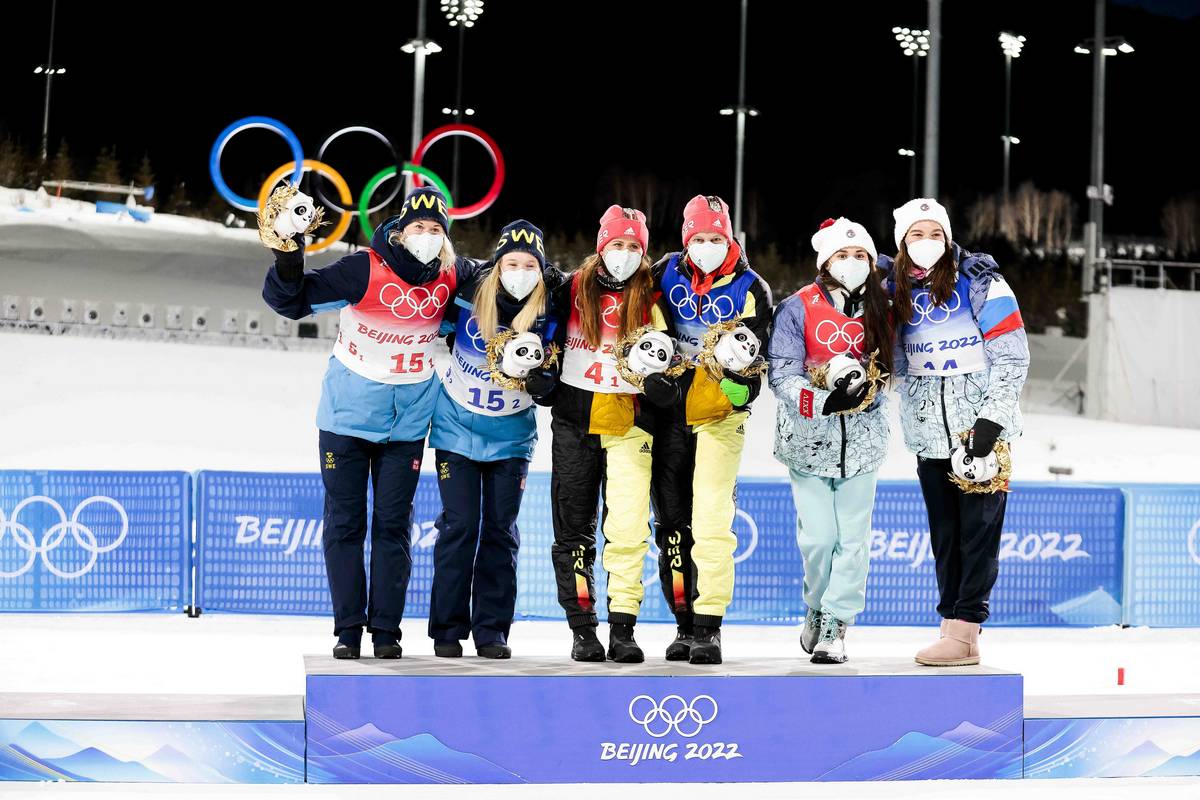
    Riding the high of their silver medal in the women’s 4 x 5 k relay, the duo from Germany, Katharina Hennig and Victoria Carl, won a thrilling sprint finish to decide the medals, collecting gold in a time of 22:09.85. To take the stop spot, the anchor, Carl, out-sprinted the Swedish individual freestyle sprint gold medalist, Jonna Sundling, in the final meters to win by just 0.17 seconds, while the Russian Olympic Committee’s Natalia Nepryaeva crossed just behind in third (+0.71).

    Sweden, Germany and Russia share the women’s classic team sprint podium.
    (Photo: NordicFocus)

    After holding strong in medal contention throughout the first five of six laps, the American pair of Rosie Brennan and Jessie Diggins lost contact with the leaders in the final leg, crossing the line fifth (+12.93) behind Finland in fourth (+3.86).

    Now, let’s take a step back.

    There is, perhaps, no reminder needed that USA won the team sprint in 2018; Kikkan Randall and Jessie Diggins collected the first Olympic medal for the United States in cross country skiing – a gold, no less – since Bill Koch took silver in the 30 k classic in 1976. However, the team sprint in PyeongChang was raced freestyle, whereas today’s team sprint would be held in classic. 

    “I’m not trying to compare today to four years ago,” said Diggins in the mixed zone after the race. “It’s a different course, different altitude, different technique, like literally nothing is the same and, and that’s okay. I think today, I was going out there and skiing for Rosie and skiing as hard as I could and as best I could… but I’m really proud of this race and proud of giving it our best fight.”

    Rosie Brennan helps the Americans finish second in the first team sprint semifinal, automatically advancing to the final. (Photo: NordicFocus)

    We have to look back eight years for a classic team sprint at the Olympic Winter Games, to the 2014 Games in Sochi. Norway took the gold that day in dominant fashion ahead of Finland and Sweden, who were stretched behind by roughly ten seconds a piece. Only one of the six women on the podium returned to the Games in 2022, again making the team sprint roster: Finland’s Kerttu Niskanen. The American pairing of Sophie Caldwell (now Hamilton) and Kikkan Randall were sixth in Sochi, +35.06 back on the Norwegian winners.

    In the intermediate FIS World Championships, the Americans finished fifth both years, racing Brennan and Sadie Bjornsen (now Maubet) in the freestyle competition in Oberstdorf, Germany in 2021, and pairing Bjornsen with Diggins for the classic team sprint in Seefeld, Austria in 2019. In Oberstdorf, the Americans missed the podium by roughly 2.2 seconds, finishing 2.8 seconds behind the winning team from Sweden. In 2021, they missed the podium by an equivalent margin, this time finishing 5.8 seconds back in the overall standings, again to Sweden. It’s a mark of consistency and depth across techniques for the American women. 

    Yulia Stupak (ROC), Kerttu Niskanen (FIN), and Katerina Janatova (CZE) lead the way early in the women’s classic team sprint semifinal. (Photo: NordicFocus)

    To make the team sprint final, each team must finish in the top-two of semifinal A or B, or be within the next six fastest times from either heat. The U.S. was second to Germany (+4.03) in Semifinal A, while the ROC won the second semi in a close finish with Finland in second (+0.35) and Sweden third (+1.0). Austria and Switzerland also advanced from the first semi, with Sweden, Norway, France, and Poland filling the remaining spots from semifinal B. 

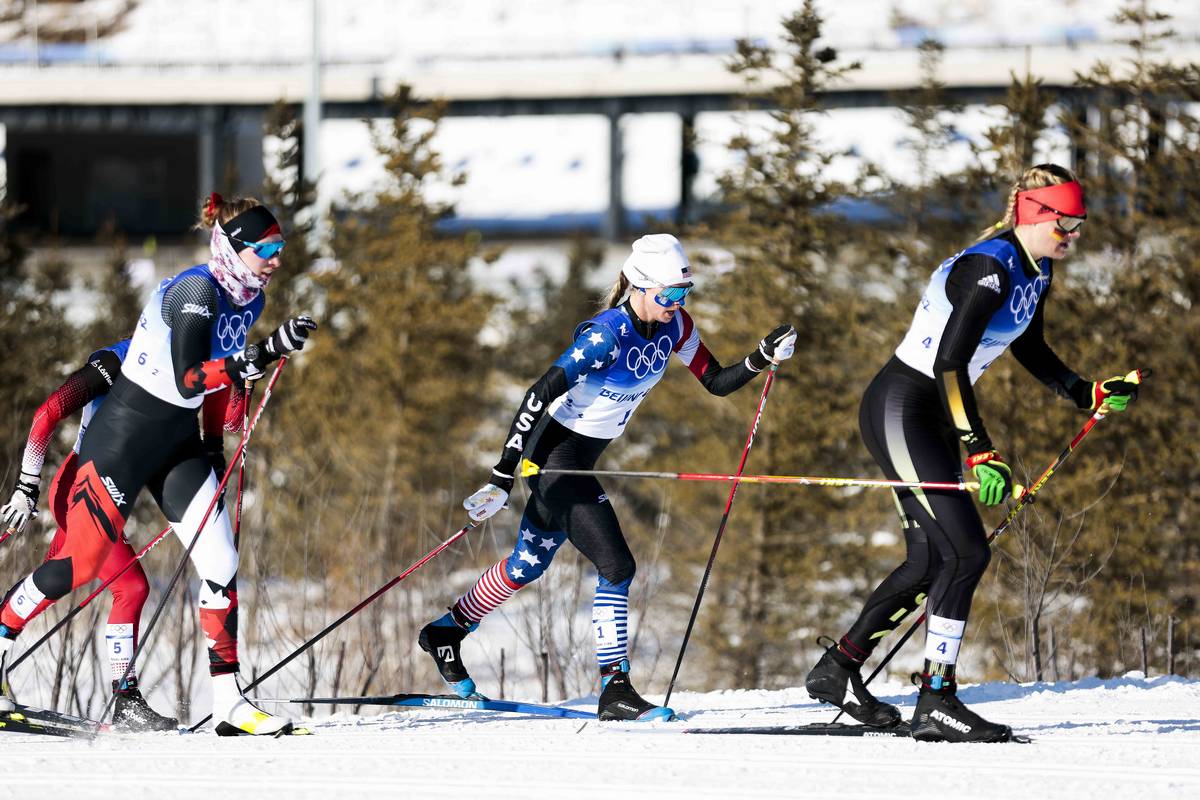
    With bursts of frozen mist released from their mouths, the athletes took to the course for the final round, with Yulia Stupak (ROC), Maja Dahlqvist (SWE), Kerttu Niskanen (FIN), Tiril Udnes Weng (NOR), and Katharina Hennig (GER) racing with Brennan at the front of the pack. 

    With a hooded parka draped over her, face tape obscuring her normally glittery cheekbones, and heated socks inside her boots, Diggins waited in the exchange for the tag. She would be facing Natalia Nepryaeva (ROC), Jonna Sundling (SWE), Krista Pärmäkoski (FIN), Maiken Caspersen Falla (NOR), and Victoria Carl (GER) in the even-numbered legs. 

    Racing comfortably near the front with skis that looked competitive for both kick and glide, Brennan tagged Diggins +1.1 second back on Finland in fourth, well within the lead group. In what would become a pattern for her first two legs, Diggins quickly moved to the front to control the race and ensure a fast pace, perhaps risking accumulating her own fatigue while also taking the sting out of the legs of the individual sprint gold and silver medalists of Sweden, who had also won the World Championship gold in 2021.

    Diggins races at the front of the lead pack during the classic team sprint final. (Photo: NordicFocus)

    Diggins tagged Brennan virtually even with Sweden and Finland after her first lap, a position Brennan was able to hold through her second leg. Near the bottom of the long, grinding climb to the high point of the course, Norway’s Weng wobbled slightly, placing her pole in front of Dahlqvist’s ski to catch her balance. Weng’s pole snapped, leaving her running up the sidelines of the climb with one pole, detaching her strap to grab another from a coach who stood along the fenceline. This lost Norway several seconds, which they were unable to regain in subsequent legs, leaving the team out of podium contention.

    On the odd legs, Niskanen of Finland consistently controlled the race at the front, putting the powerful stride that earned her a silver medal in the 10 k last week on display as she led up the climb in each round. She tagged her teammate Pärmäkoski in the lead at the halfway mark, with Germany, the ROC, and USA within a second back. 

    Kerttu Niskanen (FIN) sets the pace in the first lap of the women’s classic team sprint final. (Photo: NordicFocus)

    Diggins again charged to the front, her hands and legs pumping metronomically as she drove her skis up the climb. Diggins crested the hill in front, with Sundling and Pärmäkoski on her tails heading into the descent. A gap had opened to Germany and the ROC, but these teams had lightning fast glide and were able to regain contact in the descent. 

    At 6 k, with four of six legs complete, it was Sweden and Finland in the lead at the exchange, with Brennan receiving a tag 2.5 seconds back. Niskanen again set the pace at the front, still looking strong as she pushed the pace up the A-climb, with Dahlqvist matching pace behind. In a critical moment where loss of contact might have meant accepting a podium was not in the cards on the day, Brennan accelerated up the climb, steadily closing the gap to the Swede ahead of her. 

    Rosie Brennan (USA) awaits her turn during the women’s team sprint. (Photo: NordicFocus)

    An aerial shot showed Brennan upping her tempo as she brought the U.S. back in contact with the leaders, bringing Hennig and Stupak along with her. All five women dropped into a tuck as they headed downhill together, rounding the sweeping right-hand bend and sprinting up a final climb before the last exchange. Throwing her hands up the hill in a run, Brennan challenged Sweden’s Dahlqvist on the final uphill, double poling around a left-hand bend into the exchange in third behind Germany and Finland. 

    In the last lap, Diggins went hunting. With Pärmäkoski and Carl leading the charge up the climb, Diggins would need to work the hill. Striding powerfully, Diggins did everything she could to keep her team in contact with the leaders, but it was not enough on the day. Doublepoling across the false flat before the descent, it was Pärmäkoski leading Carl, Nepryaeva, and Sundling. 

    The leaders were four abreast coming around the final bend, with Pärmäkoski and Sundling pushed into the outer two lanes, leaving them at a deficit as they headed up the final climb to the stadium. 

    Cresting the rise, Carl looked to be falling off the pace, while Nepryaeva and Sundling pulled to the front, the Swede leading around the final left-hand corner into the finish. 

    But Germany wasn’t done yet. Carl moved up along the outside of the bend, challenging Sundling as they headed into the finish lanes. Doublepoling powerfully, Carl began to slowly pull ahead of Sweden, with the ROC dropping back a few meters behind. 

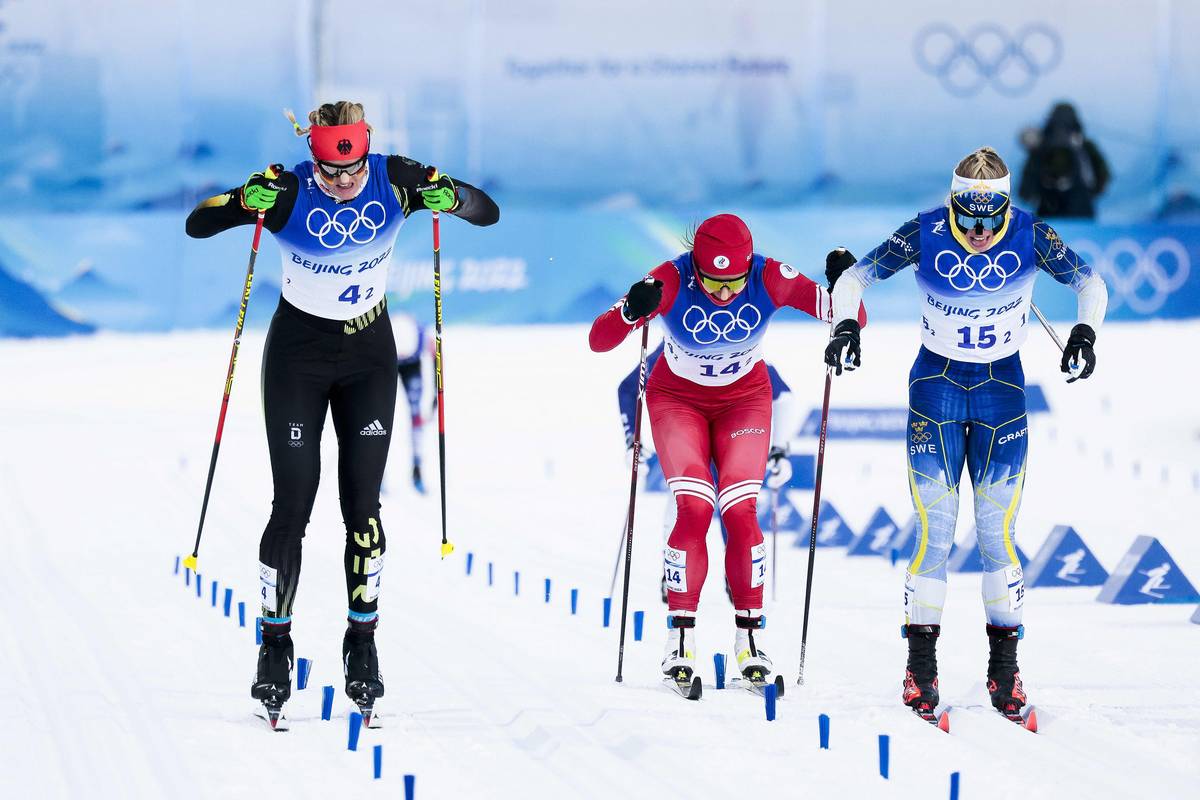
    Coming to the line to decide the medals, it was Victoria Carl (GER), Natalia Nepryaeva (ROC), and Jonna Sundling (SWE) (l-r). (Photo: NordicFocus)

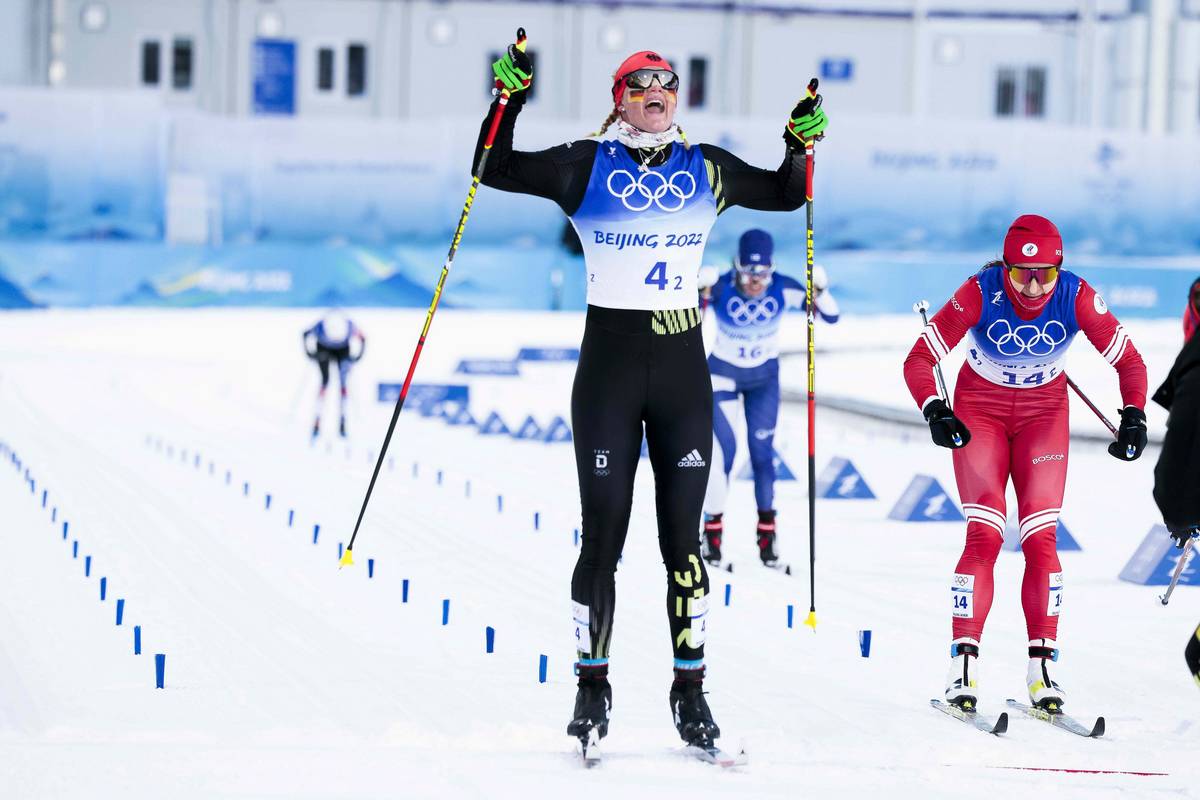
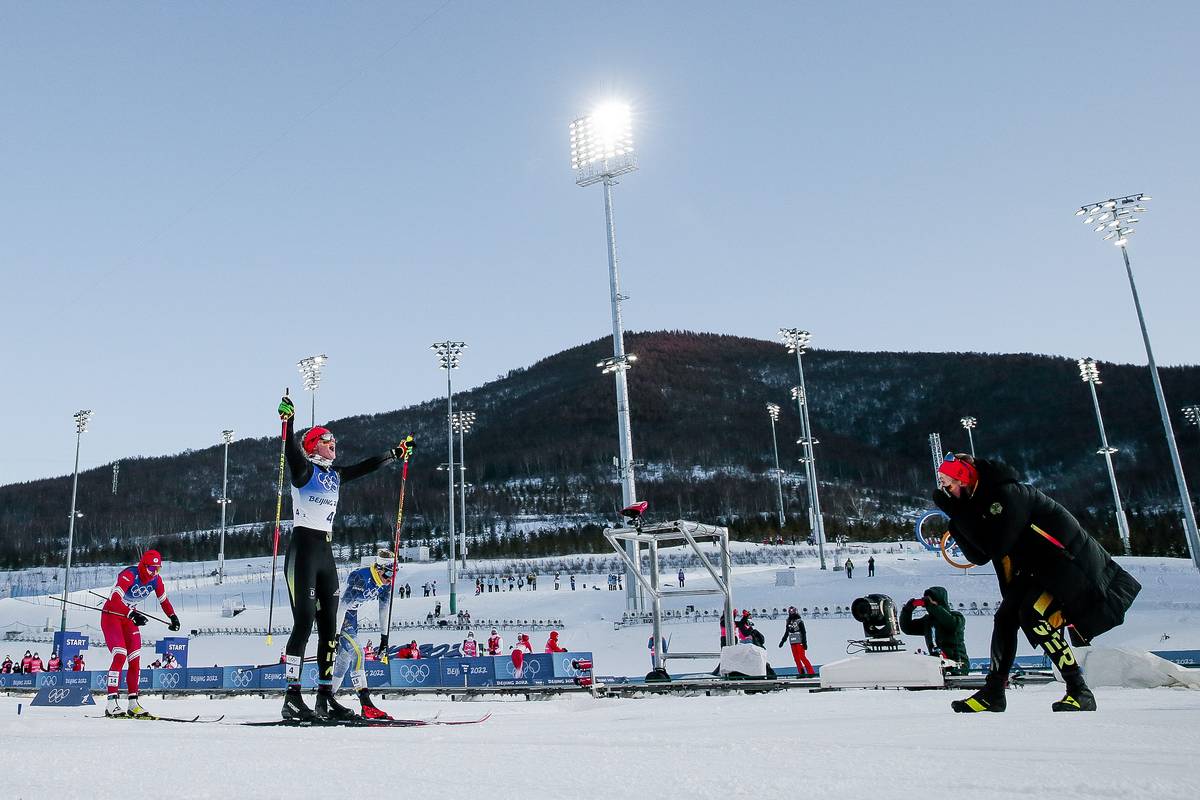
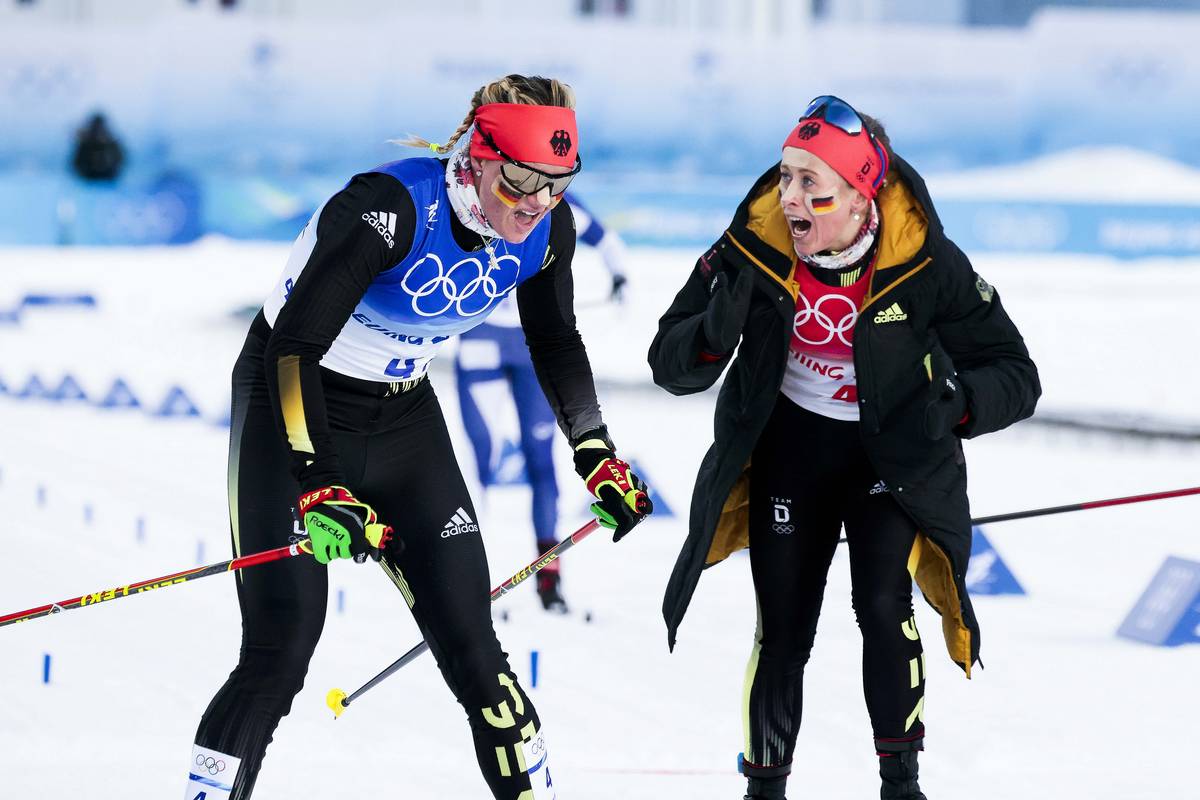
    In a surprise upset of the Swedish favorites, Carl took it to the line, holding off Sundling as she crossed the line in 22:09.85, welcomed by her ecstatically screaming partner Hennig. Sundling was just 0.17 seconds back for silver, with Nepryaeva unopposed for bronze on their tails (+0.71). 

    Victoria Carl (GER) celebrates gold in the women’s team sprint while Natalia Nepryaeva brings the ROC across the line in third.(Photo: NordicFocus)
    VIctoria Carl takes gold in the classic team sprint, while partner Katharina Hennig awaits in disbelief. (Photo: NordicFocus)

    After falling off the leaders in the final climb, Pärmäkoski brought Finland to the line in fourth (+3.86) with Diggins holding strong after a gap to cross fifth (+12.93). 

    “It means a lot for us,” Hennig told the media after her race. “Also the silver medal in relay and today the gold medal in team sprint. It means a lot and we are very thankful for the whole team. It’s very important for cross-country in Germany.”

    Excitement was high at the finish of the women’s team sprint, as Victoria Carl narrowly took the win for Germany, racing with partner Katharina Hennig. (Photo: NordicFocus)
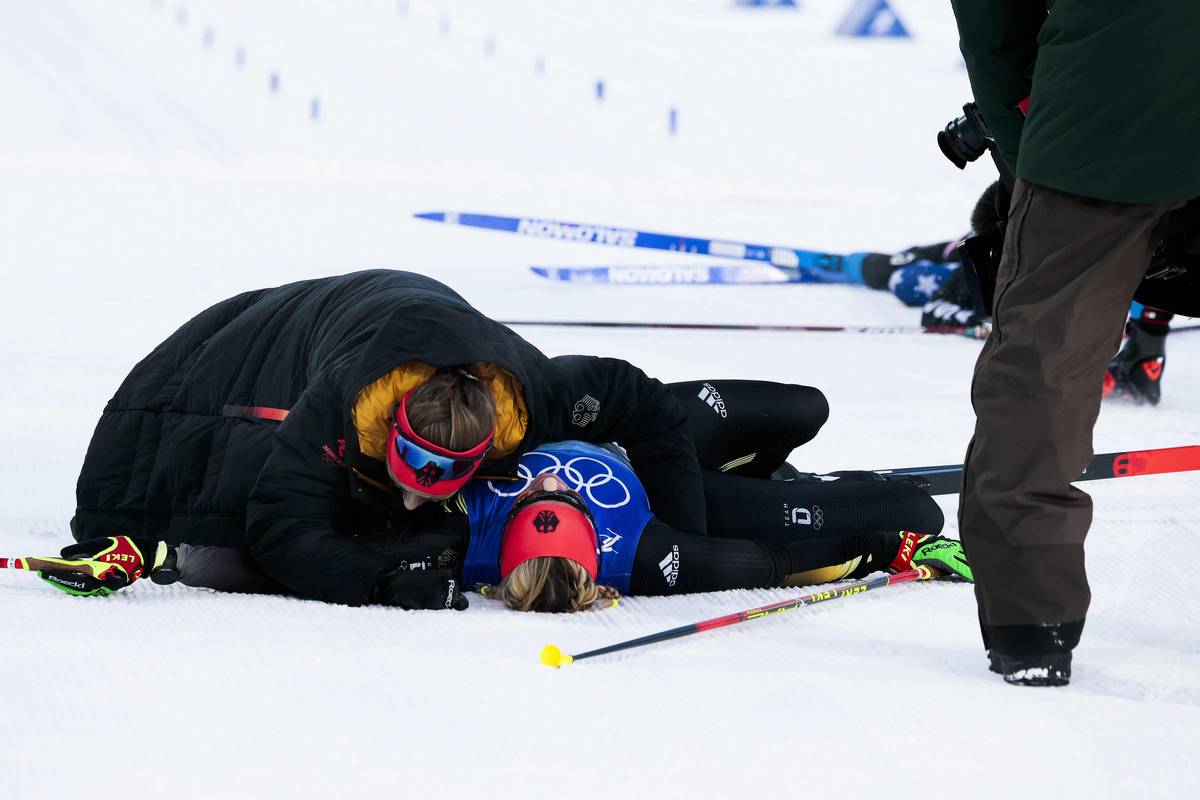
    Katharina Hennig hugs her exhausted teammate Victoria Carl at the finish of the women’s classic team sprint. (Photo: NordicFocus)

    Though she was the key player in the final lap, Carl was not originally on the start list. She was substituted for Katherine Sauerbrey, who had skied the first leg of the women’s relay on Saturday. German coach Peter Schlickenreider, who celebrated his 52nd birthday today, explained in the mixed zone that Saurbrey had made a “great decision” to let the team know that she was feeling fatigued and as though she may be getting sick. 

    From there, the calculus became: “Okay, you have a silver medal, you did a good race [in the relay], and we have prepared Victoria Carl, so she’s ready,” Schlickenreider explained. “So then let’s do the safe thing.”

    He added that Germany had raced an athlete, Nicole Fessel, in the team sprint during the 2018 Games who was feeling sick, which proved to be a significant mistake as Fessel struggled with her health for the following three months, before ultimately ending her career. The coaches had vowed never to make this error again.

    Jonna Sundling (SWE) congratulates Victoria Carl and Katharina Hennig on Germany’s gold medal in the classic team sprint. (Photo: NordicFocus)

    On the performance of the German skis, which have allowed the team to excel throughout the Games, Schlickenreider explained that waxing has been a focus for the team over the last quadrennial. 

    “We worked really hard the last four years to get this good team. And I think that’s the main thing, that everybody’s working together so that the athlete and ski technicians were communicating quite well.”

    Jessie Diggins (USA) comes to the line in fifth in the women’s team sprint. (Photo: NordicFocus)

    After winning gold in the event, it’s easy to look at a fifth place finish as a disappointment for the American team. But observing the last five seasons, it remains a testament to the consistent strength of the American women’s program, the depth of the field racing at this level, and the fact that ultimately, an Olympic medal is viewed among the highest accomplishments an athlete can achieve purely because it requires the fortuitous coming together of infinitely many pieces to do so.

    Both Brennan and Diggins stated with confidence that they were happy with their performances today, highlighting advances made in classic racing throughout the Games.

    “I felt really good about my skiing today,” Brennan said. “I think it was one of my better classic races this week, so I’m really happy to put it together by the end of the Olympics. And I did what I could to stay in contact to give Jessie her best shot. And I’m happy with that.”

    Rosie Brennan (USA) strides up the A-climb in the women’s team sprint semifinal. (Photo: NordicFocus)

    “I’m really proud of how we skied,” Diggins affirmed. “It was so cool seeing Rosie just crushing, and I went as hard as I could. And there’s no doubt in my mind that I could not have possibly tried harder. I finished with zero sugars left and was dizzy and sick. And I’m currently wearing all the clothes of Team USA… I think we had great skis, or at least I definitely had the kick that I needed. I felt like, technically, this was some of my best classic skiing. And yeah, I’m just really proud of giving it our all because that’s all you can do.”

    Jessie Diggins anchored the women’s classic team sprint to fifth. (Photo: NordicFocus)

    In NBC’s broadcast, team sprint gold medalist turned analyst Kikkan Randall explained that the Americans knew that competitive skis would be a requirement to allow Brennan and Diggins to fight for a medal today. 

    Both athletes expressed that their skis were up to the task, particularly for A-climb, which is roughly 400 meters in length (a quarter mile) with nearly 100 feet of elevation gain. Ascending this three times each in the final, optimizing kick could be essential.

    “I have to have enough kick, or else I really struggle,” Diggins explained. “So I definitely asked for an extra bump. In hindsight, maybe I shouldn’t have but also, that’s on me. And I know that that’s what I need. I need to be able to get up the hill. And that was my biggest priority. And so I think having not enough kick would have made me lose more time.”

    Jessie Diggins (USA) marks Victoria Carl (GER) during the women’s team sprint semifinal. (Photo: NordicFocus)

    Both athletes confirmed that they would be racing the final event of the 2022 Olympic Winter Games on Sunday, the 30 k mass start freestyle, barring unforeseen changes. With one last opportunity to fight for medals, Brennan encapsulated the Americans’ outlook on the whirlwind of racing and Olympic hype. 

    “One thing that the US is really bad at is only caring about the Olympics,” Brennan said in the mixed zone. “But we’re racing and World Cups every weekend all winter long and World Championships on the [odd] years, so if you look at the results from all of those races, you know, this is in the ballpark. I wouldn’t say I had the world’s best races [here] and certainly not the world’s worst races. So it’s been a good experience and we will head straight back to the World Cup and keep fighting for more.”

    Dahria Beatty (CAN) races in semifinal A during the women’s classic team sprint. (Photo: NordicFocus)

    Racing for Canada, Katherine Stewart-Jones and Dahria Beatty took sixth in the first semifinal and did not advance. They ended the day in 12th overall.


    Results: Semifinal A | Semifinal B | Final

  • Norway Pulls off a Historic Team Sprint Gold Repeat; Canadians in 5th and Americans in 9th for Strong Team Debut

    Norway Pulls off a Historic Team Sprint Gold Repeat; Canadians in 5th and Americans in 9th for Strong Team Debut

    This World Cup coverage is made possible through the generous support of Marty and Kathy Hall and the A Hall Mark of Excellence Award.  To learn more about A Hall Mark of Excellence Award or to learn how you can support FasterSkier’s coverage please contact info@fasterskier.com.


    The team sprint: it’s the youngest event on the Olympic program, having been contested only since the 2006 Torino Games. The event has since become a marquee event in the sport of cross country skiing.

    Holding it up as a marquee event, of course, is easier to say coming from the United States. If you tuned into the NBC broadcast, you got the delight of hearing 2018 team sprint gold medalist Kikkan Randall analyze the race where she won the US’s only gold medal in cross country skiing, while her teammate from that race, Jessie Diggins, worked to repeat the Olympic medal feat. 

    Yes, the team sprint was that race, and we could all revel in that memory as it played out in Zhangjiakou, China on Wednesday.

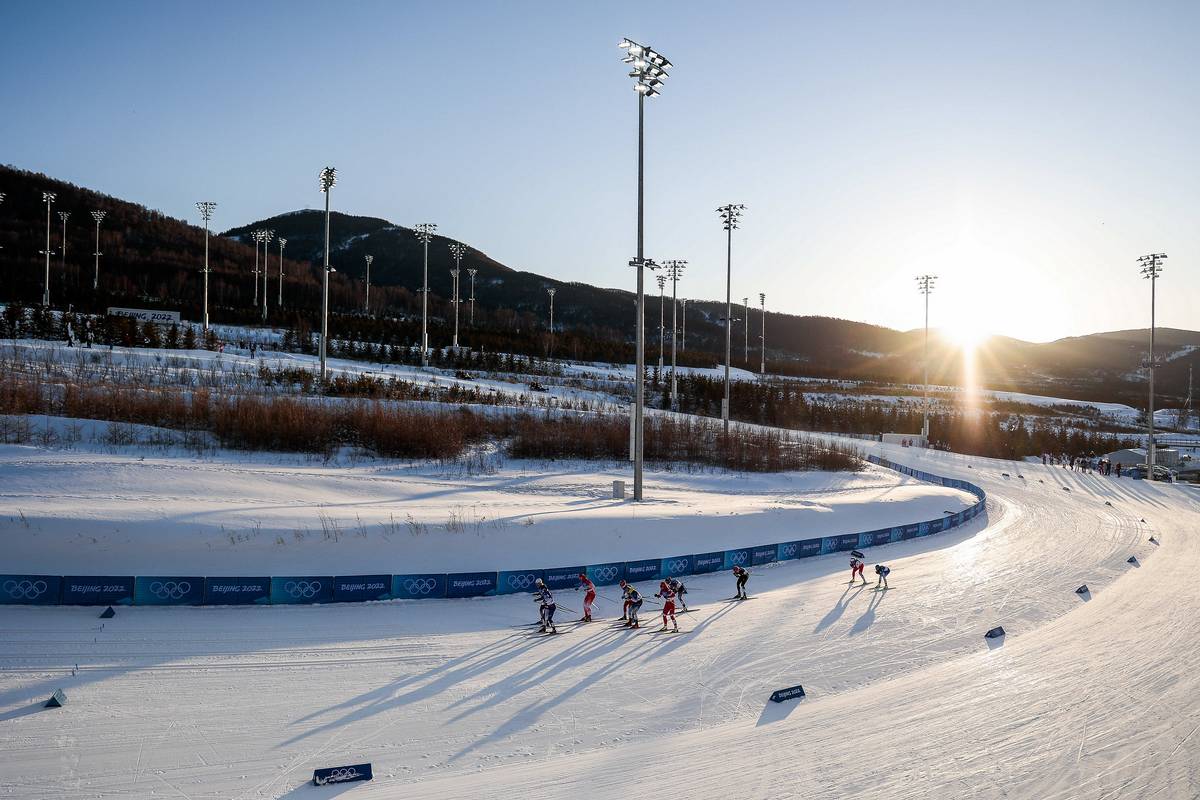
    Competitors surrounded by the colors of the sunset. (Photo: NordicFocus)

    Beyond that, though, no other event exemplifies the nuances involved in modern skiing like the team sprint. This is an event that pairs the specialists with the even-more specialized, and has an err of a nordic nerd’s daydream to the team-selection possibilities that arise from doing so.

    What if you lined up the two athletes who single-handedly changed a generation of skiers together under one flag? Well, they’d turn out to win gold in Pyeongchang 2018, like when Johannes Høsflot Klæbo and Martin Johnsrud Sundy were paired as team Norway. What if you repeated when Finland won gold in Sochi 2014, but this time Iivo Niskanen, who was then seemingly untouchable as a classic skier? Well, that one offers a bridge to what played out in Beijing 2022.

    Of course, hypotheticals joined up with storylines that didn’t need to be posed as a question today too. For the US men, this was the crystallized moment where one generation was handed off to another. Call to mind the US Olympic team sprint team anytime in the last eight years and it was the steadfast duo of Simi Hamilton and Erik Bjornsen. These men, now retired, were sixth in the team sprint in both the 2014 Olympics in Sochi and the 2018 Games in PyeongChang. Then, this morning, it was Ben Ogden and JC Schoonmaker, both born in 2000.

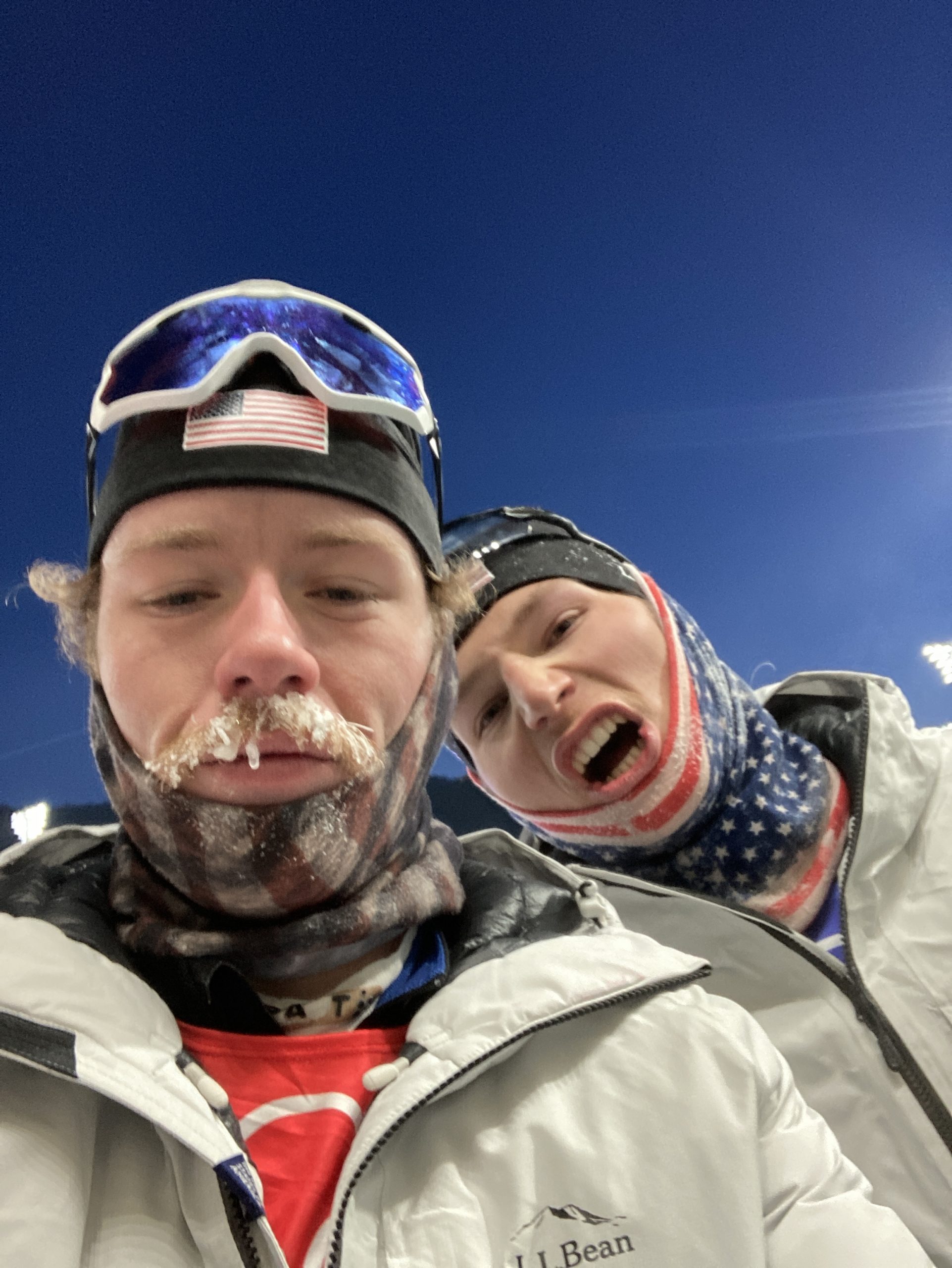
    The (frozen) fresh-faces of American skiing. Teammates Ben Ogden and JC Schoonmaker after completing the Team Sprint on Wednesday in Beijing. (Photo: Nat Hertz)

    The two made up a pairing that was more pure-sprint oriented than most of the competitors that were most closely watched going into today. The strategy for a few of the top teams, in particular, the Russian Olympic Committee and Finland, seemed to be pairing their top-class distance skier with a sprinting specialist.

    For the course in Beijing, it was a good strategy on paper. The 1.5-kilometer course, last seen in the individual sprint last week, had one tactical pressure point going into a downhill when it was raced as a single lap. When it was raced in a burst of three per skier with little rest in between, however, just how much the long, semi-gradual, uphills on this course made skiers work moved to the forefront. In the team sprint, having a skier who could stay with a sustained attack through multiple legs was an appealing prospect, especially when it was meant to set up for a punchy last climb that would no doubt give way to a mad dash for the finish.

    For two teams, Norway and the Russian Olympic Committee (ROC), that mad dash had been setting up since the first World Cup of the season, when 22-year-old Alexander Terentev (ROC) out-dueled sprint superstar Johannes Høsflot Klæbo (NOR) to challenge the latter’s classic sprinting dominance.

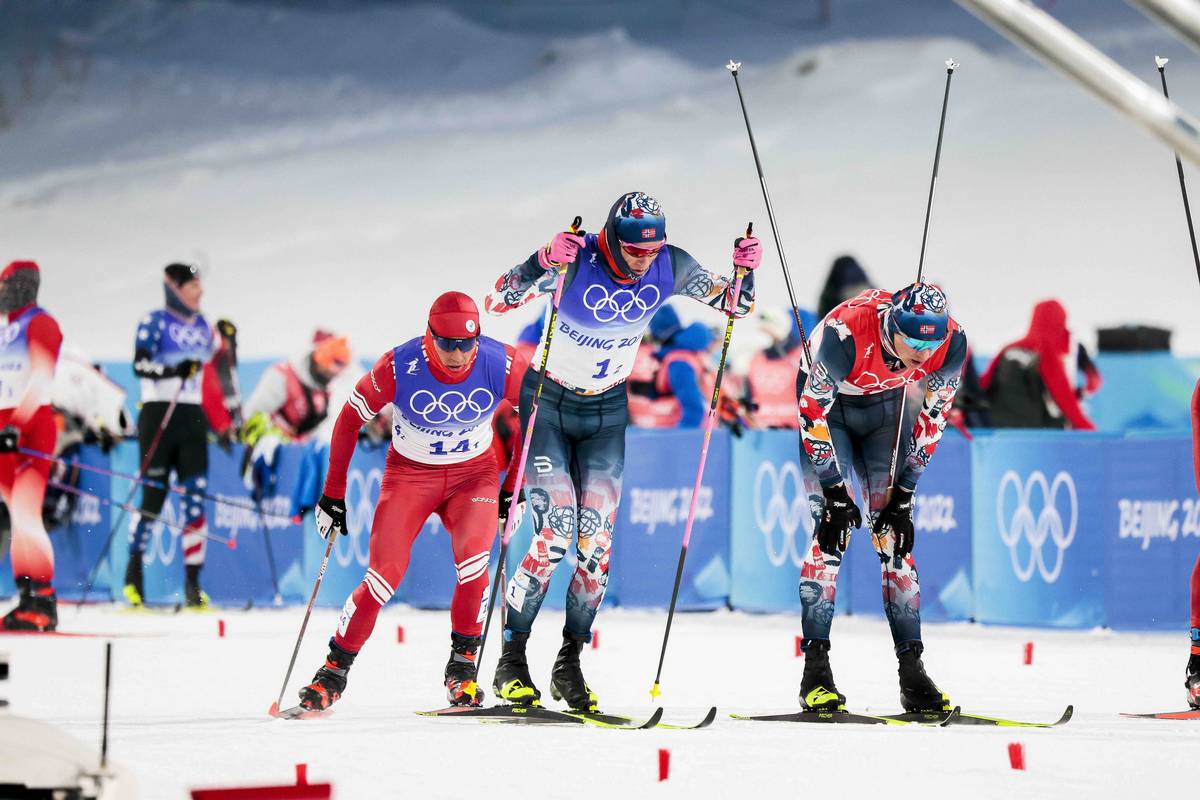
    Johannes Høsflot Klæbo (NOR) accelerates out of the exchange zone after receiving a tag from teammate Erik Valnes, followed by Alexander Bolshunov (ROC) on his way to tag teammate Alexander Terentev. (Photo: NordicFocus)

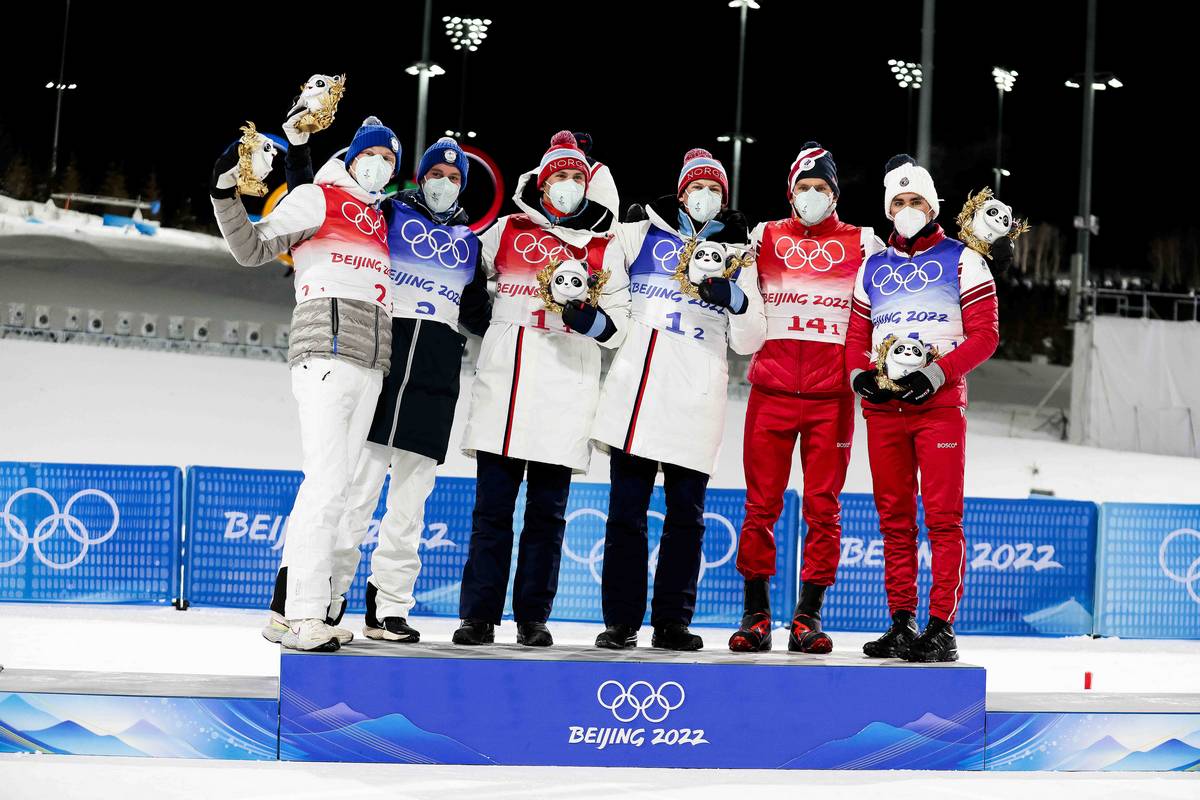
    They would both ski the anchor legs on their teams. Klæbo was paired with fellow sprinter Erik Valnes to make team Norway, while Terentev was paired with 30 k skiathlon gold medalist Alexander Bolshunov to make team ROC. Finland joined the intrigue, sending out 15 k classic gold medalist Iivo Niskanen in the first leg paired with the World Cup’s perennial “oh, that’s right he’s a great sprinter too!” Joni Maki as an anchor.

    As such, the teams in the final skied the first and second legs could roughly be divided into: leg 1 – the distance skiers and long-burn sprinters, and leg 2 – classic sprinting’s very best.

    The US had qualified for the final as the second lucky loser, finishing a messy semi-final that saw Ben Ogden break a pole and recover to finish 6th place (+4.43 off of heat winners Italy’s mark of 20:06.99). 

    “It was a hard semi-final, ours was fast and everyone was pushing. [The pole break] was one of many places where we used more energy than we had to today.” said Ogden in post-race interview with FasterSkier in the mixed zone.

    But as Ogden went out in the final, he seemed to settle in and leave the troubles of that semi-final behind. He looked comfortable in a pack that had settled on jockeying for position in the early part of the race, moving up to 4th place through the first exchange.

    Ben Ogden (USA) strides early in the the team sprint. (Photo: NordicFocus)

    The men’s field going out relatively slowly could be attributed to Norway’s Valnes. He seemed to comprehend that with his team as a pre-race favorite, the eyes of the pack were on the “What is that?” pattern of his suit. Valnes looked to lead the pack so-as only to try and lull it into complacency. It was a strategy that made sense, knowing he would be tagging off to the current fastest human on skis in a drag race, Klæbo.

    Alexander Bolshunov, though, called Valnes out on his bluff, making sure to pick up the pace just enough so that the pack would have to work throughout its first leg.

    So began the stalemate that would last for much of the early legs of the race. In the first exchange to the anchor-legs, Klæbo showed outward signs of his strength, and his desire to keep the pace right in the sweet spot where he could shoot around them in the end. JC Schoonmaker, meanwhile, remained placed right off the leaders, in the pack, moving through the course.

    The second showing of leg 1, including Valnes, Bolshunov, Niskanen, and Ogden saw Bolshunov push on the initial climb out of the stadium. Valnes covered the move, before the pack came together in the final climb into the stadium. The pressure, and the speed, had increased. Ben Ogden, though, had kept up with the pack, and came through the half-way mark with the Americans in 7th place (+4.4).

    Johannes Høsflot Klæbo (NOR), Richard Jouve (FRA), and Joni Maki (FIN) face off in the classic team sprint during the 2022 Olympic Winter Games. (Photo: NordicFocus)

    In their second laps, a lead group that included Terentev, Klæbo, Maki, and Schoonmaker, the pack began to take shape. The decisive move didn’t come from any of those skier’s mentioned, though, but instead from a familiar agitator in sprint heats on the World Cup. Moving up from behind the leaders, France’s Richard Jouve powered to the front of the pack on the first uphill, but was quickly matched by both Terentev and Klæbo. The duo, as they approached  the downhill, put in a burst of speed that hadn’t been seen on the course up to that point, and it was all it took for the pack to begin to thin.

    This was the move that saw the young American team begin to lose contact with the lead group. Schoonmaker later said that “the downhills felt tighter and more aggressive than some other World Cup sprints.”

    The Americans slipped to 9th place, and remained there for the rest of the day despite the early efforts of the duo to stay locked in and pushing all the way through.

    JC Schoonmaker races the classic team sprint final during the 2022 Olympic Winter Games. (Photo: NordicFocus)

    Meanwhile, at the front, the exchange to the final lap of the odd-leg skiers found Bolshunov once again putting in an attack on the uphill that led out of the stadium. The move indicated that the ROC had faith in the young Terentev as the anchor, but that chancing it with Klæbo still on deck was not the preferred option. Valnes took the ROC strategy off the table anyway, letting out a blistering counter-attack that showed his own strength and served to further separate the pack. When they came into the final climb into the stadium for the last exchange, it was just Norway, the ROC, and Finland who were in contention for the gold medal.

    Finland, in fact, was the first to the exchange. That came courtesy of Niskanen, who evaded the front of the pack for much of his race. The 15 k classic champion unleashed his diagonal stride on his final climb of the day, with both efficiency and power that exemplify optimal technique.

    The last lap, then, looked like a three-way pack of Finland, Norway, and the ROC, and, not far back and putting together an outstanding day, Canada (+9.7). The team of Graham Ritchie and Antoine Cyr had put in an unexpected and auspicious effort for the whole world to see.

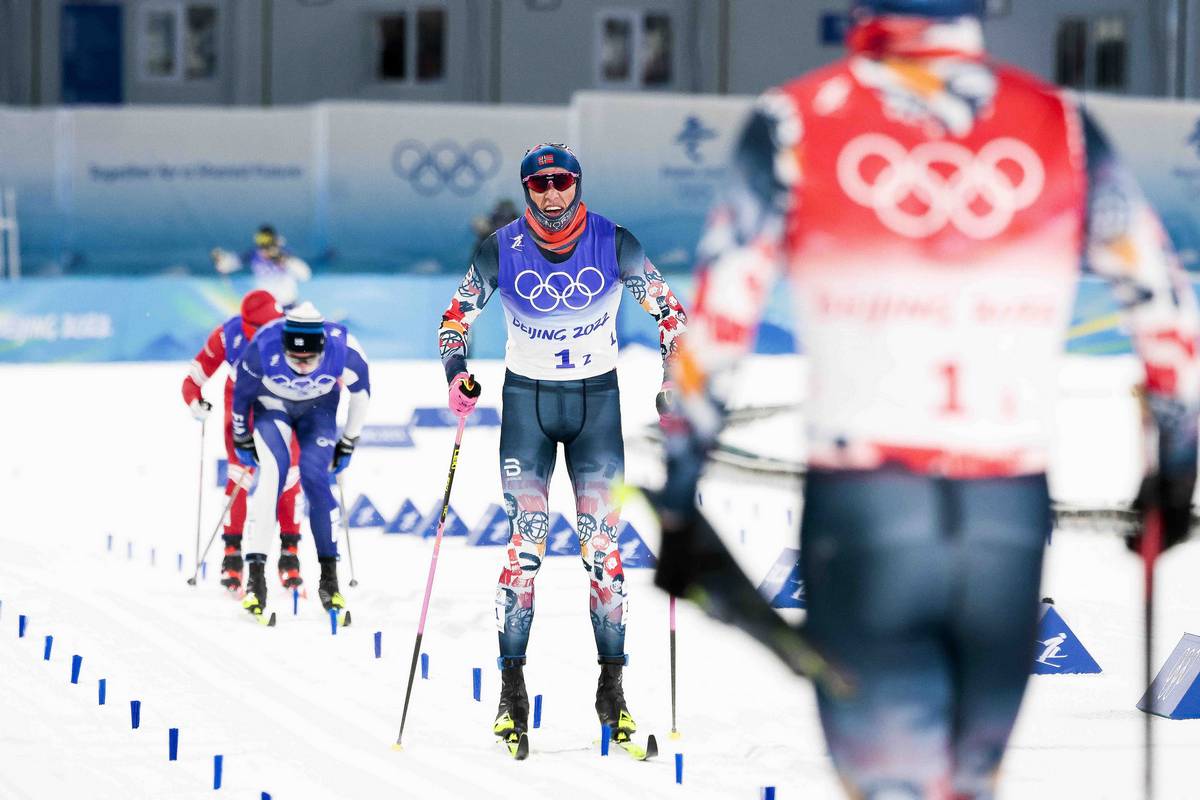
    Johannes Høsflot Klæbo (NOR) leads the way to the line, with Joni Maki (FIN) and Alexander Terentev (ROC) behind for second and third. (Photo: NordicFocus)

    Still, the skiers to face off for medals remained; Joni Maki (FIN), Johannes Høsflot Klæbo (NOR), Alexander Terentev (ROC).

    The front three remained tight throughout the final lap. The pace was fast, but not fast enough to shake the familiar feeling that we’d been here, on this 1.5 k course, before, and it was a stage for which one player was ready to take the lead role: Klæbo.

    On the last hill, Klæbo went, and proved again that he was both a master of the art of sprint racing, and still indisputably its best practitioner. He, and Norway, would repeat as gold medalists in the team sprint in a time of 19:22.99.

    Johannes Høsflot Klæbo celebrates team sprint gold with teammate Erik Valnes. (Photo: NordicFocus)

    In comments to the press after, Klæbo said of repeating as a gold medalist, “I’m really proud, it’s special to do this together as a team. We won the team sprint in 2018, and doing it in a different way now, different style, with a different person, it’s special.”

    Behind him, Joni Maki made a late effort to pull in front of Terentev and deliver Finland, and his teammate Iivo Niskanen, back to the medal ceremony that they last attended for the team sprint in 2014 by finishing second (+2.46). Terentev finished third (+4.29), ensuring that the ROC (or, for these purposes, the Olympic delegation formerly known as Russia) continued its streak of never having finished outside of the medals in the team sprint at an Olympic Games.

    Graham Ritchie (CAN) double-poles toward the finish of the men’s team sprint. (Photo: NordicFocus)

    Sweden pulled back to fourth place (+15.06), and the surprise of the day was the young Canadian team of Ritchie and Cyr, both 23 years old, finishing in fifth place (+22.31). The Americans held the gap to +1:05.08, and finished in ninth.

    Ogden and Schoonmaker came away feeling optimistic on their first go-around at the Olympic team sprint, saying “It’s good. With some experience, we can be a lot better.” 

    Ben Ogden (USA) and James Clinton Schoonmaker (USA) at the finish of the team sprint. (Photo: NordicFocus)

    “Some more training under our belts will be a big game changer for us,” Schoonmaker continued, “[because] we’ve done zero team sprints [like this] with 3 laps. This is our first time skiing a real team sprint.” 

    Through its pushes-and-pulls, posturing and performances, the team sprint again proved to be a thrilling highlight of skiing. And with it completed, and a pair of gutsy performances turned in, it is possible to turn a glint of our attention today towards what the two young North American teams will do four years from now in Cortina, Italy. Really, it is just too easy to go there already, and let the Olympic dreams run wild.

    That of course though, would be premature. There’s as old-school a race as they come left in Beijing on Saturday, when the 50 k freestyle will be revived on the Olympic stage. The final men’s event promises to be as pleasant a distraction from future thoughts as there is in the world of skiing. So let’s enjoy.

    Finland, Norway and the Russian Olympic Committee on the men’s team sprint podium. (Photo: NordicFocus)

    Results: Semifinal A | Semifinal B | Final

  • Nordic Nation: Two Words … Jessie Diggins

    Nordic Nation: Two Words … Jessie Diggins

    Post-PyeongChang, post-World Cup, it’s been a whirlwind tour for Jessie Diggins. Where hasn’t she been? As a recent Olympic gold medalist, her time and attention have been in high demand. Just a few of those commitments have involved the following: an appearance at the Minnesota State Capitol where she advocated for a Minneapolis World Champs. And just last Wednesday, April 25, Diggins was in Washington, D.C., on behalf of the Citizens’ Climate Lobby and Protect Our Winters (POW), lobbying members of Congress about the effects of climate change on winter snow sports.

    Jessie Diggins (U.S. SKi Team) after placing fourth in the women’s 10 k classic mass start at Stage 6 of the 2018 Tour de Ski (TdS) in Val di Fiemme, Italy. She went on to finish the Tour in third overall to become the first non-European woman to finish in the top three of the TdS. (Photo: Salomon/NordicFocus)

    Reflecting on her ski season, here’s the no-nonsense: Diggins simply crushed it. Lots of firsts. The Tour de Ski podium. The gold with Randall in the Olympic team sprint. Her second overall on the World Cup and third in the distance standings. More than $110,000 dollars in World Cup prize earnings alone. And all that face-time and the front-row seat as she led much of the Holmenkollen 30 k skate this year. You’ve got to love that midwestern chutzpah on the Oslo holy ground.

    We reached Diggins on April 26 while she was sitting in a Boston park enjoying some spring sunshine. In this interview, we run the gamut of topics from how she’s using her new post-Olympic gold platform to her thoughts on an outstanding World Cup season.

    inhalers online

    (To subscribe to the Nordic Nation podcast channel, download the iTunes app. If you have iTunes, subscribe to Nordic Nation here.)

  • With Caldwell & Randall, U.S. Women 8th in Olympic Classic Team Sprint, ‘Not Quite There Yet’

    With Caldwell & Randall, U.S. Women 8th in Olympic Classic Team Sprint, ‘Not Quite There Yet’

    Kikkan Randall (U.S. Ski Team) skiing the anchor leg in the semifinals of Wednesday's Olympic 6 x 1.3 k classic team sprint with teammate Sophie Caldwell. The two advanced to the finals, where they placed eighth.
    Kikkan Randall (U.S. Ski Team) skiing the anchor leg in the semifinals of Wednesday’s Olympic 6 x 1.3 k classic team sprint with teammate Sophie Caldwell. The two advanced to the finals, where they placed eighth.

    FasterSkier’s coverage is made possible through the generous support of Swix.

    KRASNAYA POLYANA, Russia — For the first time in Kikkan Randall’s storied legacy with the U.S. Ski Team — at least since before the 2006 Olympics — the 31-year-old Alaskan wasn’t a shoo-in for the Olympic 6 x 1.3-kilometer team sprint on Wednesday.

    She had been officially named the night before, selected by U.S. Ski Team (USST) coaches out of at least four athletes whom head coach Chris Grover described as almost “identically matched in their abilities.”

    But the fact was, Randall had the most experience, and her coaches said she looked good in training. If you were going to take a gamble in a classic team sprint, which generally isn’t the U.S. team’s forte, it wasn’t crazy to go with her.

    U.S. scramble skier Sophie Caldwell (r) chases Sweden's Ida Ingemarsdotter in the semifinals of Wednesday's Olympic 6 x 1.3 k classic team sprint in Krasnaya Polyana, Russia. Caldwell and teammate Kikkan Randall made the final and placed eighth overall, while Sweden won bronze.
    U.S. scramble skier Sophie Caldwell (r) chases Sweden’s Ida Ingemarsdotter in the semifinals of Wednesday’s Olympic 6 x 1.3 k classic team sprint in Krasnaya Polyana, Russia. Caldwell and teammate Kikkan Randall made the final and placed eighth overall, while Sweden won bronze.

    Sophie Caldwell was the other pick —  justified after Caldwell, 23, became the first American woman to place as high as sixth in an Olympic cross-country race. She had finished sixth in the freestyle sprint last week, surpassing Randall’s previous individual best of eighth in the 2010 Olympic classic sprint.

    You also had the revenge, or avenge, factor coming into play. Randall had her run for an Olympic medal cut short when she was eliminated in the quarterfinals of the skate sprint; four days later, she scrambled for the U.S. women’s relay, which placed ninth.

    “I was really excited coming into today,” Randall said of the team sprint. “I was looking at every race here at the Olympics as a new opportunity for me. We know Sophie has been skiing so well so I was really excited about her possibilities.”

    Third in the second semifinal behind Norway and Sweden, respectively, Randall had essentially eased up after the last downhill when she heard her coaches tell her she was in “pretty solid qualifying position,” she recalled.

    Fighting for second with Sweden’s Stina Nilsson, Randall listened to their advice and decided not to go for the automatic qualifying spot in the top two.

    “I knew that I didn’t need to totally dig deep in that final stretch there, knowing that the pace would most likely be faster in the final,” she said.

    With Randall anchoring, the Americans finished 7.91 seconds behind Norway’s Ingvild Flugstad Østberg and Marit Bjørgen in first, and 2.6 behind Sweden’s Ida Ingemarsdotter and Nilsson in second. They were the first lucky losers in their semifinal, nearly 11 seconds ahead of Switzerland’s Bettina Gruber and Seraina Boner, who made it in fourth.

    In the next hour or so before the final, Caldwell said she and Randall mostly put their feet up and rested as much as possible before racing three more times apiece around the 1.3 k course.

    Strategy was tough to preplan, Caldwell said, especially given the challenging terrain and Olympic field. Before the final, the snow initially softened under sunny skies and T-shirt-like temperatures. And hour later, it was considerably colder than the semifinals, with temperatures dropping to a couple degrees above freezing.

    Sophie Caldwell (U.S. Ski Team) sticking with the leaders in the semifinals of Wednesday's Olympic 6 x 1.3 k classic team sprint in Krasnaya Polyana, Russia. Caldwell and teammate Kikkan Randall made the final and placed eighth overall, while Sweden won bronze.
    Sophie Caldwell (U.S. Ski Team) sticks with the leaders in the semifinals of Wednesday’s Olympic 6 x 1.3 k classic team sprint in Krasnaya Polyana, Russia. Caldwell and teammate Kikkan Randall made the final and placed eighth overall.

    Ready for anything, Caldwell said she did her best to stay in contact for the first leg of the final. She had her work cut out for her — the other semifinal winner, Finland’s Aino-Kaisa Saarinen (scrambling for teammate Kerttu Niskanen) had pushed the pace out of the start with Østberg and Ingemarsdotter. Caldwell said the pace was noticeably faster than her semifinal and turned out to be “a fight the whole time.”

    She held her own, despite some contact with Ingemarsdotter on the last downhill before the exchange, tagging Randall in fourth, 1 1/2 seconds behind Saarinen up front.

    “When you make the finals like this, you kind of just want to hang on for as long as possible until you blow up,” Caldwell said. “Maybe if you’re one of those top teams there’s pacing involved, but for someone like me, it’s basically hang on for dear life for as long as possible.”

    From there, Bjørgen broke away for Norway and Randall moved to fifth behind Germany’s Denise Herrmann. By the end of the lap, Randall was in sixth, 4.7 seconds behind Poland’s Justyna Kowalczyk in fifth and 2.6 seconds back from Herrmann.

    By the second exchange, Bjørgen had opened up a 2.84-second gap on Niskanen in second, who was just half a second ahead of Nilsson in third.

    The next time around, Caldwell held their position in sixth, but came through 15 seconds out of the lead and 10.6 seconds out of medal contention. Randall completed the next lap in seventh place, 25 seconds behind Norway in the lead and 15 seconds back from third.

    The Americans’ chances of finishing on the podium weren’t impossible, but the task became increasingly harder as Norway extended the gap and Finland consistently skied in second behind them. Sweden and Germany ultimately sprinted for third, with Nilsson getting the one-second edge for bronze.

    Caldwell and Randall placed eighth, 44.03 seconds behind the Norwegian gold medalists and about 25 seconds off the podium. They finished 23 seconds behind Germany in fourth, 12.5 seconds back from Poland in fifth, three seconds behind Russia in sixth, and 2.6 seconds behind Switzerland in seventh. Before the second-to-last exchange, the two Americans slipped to eighth, nearly 35 seconds behind the leaders.

    “I think one of my strengths is being able to follow people, and try to go a little easier than they are.” Caldwell said. “Because it went out so quickly, I went really hard that first leg and then the rest of the time, it’s a lot harder for me to be able to catch people than if they take it out at an easier pace — then that helps me, but they didn’t.”

    Caldwell said she has a “little ways” to go until she can dictate the pace in races like these, which require both fast-twitch and endurance abilities.

    “Distance skiing is something I’ve been working on a lot, and I think I need some big jumps,” she said. “The three-minute break in between [legs] definitely helps me, but it’s still kind of a distance effort.”

    “It’s certainly not the Olympics I was hoping for. … It’s two weeks out of four years. You hope to find the best shape you have ever had, and unfortunately for me, I missed the mark somehow. I am not sure quite why.” — Kikkan Randall

    Four years ago, the U.S. women placed sixth in the freestyle team sprint with Randall and Caitlin (formerly Compton) Gregg. Last year, Randall and Jessie Diggins teamed up for a first-ever U.S. gold at World Championships, also in a skate team sprint.

    American Kikkan Randall (2) chases Norway's Marit Bjørgen in the semifinals of Wednesday's classic team sprint at the Sochi Olympics. Both advanced to the final, where Norway won and the U.S. women placed eighth.
    American Kikkan Randall (2) chases Norway’s Marit Bjørgen in the semifinals of Wednesday’s classic team sprint at the Sochi Olympics. Both advanced to the final, where Norway won and the U.S. women placed eighth.

    But classic sprinting is different, especially for the U.S. women’s team.

    “They left everything out there on the course; they went as hard as they could,” Grover said. “We weren’t ready as a nation. We weren’t ready to ski the pace of the final, that those three teams were racing in. … The Norwegians, the Swedes and the Finns were ready to go out and lay down six really fast legs right from the get-go.

    “Last year at the World Championships, we have the women to do that, especially in the skate sprint,” he added. “We’re just not quite there yet in classic.”

    Randall said she felt good warming up and anticipated that the final was going to be equally hard for everyone in it.

    “Team sprints are challenging in that you never really feel good, you have to convince yourself that you do,” she said. “The teams that have shown that they are in great shape here really showed their strength today, and it was cool to see them really push it from the gun, not be too strategic, just put it out there. You could see by the bodies at the finish that everybody went pretty hard.”

    As for her race, Randall said she came in ready to go and prepared for a faster race. But, similar to the relay a few days ago, her legs felt “flooded” on the first hill.

    “I just didn’t have the same pop that I had this morning, kind of a similar theme that I’ve had all through the last couple of weeks,” she said.

    Regardless, she continued to fight for a top place — even if it wasn’t on the podium.

    “Even though we weren’t up there fighting for the medals where we wanted to be, I knew Sophie was skiing well and she could go for any position,” Randall said.

    Caldwell said it was simply a dream to be named to a two-person Olympic team with Randall.

    “It’s been a lot more than I could have imagined,” she said of after the last race of her first Olympics. “I had a really strong skate sprint, probably the best race of my life, and after that I was just kind of happy to get any start that I was offered. I’ve dreamed of being on a sprint relay with Kikkan for as long as I can remember, so I was pretty excited.”

    Randall said her fourth Olympics left something to be desired, but also recognized that her struggles with timing peak performances boiled down to the nature of the sport.

    “If it was an exact formula, everybody would be peaking,” Randall said. “And that’s probably what the intrigue is at the Olympics: who is going to get it right and who is not. We tried the best we could. I’ve had a long career; we had lots of good examples. We put together a plan that we really felt confident in.”

     “I’ve dreamed of being on a sprint relay with Kikkan for as long as I can remember, so I was pretty excited.” — Sophie Caldwell

    Randall said there were some “funny things with the venue and snow” that contributed to some of her team’s lackluster results, in certain races on both the women’s and men’s side.

    “When you give it everything you had and you try hard, you have to be satisfied with that,” she said. “The medals are nice and the results are great, but yeah, we gave it the best we had. I’m still going to walk away from this Olympics satisfied that we did that.”

    That said, her accumulation of results in three Olympic races, with the team-sprint eighth being her best, wasn’t what she envisioned coming in.

    “It’s certainly not the Olympics I was hoping for,” Randall said. “It’s a funny thing; it’s two weeks out of four years. You hope to find the best shape you have ever had, and unfortunately for me, I missed the mark somehow. I am not sure quite why.

    “Every race I come into, I’m hoping to turn it around. I just haven’t had the feelings that I’ve had in my races coming in,” she added. “It’s not the way I wanted it to go, but I promised myself coming in that I wanted to give it everything I had, and I know I’ve done that. We’ll have another chance in four years and I know these girls can do it.”

    Randall hasn’t ruled out competing at the next Winter Games in PyeongChang, South Korea.

    — Nat Herz and Chelsea Little contributed reporting

    Results