Tag: Olympic Training Center

  • USST Turns Up the Intensity in Placid, Skipping Sunday’s Climb to Castle

    USST Turns Up the Intensity in Placid, Skipping Sunday’s Climb to Castle

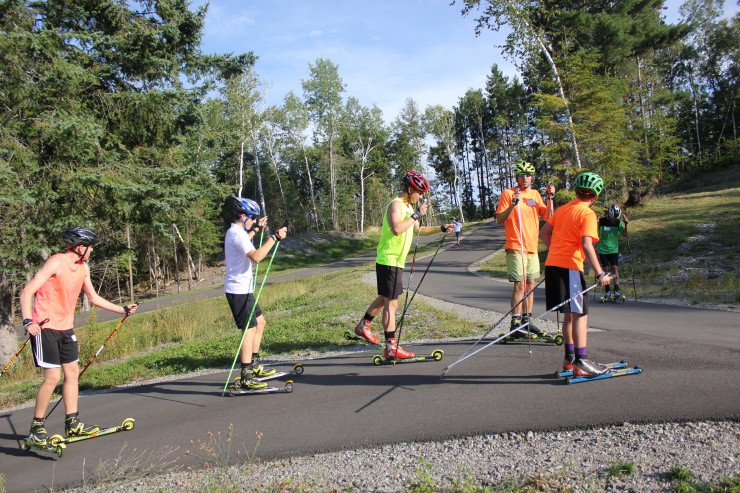
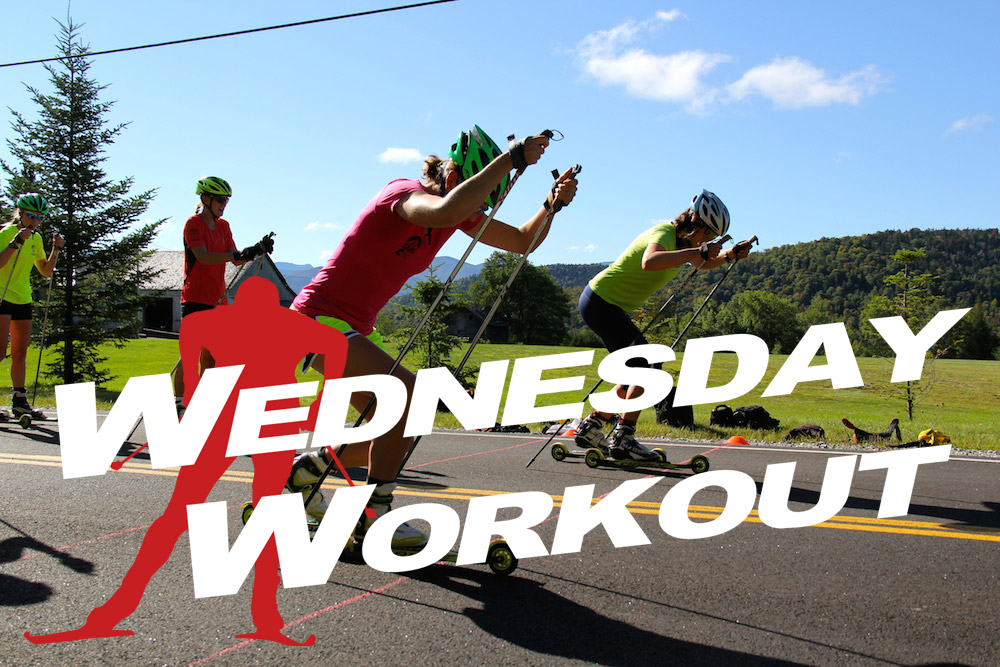
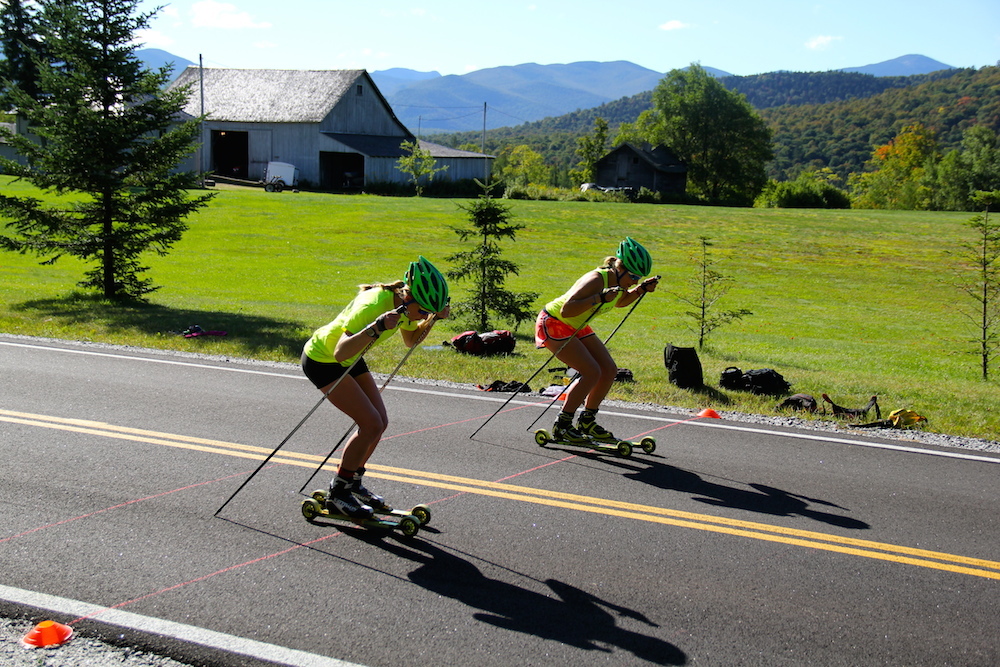
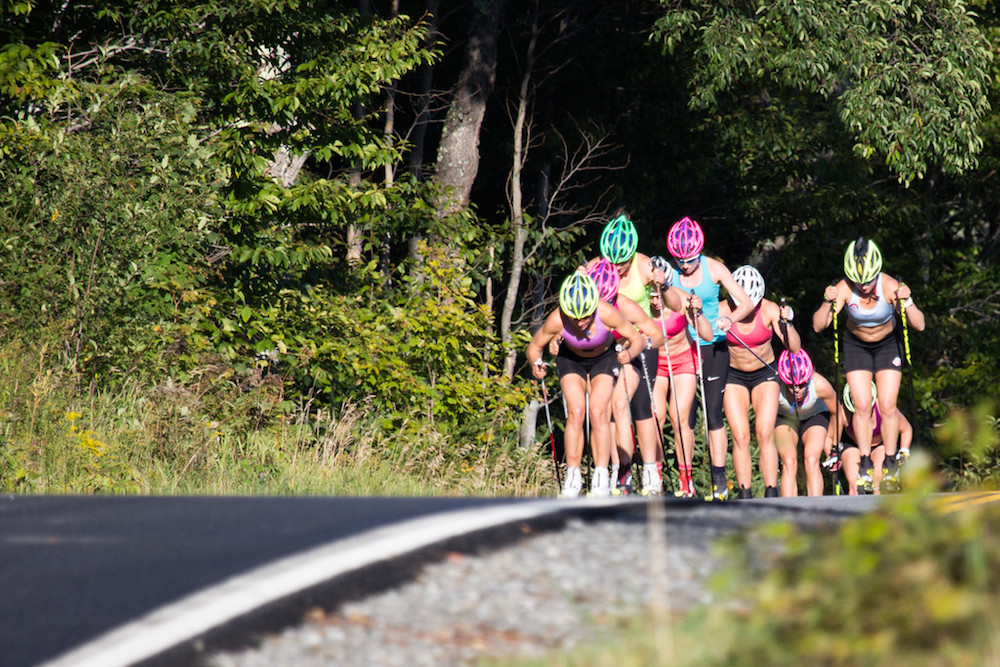
    The women at the USST camp in Lake Placid push each other during some double pole. (photo: Reese Brown)
    The women at the USST camp in Lake Placid, N.Y.,  push each other during some double pole intervals on the rollerski track earlier this week. (Photo: Reese Brown)

    The fall season means many things to the cross-country skiing community. It means the temperatures decrease, the training intensity ramps up, and excitement for winter begins stirring in the soul.

    For well over a decade now, fall for the U.S. Ski Team (USST) has also meant a training camp in Lake Placid, N.Y. Although the team has had camps in New Zealand and Norway not long ago, it still manages to squeeze in a one-week intensity camp before heading to another dryland camp in October in Park City, Utah.

    The national team coaches were already in Lake Placid after hosting the National Coaches’ Education Symposium last weekend, and with half of the USST athletes training with the Stratton Mountain School T2 Team (SMST2) fewer than three hours away, it made sense to have a quick camp at the Olympic Training Center in Lake Placid.

    “We wanted to give them the chance to come to a different venue, get on the rollerski track, and kind of have a check in with them to make sure things are going well technically and recovery wise and everything else,” said USST head coach Chris Grover in a phone interview.

    But the eight national team athletes from the SMST2 Program, Jessie Diggins, Sophie Caldwell, Katherine Ogden, Julia Kern, Andy Newell, Simi Hamilton, Ben Saxton, and Patrick Caldwell, account for a small fraction of the nearly 30 athletes at the camp. Joining the USST is the rest of the SMST2 team, the Sun Valley Gold Team, the National Elite Group (NEG), and the National Training Group (NTG).

    The NEG is made up of the best junior athletes from each region (East, Central, West, Alaska) while the NTG consists of the best U24 and U20 athletes in the United States, based on domestic and international results from last season. The SMST2 domestic team and the Sun Valley Gold Team are made up of elite American skiers not on the national team.

    “The athletes in those clubs are the athletes that are just below the national-team level and aspiring to the national team level,” Grover said. “They are the ones that are knocking on the door and pushing everyone along. It’s really fantastic to have them all here.”

    For all of the non-USST athletes, the camp represents not only an opportunity to train at the Olympic Training Center (OTC), but also the chance to live along side some of the national-team members and see how they train, refuel, and recover. They also receive some technique and training feedback from the national team coaches.
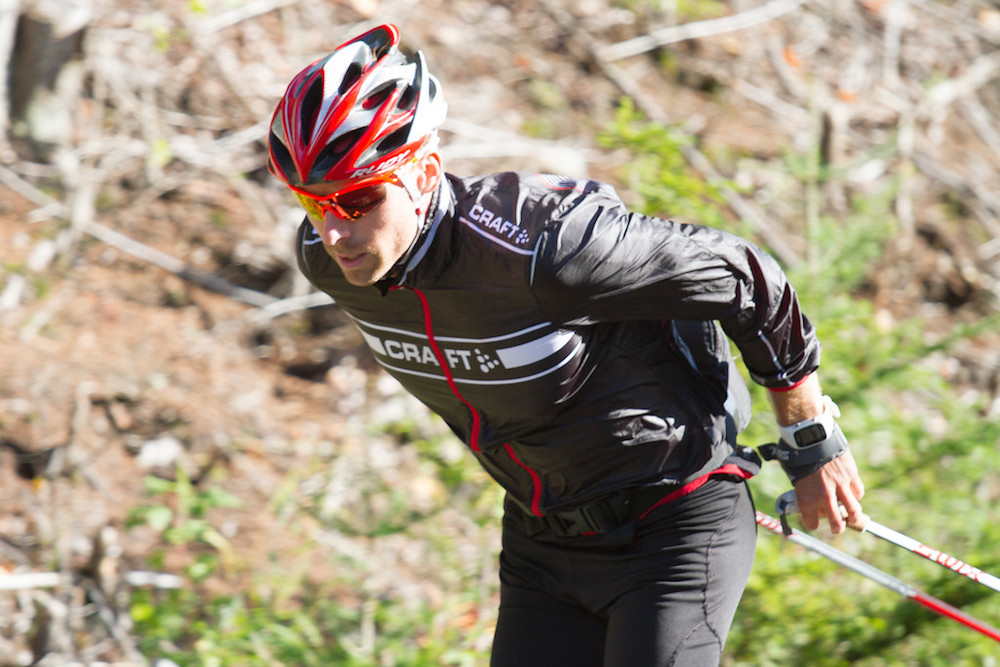
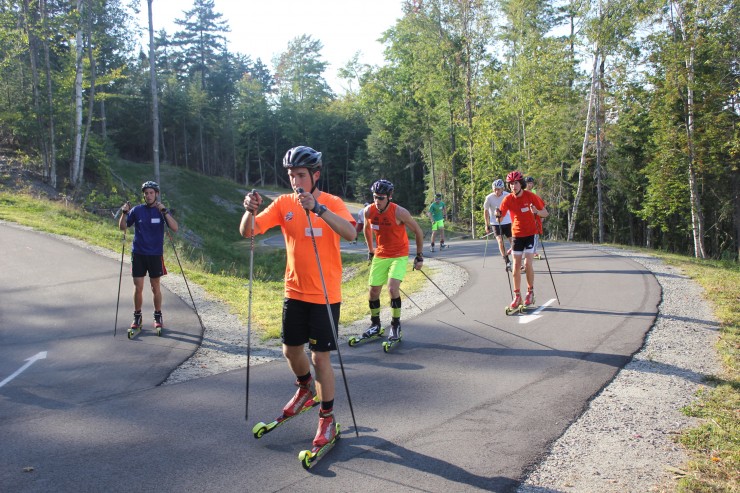
    Andy Newell rollerskis in the colder weather at the USST camp in Lake Placid. (photo: Reese Brown)
    Andy Newell rollerskis through the colder weather. (photo: Reese Brown)

    Because the camp is one week long this year, the group is trying to fit in as much training as possible to get the most out of the venue and one another. On top of a good number of hours, the plan is to have five intensity sessions throughout the week.

    “Obviously if were having a longer camp, 10-day, 12-day, 14-day camp, we have to build in a little more recovery and here we’re just jamming through it and training all seven days. People are taking a break afterwards,” Grover explained.

    In order to fit everything in, the USST is skipping what usually is the highlight event of its camp, the Climb to the Castle rollerski race up Whiteface Mountain in Wilmington. The race goes five miles up the Whiteface Memorial Highway to a castle at the summit and has an average incline of 8 percent. However, this year, the USST coaches felt the race didn’t quite align with the goals of the camp.

    “The Climb to the Castle, as hard as it is to miss it because it is a fantastic event, it just didn’t play well athletically for the needs of the group,” Grover explained. “We wanted to do more sprint specific training and short intensity as opposed to giving up a whole workout or two to do the Climb to the Castle.”

    Also contributing to the decision is the fact that many of the national-team members on the SMST2 team are more sprint-oriented, so the potential benefits of an uphill time trial are not as pronounced for those athletes.

    Meanwhile, many US Biathlon team members will be racing the Climb.

    “Obviously it is unfortunate especially for the organizers that the [U.S. cross-country] ski team is not doing it this year,” US Biathlon women’s coach Jonne Kähkönen wrote in an email. “For us and our athletes; it is one hard session at the end of the test week and in the middle of a tough block of fall training and the goal is always to go all in for these types of sessions — so in terms of that it doesn’t really change anything. We would have liked to have the tough competition there, but understand that it didn’t fit in their plans this time.”
    “As for us; we will have all the athletes that are in 100% health in the race,” Kähkönen added.

    In terms of the differences between this week’s camp and the U.S Ski Team’s two-week camp in Norway, the Lake Placid camp has about three times as many athletes in attendance and the domestic venue really makes for a different approach. In Norway, the group was exploring a new area, but in Lake Placid, the group is back to an old standby.

    “This is obviously a very familiar place to us,” Grover said. “We know all the roads here and all the trails here and that sort of thing. So it’s really easy for us to plan where we are going.”

    So while they had a good time training on new roads and paths in Norway, the group is taking advantage of the more familiar territory in Lake Placid, at least for a week. Next week, the athletes will head home to recover. But for the USST members, the time at home will be short. They have less than a month until their next camp begins in Park City on Oct. 12.

  • Speed Camp, Fast and Female Engage Locals in Lake Placid

    Speed Camp, Fast and Female Engage Locals in Lake Placid

    Lake Placid Speed Camp
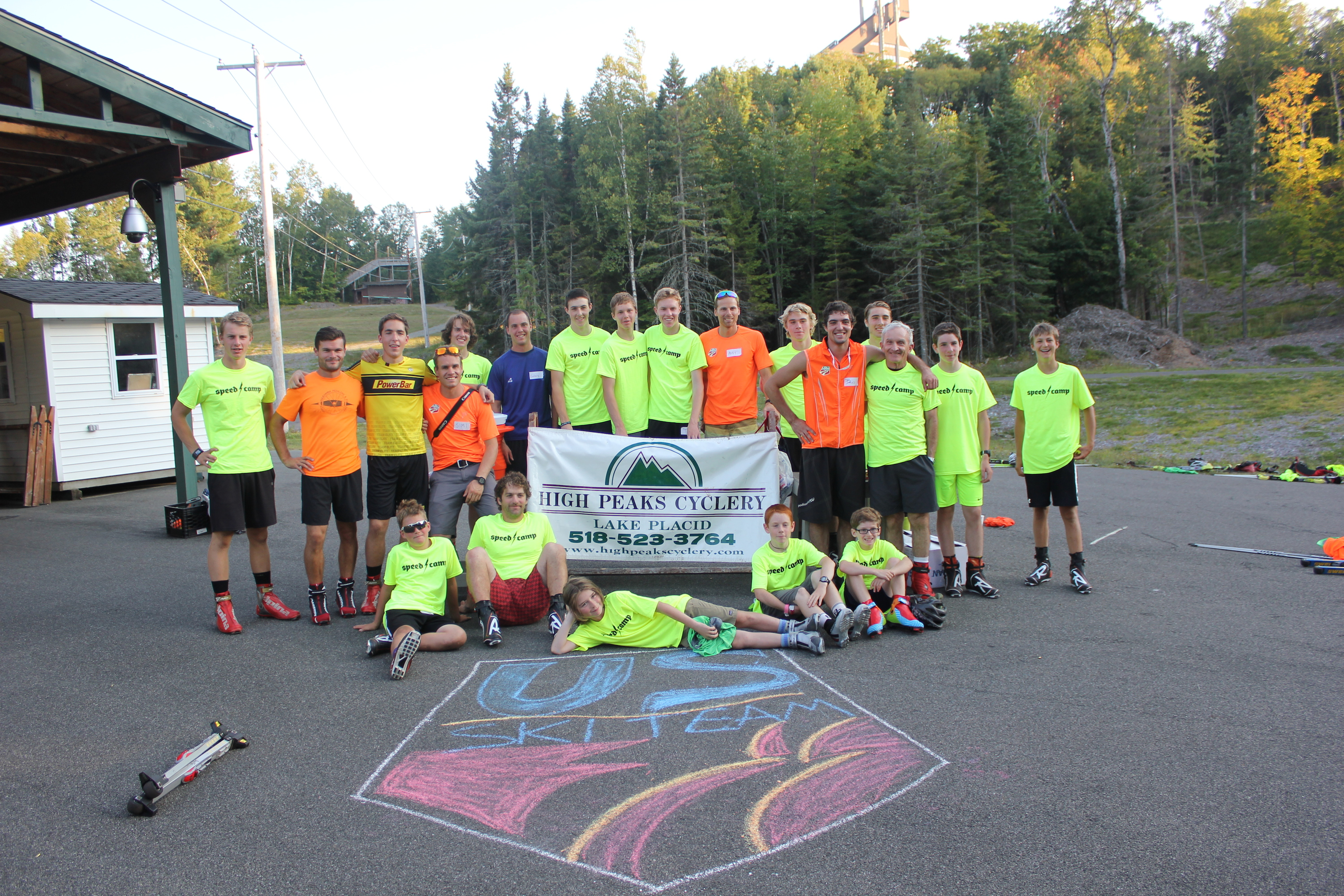
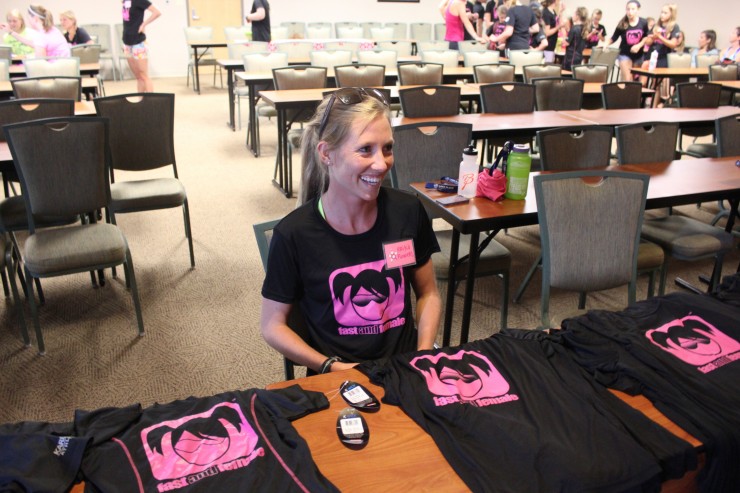
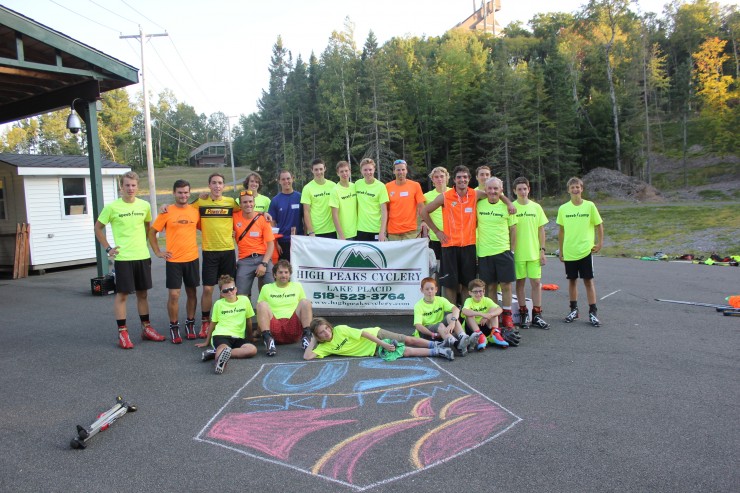
    Speed Camp participants and organizers pose for a picture at the Olympic Jumping Complex in Lake Placid, N.Y. September 5.

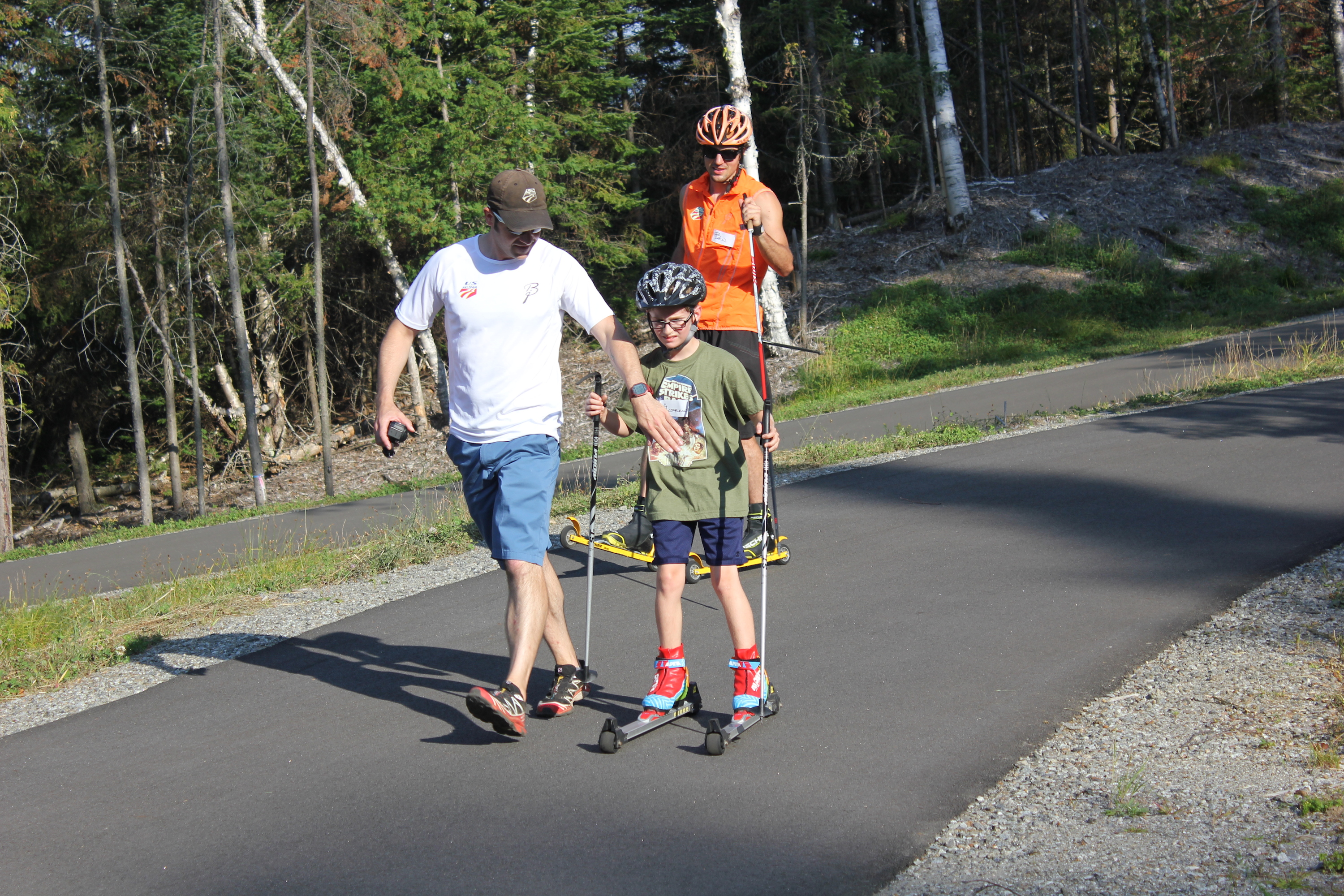
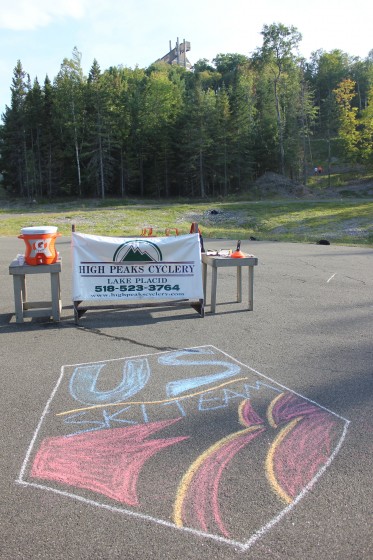
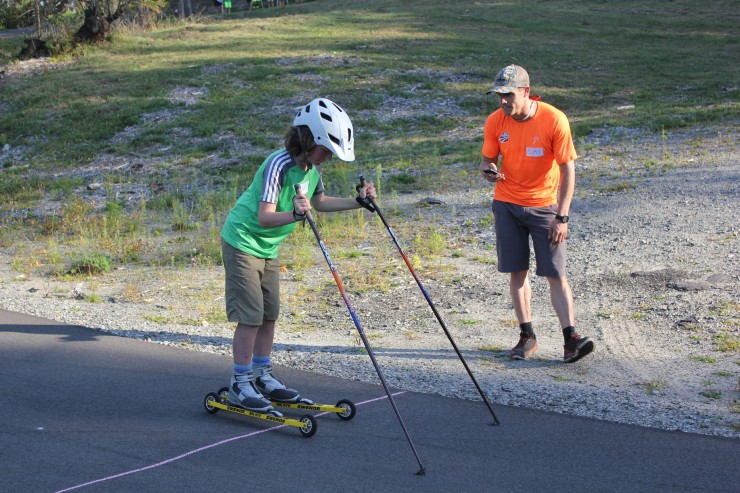
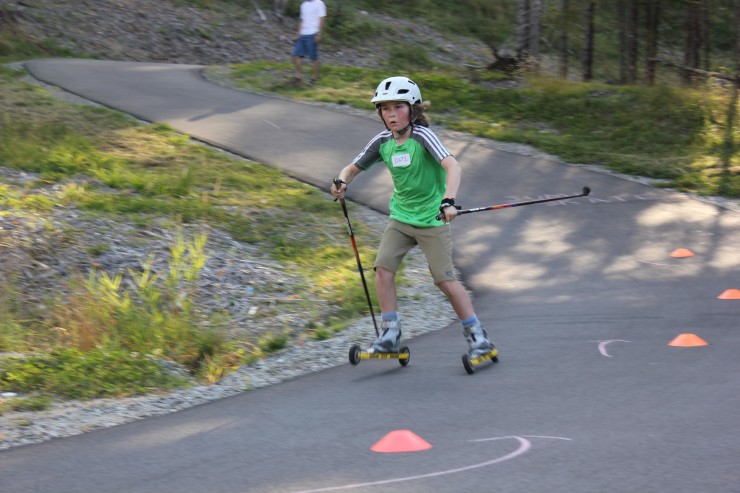
    LAKE PLACID, N.Y. – Nate Ball had fallen multiple times. His shorts were ripped and his legs were shaky. Despite the fact that it was Ball’s second time on rollerskis, he was ready to take on his next challenge – beat his pervious time of 30 seconds on the race course World Cup stage-winner Simi Hamilton had created for him.

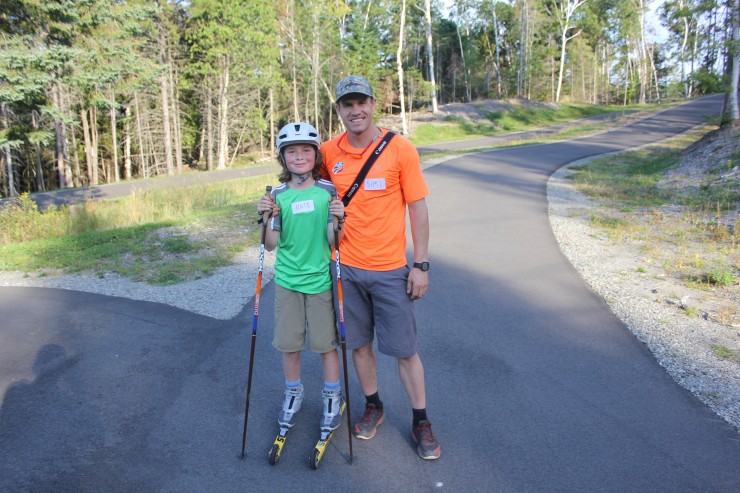
    Ball, a 10-year-old who skis and jumps for the New York Ski Education Foundation, was participating in the second-ever Speed Camp put on by the men of the U.S. Ski Team.

    Lake Placid Speed Camp
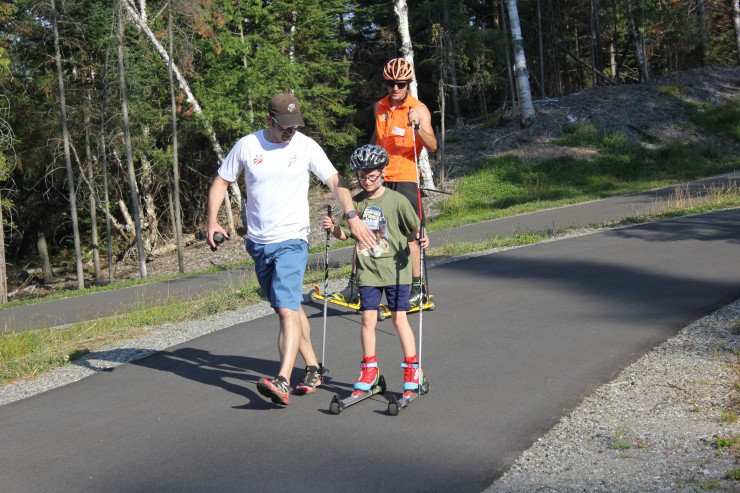
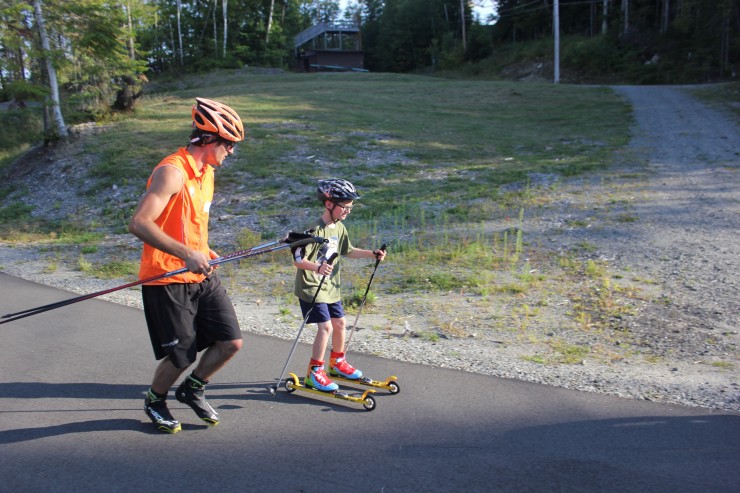
    USST coach Jason Cork helps Andrew Scanio, 9, navigate a downhill. It was Scanio’s third time on rollerskis and first time on skate rollerskis.

    The September 5 event took place at the Olympic Jumping Complex and was aimed at introducing young skiers to speed on rollerskis.

    A brainchild of Andy Newell and Hamilton, Speed Camp was a male version to Chandra Crawford’s girls event, Fast and Female.

    The roughly 20 participants at the Speed Camp filled a spectrum of ages, ranging from 9-year-olds to a older local coach aiming to increase his knowledge of rollerski technique.

    “This is my second time on rollerskis. It’s good and hard,” Ball said. “The guys are nice.”

    When asked what his favorite part of the day was, the 10-year-old responded with excitement saying, “The one time I did the downhill without falling!”

    At the nearby Olympic Training Center a similar event for youngsters of the opposite gender was taking place.

    Lake Placid Fast and Female
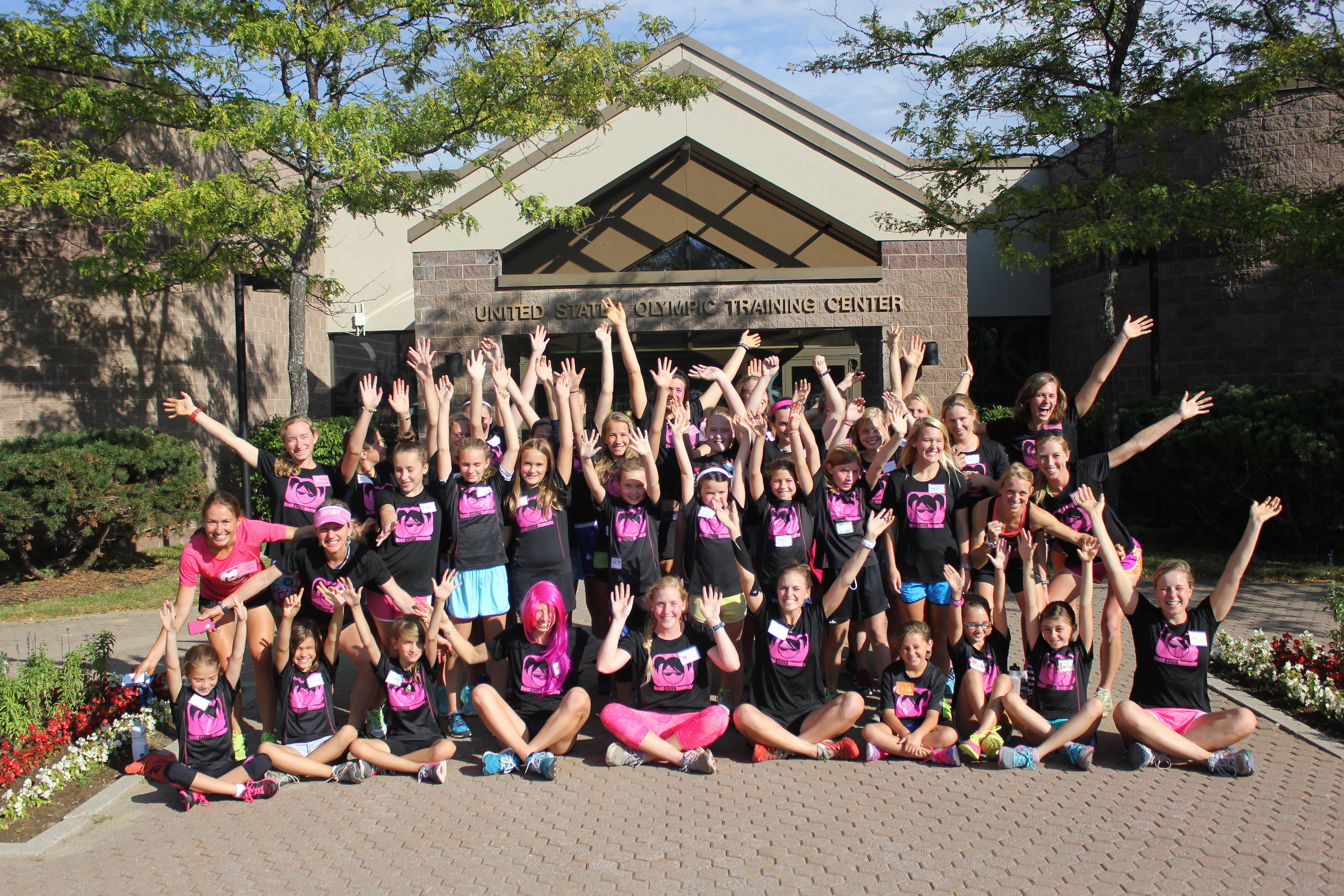
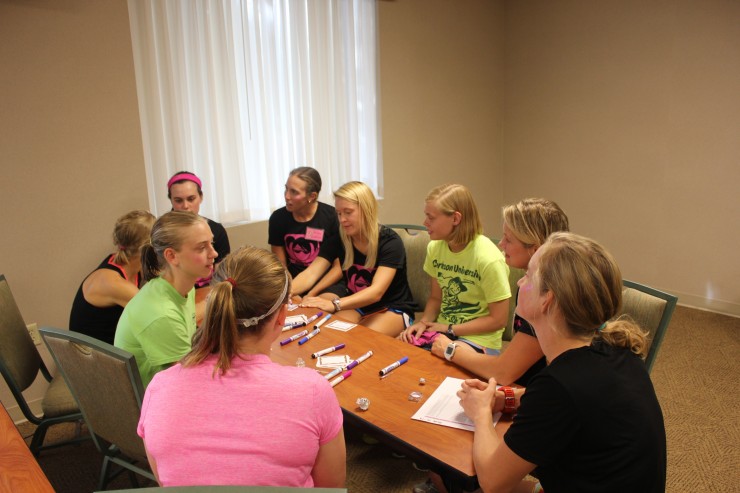
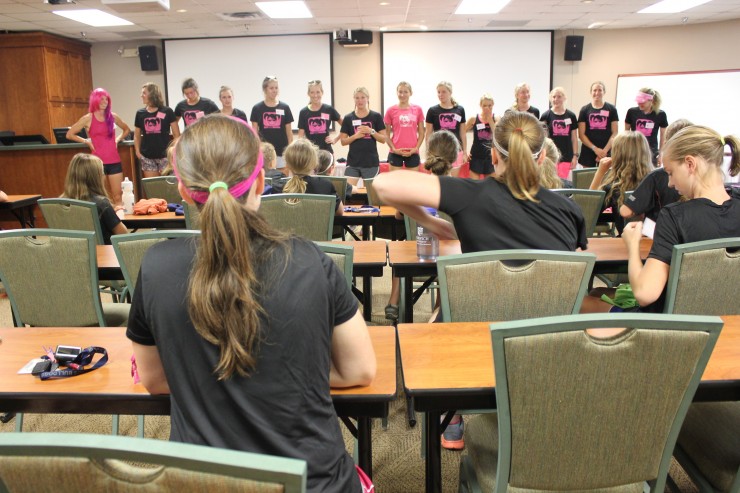
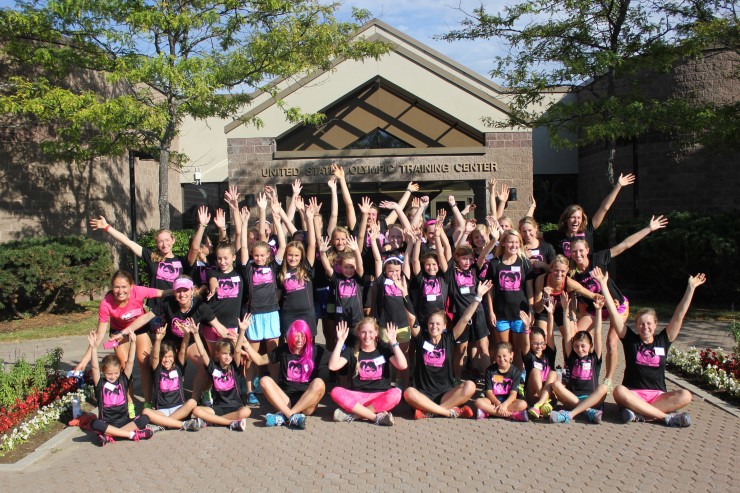
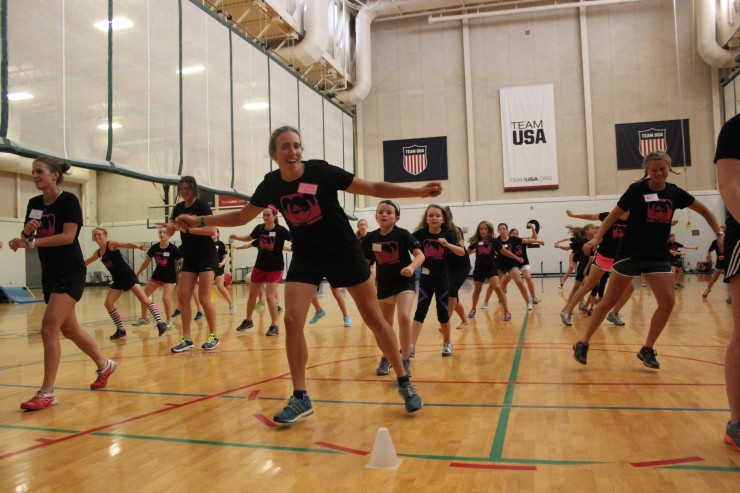
    Fast and Female at the Olympic Training Center in Lake Placid, N.Y. September 5.

    The U.S. Ski Team women in addition to the women of U.S. Biathlon were hosting a popular Fast and Female workshop.

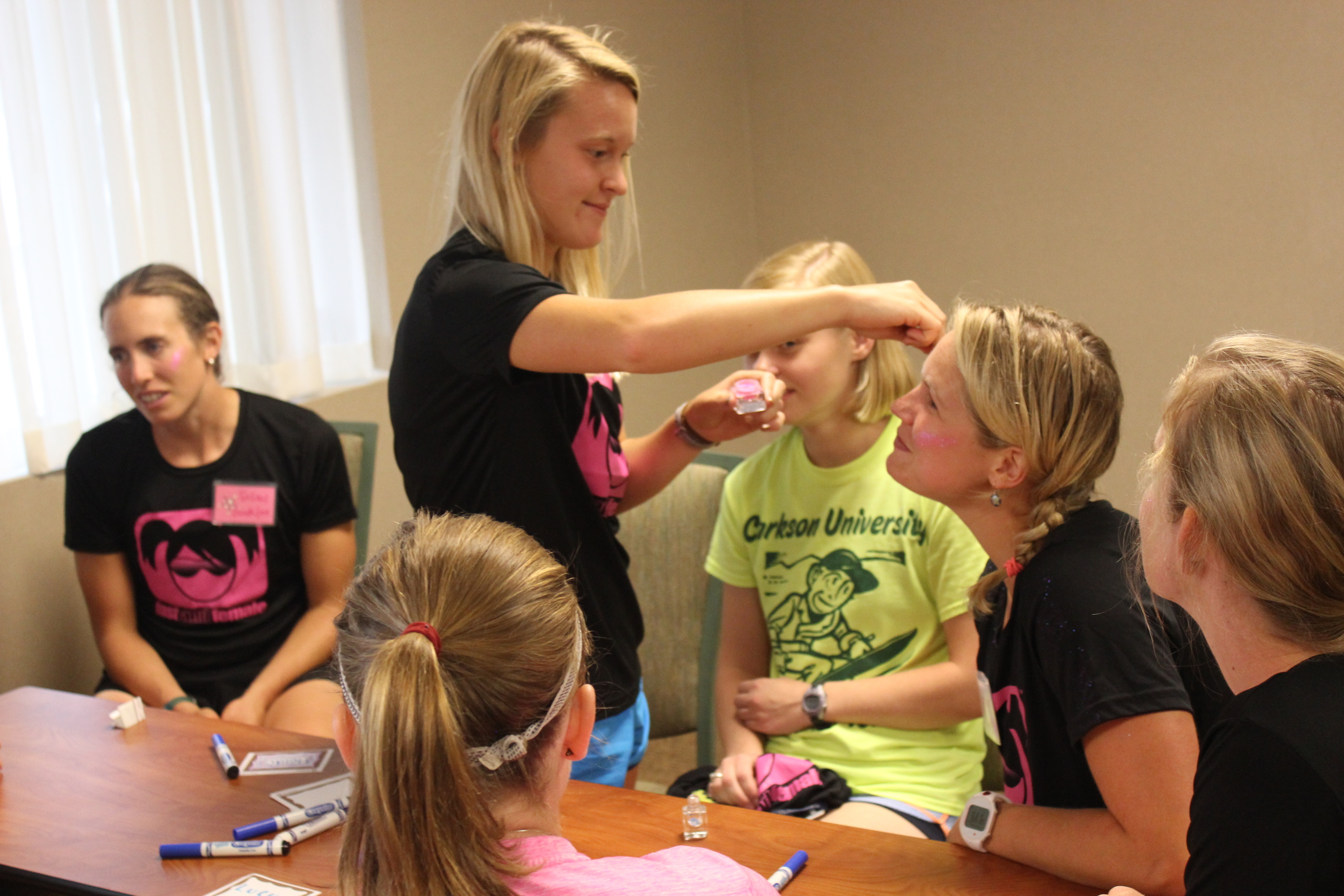
    Like the Speed Camp, Fast and Female is geared toward girls aged nine to 19. Unlike the Speed Camp, there was a lot of glitter involved.

    In it’s ninth year, Fast and Female events have become wildly popular across the continent. This year alone, Annie Pokorny of the SMST2 team told FasterSkier that she has helped lead three of the events and has one more scheduled this fall.

    At the Lake Placid gathering, girls were introduced to the U.S. Ski Team and U.S. Biathlon skiers who would be leading the event.

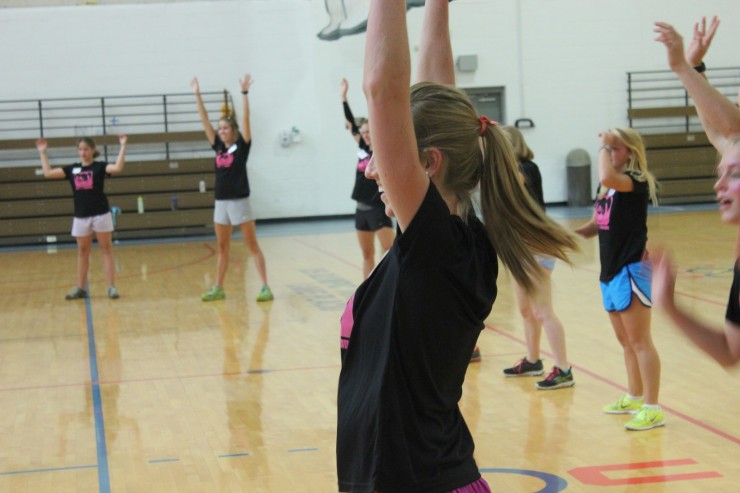
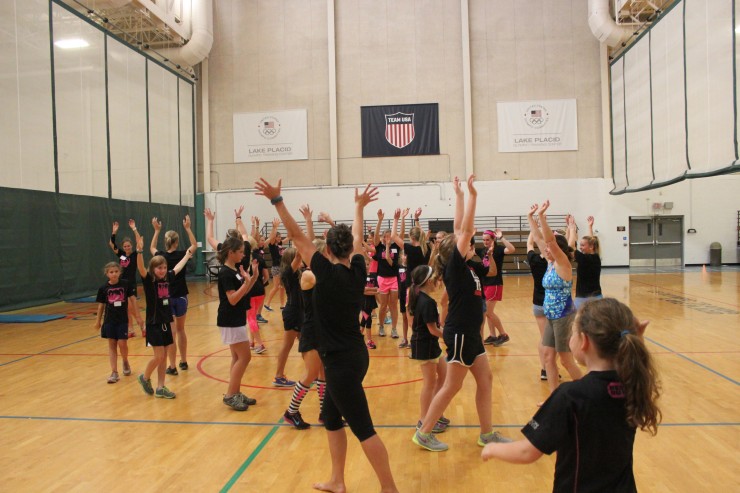
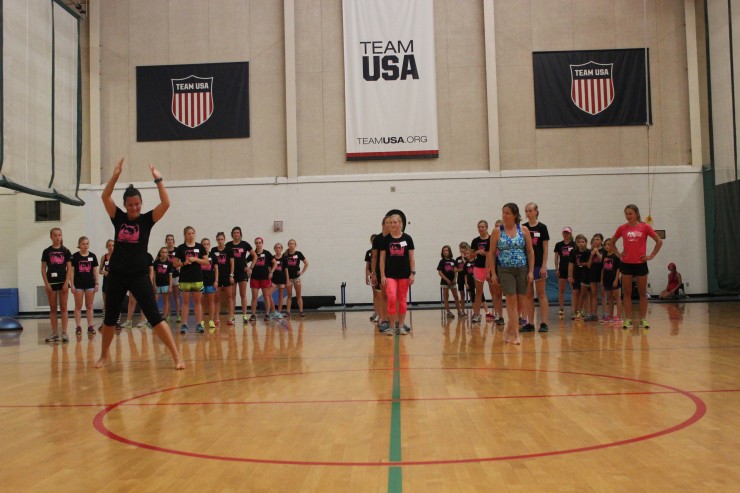
    After the introduction in which skiers stating her favorite place to ski, the group headed to the center’s gym where they participated in rhythmic dancing, an obstacle course, and one-on-one instruction in skiing and shooting.

    Lake Placid Fast and Female
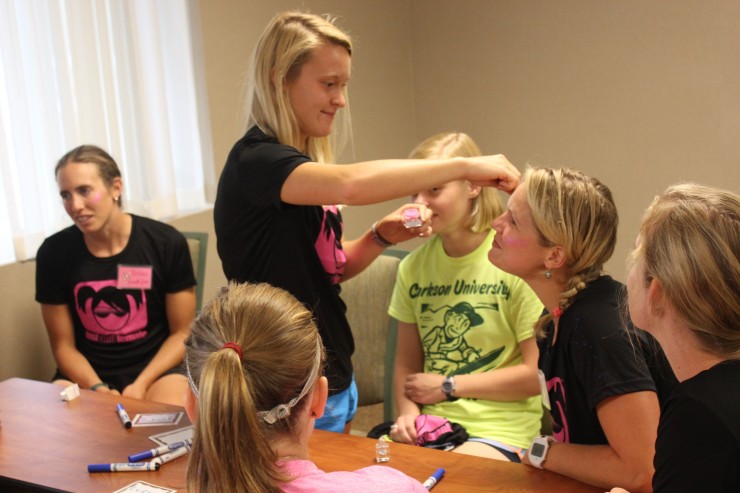
    A Fast and Female participant applies glitter to Jessie Diggins face.

    According to the organizers of the Lake Placid event, the goal of Fast and Female gatherings are to create an environment where girls and women are comfortable and excited to be active in sport.

    A little inspiration from Olympians Jessie Diggins, Sophie Caldwell, Liz Stephen and Susan Dunklee doesn’t hurt.

    Both Speed Camp and Fast and Female demonstrate a marked effort by the U.S. Ski Team and U.S. Biathlon to give back to the communities in which they train. Whether it’s learning how to slalom with Hamilton or dancing next to Caldwell, America’s top skiers are attempting to make a positive impact on the lives of the next generation of athletes.

    If the big smiles of participants were any indication, it would appear that their efforts were working.

  • Wednesday Workout: Bust Out of the Gate with the U.S. Ski Team

    Wednesday Workout: Bust Out of the Gate with the U.S. Ski Team

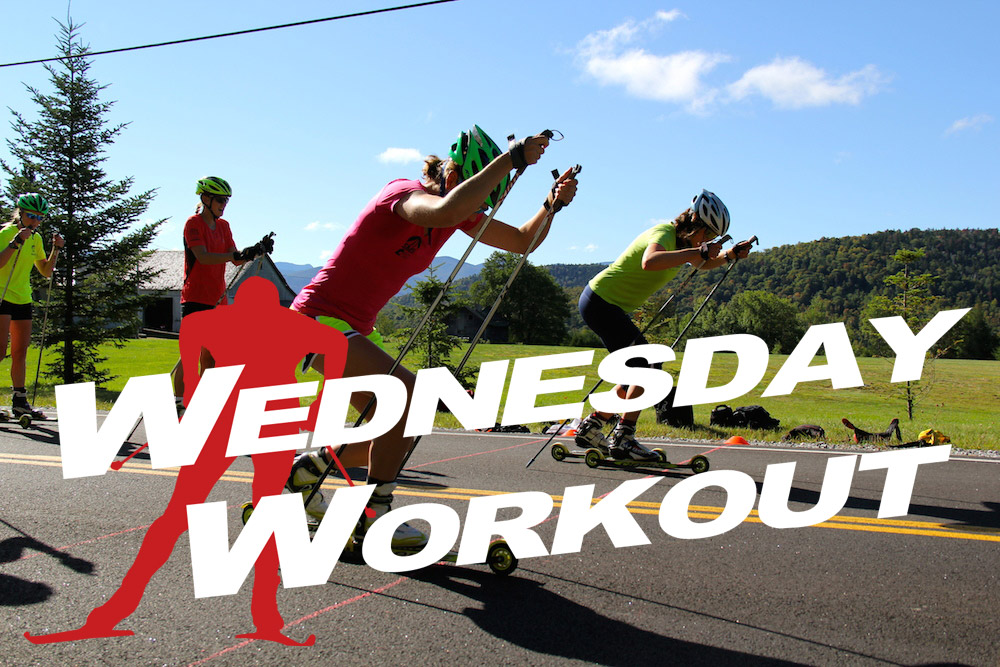
    Middlebury's Heather Mooney (l) and Stratton T2 skier Annie Pokorny (r) start together during the skate-speed-starts workout at the U.S. Ski Team camp in Lake Placid, N.Y., last week on Aug. 29. (Photo: Bryan Fish)
    Stratton T2 skier Annie Pokorny (l) and Middlebury’s Heather Mooney (r) start together during the skate-speed session on Aug. 29 at the U.S. Ski Team camp in Lake Placid, N.Y. (Photo: Bryan Fish)

    Growth is good, and when it comes to improvement, even the U.S. Ski Team has areas it wants to work on collectively. Sprinter or not, if racing’s in your future, chances are you could benefit from some speed work off the starting line.

    That’s why U.S. Ski Team (USST) Head Coach Chris Grover adjusted one of his team’s workouts last week at its camp in Lake Placid, N.Y. Instead of doing 16 to 18 skate-speed accelerations on rollerskis (each lasting about 10 seconds), Grover and his staff decided to cut down the number of accelerations, or rolling speeds, and add some sprint starts (transitioning from double pole to skate).

    The Workout: 4-5 x rolling speeds and 12 x sprint starts

    Where: Bear Cub Road (about 2.3-miles long to a dead-end) next to the Olympic Training Center in Lake Placid

    Why: “We decided that we wanted to change the focus of the session to improving skate sprint starting technique,” Grover explained in an email. “We had a very productive session where most athletes made some excellent changes, and we have a follow-up session scheduled for Park City in October.”

    What: Warmup as usual, then begin rolling speeds: 4-5 accelerations (each lasting about 10 seconds), with about 3 minutes of recovery in between.

    When you’re done with that, recover for 3 minutes, and move to skate-sprint starts. From a standstill, build speed off the line: double pole then transition to V2. After 10 seconds, stop, recover for three minutes, and start again (for a total of 12 times).

    “We do practice starts regularly since they are important for certain sprints in some conditions,” Grover wrote. “We generally keep our speed training closer to 10 seconds for maximal neurological benefit and less fatigue.”

    Length: The workout itself should take about an hour. With warmup and cool down, you’re looking at 2 hours.

    Out of the USST’s 12 training days of camp in Lake Placid, there were about a dozen rollerski sessions scheduled and seven cross-training workouts. One of them was VO2-max bounding at Whiteface Mountain, an annual staple of their Lake Placid camp.

    “Bounding/ski walking intensity is a go-to workout for most cross-country ski racers around the world, most likely because you can access grades that are not available on pavement for rollerskiing,” Grover explained. “You can find long, steep pitches that resemble some of the bigger hills you might find on a ski course, and the mechanics, body position, and power application of bounding is identical to good steep classic striding or herringbone.”

    All of this can be done without worrying about cars or road hazards.

    “The question has been asked many times why don’t cross-country skiers simply rollerski and ski for all training,” he added. “After all, runners run, bikers bike, and swimmers swim. For me, there are two answers to this question. The first is that the preparation period for cross-country ski racing is so long, and the training volume is so high at the elite level, that cross-training modes like running become essential for preventing over-use injuries and for keeping training mentally fresh for the athlete.

     “Cross-training modes like running become essential for preventing over-use injuries and for keeping training mentally fresh for the athlete.” — U.S. Ski Team Head Coach Chris Grover

    “The second is that running provides increased leg strength because the athlete actually carries 100% of their own body weight (unlike biking or rollerskiing) and lifts that weight off the ground repeatedly,” he continued. “Agility is also improved by running, especially if you are constantly hopping from rock to rock in the Adirondacks!”

    The USST camp wraps up on Sept. 7 following the Climb to the Castle on Saturday, Sept. 6, of which Liz Stephen and U.S. Biathlon’s Tim Burke are the defending champions.

    Anne Hart (l) & Erika Flowers (r) work on skate-sprint starts on Aug. 29 at the U.S. Ski Team dryland camp in Lake Placid, N.Y. (Photo: Bryan Fish)
    SMST2 teammates Erika Flowers (l) and Anne Hart work on skate-sprint starts on Aug. 29 at the U.S. Ski Team dryland camp in Lake Placid, N.Y. (Photo: Bryan Fish)
  • Lake Placid Venues at Risk In Proposed NY State Budget Cuts

    A collegiate race at Mount Van Hoevenberg in Lake Placid, which faces the possibility of closure if funding is not delivered in the New York state budget

    Lake Placid’s cross country, biathlon and ski jumping venues face the possibility of closure if the state does not appropriate money later this month.

    The Lake Placid Daily News reported in March that New York’s Olympic Regional Development Authority (ORDA), was at risk of losing all of its state funding for the coming fiscal year. The aid, approximately $6.6 million last year, comprises some 20 percent of ORDA’s budget.

    A member of ORDA’s board of directors is on record in the Daily News story as saying that the authority would have to close without the state’s appropriation.

    ORDA is the body that manages the legacy venues of the 1980 Winter Olympics in Lake Placid, including the cross-country, biathlon and sliding facilities at the Olympic Sports Complex at Mount Van Hoevenberg, just outside town. The Olympic ski jumps, Whiteface Mountain Ski Center, and Olympic Training Center in are also managed by ORDA.

    While the closing of these areas would be a big loss to recreational skiers, it would be an even bigger blow to the elite and developing athletes that train at these venues. The combination of ski trails, biathlon range and jumps in close proximity to one another make this a valuable resource for local athletes.

    The New York Ski Education Foundation runs extensive youth programs that make use of the Olympic Sports Complex. It’s also a training center for American biathletes and Nordic combined skiers.  The U.S. Ski Team holds an annual fall training camp in Lake Placid.

    “It would be a tragedy for biathlon if Mount Van Hoevenberg were to be shuttered,” said Max Cobb, U.S. Biathlon’s executive director.

    Cobb said he thought that juniors and developing athletes would be impacted more than elite athletes. Juniors ski and compete in the area all year round, while elite athletes like Lowell Bailey and Tim Burke train in Lake Placid only during the dryland season, prior to traveling for World Cup events.

    While people might be willing to drive a long distance to try a new activity for the first time, Cobb said that to ensure consistent training and world class progression, athletes should live within a one hour drive of a venue.

    As well as the cross-country trails and biathlon range, Lake Placid is also home to the ORDA-managed ski jumps. In addition to the iconic 90- and 120-meter Olympic hills, the jumping complex has three smaller hills for developing athletes. Athletes can train on three of the five jumps during the summer, sliding on a combination of plastic shingles and porcelain marble halves.

    While there are ski jumping hills throughout New England, ranging from 10 to 90 meters, few of them have summer jumping facilities. And Ken Barker, president of the Salisbury Winter Sports Association in Salisbury, CT, said that summer jumping is essential to training from J5 through Olympic athletes.

    Barker’s club will put plastic shingles on their 20-meter hill for the first time this summer.  (They’re also rebuilding their large hill for the 2011 Junior Olympics.)  And Barker cited the Lebanon Outing Club, in New Hampshire, as another facility that offered summer jumping. But few jumps in the region have the same level of programming as Lake Placid.

    Finally, there’s ORDA’s Sports Development Program, which offers year-round educational opportunities to youth groups, including sports clinics in biathlon, luge, bobsled and curling. They even partner with the New York City Parks Department’s Winter Jam, offering residents the opportunity to try out cross-country skiing in Central Park.

    Brad Clark, ORDA’s sports development manager, organizes outreach programs—activities like school field trips and interactive clinics at the various venues. If a child shows potential in a particular sport, Clark helps them find appropriate coaching.  Without ORDA, Clark said, these outreach programs would not exist.

    The tight budget situation is underscored by the news last week that ORDA had declined an opportunity to host a biathlon World Cup race at Mount Van Hoevenberg in February, 2011.

    Jon Lundin, ORDA’s communications director, said that the organization “would have needed to upgrade the facilities to comply with IBU [International Biathlon Union] requirements for a major World Cup event.”

    “We certainly are looking into [making the upgrades]; we just couldn’t do it this year,” Lundin said. He added that passing on the biathlon race was a “one-time blip,” noting that ORDA planned to host international events in the sliding sports, and possibly a World Cup freestyle event, in the coming year.

    In an interview with FasterSkier, Lundin said that he didn’t know how ORDA’s operation might be changed if the state does remove funding. However, he added that state law stipulates that Mt. Van Hoevenberg cannot be privately owned or leased to a business-person in the private sector.

    Travis Proulx, the state senate’s deputy press secretary, told FasterSkier that there is “still no finality to the status of ORDA’s funding.” He said that the senate didn’t want to cut ORDA’s appropriation in the first place, but that alternative funding is needed.

    With one to two weeks until a budget is finalized, Proulx said that the Senate is “looking for ways to keep the state’s role in ORDA alive,” citing alternative budget cuts brought to the table by the Democratic caucus and alternative revenue options submitted by the Governor David Paterson—including one proposal to allow the sale of wine in grocery stores.  Regardless of the final decision, both houses of the New York legislature, as well as the governor, are required by law to be in agreement on the state budget.