This article was made possible through the generous support of our voluntary subscribers. If you value coverage like this, please support FasterSkier with a voluntary subscription.
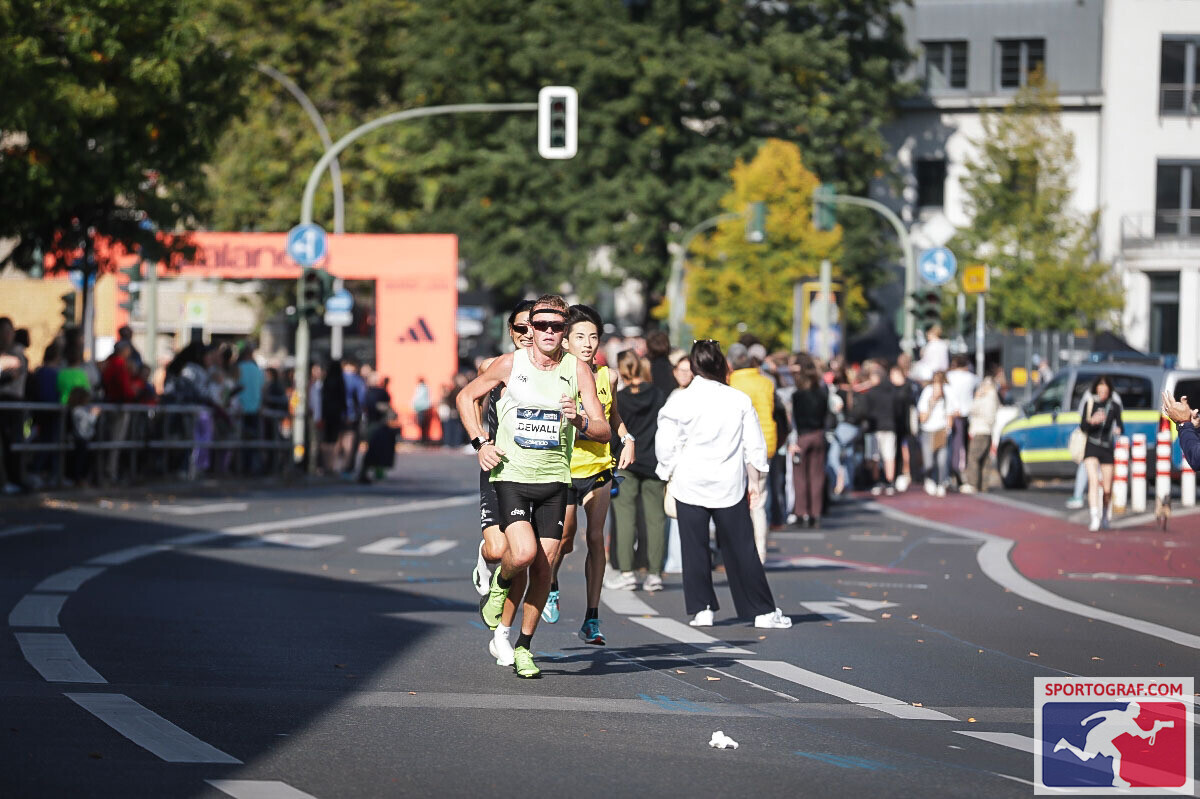
The summer before he started college, Lars Dewall ran his easy miles at a nine-minute pace.
He had run 4:26 for the mile in high school. He had been an all-state skier at Stillwater Area High School in Minnesota, the same school Jessie Diggins skied for. And the coach waiting for him at the College of St. Scholastica in Duluth had given him one rule for his easy days: keep his heart rate under 140 beats per minute.
For a runner like Dewall, on the road, that was a jog.
“That’s how slow I was going,” he said. “It just doesn’t feel fun, and it takes a long, long time.”
People tell him now that he runs his easy days fast.
“I’m like, yeah, five years ago I was running nine-minute pace, though,” he said. “I had to be so disciplined about that for so long.”
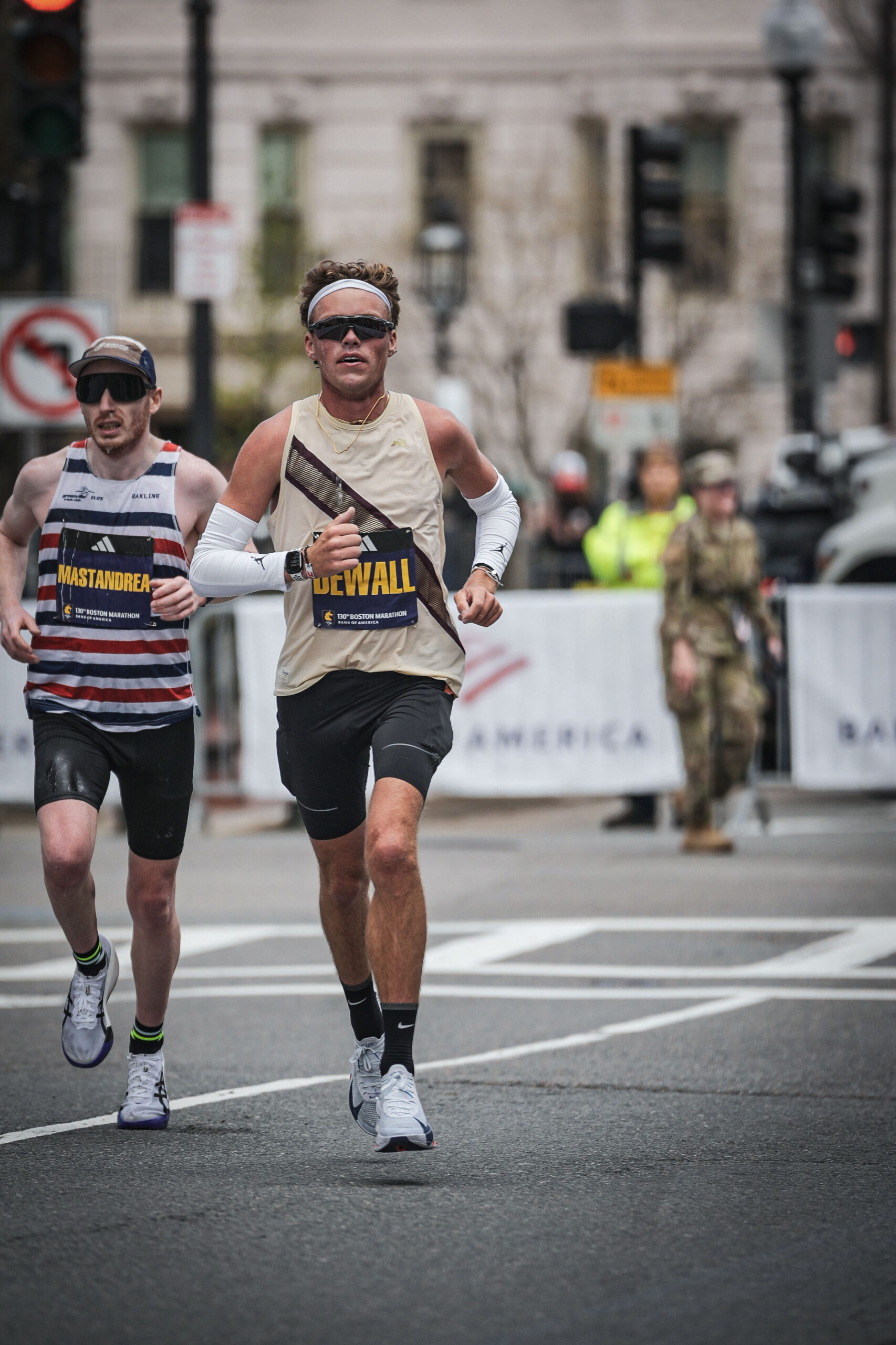
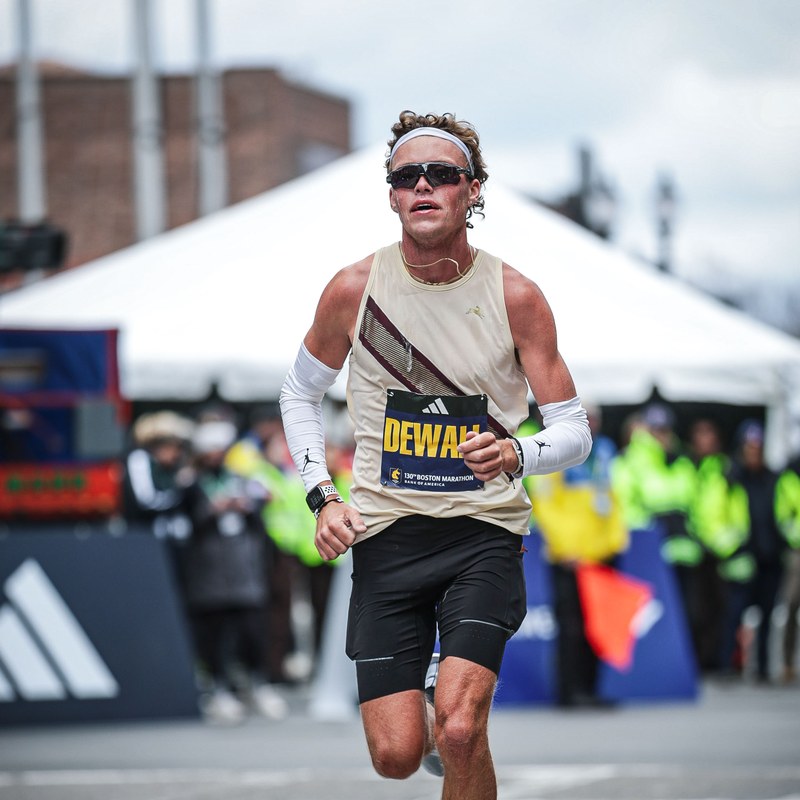
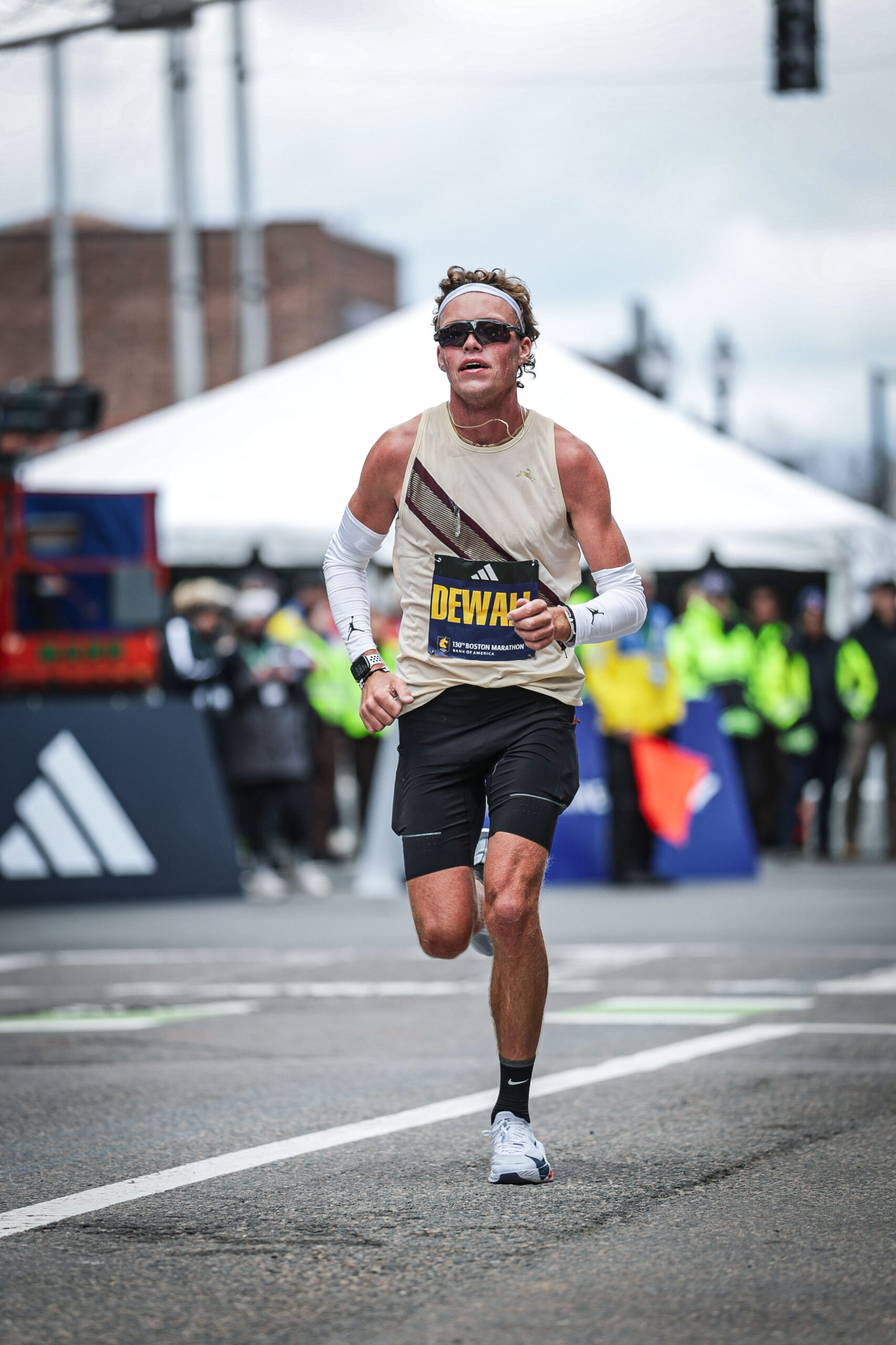
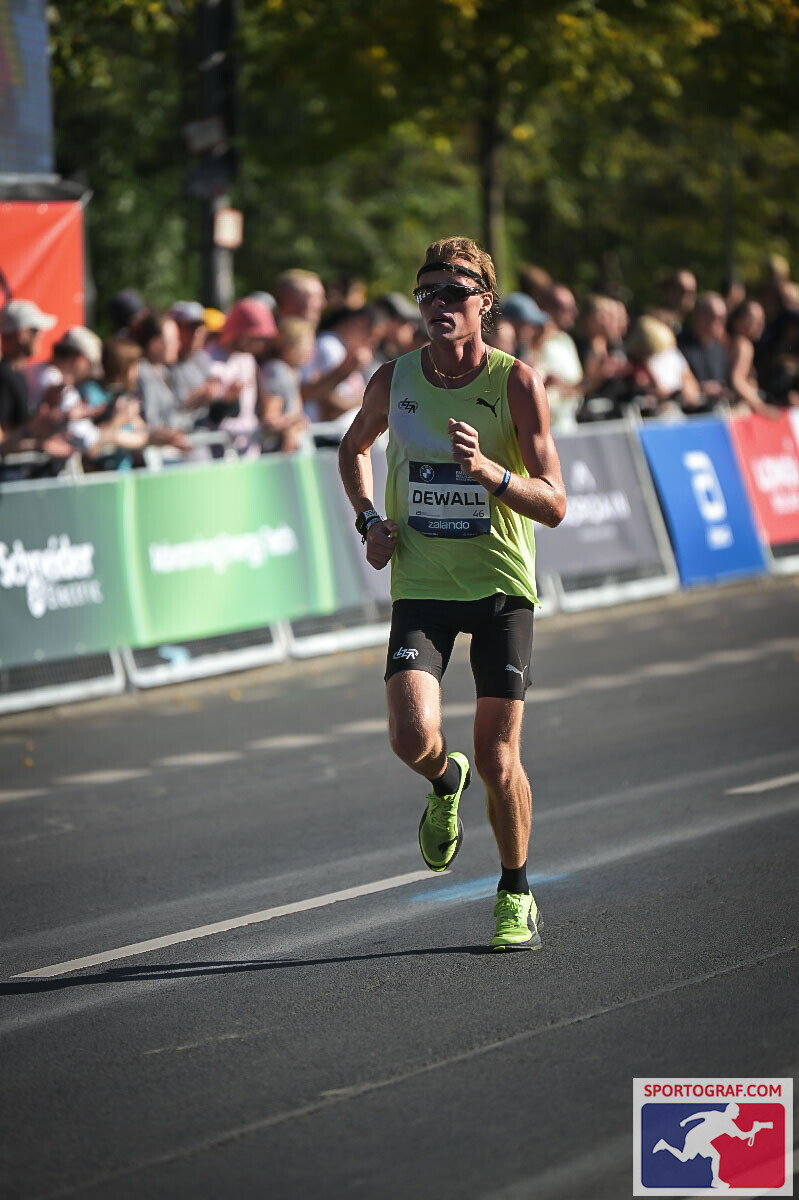
On September 27 he ran 2:12:13 at the BMW Berlin Marathon, 31st overall and third among the Americans, behind Charlie Sweeney and Will Nation. It was his fourth marathon and his fourth personal best. He debuted with 2:22:57 at Grandma’s in June 2025, ran 2:14:15 at the California International Marathon that December, comfortably under the 2:16 standard for the 2028 Olympic Marathon Trials, and then ran 2:12:30 at Boston in April. In between, back in Duluth, he won the Park Point 5-Miler and broke a race record that had stood since 1975. It belonged to Steve Hoag, who finished second at Boston that spring.
Earlier this month his college coach, Chad Salmela, made the case in these pages for what American distance runners could learn from cross-country skiers, and called Dewall “my living thesis.” Salmela, who also calls cross-country skiing for NBC, describes his role these days as a sounding board on broad direction.
Dewall teaches sixth, seventh and eighth graders in San Diego and trains with a group called Lane Zero Athletics. When we spoke on a Sunday in October he had already done his long run with the team, slept for about an hour, and was getting the coffee going at one in the afternoon.
“It’s kind of like the day’s actually starting,” he said.
He talked for most of an hour and needed very few questions to do it. Nearly every answer came back around to the same place. The hardest thing a distance runner has to learn is how to go slowly, and skiers worked that out a long time ago.
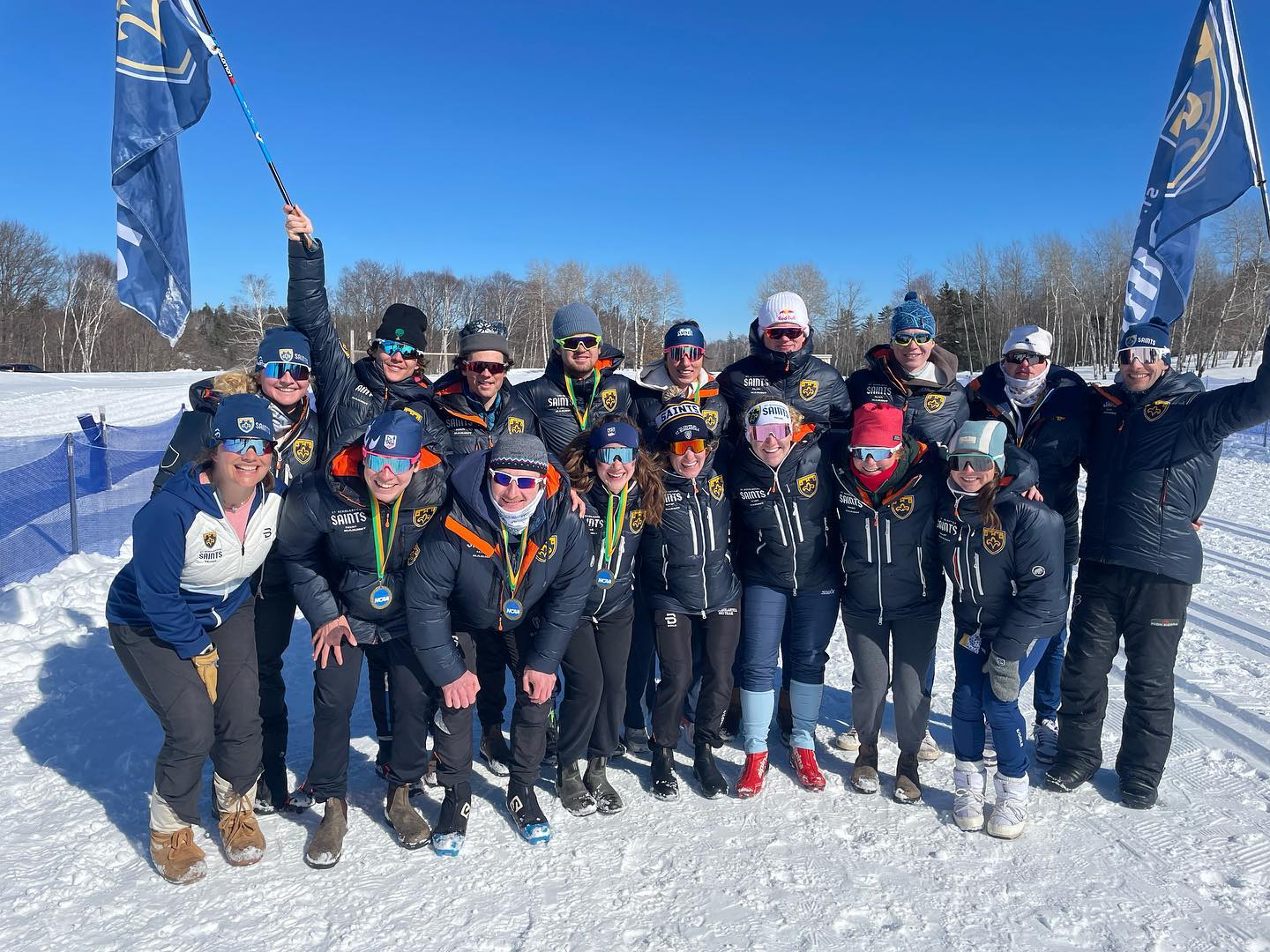
Lying down in the tracks
Skiing came first, in a way, and he did not care for it.
His father was a serious skier, good enough to have raced against Salmela at some point, though Dewall is not sure exactly when. He took his son out on snow when the boy was small.
“I just didn’t really like it that much, and it was kind of painful,” Dewall said and continued in his father’s voice. “He always describes it. He’s like, yeah, I’d take you out and you’d just go a little bit and lay down in the tracks or in the snow and just kind of goof around.”
Football was the thing. He ran cross-country and track in middle school, but he cared more about football than any of it. In seventh grade he took track seriously and ran somewhere around 5:15 for the mile. In eighth grade, still a middle schooler, he trained with the high school team.
“I look back on that and I’m like, that was a pretty big turning point, because you’re putting yourself in a situation with older guys,” he said. “I remember learning a lot more, and that, looking back on it, I feel like was more important than how I performed at that age. Although I performed well.”
He planned to play football as a sophomore. That fell through, which he calls “a whole nother story,” and he abandoned ship for cross-country after the season was already underway. He was “aerobically pretty naturally talented,” he said, but there was not enough time left to get fit.
Nordic skiing started around eighth or ninth grade, and it humbled him.
“You can be really fit, but that doesn’t make you good at skiing,” he said. “It’s very, very different.”
The technique took a couple of years. By his senior winter he was all-state, and he remembers finishing 22nd or 23rd at the state meet, which was enough to make him consider skiing in college. The trouble was that he had already committed to run at Western Washington University in Bellingham.
After that ski season he toured St. Scholastica and met Salmela, who had been the school’s first nordic head coach for ten years before taking over cross-country running in 2016. Dewall would not have to choose.
“I was really into the idea of being able to both nordic ski and run,” he said. “Especially at that age, I think it was really good for me to continue to do both for some years, because I didn’t know which one I really wanted to do at that point. And looking back on it now, they both really complemented each other for a really long time.”
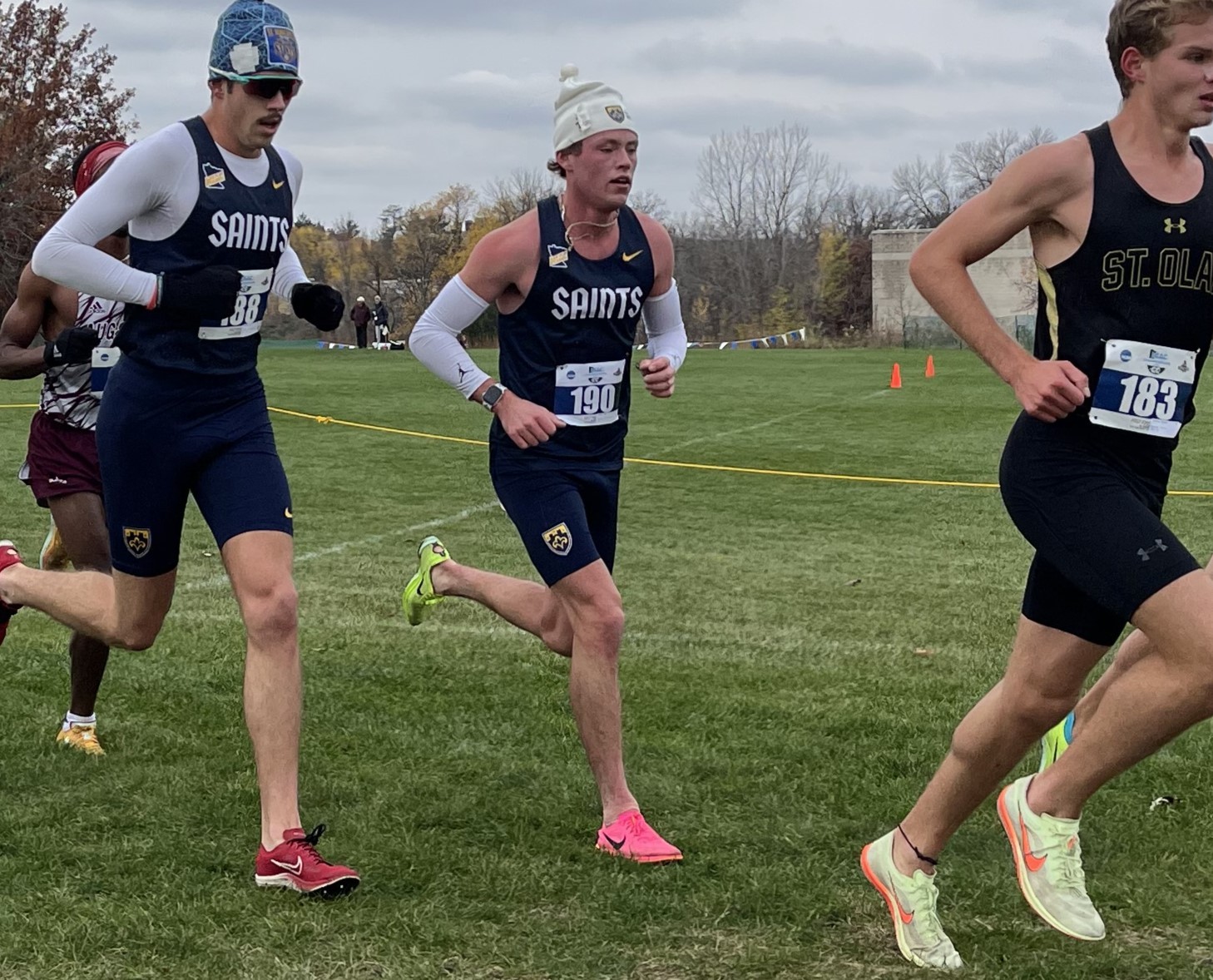
The ‘Under 140’ Rule
The running in high school was built for the mile and the two-mile. His coach at Stillwater was Scott Christensen, whose program produced four sub-four-minute milers by 2012, the most of any American high school at the time. Dewall puts the number at four or five.
“My training was very VO2 max centered,” he said. “We’re running the mile and two-mile. There was no 5K.”
Most of the rest of his running, he said, sat in “that level two zone, which at the time I didn’t even really know what that meant.”
His best times were good and, he will tell you himself, not extraordinary: 4:26 for the mile, around 9:40 for two miles, 15:55 for 5,000 meters. He graduated in 2019 and doubts those marks would get him in the door at Western Washington now.
“I guarantee those times would not,” he said. “They’d be like, nah, sorry.”
What he remembers from those years is not a time.
“I was running faster on my recovery or easy days in high school than I am now,” he said.
The easy runs went at 6:30 to 7:15 a mile, with his heart rate at 150 to 160.
“You’re in that zone where you’re just burning glycogen,” he said. “You can’t call it recovery, because you’re not recovering. You’re just burning through your tank every day, and you might get fit pretty quickly.”
He has nothing against that kind of training. He just thinks it answers a different question.
“If you gave me an athlete and were like, okay, we need to get this athlete as fit as possible in two to three months, you’re gonna do a lot of that zone two, because it’s gonna have the most bang for your buck,” he said. “But if you were to give me an athlete and say, we need to make this athlete the best version of themselves, and we have eight years to do it, well, you’re gonna do things a lot differently in terms of the intensity on your easy days.”
Zone two sits well below threshold but above the genuinely easy work of zone one. On the Olympiatoppen scale most skiers know, the Norwegian system, it runs from roughly 72 to 82 percent of maximum heart rate. It builds fitness quickly. Plenty of coaches believe it also costs more recovery than easier efforts without giving much more back, and that is the trade Dewall is describing.
He also thinks, looking back, that he was never really a miler.
“I think I was a true distance runner who had the ability to run well at the mile and two-mile still, just by default almost,” he said.
In Duluth, Salmela made it simple. Keep the heart rate around 140 or below on easy days. Dewall did not buy in right away.
“It took me a little while to buy into it, and I was kind of half in, half out for a while,” he said. “But eventually I started taking it very seriously.”
His first college cross-country season started well and ended with an illness and a disappointing finish. The principle held anyway. The nine-minute miles on the road were the hard part. Duluth had trails, and the trails helped.
“The trails made it easy to really soak up, let’s just say, two hours at 135 BPM, but we were running maybe 10-, 11-minute pace on technical trails,” he said. “It made it mentally easy to let your ego go and just accept that it’s going to be a slow run and low heart rate, and that’s okay.”
The return took years. When he is fit now he can run 6:45 a mile with his heart rate close to 130. He measures that against the high schooler who ran his easy days at about the same pace and 25 beats higher.
“It’s huge,” he said. “It’s everything.”
By the time he carried that discipline onto snow, the skiers around him already had it.
“The skiers have a much better concept and notion of easy training than runners,” he said. “I would say it’s not even close. I feel like I’ve done more running than I have skiing, but I’ve done enough skiing to confidently say that the skiers are much more on top of their intensities, and cognizant about what they’re doing every day.”
He has a theory about why.
“Maybe it’s just the simple idea that you’re skiing, the terrain is varying,” he said. “Skiing feels a little bit more social to me than running does, because you’re out there and it’s different all the time. But running, I think people just get way too caught up in the pace per mile and all of that.”
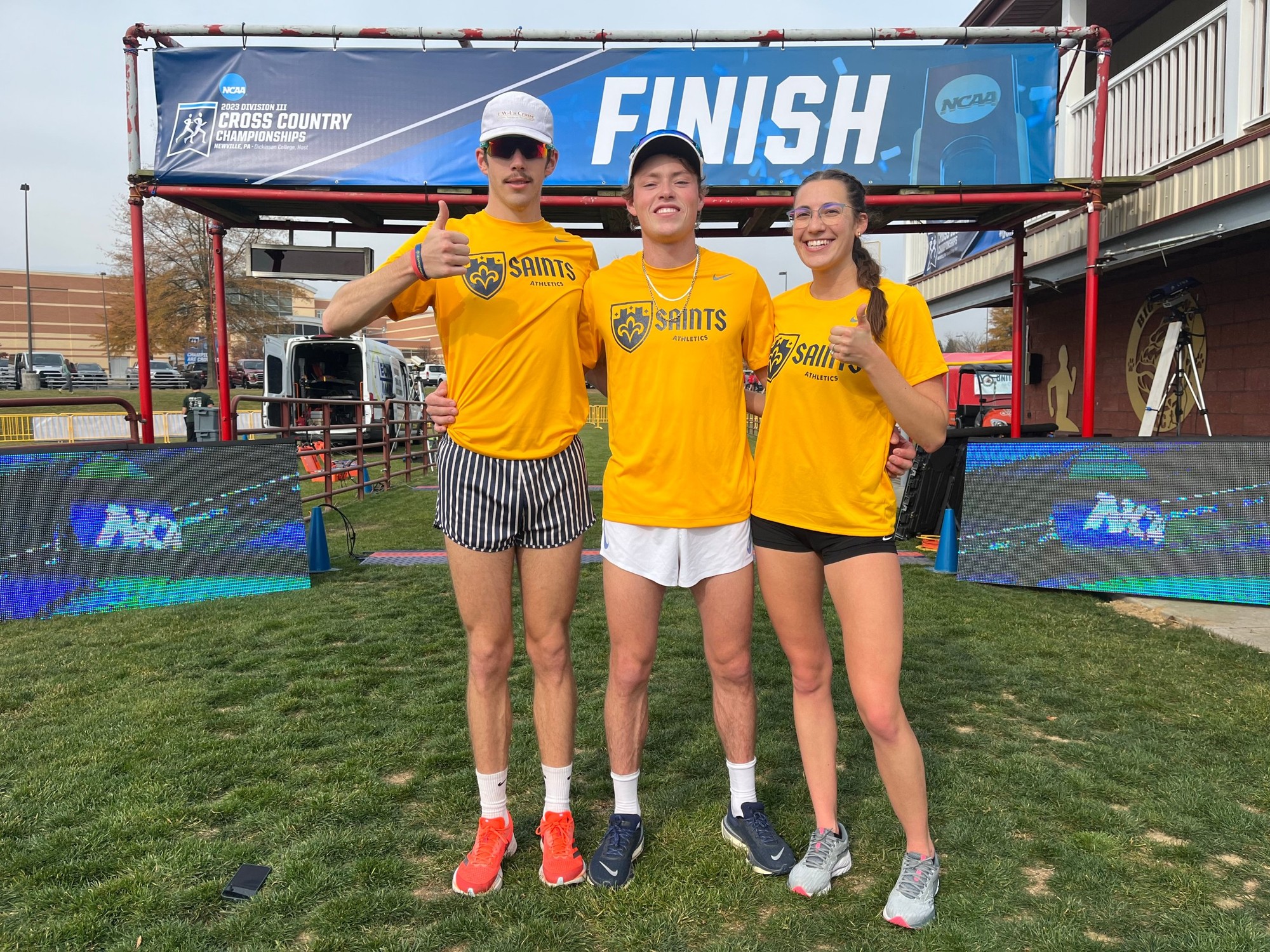
Eight hundred hours
In college he stopped counting miles and counted hours: run, ski, bike, lift. Some years, he said, came out between 800 and 900.
“I was pushing it pretty heavy,” he said. “And again, obviously a lot of that is cross-training and not running.”
Not all of it paid right away, even in a college career that included All-America honors in cross-country in 2023. The 5,000 and 10,000 meter results did not match the workload, and the skiing never got where he wanted it. He still turns that over.
“I felt like I was decent at skiing, but I don’t know what it was, and I still think about it sometimes. I felt like it just couldn’t push to that top level,” he said. “I felt like I maybe didn’t start early enough, or maybe naturally just didn’t have it in that sport, and that’s okay. But I still really enjoyed it, and I think there was a huge payout later on in the running world with all the skiing.”
The year had a rhythm. Winter was mostly skiing, with a little running. Cross-country season was a mix. In the spring he let the volume slide so he could sharpen for track.
“You’re not going to run well in track if you’ve got heavy ski legs,” he said.
What he and Salmela watched was the line from one year to the next, not any single season. It has only gone one way.
“There hasn’t been a year since I started working with Chad where I haven’t gotten better, like PR’d in something or seen improvement in some way or another,” he said. “There were some years where maybe a nordic ski season or a track season or even a cross-country season didn’t go perfectly, and that’s sport. But across the board, since 2019, I can confidently say there hasn’t been a year where I haven’t gotten better.”
He plans to do this for a lot more years and sees no reason for the line to bend. “I haven’t dramatically changed anything,” he said.
The volume is lower now, because a runner cannot absorb hours the way a skier can.
“You can try, but something’s gonna give at some point,” he said. “You’re gonna get hurt, essentially.”
What crossed over intact was the mindset.
“I’m really good about training like a skier, in the mindset of, I go out there and I know exactly what intensities I need to hit every day,” he said. “And I’ve done a really good job of letting the ego side of running go.”
That means running alone, often. If the group heads out on a recovery day at 6:45 pace and his heart rate says no, he lets them go.
“I have no issue going out and letting people go too fast, and I won’t go with them,” he said. “I’ll run alone. But that takes a lot of discipline.”
He is not perfect at it. Where he still slips is in workouts, when somebody wants one more fast rep.
“I can look back even at my block going into Berlin, and look at a couple workouts and be like, did I really need to do that?” he said. “Did that really help me more than it hurt me? But I think just being critical about all that helps you prepare for the future too.”
The culture of the sport pulls the other way, he thinks, and social media has made it worse, especially for younger endurance athletes.
“I feel like there’s also a side of them that’s chasing likes on Strava, or a fast run, or an Instagram post,” he said. “All that stuff is great, but if you’re skewing your training around social media, that’s no good.”
His advice to the younger ones is short.
“Wait for the race to do that,” he said. “Put the race down. The training is just the building blocks.”
Every day should have a reason, a purpose.
“Look at every day and be like, what am I going to do to get better today?” he said. “Instead of just kind of hither and yon, like, oh, let’s show up and run.”
Boring on purpose
Ask what a skier’s background gives a marathoner that most marathoners do not have, and his first answer is something he does less of.
“I’ve always found that I do a lot less VO2 max than most people, and I’ve been asked why,” he said. “The answer is always, VO2 max has a place. You have to touch VO2 max to be able to race well. But it’s less of a factor in the marathon.”
When he leaned on it in high school and college, he would string together a couple of great weeks and then slide.
“I felt like the engine would get flat,” he said. “And it’s so much harder to recover from a hard VO2 max session than a threshold session that’s done very well.”
So he replaced some of it with threshold and what he calls efficiency work. He is sure he does more threshold than the average marathoner. The gap can look small on paper, maybe one session in fourteen days, and he thinks it compounds.
“It’s hard to weigh how much even one workout every 14 days makes over the course of an eight to 12 week training period,” he said. “It adds up.”
The second answer is strength, and with it the ability to carry mileage. He has gone from about 100 miles a week to about 135.
“I don’t want to say that for sure, but I definitely think that the skiing background, the strength, the amount of volume that I was doing all those years has helped me being able to go from, okay, I was running 100 miles a week, that’s a lot. But to be able to jump from that to 135 and still feel pretty dang good,” he said. “To be able to make jumps like that, I feel like the ski background definitely is a part. Someone will go, oh, it’s just 35 more miles. But that jump in your nervous system and fatigue and all of that, it’s an exponential number. It’s hard to even measure.”
The odd part is that in college he barely lifted for running at all.
“I really did none,” he said. “I just didn’t really want to. I was just kind of lazy, and I didn’t believe that it would make me better at running.”
What he did in the weight room was for skiing: upper body, core, pull-ups. For about a year now he has followed a running strength program built to take 20 minutes. Heavy half squats. Step-ups holding about 60 pounds. A Bulgarian split squat done as a jump, with no weight. Romanian deadlifts. Two sets of eight of each, three minutes between, and he spends the three minutes stretching, on core, or on whatever is sore. He lifts two or three times a week, soon after a workout or a long run once he has refueled, and never on a recovery day.
“It comes at a cost, and strength is strength,” he said. “You’re still adding fatigue.”
Then there is the session everybody in marathoning is arguing about. He ran 2:12:30 at Boston with no double threshold days in his build. He ran 2:12:13 in Berlin after a lot of them.
“It’s hard to weigh,” he said. “If I would’ve ran 2:10 in Berlin, would I answer that question differently? Maybe. I just need more races to be able to answer that question. I think they’re both good.”
His complaint is with how a lot of people do it.
“You want fatigue to be the thing that’s stopping you, not lactate being too high,” he said. “People are like, oh, I’m done, my lactate’s high. And most people aren’t even monitoring that. I just like to let time be the thing that makes you tired. Time on feet.”
Going into Berlin, where the goal was to break 2:10, the pace for it, around 4:57 a mile, felt easier than it ever had in his career. He gives double threshold some of the credit and plans to keep it, perhaps every other week instead of every week.
“It’s taxing,” he said.
After the first story ran, Salmela wrote that Dewall was basing most of his current training on cutting-edge running technology. Dewall found the phrase funny.
“I would say that a lot of my training looks pretty boring, because it’s a lot of the same stuff over and over and over,” he said. “But the consistency is there, and the focus and discipline and being a mature runner is there.”
Lactate testing and heart rate data matter, he said. But he thinks what Salmela meant is simpler than any of the gadgets.
“In the running world specifically, people aren’t out there constantly monitoring heart rate and all that data, and getting useful information from it,” he said. “Even in the pro world in running, there are people who are doing a really good job of it, but there’s people out there who are just showing up, like, let’s go run.”
The road to St. Louis
The Olympic Marathon Trials are in St. Louis on March 25, 2028. Dewall has had the qualifying time since CIM, and he is not alone at home. Three or four of the Lane Zero runners, Dewall included, have met the 2:16 standard.
“Although San Diego’s a big city, that’s a lot of qualifiers for even a big city,” he said. “Those are the guys that can push me in workouts and really make me better in workouts.”
Puma backed him through Berlin under its PROJECT 3 program for sub-elite marathoners, and after the race the company told some of those athletes it would support them through the Trials. He does not yet know what that will look like. He doubts it will be money.
“But free gear and travel and stuff like that, and that’s pretty huge,” he said. “So I’m stoked about that.”
He knows where the next line is.
“Two-ten is the number that most of these companies are looking at to be like, okay, let’s get you on an actual contract,” he said.
For now he is letting his body decide what comes next. Berlin was three weeks old when we spoke, and the job was to recover without giving back fitness. There might be a race before the end of the year. He expected to know soon.
Early 2027 is for going shorter: road 5Ks and 10Ks, maybe a 3,000 or a mile, even a time trial. His 5,000 best is 14:37, and he thinks 14:10 is there at the least. He would like to get under 29 minutes for 10K. His mile best is 4:10 from college, and before Berlin he ran 4:22 at the end of a workout without trying very hard.
“I was like, to my buddies, I think I could have PR’d in the mile right now at the end of this workout if I would’ve went for it,” he said. “Who doesn’t want to have a faster mile PB, even if you’re a marathoner?”
The bigger target is the half marathon standard for the Trials, 1:03:00. The window for half marathon qualifiers opens January 1, 2027. His best is 1:04:06, from the Garry Bjorklund Half Marathon at Grandma’s in June, in conditions he called humid-ish. He is already qualified for St. Louis, so the half would change nothing about his place there. He wants it anyway, and he is looking at a half in March.
“It’s a nice accolade to have,” he said. “It’s no gimme. That’s gonna take some really specific prep.”
He expects to run one marathon in 2027. Boston again, maybe London, maybe Chicago, nothing later in the year than that. He would think about Berlin again if teammates were going, because of how well the race took care of its elite field.
“That was the most organized and efficient race I’ve ever been to,” he said. “And that’s worth a lot.”
He wonders whether getting there three or four days earlier would have bought him something. He does not know. He also admits he remembers very little of the course.
“I always laugh when people ask me about the course in those races, and I’m like, I don’t even know,” he said. “You’re going pretty fast, but you’re also in a group like that, and the only thing you’re looking at is just the person in front of you.”
On Monday mornings he is back in front of his middle schoolers. He is not a morning person, which makes running before school a grind in the long weeks.
“I wish I could start my teaching day at 9 or 10 a.m., but that’s not how the real world works,” he said.
He would not trade it.
“When you don’t have that job, it’s easy to get almost obsessed with the training and the running,” he said. “As much as that’s great and it’s exciting, I think it’s good to have something to force me to not think about running.”
The classroom gives some of it back.
“It’s fun teaching kids and making a difference in their life,” he said. “I feel like they take interest in the marathon stuff too, and ask questions, and always want updates.”
He wants to coach someday, probably once his own career is over, and he knows which sport.
“I think I’d like coaching running more,” he said. “A little more straightforward. Less variables, less factors.”
No wax, no kick, no temperatures, as he put it.
The 2:10 is still out there, and he knows how close 2:12 is.
“I’m scratching,” he said. “I just gotta connect on the right day.”
Help Support Our Coverage!
If you value the thoughtful work and access FasterSkier provides, please consider becoming a Voluntary Subscriber. Your support directly fuels our work to cover the people, places, and moments that make our sport special.
Join the FasterSkier community!