Tag: Olympic Winter Games 2026

  • Tim Baucom and the Art of Making Hand-Structured Skis

    Tim Baucom and the Art of Making Hand-Structured Skis

    This article was made possible through the generous support of our voluntary subscribers who have helped put our Nat Herz on the ground at the Olympics. If you value coverage like this, please support FasterSkier with a voluntary subscription.

    Tim Baucom mountain biking with his parents on the Bangtail Divide Trail in Bozeman, Montana. (Photo: Courtesy Photo)

    After a historic day like yesterday, there are so many possible stories, some big, some smaller, but all important. It is easy to get lost in the moment, the history, and the meaning, but we also cannot forget about how it happened. Not just on the race course, but bigger than that, how did the team make it happen, specifically the service team?

    A lot of credit should be given to Eli Brown, who is the tech for both Ben Ogden and Julia Kern. Clearly, Brown, a self-proclaimed golf caddy for his athletes, provided some special magic, as did Oleg Ragilo, who leads the kick team, and Chris Hecker, who leads the glide team, but what makes the US Cross-Country Ski Team service team special is that they know they work best when all of their pistons are firing in sync.

    One of those pistons is their head of hand structure, Tim Baucom. His route to the wax truck bench was less predictable than you might expect.

    Baucom’s first ski race. (Photo: Courtesy Photo)
    Just a Kid Who Loved Sports

    Like many who stay in coaching and the industry, Baucom loved all sports growing up.

    “Sports were definitely my biggest focus when I was young. As soon as I started playing Little League baseball, soccer, and stuff, it was definitely all I thought about, in school too. Gym class and recess.”

    For a long time, Baucom played all the sports he could, but he was definitely into soccer, which was probably his favorite, and he played through high school.

    Middle School State Championships with his coaches Kate and Chris Northcott. (Photo: Courtesy Photo)

    Baucom grew up in Walpole, a small town in southwest New Hampshire, but cross-country skiing wasn’t on his radar as a child. Though he tried it in fifth grade and continued through high school, he did not approach it with the passion one might expect from a story about someone at his current level.

    “I didn’t really have much of a community for it where I grew up. It’s funny because New England’s so small.”

    Little did Baucom know he was just across the Connecticut River from the epicenter of American Nordic skiing.

    “I was 15 or 20 minutes away from Putney… but the communities in New England are so removed from one another. My dad even worked in Putney, and I didn’t really know those kids or race against any of them, or know the coaches.”

    While he loved soccer and other ball sports, skiing seemed to fit best.

    “Once I started skiing, I realized it was probably my best sport, at least the one I was more naturally adapted to.”

    But that didn’t mean he was fully committed to training like the top juniors in the region.

    High School State Championships with teammates Brenden Short, Morgan Brown, and Tyler Westover. (Photo: Courtesy Photo)

    “The first time I roller skied was my freshman year at UNH… There were three or four of us who had grown up in the New Hampshire high school skiing world and played other sports and never thought about roller skiing.”

    And while that might sound surprising to some people, it is not something Baucom regrets at all.

    “In most ways, I’m super thankful that I had a very diverse sports background… competent at ball sports, and alpine skiing—I alpine skied a ton—and telemark skied and ice climbed, and rock climbed. I’m definitely thankful for that.”

    Racing for UNH in Houghton, Michigan. (Photo: Courtesy Photo)
    Moving West and Almost Choosing a Different Path

    After high school, Baucom chose to stay in-state and attend the University of New Hampshire, where he majored in anthropology and had minors in history and music. Skiing became a big part of his life through connections and friendships, but he admits he probably wasn’t fast enough to make the team now.

    After graduation, he spent the summer helping build houses up in North Conway, but as fall approached, he left Durham, North Conway, and southwest New Hampshire behind.

    “I moved out to Bozeman the year after graduating… planning on being a ski bum for a little bit and then probably going back to grad school. I was very interested in public health, and medical anthropology really interested me.”

    But Baucom needed to find a way to support his ski bum lifestyle:

    “I started coaching that winter for Bridger Ski Foundation because it was an easy job. I could go ice climb or ski all day, and then at 4:00 show up at Lindley Park and ski around with some kids for a little bit and get paid a little money.”

    He figured that, between the money he had saved that summer and what he was making as a coach, he would be able to make his lifestyle work financially, but he didn’t expect to enjoy coaching so much.

    “I started dryland training… working with younger kids who were just starting to roller ski and just starting to learn how to bound and ski walk. We played soccer and speedball, mostly, which [was] awesome.”

    Working in Quebec with fellow UNH alumni Nick Brown and Andrew Morehouse. (Photo: Courtesy Photo)
    First Real Exposure to Waxing

    At BSF, Baucom found mentors to guide him in waxing.

    “We had a few coaches and techs who were quite experienced… Floyd Rieshus… he was probably in his 70s when I was working with him, and he was so dialed.”

    But it wasn’t just the technical side of waxing that was appealing; there is something about the physical labor of being a cross-country ski coach that draws in a certain type of person.

    “We’d show up in West Yellowstone, and he’d have his big sled that he’d hauled his elk out of the woods with—still covered in blood—and we’d throw all the waxing tables and gear into that, and the generator, and he would slowly trudge from town all the way out to the stadium.”

    In addition to Rice, Bjorn Bakken was heavily involved in BSF, and Baucom was willing to take on whatever they suggested.

    Baucom must have been doing something right because when the opportunity presented itself, the head coaches threw him into the deep end of the pool to see if he could swim.

    “[U.S. Nationals] was in Rumford, and [my boss] called me, ‘one of the people couldn’t make it,’ and they were like, ‘We really need extra help.’ So I went there and really got thrown into it.”

    When he arrived in Maine, conditions were, to say the least, challenging, but the rest of the BSF service team didn’t question his ability. They put him in charge of kick, even though Baucom felt as if he had imposter syndrome.

    “I think I was honestly in charge of kick—which was a joke at the time—because I had no experience making skis for that quality of athlete and that high level of race.”

    Baucom knew the stakes were high and that he had better figure out what to do quickly, but then the weather of New England did what New England weather does in January and tossed a wintery mix classic race day at everyone.

    It was situations like that that Baucom loved, having to get creative when there was no other option.

    Baucom and Jason Cork on top of Stratton Mt. (Photo: Courtesy Photo)
    How He Made it to the World Cup

    As a parent, you try to teach your child to advocate for themselves, and clearly, Baucom was taught that lesson well.

    “For a few years, politely persistent. I emailed [Chris] Grover a few times, being like, ‘Hey, I’m interested in this job.’ I emailed [Jason] Cork [on the tech side] and was like, ‘Any advice if I want to be a tech on the World Cup?’”

    The message back was simple: keep doing what you are doing, it is really the only way. What Baucom may not have realized about the impression he was leaving wasn’t just that he was skilled when things got unpredictable, but that he brought the right ‘vibe’ with him to the wax trailer.

    “I think if you have the right personality, and enough people see that, I think that helps. That is huge for a team like this. We’re living together for four or five months… one of the most important aspects is to be able to work together.”

    Eventually, that persistence with the right vibe got Baucom to Europe to start lending a hand.

    Simi Hamilton and Baucom in Quebec. (Photo: Courtesy Photo)
    Baucom’s Role: Manual Structure

    For people who don’t know what manual structure is: basically, the base of any ski has structure in it, small etch marks that help move water through the base or over snow crystals, depending on the temperature and the sharpness of the crystal.

    When World Cup skis come from the factory or, more directly, from the brand reps at World Cup races, they are ground, which creates a more permanent structure cut by a machine. What Baucom and the rest of the team are trying to determine on race day is whether adding a different pattern over that grind with a hand tool improves speed compared to the structure already on the ski from the brand.

    “The idea is to find something that’s durable, lasts the duration of the race, doesn’t pick up excessive dirt, works well with the grind that’s under it, and works well with the base material.”

    The US Cross-Country Ski Team has five different ski brands represented, and “they all have factory grinds that are great, and we use them. So we need to find something that works well for everyone.”

    In the days leading up to a race, the team will run a structure test or two and another on race morning before both the men’s and women’s races, “depending on conditions, it could be eight pairs, it could be four,” said Baucom.

    “We’re trying to narrow a giant box of different hand structures down to eight on the morning of, and then from there down to one—or maybe two options—that could work with different grinds.”

    Hailey Swirbul and Baucom on a ski in China one of their first days on the ground OWG 2022. (Photo: Courtesy Photo)
    Trial, Error, and Evolution

    Not everything Baucom and the team do works, so they have to catalog the results and move on with that knowledge for the next time similar conditions arise.

    “There are certain structures we stay away from that we’ve had bad luck with… and there are certain grinds from different ski companies that we pretty much won’t ever put manual structure on.”

    That’s the tricky part: not all athletes ski the same way, are looking for the same feel from a ski, or ski on the same brand of skis.

    “The most important thing is for each individual tech to have an idea of what works with their athlete’s skis.”

    Baucom and his partner Brooke Segerberg in Davos, Switzerland. (Photo: Courtesy Photo)
    A Historic Day

    Elite skiers train nearly a thousand hours a year, year after year, which is the required ante chip to line up at a race, especially an Olympic one. For Baucom and the rest of the US Ski Team service staff, the skis raced on World Cup weekends and at these Olympics did not come together the way you might prepare them for a Saturday morning ski. It, too, took thousands and thousands of hours of work over decades of involvement for the entire service team to put world-class skis in the athletes’ hands so they could realize their dreams.

    Another historic day might materialize at these games, and one thing we know for certain is that the service staff is working hard to make it happen.

    Help Support Our Olympic Coverage!

    FasterSkier has our own Nat Herz on the ground at the Olympics, which is a significant financial lift for us. If you value the thoughtful work and access FasterSkier provides at championships like this one, please consider becoming a Voluntary Subscriber. Your support directly fuels our work to cover the people, places, and moments that make our sport special.

    Join the FasterSkier community!


  • The Devon Kershaw Show: Milan is on, and Holly Brooks guest hosts to recap Day 1

    The Devon Kershaw Show: Milan is on, and Holly Brooks guest hosts to recap Day 1

    This article was made possible through the generous support of our voluntary subscribers.  If you value coverage like this, please support FasterSkier with a voluntary subscription.  


    The race was ON from the gun: We recap the women’s 20-kilometer pursuit, which was a rough go for Jessie Diggins and a tight fight between the Scandinavian heavyweights.

    Alaskan Holly Brooks, the retired Olympic World Cup racer, joins us after watching the race in person. We hope to get proof of life from Devon soon.

    In the mean time, reach us at devon[at]fasterskier.com and nat[at]fasterskier.com. We’ll be back tomorrow.


    Help Support Our Olympic Coverage!

    FasterSkier will have our own Nat Herz on the ground at the Olympics, which, to be honest, is a very big financial lift for us. If you value the thoughtful work and access FasterSkier provides at championships like this one, please consider becoming a Voluntary Subscriber. Your support directly fuels the work we do to cover the people, places, and moments that make our sport special.

    Join the FasterSkier community!

  • Paul Choudoir — “The Right-Brain Grinder”

    Paul Choudoir — “The Right-Brain Grinder”

    This article was made possible through the generous support of our voluntary subscribers.  If you value coverage like this, please support FasterSkier with a voluntary subscription.  

    Paul Choudoir with his wife Julia Curry. (Photo: Courtesy Photo)

    A Portfolio, Not a Resume

    Paul Choudoir did not set out to work at the Olympic Games. He did not study engineering. He did not grow up in a wax room, nor did he apprentice under a legendary grinder with a machine humming in the background. He went to school for communications. Advertising, specifically. He built a portfolio. He expected a desk.

    “I was a communications major,” Choudoir said. “Yeah, in advertising.”

    In 2018, his life looked orderly in the way young professionals’ lives often do just before they don’t. He was finishing school, assembling work samples, and preparing to enter an industry with defined pathways and predictable ladders. He interviewed at an ad agency. They liked him.

    “The next day, they offered me the job,” he said.

    The day after that, something else happened.

    “And I told them that I took a job with the snowboard team,” Choudoir said. “And I couldn’t be more grateful that I turned that down.”

    That second offer was seasonal. It was physical. It came with no guarantee of permanence. It was also the beginning of a career that would, eight years later, place Choudoir at the center of the U.S. Cross-Country Ski Team’s Olympic preparation, responsible for the grinding program that shapes the skis American athletes will consider racing on when the Winter Games begin this Saturday.

    It is not a path that makes immediate sense on paper. Which, in many ways, is the point.

    Growing Up on Skis, Not Destined for Them

    Choudoir grew up in central Wisconsin, five minutes from his local ski trails. Skiing was present from the start, not as destiny but as texture—something you did because it was there.

    “I’ve been skiing all my life,” he said. “As soon as you could walk, you played on skis.”

    He raced. He trained. He went to college and skied there too, though he is careful not to mythologize that part of the story.

    “Not exactly an illustrious college career,” he said. “But I wouldn’t be where I am today if I hadn’t done that.”

    The tone matters. Choudoir does not frame himself as a near-miss Olympian or an athlete who found a second life in service. He is precise about what his racing was and wasn’t. Skiing gave him familiarity with snow, equipment, and race culture. It did not hand him a blueprint.

    What it did give him—though he didn’t know it at the time—was an eye.

    US Snowboard Cross Team started using cross-country skis and techs to help determine what to do to their snowboards for races. Choudoir was one of those techs at the last Olympics. (Photo: Courtesy Photo)

    Learning to See the Ski

    “I fell in love with the service side of the sport,” Choudoir said.

    That love did not arrive fully formed. It developed slowly, through observation, repetition, and mentorship. One name comes up again and again when Choudoir talks about learning to grind: David Chamberlain.

    “David taught me to grind,” he said. “I’ve been grinding since… about ten years now.”

    Grinding, at its simplest, is the process of cutting microscopic patterns into the base of a ski using a stone grinder. Those patterns—called structure—help manage how water behaves between the ski and the snow. Too much suction and the ski sticks. Too little contact and it chatters. In dry snow, structure can be minimal. In wet snow, it can be decisive.

    But Choudoir resists explaining grinding as a purely technical exercise. What matters, he suggests, is not just the machine but how you look at the ski coming off it.

    “When running a grinding machine,” he said, “I think you need both. You need right-brain and left-brain people.”

    There are databases. There are measurements. There are RA values, stone parameters, and logs that stretch back years. And then there is feel.

    “You need the people who have the database of what we waxed with here three years ago,” he said. “And you need the gut-instinct people.”

    Choudoir’s background in visual communication—learning how images convey meaning, how patterns read, how subtle differences change perception—became an asset. Grinding is, in many ways, about pattern recognition. Noticing when something looks right. Or wrong.

    The First Call to Europe

    The moment when Choudoir’s interest hardened into commitment came not in a classroom or a wax room, but through a phone call.

    “Someone had to bail from the OPA Cup trip,” he said. “And [Bryan] Fish was asking around.”

    Chamberlain’s name came up. So did Choudoir’s.

    “David immediately asked me,” he said.

    The trip was three weeks long. It was his first sustained exposure to European racing, to the rhythm of international service work, to the stakes that live just behind the results sheet.

    “I went on that trip for three weeks,” Choudoir said. “And that kind of solidified what I wanted to do.”

    Service at that level is relentless. Skis arrive. Conditions change. Decisions must be made quickly and defended quietly. There is no time to romanticize the work. But for Choudoir, it clarified something fundamental: this was where his skills mattered.

    Constructing the Arrow While Shooting It

    “This grinding development project is kind of my baby,” Choudoir said.

    He is referring to the U.S. team’s effort to build a modern, resilient grinding program—one capable of producing skis that perform across a wide range of snow conditions, with limited resources and little margin for error.

    “We’re kind of constructing the arrow while we’re shooting it,” he said.

    The phrase captures both the ambition and the constraint. Unlike larger federations, the U.S. does not have the luxury of endless testing or redundancy. Time, money, and personnel are finite. That reality shapes every decision.

    The goal is not perfection. It is coverage.

    There have been moments of early confirmation along the way. Certain grinds have worked immediately, validating months of off-season testing and reinforcing the idea that the overall approach is sound. But Choudoir is quick to note that genuine development rarely happens when the calendar is full. Race weekends compress decision-making into survival mode: skis need to be ready, not experimental. Time disappears, weather intrudes, and the consequences of being wrong grow heavier. Building new structure in those moments is less about innovation than restraint—knowing when to trust what already exists, and when to leave the next step for another week.

    “You’re trying to limit catastrophe,” Choudoir said. “You’re trying to make sure you’re never hand-structuring a ski and making it slower.”

    The program relies on building a menu of grinds—each tested, logged, and understood well enough that when race day arrives, choices can be made with confidence rather than desperation. It is a philosophy rooted in risk management as much as speed.

    Choudoir with US Snowboard athletes and techs at the last Olympics in Beijing, China. (Photo: Courtesy Photo)

    The Detour That Mattered: Snowboard Cross

    Before Choudoir arrived in cross-country, he spent six seasons with the U.S. Snowboard Cross Team.

    “Not exactly the trajectory I thought,” he said. “But I was with them for six seasons.”

    Snowboard Cross is chaotic by design. Courses change. Weather shifts. Equipment choices are compressed into narrow windows. The service environment is intense.

    “I went to Beijing with that crew,” Choudoir said. “Had a blast.”

    He is not being flippant. Beijing mattered. It was his first Olympics, his first exposure to that particular compression of pressure and permanence. Mistakes echo. Success is fleeting. Everything is amplified.

    “Very different environment,” he said, “but still kind of doing the same thing.”

    What transferred was not discipline-specific knowledge but temperament. The ability to make decisions under stress. To stay calm when the margins disappear.

    Pressure Without a Bib

    “I still wake up on race day with that nervous stomach,” Choudoir said.

    It is an admission that disrupts the usual hierarchy of anxiety. Athletes are expected to feel it. Techs are supposed to be invisible. But Choudoir does not pretend otherwise.

    “We’re being demanded to perform,” he said.

    Service technicians do not get a lane. They do not get a split time. Their work is judged indirectly, through glide, through kick, through moments when an athlete looks down mid-race and knows something is wrong—or right.

    “If we’re the first ones to freak out,” Choudoir said, “that trickles down.”

    Pressure in the wax room is quiet. It hums rather than roars. It lives in choices made hours before a start, when weather models disagree, and snow crystals are in flux.

    No Assholes in the Wax Room

    “Nobody wants to work with an asshole,” Choudoir said.

    It is a blunt statement, and an accurate one. Service teams operate on trust. Ego corrodes that trust quickly.

    “We have to be calm,” he said. “If we’re calm, the athletes are calm.”

    Calm does not mean passive. It means deliberate. It means creating an environment where athletes feel supported rather than scrutinized. Music plays. Routines settle. Decisions are explained clearly and without drama.

    Choudoir describes a culture where competence is expected, and humility is enforced—not through policy, but through proximity.

    Collaboration, Not Espionage

    There is a persistent myth that ski service at the highest level is governed entirely by secrecy. Locked rooms. Guarded notebooks. Stolen glances.

    The reality, Choudoir suggests, is more complicated.

    “People help each other more than fans realize,” he said.

    There are boundaries, of course. Proprietary information remains protected. But when a machine breaks, when conditions confound everyone equally, assistance flows.

    “Nobody wants to see anyone fail because of equipment,” he said.

    It is a quiet fraternity, built on shared exposure to the same uncontrollable variables.

    Saturday

    “At some point, the decisions are made,” Choudoir said. “After that, it’s just execution.”

    As the Olympic races begin this coming Saturday, the grinding lists are locked. The skis are prepared. The patterns have been chosen based on months of testing and years of accumulated knowledge.

    What remains is the weather. And trust.

    Choudoir will be there, awake early, stomach tight, listening to the machines and watching the snow. His name will not appear on the results sheet. But his work will.

    And that, for him, will be enough.


    Help Support Our Olympic Coverage!

    FasterSkier will have our own Nat Herz on the ground at the Olympics, which, to be honest, is a very big financial lift for us. If you value the thoughtful work and access FasterSkier provides at championships like this one, please consider becoming a Voluntary Subscriber. Your support directly fuels the work we do to cover the people, places, and moments that make our sport special.

    Join the FasterSkier community!


  • Shoulda Seen This Coming . . . Russian Skiers Return to World Cup and Olympics

    Shoulda Seen This Coming . . . Russian Skiers Return to World Cup and Olympics


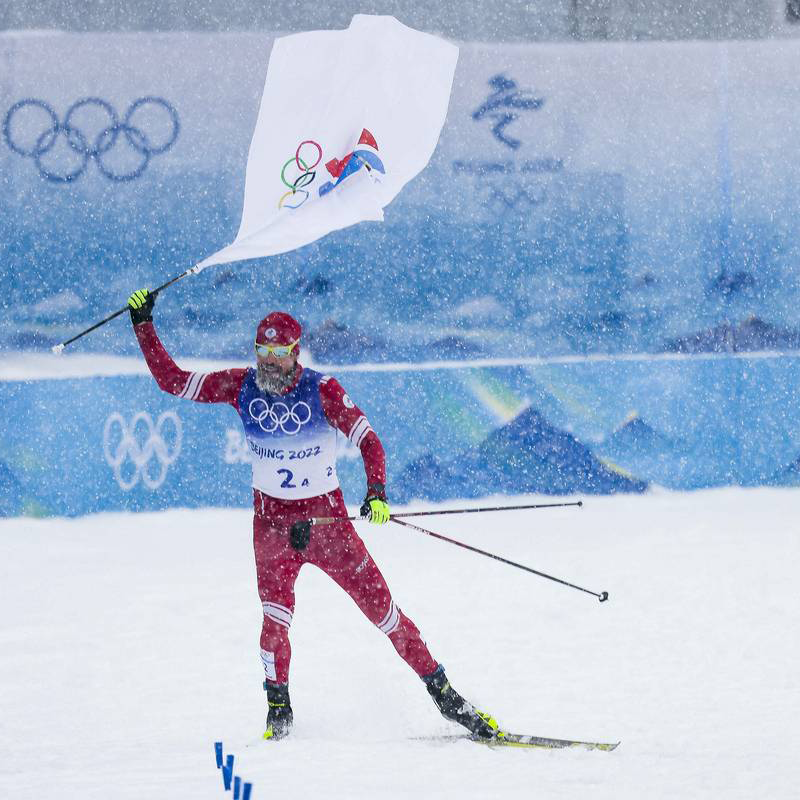
    While certain Individual Neutral Athletes will be allowed to compete in the upcoming World Cup races (events that can qualify athletes to compete in the Olympics), the flag of the Russian Olympic Committee is one of those that will continue to be banned from Milano-Cortina’s Olympic Games. (Photo: NordicFocus)

    It sounds like things just took a turn . . . and everyone really shoulda seen this coming.

    Articles published today (Dec 2) in both the New York Times and Langrenn reported that the Court of Arbitration for Sport had upheld the appeal submitted by Russian Ski Association (RSF) and select Russian athletes. What does that mean? Well, after a complex and convoluted set of explanations, it means that FIS cannot place a wholesale ban on all athletes from Russia and Belarus; therefore, Individual Neutral Athletes (AINs) from both nations will be allowed to compete in upcoming World Cup events that represent qualifying opportunities for the Winter Olympic Games.

    A month ago, every media outlet in the sporting world announced that athletes from Russia and Belarus would be excluded from qualifying events sanctioned by the International Ski Federation (FIS) and leading up to the Olympic Winter Games in 2026. If Russian athletes couldn’t qualify for the Olympics, then they couldn’t compete in the Olympics. End of story. Numerous ski-industry publications made it sound like a done deal—Russia was out, and that was it. Time for FasterSkier to toot its own horn a bit: we told you a decision-reversal could happen . . . and now the appeals of Russian and Belarusian athletes and organizations have been approved by the Court of Arbitration for Sport (CAS). As a result, FIS will be compelled to include Individual Neutral Athletes (AINs) from both Russia and Belarus. Russian and Belarusian flags won’t be waving at the ski venues in Cortina this winter, but a select group of Russian and Belarusian athletes will be lining up for those events, nonetheless.

    A Russian fan during the men’s 4 x 10 k relay at the 2019 World Championships. There will be no Russian flags waving at the Winter Olympics in 2026. (Photo: John Lazenby/lazenbyphoto.com)

    Just like in the Paris Summer Olympics in 2024, the field in Milano-Cortina will include a select set of Russians and Belarusians who meet two conditions:

    1. The individual athletes have never been supporters of the war on Ukraine.
    2. The individual athletes are willing to make themselves available for independent drug screening.

    And a few conditions on athlete representation, as well.

    1. AINs can participate in individual events, only. No team events (for skiers, that means no relays).
    2. No national anthems, no national flags. They may be Russians, but if an AIN wins gold the IOC gets to pick the music they listen to on the podium, and the flag that flies above them.
    3. No national uniforms. Colors, designs, and insignia must meet standards that will be set by the IOC.
    Norway Won’t Like it—But They’ll Probably Be polite About It

    This whole set of decisions also means that Russians will be on the starting line at World Cup events this weekend in Trondheim (hometown of Johannes Hoesflot Klaebo, and one of the hotbeds of Nordic skiing in Norway—a nation that has seemed almost wholly opposed to the return of Russian athletes to World Cup and Olympic competition). The rest of the world is left to wonder whether the motivation of many Norwegian administrators, coaches, athletes and fans was simply that the Russians were the team most likely to interrupt the performances of Norwegian stars in the Olympics. Well, duh! Of course they want their rivals sidelined. The fact that the Olympic results would not have included some of the best skiers in the world would have been little more than a footnote in the history of skiing. And Olympic immortality remembers only the medal, not the quality of the field.

    The field in question will likely be without the most notable names in Russian skiing, many of whom were vocal and visible supporters of Russia’s invasion of Ukraine. That stance, alone, disqualifies athletes like Alexander Bolshunov (who dominated events at the Beijing Olympics in 2022). In his place we’re likely to see Russia’s former Junior World Champion and current phenomenon, Saveliy Korostelev, who clobbered Bolshunov in last season’s Russian Championships. Norway won’t like it, but Russian skiers may still end up being the most likely to overturn the punch bowl at Klaebo’s Olympic coronation.

    A Fair and Logical Choice?

    FIS’ charter restricts the organization from discriminating against any athlete for political reasons. That, alone, should’ve let FIS know that what they were doing—painting every Russian and Belarusian athlete with the broad war-mongering brush wielded by Vladimir Putin—was not sustainable. According to its own charter, FIS is precluded from excluding an athlete simply because they are Russian. So, FIS made its point—”We really don’t like you guys”—but now that particular bureaucratic melodrama has ended. The Court of Arbitration ruled clearly, and the Russians (certain Russians) are in.

    The CAS decision on FIS policies was not the only one of its kind to hit the headlines recently—and ALL those recent decisions went the same direction. The International Skating Union (ISU) recently announced that, after sufficient and appropriate scrutiny, two Russian figure skaters (Petr Gumennik and Adeliia Petrosian) and one Belarusion figure skater (Victoriya Safonova) had qualified as AINs who will be eligible to compete in the Winter Olympics in 2026. Parallel determinations are expected from the ISU concerning eligible speedskaters and short track skaters. Similar announcements also arrived earlier from international governing bodies in Luge, Bobsled, Skeleton, and Biathlon. The message was clear: the Olympic Committee wants Russias and Belarusian athletes to be participants in the Olympic Games. It’s a watered-down version of the original Olympic Truce, which held that all wars would cease, and the athletes would join together in a display of fairness, collegiality, and peace.

    IOC has remained totally in favor of punishing Russia, and excluding all things “Russian” from inclusion in the Olympic Games. But where IOC does make a concession is that Individual Neutral Athletes (AINs) should be allowed to compete if they meet certain conditions. The IOC feels that’s fair and logical. According to the charters of all the organizations involved, that does seem to be the case.

  • Johannes’ Olympic Dilemma

    Johannes’ Olympic Dilemma

    This article was made possible through the generous support of our voluntary subscribers.  If you would like to see more articles like this one, please support FasterSkier with a voluntary subscription.  

    XXIV. Olympic Winter Games Beijing 2022, cross-country, medals, Beijing (CHN)
    Johannes Høsflot Klæbo (NOR) has the potential for six medals in the Olympic Winter Games of Milano-Cortina, a feat that would tie him for the second most medals of any Winter Olympic athlete. (Photo: NordicFocus)

    Johannes Hoesflot Klaebo faces a bizarre dilemma of the sort experienced only by stars and legends: either he authors another miracle in 2026—making lightning strike a second time—or he disappoints the whole sporting world. Those are Klaebo’s options as he looks forward to the Olympic Winter Games in February of 2026. After performances like the ones he delivered last season in Trondheim’s World Championships—six races, six gold medals—his options are being reduced to either miracles or disappointments. It’s particularly ironic that Klaebo could spend two weeks at the Olympic venue in Val di Fiemme, win three gold medals (Classic Sprint, Team Sprint, and Team Relay) as he is heavily favored to do, and still go home a failure in the eyes of journalists, fans, and countrymen. Well, once you win everything, everyone expects you to always win everything. No pressure, Johannes . . .

    A year ago—as he looked forward to a season that would culminate in the World Championships in his hometown of Trondheim—one of Klaebo’s primary goals may have been to silence critics who pointed to his repeated failures to win distance races at major championships. Well, in Trondheim, he won the 20 k Skiathlon (with ease), then the 10 k Classic (in the absence of Finland’s Iivo Niskanen), then the 50 k (again, with ease). Just for good measure, he also won each of the events that he was absolutely expected to win (Freestyle Sprint, Team Sprint, and Team Relay). Critics were silenced, indeed. And Klaebo found himself hailed as the “best ever” in the sport of cross-country skiing. But what sort of encore is available after a performance like that? Only to do it all again . . . everything else falls short.

    In Trondheim, Johannes Hoesflot Klaebo (NOR) made cross-country skiing history. In 2026, the only way his Olympic campaign may be considered a total success is if he does it again. (Photo: Modica/NordicFocus)

    Other notable athletes have successfully faced similarly historic Olympic challenges/opportunities. Entering the Olympic Games of Munich in 1972, it was predicted that Mark Spitz would win seven gold medals: he did. In Beijing 2008, Michael Phelps was expected to win eight gold medals: he did. The 1980 Olympic Winter Games of Lake Placid, delivered a five gold medal performance from Eric Heiden (victories that experts had predicted). Perhaps it’s Heiden, the American speedskater, whose situation is most similar to Klaebo’s. Heiden was a media sensation. He appeared on the cover of Time magazine; he graced the cover of Sports Illustrated. Heiden had barely lost a race in two years, including winning the All Around World Championship and Sprint World Championships for three years in a row while repeatedly winning all four races at each championship. Everyone expected Heiden to win five gold medals—that was every single gold medal that was available in Olympic speedskating in 1980—covering every distance from the 500 meter sprint to the 10,000 meter marathon. The uniform sponsor of Heiden’s US Speedskating Team even went so far as to provide gold racing suits for the Olympic Winter Games in Lake Placid.

    Eric Heiden in 1980. Even Heiden’s magazine covers are now collectors’ items.

    Heiden had already proven himself capable of sweeping all the races. He’d done it before. Klaebo has too. But there is a subtle difference. Heiden ruled his sport during an era when training was still basically instinctive (unlike the scientific, closely-monitored training systems employed by Klaebo’s rivals in their desire to topple him from the podium). 1980’s training programs were old-fashioned suffer-fests in which those athletes most able to withstand the stresses of training (and over-training) were those who succeeded. No one checked pulses, no one referred to lactate levels, no one ever considered that they might over-train. They all just went hard every day. Heiden’s Coach, Dianne Holum (herself an Olympic Champion) freely distributed Heiden’s training program to his rivals. Perhaps it was an act of simple collegiality in a small and friendly sport. Or perhaps she just wasn’t worried that anyone else could do what Heiden could do. As it turns out, they all tried to copy Heiden and it backfired. When the 1980 Olympics began, Heiden’s rivals were exhausted, over-trained, athletically flat. Heiden himself, was typically blasé about the situation. On the morning of the 10,000 meter (his fifth event), with Olympic immortality on the line, he overslept, choked down a bowl of corn flakes, dashed to the rink, and set a world record. No one was really gunning for Heiden: he already had them all beat. Klaebo’s situation is different: everyone is gunning for him.

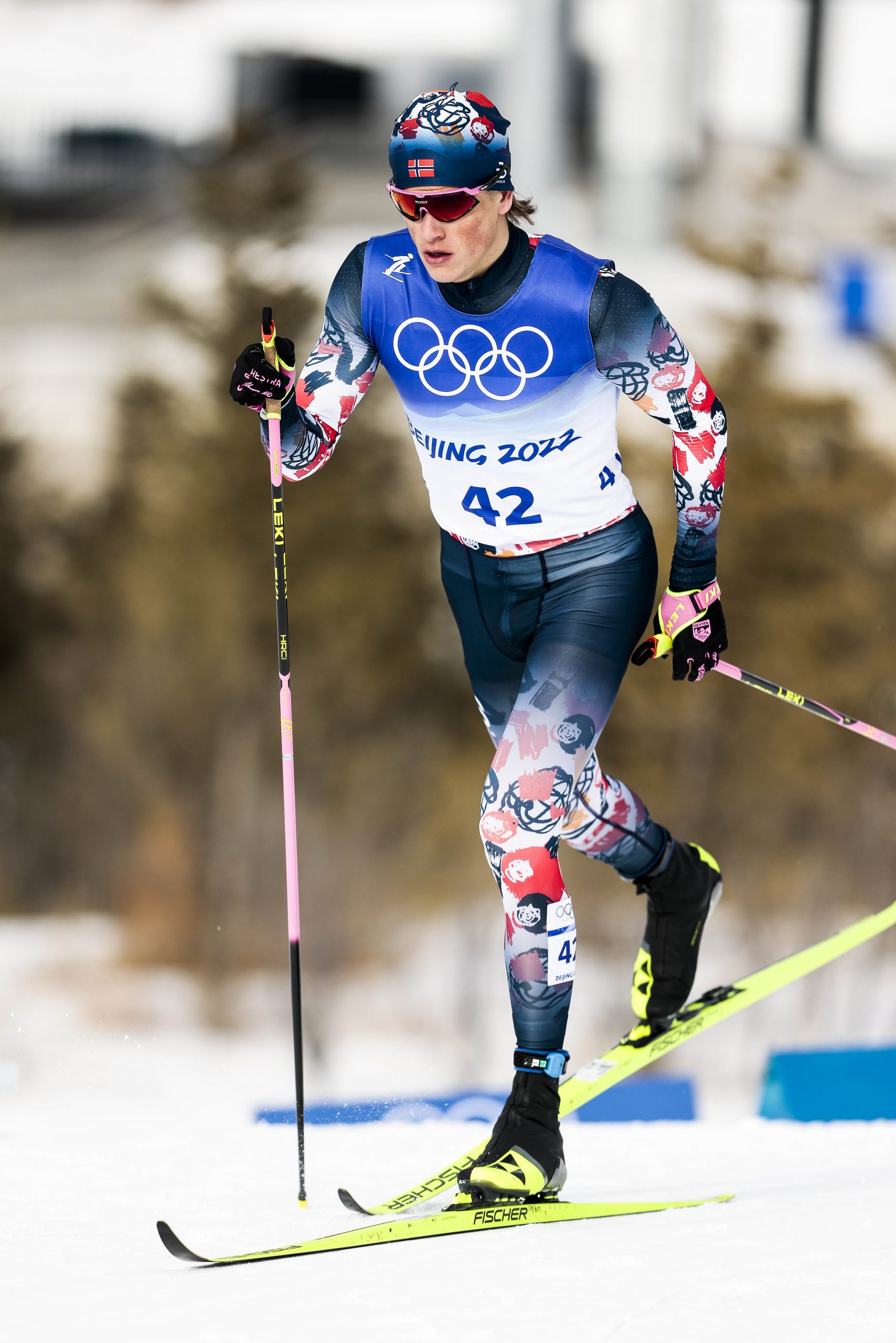
    Johannes Høsflot Klæbo (NOR) striding to his second medal of the 2022 Beijing Olympic games, winning bronze in the 15 k Classic. (Photo: NordicFocus)

    Klaebo is perched atop his sport at a time when cross-country skiing has never been more competitive. Even so, he spent the 2025 season winning at will, racking up victories, medals, and championships like there was almost no one else in the field. Certainly his Sprint dominance is unchallenged. In Trondheim, he proved equally invulnerable in distance races. In 2026, the Olympic Winter Games will give him a chance to re-assert that dominance. Spitz did it; Phelps did it; Heiden did it. And the media will say Klaebo can do it. Only two things are certain: he will try, and we will watch. If all goes well for Klaebo, then history will mark the moments.