Tag: Ontario

  • Hanging Up the Boots: Kershaw Retires from Skiing, Embraces Next Challenge

    Hanging Up the Boots: Kershaw Retires from Skiing, Embraces Next Challenge

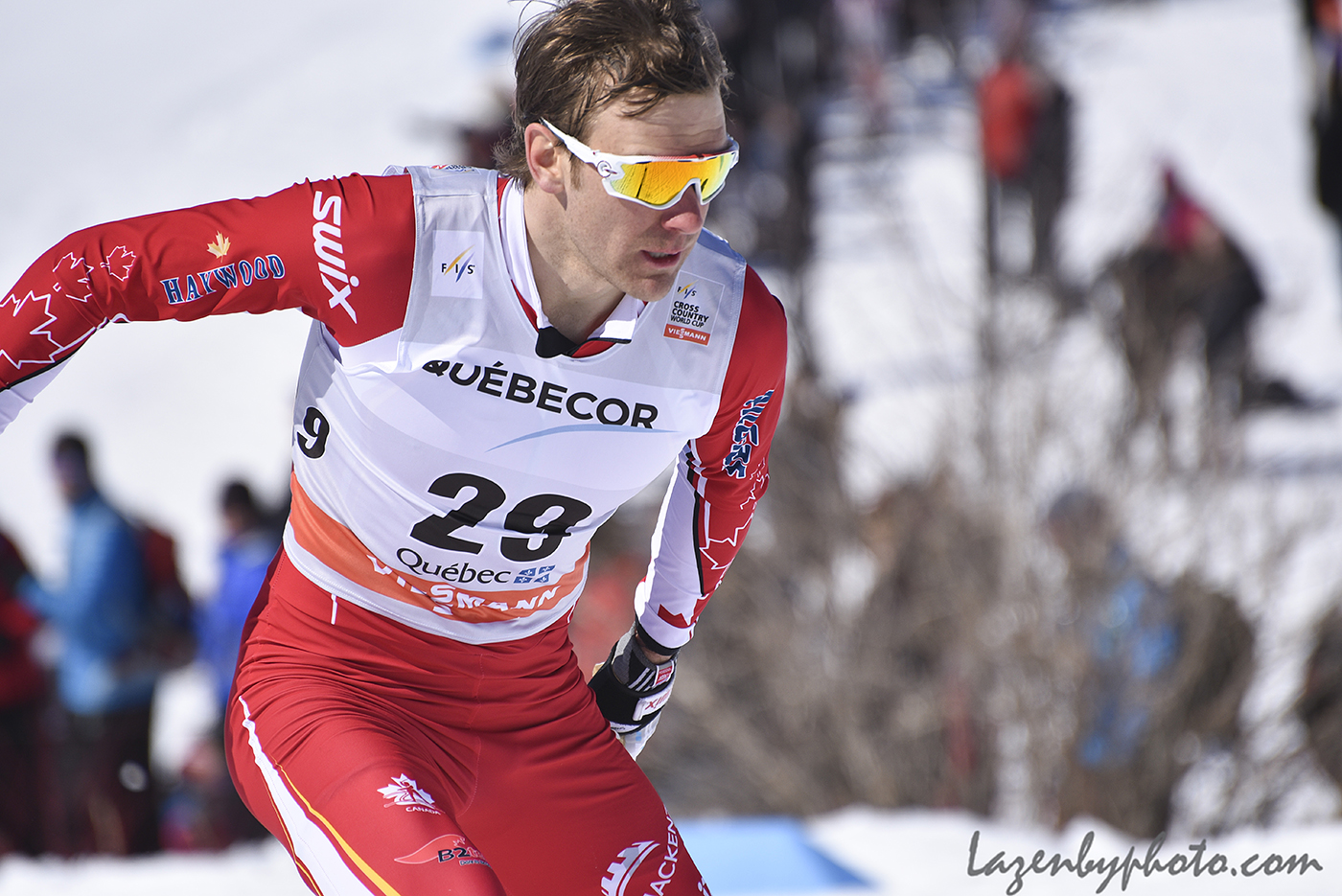
    Canada’s Devon Kershaw racing at 2017 World Cup Finals in Quebec City, where he finished 26th in the 15 k freestyle pursuit and 19th for time of day in the last race of the 2016/2017 season. (Photo: John Lazenby/Lazenbyphoto.com)

    On April 26, Devon Kershaw posted a photo on social media of Alpina boots hanging on a line. The next day, he spoke on the phone with FasterSkier from his new home in Lillehammer, Norway, after a day of running around outside with his 15-month-old daughter, Asta Isabel.

    Kershaw was tired, but in a good way. For the first time in 17 years, he was ready for a new challenge, a new focus and much more time with his daughter and wife, Kristin Størmer Steira, a former standout Norwegian skier.

    Three years after Steira left professional cross-country skiing and pursued a career in business, starting with her master’s degree in business management, Kershaw is following suit and headed back to school. The 35-year-old Canadian hung up his boots to quietly announce his retirement after about a month of deliberation.

    “I was really keen to keep ski racing, to be honest,” Kershaw said. “I had the motivation to go one more year, and in my head, I wanted to race one more season, but as things progressed in the spring, there were a lot of different factors that just made it seem like, oh man, it doesn’t look like it’s gonna be super realistic at this point.

    “I struggled with that, when you feel like you still have more in the tank,” he continued. “But at the same time, it’s a bit of a double-edged sword in the sense that it’s been a fantastic career.”

    Kershaw was quick to reflect on his roots as a kid growing up in Sudbury, Ontario, “a mining town with a small but passionate skiing community,” as he put it. He also reiterated how proud he was to represent Canada for 17 consecutive seasons, first as a junior national team skier for two seasons starting in 2001, then as an under-23 national team member in 2003, and finally as a full-fledged World Cup Team member starting in 2004.
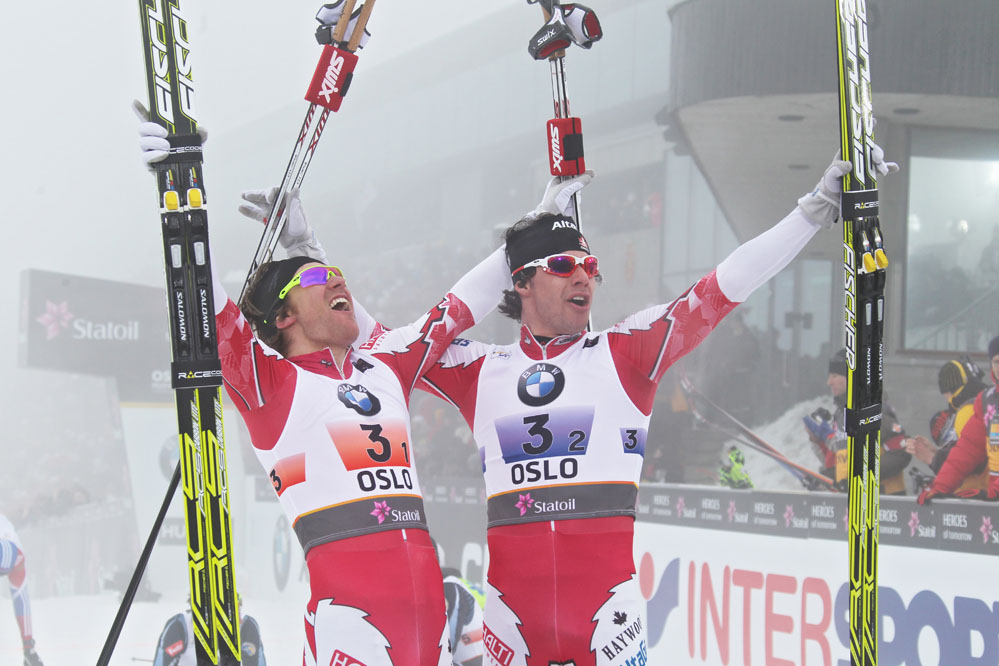
    Devon Kershaw (l) and Alex Harvey celebrate their 2011 World Championships gold in Oslo, Norway. (Photo: Fischer/NordicFocus)

    His career included three World Cup wins and 14 podiums, and a gold medal at 2011 World Championships with teammate Alex Harvey in the classic team sprint. Kershaw finished the 2011/2012 World Cup season ranked second overall and second in the distance rankings.

    When he reflects on those accomplishments, he still has a hard time believing that all happened to him.

    “So instead of focusing on being bummed at the situation or a bit frustrated with the state of things in Canadian skiing right now, I have to look back with a smile,” Kershaw said. “I feel just so privileged and grateful to have had the opportunity to be part of a real movement for men’s skiing in Canada.”

    Kershaw said he was left with unanswered questions this spring during a transitionary period at Cross Country Canada (CCC). The team’s budget was undetermined, camps were not yet set in stone, and Kershaw said his decision — which he wanted to make by May 1, the start of the new training year — became about energy management.

    “Part of managing your energy properly is putting all of your energy and focus into training, and if you’re being pulled with uncertainty or being stressed about uncertainty, that will come back, the World Cup will exploit that,” he said.

    According to CCC Chief Executive Officer Shane Pearsall, High Performance Director Thomas Holland had planned to retire this past March, yet has stayed onboard as an advisor until CCC fills the position. Pearsall said the hiring process is still ongoing and will hopefully be wrapped up by next month. He confirmed that CCC has yet to finalize its budget and doesn’t anticipate being able to do so until a government minister signs off on the amount from Own The Podium (OTP), one of its primary funding sources, in July. Pearsall explained that they expect to have a better sense of national-team finances in mid to late June.

    Typically, the team’s budget is determined in May, but because of necessary “quad reviews” following the Olympics, which took place before CCC met with OTP, the process was delayed by about a month. Pearsall did not elaborate on how significantly the budget would be decreased from last year, but said, “It’s certainly tighter than last year.”

    Kershaw said he needed to pay about $25,000 Canadian dollars in team fees if he wanted to continue racing this year, up from $15,000 last year. That didn’t cover the cost of living, which he figured to be around $55,000 Canadian, for a grand total of $80,000.

    “The financial burden is big, and moving forward the financial burden went from big to 100 percent paying for every cost,” Kershaw said. “So all travel, accommodations, everything. … I’ve just been in the sport a long, long time, and from a directional standpoint, I’m not sure we’re moving in a direction that will yield sustainable results at this point in time, but I understand it is difficult when you’re under such financial duress to create a sustainable program. But from a vision standpoint, I think there’s a lot of questions that remain unanswered, and it’s late in April. The fact of the matter is the rest of the world has all of the holes plugged — if they have holes in their boat — because May 1 is the new year of every ski program. And we’re just constantly slow and off the mark with that.”

    Budget cuts had been expected as Canada’s World Cup Team missed performance benchmarks throughout last season. The team finished 2017/2018 with just two men scoring World Cup points (top 30) in distance races: Harvey and Kershaw. Two men (Harvey and Julien Locke) scored in World Cup sprints. On the women’s side, Dahria Beatty landed one World Cup sprint top-30 last season, and Cendrine Browne was the top Canadian woman in a distance race with a 27th place for time of day in the last race of the season.

    Meanwhile, Alex Harvey led the team with four World Cup podiums, including third overall in the 2018 Tour de Ski, and a top result of fourth place at the 2018 Olympics. He finished his season in fourth in both the Overall and Distance World Cup standings. But Harvey’s results alone weren’t enough to buoy the whole team for another winter.

    “Throughout my entire career, it’s almost unfathomable to think that the season ends and that’s the stat line,” Kershaw said of the team’s overall results. “It wasn’t so long ago that we had over 16 World Cup podiums in a season. The truth hurts, as [former Canadian coach] Tor-Arne Hetland once said, but things go in waves and this is the reality that we live in right now.”

    Despite the prospect of self-funding, Kershaw didn’t feel pressed into retirement. Several of his teammates have decided to retire as well, including Graeme Killick, Jess Cockney and Knute Johnsgaard, but Kershaw said they weren’t forced, either.

    “You can choose to work and you can choose to hustle for money; there are ways to make it,” he said. “No one’s forced into it. I could keep skiing if I wanted to, but I think the stark choice you’re faced with is, maybe perhaps some people are like, I can’t really see a path to international success currently, and that’s what I think is sad…”

    ‘A dream scenario’

    When Kershaw moved to Canmore, Alberta, in 2001 and entered Canada’s elite skiing scene, Cross Country Canada (CCC) was entering a fruitful period. At the 2002 Olympics, Beckie Scott was proclaimed winner of the women’s 10-kilometer pursuit (now called the skiathlon), becoming the first North American woman to win an Olympic gold. At 2005 World Championships, Sara Renner earned a sprint bronze to become the first North American woman to medal at World Championships. Scott and Renner teamed up for silver in the team sprint at the 2006 Olympics in Turin, Italy, where yet another Canadian woman, Chandra Crawford, won the individual skate sprint for Canada’s second-straight gold in as many Winter Olympics. Scott finished that 2005/2006 season ranked second overall in the World Cup, just 16 points behind Norway’s Marit Bjørgen in first.
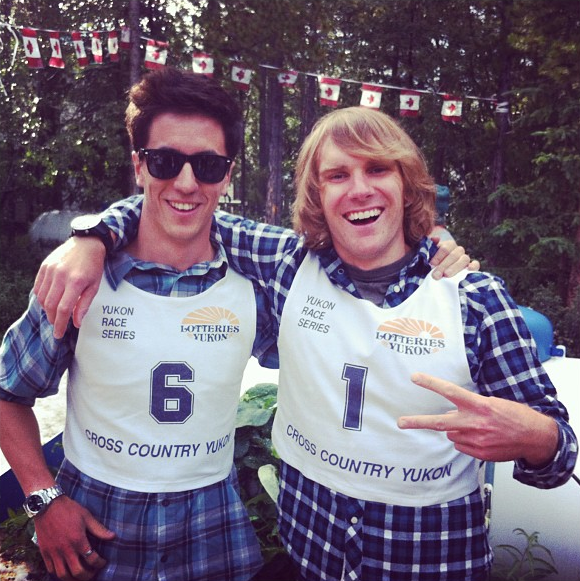
    Devon Kershaw (r) with Graham Nishikawa in 2013. (Photo: Devon Kershaw)

    Kershaw made his Olympic debut in 2006.

    “Coming into Torino, we were quoted in the newspaper as being like the world’s most anonymous men’s ski team,” he said of the Canadian men’s team that year. “We weren’t really ‘on the map,’ but I’ve just been so grateful and lucky to have such a great group of guys around that really welcomed me in.”

    He credited his former roommate and teammate Chris Jeffries as well as other Canadian competitors of his time, including George Grey, Gordon Jewett, Dan Roycroft, Sean Crooks, Dave Nighbor, Phil Widmer, Brent McMurtry, and Graham Nishikawa (who’s still racing), for having a major impact on the formative stages of his career.

    “[There were] so many athletes in Canmore that tried hard, wanted it bad, and loved ski racing and training,” Kershaw reflected. “That’s a dream scenario for a young athlete to come into a community like that and be welcomed into that environment.”

    Less than a month after the 2006 Olympics, he notched his first World Cup podium by placing third in the Borlänge, Sweden, skate sprint. In doing so, he became the first Canadian male cross-country skier to reach the podium since Pierre Harvey (Alex’s father) in 1988 and the first ever to medal in a World Cup sprint.

    “I had no idea who Pierre Harvey was,” Kershaw said of his younger self.

    Pierre Harvey had previously won the 1988 Holmenkollen 50 k as well as two other World Cup distance races and the Norwegian Birkebeiner, making him the most successful Canadian male skier before Kershaw.

    “He could walk into the room and I would not recognize him,” Kershaw continued. “Even his results, I had heard that he had five World Cup podiums and that seemed pretty cool, but that’s all I knew about him.”

    Kershaw’s second World Cup podium came early in the 2006/2007 season in a skate sprint in Munich, Germany. That same day, Crawford — whom he was dating at the time — placed third in the women’s sprint.
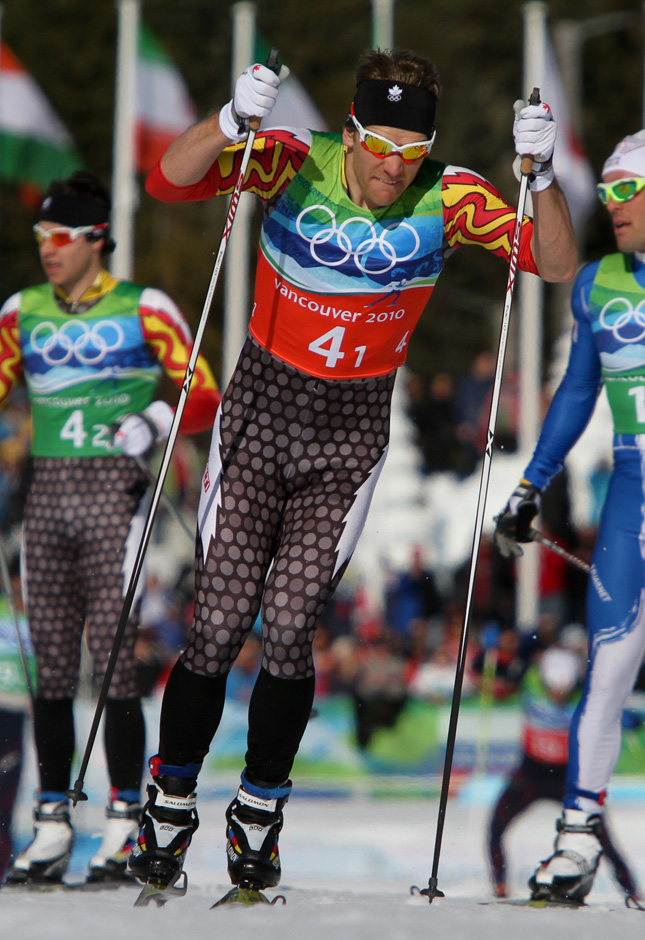
    Devon Kershaw after being tagged by his Canadian teammate Alex Harvey (l) in the freestyle team sprint at the 2010 Olympics in Vancouver, B.C. They went on to finish fourth.

    At his second Olympics in 2010, Kershaw finished fifth in the 50 k classic mass start for the best individual Olympic result for a Canadian male nordic skier. That record stood until Alex Harvey, who burst onto the World Cup scene in 2008, bested it with a fourth place in the 50 k classic at this year’s Olympics in PyeongChang, South Korea.

    Kershaw and Harvey also teamed up to place fourth in the freestyle team sprint at the 2010 Olympics.

    Kershaw’s first World Cup win came in a skate sprint during the 2011 Tour de Ski. He finished that Tour in seventh, and the next year, came back to place fourth overall in the 2012 Tour de Ski (TdS). Kershaw started all 12 editions of the TdS, a record he shares with France’s Jean-Marc Gaillard.

    Harvey scored his first individual World Cup podium in a 50 k classic in 2009 and won his first World Cup race (a 3.3 k freestyle prologue) at the TdS in 2012.

    “Then next thing you know, Alex and I are sharing a podium on some World Cups,” Kershaw reminisced. “Two Canadians on one podium in the World Cup, like, really? And then you win World Championships and I’m on the overall World Cup podium, and then next thing you know, Alex has been on the overall World Cup podium a few times and also now 50 k world champion. It’s crazy. It’s insane. From nothing. From no results. The journey has just been amazing. … I never would’ve thought Canada would, I mean, how could you? We had Pierre Harvey and that’s it in, like, a hundred years of international ass-kicking.”

    Kershaw credited his initial World Cup breakthrough as a 23-year-old skier in Borlänge to Dave Wood, Canada’s national-team coach at the time.

    “I came into a team with a coach that you could call at midnight. He’d do anything for you,” he said of Wood. “There was no way I would’ve stepped onto the podium in 2006 without him, and Mike Cavaliere, too, my first-year senior, Mike was my coach. We had staff that was just committed to the core for the cause and I’m incredibly grateful for that.”

    ‘A hell of a season’
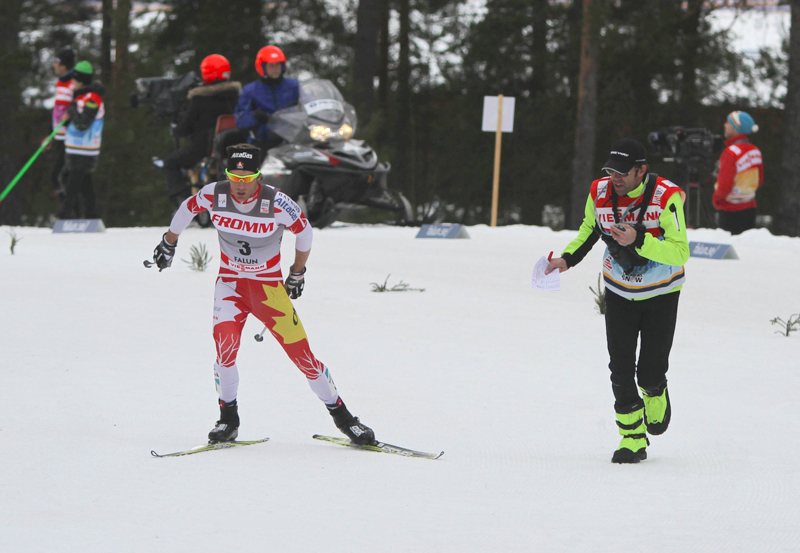
    Canadian head coach Justin Wadsworth (r) giving splits to Devon Kershaw at 2012 World Cup Finals in Falun, Sweden.

    Of his coaches, Kershaw gave special credit to Justin Wadsworth. A three-time U.S. Olympic cross-country skier who became Canada’s head coach in the spring of 2010, Wadsworth coached Kershaw for five seasons, and the two developed a close friendship.

    “When Justin came into the national team, the level of professionalism and excitement and freshness that he brought … I don’t know if you call it luck or happenstance or just the right place, right time,” Kershaw reflected, alluding to his 2011 World Championships gold with Harvey and his 2012 Overall and Distance World Cup podiums. “Justin’s best results as a coach were me and my best results as an athlete were when I was coached by Justin. Talk about an amazing relationship there.”

    “The main thing that I really appreciated with Devon, and I think he would say the same thing about me, is that we could be honest with each other and talk about hard things and enjoy the good times when we had them,” Wadsworth said on the phone last week. “… It’s cliche, but when I was talking to Devon the other day about his retirement, it’s not about the medals or the performances or whatever, it’s about your times together on the road.”

    One of Kershaw’s biggest moments came at those 2011 World Championships in Oslo, Norway, where he and Harvey beat out Norway’s Petter Northug and Ola Vigen Hattestad by 0.2 seconds for gold on the Norwegians’ home turf. They had done so after Kershaw lost one of his skis early in the race, Wadsworth pointed out.

    buy antabuse online, buy wellbutrin

    “His ski fully came off and he had to put it back on and get back into the race,” Wadsworth said. “Just the whole day was pretty incredible. That was a great, great opportunity for us, and the guys cashed in.”
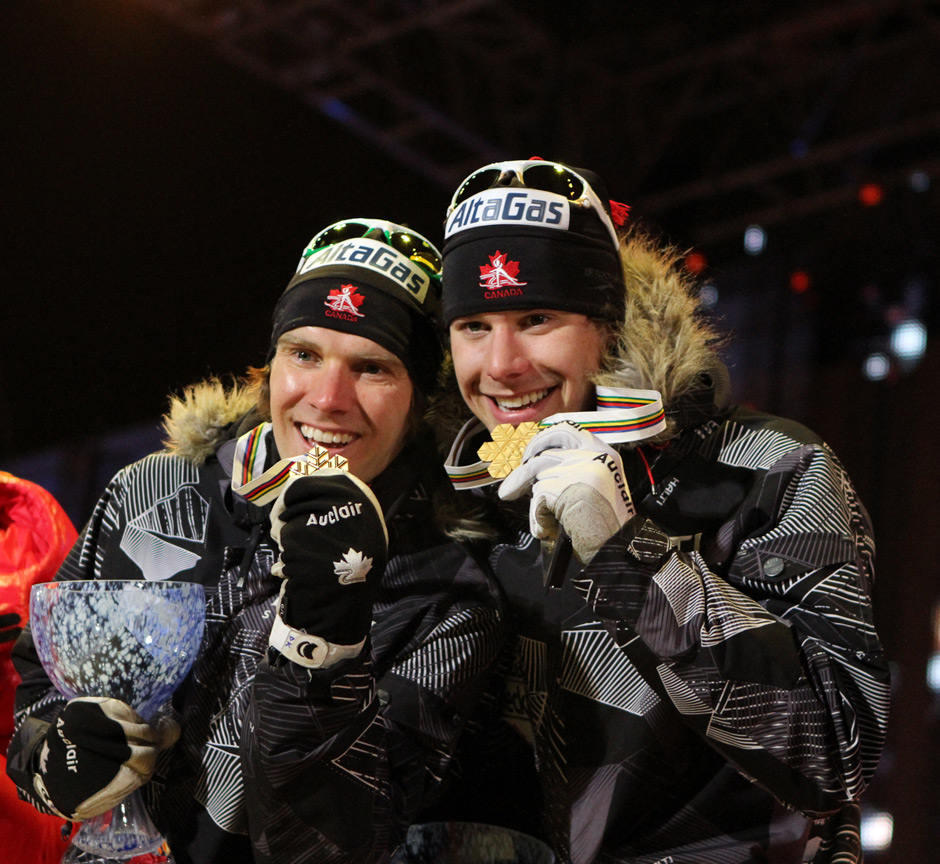
    Devon Kershaw (l) and Alex Harvey with their World Championship gold medals at the 2011 World Championships in Oslo, Norway.

    In a difficult-yet-strategic move to conserve for that race, Kershaw and Harvey both sat out the 15 k classic the day before.

    “With anybody else running the ship, there’s no way I would’ve trusted that [decision],” Kershaw said of Wadsworth’s call. “But I trusted Justin’s leadership and we went all-in, and the next thing you know we won World Championships. I mean, are you kidding me? How can you get a better start to the next quadrennial? And Justin as a first-year head coach of a national team, that’s gotta go down as maybe the best season ever for a first-year North American coach of a national-team program.”

    He and Wadsworth reiterated the crucial foundation that Wood had laid.

    “Dave Wood had done a really good job with the athletes leading into that period, mainly focused on building a big base and doing a lot of hours and also doing a lot of time at altitude,” Wadsworth explained. “And when I took over the position, I saw that both Alex and Devon were really primed and had a really good response rate to altitude, and all we had to do was fine tune a little bit of strength training and intensity. I was really excited to work with both those athletes and saw that they had a lot of potential.”

    For Kershaw, Wadsworth’s “American swagger … was magic for me,” he said. During the 2011/2012 season alone, he stood on the podium 10 times, with four top-three finishes in seven races at the 2012 Tour de Ski.

    “It was a hell of a season for me,” Kershaw said.

    ‘Best sand-digger ever’

    He went on to compete at two more World Championships and two more Olympics. This past season, Kershaw finished in the top 30 in eight World Cup distance races, with a top result of 19th in the 30 k skiathlon in Lillehammer, Norway. While struggling with lung issues, he finished 26th in the 50 k classic at the PyeongChang Olympics.
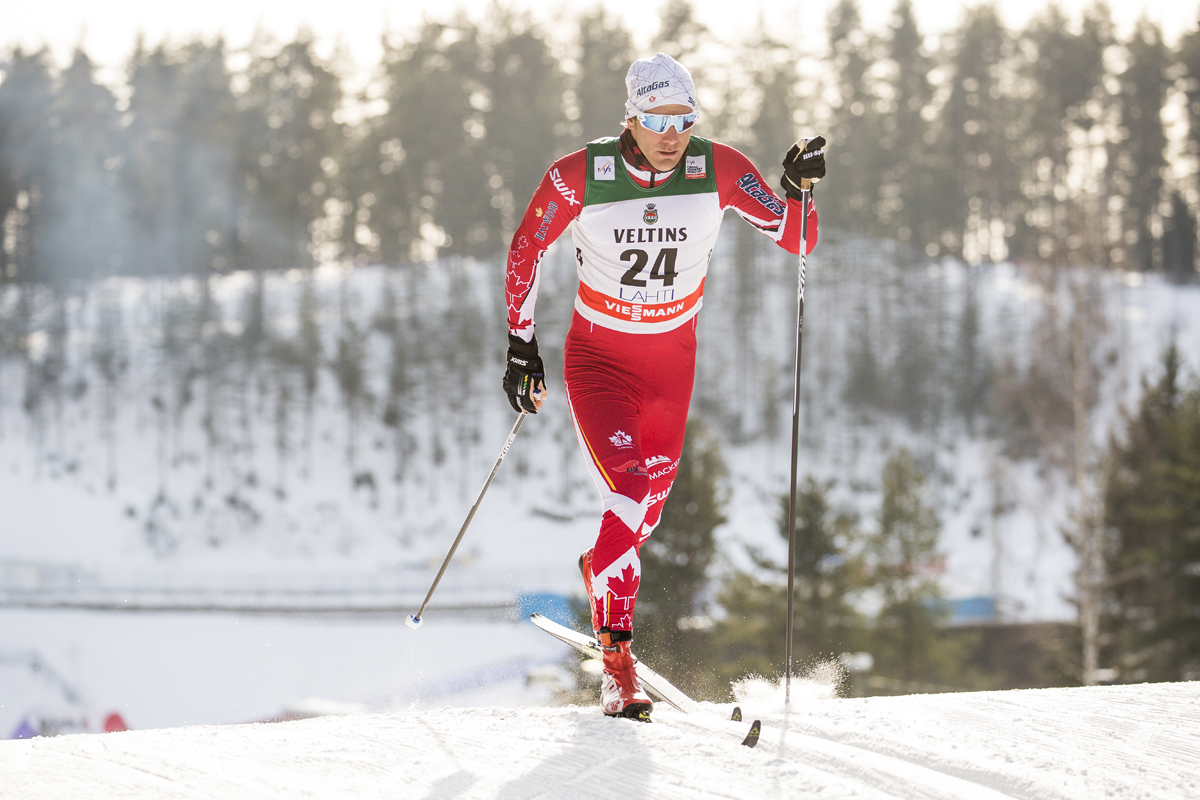
    Devon Kershaw racing to 25th in the World Cup 15 k classic this past March in Lahti, Finland. (Photo: Fischer/NordicFocus)

    Initially plagued by a lung infection in 2014, Kershaw discovered after a 2015 bout with an pneumonia and whooping cough that he has exercise-induced asthma.

    “We worked to get that under control and it was manageable but it never felt good like it felt prior to 2015,” Kershaw said his health over the last three seasons. “In PyeongChang, it was a calamity of bad luck. When we got there it was minus 20 [Celsius], and this makes me sound so soft, because I’m from northern Ontario so you’d think I’d know, but it was really cold. I did some intervals and it aggravated my lungs and it was super windy and dirty and a lot of sand blowing around, and that really flared up my asthma to the point that I was wheezing badly.”

    His breathing troubles also affected his sleeping and took most of the two-week Olympics to manage. At one point, he had a chest X-ray to make sure it wasn’t pneumonia.

    “It was sporting asthma,” he said. “… It took all the way to the 50 k to kind of get it 70 percent.”

    While he noted he was left wanting more from a performance standpoint at both his final Olympics and in his final season, Kershaw also acknowledged that he’s his biggest critic.

    “That’s been probably the biggest detriment to my entire career; I’m the best sand-digger ever,” he said. “I am disappointed in the sense that I work really hard and I train hard and I prepare well, and it didn’t go exactly as planned. … When you’ve competed in the top 10 for as many years as I have and on the podium, of course that becomes your bar that you hope to achieve, but at the same time … when you’re in the top 30 in the results page, you’re in the race at least. And I’m proud of the fact that in almost all classic races, not every, but most, I was in the top 30 and ‘in the race’.

    “Am I satisfied? In my life I’ll probably never be satisfied, that’s just how it goes,” he added with a laugh. “But am I somewhat proud of maintaining a fairly competitive level? Yeah, absolutely.”

    Wadsworth reflected that Kershaw was one of the best athletes he had ever seen, even “physiologically as good as Alex [Harvey]” at the peak of his career.
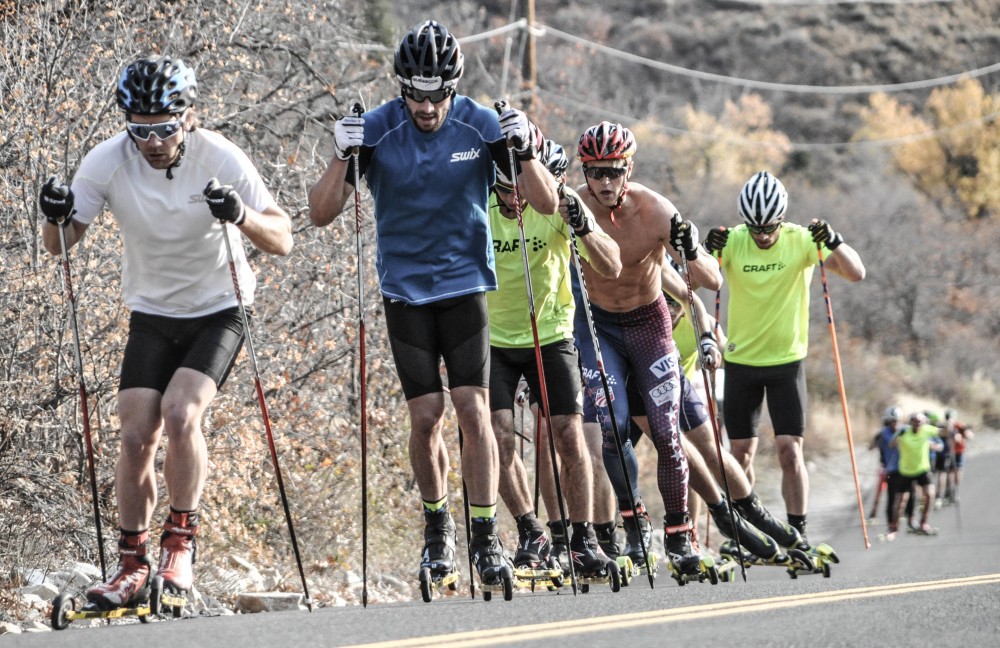
    Left to right: Canada’s Devon Kershaw leads his teammate Alex Harvey and U.S. Ski Team members Noah Hoffman, Erik Bjornsen and Simi Hamilton during a Level 3 interval skate session up Snake Creek Canyon in Midway, Utah, during their respective teams’ 2016 training camps in Park City, Utah. (Photo: Matt Whitcomb)

    “Devon’s a very intelligent person and sometimes he might’ve overthought things and lacked in confidence, and as a coach that’s really frustrating to see because you know how good they are physically,” Wadsworth said. “And when he was on mentally, too, in training, when he was at his very best, he had total confidence and could destroy anybody in any workout.”

    He recalled a hill-bounding workout with the Norwegian team in which Kershaw was literally leaps and bounds ahead of everybody else — even Martin Johnsrud Sundby and Russia’s Ilia Chernousov, who joined the training session.

    “He was just shelling everybody,” Wadsworth said. “So when Devon was at his best like that and mentally confident and relaxed, he was a real force of nature. Unfortunately that didn’t always translate into the racing season, but in 2012 he put it all together and had a tremendous year. … If he had the confidence the whole time, he would’ve been almost unbeatable, in my opinion, but it takes the whole package all the time, and he was among the greats there for a while.”

    ‘Younger, faster, better dog’

    And then there was Harvey, another one Kershaw’s of his best friends and longtime roommates.

    “I’ve spent more nights in a room with him than my wife or any girlfriend I’ve had,” Kershaw joked. “… He was eager to learn, he chased me for years, he was always a hard worker, too. He trained really hard, he believed in himself, and I still am in total awe of that. I’ve never met anybody as confident as him. It’s too bad that didn’t rub off on me, but that’s been great to be around.”

    He likened Harvey’s addition to the team as a family adopting a puppy.

    “You know when your parents get a puppy because your dog is 10 years old? He’s kind of slowing down a little bit and then you see that old dog get fired up and run again and jump around and play; that’s me,” Kershaw said. “And I’m so grateful that my owners got a younger, faster, better dog to hang out with because it was so inspiring.”

    Several times over the last few years, Kershaw has said that witnessing Harvey make Canadian history has been one of his biggest reasons for staying in the sport.

    “He, for sure, has kept me in this probably longer than I should’ve,” Kershaw said. “I just love traveling with him and seeing what he can accomplish and training with him and seeing that professionalism.

    “There’s no question he’s the best Canadian skier ever, that’s not even close,” he added. “… I just feel so honored that I got the chance to see it all happen, from his last-year junior when he did his first World Cups and then all the way though I’ve been with him.”
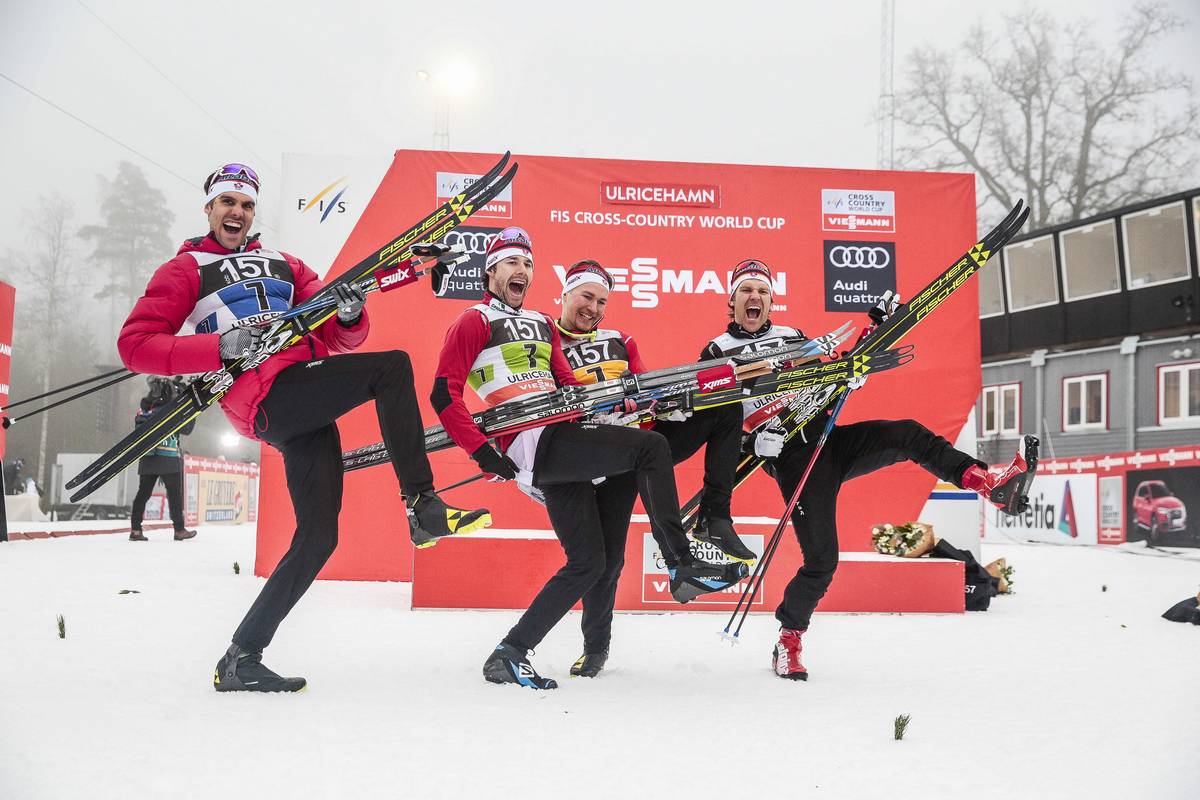
    The Canadian men’s relay after placing third in January 2017 in Ulricehamn, Sweden, for Canada’s best-ever World Cup result in the 4 x 7.5 k relay. From left to right: Lenny Valjas, Alex Harvey, Knute Johnsgaard, and Devon Kershaw. (Photo: Salomon/NordicFocus)

    In an email, Harvey explained that he and Kershaw first met in the fall of 2005 at a training camp at Sovereign Lake, British Columbia. Harvey was on the junior team and Kershaw a senior, but the whole team stayed at the same hotel.

    One morning, Kershaw accidentally took Harvey’s poles from the hotel. Harvey had to track him down on the ski trails to get them back.

    “That was the first time I talked to him and to me it’s just perfect because that’s so Devon,” Harvey wrote.

    Later that season on March 7, 2006, Kershaw made history with his first podium. That same day, Harvey won his first national title in the 10 k classic at Canada’s senior national championships as a 17-year-old junior.

    “I guess our friendship was meant to be before we even knew it!” Harvey wrote.

    When the two became teammates, Harvey immediately took to imitating Kershaw, both in training and racing.

    “He took me under his wings and he has a big part in the athlete I became today,” Harvey wrote, likening Kershaw to a big brother. “I feel very privileged to have spent all that time with him. I think we became such close friends because we are both very driven athletes and we don’t accept any compromise. We’re both huge fans of our sport, ‘nor-dorks’, so we also love to talk about everything from altitude training to who is seeing who on Tour.”

    Kershaw’s decision to retire didn’t surprise Harvey.

    “I think it’s a mix of a few things,” Harvey wrote. “… Probably this biggest reason, he has a little girl at home. I know this winter was extremely hard on him. Not seeing Asta Isabel was pure torture, I think I would have done the exact same if I was him.

    “I will miss a lot of things about Devon,” he added. “He’s always there to give good advice about everything and anything. He knows so much about all that is going on in the world, probably the most well-read person I know. He’s kinda my news source. I’m still amazed by how indecisive one can be. This brought a lot of laughter throughout the years. I have so many memories from the last 10 years with him. Seeing him dominate the World in 2012 was just amazing but also very eye-opening for me. He raised the bar for all North American skiers that year and I’m very thankful for it.

    “We both lived great emotions in high accomplishments and huge disappointments. I’d like to think I helped him get through these upsets and I can say he definitively helped me get through mine. A page turns in the life of Devon Kershaw but knowing the man, I’m not worried about what’s gonna come next.”

    Without Kershaw, Killick, Cockney, and Johnsgaard on the men’s team, Harvey acknowledged that next winter will be “very different” for him on the World Cup.

    “All these guys are calling it a career and I’m super proud of what all my friends accomplished,” he wrote. “I’m excited to try to help the next generation step it up and fill the shoes of the previous generation. … Also, after 10 years on Tour I’ve made some friends on other teams so I’m not too worried. I’m just excited to step into a bit of a mentor role for our next generation.”

    Onto the Next

    As for Kershaw, he didn’t rule out coaching future generations of Canadian skiers, but he said he was focused on getting an education first. In just over a week, he’ll start a course that requires 20 hours of classes a week — all in Norwegian — for what he anticipates will take six months. The course is essentially an advanced version of Norwegian as a second language, and foreigners must pass it to pursue a degree in Norway.

    After that, Kershaw plans to apply to universities “and hopefully study forever,” he said with a laugh. “Not forever, but study, and I want to stay involved in skiing in any way I can and I want to help the next generation get better.
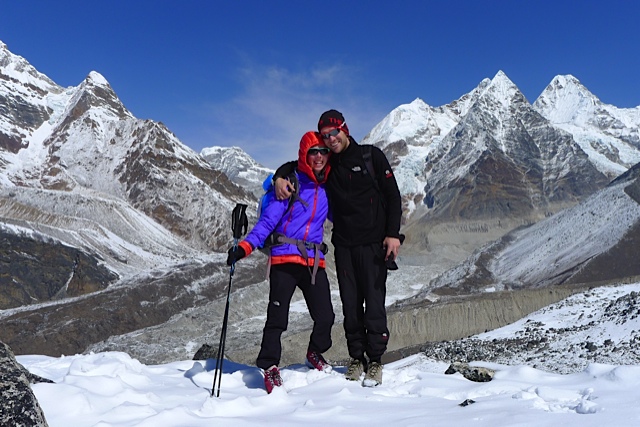
    Kristin Størmer Steira (l) and Devon Kershaw during a day hike on one of their acclimatization days. The couple got engaged in 2014 after summiting Mera Peak during a three-week trek in Nepal’s Himalayas. (Photo: Devon Kershaw)

    “First things first, I have to get my Norwegian at a level where I can sit through a lecture and write an essay at a decently good level, at least good enough that my wife doesn’t have to rewrite it, she can just correct it,” he explained.

    Asked what he’d like to study, Kershaw said medicine, specifically orthopedic surgery, has always intrigued him. (As a junior skier, Kershaw took undergraduate classes at the University of Calgary until 2006, but those credits have since expired.)

    “But now I’m 35 and I’m going to have to do all of this in my third language,” he acknowledged. “So for now, I’d say that that’s still my first choice and I’m exploring what it would take.”

    If not medicine, he’d like to pursue a degree in “some kind of science physiology, and then in a totally shifted way, if I have a panic attack and be like, ‘Science is too hard after ski racing forever,’ then I am interested in economics and economic theory and business to some degree…”

    Regardless of which path he choses, he’ll be doing it in Norway, Kershaw said.

    “I don’t mind the challenge. … It’s intimidating in a way, but it’s also really exciting,” he said. “Kristin’s family [who lives in Lillehammer] is just so fantastic and to see how happy my daughter is here, to have her family, to have family around her and everything for the short term, and I hope to be educated in Norway.”

    Asked if he’ll jump into any ski races this season, Kershaw was quick to respond, “No.” But he will continue skiing. The beauty of the sport and the struggle, as he put it, is what’s kept him in it so long.

    “Imagine just having a singleness, a purpose, a goal that’s just there in your face and then you get to wake up every day and do the things you absolutely love to do,” he said. “… I adore cross-country skiing. I just think it’s such a peaceful, beautiful exercise, and the technique and the flow of it all. … You’re just skiing through the woods peacefully, gliding over snow, over all the terrain you can cover. It’s a beautiful, zen-like endeavor, and I think that’s what’s kept me in it this long. And the people, the Canadian ski community, the world ski community, really. I’ve met so many inspiring people and beautiful people and worked with a lot of absolute experts and I’ve had brilliant teammates and brilliant coaches.”

    And because of skiing, he met his wife and started a family in Norway.

    “I have a daughter with a woman that I love and respect and am in total awe of every day of my life and without ski racing there’s no way that would’ve ever come to fruition,” he said. “There’s the biggest gift right there, as cliche and Hallmark as that sounds, it’s true.”

  • In First Full Season, Canada’s Mark Rajack to Race for Trinidad and Tobago at Worlds

    In First Full Season, Canada’s Mark Rajack to Race for Trinidad and Tobago at Worlds

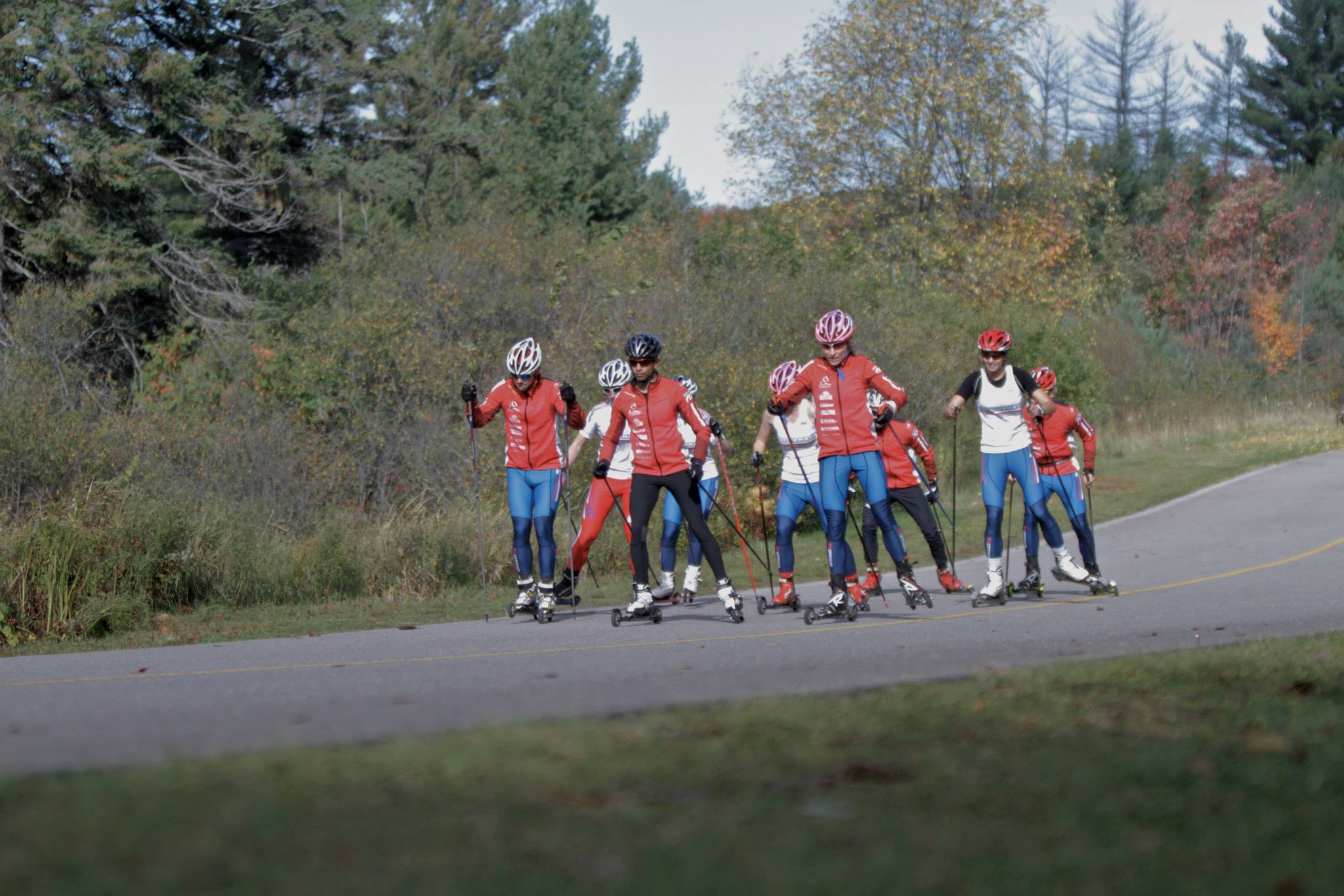
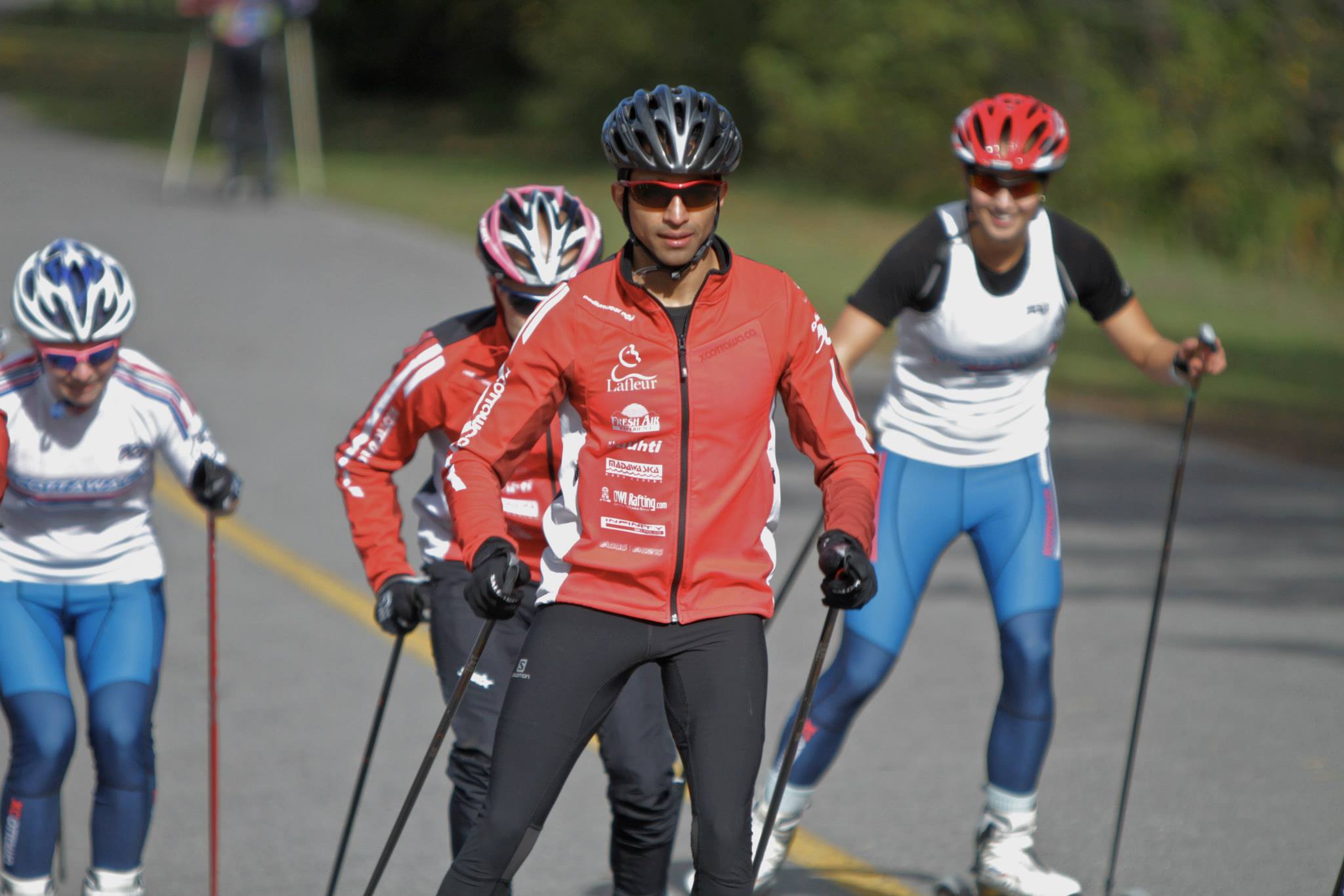
    Mark Rajack Rollerskiing with XC Ottawa; photo credit: Dave McMahon, XC Zone.
    Mark Rajack rollerskiing with XC Ottawa on Oct. 5. (Photo:Dave McMahon/XC Zone)

    OTTAWA, Ontario — Mark Rajack, a dual citizen of Canada and Trinidad and Tobago, was first introduced to nordic skiing two years ago in 2012, but in the time since, he’s not only learned to ski and compete in his new sport, but he’s also set his sights higher than many will in their skiing careers.

    Rajack, 33, lived in Trinidad and Tobago until the age of 6, at which point his parents were drawn to Ottawa for a job opportunity. From the time of his move, it would still be almost three decades until he would discover cross-country skiing.

    “You don’t come from a tropical country with a background in winter sport,” said Rajack, mostly a recreational cyclist before skiing. “I didn’t know that Gatineau Park [Ottawa’s largest ski-trail network and outdoor destination] existed until I started working at the local bike-and-ski shop.”

    Discovering Skiing

    I started [skiing] the year I turned 32 and it was an accident,” he explained in an interview at Carleton University on Sept. 3.

    He wanted to learn how to fix bicycles so he got a job working at a bike shop. In the process, he got to know some ski racers who worked part time at the same place. 

    “A lot of the bike shops here are ski shops in the winter, so it was through the racers working in that ski shop and through their community orientation that they managed to bring me on and just teach me to ski from scratch,” he said.

    Rajack’s initiation was not exactly a cake walk.

    It was horrible,” he recalled. “I had no glide. It was too cold. I got the wax wrong and with no technique it was just a struggle from the very start to the very end. And it was because I was expressing my struggles in skiing that a member of XC Ottawa said, ‘You know what, I’ll take you out and I’ll teach you to ski properly on my Zone-1 [easy] days.’ ”

    That skier was 23-year-old Andre Marchand, a longtime XC Ottawa skier and now Rajack’s good friend.

    I remember Mark picking up the technique instructions I was giving him pretty quickly,” he wrote in an online message. “It was impressive, and then after about 40 min of some pretty good technique skiing from a newbie, he just started falling over here and there, on downhills but also on flats… Now he’s regularly skiing for 2 or 3 hours at a time with Team XC Ottawa and he has no problems doing that!”

    Looking back, Rajack stressed the importance of the local ski community and the type of person it takes to get a newcomer excited about a sport and its culture.

    “It takes people who are fully inclusive and I’ve found that in the ski community we have here in Ottawa-Gatineau,” he said.

    Rollerskiing with XC Ottawa; photo credit: Dave McMahon, XC Zone.
    Gatineau Parkway rollerskiing with XC Ottawa. (Photo: Dave McMahon/XC Zone)

    Setting Goals

    After getting on snow a few more times his first winter, the season of 2012/2013, Mark decided he wanted to venture deeper into the world of his newfound sport.

    I went to a race in Val Morin [in Laurentides, Quebec] with Andre just to see what it was about,” he said. “When I went to the race, his dad took me to the wax tent. His dad explained how races operate, I saw the culture behind the race, I saw the environment and I knew instantly that it was something that I would enjoy. It was then that I decided that I would try to get into racing. That would be the long-term goal.”

    Just 1 1/2 years down the line, Rajack is a member of the Trinidad and Tobago National Ski Team and aiming for 2015 World Championships in Falun, Sweden, and 2018 Winter Olympics in Pyeongchang, South Korea.

    One-and-a-half years down the line, Rajack is a member of the Trinidad and Tobago National Ski Team and aiming for 2015 World Championships in Falun, Sweden, and 2018 Winter Olympics in Pyeongchang, South Korea.

    “It took about three-to-four months before the idea entered my head that I had the option to ski for Trinidad and Tobago and then I started to look into it,” he said. “It was only through a fluke joke. Some of the skiers I was with were critiquing some of the techniques of the non-snow countries at the [2013] World Ski Championships and only then did I think, ‘You know what? That could be me!’ ”

    It just so happened that Trinidad and Tobago has a ski association, already linked to the International Ski Foundation (FIS), the president of which is a skier who lives in Calgary. Once Rajack made that connection, it was a matter of applying for his FIS license. With a mountain of ski technique and experience to climb, he set off to join a team.

    Naturally, he wanted to join Marchand, so he applied at XC Ottawa. It didn’t matter that he had no skiing or endurance sport background, “they were still able to justify bringing me on because I fit their mandate of national and international competition,” Rajack explained.

    With the pieces starting to fall into place, he jumped headfirst into the world of nordic racing and started to compete last February.

    “The premise of last year [2014] was learn to ski and race locally,” he said.

    He started with Eastern Canadian Championships in Cantley, Quebec, where he placed 53rd in the 15 k freestyle and 50th in the 20 k classic mass start — last in both events.

    “Next year’s focus is a different one,” he said. “Next year, there’s a focus on more NorAms than local races and I’m aiming to break the 300 FIS-point limit,” which is the FIS standard for Olympic qualification.“I always get that Jamaican bob-sled team reference,” he said.

    The other big focus for him this season is World Championships.

    “Me being the only skier for Trinidad and Tobago competing at an international level, I basically by default have qualified for Falun,” he said. World Champs differs from a standard World Cup, which has a tougher points criteria.

    “But when I get [to Falun] I have to qualify for the distance race,” he added. “It’s likely that people in my situation will only get to race the 10k free and then the classic-sprint qualifier.”

    Getting to race at least two races at World Championships will provide Rajack with a wealth of experience, and he was excited for the opportunity.

    “Without a doubt I’m very much looking forward to it,” he said.

    He’ll have a support team there to help him with waxing and other preparations, including coach Mike Vieira and Colin Abbott, a competitive skier with the Yukon Elite Squad. Rajack estimated the whole trip will cost him around $850 dollars, with complimentary accommodations, and he explained Viera and Abbott are paying their own way to support him.

    Abbott spent three years with XC Ottawa before leaving the city to train full time for another three years.

    “I kept close ties with XCOttawa and heard about Mark joining the team long before I met him,” Abbott wrote in an email. “I returned to Ottawa this year to complete my studies at Carleton University and met him in September this year. From what I have seen of him so far he is motivated, realistic and open to critical feedback. I believe he has the ability to make the 300 FIS point cutoff to qualify for the next Olympics in Korea.

    “As far as international success, he will probably never be a medal contender on the World Cup,” he added. “His technique is his biggest weakness right now and he knows it. He’s put in a lot of time this summer focusing on becoming more efficient.” 

    The Sacrifice

    With a new focus on racing, Rajack finds training taking up more and more of his time.

    “I’ve put my career on the back grill for the moment,” he said. “As a teacher with the Ottawa-Carleton district school board, I very well could have made choices that would’ve led to me being a full-time teacher at this point. I’ve made the decision to continue substitute teaching to focus on my skiing for the next four years.”

    In terms of finances, too, I was at one point saving for a downpayment on a house,” he said. “Potential house [or] potential Olympics.”

    In a place like Canada, where high-performance skiing does not hold the same clout that it does in other countries, there’s always the pressure, both societal and financial, to follow the path of least resistance: school, job, house.

    “I think it takes a bit of bravery to not lead that scripted life when there’s a lot of pressure to conform,” Rajack said.

    “I think it takes a bit of bravery to not lead that scripted life when there’s a lot of pressure to conform.” — Mark Rajack, Canadian dual citizen and Trinidad and Tobago’s lone national cross-country ski team member

    But he’s willing to make the sacrifice — even without financial assistance from the Trinidad and Tobago government.

    “At this time, the government is unable to provide support,” he said. “And I understand the challenge of understanding what someone like me is trying to do, especially that I’m, right now, off the island.”

    Unfortunately, that puts him in a sort of no-man’s-land for funding. Without the Trinidad and Tobago or the Canadian governments helping him out, and with the limited workload that he is able to fit in around training, finding sponsors will be one of the many challenges for Rajack in the coming months.

    What does he see as key in his preparations for international competition?

    “It just comes down to trusting people who have done this their whole lives, listening to them and believing that, if I follow what they do and if I keep my effort and dedication up, I’ll be well under that 300 FIS points standard by the time the Olympics roll around,” Rajack said.

    The Greater Good

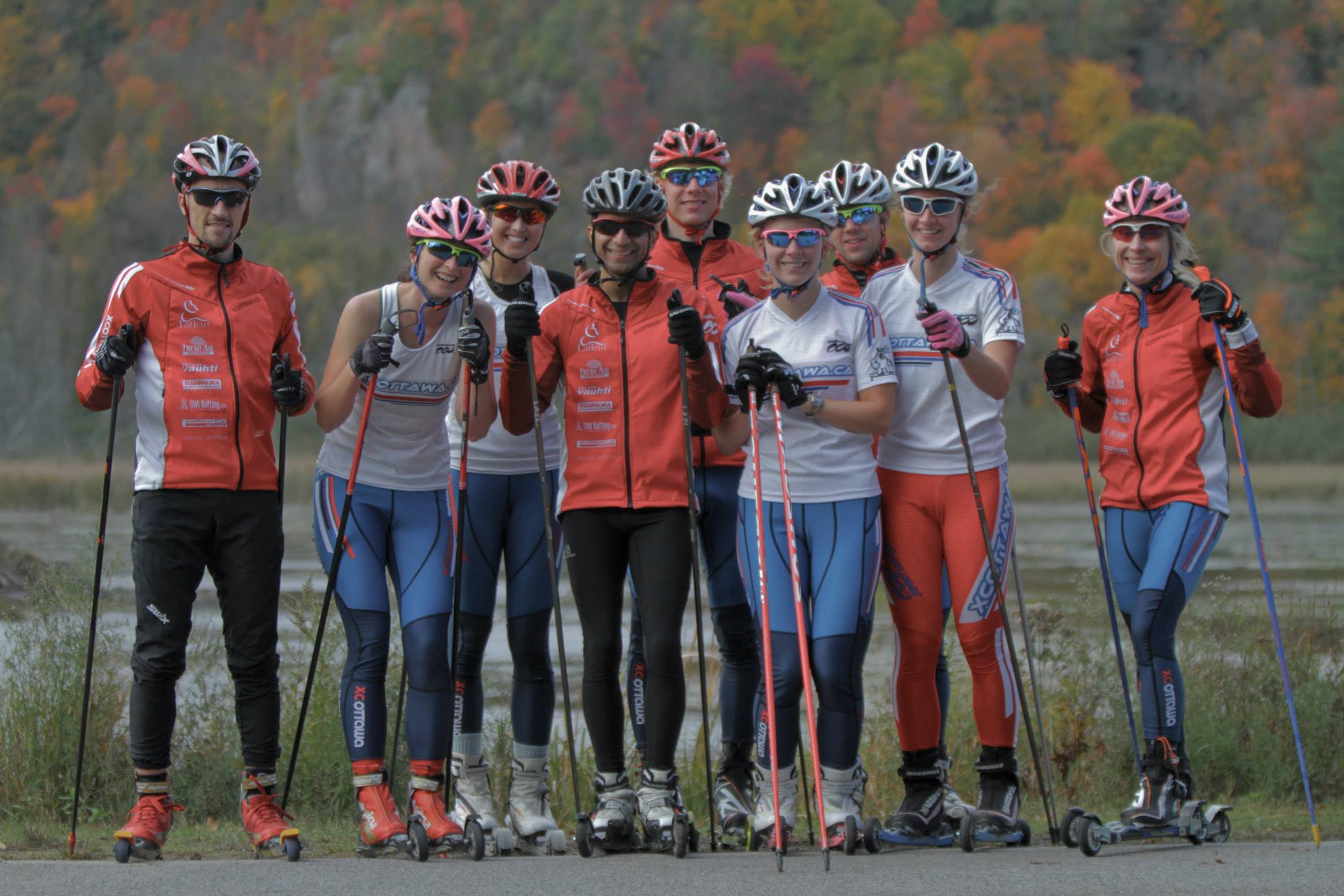
    XC Ottawa; photo credit: Dave McMahon, XC Zone.
    XC Ottawa skiers in early October, including Mark Rajack (front c) and Andre Marchand (to Rajack’s right). (Photo: Dave McMahon/XC Zone)

    At the end of the day, it’s not all about the Olympics for Rajack. His dream is to help grow the sport that has already given so much to him and, in doing so, help those new to winter climates who struggle with getting used to the colder season just as he did when he moved to Canada.

    “There’s no way for me to be living in Trinidad and training to ski but if I could wish anything, ultimately, it is that we develop a rollerski team in Trinidad and Tobago,” he said. “In the same way that you have North American athletes who play tennis and golf who go down south to do whatever golf camps and tennis camps in the states, well the reverse can be true. We’ll take those rollerskiers and bring them up to [The Forêt] Montmorency or Nakkertok and get them time on snow and then put them in competition.

    “I don’t know if that will ever happen, but there’s always the dream and then there’s the reality — that would be the dream,” he continued. “The reality is that it will probably just be members of the Trinidad and Tobago diaspora [who become involved in skiing], which is spread right across the world. You’ve got Trinidadians living in every corner of the world and many of them, like me, live in northern climates and, like myself at one point, the winter is a significant negative impact on their quality of life.”

    “If, through my efforts, I could help a Trinidad and Tobago kid get to the World Cup in a way I would feel that I had made the World Cup as well.”

  • Nighbor Joins Lakers’ Nordic Coaching Staff

    Dave Nighbor Nipissing University
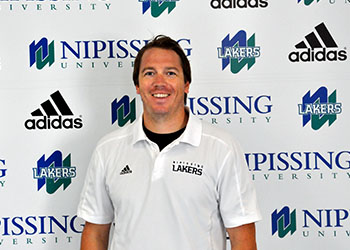
    Nipissing’s new assistant coach Dave Nighbor

    (Press release)

    The Nipissing Lakers Nordic ski team has received a big boost with the addition of a new assistant coach who will join the team for the 2014-15 season.

    Dave Nighbor will join the Lakers coaching staff and offer valuable input, feedback and support to both head coach Toivo Koivukoski as well as all the student-athletes.

    Nighbor said there are a few reasons he decided to step into this position and he’s already excited to get started.

    “It is an exciting time for Nordic skiing at Nipissing because we have tremendous talent on campus. Toivo has done an excellent job building a community and pulling in strong athletes from around the country,” Nighbor said. “Once I had a look at the great deal of potential on the team, I was honoured to be given the opportunity to work with them.”

    Nighbor is an accomplished athlete in his own right, having completed a successful career representing Canada on an international stage a number of times.

    Raised in North Bay, Nighbor attended Chippewa High School and skied for Team Canada in eight world championships. While building his business, he earned a Bachelor of Design York University with formal training in fine arts, graphic design, and interactive media.

    Nighbor then graduated with Magna Cum Laude, co-chaired his grad show, and received national recognition from the Graphic Designers of Canada.

    After graduating, he returned home to North Bay to give back to the community that supported him during his ski career. He maintains involvement with skiing through volunteering at North Bay Ski Club and now joining the Lakers as an assistant coach.

    “I was fortunate over my career to have trained with the greatest Nordic ski racers that Canada has ever seen. Olympic Champion Chandra Crawford, World Champion Devon Kershaw, and World Champion Alex Harvey were close teammates of mine and I got to watch them go from small town kids to international stars,” Nighbor said of his career. “I’ve seen what it takes to be great in the sport and can help the Lakers focus on the right things to be successful athletes. Many athletes have the talent to be amazing and I am here to help them improve their technique and train effectively.”

    Koivukoski said he could go on and on about what a positive influence Nighbor will be to the team, but he summed it up accurately.

    “Signing Dave to join on with Nipissing Nordic as assistant coach is a huge boost for the team. He has had an accomplished career as a ski racer, skiing full time from a young age and representing Canada at World Championships, with many National Championship titles to his name,” Koivukoski explained. “For our athletes to be able to work with a coach with this level of experience as an athlete will give them confidence as they aim to take that next step in performance, aiming to qualify for World Championships and earn medals at National and OUA Championships.”

    Something Nighbor believes in is that hard work leads to success, in any field, sport or job and that’s one of the things he wants to pass on to the Lakers.

    “The most important thing I have learned over my career is that success doesn’t happen by mistake. It takes thousands of hours of practice and sweat to be great at anything. Someone may possess talent but they can never meet their full potential without decades of hard work, guidance, and support,” he said.

    There is some familiarity between Nighbor and the Lakers, as well as Koivukoski, so the transition shouldn’t be too difficult for anyone when the team begins training for the season.

    That’s a positive for everyone involved in Lakers Nordic skiing.

    “Nighbor has been working with our athletes over the past seven years through training camps, so we know that the quality of communication and team chemistry will be good. It has been a treat to work with him as he draws on a solid grasp of ski technique and physical training, along with his skills as a programmer and graphic designer,” Koivukoski said. “Having him working with the team will add depth to the level of support that we can provide our skiers as we further professionalize our program.”

    Nighbor said he was in the same position these athletes are in a few years ago and he received help from the community, which is exactly why he wants to give back and help out.

    No one can be successful alone and Nighbor believes in giving back where and when he’s able to.

    “There is a great deal of value giving back to North Bay athletes. I feel a great connection with every athlete I work with in North Bay because I went through similar experiences and challenges. My parents, Martin and Dawna Nighbor, learned the sport so they could coach and support my sisters and I,” he said. “In 2007, I began putting on annual training camps for North Bay athletes with the attempt of helping any local athlete that had dreams of skiing on the international stage. If they dream it, I want to help them achieve it.”
    MORE ABOUT DAVE NIGHBOR
    He graduated from Chippewa Secondary School in 2003 and went on to ski in 8 World Championships, acted as an alternate at the 2006 Winter Olympics in Torino, and won 13 Canadian ski championships. Nighbor recently moved back to North Bay with his fiancee and Nipissing alumna, Jade Doyle. They said they are ecstatic to return to the community with plans to elevate sport, support the arts, and raise our family. In addition to coaching for the Lakers, Nighbor is volunteering with the North Bay Nordic racing team alongside Coach Sera Tempio. Most of his time is dedicated to the relocation of his design company, 9 Lives Design, to North Bay and the latest project with Antoine Mountain’s website and creative efforts.


    Read the Article on Nipissing Lakers Website

  • Widmer, Dupont Dominate Qualifier & Heats to Take NorAm Classic Sprint

    Widmer, Dupont Dominate Qualifier & Heats to Take NorAm Classic Sprint

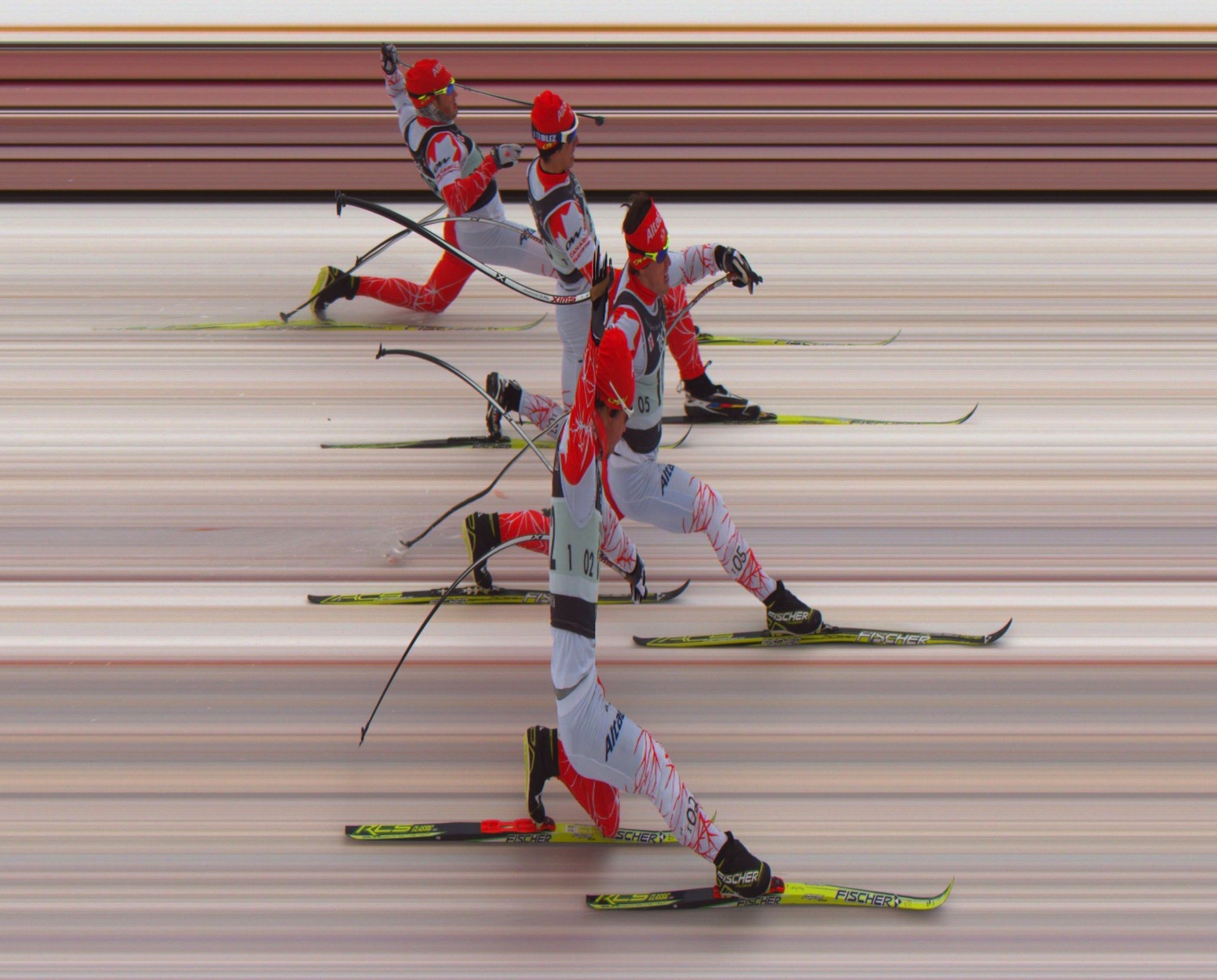
    Michael Somppi (second closest) edges three Alberta World Cup Academy teammates in a lunge to the line of Saturday’s NorAm classic sprint semifinal in Thunder Bay, Ontario. Jesse Cockney (closest) took second, Graham Nishikawa (third closest) was third, and Brent McMurtry was fourth by 0.06 seconds. (Zone4 photo)

    The focus at the NorAm World Junior/U23 Trials hosted by Lappe Nordic shifted to classic sprinting today with a shift in the top of the podiums to match. The pressure was rising for athletes chasing a limited number of spots on the U23 and World Junior races in Liberec, Czech Republic, while older athletes tried to accumulate points toward a trip to the World Championships in Val di Fiemme.

    Phil Widmer of the Alberta World Cup Academy (AWCA) won the men’s qualifier and each of his heats with only teammate Graeme Killick getting close to beating him in the quarterfinal. Widmer described the course and his plan in an email: “With the first half of the race being very easy and the second half being very hard, it meant the race really started at the halfway point. I wanted to be up in the top 3 starting at the midway point and be ready to fight to the finish.”

    The second semifinal had four skiers finish within 0.06 seconds. Hometown boy Michael Somppi (AWCA), who won the fastest heat of the day, finished in 3:28.81, just edging teammate Jess Cockney by 0.03 seconds for both to advance to the final. Graham Nishikawa (AWCA) tied Cockney on time, 0.03 seconds ahead of fourth-place finisher Brent McMurtry (AWCA). After a finish that tight, it was suitable that both Nishikawa and McMurtry advanced as lucky losers, putting five AWCA athletes in the A-final.

    In the final, Somppi started well and led the group into the long climb. “Unfortunately my legs didn’t have much left and I struggled up the climb,” he wrote. “Phil skied the final tactically very well. He was right behind me starting the climb and took the lead when I faltered. He continued to ski strong to the line.”

    Widmer won the 1.4-kilometer final with a clear lead in 32:29.7. Patrick Stewart-Jones (AWCA) finished second 1.6 seconds behind.

    “The final was a hard fight,” Stewart-Jones wrote.  “I didn’t have a great start and was always skiing in the outside track trying to move up. In the end Phil was just too strong today, but I’m really happy with my second place!”

    Cockney, who was ninth in the Canmore World Cup sprint in December, settled for third, just 0.13 seconds behind Stewart-Jones.

    Brian McKeever won the B-final in 3:34.81, well ahead of Killick. Junior Raphael Couturier of the Pierre-Harvey Training Centre (CNEPH) was fifth after moving up to the senior race once he knew Thursday’s skiathlon guaranteed his spot in Liberec.

    Couturier saw this as a learning opportunity. “It’s a really good opportunity to improve my strategies and to have a better idea of what WJ will look like,” he wrote.

    In the Junior Men’s field, Alexis Turgeon (CNEPH) emulated Widmer, winning the qualifier and then all of his heats. In the final, he finished in 3:36.73, more than a second ahead of Ezekial Williams (Nakkertok) and another second ahead of Dominique Moncion-Groulx (Nakkertok).

    In the women’s 1.2 k sprint, Andrea Dupont (Rocky Mountain Racers) led the way, winning all her heats after Emily Nishikawa (AWCA) won the qualifier.  Alysson Marshall (AWCA) was second in the A-final, finishing 0.16 seconds behind Dupont’s time of 3:18.10 and almost four seconds in front of third place Nishikawa.

    “I was pleasantly surprised to see that I had won the qualifier, and the heats went fairly well,” Nishikawa wrote in an email. “I struggled a bit with kick on the climb, but overall I felt pretty good.”

    “In the final, Alysson and I were still together coming over the top of the hill,” Dupont wrote. “She was able to get a bit of a draft in a dip before the finishing double pole stretch. She had more momentum than myself coming through the final corner to the double pole finish. So, I had a bit of ground to make up in the finishing stretch. Fortunately double poling is a strength for me and I was able to recover enough and out lunge her at the line.”

    “I felt pretty good today,” Marshall wrote. “I had a rough start to the season and this was one of the first races that I’ve felt my normal speed come back. It was disappointing to miss the win in a lunge, but I was happy to feel strong again. I managed to stay out of trouble in the quarters and semis and made it into the final. In the final I was mid-pack at the bottom of the course but jumped in a lane behind Andrea and stuck with her up the climb. We got a bit of a gap over the other girls and had a double pole battle to the finish.”

    Kate Brennan (AWCA) was fourth, over a second ahead of teammate Marlis Kromm who earned a trip to U23’s with her effort. Local favourite Erin Tribe (NDC Thunder Bay) rounded out the A-final in sixth.

    In the Junior Women’s event, Maya MacIsaac-Jones (RMR), following a trend for the day, won the qualifier and all her heats. Katherine Stewart-Jones (Nakkertok) was second, two seconds behind MacIsaac-Jones’ winning time of 3:22.28.  Alannah MacLean (NDC Thunder Bay) grabbed the final podium place for local pride, ahead of Cendrine Browne (CNEPH), Dahria Beatty (AWCA), and Frederique Vezina (CNEPH).

    Full results are at zone4.ca, along with heat brackets.

  • Elite Team Preview: NDC Thunder Bay

    Elite Team Preview: NDC Thunder Bay

    A look at the National Development Centre (NDC) Thunder Bay 2012/2013 team (Courtesy photo).

    This is the first preview in a quick-and-dirty series about Canadian elite teams. We asked coaches to send their 2012/2013 rosters and tell us what’s new for the coming season. We will be publishing additional reports over the next few weeks. Teams are presented in no particular order.

    Team: National Development Centre Thunder Bay

    Coaches: Mark Doble (head coach); Victor Wiltmann (assistant)

    Senior roster: Andy Shields, Dudley Coulter, Bob Thompson, Jimmy Gunka, Jordan Cascagnette;

    Erin Tribe, Andrea Lee

    Who’s new: Thompson, and according to coach Doble, he’s fitting right in.

    “After having spent the previous three seasons in Canmore as a member of the [Alberta World Cup] Academy, Bob’s personal approach to ski racing is very consistent with the professional ski culture that exists in Canmore,” Doble wrote in an email. “As a result, he brings an added level of maturity and motivation which really helps to balance out the equally important mentality to enjoy every minute of what we do. “

    Who’s missing: Michael Somppi, Chris Hamilton and Harry Seaton.

    Somppi and Hamilton joined the World Cup Academy this year, which was a good move in terms of new training partners and competition for the coming season, Doble wrote. Seaton’s going to focus more on school and possibly race at the university level.

    Erin Tribe (NDC Thunder Bay) competing at the Sovereign Lake NorAm near Silver Star, British Columbia, on Dec. 10. Tribe placed 18th in the classic sprint, and went on to record several NorAm top 10’s throughout the season. (Jesse Winter Photography/jessewinterphotography.com)

    Top results last season: Lee, 21, won the 15 k freestyle mass start at a NorAm in Mont Orford, Quebec, and finished 10th in the 30 k classic mass start at Canadian nationals. She and her teammate, Tribe, tallied several NorAm top 10s, and Tribe went on to place seventh, eighth and ninth at nationals in the skate sprint, 5 k classic and 30 k, respectively.

    Hamilton had three top-50 results at U23 World Championships in Turkey, and Somppi – who’s also on the Canadian Senior Development Team – placed third at nationals in the 10 k classic and notched several NorAm podiums throughout the season.

    Coach’s comment: When former head coach Eric Bailey announced he was leaving the Ontario team after eight years, Thunder Bay knew changes were coming. They got two new coaches, Doble from Team Hardwood and Wiltmann from the North Bay Nordic Ski Club, and Doble wrote that the spring and early summer went well.

    “With me being new to the team, the athletes were forced to make a transition to a new coach and a new program,” he wrote. “As such, I felt that it was important to make this transition as easy as possible for the athletes, while, at the same time, continuing to do things in the way that I wanted and in the ways that I felt were the best for each athlete.”

    According to Doble, May was hectic with Wiltmann not officially starting until the end of April, but Doble used his familiarity with Bailey’s training methods to ease the process.

    “I also wanted to implement certain things that I knew were going to be a big change, and it was quite a balancing act to introduce these things in the right amounts and in the right way,” he wrote. “Establishing good communication was very important for this, which I feel has gone really well.”

    For example, Gunka, who first admitted he was suffering from overtraining symptoms in January, is back to full-time training and using his experiences to move forward, Doble explained.

    “We are in a place now where we have a very good idea of what each individual athlete needs, which has lead to some pretty drastic differences in training programs in certain cases. Every athlete has their own weaknesses, which constantly change as we train them. The fun part is to find what those weaknesses are, and then identify a strategy to remove that limitation.”

    With Tribe, 23, as the oldest member of the seven-person squad, Doble found the team’s youth exciting.

    “Two of our big goals for this year are to get as many people on the U23 Championships team as possible, and also capitalize on the National group spots for the Canadian World Cups,” he wrote. “I think these two goals are very motivating for this age group, and so it is awesome to work with really motivated athletes that are willing to take some risks and yet, at the same time, be very smart about the way they are preparing.”

  • New Southern Ontario Training Centre Seeks Head Coach

    The Southern Ontario Training Centre (SOTC) is seeking to hire a full-time Head Coach who possess the credentials, skills, drive, leadership qualities, and passion to develop, grow and lead a high performance cross country ski training centre in southern Ontario.

    The successful candidate will work out of the SOTC office, hosted by the Hardwood Hills Nordic Development Centre (HHNDC) and Hardwood Ski & Bike, one of Ontario’s finest cross country ski facilities, located just outside the cities of Barrie and Orillia, Ontario.

    General Responsibilities:

    SOTC’s Head Coach will be accountable for leading the development, growth and delivery of a high performance program for southern Ontario athletes affiliated with SOTC, with the goal of preparing them for competitive success both within Canada and internationally.

    In addition, the Head Coach will lead the growth and delivery of HHNDC’s existing developmental racing programs (a.k.a. Team Hardwood) with the assistance of other paid and volunteer coaches.

    Specific Duties:

    • Lead the development and implementation of a successful high performance  program consistent with the mission and goals of SOTC;
    • Recruit athletes and promote awareness of SOTC and its program within Ontario and the rest of Canada;
    • Oversee the delivery of  HHNDC’s developmental racing programs, with the assistance of additional paid and volunteer coaches;
    • Assist the SOTC Board with fundraising  initiatives & ensure the efficient administration of SOTC and HHNDC racing programs;
    • Serve as a High Performance and Coaching Development resource for those Southern Ontario Division clubs who wish to use this resource.

    Qualifications and Key Skills/Abilities:

    • NCCP coaching certification in cross country skiing to at least Level III (old system), or international equivalent;
    • Coaching and/or competitive experience in cross country skiing at the national and international level (preferred);
    • Demonstrated ability to lead and deliver a successful training and racing program to athletes at the developmental level or higher;
    • Demonstrated ability to work collaboratively with a diverse team of athletes, coaches and parent volunteers, and to cultivate values of mutual respect and inclusion;
    • Commitment to on-going professional development and training;
    • Strong oral and written communication skills;
    • Solid computing skills, including familiarity with standard business software, use of spreadsheets, and familiarity with use of social media

    Compensation:

    A fair compensation package will be determined based on qualifications and experience of the successful candidate.

    Applications and Inquiries:

    Applications, including cover letter, resume, and names and contact information for at least three references, should be submitted electronically or by mail no later than February 15, 2011 to:

    Jack Sasseville  (jack@hardwoodskiandbike.ca)

    Southern Ontario Training Centre

    c/o Hardwood Ski & Bike

    402 Old Barrie Rd.

    Oro, Ontario

    L0L 2E0