Tag: OPA Cup Finals

  • “It’s a Good Time to be an American Ski Racer”: A Look Inside the OPA Cup Finals Trip to Sappada, ITA

    “It’s a Good Time to be an American Ski Racer”: A Look Inside the OPA Cup Finals Trip to Sappada, ITA

    While World Cup Finals were underway in mid-March in Falun, Sweden, a second contingent of top American skiers was lining up roughly 2,000 kilometers south to race in the OPA Cup Finals in Sappada, Italy. Located along the northern edge of Italy near the Austrian border, the small town is nestled among the spectacular, jagged massifs of the Italian Dolomites, roughly an hour’s drive east of Toblach, which typically hosts the final stages of the Tour de Ski. The team spent the week prior to competition training in Toblach, which features similarly spectacular views, along with the benefits of the delicious food and drink one might expect when traveling in Italy. 

    For those unfamiliar with the OPA Cup, it is an international race series featuring predominantly European athletes racing just below the World Cup level. The US Ski & Snowboard development program typically facilitates a trip to OPA Cup Finals to provide athletes who may not have earned World Cup starts the opportunity to experience high level competition overseas. Qualification is based on national rankings, beginning with those racing on the World Cup, and proceeding through the top domestic racers, depending on declines. Often, there is overlap between the teams for the FIS Junior/U23 World Ski Championship teams and the OPA Cup teams, which may conveniently allow some athletes to prolong their stay in Europe and attend both events. 

    “Generally the trip is geared toward athletes that are a bit older, who either have had World Cup starts or on track for that,” explained US Ski Team Development Team coach Greta Anderson.
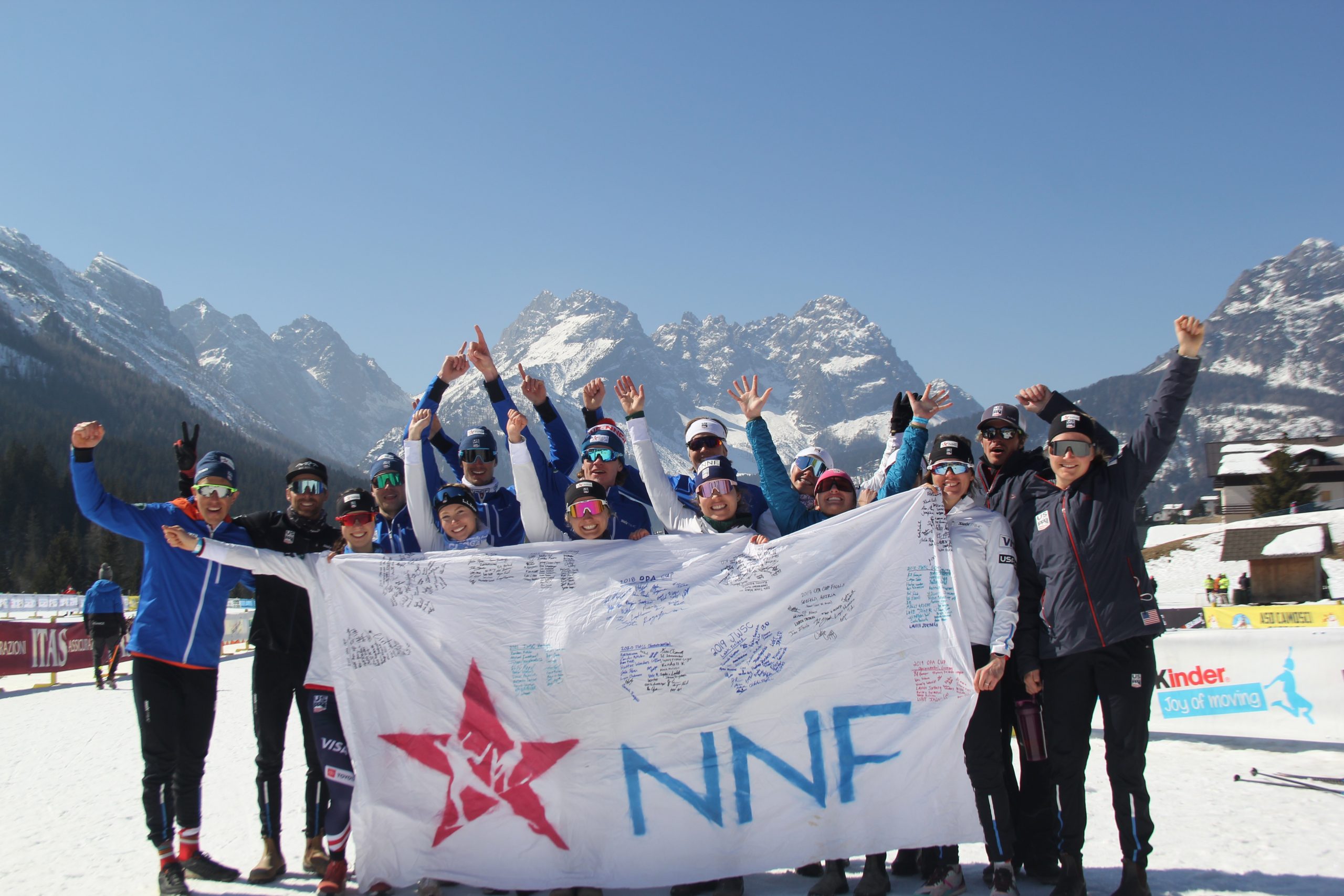
    The American OPA Cup Finals team celebrates fast races and bluebird days in Sappada, Italy. (Photo: Bryan Fish/NNF)

    Identifying it on its list of “Pillar Projects”, the National Nordic Foundation (NNF) helps subsidize the cost of the trip for the qualified athletes. The trip can accommodate up to 16 skiers, who are generally kept to an approximately even male to female ratio through the qualification criteria. This year, due to conflicting schedules and a number of declines, thirteen athletes attended, with nine women and four men. 

    In alphabetical order, the senior men included: Braden Becker (CGRP), Logan Diekmann (BSF Pro), Finn O’Connell (BSF Pro), Karl Schultz (SVSEF). Senior women included: Mariah Bredal (BSF Pro), Margie Freed (CGRP), Alex Lawson (CGRP), Hannah Rudd (BSF Pro), Becca Rorabaugh (APU), Lina Sutro (SMS T2), and Alayna Sonnesyn (SMS T2). 

    This year, two U20 athletes headed from World Juniors in Lygna, NOR to Italy along with D-Team coaches Anderson and Bryan Fish: Kate Oldham (Aspen Valley Ski Club) and Annie McColgan (UVM). 

    “It’s pretty cool that we have more racers that are racing professionally or post collegiately than, I think, ever in the US, and they have more clubs and places to choose from,” said Anderson. “There were several athletes that, especially because racing was shut down on the East Coast last year and I happened to be in Alaska and wasn’t wasn’t traveling very much before I took this job, it was kind of the first time I’ve gotten to work with them, or the first time I’ve gotten to work with them in three or four years. So it was really cool to get to know Alayna Sonnesyn a little better and Lina Sutro a little better, and Margie Freed and Alex Lawson, who I’ve seen race many times, but it was the first time I’ve gotten to really work with them and get to know them. The same with Braden Becker and Karl Schultz… So it was a pleasure on the trip to get to work with some new athletes that have come through different development systems and are excited about and ready to make that next step. And this racing circuit is a really good opportunity for that.”

    Anderson took the lead with organizing the trip and supporting athletes, working alongside US Ski & Snowboard Cross Country Sport Development Manager and long-time OPA Finals trip lead coach Bryan Fish. The wax support staff included BSF Pro Team head coach Andy Newell, former APU athlete and current staff member Peter Kling, and Jackson Hole comp team coach Jon Filardo. 

    US Ski & Snowboard Cross Country D-Team head coach Greta Anderson supports athletes during the Sun Valley SuperTour races in January. (Photo: Tobias Albrigtsen / @untraceableg)

    Anderson identified the OPA Finals trip as a key development opportunity for a number of reasons: though perhaps lower pressure than World Cup, it’s a professional race circuit with small but competitively dense fields, athletes race aggressively and tactically in a style younger athletes who have not yet raced at this level may not have experienced, and it offers the opportunity for an athlete to dial in some of the small but significant factors details that support success adapting to a new and different environment following long international travel.

    “Bryan’s been doing [the OPA Cup Finals] trip for a long time,” Anderson said. “So Peter Kling, who was on a coaching staff, and Becca Rorabaugh, they were like, ‘I’m pretty sure that we were on Bryan’s first ever OPA Cup trip.’ And it used to be that we started at the bottom of the results sheet and started looking upward for names. And right now we’re starting at the top and we don’t have to look very far down.”

    In two days of racing, the US had seven top-10 finishes, with another set of athletes finishing well-within the top-20. Highlighting the US team was SMS T2’s Sonnesyn, who took third in the 10 k classic on Saturday the 12th, and won the 10 k skate the following day. 
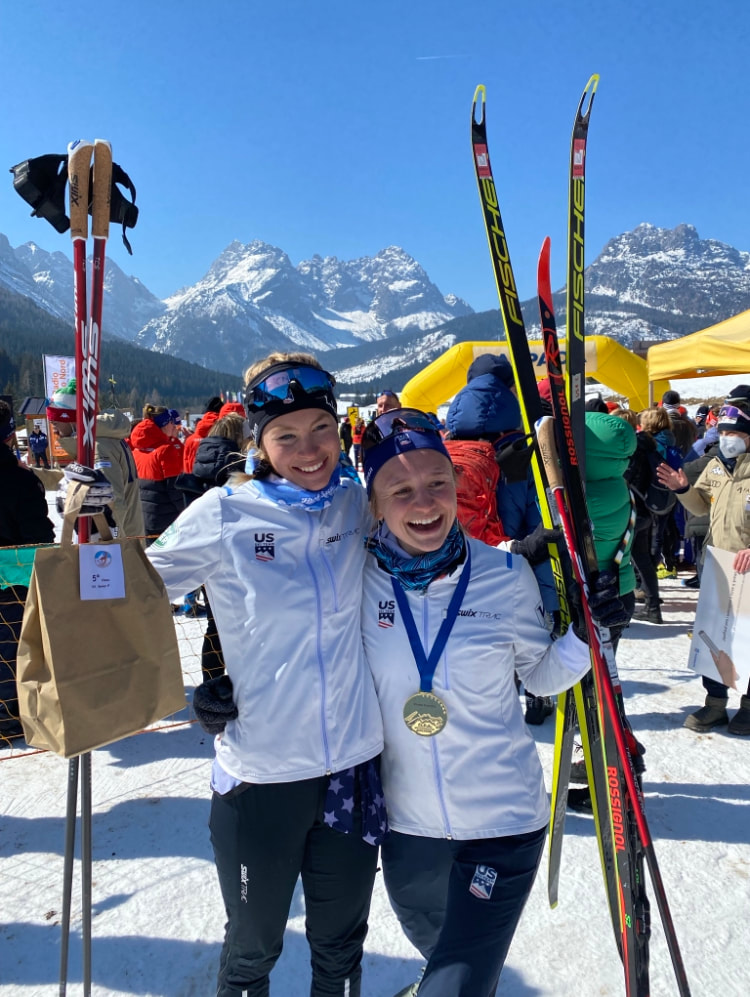
    Alayna Sonnesyn (SMS T2) takes the win in the 10 k skate at Opa Cup Finals in Sappada, ITA, with Mariah Bredal (BSF Pro) finishing just behind in fifth. (Photo courtesy of Alayna Sonnesyn)

    “It’s pretty special,” Anderson said of the performances in Sappada. “It’s awesome to get to see that. For Alayna to start a race and say like, ‘What’s my plan to try to win this?’ It’s not just, ‘Hey, we’re here to participate and learn,’ but ‘Hey, we’re here to participate and learn but also we’re going to try to win.’ And I think, with that comes — not only from staff but from racers — this level of professionalism. Okay, we’re going to select skis. We’re going to make sure we’re organized and in a good place. Where can we be? Where can we do feeds? How can we set you up to have the success you need to have? 

    “It just feels like a really good time to be an American ski racer.”

    After winning two of the first five SuperTour races this season, and finishing on the podium in each of the others, Sonnesyn was offered starts at the Tour de Ski, where she hoped she could achieve strong enough international results to qualify for the Olympic Team. But these goals did not come to fruition; Sonnesyn struggled to find the same race sensations while on the World Cup and tap into the fitness she knew was still there, which was reflected in results below her expectations. She shared her disappointment openly on her blog and social media, providing a relatable and important example to her followers that the pro-skier journey is not immune to bumps in the road. 

    “My experience on the World Cup this year – it was quite demoralizing, to be honest,” said Sonnesyn in a call from the airport as she was on her way to SuperTour Finals in Whistler. “And then, after the Tour de Ski, I got COVID. And it just really put a damper on the whole winter for me. And I started questioning like, ‘Okay, am I fit? And I like, can I race? Well, like, what have I been training for? This is really bad timing with COVID, too.’ So I was just pretty down. But then I was able to have really great SuperTour races, back in January and February, and then to be able to race internationally again in Italy. It wasn’t a World Cup, but it was still very high level of racing. So to have it go so well kind of reaffirmed to me that I belong on the international stage. And I definitely needed that, a little bit, just to give myself more confidence moving forward and motivation as well. So I’m really excited about the races and how they went and what I did to prepare for them and kind of my mental attitude around them, too.”
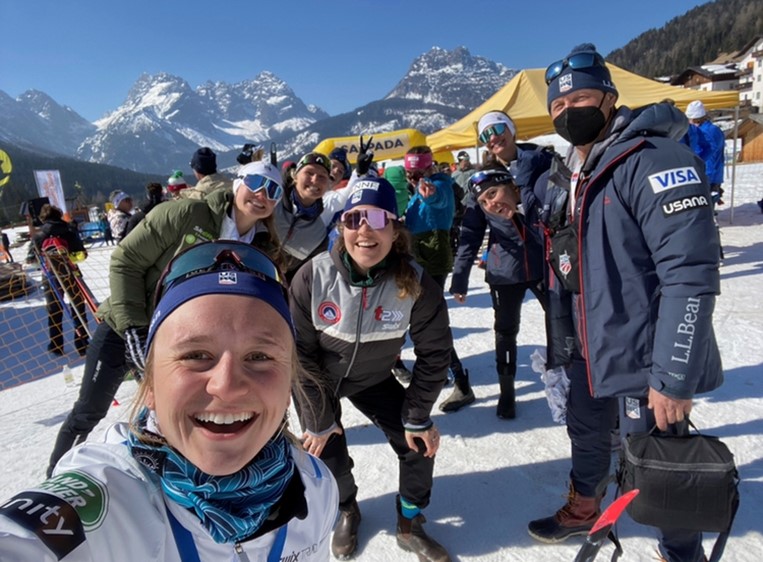
    A selfie in Sappada: the American team prepares for race day at Opa Cup Finals. (Photo: Alayna Sonnesyn)

    As she reflected on the trip and her experiences racing internationally over the last few seasons, Sonnesyn echoed Anderson’s sentiments about the progression of the American team at the event.

    “Compared to my first OPA Cup trip, which was in 2018, I think there were maybe two or three top 10 performances. And they were exciting, but for the most part, it was kind of like, ‘We’re just here to get the experience. We’re not really sure what we’re doing.’ And I think that the way the US is developing right now, the way that new courses are being built in Cable or Duluth, or wherever it is – they are preparing us better for racing internationally. And I think that was shown in the results that we had in Sappada. And it was just so exciting during that 10 k skate on Sunday to cross the finish line in first, and then turn around and see a ton of my other US teammates come in right behind me. That’s not something that was happening four years ago. So I think we are really developing and that is a huge thanks to so many different people and so many reasons, but it’s exciting to see.”

    Sonnesyn also spoke to the importance these international opportunities have provided her specifically, speaking from the perspective of what she dubbed a “bubble athlete” who has oscillated between World Cup and domestic racing over the last four seasons. She got her first World Cup starts in Quebec in March, 2019, and has been offered starts beginning in Period 2 each season since. Though this is a key stepping stone in the process toward consistent World Cup racing, she expressed that bubble athletes can have a challenging time planning seasons in advance and need to be prepared to adapt quickly to more frequent overseas travel.

    “I think that every single experience that an athlete has going and racing internationally, and traveling, and competing at that higher level, it all adds up to be super beneficial and a great learning experience. For example, I have gotten really great at overcoming jet lag, which the first couple of international trips I went on, I had no idea how to handle. I tried my best to do what I could, but it’s hard. And also to know what little things you want from home, like after being in Europe for four or five weeks, what do you really want from the US? 

    “And then also, how do you work in a new environment? A lot of times, if you’re going over to the World Cup, sometimes you’re provided a wax tech or sometimes not, or you have to bring your own, but you have to be willing to work with whoever you get.” 

    Sonnesyn explained that on the Sappada trip, she had worked with each of the techs before, but on her first trip in 2018, it was her first experience working with those wax staff members. Given the importance of ski choice and wax, working together effectively is imperative to an athlete’s success, but it requires dialogue and practice. 

    “Being ready to communicate effectively with the staff, what do you need? How do you want your skis prepared? What do you need from a hotel? All those things seem like such small little details, but they really add up with the more experiences you have.”
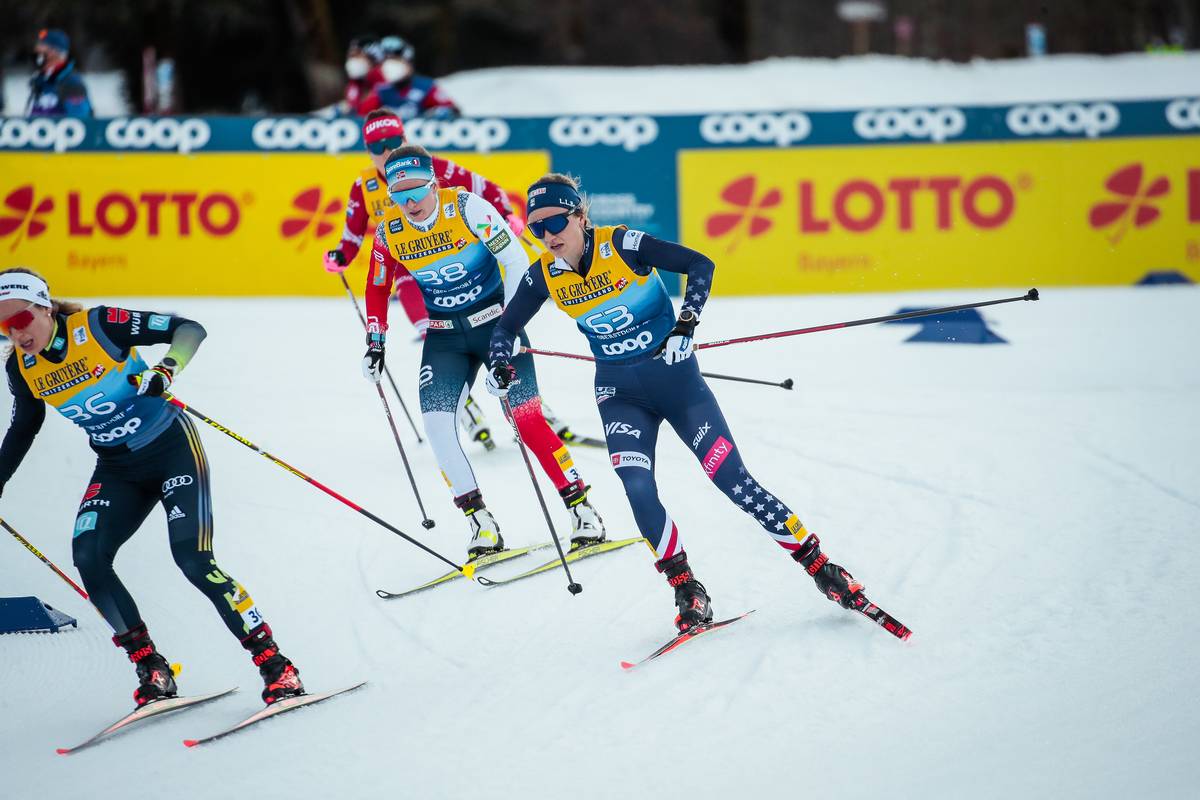
    Alayna Sonnesyn races in Oberstdorf, Germany during the 2021/22 Tour de Ski. (Photo: NordicFocus)

    She also spoke to the differences in the style of racing between the US and her international experiences, and how a trip like Sappada better athletes for what they might encounter should they be offered a World Cup start down the line. 

    “When it comes to racing: the courses in Europe are very challenging and very technical. Downhills, uphills, flats – whatever it is, there’s a lot of it, and you have to be ready to go for it. And then the competitors are fierce. They know how to be aggressive in a race, and you have to know how to hold your own. So it just helps to have that experience to understand how you approach the race. How aggressive are you going to be? How are you going to pace the race? How are you going to handle others around you?”

    With the highest levels of competition for our sport happening across the pond, it is easy to understand why opportunities like the OPA Cup trip provide an essential bridge for developing athletes. But it is not simply the facilitation of this trip that has led to marked improvement for the American team.

    “I think we’re open to change right now,” Anderson said as she reflected on her key takeaways from the experience in Italy and her first season coaching the D-Team. “I think the US, in a year with COVID, and lots of challenges logistically and politically in the world, we handle those changes better than almost any other country does. And I think that’s really shown here.” 

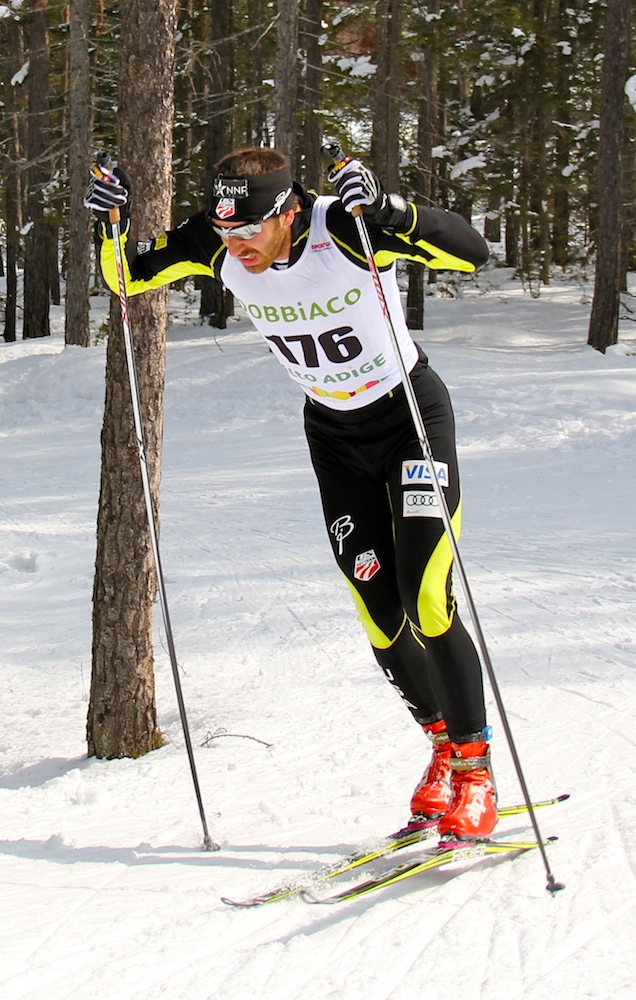
    Alex Lawson skates to 7th in the 10 k skate during OPA Cup Finals in Sappada, ITA. (Photo: Bryan Fish / NNF)

    While the OPA Cup crew was putting together a very solid day in the 10/15 k skate, the team of Rosie Brennan, Zak Ketterson, Scott Patterson, and Jessie Diggins had taken the win in the thrilling 4 x 5 k mixed relay in Falun. As the team in Sappada mingled near the finish to support the final racers as they skied through, Anderson said that a Swiss national team coach walked over and showed them the World Cup result on the phone. 

    Layered on top of the broader success at the OPA Cup Finals, Anderson expressed that this opened her athletes’ eyes to what might be possible for them in the years to come also. In particular, the Falun results of Zak Ketterson, a newcomer to the World Cup who ended his debut season with a 15th place finish in the 15 k skate and a mixed relay win.

    “[The guys racing at OPA Cup] are like, ‘Oh, man, I beat Zak sometimes’, or ‘I’m right with him’, ‘I trained with him in college.’ The level of confidence that brings… ‘Maybe maybe I can do that too.’”

    Moreover, Anderson expressed that this relay gold medal speaks to the equity of skiing in the US. “That we have good female athletes, and we have good male athletes, and we have a good balance of the two, and teams that are mutually supportive of each other,” she said. “Not every country has that.” 

    Boiling down the experience and her feelings as the season wraps up, Anderson concluded, “I have nothing but good things to say about our athletes right now. I’m really impressed with them. They handle the change better than anyone, and I think as a staff and from an organizational perspective, we’re trying to keep up, remove barriers, make sure they’re supported. And we’re open to trying new things, and it seems that we’re excelling in places where we’re willing to experiment and get our feet wet.”

    Kate Oldham (AVSC) races the 10k classic during Opa Cup Finals in Sappada, ITA. (Photo: Bryan Fish / NNF)

    Providing additional insights from the perspective of an OPA Cup Finals first-timer, FasterSkier also heard from U20 athlete Kate Oldham, who trains with the Aspen Valley Ski & Snowboard Club (AVSC) and competes for Middlebury College. Oldham took 11th place in both the 10 k classic and skate in the junior women’s category. 

    “Sappada was incredible,” Oldham wrote. “In congruence with the pre-camp in Toblach, the OPA Cup trip was unforgettable… My favorite ski to-date was on a long ski over the pass from Cortina to Toblach, stopping midway for trail side pastries and cappuccinos! Being with a group of older athletes was a valuable change from the World Junior trip because each team member brought new energy and experience to the group. Between that and the gelato shop next door to our hotel, the trip couldn’t have gotten much better!  

    “One of the things I think are most valuable about training and racing camps is the exposure to coaches and athletes outside one’s home team. For years I have been seeking out opportunities to attend regional and national camps that would bring new perspectives, training groups, and social dynamics to push me and help me adapt my own training method while making friends from schools and clubs all over the country. This winter I was lucky enough to have both my club coach and a group of skilled and passionate wax technicians/trip leaders selected from all around the US to lead the trips to Junior World Championships and OPA Cup finals. I know that over the six years I’ve been skiing competitively I have developed the competence to independently navigate high-level skiing events, but having techs to guide me through the process at the international level was extremely helpful, particularly when one of them I had worked closely with for those six years of training and racing.

    “With new coaches come new perspectives. Another set of eyes, a different experience, or a new phrase can be all it takes for the pieces of new advice to click into place. Or maybe a coach has a different perspective on the bigger picture of skiing that resonates with you unlike the philosophy you previously knew… which of the infinitely wide range of mindsets in ski racing works best for you? Which one reminds you why you love ski racing? Which one helps you stay motivated through the hardest parts of the season when the last thing you want to do is get out the door for training? Which one eases the heartbreak of coming so close to a goal but falling short despite your hardest effort? Without a doubt, cross country skiing is a delicate balance of internal and external factors, but having great teammates and coaches like the ones I got to know and work with in Europe this winter is certainly a key ingredient to the recipe for success in the lifelong pursuit of excellence on the race course and off.” 

    Full Results for OPA Cup Finals

  • Q&A: Beckwith’s Return to Skiing as NENSA Competitive Program Director

    Q&A: Beckwith’s Return to Skiing as NENSA Competitive Program Director

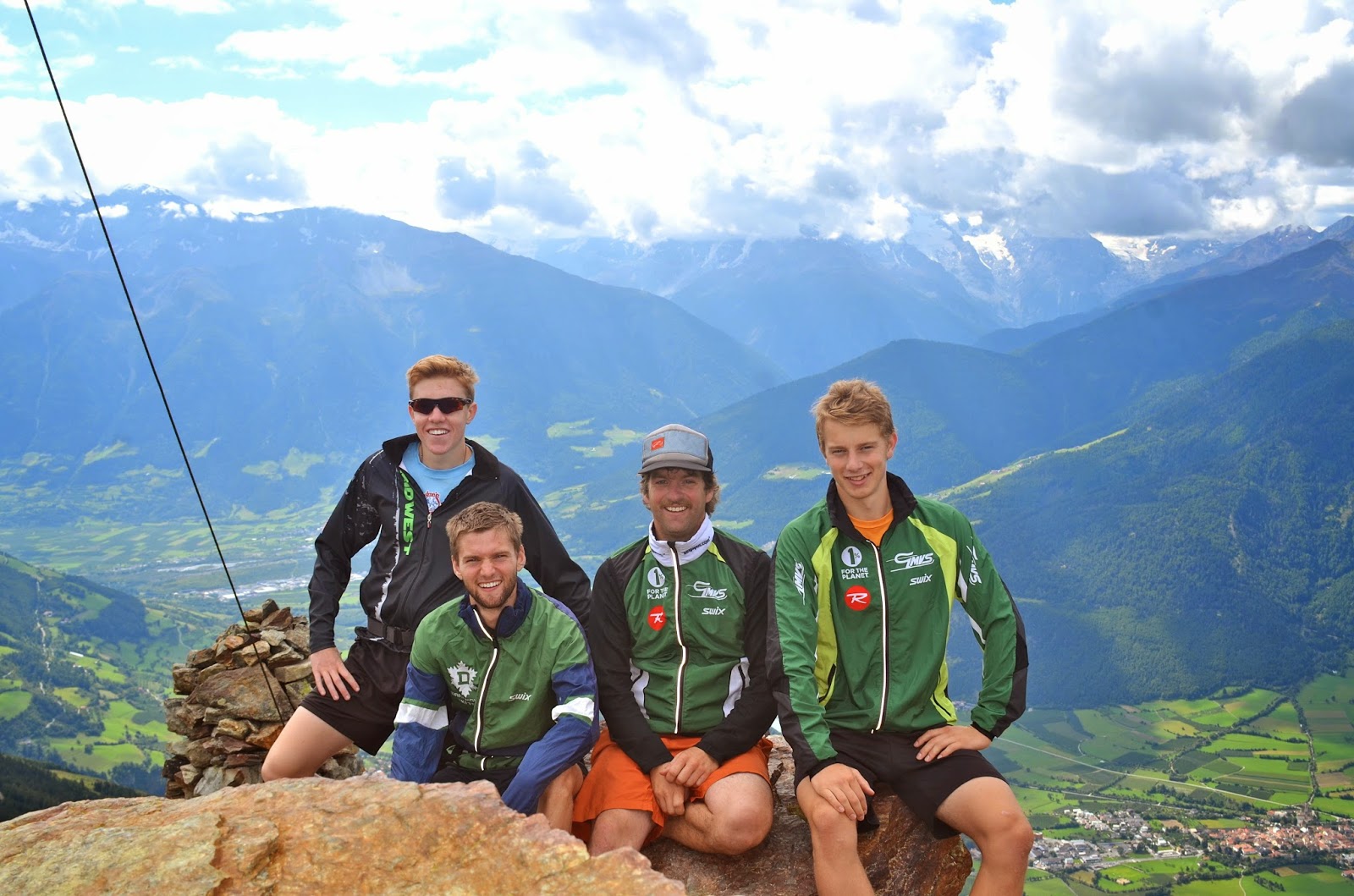
    Justin Beckwith (second from r), as seen in 2014 when he was head coach of the Green Mountain Valley School (GMVS), with former GMVS elite and postgraduate athletes (from l to r) Nick Gardner, David Sinclair and Ian Moore during a fall trip to Italy. (Photo: GMVS)

    About a year and a half after leaving his post as nordic director at the Green Mountain Valley School (GMVS), Justin Beckwith is once again involved with New England skiing at full throttle as competitive program director for the New England Nordic Ski Association (NENSA).

    The news came from NENSA early last month in an announcement that stated Beckwith would be filling in for Amie Smith, the association’s high-performance director for the last two years, who was promoted to executive director.

    Justin Beckwith (l) and Gus Kaeding in the wax room at 2017 U23/Junior World Championships at Soldier Hollow in Midway, Utah. (Photo: Flyingpointroad.com)

    Beckwith, of Warren, Vt., spent nine years from 2006 to 2015 building the GMVS program. When he left in the fall of 2015, he decided to go back to building houses, yet he remained involved with nordic as a wax tech for New England juniors and U.S. skiers at both national and international races, like last season’s OPA Cup Finals.

    Right around that time, in late March when NENSA posted the job opening, Beckwith knew he was ready to return to a full-time position in skiing.

    “It was just sort of, ‘OK, that’s it. That’s what I need to do,’ ” he told FasterSkier last month.

    After graduating from Middlebury College, Beckwith, now 37, spent one year living out west before taking the job at GMVS in Waitsfield, Vt. During his tenure there, he was also a coach for the U.S. Ski Team’s U18 Trip and Junior World Championships as well as the head wax tech for Junior Nationals and Junior Worlds.

    Stepping away from the sport as a coach allowed him to view it in a way he hadn’t before.

    “I went back to Junior Nationals after not being there for a couple years, now being able to watch, coming from the outside and see how our coaches, athletes and organizers are acting and performing, and what a unique perspective it is,” he said. “It is so much different than when you have your own athletes in the race, or you’re supporting your division or whatever your job is. … I am really excited to start to using all my contacts and resources and just bring energy that I think coaches understand what I am all about.”

    ***

    FasterSkier: What made you decide to return to skiing full time?

    Justin Beckwith: When I left GMVS to be a carpenter, I knew I wanted to come back to skiing, but on my own terms and do the piece of the skiing that I absolutely love and am so passionate about. That allowed me to be open to do that, whether or not the bank account reflected that, I just needed to be a carpenter, but I also had the ability to start making relationships with international people, coaches from other nations that are so impressed with what we are doing now in the U.S., and that started happening three or four years ago. Coaches started saying, “Wow, you guys are doing really well down to the national level now.” Then I got to start working with some of our manufacturers and suppliers, like Start Ski Wax specifically, a bunch more this year. I went back to Junior Nationals after not being there for a couple years now being able to watch coming from the outside and see how our coaches, athletes and organizers are acting and performing, and what a unique perspective it is.

    Justin Beckwith getting after it in Hemsedal, Norway. (Courtesy photo)

    So bringing to the present day, I think this [NENSA] position came up one time while I was involved at a certain amount of professional level with skiing. Amie [Smith] took on the job a few years ago, but I was deeply immersed my GMVS culture at that time and I also think that probably was not the perfect fit for me. Just before my wife and I left for our trip to Norway [this year], the job was posted [again]. It was just sort of, ‘OK, that’s it, that’s what I need to do.’ I am really excited to start to working with my contacts and resources and just bring energy that I think coaches understand what I am all about. I have also been able to make that connection with a lot of the young athletes over these last few years.


    FS: What drew you to the NENSA position?

    JB: With this position with NENSA and also what I have been able to do the last couple years, I am not using the microscope anymore, I am using a telescope. It’s totally different, but at the same time, it’s the same. I am going to be able to support GMVS in a great way. I love working with [GMVS Nordic Director] Colin Rodgers. GMVS went through some transitions. I am staying in the Mad River Valley, which is amazing; another great part of the job is that I get to stay where I am and sort of create some of that vision and move it in a way. It’s a pretty cool job, it’s a very cool lifestyle, it’s something that I am so passionate about. I was just talking to [Dartmouth men’s nordic coach] Brayton Osgood, he said he’s so glad to have [me] officially back in skiing. That is the coolest thing, to have those relationships.

    We are going through a transition within the U.S., there is a changing of the guard within our coaches and in our whole community, and we need to hold on to the history. That’s why people like Peter Graves are so interesting. We absolutely need to hold on to that history, but we have so many, because of all the awesome work that Dick Dreissigacker and Judy Geer at Craftsbury, or Sverre at Stratton, Rick Kapala at Sun Valley, or Gordon Lange in Park City, because of what all these people did, they inspired the next generation of not only athletes but coaches. It’s a really exciting time for U.S. skiing that we have such great venues, coaches and organizations. It’s a really cool time and a lot of energy is coming back into it right now.


    FS: How is your role at NENSA going to be different than it was with GMVS?

    JB: The biggest difference is what I tried to do at GMVS is essentially I wanted to be able to do what I am going to be able to do with NENSA. I am able to work with everybody now — and not that I am trying to spread myself too thin; I will obviously be working in a different capacity — I will be in personal contact with a lot of our athletes. … I will have more communication with coaches, whether it is with [U.S. Ski Team Development Coach] Bryan Fish or our club coaches in New England, and coaches throughout the nation, and figuring out that common goal, whether you’re part of a ski academy, or a club, or even a different region at JN’s, the goal is to make U.S. skiing better, and to create that culture and create those results, so that’s the goal.


    FS: How was being at the OPA Cup Finals and what were your takeaways?

    U.S. techs and coaches at 2017 U23/Junior World Championships (from left to right) Justin Beckwith, Andy Keller, Gus Kaeding, and Mike Matteson at Soldier Hollow in Midway, Utah. (Photo: flyingpointroad.com)

    JB: Probably the coolest thing going into that was the fact we were able to pull Caitlin Gregg into that, so we had this mix where we had some of our best juniors were there, we didn’t have the biggest team we’ve had, but we had a great time. And right out of the gate in the OPA Cup Finals — these are big-deal racers — on Day 1, Caitlin won the thing and Hannah Halvorsen was second. World Juniors was of course groundbreaking, but that result showed another level of depth we have in the country, and that was really inspiring to see that and be a part of. It also showed that we are a little bit better at skate skiing than in the European contemporary classic condition, basically slush. We were racing in 10 degrees [Celsius, 50 degrees Fahrenheit], and that is something we are adjusting at the developmental-team level. … That’s something we are going to try address soon. The takeaway from OPA, it shows the depth of where U.S. skiing is now, it shows what happened at World Juniors isn’t a fluke, it shows that we still have work to do, but we very much have arrived, and we are lucky as a nation that the European Nations are recognizing what we are doing and they are interested in what we are doing. We are contemporary now, and it’s pretty cool.


    FS: What are some of your key initiatives moving forward and what does your five-year plan at NENSA look like?

    JB: One of the things is my big initiative to make NENSA a known support structure to our clubs and to our coaches and to our athletes. We are not just putting on races, I want to make coaches’ education cool again. I want to make it popular and fun, and I just sort of want to reinvigorate that a bit. I want to help increase the participation and make it a clear thing that when you ask any coach what NENSA is doing for them, I want them to be able to give a clear answer that we are providing really cool feedback and support for their program. We are helping them coach and inspire their kids, and we are not putting on camps or other events that compete, we are helping make those better. I want to reinvigorate rollerski races. I have one that I want to start with this summer and ideally that would transfer to each state, having an event that we were able to make better for them, whether through promotion or physically bringing athletes to them, bring sponsors and suppliers in there, all part of that goal. … That’s what I want to do with this job, create that that buzz, that energy.

    Another thing I am going to work on is NENSA alumni, if you will, we need to keep them involved. When you’re a junior skier: you love your coach, you love your peer group, love going to Junior Nationals. You don’t necessarily remember that it was Janice Sibilia or Zach Caldwell or NENSA that created these camps and brought you all together two or three times a year. There are so many people that brought it to where it was now. It’s cool to come back and look at it with that perspective. Some of those people are coming back to it in different ways. Kris Seymour has taken a position at running Mount Van Hoevenberg in Lake Placid. Kris Seymour was Lowell Bailey and Tim Burke’s high-school coach; he inspired those guys, he helped to inspire me, now he is at a position where he can do wonderful things not only for his venue and his job, but he can do great things for cross-country skiing. So it’s really neat to meet somebody who cannot just juggle those balls, but bring those balls together.


    FS: Are you still going to be a carpenter?

    JB: I do have a passion for that and creating things especially with wood. I will still be hobby-ing and doing fun projects on the side, but only in a capacity like somebody would play the guitar, not as a business. I am diving right into this as a passion. People who are involved in the country and New England are coaching for the right reasons and I share the same vision.

    The enthusiasm and the support and welcome I have gotten from the staff and board of NENSA, New England and the U.S. ski community is truly humbling. It’s going to be really fun, and I am looking forward to it. I am so fortunate to be a part of it and want to get more people in the sport.

  • Next World Championships Stop: Seefeld

    Next World Championships Stop: Seefeld

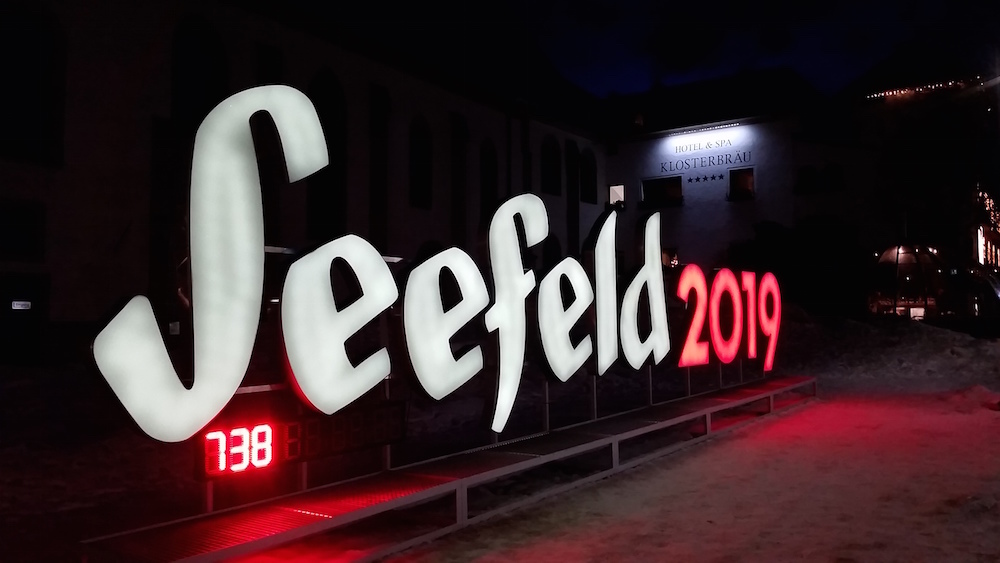
    Seefeld in Tirol, Austria, is gearing up to host a 2018 cross-country World Cup and 2019 Nordic World Championships. 2010 Olympian and former U.S. Ski Team member Garrott Kuzzy is a frequent visitor as he’s living in Innsbruck, and contributed the following interview with Seefeld’s tourism director.

    Seefeld in Tirol, Austria will host the 2019 Nordic World Championships. The small town in northern Tyrol sits on a plateau nestled in the alps, about two hours by train south of Munich and about 30 minutes north of Innsbruck. Seefeld has a long history of hosting international nordic competitions, including the 1964 and 1976 Innsbruck Olympic Games, as well as the 1985 World Championships and 2012 Youth Olympic Games. Seefeld holds the historic distinction as the venue where American Bill Koch won his Olympic silver medal in the 30-kilometer event.

    We got out for a ski with Elias Walser, the managing director of Seefeld Tourism, on some of the 270+ kilometers of trails he oversees to learn more about the region and the upcoming World Championships.

    ***

    Seefeld in Tirol, Austria, will host 2019 Nordic World Championships

    Garrott Kuzzy: You have been the head of Austria’s two largest cross-country ski destinations, Ramsau am Dachstein and Seefeld in Tirol. What makes cross country skiing in Austria unique?

    Elias Walser: In my opinion, what sets Austria apart from Scandinavia or North America, is that the cross-country ski trails are surrounded by a dramatic mountain landscape and a fairytale natural environment. At the same time, the trails pass through farms, huts and villages where skiers can stop for refreshment. I believe this combination of nature and access to traditional life in the alps makes Austria one of a kind.

    GK: Now that the 2017 Lahti World Championships are complete, the eyes of the nordic world are on Seefeld…well, except for a couple of events in Korea next February. How is Seefeld preparing for the 2019 World Championship?

    EW: Our trail construction and renovation for the world championship began in August 2016. We do not want to build buildings that no one needs after 2019 and are making our biggest investments in trails and infrastructure, such as lights and snowmaking. We updating our trail network to provide even more fun and enjoyment in the future, for both beginners and elite athletes alike.

    GK: Seefeld is hosting the European Continental Cup (OPA Cup) Final in late March. Many of the big events in North America this winter have been impacted by a lack of snow. How are the winters trending in Seefeld? What are you doing to ensure snow for these big events?

    EW: We also notice a change in our winters and have taken steps to adapt. We operate an active snow-management system. This means that we are already working in the summer on what can we do to offer the best cross-country ski trail with as little snow as possible. In the winter, we farm snow from higher elevations. We also have extensive snowmaking for the race trails and the most popular touring trails.

    Elias Walser, Seefeld Tourism managing director (Courtesy photo)

    GK: You were in Hochfilzen for the Biathlon World Championships and in Lahti for Nordic Worlds. What were your impressions?

    EW: Yes, the atmosphere was sensational at both events! I was actually in Hochfilzen when [American] Lowell Bailey won gold and in Lahti when [Canadian] Alex Harvey outsprinted the field in the 50 k. The crowd was ecstatic cheering on both North Americans. It is beneficial for every sport when athletes from a variety of countries have the potential to win on any given day. It is also exciting to see the growing strength of the American women’s team.

    GK: Seefeld has a long history of cross-country skiing. It first received international attention when it hosted cross country events for the 1964 Innsbruck Olympic Games. When/how did skiing start in Seefeld?

    EW: Tourism in Seefeld began in the 19th century, attracting guests seeking an escape from cities during hot summers. It was only after the Second World War that winter became increasingly popular. Seefeld became known for its extensive winter sporting experiences, including alpine skiing, cross-country skiing, ice skating, Eisstockschiessen (Austrian curling), winter hiking, horse-drawn carriage rides and tobogganing. Those traditions continue today, except that the barn lofts where guests used to stay have evolved into hotels with restaurants, pools and spas. Guests not only want to go skiing–they want to enjoy winter as a whole experience.

    GK: Do you have/know of any notable stories/history from the 1964 or 1976 Games in Seefeld?

    EW: If you see the old pictures, it is just incredible how courageous and sporty the athletes were … ski jumpers, for example, going over 120 meters on early fiberglass skis. 1964 was actually the first year that ski jumping featured both normal and large hill competitions. Overall, the whole effort around the Games was much simpler and less complicated that it is today.

    Seekirchl, the iconic church at the trailhead in Seefeld in Tirol, Austria

    GK: One of the most historic decisions for the sport of cross-country skiing was made in the Seekirchl, the iconic church at the trailhead in Seefeld, after the 1985 Seefeld World Championships. Can you share that story?

    EW: 1985 in Seefeld was the last World Championships when skating was not allowed. Despite that, the top athletes all used the “Siitonen-Schritt,” marathon skate named after Finn Pauli Siitonen. After the Championships, FIS officials met in the Seekirchl and decided to recognize skating as its own technique. That’s how skate technique was officially born and Seefeld became the “cradle of skating.”

    GK: Seefeld is an annual stop on the Nordic Combined World Cup, but Austria has not hosted a Cross-Country World Cup since 2004 in Ramsau. Seefeld has only hosted two World Cups since the 1985 World Championships (1996 and 1999). What inspired Seefeld to bid on the 2019 Championships?

    EW: We want to lead cross-country skiing into the next dimension. We see cross-country skiing continue to evolve as a sport and also grow as a major attraction in our region. After renovating almost all venues and homologating our race trails, it was an obvious choice to submit our bid. We were fortunate that our first application to host the championships was convincing enough to earn the bid.

    GK: The 2018 World Cup in Seefeld is considered the test event for the World Championships. Are you nervous for that test? If so, what are you most nervous about?

    The tracks at Seefeld in Tirol, Austria

    EW: Exactly. We will see how well the cross-country trails and venue flow in the competition mode. This can only be seen in a big race. We are optimistic that the new courses will receive praise from the racers.

    GK: You worked with Whistler Tourism for a year after the 2010 Olympic Games. Do you see Whistler hosting future international competitions?

    EW: Unfortunately, I’m not sure.

    GK: Innsbruck is in the middle of a feasibility study for the 2026 Olympic Games. Should the study find hosting the Games feasible, a referendum will be put forth to residents next fall. What are your thoughts on Innsbruck hosting its third Olympic Games?

    EW: I believe it is important for the Olympic Games to not just be about the growth and development of new markets. It is also about the Olympic spirit. For this reason, the Games should also return to places where this spirit has been born. I find the application of Tyrol with its unique locations, from Kitzbühel to Arlberg, a wonderful idea.

    GK: From your experience with North American skiers when you lived in Canada, how would Seefeld appeal to a skier from North America? What makes Seefeld unique? What highlights are on top of your list?

    The tracks at Seefeld in Tirol, Austria

    EW: The combination of gemütlichen Hütten [cozy huts] with good food along the trails and the variety of winter activities is part of what makes Seefeld unique. The accessibility from North America via direct flights to Munich is certainly also a great advantage. Innsbruck is always a welcome host for a day trip. With Seefeld as your base camp, you can really experience the alps.

    GK: The name “Seefeld” literally translates into English as “Lakefield.” Is there a lake in Seefeld? Will Seefeld put in a bid to host Waterskiing World Championships?

    EW: Ha! We have lots of beautiful lakes. They are all a little too small and pristine for waterskiing. However, stand-up paddleboarding makes for great cross-training in the summer.

    ***

    About Garrott Kuzzy

    Garrott competed in the 2010 Olympic Games and raced several years with the US Ski Team and the CXC Team. He is founder of Lumi Experiences, a company focused on cross-country ski trips in the alps. Lumi Experiences is partnering with the National Nordic Foundation to offer a trip to the 2018 World Cup in Seefeld and the opportunity to ski in the Dolomitenlauf Worldloppet.

  • NNF Announces OPA Cup Finals Prize Money

    fitz-caldwell-brennan (NNF photo)
    SALT LAKE CITY, Utah — The NNF announced a prize money win schedule for any American competing at OPA Cup Finals events. As a pillar project, the OPA Cup represents a priority for NNF funding. The key development trip is funded with $31,000 of NNF trip support. This year, the NNF is raising the stakes for skiers competing by adding a bonus win schedule for any U.S. skiers seeking to compete. Prize money for OPA Cup stage results will follow these guidelines. (All funds in USD.)
    • 1st – $2500
    • 2nd – $1250
    • 3rd – $750
      In the event of a pursuit start, the prize money will be awarded based on the top 3 across the line. (Not best times of the day.)
    “We have created a consistent platform for our best athletes to compete at the OPA Cup level year after year,” James Southam, Operations Director for the NNF explained, “This offer is similar to our standing offer to cover the cost of an athletes U23/World Junior Championship trip if they reach the podium, encouraging and rewarding those who are performing at the top level of the development step right below the World Cup.”
    The funds will be available for this year’s OPA Finals Cup trip beginning in February.
  • Bjornsen Gives OPA Final ‘Every Last Drop;’ Takes Close Second in Pursuit

    Bjornsen Gives OPA Final ‘Every Last Drop;’ Takes Close Second in Pursuit

    Sandra Ringwald (GER) and Sadie Bjornsen (USA) skied a closely-fought 10 k pursuit on Sunday to wrap up OPA Cup Finals in Toblach, Italy. Bjornsen took second place by 1.0 seconds. Photo: Bryan Fish.
    Sandra Ringwald (GER) and Sadie Bjornsen (USA) skied a closely-fought 10 k pursuit on Sunday to wrap up OPA Cup Finals in Toblach, Italy. Bjornsen took second place by 1.0 seconds. Photo: Bryan Fish.

    At the final showdown of the OPA Cup circuit on Sunday in Toblach, Italy, Sadie Bjornsen closed out her European season in a close battle with Germany’s Sandra Ringwald in the 10 k freestyle pursuit. It was a tough way to round off six races in nine days — “my very own Tour de Ski,” Bjornsen called it — and after 10 k of close racing Ringwald just nipped the American in the final meters to take the OPA Cup Finals victory by exactly one second. Bjornsen claimed silver in 26:51.7 to lead the sizeable U.S. team in the results.

    “I was happy with the result,” Bjornsen said. “I gave every last drop of energy, and it was a great way to the end the season feeling tired, happy and knowing I finished my season giving my best.”

    Based on her accumulated times from the previous two races Bjornsen began the pursuit five seconds in front of Ringwald, a strong skier who competed at World Championships last month for Germany and reached the podium at U23s in January.

    “Five seconds isn’t much, so Sandra caught me maybe 15 seconds in,” Bjornsen said. “I wanted this though, so that we could work together and stay ahead of the rest of the field. Sandra is in good shape right now, so I knew that I needed to stay with her and hope to outsprint her at the finish.”

    Bjornsen and Ringwald switched leads on and off for most of the race, but at 3 k from the finish Bjornsen began to fatigue.

    “My goal was to just hang on for dear life,” she said of the later kilometers. “I knew it would come down to a sprint finish and I didn’t have hardly any gas left. We both surged on the final climb and crested the top of the hill into the stadium even with each other. Her skis were very fast though, so I lost contact down the final hill into the finish. Again we sprinted for the finish, but I just wasn’t able to get back up to her. It was a hard effort though, and I gave every last ounce of energy left in my body.”

    Caitlin Patterson (CGRP) skiing in a pack. Photo: Bryan Fish.
    Caitlin Patterson (CGRP) skiing in a pack. Photo: Bryan Fish.

    The pace that Ringwald and Bjornsen set together created a 16.2-second gap to the bronze medalist, Alenka Cebasek (SLO). After Bjornsen, Kate Fitzgerald (APU) finished 16th for the U.S., 1:08.7 back, Caitlin Patterson (CGRP) was 19th (+2:02.8), Erika Flowers (SMS T2) finished 25th (+2:32.4), Becca Rorabaugh (APU) was 30th (+3:03.8), Lauren Fritz (APU) took 33rd (+5:15.4) and Anna Van Der Rhee (MWSC) was 35th (+8:17.1).

    With nothing but SuperTour Finals left on her schedule, Bjornsen will stay in Europe for a few more days to catch her breath before heading to Truckee, Calif.

    “As I collapsed at the finish for maybe five minutes, I was laughing in my head thinking about all the hard efforts in the last week,” Bjornsen said. “I ended my season truly challenging myself. It is not often I have had to dig so deep as I did this weekend, but it was also a great feeling!”

    Bjornsen could have raced in the Olso World Cup 30 k on Sunday, but chose the shorter distances of OPA Cup Finals instead thinking they would better suit her current strengths.

    “I knew that my fitness was in a better place for some shorter quicker racing than a 30 k skate, so I wanted to challenge myself at the end of the season and test myself against the top OPA athletes,” she explained. “I have never even been close to winning an OPA race, so it was fun to compete this time.”

    Women’s 10 k pursuit results.

    Bjornsen, left, on the podium with race-winner Sandra Ringwald and bronze-medalist Alenka Cebasek (SLO). Photo: Bryan Fish.
    Bjornsen, left, on the podium with race-winner Sandra Ringwald and bronze-medalist Alenka Cebasek (SLO). Photo: Bryan Fish.


    Tarling Leads U.S. Men in 15 k with 23rd-Place Finish

    Thomas Bing, a 22-year-old German skier who podiumed at U23 Championships in January and has two complete Tour de Ski finishes under his belt, won the men’s OPA Cup Final by 0.1 seconds in a sprint finish with Sebastian Eisenlauer (GER) and Fabio Clementi (ITA). Bing began the 15 k pursuit with a one-second lead but held off a hungry group of seven to take the mini-tour title.

    Sam Tarling (Dartmouth College) led the U.S. men on Sunday with a 23rd-place finish in the 15 k pursuit. Photo: Bryan Fish.
    Sam Tarling (Dartmouth College) led the U.S. men on Sunday with a 23rd-place finish in the 15 k pursuit. Photo: Bryan Fish.

    Sam Tarling (Dartmouth College) led the American men’s squad with a 23rd-place finish, 1:42.4 back from Bing. He entered the pursuit as the 26th starter with a 1:08.0 handicap, and in the process of picking up a few places he skied with two other Americans, Erik Bjornsen (APU/USST) and Matt Gelso (SVSEF).

    “Today was a blast,” Tarling said. “I think all our guys were feeling pretty sore from the classic race but I feel like we all skied really well and managed to make some jumps in the overall standings.”

    Bjornsen moved up from 31st after the classic race to 24th, 11.9 seconds behind Tarling, and Gelso climbed from 34th to 25th, 4.1 seconds behind Bjornsen.

    “We had a pretty good group of us go all within maybe 10 seconds so we had some nice pack tactics to nip some guys ahead of us struggling alone,” Tarling said. “There really isn’t a ton of rest on that course, and you learn a few things skiing with these guys. It seemed like you could make or lose serious chunks of time just from really pushing it over the crests of hills, which has been something I can definitely improve on.”

    Gelso had hoped for a top-ten overall finish prior to arriving in Toblach and was ultimately disappointed with his performances, but he managed to overcome some pre-race fatigue on Sunday to compete with the pack that eventually formed around him in the pursuit.

    “Erik and I started about ten seconds behind Sam and skied hard early on to catch him,” Gelso said. “A sizeable group formed around us and provided some good skiing. The pace was fast but not outrageous. Being a little tired heading into the day it was very helpful to be skiing around people in that it kept you focused and pushed you harder.”

    The three Americans all finished within fifteen seconds of each other to lead their compatiots in the final standings. Mike Sinnott (SVSEF) placed 32nd in a photo finish with Mario Roncador (ITA) 2:33.5 back from the leaders, Pat Johnson (SVSEF) finished 37th (+2:55.2) and David Norris (MSU) was 40th (+3:12.9).

    In the junior men’s division, Paddy Caldwell (SMS) led the way for the U.S. in 12th place, 1:54.1 behind Clement Parisse’s (FRA) winning time. Caldwell skied the sixth-fastest freestyle time of the day after starting the pursuit in tenth with a 1:00.0 deficit. Kevin Bolger (SVSEF) maintained his starting position to finish 15th, 3:00.0 back from the leaders.

    Men’s senior 15 k pursuit results

    Men’s junior 15 k pursuit results

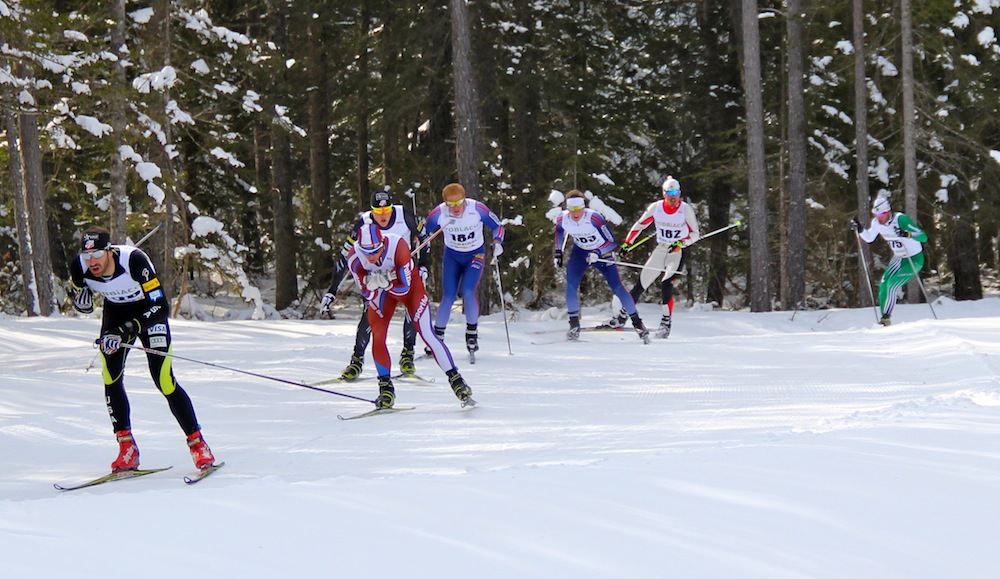
    Tarling, Bjornsen, Gelso and Johnson all skiing in a  pack. Photo: Bryan Fish.
    Tarling, Bjornsen, Gelso and Johnson all skiing in a pack. Photo: Bryan Fish.
  • Brooks Follows Up With Gold in OPA 5k

    Brooks Follows Up With Gold in OPA 5k

    Holly Brooks on top of the podium in Toblach for the OPA Cup Finals 5 k classic. Photo: Caitlin Gregg.

    Holly Brooks (APU) wasn’t sure how to approach the first OPA cup of her life on Friday, but for Saturday’s 5 k classic she had a better feel for what to expect. Friday’s effort yielded a silver medal and one second’s separation from gold, and Saturday’s race was even closer. Brooks won the individual start race by 0.2 seconds over Barbara Jezersek (SLO), and third-place finisher Alenka Cebasek (SLO) was 0.9 behind.

    Brooks started directly behind Cebasek and in front of Jezersek, and knew it would be important to balance not trying to catch the rabbit in front of her too early, while preventing Jezersek from gaining on her.

    “We’re at altitude here and the climb to the top of the course is relentless if you go too hard at the beginning,” said Brooks. “That said, I knew that Barbara was right behind me and was probably trying to pull me in the entire race.”

    Brooks with her first-place haul. Photo: Caitlin Gregg.

    The 5 k distance is a short one for Brooks, but still requires smart pacing.

    “Five kilometers go by really quick and there is no time to waste — especially judging by the results, which were even tighter than yesterday’s 2.5 k,” said Brooks.

    Over the course of those five kilometers, she came close to making up the 20-second difference on Cebasek at the top of the course, but the Slovenian skied the descent faster on the “icy rails” that were the classic tracks in Toblach.

    In the end, Brooks’s effort was enough — her winning margin was a narrow one, but a win nonetheless.

    “I knew I had a chance [at wining] but nothing is certain until everyone crosses the line,” said Brooks.

    Her second race into the OPA Cup Finals, Brooks is enjoying the more relaxed racing atmosphere. Getting back to the World Cup is her ultimate goal, but for now, “it’s a great change of pace to race in races where I always have the potential to land on the podium!”

    Becca Rorabaugh (APU) was the next American finisher in 16th, followed by Rosie Brennan (APU) in 18th, Morgan Arritola (SVSEF) in 27th, Chelsea Holmes in 29th, Nicole DeYong in 30th and Lauren Fritz (APU) in 33rd.

    * * *

    On the men’s side, Noah Hoffman (SSCV/USST) didn’t turn in quite the result he was hoping for, but was still the top American finisher on Saturday in the 10 k freestyle, finishing 15th

    Hoffman, always with high expectations, said afterwards that he was disappointed with his race despite feeling “pretty good.”

    “The race today was a little disappointing,” he wrote in an email. “I felt that it was a realistic goal for me to be on the podium, but it just didn’t happen.”

    Hoffman has his sights set on the pursuit on Sunday.

    “My energy is good and I’m looking forward to tomorrow. Tomorrow I am looking to be aggressive and move up in the field,” he said.

    Erik Bjornsen (APU/USST) turned in the next fastest result at 27th.

    “My goal for today was to go out really hard and to hold on as best as possible,” said Bjornsen. “I knew the times were going to be tight and I thought this was the best tactic for the short, fast 10 k.”

    Bjornsen’s secondary goal had been to beat Hoffman — “I was not successful,” he said.

    Tad Elliott was 31st, Matt Gelso (SVSEF) was 45th, Reese Hanneman (APU) was 46th, Brian Gregg (CXC) finished 58th and Peter Kling was 73rd.

    Women’s results

    Men’s results

    Lauren Fritz, Caitlin Gregg and Holly Brooks with Italian Olympic gold medalist Pietro Piller Cottrer. Photo courtesy of Holly Brooks.
  • Brooks Takes Silver in OPA Prologue; Elliott Leads U.S. Men in 13th

    Brooks Takes Silver in OPA Prologue; Elliott Leads U.S. Men in 13th

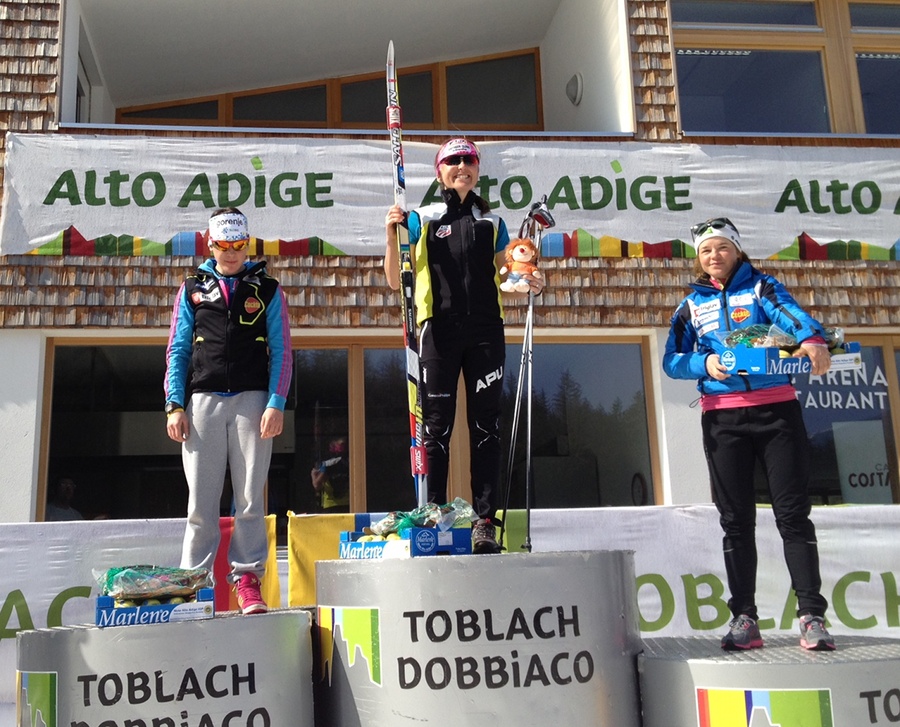
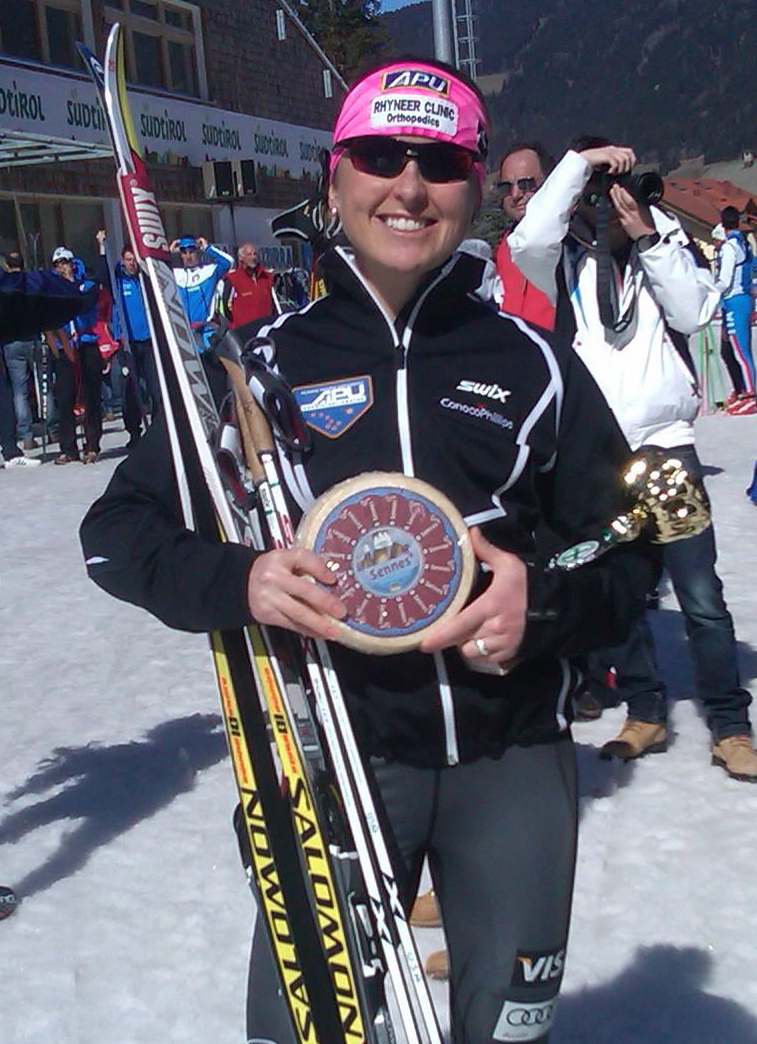
    Holly Brooks (USA) with her second place prizes from Toblach: a trophy and wheel of cheese. Photo: Bryan Fish.

    While their compatriots were gutting it out in the World Cup Finals prologue in Falun, a handful of U.S. athletes were contesting the same format at OPA Cup Finals in Toblach, Italy. Friday’s 2.5/3.3 k freestyle event was the first in a series of three races in Italy.

    Holly Brooks (USA) turned in the top performance for the U.S., coming in second place to Slovenia’s Alenk Cebasek, who won by one second.

    Brooks on her way to second place in the Toblach prologue. Photo: Caitlin Gregg.

    Brooks has gone from the World Cup to the Tour de Ski to the American Birkie and back to the World Cup this season, but this was the first OPA cup of her life — she wasn’t sure what to expect beforehand.

    “There are definitely girls racing here that I’ve been racing with on the World Cup, [but] I wasn’t sure how the results would play out in a prologue,” said Brooks in an email.

    She also finished eighth in the 42 k Engadin marathon in Switzerland last weekend, but Brooks said she felt completely recovered in time for the start of the OPA Finals. During the Engadin, she’d gotten stuck behind some of the male competitors and lost contact with the lead pack, which held her back, but made the effort an easier one to rebound from.

    “It was a bummer for the marathon but perhaps a blessing in disguise for OPA,” said Brooks.

    Racing in Toblach is a return to familiar Tour de Ski territory for Brooks, but this time around the conditions are quite different. Though she said the organizers have done an “impressive” job with the snow available, the conditions are less than ideal.

    “The snow is thin here and I think the only reason we’re skiing is because the venue is in a valley, with much of the race course in the shade for much of the day,” Brooks described. “The snow is extremely dirty and around 10:30/11 am, standing water appears on the track.”

    Now that she knows what to expect from her competition, Brooks is aiming for a podium finish on Saturday and Sunday.

    “I’d also love to take the overall win for the three day mini-tour but I certainly have some hard work ahead!” she wrote.

    Brooks led a sizeable American contingent on Friday; six other U.S. women contested the prologue.

    Chelsea Holmes finished 17th, 21.3 seconds behind Cebasek’s winning time. Becca Rorabaugh was 21st (+26.6), Nicole DeYoung took 22nd (+28.1), Rosie Brennan finished 28th (+32.7), Lauren Fritz was 32nd (+39.1) and Morgan Arritola was 34th (+42.8).

    Lauren Fritz (APU) skiiing to 32nd place. Photo: Caitlin Gregg.

    * * *

    On the men’s side, Tad Elliott led the U.S. men’s squad with a 13th place finish, 13.7 seconds behind Italy’s Pietro Piller Cottrer.

    A 3.3 k is not quite a sprint, but neither is it ideally suited to a distance specialist. Elliott nonetheless took the prologue as a learning experience. His primary goals for Friday were to have a “solid” race and to “beat the HOFF,” referring to teammate Noah Hoffman, who finished 21st.

    Mission accomplished for Friday, but in anticipation of the 10 k classic on Saturday, Elliott added: “[Hoffman] is on fire. He is going to crush it tomorrow.”

    There were less than 40 competitors in the women’s race, but the men’s was another story. Eighty six men skied on Friday, and Elliott characterized it as a “stacked” field.

    “It is awesome to ski with these guys,” said Elliott.

    The course was a fast one, but as the temperature warmed for the later-starting men’s race, the snow was slower. “I was so blown out and tired, I could barely tuck,” said Elliott.

    The U.S. had seven men in all compete in the prologue. Behind Elliott and Hoffman, Erik Bjornsen finished 32nd (+23.3), Matt Gelso was 43rd (+27.0), Brian Gregg tied for 47th (+30.0), Reese Hanneman was 52nd (+32.9) and Peter Kling was 76th (+53.7).

    Women’s results

    Men’s results

    Reese Hanneman (APU). Photo: Caitlin Gregg.
    Peter Kling (APU). Photo: Caitlin Gregg.


    Warming up. Photo: Caitlin Gregg.


  • US OPA Trip Ends With a Bang

    Rogla, Slovenia – The Spring 2010 OPA Cup trip came to an end with the last race of the OPA Cup Finals on Sunday.  The US ended the European tour in fine form, posting excellent results in the three race mini-tour.

    The competition featured a 2.5/3.5km classic prologue on Friday, a mass start 5/10km classic on Saturday, and the final 10/15km handicap start on Sunday to determine the overall winners.

    Mike Sinnott led the way for the US, finishing 4th overall.  Sinnott started the day in 5th, 13 seconds behind leader Romain Vandel (FRA), and moved up a spot to finish just 7.3 seconds behind overall winner Fulvio Scola (ITA).  His time for the day was the 6th fastest giving him three individual results in the top-7.

    Noah Hoffman followed Sinnott in 13th.  Hoffman, who has struggled to find top form over the past two seasons, had a breakout performance.  He skied up from 19th, and had the 3rd fastest time over the 15km course.

    Overall nearly all the Americans moved up on the final day.  Sylvan Ellefson started 18th and finished 15th with his best single day performance since arriving in Europe.

    Brayton Osgood continued the trend moving from 25th to 20th.

    Peter Kling was the only male American not to improve.  He ended last in the 31-man field.

    For the second time on the trip, Sinnott set a personal best for FIS points – his 30 point performance on Sunday was significantly better than his 39 point performance in the prologue.

    Nicole DeYong led the US women, finsihing 10th in a field of 25.  DeYong started the day in 7th after a strong showing in the mass start where she was 6th.  She lost three places on Sunday despite posting the 8th fastest time.  Overall she finished the three race event just 59 seconds behind overall winner Elisa Brocard (ITA).

    Three of DeYong’s four OPA Cup races on the trip were 67 points are better.  Her previous best had been an 86 point effort this Winter at the Aspen SuperTour.

    Becca Rorabaugh was the second AMerican in 15th, moving up three places while posting the 14th best time of the day.

    Katie Ronsse, the final US starters, was 23rd after losing three spots.

    Overall, from the results and points perspective, the trip appears to have been a success for US athletes.  For more information on the trip and te reasons behind it, check out this recent FasterSkier article:

    How Do You Get 15 Skiers to Slovenia?

    Complete Results

  • Sinnott and DeYong Lead US at OPA Cup Finals

    Rogla, Slovenia – Nine American skiers are currently in Slovenia contesting the OPA Cup Finals, an event modeled on the popular Tour de Ski and World Cup Finals.

    Racing started on Friday with a 2.5/3.5km classic prologue, and continued Saturday with a 5/10km mass start.  The overall winners will be determined in a 10/15km handicap start based on the overall standing from the first two races.  The first across the line is the champion.

    The large contingent of US skiers in racing the OPA Cups dwindled somewhat, with Brian Gregg, Mike Hinckley, and Caitlin Compton all getting World Cup starts this weekend, and several other skiers heading home after a longer stay in Europe.

    The fields have not been large, but the competition plenty challenging.  Overall, US skiers have held their own with Mike Sinnott leading the way.

    Sinnott Challenges in Prologue

    Sinnott finished 6th in the prologue, just 6.7 seconds behind winner Dietmar Noeckler (ITA).

    In an interesting aside, Juergen Pinter, a veteran of the Austrian Team who was banned form the sport four years by the Austrian Ski Association, finished 2nd.

    Pinter was banned for his involvement in the 2006 Torino doping affair.  It appears his ban was retroactive, so all FIS results from 2006-2008 (when the ban was finalized) were removed from the records, and the four years started from the 2006 Games, so he is just back in action.

    Sinnott posted the best FIS points race of his career, breaking 40 for the first time.

    Sylvan Ellefson was the next American in 34th, +25.8.  He was closely followed by Noah Hoffman in 36th, Brayton Osgood in 42nd, and Peter Kling in 47th.

    Kling also set a personal-best in FIS points.

    76 men completed the race.

    Nicole DeYong led the American women in 19th place, 22.3 seconds in back of Denise Herrmann (GER).  Herrmann won silver in the sprint at the U23 Championships in Hinterzarten, Germany in January.

    Overall, Germany took four of the top six spots, going 1,2,5,6.  Italy, with Elisa Brocard and Virginia Topranin, took 3rd and 4th. Brocard, a veteran of the Italian team, raced the sptint at the Olympics and finished 27th in the 2010 Tour De Ski.

    Herrmann’s teammate Hannah Kolb was 6th.  The 19-year-old Kolb started two World Cup races this year, finishing inside the top-20 in both.

    Becca Rorabaugh finished 30th, .8 seconds and one place ahead of APU teammate Katie Ronsse.  The pair was just over 30 seconds back of Herrmann.

    Tazlina Mannix rounded out the US starters in 39th.

    DeYong Steps Up In Mass Start

    DeYong took thing us a notch in the 5km classic mass start, matching Sinnott’s 6th place result from the prologue.  Just 12.2 seconds back, DeYong had an excellent points race, nearly matching her career-best set a week ago at the OPA Cup in France.

    Brocard won the race in a sprint with teammate Topranin.

    Among those DeYong beat were Barbara Jezersek (SLO) who finished 17th in the Olympic pursuit, and prologue winner Herrmann.

    Rorabuagh was 15th, +54.4 seconds, and Ronsse 20th, +1:05.2.

    Mannix did not finish the race.

    Juniors were split out into a separate race, so the field was much smaller than in the prologue.  Only 26 women completed the event.

    Sinnott turned his second excellent performance in a row, taking 7th place in the men’s 10km classic mass start.  He was 18.3 seconds behind winner Romain Vandel (FRA), but just nine seconds out of 2nd place.

    Ellefson finished 18th, +1:13, again, just ahead of Hoffman – this time just a single place.

    Osgood ended up in 25th and Kling 33rd in the 34-man field.

    Overall standings for the OPA Cup Finals are not available, but Sinnott will likely be competing for a top-10 overall result in Sunday’s handicap start freestyle race.