From the FasterSkier archive — posts syndicated from athletes’ and coaches’ own blogs between 2004 and 2012, kept online as published. Current coverage is at fasterskier.com.
The Bend Endurance Academy (BEA) is a public benefit 501(c)3 that organizes and operates endurance activity programs in Central Oregon, concentrating in three core disciplines: Nordic Skiing, Cycling & Climbing. The mission of BEA is to “promote healthy living through active, outdoor experiences. We emphasize teamwork, personal growth, and community responsibility.” BEA envisions a world with active, inspired, and more engaged people. Since its founding in 2009, BEA has grown from humble beginnings to serving more than 1000 kids in 2017.
Where You Get To Live!
Bend, Oregon, is the mountain town that has it all! Located in the in the shadows of the Cascade Mountains and surrounded by numerous lakes and rivers, Central Oregon is an outdoor enthusiast’s paradise. Check out the sights and sounds of Bend at: https://vimeo.com/200038114
What You Get To Do!
Reporting to the Board of the Directors the Executive Director (ED) has full responsibility for the daily operations of BEA corporate office and programs in accordance with BEA strategic plan, operating/business plans, Board policies, and annual budgets as approved by the Board. The operational and development activities of BEA include fundraising events, strategic planning, facility and vehicle maintenance, communications and marketing, staff training and compliance, personnel management, risk assessment and management, transportation and safety, program offerings, and financial management.
The Executive Director provides executive leadership to BEA to advance its mission and vision in part through strategic priorities adopted by the Board. The current priorities include the following:
Strategic Priority #1: Programs
Manage growth of current programs to retain our strong commitment to quality programs for young participants at all levels of their athletic development and to build a strong platform for meeting growing demand in the future.
Strategic Priority #2: Culture
Build a professional, collaborative, problem-solving team culture at all levels of the organization that honors the fun and joy of what we do.
Strategic Priority #3: Staff
Retain and recruit the best staff to lead, develop and support programs
Strategic Priority #4: Revenue
Grow and ensure diversified and sustainable revenues.
Strategic Priority #5: Communications
Promote BEA’s vision for a “world with active, inspired and more engaged people” by communicating consistent messages about our mission (what we do) and our philosophy (why we do it) to key audiences.
What You Will Need:
Bachelor’s degree in business, public administration, planning, recreation management, or related field
Demonstrated experience in a management role, preferably in business or nonprofit leadership and/or management of multi and diverse program environments Demonstrated experience with the successful development and management of new programs or business enterprises
Direct experience in working with recreation and/or youth sports education or relatable fields
Direct experience in the supervision of senior level management staff
Working knowledge and understanding of GAAP (generally accepted accounting principles) and developing business financial pro formas
Demonstrate excellent interpersonal, people management, and verbal and written communication skills
Possess a high level of conceptual and analytical skills, judgment and decision-making, and negotiation skills
Demonstrate the ability to lead and foster innovation and initiative in others, work cooperatively and effectively in a team environment, develop relationships based on honesty, integrity and trust, work well under pressure, and prioritize work effectively
Have or develop an ability to understand and deal effectively with the policy environment in which BEA operates
Demonstrate success in strategic and business planning, implementation, management, and financial management skills
Demonstrate a willingness and ability to work and build relationships with industry, government, and other stakeholders to achieve goals and objectives of BEA
Demonstrate success in promoting business outcomes to industry, government, and the community;
Proficient in Word, Excel, Power Point, and Outlook
Have or develop proficiency in social media and traditional media platforms
Must have a valid Driver’s license and be insurable under the BEA’s insurance requirement
Successful completion of a criminal background check and a pre-employment drug test may be required.
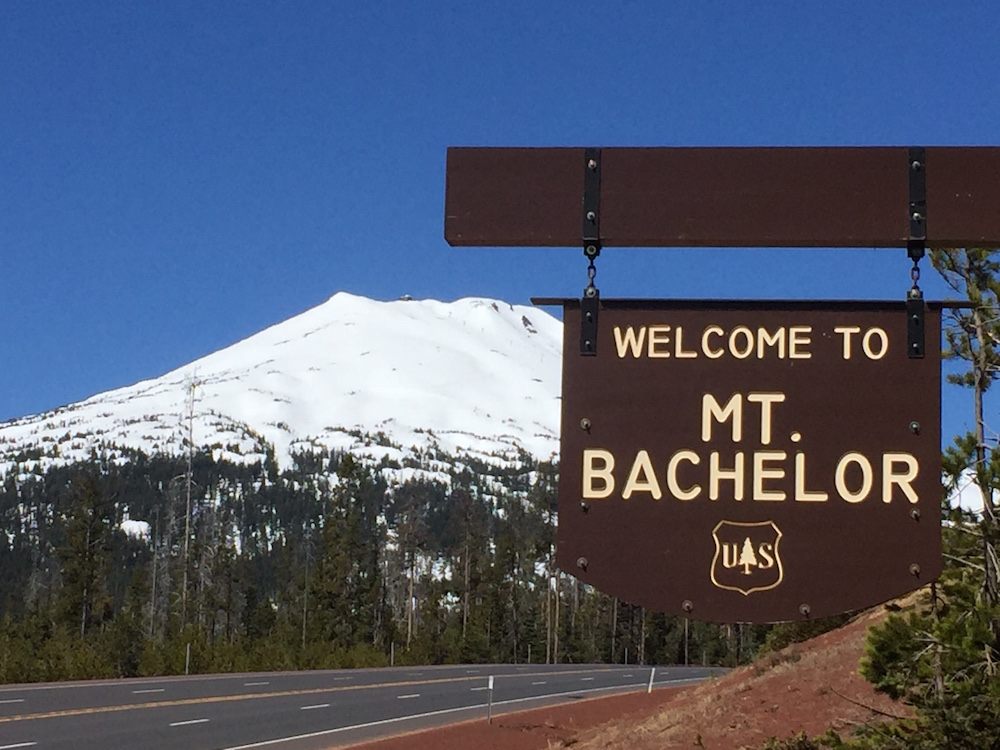
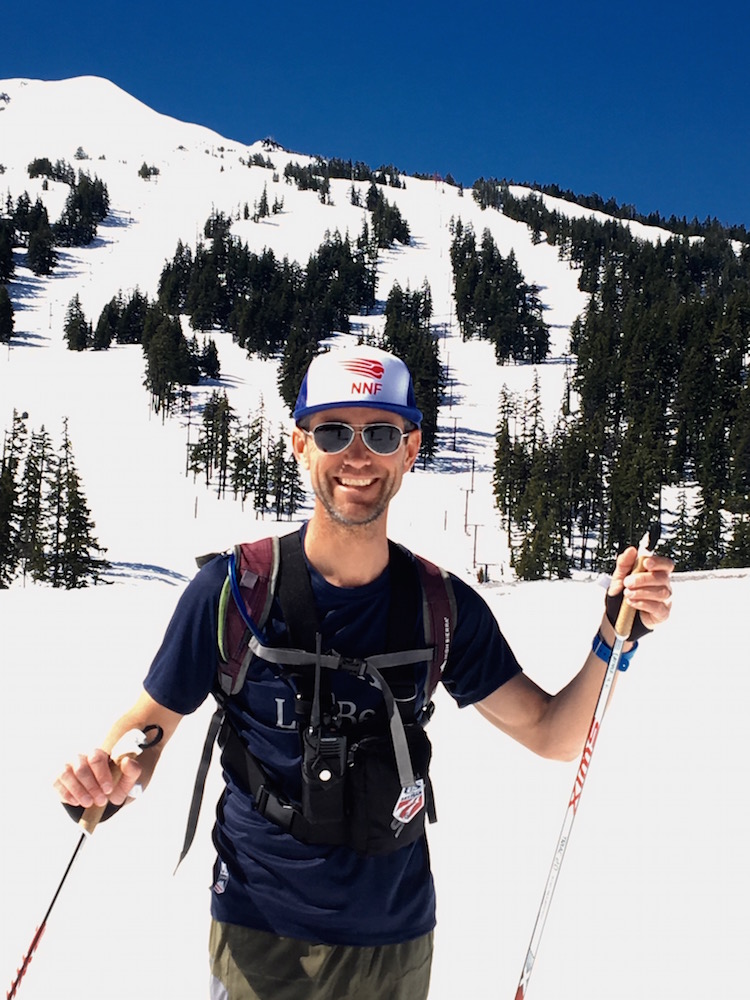
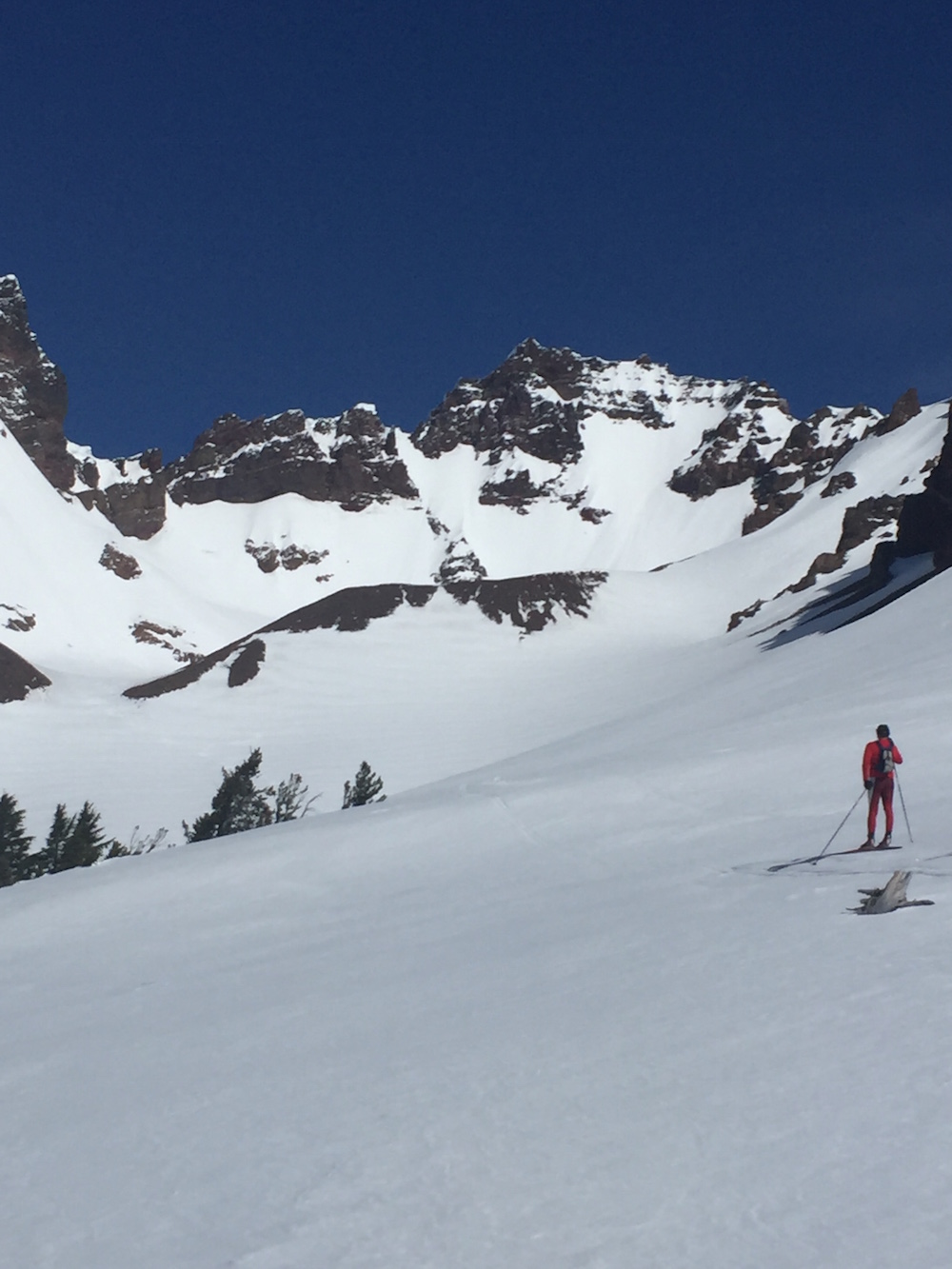
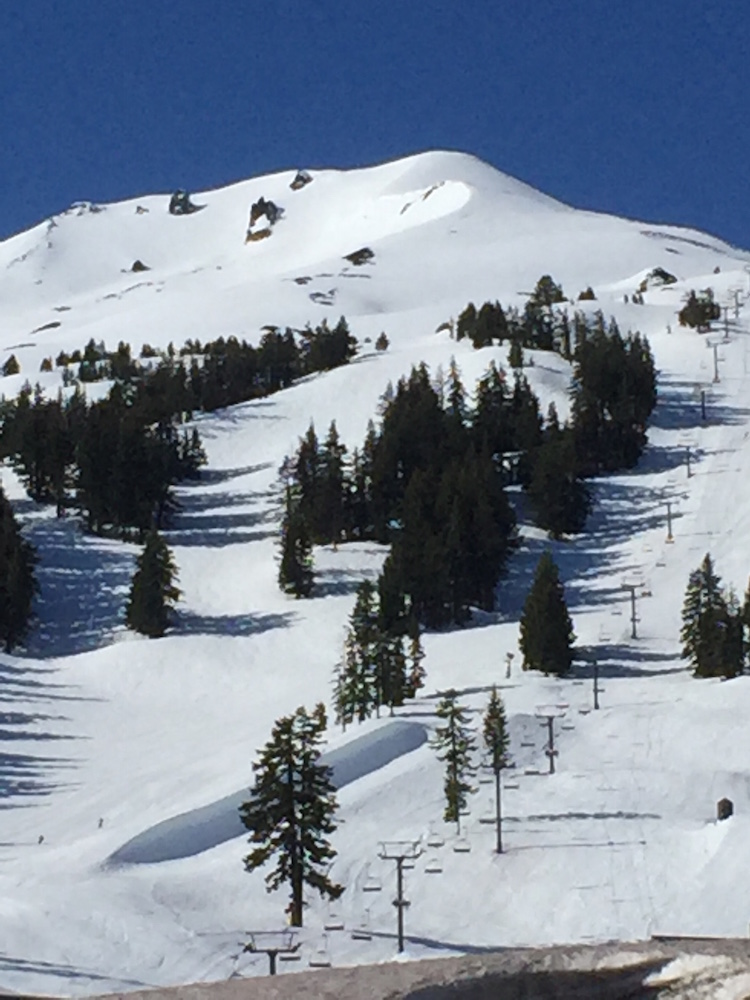
Mt. Bachelor in Bend, Ore., as seen in May 2017. (All photos: FBD)
You should be in Bend. Bend, Oregon. Right now.
For all of my “shallow readers” in the audience, those unable to focus on any piece of written work longer than 140 characters (you know who you are), you can stop here. You’ve both learned everything you need to know and also everything your SnapChat-addled brain can handle, so you’re done. For those of you with attention spans longer than those of fruit flies, dig in, as I’m about to plan your next trip for you — and here’s the good news — it’s this weekend. Or next year at this time. And every year thereafter.
Let me see if I can guess what’s going on right now for most of you — you’ve already storage waxed your skis for the summer, you’re back out on your mountain bike, and you’re re-reading each of my whap-stick reviews (skate & classic) every night before you go to bed. You tell yourself each morning as you go through your visualization and meditation routine, in which you attempt to teleport into my magnificent body and life, that this is the year that you’re going to set a PR at the (insert your favorite race here), beat your nemesis (insert the name of that person who you’ve been chasing for a decade or so) or finally slay that dragon and qualify into Wave 6 of the Birkie. Then your change-adverse subconscious kicks in and tells your mind, “Hey brain, these are great goals — you know what we really ought to do? We should do the same thing that we’ve been doing for the last 5, 10, 15, or 20 years, I bet THIS year is the year that it finally works.” Sure, that’s one approach, but you know what’s an even better tactic, one that might actually work? Try something new. And he’s a shocker, start by spending more time on snow. It is for this strategy that this report is going to come in handy.
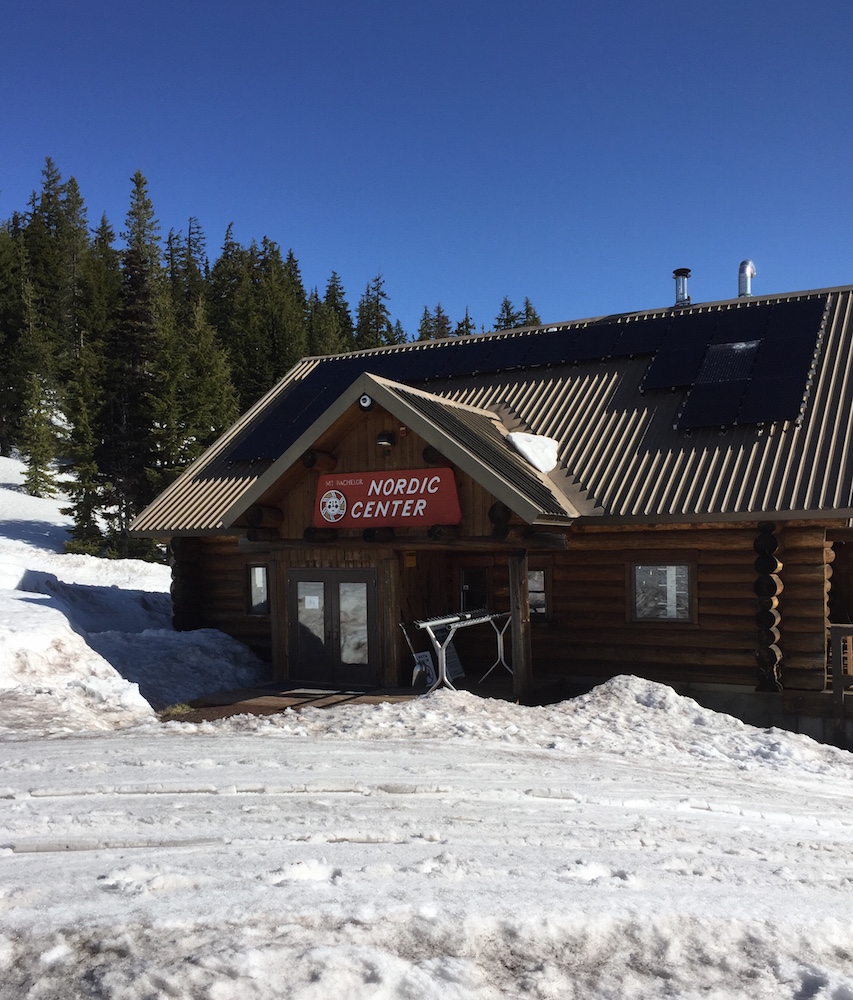
Mt. Bachelor Nordic Center in May 2017.
Once you make this leap of faith and commit to change, the hard part is over and then it’s just a matter of figuring out what you’re going to do differently (read, better). As usual, I have you covered, as what better way to dilute the knee-buckling pressures of adulthood and obstinate Great Danes than to escape to a place filled with cool people. And not just cool people, YOUR people. And Bend is that place. Not only can you still get on snow here right now, but you can get on really good snow.
This isn’t an article about some BS 2 k loop in a carbon-monoxide-filled tunnel in the armpit of Europe. In fact, it’s about as far away from that (both literally and figuratively) as possible. The Nordic center in Bend is nestled between 1,752 and 1,950 meters at the base of Mt. Bachelor and offers an amazing array of trails and options. Right now, all 56 k of perfectly prepared trails are open and believe it or not, the venue is still getting regular new snowfall.
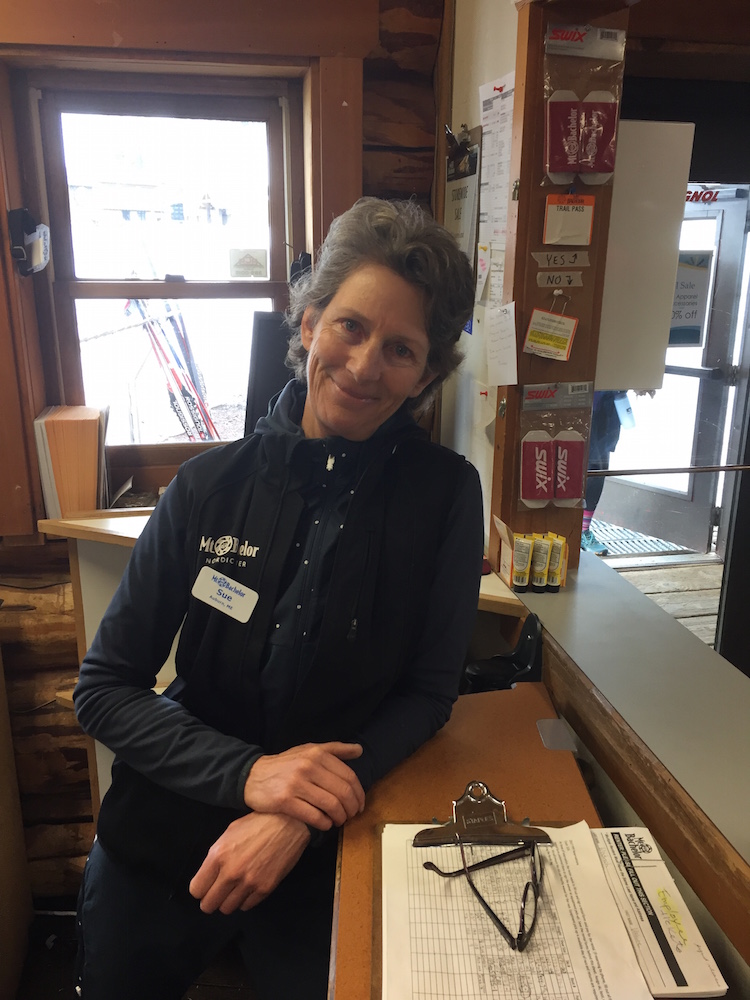
Sue Foster, Mt. Bachelor Nordic Ski Center director
“This is truly an amazing place,” said Sue Foster, director of the Mt. Bachelor Nordic Ski Center. “Our snow in early to mid-May is usually quite reliable, but this is a particularly great year, even for us. We’re still grooming the whole network, so every trail is still open, which is pretty awesome for this time of year. We may shut the lower loops down soon, but we’re still going to to have a lot of skiing available into mid-June.”
It is for all of these reasons and more (more on this in a bit), that Bend is the venue of choice in May for all of the U.S. nordic national teams: US Biathlon, Cross Country, Nordic Combined, Paralympics Nordic, and several top junior teams are either here right now or coming shortly.
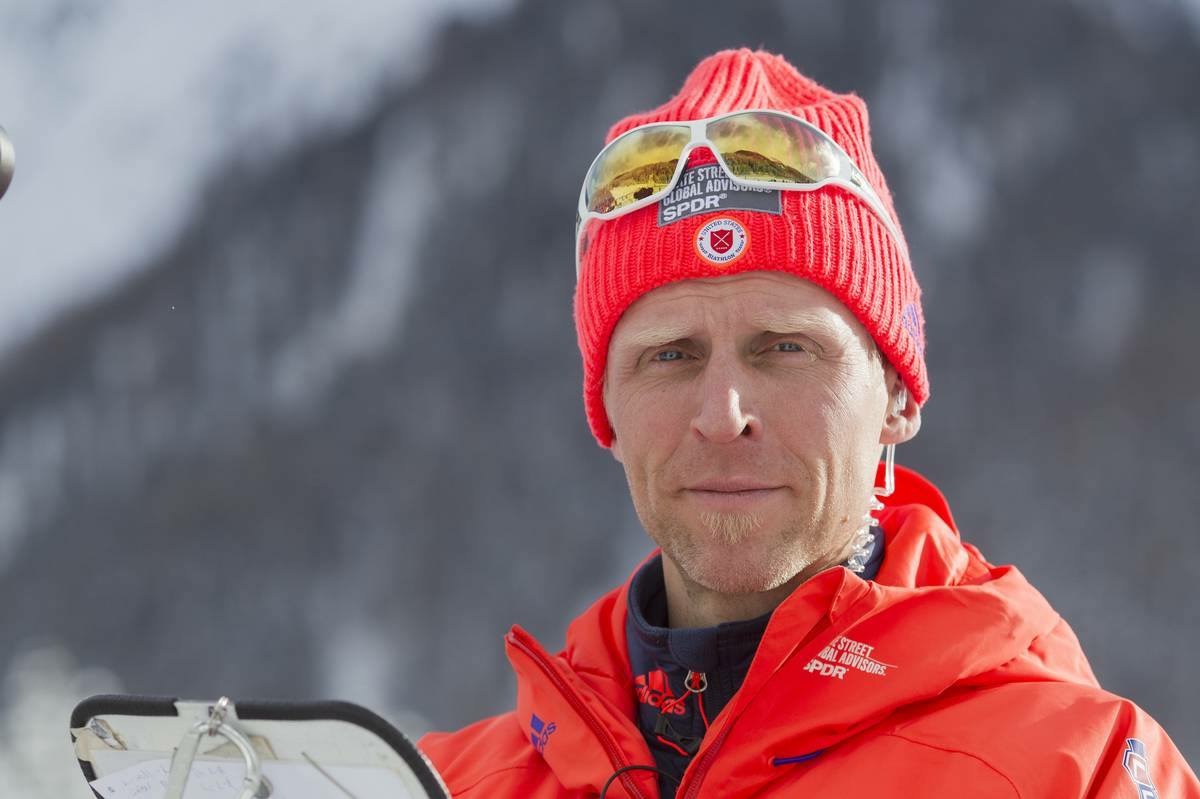
“This is a fabulous place to train in May,” said US Biathlon Women’s Coach Jonne Kähkönen. “We’ve been coming here for several years as it is a perfect place to log a lot of quality hours on snow, really focus on technique and have a wide variety of outstanding dryland training options as well.
Jonne Kähkönen, US Biathlon women’s head coach, in Bend, Ore.
“I coached in Finland before I took this position with US Biathlon and we used to go to the glacier in Ramsau, Austria, for a similar camp, but this is really much better,” he continued. “Not only is the snow as good or better, but everything is much easier logistically, as you don’t have to take a gondola up every day to ski and the afternoon dryland training is accessible from right outside the condo. It’s a great way to start the season.”
Reigning biathlon world champion Lowell Bailey elaborated on some of the concepts from Kähkönen: “I come to Bend because it has been one of the most dependable places for quality on-snow training in May. With more than 50 kilometers of trails and world-class grooming, there is no better place to start the training season each year.”
His fellow world championship medalist Tim Burke concurred: “Bend is the perfect place to kick off the training season because you can combine ski-specific training in the morning with world class mountain biking in the afternoon. I don’t know of any other locations that can offer this combination in May.” But don’t just take their word for it, as this video says it all:
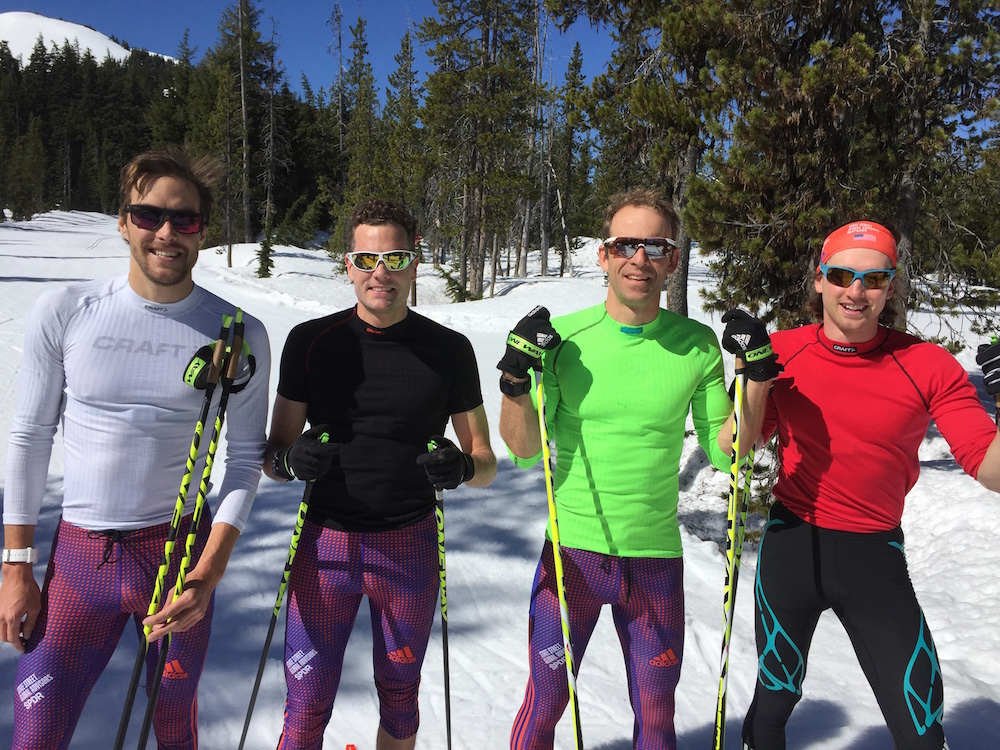
Determined to build on the incredible success of last season, the US Biathlon men’s team arrived in Bend looking leaner and more focused than ever, with their mantra being, “New year, new gut.” From left to right: Leif Nordgren, Tim Burke, Lowell Bailey, Sean Doherty.It is also important to point out that while Lowell (l) and Timmy (r) aren’t skiing quite as much as me here, they’re still skiing a fair amount and since the skiing is at altitude and there is an oxidative stress associated with high levels of aerobic training, the camp has already taken its toll on both athletes, for while they don’t look bad in the aforementioned video and photo, here is a shot of them on their first day in Bend, so wear that sunscreen people.
The XC mafia is out in force, too, with their whole gaggle on-site as well. “I’ve spent a lot of time here,” said Chris Grover, head coach of the U.S. Cross Country Ski Team. “Probably going back to the ’80s. From the national-team perspective, it’s a no-brainer — we can ski every morning on legitimate cross-country trails, which is not really something you can do on the glaciers in Europe, then in the afternoon, Bend also offers all sorts of amazing dryland options. On top of all of that, the community support that we have here is unreal: everything from the management and staff at Mt. Bachelor, to fellow skiers, to the community in general, we are always blown away at how nice people are here and how willing everyone is to lend a hand if we need help with something crazy. It’s an incredible place.”
Andy Newell (U.S. Ski Team) training both on snow and on dry land earlier this month in Bend, Ore.
The cross-country athletes share all of these sentiments as well: “The U.S. Ski Team Bend training camp is a tradition that pre-dates me, for sure,” said longtime, wily U.S. Ski Team veteran Andy Newell. “I don’t know the exact origins, but I believe it started a generation or two before me with Justin Wadsworth and all of those guys — maybe even earlier, I’m not sure — but there’s a reason why we keep coming back, it’s because it’s pretty awesome.”
Newell continued, “Bend is sweet for many reason: amazing trails, reliable conditions, and manageable elevation, so the overall quality of the training is very high, which is not something you can do in many places in Europe, especially at this time of year. In addition, the overall vibe is really cool. The camp itself has lots of focus on technique, not hammering intervals, so it’s really nice to be able to just enjoy being back together with your teammates and have fun being back on snow. Plus, as you well know, FBD, the afternoons are open for all sorts of shenanigans. It is without a doubt one of the best camps of the year.”
So elites are here, pre-elites are here, juniors are here, but what about you, the mid-life crisis, disenfranchised desk jockey with 2.2 kids, a white picket fence and a possible brain-damaged Great Dane that somehow still does not know his name, is this place for you? Of course it is.
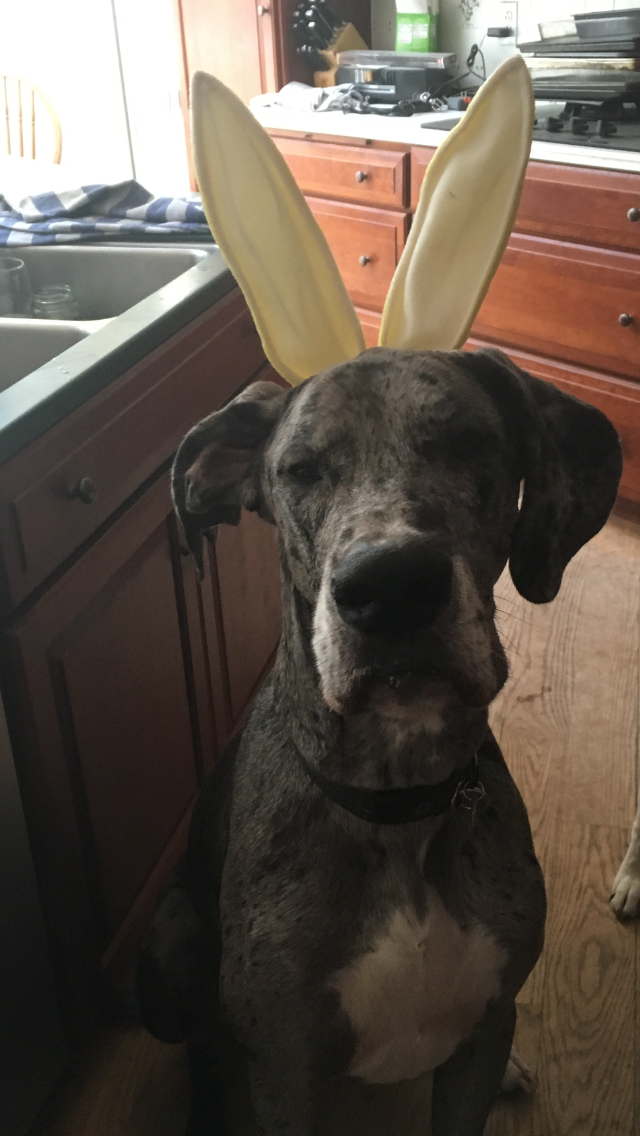
FBD’s Great Dane
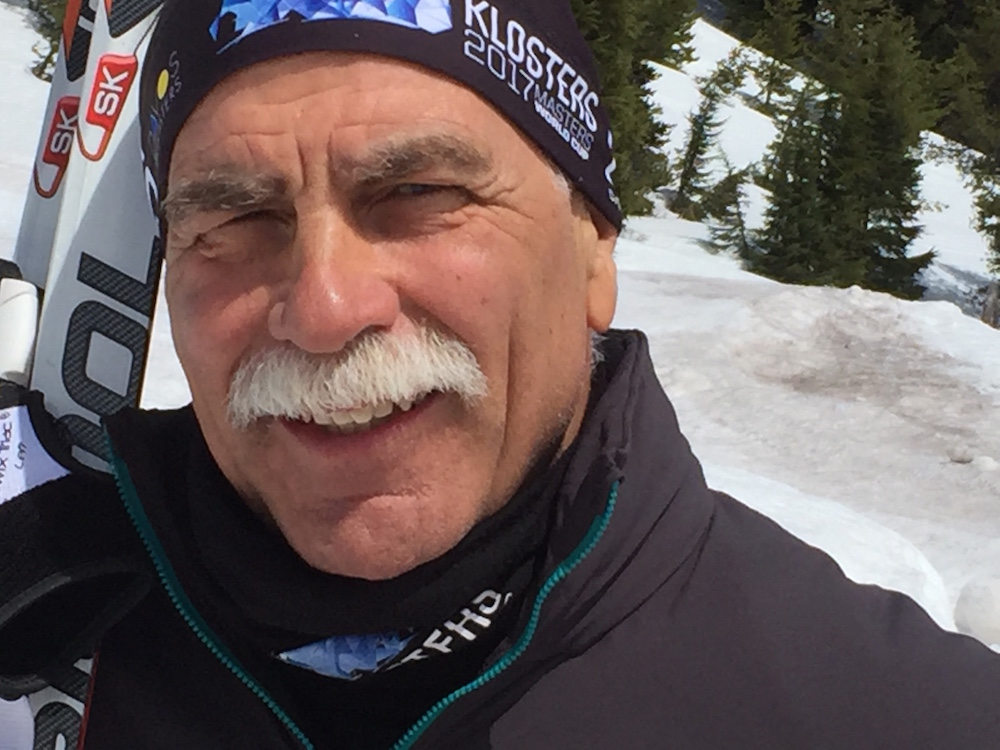
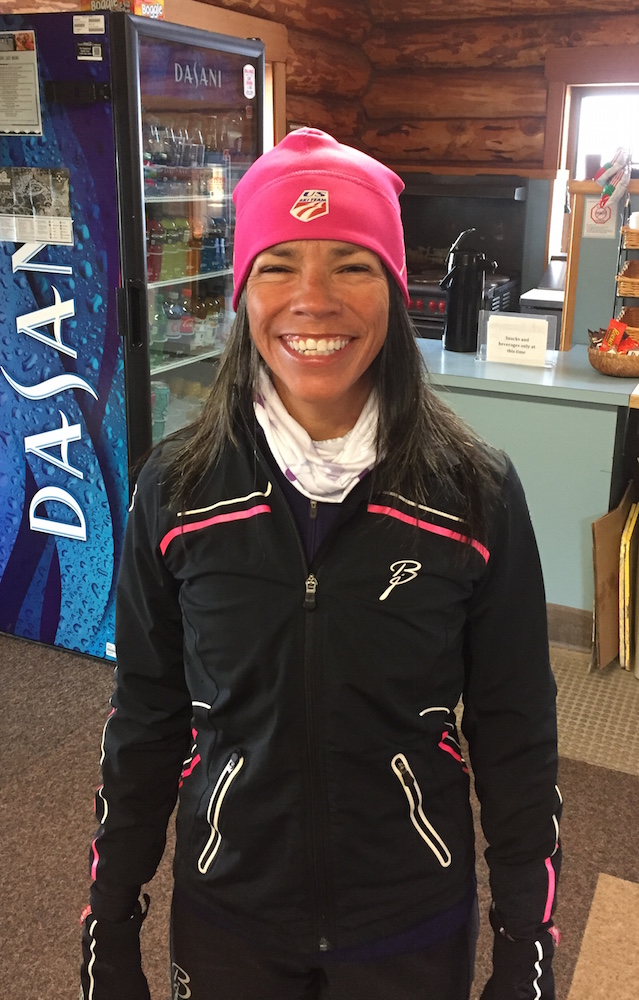
How can I write this with such confidence? Well, for starters, I am one of you: you are “my people” and vice versa. I’ve been on the tracks every day for two weeks and the skiing is amazing. However, if you are a regular reader, Instagram follower (and you certainly should be, as I am awesome), or you only know me by reputation, you may have some “concerns.” For example, why don’t we take a completely wild hypothetical: let’s say that I have lost my mind and have been filling my free time pretty much exclusively just skiing, mountain biking, paddling, and trolling Josh Smullin on Instagram. Again, this is purely hypothetical. So in this clearly random and arbitrary example, you’re now likely thinking, “this dude is nuts, I’m not going to listen to him” (often a very sound strategy, btw). OK, fine, if you aren’t going to listen to me, nonetheless Lowell, Timmy, Andy, or Kikkan, maybe you will listen to one of my favorite nordic power couples and dyed-in-the wool, uber-Master Blasters, Pat and Cyndy Flores. I’ve crossed paths with these globe trotters in Alaska, Switzerland, all over the continental U.S., and seemingly every other place where the snow is good, so it made complete sense that these crafty snow-chasers were smiling in the sun on the deck as I walked up to the nordic center one morning.
Pat FloresCyndy Flores
“You can’t beat Bend in May,” noted a tan, fit, and rested-looking Pat Flores. “Cyndy and I would come up here regardless, as there is so much great training, good restaurants and nice people, but what really makes the trip a no-brainer for us is we do JD’s master’s camp each year and this is really the icing on the cake.”
Cyndy agreed, “This is one of the few places that not only has reliable snow in May, but to be able to stay in a nice condo only 20 minutes from snow and also less than 10 minutes from a really cool town with all kinds of great restaurants, shops and fun stuff to do, makes this a ‘must-do’ every year. JD’s masters camp is great, the skiing is great, the food is great and if you’re really lucky, you might get to ski with FBD!” (Ed. note: REALLY LUCKY, as he is both everywhere and quite elusive, all at the same time, in particular when stories are due).
I have personally never attended one of JD’s camps, so being the always suspicious, ever-vigilant investigative reporter than I am, I didn’t just take Pat and Cyndy’s word for it, I also went straight to the source, XC Oregon Head Coach John “JD” Downing. “The camp is a great way for masters skiers to get to the next level,” Downing said. “We keep it fairly small, so there is a lot of personalized attention and the venue is amazing. Bend doesn’t just have skiing in May, it has really good skiing in May. Sadly, climate change is a reality everywhere, but this is one of the places that still seems to be holding up well. In fact, some of the best days I’ve ever had on snow anywhere in the world have been in Bend in early May. As you well know, you can ski all morning, then bike and run in the afternoon on a trail system that is also world class. You can even go play a round of golf. It’s an extraordinary thing, really. This why so many national teams come here at this time of year.”
Chris Grover, head coach of the U.S. Cross Country Ski Team, earlier this month in Bend, Ore.
Speaking of national teams and master blasters, Kähkönen offered very valuable advice for athletes of all ages, in particular masters: “My recommendation is to adapt your training to your length of stay. If you can only make it out for an extended weekend, that’s OK, as this can still be very productive. In this scenario, focus on skiing well and don’t worry too much about your levels of exertion. You’re at altitude and you probably won’t feel as good if you are sea level athlete, but for a short stay, that’s okay. If you are able to come out for a more extended block of training though, keep a close eye on your levels. Altitude can be tricky, so be careful to not go to hard every day. You should use this camp to set a solid aerobic base and technical foundation for the year, so be smart.”
Grover also offered up some top-secret, US Ski Team ninja sh*t: “This is a phenomenal place for skiers at all levels to come to start their seasons, as Mt. Bachelor can throw lots of different conditions at you. We view this as a strength, not a weakness, though, as it’s a great place to improve your skills, in particular in classic. If you’re here for a week, you’ll likely ski on hard wax, klister and zeros, so it is a perfect environment to test equipment, wax and work on technique in these different conditions. Even if you are mainly skating, you’ll get fresh snow, wet snow, dry snow, old snow, hard pack, and slush, sometimes many of these in one day. These variable conditions are something that you usually don’t get on glaciers, so without a doubt, practicing in this environment has made us better skiers as a national team and it most certainly will help skiers of all levels.”
For more on my travel idiosyncrasies, check out this wonderful podcast from some dude named, “Jason”.
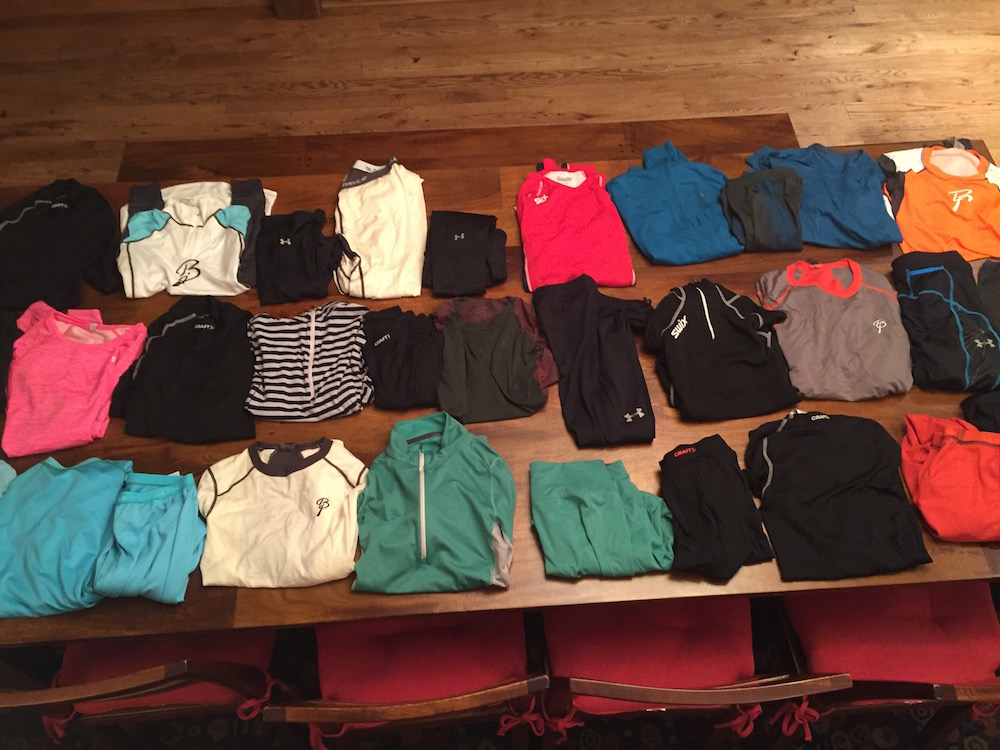
Now that this esteemed panel has convinced you to make the trip, the next question is, “How are you going to roll? There’s BALLER, FBD-style, which means that you’ll need a stevedore to unload all of your gear (I like to have the options to choose between lots of colors and styles of underwear each morning).
Study at the feet of the master and bring six sets of skis (rock classic, cruiser classic, race classic, rock skate, cruiser skate and race skate — yes, not having both cold race skate and warm race skate still has you upset, but you’re praying that you’ll be able to make your “cold skate” race skate skis work, as you are pretty frickin’ adaptable). Now over-stuff your ski bag with base layers of every conceivable thickness, material, color and style. Ditto for mountain-bike gear. Double-ditto for running gear. Better bring that paddling gear, too, just just in case Timmy Burke gets his nerves back after his horrific loss to me in our race on Lake Placid, then, since everyone knows you have a reputation for looking real nice for the ladies, you’ll also need your traditional two bags of personal grooming items and tastefully coordinated couture.
To adequately transport all of this crap, you’re going to need one of those stupid monster trucks but that’s OK, as your top priority is to make it to the tracks every day, regardless of road conditions, completely ignoring the fact that the scenic highway to the mountain is perfectly maintained and essentially never closes. You’ve never been one to listen to reason and you’re certainly not going to start now (after all, you are a self-loathing nordic skier who pays money to suffer) so you rationalize this ridiculous gas guzzler with the explanation that you also need this vehicle so you have room for the sherpas, in particular your shirt sherpas, as those dudes are indispensable. If you’re fortunate enough to snag one of the rare and exclusive invites to have dinner with me and you show up looking like you slept in your clothes, “my people” will immediately show you to the door. You’ve been warned. So yup, better pack that travel steamer as well.
This excessively wasteful and cumbersome manner of travel isn’t for everyone though — I get that — and to be fair, it is really more of a lifestyle and not something for which everyone is suitable emotionally and financially equipped, which is fine. Some of you out there in FasterSkier-land may consider yourself the nordic version of Seal Team 6, and thanks to my gripping expose on why you never need to do laundry again, you may prefer to go commando and travel with just one pair of socks, undies, and a T-shirt. Well, fear not my nimble travelers, I have you covered here as well (see what I did there?).
How to go “lean and mean”
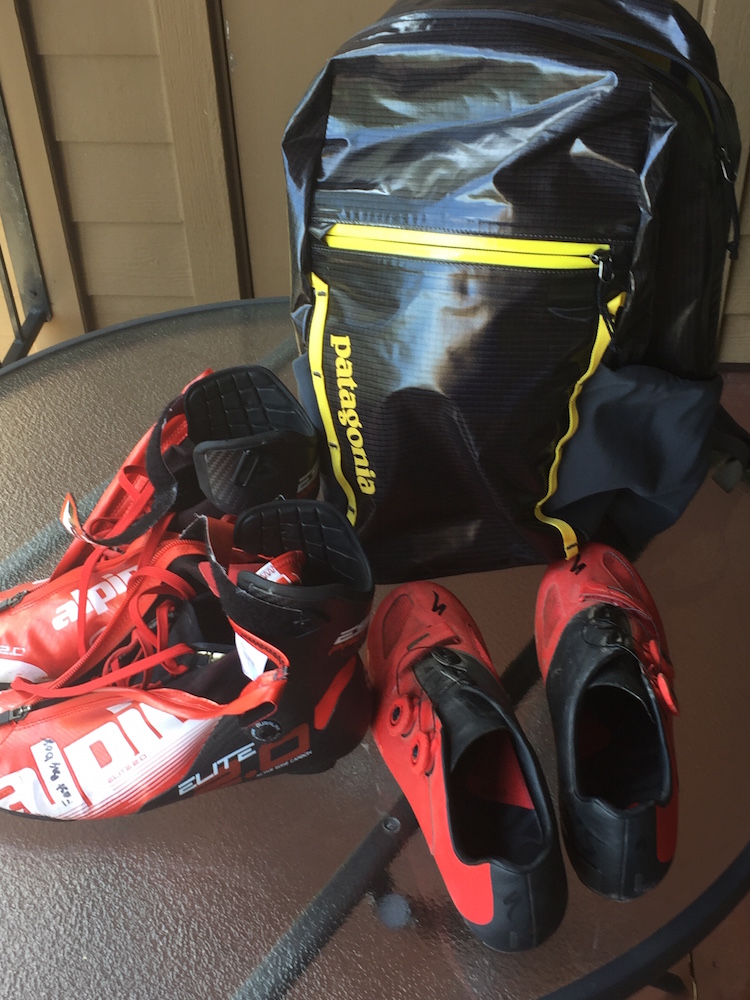
If you want to really go for it, you can do this trip with just a backpack. Load your ski boots and cycling shoes in your day pack and wear your running shoes. Stuff your one extra pair of socks and skivvies into your boots, eschew the bulky and pesky toothbrush for a pack of Tic Tacs that you pick up at a gas station in town, and POW, you are set. The fine folks at my favorite shop, WebCyclery, will hook you up with the rest: skis, boots, poles and mountain bike. If you’re one of those “I don’t need 20 outfits but I need my own skis” types, fear not, as WebCyclery also has a public wax bench, so you don’t actually have to choose between either of these two extreme examples and there is plenty of room for a reasonable, middle-of-the-road approach. Do yourself a favor, though, and regardless of which camp you gravitate towards, avoid the “why you need to travel wax” lecture from my good buddy Zach Caldwell and be pro: travel wax, then scrape at WebCyclery or up at the nordic center. The most important point here is regardless of where you are on the baggage, underwear and ski spectrum, I’m dead serious, you really can do a great, multi-day training camp with only a carry-on bag.
Now you’re geared-up and ready to crush the ski each morning, but what about the rest of your day? Glad you asked. It just so happens that Bend has a wide variety of trails to suit every skill level taste and agro level. Whether you are a normal person who can can chill in Level 1 and simply enjoy the super fun, flowing trails, or if you are one of “those guys” who gets all kitted up and lurks in the bushes ready to pounce on Adam Craig or Ryan Trebon as they ride by so you can shame them with your exemplary nordic fitness (completely disregarding the fact that they are probably out cruising and you’re about to ‘ring the bell’) none of that matters. What matters is that this place is perfectly suited for you to either be super-smart and carefully but gradually build your base fitness while loving life, or you can go out and hammer every day and completely blow yourself up by doing stupid sh*t. I know that’s how some of you roll and I’m not your mother, so knock yourself out. If you do fall into the latter category, please be sure to tell Adam and Ryan that I say hi, but don’t come crying to the FBD when you find yourself wrecked in January. Remember, no one wants to be a “Thanksgiving star and a Christmas turkey.” Church.
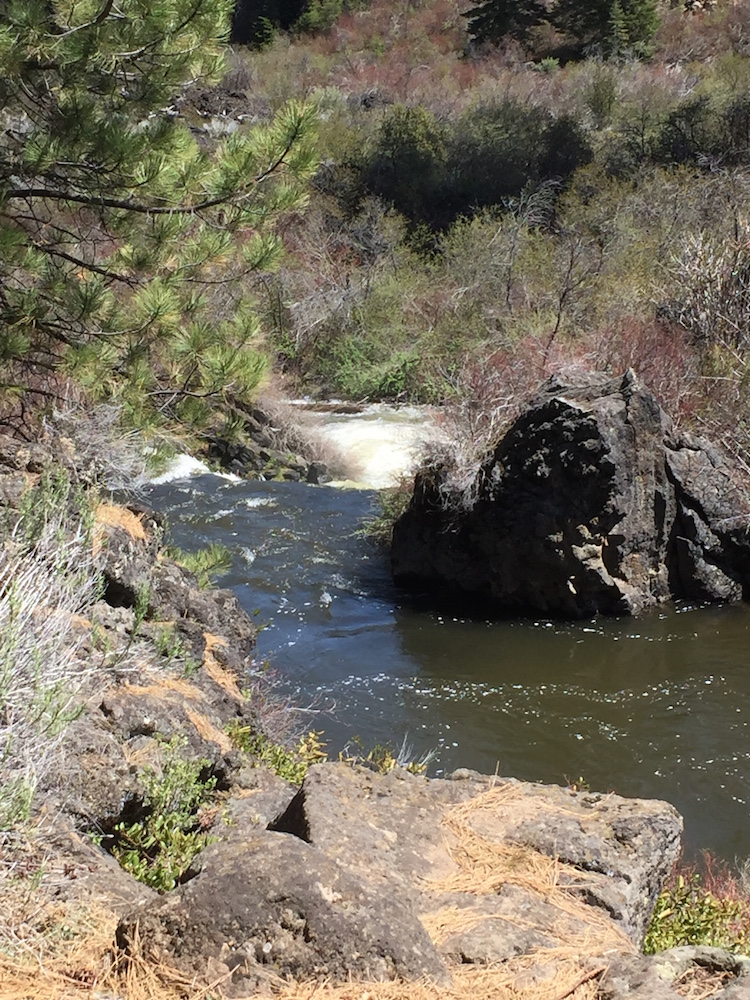
Just one of the many savage views that you will encounter on one of the nation’s best bike trail systems.
All right, where was I? Ah, yes, what to do with the rest of your day: the ski was epic, you tore up the dirt faster than the GOP shredding Obamacare and since you’ve now logged over six hours of training on your way to being sick and injured, you’re so hungry that you’re ready to eat your own head. Please tell me you’re not one of those annoying nordic nerds who flies with chopped up, organic, locally sourced carrots in your carry-on, nestled between the hand sanitizer and the Nalgene bottle that you filled up in the bathroom. If so, stop it, stop it right now. Have a beer and a can of Pringles on the flight like a normal person.
If this is you however, you’re probably also going to cook breakfast at your condo each morning and subsist on PBJs that you eat in the car on the drive home, as you’re concerned about not achieving the correct 4:1 carb/protein ratio before your glycogen window closes. This is all well and good, but I’d kill myself if I lived like this, so my advice to my one or two normal readers is treat yourself, after all, who deserves it more than you, right? Don’t worry, I hear ya, you’ve blown 90% of your disposable income on new skis, flights, condos, and Great Danes, so you don’t want to break the bank on lavish meals. Fair point. But, in addition to all sorts of great restaurants with real plates, flatware and food served by humans, there are some economical options that fit the bill nicely without decimating your wallet: two FBD favorites are Parrilla and The Pancake Wagon. There’s also a parking lot full of food trucks, aptly named, “The Lot,” which offers all sorts of options for people comfortable eating food that has been prepared in a structure that can drive away at a moment’s notice, one step ahead of the law.
And let’s not forget the beer — ah, my beloved beer, the source of, and solution to, so many of life’s problems. So while the FBD loves beer and Bend has all kinds of great beer places, interestingly enough, you know what the FBD hates? To be fair, this list is long and distinguished and merits an entire series of its own, so for now let’s confine this to the context of this discussion, the FBD hates the hipster/yuppie/hippie/yippie whateverthehellyourproblem is, beer snob. Yes, beer is awesome, but you know what none of us need? Some smug, pseudo-olfactory savant weirdo wearing an outfit that looks like it came out of my grandmother’s basement and a haircut that screams that he lost a bet, telling us why some particular brew “has a nose that resembles Costa Rican coco beans buried behind a pit toilet with a hint of a 1972 Volkswagen Bug seat covers,” or whatever nonsense the hip crowd is spewing these days. Just order you goddamn beer and shut up. Guy code is that you have between 15 – 20 seconds to place a beer order, with no editorializing. The ONLY circumstances in which you can offer anyone at the table any advice or commentary whatsoever is if they directly and specifically ask you a question and even in this very focused and narrow circumstance, you answer must again be limited to 15 – 20 seconds. I don’t make the rules, I just enforce them.
So assuming you navigate through these hipster-invested waters of annoying ignorance, pomp and circumstance, you should be good to go. Or are you? If you’re anything like me, my thinking in this situation usually goes something along the lines of, “I skied over 50 k today AND crushed Adam Craig in a race so secret that not even he knew it was happening, so I have earned these 162 ‘cheat calories’…..…Wait a minute…. 162 calories? In only ONE beer? Damn, that’s a lot. Maybe I should go do some sit-ups in the bathroom or I’ll never make that cut for Wave 6. I feel fat just thinking about this. Now everyone is looking at me, I can feel it. Oh crap. Do I look fat in these pants? I knew I should have skied another hour. I wonder what Noah Hoffman is having for dinner? I really wish he still blogged daily……” Then I go in the bathroom and do 15 minutes of core while sobbing uncontrollably. But that’s me.
OK, let’s move on. I now have you set up for skis, bikes, and food, anything else else? Well, if you’re anything like me, you’ve probably going to completely disregarded the very sage advice of world-class coaches like Kähkönen and Grover (we don’t need to talk about my lactate reading after doing a supposed threshold block with Burke and Bailey), and you’re now completely wrecked. Sure, you could give up and fly home while attempting to pick up the pieces of your shattered life, or, you could simply train wisely in the first place, but we all also know that you are a stubborn nordic skiers, so you aren’t going to do either one of those things, which means that your only other option is to get some professional help. Step One is to get a massage from someone who specializes in working on athletes. For this, my go-to guy is Scott Yount. He has worked on all kinds of elite skiers, so stop your crying, he can get your whiny nordic ass back out there overtraining in no time. If things really get bad, or if you showed up with some pre-existing conditions (which shortly won’t be covered by proposed, “new and improved” and “really terrific” Affordable Care Act, so act fast), hit up the PT to the stars, Dave Cieslowski, DPT, CSCS. He also specializes in Type-A, needy, nordic skiers (and is one himself), so you guys will hit it off great.
Finally, since as always, I like to make all of these reports as long and rambling as possible, not to mention my rigorous and adorable sense of honor and integrity, I would like to go on record right now and state that I do not receive any sort of remuneration whatsoever from any of these people, organizations, restaurants, shops, businesses, clubs, cliques, or churches. My uncle does not own the bike shop, nor does my brother-in-law work at the burrito place. I am simply giving you a sampling of some of your many options and suggesting places for which I have had very positive experiences. My goal is to make your trip out here not only as easy as possible, but also as fun and as successful as all of mine have been, with as little effort on your part as possible. Let’s be real clear here, too — this is this is like divulging your secret powder stash or favorite surf spot, so if you do happen to run into me somewhere in the world, suffice it to say that you owe me a beer, as you aren’t getting information of this quality from many other places. That’s just how we roll at here at FasterSkier.
You also need to promise to use this information for good, never evil. I’m trusting you with all sorts of top secret beta and if you embarrass me, I’m gonna be pissed. If you bring a bunch of East Coast attitude, use your cell phone in line at the burrito place, or get all pushy in the tent behind The Pancake Wagon and someone kicks you in the nuts, well, you had it coming. Don’t hate on these places or write me that my recommendations suck — that’s on you — this is not check-in at the Philadelphia International Airport. You are in polite society now, so act accordingly.
A few other tips, as noted earlier, the weather is unpredictable, so come prepared for sun, wind and snow, perhaps all in the same day. Embrace this, though, as there is something incredibly bad-ass about having to have the heat blasting on the drive up to the ski and the AC cranking on the drive home. Be prepared to deal with whatever the mountain throws at you — remember, skiing is an outdoor activity and you will most likely see very different conditions each day. Thankfully, I was able to shoot perhaps the most informative video EVER on mental preparation, so I’d advise watching this every morning before you head up:
In general, the optimal ski window is usually between 8:30-10:30 a.m., so lie around in bed for too long and things will get soft. If you consider your weather forecasting and navigational skills to be superior, there is also amazing crust cruising to be had when the conditions cooperate.
Crust cruising in Bend
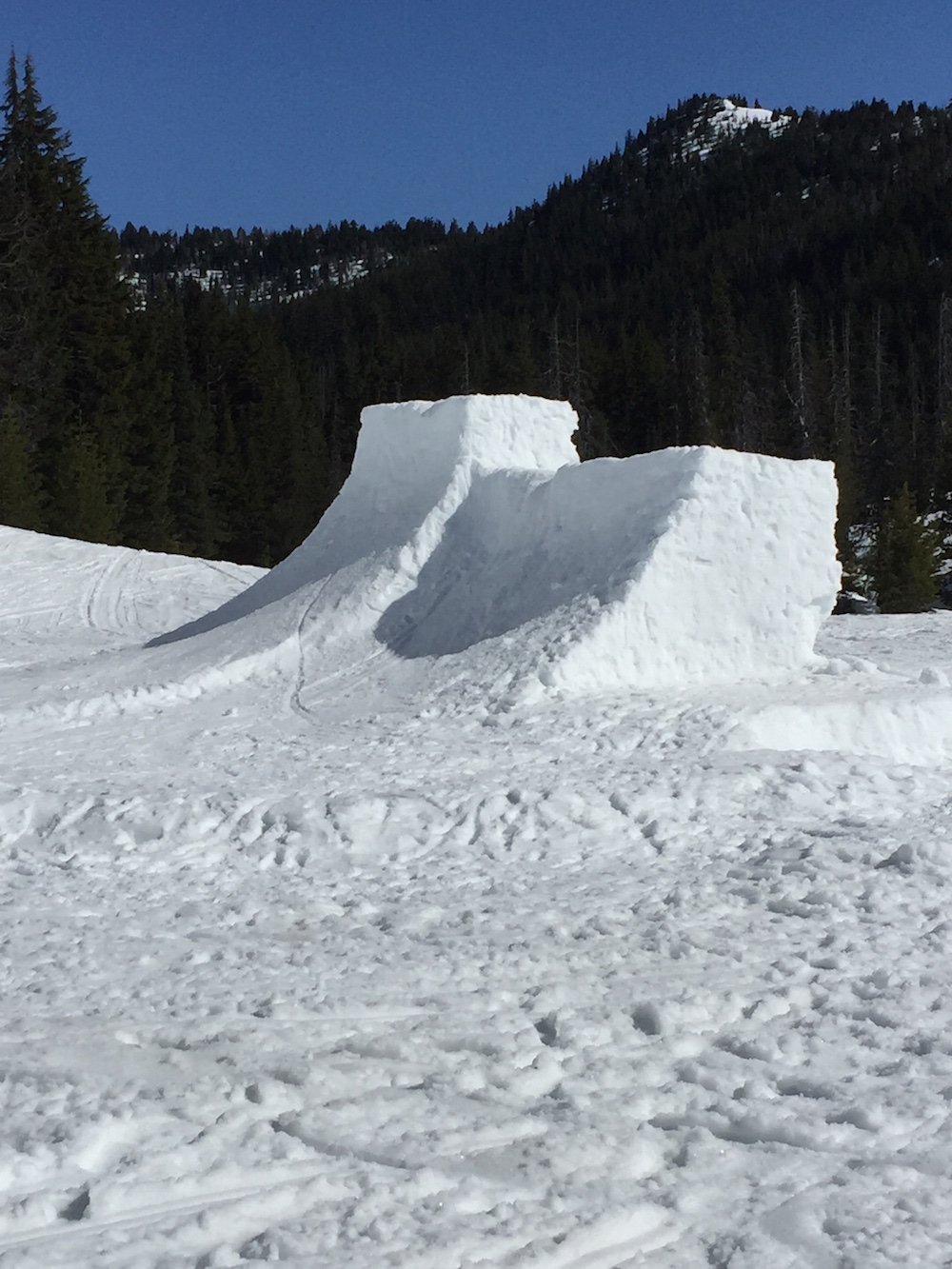
Watch your goodies coming back in, though, as one route back to civilization has some mighty big kickers: these are known as, “FBD Killers,” so I only hit them a few times.
FBD killers
The alpine skiing is also awesome, if you’re in to that sort of thing. Some of the really hard-core locals will hit the tracks at 8:30 for a few hours, transition directly to alpine, grab some lunch, paddle, then go for a ride or run. If that’s not a perfect day, I don’t know what is.
Mt. Bachelor alpine area
In conclusion, Bend is one of the nicest places in the world to be in May for nordic skiers of all levels. “I never, ever get tired of this place,” Foster mused. “Every day up here is special. Each day has its own personality and every one is different. Even the drive to the nordic center is amazing. You’re in the trees for most of the trip up, then you hit the high country, turn the corner, and you can see the mountains — it’s breathtaking. It’s just such a cool reminder that everything is okay in the world.”
So instead of squandering those frequent flyer miles on something stupid like going to visit family, invest in your future and book a flight into Bend (Redmond) today. From there, you are less than 30 minutes away from having all of your problems solved. You’re welcome.
And remember, you owe me a beer. One that doesn’t smell too much like VW seat covers, if it’s not too much trouble, please.
BEND, Ore. — Make a mental picture of this: it’s a tree-splitting cold night. Windless. You are headlamp skiing down firm tracks. Perfect kick.
Although venturing out into arctic air is an easy deal breaker, for many skiers it heightens the senses. It can be that way for many outdoor activities. But, cross-country skiing has, at its core, many of these recurring moments.
We seek them out again and again.
In Norway, there’s a word: “Friluftsliv”. Its direct translation means “open-air living”. Diving a bit deeper, friluftsliv is what Norwegians claim is way of engaging with nature and it’s something infused into the national psyche.
(For a far more thorough treatment of friluftsliv, read this article in the Canadian Journal of Environmental Education, written by Dr. Hans Gelter, associate professor at Luleå University of Technology.) An exhibit called “Winter Comes” at the Deschutes Historical Museum in Bend, Ore., is in many ways a celebration of friluftsliv, but with an Oregon twist.
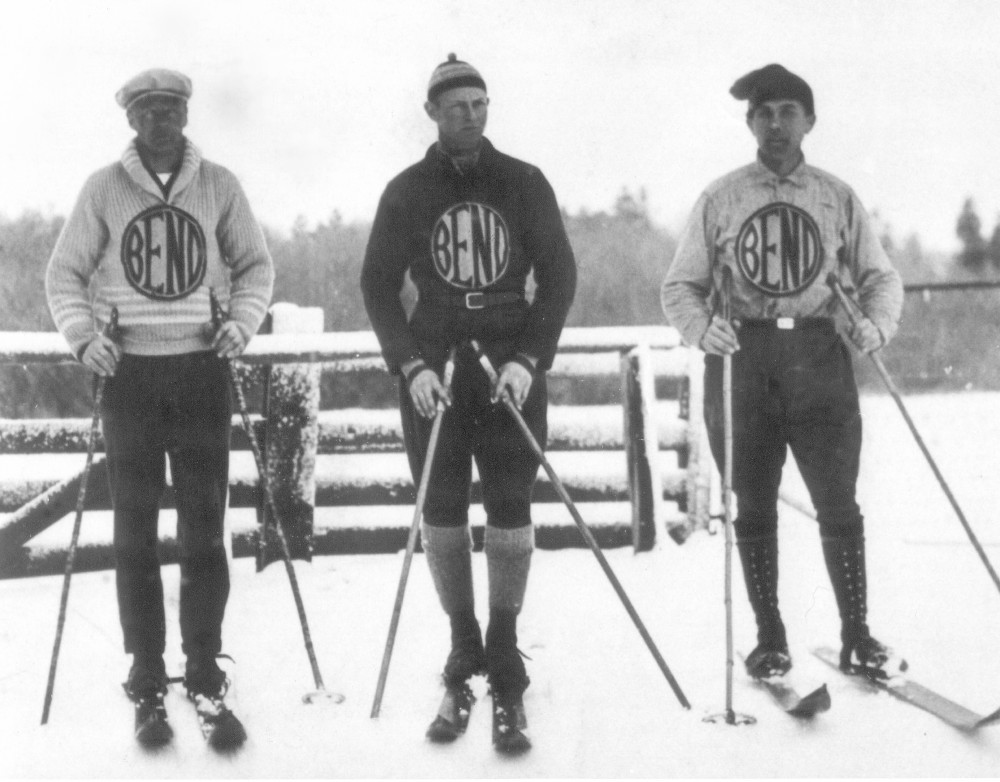
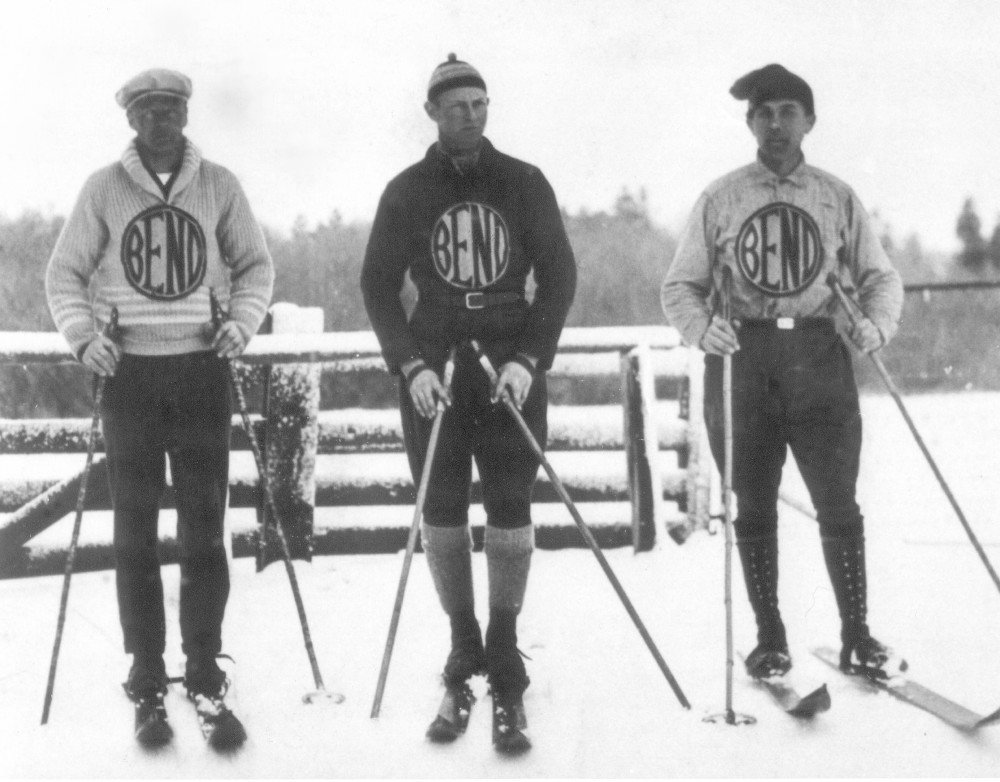
Three of the four founding members of the Skyliners with “Bend logo” sweaters. From left to right: Nels Skjersaa, Nils Wulfsberg and Emil Nordeen. (Courtesy photo: Deschutes Historical Museum)
Bend resident and co-curator of “Winter Comes: Oregon’s Nordic Ski History”, Tim Gibbons said this of friluftsliv: “It really means to embrace nature and to be outside and enjoy that, and that’s what the Scandinavians brought to places like Bend. And to me that is how I grew up. But that’s because I was around parents and grandparents that already had that as part of them. I think that is one of their gifts; they are bringing this appreciation and that’s how you express yourself — to be outside.”
There’s serious truth to that statement. Tim’s father, Tom Gibbons, is a common sight on the community ski trails. He’s 92.
“Winter Comes” honors what many cross-country ski communities nationwide owe to groups of immigrants who took a chance on cruising and cutting timber, or any number of jobs associated with natural resource extraction.
Co-curator Tor Hansen, a native of Sweden, said these people were “city builders”. And part of what they have gifted is an outdoor lifestyle. People in places like Bend — synonymous with big snow, plentiful skiing — are indebted to their forebears who couldn’t live without winter sport.
“The people that were sensing opportunities at the beginning of the 20th century, 1910-1920, there was business opportunity here, but they loved the outdoor lifestyle,” said Kelly Cannon Miller, director of the Deschutes Historical Museum. “What we think of as a lifestyle isn’t new. It’s just that we are marketing it and talking about it as a choice. Back then, when people were coming here it was what they did. It was how they sent their spare time. It was pre-television: we read and and we were outdoors. To me it continues, why some people settled this place — it is the same attraction for people moving here now as it was then? Only back then, maybe less business opportunity. You were moving here for a lifestyle and you hoped you got a job, you hoped you were lucky enough to have both a business or an opportunity to work in the mill and live in a place that reminded you of Minnesota or reminded you of Scandinavia — or the Eastern Europeans that were moving here as well. There was an opportunity to live that outdoor lifestyle and have an opportunity for a new life.”
“Winter Comes”literally starts at the beginning. The exhibit examines the origins of skiing approximately 8,000 years ago and brings the community into near real-time focus as it highlights nordic skiing’s Oregon roots. Locally, it began in 1927 when a mountaineering accident in the Three Sisters Wilderness prompted calls for a trained and on-call rescue corps and the eventual birth of the Skyliners Ski Club. The Skyliners built a ski jump near McKenzie Pass, about a thirty mile drive from Bend, and eventually moved it’s lodge, jumps, and energy to an area closer to Bend — to within a ten mile drive from downtown.
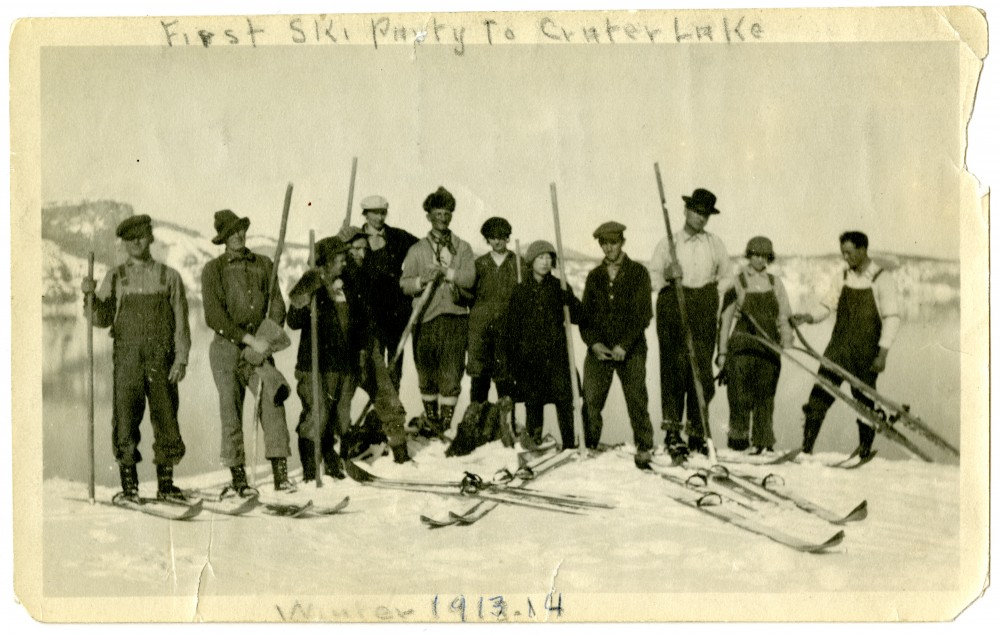
One of the first photos documenting a ski party at Crater Lake in 1914. (Courtesy: Crater Lake National Park)
The images, clothing and equipment on display highlight a profound contrast to today’s high-fluoro culture; it was a woolen and leather clad hardscrabble people that built up the sport we love.
From the Klamath Trophy presented to the winner of the Fort Klamath to Crater Lake race, dating back to 1929 (and on loan from a Swedish Museum), to profiling the founders of Bend’s ski scene: Emil Nordeen, Nels Skjersaa, Nils Wulfsberg and Chris Kostol, the exhibit is a reminder of lives well lived and community showing its gratitude for a mega-dose of friluftsliv.
The exhibit runs through Nov. 30 at the Deschutes Historical Museum in Bend. In 2017, the exhibit will go to Klamath County Museum in Klamath Falls for six months, then Mt. Hood Cultural Center and Museum in Government Camp, Ore., for six months and then Nordic Northwest (formerly Scadinavian Heritage Foundation) for two months in Beaverton, Ore., before it returns to the Deschutes Historical Museum as a permanent exhibit.
For more information on the first skiers click here.
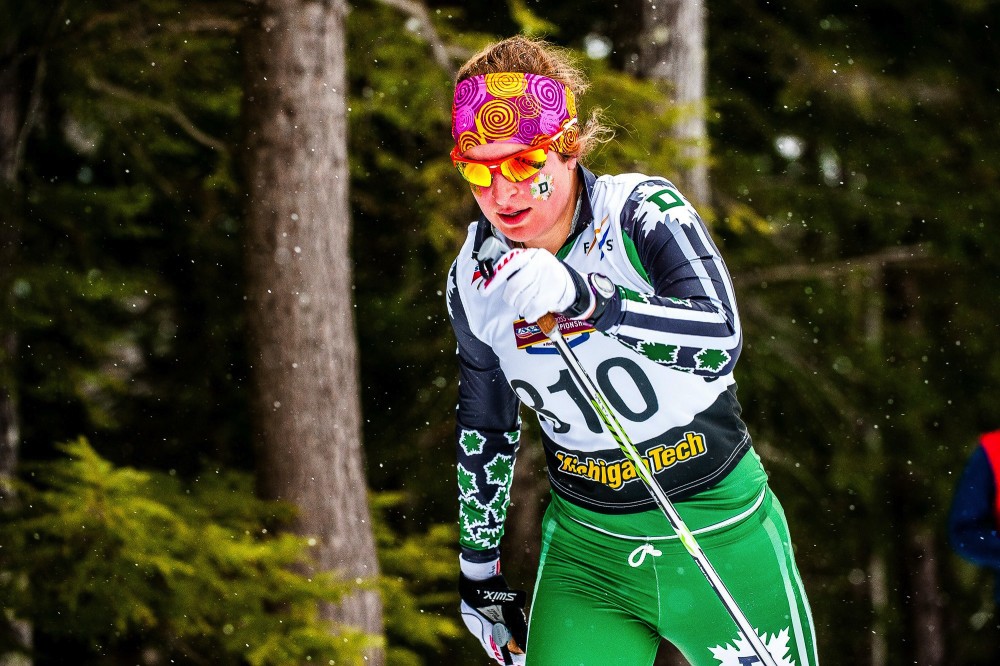
Dartmouth College Freshmen Emily Hyde racing “back” East at the Williams Carnival 10k skate in Lake Placid, NY. Hyde will soon to be training “out” West. (Photo: Olivia Amber)
Dartmouth College freshman skier Emily Hyde is that quintessential bi-coastal athlete: she learned to ski fast in Bend, Ore., and she headed “back” East for the Ivy League academics and to race against some of the country’s best collegiate cross-country skiers. With the East’s grim snow year, Hyde is looking forward to coming home, for yes, on-snow training in June.
Bend is a nordic skiing hotbed. And Hyde took charge there early on. She was a four-time Oregon High School State Cross-Country Ski Champion and she won two Junior National titles her senior year. Perhaps there is no other way to describe it, but Hyde was a big fish in Bend’s somewhat-small pond. Fast forward to this past year, and Hyde held her own on the Carnival circuit and said she loved being pushed by her teammates.
Dartmouth freshman Emily Hyde racing in the 10 k classic at 2016 U.S. Nationals in Houghton, Mich. (Courtesy photo)
“I think it was really awesome to sort of not be the big fish in a small pond anymore,” Hyde said on the phone. “My team was big enough that everybody was better at some things than everybody else. I know this girl will be really good on this day. Another girl will be really good on that day. But I think that was really cool, because it always kept you accountable. It was just cool to always have someone a a level above you in whatever you were doing.”
Hyde is that type of skier: she is always wanting to improve.
“Personally, I need to keep working on skate skiing,” Hyde said about what she’ll be working on this summer. “My first year in college it was back to back to back racing whereas at home , it was every other week or a week off and then a high school race. I sort of chose what races I was going to do. But this is every weekend and everybody does it. So I think just working on being consistent and being able to push through and be fast every single weekend for six weekends in a row. And I’m not entirely sure how I am going to do that yet. But I think just continuing to build the base.”
Hyde’s goals — improving her skating and building a big base — brings us to this Wednesday Workout which Hyde is a bit homesick for: “The Not-So-L1 Crust Cruising into Broken Top.”
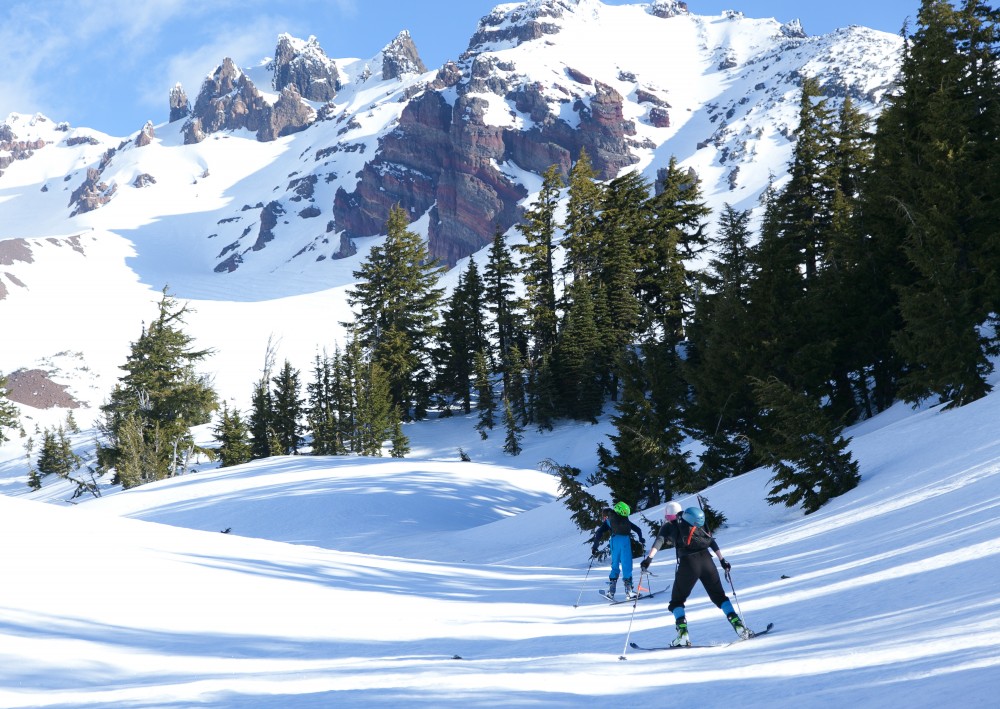
Two Bend locals, Aidan Whitelaw and Zoe Roy, nearing Broken Top’s bowl. (Photo: Jason Albert)
Hyde was on the fence as to whether she’d call it a true Level 1 effort. “You go kind of fast, it feels so good to crust cruise and chase your friends around,” Hyde said. Higher up, as skiers gain altitude, the terrain changes. It morphs from a gradual climb with a few punchy steeps into a sustained grueling climb.
Broken Top, an extinct volcano, features a massive bowl resembling more of a headwall as it steepens and steepens.
“Once you get into the bowl, it is quite steep and quite high,” Hyde noted. “So you can’t really make that L1 unless you one-step and take a breath. I guess I don’t really think about doing it L1, I just want to get to the top.”
The nature of the workout, where the terrain dictates the effort, will help Hyde wake the body up as she adapts to her hometown stomping grounds for the summer.
“It’s going to be an altitude adjustment for sure,” Hyde said. “I think it is cool I’ll be back on skis, which is more natural and it will be the longest workout I will have done. It’s going to be hard in that sense and hard because it is at altitude. But I am not going to dread it. I don’t know if my legs can handle it for three hours — it will be hard but it is a good adjuster.”
Broken Top Crust Cruise How To’s:
– Watch the weather. Wait for a several day’s long high pressure system with clear cold nights.
– Head up to Mt. Bachelor Nordic Center on a bluebird day, head out the Common Corridor Trail, hang a left at the snow covered road, and head downhill to Todd Lake.
– Ski across Todd Lake, assuming it’s frozen, and head north. Gain the ridge, and aim towards Broken Top. The wide open bowl on Broken Top’s east-southeast flanks will be obvious as you ascend above tree line.
Round trip: approximately four hours.
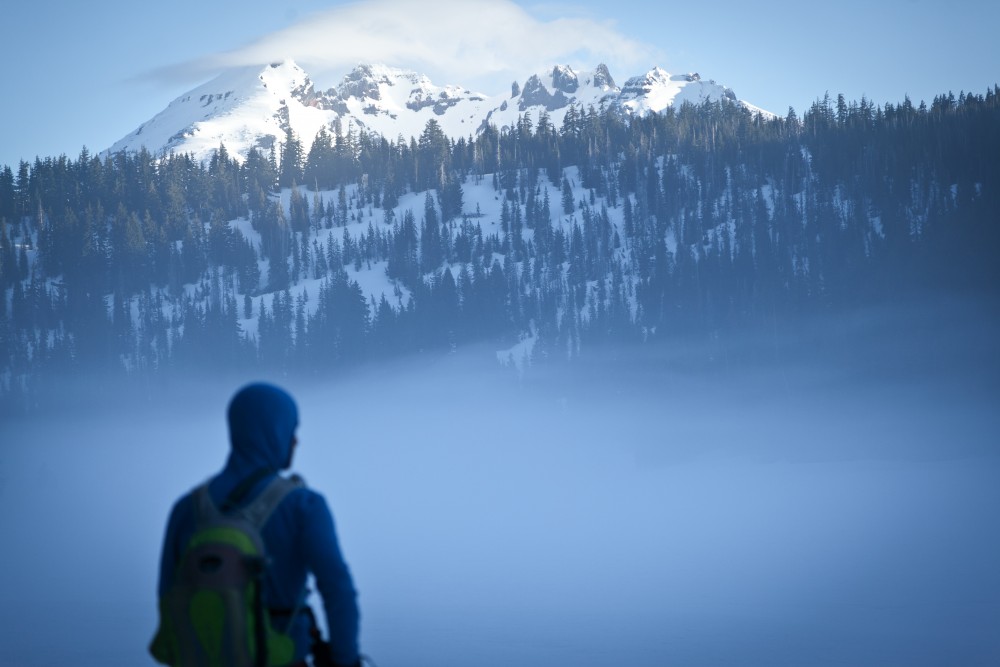
Looking towards Broken Top’s Bowl from a foggy Todd Lake. (Photo: Jason Albert)
MBSEF skiers Matt Hecker (l), Casey Shannon (c), and Zeb Millslagle striding up Kochie’s Hill, a remote single-lane road in western Oregon with 4,645 feet of vertical climb in 14.6 miles. (Photo: Dan Simoneau)
Time passes and skiers come and go, but terrain (usually) doesn’t change – especially in remote parts of Oregon. In this week’s workout, Dan Simoneau, nordic program director at the Mt. Bachelor Sports Education Foundation (MBSEF) and 1984 Olympian, shares a place from the past, which he still drives his athletes from Bend, Ore., to today.
***
Kochie’s Hill in western Oregon: 4,645 feet of vertical climb in 14.6 miles. (Photo: Dan Simoneau)
Late summer can be tough training. Though MBSEF may have the shortest dryland season in the world, (we ski ’til late June), it’s hot, we’re tired of roller skiing, summer camps are over, winter seems so far away.
Late fall is also tough training. It’s now been months without a good yardstick to measure our fitness. Our roller ski wheels are worn. Our roller skiing patience is over. Snow seems near, but it also teases us, disturbing our training.
This year we broke up these two blocks with a trip to a pretty special place. A place that’s special to me and a place I wanted to pass on to the next generation.
I call it Kochie’s Hill. It’s a one-lane, paved logging road in the middle of dense, lush, nearly rain forest of Western Oregon. I don’t know the history of it, but I suspect it was built in the ’70s when lumber was the king of Oregon’s economy.
“From the bottom to the top it’s 14.6 miles with an elevation difference of about 3,700 feet. It’s all up. Striding up. There are a couple flats, and even a couple pretty substantial downs, but when you’re done you’ll only remember the up.”
For a couple years in the mid ’80s, Bill Koch lived in Eugene where I went to school and later graduated as an Oregon Duck. When the World Cup season would come to an end, we would both fly to Eugene where he would get back to family and I would get back to school.
Though I studied there from April to August and he lived just across town, we only trained together a couple times. That might have been a good thing because every time we trained together he left me wrecked – a shell of myself.
U.S. cross-country skiing great Bill Koch, who found a favorite hill climb in Oregon by plane. (Photo: Peter Ashley)
When he arrived in Eugene, I was anxious to show Bill my roller ski hills.
I say hills because my workouts were defined by the hills. Having been in Eugene for a few years I had the West Hills scouted. I knew the best hills, the long hills, the great intervals. I wanted to show him Gimple Hill, Baily Hill, Dillard Road, Briggs Hill, and a host of other roads that made me the skier I was.
But when we finally found a way to get together for a roller ski, Kochie had his hill in mind. He found it with a plane. I could have scoured the hills and roads of Oregon for years and there was no chance I would have ever found this road. To make a long story short, we went, he conquered, I crawled home.
Today, Kochie’s Hill lives on. From all evidence it sees little logging or traffic of any kind. It’s single lane road that at times is more of a bike path as moss, grass and trees are absorbing it back into the forest.
According to Map My Run, from the bottom to the top it’s 14.6 miles with an elevation difference of about 3,700 feet. It’s all up. Striding up. There are a couple flats, and even a couple pretty substantial downs, but when you’re done you’ll only remember the up. Total climb is 4,645 ft. You read that right. 4,645 ft of vertical in 14.6 miles.
The road has switchbacks, some chip seal for the first few k’s, plus plenty of places where nature is taking back its turf. But mostly it’s a great classic striding workout where you don’t need high visibility clothes, where you’ll stride for hours, and where the snow on top is a symbolic end to the dryland season.
Kochie’s hill is 90 minutes from MBSEF and it’s become a special place. A place we go when we need a change, when we need to escape the dog days of August, when we want to confirm that we’re fit enough for winter, and when we want to absorb some of the greatness of the best skier of the prior generation. Unfortunately, it’s also a place where the old coach starts telling old stories.
Kochie’s Hill profile
Kochie’s Hill map
MBSEF skiers Zeb Millslagle, Casey Shannon and Matt Hecker during a fall over-distance stride up Kochie’s Hill in western Oregon. (Photo: Dan Simoneau)
MBSEF skiers Zeb Millslagle, Casey Shannon and Matt Hecker striding up Kochie’s Hill in western Oregon in less-than-ideal conditions. (Photo: Dan Simoneau)
Emily Hyde (MBSEF) heads up Kochie’s Hill in Oregon. (Photo: Dan Simoneau)
Sierra Foster (MBSEF) double poling up Kochie’s Hill (Photo: Dan Simoneau)
MBSEF skiers at Kochie’s Hill in western Oregon: (from left to right) Sierra Foster, Brandi Jacobson, Matt Hecker, Casey Shannon, Zeb Millslagle, Emily Hyde, and Alec Wiltz. (Photo: Dan Simoneau)
Casey Shannon
Matt Hecker
Dakota Blackhorse-von Jess (Bend Endurance Academy) skating to a career-best 38th at the Quebec World Cup freestyle sprint last December. (Photo: FlyingPointRoad.com)
Note: This is the eighth preview in our U.S. elite-team series, which we’ve dubbed the “The 12.” We asked coaches to tell us what’s new and whom to look out for in the coming season and will publish additional previews in the coming weeks in no particular order.
Team: Bend Endurance Academy (BEA) a.k.a “The Dirty Ravens,” according to coach Ben Husaby.
Coach: Ben Husaby (Executive Director and Nordic Director as well as van driver, cook, DJ and pop psychologist).
Support: “J-Beck,” Justin Beckwith (Green Mountain Valley School) for testing, Scott Johnston (Methow Olympic Development) for application, and “J-Nice” (New England Nordic Ski Association) for top-tier resource procurement at major competitions. “Although we have decided that all of this will not be necessary in the future after reading this study, this might be the advantage we have been looking for,” Husaby wrote in an email.
Roster: This guy: What could he be thinking?
Bend Endurance Academy’s lone elite-team athlete: Dakota Blackhorse-von Jess (Photo: Ben Husaby)
Who’s new: No one for winter, but the BEA has “a ton of new and returning ravenettes that have come around for summer training,” Husaby explained. “They have done a fine job of pushing the lead bird.”
Notables include Rogan Brown (University of Vermont), Jordan Buetow (Bates), Bella Smith (Montana State University), Elena Breed (University of Denver), Reitler Hodgert (The College of St. Scholastica), Tony Squallace (Gustavus Adolphus College), and Joel “The Filth” Bransky (St. Olaf College), as well as Ben Grodner (Wasatch Nordic Ski Academy), and Pat Madden is on loan from the Bridger Ski Foundation.
Who’s missing: Lars Ellefson. “He has embarked on a long desired (secret) passion; body building,” Husaby wrote.”(This is not a joke).” Well, sort of. He’s a big-time gym rat and works at the Central Oregon Community College club sports department, Husaby explained. “We have lost him for the time being.”
“For the future, we would like to offer this once in a lifetime opportunity,” Husaby added. “If you choose to hang out with us we will give you one of these as a token of our appreciation.” (See below)
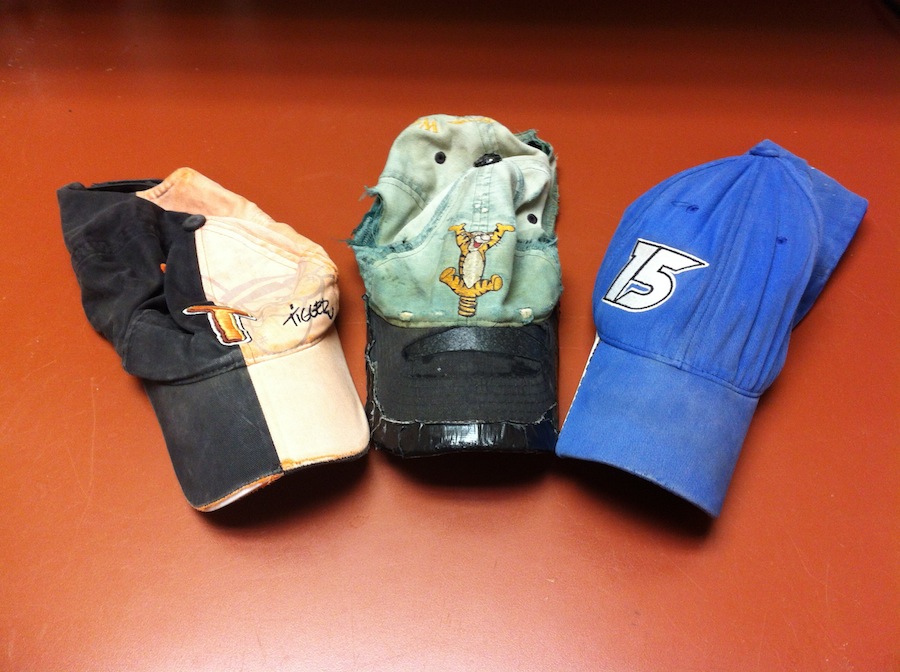
VonBallCap (Photo: Ben Husaby)
Top results last season: According to Husaby, it’s a tie for Blackhorse-von Jess between “getting the opportunity to compete with ‘our’ awesome Americans on the World Cup. And being given the play by play from Halsey at US Nationals, Classic Sprint Semi, where the commentary went from ‘Dak is down!’ at the start to ‘Dak is in the lead!’ down the finishing stretch. I have a hard time watching sometimes.”
Dakota Blackhorse-von Jess and coach Ben Husaby, the two main components of the Bend Endurance Academy in central Oregon. (Photo: Ben Husaby)
Blackhorse-von Jess, 27, won the freestyle sprint at U.S. nationals in Midway, Utah, following a bronze-medal finish in the classic sprint at Soldier Hollow. After placing 38th in the Quebec World Cup skate sprint in early December, he went on to qualify for the World Cups in Switzerland (Davos), Finland (Lahti), and Norway (Drammen).
Coach’s comment: “I would like to think that we offer a very comprehensive and complete training atmosphere where everyone can reach their personals goals,” Husaby wrote. “We had great success last year with Pat, Bella and Rogan making it to the NCAA championships. In the future we would certainly like to entice skiers to consider Bend and BEA as their place to roost. It certainly is taking shape during the summer months. I buy a lottery ticket every week hoping to hit it big so I can underwrite it all. But in the meantime Dakota and BEA’s great supporters will focus on trying to get him to the highest level.”
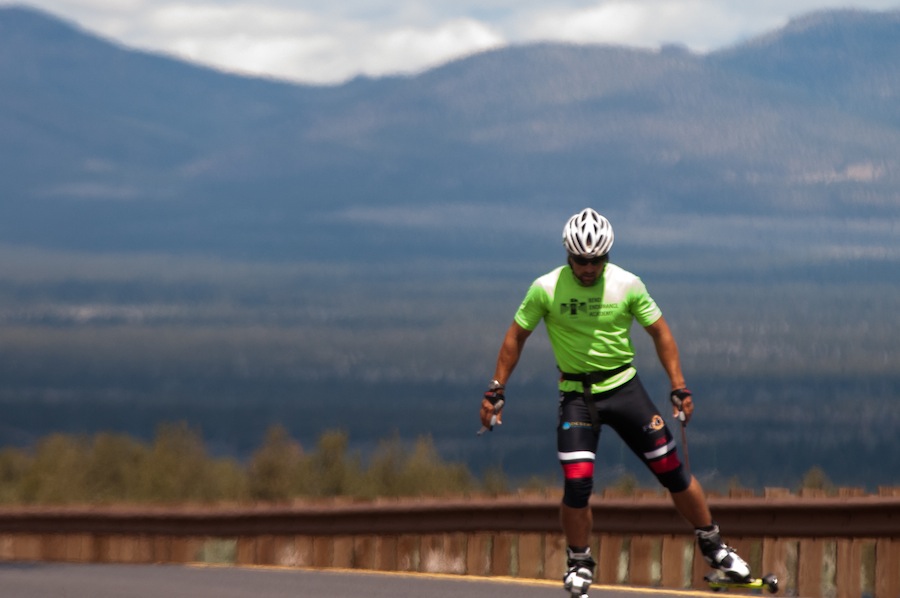
Dakota Blackhorse-von Jess of the Bend Endurance Academy rollerskiing in June in Oregon. He increased his training hours this offseason in an attempt to build a bigger aerobic base. (Photo by Curt Hawkinson / curthawkinson.smugmug.com/Nordic)
When Dakota Blackhorse-von Jess shows up at a race, he’s hard to miss. If his backward baseball cap doesn’t give him away, his bubbly personality, bearded face or black, red and white-striped spandex will.
One of the staples of Bend Endurance Academy’s nordic program, the 26-year-old Blackhorse-von Jess grew up in Bend, Ore., and skied for Dartmouth College before returning to his native state – and town.
Dakota Blackhorse-von Jess (third from right) and other Bend Endurance Academy athletes during a rollerski session in June near Bend, Ore. (Photo by Curt Hawkinson / curthawkinson.smugmug.com/Nordic)
Back in Bend, Blackhorse-von Jess trains mostly with his coach, Ben Husaby, and the three-man BEA elite team (including Reitler Hodgert and Lars Ellefson), while joining the Methow Olympic Development (MOD) program for workouts.
Known as a sprinter on the U.S. domestic circuit, the short-statured Blackhorse-von Jess typically uses his aggressive style to blast through the heats and into the finals. He captured silver at the U.S. nationals skate sprint last season and was the runner-up at the SuperTour classic sprint in Madison, Wis.
The next day at the skate sprint in Madison on Feb. 19, Blackhorse-von Jess failed to qualify for the quarterfinals for the first time that he could remember in his pro-racing career. It was a blow that set him back in the last SuperTour sprint of the season and one he attributed to missing the wax while prepping his own skis.
Moving on, he planned to race at the SuperTour Finals in Craftsbury, Vt., but come late March, health issues kept him from it. The Madison sprint ended up being his last race of the season.
Overall, Blackhorse-von Jess finished 24th in the SuperTour standings and fifth in the sprint category for his best career ranking. Still, the man with the three-part, four-syllable last name wanted more and he’s been working all summer to achieve it.
FasterSkier recently emailed Blackhorse-von Jess after he tweeted about paddleboarding with the musician Michael Franti. Turns out, he didn’t actually hang out with Franti, but saw him from a unique vantage point.
***
FasterSkier: Please explain this tweet: “Paddle boarding and Michael Franti? Yeah. That happened. And it was awesome.”
Dakota Blackhorse-von Jess: Ha, not actually paddleboarding WITH Franti (although a friend of mine who teaches lessons did actually give him a lesson), but I’ll explain: The big concert venue in Bend is right along the river. My roommate came home … and said “hey – I’m headed down to the river to paddleboard, I hear Franti is playing. Wanna go?” so we grabbed some boards and paddled around and listened (and actually got to watch) the concert. Pretty fun times, but it’s sort of a reference you have to understand Bend to get right away.
FS: How has the rest of your summer been?
DBVJ: Great. The camps were awesome, training is going well, I’ve been working my a** off so I can pay for ski racing this winter, and I even managed to have some awesome surf days during our PNSA/Far West training camp in NorCal. Getting ready for fall though … I think everyone is looking forward to West [Yellowstone, the SuperTour opener in November], especially since that’s the next time I get to see all my college friends that have taken off for school already.
FS: Whom have you mostly trained with?
DBVJ: As of Monday, a week ago most of our college/older kids went back to school or are taking a couple weeks at home (technically the program is on “vacation” for two weeks) so it’s just me and Reitler Hodgert for the moment, but Lars Ellefson will be back soon, and our high school and post grads will be filling the van up once we get back on normal schedule. The fall is the loneliest time here, but it’s also hands down the best time for training and it works better in a small group. I’m psyched.
Our summer group was fantastic, as always. Keep your eyes on Bella Smith (now skiing for MSU). I predict she’s gonna make some waves. But it’s definitely a big void with all of them gone: we have 8 or 9 skiers from our summer group back off to college and a bunch more going back to high school, so instead of two vans going to training, we could take a single car … It’s different for sure. But it means less fighting over surfboards at the coast camps!
FS: What have you been focusing on?
DBVJ: The focus this summer has been, as it has been for the last couple years, on developing my aerobic base. Logging some hours. This year we’ve done a little more intensity work than last summer and have tried some cool new training methodologies (especially after the success the MoD Squad demonstrated using them last year) that we think are going to show some pretty neat results this fall. But the focus is definitely on continuing to build on my biggest weakness: a lack of years and years of base training.
FS: How does your training plan compare to last year?
Dakota Blackhorse-von Jess doing some non-ski-specific training last spring. (Courtesy photo)
DBJV: The biggest difference between this year and last year is the amount of non-ski work I’ve done. If things go well, I’ll be dropping some serious dough on travel and racing. So … saving up for that while having all the normal expenses of an adult living on his own with student loans and training full time has actually been the biggest focus of the summer. Training isn’t very hard – managing the rest of life so that it doesn’t impact training is the hard part.
FS: What are some of your goals?
DBJV: Goals for the coming season are pretty straightforward (and I expect a lot of people have this same list): first is to qualify for the world cups. Then, and more significantly, is to score some World Cup points in Quebec/Canmore. Second, I want to win a national championship.
If things go as planned, hopefully I’ll wind up at World Champs and maybe get to race some of the regular season European World Cups. But the plan is to do what I need to do so I can qualify for the World Cups in West and Bozeman, and then really be hitting high gear for the World Cups and US Nationals. It’s hard to know what’s gonna happen after that.
FS: How did you feel last season went?
DBJV: Last season was, like it seems all my seasons are, both up and down. I did more racing last season than usual (which was awesome), but learned some hard lessons it would have been awesome to have figured out years ago. Madison especially was a tough end to the season (although I didn’t know at the time it would be my last race).
FS: You mentioned financial struggles, which most skiers face. How do you manage to support yourself?
DBJV: I have an incredible support network here in Bend: somebody always knows somebody who needs some work done. I’ve done so many different jobs over the years and I own enough tools (or know people with tools) that I can do a really wide array of things. That helps a lot. Periodically I pick up web programming gigs, and I’ve been working super part-time as the systems administrator for a local dental office for something like 8 years. Odd jobs, 🙂
The amazing part is that everyone I work for is super respectful of my training schedule and actually wants to help me succeed in ski racing. It’s not that I don’t work a lot, because I do, but I get to be really flexible with it. There aren’t very many hours in the day when you pack all that stuff in, but it really makes you appreciate your days off (when I try to stay on top of the rest of my life … like laundry and mowing the lawn).
The takeaway is that people care a lot and WANT to help me out – I’m not unemployed or working minimum wage somewhere awful. Yeah, I don’t have money for, well, anything other than the basics and ski racing, but really? I’m living the dream. Who else gets to legitimately justify playing in the mountains?
Members of the Bend Endurance Academy rollerskiing in June near Bend, Ore. (Dakota Blackhorse-von Jess courtesy photo)
Zoe Roy (RMR) leads Alberta World Cup Academy skiers Emily Nishikawa (c) and Kate Brennan (l) up a climb on the middle of their fourth of six laps in the 30 k classic mass start at Canadian Ski Nationals on March 24 in Mont Sainte-Anne, Quebec. Roy finished seventh to tie a personal best at Canadian nationals.
Maybe it was the transition to full-time racing or the fact that Zoe Roy was competing in her home nation last season. It could’ve been the back-and-fourth flights across the U.S/Canadian border, or one team’s hospitality that helped Roy reach new heights on the NorAm circuit.
Whatever it was, she wasn’t fighting it. After spending some 20 years in Bend, Ore., Roy, who turned 25 on Sunday, is moving to Canmore, Alberta. Starting Aug. 1, she plans to live and train at Canada’s cross-country epicenter with Rocky Mountain Racers (RMR), which took her in last year. Traveling with the club and taking advantage of its wax resources, Roy achieved her first NorAm podiums with second- and third-place in 10 k races, and tied her personal best at Canadian nationals in seventh.
Between races, Roy was studying at the University of Utah in Salt Lake City. In her fifth year there, she was done with collegiate racing and entering the pro scene as a founding member of StellaRacing – a Salt Lake-based women’s squad in its inaugural year. She was also in her first season with XC Oregon, making her club affiliation that much more confusing.
In committing to a domestic circuit, she chose Canada because she’s from there. Born in Ontario, Roy remains a Canadian citizen and doesn’t have dual ties despite growing up in Bend. She started last year with the West Yellowstone SuperTour, then spent the rest of her season in Canada (except for a convergence trip to Europe and local races in Salt Lake).
FasterSkier chatted with Roy on the phone last week shortly after her surfing vacation in El Salvador. Earlier this month, she and a childhood friend from Oregon flocked to the sea to learn the sport in a place they could do it every day. After fulfilling their goals and surfing under moonlit skies, Roy was back in ski mode in Bend.
***
FasterSkier: After more than a week of mostly surfing, are you a pro now?
Zoe Roy: Not a pro by any stretch, but I’m better than really bad. Took lessons the first few days to get the hang of it.
FS:What was the best part of your trip?
ZR: I’d say the highlight … was going surfing at night under the full moon. That and the fried plantains.
Zoe Roy working with a Fire and Ice Camp junior in late June at Mt. Bachelor in Bend, Ore. (MBSEF photo)
FS: Before El Salvador, you worked at the Fire and Ice Camp in Bend. How was that?
ZR: The day before we left, I was on snow. It was kind of funny going from that to surfing. … I coached for TUNA [The Utah Nordic Alliance] the week before [the Fire and Ice Camp] and then I did Fire and Ice for a couple days before I left. I was kind of an assistant coach for [that].
There were a ton of juniors there. It was pretty cool to be able to get all those kids together. At any age, it’s fun to see everyone else skiing, too. You see all your friends that you might not get to see the rest of the year.
FS: How long had you been back in Bend?
ZR: I came [back] after school at the beginning of June and I’m going up to Canmore in the beginning of August. … I actually graduated in May [with a degree in] exercise and sport science with a minor in entrepreneurial business and a TESOL certificate, which means I can teach English as a second language.
FS: Why did you decide to move to Canmore?
ZR: I had a good year last year and I got to travel with the Canadians a bit. I’m originally Canadian … so I thought I might as well move up there and spend the year skiing with them and see how it goes. That’s the main reason. I also have an aunt and uncle in Calgary so that’s nice, too. I’m on the team RMR, which I traveled with on the Canadian circuit last year. It’s based out of Canmore, so that seemed the natural place to go.
FS:How did your relationship with RMR start, and what about the team appeals to you?
ZR: They waxed for me at nationals two years ago so maybe that was the beginning of it, and then after that I got more connected with them.
It’s a fun team. They have the whole spectrum from juniors up to elite racers. Dasha [Gaiazova] is part of it and Andrea Dupont, those are probably the two main older girls on that team, and then John Jaques, the coach, is awesome, too. It’s probably a combination of who’s there and then John, too. I don’t know [new assistant coach] Mike Vierra too well, but he’s the new coach there, but I’ve heard great things about him, too.
I’m psyched to be [moving] up there. I feel like there’s a pretty solid group of, not just on that team, but the whole Canmore community. The [Alberta] World Cup Academy’s there so I’m excited to have that whole group of girls to train with. … That’s another big reason. I feel like it doesn’t get much better than that.
FS:When it comes to climbing the elite ranks of racing, why did you pick the Canadian route?
ZR: I think mostly because opportunities do exist for me to race in Canada. Those same opportunities don’t exist for me to race for the U.S. because I’m not a U.S. citizen, so I guess that’s the main reason. I thought, ‘If I’m going to see how fast I can race, I might as well go somewhere where there are opportunities to make teams’ … so I thought I’d go to Canada.
FS:We heard you were leaving XC Oregon, but what’s the status of StellaRacing?
ZR: As of this coming year we’re splitting up a few more different ways because it was really based out of Salt Lake. I’m heading up to Canada, Katie [Ronsse] is in PT school, Evelyn [Dong] is coming back to Bend.
It was great; we had an awesome time putting it together and have a team based in Salt Lake to work from and race with, but I’d say as of now, it’s splitting up a bit more. I’m sure some of us will still wear our suits at certain times, but I don’t know if it will be as much as a team as it was last year, but we had a great time doing it.
FS:What are your goals for this coming season?
ZR: Well, the World Cups are in Canada so if I qualified for that, that would be amazing, but who knows. If that could happen, that would be awesome, but other than that podiums at NorAms and another Scando Cup would be sweet, too. I don’t know exactly what the opportunities are for another Scando trip.
FS:What did you gain from the convergence trip?
ZR: It was cool to just race in Europe and see the other parts of the ski world. It’s good to race against those girls and see what level they’re at. I feel like just that in itself was a good experience.
[Note: After winning four state championships at Summit High School, Roy spent a year and a half in Austria training and racing at the University of Salzburg.]
FS: How did you feel last season went overall?
ZR: I was psyched about those [NorAm] results. What can I attribute it to? I don’t know exactly, but I mean, it’s hard to pinpoint one thing. I guess before that I was racing [collegiately] so I couldn’t come to Canada that much. I was on the NCAA circuit.
FS:What are your thoughts on truly making the next step to full-time racing?
ZR: It’s exciting. It’ll be interesting to sort of concentrate more on skiing than I really did before.
The Fire and Ice Camp crew last week at Mt. Bachelor in Bend, Ore. (MBSEF photo)
After a massive wave of spring skiers left Bend, Ore., last month, the groomers at Mt. Bachelor hardly packed it in. The U.S. and Canadian national teams and several elite squads were gone, but nearly the same amount of skiers – 150 – were expected to flock to the snow-covered trails in June.
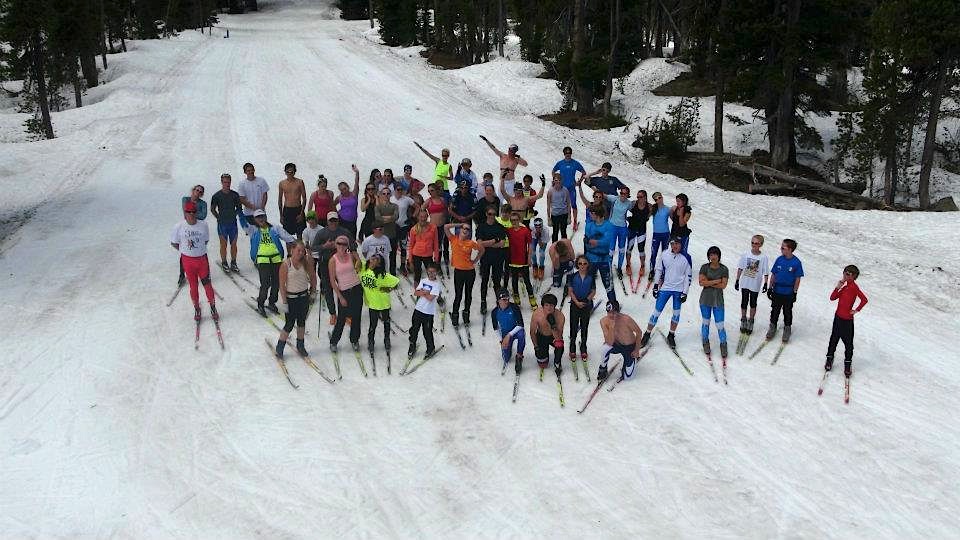
The Mt. Bachelor Nordic Center and its club, the Mt. Bachelor Sports Education Foundation (MBSEF), planned accordingly. On June 16, the MBSEF greeted about 55 juniors to its five-day Fire and Ice camp, an annual tradition that’s followed national-team visits for years.
Lars Flora shows off his balancing skills at the Fire and Ice Camp from June 16-20 in Bend, Ore. Flora was the camp’s head coach. (MBSEF photo)
Lars Flora, a two-time Olympian and Alaska Pacific University (APU) skier, made the trip down from Anchorage for his third-straight year to serve as head coach. He worked with MBSEF Nordic Program Director Dan Simoneau, who coordinates the camp, to attract six competitive skiers to Fire and Ice as coaches.
After all the 9- to 18-year-olds said their goodbyes last Wednesday along with coaches Matt Liebsch, Torin Koos, Tyler Kornfield, Sylvan Ellefson, Ollie Burruss and Zoe Roy, Flora talked about the experience on the phone from Eugene, Ore., while watching the Olympic track and field trials on Saturday.
FasterSkier:How long has the Fire and Ice junior camp existed?
Lars Flora: Four years, I believe. It’s been going on for, off and on, forever. Now with two periods of skiing and Mt. Bachelor way more behind it, they are really getting interest from skiers. There were 300 skiers between the two periods of skiing this year, so that was really good. When the national teams were there, they were at 150, and around another 150 in the second period in June. The town’s really excited about it. It’s awesome.
FS:What’s the goal of the camp?
LF: Dan [Simoneau] and I came up with the idea to bring more top athletes to help coach and train while they’re in Bend. This was the third year we did it. This year we had a really good group of coaches. Sylvan volunteered his time because he was out there training and Matt Liebsch and Torin and Tyler Kornfield were asked early on. It was really cool that Sylvan just stepped up and wanted to help out.
FS:Where do the participants come from?
Trail running/bounding at the Fire and Ice junior camp last week in Bend, Ore. (MBSEF photo)
LF: Most of the skiers were from PNSA [Pacific Northwest Ski Association], so Washington and Oregon. There were around 55 [junior] skiers who did the camp and they range from 9 years old up to 18. It’s a pretty big range of ages.
FS:How did they respond to having so many talented coaches?
LF: Sometimes I wonder if they always realized what kind of lineup of coaches they have. You know how it is, you’re always skiing and then you just hang out with your friends and you kind of forget who these skiers are. But it’s the time we spend with athletes; we spend from 8 a.m. to 4 p.m. every day with them. We do a lot of fun stuff like rafting and paddleboarding and running and playing games, playing soccer and whatnot. I think it’s just a lot of good time to observe the top athletes and watch them and the inspiration to be around the best athletes in the U.S.
Like Matt and Sylvan and Torin, from an athlete’s standpoint, they’re great around kids; all three of them are amazing. [A University of Alaska Fairbanks skier,] Tyler’s just getting into that stuff. He’s young, he’s only 21, so it was really good for him to be there. It’s good for athletes to learn how to coach and put on clinics.
FS: How was the coaching and group size structured?
LF: It was a free-for-all (laughs). Nah, it was small groups. Sometimes we would split the group into two: the young ones, everyone under 13 and then everybody above 13. Other times we would take 10 to 15 skiers out at a time [with] one coach. It varied throughout the camp.
FS: They were on snow for all five days?
LF: Five days on snow and five days of dryland activity.
FS:How were the snow conditions and weather overall?
LF: It was really good. The first half it was a little dirtier than usual and then it snowed one night midway through and cleaned it all up. Driving over the pass [Saturday], it was snowing pretty hard. …
I would say [it was around] 50 to 60 [degrees] when we were skiing and then in town it was 70 to 80.
The first day after the camp ended it started raining so we lucked out with 10 days of sun. I say 10 days because the first five days the coaches were there training and then the second five days was the Fire and Ice camp.
FS:What were some of the most popular camp activities?
Part of the Fire and Ice Camp included whitewater rafting on the Deschutes River. (MBSEF photo)
LF: They loved to play Sharks and Minnows on skis. Sylvan actually said he might want to put that into his training plan next year. He had a good time playing Sharks and Minnows with the kids. The older ones respond to intervals with the coaches. We’ll pop into intervals with the 17- and 18-year-olds and I think that’s one of the best activities with 18-year-olds.
Everybody loves the raft trips. We had eight boats going down the Deschutes [River] and jumped in the water; a lot of water fights. I was with the 10- to 12-year-olds so that was fun to go down the Big Eddy with a bunch of young kids.
FS:And paddleboarding?
LF: Paddleboarding and rafting is with Sun Country Tours, [which] is owned by Dennis Oliphant who’s the president of MBSEF and used to be the nordic coach when I was younger. We paddleboard right down by Old Mill on the Deschutes.
FS:You mentioned the first camp sleepover this year. How did that go?
Site of the Fire and Ice camp sleepover, the Mt. Bachelor Nordic Center on Saturday after camp ended Wednesday, June 20. (MBSEF photo)
LF: Dan had this whole idea that he was going to do the first-ever sleepover at the nordic center and all the other coaches were like, ‘You’ve got to be kidding me.’ It ended up [being] great. We had a barbeque up there [on Tuesday night]. All the kids brought sleeping bags and pads, about ten of them slept out on the deck. It was a nice crisp night up there, and just kids everywhere camped out. They had a dance party.
It was pretty mellow actually, I was surprised. We had all of them to bed by 12 [a.m.] and woke up around 7 o’clock and had breakfast. We did a night ski around 10 p.m. and it was just rock-hard, perfect skiing so that was fun.
FS:How tired were you by the end of camp on Wednesday?
LF: I was pretty tired. It wasn’t so bad. It’s so much different now that I’m not training so coaching, you have way more energy. We used to do this camp while we trained, so we’d get out in the morning, and that’s what Matt and Tyler [were] doing, and Matt coached the whole time. Tyler coached two days, Torin coached two days, and Sylvan coached one day. Zoe coached one day.
FS:What draws you to these types of programs?
LF: I just think it’s really good for everyone. It’s a really good for development to get the top athletes in front of the younger skiers more, and Bend camp is the perfect place to have that happen.
FS:What do you think the impact is for the skiers and coaches?
LF: Some of the athletes were saying they’re going to spend a month out there next spring skiing and stuff. Sylvan was really excited about that and Tyler was just blown away. It was Tyler’s first time down to Bend so it was fun to bring him down there and show him a new place. He’s spent a lot of time in Alaska training in Fairbanks and Anchorage and he’s kind of at that point in his career where he needs a bit more. For him to go down to Bend and just see the resources that are in Oregon for skiing is a pretty good time. He was telling all his friends about it and sending them emails.
FS:Thanks. Are you spending the rest of the day at Hayward Field?
LF: Yeah, definitely. Rooting on the hometown boy from Bend. Ashton Eaton is leading the decathlon right now. (Note: Eaton not only qualified for the London Games this summer, but also broke the world record on Saturday.)
Matt Briggs leads XC Oregon teammates Jason Adams (c) and Ollie Burruss (l) during team relays during a training session in late May in Bend, Ore.
Note: This is the first of a quick-and-dirty preview series on elite teams in the U.S. We asked coaches to send their 2012/2013 rosters and tell us what’s new for the coming season. We will be publishing additional reports over the next few weeks. Teams are presented in no particular order.
National /International Elite Roster: Santiago Ocariz, Oliver Burruss, Matt Briggs;
Carolyn Ocariz, Stephanie Howe, Sarah Max, Jamie Woelk
Who’s new: Santi and Carolyn Ocariz (as the two confirmed additions, 1-2 more possible. Carolyn arrived just over a week ago on June 9).
“We are super excited to have them both here,” Downing wrote in an email. “Their addition obviously allows us to significantly boost our national/international elite presence, but just as important to us is the quality of the individuals. Just look at what these two did this spring [rollerskied across the country] — and more importantly why they did it [to feed impoverished children]. There’s also a big comfort level in that Santi has spent several summers in Bend and has a brother living here so the transition should be very smooth. It’s really a perfect fit all the way around.”
What else: With a PhD and all, Howe will likely compete in more marathons this winter after studying at Oregon State University in Corvallis last year on the western side of the Cascades.
While it’s unclear how much Marshall Greene will race, Downing was excited to welcome him back to Bend this summer with his wife and new baby. Greene spent the last couple of years in Wisconsin earning his Master’s degree.
XC Oregon (XCO) is also expecting to add 12 to 15 members to its associate roster.
Who’s missing: Zoe Roy will likely make the full switch to Rocky Mountain Racers (RMR) in Canmore, Alberta, in an attempt to make Canada’s international teams. She was affiliated with XCO last season while completing her undergraduate degree in Utah and also raced in Canada with the support of RMR. Given that Roy is from Bend, Downing will try to incorporate her whenever possible.
Top results last season: Burruss was eighth in the Boulder Mountain Tour and 20th in the American Birkebeiner 50 k skate, and both Burruss and Briggs had career-best SuperTour results last season. Max was the 19th woman the in the Birkie this year, and Roy notched four top-10 performances on the Canadian NorAm circuit, two of which were on the podium.
In all, a dozen XCO skiers tallied best-ever results last year, which “radically improved on anything they had done before,” Downing wrote. “We really take our role seriously as positive ambassadors for the sport in Pacific Northwest and there is no question last year was one of our best ever in that regard.”
Coach’s comment: XC Oregon is proud to celebrate its 15th season this year. According to Downing, it’s either the longest or second-longest continuously running elite-development program in the U.S. Aside from the high number of athletes that represented XC Oregon over the years, at least two dozen went on to coach nordic skiing.
“That more than anything probably reflects the 100% athlete-based approach of XC Oregon,” Downing wrote.
As for spring training, XCO skiers can enjoy at least another week on snow up at Mt. Bachelor, less than a 30-minute drive away.
“That’s a huge upside as athletes can maintain normal routines and yet still get the same quality of on-snow workouts as if we were shelling out thousands of dollars sending them to some remote spot,” Downing wrote. “I feel really good that the vast majority of the crew is in a comfort zone of how they’ll structure their training around everything else in life. We’ve also got some good training partner options this year that should be a big help. Bend itself is often a huge asset since there is a deep and incredibly talented pool of endurance athletes here.
“For the season I think we’ll find 2012/13 looking very much like the average year over the past decade,” he added. “We’ll have a nice mix of some notable SuperTour/Nationals results, some domestic and international marathons, and then the steady drumbeat of regional activity.”
Down the road in 2013, the team may restart a summer internship program for collegiate skiers, especially for graduating seniors interested in racing after college.
“We’ll be fundraising for that this summer and hope to roll out specifics this fall,” Downing wrote. “It’s also likely we’ll want to add 2-3 funded-level athletes in Spring 2013 so that’s always exciting to look forward to.”
BEND, Oregon – Mt. Bachelor, known for immense snow pack and one of the longest Alpine ski seasons, will be offering North America’s longest Nordic season again this year with a commitment to keep groomed operations open through June 29, 2012. Having strategic natural attributes such as the highest resort peak in the Cascades, not to mention seasonal snowfall of 483” to date, Mt. Bachelor has the unique position to offer Nordic skiing and grooming later than any other Nordic Center on the continent.
Sue Foster, Nordic Center Manager exclaims “We’re thrilled to welcome back the US and Canadian National Nordic Teams, the National Biathlon Teams and the US Paralympic Team, in addition to continuing our grooming for the general public through June 29. We’re committed to offering groomed skiing on our entire network of trails for as long as conditions permit!”
The Mt. Bachelor Nordic Center will offer two ‘Camp Blocks’ following its regular winter season of operations; Camp Block #1 held from May 17- 27, 2012, and Camp Block #2 held June 11-29, 2012. Anybody can participate in either Camp Block for only $75 per person to access the groomed trails.
The Nordic Center Lodge will be open with waxing facilities and restrooms for guests.
The extended Nordic ski season through June 29th will offer local enthusiasts and visiting athletes the unique opportunity to train in Central Oregon with multi-sport opportunities including trail running, mountain and road biking, kayaking and numerous lodging options, restaurants and craft breweries in the base communities of Bend and Sunriver, 20 miles from Mt. Bachelor.
For more information and pass sales, contact Sue Foster at sfoster@mtbachelor.com or 541-693-0909.
About Mt. Bachelor: Mt. Bachelor is the largest ski resort in the Cascade Range, offering 3,683 acres of lift-accessible terrain. The mountain features 10 lifts, seven of which are Express Quads, plus two tubing lifts and two beginner carpets and an average annual snowfall of 370 inches. Mt. Bachelor also features 5 terrain parks, 56K of groomed and tracked cross country trails, snowshoeing, tubing, sled dog rides and summer attractions. For weather conditions, news and events visit www.mtbachelor.com.
The Canadian National Ski Team (CNST) has kicked off its training season with its second annual camp in Bend, Oregon.
According to newly-minted CNST World Cup team member Len Valjas, the entire World Cup team was present for the 11 day camp, with the only exception being Alex Harvey, who is currently finishing up exams at home in Quebec.
While the weather in Bend had been less than ideal – in a recent interview with FasterSkier, Valjas described it as “rainy and snowy” – the Canadians have been putting in big and high quality training early.
In the mornings, the Canadians took advantage of great skiing up at Mt. Bachelor, where a base of roughly 10 feet of snow remains, providing for plenty of top quality skiing. In the afternoon, the workouts were similar to what most skiers are getting in at this time of year – rollerskiing and running on some of the wide variety of terrain available in Bend.
The early focus for the CNST is technique, and just getting back into the swing of regular training.
“We’ve been doing a lot of technique work and video,” said Valjas, “We’re trying to avoid developing any bad habits early in the season.”
In addition to the Canadians, the United States Ski Team (USST) is also training in Bend and at Mt. Bachelor, and the two teams combined for workouts on a regular basis.
For Valjas, having the Americans present provided some additional training partners. In a recent sprint workout, Valjas faced off against Andy Newell, giving the young Canadian an extra boost. And with Valjas, Newell, and Kershaw present at an interval workout, you get half of a high-quality World Cup sprint heat to test yourself against.
While the camp was Valjas’ first as a full-time member of the World Cup team, he is taking it in stride.
“It’s pretty similar to the World Cup season last year,” he said, “I was treated pretty well, so it’s been easy, the coaches have been really helpful.”
And Valjas is already noticing a difference between his shape this year and last, and the early training camp has put him into the training mindset right away.
As for the friendly rivalry with the Americans, so far a golf game was planned, but had to be cancelled due to poor weather. Instead, the two teams bought baseball gear, and went toe to toe on the ball diamond in an impromptu ‘World Series’.
Skiers race off the line at the 2nd annual SportHill Crescent Lake Challenge cross country ski race.
The 2nd annual SportHill Crescent Lake Challenge 14.1 mile cross country ski race around Crescent Lake race was held Sunday, January 16. Bend skiers dominated the standing but much of the Willamette valley was represented as well as skiers from as far away as Vancouver,Canada. Ages ranged from Wally Ceccanese of Eugene, 11, up to Reider Peterson of Bend, 71. Race director Jim Hill summed it up by saying: “It was wet but really fun, and fast.” The men’s overall winners, both for a second year in a row, were Eric Martin of Bend who set a course record of 1:00:57 and Sarah Max of Bend who set a women’s course record of 1:11:23.