From the FasterSkier archive — posts syndicated from athletes’ and coaches’ own blogs between 2004 and 2012, kept online as published. Current coverage is at fasterskier.com.
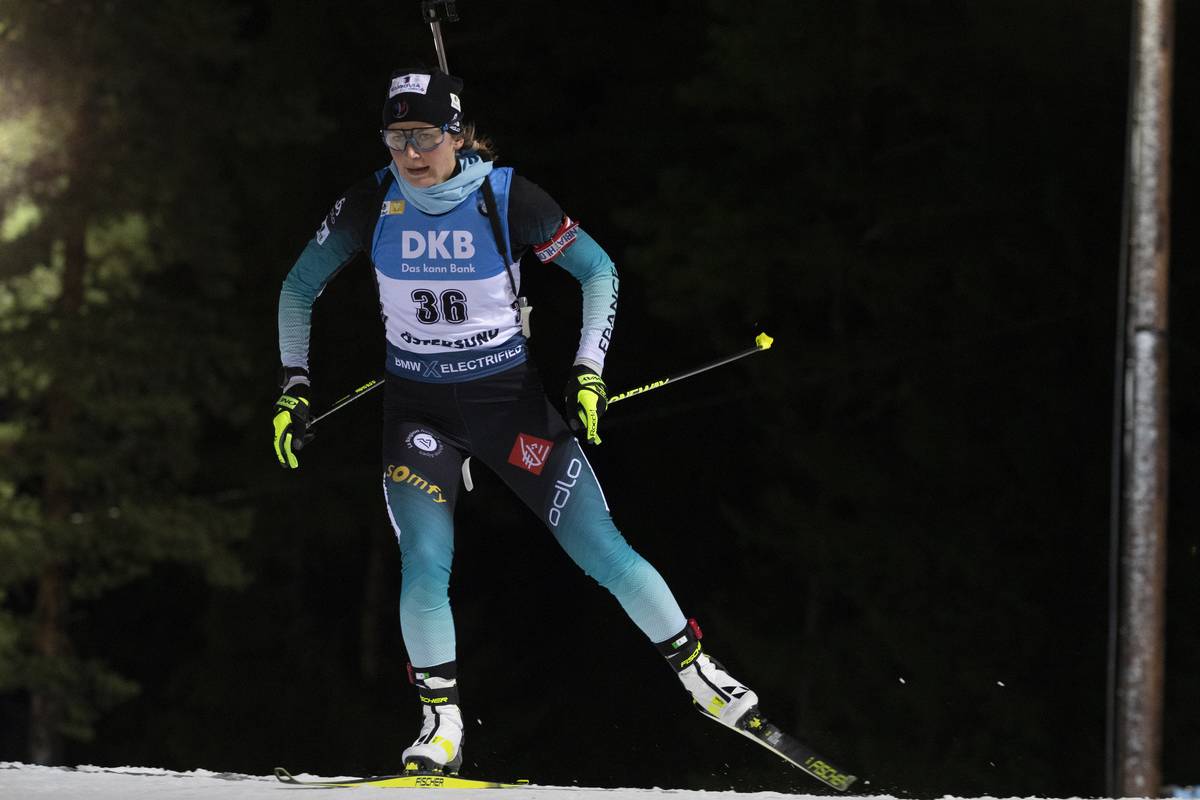
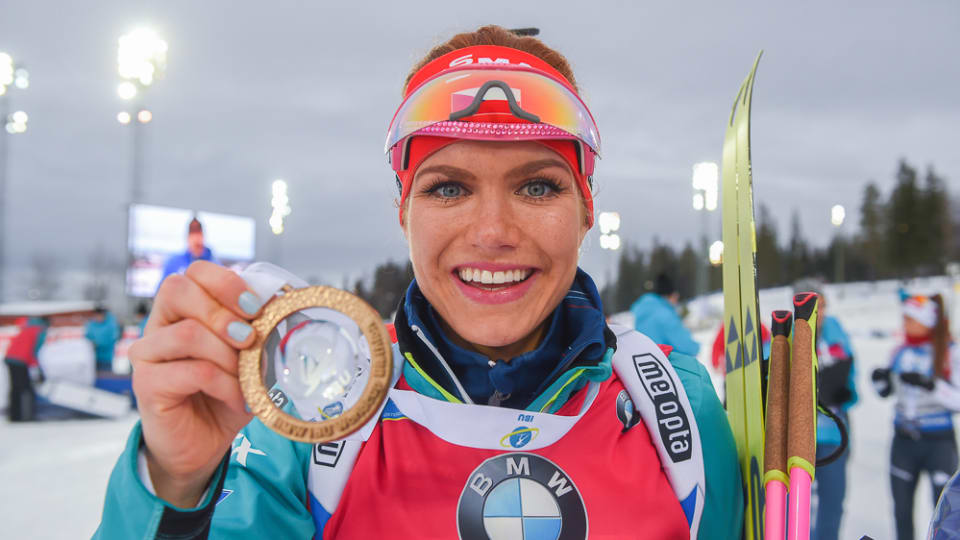
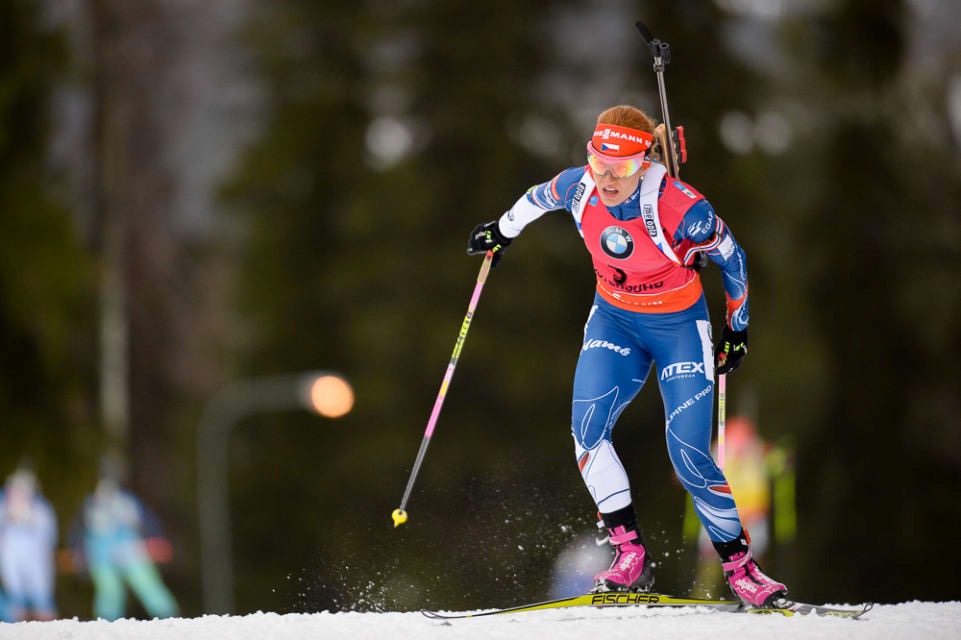
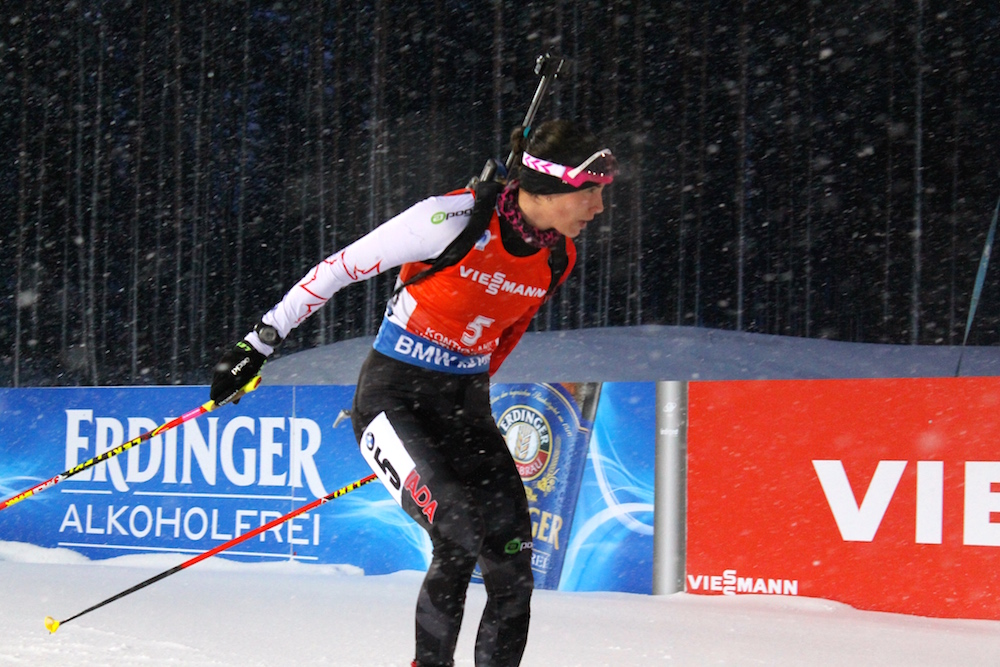
Justine Braisaz (FRA) skiing to victory in the Östersund, 15 k individual. (Photo: NordicFocus)
The women contested the 15-kilometer individual race in Östersund, Sweden on Thursday. As the IBU World Cup gets into gear, the French are proving to be podium top-step magnets. (Martin Fourcade won the men’s 20 k individual race on Wednesday.)
Justine Braisaz won in 42:35.1 minutes while missing two targets in her first shooting stage, otherwise she shot clean. Ukraine’s Yuliia Dzhima was second (+11.1; 0+0+0+0), and France’s Julia Simon third (+17.7; 0+0+0+2).
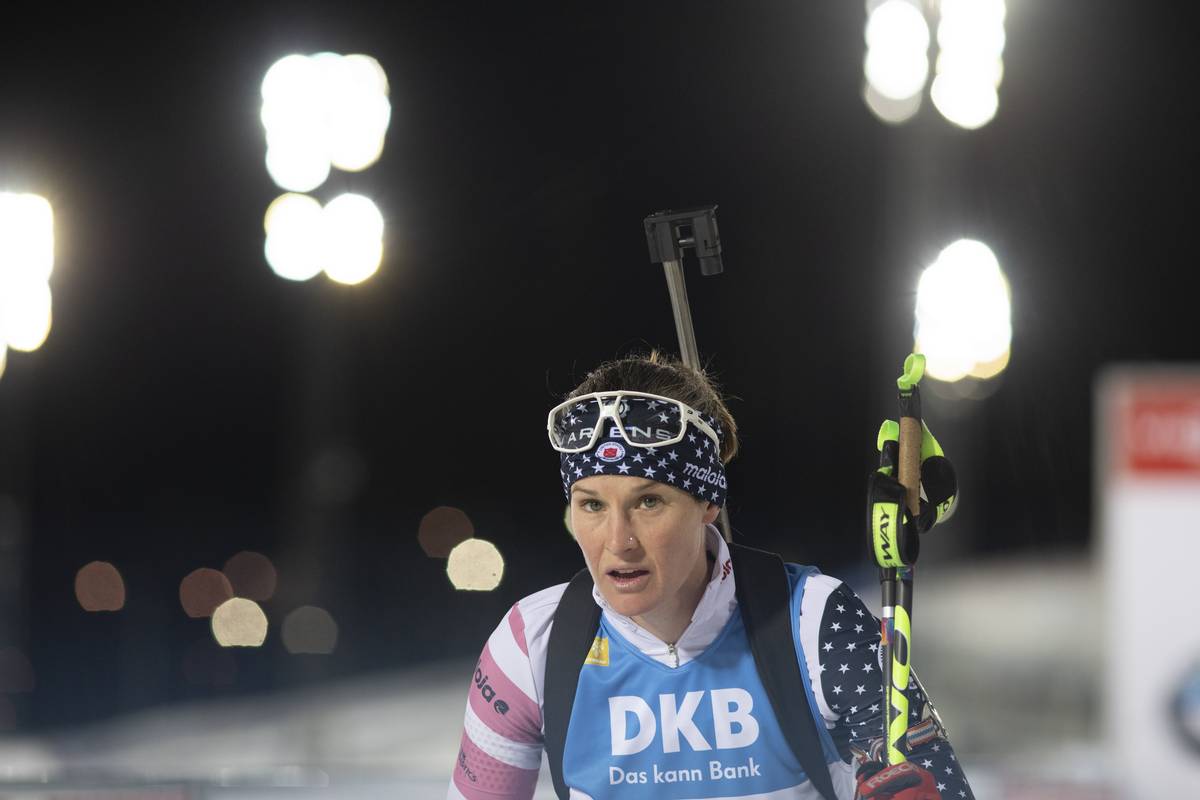
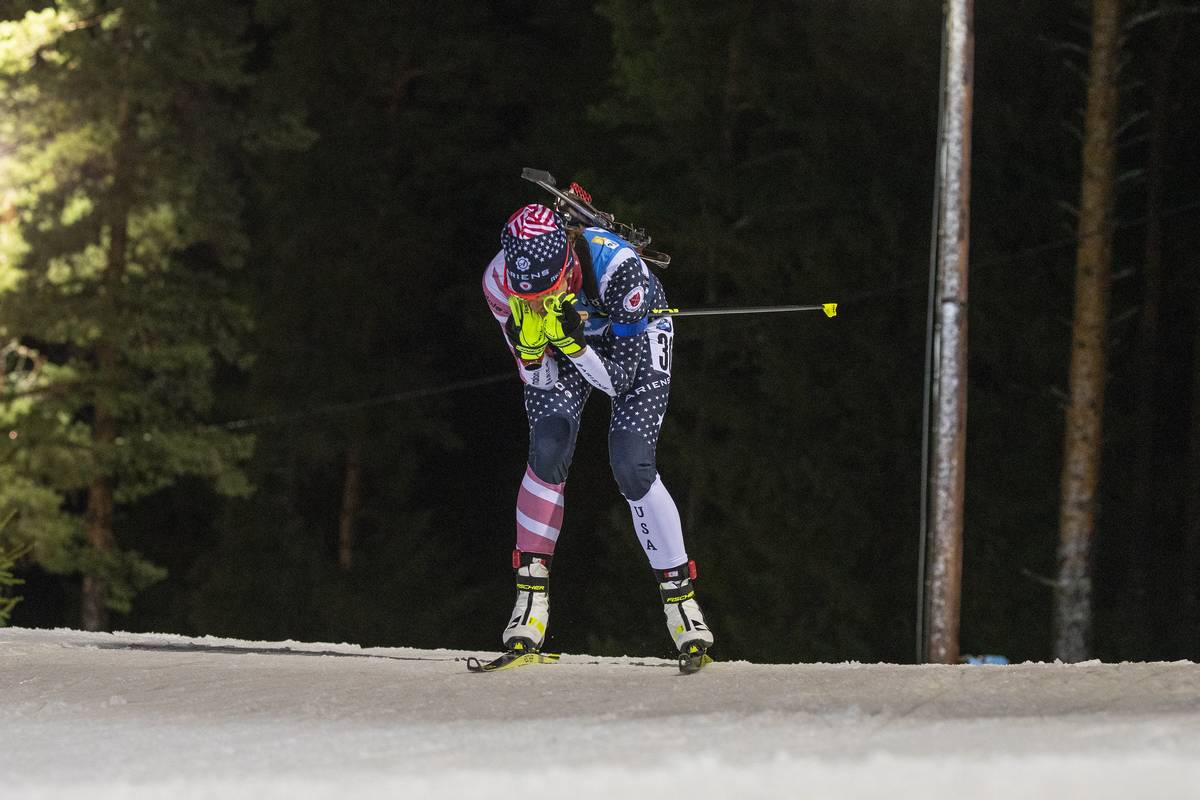
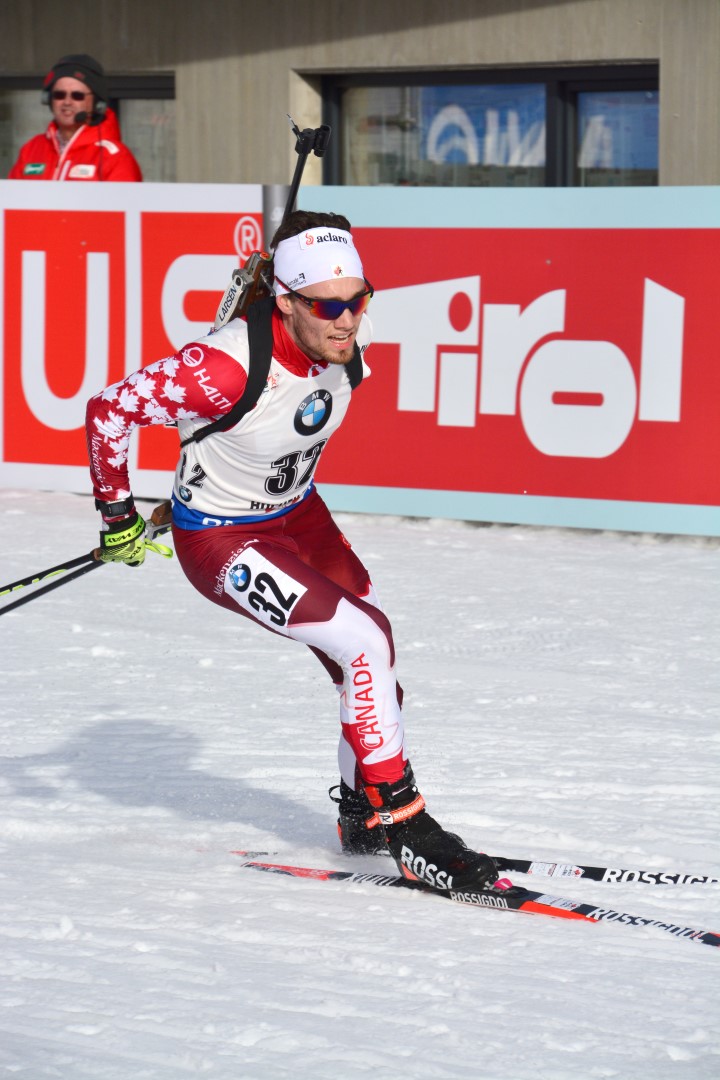
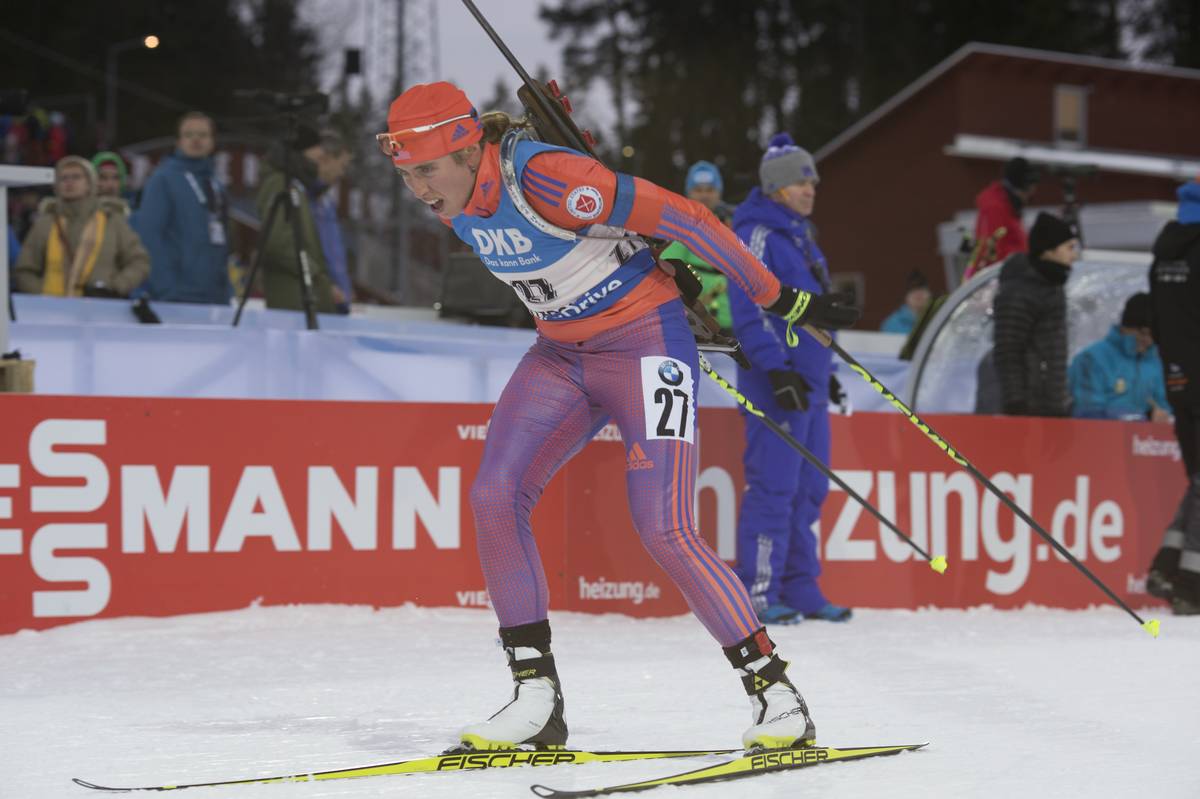
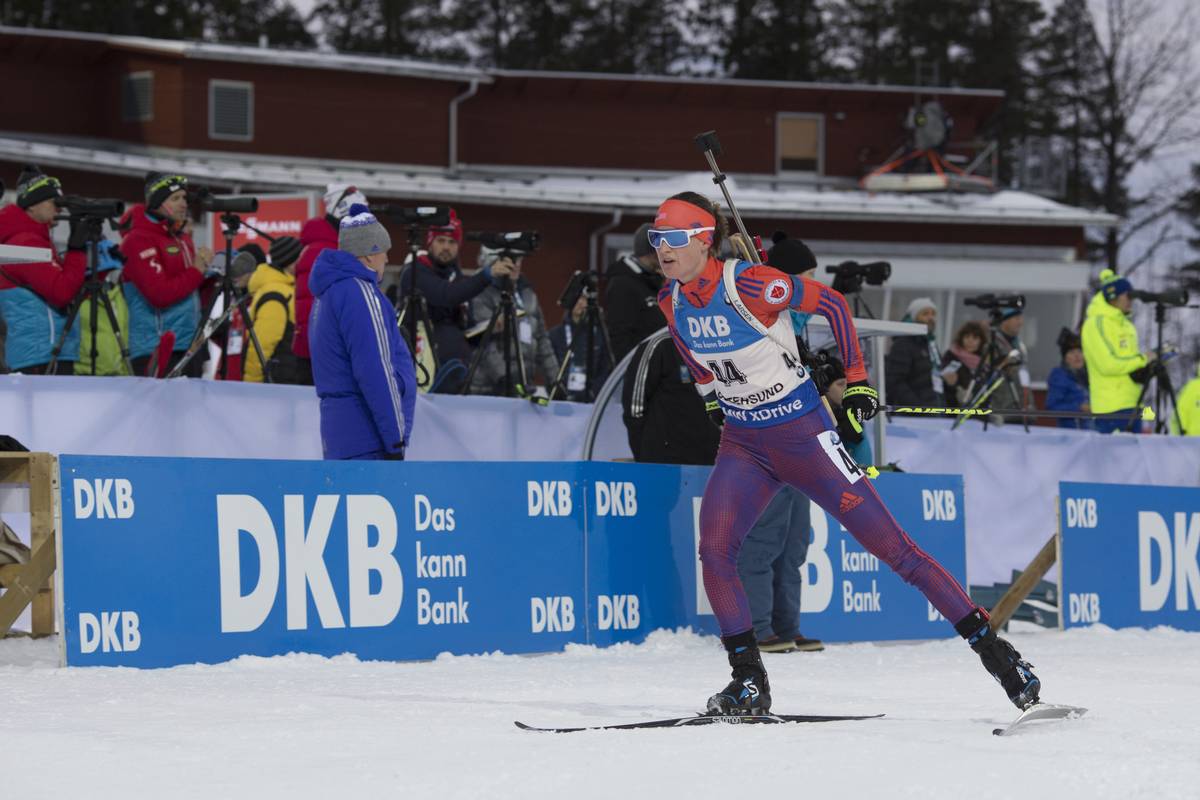
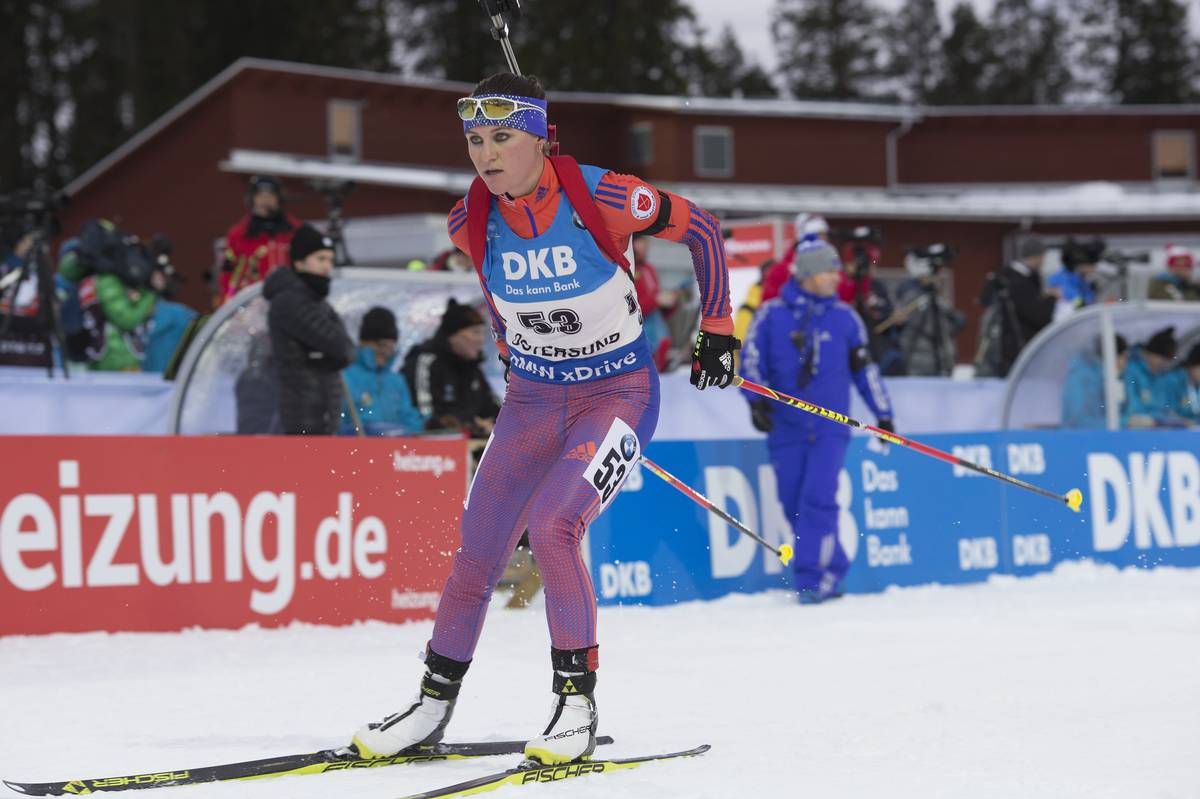
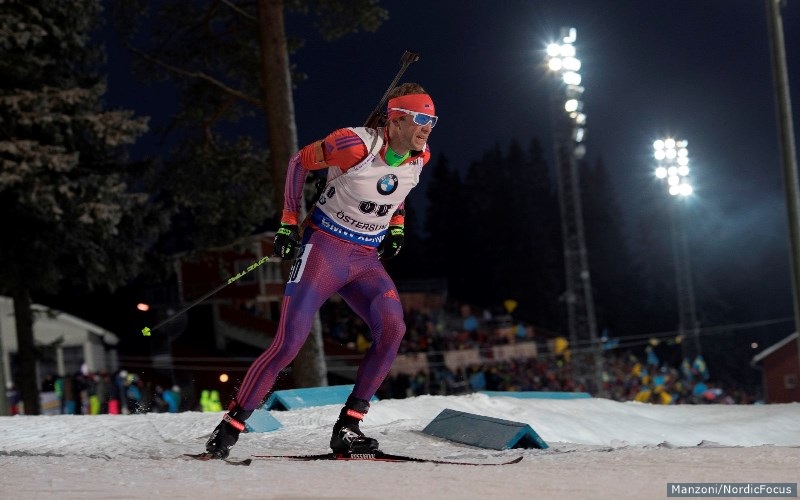
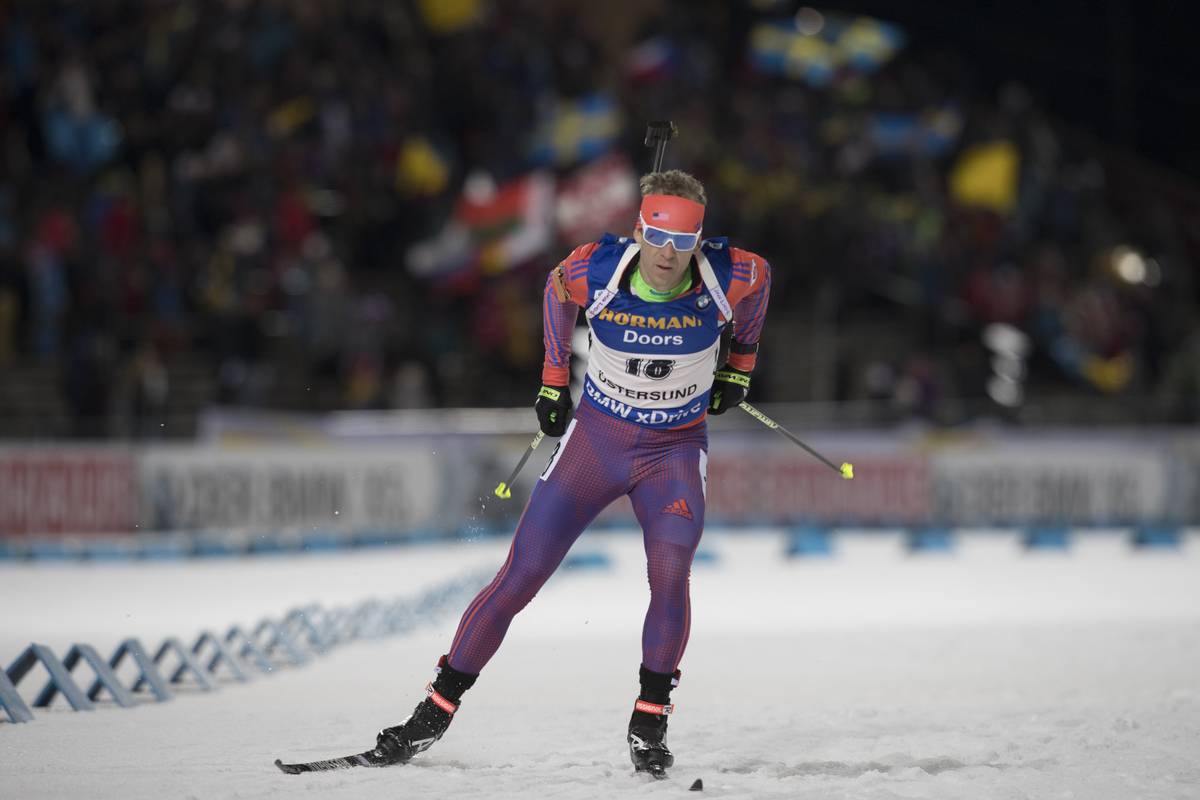
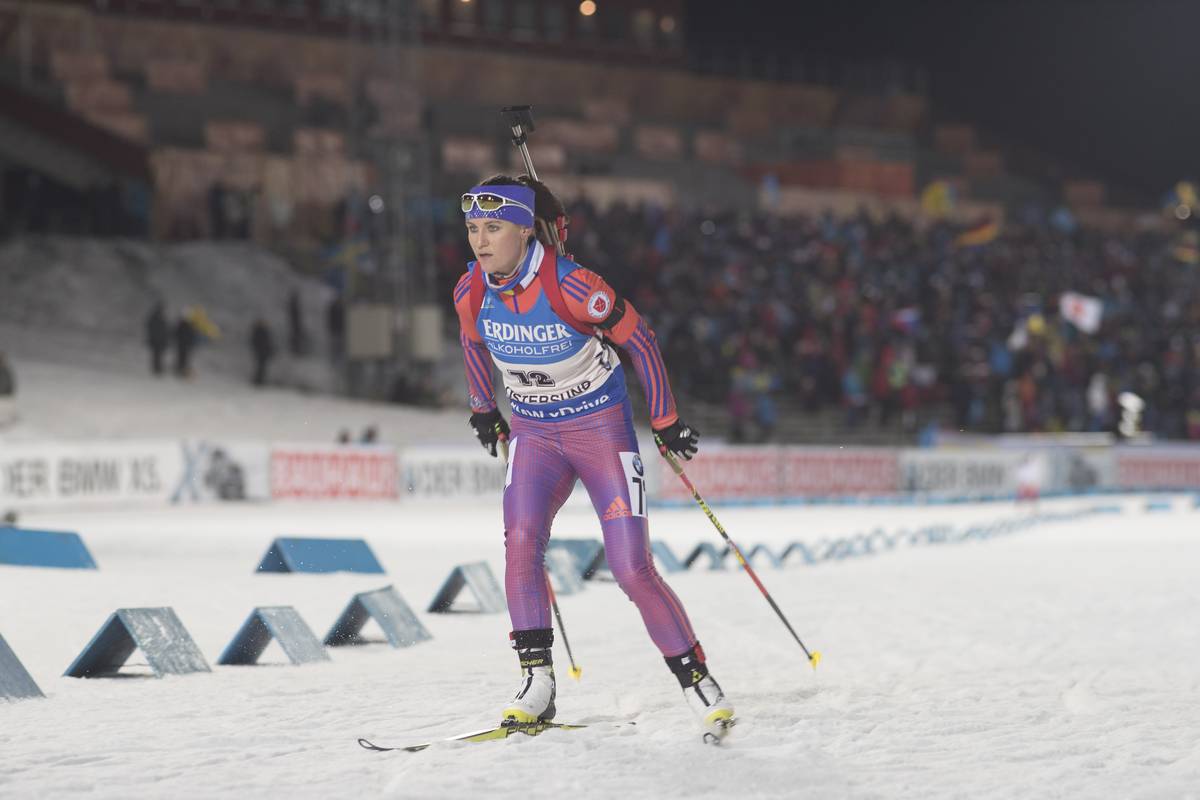
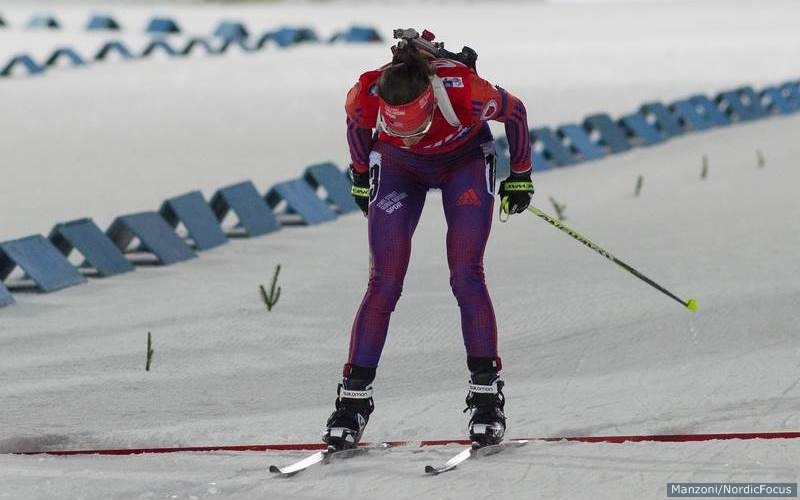
Clare Egan (USA) during the IBU World Cup 15 k individual in Östersund. (Photo:NordicFocus)
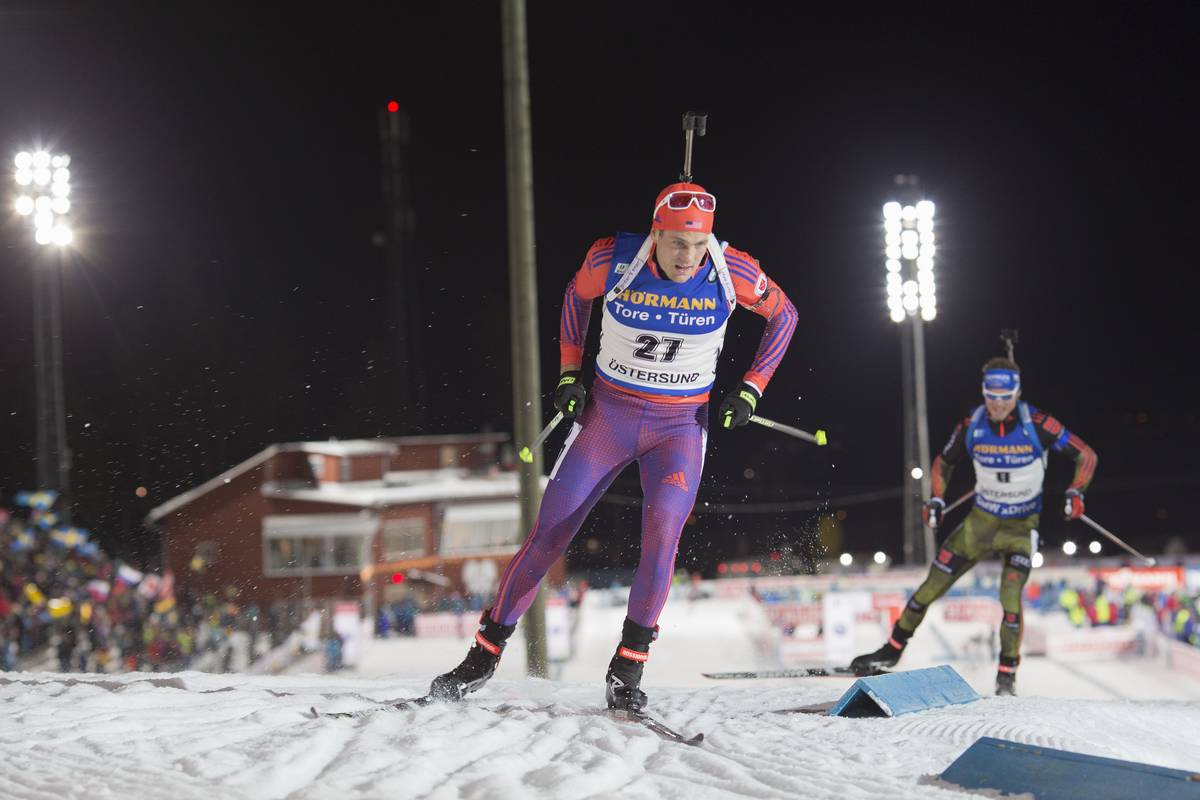
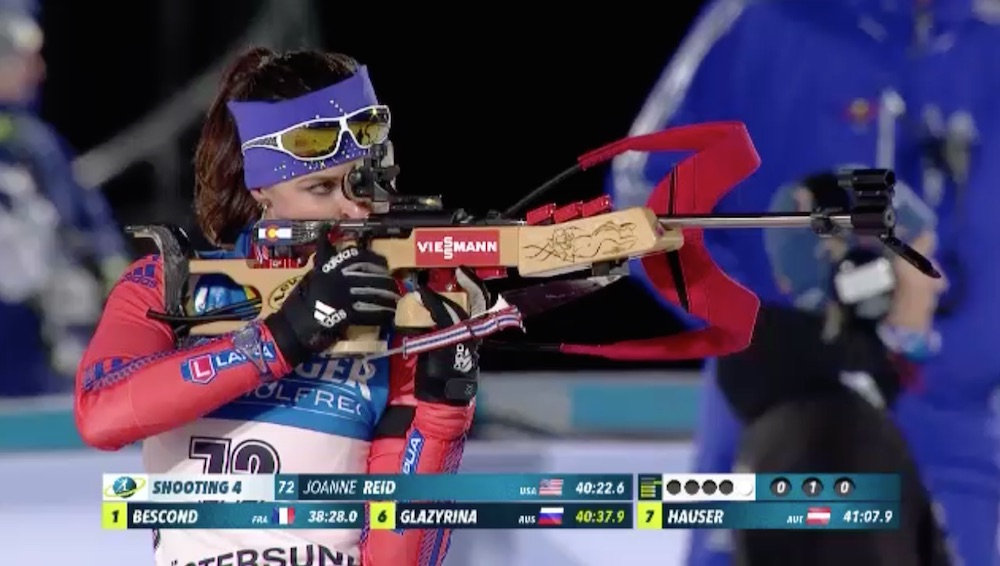
Clare Egan was the top American in 35th (+4:13.8; 0+2+0+2). Susan Dunklee was 73rd (+7:09.7; 1+3+0+3), Emily Dreissigacker 83rd (+8:15.5; 0+2+1+1), while Joanne Reid did not start.
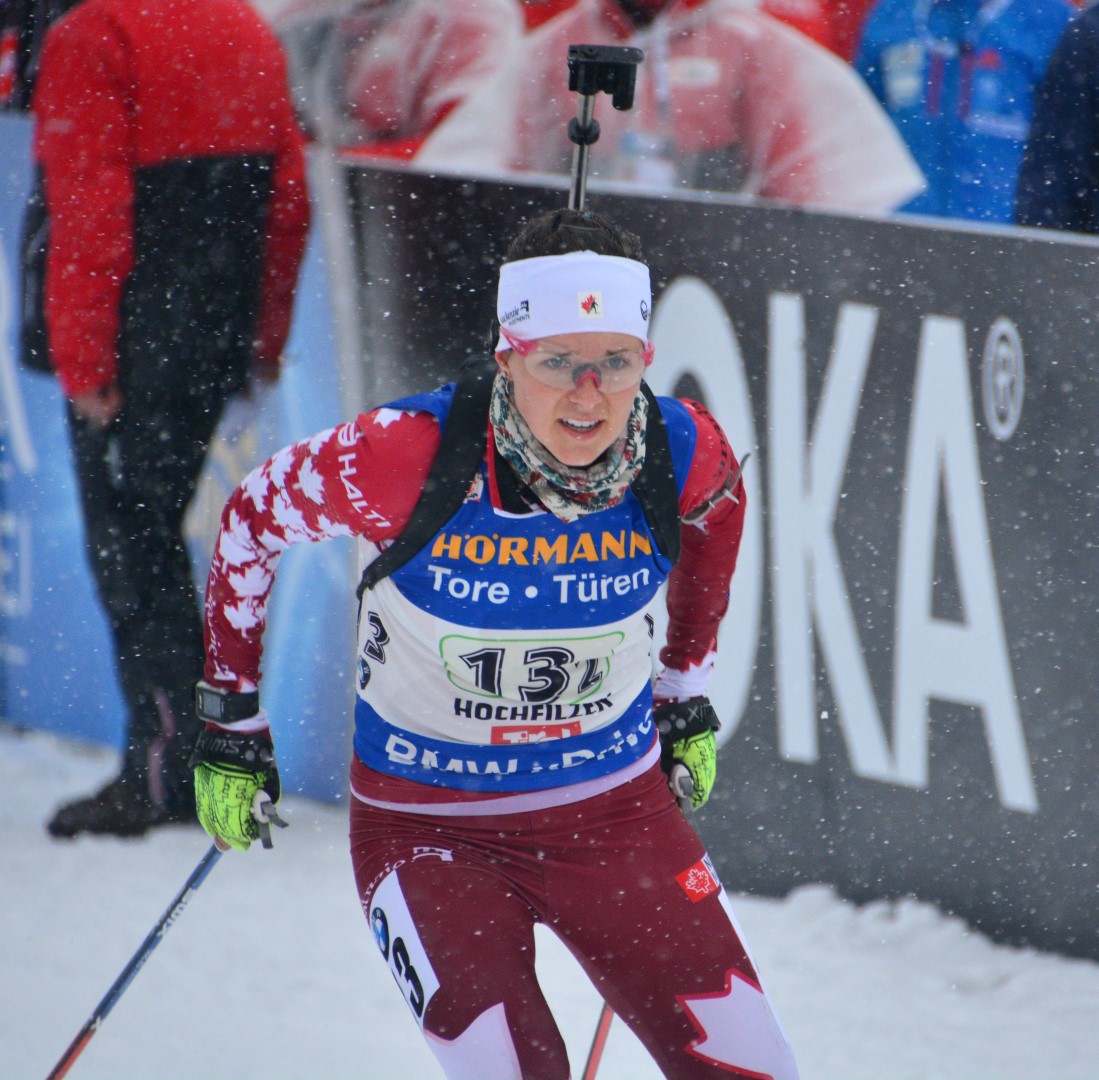
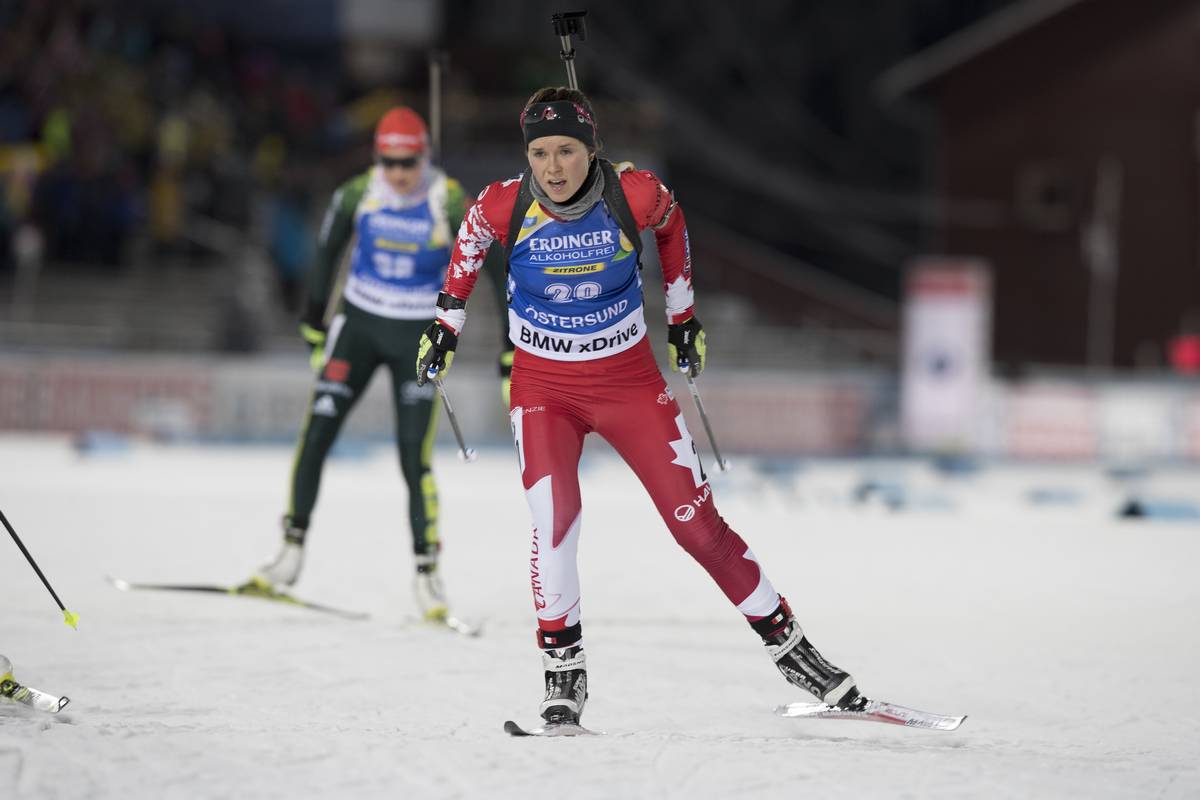
For Canada, Nadia Moser placed 88th (+9:03.7; 1+2+2+3), Sarah Beaudry 92nd (+9:25.8; 2+1+2+1), and Emma Lunder did not start.
Racing continues on Saturday in Östersund with the men’s 4 x 7.5 k relay. The women race a 4 x 6 k relay on Sunday.
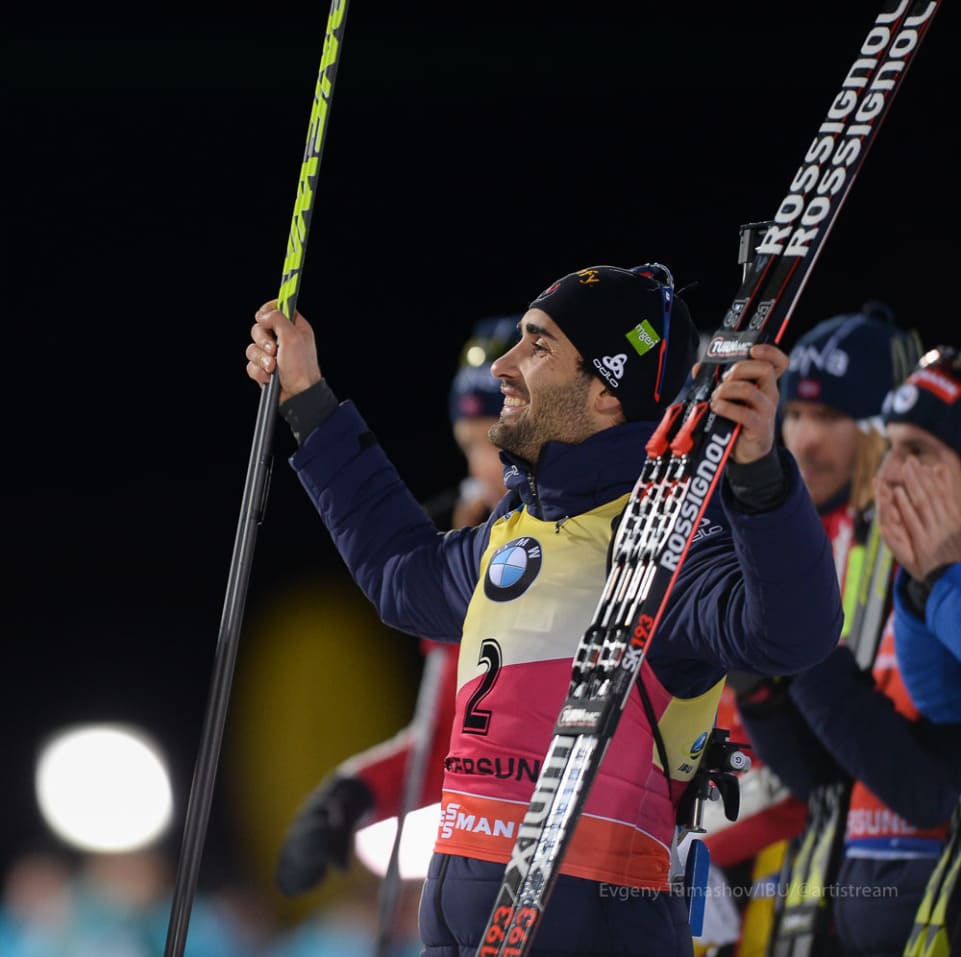
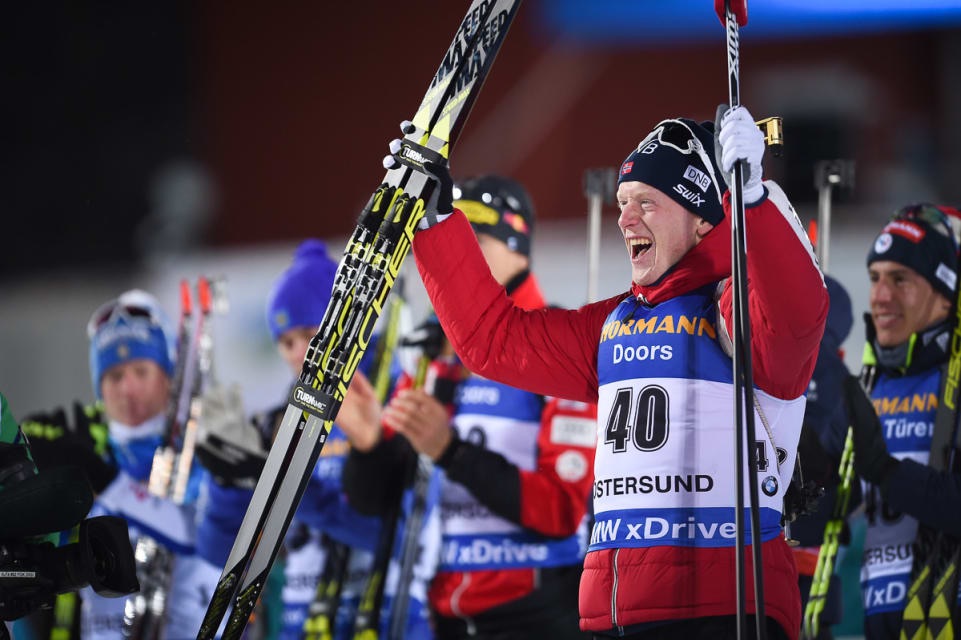
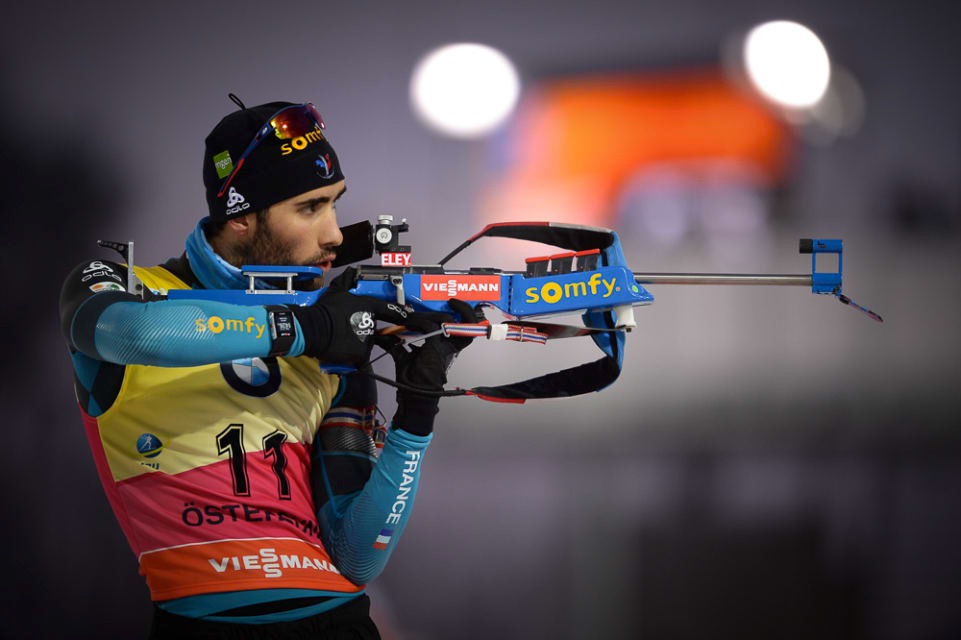
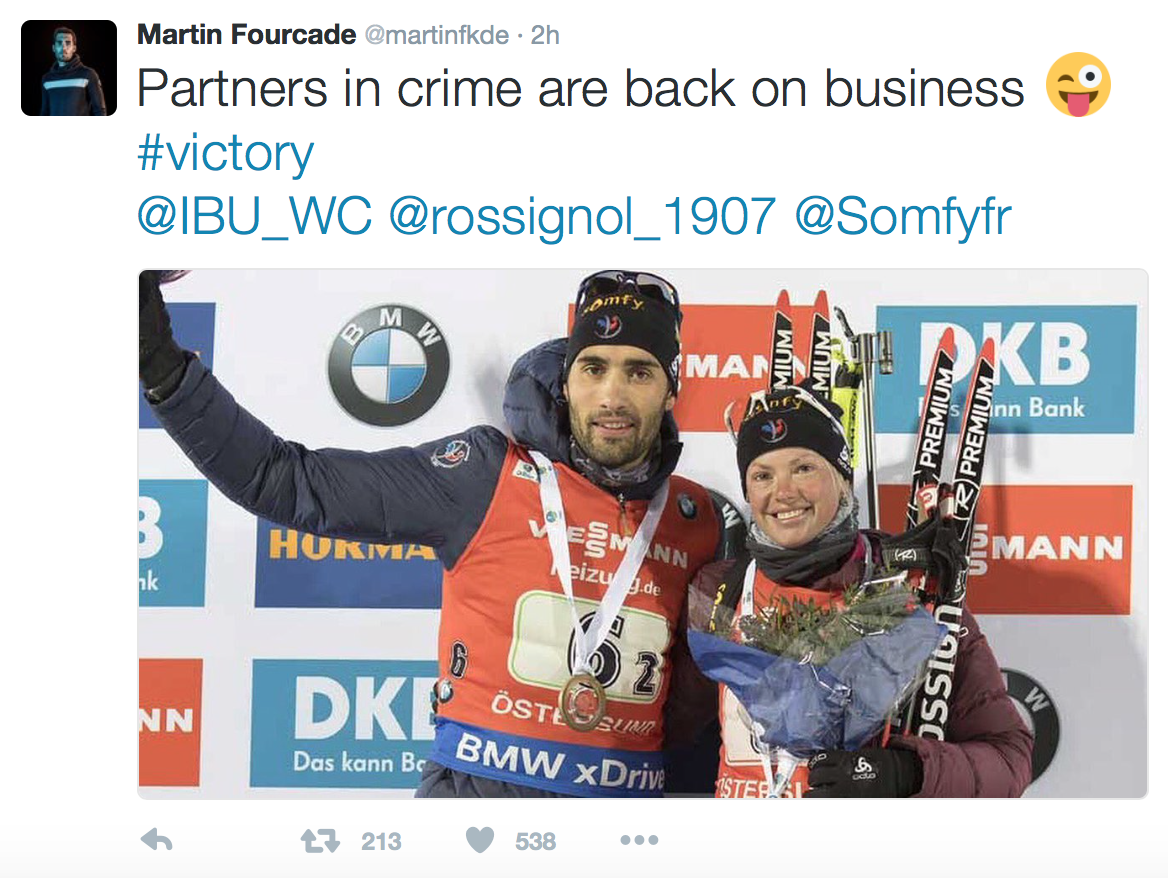
France’s Martin Fourcade celebrating his first IBU World Cup win of the 2017/2018 season in the men’s 12.5 k pursuit on Sunday in Östersund, Sweden. (Photo: IBU/biathlonworld)
If you were to ask France’s Martin Fourcade what’s wrong with a second and third place, and even two fourth place finishes in the first four races of the International Biathlon Union (IBU) World Cup season, he’d likely politely tell you nothing — it just wasn’t up to his usual standards.
“Despite my two podiums here, I felt that if I had not won here, it would have been my worst season opener since, for seven years in a row, I won here,” the 29-year-old defending World Cup champion told the IBU after Sunday’s pursuit in Östersund, Sweden. “Now I can be very calm and relaxed for the next competitions.”
He got down to business out of the start of the men’s 12.5-kilometer pursuit, starting second, just 1 second behind Norway’s Tarjei Bø, who won the sprint to start the pursuit first. Early in the first of five 2.5 k loops, Fourcade set the pace with Bø and Germany’s Erik Lesser in bib 3 slotting in behind him. Fourcade entered the range first to take Lane 1 for the first prone stage, where he and Bø both missed a shot to slip to fifth and sixth, respectively, after each skiing a penalty lap. Meanwhile, Lesser missed four to drop out of the top 30 and nearly a minute and 20 seconds out of first.
While Fourcade left the range 10 seconds behind Norway’s Emil Hegle Svendsen, who had moved into first with clean shooting, he was back into first 2.5 k later. On the second prone, Fourcade and Bø both cleaned to leave the range just 3.8 seconds apart in first and second, respectively. Svendsen missed one to slip 18 seconds back to third.
On Loop 3, Fourcade switched into high gear. Bø kept pace, but by the time they lined up together for the first standing stage, Fourcade had the edge. The Frenchmen once again cleaned while Bø missed three to fall to 18th and nearly a minute and a half out of contention by the time he finished his penalty laps.
Game over. Fourcade spent the next two loops and final shooting going through the motions to secure his victory, cleaning the last standing stage with the 25th-fastest shooting time, then slowly turning to look up at the crowd. He appeared relaxed with his two closest challengers, his French teammate Quentin Fillon Maillet and Slovenia’s Jakov Fak, who started 2 seconds apart in 12th and 10th, respectively, and shot identically (1+0+0+1), skiing together more than a minute back in second and third.
Fourcade’s final loop time ranked 51st out of 58 yet he still finished first, 40.8 seconds clear of Fak, who dropped Maillet on the final climbs before the stadium. Fourcade claimed his first win of the season in 30:12.2, Fak placed second for his first podium since 2015, and Fillon Maillet took third (+42.1).
“I must say that I was very surprised because after the third shooting it was more a fight against myself,” Fourcade said. “I am very satisfied about the biathlon I showed.”
“I think Quentin and I worked well together, half the loop each pushing to keep on the podium,” Fak told the IBU. “Both can be very satisfied about finishing on the podium and leaving Sweden with this result.”
On a day with variable wind conditions and soft, slow snow, no one in the men’s race shot clean. Six hit 19 of 20 targets, including Fourcade and his brother Simon Fourcade (ninth place) and Norway’s Lars Helge Birkeland (sixth place) in the top 10.
Christian Gow (Biathlon Canada) racing to his previous career best of 23rd in the men’s 12.5 k pursuit at 2017 IBU World Championships in Hochfilzen, Austria. On Sunday, he placed 21st in the Östersund World Cup pursuit. (Photo: Glen Crawford)
Biathlon Canada’s Christian Gow also finished with a single penalty (0+0+1+0) in 21st for his best World Cup result. Gow had started the pursuit 26th and 58 seconds back, and picked off five places to finish 2:04.6 behind Fourcade.
“[Saturday] was my best sprint placing ever, so I knew I was in a good position for the pursuit,” Gow wrote in an email to FasterSkier. “I knew a top 20 was possible, and maybe more if my skiing was on form. Unfortunately, I had some shin issues skiing today so I wasn’t able to ski as well as I would have liked. But I did my job on the range and am happy with how the race turned out.”
The shin pain he referred to wasn’t anything serious, “just bothered me today for some reason,” he elaborated. “I’m not too concerned though, I’m sure they’ll be fine in a couple days.”
His shooting time ranked 22nd overall compared to his overall course time in 49th.
“The shooting conditions were challenging today, but I knew that I could still shoot well if I stayed focused in the range,” Gow wrote. “I shot confidently today and I think that helped a lot.”
He consistently left the range within striking distance of the top 20: first in 22nd, then in 21st, then 26th, and finally 20th.
“The course was pretty soft today. That added an extra challenge skiing,” he continued. “I made up all of my time in the range today, but am quite happy with my last loop. I am proud of how hard I was able to push myself on that lap to keep my placing.”
Leaving Östersund, where he and his older brother Scott Gow and another teammate Julia Ransom all achieved career bests to start their season, Gow said the team mood was positive.
“Almost everyone had at least one result that they can be proud of and we really performed well as a team which boosts everyone’s confidence I think,” he wrote.
Four Canadians qualified for the men’s pursuit, withNathan Smith finishing 42nd (+3:19.2) after starting 24th and missing three shots (1+0+0+2). Scott Gow placed 50th (+4:10.9) after starting 16th and incurring six penalties (1+2+1+2), and Brendan Green followed in 51st (+4:18.6) with five penalties (0+2+2+1).
Bailey Gets First Top 20 of Season
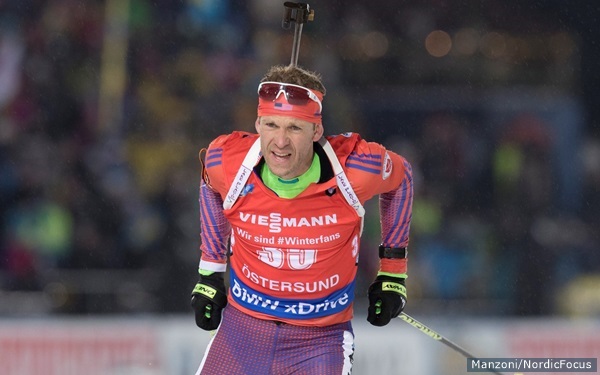
Lowell Bailey (US Biathlon) racing to 17th in the IBU World Cup men’s 12.5 k pursuit on Sunday in Östersund, Sweden. (Photo: USBA/NordicFocus)
Lowell Bailey led two Americans in the pursuit, starting 22nd and 50 seconds back and rising to 17th (+1:40.2) with two penalties (0+1+0+1). After cleaning the first prone stage, where several of the top competitors incurred penalties, Bailey moved up to 12th and 39 seconds out of first.
One loop later, he found himself nearly a minute back in 19th after a penalty on his second prone. Bailey worked his way back to 11th after cleaning his third stage, but slipped to 15th with a miss in the final standing stage.
“The range was tricky today. The wind was very shifty and constantly changing,” Bailey explained in an email. “I only tried to focus on the fundamental parts of my shooting (e.g. trigger squeeze, breathing, etc.) and make sure that I was taking good shots. My groups did move around from one prone to the next, but fortunately, most of the shots stayed in the hit zone.
“I’m happy with the shooting today,” he continued. “I tried to execute the type of shooting that I’ve worked on all summer. Although I was happy with the shooting result in the Sprint, I know that I could have shot faster. It’s a delicate balance; when to go for speed and when to hold back for accuracy.”
His shooting time in the pursuit ranked third overall, while his course time was 42nd.
“I definitely don’t feel in my best shape yet,” he wrote. “We deliberately approached the season conservatively, with the mindset that the Olympics are months away and I want to be in my best shape when I hit the tracks in Pyeongchang.”
Leaving Östersund, where he finished 22nd in the sprint and 67th in the 20 k individual, Bailey wrote that he was satisfied with his first week of racing considering that he came down with a cold a week earlier.
“All things considered, I feel very fortunate to have come away with some WC points in a field which seems to be one of the strongest international biathlon fields yet,” he wrote.
Also for US Biathlon, Tim Burke finishing 48th (+3:52.7) after starting 52nd and missing four shots (2+0+1+1).
With the conclusion of the first IBU World Cup in Östersund, the circuit moves to Hochfilzen, Austria, where racing kicks off again Friday, Dec. 8, with men’s and women’s sprints.
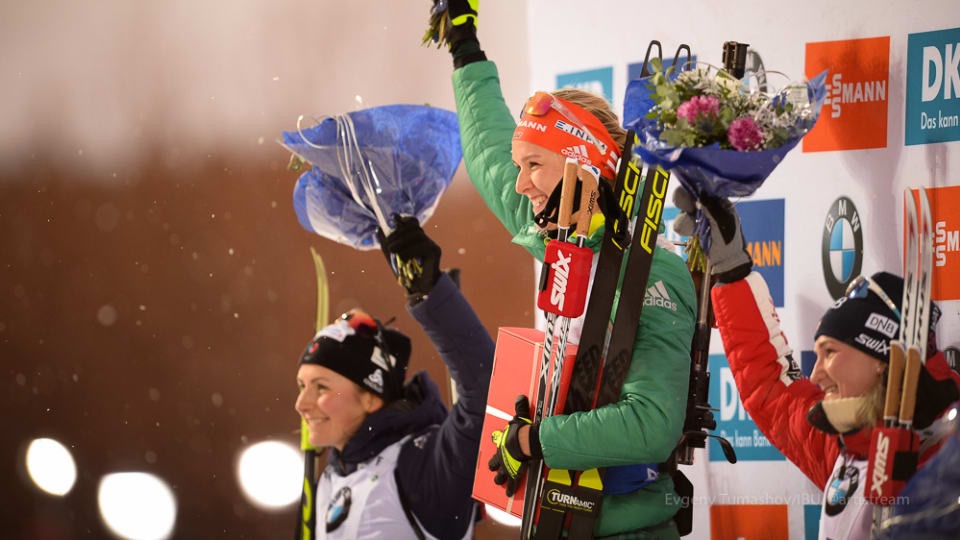
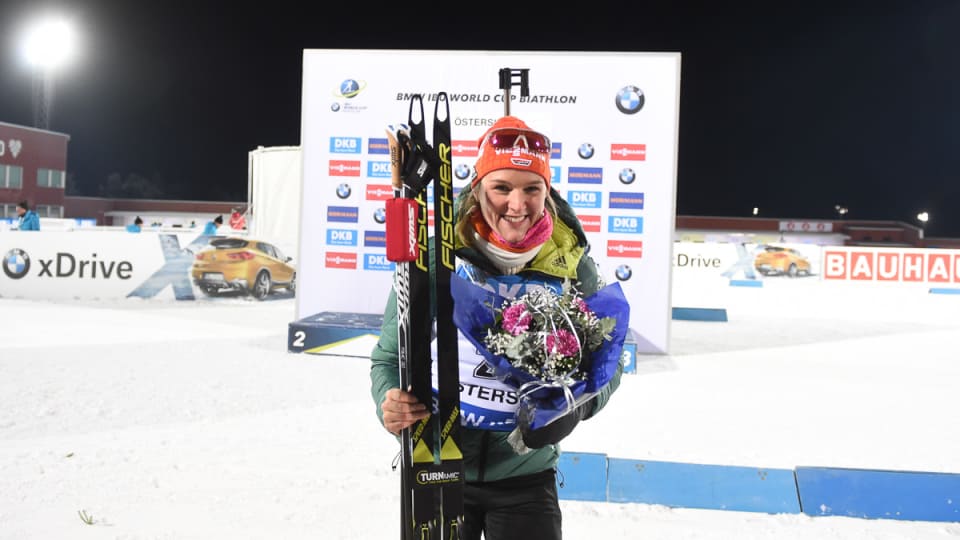
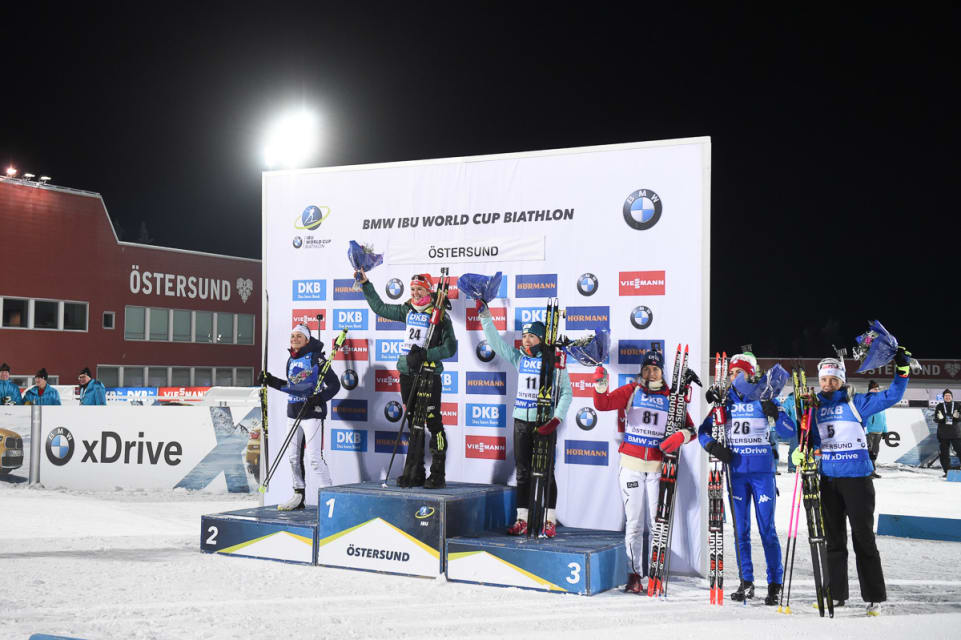
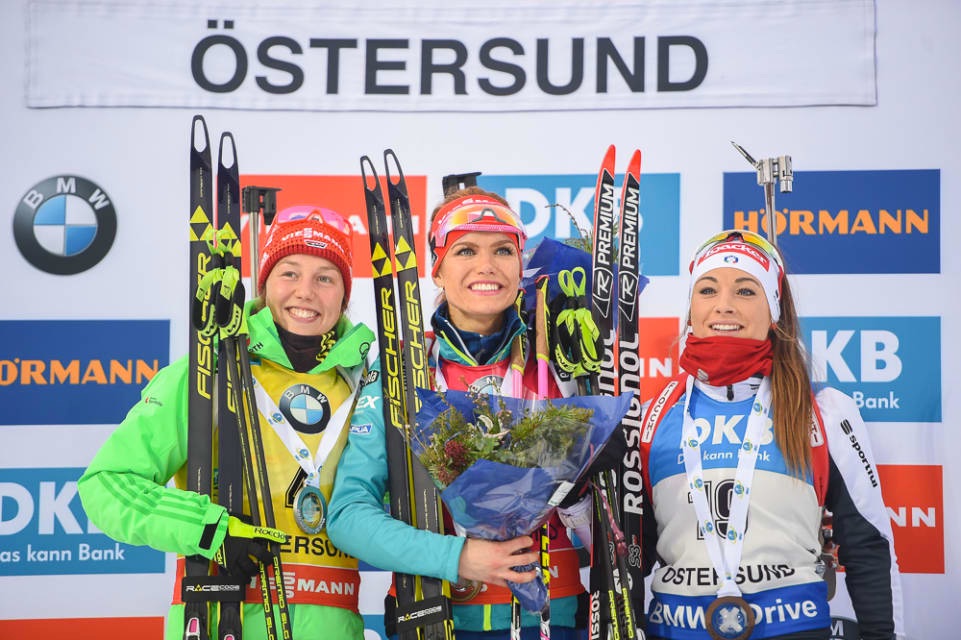
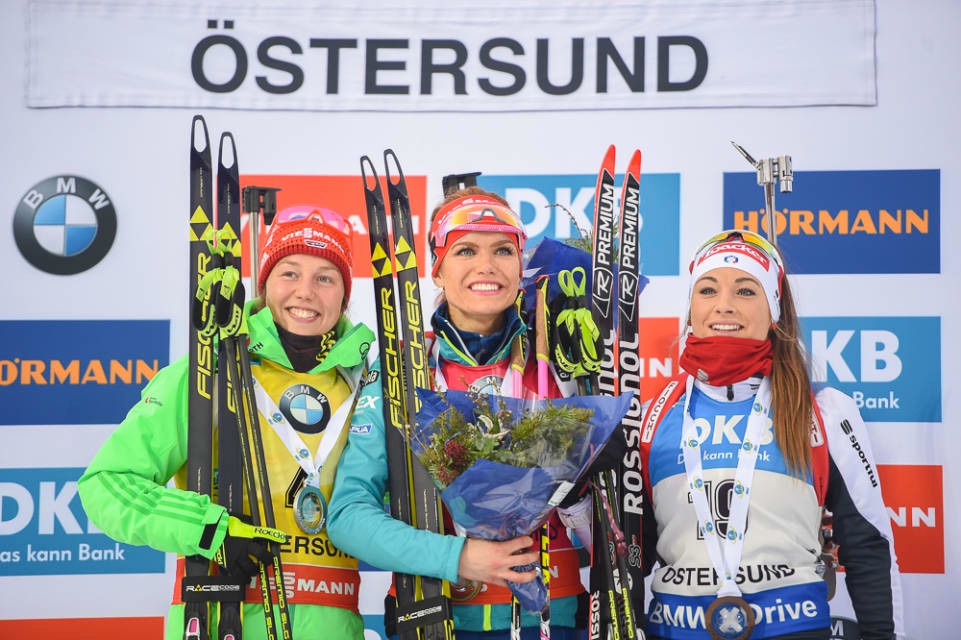
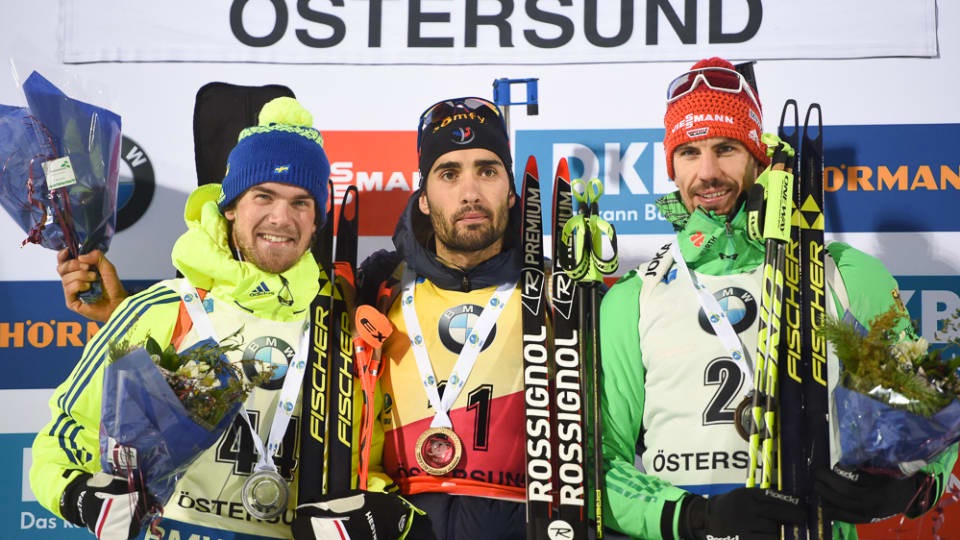
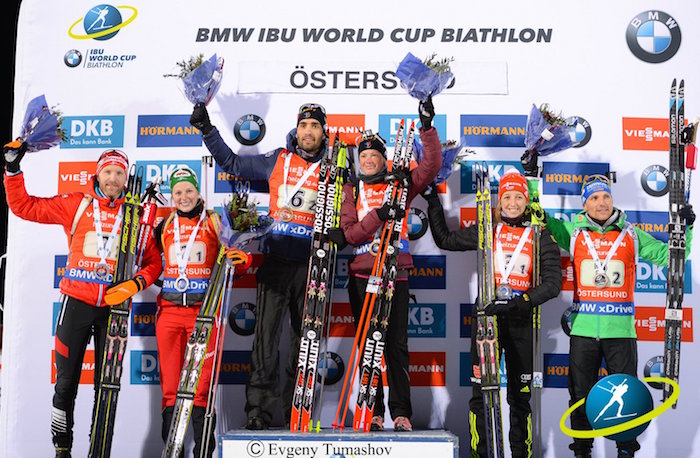
France’s Justine Braisaz (left, second place), Germany’s Denise Herrmann (center, first place) and Norway’s Marte Olsbu (right, third place) celebrate during the flower ceremony of the women’s 10-kilometer pursuit at the 2017/2018 IBU World Cup in Östersund, Sweden. (Photo: IBU/biathlonworld)
Twenty months ago, Germany’s Denise Herrmann was a cross-country skier, ending the Ski Tour Canada in 28th place in the 10-kilometer classic pursuit in Canmore, Alberta. And one with a very successful career, earning an Olympic bronze medal in the relay in Sochi in 2014 and narrowly missing out on another one with a fourth place in the team sprint.
But her heart seemingly was no longer in the sport. A month after the 2015/2016 season had wrapped up, Herrmann publicly announced her intention to continue her athletic career with the goal of qualifying for the 2018 Olympics in PyeongChang, South Korea, yet no longer in cross-country skiing. Instead she dreamed about a second career in biathlon.
Biathlon is highly popular as a spectator sport in Herrmann’s home country, arguably receiving more attention than cross-country skiing and thus providing a higher earning potential. But while a switch between the two disciplines has not been unprecedented, Germany’s senior national team is also one of the most successful and competitive ones, with no guarantee even for seasoned biathletes to make the World Cup roster. So critics wondered if that was a wise decision by Herrmann, or rather a case of giving up a bird in the hand for two in the bush.
Herrmann had some initial success right out of the gate in her first season as a biathlete. She instantly qualified for the German team for the second-tier IBU Cup, and with the coaches trying to make use of her athletic talent she was allowed to start three World Cup races, and finished 18th in her first sprint in Pokljuka, Slovenia.
Then ten months ago in January 2017, she might have had some second thoughts and tried a “mini-comeback” at a cross-country World Cup in Toblach, Italy, in what appeared to be an attempt to qualify for the 2017 Nordic World Championships in Lahti, Finland. Despite placing 13th in a freestyle sprint and fourth in a team sprint, but she was not nominated to Germany’s World Championships team. Instead she received more starts at the IBU World Cup test event in PyeongChang, where she won her first relay race.
After another successful offseason of biathlon training, highlighted by winning national titles in three disciplines, she was put on the IBU Cup team again. That followed a sprint victory in Sjusjøen, Norway, after which she was ‘called up’ to the roster for this week of races in Östersund, Sweden.
Breakthrough in Östersund
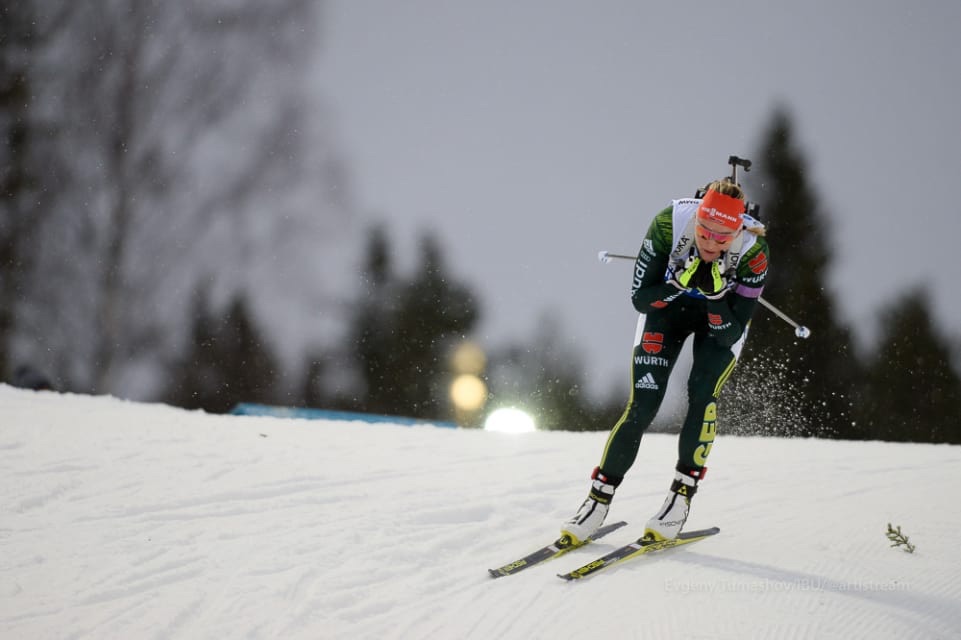
Germany’s Denise Herrmann racing to her second career victory in the women’s 10-kilometer pursuit at the 2017/2018 IBU World Cup in Östersund, Sweden. (Photo: IBU/biathlonworld)
This weekend, Herrmann achieved at least a big milestone on the road to her dream goal and secured her ticket for the German Olympics team for PyeongChang, fulfilling the team-internal qualification criteria (a top-eight result) with an exclamation mark by winning the sprint on Saturday.
Now a day later she followed that up with another victory in the women’s 10 k pursuit in a time of 30:02.7 minutes with two penalties (0+0+2+0). Her transition to biathlon has come to fruition.
While the sprint only required two shooting stages, for the pursuit she had to navigate four, an obstacle that typically weeds out inexperienced shooters, especially in the standing stages. But on Sunday, Herrmann demonstrated everything she has already learned about her new sport.
Starting with a 15-second lead on France’s Justine Braisaz based on the sprint, Herrmann skied with a controlled pace on the first loop and went on to clean her first prone stage, returning to the course with an increased lead of 22 seconds. Then Herrmann reacted correctly to some changing wind influence by adjusting her sights to also clean the second prone stage and kept her distance to Braisaz and the next chase group.
Herrmann later told German TV broadcaster ZDF she would not have expected to win “in a pursuit having to shoot four times and with a number of extremely good shooters breathing down my neck.”
“To twice clean in prone made me extremely happy since that is the basis for a good pursuit,” she added. “It was good that I had a little lead so I was not under immediate pressure. With the wind on the shooting range you really had to focus today.”
Then in the first standing stage she began with a good rhythm but narrowly missed her last two shots, hitting above the edge of the black target. Momentarily she fell back to the second place, with France’s Braisaz taking an 11-second lead after she managed to clean all of her targets.
But Herrmann had already completed one penalty lap before any chasers had left the range, and after completing the second penalty she was able to regain her lost time on the course. For the final shooting, the two women stood side by side on the range, and both managed to clean their five targets.
“In the third one I was shaky,” Herrmann told ZDF. “Then in the last one I tried to really give it everything I had and leave with a clean shooting. Easier said than done […] Though we practiced pressure situations like this in training with the coaches teasing us, and that helped me a bit in the last bout.”
“When I came on the shooting range in the first position, it was the first time that happened to me, and I just had a thought, ‘Wow is it true, is that possible?’ ” Braisaz said at the IBU press conference. “It was a high difficulty today, it was tough, but I did it.”
Braisaz started the final loop just 1.5 seconds ahead of Herrmann, who quickly passed Braisaz on a climb, then increased that lead into the finish. Braisaz crossed the line 25.8 seconds behind Herrmann, repeating her second place from the sprint and tying her career-best World Cup result for the fourth time. She was one of only three athletes to shoot clean on Sunday.
“I was afraid,” Braisaz said in the press conference when questioned about Herrmann chasing behind her. “She just passed me on the uphill, I just tried to do my best even if it won’t work. … I am very happy, it was my main goal today to stay focused on what you have to do [on the shooting range], and I did it.”
With a comfortable lead, Herrmann had enough time to waive to the about 3,000 spectators in the stands. “I already told [my roommate] it’s cool to win, but it must be even cooler to ski across the finish line in first and knowing you have won,” Herrmann told ZDF. “An incredible feeling. … With my tired legs I was happy that there was no battle until the finish line. Then you can really enjoy it, and I have never experienced that feeling [in cross-country], and it’s wonderful.”
Norway’s Olsbu finished third, 48.0 seconds behind Herrmann with two penalties (0+1+0+1).
“This means a lot to me, I felt that this week has been good for me, but it has just been almost [on the podium] so I am glad that today I got the podium,” Olsbu explained in the press conference. “I was OK on the track and my shooting was good, even though I am not so happy about my last shooting.”
“She is really good, I am very impressed about what she is doing in the shooting,“ Olsbu said of Herrmann. “We trained in that for so many years, and she has trained for two years or something, so that is really impressing.”
Olsbu’s teammate Synnøve Solemdal started the race with the yellow bib of the World Cup Total Score leader, earned via a second place in the individual and a fourth place in the sprint. It was the first time in her career the 28-year-old Solemdal had achieved that distinction, and after she finished 19th on Sunday (+2:23.5 with four penalties), Braisaz took over the lead in the World Cup standings after the first week of races.
Twenty seconds behind Olsbu, Italy’s Lisa Vittozzi finished fourth (+1:09.1 with one penalty). Herrmann’s teammates Maren Hammerschmidt in fifth (+1:16.8 with two penalties), moving up from starting 14th, and Vanessa Hinz in eighth (+1:29.1 with one penalty), up from 16th, also pre-qualified for the German Olympic team.
“I got the [qualification norm] today, and that was very important for me,” Hammerschmidt told the IBU in an interview. “I never would have thought that I could already do it here in Östersund, I thought maybe in December was good, so I am very happy to go to Hochfilzen without this [pressure next week]. When I came to the finish line I realized Denise had won again, and I am so happy for her, it is incredible what she has done.”
Team Germany is starting to take shape for the Olympics, with Herrmann a name on the roster few fans would have expected a year ago.
“I think Laura is coming back next weekend…,” a laughing Herrmann cautioned at the press conference.
Laura Dahlmeier, the dominant athlete of the 2017 World Championships in Hochfilzen, Austria, has not started a race this season yet, missing the Östersund World Cup because of illness. She plans to be back for the races later this week (Dec. 8-10) at the site of her biggest successes.
Third-Best Career Result in a Pursuit for Ransom
Julia Ransom (Biathlon Canada) racing the second leg of the women’s 4 x 6 k relay at 2017 IBU World Championships in Hochfilzen, Austria. (Photo: Glen Crawford)
Starting in 29th and 1:17 out of first based on her sprint result, Biathlon Canada’s Julia Ransom started her pursuit without a slip, cleaning both her prone shooting stages. Since a number of athletes in front of her incurred penalties, she had moved up all the way to the 11th position as she returned to the course after her second shooting.
“We get pretty consistent feedback on the course so I was aware I was 11th,” Ransom wrote in an email to FasterSkier. “The wind picked up today and made for some tricky shooting. On one end of the range, the wind can swirl off the building and push the bullets one way, while it blows the bullets another way on the opposite side of the range.”
On the next round she skied in a pack with athletes, including Finland’s Kaisa Mäkäräinen and Ukraine’s Valj Semerenko (who also cleaned the first prone on Sunday).
“My legs were a little fatigued but those fast girls definitely helped pull me around the course!” Ransom remembered regarding that loop.
In her first standing bout, she again cleaned the first four targets before seeming to hesitate a bit and then missed the last target, having to ski a penalty loop. She came back on the course in 17th position.
Then in the final stage she missed another target, leaving the range for the last time in 21st.
At the finish Ransom was 23rd for her third-best result in a pursuit behind a tied 19th place in Nove Mesto, Czech Republic, last season as well as in Antholz, Italy, two seasons ago. She achieved her best career result in a ninth place in the 15 k individual earlier this week.
“I really wished I could have kept my focus for those last standing shots because it would have made for a very exciting race,” Ransom concluded. “That is how it goes sometimes. I am thrilled with my race! You can always say ‘what if…?’ but I am stoked with how solid the start of the season has been. I am looking forward to next weekend, especially since my parents are coming out to watch.”
Starting in 46th position and 1:42 minutes back according to her sprint result, her teammate Rosanna Crawford initially put herself in the mix, cleaning her first prone stage to move up to 38th, even making up a few seconds to Herrmann up front.
But in her next prone shooting, Crawford incurred three penalties, falling back to 53rd and doubling her deficit. With three more penalties in the standing stages Crawford ultimately finished 52nd, 5:25.1 back with six penalties (0+3+1+2).
Her World Cup start in Östersund was marred by a nasty crash in the single mixed relay last Sunday. On Wednesday, she placed 39th in the individual for her best result of the week.
Megan Bankes as Biathlon Canada’s third woman snuck into the top 60 to qualify for her first World Cup pursuit as the 60th and final starter (actually, 59th, since French athlete Anaïs Chevalier withdrew on race day).
But that meant the 2017 Junior World champion in the individual discipline had to begin the race 2:11 minutes after Herrmann started hers.
“I was quite excited because pursuits are always fun races, and to be racing with the 60 best women in the world is pretty neat,” Bankes wrote in an email. “Conditions on the course were pretty fast, the uphills were a little chopped up, but not bad. There was more wind today than any other race day, and I found it hard to read on the range, especially in the far lanes (28, 29, 30), because it swirls due to the wall [of a utility building at the end of the range].”
After missing three targets already in her first prone shooting bout, she lost more time coming back on the track and was 3:50 behind she started her second loop.
“I did not read the wind properly or make a big enough correction when I came into my first prone, so that is why I missed 3,” Bankes explained.
After incurring another penalty in the second prone shooting and one more in the following standing stage, Banks was almost 5:30 minutes back, and the top of the field approached quickly from behind on the short 2.5-kilometer lap.
On her final lap Herrmann passed Bankes, ending the race for the Canadian.
“I think the techs may have yelled at me that I might be lapped, but I don’t really remember,” Bankes wrote in her email. “I knew about the rule, and knew the top girls were real fast, so I was aware of the possibility that I could be lapped. I could also see them coming into the range as I was leaving the range [after the third shooting], so I knew I had to ski pretty fast if I wanted to get to the range again before they finished. That did not happen, but I got farther on my 4th lap than I thought I would. Overall, it was a good learning experience, and a reminder that you should hit your prone targets in a pursuit!”
In Saturday’s sprint, US Biathlon’s Clare Egan, Susan Dunklee and Emily Dreissigacker, along with Canada’s Emma Lunder, missed qualifying in the top 60 for the pursuit.
The IBU World Cup continues next Friday Dec. 8 in Hochfilzen, Austria, with another sprint for the women and men.
Germany’s Denise Herrmann after winning the first IBU World Cup race of her career on Friday in the women’s 7.5 k sprint in Östersund, Sweden. (Photo: IBU/biathlonworld)
Just over a year and half ago, Germany’s Denise Herrmann took a giant leap and diverged from her career as a World Cup cross-country skier to take up biathlon. She did so at the age of 27, after having been the second-ranked sprinter in the world at the end of 2013/2014 and earning a bronze medal in the women’s relay at the 2014 Olympics. She narrowly missed another Olympic medal, placing fourth in the classic team sprint with Stefanie Böhler. A year later, Herrmann was fourth again in the 2015 World Championships freestyle team sprint with a different teammate, Nicole Fessel.
After all that, she wanted something different, something new.
“I owe a lot to cross-country skiing, it was a great time with many highlights, but now I want to face new goals,” Herrmann stated at the time. “The switch to a new discipline will be a big challenge, I am aware of that, but I am confident that I can do it with diligence, courage, and determination!”
After bouncing between the International Biathlon Union (IBU) Cup and IBU World Cup last season, Herrmann started this season on the big stage at the first World Cup in Östersund, Sweden. And in her 12th World Cup start as a biathlete, she achieved her first individual win.
“It all begins with dreaming about it,” she told German broadcaster ZDF, according to a translation, when asked if she expected to win at this stage of her career. “But I knew I am currently in a good ski shape and when it works out in the shooting I could probably hang with the top. But to then execute that in competition, in the World Cup and on the big stage here, I was hoping for that, but that I was able to make that a reality makes me all the more happy.”
The women’s 7.5 k sprint podium on Friday in Östersund, Sweden, with Germany’s Denise Herrmann in first, France’s Justine Braisaz in second, and Ukraine’s Yuliia Dzhima in third. (Photo: IBU/biathlonworld)
Herrmann, 28, won the women’s 7.5-kilometer sprint on Friday in 19:54.8 minutes after shooting 9-for-10 (0+1). She finished 15.2 seconds ahead of France’s Justine Braisaz in second and was 19.6 seconds clear of Ukraine’s Yuliia Dzhima in third.
Both Braisaz and Dzhima were among 22 women (out of 103 finishers) that cleaned the two-stage race on a cold, essentially windless evening. Norway’s Synnøve Solemdal, who finished fourth (+24.3) to claim the World Cup Total Score leader’s bib, also cleaned, as did Italy’s Lisa Vittozzi in fifth (+24.5).
Coming off a win in the IBU Cup sprint last week in Sjusjøen, Norway, Herrmann started 24th and was up to second place by the time she cleared all five targets in the first prone shooting stage. Her lone standing miss, which was just above the target, set her back to fifth place as she embarked on her final loop, but with the fastest last loop and fastest overall course time, Herrmann took the win from Braizaz, an early starter in bib 10. Dzhima started 11th.
“My goal was to start out with a clean prone stage, and then skiing into the standing stage I thought, ‘Oh, with bib 24 you could also go on lane position 24 on the range today. That might be a good omen,’ ” Herrmann reflected. “Of course you still try to leave no target black, but one was still left standing for me. That can be improved in the days to come.”
Earlier in the week, Herrmann started her season by placing 23rd in the women’s 15 k individual. Asked during an official training session what her chances were of making Germany’s Olympic team, she said she needed to focus on qualifying for the World Cup team first.
“One of my former coaches said, ‘Positions four and five are a cause for debate, but not one or two,’ ” she told ZDF on Friday. “So I said to myself, ‘Let’s lock this thing up today.’ That it already would work out like this today, I wasn’t expecting that. It’s incredible. I’m totally happy.”
Julia Ransom (Biathlon Canada) racing to a career-best ninth in the women’s 15 k individual on Wednesday at the IBU World Cup opener in Östersund, Sweden. (Photo: Biathlon Canada/NordicFocus)
Of the 22 women that cleaned Friday’s race, Julia Ransom of Biathlon Canada was one of them. Ransom started the week with a career-best ninth place in the 15 k, after shooting 20-for-20, and finished 29th in the sprint, 1.16.9 minutes behind Herrmann. In two races, Ransom is 30-for-30 on the range without a miss.
“Wednesday’s result was of course motivating, but also hasn’t changed any way I approach racing,” Ransom explained in an email on Friday. “At the end of the day, I race because I love it and it’s fun to compete. That being said, it’s even more fun to find yourself a little higher on the results page. Today I was just hoping to keep relaxed and focused and enjoy the day, whatever result that translated to.”
Ransom’s overall shooting time ranked 36th, up from 53rd in Wednesday’s 15 k.
“My shooting times were perhaps a little more ‘normal’ today because there was less consequence for a miss,” she explained. “Getting into the groove of racing also helps relax into my normal pace.
“Overall I am really happy with my race. It was an incredibly fast field out there today and I am proud of how everything went,” she added. “I can’t wait to start the pursuit. Opportunity awaits!!”
Three Canadian women finished in the sprint’s top 60 to qualify for Sunday’s 10 k pursuit, with Rosanna Crawford placing 46th (+1:41.6) with a single prone penalty (1+0) and Megan Bankes in 60th (+2:10.9) with one standing miss (0+1).
For Bankes, 20, 60th marks her career best in her third World Cup start, and Sunday’s race will be her first World Cup pursuit. Last season, she won the 12.5 k individual race at IBU Junior World Championships. At Biathlon Canada’s team trials early last month, Bankes was one of two additional women selected to Canada’s World Cup team for the first trimester of racing.
“I was super stoked to have solid results at trials and make the world cup team, and then prepare for racing in Europe,” the 20-year-old Bankes wrote in an email. “We’ve been in Oestersund for a week now, and I feel like I’m on European time now. Now I’m working on getting back into the swing of full time racing, which for me has been the main goal of this week.
“It’s definitely hard to know what to expect coming into the first races of the season, but I’ve been really happy with my skiing and my shooting consistency, so I was just excited to come here and give it my best,” she continued. “I’m pleased with my race today, hitting 9/10 and I felt that I skied much better than the Individual. I just decided I would start hard and hold on, which worked pretty well. On the World Cup everyone is so fast, so perfect shooting is pretty much necessary, and skiing crazy fast yourself! I’m really excited for the pursuit, planning on just skiing fast, hitting targets, and enjoying the experience. If I make up some positions that would be fantastic!”
While Herrmann will start Sunday’s pursuit first with a 15-second head start on Braisaz in second, Ransom will head out 1:17 minutes back in 29th, Crawford 1:42 back in 46th, and Bankes 2:11 back in 60th.
Canada’s fourth woman in the sprint, Emma Lunder finished 93rd (+3:07.5) with three penalties (1+2). US Biathlon started three on Friday, with Clare Egan placing 75th (+2:32.2) with three misses (1+2), Susan Dunklee 79th with five penalties (2+3), and Emily Dreissigacker 89th (+3:01.2) with two misses (0+2).
Earlier this week, US Biathlon announced in a press release that its fourth woman, Kelsey Dickinson, would be returning to the U.S. to compete at the IBU Cup Team Trials at Mt. Itasca in Minnesota from Dec.15-19. Because she did not meet the IBU’s World Cup Qualification Point requirement at the first IBU Cup in Sjusjøen, she will need to qualify for US Biathlon’s IBU Cup team.
The men’s 10 k sprint starts Saturday at 8:45 a.m. EST.
Norway’s Johannes Thingnes Bø celebrates his more than 2-minute victory in the men’s 20 k individual race at the 2017/2018 IBU World Cup opening week in Östersund, Sweden. (Photo: IBU/Biathlonworld)
Norway’s Johannes Thingnes Bø routinely races with a rifle completely coated from the stock to the barrel in a bright golden paint, and on Thursday, in the International Biathlon Union (IBU) World Cup men’s 20-kilometer individual race in Östersund, Sweden, that display of his ambitions to be the best biathlete in the world didn’t even seem ostentatious.
The 24-year-old, three-time world champion didn’t just win the race, he won by a huge margin distancing the rest of the field by over two minutes.
“This is a big day for me, first win in the individual, I have waited for it and it feels good to now have won every [discipline] in the World Cup,” Bø later said in the IBU press conference. “Today was clean shooting for me and the others made mistakes, and then you get a minute for every mistake and suddenly it’s two minutes.”
Martin Fourcade, the perennial World Cup Total Score leader and last season’s individual discipline World Cup champion, remained clean through three shooting stages and looked to be on his way to another victory, but then the usually dependable French athlete missed two targets in his final standing shooting to incur two penalty minutes (0+0+0+2). Starting a few bibs behind Fourcade, his opponent Bø hit all targets also in the final stage, and with the third-best course time of the day, raced the final lap to a convincing victory.
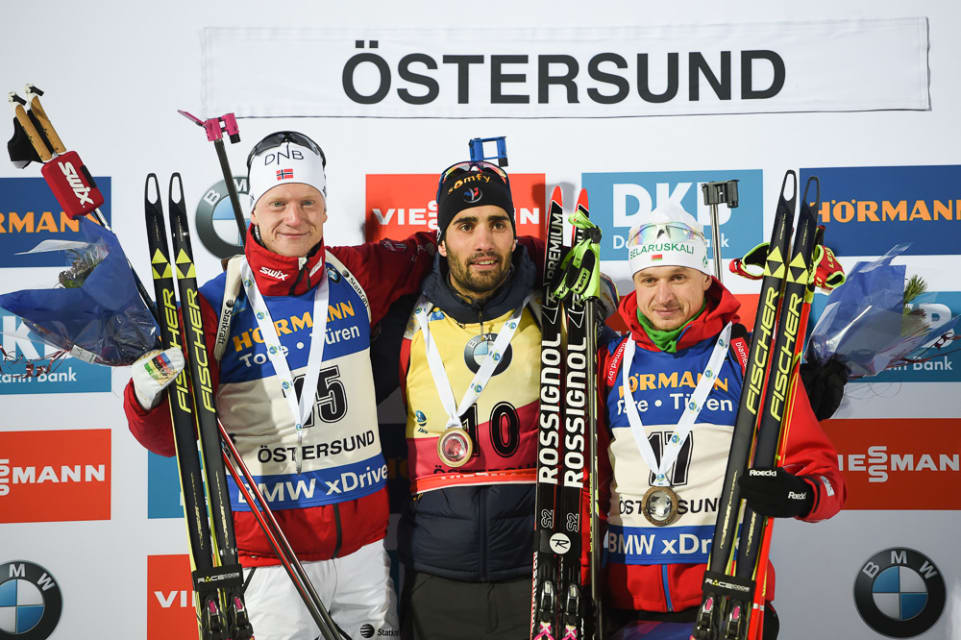
In the finish Bø had a 2:14.3-minute lead on Fourcade, who, thanks to his fast skiing, managed to claim the third place on the podium.
“Sometimes you can only congratulate the winner and be satisfied with what you get with two mistakes,” Fourcade said at the press conference.
“I think I went too much attack on the last shooting,” Fourcade said in an English interview with German broadcaster ZDF. “I was really concentrated on my first three shootings, I knew what I had to do and it was pretty easy to apply. But in the Iast one I started thinking about clean shooting and a lot of negative thoughts […]. It’s a good lesson for the following races. Anyway, Johannes shot faster than I did today, so I [would have] had no chance to be on the first place even with no mistakes. It was not the result I was expecting, but it’s a quite good start, an OK start.”
Regarding his decision to go all-out on the final lap even though he knew he had a huge lead, Bø explained at the press conference: “I didn’t want to slow down and suddenly there is one guy like Ole Einar [Bjørndalen] coming from behind to beat me, so I tried to race as hard as I could, and that was a good training for the races to come.”
Starting late in bib 80, the 43-year-old veteran Bjørndalen did not seriously challenge Bø in this race, finishing 18th (+3:43.7) with one penalty (1+0+0+0).
France’s Quentin Fillion Maillet shooting clean on his way to second place in the men’s 20 k individual race at the 2017/2018 IBU World Cup opening week in Östersund, Sweden. (Photo: IBU/Biathlonworld)
Yet Fourcade was bested by his teammate Quentin Fillon Maillet, who placed second after starting a few positions behind him and shooting clean. But ultimately, Maillet had more than a two-minute gap to Bø, finishing 2:01.0 back with no penalties.
“Three yeas ago I had two fourth places and one podium here [in Östersund] so it’s a good place for me,” Fillon Maillet explained at the press conference. “Last year I had a lot of difficulties with my shooting, a lot of mistakes, a lot of penalty loops. So I am happy to start the season with a perfect shooting… I didn’t really change anything important with my shooting, just my head [laughs], something to think during the race. I work very hard to be better, so I am very happy to start with a good result.”
Austria’s Julian Eberhard finished fourth, just three seconds behind Fourcade with one penalty in his final shooting stage (+2:17.5; 0+0+0+1). Russia’s Anton Babikov in fifth (+2:34.1), Switzerland’s Benjamin Weger in seventh (+2:34.1) and Slovenia’s Jakov Fak in 12th place (+2:44.3) were the only other athletes besides Bø and Maillet to hit all 20 targets.
“I think Martin was on the podium in every race last year, so I should do the same to hold him behind me,” Bø joked at the press conference, when asked about wearing the yellow bib of the World Cup Total Score leader for the next race and his chances of winning the Overall World Cup this season.
“I am mostly focused on the Olympics,” Fourcade replied regarding this topic. “If I decide I need to skip some events I will, I already did that in 2014 [ahead of Sochi]. For now I am just focusing on the next competition… Many things to do before the Olympics… I am satisfied with the level I am at today.”
Also questioned by German broadcaster ZDF about recent revelations in the ongoing fight against doping and next week’s pending IOC decision on whether Russian athletes should be allowed to start at the upcoming Olympic Winter Games in PyeongChang or not, Fourcade had this to say:
“Regarding your question about the IOC, they will have a meeting soon and they will decide about the Russian issue. We [the biathletes] have no new information about it. But as an athlete I will keep the same position [as in the past]: I am mostly against collective sanctions, because I am sure there are really good Russian athletes who don’t use doping. Anyway, with what we heard about the Sochi Olympic Games, if it’s true – and the IOC should know that – it’s a big shame, and the ones who were involved need to be punished. You know, it’s strange because in a way I am against collective sanctions, but in another way with all the positive tests in the past year I lost faith. And I am really disappointed about that. You know, I am a big fan of sport, I dream of watching sport on TV. And I think when you lose faith it is not good for the sport. And as an athlete I sometimes lose it, so I can imagine the people on the other side of the TV also must have this feeling. So I know the IOC will take a good solution, but I have not, you know, only one solution, so it’s a pretty hard choice.”
Previously after Fourcade had just crossed the finish line, Russian biathlete Babikov immediately walked over to Fourcade to congratulate him on his race performance.
During last season’s IBU World Championships, there had been some harsh words between Fourcade — an outspoken critic of the use of performance-enhancing drugs and the way the IBU handled the situation following the release of the McLaren report — and some Russian athletes, especially past doping offender Alexander Loginov following the mixed relay race there. In Thursday’s World Cup race, Loginov placed ninth with one penalty (+2:38.1).
Burke 32nd, Doherty 38th for U.S.; Smith 37th for Canada
US Biathlon’s Tim Burke racing to 32nd in the men’s 20 k individual race at the 2017/2018 IBU World Cup opener in Östersund, Sweden. (Photo: US Biathlon/NordicFocus)
For the first time in an individual race in several years, US Biathlon started five men, thanks to the men’s team’s strong performance to clinch 10th in last season’s Nation Cup score. (For the Olympics, even the best teams can only start four athletes for the sprint, the pursuit and the individual race, whereas in World Cups, the highest-ranked teams by this score can enter up to six.)
Starting in bib 44, Tim Burke incurred three penalties, all in the first two shooting stages (1+2+0+0), on his way to the 32nd place in his first race of the season, 5:24.2 minutes back to Bø and 3:10 to the podium positions.
“There was some light wind on the range today but we have seen much worse here in the past,” Burke explained in an email to FasterSkier. “The wind was up a little but it stayed pretty consistent from the time that we zeroed [target practice] before the race. I felt like I needed to get some of the rust off in the first two stages after not racing a World Cup since last February. I was simply a bit too conservative and controlling in the first two stages but was able to adjust and shoot more from reaction in the last two stages.”
Burke had the 37th-fastest course time of the day, while his shooting and range time ranked 14th and 13th, respectively.
“Considering everything, I think this was a solid start for me and I feel like I can build from this result,” he summed up his first race day. “After ending last season early due to illness, and taking a long time to get completely healthy again, I definitely had a lot of unknowns heading into this season. That combined with the fact that I have only been here one week and was unable to train on snow the previous 10 days at home, gives me confidence that things are headed in the right direction.”
Starting very early in bib 3, 2016 Junior World champion Sean Doherty placed 38th, 5:50.0 minutes back with two penalties (0+1+0+1).
The other three Americans all finished within 10 seconds of one another. In a field of 108 starters, Leif Nordgren was 63rd, 8:06.0 minutes back with three penalties (1+0+0+2). Lowell Bailey, the 2017 world champion in this discipline, placed 67th (+8:11.0) with four penalties (1+1+0+2) in his first race of the season after having to skip the mixed relay races last weekend due to an illness, and Paul Schommer was 69th (+8:12.3) with four penalties (1+2+0+1).
“Tough start,” Bailey commented on his race, according to a US biathlon press release. “I definitely felt a bit stale today, both on the ski course and in the shooting range. With the fresh snow that fell overnight, the conditions were really challenging and I definitely didn’t feel like I was at my best on the tracks. I’ll regroup tomorrow and start looking toward the next race on Saturday.”
“The first World Cups can be some of the most challenging for our team,” Burke explained in his email. “We have less snow time, less [offseason/pre-season] racing and jet lag to deal with [compared to many competitors], which can be a big hurdle to overcome at the beginning of the season. Luckily it’s a long season!”
The Canadian men couldn’t quite match the peak performance Julia Ransom had achieved a day earlier in the women’s 15 k individual, with a clean shooting performance on her way to a career-best ninth place.
Nathan Smith, who, similar to Bailey had missed last weekend’s mixed relay races with an illness, achieved Biathlon Canada’s best result in 37th place (+5:47.2), just ahead of Doherty. With a light wind blowing from the front or left, Smith cleared 18 of 20 targets and only incurred two penalties in his second shooting stage (0+2+0+0) while firing fast to post the 12th-ranked shooting time of the day.
“Conditions were fairly good by Östersund standards,” Smith wrote in an email to FasterSkier. “Not as perfect as the women’s race yesterday but still pretty good. I’m not sure what happened on my first standing. I felt pretty in control but the misses were quite far out. I think maybe it was a timing thing where I didn’t have a fast enough reaction when it was in the black.”
In contrast to his fast shooting, Smith’s skiing time ranked in the middle of the field of 108 starters, with the 61st-best course time of the day. Last weekend Smith had to cancel a planned start in the single mixed relay race with Rosanna Crawford. In that race, Christian Gow replaced Smith, and Crawford tumbled in a downhilll crash.
“It was nice to get back to racing but on the other hand disappointing to have come down with a cold a few days ago,” Smith explained. “I had been 100% healthy all training year. It didn’t turn into anything too severe thankfully but definitely didn’t help me out at all today. Skiing conditions were really slow (even the winning time). I expect to feel better this weekend in the sprint but will have to be realistic considering the cold and being ‘rusty’ after not racing last year, other than a few races.”
Teammate Christian Gow placed 45th on Thursday (+6:20.2) with one penalt in the final shooting stage (0+0+0+1). His brother Scott Gow placed 53rd (+7:16.1) with four penalties (1+2+0+1), and Brendan Green was 68th (+8:11.5) with five penalty minutes (1+2+0+2).
Julia Ransom (Biathlon Canada) racing to ninth in the women’s 15 k individual on Wednesday at the IBU World Cup opener in Östersund, Sweden. In her first World Cup race of the season, it was Ransom’s career-best result and Biathlon Canada’s best individual result since 2015/2016. (Photo: Biathlon Canada/NordicFocus)
Entering this season, members of Biathlon Canada had everything to gain and not a whole lot to lose. They had already had their funding reduced to zero by Own The Podium, save for a $50,000-dollar provision that paid for a coach, and its athletes were left to determine their offseason plan: stay home to train or self-fund training camps elsewhere. Many chose to spend most of their summer at the team’s base in Canmore, Alberta, and most started the season on the fly — without any preseason tuneup races in Europe — this week in Östersund, Sweden.
Julia Ransom was one of those athletes. After prequalifying for Canada’s International Biathlon Union (IBU) World Cup Team for the first trimester of racing, Ransom, 24, jumped into the 2017/2018 season with the Östersund mixed relay this past Sunday — three days after flying over from Canada.
There, she raced the second leg of the relay and tagged off in 15th, down two spots from where her teammate Emma Lunder tagged her in 13th. The team ultimately finished 15th, with teammates Scott Gow and Brendan Green.
“Today was a tough day for me. My legs were lead on the course,” Ransom wrote in a post-race email to FasterSkier on Sunday.
Three days later on Wednesday, it was another ballgame. With little to lose in the women’s 15-kilometer individual in Östersund, Ransom raced to a career-best ninth, which stood as her team’s best non-relay result in two seasons.
In the first individual race of the season, Ransom is well on her way to securing a spot on Biathlon Canada’s 2018 Olympic team, meeting half of the team’s “Priority 2” Olympic criteria standards. She needs another top 16 to fulfill that second-tier criteria. Priority 1 is one top-eight result in a World Cup (or World Championships, in a championships year like last season) or a top-three in a World Cup relay.
So far, she is the only one on her team who has cracked the top 16 in two seasons. Last winter, her best result (and her previous personal best) was 18th at 2017 World Championships in the 15 k individual. Canada’s best non-relay result in 2016/2017 was Scott Gow’s 17th place in a 20 k individual World Cup race.
And again, it’s the first race of the season.
“I am still in shock with how well today went,” Ransom, a Penticton, British Columbia, native in her fourth World Cup season, wrote in an email to FasterSkier on Wednesday.
“It is such a relief to start racing again,” she continued. “I wasn’t too nervous today; I had a race plan that I had confidence in and I was excited to give it a go. I also was looking for redemption after my painful relay leg on Sunday.”
Conditions were chilly, at -12 degrees Celsius (10 degrees Fahrenheit), but calm, accounting for clean shooting for seven out of the top-nine finishers. Ransom was one of them.
She started 20th (out of 102) and cleaned all four stages in the longest-format women’s race on the circuit. In individual races, shooting is weighed heavily; a minute is added to a competitor’s final time for each missed shot. Fortunately for Ransom, she hit all 20 targets.
“I was getting some pretty exciting splits during the whole race (top 5, second place, catching the leader etc) so I had an idea this was going to be a good day as long as I kept my shooting together,” she reflected. “I took a sigh of relief after the 20th target went down and just tried to ski as well as I could to the finish. I did take look at the big screen as I left the range, just to make sure I was hearing the techs right!”
Ransom initially crossed the finish line in third, 28.8 seconds behind Sweden’s Mona Brorsson in first and 9.8 seconds behind Eva Puskarčíková of the Czech Republic in second. Both Brorsson and Puskarčíková also shot clean.
The 55th starter, Nadezhda Skardino of Belarus, ultimately posted the best shooting and skiing performance of the day, racing to her first World Cup win (and first podium in three years) in 42:57.4 minutes with 20-for-20 shooting. Norway’s Synnøve Solemdal started 75th and shot clean but came up 2.9 seconds short at the finish to place second, bumping Ukraine’s Yuliia Dzhima to third (+12.0). The top-four women all cleaned with another Ukrainian, Valj Semerenko, placing fourth (+30.1).
Slovakia’s Paulina Fialková finished fifth (+32.2) with a single penalty (0+0+0+1), while Brorsson ultimately placed sixth (+49.6) and Puskarčíková seventh (+1:08.6).
Ransom ended up ninth for her best World Cup level performance by nine places, ahead of Norway’s Marte Olsbu in 10th and about eight seconds behind France’s Justine Braisaz in eighth.
“Starting off the season with a top ten has validated the hard work our team has put in and also given me a lot of confidence going forward. It’s a great building block to say the least,” Ransom wrote.
Asked what she thought made the difference with her training this year, she explained that she’d honed in on increasing her shooting speed.
“It’s still a work in progress but I am happy where I am so far,” she wrote. “I also did a ton of extra strength work and core stability and it has proven to make a big difference on the skis.”
On Wednesday, Ransom’s overall shooting and range times ranked in the middle of the pack, around 50th, while her overall course time was slightly faster in 42nd.
Biathlon Canada Head Coach Matthias Ahrens praised Ransom’s ability to perform under pressure.
“Especially as the tension mounted, with each clean bout, Julia was closer the podium and she managed the pressure very well,” he said, according to a team press release. “She didn’t get too excited or too nervous, executing clean shooting each time.”
Four Canadians started Wednesday’s 15 k, with Rosanna Crawford finishing 39th (+3:32.6) with three penalties (0+0+1+2), following her crash in Sunday’s single mixed relay.
“Rosanna, considering the crash of Sunday, had a really nice race,” Ahrens said in the press release. “It wasn’t certain if she’d race today, and we went in with a strategy not to risk any further injury. She managed a very good race, with a quite good ski time. Her rifle also required repairs from Sunday’s race. Overall, not knowing how she would hold up, particularly on one of the hardest Individual courses on the circuit, it was a nice result for her, in the World Cup points.”
Megan Bankes finished 75th (+6:28.9) with three misses (2+1+0+0) and Lunder was 83rd (+7:06.3) with five penalties (0+0+2+3).
US Biathlon started three women, with Susan Dunklee leading the team in 53rd (+4:12.7) with four penalties (1+0+1+2). Clare Egan finished 79th (+6:52.5) with five misses (0+2+1+2) and Emily Dreissigacker was 81st (+7:03.5) with three misses (0+0+1+2).
The men start their season with a 20 k individual on Thursday at 11:15 a.m. Eastern Standard Time.
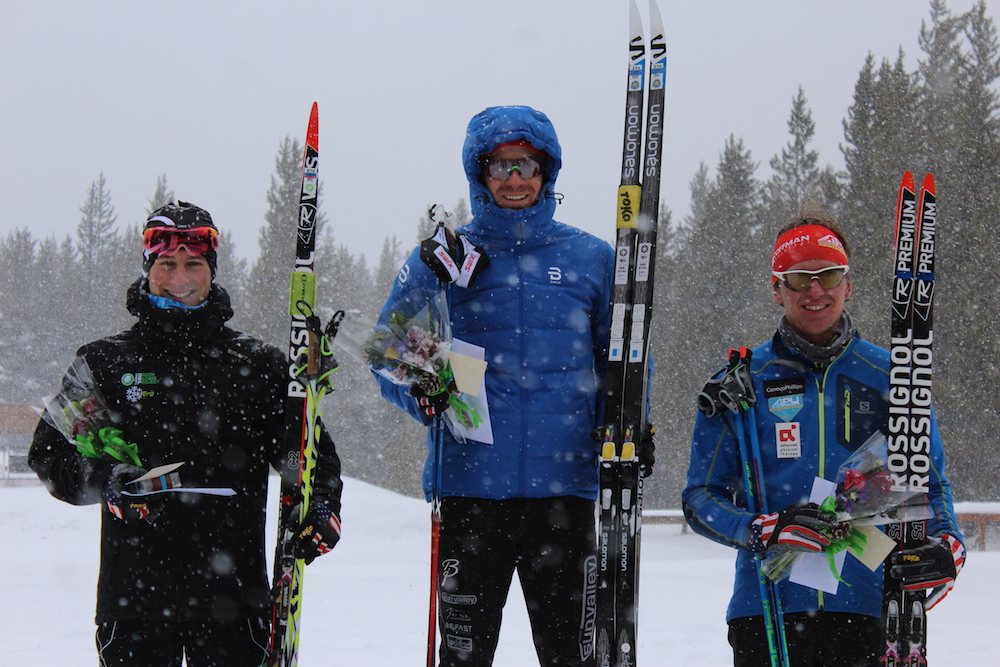
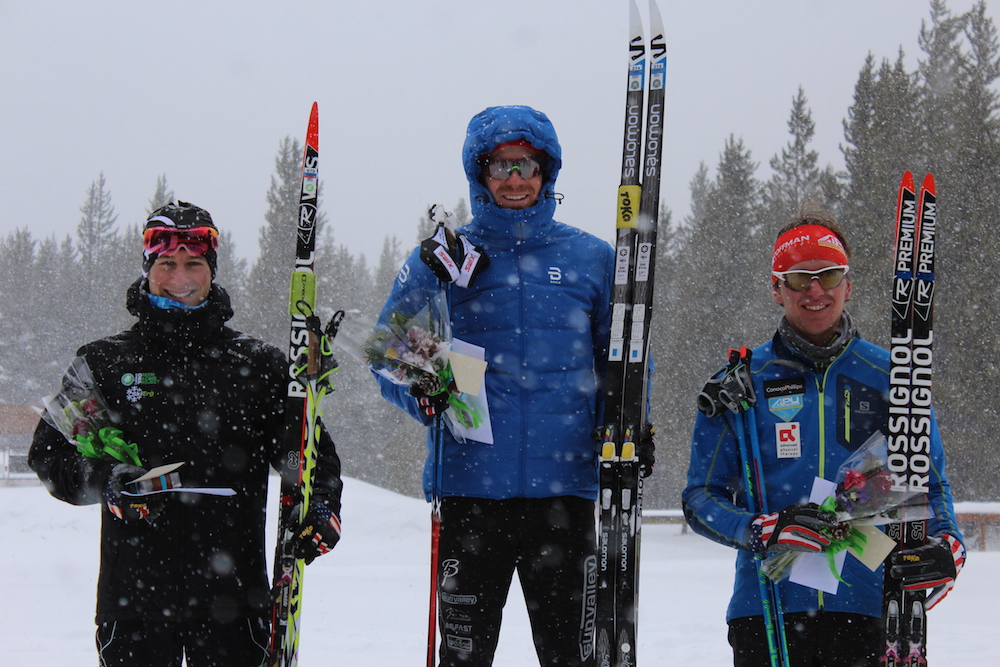
Matt Gelso (SVSEF) topping the SuperTour podium for the second-straight day in West Yellowstone, Mont. Joining him on Sunday’s 15 k classic podium: CGRP’s Ben Lustgarten (l) in second and APU’s Scott Patterson (r) in third.
Welcome to The Rundown, your quick primer of need-to-know information about the day’s racing. We’ll be updating this digest as the day goes on with additional results, photos and quotes. The Rundown is NOT a race report; stay tuned for complete race reports later today with interviews from the day’s top racers.
(Note: This Rundown has been updated to include comments from U.S. Nordic Combined’s Bryan Fletcher, who placed ninth on Sunday at the World Cup in Lillehammer, Norway.)
***
U.S. SuperTour opener in West Yellowstone: 10/15 k classic
Matt Gelso made the case that he can win any discipline and format when it comes to cross-country skiing, topping the SuperTour podium for the second-straight day of the circuit’s opening weekend in West Yellowstone, Mont. Gelso, of the Sun Valley Ski Education Foundation (SVSEF) Gold Team, won the men’s 15-kilometer classic individual start in 42:57. He finished 32.2 seconds ahead of Ben Lustgarten of the Craftsbury Green Racing Project (CGRP) in second, and Scott Patterson, of Alaska Pacific University (APU), clocked in 1:16.8 back in third.
In the women’s 10 k classic, Liz Guiney (CGRP) tallied the distance victory in 33:52.8. Katharine Ogden, of the Stratton Mountain School (SMS) and U.S. Ski Team D-team, finished 7.7 seconds back in second place, while Craftsbury put two on the podium with Kaitlynn Miller in third (+28.4).
Nordic Combined World Cup in Lillehammer: Two individual comps and a relay
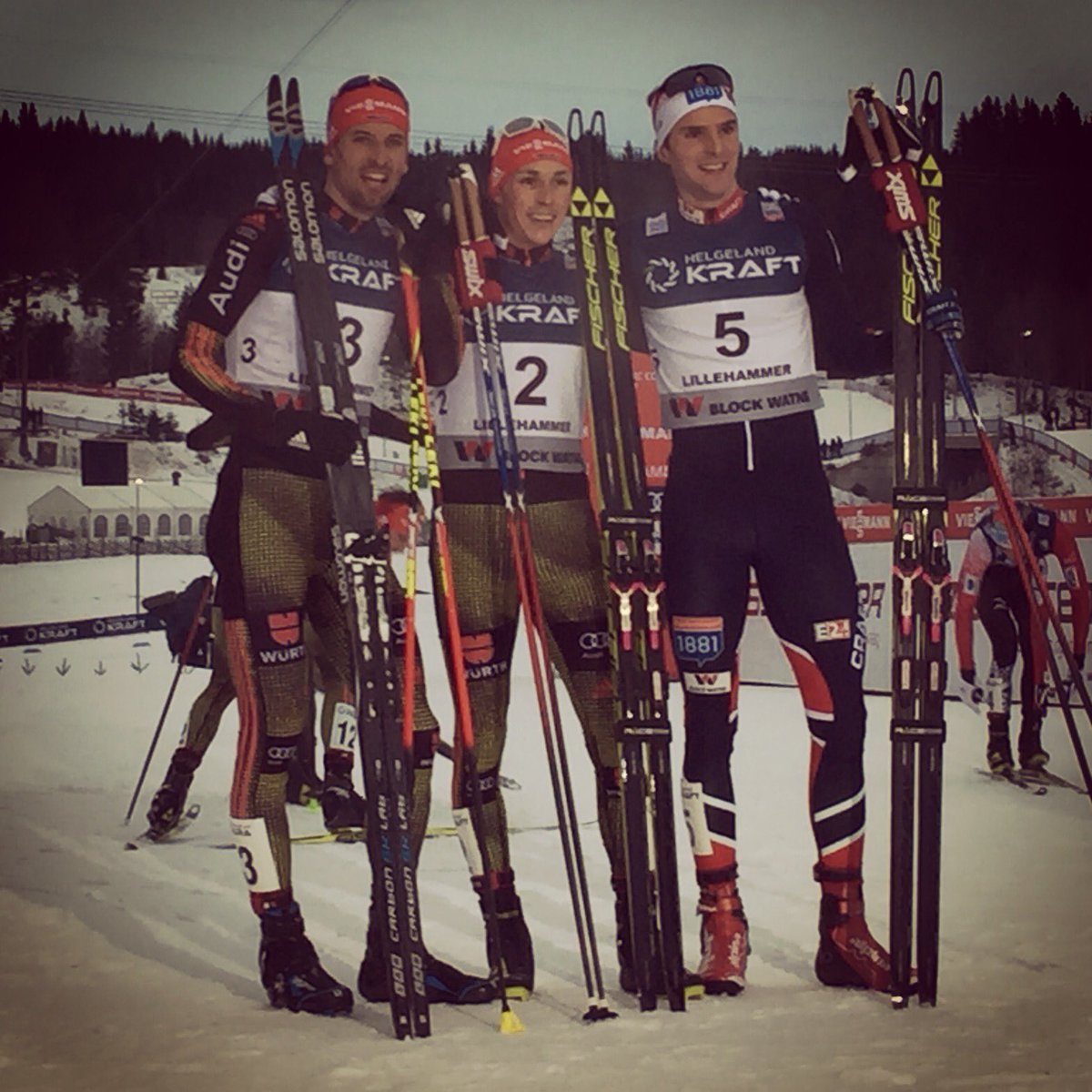
German winner Eric Frenzel (c) with teammate Björn Kircheisen (l) in second and Norway’s Jørgen Graabak (r) in third on Day 3 of the Nordic Combined World Cup in Lillehammer, Norway. (Photo: FIS Nordic Combined/Twitter)
[UPDATE) Twenty-second in the jump. Ninth at the finish. That’s a bit more like it for U.S. Nordic Combined’s Bryan Fletcher. The American jumped to 22nd on Sunday on the large hill in Lillehammer, Norway, then raced to ninth in the 10 k Gundersen start cross-country race. He finished 1:22 minutes behind race winner Eric Frenzel, who notched his second-straight individual victory and third win (including Friday’s team event) of the Nordic Combined World Cup’s long weekend in 25:13.6.
“Going into the race on Sunday I was confident that with a good race I could move up quite well,” Fletcher wrote in an email. “So I just set out to ski my own race and right from the start I was moving up. Top 10 was the goal and I was happy to accomplish that.”
Germany went 1-2 with Björn Kircheisen in second (+10.8) and Jørgen Graabak of Norway finished third (+23.4) on Day 3 in Lillehammer. Fletcher’s younger brother Taylor Fletcher placed 26th (+2:21.1), moving way up from 48th in the jump (with the fastest overall course time). Also for the U.S., Ben Berend placed 49th (+4:30), and Ben Loomis was 52nd (+5:16).
On Friday, the German teammates started off the three-day series with a victory in the first 4 x 5 k team event of the season. They teamed up with Kircheisen and Fabian Riessle for first, beating Norway by 31.5 seconds with a winning time of 49:34.9.
Norway’s squad, with Mikko Kokslien, Espen Andersen, Håvard Klemetsen, and Graabak, finished second without anyone else in sight. Austria took third (+1:23.7) with David Pommer, Mario Seidl, Wilhelm Denifl, and Phillipp Orter.
Finland placed fourth, Japan was fifth, France sixth, the Czech Republic seventh, Italy eighth, and the U.S. ninth (+4:19.1), ahead of Russia in 10th.
The order for the U.S. team was Bryan Fletcher, Berend, Loomis, and Taylor Fletcher. They rose as high as sixth during Bryan’s first leg, but dropped to eighth and finally ninth.
On Saturday, in the individual normal hill/10 k competition, Frenzel overtook Rydzek for the win in 24:35. Rydzek started the day by winning the jump, and Frenzel ranked fourth heading into the 10 k Gundersen start. Frenzel overcame a 24-second deficit at the start to pass Rydzek and beat him by 15 seconds at the finish. Germany ended up sweeping the podium with Riessle in third (+25.8), after Riessle improved from 11th at the start with the second-fastest course time.
Also on Saturday, Taylor Fletcher led the Americans in 26th (+1:51.2) after jumping to 44th and starting 2:02 minutes back from Rydzek. Fletcher skied the ninth-fastest course time.
Bryan improved from 43rd at the start to 32nd (+2:32.9), Loomis ended up 43rd (+5:02.6) and Berend 44th (+5:33.4).
“Going into this weekend I was feeling good and had some solid jumps in training so I knew that I was capable of a decent performance,” Bryan wrote on Sunday. “However, I struggle to put all the pieces together through the weekend. The team event was a good performance on my part and it was fun to ski with our young guys too. In Saturday’s event, I was close but had a rather unusual race in which I just couldn’t get going and fell off the pace quickly. Sunday however it all came together with a decent jump and race to finish 9th. This is more indicative of my true level at the moment so I was happy to finally fall into form.
“This is definitely a result that I was hoping for in this period,” he continued. “I would like to finish in the top 10 consistently this year and it was a bit of a shaky start but I am starting to find the rhythm now. I hope to continue this momentum in Ramsau.”
Lowell Bailey came oh-so-close to fourth place on Sunday. Just two fewer misses and he could’ve been in the hunt, but that’s how biathlon goes.
US Biathlon’s top man so far this season, Bailey started 13th in the IBU World Cup 12.5 k pursuit on Sunday in Östersund, Sweden, and by the first prone stage, he was up to seventh with clean shooting. Two-and-a-half kilometers later, he was back in the range and shooting without a miss again. Bailey headed out on his third loop in fourth, and more or less held that position through the third shooting — cleaning yet again in standing.
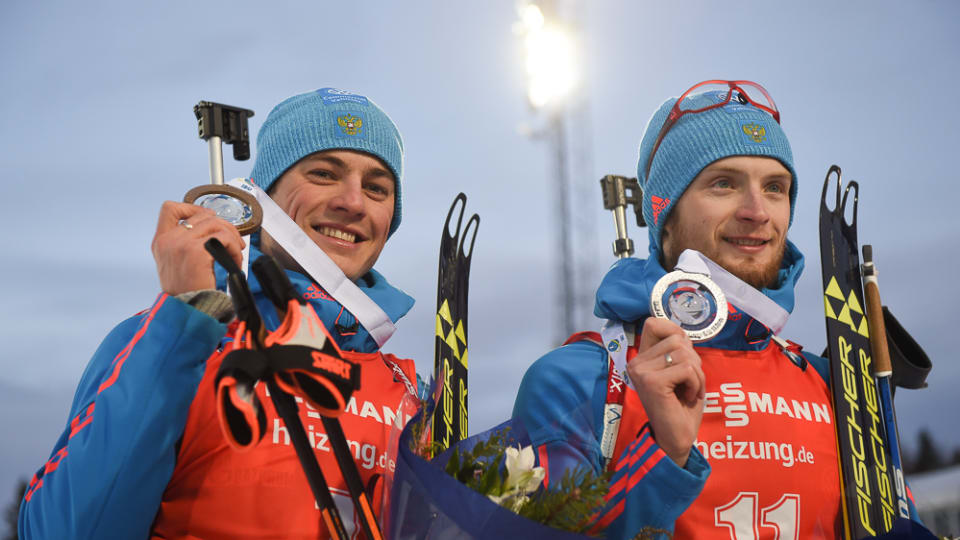
Russia went 1-2 in the men’s 15 k pursuit on Sunday at the IBU World Cup in Ostersund, Sweden, with Anton Babikov (l) winning his first World Cup and Maxim Tsvetkov (r) placing second. (Photo: IBU)
But two misses on the final standing dropped him to ninth, and on the final loop, Bailey slipped six spots to 15th at the finish. With two penalties (0+0+0+2), Bailey finished 1:21.8 behind the winner, Russia’s Anton Babikov, who hit 19-of-20 targets en route to his first World Cup victory and podium. Russia took second place as well with Maxim Tsvetkov shooting clean (0+0+0+0) and finishing 10.5 seconds behind his teammate, and France’s Martin Fourcade pushed through four penalties (2+0+0+2) to place third (+15.2).
Fourcade started the day in first, after winning Saturday’s sprint, and lost the lead on the final stage, with two misses sending him to the penalty lap. On that last shooting, Babikov (the seventh starter) took control, and Tsvetkov (who started 11th) moved up from skiing in third for most of the race to second place.
Also for the U.S., Tim Burke placed 35th (+2:39.2) after starting 29th, with four penalties (0+1+2+1).
Canada’s Scott Gow finished 47th (+3:34.8) with three misses (0+0+2+1), Brendan Green was 50th (+3:45.5) wit five misses (1+3+0+1), and Macx Davies 51st (+3:54.6) with four penalties (0+0+2+2).
Gabriela Koukalová of the Czech Republic with her first-place prize after winning Sunday’s 10 k pursuit at the IBU World Cup in Ostersund, Sweden. (Photo: IBU)
In the women’s race, Gabriela Koukalová (formerly Soukalova, you’ll get used to it, we promise), took her third-place finish in Saturday’s sprint and catapulted herself into first on Sunday in the 10 k pursuit. Koukalova shot 19-for-20, missing just one on the first standing (0+0+1+0) to cross the finish line first, 8.4 seconds ahead of Germany’s Laura Dahlmeier.
While Koukalova, of the Czech Republic, took the win in 31:43.3, Dahlmeier placed second (after starting fourth) with two penalties (0+1+1+0). Italy’s Dorothea Wierer improved from 19th to third (+21.4) at the finish, with perfect shooting (0+0+0+0).
Switzerland’s Lena Häcki also cleaned for fourth (+36.3), after starting 12th.
The first out of the gate (the winner of Saturday’s sprint), France’s Marie Dorin Habert dropped to seventh, more than a minute and 15 seconds back, with six penalties (2+1+2+1).
American Susan Dunklee moved up to 22nd (+2:55.7) after starting 27th, despite five penalties (2+2+0+1).
Also for US Biathlon, Clare Egan improved to 30th (+3:35.4), up from 44th, with three misses (0+0+1+2).
Joanne Reid (US Biathlon) finished 47th (+4:59.6) with four misses (1+1+1+1), and Canada’s Julia Ransom finished 58th (+6:36.8) with eight misses (2+0+4+2).
Martin Johnsrud Sundby is the man to beat once again after winning the men’s 15-kilometer classic pursuit on Sunday in Lillehammer, Norway. The Norwegian started seventh and overcame a 50-second deficit to Sweden’s Calle Halfvarsson, the leader going into the final day of the mini tour. Halfvarsson dropped to fifth, while Sundby rose to first and brought another Norwegian Johannes Høsflot Klæbo to the top with him. Klæbo started sixth, 3 seconds ahead of Sundby, and placed second, 2.3 seconds behind him. Finland’s Matti Heikkinen took the final spot on the podium in third (+2.7), by 0.9 seconds over Norway’s Emil Iversen in fourth. Halfvarsson was 6.3 seconds back in fifth, his Swedish teammate Marcus Hellner sixth (+6.8), Norway’s Pål Golberg and Finn Hågen Krogh seventh (+9.9) and eighth (+15.0), respectively, and Canada’s Alex Harvey ninth (+16.2), ahead of Finland’s Iivo Niskanen in 10th (+52.0)
Canada had two in the points with Devon Kershaw rising from 43rd to 27th (+2:08.5). Len Valjas placed 48th (+3.44), Graeme Killick was 53rd (+3:53.9), Knute Johnsgaard 72nd (+6:20.3), Bob Thompson 81st (+8:16.3), Andy Shields 83rd (+9:57.3).
For the U.S., Noah Hoffman rose to 36th (+2:39.5) after starting 48th, Erik Bjornsen finished 57th (+4:33.3), and Eric Packer finished out his first overseas mini tour in 68th (+5:45.1).
Heidi Weng (c) held onto her lead to win the Lillehammer mini-tour by 16.1 seconds over Norwegian teammate Ingvild Flugstad Østberg (l). Finland’s Krista Parmakoski was third after losing a shot at second thanks to a crash. (Photo: FIS Cross Country/Twitter)
Heidi Weng of Norway started the 10 k pursuit in first place, and that’s where she finished it, 16.1 seconds ahead of teammate Ingvild Flugstad Østberg. Finland’s Krista Parmakoski rounded out the podium in third, after skiing up from a fifth place starting position and passing Østberg near the end of the race but then crashing on a downhill and losing valuable seconds. Nevertheless her effort gave Parmakoski the fastest ski time of the day.
Jessie Diggins, who started the race in third position after winning yesterday’s 5 k skate, made an early bid to ski with Østberg but ultimately lost ground, ending eighth, +1:39.4.
Instead it was Marit Bjørgen who took fourth, +57.5. Stina Nilsson of Sweden was one of the biggest movers of the day, skiing from 27th at the start all the way up to fifth, +1:26.1.
Following Diggins, Sadie Bjornsen finished 11th, +1:51.2. The American had started in a pack of skiers and stayed there for most of the race. Liz Stephen was 38th (+3:31.8), and Rosie Brennan and Caitlin Patterson 41st (+3:50.2) and 42nd (+3:56.8). Ida Sargent rounded out the U.S. results in 57th (+5:39.7).
Emily Nishikawa led the Canadians in 46th (+4:08.5), with Cendrine Browne and Dahria Beatty 52nd (+4:41.5) and 59th (+6:08.2).
Lowell Bailey (US Biathlon) racing in the men’s 12.5 k pursuit on Sunday at the IBU World Cup in Östersund, Sweden. He placed 15th after starting 13th, but skied in fourth for much of the race. (Photo: USBA/NordicFocus)
Starting with just under a minute separating him from first place, Lowell Bailey made sure he didn’t get too caught up on what could be.
A veteran member of US Biathlon’s national team, Bailey started the men’s 12.5-kilometer pursuit on Sunday in 13th, exactly 59 seconds behind the first man out of the gate, Martin Fourcade of France.
Fourcade had won the sprint the day before (and every race so far this season) and started 42 seconds ahead anyone else in the pursuit in Östersund, Sweden, with sprint runner-up Fredrik Lindström of Sweden chasing in second.
Could anyone catch Fourcade? Maybe — but it was going to take some shakeups with Fourcade making errors and others shooting perfectly under pressure.
Bailey was among those given the opportunity to move up significantly in the field. He tried not to overthink it, nor the fact that has led the U.S. in every International Biathlon Union (IBU) World Cup race so far this season.
“I’m trying to approach every race as an isolated event this year; trying to focus on what I can control that day,” Bailey explained in an email on Sunday.
So far this season, he’s finished 13th in the 10 k sprint and 15th in the 20 k individual races held in Östersund, the first World Cup stop on the circuit. Sunday marked the final day of a weeklong race series.
“I just went into today with the goal of executing all of the things I had worked on throughout the training year,” Bailey continued.
On the first of five 2.5 k loops, Bailey found himself fighting for second.
“The first loop was an incredibly fast pace,” he recalled. “The group I was in ended up catching 2nd place, so by the time we hit the range, there was a group of fifteen or so guys from 2nd to 17th. It made for an exciting start to the race.”
Once on the range, Bailey cleaned the first prone stage and left the range in seventh. He moved into fourth with another clean prone, followed by a flawless standing — his third-straight stage without a miss. With two loops to go and one more shooting, Bailey remained in fourth, about 39 seconds behind the leader and five seconds behind third place.
The wind was blowing throughout the race, even gusting at times, but it was “manageable,” according to Bailey.
“I didn’t really think about the fourth place,” he said of his mindset during the race. “I just wanted to execute a quality shooting bout.”
On that standing stage, which he entered in fourth place, Bailey missed his first two shots. He cleaned the remaining three, but had to ski two costly penalty laps.
“There was definitely some wind, but I can’t blame those two misses on wind,” he wrote. “I lost my focus for those two shots and sent them outside the targets.”
Without much left in the tank for the final 2.5 k, Bailey, who left the range in ninth, slipped to 15th at the finish, 1:21.8 seconds behind the winner.
Russia went 1-2 in the men’s 15 k pursuit on Sunday at the IBU World Cup in Ostersund, Sweden, with Anton Babikov (l) winning his first World Cup and Maxim Tsvetkov (r) placing second. (Photo: IBU)
A 25-year-old Russian who spent most of last season on the IBU Cup, Anton Babikov won the pursuit with near-perfect shooting (0+0+1+0) for his first World Cup podium. He finished in 31:22.3, and his 24-year-old teammate Maxim Tsvetkov followed 10.5 seconds later in second, thanks to clean shooting, to tie his career best.
(Babikov started seventh and skied the fourth-fastest overall course time, and Tsvetkov started 11th and was one of just two men to clean all four stages. Michal Krcmar of the Czech Republic was the other. He rocketed from 38th at the start to seventh at the finish.)
Fourcade, the first starter, ended up third (+15.2) with an uncharacteristic four misses (2+0+0+2).
“From the very beginning, I knew that everything could be possible,” Babikov told the IBU, according to a press release. “We were going very close. Before going to Östersund, I was a little worried, it’s always curious to see how well you are prepared for the season.”
Tsvetkov skied in third for most of the race, concentrating on his shooting and capitalizing when Fourcade missed two on the final stage. There, Babikov took the lead for the first time from Fourcade, now 10 seconds back in third, and Tsvetkov left the range four seconds behind in second.
“This is my first medal in pursuit,” Tsvetkov told the IBU. “It was very tough for me, I knew that Martin was very close, I knew that I have to work hard ’til the end.”
While Bailey felt like he was missing some snap, especially on the last loop (which he attributed to a hard first loop), he was pleased with his start to the season and is ranked ninth overall on the World Cup.
“I have been ranked this high in the past coming out of Ostersund, but I am definitely happy with the solid start to the season,” he told US Biathlon, according to a press release. “You train all season in a bit of a vacuum — just you and your teammates — and there is very little for you compare yourself to. Because of this, the start of the season can be a bit of an unknown. I’m happy to see that my ski times are competitive and that I’m able to reach the podium on a great day.”
Of 59 finishers on Sunday, Bailey’s course time ranked 36th.
“I hoped to have competitive ski speed and accurate, fast shooting,” he wrote to FasterSkier. “Mostly, I’m satisfied with my performances so far. As always, there’s plenty of things I need to improve, but I’m happy with this a solid start to the season.”
Tim Burke (US Biathlon) racing to 35th in the men’s 12.5 k pursuit on Sunday at the IBU World Cup in Östersund, Sweden. (Photo: USBA/NordicFocus)
Two American men started the pursuit, with Bailey finishing 15th and Tim Burke placing 35th (+2:39.2). Despite a clean first prone, Burke, who started 29th, tallied four penalties (0+1+2+1), yet still finished in the top 40 required for points. His course time ranked 35th overall.
Scott Gow was Canada’s top finisher in the pursuit in 47th (+3:34.8) and found himself up in 38th after hitting all 10 targets through the first two stages. He then missed two on the third stage and one more in the final standing (0+0+2+1), costing him time in penalty laps.
About 11 seconds later, Brendan Green finished 50th (+3:45.5) with five penalties (2+1+0+2). His teammate Macx Davies finished 51st (+3:54.6). After two clean prone stages, Davies had skied in 35th, but two misses on each standing bout (0+0+2+2) brought him outside the top 50.
The women’s 10 k pursuit at the IBU World Cup In Östersund, Sweden. From left to right: Germany’s Laura Dahlmeier in second, Czech Republic’s Gabriela Koukalová in first, and Italy’s Dorothea Wierer in third. (Photo: IBU)
Last year’s defending overall World Cup champion Gabriela Koukalová of the Czech Republic also had started out fairly well into the new season during the International Biathlon Union (IBU) World Cup opening week in Östersund, Sweden. But a victory was still missing.
She corrected that on Sunday, moving up from the third starting position, based on her sprint result, to the top of the podium in the women’s 10-kilometer pursuit, in a time of 31:43.3 with only one penalty lap (0+0+1+0).
Following strong gales in the individual and nearly no wind in the sprint races, for the pursuit the conditions were somewhere in between those extremes, manageable but still forcing a number of competitors into the penalty lap in each of the four shooting stages (in pursuit races the athletes are not allowed to use spare rounds).
By the end of the first shooting stage, Koukalová took the lead and never gave it up. Based on course time, she was seventh fastest, but her direct pursuers incurred more penalty laps. Even so, they didn’t make it easy for her.
“I didn’t expect that I can race with Kaisa [Mäkäräinen] so I just tried to concentrate for the last shooting,” Koukalová, formerly Soukalová, explained during the post-race press conference. “I didn’t feel so strong… It was like walking in hell, mainly the last two loops.”
Asked if she looked back over her shoulder repeatedly on the final lap, she smiled broadly: “I don’t know, because I don’t remember nothing what happened there.”
Germany’s Laura Dahlmeier managed to defend the “yellow bib” distinguishing the current World Cup leader for a third day, this time finishing in second place, just 8.4 seconds behind Koukalová. After incurring two penalties during the race (0+1+1+0), Dahlmeier made up about ten seconds on Koukalová on the final lap, but was not able to completely close the gap.
Gabriela Koukalová (Czech Republic) on her way to winning the women’s 10 k pursuit on Sunday in Östersund, Sweden, the first pursuit of the 2016/2017 IBU World Cup season. (Photo: IBU)
“I got instructed by the coaches that I should try and catch up to Gabi, that she was not going as fast anymore,” Dahlmeier told German broadcaster ARD after the race. “I got close on the downhill. I tried everything, but the last loop is only 2 kilometers, maybe if it were 500 meters longer… But I am super-happy about the second place.”
Asked in the press conference about competing for overall World Cup title this season, Dahlmeier explained, “My aim is to stay healthy and to have enough power for every race. I will try, but we will see how the season goes. Perhaps I have to miss one, but my aim is to compete in all races… We can talk about it in Oslo [the World Cup final in March 2017].”
Also back on the podium was another familiar face with Italy’s Dorothea Wierer, third in the World Cup standings last year, who, by her standards, had experienced a slow start into the new season. Starting in 19th due to her sprint result, she quickly began to overtake athletes in front of her thanks to her trademark fast-and-accurate shooting. In the finish, her chase was rewarded with a third place, 21.4 seconds back (0+0+0+0). Still, Wierer was a bit surprised to have regained her form so quickly within the opening weekend.
“Yesterday evening I just told my trainers that tomorrow I will make four times zero [misses], but I thought I was kidding,” the happy Italian remarked during the press conference. “But today it was like that … It was not so difficult [on the shooting range], but also yesterday it was not difficult but then I had two [misses] in the last shooting.”
After her last standing stage in the pursuit, Wierer had gone back on the course in second place, but the faster skier Dahlmeier was just behind her and managed to pass her on the final lap.
“That’s the fascination of biathlon … I saw she had shot clean and skied out of the range a bit ahead of me,” Dahlmeier told ARD. “I already noticed in the prior loops that we had top equipment today, and thought that I could catch her on the downhill. That worked faster than expected. Then I heard we should try to catch Gabi … also from the Italian coaches, and I started the flight ahead.“
“My coach said ‘she is coming behind you, she is pushing hard’. I was losing Laura on the downhill, but I was also looking back,” Wierer explained.
The true surprise of the race was the 21-year-old Lena Häcki of Switzerland, who had already achieved a strong result with a 12th place in the sprint, and on Sunday moved up even further with four clean stages, an achievement only matched by Wierer among the 60 starters. Häcki celebrated across the finish line, just 36.3 seconds behind the winner and 15 seconds off the podium. It was the best World Cup result of her career and her first individual result in the top 10.
“Unbelievable, I had tears in my eyes,” Häcki told Swiss broadcaster SRF. “All the top stars congratulated me … I can only remember half of it. It’s like a movie with a happy end that is moving past me, and I can’t believe yet that this is my real life.”
She credited her strong shooting performance to training with a mental coach.
Fifth place went to the runner-up from the sprint race, Finland’s Kaisa Mäkäräinen (1+1+0+2, +52.7). For a large part of the race she had held a position on the podium. But two penalties in her final shooting dropped her back to sixth when all other athletes in her vicinity shot clean, and despite recording the best course time again the strong skier was only able to make up one more place on the last lap overtaking Austria’s Lisa Hauser who finished sixth (0+0+1+0, +1:15.5).
The French sprint winner Marie Dorin Habert fell back to seventh place (+1:15.6), losing her lead with two misses in the first stage before incurring four more penalties (2+1+2+1).
Dunklee Up to 22nd, Egan in 30th
Susan Dunklee (US Biathlon) racing to 22nd in the women’s 10 k pursuit on Sunday in Östersund, Sweden. (Photo: USBA/NordicFocus)
Leading the North Americans, Susan Dunklee jockeyed with a Swiss athlete on her final lap, but instead of the young Häcki it was the more experienced Selina Gasparin. Dunklee’s race had not started off well; she fell back to 40th after two misses in each of the prone shooting stages.
“I don’t think the wind was all that tricky; the mistakes are my own fault,” Dunklee wrote in an email to FasterSkier. “On one of my misses my trigger went off a little early but I’m not sure about the others.”
She managed to catch up again, thanks to fast skiing (with the 17th-fastest overall course time) and a clean third shooting stage in standing, before incurring another penalty in her final shooting and finishing in 22nd place (+2:55.7, 2+2+0+1).
“Throughout the race I had plenty of people to chase and that kept me motivated,” she wrote. “I did catch a ride for half a loop behind my teammate Clare. I had a close battle to finish with Selina Gasparin and she out-sprinted me today, but I look forward to challenging her again soon.”
Teammate Clare Egan moved up to 30th place after starting in the 44th position from her sprint result. She began the race with two clean prone shootings advancing to the 23rd position, before falling back a few places again with three misses in the standing stages (0+0+1+2, +3:35.4).
Clare Egan (US Biathlon) racing to 30th in the women’s 10 k pursuit at the IBU World Cup in Östersund, Sweden. (Photo: USBA/NordicFocus)
In an email, Egan described the wind during the pursuit as “totally manageable”.
“My prone execution has been really solid lately,” she wrote. “I’m able to work smart even when tired or under pressure. In standing, however, I am still working up to that point. Especially towards the end of a race when I am more fatigued and my mind isn’t as sharp, and perhaps I feel more pressure because I am aware of my result, it is easy to lose focus on the shooting process. I need more practice to find the right balance between thinking through my actions and overthinking them.”
Combined with the 26th-best course time, this resulted in Egan’s second-best finish in a World Cup pursuit, after a 23rd place last season in Presque Isle, Maine.
“I felt very depleted warming up today, after traveling and then doing 4 races in the last week,” Egan explained. “My wax crew did an excellent job today and definitely gave me an advantage – I was gliding past everyone on the downhills so I was able to pick up a few places just from having the fast skis… I was able to fight for top-30 on my last lap and won a sprint between 4 people in the finish. I’m proud of all my results from this week and looking forward to learning from these experiences and moving up throughout the season!”
Joanne Reid (US Biathlon) racing to 47th in her first World Cup pursuit, the first pursuit of the 2016/2017 season in Östersund, Sweden. (Photo: USBA/NordicFocus)
The third U.S. woman, Joanne Reid had qualified for her first World Cup pursuit with a 53rd place in the sprint, and after moving up slightly, she finished the day in 47th (+4:59.6) with a not flawless but consistent shooting performance (1+1+1+1).
Julia Ransom, the lone Canadian to qualify for the women’s pursuit, started in 38th but lost ground quickly due to two penalties in the first stage. At the end of the day, Ransom is known for her secure shooting, had a whopping eight penalties (2+0+4+2). Only Germany’s Miriam Gössner had more with nine. Ransom finished her day down 20 positions in 58th (+6:36.8).
The IBU World Cup resumes on Friday, Dec. 9, with sprint races in Pokljuka, Slovenia.
France’s Martin Fourcade shooting in standing, on his way to winning the men’s first IBU World Cup sprint of the season on Saturday in Östersund, Sweden. (Photo: IBU)
Just like in the women’s sprint earlier on Saturday, drastically improved wind conditions compared to earlier in the week at the International Biathlon Union’s (IBU) World Cup in Östersund, Sweden, required the athletes to shoot extremely well if they wanted to have a place on the podium in the men’s 10-kilometer sprint on Saturday.
France’s Martin Fourcade again did it the best, shooting clean in the two stages and skiing just as fast as all week to cross the line in a time of 23:31.9 minutes, adding his 51st victory to his records right after he achieved the big milestone of 50 wins in the individual race on Wednesday.
Despite starting early in bib 11, Fourcade knew no other athlete was likely to beat him in his current race shape when he manages to shoot no penalties, celebrating with both arms raised high as he crossed the line. And he immediately set his sight on another goal: winning three races in a row, four if you count his win in the single mixed relay.
“It is much harder than it looks on TV,” Fourcade told German broadcaster ARD when asked about his frequent victories. “I don’t have a secret. It is very difficult for my body and for my mind. … I don’t want anybody to understand it the wrong way, but yesterday I knew I will win today … I didn’t dream it, I wasn’t sure. But I had to win. The last six years I always won two races here in Östersund. Maybe I can win the third race [this year]. But it will be tough. I have no more energy left. I am feeling empty.”
“Conditions today were very different [from the individual race],” he later explained during the IBU press conference. “It was much more difficult for the athletes to reach a good speed. … But my shoot[ing] today was perfect, and it wasn’t in the individual, so I am a bit more satisfied today. … I try not to think about my opponents during competition. I am really focused on what I have to do. Today was a big battle against myself, and I am satisfied that I won.”
Germany’s Arnd Peiffer had posted the first significant lead. Then he was replaced at the top by Fourcade, and still had to wait in the finish pen for his teammate Benedikt Doll, who had missed a shot in the standing stage but was faster than Peiffer on the course. In the end, Doll crossed the line a mere 0.5 seconds behind him.
The men’s sprint podium at the IBU World Cup in Östersund, Sweden. From left to right: Sweden’s Fredrik Lindström in second, France’s Martin Fourcade in first, and Germany’s Arnd Peiffer in third. (Photo: IBU)
When the race already looked like the podium was divided between those three, Sweden’s Fredrik Lindström became another athlete to shoot clean and ski fast (0+0). He went out on the final lap in third place, coming onto the finish stretch to huge cheers from the home crowd audience in Östersund when he still managed to beat Peiffer by two seconds for second place (+41.5), bumping Peiffer to third (0+0, +43.6).
“He deserved it, didn’t he?” Peiffer exclaimed, who had just been waiting in the mixed zone for his post-race interview with broadcaster ARD when Lindstroem came to the finish. “First of all I am happy that it worked out so well for me today. And if I stand on the podium in the end, I absolutely can’t complain.”
(“My individual was not so good,” Peiffer added during the press conference. “So I am really satisfied about this result today. I had an early number, so I didn’t know about anything that happened and just tried to make a good race… Today I shot clean, and that’s always what we try to do.”)
“Today was really great,” an excited Lindström commented on his race during the press conference. “The shooting was perfect. The conditions were much better than in the individual race. I don’t think I was the fastest athlete on the range, but I was really focused, I really wanted to hit them all … I had a lot of family and friends in the stands, and they helped me.”
“Last season was a real struggle,” he added. “The last competition was my only top ten result. This year I start with two top tens, so I am really happy with the start… Our whole team has had a great start, on the women’s side and now also for me.”
Peiffer’s teammate Doll was not so amused to still lose his seemingly secure third place to finish fourth (0+1, +44.1).
“I’m a little annoyed, I would have liked to stand on the podium,” Doll told ARD. “It looked good for a while. The 0.5 seconds to Arnd [Peiffer] don’t hurt so much, but I would have liked to not have Fredrik [Lindström] ahead of me.”
Austria’s Julian Eberhard finished fifth despite two penalties (1+1, +46.0), narrowly beating Fourcade by 0.7 seconds for the fastest course time.
“Today I was at my limit and got out one-hundred percent in both my shooting and course times,” Eberhard said in a press release by the Austrian Ski Association. “Unfortunately the two misses happened, but I had to take some risk and knew that a lot was still possible. I had great skis and gave it my all on the final lap.”
Five North American Men Qualify for Pursuit
Lowell Bailey achieved the best result of the North Americans on Saturday. He managed to shoot clean and skied the 28th-fastest course time, ultimately finishing 13th (+58.7), 1.4 seconds out of the top 10.
Lowell Bailey (US Biathlon) racing to 13th in the first sprint of the season on Saturday at the IBU World Cup in Östersund, Sweden. (Photo: USBA/NordicFocus)
“It was an exciting race today,” Bailey commented, according to a US Biathlon press release. “It is unbelievable how competitive this men’s field is this year. I felt good about the race today, but it wasn’t quite enough to stay in the top ten.”
“The conditions were much better today,” he wrote in an email to FasterSkier. “Virtually no wind and a little bit of fresh snow to make the tracks a little less icy. I felt good about both the skiing and shooting today. All in all, I’m happy with the first races and looking forward to the pursuit tomorrow.”
About 30 seconds behind Bailey, his teammate Tim Burke placed 29th (+1:28.0) after shooting one miss in the standing position (0+1).
In his first weekend on the World Cup circuit since the 2014/2015 season, the third starter Russell Currier placed 69th (+2:42.9) with three penalties (2+1), missing out on the top 60 qualification for the pursuit by about 20 seconds.
Biathlon Canada’s Brendan Green led his team in 32nd (+1:39.1), incurring one penalty in the prone shooting stage (1+0).
Scott Gow shot clean, but skied the 86th-ranked course time, putting him in 50th (+2:14.8). Similarly, Macx Davies also shot clean and skied a bit faster than Gow, but required more time on the range to land his shots, especially in the standing stage where he was the 99th-ranked athlete, ultimately finishing 52nd (0+0, +2:17.6).
Rounding out the results for Canada, Christian Gow finished 90th (0+2, +3:29.3) and Nathan Smith 96th (1+2, +4:12.2) with the 102nd course time, far below his usual ability.
The times back to the winner from Saturday’s sprint carry over into the pursuit race on Sunday.
“I think it will be big action tomorrow”, Germany’s Peiffer commented during the press conference. “After Martin there is a gap and then it’s really close.”
“Martin is from another planet, he is far ahead of us,” Lindström agreed. “But it looks like it will be a tough fight for place two and three.”
“That’s the worst thing you can do in biathlon”, Fourcade cautioned when asked about his lead going into the pursuit race. “When you think you have a two-bullet margin, on the next shoot[ing] you miss three. … I wonder if I can win three times in a row in Östersund. I never did it. So I await the answer tomorrow.”
“The nice thing is that the pursuit will be incredibly close at the top of the race tomorrow, and this means there will be a lot of ‘pack’ skiing, which I like,” said Bailey, who will start fewer than 10 seconds out of sixth. “I’m looking forward to tomorrow’s pursuit … should be a fun race.”
Lowell Bailey (US Biathlon) racing to 15th in the men’s first individual IBU World Cup race of the 2016/2017 season, the 20 k individual on Thursday in Östersund, Sweden. (Photo: USBA/NordicFocus)
Lowell Bailey is the dad of a six-month-old baby girl. Tim Burke celebrated his two-year anniversary earlier this fall. Both are US Biathlon team veterans, and at 35 and 34 years old, respectively, they’re still lighting up the International Biathlon Union (IBU) World Cup.
The teammates and training partners, based out of Lake Placid, N.Y., finished one place and 2.1 seconds apart on Thursday, with Bailey ending up 15th and Burke 16th in the first men’s individual World Cup race of the season: the 20-kilometer individual in Östersund, Sweden.
While Bailey accumulated four penalties in the four-stage race, he posted the 11th-fastest overall range and shooting times out of 103 finishers, and his course time ranked 25th overall.
“Your ski speed is always a little bit of an unknown going into the first race of the season,” Bailey said, according to a US Biathlon press release. “I’m happy to start off with decent ski speed and I hope I can build on this race going forward from here. I’ve worked throughout the training session on increasing the speed in the shooting setup (before any shots are fired) so I’m happy to see the overall range time where it is.”
It was another windy day in Östersund, without a single racer hitting all 20 targets. The 10th starter and reigning overall World Cup champion, Martin Fourcade of France, took the individual win in 51:33.8 with two misses (0+2+0+0). He held off Norway’s Johannes Thingnes Bø (the 15th starter) by 29.5 seconds. Bø cleaned three-straight stages, but two penalties on the last standing cost him the win (0+0+0+2) and he settled for second.
The men’s 20 k individual podium in the first IBU World Cup of the 2016/2017 season, with winner Martin Fourcade (c) of France, Norway’s Johannes Bø (l) in second and Vladimir Chepelin (r) of Belarus on the podium for the first time in third. (Photo: IBU/BiathlonWorld.com)
“I knew I had the chance with 15 hits after the first three stages, but there was so much wind,” Bø told German TV broadcaster ARD. “I just tried to fight hard. but not hard enough. Two misses and I lost the first place. That was not so good, but the three first [stages] and overall it was a good race.“
Meanwhile, Vladimir Chepelin of Belarus was one of three finishers with just one miss (1+0+0+0), and he finished third (1:24.3 behind Fourcade) for his first World Cup podium, despite clocking the 43rd-ranked course time.
Germany’s Florian Graf, who started 94th, was on track for a podium with three clean stages, but one miss on the last standing put him in eighth at the finish (+2:33.6).
“In our hotel room, we joked about skiing in the top ten and shooting clean,” Graf told ARD. “Of course I would not have expected that it works out so well today, but I am overjoyed to have such a debut.”
Norway had three finish in the top five with Lars Helge Birkeland in fourth (+2:10.5, three misses) and Ole Einar Bjørndalen in fifth (+2:16.7, three misses).
But the main story of the day was once again Fourcade, who, like Bailey, is also a dad.
Asked what was more important, his life with his 14-month-old daughter or winning the first individual race of the season, Fourcade replied, “If I say the victory my wife would probably kill me. Or my daughter would kill me in a few years, too. So yeah, you can’t compare. Biathlon is my passion, is my job, but my daughter is my life now. Nothing to compare,” he told ARD.
In terms of the race itself, he said he was pleased.
“It was a long preparation and this was a good answer about my shape after the test in Sjusjøen and the win in single mixed [relay],” Fourcade said after his second win in as many races this season, and 48th individual World Cup victory (50 including two Olympic golds in 2014). “There is a difference with being able to win and actually winning, so I am very happy.”
And then there was the question of whether his main goal is a sixth overall World Cup title.
“That is what I trained for, that is what I hope I will get,” Fourcade said. “But this is biathlon. Today I had a good form with challenging wind conditions, but you can also lose quickly. It’s just one race, and there are about 30 more coming. I am very happy about today. I will enjoy this victory, my 50th World Cup victory. That is something I wouldn’t have dreamed about and I will enjoy it today.”
In bib 18, Bailey started directly behind Chepelin, the third-place finisher, and cleaned both prone stages, but missed two on each standing bout.
“It was pretty gusty in the range and you really had to concentrate on making quality shots,” Bailey told US Biathlon. “I’m happy with the prone performance but definitely wish I could have a few of those standing shots back.”
US Biathlon’s Tim Burke (27) racing to 16th in the men’s first individual IBU World Cup race of the 2016/2017 season, the 20 k individual on Thursday in Östersund, Sweden. (Photo: USBA/NordicFocus)
Burke in bib 27 started off with a clean prone as well, followed by two standing misses then another clean prone. In the final stage, he had one more penalty for a total of three (0+2+0+1) and finished 2.1 seconds back from Bailey, 3:54.6 behind Fourcade, and 0.2 seconds ahead of 19th-place Ondrej Moravec of the Czech Republic.
Burke has tallied three podiums in Östersund, most recently in 2013/2014, when he placed third in a sprint. In 2009/2010, he finished second in an 20 k there and third in the sprint.
“I’m not really sure why Östersund has been a good venue for me,” he told US Biathlon. “Maybe it’s because of the tricky shooting conditions, which is something that I typically like. Unfortunately, I felt really flat on the course today. I should have been able to reach the top 10 today with that shooting, but I just did not have it on the tracks today. Hopefully my legs will rebound for Saturday’s sprint.”
On Thursday, he made a point to shoot slower than usual in the windy conditions. His range time ranked 31st overall.
“I decided to just take my time on the range and that worked out today,” Burke said.
Also for the U.S., Russell Currier, who qualified for World Cup starts less than a week ago in an IBU Cup sprint, finished 54th (+7:04.5) with six penalties (1+1+2+2).
Nathan Smith led the Canadians in 43rd (+5:36.8) with three penalties (1+0+1+1). Among his teammates, Scott Gow finished 60th (+7:30.4, five misses), Macx Davies was 62nd (+7:34.6, four misses), Brendan Green was 89th (+10:20.1, eight misses), and Christian Gow 99th (+12:52.8, eight misses).
Joanne Reid (US Biathlon) racing to a career-best 29th in the IBU World Cup women’s 15 k individual on Wednesday in Östersund, Sweden. She led her team, with Clare Egan also finishing in the points in 40th. (Photo: USBA/NordicFocus)
Wind and Joanne Firesteel Reid — a dangerous combo that worked to the American’s favor on Wednesday.
In her fourth-ever individual World Cup race (as in, not counting relays), US Biathlon’s fastest-rising up-and-comer finished 29th for a career best in the first individual race of the 2016/2017 International Biathlon Union (IBU) World Cup season: the women’s 15-kilometer individual in Östersund, Sweden.
Considering that Reid, 24, picked up the sport a little over a year ago, it’s even more impressive that she recorded her first World Cup top 30 in the longest-format (four-stage) biathlon race on one of the windiest race days in recent memory.
“This was definitely my best result, probably more due to luck than anything else,” Reid wrote in an email on Wednesday night.
Of 99 finishers, only one woman hit all 20 targets: third-place finisher Darya Yurkevich of Belarus. Four racers hit 19 of 20, and Reid was among 10 with three penalties or less.
Joanne Reid (US Biathlon) during her final shooting stage of Wednesday’s 15 k individual IBU World Cup in Östersund, Sweden. Reid missed two in that stage (for a total of three penalties) and placed 29th for a career best.
A member of US Biathlon’s X-team, she ended up leading the U.S. women on Wednesday.
“Had I been the top American because I cleaned the whole race, and skied unbelievably fast, that would be a much different feeling than being the top American because I happened to wander into the range when the wind wasn’t quite as crazy,” Reid wrote. “You are no more your best race than you are your worst race, really. But an individual is a very strange race to ski, and I actively chose to not go out and ski like the ground was on fire, because I watched so many misses happening with all the early starters — a minute penalty per miss is a LOT, and a lot of skiing leeway time.”
Reid started 72nd, at the opposite end of the field of Germany’s Laura Dahlmeier, who wore bib 3 and won in 46:14 minutes. About 30 minutes into the individual-start race, the wind noticeably picked up.
“It was a relatively difficult race today,” Dahlmeier said in a post-race interview with German broadcaster ARD. “I had an early bib, and I didn’t get right into it from the start. My feeling was that I was a bit on the slower side, but apparently that feeling was deceiving.”
She ended up winning by 15.8 seconds over France’s Anais Bescond, who cleaned three-straight stages until missing on the final standing.
“I believe it was a difficult race for everyone,” Dahlmeier continued. “It was very icy, a lot of grainy snow. No easy conditions, and in addition there was the wind on the shooting range. During the last shooting, I stood there forever together with Doro [Wierer]. I think I’ve never experience a shooting stage where Doro stood that long on the range. I had to really fight, but in the end it now looks very very good. I would not have expected that.”
Known for her fast and accurate shooting, Wierer, of Italy, ended up 31st on the day, 5:11.5 minutes out of first with seven penalties (0+2+2+3). Reid was about 10 seconds faster in 29th (+5:01.8) with three misses (0+1+0+2).
“An individual is a very strange race to ski, and I actively chose to not go out and ski like the ground was on fire, because I watched so many misses happening with all the early starters.” — Joanne Reid, (US Biathlon) 29th for a career best on Wednesday
After the first three stages, Reid, whose previous best was 57th in a sprint last season, was skiing in 11th at one point. But she didn’t know it.
“I believe the whole staff was under strict instructions not to tell me [what place I was in],” Reid wrote. “It’s not always wise to tell a shooter something that will make them feel more pressure, especially one that’s as new as myself. So, I had absolutely no idea.”
Two more penalties on her final prone stage put her in 26th, but she held on for a top 30 — despite dropping a pole while leaving the range for the last time.
“Oh yeah, I dropped my pole. Not because the pole was defective, but mostly because I’m defective,” Reid wrote. “If you’re fast and skilled at it, you can slide the loop of the Leki strap right into the pole as you push off, but those are brand new poles (two days ago) and the system is just a touch different than my old pair, so I didn’t click in correctly, and I also didn’t realize. It was completely my fault, I shouldn’t have tried that with a brand new pole at speed mid-race. But hey, maybe I skied faster because I knew I had to make up seconds after I picked it up, who can really say?
“I did pause for a split second trying to figure out if I actually had to pick it up, or if I should keep skiing, or if the range rules require that I pick it up,” she added. “In the end, it’s my pole and I wanted it, so I went back for it. No pole left behind!”
Overall, her range and shooting times ranked in the middle of the pack in 64th and 54th, respectively. And she pointed out that her prone stages brought that shooting time down, with both of those range times ranking 84th or slower.
“Since I have very little experience shooting in wind, but I do a lot of shooting slow, I decided to take my time in the range and really focus,” she explained.
“When I arrived for the second prone stage the wind was blowing the other direction, so I moved three back to center and then three left, only when I looked up again it had died down, so I moved three back right (to center), and this ended up being so distracting to me (I’m still learning wind) that I forgot to actually load my next magazine into my rifle,” she recalled. “So I had to come back up, unhook the sling, load the magazine, and shoot. Pretty sure THAT helped the range time….”
Comparably, Dahlmeier took her time to shoot more accurately than most, with her overall range and shooting times ranking 60th and 69th. She skied her way to first place with the fastest overall course time.
“I never would have expected that my course time would be so good,” Dahlmeier said. “I was pretty satisfied in terms of skiing technique, but I had pretty heavy legs, so I thought I wasn’t quite as fast and that surely there would be faster ones. But I said to myself‚ ‘It’s all right,’ and to just focus on my shooting. The individual race has a strong emphasis on the shooting, so that’s what matters…”
The fastest shooter of the top three and the only competitor to clean, Yurkevich was the 22nd fastest on the range and the 29th fastest shooting overall. She ended up 1:17.3 behind Dahlmeier at the finish for third place.
Germany had three in the top 10 with Franziska Preuss in fourth (+1:37.9, three misses) and Vanessa Hinz in 10th (+3:32.0, three misses).
“I am really satisfied with [the race] today. That’s the best individual race performance I’ve had here [in Östersund],” Preuss told ARD. “Normally I remember this course as very tough, but today it went all right, and on the shooting range I am pretty satisfied with the three misses considering the difficult conditions.
“There were changing winds, and then you start to think, then the legs start shaking from standing around for so long,” she added.
Germany’s women’s coach Gerald Hönig was impressed with Dahlmeier and the women’s team in general.
“This is a great debut for Laura, she just picked up where she left off last year, and that is very successful,” German women’s coach Hönig told ARD afterward. “As a team, one can only wish for a debut like this. … And that shows the last weeks in training went very well, since we didn’t specifically prepare for the start of the season in Östersund because it is a long season, but we are already in pretty good shape. And that lets us look confidently into the future.”
Clare Egan finished 40th (+6:19.3) for the U.S. with five penalties (1+4+0+0), and Canada’s Julia Ransom was 42nd (+6:23.4), also with five misses (0+2+2+1).
Canada’s Megan Tandy placed 53rd (+7:33.0) with five penalties (1+1+0+3), American Susan Dunklee was 73rd (+8:53.6) with nine minutes worth of penalties (4+2+0+3), and Canada’s Rosanna Crawford was 80th (+10:06.2) with eight penalties (2+3+2+1).
“I had the misfortune of shooting during some big gusts for three of my four stages,” said Dunklee, who started 32nd, according to a US Biathlon press release. “The wind was consistent and manageable for my second prone. Four minutes is a disheartening amount of time to lose in the first stage. All I could focus on then was just putting one foot in front of the other.”
She described the snow as “sugary and deep with some ice patches beneath.”
” ‘Wallowing’ might be the right word to describe the uphill skiing,” Dunklee added. “We had two women in the World Cup points today, which is a great achievement. We lost two of our top women to retirement last spring, Hannah (Dreissigacker) and Annelies (Cook), so it is very hopeful to see Joanne and Clare performing so well.”
On the podium in the single mixed relay: France (Martin Fourcade and Marie Dorin Habert), Austria (Simon Eder and Lisa Theresa Hauser), and Germany (Erik Lesser and Franziska Preuss). (Photo: IBU/Evgeny Tumashov/Twitter)
By mid-afternoon in Östersund, Sweden, on Sunday, Norway had already claimed a win in the mixed relay. But there was another event still on the schedule: the single mixed relay, a relatively new format with just one man and one woman per team, skiing short loops of a kilometer and a half. Each athlete skis and shoots twice, then tags off, then repeats: two relay legs each for a total of eight shooting bouts.
While Norway had put their best athletes in the traditional mixed relay — perhaps because it is a World Championships event, unlike the newer format, and some teams considered it important to have relay teams begin to gel — a few other countries had decided to put all their eggs in the single mixed relay basket.
Namely: France, who paired the two most successful athletes of the 2016 IBU World Championships into one team toeing the start line. Marie Dorin Habert was never far from the lead, and by the time Martin Fourcade crossed the finish line 16 seconds clear of second-place Austria, he made it look like just another training session.
“The single mixed relay is that kind of competition when you have to be in both: a good shooter and good skier,” Fourcade said in a post-race press conference. “I am satisfied about my fast prone shooting.”
The French pair used just four spare rounds total across the eight shooting stages, representing some of the best shooting of the field.
“As we all know, Fourcade and Marie Dorin are a tough pair to beat,” Canada’s Nathan Smith wrote in an email.
Second place went to Austria’s Lisa Theresa Hauser and Simon Eder, who, like the French, were nearly perfect on the range; the pair combined for six spare rounds. Eder, a constant threat for individual wins, had the crux performance in the anchor leg to hold off Erik Lesser of Germany. But it was 22-year-old Hauser, who had her first two World Cup top-10s last season, who surprised by turning in the fastest third-leg time of the field.
“Of course it is great to stand on the podium already in the first race,” she said in an Austrian Ski Association press release. “Today the second loop on the first leg was surely the hardest to race, because the tempo was extremely high at the start.”
Lesser and German teammate Franziska Preuss finished third (+25.2).
“I am happy that I came through the shootings fine today,” Preuss said in an interview with German television station ZDF. “I tried to shoot fast because it’s a single mixed relay, and two misses is alright. I already noticed during the summer that I took a step forward, became more consistent, technically clean in my skiing, and just going all-out.”
Canada followed France and Austria in putting their top athletes in the two-person race, and the strategy had previously paid big dividends. Last season, Rosanna Crawford and Nathan Smith had a breakthrough in this event and finished second in Östersund, the first relay medal ever for the team. The pair were together again on Sunday, and ended up seventh (+1:44.7).
Crawford led out of the start and stayed out of trouble in the chaotic mass start, but then used two spare rounds in her first prone.
“I really wanted to start strong and get to the front of the pack so I could control things a little bit more, and I’m happy with how I executed that part of my race,” Crawford wrote in an email. “I struggled a little bit with prone today but had some solid standing which was nice… my first loop I felt quite strong and then things just got a little bit slower from there, some heavy concrete-feeling legs. We got here from Canada late Wednesday evening, so still dealing with a bit of jet lag.”
Despite feeling heavy, Crawford had the fifth-ranked times for both of her relay legs; Smith’s were ranked 10th and 13th.
“We knew that a medal would be possible today but everything would have to go our way like last year,” Smith explained. “Rosanna was definitely strong enough to put us in contention. If I had felt better and perhaps using a couple less spares it would have been possible to threaten for a podium. It also seems like a few more teams put their strongest two athletes in the mix this year.”
Smith mentioned that he had been dealing with fatigue in the last few weeks before leaving for Europe, but thought that he had his health sorted out. Nevertheless, it remains to be seen whether he would get off to the same start that saw him place ninth in the sprint this opening week in both 2015 and 2014.
“I had some good feeling intensity sessions shortly before travelling to Europe,” he wrote. “I’ve generally had some strong results in Östersund the last few years. However this has only been the case maybe 50% of the time in the relays, so I know not to be overly concerned with perhaps a rougher than hoped-for start physically.”
Crawford is also hoping for strong performances when individual racing kicks off later in the week. She won two trials races in Canmore, Alberta, before leaving for Europe, as well as two cross-country ski races against some of Canadian national team.
“Even though I had some strong races in Canmore, it’s hard to know how you’re going to compare against the Europeans,” she wrote. “This race is so short and so quick on such a small loop that it’s hard to know how this will relate to our longer individual races. I think it was a really good opportunity to blow out the cobwebs and get ready for the races for the rest of the season. I learned a few things about shooting that I need to work on and am happy to have two days to fine-tune those things.”
The American team of Joanne Reid and Leif Nordgren had a penalty loop and seven spare rounds, finishing 19th; they were lapped before completing the race course.
Rosanna Crawford (Biathlon Canada) racing at 2015 IBU World Championships in Kontiolahti, Finland. In the first individual race of the 2015/2016 season, Crawford, 27, placed 13th in the 15 k with 90-percent shooting.
If you were wondering whether a podium in the first race of the season took the pressure off Rosanna Crawford for the first individual women’s race on Thursday, the answer is no.
“I am very realistic that the single mixed relay isn’t like any other race we do and that it didn’t have most of the strongest women,” Crawford wrote in an email. “So I was quite nervous going into today’s race, wondering where I would land, to see if all my hard work over the summer had paid off.”
Crawford, a 27-year-old two-time Olympian and Biathlon Canada team veteran, had experienced success in Östersund, Sweden, well before last Sunday. At last season’s International Biathlon Union (IBU) World Cup opener there, she placed 12th in the sprint and 16th in the 15-kilometer individual distance race.
This year, she landed in between the two and placed 13th in Thursday’s 15 k individual, the longest format on the women’s circuit. It was her personal best in a 15 k, and it came right at the start of the season.
“It was a calm day on the range in terms of Ostersund, a little flutter of the flags, maybe a 2-3 click wind and it was quite consistent,” Crawford explained. “I knew a lot of girls would be shooting well, so I just made sure to stay focused on my self and my range routine.”
Italy’s Dorothea Wierer (l) smiles for cameras after her first-career IBU World Cup win on Thursday in Ostersund, Sweden. She won the 15 k by 14 seconds. (Photo: IBU/Evgeny Tumasov)
The 41st starter, she knocked down 18 of 20 targets, missing one on each of her standing stages to finish 2:41.6 behind Italy’s Dorothea Wierer, who shot clean to win her first-career World Cup in 42:17.
“I do not think the first win has hit me yet, but happy to win, not just for me but for our team,” Wierer, who started 46th, said in a post-race press conference. It was also her first time shooting 100 percent in a 15 k.
“I was a little sick last week so I was not so brilliant on the skis today, but it was okay,” Wierer added. “The shooting was good, though; I turned off the head and just shot like in training.”
Besides Wierer, three other women also cleaned and finished in the top 12: Ukraine’s Olena Pidhrushna, who placed third, and two Belarusians, Nadezhda Skardino in sixth and Nastassia Dubarezava in 12th. The second-place finisher, Marie Dorin Habert of France missed two on the second stage, but skied the fastest course time to reach the podium, 14.1 seconds behind Wierer. Pidhrushna finished 37.8 seconds back from the Italian in third.
Meanwhile, Crawford hung in the top 20 throughout the race, rising from 19th to 13th on her third of five loops. At the end of the day, her course time ranked a modest 35th, but her range time was notable: she was fourth fastest of 101 finishers.
“I really wanted to be control in the range. Last year I missed 2 in my last standing to hit 17/20, so I wanted to beat that,” Crawford recalled. “I learned a few things from the single mixed relay last Sunday. It reminded me not to stress too much in the range and to just remember that I am a good shooter.”
Her shooting time ranked sixth overall. After cleaning her second prone — the third of four stages — Crawford had a sense she was having a good race.
“Skiing felt strong and the targets were going down, so that just left my last standing!” she wrote. “On my last loop I knew the top 10 was close, but I just didn’t quite have enough gas in the tank to bring me closer!”
She started 13th and ended there, 8.2 seconds behind Dubarezava in 12th and about 22 seconds out of 10th. Previously, Crawford’s best finish in an individual race had been 16th last year in Östersund. At 2013 IBU World Championships in Nove Mesto, Czech Republic, she placed 17th in the 15 k individual with 95-percent shooting.
“I am happy with my result but know that skiing isn’t quite where I want it yet,” Crawford wrote on Thursday. She reflected that she started too hard and forgot to control her skiing.
“In the end I don’t think it changed things too much ski speed wise, but I did get a bit slower as the race went on,” she added. “Looking forward to Saturday’s shorter race!”
The women’s and men’s races continue in Östersund with the 7.5/10 k sprints on Saturday and 10/12.5 k pursuits on Sunday.
“I definitely want to consistently be in the top-15, with hitting the top-10 more than last year,” Crawford said in a Biathlon Canada press release. “My main goal is a podium in a non-team event. These first three World Cups [in Östersund, Hochfilzen and Pokljuka] are my favourite venues, so I know they will be my best chance to be on the podium.”
After Crawford, Canada’s Julia Ransom finished 52nd (+5:25.6) with three penalties (1+2+0+0), Megan Tandy (formerly Heinicke) placed 67th (+6:54.2) with five misses, and Zina Kocher was 98th (+11:30) with nine penalties. For each miss in an individual race, a minute penalty is added.
Clare Egan finishing 44th in Thursday’s 15 k individual for her best result at that distance at that level. (Photo: USBA/NordicFocus)
Leading the U.S. in her first year on the World Cup team, Clare Egan placed 44th (+4:52.9) with 17-for-20 shooting. She cleaned both prone stages and missed one on the first standing and two on the final standing.
It was her second-best finish at the World Cup level after placing 40th in the sprint at 2015 World Championships in Kontiolahti, Finland. She started racing internationally last season.
“The conditions were perfect tonight. Clear skies, fast track, little wind,” Egan, 28, wrote in an email.
She started last in bib 103 and saw her teammate Susan Dunklee finish before she started.
“It was actually relaxing to take my time and hang out for 40 minutes in the cafeteria eating cookies while I waited,” Egan said in a US Biathlon press release.
“I really did not know what to expect, because anything can happen in biathlon, but in the best case scenario I was hoping to hit all my prone targets and only miss a few in standing,” she wrote in the email. “That is exactly what happened so I am really pleased.”
The key to her success was “Fake it till you make it!!!” Egan explained. “It is crucial to be confident on the range, so I am doing my best to convince myself that I am a super solid shooter even when it doesn’t look like it through my sights, and sometimes it works.”
She felt like her racing had come around since Sunday, when she and Sean Doherty teamed up to place 15th in the single mixed relay, and explained her skis “were also incredibly fast today so that was a big advantage.”
American Hannah Dreissigacker (r) rounds a corner with Poland’s Magdalena Gwizdon (l), Germany’s Vanessa Hinz (second from r) and others at the IBU World Cup 15 k individual in Ostersund, Sweden. (Photo: USBA/NordicFocus)
After recording her best-ever shooting percentage at the World Cup level, Egan was excited about her chances to improve as she finds her race shape.
“I need to keep using every race opportunity to test out the things I work on in practice and fine tune the racing process so that it becomes second nature,” she wrote.
Her teammates, Hannah Dreissigacker, Dunklee and Annelies Cook placed 80th, 84th and 91st, respectively, in what appeared to be an off-day for the rest of the Americans. Dreissigacker missed five targets (0+1+3+1), and Dunklee and Cook each missed nine.
“Sometimes you just have a bad day on the range,” Egan wrote. “I missed all five standing targets in our pre-world cup season opener less than two weeks ago. You can also be really, really close to hitting the target but that doesn’t show on the results sheet. Our team is very strong and I learn from Hannah, Susan and Annelies every day. One of their most important lessons is about resilience. Having a rough day at the range is just part of this crazy sport.”