From the FasterSkier archive — posts syndicated from athletes’ and coaches’ own blogs between 2004 and 2012, kept online as published. Current coverage is at fasterskier.com.

Tag: Own the Podium

  • Cross Country Canada: The Reboot Part 1

    Cross Country Canada: The Reboot Part 1

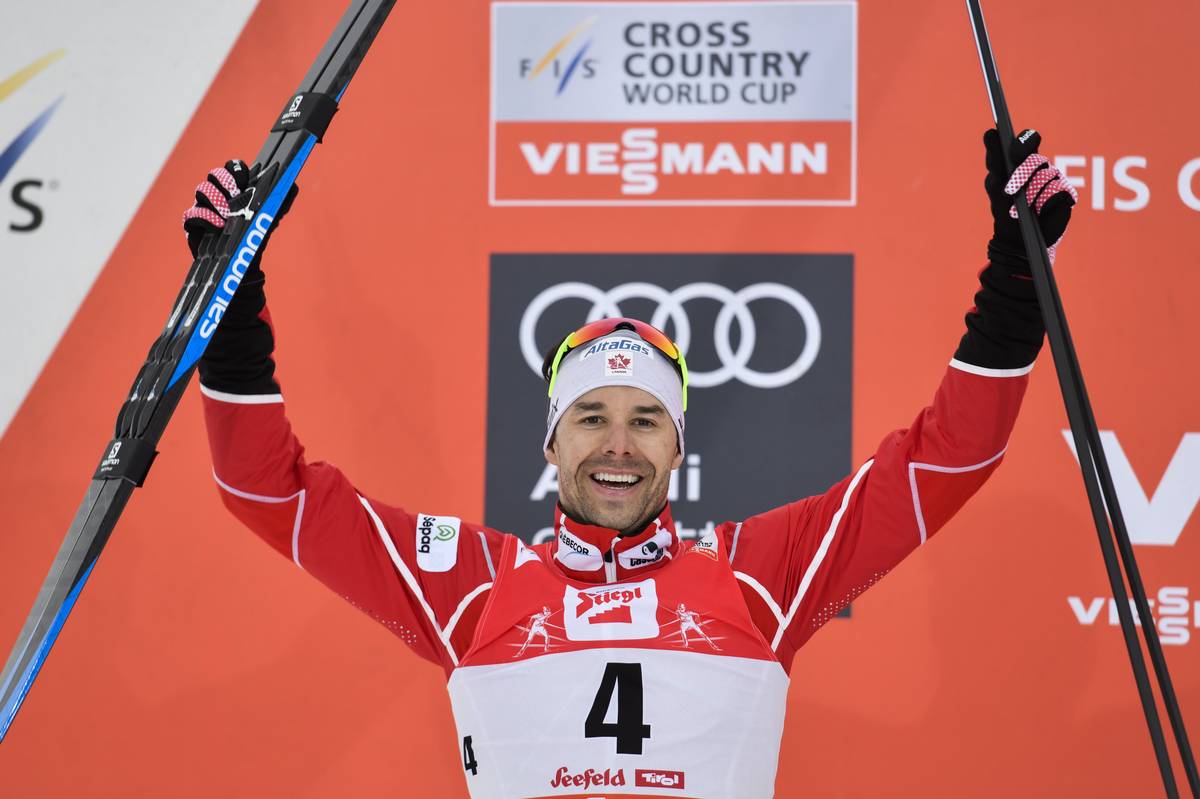
    Canada’s Alex Harvey celebrating on the podium after placing second in the men’s 15 k freestyle mass start in Seefeld, Austria, for his best result of the 2018 World Cup season. (Photo: Salomon/NordicFocus)

    Cross Country Canada (CCC) has begun a reboot process as the new Olympic cycle starts. Corporations call this a reset, a rebranding, a new direction, restructuring, and various other names that try to disguise the challenges and issues that come with enacting real change.

    The reboot process traditionally starts with an acknowledgement that the current level of success, and that of the foreseeable future, doesn’t align with the goals or the potential of the organization.

    Canada left PyeongChang with no medals at three consecutive Olympics, only one skier in the World Cup red group, and a perception that there was no obvious successor to Alex Harvey.

    There are many people who, with the benefit of hindsight, believe that CCC allowed itself to be trapped by a combination of success and the Own The Podium (OTP) funding model. 

    The process of assigning blame for the past, called “blamestorming”in the corporate world, is one of the most effective ways to waste time and destroy morale without doing anything to improve the future. The “best practices” approach to a reboot starts with four apparently simple questions: How did we get here? Where are we now? Where do we want to be in five years? How can we get there?

    While CCC does many things as a national sport body, this article will focus on high performance and the development system.

    How did we get here?

    After a disastrous 1998 Olympics in Nagano, CCC shrank to a full-time staff of five and endured a forced re-invention. Four years later, in 2002 at Salt Lake, Beckie Scott won all three medals in the skiathlon after the initial silver and gold medalists were caught doping. Sara Renner missed the B final in the sprint for 9th place.
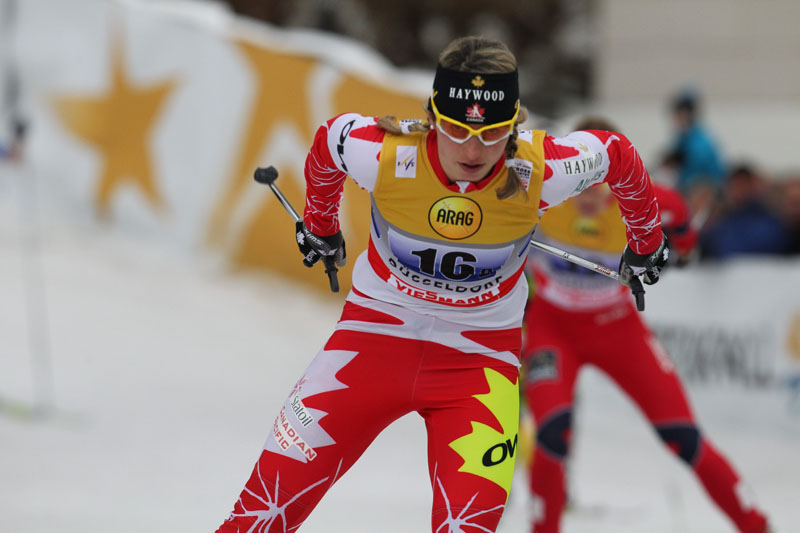
    Canadian Chandra Crawford in the 2011 team sprint in Dusseldorf, Germany. (Photo: Fischer/NordicFocus)

    In 2006 in Torino, Chandra Crawford earned a surprise gold in the sprint while Scott finished fourth. Scott had earlier teamed up with Renner for a team sprint silver medal.

    buy vancomycin

    In 2010, there were no Canadian cross-country medals. However, there were signs of promise. Renner skied to her fourth Olympic top-10 finish. All four Canadians competing in the men’s skiathlon finished in the top-15. Devon Kershaw lost out in final kilometer of the 50 k to finish fifth, 1.6 seconds away from gold.

    That post-Vancouver glow was possibly the point where CCC temporarily slid off the rails.

    A number of Canadian sports fell victim to OTP incentives. A sport qualifies for OTP funding by having good prospects for a medal in the next Olympics. The money comes with strings attached, to ensure that resources are spent on improving the probability that specific individuals will podium. For smaller sports where the OTP money is a significant proportion of the sport’s annual budget, it is hard to make choices that put that money at risk. Choices like balancing the emerging athletes in the pipeline, while simultaneously supporting those athletes already at the top-end of the sport. 

    As a result, many sports have lost their OTP eligibility by losing the focus on development and the vision that qualified the sport for OTP in the first place. Some people put cross-country skiing in the list of sports that fell into this trap.

    After 2010, the future looked bright. Harvey and Kershaw were World Champions in the 2011 team sprint. Kershaw was second overall in the 2011/2012 World cup. (A feat only equaled in North America by Scott and Jessie Diggins).

    Harvey arrived at Sochi in 2014 as a medal favorite. He was fresh off a World Cup podium in Toblach the weekend before the 2014 Games began. Sochi ended poorly when Canada, along with Norway, couldn’t solve the difficult waxing conditions.

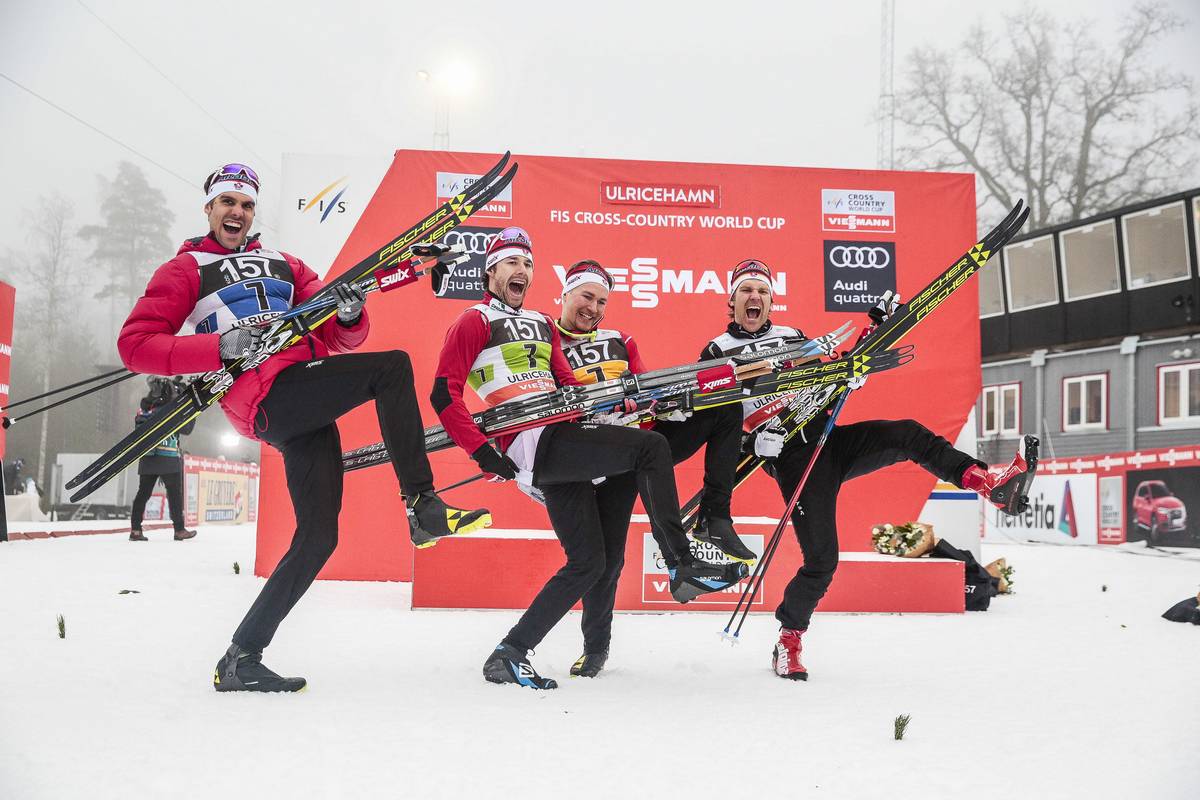
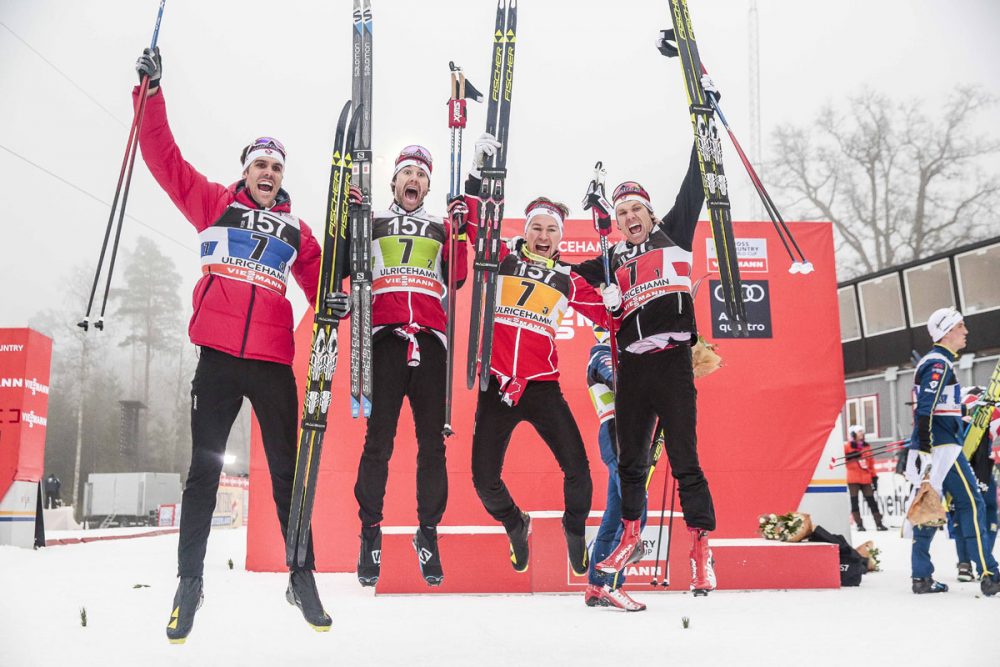
    In 2017, the men’s World Cup relay podium in Ulricehamn, Sweden sustained the hope — that result earned another year of OTP funding for five men. (Harvey remained a the top, as he won the men’s 50 k skate at the Lahti, Finland World Championships.) 

    The results in PyeongChang were similar to 2002 numerically: Harvey was close to a medal in multiple races and Lenny Valjas collected 7th in the classic sprint. A medal would have changed the mood, but not overall situation. 

    Where are we now?

    Post-PyeongChang, CCC believes Canada is not achieving the international results a country with plentiful snow and 37 million people is capable of.

    The development system in Canada consists of the National Team, the official training centers (Centre National d’Entrainment Pierre Harvey (CNEPH), Thunder Bay National Team Development Centre (TBay), and the Alberta World Cup Academy (AWCA)), and the clubs. The ten provinces and three territories have teams, but don’t have a formal place in the development system as each of the thirteen regions approaches development support differently. In the last few years, the number of clubs actively recruiting and developing athletes while supporting a high performance team has increased. For our purposes, as no official name has been affixed to these clubs, the term ‘elite club’ will be used here.

    In the past, all national team members were required to belong to a training center while developing athletes were encouraged to join.

    “I can speak for many of the athletes, they thought that if they didn’t go to a training centre, then they might as well quit skiing,” Telemark’s coach Adam Elliot said. “It was that broad of a choice, they felt they had to choose between skiing and school immediately.”

    The landscape is more diverse now, with more options. The examples that follow skew to Western Canada, largely because the coaches quoted brought teams to Sovereign Lake snow camps in May and November and were available for in-person interviews. Eastern Canada remains equally diverse in terms of its club offerings.

    A common theme among the coaches and athletes is that each athlete’s needs are different, and he or she needs to find an environment that fills those needs. FasterSkier asked AWCA’s head coach Chris Jeffries how an athlete should choose his or her path to success.

    “It’s such an individual, case by case thing,” he said. “I don’t have an answer.”

    In 2017, a shift to allow more development paths resulted in new senior National Team member Gareth Williams staying at his home club, Telemark, in Kelowna, BC. Elliot described how it came about.

    “Tom Holland approached us, for Gareth, and said we like what you’re doing in the Okanagan, and we want to keep Gareth there. We’re going to support you and your program to be able to support Gareth.”

    Also in 2017, Julien Locke returned to his home club Black Jack while Russell Kennedy shifted to the new Team R.A.D., part of the Canmore Nordic Club.

    To further illustrate the spectrum of options and pathways, FasterSkier contacted three Canadian athletes, each with a history of NorAm podiums and some international success, to discuss their ski-training choices. Dahria Beatty started at AWCA and has remained there, Evan Palmer-Charette started at TBay then recently moved to Team R.A.D., and Andy Shields has gone rogue.
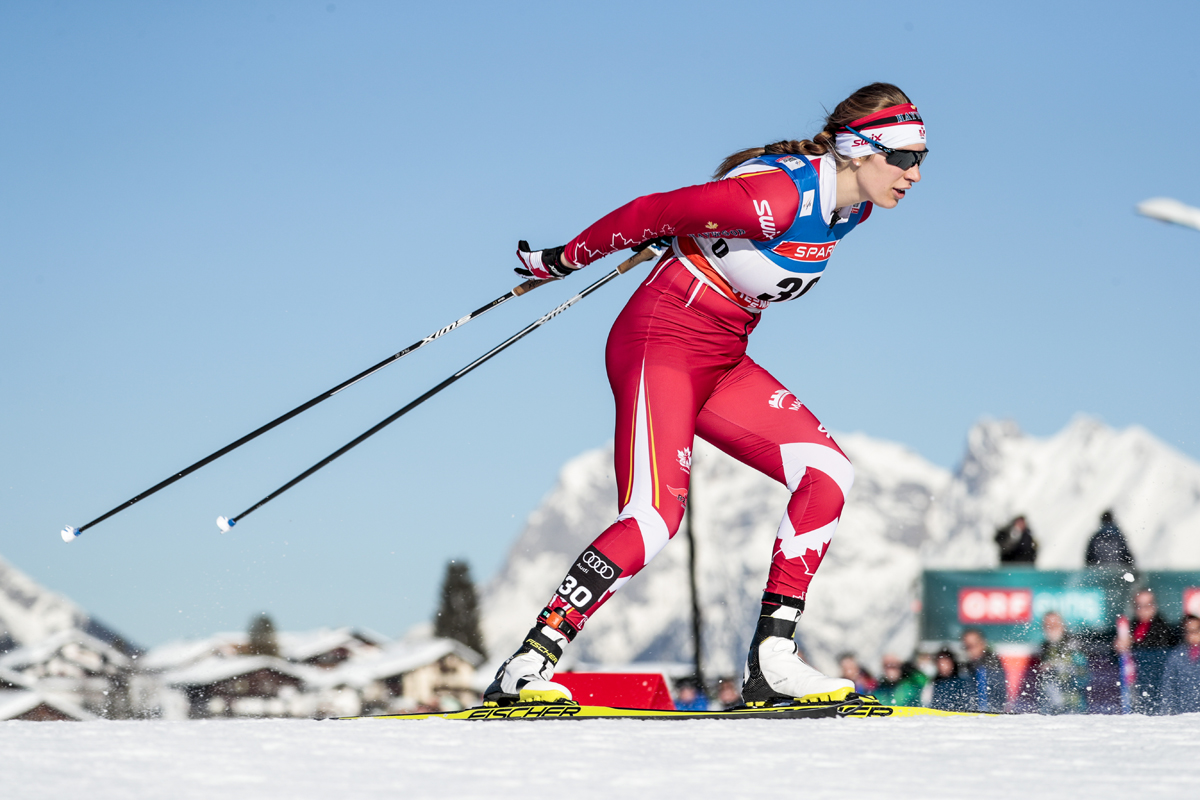
    Dahria Beatty en route to 20th overall in the Seefeld World Cup freestyle sprint for her season-best result in 2017/2018. (Photo: Fischer/NordicFocus)

    “For me, I’ve been working with Chris [Jeffries] for six years,” Beatty told FasterSkier in November. “It works really well for me, and I have a good group of training partners where I am, that can push me everyday in training.”

    AWCA is also the home training group for National Team skier Emily Nishikawa and two junior national team skiers. AWCA also benefits from its close proximity to a number of other training groups.

    “For me, Canmore’s a location where I want to be training, where I want to be based out of,” Beatty said. “All the pieces fit well together for [me], it’s somewhere I think I can keep improving.”

    Palmer-Charrette made a summer-time decision to change things up by finding a fresh environment in Team R.A.D.

    “I think the best part of being on a training centre is the entire program is based around a small group of athletes of similar age which makes for a great training and racing environment,” Palmer-Charrette wrote. “I feel training centres, as they are, are best-suited for junior/u23 athletes and especially great for athletes who are a bit late to the game like I was at the end of high school and will really benefit from learning from other athletes on the day to day training life.”

    Shields is no longer affiliated with an official team. He funds his skiing by painting houses in the summer and representing ski wax companies in the winter. Although he refers to ski racing as a hobby, he did end the last season as COC leader and will race period 1 of the World Cup.

    “I don’t think I could have done this straight out of junior,” Shields wrote. “My time on Tbay is still having a huge positive effect on my ski career. Being on a team through my early years as a senior made it much easier to get a decent training base and set a couple good habits in place which are paying dividends.”

    Shields did reflect and offer an alternative to how he might have changed his path to elite level skiing.

    “If I could go back in time I would have gone the NCAA route straight out of junior,” Shields added. “College skiing in the States is a much better deal than a training center for people in their early twenties. You can go down to the States, get a degree, not pay a dime, and come out the other side with plenty of time to have a full-time ski racing career. I would have joined a training centre upon finishing with NCAA.”

    The Canadian university system differs from the U.S. model, offering little money for sports. Heading south to the U.S. as a student-athlete remains an option for some Canadian skiers. Most athletes remain in the Canadian system to develop. With that in mind, FasterSkier asked why some athletes had chosen some of the Western based training centres.

    Jeffries, who leads the AWCA, also noted how his program has evolved. There appears to be room at the AWCA for those with concurrent goals. The AWCA has partnered with the University of Calgary to allow AWCA athletes to work towards degrees.

    “We’re always evolving our programming, and what it entails, and how we package it,” Jeffries said. “That’s why we have this new university program this year, because you just look at the popular decision making of graduated high school athletes.” 

    Elliott, based in the Okanagan, said his program offers athletes a well rounded experience too. 

    “You’ve got the trifecta,” Elliot said. “You’ve got access to education opportunities for post-secondary. We’ve got the university, UBC Okanagan, and the college. Most of the people who’ve moved here have gone to school. Secondly, it’s the Okanagan. Which is probably the best place to ski in North America, with skiing up and down the valley –with Nickel Plate, Telemark, [Kelowna] Nordic, Sovereign, and Larch Hills. The third is that you’re moving into a community of skiers: family, volunteers, everybody trying to make a go of keeping people in sport.”

    Clearly the times have changed from a programming perspective and the past’s financial windfall for Canadian cross-country skiing.

    “Probably the quad between 2010 and 2014, CCC had more money almost than it knew what to do with, ” Dave Wood, former National Team head coach, told FasterSkier in May as he finished up a long ski day. “Now, I think the budget’s still three and a half million. While it’s maybe low compared to what it has been, it’s a hell of a lot higher than it was in ‘99, by about four times.” 

    Former CCC High Performance Director Tom Holland spoke of those larger commitment from clubs during the Frozen Thunder races in October. 

    “There’s a lot more resources,” Holland said, referencing the increased numbers of coaches attending Frozen Thunder with their athletes. “One of the reasons clubs are more important now is that there are paid coaches at the clubs. That’s why training centres started in the 90’s, because you’ve got to have a coach, full-time.”

    Thee deep question remains: what next for Cross Country Canada as it ponders a post-Alex Harvey scene? Better and more diverse options for Canadian skiers, like those modernizing their offerings to connect with the student-athlete, is a step forward. But fans of the sport, and of course Cross Country Canada, have short-term and long-term goals. No one wants to see another Olympic quadrennial transpire without the glimmer of medal potential at the international championship level. 

    “I think when Alex Harvey retires, mostly likely after next year with Lenny Valjas, it will be the end of an era having athletes being able to finish on the podium at World Cups, World Championships, said Alain Masson, Whitehorse head coach. “So definitely, the program is going to go into a real rebuilding phase with lots of young athletes, but no guarantee of success in the near future.” 

    This is part one of a two-part story. 


  • CCC Lays Off Four Staff Members, Including Babikov

    CCC Lays Off Four Staff Members, Including Babikov

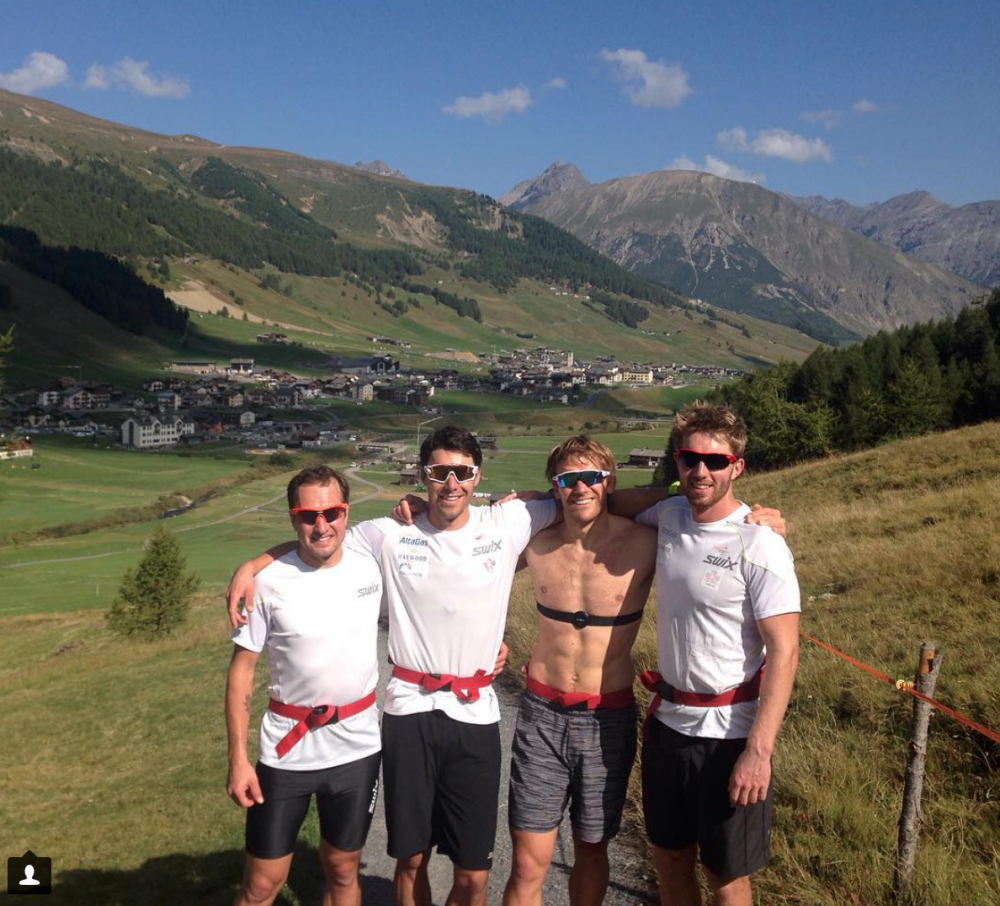
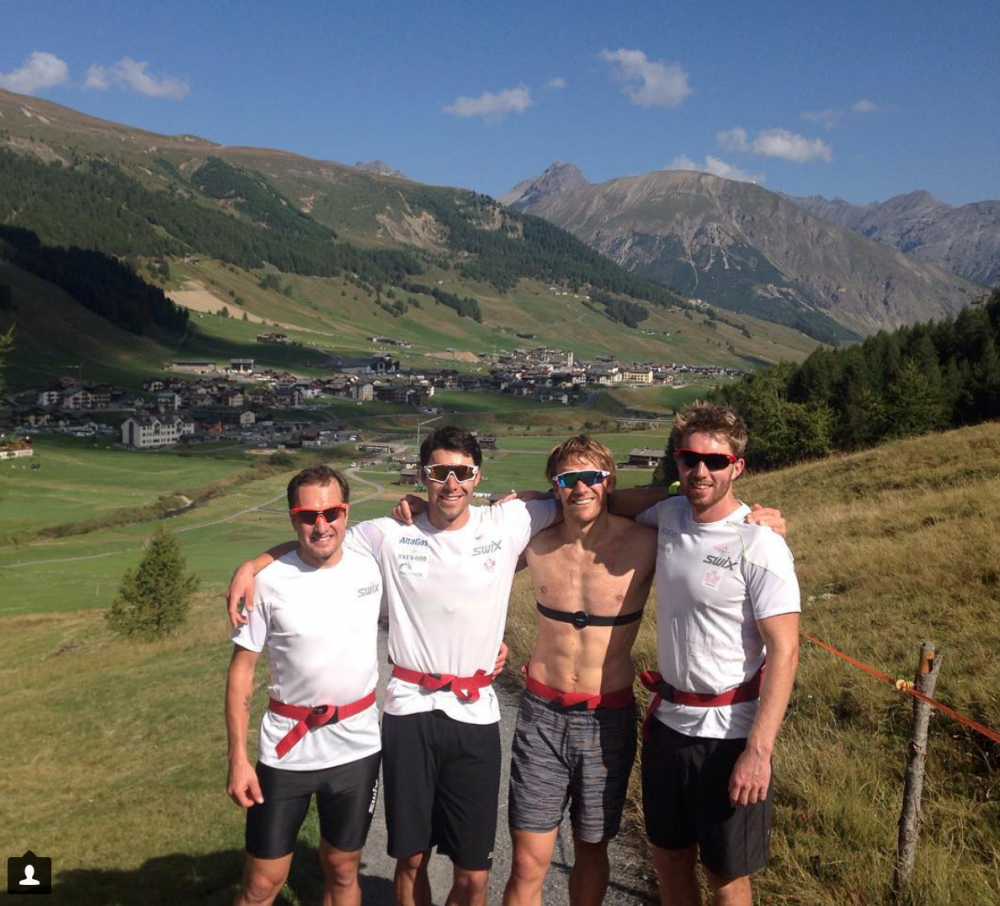
    Coach Ivan Babikov (l) at a 2016 fall training camp with Canadian World Cup Team members Alex Harvey, Devon Kershaw and Graeme Killick in Livigno, Italy. (Photo: Ivan Babikov/Instagram)

    Cross Country Canada (CCC) has appointed a new high-performance and development advisor, Nic Lemyre, and laid off four staff members, CCC Chief Executive Officer Shane Pearsall confirmed in a phone interview on Thursday.

    The news of Lemyre’s hiring came in the form of a press release Thursday morning, two days after four CCC employees — Ivan Babikov, Mike Edwards, Lisa Patterson, and Martine Zilligen — were informed of their release.

    Babikov has spent the last two seasons as a national team and World Cup coach, Edwards was the high-performance director for CCC’s Para-Nordic Ski Team, Patterson was a longtime high-performance development coach, and Zilligen has been communications and marketing manager since 2013.

    According to Pearsall, the layoffs were a direct result of CCC’s annual operating budget (which covers both able-bodied and para nordic skiing) decreasing from about $4.5 million dollars last year to what he anticipated to be $3.9 or $4 million dollars this year. The budget is not finalized, as CCC is waiting on the amount it will receive from Own the Podium (OTP), a government-backed nonprofit, which Pearsall estimated to be about 20 percent of CCC’s operating budget. That final amount is expected by mid-July, he said.

    Fifty percent of CCC’s budget comes directly from the government branch of Sport Canada, and that amount has been determined, Pearsall said. He explained that money is tighter on the whole for CCC as a result of decreased government funding and sponsorship revenue.

    One of CCC’s main sponsors, Mackenzie Investments, will no longer support nordic or four other snow sports as it had previously. Instead, the investment firm opted to stick with freestyle and alpine.

    “From the standpoint of a sponsor, they were one of our bigger ones,” said Pearsall, CCC’s CEO since November 2016.

    On the upside, he explained that another sponsor and investment firm, Haywood Securities, has agreed to sponsor the NorAm circuit as it has in the past.

    Asked if budget cuts were among the biggest challenges affecting CCC at the moment and the reasoning behind the latest layoffs, Pearsall said, “Yes. If things had stayed the same that would’ve been good, but obviously that’s not the case.”

    He added that CCC is faced with the ongoing challenge of competing with other sports for the support of “corporate Canada”.

    “At the same time, we continue to talk to people and try to get them on our side to become part of our programs,” Pearsall said. “There’s a part of it where it always will be the challenge. You’re always looking for money for places to spend the money, and we just continue on trying to get more money.”

    Asked specifically why CCC chose to release those four employees, Pearsall said, “Just trying to create a better future, efficiencies that we think we can find. It’s appropriate that at the end of the quad [Olympic quadrennial], you look at things and how to set the stage for the next quad. And even for us, we were looking at 2026. So we’ve decided this the way we’re going to go.”

    CCC now has a staff size of 12. Louis Bouchard retained his job and is listed on CCC’s website as its lone national ski team/World Cup coach. Bouchard is also Alex Harvey’s personal coach and head coach of the Pierre-Harvey National Training Centre (Centre National d’Entraînement Pierre-Harvey) in Quebec.

    Pearsall said he broke the news to Babikov, Edwards, Patterson, and Zilligen individually during one-on-one meetings on Tuesday.

    “It’s one of those things, when you do a change, you tend to want to something like this all at one time, and that’s the strategy we executed,” he said.

    CCC will be looking to replace Babikov’s position as co-World Cup coach through an “open job search,” Pearsall stated. As for Patterson’s role as a NextGen coach and development trip leader (for international competitions including U23 and Junior World Championships), Pearsall was unsure if CCC would fill that vacancy.

    “When something like this happens — I’ve been involved in the corporate sector — you do a bit of a reshuffle on responsibilities, so we’re working on those on how we’ll go about that,” he said. “At this point in time, I can’t say we’ll necessarily hire somebody in that specific area, but we’re looking at how we cover responsibilities.”

    As for the timing of these layoffs in early June, two months after the end of the season, Pearsall said that was a tough one.

    buy ventolin inhaler, buy nasonex online

    “Can you ever find perfect timing? There’s questions about that, but this is the way we decided to go, and we’re going to make the timing work,” he said. “… This is the way things lined up. This is the way we’ve gone about it.”

    According to Babikov, the layoff, which was effective immediately, caught him off guard.

    “I had no idea it was coming, and it didn’t cross my mind that something like this would happen because we had already started the new summer,” Babikov said on the phone on Thursday. “I just came back from training and our CEO just called me for a meeting, and I thought it was regarding our new HPD, if we hired somebody, but then he just handed me papers and I was told to leave my credit card and keys, and we go separate ways. And that’s all that was said.”

    Babikov, who’s been part of the Canadian national team for the last 10 years, first as a two-time Olympic athlete and then as a coach starting in June 2016, said there was no notice. “It was without a cause,” he said.

    Asked why Babikov was fired, Pearsall said he couldn’t comment.

    ‘The Rebuild’ 

    Lemyre as the high-performance and development advisor will fill the roles previously held by Edwards and Thomas Holland, the former high-performance director of able-bodied cross-country who retired at the end of last season. A Montreal native who is primarily based in Norway as a professor of sports psychology at the University of Oslo, Lemyre will work part time for CCC.

    He’ll be the head of one of CCC’s two new departments, Pearsall explained, overseeing the sport side of the organization while Pearsall and Megan Begley, CCC’s operations & strategic development manager, oversee operations. Lemyre will make decisions in his department, but Pearsall will have “final approval on all personnel decisions”, according to CCC media relations consultant Chris Dornan.

    Dornan clarified that Lemyre is “advising on the rebuild” and that CCC will communicate the structure of its high-performance department in the near future.

    “His role is going to be advising us, going forward, on how we should look at things, and develop things,” Pearsall said of Lemyre. “He’s going to be an integral part of the decisions we make, in different areas, in the high-performance area. He will be overseeing, in the re-org, I’ve basically created two departments. One is operations, and one is sport. He will be in the mix on the sport side. Under the old structure, there was a para-nordic [director] and there was an able-bodied [director], and I’ve brought those two together to gain efficiencies and exchange more knowledge, if you will, between the two sections of para and able.”

  • OTP Cuts Biathlon Canada’s Base Funding to Zero

    OTP Cuts Biathlon Canada’s Base Funding to Zero

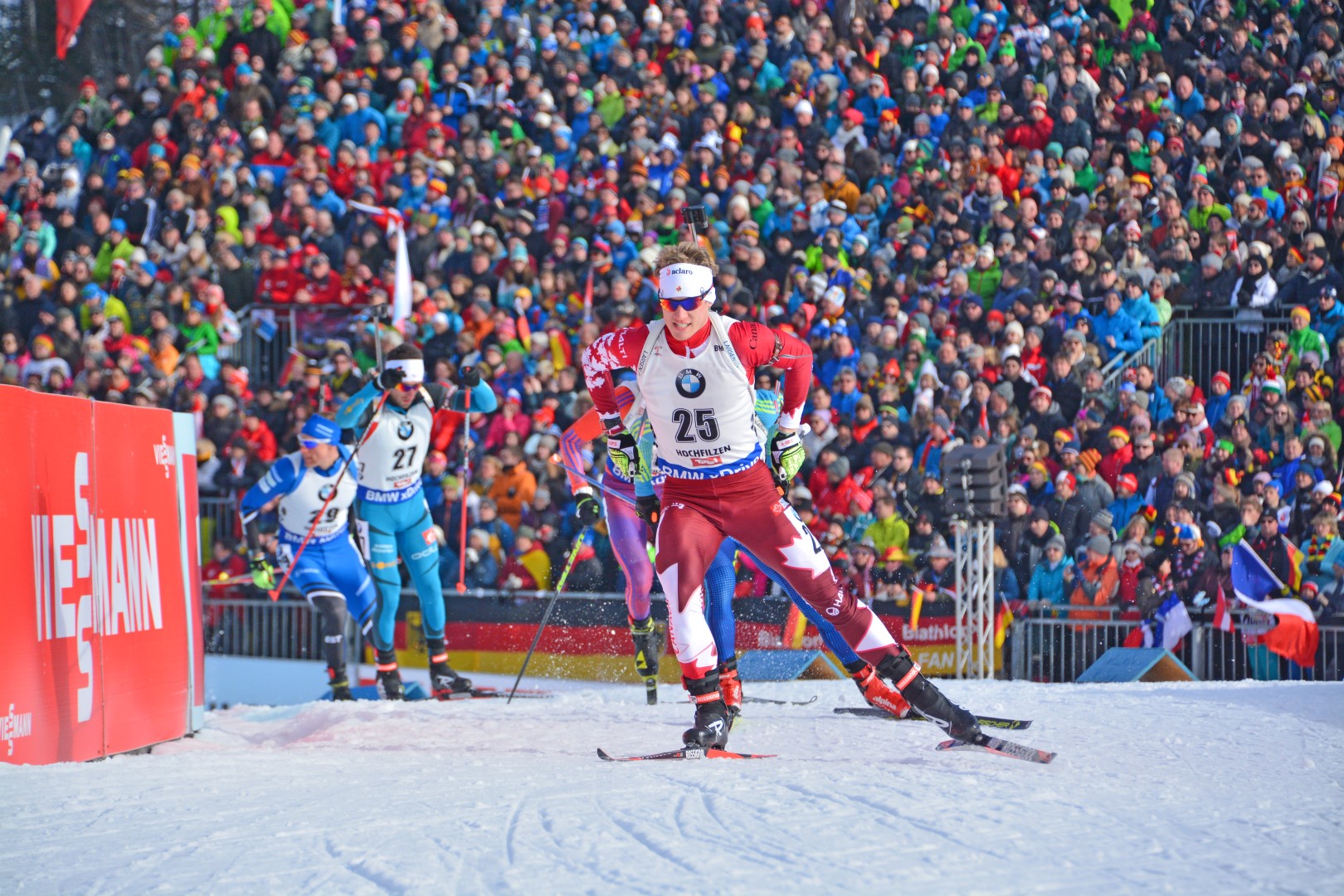
    Biathlon Canada’s Scott Gow racing to 47th in the men’s 12.5 k pursuit at 2017 IBU World Championships in Hochfilzen, Austria. Biathlon Canada is facing a tightening of purse strings for the 2018 Olympic season as Own The Podium cut its base funding to zero. (Photo: Glen Crawford)

    If you made it past the article’s title, then get ready to immerse yourself in the intricacies of Canadian high-performance sports funding.

    OK, here it goes…money, money, money. Add this for effect, $.

    Imagine for a moment you’re the CEO of a national sporting body and you’ve got high aspirations — things like championship and Olympic medals. There’s an infinite amount of puzzle pieces to organize and assemble. There are two critical pieces to even fathom success: the motivated athletes-coaches combo along with ample funding.

    Biathlon Canada finds itself in a precarious position for the 2017/2018 season— a critical year considering that many athletes sharpied in the 2018 Winter Olympics in PyeongChang, South Korea, in mid-February as their performance peak just after the 2014 Sochi Olympiad.

    The financial hammer fell in May when Own The Podium (OTP), a Canadian nonprofit focused on supporting Olympic medal contenders, cut its base funding to Biathlon Canada to zero dollars. ((Biathlon Canada is the National Sporting Organization (NSO) overseeing biathlon in Canada.))

    Andy Holmwood, Biathlon Canada’s general manager (Photo: Pam Doyle)

    During the final run-up to PyeongChang, Biathlon Canada must belt-tighten and evolve in a climate of continued funding scarcity. At the time of publication, the exact amount of Biathlon Canada’s budget was unclear despite a request to Biathlon Canada General Manager Andy Holmwood to confirm his organization’s 2017/2018 budget.

    “I am not in a position to discuss any of our budget numbers,” Holmwood said in a phone interview on July 11th.

    Biathlon Canada receives the majority of its funding from three major sources. There’s Sport Canada, a government agency providing funds to NSO’s through its Sport Support Program. Jon Schofield, a Sport Canada spokesperson and media-relations specialist, explained to FasterSkier in an email that Sport Support Funding is for a four-year cycle.

    Then there are corporate and private donations made directly to Biathlon Canada.

    Lastly, there’s funding from Own The Podium (OTP). According to Schofield, OTP makes the recommendations upon which other groups base their monetary support.

    “Those sports that have athletes which have demonstrated the potential to achieve a podium result at the Olympics and Paralympics, are also eligible for enhanced excellence support,” Schofield wrote in an email. “The assessment of podium potential is done yearly by Own the Podium which provides funding recommendations to Sport Canada, the Canadian Olympic Committee and the Canadian Paralympic Committee – (the two latter) which in turn support the sports directly.”

    It can be tricky and frustrating. Biathlon Canada is in a constant struggle to promote and financially support athletes who have already arrived while keeping promising athletes in the development pipeline.

    The OTP Ask

    Here’s how the basics work between OTP and Biathlon Canada. The NSO, or Biathlon Canada in this case, presents its supporting evidence — in both a formal proposal and in-person meeting — that its athletes have Olympic medal potential. OTP officials then recommend funding based on their assessment of the submitted evidence.

    OTP funding is considered to be “top-up” funding, or monies for athletes at the very highest level of their respective sport. Amongst the high-performance scene in Canada, the philosophy of emphasizing those athletes already at the top is referred to “targeted excellence”. In total, OTP redistributes approximately $64 million annually. To put that in perspective, that $64 million is part of the larger $200 million the government invest in Canadian sport annually.

    Anne Merklinger, Own The Podium chief executive officer (Photo: OTP)

    “Our mandate, which is prescribed by the national funding partners, is to provide technical advice for National Sport Organizations and to provide investment recommendations for those sports organizations that have evidence of medal potential for the upcoming set of Games,” Anne Merklinger, OTP chief executive officer, said in a phone interview. “Secondly, we also provide investment recommendations for the subsequent set of Games, so in winter that would be for 2022. So those investment recommendations are being considered by the minister and they are not final yet.”

    According to Holmwood, Biathlon Canada presented a portfolio highlighting the medal potential of its men’s relay team.

    “I think we made a strong case for our men’s relay team as a medal hopeful,” Holmwood said. “I think it’s fair to say they didn’t agree with us completely. They didn’t share that perception. It is clear that OTP in an Olympic year, they refer to sharpening their pencils and really focusing the funding on strong medal contenders. In their eyes, we did not fit in that.”

    Two seasons ago, the men’s relay team earned a historic bronze medal at 2016 International Biathlon Union (IBU) World Championships in Oslo, Norway. Last season, their best finish was seventh at the World Cup in PyeongChang, South Korea, where many nations did not start all of their top athletes. (More on last season’s results later.)

    “Their base funding for ’17-’18 is zero,” Merklinger said about OTP’s funding for Biathlon Canada. “But they are receiving $50,000 for the coaching position … to support a coach through the Olympic Legacy Coaching Fund. So that is the extent of the funding recommendation for biathlon for the ’17-’18 fiscal year.”

    Starting at the top of Canada’s biathlon pyramid, the collective gasp came at the depth of the cuts, not that OTP cuts were made.

    “OTP takes a very actuarial approach,” Holmwood said. “It’s not subjective. And to their credit, they are very clear in their mandate. It’s not a big massive surprise. I think what surprised us was just how deep the cut went.”

    Roddy Ward, Biathlon Canada high-performance director (Photo: Ric Rowan)

    Roddy Ward, named Biathlon Canada’s high-performance director in June, reiterated Holmwood’s sentiments, but said the cuts could have an impact on future podium potential.

    “In the end, it seems as though they believe we have some up-and-coming athletes but no medal prospect for 2018 Olympics,” Ward said. “By their mandate, it means we get cut out of the pot of money for the Olympic season. I don’t doubt they followed through with their mandate, but ultimately, decisions like that undermine growth towards consistent podiums in our sport.”

    Ward has a point about diminished funding decreasing the odds of future podiums. But OTP’s mandate only looks to a two-Olympic cycle “event horizon”. At the moment, OTP is not obligated to look further than Beijing 2022.

    OTP publishes what it calls a Winter Historical Comparison on it’s website. It outlines OTP funding recommendations for Olympic winter sports by quadrennial. For the Vancouver quadrennial, Biathlon Canada received $1,784,173. It received $1,324,623 for the Sochi quadrennial.

    According to Merklinger, for the ’14-’15 fiscal year, Biathlon’s base funding from OTP was $250,000, $400,000 for ’15-’16 and $435,000 for the ’16-’17 fiscal year. Accounting for the ’17-’18 cuts, and adding the $50,000 from the coaching legacy fund, the PyeongChang quadrennial total for Biathlon amounts to $1,135,000.

    (On OTP’s website, a figure of $1,200,000 is used for the first three years of the PyeongChang quadrennial. Using that figure, an amount of $1,250,000 would have been recommended for Biathlon during the PyeongChang quad.)

    Although Merklinger was clear in explaining to FasterSkier that Biathlon Canada’s base funding was “zero”, Holmwood said this about OTP’s potential allocations: “Our OTP funding for this coming season is uncertain. It is fair to say, I would say that we have received a substantial cut, but just what we will be getting from OTP is not certain.”

    OTP’s Merklinger said the funding door as it applies to the medal potential of Canada’s national biathlon team isn’t exactly slammed shut. OTP maintains the administrative flexibility to infuse money into a high-performance program on short term notice.

    “We can do that from today until the start of the Olympic Games,” Merklinger said when asked if OTP could recognize medal potential with monetary support if an athlete or team proves they are on form in races scheduled a few months before the Games. “We are eager to work with biathlon as the season unfolds to assess the progress of their preparations and their performance for PyeongChang and would be delighted to be in a position where we could provide a very specific incremental funding recommendation that is focused and that responds to a positive side of the program and indicates that they indeed have evidence of medal potential.”

    The Potential

    Medal potential is exactly that — potential. There are no absolutes. Although actuarial means may be used to determine the likelihood for an Olympic medal, sport is fickle.

    Take biathlon, for example. There’s the shooting range and wind conditions, the rifle and its complex moving parts, the wax, the skis, and of course the athlete. The number crunching for potential would have to consider the likelihood of all things aligning for a Canadian athlete and the likelihood a veritable podium lock, like France’s Martin Fourcade, has an unlikely off-day. No matter where the OTP assessment falls, OTP’s job is a tough one — determining the likelihood of an event before that event transpires and basing its funding decisions on that likelihood.

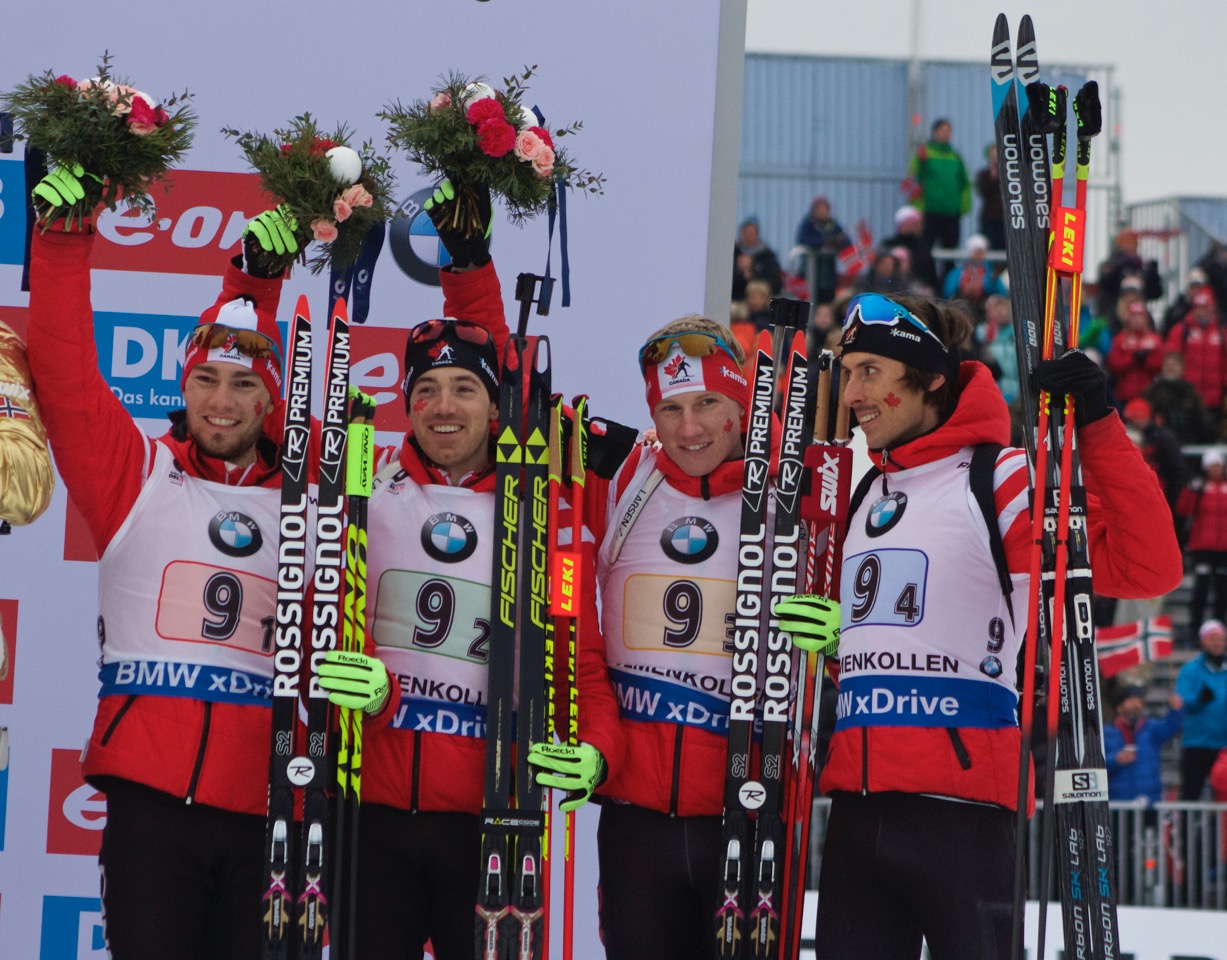
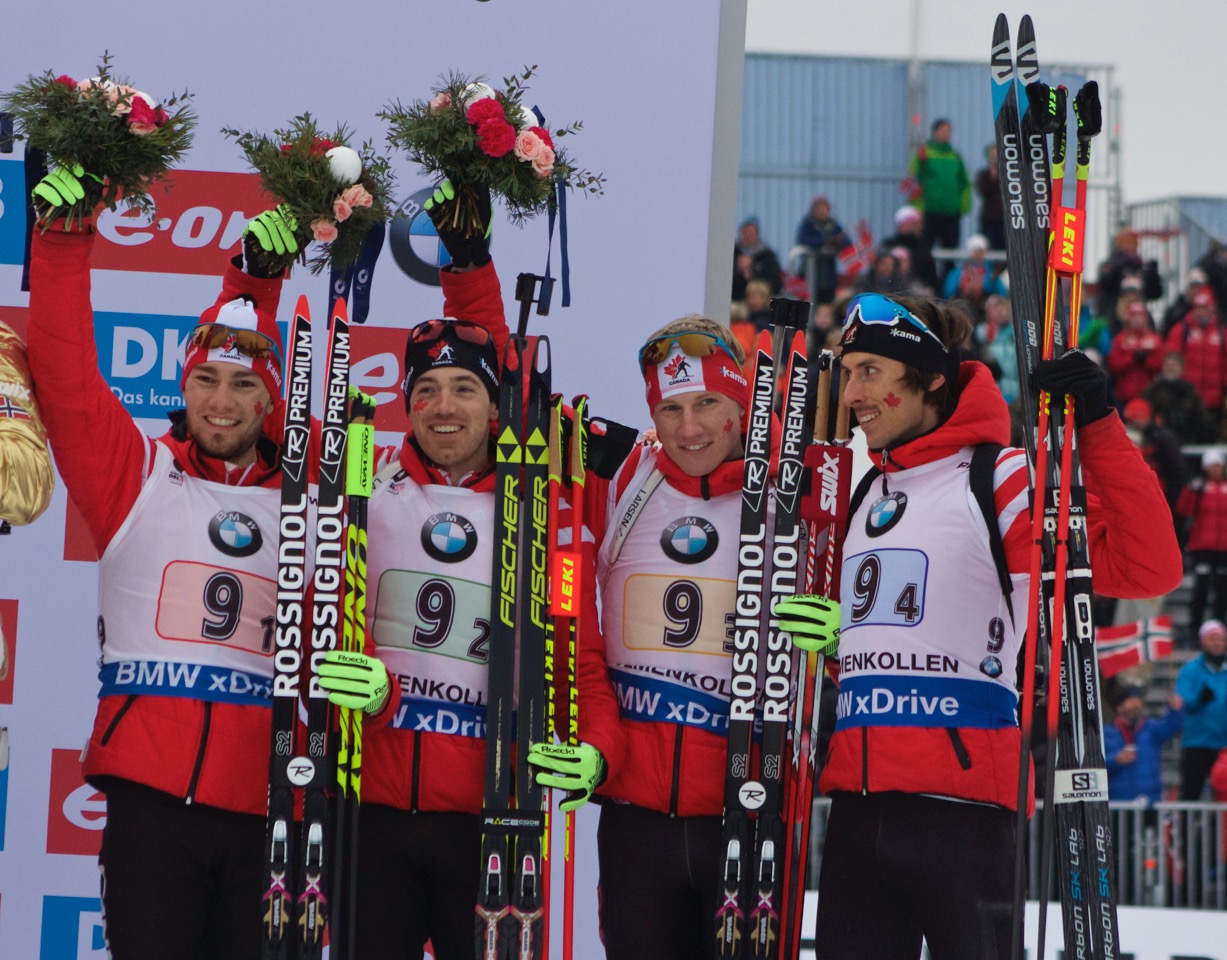
    The Canadian men’s team (from left to right) Christian Gow, Nathan Smith, Scott Gow, and Brendan Green celebrating bronze in the men’s 4 x 7.5 k relay at 2016 World Championships in Oslo, Norway. (Photo: JoJo Baldus)

    One wouldn’t need to be transported back far in time to underscore Biathlon Canada’s positive medal potential. For starters, the time machine’s date could be set to March 12, 2016. In the pressure cooker of Oslo’s Holmenkollen stadium, Canadian biathletes Christian Gow, Nathan Smith, Scott Gow, and Brendan Green claimed bronze in the World Championships relay.

    At 2015 World Championships in Kontiolahti, Finland, Smith earned Canada’s first ever men’s biathlon World Championship hardware with a silver medal in the 10-kilometer sprint. Later that month, Smith backed up that exceptional day by winning the 12.5 k pursuit in Khanty-Mansiysk, Russia, for his first-career World Cup win.

    The past season was a down year for Canadian biathlon. Smith, the team’s highest-profile male skier, was sidelined for much of the season while he battled a virus. Brendan Green, another veteran with multiple top 10’s to his name, scored a single top-30 World Cup result in 2016/2017. Meanwhile, Scott Gow raced to three top 30’s, earning 23rd, 18th, and 17th places on the World Cup. 

    On the women’s side, Rosanna Crawford had been the team’s rising star, earning fourth-, fifth- and seventh-place finishes on the World Cup during the 2014/2015 season; she also placed 15th at 2016 Oslo World Champs in the 12.5 k mass start. Individually, Crawford scored six World Cup top 30’s this past season with a best result of 19th at the PyeongChang test event. She placed 26th in this year’s World Championship sprint. 

    As has been written before about Biathlon Canada’s tenuous funding, OTP considers medal potential at World Championships and Olympics. It’s not obligated to consider stand alone results on the World Cup circuit when making those judgments. So performance on the big stage matters.

    At World Championships in Hochfilzen, Julia Ransom placed 18th in the 15 k individual race, the best Canadian women’s finish for the event, and Christian Gow led the men’s team with 23rd in the pursuit.

    The Impact

    In recent years, it has been rumored that Biathlon Canada has run a deficit.

    “Biathlon Canada has always kind of operated in the red,” Crawford said in a phone interview.

    It’s possible that the prospect of programmatic cuts due to the NSO’s financial standing wasn’t unforeseen. According to a February 2015 article in The Crag and Canyon out of Canmore, Biathlon Canada will maintain the same annual expenditures through 2018. In that article, that reporter states that Biathlon Canada’s annual budget is $1.4 million. This number reflects the NSO’s total budget, not the portion set aside for funding the high-performance program.  

    With a lack of substantial OTP support this year, Biathlon Canada is implementing a high-performance austerity program during the training season.

    “We must move on and do our best to deliver on our results despite the massive cuts,” Ward said. “We have virtually cut everywhere; no funded camps, reduced IST (physiologist, strength coach, nutrition, sport psych etc), less staff, athletes will pay to compete on the World Cup. We are doing our very best to build a solid program for our National Team with limited resources, this means an ‘all hands on deck’ approach by staff. I can tell you staff are extremely motivated so in some way, it’s very exciting to be a part of and could be the perfect storm for us.”

    Canada’s high-performance biathletes are accustomed to traveling for training camps. Athletes have experienced on-snow training camps in New Zealand, Park City, Utah camps, dryland racing and training in Jericho, Vermont, Haig glacier camps in the Canadian Rockies, as well as a Jasper, Canada camp. Other camps have included a Dachstein glacier camp and training in Norway. This dryland season will be more restrictive. According to Crawford, the women’s team traveled and trained in Kelowna, British Columbia, where costs were minimized: Ransom’s parents housed the team, and a sponsor donated funds for groceries.

    Rosanna Crawford (Biathlon Canada) racing to 26th in the women’s 7.5 k sprint at 2017 IBU World Championships in Hochfilzen, Austria. (Photo: Glen Crawford)

    Crawford also wrote in an email that both the men’s and women’s team will be spending two to three nights on the Haig glacier outside of Canmore later this summer, and Christian and Scott Gow will be attending a self-funded Park City camp.

    “The majority of the cuts we have seen have been in those extensive trips, or out of country trips, maybe more precisely,” Holmwood said. “We were thinking of going to Jericho in August, but we removed that simply because the cost is pretty high. Our dollar is not strong right now, also. The U.S. is not typically a place we need to go to.”

    New terrain, opportunities to thwart dryland-season staleness, and exposure to different athletes are value added aspects of training camps. Crawford, who is based in Canmore, home of Biathlon Canada and a world-class biathlon training facility, said the lack of camps are a setback, but not a season-killer.

    “In some ways, it’s fuel for the fire, like, ‘We’re gonna show you’,” she said. “We don’t have to travel, we can do really good recovery, everyone can be with their significant others, and the coaches get to spend more time with their families so maybe they’ll be less likely to get burnt out in the winter. So I think we’re all just trying to find the positives from this scenario.”

    With an important competition year looming, Crawford explained the real compromise may come if the funding limitations impact service on the international competition circuit.

    “Truly I don’t think this summer is going to be the hard part. I have complete faith in our coaches and Jess Kryski, who’s our physiologist, that they know exactly what to do with us to get us nice and strong,” she said. “It’s more the concerns around the wintertime of how many wax techs we’re going to have, whether we’ll have massage therapists, whether athletes will have to pay to go and race. I think those are some of my bigger concerns.”

    Holmwood stated that when snow flies and athletes toe the line internationally, the financial gut-shot will not impact athlete support.

    “The key theme is that we are tightening our belts primarily with regard to camps,” Holmwood continued. “But come World Cup season, IBU Cup season, we will be supporting teams to the extent that we have in the past, and we will give them the resources they need to succeed.”

    The Financial Seesaw and Its Cost: Reforms Coming

    In 2010, Biathlon Canada’s charitable status was called into question and ultimately rescinded by the Canada Revenue Agency. Prior to the ruling, Biathlon Canada could issue tax receipts for donations. That’s no longer the case. As a result, corporate and individual donors must be compelled to contribute funds based on Biathlon Canada’s marketing exposure or simply the gift of giving.

    Without the possibility of issuing tax receipts as a nonprofit, Biathlon Canada finds itself with hands wide open without a tax deduction incentive to attract corporate sponsors.

    It appears Biathlon Canada has come to rely on OTP funding for its elite level athletes, despite the fact that in the Canadian sports system this funding is supposed to be a “top-up”.

    “OTP makes up the bulk of the funding for the National Team and our winter competitive tours so it hit our National Team budget hard,” Ward said.

    Exposed with OTP’s lack of funding is the cost of relying on a single source to meet the financial demands of running a NSO of a niche sport. The money is hard to come by. 

    Yet high-performance athletes in Canada have direct support from Sport Canada through what is called the Athlete Assistance Program (AAP). The requirements for athlete support through Sport Canada are different than OTP’s medal-driven approach.

    “Support is provided yearly to those athletes whose sport has identified them either being or having the potential for a top 16 result in the world,” wrote Schofield, of Sport Canada. “Each sport has a number of stipends that they have access to, based on previous results and future potential.” 

    AAP qualifying athletes are considered “carded” athletes. Carded athletes receive a monthly check from the government to help offset living expenses while they train with the end goal of representing Canada at the Olympics or international competitions. Since 2004, $1,500 was the maximum monthly stipend an athlete could receive. As of this March, the federal funding for the AAP was increased 18 percent — eligible athletes can now receive up to $1,770 per month.

    Here’s the verbiage straight from the AAP website: “AAP support seeks to relieve some of the financial pressures associated with preparing for and participating in international sport and assists high-performance Canadian athletes to combine their sport and academic or working careers while training intensively in pursuit of world-class performances.”

    It remains to be seen if carded biathletes must use their monthly check for training necessities and sport recovery rather than rent or mortgage and food.

    “We’ll still get the same,” Crawford said when asked if the OTP cut would impact the team’s carded athletes. “Each individual athlete will still get the same amount of money they’ve been getting in the past years from the government. Of course, it’s great for us to have funding, but it would be better if Biathlon Canada could also have a big funding partner so that we could do training camps and stuff like that, and the money we that we get could go toward groceries and the high cost of living in Canmore.”

    As with the government’s intent to increase the maximum allotment to its carded athletes to compensate for a long overdue adjustment for inflation, reform minded stakeholders in government and the NSO’s should see changes to how the OTP “targeted excellence” philosophy is implemented.

    Almost exactly a month ago, a report titled “Review of Sport Canada’s Targeted Excellence Approach,” was released on June 22. Essentially, the 72-page report highlights the underlying success of OTP — it has helped produce more Canadian Olympic medals —  but also reports on findings that call for systemic change.

    One of the main concerns raised in the report was that OTP funding decisions are made annually. The negative consequence for NSO’s and athletes is that a climate of instability persists in some sports when funding remains questionable from year to year. When cuts occur, it can leave less financially nimble NSO’s too little time to pick up the funding slack. And potential corporate sponsors shy away from longer-term sports sponsorships when defunding or deep cuts from OTP remain an ongoing possibility.

    The report does suggest a model premised on funding obligations longer than a single year.

    And for those in nordic sport concerned about the development pipeline, the report makes requests for a greater emphasis on longer-term funding. A common critique of OTP, as featured in a Nordic Nation podcast, is that investments in what in Canada is referred to as the “NextGen”, or up and coming athletes, are lacking. 

    Here’s a major concern: The medal bounty OTP has helped Canada haul in since the 2010 Vancouver Games could be a well that’s drying up. Without investing in developing its younger athletes, medal famine may be the new norm.

    The Government of Canada mentioned in its April 2015 budget that increased monies for athlete development — the so called “NextGen” —  would be forthcoming. The report released on June 22 recommends the following strategy when it comes to emerging athletes and allocating funds: “The current targeted approach should not be used with younger athletes deep in the ‘pipeline’. Instead, an approach that favoured focusing on training groups and larger numbers was recommended.”

    For now, the brutal funding cycle continues for Canada’s biathletes and high-performance support team as feast and famine remain the backdrop to a strict definition of high-performance success: medals. The return on investment in the near term for all the stakeholders might be a zero-sum game, and in that case, who wins?

  • CCC on Team Selections and ‘Moving Ahead’ with Half the Budget of Sochi

    CCC on Team Selections and ‘Moving Ahead’ with Half the Budget of Sochi

    The Canadian men’s relay after placing third for Canada’s best World Cup result in the men’s 4 x 7.5 k relay, with (from left to right), Lenny Valjas, Alex Harvey, Knute Johnsgaard, and Devon Kershaw. (Photo: Salomon/NordicFocus)

    What a year for Cross Country Canada (CCC). For the first time in history, its men’s team stood on a World Cup relay podium. Its top skier brought home his first World Championships gold and its women’s team pulled off its fourth-best world champs relay result on record.

    With the release of Canada’s 2017/2018 national-team nominations earlier this month, FasterSkier caught up with CCC’s High Performance Director Thomas Holland and the World Cup co-coach Ivan Babikov to discuss the program moving forward. 

    What’s changed since last year? Not much. With a strong season behind them, an Olympic season ahead and a solid coach and tech crew on board, Holland supported a sense of continuity for the upcoming season.

    “We’re not changing anything this year. We’re just making little improvements, which is a great thing,” Holland said on the phone on May 23. “We’ve got stable coaching, stable technical team …. We’re just adding one more camp. We used to always do four, with cutbacks we went to three, so now we’re stepping it back up to four.”

    Almost all of the 14 athletes named to the senior team are returnees, but two made the jump from the World Cup B-team to the A-team: Knute Johnsgaard and Jess Cockney. With the advance, both Cockney and Johnsgaard will join A-team veterans Alex Harvey, Len Valjas and Devon Kershaw.

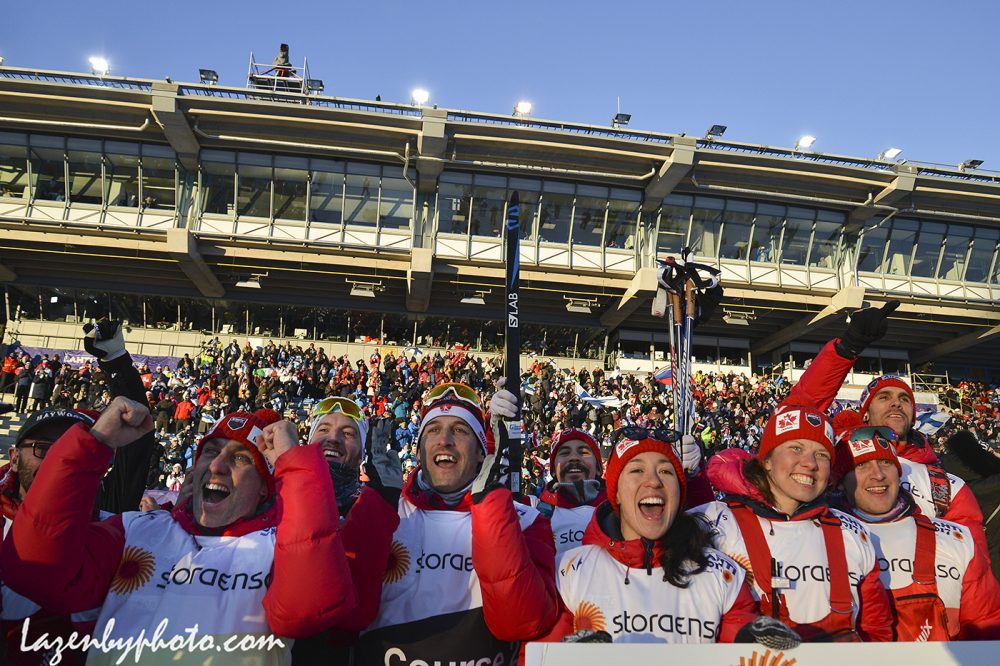
    Canadian teammates, coaches and support team celebrate Alex Harvey’s win in the men’s 50 k freestyle mass start at the 2017 Nordic World Championships in Lahti, Finland. (Photo: John Lazenby/Lazenbyphoto.com)

    Babikov, a former World Cup skier who transitioned to coaching last year, works with team physiologist Jessica Kryski to write training plans for everyone but Harvey on the men’s World Cup team (despite Kershaw being based in Norway).

    For the second-straight year, Babikov is teaming up with Louis Bouchard, Harvey’s personal coach and head coach of the Pierre-Harvey Training Centre (CNEPH), who coaches U25 Team member Cendrine Browne as well. As World Cup co-coaches, Bouchard and Babikov are able to divide the workload and travel required throughout the year, and specifically, five months abroad.

    “It’s hard to be on the World Cup circuit all the time for staff,” Babikov said on the phone. “[Louis and I] both have families, so it’s worked out well when we’re subbing for each other once in awhile so athletes have a national-team coach with them all the time. We have a good mix with his experience and my experience on the other side as an athlete. I think I’ve learned from him and it’s been great.”

    While the World Cup A-team remains all-male, three women were nominated to the B-team: Emily Nishikawa, Olivia Bouffard-Nesbitt, and Dahria Beatty of the Alpine Insurance Alberta World Cup Academy (AWCA). These women will work with Chris Jeffries, head coach of the AWCA, who plans to travel with the team on certain trips to Europe as well. 

    Tuesday, May 30, marked the last day of the team’s first official camp of the season in Mont-Tremblant, Québec, which started May 21 and included the entire national team minus Kershaw.

    According to Babikov, Kershaw would be at the second men’s World Cup team camp in Park City, Utah, from June 26-July 11. A month later, those six men (including B-team member Graeme Killick) will head to Livigno, Italy, for their third camp Aug. 16-Sept. 3, while the women’s team and Jeffries head to New Zealand for an on-snow camp.

    For the fourth and final camp, both the men’s and women’s World Cup teams, along with the Canadian U25 Team, which includes Julien Locke (Black Jack), Browne (CNEPH), Katherine Stewart-Jones (NTDC Thunder Bay), Maya MacIsaac-Jones (Rocky Mountain Racers), and the senior team’s only newcomer Gareth Williams (Telemark), will return to Park City for a dryland camp Oct. 5-24. An all-encompassing Alignment camp is scheduled for early July in Thunder Bay, Ontario, but due to other camps happening simultaneously, the World Cup team members will not be attending, Babikov said.

    Heading into the upcoming World Cup season, Harvey remains Canada’s lone athlete in the Red Group (top 15 in sprint or distance World Ranking list) and is accordingly the only one receiving full funding for training camps. According to Holland, the six men that form the World Cup training group (World Cup A-team plus Killick) are receiving funding from Own The Podium (OTP). He reiterated that OTP allocates funds based on medal potential. 

    “They’re funding the medallist people, the potential people,” he said. “Primarily, that’s Alex Harvey. We did get a medal in the relay last year on the World Cup, part of that group [Harvey, Kershaw, Johnsgaard, and Valjas] is included as well. Len Valjas had a medal on the World Cup too, [in the team sprint] with Alex … and additionally, we want a training group. They support that idea of having a good training group here around Alex. That adds up to six men.

    “After that, it doesn’t change much from last year,” he continued. “There’s not a lot of money outside of that [Own the Podium support] window. There’s support on the World Cup, etc., but your question was has it changed. … We don’t have more money, we have actually less money.”

    Compared to past Olympics, CCC’s budget this year is about half of what it was for the 2014 Sochi Olympics and “a lot less than what we had in Vancouver,” Holland said.

    “It’s a tight budget,” he added. “I’m not going to sit here and whine about money because we also had a tight budget last year. We’ve had cuts for three years leading into last year, and still — small team, small budget — we did pretty good. Our attitude is that we have a little bit more money this year we’re getting from Own The Podium and we’re doing an additional camp for the men. … We’re not changing a lot, except adding a camp and having good preparation. There’s less money, but we’re going to get the job done.”

    From his viewpoint, ongoing annual budget cuts have especially hurt development programs with a “lack of money to really invest in the future,” he said. Yet development remains a priority.

    “You’ve probably heard of the ‘NextGen’ funding. Expect that there’ll be some kind of announcement this year,” Holland said. “We have a plan in place, and we’re making changes, regardless of not having a lot of money, in how we go about that next generation, in testing and development.”

    In order to continue creating opportunities for up-and-coming talent, CCC is now working more closely with clubs, permitting some national-team members to continue their work with club coaches, while simultaneously training with national team. Out of nine World Cup team members, seven are not affiliated with training centres (only Harvey is listed as CNEPH and Beatty is part of the AWCA).

    “We’ve never said everybody has to join a training centre,” Holland said. “I guess what we’ve said is, if you’re on the national ski team, you had to be in a training centre. … That is an option for U25 athletes, but once you’re on the World Cup team, we still have a centralized model. What we’re doing is broadening.”

    Since the training-centre model was instated in 2006, the level of coaching in clubs around the country has improved, Holland explained. That makes it less essential for an athlete to belong to one of three training centres.

    “They provide education and good services in six or eight clubs across the country,” he said. “You’ve got to have a club that has a coach who is well-experienced, can write a good yearly training plan that makes sense. … There’s also requirements to come and be tested here [in Canmore], for those athletes, to participate in national ski team camps, etc. So it’s not just cutting them loose, it’s more of a closely integrated model. Trying to integrate more with the divisions and the clubs. When you do that, you know your dollar goes farther.”

    Bottom line, Holland reiterated that CCC is “moving ahead despite not having the resources.”

    “We ran a World Cup team program with significantly less money, but we’ve been pretty good at finding ways to do things inexpensively [through] collaboration with divisions and clubs,” he said. “We’re also extending some of our national senior team programming to the clubs. That’s a big change.”

    Gareth Williams (Telemark Race Team) on his way to a personal-best 11th in the men’s 20 k skiathlon at 2017 Junior World Championships at Soldier Hollow in Midway, Utah. (Photo: FlyingPointRoad.com)

    Because of this change, 19-year-old Williams, in his first year on the senior team, will continue to work with his club, Telemark, while also training with the national team.

    Financially, not much separates Canada’s World Cup B-team from its U25 (Under 25) Team.

    “In terms of support, there’s not a lot of difference,” Holland said of the two teams. “I think it’s mainly an age factor. If you’re coming through U25, you’re expected to meet a little higher standard for that B-team. Whereas Gareth Williams, we want to look at that as more talent development. … By the time they hit the B-team, we expect them to be at the World Cup level.”

    In addition to his international results last season (including an 11th place in the skiathlon at Junior World Championships), Williams was also named to the U25 development team because of the value seen in the years ahead of him.

    “Gareth, as a junior, has a few years to develop for us, to put into his program,” Holland said. “We have clearly defined benchmarks of who gets on the team. For Gareth, it’s written in our criteria, top 12 at World Junior championship result.”

    “We have to look to the future and look ahead and develop younger guys and give them a nod and give them recognition so they have something to work for,” Babikov said. 

    A few of the senior team nominations, including Bouffard-Nesbitt, who was injured in a car accident in February, and MacIsaac-Jones, who struggled with a foot injury and had surgery this spring, were based on the “force majeure” clause.

    “Some people who were sick at the wrong times last year,” Holland said. “Health is a big concern … that’s a primary thing that we’ll be on top of this year. Then the other people, I wouldn’t call health. … Athletes get injured, we like to stay with them as long as we see that there’s a good recovery plan and the injuries are taken care of. I won’t say that those injuries aren’t serious. As the hockey players say, it’s day-to-day on the comeback.”

    As for which Canadian skiers you can expect to see starting World Cup Period 1, Holland confirmed there will be at least 11: seven men and four women. The seven men include the five A-team members who “have met the Olympic Winter Games (OWG) Nomination Criteria outlined in CCC’s OWG Internal Nomination Procedures for the Olympics”, according to Holland, with standout results last year (in individual or team events). Killick will also start the season on the World Cup, as will Russell Kennedy as the Continental Cup leader.

    The four women all competed at 2017 World Championships: Stewart-Jones (who is also the Continental Cup leader), Nishikawa, Beatty, and Browne.

    And Nishikawa, Beatty and Killick all met “alternate qualifying criteria” for the Olympics.

    The Olympic team size is a minimum of four men and four women, Holland explained in an email. “The primary criteria takes precedent over the alternate criteria if the maximum number of athletes is established under the primary criteria.” Olympic selections will be finalized in January.
    But in the meantime, CCC will aim to host selection races for Period 1 World Cup starts on Frozen Thunder in Canmore in early November.

    “We don’t have criteria yet, but potentially we would add one or two more male sprinters, and at least another female athlete,” he said of the Period 1 team. “I’m not going to get into specifics, because we still have to write the criteria, but that’s the intent coming out of our spring meetings. You’ve got a pretty good World Cup group there in November/December.

    “I think it’s good to note we’re a little different, the way we do things, than the U.S.,” Holland added. “After we see what happens in December, then we look at our Olympic trials, which will be in Mont-Sainte-Anne in January. That’s how we’ll pick the rest of them.”

    In terms of medal potential at the PyeongChang Winter Olympics in February, Holland said the goal is one, for starters.

    “We’re just looking for a medal,” he said. “Always, two is better than one, but our focus … [is on] where our medal chances are. How do we maximize those opportunities for each? Certainly in the relay, we’ll be shooting for the bronze because we’ve done the analysis. For Alex, he’s going to ski in as many events as he can. So it depends on day to day, how he comes into the games. You know he can medal in sprints, he can medal in the 50 k, and everything in between. We’re just optimizing every opportunity.”

  • Nordic Nation: Tom Hall’s Take on Own The Podium

    Nordic Nation: Tom Hall’s Take on Own The Podium

    We are nearing the end of the Winter Olympic quadrennial as we run up to the 2018 Games in PyeongChang, South Korea. With that marquee event on the horizon, a few things are certain: athletes will attempt to peak for specific events, nordic sports will garner more mainstream media coverage and funding for national teams will get a bit more scrutiny. With that in mind, in this podcast episode, we have Canada’s Tom Hall as a guest. If you’re into elite canoe and kayak, Hall may be a familiar name: he’s a 2008 bronze medalist from the Beijing Olympics in sprint canoeing and represented Canada internationally for twenty years — he retired from competitive sports in 2012. Today, Hall is a journalist and editor as well as the interim executive director for for a Canadian athlete advocacy organization called AthletesCAN.

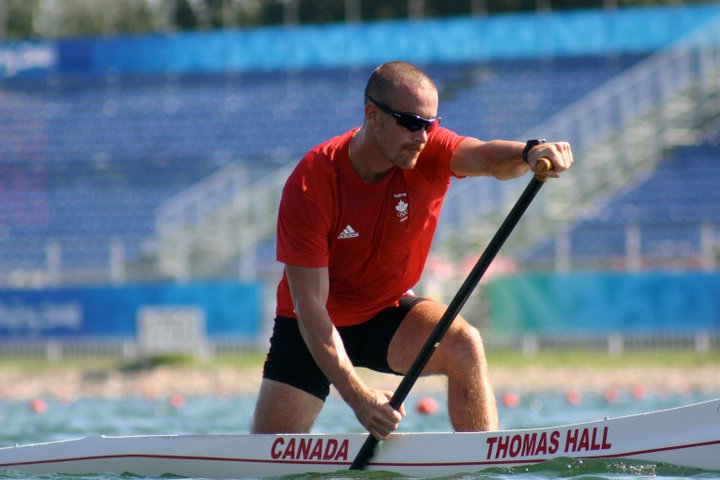
    Tom Hall is a journalist/editor and Interim Executive Director of AthletesCAN. Hall earned a bronze medal at the 2008 Beijing Summer Olympic Games in canoe sprinting. (Photo: Greg Redman)

    Hall’s work has been featured in a Canadian publication called The Walrus. What caught our attention here at FasterSkier was an article Hall penned about Canada’s sports funding program Own The Podium, titled ‘The Wrong Track’. It’s a good read and poses the basic question about how taxpayer money should be spent when it comes to sport. Whatever side of the issue you come down on, Hall’s points are food for thought.

    Here’s a breakdown from Own The Podium (OTP), (Link to the full OTP Winter Historical Comparison) that reflects a winter historical comparison of OTP funding for cross-country skiing during the last three Olympic quadrennials.

    Sport Vancouver Quadrennial Sochi Quadrennial PyeongChang Quadrennial (amount for first 3 years of quad)
    Cross-Country Skiing $4,714,855 $5,066,890 $2,355,500


    (To subscribe to the Nordic Nation podcast channel, download the iTunes app. If you have iTunes, subscribe to Nordic Nation here.)

    Have a podcast idea? Please email nordicnation@fasterskier.com.

  • After Two Seasons, Biathlon Canada and de Nys Part Ways

    After Two Seasons, Biathlon Canada and de Nys Part Ways

    Former Biathlon Canada High Performance Director Eric de Nys making the team announcements in Valcartier, Quebec. (Photo: Dan Guay)

    For the past 13 years, Eric de Nys has been ingrained in the sport of cross-country skiing and its offshoots, including biathlon. He spent 10 years as a coach on Cross Country Canada’s national team, leading the women’s World Cup team in his final two years there.

    Based in the same town and out of the same training facilities in Canmore, Alberta, de Nys parted ways with the national team after the 2014 Olympics and founded a bridge development program, the WinSport Junior Cross-Country Ski Team, to prepare junior skiers for senior-level racing.

    A year and a half later, in October 2015, de Nys accepted a new job as high-performance director for Biathlon Canada, replacing Chris Lindsay (who currently works as a high-performance advisor for Own the Podium).

    De Nys spent two winters with Biathlon Canada, but less than week after the conclusion of the 2016/2017 competition season, that tenure ended. The move from Biathlon Canada to discharge de Nys came less than a year before the 2018 Olympics, but after a season in which the Canadian biathlon team fell short of reaching the podium in a World Cup or World Championships race.

    While several younger biathletes had major breakthroughs, including Megan Bankes and Leo Grandbois at Youth/Junior World Championships, and national-team members like Scott Gow, Christian Gow, Emma Lunder, and Julia Ransom recorded career-bests on the IBU World Cup circuit, several veteran members appeared to take a step back. Nathan Smith was out most of the season with a virus, and Rosanna Crawford and Brendan Green struggled to return to their competitive form.

    Biathlon Canada General Manager Andy Holmwood told the Rocky Mountain Outlook that the decision was not performance related. He explained that Biathlon Canada expected to have the position filled by May 1. A job posting on its website indicated that applications would be accepted through May 7.

    In an email to FasterSkier, Holmwood wrote that the new high-performance director will take over a program with plans leading up to and through the PyeongChang Winter Games. He explained that he hoped to fill the position as soon as is “feasible.”

    Other than to “confirm we’ve recently parted ways with Eric de Nys and wish him the best of success in future endeavours, Biathlon Canada has no comment on the situation,” Holmwood wrote.

    De Nys declined to comment specifically on the matter as well, telling FasterSkier on the phone that, as far as he knew, the decision was not performance related. He added that he had enjoyed working with both CCC and Biathlon Canada and was remaining positive as he looked ahead.

    “One door closes and multiple open,” de Nys said of his plans moving forward. “I just hope the best for the athletes.”

    After spending more than a decade of his career in skiing, he suspected he will remain involved in the sport in the future — even as a volunteer — although this year may signal a break.

    “I’m not sure at what level yet, but I will be helping out at the club level or something like that,” de Nys said. “Maybe volunteering, but I do think I will step away from sport for at least year, maybe forever. I don’t know.”


  • A Maple-Leaf ‘Miracle’, Canada Races to Historic 3rd Place in Ulricehamn Relay

    A Maple-Leaf ‘Miracle’, Canada Races to Historic 3rd Place in Ulricehamn Relay

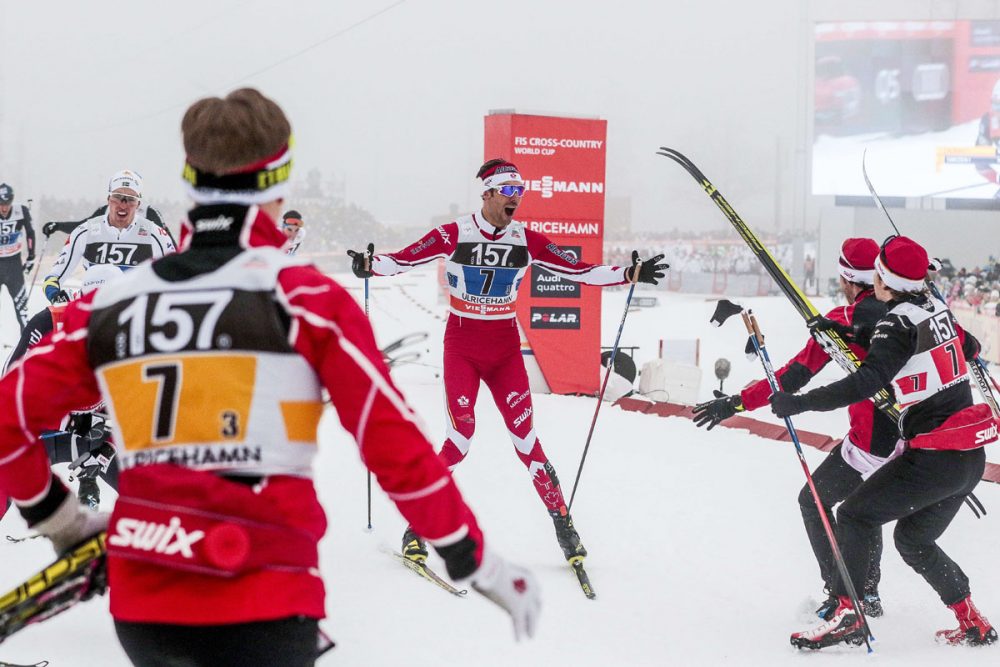
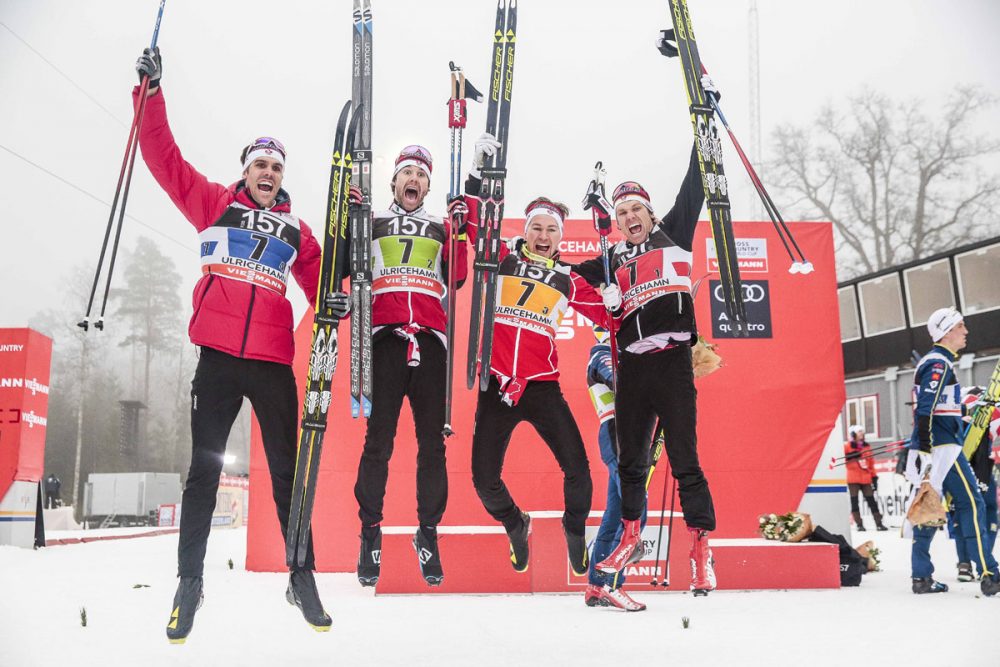
    Len Valjas (c) spreads his arms to greet his teammates Alex Harvey (far right), Knute Johnsgaard (far left) and Devon Kershaw after he crossed third in the men's 4 x 7.5-kilometer team relay on Sunday in Ulricehamn, Sweden. (Photo: Fischer/Nordic Focus)
    Len Valjas (c) greeting his teammates across the line, including Alex Harvey and Devon Kershaw (on the right), Knute Johnsgaard (left) after he finished third in the World Cup men’s 4 x 7.5-kilometer team relay on Sunday in Ulricehamn, Sweden, for a best-ever relay result for Canada. (Photo: Fischer/NordicFocus)

    Looking up from the finish line on Sunday, Canada’s Len Valjas saw something he would never forget. Amidst a sea of waving Swedish flags, a trio of men ran toward him. Their arms were outstretched and a chorus of cheers escaped all three as they charged toward their teammate.

    Just a week ago, Valjas had celebrated his first World Cup win in the men’s team sprint with teammate Alex Harvey. Seven days later, after anchoring the final leg of the Canadian men’s 4 x 7.5-kilometer relay team in Ulricehamn, Sweden, Valjas would celebrate another first.

    But this time, the first was not his alone. It was one for Canada as well.

    Left to right: Canada's Len Valjas, Alex Harvey, Knute Johnsgaard, and Alex Harvey after their historic third place finish in the men's 4 x 7.5-kilometer team relay on Sunday in Ulricehamn, Sweden. (Photo: Fischer/Nordic Focus)
    Left to right: Canada’s Len Valjas, Alex Harvey, Knute Johnsgaard, and Alex Harvey after their historic third-place finish in the men’s 4 x 7.5-kilometer relay on Sunday in Ulricehamn, Sweden. (Photo: Fischer/NordicFocus)

    Prior to Sunday, no other men’s team sporting the red maple leaf had reached the podium in a World Cup relay. The closest Canada had come to was fifth place in 2012 in Gällivare, Sweden, with Valjas, Harvey, Devon Kershaw, and Ivan Babikov.

    A little less than five years later, with Babikov as Canada’s new World Cup coach and Knute Johnsgaard having joined the relay-race crew, history was made.

    For the first time on a World Cup, four Canadian men — Kershaw, Harvey, Johnsgaard, and Valjas — would raise their arms in celebration while standing on the third podium step on Sunday, stealing the spotlight from Norway’s first place finishers and Sweden in second.

    “As a small cross-country skiing country, we don’t have two teams at the start line,” Babikov said on the phone afterward. “We barely assembled one team, but that team made a miracle today, so we only needed one.”

    Even if scraping together a squad did not take place until last week — Johnsgaard only flew into Sweden a few days ago and skipped Saturday’s 15 k freestyle to rest up for the relay — Canada has been aiming at a team podium for a while.

    For Babikov, especially, standing on the relay podium alongside his teammates had been a longtime dream. And though it wouldn’t occur while he was skier, watching his athletes (three of them former teammates) climb onto the third podium step was just as momentous for Babikov.

    “I’ll never forget this day,” Babikov said. “We’ve had individual podiums and individual medals, but the relay is special because it’s a show of strength for the whole team and the whole staff behind this team.”

    Just half of a second out of first — which went to Norway in a time of 1:06:47.5 — Canada’s third place finish is an indication not only of the team’s depth, but potential to place even higher.

    “I’ll never forget this day. We’ve had individual podiums and individual medals, but the relay is special because it’s a show of strength for the whole team and the whole staff behind this team.”– Ivan Babikov, Canadian World Cup coach, on the men’s relay’s historic third-place finish on Saturday

    Since distance relays are also one of the primary ways Own The Podium evaluates how much funding Cross Country Canada (CCC) receives, Sunday’s performance may also incentivize an increase in financial resources for the Canadian World Cup team.

    As Harvey explained, most his teammates are not currently getting financial support from CCC due to budget cuts from previous years. As a result of Sunday’s performance, that could change.

    “Because the results over the last couple of years internationally have been not stellar as a team, a lot of funding was cut for us,” Harvey said on the phone after Sunday’s race. “I think this result will really help those guys to be fully funded again.”

    Regardless of what exactly happens with the future funding, Canada’s relay members and coaches alike were smiling, speechless and simply stoked.

    “I felt honored to anchor such a hard working team,” Valjas said on the phone. “I didn’t want to let them down, so it was easy, there was only one thing to do, just get on the podium. They all did their work, and I wasn’t going to be the guy who lets it all go to shame.”

    Canada in Close Quarters, Krogh Out Sprints Halfvarsson for the Win

    In the words of Babikov, relay days are somewhat like the “lottery,” with decisions on which leg to designate to each athlete a gamble. With Sunday’s first two legs classic and the second two skate, Canada selected Kershaw and Harvey to start the team off, followed by Johnsgaard and Valjas.

    “Our strongest guys [were] on the first two legs, Devon and Alex, that’s where most of the damage was done,” Babikov said.

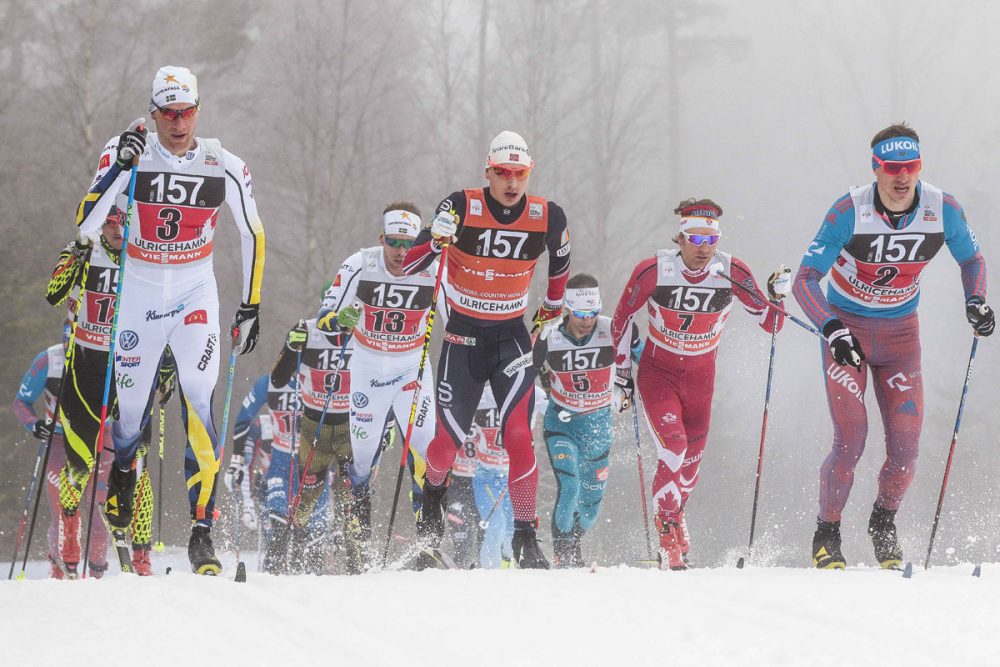
    Canada's Devon Kershaw (bib 7) during the first classic leg of the men's 4 x 7.5-kilometer team relay on Sunday in Ulricehamn, Sweden. (Photo: Fischer/Nordic Focus)
    Canada’s Devon Kershaw (second from r) during the first classic leg of the World Cup men’s 4 x 7.5-kilometer relay on Sunday in Ulricehamn, Sweden. (Photo: Fischer/NordicFocus)

    Kershaw started things off for the Canadians, skiing in bib 7 and positioned in 10th place until just before 2 k, when he made a move to the outside right of the tracks to the front. However, he didn’t lead for long. By 4 k, Russia’s Sergey Turyshev had overtaken him, followed by Sweden’s Daniel Rickardsson and Italy’s Dietmar Nöckler.

    Coming into the exchange zone, it was Kazakhstan’s Alexey Poltoranin in the lead, and Kershaw in fifth. Kershaw tagged off to Harvey for the second classic leg.

    Within the first half a kilometer, Harvey was at the helm of the leading pack of nine.

    “I knew that the heavy hitters were on my leg, but it was good,” Harvey said. “It was hard on the big hill, but then over the top I had really fast skis.”

    At 2.5 k Finland’s Iivo Niskanen and Russia’s Alexander Bessmertnykh traded off leads. Within another 4 k, Norway’s Martin Johnsrud Sundby moved to the front. The Norwegian maintained the lead through the exchange zone, while Harvey chased from five seconds back.

    Sundby passed off to Norway’s Anders Gløersen, and Harvey to Johnsgaard for the third leg and first freestyle portion. Despite considering himself a ‘World Cup rookie’, Johnsgaard, of Canada’s U25 Team, maintained his position within the middle of the lead pack.

    “Alex tagged me off in a good position, and my job was to hold that, and give Len the same opportunity I had to ski in the group in a  good position,” the 23-year-old Johnsgaard said.

    Johnsgaard did his job and tagged off to Valjas within five seconds of Gløersen’s tag to Norway’s Finn Hågen Krogh.

    Seven skiers still remained in the front pack with Krogh, Sweden’s Calle Halfvarsson and Italy’s Sebastiano Pellegrin in the lead. Valjas spent most of his first lap in fifth, following as close to the leaders as possible.

    “On the last lap, I was totally blocked on the hill, so I couldn’t actually empty the tank, which was probably a good thing for me, and then just after the hill I built up some speed, and passed five or six guys just double poling,” Valjas said.

    By the final 300 meters, the Canadian had moved up to second behind Halfvarsson in first. As the group rounded the final corner, however, Krogh moved around to the right of Halfvarsson and Valjas.

    “I gave him a meter in the final turn but I entered the final stretch in good speed” Krogh told NRK of his final maneuver.

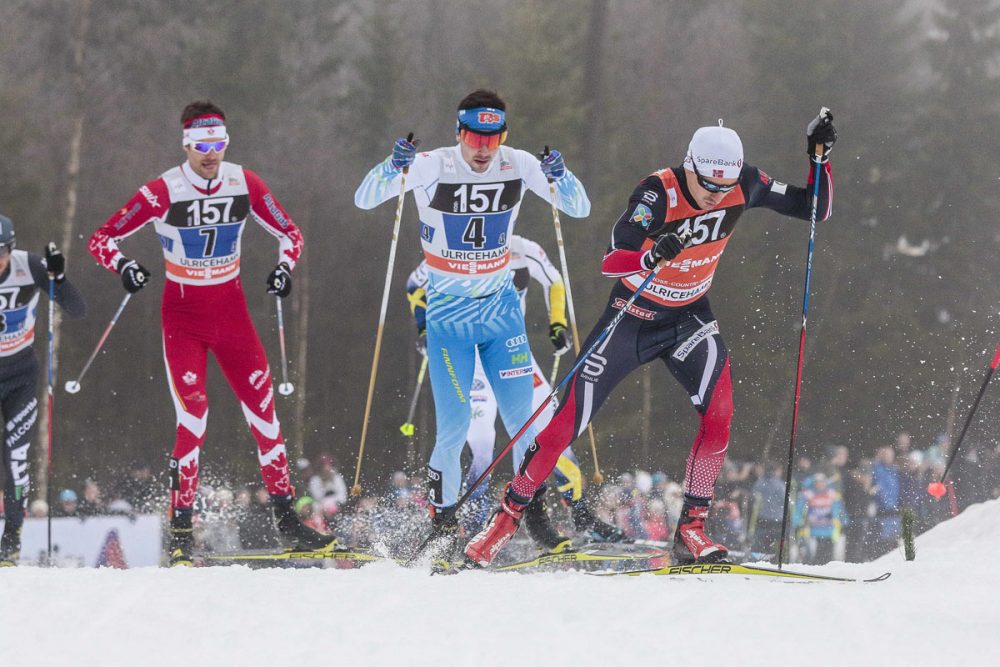
    Left to right: Canada's Len Valjas follows Finland's and Norway's Finn Hågen Krogh during the men's 4 x 7.5-kilometer team relay on Sunday in Ulricehamn, Sweden. (Photo: Fischer/Nordic Focus)
    Left to right: Canada’s Len Valjas follows Finland’s and Norway’s Finn Hågen Krogh during the World Cup men’s 4 x 7.5-kilometer relay on Sunday in Ulricehamn, Sweden. (Photo: Fischer/NordicFocus)

    Krogh edged Halfvarsson and Valjas by half a second for the win in 1:06:47.5.

    “I would have like to have won but Finn Hågen is fast,” Halfvarsson told NRK of his final maneuver.

    In his first time anchoring a team relay, Valjas views the moment as one he’ll never forget.

    “I’ve never been the anchor in a relay. I’ve been the second leg in some team sprints, but today was special, the best feeling I’ve ever had skiing, seeing my three teammates sprinting towards me at the finish line,” Valjas said. “I don’t think anything will ever top that, the first relay [podium] for Canada.”

    The U.S. men fielded a team with Andy Newell handing off to Erik Bjornsen, followed by Noah Hoffman, and Simi Hamilton, who anchored them to 10th (+1:16.5).

    U.S. Ski Team Head Coach Chris Grover explained that while Newell maintained contact with the pack during his first lap, he lost it during his second time around.

    “The second time up the big climb he got stuck behind a Russian who was fading,” Grover said on the phone. “By the time he got around, he lost contact with the lead. Then coming down into the stadium he had a fall. And then after that, he was maybe 16 seconds behind the group in front of him. That really took us out of contention.”

    Newell tagged Bjornsen in 13th, 23.2 seconds out of first. From there, the U.S. men steadily picked off the places, with Bjornsen moving into 12th by the second exchange, Hoffman improving to 11th by the last exchange, and Hamilton finally finishing 10th.

    Results

    — Chelsea Little, Jake Ellis and Aleks Tangen contributed

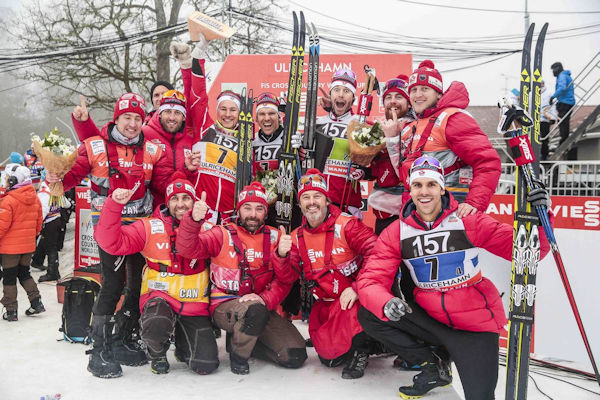
    Team Canada celebrates their first World Cup relay podium in the men's 4 x 7.5-kilometer team relay on Sunday in Ulricehamn, Sweden. (Photo: Cross Country Canada)
    Team Canada celebrates its first World Cup relay podium in the men’s 4 x 7.5-kilometer relay on Sunday in Ulricehamn, Sweden. (Photo: Cross Country Canada)
  • Chris Lindsay Leaves Biathlon Canada After Four Years as High Performance Director

    Chris Lindsay Leaves Biathlon Canada After Four Years as High Performance Director

    A 2008 file photo of Chris Lindsay. He left Biathlon Canada after eight years with the organization. (Photo: Biathlon Canada)
    A 2008 file photo of Chris Lindsay. He left Biathlon Canada after eight years with the organization. (Photo: Biathlon Canada)

    Biathlon Canada announced earlier this month that Chris Lindsay would leave his position as High Performance Director to assume the role of High Performance Advisor to summer sports at Own the Podium. With over four years as High Performance Director, Lindsay departs Biathlon Canada having fostered a program that has risen to the highest level of international competition.

    A former biathlete who competed at both the national and international level, Lindsay has been with Biathlon Canada for roughly eight years. Previously serving as Technical Programs Coordinator, he was hired in 2010 as High Performance Director. Before joining Biathlon Canada Lindsay worked in the summer sports industry, including aquatic recreation and competitive canoeing and kayaking.

    According to Lindsay, his current progression from winter to summer sports is natural given his transition between the two realms over the years. As High Performance Advisor he will work with a variety of summer sports programs’ high performance directors to realize the potential their programs hold and get them the resources necessary to realize that potential.

    “While I absolutely love [being biathlon’s High Performance Director], the sport, and the athletes and the fantastic staff that I get to work with, I had this opportunity come up with Own the Podium,” Lindsay said in a phone interview. He continued, adding that the new position was the next step in his journey, “in terms of providing me with a fresh challenge and providing me with new opportunities to support high performance sport, specifically winning Olympic and World Championships medals.”

    Biathlon Canada’s President, Murray Wylie, said in a press release that Lindsay would be missed by the organization. “Chris has played an integral role in leading the strategic transformation of Canada’s high-performance biathlon program from a group of participants to medal contenders at the Olympics, World Championships and World Cups during his five years with Biathlon Canada,” Wylie wrote. “He leaves having positioned Biathlon Canada with the opportunity to deliver a medal-winning performance at the 2018 Games, and beyond.”

    Nathan Smith celebrates after becoming just the second Canadian man to ever win a biathlon World Cup, taking the win in the 12.5 k pursuit in Khanty-Mansiysk, Russia. (Photo: Biathlon Canada/NordicFocus.com)
    Nathan Smith celebrates after becoming just the second Canadian man to ever win a biathlon World Cup, taking the win in the 12.5 k pursuit in Khanty-Mansiysk, Russia. (Photo: Biathlon Canada/NordicFocus.com)

    While Lindsay is content with his decision to leave Biathlon Canada, it doesn’t come without challenges. The former high performance director said he will not only miss the relationships with those in the biathlon community, but also opportunity to be present at races in the coming years, especially the IBU World Cup in Canmore in early February of 2016.

    “In a way it makes it very challenging to leave because you want to continue to be a part of this machine that has this momentum going forward,” Lindsay said. “I think the hardest part about leaving Biathlon Canada, beyond the relationships with the athletes and the staff, is that I am not going to be around for the home World Cup next season.”

    While Lindsay’s new job will keep him busy throughout the next year, he plans to schedule a vacation during the Canmore World Cup week and volunteer at the event in order to reconnect with some of his former athletes.

    Looking back at his career with Biathlon Canada, Lindsay said that the sport is an example of success in the Canadian system. Just in the last year the team had several top-10 performances on the World Cup, the most notable of which were Nathan Smith’s silver medal in the sprint at World Championships and his victory in a late-season World Cup pursuit. “The systematic successes we have seen prove the mission and how we’ve been able to execute it,” Lindsay explained.

    Although some of Biathlon Canada’s target races are several years out, most notably the 2018 Olympics, Lindsay is certain that the program he has been a part of for eight years will achieve its goals and then some.

    “We have been working hard as a nation to be recognized as a real member of the club and we fully expect that by the 2018 season,” Lindsay said. “We will be firmly recognized as a top-10 nation in the sport and we will be regularly, perhaps not frequently but regularly, converting medals at the World Cup and World Championships level. There will always be setbacks and there will  be dry spells, but if the machine is fully functioning then we have multiple athletes who can take the mantle.”

    There was no official word from Biathlon Canada regarding Lindsay’s replacement.

  • For Canadian NoCo and Jumping, No OTP Funding Closes ‘Every Other Door’

    For Canadian NoCo and Jumping, No OTP Funding Closes ‘Every Other Door’

    Ski Jumping Venue
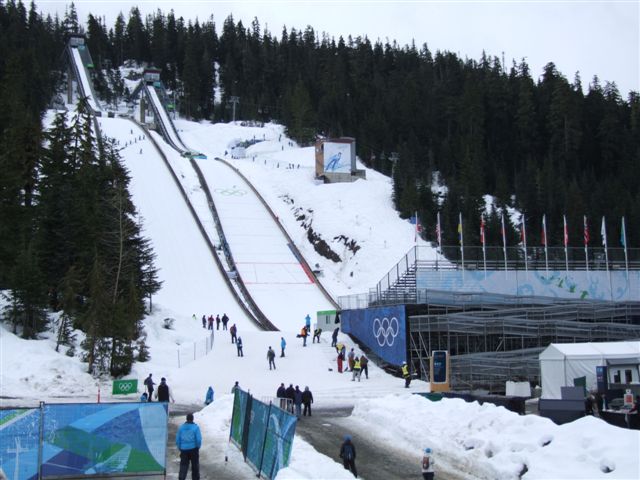
    The Olympic ski jumping venue in Whistler, Canada. Ski Jumping and Nordic Combined Canada are in a state of uncertainty after their main financial source, Own the Podium, eliminated funding to the two sports.

    The future of ski jumping and nordic combined in Canada is in limbo after one of the sports’ main funding sources, Own the Podium (OTP), decided to stop funding the sports for the 2014/2015 season. OTP is a sport-support program that makes recommendations for government and private-sector funding based on “targeted excellence” criteria.

    FasterSkier learned of the funding cuts in a leaked document that included the proposed numerical amounts of funding for each program OTP plans to support: hockey, freestyle skiing, speed skating, figure skating, ski cross, curling, snowboarding, bobsleigh, alpine skiing, luge, cross-country skiing, biathlon, and skeleton. The document did not include ski jumping or nordic combined.

    Both Curtis Lyon, Ski Jumping Canada and Nordic Combined Canada’s chairman and high-performance director, and OTP’s Director of Winter Sport Peter Judge confirmed the funding cut. But how that information was communicated remained unclear after speaking with Lyon and Judge in separate phone interviews.

    According to Lyon, OTP did not contact his sports to inform them of the loss of funding. He stated that there had been no communication from OTP since May 16 and that he found out about the cuts by word of mouth and privately shared documents.

    “I knew the number of sports getting cut plus there has obviously been leaked information,” Lyon said in a phone interview. “I know what I’ve seen even if it hasn’t been 100-percent official. Other sports have been notified of their dollar amounts so I’m just assuming that they’re not even taking the time to give us the call back.”

    Judge said OTP notified Ski Jumping and Nordic Combined Canada about the decision to eliminate funding to their sports in mid- to late June. Lyon said he tried to contact OTP repeatedly for official information, without any luck.

    “I don’t know if he continually contacted us,” Judge said. “I’ll look into it.”

    According to Judge, the official funding numbers for the 2014/2015 season will be released on the OTP website once they are approved by Canada’s minister of the state (sport).

    What this means for Canadian Jumping & NoCo

    Peter Judge, director of winter sport for Own the Podium (OTP) explained to FasterSkier the organizations decision to cut funding for ski jumping and nordic combined. He stressed that OTP is not the sole-funding source for sports in the country and national sport organizations (NSOs) have the responsibility to develop their sports to a point where they have Olympic medal potential.
    Peter Judge, Own the Podium (OTP) director of winter sport, explained the organization’s decision to cut funding for ski jumping and nordic combined. He stressed that OTP is not the sole-funding source for sports in the country and national sport organizations (NSOs) have the responsibility to develop their sports to a point where they have Olympic medal potential.

    Without OTP’s financial support, Lyon said that the state of ski jumping and nordic combined in Canada depends on various factors and is currently uncertain. The two sports have several other possible funding sources, including Sport Canada, which operates directly under the government, but nothing was confirmed as of late July.

    “We are working with Sport Canada to gain recognition under the Sport Funding Accountability Framework,” Lyon explained. “If that process goes well we can hopefully secure some level of support for the next four years but this is still unclear. Obviously we were expecting some investment from Own the Podium based on what we felt were fairly strong results and a fairly strong program going forward. It was obviously pretty frustrating as that was not the case.”

    Lyon was most frustrated with the lack of communication. Had OTP informed them of the cuts earlier this year, Lyon said that the extensive amount of time they spent on the OTP application could have been put toward finding alternative financial supporters.

    Over the past four years, Ski Jumping and Nordic Combined Canada have received $600,000 Canadian dollars to support the development of elite athletes, according to Lyon, who added that this number is misleading.

    “If you look on their website, it says $600,000 dollars over the last four years,” he said. “What they don’t show is that in the first year of the quadrennial, we got about $200,000 dollars, the second year was $300,000, the third year was $100,000 and the last year was zero.

    “We got a pretty hefty lecture that [OTP] had spent $600,000 over four years to get twelfth place in the Olympics,” Lyon added. “My response was, well, how do you put together a program based on such highly fluctuating numbers from year to year?”

    According to Lyon, the year the program received $300,000, there was only one 15-year-old female on the team and she posted variable results throughout that season. However, when their funding was subsequently slashed to $100,000, athletes from the development program began to improve and Canadian ski jumping started consistently placing in the top 10 at World Cups, with occasional podiums at the Grand Prix.

    Even in the 2013/2014 season, Canadian ski jumping saw some significant gains on the international ski jumping circuit with Atsuko Tanaka earning fourth in the 2014 Gand Prix standings. Takana and teammate Taylor Henrich also placed 12th and 13th in the Olympic HS 106 ski jumping competition.

    “It’s a mismanagement of funds on their part,” Lyon said. “It’s just very inconsistent and short-term thinking.”

    It is important to note, however, that men’s ski jumping was unable to match its women’s results and had only one competitor, Mackenzie Boyd-Clowes, who consistently competed in ski jumping World Cups in 2014.

    Additionally, Canada had no competitors racing on the nordic combined World Cup circuit in 2014. While there were Canadian athletes competing in the 2014 nordic combined Continental Cups, their results were unable to earn them World Cup or Olympic starting spots.

    According to Judge, his organization saw a very low possibility of ski jumping or nordic combined winning a medal in the 2018 Olympics, and thus believed OTP’s money would put to better use funding for other winter sports.

    “Our mandate and our mission is simply around medal potential for 2018 and certainly on the nordic-combined side that’s been a challenge,” Judge said. “There are not any medal-potential athletes in coffer. On the ski-jumping side, again I looked at the data that was there and it was hard pressed to find medal potential for 2018.”

    Judge stressed that OTP is not the sole-funding source for Canadian sports, and national-sport organizations (NSOs) are responsible for developing their sports’ Olympic-medal potential. According to Judge, funding from OTP is only a “small part of the equation” and that NSOs need to be able to function without the support of OTP.

    Curtis Lyon, Ski Jumping Canada and Nordic Combined Canada's chairman and high-performance director. (Photo: LinkedIn)
    Curtis Lyon, Ski Jumping Canada and Nordic Combined Canada’s chairman and high-performance director. (Photo: LinkedIn)

    Lyon countered that while OTP is one funding source, the opportunities that come with being an OTP-sponsored sport totals much more than the monetary amount would suggest.

    “They are one funding source; that’s what they’ll tell you,” he said. “As soon as you are not funded by OTP every other door closes. All the money for your sport services is gone. You can’t access this gym, you can’t access that gym. You get lower priority when you actually go to the Olympics in terms of the credentials, where you stay, how you are treated there. It’s a ripple effect. You are screwed at that point. There is no way back.”

    Lyon said the current situation is not exactly surprising given how OTP had addressed nordic combined and ski jumping in the last decade.

    “You are taking a sport that had potential and basically trying to kill it to the point where it may not exist in the country, rather than have a long-term goal and plan and work with the sport to develop it over four or eight years,” Lyon said. “That’s the way the sport has been for the last eight to ten years. We build a little momentum and then something changes and it almost folds altogether.”

    What’s next

    This season, three athletes represent Ski Jumping Canada: Atsuko, Alexandra Pretorius, and Taylor Henrich, who are all returning women’s national team members.

    As for nordic combined, Lyon said that he didn’t know of anyone who was officially going to be on the national team, or if there would be a team at all. He said several athletes had discussed training in the U.S., but he was unaware of their status.

    Canadian ski jumping and nordic combined relied heavily on partnerships with their U.S. counterparts the last few seasons.

    Under previous arrangements, Ski Jumping Canada shared a coach with the U.S. and often joined the Americans’ training camps. Nordic combined was more reliant on the U.S., paying the U.S. Nordic Combined to coach, house, and provide waxing services for their athletes during the Continental Cup season.

    This arrangement is up in the air for the upcoming competition season, as the status of Canadian ski jumping and nordic combined remains uncertain. U.S. Nordic Combined is working on fundraising, too, after the U.S. Ski & Snowboard Association ceased team funding this month.

    Lyon expressed some optimism with a new training center opening at Whistler Olympic Park in British Columbia. Using the jumps from the 2010 Olympics, two clubs will attempt to develop a program in that area. Additionally, a strong recruitment program in Calgary will continue to introduce athletes to ski jumping and nordic combined.

    However, Lyon stressed that for Canadian ski jumping and nordic combined to survive, it is necessary to find organizations that are intent on focusing on the long-term development for both sports.

    “If we want to survive, we need to take matters into our own hands and really develop those relationships and get that money coming in and build up those relationships over the years,” he said, “Instead of just waiting for handouts from organizations that obviously have no long-term goals for organizations like our ours.”

  • CCC’s New President, Jamie Coatsworth Talks Business and the Board’s Role

    A Toronto businessman for the last 30-plus years, Jamie Coatsworth had spent enough time in meetings that sitting on a board wasn’t high on his post-retirement ‘to-do’ list. Helping not-for-profits was, and upon offering his services to Cross Country Canada (CCC) when he retired three years ago — working with executive director Davin MacIntosh on a non-taxable trust for national-team athletes — Coatsworth suddenly found himself interested in joining its board.

    MacIntosh had urged him to do so, Coatsworth explained on the phone Thursday from Toronto.

    “He said, where we really need help with your kind of background is on the board,” recalled Coatsworth, a commerce-and-consultant specialist who spent 29 years as a partner with PricewaterhouseCoopers (PwC), the world’s second-largest professional services network. “I said OK. I hadn’t been looking for board position. I was more into not-for-profit and project work.”

    But in 2012, CCC’s nominating committee approved Coatsworth’s candidacy for director and he was subsequently elected to the organization’s nine-person board of directors.

    Two years later, he’s the president.

    Coatsworth explained his rise to chair/president of the board materialized over the last couple weeks and was far from preplanned. The board sensed that former president Richard Lemoine would resign from his position rather than be re-considered for another two-year term. Coatsworth said he looked around the room and spoke with fellow board members about who might step up to fill the volunteer role.

    Nobody raised their hand, so he said he’d do it, Coatsworth explained. Recommended by the divisional chairs from CCC’s participating provinces and territories, his bid for president was supported by the board and officially approved last Saturday at the Annual General Meeting in Canmore, Alberta. While acting chair Jim McCarthy filled in for the last few weeks, Coatsworth’s two-year presidency went into effect immediately on June 14. There was no need for a vote, Coatsworth said, because the position was open.

    “Looking at my professional background, I think I could do a pretty good job,” he said.

    A recreational skier with a longstanding interest in the sport and Canada’s top athletes, Coatsworth has privately sponsored a number of Canadian skiers since after the 2002 Olympics, starting with the second-ranked skier on the team: Sara Renner (he figured No. 1 Beckie Scott was well enough off after earning gold in Salt Lake).

    Rather than give what he considered “at the time, a fairly modest amount of money” to an organization alone, he figured it would be better spent directly going to the athletes. He called up CCC in 2002 to figure out how to do just that and has been financially supporting athletes ever since.

    Coatsworth currently sponsors World Cup Team members Devon Kershaw and Lenny Valjas, and also backed the now-retired Dasha Gaiazova and Chandra Crawford’s Fast and Female enterprise. While some athletes might mention his name on their websites, Coatsworth said he was never “looking to broadcast it too widely. All these kids could use a hand.”

    He also gives money to Cross Country Canada “as I always have,” he explained. “I give some money to a couple of other clubs that have racing teams — Hardwood Hills, where my wife and I ski. I give some money to them a couple of other clubs, plus some athletes, a couple on the World Cup Team, several athletes on the [Alberta World Cup] Academy, and a couple people that are not on either [the national team or training centres].”

    While his support of athletes is widespread, he said his personal sponsorships aren’t major dollars. Still, the gesture has helped connect him with CCC’s developing and elite skiers.

    “Through these sponsorships I’ve gotten to know [certain athletes], gotten to enjoy them, follow their racing … kind of cheerlead,” he added. “Next thing you know I’m on the board and next thing, I’m chair.”

    Before joining the board in 2012, Coatsworth specifically asked MacIntosh if his sponsorships might be a conflict of interest. MacIntosh said no, because the board is not involved in day-to-day management of the national team, or decisions like team selections or carding.

    Coatsworth explained that he plans to be “quite vocal” about his personal sponsorships and steer clear of anything that might be a potential conflict. As chair, he is automatically on the high-performance committee, which selects national-team athletes at the end of the season, for example, but Coatsworth said he’ll “absolutely refuse myself from any decisions there.”

    Aside from appointing Coatsworth, the board elected two new directors to the board — Dorothy Lothian and Jennifer Tomlinson — to replace outgoing members Mike Norton and Rhonda Jewett.

    Asked about his relationship with MacIntosh, which Lemoine cited as a primary source of tension in his two years as president, Coatsworth said it was good — “I’ve got a lot of respect for him,” he said.

    At the same time, he pointed out he’s “not quite 30 years older” than MacIntosh, so his advice isn’t exactly fatherly, but it does come with years of business experience, specifically with company management restructuring.

    “One of the things we’ll be a little more rigid about it going forward is sticking to our governance role of management,” Coatsworth said of the CCC board. “Our job as the board is to set policies and hire a [CEO] to run the business.”

    In that sense, he said it’s up to MacIntosh to take actions where appropriate — and when it’s not appropriate, make the call to ask the board to weigh in.

    Leading a policy governed board during the start of an Olympic cycle, when a “big chunk” of funding is determined by how the government views a sports entity’s medal potential, may not be the easiest thing to jump into — especially after Canada’s cross-country skiers failed to medal at the 2014 Sochi Games. But that’s where Coatsworth’s expertise as a previous member  of CCC’s finance and marketing-fundraising committees might come in.

    “Our funding from Own The Podium (OTP) for able-bodied has been cut back a bit,” Coatsworth said. “You scale back on some things.”

    At the same time, OTP’s funding is more or less a lump sum intended for athletes’ training and competition expenses. With Gaiazova and Crawford retired from the World Cup Team and Perianne Jones now on the development team, Coatsworth said the number of World Cup athletes has gone from seven to four, which lessens the blow of reduced funds for those athletes.

    “I don’t think it’s going to be a big deal — it’s not like we don’t have the resources to do what we want to do,” he said. “It’s no real surprise frankly, and we’ve still got sufficient funding to do what we want to do for athletes who are going to be challenging for World Championships.”

    Perhaps CCC’s biggest challenge is filling out its World Cup Team with up-and-coming talent that can be competitive in Europe.

    “We’ve got a lot of talented athletes below the World Cup Team,” Coatsworth observed. “How do we get them the experience, the coaching … so that in South Korea [at the 2018 Olympics] it’s not just people like Alex Harvey who are competitive? … How do we get those people up a level? That’s the big challenge going forward.”

    Most recently, Coatsworth was president of an insurance-consulting business called Nordic Insurance — pure coincidence, he said of the name. He did not insure nordic skiers.

    “That company was named and formed before I got involved with any sponsorship of athletes,” he said of the business, which involved his consulting arrangement with PwC. “Going back to my squash-playing days, I had a nickname: the Nordic Butcher.”

    Why? “Blond hair flailing around the squash pit,” he said.

    Appointed president on Saturday, Coatsworth flew from Canmore to Toronto on Tuesday. He usually makes the trip west to CCC’s headquarters three times a year for meetings and said it’s “to be determined” what kind of travel and time commitment his position as chair requires.

    In the past, both Lemoine and MacIntosh worked closely with the Canadian Snowsports Organization, Canadian Olympic Committee and International Ski Federation (FIS), for example.

    “Richard had a much deeper background in ski racing than me,” he said of Lemoine’s race organization and timing experience, as well as years serving Cross Country Ontario. “I’m a recreational skier so I don’t have that background or that knowledge to the extent that the chair should be to be involved …  It may well be [appropriate] for somebody else on our board to be sitting on those committees.”

    Coatsworth said someone like Al Pilcher, a two-time Olympic nordic skier (in ’88 and ’92) who’s more familiar with these organizations, might be a better fit.

    “I spoke with Davin MacIntosh and I said, you tell me where you need me and I’ll be there,” he said. And if he’s not the right person, he’ll seek out another board member.

    “It’s a challenge for all of us,” Coatsworth said. “Whether it’s somebody new in the position … there are lots of things that need to be done, lots of decisions that need to be made. We’ve already gone to Davin said here are the challenges and issues as we see them. We want to see what your plan is dealing with these.”

    From there, the board will determine how they can support their CCC team.

    “When you get a change like this you have to say … what do we need to change,” he added. “We’ve got lots of people with different backgrounds that can help with these things and we’ll do that.”

  • For Biathlon Canada, Post-Olympic OTP Funding Struggle Despite Strong Sochi Results

    For Biathlon Canada, Post-Olympic OTP Funding Struggle Despite Strong Sochi Results

    Jean Philippe Le Guellec of Canada leading the Olympic 12.5 k pursuit after 6 kilometers, before being undone by a crash. His 5th-place finish in the sprint was the best-ever by a Canadian man at the Olympics.
    Jean Philippe Le Guellec of Canada leading the Olympic 12.5 k pursuit after 6 kilometers, before being undone by a crash. His 5th-place finish in the sprint was the best-ever by a Canadian man at the Olympics.

    When Own The Podium (OTP), one of the two main funding sources for Olympic sport national governing bodies, released their funding numbers to the sports last Monday, Biathlon Canada was in for both good news and bad news.

    The good news: they are set to receive more money for the 2014-15 year than they had for the previous year.

    “[It’s] $250,000 in high performance enhancement money, as opposed to $200,000 last season,” Biathlon Canada High Performance Director Chris Lindsay told FasterSkier. “We received an increase, which we are thankful for, and which we certainly feel we deserved – the performance of the athletes makes it clear that we deserve an increase.”

    The bad news: it still wasn’t close to the amount of money that they requested. While Lindsay noted that not once has OTP ever matched their full request, it was potentially a surprise based on the last time Biathlon Canada went through this process in a post-Olympic year.

    “In the beginning of this quad, I would have preferred to see a number that was more in line with what we received at the beginning of the previous quad, when we received $430,000 in performance enhancement money,” he said.

    It’s notoriously tough to parse OTP decisions. For one thing, the organization almost certainly has a smaller overall budget to work with compared to when they were coming off a home Olympics with huge public enthusiasm for winter sports in particular. And funding priorities have shifted for plenty of other sports too, for instance, he said, from sports like speedskating and figure skating towards freestyle skiing and snowboarding.

    But despite the acknowledged challenges for OTP, Lindsay wasn’t entirely pleased with the decision.

    “I base my concern off of what I see as better results coming out of the Sochi Olympics than what we were able to achieve out of the Vancouver Olympics, and also the prospect for having multiple athletes capable of winning medals at World Championships and, with appropriate support 4 years down the line, at Olympic Games, is greater than the long-term prospects that we had post-Vancouver,” he explained.

    In Sochi, Jean Philippe Le Guellec re-set his own best mark for a Canadian man by finishing 5th in the sprint, and Brendan Green and Nathan Smith notched finishes of 9th and 11th. On the women’s side, Megan Imrie became the first Canadian woman to qualify for the 30-racer mass start competition since the format was introduced to the Olympics. After the Games, Zina Kocher and Megan Heinicke finished 13th and 15th in World Cup races, while Rosanna Crawford collected her first top-10 in the last race of the season.

    Of that group, only Le Guellec and Imrie have retired. The rest of the team is already back training toward 2015 World Championships in Kontiolahti, Finland.

    For OTP, though, only championship medals matter. And Canadian biathlon didn’t find any of those, despite some close calls.

    Methods vs. Vision

    The decision highlights a common issue faced by Nordic sports in North America: whether it’s cross country or biathlon, Nordic combined or jumping, in the U.S. or Canada, major funding bodies, be it OTP or, in the case of U.S. Nordic combined, the U.S. Ski and Snowboard Association, don’t always see these programs as good investments.

    And like many, Lindsay sees that as a problem for countries who set goals like winning the overall medal count or the gold medal count.

    “If the goal is to really be on top of the podium, we need to be constantly re-evaluating where we are going to get our next medals,” he said. “I see great potential in the Nordic sports where a single athlete who is at that level – similar to where we had JP, where we have Nathan Smith and Brendan Green – can win multiple medals.”

    He noted that there are 11 Olympic medals available in biathlon, and a similar number in cross country. Furthermore, athletes in both sports have shown that they have the potential to be on the podium, even if they haven’t done it at the Olympics yet.

    “They can show up on the first day of competition and be legitimately in the hunt for a medal,” Lindsay asserted. “And then the next day of competition they can be legitimately in the hunt for a medal. On the fourth day of competition, they can legitimately be in the hunt for a medal. And also on the relay days. This seems to me like a multiple opportunities for an athlete to be on a podium, as opposed to some other sports where it’s all one shot, and potentially it’s over one day where if they have a bad day on that day, there’s no getting that day back.”

    At the moment, OTP is not prioritizing that possibility, despite the fact that Jean Philippe Le Guellec was in the hunt for medals in two different races and the men’s relay team was also at the front of the pack for part of the race.

    “I don’t think that anyone disagrees with the goals of Own the Podium,” Lindsay said. “The goals are clear: we want to win the Olympics. Or, that we want to have Canadian athletes on Olympic podiums. Nobody has a problem with this. The execution of those goals, and the side goals that pop up from time to time, are not quite as clear.”

    As he perceives it, less popular and historically successful sports are not being seriously supported in working towards that goal.

    “I think we’re going to get to a point eventually where Canada is going to put an athlete on every single sport’s podium at the Games,” he asserted. “But if we continue down the path we’re on, we’re potentially going to be missing out on a bunch of those podiums. That’s a significant chunk of the Games that we’re not putting as a priority… [and] the potential is there. All it takes is one superstar, and the resources dedicated to creating one superstar, to potentially have multiple medals at the Games. We saw this back in 1992 and 1994 where Biathlon Canada was able to put together the resources for Myriam Bédard, and this payed off tremendously for us with one bronze and two gold medals over those two Olympics.”

    Other Options

    OTP is not the only funding source for Biathlon Canada, and there’s actually more money available. While OTP has made its decisions on high performance funding, they are still dividing up research and development money, which Lindsay hopes will help.

    “The focus of R&D money for this next quad has moved away from the Nordic consortium model where each of the Nordic sports would be able to benefit from this technology and projects if they chose to, and has moved to a system where the R&D money will be allocated directly to the sports project by project again,” he said.

    Biathlon made the most of the Nordic consortium going into Sochi, and had noticeably fast skis at the Laura stadium. If the organization can use this to appeal for more money from this pot, then their high performance budget will loosen slightly.

    There’s also support from the other major funder in Canada, Sport Canada. One of its main methods for funding is to provide money for “carding” athletes, basically giving them a salary which allows them to train and travel without having to worry about having a job. Unlike OTP which focuses on podiums at championship events, Sport Canada considers top-8 finishes as well as other subjective factors.

    In the previous season, Biathlon Canada had carding money for eight athletes. After the Olympics, Sport Canada recognized their strong performances and gave them an additional card. And this week, they confirmed that they would bring the total up to 11.

    Because a governing body can also divide cards into smaller pools and give the amount of money from two full cards to three developing athletes as smaller amounts, Biathlon Canada will now be able to fully salary its “A” and “B” teams, which it has never done before. That’s a total of 13 athletes. Lindsay still estimated that his team lags behind cross country in carding money, while a sport like track and field might receive 80 or more full cards.

    And finally, Lindsay hopes that biathlon might eventually be considered along with the other, medal-winning, sports for higher OTP funding. At the moment OTP has placed the sport on a 1-year “probational” funding scheme, since it doesn’t “fit” into any of the categories the organization has created depending on how many medals have been won in the last three Olympics.

    “But OTP does recognize the potential that we have, and we will be working out with OTP a set of goals that we will try to achieve over the next season to continue proving that we have potential for medals in 2018,” Lindsay said. “I have absolutely no concerns that we will be able to meet whatever goals which are put up for us.”

  • Canadian Paralympic Preview: McKeever, Bourgonje, Arendz Lead the Way to Sochi

    Canadian Paralympic Preview: McKeever, Bourgonje, Arendz Lead the Way to Sochi

    Brian McKeever (r) with guide Erik Carleton celebrating gold at the 2011 World Championships. (Photo: IPC)
    Brian McKeever (r) with guide Erik Carleton celebrating gold at the 2011 World Championships. (Photo: IPC)

    In Vancouver 2010, the Canadian Paralympic team placed third in the overall medal count with 19, behind Russia, which racked up 38, and Germany, with 24.

    Canada has set a goal of being in the top three again this year overall at the Winter Paralympic Games held March 7 to 16 in Sochi, Russia, according to an Own the Podium press release.

    Canada’s recently announced 14-athlete Paralympic nordic team has the horsepower and experience to do their part in bringing home medals.

    Sochi, RUSSIA - Mar 4 2014 -  Colette Bourgonje from Canada's Nordic team arrives prior to the 2014 Paralympics in Sochi, Russia.  (Photo: Matthew Murnaghan/Canadian Paralympic Committee)
    Colette Bourgonje from Canada’s Nordic team arrives prior to the 2014 Paralympics in Sochi, Russia. (Photo: Matthew Murnaghan/Canadian Paralympic Committee)

    The team will be led by 10-time Paralympic medallist Brian McKeever along with his guides Erik Carleton and Graham Nishikawa, and eight-time Paralympic medallist Colette Bourgonje. Her silver at the 2010 Games was Canada’s first medal at home.

    McKeever, who races in the visually impaired category, will be appearing in his fourth Paralympic Games including Salt Lake City 2002, Turin 2006 and Vancouver four years ago.

    The triple-gold medallist from 2010 tweeted on Tuesday: “Woke up with a virus yesterday. Timing couldn’t be much worse. Not the ideal prep for the #Paralympics. It’s been a bumpy #RoadToSochi.”

    In 2010, McKeever, 34, was named to both Canada’s Paralympic and Olympic teams. In the Olympics, he qualified to compete in the men’s 50-kilometre cross-country race; however, Canada’s coach decided to replace him with a skier who did well in earlier race at the Games.

    Bourgonje, 52, is one of Canada’s most recognized Paralympians, having participated in all six Paralympic Winter Games in addition to wheelchair racing at three Summer Paralympics. She is the reigning world champion in the sit-skiing distance race and she captured a silver and bronze medal at the 2010 Paralympics.

    In an interview with Canada.com, Bourgonje said, “My goals for Sochi are to be in the top five.”

    Biathlete Mark Arendz, 24, is a multiple International Paralympic Committee (IPC) World Cup medallist and is first overall in this season’s World Cup standings. He will be competing for his first Paralympic medals in the standing division in his second Winter Paralympics.

    Last season, Arendz won the overall IPC World Cup Biathlon title, and won a gold and two bronze medals at IPC World Championships, and won a gold, two silvers and four bronzes throughout the World Cup season.

    Canadian World Cup Veteran Mark Arenz in the Standing Division Sprint at Canmore. (Photo Courtesy Pam Doyle)
    Canadian World Cup veteran Mark Arenz in the standing sprint at the IPC World Cup in December in Canmore, Alberta. (Photo: Pam Doyle)
  • Despite Centralization Push and Improved Results, Own The Podium Cuts Budget for Biathlon Canada

    Note: This is the first of two pieces based on an interview with Biathlon Canada’s High Performance Director, Chris Lindsay, from earlier this spring.

    Canada’s Jean Philippe Le Guellec en route to 14th place in the sprint at 2012 World Championships.

    Any way you look at it, 2012 was a good year for Canadian biathlon on the World Cup.

    Jean-Philippe Le Guellec, Brendan Green, and Zina Kocher all notched multiple top-tens. While Green continued an ascent that began with top-20 finishes in 2010 and 2011, for the older two athletes, the results were a return to form: Le Guellec, who was the top Canadian at the Vancouver Olympics, had suffered from mono in 2011, and Kocher, a former World Cup podium finisher, had struggled mightily that year.

    Add a handful of points-scoring performances each by Megan Imrie and Scott Perras and one by Nathan Smith, and the team seemed to be right on track.

    But the sport’s governing body, Biathlon Canada, faces the same challenges as many of its counterparts in countries where nordic sports are not king: lack of funds. This spring the organization’s major partner, Own The Podium (OTP), decided to pull part of its funding from the sport.

    “OTP reviewed our performances this year and decided that none of our biathletes met the standard for targeted funding for the 2012-13 season,” Biathlon Canada High Performance Director Chris Lindsay wrote in an e-mail last week. “They are looking to help athletes on the verge of World Championships and Olympic medals to turn into sure bets. The reality is that our athletes were not at that level – basically being top five performer on average over a season.”

    Kocher, the top-ranked Canadian at the end of 2012, landed 19th in the overall World Cup standings; she finished ninth in three separate races. While Lindsay admitted that his athletes didn’t meet OTP’s criteria, he suggested that the criteria themselves were not ideal for a sport like biathlon.

    “Meeting this level of success in biathlon is very difficult due to the more chaotic and unpredictable results – for instance 23 different men were on the World Cup or World Championships podium this year, which is more than twice what you would see in most other sports,” Lindsay wrote.

    FasterSkier originally interviewed Lindsay in early April, before the OTP budget cuts were announced. Then, he said that OTP laid out tough criteria and demanded change from Biathlon Canada – but that he thought the changes were improving the federation. The following is based on that conversation.

    We Want Medals

    Own The Podium was started before the 2006 Olympic Games in Torino with a goal of targeting potential medal winners and helping them reach gold. The program expanded further for the 2010 Games, held on home soil in Vancouver. Its attitude represented a major change for sports in Canada.

    “The project was essentially created to try to drive our national organizations away from a participative model in Canada, where we would eventually have success internationally because were engaging large numbers of beginner athletes and we would have a trickle-up system,” Lindsay said. “OTP is the exact opposite. They target individuals within sports, and they will target specific sports where they feel that they have a strategic opportunity for success.”

    The participatory model had worked well for Canada’s most popular sport, hockey. But OTP, a joint venture between the government and corporate sponsors, had its own successes, for instance in some of the newer freestyle winter sports, and in speedskating. Biathlon wasn’t an obvious choice for this targeted funding – Lindsay said that OTP initially reached for “low-hanging fruit,” sports where the group could quickly make a difference.

    “In very mature sports with an extremely competitive international field, like biathlon, I would suggest that this poses challenges for us in order to get additional funds,” Lindsay said. “But because there are 33 medals in biathlon and slightly more than that in cross-country, OTP has seen that we are going to need to tackle this project eventually… we’re going to tap out the market in freestyle and curling.”

    Another challenge was that OTP specifically targets Olympic and World Championship medals – “You can win all the World Cup medals you want and it doesn’t matter,” Lindsay lamented – and in biathlon more than most sports, it isn’t just the top-ranked athlete who is capable of winning.

    In Vancouver, for example, gold medals went to Anastisiya Kuzmina of Slovakia, who finished the year ranked 20th, Vincent Jay of France who ranked 11th, and Bjorn Ferry of Sweden who ranked 16th. At 2012 World Championships, Slovenia’s Jakov Fak won the individual race before finishing the season ranked 17th. None of those athletes were slouches – all had multiple World Cup podiums – but they show how unpredictable biathlon can be.

    All of which meant that when OTP looked at the sport of biathlon, their metric for whether any athletes were future medal-winners didn’t seem encouraging. They saw a sport where a lot of work needed to be done.

    Central Planning

    Biathlon Canada is a membership organization – it has 60 clubs nationwide and thousands of members – and Lindsay said that in the past, the federation’s biggest strength was encouraging participation in the little-known sport and developing talented juniors (Canada has won a bevy of World Youth and Junior Championships medals in the last decade).

    “The business of running the national team is done by a subset of staff who report through the executive director to the board… which has authority over the budget,” Lindsay explained. “That can be a benefit and can also cause some frustration, because the people who sit around the board table tend to be the presidents to their divisions as opposed to being experts on biathlon. They are very good at running volunteer-driven organizations, but don’t necessarily have expertise at how to get people onto the podium.”

    OTP saw this broad-based, highly regional model – which was not unusual for the post-Calgary push for higher participation in sports in Canada – and demanded changes. The federation complied.

    “Biathlon Canada is in a period of transition now,” Lindsay said. “We are trying to move to an updated structure. There will still need to be a board with regional representation because the membership are served well by that, but the reporting structures regarding high performance are being reworked in order to make sure that the high performance group has the autonomy, the authority, and the responsibility required to actually converge into medals.”

    OTP’s other big push, across all sports, is centralization of high performance resources. So the national team is also spending more and more time in the Calgary/Canmore area (OTP reportedly suggested this to Cross Country Canada as well). Besides the benefits of the Olympic venue, Lindsay said that OTP has offered “targeted funding” to establish what it calls integrated support teams to the area: sports scientists and doctors, physiotherapists and psychologists.

    “Centralization is both a carrot and a stick from our funding partners,” Lindsay explained. “They encourage you to centralize as much as possible, because you will have access to better training facilities instead of putting your own money into training facilities. But also they say things like, ‘well, we’re asking you to centralize, and if you don’t, you run the risk of not being able to access these funds because we think this is the best strategy.’”

    In June, a brand-new, $200,000 rollerski treadmill was installed in Canmore; both the nordic and biathlon teams have been making use of it. Later this summer, Lindsay said, a new shooting facility will be finished which will rival the well-known lab at the University of Salzburg in Austria. Many national teams travel to Salzburg throughout the year to analyze their shooting, but Canadians will now be able to stay at home.

    Nevertheless, the federation has been somewhat hesitant about a full-blown move to Calgary; they also have a training center in Quebec, at the Myriam Bedard Center, where athletes like Le Guellec got their start.

    “Cross country has done a better job of [centralizing], and part of that is that they have been able to have the outside funding from other corporate sponsors that allows them to leverage their position, and still have a regionally-based development program with centers in the west and the east and central,” Lindsay said. “We have less visibility and… there’s no guarantee of the benefits.”

    Commitment, Then A Letdown

    Still, the federation came around to the idea of centralization and has slowly but surely been making changes.

    “But we are moving strongly now in that direction, with more time being spent by the non-Canmore athletes here,” Lindsay said this spring, speaking from his office in Canmore (Biathlon Canada’s headquarters are still in Ottawa).

    “The government has been putting a lot of investment into this training center,” he continued. “We’ve said, okay, we’re going to commit to this and do whatever it takes. We’re finally getting the message – everyone in the organization is getting it – that we are going to need to do things differently if we are going to survive, and not just survive but excel.”

    But excel to whose standards? For OTP, the changes weren’t enough, and the athletes, despite the improved results in 2012, still aren’t close enough to gold. The decreased funding will be a major blow to the federation’s high performance program, but the team will have to adjust – and try even harder to make the podium.

    “These are the standards and we will continue to try to meet them,” Lindsay wrote last week in an e-mail. “I am optimistic that despite the cuts we will still be able to support our athletes at levels which will optimize their performances.”