From the FasterSkier archive — posts syndicated from athletes’ and coaches’ own blogs between 2004 and 2012, kept online as published. Current coverage is at fasterskier.com.

Tag: pacing

  • The Nationally Shared Workout: A Look at the U.S. Pace Project

    The Nationally Shared Workout: A Look at the U.S. Pace Project

    Last year, in an effort to create a standardized workout that could be easily replicated and repeated, national team coaches presented the concept of the “U.S. Pace Project.” The concept is straightforward: a shift away from time-based intervals to distance-based, centered around repeated laps of a 5-kilometer course.

    This familiar distance is key. In a call in July, Matt Whitcomb, U.S. Ski Team Head Coach, and one of the creators of the project explained that: “5k is essentially the building block of just about every race we ever do. It’s a very tangible distance that everybody knows right from childhood.” 
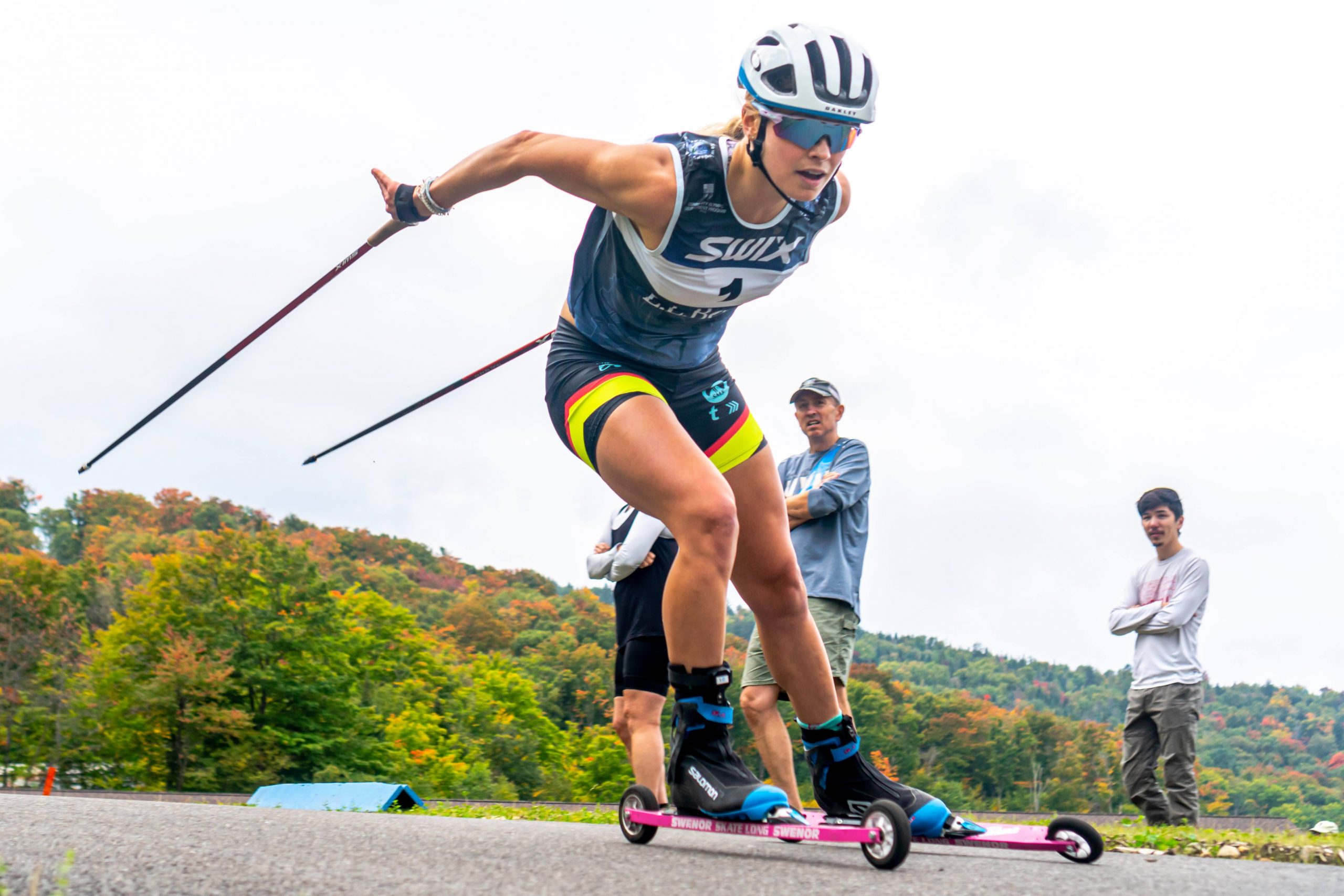
    Jessie Diggins races the Keys to the Castle Rollerski Race in Lake Placid. (Photo: Matt Whitcomb)

    Whitcomb continued that while the session itself is not revolutionary, it has provided a shared pathway for clubs to explore pacing during intensity sessions. Usually athletes will complete three rounds of the same 5k course, and repeat the workout intermittently throughout the training season to track overall progress or fine-tune pacing strategy. Given the ease of implementation, clubs of all levels nationwide can adopt the concept.

    “Clubs are encouraged to find a 5 kilometer stretch of rolling road, something that can replicate race terrain as best and as safely as they can,” Whitcomb explained. “If it’s on a rollerski track, that’s even better.” 

    As the training year progresses, so does the nature of the Pace Project. “This is a workout that is meant to build in intensity throughout the year, but also in creativity,” Whitcomb stated. 

    Creativity, in this context, is an ongoing experiment with pacing, fueling, technique, and effort, followed by a discussion of individual outcomes amongst the group. Essentially, the U.S. Pace Project  is a personal study for athletes to find their own fastest and most efficient approach to racing. 
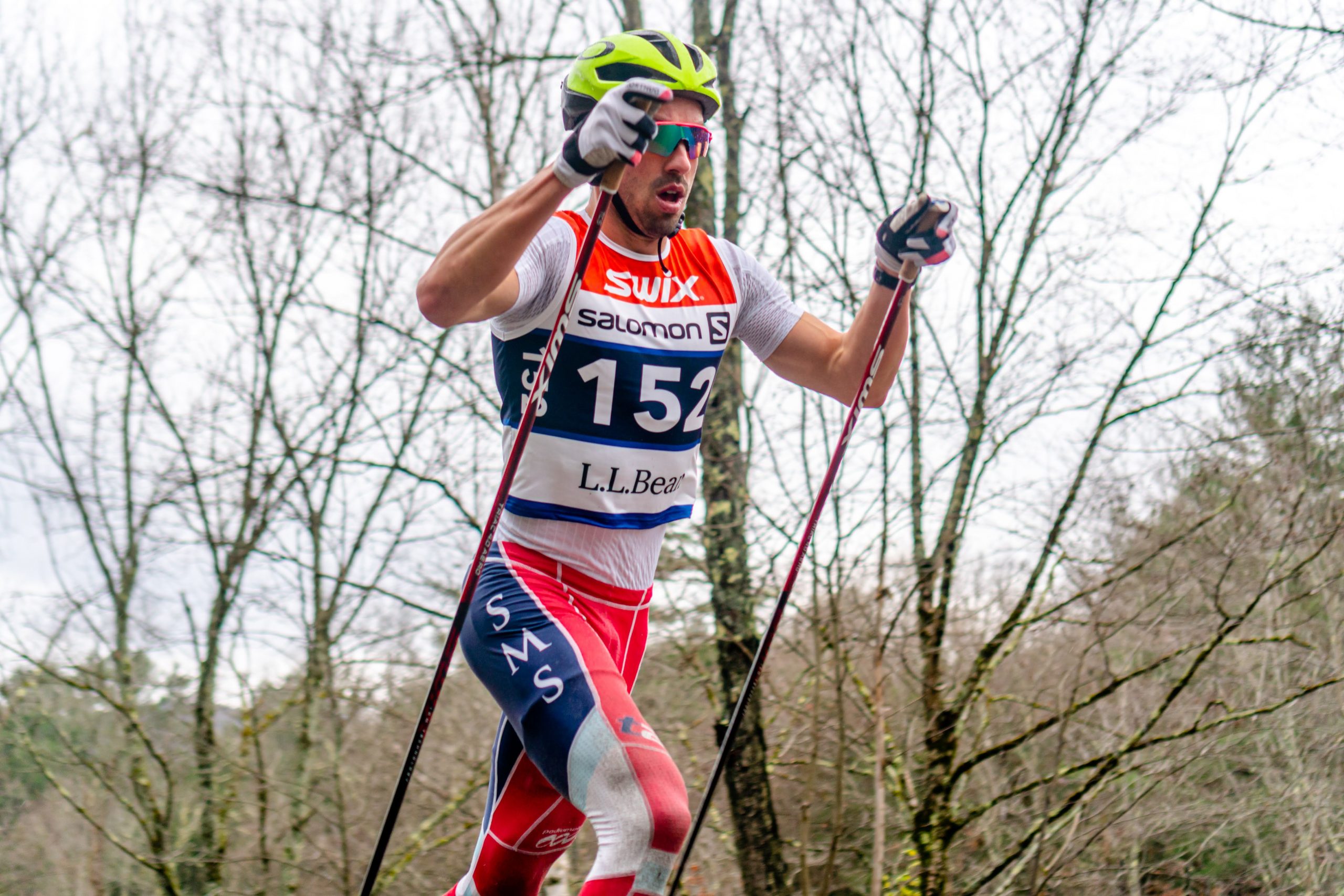
    Ian Torchia races NENSA’s Trapp Invitational Rollerski race in November, 2021. (Photo: George Forbes/SMS)

    Another motive behind the project, according to Whitcomb, is to promote the sharing of insights between athletes and coaches nation-wide as they incorporate and discuss the takeaways from the Pace Project format. He explained that time-based intervals offer less concrete information to learn from, as there is more room for variation in training venue and conditions.

    “[The sport] is challenged with regards to metrics,” Whitcomb said. “So this is meant to catalyze more objective feedback and learning.” 

    As many national team members train in Stratton, VT in the summer, SMS T2 head coach Pat O’Brien provided a look into his experience facilitating the workout with his athletes and his current takeaways.  

    “If you give the athletes a set distance workout, they are going to learn how to manage their energy over that distance,” O’Brien said, citing supporting research by Norwegian based Sports Science Professor Steven Seiler. 

    “The whole point,” O’Brien continued, “is in a training type environment, go out and play around with different [approaches]. It might not all work. It might fail. But it’s better to learn those lessons in a training environment than in a race.” 

    Ben Ogden (bib 13) races the Keys to the Castle Rollerski Race in Lake Placid. (Photo: Matt Whitcomb)

    While a nationally shared workout is new, the project itself grew out of conversations with previous American athletes who incorporated similar workouts as a fitness benchmark. 

    “I think the most notable one is Kris Freeman,” O’Brien explained. “He was truly one of the best in the world at the 15k distance. He would do a repeated workout of 3x5k, and he knew if he could sustain three repeats on [a particular] 5k stretch of road, he was in good shape.”

    O’Brien said that inspiration had also come from one of his mentors, Sverre Caldwell, former Nordic Director at SMS. 

    “Back in the early 2000s, the Stratton program had a string of successes with high schoolers going on to these great sprint results when sprinting had just started coming out,” he said. “What was interesting talking to [Caldwell] was they didn’t go out seeking to pace sprints. He wanted to make his athletes stronger and tougher, so he devised a double pole test.”

    The test involved double poling up a specific hill, which happened to take high schoolers like Andy Newell about three minutes. “It was not intentional, but they got good at figuring out how to go up that hill as best they could for about three minutes, which happened to be about how long a sprint was. They didn’t go out with the intention of being great sprinters, but if you give the athletes a set distance workout, they are going to learn how to manage their energy over [that distance].” 

    These ideas have fused into the Pace Project. Still in its infancy, it remains an elastic concept meant to help American skiing in a number of ways. Part nationally shared workout, part personal experimentation project, part data gathering opportunity, there are many objectives at play. 

    “The pacing project is an idea where if we subject ourselves to all these different stimuli, we can be more flexible,” O’Brien said. “The point is, we’re always going between environments, and we’re always trying to get athletes better at finding what their red line is, so to speak.”
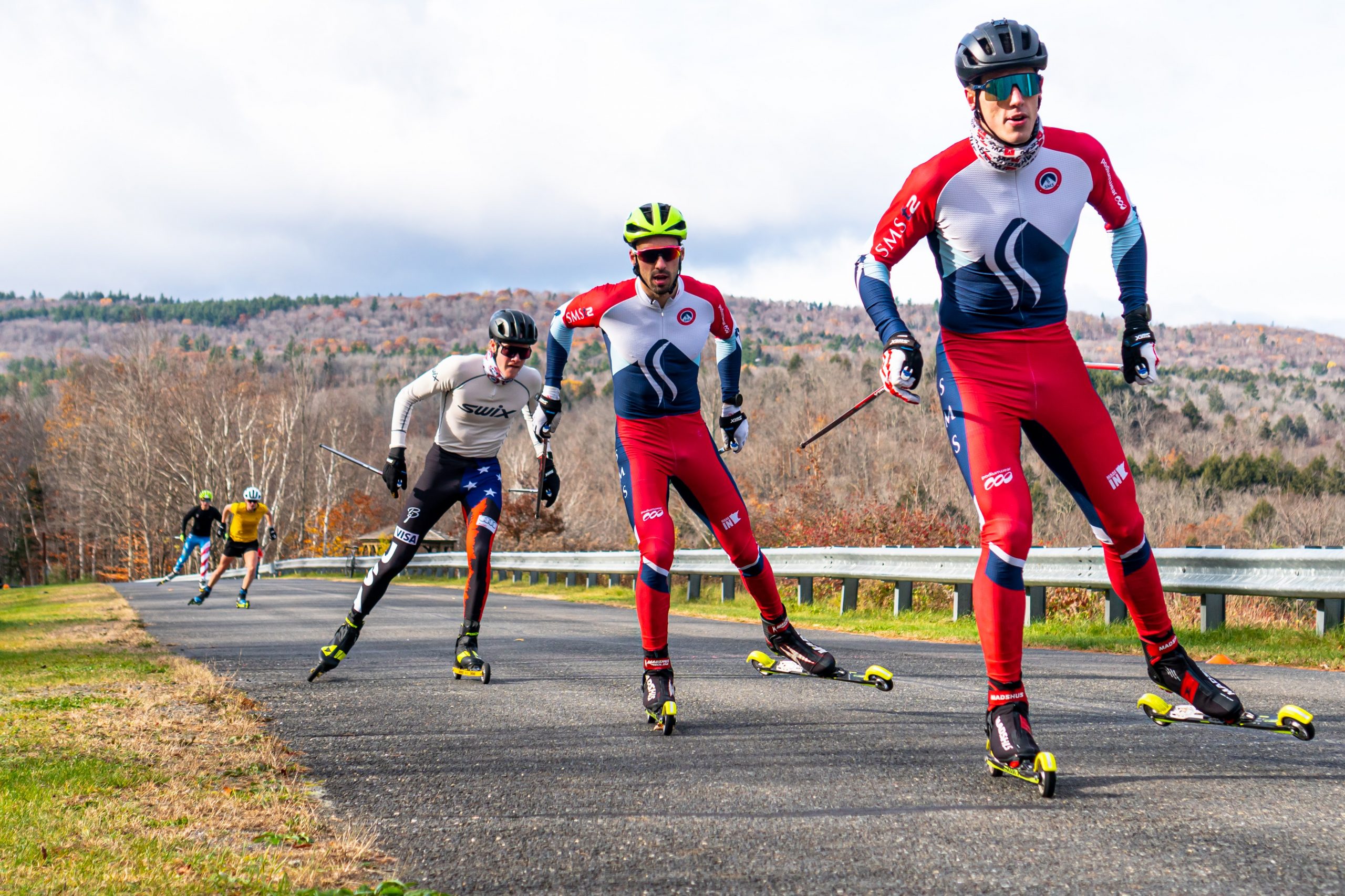
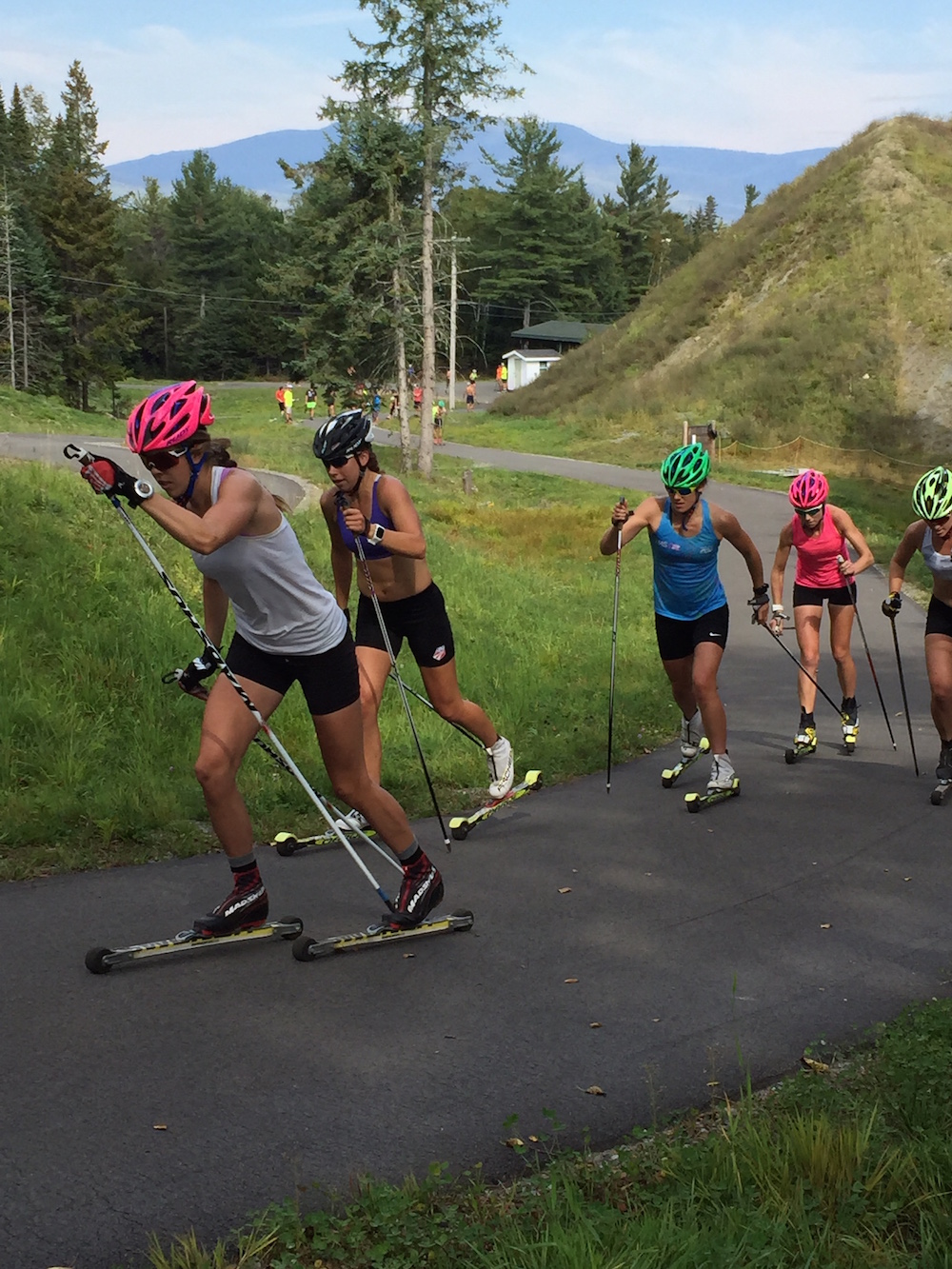
    Bill Harmeyer and Ian Torchia lead the charge during a fall training session. (Photo: George Forbes/SMS)

    O’Brien explained that coaches had been seeking a way to reap the benefits of racing without the physiological toll they require. 

    “How can we construct workouts that challenge you in a similar way to what you experience in a race without the same cost?” he asked rhetorically.

    The Pace Project seems to be filling this gap, by offering athletes a chance to experiment with novel pacing strategies outside of a race environment. 

    “I don’t care if someone goes into it too hard and blows up,” said O’Brien. “We’re not looking for an objective time, It’s about how athletes pace themselves.”

    O’Brien stressed that the key to the pace project lies in athletes figuring out what works best for them, both in what technique they use on specific sections of the course, and for overall pacing. 

    “Every athlete has a style,” he said, “a way they want to move. [It’s] not ‘you should do this because it works for you.’ I think that’s how we unlock our athletes’ best potential.” 

    The Pace Project has received favorable reviews from athletes and coaches beyond the SMS T2 team. The SVSEF Gold team in Sun Valley, Idaho use their 1.2k rollerski trail for pace sessions according to Head Coach Chris Mallory. 

    “This workout basically brings a little more focus to threshold workouts,” wrote Mallory in an email. “Athletes can play around with different pacing strategies, whether it’s starting more conservatively, using different techniques, or skiing different parts of terrain harder or easier to see what works best for them… It’s nice to have something that’s repeatable, where you can measure progress.” 

    Strava users who follow some of the top domestic skiers may have seen some of them completing these workouts, like this example of Gus Schumacher’s October iteration. Schumacher explained in an email the role the workout has played in his summer training this season: 

    “[The Pace Project] is a cool format because it allows for a lot of different strategies, similar to racing. Usually in the earlier summer we’ll use it as a way to get L3 while lapping a track with similar features to a race course. Later however, like at our camp in Park City, it was fun to use it as almost a race simulation.”
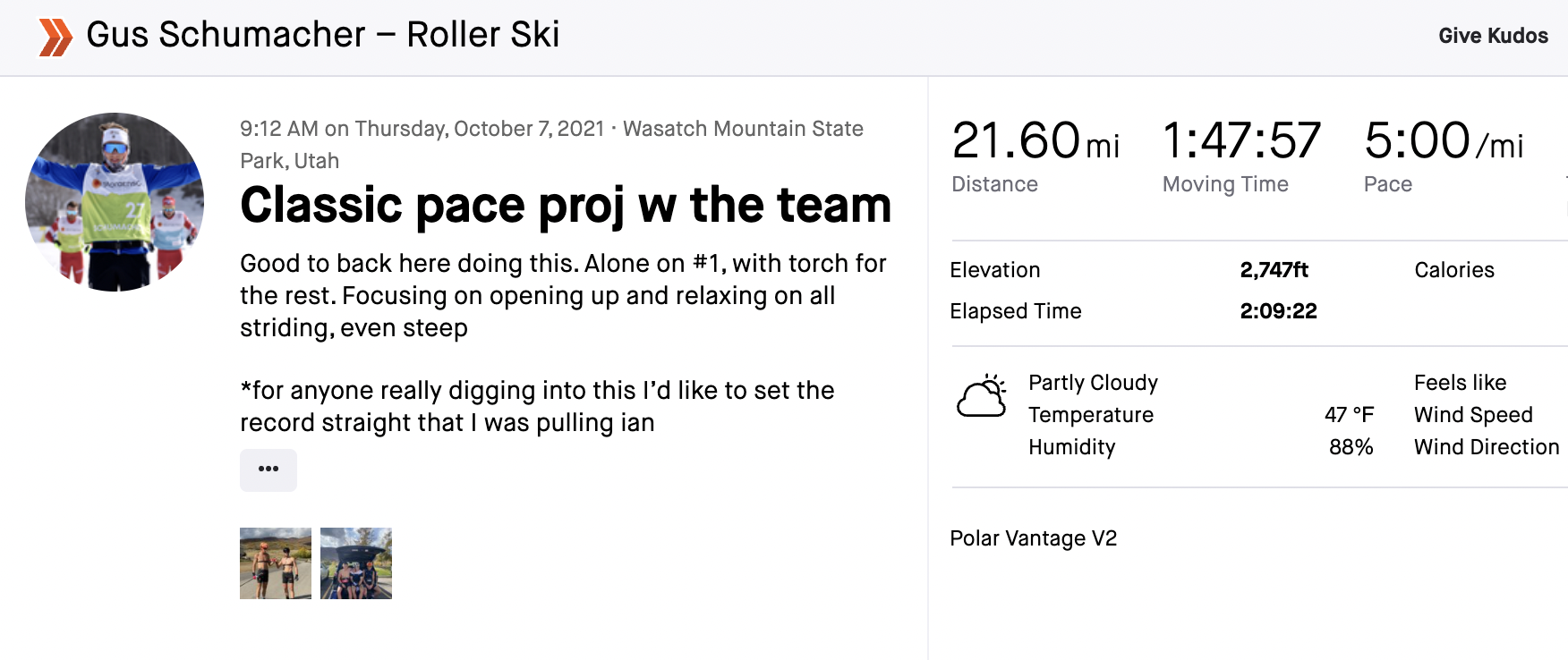
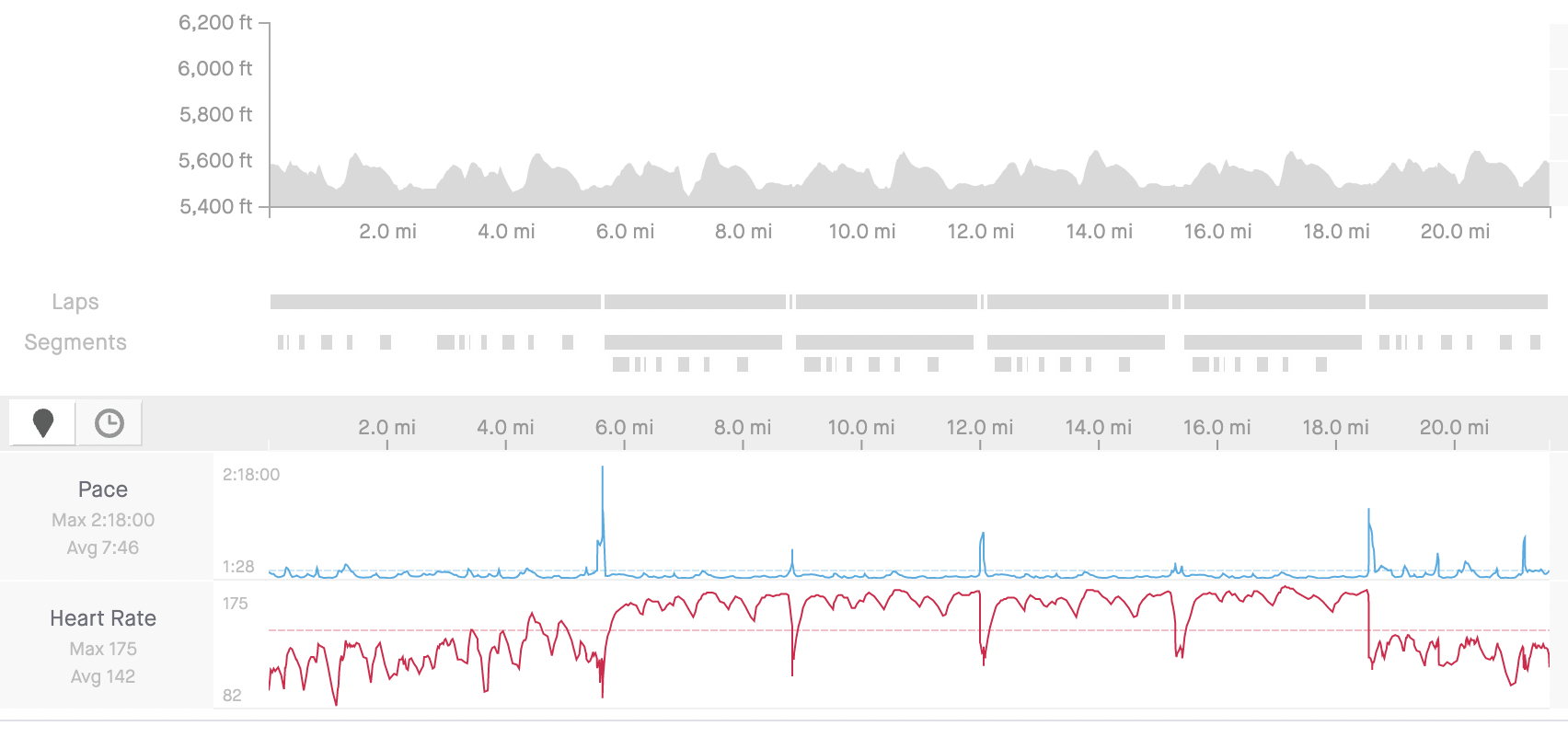
    Gus Schumacher completes a 4 x 5k pace project session during a fall training camp in Soldier Hollow. (Photo: Strava)

    Schumacher described one of his sessions in October: “I started the first 2 minutes hard like I would in a mass start,” he wrote. “After that I eased back to a sustainable pace, then in the last one I finished hard. This made it feel a lot like a race without the same cost (because of 3 minute rest between each interval). Breaking it up into segments also allows us to change our strategy more from lap to lap, which can help with testing new pacing strategies, especially at altitude.”

    Reflecting on the outcomes for coaches, Whitcomb said that he was pleased with how the Pace Project sessions had increased the conversations between athletes. 

    “What we’ve observed is that there’s more interesting discussion before and after these sessions, than there is for just your standard threshold interval workouts.” 

    Over the summer, Whitcomb stopped by Stratton during a SMS T2 pace session and remarked on the depth, variety, and value of the subsequent conversations.

    “Of the ten athletes that were there that day, there were ten different approaches to this workout, because Bill Harmeyer is setting his sights on one specific goal on that day, and Jessie Diggins on perhaps another goal, and everybody’s learning and discussing and crowdsourcing ideas effectively.” 
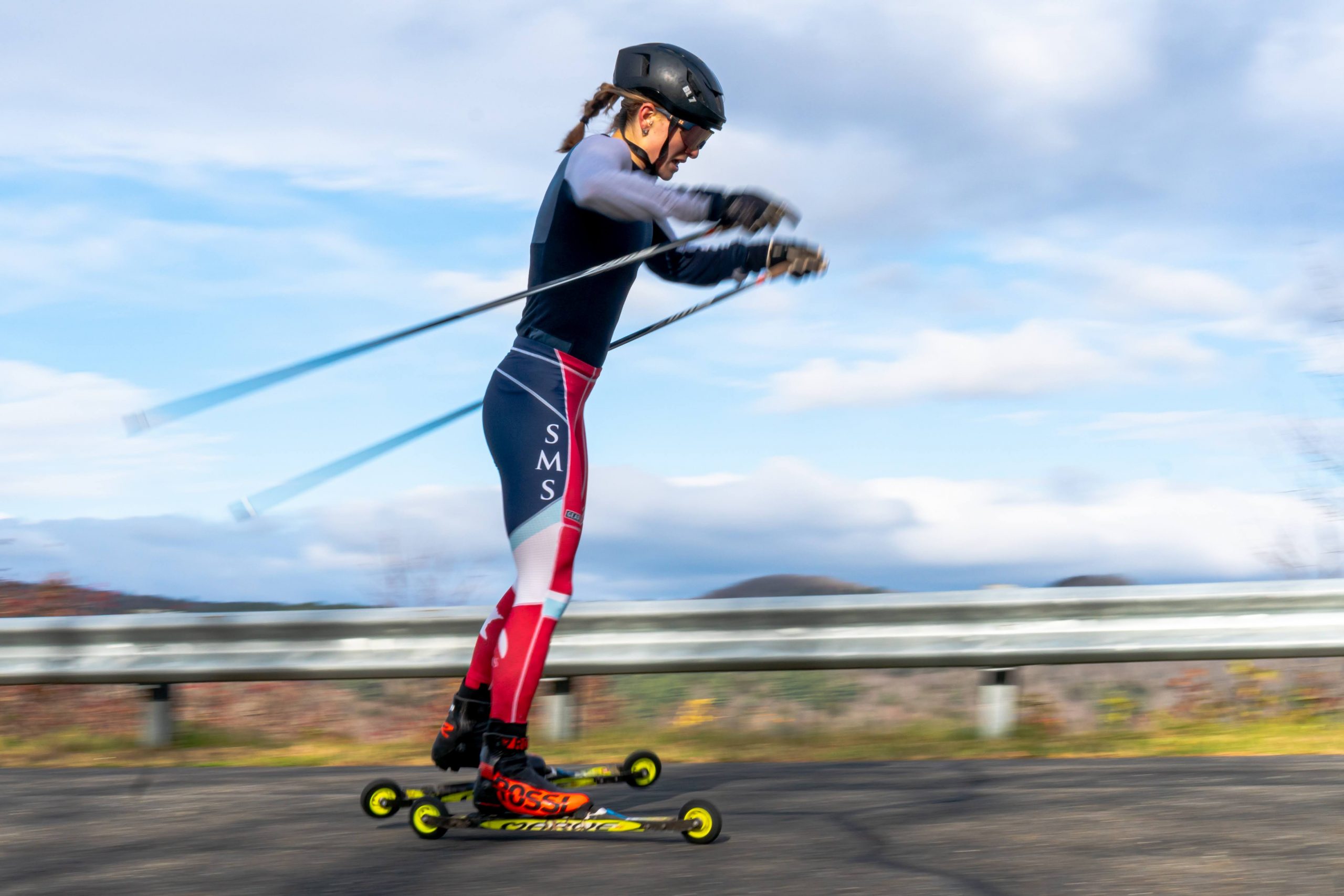
    Alayna Sonnesyn pushes the pace in a fall training session. (Photo: George Forbes/SMS)

    While the value of the project lies in its idiosyncratic freedom, the aim is competitiveness. 

    “Hopefully,” Sun Valley’s Mallory suggested, “it helps our nation to continue to make progress in distance racing.”


  • Wednesday Workout: L4 Uphill Rollerski Intervals with Mary Rose

    Wednesday Workout: L4 Uphill Rollerski Intervals with Mary Rose

    The Sun Valley Ski Education Foundation (SVSEF) Gold Team hiking down from Mount Mansfield, Vermont's highest peak, in early September. (Photo: Paige Schember)
    The Sun Valley Ski Education Foundation (SVSEF) Gold Team hiking down from Mount Mansfield, Vermont’s highest peak, in early September. (Photo: Paige Schember)

    For this week’s workout, we turned to Mary Rose of the Sun Valley Ski Education Foundation (SVSEF) Gold Team. On Sunday, Rose, 24, won the ninth-annual Climb to the Castle by 32 seconds over US Biathlon’s Annelies Cook. After two weeks of dryland training on the East Coast, first with the Stratton Mountain School (SMS) T2 Team in Vermont, then with the National Elite Group (NEG) and U.S. Ski Team in Lake Placid, N.Y., Rose sent us this workout — Level 4 uphill rollerski intervals — from her travels. 

    ***

    Sun Valley's Mary Rose (l) leads Katherine Ogden (SMST2/USST), Annie Pokorny (SMST2), Erika Flowers (SMST2), and Paige Schember (SVSEF) during a sprint simulation at the Olympic Jumping Complex rollerski trails in Lake Placid, N.Y. (Photo: Colin Rodgers)
    Sun Valley’s Mary Rose (l) leads Katherine Ogden (SMST2/USST), Annie Pokorny (SMST2), Erika Flowers (SMST2), and Paige Schember (SVSEF) during a sprint simulation at the Olympic Jumping Complex rollerski trails in Lake Placid, N.Y. (Photo: Colin Rodgers)

    Every individual has his or her strengths and weaknesses when it comes to cross-country skiing. It is important to train your weakness because there is usually a lot of room for improvement.

    The Sun Valley SEF Gold Team spent two weeks out East in Stratton, VT and Lake Placid, NY for a low-elevation training block. This camp was extremely productive for all of us because we were able to train some of our weaknesses: speed and pacing at low elevation, and rollerskiing in steep terrain.

    One of the most beneficial workouts during this training block was a Level 4 uphill rollerski interval session. This is a great session if you don’t have a strong V1, are not strong climbing in skate, or if you need to build capacity in your legs. For me, this was an important workout because living in Sun Valley, ID, we lack the super steep, sustained uphill terrain (for rollerskiing) that can be found on the east coast. This is ironic, I know but the roads in Sun Valley are in the bottoms of the valleys and there are not very many of them.

    The Workout: Uphill Rollerski 4-6 x 4 minutes at L4

    Where: Find a location that offers a long uphill climb (8%-10% grade)

    Warmup:

    • Rollerski easy (Level 1) for 20-25 minutes. Start the warmup on rolling terrain and then gradually move onto steeper terrain to get the body used to climbing.
    • Do 5-10 minutes of mobility/stretching exercises, targeting every major part of your body. This part of warmup is important to help get the blood flowing to all parts of your body and to get all the muscles ready to work hard. Think of this as injury prevention!
    • Rollerski easy for an additional 5-10 minutes.
    • During warmup focus on where you can make technique gains and apply that to the workout.

    Now the fun part: 4-6 x 4 minutes at Level 4.

    The first interval should start at threshold (Level 3) or right above it and gradually work into Level 4. Take full recovery (4 minutes) between each interval. Make sure to ski very easy during the recovery. Intervals 2-6 should be at a solid Level 4 the entire time.

    Try to complete at least four intervals, but listen to your body and take a moment to assess where you are at. If you feel completely drained and your technique has taken a turn for the worse or your pace has dropped off, call it a day and cool down.

    Cool down: Should consist of 15-20 minutes of easy skiing.  Once your cool down is complete, you should hydrate, eat and sleep!

    During this workout, I did a total of five intervals and left one in the tank, meaning that I could have done one more quality interval, but I held back due of the amount of intensity sessions I had already done that week and the amount of intensity sessions yet to come.

    You want to feel good for all of the intervals, so remember that before pushing yourself too much. There is no need to do all six intervals if you are feeling tired. In this case, less is more. Important thing to remember is that ALL the intervals should feel great!

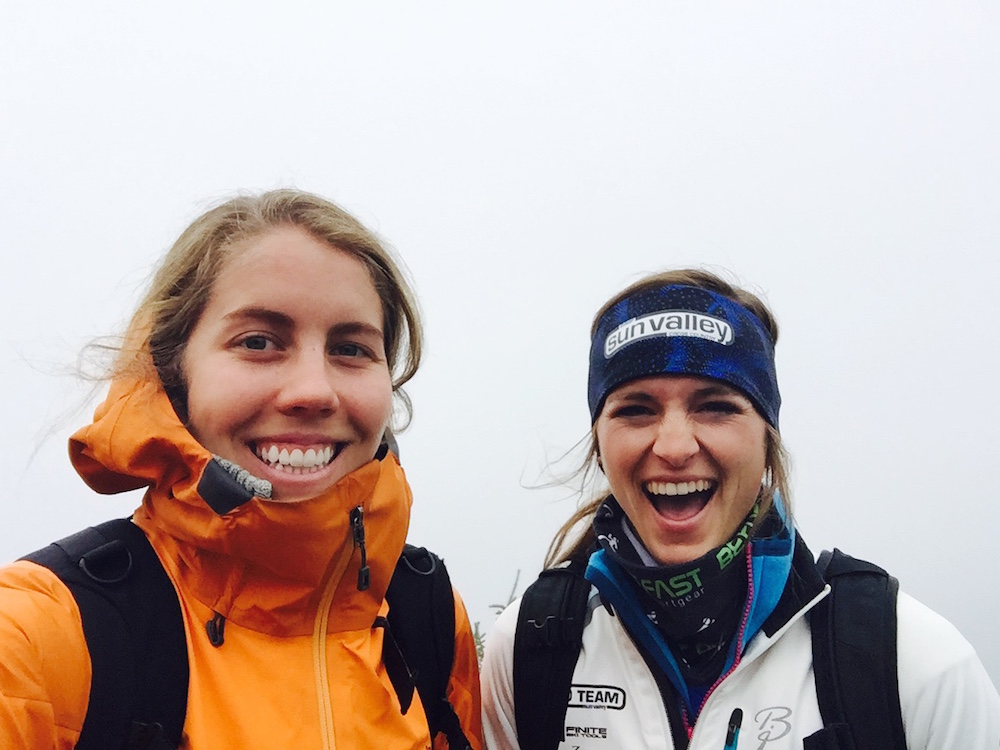
    Sun Valley Gold Team members Paige Schember and Mary Rose after the 2015 Climb to the Castle on Sept. 20. (Photo: Mary Rose)
    Sun Valley Gold Team members Paige Schember and Mary Rose after the 2015 Climb to the Castle on Sept. 20. (Photo: Mary Rose)
  • Fast Start Wins the Race? Increasing Effort, Not Pace, is Key

    Fast Start Wins the Race? Increasing Effort, Not Pace, is Key

    A recent study published in the European Journal of Applied Physiology showed that in a 10 kilometer race, skiers slow down over the course of consecutive 2.5 kilometer laps and do not match the speed of the opening lap.

    The study used eleven Norwegian cross-country skiers who were training 12 to 15 hours per week and had competed at the national level. They had plenty of experience racing and deciding how to pace themselves over the distance for the best end result. So what was going on? Were they starting too fast, to the detriment of their performance?

    The answer, it seems, is not necessarily. While it’s a commonly-stated goal for athletes to have even or negative splits (i.e., the last lap faster than the first), research across different endurance disciplines shows that most commonly, especially in interval-start events, a quick start gives way to a steady, but slower, rest of the effort. And that doesn’t necessarily mean a slower overall time.

    Research in speedskating shows that in distances from three up to 10 kilometers, competitors slow their lap times over the course of a World Cup race. This was true for both the slower athletes and the race winners.

    And in running, a study found that competitors slow after a fast start in a 10 kilometer time trial – but that the speed drops much more abruptly over the course of the competition for lower-performance athletes than for top athletes. Both groups, however, kicked it in for the final 400 meters.

    The key may be the individual-start nature of the races in the cross-country skiing paper. When racing against the clock, there’s not necessarily a benefit to having a strong finishing sprint, as long as a competitor is fast throughout the whole race.

    The limited prior research into pacing in ski races has shown that this is true even in sprint qualifiers: in a study using nine elite Swedish skiers, the second lap of a two-lap sprint qualifier time trial was 3% slower than the first lap.

    “… the overall time of the winner needs to be faster in absolute terms (racing against the clock) because the best athletes are not directly competing against each other,” wrote the authors of the speedskating study. “According to this, energy that is left at the finish is useless. As a consequences, ice speed skaters may self-select a pacing strategy that does not allow to hold some energy back.”

    Indeed, the authors of the more recent skiing study found that while the pace declined over the course of the 10 kilometer time trial, effort did not. Skiers’ heart rates remained more or less constant, and then went up in the final 2.5 k lap of the race. That last lap was slightly faster than the middle two, but not to a statistically significant extent.

    Furthermore, the one skier who adopted a different pacing strategy suffered for it. Despite the fact that the sixth- and tenth-ranked skiers had similar VO2Max values, they ended up in very different positions. The authors believe this was because the skier who ended up tenth tried increased his pace in the second lap of the race, only to run out of energy later. They called this a “non-appropriate pacing strategy.”

    A Case Study

    While the women’s 10 k freestyle at 2015 World Championships in Falun, Sweden, was influenced by weather, the men’s 15 k was not to the same extent. Looking at pacing over the two 7.5 kilometer laps of the race could test whether the pacing found in the recent study holds true in high-stakes racing. Johan Olsson of Sweden won the race (results here).

    While the lengths of the two laps aren’t necessarily exactly the same – the start and finish lines were not evenly distributed on the lap – one can make the assumption that this slight difference affects all skiers the same way. So while a slower second lap might be due in part to the extra length of the finishing chute, differences in the amount slower the second lap is are still representative of skiers’ different pacing strategies or abilities.

    First of all, a strong first lap was generally indicative of success in the World Championships 15 k.

    firstlapAnd furthermore, being fast on the first lap did not necessarily lead to a bigger slowdown on the second lap. Skiers throughout the top 26 finishers had varying differences between the speed of their first lap and their second lap, and it had little relation to what place they ended up. The one exception was Canada’s Ivan Babikov, who skied a much faster second lap. That pacing strategy did not prove ideal, as although he had one of the faster second-lap times he still finished 20th.

    slowdownBecause this variation in how much skiers slowed down was distributed evenly throughout the field, the relationship between second-lap time and finishing result looked fairly similar to that of first-lap time and finishing result. The skiers were slightly reshuffled on the plot, but the same general pattern held.

    secondlap

    Takeaway

    Prior research has looked at how to adapt pacing to terrain in cross country skiing, for example, adopting a higher intensity on uphill sections with the assumption of recovery on downhill. This type of information feeds back into training strategies, as athletes can prepare themselves for shorter, harder efforts within a long race and train themselves to recover as much as possible in short intermediate sections.

    But there has been very little research into pacing strategies over longer time periods and multiple laps in distance racing. Thus, the results of the new study carry some weight.

    The author’s conclusions are upheld by a look at data from 2015 World Championships: starting at a fast pace and maintaining a more-or-less even effort – not necessarily an even time – seems to be a better strategy in an individual-start race than starting at a strikingly slower pace and saving energy to speed up in the final kilometers.

  • Wednesday Workout: Finding Your Realistic Race Pace

    Wednesday Workout: Finding Your Realistic Race Pace

    FS-WednesdayWorkout-MWSC
    Maine Winter Sports Center (MWSC) biathletes working on uphill pace identification in Fort Kent, Maine. (Photo: Seth Hubbard)

    Welcome to Wednesday Workout, where we round up training ideas on a weekly basis. This week Will Sweetser, competitive programs director of the Maine Winter Sports Center, explains how to identify your personal race pace using his Reality Race Pace Progression rollerski workout. 

    ***

    Like most clubs around the country, our focus here in northern Maine is on youth and junior skier development. We want, first and foremost, to help the next generation of skiers earn spots on college teams, international trips, and the U.S. Biathlon and U.S. Ski Teams.

    While it is quite common for us to hear junior racers vocalize their dreams of representing the red, white and blue, it is equally common to see the same racers destroy any hopes of doing so, through poor pace identification in race after race. The start timer counts down and kid after kid across Maine throws caution to the wind and hammers out of the gate at Level “Go!”.

    Over the course of my time here in Aroostook County, I’ve steadily refined a workout aimed specifically at curing this lack of pace sense. I call it: Reality Race Pace Progression. This workout is aimed at identifying one’s 10 kilometer race pace. The beauty of the system is that it gives athletes a tremendous amount of worthwhile feedback.

    The concept is simple, and shamelessly stolen from track and field sessions practiced in Africa. All that is required is a lightly traveled stretch of road at least 500 meters long. Athletes should warm up as though it is race day — this is a great way to fine-tune race day prep.

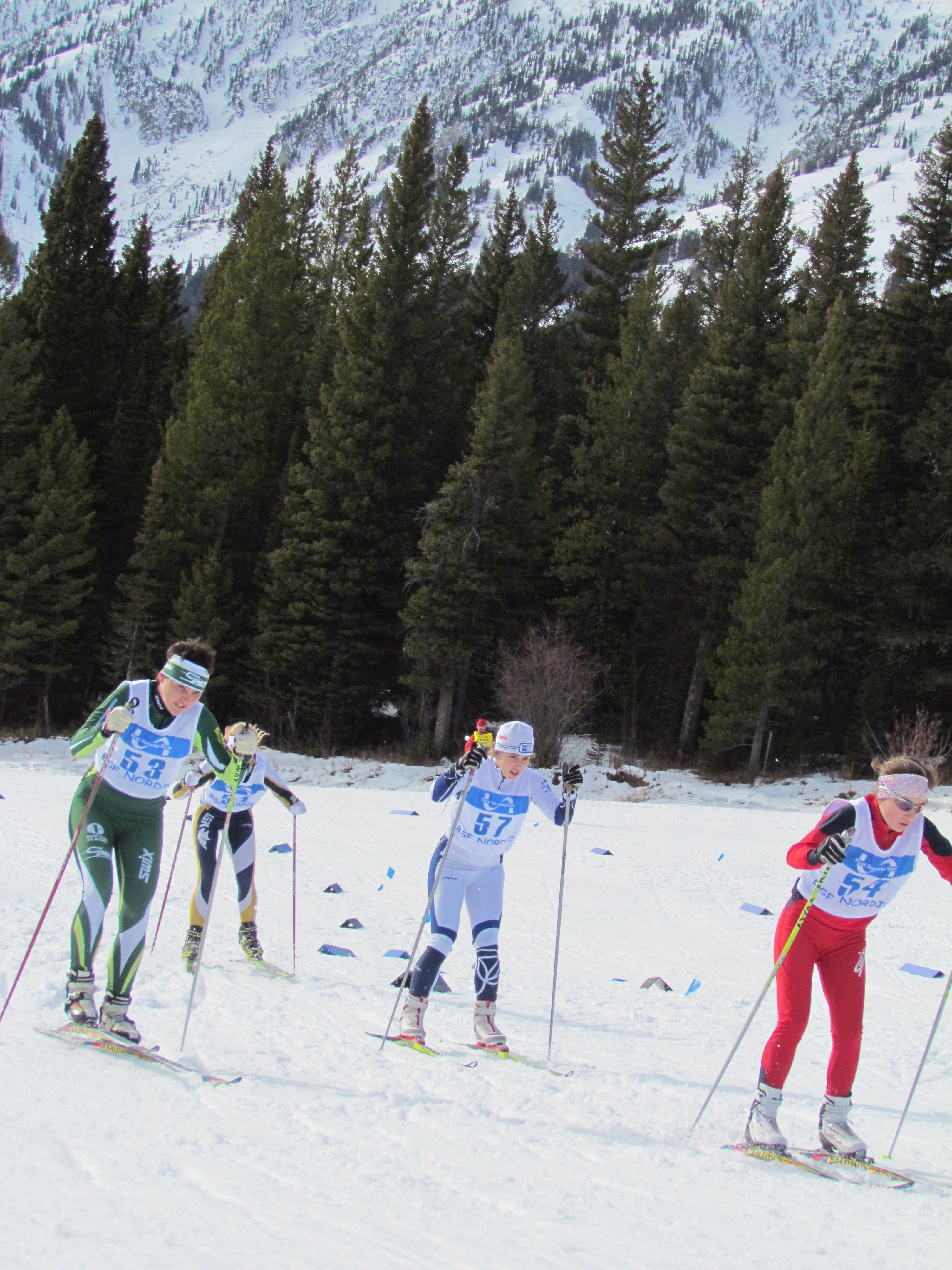
    MWSC post-graduate Emily Ramsey racing in the 2012 U.S. Ski Association (USSA) SuperTour at Bohart Ranch in Bozeman, Montana.
    MWSC post-graduate Emily Ramsey (57) racing in the 2012 U.S. Ski Association (USSA) SuperTour at Bohart Ranch near Bozeman, Montana. (Photo: Will Sweetser)

    After warm up:

    • 1 kilometer time trial at maximum effort.

    • 15-20 minutes easy recovery skiing at Level 1.

    • 7-12 x 1 kilometer (over the same course as the time trial) at 15-20 percent slower than time trial pace. 2-3 minutes moving recovery between intervals.

    • Cool down 15-20 minutes.

    The time trial helps identify one’s current performance level. As I said earlier, it’s easy to set a goal of making a team, but most younger athletes do not have any idea of how fast they actually need to ski to do so. With the advent of improved grooming, snow making and sizably better waxing knowledge, most races throughout the year are relatively comparable in terms of per-kilometer times.

    Frequently, I’ve had athletes realize that their current sprint pace is not yet fast enough to compete in 10 k races on the New England Nordic Ski Association (NENSA) circuit. Even more often, I’ve had athletes show up and realize after the time trial that they just aren’t ready for the workout. Time trial times just don’t lie!

    The repeats, themselves, are aimed specifically at pace averages taken directly from a 10 year sample of International Ski Federation (FIS) sprint and distance races held at the same venue, in the same technique, in stable weather.

    All-around European racers averaged 18-percent slower per-kilometer over 10-15 k than they did in sprints. Distance specialists averaged 12-percent slower. Women tended to keep the gap a bit closer at around 15-percent (likely due to the generally shorter race distances for women and relatively longer early race times for women’s sprints). Interestingly, U.S. racers averaged 22-percent slower across the board in distance races versus sprints.

    Most athletes will claim immediately that the pace for the repeats is far too slow. It is important to keep the recovery times no longer than equal to repeat time. It’s also critical to emphasize that the goal of the workout is to get through enough repeats to accurately reflect race distance. If the athlete can only get through four repeats, he/she has done it wrong! Remember, these are Reality Race Pace Progression pieces. If the athlete can’t perform 10 repeats at the same pace, it’s not 10 k pace.

    With a little bit of research, athletes go into the workout with a goal per-kilometer time in mind. They immediately get feedback from the time trial, and then with each repeat. Athletes can readily identify where they’ve lost or gained time by repeating the same course. Especially with juniors or inexperienced racers, coaches will see athletes able to repeat their time trial time or even improve it through 7, 8, or even 10 repeats. This typically indicates either the need for technique development or an inadequate warm-up.

    At MWSC, we use our rollerski loops (paved ski trails at Nordic Heritage Center, 10th Mountain Ski Center) for these workouts. Since we’ve got an established loop, we don’t always use the time trial, especially if we’re repeating this workout within a week of the last time. As many athletes find this workout a bit of a mental strain, we don’t often use it more than 2-3 times per month during the fall. But, for those few times we repeat this workout, we see some fantastic results.