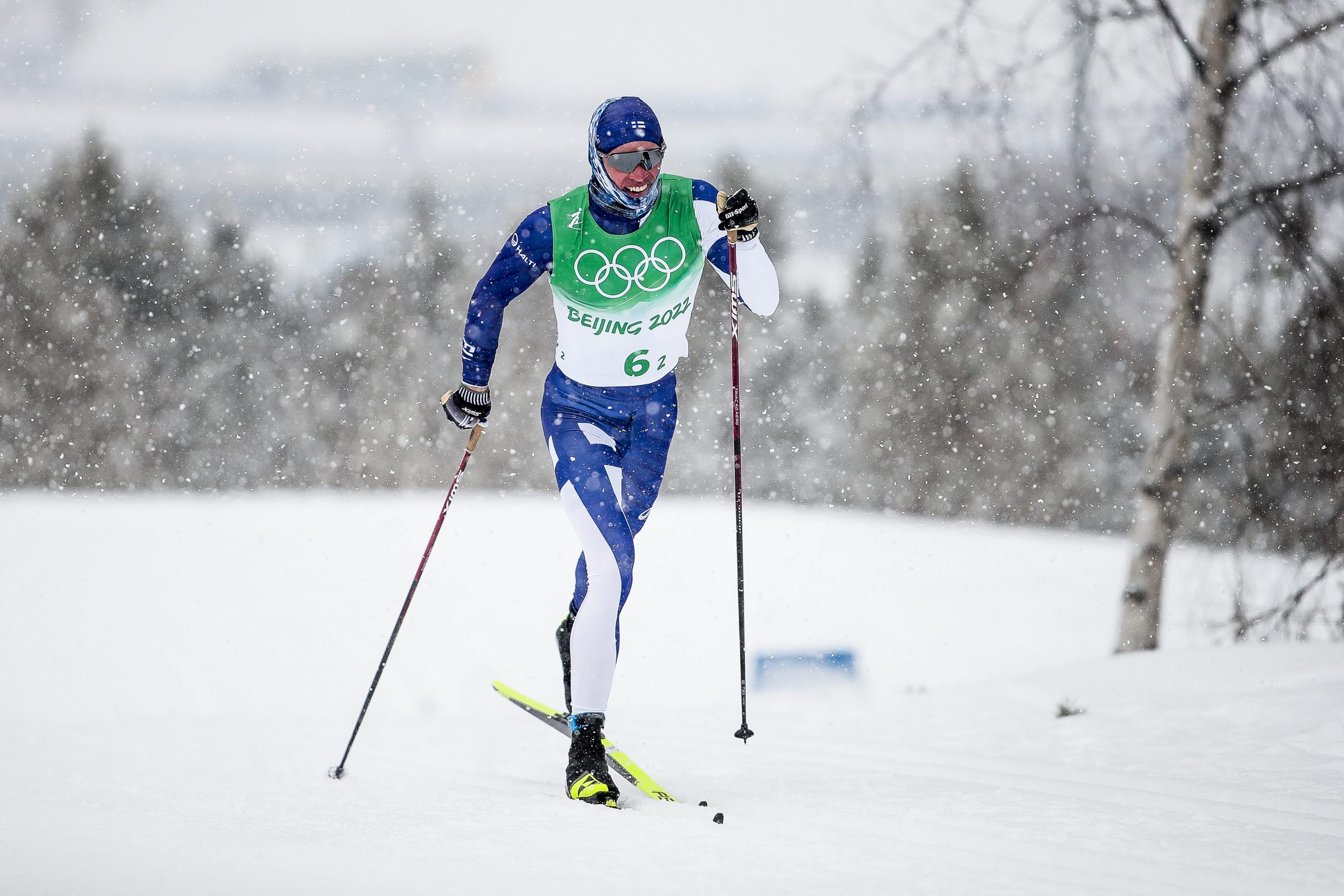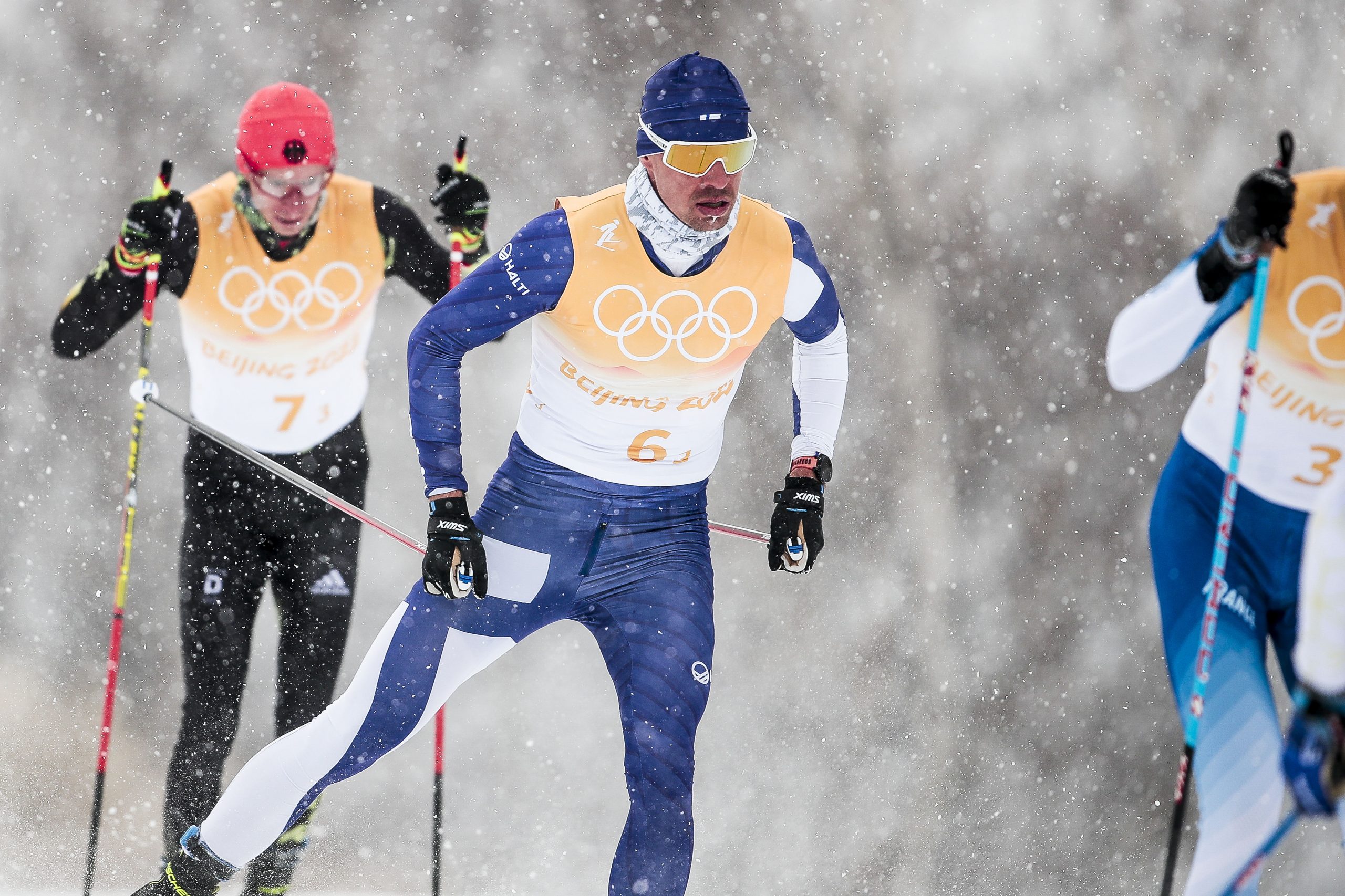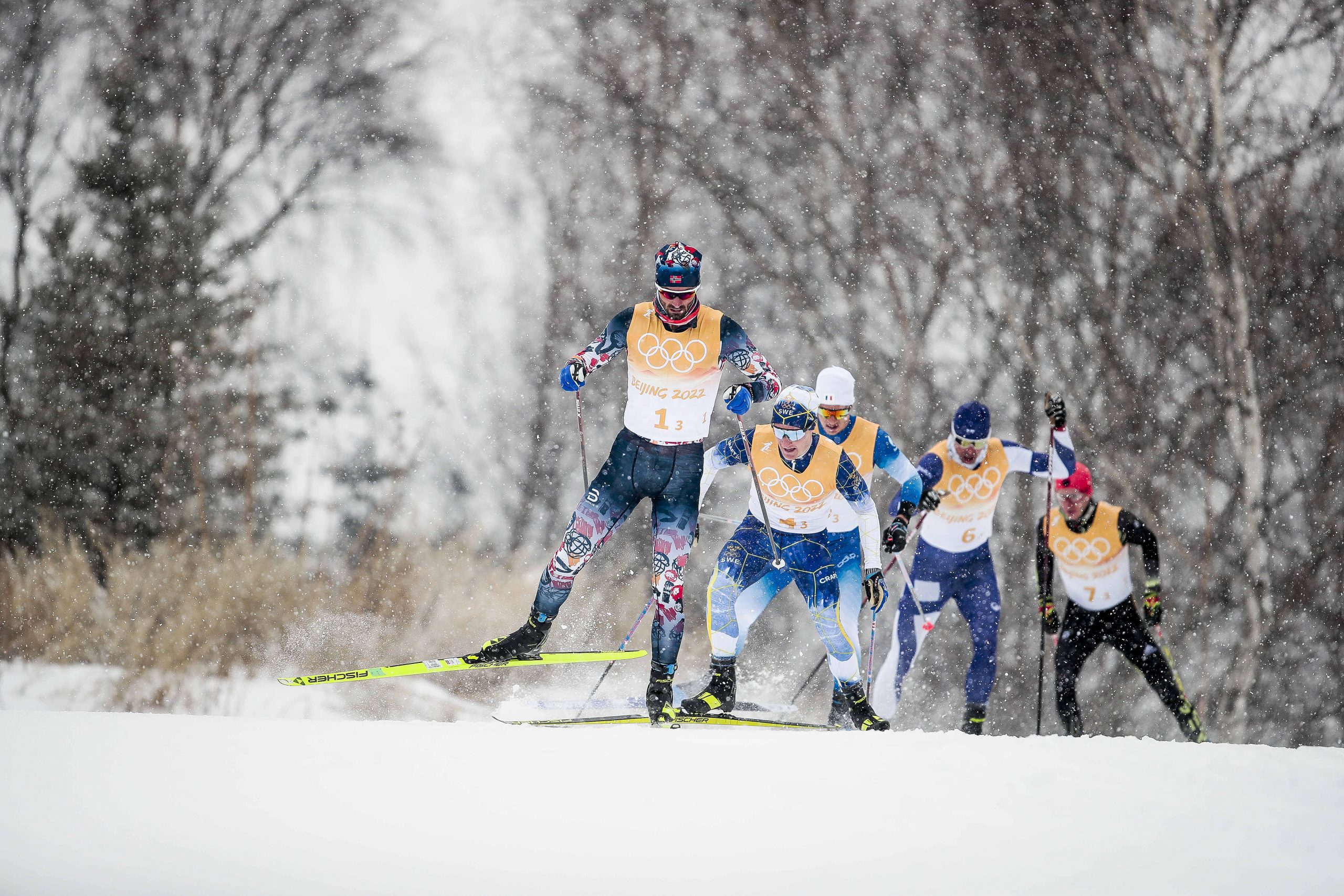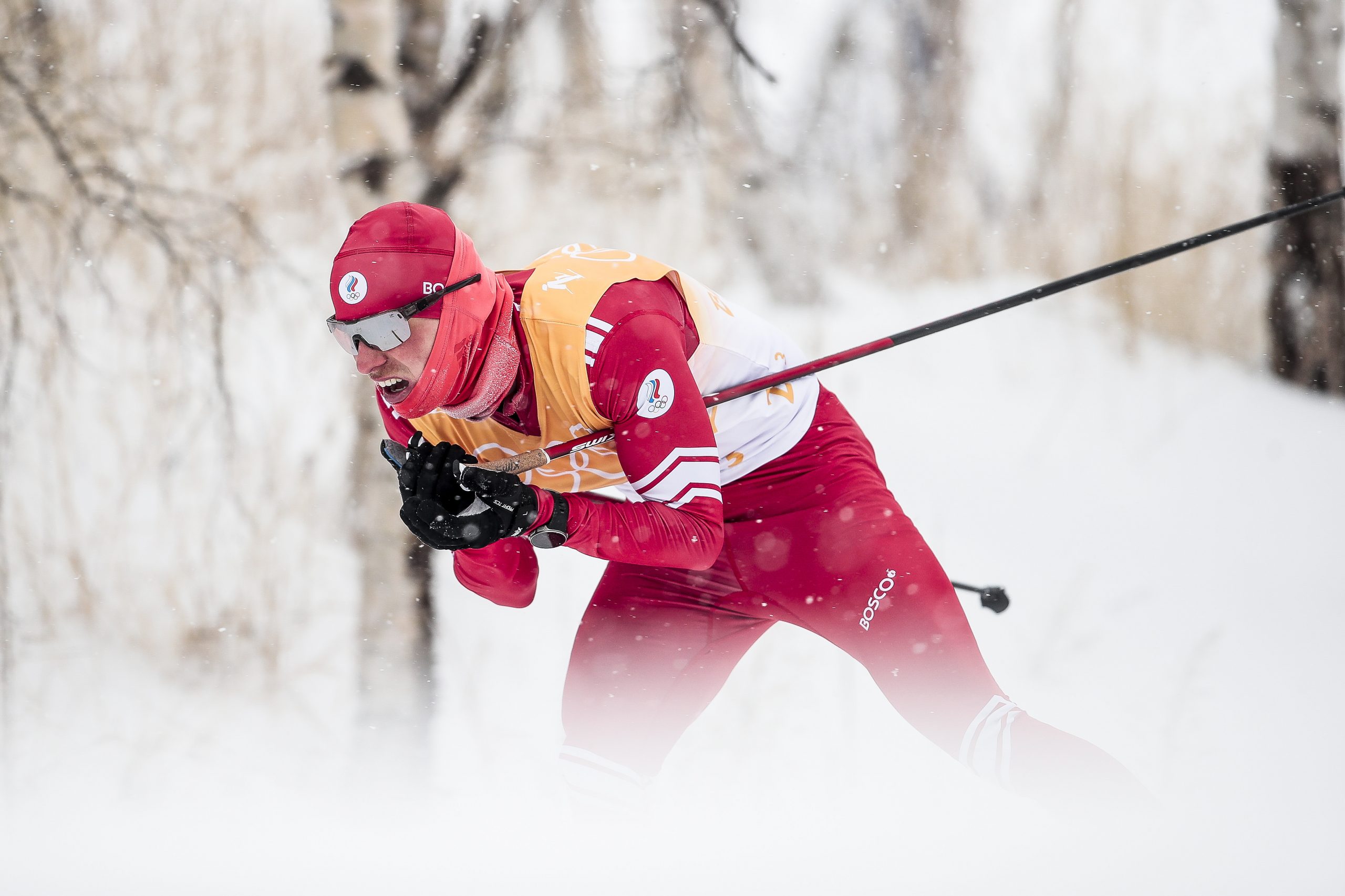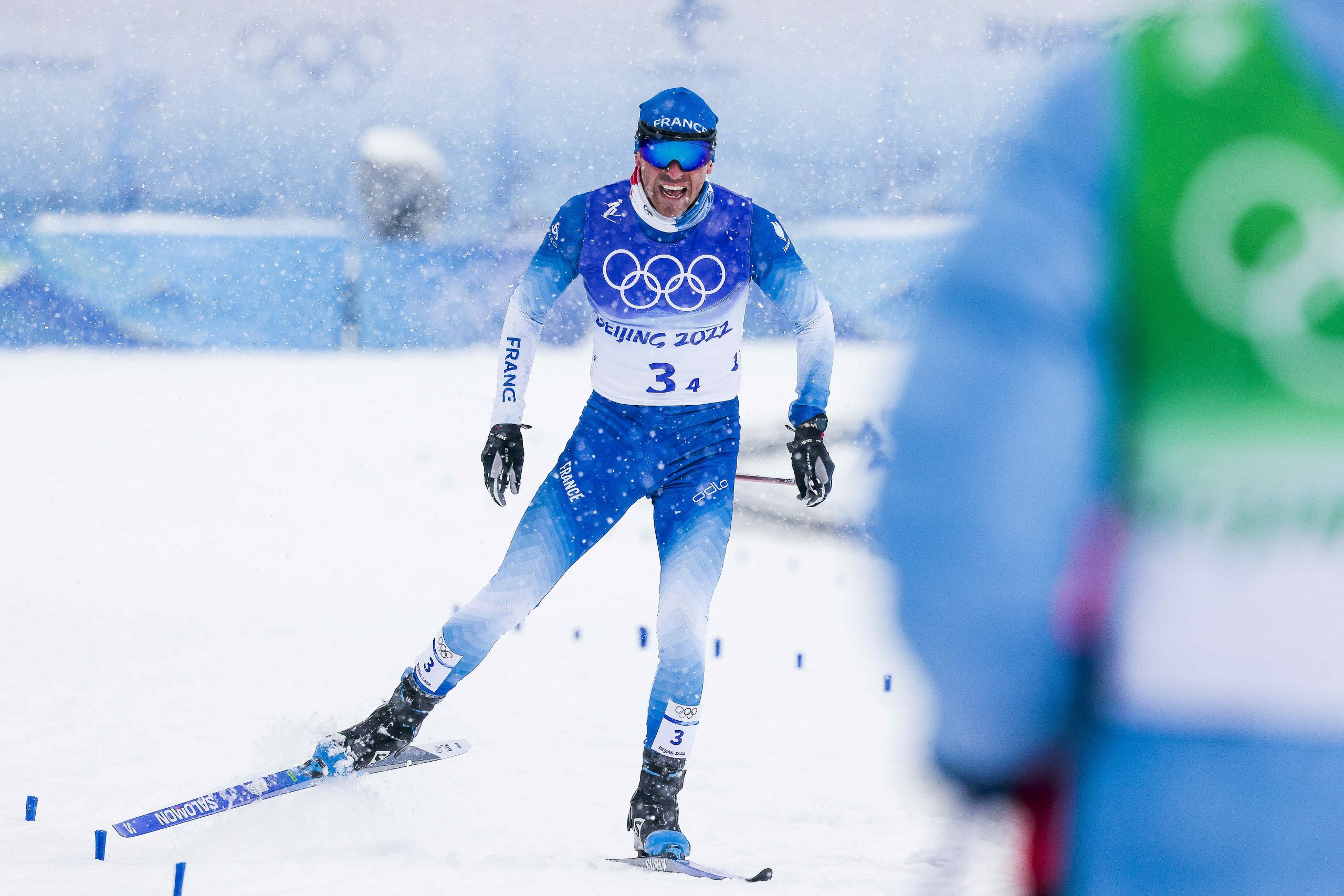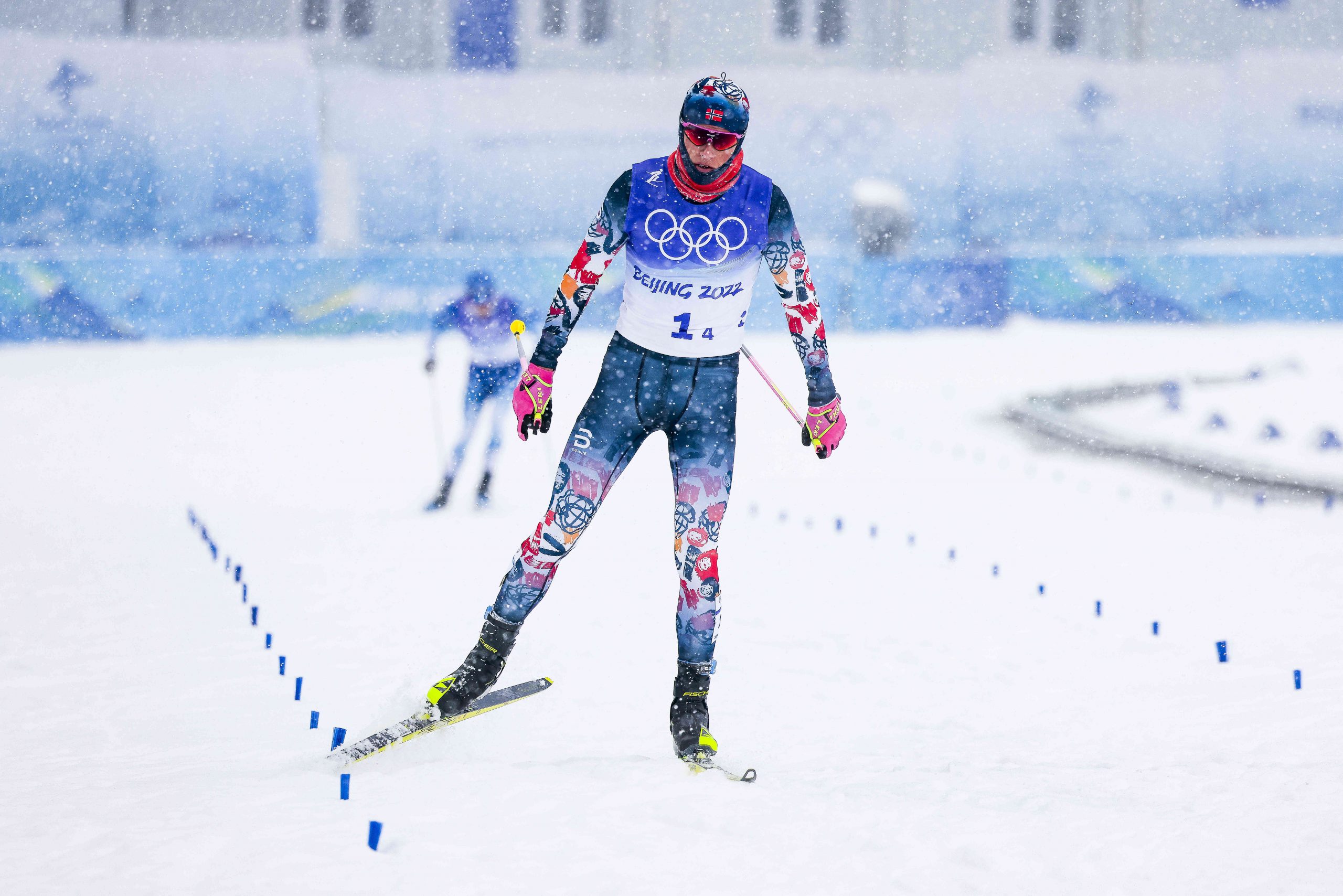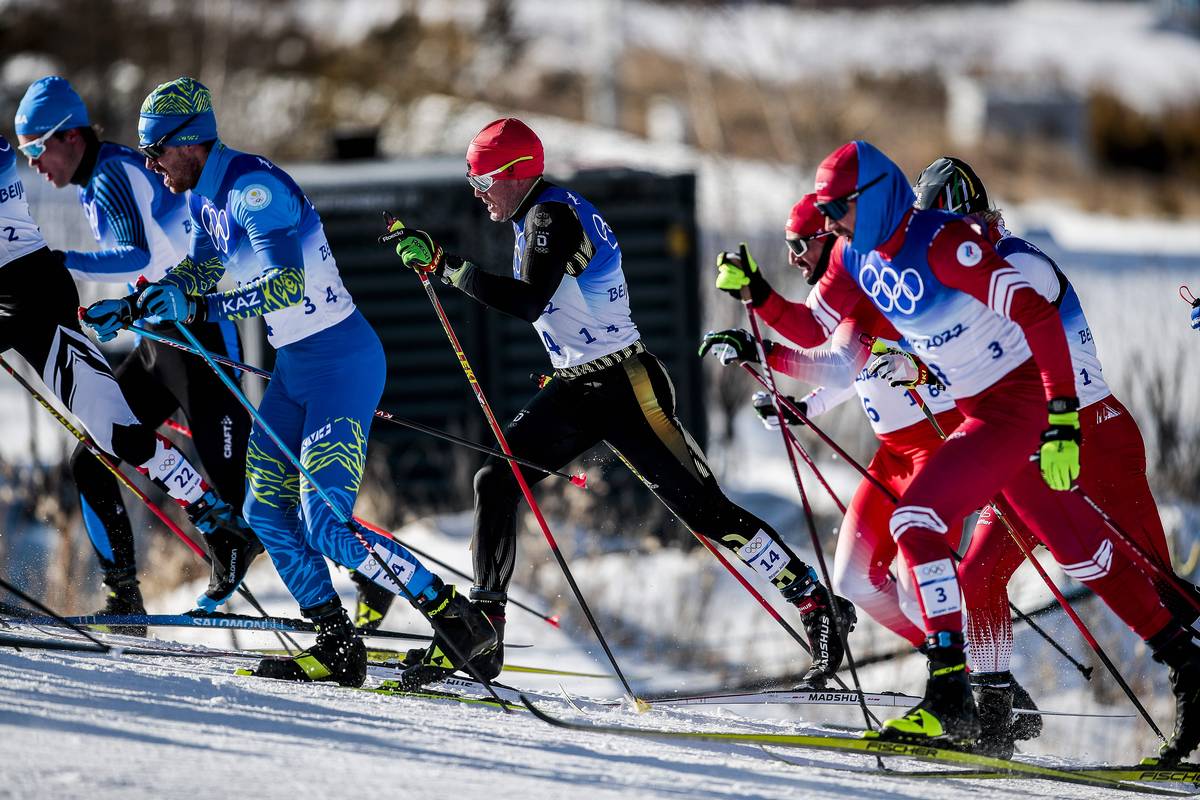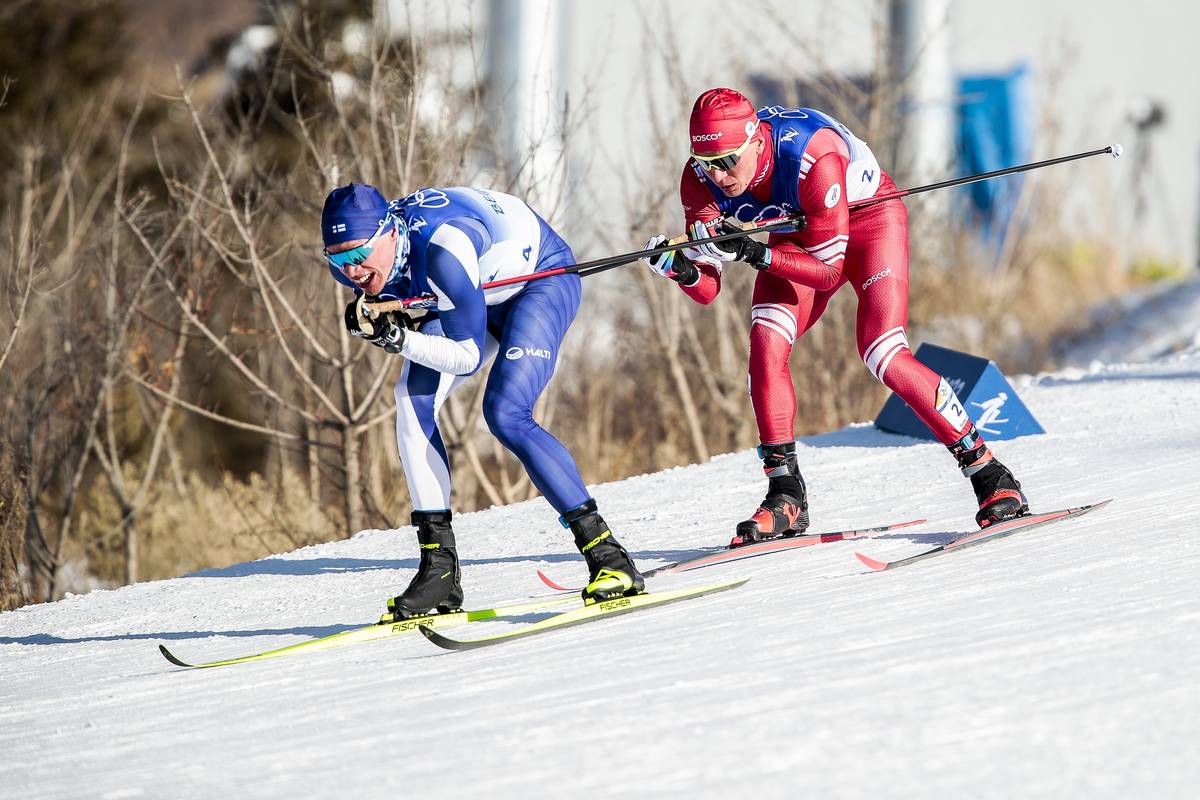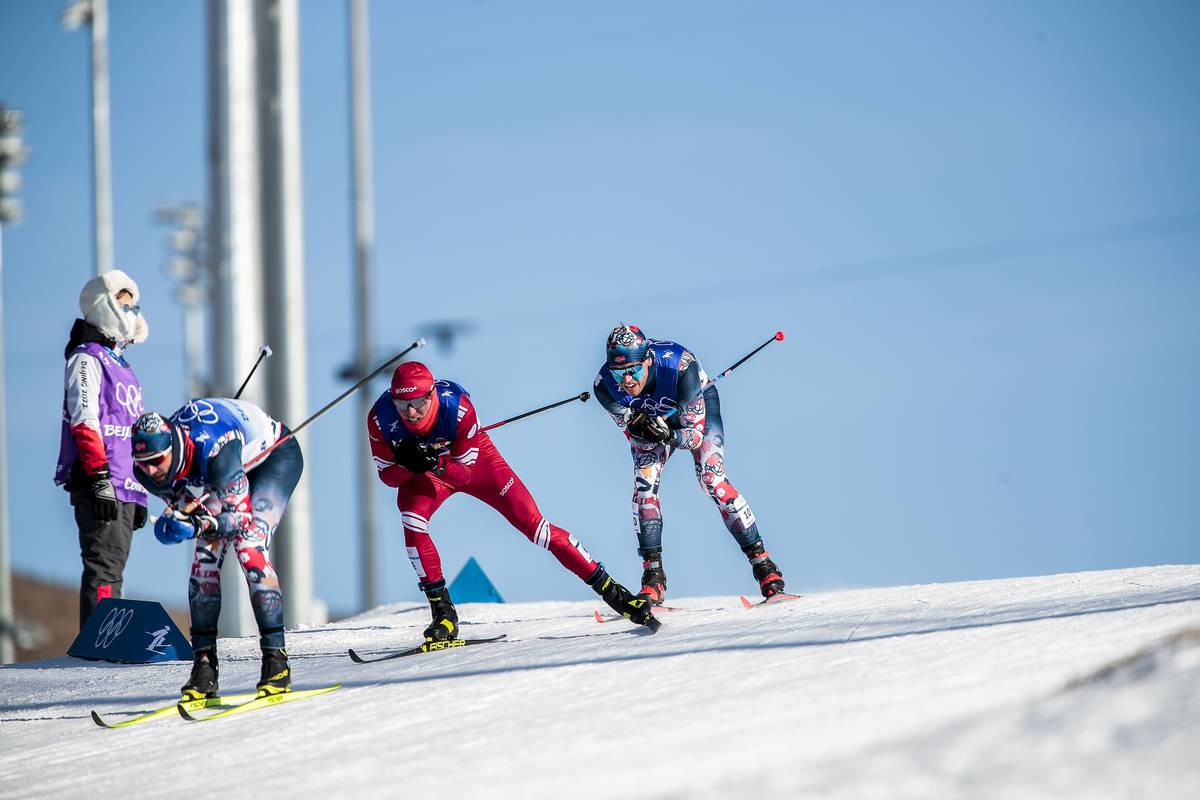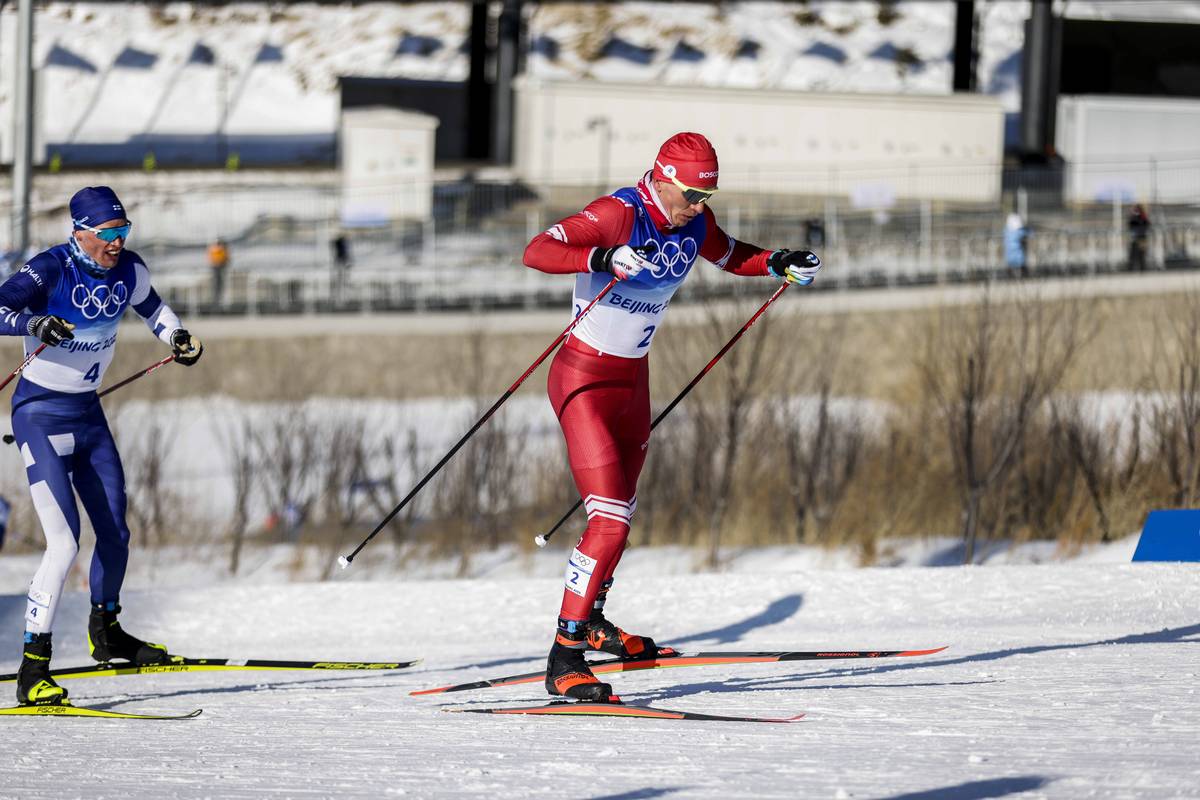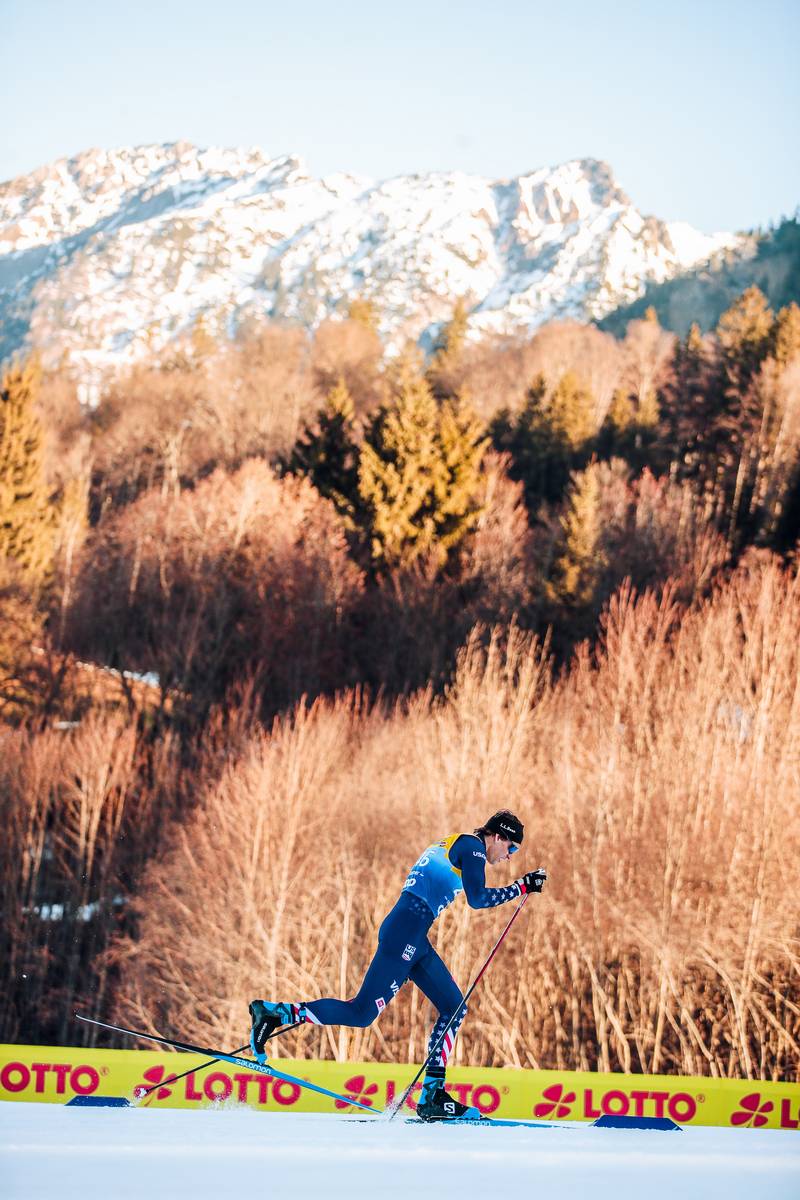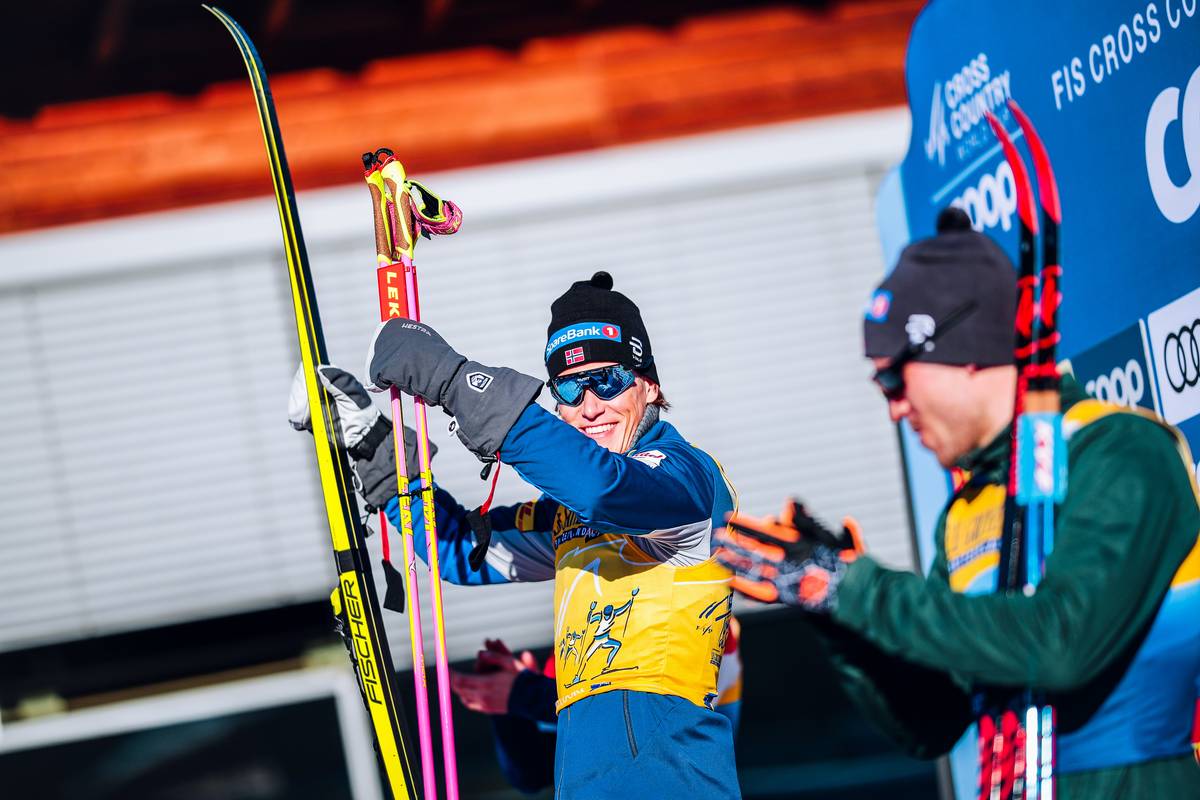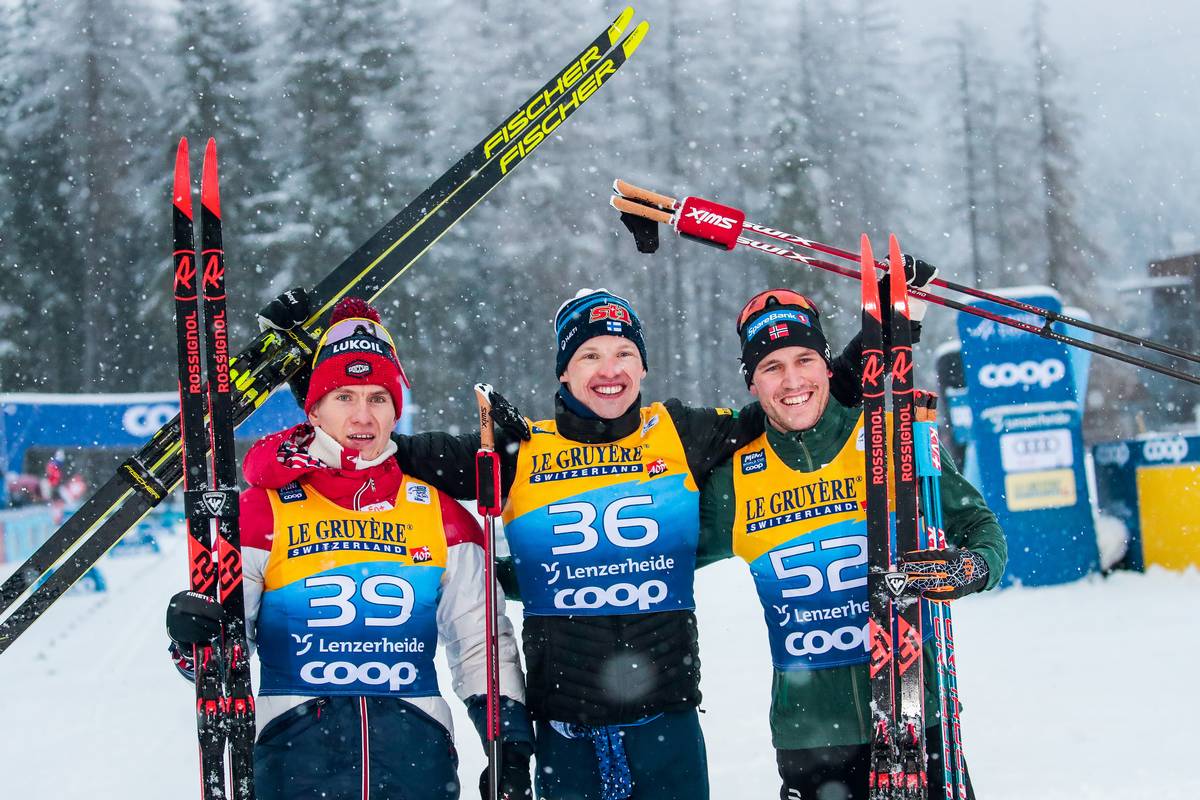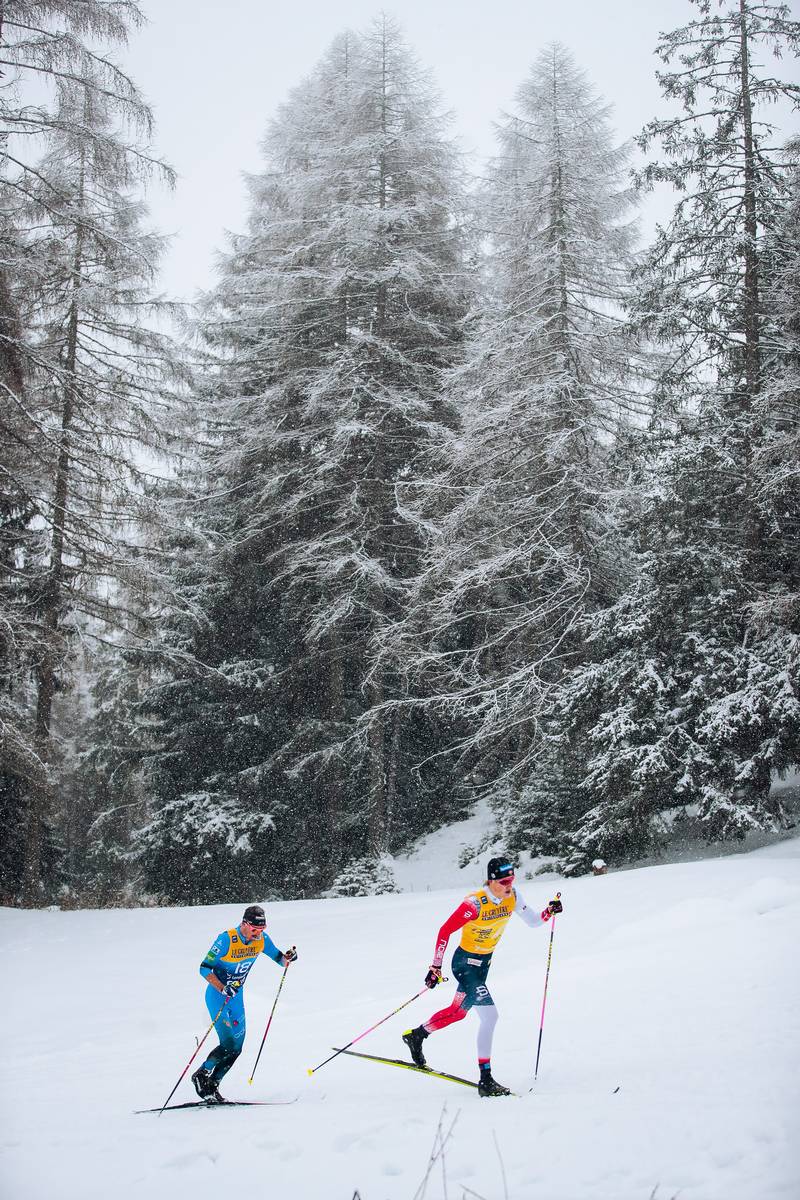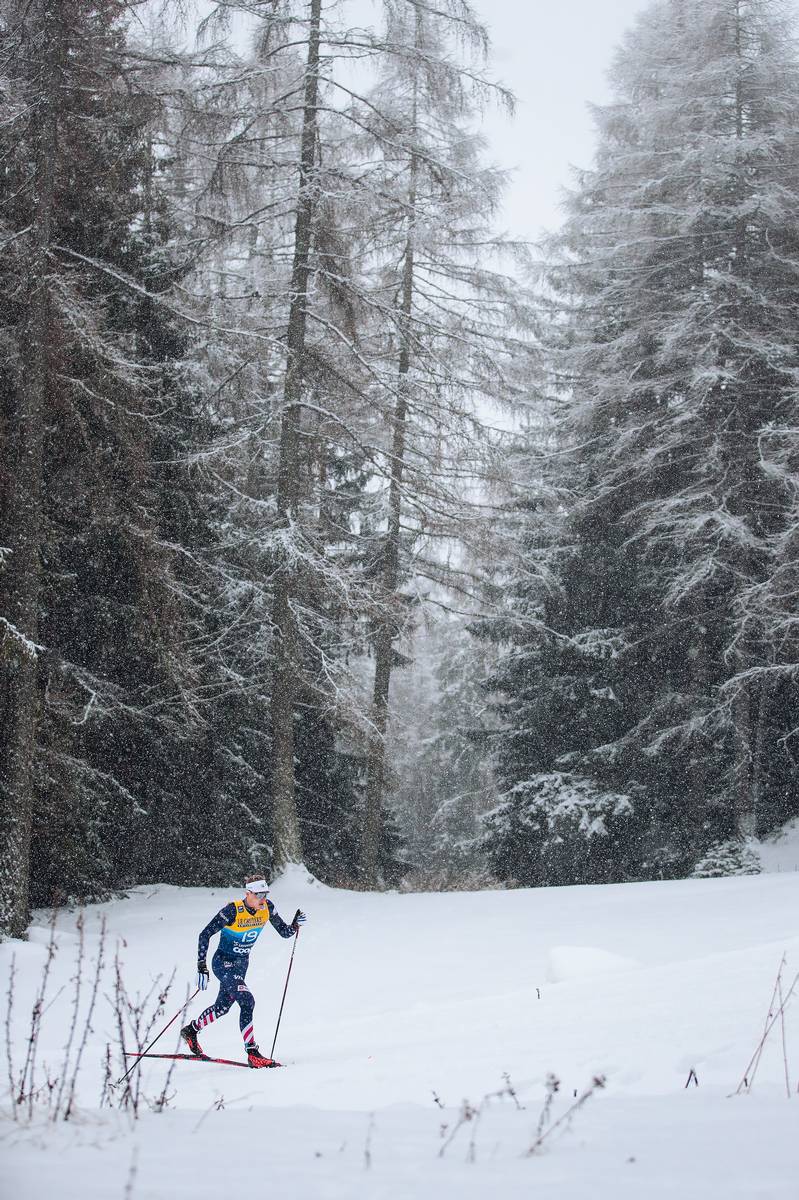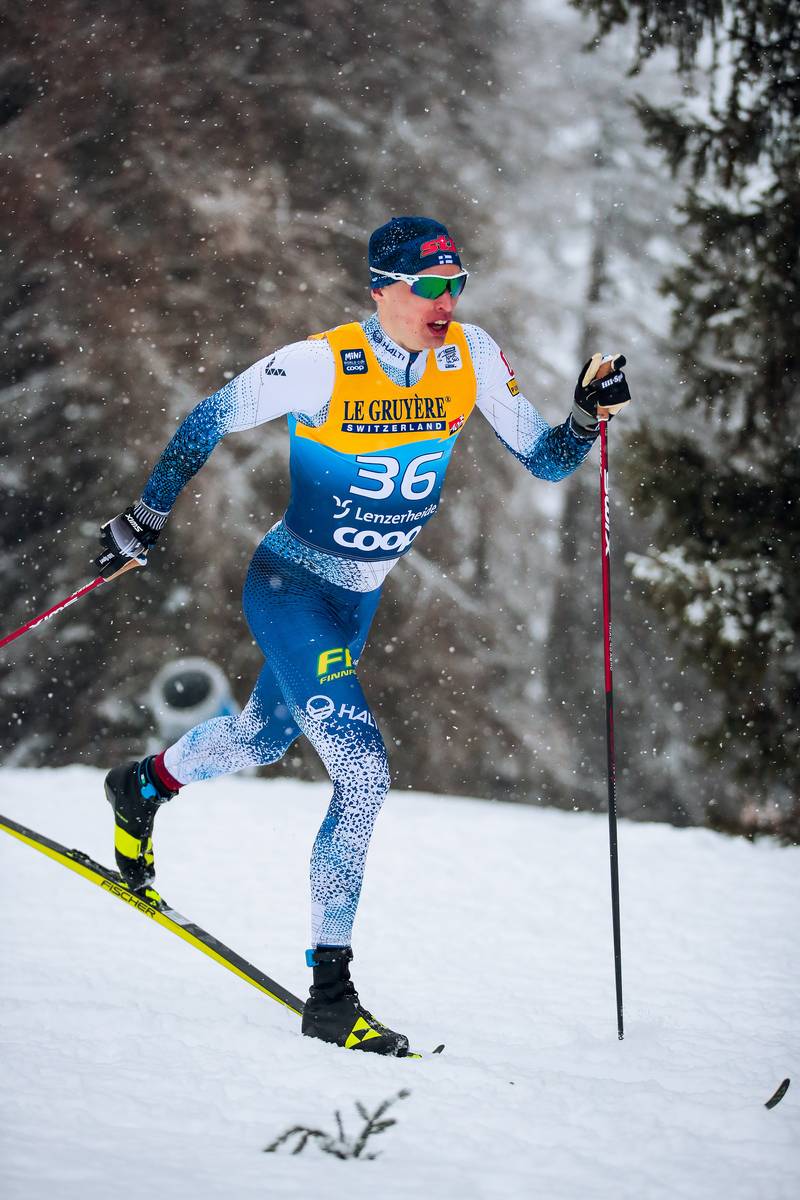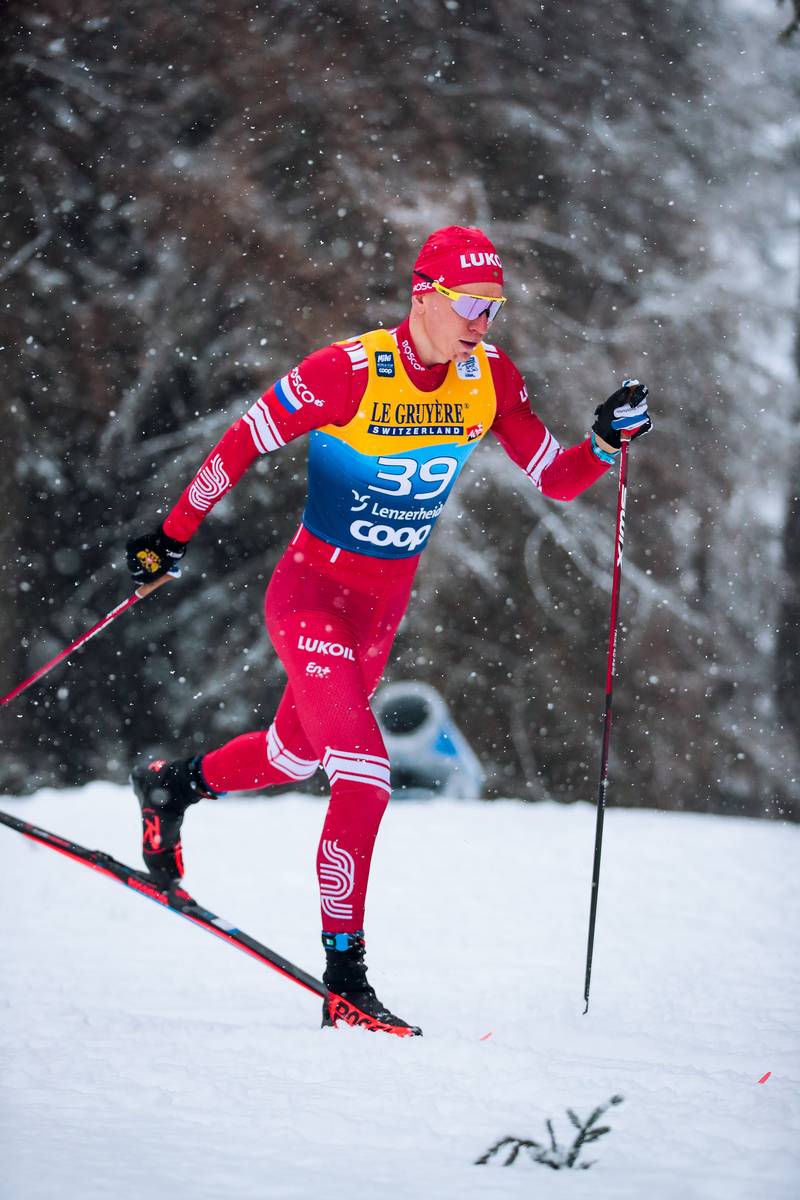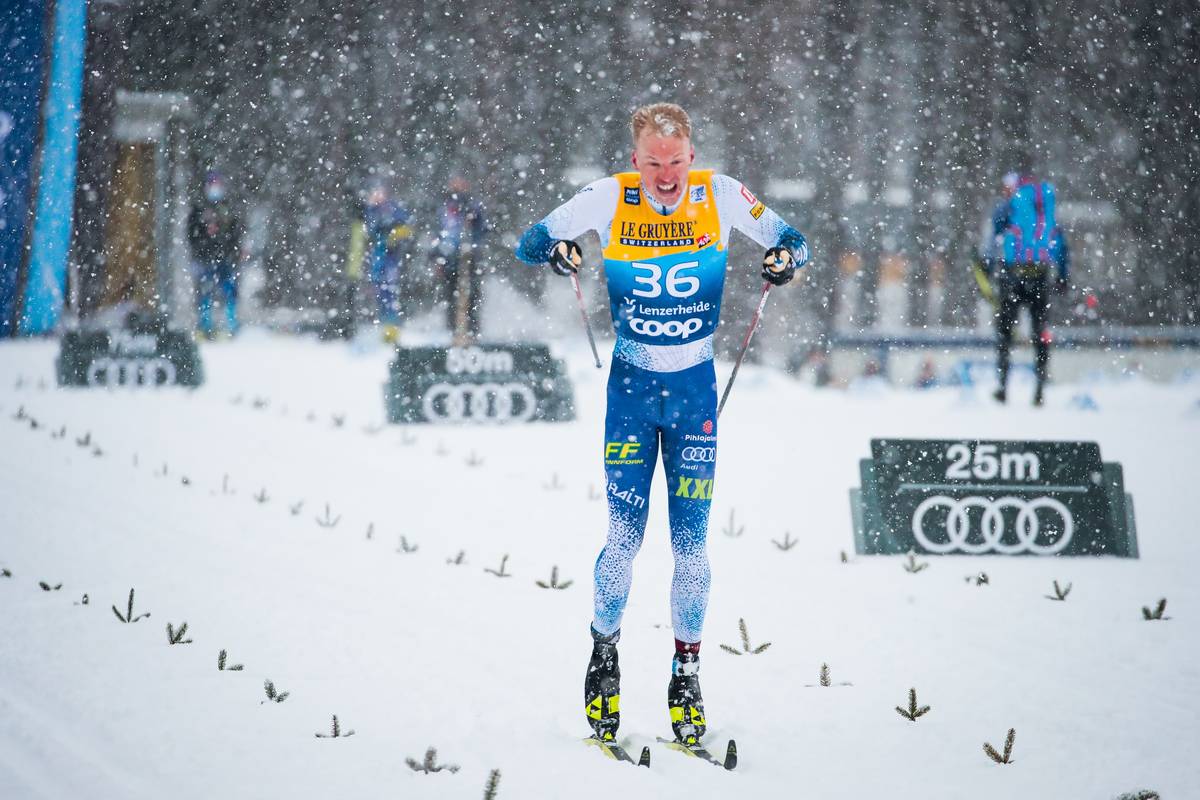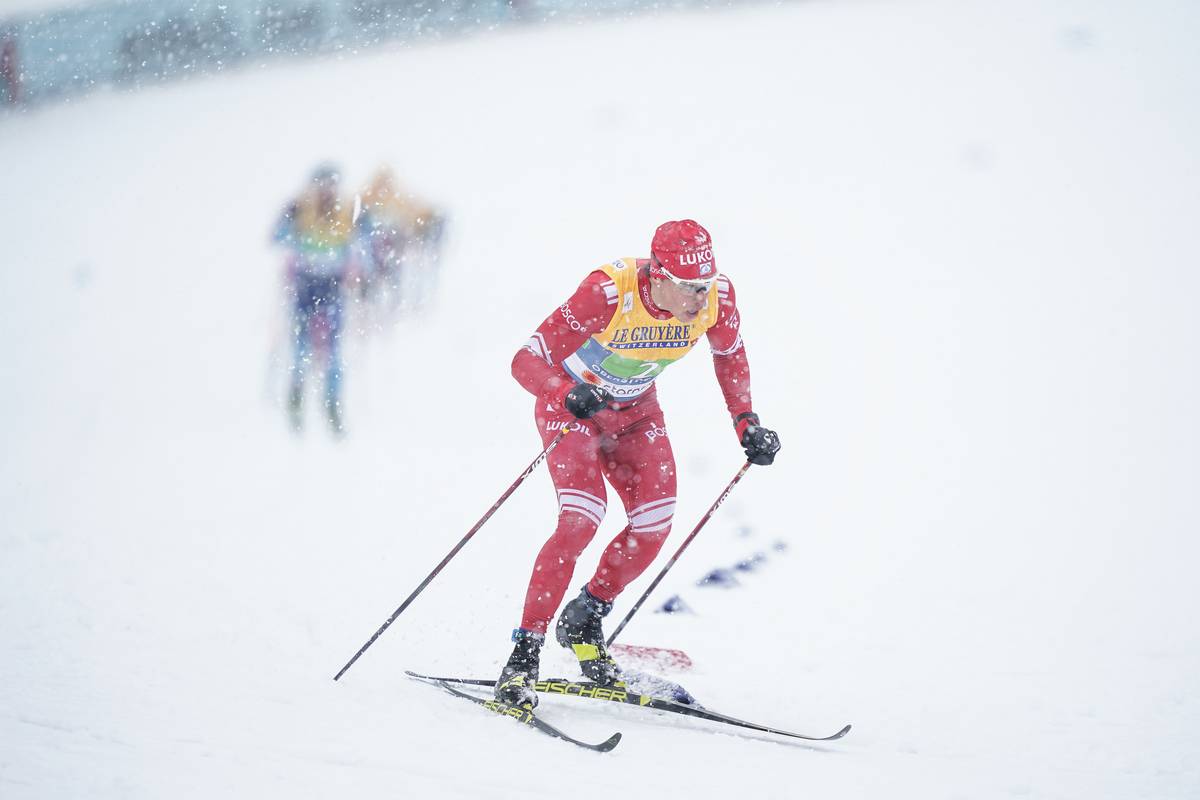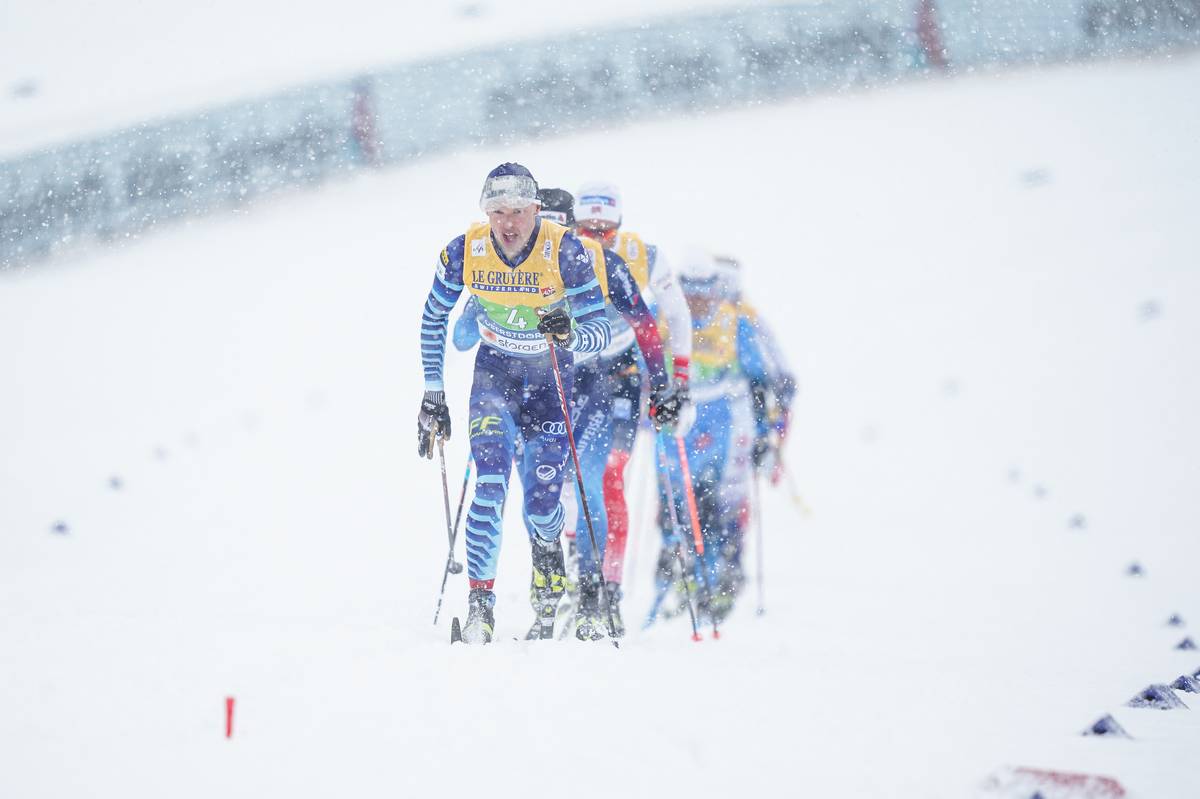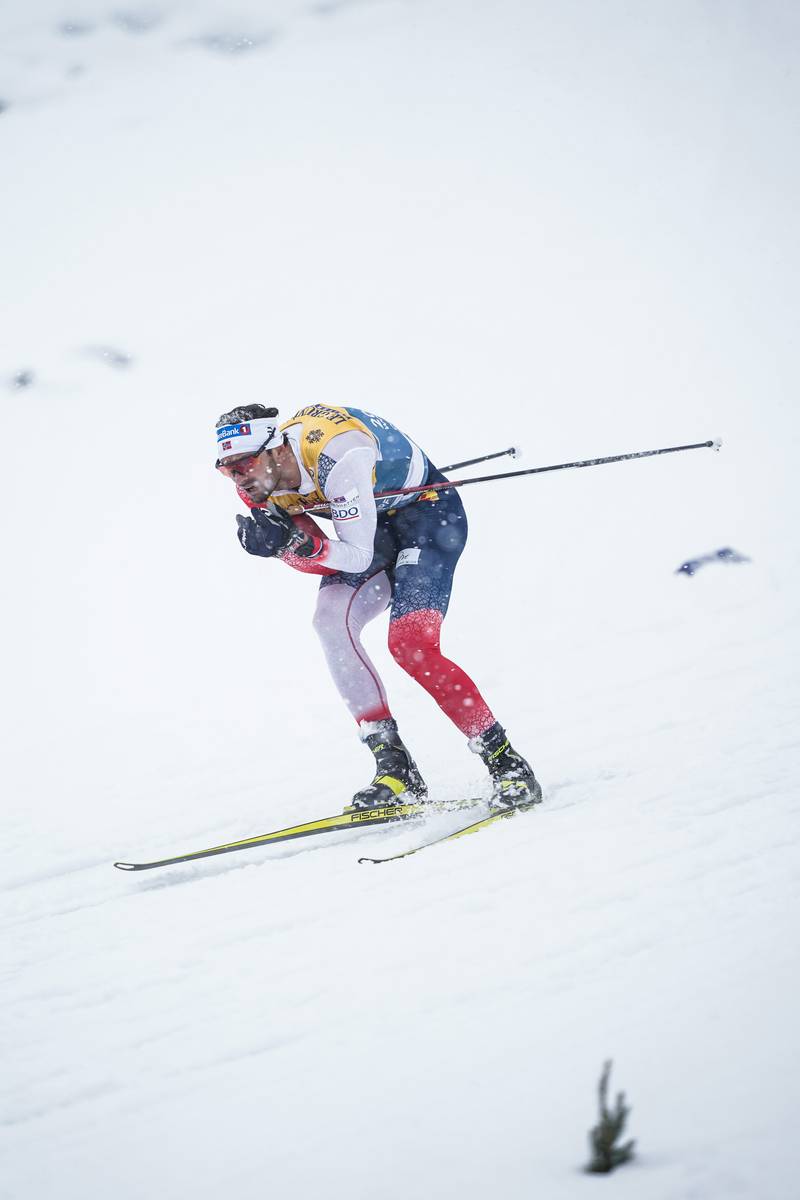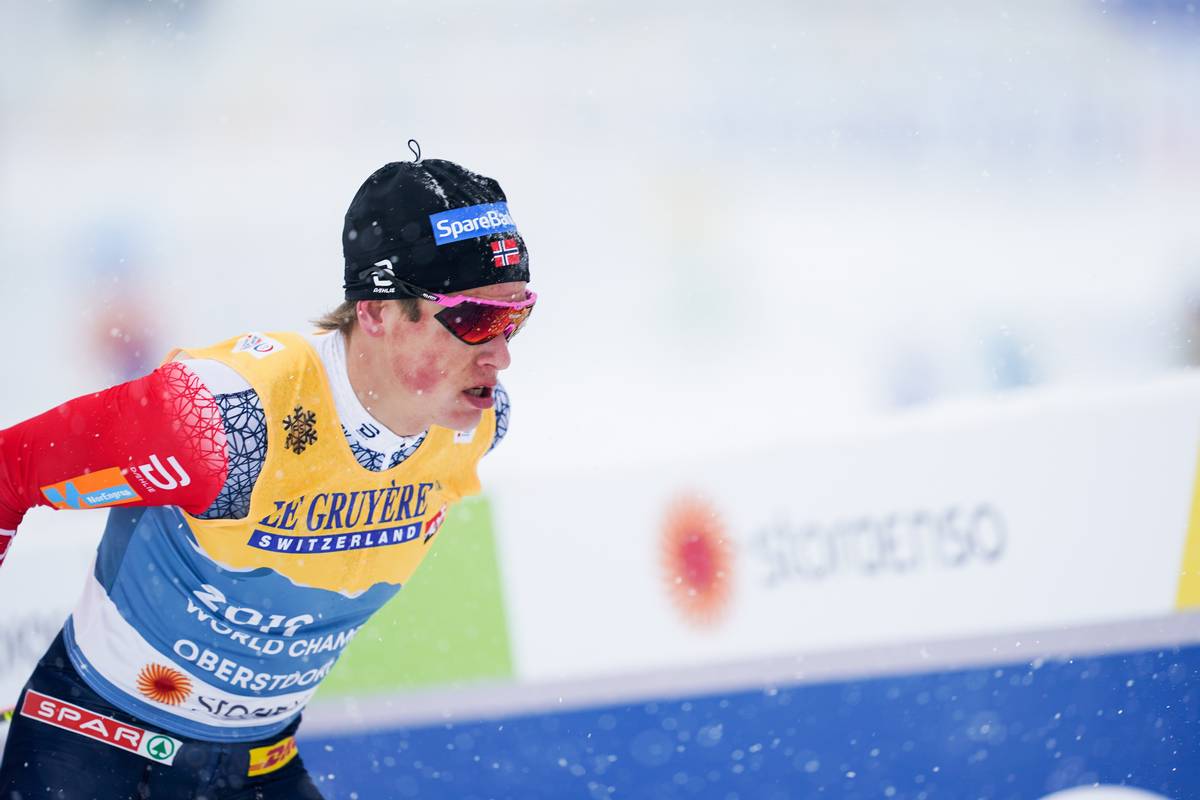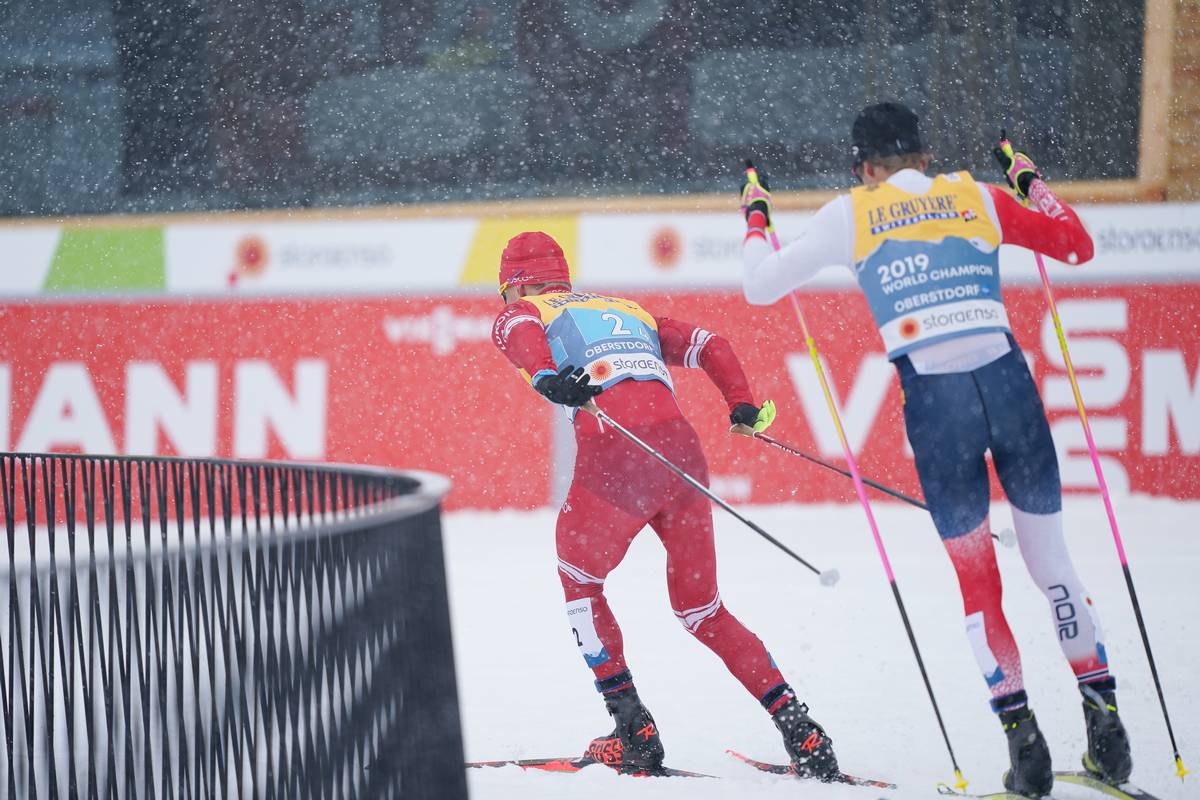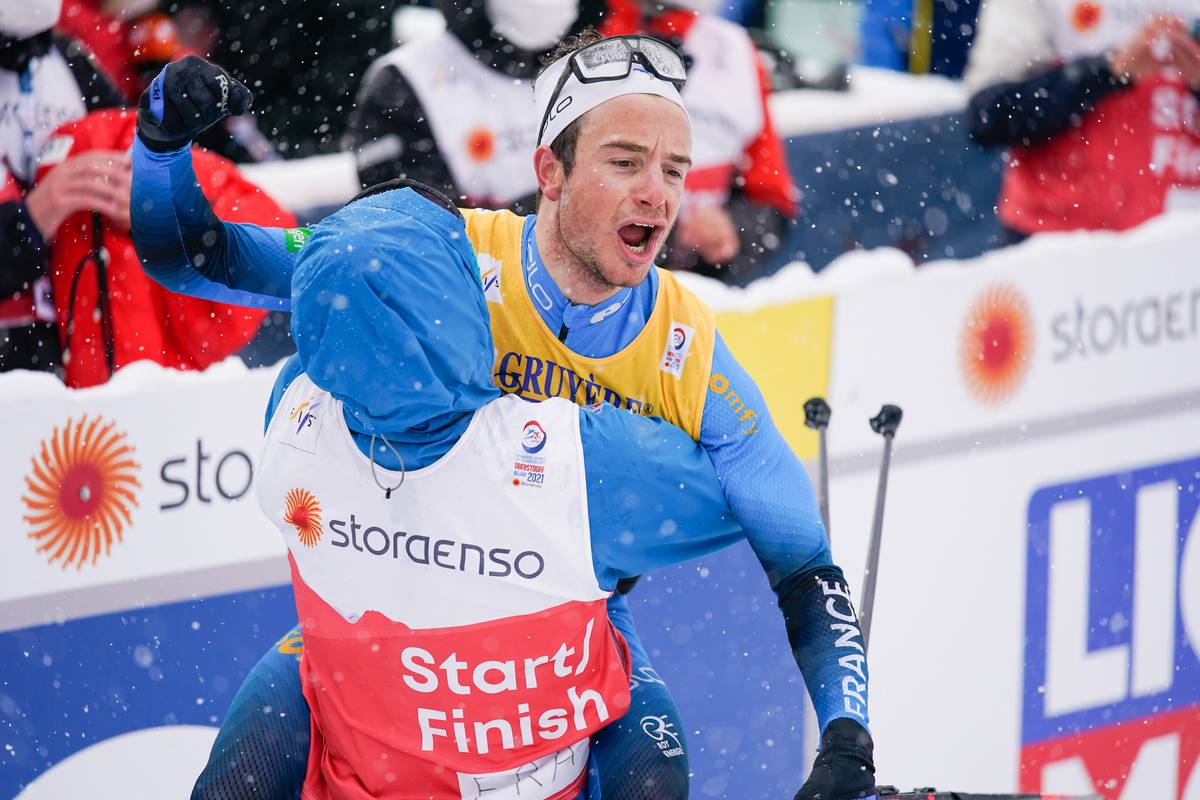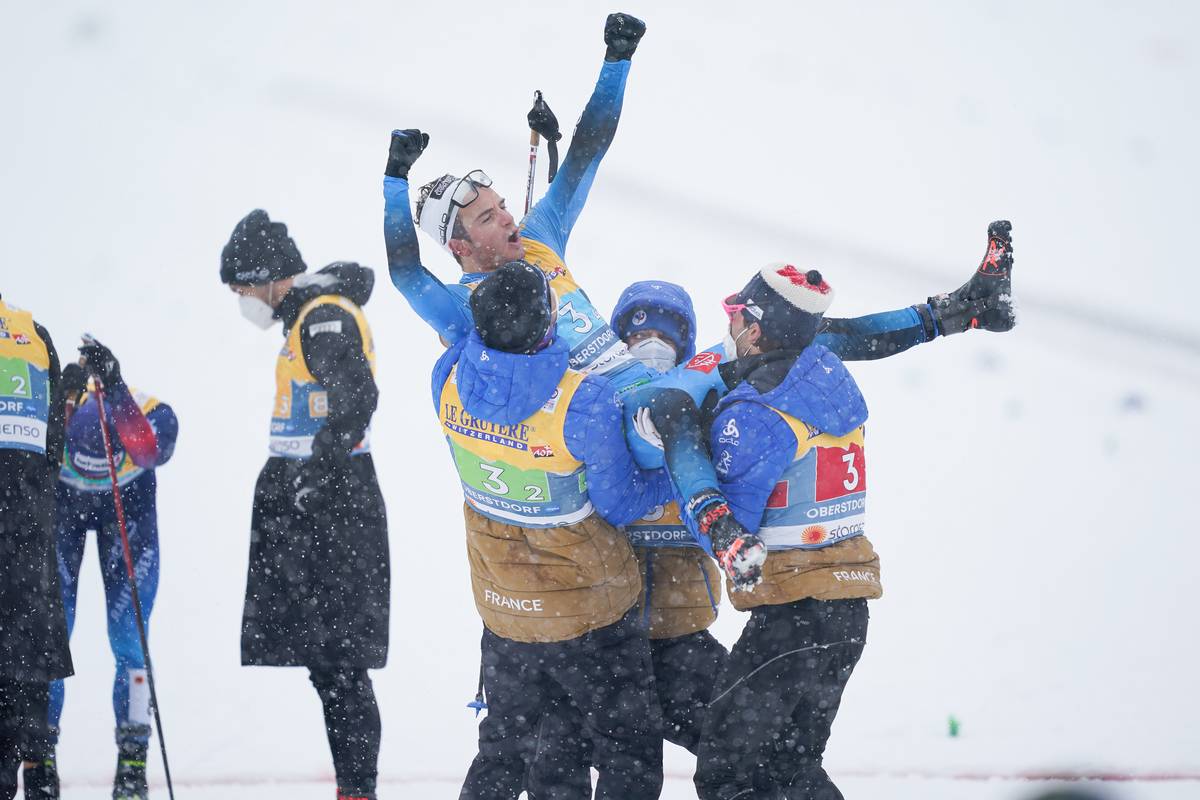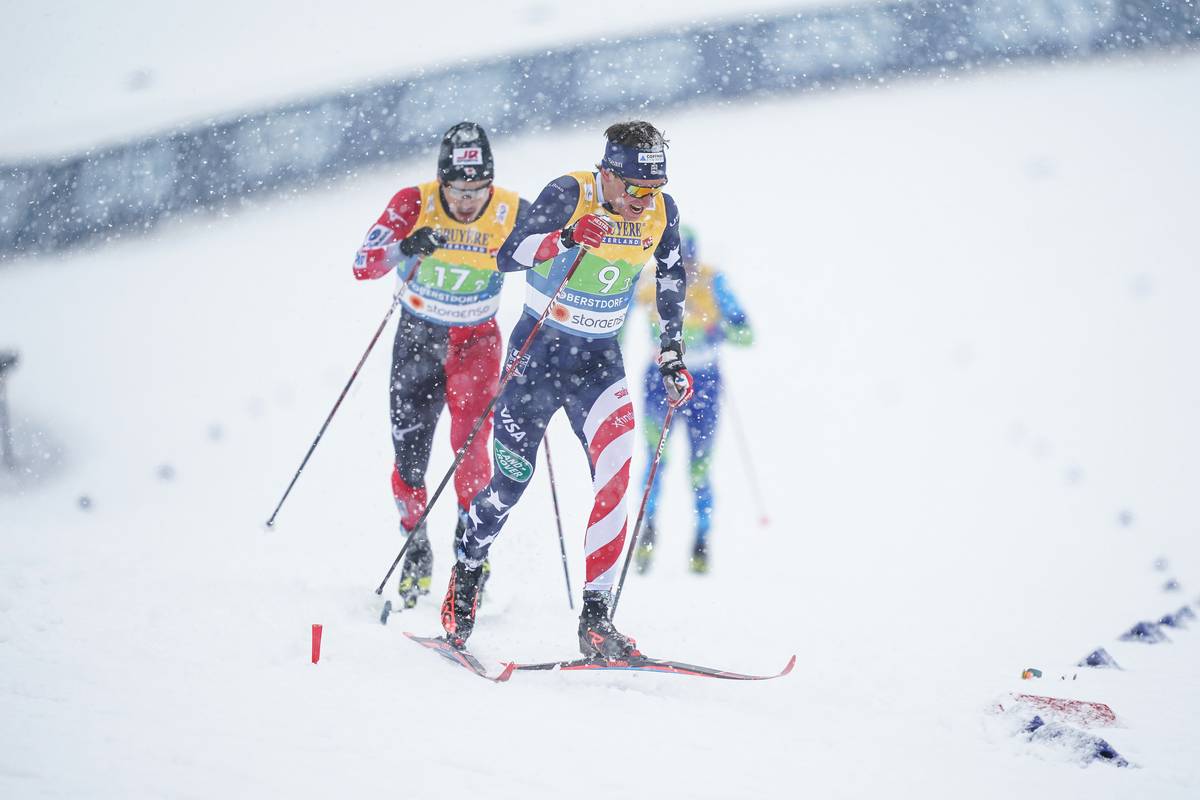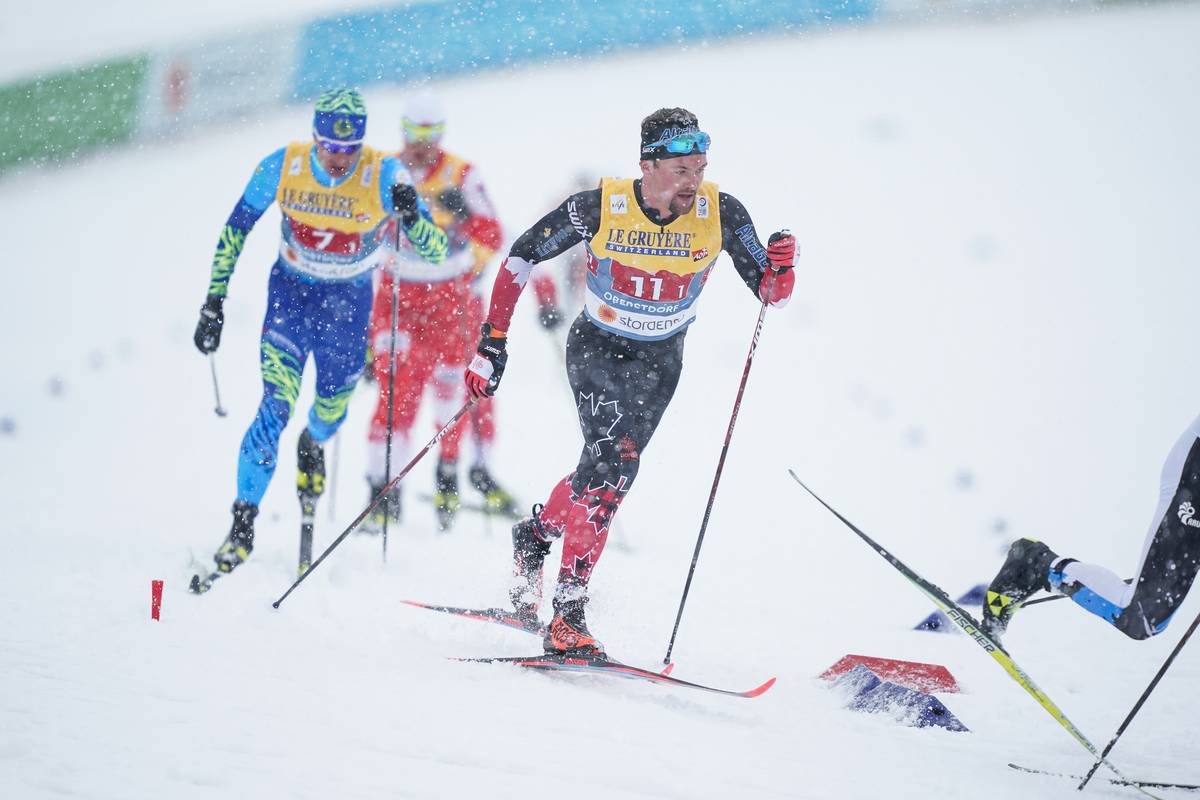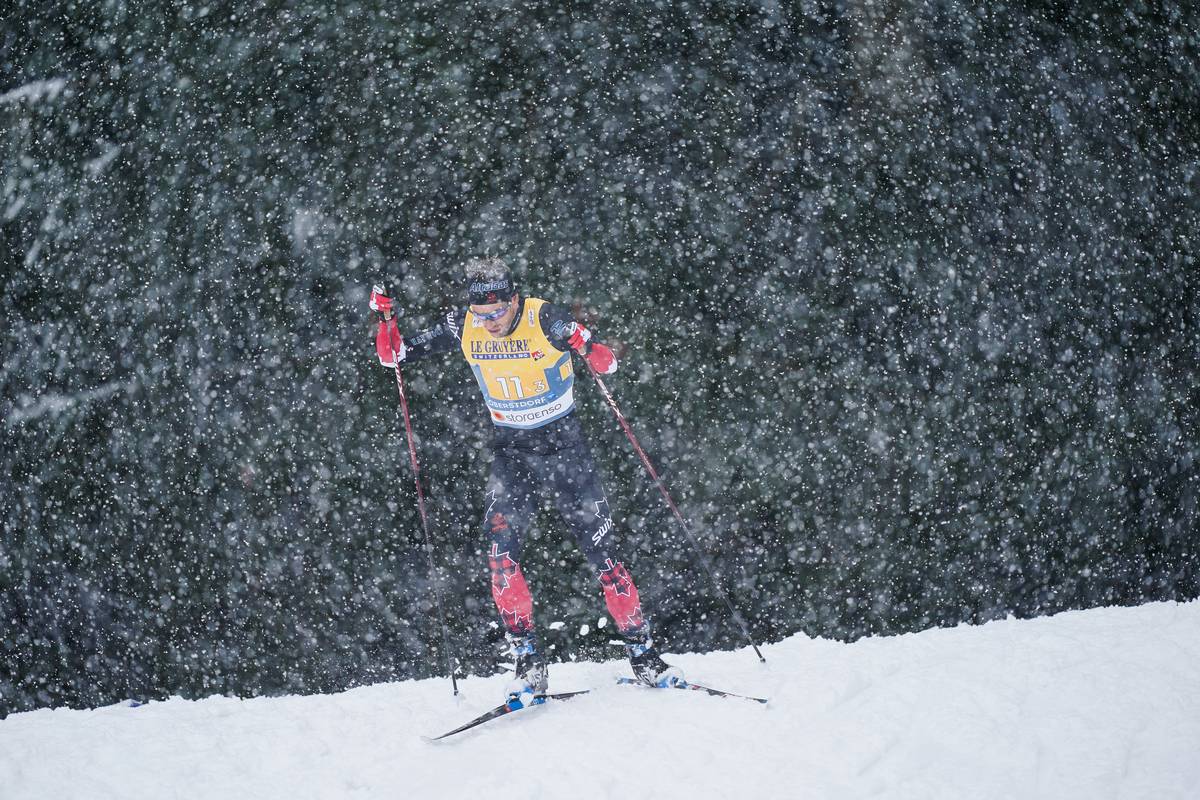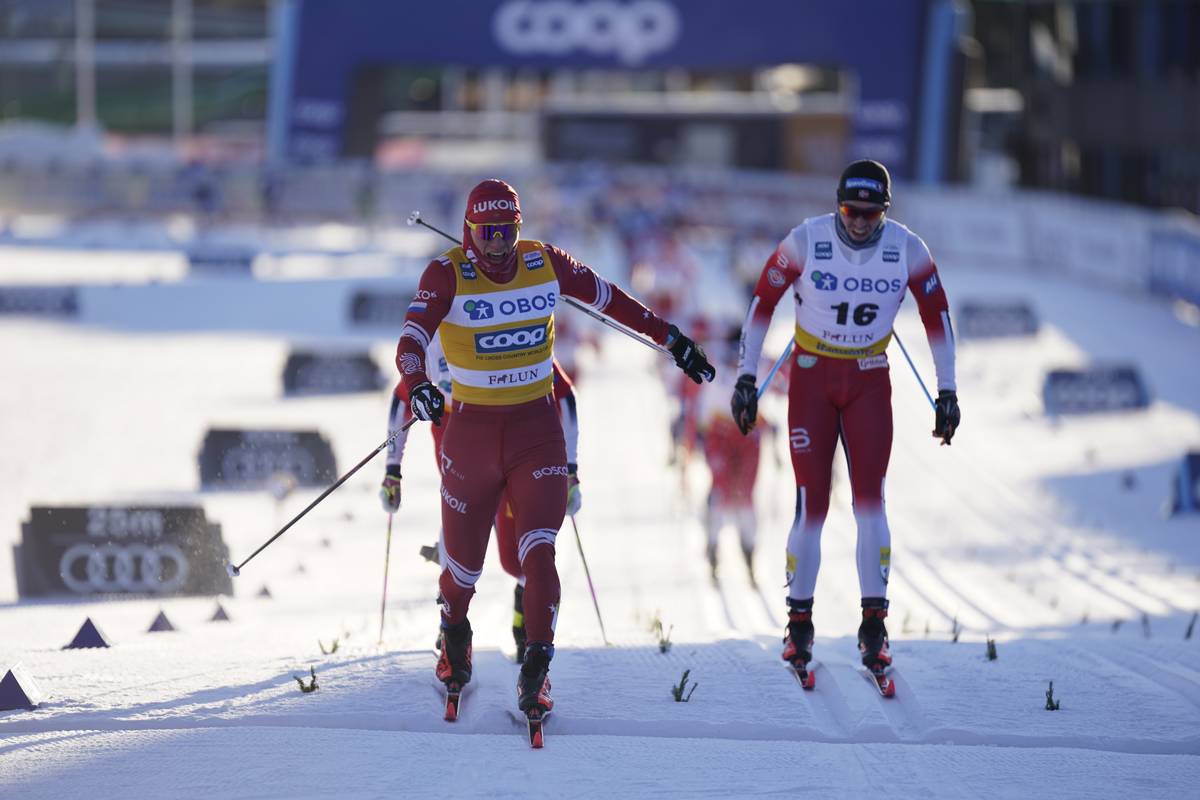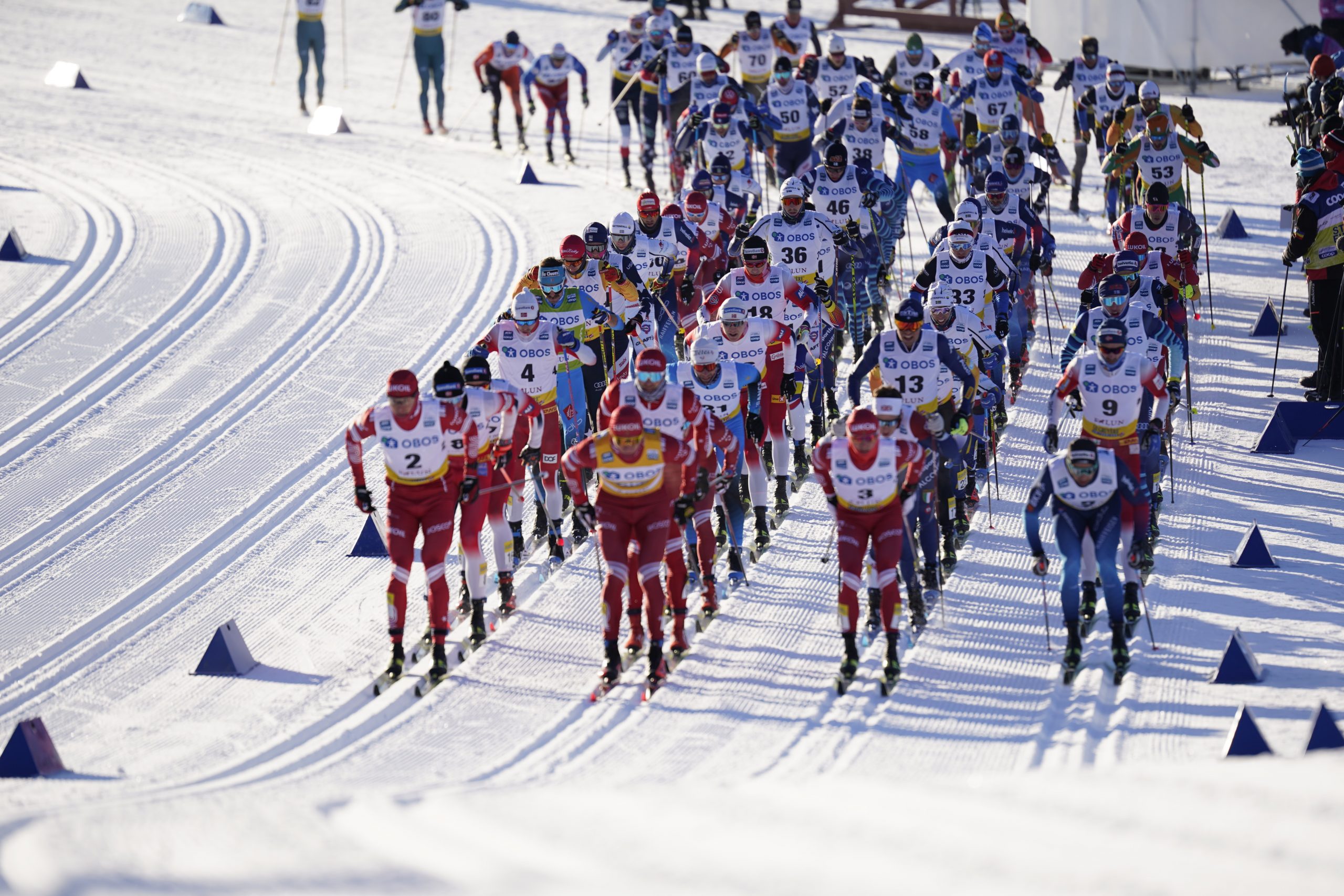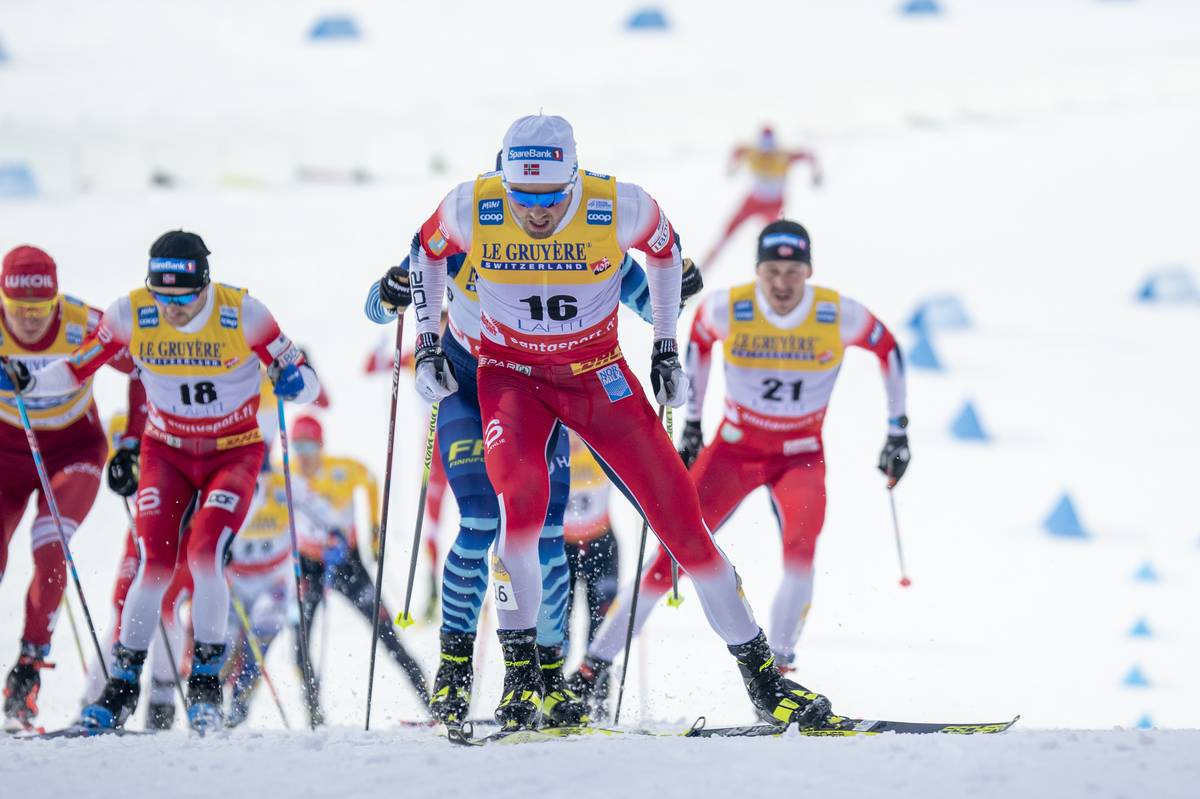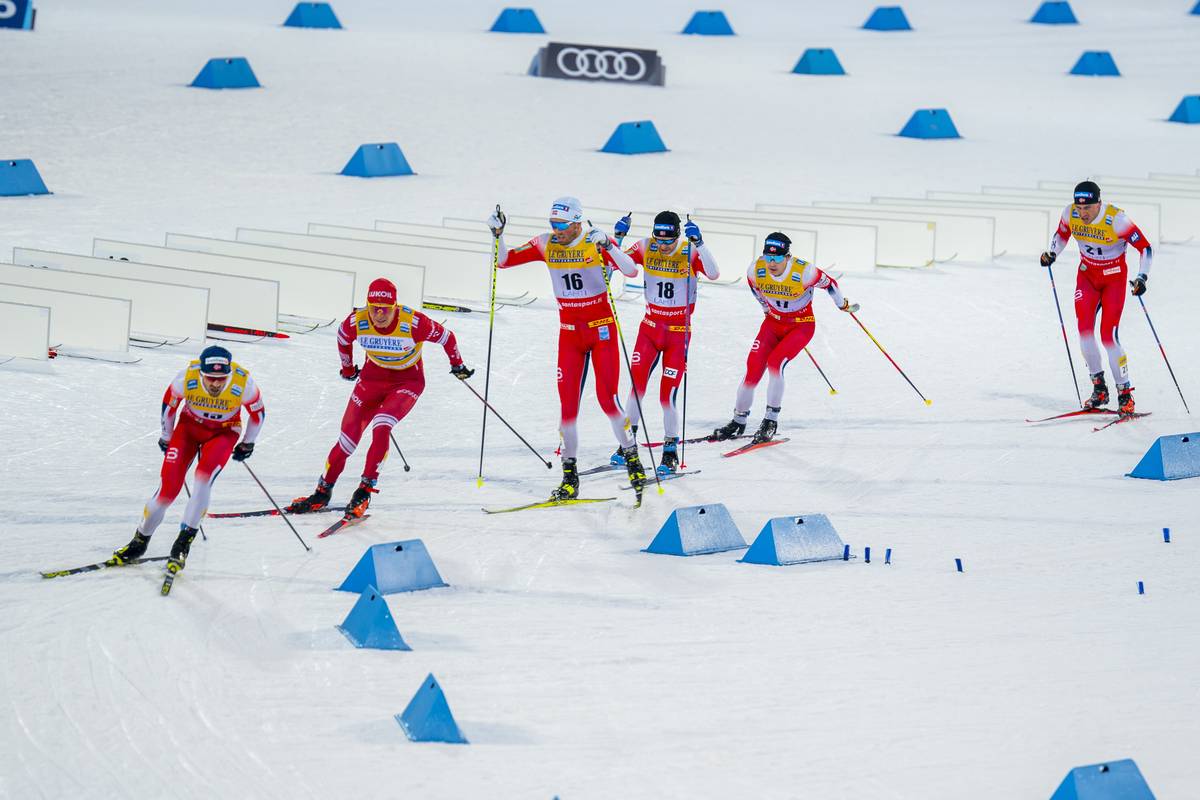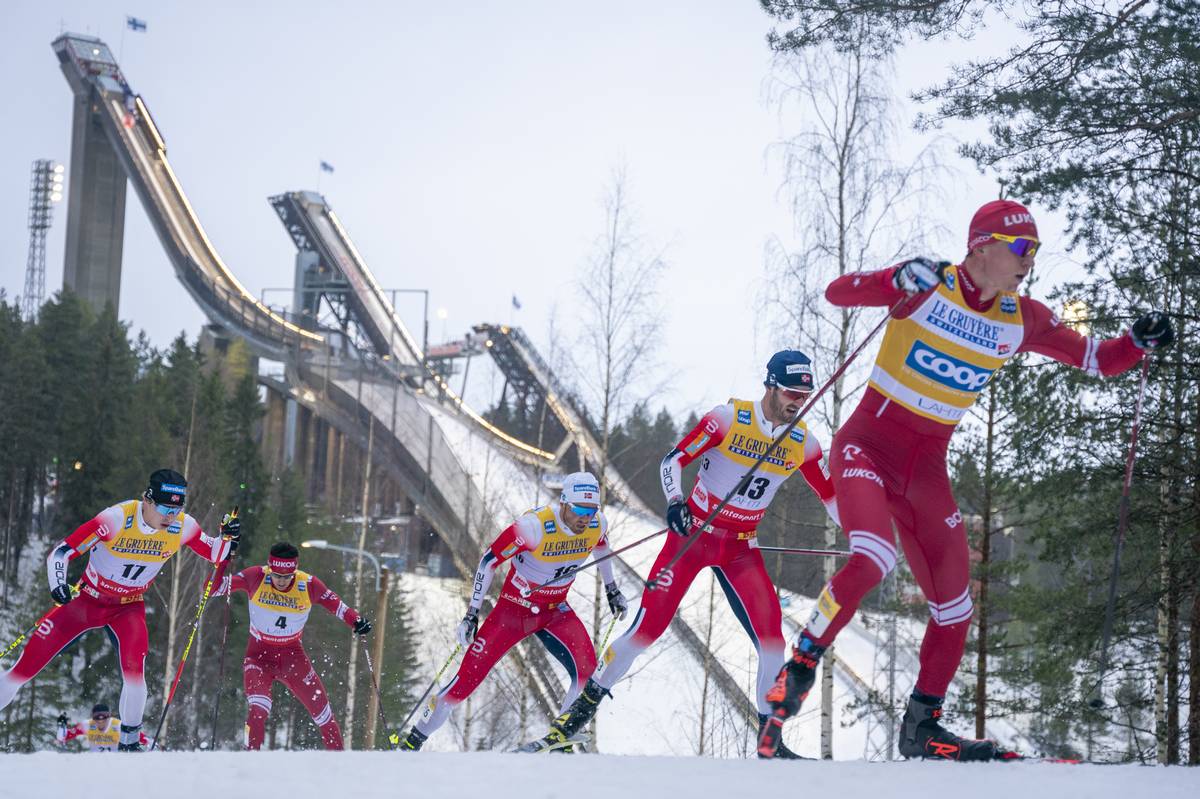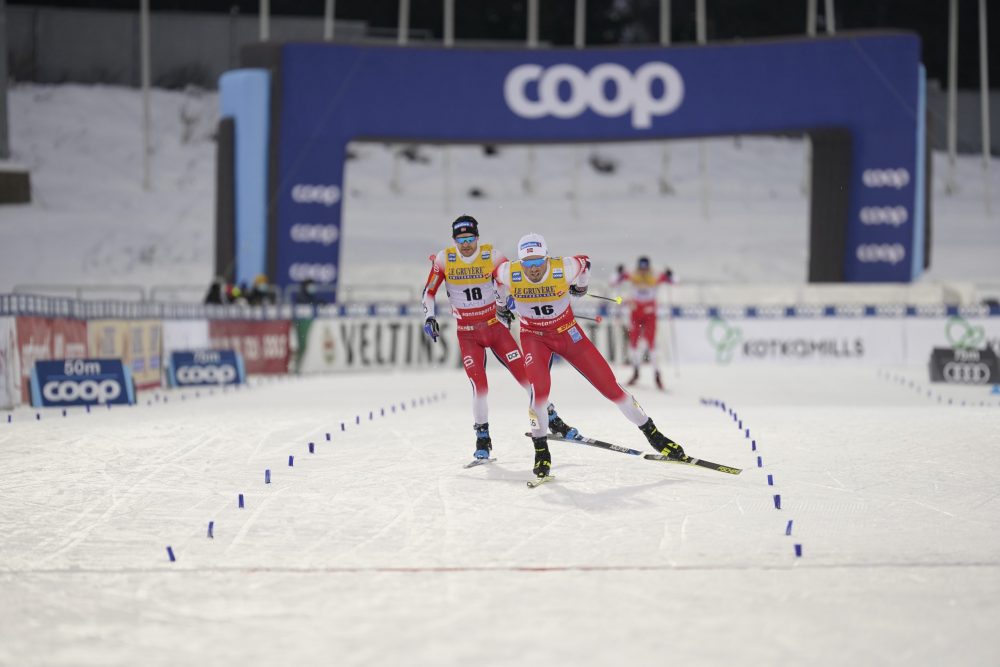
Tag: Pal Golberg

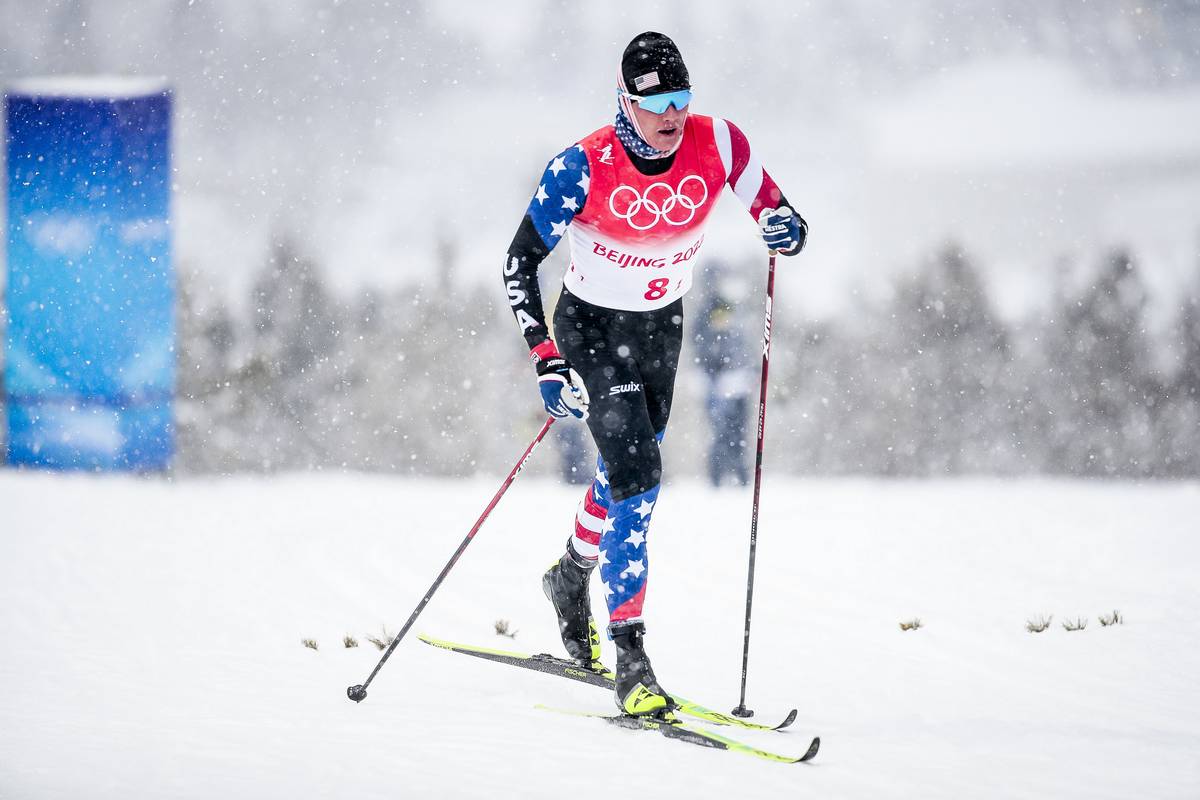
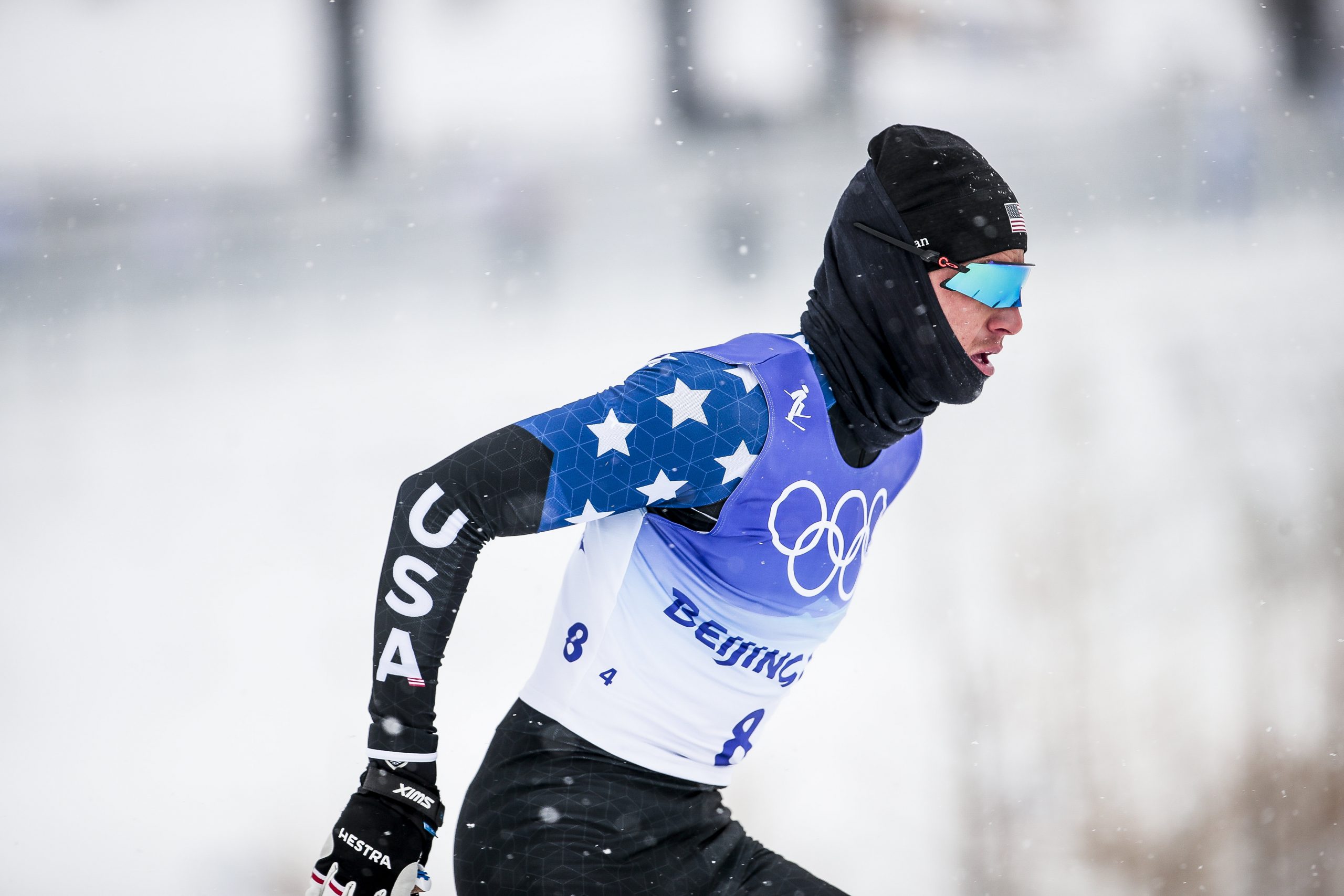
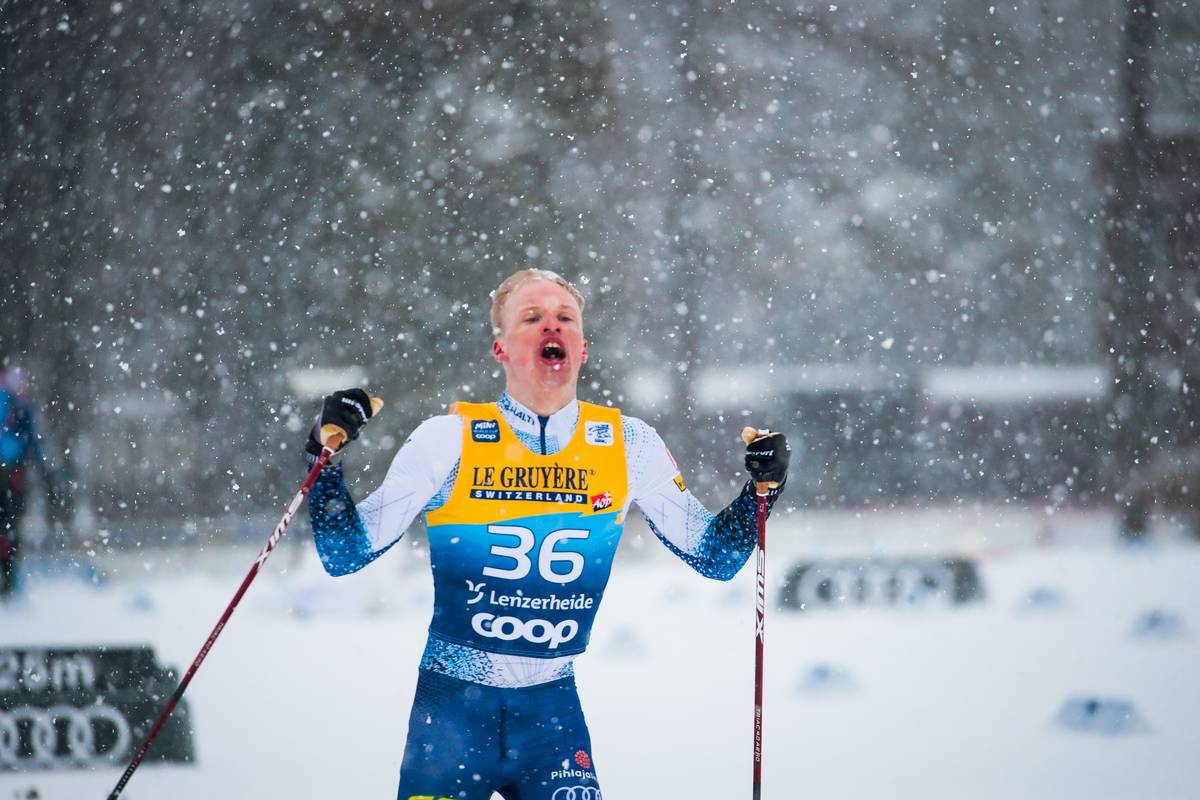
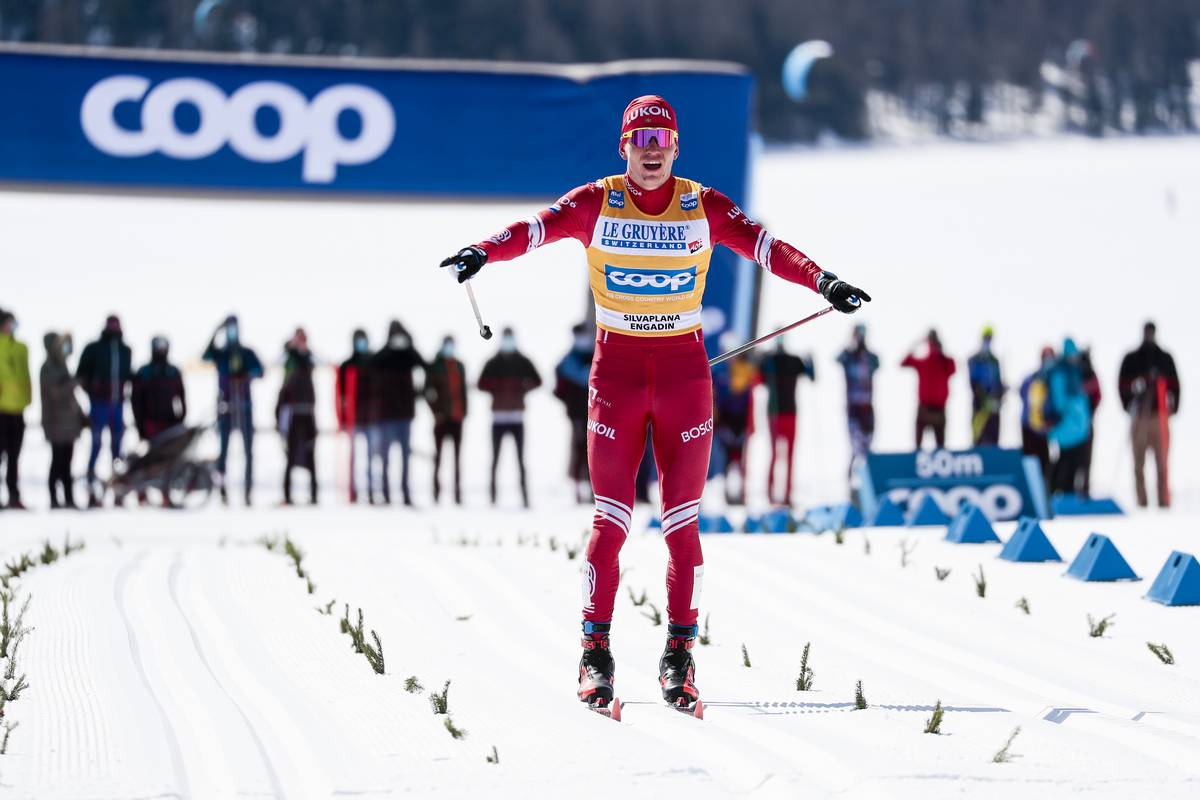
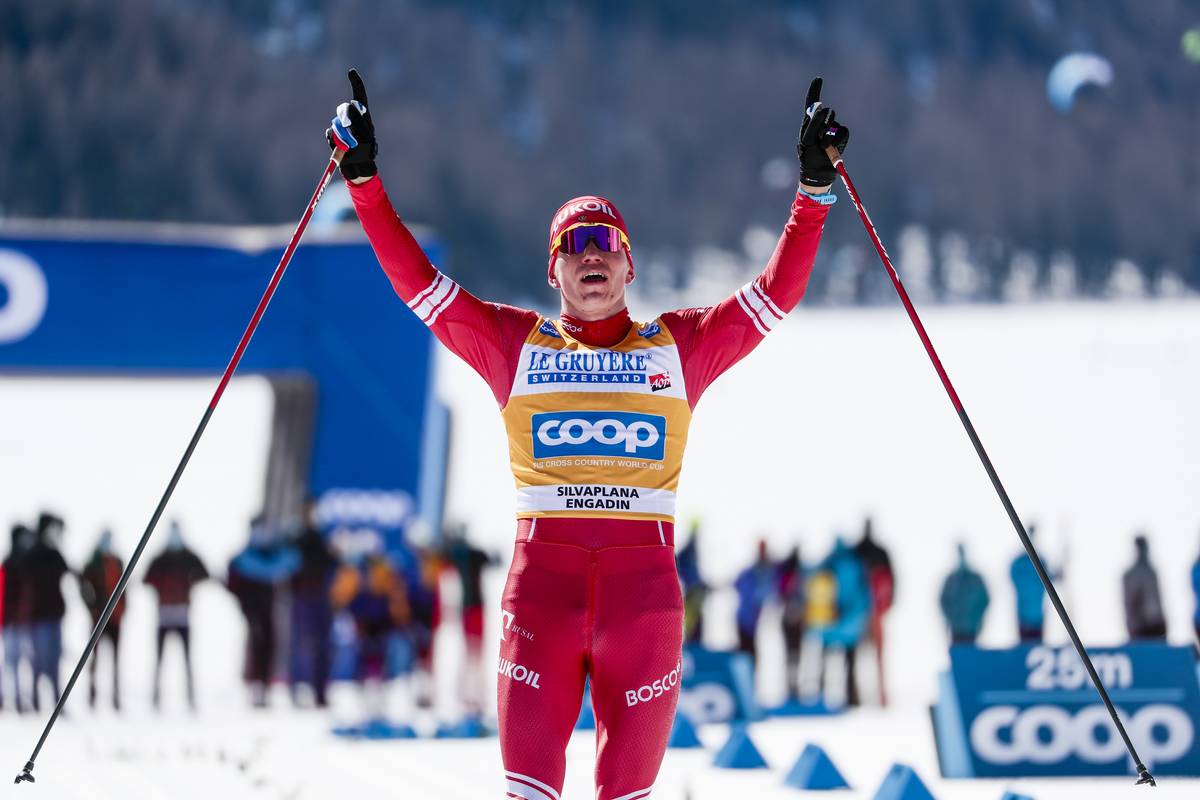
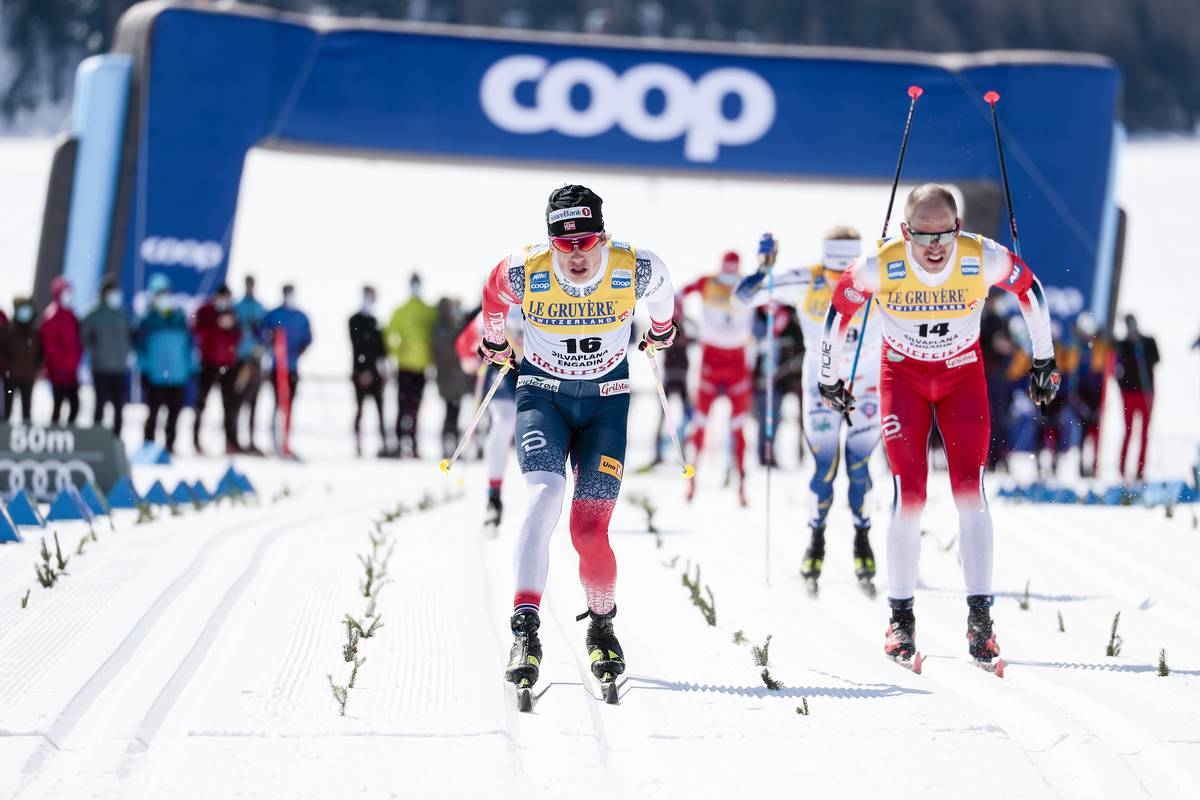
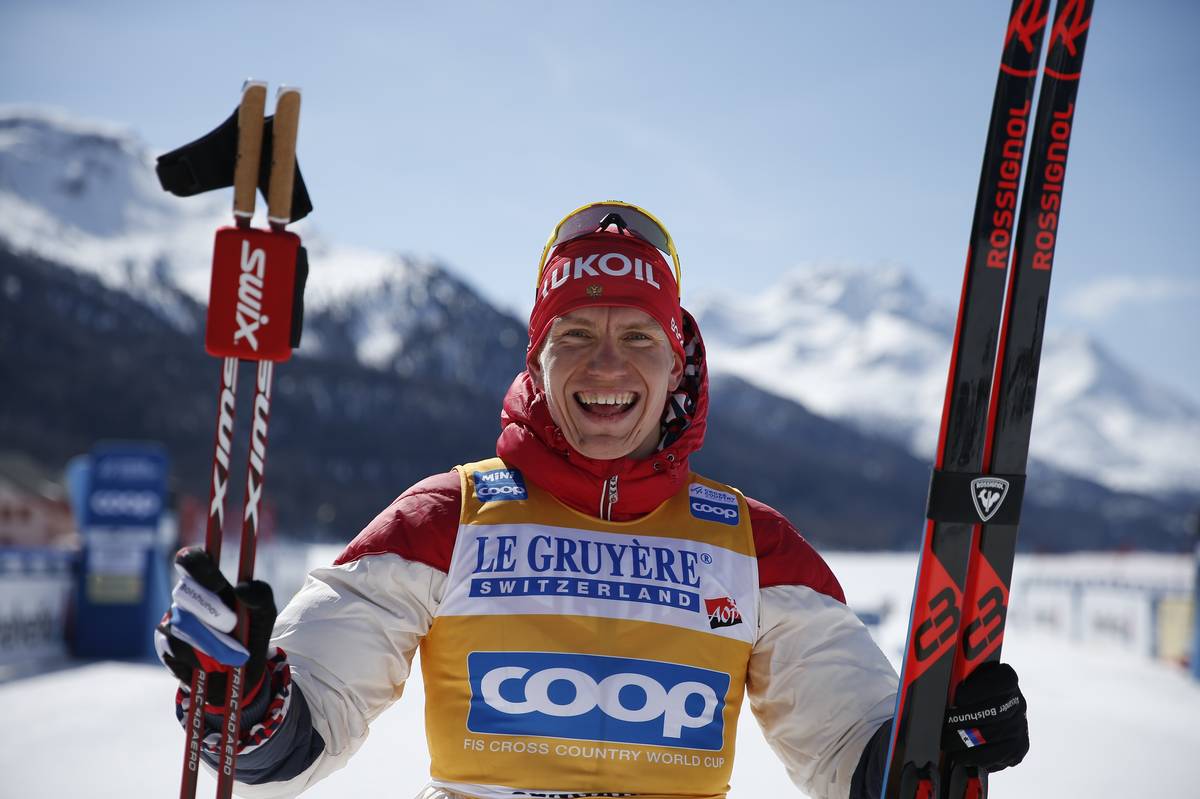
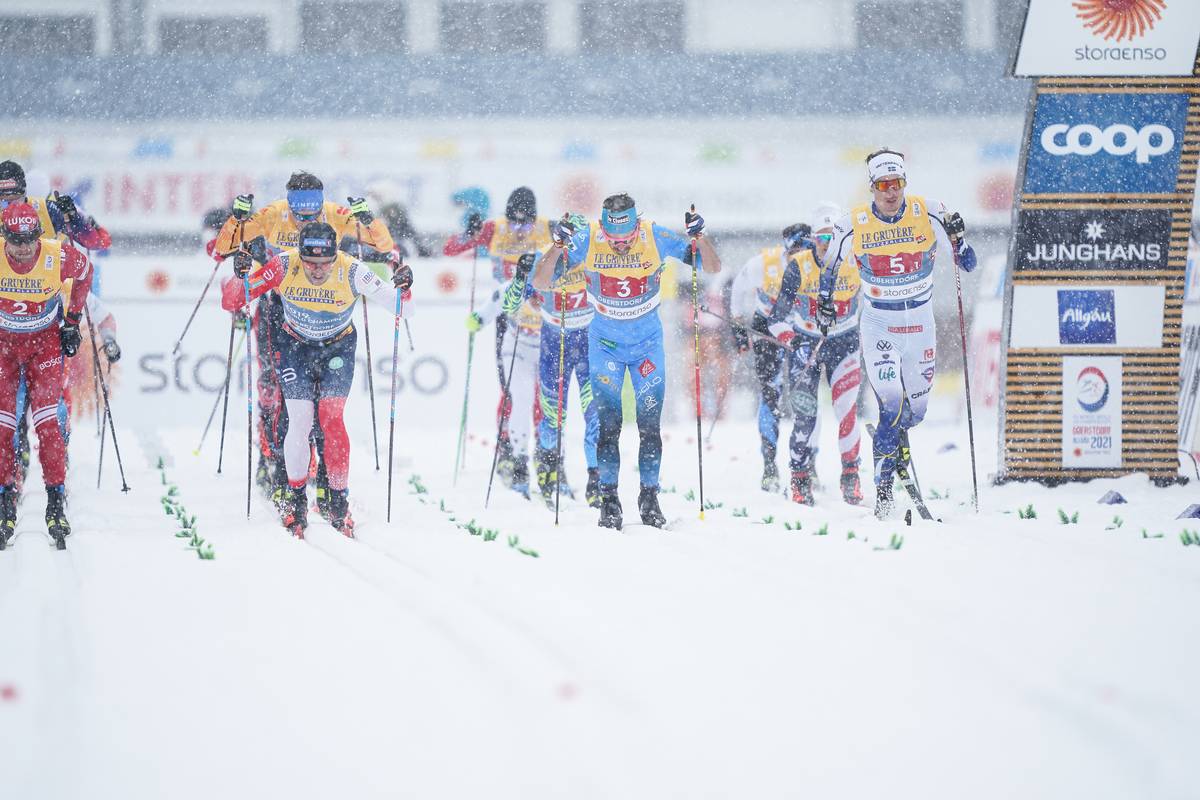
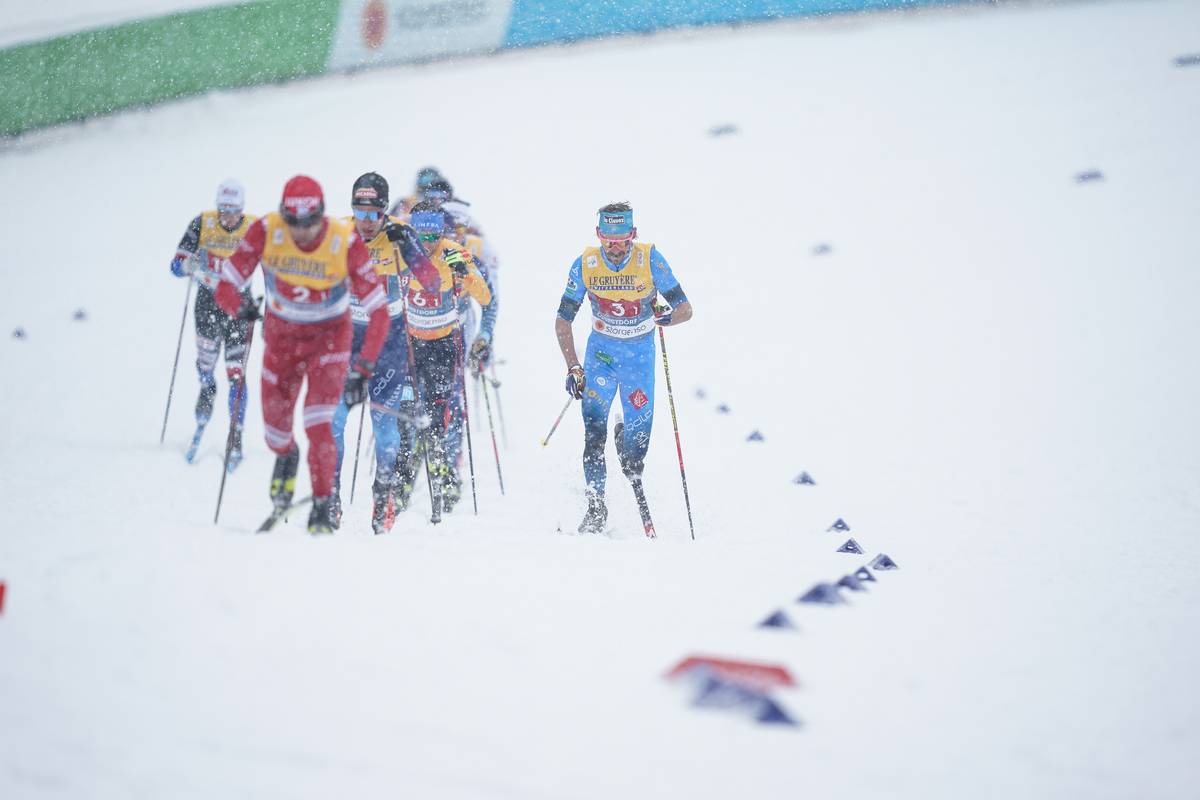
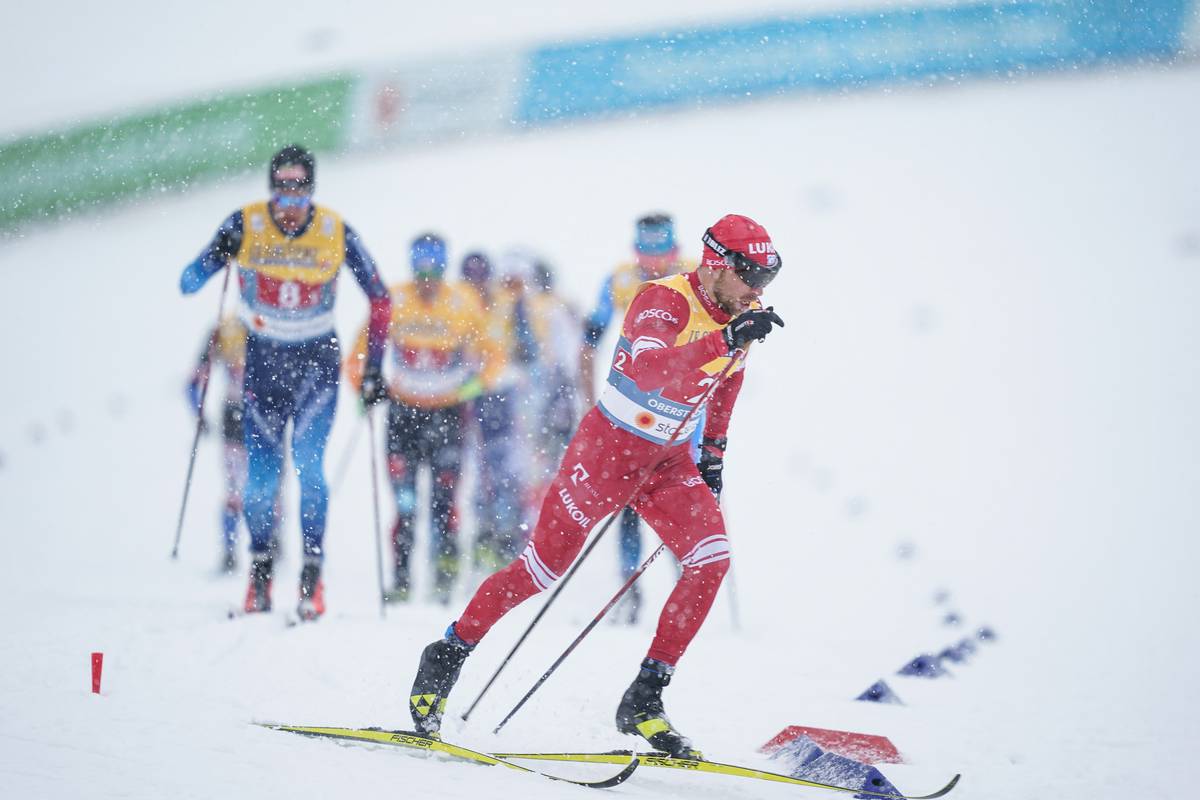
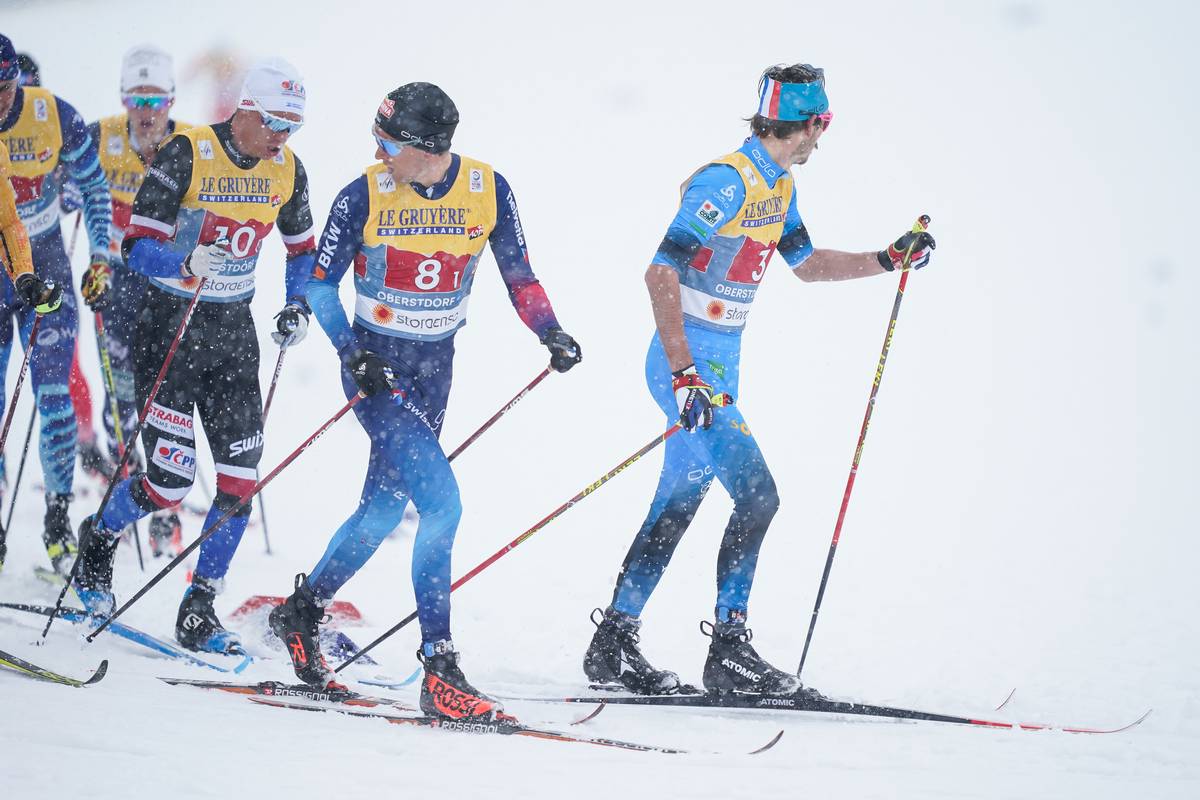
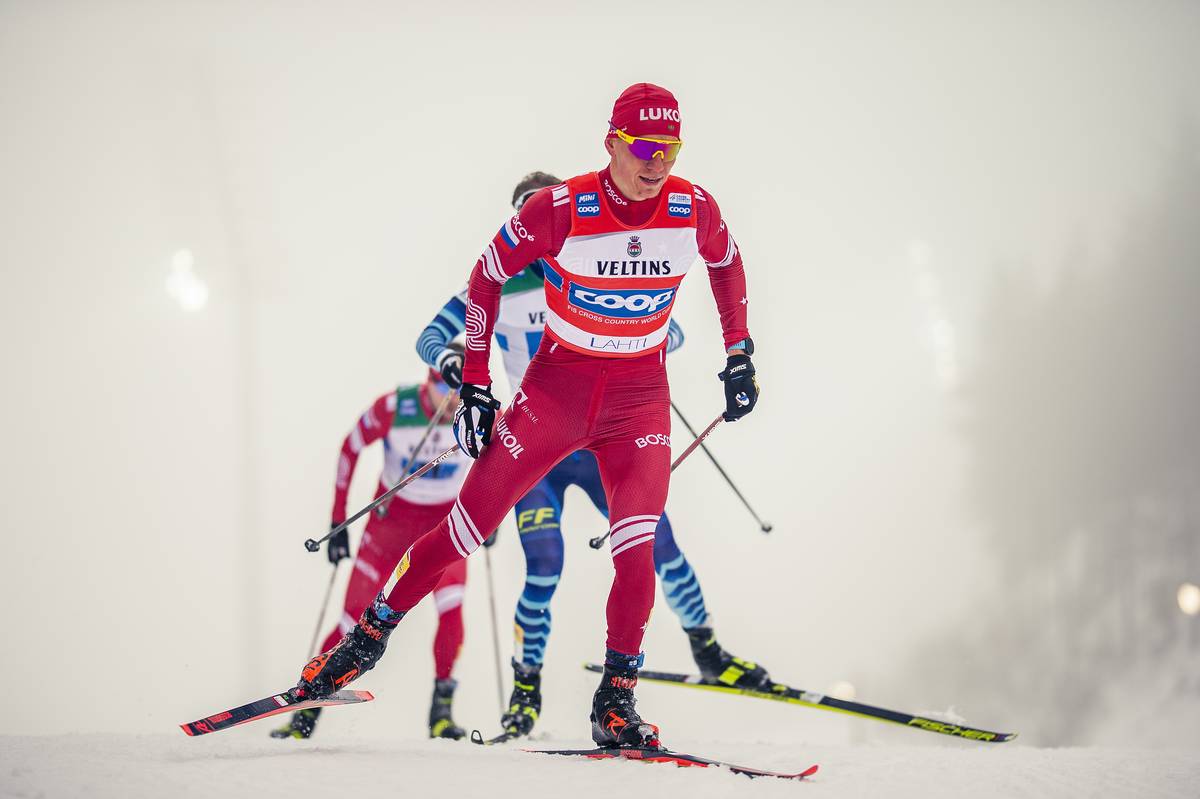
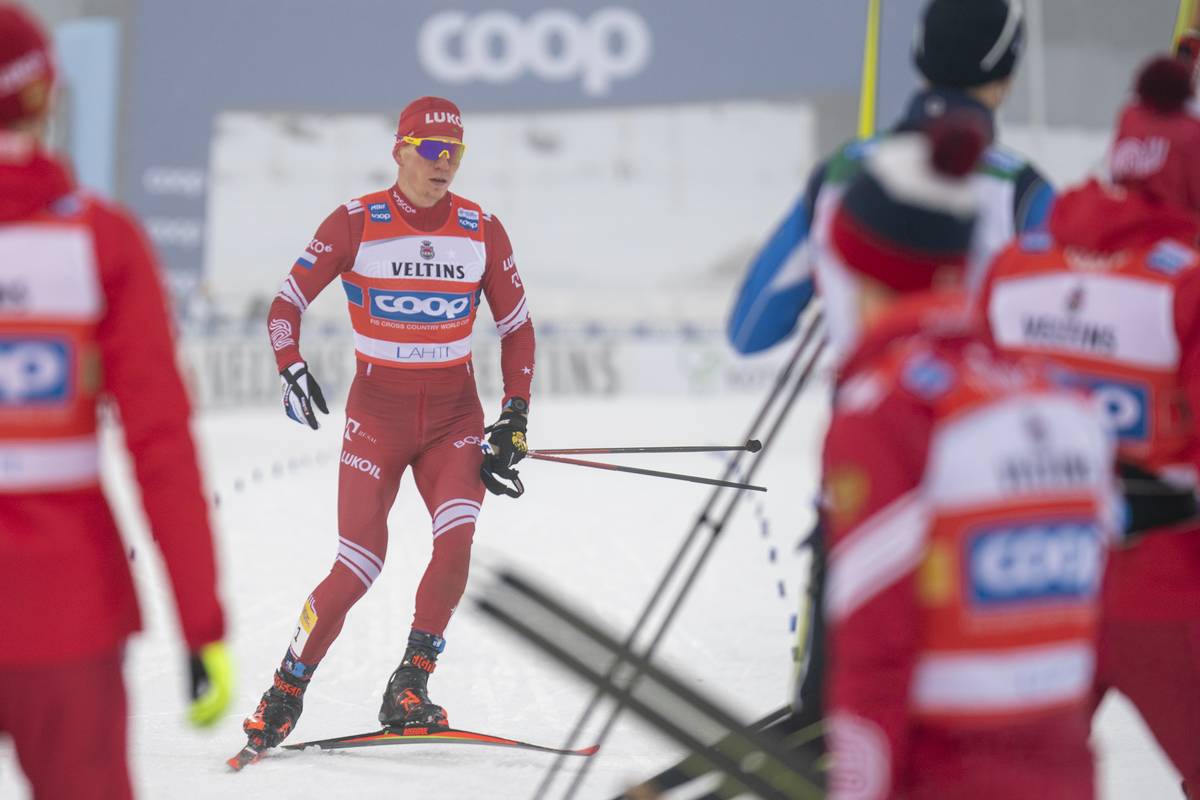
  • Einar Hedegart has only been a ‘cross-country skier’ since November. On Friday, he could dethrone the sport’s Olympic king.

    Einar Hedegart has only been a ‘cross-country skier’ since November. On Friday, he could dethrone the sport’s Olympic king.

    This article was made possible through the generous support of our voluntary subscribers who have helped put our Nat Herz on the ground at the Olympics. If you value coverage like this, please support FasterSkier with a voluntary subscription.

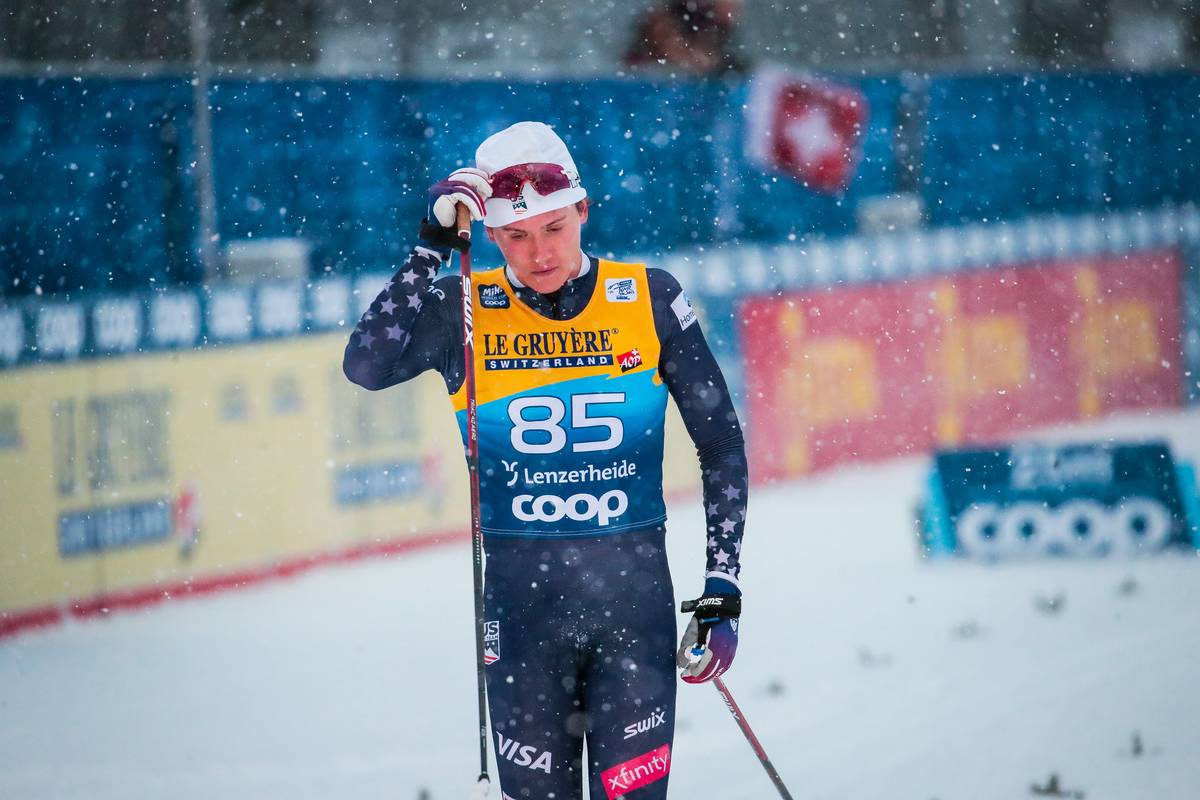
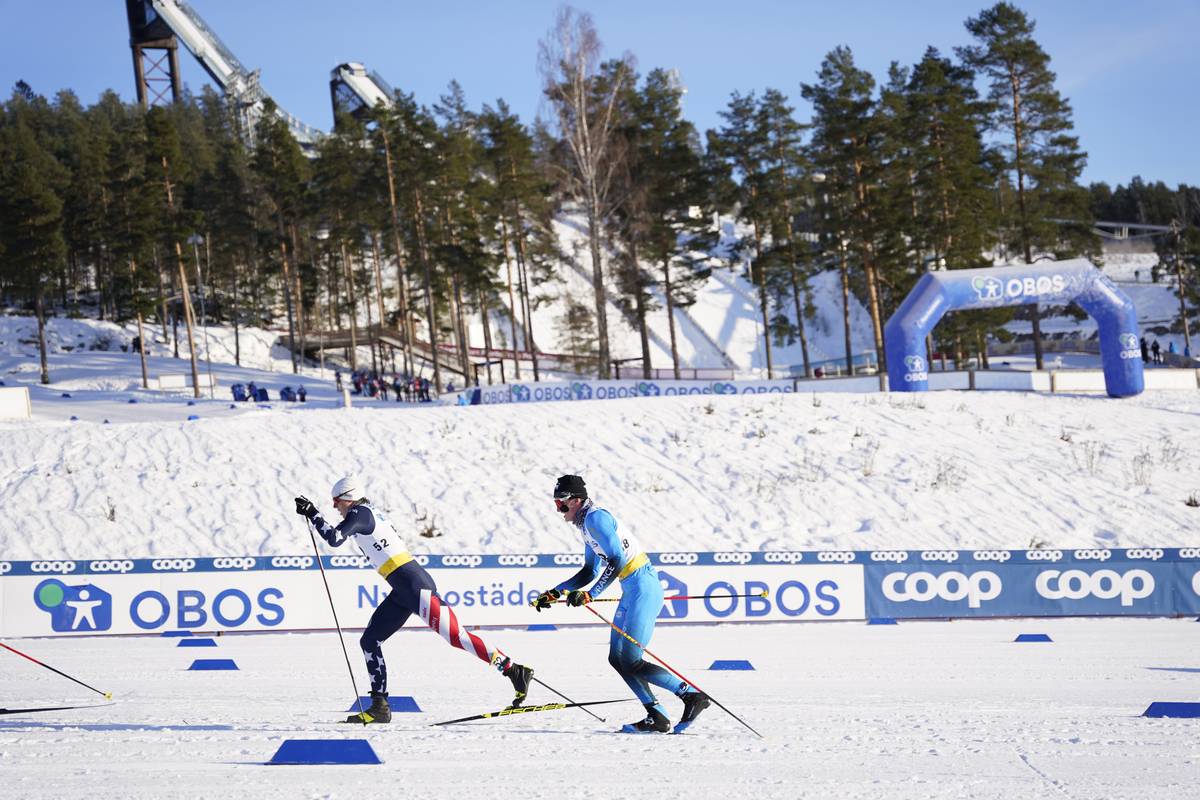
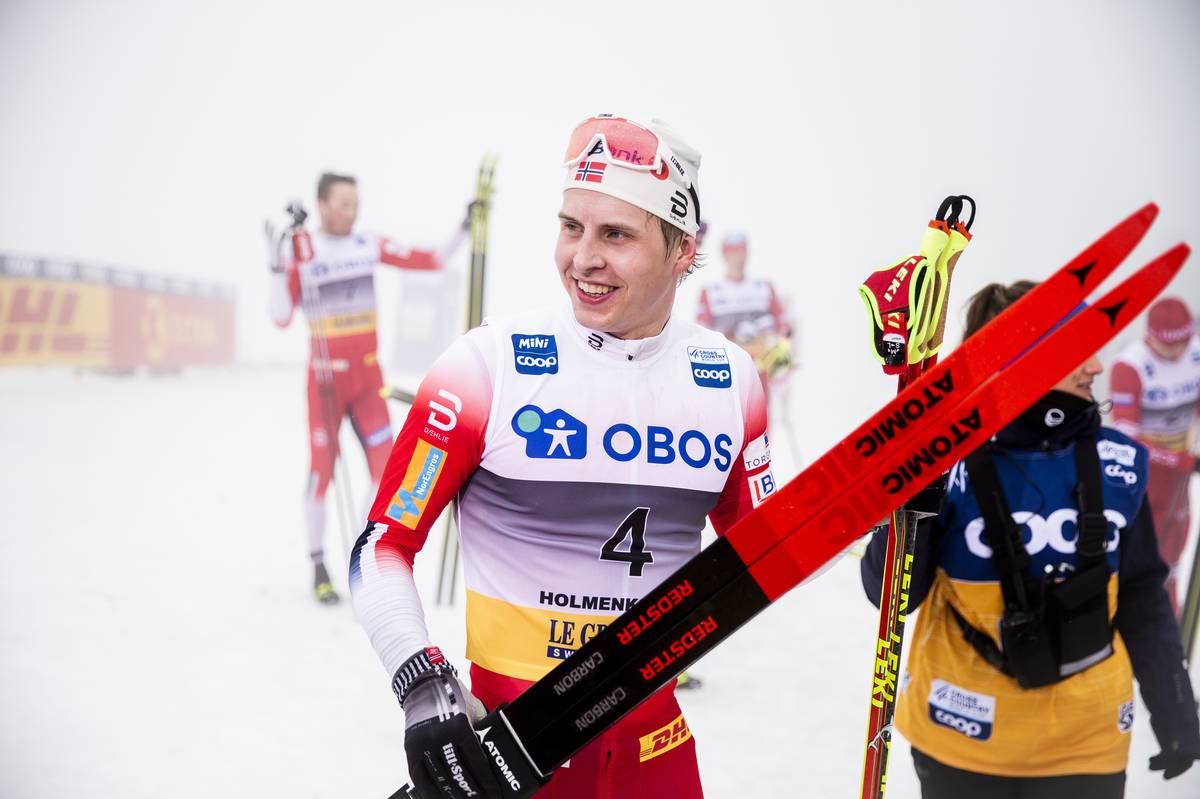
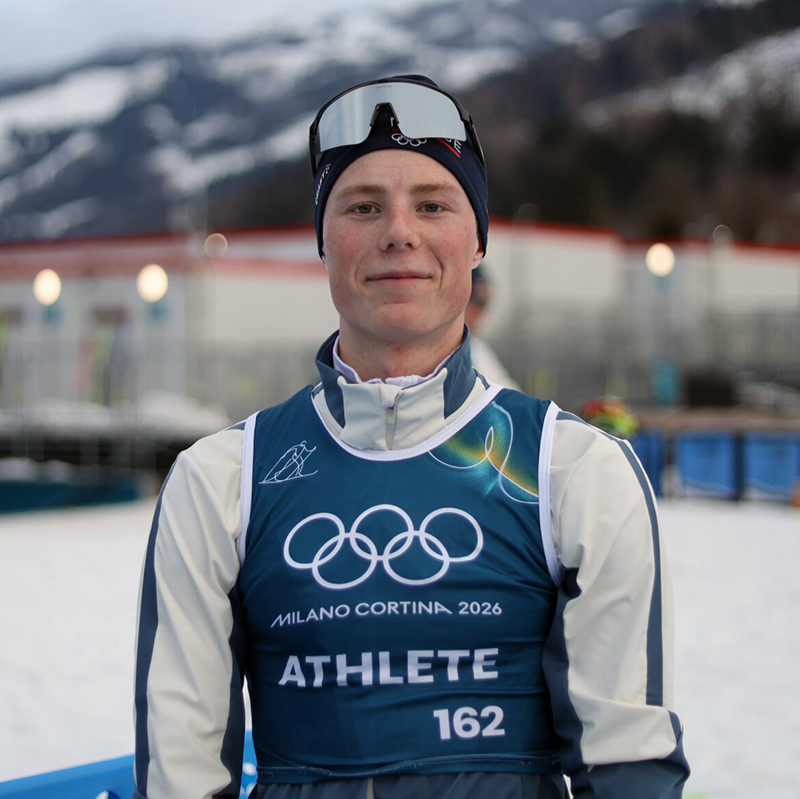
    Einar Hedegart poses for a photo after training at the Olympic cross-country ski venue in the Dolomites in Northern Italy. (Nathaniel Herz/FasterSkier)

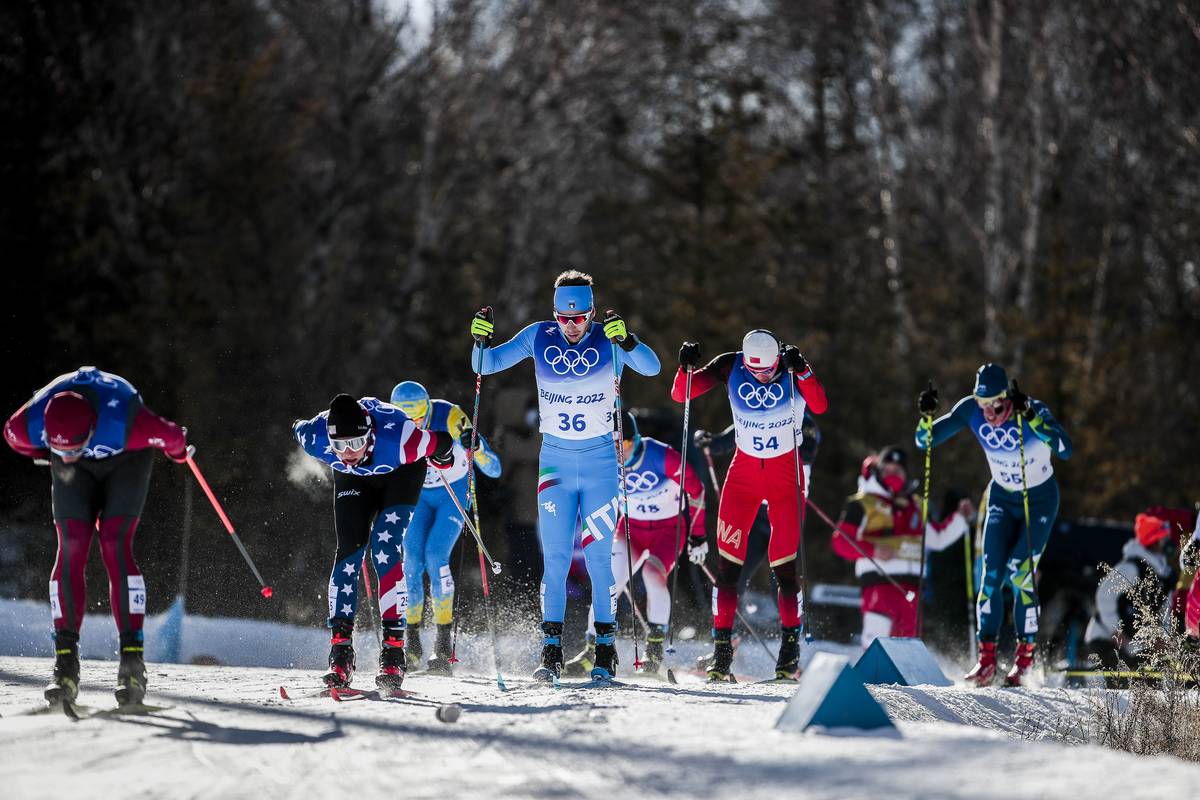
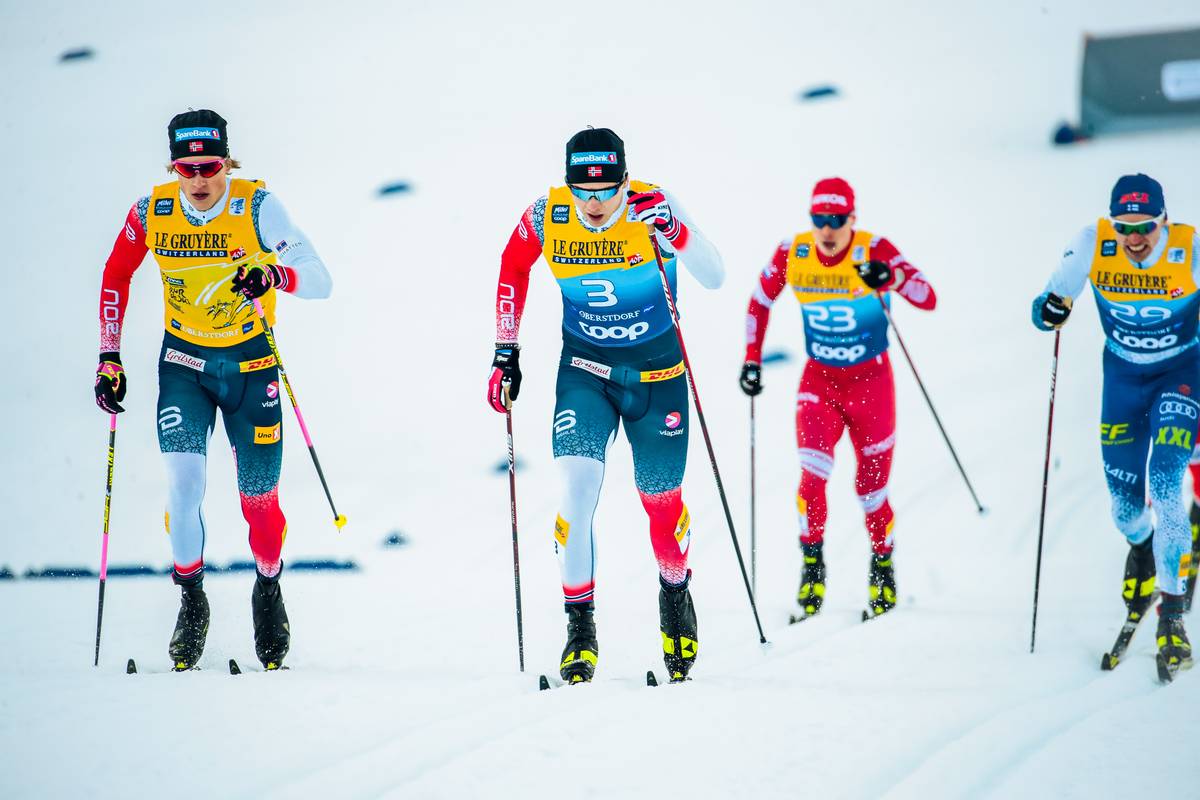
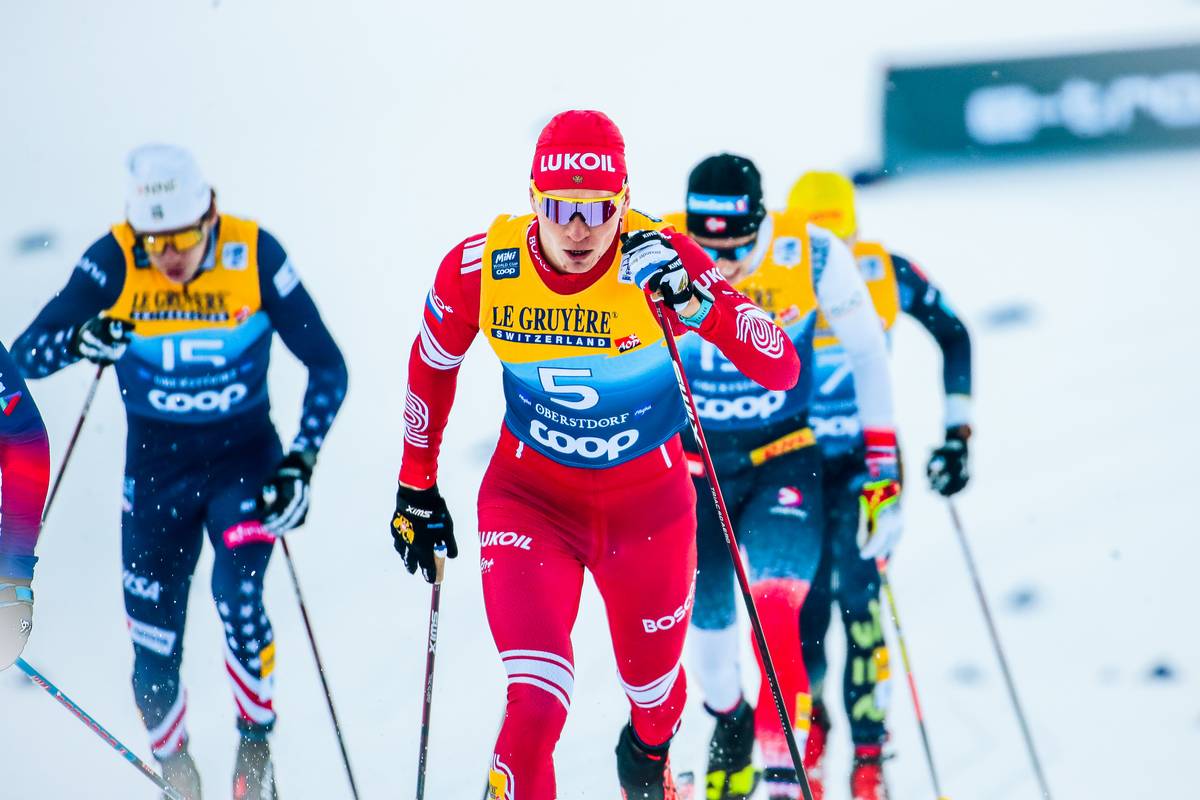
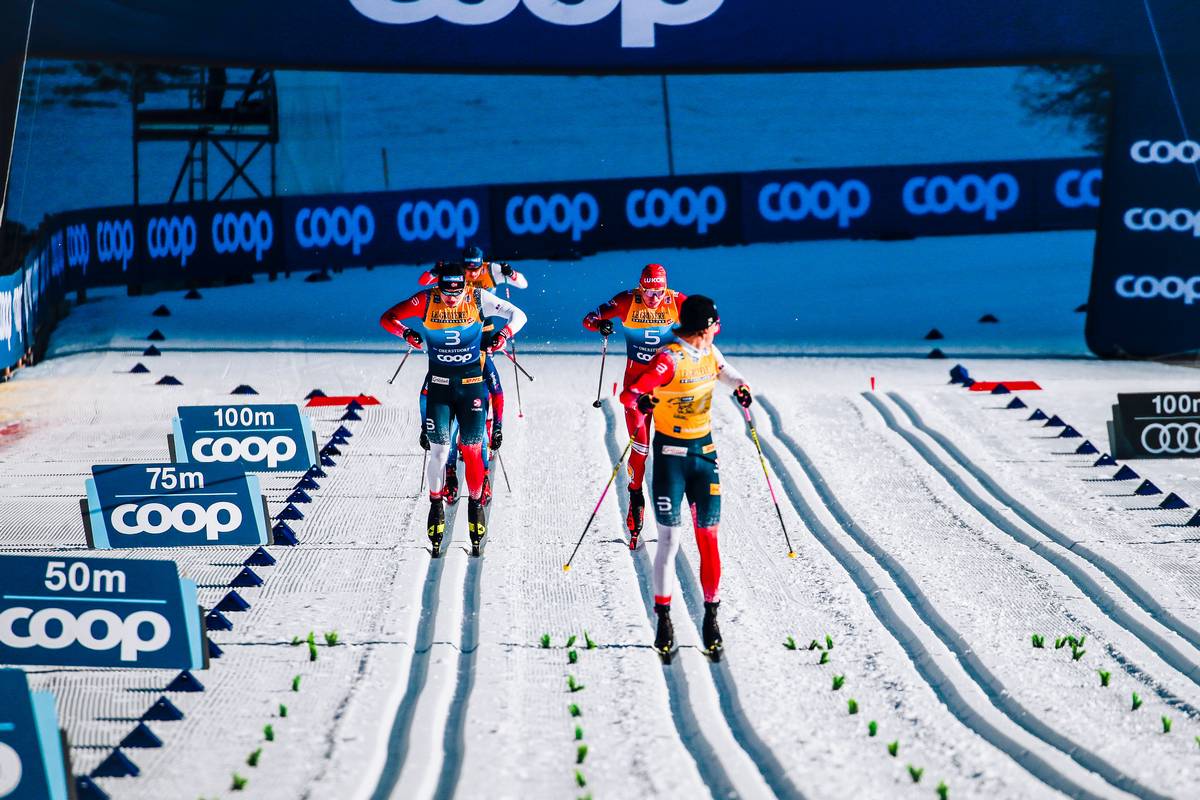
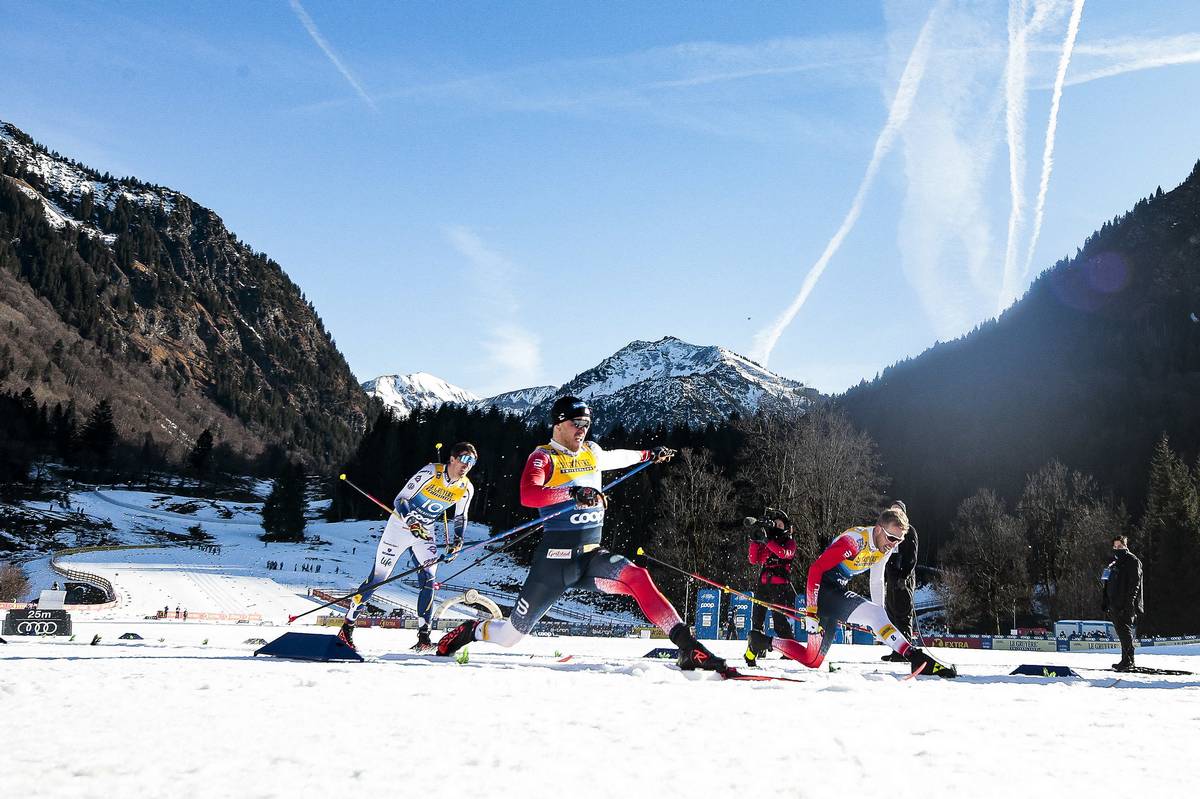
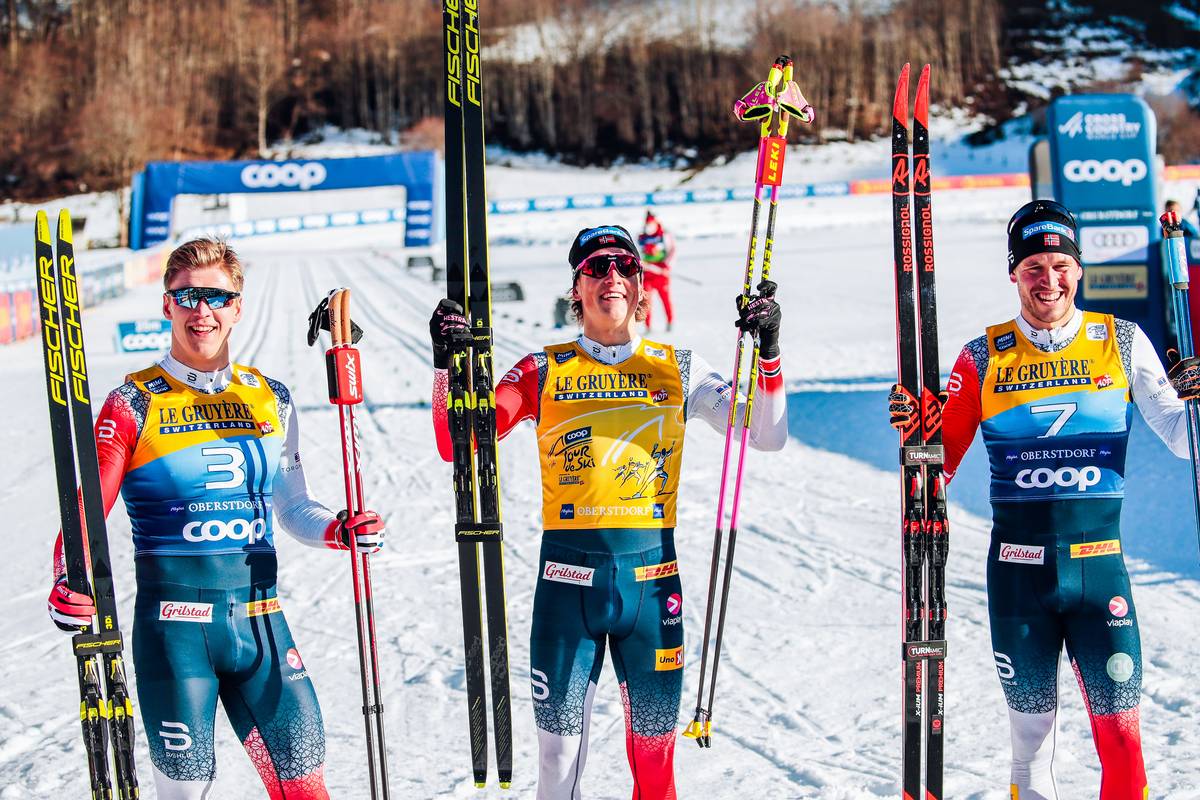
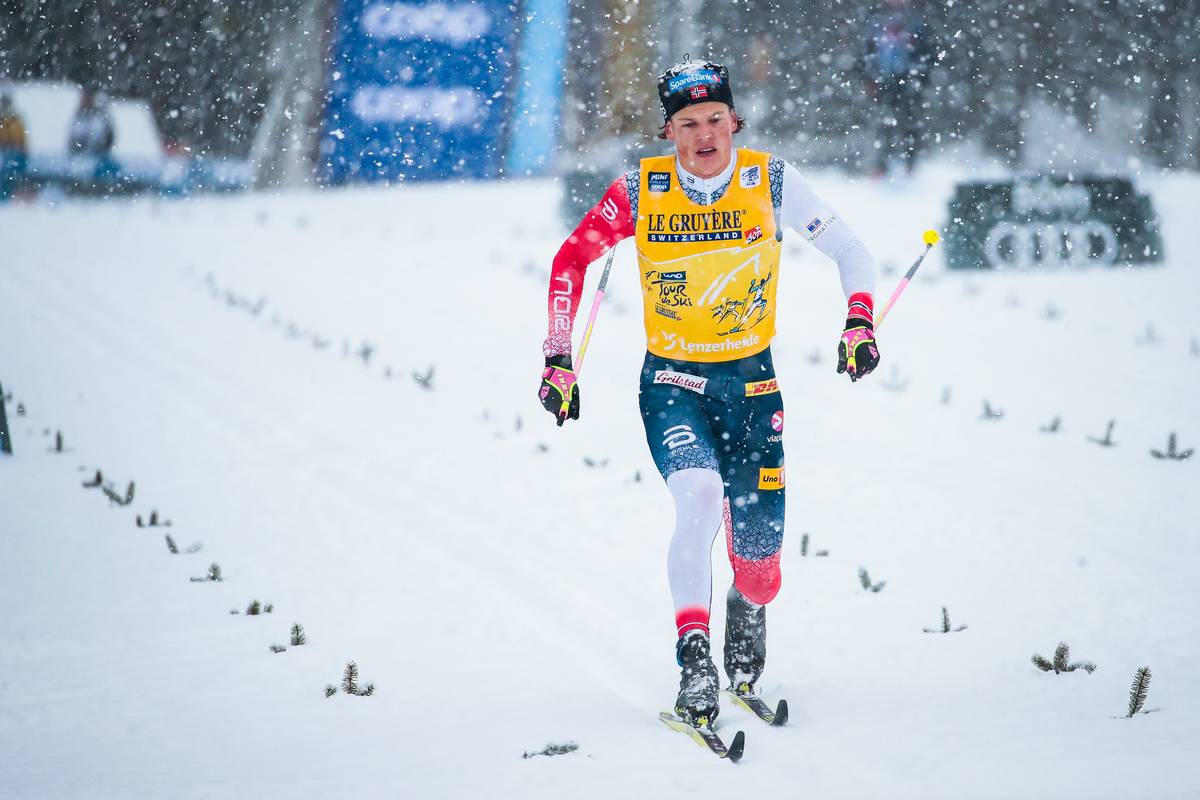
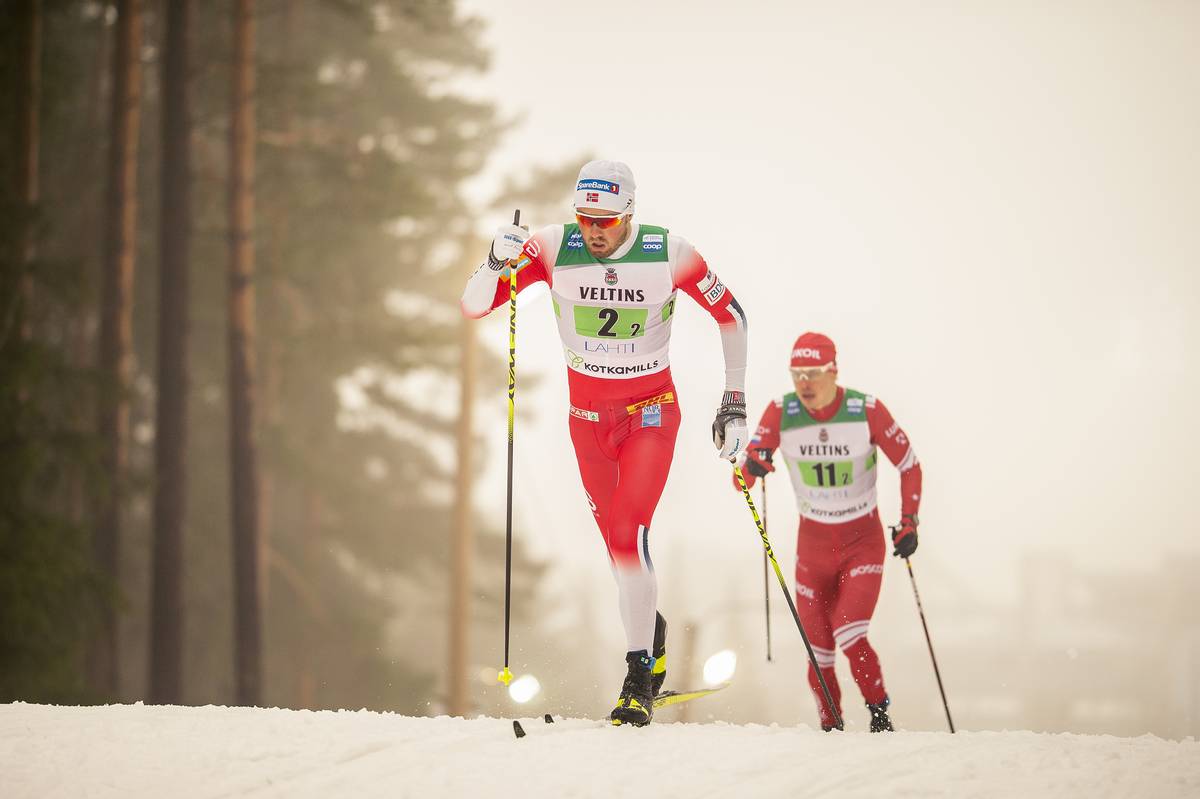
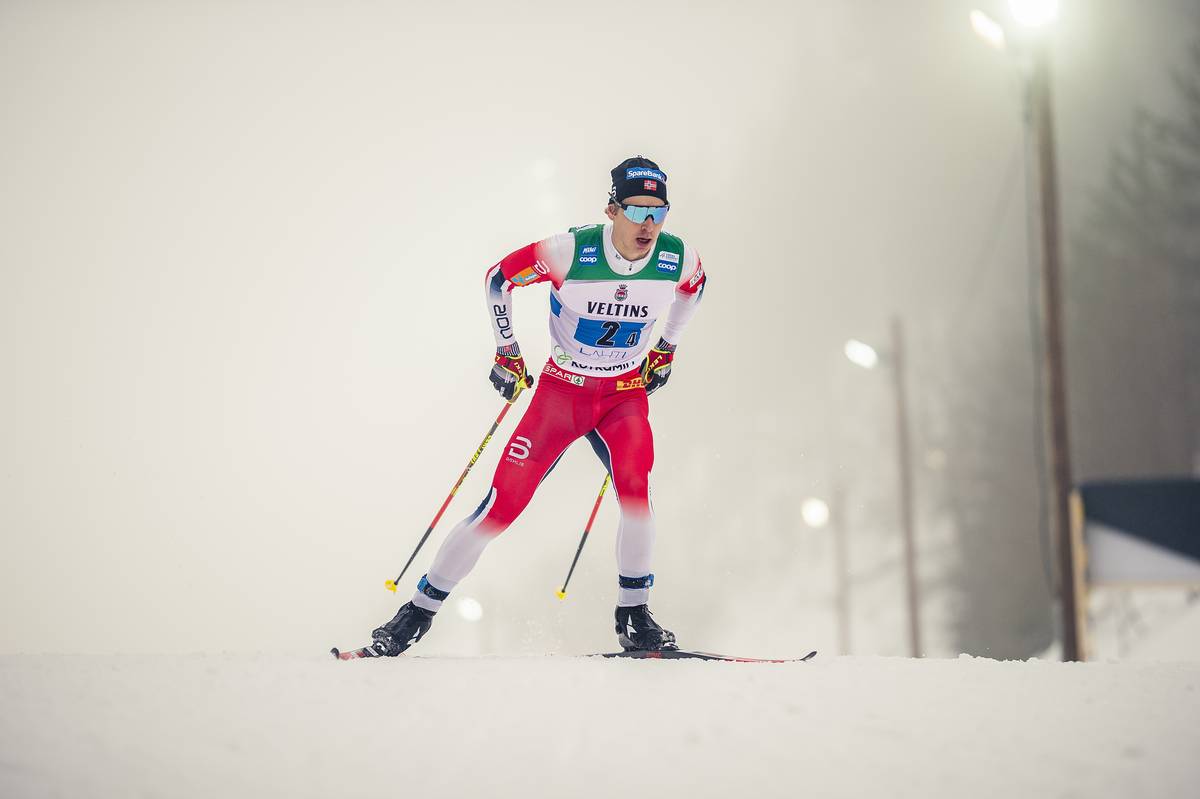
    PREDAZZO, ITALY — Johannes Høsflot Klæbo is, almost without question, the greatest cross-country skier who’s ever lived.

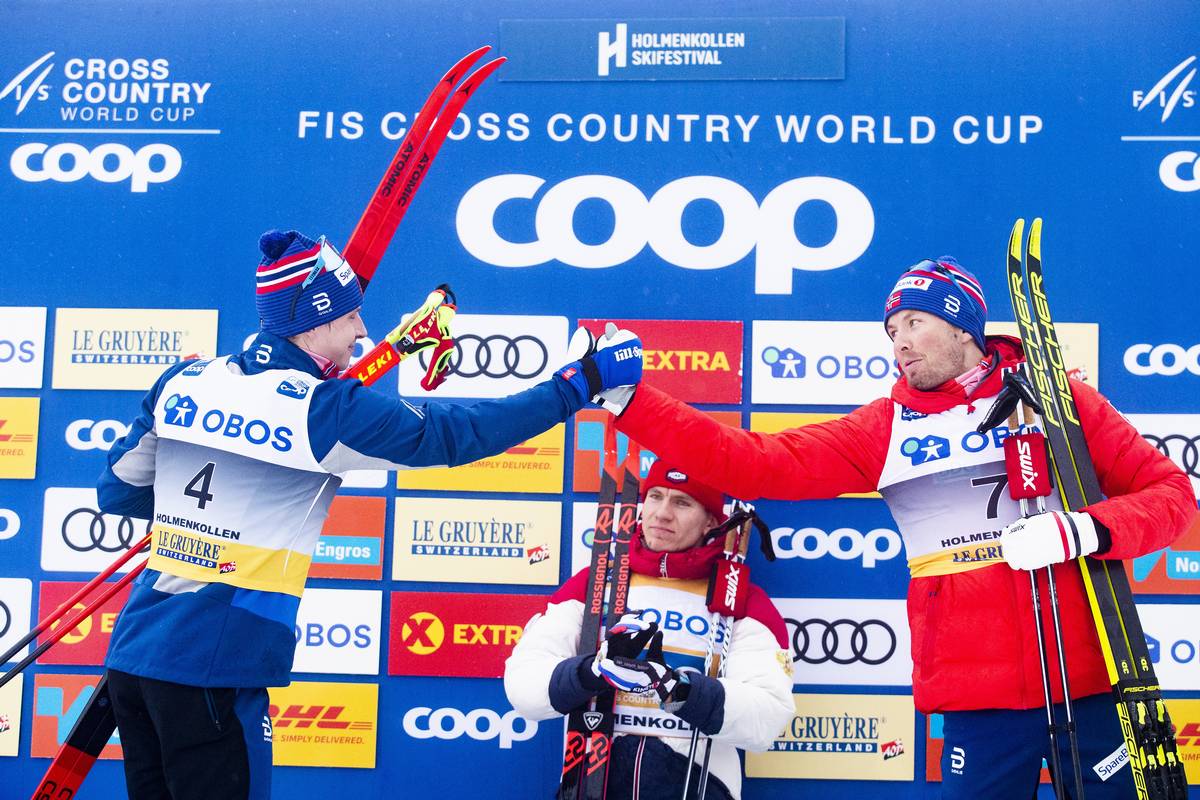
    The Norwegian athlete has won gold in eight consecutive championship races spread across two seasons — including the first two events at this year’s Olympics, in Italy. It’s quite possible he could walk away from the Games with gold in all six events.

    His biggest threat comes from a guy who’s been a cross-country skier for less than three months.

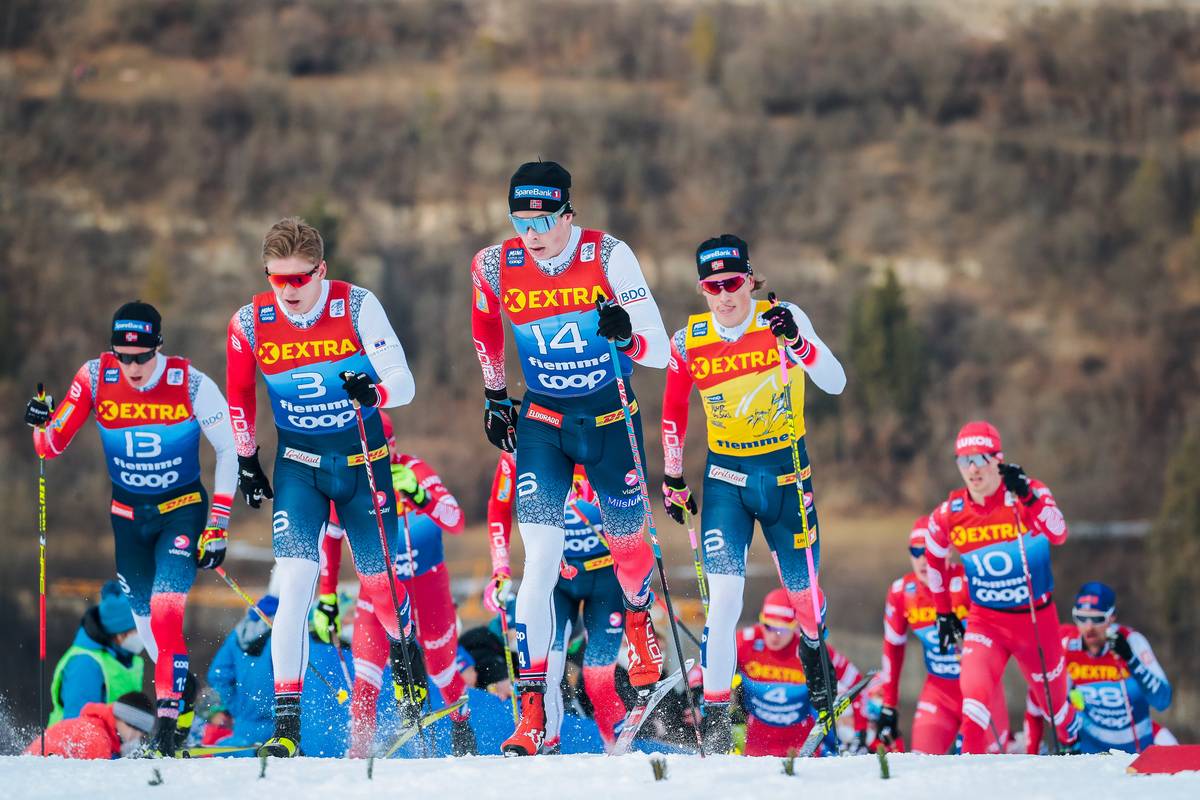
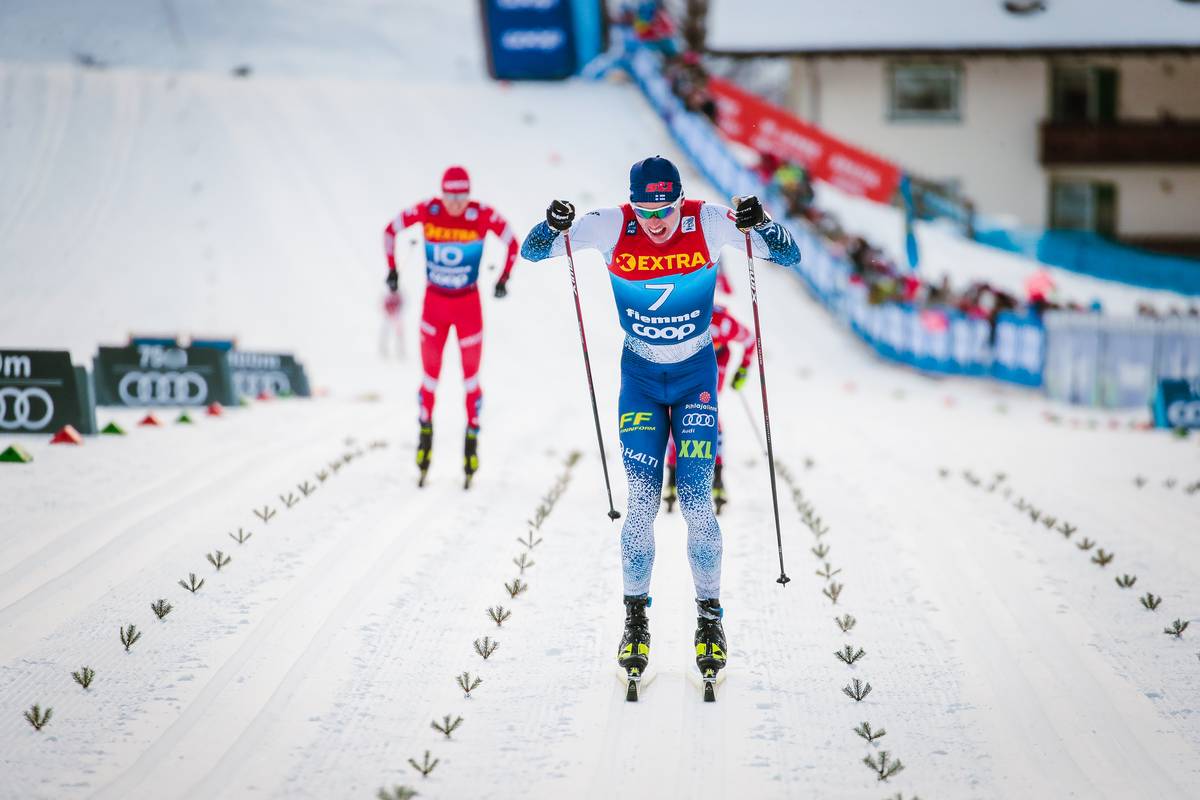
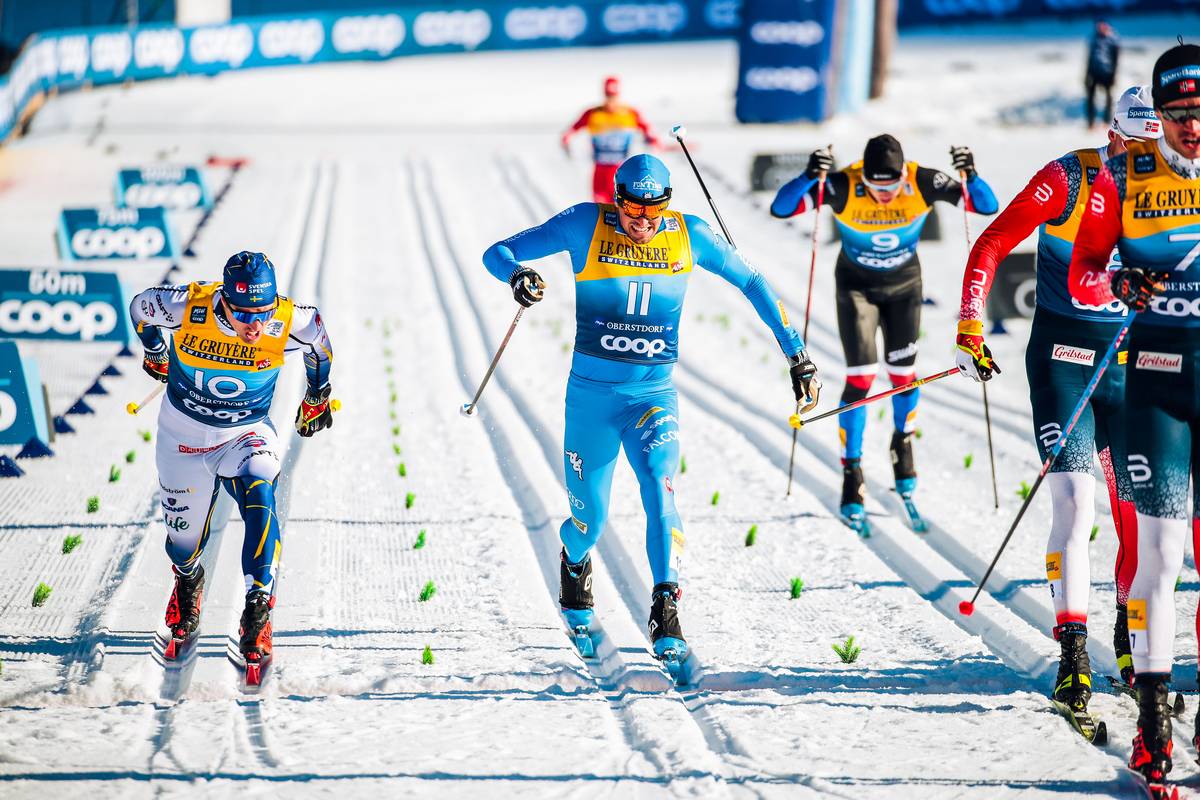
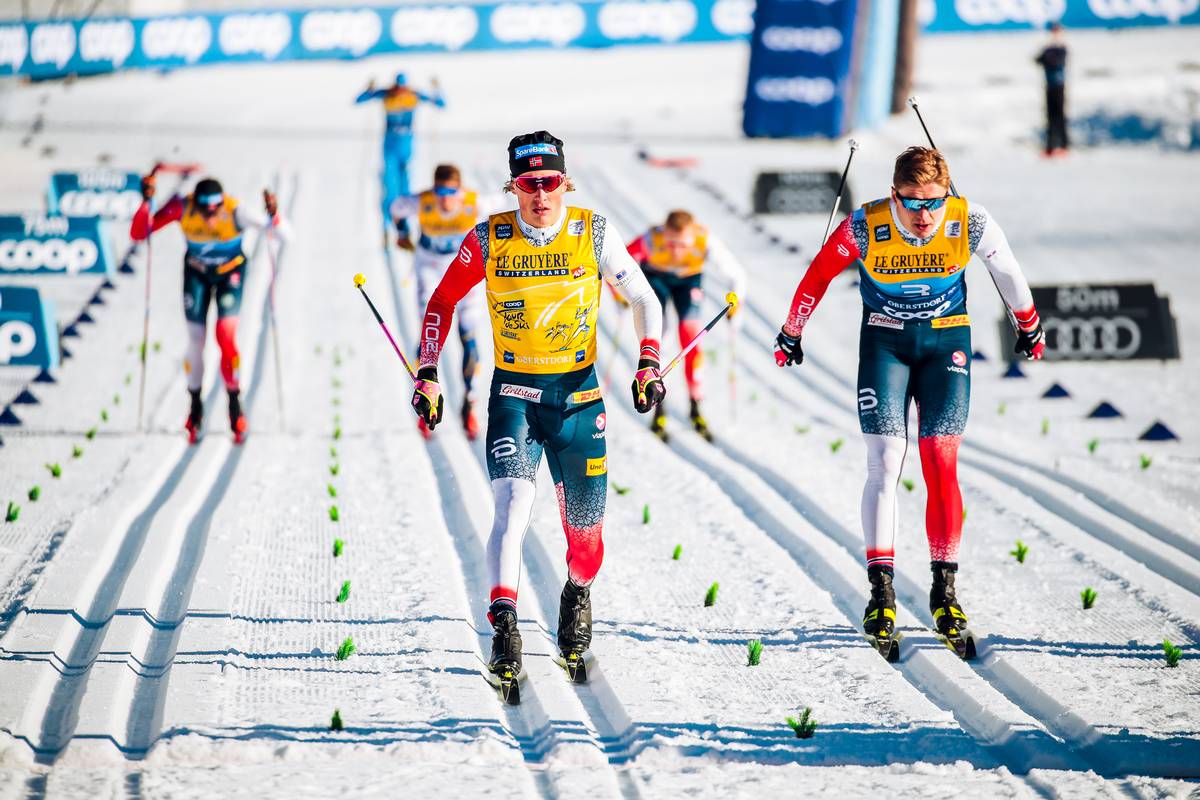
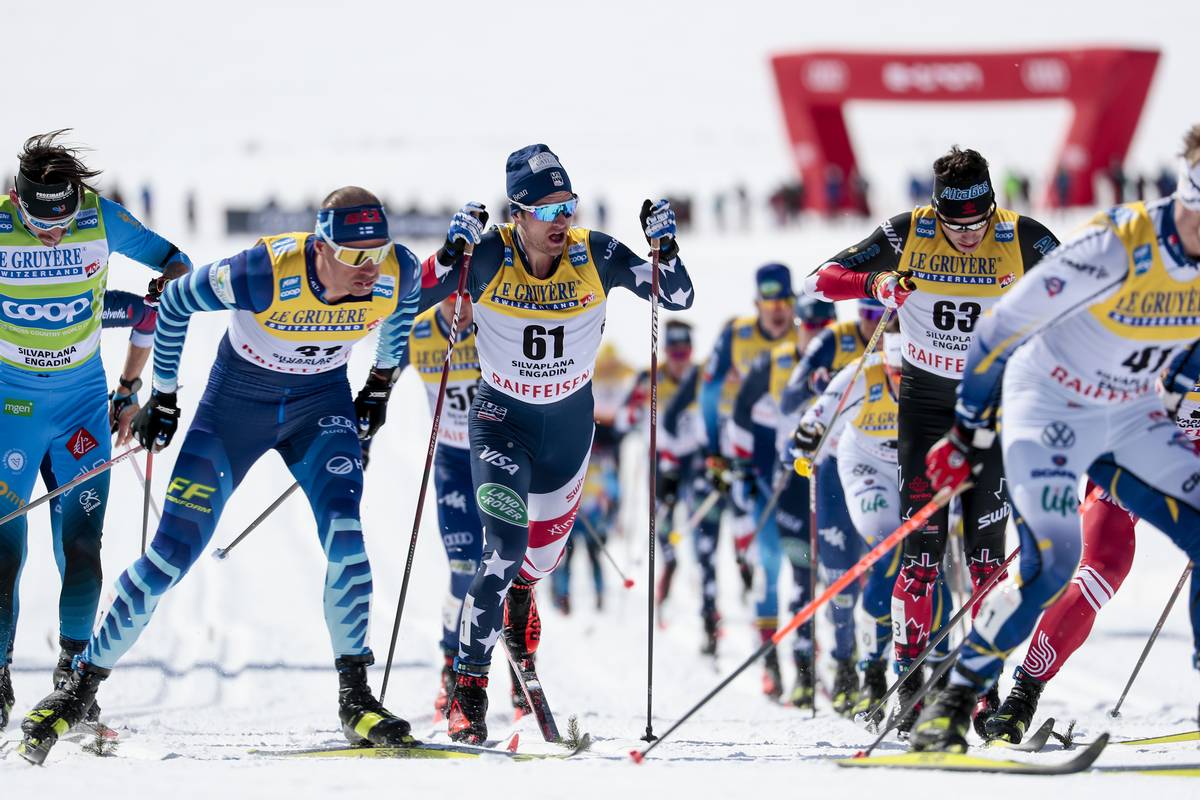
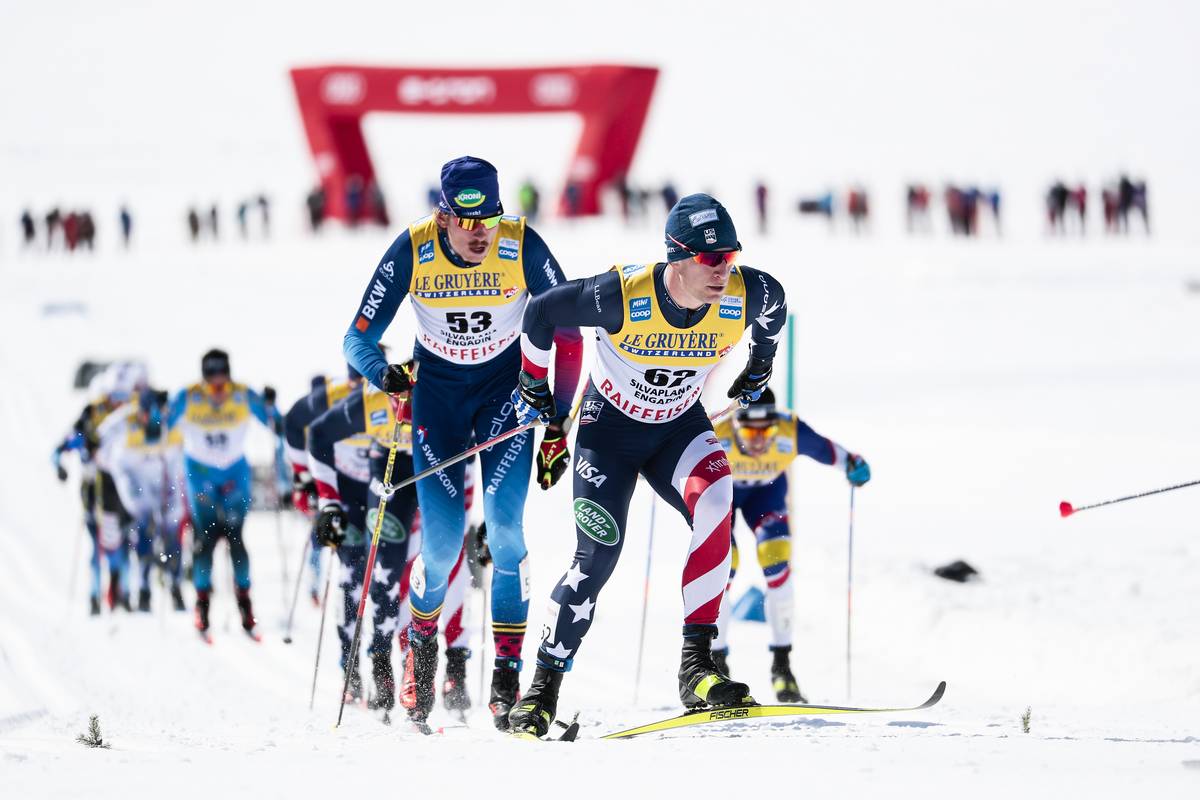
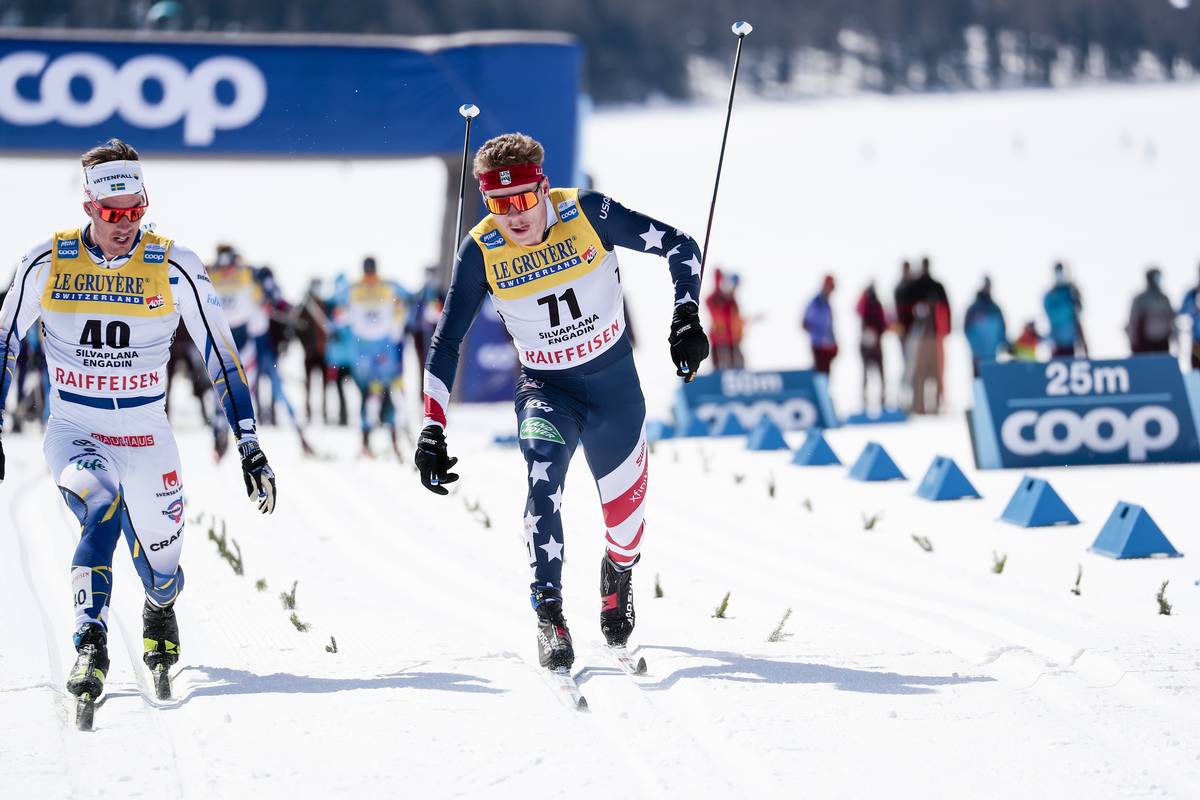
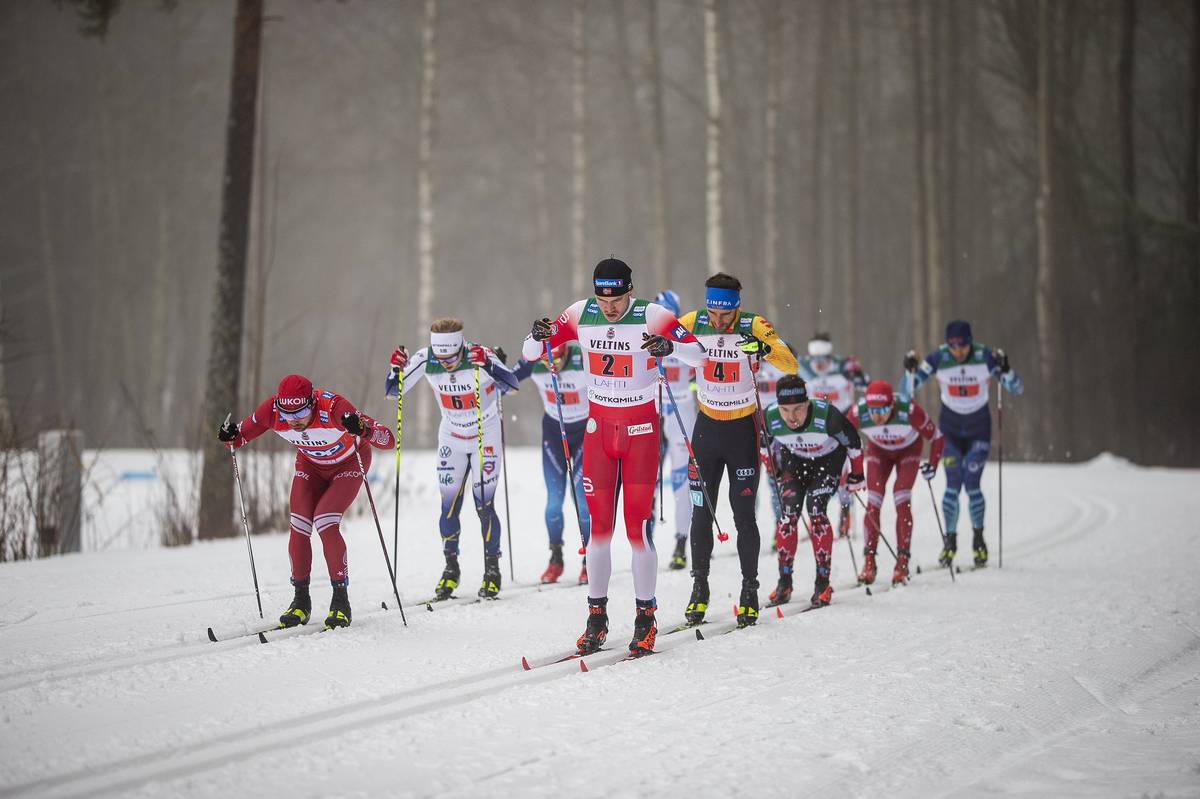
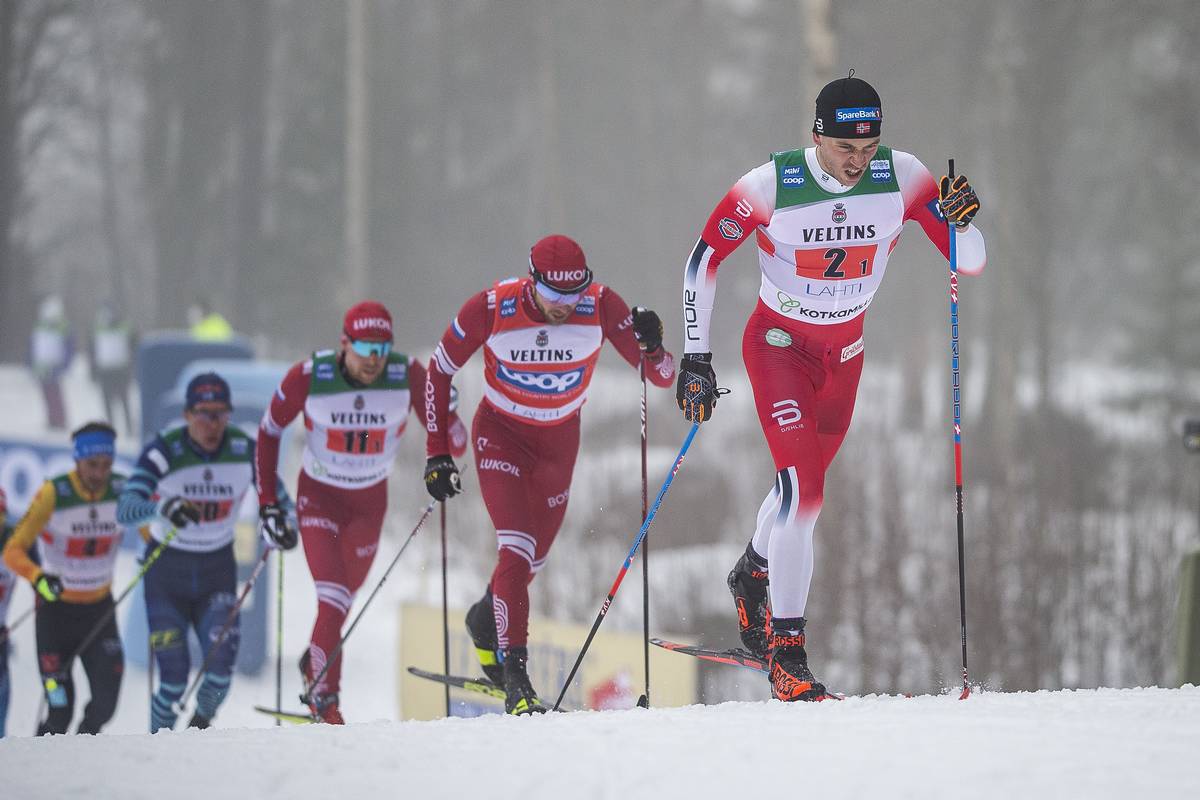
    Norwegian Einar Hedegart has beaten Klæbo all three times they’ve raced each other this winter. He’s won five of the six cross-country events he’s entered since the season began in November.


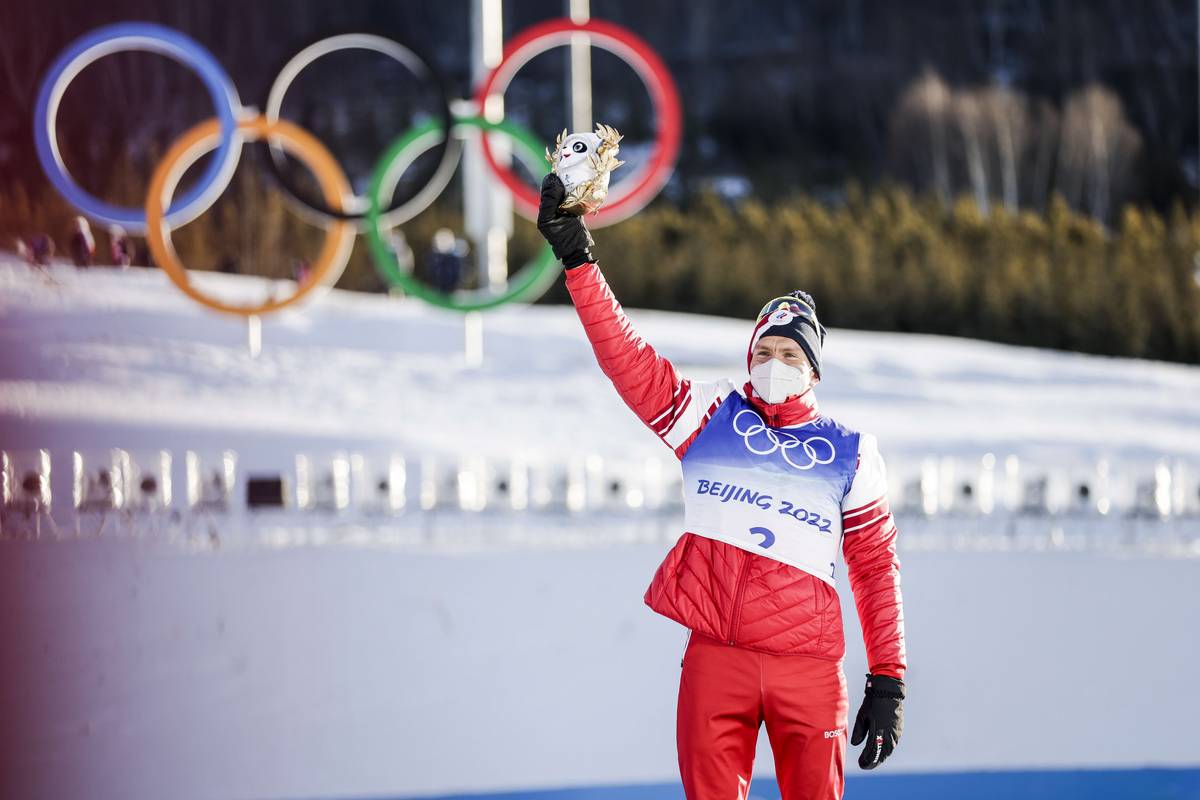
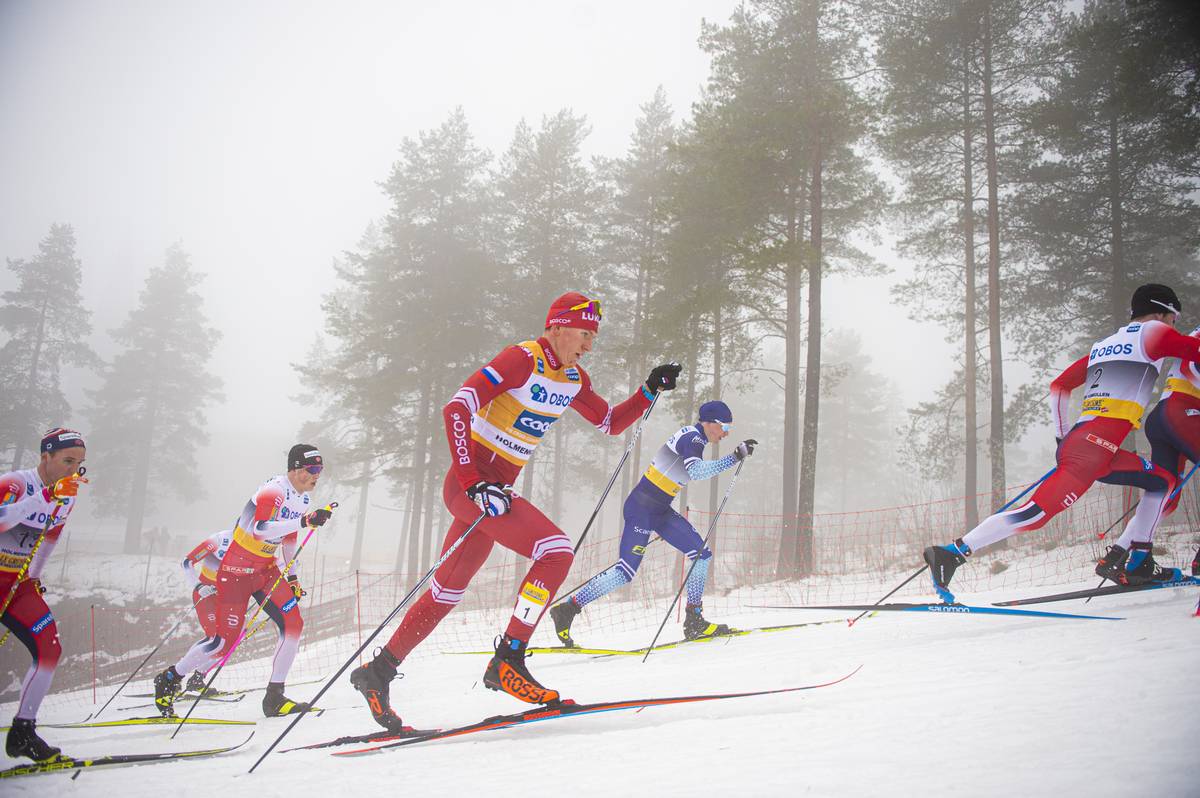
    Johannes Høsflot Klæbo celebrates a gold medal at the Olympics in Italy. (Davide Barbieri/NordicFocus)

    November is when, at least according to Hedegart, he finally accepted the label of cross-country skier. Before that, he’d still been, at least partially, a biathlete — the Olympic discipline that combines cross-country skiing with precision shooting.

    In biathlon, Hedegart was a fast skier, but not always a reliable shooter. Last season, he jumped into a World Cup race against cross-country skiing’s best competitors, and finished a surprising second place.

    That result set off a chain of events that have led him to Italy on Norway’s Olympic cross-country team, with a specific focus on the 10-kilometer freestyle event. That’s where, on Friday, he’s expected to challenge Klæbo for Olympic gold.

    “We’re looking forward to Friday,” Emil Hosøy, the coach of Hedegart’s club team in Norway, said in a phone interview this week. “It will be a hard competition.”

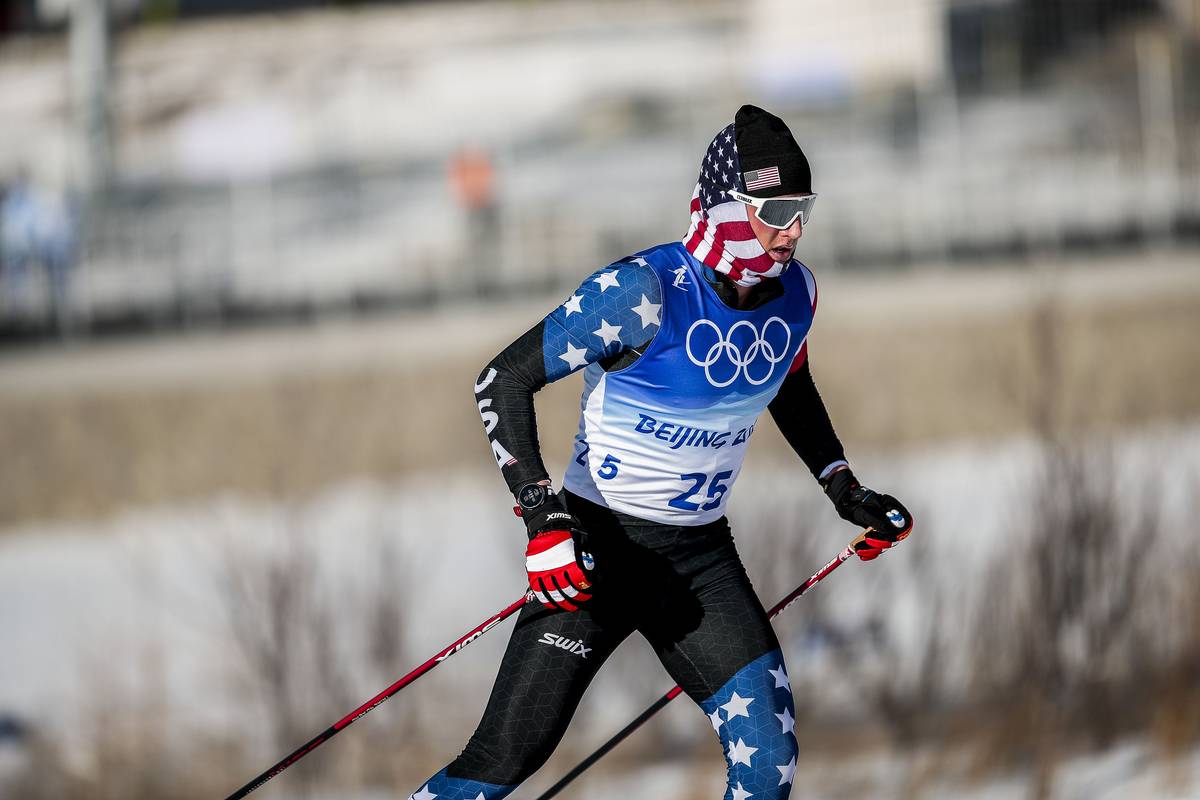
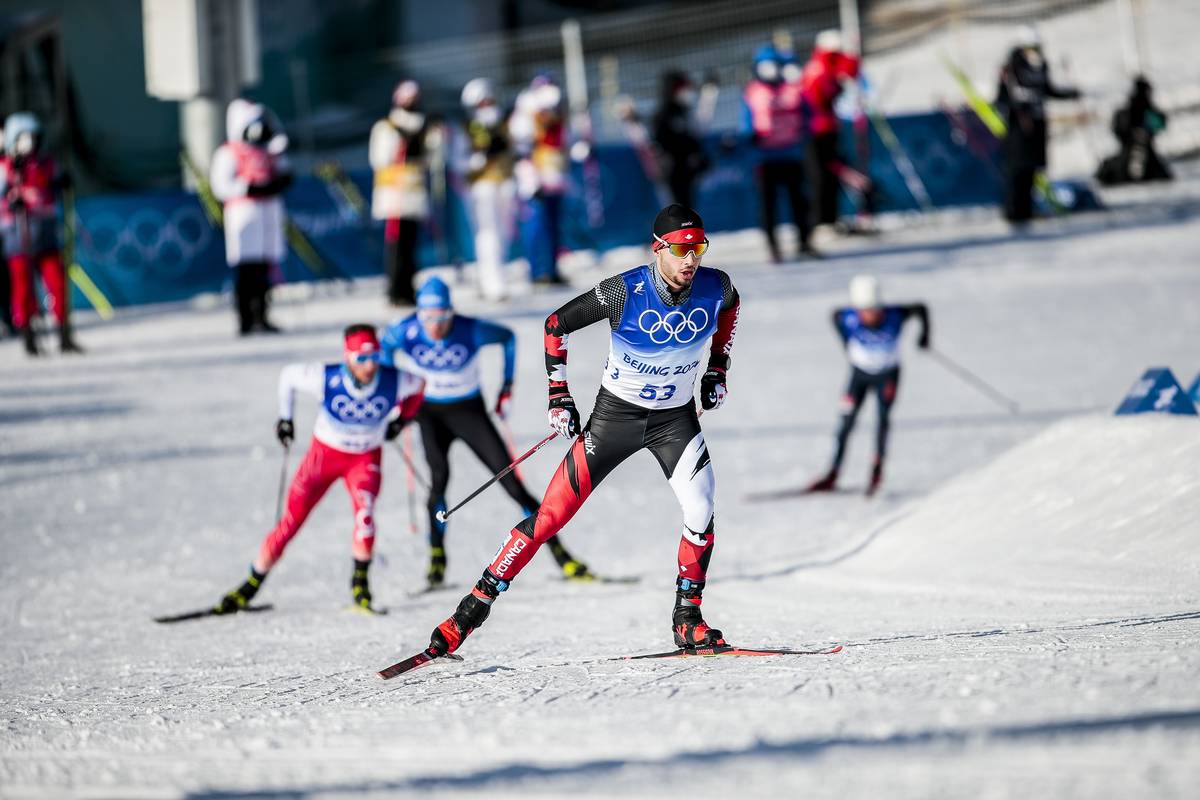
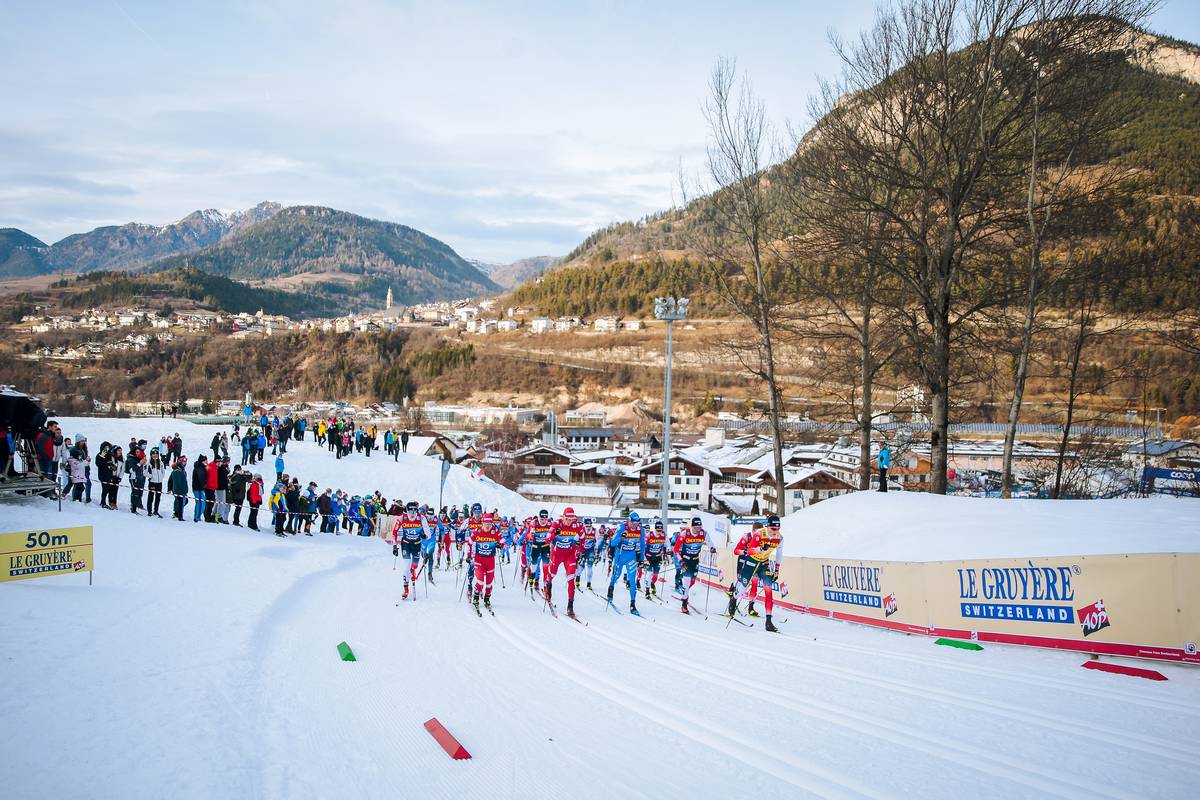
    In a brief interview Tuesday after training with a teammate at the Olympic venue in the Dolomites, Hedegart said he’s prepared for the showdown.

    “Everything has gone according to plan,” he said.

    Biathlon vs. cross-country

    Hedegart’s meteoric rise has enlivened a long-running, colorful debate between cross-country skiers and biathletes over which discipline is superior, and who’s faster. Biathletes have periodically crossed over and notched competitive results, though it doesn’t happen often.

    Swedish cross-country star William Poromaa sparked a furor in Scandinavia two years ago by joking that biathlon, with its stops for target shooting, was for athletes who need a rest between ski sessions.

    Hedegart is the latest test case — showing that on today’s racing circuits, elite biathletes can be, at a minimum, competitive with the best cross-country skiers.

    “I think a lot of cross-country skiers underestimate the level biathlon is at, and the amount of training we are doing,” Hedegart told two cross-country Olympians on their podcast, Skirious Problems. “You guys have to give us some credit, please.”

    Hedegart, 24, is from a little north of Trondheim, a city in central Norway that’s produced some of the world’s best cross-country skiers, including Klæbo.

    As a kid, he watched cross-country skiing on television, because the Norwegian superstar Petter Northug Jr. came from his area. But Hedegart’s focus was biathlon, and he showed promise early — winning medals at the World Junior Championships and, in 2023, reaching the top 30 in the World Cup, the sport’s highest level of competition.

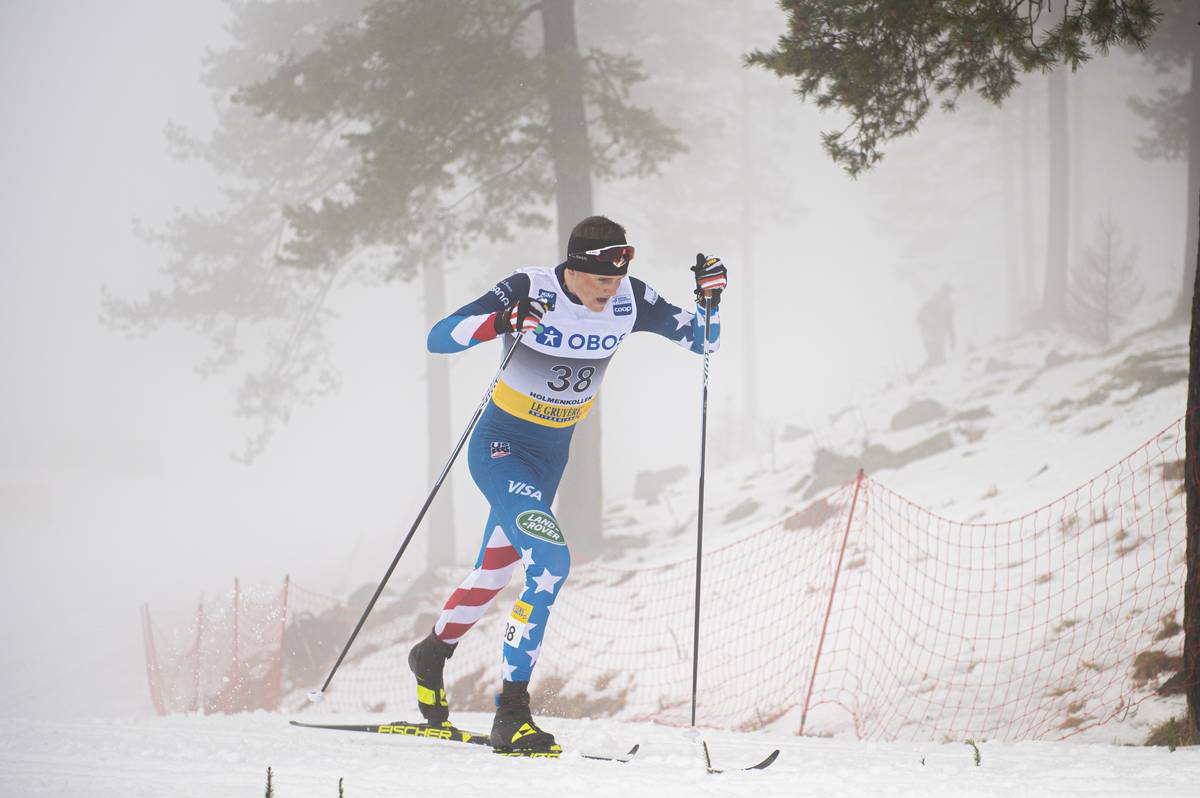
    Einar Hedegart competes in a cross-country World Cup race in Switzerland (Federica Vanzetta/NordicFocus)

    Hedegart would also, from time to time, enter elite cross-country races. Some of those decisions were happenstance — one because he didn’t have a partner for a biathlon relay on the same day, and another that he entered on a whim after a registration deadline.

    But in both of those cases, he won.

    His results earned him an entry into a cross-country World Cup race in Oslo last year, where he placed second — prompting questions from Scandinavian pundits about whether Hedegart was focused on the right sport.

    So, over the summer, Hedegart hedged his bets: He switched from training with biathlon teams to training with a cross-country ski team — albeit one that would allow him to keep shooting his rifle and compete in biathlon.

    “All the way from May to November, I was 50-50,” Hedegart said. “I brought my gun to every camp and shot a lot.”

    At the start of this winter, Hedegart entered two sets of races over two weekends — biathlon and cross-country — to help decide how he would spend the rest of the season.

    In biathlon, he shot poorly. In one race, he missed eight of 20 shots; only one athlete out of 59 competitors missed more.

    The cross-country race, meanwhile, he won by a big margin — besting not just Norway’s top skiers but other top talents from France and Austria. That was the day things changed, Hedegart said.

    “I’m a cross-country skier this winter season,” he said.

    Klæbo, whose championship winning streak is at risk, has taken notice of Hedegart’s rise, which resulted in him being named to Norway’s Olympic cross-country team early in the winter.

    “It’s impressive, what he has done,” Klæbo said. “I’m going to try to give him a good match.”

    The best skater of all time?

    Both Klæbo and Hedegart himself credit Hedegart’s success this season to a unique aspect of his training.

    Cross-country skiing, both on the World Cup circuit and at the Olympics, features events in two techniques — the traditional forward striding and poling known as classical, and the side to side pushing called skating.

    Biathletes compete only in skating, and Hedegart, this past year, has focused his training almost exclusively on that technique. He hasn’t even bothered to contest classical cross-country competitions this winter. 

    Hedegart said on the podcast, in November, that he’d spent less than 12 hours practicing classical style in the previous six months — a tiny fraction of the hundreds of hours he’d spent training in total. Top cross-country skiers, meanwhile, typically divide their training close to evenly between the two techniques.

    Einar Hedegart, center, celebrates winning a World Cup cross-country race in Switzerland. (Federica Modica/Nordic Focus)

    “That is my strength, that I can use more time than anyone else ever has on skating,” said Hedegart in the interview. “I’ve just really done my thing, and that has gotten me this far.”

    Hedegart’s training plan has other unconventional elements, including lots of moderately hard sessions and few extra-hard ones, which allows him to spend more time training overall, said Hosøy, his coach. Hedegart is also a “very clever” athlete who’s shown a keen awareness of his own body that’s unusual for someone his age, Hosøy added.

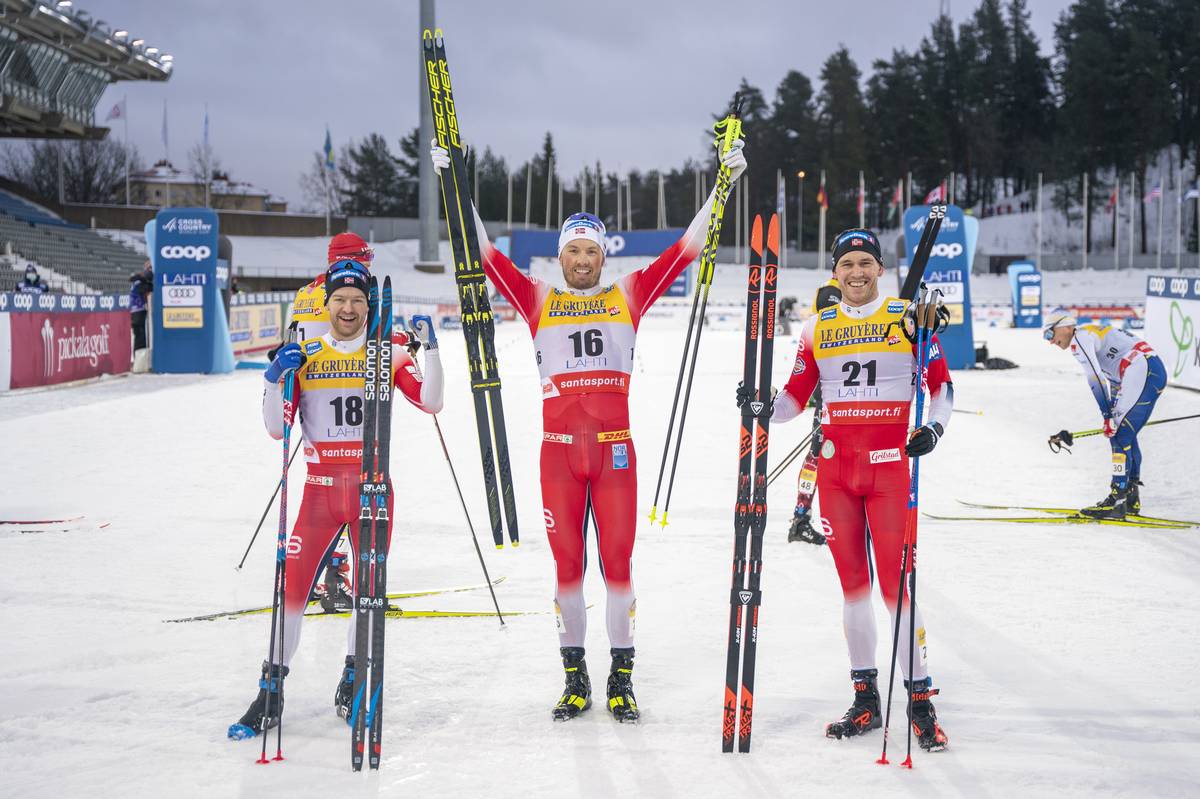
    But it’s the added emphasis on skating that’s allowed Hedegart to take the technique “to a new level,” said Pål Golberg, a former top Norwegian skier who’s competed against Hedegart and now is working at the Olympics as an expert TV commentator.

    “The training he does is out of this world,” Golberg said. “He can be the best skater the sport has seen — if he wants to do that.”

    A postseason dilemma

    That’s the question Hedegart will have to answer after this season — and it poses a real dilemma. 

    Avoiding the classical technique means he can only compete in half of cross-country’s racing schedule. And because his success, so far, has come mostly in distance events, Hedegart has not yet earned a chance to race individual sprint races for the Norwegian team, whose start slots are hotly contested.

    As a result, Hedegart has started just six cross-country races this winter — far less than athletes competing in both disciplines.

    “If you want to get old in this sport, maybe you have to get to compete more to have the motivation to train as much as he does,” said Hosøy, the coach.

    But training and racing in the classical technique would risk the success Hedegart has found after specializing in skating.

    “I wouldn’t take the chance,” said Golberg. “If he has this skating that’s so good, why would you risk it? He would never win a distance race in classic, I’m pretty sure.”

    There’s also the question of whether Hedegart will ultimately return to biathlon — which, he said, would make it pointless to try to improve his classical technique, since it’s not used on the biathlon circuit.

    Hedegart celebrates a podium finish at a cross-country World Cup race in Finland earlier this year. (Federico Modica/NordicFocus)

    At the start of the season, Hedegart said, he still planned to go back to biathlon next year. Now, he added, he’s pretty sure he’s changed his mind: If he’s offered a spot on Norway’s national cross-country team for next year, he’d take it, at least for one season.

    But in 2029, the biathlon World Championships will be held in Oslo — a chance to compete in a marquee event in Hedegart’s home nation. “That is a big, big dream of mine,” he said. “And I really hope that I can compete there.”

    “That is the back and forth I have to do,” Hedegart added, referring to the balance between the two sports. 

    If Hedegart’s success this season has complicated his career planning, it’s at least provided Scandinavians with a compelling new storyline — particularly in men’s cross-country skiing, where some pundits complain that Norwegian dominance is making the sport boring.

    “Norwegians are pretty tired of watching one Norwegian fighting with another,” said Golberg. “But now, suddenly, you have two sports clashing together.”


    Help Support Our Olympic Coverage!

    FasterSkier has our own Nat Herz on the ground at the Olympics, which is a significant financial lift for us. If you value the thoughtful work and access FasterSkier provides at championships like this one, please consider becoming a Voluntary Subscriber. Your support directly fuels our work to cover the people, places, and moments that make our sport special.

    Join the FasterSkier community!


  • The Devon Kershaw Show: Tuning up for Trondheim with Gus Schumacher

    The Devon Kershaw Show: Tuning up for Trondheim with Gus Schumacher

    We’re gearing up for our on-site coverage of the World Championships in Trondheim, Norway, with a recap of last weekend’s racing in Sweden. Top U.S. distance skier Gus Schumacher joins us to break down his podium finish. We’ll be back soon with a Trondheim preview episode, if not more than one.

    Get at us at nat@fasterskier.com and devon@fasterskier.com. Thanks for listening.


  • The Devon Kershaw Show: Winding down 2024 in Norway, with guest Sam Hendry

    The Devon Kershaw Show: Winding down 2024 in Norway, with guest Sam Hendry

    Long distance in Oslo, city sprints in Drammen. The World Cup takes its late-season swing through Norway and Devon and Nat have a full breakdown, with special guest Sam Hendry, a Canadian athlete who’s had some standout results late this season.

    We’re sprinting to the finish of the 2024 podcast season. Send your long-shot requests for off-season content to devon@fasterskier.com and nat@fasterskier.com. We’ll be back in a few days.


  • The Devon Kershaw Show: A tale of two races in Canmore distance classic

    The Devon Kershaw Show: A tale of two races in Canmore distance classic

    We’re grinding on with our third episode in four days. Hope you’re still listening. If you don’t get the hat reference, read our coverage.

    We’ll be back with another episode after the last race in Canmore. To keep you from podcast withdrawal later in the week, we’ll roll out some interviews we did with a couple of international athletes here. Then we’ll be back again from Minneapolis this weekend.

    Speaking of Minneapolis, if you’ll be there in person, we’re hosting a live show where we’ll be taping Sunday’s episode in front of an audience — though we’ll need all 12 listeners to show up for it to really be an actual audience. More details soon — the event is at Utepils Brewery near the venue, with an exact time to be determined, but it will be after the last race of the day.

    Questions? Comments? Email us: devon@fasterskier.com and nat@fasterskier.com. Thanks so much for listening.


  • A Finnish finish: Tying a bow on the 2023 season in Lahti

    A Finnish finish: Tying a bow on the 2023 season in Lahti

    This is the end. Of the 2023 racing season. Devon and Nat go without guests and are here to take you through the last three events of the winter in Lahti, Finland. And we cover a couple of retirement announcements from U.S. skiers.

    We’re taking a little break after this but, we promise: We won’t leave you hanging for the whole off-season. Stay tuned for more regular episodes over the course of the spring and summer, and we’ll be back in a few weeks for a 2023 season recap. Tell us your favorite memories from this year — get at us at devon@fasterskier.com and nat@fasterskier.com.

  • The Devon Kershaw Show: That was a really fun World Champs 50 k.

    The Devon Kershaw Show: That was a really fun World Champs 50 k.

    We’ve made 10 podcasts in 11 days and I have no juice left to come up with snappy episode titles or show notes. So this is what you get. Click play and listen to us talk. It was a cool 50 k.

    Get at us at devon@fasterskier.com and nat@fasterskier.com. We’ll be back after the first-ever women’s 50 k, with both Devon and Nat on scene in Oslo.

  • The Devon Kershaw Show: A final tuneup in Toblach

    The Devon Kershaw Show: A final tuneup in Toblach

    World Championships is looming; Devon and Nat return to cover three days of racing — and two podiums from Jessie Diggins — in Toblach, Italy. We’ll finally get to the mailbag episode next week, so send in your questions if you’ve got ’em: devon@fasterskier.com and nat@fasterskier.com.

    Jessie Diggins races in Toblach last weekend. (Photo: NordicFocus)


  • Entire Norwegian sprint team tests positive for COVID following Lahti World Cup

    Entire Norwegian sprint team tests positive for COVID following Lahti World Cup

    Corresponding with a social media post from Johannes Høsflot Klæbo, the Norwegian news outlet NRK reported yesterday that each of the men’s national team sprinters who competed in Lahti last weekend has tested positive for COVID-19. Head sprint coach Arild Monsen told NRK that Håvard Solås Taugbøl was the first to test positive on Monday, followed by Erik Valnes, Pål Golberg, Sindre Bjørnestad Skar and Johannes Høsflot Klæbo on Tuesday. According to Trondheim regional newspaper Adresseavisen, the final Norwegian sprinter who raced in Lahti, Even Northug, has also been affected

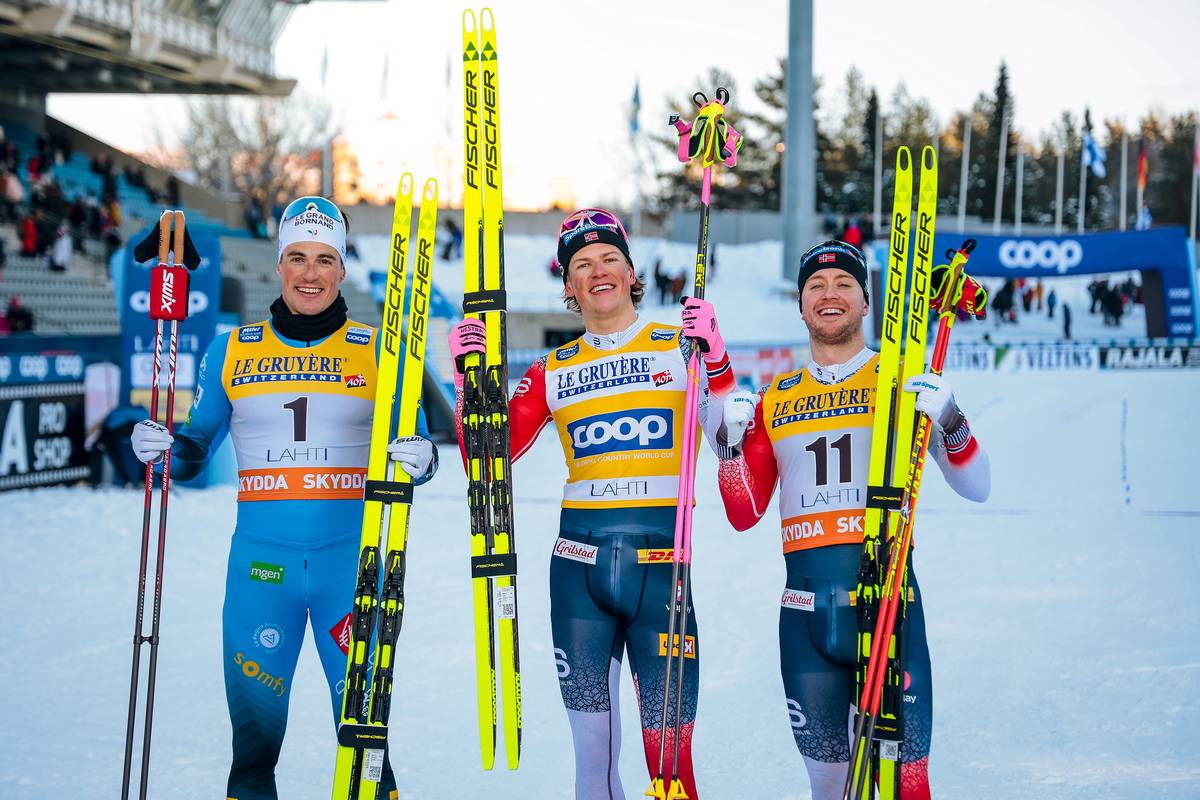
    Johannes Høsflot Klæbo (NOR) takes the win in Lahti’s freestyle sprint ahead of Lucas Chanavat (FRA) and Sindre Bjørnestad Skar (NOR). (Photo: NordicFocus)

    “It must have occurred in and around the stay in Lahti,” Monsen explained to NRK. “Håvard was the one who noticed symptoms on Monday. The others have little or no symptoms.”

    Given the proximity to the upcoming sprint races in Drammen, Norway, Monsen indicated that these men would not be attending the competitions. 

    “What happens after that, we just have to look at. It’s boiling in many fields in the world now. This is smaller than other things, even though it is [disappointing] for those they concern,” Monsen continued.

    At this time, no other athletes from the Norwegian program who attended the competitions in Lahti have tested positive. While the transmission link between the sprinters is clear, some athletes participated in both sprint and distance races, including Klæbo, who won the freestyle sprint and took second in the 15 k classic

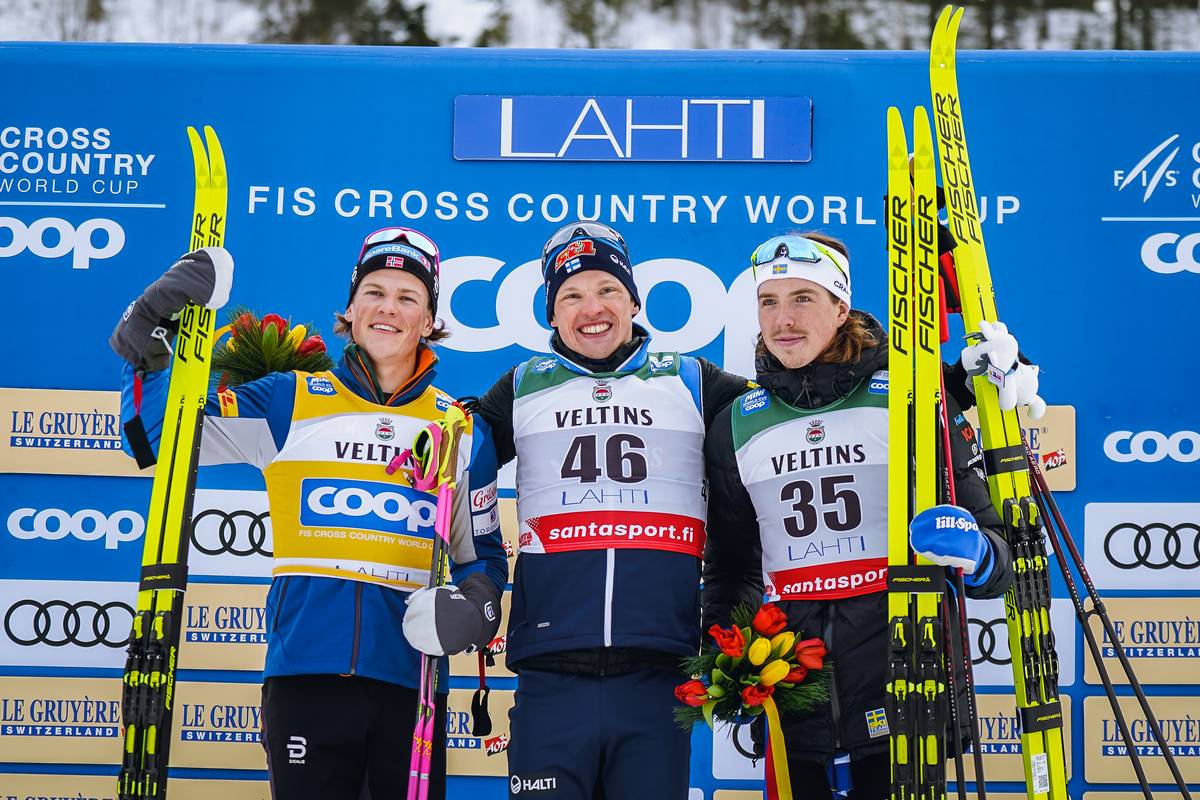
    The men’s 15 k classic podium in Lahti: Iivo Niskanen (FIN) took the win in his signature event, ahead of Johannes Høsflot Klæbo (NOR) and William Poromaa (SWE). (Photo: NordicFocus)

    Team doctor Øystein Andersen indicated to NRK that the original source of the outbreak remains unknown.

    “It’s hard to say [how this began],” Andersen said. “Everyone came from their own bubbles before this race, after they returned home from the Olympics. We must now first map out whether there are more [positive cases] and conduct infection tracking, so that we avoid more infection.”

    As the World Cup Finals slated for March 18-20th currently remain listed as “canceled” on the FIS calendar, it is unclear whether these athletes will be able to compete on the World Cup again this season.

    Klæbo told NRK that “most indications are that the season is over,” however, the loss of competition would not significantly impact his season outcome. Klæbo currently leads the World Cup overall standings by nearly 500 points over Russia’s Alexander Bolshunov, who is also unable to compete as FIS banned athletes from Russia and Belarus from competition for the remainder of the season. The next closest athlete to Klæbo is Finland’s Iivo Niskanen, who sits nearly 800 points back with limited scoring opportunities remaining. As the Falun World Cups feature a mixed relay and team sprint, this leaves two sprints and two distance races, worth 100 World Cup points each, currently confirmed on the FIS calendar

    If World Cup Finals are held at an alternate venue, athletes could score a maximum of 50 points per day, with the opportunity for up to 200 bonus points should they win the three-day mini-tour.

    This still leaves fewer than 800 points on the table, and as such, it looks like Klæbo will win the overall World Cup regardless of whether he competes again this season. 

    Klæbo also leads the World Cup sprint standings with a 210 point lead over Richard Jouve, and is 237 points of third-ranked Lucas Chanavat, both of France. Classic sprint events are scheduled for Drammen on Thursday, followed by another classic sprint in Falun on Friday, March 11th. If World Cup Finals take place, there will be a third sprint opportunity there, raced freestyle. This leaves 200 points available without the World Cup finals, and 250 including them.  

    Compared to all the other things going on in the world at the moment, this is just a bagatelle,” Klæbo wrote in his announcement on Instagram

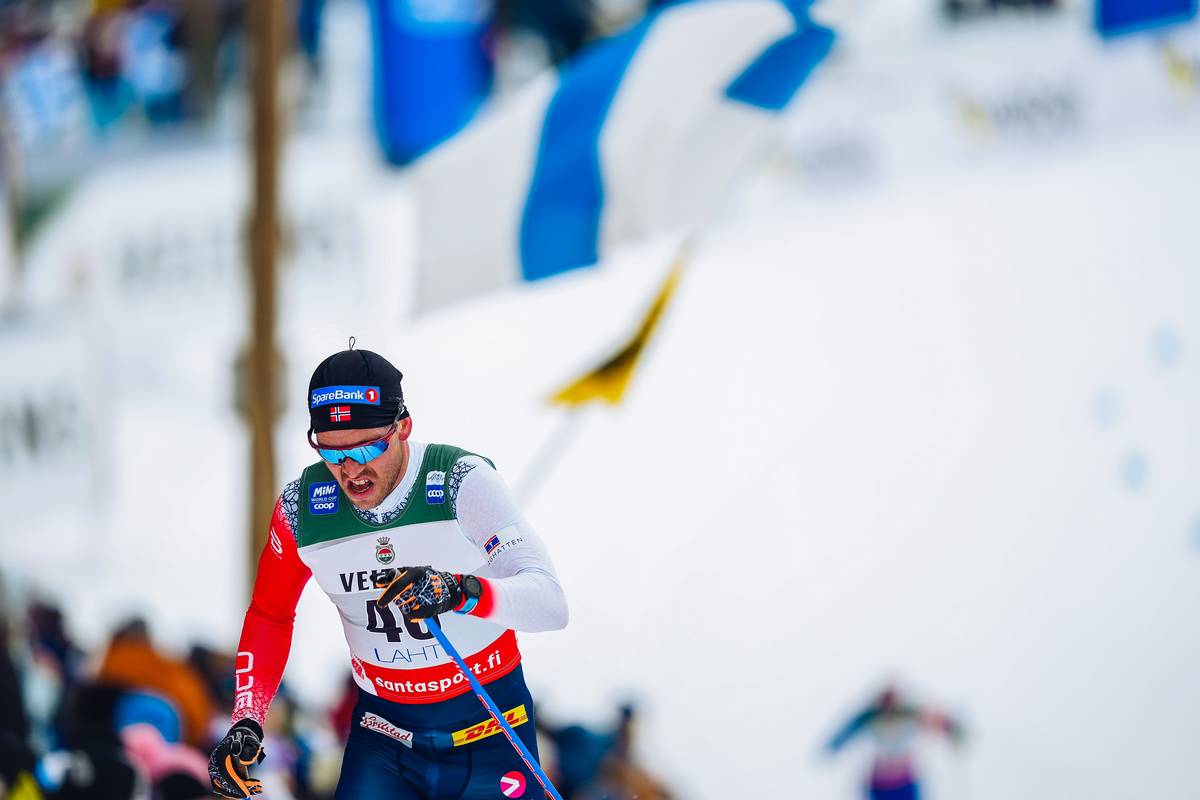
    Norway’s Pål Golberg tested positive for COVID following the weekend of World Cup racing in Lahti. (Photo: NordicFocus)

    “There is nothing to do but take it easy,” Pål Golberg said to NRK. “It’s [disappointing] that it’s coming now, but we can be very happy that we managed to avoid more infection in the camp before the Olympics when people became infected in Seiser Alm.”

    On what is next, Golberg continued, “If I do not develop symptoms, it may be relevant to go to Falun next weekend. And then there are many [domestic]  races over the late winter. Then we will see if it is worth it.”

  • Double Gold: ROC Dominates Men’s 4 x 10 k Relay in Lengthy Race; USA 9th, CAN 11th

    Double Gold: ROC Dominates Men’s 4 x 10 k Relay in Lengthy Race; USA 9th, CAN 11th

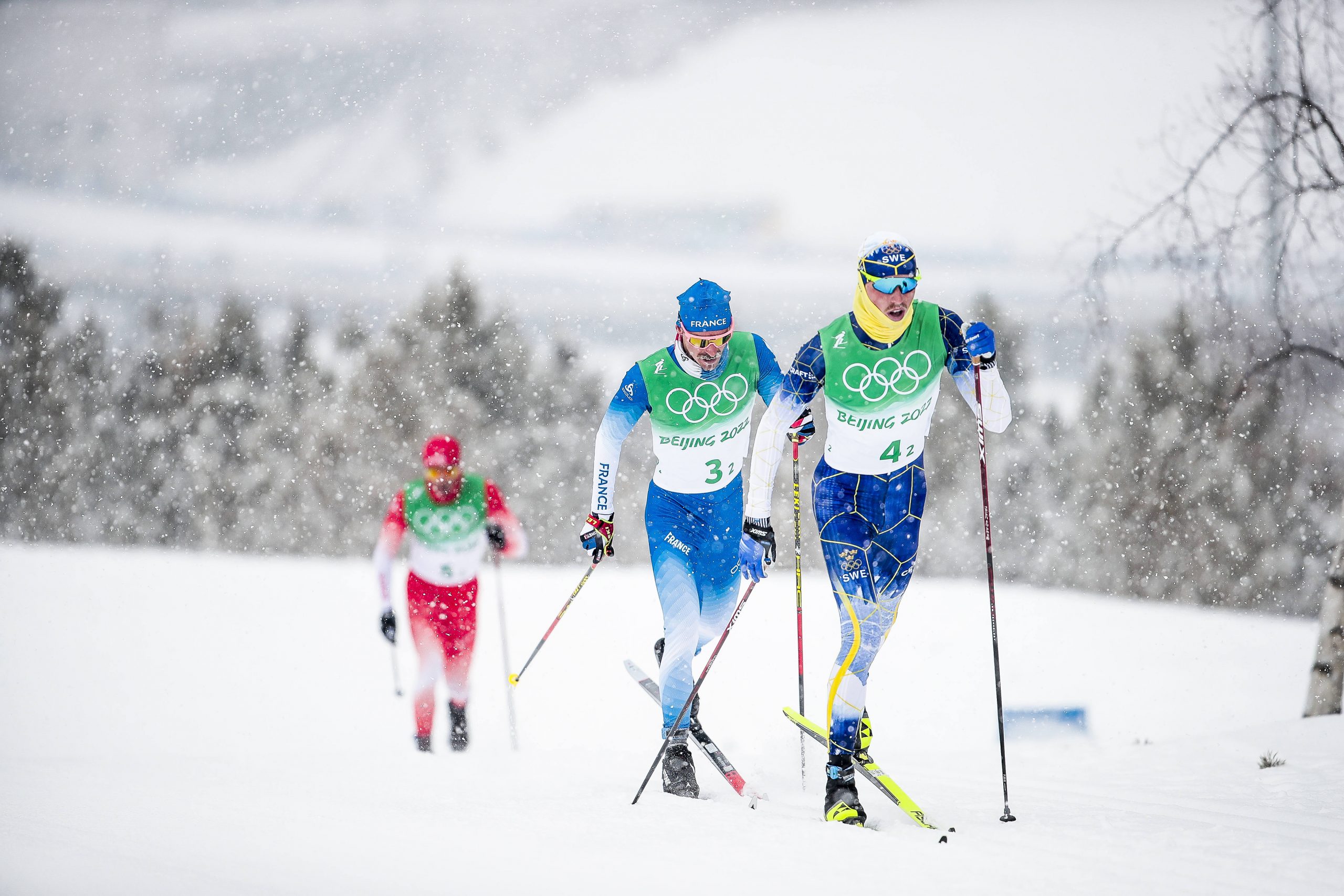
    Early stages, Emil Iversen (NOR), Alexey Chervotkin (ROC), Richard Jouve (FRA), and Oskar Svensson (SWE) (l-r) lead the men’s 4 x 10 k relay. (Photo: NordicFocus)

    This World Cup coverage is made possible through the generous support of Marty and Kathy Hall and the A Hall Mark of Excellence Award.  To learn more about A Hall Mark of Excellence Award or to learn how you can support FasterSkier’s coverage please contact info@fasterskier.com.

    After a thrilling women’s relay event on Saturday, it was the men’s turn to compete, each athlete skiing the laps of 3.3-kilometers for a total of 4 x 10 k. In a surprising turn of events, more snow than has fallen in a decade came down in Zhangjiakou over the last 24 hours, altering the otherwise stable man-made conditions the men have raced to this point. Conditions being what they were, heavy snowfall and 11°F on challenging courses, this made for an especially long race.

    The ROC proved to best handle the conditions, winning gold in 1:54:50.7. Norway skied to silver (+1:07.2), with France taking bronze (+1:16.4), while the American men skied to ninth (+8:05.6), with the Canadians in 11th (+9:10.4).

    Scott Patterson skis the second leg of the men’s 4 x 10 k relay through unprecedented conditions. (Photo: NordicFocus)

    Men’s skiing for the past few years has been dominated by two nations, Norway and Russia (or as they are known at these Games, the Russian Olympic Committee (ROC)). When it comes to the men’s 4 x 10 k relay however, Norway has historically been in a class of its own. 

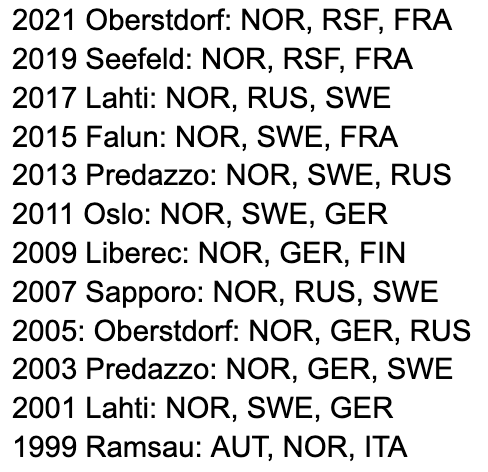
    Results summary for men’s 4 x 10 k relay at World Championships since 1999.

    Since Team Norway’s all-around poor showing at Sochi in 2014, which included the men’s team finishing 4th, they have not lost a championship relay. Indeed, looking at relay results from World Championships, you have to dig all the way back to 1999 to find Norway not winning gold, when Norway finished second to Austria in Ramsau. Their performances at the Olympics have been less dominant but most relevant for today’s race, they won gold in PyeongChang in 2018 with the same man, Johannes Høsflot Klæbo, in the anchor leg. 

    As such, despite the Norwegian men’s struggles thus far at these games, it seemed likely that fans would be seeing another battle between Norway and the ROC for top spot. Fifteen nations were represented on the start line and as the first leg was underway Sunday morning, the race appeared to be playing out remarkably similarly to the World Championships in Oberstdorf last year.

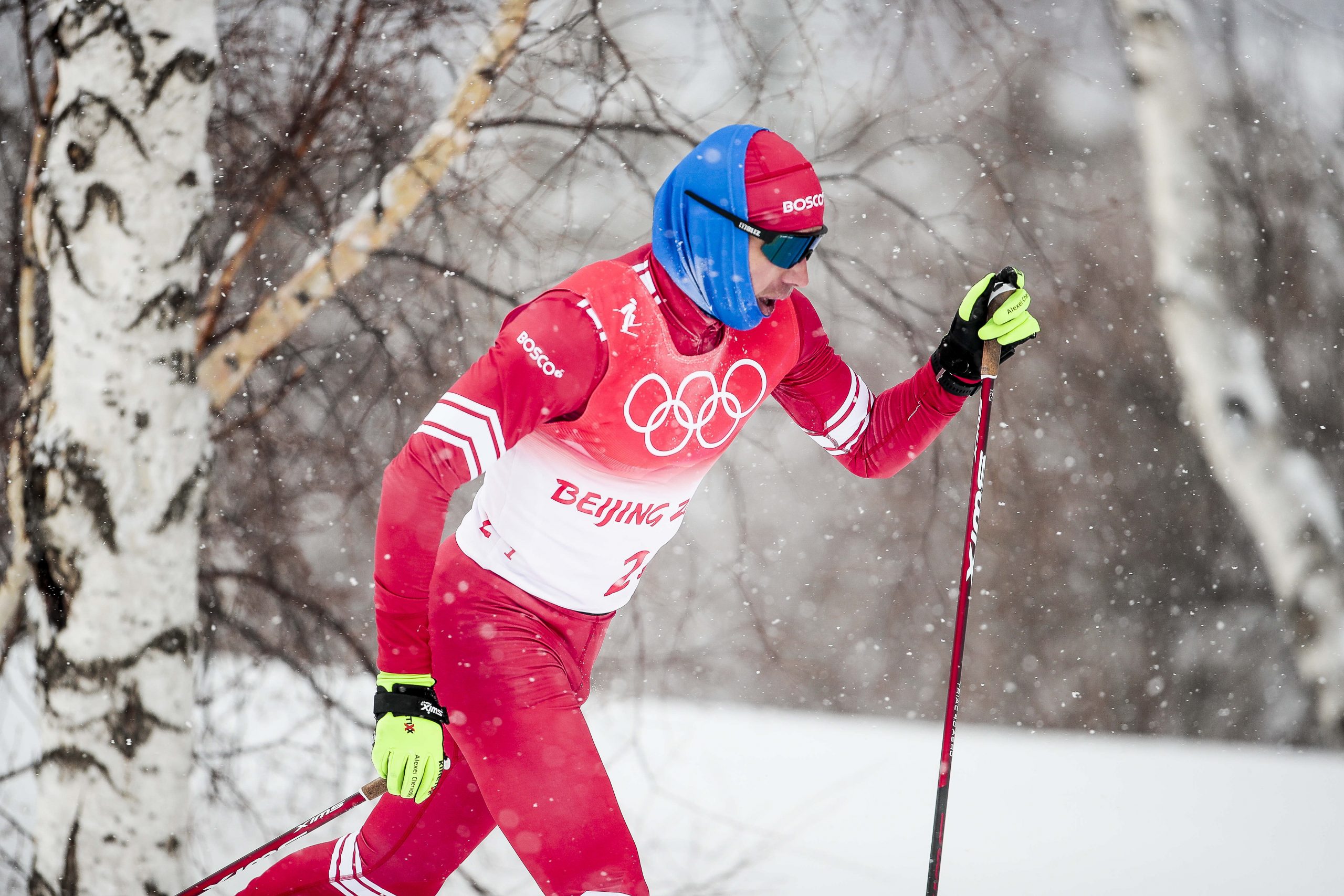
    A brief recap for those who don’t remember, in heavy snowfall, ROC athlete Alexey Chervotkin made an early move and ended his leg with nearly a minute lead on the rest of the field which was later eaten up and the win went to Norway. Today it was a different story.

    Alexey Chervotkin (ROC) making a decisive early break (Photo: NordicFocus)

    Chervotkin was once again in the scramble position for the ROC and he put the hammer down right from the start gun. At 4.3 k he had a gap of +12.6 seconds to the rest of the field and that was the closest anyone got to the ROC for the rest of the race. Although it took three more athletes and another hour and forty-one minutes of skiing to seal the deal. 

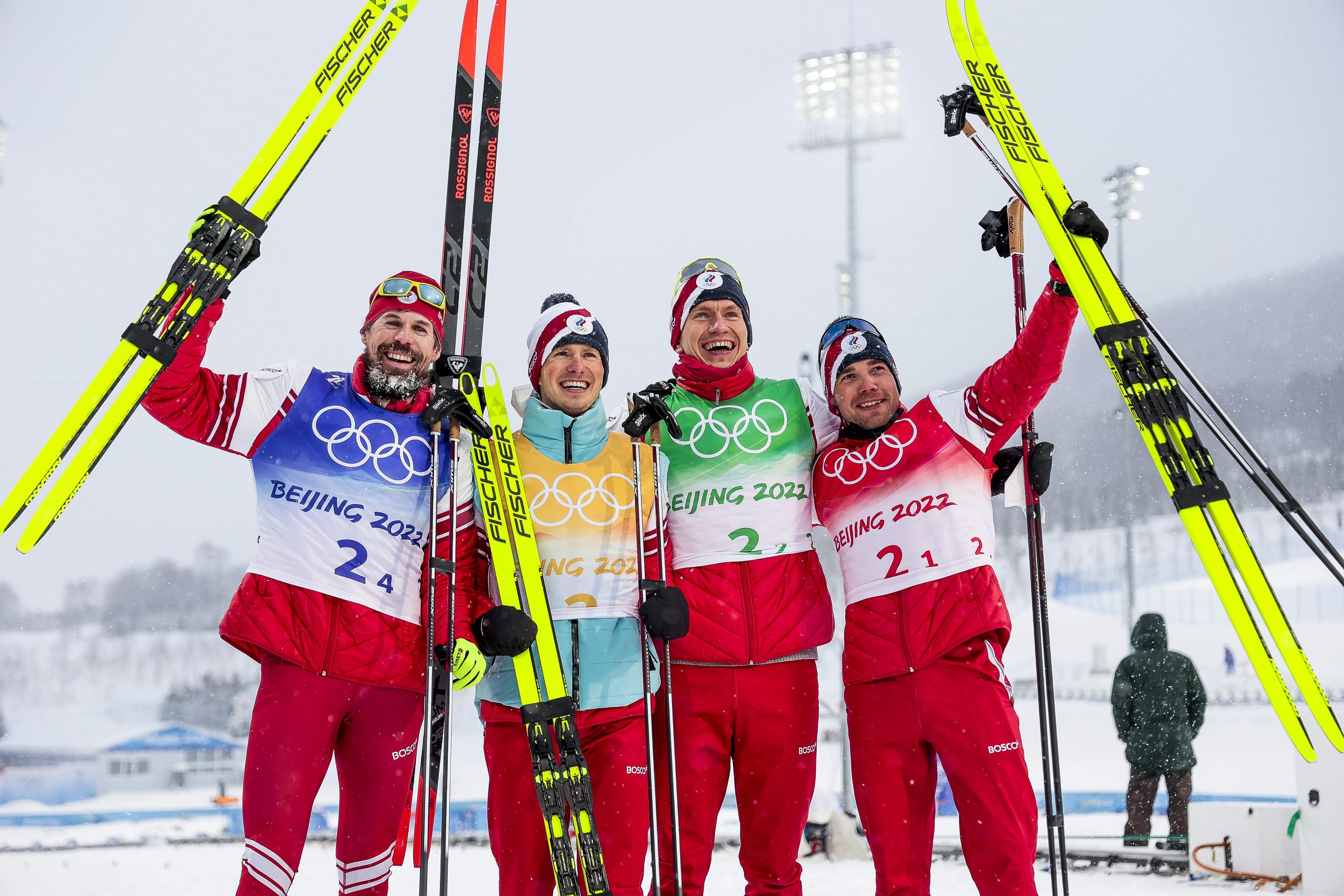
    All smiles for Sergey Ustiugov, Denis Spitsov, Alexander Bolshunov, Alexey Chervotkin, (l-r) after taking Olympic gold for the ROC for the first time in over forty years. (Photo: NordicFocus)

    Making his first appearance at these games after some controversy regarding a start in the 15 k classic, Emil Iversen took the first leg for Norway. For the majority of his leg, Iversen did the work to pull at the front of the chase group, which was composed of teams Italy, Germany, Sweden and France. No doubt inspired by the German women’s relay performance, Janosch Brugger skied a strong leg for Germany, ultimately pulling away with Italy’s Federico Pelligrino in the final kilometers of their leg.

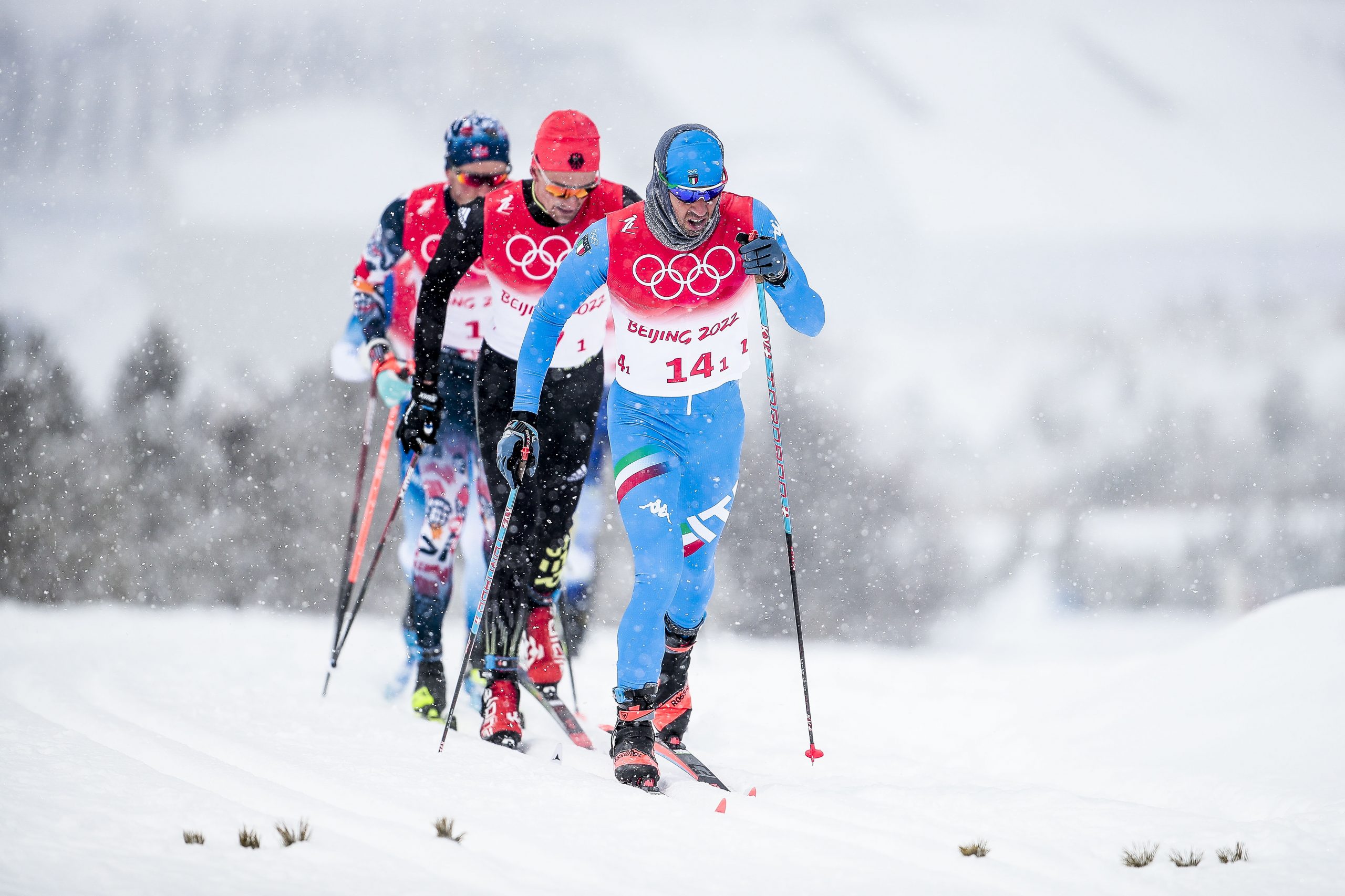
    Federico Pellegrino (ITA) leads Janosch Brugger (GER) and Emil Iversen (NOR) (Photo: NordicFocus)

    With Iversen fading fast on the final lap up the A-climb, Brugger and Pelligrino gapped the Norwegian by 10 seconds, coming into the first exchange +23.5 and +24.1, respectively, behind Chervotkin of the ROC. Next came Iversen, who tagged his teammate, Pål Golberg, with a gap of +34.4 to the ROC.

    Despite the hard work put in by Chervotkin, the conditions were such that it took him 30:14.7 to ski 10 k, which is much slower than we might normally expect. Chervotkin had taken 5th place in the 15 k classic on Friday in 38:51.7 with stable conditions; five additional kilometers in roughly 8.5 minutes longer.

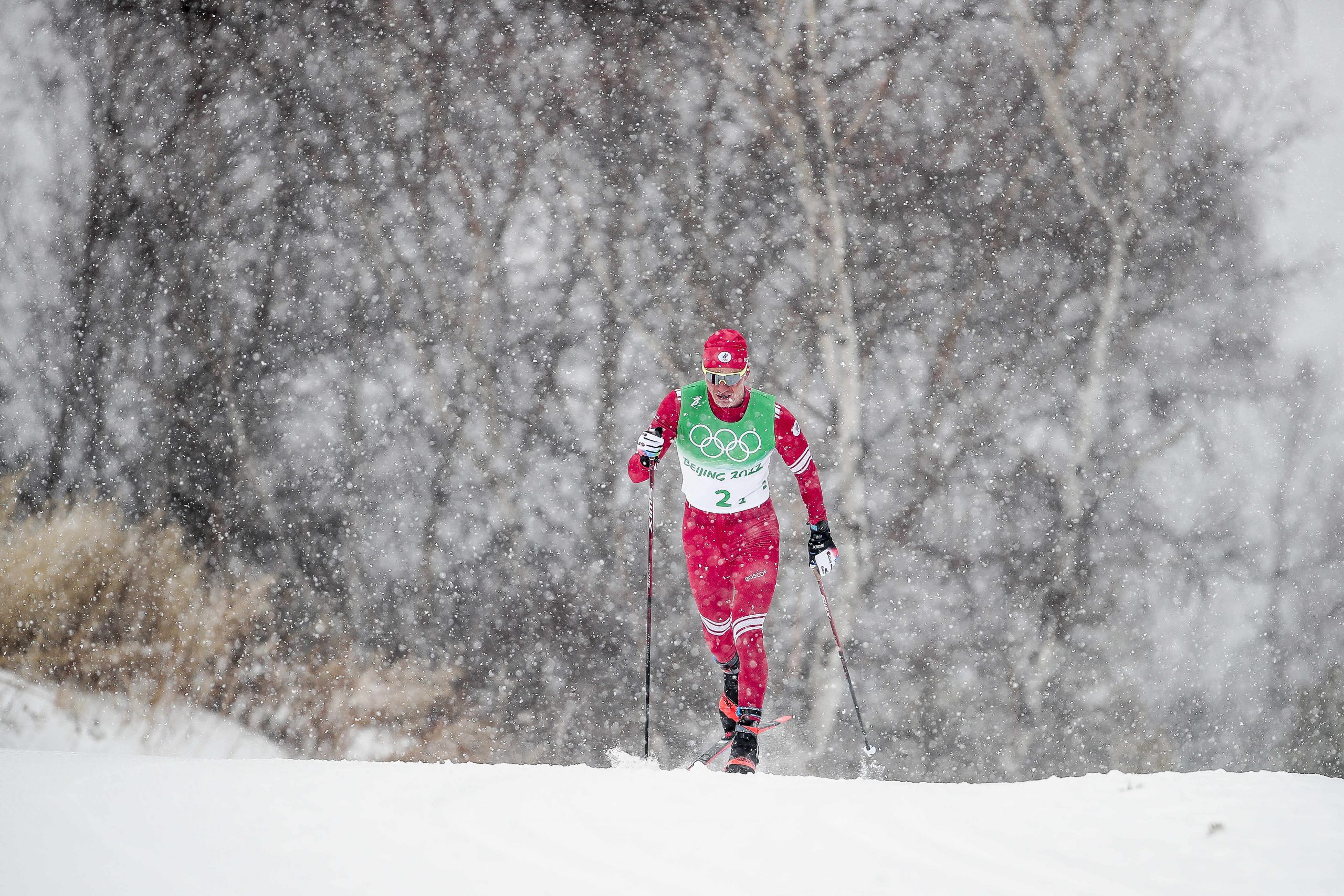
    Gliding on his own through falling snow, Alexander Bolshunov (ROC)(Photo: NordicFocus)

    With the first leg complete, it was skiathlon winner Alexander Bolshunov who took over for the Russian Olympic Committee. Grinding out front on his own, Bolshunov continued to put time into the rest of the field, widening his lead to +37.8 through 13.3 k, up to +44.5 at 16.6 k and +59.5 at the completion of his three laps.

    Behind him, Golberg worked quickly to close the gap to Italy and Germany, legs which were being skied by Francesco de Fabiani and Friedrich Moch. Over the course of his second lap, Golberg began to pull away, creating a ten second gap to the chasers. However, as the skiers completed the third, and their final, 3.3 k lap, things were shaking up. 

    Pål Golberg (NOR) who would later fade and be caught by William Poromaa of Sweden (Photo: NordicFocus)

    Iivo Niskanen, having been tagged in 11th position and +1:47.5 behind, was executing another outstanding classic performance, gaining time on everyone in the field. With the Finn closing quickly, what had been two chase groups merged to one.

    Moch for Germany, William Poromaa for Sweden, Hugo Lapalus for France and Niskanen for Finland were all battling for bronze medal position as de Fabiani of Italy faded off the back. Up the final A-climb that had been the undoing of Iversen one leg earlier, Golberg too began to slow.

    Hugo Lapalus (FRA) and William Poromaa (SWE) both skiing well (Photo: NordicFocus)

    This show of weakness was all Poromaa needed to up the pace, and by the time they entered the stadium for the second exchange, the Swede had caught the Norwegian.

    Golberg tagged Hans Christer Holund, +59.5 behind Bolshunov who had given way to Denis Spitsov. Poromaa handed over to Jens Burman, +59.7 behind the ROC. Behind them, Niskanen had moved his team from 11th to 4th and gained 36 seconds on the ROC as he tagged Perttu Hyvarinen. Lapalus of France handed off to Clement Parisse, +1:09.7 back. 

    Showing his classic strength, Iivo Niskanen (FIN) works to close a big deficit (Photo: NordicFocus)

    Having switched to freestyle technique, the third leg was underway and suddenly there was a pack of five nations vying for silver and bronze position, the ROC nearly a minute ahead and all but secured the gold.

    Despite the deep snow, Spitsov (ROC) seemed to have no trouble maintaining his advantage as Holund (NOR) took up the mantle of the chase. Through 23.3 k, Holund led the train, still trailing +51.4 behind the ROC.

    Perttu Hyvarinen (FIN) fading fast (Photo: NordicFocus)

    After Niskanen’s effort, the Finnish team was dropping quickly with Hyvarinen at the helm and was soon out of contention. Florian Notz, skiing for Germany, was also beginning to fade, seeming to drift off the back on each uphill and regain time on the downhill. Eventually, as the chase group entered the stadium for the final lap of their leg, Notz lost contact, bringing the group down to three nations, Norway, Sweden and France. 

    Hans Christer Holund (NOR) leads a train of chasers (Photo: NordicFocus)

    Spitsov still clear off the front, Holund continued to lead the chase. With each section of downhill it became clear that the skis of Parisse (FRA) were not gliding like those of Burman (SWE) and Holund (NOR). In spite of this, and perhaps thanks to the trailside encouragement of his teammates, Parisse dug deep to stay in contact with the Swede and the Norwegian. 

    Denis Spitsov (RUS) holds a tuck, skiing through deep snow on his own (Photo: NordicFocus)

    With 1:27:09.3 on the clock, Spitsov tagged off to Sergey Ustigov, still well clear of the rest of the field. Gaining a few meters on the Frenchman, Holund and Burman tagged their anchor legs with virtually no time between them, +44.9 and +45.4 behind the ROC. A few seconds later, Parisse gave way to the veteran Maurice Manificat, +49.2. 

    Clement Parisse (FRA) who hung tough in the third leg to help secure bronze for France (Photo: NordicFocus)

    This lengthy battle now in its final stages, Manificat worked to close the gap to Sweden and Norway, making the chase pack a group of three once again.

    The skis still looked to be a challenge for France as Norway’s anchor, Klæbo, pulled away from the other two by thirteen seconds on the descent towards the stadium, in a move that appeared to be largely unintentional. Not letting up, Manificat took on the task of closing on Klæbo once again, pulling Sweden’s Johan Häggström with him. The second time up the last A-climb of the 3.3 k loop, Manificat busted away from the Swede, catching Klæbo, who appeared to be out for an easy distance ski. 

    Maurice Manificat (FRA) in the closing moments of his relay leg (Photo: NordicFocus)

    Through the stadium for the final time with 36.6 k complete, Ustigov and the ROC was +1:04.3 clear of France and Norway.

    To put it bluntly, the last 3.3 k were hard to watch. Knowing he had no chance of beating the Norwegian in a sprint finish, Manificat continued to push to his limit, his ski speed not doing him any favors. Klæbo was all too happy to sit in behind, drafting easily as Manificat tried his best to shake him. In the end, Klæbo did not even have to reach into his bag of tricks, he simply out-glided the Frenchman, who could do nothing about it. 

    No big moves from Johannes Høsflot Klæbo (NOR) as he brings home the silver medal for Norway (Photo: NordicFocus)

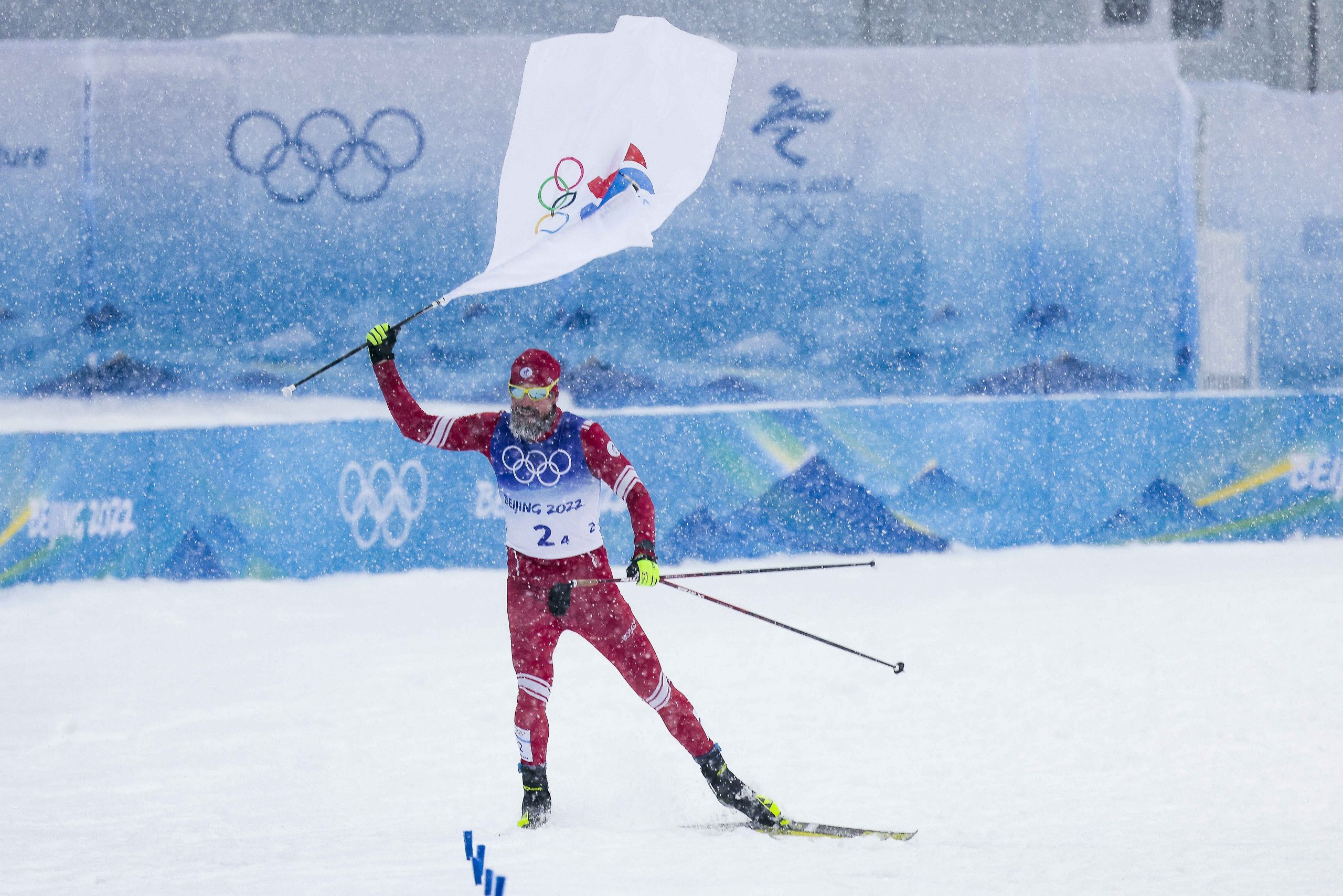
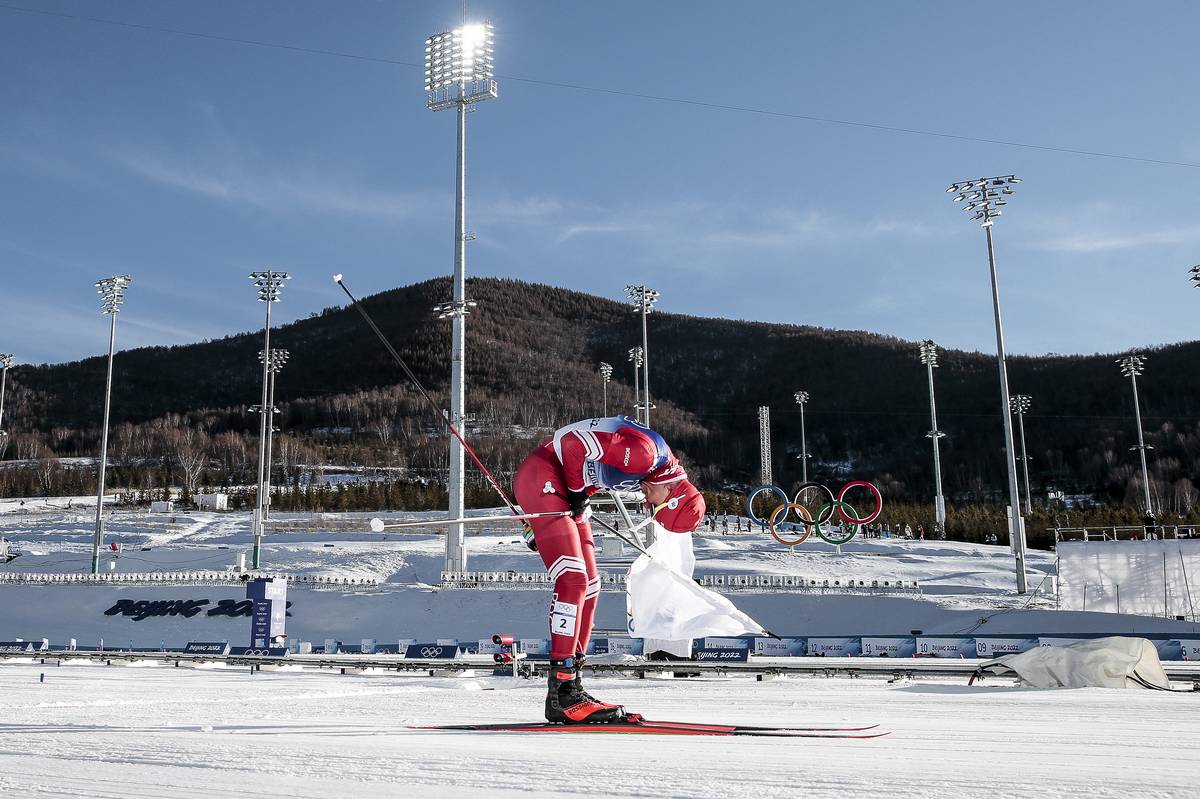
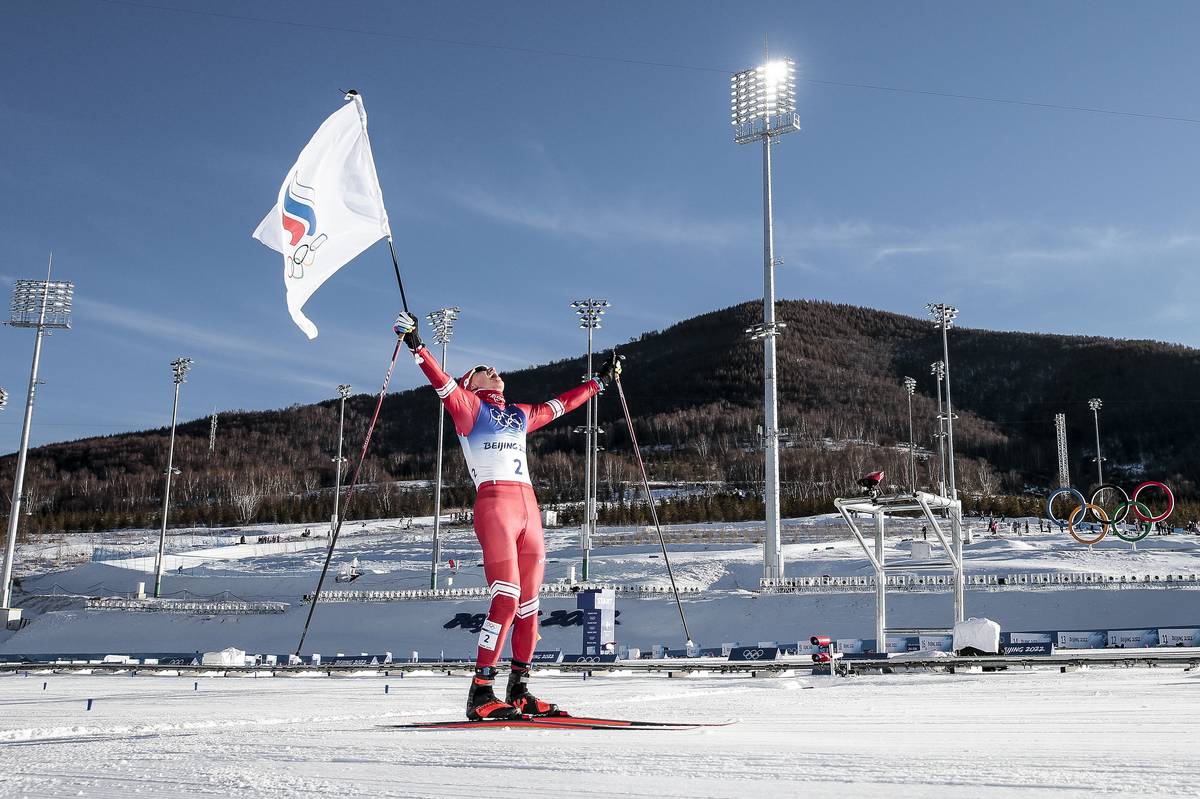
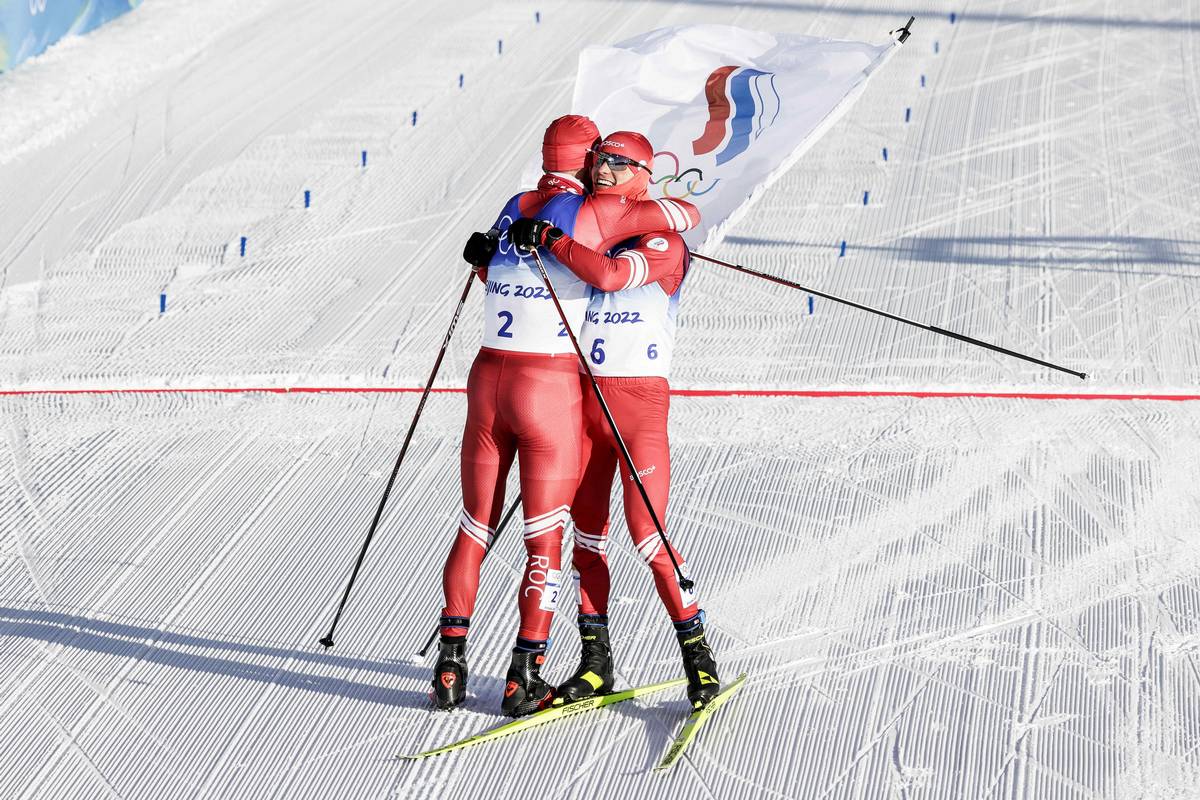
    Many meters ahead, Ustigov cruised into the stadium, grabbed an ROC flag and waved it triumphantly as he crossed the finish line before any challengers had even entered the stadium. Finishing in a time of 1:54:50.7 the men secured the second relay gold medal of the Games, after the ROC women brought home gold in the 4 x 5 k yesterday.

    Chervotkin, who gave the ROC such a strong start, said of winning gold, “we were aiming for this. We tried to achieve it, and for several years we haven’t been able to. Today everything aligned. Everything was super. The weather seemed to be hard and there was snow but it was in our favor so everything was great.”

    Alone with a flag, Sergey Ustiugov (ROC) heads for gold (Photo: NordicFocus)

    Despite the consistent strength of the Russian team, they have not won a 4 x 10 k relay in over forty years. The last time they topped the podium in this event it was under yet another name, as the Soviet Union, at Lake Placid in 1980. Of course in recent years, they have consistently been runner-up, earning silver in 2021 Obserstdorf, 2019 Seefeld, 2018 PyeongChang and 2017 Falun. 

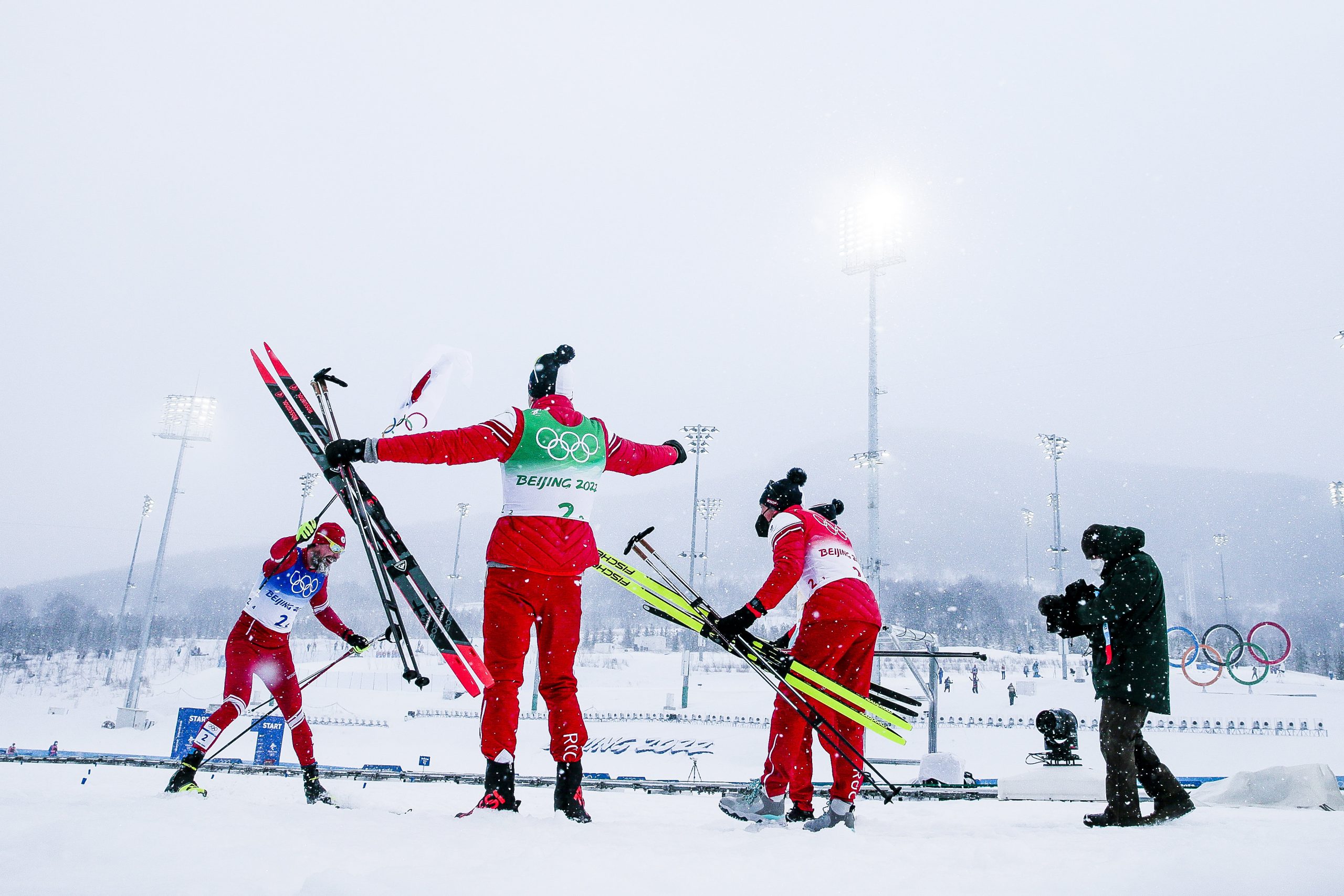
    Ustigov crosses the finish line unchallenged as his teammates wait to congratulate him (Photo: NordicFocus)

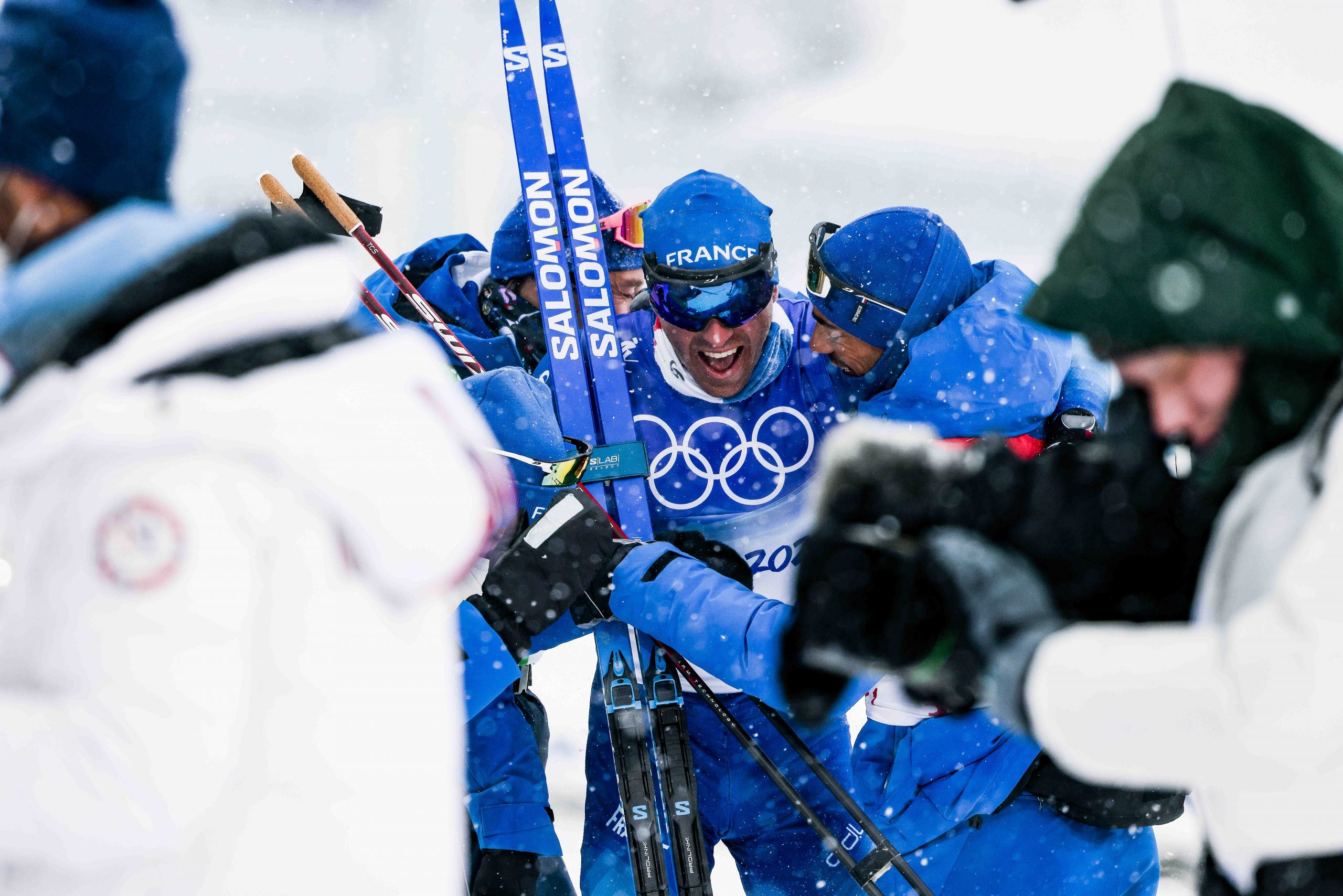
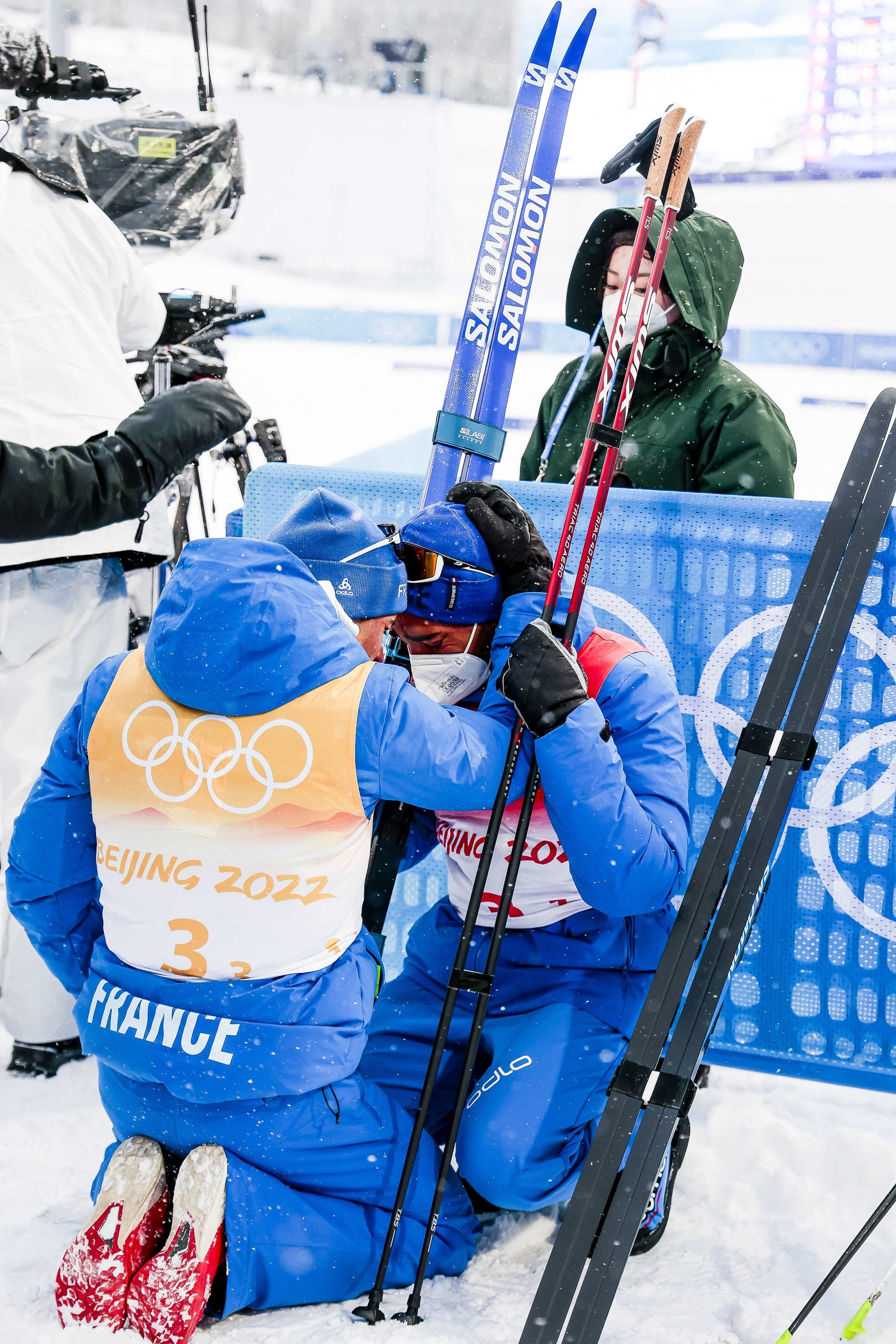
    Today the positions were reversed as Klæbo skied slowly across the line for silver, having simply glided away from Manificat in the closing stages. He was met by rather somber congratulations from his teammates, particularly in comparison to the French who celebrated their bronze as if it were gold.

    Elation for the French at having secured another Olympic bronze in the men’s relay (Photo: NordicFocus)

    After the race, Klæbo said, “when you’re doing a relay, you’re doing it as a team and that is the beautiful part of it, so it’s always fun to race the relay and do it together. We all need to be satisfied with today’s result, and I guess we’re going to celebrate it in the evening and then some of us need to start preparing for the next race. But still we’re going to enjoy this evening.”

    His teammate Pål Golberg spoke about the challenging conditions, saying, “The course was tough before and with the snow and wind today, it was even tougher. So I mean, with altitude and everything it’s challenging but we did our best today. The four Russian guys were better so just take the hat off to them and try to be satisfied with the silver.” 

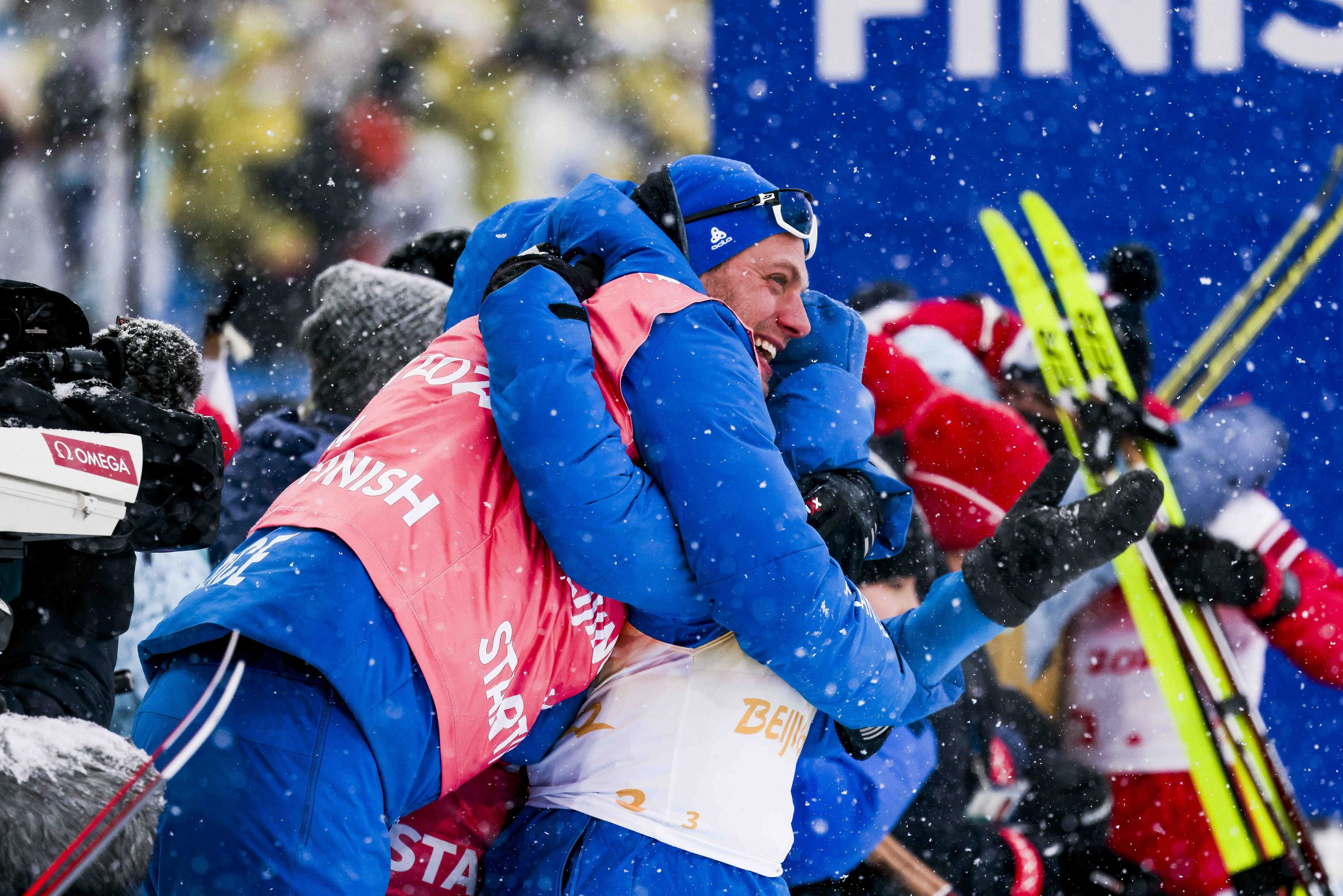
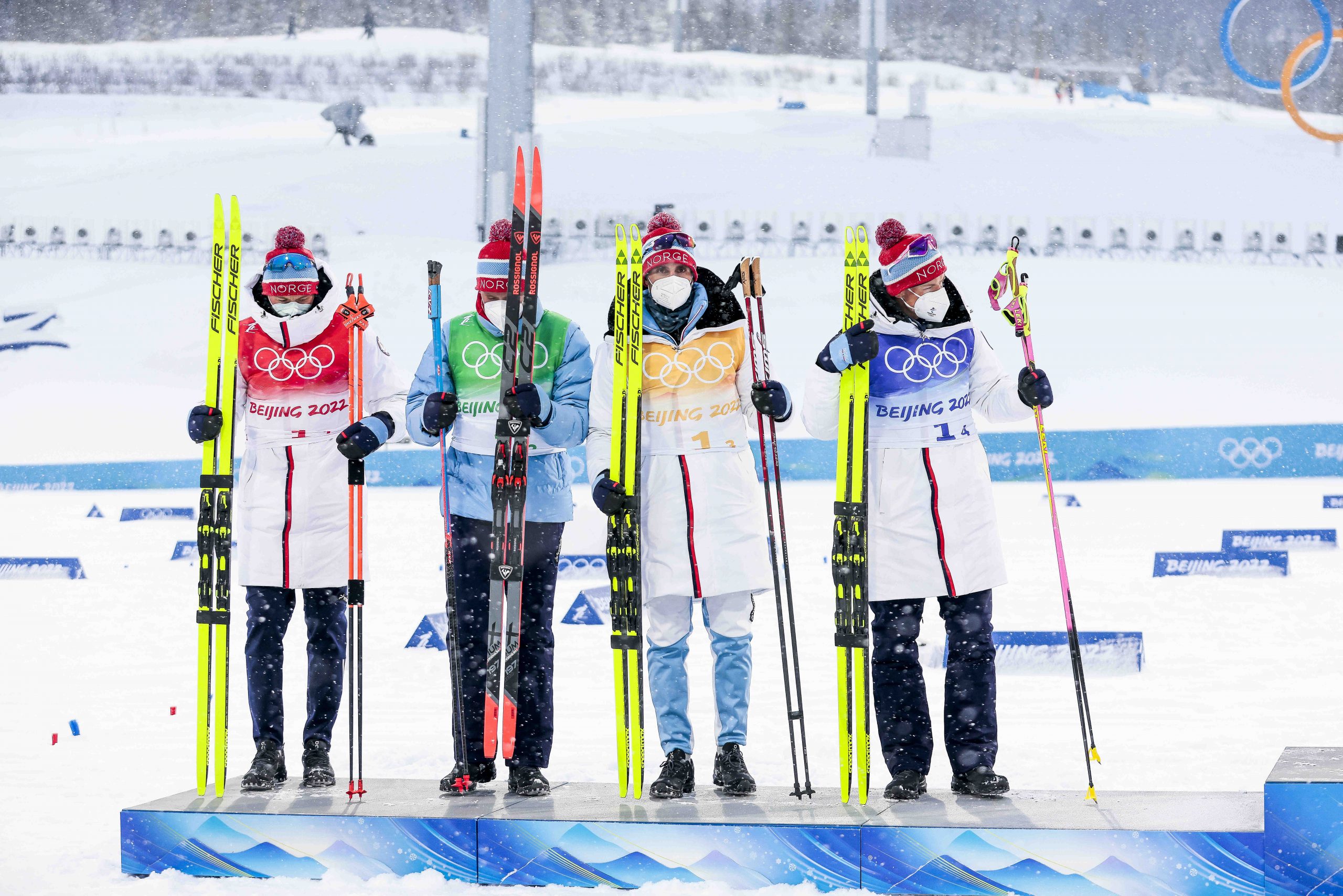
    Emil Iversen (NOR), Pål Golberg (NOR), Hans Christer Holund (NOR), Johannes Høsflot Klæbo (NOR), (l-r) were the only team not celebrating their medal (Photo: NordicFocus)

    If Norway has held a monopoly on gold in the men’s relay, then the same can be said about the French and bronze. This is the third consecutive Olympics that France has earned bronze in the men’s 4 x 10 relay and Maurice Manificat has played a part in all of them. Similarly, in the last four World Championships, France has collected bronze in three of them.

    When asked about winning another medal at the Games, Manificat replied, “four Olympics for me and some medals in the relay since Sochi, so for sure it’s an amazing feeling.”

    Regarding the challenge of trying to drop Klæbo he said, “I tried, in the big uphill and I give my best, I give all I had. Medal in relay is the best medal. Because you share it together. We thought all the year about the relay, it’s our soul.” 

    Teammates congratulate Maurice Manificat (FRA) on a gutsy final leg to bring France the bronze medal (Photo: NordicFocus)
    Clement Parisse (FRA) and Richard Jouve (FRA) share a moment at the finish. (Photo: NordicFocus)

    With three teams lapped out of the race and the spread between the ROC and 12th place finishers, the Czech Republic at +10:07.1, the day was evidently a tough one.

    Improving on an 11th place finish in PyeongChang, the American men skied to 9th place today, +8:05.6 behind. 

    Luke Jager skis the scramble leg for the Americans during the Olympic 4 x 10 k relay. (Photo: NordicFocus)

    Luke Jager took the scramble leg for Team USA, putting the team in 13th, +2:39 behind at the conclusion of his leg.

    “I felt kind of like I’d become sort of aware of some of the subtleties of how scramble legging in skiing works in the last years, but it was sort of like, all that went out the window,” Jager told FasterSkier from the mixed zone. “For a lot of reasons: the course is really hard, the altitude was really hard, and 10 k versus five or 7.5, was a really big difference. At the end of the day, I just wasn’t fit enough to be where I want to be and there was no hiding to be had. So, I feel like I learned a lot from it, but I just feel like I need to go home and train a lot more.”

    While Jager chalked it up as a disappointment, he contrasted the statement it with: “that’s obviously multifaceted. There’s pros to it all, and I’m really thankful to be here.”

    Up next was Scott Patterson, who started the Games with an impressive 11th place finish in the skiathlon. Patterson bumped the team up into 11th place, though the time gap continued to widen at +4:23.2.

    “I think as we’ve seen in every race this week, those courses are pretty unforgiving,” Patterson explained. “I felt like I had to go out and ski my own race and not really think too much about what everyone else was doing, just go move into the race and try to ski well. It was a little bit interesting place where Luke tagged me off, but I think I picked off some people and put us in a good spot, so I’m happy with that.”

    Gus Schumacher races the third leg of the men’s 4 x 10 k relay. (Photo: NordicFocus)

    Patterson tagged Gus Schumacher who maintained their position in 11th place and finished his leg +6:04 behind. In the anchor position, Kevin Bolger moved past both the Japanese and Czech team to put the team in 9th place. 

    “I’m proud of us for coming together the team,” said Schumacher after the race. “We’ve all had some tough races here… It hasn’t been easy for us. I think it’s a little bit hard especially to have the girls’ success – there’s some pressure there.”

    While the team was seemingly unanimous that this pressure was self-imposed and that it had been a relief to feel they had “nothing to lose and everything to gain,” the Americans also affirmed that they brought hopeful energy to the day, looking to take a step forward as a team, regardless of what that looked like on paper.

    Over the last four Olympic cycles, the Americans have been 11th place in the last two Games, along with 12th in 2006 and 13th in 2010. It might not be a medal, but it was, in fact, a step forward for the program.

    “I think we all really put it out there and yeah, good energy,” Schumacher concluded.

    Kevin Bolger (USA) skiing the anchor leg for Team USA (Photo: NordicFocus)

    The Canadian team was led out by Graham Ritchie who ended his leg in 14th, +2:42 behind. Antoine Cyr took the second classic leg and moved up one position to 13th, +4:23.2.

    In the transition to skate, Olivier Léveillé skied Canada’s third leg, again moving the team up one position to 12th, +6:44.6. Rémi Drolet anchored to bring the team home in 11th position, +9:10.4. 

    Antoine Cyr (CAN) skiing the second leg for Canada (Photo: NordicFocus)
    American men’s 4 x 10 k relay team: Kevin Bolger, Scott Patterson, Luke Jager, and Gus Schumacher (l-r) (Photo: NordicFocus)

    “The relay is really a game of staying in contact,” Matt Whitcomb told FasterSkier in the mixed zone. “When you lose contact, it becomes a different race. Time expands immeasurably. So I’m very proud of the way that these guys tackled the project that they’re handled today. There’s also – and I say it with a Canadian over my shoulder – this is one of our favorite rivalries: our northern friends. And it really is a friendly and very fun rivalry, where we’re always giving each other splits back and forth, and I’m proud of both teams today. And I’m also excited for our guys to come out just a little bit on top.”

    The next Olympic cross country ski event will be the men’s and women’s team sprint, happening on Wednesday, February 16th.

    Results

  • Niskanen with the golden stride in 15 k classic, while North American men hold strong on tough tracks

    Niskanen with the golden stride in 15 k classic, while North American men hold strong on tough tracks

    This World Cup coverage is made possible through the generous support of Marty and Kathy Hall and the A Hall Mark of Excellence Award.  To learn more about A Hall Mark of Excellence Award or to learn how you can support FasterSkier’s coverage please contact info@fasterskier.com.


    In the sport of cross country skiing, the Olympic 15-kilometer individual start classic might be considered the “granddaddy of them all.” The technique was classic, as was the race against the clock, and even the weather on Friday morning seemed to harken to the pitch perfect idea of a ski race we all have in our minds; mid-20s Fahrenheit, -3.5℃ to be exact, and with some sun too. This race, in this discipline, had been raced in 1924 at the first winter Olympiad in Chamonix, when a pair of legendary Norwegians and a Finn graced the podium.

    Hans Christer Holund (NOR) races the 15 k individual start classic during the 2022 Beijing Olympic Winter Games. (Photo: NordicFocus)

    More recent history too, had plenty of threads that this race could potentially follow suit when it played out on Friday. The last 15 k classic World Championship race in March 2021 had seen a Norwegian sweep. Norway’s Johannes Høsflot Klæbo has won two of the last 15 k distance events on the World Cup, with Finland’s Iivo Niskanen winning the third. Alexander Bolshunov of Russian Olympic Committee (ROC) stood on two out of three of these podiums. 

    The gold medalists in the 15 k Olympic races from the 2018, 2014, and 2010 Games were all on the start-line; their name was Dario Cologna (SUI). 

    So which one to follow? Well, it turns out that sometimes, recency bias is the best bias.

    Following the thread of history in big, bold, strides was Iivo Niskanen. In doing so, he not only followed, but also made, history too.

    Iivo Niskanen (FIN) let’s out a shout of jubilation after Friday’s 15 k at the Beijing Olympics. Photo: NordicFocus

    Getting there though, was the matter of following a field that showed the complexity and nuance involved in the simple task of racing against the clock for 15 k. The men’s race entailed two laps of a 7.5 k course that included rolling terrain, and plenty of steady, long uphill pitches seemingly perfect to test the ability of skier’s to mix glide and tempo in classic strides.

    “It was a brutal, brutal course,” said American JC Schoonmaker in an interview with FasterSkier. “There’s so many long, gradual, working sections, and when you get to the top you don’t get a lot of downhills that have much speed…there’s two especially long climbs and a whole bunch of medium grinds in between.”

    JC Schoonmaker skis the 15 k individual start classic. (Photo: NordicFocus)

    “Whether this day goes well or not, this course makes this a really big day, the hills are so steep, and the trick is that kick is even more critical because of the pitch of some of these hills.” said US Ski Team Head Coach Matt Whitcomb.

    For their part, the men’s field went out to attack this hard course with a smile. Or at least, Ben Ogden (USA) did. The American wore bib number 1, fresh off his historic sprint finish, and gave a wink and grin to the camera before dashing out of the start gate, and settling into a powerful double-pole that would allow him to set the pace for the field in the early part of the race.

    Ogden said on his early start “I’ve never been in that position [going out in bib 1], so it was fun to go out and try and stay with the really fast guys on the second lap.”

    Ben Ogden races his first distance event of the 2022 Olympics, the 15 k individual start classic. (Photo: NordicFocus)

    Ogden eventually finished 41st overall (+3:35.0), notching another impressive result for the 21-year-old Vermonter, and reason for fans to look forward to a bright Olympic future from him.

    Ogden’s 1.8 k split was surpassed by Canadian Olivier Léveillé, who wore bib number 5, before the French sprinter Richard Jouve put down a split that seemed to be a good barometer of what going out hard on this course looked like.

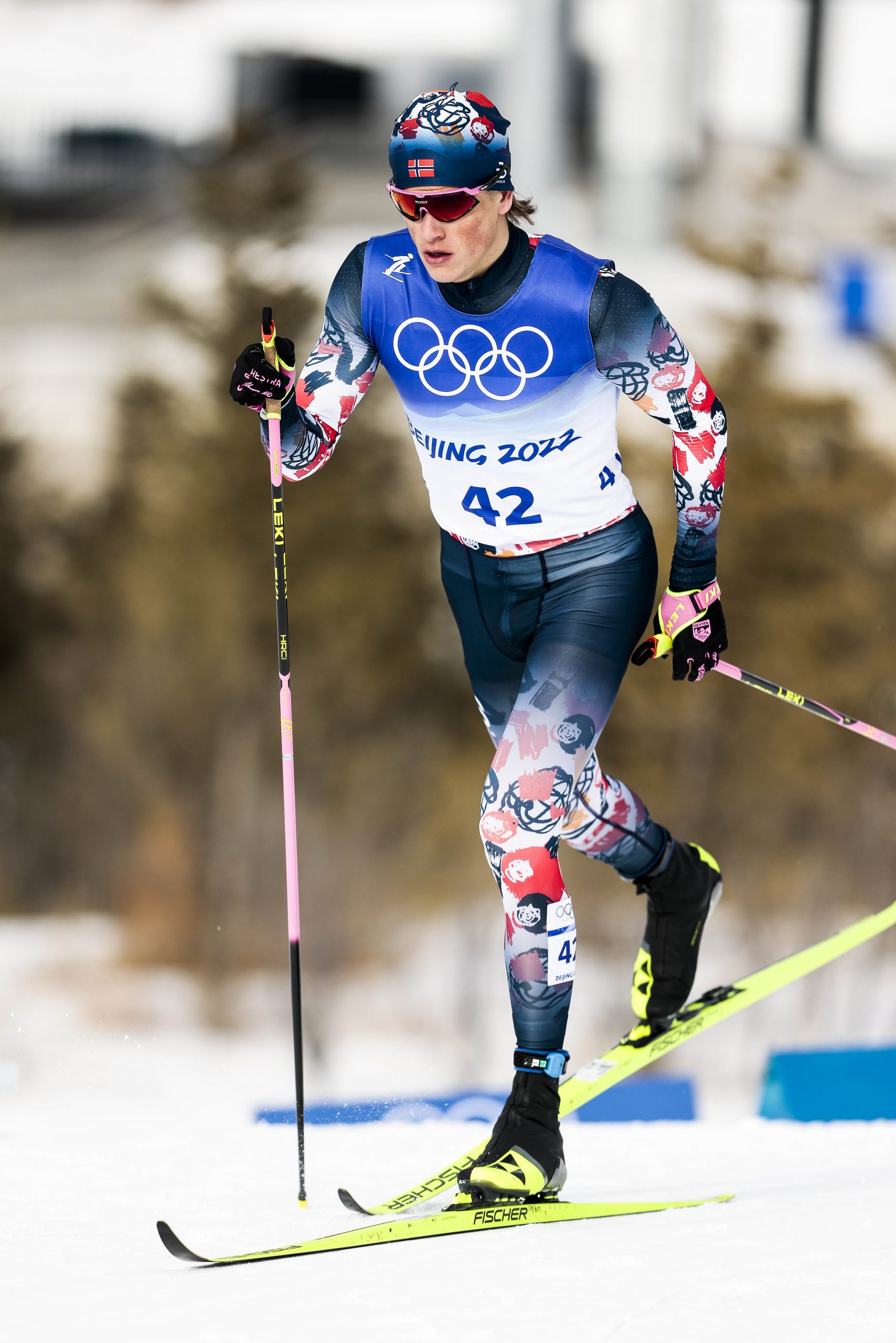
    When the field’s favorites came through, Jouve’s split gave away how different competitors were approaching the pacing of the 15 k course. Johannes Høsflot Klæbo (NOR), wearing bib 32, came through the 1.8 k checkpoint way back in 28th place, +28.6 seconds off of Jouve. His teammate Pål Golberg came +6.4 off of Jouve as well. The Norwegians seemed to be taking the early part of the race conservatively.

    Dario Cologna (SUI) too, was back in 26th place after 1.8 k (+26.1), but it seemed clear from the early part of the race that the reigning Olympic champion was out on one last run, an homage to his legendary Olympic career.

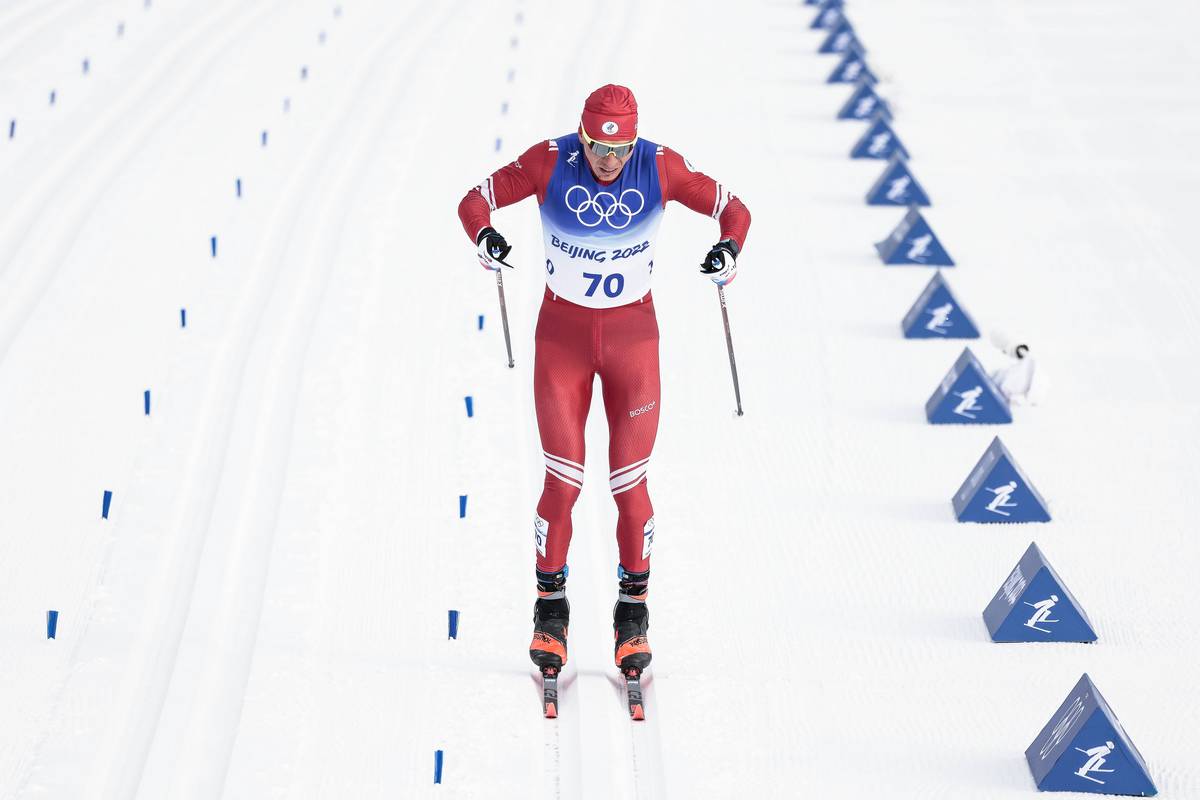
    When Jouve’s mark was eventually surpassed, it was by Iivo Niskanen, wearing bib 64, who skied through the 1.8 k mark with a 2.3 second advantage over the entire field. Eyes then turned towards the skier who had outdone Niskanen in last Sunday’s 30 k Skiathlon, Alexander Bolshunov (ROC), wearing bib 70, who came through the 1.8 k mark +8.4 seconds off of Niskanen’s time.

    Alexander Bolshunov (ROC) strides up a climb during the 15 k Classic. Photo: NordicFocus

    Their proximity early in the race couldn’t help but recall the women’s race yesterday, where Niskanen’s sister, Kerttu ultimately missed the gold medal by just 0.4 seconds. The two are now one of just four sibling pairs to win medals at the same Olympic Games, and looked to be able to do it in the men’s and women’s equivalent of the same event. 

    For a second time in two days, a Niskanen would be in a grueling duel against the clock.

    Finland’s Iivo Niskanen strides for gold in the 15 k individual start classic. (Photo: NordicFocus)

    By 6.3 k, the tension hadn’t subsided. Klæbo had picked up his pace, coming into the checkpoint with a 12 second advantage over the field. His teammate Golberg followed, besting Klæbo by 20 seconds. Niskanen then came through and bested that mark by 20 seconds. Bolshunov, though, couldn’t top the feat. He had managed to stay with it, coming through the 6.3 k mark +13.7 seconds off of Niskanen.

    Half-way through the race then, four skiers seemed to be vying for three medal spots in a muddled mass of splits that kept them within a minute of each other. Niskanen had the advantage in 1st place, Bolshunov 2nd, Golberg 3rd, and Klæbo 4th. 

    The decisive portion that would sort out the field came quickly in the early part of the 2nd lap. That portion included a series of two climbs, the latter of which was a veritable wall up to the 10.5 k mark. This played to the strengths of those with a strong, smooth stride.

    In this field, that was Niskanen. He seemed to reset a classic track muddled by a field where most had to herringbone up to the 10.5 k checkpoint, and when he came across it, he had built a decisive gap of 51 seconds over the field. 

    When Bolshunov came through, showing signs of slipping up the climb, he had lost an additional 15 seconds to Niskanen, putting him +28.8 seconds back but still in second place.

    Pål Golberg fights the clock during the men’s 15 k individual start classic. (Photo: NordicFocus)

    Golberg had lost his advantage on Klæbo, and would continue to fade through the rest of the race, eventually ending the day in 11th (+1:52.6).

    At 13.8 k, the gaps at the top had only expanded. Niskanen had held his lead over Bolshunov at 29.1 seconds. His final push up the gradual climb leading to the checkpoint putting the image of a picture-perfect stride to the notion that has become clear over the course of his career; Niskanen is his generation’s best classic skier, the proprietor of glide and stride in a sport that’s increasingly turned its attentions to the temptations of tempo and power.

    Iivo Niskanen celebrates a gold medal performance in his signature event, the 15 k individual start classic. (Photo: NordicFocus)

    There was little in doubt when Niskanen crossed the finish line. He had won gold, done it decisively, and along with his sister’s result yesterday, etched the name Niskanen into Olympic history and Finnish national pride.

    Bolshunov came through in 2nd, with the final margin +23.2 seconds, to claim his second medal of these Olympics. Following him in the results and in that feat was Johannes Høsflot Klæbo in 3rd (+37.5).

    Alexander Bolshunov earns his sixth career Olympic medal with a silver in the men’s 15 k individual start classic. (Photo: NordicFocus)
    Johannes Høsflot Klæbo (NOR) strides to his second medal of this Olympic games, winning bronze in the 15 k classic.

    Now holding an individual gold and bronze medal, earned in the 30 k skiathlon earlier this week, Niskanen has established himself as the dominant 15 k classic skier on the world’s stage. The Finn has seven World Cup victories in the event, and holds a gold and bronze World Championship medal in the event from 2017 and 2019, respectively. He had matched today’s silver medalist, Bolshunov, stride for stride in the 15 k classic half of the opening Olympic skiathlon event, before Bolshunov skated away with the win leaving Niskanen fading into third.

    Iivo Niskanen wins the men’s individual start classic during the 2022 Beijing Olympic Winter Games. (Photo: NordicFocus)

    Also holding one gold and one bronze from this Olympiad, Bolshunov youngest male athlete to hold six Olympic medals. Individually, Bolshunov earned silver in the 50 k classic in PyeongChang in 2018, along with a bronze in the classic sprint. And he supported the ROC team to earn silver medals in the 4 x 10 k relay and the freestyle team sprint.

    “I wanted to win today but Iivo was stronger, I knew that after starting into the race,” Bolshunov said through translation in the press conference. “Getting a silver medal, however, is a nice treat as well, especially at the Olympic Winter Games. And there are more races coming where I will fight for Gold again”.

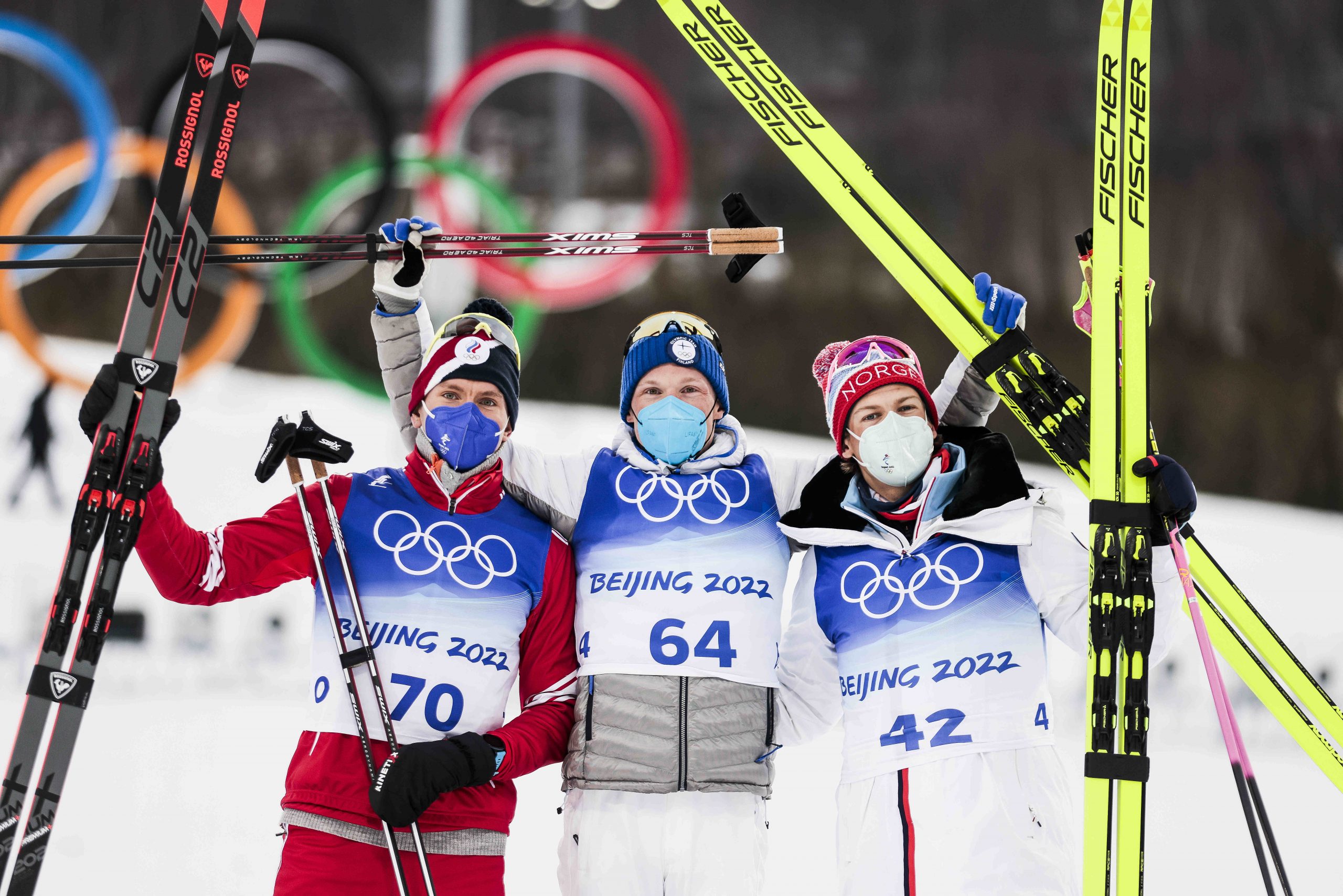
    Iivo Niskanen (FIN) takes gold in the 15 k classic, with Alexander Bolshunov (ROC) earning silver and Johannes Høsflot Klæbo (NOR) bronze. (Photo: NordicFocus)

    Today also provided glimpses of the young North American athletes from both Canada and the United States gaining valuable experience that points towards an exciting Olympic future for years to come.

    Ogden, for instance, found an opportunity to ski with the world’s best on the world’s biggest stage, “I was surprised when Klæbo passed me on the second lap on that climb, he wasn’t going a totally inhuman pace. I think one day I’ll be able to ski a larger percentage of that race at that speed.”

    Meanwhile, Gus Schumacher is focused on regaining a sense of feeling good on skis, saying to FasterSkier that “today was pretty flat, not a lot of aerobic power…you don’t feel like yourself, and I think we’re pretty grounded in physical feeling in this sport, so when those are weird you don’t feel like you have an anchor. I don’t want to rest at the Olympics, but I’m focused on coming around again this season.”

    Canada’s Olivier Léveillé leads the North American athletes in 29th during the 15 k individual start classic. (Photo: NordicFocus)

    Leading the way in the North American contingent was Canadian Olivier Léveillé in 29th (+2:57.2), followed by countrymen Rémi Drolet in 33rd (+3:12.9), and Antoine Cyr in 37th (+3:22.9).

    American Scott Patterson was close behind in 38th (+3:28.3), Ben Ogden was 42nd (+3:35.0), Gus Schumacher was 48th (+3:58.6), and JC Schoonmaker was 66th (+5:36.8).

    “That was tough,” Patterson told FasterSkier in the mixed zone. “It was a hard race day – wasn’t exactly what I wanted. I think we could have done a bit better with skis. I was slick to start and worked my arms pretty hard for the first lap. I think I kind of held it together, but the second lap hurt, and I was struggling out there. I was herringboning in most of the hills and trying to doublepole what I could, but it definitely felt like things were falling apart by the second lap. ”

    Scott Patterson leads the Americans in 38th in the 15 k individual start classic. (Photo: NordicFocus)

    During this second lap, Patterson began to recognize that the 15 k may not match his historic result from the skiathlon, where he finished 11th as the top American in the event, the best result in Olympic history for the men’s program. He shared what was in his mind as he worked through the discomfort and frustration of under-performing skis.

    “Keep hanging on. Keep fighting. I never like to be the one to kind of call it quits, so it’s tough. I mean, you know, other people are hurting out there too…I was turning my eyes back and head down on this final hill trying to pick up a few spots.”

    The American and Canadian contingents will now look ahead to the next two races of this game, when they come together to race under their nation’s respective banners. Sunday will see the 4 x 10 k team relay, before the team sprint next Wednesday.

    For more on how the U.S. team is approaching selection for those races, read here.

    Gus Schumacher races the 15 k individual start classic in Zhangjiakou. (Photo: NordicFocus)

    – Rachel Bachman Perkins contributed

    Full Results

  • Bolshunov Dominates Men’s 30 k Skiathlon to Win First Olympic Gold; Patterson Matches Olympic Career Best in 11th

    Bolshunov Dominates Men’s 30 k Skiathlon to Win First Olympic Gold; Patterson Matches Olympic Career Best in 11th

    The first podium of the 2022 Olympic Games following the men’s 30 k skiathlon. Alexander Bolshunov (ROC) dominated the event for gold, ahead of teammate Denis Spitsov who took silver, and Iivo Niskanen (FIN) bronze. (Photo: NordicFocus)

    This World Cup coverage is made possible through the generous support of Marty and Kathy Hall and the A Hall Mark of Excellence Award.  To learn more about A Hall Mark of Excellence Award or to learn how you can support FasterSkier’s coverage please contact info@fasterskier.com.


    On the heels of the women’s opening Olympic race, a colorful lycra field in their Sunday best lined up to race the men’s 30-kilometer skiathlon. While the women raced a four-lap 15 k event, men faced double the distance – over 75% longer by finish time – though they were greeted by much more favorable weather. It was sunny, still, and clear. Classic tracks were crisp and firm, and the familiar sound of poles powerfully planting and pushing off from cold snow, akin to the blasters of Storm Troopers in the classic Star Wars films, was not obscured by wind ripping through the stadium. 

    A quick nod to the start list for North American fans: Scott Patterson and Gus Schumacher were the only men racing in stars and stripes today, while Olivier Léveillé, Antoine Cyr, and Rémi Drolet raced for Canada. 

    Athletes take to the course for the men’s 30-kilometer skiathlon, the opening event of the 2022 Beijing Olympic Winter Games. (Photo: NordicFocus)

    To review the last two Olympiads, the 2018 Games saw a Norwegian sweep of the skiathlon podium, with Simen Hegstad Krüger breaking away to win gold by eight seconds ahead of his teammates Martin Johnsrud Sundby and Hans Christer Holund. After testing positive for COVID-19 shortly before his scheduled departure for Beijing, Krüger is currently riding out his  quarantine in a hotel room, resolutely training on a spin bike in hopes of making it to the 2022 Games in time for the final event, the men’s 50 k freestyle. Sundby retired from World Cup level racing after the 2021 World Championships in Oberstdorf, Germany, in which he earned an auto start as the reigning champion in the 15 k classic. This season, Sundby raced a series of marathon and longer races in Italy during January. This leaves only Holund returning to the Olympic skiathlon in 2022.  

    In 2014, it was a dog fight to the finish, with Dario Cologna of Switzerland taking gold by just 0.4 seconds over Marcus Helner of Sweden. Near the peak of his career, Norwegian powerhouse Sundby was one second behind Helner in third. 

    Athletes take to the course for the men’s 30-kilometer skiathlon, the opening event of the 2022 Beijing Olympic Winter Games. (Photo: NordicFocus)

    Over the first 15 k of classic racing, two names that have not yet been mentioned, from countries who have not been on the podium in the last two Olympic competitions, pulled away from the field. Leading the charge was the king of the 15 k classic, Finland’s Iivo Niskanen. Niskanen has won seven World Cup 15 k classic events, including a grueling race through falling snow in Lenzerheide, SUI at the beginning of the 2021/22 Tour de Ski. The Finn was second to Johannes Høsflot Klæbo (NOR) a week later in Val di Fiemme, ITA, near the other end of the Tour. 

    On Niskanen’s tails over the first four laps was Alexander Bolshunov of the Russian Olympic Committee (ROC). Bolshunov was fifth and seventh in the two most recent 15 k classic events, amidst a start to the 2021/22 World Cup season that did not match his previous three seasons of racing. Bolshunov was the World Cup distance champion in 2019, 2020, continuing his dominance to win both the distance title and the overall World Cup title in 2021. He also earned three silver medals in the 2018 Games – he was the runner up in the 50 k classic, and supported the ROC to second place finishes in the relay and team sprint – in addition to a bronze medal in the classic sprint.

    Iivo Niskanen (FIN) leads Alexander Bolshunov (ROC) as the pair drops the field during the classic leg of the 30 k skiathlon. (Photo: NordicFocus)

    Leading into this season, Bolshunov has had a less than ideal buildup. The 25-year-old experienced a bike crash in addition to a tooth infection that required multiple surgeries, interrupting his ability to train with the consistency and volume – rumored to be over 1,200 hours annually –  that has contributed to his strength over the last quadrennial. 

    At the 5 k checkpoint, the top-10 racers were spread by less than 5 seconds, before Bolshunov and Niskanen began to pull away. At 10 k the duo had built a 12 second lead to the chase pack, led by Denis Spitsov (ROC), and between 10 k and the pit-box at 15 k where athletes switched from classic to skate, this lead more than doubled to 30 seconds. 

    The chase group of Hans Christer Holund (NOR), Denis Spitsov (ROC), and Pål Golberg race the classic leg of the men’s 30 k skiathlon in Zhangjiakou. (Photo: NordicFocus)
    Alexander Bolshunov (ROC) begins to pull away from Iivo Niskanen (FIN) at the start of the 15 k skate leg of the men’s skiathlon. (Photo: NordicFocus)

    Niskanen and Bolshunov left the transition from classic to skate together, but over the next lap, Niskan’s wheels began to fall off. At 16.3 k, Bolshunov was already 13.5 seconds ahead, with Spitsov racing on his own, nearly 18 seconds behind Niskanen and closing fast. Originally podium favorites, two Norwegian chasers worked together roughly 1:06 behind Bolshunov, sitting well over 30 seconds out of third place. 

    Looking like his body had flooded with lactate and his matchbox was suddenly empty, Niskanen was unable to respond as Spitsov reeled him in, eventually leaving the Finn in his wake by the end of the first skate lap. From then on, the podium story looked to be pre-written.

    At 20 k, Bolshunov had more than 40 seconds on Spitsov, with Niskanen in no man’s land 1:03 behind the leader, and 50 seconds ahead of the Norwegian chasers. At 25 k, Bolshunov had grown his lead to nearly a minute over his countryman, and 1:50 to Niskanen.

    With well over a minute lead on second place, Alexander Bolshunov (ROC) takes a bow as he enters the stadium to win the men’s 30 k skiathlon. (Photo: NordicFocus)

    Entering the stadium, Bolshunov had all the time in the world to savor the victory of his first Olympic gold medal.

    Before rounding the bend into the final straight, Bolshunov took a deep bow. He accelerated around the final bend toward the sidelines, where he collected a ROC flag. Coasting down the lanes, Bolshunov waved this flag over his head with one hand, while pumping his left fist into the air, basking in the glory of a dominant performance on the world’s most prestigious stage. 

    Alexander Bolshunov celebrates a dominant victory, earning his first Olympic gold medal at the men’s 30 k skiathlon. (Photo: NordicFocus)
    Olympic champion Alexander Bolshunov welcomes his teammate Denis Spitsov (right) to the finish of the men’s 30 k skiathlon, going one-two for the Russian Olympic Committee. (Photo: NordicFocus)

    Bolshunov took off his skis, unable to stop smiling, as he turned around to greet his teammate Spitsov, who crossed the line for silver 1:11.0 behind. Niskanen had padded his lead enough over the first half of the race so that his hold on a medal was never threatened. Regaining his form over the final kilometers, he skied smoothly through the stadium to collect the bronze medal in third (+2:00.2). 

    “I just couldn’t keep pace with those Russians,” Niskanen told the Finnish news outlet Yle after the race. “They were just ridiculously fast today. Unbelievable, the speed they can ski at. It was even a little bit surprising that I wasn’t able to respond to them at all.”

    Iivo Niskanen pushes to the line for a bronze medal in the men’s 30 k skiathlon. (Photo: NordicFocus)

    Spread over the next minute, Holund took fourth (+2:30.9), with Golberg in fifth (+2:52.5). 

    While a glance at his FIS profile this season might not have identified Spitsov as a favorite, the 25-year-old was fourth in the event in the 2018 Games in Korea, where he also collected a Bronze medal in the 15 k freestyle. Spitsov collected a slew of top-10 World Cup results over the subsequent seasons, and was named to the 2021 World Championships, before he crashed while training at the venue in Oberstdorf, sustaining a fracture in his left hand that left him unable to compete. Racing back into form this season, Spitsov was fourth and seventh during the 15 k classic stages of the Tour de Ski, where he finished 4th overall. 

    Whenever the podium is dressed predominantly in Russian Red, speculation arises that the state sponsored doping that overshadowed any Russian performance at the 2014 Sochi Games has continued through 2022. This is especially true when an athlete runs away with a race, despite facing a field made of the top athletes in the world who have all, presumably, prepared in a way that maximizes their potential on the race course. FasterSkier’s Nat Herz voiced this speculation during Bolshunov’s post-race press conference, asking if there was anything the Russian champion would like for people to know regarding his performance on the day.

    “Well, people don’t become Olympic champions all of a sudden,” Bolshunov stated matter of factly. “In the past several years, I have been proving this in every race that I participate in, and I achieved distinguished results and I fight to the end. As to doping – you’re hinting at doping – when I hear about this, I don’t feel good at all. When I hear these words, I want to turn and just walk away because I just hate hearing this, because this should have nothing to do with sports. 

    “We have clean sportsmen, clean athletes here at the Olympics. We go through doping tests almost every day and we have to fill out these forms where we indicate where we will be training from which hour to which hour, when the training session starts, when it finishes and so on…”

    Alexander Bolshunov takes the men’s 30 k skiathlon win in Zhangjiakou. (Photo: NordicFocus)

    Bolshunov continued to explain a system akin to American doping control, where athletes need to report their whereabouts daily, including all details on training, travel, and even times of day when they might be running errands, or otherwise not at a location where an anti-doping agent could arrive unannounced to collect a sample. In his mind, this level of testing makes questioning whether or not the Russian program is competing fairly a moot point.

    “I believe that it’s wrong to ask us these questions. Well you don’t achieve these results all of a sudden — you don’t become an Olympics champion because it takes years and years of training. This is very hard and if you personally want to see how we train, please, we invite you. You are welcome. And these training sessions are very difficult — believe me. And after you will have seen how we train, I believe that you and your audience will never have these questions again. So I believe these are not the best questions to be asked. They’re irrelevant.”

    Scott Patterson tucks in behind Alexey Chervotkin (ROC) during the 30 k skiathlon. (Photo: NordicFocus)

    Off screen, yet another impressive comeback was underway. At the transition from classic to skate, Scott Patterson sat in 19th place, 2:15 behind the leaders. Steadily picking skiers off, Patterson moved into 16th by 20 k, and was tied with Germany’s Lucas Bögl in 11th at the 25 k checkpoint. Jules Lapierre and Clement Parisse of France were within reach in 9th and 10th, only a few seconds ahead. 

    Over the final kilometers, Patterson passed Parisse and pulled ahead of Bögl, but was passed by Artem Maltsev (ROC) to maintain his position in 11th place (+4:00.2) at the finish. This result matches Patterson’s Olympic career best result; he was 11th in the 50 k freestyle in the 2018 Olympics, after finishing 18th in the skiathlon earlier in the Games. 

    If you’ve followed Patterson’s trajectory this season, you’re aware of two things: first, that he sustained a wrist injury from a mountain bike crash that left him in need of surgery just five weeks before the opening World Cup races in Ruka. He joined the team a week late for the Lillehammer mini-tour, racing in a brace that left him unable to fully utilize his poles. 

    Patterson finished 70th in the 15 k free in Lillehammer, followed by a 75th place finish in the same event the following weekend in Davos. 

    The second thing you’ll have noted about Patterson’s season is that the trend from that moment forward pointed toward a very different result. Stepping back to the summer, Patterson had put together several impressive trail races, including breaking a storied course record at the Crows Pass Crossing in August, in which he had competed in seven previous summers. It was evident that his fitness was at an all time high before the crash.

    At the U.S. Cross Country Championships in Soldier Hollow in January, Patterson broke away to win the men’s 30 k skate by over 11 seconds, and was second in the 15 k classic two days later racing in a perfect storm of above freezing temperatures with mixed precipitation, on skis that perhaps were not up for the task. 

    Scott Patterson races to 11th in the men’s 30 k skiathlon during the 2022 Olympic Winter Games. (Photo: NordicFocus)

    Speaking to FasterSkier after the race, Patterson called a spade a spade, acknowledging that he had a “slow start to the season.” However, he found confidence in his racing in the years prior, where he came into peak form surrounding February championship events, regardless of what his Period 1 results looked like. 

    “[The Olympics] also get right into the races that I really like – a 30 k, then towards the end the 50 k. I think also the little bit smaller fields at the World Champs or Olympics kind of help. It’s a little less chaotic, where I can just kind of get in my groove and ski. So, [how prepared I am] was a little unknown going in. I had some confidence coming off Nationals, and I had a good training block [afterward], so I was optimistic, but it definitely was a big question mark how it would go. Obviously, it started out pretty strong, and I’m looking forward to more racing.”

    Scott Patterson takes 11th in the men’s 30 k skiathlon. (Photo: NordicFocus)

    Patterson was asked to quantify the extent to which the cold and the challenge of the course factored into the time gaps seen at the finish. Patterson acknowledged the altitude, and the speed of the snow, but ultimately concluded that at an Olympic event, the results are not unexpected.

    “It’s the Olympics like people just go hard,” he said simply. “I think we saw that in 2018 where no one sits around at an Olympic race. And we saw that for sure today with Iivo and [Bolshunov] – really strong off that classic leg. And I don’t think there’s any way to hide out here with these long hills and tough course – especially with the way they groomed it, where you don’t have tracks on the downhills. It’s hard to recover, so you have to work for a lot of it. And a lot of these hills are just that grade kind of in between V2 and V1. Or if you switch early to V1, you’ll be V1-ing for a long time.”

    With that, Patterson headed out to “go pee in a cup”, acknowledging that he was heading to doping control, and in response to a question on the winners, that they likely were too. 

    Gus Schumacher races the men’s 30 k skiathlon during the 2022 Beijing Olympic Winter Games. (Photo: NordicFocus)

    Schumacher, in his first Olympic performance, was 39th (+9:04.5). The 21-year-old gave an emotional response in the mixed zone, saying felt “depleted and empty” after his race. Showing maturity beyond his years in the sport, Schumacher fielded questions from the media regardless, stating that he felt he had paced the race well, but his energy was not what he had hoped for, and he took pride in simply finishing the race. His next statements, uttered while clearly choked up behind his N95, were powerful. 

    “I think when I was younger, I would have seen someone like myself have a tough race on a big stage and kind of be disappointed [in them]. And I am disappointed. But I want younger people to know that it’s a long process, and there are going to be bad days. And sometimes there are going to be a lot of bad days – this season hasn’t been my best. But I know I’m doing the right things, and more years of doing that, it’s just going to get better. I don’t want people to doubt me – I don’t really care that much [if they do] – but that is something that’s on my mind, because I’ve doubted people before. But I know there’s a lot of people at home that believe in me, and that have supported me to get to this point. And I know that they’re proud of me. And that means a lot.”

    Gus Schumacher races in his first Olympic event, the men’s 30 k skiathlon. (Photo: NordicFocus)
    Olivier Léveillé leads the Canadian men in 31st in the men’s 30 k skiathlon. (Photo: NordicFocus)

    Just outside the Top-30, Olivier Léveillé was the top Canadian finisher in 31st (+7:32.2), with Antoine Cyr a minute and a half behind in 42nd (+9:16.2). Drolet was lapped just before the 20 k checkpoint and did not finish the race. 


    Men’s 30 k Skiathlon Results

  • Klæbo Pulls Away for Fourth Stage Win in 15k Mass Start Classic to Build Overall Tour Lead

    Klæbo Pulls Away for Fourth Stage Win in 15k Mass Start Classic to Build Overall Tour Lead

    Athletes take to the tracks for Stage 5 of the 2021/22 Tour de Ski, a 15-kilometer mass start classic in Val di Fiemme, Italy. (Photo: NordicFocus)

    This World Cup coverage is made possible through the generous support of Marty and Kathy Hall and the A Hall Mark of Excellence Award.  To learn more about A Hall Mark of Excellence Award or to learn how you can support FasterSkier’s coverage please contact info@fasterskier.com.

    From Switzerland, to Germany, to the Italian Dolomites, the 2021/22 Tour de Ski continued today with its fifth of six stages, a 15-kilometer classic in Val di Fiemme. Dwindling from over 100 racers in the opening stages in Lenzerheide, just 62 men took the tracks in Stage 5, perhaps reducing the inevitable congestion of a mass start during the first of six 2.5k loops.

    With the end of the Tour fast approaching, today’s race was all about time gaps. With three wins over four stages, Johannes Høsflot Klæbo (NOR) led the tour by 1:03 over teammate Pål Golberg, and perhaps more importantly, 1:19 over Russia’s Alexander Bolshunov, who entered the Tour on the heels of overall victories in both 2020 and 2021. With an abbreviated schedule that perhaps favors sprinters more than the usual seven-plus stage grind, Klæbo’s lead was not unprecedented, however, the Norwegian’s track record up the final hill climb on the infamous Alpe Cermis pales in comparison to the Russian’s.

    Over the last four iterations of the Tour de Ski, Bolshunov has incrementally shaved a position or two off each year. Finishing sixth in 2018 by time of day, he advanced to fifth in 2019, third in 2020, and second in 2021. In contrast, Klæbo was 21st up the hill in 2020 and skied the 27th fastest time of day in 2019. He did not compete in the 2018 or 2021 Tours. 

    A slew of Norwegians lead the way in the opening laps of the 15k mass start classic in Val di Fiemme. (Photo: NordicFocus)

    Though the margin was only 15 seconds between the men, Bolshunov had also beaten Klæbo in the previous classic stage, on the second day of racing in Lenzerheide. With a time bonus opportunity today at 8.5k, Bolshunov had the potential to do some damage in the overall standings.

    With both athletes through the opening kilometers cleanly, without crashes or broken equipment, the tension began to build through the middle laps. 

    At the halfway mark, Stage 2 winner and 15k classic specialist Iivo Niskanen (FIN) led the way through the stadium with a train of athletes, mostly Norwegian and Russian, on his tails. Klæbo sat comfortably in 4th (+1.3), with Bolshunov back in 17th (+6.8). Klæbo surged ahead of Niskanen to collect the maximum time bonus of 15 seconds at 8.5k, before allowing the Finn to continue the work at the front. Bolshunov was 9th at the time bonus, earning only 2 seconds. 

    Iivo Niskanen leads the way in Stage 5. (Photo: NordicFocus)

    At 10k, Niskanen and Klæbo began to break away from the lead group, led by Bolshunov, who had skied into third, now five seconds back on Klæbo. 

    Pulling away with 5k to go is not a tactic we typically see from Klæbo, who historically has been better served by tactical finishes where the pack remains tight until the final kilometer, where he’s able to use his sprint acceleration to excel. Niskanen showed in Stage 2 his capability to run away with a win, but could Klæbo keep pace?

    By the next lap, Klæbo showed that not only could he match the Finn, but he could drop him. The two were separated by 9.5 seconds at the 12.5k checkpoint, with the chase group over 23 seconds behind Klæbo. Halfway through the final lap, Klæbo had grown his lead to nearly 17 seconds over a fading Niskanen, with Russia’s Alexey Chervotkin leading the chase group 26 seconds back from the leader.

    Running away with a fourth stage win, Johannes Høsflot Klæbo crosses the line of the 15k mass start classic while his chasers in the background descend into the stadium. (Photo: NordicFocus)

    Climbing powerfully up the final climb, pushing into the downhill, and cruising confidently through the finish lanes for the win, Klæbo took a fourth Stage win in 41:31.2. Niskanen held his ground for second (+20.8), while Chervotkin continued to chase the podium for third (+23.7), edging out his teammate Denis Spitsov by 0.3 seconds at the line. 

    Iivo Niskanen pushes to second place in Stage 5, while Russian chasers fight for the final podium spot in his wake. (Photo: NordicFocus)
    Stopping the watches, Alexey Chervotkin (right) and Denis Spitsov cross third and fourth, respectively, at the finish of Stage 5 in Val di Fiemme. (Photo: NordicFocus)

    Losing time in the overall standings, Bolshunov crossed the line 5th (+27.9). Between the time difference of the finish and the net loss of 13 seconds at the time bonus, this set Bolshunov back in the overall Tour standings by 2 minutes, though he remains in second place behind Klæbo.

    Bolshunov coasts over the line for fifth in the 15k mass start classic in Val di Fiemme. (Photo: NordicFocus)

    Commenting on his win and the growth of his advantage, Klæbo called it an “amazing day” in his post-race interview with FIS. 

    “We had amazing skis, and I think I used the rest day yesterday pretty good, so it was amazing to go out there with great grip and great gliding.”

    On his fatigue as the tour wanes, Klæbo continued, “I think we all are tired, but I was just trying to push all I could today, and like I said, amazing skis and the shape was good so it was amazing to actually win from the front for a change.”

    The men’s podium after Stage 5 of the Tour de Ski: Johannes Høsflot Klæbo (NOR) took the win ahead of Iivo Niskanen (FIN) in second and Alexey Chervotkin (RUS) in third. (Photo: NordicFocus)

    The start format of the final hill climb has shifted from a pursuit start based on overall standings in the tour, indicating that the first to the top of the hill would be the winner, to a mass start where overall standings become more foggy. This may mean that Klæbo is steadily being passed through the climb tomorrow, often those more lithe than the muscular sprint champion, while an athlete like Bolshunov climbs with more real estate, and perhaps less demoralization, near the front.  

    In response to the format, Klæbo explained: “[It’s not my favorite for sure, but I want to push everything I can tomorrow, then we’ll just see how it goes, but looking forward to tomorrow’s race as well.”

    Gus Schumacher races Stage 5 of the 2021/22 Tour de Ski in Val di Fiemme. (Photo: NordicFocus)

    It was a challenging day for the American men today, with only Gus Schumacher and Zak Ketterson remaining in the tour. Schumacher skied to 50th (+4:15.5) while Ketterson finished 59th (+5:42.9). Luke Jager and Ben Ogden, both sprint focused, pulled from the Tour after Stage 4. 

    “This is my first tour, and probably the first time I’ve done this many races in so few days,” Ketterson said after his race. “You kind of go into the race, just seeing what will happen. Today was pretty tough, of course, but I guess it’s just the nature of skiing that you have to just look toward the next stage. We have another race tomorrow and it’s a new chance. So, just have to have short term memory loss, I guess.”

    Zak Ketterson races Stage 5 of the 2021/22 Tour de Ski in Val di Fiemme, ITA. (Photo: NordicFocus)

    In terms of what he has learned over the last week in his first starts on the World Cup, Ketterson explained that this biggest adjustment has been to the level of racing and the density of world-class athletes.

    “The most interesting thing, if I have an off day in the US on the SuperTour, may I’ll be in the top 10, maybe top 20… but here, if you have a bad race, you get exposed. So it’s just seeing that you just have to stay super focused, because if you slip even a little bit here, you just lose so much.” 

    Full audio from post-race interview with Zak Ketterson, hosted by U.S. Ski & Snowboard cross country communications manager Tom Horrocks.

    Leaders of the day, Iivo Niskanen (FIN) and Johannes Høsflot Klæbo (NOR) set the pace in the 15-kilometer mass start classic in Val di Fiemme. (Photo: NordicFocus)

    Taking a last look at the overall standings before the final stage, Iivo Niskanen sits in third by time (+2:49) behind Klæbo and Bolshunov, with Norway’s Erik Valnes and Golberg in fourth (+3:04) and fifth (+3:09), respectively. Klæbo sits atop the points standings with 93, leading Valnes in second with 63, and Bolshunov in third with 42.

    Stage 5 Results

    Overall Tour Standings: Cumulative Time | Points

  • Klæbo Runs Away with Third Stage Win in the Classic Sprint; Ogden 22nd, Jager 27th

    Klæbo Runs Away with Third Stage Win in the Classic Sprint; Ogden 22nd, Jager 27th

    This World Cup coverage is made possible through the generous support of Marty and Kathy Hall and the A Hall Mark of Excellence Award.  To learn more about A Hall Mark of Excellence Award or to learn how you can support FasterSkier’s coverage please contact info@fasterskier.com.


    As we begin Stage 4 of the Tour de Ski, the first classic sprint since the opening race of the season in Ruka, Finland on November 26th, we look back to the last time athletes raced the event on the tracks in Oberstdorf, Germany. 

    During the 2021 World Championships, Johannes Høsflot Klæbo (NOR) took command of the gold medal from the qualifier on a 1.5-kilometer course seemingly designed for his racing style. A quick double pole start from the stadium leads to a long steady first climb where he skied long, strong, and steady, usually in second or third position. After a winding descent, athletes encounter a second short but steep climb of roughly 18 vertical meters, where Klæbo would begin his signature run. Stomping his way to the lead as he crested the top of the climb, stepping around a left-hand curve, and dropping into a tuck on the final descent leading into the stadium, Klæbo was repeatedly in position to advance through each round comfortably, eventually winning the final by several ski lengths. (Video highlights here.) 

    Alexander Terentev races to second place in qualification during Stage 4 of the Tour de Ski in Oberstdorf. (Photo: NordicFocus)

    Winning today’s qualifier in 2:55.78, Klæbo looked to be on track for a repeat victory in Oberstdorf, however, it is worth noting that he did not win the aforementioned other classic sprint this season. In Ruka, it was 22-year-old Alexander Terentev who took hold of the event in qualification and looked to, well, out-Klæbo Klæbo throughout the heats. We saw familiar tactics with a power move on the final climb, paired with impressive acceleration over the final meters to capture the win, but this time, the athlete employing these tactics was in a Russian race suit. While Klæbo has won each of the sprints he has entered since, with Terentev eliminated in the semis, Stage 4 would be a rematch both were eyeing. 

    Setting the stage, Terentev was second in qualification, +1.5 behind Klæbo, with Erik Valnes (NOR) in third (+2.37), Federico Pellegrino 4th (+3.53), and Alexander Bolshunov 5th (+3.61). Ben Ogden was the top American qualifier today, finishing 15th (+8.08), while Luke Jager finished 24th (+10.83). The American selected heats two and five, respectively. 

    Johannes Høsflot Klæbo and Erik Valnes take the lead in the final climb of the quarterfinal, with Ivan Yakimushkin (bib 23) and Iivo Niskanen (bib 29) chasing. (Photo: NordicFocus)

    In the first wave of the quarterfinal, Finland’s Iivo Niskanen, winner of the Stage 2 15k classic, pushed the pace heading up the first climb, perhaps looking to ensure an opportunity for a fast rather than tactical heat, knowing he was up against Valnes and Klæbo and likely would only have the opportunity to advance as lucky loser. However, the Norwegians, unphased, chose not to respond, waiting patiently mid-pack to use the same tactic described at World Champs. In the second climb, both created enough room to look as if they had begun their cooldown as they skied through the finish lanes, with Klæbo addigng a lackadaisical boot slide at the line that put him just ahead of his teammate. Behind them, Niskanen and Ivan Yakimushkin (RUS) sprinted to the line to chase the clock, with the Russian finishing ahead of the Finn. However, their times did not hold up through subsequent rounds and their day had ended.

    Alexander Bolshunov leads the quarter final during Stage 4 of the Tour de Ski, with Ben Ogden racing in bib 15. (Photo: NordicFocus)

    In the second heat of the quarters, Ogden lined up alongside Bolshunov, who took control out of the gate. Staying in the pack through the first climb, Ogden found himself in fifth as athletes exited the second and began descending toward the stadium. In the final curves, Ogden couldn’t quite maintain the position needed to contend for a spot as lucky loser, finishing 5th in a fast heat, +1.52 behind Bolshunov.

    Terentev looked as though his day might be over before he could face Klæbo head-to-head. Federico Pellegrino (ITA) stepped on his pole as lanes decreased in the opening stretch, causing it to snap. Terentev calmly accepted a replacement, steadily working his way back into the mix. Running out of the tracks in the final climb, Terentev accelerated around the left-hand curve and into the downhill in the lead, continuing through the finish for the win ahead of Mikal Novak (CZE) to advance comfortably.

    Alexander Terentev leads his quarterfinal during Stage 4 of the Tour de Ski in Oberstdorf. (Photo: NordicFocus)

    In the fifth heat of the quarters, Jager maintained contact with the pack through the first climb, but found himself off the back as he left the second. Jager’s legs wobbled as he found his footing in the descent. Perhaps too flooded to ski as aggressively as was needed to put himself in contention for higher placement, he crossed the line sixth in the heat, +6.88 behind the winner. 

    Luke Jager raced in the fifth quarterfinal during Stage 4 of the Tour de Ski in Oberstdorf. (Photo: NordicFocus)

    On we go to the semifinals.

    In a stacked first heat, Bolshunov and Terentev set the pace at the front heading up the first climb. Striding metronomically, they held Valnes and Klæbo temporarily at bay. As the men charged into the final climb, Klæbo advanced at a run up the outside, rounding the left hand bend with Terentev at the front before beginning the sweeping downhill side by side. 

    Terentev began to move across the track behind Klæbo, looking to finding a line that might be optimal for using the Norwegian’s draft to slingshot into the final lanes at high speed. Not waiting long enough, Terentev caught his tips on the Norwegian’s tails, losing his footing and crashing with a slide into the v-boards. No chance to recover what was lost, Terentev stood up, taking a defeated swing at the ground with his pole, before slowly continuing through the final meters to the finish, now well off the back. 

    As the two had created a small gap to their chasers, Valnes and Bolshunov navigated around the crash easily, racing to the line for second and third. Pulling ahead with his double pole, Valnes snagged second with Bolshunov less than half a second back, hoping for a lucky loser spot in the final.

    With a comfortable lead, Johannes Høsflot Klæbo looks over his shoulder as Erik Valnes and Alexander Bolshunov race to the line in the semifinal. (Photo: NordicFocus)

    Terentev later received verbal warning for a classical technique infraction.

    In the second and less-eventful semi, Pål Golberg and Even Northug attempted to take control of the race in the final climb, but they remained matched by Italy’s Francesco De Fabiani and Sweden’s Calle Halfvarsson as they crested the top. Goldberg picked up the most speed in the descent, accelerating out of the final curve with a sizable gap to his three chasers. Laying off the gas before the line, Goldberg took the win ahead of Northug, who left De Fabiani and Halfvarsson fighting for lucky loser spots on his tails. 

    Calle Halfvarsson and Fracesco de Fabiani take it to the line in the semifinal. (Photo: NordicFocus)

    De Fabiani and Halfvarsson crossed in a photo finish, both just 0.02 seconds ahead of Bolshunov’s mark, allowing them both to advance to the final and ending the Russian’s day.

    With four Norwegians in the final, they were guaranteed at least one spot on the podium. 

    Norway were 1-2-3 coming out of the first climb, with Klæbo sitting in second position. Doublepoling into the next climb, Klæbo matched Valnes as the two ran at the front, Klæbo out of track and Valnes in the inside lane.

    Johannes Høsflot Klæbo leads into the final descent in the last round of the Stage 4 classic sprint in Oberstdorf. (Photo: NordicFocus)

    Klæbo accelerated into the curve at the top stepping in front of Valnes and leading him into the downhill. Klæbo powered into the final stretch still in the lead, with Valnes a ski length back but closing fast with a strong doublepole. Valnes changed lanes, knowing it was his only opportunity if he wanted to try for a win, but there was not enough real estate left and this cost him speed as they came to the line. No time to celebrate this time, Klæbo pushed his boot over the finish to stop the clock at 2:54.77, roughly 3.5 seconds faster than any other rounded, with Valnes 0.3 seconds back for second place. 

    Johannes Høsflot Klæbo takes the win in Stage 4 ahead of teammate Erik Valnes, while Pål Golberg, Even Northug, and Calle Halfvarsson fight for the final spot on the podium behind. (Photo: NordicFocus)

    Behind the duo, the remaining two Norwegians sprinted to the line for a photo finish, with Goldberg edging out Northug for third by just 0.02 seconds. Halfvarsson, still in contention for the podium in the final stretch, crossed 0.5 seconds behind the Norwegians to end his day in 5th, while De Fabiani seemed to have accepted his fate, crossing the line casually +11.71 behind Klæbo. 

    Determining third place, Pål Golberg (center) edges out Even Northug, wit hCalle Halfvarsson just off the mark in fifth. (Photo: NordicFocus)

    Another all-Norway classic sprint podium in Oberstdorf, and a second consecutive win for Klæbo.

    “It’s amazing to start a new year with a victory and also to have two of my best friends coming onto the podium as well,” Klæbo told FIS at the finish. “I am really satisfied with today’s race, and also to start, hopefully, a good new year.”

    After four races in five days, Klæbo was asked whether Tour fatigue had begun to set in. 

    “For sure, I am getting a little bit tired, but still, when the weather is like this and the conditions are pretty nice, it gives you a lot of energy. So it’s just trying to push hard, looking forward to a rest day tomorrow, and trying to push hard in the last two legs.” 

    The all-Norwegian men’s podium after Stage 4 of the Tour de Ski: Johannes Høsflot Klæbo took his fourth win of the Tour ahead of Erik Valnes in second and Pål Golberg in third. (Photo: NordicFocus)

    After the final results were determined, Ogden ended his day in 22nd. 

    “I took the qualifier out really hot, hoping to be in the top 3 in qualification,” Ogden told U.S. Ski & Snowboard cross country communications manager Tom Horrocks at the finish. “I was a little flooded at the end, but not the end of the world. I chose heat 2, which is not always what I do, so I tried something different, and I think I skied well in the heat. It’s been a lot of racing for me early, so I’m a little tired, and wasn’t the smartest out there… but I’d say I’m learning a lot and making progress, so one day I’ll put it together.”

    Full audio clip with Ben Ogden, interviewed by Tom Horrocks.

    Ben Ogden races in heat 2 of the quarterfinals in Oberstdorf. (Photo: NordicFocus)

    It was Jager’s second time qualifying for the rounds in a classic sprint, and his second-best overall World Cup result. Jager was 18th in the opening classic sprint in Ruka, and finished 27th today.

    “I was trying to be competitive, in second, third, or fourth, somewhere where I could potentially get in a draft and have a good finish, hopefully,” Jager told Horrocks post-race. “It didn’t work out that way… Hindsight is 20/20, so maybe I wish I had picked a different lane and just gotten out and ran earlier, but at the end of the day, the pace was just really, really fast. I was and am, chronically and acutely, pretty tired right now, so I just didn’t really have it and wasn’t as aggressive as I should have been going over the top. I like to think if I had another shot in that exact same position, I could make fourth or fifth, but an objective qualification in that [heat] probably wasn’t going to happen for me today.” 

    Luke Jager races to 27th in Stage 4 of the Tour de Ski in Oberstdorf. (Photo: NordicFocus)

    Looking to the bright side, Jager expressed how grateful he has been to have had excellent skis in every race he’s competed this season, which provides confidence even on the days when the body doesn’t want to cooperate. At 21-years-old, Jager’s career is still nascent, and it’s easy to understand how progress at this level may not be linear. 

    “I’m super thankful for the opportunity [to race on the World Cup this season]… It feels often like it’s one step forward, four steps backward over here, just because it’s so brutal. The last month, especially, has been pretty tough and pretty demoralizing at times for me. I’m going home today, so it’s pretty nice to end with a glimmer of hope for what is to come. It’s the real deal. Sometimes it’s easy to forget that because so many Americans are doing well, but it’s pretty damn hard over here.”

    Full audio clip with Luke Jager, interviewed by Tom Horrocks.

    Kevin Bolger races to 33rd in qualification during Stage 4 of the Tour de Ski in Oberstdorf. (Photo: NordicFocus)

    Outside the Top-30, Kevin Bolger and Zak Ketterson were just shy of making the heats, finishing 33rd (+13.10) and 34th (+13.39), less than a second off the time needed to advance. Logan Hanneman was also a near-miss, finishing 37th (+14.08). Gus Schumacher rounded out the American starters in 45th (+16.51) of 73 starters. 

    Looking at the overall Tour de Ski standings with four of six stages complete, Johannes Høsflot Klæbo tops the list for both cumulative time and points after winning three of four events. By time, he sits 1:03 ahead of teammate Pål Golberg and 1:19 ahead of Alexander Bolshunov. With a 15k mass start classic and 10k freestyle hill climb to go, Klæbo is in good standing, but cannot be complacent, as the hill climb, in particular, has historically favored Bolshunov. 

    By points, which favor sprint stages and intermediate sprints in distance races, Klæbo leads with 81 points ahead of Erik Valnes, who holds 50, and Goldberg with 41.

    After a rest and travel day, racing continues Monday in Val di Fiemme, Italy.

    With three wins in four stages, Johannes Høsflot Klæbo leads the overall Tour de Ski standings by both cumulative time and points. (Photo: NordicFocus)

    Stage 4 Results:

    Qualification | Final

    Tour Standings After Stage 4:

    Cumulative Time | Points 

  • Keeping It In the Family, Iivo Niskanen Adds Another 15k Classic Victory to His Resume

    Keeping It In the Family, Iivo Niskanen Adds Another 15k Classic Victory to His Resume

    The men’s podium in Lenzerheide, SUI: Iivo Niskanen (FIN) led with command, finishing ahead of Alexander Bolshunov (RUS) and Pål Golberg (NOR). (Photo: NordicFocus)

    This World Cup coverage is made possible through the generous support of Marty and Kathy Hall and the A Hall Mark of Excellence Award.  To learn more about A Hall Mark of Excellence Award or to learn how you can support FasterSkier’s coverage please contact info@fasterskier.com.

    Lenzerheide, Switzerland was tucked into a snow globe today, as snow fell steadily in fat flakes throughout the races. The wax technicians had their work cut out for them as they prepared skis for the second stage of the 2021/22 Tour de Ski, a 15-kilometer interval start classic. 

    With the seeded group of podium favorites starting in bibs 30-50, there was time for athletes to learn how the course was skiing. Among these favorites, Johannes Høsflot Klæbo (bib 42) was looking to maintain good standing in the Tour, building on his top finish in yesterday’s freestyle sprint. In the 2019-2020 Tour de Ski, his last appearance after sitting out last year’s Tour for COVID-19 concerns, Klæbo finished in 10th in the 15k classic stage. 

    Johannes Høsflot Klæbo (NOR) leads Hugo Lapalus (FRA) through the snow in Lenzerheide. (Photo: NordicFocus)

    Winner of the last two iterations of the Tour de Ski and back-to-back World Cup overall champion, Russian Alexander Bolshunov has had an unprecedented start to the season, with results well below what were anticipated, possibly due to health challenges he’s faced this year. Bolshunov was knocked out in the quarterfinal of yesterday’s sprint, finishing 17th, and has not been on the podium in an individual event since the opening World Cup weekend in Ruka. 

    The Americans were looking to build upon solid results yesterday, where they put three men in the Top-30 overall. Kevin Bolger was the top finisher in the sprint, placing 16th overall, after qualifying 9th. Ben Ogden finished in 21st overall, after qualifying 5th, and Logan Hanneman ended his day in 25th overall. 

    Gus Schumacher races through the snow in Lenzerheide. (Photo: NordicFocus)

    As the seeded group time trialed through the snow, it was Iivo Niskanen in bib 36 who set the bar at the 5.8k mark, leading a group of Norwegians and Russians.  Bolshunov (+11.1) came through in 2nd (+11.1) with five Norwegians in tow, namely, Erik Valnes (+16.7), Pål Golberg(+18.6), Simen Hegstad Krüger (+20.9), Klæbo (+22.1), and Martin Løwstrøm Nyenget (+22.8).  

    Gus Schumacher was the top American in 37th (+59.2) at the 5k, with Ogden not far behind in 41st (+1:03.9). 

    A model for classic technique, Iivo Niskanen puts on a clinic in Lenzerheide in his signature event. (Photo: NordicFocus)

    With snow continuing to fall and tracks beginning to disappear, some athletes began to favor double pole to striding. Conditions didn’t seem to slow down Niskanen as at the 10k mark he was able to grow his lead over the pack. Bolshunov was still in second (+15.7), looking back on form and in contention for the podium. Goldberg  was in 3rd (+28.4), with Klæbo sitting just off the podium in 4th (+33.3).   

    Back on form in Lenzerheide, Alexander Bolshunov (RUS) skis to second in Stage 2 of the Tour de Ski. (Photo: NordicFocus)

    Thriving in his signature event, Niskanen continued to set the bar at each checkpoint to take the win in 32:51.7, making it a family sweep with his sister, Kerttu, winning the women’s race. This is Niskanen’s seventh World Cup victory, each of which has been in the 15k classic. He’ll be one to watch in the event at the upcoming 2022 Olympics, where he’ll be looking to add a third gold medal to his collection. Niskanen won the 50k classic in 2018 and was a member of the winning classic team sprint duo in 2014.

    Iivo Niskanen powers through the final meters for a commanding win in Stage 2 of the Tour de Ski. (Photo: NordicFocus)
    Iivo Niskanen celebrates victory in the 15k individual start classic in Lenzerheide. (Photo: NordicFocus)

    Perhaps a breakthrough after setbacks, Bolshunov held on for second (+19.3), finally earning another individual podium after weeks away. Goldberg was able to hold off his fellow teammate, Klæbo, to finish 3rd (+25.2) and 4th (+34.3) respectively. Yakimushkin (+34.6) couldn’t close the gap on Klæbo in the final meters, finishing just off the Norwegians mark in fifth (+34.6).  

    Alexander Bolshunov finishes solidly in second place in the 15k individual start classic in Lenzerheide. (Photo: NordicFocus)
    Johannes Høsflot Klæbo takes fourth in tough conditions during the 15k individual start classic in Lenzerheide, keeping himself in good standing in the overall Tour ranks. (Photo: NordicFocus)

    After the race, Niskanen told FIS, “I felt quite good… I tried to keep the race slow and steady [at the] start. I actually started too fast. I am happy, it was good also at the end.”

    Niskanen also explained how he felt before the race after seeing his sister winning the women’s race, “I got a little nervous before the race because I saw she won.  We had really good skis today, and it was an unbelievable day for our family.”

    The men’s podium in Lenzerheide, SUI: Iivo Niskanen (FIN) took the win, ahead of Alexander Bolshunov (RUS) and Pål Golberg (NOR). (Photo: NordicFocus)

    Racing through tough conditions, each of the Americans finished outside the Top-30. Schumacher was the top finisher, placing 38th (+2:13.4), roughly 9 seconds off 30th place. Ogden was not far behind placing 44th (+2:22.4). Bolger placed 65th (+3:25.3), with Hanneman finishing 70th (+3:44.8). Luke Jager finished just in front of Zak Ketterson, placing 84th (+4:36.4) and 85th (+4:43.2), respectively.  

    Post-race interview with Matt Whitcomb, from U.S. Ski & Snowboard cross country communications manager Tom Horrocks, discussing the men’s and women’s day in Lenzerheide.

    Kevin Bolger slides over the line for 65th in Lenzerheide. (Photo: NordicFocus)

    There are two sets of standings in the Tour, points and cumulative time. Bonus points were up for grabs at the 2.4k mark, providing an opportunity for sprinters to stay in the mix through the distance-heavy Tour. While sprinters did not look to fight for these points today, Niskanen surged ahead of the field to earn the maximum 15 point-bonus. Bolshunov was second at this checkpoint, claiming 12 points, with Valnes in 3rd for 10 points. Klæbo was 5th at 2.4k, earning 5 bonus points.  

    As results from the day became finalized, Klæbo was able to hold on to the overall lead in the Tour, having a 14 second lead over his teammate, Goldberg. With today’s win, Niskanen moved up the rankings, now sitting in third place.

    Luke Jager finishes Stage 2 of the Tour de Ski, racing through tough and snowy conditions in Lenzerheide. (Photo: NordicFocus)

    After a day off for rest and travel, racing will continue on Friday with a 15k freestyle in Oberstdorf, Germany. 

    Final Results  |  Overall Standings 


  • Bolshunov Pulls Away for a Solo Victory in the 15 k Classic; Cyr 21st

    Bolshunov Pulls Away for a Solo Victory in the 15 k Classic; Cyr 21st

    Engadin, Switzerland – a stellar backdrop for the men’s 15 k mass start classic. (Photo: NordicFocus)

    This World Cup coverage is made possible through the generous support of Marty and Kathy Hall and their A Hall Mark of Excellence Award. To learn more about A Hall Mark of Excellence Award or to learn how you can support FasterSkier’s coverage please contact info@fasterskier.com.

    It’s the last hurrah, folks. Roughly a year after the COVID-19 virus achieved its global pandemic title, the World Cup finds itself at the end of a season that once looked as if it may not happen in the first place. Though four competitions — Lillehammer, Nové Město, Oslo, and Beijing — were cancelled or postponed, the World Cup toured through Europe from November to March without any known significant outbreaks. All things considered, they pulled off a bold and robust competition schedule. 

    Leaving the unpredictable spring conditions at the World Championships in Oberstdorf, Germany, the cold, crisp tracks and an Alpen backdrop looked like a wintery treat during today’s 15-kilometer mass start classic event. The picturesque venue, home to the Engadin Ski Marathon, is nestled in the Engadin Valley of Switzerland just south of St. Moritz in the town of Surlej. Pristine conditions, bluebird skies, and high mountain air; what more could you ask for in a final stop?

    Iivo Niskanen leads the way midway through the 15 k mass start classic in the Engadin Valley of Switzerland. (Photo: NordicFocus)

    As the dust settles from the World Championship, in particular the conclusive result of the men’s 50k classic just six days ago, eyes were on the 24-year-old duo up front with 5k to go. To put it clearly, we mean Norway’s Johannes Høsflot Klæbo perhaps looking for redemption after his disqualification for obstruction and loss of the World Championship gold medal versus Russia’s Alexander Bolshunov. The Russian also felt robbed of this medal as the interaction with Klæbo in the finishing stretch resulted in a snapped pole, consequently losing him ground to Emil Iversen and leaving him with silver. 

    With the field staying tight over the first 10 k on Saturday, it was on Bolshunov to move early and avoid setting up a repeat opportunity for Klæbo to sit and kick in his signature style. Time and again, Klæbo the World Champion and Olympic gold medalist in the classic sprint has demonstrated his potential to, quite literally, run away from the field in the final 400 meters, rocketing down the final stretch to clinch the win. Though Bolshunov is the overall World Cup winner for the third year running, it would not behoove the Russian to face off with Klæbo in this way.

    Alexander Bolshunov leads the way in the 15 k classic, with Johannes Høsflot Klæbo drafting on his tails. (Photo: NordicFocus)

    And he knew it. Crossing the bonus sprint checkpoint at 10 k, Bolshunov and Klæbo were side by side. But as the leaders kicked and glided into their final lap, Bolshunov began to surge off the front. At 11.4 k, he had only a second gap ahead of Klæbo who attempted to match the pace. But, by 2 k later, the winner was clear. Bolshunov had a 24.9 second gap at 13.8 k, while Klæbo had allowed the chase group to catch back up, letting go of a win and setting himself up for a sprint finish for second place. 

    Despite his lead, the Russian kept his foot on the gas all the way to the finish stretch where he raised his arms to soak in his achievement and coasted through the finish in 34:07.1. 

    Bolshunov coasts through the finish without challengers at the 15 k mass start classic in the Engadin Valley of Switzerland. (Photo: NordicFocus)
    Alexander Bolshunov takes the win in the 15k classic in Switzerland. (Photo: NordicFocus)

    “I really like St Moritz,” Bolshunov told FIS through a translator after the race. “I was very pleased with the conditions here and feel it is one of the best places I have been skiing and training. About the race, I was really happy with the result and happy that now we have again hard winter conditions and that I could push hard on this course. I am very happy to take the victory.”

    The remainder of the podium was less certain, with Klæbo heading toward the stadium with a pack of seven men. Utilizing his aforementioned signature, Klæbo engaged his sprint gear to move up to the front of the group, coming into the final 100 meters alongside his teammate Pål Golberg. Klæbo held Goldberg off by half a ski length for second (+18.5), leaving Goldberg in third (+18.9). 

    Johannes Høsflot Klæbo edges out teammate Pål Golberg for second place. (Photo: NordicFocus)
    The 15 k classic men’s podium in the dreamy Engadin Valley. Alexander Bolshunov (RUS) took the win ahead of Johannes Høsflot Klæbo (NOR) and Pål Golberg (NOR). (Photo: NordicFocus)

    Sweden’s Jens Berman took 4th (+20.0), with Simen Hegstad Krüger of Norway in 5th (+21.2), Artem Maltsev of Russia 6th (+24.2), and Iivo Niskanen of Finland 7th (+27.4). Hans Christer Holund brought up the rear for the first group of chasers in 8th (+31.2).

    Alexander Bolshunov celebrates his 9th World Cup distance win this season at the final stop in the Engadin Valley of Switzerland. (Photo: NordicFocus)

    With this 23rd World Cup win under his belt — nine from this season alone — Bolshunov joins Norway’s Peter Northug as joint-fourth on the all-time list. He is the first male skier to win three consecutive World Cup crystal globes, tied for the second-most distance globes in his collection with Norway’s Martin Johnsrud Sundby who also holds three. Only the Swiss champion Dario Cologna outranks Bolshunov, with four distance globes.

    Antoine Cyr (CAN) tucks into the draft of Jean Marc Gaillard (FRA) during a career-best race in the 15 k classic in Switzerland. (Photo: NordicFocus)

    Turning to the North American results, Antoine Cyr took 21st for Canada (+54.5), nailing his best individual result of his career. This is the second season on the Senior National Team and racing at the World Cup level for the 22-year-old who hails from Gatineau, QC. 

    As the dense cluster of skiers from the mass start slowly began to thin out, Cyr skied his way up from 45th and 23 seconds back at the halfway mark to 21st and just 9 seconds behind the leaders at the 10 k checkpoint. Holding his ground in this group over the last 5 k, Cyr crossed the line just behind Andrew Musgrave of Great Britain. 

    “I had a really good race today — it is the first time I have earned World Cup points, so it’s pretty exciting,” wrote Cyr in a post-race email. “I knew it was a good course for me but I was starting far back on the grid and had to make up a lot of spots on the third lap, then the fourth lap I was just hanging with the pack I was skiing with. I am really happy with the results but I know I have even more to give as I am a rookie on the World Cup and just getting used to the way it races here. I am excited for tomorrow and what is to come!”

    Graham Ritchie (CAN) crosses the line just behind Andrew Young (GBR) at the 15 k mass start classic in the Engadin Valley. (Photo: NordicFocus)

    Also racing for Canada, Russell Kennedy took 35th (+1:17.0), Rémi Droulet 67th (+2:57.1), and Graham Ritchie 71st (+3:25.5).

    David Norris navigates mass start chaos in the 15 k classic in Surlej, Switzerland. (Photo: NordicFocus)

    For the US squad, David Norris was the top finisher, leading the way in 41st (+1:31.4). 

    “Our transition from World Champs to the Engadin went smoothly,” wrote Norris in a post-race email to FasterSkier. “I’ve spent this week previewing the new courses here in the Engadin and trying to recover from the 50km last week. Up until Wednesday my legs were still pretty heavy from my final effort in Germany. I’m in a good place now and race preparation on Friday felt good.

    “I didn’t know what to expect going into today’s race. The course is quite flat and there was a pretty strong wind all morning. I chose the wrong skis for this morning so I consistently lost ground on a few crucial descents that fed into long double pole sections where you didn’t want to be alone breaking wind. When the guys up front started to stretch out the pack I was still pretty far back. I wasn’t strong enough to move forward so the last two laps my group seemed to pick guys off who were fading, but otherwise I think we bled time to the packs ahead of us. It was a fun race, but I know this is far from a great performance for me. Time to start thinking about tomorrow’s 50km – I’m real excited for Sunday!”

    Hunter Wonders skis to 47th in the 15k classic in Surlej, Switzerland. (Photo: NordicFocus)


    Ben Ogden throws his boot for 51st alongside Johan Haeggström of Sweden. (Photo: NordicFocus)

    Next up for the Americans, Hunter Wonders crossed the line in 47th (+1:45.4) closely followed by Gus Schumacher in 48th (+1:46.1). Ben Ogden took 51st (+1:51.5) with Scott Patterson 53rd (+1:58.8), Kevin Bolger 60th (+2:11.5), and Johnny Hagenbuch rounding it out in 72nd (+3:39.7). The race saw 82 finishers. 

    Scott Patterson (bib 52) and Ben Ogden on course during the 15 k mass start classic in Surlej, Switzerland. (Photo: NordicFocus)


    Johnny Hagenbuch on course between two Canadians during the 15 k mass start classic in the Engadin Valley of Switzerland. (Photo: NordicFocus)

    Racing continues tomorrow with a pursuit start 50 k freestyle.

    Final Results

  • Heavy Snow and a Heavy Klæbo Hop-Skate: Norway Beats Russia for Men’s Relay Win

    Heavy Snow and a Heavy Klæbo Hop-Skate: Norway Beats Russia for Men’s Relay Win

    A train, led by Alexey Chervotkin (RSF), winding through the snow. (Photo: NordicFocus)

    This World Championship coverage is made possible through the generous support of Marty and Kathy Hall and their A Hall Mark of Excellence Award. To learn more about A Hall Mark of Excellence Award or to learn how you can support FasterSkier’s coverage please contact info@fasterskier.com. 

    After the tropical conditions of the past week, the men were greeted with heavy snowfall for Friday’s championship 4 x 10 k relay competition in Oberstdorf. Temperatures hovered around freezing and the snow fell thick and fast as the scramblers lined up at the start. Eighteen nations were represented at the start line with thirteen completing the whole race. 

    The start to a snowy 4 x 10 k relay at the 2021 World Championships. (Photo: NordicFocus)

    On paper Norway was the team to beat out on the track. Of the last 15 men’s relay titles at a World Championship, Norway has won all but one. The last time Norway failed to win the men’s relay was in 1999 when team Austria finished 0.2 seconds ahead of Norway. And in the end on Friday after striding and skating through fresh snow for 40 k, it was once again team Norway that crossed the line in first, but what a race it was to get them there. 

    Johannes Hoesflot Klaebo (NOR), Hans Christer Holund (NOR), Emil Iversen (NOR), Paal Golberg (NOR), (l-r) 2021 Relay World Champions. (Photo: NordicFocus)

    The team most likely to challenge Norway was Russia, or the Russian Ski Federation as they are represented at these championships. The bar was set from the beginning. Despite conditions not favoring an early breakaway, Alexey Chervotkin (RSF) made a move just 1.4 k off the start, putting distance between himself and the pack.

    Hugo Lapalus (FRA), out of the tracks, while Alexey Chervotkin drives the bus. on the scramble leg. (Photo: NordicFocus)
    Making a move that stuck on the first keg: Russia’s Alexey Chervotkin pushed over the top. (Photo: NordicFocus)

    At 4.7 k, Chervotkin had stretched his lead to +14.1 seconds and the group seemed largely unprepared to mount an organized counterattack. Perhaps expecting the Russian to fade or simply unable to respond, Norway’s Pål Goldberg remained tucked in the rear of the pack. At 6.6 k the margin was +33.6 to Russia. Save for Chervotkin’s effort out front, the pace remained World Cup-pedestrian. At one point, the skiers nearly halting completely at the crest of the sprint hill, playing chicken for who would descend first. Through 8 k the gap to Russia was nearly one minute.

    No man’s land, atop the climb, Michal Novak (CZE), Beda Klee (SUI), Hugo Lapalus (FRA), (l-r) bring the pace to a walk as no team wants to chase Russia down. (Photo: NoricFocus)

    Entering the first exchange the chase pack had split in two, with France leading and Norway off the back in 10th position. In a post-race interview Golberg said of his race, “it was a bit of a tough start. I chose a different choice [of ski] from the seventeen other skiers so that was really stupid but fortunately I have three skiers on my team that are better than everyone else here today so I’m really happy for them.” One of those skiers was Emil Iversen who took over for Norway on the second leg. His work linked Norway up with the rest of the chase pack, now being led by Iivo Niskanen of Finland. Ivan Yakimushkin had taken control for RSF, but already, with the hot pace set by Niskanen, the gap was down to +30.4 seconds to Norway. 


    Ivan Yakimushkin, Russia’s second leg skier, sensing the group led by Iivo Niskanen closing in on the second leg. (Photo: NordicFocus)

    At 13.3 k Niskanen, Iversen, and Dario Cologna of Switzerland were closing in on Yakimushkin. After 40 minutes on the clock they had overtaken the Russian. The pack now comprised six nations (France and Sweden also in contention), with team Canada drifting around eight seconds behind. Again on lap two through the stadium the pace slowed to a halt before the descent, unrelenting snow adding an extra challenge to the lead. 

    At the base of the Burgstall climb on his final lap, Iversen (NOR) made his move, directly shadowed by Niskanen (FIN). To the soundtrack of much excited shouting from the coaches, the pair closed in on the exchange zone, with Russia now off the back. 

    Iivo Niskanen of Finland doing the work to reel in Russia on the second leg of the 4 x 10 relay. (Photo: NordicFocus)

    Wednesday’s 15 k skate champion, Hans Christer Holund, contended the first skate leg for Norway. His lead over Russia being +23.6 seconds at the tag zone. Followed by Perttu Hyvarinen, Finland’s third leg, Holund broke trail out front through deep snow as behind him, Artem Maltsev for RSF turned on the burners, starting to forge the gap. At 23.3 k there was just six seconds between them and the Finn was fading fast. At 24.7 k Holund was alone out front, +12.1 ahead of RSF and Finland now in third. As the athletes battled through their last loop, the wheels seemed to come off for Maltsev (RSF) and Clement Parisse of France and Jens Burman of Sweden moved to the fore. 

    Norwegian work horse on the third leg: Hans Christer Holund. (Photo: NordicFocus)

    Into the final exchange Holund handed team anchor Johannes Høsflot Klæbo a +25.5 second lead over France and Sweden (virtually neck and neck), and a +35 second lead to Russia, for whom Alexander Bolshunov would be taking anchor. 

    Johannes Hoesflot Klæbo (NOR) biding his time for the final show-down. (Photo: NordicFocus)

    With Klæbo (NOR) out on his own in deep snow, Bolshunov was on the hunt. The ten second lead over Russia held by Sweden and France was immediately absorbed and once again there was a pack of five teams in contention behind Norway. At 31.4 k Bolshunov had only gained 0.5 seconds on Klæbo but that was soon to change. By 33.3 k he had broken away from the chase pack and was +15.8 behind. Each of the two athletes played to their respective strengths, Klæbo cruising easily while he waited for his ride to catch up and Bolshunov grinding away with metronomic consistency.

    Locked in for battle, Norway versus Russia to conclude the Men’s 4×10 k championship relay. (Photo: NordicFocus)

    By 34.7 k the duel was on – the world’s best playing hot and cold as they ticked away the kilometers toward the finish line. With Norway absent for much of the Wold Cup season, these two rivals have not had many head-to-head opportunities this year up until this moment. For his part, Bolshunov never moved to pull away from Klæbo who boasts a peerless finishing kick. Once atop the course’s final major run up the Burgstall climb, when Bolshunov had gained no ground, this chess march was all but done. 

    Klaebo (NOR) not giving an inch to Bolshunov (RSF). (Photo: NordicFocus)

    Entering the corner into the final sprint hill before the finish there was virtually no gap between the two skiers, though in reality the game had tipped in Norway’s favor. While Bolshunov may dominate the distance races, Klæbo remains king of the sprint and once he made his up-skate move, there was nothing the Russian could do. The decisive moment came half way up the hill as Klæbo catapulted himself away with an unmatched turn of pace, setting up for an easy cruise down the finish straight, sealing the deal on gold for Norway once again in a time of 1:52:39. Twelve seconds later, Bolshunov crossed the line, meaning silver for RSF. 

    The deal has been sealed, Johannes Hoesflot Klæbo (NOR) celebrates victory as a defeated Bolshunov (RSF) gives up before the line. (Photo: NordicFocus)

    Rewind a bit and the fight for bronze was unfolding on the Burgstall climb as Jules Lapierre of France made a break, gaining ten seconds of advantage over Sweden, Finland and Switzerland.

    Jules Lapierre (FRA) gets a boost after bringing home bronze for France. (Photo: NordicFocus)

    Though that advantage shrunk on the descent, it remained enough to give France third place, finishing + 1:12.6 behind Norway and four seconds ahead of Sweden in fourth. 

    No shortage of enthusiasm from team France after their third place finish. (Photo: NordicFocus)

    For team USA, David Norris raced the scramble, handing over to Scott Patterson in 11th position at the first exchange. 

    Scott Patterson for the U.S. settles into a pacing groove on the second leg of the 4 x 10 k relay. (Photo: NordicFocus)

    Patterson remained steady through his laps and tagged Simi Hamilton, still in 11th. Over the course of his 10 k, Hamilton gained one position and tagged Gus Schumacher in 10th place.

    “It was awesome,” Hamilton said of the racing and wild Oberstdorf weather. “It was, I mean a pretty crazy, bizarre, different weird day with the conditions. You know like, you never really know what to expect when you wake up and its basically 32 and dumping all day. It’s going to make for a pretty different race but I’m super proud of our team.

    “I think we put together just four really good consistent legs. Our skis were awesome, my boards were running really really well. The climb was tough for me, as kind of a “sprinter” when you mix in a four-minute climb its always tough for me but thankfully I was able to kind of rely on some good glide to recover from the top down to the stadium each time so that was great. But yeah, these boys are… it was maybe the most fun relay I’ve ever skied on, on the World Cup or World Championship just because, I don’t know we had a really good energy going today. We all came out and fought hard and I think this is the type of energy that you know eventually will land us on the podium. I won’t be on that team, but it’s cool to be a part of it. I’m stoked, it was a great way to end the championships for me and it was a fun day.”

    Simi Hamilton, leg three skier for the U.S. (Photo: NordicFocus)

    Schumacher and Friedrich Moch of Germany battled it out, the advantage ultimately going to Germany who finished in 7th, Schumacher crossing the line 8th for the United States. 

    Graham Ritchie (CAN) keeping Canada’s team in contact during the scramble leg. (Photo: NordicFocus)

    Team Canada, who posted a strong start by Graham Ritchie, ended the day in 10th place. Skiing leg two for Canada was Antoine Cyr, followed by Russell Kennedy with youngster Remi Drolet holding the anchor position. 

    In a snow globe, Russell Kennedy of Canada during leg three of the 4 x 10 k relay. (Photo: NordicFocus)

    This year’s World Championships conclude for the men on Sunday with a 50 k classic mass start event. 

    Results: Men’s 4×10 k Relay

  • Even with a Tumble, Bolshunov Prevails; Klaebo and Golberg go 2-3 (updated)

    Even with a Tumble, Bolshunov Prevails; Klaebo and Golberg go 2-3 (updated)

    After tumbling earlier in the race, Russia’s Alexander Bolshunov clawed back for another World Cup win. (Photo: NordicFocus)

    This World Cup coverage is made possible through the generous support of Marty and Kathy Hall and their A Hall Mark of Excellence Award. To learn more about A Hall Mark of Excellence Award or to learn how you can support FasterSkier’s coverage please contact info@fasterskier.com. 

    Another clear, cloudless, and frigid day of racing for the men in Falun, Sweden as they completed three laps of a 5 k loop for Saturday’s classic mass start event. Even the perpetually bare-handed Andrew Musgrave of Great Britain was wearing gloves, a sure sign of cold temperatures. This made for fast and firm conditions, resulting in several high-pace crashes, perhaps abetted by the v-board placement on some of the sharper corners. 

    Tightly packed skiers after the start of the men’s 15 k mass start classic in Falun, Sweden. (Photo: NordicFocus)

    The Lycra color of the day was again red as Alexander Bolshunov of Russia took his 9th individual victory of the season (including the Overall Tour de Ski) in a time of 35:16.3. It was a race to the wire with challenges coming from the other men-in-red, the Norwegians. Directly behind Bolshunov in the final standings were Norway’s Pål Golberg and Johannes Høsflot Klæbo – who were given the same race time (35.16.7), effectively tying for second place in an extremely tight photo-finish. The silver medal, however, was awarded to Klæbo, and Golberg was given bronze. There was lingering confusion as the top-three lined up for the awards ceremony where Klæbo was heard asking, “am I third?” and he was told he had just out-lunged his teammate for second place. 

    Photo-finish between Johannes Hoesflot Klaebo (foreground, Fischer) and Pål Golberg (background, Rossignol) of Norway for 2nd and 3rd place. (Screenshot: FIS/Eurosport)

    As the race kicked off, four tracks across and two lanes deep a wall of red suits composed of Russians and Norwegians stormed ahead- a pronounced theme through the first 1.8 k and for that matter, much of the race. A bonus trophy sprint at 5.8 k brought Iivo Niskanen of Finland through the lineup for a brief time as he gathered 15 bonus points for his effort. 

    A long-striding Iivo Niskanen (FIN) out front. (Photo: Nordic Focus)

    At the base of the sprint hill, just before the 8.9 k split came the first of the big crashes. Cornering tightly, Musgrave tangled with Ilia Poroshkin of Russia and the two went down, taking Bolshunov and a Swiss skier with them. As the rest of the pack crested the hill to descend into the fast sweeping corner, a second crash ensued, with Andrew Young of Great Britain busting through the sponsor boards and Erik Valnes of Norway losing a ski. Young (GBR) received first aid on-site and according to FIS was taken to the hospital for further medical care.

    Norway’s Hans Christer Holund pulling out of competition after crashing during the men’s race on Saturday. (Photo: NordicFocus)

    Despite the crash, a charge-ahead Bolshunov was soon back to the front, making a decisive move around 13.5 k. He was shadowed by Golberg. With a bit of a gap, those two began the descent into the stadium chased by a fast-closing Klæbo. Down the finish straight, Bolshunov looked to have it in the bag, yet the Norwegians were hot on his tails. Golberg seemed unaware of the close proximity of his teammate and didn’t make a lunge for the line, looking surprised to see Klæbo so close and ultimately loosing the photo-finish.

    After the race Bolshunov said, “I am really happy to win this race in Falun. It is my fourth year in a row to have a victory here. It was a fast and hectic race and I had a fall but luckily no equipment was broken and I was able to catch up and take the victory.” 

    Alexander Bolshunov poling for the win as Norway’s Pål Golberg (bib 16) and Johannes Høsflot Klæbo (behind Bolshunov) fight for second and third. (Photo: NordicFocus)

    For much of the race, a duo in stars and stripes sporting matching camo buffs could be seen at the back of the pack. Gus Schumacher and Hunter Wonders, both U-23 skiers from Alaska, were the top finishers for the American men. Schumacher, who placed 28th, +14.8 back from Bolshunov, said of his race, “as the pace picked up, I didn’t have much spare energy, as I spent a lot of it trying to ski in the middle of the pack. In hindsight, trying to ski up in 10th-20th would’ve been a lot easier. I’m not super happy with my result today, it would’ve been nice to be able to attack in the last 5km, but I am happy with not falling or breaking any equipment. I’m sure some of the chaos was visible on TV, but there was a lot more that was going on the whole time, in terms of falls and tangles. It was a good day to practice group skiing, and I’m glad I had yesterday to show that if I ski well, I have that energy in the end!”

    Hunter Wonders finished 37th (+24.9). “This is in fact my 2nd week on the WC and it’s pretty surreal to be side by side all the best in the world that I’ve been watching on TV for years,” emailed Wonders after the race. “Last week in Lahti wasn’t my best weekend of racing and I knew I could do better and just tried to keep it off my mind and look forward to these races in Falun. I try to go into every ski race with the mentality of it being just that, another ski race that I’ve done hundreds of times.

    “Gus and I skied a good portion of the race together today and that was awesome to me, it reminded me of high school skiing in a way. The race was crazy hectic and there were lots of crashes so I think Gus and I are both just happy to have stayed on our feet!”

    Also for the U.S., Adam Martin finished 57th, David Norris 60th, Ian Torchia 64th and Scott Patterson 65th. 

    Ueli Schnider (SUI), and Gus Schumacher (USA), (l-r) during the men’s 15 k mass start classic in Falun, Sweden. Schumacher was the top North American finisher in 28th. (Photo: NordicFocus)

    The Canadian men were led by Remi Drolet who finished 47th, followed by Russell Kennedy in 54th and Philippe Boucher in 70th. Antoine Cyr did not start. 

    Adam Martin (USA) on a lap through the stadium. (Photo: Nordic Focus)

    The weekend of racing wraps up tomorrow with a classic sprint.

    Post-race comments from U.S. Head Coach Matt Whitcomb.

    Results: Men’s 15 k

  • Norway win Men’s 4 x 7.5 k Relay in Lahti; Belligerent Bolshunov Bullies

    Norway win Men’s 4 x 7.5 k Relay in Lahti; Belligerent Bolshunov Bullies

    Early in the first leg of the men’s 4 x 7.5 k relay in Lahti, Finland. (Photo: NordicFocus)

    This World Cup coverage is made possible through the generous support of Marty and Kathy Hall and their A Hall Mark of Excellence Award. To learn more about A Hall Mark of Excellence Award or to learn how you can support FasterSkier’s coverage please contact info@fasterskier.com. 

    The fog seemed to have thickened since the completion of the women’s race earlier in the day, at times obscuring the skiers with only their silhouettes visible. Eleven teams contested this men’s 4×7.5 k relay with nine nations represented, though with the disqualification of Alexander Bolshunov (more on that in a bit), anchor for Russia I, only 10 teams officially finished.

    Historically, World Cup men’s relays have been a duel between Russia and Norway. Out of the fifteen relay races in the past 10 years (not including world championships or Olympics), Russia has won four of those times, the remaining victories all Norway. After a men’s podium sweep in the skiathlon on Saturday, it seemed fair to bet on Norway for today’s race. Indeed, when the race concluded Sunday in Lahti, Finland it was Norway once again on top. As skiathlon winner Emil Iverson so aptly put it yesterday, the Norwegians are “back with a boom.” 

    The race began, and ended with drama, particularly for team Russia I. Immediately out of the start gate, Alexey Chervotkin, who scrambled for Russia I broke a pole but recovered to quickly rejoin the field. Pål Golberg of Norway led the charge off the front, pushing the pace to string out the pack. By the end of the third lap, Golberg had created a gap to the rest of the field, followed only by Ilia Semikov of Russia II and a little way back, Chervotkin of Russia I. “It was good that it was snow and not rain coming down,” said Golberg after the race, “so it was possible to go hard at the front.” 

    Pål Golberg (NOR), Alexey Chervotkin (RUS), Ilia Semikov (RUS), Marko Kilp (EST), (l-r) during the men’s 4 x 7.5 k relay. (Photo: NordicFocus)
    Alexey Chervotkin (RUS), Pål Golberg (NOR), (l-r) scramble for their respective teams. (Photo: NordicFocus)

    At the first exchange, Golberg tagged teammate Iversen with a +0.8 lead to Ivan Yakimushkin, who took over for Russia II, and +10.7 to Evgeniy Belov of Russia I.

    These standings held steady for much of leg two. Russia II entered the tag zone +0.5 ahead of Norway for the third leg handoff. Andrey Melnichenko took over for Russia II with Sjur Røthe hot on his tails. Denis Spitsov of Russia I was tagged +11.9 back while Iivo Niskanen took over for Finland, not far behind. Over the next few minutes, Niskanen surged, catching Spitsov at the outset of their third lap. 

    Emil Iversen (NOR), Ivan Yakimushkin (RUS), (l-r), the second leg of the 4 x 7.5 k relay. (Photo: NordicFocus)
    Emil Iversen (NOR), Ivan Yakimushkin (RUS), (l-r), the second leg of the 4 x 7.5k relay in Lahti. (Photo: NordicFocus)

    Further up the trail, Røthe made a decisive move, gapping Melnichenko (Russia II) by +6.95 at 20 k. At the conclusion of the third leg, Røthe had stretched this lead to +38.3 ahead of Niskanen. 

    “I felt really good today,” said Røthe to FIS after the race, “and we had really really good skis today. It was just for me to start hard and go even harder in the end.”

    With the benefit of Røthe’s effort, Norway’s anchor, Simen Hegstad Krüger, cruised along with a healthy lead. 

    Simen Hegstad Krüger of Norway closing in for the win. (Photo: NordicFocus)

    The race for second was where the podium racing became spicey. Niskanen skied a furious third leg, bringing his team into contact with Russia I and II — moving his team into second at the final tag off. Taking over at that third exchange (final leg) for Russia I was Tour de Ski winner, Alexander Bolshunov. Sergey Ustiugov made his season debut as an anchor for Russia II after missing Period I due to COVID-19 complications. For Finland I, Joni Mæki skied anchor after the tag from Niskanen.

    Mæki, Bolshunov, and Ustiugov formed a group for the fourth relay leg as Krüger continued to stretch Norway’s lead out front.

    Joni Mæki (FIN), Alexander Bolshunov (RUS), and Sergey Ustiugov (RUS), (l-r) during the final leg of the men’s 4 x 7.5 k relay in Lahti, Finland. (Photo: NordicFocus)
    Russia’s Alexander Bolshunov leading Jon Maki (FIN) and Sergey Ustiugov (RUS). (Photo: NordicFocus)

    Exiting the stadium for the final lap Bolshunov picked up the tempo and succeeded in dropping Ustiugov, while Mæki stuck with this year’s Tour de Ski winner.

    Out on his own, Krüger cruised into the finish straights and crossed the finish line in a time of 1:07:56.8. “I took the Lahti corner nice and steady,” said Krüger, a reference to his teammate Iversen’s notorious crash there during the 2017 World Championships, “all the guys gave me such a nice starting point at the end there. Really good day for team Norway and we are back in the World Cup.”

    The ugly cross-country skis news of the day starts here – with Mæki and Bolshunov playing cat and mouse over the final kilometer. Mæki led Bolshnov into the final corner of the stadium, a sweeping left-hander. Trying to execute a slingshot move, Bolshunov took the corner wide, attempting to slot into the outside finish lane. Mæki, who was slightly ahead, shifted towards this lane too. Bolshunov continued full gas, Mæki, it appeared, made a subtle tactical move to quell the Russian’s closing speed. Pinched out of his lane, and much to his evident frustration as he swung a pole at Mæki, Bolshunov began his unraveling. Mæki crossed the finish line in second, only to be bowled over seconds later as an angry Bolshunov slid into him, knocking the Finn to the ground. This unsportsmanlike behavior resulted in the disqualification of Russia I, thus bumping Russia II into third place. According to FIS, this was Finland’s first men’s relay World Cup podium. 

    Bolshunov about to throttle Mæki. (Photo: NordicFocus)
    Bolshunov was eventually penalized and his team was disqualified. Mæki in bib 5 being tackled by a belligerent Bolshunov. (Photo: NordicFocus)

    On Twitter after the race, U.S. Head Coach Matt Whitcomb was terse in his assessment of Bolshunov’s actions. “To be clear to any kids and coaches watching: This tackle by Bolshunov is not okay. If a U.S. athlete did this, they’d be sent home and removed from the team. A disqualification would just be the beginning of their problems.”

    Not exactly good visibility in Lahti, Finland as Scott Patterson laps through the stadium in Lahti. (Photo: NordicFocus)

    The US team, composed of David Norris, Gus Schumacher, Scott Patterson, and Hunter Wonders, placed seventh (+4:04.3). The backstory for the men’s U.S. roster reveals the race was an opportunity for some to gain World Cup level relay experience. Schumacher and Wonders, both U23 skiers, were relay rookies at this level. This is Wonders’ first career World Cup weekend. He placed 46th in Saturday’s skiathlon. Norris, as many observers of the sport are aware, was diagnosed with Covid this past fall. The Lahti series is his initial foray into international racing post-diagnosis. 

    Russell Kennedy racing the anchor leg for Canada. Kennedy scored his first career distance points yesterday in the skiathlon. (Photo: NordicFocus)

    The Canadian team composed of Graham Ritchie, Antoine, Cyr, Philippe Boucher, and Russell Kennedy was lapped and is listed as ninth in the results. Like the U.S. team, Canada featured two U23 athletes in Ritchie (22) and Cyr (22). Prior to this weekend, Canada had not sent athletes to the World Cup this season. Pictured above, Kennedy scored his first career World Cup distance points in Saturday’s skiathlon. 

    Men’s Relay: Results

  • A Norway Sweep with Emil Iversen on the Top Step; Schumacher 18th, Patterson 21st

    A Norway Sweep with Emil Iversen on the Top Step; Schumacher 18th, Patterson 21st

    Emil Iversen sets the pace at the front of the pack on his way to victory in the 15l/15k skiathlon in Lahti, Finland. (Photo: NordicFocus)

    Working off the premise that history repeats itself, there were only so many ways this grueling 30 k skiathlon in Lathi, Finland could end. The plot, this weekend, thickened with the return of Norway to the field and all eyes on Russia’s Alexander Bolshunov post-two week break from a historic and runaway win at the Tour de Ski. Would Bolshunov hold the snap and power for 30 k with a horde of Norwegian men hungry to prove themselves after a World Cup hiatus? Would Norway crush – fresh from high-level domestic racing but muscles absent the load of eight stages at the Tour?

    On the surface, Norway benefitted from their absence while Russia, still the bear of the men’s field, looked more withered (but still formidable) after a long hibernation than anything else.

    After 15 k of classic, Finland’s Iivo Niskanen led the top group of 30, who were separated by roughly twenty seconds.

    Not so much lurking behind the Finn as just biding their time was Norway’s powerhouse men’s squad, which had many cards to play. Near the front for Norway were 2018 Olympic skiathlon champion Simen Hegstad Krüger, Hans Christer Holund, Sjur Røthe, Emil Iversen, and Pål Golberg. The only Russians in the top-10 at that point were Bolshunov and Evgeniy Belov.

    Emil Iversen, tailed by Russia’s Alexander Bolshunov, leads a train of red on the way to a Norwegian podium sweep in the 30k skiathlon in Lahti, Finland. (Photo: NordicFocus)

    Absent the load of eight Tour stages, and perhaps eager to demonstrate their supremacy, Norway ruled the skate portion of the race. At 20 k, Iversen, Holund, Røthe were driving upfront in a pack of nine skiers — five Norwegians, two Russians, a lone Swede in Jens Burman, and the Finn, Niskanen.

    The lead pack ebbed and flowed during the next 5 k. What you need to know is this: six skiers popped off to animate the closing kilometers on this storied drizzle-slicked Lahti course. As we mentioned before, this was Norway’s race.

    At roughly 1:06:30 into the race, Krüger drove led followed by Røthe, Holund, Bolshunov, and Iversen — all within a few meters of one another with Golberg a second off the pace but holding on.

    Lahti possesses many locations where the topography makes for spicy racing. There’s Lahti corner, a sweeping downhill into the stadium which has, in the past, taken out many would-be heroes. But before that descent, there’s a curvy section leading into a notorious kicker — a place to make a move in the closing moments of the race.

    Leading into the punchy ascent, Bolshunov and Holund slid into the netting and crashed. The others streamed into the climb with no momentum lost. Iversen sent it, and with a hippity hop-skate passed Røthe, Golberg and Krüger. Bolshunov, after righting himself, faded slightly off the back while Holund straggled up with a broken pole.

    With a ski jump backdrop, Russia’s Alexander Bolshunov leads the charge during the 30k skiathlon in Lahti, Finland. (Photo: NordicFocus)

    Iversen, Røthe, Golberg and Krüger came into Lahti corner clear for the top-four spots. Only Krüger botched the corner with a slight stumble. Iversen coursed into the straight followed by Røthe. Iversen took the win in 1:10:18.4, with Røthe second (+0.4), and Golberg third (+6.6). Krüger placed fourth (+9.5), Bolshunov fifth (+20.9) and Holund sixth (+28.7). This was Iversen’s first skiathlon win on the World Cup, an event he won last week at the Norwegian National Championships.

    Norway’s Emil Iversen edges out teammate Sjur Røthe for the 30-kilometer skiathlon victory in Lahti, Finland. (Photo: NordicFocus)


    An all-Norway podium for the 15k/15k skiathlon in Lahti, Finland. Emil Iversen took the win ahead of Sjur Røthe in second and Pål Golberg third. (Photo: NordicFocus)

    Adding to his string of top-20 finishes in the Tour de Ski, Gus Schumacher was the top finisher for the US in 18th (+1:31.1), finishing a pack led by Great Britain’s Andrew Musgrave in 15th (+1:29.8).

    Stringing together top-20 results, Gus Schumacher finishes 18th in the 30k skiathlon in Lahti, Finland. (Photo: NordicFocus)

    “It was definitely pretty nice to be in the classic and feel like I was relaxed and knowing that they weren’t necessarily pinning it, but there were still people falling off the back so I knew there was some gusto to that pace,” said Schumacher of his pacing in the classic portion with a full field of Norwegian skiers in the mix.

    Schumacher was 8.1 seconds off the lead, in a mass of skiers stringing out as he skied through the 15 k mark and beginning the skate. “I was lucky to start in bib 12 so I did not have to fight through the pack. My goal was to hold that position and did not experience a ton of accordion running into the back of people after downhills and I did pretty well with that and then it started to split up more, so it was pretty easy, relatively easy to stay relaxed in that pack.”

    Stacking up strong results in the event, Scott Patterson finishes 21st in the 15k/15k skiathlon in Lahti, Finland. (Photo: NordicFocus)

    A few seconds behind in 21st was Scott Patterson (+1:35.1) for his second time in the top-30 this season. Patterson has a history of strong results in the skiathlon; he finished 18th in the event during the 2018 Olympic Winter Games in PyeongChang and 30th at the 2019 World Championships in Seefeld, Austria.

    “I feel like I have really kind of struggled with classic this year, I haven’t really found a groove, I think that was kind of the case today,” Patterson said in a post-race call. “it felt really chaotic, and a lot of work there racing the classic 15 k.” Patterson came through 15 k, the race mid-point in 29th, 18.8 seconds off the lead.

    “I was feeling good and relaxed on the skate,” he added. “I am satisfied [with the result], I always want more, always want another breakthrough to make the next step or like get into the top-10 or something like that. But I am pretty happy with today. I think there are a lot more good opportunities to try and build some momentum here.”

    Patterson, at times, moved into the top-20 during the skate, coming through in 16th at 20 k.

    Returning to the World Cup after a COVID-19 infection interrupted his start to the season, David Norris finished 32nd (+2:56.8).

    “The travel to Finland went well and I’ve adjusted to the time change okay – a few hours around 2 am where I roll around. Post-Covid the hard efforts have been a challenge, but every hard workout is making it better. This was my second race of the season and I’m pleased with the improvement even from my first race in Anchorage two weeks ago.”

    David Norris on course for a strong showing in the 15k/15k skiathlon in Lahti, Finland. (Photo: NordicFocus)

    “The toughest part of today’s race was just getting into the mix and responding to the early pace changes. At this point I just need to race as much as possible- I expect that I’ll have a good response to these hard efforts over the next two weeks.

    “I’d say today was a success. Ten weeks or so my goal was to get back to race form by the end of the year. Today proved to me that I am not far from that and that my base from summer is still with me. I’m honestly relieved that I had glimpses of my usual shape during today’s race. Today was a great step towards reaching my season goals, which are in Oberstdorf.”

    Adam Martin was the next from the American squad in 45th (+5:27.9), finishing alongside Hunter Wonders in 46th (+5:27.9). Today was Wonders’ first appearance on the World Cup. Ian Torchia was lapped by the leaders on his eighth lap, forcing him to withdraw from the event at the 20-kilometer mark.

    Racing for Canada, Russell Kennedy was the top finisher in 29th (+2:40.8). Teammate Antoine Cyr finished 37th (+3:50.1), Phillipe Boucher 47th (+5:34.2), and Remi Drolet 49th (+6:30.1).

    In his first World Cup race of the season, Canada’s Remi Drolet skis to 49th in the 30k skiathlon in Lahti, Finland. (Photo: NordicFocus)

    15k/15k Skiathlon Results

    World Cup Standings: Overall | Distance

  • Attrition in the Fog: Bolshunov pips Krüger for the Oslo 50 k Classic Win

    Attrition in the Fog: Bolshunov pips Krüger for the Oslo 50 k Classic Win

    En mass: early in the Oslo 50 k classic. (Photo: NordicFocus)

    Oslo in late winter – it’s be hit or miss. Fog. Bluebird. A maritime climate, with plentiful moisture in the air, a slight drop in temps can morph the Holmenkollen ski complex into a ping-pong-ball-world. Athletes were mere shadows striding into and out of view on a foggy- drizzly day at the Holmenkollen. As spectators were limited to trail side spots as the main stadium was closed due to the Covid-19 virus, for some concerned, it was a slog for the 50-kilometer classic to close out the European portion of the World Cup. (That’s right- it’s ocean hopping time for the entourage post-race as the World Cup moves to North America.)

    Sunday church along the Holmenkollen course: Iivo Niskanen (FIN), Alexander Bolshunov (RUS), Johannes Høsflot Klæbo (NOR), (l-r). (Photo: NordicFocus)

    Let’s cut to the chase. The main action over 50 k involved main pack attrition. The sharp end pack remained robust with skiers through 18 k, as skiers passed through the main stadium as Sjur Røthe of Norway came through first. That much didn’t matter beyond a minor foot note in the day’s narrative, as a handful of Norwegian’s took pace leading chores throughout the race. 

    On a day that many would have preferred to practice their own personal art of hygge, the main pack remained 20 deep at 30 K. The top-20, which contained all the key skiers, was separated by a scant 5.6 seconds. A group that big surely provided its own sense of Norwegian coziness despite the high heart rates. Of those 20 athletes, four were Russian, two Swedes, one Finn, one Swiss — the rest Norwegians. Charging through was overall World Cup leader Alexander Bolshunov. There was Emil Iversen, Pål Golberg, Martin Johnsrud Sundby, Simen Hegstad Krüger, Didrik Tønseth, Hans Christer Holund, and Johannes Høsflot Klæbo. Bundled in there was Dario Cologna of Switzerland, and Iivo Niskanen of Finland, who was lucky enough to have fans and there chanting “Iivo-Iivo”. 

    With so many skiers clustered together, and the tactics less explosive than simply see who could hang on, the camera shots at each turn of the race through the main stadium turned to the spare classics skis racers had the option of swapping into. The lure of fresh kick or speed, seemed like tempting race candy. Halfway through, at roughly 25 k, it appeared that Golberg was one of a few of the main contenders opting for a fresh pair. The rest skied through the ski exchange zone, at least content for another lap with their boards.

    Lapping through at 30 k, scores of skiers opted for fresh kick and glide. Post-ski-exchange,  the front pack soon coalesced into two orderly lines, like marching soldiers, as they crested a hill roughly an hour twenty into the race. 

    No matter any skiers herculean efforts to pop off the front, this was a simply a group affair. Any potential burst of speed, or pulse for bonus points, was absorbed. Ski speed or kick, seemingly equalized among the scrum. The question simply was this: which human engine would last the longest? Forty kilometers in, and the front group had winnowed 13 skiers separated by about seven seconds. Bolshunov led, followed by Røthe and Cologna. 

    Pål Golberg (NOR), Sjur Røthe (NOR), Iivo Niskanen (FIN), and Johannes Høsflot Klæbo(NOR), (l-r). (Photo: NordicFocus)

    Then it was two — barely. Just after the two hour mark, Krüger spiced up the pace. Striding and double poling in earnest, at 47.7 k. Krüger was only shadowed by Bolshunov, as the Norwegian’s late in the race move stuck. Røthe, Cologna, and Holund fell off in third, fourth, and fifth, respectively, to just over 11 seconds back. 

    Two stallions double poling into an eerily silent stadium. That was probably not such a bad thing (although fans present are always better), as one can imagine the fans falling silent had they been there in droves. Russia’s Bolshunov out sprinted Krüger to win in 2:08:05.3, 0.9 seconds better than the second place Norwegian. 

    “I knew that Bolshunov is strong on the final 100m so I tried to get rid of him before that,” Krüger  told FIS. “I felt really good today so I knew that I could really push myself before that. But he is strong and it’s hard to get rid of him. I almost made it but I am really happy to be on the podium. It’s an amazing feeling.”

    “Me, the team and the skis were all working together perfectly today and I am very happy to win here,” Bolshunov said after the race. “Because compared to Trondheim, where I had no possibility to do something with my skis, it was more important for me to win here today.”

    That Trondheim race mentioned by Bolshunov was the final stage of the SkiTour 2020 in which he lost the overall due to poor skis.

    For Bolshunov, this made for back-to-back 50 k classic wins in Oslo. Last season he won in a final sprint that saw Russia sweep the podium. And for Krüger, this was a career best in a 50 k race. He was seventh in last season Oslo 50 k. Lastly, when it comes to classic skiing, this has been a breakout year for Krüger – he is an athlete we had often considered a skate specialist. 

    For the final podium spot, Iversen placed third (+19.5). Norway claimed seven of the top-10 spots

    “In the last lap I heard that I can fight for the podium and this is where I got some more energy,” Iversen said to FIS. “So I am really happy to stay 50km all in because I am not known as the best athlete in our team so it is nice for me to show the coaches and all that I can stand a hard and long 50km. I am really proud of that.”

    Emil Iversen skiing to third overall in the 2020 Oslo 50 k classic. (Photo: NordicFocus)


    The Oslo 50 k classic podium: Simen Hegstad Krüger (NOR) second, Alexander Bolshunov (RUS) first, and Emil Iversen (NOR) third, (l-r). (Photo: NordicFocus)

    This was a tough day for the Americans, who started four athletes. Ben Lustgarten (CGRP) finished in 47th (+13:20.1), and Adam Martin (CGRP) 50th (+15:10.1). David Norris and Ian Torchia did not finish as they pulled due to illness.

    “It was one of the toughest races I’ve been in,” Martin emailed. “I made a blunder by selecting zeroes and paid for it in the first lap. I used my one ski exchange as soon as I could at 6k with 44k to go. I spent a large majority of the race skiing by myself in windy conditions with no racers in sight. I am thankful for the spectators that cheered me on many k’s.
    Adam Martin during the Olso 50 k. (Photo: NordicFocus)
    Lustgarten reiterated the day’s difficultly.
    “The race today was absolutely brutal,” Lustgarten explained in an email. “The conditions were not as tricky as we thought because it was just rain and super saturated wet tracks, instead of the new snow they called for in the morning. Still the tracks were glazed wet and breaking down, and also got really slow after a lap or so because of the fluoros fading from the skis. I had amazing skis for my first pair.
    “I was able to stick with the lead pack for about 1.5 laps (we did 8 laps of 6.2km). I felt really good, my skis were amazing, fast and great kick. I started to fade a bit on the steep climbs and lost contact with the main front pack. Basically after that I skied alone or around a few other skiers for the rest of the race. The wind was tough being alone, and just forcing myself to ski well and try to keep my pace up. I swapped skis after 4 laps and unfortunately had a bit less kick on my second pair, in addition to fatigue and glazed tracks I found myself herring boning most of the steep climbs, but they were nice and fast for a few laps. My triceps started cramping about 20km earlier than most 50s, with about 30km to go. That was uncomfortable and not a great sign. My second half of the race was more about holding on and trying to finish the race instead of racing as hard as I could. I find at Holmenkollen it takes everything I have to just try and ski ok and finish the race because of how hard the course is. I was proud to finish today in such challenging conditions, even though my fitness didn’t feel amazing. Overall I was really happy with the skis and our wax techs deserve a shout out for that!”
    Ben Lustgarten (front) fog bound and Oslo 50 k determined. (Photo: NordicFocus)

    “This was a very tough weekend for our team, but I’ll say this first: We’ll be back next year to swing again,” U.S. World Cup Coach Matt Whotcomb explained. “Whether we are coaches or athletes, the process of figuring out this race is why we do this job. It’s just so difficult here, and we love it. We’ve been near the top and the bottom on the same weekend, and in each of those cases, the result is always over-shadowed by the experience with the crowd. This is a major-league sporting event in these woods, with crowds in the tens of thousands, strapping speakers to trees, screeching trumpets, blazing fires, and cheering for everyone. In fact, they cheer extra-loud for athletes who aren’t having a good race. In terms of uncracking the Holmenkollen, the courses, conditions, and 30/50k race formats are so difficult that anything but near-perfect skis, fitness, and health will put an athlete way off the mark. We just didn’t pull any triple cherries this weekend. We were also hit by a cold that caused us to scratch Sadie on the morning of her race, and it lead to David pulling out after three laps. I had the chance to talk to David in the feed zone as things were starting to go sideways, and I told him to pull out. He said, “But that’s not what I do.” It’s not my style either, frankly, but it would’ve been a season-ender for him to finish the race ill. There was no other way; he was pale green. Just behind David on the course, Ian was puking (on his birthday), so he had to drop out, too. So, like I said, it was a tough weekend. And while I support David and Ian in their need to drop out of today’s race, I’m also very proud of Ben and Adam for finishing this beast.”

    Results


    Simen Hegstad Krüger of Norway, post-race. (Photo: NordicFocus)


    A Bolshunov power surge. (Photo: NordicFocus)


    A lonely day at the Holmenkollen for some: Germany’s Jonas Dobler. (Photo: NordicFocus)


    Ian Torchia: Oslo 50 k classic. (Photo: NordicFocus)