From the FasterSkier archive — posts syndicated from athletes’ and coaches’ own blogs between 2004 and 2012, kept online as published. Current coverage is at fasterskier.com.

Tag: Para-Nordic Ski Team

  • Kendall Gretsch Prepares for Second Games of the Year

    Kendall Gretsch Prepares for Second Games of the Year

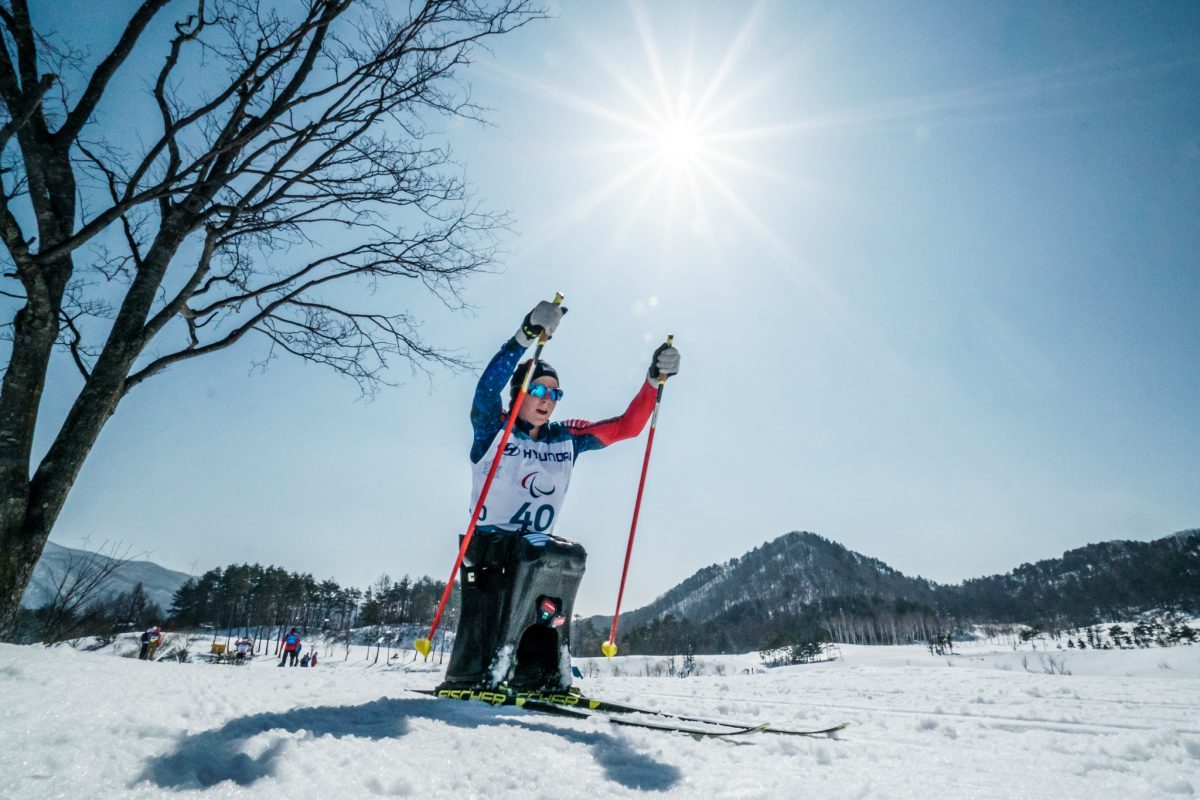
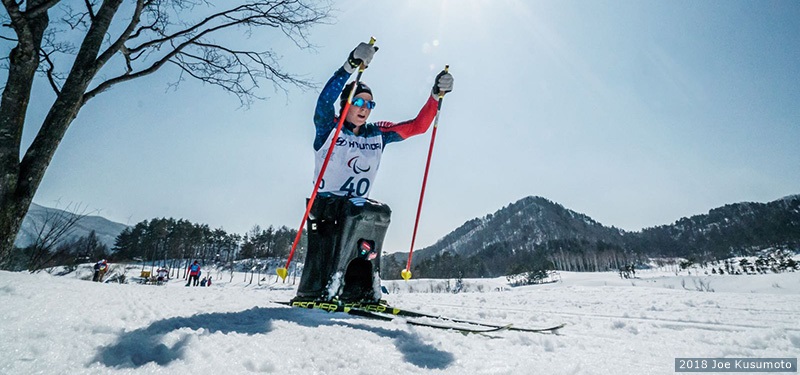
    Kendall Gretsch racing to her second gold medal of the 2018 Winter Paralympics in the women’s 12 k sitting cross-country race in PyeongChang, South Korea. (Photo: US Paralympics/Joe Kusumoto)

    There are a select few athletes who compete in both the summer and winter Olympics, and fewer still is the number of athletes who have won gold medals at the two. Para-athlete, Kendall Gretsch, holds this distinction having won two gold medals at Pyeongchang in 2018 and gold in the para-triathlon at Tokyo in 2021. With two Olympics in the span of six months, Gretsch was set for a big year. 

    In a TeamUSA interview Gretsch said, “When I got the news that Tokyo [2020] would be postponed, and Tokyo and the Beijing 2022 Winter Games would be six months apart, that was terrifying. In my mind, I was going to have a much different lead-up to Beijing, but now [speaking in 2021] looking back, it is comforting. Transitioning between two seasons has been something I have done for the past five years, and I know how to manage that transition well.” 
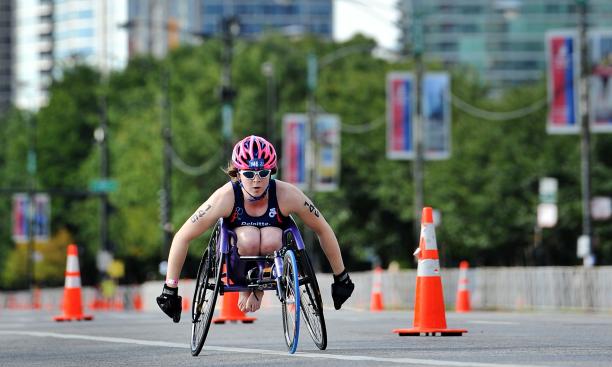
    Kendall Gretsch is a three time World Champion in the women’s PTWC classification. (Photo: International Paralympic Committee)

    Gretsch was born with spina bifida, which resulted in her leg muscles not fully developing. She started competing in para triathlon in 2012 and had her international debut in para-nordic skiing in 2017 after she began training with the Central Cross Country Ski Association in Madison, WI as a form of cross-training for para triathlon. 

    Triathlon was first added to the Paralympics at Rio in 2016, though Gretsch’s classification of PTWC2 was not initially included. Thus, the Tokyo games were the first opportunity for her to compete in the triathlon at the highest level. In a nail-biting finish, Gretsch narrowly took the victory, earning her third Olympic gold. 
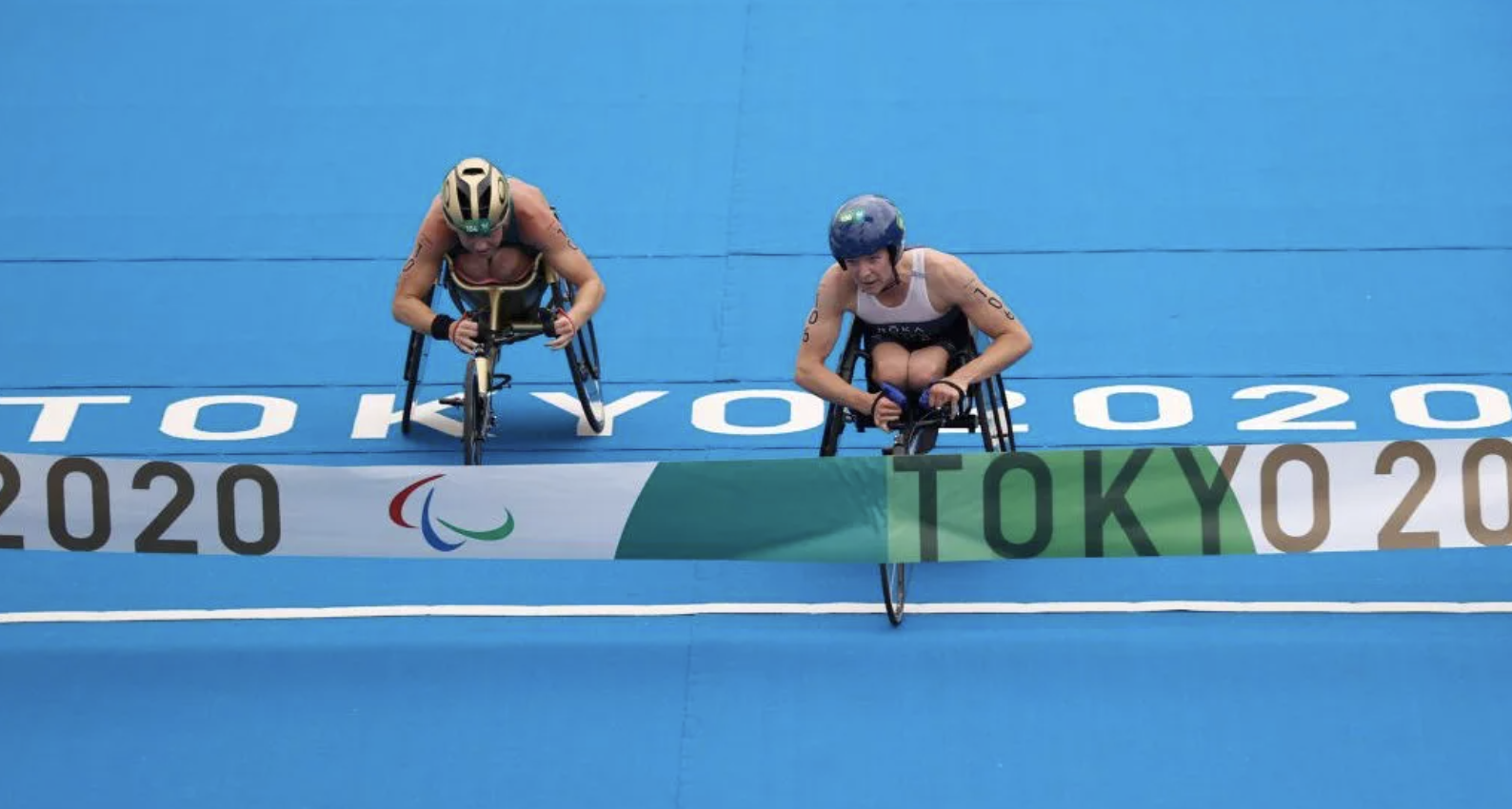
    After roughly 26 kilometers of racing, Kendall Gretsch takes Paralympic Gold by meters. (Photo: Screenshot NBC Sports)

    With the start of the Beijing paralympics a little over a month away, FasterSkier caught up with Gretsch in Östersund, Sweden as she recovered from the recent Para World Championships in Lillehammer and prepared for the next round of World Cup races, which were scheduled for January 27th to February 1sts. 

    By any measure, Gretsch dominated the competitions in Lillehammer. She earned three gold medals, coming in the middle distance classic sitting, biathlon long distance sitting, and biathlon middle distance sitting events. She also earned silver in the long distance freestyle sitting race, finishing behind her teammate Okansa Masters. Despite these strong performances, Gretsch was hesitant to read too much into what they might mean for the upcoming Paralympics. 

    “It was good,” she said, “I think it’s kind of funny to have a World Championships in the same year as the games, just because you know that everyone’s focus isn’t necessarily the World Championships and that everyone’s really preparing for Beijing.”
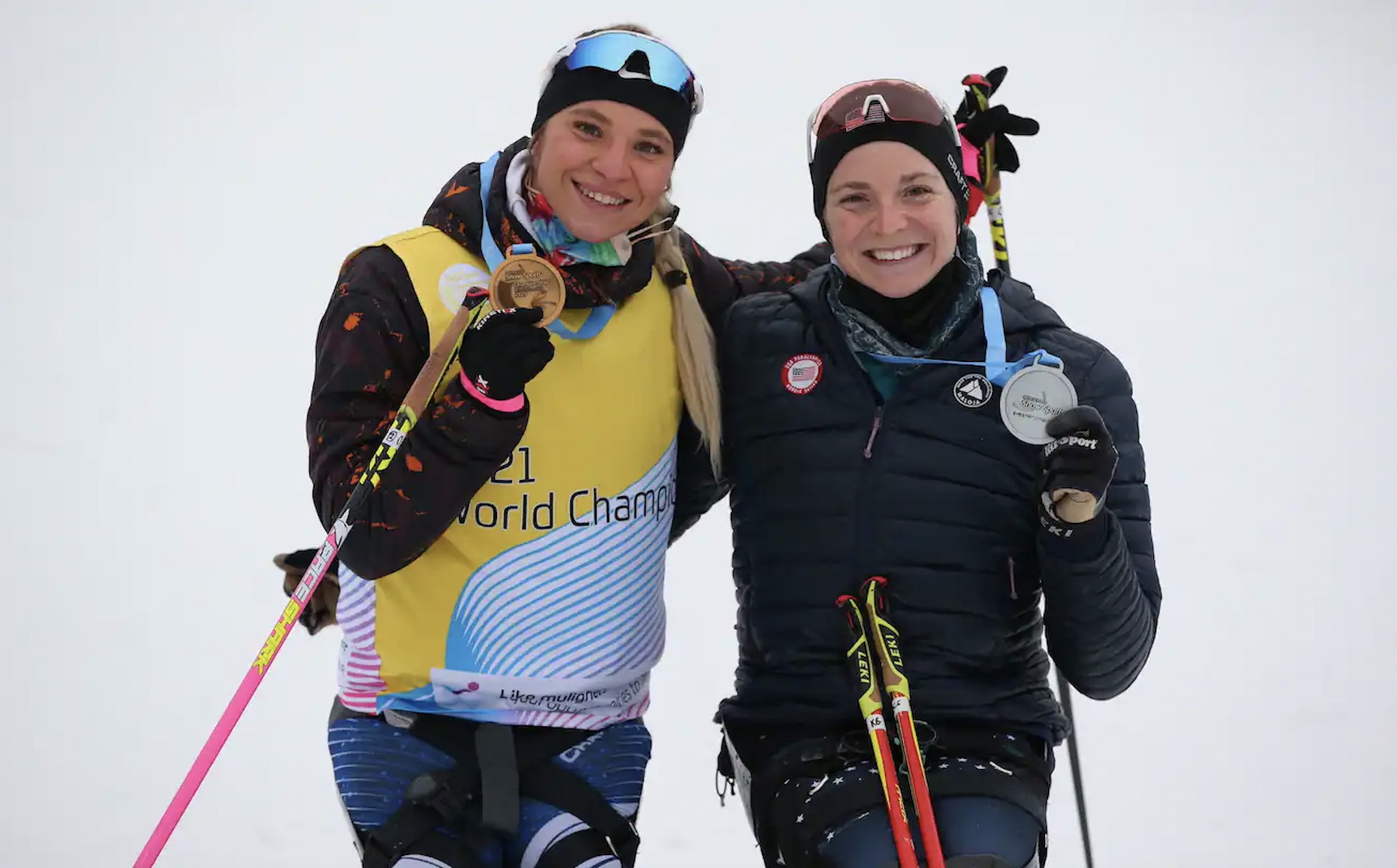
    Oksana Masters (left) and Kendall Gretstch (right) go 1-2 in the women’s 15k sitting long distance cross country race in Lillehammer, Norway. (Photo: Alex Livesey/Getty Images)

    Given that the World Championships and Paralympics are only separated by two months, Gretsch explained that athletes would be approaching the World Championships racing differently. “Maybe they’re coming in really tired, so I think it’s harder to gauge where you are from that, because it’s not the main event of the year for everyone.” 

    Furthermore, the Chinese team was not present at the World Championships, which is another area of uncertainty for Gretsch. “We know that they are probably going to have a pretty strong team in Beijing,” she said, “so that’s kind of the big unknown – not having the chance to race them ahead of time.”

    That being said, Gretsch was pleased to have this set of races as experiences before Beijing because, “it’s a pretty similar format, in terms of the number of races and the timing of them. So just being able to practice all of that is good. It’s definitely a little bit of a confidence boost, but you don’t know how everyone was showing up.”

    Both gold medals in the biathlon events were essentially earned thanks to Gretsch’s shooting. For the past several years, she has been living at the Olympic Training Center in Colorado Springs, and with her focus on the para-triathlon event in Tokyo, time to practice shooting this past summer was scarce. 

    Kendall Gretsch takes aim during the women’s 6-kilometer sitting biathlon at the 2018 Paralympic Winter Games on Saturday in PyeongChang, South Korea. She won the race to become the first American woman to medal in a biathlon event at the Paralympics (or Olympics). (Photo: US Paralympics/Getty)

    “With COVID restrictions and the area where I train, I didn’t have access to as much [shooting] as I would like to,” explained Gretsch, “but I was able this fall to get in some shooting post-Tokyo, and then we had some early camps this year where I got to spend a lot of time in Canmore was was able to shoot there.”

    Looking towards the Paralympics at the beginning of March, the expectations for Gretsch to win medals is high after her performances in 2018 and 2021. When asked how she manages both her own expectations and the expectations of others Gretsch responded, “It’s hard because I would say, I’m the one that puts the highest expectations on myself. I think [I’m managing expectations by] just understanding that we have a lot of racing opportunities in Beijing, and taking it race by race, hopefully using each race to learn more about the course and where you can make up the most time.” 
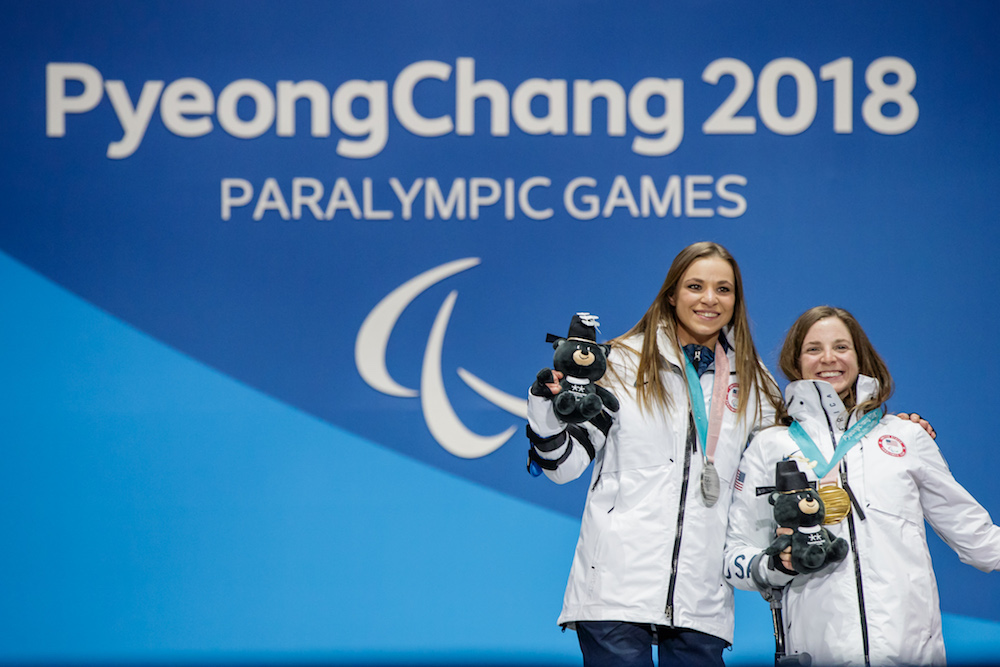
    Kendall Gretsch (r) and Oksana Masters at the 2018 Paralympics medal ceremony for the women’s sitting 6 k biathlon sprint after winning gold and silver, respectively (Photo: U.S. Paralympics/Joe Kusumoto)

    Having competed at one COVID Paralympics already would perhaps give Gretsch a mental advantage by knowing what to expect in terms of rules and restrictions. However, as she said, “it seems like there’s more unknowns about how the restrictions are going to be compared to Tokyo.” But, Grestch did admit, “I think there’s probably some advantage of having the expectations around daily testing and mask wearing and all of that. Just having had that experience I think will be helpful. And really, just the past year or so of racing, it’s definitely been pretty complicated so, just more experience of how to deal with that situation.” 

    Recently the para program in the US has been growing, both in terms of numbers and in terms of the number of categories they have athletes competing in (for example, sit ski, vs. visually impaired, vs. standing with a limb deficiency). When asked what it has been like to be part of this growth and to have a bigger team at events like World Championships or the Paralympics, Gretsch was excited to see the team grow. 

    “We just have more depth in all the different categories,” she explained, “and I think one of the places where that becomes really exciting is for relays. We have the potential to put together some really strong relays, probably for the first time ever.” Relay teams are structured based on a point system that factors in an athlete’s classification and gender. 
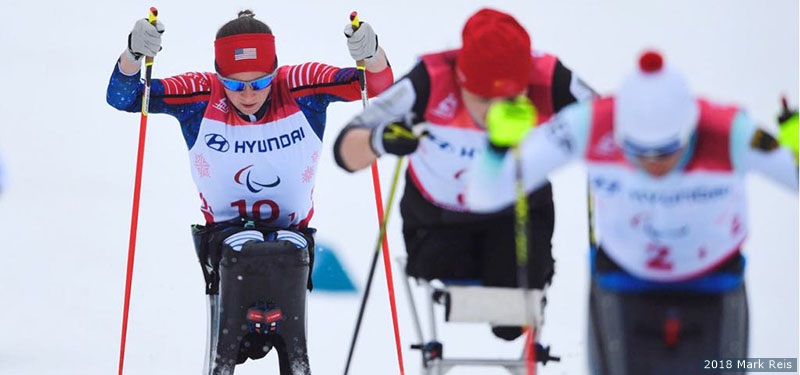
    American Kendall Gretsch (l) racing in the 4 x 2.5 k mixed relay at the 2018 Paralympic Winter Games in PyeongChang, South Korea. Her team finished seventh. (Photo: U.S. Paralympics/Mark Reis)

    “I think that’s something that has our whole team really excited,” continued Gretsch, “the idea that we can have a competitive relay, and that’s something that people can really train towards, and hopefully contribute to be a part of that relay.” 

    The Paralympics begin in Beijing on March 4th. Gretsch will be taking part in both cross-country and biathlon events throughout the competition schedule. 

  • Bonus Rundown: McKeever, Bratrud, Holmes, Gesior Notch Alberta Cup Wins

    Bonus Rundown: McKeever, Bratrud, Holmes, Gesior Notch Alberta Cup Wins

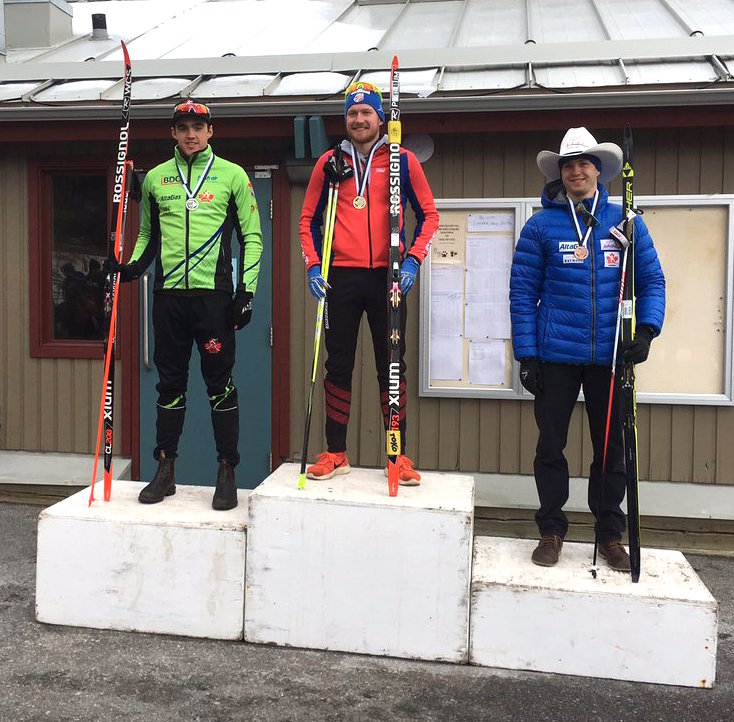
    The Alberta Cup men's podium in Sunday's 8.1 k classic interval start, with winner Kyle Bratrud (c) of CXC Team, NDC Thunder Bay's Evan Palmer-Charrette (l) in second and AWCA's Dominique Moncion-Groulx (r) in third. (Photo: NTDC Thunder Bay/Twitter)
    The Alberta Cup men’s podium in Sunday’s 8.1 k classic interval start, with winner Kyle Bratrud (c) of CXC Team, NTDC Thunder Bay’s Evan Palmer-Charrette (l) in second and AWCA’s Dominique Moncion-Groulx (r) in third. (Photo: NTDC Thunder Bay/Twitter)

    Here’s one that didn’t make Sunday’s Rundown: the Alberta Cup’s opening distance races, which took place Nov. 26-27 in Canmore, Alberta.

    ***

    The Alberta Cup kicked off this past weekend with several big names competing in the distance races at the Canmore Nordic Centre on Saturday and Sunday.

    Brian McKeever, Kyle Bratrud, Chelsea Holmes, and Felicia Gesior picked up victories, with the latter three all hailing from the U.S.

    In the men’s 13.5 k freestyle interval start, McKeever, of Canada’s Para-Nordic Ski Team, took first in the men’s open race, beating his teammate Graham Nishikawa by 3.6 seconds with a winning time of 30:01.8. A visually impaired skier, McKeever races with Nishikawa as his guide in Paralympic races. But not on Saturday.

    Bratrud, of the CXC Team, placed third in the 13.5 k skate, two seconds back from Nishikawa and 5.6 out of first.

    David Palmer (Black Jack) was the second Canadian in fourth overall (+20.0), Matthew Hudec, of the Biathlon Alberta Training Centre (BATC), was fifth (+36.3), and Brian Gregg (Team Gregg) took sixth (+50.1). Rounding out the top 10 (of 54 in the open men’s field), Russell Kennedy (Team R.A.D.) placed seventh, Erik Carleton (Canadian Para-Nordic Ski Team) was eighth, Evan Palmer-Charrette (NTDC Thunder Bay) ninth, and Dominique Moncion-Groulx, of the Alberta World Cup Academy (AWCA), 10th.

    Holmes, of Alaska Pacific University (APU), won the women’s 8.1 k freestyle on Saturday, finishing nearly 45 seconds ahead of Caitlin Gregg (Team Gregg) in 21:10.7. Biathlon Canada’s Emma Lunder placed third (+52.1) and junior biathlete Megan Bankes (BATC) finished fourth (+1:08.4), ahead of another BATC junior Nadia Moser in fifth (+1:13). Andrea Dupont, of Rocky Mountain Racers (RMR) finished sixth (+1:19.6) and Katherine Stewart-Jones (NTDC Thunder Bay/National U25 Team) was seventh (+1:30.8), while Kathryn Stone (University of Alberta) placed eighth, Annika Richardson (NTDC Thunder Bay) was ninth, and India McIsaac (RMR) 10th out of 33 women in the open category.

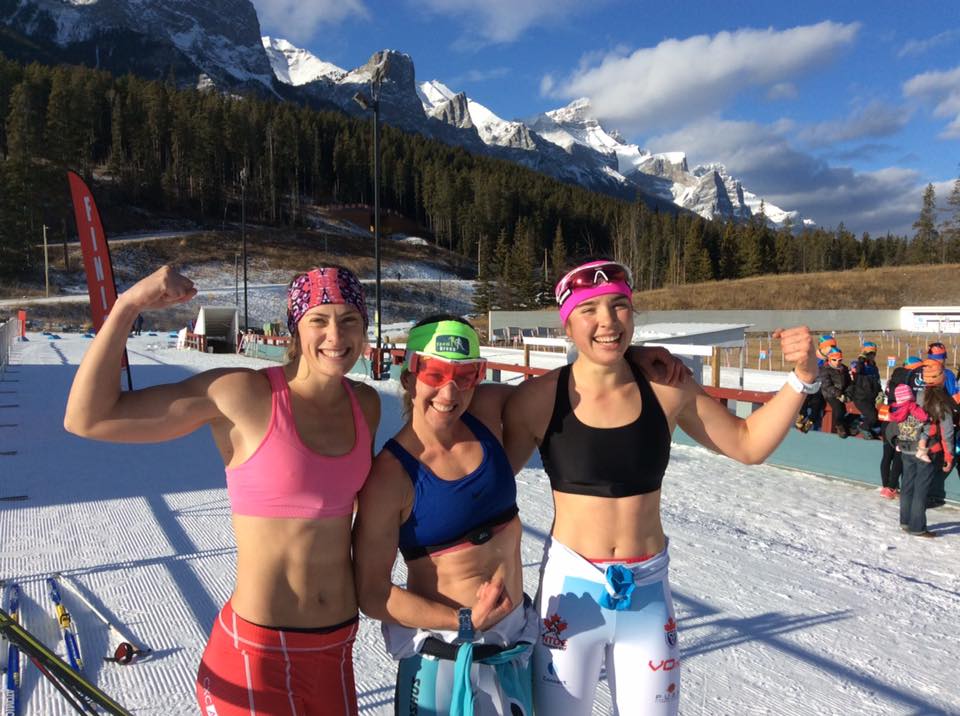
    On Sunday, CXC posted this photo and caption about the Alberta Cup classic distance race: "Double CXC Team Win! Felicia Gesior double poles to a victory in the women's classic race. Photo with the other two girls to double pole the race. These girls are STRONG!" (Photo: CXC Skiing Facebook)
    On Sunday, CXC posted this photo and caption about its women’s winner Felicia Gesior (l), runner-up Caitlin Gregg (Team Gregg) (c), and Annika Richardson (r) (NTDC Thunder Bay) who placed second in the junior race in the Alberta Cup classic distance race: “Double CXC Team Win! Felicia Gesior double poles to a victory in the women’s classic race. Photo with the other two girls to double pole the race. These girls are STRONG!” (Photo: CXC Skiing Facebook)

    On Sunday, Bratrud came out with a 9.9-second win in the men’s 8.1 k classic interval start over Palmer-Charrette. Bratrud won in 19:00.1, Palmer-Charrette was second, and Moncio-Groulx placed third (+29.2).

    On his first of of four laps, Moncion-Groulx recorded the fastest lap time of the day.

    “I didn’t know if I was in the game, but I was happily surprised when I was third,” Moncion-Groulx said of his finish, according to an AWCA press release. “It’s an improvement, and there are definitely some good guys racing. It’s a good confidence boost.”

    Michael Somppi (NTDC Thunder Bay) was fourth (+32.5), Julian Smith (NTDC Thunder Bay) fifth (+45.7), and for the second-straight race, Brian Gregg finished sixth (+53.0). Nishikawa was another two seconds back seventh, Palmer was eighth, Kennedy cracked the top 10 for the second straight day in ninth, as did Carleton in 10th.

    McKeever finished 11th, half a second behind Carleton, his other Paralympic guide, out of 26 in the men’s open race. After Sunday’s race, McKeever tweeted, “Vented personal frustration today. Mental error=inability to count laps in today’s race. Realize I’ve put a lot of stress on myself lately.”

    In another tweet on Sunday, he wrote, “Congrats to Kyle Bratrud from and the boys for laying down the hammer on the field today! Cool to see!”

    Also on Sunday, Gesior won the women’s 6.3 k classic and Caitlin Gregg repeated in second. Gesior put down the fastest time in 17:46.8, and Gregg finished 9.3 seconds back, while Olivia Bouffard-Nesbitt (AWCA/National U25 Team) placed third (+13.1).

    According to the AWCA press release, Bouffard-Nesbitt is still recovering from a stress fracture and spent three months this summer on crutches. “I know I need to step up to the challenge. I feel the pressure and it’s helping me become a better athlete,” she said.

    Stewart-Jones double poled to fourth (+23.3), Holmes placed fifth (+36.0), and Dupont was sixth (+54.1). Alannah Maclean (NTDC Thunder Bay) placed seventh, Emma Camicioli (RMR) was eighth, Delphine Duvernay Tardif (AWCA) ninth, and Ember Large (University of Alberta) 10th out of 18 women in the open field.

    Results: Saturday’s freestyle | Sunday’s classic