From the FasterSkier archive — posts syndicated from athletes’ and coaches’ own blogs between 2004 and 2012, kept online as published. Current coverage is at fasterskier.com.

Tag: Para-Nordic World Cup

  • FIS is taking over governance of Para Nordic skiing, what does it mean for the sport’s development in the United States?

    FIS is taking over governance of Para Nordic skiing, what does it mean for the sport’s development in the United States?

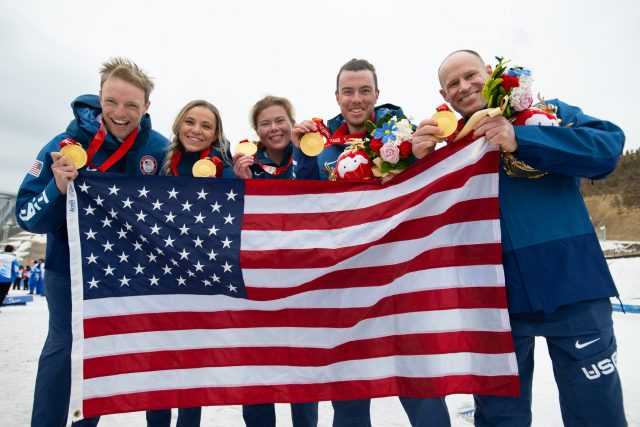
    Team USA’s gold medal-winning team relay at the 2022 Beijing Paralympic Games: (l-r) guide Sam Wood, Oksana Masters, Sydney Peterson, Jake Adicoff, and Dan Cnossen. Last month, the International Paralympic Committee (IPC) transferred Para Nordic sport governance to the FIS. (Photo: Mark Reis / Team USA).

    The International Ski Federation’s (FIS) annual Congress held at the end of May this year was an unusually dramatic affair. Fights over media rights – whether to look at serializing the sport of Nordic skiing into something like Formula 1’s Drive to Survive – sent skiing’s international governing body into a metaphorically different part of the Netflix catalog, less Dive to Survive and more House of Cards, West Wing, or Newsroom. If only Aaron Sorkin could write in Swiss German or French.

    But like even the best political thrillers, the FIS Congress had its filler episode. And in this one, they dispensed with all the power plays and posturing to agree resoundingly on one thing; on May 26st in Milan, 94% of FIS member confederations voted to transfer international governance of para nordic skiing from the International Paralympic Committee (IPC) into the fold of FIS. That, in promise, will allow nordic programs across the globe to integrate para athletes more seamlessly into their national programs, and give para nordic access to FIS resources – events, venues, and yes, even the controversial but undeniably valuable media rights, that nordic skiing can sell to fund sport development.

    It was as close to a watershed moment as there comes in the world of international sport governance. One moment, para nordic was viewed as a separate sport with separate governments, the next it was wholly integrated into the larger nordic skiing world.

    That governmental change is one that came about as the result of two tides in the world of Paralympic sports.

    One is overall growth; since the first winter Paralympic Games were held in Örnsköldsvik, Sweden in 1976, the winter Paralympic movement has grown in participation and competitiveness at the Paralympic games, as well as developed a robust number of para programs in skiing at all levels of development. At Örnsköldsvik 1976, there were 198 athletes from 16 nations at the Para Winter Games. At the Beijing 2022 Games, there were 564 athletes from 46 nations. That’s a stark trajectory of Paralympic sport and its promise to allow every person, with any physical ability, pursue sport at its highest level.
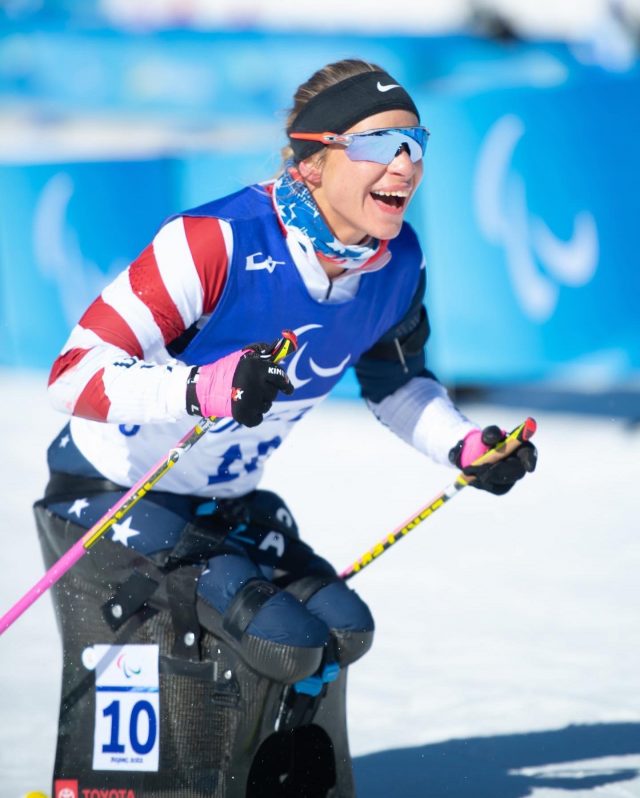
    Oksana Masters at the 2022 Beijing Paralympic Games. Masters won 6 medals in Beijing, including 3 gold medals (2 in individual Biathlon events, 1 as part of USA’s relay team). Between summer and winter Paralympic games, Masters total medal count is 17. (Photo: Mark Reis / Team USA).

    The parallel tide to this has been growth in complexity and size of the organization that up until now has governed all sports involved in the para sport, the International Paralympic Committee (IPC). With that, especially over the past decade, has come complex but necessary debates about resource disparities between para and non-para disciplines, and over whether the IPC should have a bigger governmental presence over the sports it oversees than the comparatively less centralized and more hands-off International Olympic Committee (IOC) that oversees the broader Olympic movement. Last December, those debates culminated in a call for the IPC to adopt a revised constitution. A key provision called for the decentralization of sport governance for 10 sports – including alpine skiing, biathlon, and nordic skiing – to their respective international federations. With alpine skiing, biathlon, and nordic skiing included in this provision, there was a clear imperative directed to both FIS and the International Biathlon Union (IBU) to take up both the issue of adopting the IPC’s proposal to transfer governance, and to further build the two federation’s partnerships so that they included governance of para nordic and para biathlon.

    The timeline for moving out the 10 sports from the IPC to their respective federations targeted a deadline to achieve the goal by the close of the next Paralympic/Olympic cycle – by the 2026 Milan-Cortina games. By acting in 2022, FIS and IBU took action to achieve that goal some four years earlier than was set, indicating that the move was one that was in the works since, or possibly prior to, the IPC’s decision in May.

    U.S. Paralympics nordic skiing director Eileen Carey said in an email to Fasterskier that the move to transfer para nordic to FIS did, “happen faster than I anticipated.” However, Carey points out that this only reaffirms the growth and opportunity that FIS sees in para nordic, “I have been involved with para sports since 2010 and there’s been a shift from being perceived as a burden to manage or not worth the effort to people recognizing the value and importance of para sports. When [ski programs] have incorporated para-athletes into their programming, they have seen an increase in participation, fan base, donors, and sponsors. Para sports are compelling, and more people and organizations are recognizing that as visibility increases.”
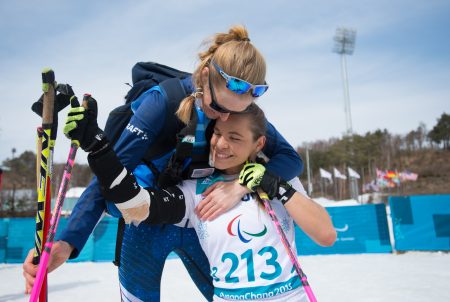
    US Para Nordic Director Eileen Carey embraces Oksana Masters during the 2018 PyeongChang Paralympic games. (Photo: Mark Reis / Team USA).

    On the benefits of FIS taking over the governance of para nordic, Carey says she is, “hopeful about the potential implications of this transition as it relates to the professionalism in our events, athlete promotion and support.” Incorporating para nordic into the FIS World Cup, Continental Cup, and domestic schedules will start to make the final integrative step for para nordic, as Carey puts it, that “we are one sport.”

    FIS looks to North America, and finds a path cut by Para

    There’s also a unique set of implications that FIS taking on para nordic might have for the growth of nordic skiing in North America. Historically, para nordic and para biathlon have had a much larger presence on the North American continent than the FIS’ non-para counterpart. While the FIS Nordic Ski World Championships have only ever been held twice in North America –in Rumford, Maine in 1950 and Thunder Bay, Ontario in 1995 – the IPC Para Nordic Ski World Championships have more regularly visited the continent, including to Jackson, Wyoming in 1990, Fort Kent, Maine in 2005, Cable, Wisconsin in 2015, Prince George, British Columbia in 2019. This year’s Para World Cup finals will be at Soldier Hollow, Utah in March as well. Beyond that, North American venues have had a regular presence on the IPC Para World Cup in a way that they simply have not on the FIS World Cup schedule.

    An integrated para and non-para World Cup has already taken place in partnership between FIS and IPC in Dresden, Germnay in January 2020, which will serve as a model as FIS goes forward into what Carey says, “[will be] a season with a lot of learnings.” As FIS does look to integrate para nordic into that FIS World Cup schedule, it’s almost a certainty that they will be leveraging the experience of organizers who have developed and hosted IPC events in the past.

    Which leads to an interesting proposition for us in North America. The draft schedule for the 2023-2024 FIS World Cup released this spring includes a joint Minneapolis/Cable World Cup to coincide with the American Birkiebeiner’s 50th anniversary (to read more on the American Birkebeiner Ski Foundation’s plans, read our interview with Executive Director Ben Popp). As previously noted, Cable has already hosted IPC World Cups and IPC Para Nordic Ski World Championships in the past decade, meaning that FIS will look to a proven organizing group to make their return to the North American continent a success. That model of partnering with organizers with para nordic event experience could be a beacon as FIS looks to return to the North American continent in 2023 and be key in making North America the site of more World Cups in the future.
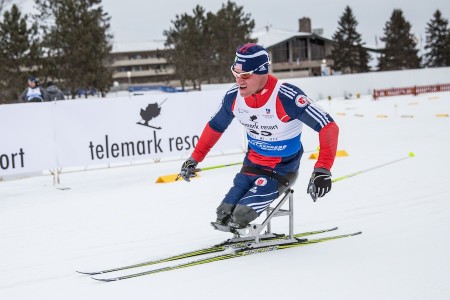
    USA’s Dan Cnossen skis past the old Telemark Lodge in Cable, Wisconsin during a 2013 IPC Para Nordic World Cup. With the FIS looking to return the Nordic World Cup to North America, organizers who gained experience hosting top-level racing through the IPC will be looked to for valuable insights on making events successful in North America. (Photo: James Netz).
    Growth for Para Nordic in the United States and beyond

    U.S. Para Nordic paving the way for the sport would fit with historical developments as well. Carey points out that “In the U.S., we are ahead of the curve in integrating para athletes into clubs and teams and events…Our U.S. Ski & Snowboard and biathlon clubs are the development incubators for para nordic just as they are for the U.S. Ski Team. From the Bill Koch Festival to our National Championships, [these] are the same races sit skiers, one-armed skiers, and visually impaired skiers are doing to develop the sport.” That integration and investment has led to a program that regularly wins Paralympic medals and World Championships. Athletes like Oksana Masters, Dan Cnossen, Kendall Gretsch, and Jake Adicoff have made the U.S. a dominant and world-leading para program, charting a path for U.S. skiing success on a broader scale and reorienting nordic skiing’s examples to what is going on in the U.S. Carey says that the most important hope is that the FIS umbrella will help further “highlight, support, and develop” these athletes, and upcoming athletes like them, as they continue to inspire and send the message that the sport of skiing is for everyone, regardless of their physical abilities.
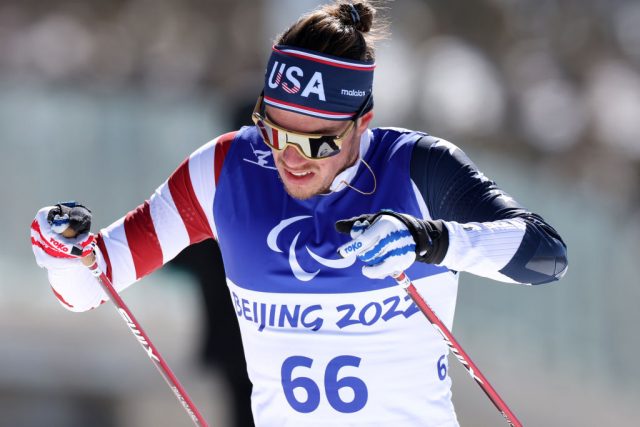
    Team USA’s Jake Adicoff competes at the 2022 Beijing Paralympic Games. Adicoff was part of Team USA’s gold medal winning mixed Team Relay team. (Photo: Mark Reis / Team USA).

    While the intricacies of sport governance can be boring – Carey also noted that the FIS system simply makes things like event insurance and athlete licensing less of a barrier to entry for para skiers – they also underscore important cultural shifts in the world of nordic skiing. One that sees more skiers, from more backgrounds, introduced to a sport where the quiet freedom that moving through a big, big world is one of the more sublime feelings available on Earth. To travel to another part of that metaphorical Netflix category, the political thriller will hopefully in time lead to the carefree beauty of viewing one of those BBC nature documentaries, probably Frozen Planet, for more of us everywhere.
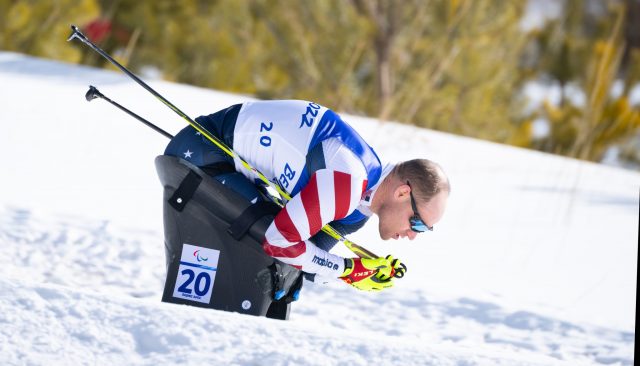
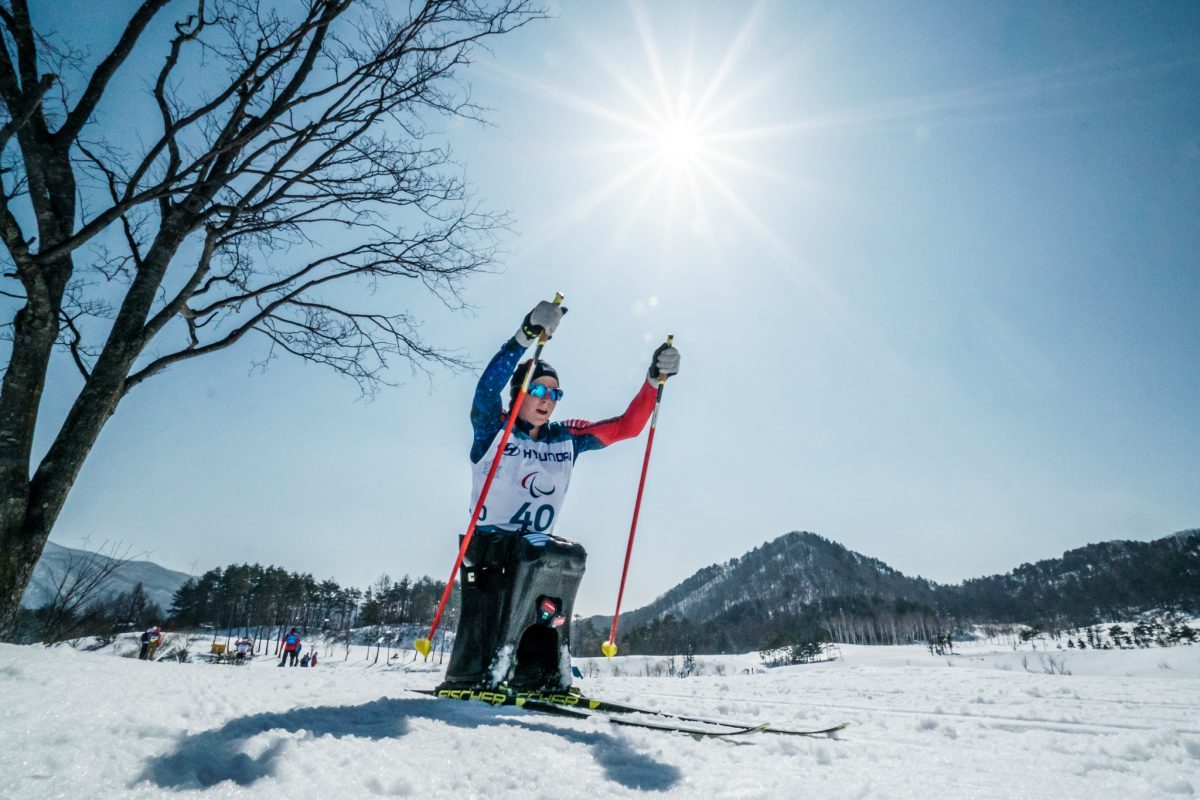
    Dan Cnossen competes at the 2022 Beijing Paralympic Games. Cnossen won 2 gold medals at the 2022 games, and has won 7 Paralympic medals between two games in 2022 and 2018. (Photo: Mark Reis / Team USA).
  • Kendall Gretsch Prepares for Second Games of the Year

    Kendall Gretsch Prepares for Second Games of the Year

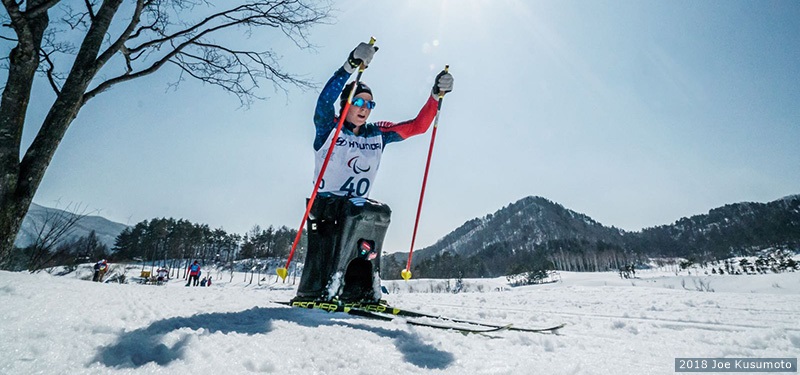
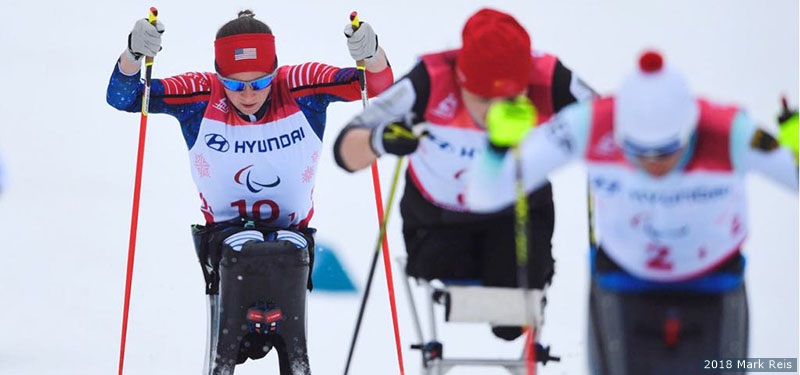
    Kendall Gretsch racing to her second gold medal of the 2018 Winter Paralympics in the women’s 12 k sitting cross-country race in PyeongChang, South Korea. (Photo: US Paralympics/Joe Kusumoto)

    There are a select few athletes who compete in both the summer and winter Olympics, and fewer still is the number of athletes who have won gold medals at the two. Para-athlete, Kendall Gretsch, holds this distinction having won two gold medals at Pyeongchang in 2018 and gold in the para-triathlon at Tokyo in 2021. With two Olympics in the span of six months, Gretsch was set for a big year. 

    In a TeamUSA interview Gretsch said, “When I got the news that Tokyo [2020] would be postponed, and Tokyo and the Beijing 2022 Winter Games would be six months apart, that was terrifying. In my mind, I was going to have a much different lead-up to Beijing, but now [speaking in 2021] looking back, it is comforting. Transitioning between two seasons has been something I have done for the past five years, and I know how to manage that transition well.” 

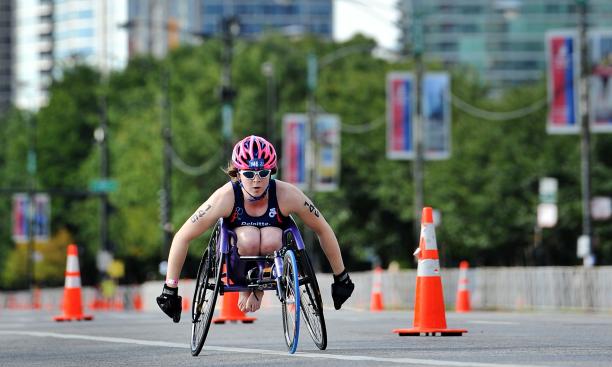
    Kendall Gretsch is a three time World Champion in the women’s PTWC classification. (Photo: International Paralympic Committee)

    Gretsch was born with spina bifida, which resulted in her leg muscles not fully developing. She started competing in para triathlon in 2012 and had her international debut in para-nordic skiing in 2017 after she began training with the Central Cross Country Ski Association in Madison, WI as a form of cross-training for para triathlon. 

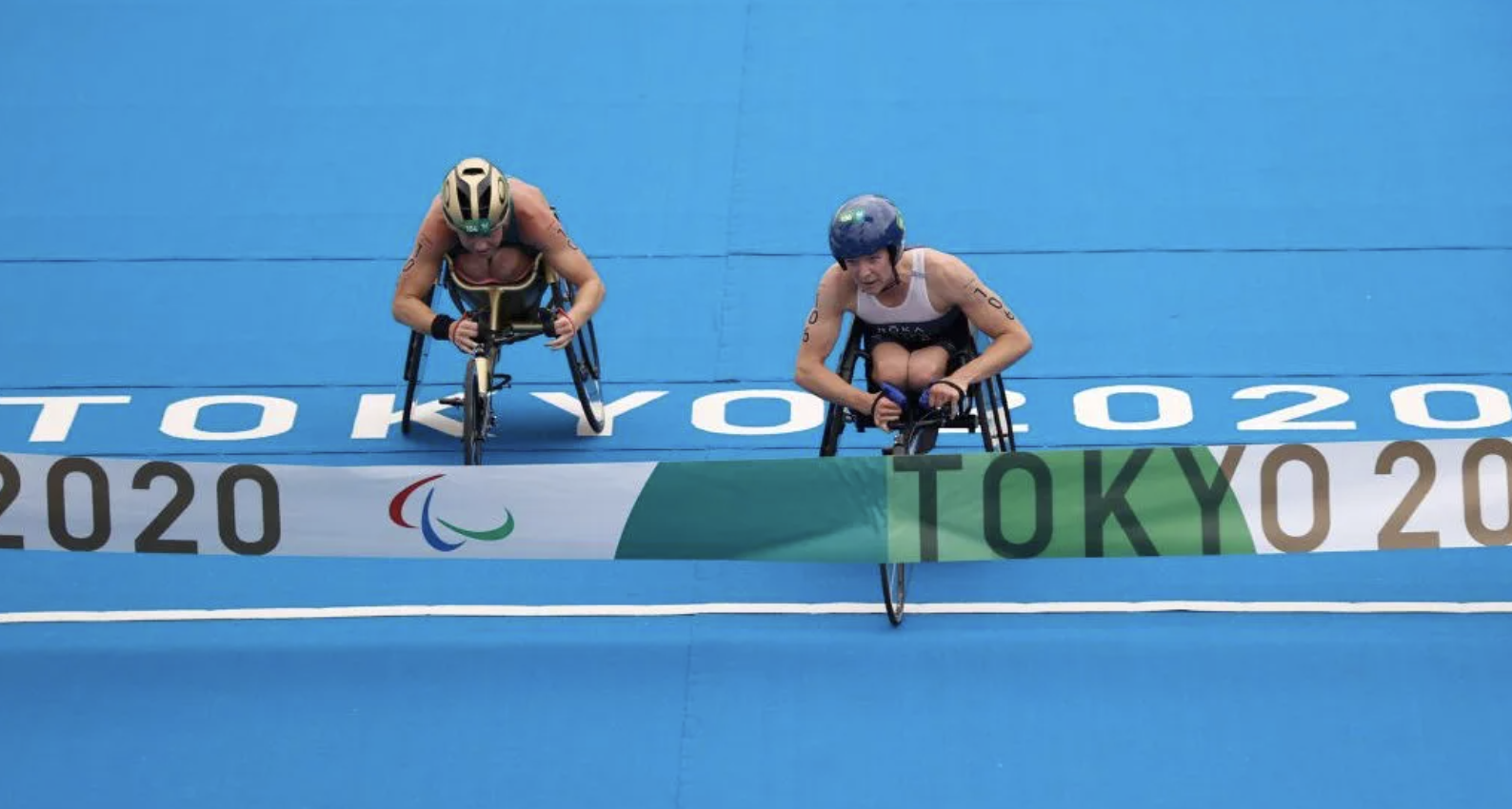
    Triathlon was first added to the Paralympics at Rio in 2016, though Gretsch’s classification of PTWC2 was not initially included. Thus, the Tokyo games were the first opportunity for her to compete in the triathlon at the highest level. In a nail-biting finish, Gretsch narrowly took the victory, earning her third Olympic gold. 

    After roughly 26 kilometers of racing, Kendall Gretsch takes Paralympic Gold by meters. (Photo: Screenshot NBC Sports)

    With the start of the Beijing paralympics a little over a month away, FasterSkier caught up with Gretsch in Östersund, Sweden as she recovered from the recent Para World Championships in Lillehammer and prepared for the next round of World Cup races, which were scheduled for January 27th to February 1sts. 

    By any measure, Gretsch dominated the competitions in Lillehammer. She earned three gold medals, coming in the middle distance classic sitting, biathlon long distance sitting, and biathlon middle distance sitting events. She also earned silver in the long distance freestyle sitting race, finishing behind her teammate Okansa Masters. Despite these strong performances, Gretsch was hesitant to read too much into what they might mean for the upcoming Paralympics. 

    “It was good,” she said, “I think it’s kind of funny to have a World Championships in the same year as the games, just because you know that everyone’s focus isn’t necessarily the World Championships and that everyone’s really preparing for Beijing.”

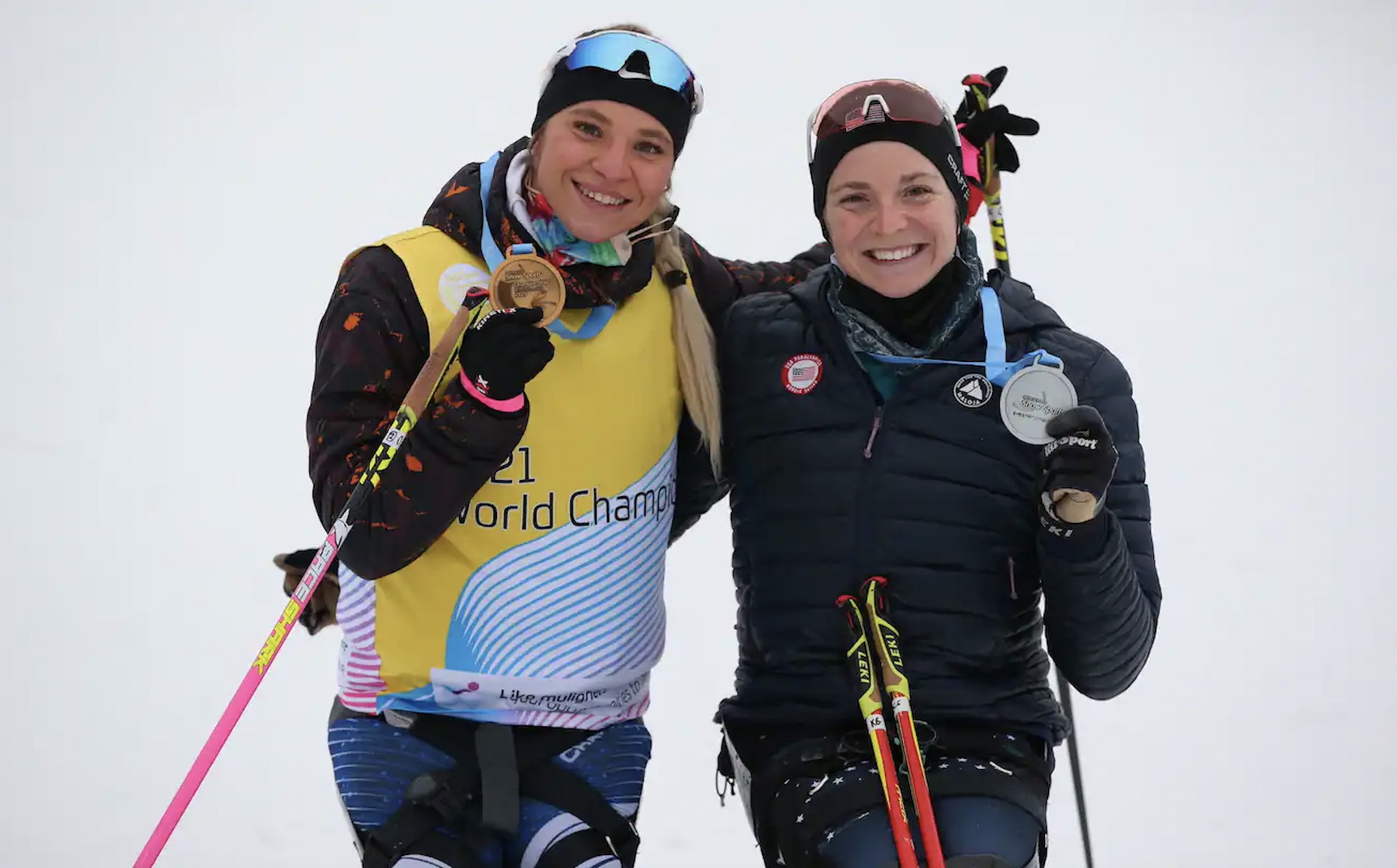
    Oksana Masters (left) and Kendall Gretstch (right) go 1-2 in the women’s 15k sitting long distance cross country race in Lillehammer, Norway. (Photo: Alex Livesey/Getty Images)

    Given that the World Championships and Paralympics are only separated by two months, Gretsch explained that athletes would be approaching the World Championships racing differently. “Maybe they’re coming in really tired, so I think it’s harder to gauge where you are from that, because it’s not the main event of the year for everyone.” 

    Furthermore, the Chinese team was not present at the World Championships, which is another area of uncertainty for Gretsch. “We know that they are probably going to have a pretty strong team in Beijing,” she said, “so that’s kind of the big unknown – not having the chance to race them ahead of time.”

    That being said, Gretsch was pleased to have this set of races as experiences before Beijing because, “it’s a pretty similar format, in terms of the number of races and the timing of them. So just being able to practice all of that is good. It’s definitely a little bit of a confidence boost, but you don’t know how everyone was showing up.”

    Both gold medals in the biathlon events were essentially earned thanks to Gretsch’s shooting. For the past several years, she has been living at the Olympic Training Center in Colorado Springs, and with her focus on the para-triathlon event in Tokyo, time to practice shooting this past summer was scarce. 

    Kendall Gretsch takes aim during the women’s 6-kilometer sitting biathlon at the 2018 Paralympic Winter Games on Saturday in PyeongChang, South Korea. She won the race to become the first American woman to medal in a biathlon event at the Paralympics (or Olympics). (Photo: US Paralympics/Getty)

    “With COVID restrictions and the area where I train, I didn’t have access to as much [shooting] as I would like to,” explained Gretsch, “but I was able this fall to get in some shooting post-Tokyo, and then we had some early camps this year where I got to spend a lot of time in Canmore was was able to shoot there.”

    Looking towards the Paralympics at the beginning of March, the expectations for Gretsch to win medals is high after her performances in 2018 and 2021. When asked how she manages both her own expectations and the expectations of others Gretsch responded, “It’s hard because I would say, I’m the one that puts the highest expectations on myself. I think [I’m managing expectations by] just understanding that we have a lot of racing opportunities in Beijing, and taking it race by race, hopefully using each race to learn more about the course and where you can make up the most time.” 

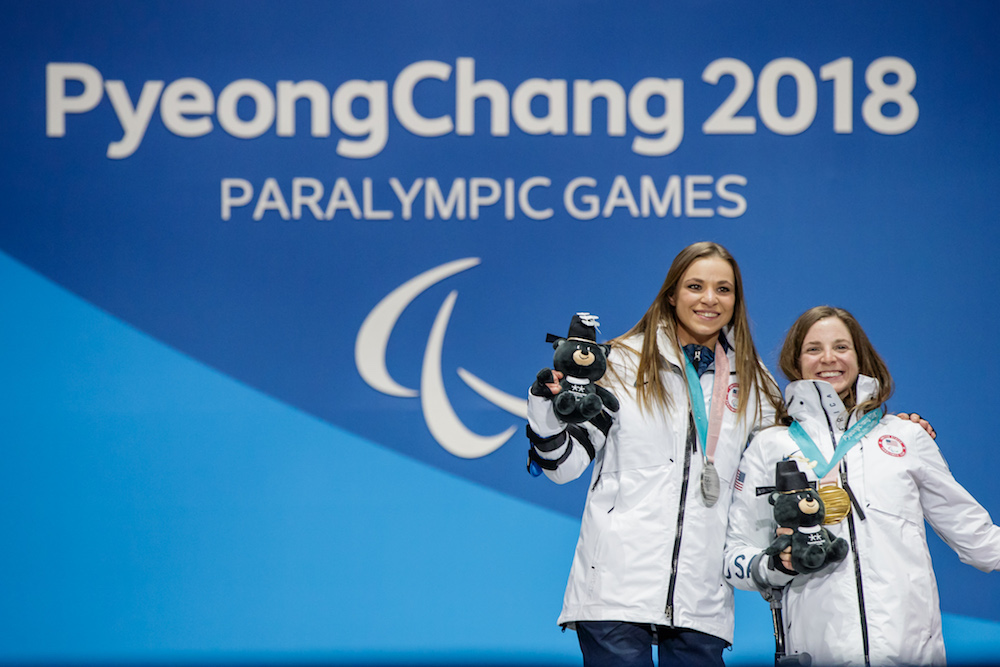
    Kendall Gretsch (r) and Oksana Masters at the 2018 Paralympics medal ceremony for the women’s sitting 6 k biathlon sprint after winning gold and silver, respectively (Photo: U.S. Paralympics/Joe Kusumoto)

    Having competed at one COVID Paralympics already would perhaps give Gretsch a mental advantage by knowing what to expect in terms of rules and restrictions. However, as she said, “it seems like there’s more unknowns about how the restrictions are going to be compared to Tokyo.” But, Grestch did admit, “I think there’s probably some advantage of having the expectations around daily testing and mask wearing and all of that. Just having had that experience I think will be helpful. And really, just the past year or so of racing, it’s definitely been pretty complicated so, just more experience of how to deal with that situation.” 

    Recently the para program in the US has been growing, both in terms of numbers and in terms of the number of categories they have athletes competing in (for example, sit ski, vs. visually impaired, vs. standing with a limb deficiency). When asked what it has been like to be part of this growth and to have a bigger team at events like World Championships or the Paralympics, Gretsch was excited to see the team grow. 

    “We just have more depth in all the different categories,” she explained, “and I think one of the places where that becomes really exciting is for relays. We have the potential to put together some really strong relays, probably for the first time ever.” Relay teams are structured based on a point system that factors in an athlete’s classification and gender. 

    American Kendall Gretsch (l) racing in the 4 x 2.5 k mixed relay at the 2018 Paralympic Winter Games in PyeongChang, South Korea. Her team finished seventh. (Photo: U.S. Paralympics/Mark Reis)

    “I think that’s something that has our whole team really excited,” continued Gretsch, “the idea that we can have a competitive relay, and that’s something that people can really train towards, and hopefully contribute to be a part of that relay.” 

    The Paralympics begin in Beijing on March 4th. Gretsch will be taking part in both cross-country and biathlon events throughout the competition schedule. 

  • Canadian Para-Nordic Guide Carleton Prioritizes Alberta World Cup

    Canadian Para-Nordic Guide Carleton Prioritizes Alberta World Cup

    Erik Carleton (Canadian Para-Nordic Ski Team/Rocky Mountain Racers) on his way to a second-place finish in the 10 k classic individual start at Canadian Ski Nationals on March 19. The next day, he took seventh in the 15 k skate then flew to Finland with Brian McKeever to compete in the IPC World Cup Finals two days later.

    Entering his third straight season with the Canadian Para-Nordic World Cup Team, Erik Carleton has already made some big decisions this year. Among them, he had to choose whether to race the Alberta Cross Country World Cup in Canmore or go for gold at the International Paralympic Committee (IPC) World Cup opener in Vuokatti, Finland.

    It must be tough to be Carleton, a competitive-nordic racer who doubles as a Para-Nordic guide for Brian McKeever, arguably the best visually impaired skier in the world. While some Canadians are still stressing over their prospects of making the Canada World Cups (which starts with skate sprints in Québec Dec. 7-8, followed by a skate sprint and distance races in Canmore, Alberta, Dec. 13-16), Carleton was one of nine outside of the nation’s cross-country team that prequalified.

    With the option to race the 15 k classic mass start and 30 k skiathlon in Canmore, Carleton faced a bit of a dilemma. The IPC World Cup started just a few days before on Dec. 11 in Finland. Unlike the loaded cross-country calendar, Para-Nordic skiers have only one other World Cup (Jan. 20 in Cable, Wis.) before the World Championships started Feb. 21 in Sollefteå, Sweden.

    After a 10-day camp in Sante Fe, N.M., earlier this month, Carleton wrote in an email that he planned to compete in both the races he prequalified for in Canmore.

    “The IPC World Championships and the IPC World Cup in Sochi [March 14] will be the big priorities later in the season,” he wrote.

    Last year, he and McKeever, 33, swept the 2012 IPC World Cup Finals in Vuokatti just a few days after competing at Canadian cross-country nationals in Québec. At Mont Sainte-Anne, Québec, Carleton won an individual silver in the 10 k classic race and placed seventh in the 15 k freestyle before jetting with McKeever, his childhood friend, to Finland.

    There, they claimed three gold medals for a grand total of four last season.The only man that topped McKeever in 2011/2012 was Russian Stanislav Chokhlaev, who beat him to gold twice in World Cup skate races in Sjusjøen, Norway.

    This winter, Carleton and McKeever are aiming for continued success and IPC dominance at World Championships and Sochi in preparation for the 2014 Paralympics. But first, Carleton wants to start strong individually.

    “The main focus at the moment is to be in ‘best-ever’ shape for the December World Cups,” he wrote.

    To do so, he committed to the Para-Nordic Ski Team (PNST) training plan, following it more closely than in the past.

    “I have more confidence in the PNST program after my successes last season,” Carleton wrote. “My major goals are to enjoy what I do and to be smart at training and racing.”

    As for his training, Carleton explained that he’s “revamped” both his classic and skate techniques and already seen improvements in his efficiency. A few colds set him back this offseason, but he resumed strength training for the first time in eight years.

    “The idea was to build power without adding muscle, and to learn how to move properly to avoid injury,” he wrote.

    He’s done more rollerski intensity and less trail-running and mountain-bike racing. Rather than run on a treadmill, he and the team started using the new rollerski treadmill in the Bill Warren Training Centre in Canmore.

    “Overall my volume has decreased by about 10 percent, but the training load would likely amount to slightly more,” he wrote.

    This year, the team scheduled two trips to Sante Fe for altitude training up to 3,000 meters (10,000 feet) to get in prime shape for December. The did the first in September and the second Oct. 30-Nov. 8, which Carleton wrote was “a great camp with good weather” and apparently warmer than usual.

    ***

    Photos from the Canadian PNST camps in Sante Fe, provided by Carleton:

    For the IPC Nordic World Cup schedule, click here.

  • Para-Nordic Update – US and Canada Strong in World Cup Action

    Para-Nordic Update – US and Canada Strong in World Cup Action

    This past weekend Canadian and American Para-Nordic athletes competed in a combination biathlon/cross-country ski World Cup in Bessan, France.  140 athletes from 20 different nations competed in four events, comprising of two biathlon races and two cross-country races.

    North American skiers performed very well.

    US Report

    USA!
    USA!

    Andy Soule put more points in his pocket to pad his overall leaders position in this year’s World Cup biathlon series.

    Soule skied a great race on Saturday, and only missed 2 shots in the range to end up 3rd in Bessan’s long distance Biathlon race.

    Trygve Larsen the winner shot clean in all 4 stages. Andy is skiing faster and faster as the season goes on, and his ski time gets closer to the fastest skiers in the race.

    Soule ended up 3rd overall.  He also finished 4th in the biathlon sprint event on Thursday.

    All athletes advanced to the Quarterfinals in the cross-country sprint. Chris Klebl and Sean Halsted advanced to the Semi finals with Halsted taking 4th and Klebl 5th overall.

    Klebl just missed the podium in the final race of the weekend – the 10km cross-country.  He was 4th, less than 20 seconds out of 3rd.  Halstead was not far behind in 6th, and Soule gave the US three skiers in the top 8 with his 8th place finish.

    Monica Bascio took 9th in the 5km L10-12 class while Kelly Underkofler was 10th in the 5km L2-9.

    Canadian Report

    Canada’s Para-Nordic cross-country ski athletes capped off a strong opening week at the IPC World Cup by winning a gold and bronze medal in Bessan, France on Sunday.

    Collette Bourgonje, of Saskatoon, captured the first gold medal for Canada on the season after winning the women’s middle distance sit-ski race with a time of 18 minutes 29.9 seconds. Bourgonje, who has won four medals in her five trips to the Paralympic Winter Games, captured her first IPC win since 2008.

    “I felt really strong today and had great skis on fast and busy race course,” said Bourgonje. “Training at Mount Shark this year in Canmore has certainly helped me. Watching the Canadian flag go up and hearing our national anthem play is a moment in time that I will not forget.”

    Canada’s journey to the podium continued in the women’s standing race where Jody Barber, of Smithers, B.C., captured her second medal of the week. Barber, who won a silver in the first biathlon competition on Thursday, won the bronze in the middle distance cross-country ski race. Barber stopped the clock at 22:18.5.

    Athletes on the range.
    Athletes on the range.

    “I really wanted to race my own race and to focus on technique and effort, and not be worrying about what everyone else was doing,” said Barber. “I was really pleased with how it went. There is always room for improvement but this race showed me what I need to work on.”

    Oleksandra Kononova, of the Ukraine, won the women’s standing division with a time of 20:52.4.

    Meanwhile, Mark Arendz, of Springton, P.E.I., capped off his best week on the IPC World Cup with a fifth-place finish in the men’s standing class after posting a time of 30:41.1. IIkka Tuomisto, of Finland, finished on top at 29:07.4.

    Other Canadian finishers on Sunday included: Alexi Novikov and Jamie Stirling, of Ottawa, in 15th (37:51.8) in men’s visually impaired category; Tyler Mosher, of Whistler, B.C., in 16th (33:05.0) in men’s standing; Quebec’s Sebastien Fortier in 17th (37:22.0); Lou Gibson, of Langley, B.C., in 25h (39:22.1) and Quebec’s Charles Moreau in 28th (43:33.8) in the men’s sit-ski race. Robbi Weldon and Brian Berry, of Thunder Bay, Ont., finished eighth at 24:15.9; Ottawa’s Margarita Gourbonova and Robert D’Arras was ninth at 25:27.0; and Vancouver’s Courtney Knight and Andrea Bundon was 12th (28:10.5) in the women’s visually impaired division.

    Complete Results for all races can be found here.

    The stadium awaits...
    The stadium awaits…