From the FasterSkier archive — posts syndicated from athletes’ and coaches’ own blogs between 2004 and 2012, kept online as published. Current coverage is at fasterskier.com.

Tag: para-nordic

  • FIS is taking over governance of Para Nordic skiing, what does it mean for the sport’s development in the United States?

    FIS is taking over governance of Para Nordic skiing, what does it mean for the sport’s development in the United States?

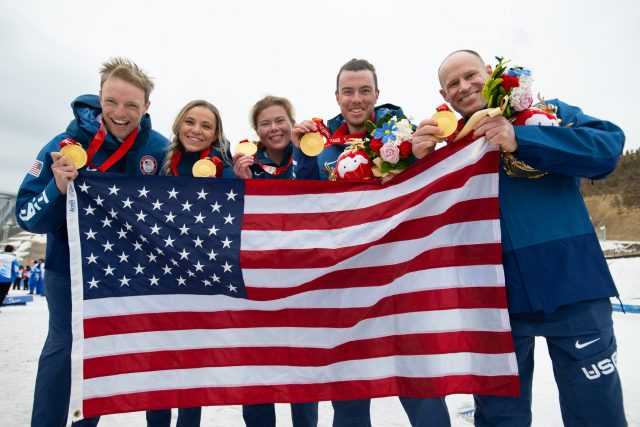
    Team USA’s gold medal-winning team relay at the 2022 Beijing Paralympic Games: (l-r) guide Sam Wood, Oksana Masters, Sydney Peterson, Jake Adicoff, and Dan Cnossen. Last month, the International Paralympic Committee (IPC) transferred Para Nordic sport governance to the FIS. (Photo: Mark Reis / Team USA).

    The International Ski Federation’s (FIS) annual Congress held at the end of May this year was an unusually dramatic affair. Fights over media rights – whether to look at serializing the sport of Nordic skiing into something like Formula 1’s Drive to Survive – sent skiing’s international governing body into a metaphorically different part of the Netflix catalog, less Dive to Survive and more House of Cards, West Wing, or Newsroom. If only Aaron Sorkin could write in Swiss German or French.

    But like even the best political thrillers, the FIS Congress had its filler episode. And in this one, they dispensed with all the power plays and posturing to agree resoundingly on one thing; on May 26st in Milan, 94% of FIS member confederations voted to transfer international governance of para nordic skiing from the International Paralympic Committee (IPC) into the fold of FIS. That, in promise, will allow nordic programs across the globe to integrate para athletes more seamlessly into their national programs, and give para nordic access to FIS resources – events, venues, and yes, even the controversial but undeniably valuable media rights, that nordic skiing can sell to fund sport development.

    It was as close to a watershed moment as there comes in the world of international sport governance. One moment, para nordic was viewed as a separate sport with separate governments, the next it was wholly integrated into the larger nordic skiing world.

    That governmental change is one that came about as the result of two tides in the world of Paralympic sports.

    One is overall growth; since the first winter Paralympic Games were held in Örnsköldsvik, Sweden in 1976, the winter Paralympic movement has grown in participation and competitiveness at the Paralympic games, as well as developed a robust number of para programs in skiing at all levels of development. At Örnsköldsvik 1976, there were 198 athletes from 16 nations at the Para Winter Games. At the Beijing 2022 Games, there were 564 athletes from 46 nations. That’s a stark trajectory of Paralympic sport and its promise to allow every person, with any physical ability, pursue sport at its highest level.
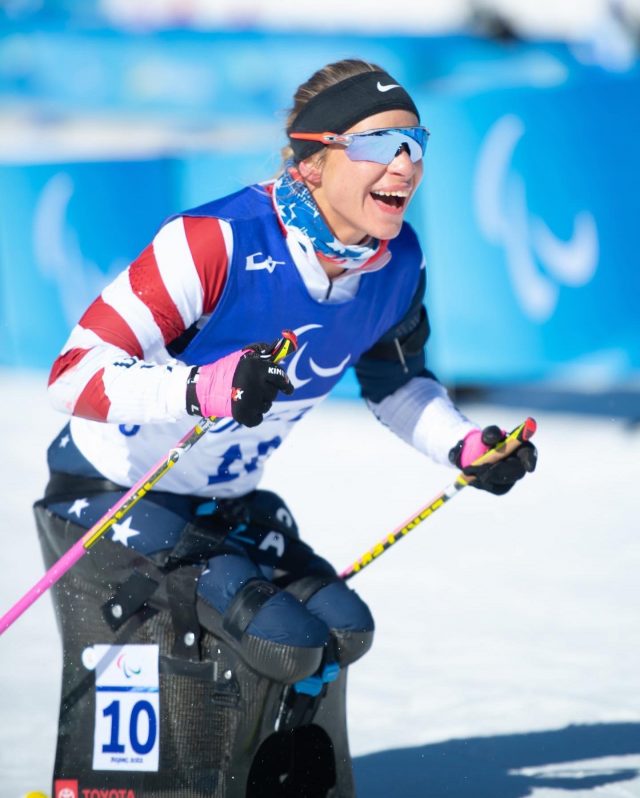
    Oksana Masters at the 2022 Beijing Paralympic Games. Masters won 6 medals in Beijing, including 3 gold medals (2 in individual Biathlon events, 1 as part of USA’s relay team). Between summer and winter Paralympic games, Masters total medal count is 17. (Photo: Mark Reis / Team USA).

    The parallel tide to this has been growth in complexity and size of the organization that up until now has governed all sports involved in the para sport, the International Paralympic Committee (IPC). With that, especially over the past decade, has come complex but necessary debates about resource disparities between para and non-para disciplines, and over whether the IPC should have a bigger governmental presence over the sports it oversees than the comparatively less centralized and more hands-off International Olympic Committee (IOC) that oversees the broader Olympic movement. Last December, those debates culminated in a call for the IPC to adopt a revised constitution. A key provision called for the decentralization of sport governance for 10 sports – including alpine skiing, biathlon, and nordic skiing – to their respective international federations. With alpine skiing, biathlon, and nordic skiing included in this provision, there was a clear imperative directed to both FIS and the International Biathlon Union (IBU) to take up both the issue of adopting the IPC’s proposal to transfer governance, and to further build the two federation’s partnerships so that they included governance of para nordic and para biathlon.

    The timeline for moving out the 10 sports from the IPC to their respective federations targeted a deadline to achieve the goal by the close of the next Paralympic/Olympic cycle – by the 2026 Milan-Cortina games. By acting in 2022, FIS and IBU took action to achieve that goal some four years earlier than was set, indicating that the move was one that was in the works since, or possibly prior to, the IPC’s decision in May.

    U.S. Paralympics nordic skiing director Eileen Carey said in an email to Fasterskier that the move to transfer para nordic to FIS did, “happen faster than I anticipated.” However, Carey points out that this only reaffirms the growth and opportunity that FIS sees in para nordic, “I have been involved with para sports since 2010 and there’s been a shift from being perceived as a burden to manage or not worth the effort to people recognizing the value and importance of para sports. When [ski programs] have incorporated para-athletes into their programming, they have seen an increase in participation, fan base, donors, and sponsors. Para sports are compelling, and more people and organizations are recognizing that as visibility increases.”
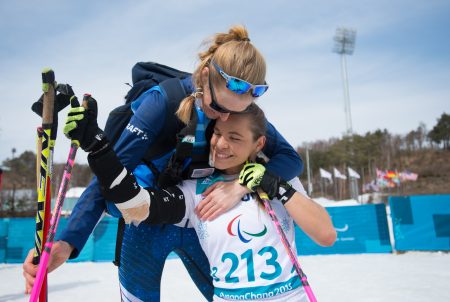
    US Para Nordic Director Eileen Carey embraces Oksana Masters during the 2018 PyeongChang Paralympic games. (Photo: Mark Reis / Team USA).

    On the benefits of FIS taking over the governance of para nordic, Carey says she is, “hopeful about the potential implications of this transition as it relates to the professionalism in our events, athlete promotion and support.” Incorporating para nordic into the FIS World Cup, Continental Cup, and domestic schedules will start to make the final integrative step for para nordic, as Carey puts it, that “we are one sport.”

    FIS looks to North America, and finds a path cut by Para

    There’s also a unique set of implications that FIS taking on para nordic might have for the growth of nordic skiing in North America. Historically, para nordic and para biathlon have had a much larger presence on the North American continent than the FIS’ non-para counterpart. While the FIS Nordic Ski World Championships have only ever been held twice in North America –in Rumford, Maine in 1950 and Thunder Bay, Ontario in 1995 – the IPC Para Nordic Ski World Championships have more regularly visited the continent, including to Jackson, Wyoming in 1990, Fort Kent, Maine in 2005, Cable, Wisconsin in 2015, Prince George, British Columbia in 2019. This year’s Para World Cup finals will be at Soldier Hollow, Utah in March as well. Beyond that, North American venues have had a regular presence on the IPC Para World Cup in a way that they simply have not on the FIS World Cup schedule.

    An integrated para and non-para World Cup has already taken place in partnership between FIS and IPC in Dresden, Germnay in January 2020, which will serve as a model as FIS goes forward into what Carey says, “[will be] a season with a lot of learnings.” As FIS does look to integrate para nordic into that FIS World Cup schedule, it’s almost a certainty that they will be leveraging the experience of organizers who have developed and hosted IPC events in the past.

    Which leads to an interesting proposition for us in North America. The draft schedule for the 2023-2024 FIS World Cup released this spring includes a joint Minneapolis/Cable World Cup to coincide with the American Birkiebeiner’s 50th anniversary (to read more on the American Birkebeiner Ski Foundation’s plans, read our interview with Executive Director Ben Popp). As previously noted, Cable has already hosted IPC World Cups and IPC Para Nordic Ski World Championships in the past decade, meaning that FIS will look to a proven organizing group to make their return to the North American continent a success. That model of partnering with organizers with para nordic event experience could be a beacon as FIS looks to return to the North American continent in 2023 and be key in making North America the site of more World Cups in the future.
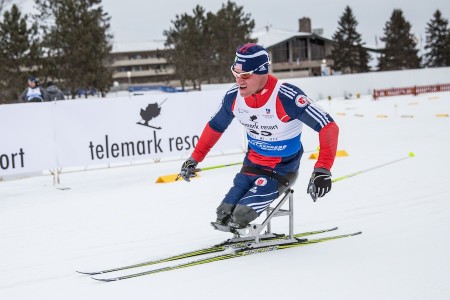
    USA’s Dan Cnossen skis past the old Telemark Lodge in Cable, Wisconsin during a 2013 IPC Para Nordic World Cup. With the FIS looking to return the Nordic World Cup to North America, organizers who gained experience hosting top-level racing through the IPC will be looked to for valuable insights on making events successful in North America. (Photo: James Netz).
    Growth for Para Nordic in the United States and beyond

    U.S. Para Nordic paving the way for the sport would fit with historical developments as well. Carey points out that “In the U.S., we are ahead of the curve in integrating para athletes into clubs and teams and events…Our U.S. Ski & Snowboard and biathlon clubs are the development incubators for para nordic just as they are for the U.S. Ski Team. From the Bill Koch Festival to our National Championships, [these] are the same races sit skiers, one-armed skiers, and visually impaired skiers are doing to develop the sport.” That integration and investment has led to a program that regularly wins Paralympic medals and World Championships. Athletes like Oksana Masters, Dan Cnossen, Kendall Gretsch, and Jake Adicoff have made the U.S. a dominant and world-leading para program, charting a path for U.S. skiing success on a broader scale and reorienting nordic skiing’s examples to what is going on in the U.S. Carey says that the most important hope is that the FIS umbrella will help further “highlight, support, and develop” these athletes, and upcoming athletes like them, as they continue to inspire and send the message that the sport of skiing is for everyone, regardless of their physical abilities.
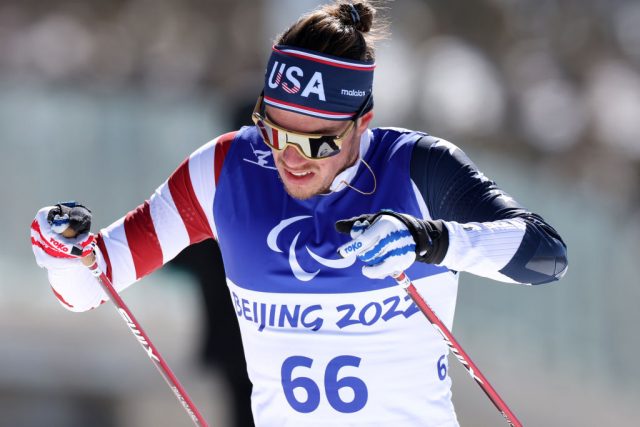
    Team USA’s Jake Adicoff competes at the 2022 Beijing Paralympic Games. Adicoff was part of Team USA’s gold medal winning mixed Team Relay team. (Photo: Mark Reis / Team USA).

    While the intricacies of sport governance can be boring – Carey also noted that the FIS system simply makes things like event insurance and athlete licensing less of a barrier to entry for para skiers – they also underscore important cultural shifts in the world of nordic skiing. One that sees more skiers, from more backgrounds, introduced to a sport where the quiet freedom that moving through a big, big world is one of the more sublime feelings available on Earth. To travel to another part of that metaphorical Netflix category, the political thriller will hopefully in time lead to the carefree beauty of viewing one of those BBC nature documentaries, probably Frozen Planet, for more of us everywhere.
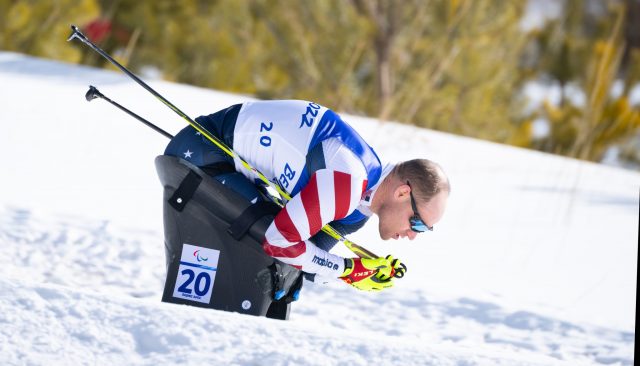
    Dan Cnossen competes at the 2022 Beijing Paralympic Games. Cnossen won 2 gold medals at the 2022 games, and has won 7 Paralympic medals between two games in 2022 and 2018. (Photo: Mark Reis / Team USA).
  • (Press Release) FOURTEEN PARA NORDIC ATHLETES NOMINATED TO 2022 PARALYMPIC TEAM

    (Press Release) FOURTEEN PARA NORDIC ATHLETES NOMINATED TO 2022 PARALYMPIC TEAM

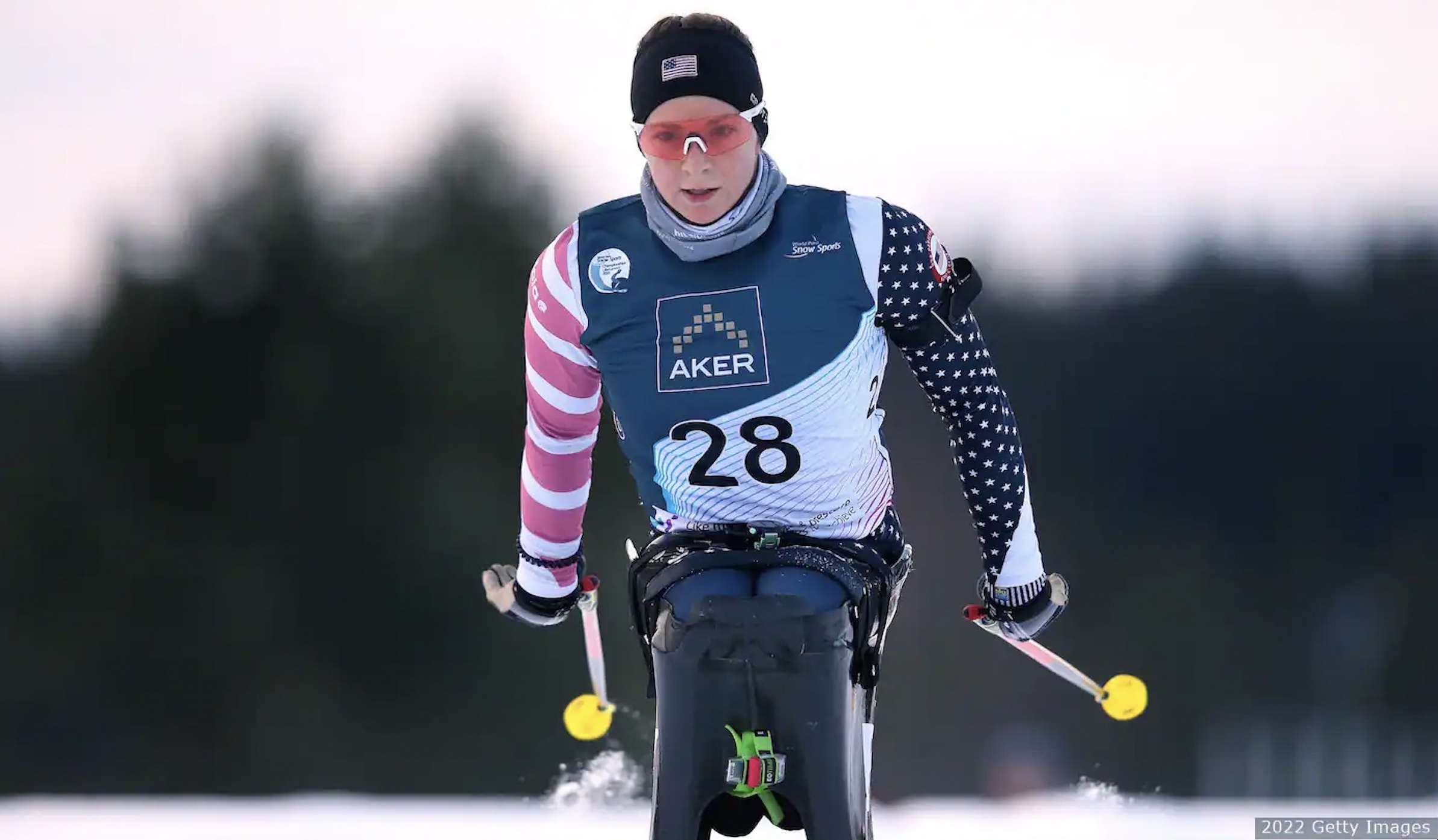
    Oksana Masters crosses the finish line of a race in Lillehammer, Norway. (Photo: Alex Livesey/Getty Images)

    By Kristen Gowdy | Jan. 31, 2022, 6:02 p.m. (ET)

    COLORADO SPRINGS, COLORADO ­­­– Following a stellar world championships performance that saw Team USA earn 13 medals in Para Nordic disciplines, U.S. Paralympics Nordic Skiing today announced the six women, seven men and one guide who have been nominated to compete at the Paralympic Games Beijing 2022 in March.

    Veteran athletes will lead the way in Beijing as Team USA looks to build on the 16 Paralympic medals won at the Paralympic Games PyeongChang 2018. Headlined by multi-time Paralympic medalists Oksana Masters (Louisville, Kentucky), Kendall Gretsch (Downers Grove, Illinois) and Dan Cnossen (Topeka, Kansas), the athletes nominated to the 2022 team sport a combined career total of 21 Paralympic medals. Of the 14 athletes, nine have previous Paralympic experience while five athletes will make their Paralympic debut.

    “We have many athletes who thrive in these high-stakes competitions, who know what it means to represent Team USA as a Paralympian,” Eileen Carey, director of U.S. Paralympics Nordic Skiing, said. “We are looking to them, as well as our experienced coaching staff, to lead the newer athletes into Beijing 2022. We are motivated by the combination of experience and the high quality of our Paralympic rookies as a testament to the growth and bright future of our program; their success this Paralympic quad has shown us that we can reach new heights in March.”

    A 10-time Paralympic medalist and recently crowned 10-time world champion, Masters is set to make her sixth Paralympic appearance. After winning double gold in Para-cycling at the Paralympic Games Tokyo 2020, Masters has continued her success on the snow, earning a medal in every world cup competition in which she has competed, as well as five medals at the recent Lillehammer 2021 World Para Snow Sports Championships. In Lillehammer, the multi-sport phenom earned her ninth and 10th career world championship titles and will look to put an exclamation point on her already historic 2021-22 season on the world’s biggest stage.

    Gretsch, who is putting together a world-class resumé herself this season, also won gold in Tokyo in paratriathlon. She led Team USA in Lillehammer with three world championship titles and also added a silver as she looks to repeat the double gold she won in PyeongChang. The 13-time world championship medalist is headed into Beijing as a heavy favorite in the biathlon discipline, having won both titles in the Para biathlon events in which she competed in Lillehammer.

    A six-time Paralympic medalist and retired Navy SEAL, Cnossen earns his third Paralympic team nomination in 2022. All six of Cnossen’s Paralympic medals came in PyeongChang, where he dominated in both cross-country skiing and biathlon. Cnossen is at his best on the Paralympic stage, where he will look to repeat his success come March.

    Paralympic silver medalist Jake Adicoff (Sun Valley, Idaho) will team up with longtime friend and guide Sam Wood (Harpswell, Maine) to lead the U.S. in the men’s visually impaired class for his third Paralympic appearance. After taking several years off following his podium performance in PyeongChang, Adicoff accepted an invitation to join the team for a training camp last February, and hasn’t faltered since. He and Wood enter Beijing as one of the top podium contenders in the men’s visually impaired field. The duo have been putting together Adicoff’s best racing of his career, having recently combined for three medals ­­– one of each color ­– in Lillehammer.

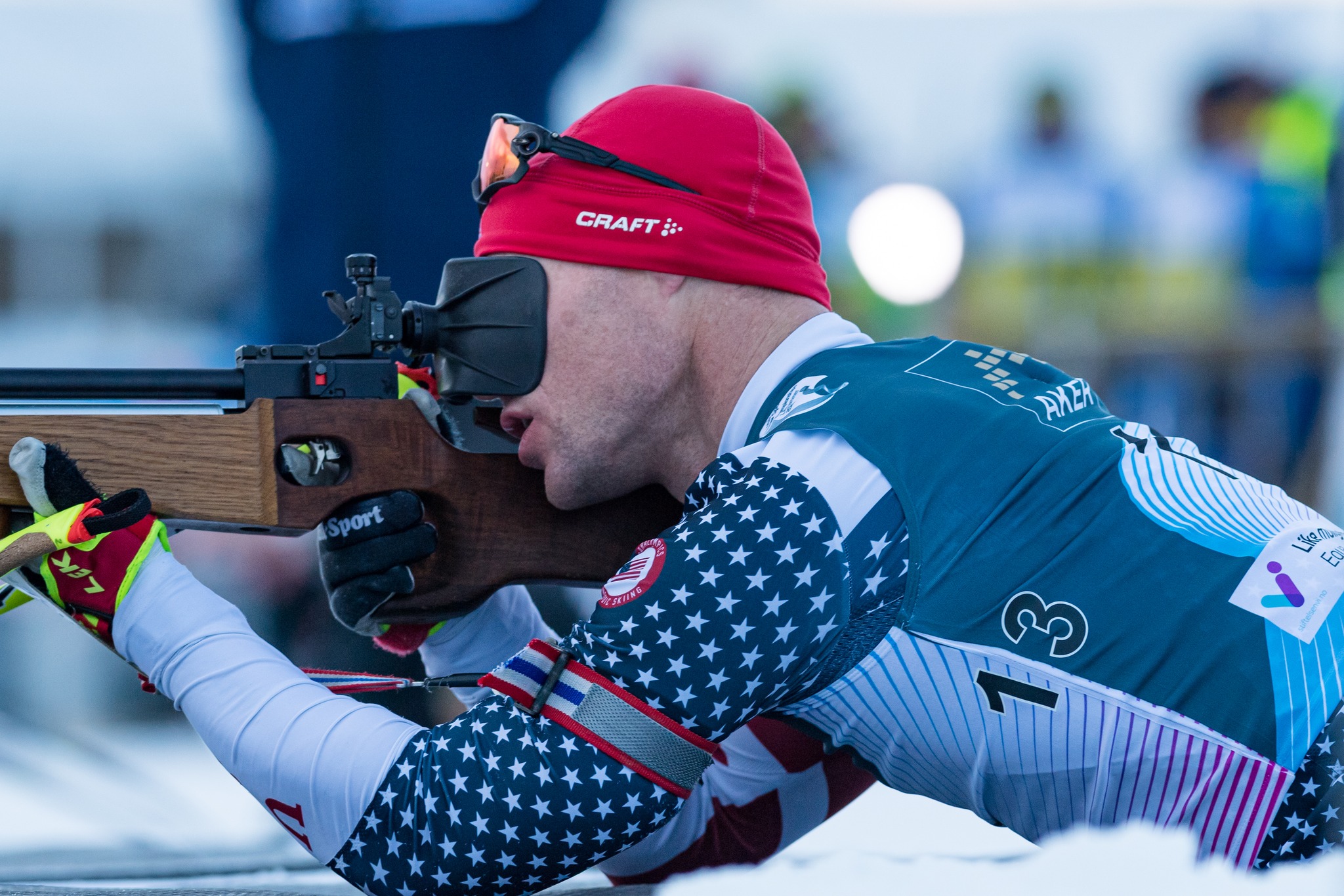
    Paralympians Aaron Pike (Park Rapids, Minnesota) and Josh Sweeney (Glendale, Arizona) round out the men’s sitting class for Team USA. Pike, who recently won his second career world championship medal, a silver in the men’s individual biathlon, makes his sixth career Paralympic team. Also a prolific wheelchair racer and marathoner, Pike is peaking at the right time, having been in the podium mix in nearly all of his races this season. He is seeking his first career Paralympic medal in Beijing.

    Sweeney, meanwhile, makes his first Paralympic team in Para Nordic skiing, having transitioned to the sport following a 2014 Paralympic gold medal appearance in sled hockey. The 2014 Pat Tillman Award for Service winner and retired U.S. Marine Corps Sergeant picked up skiing through the Challenged Athletes Foundation.

    The final sit skiers on the 2022 roster, Erin Martin (Seattle, Washington) and Lera Doederlein (San Diego, California) are set for their Paralympic debuts. A former rock climber, Martin found Para Nordic skiing after sustaining a T4 spinal cord injury while climbing. She is also a registered nurse care manager who has served during the COVID-19 pandemic. Doederlein, meanwhile, also competes in sled hockey and Para-cycling. At just 18 years old, Doederlein, who was adopted from Russia, has found a mentor in the Ukraine-born Masters.

    Standing skiers Grace Miller (Palmer, Alaska), Ruslan Reiter (Manchester, Maine) and Dani Aravich (Boise, Idaho) also bring Paralympic experience to the team. Miller and Reiter competed in PyeongChang, where Reiter’s best finish was seventh in the cross-country mixed relay, while Miller finished 10th in the 15-kilometer cross-country skiing race. Aravich made her Paralympic debut as a track and field athlete in Tokyo and along with Masters, Gretsch and Pike, will compete in her second Paralympic Games in six months.

    Making their first Paralympic appearances and rounding out Team USA’s roster is standing skier Drew Shea (Vienna, Virginia), and visually impaired athlete Max Nelson (Mahtomedi, Minnesota).

    Relatively new to Para Nordic skiing, Shea recently moved to Bozeman, Montana, to pursue the sport competitively with Crosscut Mountain Sports Center, his club team. A rising star in the sport, the 17-year-old Nelson made history as a high school junior last year when he became the first visually impaired Nordic skier to win an individual conference title in Minnesota.

    The Paralympic Games begin on March 4, and Para Nordic skiing competition kicks off on March 5. Following record-breaking coverage of the Tokyo Paralympic Games, NBC has announced a historic broadcast schedule for its Winter Paralympic programming, which features more than 230 hours of coverage across NBC, Peacock, USA Network, the Olympic Channel, NBCOlympics.com and the NBC Sports App. NBC’s scheduled programming also includes the first-ever Winter Paralympic Games primetime coverage.


    For media requests and photo inquiries, please contact Kristen Gowdy at Kristen.Gowdy@usopc.org.


    2022 U.S. Paralympics Nordic Skiing Paralympic Team

    Women:

    Dani Aravich, women’s standing

    Lera Doederlein, women’s sitting

    Kendall Gretsch, women’s sitting

    Erin Martin, women’s sitting

    Oksana Masters, women’s sitting

    Grace Miller, women’s standing


    Men:

    Jake Adicoff (with guide Sam Wood), men’s visually impaired

    Dan Cnossen, men’s sitting

    Max Nelson, men’s visually impaired

    Aaron Pike, men’s sitting

    Ruslan Reiter, men’s standing

    Drew Shea, men’s standing

    Josh Sweeney, men’s sitting


  • U.S. Paralympics Nordic Skiing On a Roll at Para Worlds in Lillehammer

    U.S. Paralympics Nordic Skiing On a Roll at Para Worlds in Lillehammer

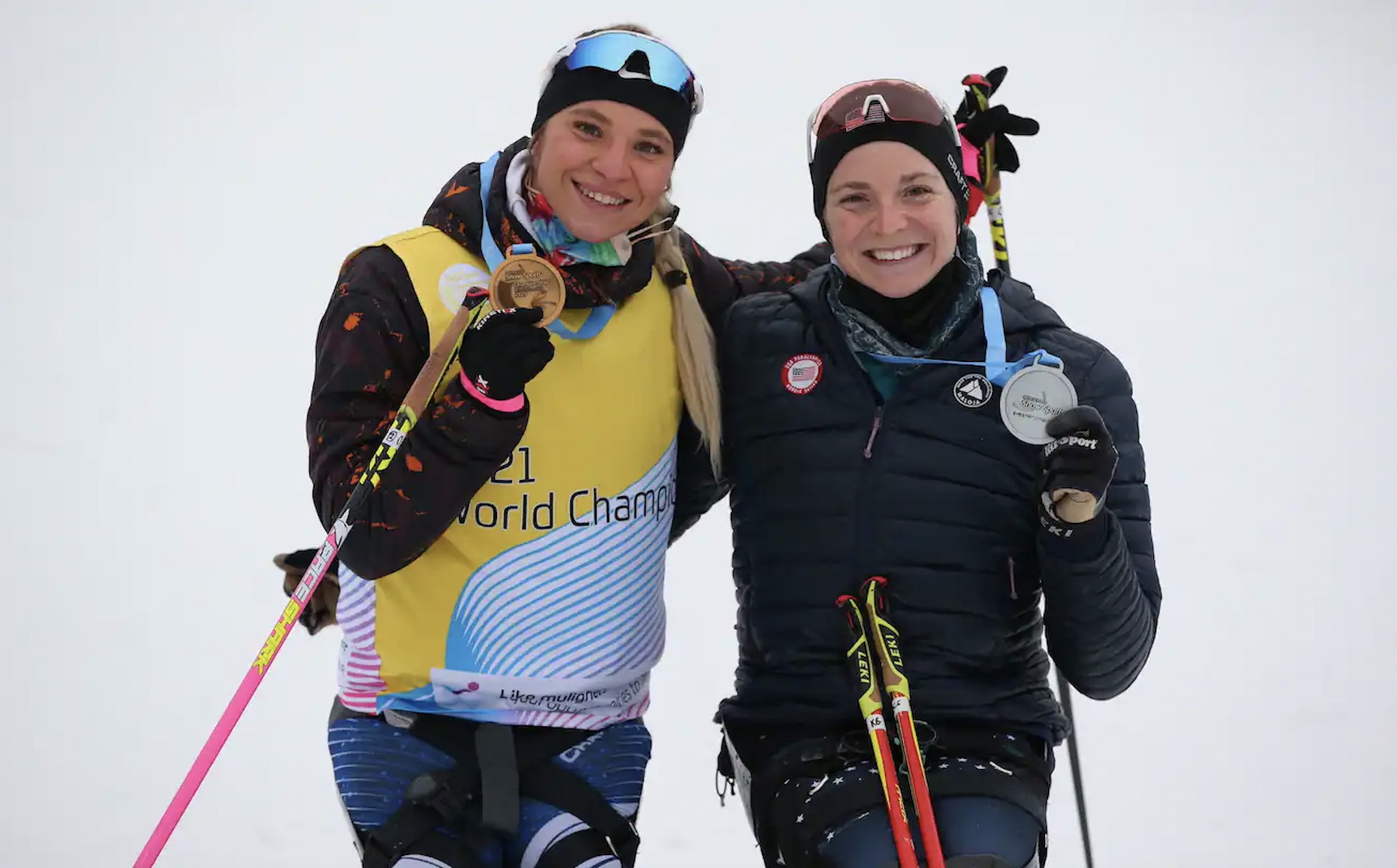
    Oksana Masters (left) and Kendall Gretstch (right) go 1-2 in the women’s 15k sitting long distance cross country race. (Photo: Alex Livesey/Getty Images)

    It’s late January and we’re deep into the race season. As the Olympics and Paralympics draw nearer, we’ve simultaneously just wrapped up the Tour de Ski, the U.S. Cross Country Championships, and another wave of SuperTour races. Never a dull moment in the racing world, the Para World Championships are currently well underway, running January 13-23rd in Lillehammer, Norway. 

    Normally occurring on odd years, the World Championships were postponed from last February due to the pandemic. Nevertheless, the event was called the Lillehammer 2021 World Para Snow Sports Championships. It was a hallmark event, as it is the first time that all snow sports have competed together in one location over the same dates.

    Led by well-decorated veterans like Oksana Masters, Kendall Gretsch, and Dan Cnossen, the U.S. Para Nordic Team has put together a string of outstanding results at World thus far. Events have ranged from biathlon springs to cross country distance races, with athletes competing – and cleaning up – across all disciplines and distances.

    Kicking off the series of events, Sun Valley’s Jake Adicoff took home his career first World Championship medal by winning the men’s visually impaired 10-kilometer middle distance race.

    “It feels great,” Adicoff said of his performance, according to the Team USA Press Release. “Lillehammer has been skiing really well so far, I’ve been having a lot of fun here. It feels great to go and get that first podium, and hopefully we can go out and get some more here.”

    Jake Adicoff and his guide Sam Wood put together a gold medal performance on the opening day of racing at the Para World Championships in Lillehammer, NOR. (Photo: Alex Livesey/Getty Images)

    Adicoff retired in 2018 after earning a silver medal in the 10k and taking 4th in the sprint, however, he is making his return with a bang in this 2021/22 season. 

    Building momentum throughout the first day, 19-year-old Sydney Peterson earned a silver medal in the women’s standing middle distance race, with Gretsch earning the second gold medal for team USA in the women’s sitting 7.5k middle distance event. That’s three medals, two gold and one silver, on the first day of racing, along with an additional two athletes, Cnossen and Dani Aravich, earning top-10 finishes. 

    Dan Cnossen hits the range during the individual sitting biathlon event at the Para World Championships in Lillehammer, NOR. (Photo: Alex Livesey/Getty Images)

    Joining the team in Lillehammer late after testing positive for COVID-19 on New Year’s Eve, Masters made a smooth return to competition, taking second place in her first race at Worlds, the sitting biathlon sprint on January 15th. The next day, the American women took first and third in the sitting biathlon middle distance race, with Gretsch earning her second gold medal of the week and Masters adding an 18th World Championship medal to her ever-expanding collection.

    On point, a perfect shooting performance contributed to Gretsch’s gold, while Masters skied her way out of a significant deficit. Experiencing challenges on the range, Master’s racked up seven penalties, but made up her shooting with her skiing. In the men’s sitting race, Master’s partner, Aaron Pike, skied his way into the Top-10, a rank he has achieved in each of his World Cup races this season, leaving him primed for a medal. 

    Two days later on the 18th, Masters and Gretch again took the spotlight, going 1-2 in the women’s sitting 15k long distance cross-country race. Now reaching 19 total, this marked Masters’ 10th career World Championship gold medal.

    “It’s absolutely incredible,” Masters said in the Team USA press release that day. “It feels like yesterday where I was that new athlete, never thinking that I would be a world championship athlete. So, to have 10 now … is incredible and it’s a testament to our team’s hard work. It’s not just me, it’s the whole team.” 

    Already an historic day for the U.S., Peterson and Adicoff continued the medal streak in the long-distance cross country races, with each athlete earning a bronze medal in the standing and visually impaired divisions, respectively. Four Americans competed that day, and four medals were won. How’s that for success? 

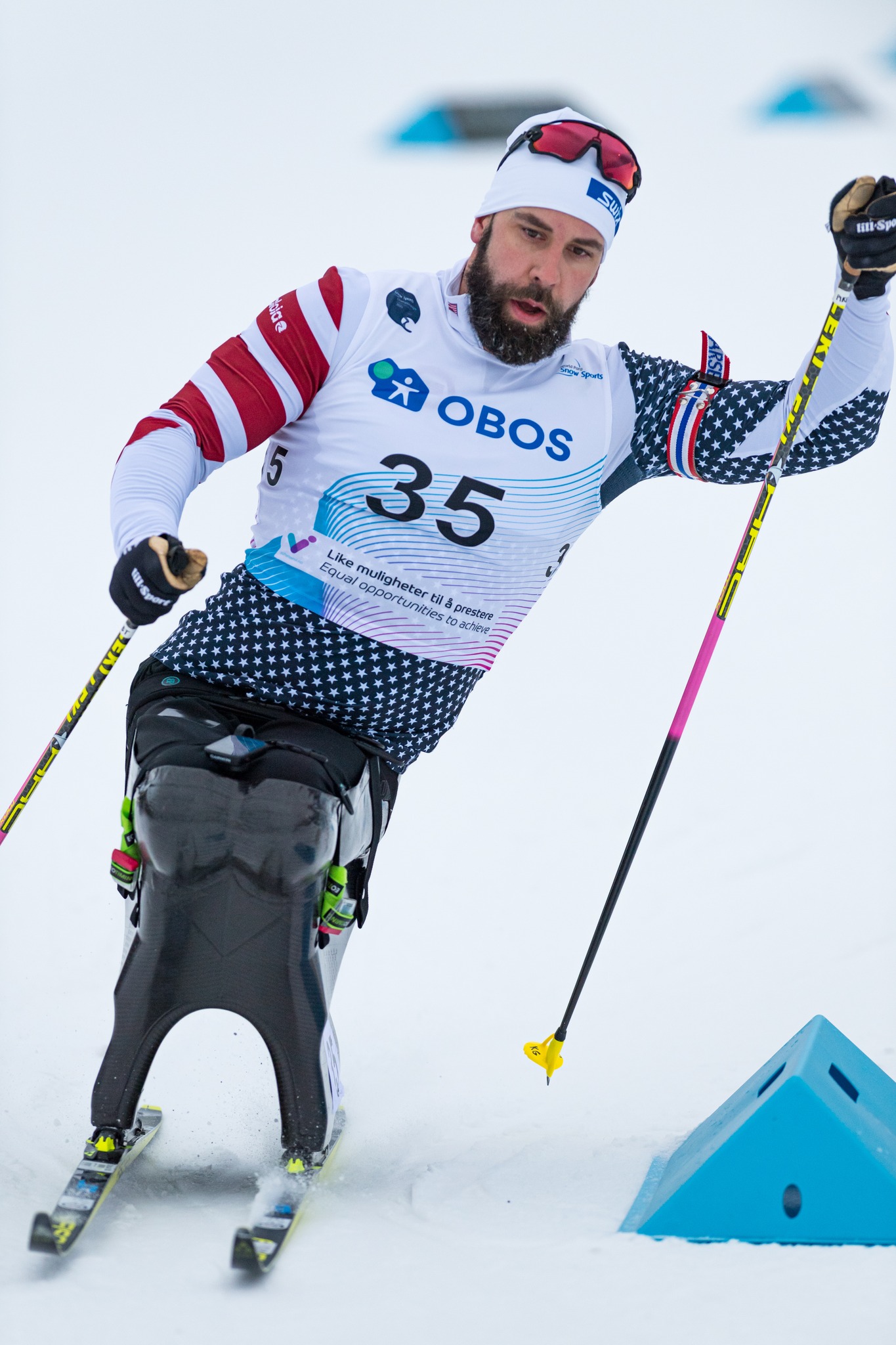
    Aaron Pike races the individual sitting middle distance biathlon event at the Para World Championships in Lillehammer, Norway. (Photo: Alex Livesey/Getty Images)

    As the final days of World Championship racing kicked off, Pike’s consistency paid off with a silver medal in the men’s sitting individual biathlon event. Missing just one target, matching the best result of the event, Pike finished 24 seconds back on the winner, Pavlo Bal of the Ukraine. This result is both a World Championship and overall World Cup career best for Pike, who is an accomplished wheelchair racer during the summer season. 

    “It was a tough day to be shooting out there, everybody’s missing so I was happy to come away with just missing one shot,” said Pike in today’s recap. “This is probably the windiest race we’ve had in three years. Every chance you get to put a bib on and race in a biathlon race is experience.”

    Racing in the women’s sitting individual biathlon, Gretsch and Masters continued to dominate the field, taking first and third, respectively, to keep their medal streak alive and well.

    Again performing well on the range, Gretsch missed just one target in four rounds of shooting and skied the second fastest time on course for a finish time of 52:25.0. While Masters skied the fastest time of day, she again faced challenges in her shooting, incurring five penalties, leaving her 3:00.7 behind Gretsch in the final results. In the women’s standing class, Aravich earned another top-10 finish in eighth. 

    With excellent shooting records, Kendall Gretsch puts together back-to-back gold medal performances in biathlon events. (Photo: Alex Livesey/Getty Images)

    After a day of rest, the Para athletes have two final days of racing in Lillehammer on the 22nd and 23rd, which feature a sprint for the standing and visually impaired categories on Saturday and a Mixed Relay on Sunday. Based on the week’s results, it’s clear that they are primed for another medal run in the upcoming 2022 Beijing Paralympic Games, which begin March 4th. 

    Livestreams of past and upcoming events, along with links to results can be found on the U.S. Paralympics Nordic Facebook page, or you can check out the remainder of snowsport events happening this week in Lillehammer by following along here.

  • U.S. Paralympics Nordic Skiing Names 2020-21 National and Development Teams (Press Release)

    U.S. Paralympics Nordic Skiing Names 2020-21 National and Development Teams (Press Release)

    Press Release

    COLORADO SPRINGS, Colo. — U.S. Paralympics Nordic Skiing today announced the five Para Nordic skiers named to the national team and two skiers named to the development team for the 2020-21 season. All seven athletes represented Team USA at the Paralympic Winter Games PyeongChang 2018.

    “Our program is committed to developing athletes from their first-time experience to the top levels of Nordic skiing and biathlon,” said Eileen Carey, Director of U.S. Paralympics Nordic Skiing. “Our 2020-2021 National Team is representative of that commitment with a combination of up-and-coming athletes and those who are at the pinnacle of the sport internationally.”

    The team is led by Paralympic gold medalists Oksana Masters (Louisville, Kentucky), Kendall Gretsch (Downers Grove, Illinois) and Dan Cnossen (Topeka, Kansas). At the 2019 World Para Nordic Skiing Championships, Masters won five world titles (middle-distance biathlon, middle-distance cross-country, cross-country sprint, biathlon sprint and long-distance cross-country) and garnered six total medals in Prince George, British Columbia.

    Gretsch returned home as the 2019 world champion in the women’s sitting class of individual biathlon and additionally secured podium finishes in each of her events, claiming four silvers and one bronze.

    Cnossen, a retired Navy SEAL, won a pair of medals at the world championships, racing to silver in the men’s sitting class of the middle-distance cross-country and cross-country sprint races. Pike secured the first world championships medal of his career – the bronze medal in the biathlon sprint – at the 2019 world championships.

    Cnossen, Masters and Pike were set to compete at the 2020 World Para Biathlon Championships in Ostersund, Switzerland in March before it’s cancellation due to the on-going COVID pandemic.

    The 2021 World Para Nordic Championships are scheduled to be held in Lillehammer, Norway from Feb. 11–20 as part of a historic first joint World Para Snow Sports Championships which will also include alpine skiing and snowboarding championships.

    National A Team

    Dan Cnossen

    Kendall Gretsch

    Oksana Masters

    National C Team

    Aaron Pike

    Ruslan Reiter

    Development Team

    Joy Rondeau

    Grace Miller


    For more information, please contact Annemarie Blanco, U.S. Paralympics Nordic Skiing, at annemarie.blanco@usopc.org or 719-646-6921. 


  • Rising Together: The Crosscut Elite Team Fosters the Success of US Para Nordic

    Rising Together: The Crosscut Elite Team Fosters the Success of US Para Nordic

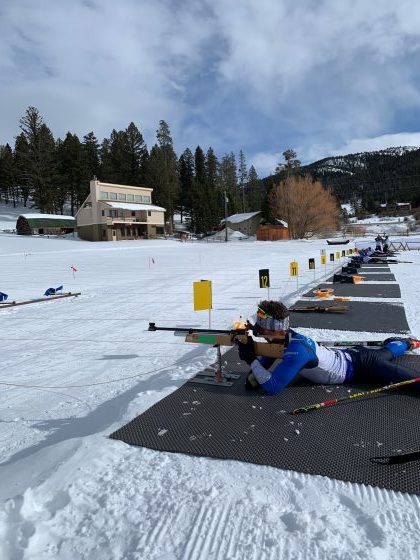
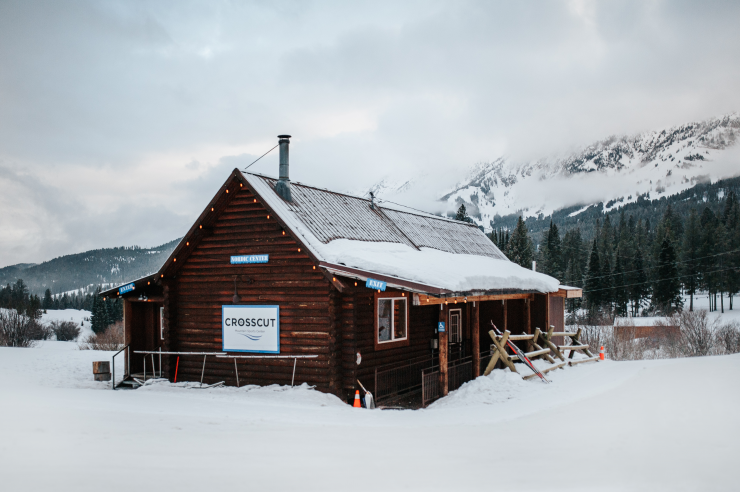
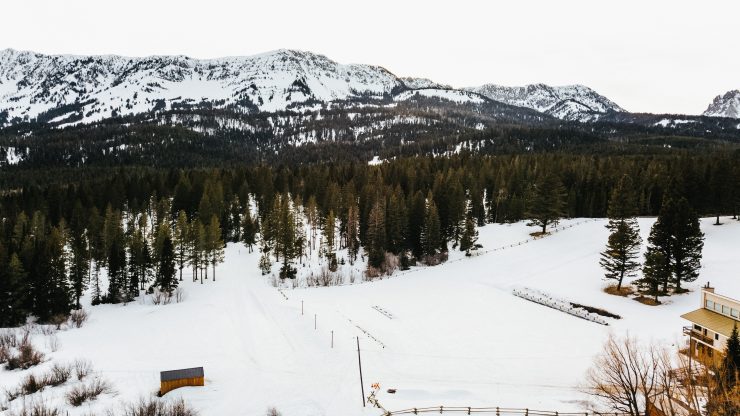
    The Crosscut Mountain Sports Center has become the home base for the US Para Nordic Program, while the Crosscut Elite Team supports para nordic development athletes. (Photo: Crosscut Mountain Sports Center / Townsend Collective)

    On April 9th, the Crosscut Mountain Sports Center in Bozeman, MT released information and qualification criteria for their newly founded elite team. As you skim what it takes to earn a spot at each tier of the program, it may catch your attention that the cross country, biathlon, and para nordic are housed within the same program. This single team approach reflects the growth and development at Crosscut in connection with its partnership with the US Para Nordic (USPN) program, which has proven beneficial to both parties.

    The program at Crosscut is still in its nascent stages, however, in the unofficial first season last year, Crosscut Elite Team members racked up a slew of accomplishments including earning spots at the Youth Olympic Games, IBU World Junior Championships, IBU Cups, IBU Open European Championships, FIS North American World Cup Sprint Tour (these spots were eventually missed due to cancellations), and World Para Nordic Skiing World Cups. 

    Simply put: the goal of the Crosscut Elite Team is supporting athletes of all abilities as they advance toward the highest levels of ski racing and biathlon, beit a Paralympic team, the US Biathlon Team, or the US Ski Team. 

    To learn more about the evolution and goals of the elite program at Crosscut, FasterSkier spoke with Nick Michaud, who keeps his hands full as the USPN Development Coach while also coaching the elite program across abilities. 

    Nick Michaud is a coach for the Crosscut Elite Team, while also working as the US Para Nordic development coach. (Photo: CrosscutMT.org)

    Before becoming a coach, Michaud was a member of the Bridger Ski Foundation (BSF) Elite Team through the 2018 Olympic Season where he came up one spot short of making the team for PyeongChang. A native of Fort Kent, ME, he grew up skiing and competing in biathlon with the Maine Winter Sports Center, coached by John Farra and Eileen Carey, who went on to become leaders of the US Para Nordic Team. Farra has since transitioned to the role of head performance general manager of USA Paratriathlon, with Carey advancing into his spot as head coach. 

    Michaud explained that as his own ski career was waning, he sought advice from Carey about possible next steps, expressing an interest in coaching.

    “The motivation has been that the people in my life who impacted me the most were coaches, and I’ve always known that I wanted to teach or coach — to work with people in some capacity.”

    In March of 2019, Carey presented Michaud with the opportunity to travel with the USPN team on a World Cup trip in Sapporo, Japan as an assistant coach. Michaud leapt at the opportunity, describing it as “so much fun”, and was offered a position with USPN later that year. Although he lacked specific experience working with adaptive athletes, he explained that the mission of USPN excited him more so than other possible coaching roles. 

    “I’m even more drawn to the movement of the Paralympic foundation right now to increase access for this sport,” said Michaud. “Nordic skiing is a pretty homogenous group of people, so it’s exciting to be part of an organization that is finding ways to break out of that a little bit.”

    According to Carey, Michaud’s personality and growth mindset ready him for the challenge of coaching the adaptive team.  

    “Nick has a natural curiosity that makes him a great fit for the role,” wrote Carey in an email to FasterSkier. “For para athletes, it is not possible to approach coaching with a ‘one size fits all’ solution.  I believe this is also true of all coaching, but it is elemental to coaching athletes who have such different mechanics from one another.  When there is no “norm”, you always have to be willing to search and invent.

    “I have known Nick since he was 13 and he has always had that curiosity, the willingness to question and try (and fail!) at things in order to progress. More than anything, that seems to make a great coach, so it was natural for me to try to get him some experience in the para coaching world when I found out he was hanging up the race skis.”

    The Crosscut Mountain Sports Center has become the home base for the US Para Nordic team while fostering para nordic development. (Photo: Crosscut Mountain Sports Center/Townsend Collective)

    Over the last few seasons, Bozeman has become a home base for the USPN team, who are spread throughout the country for much of the year. The location has proved ideal given its proximity to an airport, and quality skiing that was conducive to sit skiing. This sparked a connection with Crosscut, who Carey explained has repeatedly “gone the extra mile” to support the growth and success of the para nordic program. 

    In a 2016 interview with the Spokesman-Review in Spokane, WA, Carey wrote, “The single-biggest component to [the rise of the US Para Nordic team] has been our relationship to Crosscut Mountain Sports Center. All of our competitions consist of half cross-country races and half biathlon. Before we moved to Bozeman, we didn’t have a place to shoot consistently. When we arrived in Bozeman and identified that as a need, Crosscut Mountain Sports Center and Bridger Biathlon Club provided the piece we were missing. They built us a range and have supported us in so many ways to make sure our athletes have what they need for success. It has been an incredible experience for our athletes and team and one that will continue to be a huge component to our future success.”

    The impact of Crosscut’s support of the USPN program has extended beyond the immediate circle of national team athletes and coaches, promoting access to adaptive athletes of all levels. 

    “It’s been really cool to see the partnership leech out to other parts of the community,” said Michaud. “For example, Eagle Mount is an adaptive ski program in Bozeman and Crosscut is partnered with them. When we build sit ski trails or sit ski teaching manuals for the Paralympic team, it’s not just for coaches trying to prepare skiers to be the best sit skiers in the world, but it also gets shared with a program like Eagle Mount, or equipment gets passed on to them. So Crosscut is increasing access to skiing, not just for the best sit skiers in the world, but for all adaptive skiers in Bozeman.”

    Michaud explained that the USPN team also passes on used equipment to Eagle Mount and other programs. As sit ski and adaptive equipment is highly specialized and expensive, this creates access that clubs may not otherwise be able to afford. 

    “We’re always getting new sit skis and trying out new models, and all of a sudden, we have a fleet of sit skis that are getting retired and pushed out to other parts of the community, not just in Bozeman but throughout the country.”

    He continued that as the USPN program rises and technology advances, they are passing on better and better equipment. They have also worked to develop a sit ski teaching manual, which has been passed on to adaptive programs as a resource to coaches. 

    https://www.instagram.com/p/BqvL4gmF4Se/?utm_source=ig_web_copy_link

    Carey explained that the symbiotic relationship between Crosscut and USPN trickles down to supporting the development of new para athletes, as it creates access and opportunity for people of all abilities to try and grow in the sport. 

    “One of our program’s main objectives is to provide high quality Nordic experiences to para athletes. To do that we need to find ways to increase access to the sport at all levels. Crosscut is committed to providing an outdoor venue that is for all members of the community. We share a vision that sport and the outdoors are for everyone. When that is the starting place, it is easy to find ways to collaborate to build a place that is for everyone.”

    To visualize this message, one simply needs to go for a ski at Crosscut. 

    “This winter the parking lot has been full everyday,” explained Michaud. “And there’s something beautiful about seeing an elite athlete doing intervals, flying around, with kiddos from the education program playing games in the stadium, and sit skiers shooting on the range and getting laps and maneuvering. Just seeing the full spectrum of anyone who could be skiing all in one place at once.”

    In turn, by sharing trails with adaptive athletes, Crosscut users get to know them individually and learn more about what it takes to be an elite para athlete, thereby becoming more invested in their success. Michaud explained that this deeper understanding and excitement connects the community at Crosscut, and gives able bodied skiers the vocabulary to encourage para athletes in their training. 

    “It’s been really nice for the national team to be able to come to Bozeman and have a home, have a place to train, have people that they know who are excited about what they’re doing. To understand skiing enough to be complimenting them on their maneuvering or their double pole, versus just saying, ‘That’s so cool that you’re doing that.’ There’s just another level of understanding.”

    Further highlighting the mutual benefit the Crosscut community has received from their support and fostering of the USPN program, Michaud discussed the contributions of elite team member Ruslan Reiter across programs. Reiter, who was born with an underdeveloped right arm, is the only member of the national team that competes in standing events, versus sit ski. Outside of skiing, he is pursuing a degree in aviation at Montana State University in Bozeman.

    “He has really embodied this collaboration,” Michaud shared. “I’m also helping run the elite team for Crosscut. Since he’s a standing athlete, he fits into that fairly well on the day to day, then he travels with the Paralympic team in the winter. He’s super fortunate that he gets to be a part of this team of professional athletes in Bozeman and also part of the national team that’s traveling mostly in Europe… Our success is very intertwined with one another. Ruslan has gotten to be a part of that and it’s really benefited both groups in a lot of ways.”

    Reiter was born in Russia but was adopted by a family in Maine, where he began his ski career in middle school. Just after finishing high school, Reiter made the 2018 Paralympic Team, landing just outside the top-10 in his best performance, 11th place in the 12.5-kilometer biathlon event. Michaud explained that Reiter’s presence elevates the motivation and dedication of his teammates. 

    “We’re in the weight room at the Mountain Project with the Crosscut Elite Team, and we’ve got a strength plan that I’ve been able to put together with a strength coach at the USOPC. These athletes who are in their mid-20’s who have been training for a long time and are really high level are seeing Ruslan doing pull ups with one hand, and there’s just no excuse to step it up, to not find a way to get better, because they’re a part of that culture. So that has been really tangible and awesome.”

    Like the elite program and partnership with USPN, the Crosscut Mountain Sport Center is in a stage of growth and development. In the summer of 2017, the organization purchased the Bohart Ranch Property, which was home to a cross country trail system since the 1980’s, with the vision of creating a robust resource for the Bozeman community that doubled as training grounds for the Bridger Biathlon Club and USPN program. 

    As Crosscut began developing a vision ranch property, the input of those they wished to serve guided the approach. Carey explained that Crosscut’s inclusive and dedicated approach has been paramount to creating a ski center that supports athletes of all abilities. 

    “They are starting the process of developing programming, events, and a venue with the lens of ‘How are we going to create these things in a way that serves everyone in our community?’. As a part of that community, we are part of all the conversations. In the end, Crosscut’s willingness to have the conversation through that lens has been critical to our program’s competitive success and I think will be central to Crosscut being able to live their mission.”

    It is the wish that Crosscut becomes an example for other cross country ski areas, dispelling myths about what it takes to create opportunities and access for para athletes. 

    “It’s everyone’s hope that this shows that there’s no reason that other clubs can’t have an adaptive component or a para component, and it shouldn’t be that hard,” said Michaud. “It just takes a little bit of intentional work to make it more accessible.”

    Carey elaborated on this point, explaining that the increased accessibility additionally benefits the larger community. 

    “They are helping to show that creating programs and venues that work for para athletes doesn’t have to be a sacrifice or an afterthought,” wrote Carey. “There are many ways to do business that enhance experience for para athletes that also make sense for the larger community.  Ultimately, just like anything, having a club that works for para athletes is as simple as deciding it is so. Are there unique challenges and considerations? Absolutely. But I think if you start to look to the clubs and coaches who have had para athletes, they would also tell you there are many benefits.

    “If you want to make it happen, you can make it happen.  And our program is set up to help with that process in the service of our goal to make Nordic skiing possible for more members of our community.”

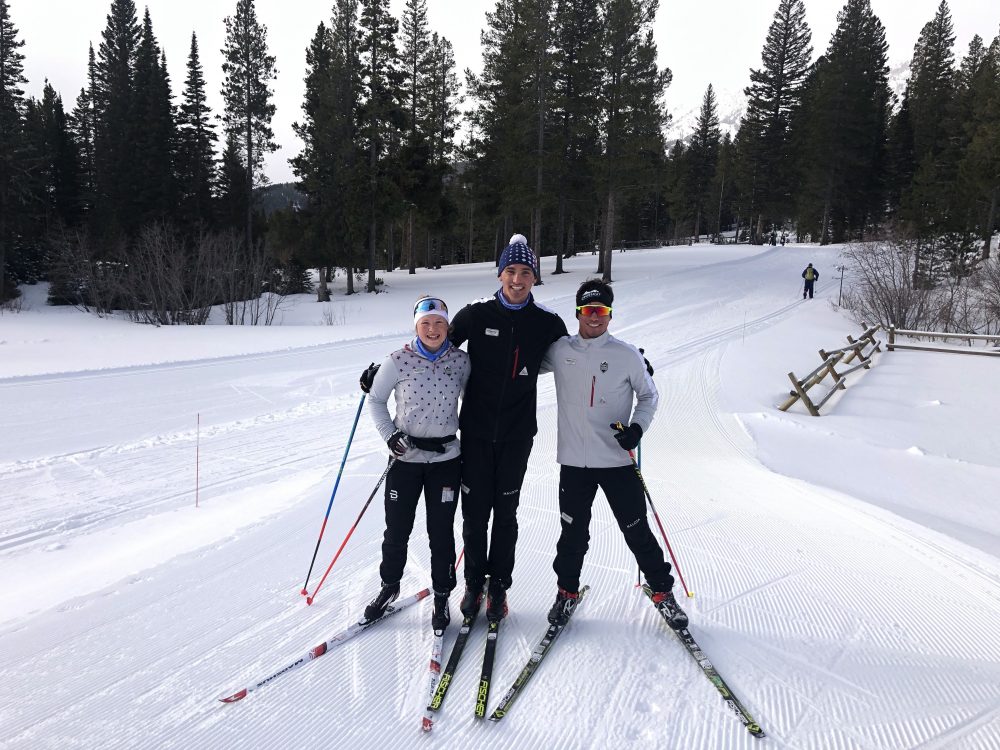
    Crosscut Elite Team members Hannah Cole (left) and Ruslan Reiter (right) train with coach Nick Michaud (center) at the Crosscut Mountain Sports Center. Reiter is also a member of the US Para Nordic C-Team. (Photo: Seth Hubbard, Crosscut Elite Team Coach)

    Moving forward, the elite program at Crosscut hopes to bring a few new adaptive athletes to Bozeman from outside the national team, supporting them as they move through the development pipeline. Michaud explained that the program aspires to rise alongside the US Para Nordic program. 

    “We’ll see the program growing at Crosscut in the same way that the development for the Paralympic team around the country has been happening. It will no longer just be a home training site when they’re in town during the winter, but we’ll start to see more development, more para athletes training with Crosscut throughout the year.”

    Speaking to the broader vision of US Para Nordic, Carey expanded on Michaud’s statement, including enforcement of the message that other clubs can follow Crusscut’s lead in integrating para athletes into their existing programming. 

    “We are working to increase the development of our sport especially in the standing and visually impaired categories,” wrote Carey. “US Ski and Snowboard and USBA clubs and coaches are also our development pathways for para athletes and there are many clubs and teams around the country who have para athletes integrated into their programming. Crosscut created para specific criteria for their elite team and named para athletes to their team. In this and many other ways, they are a tangible representation of our vision of how development can work for para athletes. They are showing that it can be done, that they have the tools to do it, and that there are benefits to it for everyone.” 


  • FasterSkier’s Para-Nordic Skiers of 2015: Andy Soule and Oksana Masters

    FasterSkier’s Para-Nordic Skiers of 2015: Andy Soule and Oksana Masters

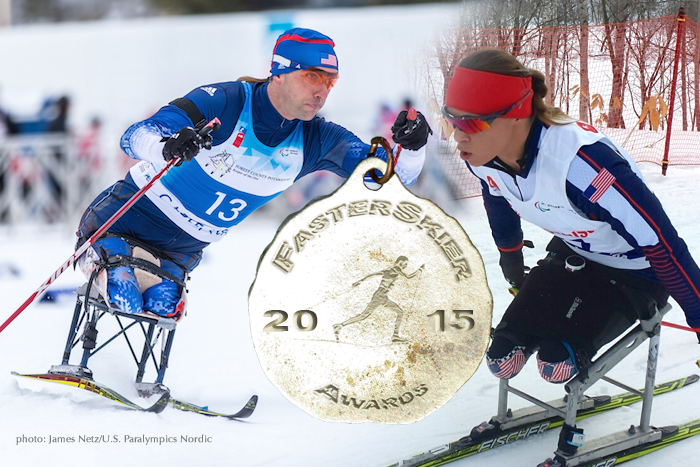
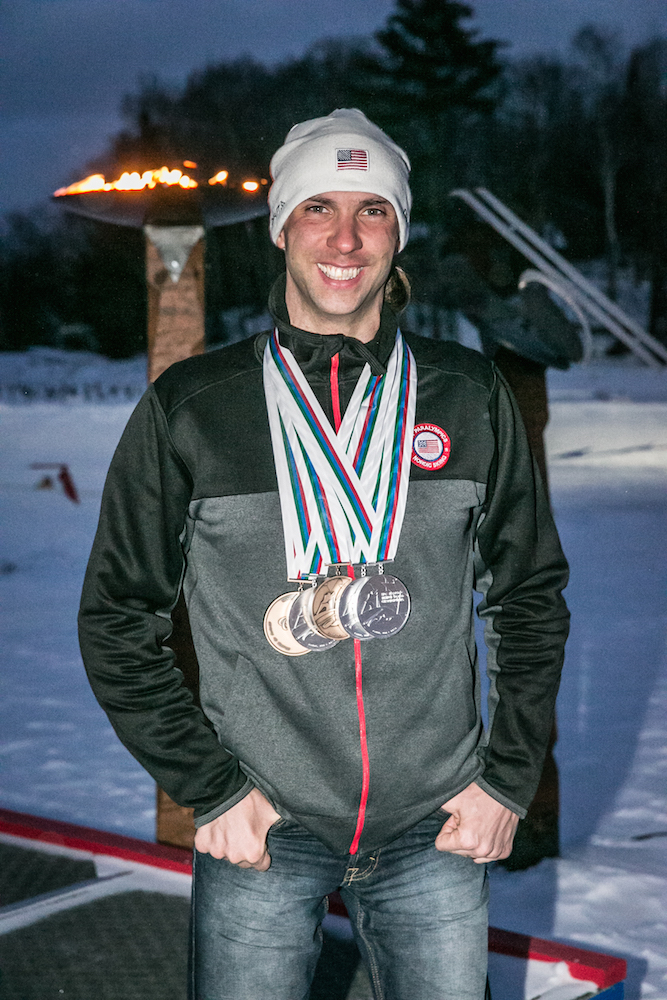
    Andy Soule (l) and Oksana Masters, both of U.S. Paralympics Nordic, are FasterSkier's 2015 Para-Nordic Skiers of the Year.
    Andy Soule (l) and Oksana Masters, both of U.S. Paralympics Nordic, are FasterSkier’s 2015 Para-Nordic Skiers of the Year.

    Andy Soule

    When you become the first American to rack up five medals in six individual events at World Championships, you’re essentially a shoo-in for Para-Nordic Skier of the Year. Andy Soule, a U.S. Army veteran and sit skier, did just that at the 2015 International Paralympic Committee (IPC) World Championships in January in Cable, Wis., taking silver in two biathlon events and the 10-kilometer cross-country race plus bronze in the cross-country 15 k and sprint.

    Andy Soule and his hardware from 2015 IPC World Championships: five medals with three silvers and two bronze. (Photo: James Netz)
    Andy Soule and his hardware from 2015 IPC World Championships: five medals with three silvers and two bronze. (Photo: James Netz)

    “After the second podium, I just started feeling like that wasn’t a fluke,” Soule said in February.  “This isn’t just a one-time thing … I can come out and compete on a level with the top guys every day. It was a confidence builder as well when you have that feeling.”

    In his eighth year on the U.S. Paralympics Nordic Team, Soule, 35, was named IPC’s January athlete of the month. After World Championships, he improved to third overall in the World Cup and finished the season first overall in the cross-country standings.

    “It is a great feeling and a great finish to the season,” he said at World Cup Finals in Surnadal, Norway.

    In all, Soule tallied four World Cup golds — all of which came in Asahikawa, Japan — and a bronze during the 2014/2015 season.

    And all the success has led him to commit to another three seasons leading up to the 2018 Paralympics in Pyeongchang, South Korea. According to his teammate, Dan Cnossen, Soule considered retiring after 2013/2014.

    “I’m right at that age and I’m right at the point in my career where I’m in the prime of real top-performance potential,” Soule said. “I feel really great about what I have going forward and that I’ll be able to build on it and still improve on it.”

    Oksana Masters

    It got even better for U.S. Paralympics as Oksana Masters, another sit skier, also rose to the top of the 2014/2015 World Cup cross-country podium in her second year on the team.

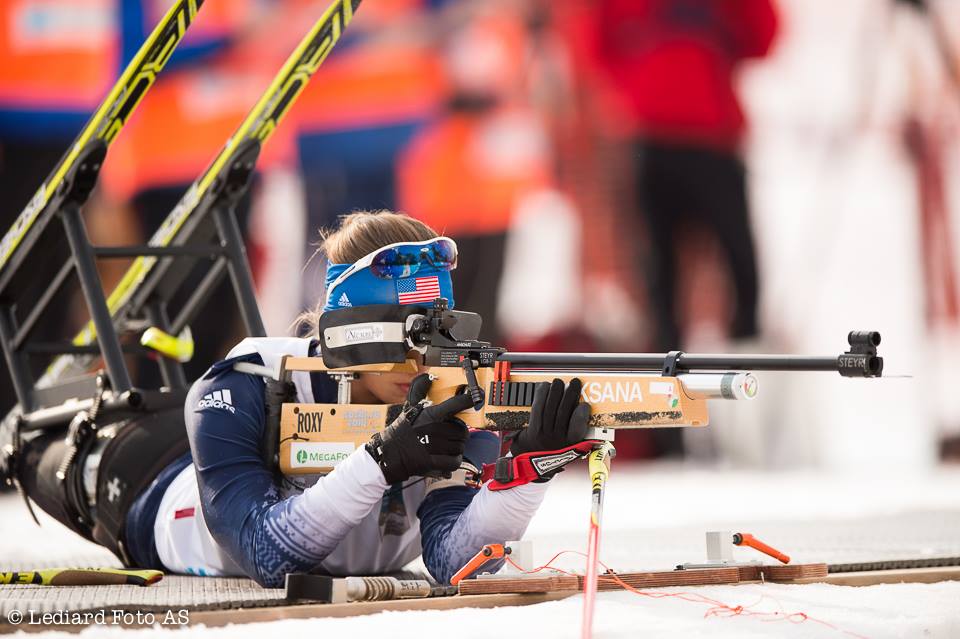
    Oksana Masters (U.S. Paralympics Nordic) in a biathlon competition at 2015 IPC World Cup Finals in Surnadal, Norway. Masters won Saturday's 5 k cross-country sitting to clinch the overall World Cup cross-country title for 2014/2015. (Photo: IPC Nordic Skiing/Facebook)
    Oksana Masters (U.S. Paralympics Nordic) in a biathlon competition at 2015 IPC World Cup Finals in Surnadal, Norway. Masters won the 5 k cross-country sitting to clinch the overall World Cup cross-country title for 2014/2015. (Photo: IPC Nordic Skiing/Facebook)

    A rowing convert, Masters, 25, earned two cross-country medals at 2015 World Championships — silver in the middle distance and bronze in the sprint — and won four out of five races in Japan this year. That put her on top of the IPC overall and she ended the season in first with a total of seven individual World Cup golds and two silvers.

    “I respect my competition, of the years they put in to be where they are now,” Masters said in February. “I’m playing catchup and I’m just doing what I can and focusing on myself. It just so happens to be putting me much higher than I ever could imagine being.”

    She explained that it took her 13 years to reach the Paralympic podium in rowing (she earned bronze in the double scull in 2012) and was humble about the strides she had made in skiing since starting the sport a year and a half ago.

    A silver and bronze medalist at the 2014 Winter Paralympics, Masters committed to skiing full time last spring, partially to alleviate a past rowing injury in her back. A training crash leading up to 2015 U.S. nationals re-aggravated the injury, forcing her to sit out the week.

    A week before World Championships, she got back on snow while fighting bronchitis and walking pneumonia.

    “World Championships was just more of a mental battle than … just a battle for getting medals, with one setback after another,” Masters said. “I didn’t really have much expectations for myself … so [I was] just basically trying to survive at that point.”

    The bronze medal she earned in Cable, her first of World Championships, brought her some serious relief.

    “[It] also just brought my focus more towards, OK, I had setbacks, but I still can be within the competition and hang with the field, so just believe in the previous training that I’ve done and what I do know and just do it,” she said.

    Masters made the nomination list for IPC athlete of the month in February.

    Honorable mentions: 

    Brittany Hudak

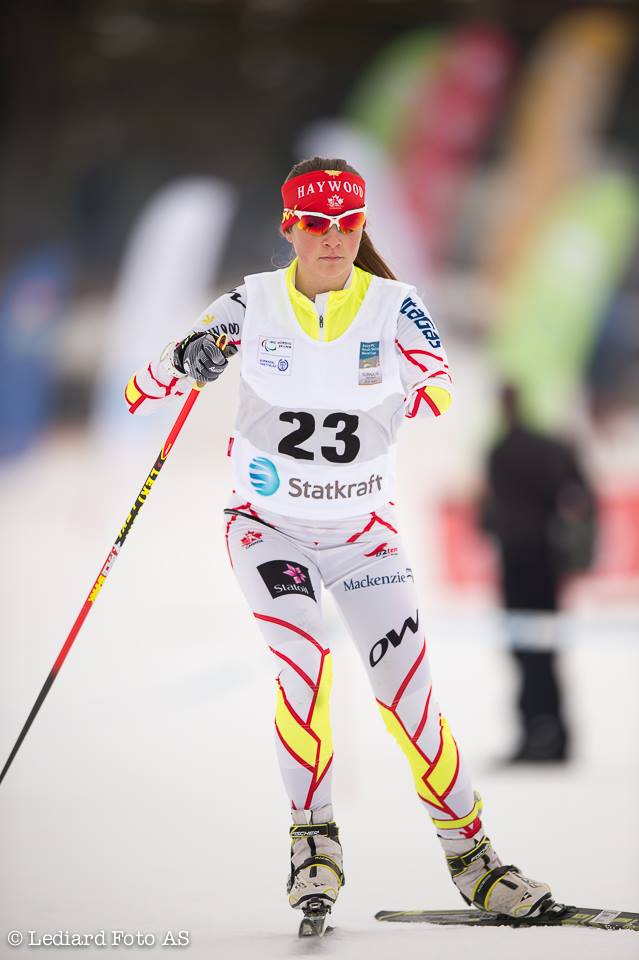
    Brittany Hudak (Canadian Para-Nordic Ski Team) at 2015 IPC World Cup Finals in Surnadal, Norway. Hudak won the 2014/2015 World Cup Overall Cross-Country title. (Photo: IPC Nordic Skiing/Facebook)
    Brittany Hudak (Canadian Para-Nordic Ski Team) at 2015 IPC World Cup Finals in Surnadal, Norway. Hudak won the 2014/2015 World Cup Overall Cross-Country title. (Photo: IPC Nordic Skiing/Facebook)

    The Canadian Para Nordic Ski Team had a banner season as well, with standing skier Brittany Hudak topping the overall World Cup cross-country podium in her first year on the development team.

    “The learning curve has been so huge for me,” Hudak, 21, said in a team press release after winning two consecutive races in Asahikawa.

    At the following World Cup Finals, she collected three medals: silver in the 15 k cross-country, silver in the 12.5 k biathlon and bronze in the 6 k biathlon.

    “Having the opportunity to attend national training camps … I have noticed a huge improvement in my technique,” she added. “It has been such an advantage for me to be in the same environment with the high-performance athletes, seeing how the train and learning from them.”

    Hudak wrapped up 2015 with two World Cup golds, two silvers and a bronze in cross-country, and a silver and a bronze in biathlon.

    Chris Klebl

    It’s a close call between several Canadian Para-Nordic teammates for the men’s pick for honorable mention, but Klebl tops the list as he placed third overall on the cross-country World Cup and is currently first in the IPC rankings. Standing biathlete Mark Arendz was was fourth overall in biathlon, and longtime team veteran Brian McKeever — a visually impaired distance specialist — won most of the races he jumped into for third overall in cross-country.

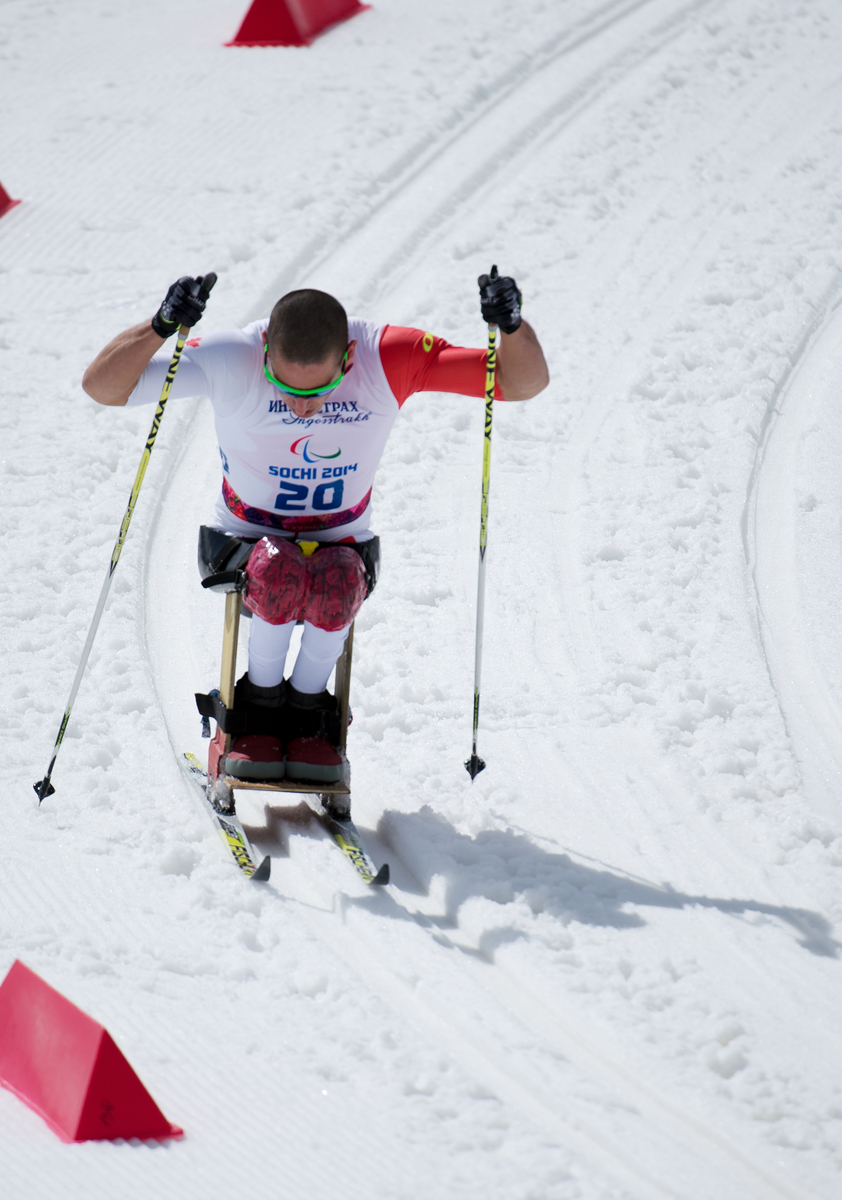
    Canada's Chris Klebl racing to gold in the last race of his third Paralympics on Sunday in the cross-country 10 k sit-ski  at the 2014 Paralympic Winter Games in Sochi, Russia.  (Photo: Matthew Murnaghan/Canadian Paralympic Committee)
    Canada’s Chris Klebl racing to gold in the cross-country 10 k sit-ski at the 2014 Paralympic Winter Games in Sochi, Russia. (Photo: Matthew Murnaghan/Canadian Paralympic Committee)

    In Asahikawa, both Klebl and Arendz notched back-to-back bronze medals before Klebl placed second in both the 10 and 15 k cross-country races. Klebl, a 2014 Paralympic gold medalist in the 10 k, went on to win the 15 k at World Cup Finals.

    McKeever won the 20 k that same day in Surnadal (he won the same event at 2015 World Championships; it was the lone race he competed in there) and took first in the 10 k classic in Japan as well.

    Arendz picked up two bronze medals at World Cup Finals in the biathlon sprint and following pursuit.

    Klebl edged American Dan Cnossen by 40 points for third overall on the World Cup, making Cnossen — who won his first World Cup in Japan and achieved multiple podiums later in the season — worthy of mention as well.

    ***

    Other 2015 Skiers of the Year (SOTY): Junior | Collegiate | Nordic Combined | Biathlon

  • After Coaching Para-Nordic to Three Medals in Sochi, Upham Joins Bates Staff

    After Coaching Para-Nordic to Three Medals in Sochi, Upham Joins Bates Staff

    James Upham (l) and Para-nordic High Performance Director, John Farra,
    Former U.S. Para-nordic head coach James Upham (l) and High Performance Director John Farra at the IPC World Cup in Canmore in December.

    For James Upham, becoming an assistant coach at Bates College this fall will be a big change.

    “I have only recently realized this, but I have always run my own show,” the until-recently Head Coach for U.S. Para-Nordic told FasterSkier. “Either as a head coach or a lone wolf running a lean, emerging program with minimal assistance. It will be an adjustment for me.”

    But on the other hand, it’s also coming home. Upham grew up in Wilton, Maine, and attended Mount Blue High School. En route to becoming a junior national champion in biathlon, his own training was firmly grounded in The Pine Tree State.

    “I’m really happy to be living in Maine!” he exclaimed.

    And so, after restructuring and the post-Sochi financial dip hit the Paralympic team hard (the Head Coach position was eliminated: “It came as a complete surprise and I was left emotionally devastated”) Upham found himself looking for a job and was thrilled to find one at Bates.

    “I have always wanted to experience the Eastern Carnival scene and this was a great opportunity that came up,” he wrote in an e-mail. “Becky Woods, the head coach, has been a friend since Bill Koch League racing days and I have some family connections to the College that make it feel comforting and supportive right away. The immediate challenge for me is that we can’t start working with the athletes until October, which is driving me nuts! I want to get going!”

    Upham coached Oksana Masters (second from l) two two Olympic medals this February. She became the most successful female nordic skier in U.S. Paralympic history. (Photo U.S. Paralympics Nordic)
    Upham coached Oksana Masters (second from l) two two Olympic medals this February. She became the most successful female nordic skier in U.S. Paralympic history. Photo U.S. Paralympics Nordic.

    Bates is a Division III school, but sent one woman (Hallie Grossman, now a senior) and one man (Jordan Buetow, now graduated) to NCAA Championships last season. Their skiers have also often found success and junior and senior national championships, and the storied program also produced Olympians in Nancy Ingersoll Fiddler, Justin Freeman, and Haley Johnson.

    Upham said that he has already talked with Woods enough to tell that they agree on training philosophy, which will make the pair a strong team.

    “She has handed off some duties for me to manage, but for the most part, I think we will coach as a team and help support each other,” he wrote. “40 years of combined coaching experience should produce some success if harnessed properly. I am also a student of the game, so I am going to pick her brain every chance I get just like I do with all my other coaching friends.”

    Upham has a rich history of Nordic experience to draw on as he heads back into the college scene. He attended Northern Michigan University in the early 1990’s, then went on to coach the development program for the U.S. Biathlon Association in the 2000’s.

    Known as an excellent teacher of skate technique, in his time at U.S. Biathlon he was also the architect of a program that taught college skiing standouts to shoot – which has produced two Olympians so far, including Susan Dunklee, who now owns the best Olympic results by a female American biathlete, ever.

    Upham has always felt that college skiing sets athletes up for potential international success, and that’s an attitude that he will definitely be bringing to Bates.

    Susan Dunklee's 12th-place finish in the mass start at the Sochi Olympics was the best ever by a U.S. biathlete. Dunklee graduated from Dartmouth College having never tried biathlon - but joined Upham's program in Lake Placid, and the rest is history.
    Susan Dunklee’s 12th-place finish in the mass start at the Sochi Olympics was the best ever by a U.S. biathlete. Dunklee graduated from Dartmouth College having never tried biathlon – but joined Upham’s program in Lake Placid, and the rest is history.

    “I would like to help all the Eastern skiers get better,” he wrote. “Can some of them one day be internationally competitive? YES. That has been proven. I will do my best to help.”

    His most recent job with the Para-nordic squad also resulted in great success: Oksana Masters won silver in the 12 k sit-ski and bronze in the 5 k, and Tatyana McFadden won silver in the sprint.

    Coaching the Paralympic team was a huge learning opportunity, Upham explained.

    “What I learned from the Paralympic side is that racing on an Olympic level course with limited use of your legs or arms or torso or vision is REALLY hard!” he wrote. “Training works. Finding the right dosage is the key. I learned a lot about how much athletes can handle.”

    The litany of challenges faced by his athletes was extensive – and in many cases goes well beyond what an able-bodied skier can imagine.

    “Imagine getting 40 medical bills- In one day,” he listed, as an example. “Imagine racing a World Cup a week after finishing radiation treatments… Imagine after multiple surgeries your bladder is now the size of a teacup… Imagine nearly every piece of your essential equipment needing to be customized and tinkered with constantly… Imagine being 20k out on a sitski training day and your pole breaks. How do you get back?”

    College skiers certainly have an easier road, but Upham believes that a lot of what he learned from his last group of athletes is extremely applicable.

    “Every day with the Paralympic team was a lesson in overcoming obstacles,” he wrote. “[It’s] all the same obstacles nordic athletes face everywhere: motivation, fatigue, finances, snow conditions, equipment, team dynamics, travel, time management, jetlag, etc., just exaggerated.”

    As he settles down in Maine – Upham just got engaged to his fiancée, Jill, and the two spent the summer painting a new house – the new college assistant is looking forward to bringing that same problem-solving attitude to a new role.

    “I have learned that life is going to throw you some obstacles,” he said. “Get busy. You can get through them.”

    Tatyana McFadden with her sprint silver medal in Sochi. Photo BethAnn Chamberlain/U.S. Paralympics Nordic.
    Tatyana McFadden with her sprint silver medal in Sochi. Photo BethAnn Chamberlain/U.S. Paralympics Nordic.
  • Wednesday Workout: Mountain Boarding Anaerobic Workout with Colette Bourgonje

    Wednesday Workout: Mountain Boarding Anaerobic Workout with Colette Bourgonje

    Colette Bourgonje doing some mountain-board work during a Canadian Para-Nordic Team training camp in Arizona two years ago. (Photo: Robin McKeever)
    Colette Bourgonje doing some mountain-board work during a Canadian Para-Nordic Team training camp in Arizona two years ago. (Photo: Robin McKeever)

    This week’s workout comes from Colette Bourgonje, a 10-time Paralympian who recently retired from the Canadian Para-Nordic Team to enjoy other hobbies at her home in Prince Albert, Saskatchewan, including kayaking, biking, and sitting outside sipping coffee. Over the last two decades, she’s racked up 10 medals between the Winter and Summer Paralympics (three silver and three bronze in sit skiing, and four bronze in wheelchair racing).

    While Bourgonje, 52, won’t miss four-hour training sessions that leave her stiff and tired, she’s looking forward to going out and doing something of her choosing for a couple hours at a time.

    “I just don’t feel good if I don’t do something,” Bourgonje says. “Exercise is a lifestyle and you can’t just stop.”

    While she does the following speed workout on a mountain board, which sit skiers use for dryland training, this could be done as a double-pole rollerski workout on pavement or trail running with poles (although the latter won’t give you as much of an upper-body workout).

    “I like this workout because of the change in pace, which makes you focus on technique with speed and adds variety with the distance you end up putting in,” Bourgonje explains.

    The Workout: Mountain Boarding Anaerobic Workout

    Total time: Up to 2 hours

    Warmup: 20-30 minutes with 3-4 accelerations

    Intervals: 3 x 4-minutes in Zone 4, with fully recovery in between each (3-4 minutes of easy movement in Zone 1)

    Rest: Take a 10-minute set break.

    Repeat: 3 x 4-minute intervals (with recovery periods) once more, for a total of 24 minutes of work.

    Cool down: 20-30 minutes with stretching after

  • Post-Olympic Budget Cuts Hit Canada Para-Nordic Team

    Post-Olympic Budget Cuts Hit Canada Para-Nordic Team

    Brian McKeever (r), a member of Canada's Para-Nordic Ski Team, racing with his brother and guide, Robin, at the 2010 Paralympic Games. Photo used under Creative Commons from Mafue – http://bit.ly/d3DeMX

    Four months after the conclusion of the Vancouver Paralympic Games, Canada’s Para-Nordic Ski Team has suffered cuts amounting to roughly one-third of its total budget.

    According to Cross-Country Canada Executive Director Davin Macintosh, the cuts represented 56 percent of the program’s funding from Own the Podium (OTP), the high-performance sports initiative that was set up to propel Canadian athletes to medals at the 2010 Olympic and Paralympic Games in Vancouver.

    The exact impacts of the cuts are still uncertain, as Cross-Country Canada (CCC) works to restructure its program in the next few weeks. But Macintosh said that the cuts, first reported by the CBC, will force the team to scale back its athlete support.

    “In the long term, we’ll have to run a more streamlined program, which probably means fewer staff who can do a wider variety of jobs,” he said.

    Over the past five years, Canada’s Para-Nordic program had enjoyed a large infusion of cash from OTP, which was founded in 2005 and has since poured more than $100 million into Olympic sports.

    Cross-Country Canada’s Able-Bodied program fared much better in its level of funding from Own the Podium (OTP).

    According to Cross Country Canada (CCC) Executive Director Davin Macintosh, the able-bodied ski team received a three percent decrease in support from OTP in its budget for the coming year. (CCC received roughly $1.2 million for its able-bodied cross-country program in 2009-2010.)

    While that number may look bad when juxtaposed with the 56 percent cut to Para-Nordic, Macintosh said that the cuts merely reflect the quality of the athletes on each team—not a prioritization of able-bodied skiers.

    “If they knew we had three Para-Nordic athletes who were on the cusp of winning all the international competitions, they’d give us more money there, and that’s what we have on the able-bodied side,” Macintosh said. “Our Olympic results showed that we have a strong team of people who will be around for the next Olympics, and have obvious and proven potential to reach the podium.”

    According to OTP Director of Winter Sport Ken Read, his organization conducts yearly reviews, in which each sport receiving OTP funding is categorized according to its recent and historical results, as well as its future potential. The higher the category, the more support a sport receives.

    Able-bodied cross-country is a category two sport, as is visually impaired cross-country, given Brian McKeever’s success at the 2010 Paralympics, where he won three gold medals. But the other Para-Nordic disciplines are rated one rung down on the ladder, as a category three.

    “Those that have earned it get the broader…support,” Read said, “and the deeper down it will go. So it’s into supporting camps, supporting coaches, supporting the integrated support teams.”

    “That’s where you have the able-bodied program,” he continued. “The hope is, going forward to 2014, that Devon [Kershaw] will find a couple hundredths of a second, and…we are working with them right now on a nordic consortium of trying to entrench some of those programs that worked well.” One example he cited was a project involving base grinding and ski technicians.

    Read said that the categorizations were evaluated on a year-to-year basis, and that the level of support for the Para-Nordic team would be reconsidered next spring, “based on results.”

    The initiative was designed to provide extra financing specifically earmarked for athletes with strong chances of winning Olympic and Paralympic medals. But over time, the money allotted to the Para-Nordic Ski Team—some $630,000 last year—had come to finance a large portion of its operations.

    “When OTP first came into being, they put a lot of money into the development side,” said Jeff Whiting, who recently retired from his job as a Para-Nordic development coordinator for CCC.

    “The program grew extremely rapidly over the past four years thanks to rapid increases in support from OTP, and that created a much larger budget,” Macintosh said.

    After the conclusion of the 2010 Games, though, OTP’s future was uncertain, since funding from the soon-to-be-dissolved Vancouver Organizing Committee had made up a large proportion of its bottom line.

    While the Canadian government doubled its share of OTP support in the federal budget this spring, the total amount of funding available for high-performance programs was still reduced—$20 million, instead of $23 million, according to OTP Director of Winter Sport Ken Read.

    And while OTP had targeted three athletes during the 2010 Paralympics—Brian McKeever, Jody Barber, and Colette Bourgonje—only McKeever will continue to receive money for the next four-year Paralympic cycle.

    Bourgonje has said that Vancouver was her last Paralympic Games, and “the remainder of the athletes in the program weren’t seeming to have gold medal potential,” Read said, referring to OTP’s standard for funding Paralympic athletes.

    “In Paralympic [sports], it’s gold medal potential, not deep athlete development,” Read said. “The sport is supposed to be taking on that role of upkeep.”

    An increase in funding to CCC from Sport Canada, a separate arm of the federal government, has softened the impact of the OTP reductions slightly, but not entirely, according to Macintosh.

    CCC was informed of the cuts roughly two weeks ago, Macintosh said, and he called a meeting with athletes immediately. The team has been forced to cancel a planned summer training trip to New Zealand, and while funding exists for a trip to World Championships in Norway next year, the extent of the team’s participation in World Cup races earlier in the winter remains unclear.

    “We will probably be able to finance fewer athletes to go on the general World Cup circuit, although we will ensure that our athletes are well-prepared for [World Championships],” Macintosh said.

    No staff members have been laid off, but job descriptions will probably have to change, Macintosh added.

    CCC is currently negotiating with Para-Nordic Head Coach Kaspar Wirz, who Macintosh said will likely continue in a “less-than-full-time capacity.” Technical Coach Robin McKeever—who also serves as a guide for his brother, Brian—would have to take on “a few more responsibilities” to remain with the team.

    “We don’t have signed contracts with them,” Macintosh said. “It’s up to them.”

    Wirz wasn’t surprised at the cuts—just their magnitude.

    “We were thinking maybe 20, 30 percent,” he said. Reductions after Olympic cycles are typical, Wirz added, especially for Paralympic sports.

    But Robbi Weldon, a 2010 Paralympian and a member of the Canadian Para-Nordic team, said that she didn’t blame OTP for the cuts.

    “If an organization has strict criteria, and that’s what they put our in their documentation, I’m not going to bash them—that’s their mandate,” she said. Nevertheless, she continued, “it’s a huge hit, and I think there’s definitely a lot of questions to CCC—how they’re going to support us, and support the team.”

    Macintosh said that he hoped to be able to make up for some of the cuts by finding new sponsors for the Para-Nordic team. CCC has been discussing options with potential backers, and the exposure gained by the athletes during the Vancouver Games should go a long way towards helping them find potential supporters, Wirz said.

    “I think now, the public is ready to support that,” he said.