From the FasterSkier archive — posts syndicated from athletes’ and coaches’ own blogs between 2004 and 2012, kept online as published. Current coverage is at fasterskier.com.

Tag: paratriathlon

  • Masters and Gretsch Prepare for Two Paralympic Cycles After Postponement of Tokyo Games

    Masters and Gretsch Prepare for Two Paralympic Cycles After Postponement of Tokyo Games

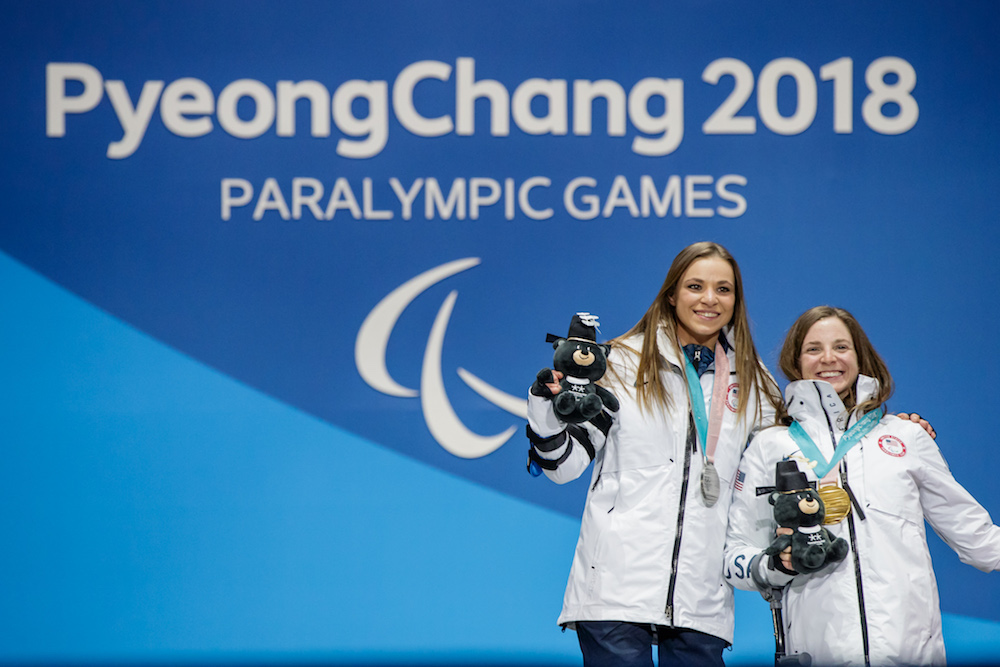
    Kendall Gretsch (r) and Oksana Masters at the 2018 Paralympics medal ceremony for the women’s sitting 6 k biathlon sprint after winning gold and silver, respectively, on the first day of competition in PyeongChang, South Korea. (Photo: U.S. Paralympics/Joe Kusumoto)

    Of the members of the U.S. Para Nordic team, more than half compete at the highest level in both summer and winter sports. Instead of quadrennial, their training is designed for biennial Paralympic cycles, oscillating between sports each year with an overall focus shift toward whichever Games is approaching fastest. 

    And the goal is not simply to compete in both rounds of the Games, it is to bring home medals. 
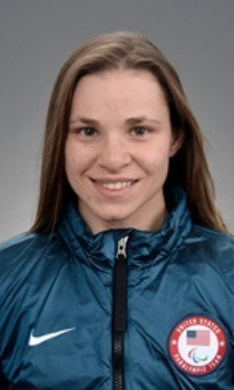
    Oksana Masters is an elite multisport athlete who competes in hand-cycling, para nordic and para biathlon . (Photo: Screenshot teamusa.org)

    Illinois based Oksana Masters is a four-time Paralympian with eight medals; she earned two gold, three gold, and two bronze medals in cross country and biathlon, and a bronze medal in rowing — the first American medal in the trunk and arms mixed double scull category. After a back injury in 2014, she switched from rowing to cycling, and went on to qualify for the 2016 Paralympic Games in Rio de Janeiro, Brazil where she walked away just shy of the medals, finishing 4th and 5th and hungry for more. 
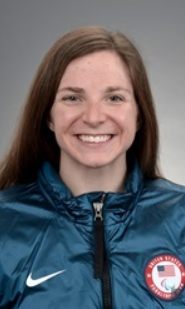
    Kendall Gretsch is an elite multisport athlete who competes with Team USA Paratriathlon, Para Nordic and Para Biathlon . (Photo: Screenshot teamusa.org)

    Her teammate, Kendall Gretsch, took home two gold medals from the 2018 Paralympics in cross country and biathlon and is a three time world champion and five time national champion in paratriathlon, an event that was not part of the Summer Paralympics for her category until the upcoming Games in Tokyo. Gretsch has been living and training at the Olympic Training Center (OTC) in Colorado Springs since March of 2019. 

    Under normal circumstances, there would be an 18-month gap between the summer Paralympics in Tokyo and the winter Games in Beijing. However, on March 24th it was announced that the Tokyo Games would be pushed back to August of 2021 due to health and safety concerns surrounding the global COVID-19 pandemic. For athletes also competing in Beijing in February 2022, this leaves roughly six months to change gears and prepare to again be at peak fitness, which is no small challenge. 

    Let’s take a step back. In mid-March when the scope of the pandemic became apparent and Europe and the United States began to rapidly shut down, Masters was in Östersund, Sweden about to compete at the World Championships in biathlon. The team had arrived a few days prior to the start for training, but plans changed at the last minute. 

    “Instead of waking up to a message from your coach saying, ‘Hey, it’s race day!’ Instead, it was, ‘Bad News: Sweden is cancelling all events that are 500 people or more,’” Masters told FasterSkier in a call.
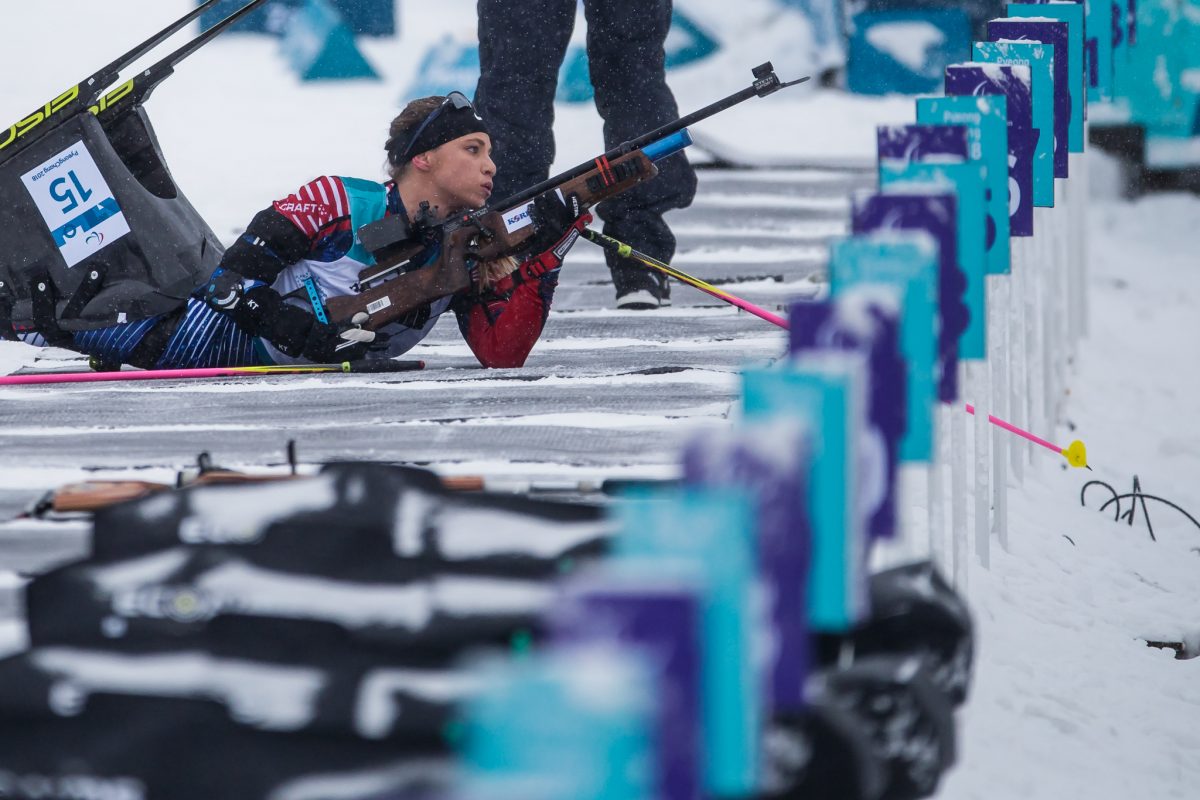
    Oksana Masters focused and in the moment on the range during the 2018 Paralympics in PyeongChang, South Korea. (Photo: U.S. Paralympics/Joe Kusumoto)

    She recalled feeling “shocked” as her season ended so abruptly. Her plan had been to leave halfway through the World Championships in order to head to an essential Tokyo qualifying event for cycling. 

    Her initial reaction was frustration that she had missed valuable training time for cycling by staying with the nordic team through mid-March, but with the understanding she now has of the scope and severity of the pandemic, her perspective has shifted. That said, she is also fully aware of the challenge she now faces to peak for two separate sports in such a short period of time. 

    “This is way bigger than sports and the Olympics… [The organizers] made the right call [to postpone] and I’m happy with that, but in my ideal world, I wish that this never happened. I’m sure a lot of people do. Because they postponed to 2021 and my focus is to make it to 2022 as well, it made that transition window from Tokyo to Beijing from over a year to basically six months. My sports are two separate sports — they do not go hand in hand, they are complete opposite motions and I have to basically start over with my fitness, minus the endurance.”

    Finding the silver lining, she added that the Olympic postponement does allow her more time to prepare for cycling. 

    “The good side is that because I was competing full-time on the nordic side and did the World Cup season, I missed a lot of training time on the bike where my competitors were traveling to Spain and all these warm places to get on the road and spend those hours on their bikes. So now this is allowing me to work on my bike that I’m building and at the same time just get more time on the bike and get sport specific strength.”
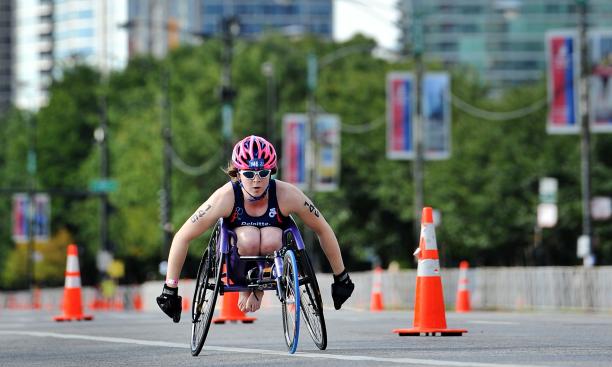
    Kendall Gretsch is a three time World Champion in the women’s PTWC classification. (Photo: International Paralympic Committee)

    Because she too needed to qualify for Tokyo, Gretsch had ended her nordic season before the World Championships and was in Florida at the main triathlon qualifier when the country began to shut down. She was slated to compete on back to back weekends, both of which were cancelled the day prior to the first race. It is currently unclear what Gretsch will need to do in order to make the U.S. triathlon team for Tokyo.  

    “At this point, it’s kind of just waiting to see when we’ll be able to race again. Once that’s solidified more, the international triathlon union will have to come up with new qualification criteria and then, from that, the US will come up with new qualification… I’ll definitely have to compete in a couple more international events to solidify earning a country spot for the US.”

    Aside from the uncertainty regarding travel and the seemingly impossible challenge of holding the 2020 Olympics and Paralympics without furthering the spread of the coronavirus, many athletes were also unable to access facilities and resources they depended on to practice skills and adequately prepare for their sport. For Masters, the inability to access a gym impeded her training routine. 

    “As a Paralympic athlete, in my two sports — especially for skiing — I rely on strength training,” Masters explained. “I lift three times a week. So that took a big toll.” 

    Her normal spring routine would include baseline metabolic testing and training camps with her coach, who is from Germany. Since he is currently unable to leave the country, Masters is not sure when she will be able to meet with him for these measures to evaluate her training. Overall, she is hitting reset on her plan and embracing the time to change gears at a more manageable pace.

    https://www.instagram.com/p/B9IGgiLJSID/?utm_source=ig_web_copy_link

    “In my case, we’re kind of starting all over and making sure the base is good in cycling,” she said. “So it’s a lot of endurance riding, a lot of time on the bike, and just adjusting back to it the right way, as opposed to coming off the nordic season, trying to make the qualifiers in June, it was going to be shortcutting all that, which is really hard to do.”

    Meanwhile, life at the OTC looks significantly different than Gretsch is accustomed to, with less than twenty people remaining on the campus. Apart from not being able to train in the pool or access the biathlon range, she is no longer able to get massage or other sports medicine treatments that she could previously. She does still have access to the OTC cafeteria, but meals are now take-out, meaning the remaining athletes on campus spend much of their day isolated in their rooms.  

    Not being able to swim has been the biggest impact on Gretsch’s training, as this would normally be a time of building volume for triathlon. She explained that she spends ten minutes per day on a stretch band swim trainer, but it is far from replicating the stimulus of the pool. She also borrowed some kettlebells and weights from the gym so she can do some strength training from her room.  

    “I think the good thing is that I’m still able to do two of the three sports in triathlon,” said Gretsch. “So even though I’m not swimming right now, I have been able to bike whether it’s inside on a trainer, or outside when the weather is nice here, and the same in the racing chair.” 
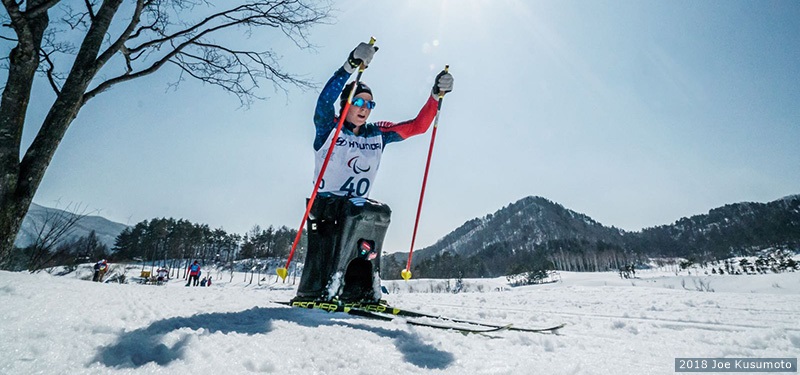
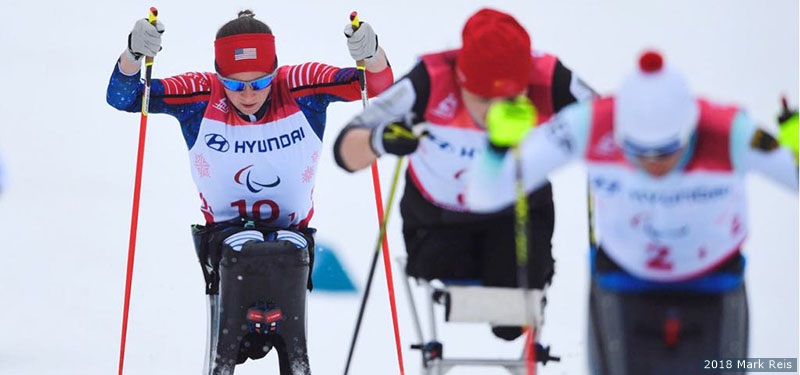
    Kendall Gretsch racing to her second gold medal of the 2018 Winter Paralympics on Sunday in the women’s 12 k sitting cross-country race in PyeongChang, South Korea. (Photo: US Paralympics/Joe Kusumoto)

    Both athletes are feeling uncertainty about what the 2020-2021 nordic season will look like and how cycling or triathlon qualifying events will fit into the mix. Currently, a cross-country World Championship and an Olympic venue test event in Beijing are scheduled for February and March. But, seasons may need to be cut short for Tokyo qualifiers. Both athletes have found solace in the partnership between their two sets of coaches. 

    “I think the really awesome thing is that both my sets of coaches for nordic and triathlon are really good about being open and communicating with each other about the situation,” said Gretsch. “It’s obviously a really unique situation that no one expected to be in, but in such an uncertain time, I have a lot of confidence about the situation going well just because I know that everyone just wants to work well together and are understanding that both of these sports are a priority to me.”

    Interview with Kendall Gretsch following Tokyo 2020 Paralympics postponement.

    Masters echoed the sentiment, adding that no one really knows how to handle the situation.

    “They’ve been really flexible,” said Masters. “Knowing each of our different circumstances and just waiting to see what the new race schedule is going to be and what the key events and races are for me to go to before they start sending workouts. It’s a little bit playing it by ear and making it up as you go.” 

    Moving forward, she is staying positive and doing her best to adapt with the changes as they come.

    “I try to keep it in perspective. For the most part, everyone is in the same boat… You can lose energy by focusing on all the things you cannot control. It is what it is. For me, I’m just trying to do my part for this whole coronavirus outbreak and just be home, be smart with my training, and just make each day count still and get stronger in some way.”

    Interview with Oksana Masters following Tokyo 2020 Paralympics postponement.
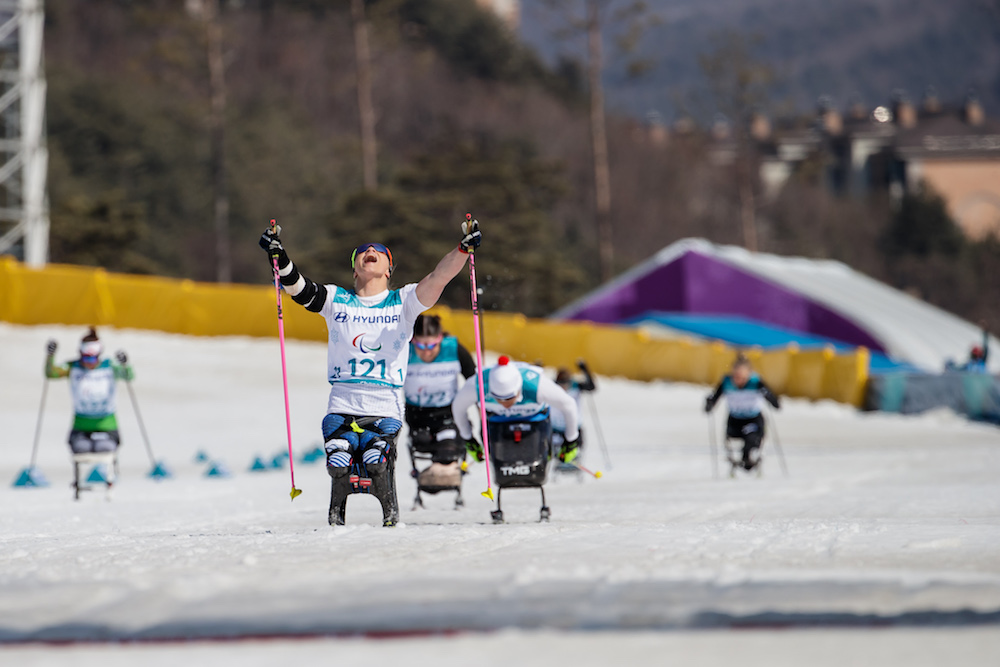
    American Oksana Masters reacting to her first gold medal in her third Paralympics, after winning the women’s 1.1 k sitting sprint in PyeongChang, South Korea. (Photo: U.S. Paralympics/Joe Kusumoto)
  • Former Swimmer Kendall Gretsch on Unexpected Paralympic Golds, Hunger for More

    Former Swimmer Kendall Gretsch on Unexpected Paralympic Golds, Hunger for More

    Kendall Gretsch (r) and Oksana Masters at the 2018 Paralympics medal ceremony for the women’s sitting 6 k biathlon sprint after Gretsch won gold and Masters claimed silver on the first day of competition in PyeongChang, South Korea. (Photo: U.S. Paralympics/Joe Kusumoto)

    As a sophomore at Washington University in St. Louis, Missouri, Kendall Gretsch stumbled across an article that would change her life. It was the spring of 2012, just a few months before the Summer Paralympics in London.

    Gretsch had been reading the local news when she came across a story about a St. Louis college student who hoped to attend the London Games as part of the U.S. Paralympics Swimming team.  

    Born with spina bifida, Gretsch had been a swimmer in high school. After graduating in 2010, she enrolled at Washington University with the intent of studying biomedical engineering and no plans to swim collegiately. 

    However, within the first few months of her freshman year, she missed the athletic outlet. She began to swim and exercise on her own. By the time she came across the aforementioned article about a year later, she was ready to jump back into the pool, struck by the idea of pursuing the Paralympic dream.

    “I was just so oblivious to any sort of para-sport,” Gretsch, 26, reflected on the phone earlier this summer, noting that she had not really thought of the Paralympics as “an option” for continuing her athletic career until reading the piece.

    Competing at the Paralympics quickly became her goal, but it wasn’t limited to swimming.

    Kendall Gretsch is a three-time world champion in the women’s paratriathlon PT1 classification. (Photo: IPC)

    “In high school, I just liked being a part of the team and the social aspect of [swimming], the sport elements of being able to push yourself and set your own individual goals,” said Gretsch, a native of Downers Grove, Illinois.

    Following her sophomore year of college, Gretsch returned to Illinois in search of an adaptive sports program to join. What she found was Dare2Tri. Based out of Chicago, the Dare2Tri program offered swim sessions, and Gretsch made it out for the final swim practice of the season. After getting out of the pool, she was approached by one of the instructors. Would she be interested in stepping outside and trying her luck on the track?

    “She had me come right out after the swim practice and try racing wheelchair,” Gretsch recalled. “I ended up doing my first triathlon race that summer.”

    After graduating in college in 2014, she competed in her first international race and started focusing solely on paratriathlon. At 2014 world championships, she won gold in the PT1 classification and was later awarded 2014 Female Para Triathlete of the Year by USA Triathlon.

    In 2015, Gretsch won another World Championship paratriathlon title and was also nominated for an ESPY Best Female Athlete with a Disability award. (She would earn a third World Championship title in 2016.)

    World Championships and awards aside, the Paralympics were still on Gretsch’s radar in the spring of 2016. Her chance seemed forthcoming. The 2016 Summer Paralympics in Rio de Janeiro, Brazil, would be the first in history to feature paratriathlon. However, the PT1, Gretsch’s class, was not to be contested for women.

    If she wanted to compete at the Paralympics, she would have to wait and see if her classification would be included at the 2020 Summer Paralympic Games in Tokyo or turn her attention elsewhere. But where to go?

    During her first year with Dare2Tri, she had heard about adaptive cross-country skiing.

    “Someone I had met through triathlon mentioned to me in passing, ‘Hey, there’s this group up in Madison, [Wisconsin], they do adaptive nordic skiing, you should check it out sometime,’” Gretsch explained. “So nordic skiing was in the back of my mind [leading up to Rio].”

    She decided to give nordic skiing a go. She moved to Madison and took a technical-support job with an electronic health records company, Epic Systems, while training in an effort to make the 2018 Winter Paralympics in PyeongChang, South Korea.

    “Maybe it’s just because I had a background in swimming that I felt like triathlon came a little bit more naturally,” Gretsch said of her transition to nordic. “The hardest part about learning to nordic ski was definitely the maneuvering. In nordic, when you’re in a sit ski, your skis are fixed together, straight. When you’re maneuvering around a corner, you can’t just pick up your foot and step around a corner, like you would if you were standing. So learning how to maneuver was really fun and challenging. We spent a long time on that in practice.”

    Kendall Gretsch takes aim during the women’s 6-kilometer sitting biathlon at the 2018 Paralympic Winter Games on Saturday in PyeongChang, South Korea. She won the race to become the first American woman to medal in a biathlon event at the Paralympics (or Olympics). (Photo: US Paralympics/Mark Reis)

    Beyond the challenge of learning a new sport, Gretsch also bumped up against a lack of snow during her first season as a cross-country skier.

    “I would travel every weekend to find snow,” Gretsch said of her first winter in Wisconsin. “In Madison, there wasn’t really any snow, so during the week I wasn’t really skiing that much at all. I was just sort of skiing during the weekends and then as much as I could during the week.”

    Gretsch remained in Madison through the winter and into the summer. A little less than a year out from the 2018 Paralympics, she turned her attention completely to skiing, putting paratriathlon on hold. Four months prior to the Games, she moved Bozeman, Montana, to train with the U.S. Paralympics Nordic team and then-head coach Eileen Carey (Carey recently became the director of U.S. Paralympics Nordic).

    By the time the Winter Paralympics rolled around, Gretsch had a full year of nordic training under her belt. Still, what came in South Korea was slightly unexpected.

    American Kendall Gretsch (l) racing in the 4 x 2.5 k mixed relay at the 2018 Paralympic Winter Games in PyeongChang, South Korea. Her team finished seventh. (Photo: U.S. Paralympics/Mark Reis)

    In the opening event of the Games, Gretsch became the first American to take home a gold medal in Paralympic biathlon by winning the 6-kilometer sitting sprint. One day later, she won a second gold medal in the 12 k sitting cross-country distance race.

    “A lot of times — this probably sounds really terrible — I feel like in triathlon, people are waiting for me to fail,” Gretsch said. “Whereas in a new sport, you have your own personal expectations of how things should go, but no one else really has those expectations for you. You don’t have a target on your back. So there’s a lot of freedom with that.”

    With two Paralympic gold medals to her name, Gretsch plans to continue cross-country skiing. She also hopes that her classification will eventually be included in the Summer Paralympics so that she may become a Paralympic triathlete as well.

    “I think we’ll know by the end of this year whether or not my classification will be in Tokyo for triathlon,” she said. “So the plan right now is to do both.”

    And for someone as strong and talented as Gretsch, more medals from both sports is not out of the question.

    “It’s a very humbling experience being able to hear your anthem,” Gretsch said, according to a U.S. Paralympics Nordic press release after her second gold medal in PyeongChang. “Puts everything into perspective. Knowing that you’re here not just here for yourself but for your country.”