From the FasterSkier archive — posts syndicated from athletes’ and coaches’ own blogs between 2004 and 2012, kept online as published. Current coverage is at fasterskier.com.

Tag: Park City

  • Balancing Books, Labs, and Laps: Inside Newly Named U.S. Ski Team Member Lucas Wilmot’s Routine

    Balancing Books, Labs, and Laps: Inside Newly Named U.S. Ski Team Member Lucas Wilmot’s Routine

    When Lucas Wilmot sits down after morning intervals, there’s no long nap or lazy lunch ahead. “This fall, it’s kind of all back-to-back—training in the morning, then eating, then class, then trying to eat and train again, and then do homework,” he says. “It’s tight.”

    That understatement is classic Wilmot: composed, analytical, quietly focused. At just 19, the Jackson, Wyoming-raised skier is already juggling NCAA racing for the University of Utah, kinesiology labs that might soon shift toward biology, and a new badge of honor—fresh membership on the U.S. Ski Team.

    Lucas Wilmot was keeping it fun from the very beginning. (Photo: Courtesy Photo)

    From Jackson to Utah: A Small-Town Start

    Wilmot’s story starts, like so many in American skiing, with a local club, a hand-me-down pair of skis, and a family that encouraged movement. “I kind of started with my parents—they just put me in skiing in elementary school,” he recalls. “Back then, it was all about hanging out with friends and not really racing.”

    That changed in middle school, when the sport shifted from pastime to passion. “It took a turn where I started to take training more seriously and be more race-focused,” he says. “I remember looking forward to the trips, doing well in races, and having the older guys on the team as idols. Seeing how big and fast they were—I always thought that was really cool.”

    His sister, two years older, was both chauffeur and role model. “She was skiing too—she’s still skiing now at Bates,” he adds. “I started summer training with the older crew in Jackson when I was one of the youngest guys. My sister could drive. I couldn’t. So I’d just spend my time training with the older guys.”

    The big breakthrough came as a sophomore. “Minneapolis Junior Nationals was another big turning point,” Wilmot says. “I had three top tens there, and I never expected anything like that. That was when I realized, if I actually put in the time and effort, I can see results that impress even myself.”

    Lucas Wilmot (#230 – far right) starting to get serious about his skiing racing at a Junior National Qualifier as a U14. (Photo: Courtesy Photo)

    “Welcome to the U.S. Ski Team”

    If Minneapolis was the first turning point, Soldier Hollow was the second. “I got third in the classic 10K at Senior Nationals,“ Wilmot recalls. “That was kind of a big whoa moment—a big jump up. Will (Wicherski), my coach from Jackson, came up to me and said, ‘Do you know where you are?‘ I said no, and he said, ‘You’re in third.‘ I was just kind of shocked and caught by surprise.”

    That race qualified him for Junior Worlds, where another top result changed everything. “They released the requirements—it was a Junior Worlds Top 10,“ he says. “When I had the ninth place in Schilpario, Italy, in the skate 10K, I kind of knew I’d made the team. Right after the race, Brian Fish walked by and said, ‘Welcome to the U.S. Ski Team.’“

    Wilmot laughs at the memory. “It was at the wax cabin or something. I kind of knew that day. My parents and sister were there, so it was nice to tell them in person,“ he says. “But I didn’t want to be loud about it. I told my parents, like, this isn’t official, but it’s looking like I might be nominated.”

    Now, being able to put on the U.S. suit still feels surreal. “I definitely feel pretty lucky,“ he says. “It’s a lot of people’s dream to do that, and it was one of mine. I feel super lucky, and it’s an honor. When I have the U.S. suit on, maybe I’ll go reach out to someone I’ve never met before—they’re all kind of like teammates to me.”

    Lucas Wilmot (UU), Murphy Kimball (UAA) and Tabor Greenberg (UVM) this past spring at the USST’s annual Bend camp. (Photo: Courtesy Photo)

    Structured but Flexible

    Last season Wilmot logged around 500 hours of training; this year he’s targeting about 600. But he’s adamant that numbers aren’t everything.

    “I’m definitely not the number grinder. I just try to keep it fun—never do too much, always quality. It’s kind of my mindset: always having quality in the time you’re training. Make sure it’s worth your time to be there.”

    He recalls finishing a long over-distance session in Park City camp and realizing more minutes would add nothing.

    “I was thinking I could do another 30 minutes, but I’d just be walking. It’s not really how much is that gonna do for me? If it’s not quality, if I’m not putting all my effort in, then I’m not getting the most out of it.”

    That approach—precision over volume—mirrors his team’s philosophy. “Pierre (the Utah coach) kind of switched it to more professional training,“ he explains. “Every training has a specific outcome goal to it… You’re not just doing it to do it. There’s a reason why, and it’s all part of a broader plan and structured schedule.”

    A Day Measured in Minutes

    In Utah’s mountain light, mornings start early—Wilmot trains, refuels, and hustles to class. “I like to think ahead and plan out as much as I can,“ he says. “School is my priority, and how can I get it done efficiently so I can rest well. I try to go to bed as early as I can and know that training in the morning is kind of also a priority.”

    The key, he’s learned, is organization—a skill honed on long travel days in high-school racing.

    “Being on trips for skiing taught me that if I get it done ahead of time—get all my schoolwork done or just know that when I have spare time, I should try to get ahead or catch up on school—that’s what I think about all the time.”

    Even with 600 training hours, he squeezes recovery in where he can. “It’s a hard balance between having training in the morning as a priority or staying ahead on work,“ he admits. “But I think I learned well… just to plan ahead.”

    Wilmot during the 7.5-kilometer classic interval start last spring at the U.S. Ski and Snowboard Cross-Country Junior National Championships in Soldier Hollow, Utah. With a time of 23:12.4 second, Wilmot won his first Junior National title in his fourth appearance. (Photo: Drew Palmer Leger/Courtesy Photo)

    Fueling the Machine

    This semester, recovery and nutrition have become new focal points.

    “This fall I was kind of struggling with recovery after the morning session and my class schedule,“ he says. “So one of the things I’m trying to do more of is focus on nutrition right after—that’ll allow me to make it through the long school day and then also recover well. That’ll help me get energy for the training and races.”

    Breakfast sets the tone: “Usually a banana, an everything bagel with butter, and maybe a little bit of yogurt… kind of got a little something of everything. It’s pretty yummy.”

    The science-minded athlete is applying classroom theory to real life. His kinesiology background gives him a deeper understanding of performance—how recovery, fueling, and training stress interconnect. “I’m keeping on the science track,“ he says. “Right now I’m doing kinesiology, but maybe switching to biology or another science-related thing. Not sure yet.”

    Keeping It Fun

    For Wilmot, joy isn’t optional—it’s essential. “I just love hanging out with all the buddies, training with friends. Definitely makes it go by a lot faster,“ he says. “It’s pretty fun just to crack jokes a lot and mess around, too… You don’t always have to be serious at training.”

    That balance between intensity and levity keeps burnout at bay. Whether it’s running mountain ridgelines or laughing through rollerski sessions, he believes camaraderie fuels consistency. “Sometimes there are places not to focus,“ he laughs, “and just have a good time.”

    Fun with friends is Lucas Wilmot’s core principle. (Photo: Courtesy Photo)

    The Process of Progress

    Beyond coursework and results sheets, Wilmot’s compass points toward steady growth. “I’d hope to make the NCAA team for the University of Utah this year,“ he says. “That’s going to be pretty challenging… but I hope to have more stabilized results and less fluctuation.”

    He defines progress through small, controllable actions:

    “In skiing, just being as efficient as I can. If I’m in a race and I feel uncomfortable, I try to find where I’m comfortable and not make myself too jittery. Being comfortable in your own way during a race—knowing how to race your races—is important for me.”

    When he talks about the future, Wilmot’s tone shifts slightly—equal parts excitement and realism. “Within the next four-year span, there’s a good chance the progress track may take me to that level,“ he says, thinking ahead to the Milano-Cortina Olympics. “If I stick with it, that would be an insane experience and something very special.”

    Wilmot skiing with Murphy Kimball (UAA/Alaska Winter Stars) on Eagle Glacier this past summer during the US Alaska camp. (Photo: Courtesy Photo)

    A Learner at Heart

    Among the national-team veterans, Wilmot sees himself as a student first. “I kind of see myself as a little follower,“ he admits with a grin. “Everyone’s just a little more experienced than I am. I feel like I don’t have much, so I think of myself as a learner and a listener—someone who tries to take everything I can from them.”

    But even the learner can lift a team. “I love being the guy that gets someone to smile,“ he adds. “And make them laugh. I love doing that.”

    That mix of humility and humor is why teammates have quickly embraced him. He’s not loud, but he’s steady—the kind of athlete who brings calm to chaos, whether it’s a high-stakes interval session or a late-night study grind.

    Looking Ahead

    Wilmot’s path has never been about a single breakthrough; it’s about accumulation—hours, credits, lessons. “I kind of never saw myself being where I would be right now,“ he reflects. “It goes back to the open-doors thing—I was just following what was happening, putting in the work, and seeing what opportunities it led me to.”

    That approach—disciplined but flexible—may be his greatest strength. Between lecture halls and ski trails, he’s learning to find balance. And every dawn run, every late-night homework session, is another quiet step toward the next start line.

    “It’s a good, hard balance,“ he says, smiling. “But that’s kind of what I signed up for.”


    Love Stories Like This? Help Keep Them Coming.

    Feature interviews like this one take time, access, and care to produce. If you value thoughtful storytelling and independent ski journalism, please consider becoming a Voluntary Subscriber. Your support directly fuels the work we do to cover the people, places, and moments that make our sport special.
    Join the FasterSkier community.
  • Klæbo was dogged by a leg injury. Then he met a Utah physical therapist with NBA cred.

    Klæbo was dogged by a leg injury. Then he met a Utah physical therapist with NBA cred.

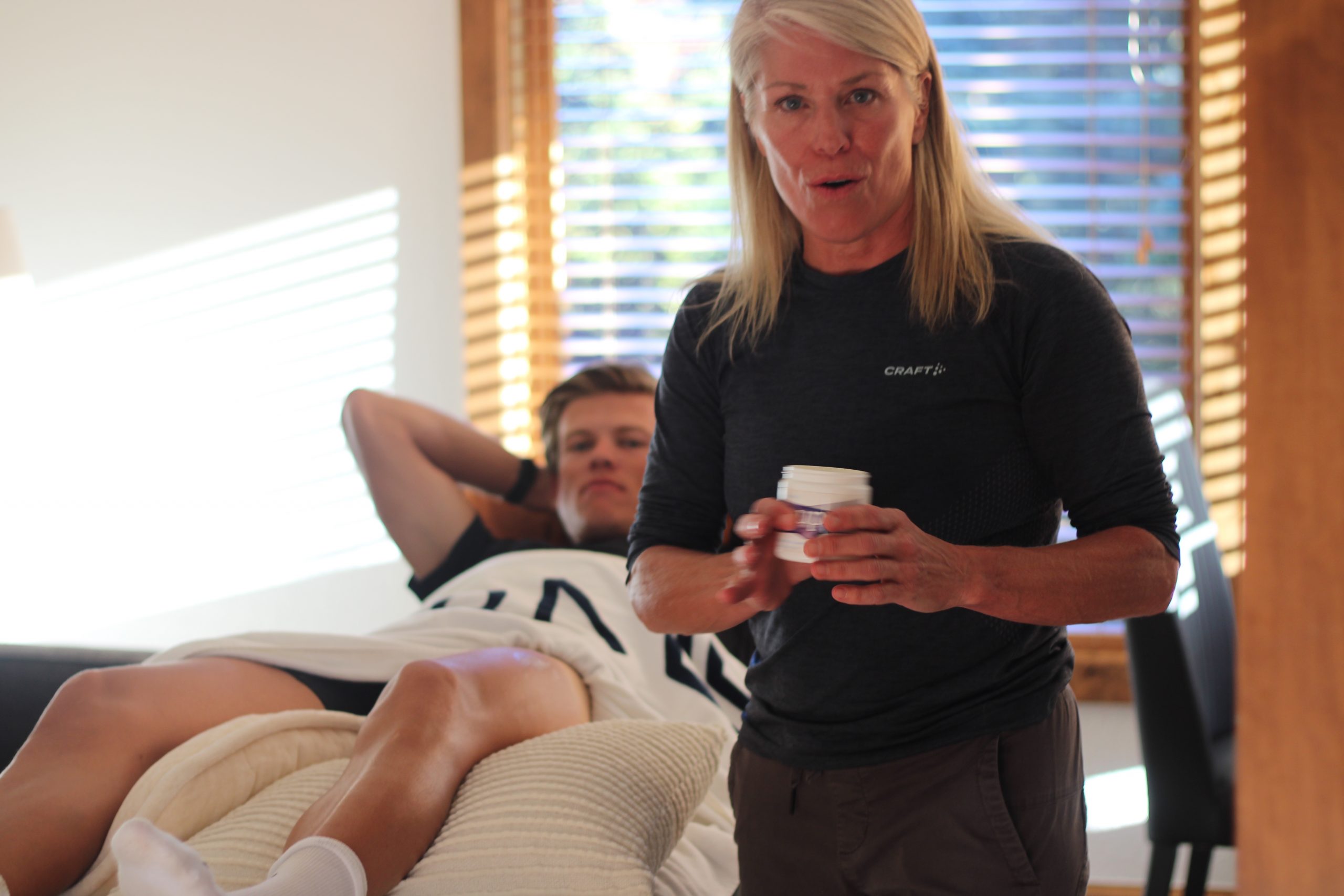
    Utah physical therapist Megan Rowlands Stowe treats Norwegian Olympic gold medalist Johannes Høsflot Klæbo during Klæbo’s recent training camp in Park City. (Nathaniel Herz/FasterSkier)

    PARK CITY, UTAH — Megan Rowlands Stowe was mostly retired from her career as a physical therapist when Johannes Høsflot Klæbo came to her Utah home for dinner last year.

    Klæbo, 26, is from Norway — where, as a seven-time Olympic medalist in cross-country skiing, he’s a superstar. But for weeks, he’d been training in Utah, where a lingering hamstring injury was bothering him when he arrived at Stowe’s house.

    Stowe, 57, has her own history in elite sports — namely, as a longtime physical therapist for the star athletes of the Milwaukee Bucks, the NBA franchise. And as an avid cross-country skier herself, she knew Klæbo had been working out in Utah. She had already offered, through friends, to help with his injury.

    Klæbo and his father, Haakon, who is also his manager, had declined Stowe’s offer; Johannes had just started a new treatment program in Norway. “We heard she has been working in the NBA, and I was like, ‘Fine, good for you,’” Johannes said. “A lot of people wanted to help at that time.”

    [Read more: That guy rollerskiing around Utah by himself? Yeah: it’s 5x Olympic champ Johannes Klæbo]

    But over salmon at Stowe’s house, the injury came up in conversation, and before Klæbo left, he showed her his MRI. Then, he and Stowe went downstairs for a quick exam.

    Stowe’s home in the city of Midway has equipment she uses in her work: a hot tub, a cold plunge pool and a full treatment room with workout equipment. And the after-dinner treatment session quickly wore away Klæbo’s skepticism.

    “I was like, ‘Holy shit,’” Klæbo said. “I felt like, this is what I’ve missed in my career.’”

    Since then, Stowe has become a key member of Klæbo’s tiny team, taking multiple trips to Europe to support him.

    “I call them my Norwegian family, and Johannes my little brother,” Stowe said.

    Klæbo’s first session with Stowe came at the very end of his Utah training camp last year. He went back to see her the next day, but then had to return to Norway.

    Stowe treats Klæbo during his training camp. (Nathaniel Herz/FasterSkier)

    Soon afterward, Stowe found herself invited to Europe — to Livigno, Italy, for another Klæbo altitude camp, and then to the first races of the winter, in Norway. Beforehand, Norwegian coaches had said Klæbo’s injury might force him to skip those season-opening events; instead, he won them both, then won his first four World Cup races of the year.

    While Klæbo’s injury had shown up in his hamstring, Stowe said she helped determine that a tight ankle was a big contributor to the problem, along with imbalances between the muscles in his chest and back.

    At the end of the season, Klæbo spent another week and a half in Utah, where Stowe treated him for six or seven hours daily.

    Klæbo would have a morning physical therapy session, then Stowe and his father would spend some time outside while Johannes slept. Then, they’d return for another session, and Klæbo would eat dinner and go to bed.

    “That was, like, 10 days of a lot of pain,” he said.

    The work with Stowe is one of the things that’s drawn Klæbo back to Utah multiple times — including for another altitude camp last month, where the two did a joint interview and treatment session.

    The thing that distinguishes Stowe from the other physical therapists that Klæbo has worked with, he said, is her commitment to hands-on treatment, known as manual therapy.

    Stowe does soft tissue work on Klæbo’s leg. (Nathaniel Herz/FasterSkier)

    That was clear during the 90-minute treatment session, where Stowe’s sole focus was the front side of Klæbo’s left leg: hands-on soft tissue work, and dry needling, a technique to release muscle tension. She would treat the other leg after dinner together, along with Haakon and Pernille Døsvik, Johannes’ girlfriend.

    “Most physiotherapists that are going through school now, they learn to work with patients for 30 minutes to an hour,” Klæbo said. Stowe, he added, “works way deeper, and she works longer, on every kind of area.”

    Such lengthy treatments are very unusual, according to Brooke Lewis, an Alaska-based physical therapist who’s worked with members of the American cross-country ski team. But they could still be helpful given Klæbo’s long hours of training, and the likelihood his injury built up over a long period of time, she said.

    “If he’s noticing that big of a difference, it’s hard to refute,” Lewis said. “If they’ve got a good thing going, they’ve got a good thing going.”

    [Listen to the Devon Kershaw Show: Johannes Høsflot Klæbo has a lot to say. We listened.]

    Stowe said she can sustain the physical demands of her work because she’s built up stamina in three decades as a physical therapist, and also because she’s been a rock climber.

    Stowe actually started her physical therapy practice in the back of a Wisconsin climbing gym. She connected with the Bucks basketball team in her first week, when a surgeon she knew asked if she could evaluate a player: Glenn Robinson, the now-retired NBA all-star known as the “Big Dog.”

    “And then, as I was working with him, Ray Allen” — now an NBA Hall of Fame member — “asked if I would look at him,” Stowe said.

    Stowe poses for a photo with Andrew Bogut, the 7-foot-tall former player for the Milwaukee Bucks. (Courtesy Megan Rowlands Stowe)

    After a year of treating players outside of games, the team’s trainer told Stowe to show up at the Bucks’ first pre-season matchup.

    “I’m like, ‘Wait a minute, I’ve never covered games before. That’s not part of the deal,’” she said. “They were like, ‘no, no — we fired our physical therapist. You’re our physical therapist.’”

    Stowe worked for the Bucks for 17 years; Bud Selig, the former commissioner of Major League Baseball, was also a longtime client. But Stowe was never a big basketball or baseball fan — she was more interested in endurance sports, like adventure racing. She also got into cross-country skiing in her late 20s, and has raced the American Birkebeiner nine times.

    After selling her physical therapy practice, Stowe moved to Utah in 2020 and spent much of her time playing outside before she got involved in the local cross-country skiing community. That community ultimately connected her with the Klæbos.

    Her work with the Norwegian superstar — for which, she said, she’s paid “very well” — has been an honor, but also just fun, she added.

    “To be introduced to the best endurance athlete in the world was kind of icing on the cake, when I thought I was done with my career,” she said.

    In Europe, the Klæbos have supplied her with gear so that she can go skiing while Johannes trains; she’ll also tape videos and observe some of his harder workouts. They talk about strength workouts, nutrition and other elements of his training program.

    She and Johannes have developed an easy working relationship, each of them said. Their hours of conversations have improved his English, but Stowe also understands that sometimes, he’s too tired or grouchy to talk.

    “I can sense it,” she said. “I just leave him alone.”

    This screengrab shows a Norwegian newspaper story about Megan Rowlands Stowe’s work with Johannes Høsflot Klæbo.

    Their work together has put Stowe on the pages of Norwegian tabloids, with photographers sometimes taking her by surprise. Norway’s fervor for skiing, she said, was simultaneously shocking while also evoking the hype that surrounds her favorite American football team, the Green Bay Packers.

    How long will the partnership last? Klæbo said it’s “all up to Megan.”

    Stowe said she feels a kinship with the Klæbos, and expects to return to Europe three times this winter to work with them.

    “It’s easy,” she said. “It’s not a stressful situation.”

  • The Devon Kershaw Show: Johannes Høsflot Klæbo has a lot to say. We listened.

    The Devon Kershaw Show: Johannes Høsflot Klæbo has a lot to say. We listened.

    A few weeks ago, Nat got a Facebook message from one Haakon Klæbo — father of Johannes Klæbo, also known as one of the greatest skiers of all time. What followed was a visit by Nat to Klæbo’s training camp in Park City, Utah, where he and Johannes taped this episode of the Devon Kershaw Show.

    Join us to hear an interview with the five-time Olympic champion from Norway about his time in the U.S., his training and his schism with the Norwegian national team. You can  also read Nat’s first written story from his visit with Klæbo here.

    We’ll be back soon with more material from Utah. Send your questions, comments and hate mail to devon@fasterskier.com and nat@fasterskier.com.

    Johannes Klæbo stands with his father, Haakon, during a water break on a rollerski workout Saturday. (Nathaniel Herz/FasterSkier)


  • Soldier Hollow Hiring Multiple Positions in Nordic Operations

    Soldier Hollow Hiring Multiple Positions in Nordic Operations

    The Olympic and Paralympic Center at Soldier Hollow in Midway, Utah is looking to build and expand its venue and event operations team! Preparations are underway for major international Nordic and Biathlon World Cup events, including the 2023 IPC World Cup, the 2024 IBU World Cup and future Olympic and Paralympic Winter Games bid efforts.

    We are looking for team members with a passion for trail infrastructure to work in maintenance, daily preparation, development and construction. The work covers both the summer and winter seasons to maintain a world-class standard of recreation and athlete development year-round.

    Work includes but is not limited to single-track trail construction, ski trail design and development, snowmaking, snow grooming, roller ski trail maintenance, trail lighting layout and construction, and many other aspects of trail work and event operations.

    Motivated individuals willing to learn, develop, and advance in an outdoor recreational environment career are encouraged to apply. Experience in equipment operation, construction and snow area management are a plus. A passion and desire to hike, run, bike, and ski on trails is always desired. Come work, play, and live in the Wasatch Mountains of Salt Lake City, Park City, and Midway and experience the best ski town in North America!

    Positions open for Grooming & Maintenance Tech (apply here) and Snowmaking Crew (apply here). Apply today and start your next great adventure at Soldier Hollow!

    Junior athletes race during the 2022 U.S. Cross Country Championships in Soldier Hollow, UT. (Photo: Tobias Albrigtsen / @untraceableg)
  • Tara Geraghty-Moats, the Undefeated Women’s Nordic Combined Pioneer

    Tara Geraghty-Moats, the Undefeated Women’s Nordic Combined Pioneer

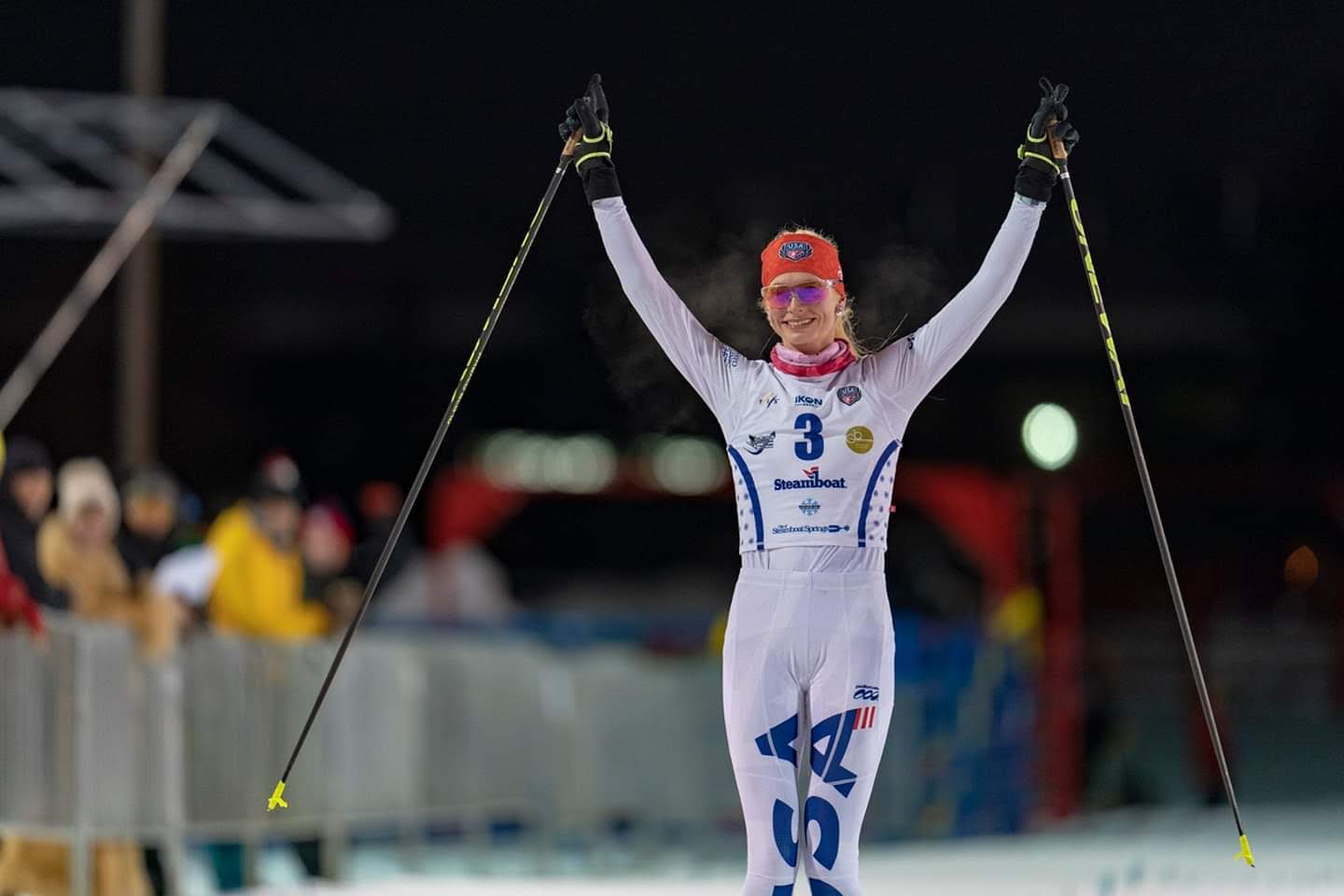
    Tara Geraghty-Moats winning the first 2018/2019 women’s nordic combined Continental Cup held in Steamboat Springs, CO. (Photo: Ben piper)

    Tara Geraghty-Moats started ski jumping when she was nine years old. Fearless for sure, but all part of the multisport athlete’s mojo.

    But after suffering multiple knee injuries when she was 16, Geraghty-Moats was forced to take a break from ski jumping. That hiatus was a four-year jumping drought that only served to push her into other aspects of nordic sport. During her time away from jumping, Geraghty-Moats competed in cross-country skiing and biathlon where she was highly successful.

    At 19-years-old, Geraghty-Moats came back to ski jumping which she has been doing ever since. This summer, she added a well-suited endeavor to her jumping: skiing fast. The reason for this addition was the introduction of an 11 event women’s nordic combined Continental Cup.

    “My goal this season is to be overall Continental Cup winner and to be on the World Championships team for ski jumping,” Geraghty-Moats said about her season’s objectives. As far as nordic combined is concerned, she is well on her way to mastering the Continental Cup series. 

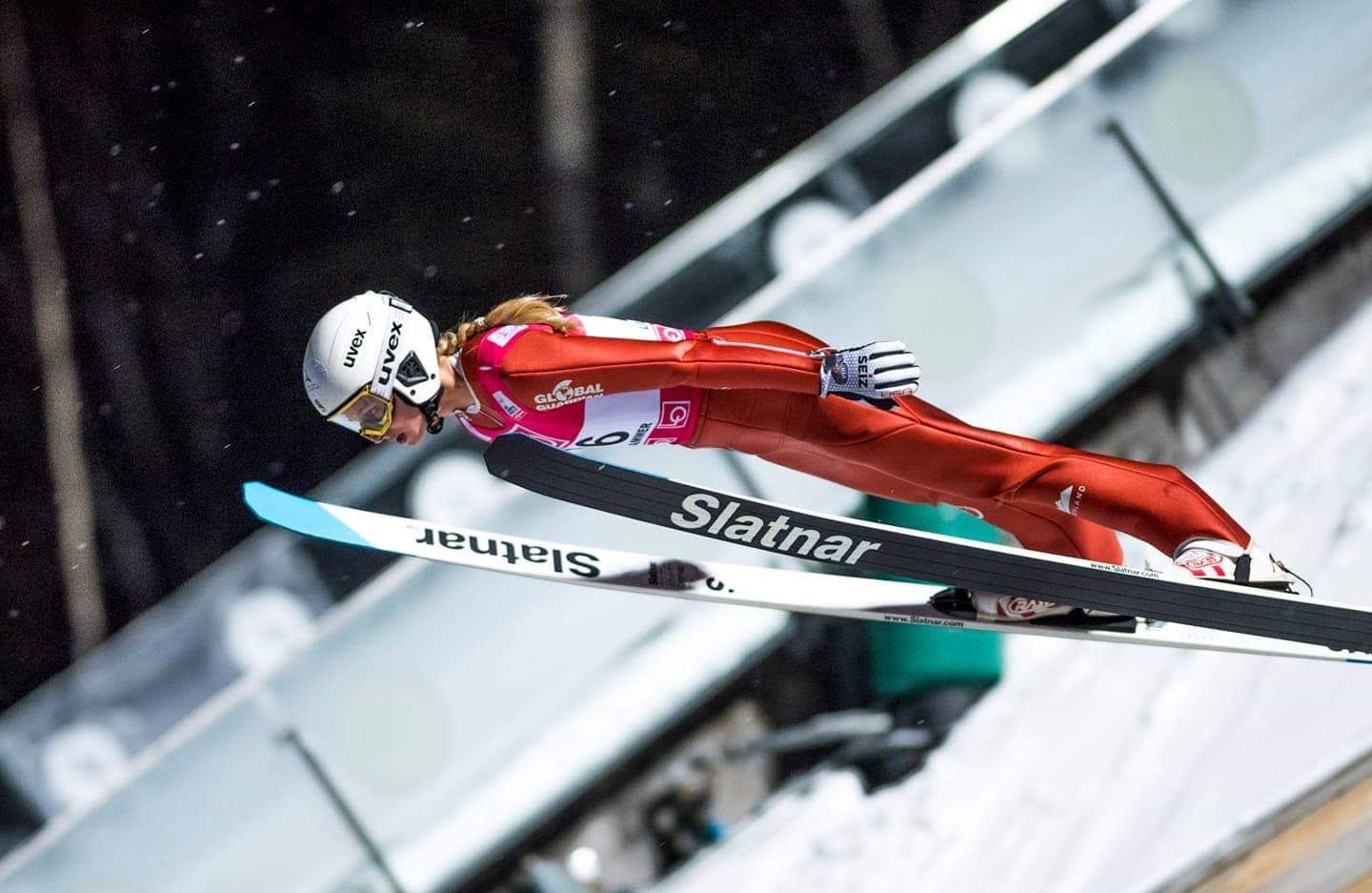
    Tara Geraghty Moats ski jumping World Cup in Lillehammer, NOR. (Photo: FIS Ski Jumping)

    In the first race of the inaugural Women’s Summer Grand Prix in Oberwiesenthal, Germany, Geraghty-Moats ski jumped into fourth place and then skied into second place. That was the last race Geraghty-Moats didn’t win this season. She won the second race of the Grand Prix, and took home the Overall Championship title.

    Geraghty-Moats has participated in five Continental Cup races so far this winter, she has won them all.

    “Winning every race I entered came as a real surprise,” Geraghty-Moats said. “This summer and fall I was focusing on working hard and building my nordic skiing up again after a few years off. I had no idea what to expect. I was hoping for some podiums.”

    The first two races of the season took place in Steamboat Springs, Colo. at the beginning of December. In the first race, Geraghty-Moats jumped to third place, placing her seven seconds behind the leader at the start of the ski race. She had no problem making up the time, winning the race by 47.7 seconds. The following day, Geraghty-Moats jumped into fourth place, 26 seconds behind the leader. She skied a solid race and finished 40.1 seconds ahead of the next competitor. 

    When asked about her favorite moment so far this season, Geraghty-Moats commented, “winning my first Continental Cup in Steamboat with my mom there. She has always supported me skiing nordic combined and is hardly ever able to come to watch me compete, so it was very special.”

    This season, Geraghty-Moats plans to start in all 11 of the women’s nordic combined Continental Cups scheduled. She will also be competing in a number of special jumping competitions. This past weekend, she competed in her first international nordic combine race in Otepää, Estonia where again she dominated. Now she will be heading to Japan for a ski jumping World Cup this upcoming weekend.

    Tara Geraghty-Moats winning the first Continental Cup of the season in Steamboat Springs, CO. (Photo: Ben Piper)


    Currently, Geraghty-Moats is the only women on the U.S. Nordic Combined team.

    “I train by myself a lot,” Geraghty-Moats said. “The men’s team is on a pretty different competition schedule so we aren’t able to train together much. I write my own cross-country program and integrate it with the ski jumping program my jumping coaches give me. It seems to be working well so far.”

    Regardless of their competition schedules, Geraghty-Moats believes the US Nordic Combined Team has a strong and inclusive team dynamic.

    “I’ve competed with some of the guys on the team since my jumping career started,” she said. “They are pretty much the coolest teammates ever. It’s nice they are so supportive of the developing women’s circuit.”

    The outlook for a viable women’s nordic combined circuit remains uncertain. Organizations like the International Ski Federation (FIS) and USA Nordic, the NGB responsible for jumping and nordic combined in the U.S., fully support integrating women into the top level of the sport.

    As raised in a recent New York Times story on the women’s nordic combined circuit, some major hurdles remain for a fully fledged women’s nordic combined division. First are the number of total participants. Second is ensuring those competitors are in fact competitive. A good problem for  Geraghty-Moats is that she remains dominant. Yet the others in her peer group are playing catch up when it comes to her skiing prowess. 

    Women’s nordic combined will be included in the 2021 World Championships. There was discussion of it being included in the 2022 Winter Olympic Games. However, in July, the International Olympic Committee did not include women’s nordic combined as part of the 2022 Games. The sport will have to wait until 2026 at the earliest to make an Olympic debut to put it on equal Olympic-level-footing.

    Bill Demong, USA Nordic’s Executive Director, said in an Oct. 17, 2017 press release that his organization fully supports equity when it comes to developing new pathways for women to participate and excel. 

    “This is an opportunity that we are fully behind”, Demong said about the first women’s U.S, National Championship in nordic combined. “We know that other nations will begin to turn on their funding and that when this becomes an Olympic event everyone will spend resources we can not match. Right now we have the opportunity and responsibility to take athletes like Tara Geraghty-Moats and Gabby Armstrong and develop them into leaders in the sport. It is our job to continue to innovate and support them so that they can lead Women’s Nordic Combined into the future with our crop of upcoming juniors.”

    Geraghty-Moats remains positive. She also embraces her role as a groundbreaker. She knows stumbles will occur. With any breakthrough there are setbacks, but ultimately there is a net gain.

    “I think that it will develop fairly rapidly in the next two years,” Geraghty-Moats said of women’s nordic combined.  “There are World Championship medals on the line in 2021 so I don’t expect very many countries will pass up the opportunity to support a women’s Nordic Combined team and get some hardware.”

    For now, Geraghty-Moats will simply soar.


  • Wednesday Workout: Old-School Strength with the NTG

    Wednesday Workout: Old-School Strength with the NTG

    Ben Ogden and Bill Harmeyer during double-pole speeds at the 2017 Junior NTG Camp earlier this month at Soldier Hollow in Midway, Utah. (Photo: Bryan Fish)

    For this week’s workout, we asked for a specific-strength workout from this year’s Junior National Training Group (NTG) Camp, which was held Aug. 2-15 near Park City, Utah. One of three coaches at the camp, Maria Stuber (head nordic coach at the College of St. Scholastica), shared the following, which she described as an “old-school endurance strength workout.” She led the camp with two U.S. Ski Team (USST) staff members, development coach Bryan Fish and World Cup wax technician Tim Baucom. Eighteen athletes attended — 10 men and eight women — all under the age of 21.

    Lauren Jortberg and Nicole Schneider doing double-pole speeds at the 2017 Junior NTG Camp earlier this month at Soldier Hollow in Midway, Utah. (Photo: Bryan Fish)

    “The U24’s are invited to other U.S. Ski Team camps like our October camp and our May Bend camp,” Fish explained in an email.

    The goal of this month’s camp was “to get our very best together to train and learn from one another,” he wrote. “These are athletes that are already or very well may soon be on the U.S. Ski Team, so building a healthy and positive training environment for these athletes is critical.  Secondly, building an environment where these athletes push each other yet trust one another is critical.  Many of these athletes have already traveled overseas together and continuing to strengthen their comfort and focus toward how we can support, lean on and succeed together – as a group, as a nation, as a team.

    “Third, we want to provide these athletes with meaningful feedback,” Fish continued. “The athletes work with our high performance department at U.S. Ski & Snowboard to learn what individual items they are already strong as well as windows of opportunities for improvement.”

    The primary focus was to provide a “strong training environment,” he wrote, while also testing athletes in areas like strength, power and mobility with a protocol similar to the U.S. Ski Team.

    Throughout the two-week camp, there was an abundance of rollerskiing and threshold ski walking/bounding, as well as strength work.

    “One question that commonly comes up is why such workouts are becoming less familiar or possibly less utilized in coaches’ training plans,” Fish wrote, referring to specific strength. “I think it is because more programs are incorporating this type of effort into classic sprint training sessions. That being said … [this workout develops] many important technical and physical skills.”

    Stuber explained that the workout emphasizes repetition “to work out technique issues and to feel efficiency differences,” she wrote. “It is also a fun social workout because the whole team stays in one place and you can have a good time with rivalries and inter squad competition. “

    The workout: Specific Strength on Skis

    • 20-minute warmup
    • Followed by:
      • 8 x 30 seconds single stick
      • 6 x 30 seconds core-only double pole
      • 8 x 30 seconds double pole
    • 20-minute cool down

    “We did not harp on technique too much and let the athletes think and discover what was working best to move across the ground with the group,” Stuber noted.  “We had video on an iPad for those who wanted to see what they looked like and if the changes they were feeling were showing up on camera.

    “There were a lot of blisters,” she added. “Gloves are recommended for this workout.”

  • Wednesday Workout: Make Your Own Agony Hill

    Wednesday Workout: Make Your Own Agony Hill

    Peter Wolter, of the Sun Valley Ski Education Foundation, racing to the fastest time up Agony Hill during the 2017 Western Regional Elite Group (REG) time trial in Salt Lake City, Utah. (Photo: Matt Whitcomb)

    When it comes to U.S. Regional Elite Group (REG) training camps, there are a few running themes that remain consistent across the country and from year to year. In the East, West and Alaska, participants in the U.S. Ski Team’s development program are tested with an uphill run, agility course and a roughly half-mile double pole, all of which are timed and done individually.

    Western REG coaches Mike Elliott and Bill Hokanson explained how the run is done at Agony Hill, adjacent to the University of Utah in Salt Lake City. The “hill”, on the 6,348-foot Mount Van Cott, has been an REG staple since 2006, according to Elliott, a three-time Olympian and former U.S. Ski Team (USST) member. It has been used since the 1990s by the USST, the University of Utah Ski Team, Wasatch Ski Academy, The Utah Nordic Alliance, Park City Nordic Ski Club, and Soldier Hollow Nordic Ski Club, Elliott wrote in an email.

    The Agony Hill course records set more than a decade ago still stand, which Hokanson explained was partially due to trail construction since.

    “We’re not 100% convinced the modern course is exactly equivalent to the historical one,” wrote Hokanson, head coach of the Wasatch Nordic Ski Academy in Park City and Salt Lake City.

    For instance, Morgan Arritola set the junior women’s record of 16:55 minutes up the 1.7-kilometer climb in 2004. The rest of the course records were set before that by John Aalberg (12:46), Nancy Fiddler (15:46) and Rob Whitney (reportedly under 14:00) for senior men, senior women and junior men, respectively.

    “Variations in the Agony Hill TT course over the past 3 – 4 decades may in part account for the difficulty contemporary athletes have faced in trying to set new records,” Hokanson wrote.  “However the records are held by 4 of the toughest, fittest, most talented athletes of all time, which may fully account for the tenacity of their record efforts.”

    Here’s how you can replicate the Agony Hill time trial in your own backyard:

    “Agony Hill can be developed anywhere and it does not have to be all uphill,” wrote Elliott, now executive director of Rocky Mountain Nordic in Durango, Colo. “My coach, Dolph Kuss, used a course on the edge of Durango when I was in college a Fort Lewis college in 1965 & 1966.  It was a loop next to the local cemetery.  The area is still called test tracks.”

    Elliott recommends a climb lasting 12 to 15 minutes for athletes 18 and older. He also suggested starting athletes individually (via interval starts).

    “It can be all out for one lap or Level 3 below threshold intervals,” Elliott added. “Try and have around the same time each time.  It can be a 15-minute run to see how far you can go.  Like Agony Hill, it can be all uphill.”

    He explained that these kind of time trials measure fitness, pacing and rate of improvement over time, and recommended doing this workout once every other week or once every three weeks.

    The Workout: Agony Hill uphill time trial

    1. Warmup: Light running and stretching for 30-40 minutes

    2. Uphill Run: Interval-start recommended

    • Option 1: One time, all-out effort: see how far up the hill/mountain you can go
    • Option 2: Level 3 intervals: aim for consistent times

    3. Cool down

    Agony Hill specifics:

    • Where: Mount Van Cott, east of the University of Utah in Salt Lake City
    • Course map
    • Course length: 1.7 kilometers
    • Peak Elevation:  6,348 feet
    • Vertical climb: 367 meters
    • Unofficial course records:
      • Senior men: John Aalberg (12:46)
      • Senior women: Nancy Fiddler (15:46)
      • Junior Men: Rob Whitney (reportedly under 14:00)
        • 2nd fastest junior male: Glen Randall (14:34)
      • Junior Women: Morgan Arritola (16:55)
    • This year’s winners:
      • Peter Wolter (Sun Valley Ski Education Foundation): 15:40
      • Novie McCabe (Methow Valley Nordic Ski Club): 17:29
  • Men Go to SoHo, U.S. Women in the Methow (Camp Photo Galleries)

    Men Go to SoHo, U.S. Women in the Methow (Camp Photo Galleries)

    The U.S. Ski Team women’s team at work during a 10-day camp in the Methow Valley. (Photo: Matt Whitcomb/U.S. Ski Team)

    (Note: This article has been updated to include comments from Canadian coach Ivan Babikov on his team’s recent camp in Park City, Utah.)

    Two days after Andy Newell and Erika Flowers tied the knot in Bozeman, Mont., seven members of the men’s U.S. Ski Team and eight U.S. women’s team members jumped into an intensity training block at their respective dryland camps in Park City, Utah, and the Methow Valley in northern Washington.

    The 10-day camps were scheduled simultaneously from June 26-July 5 to accommodate the wedding. Newell is a longtime U.S. Ski Team (USST) member and teammates with Flowers on the Stratton Mountain School (SMS) Elite Team out of Stratton, Vt. Because several national-team members ventured to Bozeman (Flowers’s hometown) to watch them say “I do,” the USST coaches decided to reduce travel and keep their squads together out west.

    “We wanted to capture the men in the Intermountain West immediately following Andy Newell’s wedding in Bozeman, and therefore reduce the overall travel load for athletes who were already coming to the West from the East or Alaska,” head coach Chris Grover explained in an email.

    The men based themselves in Midway, Utah, about 1,500 feet lower in elevation than Park City and 1,000 feet lower than Deer Valley, where they typically reside for summer and fall camps. Grover explained that this was by design, “because of the shorter duration of the camp (i.e. too short to create a meaningful stay at altitude), the focus on specific intensity workouts, and the benefits of quicker recovery at lower altitude,” he wrote.

    Staying closer to the Soldier Hollow training venue was also ideal for the men’s team’s “PyeongChang-specific workouts”, Grover explained, including sessions focused on the freestyle team sprint, classic sprint and 4 x 10-kilometer relay, which will be contested at the 2018 Winter Olympics in PyeongChang, South Korea.

    Newell, Simi Hamilton, Erik Bjornsen, Scott Patterson, Paddy Caldwell, Ian Torchia, and Ben Saxton attended and worked with coaches Jason Cork, Pat O’Brien, Grover, and U.S. Ski & Snowboard Strength and Conditioning Coach Tschana Schiller.

    “The men did a great job of bringing heightened focus and effort to these key intensity workouts and we are grateful to the staff at Soldier Hollow for preparing the track for us,” Grover wrote. “Overall, it was a very productive camp and I think sent the men into the main summer preparation period with important areas to work on, a good gauge of fitness, and a further understanding of what skills need to be developed for the WC [World Cup] season and for PyeongChang.”

    (Article continues below)

    ***

    Meanwhile, the U.S. women tried a new camp in the Methow Valley, home of current national-team members Sadie and Erik Bjornsen. The athletes themselves dubbed it the “CAGS Camp“, which U.S. women’s coach Matt Whitcomb explained stood for “a secret and mildly inappropriate team acronym that pokes fun at girls being girls. Sophie had hats made for the camp that she handed out at the airport when everyone arrived.”

    All kidding aside, the goal of the camp was to be small and intensity focused, “with eight days of training and hard intervals every other day,” Whitcomb wrote in an email. “It’s an unusual setup for our team as we usually run joint camps with the men, but both enjoyed the simplicity of having such small training groups.

    “We chose the Methow in part because it is where Sadie and Erik Bjornsen grew up, but also because we could get close to sea-level to maximize our hard efforts,” he added. “Another draw was that Pete Dickenson, one of our team physical therapists, was able to provide great treatment all week. Winthrop PT & Fitness sponsored our strength sessions, which meant we didn’t have to drive very far to get strong.”

    Like Grover, Whitcomb used the word “ideal” to describe the Methow as a training site, yet emphasized that the community that hosted them was “even more incredible.”

    “A local couple gave us their two cabins in a location as beautiful as we’ve seen anywhere in the world,” he wrote. “The chance to meet Olympians Laura McCabe (’94, ’98) and Leslie Hall (’88, ’92, ’94) was an important experience for the team. We owe them special thanks not for just guiding us to their favorite training spots, but for helping pave the early path for elite women’s skiing.”

    The women’s team, which included Sadie Bjornsen, Rosie Brennan, Sophie Caldwell, Jessie Diggins, Katharine Ogden, Kikkan Randall, Ida Sargent, and Liz Stephen, spent one afternoon working with with the Methow Valley Nordic Team, which McCabe and Hall both coach.

    “We invited a handful of their top athletes to join our bounding and ski walking sessions, and were encouraged by their technique and fitness, but also their love for the sport,” Whitcomb wrote. “They are doing a good job up there. I don’t know what the future holds for us regarding camp locations, but the Methow Valley will be considered as a great option moving forward.  Thanks to so many people for making it happen.”

    Women’s team staff included Whitcomb, Tim Baucom and physical therapist Pete Dickenson.

    (Article continues below)

    ***

    Cross Country Canada also recently finished up a two-week camp in Park City (June 26-July 11) with its entire men’s World Cup team — Alex Harvey, Len Valjas, Devon Kershaw, Jess Cockney, Knute Johnsgaard, and Graeme Killick — and U25 national-team member Julien Locke. Co-World Cup coaches Ivan Babikov and Louis Bouchard accompanied the team for the duration, and Joel Jaques joined for the first week.

    While Park City has become an annual staple for the Canadian team, Babikov explained that this was their first time there in the summer, as opposed to the fall.

    “We love the area and training there. … It was pretty hot but we managed,” he wrote. “The main goal was a big training volume/hours at the altitude. We were planing on doing a time trial at the SoHo but it got closed for those dates so we ended up doing intensity down in Salt Lake instead.
    It was a great camp for all the guys, everyone feels good and no injuries on the team.”

    https://www.instagram.com/p/BWF7eG6HLJo/?taken-by=coach_babs_

    https://www.instagram.com/p/BWP_Wi_nYV3/?taken-by=coach_babs_

    https://www.instagram.com/p/BWdDCu1nObo/?taken-by=coach_babs_

  • Western REG Camp Recap: Agony Hill and All

    Western REG Camp Recap: Agony Hill and All

    All 34 Western REG participants and U.S. Ski Team Development Coach Bryan Fish after L3 intervals at Soldier Hollow in Midway, Utah. (All photos: Mike Elliott)

    The following recap was written with the help of Mike Elliott, director for the Western Regional Elite Group (REG) camp, which took place June 17-24 in Park City, Utah. FasterSkier encourages coaches and athletes from any regional offseason camps (dryland or on-snow, in the U.S., Canada or abroad) to submit their own recaps and photos to info@fasterskier.com.

    ***

    For seven days in June, 34 athletes (17 women and 17 men) from five western U.S. divisions (Rocky Mountain, Intermountain, Far West, Pacific Northwest, and High Plains) came together in Park City, Utah, for the annual Western REG (Regional Elite Group) camp in Park City, Utah.

    With the help of U.S. Ski Team coaches Matt Whitcomb and Bryan Fish, a staff of nine led the camp, including Gus Johnson (Auburn Ski Club), Dan Weiland (Ski and Snowboard Club Vail), Greta Anderson (Steamboat Springs Winter Sports Club), Paul Smith (Sun Valley Ski Educational Foundation), Molly Susla (Crested Butte Nordic Team), Pierre Niess (Leavenworth Winter Sports Club), Bill Hokanson (Wasatch Nordic Ski Academy), Mike Elliott (Rocky Mountain Nordic), and camp chef Nancy Elliott (Durango Nordic Ski Club).

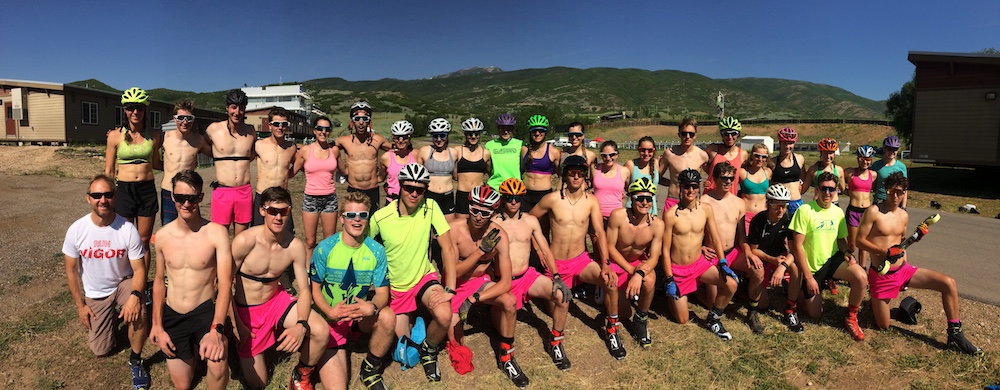
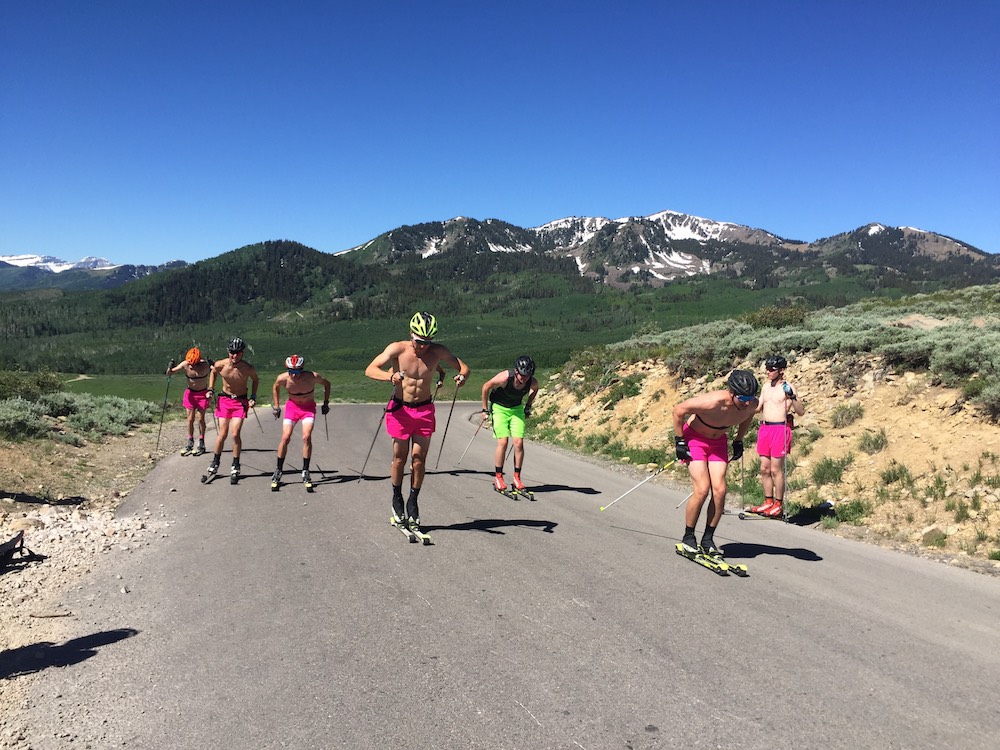
    An over-distance classic ski from Pine Canyon to Empire Pass out of Midway, Utah. Inspired by the U.S. Ski Team women who wear matching socks for relays, the camp’s male athletes bought pink shorts at the outlets in Kimball Junction to show their unity. “Coaches, however, did not make the purchase of pink shorts,” camp director Mike Elliott explained. (Courtesy photo)

    According to camp director Mike Elliott, athletes were selected based on two factors which were weighed equally, 50/50: their final USSA points at the end of last season and their best two out of three races at 2017 Junior Nationals.

    The first training session of the week was held at the infamous Agony Hill next to the University of Utah Hospital in Salt Lake City. Peter Wolter of Sun Valley posted the winning time for the men and Novie McCabe (Methow Valley Nordic Ski Club) was the fastest woman to the top.

    In the agility sprint, Sarah Morgan, of Park City’s Wasatch Nordic Ski Academy, claimed first for the women and James Schoonmaker (Auburn Ski Club) was the fastest man. Another Wasatch skier, Madison “Maddie” Morgan won the double-pole time trial, along with Evan Barbier of Steamboat Springs.

    “Working with such talented young skiers is so much fun and rewarding,” Elliott wrote in an email. “We often left the lodging facility at 6:30am or 7am to beat the heat. The athletes were always on time and motivated and organized with the proper training equipment. There was a high degree of Esprit de Corps among all the participants. They competed in the three events that were timed, and they supported each other in the other training sessions. Some of the skiers had a goal to qualify for the National Elite Group training camp scheduled later in Park City.”

    Of the skiers that attended this year’s camp, several were Junior National medalists, including Wolter, McCabe, Maddie Morgan, Haydn Halvorsen, Sydney Palmer-Leger, Sofia Shomento, and Marin Coletta. Another multiple medalist, Johnny Hagenbuch was scheduled to attend this year’s Western REG, but broke his leg the weekend before the camp, Elliott explained.

    An over-distance classic ski from Pine Canyon to Empire Pass out of Midway, Utah, at the 2017 Western REG camp in June. (Photo: Mike Elliott)
  • Under 23 Questions with Stephen Schumann

    Under 23 Questions with Stephen Schumann

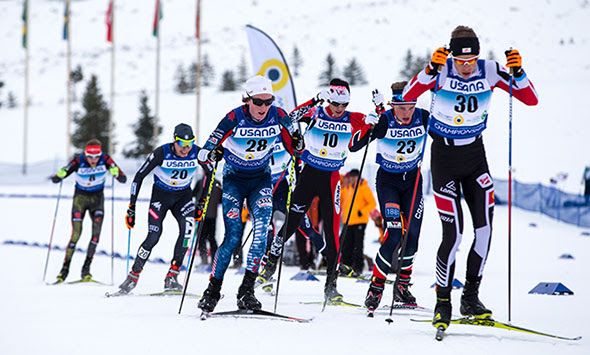
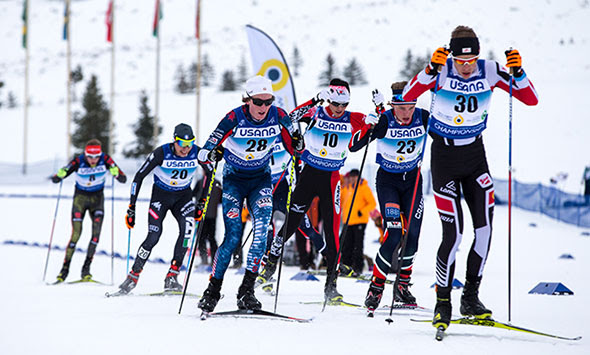
    U.S. Nordic Combined's Stephen Schumann (28) passing on the outside, en route to 10th in the nordic-combined normal hill/10 k at 2017 Nordic Junior World Championships on Tuesday at Soldier Hollow in Midway, Utah. (Photo: U.S. Ski Team/Steven Earl)
    U.S. Nordic Combined’s Stephen Schumann (28) passing on the outside, en route to 10th in the nordic-combined normal hill/10 k at 2017 Nordic Junior World Championships on Tuesday at Soldier Hollow in Midway, Utah. (Photo: U.S. Ski Team/Steven Earl)

    In an effort to showcase the North Americans competing at this week’s International Ski Federation (FIS) 2017 USANA Nordic Junior World Championships and U23 Cross Country World Championships at Soldier Hollow in Midway, Utah, we asked those qualifying athletes several questions about themselves — actually, we had them fill in the blanks. Here we have 16-year-old Stephen Schumann, of the Park City Nordic Ski Club and U.S. Nordic Combined/USA Nordic, who’s representing the U.S. at his first Junior Worlds.

    On Tuesday, Schumann raced to 10th to lead the U.S. in the individual normal hill/10-kilometer Gundersen. On Thursday, he was slated to start the nordic-combined 4 x 5 k team event, with teammates Elijah Vargas, Ben Loomis and Grant Andrews. 

    ***

    “My full name is Stephen John Schumann, but you can call me Skunk. I was born in Salt Lake City, raised in Salt Lake.

    I started skiing when I was seven and jumping when I was five, thanks to my dad. I currently train in Park City, Utah, with the US Ski Team/ USA Nordic.

    If I had to pick a favorite book, it would be ‘How the Skunk Learned to Jump‘.

    Stephen Schumann leading a group during the Ruka Nordic Combined Continental Cup 10 k competition on Jan. 15 in Kuusamo, Finland. (Courtesy photo)
    Stephen Schumann leading a group during the Ruka Nordic Combined Continental Cup 10 k competition on Jan. 15 in Kuusamo, Finland. (Courtesy photo)

    One of the things I’m most excited about for U23/Junior Worlds at Soldier Hollow is having a home event.

    One race I’m especially targeting there is the 10 kilometer individual race.

    The best advice anyone ever gave me about skiing or racing was ‘don’t lead’. One of the best race memories I have is skiing my first COC.

    If I don’t end up being a professional skier, I’ll probably be a coach.

    I’m missing zero days of school to be here, and my teachers are probably thinking, ‘Thank god I don’t have to see that kid for a couple more months.’

    You can follow me on Instagram @stephen_schumann or on Twitter @stephen_schu.”

  • Tuesday Rundown: Soldier Hollow & Almaty (Updated x2)

    Norway’s Fredrik Riseth celebrates his win in the men's classic sprint at U23 World Championships on Tuesday at Soldier Hollow in Midway, Utah. He beat out Russia’s Alexander Bolshunov by 1.05 seconds for the victory. (Photo: FlyingPointRoad.com)
    Norway’s Fredrik Riseth (4) celebrates his win in the men’s classic sprint at U23 World Championships on Tuesday at Soldier Hollow in Midway, Utah. He beat out Russia’s Alexander Bolshunov (1) by 1.05 seconds for the victory and Norway’s Joachim Aurland followed in third (+2.3). (Photo: FlyingPointRoad.com)

    FIS Nordic U23 World Championships (Midway, Utah): Classic sprint

    [UPDATED] All four American women and three Canadians qualified for the women’s classic sprint heats on the first day of U23 World Championships on Tuesday, and in the men’s qualifier, three Americans finished in the top 30 to advance to the quarterfinals at Soldier Hollow in Midway, Utah.

    Kelsey Phinney led the Americans in sixth in the women’s 1.3-kilometer qualifier, clocking in 2.77 seconds off the fastest women’s qualifying time of 3:39.40, set by Sweden’s Anna Dyvik.

    Canada’s Dahria Beatty qualified eighth (+3.85), followed by Nichole Bathe (USA) in 14th (+8.8), Jesse Knori (USA) in 19th (+12.07), Jenn Jackson (CAN) in 22nd (+12.99), Corey Stock (USA) in 26th (+15.11), and Katherine Stewart-Jones (CAN) in 28th (+16.61).

    In the men’s 1.5 k qualifier, American Cole Morgan claimed with the 11th-fastest time, 8.19 seconds behind Russia’s Alexander Bolshunov, who topped the qualifying round in 3:36.52.

    Also for the U.S., Paddy Caldwell qualified 20th (+14.68) and Jack Hegman 23rd (+15.59), while Cal Deline missed the top 30 by 0.14 seconds in 31st.

    In the quarterfinals, Morgan finished second by 0.85 seconds to Bolshunov, and both automatically advanced to the semifinals. There, the Russian finished second to Norway’s Fredrik Riseth while Morgan took fifth, 9.67 seconds out of first. Overall, Morgan placed ninth on the day for his best result at a Junior or U23 World Championship.

    The top North American woman on Tuesday, Beatty finished third in her quarterfinal, 2.45 seconds behind the winner of her heat, Norway’s Thea Krokan Murud. Beatty advanced to the semifinals as a lucky loser, where she ended up sixth, 8.04 seconds behind Murud, who won that heat as well. Overall, Beatty placed 12th for her first top 20 at U23 Worlds.

    Meanwhile, Stewart-Jones raced in the same quarterfinal as Beatty and finished fifth (+12.63) for 24th overall.

    Knori was the top U.S. woman in 15th overall after placing third in her quarterfinal, 7.18 seconds behind Norway’s Tiril Udnes Weng, who won that heat.

    Phinney was right behind in 16th overall after finishing fourth in her quarterfinal, 3.81 seconds behind Weng’s sister, Lotta Udnes Weng, in first. Stock also raced in that quarterfinal and finished fifth (+10.08) for 22nd overall.

    Petra Hyncicova, who skis for the University of Colorado-Boulder but is representing her native Czech Republic at U23s, took 20th on Tuesday. She qualified in 21st then finished fourth in her quarterfinal, 4.33 seconds behind Sweden’s Maja Dahlqvist in first.

    Dahlqvist went on to win the first semifinal and Norway’s Murud won the second semi. Both met in the final, where Dyvik — who had placed second from the first semifinal — dominated throughout to take the win in 3:32.40. Murud finished 3.42 seconds back in second, and Sweden had two on the podium with Dahlqvist in third (+3.76).

    On the men’s side, Caldwell ended up 18th after placing fourth in the same quarterfinal as Morgan, finishing 6.17 seconds behind Bolshunov in first.

    Hegman placed 28th on the day after finishing sixth in his quarterfinal, 5.71 seconds behind Norway’s Chrisander Skjoenberg Holth in first.

    Norway’s Riseth won his quarterfinal and semifinal before taking the victory in the final, by 1.05 seconds over Bolshunov with a winning time of 3:32.78. Norway had two on the podium with Joachim Aurland in third (+2.3).

    Results:

    Women’s qualifier | Women’s brackets | Women’s overall

    Men’s qualifier | Men’s brackets | Men’s overall

    ***

    FIS Nordic Combined Junior World Championships (Park City & Midway, Utah): Individual normal hill/10 k

    Finland’s Arttu Mäkiaho winning the normal hill/10 k competition on Tuesday, the first day of Nordic Combined Junior World Championships, at Soldier Hollow in Midway, Utah. He won by nearly 22 seconds. (Photo: FlyingPointRoad.com).
    Finland’s Arttu Mäkiaho winning the normal hill/10 k competition on Tuesday, the first day of Nordic Combined Junior World Championships, at Soldier Hollow in Midway, Utah. He won by nearly 22 seconds. (Photo: FlyingPointRoad.com).

    [UPDATED] On the first day of Nordic Combined Junior Worlds, with the jumping taking place at Utah Olympic Park in Park City, Utah, and racing at Soldier Hollow in nearby Midway, Stephen Schumann achieved his first top 10 in the individual normal hill/10 k.

    Schumann jumped to 28th then clocked the fifth-fastest cross-country time to place 10th overall, 55 seconds behind Finland’s Arttu Mäkiaho, who won in 25:54.5 minutes.

    Mäkiaho started the 10 k in ninth, based on his jump, with a 35-second starting deficit to jump leader Laurent Muhlethaler of France. While Muhlethaler dropped to 17th in the 10 k, Mäkiaho clocked the third-fastest ski time to win the first nordic-combined competition of the championships.

    Austria’s Mika Vermeulen finished 21.6 seconds back in second, after picking off 27 places in the ski race. He jumped to 29th and skied the fastest 10 k in 24:48.1.

    Germany’s Martin Hahn rounded out the podium in third (+25.6), moving up from 26th in the jump with the fourth-fastest ski time.

    Four Americans competed, with Ben Loomis landing in the top 20 in 18th (+1:38.5), Koby Vargas in 37th (+3:44.0) and Grant Andrews in 44th (+4:25.6).

    Junior/U23 World Championships continue Wednesday with the junior 5/10 k freestyle individual starts, plus women’s and men’s ski jumping. Complete schedule

    Results: Normal hill/10 k

    ***

    World University Games cross-country skiing (Almaty, Kazakhstan): 5/10 k freestyle pursuits

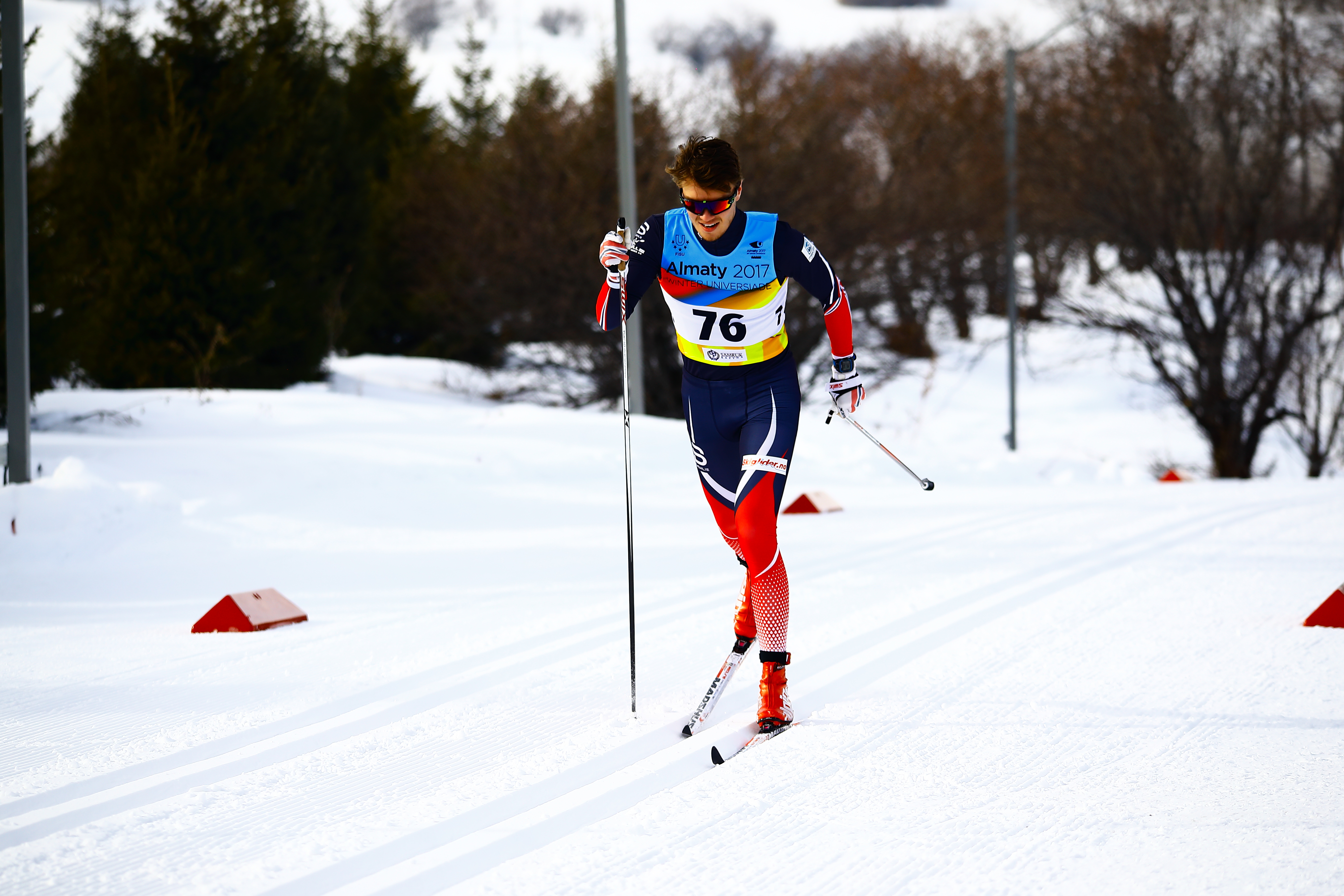
    Jørgen Grav of Ford Sayre competing for Norway at the World University Games in Almaty, Kazakhstan. (Photo: Almaty2017.com)
    Jørgen Grav of Ford Sayre competing for Norway at the World University Games in Almaty, Kazakhstan. (Photo: Almaty2017.com)

    Cross-country ski competitions continued at the World University Games on Tuesday with pursuit races based off the finish times from Monday’s 5 and 10 kilometer classic races.

    In the men’s 10 k pursuit, Dmitriy Rostovtsev overtook Russian teammate (and yesterday’s winner) Valeriy Gontar to win by 14.7 seconds. Armenia’s Sergey Mikayelyan moved from fourth up to third place (+52.0) to claim the final podium spot.

    Jørgen Grav of Norway, a former University of Vermont skier now in graduate studies at Dartmouth College and competing for Ford Sayre, placed 36th, +5:14.4.

    For Canada William Dumas (Skinouk) skied from 48th all the way up to 40th to lead the team and finish +5:26.0.  Carrington Pomeroy (Nakkertok) moved from 57th up to 48th (+6:01.2), Conor Thompson (Université Laval) finished 52nd (+6:33.3), Gavin Shields (Lappe Nordic) 58th (+6:54.6), Jordan Cascagnette (Team Hardwood) 62nd (+7:24.8), and Alexis Morin (Université Laval) 68th (+8:44.1).

    Vincent Mason of the University of Wyoming had the best U.S. finish, clocking in at 55th (+6:36.6). Teammate Will Timmons finished 63rd (+7:29.9) and Sam Wiswell 71st (+9:27.9). Mitchell Hollman (Air Force Academy) 74th (+10:25.1), Kevin Geisen (Western State) 78th (+12:07.6), and Cameron Moore (Western State) 79th (+12:50.0).

    In the women’s 5 k skate pursuit, Anna Nechaevskaya of Russia moved up and stole the lead from Russian teammate (and yesterday’s winner) Lilia Vasilieva (+18.1). Anna Shevchenko of Kazakhstan kept her hold on third place (+21.3).

    Elise Sulser of the University of Wyoming again led the United States, slipping one spot to finish 24th (+3:47.1). Her teammate Meghan Kent was 47th (+6:39.9) and Yara Thomas 50th (+7:20.0). Emma Malmqvist (Colorado Mesa University) placed 53rd (+8:04.7), Sierra Jech (State University of New York) 55th (+8:26.9), and Sierra Foster (Oregon State University) 61st (+10:00.3).

    For Canada, Christel Pichard-Joliceur (Université Laval) finished 31st (+4:35.9). Shelby Dickey (Highlands Trailblazers) followed in 41st (+5:35.9), then Emma Camicioli (Rocky Mountain Racers) in 44th (+5:53.0) and Kyla Vanderzwet (Nakkertok) 45th (+5:54.8).

    World University Games biathlon (Almaty, Kazakhstan): 15/20 k individual

    In the women’s 15 k individual, the first biathlon competition of the Universiade, Kazakhstan took four of the top five places with much of their World Cup team competing on home turf. Alina Raikova won over Galina Vishnevskaya by 2:21.1 thanks to just two penalties to Vishnevskaya’s four. Ukraine’s Nadiia Bielkina was third, +2:23.6 with five penalties.

    The lone Canadian finisher was Jessica Paterson of the University of Alberta, who finished 23rd (+13:06.1) with eight missed shots.

    In the men’s 20 k individual, Baptiste Jouty of France came out on top by 41.0 seconds over Sergey Korostylev of Russia, with two penalties for each racer. Third place went to Semen Suchilov, also of Russia, +1:05.5 with three missed shots.

    Seamus Boyd-Porter of Memorial University led Canada with a 36th-place finish, +13:33.1 and eight missed shots. Taij Isaac Mann of MacEwan University finished 42nd with two missed shots (+19:37.2), and Sasha Eccleston 45th with seven missed shots (+23:07.8).

    No American biathletes competed.

    Results portal

  • Road Burn Behind Him, Bjornsen Brings On New Season with Heat

    Road Burn Behind Him, Bjornsen Brings On New Season with Heat

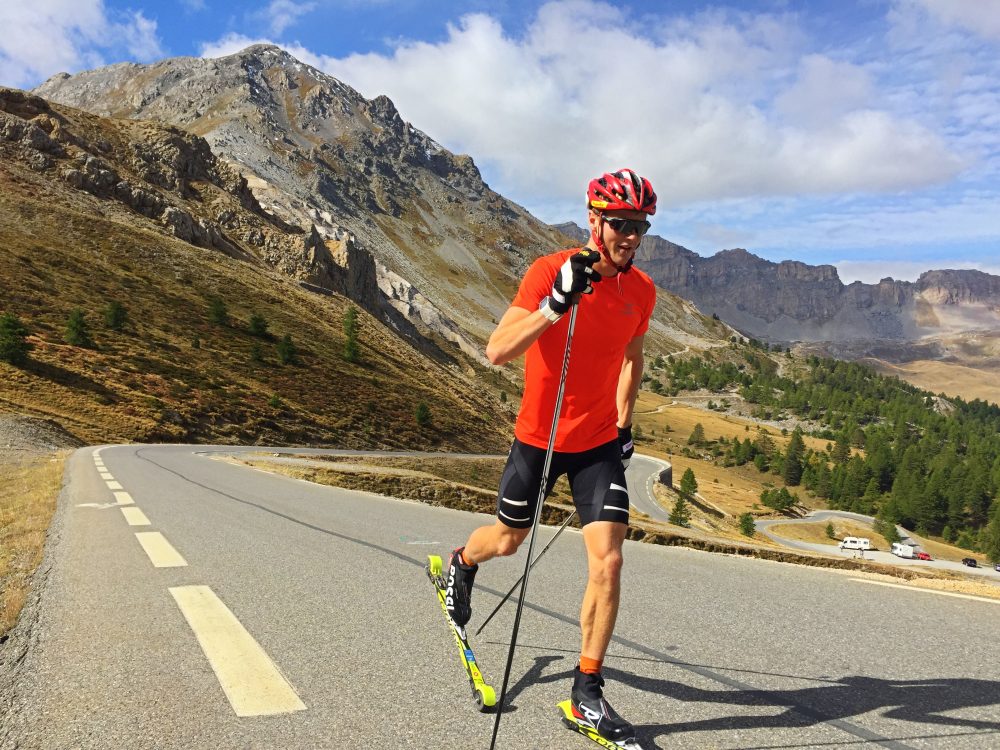
    U.S. Ski Team B-team member, Erik Bjornsen during a rollerski in France this summer 2016. (Courtesy photo)
    U.S. Ski Team B-team member Erik Bjornsen during a rollerski in France this summer 2016. (Courtesy photo)

    A little less than two months ago, Erik Bjornsen found himself face down, breathing in some combination of medical mattress and bleached bedding. There was a sore tightness in his right shoulder, made all the more difficult to move due to the layers of salved gauze firmly taped to his skin. His training shorts had been modestly rolled down, revealing steak-sized road burns on both of his buns.

    Had the U.S. Ski Team (USST) B-team member, by some happenstance, skipped the final rollerski races of the USST’s annual dryland training camp in Park City, Utah, he might have made it through the offseason unscathed for the first time in two years.

    The Moirai of Bjornsen’s training, however, had other plans.

    U.S. Ski Team B-team member, Erik Bjornsen during a local running race in Anchorage Alaska summer 2016. (Courtesy photo)
    Erik Bjornsen (U.S. Ski Team/Alaska Pacific University) during a local running race this summer in Anchorage, Alaska. (Courtesy photo)

    Bjornsen met up with his USST teammates at their Park City training camp, held Oct. 17-31. He competed in the camp’s final time trial: a skate sprint. He qualified for the quarterfinals and started the semis.

    But instead of sending it across the finish line, while rounding one of the downhill corners on the sprint rollerski course in Soldier Hollow, he sent himself sliding butt-first across the pebbled pavement.

    The incident left the 25 year old with road-rash raspberries on his right shoulder, left hand and total tail-end, as well as a desire to be done skiing on anything but snow, according to one of his Instagram posts after the crash.

    But for the Methow, Wash., native — who currently lives in Anchorage, Alaska, and trains with Alaska Pacific University (APU) — a few less skin cells and a little more neosporin is not the worst preseason distress he could have, or has, endured.

    “I was lucky, I mean last year I had hand surgery so I was away from using a pole for three months and then the year before I had some knee issues,” Bjornsen said on the phone in early November from Anchorage. “So I feel like I was very lucky to go through the summer without anything too major happening. Right now I’m just trying to heal up my hands from the road rash.”

    Still working to heal his hands during the opening World Cup races in Kussamo, Finland (where he finished 42nd in the men’s classic sprint and 41st in the men’s 15-kilometer classic), Bjornsen was not too preoccupied with early season results.

    “Both days I was pretty close to making top 30,” Bjornsen wrote in an email after the 15 k.  “Personally this has always been the most difficult weekend of racing on the World Cup for me. That being considered I’m satisfied with my results. There is definitely more to come!”

    When Bjornsen says ‘more to come,’ he means not only in events that he considers his forte, such as the distance classic races, but in his relay and sprint performances as well.

    “There’s few [15 k classic events] this season and one in Lahti at World Champs, so I’m definitely looking forward to those, “ Bjornsen said on the phone in early November. “Last year I was able to get into the sprint heats twice and I love head to head racing … so definitely a goal is to get back into the heats and experience that a little bit more … We [also] have another couple of relays and I hope that I can throw down a strong leg.”

    Bjornsen has already accomplished one of those goals. Earlier this month, he qualified 30th on Day 1 of the World Cup in Lillehammer, Norway, his first time advancing in a World Cup classic sprint. He was eliminated in his quarterfinal, finishing in 24th overall.

    “Erik has not qualified for too many sprints, but to qualify specifically in Lillehammer, in the lion’s den is quite impressive,”  USST Women’s Coach Matt Whitcomb said on the phone after the Lillehammer sprint.

    His sister and USST teammate Sadie Bjornsen qualified first in the women’s classic sprint.

    (Article continues below)

    https://www.instagram.com/p/BNhCjL3hBKV/?taken-by=sbjornsen&hl=en

    Although the U.S. men’s ski team was unable to enter a relay team in the first team event of the season, which took place last Sunday in La Clusaz, France, Bjornsen competed in the men’s 15 k mass start on Saturday, where he finished 20th and earned his first World Cup distance skate points.

    “The course was littered with broken poles, lots of crashes I mean it was a super high speed tactical course and [Bjornsen] just stayed out of trouble and kept picking people off,” U.S. head coach Chris Grover said on the phone regarding Bjornsen’s performance on Saturday. “He just paced it perfectly.”

    U.S. Ski Team B-team member, Erik Bjornsen during a rollerski in France summer 2016. (Courtesy photo)
    Erik Bjornsen during a rollerski in France this summer. (Courtesy photo)

    Though Bjornsen has already witnessed a change in his performances with the conclusion of Period 1, not much had changed with regards to his preseason prep. This includes what has become an annual summer escape to France. Since Bjornsen’s girlfriend of three-and-a-half-years, Marine Dusser (a former French biathlete), lives in Villard, France, taking the opportunity to travel to a different country, train with the likes of Martin Fourcade, Simon Fourcade and Robin Duvillard, and experience a change in training scenery is warmly welcomed.

    “This year I didn’t do any of the rollerski races like I’d done in the past,” Bjornsen, who previously raced at French rollerski nationals. “I was able to jump in and train with some strong French guys.”

    Beyond buying baguettes and learning a few French phrases here and there while abroad, Bjornsen also spent some time exploring trails at home in Washington, with Sadie and his parents.

    “Getting out and running some new trails every day was definitely a highlight to the summer,” Bjornsen said. “It’s always great to go home and visit the family.”

    Entering the upcoming season a little tougher and a little rougher, Bjornsen indicates that he he’s ready to hit the road and bounce back, with more burn than ever before. 

    “I think it’s important for me to keep looking forward,” Bjornsen said. “I know that when the shape does come around, I think I can compete with the best in the world. Hopefully I can time that around world champs, but every weekend is an opportunity.”

    ***

    We asked Bjornsen to give our ’17 Questions for 2017′ a go. Here are his responses:

    1. Biggest change in your life in the last five or so months since the ski season ended?

    Lots of good memories and experiences. I’m a completely different man!

    2. Biggest change in your training?

    Change is hard. I’ve made some subtle changes, but for the most part I’m just trying to perfect what I’ve done the last couple years. Staying injury free has been a huge help.

    3. Major areas of improvement you’ve seen so far?

    Little improvements all over the board. No LARGE improvements in one area. My hope is that all the small improvements in my dry-land training will add up to a major improvement in my skiing

    4. Whom you’ve been working closest with this offseason (coaches or training partners)?

    Scott Patterson

    5. Best trip in the last five months (and why)?

    That’s a hard question. That’s my favorite part of being a cross country skier. We get to travel a lot, and see a lot of amazing places. I spent a few days rollerskiing and running in the southeastern part of France, near the boarder of Italy. That trip was amazing!

    6. Favorite cross-training?

    Running

    U.S. Ski Team B-team member, Erik Bjornsen during a run in the North Cascade Mountains summer 2016. (Courtesy photo)
    Erik Bjornsen during a run in the North Cascade Mountains this summer. (Courtesy photo)

    7. Favorite non-athletic activity or pastime this summer?

    I’ll let you choose one: Camping with good company, hot tubbing in glacier water, getting locked on some fish..

    8. Song that was your jam this summer?

    Railroad Man by Anna Lynch. Check it out! I was sitting around a campfire with mostly strangers one night and this girl started playing music. I was pretty impressed so I added her on spotify when I got home and ended up listening to her music a fair amount over the summer… Live music is always the best way to jam!

    9. All-time favorite race moment?

    2014 Sochi Olympics, Team Sprint.

    10. First thing you pack in your bag when you leave for Europe?

    I usually start with my boots and shoes because they go on the bottom of my bag. Boring, I know. Packing shouldn’t take longer than 30 minutes or your doing something wrong…Sadie….

    11. Venue/event you’re most excited to visit this season?

    La Clusaz

    12. Who will win the men’s and women’s World Cup titles this year?

    Sadie Bjornsen and Simi Hamilton

    13. Biggest sacrifice you feel you’ve made choosing this career path?

    I don’t feel like I have sacrificed much at all. To be the best in the world thought I think you have to focus a lot on yourself, and sometimes I think you’re forced to make selfish decisions.
    I skipped my cousins wedding this summer because it didn’t fit in with my training schedule, sorry Tyler… Luckily I have a very supportive family!

    14. If you could change one thing about your sport, what would it be?

    I wish everybody was on a level playing field. Equal resources for everyone and no question whether of not people are doping. Doping is super lame!

    15. What did you have for breakfast this morning?

    Well today is a travel day, so it was a light breakfast. I had toast, cheese, eggs, ham, and a tall glass of raspberry lemonade.

    16. In 5 years, I’ll be ____?

    Oh, jeez. I could be doing just about anything, in just about anywhere..

    17. In 50 years, I’ll be ____?

    I’ll be splitting my time between my cabin in the Methow Valley and my chalet in France. You can call me on my cell phone, but you’ll probably just get my voice mail.

  • Four Canadian Women Aim to Put Their World Cup Team on the Map

    Four Canadian Women Aim to Put Their World Cup Team on the Map

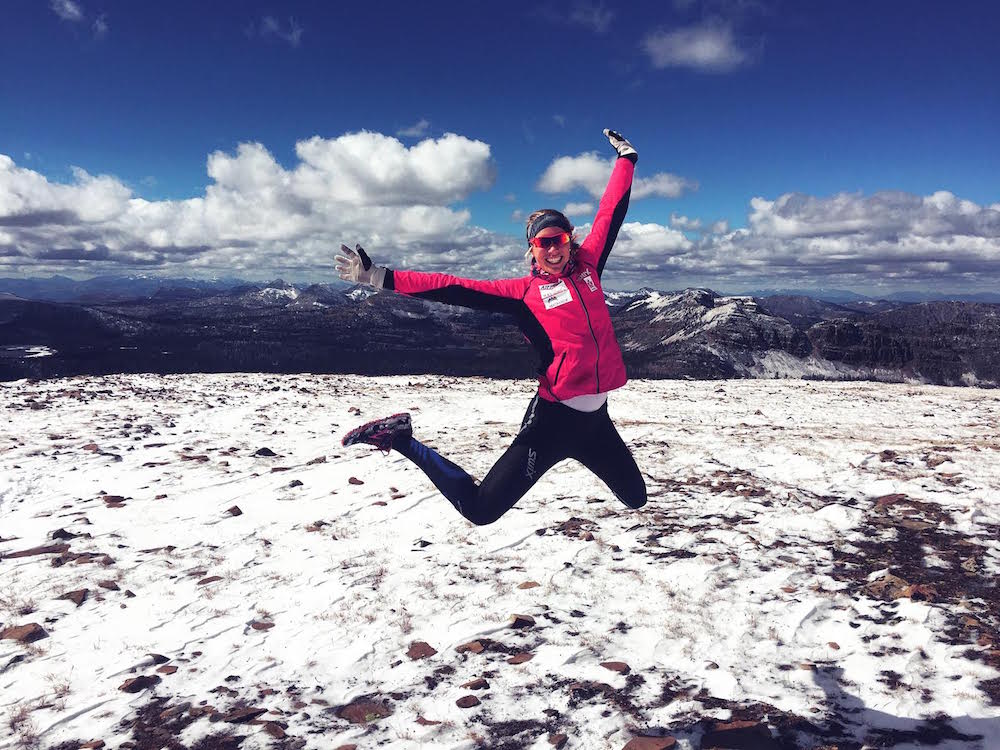
    Dahria Beatty celebrating at snowy peak during an overdistance run near Park City (Courtesy Photo)
    Dahria Beatty (Canadian U25 Team) celebrating a snowy peak during an overdistance run near Park City, Utah. (Courtesy Photo)

    To kick off this World Cup season, Cross Country Canada (CCC) had planned to send four women for Period 1. After its men’s team has gathered most of the attention in recent years, the Canadian women are now in a position to develop depth at the top level of the sport.

    In her third full World Cup season, Emily Nishikawa, of Canada’s World Cup B-team, will be joined for Period 1 by national U25 Team members Dahria Beatty and Cendrine Browne. Maya MacIsaac-Jones was scheduled to make the trip but a minor foot injury at the end of October turned into a longer recovery.  

    “Things have been going well,” MacIsaac-Jones wrote in an email last week, “And I’ve been able to ski pain free while still seeing improvement in my foot.”

    Her plan to test her recovery from sesamoiditis, with pain at the forefront of her foot, in an Alberta Cup last Saturday was derailed by a minor cold, but she remained in good spirits.

    “I used to race in triathlon competitively until I was around 14,” wrote MacIsaac-Jones, a 21-year-old Alberta World Cup Academy (AWCA) skier. “Having that background helped because it meant that I was able to start getting good quality training in the pool right away.”

    For the women’s team, CCC’s primary goal this period is to get top-30 finishes and World Cup nation’s points to maintain its quota for World Cup starts. The Canadian women have four quota spots plus the Continental Cup (COC) leader this season. As Beatty is COC leader, there is one quota spot open. According to CCC High Performance Director Thomas Holland, the top choices for that spot are out: U25 Team member Olivia Bouffard-Nesbitt is “recovering from injury that kept her from doing any weight bearing training until this fall,” Holland wrote in an email. “Doing well in training/racing but not ready for the World Cup yet—needs to be cautious at this point.”

    Then there’s another U25 Team member, Katherine Stewart-Jones, who declined the Period 1 trip to focus on selection trials for U23 World Championships.

    “Our women’s team, they’re developing, but their best chance of getting nation’s points is in the relay, team sprints, those kinds of things,” Holland said in a previous phone interview in early November following CCC’s World Cup team trials. “But we’re not just going [to Europe] just to do the relay. It’s important [for skiers] like Dahria Beatty, who is more sprint-oriented and got her results there last year, they’re chasing World Cup points, is the primary goal.”  

    The World Cup is very much a European tour. North American athletes spend months in hotels scheduling calls home around the six- to nine-hour time difference. European athletes don’t just benefit by keeping the same mobile phone number on the road and avoiding jet lag. At the start of Ski Tour Canada, France’s Maurice Magnificat told FasterSkier that he went home after “every weekend” during the World Cup season. Last season, Nishikawa was the only Canadian woman racing World Cups in Europe for most of the season. While many of the European athletes recovered at their homes, Nishikawa spent time with the American women when possible.

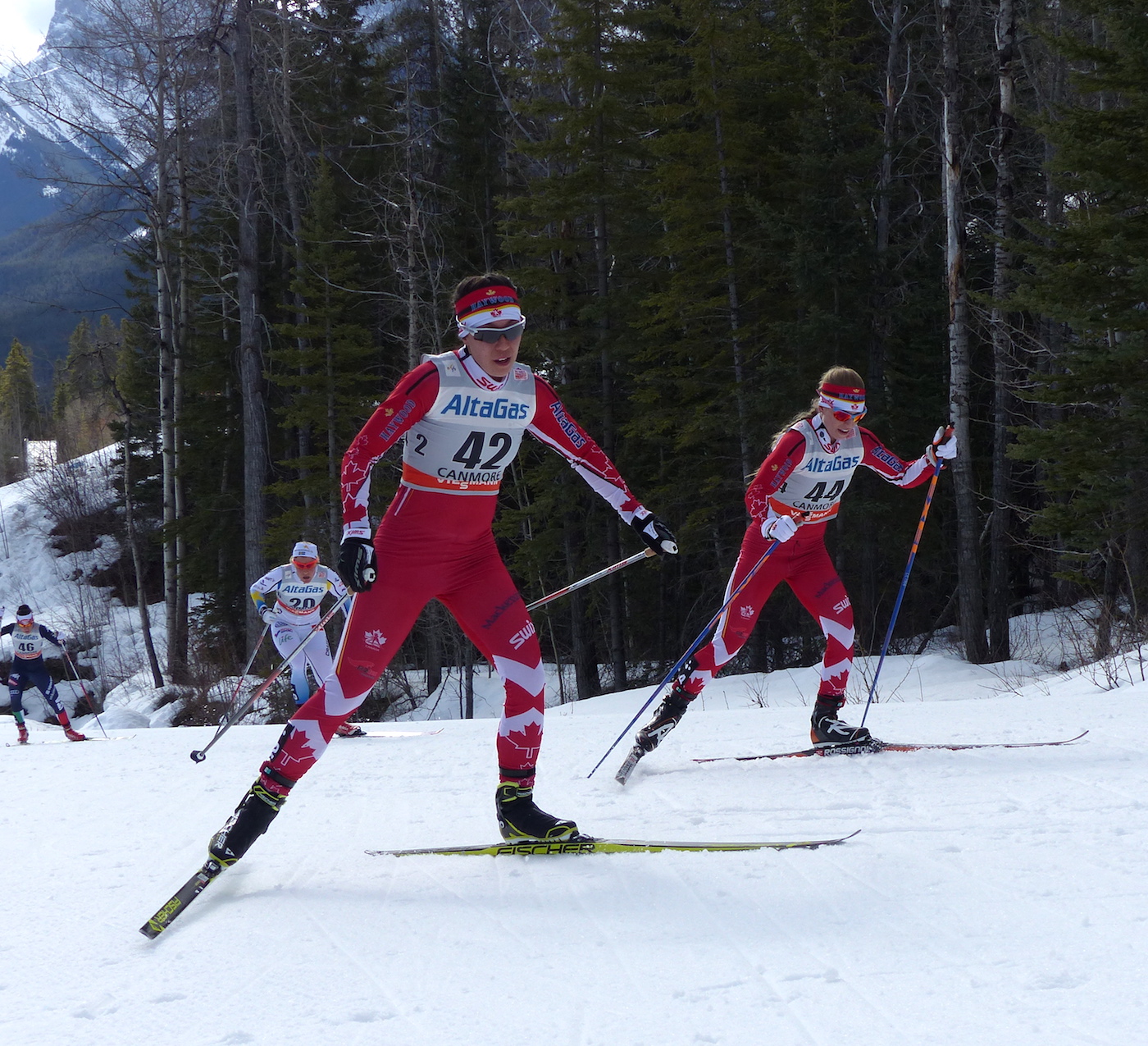
    Emily Nishikawa (42) and Canadian teammate Cendrine Browne (44) in the women's 15 k skiathlon at the 2016 Ski Tour Canada in Canmore, Alberta. (Photo: Peggy Hung)
    Emily Nishikawa (42) and Canadian teammate Cendrine Browne (44) in the women’s 15 k skiathlon at the 2016 Ski Tour Canada in Canmore, Alberta. (Photo: Peggy Hung)

    “It was not super-bad, but I’m excited to have Canadian women there with me,” Nishikawa said in a phone interview in October.  

    When she first spent a few months on the World Cup circuit following 2013 World Championships nearly four years ago, Nishikawa, now 27, had teammate Perianne Jones to look up to.

    “That was great to learn from her and have her there showing me the ropes of World Cup racing,” Nishikawa said.

    This season, she will be sharing her experience with the younger three.

    “I really don’t know how [Nishikawa] did it,” Browne, 23, of the Pierre-Harvey National Training Centre, said on the phone.

    All three said they view Nishikawa as a leader and mentor.

    “She’s much more calm than we are,” Browne said. “We are still all excited and sometimes a little bit stressed out. She brings something else to the group, she tells us some tricks sometimes, or tells us stuff we should do.”

    “Emily’s had a few years of experience now,” said Beatty, 22, of the AWCA. “And she’s been able to bring a wealth of knowledge of what we need to make that jump and help us with that.”

    “To have enough women to fill a relay team is awesome,” Nishikawa said in October of her three teammates (before MacIsaac-Jones was injured). “To improve the women’s program in Canada, we need to have women there [in Europe]. I’m really excited about it.”

    Preparing for Europe

    For Canmore-based Nishikawa, Beatty and MacIsaac-Jones, elevation training is an everyday activity, with an elevation of 1,400 metres (nearly 5,000 feet) at the front door and 2,800-metre peaks (9,000+ feet) visible from the couch. For Browne, who lives and trains near sea level in Quebec, elevation trips are an important development step.

    “This year is my third time in Park City, I feel already much better than the first year I was here,” Browne said during the team’s Utah camp in October.

    She completed two elevation camps this season: first in Park City, Utah, and in mid-November, 10 days in Davos, Switzerland, before the World Cup opener in Finland.

    There has been an increased emphasis on alignment camps this year, with more women training together. A two-week camp in Mont Tremblant, Quebec, was followed by two and half weeks at Park City in October. All the women were happy to spend more time with a bigger group.

    “I would like to train more with them because they’re stronger than the people on my team,” Browne said.

    An additional highlight from the Tremblant camp was the lake. “It was really nice to have the lake right there and go for a swim afterwards,” Beatty recalled. In and around Canmore, the water is colder, and “you just jump in and jump out,” she said.

    Nishikawa, Beatty, and MacIsaac-Jones added a summer snow camp to their schedule, going to New Zealand for three weeks of skiing in August, which they paid for themselves.

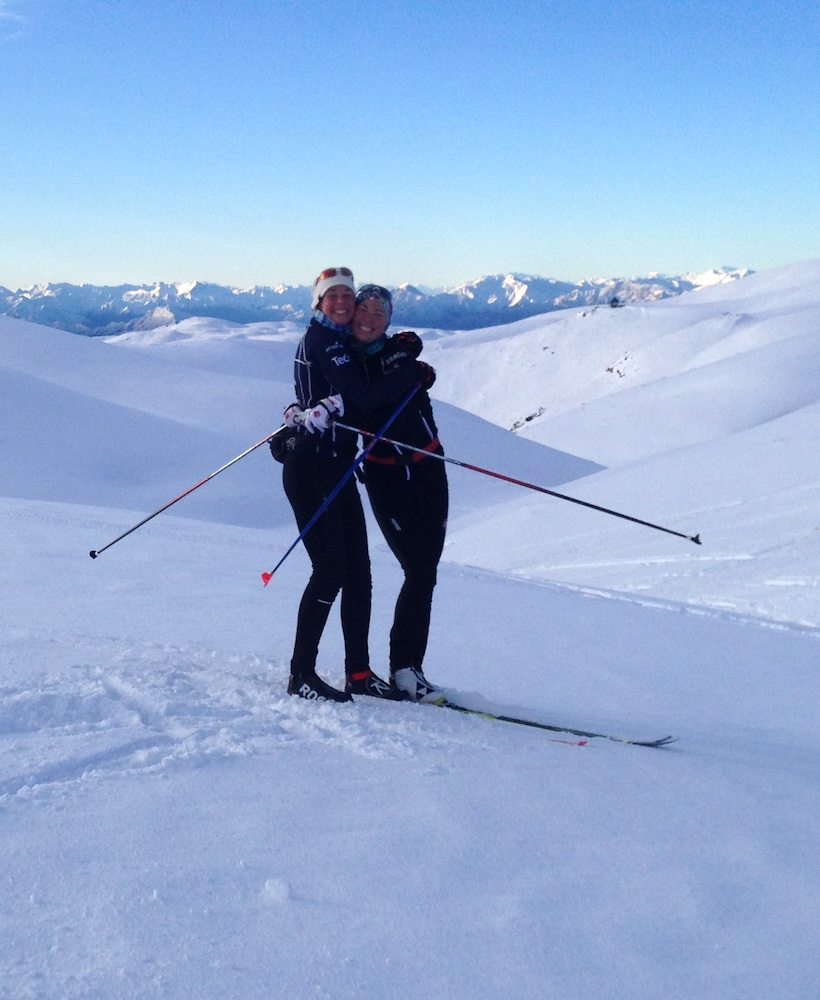
    Beatty and Macisaac-Jones appreciating the 'summer' snow in New Zealand (Photo: Emily Nishikawa)
    Beatty and MacIsaac-Jones appreciating the ‘summer’ snow in New Zealand in August. (Photo: Emily Nishikawa)

    “We rented our own car,” Beatty said. “We kind of were there without a coach, so it was a little bit scary thinking about it, but it went really smoothly and everyone was really helpful.”

    The Canadian Para-Nordic and biathlon teams were also there and provided some external support. For all three women, it was a volume block. “Lots of skiing and less intensity than in a regular block,” Beatty explained..

    “It was incredible,” MacIsaac-Jones reflected. “The conditions were amazing while we there and it was probably my best training camp of the season.”

    “That was my first time to New Zealand,” Nishikawa said. “It’s like the perfect training setup […] staying at Snow Farm Lodge. It was a really successful camp and I definitely want to go back there next year.”

    During the offseason, Beatty said she addressed an injury. She missed the final classic stage of Ski Tour Canada with back problems and worked through the summer realigning her classic posture to prevent a repeat.

    “When I did a classic time trial in NZ, it came back a little bit, but I’ve been working a lot on trying to strengthen my core and the areas around it. It doesn’t bother me for everyday training,” she said.

    The Park City alignment camp in October was fully supported by CCC, with 15 to 18 women training together when possible.

    “It’s nice to have such a big group to train together,” Beatty said of the camp. “To have so many girls all in one place.”

    MacIsaac-Jones made the biggest changes of the four this year, joining both the national team and, for the first time in her career, a training centre.

    “I guess the biggest difference would be having such a big group of coaches and physiologists and strength coaches and people to help me with my training,” MacIsaac-Jones said of the World Cup Academy.

    She estimated that her new program costs about the same as training with Rocky Mountain Racers, also based in Canmore, with the added national-team funding offsetting the higher fees for the Academy. But European travel adds to the costs as well.

    “At this moment, I’m budgeting about, my guess is around $6,000 for the Period 1 World Cup,” MacIsaac-Jones said in October.

    First Weekend

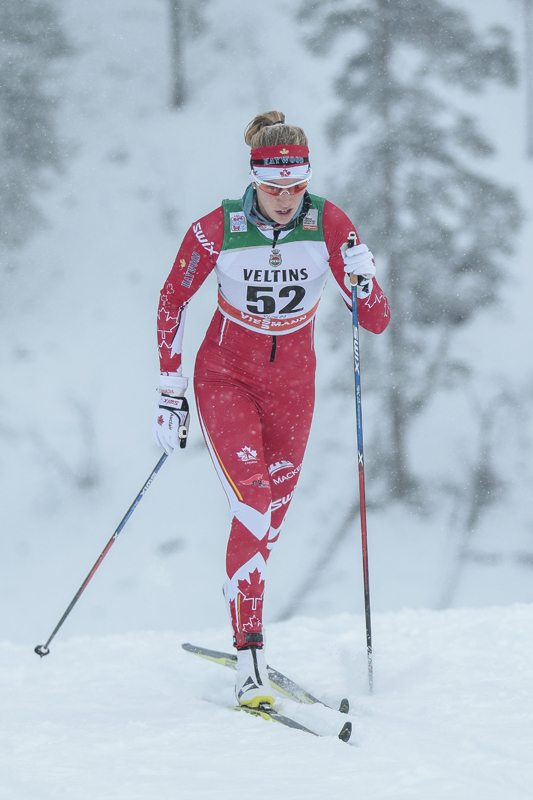
    Dahria Beatty racing to 50th in the classic sprint qualifier last Saturday at the first World Cup of the 2016/2017 season in Kuusamo, Finland. (Photo: Fischer/NordicFocus)
    Canada’s Dahria Beatty racing to 50th in the classic sprint qualifier last Saturday at the first World Cup of the 2016/2017 season in Kuusamo, Finland. (Photo: Fischer/NordicFocus)

    Beatty and Browne opened the season with the classic sprints in Kuusamo, Finland, last Saturday, Nov. 26, placing 50th and 62nd, respectively, in a stacked field.

    After the qualifier, Beatty explained she was “a lot less nervous” and had a better sense of how European World Cup sprints work after experiencing it for the first time.

    Now, “… I feel like I can treat these race starts more like any other race I would do!” she wrote.

    The next day on Sunday, Nov. 27, Beatty described being less-than-satisfied with her 10-kilometer classic race, where she placed 74th. (Browne placed 58th, just ahead of Nishikawa in 59th.)

    “The race didn’t going very well for me but my back’s not a problem, so that’s a big positive going forward,” Beatty explained. “At the start of the season one good race of two isn’t that unusual for me. I was happy with the sprint and I am really looking forward to the mini tour in Lillehammer.”

    Last season at the Ski Tour Canada, which doubled as World Cup Finals, five Canadian women completed the eight-stage Tour. Nishikawa, Browne and MacIsaac-Jones were three of them, along with Bouffard-Nesbitt and Canmore’s Annika Hicks. Beatty didn’t complete the final stage, but she notched a career-best 15th in the Canmore classic sprint.

    Asked how those World Cups starts affected her confidence for this season, Browne wrote, “I feel like I belong here and that I am a World Cup skier like all these other girls. I feel like I’m part of them now.”

    Heading into this season, Browne had 17 World Cup starts to her name, ahead of Beatty with 16 and MacIsaac-Jones with 15. Despite their collective experience, Browne and Beatty were glad to have Nishikawa’s guidance in Kuusamo.

    “I think the best thing Emily helped with this week was suggesting we get breakfast food to make in our condo,” Beatty wrote. “It definitely saves an extra stress on race mornings.”

    Nishikawa skipped the sprint to focus on the 10 k classic the next day.

    “It was great cheering on Dahria and Cendrine, and made me so excited to put a bib on!” Nishikawa wrote after watching the sprint. “It is lots of fun having them here and we are looking forward improving together as a team this season. We can’t wait for Maya to join us when her foot is healed up.”

    Potential Outlook

    All programs in all countries go through phases. Looking back a decade, the World Cup scene was very different.

    In 2005/2006, Norway had a rough year, most notably placing fifth in both genders at the Olympic relays in Torino, Italy. Despite health struggles, Marit Bjørgen did win the Overall World Cup despite (by six points over Canada’s Beckie Scott), but the country was feeling pain after a disastrous Olympics. With his first World Cup podium (in a skate sprint in March of that season), Canadian Devon Kershaw helped elevate a men’s program that had been largely funded by the women’s success. Also that year in Borlänge, Sweden, in the same race that Kershaw broke through, Kikkan Randall recorded her first World Cup top 10, placing fifth in the skate sprint. At the time, she was the star of a tiny U.S. team. Then at the iconic Holmenkollen women’s 30 k freestyle, Italy was the only country with two athletes in the top 10.

    Will 2016/2017 be the watershed year for the Canadian women’s team? As with the continuously emerging U.S. women’s team, we won’t know for a few years, but it will be fun to watch.

    American Chelsea Holmes leads Canadians Emily Nishikawa (42) and Cendrine Browne, and Hanna Falk of Sweden, during the women's 15 k skiathlon on Wednesday in Canmore, Alberta. (Photo: Fischer/NordicFocus)
    Canada’s Emily Nishikawa (42) and Cendrine Browne (44) on the heels of American Chelsea Holmes, followed by Sweden’s Hanna Falk (20) during the women’s 15 k skiathlon at the 2016 Ski Tour Canada in Canmore, Alberta. (Photo: Fischer/NordicFocus)
  • SoHo and Park City Gear Up to Host First U23/Junior Worlds in 30+ Years

    SoHo and Park City Gear Up to Host First U23/Junior Worlds in 30+ Years

    A view of Soldier Hollow's stadium from the highest point of the 5 k olympic course.
    A view of Soldier Hollow’s stadium from the highest point of the 5 k Olympic course as seen in January 2014, with the timing building and Soldier Hollow Charter School (white building) at the center.

    As the 2016/2017 race season approaches, plans are proceeding for the International Ski Federation’s (FIS) Nordic Junior/U23 World Championships to return to the U.S. With both the U.S. Cross Country Championships (which take place Jan. 7-12) followed by Junior Worlds (Jan. 30-Feb. 5), the Utah Olympic Legacy Foundation (UOLF) has a full plate this winter.

    Scheduled for just two-and-a-half weeks after U.S. nationals at Soldier Hollow, preparations are well underway.

    “Without a doubt it’s the largest nordic event we’ve had in Utah since the 2002 [Winter Olympic] Games,” said Greg Poirier, the organizing committee’s technical advisor who has been instrumental in bringing the championships to Park City and Soldier Hollow, Utah. “And it’s been 30 or 31 years since we’ve had Junior World Championships in this country.

    “This has been a dream of mine for quite a while, to bring the championships back to the USA,” he said.

    The last time Junior Worlds took place in the U.S. was 1986 in Lake Placid, N.Y. Senior World Championships goes back even further to 1950. That year, Lake Placid was supposed to hold the senior championships, but could only host the jumping events due to lack of snow.  The cross-country events were moved to Rumford, Maine.

    “If it goes well, pat me on the back; if it goes bad, then I had nothing to do with it,” Poirier, who previously coached for U.S. Nordic Combined when his hometown was awarded the upcoming Junior Worlds in 2015, said with a laugh.

    According to Poirier, the UOLF and Soldier Hollow are ready to host the championships.

    “If we did nothing from now to January 30, facility-wise, we’re ready to go,” he said in early August. “From a technical point of view, I think we’re on schedule. The courses, the ski jumps, the actual competitive side of the event. If athletes showed up tomorrow, we’re ready. We still have to build the stadium and make everything kind of pretty.”

    Norwegian national team member Mikko Kokslien took a photo of the U.S. nordic-combined jumping facility in Park City, Utah.
    The jumping facility in Park City, Utah, as seen in 2012. (Photo: Mikko Kokslien)

    In addition to women’s individual ski jumping and a co-ed team competition, Poirier said that the 2017 Junior Worlds will have a women’s ski jumping team event, which includes four women per team “just like the men’s competition. It’s something the [local] organizing committee wanted to do,” he said.

    Poirier initially approached the local organizing committee (OC), seeking approval for this women’s team event. The local OC then asked the U.S. Ski & Snowboard Association (USSA) to ask FIS to add it to the championships program. FIS did so, based on its desire to include women’s ski jumping as a team event for years to follow. Poirier said they were still several years away from women’s nordic combined events.

    Logistically, Junior Worlds are a bigger event than U.S. nationals. UOLF Vice President of Sport and Venues Marc Norman expects more than 800 athletes and 400 support staff. The cross-country and nordic-combined skiers and their support staff will be housed in Midway, Utah (near the Soldier Hollow venue), while jumpers and their coaches will stay in Park City (near the jump hills). In contrast, Norman expected about 450 skiers, including some from Canada and Australia, to compete at 2017 U.S. nationals. He anticipated more than 300 volunteers for Junior Worlds, compared to about 100 for nationals.

    The Soldier Hollow Charter School, a K-6 public charter school located in the heart of the ski stadium, operates partly in the timing building. Because the school will closed for vacation during Junior Worlds, organizers will have access to the whole building.  While school will be in session during U.S. nationals, by agreement, there will be designated space in the building for timing.

    Updated Sprint Course

    While the distance courses remain the same, there will be changes to the sprint course Soldier Hollow has used for the last several years. The long downhill to the stadium after the last big climb will be broken up.

    2013 U.S. nationals skate sprint women's quarterfinal 2 at Soldier Hollow
    Racers start their descent on the final downhill of the “old” sprint course at 2013 U.S. nationals at Soldier Hollow in Midway, Utah.

    “The sprint is kind of clustered up,” Luke Bodensteiner, USSA’s executive vice president of athletics, said on the phone in August. “It’s become a 200-meter race at times. So they’ve made some modifications … to break up that last long downhill.”

    Previously, racers would crest the last climb and descend into a downhill straightaway. That created a substantial draft, helping the tail end of a broken-up group regain contact on that final downhill.

    According to USSA Nordic Director Robert Lazzaroni, the revised sprint course will also be used for nationals. Lazzaroni serves as the USSA advisor on the 2017 Junior Worlds organizing committee.

    While the facility side of preparation is going well, finding dollars has been a challenge.

    “I know they feel they’re behind,” Bodensteiner said. “They’re concerned about how fundraising is going. We remain optimistic it will be a financially healthy event. That’s a concern with any of these events, and Junior Worlds is no exception.”

    “The base budget to put on the event is $365,000,” Norman wrote in an email in late September. “We also have an enhanced budget that would allow us to exceed the minimum FIS requirements at a cost of $465,000. Hopefully we can find additional sponsors, suppliers, and donors that will help us close the gap to the base budget and even allow for us to do some or all of the enhanced pieces (more event look, athlete functions, event broadcast, etc…).”

    Bodensteiner explained that there was no guaranteed revenue source, and said that organizers would “have to really hump” to raise funds. “Before we decided to bid for the event, we collectively identified enough revenue sources that were reliable that we could make it work. There’s still a little bit of unknown, but it’s not atypical for events to be in that position.”

    Ben Saxton (SMST2) skis with a junior athete during a skate ski at the USST's annual training camp in Park City, Utah, which ran this year from Oct. 17 until Oct. 31. (Photo: Liz Arky)
    SMST2 senior skier Ben Saxton, who has been to a total of four Junior/U23 World Championships, paces a young skier during the U.S. Ski Team’s dryland training camp at Soldier Hollow last month. (Photo: Liz Arky)

    As of mid-October, USANA Health Sciences, a nutritional supplement company, had signed on as the title sponsor for 2017 Junior Worlds.

    “We are still working on sponsorships for the event to fully meet our budget,” Norman wrote on Oct. 12.

    “Junior Worlds is a little different beast than other events that we run,” Bodensteiner said. “The World Cup events that we run, you have a broader media footprint.  You’re looking at national and in some cases international sponsors for those. They’re easier to get out in front of.  With the Junior Worlds here, even though it’s an international event, it’s going to be reliant on local sponsorship. Oftentimes those don’t materialize until the last minute.”

    When asked if hosting the Junior Worlds bid would lead to USSA bidding for World Cup events, Bodensteiner hesitated.

    “We’re at the point where we’re anticipating it,” he said.

    Although there have been discussions, Bodensteiner said they hadn’t really identified a way to run a FIS Cross-Country World Cup without incurring a substantial financial loss.

    “We haven’t found a financial pathway that makes it realistic,” he said.

    Bodensteiner outlined some of the cost differences between hosting Junior World Championships and a World Cup in a follow-up email.

    “The main cost drivers are prize money (both for the races hosted and a share of the season overall prizes), lodging and travel cost reimbursement for the top group of athletes and their staff (and a number of Continental Cup athletes), event production (grooming, timing, snowmaking, staffing, wax rooms, course installations, travel costs for various FIS officials, medical evacuation, etc), and TV production (camera installations on course, cabling, satellite truck to send a live signal, production crew to shoot, edit the feed and graphics, etc),” he wrote. “Obviously some of this gets recouped through the sale of sponsorship and TV rights. FIS also keeps a portion of the advertising rights for its own purposes, which do not get passed along to the host organizer.”

    If U.S. athletes achieve the goals set by USSA, will there be additional funding for junior cross-country development?

    “When we budget for our programs, we always look at results at different levels,” Bodensteiner said. “We look where ‘our best bet is’ and allocate support to be the best in the world. Results at multiple levels including Junior Worlds are always a consideration.”

  • 17 Questions for 2017: Katherine Stewart-Jones

    17 Questions for 2017: Katherine Stewart-Jones

    Pink posse: Katherine Stewart-Jones and teammates strike a pose at a recent rollerski workout. (Courtesy photo)
    Pink posse: Katherine Stewart-Jones and teammates strike a pose at a recent rollerski workout. (Courtesy photo)
    Welcome to “17 Questions for 2017″, where we are catching up with American and Canadian national-team members before the beginning of the winter season. 

    ***

    21-year-old Katherine Stewart Jones made her World Cup debut for Cross Country Canada last season, first in Europe and then in the Ski Tour Canada. The Nakkertok Nordic racer, now based at the NDC in Thunder Bay and taking courses at Lakehead University, then went on to pick up three bronze medals at Canadian National Championships in the senior division.

    That’s coming off a junior career where she had two top-20 finishes at 2015 World Junior Championships.

    1. Biggest change in your life in the last five or so months since the ski season ended?

    Not having too much change this year has been a huge positive. 

    2. Biggest change in your training?

    An increase in volume of about 100 hours and a lot more focus on double-pole.

    3. Major areas of improvement you’ve seen so far?

    Stewart-Jones training on the Haig Glacier this summer. (Courtesy photo)
    Stewart-Jones training on the Haig Glacier this summer. (Courtesy photo)

    My overall fitness in general

    4. Whom you’ve been working closest with this offseason (coaches or training partners)?

    I have continued to work with my coach Timo Puiras, my team’s new assistant coach Tim Wintoniw and my strength coach Paul Hemsworth. It has been great to be able to work with such a big group of girls this year. With 6 girls on my team there is always someone to train with.

    5. Best trip in the last five months (and why)?

    Park City. I loved the variety it provided for training, the endless roads and running trails kept things interesting!

    6. Favorite cross-training?

    Hiking! I love trail running/hiking and climbing mountain peaks

    7. Favorite non-athletic activity or pastime this summer?

    I love adventuring in general, camping, cliff/bridge jumping, discovering new places

    8. Song that was your jam this summer?

    Love on The Brain- Rihanna

    9. All time favorite race moment?

    Canada's Katherine Stewart-Jones during the women's 15 k skiathlon in Canmore, Alberta, last season. (Photo:Fischer/NordicFocus)
    Canada’s Katherine Stewart-Jones during the women’s 15 k skiathlon in Canmore, Alberta, last season. (Photo:Fischer/NordicFocus)

    The Gatineau World Cup at the ski tour Canada. Racing in front of the home crowd on home soil was an unreal experience. It made me realize how lucky I am to have such a big support team behind me.

    10. First thing you pack in your bag when you leave for Europe?

    My earplugs, everyone who knows me knows how much I love sleeping.

    11. Venue/event you’re most excited to visit this season?

    Soldier Hollow! I rollerskied there this fall and the trails look like so much fun!!

    12. Who will win the World Cup title this year?

    Maiken Casperson Falla

    13.  Biggest sacrifice you feel you’ve made choosing this career path?

    Stewart-Jones and her teammates seeing some early snow. (Courtesy photo)
    Stewart-Jones and her teammates seeing some early snow. (Courtesy photo)

    Honestly, I really haven’t sacrificed much. I am pretty lucky to be able to do what I do. The one thing I wish I could do more of without compromising my training is to go on long backpacking adventures, but that can wait until the end of my ski career!

    14. If you could change one thing about your sport, what would it be?

    To be more accessible to everyone financially… its an expensive sport

    15. What did you have for breakfast this morning?

    smoothie, toasted English muffin, fried egg

    16. In 5 years, I’ll be ____?

    skiing, sleeping, eating

    17. In 50 years, I’ll be ____?

    skiing, sleeping eating

  • 17 Questions for 2017: Ben Loomis

    17 Questions for 2017: Ben Loomis

    Loomis racing at U.S. National Championships in Park City, Utah, this summer. (Courtesy photo)
    Loomis racing at U.S. National Championships in Park City, Utah, this summer. (Courtesy photo)
    Welcome to “17 Questions for 2017″, where we are catching up with American and Canadian national-team members before the beginning of the winter season. 

    ***

    A silver medalist at 2016 Youth Olympic Games in Lillehammer, Norway, 18-year-old Ben Loomis was named this year to the U.S. National Team for nordic combined. He also got his first taste of summer Grand Prix racing in Europe, competing in Germany and Austria with the senior team.

    1. Biggest change in your life in the last five or so months since the ski season ended?

    I’m gearing up for graduation in a few weeks.

    2. Biggest change in your training?

    This summer I was named to the USA Nordic Combined Team and therefore have had many more opportunities to train with the best guys! It has been great experience to be pushed harder every session and learn from more experienced athletes.

    3. Major areas of improvement you’ve seen so far?

    Loomis in Planica, Slovenia, as part of a junior training camp this summer. (Courtesy photo)
    Loomis in Planica, Slovenia, as part of a junior training camp this summer. (Courtesy photo)

    My jumping has been on the highest level I have ever seen this summer. Much of this can be attributed to spending more time training in Europe.

    4. Whom you’ve been working closest with this offseason (coaches or training partners)?

    This summer has been a great mix of training with older athletes as well as many of my old team members. Stephen Schumann and myself are the only two national team athletes in school, so we have been doing a large amount of training together. We also have a new Austrian coach (Nik Huber) who has been a very positive influence on the team.

    5. Best trip in the last five months (and why)?

    This summer’s Europe trip. It started with a fun couple weeks with just juniors and then finished off with the Summer Grand Prix.

    6. Favorite cross-training?

    Mountain biking hands down. Park City has trails that never get old.

    7. Favorite non-athletic activity or pastime this summer?

    Not something I have been able to do much of this summer, but waterskiing has always been my favorite pastime.

    8. Song that was your jam this summer?

    Chill Bill

    9. All time favorite race moment?

    American Ben Loomis (2) leads Germany's Tim Kopp (1) during the Nordic Combined Men's Individual Gundersen NH/5 k cross-country race at Birkebeineren Cross-Country Stadium at the 2016 Youth Olympic Games in Lillehammer Norway. Loomis went on to place second behind Kopp. (Photo: Thomas Lovelock for YIS/IOC)
    American Ben Loomis (2) leads Germany’s Tim Kopp (1) during the Nordic Combined Men’s Individual Gundersen NH/5 k cross-country race at Birkebeineren Cross-Country Stadium at the 2016 Youth Olympic Games in Lillehammer Norway. Loomis went on to place second behind Kopp. (Photo: Thomas Lovelock for YIS/IOC)

    Racing at the Youth Olympic games this winter. Last lap of the race I was in group with myself and two others coming into the last hill. Knowing I would land a podium spot was very special.

    10. First thing you pack in your bag when you leave for Europe?

    My neck pillow and headphones to make traveling more tolerable.

    11. Venue/event you’re most excited to visit this season?

    I’m looking forward to competing at home in Eau Claire, Wisconsin. It has been two years since I last jumped in Midwest and having a home crowd is always very special.

    12. Who will win the World Cup title this year?

    Akito Watabe. He has been on the podium the last five years and should be on top!

    13. Biggest sacrifice you feel you’ve made choosing this career path?

    Loomis jumping this summer. (Courtesy photo)
    Loomis jumping this summer. (Courtesy photo)

    Having a normal high school life was something I never really experienced. I attended public school for the first half of my freshman year, and after that I moved across the country to attend the Winter Sports School of Park City.

    14. If you could change one thing about your sport, what would it be?

    Ben Berend put it right, we need more girls!

    15. What did you have for breakfast this morning?

    Roll with jam, egg, ham, cheese, and of course coffee.

    16. In 5 years, I’ll be ____?

    Hopefully still following my dreams.

    17. In 50 years, I’ll be ____?

    Retired.

    Ben Loomis celebrates a career-best Continental Cup fourth-place in December in the 10 k cross-country race at Soldier Hollow in Midway, Utah. (Photo: U.S. Ski Team/Tom Kelly)
    Ben Loomis, then 17 years old, celebrates a career-best Continental Cup fourth-place in December in the 10 k cross-country race at Soldier Hollow in Midway, Utah. (Photo: U.S. Ski Team/Tom Kelly)
  • 17 Questions for 2017: Julien Locke

    17 Questions for 2017: Julien Locke

    Julien Locke (right) rollerskiing up Mount Norquay in Banff, Alberta, with Canadian National Ski Team teammate Lenny Valjas. (Courtesy photo)
    Julien Locke (right) rollerskiing up Mount Norquay in Banff, Alberta, with Canadian National Ski Team teammate Lenny Valjas. (Courtesy photo)
    Welcome to “17 Questions for 2017″, where we are catching up with American and Canadian national-team members before the beginning of the winter season. 

    ***

    Julien Locke had an unusual distinction last year: he was the only athlete to podium at both Canadian and U.S. national championships, taking third in the skate sprints at both events.

    The British Columbian also snagged NorAm wins and a 16th-place performance in the U23 World Championships sprint. Locke, now 23 years old, was named to Canada’s national team for the first time in May and has since relocated to Canmore, Alberta.

    1. Biggest change in your life in the last five or so months since the ski season ended?
    Locke getting some glacier time. (Courtesy photo)
    Locke getting some glacier time. (Courtesy photo)

    This season is my first year on the Canadian National Ski Team. After 9 years skiing with the Black Jack Ski Team in Rossland, BC, I am now living in Canmore, AB.

    2. Biggest change in your training?
    Training this year has been quite consistent with what I’ve done previously with some small differences. There was a bit more travel this year with a NST camp in Quebec in late June. With World Cup sprint opportunities on the line on November 1/3, the training season has been adjusted in order to be in race shape a good month earlier than usual. Aside from that, not much has changed.
    3. Major areas of improvement you’ve seen so far?
    I am happy with where how my double pole has been this year. Last year I double poled nearly half of the classic races on the calendar and I feel quite solid as we get close to the upcoming season.
    4. Whom you’ve been working closest with this offseason (coaches or training partners)?
    I’ve been training a lot this year with the Canmore NST group of Len Valjas, Jess Cockney, Graeme Killick and Knute Johnsgaard.
    5. Best trip in the last five months (and why)?
    I just returned from a fantastic training camp in Park City. The NST guys all stayed up in Deer Valley at 2600m. Great roads for roller skiing, wonderful fall colours and nice weather (plus a few snowy days!) for training.
    6. Favorite cross-training?
    Julien Locke (r, Team Black Jack) challenges APU's Eric Packer at around 400-meters to the finish of the semi-final for the men’s 1.5 k freestyle sprint at 2016 U.S. National Championships in Houghton, Mich. Locke went on to finish third overall.
    Julien Locke (r, Team Black Jack) challenges APU’s Eric Packer at around 400-meters to the finish of the semi-final for the men’s 1.5 k freestyle sprint at 2016 U.S. National Championships in Houghton, Mich. Locke went on to finish third overall.

    I’m a big fan of everything we do for training: roller skiing, trail running, paddling and cycling.

    7. Favorite non-athletic activity or pastime this summer?
    I had a busy and productive summer with work (I am a web developer) and have recently launched a couple new sites. Check out the new Sovereign Lake Nordic website: www.sovereignlake.com
    8. Song that was your jam this summer?
    Josh Ritter’s Hello Starling album.
    9. All time favorite race moment?
    That is a difficult question! The highlight of last season was racing the Keski (Gatineau Loppet) and competing against Alex and Lenny in the Canadian Nationals sprint.
    10. First thing you pack in your bag when you leave for Europe?
    Race boots are the first priority when I am traveling. Everything else can be borrowed if needed, but it’s difficult to ski if you don’t have boots that fit. I always travel with either both my skate and classic, or just pursuit boots in my carry-on.
    11. Venue/event you’re most excited to visit this season?
    My main focus for the winter is the World Championships in Lahti, Finland. The pre-Olympic World Cups in Pyeongchang are the second priority.
    12. Who will win the men’s and women’s World Cup titles this year?
    Well… given the recent news from Norway, the start lists may look a bit different this year. I would bet on Sundby for the mens overall with Alex Harvey up there as well. For the women, Heidi Weng.
    13. Biggest sacrifice you feel you’ve made choosing this career path?
    I don’t feel that I have to make sacrifices in order to ski. I feel very fortunate to have the opportunity to train and compete full time.
    14. If you could change one thing about your sport, what would it be?
    It would be amazing for our sport in North America if we could bring skiing to the masses. Cross country skiing is such a great sport for all ages and the more excitement we can generate for young skiers, new recruits and the general public, the more we can grow our sport. It was fantastic to see the atmosphere at the Tour de Ski city sprints in Quebec last year and hopefully we can continue to have similar events in North America. Additionally, bring back the 50km Individual!
    15. What did you have for breakfast this morning?
    Bowl of oatmeal with yoghurt, fruit and honey and 2 poached eggs.
    16. In 5 years, I’ll be ____?
    … training hard at altitude for the last fall camp before the 2021/22 Olympic season begins.
    17. In 50 years, I’ll be ____?
    … 73 years old!
  • 17 Questions for 2017: Julia Kern

    17 Questions for 2017: Julia Kern

    Julia Kern biking up New Hampshire's Kancamagus Highway at a recent training camp. (Courtesy photo)
    Julia Kern biking up New Hampshire’s Kancamagus Highway at a recent training camp. (Courtesy photo)

    Welcome to “17 Questions for 2017″, where we are catching up with American and Canadian national-team members before the beginning of the winter season. 

    ***

    19-year-old Julia Kern had quite a diverse year last season, her first on the U.S. Ski Team: a SuperTour podium, a trip to World Juniors, two individual podiums in the junior races at OPA Cup finals in Italy, and two podiums in the junior races at U.S. National Championships (long and short distance).

    Having joined the Stratton Mountain School SMST2 Elite Team this year as well as enrolling at Dartmouth College, Kern has made some changes and is looking forward to another big year.

    1. Biggest change in your life in the last five or so months since the ski season ended?

    My biggest change in the past 5 months has been starting college at Dartmouth. The day after the season ended, I headed straight to Dartmouth to start my first term in the spring and I am currently half way through my second term this fall.

    2. Biggest change in your training?

    I have finally been able to train without modifying my plan due to injuries and illness so I would say my biggest change is that I am back to a normal training plan! Wahoo!

    3. Major areas of improvement you’ve seen so far?

    I think there isn’t one specific area where I have seen improvement over the past few months, but actually in every area. I feel like I have generally improved in all areas.

    4. Whom you’ve been working closest with this offseason (coaches or training partners)?

    Julia Kern happily healthy and rollerskiing. (Courtesy photo)
    Julia Kern happily healthy and rollerskiing. (Courtesy photo)

    Since I have joined the SMS Elite team this year, Pat O’Brien became my coach so I have been working closely with him in conjunction with Cami at Dartmouth. In the spring and fall, I have been trained with Dartmouth Ski Team and in the summer I trained with the SMS Elite team. It is fun to mix up training partners!

    5. Best trip in the last five months (and why)?

    I have only traveled once in the past five months. I went to Park City, UT for a training camp to kick off the summer and it was one of the most effective camps I have been to. I always love coming back to Park City because it is starting to feel like another home to me and the area is just so incredible!

    6. Favorite cross-training?

    This is a hard one! I really enjoy playing basketball in my free time, but if we are considering cross cross training to be a little more ski specific, I would have to say swimming.

    7. Favorite non-athletic activity or pastime this summer?

    Camping and hanging out on the beach may be considered an athletic activity with my family, but I was always enjoy my family’s annual vacation camping on Cape Cod every summer.

    8. Song that was your jam this summer?

    I would say my go-to jam this summer was “Good Day” by Nappy Roots. Definitely not a new song, but it is a good way to start a good day!

    9. All time favorite race moment?

    American Julia Kern (SMS/USST) racing to a career-best 16th in the 2016 Junior World Championships freestyle sprint  in Rasnov, Romania. (Photo: Pete Leonard)
    American Julia Kern (SMS/USST) racing to a career-best 16th in the 2016 Junior World Championships freestyle sprint in Rasnov, Romania. (Photo: Pete Leonard)

    My all time favorite race moment was definitely this past winter during my last race at OPA Cup finals. It was a pursuit start and the girl who started in front of me and behind and I all caught up to one another and skied most of the race together. My tactics worked out really well and I finally nailed the “shake and bake” tactic right in the end to beat out the two girls I was racing head to head with.

    10. First thing you pack in your bag when you leave for Europe?

    Underwear…but that is a given essential. I pack my camera because I love taking photos and videos on the road, capturing the different cultures and landscapes around.

    11. Venue/event you’re most excited to visit this season?

    I am most excited for Soldier Hollow! I think it will be an incredible opportunity to have our qualification for World Juniors at the same venue and on the same race courses as World Juniors.

    12. Who will win the World Cup title this year?

    For the men, Petter Northug. For women, Marit Bjoergen.

    13. Biggest sacrifice you feel you’ve made choosing this career path?

    The biggest sacrifice I think so far has been giving up on a normal social life. I have found it is hard to maintain a close friend group outside of the ski community when I hardly stay in the same place longer than a month at a time. I am very fortunate to have my closest friends be in the skiing community though, and probably for a good reason!

    14. If you could change one thing about your sport, what would it be?

    I wish we had some world cups in the U.S. Having World Juniors in Utah this year is going to be really incredible and I wish that people in the U.S. got more exposure to what cross country skiing is and make it easier for athletes’ families come and watch.

    15. What did you have for breakfast this morning?

    I had two slices of fresh sourdough dough bread with avocado, topped with one over-easy egg on each. Yumm 🙂

    16. In 5 years, I’ll be ____?

    I will hopefully be racing on the World Cup circuit.

    17. In 50 years, I’ll be ____?

    I’ll be like my grandmother; active, happy, and a life filled with wonderful grandchildren.

  • 17 Questions for 2017: Devon Kershaw

    17 Questions for 2017: Devon Kershaw

    "Fishing this evening here in Utah!" Devon Kershaw wrote in an email last week. "Just catch and release - always. Lenny [Valjas] is allergic to fish 😂" (Courtesy photo)
    “Fishing this evening here in Utah!” Devon Kershaw wrote in an email last week. “Just catch and release – always. Lenny [Valjas] is allergic to fish 😂” (Courtesy photo)
    Welcome to “17 Questions for 2017″, where we are catching up with American and Canadian national-team members before the beginning of the winter season. 

    ***

    2011 World Champion Devon Kershaw may have been spending more time in Europe than in his native Canada this year, but he told FasterSkier in a podcast in August that he’s all in for Team Canada through the 2018 Olympics. As he adjusts to the prospect of becoming a dad in the next year, Kershaw has been training with Norwegians and Swedes around Oslo, where he is based with his wife.

    He tackled FasterSkier’s “17 Questions for 2017” from Utah, where the Canadian ski team was having a training camp.

    1. Biggest change in your life in the last five or so months since the ski season ended?

    Part of the Canadian crew at Stelvio Pass in northern Italy, with Devon Kershaw (r), Alex Harvey (second from r), Graeme Killick (second from l) and wax technician, Nic. "Beauty first ski on the Stelvio with #squad Thanks to our new Italian-stallion tech Nic for joining and showing us how's it's done up here! #3400m," Kershaw captioned the photo on Instagram. (Photo: Devon Kershaw/Instagram)
    Part of the Canadian crew at Stelvio Pass in northern Italy, with Devon Kershaw (r), Alex Harvey (second from r), Graeme Killick (second from l) and wax technician, Nic. “Beauty first ski on the Stelvio with #squad Thanks to our new Italian-stallion tech Nic for joining and showing us how’s it’s done up here! #3400m,” Kershaw captioned the photo on Instagram. (Photo: Devon Kershaw/Instagram)

    Spending more time in Norway and finding out I’ll be a father for the first time this winter!

    2. Biggest change in your training?

    Getting back to a more volume based program.

    3. Major areas of improvement you’ve seen so far?

    For sure the double poling – I’ve focused on that quite a bit this year.

    4. Whom you’ve been working closest with this offseason (coaches or training partners)?

    Jess Kryski (our team’s physiologist) has been really important and I have trained some great sessions with some Norwegian skiers and Martin Johansson (who also lives in Oslo).

    5. Best trip in the last five months (and why)?

    A quick weekend in Copenhagen with Kristin. It rained a lot, but what a cool city!

    6. Favorite cross-training?

    Hmmmm. Backcountry skiing or climbing.

    7. Favorite non-athletic activity or pastime this summer?

    My usual favourite would be fly fishing – but the Norwegian rules are so complicated.

    8. Song that was your jam this summer?

    I am really liking the new Bon Iver album and Angel Olsen’s latest. I am never a “one song” kind of dude.

    9. All time favorite race moment?

    That's the moment: Kershaw and Harvey celebrate their World Championship gold medal in the team sprint in Oslo, 2011.
    That’s the moment: Kershaw and Harvey celebrate their World Championship gold medal in the team sprint in Oslo, 2011.

    Seeing Alex [Harvey] edge out Hattestad to take team sprint gold in Olso in 2011.

    10. First thing you pack in your bag when you leave for Europe?

    I absolutely hate packing… So the first thing I pack is usually shoes and boots – to create a good base at the bottom of my bag. But this is at an ungodly late hour after procrastinating as long as humanly possible.

    11. Venue/event you’re most excited to visit this season?

    The World Champs in Lahti will be a great event. After being sick AF with pneumonia and whooping cough in 2015 10 or so days prior to Falun which ended my season, I am really excited to race a championship again!

    12. Who will win the World Cup title this year?

    I can’t believe I am writing this, but after training with Martin (Sundby) over the last months I really can’t see anyone coming close. He’s a beast.

    13. Biggest sacrifice you feel you’ve made choosing this career path?

    Canada's Devon Kershaw during the men's 15k skate stage of the Ski Tour Canada in Canmore, Alberta. Kershaw finished the tour ranked 16th. (Photo: Fischer/Nordic Focus)
    Canada’s Devon Kershaw during the men’s 15k skate stage of the Ski Tour Canada in Canmore, Alberta. Kershaw finished the tour ranked 16th. (Photo: Fischer/Nordic Focus)

    Money and education. A Canadian skier is not what you pick if you want to be stable financially and my mom will be really excited to see me finish up a university degree when the spandex no longer fit.

    14. If you could change one thing about your sport, what would it be?

    Hmmm…. Having it be more simple for fans. The fact that our sport is the only one in the Olympic program that you cannot be a defending champion confuses folks. That and I guess finding some way to make it healthier for the wax techs. Thinking of what they breathe in week-in and week-out for something as frivolous as skiing fast around a little loop is a bit scary. The trucks help – but is it enough?

    15. What did you have for breakfast this morning?

    Oatmeal with fruit, brown sugar, a cappuccino and a cortado (I know…).

    16. In 5 years, I’ll be ____?

    Exhausted in school and probably have two kids. Hopefully I will be fully (or at least close) trilingual at that point.

    17. In 50 years, I’ll be ____?

    Probably dead, but if not then I hope to still have my wits about me to enjoy conversations and time with family. Still being able to be active – no matter what that looks like – would be a big goal in 50 years if I am still around.

  • Nordic Nation Podcast: Rebounding with Liz Stephen

    Nordic Nation Podcast: Rebounding with Liz Stephen

    'Nordic Nation' Fasterskier PodcastLiz Stephen has earned her stripes. For the last 11 years, the 29-year-old Vermont native has been part of the US Ski Team (USST). After veterans like Kikkan Randall, Stephen has become an anchor on the women’s team, which now carries with it expectations of top-20’s, top-10’s and podiums. At the age of 15, the Burke Mountain Academy alpine skier and runner switched to the skinny skis for good.

    With her high energy and drive, she became a force on the U.S. junior cross-country ski scene. What followed were a string of results commensurate with her high turnover. In both 2013 and 2014, she was the 15th-ranked distance skier on the World Cup. A year later, that ranking was more than halved — she concluded 2015 ranked seventh in the Distance World Cup.

    Liz Stephen (U.S. Ski Team) leads Caitlin Patterson (Craftsbury Green Racing Project) and the rest of the chase pack, including Kaitlynn Miller (r), during the women's 30 k classic mass start at U.S. Distance Nationals on Saturday in Craftsbury, Vt. (Photo: John Lazenby/Lazenbyphoto.com)
    Liz Stephen (U.S. Ski Team) leads Caitlin Patterson (Craftsbury Green Racing Project) and the rest of the chase pack during the women’s 30 k classic mass start at 2016 U.S. Distance Nationals in Craftsbury, Vt. (Photo: John Lazenby/Lazenbyphoto.com)

    Then, due to possible overtraining and some shaken confidence, Stephen’s results regressed to 28th on the distance list in 2016. Still good enough for an U.S. A-team nomination, but not what she expected.

    “It’s not as though you worked any less hard, generally that’s not the case, sometimes it’s the opposite,” Stephen said during the podcast interview. “You feel like you worked really hard and none of it is paying off. It’s like a two-sided sword. Your results are going down. And instead of being, ‘All right, I can do this,’ gaining confidence, it’s the opposite. Every time you are getting a result you’re not proud of, your confidence is sinking a little bit lower. And for every percent your confidence sinks, that’s at least a place on the World Cup, if not two.”

    In a world-championship year, Stephen is hoping to rebound individually and in support of her teammates on a medal-winning relay team. All that doesn’t seem so far fetched. Stephen skied the third leg in last season’s 4 x 5 k in Nove Mesto, Czech Republic, in which the U.S. women skied to their historic-best second place in a World Cup relay.

    The U.S. women placed a historic second for their best-ever relay finish on Sunday at the World Cup 4 x 5 k in Nove Mesto, Czech Republic. From left to right: Jessie Diggins, Sophie Caldwell, Sadie Bjornsen, and Liz Stephen. (Photo: Fischer/NordicFocus)
    The U.S. women placed a historic second for their best-ever relay finish at the 2016 World Cup 4 x 5 k in Nove Mesto, Czech Republic. From left to right: Jessie Diggins, Sophie Caldwell, Sadie Bjornsen, and Liz Stephen. (Photo: Fischer/NordicFocus)

    Time for more high-turnover Stephen — click the play arrow below to listen to the podcast. (To subscribe to the Nordic Nation podcast channel, download the iTunes app. If you have iTunes, subscribe to Nordic Nation here.)

    Have a podcast idea? Please email nordicnation@fasterskier.com.