Tag: Patrick Weaver

  • Rooted in Vermont: Tabor Greenberg’s Steady Rise from the Mad River Valley to the U.S. Ski Team

    Rooted in Vermont: Tabor Greenberg’s Steady Rise from the Mad River Valley to the U.S. Ski Team

    The hills above Moretown are the kind that teach you to move without thinking about it: long grades through maple and birch, a tangle of dirt roads, a thousand sneaky rollers perfect for running shoes or a classic stride. From the valley floor, you can see Sugarbush and Mad River Glen, their lifts still in October and their trails crisscrossed by hikers who’ll be skiers in a few short weeks. This is the terrain that shaped Tabor Greenberg, and it’s never been far from him. He grew up here, learned to love motion here, and now—a few towns and a handful of highway exits away—wears UVM green while settling into his sophomore year and his first season as a member of the U.S. Cross-Country Ski Team.

    He smiles about the small details—like the tiny airfield that doubles as the local ski area where he first wore Nordic skis—and shrugs at the big ones, the ones that make headlines. He’s Vermont in that way: spare with words, long on work. “I’ve been skiing my whole life,” he says, recalling the first slip-on-your-boots skis and the BKL weekends that threaded winters together.

    Tabor Greenberg at the 2024 Junior Nationals in Lake Placid, New York.  (Photo: courtesy of Olympic Regional Development Authority / Phillip Belena)

    His dad was an alpine racer who transitioned to Nordic skiing after sustaining injuries; the family kept everyone in motion, engaging in hiking and running in the summer, as well as soccer and lacrosse.

    By seventh grade, Greenberg had joined GMVS, stepping into a team culture that combined high standards with a sense of play. Older athletes, such as Brian Bushy and Josh Valentine, became the big brothers who made training feel like a privilege rather than a chore. “Their enthusiasm always made the workouts more fun,” he says. “Seeing them go to U18s in Estonia or Youth Olympics, I didn’t even know what those things were at first. I just saw them going to Europe to do these bigger races and thought, ‘That seems fun.’ I want to do that.”

    That is as close to a “secret formula” as you’ll get from him. There’s no magic threshold session in his story; it’s a years-long accumulation of good days outside with people he liked being around. “Most of my motivation comes from that,” he says of the lifestyle—then adds, almost apologetically, that he’s built the discipline to do the work even when motivation lags.

    A tough first year—and a reset

    College arrived with promise and some hard lessons. Greenberg’s first season at UVM was marred by extended illness. He red-shirted, raced sparingly, and spent too many days horizontal. “I struggled being sick all season,” he says. “So this year it’s mainly been just trying to stay healthy—good recovery, sleeping a lot, staying hydrated, having a good connection to doctors if something does come up.”

    UVM’s Head Coach, Patrick Weaver, doesn’t sugarcoat it. “Tabor’s first year was undoubtedly a tough transition, as he came in dealing with an extended illness that he struggled with throughout the year, so he essentially ended up not racing for UVM at all,” Weaver says. “This year he has come back in great shape and stayed healthy so far, so that’s been great—to see what he can do as a healthy person.”

    Weaver sees something else, too: a young athlete who changes the room simply by how he works. “He works extremely hard, and it’s his work ethic that’s been a valuable asset to the team,” says Weaver. “Leading by example like this helps bring up the overall level of the team.”

    And there’s the local angle that still means something in Burlington. “Having a Vermonter on the team is super important for the program. Having a fast Vermonter on the team is even better,” Weaver says. “We felt very fortunate that Tabor wanted to stay in Vermont and represent UVM and the state. This is something he’s super proud of, which is really fun to see.”

    Engineering the comeback

    Ask Greenberg about academics, and he answers as matter-of-factly as he does about training. He’s a mechanical engineering major, plotting a five-year path that allows the academic load to align with travel and race blocks. “I can do 12 credits a semester instead of 15 or 16 for the most part,” he explains. “It should ease the load a bit… hopefully manageable while traveling.”

    If the men’s U.S. Ski Team has a surprising number of engineers, Greenberg doesn’t read much into it. The field simply makes sense to him, a way to invest time in “quality concepts” while keeping a door open for life after skiing. But it’s easy to see the overlap when he talks technique: leaning farther into the hill in both V1 and V2, getting the arms forward, experimenting with double-pole positions, learning to find “forward without actually getting the feet up,” and keeping his shoulders relaxed while playing with different hip-drive patterns. He’s not obsessing over new lifts in the weight room—”not really,” he says when asked about special gym work—so much as building a better mental model and then holding those shapes during long skis.

    And there’s a plan behind the plan. Greenberg still consults with longtime coach Colin Rogers while working daily with Weaver. “Especially when I’m not at school, my plan is I kind of run it by both Colin and Patrick,” he says. “Going into races, I’ll make a plan that makes sense to both of them.” The dual-mentorship model mirrors the arc of other Vermonters who’ve succeeded after leaving UVM, and it’s part of why Weaver talks about schedules and guardrails. The U.S. Ski Team opens doors—camps, resources, broader input—but also adds travel and volume. “With all the other opportunities available, it is challenging to create a schedule that ensures a student-athlete does not overextend themselves,” Weaver says. “We’re working on it to ensure he can excel academically and still maintain a high level of performance in skiing.”

    The day the D Team call came

    The call confirming his spot on the U.S. Ski Team didn’t arrive with a trumpet solo; it found Greenberg on a beach in Mexico. He was decompressing after a winter that had felt like a dead end. “I was pretty unhappy with skiing at the moment,” he admits. Then teammate Murphy Kimball texted to say his points might have slipped him under the sub-400 distance-racing criterion. “Later, Kristen [Bourne] called me,” Greenberg says. He already knew by then, and his reaction was classic Tabor—pleased but unsentimental. “It’s cool to be on the national team, but it’s not really, like, a game-changer. On the D Team, now you race World Cups and see there is still work to do.”

    That pragmatism tracks with how the spot was earned. Last year, sick more often than healthy, he raced only eight or nine times. But when he did line up healthy, he made it count—most notably at the Cable SuperTour 20k classic mass start, where he finished fifth in a front group on a good points day. Those points, stacked with a handful of other starts, slid him inside the threshold.

    U.S. Head Coach Matt Whitcomb sees a different kind of threshold in Greenberg, one that’s about temperament and fit. “This kid, he’s a really special kid,” Whitcomb says. “He takes a little bit to get to know. He’s a little quiet, but what I learned from his coaches is that he is always listening. You might be having a meeting with him, and he’s kind of looking off to the side a little bit, and you think you’ve lost him. And then there’s this little pause, and he’ll come right back at you with just the most on-point question.” Whitcomb calls that attentiveness a key to belonging on a team where the banter never stops. “Our guys rip on each other all day—in the right way, the loving way—and I see Tabor instantly plugging into the men’s team already.”

    It’s not just the ear; it’s the engine. Whitcomb points to Greenberg’s anchor leg on the 2023 U18 relay—”he came from way behind and caught Norway in the stadium”—as a marker of racecraft and mindset. “Tabor’s that kind of competitor,” Whitcomb says. “He’s a hunter, both literally and figuratively.” The literal part showed up at the team’s Utah camp; the figurative part is the one that matters in March.

    Vermont pride, Vermont places

    Greenberg didn’t choose UVM because he was unaware of other options available. He did the homework, looked West, and still chose home. “Growing up in Vermont, we’d go to an Eastern Cup that overlapped with Carnival, and it was always the UVM guys winning,” he says. “When I was younger, I was like, these guys are the best there is then… I really enjoyed the venues here more than out West. I kind of just had a gut feeling this was the right place.”

    Ask him where he’d send an out-of-state friend to understand his Vermont, and he has a ready list: Trapp Family Lodge when the snow is deep; Mad River Glen on a powder day; the Long Trail from Lincoln Gap to Appalachian Gap and on to Waterbury when the leaves go red and gold. He’s not performing here; this is simply the life that restores him. Between classes and training blocks, he’ll thread in a bit of fishing, the occasional bow-hunting session if the calendar allows. In Utah, he saw a pair of bucks at 250 yards and later walked to within 80 before choosing—wisely—not to take the shot; he hadn’t practiced enough. “It’s definitely peaceful,” he says of being in the woods, then stops short of over-claiming the performance benefits. “I don’t know if there’s that much of a correlation.”

    Maybe he doesn’t have to draw the line. Anyone who’s tried to race well knows that a happy athlete is a better one, and his habits read like a local’s guide to contentment: early bedtimes, long skis, ridge-line hikes, a few casts before dinner.

    Goals, set quietly

    Greenberg’s target list for the season is crisp: Junior Worlds, NCAAs in Bozeman, and—if the form and selection break right—a World Cup start in Lake Placid. “Same game plan no matter what,” he says. “Ski fast.” The sequencing matters: peak well for Nationals and you put your Junior Worlds case on solid footing; hold fitness and you can ride the rhythm into March.

    For now, he trains with the UVM group and will tweak the plan as winter approaches. “Right now it’s pretty similar to everyone else,” he says. “In the winter, I’ll try to work in a few bigger weeks or blocks that’ll help me get ready for that March racing period.” If the path sounds simple, that’s the point. When you’ve just dug yourself out of a year of being sick, you don’t complicate success.

    What coaches see

    Whitcomb’s portrait is of a listener who processes information quickly and competes more intensely. “Thoughtful,” “very funny,“great technician,“great competitor”—words that land differently because they’re delivered with the caution of a coach who doesn’t over-praise. Whitcomb is equally quick to underscore the growth curve ahead. Greenberg absorbed a challenging year, he says, and handled the reset maturely. “He was very smart in his buildup this year, and he’s brought himself back to a very high quality level of training, Whitcomb says. “It’s going to be a fun career to watch.”

    The thing about top-30s

    The U.S. men’s program now has a new normal—medals and crystal-globe chases—but Whitcomb is adamant that the sport’s middle rungs still matter. A first World Cup top-30 for a young American is still a scene, a bus-wide celebration. “When a guy like Tabor or Lucas Wilmot gets their first top-30, it will be just as exciting for the team as someone, on that same day, on the podium, Whitcomb says. That’s the context for Greenberg’s ambitions: real, reachable steps on a ladder that’s higher than it used to be.

    The Vermont through-line

    It’s not nostalgia to suggest that place still matters in American skiing; it’s simply observation. Vermont has sent a steady stream of athletes into the national team pipeline, and UVM is a key contributor to that current. Greenberg is another link in that chain, one who still resembles the kid who ran those ridges, played those pickup games, followed older teammates into bigger arenas, and filled in the knowledge with discipline.

    Then there’s the image that may say more about him than the résumé line: a kid in Utah walking a buck into 80 yards and passing on the shot because the practice wasn’t there yet. It’s not caution; it’s calibration. It’s someone who knows the difference between wanting and being ready.

    If you’re looking for a template, that might be it. A Vermont upbringing that made movement a joyful experience. A high school program that made hard work fun. A first college season that reminded him that things can go sideways. A reset that prioritized health and attention to detail. Two coaches who trade notes and coordinate calendars so a student-athlete can keep a broader life in balance. And an athlete who understands he needs to put in lots of hard work to be ready to take the shot when it presents itself.


    Love Stories Like This? Help Keep Them Coming.

    Feature interviews like this one take time, access, and care to produce. If you value thoughtful storytelling and independent ski journalism, please consider becoming a Voluntary Subscriber. Your support directly fuels the work we do to cover the people, places, and moments that make our sport special.

    Join the FasterSkier community.


  • From Olympian to Coach to Mentor: Patrick Weaver, the Quiet Architect of UVM’s Ski Culture

    From Olympian to Coach to Mentor: Patrick Weaver, the Quiet Architect of UVM’s Ski Culture

    The first time you meet Patrick Weaver, you might not realize you’re talking to one of the most quietly influential coaches in American skiing. There’s no bravado, no self-promotion. Just an easy Vermont calm — a man who measures his words the same way his athletes measure their training: carefully, purposefully, with feel.

    On a fall morning, the UVM Nordic team threads through the mist at the Craftsbury Outdoor Center, the quiet hum of rollerskis against asphalt echoing in the distance. Weaver watches from the side, hands in his jacket pockets, hat pulled low. He doesn’t bark instructions. He doesn’t need to. The rhythm of his teams speaks for itself.

    Wilmington, Vermont’s Sophomore Luke Rizio. (Photo: Philip Belena/EISA)


    “I always say it’s not the individuals that make the team fast — it’s the team that makes the individuals fast,” he says. “Once they believe that, the motivation takes care of itself.”

    For nearly twenty years, that philosophy has shaped the University of Vermont into one of the most respected programs in NCAA skiing — not through hype or heavy recruiting, but through a culture of trust, humility, and balance.

    Lessons in Motion

    Weaver’s path to coaching wasn’t linear. It’s more like a relay through decades of ski mentors who left their fingerprints on his philosophy.

    “I never had one coach through my whole career,” he says. “There were a lot of influential people — high school, Stratton, college, the national team. I just learned to take things from each of them.”

    He spent a post-graduate year at Stratton Mountain School under Sverre Caldwell before skiing for Cory Schwartz at UNH — a relationship that would define his sense of what a team could feel like.

    “Cory was probably the most influential,” he says. “The way he ran that program — it was a family. I took that with me when I came to UVM.”

    After college, Weaver worked under a rotating cast of national and international coaches: Gordon Lange, Christer Skog, Sten Fjeldheim, Torbjørn Karlsen. Each brought a different rhythm to training. The mosaic of ideas shaped the adaptable style he’s known for today.

    “There’s not one way to coach,” Weaver says. “And because of my background, I’m not a ‘my way or the highway’ coach. I’ve seen too many ways that work.”

    Patrick Weaver racing in the 15 k Classic at the 2002 Olympics in Soldier Hollow, Utah. Weaver finished in 16th place. (Photo: UNH Ski Team)

    The Season He Cut His Hours

    In 2002, the year of his second Olympics, Weaver did something radical. He trained less.

    After years of logging 800-plus-hour seasons, he realized the grind was killing his joy. So he cut down to 600 hours — just one session a day, mornings only.

    “I was kind of burned out,” he says. “I’d dread the afternoon workouts. I loved the sport, but I wasn’t feeling good anymore. When I stopped doing the PM sessions, I felt better — I started looking forward to training again.”

    It’s a story he still tells his athletes, not as dogma but as permission. Permission to rest. Permission to find balance.

    “I’m never afraid to tell an athlete to train less,” he says. “Sometimes that’s the thing that gets them going faster.”

    That season became a turning point — not just in Weaver’s career, but in his view of what performance really means. It was the seed of a coaching style rooted not in metrics, but in intuition.

    Ben Ogden celebrates after sweeping the 2022 NCAA Championships in Midway, Utah. Ogden became 1 of only 4 skiers (alongside US Ski Team teammates Novie McCabe and Sophia Laukli) to win an NCAA Championship and represent the US at the Olympics in the same season. (Photo: Tobias Albrigtsen / @untraceableg)

    Coaching Ben Ogden — and the Art of Listening

    If Weaver’s name is not immediately known outside the NCAA world, it should be. One of his former athletes — UVM graduate Ben Ogden — is now one of the most dynamic racers on the World Cup circuit. Their partnership, built over seven years, is the epitome of Weaver’s coaching DNA: patient, collaborative, and deeply human.

    “I’m not Ben’s day-to-day coach,” he explains. “He’s got great people at Stratton and the U.S. Ski Team. But we talk — a lot. Strategy, planning, recovery, the big picture. And it’s never me saying, ‘Do this.’ We talk it through and find what makes sense logically.”

    That logic isn’t written in a spreadsheet. There are no lactate meters, no elaborate testing protocols.

    “We’re very unscientific,” Weaver says with a grin. “Ben appreciates the go-with-the-flow training plan. It’s all feel-based. If it feels good, we go with it.”

    The two share what they call the “Gus Workout” — a set of smooth, fast intervals inspired by Gus Schumacher. “It’s not about killing yourself,” Weaver says. “It’s about moving fast with good technique.”

    It’s fitting that one of America’s most promising World Cup athletes traces his development back to a coach who believes that skiing, at its best, is about rhythm and relationship more than data and drive.

    The UVM Way

    Weaver took over the Catamount program with a straightforward goal: strip away the clutter.

    “When I first got here, I just explored,” he says. “I found training venues close to campus — trails and loops that were right here. We stopped driving hours to ski. It simplified everything and gave athletes more time to recover.”

    That ethos — local, focused, efficient — defines UVM’s identity. Training isn’t glamorous, but it’s deliberate. The team atmosphere is close-knit, even familial. “There’s nothing special about UVM,” Weaver jokes, “and that’s what makes it special.”

    He points to the campus support network — trainers, nutritionists, sports psychologists, and strength coaches all under one roof — as one of the program’s hidden advantages. “It’s on par with professional teams,” he says. “The athletes can see everyone they need in one day.”

    That infrastructure helps athletes stay healthy, grounded, and balanced — which, for Weaver, is the real key to longevity.

    “We’ve had international athletes come in liking skiing, and they leave loving it,” he says. “That’s when I know we’ve done something right.”

    Junior Owen Young (Anchorage, Alaska) and Sophomore Fin Bailey (Peru, Vermont). (Photo: Phillip Belena/EISA)

    Through Change and Uncertainty

    Weaver has been around long enough to see college skiing evolve from a regional stepping stone to a legitimate World Cup pipeline. He’s also watched it collide with new realities: NIL money, early recruitment, the escalating costs of youth development.

    “When I was at UNH, I was training 500 hours a year and thought that was a lot,” he says. “Now I’ve got athletes training 700 or 800 hours — and managing school on top of it.”

    That dedication, he says, is a sign of progress — but also a warning.

    “Kids are training more and more at a younger age,” he says. “Sometimes it worries me. Are they doing it because they want to, or because they’re being told to?”

    He worries, too, about the economic side. The college landscape, reshaped by NIL and revenue sharing, could make Olympic sports harder to sustain.

    “We’re fundraising to pay athletes while big schools make $200 million a year off TV deals,” Weaver says. “It’s hard to see how that’s sustainable.”

    He laughs softly when asked what NCAA skiing looks like fifteen years from now. “I hope we’re still here,” he says. “I really do.”

    The Long Game

    If the world of college skiing is shifting underfoot, Weaver’s motivation remains rooted in something simple: people. Every year brings a new roster, a new set of personalities, a new chance to start fresh.

    “You do something long enough, it’s hard to stay motivated,” he admits. “But each fall I get new athletes, new relationships. First-year students I barely know become seniors I can’t believe are leaving. That cycle keeps it exciting.”

    He pauses, then adds, almost to himself:

    “Maybe that’s what success really is — watching them fall in love with skiing all over again.”

    UVM Sophomore Rose Horning from Leadville, Colorado. (Photo: Phillip Belena/EISA)


    Vermont’s Quiet Legacy

    Weaver doesn’t measure his legacy in NCAA titles or Olympic appearances, though UVM has had plenty of both. He measures it in the quiet mornings at Craftsbury, Jericho, or Sleepy Hollow, where athletes rediscover why they started skiing in the first place.

    He doesn’t see himself as a gatekeeper of results but as a caretaker of culture — one that prizes simplicity, joy, and belonging in a sport that often forgets how to slow down.

    In a world obsessed with metrics, Weaver’s story is a reminder: sometimes the best architectures of success are invisible — built in the space between workouts, in trust, and in the quiet confidence that skiing, at its best, should always be fun.

    “The best thing I can do,” he says, “is help people love the sport.”

    Coach Weaver chats with his first-year from St. Paul, MN, Hanna Koch. (Photo: Philip Belena/EISA)


  • UVM’s Patrick Weaver on the Waxing and Waning of Fluoro Use

    At fifty-years-old, University of Vermont’s head cross-country ski coach Patrick Weaver is in a sweet spot. Since May 2010, the two-time Olympian has been at the helm in Burlington, Vermont guiding student-athletes on the Eastern Intercollegiate Ski Association (EISA) ski circuit. With a long tenure and accompanying success, Weaver has become a leading voice in New England when discussing reforms in the sport. 

    As the debate heated up this past September when FasterSkier published an Op-Ed about the potential hazards of ski waxes containing per-fluorocarbons, Weaver took note. According to Weaver during a phone interview in mid-March, he had already been thinking of ways to reform how the community consumed and applied per-fluorinated ski waxes. The Op-Ed for Weaver, and Weaver was not alone, became a tipping point. Some cross-country ski areas like Prospect Mountain implemented a total ban on fluoro wax use. Craftsbury reformed their waxing policies as it began to reevaluate how the use of some ski waxes aligned with their sustainability values. 

    EISA made its own move; starting this year, the ski league limited the use of fluoros as a speed enhancer at EISA only events. Only non-fluoro (NF) glide waxes were allowed on race day with an un-ironed fluoro liquid, block, or stick top-coat permitted as a final layer during skate events. On classic days, it was NF glide wax only.  

    Eco-purist waxers might cry foul with the top-coat allowance. It was, however, a step towards creating a more sustainable and healthy work flow for coaches who handle scores of skis on race day. 

    Below is our extensive interview with Weaver. His responses have been lightly edited for clarity.

    Patrick Weaver: UVM’s Head Cross-Country Coach. (Photo: UVM Athletics/NENSA)   

    FasterSkier: There seems to be a cultural conundrum when it comes to ski waxing — people want and desire fast skis. And wax techs spend upwards of 15-18 hours prepping skis at races like JNs. Do we support the brotherhood/sisterhood of the wax cabin and speed at all cost or try to evolve and do something differently?

    Patrick Weaver: I don’t want my skiers to doubt their skis, and just saying that, that is part of the problem. If someone knows that they have a good wax tech, they may not have the fastest skis out there but the skier thinks they have the fastest skis out there. And that makes a difference. 

    To me, there is a lot of psychological effect behind skis too. Sometimes in fact you just have slow skis. But, if there’s a doubt, I sense that the athlete doubts their skis and they go into the race thinking that and things start going south. And period, they are done. That is a problem for the sport. 

    FasterSkier: What are your thoughts on the sport and how it might change in regards to time spent waxing?

    Patrick Weaver: I was around when the first Cera F came out, a $100 bottle of powder and when it first came out you had to make a decision to buy a vial or not, because on certain days it was really going to make a big difference. And I remember I bought it, 100 bucks, and the first year it never went above 32 degrees for a race and I never used it. And it wasn’t until my second year, I still had it, and I had a warm wet race and I used it. 

    It kind of evolved from there to just starting to use it more and more. And the companies started making greater temperature ranges of the stuff. It went from when it was above 32 and wet and slushy to routinely applying a little bit of Cera F or Jet Stream. When I got into coaching 13 years ago, I came right from basically doing marathon races, and we already had the choice of a liquid, block or powders. 

    We would often test all three to determine which one was fastest. And we would burn the powders if that was the fastest, use the liquid if the liquid was fastest, or a block if that was fastest. Then it evolved to you have to put the powder on, and then on top of that you have the liquid or block or maybe you are going to create a slurry. 

    It just got to this point of you have to put your LF on, your HF on, then your powder on, then your liquid or block, and the amount of time it would take to wax the skis was incredible. 

    Not only that, you need to test all these other things. I remember when I was, again I am dating myself, when I was in college, I remember, we would wax our own skis. Let me state this, I know sports evolve, but I remember the biggest thing I looked for from my coach was split times and the other coach would take video 

    We still do split times now if we can get out there…if we have time…but taking video of a race so we can analyze, that never happens. We would never ever be able to do that now. We just don’t have the time. One coach has to be in the wax trailer, and one coach, if they are lucky, can run out and do some splits. 

    FasterSkier: With that picture painted, what does race morning look like for your team? 

    Patrick Weaver: On race morning we are wax techs. Oftentimes we have to leave our athletes at the hotel, drive early to the race site so we can set up and start testing wax and applying wax. And we are in a position now, if we don’t have an extra coach or a third or fourth coach, the athletes have to drive themselves to the race venue. I just feel like especially at the college level, we have so much to do, and unfortunately most of our time needs to be tending to the wax and the skis. And we forget that we are the travel agents, making sure athletes are getting fed, we are the transportation. There is so much on our plate. We have to focus so much on the wax and the skis that sometimes I feel like we are not doing the athletes a service and not being coaches —  they need coaches too and not just wax techs on the race day. 

    FasterSkier: The EISA rules seem straightforward: NF wax on the glide zones, with a un-ironed top-coat for skate. Then for classic it is strictly NF in the glide zones. For both techniques, skis are “equalized” or “cleaned” by applying a minimum of two layers of NF glide wax prior to the race (this can include a NF layer of travel wax). So just to be clear, the two layers of NF wax is the pre-race cleaning protocol when it comes to potential fluoros on a ski?

    Patrick Weaver: It can be complicated. But yes, that is the protocol. I think some of us were also concerned about a fluoro cleaner containing the PFOA in it. I think we just felt cleaning with two layers of NF would be adequate. I am sure there are some wax companies or tech people out there that say there are still fluoros in those skis, despite the two-layer NF protocol, it still doesn’t matter. 

    We had to start somewhere and we just felt that it would help even out the skis.

    FasterSkier: Is this a similar policy to last year or this something new?

    Patrick Weaver: No, all this was new. There were a couple of other proposals floating around that did just ask for all NF wax. But, in practice, it is a little bit hard with the cross pollination idea — if you do go to U.S. Nationals and your fluoroing skis and you come back to an EISA race and you forget to clean your skis, that may happen. People are going to make mistakes and all of a sudden a mistake is going to be an accusation of cheating. 

    And so, we just felt that the cleaning process would help just even out a ski and also if we did just go pure NF, we felt, especially in a skate race, if you go from a Nationals to an Eastern Cup, or EISA race, you know, back and forth between fluoros and no-fluoros, its a policy to help prevent those mistakes that might be made. 

    If we are one league and we have no outside people racing in our league, NF is pretty easy. But when you are doing other races, and you do have that cross pollination of wax from race to race, then all of sudden, people are going to make mistakes and they have a fully fluorinated ski at an EISA race — you can lose control of the ski fleet. 

    Among the EISA folks, we are in an easy league to set something and expect everyone would do it. For probably eight or nine years we have had wax restrictions, not as strong as the one we had this year, but over eight or nine years there have been probably two races where people have kind of scratched their heads and wondered if this team actually did do that or not. But other than that, I have never walked away from a race saying those people cheated other than maybe two times when it seemed kind of suspicious.

    FasterSkier: I think it is clear that the rules for waxing are all over the map nationally. Each club region has its own rules. JNs reverts back to what appears to be something like anything goes. Even at the high school level here in Oregon, the State Championship race had guidelines which, as far as I can tell, were a lack of guidelines. For glide I heard only CH, or CH and a topcoat, LF or HF, and a “yeah you can burn fluoros” — four distinct protocols for a high school race. Some kids had their club wax for kick, some had parents wax, some had their overburdened high school crew wax. So, yeah, all over the map. I’m not sure if it is a lack of trust or what, but why, in your opinion, do the EISA rules work in your community?  

    Patrick Weaver: I don’t know honestly. When we started out, eight or nine years ago, I did ask the league, “why are we doing this every weekend? Why are we dumping fluoros on the skis? At the end of the day, we are putting the same stuff on the skis and we are exhaustively testing and we are exposing ourselves to these chemicals.” My main concern is that we are lifetime coaches, most of us are not just doing this for three or four years. We have coaches that have been coaching for 35 years. 

    So sure, we are not doing this 12 months out of the year. But our exposure rate is probably higher than the normal person in society. Another argument, like I said before, we are not just wax techs, we are coaches, and we are travel agents, we have a lot on our plate. We are dealing with student-athletes, who are trying to get focused on school more importantly than skiing. I think for the EISA, we have a bunch of people that may realize that we are not trying to make our jobs easier, but that we are just trying to make our jobs a little more sane in the winter. 

    We may get accused of being just lazy coaches, and that just kind of makes me so angry. In the winter, whether I’m on the road or getting ready to be on the road — I don’t clock in but I see my hours — I am working 70-80 hours a week. For anyone to call us lazy when we are working 70-80 hours a week is maddening. I really do feel that. So I think people are able to look at themselves in the mirror, and this does not apply to all the coaches, they look at themselves in the mirror and see what we are doing to ourselves. 

    But when you have coaches that are buying into a system like that, it is a lot easier to trust each other. If you have a league with so many outside people involved, I could totally see how all it would take is one parent who feels they want to get their kids the fastest skis out there and it falls apart. That makes me ill too. You are not setting your child up for success. Reality is going to hit at some point and they are not going to have the fastest skis if they are just going to cheat when they are young. 

    Maybe that kid gets to another league and the skis are going to be even and they are not going to be winning. If you are looking for long term success, it is not reality in my mind. 

    FasterSkier: I had heard back in September that you were talking about a fluoro ban. I am curious when all this was swirling around in New England, what were the conversations like with your athletes? Were they concerned about ski-speed equity? You know, them being worried about having slow skis?

    Patrick Weaver: The conversation I had with the athletes was up front. I told them I did not think this product was safe that we are using, and that we are not using it in a safe manner. We were lucky that we had a new ski room being built for us. We had a construction company come in and they saw what we were using, and they were the ones that were like, “if you are going to be using this, you need downdraft tables with charcoal filters.” 

    So now, here at the school, we have these tables that work great and get rid of probably 80 to 90 percent of particulate matter in the air. When you are finished waxing you feel clean. But when I initially told the athletes of my concerns, a lot of them were like, “ah it is in everything, it doesn’t matter.” They are at that age, it does not matter. They are invincible, like I was back then. 

    At the same time, we said we are working on protocols and whenever we need to use fluoros, we are going to be using it. I never said, “hey, I am not using this stuff anymore, I don’t care what your skis are like.” It was like, “we are moving forward, you need fast skis, so when we are allowed to use it we are going to use it. And when this protocol calls for restrictions we are going to go with restrictions.” 

    Skiers have to make the best of every day. Some days it is going to take you out of the race, some days it is going to help you win the race, and some days it is just all you. Everyday, you have to go 110 percent. Because if you are not going 110 percent whether you have fast or slow skis it doesn’t really matter.

    FasterSkier: How did this play out this year? And what does it look like if I walk into the UVM wax room or the wax trailer at a mobile event? How do you folks operate when it comes to using the chemicals?

    Patrick Weaver: Not well enough. Our exposure was much much less this year. We probably only powdered for a handful of races, the rest of them we just used the blocks and or liquids, which produces much less particulate matter. I do feel that we were exposed much less. When we do powder we use full face masks, I rarely wax without gloves anymore, and then if we are using a NF wax, it is maybe not a full face mask, but I am using a small respirator or a dust mask. We are constantly trying to protect ourselves. For off-site waxing, we are in a box, it is not a ventilated box. Some teams out there have done a really nice job — they have downdraft tables in their trailers and theirs are so much cleaner than the rest of us. When they brush the particulate goes down and it is filtered. 

    Whether we are using the potent stuff or just NF, we are dealing with particulate matter and I have been a carpenter before and even when I was a carpenter, you did not want to breath in wood dust. 

    So if you want to be safe you need to have the budget to build a 30 to 40 thousand wax trailer with a downdraft table. Not every parent has to go out and drag one of those to the races. But if you are going to be a ski coach and do it for many years, it should be something you consider. That makes me a little, not sad, but like “gosh this is what we have to do to make fast skis.”

    I do tell my kids it is part of the sport and that there are very few days you will have the slowest skis out there, and very few days you’ll have the fastest skis out there, and most of the days, you are going to have average skis. That is just part of the sport. 

    FasterSkier: Do the EISA coaches discuss working collectively? Do you have the conversation about collective waxing, being transparent about what you are using, and another team can choose to copy it or not.

    Patrick Weaver: We discussed that. Some people are against that. I don’t hate waxing, but it is not my favorite part of the sport. There are a lot of coaches out there that waxing is their way to help their athletes. The better the skis they can produce, the more credibility they have on race day and it helps their athletes be successful. 

    I would say for those types, that takes their competitive advantage away. If they weren’t able to go out, test, and etc. I think that is the reason some people don’t want that policy. I would be all for it for glide waxing. But we still have classic waxing where we have to be technicians, that is always going to be part of the sport —  to get the right kick. 

    But with glide, I feel even when it is NF, we are waxing with less dangerous stuff -we think – we don’t really know what is in the NF, but we still work very hard, but it doesn’t take as much time. We are still testing, we are still busy at work doing that. I feel a little bit better about using NF, but we have to be safe with it.

    On the other hand, there is still the classic wax. I don’t think we can kick wax collectively as easily as you can with skate. But at the same time, I also feel classic wax is this: you get up in the morning, you have two hours to figure it out, and you test it, you put it on your skis, and the athletes go.

    Classic skiing involves more coaching. You are talking to your athletes on race morning about their skis. There is direct and open communication between the coach and the athlete on classic days because they are the ones skiing it, and they are the ones if they need more or less kick, they direct it. On a classic day the athlete becomes part of the process because they give you as much feedback as you are giving them. 

    As for the glide, for the amount of time and energy and layers of wax we apply, there is very little communication, or maybe I am doing something wrong. I never have an athlete after we hand them their race-ready skate skis come running back and say, “no no no I need a little more glide on my tail or whatever.” They just take the skis and go race, and if they are fast they tell us after the race, and if they are slow they tell us after the race. 

    FasterSkier: You don’t have athletes come up and say “the glide is horrible right now Patrick, what are you using?”

    Patrick Weaver: No. They tell us after the race after someone goes by them really fast, or after they pass someone really fast. They don’t know. We wouldn’t either. We think something is fast, we put it on, and we hope it is. 

    They test their skis, and they say, “I want to use these skis,” and that is the communication we have with them. And then we dump all the stuff on the skis. Then we hand it to them and they race. That is it. 

    For classic, you learn and you develop this relationship around the athlete and classic skiing and classic waxing. You give them a ski, they go out and test. We have some athletes that every time they will come back and say they need a little bit more, or, “I just need a bump under the toe.” Some come back come back nine times out of ten and say, “yah they are perfect, I am ready to go, don’t touch them.” You get to know your athletes. 

    It is really hard to wax for someone you don’t know, maybe they are shy, and they don’t want to say they don’t have enough kick. Or maybe the skis are slow, and it takes time to develop that. I like that part of the sport, there is coaching. For the glide, it is just hours and hours and hours and layer after layer after layer and, then “here you go and have a good race,” and that is it. 

    And you cannot even usually say that because you have a mask on. 

    FasterSkier: What about the big quivers? That can be tough to manage at the collegiate level. What do you recommend for your athletes in terms of their quiver?

    Patrick Weaver: It is an ongoing joke on our team. Perry Thomas, the other coach on our team, my assistant coach here, he handles most of the quivers — he inventories all the skis. We work together, but he is the ski-person. I just send the athletes to him to discuss skis. He knows them the most, but I am always the voice of reason. Perry will come back and say, “they want to test three or four skis,” and I will say, “nope, just bring it down to two.”

    I do try to simplify things. With that being said, we are at a high level. In a perfect world they would have a cold ski, a universal ski, and a warm ski both in classic and skate. So that is six pairs and you would need a zero, so seven pairs of skis. Which is still a lot. 

    But we have athletes that just have a warm and a cold ski, or a hard wax and a klister ski, and a zero, so they are down to five. They do fine. Maybe in some cases they could have had a faster ski, but it is so simple. They might ask, “hey, what skis should I use.” I simply respond, “if it is going to be warm, use your warm ski.” And if it is going to be in between, maybe we will wax both and test and determine the fastest pair. 

    The simplicity behind that is a relief and the athletes appreciate it too. They are not worried about testing and which skis they should use and having that constant doubt that maybe that other one was faster. The skiers with simple fleets, it is easier, it is so refreshing to say we are just going with this ski that we know is a good ski, and then wax it up and just go for it. 

    Most of the time they have good skis. I use many friends in the industry for advice on where to go for waxing and for ski selection. I need them to do my job well all the time. When I speak up against this, the way-too-big-quiver, I really do feel for the ski industry and their business model. I am trying to use them for advice, but at the same time I am pushing for fewer skis and less wax and I do feel like I am in an awkward situation with that too. 

    The question persists: If there are wax restrictions then do people really need this huge fleet of skis? I have had skiers on my team for years, even when we had no wax restrictions and they still had a huge fleet of skis. I don’t understand why all of sudden, everyone needs a huge fleet of skis now that there are wax restrictions. At some level I understand it, but at the same time, that whole argument that fluoros equalize the skis, I just don’t buy into that as much as some other people do I guess. 

    FasterSkier: Do you envision EISA moving into a full NF only policy with no liquids, no blocks, no sticks?

    Patrick Weaver: I do. I mean again, I cannot speak for everybody. But, we talk about this black market where people say, “oh I am just going to go out and buy this wax.” I guess it is not really the black market, it was simply a lot of wax product we have used in the past that you could not get anymore. And I think a lot of us were just managing limited stockpiles of wax, stuff we had purchased in the past, and some of our favorite stuff we could not get anymore. We had to adapt and rely on other stuff. 

    Every race was a little different — even at big races this year, we were like, “well this is the last time we are going to use this.”

    I just don’t think that is a very fair way to move forward. If we cannot import a certain wax into the country, it is not really fair if someone is willing to go over to Europe and buy a whole bunch of wax, and smuggle it back. That is totally wrong. Unless there is an open market and we can still freely buy it, and we all have access to the waxes, I just don’t see an alternative. I just don’t think it is a fair way to operate if we don’t have equal access. 

    FasterSkier: Would this potential new rule have specific verbiage, like here are the pre-existing waxes that are available commercially to everybody in the U.S., therefore it falls within the waxing rules. If it is NF for example, or a commercially available block, stick, or liquid, then it would be OK?

    Patrick Weaver: I would think that is the route we would go. I do think there are enough people in the EISA now that we would just go NF. With that being said too, there are several coaches that are just like, “let’s simplify this and be like X brand, Y brand, and Z brand.” Which I don’t know if that is fair or not, because again we are just going down another rabbit hole, doing the same thing with different stuff.

    There are some people that ask why are we doing this, why have restrictions? Your very first question, about entering this brotherhood or sisterhood community, and the idea that well we are ski coaches, this is what we do, we have got to do it, we have to be up to one o’clock waxing skis, this is what we do. 

    This is not what we need to do. 

    This is going to be a bottom up process. We don’t want to use this “forever particle,” the fluoros, with precaution. Even if it is not harming us, what right do we have to use this? I feel even if we do move away from fluoros one-hundred-percent, in the long run, the sport is still going to be a great sport. 


  • UVM Seeks Assistant Nordic Coach

    UVM Seeks Assistant Nordic Coach


    (Job posting)

    Assistant Nordic Ski Coach

    Job description: The University of Vermont (UVM) in Burlington, Vt., is seeking an assistant nordic ski coach to assist the head coach in performing the duties of managing the intercollegiate sport of skiing within the education mission of the University. Share in the responsibility of educating student-athletes to the value of sport as it becomes increasingly valuable in today’s society. Take directives from the head coach for all aspects of the competitive NCAA Division I program that relies on recruiting scholarship and non-scholarship student-athletes. Provide leadership and positive expertise in the teaching and tactical aspects of the sport. Demonstrate commitment to issues of social justice and diversity.

    Minimum qualifications: A Bachelor’s degree and one to three years of collegiate coaching experience in the sport of skiing required.

    Please go to the following link for job details and application instructions:

    www.uvmjobs.com

    For all other questions please contact Patrick Weaver at: patrick.weaver@uvm.edu

  • Utah Rallies for NCAA Title; Bergström, Hyncicova Double Champs

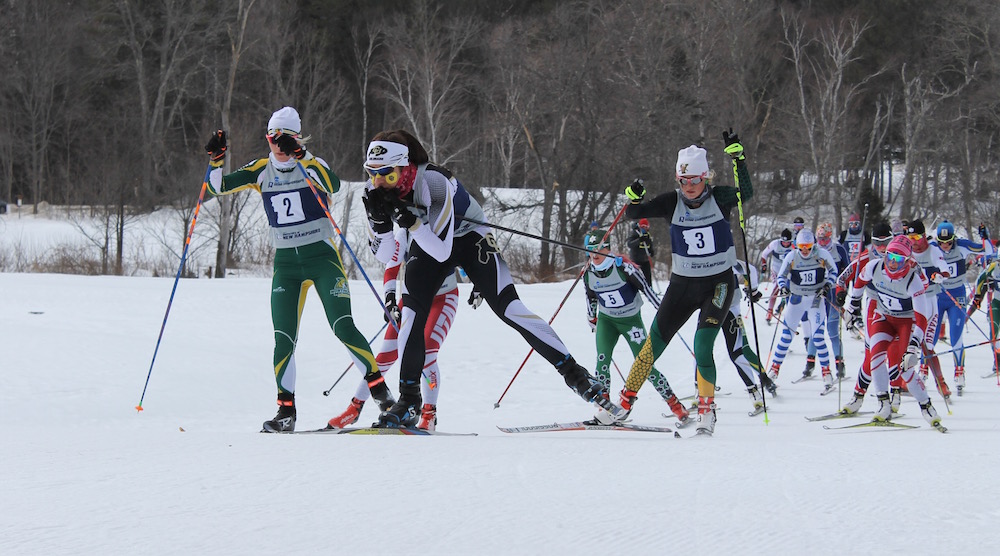
    Petra Hyncicova of the University of Colorado-Boulder leading the women’s 15 k freestyle mass start out of the start on Saturday, the last day of NCAA Skiing Championships in Jackson, N.H., with Northern Michigan’s Nicole Schneider (2) and UVM’s Alayna Sonnesyn (3) right there with her.

    JACKSON, N.H. — Two years ago, Martin Bergström quit skiing.

    A month ago, Petra Hyncicova took three weeks off skiing following U23 World Championships due to a painful bursa between her Achilles tendon and heel bone.

    Less than a week after resuming training, Hyncicova, a 22-year-old Czech Republic native and University of Colorado-Boulder (CU) junior, raced to two National Collegiate Athletic Association (NCAA) Skiing Championships titles — the first of her career — in Jackson, N.H.

    The University of Utah ski team celebrates its first NCAA title since 2003 on Saturday, March 11 at 2017 NCAA Skiing Championships in Jackson, N.H. (Photo: Flyingpointroad.com)

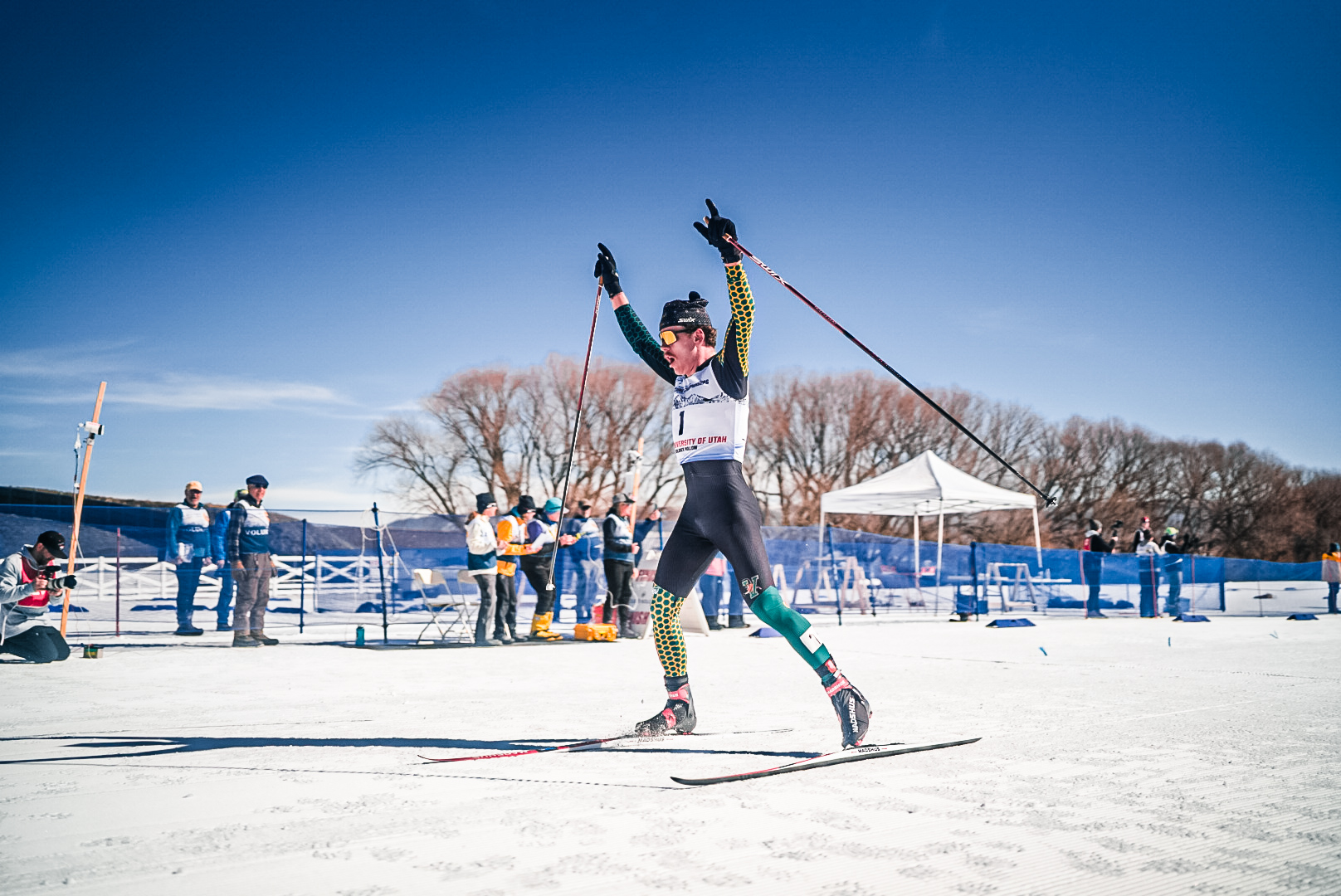
    Bergström, a 25-year-old Swedish freshman at the University of Utah, did the same, winning both nordic races at 2017 NCAA Championships and leading the Utah Ski Team to its first team title since 2003.

    Both started off with decisive victories in the women’s 5-kilometer and men’s 10 k classic individual starts last Thursday, with Hyncicova topping the former by 18.7 seconds and Bergström winning the latter by 26.8 seconds.

    Then on Saturday, with temperatures hovering just above the legal racing limit of -20 degrees Celsius (-4 Fahrenheit) and winds ripping across the field that served as the stadium, the two international skiers completed their championships sweep with wins in the women’s 15 k and men’s 20 k freestyle mass starts.

    “When the season started, I figured that I was in really good shape this year,” said Hyncicova, whose previous best NCAA Championships result was second in the skate race last year in Steamboat Springs, Colo. “I was hoping that I could be on the podium again at NCAA’s and maybe hoping that I could win the skate race, but after winning the classic race and after the injury and everything I can’t believe it. It’s insane for me.”

    “Two years ago, I quit skiing back in Sweden and I took one year of just studying,” Bergström said. “And then a friend of mine was on the [Utah] team, and he said there were spots open and that I should try a different environment of skiing and studying and that I could come over here. So I talked to the coaches, and eventually went for this trip and have had so much fun and made many friends. I’m just so happy I came here.”

    On Saturday, Bergström led three Utah men in the top 10, with Martin Mikkelsen placing eighth and Kevin Bolger 10th. The three scored 84 points and their women’s team emerged as the second-highest scorers in the second race of the day to give the Utes a 16.5-point win over Colorado (CU) to end the championships.

    Reflecting on his win on Saturday, before the women’s 15 k, Bergström anticipated it would be a tall order to win the team title.

    “It’s been amazing, and it’s an amazing team,” he said of his season with Utah. “All the training we’ve done and the work we’ve put in this fall and winter. I’m just so happy. Hopefully there’s a slim chance the girls can pull off an amazing race. We’ll see.”

    Utah Director of Skiing Kevin Sweeney later explained just how difficult it was to come from second place on Friday to take the win over CU and Denver University (with Denver finishing third, just one point behind Colorado). In the last decade of NCAAs, Colorado has placed first or second seven times, according to a press release. Denver is next in line with six top-two finishes (including five titles) since 2008.

    “We’ve been crunching numbers and have been able to beat Denver and Colorado by about 30 points on a really good showing during the RMISA [Rocky Mountain Intercollegiate Skiing Association] season, but didn’t know if we could do it in the championships,” Sweeney said, according to a Utah press release. “Bergström was skiing at a whole new level this week, and Mikkelsen had stepped it up, and I knew Kevin Bolger could get top 10. I was also confident in the women, who have been skiing awesome, so I felt good there. It’s awesome to be able to take this new trophy back to our new ski building.”

    Bergström’s Late Move

    The men’s 20 k came down to a five-way sprint to the line, with Bergström taking the win by 0.5 seconds over Mads Ek Strøm, CU senior and two-time 2016 NCAA champion.

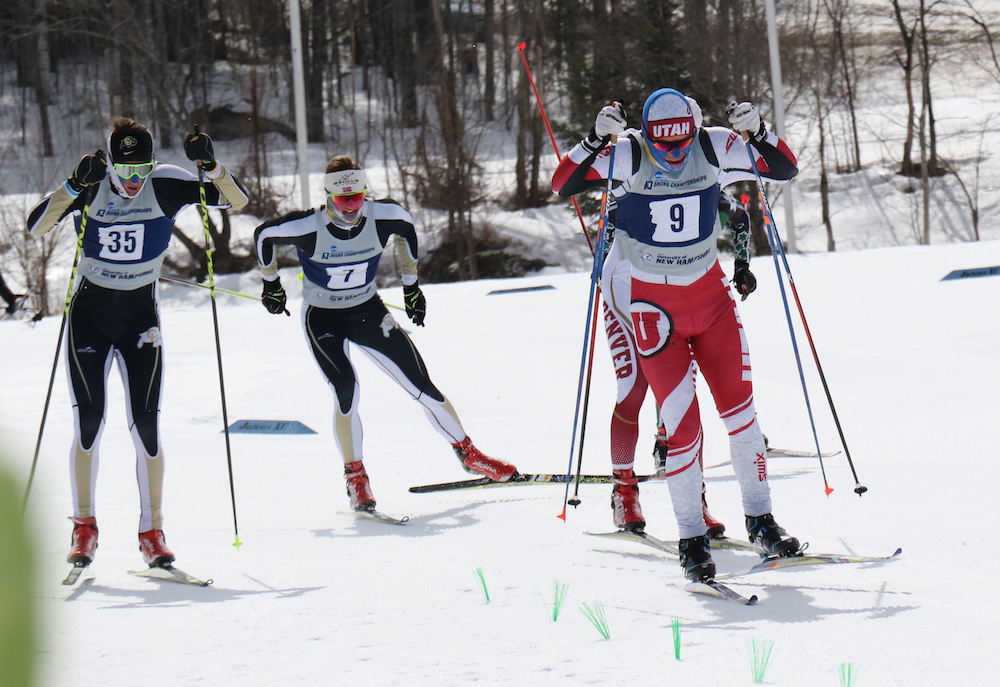
    Utah’s Martin Bergström (9) leading CU’s Mads Ek Strøm (35) and Petter Reistad (7) and DU’s Moritz Madlener (behind Bergström) down the finishing stretch of the men’s 20 k freestyle mass start at 2017 NCAA Skiing Championships on Saturday in Jackson, N.H. (Photo: Karen Brown)

    After Denver’s Moritz Madlener led most of the race, Bergström moved to the front on the start of the fourth and final lap. With 5 k remaining, six men remained together: Bergström, Madlener, Strøm, Adam Martin of Northern Michigan University (NMU), Fabian Stocek of Dartmouth College, and Petter Reistad (CU). On the final lap, the group began to string out and Bergström opened up the narrow lead he needed to win at the finish, crossing in 46:02.8 minutes.

    “I just went for it,” Bergström said. “Tried to check who still had power in the legs. Moritz just answered when I upped the tempo, and he continued my push in the second lap, and I knew I was faster in the finish than Moritz, so he had to make his move before the sprint. As an old sprinter, I feel pretty comfortable making a pass. I can maneuver pretty efficiently. I was just happy too see that it was a high-tempo, pack finish, and with the wind and everything, I think it was smart to go a little before the final stretch.”

    On the final lap, Strøm, the defending champion who won both races at last year’s NCAAs, tried to position himself near the lead going into the first climb out of the stadium, just in case someone attacked.

    “They went kind of fast up there, but not too fast, and I was in fourth and I felt pretty good,” Strøm, a 25-year-old Norwegian, said. “Adam Martin caught me sleeping, and gave a gap, so I had to pass him.”

    With about 2 k to go, Strøm said about four men remained in the front group before his teammate, Reistad, pushed to latch back on.

    “Petter came back up, and I was like, ‘Come on dude, just use the speed and try to move up and take the lead,’ and he did,” Strøm said.

    On the pivotal last A-climb at the top of the course, Strøm found himself in third and unsure of his next move.

    “I wasn’t sure how strong the people in front of me were,” he said. “I should have done something sooner, over the last hill of the race. It’s kind of short, the last stretch of the race. I felt pretty good so I’m a little disappointed in second.”

    Saturday stood as Strøm’s second skate race of the season. He had appendix surgery in January.

    “I hadn’t raced much this year,” he said. “At first, I felt pretty good, actually.”

    He started Thursday’s 10 k classic in bib 1 and double poled to eighth place.

    “We decided on double poling and I started bib 1, and I got pretty screwed by that because I had to plow all the snow out of the way,” Strøm said. “I knew the shape was good, and today I was just… I mean second place is OK, but I wanted to win.”

    Just 0.1 seconds behind Strøm on Saturday, Madlener, a 23-year-old German senior who placed second and third at NCAA’s last year, achieved his first podium of the week, 0.6 seconds out of first.

    Reistad finished fourth (+1.2), Stocek fifth (+1.9) and Martin, who was in podium contention until the final lap, sixth (+18.7).

    Asked what his skiing plans are now, Bergström wasn’t sure.

    “I started a civil engineering program back home, and I have two years of eligibility here, but I don’t know,” he said. “I took a chance, and came here, but I haven’t decided if I’m going to stay or not, but we’ll see.”

    Hyncicova Goes For It

    Petra Hyncicova (University of Colorado-Boulder) celebrates her second-straight 2017 NCAA Skiing Championships title on Saturday after winning the women’s 15 k freestyle mass start at the Jackson Ski Touring Center in Jackson, N.H. (Photo: Flyingpointroad.com)

    Two-time 2017 women’s champion Hyncicova, who broke away from the pack with the University of Vermont’s (UVM) Alayna Sonnesyn halfway though the women’s 15 k, said coming to the U.S. was one of her best decisions.

    “I’m so glad I went to the U.S. Every year I’m more and more glad,” she said. “This year was actually supposed to be my last year. I have one more year of NCAA eligibility so I applied for a master’s program so I can be here next year also and I’m so excited.”

    She raced to a 21.1-second victory over Sonnesyn on Saturday in 39:21.6. The next-closest finisher, Hyncicova’s CU teammate Christina Rolandsen, crossed 17.8 seconds later in third (+38.9).

    “Starting with bib 1, it’s easy to be first out of the start,” Hyncicova said of leading out of the start.

    After setting the pace for the first 5 k, she tucked behind Rolandsen, a Norwegian sophomore, to start the the second lap.

    “I was trying on each lap to make a little bit smaller group, and I saw my teammate Christina so I was trying to get her in the group [so] we could go together,” Hyncicova added.

    When she noticed Rolandsen tiring on the second lap, she surged back to the front.

    “Then I took off a little bit,” Hyncicova said. “It wasn’t intentional, but Alayna stuck with me, so I was like, ‘OK, we can do it together. It will be nice to go just in two.’ ”

    Sonnesyn, a junior from Minnesota, led the two-woman breakaway for roughly four kilometers, up until the final A-climb of the race.

    “Coming through this field, it’s so windy, no one wanted to be up front,” Sonnesyn reflected. “I knew that she didn’t want to take the lead, I could tell, but I thought that if I sat back and didn’t take the lead either, the other girls were gonna come back and catch us and I didn’t want that to happen.

    “I kind of knew what was going to happen,” she added of Hyncicova’s game-changing move on the last hill. “She made a really great move up one of the hardest hills up to the high point and I was so impressed with how fast she could ski. I wanted to stay with her, but I just couldn’t. … I mean, she just took off. It was impressive.”

    While the women’s race included several downhill crashes on a hard-packed course, including a close one from Sonnesyn while she was leading on the second lap, Hyncicova said she wasn’t afraid to send it.

    “I love downhill skiing on nordic skis, so for me, it was really fun,” Hyncicova said. “I’m not scared and I enjoyed it.”

    For Sonnesyn, second place marked her second podium of 2017 NCAAs after placing third last Thursday. In two NCAA appearances before that, she had yet to crack the top 20.

    “I am so happy with the way things went,” Sonnesyn said on Saturday. “I definitely had some high goals for this week. I haven’t had the best luck with my NCAA experiences in the past and so I knew I could be competitive this year, but I didn’t know how competitive I could be.”

    She made a point to focus on how she was feeling and not worry about anyone else, both in Thursday’s individual start and Saturday’s mass start.

    “It’s tough to break away on this course, so I knew that if someone was going to break away I didn’t want to be the one to do it, but I wanted to be with them,” she added. “And that’s kind of exactly how it happened. I’m just so happy with the way things went this whole week. … I feel like I’ve improved so much over these last few years with Patrick Weaver as a coach. He’s helped me so much just to become a better skier. I love the sport and I’m just so excited for next year.”

    After Anika Miller of Montana State University (MSU) placed fourth (+44.0), Utah took fifth and sixth with Merete Myrseth (+1:01.5) and Guro Jordheim (+1:16.1), and was the only women’s team with all three in the top 14 with Natalia Müller in 14th (+1:32.1). In all, the Utah women scored 73 points (behind Colorado with 77) to help their program notch its 11th NCAA Skiing title.

    “The turning point of today is when Guro broke a pole, and she was back in the 20’s, and she and Natalia were skiing together,” Sweeney said, according to the press release. “We told them that they had to go and they busted out and made a big move. The men’s results were tremendous, but whether or not we were going to win was based on those guys making the move. It was exceptional athleticism and gutsy performances.”

    Behind Utah with 541.5 points, CU (525) and DU (524) in the top three, Dartmouth placed fourth (400), UVM fifth (355), and MSU sixth (320) in the four-day alpine-nordic, season-ending series.

    Saturday’s results: Men | Women | Team

  • Twenty Years Ago Today: The Story of the Earliest FIS Race

    Twenty Years Ago Today: The Story of the Earliest FIS Race

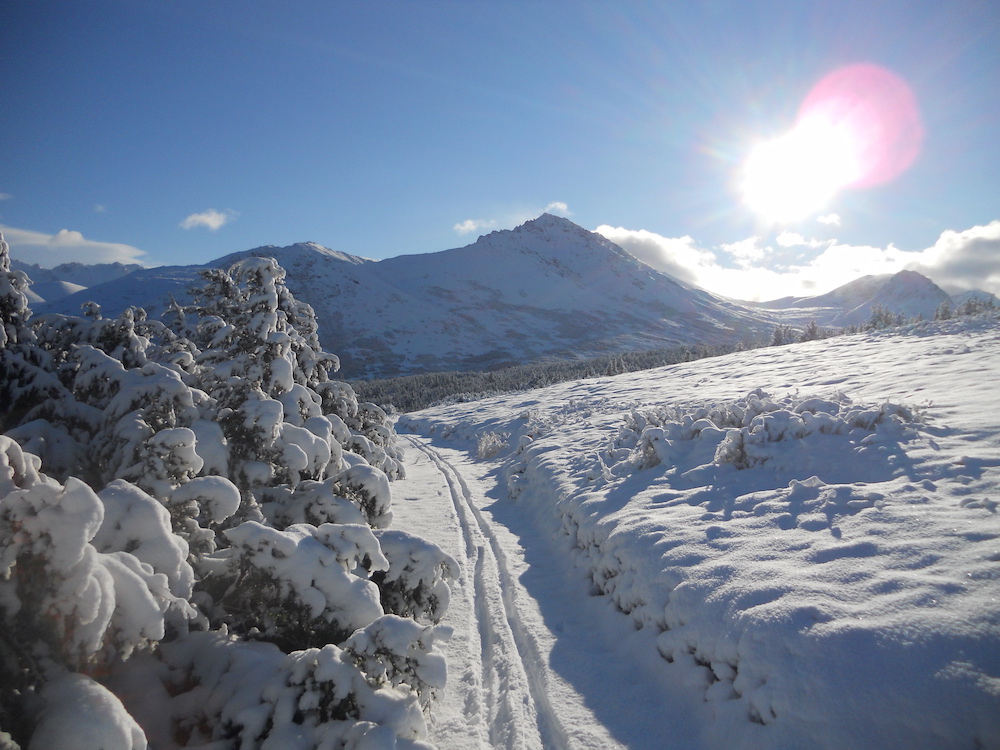
    Early-season snow: first tracks in Chugach State Park, above Anchorage, Alaska, on Sept. 18, 2015. (Photo: Gavin Kentch)
    Early-season snow: first tracks in Chugach State Park, above Anchorage, Alaska, on Sept. 18, 2015. (Photo: Gavin Kentch)

    Twenty years ago today, on Nov. 2, 1996, a ski race sanctioned by the International Ski Federation (FIS) was held in Fairbanks, Alaska, on the trails at Birch Hill. It appears to be the earliest FIS race ever held on natural snow in the Northern Hemisphere. This is a look back at that race, and at the significance it has, or does not have, for some of its participants.

    Setting the stage

    It was the final days before a hard-fought presidential election. Clinton was widely expected to prevail over the Republican candidate, although a strong third-party showing and voter dissatisfaction with the two major parties were complicating the electoral calculus. The Alaska Republican Party was running newspaper ads promising to “defend State’s rights.” And people were skiing in Fairbanks. Plus ça change.

    There were also some differences. The front page of the Fairbanks Daily News-Miner on Nov. 3 ran an article headlined “Dole hoping for an upset” over, of course, Bill Clinton. Then on Nov. 4: “Perot plans last-minute television blitz.”

    Elsewhere in the paper, movie listings included the Leonardo DiCaprio vehicle Romeo + Juliet. Agate type in the sports section recounted promising rookie Ray Allen leading the Milwaukee Bucks to a victory over the Boston Celtics. (It was the second game of Allen’s career. He would go on to play 1,298 more games after that.) And an ad for an ISP, or internet service provider, explained to potential customers the appeal of “the Internet.” You could “interact with people from around the world,” it promised, or, “Find answers and advice in newsgroups.”

    In Fairbanks, meanwhile, it was winter, and it had been winter for a long time. The News-Miner reported that October had seen record-breaking cold, even for Fairbanks, with an average temperature for the month of 13.6 degrees. Through Nov. 3, it had snowed 22 inches so far that winter; given those temperatures, and the relative lack of solar radiation in Fairbanks in winter, most of it was presumably still on the ground.

    The Nanook Challenge

    Given this weather and snow conditions, it hardly seems newsworthy that a ski race was held. Plus several members of the U.S. Ski Team (USST) had been in town for early-season training, so the skiers were there.

    The field for the 10-kilometer classic interval start – official title the “Nanook Challenge: FIS Series Race No. 1” – was small but distinguished. There were 10 women and 18 men entered. At least four current members of the U.S. Ski Team competed, along with several former USST members.

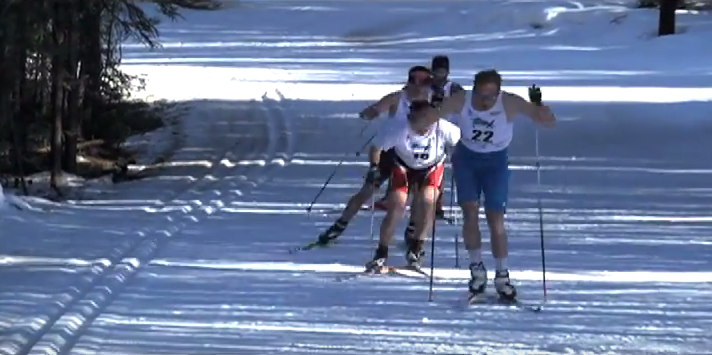
    The top-five finishers in the men’s race were Ben Husaby, Marcus Nash, Patrick Weaver, Scott Loomis, and Carl Swenson, respectively, a bevy of elite skiers that would not have been out of place at a mid-1990s national championship race. (Indeed, all five men would place in the top seven in the 15 k skate race at U.S. nationals later that winter in Bend.)

    The women’s podium was headed up by USST skiers Laura Wilson and Suzanne King. Third place went to Julie Southwell, described by the News-Miner as “a national team contender who trains in Fairbanks.” (Five years later, a profile of Southwell by Inge Scheve in The Bulletin of Bend, Ore., would call her “a former Colorado resident who says she sort of follows the snow.”)

    Wilson’s winning time was 33:28 for 10 k. Husaby finished the same course in 27:56. Conditions were described in the News-Miner as “near-perfect,” with an 11 a.m. race temperature of “20 degrees under a pale white ceiling of clouds.” (The season’s second FIS race, a 15 k skate, was held the following weekend, in arguably less perfect conditions. The high temperature for Fairbanks on November 9, 1996, was –1°. The low was –26°.)

    (Story continues below)

    Looking back

    Swenson, the fifth-place finisher in the opening 10 k classic, has fond memories of Fairbanks as an early-season training destination generally, though scant recollections of this race specifically. When asked about this race in a recent phone interview, following his workday doing indigent defense for the New Hampshire Public Defender, Swenson began by musing, “I’m just trying to place what year that would have been,” and attempting to reconstruct whether World Champs had been held that spring or the year before. “We’d always have a race real quick after we got there,” Swenson continued. “And we’d get to Fairbanks in mid-October.”

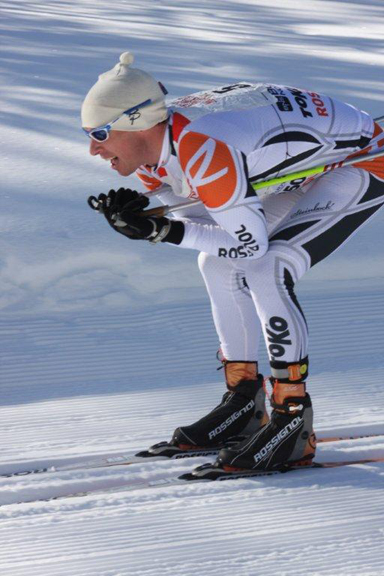
    Carl Swenson competing for Steinbock Racing made the trip from southern New Hampshire for the 2010 Boulder Mountain Tour.
    In a race of more recent vintage: Carl Swenson, competing for Steinbock Racing, made the trip from southern New Hampshire for the 2010 Boulder Mountain Tour in Sun Valley, Idaho. (Photo: Toko)

    “I remember it fondly,” Swenson, now 46, says of Octobers and Novembers spent in the Golden Heart City. “Not a lot of sunlight, lots of skiing.” He adds that “everyone was so excited be on snow again; I always looked forward to it. I don’t know if everyone looked forward to it, but I always did.”

    “We were always able to ski” somewhere in or near Fairbanks, Swenson notes, “but sometimes it was really thin. … There could be pretty bad skiing, but I always remember we skied.” They would – much like modern-day juniors competing in the Besh Cup series – stay at the Wedgewood Resort, and “we’d all pile up and drive to Birch Hill. When it was a bad snow year, we’d all drive up to an elementary school” that had trails (Salcha Elementary), “and it would be ridiculously cold.”

    Swenson’s lack of specific memories may be attributable not only to the passage of time and multiple fall trips to Fairbanks, but also to the fact that Nov. 2 was early in the season for him in more ways than one. “I probably hadn’t done much rollerskiing” at that point, Swenson candidly admits. “I was still catching up.”

    (Uniquely among top-level cross-country skiers, Swenson had “made the bold decision to pursue a professional mountain-bike career and continue to ski race internationally in the winter,” FasterSkier previously wrote. 1996 was his first summer of pro mountain biking in the “offseason.”)

    When asked whether he had simply kept the rollerskis in storage through September or had at least gotten out a few times a week during the summer, Swenson at first suggests digging up an old training log from storage, then says, “it would depend on if I went to late-season mountain bike races that year. Sometimes I would be – World Championships are at the end of the season in mountain biking. In ’96, I think I would have been in Boulder. And maybe I would have started doing some rollerskiing in the summer – not much, if any.”

    Swenson was clearly unconcerned about his results in a November race two months before U.S. nationals and more than three months before World Championships. He recalled that his focus for his first two weeks back on snow would have been volume, and guessed that he would have logged approximately 20 hours of skiing per week while in Fairbanks. “I’m sure everybody up there was concentrating on volume, and things like that,” Swenson notes. “There would be people chasing points, to make an early trip – but I doubt anyone was doing that up there.”

    Swenson improved his position with a third-place finish in the 15 k skate a week later, suggesting that he may have been racing his way into skiing shape.

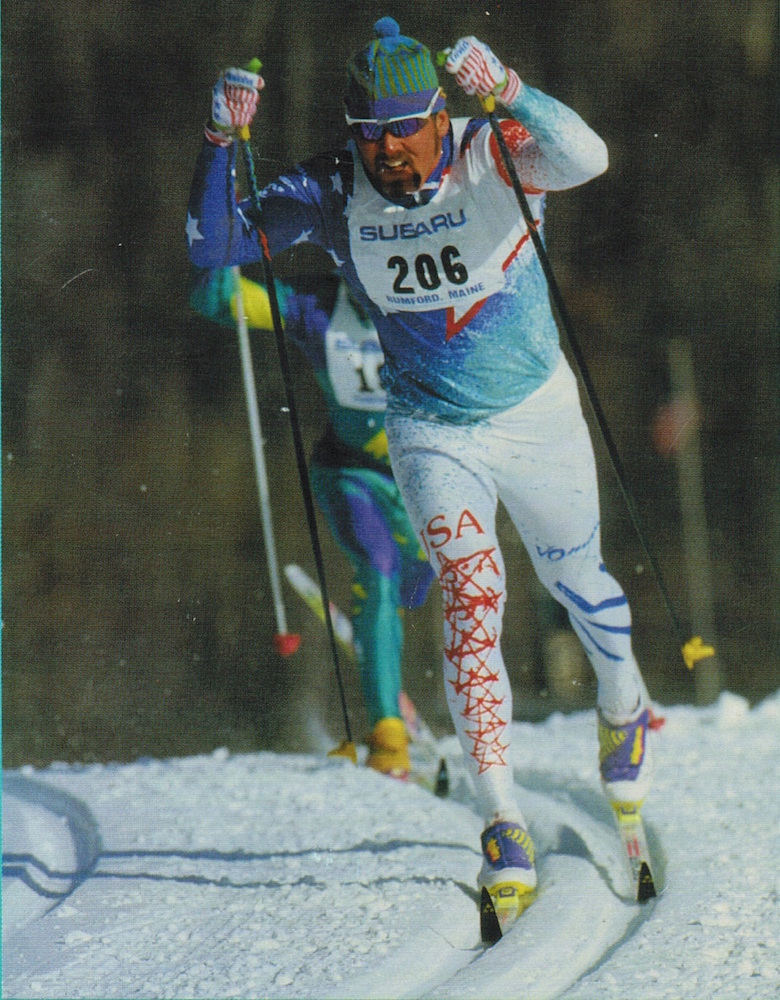
    Ben Husaby (USST) racing at 1993 U.S. Nationals in Rumford, Maine. (Photo: courtesy of Ben Husaby)
    The ’90s force is strong: Ben Husaby (USST) racing at 1993 U.S. Nationals in Rumford, Maine. (Courtesy photo)

    At the top of the results sheet, Husaby won both races, the 10 k classic on Nov. 2 and the 15 k skate on Nov. 9. His memory of that fateful week in Fairbanks borders on the eidetic. “That weekend actually stands out for me as one of the more memorable ones in my ski career,” Husaby recently said when cold-called about a race from the Clinton administration.

    Husaby, who turns 51 next month, spoke with FasterSkier by phone from Bend, where he works as executive director of the Bend Endurance Academy. (Husaby once cracked that he enjoys being a ski coach because “I get to drive a Ford Econoline van down winding roads in inclement weather.”) Husaby clarified that in his current job he coaches only one skier, national-class athlete Dakota Blackhorse-von Jess; he assists nordic director Bernie Nelson and will go out with other athletes, but says that he is following Nelson’s lead.

    Husaby still recalls how fast he skied, but poignantly acknowledges that his timing was somewhat suboptimal.

    “I’ll just say, it was the fastest I’ve ever skated, for sure,” Husaby declares. “And you certainly don’t want that to happen in the first week of November, but it did. It’s bittersweet, because it’s the wrong time, but it was amazing. Those two races, they were effortless.”

    Husaby speaks with evident emotion about the sensation of skiing so easily:

    “So, nobody wants to be a Christmas star, and I was a November star. But, the race course [in Fairbanks] was a very challenging race course, and I blew around that course effortlessly. And that was a really, really cool feeling. I had traditionally struggled in tough skating race courses, and, you know, I walked all over everybody. And so, you know, that was exciting. And one of the things I remember is, how cold I felt being as quote-unquote ‘skinny’ as I was. I was in the low 180s. And I was colder than I had normally been.

    “I also remember feeling really light and fleet and dynamic. I remember – and it’s always weird, because when we got back to the hotel – you know, those first races of the year, people are always talking about how they’re going to get better, where they made mistakes… generally everyone wants to downplay their early races. And here I was – I’m looking in retrospect in terms of how fast I really did ski. At the moment I didn’t realize that that was probably as fast as I had ever gone, but in retrospect, I realize, wow.

    “There were a couple of World Championship results, there were a couple World Cup results where I was competitive, and probably moving along at the same speed – but this particular weekend, it was completely effortless.”

    Husaby had been a member of the U.S. Ski Team from 1991 through 1995, but in fall 1996 was training solo. But he finished ahead of all current USST members in both races in Fairbanks.

    “Particularly the skate race,” Husaby enthuses, “I mean, for me to beat everybody by over a minute – I think it was a minute and change – in a 15 k skate. I mean, I never did that. I’m not really sure why.” (Husaby correctly recalls that he beat second-place John Bauer by 1:04 in the skate race.)

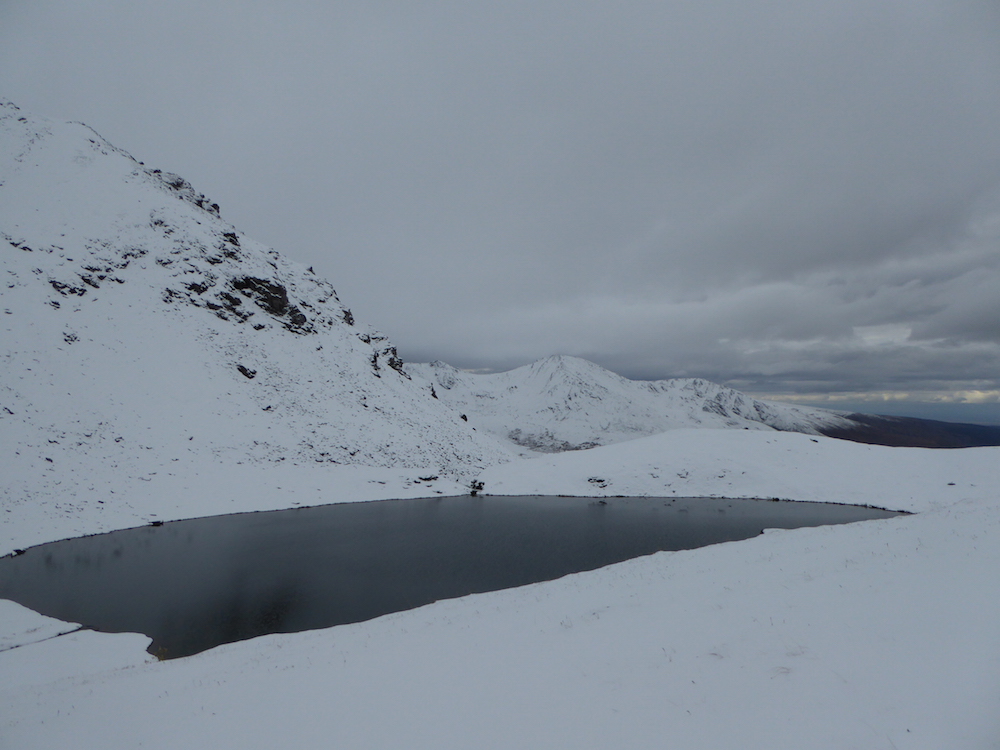
    Early-season snow: skiing past Summit Lake, in Hatcher Pass above Palmer, Alaska, on Sept. 23, 2016. (Photo: Gavin Kentch)
    Early-season snow: skiing past Summit Lake, in Hatcher Pass above Palmer, Alaska, on Sept. 23, 2016. (Photo: Gavin Kentch)

    At the time, Husaby felt strongly that his performance merited selection for bigger stages: “I do remember being like, ‘God, I wish they would have selected me to go back to the World Cup.’ Because they sent Marcus [Nash]. They took Marcus, not me. And I do remember being like, ‘Dangit, I killed everybody, they should be taking me.’ But it’s always like that – you always think that you should be the one that’s named.”

    But he now waxes much more philosophical about the vagaries of team selection. “I’ve had 20 years to think about it,” Husaby now analyzes, no regret or animosity in his voice. “There are a lot of arguments why I should have been chosen for it, and a lot of arguments why I shouldn’t have been chosen for it. It’s just the nature of sport.”

    As he left Fairbanks in November 1996, Husaby had high hopes that these results presaged a breakthrough season for him.

    “Like any athlete, you think, ‘Oh my gosh, this is the start – it’s really going to happen here.’ Particularly when you’ve had five years of mediocre racing on the World Cup, right? … In the previous five years, I had everything [in World Cup results] from low 20s to, you know, 112th place. And so all of a sudden a result like this comes along early in the season, and I’m thinking to myself, ‘Man, if this is the start of things to come, this year is going to be totally lights out.’ ”

    Husaby did not receive World Cup start rights that season, and in fact never raced on the World Cup again. He spent the 1996/1997 season on the domestic Yoko Cup, an inchoate version of the national-level race series that ultimately became the SuperTour.

    Despite – or maybe because of – the fact that the Fairbanks races ultimately proved to be a highwater mark of the season rather than a springboard to successful European racing, Husaby frequently uses the experience as a teaching moment for his athletes.

    “As much as we really think that we have our finger on the pulse,” Husaby theorizes, “and that we can really dial in when we’re going to be fast, and really pick and choose the big events, and how it’s all going to play out – you never really know when you’re going to have your moment. You don’t know. The body and the mind are really – sometimes they’re diametrically opposed, sometimes they’re incredibly in sync, sometimes one is lined up and the other one’s not. And a huge part about athletic growth is just realizing that you never really know when you’re going to have your moment. So when you do have your moment, hopefully you get something from it, you gain something from it. For me, this was an indicator that my training, the change in training, had an effect, the weight loss had an effect, maybe the release of not being on the ski team any more had an effect.”

    “I guess the moral is to pull something positive out of a good race, regardless of when it happens.”

    When asked about his strongest memories from his time in Fairbanks, Husaby mentions two things. First, despite the subzero temperatures for the skate race, “I remember that that climb – I felt like Superman going up that far outer climb [on the race course]… I remember charging up it. It’s got like three rises in it.”

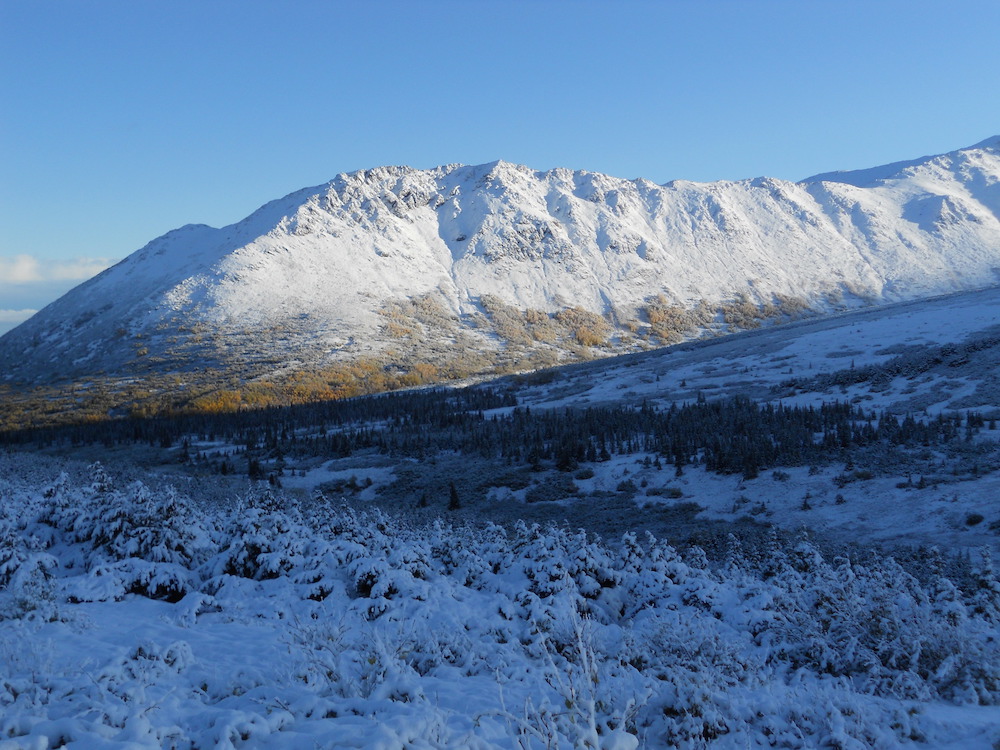
    Early-season snow: fresh snow on top of fall colors in Chugach State Park, above Anchorage, Alaska, on Sept. 18, 2015. (Photo: Gavin Kentch)
    Early-season snow: fresh snow on top of fall colors in Chugach State Park, above Anchorage, Alaska, on Sept. 18, 2015. (Photo: Gavin Kentch)

    And second, “I remember that being a very cold week. … I wasn’t a ‘do a loop many times’ kind of guy. I was always an explorer. Well, I spent most of my training time in Fairbanks actually out on the White Bear [Trail] and out on the military roads. I used to bring really crappy skis, just so I could ski on the military roads. But I recall that week being incredibly cold. And my motivation was to ski out to the end of White Bear, look at the thermometer, and then ski back in. Just to reaffirm how cold it really was. That was it. Besides that race, that was my memory of that week.”

    In addition to multi-time Olympians, other notable names on the results sheet include “Jason Cork, UAF, 34:23.3,” in 12th, surrounded by several of his teammates from the University of Alaska Fairbanks ski team. Cork was born and raised in Alaska, and graduated from North Pole High School in 1995. He skied for UAF before embarking on a coaching career that ultimately brought him to his current position as Assistant Men’s Coach for the U.S. Ski Team.

    Early-season history

    The participants may not have realized it at the time, but they were, in the world of high-level ski racing, making history. The race remains the earliest FIS-sanctioned race ever held on natural snow in the Northern Hemisphere, according to the FIS database.

    (A FIS-sanctioned race is one whose results can be used to help calculate a skier’s FIS points, “theoretically a universal ranking system for skiers around the world who have never competed against one another.” Generally speaking, a FIS race is held on a course with climbs of specific height differential and grade, as well as a total climb requirement. A FIS race is held on a relatively challenging course, and attracts a relatively high caliber of skiers.)

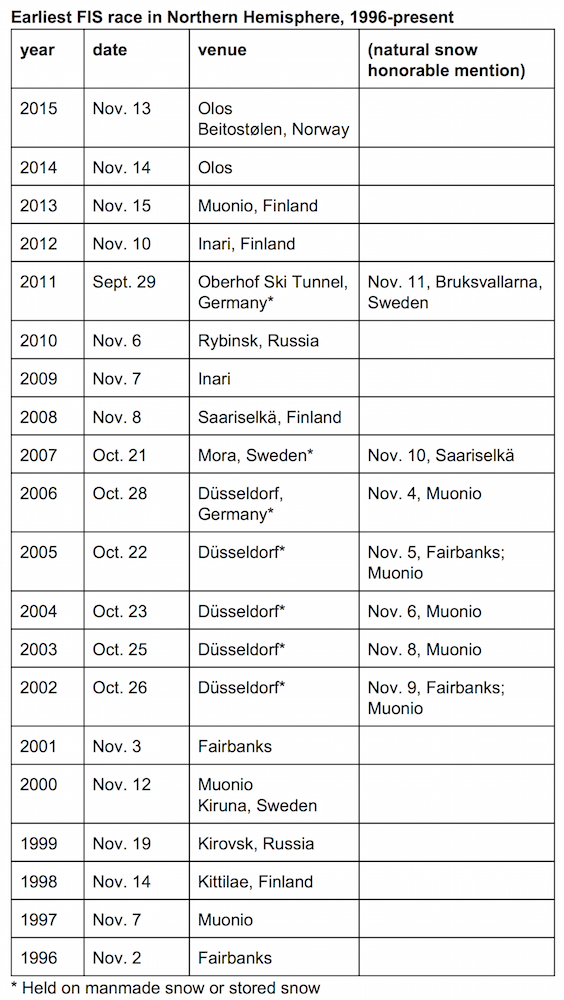
    Here are the earliest FIS races from 1996 to present, as listed in the online FIS results database. Amidst a host of early-November dates from several venues across northern Scandinavia, November 2, in Fairbanks, Alaska, stands out as the earliest by a small margin. But Fairbanks shares one significant thing in common with the other names frequently occurring on this list: a far northern latitude. Fairbanks is at, in round numbers, 65 degrees north latitude; Olos and Muonio, 68°; Inari, 69°; Beitostølen, a downright tropical 61°. (The Arctic Circle is at 66°34′.)

    Table of year's earliest FIS race, 1996-2015. (Source: FIS database)
    Table of year’s earliest FIS race, 1996-2015. (Source: FIS database)

    As FasterSkier wrote over a decade ago, Fairbanks in early winter presents a “surreal setting. … The air is still, day after day, and the temperatures hover around zero even though it is barely November.”

    (The table distinguishes between natural snow races and artificial snow loops when relevant – it is truly impressive that Mora had a sprint race on a stored ribbon of snow on October 21, but it makes for an apples-to-oranges comparison to Fairbanks or Muonio. Also note that the 1996 cutoff for this table is not artificially hiding an earlier race out there. The earliest FIS race from any of 1990-1995 was held on November 6, 1993 (also in Fairbanks, also the Nanook Challenge). And by the 1990/1991 season, there are only a dozen races listed for the entire season (down from hundreds for 2015/2016), underscoring the limitations of the otherwise remarkable FIS database.)

    All that said, simply skiing in Fairbanks in November is a news story on the level of “dog bites man.” September snowfall in Fairbanks is not unusual. Groomed (or at least dragged) skiing in October is expected. Throughout the 1990s, Birch Hill was a mecca for early-season training for high-level skiers from across the country. (The second FIS race of 1996, the 15 k skate a week later, boasted a top-8 of Husaby, John Bauer, Swenson, Loomis, Weaver, Todd Boonstra, Adam Verrier, and Audun Endestad. That’s a lot of good skiers. And a combined 15 Winter Olympics.)

    Ken Leary is a longtime Fairbanks local who oversaw the low-key Wednesday Night Race Series ($20 for eight races!) for many years. In an email to FasterSkier, Leary wrote that “the first Nordic ski race of the season in Fairbanks is the annual Wednesday Night Halloween race held on the Wednesday nearest to Halloween.”

    Leary added, “To my knowledge, Fairbanks has never had a Nordic ski race in the month of September, but it would have been possible in years 1992, 1993, 1996, and 2015 because of early snowfall.”

    (In Anchorage, which like Beitostølen is situated at a balmy 61° north latitude, early high-level ski races on record include “a 15 km APU race that [then Alaska Pacific University head coach] Jim Galanes held on the Spencer Loop on October 25, 2001,” as recounted on local skier Tim Kelley’s blog. More recently, the University of Alaska Anchorage ski team held a time trial on the Spencer Loop a week ago today.)

    Max Olek (University of Alaska Fairbanks), number 22, leads eventual winner Lex Treinen (also UAF), number 18, in a ski race held at Birch Hill in Fairbanks, Alaska, on May 8, 2013. (Photo: YouTube screenshot)
    Max Olek (University of Alaska Fairbanks), No. 22, leads eventual winner Lex Treinen (also UAF), No. 18, in a ski race held at Birch Hill in Fairbanks, Alaska, on May 8, 2013. (Photo: YouTube screenshot)

    And at the other end of the season, following a winter of roughly average snowfall but then a spring of record-breaking cold, Leary once hosted a race at Birch Hill on May 8, 2013, when the 6:45 p.m. start time occurred a full four hours before sunset. (The YouTube video is worth a quick watch (and not only because a cross-country ski race leads the sports news on local CBS affiliate K13XD Channel 13). It shows racers in shorts on what can only be described as close to 100 percent snow coverage on a 50-degree day. Many skiers have raced in midwinter in far worse.)

    What it all means

    There is an undeniable draw to being on snow – especially when you’re not supposed to be. (Or maybe especially when others are not, and you can brag on social media that you are.) Rollerskiing is good as far as it goes, but Annie Pokorny once credibly likened it to a rebound girlfriend, writing, “Every spring, Nordic skiers must undergo a reluctant breakup with the perfect girl” and console themselves with mere rollerskiing.

    And so Pokorny and her Sun Valley Ski Education Foundation Gold Team teammates spend August in Australia, while the USST returns to New Zealand and the Snow Farm. Noah Hoffman goes to Passo dello Stelvio. Craftsbury Green Racing Project goes to Austria’s Dachstein Glacier, but precedes that with a week at the ski tunnel at Slovenia’s Olympic Sports Centre Planica, which appears to occupy one story of an otherwise functional parking garage. By the time people are literally flying halfway around the world to ski in 80-second loops inside a parking garage, it’s clear that off-season snow is special to everyone.

    As Chelsea Little previously wrote in a lyrical piece on FasterSkier, she clings to the idea that, “at any given moment, somewhere in the world, there’s great skiing. If I can’t be back home and if it’s not December through March, then a corner of my mind is occupied wondering where that snow is and whether I can get there.” For Swenson, Husaby and a handful of other elite American skiers throughout the 1990s, the answer to “where the snow is” in October and November was consistently Fairbanks, Alaska.

  • UVM Seeks Assistant Nordic Coach

    UVM Seeks Assistant Nordic Coach


    UVM Catamounts logo

    The University of Vermont (UVM) in Burlington, Vt., is in search of an assistant nordic ski coach to assist the head coach in performing the duties of managing the intercollegiate sport of skiing within the education mission of the University. Share in the responsibility of educating student-athletes to the value of sport as it becomes increasingly valuable in today’s society. Take directives from the head coach for all aspects of the competitive NCAA Division I program that relies on recruiting scholarship and non-scholarship student-athletes. Provide leadership and positive expertise in the teaching and tactical aspects of the sport. Demonstrate commitment to issues of social justice and diversity.

    Please go to the following link for job details and application instructions:

    https://www.uvmjobs.com/postings/21169

    For all other questions please contact Patrick Weaver at:   

    patrick.weaver@uvm.edu

  • Pros of Tomorrow: Two-Time NCAA Champion Gruber Aims to ‘Blow Them Away’

    Pros of Tomorrow: Two-Time NCAA Champion Gruber Aims to ‘Blow Them Away’

    Anja Gruber en route to an 11.1-second win in the 2013 NCAA Championships 5 k classic.
    Anja Gruber en route to an 11.1-second win in the 5 k classic at the 2013 NCAA Championships in Ripton, Vt.

    This ‘Pros of Tomorrow’ series, brought to you by the generous support of Fischer Sports, aims to highlight some of the most notable up-and-coming athletes around the world. If you have an idea for a top-notch skier you’d like to read more about, please email info@fasterskier.com with the subject line: Pros of Tomorrow. We’re also looking for stories about intriguing juniors, collegiate skiers, or lesser-known athletes; please email us with names — subject line: From the Pack.

    ***

    When Anja Gruber didn’t make the Junior World Championships during her last year of high school in Leutkirch, Germany, she knew that her heart was no longer in the sport and she was ready to move on. Her plan was to apply to school in Germany and see where a life without skiing took her — even after making the German junior national team in 2009.

    But then she received a call from Patrick Weaver, head nordic coach at the University of Vermont (UVM).

    Gruber knew of Germans who had gone to school and skied in the U.S., but many of them went to Alaska, which didn’t exactly appeal to her. She also wasn’t sure she wanted to continue with her higher education in the U.S.

    However, after talking with Weaver, or “Weav” as she now calls him, a move to the states sounded more and more tempting.

    “I had never really heard of Vermont before,” Gruber, 23, explained in a phone interview. “But somehow he made it sound really good. Then I decided I was going to come.”

    Gruber began school at the UVM in the spring of 2011, but was still not sold on college skiing in the U.S.

    The University of Vermont skier's Jorgen Grav, Anja Gruber, Linda Danvind Malm, and Scott Patterson won the collegiate category and placed ninth overall in the mixed relay at 2014 U.S. Distance Nationals in Anchorage, Alaska. (Photo: Chris Hodel)
    The University of Vermont’s Scott Patterson, Anja Gruber, Linda Danvind Malm, and Jorgen Grav (l-r) won the collegiate category and placed ninth overall in the mixed relay at 2014 U.S. Distance Nationals in Anchorage, Alaska. (Photo: Chris Hodel)

    “When I started at UVM I wasn’t super excited about skiing,” she said. “It was more of an opportunity for me to go to school without paying full tuition. I also had this misperception that college skiing wasn’t that great.”

    Her experiences in Vermont soon dispelled those notions, as she realized that her fellow competitors were strong skiers extremely committed to the sport. Her freshman year was filled with some ups and downs, but overall she described her skiing as mediocre.

    Reenergized and determined to rise to the level of the other women on the college circuit, Gruber went home to Germany and trained with more focus and intent.

    She returned her sophomore year to a team that was one of the strongest women’s nordic squads in UVM history. While she was unable to qualify for the 2012 NCAA Championships in Bozeman, Mont., she was inspired by her teammates’ 1-3-5 finish in the classic mass start.

    Whether it was her renewed training, team inspiration or a rekindling of a love for the sport, Gruber returned to the collegiate racing with a vengeance her junior and senior years. In 2013 and 2014, she won back-to-back NCAA titles in the 5 k classic and in 2014, she placed fourth in the U.S. nationals 10 k classic.

    Since graduating from UVM this spring, Gruber has nothing but appreciation and admiration of college skiing in America.

    “I just think college skiing is such a good way to develop as a skier,” she said. “It’s such a great opportunity; you get all the support you need with a little bit less pressure.”

    “I just think college skiing is such a good way to develop as a skier. … You get all the support you need with a little bit less pressure.” — Anja Gruber, 23, former UVM skier and two-time NCAA champion from Germany

    She explained the fun-natured environment of the college circuit taught her how to love the sport again.

    “I think college skiing is the best thing you can do,” she added. “I wish I could keep doing it.”

    Anja Gruber (University of Vermont) racing to fourth in Saturday's 10 k classic mass start at Soldier Hollow for her best U.S. nationals result by more than 20 places. (Photo: Bert Boyer/http://bertboyer.zenfolio.com/) All proceeds from photo sales will be directly donated to NNF.
    Anja Gruber racing to fourth in the 10 k classic mass start at Soldier Hollow for her best U.S. nationals result by more than 20 places. (Photo: Bert Boyer/http://bertboyer.zenfolio.com/) All proceeds from photo sales will be directly donated to NNF.

    Gruber was also successful in her endeavors in UVM’s classrooms. Upon graduating in 2014, she was named valedictorian of the UVM Business School.

    When asked how she was able to be both successful in school and skiing, Gruber pointed to her organized nature. She also said that the environment on the UVM ski team was one where academics were of the utmost importance.

    “It makes it so much easier to do a good job if your teammates are trying to do the same thing,” she said.

    After graduating UVM, Gruber had initially planned to stop racing because of her imminent return to Germany. However, she couldn’t imagine a life without the sport and started to look around the U.S. for an elite team to join.

    In the end she decided to join the Far West Elite Team. Gruber said her choice was an easy one, as she had spent several summers training in Truckee, Calif., in the later half of her college career and liked the coaching style of Martin Benes.

    As far as future goals, Gruber has a unique plan for the upcoming ski season.

    She will continue to train with Far West this summer, fall and early winter. After competing in the SuperTour in West Yellowstone, Mont., Gruber plans to travel home to Germany where she will compete in several OPA Cups.

    While Gruber has competed in several international races in her career, they have always been after a challenging finals schedule and draining travel. This year, she’s excited to see her results now that she can fully rest and avoid other outside stress.

    Gruber’s ultimate goal is to ski fast enough to earn a spot on the German World Cup Team. While she is not sure of the exact criteria, her best plan at the moment “to get really fast and then go to Europe and blow them away.”

  • Johnson Comes Full Circle, Replaces Gardner at Middlebury

    Johnson Comes Full Circle, Replaces Gardner at Middlebury

    Andrew Johnson, a former assistant coach at the University of Vermont and University of Utah, recently accepted the position of head nordic coach at Middlebury College. (Courtesy photo)
    Andrew Johnson, a former assistant coach at the University of Vermont and University of Utah, recently accepted the position of head nordic coach at Middlebury College. (Courtesy photo)

    When you’re a collegiate skier with dreams of making the Olympics, it’s hard to imagine where you’ll end up after your competitive career. But Andrew Johnson thought about it during his three years at Middlebury College and resolved to return to his home state of Vermont.

    It might take some time to get there – a couple years in the US Ski Team’s residency program, five years on the national team itself, two Olympics and two years at the University of Utah – but he’d be back.

    After his third World Championships in 2007, the Greensboro native began assistant coaching at Utah. Johnson spent just over two years at the university and picked up a degree in environmental studies along the way, moving on in September 2010 to assistant coach at the University of Vermont (UVM).

    Back then, that new job was a dream come true for the three-time national champion. Johnson spent the next two-and-a-half years building a career and coaching style in Burlington with UVM head coach Patrick Weaver. Johnson described their approach as similar and simple at the same time, emphasizing team dynamics while creating an environment for any fundamentally solid skier to thrive in.

    Last year, UVM won the NCAA Skiing Championships. Earlier this month at NCAAs at Middlebury’s Rikert Nordic Center in Ripton, Vt., the Catamounts challenged the University of Colorado for the team title and ultimately took third behind Colorado and Utah, respectively.

    Andrew Johnson (Courtesy of Middlebury College)
    Andrew Johnson (Middlebury College courtesy photo)

    Fast-forward to Tuesday when Middlebury announced Johnson would be its nordic head coach for the 2013/2014 season. The 35-year-old would have to move about an hour south and leave an institution that helped cultivate his coaching aspirations, but he was back to Middlebury, where he spent three years skiing as a three-time NCAA All-American.

    “I feel pretty lucky,” Johnson said on the phone Thursday. “I spent a bunch of years out West, but I very much consider myself a Vermonter. This is where I want to live. … Even going back to when I skied at Middlebury, I always kind of had in the back of my mind that it would be cool to coach there.”

    Johnson skied for longtime Middlebury coach Terry Aldrich from 1997 to 1999 before relocating to Park City, Utah, to train with the US Ski Team. Meanwhile, Andrew Gardner of Bates College took over for Aldrich in 2006 and served as Middlebury’s head coach for the next seven years.

    At the start of this season, Gardner announced that he’d be leaving the college to start a communications business. It wasn’t an easy decision, Gardner said March 9 on the last day of NCAAs, but he was happy to time it with Rikert hosting the event, which had been in the works for several years.

    “You couldn’t sort of script a better movie ending to a career,” Gardner said after Middlebury, a Division III college, placed 10th in the team standings among D-I schools. On both days of racing, Middlebury junior Ben Lustgarten made the top eight.

    “There’s no manual on how to leave a job like this,” Gardner added. “It’s a siren song every year where you get to spring and you’re like, ‘Oh it’s easy,’ and then you get sucked in.

    Andrew Gardner, head nordic coach at Middlebury College from 2006 to 2013. (Photo: Stella Holt)
    Andrew Gardner, head nordic coach at Middlebury College from 2006 to 2013. (Photo: Stella Holt)

    “I think that happens for a lot of folks,” he continued. “I just know there are other things I want to do and if I don’t do them I won’t get to, so that was kind of the motivation to announce early, that and to give sort of the best possible options for a replacement.”

    That said, Gardner explained he’s not going anywhere and if the new head coach wants him around, he’ll be happy to volunteer while “leaving them enough room,” he said.

    “I’m not moving,” Gardner said. “I’ve got great relationships here so that’s my plan.”

    Johnson, whose last day at UVM was Friday, said he didn’t plan to make any drastic changes once he starts at Middlebury on May 1. He’ll initially get to know the team and said it was important to have consistency in longtime assistant coach Patty Ross.

    “I don’t think there’s anything easy about a coaching change,” Johnson said. “It’s something that needs to be treated kind of gingerly and come in and be sensitive and respectful of how things have been done in the past and not make too many changes right off the bat.”

    He said it was “hard to walk away from a good thing” at UVM, but the university understood the move. He was going back to Middlebury at an exciting time after the college invested in massive facility upgrades, like Rikert. His position would entail a different focus than that of D-I universities with distinct NCAA goals, but Johnson said his coaching wouldn’t change.

    “To me, you’re given a group of athletes … and your task is to help them achieve their goals,” he said. “I don’t think at the root of it that it changes things or changes my approaches or makes my coaching any different.”

    Also on the U.S. Olympic Committee Athletes’ Advisory Council, Johnson was recently elected to a second four-year term. This time around, he’s in the leadership group with five others who help direct the council. Fortunately, that means he gets more of a say with scheduling meetings — usually four or five a year — around his new full-time position.

    “[I] signed up for a bunch of projects a couple months ago thinking I’d have some down time,” he said with a laugh. “Right now I’m hoping to run a couple election processes. This week, it’s probably 15 hours of work, but that’s very high-end for me. … It’s all volunteer.”

  • Gruber Crowned NCAA Classic Champion; UVM Leads Championships After Two Events

    Gruber Crowned NCAA Classic Champion; UVM Leads Championships After Two Events


    University of Vermont junior Anja Gruber won the 5 k classic race at NCAA Championships on Thursday by 11.1 seconds over Dartmouth's Mary O'Connell. Marine Dusser (University of Alaska, Anchorage) took third.
    University of Vermont junior Anja Gruber won the 5 k classic race at NCAA Championships on Thursday over Dartmouth’s Mary O’Connell. Marine Dusser (University of Alaska, Anchorage) took third in the second event and first nordic race of the NCAAs.

    RIPTON, Vt. — In the world of college skiing, a lot can change in a year — just ask newly crowned NCAA 5 k classic champion Anja Gruber. The University of Vermont junior was her team’s fourth woman last season and had never competed at NCAA Championships before Thursday. But in her first appearance at the most important race of the college season Gruber bested the entire 40-woman field and won the first nordic event at Rikert Touring Center by 11.1 seconds.

    Dartmouth College freshman Mary O’Connell finished second and University of Alaska, Anchorage, freshman Marine Dusser took third. With the completion of the giant slalom and classic events at NCAAs, UVM sits in the lead at the halfway point of the championships with 389 points to the University of Colorado’s 368.5 points.

    Gruber en route to an 11.1-second win.
    Gruber en route to an 11.1-second win.

    “It’s pretty unbelievable right now,” Gruber said after the podium ceremony made her national title official. “I’m not sure if this actually just happened!”

    The 21-year-old from Leutkrich, Germany, stepped from the beginning of the carnival season to make up the hole left by three senior women who graduated from the 2012 championship squad. It was a big void to fill, but UVM nordic coach Patrick Weaver says Gruber rose to the occasion spectacularly, and particularly on Thursday at NCAAs.

    “Anja was the clear number four skier for us last year, always in fourth, kind of like the domestique of the team,” Weaver said. “With everyone graduating last year I think she realized this was her opportunity. She came back in great shape and I always had it in the back of my mind that she had as good a chance as anybody in this race, so [I’m] just super-excited to see that happen. Really happy for her.”

    Between six regular-season competitions Gruber tallied two classic victories, one freestyle win and helped lead UVM to an undefeated EISA season headed into Thursday. And once NCAA competition began at Middlebury, team was everything. UVM’s alpine squad drew first blood in the giant slalom on Wednesday and the nordic athletes wanted to do their part to maintain the momentum.

    “It’s really great to have a good result for yourself, but more important than that is that you get those points for the team,” Gruber said. “Our alpiners are definitely pulling their weight and we want to do that, too. Everyone knows they have to do their very best in order to make this work and that’s what we all do.”

    When she lined up as 37th starter out of 40 on Thursday, Gruber’s goal was a simple one: ride the energy of a successful 2013 campaign and ski the best race she could for the Catamounts.

    “I came here and — we were joking, this is just the strawberry on the frosting on the cake,” Gruber said. “But we also knew that this whole season, it worked out great, so we were just saying, ‘Why shouldn’t it work today?’ I definitely wanted to have a good race and you can’t really influence how the other people will do, so as long as you ski your best…yeah. That worked.”

    The second, third and fourth-place finishers on Thursday all ended up being the only three skiers behind Gruber on the start list. It was a finicky day for kick wax at Rikert and some teams appeared to struggle with the grip, but Gruber said she and her teammates had great skis, which helped her on the deceptively challenging course.

    “I went out really hard, I think,” Gruber said. “I was telling myself, ‘You fell good, this is good,’ and then when the hills started my skis were working and I said, ‘Oh, my skis are working, this is good.’ And then I was starting to hurt pretty bad, like, ‘Oh, I’m dying.’”

    Spurred up the last hill by a slew of Catamount fans, teammates and coaches, Gruber finished hard on Rikert’s newly-homologated trails put a few more seconds of space between herself an the remaining competitors. O’Connell got a final split saying she was only five seconds down, but in the end Gruber won by over 11 seconds.

    “Anja made up quite a bit of time in the finishing stretch,” O’Connell said.

    Mary O'Connell (Dartmouth College) brings it home for silver.
    Mary O’Connell (Dartmouth College) brings it home for silver.

    The Dartmouth freshman from Steamboat Springs, Colo., put together an impressive race in her own right. Like Gruber, 2013 is also O’Connell’s first NCAA Championship appearance, and with a goal of reaching just the top-10 on Thursday she finished ahead of nearly everyone on the stacked start list. As the final starter, O’Connell left the gate 30 seconds behind CU’s Joanne Reid, a pre-race favorite, and set out to use the position to her advantage.

    “I had the last starting position, which I was both excited and nervous about,” O’Connell said. “It’s a good position, because then your splits are very accurate. I started right behind Joanne Reid and I guess she was one of the favorites to win, so I just wanted to keep her in my sights. And it’s a 5 k, so I pretty much just went hard the whole time and tried to ski the down hills really well.”

    When she crossed the finish line, O’Connell bumped Dusser out of second by just 0.8 seconds. The result has her looking forward to Saturday’s freestyle race, particularly since she won the 15 k at Rikert earlier this season at the Middlebury carnival.

    “I don’t want to jinx myself, but I’m much better at distance skating, and the last time we did a 15 k skate here I won the race,” O’Connell said. “So I have good confidence going into it — you know, a top 5, a top 10, would also be great.”

    As Dusser is former French National Biathlon Team member, she wasn’t too upset at the last-minute demotion from silver to bronze. The UAA freshman from Villard de Lans, France, only began training for races in the classic technique this year, and as the third-ranked RMISA skier at NCAAs this year she had top-5 expectations for Thursday’s race.

    “It’s my first championship and I’m a biathlete, so I wasn’t really good in classic before,” Dusser said. “So I didn’t really know what to expect but this season was pretty good, so yup — I’m happy.”

    Marine Dusser (University of Alaska, Anchorage), third.
    Marine Dusser (University of Alaska, Anchorage), third.

    For the 24-year-old, cross-country races are generally more enjoyable experiences that what she’s used to on game day.

    “Biathlon is really stressful with the shooting, so I enjoy and feel it’s more fun, but at the same time I feel [NCAAs] is really important, so I’m happy,” Dusser said. “When I see all the people around me…I think it’s a really important race, so I’m glad to be here and to try.”

    Under two seconds behind Dusser, Reid placed fourth for CU. Sloan Storey (University of Utah) was fifth (+31.0) and Maria Nordstroem (CU) placed sixth (+32.2). UVM leads CU in the team standings by a slim twenty points headed into Friday’s slalom events at the Snow Bowl. The fourth and final event of the NCAA championships is the 15/20 k mass start freestyle, which takes place at Rikert on Saturday.

    Does UVM feel any pressure to maintain their lead and repeat their 2012 title?

    “We try not to think about defending, we just want to win this one,” Weaver said. “We try not to look back and we like to look forward, so we’re just taking this one day a time… We did our job today and I think we’re still in the lead, so we’re going to send good vibes to the alpine team tomorrow and hopefully they can do what they do best. And then we’ll see what happens Saturday.”

    Results and team standings

    — Matt Voisin contributed reporting.

  • The College Workout: Negative Splits with UVM

    The College Workout: Negative Splits with UVM

    Former UVM skier Amy Glen, who won an NCAA title in the 15 k classic race in 2012 in Bozeman, Mont.

    There are few things in skiing more important than knowing physical limits of one’s own body. Just ask Patrick Weaver, head coach of the 2012 NCAA Champions at the University of Vermont.

    “More often than not, we find when we get to a race people don’t know how to listen to their body and go out at the right pace,” he said. “The common mistake is they go out too hard and then the second lap comes around and they fall apart.”

    To address this pitfall, Weaver started his athletes on negative split interval workouts three years ago. The format is exactly what it sounds like: complete a set course a bunch of times and go faster with each passing interval.

    “The whole focus is to start more controlled and still go out at a good pace, but get faster every lap,” Weaver said.

    His skiers will do between five and six intervals, at six to eight minutes each. The first will start at Level 3 and and the final lap will be at Level 4. The discipline can vary: classic, skate or running with poles, the same principle applies.

    Weaver picks rolling terrain for these workouts; on rollerskis, UVM frequently trains on the paved loops at the Ethan Allan Biathlon Club in Jericho, Vt., where “the  uphills and downhills are steep enough, and it’s pretty rolling terrain.”

    Ever since he began holding negative split workouts at UVM, Weaver says his athletes’ pacing in individual-start races has improved noticeably.

    “It seems to have gotten everyone good at listening to their bodies, and it’s reflected in our races,” he said. “Quite often we’re not the fastest in the first lap, but we are in the second lap.”

    The proof is also in the final results. In addition to winning NCAAs, UVM topped the team scores at the EISA regional championship and in three out of five regular-season carnivals in 2012. The gains have also been tangible in training. When Weaver first began conducting the workout, “less than half our team could do negative splits,” he said. “Now it’s rare that not everybody is able to do it. Some people think, ‘Oh you could cheat and go super slow,’ but we don’t really see that. We still see people going out at a good speed.”

    Weaver will do the negative split workout four to five times throughout the fall when his athletes are on campus. Once they’re familiar with it, he’ll also send it home for them to do on their own throughout the summer. “When we do paced workouts, we try to do negative splits,” Weaver said.

    The greatest benefit to forcing oneself to ski or run negative splits in practice, Weaver says, is that the athlete learns how to be more controlled in the race setting.

    “It takes more confidence to go out conservatively than it does to go out hard. A lot of people when they go into a race will go out as hard as they can go,” Weaver said. “It’s still good to go out fast, but this gives you the confidence that maybe when it seems like you’re not pushing it hard, you’re going just as fast.”

    The gains from negative split workouts are applicable even in mass starts races, when the pace at the front of the pack is at the mercy of the other leaders.

    “It helps teach you to listen to your body and where it’s at,” Weaver said. “At the end, what are your limits?”

  • Where Are They Now: Carl Swenson

    Where Are They Now: Carl Swenson

    This article is the second installment of the ‘Where Are They Now’ series, made possible through the generous support of Fischer Sports.  Learn more about their products at www.fischersports.com.

    Three-time Olympian Carl Carl Swenson made the trip from southern New Hampshire to the 2010 Boulder Mountain Tour in Sun Valley, Idaho, where he finished eighth competing for Steinbock Racing. Swenson hopes to return to the race this winter. Photo courtesy of Toko.

    More than 100 miles from New Hampshire’s White Mountains, Carl Swenson sat in his office in Dover, N.H., pouring over sexual-assault statutes on a recent November afternoon.

    It wasn’t the most glamorous task — figuring out how to defend his clients as a criminal-defense lawyer for the New Hampshire Public Defender agency — but he knew it was important to represent those who could not afford an attorney.

    After decades of high-level racing, with trips to three Olympics as a cross-country skier and several Mountain Bike World Championships, Swenson chose the new career for several reasons. For one, he needed another challenge.

    The studying, preparation and performance side of being a public defender fulfilled that need. He also wanted to shift his focus, and after 15 years of essentially living out of a duffle bag, he wanted to belong to a community.
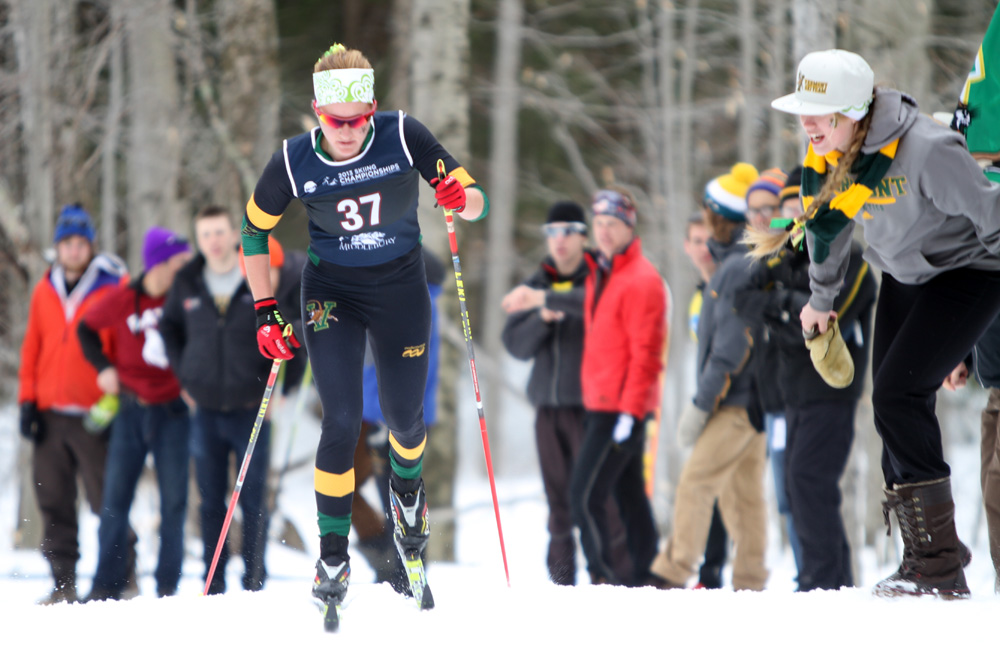
    Upon graduating the S.J. Quinney School of Law at the University of Utah three years ago, Swenson landed a job in Strafford County in his home state of New Hampshire.

    Carl Swenson, Kismet Cliff Run
    Swenson after winning the first Kismet Cliff Run, a five-mile trail race in North Conway, N.H., in September 2009. Photo courtesy of Kismet Rock Foundation.

    Driving home from work to his apartment in downtown Portsmouth, the 41-year-old Swenson spoke on the phone about how he ended up on the seacoast. Born in Corvallis, Ore., he grew up in North Conway, N.H., in the heart of the White Mountain National Forest.

    There in the Whitaker Woods area behind his house, he won the state nordic skiing title as a ninth grader at Kennett High School. He spent his junior and senior years a little farther south at the Holderness School in Plymouth, where shared a dorm with Tour de France star and recently self-proclaimed doper, Tyler Hamilton. (Swenson said they weren’t close).

    Swenson attended Dartmouth College in Hanover, N.H., where he was a two-time ski team captain and political philosophy major. Upon graduating in 1992, he headed west to Colorado and also lived in Utah before retiring from the sport in 2007.

    Coming back east wasn’t exactly the plan, Swenson said, but he had no complaints.

    “The whole goal here is to serve my clients,” he said of his life as a lawyer. “I’m part of a system that has all kinds of problems and issues, but it’s very engaged in real life and the community. I do find that rewarding, that I’m able to be effective in something and it’s not about how fast I can ski and ride my bike.”
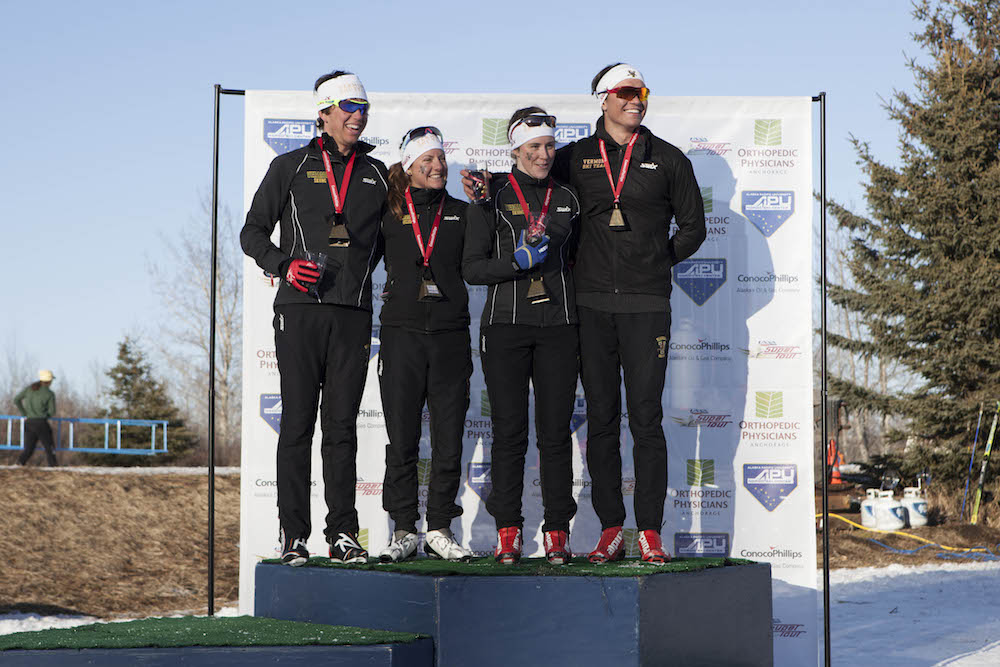
    Like many athletes who find a new career after sports, Swenson said he wanted to work in a field that was both exciting and self-driven — not necessarily self-centered, like racing was.

    At the same time, performance remained key. Swenson said he appeared in the courtroom almost daily, which required tons of preparation and a constant, all-out effort.

    “It’s almost like preparing for a big race, but much more nerve-wracking,” he said. “You have to get up, or in a sense, compete against someone in the courtroom. … It’s a good sign when you care enough to get anxious about something, and at the end of it, it definitely feels better to have gone through all that.”

    Swenson usually starts his days with an appearance, which can last anywhere from a half hour to all afternoon. When he gets out around 4:30 p.m., it’s usually all he can do to take his mind off work.

    While he tried to run or road bike daily and lift weights a few times a week, Swenson said his job sometimes infiltrated his home life and consumed his weekends with research. Fortunately, his girlfriend Katie Gould, a Tecnica Outdoor product and marketing manager, helped him get out.

    Trips are harder to plan now, Swenson said, yet he managed to swing a recent mountain bike trip in Burke, Vt.  There, he had to borrow a bike and explained that he never replaced his old ride after it broke when he was in law school.

    For many, that might seem logical — good mountain bikes are expensive — but for a former pro who now likely made at least three times what he did during his summer-mountain-bike/winter-skier career?

    “I never got around to buying a mountain bike out here,” Swenson said. To him, Portsmouth was better for road riding.

     Better in Time

    When Swenson made up his mind to retire after the 2006 Winter Olympics in Turin, Italy, he had an idea what his future would hold. He applied to law school before the start of the season, and at 36, knew he would be older than most students.

    That bothered him about as much as it did when he raced: hardly.

    The oldest member of the U.S. Ski Team, Swenson was a pedigree all his own. In 1996, he made the bold decision to pursue a professional mountain-bike career and continue to ski race internationally in the winter.

    Former USST teammate Patrick Weaver said Swenson’s love of training and the lifestyle made that possible. He was a hard worker who wanted the year-round rigors, whereas most elite athletes wouldn’t consider putting themselves through 300 days on the road a year.

    “You’re never really sleeping in the same place for more than a week or so, and after a while, you start to question why you do it,” said Weaver, now the head nordic coach at the University of Vermont.

    While Swenson’s schedule was about twice as packed as most skiers, he thrived off it, keeping some belongings in a storage closet near the USST headquarters in Park City, Utah.

    “For a while there Carl was a minimalist,” Weaver said, with a laugh. “(He) didn’t want a computer or a cellphone or an address … whatever most normal people had.”

    When Weaver decided to buy a house in Bend, Ore., Swenson couldn’t understand why. About 30 at the time, Weaver felt it was natural to think about life after skiing, as did other teammates who were about the same age.

    Not Swenson.

    Two years after he became a professional mountain-bike racer — at the ripe age of 28 — Swenson placed 31st at Worlds. The next year, he won silver at the 1999 Pan Am Games and was the 2000 national champion.

    While the transition between sports wasn’t initially easy (he noted several weeks of muscular awkwardness at the beginning of each season), Swenson said competing in both absolutely helped him.

    “It always kept me fresher for both sports,” the 11-time national nordic champion said. “I like the variation and the change. I think if anything, it kept me more rested and eager.”

    In 2002, Swenson anchored the Americans’ fifth-place relay at the Salt Lake City Olympics. A year later at age 32, he finished a career-best fifth at the FIS World Championships in the 50 k freestyle — without a pole for at least a kilometer.

    There in Val di Fiemme, Italy, Swenson went down with the pack in a downhill crash and emerged from the pile with a broken pole. According to a story on Ski Racing.com, a Spanish coach eventually handed him a usable replacement. In second place before the crash, he ended up fifth and considered it his best race regardless.

    Moments like those stood out, Swenson said, but he also remembered the bad races. In many cases, he used those to propel himself toward better results in the next.

    His former teammate and roommate Pete Vordenberg, now a national team coach, said that was one of Swenson’s greatest strengths.

    “He could bounce back from setback almost instantly,” Vordenberg wrote in an email. “Terrible race one day, top 10 the next. Well, that and smarts. And a hell of a sense of humor. Humor mostly.”

    Swenson leads the men’s pack at the 2009 Boulder Mountain Tour in Sun Valley, Idaho. He finished eighth and plans to ski the 32-k marathon again this year. Photo courtesy of Saab Salomon Factory Team.

    His Own Drummer

    While many of his teammates kept in touch with significant others while travelling, Swenson avoided such interactions, which he saw as unnecessary distractions. In a 2006 interview with the Summit Daily News, his older brother, Pete, a randonee national champion and three-time ski mountaineering world competitor, teased Carl about not having a cellphone.

    “I do have a computer now,” he responded.

    “That’s big for Carl. Really big,” said Pete, now 43. “He’s hard to reach.”

    Swenson was the guy on the team that enjoyed sitting down with a good book, magazine or copy of The New York Times. Weaver said that wasn’t particularly surprising because he was an “Ivy Leaguer,” but he never flaunted his intelligence.

    “He was pretty unique that way,” Weaver said. “He had his opinions and he wasn’t afraid to express his opinions, (but) you had to bring it up for him to talk about things.”

    His training was similar. He usually went about it his own way, Weaver said. Without being cocky, he also wasn’t seeking too much outside advice.

    Back when Weaver was in ninth grade, he recalled first noticing Swenson as an eighth grader.

    “He was small for his age,” he said. “I remember this little tiny kid going really, really fast.”

    While his results turned heads, they were also hot and cold through the years, especially in his early 20s.

    “He’d win a race and he was just Carl or he’d have the worst race of his life and he was still Carl,” Weaver said. “There wasn’t much difference in his demeanor. I gave a lot of respect for guys like that.”

    Perhaps that’s why Swenson — nicknamed “Plucky” in college for his dogged determination — lasted so long in the sport.

    A skier first, Swenson picked up mountain biking after college while living with his brother, then a pro cyclist. Fortunately for Swenson, Pete was also a bike mechanic.

    “The guys at the shop called me ‘The Mangler,’ ” Carl told the Summit Daily News. “I would destroy every bike that I’d take. I didn’t even have my own bike.”

    Great Expectations

    Swenson’s decision to spend about eight years of his ski career chasing mountain-bike aspirations wasn’t exactly a coaches’ dream, but he said it was financially necessary.

    According to a 2006 Wall Street Journal article on Swenson, he made about $2,500 a month in the summer while racing for Ralph Lauren’s RLX Polo Team. If not for his mountain bike career and ability to expense most everything, he wasn’t sure how he could have afforded skiing for some 15 years after college.

    “I knew it would not last forever so I enjoyed every minute,” he wrote in an email.

    In 2005, Swenson drove across northern Europe alone — about 500 miles — after choosing to do two early-season World Cup races. When he reunited with his team in North America, he was sick and his 11th and 12th finishes in Norway turned out to be his best results of the season.

    Looking back, Swenson recognized that wasn’t the best move, but it was how he did things. Usually, he just ignored illness.

    Asked if the USST had higher expectations and more support today, he said he wasn’t sure. Caliber-wise, he was impressed with the results of its top athletes.

    “I think it’s healthy to have expectations and those pressures on athletes,” he said of the national desire for medals and podium appearances. “I keep waiting for those breakthrough moments. I also think we’re always going to have those opportunities … hopefully it’s sooner than later.”

    In an effort to maximize his chances for podiums, Swenson tried to qualify for the 2004 Summer Olympics in mountain biking. When he wasn’t able to crack the top-2 national slots, he put down the bike and committed himself entirely to skiing.

    By the time he wrapped up in the spring of 2006 — after helping the men’s 4 x 10 k relay finish 12th at the Winter Olympics — Swenson was ready to move on. Law school seemed like fun since he liked studying, and he knew it would keep him busy.

    “I didn’t realize it at the time, but practicing was a lot harder than law school,” he said.

    An athlete representative for North America, Swenson served on the International Ski Federation board from 2004-2006. The following year, he was the cross-country ski rep for the United States Ski and Snowboard Association.

    Accolades aside, Swenson said his work with the U.S. Anti-Doping Agency was a particularly good fit. He was elected to the Board of Directors in the fall of 2007, when he was completely retired and free of conflicting interests. His experience in two sports made his perspective even more valuable.

    With about two terms left, Swenson said anti-doping efforts worldwide had made significant headway since many of the competition scandals broke out around 2000.

    “People get caught and then it comes out, and people get disgusted by it,” he said.

    As an athlete, Swenson knew about the prevalence of cheaters in skiing and especially in bike racing, but he used it as motivation to beat them.

    “It’s still just kind of sad to think of all that was going on,” he said, pointing out the case of Beckie Scott, Canada’s first Olympic medalist in cross-country skiing.

    Third in the 5 k pursuit at the 2002 Games, Scott finished behind two women who were later found guilty of using performance-enhancing drugs. She received her gold medal almost 2 ½ years later.

    “That’s heartbreaking; she was robbed of that moment,” Swenson said.

    Life After Skiing

    With a short walk to the ocean, Swenson said he sometimes longed to get to the mountains. On weekends he occasionally tries to, whether that means racing a hill climb or a ski race of some sort or visiting his parents, Sally and Steve, in North Conway.

    In the meantime, he enjoys the coast — running along the beach and taking short dips in the summertime. Next year, he intends to try paddle boarding.

    His work schedule has limited Swenson before, but this winter, he plans to travel. After placing 14th at the Bretton Woods 40 k last year, he wants to keep racing ski marathons and hopes to revisit the Boulder Mountain Tour this season.

    At the same time, his profession is demanding with an especially steep learning curve, which makes coming up for air difficult.

    “That’s the thing I probably miss the most (about racing),” Swenson said. “I didn’t realize how experienced I was at what I did. … There’s days where I just feel like an idiot, but that’s natural.”

  • UNH Coach Weighs In On Committing to Skiing and the Value of Networking

    UNH Coach Weighs In On Committing to Skiing and the Value of Networking

    FasterSkier had the chance to catch up with Corey Schwartz, Head Ski Coach of University of New Hampshire (UNH) to get some of his thoughts on skiing. Schwartz has been the head director of the UNH ski program for 25 years, during which he has mentored 27 student-athletes to 37 All-American team selections.

    Corey Schwartz, Head Ski Coach at UNH

    He himself skied as a Wildcat for three NCAA Championship teams, and as coach served for both the Eastern USSA Sr. Committee and Chairman of the NCAA Committee. Schwartz is a Level II Certified Coach and has been named Coach of the Year by the Eastern Intercollegiate Skiing Association four times.

    FasterSkier: It seems that you went from a Wildcat skier to a UNH coach pretty quickly. What prompted your decision to stay at UNH and how has it been?

    Cory Schwartz: It was my 5th year here – I had an internship at UNH when Buzz Davis [my college coach] asked me to help out with the men’s ski team. Back then, men’s and women’s programs were split, and I was asked to be on staff for the men’s side. I got involved because it was my goal to possibly keep ski racing. Paul Burton and Buzz then left soon after, so before I knew it, I liked what I was doing. You get rewarded with seeing your athletes grow over time, who they become. It also gives me time to tweak the men’s program.

    FS: What are some of the biggest challenges your athletes face? They are making a big step/transition on deciding to compete on the NCAA level- how do they deal with that?

    CS: I do not view it as a challenge, but more as the next step in progress. They have already made the step to become a student-athlete in high school. At home, you have parents to remind you about your training hours, your homework time, your engagements and appointments. When they leave the house and keep that student-athlete set up, they have made that decision. That’s their biggest challenge, of realizing their day-to-day decisions are important. If they decide to go out, that is their decision on how it impacts their training. They are adults now, and are expected to make adult decisions

    FS: You have had some impressive skiers continue on after college- Patrick Weaver and Marcus Nash as Olympians, and most recently Dylan McGuffin of the Craftsbury Green Racing Project. How was it building those athletes to pursue professional skiing- what discussions did you have with them?

    Dylan McGuffin of UNH finishing first in his first carnival win in 2010 at Lake Placid

    CS: We have quite a number of Olympians come through UNH. Patty Ross [Middlebury Assistant Coach] and Marty Hall [former Bowdoin Head Coach] are two that came through our ski program. Robel Teklemariam was also one, although he was unique since he was the only non-American to compete in the Olympics [for Ethiopia]. I have had very good relationships with my alumni, and after 20 years it’s been very rewarding. Soon I’m going to visit two alumni that just had a baby. It was certainly harder in the 80’s with zero technology advantages in networking. Now there’s Facebook, Twitter and cell phones that can help keep track of people.

    Anyone would think it’s no different to race professionally compared to then and now. During Pat’s era, he did not have it as easy. He didn’t have today’s opportunities of clubs, teams- he had his friends and family for support and that was about it. He would call me for help, and he even worked as an unofficial assistant coach- he would do training camps with us, come meet the team at race venues, all while trying to make the Olympics. That was nice, because Pat received so much as a UNH skier, and he was already giving back to the program. Dylan on the other hand has teammates and coaching, and full support essentially [from Craftsbury]. Pat on the other hand would pay out of his own pocket if he had to race in West Yellowstone- and to make the Olympic team, he had to. Compared to what Pat had to do to continue skiing, it’s like day and night.

    Patrick Weaver racing at Hanover, NH in 2009 for the Salomon Factory Team

    The best that I could do for Pat is to call his house and remind him that it’s a long road. The other thing is sometime after Pat in the late 80’s, NH Skiing and UNH created Friends of New Hampshire Skiing, a fund specifically for athletes pursuing that goal of post-collegiate skiing. Pat, Dylan and Mike [Cremeno from the alpine team] can all request some funds when they travel to help cover expenses.  The biggest thing that [we coaches] can do to prepare skiers for that post-college gap is to help them grow in college. Particularly with Pat, it was not like I could call his cell phone or e-mail him.

    FS: How do you approach training with your skiers? It’s a big question, but are there certain aspects that you emphasize to your athletes in your overall philosophy?

    CS: That’s definitely a big question. The best thing that any coach can do is to press for consistency for a full year. The second item of importance is on summer training. That is biggest increase in a skier’s training hours.  You can come to practice during the school year and get it done with your team, but it’s also really important what you’re doing when no one is watching. What we have learned adapted for training is how we do ‘focus’. If it’s a volume week, we will do less intensity and up the hours; if its intensity, we get the sessions done. Back in the 80’s we would get our 4×4 workout in for the day, but also try to throw in an extra hour for distance. Now when we do speed sessions with our athletes, we do not tell them to go ski for two hours after that. It’s a day by day task, but we have learned how to improve that weekly focus. Again, with current day technology, we also have more resources- Professor Dain Roche used to ski for UNH, and now offers some valuable knowledge. We are always tweaking our program, seeing results and getting feedback from our skiers- how training feels for them, working with academics on top.

    FS: Thanks for your time! Good luck to your team this season.

  • UVM Hires Johnson as Assistant Coach

    Andrew Johnson in a race last year. Photo, Toko.

    Former Olympian and U.S. Ski Team member Andrew Johnson is heading to the University of Vermont as the new assistant coach of the school’s cross-country ski program.

    Johnson did not respond to a request for comment, but UVM Head Coach Patrick Weaver confirmed on Monday morning that Johnson had accepted a position with the university.
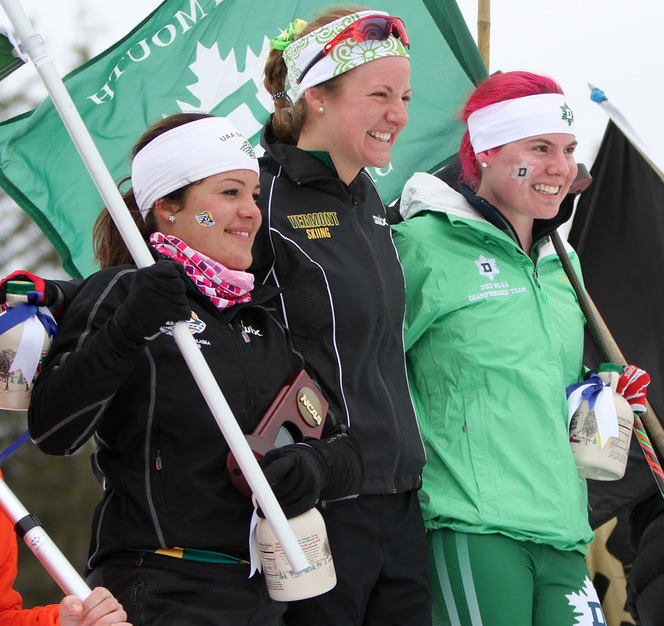
    “We’re really excited to have him,” Weaver said.
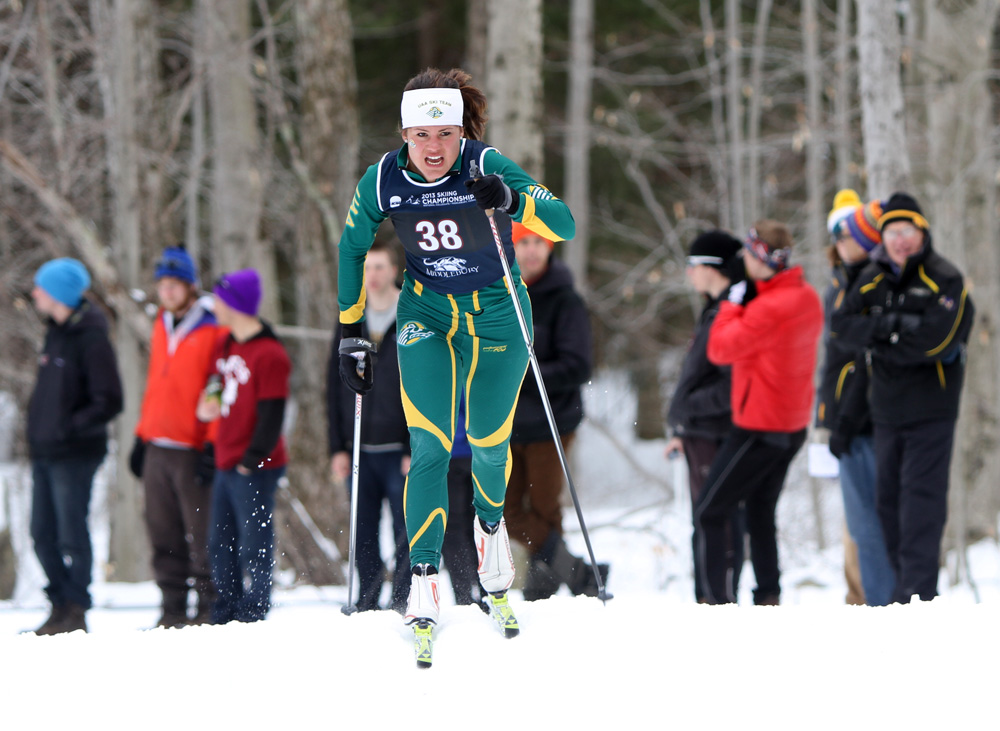
    The assistant coaching job is full-time, but Johnson will also be able to take classes at the university and work towards his master’s degree, which was one of his goals, Weaver said.

    Johnson’s hiring completes a reshuffling of the UVM coaching staff, which began this spring when former head coach Paul Stone was demoted and replaced by Weaver, who had been the assistant coach.

    Stone was to continue with the program as the assistant, but he left this summer to take the head coaching job at the University of Maine, Presque Isle.

    Long one of the east’s top ski program’s, UVM has five NCAA championships to its name–all of which came in the 1980s and 1990s. The school placed second at NCAA’s in 2005, but has finished no better than fifth since then.

    The addition of Johnson to the UVM program makes the team’s coaching staff the fastest in the nation—at least among collegiate programs. Both Johnson and Weaver are two-time Olympians, Johnson in 2002 and 2006, and Weaver in 1998 and 2002.

    Hailing from Greensboro, Vermont, Johnson competed for Middlebury College before leaving in 1999 to race full time with the U.S. Ski Team. He collected multiple national championships over the course of his career.

    On the World Cup, Johnson’s only individual top-30 result came in a 30 k freestyle race in 2001 at Soldier Hollow, while his best finish at the Olympics was 21st in the same event at the same venue a year later.

    After the 2006 Games, Johnson scaled back his competitive career, with stints working as an assistant coach at as the University of Utah and attending school there. Last year, Johnson competed under the aegis of the fledgling Steinbock Racing squad, finishing 19th at the American Birkebeiner and 33rd at the 15 k freestyle at U.S. Nationals.

  • Weaver Named UVM Head Coach; Stone Moves to Assistant

    UVM has promoted two-time Olympian and National Champion Patrick Weaver to head coach.  Paul Stone, the former holder of that position will stay on as the assistant coach.

    Said Bill Reichelt, Director of the UVM Ski Program and Head Alpine Coach in an official press release, “Patrick’s personal career as two-time Olympian and two-time national champion is an outstanding testament to the knowledge he will bring as head coach and his experience with the program over the past three years will be a huge asset to the team.”

    According to Reichelt, Stone will begin work on a master’s degree while continuing to work with the team.

    “Paul has a great deal of experience and insight and we are fortunate to have him continue to be a part of the UVM ski program and Nordic team,” said Assistant Athletic Director and supervisor of the ski program Joe Fischer in the press release.

    Stone led the Catamounts for four years while Weaver has been the assistant coach for two.

    During Stone’s tenure as head coach, UVM won two individual NCAA titles – Juergen Uhl in 2009 and Franz Bernstein in 2010.

    Stone began his coaching career as an assistant at Williams College after a strong collegiate career at Dartmouth.

    Weaver skied in the 1998 Nagano and 2002 Salt Lake Olympic Games.  His best Olympic finish was a 16th in the 15km classic in Salt Lake and he won National titles in 1998 and 1999.

    When contacted, Stone referred FasterSkier to the official press release.