Tag: Paul Everett

  • An Open Letter About Depression in Competition

    An Open Letter About Depression in Competition

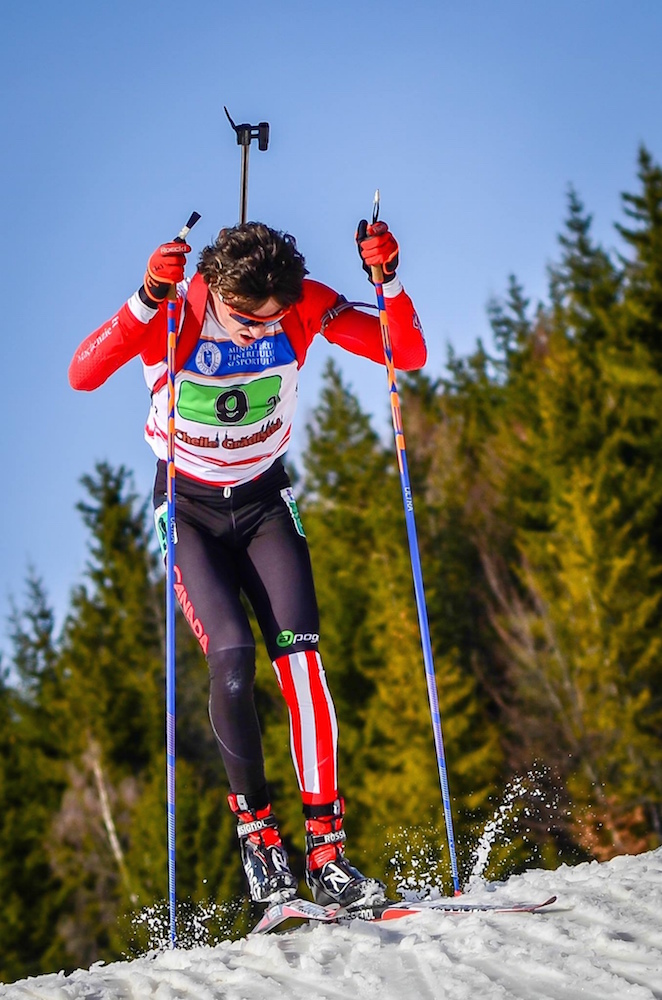
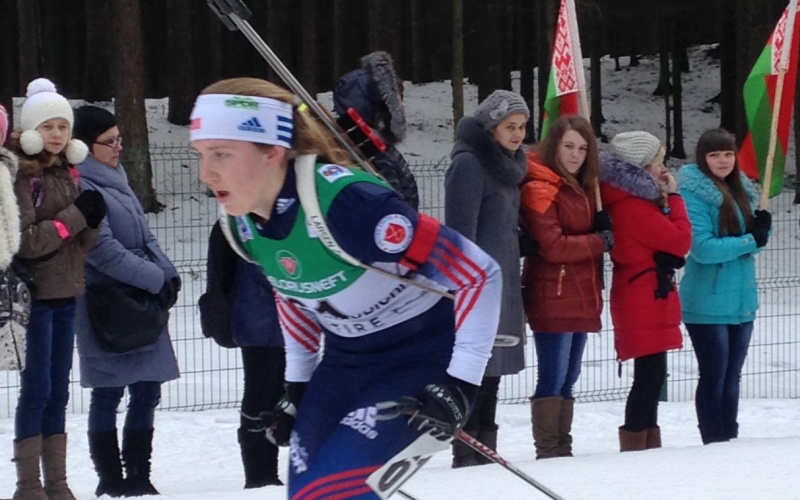
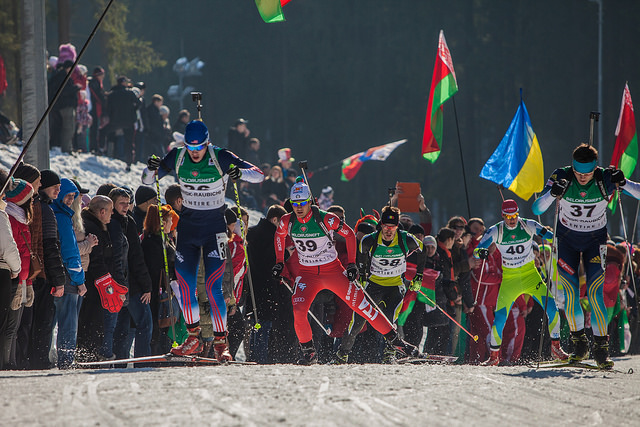
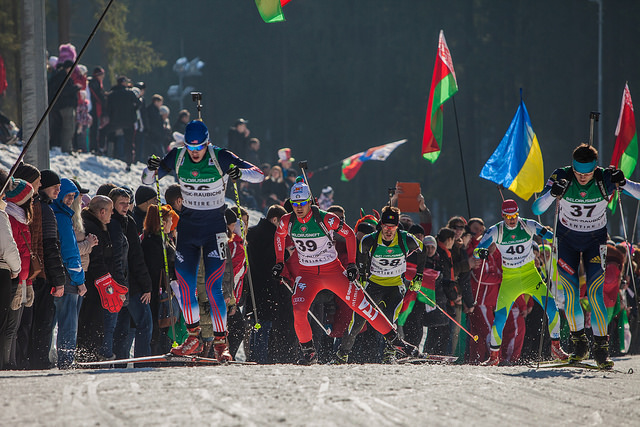
    Paul Everett racing at 2015 IBU Junior World Championships near Minsk, Belarus. (Photo: Jake Ellingson)
    Paul Everett (l) racing at 2015 IBU Junior World Championships near Minsk, Belarus. (Photo: Jake Ellingson)

    If you follow U.S. skiing closely, you’ve probably heard of Paul Everett. After three years on US Biathlon’s development team, Everett, 20, is currently a Montana State University sophomore and member of the Bridger Ski Foundation in Bozeman, Mont. He is studying exercise science and psychology, and wrote the following letter for an assignment. It’s about depression and anxiety in athletes, “more specifically ski racing about what it is like for those competing with these disorders and ways in which athletes and coaches can help with these mental conditions,” Everett wrote in an email to FasterSkier. “I offer this letter … to spread awareness or help other skiers with similar struggles.”

    ***

    Dedicating one’s life to a sport can fittingly be described as near insanity. As complete insanity is defined as doing the same thing over and over again expecting different results, an athlete’s job description nearly meets that criteria, but with at least showing the smallest increments of improvement each time. To compete at the highest of levels in any sport, an athlete needs this narrow, single-sighted vision of reaching their optimal best, and doing only that which will help them achieve this goal. For some this mindset comes easily, but for others like myself, this near insanity that is required of athletes may not always coexist with their own mentality. Much of my life I have suffered from depression and anxiety. Each time this struggle rises, I have always gone to skiing as a way to cope with this mental disorder. While skiing has done tremendous improvements on my mentality towards life and understanding of what it takes for me to be happy with myself, the competitive side of ski racing can take an emotional toll on anyone, especially those suffering this condition.

    For a disorder that affects millions of people, including many athletes, its severity is not always recognized for the damage it can do. Living with depression, energy and motivation seem to drain at even the smallest of obstacles. While thoughts are occupied on unrealistic concerns or perspectives, much of what once brought joy now fades to empty routines. The ability to see the positives of accomplishments is replaced with highlighting the faults within them. It is this voice within the head demanding one’s self to quit, but never itself going away. Though exhausting, these symptoms are not what stop me from racing. While I can quiet this voice much of the time through skiing, it is only when I am faced with expectations of success in racing that my anxiety strengthens these destructive tendencies.

    As a product of depression, you let yourself down countless times by not reaching the impossible standards you set yourself up to attempt. That pain may numb after a while, but the additional anxiety from letting down others cheering you on is what becomes unbearable. Competing with the heavy weights of depression and anxiety on your shoulders can become a crippling task. Trapped within your own head without a filter, negative thoughts become a constant stream for days leading up to a race. Self-esteem is lowered with every comparison of your vulnerabilities to another athlete’s strengths, and when time does finally come to leave it all out there, your only wish during the entirety of the course is to just be on the other side of that finish line. No matter the outcome, be it standing on the podium or the last page of the results, the anxiety always takes its toll.

    Depression and anxiety are a tradeoff pair, both taking turns quieting the other, but also taking turns gaining control of your life. As anxiety acts as a distraction from depression, it is one that only heightens the inevitable fall of the melancholy to come. Being physically and mentally exhausted after a weekend of racing is the perfect time for depression to surface. You need a break like anyone after a hard effort, but this break when left alone makes you susceptible to that retuning voice in your head. Now without the distraction of skiing or the energy to combat it, the voice can take ahold of your thoughts, dragging you once more to your lowest point and letting you surface only when the next race comes for anxiety to take its turn.

    As the years have passed with this disorder, I have learned new ways to help deal with this voice and the thoughts that come with it. While the voice may always be there, distractions and acceptance seem to be what aid me the most. Finding anything productive to do in order to keep my mind from wandering to these thoughts is the most efficient way I am able see positive changes in my mood. This is a disorder that thrives on isolation. To have the company of others I closely regard not only distracts myself, but brings an uplifting environment that can carry with me long after. While this companionship may not always be offered when I need it, finding acceptance is another tool used to great degrees of success. Anxiety is a product from fearing the future’s unknown. By doing what I need to at this moment to ensure the best future for myself and accepting the things I cannot change, there should be no reason for my fear to take ahold of me. Of course more easily said than done, these ideas are things I am still working out for myself today, and hope anyone reading this as well can gain from.

    “Anxiety is a product from fearing the future’s unknown. By doing what I need to at this moment to ensure the best future for myself and accepting the things I cannot change, there should be no reason for my fear to take ahold of me.”

    Depression is not something that will be relieved permanently from my life. That negative voice will always be there, but there are things I can do to quiet it. This letter is not only written for my own benefit, but for any athletes or coaches of athletes who share this burden with me. I have seen positive improvements from my own life by sharing my feelings with family, therapists and coaches. It is not something that should be hidden from others. As like any disorder, one needs support if it is to be managed properly. To the athletes, please shed light of your feelings to your family and coaches, so they can do their own part as well to help. Seek a therapist before you think you even need to. There are therapists out there that can do unbelievable work. It is something that can never be done too soon, and could possibly save your life. To the coaches, if you see your athlete show any signs of abnormal moods or behavior, it is your obligation to talk with them in an appropriate manner in order to know what the best choice is for their health. An athlete’s wellbeing takes priority over any race, and if that means taking time away from skiing in order to address changes that need to be made, so be it.

    I have come out the other side of dark times brought on by this disorder, with a great amount of work still to come. Although I cannot completely prevent others from the reality that is depression, I do have the ability to spread awareness and provide tools to those and their supporters who need it most. There is no reason for you to fight this on your own. Skiing has never only been about competing, but more importantly about having fun, and it’s hard to be sad with a smile on your face.
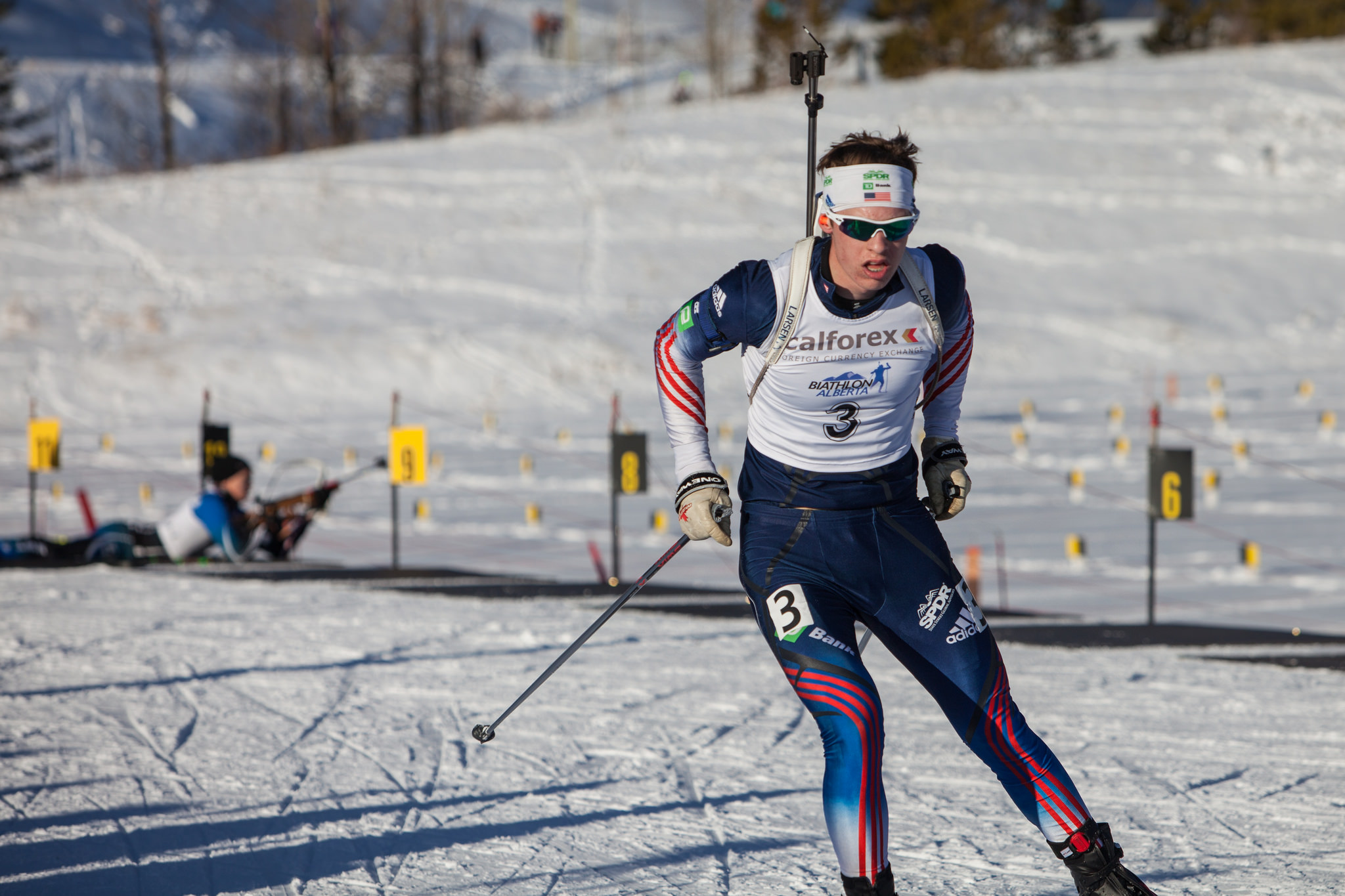
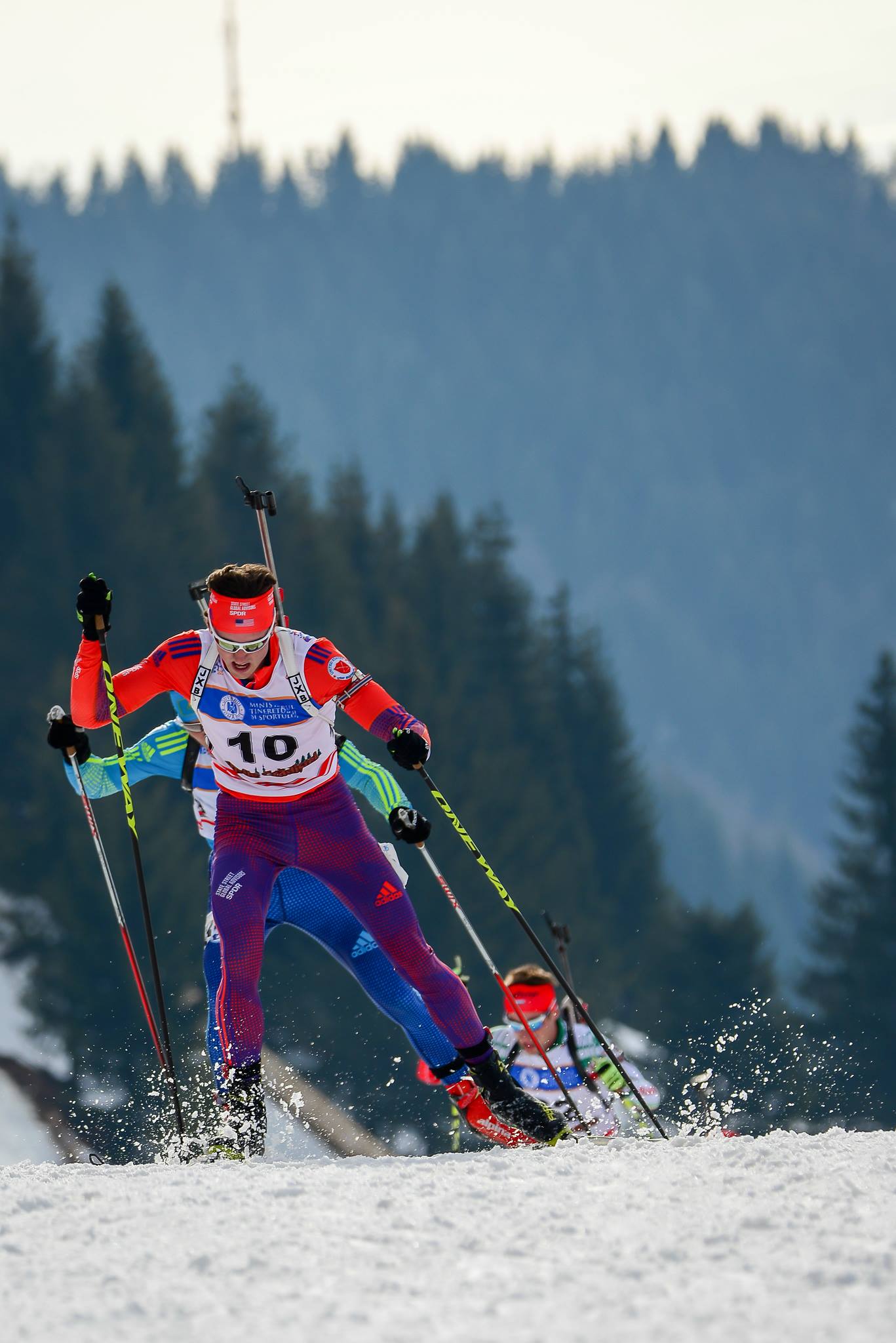
    Former US Biathlon development skier Paul Everett (Methow Valley Biathlon) racing in December 2014.
    Former US Biathlon development skier Paul Everett (Methow Valley Biathlon) racing in December 2014.
  • That’s a Wrap: Norwegian Women, Russian Men Win Junior Relays on Last Day in Romania

    That’s a Wrap: Norwegian Women, Russian Men Win Junior Relays on Last Day in Romania

    (Note: This article has been updated to include comments from Canadian coach Richard Boruta after Tuesday’s junior relays.)

    It was the last day of IBU Youth/Junior World Championships, and for several juniors racing on Tuesday in Cheile Gradistei, Romania, the idea was to have fun. Maddie Phaneuf said that was a priority on U.S. women’s 3 x 6-kilometer relay team: “We hadn’t really set a goal for the day…I was just reminding the girls to have fun out there and do their best,” she wrote in an email.

    Personally, she wanted to hand off to second-leg Siena Ellingson in a good position. Phaneuf did so, skiing the second-fastest scramble leg of 16 teams and coming into the first exchange in fourth, 42 seconds behind the leaders.

    While she avoided the penalty loop on both shooting stages, Phaneuf used a total of three spare rounds to clean: two on the first prone, which put her back in 12th, and one in standing.

    “It was fun to pick off the girls on the last loop and move up to 4th from 7th after my standing stage,” she wrote. “I felt really strong today and my skis were fast thanks to our wax techs.”

    The Norwegian women’s team (Anne Marit Bredalen, Turi Storstrøm Thoresen and Ingrid Landmark Tandrevold) skied to the win in 55:26.3, passing Sweden on the last loop to win by 15.6 seconds with a team total of five spares (0+2, 0+3). Sweden took second with four spares (0+0, 0+4), and Austria reached the podium in third, 55.5 seconds back with seven spares (0+2, 0+5).

    The U.S. finished 12th (+5:55.2) with one penalty and nine spares (0+4, 1+5). Ellingson shot identical to Phaneuf, cleaning with the help of two spares in prone and one in standing, and anchor Claire Waichler cleaned prone but had to ski a penalty lap after using all three spares in standing.

    Fifteen teams finished. Canada did not. Kendall Chong started the team off with three penalties and six spares (0+3, 3+3) and tagged teammate Charlotte Hamel in 16th. While Hamel cleaned both stages without any spares, she couldn’t move up from that position. The third Canadian, Leilani Tam von Burg did not start.

    “Leilani was getting sick and it was not sure until the last moment whether or not she will be able to race,” Canadian trip leader and Biathlon Alberta Training Center coach Richard Boruta wrote in an email.

    The fourth junior woman on the team, Caitlin Campbell was hospitalized after crashing in the sprint last Saturday.

    “She is not allowed to exercise much at this moment,” Boruta explained. “We did’t have any other chance than to include Leilani and hope for the best. However, it didn’t work out with her, but the other girls still felt that they would like to have one more opportunity to compete against the strong international field, one of the important things missing in Canada / North America.”

    For Phaneuf, in her third and final Youth/Junior World Championships, she explained the relay was a good way to end the week in Cheile Gradistei. Individually, she notched three top 10’s: fifth in the 12.5 k individual, seventh in the 7.5 k sprint, and ninth in the 10 k pursuit.

    “I think I ended my junior career on a really solid note,” Phaneuf wrote. “It was exciting to reach my goals and end I can’t wait to see what the rest of the season brings.”

    Next up for the 20-year-old US Biathlon development skier? Phaneuf said she’s headed back to the U.S., where she’ll spend just under a week training and recovering in Lake Placid, N.Y., before heading to Presque Isle for the IBU World Cup next week.

    “During those races I have the opportunity to qualify for the World Championship team, so that’s definitely a goal of mine,” she wrote. “We’ll see what happens! Either way, I’m happy with how my season has turned out so far. It’s great to see how much I’ve improved from last year.”

    (Story continues below)

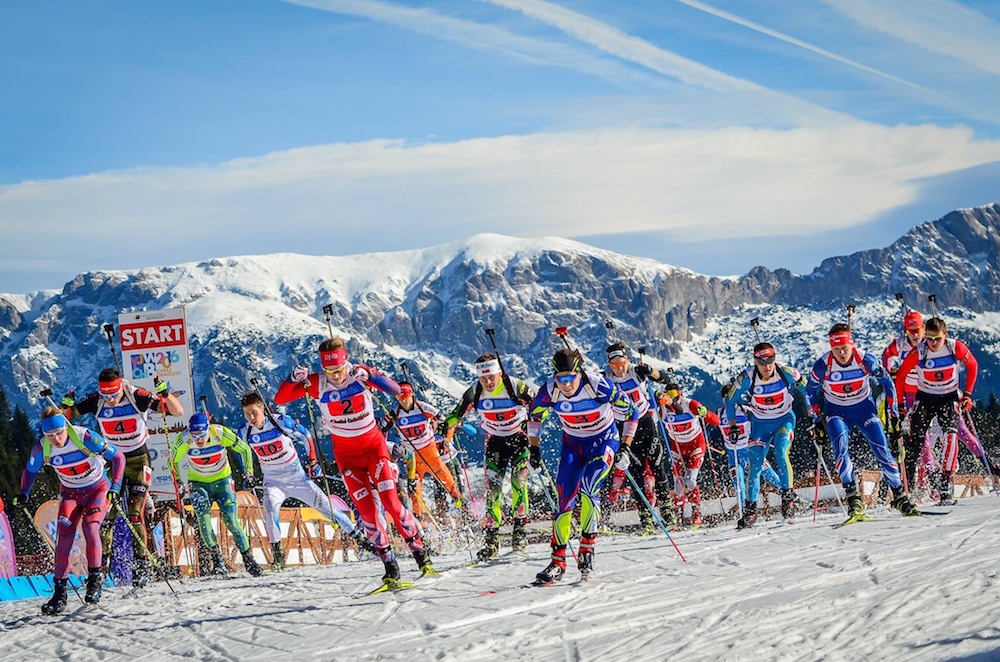
    Start of the junior men's 4 x 7.5 k relay  at IBU Junior World Championships on Tuesday in Cheile Gradistei, Romania. (Photo: IBU YJWCH Cheile Gradistei 2016/Facebook)
    Start of the junior men’s 4 x 7.5 k relay at IBU Junior World Championships on Tuesday in Cheile Gradistei, Romania. (Photo: IBU YJWCH Cheile Gradistei 2016/Facebook)

    In the junior men’s 4 x 7.5 k relay, the Russians dusted the field by two minutes in 1:23:56.7. All four men (Dmitrii Shamaev, Viktor Plitcev, Nikita Porshnev, and Krill Streltsov) shot flawlessly in prone and everyone but Streltsov cleaned standing without any spares (Streltsov used two — the team’s only spares).

    Germany claimed second (+1:59.6) with eight spares (0+4, 0+4), and the Czech Republic took third (+3:05.8) after using six spare rounds (0+1, 0+5).

    Alex Dupuis (Canada) racing the second leg of the men's 4 x 7.5 k relay at IBU Junior World Championships on Tuesday in Cheile Gradistei, Romania. (Photo: IBU YJWCH Cheile Gradistei 2016/Facebook)
    Alex Dupuis (Canada) racing the second leg of the men’s 4 x 7.5 k relay at IBU Junior World Championships on Tuesday in Cheile Gradistei, Romania. (Photo: IBU YJWCH Cheile Gradistei 2016/Facebook)

    The Canadian men finished 14th (+11:12.1) after skiing eight penalty loops and using 18 spares. Matthew Strum opened with one penalty and five spares (0+2, 1+3) and tagged the team in 16th, Alex Dupuis cleaned both stages, using one spare in prone (0+1, 0+0) to tag off in 14th.

    The Canadians held onto the position from there, despite Aidan Miller skiing five penalty loops and using six spares (3+3, 2+3), then tagging Pearce Hanna in 14th. Hanna shot skied two penalty loops after prone and cleaned standing with three spares (2+3, 0+3) to finish about a minute behind 13th and 19 seconds ahead of 15th.

    According to coach Boruta, top 10 was a reasonable goal for the junior men’s relay.

    “Alexandre Dupuis was the only one who did have a good relay performance…,” Boruta wrote. “Charlotte [Hamel] did have a good day on the range as well, unfortunately her skiing is quite far off of the pace.

    “Overall, all the top 20 (or even 30) placings are very respectable results and we should be happy, that we have at least few athletes who can be at that level,” he reflected on the team’s overall showing at the championships. “The competition is becoming stronger and more nations are in a position for good results.”

    Biathlon Canada doesn’t fund programming for junior or youth athletes, so essentially “there is also no high expectation for their performance,” Boruta explained. “Those athletes are spending around $20,000 – $30,000 a year for the privilege to train full time and represent Canada internationally, but sometimes this makes it frustrating for the coach, because there is no real leverage if there is a need to change their attitude or anything.

    “Our mandate is to develop athletes to such a level that they can make the jump from juniors to seniors and become competitive within a reasonable time frame,” he added, explaining that’s working so far.

    The U.S. men’s team of Paul Everett, Brian Halligan, Brendan Cyr, and Travis Cooper finished 18th of 20 teams, with seven penalties and 17 spare rounds.

    Results: Junior women’s relay | Junior men’s relay

  • Back-to-Back Flower Ceremonies: Doherty Third, Phaneuf Fifth for U.S. at IBU Junior Worlds

    Back-to-Back Flower Ceremonies: Doherty Third, Phaneuf Fifth for U.S. at IBU Junior Worlds

    Seeing Sean Doherty on the podium on Thursday at the International Biathlon Union (IBU) Junior World Championships was hardly a surprise — but that didn’t necessarily make it any easier to reach.

    The 20-year-old US Biathlon A-team member had started early in bib 10 and initially finished second in the junior men’s 15-kilometer individual start, after two misses put him two minutes behind race leader Felix Leitner, of Austria, who had one penalty.

    Two minutes back and still on the podium? Yep, it was that kind of day. Doherty’s time held up against everyone but one other man: Italy’s Andrea Baretto, who cleaned the four-stage race and still finished 1:50.8 off Leitner’s time to claim second place. Doherty moved into third, and while he had a couple challengers for the final step on the podium — including Russia’s Dmitrii Shamaev in bib 82 — no one came close. Shamaev ended up fifth, almost a minute and 45 seconds behind Doherty and 3:45.0 behind Leitner, the winner in 41:55.4.

    Between Doherty and Shamaev, Dominic Reiter of Germany placed fourth, 46.1 seconds behind Doherty and 2:47.2 back for the winner.

    Sean Doherty (US Biathlon) leads another competitor during the men's 15 k individual at IBU Junior World Championships in Cheile Gradistei, Romania.  (Photo: IBU YJWCH Cheile Gradistei 2016/Facebook)
    Sean Doherty (US Biathlon) leads another competitor during the men’s 15 k individual at IBU Junior World Championships in Cheile Gradistei, Romania. (Photo: IBU YJWCH Cheile Gradistei 2016/Facebook)

    For Doherty, it was his eighth podium in six Youth/Junior World Championships (three of those podiums were wins: two in 2014 and one in 2013).

    But a medal is a medal, and that’s what he traveled to Cheile Gradistei, Romania, for.

    “I am happy to start the racing with such a strong result,” Doherty said, according to a US Biathlon press release. “Today I felt strong on the skis and very in control on the shooting range. I’m looking forward to the sprint and to more racing to come.”

    At 2014 junior worlds in Presque Isle, Maine, he won both the sprint and pursuit. His 2013 title came in the pursuit in Obertilliach, Austria.

    Doherty was second in the individual as a youth competitor in both 2013 and 2014, where he raced a shorter distance, just 12.5 k.

    But as a senior competing on the World Cup, he has shown that the format can work over longer distances too: seniors race 20 k, and Doherty finished 17th, his best World Cup to date, in the opening individual race of this season in Östersund, Sweden.

    “I am very impressed by his performance today,” US Biathlon Chief of Sport Bernd Eisenbichler wrote in an email to FasterSkier. “It’s easy to expect medals just going off last year’s results or some recent WC [World Cup] results, but to actually full fill these expectations is hard.”

    Four days ago, Doherty anchored the U.S. men’s relay to sixth (tying a season best) at the World Cup in Antholz, Italy.

    “He had a very intense relay in Antholz on Sunday with a great 6th place finish, then a hard travel day Monday and then had to deal with all the expectations for an expected medal performance,” Eisenbichler wrote. “In my opinion he did a super job today on the range and very solid on skis and in the end it was a medal performance and the whole staff is very proud of him!”

    Doherty’s two misses came in the last two stages. His course time ranked third overall; Leitner’s was first.

    “I already felt good during target practice, so I went into the race with confidence and pushed the tempo right from the start,” Leitner said in a Austrian Ski Federation press release, according to a translation. “Then on the fourth loop I went a little slower, in order to still have enough strength left for the final loop. That worked out perfectly.”

    For Leitner, 19, the win was his first junior title and second at youth/junior worlds after winning the youth pursuit last season in Minsk, Belarus.

    “Of course the gold medal is a dream,” he said.

    Last year in Minsk, Doherty reached the sprint podium in third, but placed outside the top 10 in the pursuit (11th) and individual (14th).

    Two Americans in the Top Five

    Back in the top five at youth/junior worlds — this time as a junior — Maddie Phaneuf (US Biathlon X-Team) notched fifth in the junior women’s 12.5 k individual on Thursday for her best result after placing fourth two seasons ago in the sprint in Presque Isle.

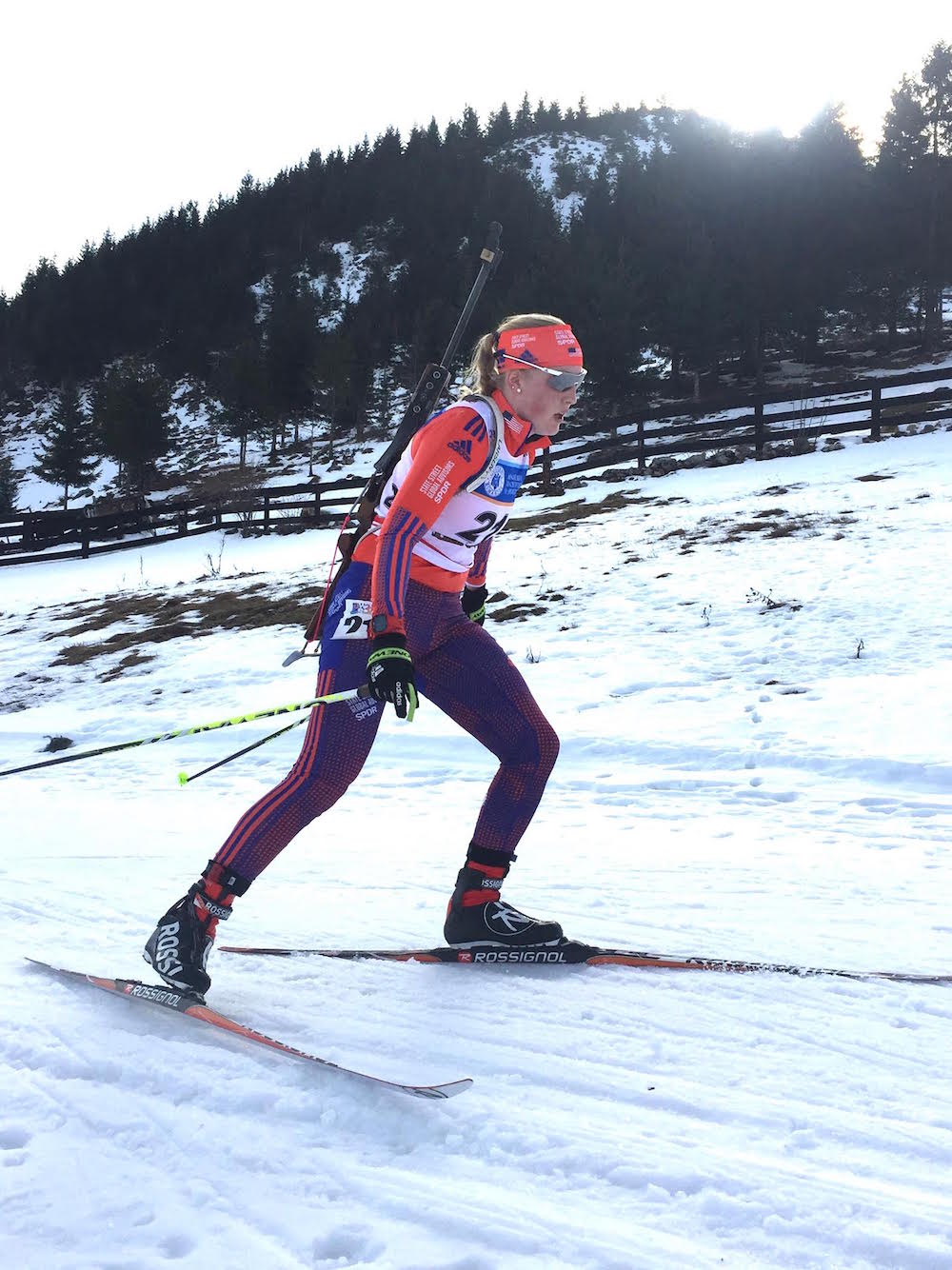
    Maddie Phaneuf (US Biathlon) on her way to fifth in the 12.5 k individual on Thursday at IBU Junior World Championships in Cheile Gradistei, Romania. (Photo: Chloe Levins)
    Maddie Phaneuf (US Biathlon) on her way to fifth in the 12.5 k individual on Thursday at IBU Junior World Championships in Cheile Gradistei, Romania. (Photo: Chloe Levins)

    Despite two penalties (both in the last two stages, like Doherty), which added 2 minutes to her time, Phaneuf skied fast enough to end up 53.1 seconds behind another Austrian, Susanna Kurzthaler, who won in 39:52.7. Interestingly, Leitner and Kurzthaler both hail from the same town, Mils, with a population of about 4,000 in the Tyrollean region of Austria. They also race for the same club, Nordic Team Absam.

    Phaneuf, in her third and final youth/junior worlds, also reached the flower ceremony on Day 1.

    “Coming into these championships my goal was to place in the top 10, which I thought was quite a reach considering my best results last year was 22nd,” Phaneuf, 20, wrote in an email. “I am excited to see that my ski speed is right up there, and that I placed in the top 5!”

    The 21st starter, she initially finished second to Austria’s Julia Schwaiger, a 2015 World Championships competitor who would later move down a few spots to third (+21.4).

    “I was actually told during the last loop that I was sitting in 2nd just 50 seconds behind the leader who had shot clean,” Phaneuf recalled. “This made me realize that I must be skiing pretty well considering I had 2 misses which is a 2 minute penalty. When I saw that I crossed the line in 2nd I was pretty happy and exhausted. My starting bib was pretty early, so I knew that there would be some girls that would knock me down on the results since I missed 2 shots…so I was just hoping to stay in the top 6 and kept asking my teammates to give me the live updates.

    “I’m really happy with how I ended up, although it can be frustrating to realize that if I had hit one more target then I could have won the race,” she continued. “But I’m not complaining..a 5th place finish for the opening race is very exciting. It was great to be back in the flower ceremony after a year without it. It brought back some memories from my first Youth/Junior Worlds.”

    Of the top four women, all but one (Ukraine’s Anastasiya Merkushyna in second place) cleaned all of their targets. Merkushyna, who has World Cup experience, missed one (0+1+0+0) and finished 8.6 seconds behind Kurzthaler.

    For the 20-year-old Austrian, it was her first victory and also her first top 10 in three youth/junior worlds.

    “I already noticed during the second shooting that today could become a good day,” Kurzthaler told the Austrian Ski Federation, according to a translation. “I was shaking a little bit during the last standing stage. Then the last loop was extremely tough. This was the first time in my career I shot four times zero in an individual competition. That is just incredible. The joy is huge.”

    Maddie Phaneuf after placing fifth in the women's 12.5 k individual at IBU Junior World Championships in Cheile Gradistei, Romania. (Photo: Chloe Levins)
    Maddie Phaneuf after placing fifth in the women’s 12.5 k individual at IBU Junior World Championships in Cheile Gradistei, Romania. (Photo: Chloe Levins)

    According to Eisenbichler, Phaneuf’s top-five came after she committed to biathlon full time last year. So far this season, she has recorded three individual top-21 finishes on the IBU Cup, including 14th in the sprint at the last stop in Arber, Germany.

    “We knew that she can shoot very well, but what she shows in the skiing part right now (also at the last IBU Cup) is just reflecting the work she and her coach Jean Paquet put in over the last months,” Eisenbichler wrote. “TOP 5 finish with 2 misses is a great result !!”

    Following two Americans in the top five, another U.S. biathlete achieved a top 20: Paul Everett (National Development Group) placed 19th (+6:27.6) in the men’s race with 19-for-20 shooting (0+0+1+0).

    For the 19-year-old Everett, the result stood as his first top 30 in his second world championships.

    “Paul managed to stay calm on the range today and got rewarded today with a Top 20 finish,” Eisenbichler commented. “I am very pleased and satisfied with this performance and think there could be more to come…

    “Two Top 5 finishes at Junior WCHs is a great achievement from the athletes and the staff,” he added. “We have a real professional setup here with 3 experienced European ski techs and a great coaching staff and the results reflect that this approach is the right [one] … We try to be successful here, but even more important for me is the educational part for the athletes. If both gets fulfilled it’s a prefect day and it was today!”

    Tam von Burg Leads Canada in 30th

    The top Canadian on Thursday, Leilani Tam von Burg placed 30th — a career best at worlds — with three clean stages followed by two misses in the last bout (0+0+0+2). She finished 4:33.3 behind Kurzthaler.

    Also for Canada, Kendall Chong finished 51st with three misses (2+0+0+1), Charlotte Hamel was 56th with two penalties (0+2+0+0) and Caitlin Campbell 64th with eight misses (1+2+2+3).

    Canadian coach Richard Boruta, who is leading the team in Romania, explained the conditions on Thursday had been a frozen track in the morning, which softened up considerably in the afternoon.

    “That did have an impact on the ski speed in different starting groups,” Boruta wrote in an email. “As for the Junior women, Leilani has been in the top 10 for most of the race, until he didn’t manage the last shooting as well. For Kendall and Charlotte this would have been an excellent performance, I think they were close to their current maximal potential.”

    Among the Canadian junior men, Matthew Strum placed 41st with three penalties (2+1+0+0), Alex Dupuis was 50th with three misses as well (1+0+1+1), Pearce Hanna was 62nd with eight misses (3+2+2+1), and Aidan Millar 66th with six penalties (1+1+3+1).

    “Matt and Alex have managed relatively good shooting, but none of the men (maybe except for Pearce) was skiing close to their potential,” Boruta wrote. “Overall, it seems that jet-lag is still an issue, but chances are, that they will feel better with every new race. I think there is certainly top 10 potential, but in biathlon is very hard to make some exact predictions.”

    For the U.S., Siena Ellingson placed 43rd in the women’s race with three penalties (0+2+0+1). Brian Halligan was 51st in the men’s race with four misses (2+0+1+1) and Travis Cooper 94th with nine penalties (0+3+4+2).

    Results: Women’s 12.5 k individual | Men’s 15 k indvidual

  • Vermont’s Levins 18th in World Youth Champs Sprint, In Second International Race of Career

    Vermont’s Levins 18th in World Youth Champs Sprint, In Second International Race of Career

    Chloe Levins of Rutland, Vermont, used clean shooting to skate her way to 18th place in the 6 k sprint at World Youth Championships in Raubichi, Belarus, on Friday. (Photo: U.S. Biathlon)
    Chloe Levins of Rutland, Vermont, used clean shooting to skate her way to 18th place in the 6 k sprint at World Youth Championships in Raubichi, Belarus, on Friday. (Photo: U.S. Biathlon)

    When 16-year-old Chloe Levins of Rutland, Vermont, arrived in Belarus for the International Biathlon Union’s World Youth Championships, it wasn’t under the best of circumstances.

    Levins had won the U.S. Biathlon Association’s trials race series in Mount Itasca, Minnesota, at the end of December and was thus the top pick for the U.S. team to the Championships. But since then, she competed in some high school ski races but got sick and missed a block of training.

    In the opening competition of the Championships, a 10 k individual race, Levins missed eight of 20 shots and finished 55th.

    “The individual competition was a very challenging race for me mentally and physically,” she wrote in an e-mail. “It was difficult to expect myself to be fast on the skis and sharp on the shooting range because of the lack of ideal preparation. I was not intimidated by the competition, but more internally hesitant. I missed 8 targets and did not ski up to par.”

    But Levins is a fierce competitor: besides being a winning cross country skier and biathlete, she is also a state champion golfer. She mentally reset for the sprint competition scheduled for Friday.

    “My goal was to stay focused on the process as much as possible,” she wrote.

    The result was a success: Levins knocked down all ten targets and finished the 6 k sprint 18th, one minute and 35 seconds behind race winner Darya Blashko of Belarus and the top North American.

    “It was surreal to clean today!” she wrote. “It was my first time shooting clean in a race! I wasn’t very surprised to clean-maybe because I imagined myself hitting all of the targets last night. Also, I have shot well in previous sprint competitions, so it was a reasonable possibility.”

    She was one of only six women to clean the competition, despite describing that conditions on the range were calmer than in the individual competition.

    Levins competing in the 2014 North American Rollerski Championships 7.5 k sprint at Ethan Allen Firing Range in Jericho, Vt.
    Levins competing in the 2014 North American Rollerski Championships 7.5 k sprint at Ethan Allen Firing Range in Jericho, Vt.

    Levins skis for Mountain Top Nordic Ski Club and her high school in Rutland. Her brother built her a one-point range in their backyard, but for the rest of her biathlon training she has to travel over an hour and a half – each way – to Jericho, Vermont, the home of the Ethan Allen Firing Range.

    “I train at Ethan Allen, but I am not a part of Ethan Allen Biathlon Club,” Levins explained. “Algis Shalna is my shooting and skiing coach. This is my third year training with Algis. I meet him in Jericho about 2 times a week during the winter. It is a lot of travel, but I learn at least one new thing every time I train with Algis, so it is worth the car ride. For the days that my mom and I aren’t in Jericho, I follow Algis’s training plan.”

    Shalna has a history of taking athletes with no strong biathlon club in their hometown and teaching them towards international success; he also coached New Hampshire native Sean Doherty, who finished 14th in the junior men’s individual race on Thursday.

    Doherty is a multiple gold medalist from previous seasons when he was a youth competitor, has the most World Championship medals of any U.S. biathlete in history, and competed at the 2014 Olympics. He’s also headed to his first senior World Championships in Finland in March.

    So it was the process-based focus preached by Shalna and the rest of the U.S. staff that led Levins to her clean shooting in the sprint.

    “I controlled the things that I could control very well, and the things out of my control cooperated nicely,” Levins explained. “It was the best I could do today, but not the culmination of my skiing potential.”

    In Sunday’s 7.5 k pursuit, Levins will be in a good position to move up the results sheet if she can continue her clean-shooting ways.

    “It will be a 1.5k loop that we will complete 5 times, so shooting well will be very important,” she wrote. “It is difficult to make up skiing time on such a short loop. Beyond that, I am going to stay dedicated to my process and have some fun!”

    Levins’ teammates Amanda Kautzer (Loppet Nordic Racing/Minnesota Biathlon) and Siena Ellingson (Mount Itasca/Minnesota Biathlon) finished 39th and 41st, with two and three penalties, respectively, and Hannah Streinz (Maine Winter Sports Center) finished 54th. All four will appear in the pursuit.

    Bryn Robertson led the Canadian youth women in 40th place, accruing two penalties and finishing 2:45.1 behind Blashko. Megan Bankes was close behind in 45th. Both athletes compete for Foothills Nordic.

    In the youth men’s 7.5 k sprint, Jonas Uglem Mobakken picked up a ten-second win. The top North American finish belonged to Canada’s Pearce Hanna (Rocky Mountain Racers), who placed 34th, two minutes and 19 seconds back with two penalties. He was the only Canadian entered in the event; with Canada Games running concurrently in Prince George, British Columbia, only a skeleton team was sent to Belarus.

    For the U.S., Paul Everett (Methow Valley) led the way in 36th, four seconds behind Hanna.

    The rest of the American team will miss the top-60 pursuit cutoff. Sam Zabell (Auburn Ski Club) placed 69th, and Cam Christiansen (Nisswa NW) 81st and Alexander Kilby (Skiku Biathlon) 82nd.

    Racing continues on Saturday with junior men’s and women’s sprint competitions.

    Results: women / men