From the FasterSkier archive — posts syndicated from athletes’ and coaches’ own blogs between 2004 and 2012, kept online as published. Current coverage is at fasterskier.com.

Tag: Pavel Sotskov

  • Pavel’s Great Adventure – Continues

    Pavel’s Great Adventure – Continues

    Pavel Sotskov is a recent Dartmouth College graduate who had been training and working in New Zealand for the summer at the Snowfarm. After leaving New Zealand he returned to Presque Isle, ME to race for MWSC and is now with the team in Finland training for US Nationals and the Super Tour season.  He has sent several updates on his experiences.

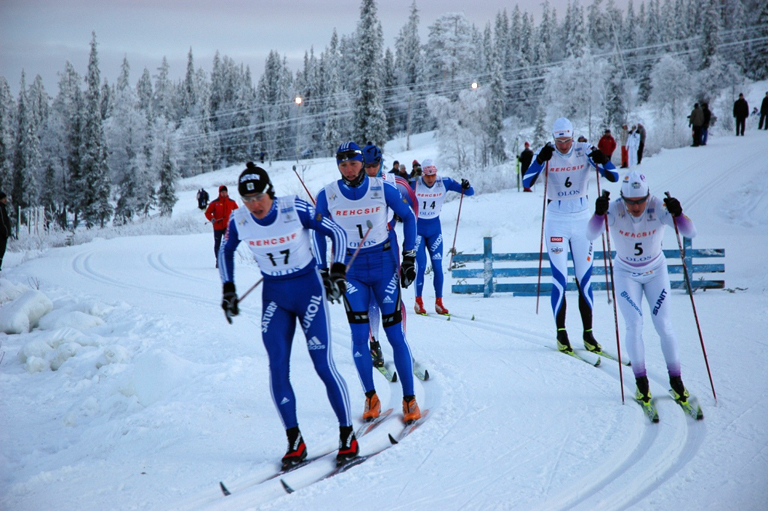
    The second leg of my journey in Finland as part of the Maine Winter Sports Center saw significant increases in snow, significant decreases in daylight, and three highly competitive FIS races which brought strong results alongside great experiences for all the members of the group.

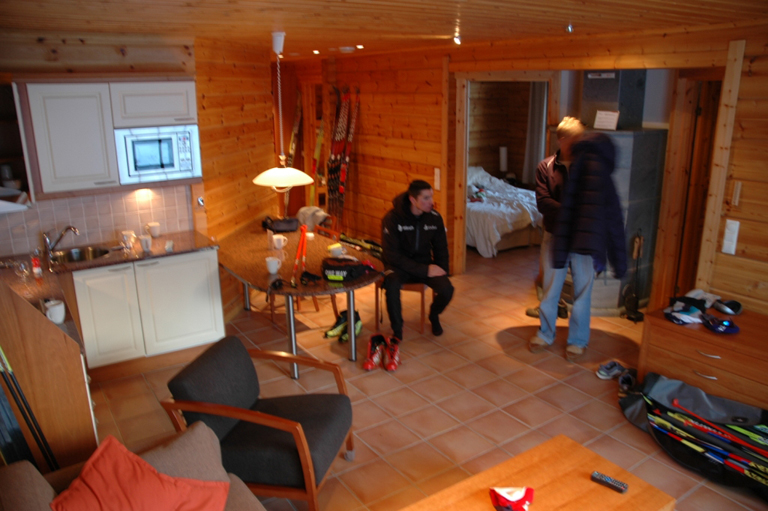
    After a week of on-snow time at the world famous Vuokatti Sport Hotel, the team and I rented a Sprinter van and made the 6-hour journey deep into the heart of the Arctic Circle to the Olos Ski Resort in Muonio, Finland. There was a moment of Finnish lost-in-translation, as the van had advertised, “internet, GPS, gaming” on its rear doors. We found all this was available only if you used the van to transport yourself to an internet café. Yes, in that instance I suppose we could have had all three digital marvels, but I found it a bit strange to have this advertised on this particular vehicle.

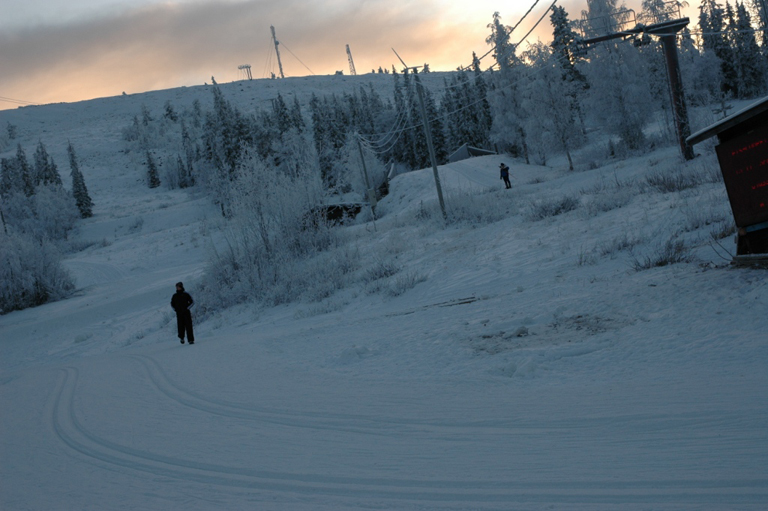
    The cross-country trails at Muonio serpentine around a small two-lift alpine hill, which served as the start and finish stadium and the main spectator zone for the racecourse. The trails are, per Finnish standard, lit until 10pm, and mainly consist of rolling, and gradual terrain. The only exception to this description is a 2km hill to the top of the alpine ridge, which was used as the only real climb in the distance races. Higher up the ridge, weather patterns generate enough wind to warrant a small wind farm, complete with 6 full size turbines.

    Apart from the Finnish contingent of national team members, the communal dining hall had tables reserved for about 6 other nations, including the US flag set out for the “Team USA/New Zealand” group, which we quickly figured out was meant for our use. It is hard to communicate to a non-English speaking receptionist that you are in fact a team from the US and not the team from the US, so we left the nameplate stay. The bigger problem was the omission of the New Zealand flag for the actual NZ national team of Ben Koons and Nat Englem. Perhaps in the upcoming years the resort will invest in a Kiwi flag for the influx of the nation’s skiers visiting their restaurants.

    Dining was of course not the main reason we had traveled to Muonio – instead we were all preparing for the high level of competition in the annual early season three-race series. Teams from all over the globe in search of early racing were converging on the small resort town. In addition to the traditionally strong skiing nations of Finland, Sweden, Russia, Germany and Japan, highly competitive racers from the former Soviet Union states of Ukraine, Belarus, Latvia, and Lithuania were also on hand. Andrey Golovko (formerly of the Salomon/Factory Team), was present, alongside 40 of the top racers from his country of Kazakhstan to train and compete in these races. Even countries like Turkey, Macedonia, Portugal and Kenya fielded athletes for the event.

    I was very surprised to hear the story of Kenya’s Philip Boit who told us that he has been on snow for a grand total of 3 months since his skiing debut at the 1998 Winter Olympics in Nagano. Boit lives and works at his family farm in Kenya, and only visits the Northern Hemisphere for races during the winter months. His ski-specific training is not only limited by the obvious absence of snow in Africa, but also by inadequate access to roller skiing in his home country. Considering the limitations, his performance at the races in Muonio was quite good, managing to edge out several skiers who reside and train in more favorable climates.

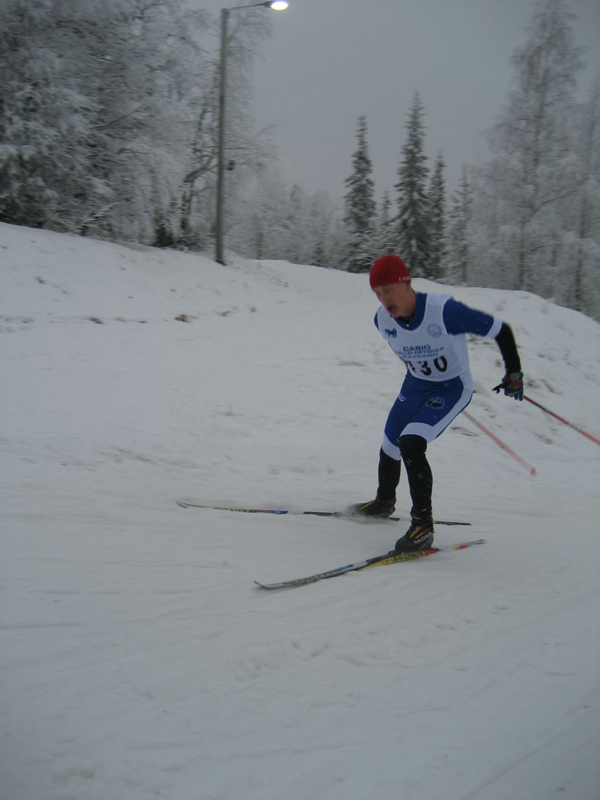
    In all, the weekend proved very successful for the Maine Winter Sports Center athletes. Nick Kline proved once again his strong knack for sprinting, while Ben Koons posted a mid-90 FIS point races, easily qualifying himself for the New Zealand national team, and earning a spot on the 2010 Vancouver Olympic Team. I skied the lowest FIS-point race of my career in the 15km skate race, at 103 points. Speaking of high levels of competition, this was definitely the first race that I have ever skied in where my place (127th) was higher than the final point score. Ben and my achievements came partially due to some fast Salomon Equipe 10 skis. I felt significantly more stable and confident on the new skis – something that I have been noticing more and more as I test the new fleet. This added to the insanely fast forward acceleration helped me ski past several world-class skiers in this race.

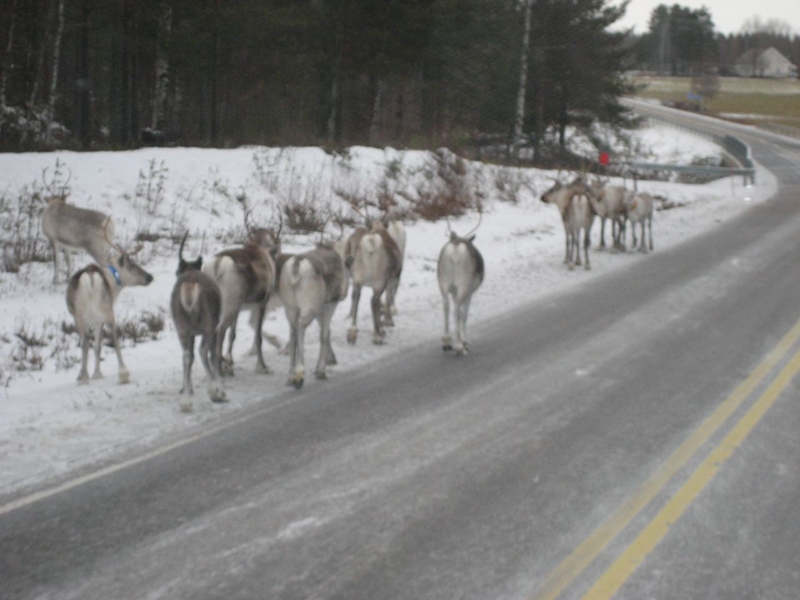
    After the races we returned back to Vuokatti for a few days of training before our transcontinental journey home. Nat, Ben and I toured the lamp-lit 30km loops, which by that time were covered with enough snow to pack a classical track. The trail crews were busy extending the man-made loop to 10km, and training life at the Sport Hotel was continuing as before. The only problem that arose to keep the athletes from a completely idyllic life was the constant on-again, off-again operation of the wireless internet. In the days of constant online activity, the hotel lounge saw the ebb and flow of athletes more by the availability of internet than by their training schedule. I am almost positive I saw several Japanese athletes skipping practice after a painful night of “limited or no connectivity”.

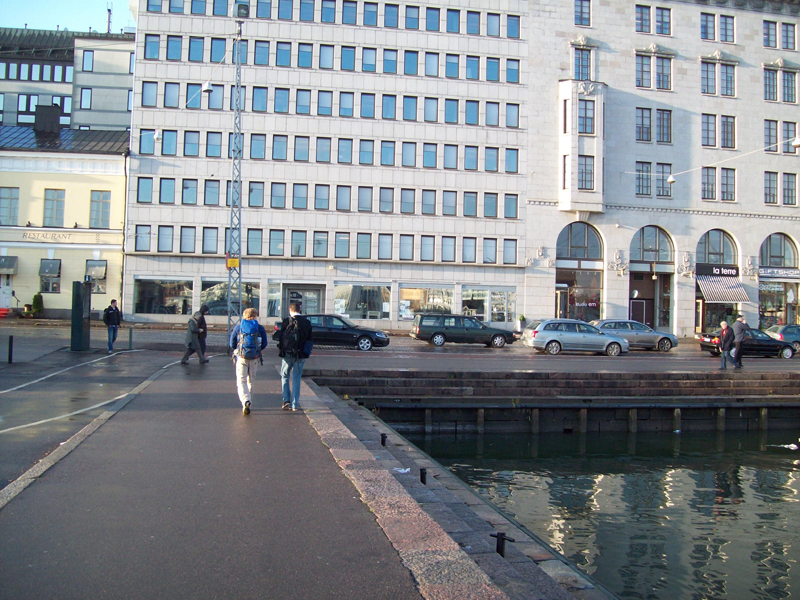
    On the trip back to the states, the team stopped over in Helsinki. Our tourist outing included some winter hat shopping and snacks at the local market, and a stop at views of the Helsinki waterfront.

    (Some of these pictures have been shamelessly borrowed from NicholasKline.com)

  • A Yearlong Quest for Snow Continues

    A Yearlong Quest for Snow Continues

    Pavel Sotskov is a recent Dartmouth College graduate who had been training and working in New Zealand for the summer at the Snowfarm. After leaving New Zealand he returned to Presque Isle, ME to race for MWSC and is now with the team in Finland training for US Nationals and the Super Tour season.  He has sent several updates on his experiences.

    In my quest to train on snow every month of this year, I have decided to visit the country which is hosting the first 3 weekends of racing on this year’s FIS race circuit for some early November skiing. This country is Finland, and the exact location at the moment is Vuokatti, the Finns’ premiere training and preparation venue for all of the country’s winter sports athletes. I have traveled here with the Maine Winter Sports Center team, as we prepare for Anchorage and the 2009-10 Super Tour season. While Vancouver is looking less promising for me based on the newly published team USA skier quotas, some of our team members, including Ben Koons (MWSC/NZL), are still looking to score FIS points that would earn them spots for the Olympic Games in a few short months.

    Preparation for the season is the name of the game here in Vuokatti, with teams gathered from Russia, Finland, Belarus, Kazakhstan, Japan, and now our team from the US and New Zealand. Skiing in the tunnel has been extended with a loop that continues right out of the far end of the tunnel onto a 4.3km figure-eight loop that includes some good terrain and the biathlon stadium. Because of the high number of skiers on the relatively small loop, our interval session today included a training session on how to pass 7 year-olds on the right-hand side of the track. This includes the skills of not letting the child fall onto your skis or injuring them too badly with your pole tips. Kids are not the only skiers you pass while doing intervals; it feels good to be able to pass a train of 10 Russians in national team suits on just about every uphill.

    I do not mean to say that the track is too crowded to get legitimate training. On the contrary, I always like to train with skiers that will be winning the World Cups in just a few weeks. In addition to seeing them on the trails, all the teams together in Vuokatti Sport’s abundant dining hall, mainly featuring a traditional Finnish fare of smoked salmon, potatoes, and bread. The food does not stop there, however: beet salads, rice, homemade bread beer, and of course a dessert at every meal (including breakfast) are just some of the choices available for the athletes. The one problem with the dining hall is a limit of 3 entries per day. This means, if you really want to have more than one dinner, you have to digest directly at the table. The rule is mainly created for the Russians who take an average of 2/3 of a pound of smoked salmon every time they enter the dining hall. Our team has been trying to last at least 2 hours in the cafeteria per meal, but this interferes with the 3 hour nap time I have been getting per day: skiing, sleeping, and eating are the main activities of a skier here in Vuokatti.

    One team that I did not expect to see here is the Russian National Disabled Team. Now if the “disabled” qualifier was not in the title, you would assume that these skiers were completely abled athletes. Not only is their speed comparable to many of the other skiers out on the trails, their mobility is stunning. In the tunnel, the wheelchair-bound skiers were able to scale the 5-step staircase backwards in their chair faster than I can walk. Their toughness may come from overcoming disabilities, but it also comes from their coach, who I hear constantly hurrying the team along with some very coarse Russian language. Today, I skied by the coach skiing next to a very tired female sit skier, commenting that she would slip and freeze to death in the ditch at the bottom of the hill if she did not make it up the final portion of the 4km loop. The “do or die” attitude will not only earn the team street cred among the disabled community, but also podium spots at the Paralymic Winter Games happening alongside the 2010 Olympic Games in Vancouver, Canada.

    For the next 3 days the Maine Winter Sports Team will continue to prepare for the FIS races in Muonio, Finland. I have been glide testing the new additions to my Salomon fleet, and attempting to work on gaining some final speed before the 550km drive to the race venue mid-week. Fast skis, good training, great food, and of course a real Finnish sauna complete with hearty Finns is one of the best way to find snow this November.

    Pavel Sotskov enjoys life as a skier in Finland.Pavel Sotskov enjoys life as a skier in Finland.Pavel Sotskov enjoys life as a skier in Finland. Photo credit: nicholaskline.comPavel Sotskov enjoys life as a skier in Finland. Photo credit: nicholaskline.comPavel Sotskov enjoys life as a skier in Finland. Photo credit: nicholaskline.comPavel Sotskov enjoys life as a skier in Finland. Photo credit: nicholaskline.com

  • Rabbit hunting and skiing, New Zealand report part 3

    Rabbit hunting and skiing, New Zealand report part 3

    Pavel Sotskov is a recent Dartmouth College graduate who is training and working in New Zealand for the summer at the Snowfarm. He has been in New Zealand since mid June and will be returning to Presque Isle, ME to race for MWSC this coming winter.  He has sent several updates on his experiences.

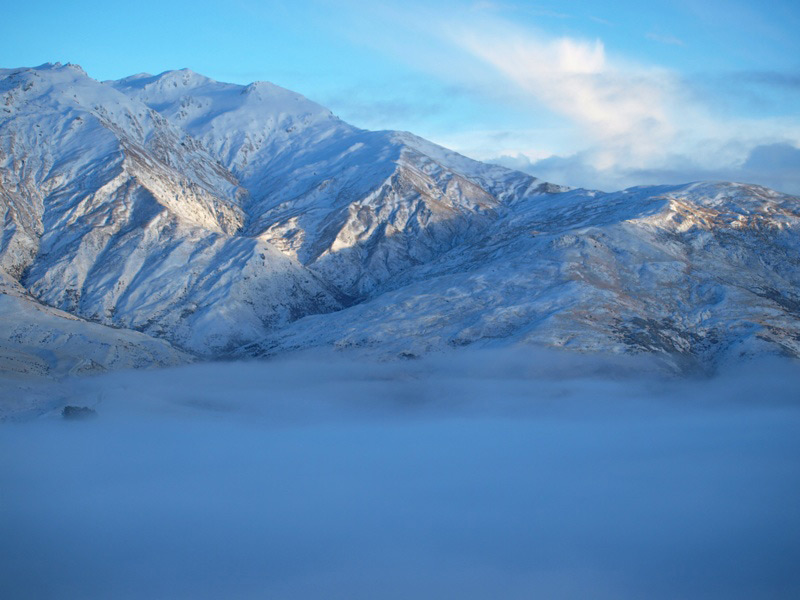
    Since I’ve been raving about the New Zealand weather in my previous posts, I feel obligated to start by reporting on the noteworthy meteorological events occurring here at the Snow Farm from the past few weeks. While I have been waking up most mornings to rain and fog here in Wanaka, the trails 1200 meters above the town have seen new snow almost every night. In New England, there is a saying that if you don’t like the weather, just wait 30 minutes. Here in New Zealand, the time to wait for changes in weather is closer to 8 minutes. A perfect example of this happened early last week as we made our way out of the valley and up to the Snowfarm. The clouds and fog were hanging directly at the level of the lodge and trails, making it almost impossible to stay on the access road, let alone take in the normally breathtaking scenery of the mountains. A kilometer from the lodge, we had to stop and guess which side to overtake the edge markers on the road ahead, an important decision since the access road is flanked by a 50-foot drop on one side, and large boulders on the other. Having navigated into the parking lot in front of the lodge the adventure was not over, since it was still necessary to actually find the lodge in the fog and driving winds.

    That morning, I had planned on doing a distance skate workout, and undeterred by the almost total white-out, my training partner, Nat Englem (NZL), and I set out directly behind the groomer to get the freshest tracks possible. The weather conditions on the trails were no better than on the road – the groomer got lost a few times on a 3km loop, and a quite annoyed Kris Freeman cut short his early attempts to ski, saying that it was unproductive to ski in that fog. Within 20 minutes of setting out however, Nat and I began to see some clearing ahead, and in another 5 minutes we were forced to reach for our sunglasses – the fog had been blown away by a strong breeze, and the sun shined in the cloudless sky. While Nat continued to ski for another 3 or so hours, I couldn’t pass up the opportunity to carve some nice tele turns in the 12 inches of new snow that had accumulated overnight.

    Kiwis explained that this type of phenomenon occurs often on their small island which stand open in the Pacific Ocean. These are the conditions that so often catch hikers (the local term being trampers) off guard and cause deaths meters from huts and shelters. Last year, the Prime Minister’s close aide died in just such an event while their party was backcountry skiing deep in the Southern Alps.

    If fog and rapidly changing conditions are not enough to convince you that the weather here in New Zealand really is more wild and unpredictable than that of the standard North American location, I have to add that all the new snow that has fallen in the past two weeks has made the area quite prone to avalanche conditions. I know what you are thinking, but yes, even cross country areas see sliding chunks of snow and ice. While the slides at the Snowfarm were not nearly as large as the ones that claimed the lives of two skiers this week on Coronet Peak (a alpine resort just 45 minutes away), we have seen at least 4 smaller slides around the trails, some with the potential to cover a distracted sit-skier, or a toddler skiing too close to the inside edge of the trail. In fact, one slide that did not quite break off completely was about seven feet deep and would have covered even the tallest skier if it ever decided to tumble onto the track.

    It’s not all extreme conditions here however, as the all too familiar spring begins to show its face both in town and on the trails. In Wanaka, cherry trees are beginning to blossom, the grass has started to become green again, and the yacht club is launching boats at a frantic pace. On the mountain, the need for 4-wheel-drive vehicles is becoming more apparent as the road surface becomes 5 inches of spring mud. It reminds me of the Distance National Championships held 4 years ago at Fort Kent, ME when our team almost lost a wheel off the Vermont Academy wax trailer trying to get to the race venue. The snow too has started melting significantly, with the past two days being the first two of the season when I had to reach to the bottom of the wax box and pull out the klister and torch. Not that I am complaining – we’ve been skiing on multi-grade for the whole season. Now, it seems like Star’s red klister is the wax of choice with Swix users need not apply – no product from the Norwegian wax gurus gave any indication of working today.

    As the teams here prepare for Winter Games action in one week, more and more world-class athletes are arriving to the training mecca of nordic skiing. In addition to the Koreans, Japanese, Canadian and New Zealand teams already cruising around the trails of the Snowfarm, the past few days saw the arrival of a junior group from the western US, and several more dedicated New England athletes hoping to show-off their talent in the racing action to come.

    Sun and snow....
    Sun and snow….

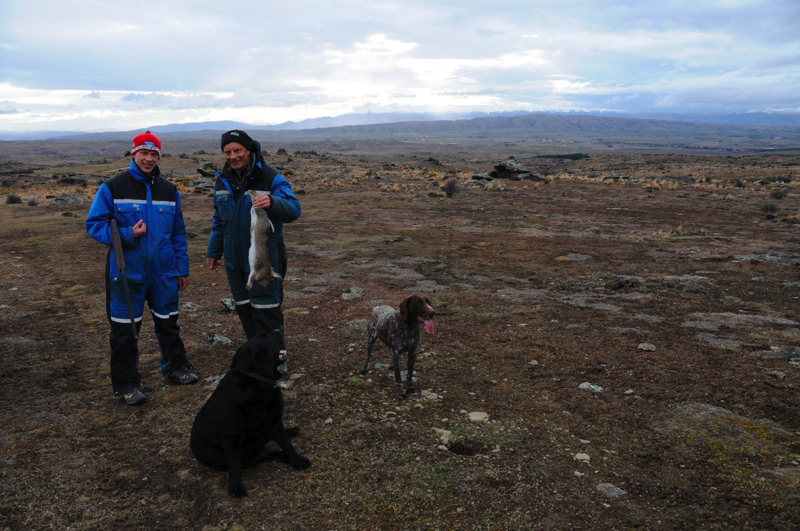
    One final experience that I’ve had since the last time we spoke involves not the Snowfarm, but an actual farm, albeit New Zealand-style. Last tuesday I was fortunate enough to score a trip to the home of New Zealand’s only male biathlete, Ben Falconer. Ben manages his family’s 1300 acre farm about 100km from Wanaka in an equally small town near Alexandra. The farm is home to approximately 5,000 sheep, along with a number of cows, dogs, and other animals commonly found on such an estate. In addition to the animals however, the land was also the set for 10,000 BC, and the second Lord of the Rings movie. Film lovers and tourists wishing to see the familiar sites arrive by plane directly to the farm via the 1.2km dirt runway which, according to Ben, can land a Boeing 737. I was interested in seeing the whole farm, so we drove up to the far corners of the property and did some rabbit shooting along the way. My hunting consisted of taking the riffle, and before even firing having the dogs bring me a freshly killed rabbit.

    Trees
    No snow, but plenty of farming.

    I guess it’s a more economical way of doing it since I counted two kills without having fired one round, but it was a little embarrassing that the dogs were able to catch do all the work without my help. Ben also showed me the only forest on land of that elevation (planted by his father), and the gold-mining operation that is currently in progress on his land. The land is also home to the over 100-year-old gold miner’s ghost town that consists of stone huts spread around the farm. He hopes to soon host guests that are interested in the historical village in the huts and even let them pan for gold in the hills around them.

    Rabbit Hunting
    Rabbit Hunting

    To test this scheme, we agreed to cook dinner and stay the night in one of the stone huts. Cooking by candle-light over a wood fire was quite an incredible experience, to which I added just a bit of additional flavor when in the shadowy conditions of our preparation table I accidentally seasoned the venison with coffee instead of pepper and spices. Thankfully the accident added to the flavor, and I think even master-chef and former teammate Mikey Sinnott would approve of the change in ingredients.

    Dinner
    Dinner
  • Report from New Zealand, Part 2

    Report from New Zealand, Part 2

    Pavel Sotskov is a recent Dartmouth College graduate who is training and working in New Zealand for the summer at the Snow Farm. He has been in New Zealand since mid June and will be returning to Presque Isle, ME to race for MWSC this coming winter.  He has sent several updates on his experiences.

    Does it get any better?
    Does it get any better?

    Great skiing, beautiful weather, and high caliber skiers continue to be three main markers here at the Snowfarm as I enter my second month in New Zealand. It is hard to believe that since arriving in late June, the skiing has been ideal almost every day, while new snow only came in the form of one small dusting overnight. Even the weather in Wanaka has begun to clear up, exposing the beauty of this ski-town paradise. Without any addition of snow however, the coverage remains complete, with new tracks set everyday. This isn’t done to smooth out digger-marks as much as it is to crush up the constant addition of frost that seems to grow overnight into large flakes. The un-groomed snow is basically made up of huge flakes: something I’ve never seen before. Resembling regulation-sized Kellogg’s Corn-flakes, the un-groomed snow doesn’t pack together even remotely, so most back country skiing is impossible as the snow simply engulfs your ski and lets you fall directly though to the ice layer below.

    Race start
    Race start (#034)

    One note-worthy geological event that did occur during my presence here was the 7.2 magnitude earthquake that shook the south west of the island late last week. The earthquake was one of the strongest recorded in New Zealand in the past 75 years, but since it occurred far below the island, and relatively far away from Wanaka, the effects felt here in town were not severe. Initially, I thought I had unknowingly acquired a coin-opperated bed usually found at cheap 70’s era hotels, but after checking that everyone in the house felt the floor moving around I suggested we go into the driveway. Outside, light posts were shaking, and the ground felt like a surfboard on pudding: not terrifying, but definitely not normal. It was a combination of disappointment and good fortune that in all, the damage was limited to a few Seltzer bottles exploding on store shelves, without any of the cool opening-of-the-earth-to-reveal-magma special effects often seen in the movies.

    On course in a skate race.
    On course in a skate race.

    The name of the game this week is recovery, mainly including mountain biking, running along Lake Wanaka, and going to the gym here in town. I’ve been laying on the biking and running hours since as part of the Winter Games in August, the Snowfarm is putting on a demonstration winter triathlon which promises cash prizes for the top competitors. The 7 km run, 9 km bike, and 7 km ski (all on snow) should attract some experienced multi-sport athletes from around New Zealand, including yours truly. At the moment, my biggest concerns are the transitions between events, as I am notoriously slow at tying my shoelaces: it’s a good thing my Salomon S-Lab boots have the best quick-lace system around.

    Classic racing.
    Classic racing.

    In the weeks leading up to the Winter Games (an exhibition event for all winter sports happening on the South Island in August meant to showcase many of this year’s Olympic contenders) the Snowfarm has been hosting weekly races for all ages. Last week’s sprints were just a day too early to see participation from the US sprinters, but hopefully future races will feature the likes of Freeman and Newell on the men’s side and Liz Stephen and Kristina Strandberg. In all, 10 USST athletes arrived here on Tuesday for their annual on-snow camp at the Snowfarm, with other nations scheduled to arrive in time for the Winter Games in late August. It’s always more fun to ski with athletes of such high caliber, so I am excited to get back on snow and rip it up with everyone tomorrow.

    New Zealand
    New Zealand
  • At the Snowfarm

    At the Snowfarm

    Pavel Sotskov is a recent Dartmouth College graduate who is training and working in New Zealand for the summer at the Snowfarm. He has been in New Zealand since mid June and will be returning to Presque Isle, ME to race for MWSC this coming winter.  He has sent several updates on his experiences.

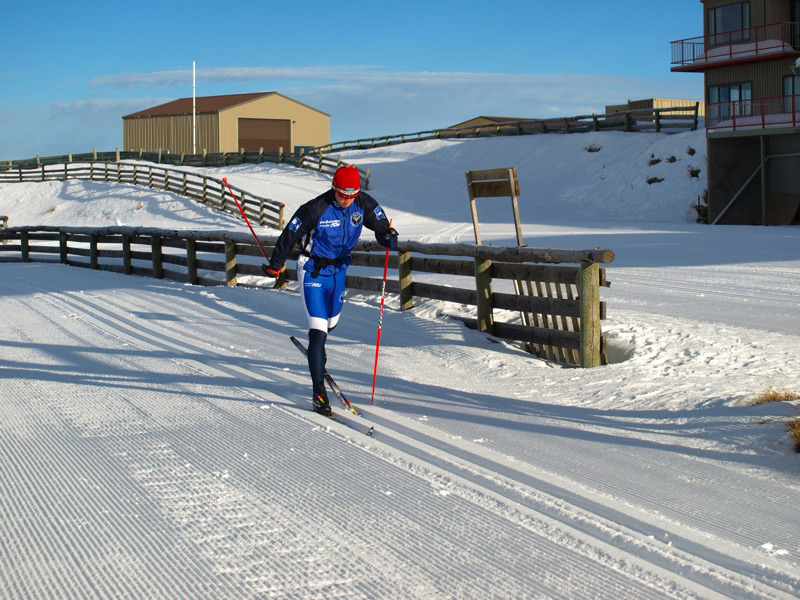
    Classic skiing at the Snowfarm.
    Classic skiing at the Snowfarm.

    A perfect way to describe the wonder of New Zealand for skiers was best put by a quote from a ski film I happened to see at the Queenstown Winterfest on the first day I arrived on the South Island a week and a half ago. “Only in New Zealand can a two hour plane hop transform the world from a warm summer day to a perfect winter wonderland.” The quote of course assumes that your permanent residence is Auckland, but since the overall trip down under takes no more money and no more than the time it takes to get to your favorite summer ski destinations in Europe, the statement does not seem too far from the truth. Flying into Queenstown takes you over several ski fields and snow capped mountains, but there is no snow on the ground as you leave the airport terminal. In fact Wanaka, the town closest to the only nordic skiing area on the south island also does not have snow on the ground. To get to the snow, a 13km ascent out of the Cardrona Valley brings you to the snow line, and the pristinely groomed 30km of trails at the Snowfarm.

    The Snowfarm
    The Snowfarm

    Around here, climate transformations not only occur between the north and south islands, but also between Wanaka and the Snowfarm. Even though a couple days have been overcast in the town, at the Snowfarm the days have been sunny and perfect extra blue kick wax weather. In these conditions, I can’t help but ski 2 to 3 hours in the morning, have lunch, and then add a couple more in the afternoon, as long as I remember to bring my sunglasses. If skiing perfect mid-winter conditions does not fall on the training plan for a particular day, the options in Wanaka include running, hiking, or ski walking, as well as Sticky Forest, a mountain biking trail system that I would say can rival the trails at Burke’s Kingdom Trails. Although I have not had a chance to rip it up on the mountain bike trails yet this year, I know exactly where I am going tomorrow afternoon once I get my hands on a full suspension beast. The trails were set up by riders who know how to put extreme into mountain biking – The one trail I chickened out on the last time I rode in Sticky Forest is set up in basically a figure 8 – when you’re climbing, you pass the center of the figure at about 10 feet lower level than when you’re cruising down. If you haven’t figured out yet, that means you better be going fast enough to shoot the gap in the trail on your way down. Now I haven’t seen that at Burke.

    Skating...
    Skating…

    In addition to training, I am giving back to the New Zealand skiing community by helping coach anyone that needs some technique help. This means playing with the mini-merinos (5-8 year olds), the New Zealand Nordic Development juniors, the senior skiers, and even some masters as old as 70 years old. The age range does pose a problem, but the skiers are all so excited to learn and progress that coaching becomes rewarding and fun. Ski soccer, sharks and minnows, and even a little on-snow cricket have all come in handy to entertain the skiing masses, just make sure to not confuse croquet and cricket: the later is definitely not a casual party event!

    Pavel Sotskov, Snowfarm
    Coaching classic.
    Pavel Sotskov, New Zealand, Snowfarm, Summer 2009
    and coaching skate…