From the FasterSkier archive — posts syndicated from athletes’ and coaches’ own blogs between 2004 and 2012, kept online as published. Current coverage is at fasterskier.com.
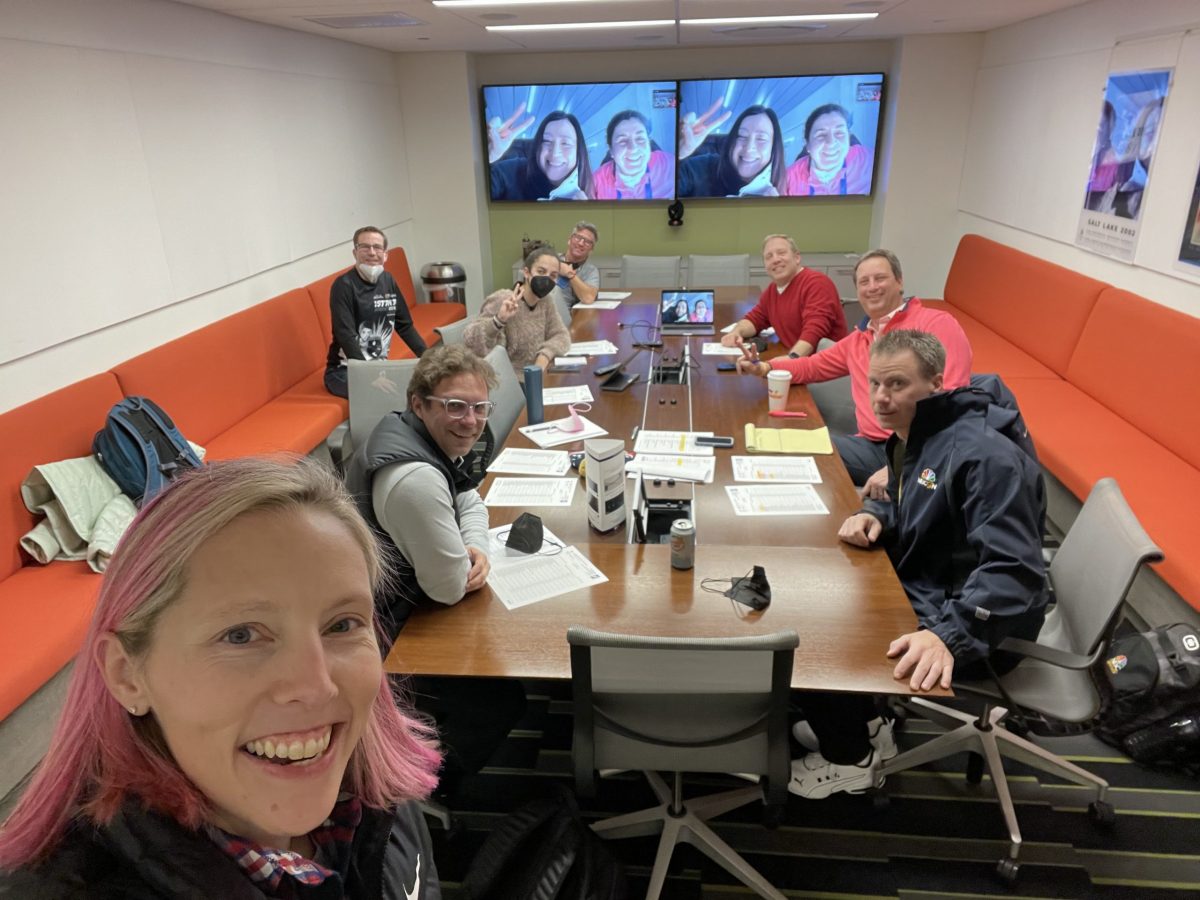
In this episode, we’ve got Chad Salmela and Kikkan Randall on to discuss the experience of calling the 2022 Beijing Olympic Winter Games, live from a booth in Stamford, CT. The duo worked as cross country analysts, alongside long-time NBC play-by-play announcer Steve Schlanger. While Chad is a veteran in the role, this was Kikkan’s first Olympics inside the booth.
Kikkan Randall snaps a selfie with Chad Salmela and the NBC production crew during the 2022 Olympic Winter Games. (Courtesy photo)
During the call, Kikkan and Chad field a variety of questions on their experience – everything from staying fresh while calling races in the middle of the night for two weeks straight, to maintaining professional composure while watching your former teammates and long-time friends win Olympic medals – or come up short – and even, why are you suddenly pronouncing the Norwegian distance champion’s name “You-haug”?
Full of insights and laughs, this conversation was a treat, and it’s clear that both Chad and Kikkan are deeply invested in growing and serving the cross country ski community in the US.
Kikkan Randall and Chad Salmela discuss their experience as NBC’s cross country ski analysts during the 2022 Beijing Olympic Winter Games. (Courtesy photo)
After a year of postponement caused by the coronavirus pandemic, the summer Olympics are going ahead, with the opening ceremony on Jul 23, 2021, in Tokyo, Japan. Setting opinions aside about the lingering threat of COVID or other Olympic-related controversies, the coming weeks will provide countless moments of great sport. Although we are a winter-focused publication here at FasterSkier, we’ve done a little research into how you can best view the upcoming games.
NBC is the go-to channel for primetime coverage of the Olympics and can be accessed on most major streaming services. For viewers who don’t have cable, the Tokyo Games can be streamed, like the cross-country World Cup, through NBC Universal’s streaming service Peacock. There are also a variety of other streaming services that offer NBC. The options are listed below.
Peacock is the best choice for readers looking solely for live coverage of the Olympics. With a free account, you get access to NBC’s live broadcast. For play-backs, commentary or analysis, you can move up to the premium service option. A Peacock Premium subscription costs 4.99/month and can be cancelled at any time. If you want to go ad-free you can pay 9.99/month for Premium Plus.
Sling TV gives subscribers the first month of subscription for $10 (as opposed to the normal $35/mo). The Sling Blue package provides ESPN, NBC, the NFL Network. This option remains the best choice for die-hard sports fans.
Both a big step up in price, FuboTV or Youtube TV offer 120 and 85 channels respectively and allow greater flexibility in recording and storage options. FuboTV costs 64.99/month and Youtube TV is 54.99/month for your first three months.
The full schedule of Olympic events can be found here, with popular sports such as swimming and gymnastics kicking off July 24th, and track and field events beginning July 30th.
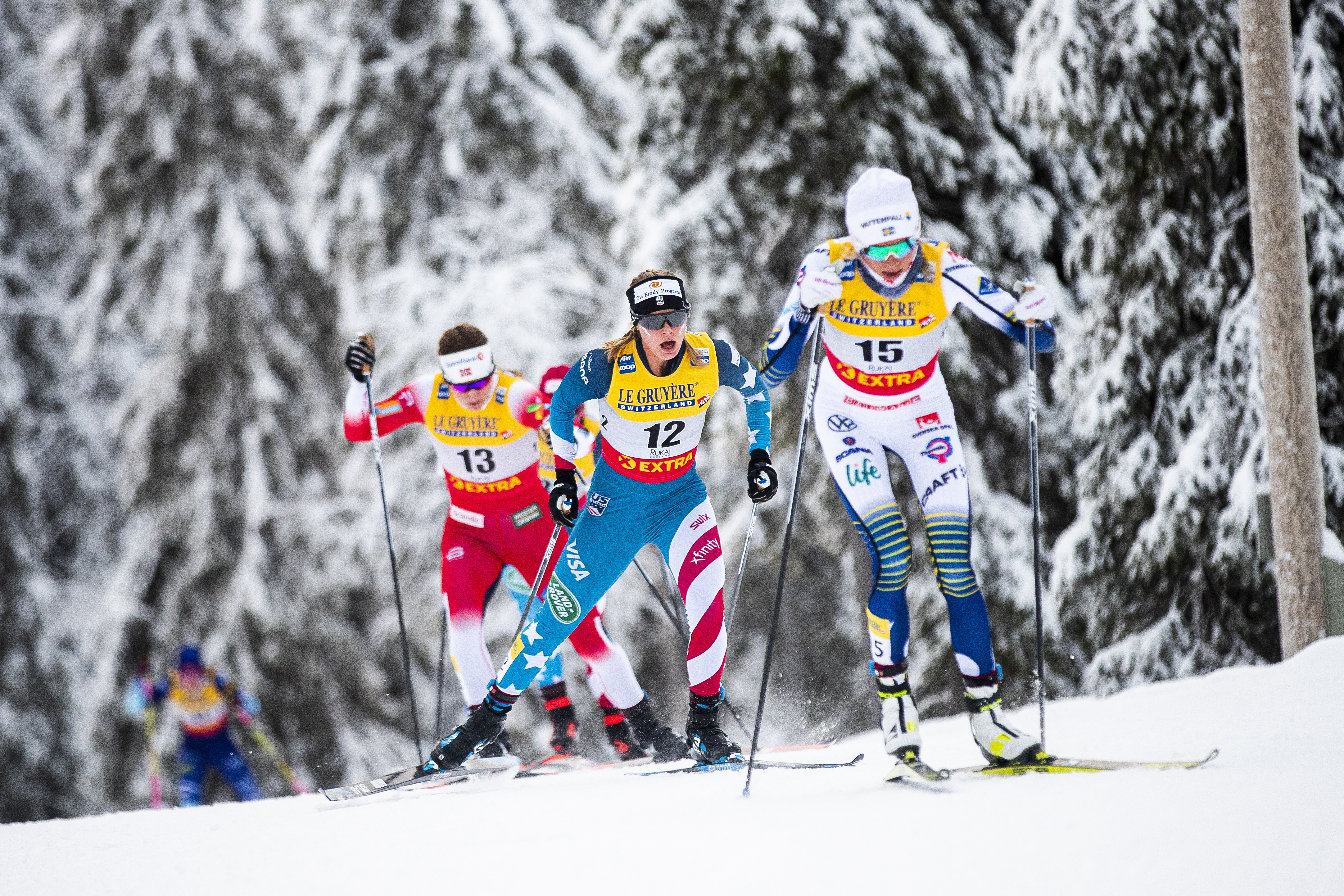
On the hunt, Jessie Diggins moves up through the field during the 2019 10-kilometer freestyle pursuit in Ruka, Finland. (Photo: NordicFocus)
We’ll keep this as simple as we can. This piece includes information about streaming the FIS Cross-Country World Cup on your computer or watching on cable TV through a U.S. based content provider. This is not a primer on acquiring a VPN and tapping into a European based broadcast network. We know of a single reliable option at this point for viewing the World Cup – that would be the subscription model offered by NBC Sports.
Over the years, NBC has swapped names out for its sports streaming service as if throwing mud at the wall until something sticks. This year, Peacock TV is your gateway to viewing alpine skiing, cross-country skiing, biathlon, ski jumping, freestyle, snowboarding, and Nordic combined. Currently, the snowsports schedule only shows events through the end of December. We are expecting that to change as the season trainspires. (These events, like in the past, shoud be broadcast live and archived for viewing after the event has concluded.)
Cutting to the chase, you’ll need to buy a subscription to “Peacock Premium” for your World Cup viewing pleasure. That’s the name for this year’s streaming package that includes the World Cup. There’s the possibility of subscribing to “Peacock”, but again, a subscription to “Peacock” does not provide access to the goods. It has to be premium.
Last year, viewers subscribing through NBC purchased the “Snow Pass”. That pass was the key to unlocking only snowsport events. This year, the Peacock Premium subscription unlocks the full array of sports and entertainment offered on the Peacock network. Your subscription to Peacock Premium is all-inclusive – it’s not solely for skiing/snowboard content.
Peacock Premium offers a $4.99/month subscription, or a $49.99/year option. Both price points are lower-tiered and include advertisements/commercials while viewing.
For $9.99/month or $99.99/year, you have the option of viewing content ad-free. However, NBC has this disclaimer for the higher price point options: “Due to streaming rights, a small amount of programming will still contain ads (Peacock channels, events, and a few shows and movies).” According to PeacockTV, you can cancel your subscription at anytime.
PeacockTV.com screenshot.
Snow melts. The World Cup season lasts from November through March. So depending on your budget and your affinity for the Peacock, the monthly option might serve you best.
Of course, this is a pay-to-view service. The costs for viewing ski racing appears to have decreased if you go the month to month route. In 2018, for example, the NBC Sports Gold “Snow Pass” was $69.99. Breaking the season down to five months in duration, that’s roughly $14.00/month.
For those subscribing to a cable service, COX and xfinity do have plans for those interested in accessing Peacock Premium. If your cable provider already includes Peacock Premium in your package, then you should already be good to go.
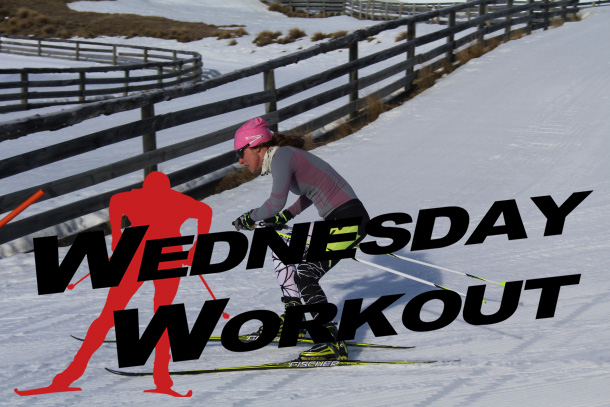
Frederique Vezina training at the Snow Farm in New Zealand last summer. Off snow, she uses yoga to recover. (Courtesy photo)
This week, Canadian National Junior Development Team skier Frédérique Vézina, who trains with the Pierre-Harvey Training Centre in Quebec,writes about her favourite recovery activity – yoga — and admits she was a sceptic at first.
***
Yoga training can be as important as the most hardcore interval sessions if you get yourself into it. It isn’t always easy and can be a real challenge.
I was a little skeptical and thought I was wasting my time when my coach first introduced me to yoga some years ago. But relaxing is part of training and is mandatory to achieve top notch recovery. Yoga is now my favorite recovery activity.
If you have thought of yoga as soft, I welcome you to one of our modified sessions that our CNEPH coach and physical trainer Charles Castonguay specifically prepared for us. Let me tell you, it’s not for softies! Ask the boys of my team and the few braves that sometimes join us. Yoga is good at any time of the year and can be used not only to relax, but to strengthen.
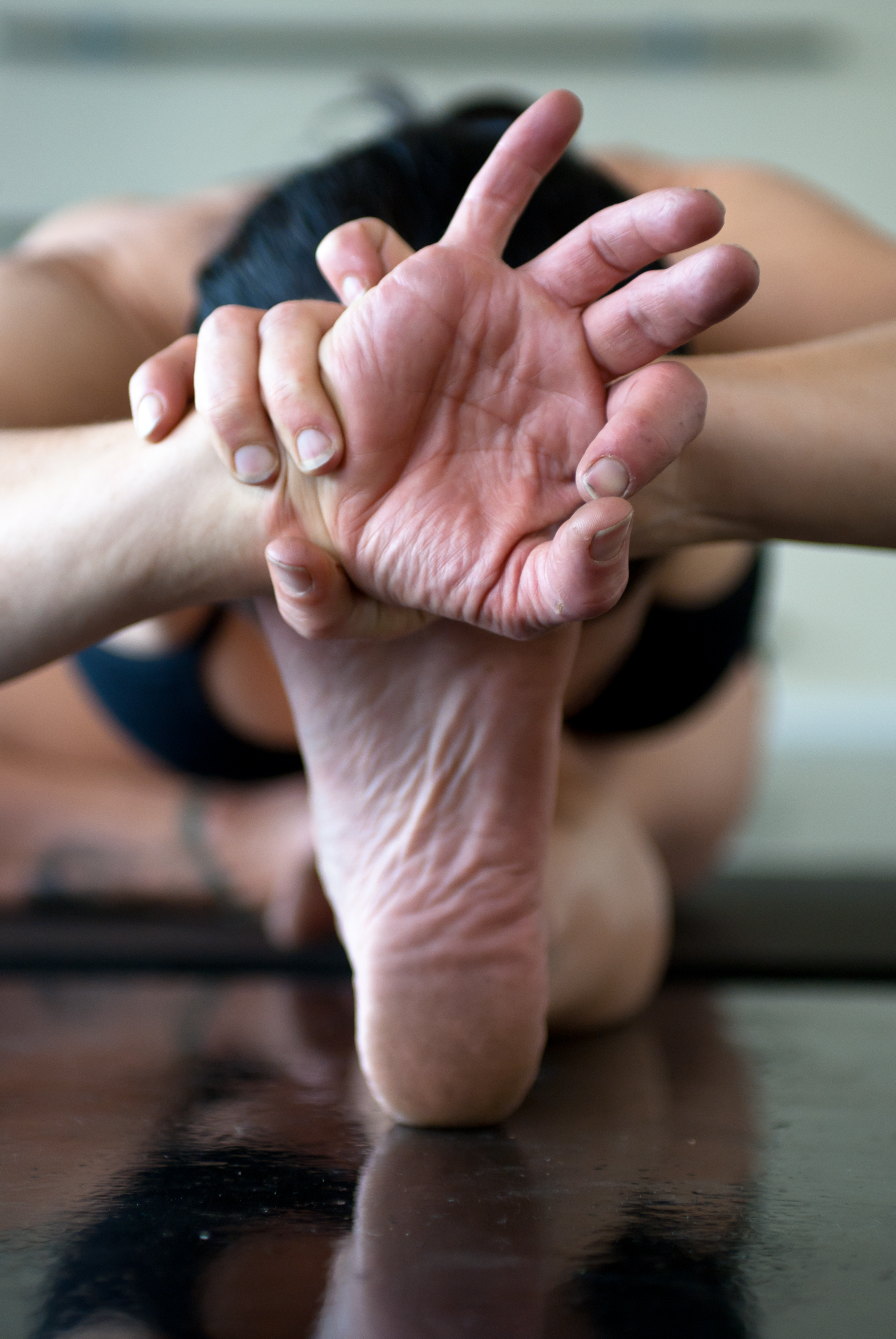
Then things start to slowly increase in difficulty when we move into the Chair pose, the Eagle pose and the various Warrior poses. (If this sounds like Chinese to you, for more information and photos, check out yogajournal.com)
As if doing yoga wasn’t enough body contortions, Charles adds some movements to the positions to strengthen up our core and small muscles that we didn’t even know existed. We do positions such as the Full Boat, Crane, Headstand, Peacock, and Upward Plank!
They hurt and make you sweat without moving much – just staying over your tiny mattress. It is a perfect way to relieve the bad toxins out of your body after a large training and helps your muscles relax in a way you couldn’t even imagine.
Cool down: By the end of a 45-60 minute session, the last pose – the Corpse – is one of total relaxation: you just lay there, and it is one of the most challenging. You have to meditate to only focus on your breathing, to live in the moment, and forget everything else, EVERYTHING! It’s just you and your breathing for the five most relaxing minutes.
After the session, your body feels lighter and stronger; it provides a great relaxed sensation.
The effects: Yoga poses and contortions are also excellent ways to stretch your muscles which can diminish your chances of acquiring injuries throughout your training and racing season. It also helps increases the circulation of the lymphatic system, ideal during the flu season!
Yoga is a mindfulness-based stress reduction that benefits your strength, flexibility, and immune system. It is also a great getaway from studying, racing, working or anything else by bringing us balance! It is important to remember that it takes a lot of practice to become flexible as shown on the nicest photos we can see. That is what makes the challenge even more fun and another reason why I like it. After all, it’s all about improvements!