Tag: Pepa Miloucheva

  • Jack Young: Against the Template

    Jack Young: Against the Template

    On the Wednesday before the World Cup season opens in Ruka, Jack Young sits in a small condo, looking out at over a foot of new snow that’s been drifting down all morning. The air is much warmer today than it was before he and the U.S. Ski Team loaded onto a six-plus hour bus ride yesterday — “Muonio was friggin’ cold,” he says — and the mood is calmer, quieter, the way he wants it. This is his final runway before an Olympic year truly begins, and he is spending it doing almost nothing.

    Not nothing-nothing, of course. But nothing extra. No bonus minutes, no filler skis, no threshold for confidence, no volume for psychological reassurance. “The biggest thing right now is taking these two weeks absolutely as seriously as possible with rest and just not doing anything extra training-wise that I do not need to be doing,” he says. “I’m training so little right now because of how important Ruka and Trondheim are for me.”

    Growing up in Northern Vermont, Jack Young had an All-American childhood. (Photo: Courtesy Photo)

    Outside, the classic sprint course cuts through the forest — the first of two classic sprints in Period 1. They matter—more than they ever have. To make the Olympics, he must qualify. To qualify, he must have transformed himself into something he has never consistently been: a classic sprinter capable of making heats on the hardest stage in the world.

    That he is even here, on the cusp of an Olympic selection fight, is strange enough. Stranger still is the way he got here — not built from the standardized American skiing pipeline but stitched together from its edges. A football quarterback. A baseball outfielder. A skier whose parents “didn’t know what Nordic skiing was.” A D3 athlete who reverse-engineered sprint training out of 800-meter track plans and the writings of a Swedish speed skater. A young man who kept such detailed training logs that, by the time he made the World Cup, he could begin writing his own plan.

    In a sport that often rewards conformity, Young’s ascent is something close to a jailbreak.

    Jack Young as he started his racing for Craftsbury. (Photo: Courtesy Photo)

    A Vermont Childhood Without the Usual Skiing Script

    “Neither of my parents knew what Nordic skiing was,” he says with a laugh. They loved the outdoors, yes — mountain biking, alpine skiing, the typical northern Vermont mélange of mud, woods, and winter — but their son’s athletic identity formed somewhere else entirely. “I played every sport. I loved baseball. I played basketball through elementary school. I started football as soon as I was allowed to, which I think was in fourth grade.”

    He became the kind of athlete rural towns understand intuitively: the quarterback on fall afternoons, the center fielder chasing down balls in the summer dusk, the kid who could pick up anything and find competition in it. Skiing entered sideways, almost accidentally, through his sister Callie. She joined the small Nordic program in Newport, and he was brought along because that’s what families do — pack the car, hand over snacks, make it work.

    “I immediately fell in love with racing,” he says. “I just love the competition.” Running around on skis made sense to him. Movement, speed, chaos — he could do that. But even with training days at Craftsbury beginning around sixth grade, he didn’t think of skiing as his primary outlet. “I wasn’t as focused as my sister was, but I would still get dragged along,” he says. “I loved skiing, but I loved football and baseball just as much.”

    The irony — one he now sees clearly — is that he was training for skiing without realizing it. “All summer was spent doing fun things in the woods. We’d go to Craftsbury a couple of times per week. But I never thought of skiing as my main sport. I weighted those sports equally, even though I was putting a lot more time into skiing.”

    If northern Vermont had offered a travel football club or competitive baseball without days of driving south, the story may have gone a different way. But mountain running and biking were nearby, and elite baseball diamonds were not. “I’d so much rather go for a long run in the mountains or go mountain biking than I would hit on the tee for two hours,” he says.

    Sometimes this is what talent looks like in real time: a kid choosing the fun version of hard work without realizing he’s choosing a future.

    When we spoke, Jack Young sat in a small condo in Ruka wearing a Boston Red Sox baseball hat, just added evidence for how important the game has been for him since he was a boy. (Photo: Courtesy Photo)

    The Late Bloom: A Breakthrough and a Decision

    He kept skiing in the winter, of course. Not obsessively. Not in the way some junior skiers live their lives by FIS points before they have a driver’s license. But enough to stay close. Enough to remain good. Then came the summer after his sophomore year of high school — the first time he trained like someone who had decided to see what was possible.

    “I put a good summer of training in,” he says. “Had a bad football season… but that was the first time I was really starting to push the limit on what I could do training-wise while in season for football.”

    He mountain-biked in races on weekends, squeezed workouts around football practices, and tried to make the whole geometry hold together. Then came Junior Nationals, and with it, proof. “I had a pretty good result in the sprint. I think I was like 18th or something… and that was the moment where I was like, okay. I am decent at least at this sport. I’m doing a lot better than I’ll ever be at baseball.”

    That spring, Young emailed coaches — the NESCAC schools, Dartmouth, and UNH. Bowdoin and Dartmouth joined Colby on his shortlist. Colby won on something less quantifiable: belief.

    “Tracy [Cote] was very excited about me,” he says. “And I think that resonated with me. Maybe it’s my ego, but it was nice to hear.”

    He would later call it “a perfect decision.”

    Jack Young enjoying some backcountry skiing in Jay. (Photo: Courtesy Photo)

    Colby: Building an Athlete in a Place That Shouldn’t Have Worked

    Winters in college can blur into one another — classes, training, snow, the strange mix of exhaustion and euphoria that defines 19-year-old life. But Young remembers his freshman fall with clarity: meeting people, finding balance, doing “good, not great” training, and then, once the season started, traveling west for Senior Nationals.

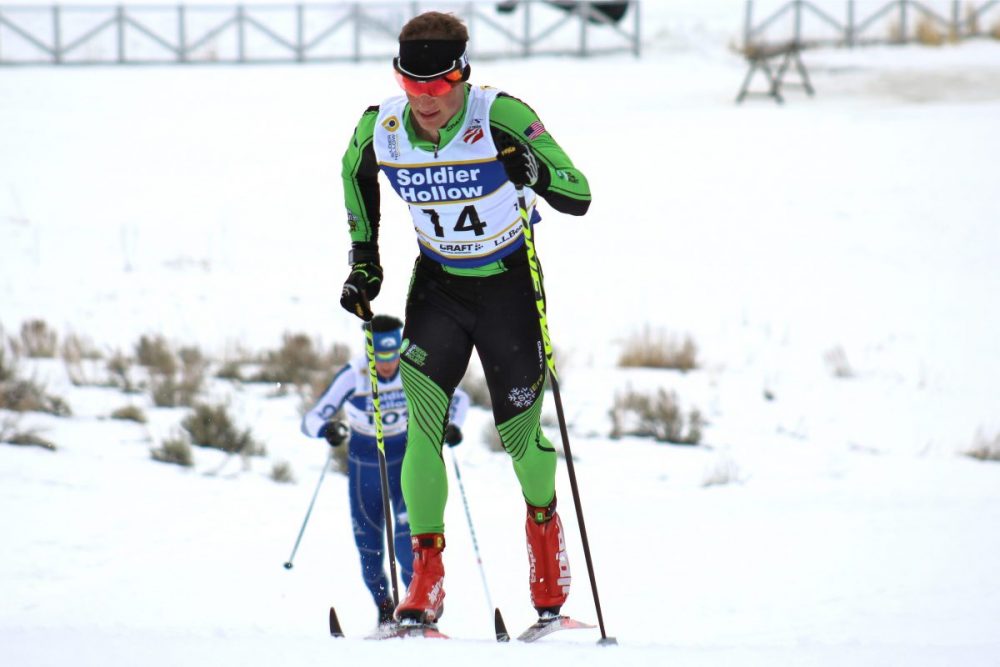
    There, in Soldier Hollow, everything sharpened. “I think I qualified in the top 20 in the skate sprint,” he says. “That was an absolutely massive result for me. I never had anywhere near that level of success on the national level.”

    He didn’t transform overnight — not yet. His sophomore season brought a “fine college season,” a top-30 at NCAAs in the 10k skate, and the sense that distance skiing was finally, mercifully making progress. But the turning point came not in results but in imagination. He learned that the U.S. would receive twelve start spots for the Canmore World Cup the following year. Twelve starts. “I was like, 12 starts… that’s not that far off,” he says. “I kind of feel like I’m in contention for that.”

    To chase it, he would need to master something specific: the sprint qualifier.

    And this is where the story breaks from the template completely.

    Jack Young hits some big lactate numbers during a hard training session. (Photo: Courtesy Photo)

    Reinventing Sprinting from Scratch

    “I’ve always thought that sprint qualifiers were really similar to an 800-meter race on the track,” he says. Physiologically, mechanically, conceptually — they looked more alike than different. So he dug into 800m training. He looked for the extreme version, the distilled essence of what sprinters do when they train specifically for the thing that matters. Qualifiers are discrete. Defined. Precise. Why train them like a generalist?

    Then he read Nils van der Poel.

    The legendary Swedish speed skater’s manifesto, How to Skate a 10k, isn’t a skiing manual, but to Young, it may as well have been scripture: the idea of building huge aerobic capacity, then sharpening with brutally specific intervals at exact race pace. “He wants to skate as many possible laps at world record pace as possible,” Young says. “And that really struck me. I’m like — I can apply this to skiing.”

    He wasn’t going to become a single-event specialist, not in college. But he could take the principle and adapt it. So he built a sprint-qualifier program composed of things like:

    • 6 × 1 minute
    • 4 × 90 seconds
    • 10 × 30 seconds
    • 8 × 45 seconds

    All at precisely what he believed to be his sprint qualifier pace.

    “That was the bread and butter,” he says. “I’d do those workouts once or twice a week. I didn’t actually find them that strenuous, but I was accumulating a good amount of time at exactly what I thought sprint qualifier pace was.”

    He went completely dry that fall — no beer, no casual nights out, nothing that compromised sleep. “I was just recovering a lot better all the time,” he says. “I didn’t get sick at all.”

    Meanwhile, Colby head coach Tracy Cote allowed him to blend his ideas into the fall plan. “We were working together. I think we ended up writing the training plan together that fall,” he says. “She was pretty stoked about the focus on recovery… and she’d let me get away with doing things a bit more geared towards sprinting.”

    He trained more overall, too — a heavy summer that gave him the resilience to handle so much intensity once fall arrived. “My freshman year, I trained a little under 600. Sophomore year was around 650. My junior year I trained like 750 or something.”

    This was not an American development pipeline approach.

    It was an experiment.

    A smart one.

    A successful one.
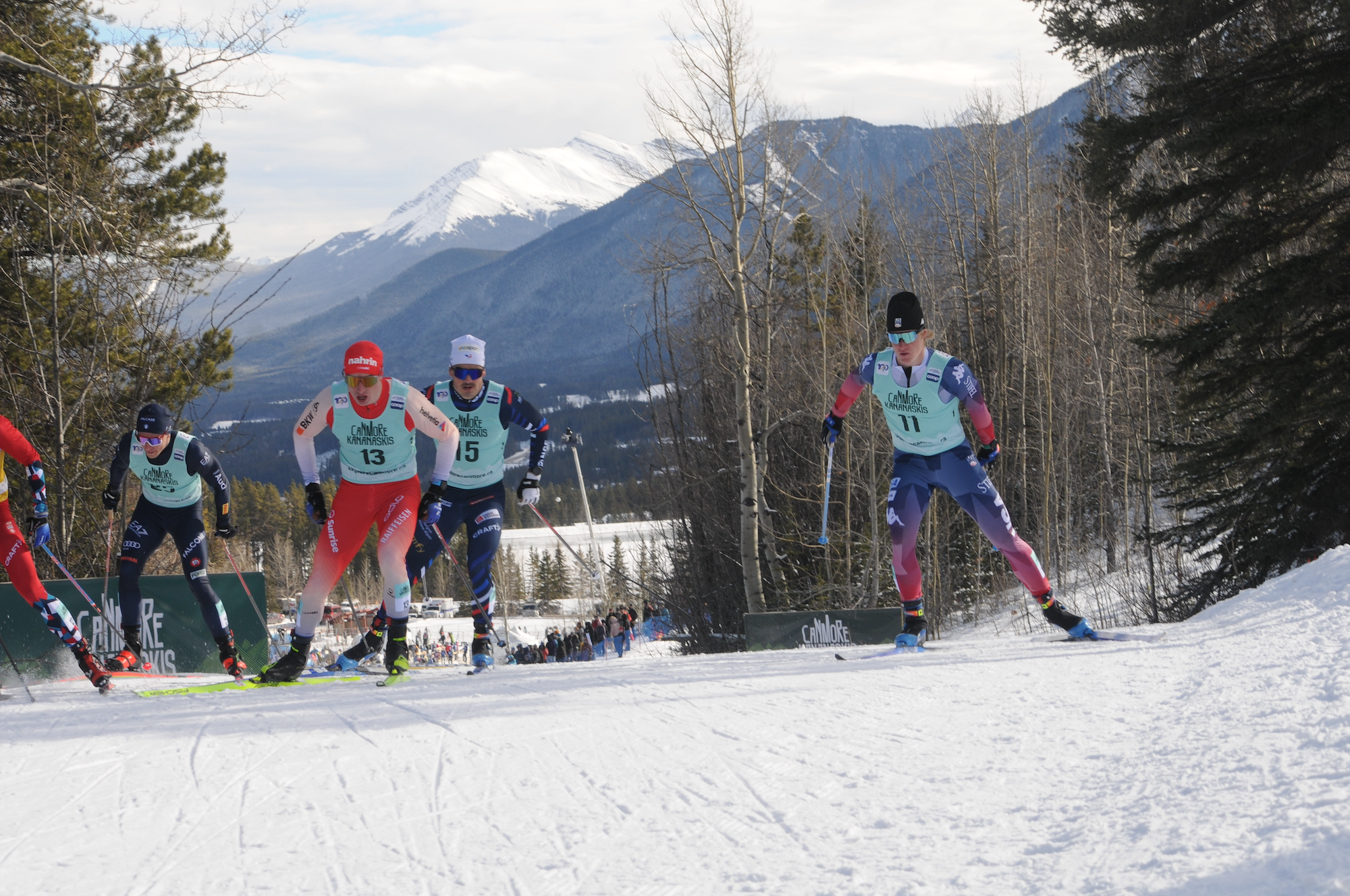
    Jack Young, who a week earlier had a 3rd and 5th place in the EISA college races for Colby College delivered the 11th fastest qualifying time in the freestyle sprint at the Canmore World Cup in 2024. (Photo: Cockney/FasterSkier)

    Anchorage, SoHo, Canmore — and the Race That Changed Everything

    He targeted Anchorage for his first chance at the Canmore World Cup spot. He knew what he had to do: fly across the country in the early winter, race well, then perform at Senior Nationals in Soldier Hollow. Anchorage was the linchpin.

    “I went into Anchorage with a lot of confidence,” he says. “I won that qualifier; it was such a surprise.”

    He didn’t replicate the magic at Soldier Hollow — “I think I got like 11th” — but the Anchorage win held. He made the Canmore start list.

    And then came the race of his life.

    “That’s still my lowest FIS points ever,” he says. “I didn’t match that last year.”

    When he crossed the line, something shifted internally. “Once I did that in Canmore… that was the first time I really thought I wanted to keep skiing after college,” he says. “That was the moment I realized how good I thought I could get.”

    Call it the ignition point, the place where belief calcified into ambition.

    Where a multi-sport kid from a non-skiing family, attending a D3 school, doing self-designed intervals, suddenly saw himself in a World Cup heat map and thought: Yes. Here.

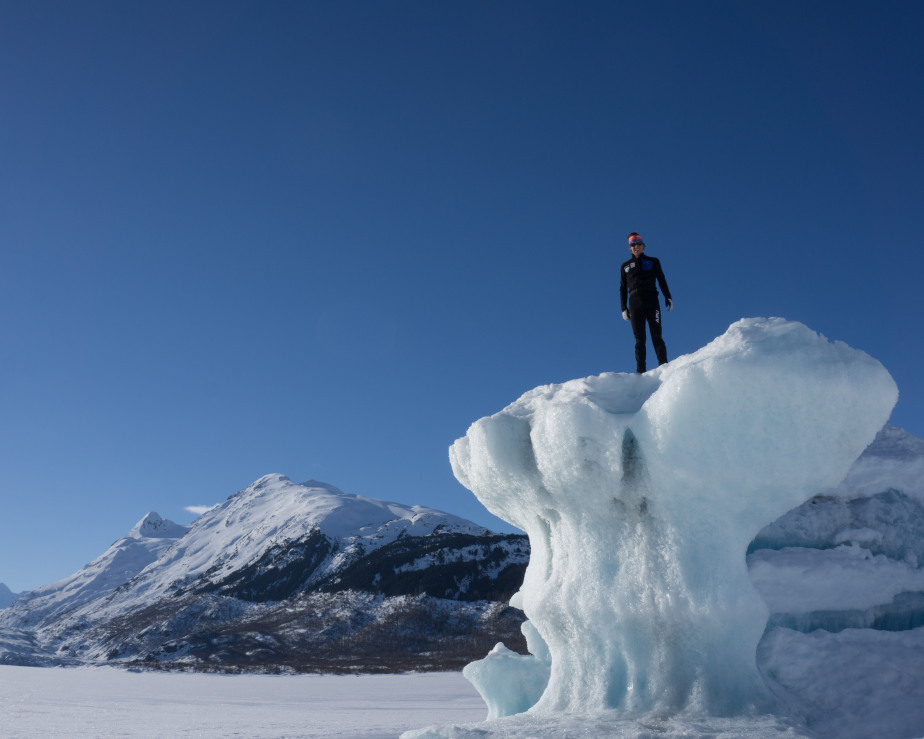
    Jack Young training on Eagle Glacier this past summer. (Photo: Courtesy Photo)

    Writing His Own Plan on the World Cup

    Two years later, he is living in Europe, often for months at a time. He is in his second year of racing full-time on the circuit. He is older, stronger, and more certain. And he is, in many ways, coaching himself.

    “For this time of year, it’s entirely guided by what I’ve done the last two years,” he says. “Which workouts worked in which places, which workouts didn’t… the comments are much more important than the hours.”

    He still works closely with Pepa Miloucheva at Craftsbury — “She’s the number one on that” — but when he’s on the World Cup, he is the primary author of his training. He reads his patterns. He analyzes sensations. He looks for the combinations of stress and stimulation that make him feel dangerous on race day.

    He isn’t reinventing his body now — he’s listening to it.

    The independence he cultivated at Colby has become his competitive advantage.

    With the Olympic sprint being in the classical technique, Jack Young (USA) hopes to find the form he has historically shown in freestyle sprinting during the early season World Cup stops. (Photo: Modica/NordicFocus)

    The Classic Sprint Problem — and the Olympic Dream

    To make the Olympics, the math is simple, even if the execution is brutal.

    “The simplest answer is: make a big jump in classic sprinting,” he says. “If I can start qualifying for classic sprints consistently, I have a very clear path to making the Olympics.”

    Last year’s results would meet the published criteria — “hypothetically, if I had the exact same season… I would technically make the team,” — but this year is different. The Olympic sprint is classic. Period 1 has two classic sprints and only one skate sprint. Some of the contenders for Olympic spots are stronger in classic than he is.

    So the path is narrow: qualify in Ruka. Qualify in Trondheim. Hold form in Davos. Don’t step back. Don’t stagnate.

    At the philosophical level, the criteria are simpler still.

    “It’s all about execution at this point,” he says. “A good season is continuing with progress I’ve made… scoring more World Cup points than I did last year. Anything else is a step back.”

    He knows progress isn’t linear. He knows failure is part of sport. But he also knows what a step backward would feel like. “I’d be lying if I said I could look at this season as successful if I don’t maintain what I’ve been doing in skating and at least make a little bit of progress in classic skiing.”

    It is clear-eyed. Unsentimental. The kind of assessment you get from someone who has built his career on self-honesty.

    Jack and his sister Callie after winning a slow pitch softball tournament. (Photo: Courtesy Photo)

    What It Means to Make It This Way

    There’s a certain poetry in the fact that Young’s rise mirrors the very way he races: a precise, deliberate accumulation of moments. Nothing in his career came from the prescribed steps, the standard routes, the familiar trophies of a groomed junior-star life. Instead, his path looks more like a map drawn after the fact — connecting points that didn’t seem aligned until the picture emerged.

    A sister’s Craftsbury workouts.

    A baseball-heavy early adolescence.

    Mountain biking and football collisions.

    A D3 program that let him try things.

    A manifesto by a Swedish speed skater.

    A dry collegiate fall at age 20.

    A logbook of sensations.

    A day in Canmore.

    A belief.

    There is no template for this. There never was.

    But here he is anyway — on the World Cup, in an Olympic year, taking the biggest swing of his life.

    And as he sits in a Ruka apartment, resting more than he ever has before a race that matters more than most, he reflects not on what’s missing from his résumé but on what got him here in the first place: a way of building a skier that is his alone.


    Love Stories Like This? Help Keep Them Coming.

    Feature interviews like this one take time, access, and care to produce. If you value thoughtful storytelling and independent ski journalism, please consider becoming a Voluntary Subscriber. Your support directly fuels the work we do to cover the people, places, and moments that make our sport special.

    Join the FasterSkier community!


    Jack Young enjoying some orange juice on the Maine seacoast. (Photo: Courtesy Photo)
  • Elite Team Preview: Craftsbury Green Racing Project

    Elite Team Preview: Craftsbury Green Racing Project

    Clare Egan shoots in the pursuit in Östersund, March 2021. (photo: Manzoni/NordicFocus)

    Team name and location: Craftsbury Green Racing Project (CGRP, or Craftsbury); Craftsbury, Vermont

    Coaches: Pepa Miloucheva (head coach); Michael Gibson (biathlon coach); Nick Brown (assistant coach and wax tech); Ethan Dreissigacker (assistant biathlon coach)

    Current roster (skiing and biathlon): Braden Becker, Adam Martin, Akeo Maifeld-Carucci, Caitlin Patterson, Michaela Keller-Miller, Margie Freed, Annika Landis, Alex Lawson (skiing); Jake Brown (Luke’s brother), Raleigh Goessling, Hallie Grossman, Susan Dunklee, Kelsey Dickinson, Tara Geraghty-Moats, Clare Egan, Luke Brown (Jake’s brother) (biathlon)

    Who’s new: Luke Brown joins the team for biathlon, coming from Crosscut; Carsen Campbell joins the team for biathlon, coming from Rocky Mountain Racers; Tara Geraghty-Moats rejoins the team for biathlon, coming from nordic combined; Annika Landis joins the team for skiing, coming from Sun Valley; Alex Lawson joins the team for skiing after graduating from Middlebury this spring

    Who’s still on this team, or otherwise involved in American skiing, from when we did this in 2012Caitlin Patterson (athlete, skiing); Susan Dunklee and Clare Egan (athletes, biathlon); Maria Stuber (head nordic coach, St. Scholastica); Patrick O’Brien (head coach, SMS Elite Team); also, former CGRP teammates Pat O’Brien and Ida Sargent got married this summer

    Susan Dunklee in Pokljuka, Slovenia, February 2021. (photo: Manzoni/NordicFocus)

    Top results last season: Starting with biathlon: The redoubtable veteran Dunklee finished last season on a strong note with two individual eighth-place finishes in Nové Město, one in sprint and one in the pursuit. She teamed up with Sean Doherty for the country’s first single mixed relay World Cup podium since Lowell Bailey and, well, Dunklee, in 2017. Egan had a pair of top-10 finishes, 9th and 10th in Hochfilzen, and was a member of two sixth-place relay teams. Dunklee and Egan are both already qualified for the Beijing Olympics. Jake Brown was on a sixth-place mixed-relay team in Nové Město and had a season’s best of 12th in individual races, in the sprint in Pokljuka.

    Moving on to nordic combined: Geraghty-Moats won the only regular-season women’s noco race that was able to be held last year, in Ramsau, to take the inaugural overall title, while garnering praise as a trailblazer for women’s sports. She was fifth at World Champs in Oberstdorf.

    And finally, on the nordic trails: Patterson raced on the World Cup from Ruka through the end of January, including finishing 34th overall in the Tour de Ski. She was on a fifth-place relay team in Lahti, and had individual World Cup bests of 27th, 29th, and 30th. Martin had three World Cup starts in distance races, with a best of 44th in Davos. Lawson was 24th at World Juniors in the 10 k skate.

    Tara Geraghty-Moats racing at World Champs in Oberstdorf, February 2021. (photo: Modica/NordicFocus)

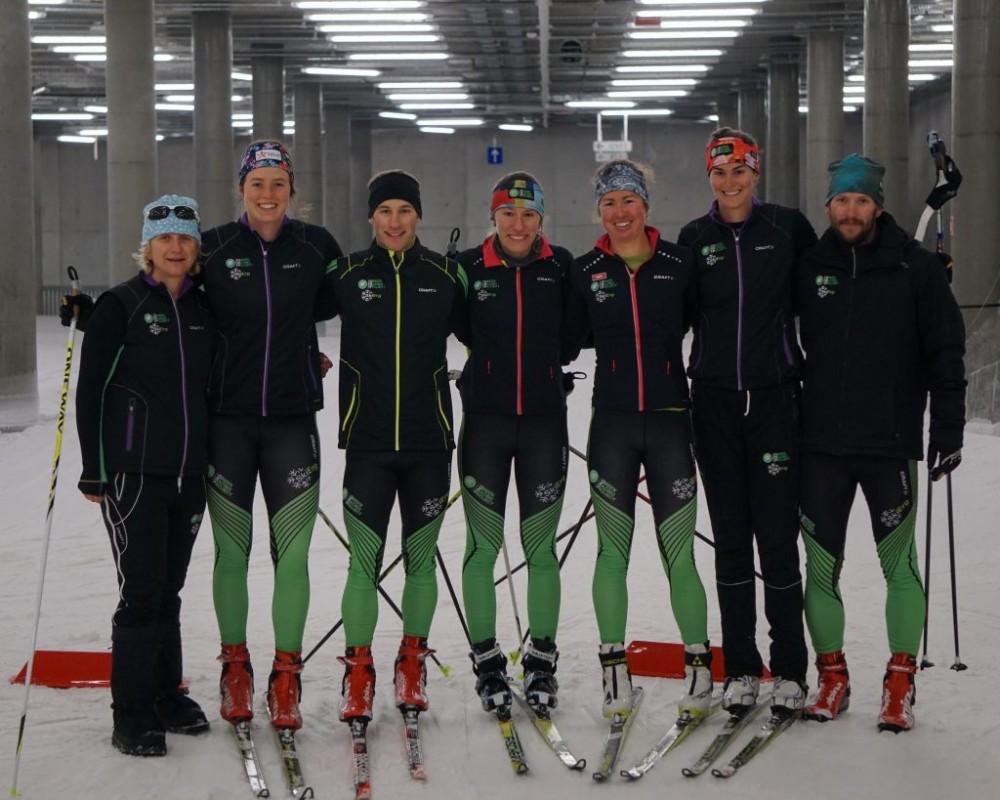
    Coach’s comments: Pepa Miloucheva writes, “Summer and fall training for GRP was good and mostly went as planned. This spring we  officially added Alex Lawson, although she was here last year too and the only other addition was Annika Landis, who joined us after a year in Sun Valley.

    “The whole team stayed and trained in Craftsbury through August. Waverly Gebhardt and Rena Schwartz trained with us as part of the summer U23 program and with our GRP biathletes here we had a really solid training group.

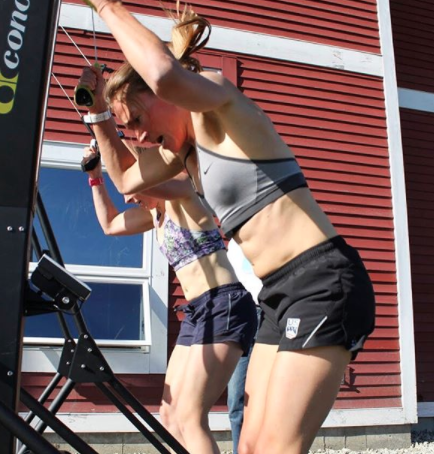
    “Michaela had a setback early summer, broke her ankle and had to have surgery, but she kept really good fitness by spending hours on the SkiErg and was able to join the rest for the ski camp in September.

    Adam Martin racing in Davos, December 2020. (photo: Modica/NordicFocus)

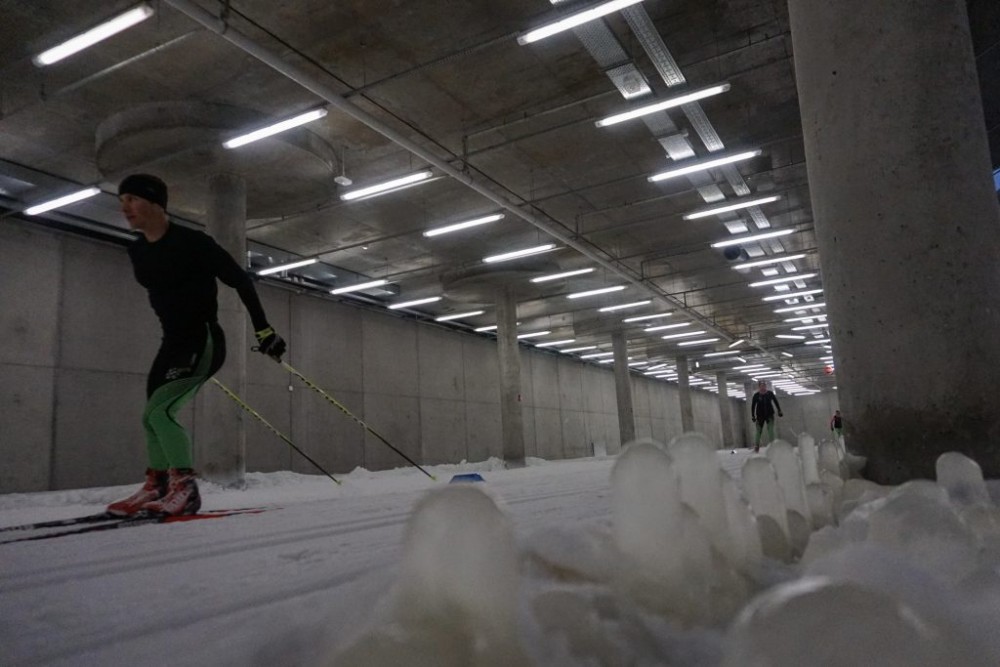
    “Early September we went to Oberhof, Germany, for just over two weeks of training in the ski tunnel. This was our first trip since the pandemic, so I was little nervous, but everything worked out really well. The first few days the focus was on technique, transferring on-snow improvements athletes worked on during the summer. Second part was a solid speed block. Luckily there ware only a few other skiers [in the tunnel] at this time so we ware able to have really high quality intensity sessions.

    “After a few weeks training at home and having incredible fall weather we packed up bags again and went to Park City for two weeks of elevation training. First part of the camp was lots of volume, some L3, a few athletes even hopped in a rollerski race at SoHo for fun. Second week we lowered the volume, had a couple mellow days, and finished the camp with a couple solid TT efforts to gain some experience racing at this elevation in preparation for Nationals.

    “Back home athletes took a few easy days post-Utah. I did some testing, where a few records were broken, which was exciting to see, and now we are concentrating on race prep. Caitlin Patterson left for Europe [on Nov. 17], she will race the first WC period and in less than two weeks we all are about to hit the road for a month and a half.

    Caitlin Patterson racing in Lahti, January 2021. (photo: Vianney THIBAUT/NordicFocus)

    “Last year we were totally sheltered here at the center, didn’t travel at all, didn’t go to any camps, didn’t go to any races outside Craftsbury. Although we had everything we need here and the outdoor center staff was incredible, taking really good care and keeping us safe and healthy, it was mentally very hard on the athletes not to be able to race against the other regions. So this year I’m excited for this team to have a more normal race season and to see what they can do, as they worked really hard for it.”

    Related coverage: Susan Dunklee interview on gender equity (part one, part two); Nordic Nation interview with Clare Egan; Ida Sargent retirement article; Nordic Nation interview with Tara Geraghty-Moats; summer article on the Race to the Top of Vermont

    Previously in this series: BSF | SMS | Team Birkie | Sun Valley | APU

  • Elite Programs Ramp Up for Modified Training

    From left, APU athletes Rosie Frankowski, Sadie Bjornsen, Hailey Swirbul, Becca Rorabaugh, and Caroline Brisbois maintain a healthy distance while skiing at Hatcher Pass on May 13, 2020. (photo credit: ?)
    From left, APU athletes Rosie Frankowski, Sadie Bjornsen, Hailey Swirbul, Becca Rorabaugh, and Caroline Brisbois demonstrate a healthy distance while skiing at Hatcher Pass on May 13, 2020. (Photo: Courtesy Sadie Bjornsen)

    Although the training cycle has officially begun, it decidedly has a different vibe and look. Adding some complexity to our short-term new normal are a crosshatch of state, county, and city regulations as it relates to mitigating the community spread of Covid-19. The core question elite cross-country ski programs are asking is this: How can we most responsibly promote safe and effective training for their athletes? 

    (The United States Olympic & Paralympic Committee (USOPC) has released a document titled Return to Training Considerations Post-COVID-19  This document provides useful information for organizations reopening.)

    FasterSkier reached out to four programs in the U.S. — the Craftsbury Green Racing Project (CGRP), Stratton Mountain School’s SMS T2 team, SVSEF’s Gold Team, and Alaska Pacific University Nordic Ski Center’s Elite Team to gauge how athletes can train within the context of their regional social distancing guidelines. The answers are complex. And as each respondent stated, no one single person or group has all the right answers other than to stay informed and err on the side of safety. 

    Craftsbury Green Racing Project

    Head CGRP coach Pepa Miloucheva responded to our query. Craftsbury’s team is located in Northeastern Vermont, a rural and isolated region. When Miloucheva responded on May 8, the Craftsbury Outdoor Center remained closed to the public. Along with key staff, those GRP athletes and coaches that live on campus year-round continued to be in residence. This group includes coaches and athletes from the ski, biathlon, and rowing teams. 

    “Most of us that didn’t go anywhere this spring have been in strict isolation since March — no store trips or anywhere else. Skiers and biathletes live in the same house, their food is ordered through the center, athletes cook in the house and do train together, but still try not to be in more than 2-3 people groups,” explained Miloucheva.

    Several athletes were home with their families. Among them were Akeo Maifled-Carucci and Caitlin Patterson — both had been with their respective families in Bozeman, Montana. They returned to Craftsbury in mid-May. Miloucheva wrote that returning athletes will be quarantined for two weeks before they are allowed to move into team housing and join group practices.

    “We do not share any buildings use with the rest of the center staff and if any work-related interactions are only by keeping a safe distance, wearing masks, and following all safety rules and regulations. This said, honestly we don’t have much of those really, we pretty much just interact between ourselves right now.”

    Gold Team

    Sun Valley and surrounding Blaine County, Idaho were early Covid-19 hot spots. Since early March, community members there have been acutely aware of grim realities of community spread. Since then, the caseload has leveled off. 

    According to Chris Mallory, Gold Team head coach, his core unit of skiers have not had group training sessions for the past two months. However, with the canceled racing in March, Mallory said several of his athletes extended their on-snow training north of their home base in town. Like many adapting to the modified season, high volume was the trend for March and April training.

    “It was unfortunate the race season got cut short, but it allowed for two months of big volume to finish out the season,” Mallory emailed. “So we’re starting up training a little later than normal this year and for now, coaches are directing workouts remotely. We’re looking to get programming going closer to normal in June, but some things will be structured differently.”

    Mallory explained that training group size will be kept below 10 athletes and the norm of committing in a team van will be held off for the near future. 

    “So we won’t have big cross-team training sessions for a while, unfortunately. We’ll also pick training locations such as Trailheads which are off the beaten path or sections of the bike path which see less traffic for rollerskiing, so physical distancing can be easier to achieve.  We might have a partner gym opening up in a week which will allow for some strength training to occur for our Gold Team, but we’re also putting some effort into creating an outdoor strength area outside the Lake Creek ski hut as well.” 

    SMST2

    SMST2 skier Ian Torchia on a recent VT. ride. (Photo: Courtesy Ian Torchia)

    Nestled in southern Vermont, the Stratton Mountain School offers an idyllic campus for the SMST2 team. This spring, as the pandemic and its accompanying restrictions unfolded, the state-mandated that both residents and non-residents traveling into Vermont must self-quarantine for 14 days. That rule was recently extended until June 15.

    Some SMST2 athletes are currently out of state, while others, like Ian Torchia, have remained in the Stratton area since the end of the season. Ben Ogden and new SMST2 skier Bill Harmeyer returned to their Vermont homes to remotely finish out the academic year at the University of Vermont.  

    “Initially we were thinking where do you want to be for a two-week self-quarantine,” Patrick O’Brien, SMST2’s head coach said in a call. “Thankfully we also thought about where do people want to be for an extended period of time this spring. And many people already had plans in place — knowing we may be in this for a longer period of time than we were thinking at the beginning of March.”

    As June approaches, O’Brien explained that he too has begun defining how training will look, and how to best integrate athletes into specific training groups. 

    “First and foremost in my mind is what can we legally do, what can we responsibly do, and what are the creative solutions that we can come up with? And understanding again that no one here has a crystal ball; we can look at models, we can look at forecasts, we can monitor the situation but it is going to be a moving target,” said O’Brien. “So really what we are trying to do is find a balance. We are trying to be fully compliant and very safe and cautious and also monitor the situation locally.”

    Harmeyer, who had been self-quarantined in Burlington, drove to Stratton recently to begin his full-time training. Due to his limited exposure while in Burlington, he was allowed to integrate with a small training group. Ben Saxton, on the other hand, recently flew back to Vermont from the Midwest. According to O’Brien, he is self-quarantining for the required 14 day period.

    For the time being, O’Brien envisions training groups organized around pods – another word he used interchangeably for families. Athletes living together will be considered training pods where they are able to be in close proximity to one another. O’Brien acknowledged this arrangement will be closely monitored and reassessed. 

    “We need to track and see what seems responsible for group training, but again we want to make sure people are safe and healthy and if we operate in these small groups, and everyone in that group is a ‘family member’, then we know that they are OK to go out and do stuff together. What we want to do is be creative in our approach to these challenges, but really we want to be reasonable.”

    Although Vermont’s shelter-in-place order was extended to June 15, it currently allows for outdoor exercise.

    “Every challenge presents an opportunity,” O’Brien said. “We are not going to jump on a plane and go to a bunch of different training camps. That doesn’t prevent us from having high-quality training locally. It presents an opportunity. And reaffirms a model of working together and training together.”

    Alaska Pacific University Nordic Ski Center

    Anchorage is typically a very good place to be a cross-country skier. While so much else has changed in the world this spring, this fact has remained a reassuring constant for the athletes of the Alaska Pacific University Nordic Ski Center (APUNSC) Elite Team, as well as the greater Anchorage ski community. There was seasonal weather, both snow and cold, in the second half of this winter, leading to a sea-level snowpack that lingered well into April. Trail grooming is performed by a nonprofit group, Nordic Skiing Association of Anchorage, that relies on voluntary donations rather than mandatory trail passes while grooming on public land, so grooming continued unabated through March and into late April. And public health-wise, Alaska’s isolation, coupled with a relatively aggressive early response, has led to, so far, consistently low COVID-19 numbers throughout the state, currently the lowest gross numbers of any state and the third-lowest per-capita infection rate behind Hawaii and Montana.

    Hailey Swirbul (APU/USST) skis at Hatcher Pass on May 13, 2020. (photo credit: ?)
    Hailey Swirbul (APU/USST) skis at Hatcher Pass on May 13, 2020. (photo credit: Sadie Bjornsen)

    Put it all together, and APU athletes were enjoying groomed skiing at sea level through April 23, with world-class crust skiing coming on line around the time the in-town ski season was winding to a close. (Any April training happened unofficially and in smaller groups, in deference to both the overall training schedule and health mandates in effect at that time. Although a group of four APU athletes did hunker down together in the APU Ski House starting in mid-March, forming a de facto family unit and training group in which half the people were a member of the U.S. Ski Team.) A 75-minute drive away, fellow nonprofit Mat-Su Ski Club has been grooming the trails at Independence Mine, in the Hatcher Pass area, since last October 5… and with a snowpack that currently measures around four feet, is still going. It’s hard to prove a negative, but APU skiers currently enjoy ready access to what are likely the only groomed nordic trails on the entire continent right now.

    Here’s Erik Flora – longtime Alaska Pacific University Nordic Ski Center head coach, sometime trail groomer, and consistently an archetypal do-it-all coach – with a recent email giving an official update on the APU Elite Team:

    We have learned that the logistics of keeping our athletes safe while following COVID-19 state mandates has been at the forefront of the APUNSC program. Our core is based around health and wellness, and the safety of our program members is our top priority at all times, similar to other ski communities. APUNSC has had an advantage of having trails and snow on the mountains minutes from our doors to continue training, even in times of quarantine.

    “Nordic Ski Center Elite training program began on May 1. We were fortunate that State of Alaska quarantine and social distancing mandates began to lessen at the beginning of May, allowing the Elite Team to be able to begin training in smaller groups outside in the mountains. The Elite team wore face mask or buffs and kept the mandated 6-10 ft separation while outdoors. 

    “At first, groups of 20 were allowed to hit the trails with a mandated 6-10 feet of separation for active workout sessions. We wore masks when training and avoided crowded parking lots and trailheads where we could. 

    “Once phase 2 [of state health mandates] hit a week ago, it allowed now the entire Elite Team to be able to head into the mountains to train and ski. Hatcher Pass has been an area where Crust Skiing is at its best with longer days and blazing sunshine. The grooming has been incredible thanks to the work of Nordic Ski Club of Anchorage and the Mat-Su Ski club. The Elite athletes still uphold the 6-10 ft separation when training. The athletes are happy to be together as a team again, and with that comes the responsibility to treat allowances with respect and not take it for granted. We are living and training as athletes in a time where our community could fall back to strict quarantine.  

    “We’ve stayed away from indoor training as a team in gyms, as not only is the safety of our team top priority, but the team has excelled in their own in-home conditioning and in getting outside to hit the trails. Only if necessary, for some athletes rehabbing, will we recommend using an indoor gym for conditioning and training.  

    “APU Nordic Ski Center typically runs 3 elite training camps [each summer] on Eagle Glacier at the Thomas Training Facility outside of Girdwood, Alaska. We will revisit whether Glacier camps will resume based on the climate of COVID-19 Adjustments.”

    (For any Outside readers salivating over the prospect of May skiing and thinking of booking a cheap plane ticket north, please note that a 14-day quarantine requirement remains in effect for anyone traveling into Alaska from out of state, and that Alaska State Parks is likely to plow the road up to Independence Mine in early June.)

  • DIY Fitness Testing: The How and Why with Pepa Miloucheva

    DIY Fitness Testing: The How and Why with Pepa Miloucheva

    The SMST2 squad led by Jessie Diggins pushes the pace in a double pole interval workout during a fall 2019 training camp in Lake Placid, NY. (Photo: Matt Whitcomb / smseliteteam.wordpress.com)

    It’s May. Yes, really. 

    For most skiers, the new page on the calendar also marks the beginning of a new training year. Dust off your rollerskis, locate your heart rate strap and drink belt, and make sure your running shoes have plenty of life in them.

    With the country still predominantly on public health orders to stay close to home, avoid groups, and keep at least six feet of distance from those outside your home, kicking off a new cycle is happening without hugging our training partners, post-workout high fives, or otherwise gathering to ring in the new season. There also remains abundant uncertainty regarding the feasibility of racing during the upcoming season from the World Cup level to the junior and collegiate circuits to popular skiing. Nonetheless, we open our training logs and carry on. 

    Last season ended abruptly and the off season may have looked different than anticipated. We may have put our energy into homeschooling children, sourdough baking, binge-watching Tiger King, connecting virtually with our family and friends, or otherwise remaining largely homebound and less active than we’re accustomed. On the flip side, maybe the change in schedule has freed up additional time for long adventures and you’ve logged more hours in April than ever before. 

    Either way, at the onset of a season, you may be interested in checking in on your fitness and strength, looking for metrics to track improvement over time and to guide your pacing or heart rate zones during future workouts. FasterSkier reached out to Pepa Miloucheva, head coach of the Craftsbury Green Racing Project, to discuss fitness testing that could be done without the support of a facility or coach, making it accessible to any level skier as they begin the new year. 

    Miloucheva provided the disclaimer that she relies on advanced metabolic testing with her athletes to determine VO2 Max and lactate threshold levels to assess fitness and heart rate zones, and then prescribes training based on this information. With that caveat, Miloucheva holds a masters degree in Sport Science with a focus on physiology and biomechanics and has been coaching for over 20 years, over a dozen of which have been spent with the CGRP elite program. 

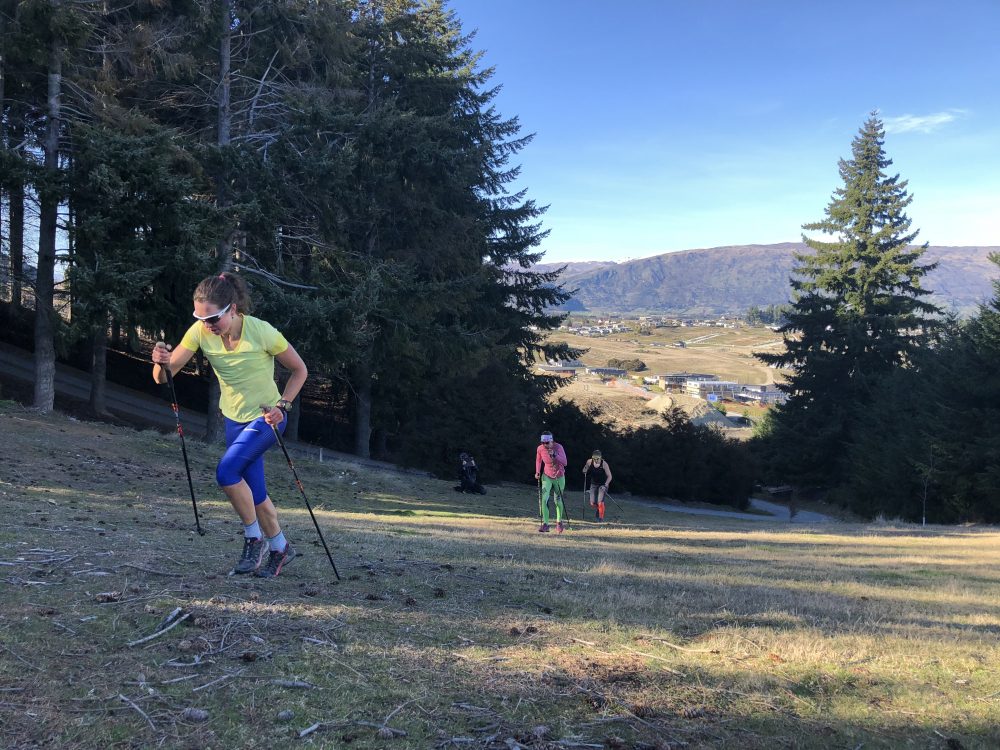
    Caitlin Patterson (far left) leads CGRP teammates running with poles. (Courtesy Photo)

    Before jumping into assessing fitness and blowing up trying to hit a new PR on the SkiErg, Miloucheva emphasized that the most important thing an athlete can do at the beginning of a new cycle is to have a training plan and to understand how the periodization targets different areas of athletic development. This might be a plan from a coach or one found online. 

    “If someone really wants to establish a baseline and monitor, then they have to have a training plan,” said Miloucheva in a call. “I think everything else is kind of pointless, because all of these tests won’t give you anything if you don’t know what you’re looking for. In general, everything starts with first having a good training plan.”

    Once a clear plan is established and you have taken time to understand it, then decide which part of the training process you would like to test. 

    “If you have 2-3 months of high volume, you want to test your basic aerobic improvement. You do the test, you see if you’ve actually improved. When you start doing a little bit more speed, you want to see if you’ve improved your speed. So you really have to schedule these tests based on your training plan.”

    As the typical periodization of the year for skiers focuses on aerobic development during the spring and summer, a good starting place could be an uphill run test, possibly combined with a rollerski or SkiErg time trial, if those are available to you.

    Traditionally, a 3000 meter run on the track was commonly used as an aerobic benchmark, but the results can be skewed based on individual running economy. Athletes with more running experience and better form often fare better than those with comparable or potentially better fitness. As such, most ski programs have transitioned toward an uphill run test, as it tends to level the playing field in terms of the impact of running efficiency on results.

    In addition to being a good indicator of aerobic capacity, Miloucheva explained that the test has the added benefit of being easily repeatable with relatively few outside variables that might impact performance.

    “The uphill running test is probably the most standard around the world. Simply, it’s easier to repeat. It’s a little bit less affected by the weather, but there are still a lot of elements and it is hard to keep it consistent.”

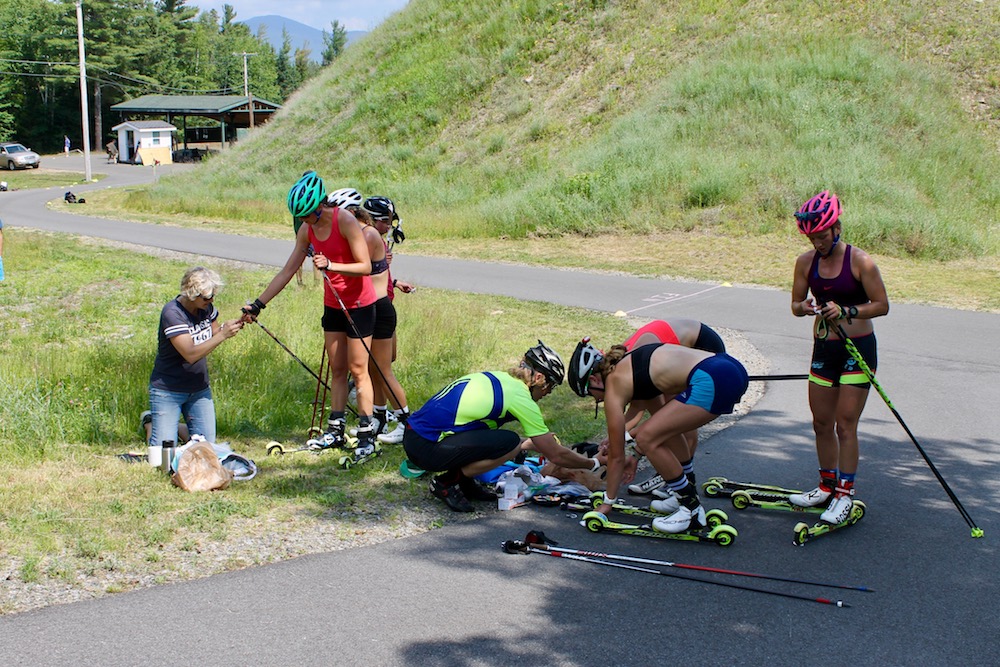
    Craftsbury Green Racing Project Head Coach Pepa Miloucheva (l) and Stratton Mountain School T2 Team Head Coach Pat O’Brien (center) assist athletes with lactate testing after the U.S. Ski Team’s rollerski team sprint on July 15, 2018 in Lake Placid, N.Y.

    If you’re looking to track your own progress on an uphill course, Miloucheva recommends finding a stretch of road or trail with little traffic that takes roughly 10-12 minutes. The effort should be steady throughout the test and you should finish feeling completely spent. 

    Be careful not to start out too fast as you want your heart rate to increase throughout the test, rapidly at first then gradually continuing to rise toward your lactate threshold heart rate, which can be estimated as the average heart rate sustained over the last five minutes of the test assuming it was well-paced. (TrainingPeaks has a deep dive on blood lactate and lactate threshold here, or you can read this description of lactate threshold training by Len Kravitz Ph.D., Exercise Science professor at the University of New Mexico.) 

    As for the course, you’re looking for terrain that is runnable, meaning you won’t need to resort to walking or hiking, and a relatively consistent grade. 

    Miloucheva later added that many veteran athletes have their own aerobic fitness test piece, which is also perfectly sufficient. 

    “I’m an old lady and I have this loop around the lake I do every year and I measure my time just for fun. So in general, everybody who has been training for years, they have a place where they can run the test.”

    Miloucheva has also used a 1-kilometer uphill double pole test on rollerskis with some of her athletes. Her course starts relatively flat, climbs gradually, then levels off at the finish. 

    “The biggest thing is that [athletes] need to keep moving, so it cannot be very steep because strength and the resistance become the issue [rather than fitness].”

    She has found this test harder to standardize than the run test, meaning results must be taken with a grain of salt. 

    “The problem using it year to year is that [the athletes] don’t always use the same rollerskis, they change wheels, cold weather and cold pavement changes a lot. So you have to consider all these details with the results.”

    Sophie Caldwell and Annie Hart square off for a SkiErg time trial during a week of testing with the SMST2 team in 2017. (Photo: Instagram @sophiecaldwell(

    Because of the ease of standardization, Miloucheva prefers using SkiErg time trials, as athletes can repeat the test indoors with a fixed resistance. Her junior athletes complete 1 and 2 k time trials, and her senior athletes additionally complete a 5 k test. The CGRP athletes complete the tests while hooked up to a VO2 Max testing equipment. If these are available to you, these tests could also serve as a benchmark for aerobic fitness with some ski specific strength indicators. 

    As for strength, Miloucheva is working on developing a test she feels is informative and can be standardized, as she is not satisfied with other tests used previously. She has historically used a version of the Canadian Strength Test (outlined here by Jackson Hole Ski & Snowboard Club), which counts the number of pull-ups, sit-ups, push-ups, box jumps, and dips an athlete can do in one minute with one minute rest between each exercise. Some differences in Miloucheva’s version include the use of single leg squats within a 30 second time period and measures pull-ups to exhaustion. 

    If you’re completing this test from home, ask a member of your household to help time, count, and keep your form honest so the data reflects your current strength accurately. 

    Okay, you’ve done an initial test of your aerobic fitness and/or strength. Now what? How soon should you repeat the test to check for improvement?

    Miloucheva reiterated that it is essential to plan testing between training blocks to assess whether the block had the intended impact on fitness. She explained that her testing weeks are written into her general yearly plan for athletes at the beginning of the season. 

    When considering your own plan, space the tests out roughly 6-10 weeks to give the body time to absorb and respond to training. In addition to striving for a faster time, you can also consider trends in heart rate, as more time during the test spent closer to the lactate threshold heart rate is also an indicator of improved aerobic capacity. 

    To get the most information from a testing period, it is essential that each round is approached the same way, including how the training looks in the days prior and the warm-up performed before beginning the tests. 

    “You want to have a standard approach into the test, because you don’t want to do the first test after a very exhausting week and the second after an easy week, because it will affect the results.”

    For CGRP athletes, this typically looks like one or two days of rest or easy training prior to a test. 

    There you have it. If you’re looking to assess and monitor progress in your fitness, first select and understand a training plan. Then, determine what factors of your fitness you’d like to assess and decide when a set of tests might fit best between different blocks within the training plan. Finally, do what you can to ensure that when the tests are repeated, the environment is as controlled as possible and your approach is the same so improvement (or lack thereof) between tests provides accurate insight into how your body is responding to training. 

    See you out there!  (from a safe social distance) 

  • Nordic Nation: Going the Distance with Ben Lustgarten

    Nordic Nation: Going the Distance with Ben Lustgarten

    Live, from Vermont, it was Ben Lustgarten of the Craftsbury Green Racing Project — we spoke to Ben about his recent retirement announcement from full-time training and racing at the elite level. Lustgarten’s name is synonymous with the SuperTour’s sharp end. He’s also known to throw down burly strength workouts. He qualified and raced in two World Championships and claimed a 30 k classic National Championship in 2017.


    Craftsbury Green Racing Project’s Ben Lustgarten on his way to winning the 30 k classic mass start at U.S. Cross Country Championships on Jan. 11 at Soldier Hollow in Midway, Utah.

    In this episode, we discuss the reasons why Lustgarten stepped away from full-time training and the key aspects of the training-racing he’s embraced along the way. He’s honest and earnest as he ruminates on the difficulty of cracking into the World Cup top-30, and missing out on the 2018 Olympics.

    Lastly, Lustrgarten is a grinder and we applaud his dedication and fidelity to the sport. Onward Ben.

    Ben Lustgarten of the U.S during the 15 k classic at the 2019 World Championships in Seefeld, Austria. Lustgarten placed 45th.(Photo: John Lazenby/lazenbyphoto.com)


  • Full Circle: Ida Sargent Begins Her Next Chapter In the Northeast Kingdom

    Full Circle: Ida Sargent Begins Her Next Chapter In the Northeast Kingdom

    Ida Sargent of the U.S. Ski Team racing in Québec City at the 2019 World Cup finals. (Photo: John Lazenby/lazenbyphoto.com)

    As winter wanes and spring looms, many athletes choose to announce the bittersweet change of their own season of life, retirement from the sport to embark on a new pursuit. This March, after seven seasons on the U.S. Ski Team, 31-year-old Ida Sargent decided the time had come for something new.

    “I knew after Sochi that I wanted to go to one more Olympics,” Sargent told FasterSkier in a call. “So at that point, I committed to another four years and then figured at that point that I would just reevaluate and take it year by year. People had said in the past that you’ll know when you’re ready, and I have to admit that I was a bit skeptical on that and I wasn’t really sure that I would know. But this winter, I was ready. It hit me and I just knew.”

    When she towed the line in Ruka for her first World Cup of the season, the classic sprint where she took 27th, she was not aware that it would be her last year doing so. Her decision to retire was formalized as the year progressed.

    “It wasn’t even until the season started,” said Sargent. “I was still – I had a great training year, I was pretty fired up. But the beginning of the season I was sick a lot, and I found myself looking at plane tickets home more often than I normally do.”

    At a glance, Sargent has competed in two Olympic Games, Sochi and PyeongChang. She started 148 World Cup races with over a third of those starts resulting in a top-30 finish. Known more for her sprinting than her distance skiing, she was top-10 in nine individual sprint events and one distance event. She contributed to two podium finishes in the team sprint with her teammate at both Dartmouth College and the U.S. Ski Team, Sophie Caldwell, once in PyeongChang in 2017 and again in Dresden in 2018. She also landed on the podium individually by taking third in the classic sprint in the PyeongChang World Cup races. Domestically, she has 12 individual wins at SuperTour events or U.S. Nationals, and was this year’s national champion in the classic sprint. Her consistency at the top level throughout her career speaks for itself.

    The women’s freestyle team sprint podium at the PyeongChang World Cup on Sunday in South Korea, with Sweden’s Elin Mohlin and Maria Nordström (c) in first, Norway’s Anna Svensen and Silje Øyre Slind (l) in second, and USA I’s Ida Sargent and Sophie Caldwell (r) in third. (Photo: FIS Cross Country/Twitter)

    While these results and the journey to attain them have been a positive and satisfying experience, life on the road has its disadvantages. As the novelty of the World Cup athlete lifestyle wore off, the transience and singular focus weighed on Sargent and became a significant factor in her decision to step away.

    “I still love the training and I love the racing,” she explained. “But it’s all the time in between the training and racing that I just don’t love – the hanging out in hotel rooms and the time away from home, living out of a duffel bag. That part has been wearing on me, and that was what made me realize that I was ready for a change.

    “And while I still love racing,” she continued, “I just am not quite as driven any more and achieving a goal no longer is quite as satisfying. I think the singular pursuit and focus on just racing is not as engaging as it used to be for me. I’m more excited about a broader range of things and new challenges, all of those combined its becoming quite apparent to me that I’m ready for something new.”

    While she was burdened by this readiness for change, Sargent was cognizant of not seeming jaded, particularly in front of the group of younger athletes, like USST D-Team members Hailey Swirbul, Julia Kern, Katherine Ogden, and Hannah Halvorsen, who were pulled up to compete at some of the World Cup events this season. She wants only to encourage these women as they continue to chase their dreams.

    “I have loved the lifestyle and was so thankful for it at the time, I think it’s just an amazing pursuit,” said Sargent. “I feel lucky to have had the time on the World Cup and on the U.S. Ski Team and going to World Championships and the Olympics. But yeah, for me personally, I’m ready for something new, but that doesn’t mean that those aren’t awesome goals and great trajectories.”

    Sargent has been a member of the U.S. Ski team alongside other women who have contributed to the rise and success of American skiing. While the names and faces are changing, Sargent does not feel the momentum will be lost during this transition.

    “This year has been really exciting actually – we had big retirements last year, losing Kikkan [Randall] and Liz [Stephen] on our team, who are just such leaders,” explained Sargent. “And I think we were all kind of wondering what the energy would be like without those two. But immediately from the first camp of the year, the energy that the young ones – we call them ‘the guppies’, the development team girls – they just brought this new energy. So it’s been fun to see this new crew coming up and to race some World Cups with them this winter and racing here with them. It’s nice to see that amazing energy that they’re bringing up, and it’s nice to know that the work that we’ve laid down is just going to be built upon and that they’re going to bring lots of great success to the team.”

    With highs and lows, the season progressed and Sargent ruminated about her retirement. Surprisingly, her decision was not finalized after persistent illness or races that may not have matched her career best, rather, the resolution came after earning the national title in the classic sprint on the trails she grew up skiing in Craftsbury, VT.

    Ida Sargent takes the U.S. national championship classic sprint title in Craftsbury, VT. Julia Kern in red (USST D-Team/SMS T2) out lunged Hannah Halvorsen in blue to take second place. Halvorsen placed third. (Photo: John Lazenby)

    “I think the day that I look back on and remember when I realized I was going to be done was actually after winning Nationals at home,” Sargent shared. “It was really fun, but I was like ‘I think it’s time.’”

    She had discussed her decision with her sister and her boyfriend, Pat O’Brien, but had not formally shared her retirement more broadly. Her first time sharing the news beyond that was seemingly equal parts disclosure and realization.

    “I think that it was actually just an off-hand comment to a friend who was watching, they were talking about maybe coming up to watch the races in Quebec City,” she recalled. “I was like, ‘Oh, yeah, I think those are going to be my last races.’ I remember saying that and being like, ‘Huh, that feels pretty good actually. That make’s sense to me’. And obviously, I didn’t fully finalize my decision until later, but this year I’ve just kind of known from the beginning and have been trying to embrace all of the opportunities and the team and the amazing lifestyle as much as possible rather than focusing on results at that point.”

    In almost 23 years of skiing, Sargent remarkably had only two primary coaches. Her first coach was Pepa Miloucheva, who first worked with Sargent from the time she entered the Bill Koch league at Craftsbury and has since become the director of competitive skiing and the head coach of the Craftsbury Green Racing Project (CGRP) team. When she entered high school at Burke Mountain Academy, Sargent began working with Matt Whitcomb, who is now a coach for the U.S. Ski Team. The only time she was not working with either Whitcomb or Miloucheva was during her time at Dartmouth College, where she was coached by Cami Thompson, and even then, she trained in Craftsbury during the summers.

    Ida Sargent hugs her longtime coach, Pepa Miloucheva (CGRP), after racing her final World Cup at the 2019 World Cup Finals in Quebec City. (Photo: Instagram Screenshot @idasargent)

    In her professional career, Sargent has trained with Miloucheva and CGRP throughout the summer, transitioning to working with Whitcomb at USST camps and throughout the winter race season. Sargent attributes the steady progress she made throughout her development into an elite skier to predominantly working with these two.

    “I’ve been very lucky to have a lot of consistency in my coaching,” she explained, “and I think that’s allowed me to make gradual consistent progress throughout my career without having any major changes.”

    While these coaches certainly impacted Sargent’s development, career, and life, her impact on her coaches was equally great.

    “Ida is definitely one of those athletes that’s more like a gift to the coaches, than the coaches are a gift to the athlete,” Matt Whitcomb shared in a call. “She’s one of the few reasons that has made coaching for so long so easy to do.”

    He added, “People like Ida are so important to the longevity and the well being of the teams that they’re on. So I’m just feeling really lucky as I reflect on her career.”

    Even from a young age, Sargent loved to compete and demonstrated the potential to be great.

    “She really likes racing, she was really fun to work with,” said Miloucheva. “Even when she was really young, she was really really quick with transitions, and she had this ability to accelerate. I knew from a young age that she could be a really good sprinter.”

    Coupled with her natural talent, Sargent is fiercely competitive, but this drive is tempered outside the realm of competition by a genuine care for others.

    revia

    “She was and always has been extremely competitive,” Whitcomb explained. “We laugh about that on our team a little bit – whether it’s a small game in the evening that we’re playing with the team or a World Cup sprint, she’s extremely competitive.

    “What stands out in contrast to that level of competitiveness is that she’s one of the athletes that will always take time to search her surroundings and see how people around her are doing,” he continued. “She’s been one that – before I even knew that I was starting to stress out, she would ask me how I was doing. She just has a good sense for people and an incredible sense of caring.”

    After guiding Sargent from her junior years through her retirement, both Whitcomb and Miloucheva have plenty to be proud of, but the memories the two will look back on most fondly arrived at opposing ends of her career.

    Ida Sargent poses with her longtime coach, Matt Whitcomb, after racing her final World Cup at the 2019 World Cup Finals in Quebec City. (Photo: Instagram Screenshot @idasargent)

    “It’s always fun watching athletes at the podium,” shared Whitcomb. “Ida had three World Cup career podiums, each of which brought a tear to my eye, but perhaps the moment that I was most proud of was just watching her last race. She did not put together the season that she had hoped to, as is often the case with retiring athletes. It is just difficult to stay fast and something was missing a little bit this year. But she crossed the finish line at her last race in Quebec with a fist over her head in celebration that I was able to see from across the stadium. That was probably my proudest moment, just watching the actual conclusion of an athlete’s World Cup career.”

    Miloucheva looks back to Sargent’s youth and to her first World Cup race.

    “When they were young kids, I used to just love when they finish and just look at me and say, ‘Are you proud of us?’” Miloucheva remembered nostalgically. “That was really amazing. I loved when she came from her World Cup and brought me her bib and said ‘Thank you for getting me there.’ It’s all just pretty amazing.

    “It’s still such a great feeling that she got so far,” she continued. “She’s such a great human being.”

    Ida Sargent (bib 46) retired from World Cup racing after Sunday’s race.

    As she reflects back on her own highlights and fondest memories, Sargent sees past her top results to the people with whom the journey was shared.

    “I think looking back, it will definitely be the times we spent as a team just out training and at the races and living on the road – I think that those moments will stand out much more than any race result,” Sargent shared. “It’s that community and having that support system and being part of something bigger than yourself is going to be my lasting memory from the sport. I think that individual pursuit is great, but it’s the community and the inspiration for the younger generations and the teammates who have supported me and I’ve been able to support back… We’ve worked together to build something bigger than just our individual results. That’s what I’ll look back on.”

    In addition to contributing to the rise of women’s skiing on the national team, Sargent has represented Craftsbury during a time where the center has blossomed into a rich nordic ski community. Her love for the center and gratitude for what is has provided her is clear.

    “The Craftsbury community is really a special place,” shared Sargent. “I feel very lucky to have been part of the community there and to continue to be part of the community there. When I was first part of the Craftsbury Nordic Ski Club as a junior or as a young skier, there were probably 10 or 15 of us skiing at any time, but now because of the work that Anna [Shultz, head junior/Bill Koch League coach] and the other junior coaches have done, and Pepa, and just the work of Judy and Dick Dressigacker [who own the center], now there are over 100 kids in the competitive ski programs and almost that many more in the recreational ski programs. So to be part of that is something that I will always be very proud of and something that I am also very thankful for.”

    National champion classic sprint winner in Craftsbury, VT., Ida Sargent gets a hug from her mother Lindy Sargent moments after Ida claiming the title. Ida Sargent grew up skiing in the Craftsbury area. (Photo: John Lazenby)

    While Sargent was served by the Craftsbury community, the community was perhaps equally served by her presence.

    “As Ida is on the National Team, all the younger generation of kids, they can look up to her,” Miloucheva explained. “All the younger kids – everybody knows Ida, and when she’s around and when she goes and skis with them, it’s just such a fun way to have practice.”

    The fruits of Sargent’s hard work have been an inspiration to other Craftsbury skiers, young and old.

    “All the younger kids, for them, Ida is like an idol, even now,” said Miloucheva. “When she announced her retirement, all the younger kids, they’re all so sad about the fact that she’s retiring.

    “The same thing with the masters,” she added. “Everyone knows who she is. She grew up there, it is her home.”

    In the next chapter of her life, Sargent will be heading back to her alma mater, Burke Mountain Academy, where she will teach Biology, Chemistry, and Statistics. She will also live on campus and serve as a dorm parent for boarding students. She does not see herself taking on a major coaching role in the near future, but she does hope to help with the local Bill Koch League to help regrow the cross country ski program in the Burke area. While Burke and Craftsbury are roughly an hour apart, Sargent also hopes to stay involved and to continue to contribute to the community there.

    ventolin inhaler

    “I will continue to be looking for ways to give back to the community or to stay involved even if I’m not living at Craftsbury in the next year or two or wherever I end up,” said Sargent. “I think that extends beyond just the Northern Vermont community to greater Vermont and New England and just the entire US ski community. It’s a small sport, but we’re all very close, and I think it’s a very supportive community, and together – there’s so much individual energy that combined, we can create something bigger than just all of those individual skiers.”

    The Craftsbury community will certainly welcome Sargent back with open arms in whatever capacity she chooses to stay involved.

    World Cup and USST skier Ida Sargent, home for the holidays and the Tour de Ski break, high fives a BKL lollipopper after the lollipop run. NENSA Eastern Cup. (Photo: John Lazenby)

    “I still hope that she’ll be back,” said Miloucheva optimistically. “She’s going to have her job at Burke, but she’ll still be visiting, she’ll still be working with the younger kids, she will still join us for some workouts, especially when I need her to push a little bit of speed for the other athletes.”

    Finally, Sargent left young skiers with some advice on their journey in the sport based on her own experiences. As Alayna Sonnesyn illuminated earlier this year, after high school, the “pipeline” to making the national team or the Olympics can be difficult to navigate. Sargent explained that the path doesn’t need to be as linear as one might think.

    “The advice that I would give to young skiers is that there is no one right way to do it. If you start on one path, that doesn’t mean that that is the ultimate path that you’re going to take, it’s easy to do one thing and then if that’s not working or is not what is best at that moment, switch and do something else. After high school, I thought that I wanted to ski full time and wanted to make the national team and just wanted to do that solely and I wasn’t that interested in going to college.

    “So I took a PG year at Burke,” Sargent continued. “But once I was actually trying to train full time, I realized that I wasn’t quite ready to do that. So after one PG year, I went to Dartmouth and raced for Dartmouth for three years. In my junior year, I made the US Ski Team and then finished out my college career with more part-time college, and then became a member of the Craftsbury Green Racing project and have been training with Craftsbury and the national team since then. So I guess I did the PG year, I did full-time college, I did part-time college and full-time skiing over the course of my career and I think that was what was best for me at those times.”

  • Wednesday Workout: Using Poles on the Ups with Caitlin Patterson

    Wednesday Workout: Using Poles on the Ups with Caitlin Patterson

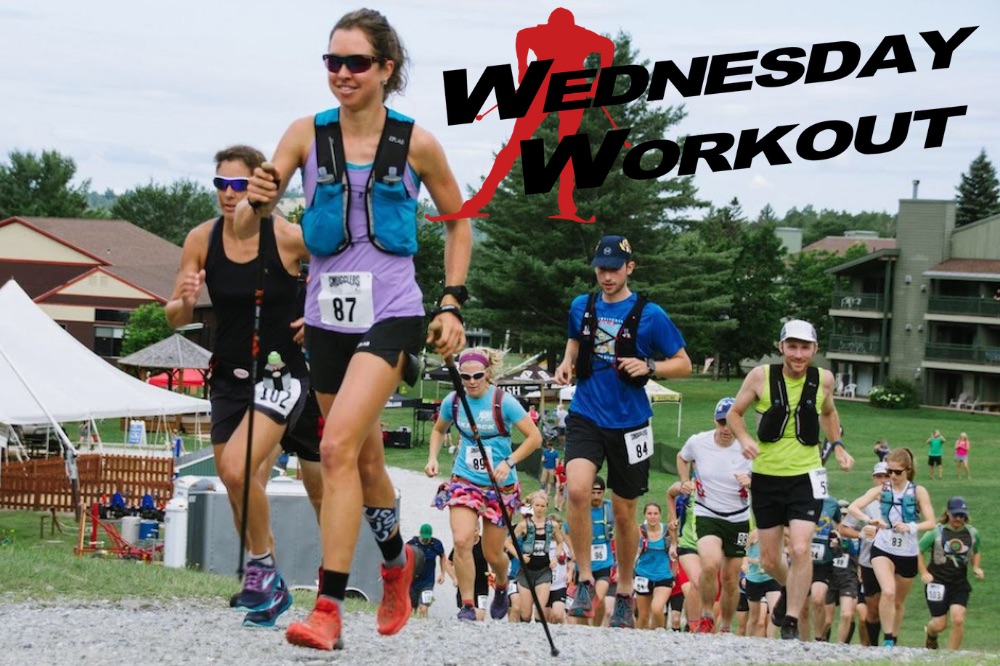
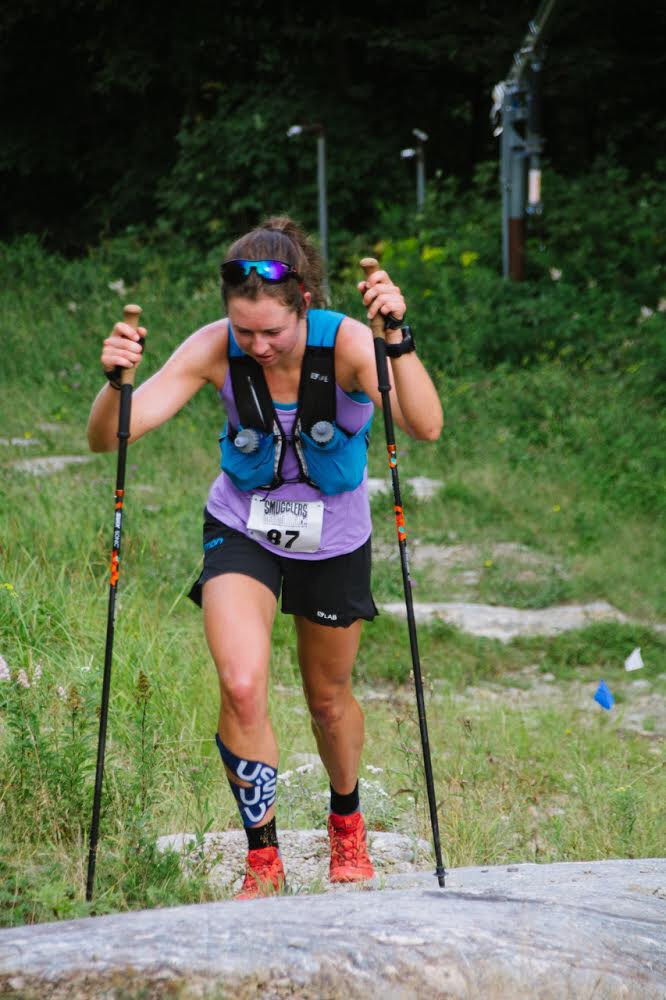
    Caitlin Patterson (front) racing the 25 k Smugglers’ Mountain Race in Jeffersonville, Vermont, in August. (Photo: Pennie Rand)

    This week’s workout comes from Caitlin Patterson, a Craftsbury Green Racing Project (CGRP) skier and 2018 Winter Olympian. We asked the 28-year-old Patterson, an accomplished mountain runner as well, about training and racing with poles while hiking or running. When and what type of terrain does she typically use them for, and what kind of workout would she recommend with poles? 

    ***

    It may come as no surprise that many of Caitlin Patterson’s dryland workouts incorporate poles. Even with a nomination to the 2017 USA Track and Field Mountain Running World Championships Team, Patterson’s mentality remains, “I am skier and I train to be a skier.”

    With skiing as her primary sport (she competed at the 2018 Winter Olympics in South Korea), Patterson has also found herself as a top contender in domestic mountain running races.

    Caitlin Patterson racing the 25 k Smugglers’ Mountain Race in Vermont in August. (Photo: Pennie Rand)

    This summer, she raced in California’s 2018 Broken Arrow Skyrace series. In the Vertical Kilometer (VK) 5-kilometer race, with 3,100 feet of elevation gain, Patterson placed third among women, behind 2010 Olympic skier Morgan Arritola in first and professional ultra runner Hillary Allen in second. Patterson also raced the Broken Arrow 26 k and finished second to Daniella Moreno, of the U.S. Distance Mountain Running Team.

    Born in McCall, Idaho, and later raised in Anchorage, Alaska, Patterson acknowledges that much of her success in both mountain running and skiing stems from knowing when and how to put her poles to good use. (In both Broken Arrow Skyraces, she was permitted and opted to use poles.)

    When to put poles to use?

    The straightforward answer to this question is on the ups. During distance workouts, Patterson rarely takes the time to pole plant while descending downhill. Her reason is that doing so may actually inhibit her turnover, slowing the pace and her momentum.

    “I find that when you try to pole on a downhill, you often brake or brace more,” she explained. “So I put them away or hold them in my hands on a downhill.”

    Once she reaches a climb, regardless of grade, she puts her poles and arms to work.

    “From the most gradual uphill to the steeper uphill for a distance workout, I’ll use them,” she said.

    When it comes to intervals on foot, Patterson almost always usespoles. Much of this is due to the training philosophy of her coach at Craftsbury, Pepa Miloucheva.

    “In all my years here on the team, I haven’t ever done just pure running intervals,” said Patterson, now in her sixth year with CGRP. “That’s sort of more related to Pepa. She just doesn’t really care for them. She really cares more for running with poles or rollerski intervals.”

    Beyond the type of workout (distance or interval), Patterson also looks at the workout’s expected elevation gain and terrain when she decides whether or not to use poles.

    A workout with “sustained climbs”, such as a long run to the top of a mountain peak, warrants using poles for Patterson. She added that it “also depends on the footing or the microscale of the terrain/type of trail that you’re on.”

    Trails with large, chunky rocks may not be conducive to proper pole planting. The same goes for terrain with surfaces that make poling more work and climbing less efficient. Patterson explained that her younger brother, Scott Patterson, a member of the U.S. Ski Team, has yet to use poles in a mountain running race.

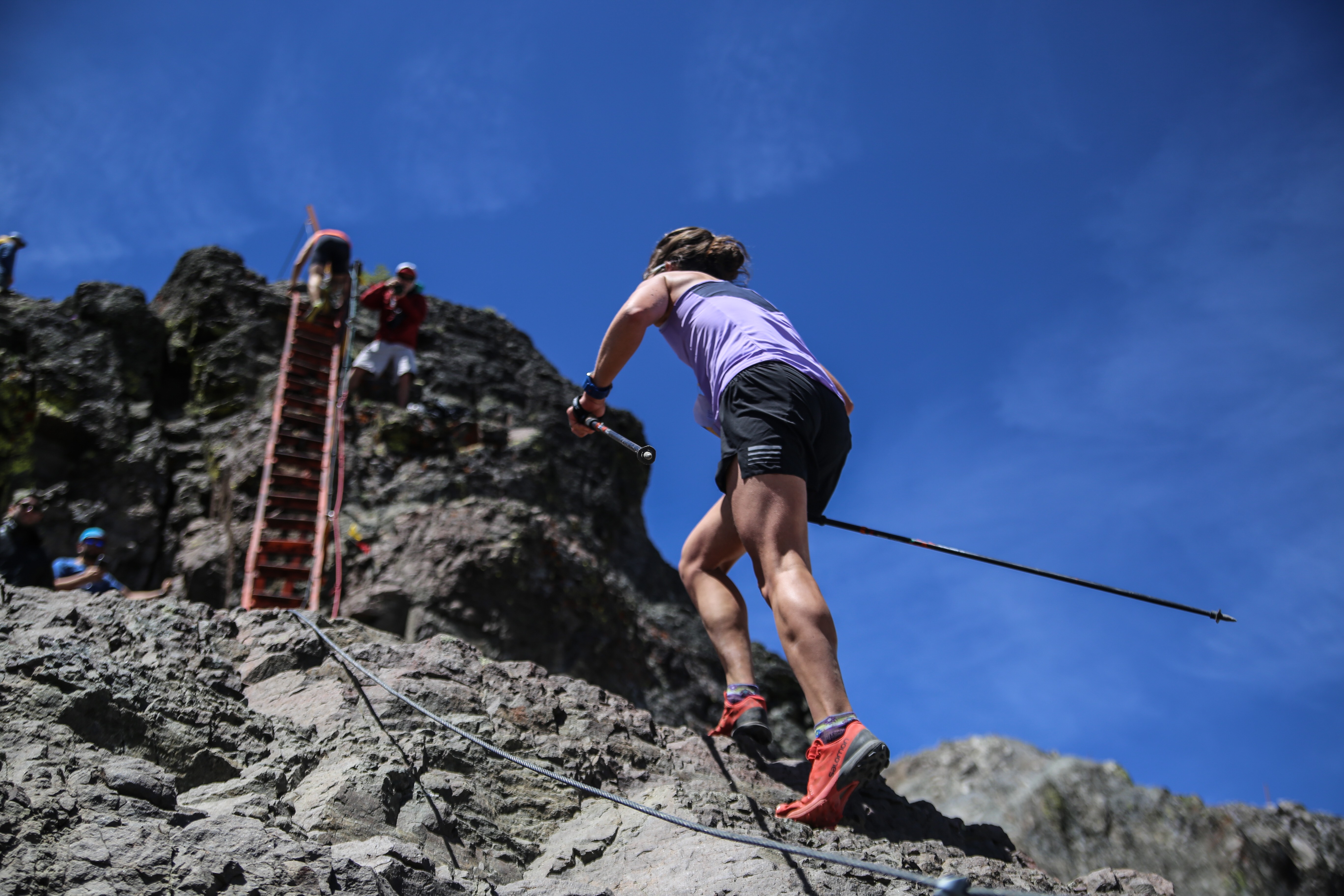
    “I was trying really hard to convince Scott to use [poles] for the Rut, a [mountain running] race in Montana,” she said. “He decided not to use them because, with that race, it is so rocky up high. You can’t plant poles on pure slabs of rock.”

    So what’s the most optimal poling workout? Long-distance or interval? Technique-oriented or threshold?

    Caitlin Patterson racing at the Broken Arrow Skyrace in California. (Photo: Martina Valmassoi/Salomon)

    Incorporating poles into workouts can come in a multitude of varieties, but Patterson’s favorite comes in the form of racing.

    “What I would recommend is to go find a local mountain race, double check that you can use poles for it, and race,” she said.

    She recommended a race distance between 10 to 25 k with plenty of elevation gain.

    One of the biggest reasons she favors poles in mountain running races is for experimental purposes. Races offer the opportunity to test how using poles might give an advantage over not using poles.

    buy ventolin inhaler online

    “In these races I’ve done in the past few years, when I was able to use my poles, particularly as a woman racing with the men, I’ll be like, ‘OK, I’m running along on the flats and darn that guy is running faster than me, so I pick up my poles and I just run along and then I’m keeping up,” Patterson explained. “Then I get to a steep spot and I’m like, ‘Huh, I think I’ll start using my poles now,’ and once I use them, I pass the guy next to me or something.’”

    Mountain running races don’t always find Patterson with poles in hand. Using poles on gradual terrain may end up slowing down one’s tempo, she explained, causing the racing to slow down.

    “I’ve found that poles are most useful when you can use them on really steep stuff to save your legs,” she said.

    “No matter what you’re doing with the poles, keep your core strong and your arms strong,” Patterson said of her number-one recommendation for skiers looking to do the workout.

    “I’m thinking more about more overall body efficiency than skiing technique,” she continued. “No matter what technique you do you should always keep your core strong and keep your arms strong and going parallel with your motion.”

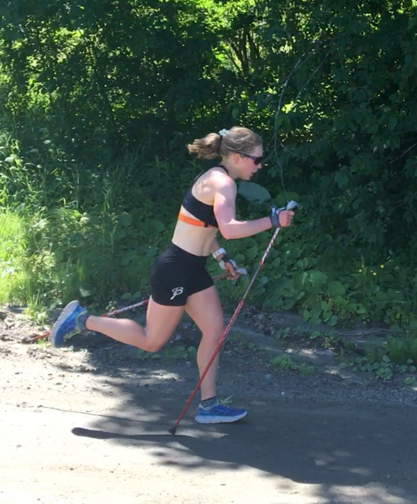
    Caitlin Patterson (front) leads CGRP teammates Kaitlynn Miller and Akeo Maifeld-Carrucci while running with poles in Craftsbury, Vt. (Courtesy photo)

    The Workout:

    Type: Mountain Running Race with Poles

    Terrain: Preferably mountain slope with continuous uphill or mountain running race course

    Warm up: Easy 20-minute jog with two to three leg speeds

    Race: 10-26 k threshold effort
    Pole during the climbs and focus on keeping core tight

    Cool down: 15-20 minutes

  • Wednesday Workout: Craftsbury Running Intervals

    Wednesday Workout: Craftsbury Running Intervals

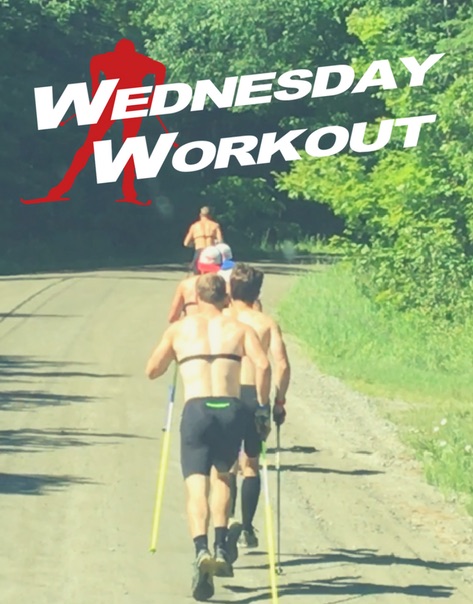
    Craftsbury Green Racing Project nordic skiers and biathletes doing uphill running intervals on a dirt road in Craftsbury, Vermont. (Photo: Pepa Miloucheva)

    For a mid-summer Wednesday Workout, we reached out to Craftsbury Green Racing Project head coach Pepa Miloucheva. In addition to sharing a running workout, Miloucheva told us what and who is new to the team based out of Craftsbury, Vermont.

    “All is good here in Craftsbury,  everyone is healthy and training is going well,” she wrote in an email in early July. The nordic team joined last month’s U.S. Ski Team (USST) training camp in Lake Placid, N.Y., and also plans to attend the USST’s on-snow New Zealand camp in late August.

    Ida Sargent, of the Craftsbury Green Racing Project and U.S. Ski Team, during dirt-road running intervals in Craftsbury, Vt. (Photo: Pepa Miloucheva)

    Craftsbury’s roster additions include Corey Stock and Akeo Maifeld-Carucci. Returning to the nordic squad are Ida Sargent (U.S. Ski Team), Caitlin Patterson, Kaitlynn Miller, Liz Guiney, Adam Martin, and Ben Lustgarten.

    The workout itself, one Miloucheva explained the team does this time of year, is 6-8 x 10-minute running intervals with poles. They do so on a gradual, mile-plus-long hill on a dirt road in Craftsbury. To replicate, find a climb that takes at least 10 minutes to run up, and repeat six to eight times.

    “This is a lactate threshold workout, important for improving our sustainable speed,” Miloucheva wrote. “Threshold workout improves both lactate production/recruiting more fast twitch units and lactate removal, ability to minimize the negative effects of lactate while having the benefits.”

    “Athletes run with poles up and I drive them down as quickly as possible to shorten the time between the interval,” she explained. “Goal is to maintain speed for all intervals and keep lactate between 3-5mmol/l, depending on the athlete.”

    Male and female athletes all start at once, just at different starting points so they finish in the same place. Miloucheva recommends focusing on controlling speed during this workout to ensure a productive 50-plus-minute workout at Level 3.

    clomid buy, order revia naltrexone, ventolin

    Upon repeating the workout later in the training season, athletes are instructed to push the pace at the end of the interval to Level 4.

    The workout: 6-8 x 10-minute running intervals with poles

    Need: A hill that takes at least 10 minutes to run up, poles.

    Warmup: 30 minutes easy running, with a few accelerations and functional movements

    Then: Run uphill for 10 minutes at Level 3, return to starting point, repeat 6 to 8 times. Pace at end of interval can be increased to Level 4 later in the season.

    Cool down

  • Heather and Brooke Mooney on Where Skiing Led Them and What’s Next

    Heather and Brooke Mooney on Where Skiing Led Them and What’s Next

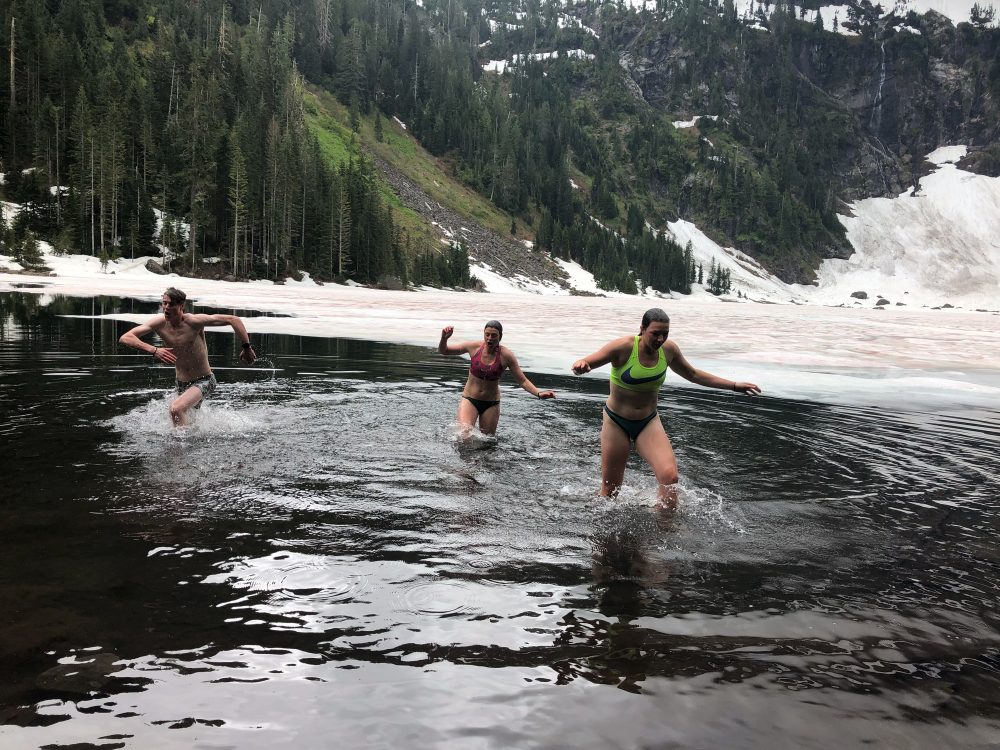
    Mooney siblings (from left to right) Scott, Heather and Brooke after jumping into Lake 22 just outside of Seattle, following Brooke’s graduation from Washington University in June. “With two siblings peer pressure works wonders, not going to be the wimpy one who doesn’t jump in!” Heather wrote. (Courtesy photo)

    Perhaps you have heard of them. Or at least seen them. At 6 feet and 6 feet 2 inches tall, respectively, the Mooney sisters, Heather and Brooke, are hard to miss. But their height is not the only reason the two women stand out.

    The sisterly pair also share a talent for the sports they pursue. At one point, for both of them, that sport was skiing. And at one point, for both of them, it was not.

    Having grown up in Peru, Vermont, where the Green Mountain range serves as the town’s backdrop and skiing is the norm, the two were certainly primed with the ideal environment for becoming interested in nordic.

    “Our school bus had a ski rack on the side of it because we would ski at recess,” Heather recalled during an in-person interview this month in Bozeman, Montana. “In southern Vermont, that is what everyone did.”

    “That” meant skiing. Their mother had picked it up as an adult and also worked as a promotion manager for a skiing magazine. Their father was the headmaster at Vermont Academy, providing the the family access to a plethora of trails directly from their residential backdoor.

    Both parents were also active outdoor enthusiasts, encouraging Heather, Brooke and eventually their younger brother Scott, to partake in anything that got them moving: swimming, hiking, soccer, tennis. (It didn’t hurt the family’s sporting M.O. that their father had been Yale’s soccer goalie as an undergrad.)

    By the time she was a freshman, Heather had enrolled at the Stratton Mountain School ski academy. Three years later, her sister Brooke had as well. (Heather and Brooke are two years apart, but Heather skipped first grade).

    Heather Mooney racing to 42nd in the women’s 10 k freestyle at the 2016 U23 World Championships in Rasnov, Romania. (Photo: FIS)

    They became well-known names on the eastern ski circuit. They also found national and international success while still U18s. Heather qualified for Junior Nationals four times, Junior Worlds twice and U23 Worlds in 2016. By her junior year in high school, Brooke had qualified for three Junior Nationals.

    As J2 skiers, both Mooney girls received coaching from Pepa Miloucheva, the head ski coach at the Craftsbury Outdoor Center. With a background in sculling, as well as ski orienteering, Miloucheva had her eyes on Heather and Brooke, who showed the potential to qualify for Junior Nationals in rowing as well. Both girls were invited to a youth rowing camp held at the Outdoor Center.

    “The director told me I needed a snorkel,” Heather reminisced with a laugh. “But Brooke was very good.”

    ***

    During an early season training session at the University of Washington (UW) this past year, Brooke sat down for testing on a rowing ergometer. She pulled for the alloted test time, one minute, and stopped. Her sustained pace was 615 watts.

    National team coaches could not recall any other woman surpassing 600 watts, The Seattle Times reported.

    “You don’t have to know rowing to see her strength,” UW head rowing coach Yasmin Farooq told the Times. “Watch her and you think, holy smokes, this woman has some serious power.”

    Unofficially, Brooke holds the watts record for an American woman on the rowing machine. Officially, she was named the Pac-12 Women’s Rowing Athlete of the Year in May and is now living in Princeton, New Jersey, one month removed from UW. She’s also a national-team recruit.

    Her invite to join USRowing came in December, and following her graduation from UW in June, Brooke headed back east. In Princeton, she is training with U.S. rowing veterans like Meghan Musnicki and Elle Logan — both multiple Olympic gold medalists — with the hope of working toward a spot on the 2020 Olympic team (selection won’t take place until 2019).

    “I kind of figured I would be pretty crazy to turn down this opportunity, whether it leads to greater results or not, I had to try it,” Brooke told FasterSkier on the phone.

    The seeds of opportunity were planted in the initial rowing camp Brooke attended in Craftsbury. She spent her senior year at Vermont Academy, where she took up rowing as her newfound, full-time passion.

    “I knew I wasn’t going to want to keep on skiing through college, so I figured I might as well try rowing,” Brooke said.

    She filled out a few higher-education recruiting questionnaires and received a response from UW.  As one of the top rowing schools in the country, UW had her attention. Throughout her four undergraduate years, Brooke developed into one of the country’s top college rowers, even with a slight scare before her senior season.

    ***

    When Brooke first started getting headaches in the summer of 2016, the doctors told her she was dehydrated. At a sculling camp in Craftsbury post-doc visit, her headaches continued. Most of the time, they got progressively worse throughout the day.

    Brooke Mooney, who was recently recruited to the U.S. women’s national rowing team, during a sculling camp in Craftsbury, Vt. in 2016. (Photo: Craftsbury Outdoor Center)

    “I would be able to get up in the morning and work out a little bit, but if I didn’t work out before 9 o’clock, I couldn’t workout,” Brooke recalled. “I would just lay on my bed in so much pain.”

    With dehydration as her diagnosis, she did what she could to work out. Sometimes the headaches would lapse, but most often they would not.

    “I started the school year in and out of headaches. I talked to the team doc and went to the headache clinic,” Brooke said.

    It wasn’t until April, almost a year after her headaches began, that Brooke was given an MRI. The results: she had a cyst in her optic chiasm. The mass was pushing on her optic nerve and needed to be removed, or else it could expand and cause permanent damage to her vision, even blindness.

    Her eye doctor allowed her to finish the race season (for rowing, championship racing occurs in the spring) before removing the cyst. Following her surgery in June 2017, Brooke was not allowed to train or work out for eight weeks the summer before her senior year at UW.

    “I was so worried,” Brooke said, particularly when she found out that her team would be racing the famed Head of the Charles Regatta that fall.

    “I wanted to race that more than anything and I panicked that I was going to miss my opportunity because of the surgery,” she said. “But then I ended up making it … every once in awhile, a good break is really beneficial.”

    ***

    If you peruse Heather’s blog, one post from April 2017 blares the title “On Burnout and Bye for Now.” This was her informal farewell to cross-country skiing.

    The post itself came two years after she graduated from Middlebury College, a time when skiing held great promise for Heather. She had capped off her senior year with seven collegiate wins and had also qualified for the 2012 Youth Olympic Games as a college sophomore.

    Following graduation, Heather signed on with the Craftsbury Green Racing Project (CGRP), but later found things weren’t aligning the way she had hoped they would. Particularly, she felt she was not performing to her expectations, given the amount of support she had (according to Heather, CGRP covers most of their athletes’ expenses for food, housing and travel.)

    “I thought I was done for good,” Heather, now 24, continued. “Pepa [Miloucheva] was the one who encouraged me not to look at it that way.”

    Even with Miloucheva encouraging her not to give up completely, Heather forfeited skiing, and even gave up physical activity for a bit.

    “In the beginning of the summer when I quit, I was like, ‘I’m not exercising, I’m not being an athlete, I’m just doing whatever what I want — I can be happy without skiing,” Heather said. “Very quickly I realized that I need exercise to be happy.”

    That summer in Truckee, California, Heather landed a coaching gig that gave her the opportunity to travel to Australia. By the fall, she decided to move to Bozeman, with plans to gain residency at Montana State University and enroll in its architecture graduate program.

    In Bozeman, she reconnected with Austin Caldwell, a longtime friend from Vermont and the current head coach of the Bridger Ski Foundation Elite team. The two went for a few early fall skis together and Heather soon found herself attending Caldwell’s agility practices, then interval sessions. When the winter hit, Heather even jumped into some races, but only as many as she chose.

    In all, she competed in about a dozen SuperTour races, finishing last season ranked 36th overall on the circuit. Heather also raced to 14th in the 50-kilometer American Birkebeiner skate race in February.

    “It was really refreshing to step out of expectation,” Heather said. “I feel like we all get into such definitions of like how we should be in the sport. I realize [now] there are so many different ways to engage with it. Likely that’s how we many of us will reach our potential, is by engaging in a way that works for you as a person.”

    After a break, Heather is currently planning to defer from MSU and focus once more on skiing.

    “It’s been exciting for me slowly lose that anxiety of how I should be performing and how I wanted to perform,” Heather said. “I look at how can I work with myself, versus trying to fit myself into the pro-athlete mold.”

  • From Biathlon to College and Back Again, Dickinson Eyes Olympic Berth

    From Biathlon to College and Back Again, Dickinson Eyes Olympic Berth

    Kelsey Dickinson during the women’s mass start at the 2016 US Biathlon National Rollerski Championships on Aug. 14 in Jericho, Vt. (Photo: Katrina Howe)

    Two and a half years ago, Kelsey Dickinson was wondering how she could keep doing biathlon.

    The Washington native had been training at the Maine Winter Sports Center (now the Outdoor Sports Institute), and had been a member of the U.S. Biathlon Association’s development team. But when team nominations came out in the spring of 2015, she wasn’t on them. At the same time, the Maine Winter Sports Center cut most funding to its senior teams.

    With few options, Dickinson headed back to the College of Saint Scholastica, where she had done one year of college already.

    “When I left biathlon, part of it was because I just wasn’t skiing fast enough,” Dickinson said in an interview this month. “So I asked how I could keep skiing, one, but also how could I get faster. I realized that going back to college was going to be the best way to do that, but I wasn’t going to be able to go back to college, and do biathlon, and get better at skiing. I decided that I would just ski in college and finish out my eligibility.”

    Dickinson still has one year of that eligibility left, but her biathlon career has come back sooner than expected. After strong college results last season, she was accepted into a summer training program at the Craftsbury Outdoor Center in Vermont. This summer, she spent time training with some of the country’s best cross-country skiers as well as having dedicated biathlon training and easy access to a shooting range.

    The result: she performed so well in rollerski trials in August and October that she automatically landed a spot on the U.S. World Cup squad for December.

    “Our goal for her this year is to make that Olympic team, for sure, but she’s really four years ahead of schedule with it,” Dickinson’s ski coach at Saint Scholastica, Maria Stuber, said.

    “Nothing about what’s going on right now is what I expected to happen,” Dickinson, a double-major in philosophy and natural science, said. “I thought that I would make it through this semester and not have to be traveling that much. I’m just going by communicating with my professors on a day-by-day basis and playing it by ear.”

    Kelsey Dickinson (St. Scholastica) racing to 26th in the women’s 15 k freestyle mass start at 2017 NCAA Skiing Championships on March 11 at the Jackson Ski Touring Center in Jackson, N.H. (Photo: flyingpointroad.com)

    Stuber had only positive things to say about Dickinson’s work ethic and professionalism.

    “She was really clear about her goal to be a biathlete, and she has not wavered on that at all,” Stuber explained. “We said, okay, if you want to be a biathlete at the end of college, what needs to happen for you to be in the top few women, not a bubble skier but someone who is going to be on the World Cup? The bottom line was that she needed to ski a lot faster.”

    The work Dickinson put in paid off, and last season she ended up ranked sixth in the Central Collegiate Ski Association rankings, the top woman not from perennial powerhouse Northern Michigan University. She has now represented her team at NCAA Championships twice.

    “She made some big technical improvements last winter,” Stuber said. “But she was sick from early January, for over a month. She had some really good races but I don’t know if either of us felt like she really got to show her stuff last winter like we thought she could… I think mainly we just made it apparent that she had it in her to go even faster.”

    That was enough to get her to Craftsbury. Dickinson had applied to the summer training program the previous year but not gotten in.

    “I had a really good summer of training,” Dickinson said. “I’m really grateful to be able to have gone to Craftsbury and trained with the team there. That made all the difference for me, just to be around a lot of high-level athletes.”

    At Saint Scholastica, she is the one leading the team. One of the big focuses of going to Vermont was to get Dickinson used to seeing how more efficient technical skiers moved.

    Kelsey Dickinson representing the Maine Winter Sports Center at NorAms in Canmore in December, 2014. Her last international biathlon races were at IBU Cups in Canmore in March, 2015, where she twice finished 28th.

    “She could sit behind someone and try to figure out how to make skiing easy, instead of always trying to think in intervals of how to make it hard, and how to go harder,” Stuber said. “There’s this awesome mindshift when you’re going hard but trying to make it easy, which you don’t get to do when you are leading so much.”

    Stuber herself was a senior athlete at Craftsbury at one point, so she knew head coach Pepa Miloucheva well and was not worried that there would be any problems with Dickinson adjusting to the training approach. (“She was my coach before and I have a ton of respect for what she is doing there — so to be able to work with Pepa as a peer was really cool for me,” Stuber said.)

    In addition, Dickinson knew Sam Dougherty, the biathlon coach at Craftsbury.

    “Sam and Pepa work together to build the plan depending on what the biathlon schedule requires and what the cross-country athletes are doing,” Dickinson explained. “They try to make it comprehensive so people can train together… I have known Sam for a while because of we overlapped racing a little bit back when I was a junior. And Pepa, her philosophy is very similar to Maria’s. I get along great with Pepa and she has been an amazing coach. I’m lucky that the transition was really easy.”

    Dickinson turned in two third-place finishes at rollerski biathlon races in August.

    Kelsey Dickinson (Craftsbury Collegiate Summer Team) picking out rollerskis for the women’s mass start on Aug. 13, at USBA Rollerski Championships in Jericho, Vt. She placed third on both days of the two-day championships. (Photo: John Lazenby/Lazenbyphoto.com)

    “I knew I was feeling good and that if I put all the pieces together then things could go well, but I wasn’t quite expecting that for sure,” she said.

    That put her in a good position to fight for a World Cup spot. Susan Dunklee, who was pre-qualified for the World Cup, had won both races. Dickinson could even afford one less-stellar race when the qualification series wrapped up with two more competitions in October.

    Because she was still in school and had options for how to spend her race season – including competing domestically in December, in an attempt to qualify for the IBU Cup in January and from there trying to make the Olympics – she didn’t feel pressure.

    “I think actually having school was a little bit helpful in that way,” she said. “I just was looking at the weekend as an opportunity. If things went well then that would be great, but if things hadn’t gone well then I still had a lot of great things going on back at school with the team there… I was in a good place emotionally, just happy to be there.”

    At those last two trials races, Dickinson finished second and fifth, and locked up the World Cup spot.

    Her goal is still the Olympics. As such, when she gets to the World Cup later this month – she has to first go to the second-tier IBU Cup in Sjusjøen, Norway, and score qualification points – she will focus mainly on process.

    While at least one more woman will be added to the Olympic roster based on December World Cup results, the team won’t be filled until January, when several athletes will be sent to the IBU Cup to fight for the last spots. That means that Dickinson can focus on performing well in January, when the season is in full swing and she has some races under her belt, and fight for an Olympic berth there.

    “Her process is going to be the most important thing,” Stuber said. “I don’t think she needs to be concerned with what her results are at those first World Cups… if she can use these World Cups to get a really good process dialed in, then when she goes to the IBU Cup she will be really ready to do what she needs to do there to secure an Olympic spot.”

    “It was such a huge goal just to get to this point,” Dickinson agreed. “Looking forward I’m just going to approach things as an opportunity. It’s an opportunity for learning, it’s an opportunity to race, to do what I love to do. So I think that in that sense, I obviously want to do well and I want to hold myself to a high standard. But I am just very grateful that I can have this opportunity and I’m very open to what it will bring.”

    In the past two seasons, Dickinson bought into college racing completely.

    “She tries really hard to be a good captain and sometimes I think that adds to her stress level,” Stuber said. “She just tries to do everything that she commits to, to do it really well.”

    But now, she’s back to biathlon.

    “If I could come across saying anything, I just want to express how grateful I am to all the people who have supported me,” Dickinson said. “Like Maria and Chad [Salmela], and Pepa, and everyone thoughout the years who have allowed me to get to this point. Because it has been a really long journey.”

  • Emily Dreissigacker on World Cup Cusp

    Emily Dreissigacker on World Cup Cusp

    Emily Dreissigacker (CGRP) at the start of the women’s sprint at the 2017 US Biathlon Rollerski Championships on Aug. 12 in Jericho, Vt. (Photo: John Lazenby/Lazenbyphoto.com)

    Say this name three-times fast: “Dreissigacker”.

    Not so easy at first.

    Break the four-syllable surname into discrete parts: Driess (with a hard I) – i – gack – er.

    It then rolls off the tongue … Dreissigacker.

    In northern Vermont and in particular around the Craftsbury Outdoor Center, Emily Dreissigacker, of the Craftsbury Green Racing Project (CGRP) is as well known a name as any. Her parents, Dick Dreissigacker and Judy Geer, bought the Outdoor Center in 2009. Both are Olympic rowers.

    And both of Emily’s siblings are biathletes. Her older sister Hannah, 30, was a 2014 Olympic biathlete who retired in 2016 and younger brother Ethan, 26, formerly raced for the Green Racing Project.

    At 28, (she’ll be turning 29 in November), Emily Dreissigacker is on the cusp of making it onto the International Biathlon Union (IBU) World Cup representing the US Biathlon Association (USBA). 

    A week ago, she was selected for US Biathlon’s on-snow camp in Canmore, Alberta. Of the five women chosen for that camp, three are already penned to start on the World Cup next month: Susan Dunklee, Clare Egan and Kelsey Dickinson. The last remaining World Cup spot is reserved for either Joanne Reid, a national A-team member, or Dreissigacker.

    “I’m not really feeling the pressure,” Dreissigacker wrote in an email about a possible World Cup nod. “I’m just excited to get out there and ski on snow and get in some really solid training.”

    Perhaps this is a reason why the USBA’s high-performance team recruits and promotes older athletes — with age and experience comes a calmness. With time comes wisdom: winning or losing in sport doesn’t define a person.

    There’s been both winning and losing and the in-between for this Dreissigacker, who grew up near Craftsbury in Morrisville, Vermont, and married her teammate Alex Howe last summer.

    Emily Dreissigacker shooting clean during her first prone stage of the women’s 15 k individual race at 2017 IBU Open European Championships in Duszniki-Zdrój, Poland. She finished 41st. (Eurovision screenshot)

    “At this point, competing at the Olympics had been a dream of mine for so long that it felt inextricably entwined with who I was as a person,” Dreissigacker wrote in a June 2015 blog post. “I could feel it slowly but surely slipping out of my grasp and yet I couldn’t let go. I thought about quitting, but there was always something pulling me back. Don’t get me wrong, I loved racing. I loved racing against my teammates in practice, I loved lining up side by side for a 2k or blindly pushing myself past all reason in an interval start. But the training, the whole process had gotten stale. I felt like I was slogging my way through each steady state workout, counting down the minutes rather than enjoying the time I had. Meanwhile, I jealously eyed the skiers leaving each morning for what looked to me like exciting adventures. They got to go biking and hiking and running and rollerskiing (yes, I was jealous of rollerskiing)! But it never really seemed like a viable option to me. I was a rower.”

    Since that 2015 blog post, Dreissigacker has been a biathlete.

    After eight years training as a rower, she tapped into her adolescent and teenage years as a skier. Like some of her peers — Reid, Egan and Dunklee come to mind — Dreissigacker learned to shoot in atypical fashion: she didn’t train as a junior biathlete and came to biathlon later in their athletic careers. (Reid, Egan and Dunklee all competed at the NCAA Division 1 level.)

    “I skied in high school and tried biathlon once, so I had shot a rifle before but not well and not for long,” Dreissigacker wrote. “I also hadn’t trained for skiing, other than a bit of cross training here and there, so I’m definitely playing catch up on that side of things too. Rowing is much more of an anaerobic sport so building up my aerobic base has been and still is a big focus. As well as pretty much re-learning how to ski. I definitely still have a lot to work on in both regards.”

    Despite her perceived deficiencies, Dreissigacker’s results show what any coach desires — positive trends when it comes to skiing speed and shooting accuracy. Dreissigacker spent the 2016 and 2017 race seasons on the IBU Cup, a step down from the World Cup.

    In March of last year, Dreissigacker earned a top 20 on the IBU Cup. This year, she skied and shot consistently enough in the four-part 2017 USBA rollerski trials series to get picked for the Canmore preseason camp. In the first half of the trials, she placed fifth in both races in mid-August. A month later, she jumped the ranks with first and second place finishes at Part 2 of trials in Jericho.

    Emily Dreissigacker (CGRP) racing to fifth in the women’s mass start at 2017 US Biathlon Rollerski Championships on Aug. 13 in Jericho, Vt. (Photo: John Lazenby/Lazenbyphoto.com)

    As she ramped up for trials, Dreissigacker spent time in Europe with the Green Racing Project. That trip also gave her time to train with national-team biathletes.   

    “Our European camp this year had much more of a biathlon focus,” Dreissigacker explained. “We did essentially the same trip as the National team so we were able to train with them some. We got to race at German summer rollerski nationals which was a great opportunity to get in more racing and also to experience a really high level of racing. And we got to ski on snow in the Oberhof tunnel. The trip was also a little earlier so after we got home I had a really solid training block in Lake Placid before an easy week at home leading up to trials.”

    According to USBA Chief of Sport Bernd Eisenbichler, this year’s version of the European training swing was beneficial for Dreissigacker.

    “The camp setup that the Craftsbury team had this summer, accompanying us on the Europe camp instead of going to the Dachstein glacier, choosing to go to the ski hall in Oberhof, helped also to have her performance level in the fall,” Eisenbichler wrote in an email. “Last year we saw that August was quite okay but then the fall, she was really really tired. I don’t know if I would get agreement from Craftsbury, but I would argue that the camp setup was smarter this year and that is why she was in better shape this October.”

    Finding form and peaking when it counts isn’t an outcome hard science can unfailingly predict. Be it her modified camp in Europe or the confidence that comes with experience, Dreissigacker performed at this year’s USBA rollerski trials.

    “Em has been on the biathlon development program for the last 2 years and on the biathlon team training plan, she works with [USBA Development Coach] Jean Paquet now most of the time,” CGRP Head Coach Pepa Miloucheva wrote in an email. “Last year the Craftsbury biathlon team did travel to Europe for a camp on snow with the skiers, this year the biathlon team  The Europe ski trip was more biathlon specific at the ski tunnel in Oberhof with the USBT [US Biathlon team].”

    Dreissigacker’s shape and shooting accuracy could serve her well as she transitions to snow in Canmore. The Canmore camp on Frozen Thunder will conclude Nov. 10. And as for the rest of the season, the IBU World Cup could be seeing a new Dreissigacker this winter.

  • With Two Degrees in Hand, Martin Chooses Craftsbury GRP

    Northern Michigan University senior Adam Martin (l) receiving the 2017 NCAA Elite 90 award for having the highest cumulative grade-point average (4.0) at this year’s NCAA Skiing Championships. (Photo: Flyingpointroad.com)

    On the eastern side of the Northern Michigan University (NMU) campus, where Fair Avenue and Presque Isle Ave intersect, a righthand turn presents visitors with a view of the Berry Events Center and the school’s 26-year-old Superior Dome — a semi-Star-Trek-like outcropping in an otherwise conventionally secular setting. Between the two recreational buildings sits another building, the college’s Physical Education and Instructional Facility (PEIF). Designed predominantly as a practice venue for basketball players, the complex attracts other NMU athletes: nordic skiers.

    Skiers who crossed the PEIF threshold glanced fleetingly at the fluorescent-lit, green-and-white basketball courts before heading toward the real reason they’d entered the building’s glass doors, the nordic-ski room.

    Like any ski room, wax benches line the walls and the slight smell of particle board hangs in the air. Skis from the 1970s wait on one wall in an eternal yearning for snow. Certificates honoring the school’s former and current All-American athletes create a collage with newspaper clippings taped here and there. Race bibs and posters scrawled with faded signatures from national champions and graduated NMU Olympians cover any remaining open space.

    Adam Martin racing at 2010 Junior Olympics in Presque Isle, Maine. (Photo: FlyingPointRoad.com)

    As a prospective student sitting on one of the couches that corners the room, Adam Martin was struck by the number of athletes’ names honored and the extent to which many of them took their cross-country careers. An 18 year old in the midst of training with the Central Cross Country (CXC) post-grad program at the time, Martin’s visit was the result of a scouting search by NMU Head Nordic Coach Sten Fjeldheim, the ski room an auspicious scene to any dedicated skier.

    Still, Martin never guessed that three years after enrolling at the university, he would be an adorned member of its accolades — earning four All-American National Collegiate Athletic Association (NCAA) results before graduating in 2017. The results weren’t what he’d expected, nor were they even really part of his plan.

    “I’m not totally into setting very specific outcome goals,” Martin, a Wausau, Wisconsin, native, explained on the phone from New Zealand in late August. “I try to focus a lot more on becoming a better skier, becoming  more fit and really focus more internally on improving myself and then seeing where that puts me at the end of each year.”

    That being said, by the end of his junior year at NMU, Martin had earned All-American status in both classic and freestyle races. He also competed at the 2016 Under-23 World Championships in Rasnov, Romania, leading the U.S. junior men in 23rd in the classic distance race. To top it all off, earlier that same season he raced to third place in the 15-kilometer classic at the 2016 U.S. nationals in Houghton, Michigan.

    Before that nationals podium, Fjeldheim tallied Martin’s on-snow time as minimal. The team had not skied on snow until the week competitors arrived in Houghton. In all likelihood, the top contenders Martin faced had logged anywhere from two to three times as much — many of them had already raced two SuperTours, one in West Yellowstone, Montana, and the other in Sun Valley, Idaho.

    “I really feel like a lot of athletes these days, they’re distracted,” Fjeldheim said during a recent phone interview. “I think you need to have a lot of mental energy to be a ski racer and you’re getting it sucked out of you by reading all this, I’m not talking about scientific research, I’m talking about stuff. You know, so and so is doing this, so and so is doing that. … You’re not thinking about it in terms of what you need to do and what works for you … It’s not about being able to be on a glacier 24/7. It’s not about being able to be on snow … a lot of U.S. skiers can’t.

    “Adam had his best U.S. nationals when he had five days on snow,” Fjeldheim continued. “How do you explain that? Because it’s from May through December that matters.”

    Martin spent his summers training in Marquette, Michigan, with his then-teammates Kyle Bratrud (now a member of the CXC Team coming off a 2017 national championship), Ian Torchia (now a senior at NMU and a second year nominee to the U.S. Ski Team D-team), and Sam Elfstrom (a 21 Title Defender), among others. Martin turned down internships so he could ski. He made skiing his life, not his results.

    Adam Martin at a Glance:
    Name: Adam Martin
    Nickname: Marty
    Age: 22
    Hometown: Wausau, Wisconsin
    When I’m not skiing I’m most likely:
    -Working on a computer project for the Outdoor Center
    -Gaming with the boys
    Most Bad A** Moment: Going for a 3-hour run with my Dad, Fredrik Schwencke, and Ian Torchia at 4:30 am before college graduation.
    Most Embarrassing Moment: Showing up at college graduation sweaty.
    Self-Identified Spirit Animal: A Marten
    Favorite Music Genre: Game of Thrones Soundtrack
    Superpower: I can eat a large Little Caesars pepperoni pizza in under 4 minutes.
    Most Influential Mentor: Sten Fjeldheim

    In his senior year, he once again earned All-American (top 10) honors in both the NCAA classic and freestyle competitions, and competed at the 2017 U23 World Championships in Midway, Utah.

    “From a dedication standpoint, I think I pursued skiing as well as I could, had I set that goal [of a nationals podium or an All-American finish],” Martin said. “Had I really said specifically that I wanted to do those, I don’t think it would have changed anything in a positive manner.”

    Fjeldheim reflected that any time Martin walked into his office, he knew a slew of questions would follow. Martin regularly prodded him, researched Fjeldheim’s answers and returned with more questions. The curiosity stemmed from a desire to not only understand his training, but arm himself for the future.

    “Never a lack of questions from Adam, he really dug into it,” Fjeldheim said. “He empowered himself with a pretty big body of knowledge about physiology, technique and race strategy.

    “It was enlightening for me,” Fjeldheim, an NMU staple for the last 31 years, continued. “Having this young whippersnapper, can-do, nothing-can-stop-me type of kid.”

    As a kid himself, Martin, who turns 23 next month, began skiing at an early age with his parents, not getting competitively involved until his middle-school years. By the time he reached high school his skiing only got stronger, his interest in it as well. He was the state champion his senior year, before taking a gap-year in Hayward, Wis., training partially with the CXC team.

    “I didn’t race very well that year,” Martin reflected. “In terms of putting things in perspective, and maybe even maturing a little bit, though, I’m very glad I did it.

    “Somewhat ironically, because I think most people consider taking time off just to ski as giving up a part of your academic career, I think for me it had quite the opposite effect,” Martin continued. “I really appreciated academics more and put a tremendous amount more time into my academics in college than I did in high school.”

    Adam Martin, a recent graduate of Northern Michigan University, racing to 15th in the men’s 30 k skiathlon at 2017 U23 World Championships at Soldier Hollow in Midway, Utah. It was his first top 20 in two U23 Worlds appearances. (Photo: Flyingpointroad.com)

    While at NMU, Martin studied mathematics and computer engineering, eventually earning degrees in both. Along with being a double major, Martin’s four-year grade point average topped out at 4.0, earning him a nomination from the College Sports Information Directors of America’s 2017 Academic All-America First Team and the 2017 NCAA Elite 90 Award.

    Still, even if Martin made his studies look easy, they took effort on his part. His missed many classes for training, 10 alone this past spring for U23 World Championships (which he jocosely pointed out in a FasterSkier profile was still less than last year). He met with instructors outside of class, making his skiing work in large part due to his diligence and his rapport with professors.

    “I was very fortunate at NMU,” Martin explained. “The math department is pretty small and I knew all my professors on I’d say on a personal level, so they were extremely understanding of me going to ski races. I developed a certain amount of respect from them. They let me [leave class] because they trusted that I’d figure things out.”

    Martin’s skiing would not be bogged down by school, and vice versa. The two went hand-in-hand, he could keep his mind off one and become consumed by the other. If Martin’s situation was unique, it wasn’t because of the subject he studied.

    “Find a situation where you have a good relationship with your professors and they’re more than just a person in a lecture hall. I think that’s super important,” Martin said of balancing academics with skiing.

    Adam Martin (2) racing to sixth in the men’s 20 k freestyle mass start at 2017 NCAA Championships on March 11 in Jackson, N.H. (Photo: Flyingpointroad.com)

    In deciding his next steps after college, Martin decided that if he were to pursue a profession in skiing, it would be now rather than later. In his search for a ski program, the inquisitive nature that guided his undergraduate years directed him once again: Where would he see himself get the most out of his skiing? What did he need as a skier and what did each program have to offer?

    Last winter, he found his answer. Nestled in northern Vermont, the Craftsbury Green Racing Project (CGRP) presented itself as a clear solution. Not only did he connect with CGRP Head Coach Pepa Miloucheva, but the program was also financially favorable to him. Under the CGRP, his lodging and food would be covered by the Craftsbury Outdoor Center (COC) and much of his training and race travel by Concept2.

    “I looked at a couple different programs and talked to Pepa in the winter and was very impressed with what she had to say in terms of what she thought I needed to do to get better, how perceptive she was of where I was at without me explaining very much, just from watching me race,” Martin said.

    “Additionally, the Green Team is incredibly well funded. It’s one of the most professional ski teams I think you’ll find in the U.S. and it’s pretty cool to be on a team like that, to feel like you’re absolutely taken care of,” he continued. “That’s a large amount thanks to [COC owners] Dick Dreissigacker and Judy Geer and their support with the Outdoor Center and Concept 2.”

    Four years of college tuition in the back of his mind, CGRP offered not just security, but independence. He would not need to turn to his parents nor spend all his spare time working a second and third job, though he currently works on small-scale computer projects for the Outdoor Center.

    Craftsbury Green Racing Project teammates Adam Martin (r) and Ben Lustgarten during a summer track workout. (Courtesy photo)


    “Obviously my parents are extremely supportive, they have to be for me to have made it this far in skiing, but after graduating college, it’s not really an ideal situation for me to have to ask for a ton of support from them,” Martin explained. “So finding a team that covers all this was a huge help and pretty important in terms of not having to worry about that on top of training.”

    Most recently, Martin made the trek to New Zealand for a month-long on-snow camp with the CGRP. He has been working with Miloucheva as well as his Craftsbury’s teammate Ben Lustgarten, who joined the CGRP at the start of last season. On its website, the team lists 12 athletes, four of which are men.

    “He is really great to work with,” Miloucheva wrote of Martin in an email. “Very motivated, works really hard to improve every detail of his technique and fitness, asks lots of questions and always the right ones, which means he thinks about what I say and what I ask him to do. And he is genuinely nice person.”

    While Martin acknowledges that many U.S. skiers are aiming for the 2018 Winter Olympics in PyeongChang, South Korea, his skiing goals, like the equations he works with, tend toward the conceptual as opposed to concrete.

    “I have not set that specific goal, although I certainly will try to be in my best shape during the qualifying period … and give myself as good of a chance as I can,” he said. “Beyond that, while I’m pursuing skiing, I think my goal would be I would like to strive to be a competitive World Cup distance racer … whatever avenues would lead towards that.”

  • Headed to World Mtn. Running Champs, Caitlin Patterson Committed to Skiing

    Headed to World Mtn. Running Champs, Caitlin Patterson Committed to Skiing

    Caitlin Patterson (front) racing to fourth place in the women’s 10 k at 2017 USATF Mountain Running Championships on June 3 in North Conway, N.H. That qualified her for the 2017 World Mountain Running Championships in July in Italy. (Photo: Michael Scott/miscottrunningphoto.shutterfly.com)

    Just over 24 hours before race day, Caitlin Patterson’s mind was made. The pre-registration deadline for the 2017 USA Track & Field (USATF) Mountain Running Championships in North Conway, N.H., was up and she was going to spontaneously do it. Written down in her summer plan was to enter few footraces, and this one promised both a challenging field and relatively short, two-hour drive from her training base in Craftsbury, Vt.

    The competition also offered an opportunity to tune up her race tactics. Patterson, 27, had raced to eighth in last year’s U.S. Mountain Running Championships uphill-only edition at Loon Mountain and was curious how she’d fare in a race with downhills (U.S. Mountain Running Championships alternate between uphill-only courses and ones that feature both ascents and descents).

    While the Craftsbury Green Racing Project (CGRP) skier planned on getting a lot out of the race, she hadn’t planned on getting selected to the U.S. World Mountain Running Championships team. But by the end of the women’s 10-kilometer run — a two-lap course which featured nearly 2,500 feet in total elevation gain — that’s just what she got. Patterson finished fourth overall, qualifying her for the 2017 World Mountain Running Championships in late July in Premana, Italy.

    Caitlin Patterson during a trail run this spring. She recently qualified for the 2017 World Mountain Running Championships, scheduled to take place July 30 in Italy. (Courtesy photo)

    “That was definitely a shock and not something I was expecting, to be able to run into fourth place,” Patterson said on the phone last week, three days after racing in North Conway. “That’s part of why I put myself in there, though, is because the race atmosphere can get you to do things you maybe wouldn’t otherwise.”

    The three women that finished ahead of Patterson were all World Championships team veterans: Addie Bracy (last year’s U.S. Mountain Running champion) in first, Allie McLaughlin (2014 U.S. champion) in second, and Kasie Enman in third (2011 U.S. champion).

    Patterson was the final woman to qualify, finishing in 56:42, 2 minutes and 46 seconds off Bracy’s winning time. Though perhaps a rookie in comparison to her competitors, Patterson didn’t let that detract her from racing how she wanted to.

    “I did a lot of power walking in that race, just on the steep stuff,” Patterson said. “I could see the top-three women in front of me and I would say most of them were running it. But walking worked better for me and the way I’m built.”

    With World Mountain Running Championships slated to take place on July 30, and the time coinciding with a rest week for Patterson, she plans to make the trip to Italy. The trip’s flights, food, and four days of lodging will be funded through the World Mountain Running Association and running organizations such as U.S. Track and Field and the All American Trail Running Association. In the weeks leading up the race, she hopes to do some training runs with Enman, who also lives in Vermont. The weekend before to the U.S. championships, Enman won the Vermont City Marathon.

    “If nothing else, [I want to] chat with her about what to expect over there,” Patterson said. “I was entering this race partially … so I could run with some other women and learn from them.”

    With those World Championships on the horizon, Patterson’s main focus this season remains skiing. She planned to enter a few more running races this summer before heading to New Zealand with her team in August.

    “The Olympics are on the radar for this coming winter, but we’ll see what I can do,” Patterson said.

    Scott Patterson (Alaska Pacific University/USST) during a crust-skiing adventure with his sister, Caitlin Patterson (not shown) this spring in Anchorage, Alaska. (Photo: Caitlin Patterson)

    Beyond making the 2018 Winter Olympics, she also is hoping to eventually make her way onto the U.S. Ski Team (USST). Her younger brother, Scott Patterson, was nominated to the USST B-team last month, and the news hit her as somewhat bittersweet.

    “I was really happy to hear he made the team,” Patterson said. “Of course, I wish that I could be there, too, but I know the rationale behind that I haven’t quite made that jump yet.”

    Breaking that bubble, as she acknowledged, is no easy task. There’s the nine-hour time change between her and her coach, Pepa Miloucheva, when she’s in Europe. There’s also the physical toll traveling takes on her body.

    “I feel like every year I should get better at traveling, and I do to some extent … going back and forth to Korea [for the PyeongChang World Cup] was great,” Patterson explained. “But for some reason the travel going from Period 1 back to the U.S. — so that was France back to Montana — that went really badly and I got very sick. That was very difficult, borderline devastating, for nationals racing.”

    In a way, Patterson’s description of being an on-the-cusp athlete is somewhat of a catch-22: the only way to improve her international racing is to race internationally, but doing so can make domestic racing difficult, with certain domestic races being the ones she needs to do well in if she is to continue racing at an international level.

    “I actually probably got the most nervous I’d been the entire season before U.S. nationals,” Patterson said. “After I’d been in Europe, where the racing is extremely tough and such a high level of competition, my expectations were, if I have a really great race, I can crack into the [World Cup] top 30 or so. Whereas coming back to nationals, I felt like I was the person who was in Europe and I’m one of the favorites.”

    Caitlin Patterson leading her Craftsbury teammate Kaitlynn Miller during the women’s 10-kilometer freestyle at 2017 U.S. nationals in Midway, Utah.

    Another point Patterson made was the idea of creating more opportunities for U.S. national-team and non-national-team members to compete against one another. This spring, Patterson received an email invitation to an athlete meeting led by athlete reps, Rosie Brennan (USST B-team member), Dakota Blackhorse-von Jess (Bend Endurance Academy), and Anne Hart (Stratton Mountain School). Topics discussed included:  SuperTour Calendaring, SuperTour Points, Seeding, Pole Length Rule, and Selection Criteria. Close to 30 athletes–from both the SuperTour circuit and USST–were in attendance, according to Patterson who also attended the meeting. Many present agreed with the following:

    “We as a ski community, as much as possible, would like for the U.S. Ski Team athletes who don’t make the criteria to race upcoming World Cup races or don’t make the criteria to race the Tour de Ski, to be sent back and have to race U.S. nationals,” Patterson said. “Maybe that will happen, I won’t really believe it until I see it.

    “It’s tricky,” Patterson continued. “Of course I’m still trying to figure it out myself. Kris Freeman made some good points that maybe the system of qualification isn’t working so well if so much has to be decided by discretion. But I guess in the end, the best way to do it is manage to race so fast, that it puts all doubt aside and show you just belong on there. Get off the bubble for sure, because there’s a lot of us trying to make that jump.”

    Even if last season didn’t earn her a nomination to the USST, Patterson is happy with the progress she’s witnessed in her skiing over the past few seasons, last year’s being particularly gratifying.

    “I really enjoyed my time in Europe during Period 1 this past winter,” she said. “It was a very positive experience and everyone was so excited to be there. And I think in many ways, it was a more positive experience than when I’ve been over there later in the season, when a lot of those athletes who have been racing in Europe really start to want to come home.

    “I respect the coaches’ decisions and I think they have good rationale on their side,” she continued. “I’ve been making good progress with my skiing, but I know that I need to prove unquestionably that I belong there on the ski-team ranks. There’s an extremely strong women’s team right now, which of course is great, but makes it really hard to get onto it. So I’ll keep trying and keep doing everything I can. Luckily I have a very supportive team here in the CGRP. So I can keep pursuing skiing, but hopefully make it to the Olympics one way or another.”

    Currently, CGRP sponsors, especially Concept2 and the Craftsbury Outdoor Center, cover CGRP athletes’ in season race and travel expenses. In the summer, lodging and food at the Craftsbury Outdoor Center are also paid for by CGRP financial supporters. For other outside expenses, Patterson relies on prize money she earns throughout the season.

    “No one in the US is in cross-country ski racing for the money, we’re in the sport because it’s an amazing way to stay fit and get outside, push your limits and compete, and inspire and help others along the way,” Patterson wrote in an email on Thursday. “I’m really not sure how long I’ll keep skiing at this competitive level. I have no definitive plans to stop, but I also don’t plan to keep going forever, as there are many other meaningful things I know I can do with my life. For now I’m living in the moment and the immediate future, giving everything I have to the pursuit of skiing my best, and enjoying the process and the journey.”

    Though perhaps headed to World Championships in a different sport than she would have expected, Patterson indicated that for now, her nordic ski career is where she will stay.

    “I’m really not sure, I haven’t given that any thought before.” Patterson wrote of a future in mountain running. “Mountain and trail running has always been something that I’m fairly good at because I’m training to be a skier, and I have a natural tendency towards an aerobic body type. I enjoy the races, and would like to improve my speed and consistency at running races, but I can’t really imagine continuing to be a competitive athlete but not focusing on skiing.”

  • FasterSkier’s U.S. Continental Skiers of the Year: Ben Lustgarten and Jennie Bender

    FasterSkier’s U.S. Continental Skiers of the Year: Ben Lustgarten and Jennie Bender

    Ben Lustgarten and Jennie Bender are FasterSkier’s 2017 American Continental Skiers of the Year.

    With the 2016/2017 season officially in the rearview, FasterSkier is excited to unveil its annual award winners for this past winter. Votes stem from the FS staff, scattered across the U.S., Canada, and Europe, and while not scientific, they are intended to reflect a broader sense of the season in review. This set of honors goes to outstanding American skiers competing primarily, but not exclusively, at the Continental Cup level. 

    Previous categories: Junior Skiers of the Year | Collegiate Skiers of the Year | Canadian Continental Skiers of the Year

    ***

    Ben Lustgarten, Craftsbury Green Racing Project

    Before the start of the 2016/2017 ski season, Ben Lustgarten sat down to meet with his new coach, Pepa Miloucheva of the Craftsbury Green Racing Project. After being based out of Sun Valley during the previous year, the Burlington, Vt., native had returned to the Green Mountain State to live and train an hour and half east of his hometown in Craftsbury.

    Ben Lustgarten (14) celebrating his first career win at the domestic level with a national title in the men’s 30 k classic mass start at 2017 U.S. nationals at Soldier Hollow in Midway, Utah.

    With Miloucheva, he outlined some of his aims for the season. Two specific goals sat at the top of his list: 1) qualify for the Period III World Cup races in Otepää, Estonia, and 2) qualify for the 2017 World Championships in Lahti, Finland.

    Lustgarten’s ambitions were high. Prior to this year, the 24-year-old had never won a SuperTour race. In fact, before this year he had never even stood on a SuperTour podium.

    But past season stats were not a deterrent to Lustgarten. He went on to achieve both of his top two goals, qualifying for World Champs and ending Period II as the overall SuperTour leader, granting him Period III World Cup starts.

    However, it’s not so much the races that Lustgarten qualified for that makes him deserving of FasterSkier’s U.S. Continental Skier of the Year Award. It’s the races it took to get him there.

    Prior the 2017 U.S. Cross Country Championships, Lustgarten’s best U.S. national’s finish was sixth. He had never advanced beyond the quarterfinals in a SuperTour sprint, let alone win. But by the end of the season, all those numbers changed.

    In December, he raced to his first ever SuperTour podium finish, placing second in the men’s 15-kilometer classic event during the Bozeman SuperTour.

    In January, during the Auburn SuperTour in Truckee, Calif., he not only advanced for the first time from the quarterfinals in a SuperTour sprint (the only other time he had advanced past the quarterfinals before that was two weeks earlier at U.S. nationals, where he finished fifth in his semifinal, 10th overall), he won his semifinal and eventually, the final.

    “Top of the podium in a sprint! I never thought I’d see the day…” Lustgarten captioned a photo of himself atop the podium following the competition.

    And before winning his first ever sprint, Lustgarten also earned his first national title, finishing the men’s 30 k classic race at U.S. nationals this year as the top male.

    “This was something I only dreamed of,” Lustgarten wrote in a blog post in March of his victory in the men’s 30 k mass start event. “I crossed the line 1st, I was in shock and so excited. I was so happy that both of my parents were there watching and cheering, it was one of the best moments of my life!”

    Jennie Bender, Bridger Ski Foundation

    Sometimes you just need to shake and bake out there…”

    That’s what the Bridger Ski Foundation’s Jennie Bender wrote in an email to FasterSkier after she won the women’s classic sprint at this year’s U.S. Cross Country Championships.

    Jennie Bender (3) of the Bridger Ski Foundation leading Stratton’s Julia Kern (2) and Sun Valley’s Deedra Irwin (5) during a sprint semifinal at the SuperTour in Truckee, Calif. Bender went on to win the semifinal, as well as the final.

    And while Bender’s name is certainly not a new one to the top of the results sheet, the 29-year-old’s accomplishments this season made her a top pick for FasterSkier’s 2017 U.S. Continental Skier of the Year.

    She started her SuperTour season with a win, taking both the women’s qualifier and the final during the opening races in West Yellowstone, Mont.

    “My goal is to do better in qualifying, and I did that today, so that was a big win for me,” Bender said during an interview back in December.

    The following day she placed fourth in the women’s 10 k classic competition, her best 10 k finish since her third place finish in the event back in 2014.

    She raced to 12th in the 10 k freestyle at this year’s U.S. Cross Country Championships, her second best finish since 2012.

    A little less than two weeks later, she competed in the Auburn Ski Club SuperTour in Truckee, Calif., where she won the women’s classic sprint. She finished up her SuperTour season with a third place finish in the women’s sprint in Ishpeming, Mich.

    “I did today what I really wanted to do here,” Bender said back in January of her win in the women’s classic sprint. “I feel strong in my distance also. I feel a lot more put together as a whole athlete this year, which is pretty exciting.”

  • Wednesday Workout: Developing Classic Skiing Economy with Lustgarten

    Wednesday Workout: Developing Classic Skiing Economy with Lustgarten

    Craftsbury's Ben Lustgarten (4) dueling with Stratton's Ben Saxton (l) during men's classic sprint final at the SuperTour at Auburn Ski Club on Jan. 21 near Truckee, Calif. Lustgarten won the race, ahead of Saxton in second and and Reese Hanneman (r) in third.
    Craftsbury’s Ben Lustgarten (4) dueling with Stratton’s Ben Saxton (l) during the men’s classic sprint final at the SuperTour at Auburn Ski Club on Jan. 21 near Truckee, Calif. Lustgarten won the race, ahead of Saxton in second and and APU’s Reese Hanneman (r) in third.

    For much of the U.S. nationals men’s 30-kilometer classic mass start on Jan. 11, Ben Lustgarten of the Craftsbury Green Racing Project (CGRP) seemed very much in control. Never too full-throttle, never too tempered; not a quick-strike performance but a methodical, boa-like squeeze with a sizable result: an off-the-front solo win. A few weekends later, the Vermont native struck again at the Truckee SuperTour. There, Lustgarten revealed his mastery of up-tempo classic sprinting as he won the day.

    Before we get to Lustgarten’s ski-imitation workout prescribed by CGRP Head Coach Pepa Miloucheva, here’s a questions-and-response with Lustgarten. FasterSkier reached out to the 24-year-old Lustgarten via email to get his thoughts on how he’s developed and raced with powerful and economical classic skiing.

    FasterSkier: Can you describe how you managed to keep such fluid and smooth technique during the 30 k classic at U.S. nationals?

    Craftsbury Green Racing Project's Ben Lustgarten on his way to winning the 30 k classic mass start at U.S. Cross Country Championships on Jan. 11 at Soldier Hollow in Midway, Utah.
    Craftsbury Green Racing Project’s Ben Lustgarten on his way to winning the 30 k classic mass start at U.S. Cross Country Championships on Jan. 11 at Soldier Hollow in Midway, Utah.

    Ben Lustgarten: I focused really hard on skiing smooth and not wasting any energy in the 30km classic. To be honest, I did not feel amazing during my warm up, so I figured I shouldn’t waste any energy during the race until I absolutely needed it. I wanted to feel out the race, and see what people would do. My kick was very good around the whole course, but a bit slick on the first 1/4 mile climb (the track was a bit more glazed there). I focused on transfering my weight completely over each ski, and throwing my foot out in front of me and kicking sharply but smoothly in order to get full purchase from the ski and not wasting energy slipping. I also tried to relax my arms, swing them naturally, which helped to lengthen my stride and combined with throwing my foot forward, getting more glide. The steeper hills I tried to have a good short impulse and also throwing my foot ahead of me and running lightly. Staying light and smooth was key, and I saved a lot of energy for the last two laps.

    FS: How might you attribute your consistent classic technique during something like the 30 k classic to the workout you will describe?

    BL: I think that ski imitation, or skipping with poles, trains the body to mimic and be able to handle the impulse and load that goes with classic skiing. When I got tired my muscles still remembered and could have a good sharp impulse without even thinking about it. Ski imitation also mimics the timing of classic skiing, so my arms would swing in time with my kick, and there is a glide phase (or when you are in the air skipping). Focusing on staying relaxed really helped keep my skiing consistent. My skis and great kick also kept my skiing consistent. I did not have to alter my technique too much throughout the race because my skis kicked well the whole time. I think my increased endurance, strength, and technique work along with my consistent skis allowed me to keep a solid relaxed technique for the whole 30k. Saving energy through technique allowed for increased energy expenditure for the last 7.5km.

    FS: Do you have an internal mantra or a physical cue you use to maintain your classic technique at race pace?

    BL: I do not necessarily think too hard during my best races. However, I personally use a lot of positive self talk, especially when things hurt. I tell myself “I can do this,”  “I can keep going,” “I can hurt more than this,” “I can go faster,” or “I got this” over and over again. But as for skiing smooth, I just focus on technique and kicking the skis well and getting as much glide as physically possible. Sometimes I think about trying to get even just another few inches more with each glide, which helps keep my technique long and relaxed. Of all of the best races of my life, I usually can’t remember what I was thinking about because I was just so focusing on skiing as fast as possible.

    FS: In Truckee, you were exposed as a classic sprinter as well. What are the connecting points between maintaining good classic technique at 30 k pace and sprint pace? And how might this be associated with Pepa’s ski imitation?

    BL: We did a speed workout a few days before the sprint including an uphill running speed. The video analysis looked almost comical as I had such incredibly high tempo but wasn’t really moving that fast. Pepa told me to bound as long as possible and stay long, which is what I did in the sprint. I brought the intensity down from 100% to 90% and skied longer and smoother, and I ended up winning the race! I think technique is truly important for speed at sprinting or distance. I probably used about 70% of the energy with a long bound up steep hills in the sprint than going as fast as I could running with high tempo. On skis technique means you ski faster, longer, and more relaxed. More watts does not directly correlate to faster speed in skiing, unlike other sports. Obviously being fit and strong is useful, but applying proper technique with less energy can make you go much faster. I saved a ton of energy during the sprint day just staying relaxed, punching it a few times where I needed some speed, staying long and getting good glide and distance. The ski imitation trains the impulse and timing, on skis the glide phase is longer than skipping, but the impulse is there. The quick second step during a skipping motion is when you kick the ski into the snow, followed by a bound or glide phase. That really helps with classic skiing.

    ***

    Remember Lustgarten’s ski-imitation workout is a dryland endeavor. Even though it’s full-on winter in most places, keep this workout in your back pocket when you’re thinking about how to improve the classic striding as hard wax morphs to klister morphs to rock skis morphs to rollerskis — it’ll happen.  

    And here’s a direct disclaimer from Lustgarten to differentiate bounding from ski imitation: “Ski imitation trains endurance and motion good for distance skiing while explosive ski bounding more accurately represents the long bound technique of classic sprinting up steeper hills.”

    And what is classic “ski imitation”?

    “Classic ski imitation is essentially skipping with poles,” he wrote. “While using short bounding-length poles, the upper body mimics a classic stride rhythm in sync with the skipping motion of the lower body.”

    The Workout: Classic-Ski Imitation with Lustgarten

    • Throw speeds in maybe every 10 minutes if you feel good, but it’s not mandatory. Mostly, try to maintain good Level 1 distance training.
    • Find terrain similar to a ski-race course such at the Craftsbury 5 k race course. Get ready for many laps of ski imitation on a hilly course
    • The workout just takes the place of a standard distance workout, usually between 1.5 – 3 hours in the summer and fall, instead of just doing a run or rollerski or bike ride.
    • On the hills you can continue to skip or do uphill lunges with good depth to load the muscles more. Lustgarten worked up to skip all the flats and downhills, but because of the demand on the calves from the impulse, some people may want to start with jogging the downhills. Lustgarten also recommends adding in a skate specific version where you jump side to side and use your poles in a V2 style of poling on the uphills — on his 5 k Craftsbury loop, Lustgarten sometimes mixes in 30m of classic imitation followed by 30m V2 imitation. 
    • Lustgarten explained the workout won’t feel incredibly taxing. But be warned. “A few hours later you will feel more drained than just a bike ride or distance run, similar to the first on-snow ski workouts of the year because it takes more energy. Expect your calves to be sore the next day or two,” Lustgarten added.
  • After Hot World Cup Start, Patterson Needs Nationals to Make Lahti Team

    After Hot World Cup Start, Patterson Needs Nationals to Make Lahti Team

    American Caitlin Patterson (Craftsbury Green Racing Project) racing to 28th in the World Cup women's 10 k classic in Kuusamo, Finland. (Photo: Fischer/NordicFocus)
    American Caitlin Patterson (Craftsbury Green Racing Project) racing to 28th in the World Cup women’s 10 k classic at the start of the 2016/2017 season in Kuusamo, Finland. (Photo: Fischer/NordicFocus)

    Caitlin Patterson of the Craftsbury Green Racing Project had a red-hot start to her World Cup season, finishing 28th in the 10-kilometer classic in Kuusamo, Finland, and thus scoring World Cup points in the very first weekend of racing.

    But since then, not everything has gone perfectly for last season’s SuperTour leader. In the Lillehammer mini tour, she failed to crack the top 30 in any individual races and finished the tour 42nd overall.

    “A lot of lessons learned, but none of the races were quite what I wanted,” Patterson, 26, said at the time. “But it was OK. It was a good first experience of a mini tour.”

    Then there was the Davos 15 k freestyle, where she finished 44th.

    “I was looking forward to it, and I was realizing I don’t think I’ve done a 15 k individual maybe ever,” Patterson said. “But I was up for it. It definitely is a tough grade and these relentless hills add up on each other. I tried to ski smooth, but I think even in the first lap I felt like I lost all my power. It was really altitude, feeling flat, and then I started getting passed by some girls but I couldn’t stay with them at all until the last lap. [Sweden’s Jonna Sundling, who won the sprint qualifier the next day] came through, and I was able to stay with her. That was good.”

    The course has proven hard for lots of athletes to figure out — while the U.S. Ski Team’s Jessie Diggins crushed the 15 k, finishing fourth, teammate Liz Stephen talked about how she just couldn’t solve the course, no matter how many times she had tried.

    “I knew it was going to be hard, and I heard Liz and others talk about how tough it is, and altitude, and the very unique course,” Patterson said. “I guess I just felt a little disappointed that I wasn’t quite feeling my best today.”

    The next day: a freestyle sprint. It was a quick turnaround from relentless uphills and minutes with no rest, to needing quick speed in a sprint qualifier. Patterson finished 47th.

    “For a sprint, it was better than yesterday was for a distance race,” she said after the qualifier on Sunday, Dec. 11. “It was my first skate sprint of the year, which, I kind of like skate sprints, but this is a [tricky] course. I am definitely aware of several places out there where I felt like I was missing power, or sort of bogged down on the uphill the second time. It’s always a good experience, but I came in 40-something, and feeling bummed out a little bit. So that’s the end of the day today.”

    Neither Saturday nor Sunday last weekend were her days. But overall, Patterson is feeling good.

    “I had a really good interval session here mid-week,” Patterson said on Saturday, Dec. 10. “I don’t quite know why I didn’t feel so good today. You never know with the altitude. In general I feel that it’s good to get in all the different types of races, and warm back into the season.”

    According to social media, Patterson seems to be one of several U.S. athletes who came down with a cold mid-week.

    https://www.instagram.com/p/BN9MH1tDodJ/?taken-by=hoffnoah&hl=en

    One thing that’s on the line: World Championships qualifying. One of the objective criteria is to be ranked in the top 50 in either distance or sprint World Cup standings as of Jan. 16, 2017. With Patterson scoring points in the first weekend, it seemed like it might be a possibility to meet that criteria.

    Without scoring points in Lillehammer or Davos, Patterson is now ranked 47th. Regardless of how this coming weekend’s 10 k skate in La Clusaz, France, shakes out, she will miss many opportunities to score points in January in the Tour de Ski and following World Cups, meaning that even though she is the fourth-best U.S. woman in the distance standings right now, she likely won’t stay in the top 50 and thus earn a team naming that way.

    “Currently Caitlin P. is planning on racing at U.S. Nationals where she has the opportunity to qualify outright with two top distance or sprint races,” U.S. Ski Team Head Coach Chris Grover wrote in an email, adding that he had not discussed World Championships qualifying with either Patterson or the several other World Cup athletes who have not yet met the objective criteria.

    Athletes with the best two individual sprint or distance results in domestic racing from the beginning of the fall until Jan. 16 — with bonus points for turning in those performances at U.S. nationals or the SuperTours immediately after — will also earn World Championships nods.

    “If I could somehow squeak myself in — I was really hoping that today would have been a little better,” Patterson said after the Davos 15 k. “But it’s possible, maybe not so likely. Otherwise it will come down to nationals. I think this is still a great experience to be over here and I’m definitely learning a lot. I think every race I do teaches me a little bit more about how women ski over here and what I can do better. So I’m still expecting that nationals will be fun, and good racing that I can feel really strong at.”

    As she tries to find that perfect feeling, Patterson has been working with her Craftsbury coach, Pepa Miloucheva, even though it’s currently a long-distance relationship.

    “I haven’t really talked with the U.S. Ski Team coaches much, because Pepa has ideas about things,” Patterson said. “I’m just getting it week by week from her. I don’t really know what’s coming up. But I told her briefly about the 15 k going badly, and hopefully she thinks about what I should do now.”

  • 17 Questions for 2017: Caitlin Patterson

    17 Questions for 2017: Caitlin Patterson

    Craftsbury's Caitlin Patterson before anchoring "Vailbury Green" to second in the mixed relay at 2016 SuperTour Finals in Craftsbury, Vt.(Photo: John Lazenby/Lazenbyphoto.com)
    Craftsbury’s Caitlin Patterson before anchoring “Vailbury Green” to second in the mixed relay at 2016 SuperTour Finals in Craftsbury, Vt. (Photo: John Lazenby/Lazenbyphoto.com)
    Welcome to ’17 Questions for 2017′, where we are catching up with top American and Canadian athletes before the beginning of the winter season. 

    ***

    Craftsbury Green Racing Project skier Caitlin Patterson had a tough end to the winter in 2016: she locked up the overall SuperTour title, but got sick before the Ski Tour Canada and was unable to compete in the final World Cup series of the year, something that had been the focus for so many North American athletes.

    But that SuperTour title earned her World Cup start rights for the first period of racing this season, and Patterson headed to northern Europe a bit early to get some early starts in Muonio and Saariselkä, Finland.

    While the top Finns were present in Muonio, as well as Polish star Justyna Kowalczyk, the field in Saariselkä was primarily Russian, with the German national team also present.

    “The races this past weekend were a bit of an adventure – 0°C and very tricky classic conditions,” Patterson wrote in an email about the races in Saariselkä, where she finished 23rd in the 5 k classic and 14th in the classic sprint. “And the courses had some funny 180 degree corners which are not what you usually see, and yet the races felt pretty big and official with all the different nations represented and especially so many Russians. Once again it was fun for me to put on a bib and race, and though I definitely didn’t feel my best for the distance race, I had quite a good sprint day and was happy to end the weekend on a good note.”

    Patterson, 26, is now ready for to represent as the SuperTour leader.

    “Yes, I am ready for the World Cup to start, or will be by the weekend at least!” Patterson wrote after traveling to Ruka, where the first weekend of racing will be held. “I have a few more days to become more familiar with the courses, test skis, do some pre-race intensity and then it will be go time! Of course I’m nervous, it’s the World Cup, but I’m also very excited and looking forward to racing!”

    1. Biggest change in your life in the last five or so months since the ski season ended?

    I got a car, my first one. Yes, I’m 26. I drove my parents’ cars during high school, but I never had a car in Vermont until this summer.

    2. Biggest change in your training?

    A little more volume, better quality all around. There haven’t been any huge changes, just a progression that makes sense while following the same training philosophy as the past years with the GRP.

    3. Major areas of improvement you’ve seen so far?

    Strength, particularly core stability/body connectivity, which has helped me ski with better and more stable technique.

    4. Whom you’ve been working closest with this offseason (coaches or training partners)?

    I’ve been working as closely as ever with coach Pepa Miloucheva, and enjoying training sessions with all of my GRP teammates.

    5. Best trip in the last five months (and why)?

    Oo that’s a tough one, I’ve been on several great trips, one to Alaska to ski on the Eagle glacier for the first time, and one to Slovenia and Austria to train on snow there. I’d have to go with the Slovenia/Austria trip, because the Julian Alps of Slovenia were great for exploring and make me want to go back soon for more hiking. And Ramsau, Austria is a spectacular place and great for fall training; I am building up lots of good memories from the three September camps I’ve been to on the Dachstein glacier in Ramsau.

    6. Favorite cross-training?

    Running, which luckily is a staple of my summer and fall training

    7. Favorite non-athletic activity or pastime this summer?

    Looking at close-up details of the natural world, and sometimes photographing them.

    8. Song that was your jam this summer?

    I enjoy hearing what other people come up with for pump-up workout music or music for the gym and car rides, but I’m not exactly great at coming up with that stuff myself, or staying on top of current trends. Some of my favorite music is by a folk group called Crooked Still.

    9. All-time favorite race moment?

    Of my personal race moments, the 10k skate mass start in Falun last year, where I first scored World Cup points, stands out. During the race I had no idea what place I was skiing in, but I was fighting for every second and pushing myself as hard as I ever have. It was incredible to learn in the finish pen that the hard work had been worth it, I had skied to a 25th place result!

    10. First thing you pack in your bag when you leave for Europe?

    Metaphorically, I pack my camera first. Physically the camera doesn’t go into the bottom of my bag, that would be my ski boots.

    11. Venue/event you’re most excited to visit this season?

    All of the World Cup venues in Period I, since they’ll all be new to me. So we can start with Ruka, Finland, since that will be first!

    12. Who will win the World Cup title this year?

    Oestberg and Sundby

    13. Biggest sacrifice you feel you’ve made choosing this career path?

    I don’t regret that skiing has been my highest priority for a long while now, but sometimes I do wish that I could give my full effort to academic studies or an engineering career. As a ski racer my time and attention is just so divided, with training and travel and racing, that I’ve never been able to commit 100% to intellectual work. Some day in the future I will, but for now there’s no rush.

    14. If you could change one thing about your sport, what would it be?

    Doping. I wish there was a better way to ensure that all athletes are competing clean, to be able to trust our fellow competitors and have the public trust the integrity of the athletes.

    15. What did you have for breakfast this morning?

    This morning I made egg-banana pancakes and ate them with yogurt, berries, and honey. It took me a few days to fill in all these questions and I had to change this answer every day! I really like eating something different just about every morning, because breakfast foods are nice, and fun to cook! Especially this past week as one of the last that I’ll be able to cook for myself for a while, I’ve been rotating through many of my favorites. I just have to be careful not to let myself launch into complex or long-lasting breakfast projects most days because I need to get out the door and train.
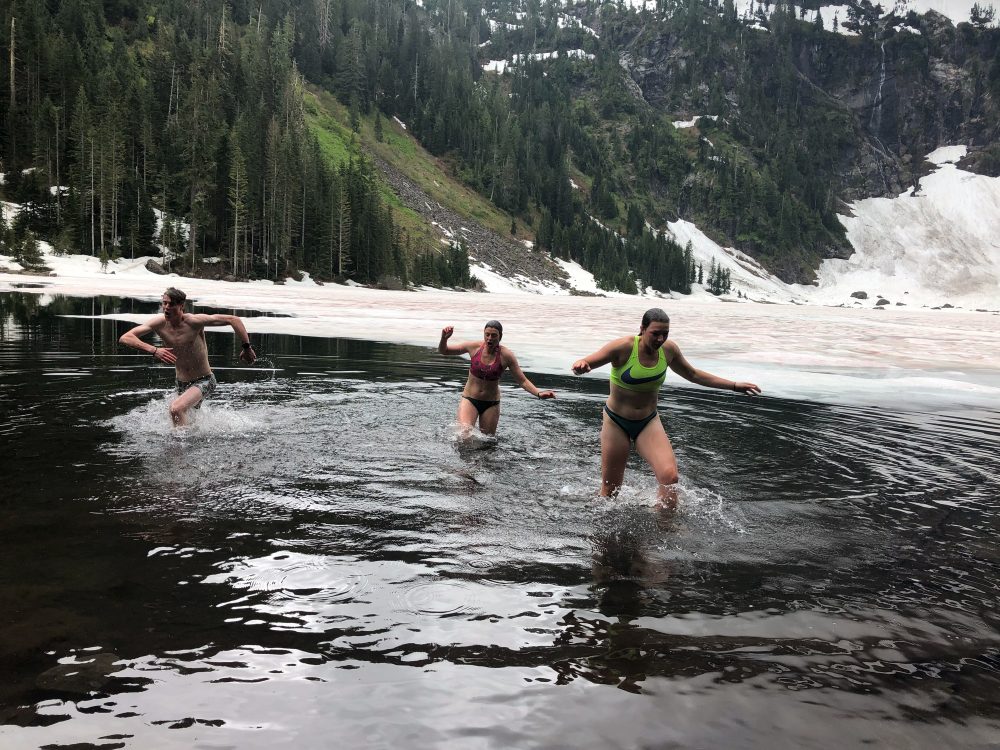
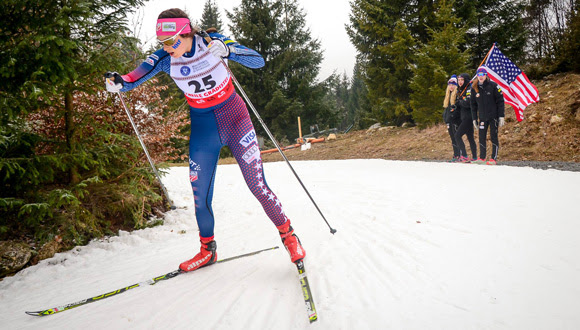
    16. In 5 years, I’ll be ____?

    Either ski racing at the Olympics, or engineering bridges while skiing on the side. Only time will tell which path is right.

    17. In 50 years, I’ll be ____?

    Still skiing and enjoying playing outside as much as ever.

  • Sargent and Patterson Prep for World Cup at Muonio FIS Races

    Sargent and Patterson Prep for World Cup at Muonio FIS Races

    Ida Sargent (bib 5) chasing Poland's Justyna Kowalczyk in the sprint quarterfinal in Muonio, Finland, on Friday. (Photo: Caitlin Patterson)
    Ida Sargent (bib 5) chasing Anastasia Kirillova of Belarus in the sprint quarterfinal in Muonio, Finland, on Friday. (Photo: Caitlin Patterson)

    In less than two weeks, the FIS Cross-Country World Cup will kick off in Kuusamo, Finland.

    But two American skiers are already in the country, putting on bibs for the first time this season and waxing up their race skis. Four hours north of Kuusamo, above the Arctic Circle, Craftsbury Green Racing Project athletes Ida Sargent and Caitlin Patterson are racing in Muonio.

    “Coming over here early is a good opportunity to get the jet-lag and time change out of the way before the World Cup, and also shake out some racing jitters and remember all the little details of getting to the start line prepared,” Patterson explained in an email.

    The pair are supported by Craftsbury head coach Pepa Miloucheva, and the Rex wax team thanks to arrangements by Toni Roponen, the husband of a Finnish World Cup skier who is friendly with some of the American women.

    “They don’t speak any English though, which is interesting,” Sargent wrote of the race-ski preparation.

    On Friday, Sargent was the first woman out of the start in the classic sprint qualifier. She ultimately logged the fifth-fastest time.

    “It was snowing and they didn’t have any forerunners skiing in the tracks for the time after the course closed,” Sargent explained. “I was the first starter so I plowed the track around the entire course. So that was frustrating but otherwise I was pleasantly surprised with how good the race felt!”

    Although the races are FIS-sanctioned, the trails aren’t as wide as some World Cup level venues and only four athletes were put in each sprint heat, rather than six.

    Skiing in a quarterfinal heat with eventual winner Justyna Kowalczyk of Poland, Sargent failed to advance and ended up ninth on the day.

    “The four person heats on the narrow course in the snow was a little interesting and I was not on my game at all, so I made some stupid mistakes and was third in my quarterfinal when I should have easily moved on,” Sargent wrote in an email. “I was a little pissed at myself afterward, but grateful for the opportunity to get back into the racing mindset before the World Cup begins.”

    Anna Svendsen of Norway finished second and Yulia Tikhonova of Belarus third. The men’s sprint was won by Finland’s Ari Luusua, with World Cup regular Anssi Pentsinen second. Norway’s Erik Valnes rounded out the podium.

    Anssi Pentsinen of Finland leads a heat in the men's classic sprint in Muonio. (Photo: Caitlin Patterson)
    Anssi Pentsinen of Finland leads a heat in the men’s classic sprint in Muonio. (Photo: Caitlin Patterson)

    Saturday brought 5 and 10 k interval-start classic races for the men and women, and while Patterson had sat out the sprint, she finished 16th in the 5 k, 1:03.5 behind race winner Kowalczyk. Sargent finished six seconds and three more places back in 19th. The top ten was packed with Finnish national team members, with Krista Parmakoski finishing second and Aino-Kaisa Saarinen, who skipped much of last season to have her first child, in third.

    “I can’t say I was entirely happy with where I ended up in the results, top 10 was only 4 seconds up and that would have felt a lot nicer than 16th,” Patterson wrote. “But I did feel pretty good skiing, if a little too relaxed at the start, and when Justyna Kowalcyzk and Riita-Liisa Roponen both caught me at the very top of the course, I had a great time chasing them both on the downhills and was only a few seconds back at the finish. It’s a good reminder of what it feels like to race, and also of how tight finishing times can be, especially here in Europe.”

    Sargent didn’t feel as fresh, and will take Sunday off instead of racing the 10 k skate.

    “I felt really tired today so maybe the jetlag and excitement of being back on snow and skiing again is catching up to me,” Sargent said. “But most importantly I’m very excited to get the season going and very thankful for the chance to do a few of these races with Craftsbury before the World Cup begins later this month!”

    The men’s 10 k was won by Lari Lehtonen of Finland, with countrymen Perttu Hyvarinen and Sami Jauhojaervi coming in second and third.

    The Craftsbury pair arrived in Finland only on Tuesday, and seemed satisfied with their form and efforts given the short timeframe to adjust to both the time zone change and being on snow.

    Justyna Kowalzcyk of Poland leads a heat in the women's classic sprint in Muonio, Finland. (Photo: Caitlin Patterson)
    Justyna Kowalzcyk of Poland leads a heat in the women’s classic sprint in Muonio, Finland. (Photo: Caitlin Patterson)

    “The transition back to snow is going smoothly,” Patterson wrote. “I was fortunate enough to be able to get on snow twice this summer, on the Eagle and Dachstein glaciers, and with that plus just getting more experienced as an athlete and having more summer-to-winter transitions under my belt, the feel of skiing comes back quickly. Or at least distance skiing does, I think skiing with higher intensity will take a bit more refinement before I’m fully settled. I’m somewhat jet-lagged still, and adjusting my sleep schedule, but while I don’t feel super snappy out skiing, it’s not bad.”

    After the weekend, Miloucheva will fly back the the U.S. to travel with the rest of the team to the West Yellowstone Ski Festival, and Sargent and Patterson will travel to Saariselka for more competitions.

    Sargent is a member of the U.S. Ski Team, and has had good results in Finland before. At the season-opening World Cups in Kuusamo, she finished seventh in the sprint in 2015 and fifth in 2014.

    Patterson, meanwhile, earned her World Cup starts by dint of winning the 2015-2016 U.S. SuperTour. She has raced European World Cups for parts of both of the last two seasons, including top-30 finishes in both Falun, Sweden, and Lahti, Finland, the site of this year’s World Championships.

    It will be Patterson’s first year starting the season on the World Cup.

    “I don’t really have any expectations for these races, having never been here before, so my goal is just to focus on the preparation and do everything I can to keep feeling good and making progress towards racing faster,” she wrote. “Of course it would be nice to land in the results near some of the World Cup regulars who are here, but that would be a bonus. The key thing is to be ready for the World Cup start in 2 weeks, and these races will help me remember what it feels like to go hard, get in touch with the feel of skiing fast on snow, and make a few technique adjustments if Pepa and I notice anything. I’m looking forward to testing out some skating in the 10k tomorrow!”

    Results:

    Friday sprint men / women

    Saturday classic men / women

  • All About the Books, Sargent Pursues a Master’s While Revving Up for World Cup

    All About the Books, Sargent Pursues a Master’s While Revving Up for World Cup

    Ida Sargent during a trail run in Washington's Cascade Mountains with her siblings and brother's girlfriend.  (Courtesy photo)
    Ida Sargent (front) during a trail run in Washington’s Cascade Mountains with her siblings, Elsa and Eben, and her brother’s girlfriend. (Courtesy photo)

    At 28 years old, Vermont native and U.S. Ski Team A-team member Ida Sargent comes with a well-rounded perspective and end-game. Her results from last season’s final leg of domestic racing in at her home course in Craftsbury, Vt., speak to that premise. In a loaded field, Sargent placed second in the 1.5-kilometer classic sprint and second in the 30 k classic mass start

    On the World Cup, Sargent ended the 2015/2016 campaign ranked 23rd overall on the final sprint list. (Her best-ever overall final ranking on the World Cup was 22nd in 2013.) Since 2012, she’s earned 14 individual top 10’s.

    Reached by phone in Craftsbury, Sargent, of the Craftsbury Green Racing Project (CGRP), said she has focused her energies on high-quality training sessions this year, sounding like a mature athlete able to monitor when to rest and when to push.

    Just really doing a good job monitoring my recovery, making sure that I’m paying attention to how my body feels and when I can push it a little bit more and not being afraid to just doing a little more and knowing when to back off. Paying attention to those things,” Sargent said. “I am starting to have a much better read on my body and I am able to figure out what I need and trying to have the confidence to do those things and really focus on what I need myself.”

    With experience, Sargent explained she believes she’s less likely to get mired in the training-numbers game.

    “I think it is always something that is hard. You want to always do more and more and more and … you get this this feeling, but it’s just kind of like it’s easy to fall into the trap that more is better. And I think I’ve done decent amount of intensity and trying to really hit those and when its not working anymore I’m taking a break with that.”

    Through and through Vermonter, Ida Sargent sacks wood for the upcoming winter. (Courtesy photo)
    Vermonter Ida Sargent stacks wood for the upcoming winter. (Courtesy photo)

    This coming season, Sargent explained she is emphasizing the sprints but with an eye toward improving her distance skiing. She also thought of how to best position herself for the long World Cup calendar.

    World Cup racing begins Nov. 26 in Kuusamo, Finland, and runs through March 19 with World Cup Finals in Tyumen, Russia.

    “I am going to go home before Christmas which I am really looking forward to,” Sargent said. “Having a little time at home for Christmas this year to get that recharge, which is really important for me mentally. I will start the Tour de Ski [which begins Dec. 31 with a freestyle sprint in Val Mustair, Switzerland] but will probably drop out after a stage or two.”

    Also on Sargent’s radar is a master’s degree in public health. She started her studies this summer through an online program at the University of Vermont.

    “At first when I completed my undergrad at Dartmouth, it was great, but at the end, I was ready to just ski full time. And was very excited to do that,” Sargent said of her motivation to pursue another degree (in addition to her bachelor’s in biology and physiology). “I think it always gets to me, especially later in the winter when you get towards the end of the season, and you aren’t training as much and you are peaking for races, and you are training only for an hour or an hour and a half a day — and when we are on the road during that time, it’s a lot of time to spend sitting in a hotel room. And, I’m not a big fan of TV and don’t watch that much of it. I do a lot of reading. I kind of felt like, I love ski racing and I love this lifestyle, there are so many other things I want to be doing. If I have the time, why not do some of it at the same time? So I think I’ll keep it very part time, especially during the fall when the training is a little bit more intense, … in the winter, when I am settling into hotel-room life. I think it will keep me stimulated to have something else going on.”

    Craftsbury Green Racing Project skier Ida Sargent striding to second in the qualifier for the women's classic sprint at SuperTour Finals on Tuesday in Craftsbury, Vt. (Photo: John Lazenby/Lazenbyphoto.com)
    CGRP skier and U.S. Ski Team member Ida Sargent striding to second in the classic-sprint qualifier SuperTour Finals in Craftsbury, Vt. She went on to place second in the final. (Photo: John Lazenby/Lazenbyphoto.com)

    It’s also worth mentioning Sargent’s more elaborate response to question 14 listed below: If you could change one thing about your sport, what would it be?

    Like many endurance athletes across generations, Sargent was motivated by others chasing athletic dreams. Her’s was a perspective where doping wasn’t part of what she was witnessing on the ski tracks or athletic fields.

    “When I was younger it was really just always so inspired by all the different role models that were competing and chasing their dreams and setting new records, chasing Olympic medals,” she said. “I was just continually inspired by one athlete after another. And wanting to be like that, it never crossed my mind. Maybe I was just really naive, but I always the last one to pick up on the potential dopers. I used to watch the Tour de France, and I was obviously very naive, but I was a Lance [Armstrong] fan to the end. I was like, this is such a great story.

    “For me, sport has always been this inspiring pursuit and it’s only recently I’ve started to question,” she continued. “And seeing incredible performances like watching the 2016 [Summer] Olympics — it’s one of true, first times I would see an incredible world-record performance and the first thought through my mind wasn’t just, ‘Wow! Isn’t that amazing?’ but, ‘Hmmm, I wonder if that one is questionable?’ And so I just think it is really unfortunate that can even happen and I hope it doesn’t continue to a place where it becomes more commonplace and kids that are following in our footsteps and coming up to the junior ranks, are not seeing the sport as tarnished cheating and instead are filled with inspiration and passion and hard work.”

    ***

    We asked Sargent to give our ’17 Questions for 2017′ a go. Here are her responses:

    1. Biggest change in your life in the last five or so months since the ski season ended?

    I started working towards my Masters in Public Health.  I will be taking a couple online classes through UVM so while my focus will still be on skiing I’m looking forward to having some mental balance and using my brain again after a four year break from school.  I was inspired by [U.S. teammate] Sadie [Bjornsen] who went straight from her undergraduate to masters classes and I’m looking forward to having some study hall time with her this year on the road.

    2. Biggest change in your training?

    I’ve focused on recovery this year in many different forms, from technique changes allowing me to find a relaxation phase, to better pacing and race strategy, to overall better recovery between training sessions through HRV monitoring.  I usually am in go mode all the time but trying to maximize my recovery and improve efficiency this year which has already allowed me to train more than ever before in a way that I think is also improving the quality of the training.

    3. Major areas of improvement you’ve seen so far?

    I’ve made some big technique changes which will hopefully allow me to have more energy left later in the races.

    4. Whom you’ve been working closest with this offseason (coaches or training partners)?

    I’m a homebody so I like to spend as much time as possible at home in Craftsbury, VT.  I spend enough time on the road in the winter so during the summer and fall, I like to be at home. I train most of the time with my Craftsbury Green Racing Project teammates and Craftsbury coach Pepa Miloucheva.  I’ve broken up the time at home, though, with all of the US Ski Team camps.  When I’m travelling with the USST, I work most closely with Matt Whitcomb, the US women’s team coach.

    5. Best trip in the last five months (and why)?

    New Zealand with my USST teammates was incredible again this year.  A little dose of winter in the middle of summer is always a bonus as a skier and NZ did not disappoint.  The Snow Farm had awesome skiing conditions, good food, a very welcoming staff, and living right on the ski trails makes it very easy to train a lot.

    6. Favorite cross-training?

    Mountain biking!!

    7. Favorite non-athletic activity or pastime this summer?

    Reading, drinking coffee, paddle boarding on the lake in the evening, gardening.

    8. Song that was your jam this summer?

    Summer time is the best for cruising the back roads, listening to country with the windows down.

    9. All-time favorite race moment?

    World Champs in Oslo in 2011 was my first World Champs and having thousands of people lining the courses for those races was unreal.  I was totally blown away and loved every minute of it!

    10. First thing you pack in your bag when you leave for Europe?

    It used to be maple syrup but after it spilled in my bag a few times I’m a little more hesitant towards traveling with it.  So now it’s probably my aeropress and coffee but some comfy sweat pants and my kindle are a close second and third.

    11. Venue/event you’re most excited to visit this season?

    I’m very excited to race in Lahti next winter.  Anytime World Champs are in a Nordic country it’s certain to be a big show with tons of spectators and great racing.  I’m also looking forward to racing the World Cups in Peyong Chang, South Korea.  It will be very interesting to see a new part of the world and to get a feel of the area as we all prepare for 2018.

    12. Who will win the men’s and women’s World Cup titles this year?

    First names that come to mind are Charlotte Kalla and Alex Harvey.

    13. Biggest sacrifice you feel you’ve made choosing this career path?

    I sometimes wish I had a more normal job but I think I have plenty of time to be working a 9-5 so I’m going to embrace every moment of this wonderful lifestyle for the time being.

    14. If you could change one thing about your sport, what would it be?

    Make sport a level playing field with everyone competing clean.

    15. What did you have for breakfast this morning?

    Green Mountain Creamery Greek Yogurt with granola and berries and maple syrup on top.  And of course a very strong cup of coffee on the side.

    16. In 5 years, I’ll be ____?

    Way too far ahead for me to plan. I’m just trying to figure out what is happening tomorrow!

    17. In 50 years, I’ll be ____?

    Hopefully healthy, active, and fit and still able to get outside to hike, bike, and ski with my friends!

  • Craftsbury Splits Camp Between Slovenian Ski Tunnel and Dachstein Glacier

    Craftsbury Splits Camp Between Slovenian Ski Tunnel and Dachstein Glacier

    Craftsbury Green Racing Project’s Ben Lustgarten enjoys skiing in the ski tunnel in Planica, Slovenia this September during a week long training camp. (Photo: Caitlin Patterson/ Caitlin Patterson CGRP blog)
    Craftsbury Green Racing Project’s Ben Lustgarten (l) training in the ski tunnel in Planica, Slovenia, earlier this month. (Photo: Caitlin Patterson/ CGRP blog)

    Pay 9 Euros a day, get a 950-meter loop in return. If snow were to take on a monetary value, that’s how much the Planica Nordic Centre charges for a day pass in its snow tunnel, new to the city’s Olympic Sports Center since the spring. But to others, the opportunity to ski on snow at the tail end of summer is priceless, even if it is under the fluorescent lights and within the concrete walls of a three-level parking garage.

    Among those “others” are the Craftsbury Green Racing Project (CGRP) elite cross-country skiers and biathletes, who spent Sept. 12 to Sept. 20 in Planica, Slovenia, training in the city’s ski tunnel. As a few explained, getting on snow at this time of year outweighs the occasional lassitude that comes from skiing two-plus hours on a less-than-1-kilometer loop.

    “No matter what condition it is nordic skiers love their first time on snow of the season,” Ben Lustgarten, new to the CGRP cross-country team, wrote in an email. “We were able to do speeds, short level 4 intervals, some threshold, accelerations, and sprint simulation workouts. There was fair amount of terrain to do varying technique work and video analysis for the small amount of space.”

    Left to right: Craftsbury GRP head coach Pepa Miloucheva along with athletes Heather Mooney, Ben Lustgarten, Kaitlynn Miller, Caitlin Patterson, Liz Guiney, and assistant coach Nick Brown in the ski tunnel in Planica, Slovenia, during a training camp this month. (Photo: Caitlin Patterson/CGRP blog)
    Left to right: Craftsbury GRP head coach Pepa Miloucheva along with athletes Heather Mooney, Ben Lustgarten, Kaitlynn Miller, Caitlin Patterson, Liz Guiney, and assistant coach Nick Brown in the ski tunnel in Planica, Slovenia, during a training camp this month. (Photo: Caitlin Patterson/CGRP blog)

    Along with Lustgarten, who joined Craftsbury this year after spending the last two seasons with the Sun Valley Ski Education Foundation (SVSEF) Gold Team, nearly a dozen CGRP skiers made the trip, including Caitlin Patterson, Kaitlynn Miller, Liz Guiney, Heather Mooney, and Mary O’Connell, and biathletes Alex Howe, Ethan Dreissigacker, Mike Gibson, Emily Dreissigacker, and Hallie Grossman.

    “The intensity and technique really helped to keep the tunnel from getting too boring, as there was always something to think about or work on, or at the very least a coach on hand videoing for later technique review,” Patterson wrote in an email. “It gave us an opportunity to practice being adaptable to snow conditions and terrain (ie corners); even if those particular features in the tunnel would be rarely seen on a race course, they were valuable in their extremes. I feel more prepared than ever to handle a course with tons of 90 and 180 degree corners, even though that’s unlikely to happen often.”

    The athletes, along with Craftsbury’s head coach Pepa Miloucheva and assistant coaches and wax technicians Nick Brown and Sam Doherty, completed a weeklong training camp in Planica, taking full advantage of the three-level snow tunnel. The following week, the group headed to Schladming, Austria, for eight days of volume training on the Dachstein glacier, more than 9,800 feet above sea level. In Planica, nearly 7,500 feet lower, much of the team’s first week focused sharpening agility, coordination and speed.

    “The tunnel is a perfect environment for working on both technique and speed, with enough transitions and tight turns to keep the skiing interesting,” Grossman wrote in an email.

    “I feel more prepared than ever to handle a course with tons of 90 and 180 degree corners, even though that’s unlikely to happen often.” — Caitlin Patterson (CGRP) after training in the Slovenian ski tunnel

    Grossman, who recently switched from cross-country to biathlon, explained that the biathletes’ intensity training slightly deviated from their original plan when they learned that Slovenian Summer Biathlon Nationals were being held in Pokljuka, Slovenia, about an hour away from Planica.

    “The camp took a little turn when we found out about the rollerski races in Pokljuka, so what was going to be a primarily on-snow camp turned into a combination of skiing and rollerskiing,” Grossman wrote. “This allowed us to still focus on technique and shorter speed in the tunnel, while also getting the opportunity to race.”

    The biathletes had originally planned to use the Pokljuka range for a few shooting sessions, but quickly decided to jump into the races when they discovered the competitions were taking place at the same location. Grossman competed in both races that weekend — the women’s 7.5 k sprint and 10 k mass start — as did her teammate Emily Dreissigacker.

    “We actually didn’t even know Slovenian Nationals were happening until we tried to sign up to use the range and they told us we couldn’t because there were races,” Dreissigacker wrote.

    Dreissigacker, who married Howe, her teammate, last month and spent a few weeks before the camp on a honeymoon with him in Italy, explained that the competitions elicited an opportunity to reconnect with racing, even within a small field.

    “There wasn’t a ton of competition in the senior women’s category, four of us to be exact, but one of the Slovenians was Teja Gregorin who won bronze in the pursuit in Sochi, so it was pretty cool to be able to race against her,” Dreissigacker wrote. “For me it was also a good way to re-focus after the craziness of the wedding.”

    “We actually didn’t even know Slovenian Nationals were happening until we tried to sign up to use the range and they told us we couldn’t because there were races.” — Emily Dreissigacker (CGRP) on racing at Slovenian Summer Biathlon Nationals

    Dreissigacker finished third in the women’s 7.5 k race, with two standing misses, and Grossman placed fourth. In the mass start the next day, Dreissigacker once again reached the podium in third and Grossman repeated in fourth.

    CGRP biathletes Hallie Grossman (l) and Emily Dreissigacker after the women’s 14 k mass start at Slovenian Summer Biathlon Nationals in Pokljuka, Slovenia, on Sept. 18. (Photo: Ethan Dreissigacker)
    CGRP biathletes Hallie Grossman (l) and Emily Dreissigacker after the women’s 14 k mass start at Slovenian Summer Biathlon Nationals in Pokljuka, Slovenia, on Sept. 18. (Photo: Ethan Dreissigacker)

    The men’s races included a 10 k sprint and 14 k mass start. In the sprint, Howe placed seventh, Ethan Dreissigacker was ninth and Gibson 13th. The next day, Ethan rocketed to third, Howe finished 10th and Gibson 14th.

    “It was really fun to be able to jump into the Slovenian races!” Ethan wrote in an email. “While it did change up the plan a bit that first week, it think it was for the better, and I’m really glad we were able to compete. Biathlon races in the US are pretty few and far between, and many of them are also ‘trials’ of some kind. It’s super valuable to get in competitive racing experience outside of those trials races to get used to the pressure of competition without feeling like your season is on the line.”

    Along with the CGRP athletes, the men’s field included the Slovenian national biathlon team and some non-national team skiers, as well as a few Bulgarian national-team members.

    “The competition at these races was really pretty similar to that of the US rollerski nationals we had in August,” Ethan explained. “The big name in the men’s field was Jakov Fak who has an Olympic bronze, and a bunch of World Cup victories. Fak has is a very relaxed and efficient skier and it was awesome to get to ski behind him for a bit in the races.”

    After Slovenian nationals, the Craftsbury crew ventured to Austria for a week of altitude training. The team planned to train through Wednesday and fly back to Vermont on Thursday this week.

    “Both places are only 2 hrs apart, so was very convenient for a week long speed block in the tunnel and a week and a half volume block on the glacier all on snow,” Miloucheva wrote in an email. She explained that “some speed work followed by some good distance hrs on snow,” were the primary goals of the camp.

    While it wasn’t the first time the CGRP spent a few weeks of fall training on snow, this year was the first split camp featuring the Slovenian snow tunnel.

    “This is the third year in a row that the GRP has come over to Austria for an altitude camp on the Dachstein Glacier,” Ethan explained. “This year I was really excited about the split the camp between two locations, with two different focuses, and I think that has really helped make the most of the trip. Both locations have had some awesome resources for training, and beautiful scenery.”