
From the FasterSkier archive — posts syndicated from athletes’ and coaches’ own blogs between 2004 and 2012, kept online as published. Current coverage is at fasterskier.com.

Tag: perfluorinated wax

  • The Birth of the E-Ski by Kevin Brooker

    The Birth of the E-Ski by Kevin Brooker


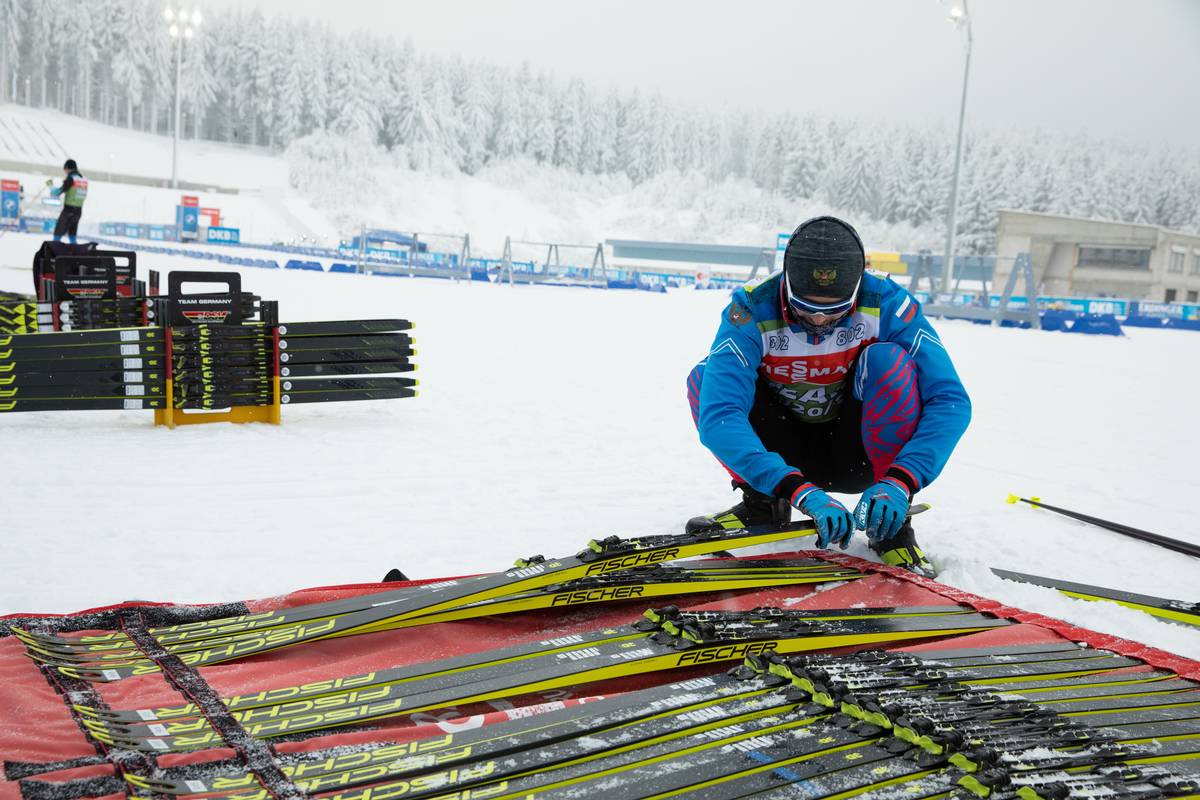
    Fischer was unavailable for comment regarding new developments in E-base tech. (Photo: NordicFocus)

    With great pride, I will admit to being an unabashed fluoro powder addict. After finding an affordable source of the stuff (200 grams for $50.00) my use might be considered reckless. I have unapologetically sprinkled powder on skis with the same vigor and arrogant nature as Samuel L. Jackson drops F-bombs in Tarantino films. Powder made my skis slick and fun. I LOVE the feeling of dusted sticks. I also love the planet and realize my careless use must come to an end.

    This season the powders were tucked away and not disposed of hoping there was an error with the science and we can eventually use them again. My skis only came in contact with hydrocarbon waxes without any fluoros. Quite frankly, the skiing sucked. The boards were slow and had no life to them. Skiing wasn’t fun so I basically stopped, choosing to ride my Peloton instead. In this post-apocalyptic dystopian era of no fluoros, I missed skiing but not the associated sluggish feel of hydrocarbon wax. 

    Banning the use of fluorocarbons in skiing was a difficult decision by FIS. As you probably know, they too are equivocating. By definition, speed is a requirement for racing. Speed is exciting to experience and it’s fun to watch others go fast. Taking a stand to legislate the ban of a speed device (fluoros) to help ensure the long-term wellbeing of planet earth supersedes the short-term gains of ski racing speeds is commendable and admirable. Eliminating fluoros has the real potential to make cross-country ski racing slow and as exciting as watching grass grow. By eliminating a component contributing to speed, there is a real possibility to kill off the sport. 

    Eliminating fluoros also has the potential to unlock an era of innovation and creativity. Waxing technology has remained pretty much unchanged for decades. After waxing reached a stagnation point considering it’s contributing to speed, innovative thinkers took another look at base friction and determined the structure of the base was the next untapped well of speed. 

    Now, another group of innovators is taking a look at ski bases. Instead of focusing upon grinds, this group of tinkerers is examining how to manipulate the bases electronically to enhance glide and generate speed. After hearing rumors this past summer, Fasterskier spent the better part of the winter working to obtain an interview with this group of forward thinkers. We finally caught up to them. Once the patents were applied for, these disruptors were granted the opportunity to present their idea to the ski world. Here is their story and begins with a quick explanation of waxes.

    ***

    “The concept is actually really simple.” begins Vanessa Taylor, one of the chemists working on the project. “In order to glide, a ski needs a thin film of water to lubricate the plastic base. Unfortunately, the water also sticks to the base without using wax. The friction caused by water molecules dragging along the base leads to viscoelastic energy dissipation. The water also adheres to the ski bases due to static electric attraction which causes the dreaded suction we use grinds to overcome. The wax essentially insulates the base from the water and has a higher repellency allowing the water to act more like a ball bearing than grease. fluoros are extremely hydrophobic and have more influence reducing the stiction caused by the electromagnetic attraction of the plastic.”

    Taylor walks across the room to a stainless steel table. A series of wires hang from an overhead gantry. At each end of the table sits a metal box with pink string coming out from a vertical slit in the face. At the end of the string is a small snap swivel similar to what a fisherman will use to attach lures.
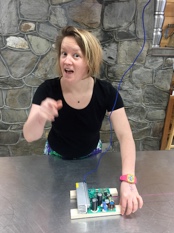
    Vanessa Taylor showing off the test sled for the E-ski.

    “This,” Taylor waves her hand like a magician introducing a prop “is the testing table. We take sections of ski base and attach the string to either end. Then we set a 2 kilogram weight on top to simulate a skier during a glide. One box winds in the string and the other pays it out. We know the force required to break the initial movement and the force loss due to friction based upon the wattage needed to turn the motor. The payout string gives a measured resistance to pull against.” 

    She takes a common spray bottle and applies a thin film of water to the table. “The water field on stainless is a decent simulation to test the efficacy of ski waxes and our product. The basses are also set flat to eliminate the variability of flex and crowning. We grind a specific pattern into the base too. We eliminate the variable of snow conditions to obtain data on the glide.”

    Each sled is 20 cm. long and she attaches one to the table by the strings and connects one of the umbilical wires from the gantry. A click of the laptop and the sled begins its journey down the table. “There we go. 152 watts. This was unwaxed P-tex. Now let’s run fluoros.”

    The setup is the same and after the test run the number is 84 watts. A significant change.

    “Now let’s run our idea.” The result is 51 watts. I’m astonished. “Pretty wild, eh?” She asks.

    “What type of wax have you developed?”

    “Not wax but bases. We use a small electric charge in the base to repel the water in place of the wax.”

    “Wow.” Is all I can muster. “Is this legal?”

    “The FIS race rules are a bit ambiguous on this point. The rules outlaw accumulators (bracketed by air quotes) but allows energy originating from the competitor. [For a closer see the excerpt from the FIS rules below] 

    “At first we were going to go after the race market. We incorporated small piezo generators, similar to the clicker used to ignite a gas grill, into the bindings. This gave us enough current to power the base but the need for a storage device to carry the effect on long downhills was problematic. We are abandoning the race market for now.

    “The focus will be on making recreational skiing fun. Plus, it’s actually a much larger market with the added bonus of no rules. Battery technology is making rapid advances too. Just pop a small battery into the ski and have at it. Bicycles are embracing E-technology and we intend to bring this to snow sports.” 

    We leave the test room and move to the R&D portion of the reconditioned barn they call HQ. The sign above the door reads “Fearless”. 

    Inside we meet William Gordon, the man who first thought electrifying skis might be possible. He tells me the story (which has been edited for brevity, William can talk) of watching snowflakes align themselves on a cutting board being used for insulating an old aluminum lugged carbon fiber bike frame.

    William Gordon heading into the R&D lab. Photos were not allowed once past the door.

    “We were TIG welding an aluminum lug on a real old, Time carbon frame. To insulate the carbon from the welding table, we used a plastic cutting board (made from UHMWP the same stuff as ski bases) to keep it from conducting the electricity used to weld. The TIG process for aluminum uses alternating current and we can alter the frequency and how the sign wave is delivered to the metal. We were jamming in Joe’s garage during the winter and it was snowing. Each time Joe struck an arc I noticed the snowflakes begin to move around the plastic. At first I thought it was vibrations causing them to dance but soon realized the flakes were being repelled and levitated by the welding process. When the flakes melted, the droplets did the same thing.  Just like you, I like to ski and use fluoros like some people put salt on popcorn. With them going away I needed something to keep skiing fast and fun. What if I can put the same properties I saw on the welding table into a ski base? Might be a workable idea.”

    “I thought the plastic was an insulator?” I ask William.

    “It is for transferring current but this doesn’t mean it won’t hold a static charge. Wax companies add graphite to create a small static charge created by friction with the dry snow. We do the same thing by electrifying the bases.”

    William brings me to the back corner of the room where a 3D printer is set up. Spools of carbon fiber thread move through a series of loops to a small CNC head where they split apart into much smaller bundles.

    “We use the printer to incorporate carbon fiber into the bases. The carbon is conductive and is used to carry the impulses from the processor located inside the ski. We found running the frequency at a bit over 200 hertz makes the best glide. There are over 300,000 individual circuits in each base. Right now, the process is very slow. We are working on getting it automated and simplified. We are currently hiring a few engineers from the semiconductor world to help us make the transition from a single base each week to hundreds per day. We also have to scale the processors and batteries to fit inside the ski. Weight and how the ski feels are just as important as glide.”

    My mind is a bit numb trying to get a handle on what these guys are doing. How it all works is as mystifying as why waxes make skiing more fun. His next revelation sounds counterintuitive and unbelievable even by comparison to the E-ski concept.

    “We can also reverse the repellency and cause the skis to stick. The attraction is pretty small but for classic skiing, we have the entire base grab onto the snow. It works, but achieving the same classic ski feel is tough. We tried putting force sensors into the binding to activate the grip function. When it works, it’s great but it is more unreliable than hard wax right at the freezing point. Something to work on.

    “We have also played with the idea of alternating the pattern and alignment of the static discharge points to act as a small motor to actually propel the ski. If we nail this, the E-ski will really shine. Right now it works but requires a lot of power and processing. So much we couldn’t get it all into a backpack. What we have figured out given the restraints of the ski based system is how to slow down the ski. We use the same idea to act as a brake to slow the ski. We Bluetooth connect it to the ski pole and then you can apply stopping power. We hope this will reduce the snowplowing and save the snow, require less grooming, etc. Saving the limited snow is also a benefit to the environment. My wife suggested making brakes as she hates fast skis. They scare her. We asked a few recreational skiers if this was a good idea and they LOVED it.” Gordon threw his head back and laughs. “Ironic isn’t it. We were trying to make skis faster and the big application is using the technology to slow them down.”

    “This all sounds great but when can I get a pair and will the skis have the same feel as using fluoros?” My eagerness and self-interest are difficult to hide.

    Vanessa chimes in. “We have proven the concept and are seeking investors to develop the idea into a practical application. We have been filing new patents almost weekly. If the funding comes through we expect to be selling skis for the 2022 season. When we have some production-ready skis we’ll send a few pairs to FasterSkier for you guys to review.”

    The rest of the tour was confidential, having to do with proprietary manufacturing techniques. Will the E-ski revolution have the same impact as the E-bike? Time will tell and I’m excited to know the fluoro ban has ignited a host of innovations. This is exciting and we’ll keep you up to date on the progress of the E-ski.


    FIS rules with respect to legal skis:

    1. Cross-Country Skiing Competition Equipment 1. General Rules The following rules apply to all type of Cross-Country competition equipment such as skis, bindings, boots, poles and any additional equipment. 1.1 Restrictions No equipment is permitted which: a) Affect the natural push-off movement of competitors’ feet and arms or those that enhance it (such as spring devices or other mechanisms in skis, poles, binding or boots). b) Makes use of energy not originating from the competitor, such as artificial heating devices, chemical energy accumulators, electric batteries, mechanical aids, etc.).



  • Swedish Innovation Hubs and their Push for Fluoro Free Ski Racing

    Swedish Innovation Hubs and their Push for Fluoro Free Ski Racing

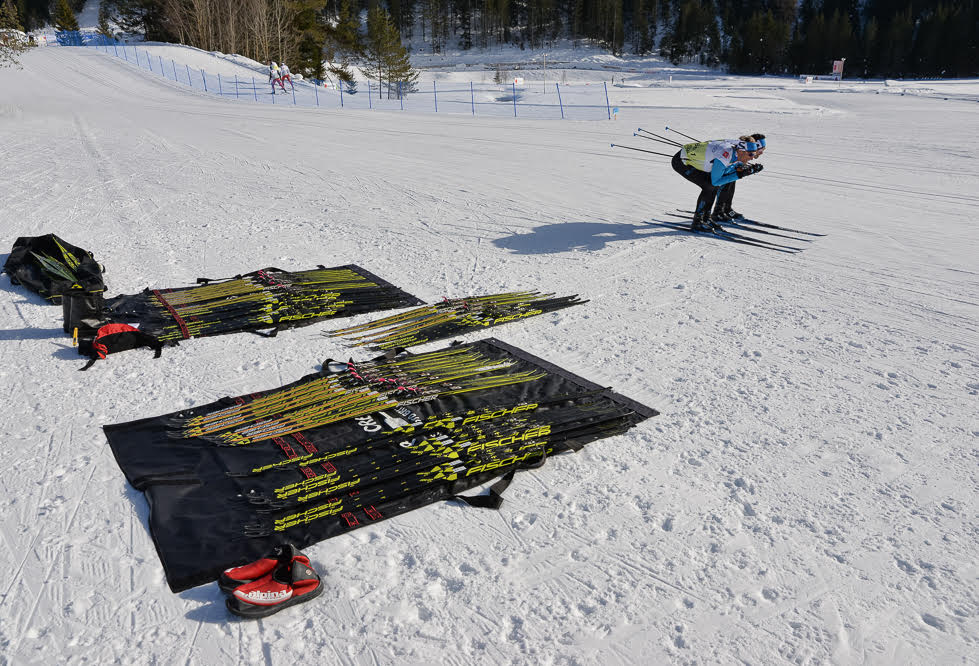
    Testing skis and wax in Seefeld, Austria on Tuesday – site of the 2019 Nordic Ski World Championships. (Photo: John Lazenby/lazenbyphoto.com).

    In our commitment to covering the wax ski wax industry, FasterSkier found it relevant to dive deeper into a press release we received on September 4. It came from Sweden based POPFREE Ski Goes Global Project. The project is a collaboration between teams at Peak Innovation and the RISE Research Institutes of Sweden. RISE is a non-profit affiliated with a regional university. RISE bills itself as possessing the research chops and leadership to accelerate innovation.

    On its website, Peak Innovation states that it “supports technological innovations and smart sustainable solutions to promote a life in motion for more people.”

    Think of Peak Innovation and RISE as innovation hubs involved with this exacting purpose when it comes to ski wax: methodically phasing out the use of perfluorinated ski wax in competitive skiing – both alpine and cross-country. 

    “One technical challenge resides in the fact, that in certain conditions there are no solutions today offering the same glide,” states the POPFREE press release. “For this reason, solutions are mainly needed in three different areas: innovative fluorine-free waxes, regulations and voluntary bans for wax usage and effective testing to identify unauthorized use in competition. When it comes to rules and testing, they also need to be able to apply from local club level to major international competitions without hampering practice and reducing the attractiveness of skiing.”

    What POPFREE advocates is change fostered through discussion, stakeholder buy-in, cultural shifts, new technology, and chemical regulations. 

    POPFREE has two leads, Joel Svedlund from Peak Innovations and Lisa Skedung from RISE. We spoke to Svedlund and Skedung after they hosted a conference in Sweden to discuss the POPFREE initiative. Many key stakeholders from within the industry and racing scene were in attendance, including Vegard Ulvang, the International Ski Federation’s (FIS) chair of its cross-country committee. 

    (Here are two links to POPFREE’s survey results. Summary of results from survey: Competitive skiing and fluorinated ski waxes, Results from survey regarding fluorine-free ski waxing.)


    Below is the interview with Svedlund and Skedung which has been lightly edited for clarity. 

    FasterSkier: Can you describe your work in Sweden?

    Lisa Skedung of RISE. (Photo: POPFREE Goes Global/RISE)

    Lisa Skedung: At RISE, we work with different consumer products like textiles and fire fighting foam and food packaging and ski wax is one of the cases. From this project we spun out this POPFREE Ski Goes Global focusing on competitive skiing at international levels because if something should change we believe we have to target competitive skiing because recreational skiers will follow the elite. 

    Personally, I am a project manager at RISE. I have a background in chemical engineering and I am the project manager for POPFREE Ski Goes Global.

    FS: Can you elaborate upon the recent workshop held to discuss fluoro use at high level ski competitions?

    LS: Most importantly, we defined the challenges and how to solve the problem. 

    Joel Svedlund of Peak Innovations where he manages projects involved with sustainability and innovation with a focus on sports and outdoor industry. (Photo: Peak Innovations)

    Joel Svedlund: We wanted to create a road map and initiate a dialogue that can result in further initiatives from this. Our hope is to initiate a couple of projects stemming out of this that will push the issue in various streams. 

    We had people attend from the wax industry, people from the legislation side involved with REACH legislation, and people from Swedish regulatory agencies, professional ski technicians, national ski associations, to cover the whole chain. 

    We saw that there was a window of opportunity since things are happening in Norway [to limit fluoro use in junior competitions] and we saw things happening in Sweden. We also have the Vassaloppet, the biggest long distance race in Sweden, they are also on board. 

    FS: Vegard Ulvang was in attendance. What is your sense that there is buy-in from the upper reaches of the sport?

    JS: He was clear on that in our press release. It is our understanding that FIS will probably be open to anything that seems feasible to do. FIS will never push something down which is not accepted on a national level or where there are no methods that work — meaning that the national associations need to take the lead. 

    There must be things that are tested and applied on the national level so you can see that it is working in actual competitions. When that is operating on the ground it can be moved up to FIS  through the national associations. FIS, it is an umbrella organization for all the national associations. In a sense a democracy of those associations. Something that is not supported by national associations won’t happen there. 

    FS: One of the big concerns in convincing wax users to go fluoro free is the concern that the playing field will be unfair. In other words, if it is a voluntary ban or methods to test for fluoros are costly and/or ineffective, some will choose to go fluoro free, others will choose a competitive advantage and use fluoros. 

    JS: That is of course one of the big challenges. If you look at other sports or within the sport, of course you have the doping debate and that is very similar to this in many aspects. Especially when you say these substances optimize or enhance your performance and they are very hard to track. In that sense, it is very near the doping discussion. If they would be banned quickly we would have a big challenge how to detect fluoros. Then again, if it comes as a voluntary initiative and you create a cultural norms at the recreational base, then it is accepted and you are accepting this because you want a clean sport.

    LS: We talk a lot about how to build trust and create a norm where it becomes about sustainability and how making that choice to not use fluoros can also be somewhat “cool”. Not specifically at the elite level, but as a start with recreationist. 

    JS: Looking at other sports, you have swimming with limits on suit design and materials, and there’s Formula One with regulations on engines and tire width. People were saying “Formula One will die, we will have slower cars, boring competitions, we won’t have sponsors.” They are thriving still and it is an even playing field. 

    We will have challenges going through this process but it is also something that will be a process over a number of years. 

    FS: As we understand it, your work involves creating more awareness among the stakeholders, but also keeping tabs on the evolving nature of the laws regulating the manufacture and use of certain chemicals in Europe. What is going on legislatively when it comes to fluoro use in Europe.  

    JS: The people working on legislation say that somewhere between five and fifteen years – give or take – that we will have enough regulation on the substances that can be used in, for example, ski waxes, that it will not be possible to use fluoros in them from a legislative standpoint in Europe. 

    How it is going to be in the U.S. or in Asia we do not know. But we do know that in Europe if you look at the trend, how legislation is working right now, there will probably be categorizing necessary and unnecessary uses for fluoros. And ski waxes have a very hard time falling into the necessary uses.

    That means once it is categorized as a non-necessary use, it must meet high requirements to be used in any substance. 

    Another thing regulators are exploring is going from regulating one substance at a time to taking groups of substances, especially for the non-necessary uses. For fluorinated substances, the PFAS is a group of at least 4700 substances. Now in the EU there are two groups actually regulated, PFOS is legislated against totally and PFOA [C8] is coming next year in the EU as a ban more or less. 

    What we see now too, is that in order for manufacturers to continue selling, for example, fluoro powders, they are going to what is called the C6 technology, or shorter chain fluoros. And if you ask the legislatures they say what is going to happen in a couple of years is that most of the C6, maybe all of them will be legislated against. Because we are already putting them on the hazard list. They show similar health risk. We know it is going towards that. And as it continues along that line with different substances, it is always a hunt for the next best thing. 

    In the next couple of years, when this unnecessary use is possibly designated and the group regulations come, then the whole group of substances will be impossible to use. Then asking if it is possible to test for fluoros at races, and can we have voluntary bans — when we come to that point with regulations, it won’t matter. 

    LS: But legislation is very slow. There is a long way to go before legislation. 

    JS: That is true. So it is also important that we have spoken to national ski associations. They see the good will of their brand and the sport and that they don’t want to be seen as laggards. They are all using nature to have good health and good recreation. Nobody wants to be seen as the polluters. 

    Society is starting to see PFAS as a huge problem which is still a bit unknown. But once that happens on a larger scale, the ski sport does not want to stand there and say “we need to use this otherwise we won’t be able to win our races.” There is that element too. 

    FS: What can you tell us about some of the fluoro testing on skis that occurred at a few junior races in Norway last year? [The use of perfluoroinated wax is banned there in competitions involving skiers 16 years old and younger.]

    JS: For now it is the sampling methods, you are taking chemical samples from the skis and then sending it to the lab. The sampling itself is very low cost. It takes about one minute or two and is actually a small sampler with an adhesive that you push on the skis. 

    LS: And you analyze the removable fluorine on that. 

    FS: What are the cost breakdowns for sampling and testing for fluoros on a ski?

    JS:  I don’t know the exact price for the sampler, it is not more than 10 or maybe 20 euro maximum. They have said it has an adhesive pad that is removable and exchangeable. 

    The actual sampling is relatively low cost. The analysis takes about two to three days with transport back and forth — the lab is in Germany. They say one week for receiving the results. I believe the total cost for sampling and analysis is about 100 euro per sample.

    But it is developable, we have discussed this a lot. This is one aspect we will try to push forward, to develop the test methodology. Because they know that, of course, sending the sample to a lab in Germany works, even in doping it works too — but if it is possible to have onsite analysis and to give answers within a couple of hours it is much better. 

    Even within a couple of minutes or seconds is the holy grail. 

    LS: In the workshop we also talked about the way it will continue this winter. It will be tested in more competitions and maybe in some big ones. The key is that you can sample, it is quick. You can take many samples and you can decide after the race which samples you want to analyze. You may not have to analyze all of the samples. Maybe just the top-10, or maybe just some randoms ones with the top-10. 

    FS: It is human nature, that even with the prospect of testing, even if the testing never occurs, some part of the racing population will be deterred and follow the rules. 

    JS: You can see that in the first two testing pilots from Norway. They did two youth competitions which was highly debated in Norway. At the first race where they tested for fluoros, they had 50% with probable fluorine content on the skis. 

    The actual ban had been going on for one year with no testing. Also, they did announce testing would be conducted, but they had not gone through in detail how you make a ski thoroughly fluorine free. Do you switch brushes? Do you clean the skis three or four times with wax remover? 

    This communication was missing and also probably there were some people thinking “hey, I don’t think they will see anything anyway”. However, 50% of the skis were found to be probably contaminated. 

    At the next competition where they tested, they had only 20% contamination. Immediately when you started looking into this people said “oh, it can happen.” Of course you also had a methodology established to clean skis and be fluoro free and then the percentage of contaminated skis lowers. 

    LS: The good thing, it was reported also that the atmosphere at the competition, once it was clear it was fluorine free and we are not using any powders and all of that, they said the atmosphere in the waxing tents among the parents and the cubs was perceived to be better.