From the FasterSkier archive — posts syndicated from athletes’ and coaches’ own blogs between 2004 and 2012, kept online as published. Current coverage is at fasterskier.com.

Tag: performance nutrition

  • Dialing in Performance Fueling: Gus Schumacher Explores Continuous Glucose Monitoring

    Dialing in Performance Fueling: Gus Schumacher Explores Continuous Glucose Monitoring

    Over the last six months, an increasing number of athletes have posted photos and videos from their training sessions that include a small circular pod attached to the back of their arms, near the triceps. As it turns out, the pod is a continuous glucose monitor (CGM), specifically the Abbott Libre Sense Glucose Sport Biosensor which partnered with a new company, Supersapiens, to design an interface that allows athletes to monitor and optimize their blood glucose levels throughout the day. Essentially, the device collects real-time information about the concentration of glucose in the bloodstream, and transmits this data via Bluetooth to an app on the user’s cell phone. 
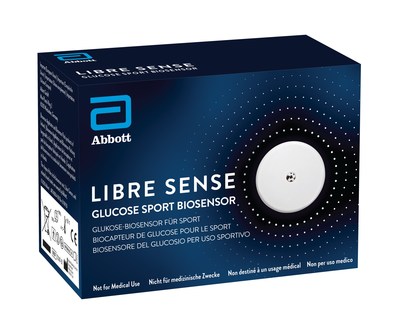
    Abbott’s Libre Sense Glucose Sport Biosensor is used by Supersapiens to provide athletes with real-time information about their blood glucose. (Photo: abbott.mediaroom.com/

    Taking a step back, here’s a condensed version of the complex physiological process that is energy metabolism surrounding exercise: Carbohydrates are the body’s primary source of energy during exercise. When carbohydrates are consumed, the body breaks them down through digestive processes into simple sugars, which are then converted into circulating blood glucose. The more complex the carbohydrate, the longer it takes for the body to break it down into its smaller building blocks.

    At rest, the body stores chains of glucose in the form of glycogen, primarily in the skeletal muscle and liver, to be called upon during exercise. Through aerobic and anaerobic processes, the body converts glucose into cellular energy in the form of adenosine triphosphate (ATP), which allows muscle cells to contract and thus power the activity. However, the amount of stored muscle glycogen is finite and depends on the volume of skeletal muscle on an athlete’s body. As muscle glycogen becomes depleted, blood glucose begins to drop, and the athlete quickly trends toward the fearsome “bonk”.

    Therefore, an athlete should supplement with carbohydrate sources — the simpler the better — during training sessions or races longer than 60-90 minutes to enable the body to maintain sufficient blood glucose levels and thereby keep their muscles fueled throughout the session.
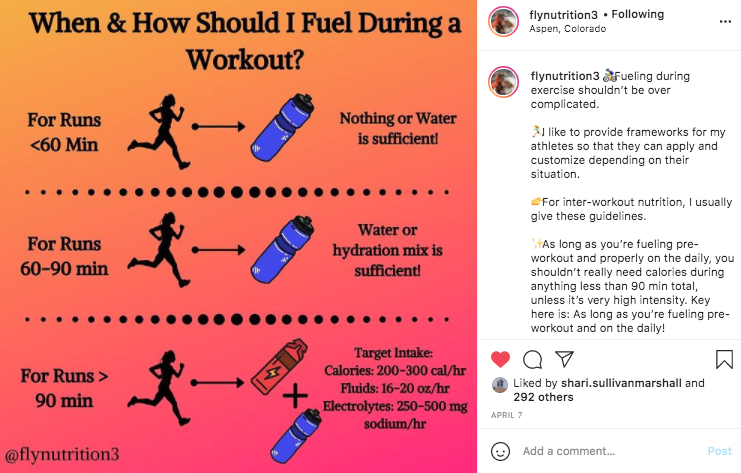
    Registered dietitian and endurance coach Kylee Van Horn’s guidelines for fueling during training. (Photo: Instagram @flynutrition3)

    After the activity is completed, the hormone insulin helps draw glucose out of the blood stream to replenish muscle glycogen stores. Readers may be familiar with the 30-60 minute window of opportunity after exercise during which the body is more sensitive to insulin and therefore can replace the depleted muscle glycogen more rapidly by taking in a post-workout snack containing carbohydrates.  

    There’s a lot more to this, but for the purpose of this article, here’s a key takeaway from “Fundamentals of glycogen metabolism for coaches and athletes”, posted in an April, 2018 issue of the journal Nutrition Reviews:

    “It is now widely accepted that consuming a diet sufficient in carbohydrates, along with ingesting carbohydrates during and following exercise, can improve performance and speed recovery… It is also well established that beginning exercise with ample muscle glycogen stores is an important contributor to improved exercise performance; further, restoration of glycogen stores is essential for complete recovery and the maintenance of subsequent exercise capacity.”

    Bringing it back to continuous glucose monitoring: By monitoring blood sugar and striving to keep it within an optimal range, athletes can become more informed about their body’s response to nutrition and training in order to dial in performance fueling, stabilize energy levels, and promote faster recovery. Peaks and valleys can promote inflammation and impair recovery and sleep, so stability is your friend.

    The Supersapiens CGM technology is not yet commercially available in the US, though they are already available in the U.K. and Europe. As such, Supersapiens — a direct-to-consumer American based company — is holding off on media interaction until the products can reach their target user base. FasterSkier will follow up with representatives to learn more about the product itself as this changes.

    Gus Schumacher races the 15k skate in Davos, Switzerland in December, 2020. (Photo: Nordic Focus)

    However, among the American athletes taking part in an observational wear trial is Gus Schumacher, with whom FasterSkier connected to learn more about how he has used the CGM thus far and what he has learned in the process. At the time of the call on August 9th, the 21-year-old Junior World Champion was in the throes of high-volume summer training in Anchorage, AK, with a handful of “the boys”, i.e., fellow top U-23 athletes Noel Keeffe, JC Schoonmaker, Johnny Hagenbuch, Sam Hendry, and more. 

    Schumacher started working with Supersapiens, alongside a dietitian from the U.S. Ski Team, to incorporate the CGM into his training in late May during the team’s on-snow camp in Bend, OR. 

    “At first, the biggest benefit was that I did research about fueling and [nutrition] through the resources with the U.S. Ski Team,” Schumacher explained. “And that just taught me a lot more about how I should be fueling during training and after training. So stuff that I sort of knew, but didn’t really focus that much on previously.”

    While some of the concepts may not seem particularly novel to those versed in nutritional practices for athletes, Schumacher explained that watching his glucose levels helped him understand the importance of fueling surrounding his training sessions and ensuring that overall, he was consuming enough food to meet the high demands he places on his body.

     “Now, I use it more for  the recovery side of things, like making sure my overnight glucose levels don’t drop too low,” Schumacher said. “I mean, part of it is — I can tell when I’m under -fueled, like if I get hungry in the morning or something.  But [using the CGM] is kind of a nice way to double check, because it’s hard to always trust your [hunger] cues when you’re when you have to eat a lot more than normal for big training days and adjust [how much you eat] to each training day. So you can be a little more secure about whether you’re eating enough.”
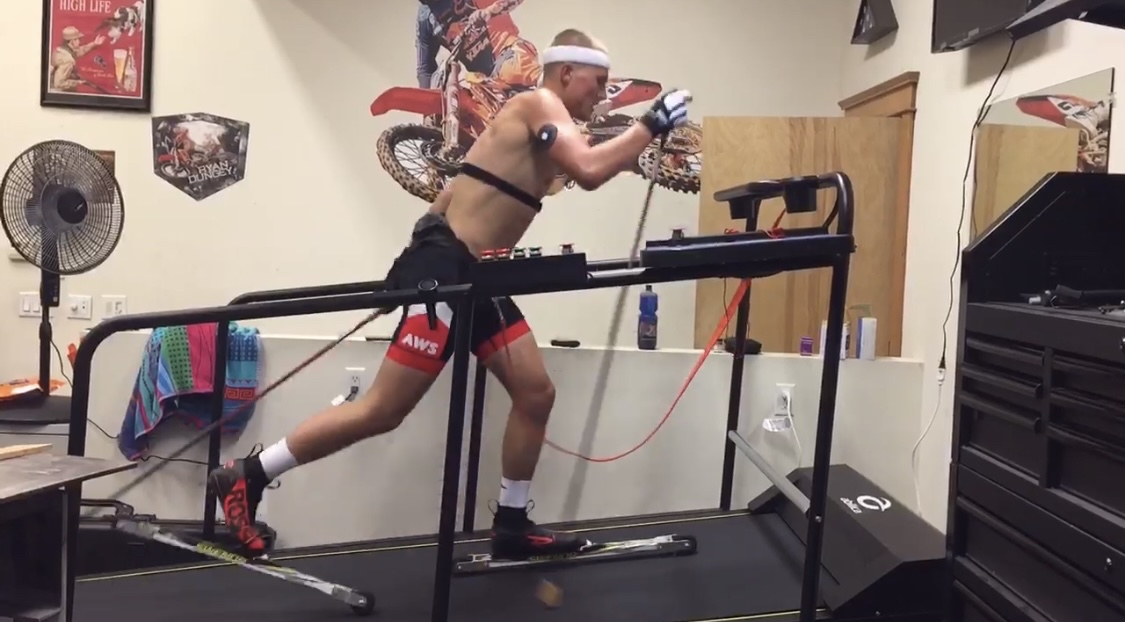
    Gus Schumacher wears a continuous glucose monitor during a treadmill training session this summer. (Courtesy photo)

    The biggest change Schumacher has made has been in his fueling surrounding training sessions. He explained that he used to rely primarily on large meals between sessions with little fuel during the session, leaving him depleted and feeling like he needed to “bomb” himself with food at lunch and dinner. He also typically carried plain water for hydration the majority of the time, incorporating sports drink for the electrolytes only when it was hot. After seeing the spikes and drops on his blood sugar and learning from dietitians, he now spreads his intake out throughout the day for more stable energy.

    “Now, I’m eating more snacks and keeping the meals like a more normal size. So — finishing [a session], having a protein heavy snack and then eating a meal within an hour, and then having a balanced snack before the next training session. And making sure to just take in carbs during that session, so I always have sports drink now and I usually also have some bars or fruit or gummies during training sessions. That’s the biggest thing I learned — even during easy sessions, you can oxidize up to 60 grams of carbs an hour roughly something like that. That’s the goal that I shoot for.”

    So is it making a difference?

    “Yeah, actually — especially on my high volume weeks. I noticed that it just seemed easier to get out the door as those sessions built up. Like, I still would eat a big lunch and stuff, but it didn’t seem like I was, like, fully come back from depleted after every session. I would finish and not feel super hungry. It just seemed a little quicker to come back to normal.”

    While his U.S. Ski Team dietitian provided the guidance on the types of foods he should incorporate and nutrient timing, the team at Supersapiens helped him understand the data he was collecting with the CGM. Specifically, they helped him through the learning curve of understanding normal and optimal blood glucose levels for different types of sessions. 

    “I would ask stuff like, ‘Why does my glucose not get that high during this session?’ Because all the information on their website shows, ‘You, will you want to figure out what’s good for your performance.’”
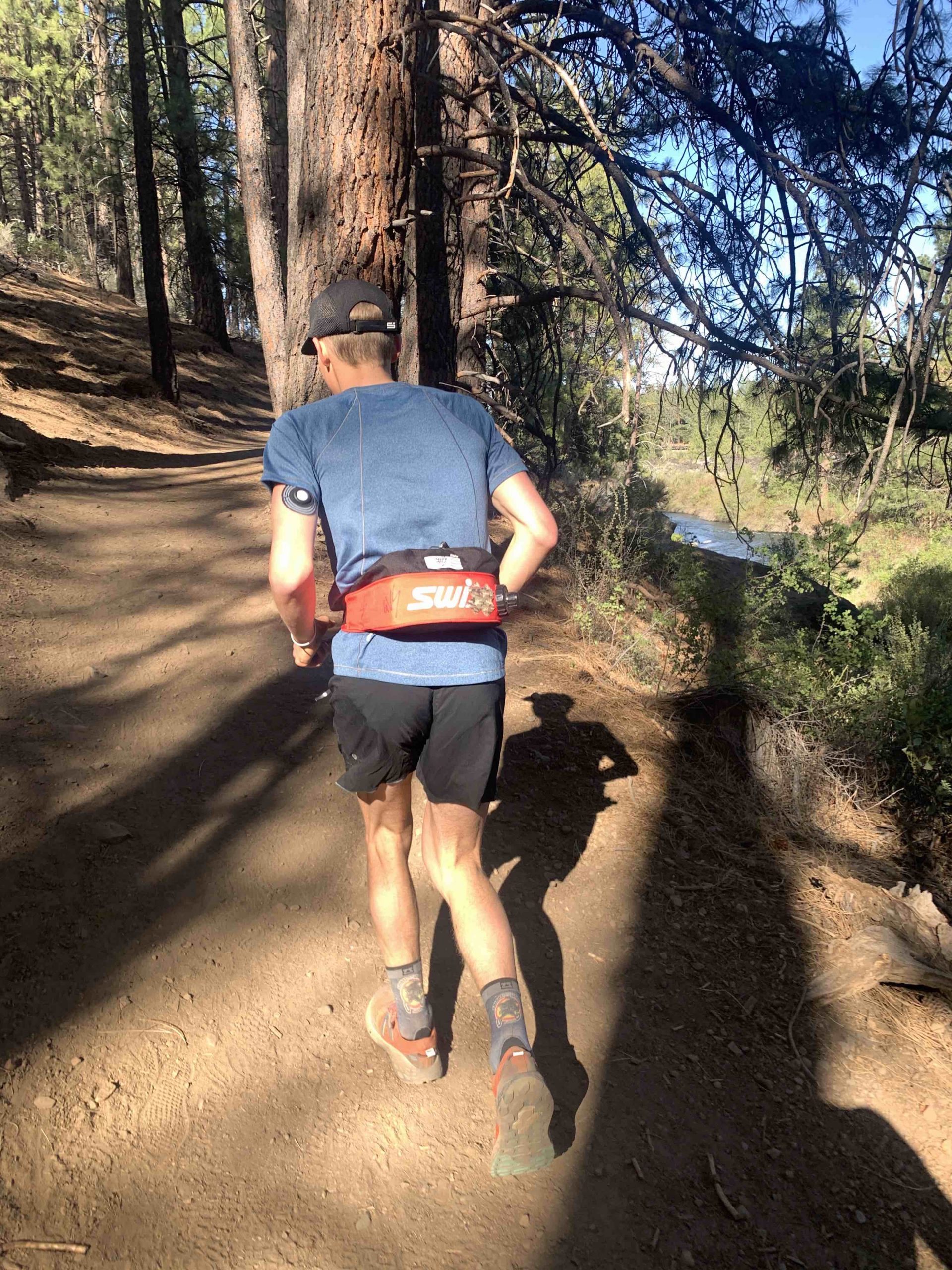
    Gus Schumacher tracks his blood sugar using a continuous glucose monitor on a training run. (Courtesy photo)

    While he was seeing in the Supersapiens information that higher blood glucose levels were important for intensity sessions, he was noticing that his levels would be on the low side during easy distance sessions.

    “I asked them about that, and for that particular instance, when you’re going easy, you’re not necessarily oxidizing a ton of glucose [and your body can rely more on breaking down its fat stores], so blood glucose can stay pretty low.”

    He also started to consider his overnight blood sugar levels to ensure he was recovering well while sleeping. 

    “[They recommended] experimenting with having a snack with a decent amount of protein and fat before bed to see if that stabilizes overnight glucose.” 

    Improving fueling and keeping blood sugar is all well and good. But, we live in a world where diet culture is rampant and the emphasis on power-to-weight ratio in endurance sports can cause athletes to develop disordered eating habits and an unhealthy body image. Skiers are already typically hooked up to a heart rate monitor and a GPS watch to collect a plethora of training data. At what point does it become too much or lead an athlete to be overly meticulous about their diet at the expense of their mental health?

    In terms of data overall, Schumacher explained he finds it interesting, and his coaches are “super into data”, but he is able to hold it lightly and not read too much into it. 

    “I think at this point, I’m still very open to trying anything — any new data collection is kind of cool… So I kind of embrace it, and if it ever feels like too much, I’m pretty good about going back to my instincts. I feel like I can fall back on that intuition pretty easily.”

    Gus Schumacher on course during the 50k freestyle at the 2021 World Championships in Oberhof, Germany. (Photo: Nordic Focus)

    Schumacher felt similarly about monitoring his blood glucose. He has gained more awareness about the foods that he consumes and how they impact his blood sugar, but he explained when pitched the question of whether he could see the use of GCM technology leading him to place an unhealthy emphasis on eating specifically to stay within a particular range that ultimately, he knows to trust his body.

    “I think that’s a good point, because sometimes when I eat something that I think is pretty good,  like a balanced meal, and [my blood sugar] spikes really hard, the knee jerk is to be like, ‘What’s going on? Why did that happen? How do I fix that?’ But, more and more as I’ve had [the CGM] on, it’s just like, sometimes that’s just like, normal. It’s whatever. So that’s when I fall back on my intuition, like, I feel satisfied.”

    To meet the energy demands of 20-30 hours of training, a pro skier needs to eat a proportionally large volume of nutrition. Endurance sports are about the long haul, and ensuring that the overall lifestyle is sustainable is essential in allowing an athlete to develop and achieve their potential. Schumacher elaborated on keeping his relationship with fueling and blood glucose in a balanced place.

    “I think it’s possible that having that data around your food can make it not that fun, like if you’re really just trying to make those numbers look good. But I think it’s important to use [the data] as an overall thing. And just use it to try to make sure your resting levels are high enough, and you’re getting enough during your training, but not worrying too much about the micro things because there’s a lot that goes into that.

    “Or [understanding that] you don’t need [the data] to be perfect to be fueling perfectly. And I think it’s fun for me to know more about performance fueling and be able to implement that day to day and feel like it’s making a difference and not have it be overbearing, because part of performance feeling is still eating stuff that makes you happy in general. So yeah, I think it’s important to have a pretty holistic view of all of it, but it’s also fun, I think, to have the eating be part of your training and to know that it matters for how you feel and just making sure you feel good all the time.”

    As this technology becomes commercially available, athletes of all levels will need to make similar considerations in the calculus of determining whether this technology and the information if provides is worth the investment (currently around £113 in the U.K. for a one month subscription, including two pods that last 14-days each). 

    To provide athletes interested in CGM technology with guidance, FasterSkier connected with Registered Dietitian Kylee Van Horn. An accomplished runner herself, Van Horn helps endurance athletes across a variety of sports dial in their nutrition to support their training and overall wellbeing through her business, FlyNutrition.

    Kylee Van Horn RDN provides athletes with guidance when approaching new continuous glucose monitoring technology. (Photo: FlyNutrition.org)

    Van Horn recommended a targeted approach, cautioning against the aforementioned possibility of becoming too focused on the data and potentially compromising the athlete’s mental health. She knows, perhaps too well, from her clients the propensity for under-fueling in endurance athletes of all levels.

    “I think there is going to be some level of risk,” said Van Horn in a call. “The more data you have — and especially within the endurance sports world, for people to tip into the restrictive eating pattern.”

    However, she expressed that using glucose monitoring to focus on key areas of nutrition could help athletes improve their overall fueling. In particular, focusing on balanced meals and snacks that provide sustained energy in and out of workouts, that also keep eating and preparing food both enjoyable and sustainable. 

    “I personally wouldn’t want to use it long-term with an athlete, but I think as a short-term, using it to dial in some specific things could be really beneficial… Dialing in what would be a really good pre-workout breakfast or meal option for [the athlete] that’s not going to cause a rebound hypoglycemic effect where we’ve got a big spike and drop in blood sugar and then we’re seeing this big energy spike and drop part way into the activity or race.”

    Van Horn also envisions a more informed version of trial and error to maintain energy levels during workouts, particularly in longer sessions or races. This could be particularly useful with athletes who have sensitive stomachs, as spikes and drops in blood sugar could exacerbate these issues.

    “The intra-workout fueling, in my opinion, would be really interesting. Because we do know that some foods do affect people differently in regards to how much they spike their blood sugar and drop it and how quickly.”

    Van Horn shared that a coach and professional triathlete who she partners with, Matt Hanson, has also been a member of the pilot group. Hanson is a three-time national champion at the Ironman distance and is the current world record holder in an Ironman event (7:39:25). 

    Hanson shared with her that he has found a lot of value in using glucose monitoring to better understand his body’s response to his pre-workout meals, because he had been experiencing big swings in energy levels. The CGM has helped him adjust these meals to foster more stable energy. He also found value in playing with the types and timing of different sports nutrition products he was consuming during his training to maintain better glucose levels and energy throughout.
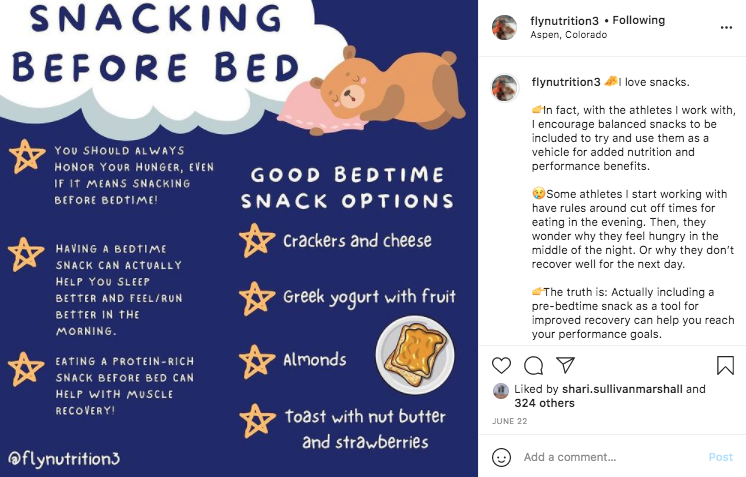
    Kylee Van Horn, RDN of FlyNutrition offers suggestions for bedtime snacks to help athletes boost sleep quality and overnight recovery. (Photo: Instagram @flynutrition3)

    Lastly, because sleep is an essential component of an athlete’s recovery and overall health, Van Horn explained that, like Schumacher noted, a pre-bed snack that contains protein and carbohydrate can be very valuable in supporting recovery and stable blood sugar during sleep, in particular for athletes training at high volumes or early in the morning.  

    “If you’re eating a snack with too high of carbohydrate or eating certain foods before bed, that can impact your recovery and cause micro-awakenings, which impacts sleep quality, so that might also be something that you could address [by monitoring].”

  • Cooking My Way Through Emma Coburn’s “The Runner’s Kitchen”

    Cooking My Way Through Emma Coburn’s “The Runner’s Kitchen”

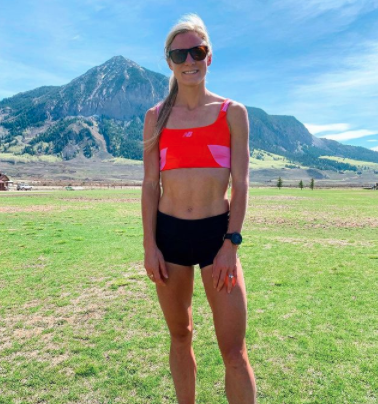
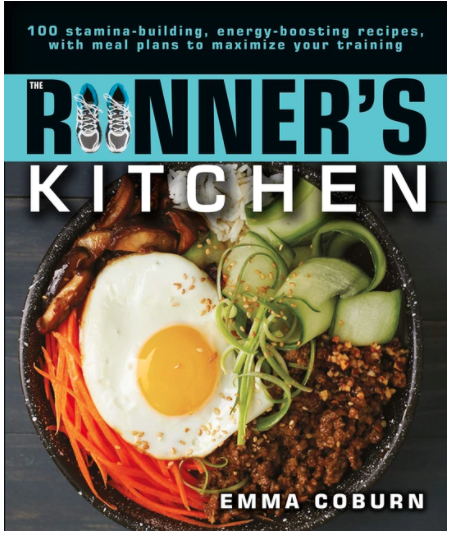
    Olympic and World Champion medalist Emma Coburn authored “The Runner’s Kitchen” cookbook, helping athletes of all levels fuel their active lifestyle. (Photo: Instagram @emmacoburn)

    Starting with a quick disclaimer, I’ve been a fan of Emma Coburn, Olympic Bronze Medalist and World Champion steeplechaser, for most of her career. Spending this winter in her hometown of Crested Butte, Colorado has, if anything, amplified my appreciation for her as both an athlete and role model for other female runners. As such, I was very excited this fall when she announced the release of her cookbook, “The Runner’s Kitchen”, and immediately pre-ordered.

    I’m pleased to say the purchase did not disappoint.

    For starters, the food philosophy Coburn promotes is a breath of fresh air. Contrasting the fad diets often promoted as a panacea in mainstream media — Paleo, keto, vegan, gluten-free — she promotes an “everything in moderation” approach. Her recipes emphasize creating balanced meals that help athletes get the nutrients they need without cutting out foods that simply bring joy and taste delicious.

    Through my time in sport, I’ve seen the prevalence of disordered eating in endurance sport from coach, teammate, and personal perspectives. My history involves a tenuous-at-best relationship with food body image, which I’ve recognized in countless others, male and female. I love the message that butter, all-purpose flour, and bacon are part of an Olympian’s diet even during peak competition season. Yes, fruits, vegetables, and whole grains are important (and prevalent in the recipes), but Coburn eschews the idea that restriction is a necessary element of a healthy diet. It’s a message that athletes of all ages can benefit from.

    “Fueling for performance doesn’t mean that you have to eat only ‘clean’ foods and cut out all of the foods you enjoy,” writes Coburn. “It means finding a balance that allows you to provide your body with the fuel it needs to perform and recover while still enjoying the foods you love.”

    In the introduction, Coburn breaks down how her nutrition strategy changes during the different phases of a training cycle: off-season, mileage increase, and peak season. She guides readers to recipes that can help them similarly tailor their nutrition to meet the demands of their training.

    Emma Coburn

    As her volume and intensity builds from January through April, she notes, “During this phase, I increase my carbs, I am diligent about eating enough protein, and when in doubt, I try to over-fuel a bit. I would rather be eating too much and feeling strong and healthy than be restrictive and risk any injury or illness.”

    While you’ll find recipes for roasted beets, cauliflower-based vegan “mac and cheese”, and kale salad, The Runner’s Kitchen also has recipes for french toast with a brown sugar crumb topping, a baked “fried chicken” sandwich with bacon, and a from-scratch chocolate cake with vanilla buttercream. I most appreciated that the ingredient lists were easy to find –most were already in my pantry– and the recipes were both creative and user friendly.

    Despite being packed with flavor and inspired by a variety of cuisine, few recipes require too much chopping or time in the kitchen — a plus for those of us squeezing in skiing around work and/or family.

    So far, all of the recipes we’ve tried from The Runner’s Kitchen have been remarkably tasty, despite our relatively mediocre cooking skills. As we’ve been trying to avoid frequent trips to the grocery store since last March, it also helped my family break out of a rut from cooking the same meals on repeat.

    Maple turmeric chicken thighs atop stir fried vegetables and rice is one of many flavorful and satisfying recipes in “The Runner’s Kitchen” by Emma Coburn. Your dog will be very jealous.

    The first recipe that caught my attention was maple turmeric chicken thighs, marinated and cooked in a flavorful sauce that has just the right amount of sweetness. Placed atop some rice and veggies, this recipe is unbelievably good. It is by far our most repeated recipe — we’ve made it five times in the two months since receiving the book. Yum.

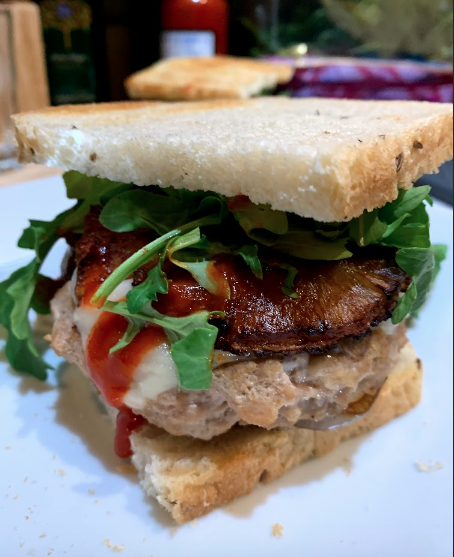
    Topped with marinated and grilled pineapple (or broiled/pan-seared when your grill is buried in snow), the teriyaki turkey burgers check all the boxes: sweet, savory, spicy, and satisfying. We also love the buffalo chicken meatballs — even my husband, who previously was opposed to ground poultry as he didn’t think it could quell his voracious appetite.

    Sweet, spicy, and filling — a teriyaki turkey burger on sourdough from “The Runner’s Kitchen” by Emma Coburn.

    Both the beet and arugula cashew pesto recipes offer a quick and refreshing alternative to our pasta routines, while also being packed with nutrient-rich ingredients.

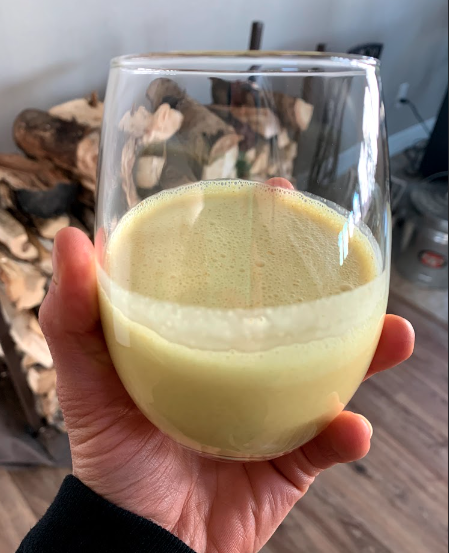
    On long ski days, I’ve taken to making the golden milk latte (with coconut milk because I don’t mix well with dairy) as a satisfying way to get in extra calories with the bonus of anti-inflammatory from the turmeric. The aforementioned chocolate cake doesn’t hurt with offsetting calorie deficits either.

    The author enjoys a nourishing post-ski golden milk latte.

    My “make soon” list includes brunch options, like veggie or chicken apple sausage frittatas, the dutch baby pancake, and shakshouka. When warm weather returns and I begin to crave crunchy and refreshing salads, I have a feeling that the Asian chicken salad will become a mainstay. I’m also eyeing the bibimbap, butternut squash gnocchi, and Pad Thai egg rolls for when I’ve got a little more meal-prep time on my hands.

    Olympic and World Champion medalist Emma Coburn authored “The Runner’s Kitchen” cookbook, helping athletes of all levels fuel their active lifestyle. (Photo: Instagram @emmacoburn)

    If I’ve sold you on Coburn’s message and piqued your interest in these flavorful recipes, you can snag an autographed copy of The Runner’s Kitchen on her website, emmacoburn.com, or order a non-autographed copy on Amazon for $19.99.

  • Product Review: Drink Wholesome Real Food Protein Powders

    Product Review: Drink Wholesome Real Food Protein Powders

    Based in New Hampshire, Drink Wholesome has roots in the nordic ski community. Founder Jack Schrupp is a Williams Skiing alumn. (Photo: DrinkWholesome.com)

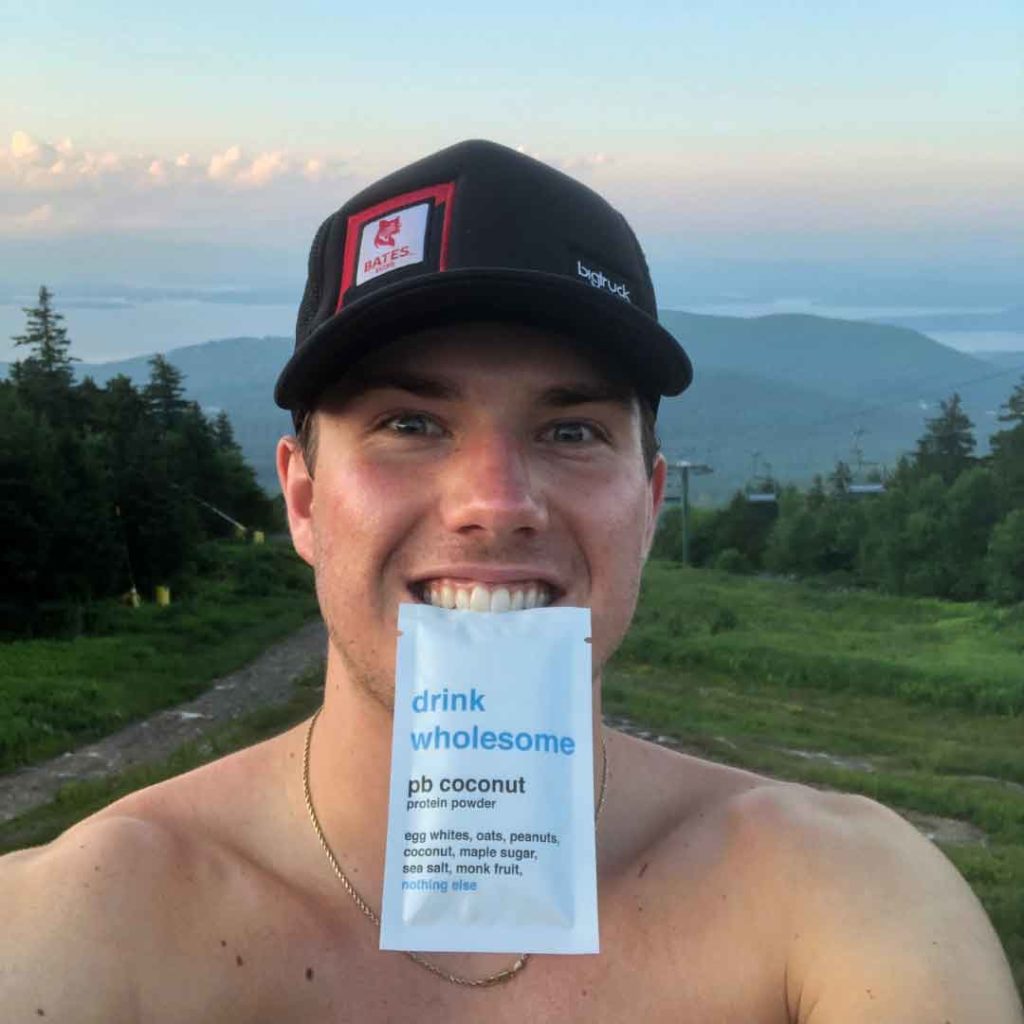
    As summer training hours trend toward a peak, many athletes are looking for ways to support their nutritional needs, matching high volume training with high volume eating. A new product that should be on your radar is Drink Wholesome protein powder, created by former Williams ski racer Jack Schrupp. This protein is basically the RXBAR of protein powders: all natural without artificial flavorings or sweeteners, packing a high nutrient protein dense punch in each scoop. 

    The nature of exercise, in particular the type of training that supports building strength and fitness for cross country skiing, is a cycle of breaking down muscle then allowing the muscle to repair itself and grow stronger. Brick by brick, we build a stronger body and more efficient aerobic and cardiovascular systems to power us down the trail. Regardless of whether you follow a rigorous training schedule, upholding an overall active lifestyle with regular exercise increases the body’s energy demands, particularly carbohydrates to replenish glycogen stores and protein to support muscle recovery. 

    According to the International Society of Sports Nutrition (ISSN), athletes require approximately double the protein intake of an inactive healthy individual to support their overall health and recovery from exercise. By the numbers, an inactive individual requires approximately 0.8 grams of protein per kilogram of body weight, whereas an athlete needs 1.4 – 2 grams per kilogram. For an athlete who weighs 160 lbs, this means consuming 100 to 145 grams of protein each day. 

    Research supports that this is true regardless of the type of exercise an athlete engages in, or whether they are recreational versus elite. The ISSN also explains that insufficient protein intake leads to impairment in the body’s ability to recover from exercise and an increase in muscle catabolism, meaning muscles continue to break down rather than repair after exercise. 

    Endurance athletes — like a road cyclist or marathoner — generally fall on the lower end of the range, while those who engage in more strength and power based sports — like weight lifting or CrossFit — occupy the upper end. Where does this leave skiers who lift heavy, throw down during intensity sessions, AND put in lots of hours of L1? Probably somewhere in the middle. 

    Spreading intake throughout the day has been found to best support muscle protein synthesis, while additionally contributing to a more favorable body composition and improved performance outcomes. This means meals and snacks should contain 20-40 grams of protein each, assuming you’re eating every three to four hours.

    For many, these demands can be met with a balanced and varied diet, but protein powders can be a convenient option to boost protein intake, especially when your stomach might not feel up to a full meal after a hard set of intervals or if you are unable or choose not to eat certain foods. 

    I tend to fall into both of those categories. During the summer, I generally maintain 50 to 60 miles per week of trail running with a day or two of rollerskiing or mountain biking, combined with the general activity of chasing around a toddler requires that I stay on top of my game while properly fueling my body. But hard training tends to throw off my body’s hunger cues – my stomach can only handle a small amount of dairy, and I choose not to eat a lot of meat. 

    Protein powder has been a nice insurance policy to support my nutritional demands and help me stay healthy. However, it can be hard to find one that I feel good about consuming as many are laden with artificial sweeteners and ingredients I’d have to Google. They also often taste chalky, overly sweet, and like artificial flavoring. 

    As such, I was excited to try Drink Wholesome protein. After a similar experience with protein powders, the designer, Schrupp, set out to create a product made only of natural ingredients that also tasted good. What resulted is a line of products that have egg white as the first ingredient, or chickpeas for the vegan protein options. They’re sweetened with monk fruit or maple sugar, taste delicious, and pack in 20 grams of protein per serving. 

    As an extra nod for the ingredient list, Registered Sports Dietician Kylee VanHorn explains in an article for Trail Runner Magazine that egg white protein has been found to be one of the most bioavailable protein sources, meaning it is easily digested and absorbed allowing it to be readily used for muscle repair. It is second to whey protein, but easier on the stomach for many. 

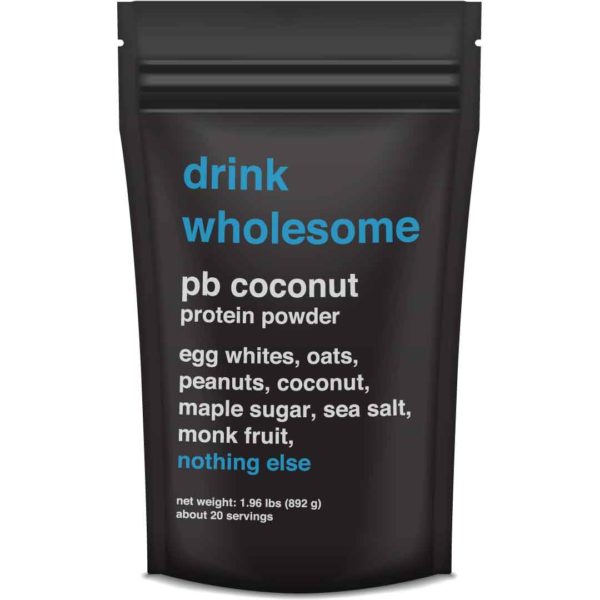
    Drink Wholesome is an all natural protein powder made from ingredients you can pronounce and find in your kitchen. (Photo: DrinkWholesome.com)

    Of the three flavors I tried — peanut butter coconut, mocha, and peanut butter chocolate (vegan) — the pb coconut takes the cake as a total slam dunk. Though perhaps a bit sweeter than the other two, it tastes on its own great blended with water and a splash of almond milk as a post-workout drink to jumpstart recovery. Note that without anti-caking or gelling agents, emulsifiers, or stabilizers, you’ll get the smoothest mixture by preparing this with a blender or in a shaker bottle. 

    Getting in the habit of mixing up a drink, tossing in some ice cubes, and keeping it in my car to drink after long runs in the mountains when I am generally dehydrated, depleted, and usually feeling a little blah from consuming lots of sports nutrition products on the go has made a big difference in how I feel later that day and the next day. 

    Most commonly, I stir a half-serving Drink Wholesome into my post run breakfast bowl of oatmeal topped with berries and nuts. Since the protein is sourced from egg white and peanuts, it doesn’t curdle when mixed into the bowl of hot oats, which I have experienced with whey products, making a thick and creamy texture packed with flavor. The vegan pb chocolate is a close second for this purpose, especially when paired with strawberries. 

    I’ve also enjoyed adding Drink Wholesome to smoothies. One of my go-to blends has become a banana, a handful of spinach, some almond milk, a scoop of mocha protein, and ice, maybe with some nuts tossed in after for texture and fats. It tastes like a coffee milkshake and provides me with plenty of energy to keep me going. 

    As a parent who generally has to share whatever they are eating with their toddler, it also feels good not to hesitate to give my little one a sip or bite since I know the ingredients are all natural, and it has the added benefit of exposing her to multiple common allergens (peanuts and eggs), as is recommended to reduce the risk of developing an allergy to those foods later on. I’ve also noticed a marked decrease in bloating without the whey protein or artificial sweeteners I had been consuming. 

    I also feel good about supporting the company’s principles: “keep it real food, keep it local, keep it green”. Drink Wholesome, which is based in New Hampshire and produced in small batches in Massachusetts, sources free range eggs and organic ingredients locally whenever possible. Not using whey protein cuts out the dairy industry, reducing their environmental footprint, and the company gives back, aiming to donate at least 10% of its profits to the preservation of green spaces in New England by 2022. Specifically, the donation goes toward purchasing undeveloped land for public use, particularly in areas where access is limited. 

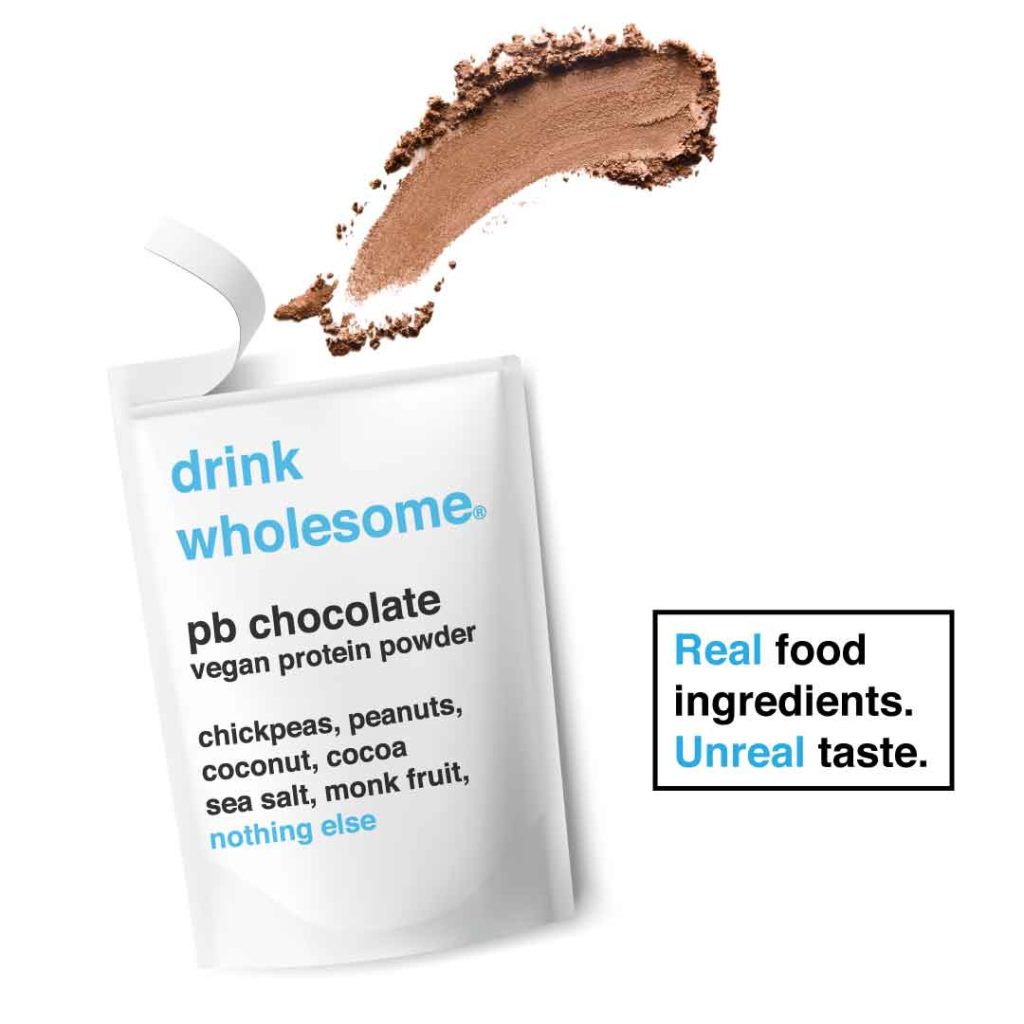
    Drink Wholesome offers a vegan protein powder made from chickpeas and peanuts and sweetened with monk fruit. (Photo: DrinkWholesome.com)

    Drink Wholesome protein can be ordered on their website. Full sized bags of egg white based protein retail at $38.00 for 20 servings, or $26.60 for 14 servings of vegan protein. You can also order two free sample servings to see which flavor suits your palate. 

  • Book Review: “ROAR: How to Match Your Food and Fitness to Your Female Physiology for Optimum Performance, Great Health, and a Strong, Lean Body For Life” by Stacy Sims, Ph.D

    “ROAR: How to Match Your Food and Fitness to Your Female Physiology for Optimum Performance, Great Health, and a Strong, Lean Body For Life” by Stacy Sims, Ph.D is an excellent resource for female athletes, parents, and coaches. (Photo: Screenshot Amazon.com)

    This book is for female athletes ages 12 to 92. Or for parents of female athletes. Or coaches of female athletes. Or anyone who wishes to otherwise support female athletes. 

    In 2016, Stacy Sims, Ph.D sparked a shift in training philosophy with her simple message to female athletes: “You are not a small man. Stop eating and training like one.” 

    Although the fact that there are physiological differences between men and women are abundantly clear, the implications in the realm of athletic performance do not date back to proto-humans.

    In her book, “ROAR: How to Match Your Food and Fitness to Your Female Physiology for Optimum Performance, Great Health, and a Strong, Lean Body For Life”, Sims explains that for generations, research in exercise physiology excluded women because the varying hormone levels depending on age and phase within the menstrual cycle created anomalies in data. It was assumed — perhaps naively by male scientists — that women followed the trends seen in studies performed on males. 

    Sims experienced this phenomenon first-hand during her own career as an elite triathlete; she competed in the Ironman World Championships in Kona, HI and the XTerra Worlds in Maui. She recognized that the training plan her male peers followed did not work as well for her, and that she and her female teammates recognized their fueling and hydration needs and performance were impacted by their menstrual cycles. So she set out as a scientist to better understand female-specific physiology. 

    Stacy Sims, Ph.D, is an exercise physiologist and nutrition scientist who specializes in female performance. (Photo: Screenshot Facebook.com/drstacysims)

    From 2007 – 2012, Sims studied “sex differences of environmental and nutritional considerations for recovery and performance” at Stanford University. Basing “ROAR” on the outcomes, Sims offers women research-based methods to align their training, fueling, and hydration with their female physiology to improve performance. 

    “Sex differences extend far beyond ponytails and sports bras,” she writes in the introduction.

    Some of the topics in the book include aligning training and performance schedules with phases of the menstrual cycle, understanding how female hormones affect nutrition and hydration needs, the impacts of hormonal birth control, and the effects of aging and menopause on physiology and performance. While the supporting science is included, it is well explained and can be easily understood without a degree in exercise physiology, endocrinology, or nutrition.

    Though I have been training, competing, and menstruating for more than half my life, I found “ROAR” to be eye-opening and an invaluable tool to identify opportunities to improve my own training and nutrition as I prepare for the American Birkie. I highly recommend it as a resource for female athletes of all levels and for anyone who works with female athletes. 

    Here are some of my biggest takeaways. 

    “Chapter 1: Demystifying and Mastering Your Menstrual Cycle.” 

    Right off the bat, Sims states that periods should not be avoided, and the absence of menstruation is a major red flag indicating that the athlete is not properly fueling their body, resulting in RED-S. She emphasizes that an under-fueled athlete cannot achieve peak performances and is impairing their overall health. Sims advocates for an “all in” approach to naturally restoring the body’s hormone balance by decreasing training intensity and volume (athletes can shift focus to technique here), and increasing caloric intake.

    Dr. Stacy Sims, author of “ROAR: How to Match Your Food and Fitness to Your Female Physiology for Optimum Performance, Great Health, and a Strong, Lean Body For Life”, sends a clear message to female athletes experiencing menstrual disfunction. (Photo: Instagram @drstacysims)

    In this chapter, Sims also unravels the phases of the menstrual cycle, providing information on the physiological effects of hormonal fluctuation.

    One of the biggest surprises she shares is that competing during your period actually aids performance, because that is the phase of the cycle when estrogen and progesterone are at their lowest. In the hormonal sense, this is when women and men are most alike. 

    “Once you’re in the clear of the possibility of pregnancy, the body goes into a more relaxed mode and all those energy systems used in the high-hormone phase are at your disposal for exertion,” Sims writes. 

    She explains that this optimal window extends through the low-hormone follicular phase in the week following menstruation. This window is also when women are at their strongest and can experience increased pain tolerance and decreased recovery time. This is the best window for an intense training block or a peak race, though the latter is not always in our control.

    Anecdotally, my summer goal race, the Lead King Loop 25k trail run, fell during my period. While I was expecting the worst (since I had not yet read the book), I ended up crushing my time goal, finishing third for women, and feeling the strongest I had in years. 

    Conversely, during the luteal phase of the cycle when estrogen and progesterone are at their highest. Though performance metrics like VO2 Max and lactate threshold remain constant, it is harder for women to build and repair muscle. Carbohydrate demands are higher during this phase, which affects fueling needs during exercise and may explain why many women experience cravings during the week before their period. Blood volume is also impacted, which can make it harder to control body temperature — not the easiest time to race in the heat!

    There are also the lovely symptoms of PMS which include cramping, headaches, GI issues, bloating, and mood swings. Sims explains why each of these symptoms occurs and offers suggestions for mitigation.

    Her overarching message is not to dwell on manipulating the cycle to align the low-hormone phase with peak performance, and especially not to fear the menstrual cycle as an athlete. Rather, by understanding the female physiology throughout the cycle, athletes can feel empowered to adjust their nutrition and hydration accordingly to optimize training and performance at any phase of the cycle.

    One addendum: the impacts of high levels of estrogen and progesterone also explain the negative performance impact many women experience from hormonal contraceptives. This method of birth control uses artificial forms of these hormones throughout the cycle to manipulate the lining of the uterus and prevent ovulation, essentially prolonging the high-hormone phase. 

    “Chapter 10: Daily Fueling”

    I found this takeaway less revolutionary, but so important to repeat. Sims advises women to eschew diet culture, in particular the low-carb high-fat trends, like the Ketogenic diet. She explains that while some males respond well to this type of fueling, women experience elevated levels of the stress hormone cortisol, which increases muscle breakdown and impairs the body’s ability to repair. A double whammy. 

    “In the end, a low-carb diet compromises your ability to maintain high-intensity or prolonged periods of exercise and puts your body under exorbitant stress.”

    Sims recommends a well rounded diet that includes roughly 30% of calories coming from protein, 30% fat, 40% carbohydrate. 

    No surprise — the longer and harder you train, the more carbohydrates your body needs. The same goes for protein. She offers a formula to calculate individual need for these macronutrients based on the current demands of your training program.

    From her guidance, I recognized that I need to include a bit more protein before and after my workouts (Sims recommends 10-15 grams before, 25-30 grams after hard exercise). I have also begun including a bit more protein in my bedtime snack, which typically looks like some Greek yogurt and a piece of whole grain toast with peanut butter. 

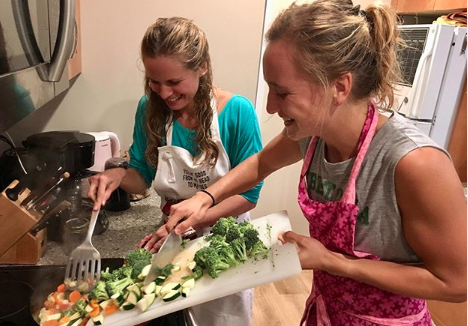
    Alayna Sonnesyn (SMST2) captions this shot of cooking with Jessie Diggins, “Gotta fuel hard to train hard!”. (Photo: Instagram @asonnesyn)

    Sims also recommends front-loading calories, in particular carbohydrates, during the morning when the body’s natural hormone stasis makes it “primed for carbohydrates”, whereas it can rely more on fats and protein later in the day. This helps keep blood sugar levels balanced, preventing spikes and crashes in energy throughout training and life. 

    Are you, like me, a 5 AM alarm clock athlete? Just give me some coffee (life-blood) so I can properly tie my shoes and get out the door! It turns out, training first thing in the morning with an empty stomach is a recipe to put your body in an over-stressed state. 

    “[Fasted training] is particularly bad in the morning because your cortisol (a stress hormone) levels are already elevated. If you go out and exercise first thing, your body wants to pump out more cortisol, but needs the right ingredients to manufacture it, which are your sex hormones – testosterone, estrogen, and progesterone.”

    High levels of cortisol stimulate fat storage and impair muscle repair and growth — not what you were hoping to get out of that gym session! You’re also digging yourself into a calorie depleted hole… 

    To counter these effects, Sims recommends consuming some protein and carbohydrates before the session, which boosts blood sugar and drops cortisol levels. In an Outside Magazine piece, Sims shares that one of her go-to’s is oats soaked overnight in almond milk and topped with greek yogurt and a little maple syrup. Yes — you might need to give yourself a little extra time to digest before getting after it, but that gives you time to do that foam rolling or activation drills you’ve been neglecting, or to mindlessly scroll Instagram. Just me?

    “Chapter 11: Sport Specific Fueling”

    This is where Sims dives into the nitty gritty. Her advice for pre, during, and post-workout fueling include explanations of how various carbohydrates are broken down in the gut and suggestions to troubleshoot GI issues like cramping, bloating, and sloshing. And though her book is based on female physiology, this section is beneficial to those with Y-chromosomes as well. 

    One of the most revealing messages regarded the breakdown of sports gels in the stomach. I have never had much luck with gels during races or training — I inevitably end up with a bloated crampy belly and sticky residue in my mouth, on my hands, and wherever I stash the wrapper. Perhaps I was just looking for Sims to confirm this bias, but her explanation of the digestive process sealed the deal that candy and real food alternatives will continue to be my fuel of choice. 

    “The trouble with gels”, as Sims puts it, comes down to two factors: osmolality and the mix of sugars contained in the gel. Osmolality is “the concentration of dissolved particles such as electrolytes in your blood plasma. The higher the carb concentration, the higher the osmolality, and the slower it leaves your stomach and your intestines.” 

    Essentially, the viscous sugary gel is too thick to be absorbed readily during exercise when your body is diverting blood flow into your working muscles and away from your stomach. Even washing it down with water, as is recommended, does not transform the gel into an optimal form. 

    Dr. Stacy Sims, author of “ROAR: How to Match Your Food and Fitness to Your Female Physiology for Optimum Performance, Great Health, and a Strong, Lean Body For Life”, provides revolutionary information on performance hydration and nutrition. (Photo: Instagram @drstacysims)

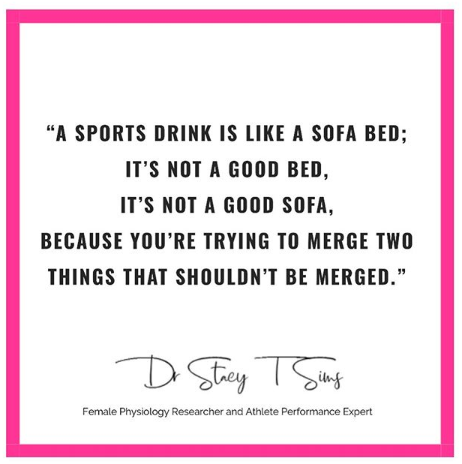
    This concept is explored further in the subsequent chapter, “Hydration is Power”, which transformed my understanding of hydration. Sims explains that many electrolyte drink solutions aim to be a source of fuel and fluids, but this doesn’t jive with the body’s digestive processes either. Sims recommends the approach of “hydration in your bottle, fuel in your pocket”, meaning separating the two for better overall fueling. The chapter is so rife with information that summarizing it here does not do it justice — go read the book!

    Back to gels. The second factor of the problem is that most gels contain a blend of three sugars: glucose, fructose, and maltodextrin. The first is good, the second two are difficult for the body to digest, requiring water to be drawn from the bloodstream into the gut during digestion, which leads to the suboptimal sloshy gut feeling. No bueno.

    That said, Sims acknowledges that gels do work well for some athletes. If this is the case for you, there is no need to fix what isn’t broken.

    What should you use if you need an alternative? Sims recommends using 100-200 food calories per hour containing primarily carbohydrates, though some protein and fats are okay. For the above reason, she recommends avoiding fructose — which is found in fruits — and sticking to low-fiber foods that contain glucose and dextrose, which can be found in bread, and sucrose, which is table sugar. In essence, nibbling on a PBJ might keep your stomach happier and your body better fueled during a training session than sucking down a couple of GUs. 

    She also speculates that many people place too much emphasis on fueling during races, but it is not a “more is better” scenario.

    “Contrary to what you may have heard, when in doubt, err toward the lesser amount [of food]. It is very common for athletes to overeat during training and racing with the thought that they are supplying their muscles with needed carbohydrate. But in reality, you’re consuming more than your gut can absorb, so the excess just remains in the stomach or intestinal tract too long, causing nausea, pain, and discomfort (which, of course, impairs performance).”

    Sims also emphasizes that when it comes to performance in long events, like the Birkie, hydration is king. Your over-distance training session bonk might actually be a result of dehydration, not of under-fueling. 

    “I’m going to drill the point home here. The solution to staying strong and delaying fatigue is taking care of hydration first and foremost — reducing your loss of blood volume — and topping off your stores with small amounts of carbohydrates from real food when possible, not the kind you drink or slurp.”

    The Consensus

    These points hardly scratch the surface of what “ROAR” has to offer. It is a worthwhile read for any female athlete, regardless of age or performance level, and can certainly be a valuable tool for a coach looking to direct developing female athletes to sound nutritional guidance to help build a healthy body that also performs its best. Having a period is a good thing. Fueling the body is essential. “Women are not small men.”