Tag: Periodization

  • For Masters Skiers, More Recovery Is Not the Answer

    For Masters Skiers, More Recovery Is Not the Answer

    This article was made possible through the generous support of our voluntary subscribers. If you value coverage like this, please support FasterSkier with a voluntary subscription.

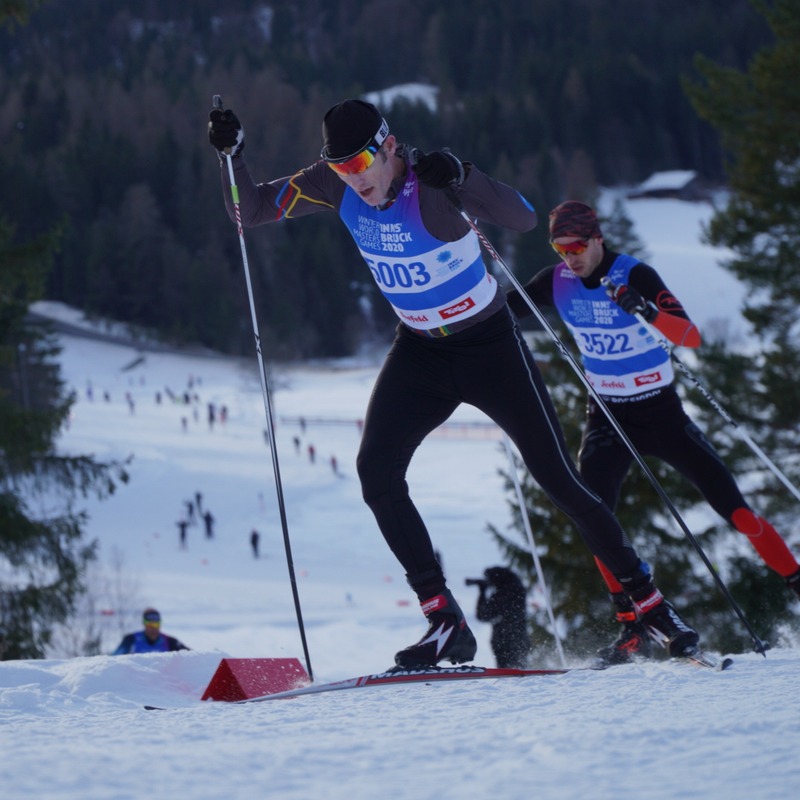
    Two masters racers skate up a rise in bibs from the 2020 Winter World Masters Games in Seefeld, Austria
    Tim Donahue racing at the 2020 Winter World Masters Games in Seefeld, Austria. Jim Galanes argues that the training masters skiers cut first is often the training that protects what aging takes away fastest. (Photo: Garrott Kuzzy / Lumi Experiences)

    There are two common problems I see in the masters athletes I consult with or coach. The first is the same problem we see with athletes of all ages: they tend to train “half hard” every day. Half hard, Zone 1 quickly drifts into Zone 2 or 3. The second is more specific to masters athletes. They try to follow a training plan that is basically a dumbed-down version of an elite athlete’s program.

    The first problem is relatively straightforward to address. Determine appropriate training zones and control the intensity of training more accurately.

    The second is more complicated. We need to determine the volume of training an athlete can recover from, adapt to and maintain consistently. Then we need to organize that training around the physiological capacities that are most likely to decline as we age.

    There is truth behind the conventional advice given to masters athletes. Recovery does change with age. Simply repeating the training we did at 25 or 30, or copying the program of an elite athlete, is never the best approach at 50, 60 or 70.

    But there is a problem with how we sometimes respond to that reality. Many of the training components we tend to remove as athletes age are exactly the components that address the physiological capacities declining most rapidly.

    The challenge of training as a masters skier isn’t simply figuring out how to recover better. It is figuring out how to provide enough training stimulus to maintain and improve the capacities that are naturally declining with age while still recovering sufficiently to adapt to the volume of training.
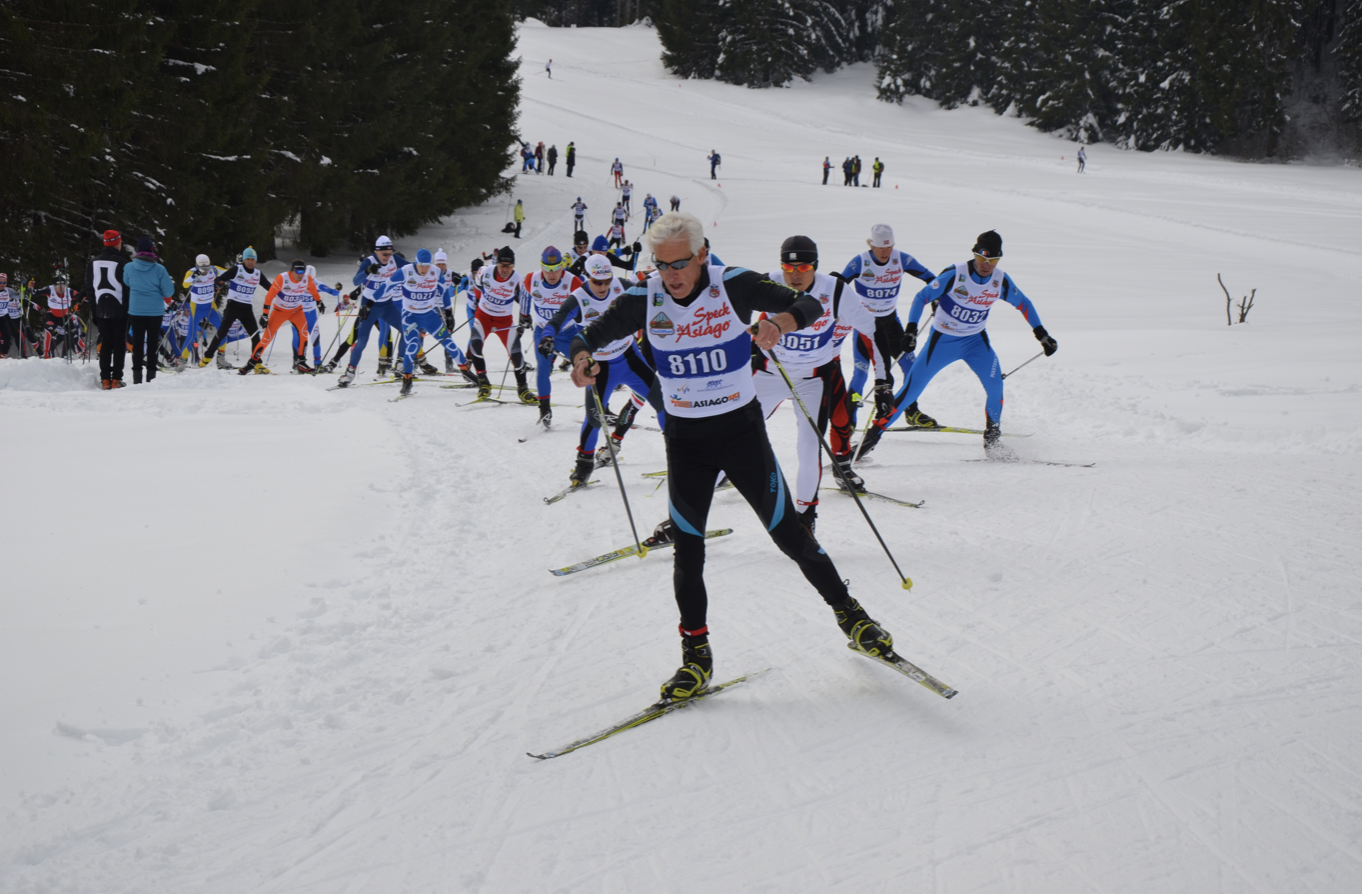
    A masters field skating up a snowy climb behind a white-haired leader wearing bib 8110
    A masters field on the climb at the 2014 Masters World Championship in Asiago, Italy. Endurance performance declines with age, but the individual components of performance do not decline at the same rate. (Courtesy photo)

    What Actually Changes with Age?

    We know endurance performance declines with age, but the individual components of performance do not decline at the same rate.

    One of the largest physiological changes is generally VO2max. Maximum heart rate declines. Muscle mass and maximal strength decline, both of which are important to maintaining aerobic capacity and skiing performance. Type II muscle fibers and explosive power become increasingly difficult to maintain.

    Meanwhile, exercise economy and the ability to sustain a relatively high percentage of VO2max can be reasonably well maintained in highly trained older athletes. That should tell us something about training.

    If these capacities decline at different rates, it doesn’t make much sense to treat them equally in training.

    There is a temptation as we age to gravitate toward the training we tolerate best. The problem is that the capacities we tolerate best may also be the capacities we are already preserving reasonably well.

    Training should not simply reflect what aging makes easiest to do. It must continue to address what aging is taking away. If VO2max, strength and power are among the capacities most vulnerable to aging, eliminating high-intensity and strength training in the name of increasing recovery may solve one problem while creating another.
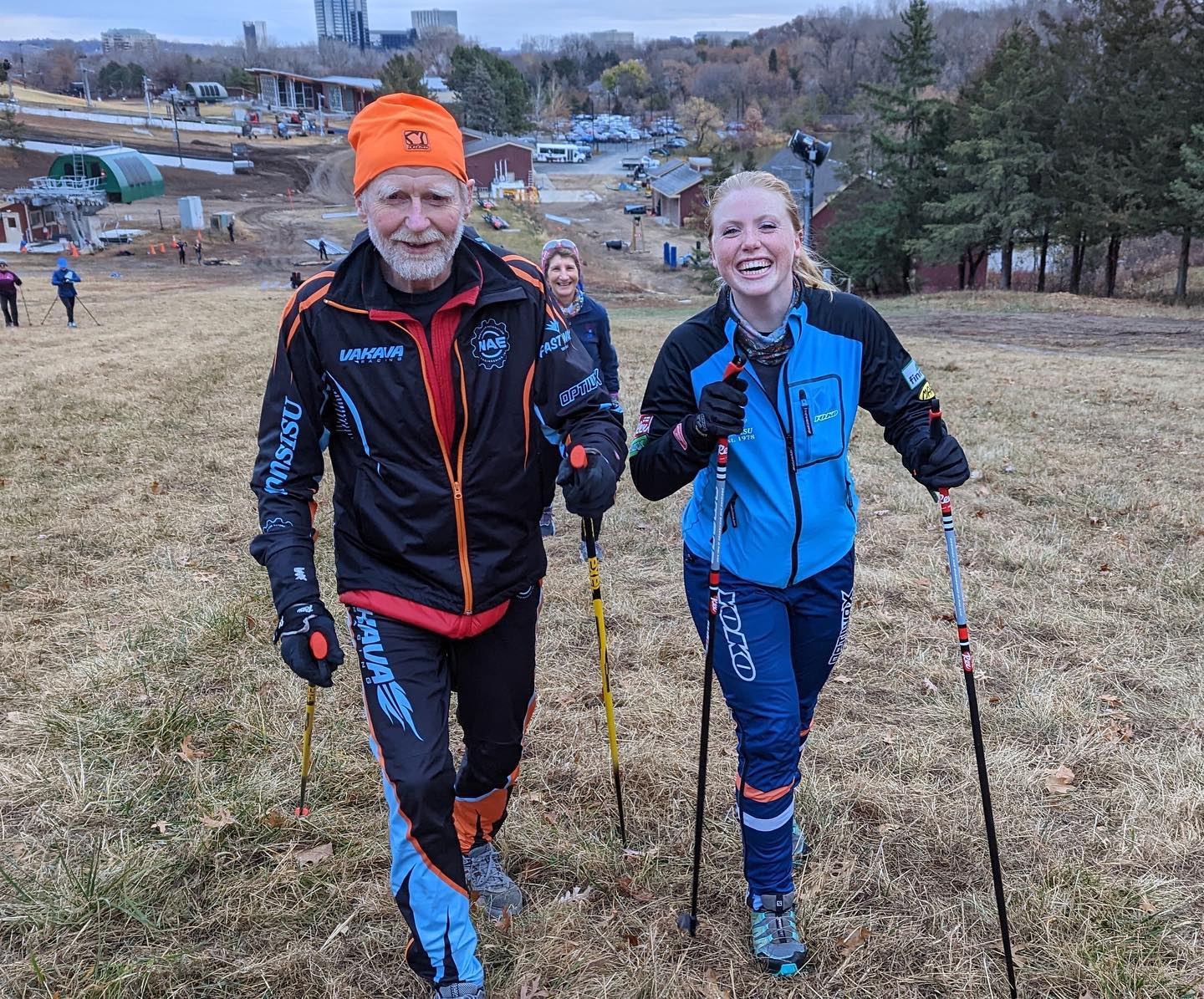
    An older skier in a Vakava race suit walks up a grassy hill with poles beside a younger skier
    Ahvo Taipale during a Vakava training session. Consistently accumulated aerobic volume remains one of the primary drivers of endurance adaptation, and one of the best defenses a masters skier has. (Photo: Finn Sisu)

    Maintain the Aerobic Volume

    There has been considerable emphasis in endurance training recently on large volumes of low-intensity training combined with substantial amounts of threshold and sub-threshold work.

    There are good reasons for that approach, particularly among highly trained elite athletes. But simply transferring that model to masters athletes can overlook the capacities most threatened by aging, particularly VO2max, strength and power.

    So how much Zone 1? How much threshold? How much VO2max?

    Those are important questions, but they can obscure something more fundamental.

    Consistently accumulated training volume remains one of the primary drivers of endurance adaptation. Masters athletes sometimes respond to aging by progressively reducing volume and attempting to compensate with intensity. There are limits to that strategy.

    Mitochondrial development, capillarization, fat oxidation, durability and the ability to maintain performance over long races are built largely through accumulated aerobic work. A two-hour easy ski is not interchangeable with a hard interval workout simply because the interval session produces more acute physiological stress.

    For a masters skier who has trained for decades, maintaining as much sustainable aerobic volume as possible may therefore be one of the most important defenses against declining endurance capacity.

    The key words are sustainable and consistent training.

    The volume has to be performed at the right intensity. It has to be something we can recover from day after day and, most importantly, adapt to over weeks and months.

    As we have written previously, occasional hero weeks followed by heavy fatigue and a subsequent reduction in training for recovery are less effective than weeks and months of consistent training at a sustainable level.
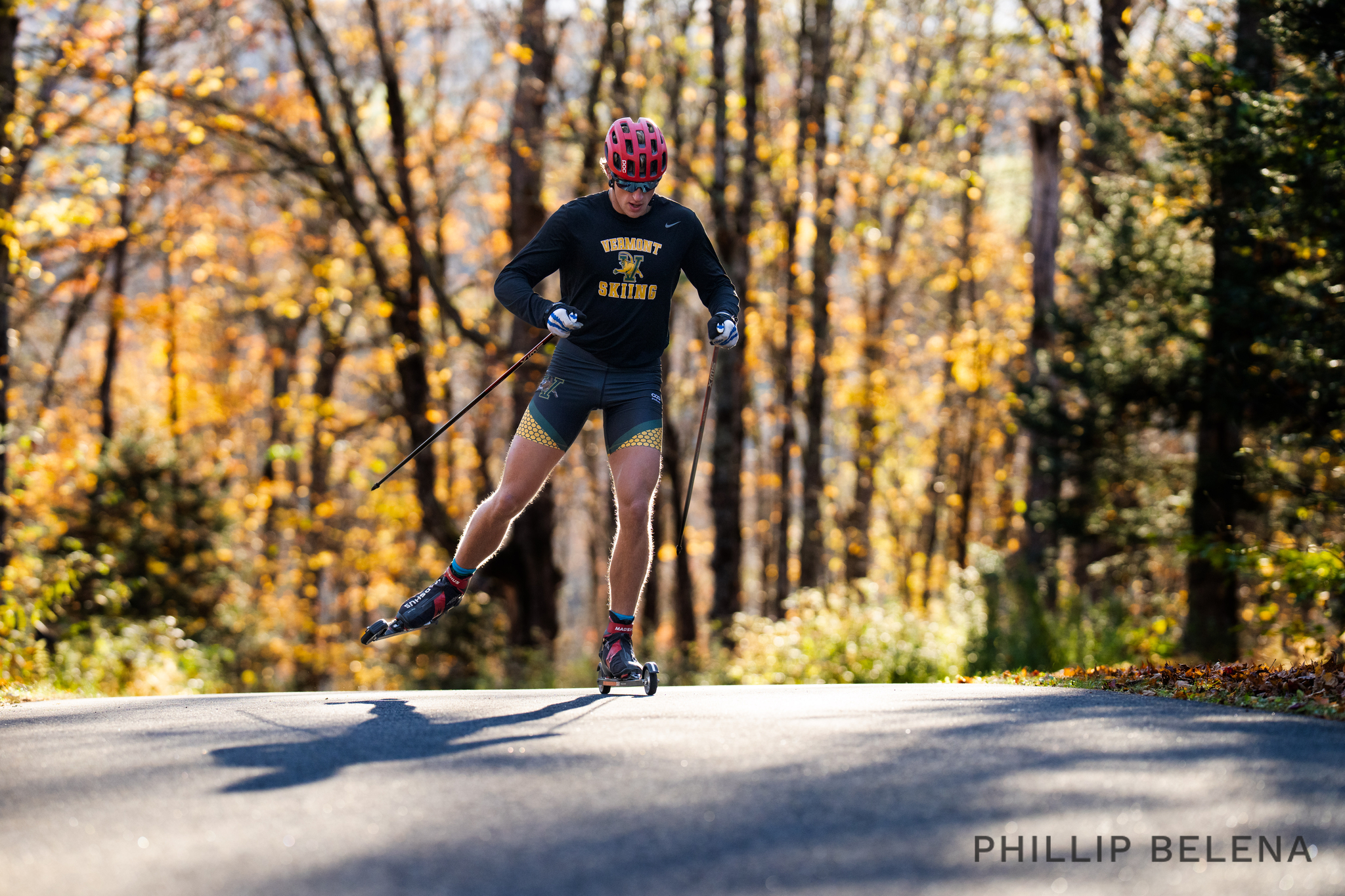
    A University of Vermont skier rollerskiing up a paved climb through autumn woods
    UVM’s Fin Bailey drives up a climb on the Craftsbury Outdoor Center track. The answer to aging is not necessarily more high-intensity training, but keeping the frequency of the stimulus while controlling the dose. (Photo: Phillip Belena)

    Don’t Abandon Intensity

    The opposite mistake is maintaining plenty of volume while gradually eliminating the hard training. This is understandable, particularly for those who enjoy the “half hard” training.

    When we stop performing high-intensity training consistently, we lose some of our adaptation to that capacity. Every subsequent interval workout or race is then harder than it used to be, and recovery takes longer, because we have eroded that capacity. That can reinforce the idea that high intensity itself is the problem.

    But VO2max is also one of the physiological qualities most strongly affected by aging. So the training stimulus we may most need to maintain becomes increasingly difficult to perform and recover from. The answer isn’t necessarily more high-intensity training. It is maintaining the frequency of the stimulus while controlling the dose.

    That may mean less high-intensity work in an individual session, but performing it consistently throughout the year. Fifteen to twenty productive minutes near VO2max may provide a better stimulus than turning every interval workout into a contest to see how much we can do. For many masters skiers, one or two genuinely hard aerobic sessions every seven to ten days may accomplish more than two or three mediocre high-intensity sessions every week.

    The appropriate frequency depends on training history, age, fitness and recovery ability, not on a predetermined seven-day formula.

    A grey-haired skier spreads his arms in celebration wearing a finisher medal at the Engadin Skimarathon finish
    Gunnar Knapp finishes the Engadin Skimarathon. Threshold and sub-threshold training allow considerably more work to be accumulated at a high aerobic rate. (Photo: Garrott Kuzzy / Lumi Experiences)

    Threshold Has a Different Job

    Threshold training shouldn’t simply become the safer substitute for VO2max training. It is not. In fact, the metabolic and neuromuscular cost of a typical threshold session may be greater than that of a typical controlled VO2max session.

    VO2max training provides a powerful stimulus to central aerobic capacity, cardiac output and the ability to deliver and utilize large amounts of oxygen. Threshold and sub-threshold training allow considerably more work to be accumulated at a high aerobic rate while developing the ability to sustain that rate economically.

    One of the important considerations in deciding how much emphasis to place on each is fractional utilization: the percentage of VO2max an athlete can sustain for a prolonged period. An athlete with a relatively low VO2max but already high fractional utilization may gain relatively little by continually emphasizing the quality that is already strong while allowing the aerobic ceiling above it to decline.

    Conversely, an athlete with a large aerobic capacity but relatively poor ability to sustain a high percentage of it may have considerably more to gain from threshold and sub-threshold training.

    This becomes particularly important in highly trained skiers. The speeds elite skiers can maintain at threshold or just below it can be quite close to actual race velocities. That speed and the muscular demands associated with sustaining it are part of what makes the training effective.

    For cross-country skiers, both qualities matter.

    A skier may have an excellent VO2max but lack the muscular endurance to translate that capacity into sustained double poling or climbing. Another skier may have excellent threshold durability but gradually lose the aerobic ceiling above it.

    The question isn’t whether threshold or VO2max training is better. The question is which physiological limitation we are trying to change.
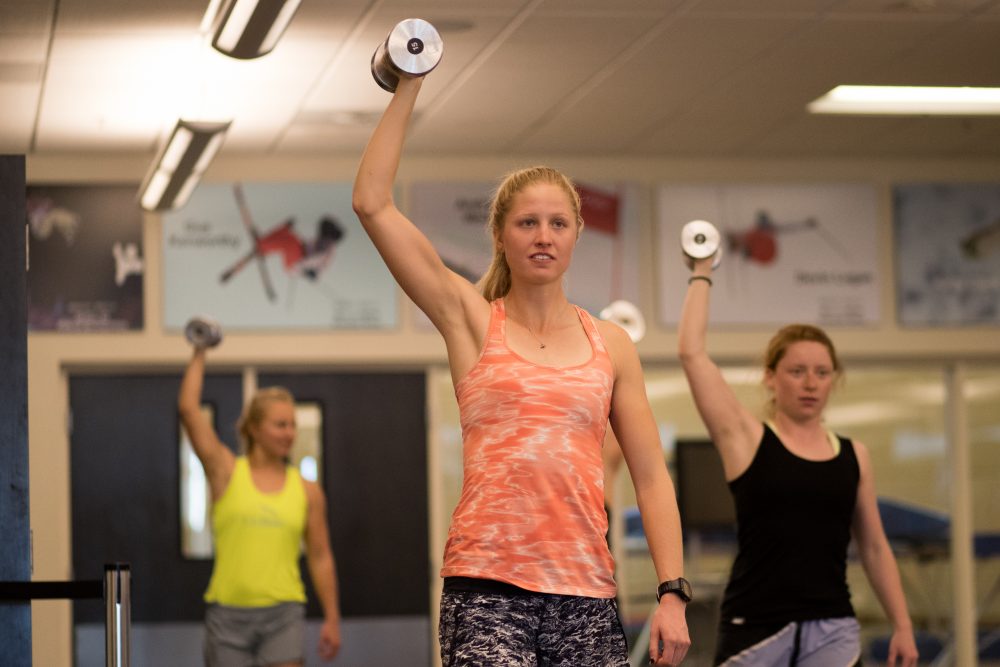
    Three athletes pressing dumbbells overhead during a gym strength session
    Hailey Swirbul during a strength session at a U.S. Ski Team camp in Park City, Utah. Research in cross-country skiers has shown that maximal-strength training can improve double-poling performance and economy. (Photo: Reese Brown)

    Strength Becomes More Important, Not Less

    Perhaps the clearest change in training priorities with age should be strength.

    Cross-country skiing has become increasingly dependent on upper-body force, whole-body strength and power. At the same time, aging progressively reduces muscle mass, maximal strength and particularly fast-twitch muscle function.

    Research in cross-country skiers has shown that maximal-strength training can improve double-poling performance and economy. One likely explanation is relatively simple. If every pole stroke represents a smaller percentage of your maximum force, repeatedly producing that force becomes less metabolically costly.

    For masters skiers, developing and preserving maximal strength is particularly valuable because it provides reserve capacity. The goal is maintaining the ability to produce force.

    That generally suggests relatively heavy resistance, good technique, low-to-moderate repetition ranges and sufficient recovery, rather than endless circuits of light weights.
    Skiers bounding with poles up a steep gravel road lined with spruce trees
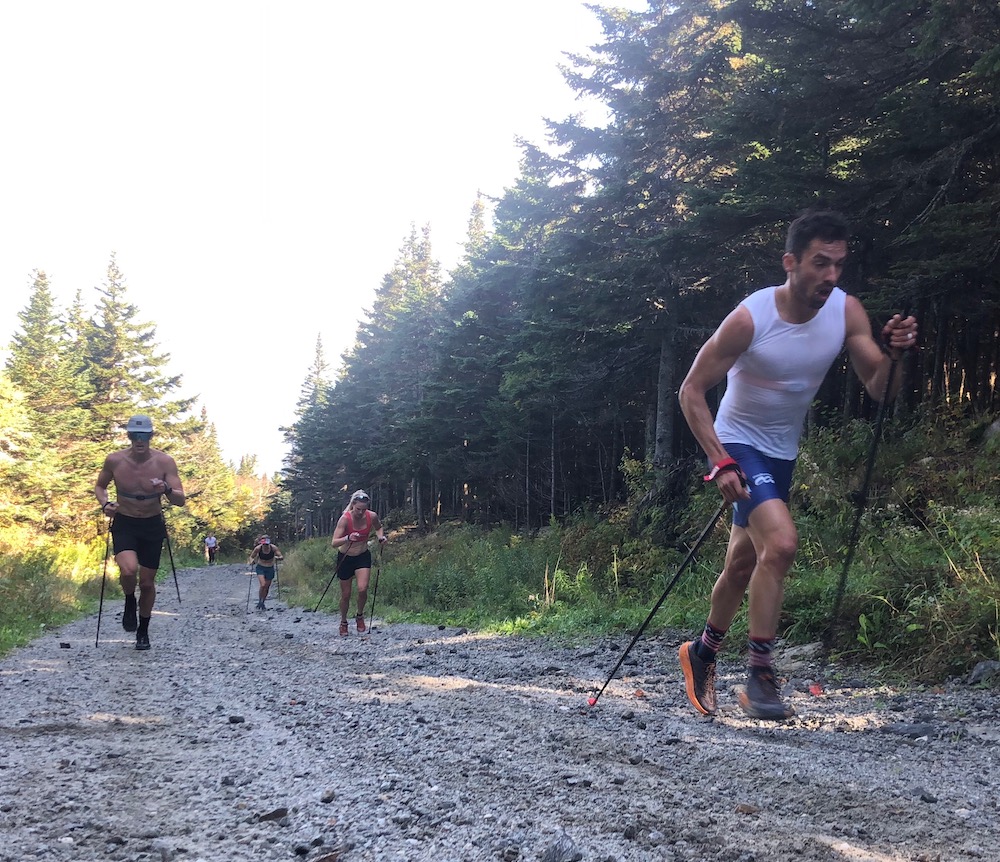
    Ian Torchia, right, leads bounding intervals up Stratton Mountain. Power tends to decline particularly rapidly with age, and short, fast work preserves it without requiring a large amount of metabolic stress. (Photo: Courtesy Stratton Mountain School)

    Power Is the Forgotten Quality

    Strength and power are not identical. Strength is how much force we can produce. Power is how fast we can produce it. Power tends to decline particularly rapidly with age.

    Acceleration over the top of a hill, changing gears on a climb, responding to an attack, generating force quickly through the poles and maintaining technique at race speed all depend on the ability to produce force quickly.

    Masters athletes therefore shouldn’t eliminate every fast movement from training. Short hill accelerations, controlled bounding, short ski sprints and explosive strength exercises can provide a neuromuscular stimulus without requiring a large amount of metabolic stress.

    The dosage doesn’t need to be large. What matters is the peak stimulus.

    But, as with nearly every aspect of training, consistency matters.
    Freshly groomed classic tracks in low sun beside a Masters World Cup course marker
    Fresh tracks on the Masters World Cup course in Alberta. Recovery is essential because adaptation occurs between workouts, but maximizing recovery is not the goal. (Photo: GibsonPictures)

    Recovery Serves Adaptation

    This brings us back to recovery. Recovery is essential because adaptation occurs between workouts. But maximizing recovery is not the goal of an athlete.

    Maximizing adaptation is.

    The masters athlete must solve a more complicated equation:

    Stimulus + Recovery = Adaptation

    Too much stimulus accumulated over days and weeks and we fail to recover sufficiently. Without recovery, we fail to adapt. The common theme in underperformance and overtraining is accumulating fatigue and a failure to adapt.

    Sometimes the better solution is reorganizing the training. Instead of a pattern of hard, hard, easy, hard, easy, hard, exhausted, rest over seven days, a masters skier might organize training so the important sessions are separated sufficiently to perform them well and adapt to them.

    The objective isn’t necessarily fewer quality sessions over the course of a month. It is enough recovery between those sessions to allow the athlete to absorb them.
    Four coaches on skis in falling snow outside a nordic center lodge
    The coaches behind the masters performance group at Crested Butte Nordic in Colorado: from left, Rachel Bachman Perkins, Murray Banks, Cam Smith and Woody Martineau. Fitness is not created by individual workouts. (Courtesy photo)

    Consistency Beats Heroic Training

    For masters athletes, we need to adjust our perspective. Fitness is not created by individual workouts. It is created by the consistent implementation of easy endurance work, high-intensity aerobic training, strength, power and appropriate recovery.

    One big interval session does relatively little. One big training week does relatively little. Forty or fifty good weeks stacked together can produce remarkable fitness.

    That changes the definition of a successful workout.

    The question is no longer: How much training can I survive today?

    It becomes: What training can I absorb today that allows me to continue training tomorrow, next week and next month?

    That doesn’t mean avoiding hard work. It means implementing both easy and hard training in a way that provides adequate space for recovery and adaptation.

    An older skier in a propeller cap laughs with a young girl on a snow-covered town street
    Murray Banks at the Alley Loop in Crested Butte, Colorado. Chronological age alone doesn’t tell us enough: training history, injury history, available time, sleep, nutrition and life stress all matter. (Photo: Xavier Fane / Crested Butte Nordic)

    The Masters Training Equation

    Training, of necessity, must be individualized for athletes of every age. A highly trained 60-year-old with forty years of endurance training may tolerate workloads that would overwhelm a recreational 45-year-old who started skiing five years ago.

    Chronological age alone doesn’t tell us enough. Training history, injury history, available time, sleep, nutrition, life stress and individual recovery all matter. But the physiological objectives remain surprisingly familiar.

    • Maintain aerobic volume.
    • Maintain VO2max.
    • Develop threshold and muscular endurance.
    • Preserve maximal strength.
    • Preserve power.
    • Maintain ski-specific technique and economy.

    Then organize recovery around accomplishing those objectives. That is fundamentally different from starting with recovery and removing training until the athlete can tolerate what remains.

    Masters athletes don’t need a watered-down version of elite training. Nor do they simply need more recovery. They need training organized around the physiological capacities most threatened by aging, with enough stimulus to preserve and improve those capacities and enough recovery to adapt to that stimulus.

    Aging changes how we assemble the training. It doesn’t change what makes an endurance athlete fast.

    The great opportunity of masters sport is discovering how much performance we can preserve, and in many cases still improve, by continuing to give the body both the stimulus and the time and space it needs to adapt.


    Help Support Our Coverage!

    If you value the thoughtful work and access FasterSkier provides, please consider becoming a Voluntary Subscriber. Your support directly fuels our work to cover the people, places, and moments that make our sport special.

    Join the FasterSkier community!


  • Periodization Is About Emphasis, Not Elimination

    Periodization Is About Emphasis, Not Elimination

    This article was made possible through the generous support of our voluntary subscribers. If you value coverage like this, please support FasterSkier with a voluntary subscription.

    A University of Vermont skier rollerskiing on a paved road lined with fall foliage at Craftsbury, Vermont
    Wilmington, Vermont’s Luke Rizio rollerskiing with the University of Vermont at Craftsbury last fall. Jim Galanes argues that a training year should change the dose of each quality, never remove one of them entirely. (Photo: Phillip Belena/EISA)

    One of the biggest misconceptions in endurance training is that we should train one physiological capacity at a time. The traditional model usually follows the same progression. First build an aerobic base, lots of easy endurance training. Then add “threshold” training in the middle of the summer. Then, as we move into the pre-competition period, shift the emphasis toward VO2max and race specific intensity.

    The emphasis certainly should change throughout the season. But this approach often leads coaches and athletes to unintentionally neglect important physiological systems for weeks or even months. The problem is that the human body doesn’t work that way.

    Aerobic performance is not determined by one physiological system. It emerges from the interaction of multiple systems, each supporting the development of the others. When one begins to decline, it limits the effectiveness of the entire system.

    The goal of periodization is not to sequentially build individual physiological systems. It is to continually maintain every important system while changing the emphasis toward the adaptations that offer the greatest opportunity for improvement.

    Every Workout Sends a Different Signal

    Training isn’t simply stress. Every workout sends a unique physiological signal for adaptation.

    Long aerobic training stimulates mitochondrial biogenesis, capillary development, fat oxidation, plasma volume expansion, and cardiac remodeling.

    “Threshold” training improves the ability to sustain a high fraction of aerobic power by increasing oxidative capacity, metabolic stability, and lactate transport. It should be noted, in spite of the current buzz, that “threshold” training is not a magic solution. Some athletes may need a heavier focus on VO2max training. Usually “threshold” type training is best for those doing high volumes and with an already high fractional utilization.

    (Note: while I use the common term “threshold” here, there is ample evidence that no threshold actually exists and that it is a vastly misleading term. There is also no consensus on what this so-called threshold is. Depending on which of the many methods you use to define it, the speed or intensity at these various definitions can differ by 40 to 50 percent.)

    VO2max intervals place the greatest demand on oxygen delivery, stimulating central cardiovascular adaptations while also improving mitochondrial function, the oxidative capacity of Type II fibers, lactate transport, and the speed or power that can be sustained at VO2max.

    Sprint training recruits high-threshold motor units, preserves neuromuscular coordination, maintains the oxidative capacity of fast-twitch fibers, and develops the ability to rapidly produce force.

    Strength training increases maximal force production, improves movement economy, enhances tendon stiffness, and helps reduce injury risk.

    These are not interchangeable adaptations. Each contributes something different to developing aerobic fitness and performance.

    The Systems Support Each Other

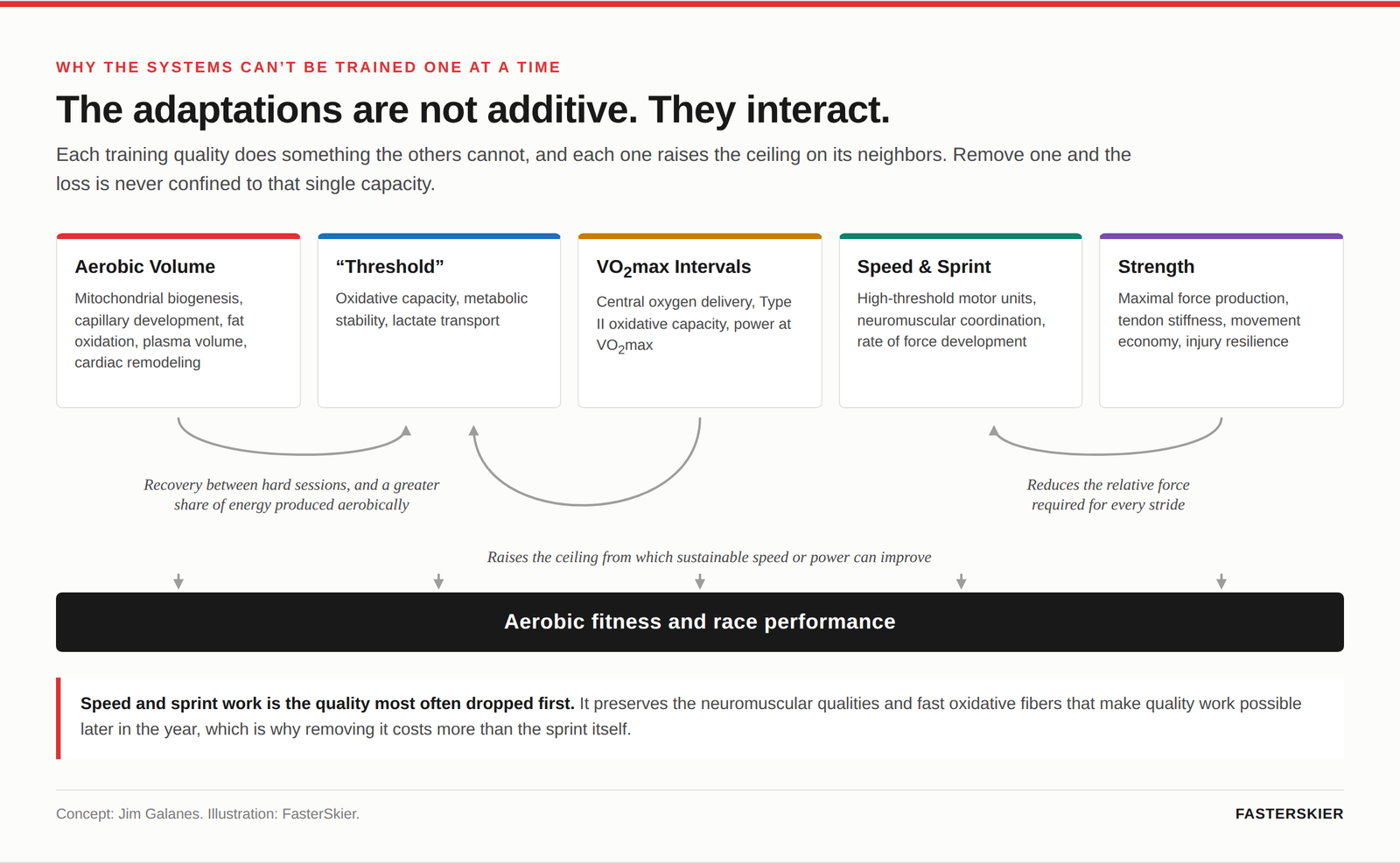
    These systems work synergistically. The mistake is assuming the adaptations are simply additive. They are not. They interact, and the combined effect on aerobic fitness is larger than the sum of the parts.

    A larger aerobic system allows the athlete to recover more quickly between hard sessions and to produce an increasing proportion of energy aerobically.

    Better “threshold” capacity allows more quality work to be performed with less fatigue. Greater maximal aerobic power raises the ceiling from which “threshold” speed or power can improve.

    Improved strength reduces the relative force required for every stride.

    Sprint training preserves the neuromuscular qualities that improve efficiency even during submaximal exercise. At every intensity, we can move faster and more efficiently.

    Diagram of five training qualities feeding into aerobic fitness and race performance
    Aerobic volume, “threshold” work, VO2max intervals, speed and strength each do something the others cannot, and each raises the ceiling on its neighbors. (Illustration: FasterSkier)

    What Happens When One System Is Ignored?

    Every physiological adaptation has a maintenance requirement. Remove the stimulus long enough and that adaptation begins to decline. An athlete who abandons speed training gradually loses neuromuscular recruitment and maximal power. An athlete who eliminates heavy strength training slowly loses force production and movement economy.

    When an athlete reduces aerobic endurance training, they don’t simply lose endurance. They lose the physiological foundation that supports every other adaptation.

    An athlete who removes VO2max work for extended periods may maintain excellent endurance while gradually losing the central cardiovascular adaptations that support maximal aerobic performance.

    These changes are rarely dramatic at first. What we see instead are the symptoms of overtraining. Performance in training declines. Interval sessions become harder. Race pace plateaus or drops.

    Many coaches respond by adding more volume or more intensity. Neither is the likely answer. The solution is to restore the balance between the physiological systems that support performance.

    Chart showing five training qualities across three season phases, with none dropping to zero
    Through the training year the dose and density of each quality moves, but no quality drops to zero. Concept illustration of Galanes’ argument, not a prescribed distribution. (Illustration: FasterSkier)
    Two skiers rollerskiing up a climb on a road through autumn woods
    University of Vermont skiers work up a climb during a fall dryland session at Craftsbury, Vermont. (Photo: Phillip Belena/EISA)

    Why High-Intensity Training Belongs in the Base Period

    One of the most common statements heard during base training is: “We shouldn’t do any hard training yet.”

    Current evidence suggests otherwise. High-intensity training during the base period is not about maximizing anaerobic fitness. It is about maintaining the physiological systems that complement the full development of aerobic capacity.

    Appropriately dosed high-intensity training helps preserve central cardiovascular function, maintains high-threshold motor unit recruitment, supports the oxidative capacity of fast-twitch muscle fibers, reinforces movement economy at higher speeds, and prepares the athlete for the demands of future training. Just as importantly, these adaptations support aerobic development rather than detract from it.

    A stronger cardiovascular system allows greater oxygen delivery during long aerobic sessions. Maintaining fast oxidative fibers improves the ability to perform “threshold” work later in the season. Preserving movement economy reduces the energy cost of every stride. Maintaining maximal aerobic capacity raises the ceiling from which “threshold” performance can continue to improve.

    High intensity doesn’t compete with aerobic development when it is properly dosed. It enhances it. This is why elite endurance athletes rarely eliminate intensity completely. They change the dose and the density. Not the presence.

    I often hear athletes say their first interval session or time trial in late July felt terribly slow, or metabolically challenged. Of course it did. That should come as no surprise. If high-intensity work has been absent for weeks or months, the physiological systems required to perform it have detrained. The athlete now has to rebuild those systems before meaningful race-specific adaptations can occur.

    Emphasis Is Not Elimination

    This doesn’t mean every quality deserves equal attention every week. Training emphasis should absolutely change throughout the year. An aerobic development phase should contain more aerobic volume. The pre-competition period should emphasize “threshold” and race-specific intensity. The competition season should prioritize race performance and recovery.

    But changing emphasis is very different from abandoning a physiological system. Even during an aerobic block, athletes should continue performing some high-intensity work, sprint training, and strength training.

    During race season, aerobic volume remains essential. While emphasizing VO2max development, “threshold” training still supports the ability to perform quality work.

    The dose and density change. The physiological adaptation remains.

    There Is No Optimal Intensity Distribution

    One of the most common questions in endurance sports is: “What is the optimal training intensity distribution?”

    The question assumes there is one correct percentage of easy, “threshold”, and hard training. There isn’t. The optimal distribution depends on the athlete’s training background and on which physiological system currently limits performance. Those limiting factors change throughout an athlete’s development.

    Early in a career, building aerobic capacity may deserve the greatest emphasis. Later, improving sustainable race pace may become the priority. Still later, improving neuromuscular power, force production, or movement economy may produce the greatest gains.

    As those priorities change, training distribution changes with them. Not because the principles change. Because the athlete changes.

    The coach’s responsibility is to continually adjust aerobic volume, “threshold” training, VO2max work, sprint training, and strength training so that each enhances the adaptations produced by the others while minimizing interference.

    There is no universal training formula. There is only the continual process of identifying the athlete’s current limiter, maintaining every important physiological system, and emphasizing the adaptations that will produce the greatest improvement.

    Great coaching is not about prescribing the perfect intensity distribution. It is about continually identifying the athlete’s current physiological limiter while maintaining every system that supports performance. As the athlete changes, the emphasis changes, but the physiology never disappears.

    Help Support Our Coverage!

    FasterSkier is independent, reader supported, and free to read. If coaching and training coverage like this is worth something to you, a voluntary subscription keeps it coming.

    Join the FasterSkier community!


    A ski coach in an olive fleece speaking with an athlete holding rollerski poles
    UVM coach Patrick Weaver talks with first year Hanna Koch of St. Paul, Minnesota, during a fall session at Craftsbury. Identifying an athlete’s current limiter, Galanes writes, is the coach’s central job. (Photo: Phillip Belena/EISA)
  • The Spice in the Soup: How Adam St. Pierre Thinks You Should Train

    The Spice in the Soup: How Adam St. Pierre Thinks You Should Train

    This article was made possible through the generous support of our voluntary subscribers. If you value coverage like this, please support FasterSkier with a voluntary subscription.

    Part two of a two-part series. Read part one here.

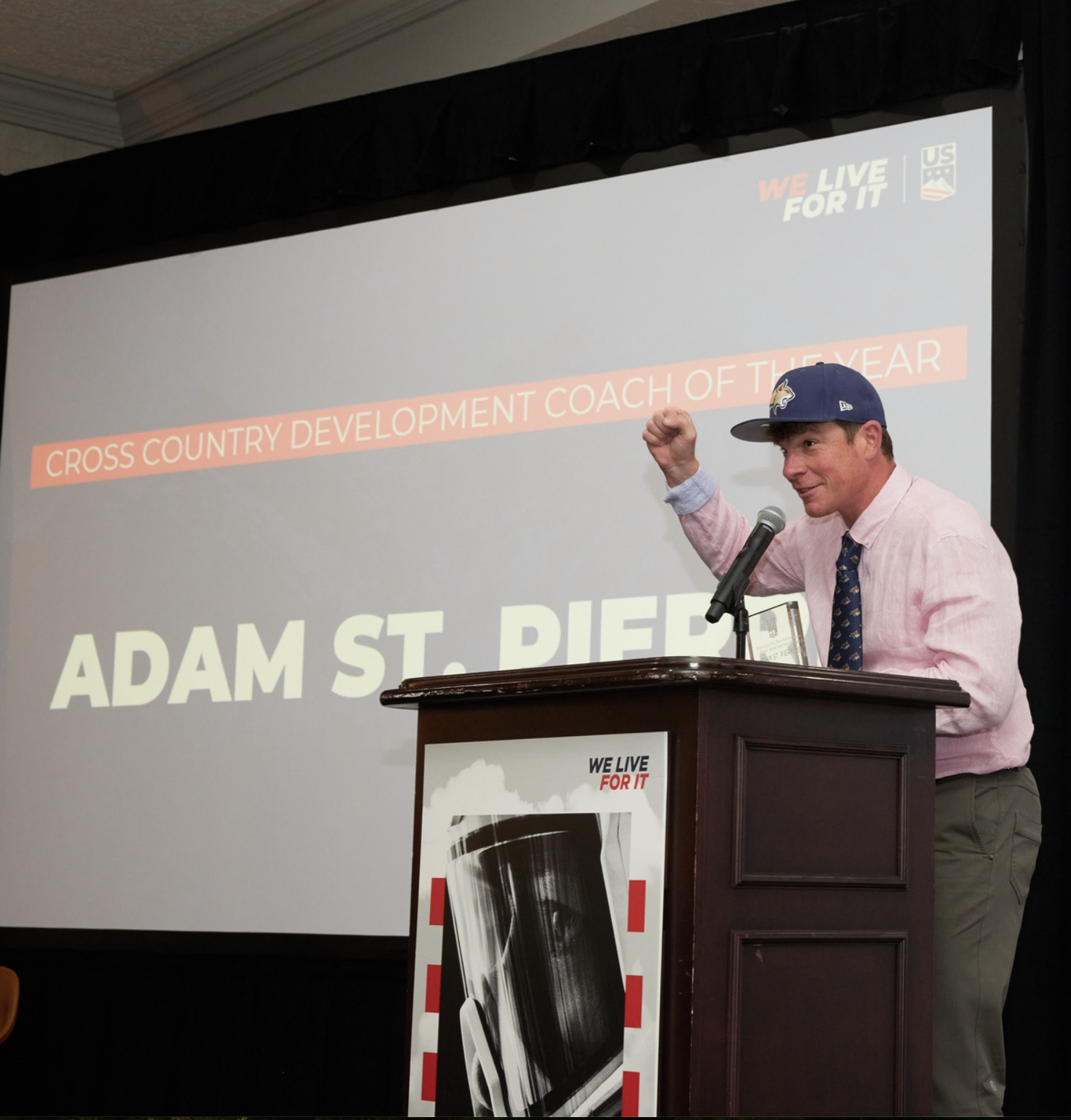
    A parent once cornered Adam St. Pierre to complain that he was letting the kids play games. St. Pierre had ten-year-olds on skis running sharks and minnows, shrieking and chasing each other across the snow, and the parent was not paying club dues for that. “I want coaching and training,” the parent told him. “This is…” and you can fill in the disappointment.

    St. Pierre thinks sharks and minnows on skis is one of the most effective training tools there is. He was lucky, he says, to have a parent board that backed him up in those rare confrontations, because he had no intention of stopping. Kids who are laughing are kids who come back, and kids who come back are the only kids who ever get good.

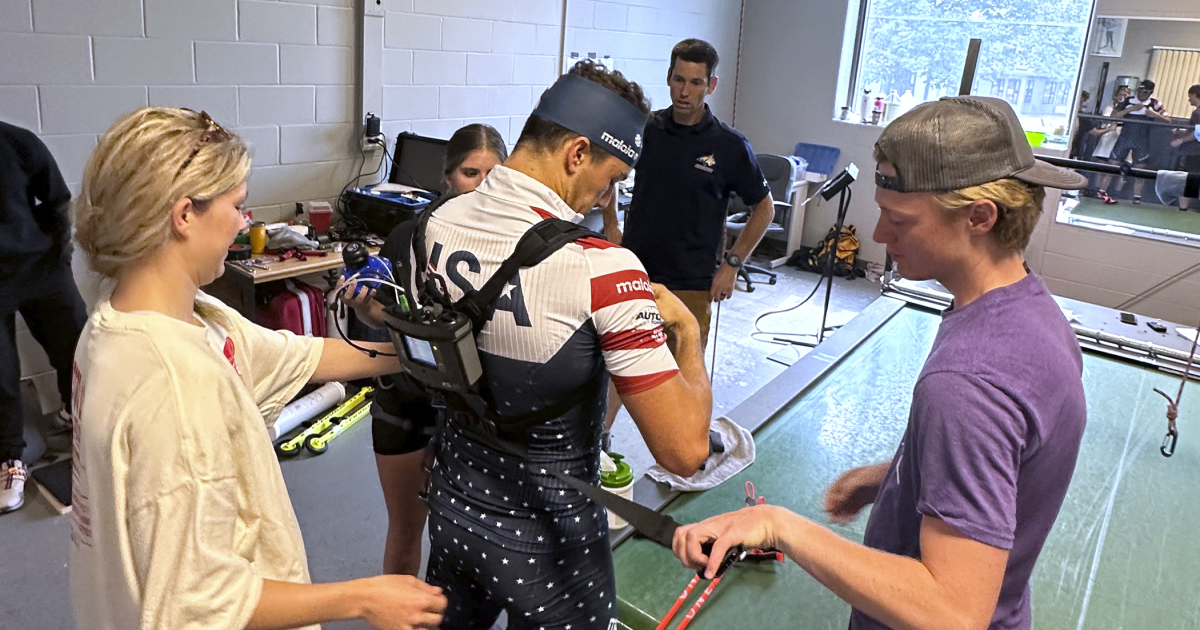
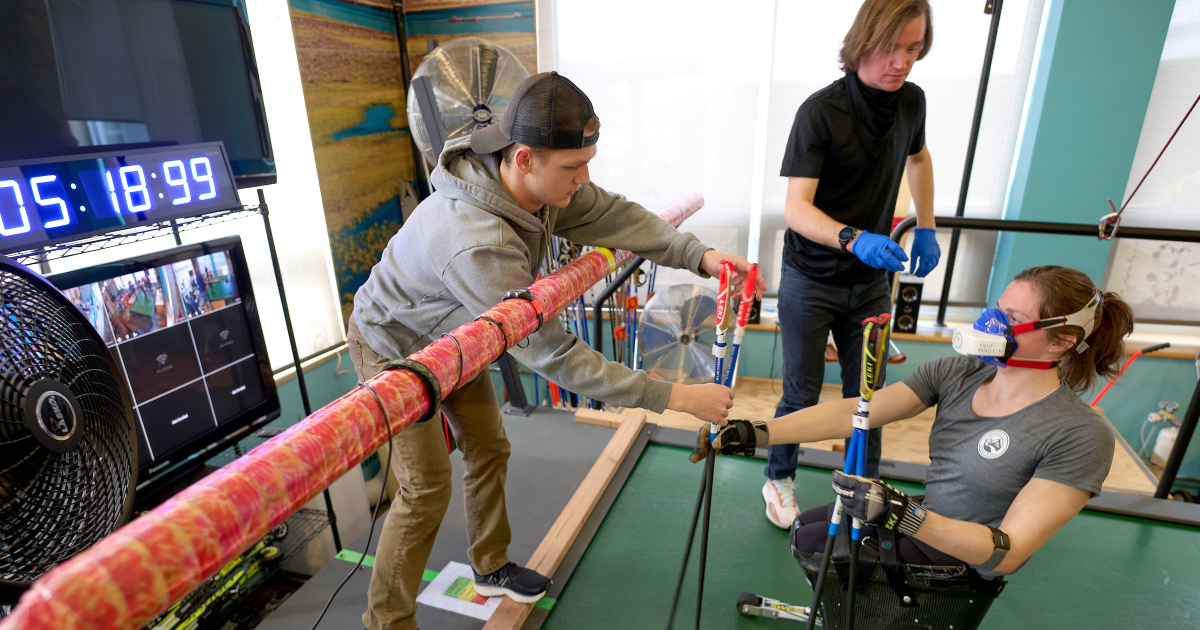
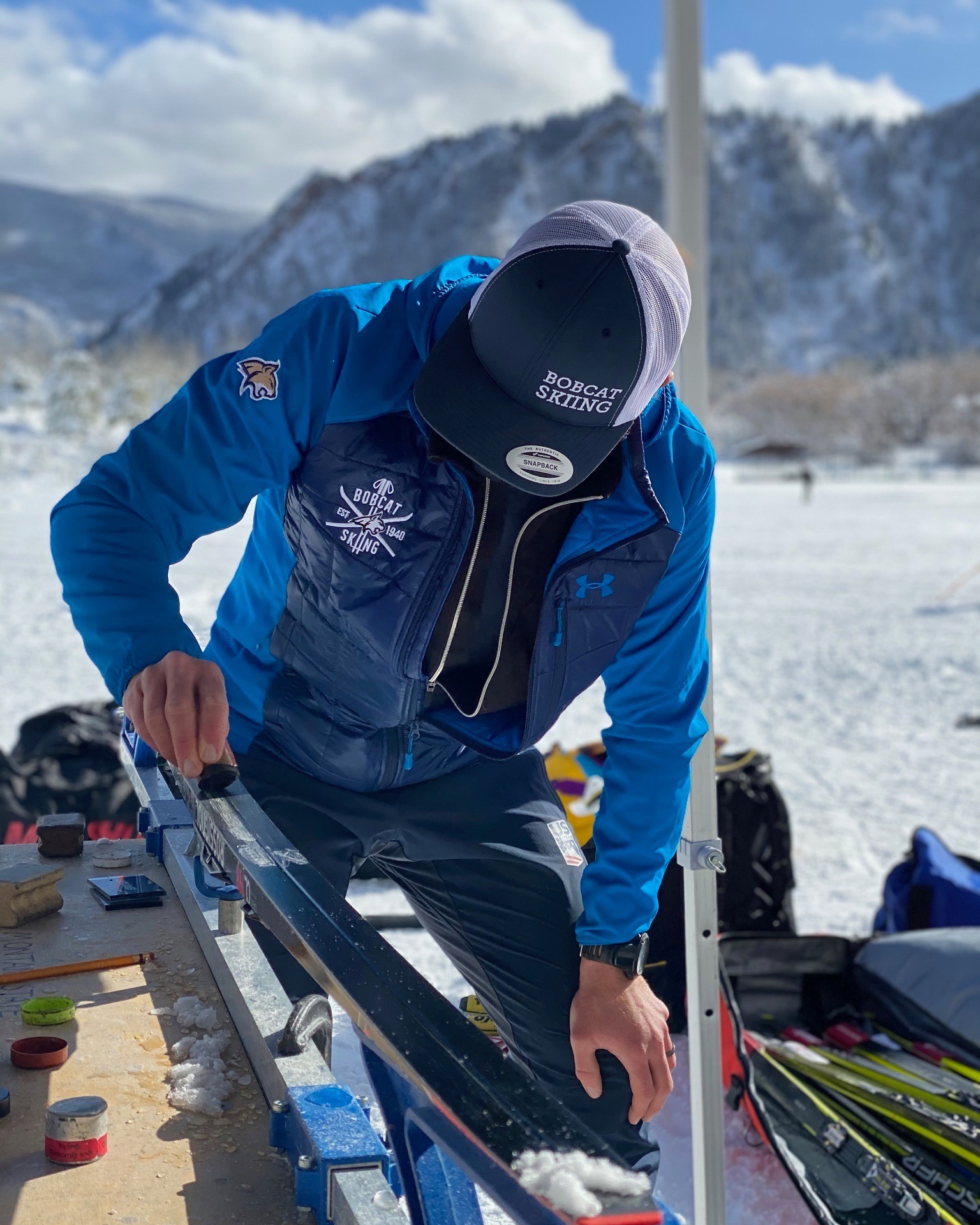
    That belief sits at the center of a coach who, on paper, should be the last person preaching simplicity. St. Pierre has a master’s in exercise science, a background running lactate and VO2 tests on athletes, and a relationship with a Montana State physiology lab that has done extensive work with U.S. Biathlon on both the metabolic and biomechanical sides. He reads the research. He can talk ratios and thresholds for as long as you’ll let him. And his most strongly held convictions keep coming out disarmingly plain. Go easy most of the time. Be consistent. Make it fun enough that people stick around. The science, in his hands, mostly ends up confirming things your grandmother could have told you.

    Consistency over the big block

    Start with periodization, the idea that a training year should be built in escalating blocks toward a peak. St. Pierre is skeptical of the old-school version of it, and his reasons are specific. A lot of that model, he points out, traces back to weightlifting research, some of it from an era when the subjects were quietly using anabolic steroids, which is not a foundation you want under your training plan. The rest tends to come from single-event sports. “In the marathon world or the Ironman world, you’ve got one event,” he said. “You just need to be good for that one event, like on August 2nd or whatever.” Skiing is not that. A ski racer has to be good across a whole season, weekend after weekend, from November into March.

    He points to a meta-analysis, published fairly recently, that looked at the day-to-day training of today’s top Norwegians. The finding was not a secret block of magic. “It really is consistency,” he said. “They’re not doing a big August and a big October. They do big weeks and recovery, and it’s just a very consistent progression.”

    The metaphor he keeps coming back to is one he borrows from Marius Bakken, the former Norwegian runner he half-jokingly calls a father of the Norwegian method. Intensity, in this telling, is not the meal. It is the seasoning. “The base of the soup is your endurance training,” St. Pierre said, “and then you add in a little bit of zip here and there. But if you put in too much zip, the soup is not going to be very good.” Roughly 90 percent of the work, whether on foot, on roller skis, on snow, or on a bike, is easy volume. The intensity is the spice, and Americans, he thinks, are forever dumping in too much.

    Only what’s livable

    There is also a question underneath all of this that the textbooks tend to skip, which is whether any of it is actually livable. St. Pierre still remembers sitting in a USA Triathlon coaching course, listening to a periodization lecture, and asking what he thought was the obvious question. What about a working person who cannot train 24 hours a week but could manage 16? What do you do with them? The answer from the front of the room was that they should take a vacation day and get the training in. “That’s not it,” he said. “That doesn’t work.” His approach is the reverse. Figure out what someone can actually do, how many hours are genuinely available, and then fill those hours with the best workouts possible.

    At MSU that math is dictated by a school calendar, and he has stopped fighting it. His athletes train before 10 a.m. so they can make a 10 o’clock class, and again in the afternoon, with nothing scheduled after 4 or 4:30. That produces a seven-day rhythm rather than the ten-day cycles some coaches prefer. Tuesday is intensity, usually threshold or VO2 work. Wednesday is a double of easy distance, with a few technique drills thrown in at the start to get the neurons firing before the athletes head out. Thursday morning is pure speed. Saturday brings intensity again, often paired with the long distance day. You cannot send skiers out for a two-hour roller ski on a Wednesday morning if they have class at ten, so you don’t. “There’s lots of ways to make a great soup,” he said, and it is not worth inducing a pile of needless stress to chase a perfect one.

    Two tests without a lab

    For readers without a lab down the hall, two of St. Pierre’s tools travel well. The first he calls a VT1 run, VT1 being the top of the easy zone, the hardest you can go while staying genuinely aerobic. Once a week, on flat ground, his athletes run 20 to 30 minutes at that effort and note the relationship between pace and heart rate. Flat terrain because it is the most reproducible. The point is twofold. It tracks fitness: if you run nine-minute miles at 150 beats in early summer and eight-minute miles at 150 by August, you have improved. And it works as an early-warning system. “One of the first signs of overreaching is a change in that heart rate to workload ratio,” he said. If the pace slows at the same heart rate, and it is not 105 degrees out and you are not dehydrated, it is probably time to rest. The signal can run the other way too. An athlete who normally sees 180 during intervals but suddenly cannot push the heart rate above 160 is, in his words, showing a pretty golden sign. Take some rest.

    The second tool he lifted from cycling: a five-minute maximal effort, a long recovery of maybe half an hour with some refueling, then a 20-minute maximal effort. The ratio between the two tells you whether an athlete leans anaerobic and sprint-oriented or aerobic and distance-oriented, no lab required. He built a version of it into his athletes’ training plans. He is quick to add the caveat that governs all of this, in the field or in the lab. Heat, dehydration, and altitude bend every number, and even a lab lactate value shifts with hydration. “No one metric is the god metric,” he said. “You’ve always got to have that context.”

    Montana State students conduct physiologic and biomechanical assessments for U.S. Biathlon. (Photo: Montana State University)

    Building complete skiers

    The individualization matters more now because the college game is about to change. Sprinting is coming to the NCAA Championships, a change St. Pierre cares about personally, because he wrote the proposal years ago and watched it slowly work its way toward reality. In anticipation, he is nudging the team’s intensity mix, keeping most of the hard work at threshold but adding more VO2 and anaerobic speed than a pure distance program would. One test the MSU lab ran compares an athlete’s VO2 at threshold to their VO2 max. A skier sitting well above the roughly 90 percent that is typical probably skews distance and might gain from more VO2 work to lift the ceiling. A skier down in the low numbers might benefit from more threshold. Even so, his priority is all-around development. The sprinters still do threshold. The distance skiers still do speed. He wants complete skiers, partly because a race does not always let an athlete choose its terms. If a distance race comes down to a mass sprint, a distance skier who cannot find another gear finishes 20th.

    The place where St. Pierre thinks American skiing has a real and underrated advantage is strength. He knows the reputation, that Norwegians do not lift, and allows it may be true of many of them. He also knows that the Norwegians who have come through his own program found the strength work novel. As part of a university, MSU has a strength coach, Benito, a former mountain bike racer at UVM and one of the rare ones who understands endurance sport, and the two of them build a program meant to complement the skiing rather than pull against it. St. Pierre credits it for keeping his team generally healthy, and he pushes back on the notion that skiers only need core and pull-ups. “If you can produce power with your legs,” he said, “that’s necessary.”

    He connects strength to a broader idea about movement economy, and here he reaches, carefully, for the Nike Oregon Project. Setting aside the doping and the scandal that eventually swallowed that program, he finds one lesson from it genuinely useful. Its coach had noticed American distance runners getting outkicked, so the group attacked the last 400 meters with sprint work, max strength, and plyometrics. The athletes did improve their finishing kick. They also got faster over the first 9,600 meters of a 10k. Better economy, it turned out, does not just help you sprint. It lets you hold a faster pace all day.

    Montana State biomechanics students provide testing for para Nordic athletes. (Photo: Montana State University)

    The long game

    If that all sounds relentlessly optimized, it is worth returning to the sharks and minnows, because the fun is not a break from the method. It is the method. His college team plays ultimate on skis, using a ball instead of a frisbee to remove the throwing barrier, usually after a track workout, and they lobby to play more. For the youngest kids, he has long argued that the travel race is not really about the race. A ten-year-old drives across the state to ski a 1k, and the actual point is the hotel pool, the snowbanks, the hide-and-seek, the exhaustion on day two that horrifies the parents. “This is why kids get into ski racing,” he said. “It’s not the ski race. It’s hanging out with your friends in the hotel room.” Those bonds are what turn a ten-year-old into a fifteen-year-old who wants to go do a long mountain run with the same crew, and a fifteen-year-old who stays in the sport into an adult who never leaves it.

    Which is finally how St. Pierre defines success, and it is not a medal count. He worries a little about the sport’s fixation on the Nations Cup, because doing well in it requires a lot of athletes racing a full season well, and he is not sure the American pipeline has that base yet. He points to Jessie Diggins as the rare skier who reached the level where she could show up week in and week out and land in the top five every time. Whether that season-long consistency cost her an Olympic medal or two is, he admits, a whole separate and unanswerable question. Finding metrics for development beyond international results is genuinely hard, which is part of why he has soft-started a PhD. The idea is to pull two decades of national points lists and track individual athletes year over year. Are American skiers actually getting better as they age, or do they wash out? The kid who was brilliant at 18 and gone by 22 is memorable, he notes, but memorable is not the same as typical. “Is that the rule or the exception? I think that’s the exception,” he said. “I’d like to have some data to back up my opinion.” The numbers are public. He just needs the time.

    His personal definition is quieter. He wants his athletes to develop far enough that the door to international racing is open if they want to walk through it, and he wants the ones who don’t to keep loving skiing anyway, as coaches, as parents raising their own little skiers, or simply as people who stay active and outdoors for the rest of their lives. He tries to live it as a father, chasing his own two kids up mountains in the summer and out onto snow in the winter. “There’s so much outside of skiing,” he said, “that makes skiing great.”


    Help Support Our Coverage!

    If you value the thoughtful work and access FasterSkier provides, please consider becoming a Voluntary Subscriber. Your support directly fuels our work to cover the people, places, and moments that make our sport special.

    Join the FasterSkier community!


  • Plyometrics: Where They Fit Within a Training Program

    Plyometrics: Where They Fit Within a Training Program

    This article was made possible through the generous support of our voluntary subscribers. If you value coverage like this, please support FasterSkier with a voluntary subscription.

    Where do Plyometrics Fit Within a Training Program

    Hint: You Don’t Start with Plyometrics

    Over the past few years there’s been a noticeable shift in how athletes and coaches talk about training. More emphasis on power. More interest in being “explosive.” That’s a good direction. Cross-country skiing is a power-endurance sport, and the ability to produce force quickly matters — whether it’s a finishing sprint, a tough climb, or simply skiing more efficiently at race pace.

    But as often happens, the optimal application gets missed. What I keep seeing is athletes jumping straight to plyometrics as if that’s where power development begins. It doesn’t. And when you start there, you usually end up with a lot of activity and not much adaptation.

    Plyometrics are not a shortcut. They are part of a progression — the conversion of maximal strength into power. Exercises like bounding, jumps, hurdles, and medicine ball throws can all be effective. But only when the athlete has the capacity to both absorb and produce force. Without that foundation, you’re not really training power. You’re mostly practicing jumping.

    That distinction matters more than most people think.

    I’ve used Tudor Bompa’s periodized strength model since the mid-1990s, and what still holds up is not the exercise list, but the sequencing. He didn’t build the model around movements. He built it around a logical progression. In my experience, that sequencing becomes even more important at the edges of the sport — junior athletes who are still developing and masters athletes who need to be more deliberate about how they load the system.

    And in that sequence, plyometrics come late. Not first.

    The progression is simple:

    1. Anatomical Adaptation (AA) — 4–8 weeks
    2. Maximum Strength (MS) — 6–8 weeks (minimum)
    3. Conversion to Power (CP) — 6–8 weeks
    4. Maintenance (M) — through the competitive period

    No shortcuts. No skipping steps. And no mixing phases and expecting the same result.

    Sweden’s Nicolina Lindquist jumping over Jake Pearson, of Cody, Wyo., during a strength workout at the USBA development camp in 2016 in Jericho, Vt.(Photo: Katrina Howe)

    Anatomical Adaptation

    The Anatomical Adaptation phase is the one most often underestimated, and it’s the reason a lot of strength and power work never turns into what it should. The goal here is not to get strong in the traditional sense. The goal is to prepare the athlete to train.

    That means building connective tissue tolerance, improving movement quality, and addressing the weak points most skiers share: eccentric control, single-leg stability, trunk stiffness under load, and upper body pulling strength. If those aren’t in place, everything that follows is limited.

    The work in this phase should look simple and controlled. Single-leg strength work like split squats, step-ups, and single-leg Romanian deadlifts (RDLs). Eccentric work like slow step-downs and controlled lowering. Trunk work that emphasizes force transfer, not just stability. Upper body pulling through a full range of motion. Even basic plyometric preparation — jump rope, small hops, controlled landings — but with the focus on coordination and tissue conditioning, not power.

    Two to three sessions per week is enough. The progression is not about maximizing loads. It’s about improving control under increasing demand. If this phase is done well, the athlete finishes it ready to train — not already fatigued.

    Max strength. (Photo: Corey Young)

    Maximum Strength

    From there, the focus shifts to Maximum Strength — and this is where many endurance athletes miss the point. Max strength is not circuits. It’s not high-rep fatigue work. It’s the ability to produce force.

    That means high load, low reps, and full recovery. Roughly 80–90% effort, sets of three to six reps, and enough rest between sets to maintain quality. The goal is not to exhaust the athlete. The goal is to improve motor unit recruitment and force production.

    For skiers, the work should still be sport-specific in its intent. Single-leg strength for the lower body — Bulgarian split squats, heavy step-ups. Posterior chain work — deadlifts, RDLs, hip thrusts. Upper body pulling — weighted pull-ups, heavy rows. And trunk work that connects the system under load, not isolates it.

    A session doesn’t need to be complicated. A few key movements, done well, with intent. Two to three sessions per week. Progress by increasing load, improving speed at the same load, and cleaning up movement under stress — not by constantly changing exercises.

    This phase is critical for a simple reason: you can’t convert strength you don’t have into power. In a sport already biased toward endurance, this is often the missing piece.

    Skate jumps with Chelsea Holmes back in 2014.

    Conversion to Power

    Only after that does the Conversion to Power phase make sense.

    Now the goal shifts. You’re no longer trying to get stronger. You’re trying to apply force faster. Rate of force development, timing, coordination, and the elastic qualities of muscle and tendon all become the focus.

    This is where plyometrics belong.

    The difference from the max strength phase is clear. Loads come down. Speed goes up. The movement patterns may look similar, but the intent is entirely different. If it’s not fast, it’s not power.

    That changes how the work is structured. Low volume, high quality. Three to six reps per set. Three to five sets. Full recovery. Stop when speed drops. This is neural work, not conditioning.

    Now the exercises make sense: bounding, especially uphill; single-leg hops; lateral bounds; reactive jumps; drop jumps, box jumps, hurdles. Loaded power work like jump squats and explosive step-ups. Upper body power through medicine ball throws and explosive pulling. And finally, ski-specific integration — bounding with poles, hill sprints, roller ski accelerations.

    If the power isn’t developing there, it’s not transferring.

    A session doesn’t need much. A handful of exercises, done with speed and intent. Two sessions per week is usually enough. More than that and you start turning power training into accumulated fatigue.

    This is also where athletes often get it wrong. They expect this phase to feel hard in the traditional sense. It shouldn’t. It should feel sharp. Explosive. Fresh. If it feels heavy and slow, you’re no longer training power.

    In the yearly plan, this phase typically sits in late summer or fall — after strength has been established and before racing begins. You’re not building the system at that point. You’re sharpening it.

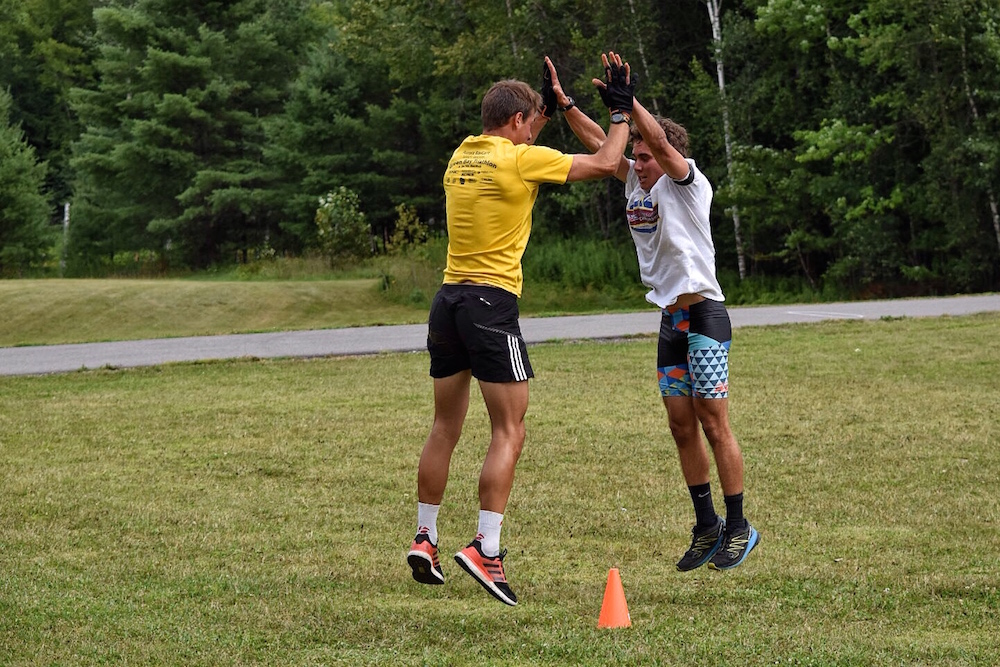
    Paul Schommer (l) and Jake Brown doing high-five partner burpees during a strength workout at the U.S. Biathlon development camp in Jericho, Vermont. (Photo: Katrina Howe)

    What This Looks Like in Practice

    What this looks like depends on the athlete. Younger athletes should spend most of their time on movement quality and basic strength, with only low-level plyometric work. Developing athletes need to build real strength first, then layer in plyometrics gradually. Senior athletes need to respect the sequence across the year — spring to rebuild, summer to get strong, fall to convert, winter to maintain.

    None of this is complicated. But it does require patience.

    There’s nothing wrong with plyometrics. Used at the right time, they’re one of the highest-return tools we have. But they’re not a starting point. They’re a finishing layer.

    Strength gives you the foundation. Plyometrics teach you how to use it.


    Help Support Our Olympic Coverage!

    If you value the thoughtful work and access FasterSkier provides, please consider becoming a Voluntary Subscriber. Your support directly fuels our work to cover the people, places, and moments that make our sport special.

    Join the FasterSkier community!
     

  • Dunklee Deepens Craftsbury Roots and Shoots for Speed on World Cup

    Dunklee Deepens Craftsbury Roots and Shoots for Speed on World Cup

    Susan Dunklee on her way to victory in the women's mass start at the 2016 US Biathlon National Rollerski Championships in Jericho, Vt. (Photo: Katrina Howe)
    Susan Dunklee (US Biathlon A-team) on her way to victory in the women’s mass start at the 2016 US Biathlon National Rollerski Championships in August in Jericho, Vt. (Photo: Katrina Howe)

    Back in 2010, Susan Dunklee made a big decision for an up-and-coming biathlete. While the US Biathlon Association provided housing the Olympic Training Center in Lake Placid, N.Y., Dunklee wanted a home base which felt more like home.

    So she joined the Craftsbury Green Racing Project, near her childhood home in Vermont, living in a renovated farmhouse with other team members and training for shooting on a range in the backyard. Ever since, Dunklee has split her time between the two training sites.

    “I’m psyched to move back to Vermont’s Northeast Kingdom, where I’ll continue to train as a biathlete,” she wrote on her blog at the time. “I’m still on the National Biathlon Team (and will travel to several National Team training camps), but as a GRP athlete, I’ll lead a more balanced lifestyle that allows me to contribute to the local community… The lifestyle of a professional athlete can be quite bland outside of training and this is something I have struggled with the last couple years.”

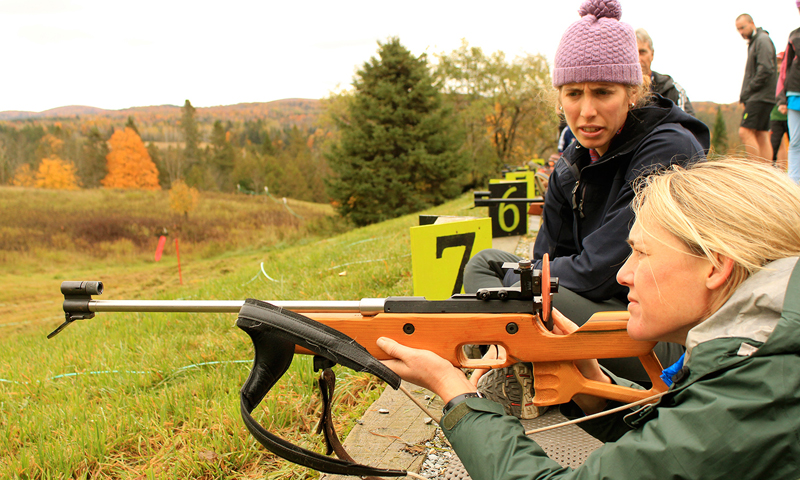
    Dunklee instructing on the shooting range in Craftsbury.
    Dunklee instructing on the shooting range in Craftsbury.

    A year and a half after joining the Craftsbury team, she started her first World Cup. Later that season she raced her first World Championships, finishing fifth in the 15 k individual. She has become an Olympian, set best-ever marks for U.S. women at the Games, and earned two World Cup podiums.

    But she always comes back to Vermont, and now she has bought a house in Craftsbury Common.

    While some of her teammates were traveling around Europe for a seven-week, four-country training camp, Dunklee was busy putting her roots even more deeply into the Northeast Kingdom.

    “It’s great to have something to think about and something else meaningful I’m excited about,” Dunklee, 30, said in an interview from her new house. “I have a place to come home to that leaves me feeling grounded and centered.”

    World Cup athletes are on the road for four to five months each winter. To some, having a personal place to come back to is even more important after missing friends and family for nearly half the year.

    Even when she was just beginning biathlon after graduating from Dartmouth College, Dunklee saw teammates like Tim Burke and Lowell Bailey ensconce themselves in their communities, including owning houses, while at the same time excelling in international competition. That gave her the confidence that the life of an elite athlete didn’t necessarily have to be one of rootless nomadism.

    “They each had homes pretty early on in their careers,” Dunklee said. “Now Lowell has a kid, and is Tim is working on building a new house in Lake Placid. They have become a lot more independent from the team. They do it well — I have always looked up to them and the way they do things.”

    So far, the tasks associated with being a homeowner have sometimes tugged Dunklee away from biathlon, but she didn’t generally see that as a bad thing.

    “There were a few weeks when there were things that really had to get done with the house that affected the training a little bit, but it’s mostly positive,” she said.

    Dunklee celebrates a career-best second place in the women's sprint at the IBU World Cup in Presque Isle, Maine, in February. (Photo: USBA/NordicFocus)
    Dunklee celebrates a career-best second place in the women’s sprint at the IBU World Cup in Presque Isle, Maine, in February. (Photo: USBA/NordicFocus)

    When she’s not tinkering on her house, Dunklee has been training hard this summer with a particular focus on shooting. She has taken the concept of periodization, familiar to endurance athletes for their ski training, and applied it to the range.

    “I tried to periodize the shooting training so each week has a very different feel to it,” she explained. “Some weeks focus more on speed, overspeed, going faster than I would in a race. Some are more on mental endurance and how I can stay focused when I’m tired. Some are more recovery-oriented. I’ve made sure to have a clear distinction between the different weeks.”

    Dunklee is pleased with her progress so far.

    “The last few weeks have been exciting,” she said. “Speed is starting to come together. I also got a new rifle stock that fits me really well.”

    So far, Dunklee has had few chances to test her shooting speed in actual race situations. She won both the sprint and mass start at the North American Rollerski Biathlon Cup in Jericho, Vt., in August, shooting 60 and 75 percent, respectively.

    Then at a training camp in Germany, she and teammate Clare Egan joined Canadian biathlete Megan Tandy to finish sixth in the relay at German Summer National Championships.

    More racing are coming up, even before winter arrives. US Biathlon has trials races in Jericho in mid-October, although Dunklee is already pre-qualified for the World Cup. From there, the team travels to Canmore, Alberta, to train on the infamous Frozen Thunder loop.

    And then it’s World Cup time, starting in Östersund, Sweden, in late November.

    “I really want to see what happens, especially with the shooting, and seeing if I can continue this streak of shooting fast while racing,” Dunklee said. “I know I can do it in practice, but doing it in a race is a totally different ballgame.”

    We asked Dunklee to give our ’17 Questions for 2017′ a go. Here are her responses:

    1. Biggest change in your life in the last five or so months since the ski season ended?

    Buying a house

    2. Biggest change in your training?

    More volume early summer with less intensity.  Also more periodization in the shooting training.

    3. Major areas of improvement you’ve seen so far?

    Shooting speed is up from last summer.  Body seems to be recovering better.

    4. Whom you’ve been working closest with this offseason (coaches or training partners)?

    National Team coach Jonne Kahkonen.  Training partners — primarily Clare Egan and Maddie Phaneuf, plus the Craftsbury Green Racing Project when I am home.

    5. Best trip in the last five months (and why)?

    Dunklee atop a peak on the Isle of Skye.
    Dunklee atop a peak on the Isle of Skye in Scotland.

    Spring break to Isle of Skye in Scotland — good company, fine whisky, beautiful landscape and baby lambs

    6. Favorite cross-training?

    Overdistance hike/runs, especially on a high ridge.

    7. Favorite non-athletic activity or pastime this summer?

    Blueberry picking

    8. Song that was your jam this summer?

    Not too much of a music person but I’m starting to get into NPR podcasts.  The TED Radio Hour is pretty good.

    9. All time favorite race moment?

    Hearing over the loudspeaker that I was leading a race at Ruhpolding World Championships 2012. It was completely unexpected.  Ultimately I placed 5th.

    10. First thing you pack in your bag when you leave for Europe?

    Passport

    11. Venue/event you’re most excited to visit this season?

    South Korea [site of the 2018 Olympics]

    12. Who will win the men’s and women’s World Cup titles this year?

    Martin Fourcade and Laura Dahlmeier

    13. Biggest sacrifice you feel you’ve made choosing this career path?

    Living a split life.  I haven’t spent more than 3.5 weeks consecutively in one place for about 5 years

    14. If you could change one thing about your sport, what would it be?

    World Cups closer to home.  It’d be nice to zip back to Craftsbury for off days now and then.

    15. What did you have for breakfast this morning?

    Green Racing Project-raised eggs and raspberry jam over a couple pieces of homemade toast

    16. In 5 years, I’ll be…

    35. Not sure what that entails.

    17. In 50 years, I’ll be…

    Hiking the Long Trail.

  • Canadians Host, But Americans Storm Podium in Sovereign Lake Skate Races

    While Sunday’s Haywood NorAm 10 and 15 k freestyle races were held in Canada, it was the Americans who took the top step of both podiums – and convincingly.

    The men’s race started in sloppy conditions – approximately 20 centimeters of snow fell overnight, and continued right up until the start of the men’s race, resulting in ankle deep snow in some places. The men skied three loops of 5 k, and each one contained two large climbs, as well as a large number of flat sections.

    Weather notwithstanding, APU’s Lars Flora proved that he is the pre-eminent male distance skier in North America. Flora won every single split en route to the win, posting a time of 41:39, a comfortable 30 seconds up on the second place finisher, Canadian Graham Nishikawa of the Alberta World Cup Academy (AWCA).

    CXC’s Brian Gregg rounded out the podium, crossing the line four seconds behind Nishikawa for third place.

    Nishikawa described himself as “pretty satisfied,” with his race in an interview with FasterSkier. Like most racers, he identified the conditions as “challenging”, but he said they played to his strengths. “I was pretty pumped when I got to the course and saw the deep snow,” he said.

    Nishikawa stressed that skiing well technically and proper pacing were crucial to his success on the day. He focused on being smooth on the deep snow of the uphills, plus carrying his speed well onto the flats.

    He skied most of his day alone, but on the third lap managed to connect with CXC’s Garrott Kuzzy and a train of skiers, which gave him a little bit of extra motivation.

    James Southam (APU) finished fourth, 6.4 seconds behind Gregg. Saturday’s sprint winner Drew Goldsack was the second Canadian finisher, rounding out the top five just under a minute behind Flora’s winning time.

    Despite finishing fourth, Southam was disappointed with his result. ”I felt pretty steady, pretty solid, so I was a little annoyed, no, actually, really annoyed with the result,” he said in an interview with FasterSkier, “I was in second place for most of the race. I didn’t feel like I slowed down, but the others must have sped up. I was definitely hoping for more.”

    Southam had good splits, and knew his position most of the time. But he didn’t expect to be pushed off the podium, unless it was by fractions of a second.

    “I thought maybe one more racer would squeeze in between Lars [Flora] and me, but not both of them,” he said.

    The women’s side saw American Olympian Holly Brooks (APU) shell the field, finishing the 10 k in a time of 30:44, nearly a full minute up on her nearest competition. While Brooks was clearly in a class of her own, the CXC women were not to be outdone after Gregg’s podium finish earlier in the day.

    Caitlin Compton (CXC) finished second, while Brooke Gosling, a Canadian national also skiing for CXC, rounded out the podium, narrowly preventing an American sweep. Junior Jessie Diggins (CXC), who holds dual citizenship, finished fourth, two tenths of a second back of Gosling.

    “I think I started a bit too hard,” Gosling said via e-mail. “Basically, the plan was to ski relaxed, and race the course the best I could…with what I had. I definitely lost a bit of momentum at the end.”

    While the conditions were a challenge for some, Gosling said they suited her; she considers soft snow and the resulting adversity a bit of a specialty.

    After Gosling, the next Canadian finisher was Perianne Jones, winner of Saturday’s classic sprint. She crossed the line eighth, more than a minute behind Brooks. Brittany Webster (AWCA) was the third Canadian, finishing tenth overall.

    In a phone interview with FasterSkier, Jones described the uphills as “choppy and slow,” as the women skied after the open men on the same course.

    Jones, who considers distance skate races her weakest event, said she benefitted from the many quick American women in attendance.

    Evelyn Dong (XC Oregon) started 30 seconds behind Jones, and went by the Canadian near the end of the first 5 k lap. Jones stayed on the American’s tail for much of the second lap, getting away from her on the downhills and ultimately finished just 15 seconds behind.

    Of the strong American results compared to the Canadian contingent, Jones acknowledged that “we clearly have a ways to go on the distance side of things; the Americans are so strong in distance racing right now.”

    The Canadian NorAm racing continues next weekend with a mini-tour event, being held in Rossland, B.C. The mini-tour is the first event of its kind being held on the NorAm circuit, and it also functions as part of the qualification process for the Canadian team for the World Ski Championships.

    Many athletes are taking advantage of the two events’ location in fairly close proximity, opting to either stay at altitude near Sovereign Lake for a few extra days of training before heading to Rossland, or simply heading down right away.

  • CXC Takes Innovative Approach to Periodization

    CXC Takes Innovative Approach to Periodization

    Caitlin Compton is a fan of a high-low approach to periodicity, as opposed to the more traditional four-week progression

    Bryan Fish is the former CXC Team Vertical Limit head coach, and now coaches for the U.S. Ski Team. FasterSkier approached Fish about CXC’s unique approach to periodicity–the sequencing of hard and easy blocks in a training plan–and this was his response.

    We got an e-mail from a reader with a story idea—he mentioned that CXC takes a different approach to periodicity, alternating hard weeks with easy weeks rather than doing the typical three-week progression.

    A majority of the CXC Team Vertical Limit athletes have selected a monthly progression with alternating harder then easier weeks, although it is not the only periodization model that CXC athletes use. A couple of the CXC athletes have a low-high-high-low plan (similar to the typical model), because this allows them to train more in camps and work/recover more out of camp.

    The alternating high-low weekly training plan aligns well with the principle of super compensation. The general premise of super compensation is that the body needs a slight elevation in effort and then recovery for positive adaptation to occur. This logic is used by virtually everyone with the implementation of hard days followed by easy days.  We expand that out to our 4 week progression. (A better explanation is at cxcacademy.com)

    Personally, I had grown up and trained under the typical model of 23%-26%-29%-22%.  It was successful, but I was certainly willing to try something different.  The 28%-22%-35%-15% periodization plan was selected in 2006 due to three reasons:

    1. It made common sense, for it aligned with the principle of super compensation & we wanted to start with a plan that included more stress and recovery cycling then the typical plan prescribed.

    2. This periodization model was a published method, although practical application trumps print.

    3. Igor Badamshin (CXC High Performance Advisor – at the time) had personal experience of a number of periodization models, and he thought this progression was the best in practical application.

    Personally, I think there is a great deal more discovery that can be done on this topic.  The “typical” periodization plan was made popular in the US by Rob Sleamaker’s book – Serious Training for Serious Athletes, and Dr. Tim Noakes references this periodization from Sleamaker in his informative book–The Lore of Running.  I have yet to witness factual data on the “best” practice for monthly periodization other than these books and the Russian text that required translation.

    I also think it is important to apply general training principle theory with scrutiny.  Every athlete responds differently, so individual athlete experience is important.  We start with the 28-22-35-15 as a base line and tweak it a bit to fit an athlete’s training and lifestyle.  We actually work backwards, sometimes, with the most seasoned CXC Team Vertical Limit athletes.  For example, Caitlin Compton likes this high-low periodization process very much, but I actually asked her what number of hours per week over a 4-week-cycle she would think would be best.  The flow remained identical, but the percentages changed about two percent each week (plus and minus).

    I think the most important point I could convey on CXC’s search and discovery of our own 4-week periodization process is developing a comprehensive planning process:

    1. Sets up a baseline (evaluate athlete fitness level and training history).

    2. Records the data (execution of the plan, feedback from the athletes and success in competition).

    3. Evaluates the plan versus the actual execution of the plan.

    CXC creates training plans from a four-step process. The year is built into 13 periods of 28 days, making for equity between periods rather than periodizing off of the calendar, where some months have more days and more weeks.  The four-step training plan process is as follows:

    1. Overall yearly overview – outlining the general flow of the whole year

    2. Month and weekly – general monthly goals and weekly/daily objectives – every training session should have a purpose.

    3. Athlete training logging – there is a plan and there is what the athlete ultimately executes.  Sometimes the plan is executed 100 percent in hours, but often there are subtle differences.  Successful athletes are mindful in their training and deliberately execute.  They also make modifications on the fly when necessary.  The “what” and “why” of the training modifications should be recognized by the athlete and communicated to the coach.  The log is a great means of tracking and communication.  Sometimes modifications are subtle from day to day, yet consistent throughout the year.  The logging process helps point those out.

    4. Evaluation – It is always good to evaluate the planning design to the actual execution, so that the training plan for the upcoming year is continually tailored to the individual athlete.  This “tailoring” is often a result of how a specific athlete adapts to training, the general emphasis of the upcoming year, as well as daily habits like their work/school schedule.