From the FasterSkier archive — posts syndicated from athletes’ and coaches’ own blogs between 2004 and 2012, kept online as published. Current coverage is at fasterskier.com.

Tag: Pete Leonard

  • The Pros & Cons of League-wide Wax Protocols: Western Clubs Consider the Evolution and Impact (Part 2)

    The Pros & Cons of League-wide Wax Protocols: Western Clubs Consider the Evolution and Impact (Part 2)

    Here are links to earlier installments in this five-part series. The first two parts (part one; part two) spoke to the perspectives of high level wax technicians and industry representatives, while part three focused on the Wisconsin Nordic Ski League. To read the beginning of this article on the wax protocols of Western clubs, part four, click here. 

    Leveling the Playing Field

    In regard to the question of whether the policy widens the gap in equity because of equipment differences, coaches expressed that the opposite has been observed.

    “It probably has a little bit to do with what level we’re talking about,” said Teague. “But certainly, club or high school wise, I’ve only seen it take down one of the barriers of entry to our sport, and decrease costs for both programs and individuals.”

    Speaking on behalf of RMN, Teague added that this removal of barriers has opened up opportunities for smaller clubs, and the support expressed among coaches speaks for itself. 

    “My opinion is – of everybody that’s gone to [a wax protocol], no one has said: ‘That’s a mistake. We’re gonna go back,’” said Teague. “Yes, there is some advantage that can be gained for an athlete or a program that has the capacity to go and invest in a quiver of skis to try and overcome the playing field, but more often than not, what we’re seeing is that small programs, or athletes without a program at all, [such as one of my former skiers who lived on Colorado’s Grand Mesa in the Southwest corner of the state], all of a sudden can be competitive.” 
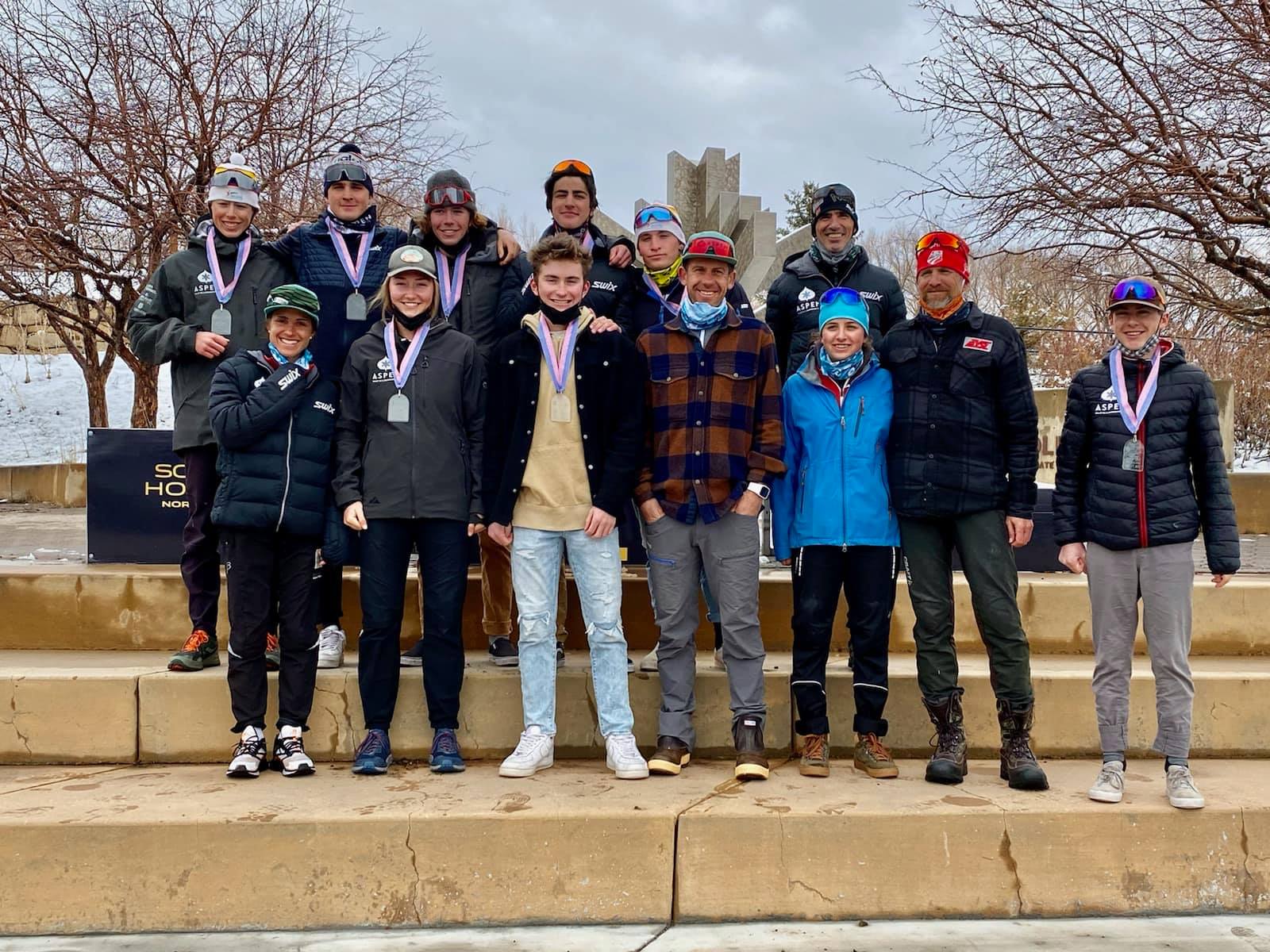
    AVSC nordic athletes compete at the Western Regional Championships, held in Soldier Hollow, UT in place of the 2021 Junior National Championships due to the COVID-19 pandemic. (Photo: Aspen Valley Ski and Snowboard Club)

    This phenomenon could be attributed to the aforementioned power previously held by larger clubs; when glide testing is no longer a priority, perhaps smaller clubs can finally find a seat at the table. 

    “We have 14 clubs in the division,” Kapala said of Intermountain. “Last year, 13 of them placed a kid on the Junior National team. Prior to that, we were running more like seven or eight [clubs]. So what was going on was Sun Valley, Bozeman, Jackson, and to some extent Park City – the bigger clubs – were rolling in, and to put it bluntly, we were steamrolling the small programs. It wasn’t a fair fight. And fortunately, the larger clubs in our division say, ‘Clearly, that’s not good for skiing.’” 

    Kapala spoke specifically of an athlete who hailed from Whitefish, MT, which is “way at the far flung edges of the realm. They’ve gotta drive forever to get to races.”

    This athlete raced for the Glacier Nordic Club under the guidance of head coach Jennie Bender, who he described as “a huge asset and we’re so fortunate to have her come to our division.” Clarifying that Bender is as skilled and capable as any other coach on a wax bench, he acknowledged that she was largely on her own at races with roughly 12 kids. This ratio is not equivalent to the SVSEF team which might have 35 kids with five to seven coaches at a JNQ. 

    “It’s just not a fair fight.”
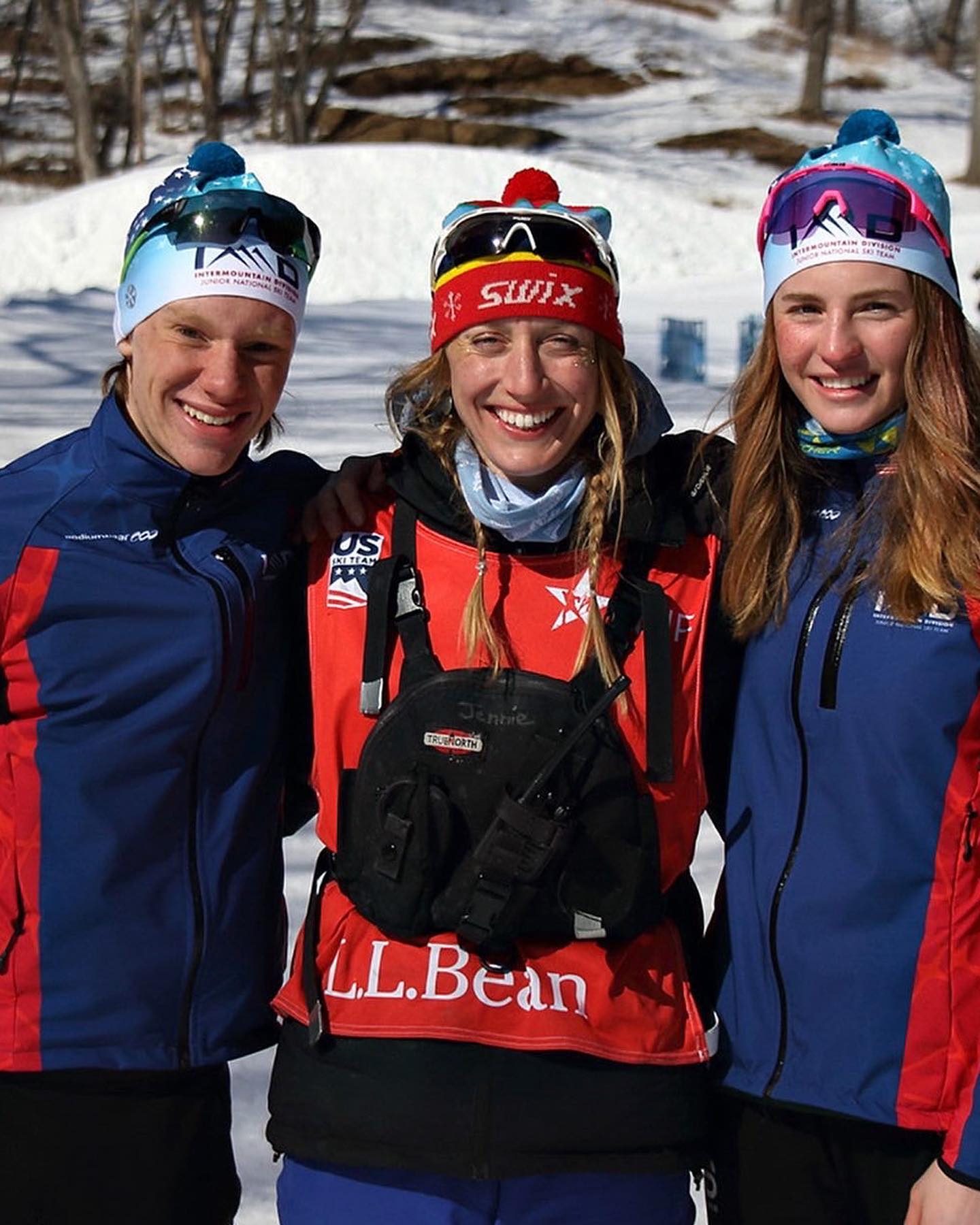
    Glacier Nordic Club head coach Jennie Bender with the two athletes, Jacob Hansen and Maeve Ingelfinger, who earned spots on the 2022 Intermountain Division team at Junior Nationals. (Photo: Glacier Nordic Club)

    Despite less support on the waxing front, the athlete grew into the season and was regularly finishing between fourth and sixth at JNQs, which earned her a spot on the IMD team at Junior Nationals. 

    “So what happens is: we go to JNs, we leverage all of the Intermountain resources on behalf of her and the other kids and what does she do? She’s on the podium. And so our policy afforded her the opportunity to at least be in the conversation to make sure she assuredly got through… she was good enough in that setting of fair and equitable ski service, that – what else was going on? She believed. ‘Oh wow. I’m actually not that far away.’”

    Once this seed was planted, the athlete thrived. In Kapala’s mind, it’s an intangible, but nonetheless vital, component of the development process for that age group.

    “None of this stuff happens in a vacuum, and athlete development is this really, really – I don’t want to say funky – but really nuanced process… This girl has gone from we didn’t even know who she was, to one of the best U16 girls in the country. And I contend that our wax policy, while it wasn’t more important than Jennie’s great coaching, certainly didn’t hurt. She was on a level playing field as level as we can make it in those formative JNQs where she started believing [in herself]. And that’s the whole game.”

    Teague also acknowledged the apples-to-oranges capacity of programs, relating it to his experience with the Australian national team, whom he coached and supported through two World Championships surrounding the 2014 Olympics in Sochi. While Australia now typically partners with the U.S. team on the World Cup for waxing, the capacity of this small program pales in comparison to a robust and well-funded nation like Norway, which has been supported by technician Knut Nystad who was quoted in the first two parts of this series. While Teague emphasized his respect for Nystad’s expertise both as a coach and tech, he felt the understanding club level coaches have of the specific challenges of their leagues might offer a different lens with which to consider these issues. 

    “Knut was my coach [when I was racing collegiately at Denver University], and worked on the Norwegian wax team when I was coaching in Australia. What they were able to do and the testing they were able to do, versus what I could do with Australia – it’s not even comparable. And sometimes we could be competitive with them, but often, they were able to test significantly more. Now, would a waxing protocol make it fair in that situation? Absolutely not. Because they could have every different grind, and a grinder going, and along the continuum.

    “But at the high school level, an AVSC can send four coaches over early to test [glide] wax and at least apply wax on site, rather than make a guess. Whereas [a small program like the Colorado Rocky Mountain School (for whom the author is a former head coach)], or even Battle Mountain where there’s two coaches and 70 or 80 kids, there’s no way they could do that.” 

    An Arms Race for Skis and Grinds

    But what about the arms race for equipment that was cited as a concern in the first two installments of this series? Have these policies induced higher demand to increase the size of an athlete’s fleet of skis? Across the board, the coaches with whom this topic was discussed expressed that this was not a trend that they had observed in the years that a policy has been enforced.
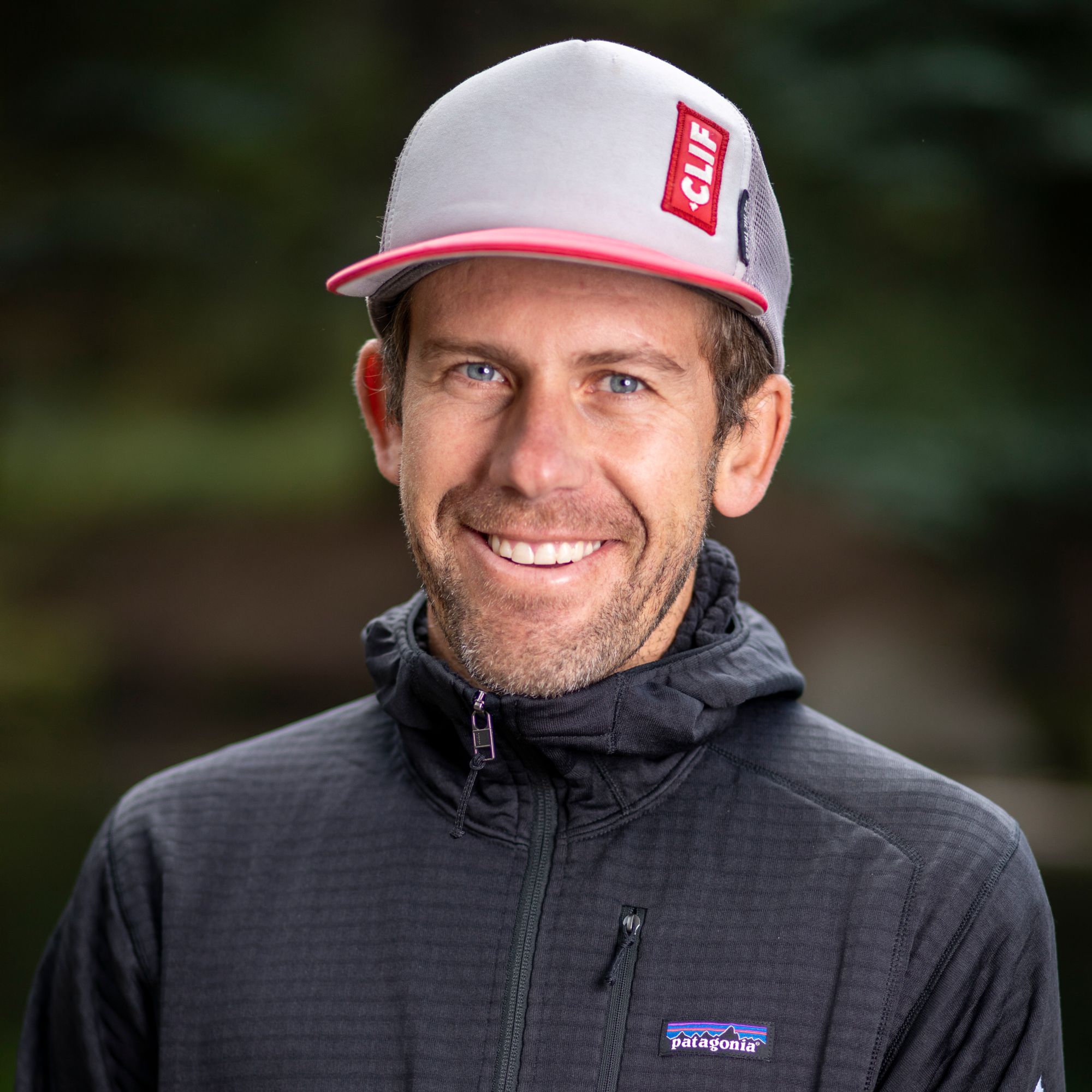
    Aspen Valley Ski and Snowboard Club head coach August Teague provides insights into the evolution and impact of the Rocky Mountain Nordic Wax Protocol. (Photo: teamavsc.org / Matt Power)

    “There are probably exceptions, just like every rule,” said Teague. “But we really aren’t seeing people going out and investing in 30 pairs of skis. We’re still seeing athletes start off with a pair of skate and a pair of classic, and slowly expand upon that fleet.”

    Leonard explained that PNSA coaches are not seeing an increase in ski purchasing either, nor does the level of competition at divisional events necessarily warrant that level of specificity in an athletes ski fleet. 

    “The field density is such at our [JNQs] that the wax is not the deciding factor so much,” Leonard explained regarding clubs in the Pacific Northwest. “And having multiple pairs of skis – most of the kids, I’d say, have one pair of race skate and one pair of race classic and some of the higher-end kids who have been at it a little longer or are a little more involved or or whatever – have a little more means – maybe have a couple pairs of skis that they’re deciding between. But you know, they’re growing kids too, and skis are expensive, so a lot of times it’s sort of like, it’s one pair that fits and one pair that’s a little bit softer from when they were a little smaller a year or two ago. So it’s not such a huge factor.”

    Shift in Focus Toward Structure and Ski Selection

    While programs aren’t seeing athletes rapidly investing in equipment, coaches did observe a shift in focus toward the application and testing of structure on race day.

    “My test fleet, instead of testing glide and structure, is now focused pretty much just on structure at, say, an RMN [race weekend],” Teague explained. “When I show up at Senior Nationals, then I’ve got to be able to test glide and structure and everything else as it unfolds. 

    “So structure has become more and more important. That probably, again, depends a little bit on the level. If we’re talking about high school kids, there are high school kids that ski club and ski high school, who have the ability to get their skis ground every year and have the ability to have skis that are for specific conditions. But for the most part, we’re talking about kids that own one pair of skate skis, or even don’t own a pair of skate skis and rent or borrow them from the program. And they’re getting whatever [base] is on those and then we’re adjusting the structure by hand structures a little bit to try and improve them.”
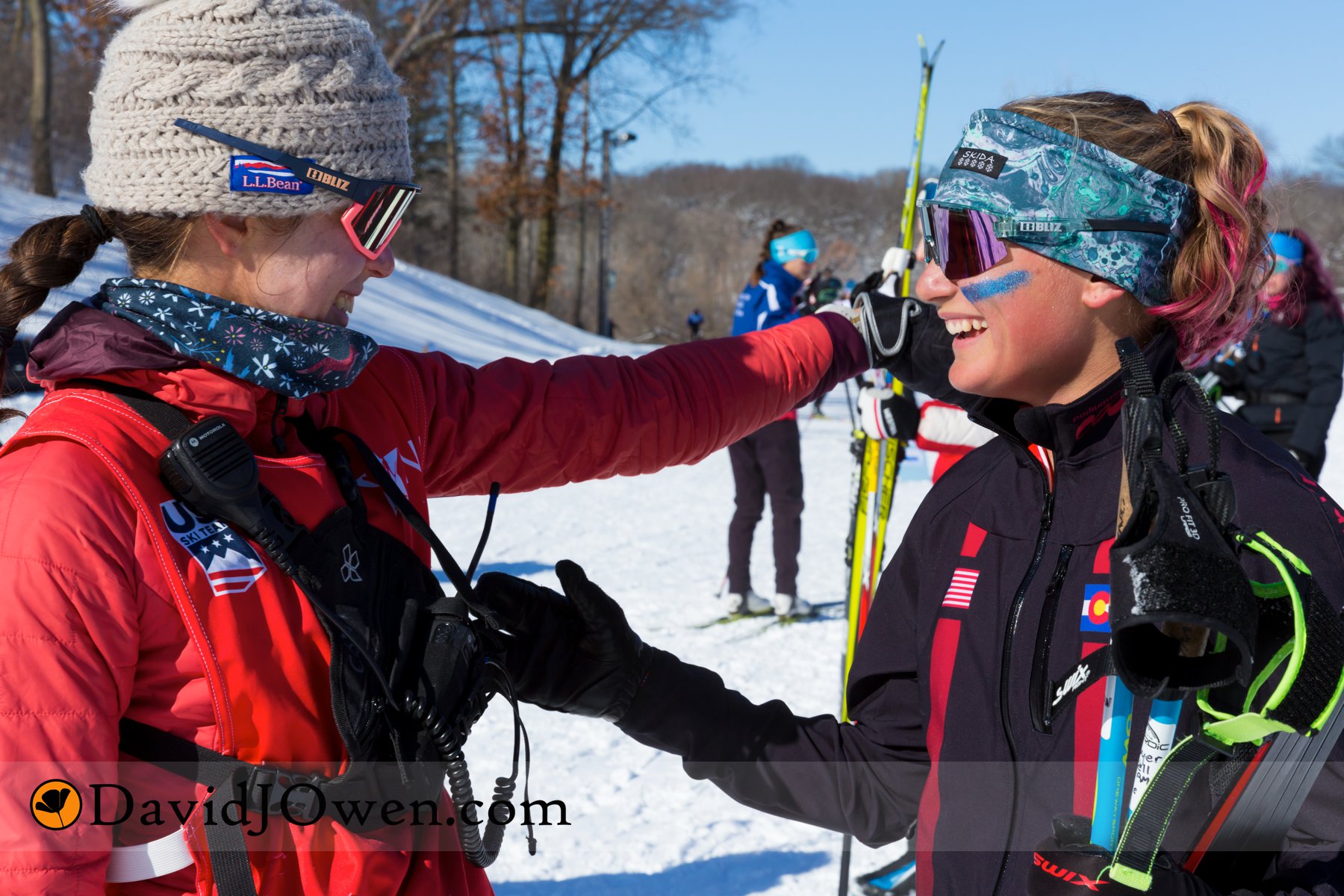
    Crested Butte Nordic Team head coach Molly Susla supports athlete Sawyer Ezzell during the 2022 Junior National Championships in Minneapolis. (Photo: David J Owen Photography)

    Reception of Wax Protocol Among Teams

    As far as how these policies might evolve with time, coaches expressed that the specific brand being used would always be open for discussion, provided that equivalent availability could be guaranteed and cost per gram remained comparable. With the increase in liquid waxes, which might offer versatility on race day without the encumberment of the full glide waxing setup, there may be an evolution that includes more liquid wax options as well. 

    For the time being, coaches expressed that the addition of these protocols has been net-positive, with no member clubs looking to steer the trajectory back toward open waxing. 

    “We’re at least two years through this experiment of running this policy,” said Kapala for IMD. “And I am 100% certain, because I’ve asked… we have 14 clubs that are saying, ‘No way are we going back.’ There is uniform agreement and acceptance of the policy.” 

    In Leonard’s concluding statements, he acknowledged the inherent equipment-based inequity in the sport, while also offering ways to problem solve, and confirming that PNSA has also been well-served by the protocol.

    “You might get beaten at some point by someone who has better skis than you or something like that,” he said. “And when that becomes a factor, you figure out a way to make it work. With the advent of zeros, for instance, suddenly those became a ski that was like – in those conditions, man, you needed to have that. When I was in Alaska, teams were starting to procure fleets of zeros that they could hand out to their kids and maybe rotate through a few kids on a given race day. [Now,] if we have a race coming up that we know is potentially a zero day, we’re working through our community [in the Methow Valley] to grab some zeros for our kids so hopefully, they have a decent option there. 

    “So there are ways to make those things happen and work, and hopefully still remain competitive in the sport. There are a lot of trade-offs with all of it, but people are feeling like, for our division right now, it has been a good decision to go this direction.”
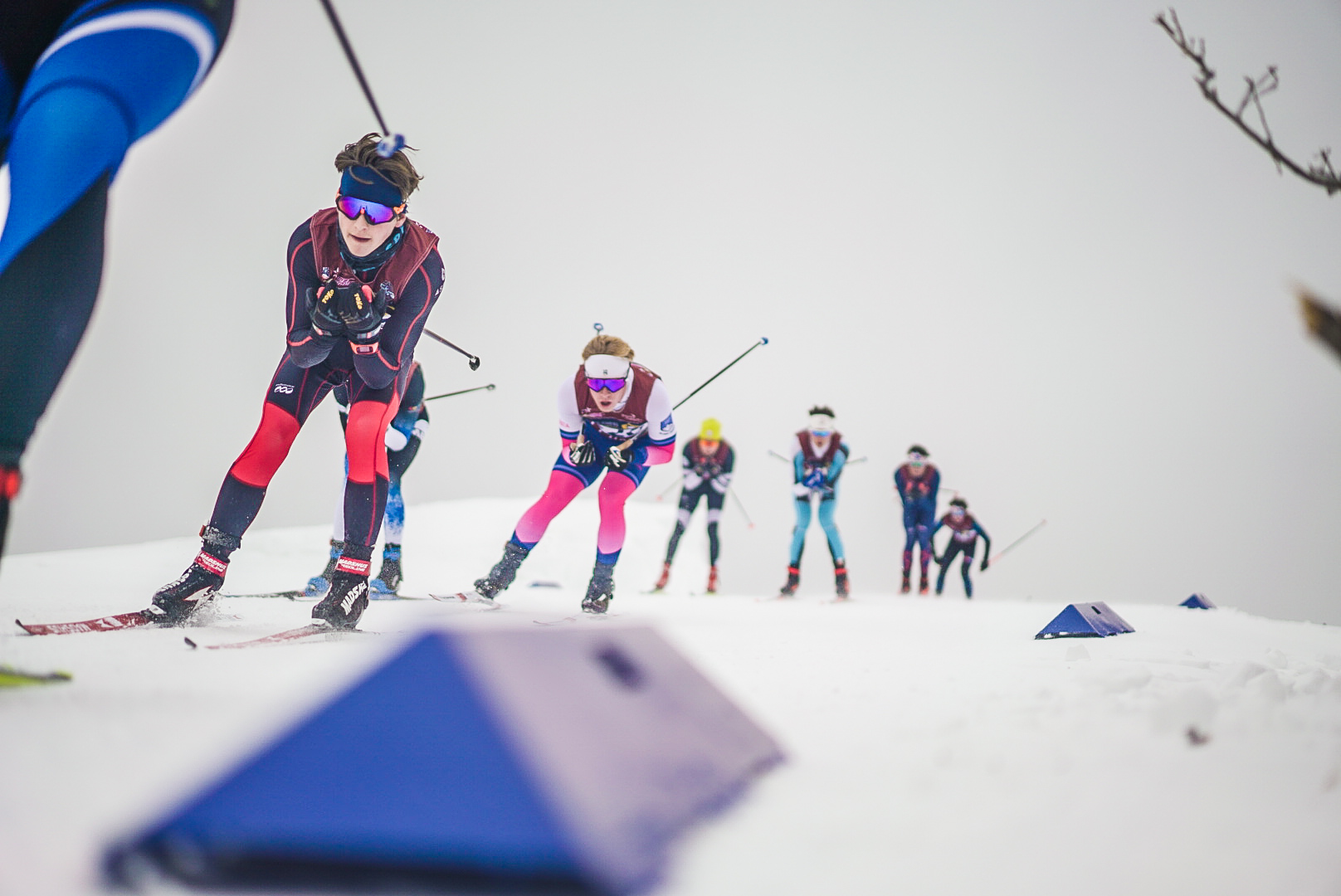
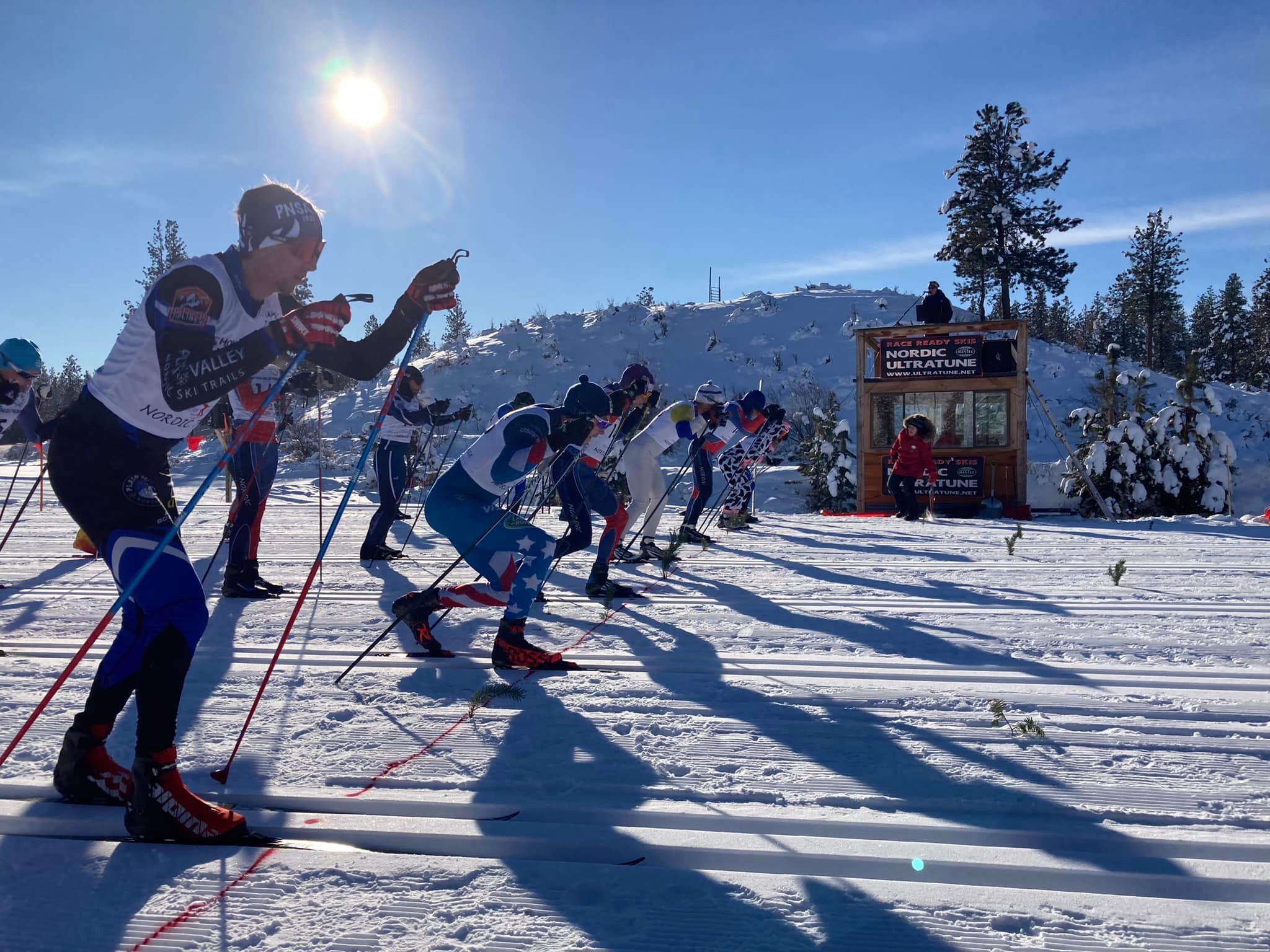
    Junior athletes race during the 2022 U.S. Cross Country Championships in Soldier Hollow, UT. (Photo: Tobias Albrigtsen / @untraceableg)
  • The Pros & Cons of League-wide Wax Protocols: Western Clubs Consider the Evolution and Impact (Part 1)

    The Pros & Cons of League-wide Wax Protocols: Western Clubs Consider the Evolution and Impact (Part 1)

    In speaking with representatives from each of the leagues featured in this series, a few main points rose to the foreground in this discussion: the level of competition matters, how the policy came about matters, and how a program can enhance athlete support holistically by relieving wax-related expenses – measured both in time and dollars – matters. 

    Before jumping into discussions for club level programs across the West, here are the links to view the details of each wax policy specifically: Intermountain Division (IMD); Rocky Mountain Nordic (RMN); Pacific Northwest Ski Association (PNSA)

    Also note that these conversations took place in late-April, prior to further discussions at the U.S. Ski & Snowboard spring congress sessions in May where subsequent conversations among leadership may have occurred. Should significant changes occur, FasterSkier will continue to follow the story. 

    Here are links to earlier installments in this five-part series. The first two parts (part one; part two) spoke to the perspectives of high level wax technicians and industry representatives, while part three focused on the Wisconsin Nordic Ski League. 

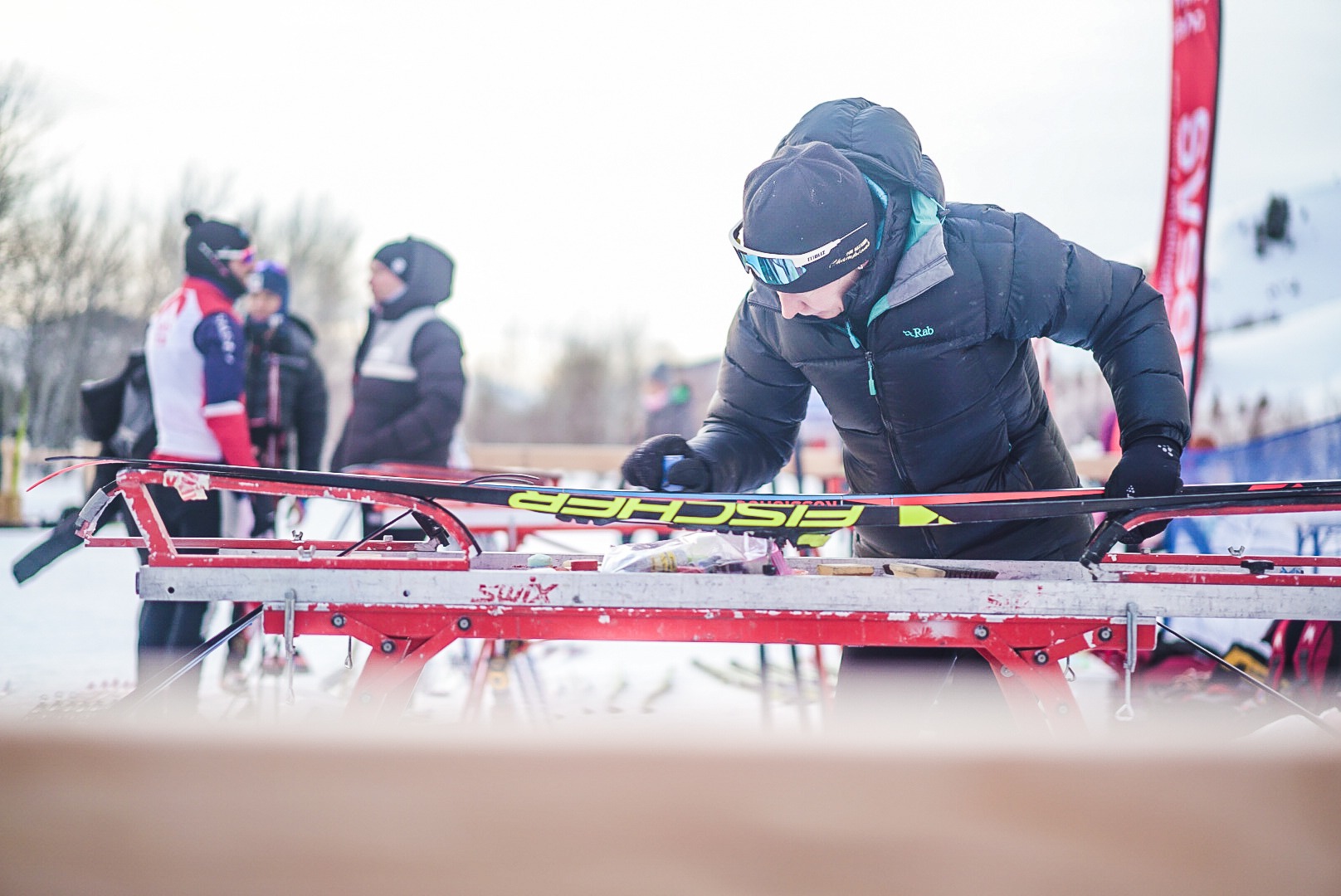
    University of Colorado head coach Jana Weinberger waxes skis for her athletes during an 2022 RMISA/US SuperTour race weekend in Sun Valley. (Photo: Tobias Albrigtsen / @untraceableg)

    The Evolution of Western Club Wax-Protocols 

    There’s a lot to unpack surrounding the impact of wax policies on the sport, and it is not reasonable to project that what makes sense for junior club programs can be extrapolated to the sport as a whole, which includes everything from the recreational level to masters racing to the World Cup. However, as a major player in the U.S. development pathway and a collective that encompasses a large volume of the nation’s athlete base, considering the evolution and impact of wax policies at the club level provides valuable insight into what the objectives and outcomes may be more broadly. 

    Conversations on this subject began long before any official policies were accepted, and their initial aim was to uniformly address the use of fluorocarbons at Junior National Qualifiers (JNQs). With both the health of athletes and coaches, and the inequity of buying power among clubs, the goal was to reduce spending and expensive fluorinated top coats.

    Timelines are now blurred, but long-time Sun Valley Ski Education Foundation Program Director Rick Kapala indicated that Rocky Mountain had perhaps been the division who got the ball rolling. Though the policies have since converged on a single wax call made in advance by host coaches depending on forecasted conditions, Kapala explained that at the onset, Intermountain’s policy was only focused on the elimination of pure fluoros. 

    Long-time SVSEF XC Program Director Rick Kapala explains the evolution and impact of IMD’s wax protocol. (Photo: SVSEF.org)

    “Initially, Intermountain had what we could call ‘wax policy-lite’… Our policy was: you can use any wax as long as it wasn’t pure-fluoro. You can use a high-fluoro, a low-flouro, or non-fluorinated version, and of course, in different brands, that meant different things. But basically, we went for a number of years with a no powder, no liquid and no rub-on policy. And that had some effect on trying to mitigate the arms race, if you will.”

    Executive Director at Methow Valley Ski Education Foundation Pete Leonard explained that the Pacific Northwest Ski Association, for whom he is the Nordic Director, was developed with a similar progression.

    “It initially started in the fluorocarbon era, moving away from powdering skis to just having blocks and liquids – the top coat type of applications – and then to a base paraffin application… I think we had a year of that and then [the policy] went to fluoro-free – the same basic, simple base paraffin called several days out.”

    Further motivation to align policies stemmed from  “cross-pollination” between these three leagues, which with the addition of the California-Nevada Far West division and Alaska, encompass the Western region as defined by U.S. Ski & Snowboard. In particular, these divisions overlap during the Junior National Super Qualifier Event held in January at Soldier Hollow, hence landing on a very similar model.

    “There’s a little bit of a cascade effect, and it’s just simpler for us to match what IMD has,” Leonard explained. 

    Kapala felt strongly that it was important to emphasize that this slow progression happened organically, which he felt was in stark contrast to the Wisconsin Nordic Ski League, where a sponsorship proposal made by a corporate entity included stipulations on waxing at league events. 

    “It’s a wholly different thing when a grassroots community, like a bunch of clubs in a division, promulgates a policy that they think results in the best athletic outcomes,” he said. “And it is very important to differentiate the genesis of a given policy… the order in which you arrive at a policy really informs a lot of the motivations about why you’re doing what you’re doing.” 

    Kapala said IMD would have “given the Heisman” to a wax company that required a policy; however, Swix products have been selected based on trust in the availability for all programs.

    “We settled on Swix without getting into the specifics of brand value,” he said. “I.e., Swix is better than Start, and Start is better than Toko, or whatever – it’s just simply because virtually everybody knew they had enough access to that wax.”  

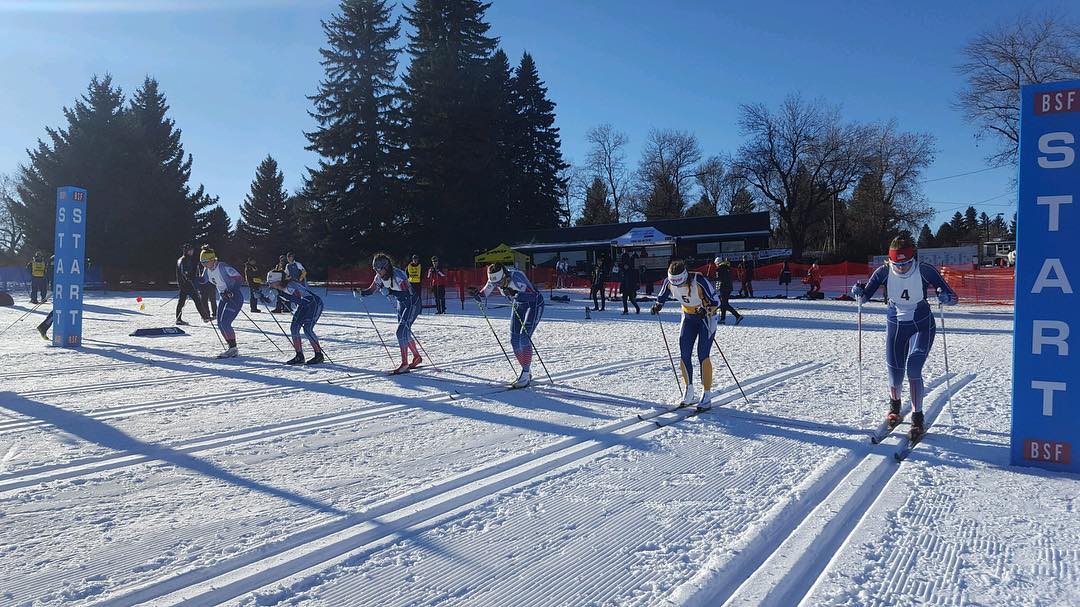
    A scene from the start line of a 2018 Intermountain JNQ in Bozeman, MT. (Photo: Sun Valley Ski Education Foundation Facebook)

    Observed Program Benefits 

    There’s a sizable jump between eliminating fluoros and further reducing a wax box to a small array of products, but Kapala emphasized that these “athletic outcomes” are the central tenet around which discussions regarding changes take place within Intermountain. How does the protocol impact the opportunity and capacity for athletes from clubs of all sizes to be successful on race day and have a positive experience in the sport?

    We’ll start with the impact to a program’s budget, which on its own is a source of inequality among clubs in a given region. Speaking specifically for Intermountain, but also the West more broadly, Kapala pointed out that there are a number of “super clubs” whose financial means and staff power made it hard for smaller clubs to compete in an open wax environment. 

    “They’re usually clubs that are in these mountain towns that are part of [larger] ski foundations or clubs that are multi-discipline, really big clubs. And so they have a lot of administrative function, a lot of underpinning financial security, and so on.”

    He was quick to include SVSEF in that pool, saying cost was not a primary concern when it came to his wax purchasing or race staffing prior to the enactment of IMD’s policy. 

    He went on to explain that within Intermountain, there are six JNQs which are subject to the wax policy, plus an Intermountain opener. However, what he called the “lion’s share” of races, including U.S. Nationals, SuperTours, and any Canadian-based races, remain open wax events where the policy does not apply. Still, with IMD’s policy in place, Kapala said SVSEF has been able to shave $5,000 dollars annually off its spending on wax, equating to a reduction of 30-40%. 

    “The question then is: ‘What am I doing with that $5,000?’” posed Kapala. “Well, what I’m really doing with it now, in my particular case, we have put that money into our merit scholarship program. So instead of me spending money on just making sure I have every wax in the universe in my wax box, I’m actually leveraging those dollars to help kids get to training camps or to go to competitions they wouldn’t normally be able to afford. And that’s huge.” 

    Rather than ignoring the impact this reduction in spending has on the landscape for suppliers, he acknowledged that this could be detrimental, as other clubs are likely reducing their spending by similar percentages. But bringing the focus back to the athletes, he said, “what we’re really spending less of is human capital on things other than coaching.”

    For Kapala, this makes the cost-benefit analysis check out.

    “We think being available to coach kids – that are especially young in their developmental process – at events like JNQs, is actually what the [coaching] game should be all about. So while it’s true that there can be impacts regarding the finances, it is also undoubtedly true that athletic outcomes – true athletic outcomes, the actual ones that we should be concerned about – are actually being serviced way more effectively. And if those two competing interests are both true, we have to pick one. And the one we’re picking is we’re making it more fair for athletes.”

    August Teague supports AVSC alumna Kate Oldham while teching at the 2022 FIS World Junior Ski Championships in Lygna, NOR. (Photo: flyingpointroad.com)

    Speaking for what he has observed within his own program and the Rocky Mountain Nordic division more broadly, August Teague – Cross-country Program Director at the Aspen Valley Ski and Snowboard Club (AVSC) – shared similar sentiments. 

    “I guess the real question to me becomes: ‘What is the purpose of a waxing protocol and at what level and why? And I certainly believe that barriers to entry in sport are a real good reason to have a waxing protocol, and time allocation or time management.”

    Adding specificity to the statement, he said, “The biggest thing that I see is that I can spend more time coaching instead of teching. And there certainly is an argument as to the need for better wax techs both from this country and elsewhere, but I think that’s a separate discussion than the coaching discussion and where my time is best served.”

    While the AVSC nordic program is significantly smaller than that of SVSEF, Teague also noted differences in how his monetary budget is allocated. “We have started to explore structures more than we ever have. So money that was being spent on product is now being spent on different structure devices and/or ways to test that structure.”

    Similarly, Steamboat Winter Sports Club U16/U18/U20 head coach Josh Smullin wrote to FasterSkier that the protocol has supported a safer environment for both coaches and athletes while on the road. In particular, he cited driving – there are roughly 3,200 serious injuries and 600 fatalities on average annually in Colorado – as a place where some relief in the toll on coaches during a race weekend has shown value.

    “It used to be that we coaches were up late waxing,” he explained. “Waking up the next morning to go set up at the venue, and then would drive many hours home after the race. A waxing protocol has helped us to be safer drivers, less sleep deprived, and more present with the athletes.”

    Smullin also commented on ventilation, which remains important for the health of waxers even without fluorinated products.

    “At many of our home clubs we have some sort of ventilated wax facility. We do not have that on the road [while staying in hotels] unless the weather is nice and we are able to wax outside. Regardless of the fluoro ban, [proper] ventilation is healthier for coaches and athletes.”

    Methow Valley Nordic skiers take to the course during the December 2021 Ski Rodeo event. (Photo: Methow Valley Nordic Ski Education Foundation Facebook)

    “Everybody’s got their opinion…” said Leonard on behalf of PNSA. “There’s no overarching study on these things, and costs, and whether there’s a major difference [in ski speed], but I think what is clear to the coaches is that there’s less time spent testing glide products at races and there’s less of an incentive to do that, especially with the calling it [a few days] prior. There’s also more time that they can focus during that weekend on other things, like with the athletes and their preparation, instead of testing wax, waxing skis and leaving [coaching and direct athlete support] right up to the race time.”

    For Leonard, the question of whether the policy widens the gap for skiers based on the quality or condition specificity of their skis was not a priority when it came to identifying how the policy has served PNSA teams. For a club based in the Methow Valley which travels to regional competitions across Oregon and Washington, as well as to the Super Qualifier in Utah, the policy has reduced the toll of travel. 

    “I don’t know that it’s necessarily a parity – it’s really difficult to get that down.. but I think for us, calling the wax several days out just makes it simpler for people, and there is less [equipment and product] to travel with, one less thing to think about when you’re booking hotels, and all those details. It makes it simpler for teams.”

    He said he has also found it quicker and easier to apply structure on race day without the variable of glide wax testing. And without the need to cart around as much product and equipment, getting his athletes’ skis race ready has been “way easier to manage”.

    “Rather than bringing a wax box with several waxes in it, irons, enough benches that you can get your whole team through, scrapers, brushes, etc. – already, you’re packing the van to the ceiling and then, sometimes it’s driving eight hours, or for the Super Q for us, it’s driving four hours to the airport, [hauling our skis and gear through the airport on both ends], then driving another hour-plus to SoHo, and then doing it all again on the way back.”

    Stay tuned for the final installment, where you can read more on leveling the playing field, the arms race (or lack thereof) for skis, and the reception among Western Division coaches.

  • Sustaining Success: Year Two for the Methow’s Ski to the Sun Marathon and Relay

    Sustaining Success: Year Two for the Methow’s Ski to the Sun Marathon and Relay

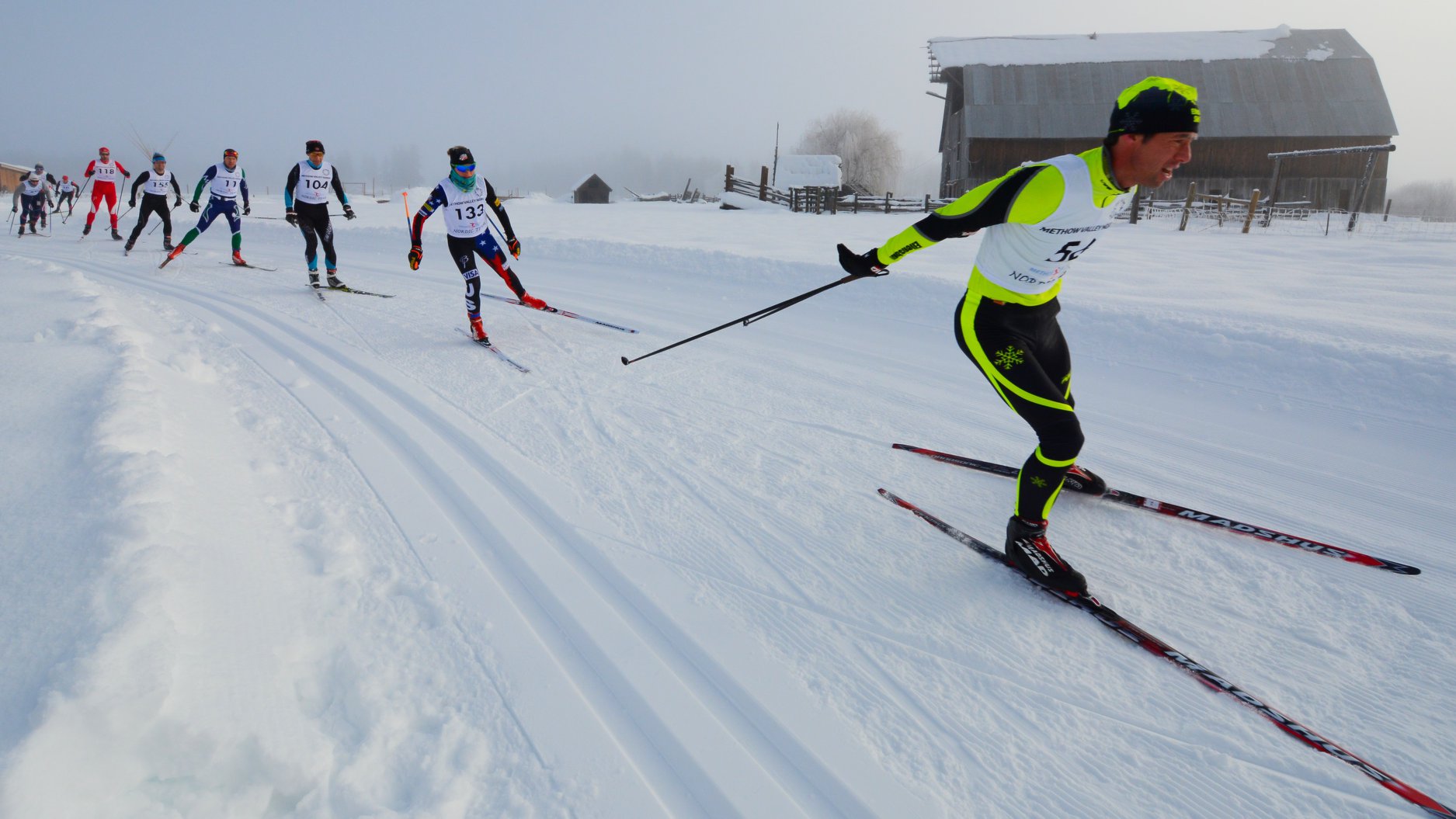
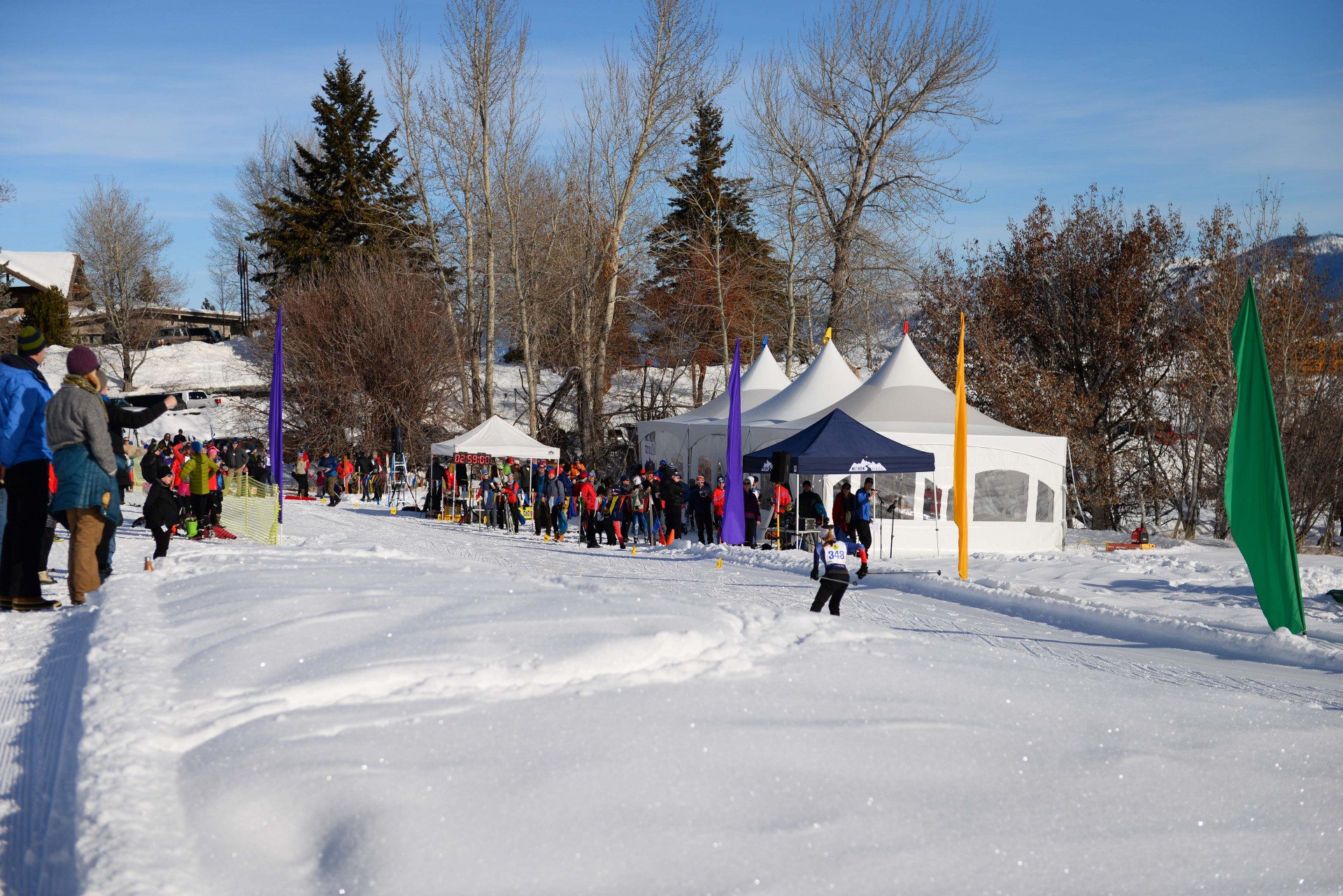
    Racers on the valley floor during the first Ski to the Sun Marathon and Relay in the Methow. (Photo: Methow Trails)

    All things aligned: a gauzy low fog burned off into bluebird skies and the snow skied crisp along a 42-kilometer gem during the Methow Valley’s inaugural Ski to the Sun Marathon and Relay. Last year, we ran a piece exploring how the Ski to the Sun Marathon organizers were rebooting their marquee ski race. The valley’s signature race had for years been a two-day pursuit. An attractive format to many, but it eventually stagnated with a core cadre of skiers roughly one-hundred strong participating. 

    A rethink was in order to highlight one of North America’s premier ski destinations. Creating a must race event is not as simple as build it and they will come. Many pieces must fall into place, let alone the weather and snow conditions on a race date often selected more than a year out. 

    In our previous article, Kent Murdoch, who has been making the trip from Seattle to the Methow for eons, told FasterSkier that a signature event was not on the minds of the pursuit race organizers. But over time, as the valley’s considerable volunteer energy became evident, creating an event that was a regional draw for cross-country skiers became a goal. 

    The Methow appears to have found a formula that works.

    “We went from wanting something bigger than the previous existing pursuit, and I think that we had four times the number of people,” said Pete Leonard, Executive Director of the Methow Valley Nordic Ski Education Foundation, during a conversation this January. 

    Four hundred skiers in a first year event. A massive win considering longstanding events like Sun Valley’s Boulder Mountain Tour cap their 34 k marathon at 775 skiers. 

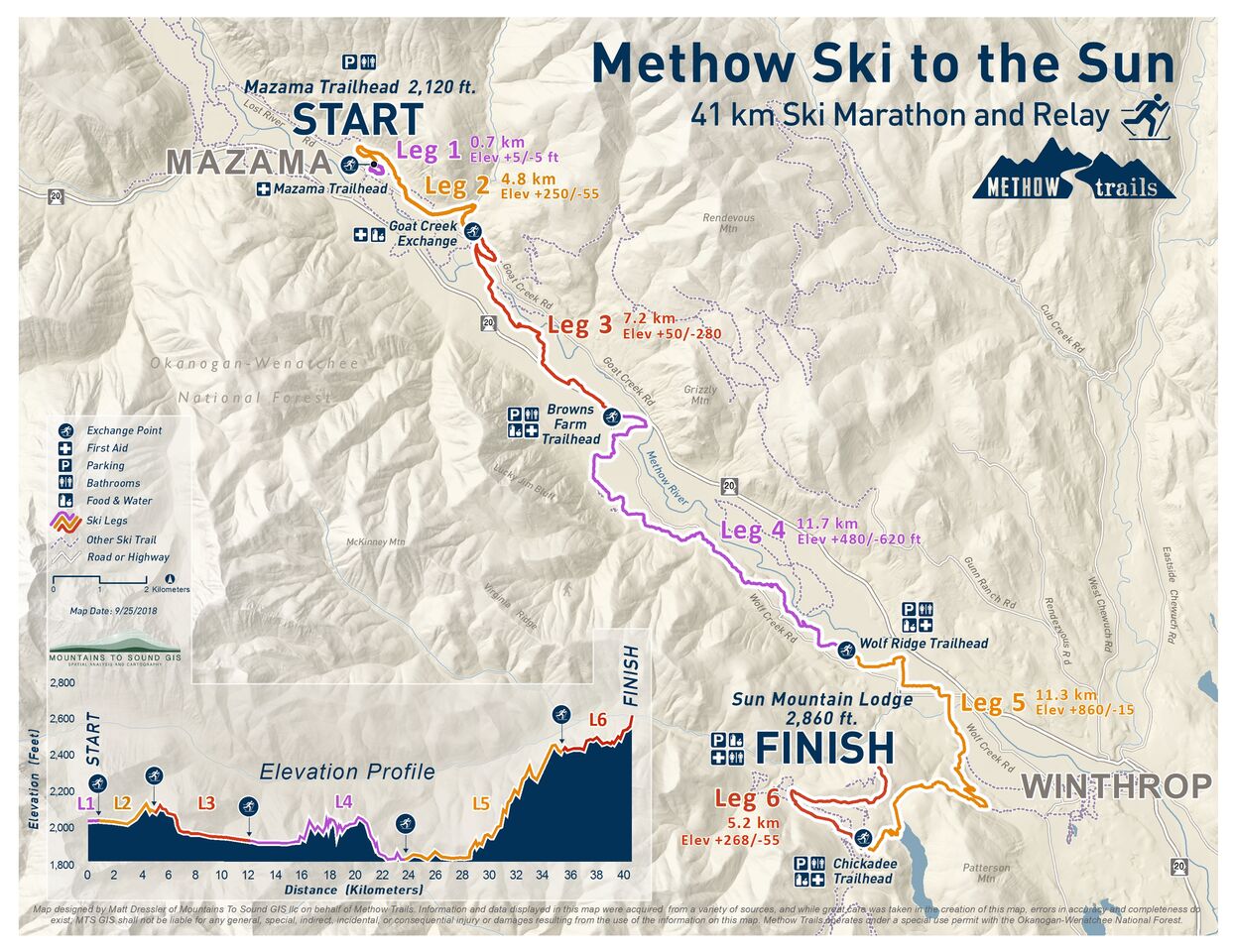
    The Ski to the Sun Marathon, which runs this year on February 8th,  spans the valley from the north in Mazama south towards Winthrop. Before skirting across farm and ranch-land into Winthrop proper, the course takes a lovely – and heart-rate-rising- 12 k stair step climb from the valley floor to the finish at Sun Mountain Lodge. Here’s the thing: you can imagine it’s your own Tour de Ski final stage grind with it’s Alpe finish, or register with a relay team and save the ascent for a teammate. 

    There’s something for hardened master racers and those simply seeking a cool social scene bundled into a ski race.

    This year, organizers are bringing Olympic champion Kikkan Randall to the race where she will also be available for a meet and greet. Randall is also expected to compete.    

    What follows is an interview with two of the race organizers, Kent Murdoch and Pete Leonard. We explored what they had learned after year one of the Ski to Sun Marathon and Relay. We thought it might be useful to other communities thinking about developing a premier ski race to learn from those in the Methow as they forge ahead with creating a signature event on the race calendar. 

    FasterSkier: A race like this is an investment in the community, but it also takes considerable resources — both human capital and money. Can you talk about the finances? 

    Pete Leonard: Everybody grouped together to deal with some of the unknowns and for our race committee that was a little bit stressful leading up to the race. But everything seemed to come off and everything seemed to work out. But one item was noteworthy, we were able to balance the budget the first edition – which was no small feat.  

    Kent Murdoch: I would also add that we weren’t planning to actually be in the positive in the end. We were expecting to take a little hit, being the first year. But, it was surprising. Honestly, you also have to take into account that there is a ton of community volunteer work that goes into it. And I think the volunteers in the valley really pulled out the stops.

    FasterSkier: You spoke about some unknowns. What were some of the unknowns besides weather and snow coverage. What did you stress about? 

    Pete Leonard: The logistics of a relay — those are the things we didn’t necessarily think about. With a relay happening simultaneously with a marathon, or starting 10 to 15 minutes behind, lots can go wrong. We have all these people driving down valley and using different zones to tag their partners. That took some coordination. It’s also a trail system and race course through some private land holdings. We have road crossings that can complicate race course set up. We also cross driveways and someone simply might not have their driveway plowed. Those are little things, but we were worried about them. 

    Another issue we learned about was limited parking at the finish. There was a big conference last year up at Sun Mountain Lodge the same weekend as the race. That was a little bit of a worry. We also stressed about accommodating all those people for dinner. And then there was the cooking and food for 300 people. Just constantly thinking how it was all going to come together. 

    I think sometimes that is a little bit of race organization, making sure you are pushing to do your absolute best by the racers so you give them the best product.


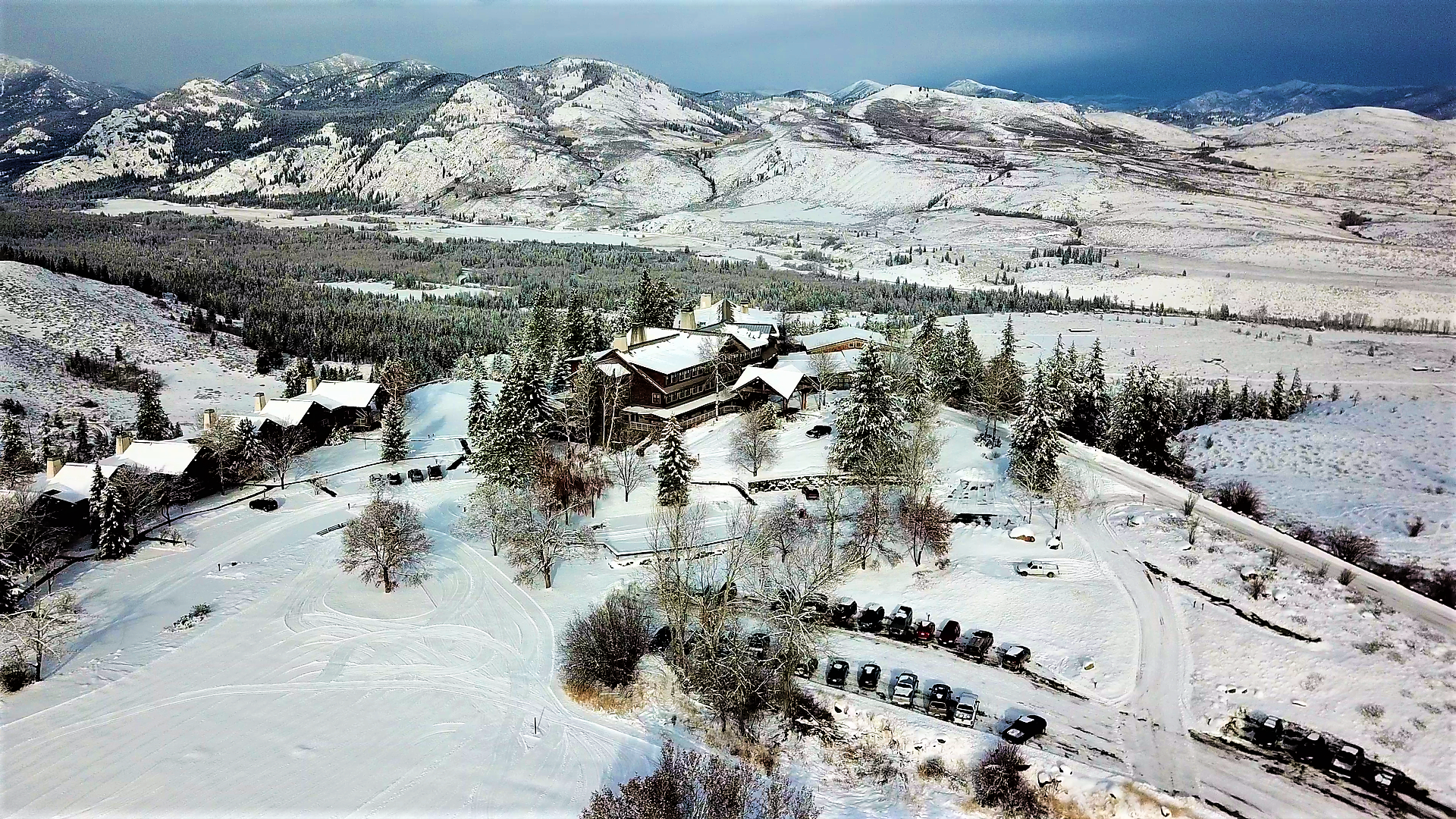
    Sun Mountain Lodge – near the finish area of the Ski to the Sun Marathon and Relay. (Photo: Methow Trails)

    FasterSkier: Can you talk about the somewhat unexpected bump from 100 skiers in the old pursuit race, to a start list with nearly 400 skiers including relay participants?   

    Kent Murdoch: In our first year of the Ski to the Sun it took us a bit by surprise because so many people entered kind of last minute. I think that is typical for many events, but it made it more of a challenge to plan for the banquet meals. I’m not sure exactly what that is about, but I think people want to make sure they are healthy and their is going to be snow. And so it does make it hard to plan for. 

    For this year, we modified our fee schedule to moderate that a bit. I do not know what to expect. We did something like December 1st and January 1st fee bumps — meaning the entry fees increased on those dates.  

    Pete Leonard: We also have February 1st as the closing date for the relay. And then there is a very substantial fee bump if you want to wait to the last week for the marathon. We are just really trying to encourage people to make the commitment to race because that helps us deliver a better product and make sure all the pieces are there.

    FasterSkier: Skiing has yet to really find the equivalent to the gravel scene in biking. How are you trying to draw more people into skiing with this event?

    Kent Murdoch: The relay aspect is the biggest change we have made with regard to events we have held. And it’s an attempt to broaden the appeal of a ski race likes this. We are getting both this year and last year about a 50-50 split of those entering the marathon versus the relay. So the thing about the relay is it really opens it up to anybody, we have one leg that is less than a kilometer on flat terrain. And then we have every kind of leg that you would want. There are many relay combinations that can suit any team, and an individual can do more than one leg. That flexibility seems to have been successful so far. 

    Pete Leonard: It is not a single facet that is going to bring new people to a ski race. Sometimes we get into these discussions where we are looking for that one key ingredient that is important to every racer. I think that there are a variety of ingredients that are important to every racer and we are trying to do a good job on a lot of fronts.

    To every racer those fronts matter a little but differently. For some they are tuned into one part of the event, but it still matters to them that the course is well groomed even if they are out there and they are motivated by the social part of it or the epic adventure type of thing. 

    I think to reach out to a broader segment, it starts with making it obtainable, which is what Kent talked about with the relay there. We had a lot of people who did the relay last year and were like ‘oh man I am going to do the marathon next year,’ because they thought that was not as hard as it was going to be.

    I think one of the big challenges with cross-country skiing is reaching out to new segments of people who might know the sport and be attracted to it, but they are not going to be stoked to sign up and line up next to the Lycra clad master racers of the world because they feel they are not ready for that — but they are fit. They could be an ultra-runner, or a biker, or a rower or something like that and they are going to want to come over to the Methow. This is their experiment with cross-country racing. This is one important aspect as we build it — that we are not just speaking to the people who are already part of your tribe.  

    But trying to build your ski racing tribe up to with these other people and bring them into the fold.

    Big support along the race course. (Photo: Methow Trails)
  • Skiers Battle Warming Temps, Melting River Ice in Fairbanks’ Sonot Kkaazoot

    Skiers Battle Warming Temps, Melting River Ice in Fairbanks’ Sonot Kkaazoot

    FAIRBANKS, Alaska – As Mike Campbell famously said in The Sun Also Rises, he went bankrupt two ways: “Gradually and then suddenly.” Alaskan breakup – the season known as “spring” in other parts of the world – proceeds much the same way.

    A field of nearly 300 skiers experienced a little of both in the Sonot Kkaazoot family of races, held last Saturday, March 26, in Fairbanks, Alaska. At the end of the day, Fairbanks skier Rebecca Konieczny and Anchorage skier Seiji Takagi came away victorious in the flagship 50-kilometer skate races. But the real victory may have been that the races were held at all.

    Sonot kkaazoot comes from the Athabaskan (indigenous language group) words for “springtime” and “to slide your feet across the snow.” The race with this name has been held in Fairbanks on the last weekend in March every year since 1988. Reflecting the cold winter temperatures of Interior Alaska, as well as Fairbanks’s location at 65° N latitude, the race has never been canceled despite this late date (although the course has occasionally been modified).

    Traditionally, the race starts on the Chena River in the heart of downtown Fairbanks, travels 10 k east along the river, proceeds inland to Birch Hill Recreation Area, spends 30 k covering most of the trails in the renowned trail system, and then returns to the river to finish 10 k west in central Fairbanks. The 2016 race covered this full course. Barely.

    A field of 106 racers started the combined 40 k and 50 k races at 10 a.m. The first water hazard came approximately 300 meters into the race, as the field had to negotiate overflow several inches deep (the video shows the 20 k start). Once past the water crossing, a lead pack of a dozen racers quickly formed, including five skiers from the University of Alaska Fairbanks (UAF), five skiers from Alaska Pacific University (APU), and two junior skiers from Fairbanks’s West Valley High School.

    Takagi, a sophomore skier for UAF, set an honest pace from the start.

    “I know a lot of these guys will be mad at me for doing that but I kind of like doing that in mass starts, going out a little fast and then kind of settling,” Takagi told the Fairbanks Daily News-Miner in an in-person interview after the race.

    Takagi led for much of the initial 10 k down the river, occasionally trading off the lead with other skiers. Despite his desire to push the pace, the lead pack remained intact 10 kilometers and approximately 25 minutes into the race, as all 12 skiers who had made the initial break continued to ski in a pack.

    Shortly after leaving the river, the race course proceeds to the base of the Ft. Wainwright downhill ski area, then takes a series of switchbacks to the top of the alpine hill.

    Takagi put in a surge immediately upon reaching the base of the hill.

    “I just worked on trying to open that gap after that and maintaining it,” Takagi told News-Miner. Although his energy flagged considerably over the remaining 39 kilometers – “I had about less than 10 percent left, negative 10 percent left” by the finish, Takagi later said – he skied relatively unchallenged to the end. He would finish first by over two minutes in 2:20:30.2, taking the victory in his first time racing the Sonot.

    Behind him, there was heated competition for the remaining podium spots.

    “Soon after we started up the downhill resort the pace increased,” wrote eventual third-place finisher Fischer Gangemi of Takagi’s move. “As we rounded the first corner [going uphill] I could see Seiji already making a gap.”

    APU skier Andre Lovett, who would eventually finish fourth, tried to stick with Takagi. Two chase packs formed behind the leaders. Gangemi eventually bridged the gap to Andre Lovett and the two 40 k racers.

    “By that point,” he wrote, “Seiji had a considerable lead but we could still see him.”

    The next time Gangemi saw Takagi, he was at least 2 ½ minutes back of the UAF skier. Gangemi skied alone for some time, until he was eventually caught by UAF skier Nick Lovett (no relation to Andre).

    “We skied together [through Birch Hill, back to the river, and] all the way until the last 1 kilometer mark,” Gangemi wrote, “trading drafts regularly in the very hard push down the river and around the overflow. Both of us tried to make futile pushes a couple times. Finally Nick had much more gas in the last kilometer and slowly gapped me to the finish.”

    Nick Lovett finished second in 2:22:34.5, 2:04 back from Takagi. Gangemi was third in 2:22:45.0, roughly ten seconds behind. Andre Lovett came in fourth, nearly three minutes later.

    The top nine men’s finishers were split between UAF and APU, with five members of the UAF ski team and four from the APU university and masters teams. (The APU Elite Team was busy contesting its own slushy 50 k in Craftsbury.)

    (Story continues below)

    While Takagi skied away early for the solo win in the men’s race, the women’s race featured heated competition throughout. In a battle between UAF past and present, UAF past took the narrow victory. After 50 kilometers of head to head racing, Konieczny, a former Nanooks skier who now coaches for the Nordic Ski Club of Fairbanks, finished first in 2:42:00.7. Ann-Cathrin Uhl, a sophomore skier for the Nanooks from Mühlenbach, Germany, crossed the line less than six seconds back in 2:42:06.6. Third place went to Anchorage’s Sarah Freistone, who finished roughly eight minutes later in 2:50:07.4.

    Konieczny won the race for the third year in a row, but was thrilled to have some competition, and some company, this time. “I actually want to thank Ann Uhl,” Konieczny told the News-Miner. “Usually I follow the men for 20 k-ish, not even, and then I have to ski the whole race by myself. So it was really fun to ski with her and go back and forth.”

    Konieczny added, “I was excited to ski with a couple of the UAF ladies. Thought it would make it a little more fun for me.”

    Although Freistone finished some distance off the podium, she hardly had to ski by herself.

    “Throughout the race I was skiing in small packs of people,” she wrote in an email. “Whenever I felt the pack I was with was slowing down or if I thought I could go faster, I tried to make a move to the next group of people.”

    Freistone also had a personal source of motivation: “I was also trying really hard to catch my mom before the finish,” she wrote. “That kept me motivated when the skiing got rough and slow. She competed in the 40k and finished about a minute in front of me.”

    In the day’s other races, Maria Bray won the 40 k for the women in 2:21:21.7, with Jenna DiFolco second and Alyeska Daniels third. Local high school skiers Ti Donaldson and Benjamin Koenig were first and second in the men’s 40 k, with Donaldson setting a winning time of 1:52:29.3. Pete Leonard was third.

    Kaya Ratzlaff was fastest in the women’s 20 k, with Emma Jerome second and Anna Rix third. Mike Kramer, Jonathan Burrell and Jacob Moos were the top three in the men’s 20 k.

    Lynne Petersen was the winner, and only entrant, in the women’s 50 k classic race. Daniel Serventi won the men’s 50 k classic in an impressive 2:49:48.1 solo effort, with Bill Husby and Owen Hanley second and third.

    All skiers in all races had to contend with conditions that may charitably be described as variable. Fairbanks began experiencing a dramatic springtime freeze–thaw cycle somewhat earlier than normal this March. Temperatures on the Birch Hill section of the course were never lower than 36 degrees Fahrenheit during race grooming the night before, and were still as high as 52 degrees at 2 a.m., eight hours before the 10 a.m. start. They then fell to slightly below freezing by 6 a.m.

    Between the springtime conditions, the initial 10 k on the river, the groomed trails at Birch Hill, and the final 10 k back on the river, plus temperatures that climbed at least 15 degrees during the race, racers encountered a range of conditions. There was standing water, flowing water, sheet ice, bulletproof crust, melting snow, dirty snow, perfect midwinter corduroy, and what appeared to be midwinter corduroy but was in fact soft and painfully slow groomed snow. Then came the final 10 k on the river, when the sun came out, the morning’s ice broke down into slush, and even the top finishers faced a grinding trip to the end.

    Strategies for dealing with the range of conditions varied. One racer was heard muttering at the finish that he literally would have saved time had he skied with a Structurite tool in his water belt the entire way, then stopped before returning to the river to quickly hand-structure his skis.

    For her part, women’s winner Konieczny told the News-Miner, “My skis were fast when the conditions were right for it but then up at Birch Hill, especially, it got really really soft. It made it actually more interesting too because you had to be more tactical and find spots to pass.”

    Gangemi, who was on eponymous RCS Plus skis, was slightly less sanguine. He reported that he waxed with Holmenkol Betamix Red, plus “whatever structure tool Mike Hajdukovich from Trax [Outdoor Center] made available.” He added, “I think I should have used a graphite wax as well to improve the durability because it seemed they became slower as the race progressed not just because of variable conditions and fatigue.”

    The challenging conditions were reflected in the finishing times. Konieczny was more than 18 minutes off her course-record time of 2:23:40 from 2015. Takagi, similarly, was over eight minutes slower than last year, when APU skier Jack Novak won in 2:12:10.

    Three-time winner Konieczny was not the only frequent contender. Second-place skier Uhl had finished only one second off the podium in the Oosik Classic 50 k the weekend before. Third-place finisher Freistone was also third in the 2015 Sonot Kkaazoot, first in the Kachemak Nordic Ski Marathon earlier this month, and first in this winter’s season-long Anchorage Cup series. Among the men, Nick Lovett was third and Takagi fifth in last weekend’s Oosik, while Gangemi won the Kachemak Marathon.

    But the real story of the 2016 Sonot Kkaazoot was the weather. Despite race organizers’ assiduous attention to ice conditions in the days leading up to the race, including drilling at several sites to check for ice thickness near the start and delaying a final decision on whether or not to ski on the river until the morning of the race, everyone was surprised when a small portion of the Chena River experienced breakup during the race.

    (Story continues below)

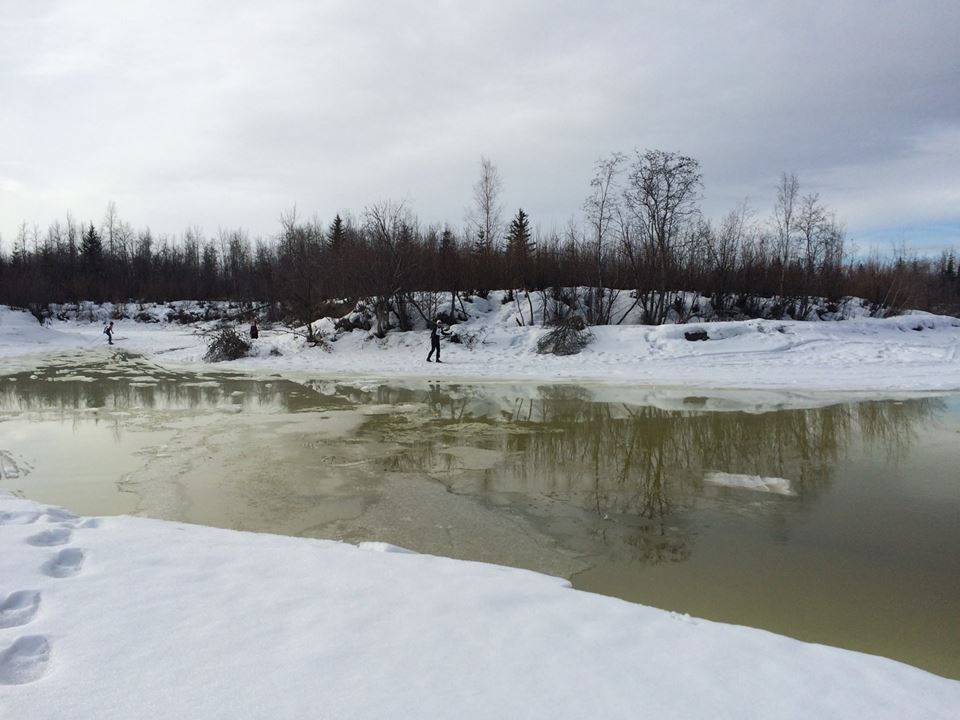
    Overflow on the surface of the Chena River, following a partial breakup of the Chena River in Fairbanks, Alaska, on March 26, 2016.  The groomed trail originally went through the foreground of this picture.  Two skiers can be seen in the background safely detouring around the overflow on the established detour route. (Photo: Stella Wisner)
    Overflow on the surface of the Chena River, following a partial breakup of the Chena River in Fairbanks, Alaska, on March 26, 2016. The groomed trail originally went through the foreground of this picture. Two skiers can be seen in the background safely detouring around the overflow on the established detour route.
    (Photo: Stella Wisner)

    A relatively small piece of ice went out at some point while the lead 50 k skiers were traversing Birch Hill. The Chena River promptly began flowing over the ice for a stretch of several hundred meters. While skiers had blithely skied down the groomed river trail earlier in the race, on their return they were met with a lengthy stretch of overflow.

    No one was injured. A detour route was quickly established, requiring returning skiers to head inland for approximately 100 meters, traverse around the farthest reaches of the overflow, step up on to some shore-fast river ice along the bank, duck under some alders, and return to the established race course on the far side of the overflow. (Two skiers can be seen on the detour route in the above picture.)

    In a blog post on the race website, race organizers wrote, “Huge thanks to David Frey, nordic ski coach at Tanana Middle School who alerted Sonot Kkaazoot officials of the major disruption of the Sonot Kkaazoot trail on the river and provided standby guides around the hazardous area until Sonot volunteers could set up an alternative course.” (Organizers declined further comment on the breakup incident.)

    As the race director told skiers in his pre-race remarks, imploring them to stay on the set course, “If you go off the course, you may die.” It appears he may have been correct.

    Or, as third-place finisher Sarah Freistone observed in an email, “I was really happy with how my race went this year despite the tough conditions.” She added, “I have never really worried about falling into a river in a ski race before, but I guess there’s a first for everything.”

    Complete results

    The reporter would like to thank local skier Max Kaufman for his sterling hospitality all weekend long, as well as for taking all the racer pictures in this story.

    About the Author: Gavin Kentch lives in Anchorage.  He skis with the Alaska Pacific University Masters team, plays with his two adorable daughters, and occasionally works as a solo attorney.  He was probably on snow this year before you were.

  • NSCF-FXC Seeks Assistant Coach

    NSCF-FXC Seeks Assistant Coach

    NSCF FXC Racing logo

    Nordic Ski Club of Fairbanks’ Fairbanks Cross Country (NSCF-FXC) junior racing program is looking for an assistant coach to begin work this summer.

    Early season with NSCF-FXC
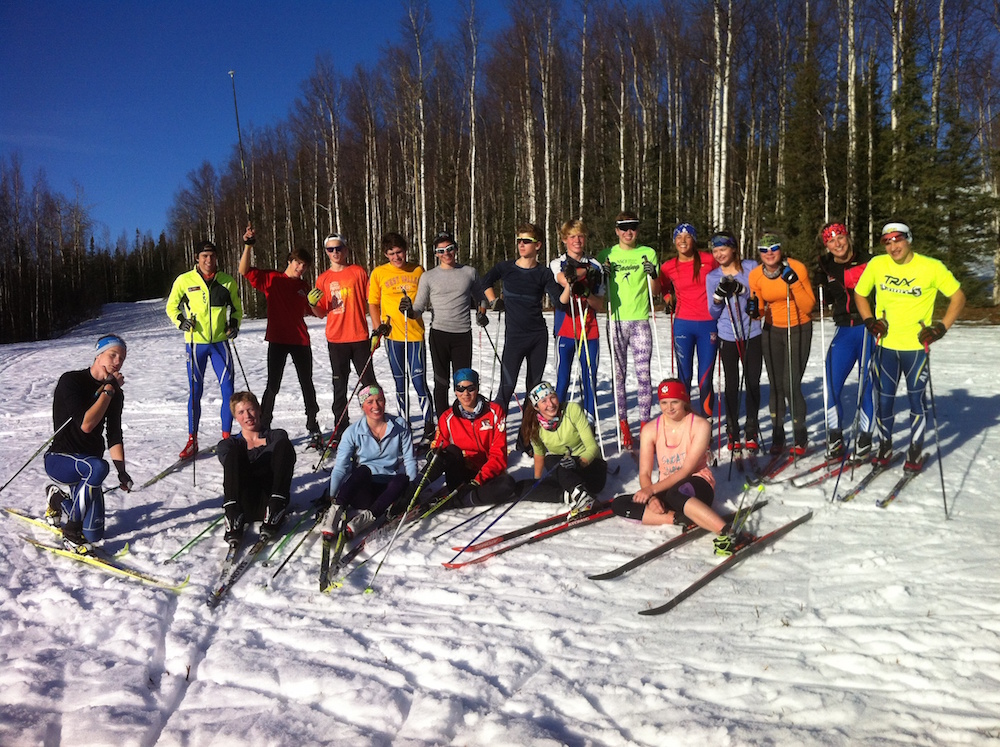
    NSCF-FXC Comp Team enjoying an early October ski last year. (Courtesy photo)

    Our team has been steadily growing and improving since its inception in 2006; the program currently engages more than 120 athletes on an annual basis and qualified 17 athletes to Junior Nationals and Arctic Winter Games this season.

    Athletes in the FXC racing program are split among three tiers and the prospective coach would work with all groups over the course of the year, although primary responsibilities would be with the Jr. Devo (late elementary) and Comp Team (high school and post-graduate).  This position could also be involved in a potential expansion of our masters program.

    The assistant coach is a year-round position and generally involves 5-6 days and 20-30 hours of work per week, although additional hours are required at busier times of year.  The starting wage is $19/hr ($20/hr with completion of USSA L100 coaches certification).  The coaching schedule can allow for additional employment within the local ski community (high school coaching, lessons, grooming, etc.) and the Fairbanks community at large.  The University of Alaska offers a wide variety of college and graduate level courses at its Fairbanks campus for those wishing to further their education.

    buy ortho tri-cyclen, buy yaz online

    The ideal candidate would have raced at the collegiate level or higher, be enthusiastic about and have experience coaching or working with youth, possess excellent communication and organization skills, and be able to complete miscellaneous projects in a timely manner with minimal oversight.  The assistant coach must be able to pass a background check and possess a valid driver’s license.  If not already certified, it would be expected that the candidate completes the USSA Level 100 certification within 90 days of hire (with educational costs to be covered).

    For a broader sense of the NSCF as a whole, please consult our website: www.nscfairbanks.org, or the NSCF-FXC Facebook page for a better picture of our program.  For questions or to submit an application, contact NSCF-FXC Head Coach and Director of Skier Development Pete Leonard at pete@peterleonard.net or (907) 978-6325.  Applications should be submitted to the aforementioned email address and should include a cover letter, resume and contact information for three references.  Initial review of applications will begin April 1, and the position will remain open until filled.  Ideally the candidate would be on the ground in Fairbanks by late May or early June.

    Summer training with NSCF-FXC
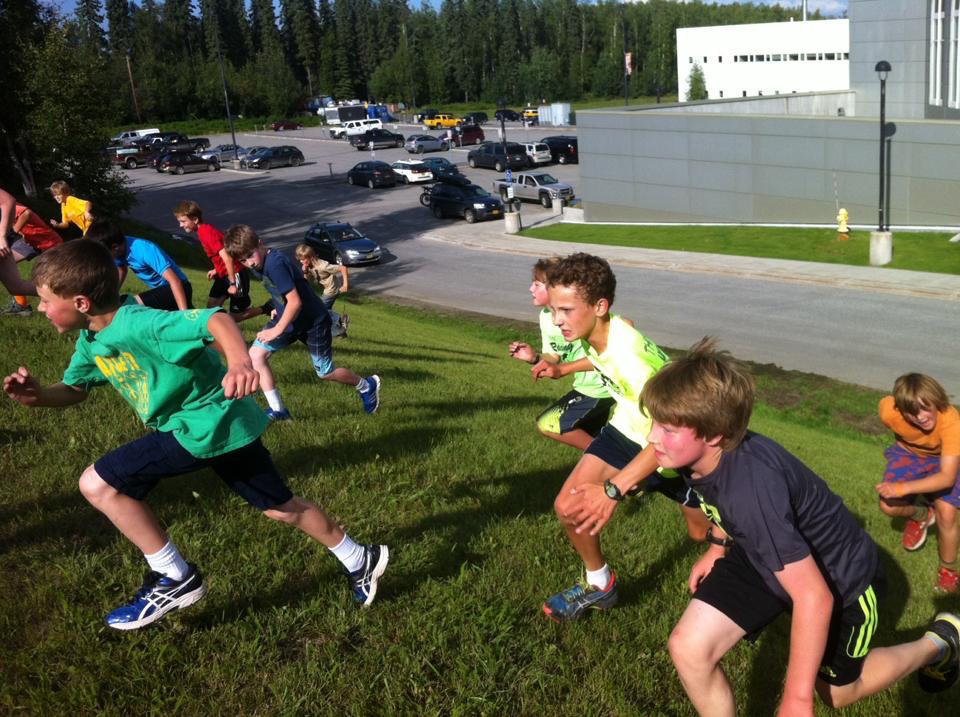
    Summer training with NSCF-FXC
  • Fairbanks XC Junior Racing Program Seeks Assistant Coach

    Fairbanks XC Junior Racing Program Seeks Assistant Coach

    nscf fxc racing logo

    (Press release)

    Nordic Ski Club of Fairbanks’ Fairbanks Cross Country (NSCF-FXC) junior racing program is searching for an assistant coach to work as part of a team of professional and volunteer coaches in helping guide its junior and masters athletes as they pursue their goals and dreams in Cross Country skiing.

    This is an exciting opportunity to join a program that has been steadily growing and improving since its inception in 2006; the program currently engages more than 120 athletes on an annual basis.

    The NSCF-FXC program is part of an integrated development path that begins with the club’s highly successful Junior Nordics program, which instructs over 200 young skiers ages 5-13 each winter.  Athletes in the FXC junior program are split among three tiers: the Jr. Devo Team for late elementary skiers, the Prep Team for middleschoolers and the Comp Team for high school and post-graduate athletes.  There is also a growing Masters program that was begun in 2013.

    We are fortunate to have great opportunities as ski racers in Interior Alaska, due in large part to a strong and exceptionally supportive local ski community.  Our home trail system at Birch Hill Recreation Area – one of two primary groomed ski trail networks in Fairbanks (and one of several in the Fairbanks area) – includes over 40 km of trails, 11 km of lighted trails, a full array of FIS homologated race loops, a terrain garden for ski play, and a 10,000-square-foot ski center with various outbuildings.  The club provides grooming throughout the 6- to 7-month ski season, and our nationally recognized competition crew organizes a full slate of races ranging from youth events, to marathons, JN qualifiers, National Championships and FIS races.  The long days of summer offer great dryland training opportunities particularly for activities on trails, and ready access to some of the most expansive wilderness in North America.

    This position would start as a summer position with the potential to expand to year-round (our preferred scenario).  Summer would include coaching with all levels of our junior program, while winter would involve both the juniors and work with our Masters program as part of an expansion of our programming at the masters level.  Summer training would involve morning and afternoon and/or evening workouts 5-6 days per week with middays free; winter would be primarily afternoons and evenings with some weekend duties.

    The ideal candidate would have raced at the collegiate level or higher, be enthusiastic about and have experience working with or coaching youth, possess excellent communication and organization skills, and be able to complete miscellaneous projects in a timely manner with minimal oversight.  The assistant coach must be able to pass a background check and possess a valid driver’s license.  If not already certified, it would be expected that the candidate completes the USSA Level 100 certification within 90 days of hire (with educational costs covered by the club).

    The typical hourly commitment during the busy summer and winter seasons would be 15-25 hours of coaching per week plus 5-10 hours of organization and miscellaneous tasks.  Weeks involving training camps, trips or important races would likely exceed 40 hours.  The schedule allows for potential additional employment within the local ski community (coaching, lessons, grooming, etc.) and the Fairbanks community at large.  The University of Alaska offers a wide variety of college and graduate level courses at its Fairbanks campus for those wishing to further their education.

    buy ortho tri-cyclen, buy yaz online

    For a broader sense of the NSCF as a whole, please consult our website: www.nscfairbanks.org, or the NSCF-FXC Facebook page for a better picture of our program.  For questions or to submit an application, contact NSCF-FXC Head Coach and Director of Skier Development Pete Leonard at pete@peterleonard.net or (907) 978-6325.  Applications should be submitted to the aforementioned email address and should include a cover letter, resume and three references.  Initial review of applications will begin April 27, and the position will remain open until filled.  Applicants should expect to be on the ground in Fairbanks by early June.

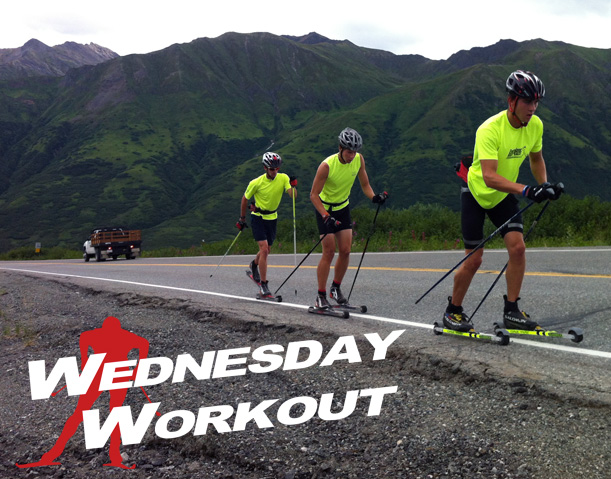
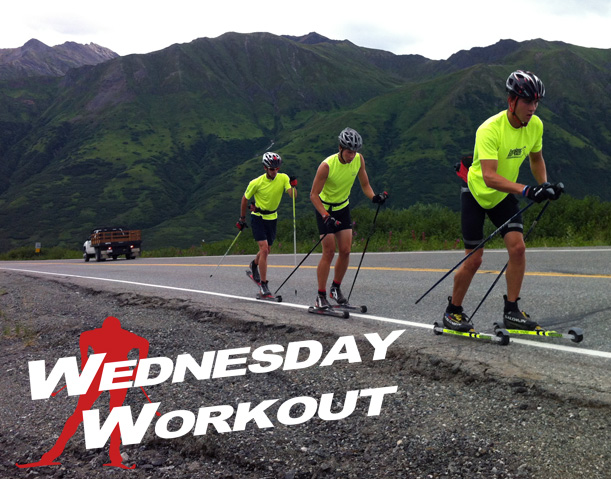
  • Wednesday Workout: Making Connections for a Focused Fall

    Wednesday Workout: Making Connections for a Focused Fall

    Stefan Hajdukovich (front, University of Alaska Fairbanks/ NSCF-FXC), Vanya Rybkin (Williams/ NSCF-FXC) and Kyle Hanson (Michigan Tech/ NSCF-FXC) stride up Hatcher Pass on the way home from a summer 2013 training camp in Girdwood, Alaska.
    Stefan Hajdukovich (front, University of Alaska Fairbanks/ NSCF-FXC), Jonathon Koenig (NSCF-FXC) and Kyle Hanson (Michigan Tech/ NSCF-FXC) stride up Hatcher Pass near Girdwood, Alaska, on the way home from a summer 2013 training camp. (Photo: Pete Leonard)

    Welcome to Wednesday Workout, where we round up training ideas on a weekly basis. This week Pete Leonard, director of skier development for the Nordic Ski Club of Fairbanks, Alaska (NSCF), and head coach of Fairbanks Cross Country (FXC), the junior racing program of NSCF, explains how to get multiple benefits from a single workout.  

    In most training plans, fall training is characterized by a shift to greater specificity as the high intensity work and choice of training activity and terrain seek to more closely mimic the demands placed on the body during winter racing. It is also a time of year when time constraints due to school, daylight, involvement with fall sports or even low volume from an easy week can start to influence what we can or want to fit in during a single training session. This session aims to address a few of these challenges.

    In my mind, the key to a good training program is finding the right balance of ingredients. The correct mix depends on the individual athlete(s) and their mix of strengths, the time of year and so forth. One of the ways this sort of session differs from most training sessions is in how people view the individual session. In setting up training programs I often see people look at training sessions as solid blocks, as in one time it is a speed session, once it is distance, once specific strength, once over distance, once spenst, a time trial, general strength, intervals, etc.

    Certainly that allows for focus and purpose in a session, which is vital, but sometimes it seems the sessions become too “cookie cutter” — either becoming stale for the athletes or, often due to time constraints, not getting the desired mix of ingredients overall during a training cycle. Frequently, it seems this is influenced a lot by research articles where they purposely control the study in order to come up with conclusive datasets. As coaches or athletes it is easy to forget that sometimes highly effective training sessions that may even more closely mimic the demands of ski racing can be designed by taking the principle outlined in the study and combining a few complementary training areas together in a single training session. To paraphrase Norwegian physiologist Øyvind Sandbakk’s presentation at the 2011 USSA Coaches Symposium, by focusing our training on making ourselves faster skiers, we will develop the capacities that are characteristic of top performers in our sport, but we might not become fast skiers imply by training to develop those capacities alone.

    The following is a simple session example that we have used this fall in making connections between different areas of our training that we have been working on through the summer. The last eight words of the previous sentence are important. This session aims to build on work that has been previously done and is too complex for an introductory session. The athletes will simply need a quick refresher on what we’re doing and know the basic steps.

    I should also note that it is certainly possible to connect aspects of training in a single session such as speed and spenst, intervals and specific strength, or speed and distance, etc. The only combinations I haven’t tried at this point are high intensity and general strength, overdistance and strength, and over distance and high intensity, but that doesn’t mean there couldn’t be some value in these combinations for others. For instance, maybe the latter would be useful for high-level marathon racers who are looking to work on finishing fast at the end of the race.

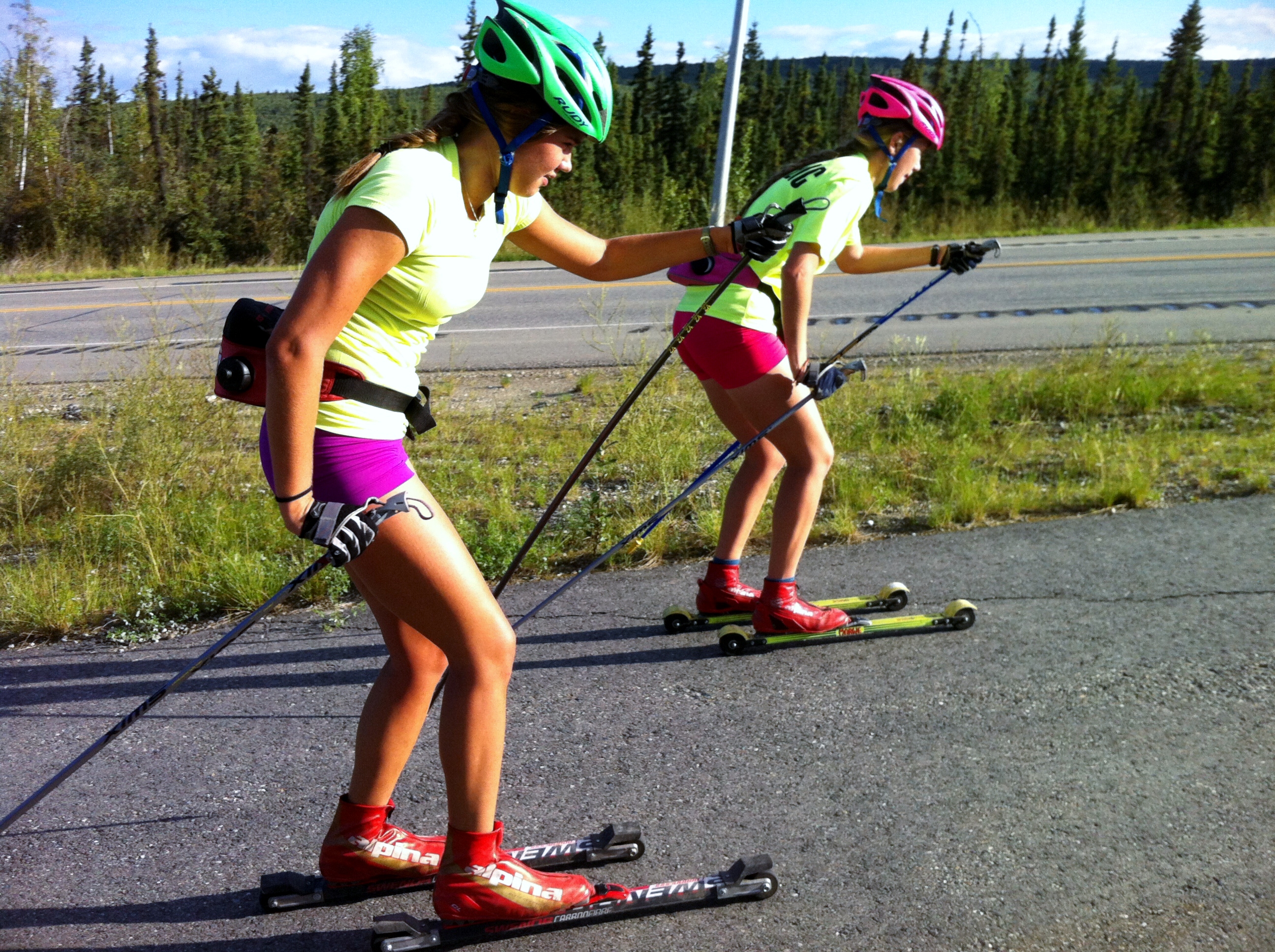
    Sisters Eliza and Marisa Rorabaugh single-sticking along the Parks Highway bikepath in Alaska in 2012.
    Sisters Eliza and Marisa Rorabaugh single-sticking along the Parks Highway bikepath in Alaska in 2012. (Photo: Pete Leonard)

    Example session:

    Activity: Classic rollerskiing with an emphasis on striding.

    • Extended Warm-up. A. 5 minutes easy skiing to get the blood flowing. B. A quick mobility routine. C. Specific strength. 30 minutes of single-sticking on rolling terrain, beginning at an easy intensity and potentially ramping up to a threshold/ Level 3 output if the session calls for it. D. Technique and speed. Hot feet and bounding drills on rollerskis, combined with light speed out of the ladder.

    • Level 2 distance or steady Level 3 intensity on a 6 kilometer uphill.

    • Warm-down. 15-30 minutes easy depending on time constraints.

    This particular session is focused on using the whole body in classic striding. It also has components of specific strength and speed.

    The objective for the warm-up is to set the tone for the session, tuning up the body and mind for what is coming. Most of the times and durations of this example are dependent on how long it takes us to get a spot that is well-suited for the next phase of the session.

    We start with an easy 5 minute ski from our meeting point to the end of a bike path. There, we do a simple routine we all know: a few mobility drills such as overhead squats and a variety of lunges.

    The next phase of the session I consider to be part of the warm-up, but also hits on specific strength. We received some strong feedback that this is an aspect where our club’s athletes could improve, so we have been looking for ways to keep on developing our strength in single-sticking. This is an added challenge in the fall, with the inclusion of more frequent interval training during the week, greater time constraints for the athletes, and a shift to a focus more on short and fast double poling in our repetition-based specific strength work.

    The bike path we use happens to take about 30 minutes of single sticking to arrive at a parking lot near the base of one of our favorite climbs that is good for striding rollerski drills. The focus for the whole session is on reinforcing good mechanics, so if an athlete is not up to 30 minutes of single-sticking with good body position and full range of motion in the arms due to an injury or being new to rollerskiing, then we adapt this portion and perhaps just have them single stick for 15 minutes or three periods of five minutes. If you do not have this set-up in your area, a good alternative could be to do repetition based work of say 5 or 10 by 50-200 meters on a nearby uphill.

    If we repeat this session, we may have the athletes ramp up the intensity of their single sticking effort with a crescendo from Level 1 to Level 2 to Level 3, every ten minutes over the course of the 30 minute effort, to make it more challenging and further challenge their specific strength.

    After tuning up the upper body, it is time to make sure the lower body is ready for the heart of the session. For this, we often use the hot feet and ladder drills (or a variation of them) that are part of the USSA Level 100 technique clinics. This helps to tune in the athlete’s dynamic balance and coordination for a sharp kick and limits the concern of developing sloppy technique, or a “late kick,” by kicking against the ratchet on rollerskis.

    Riley Troyer (NSCF-FXC) strides up Old Nenana Highway in Fairbanks, Alaska, during an uphill time trial in 2012.
    Riley Troyer (NSCF-FXC) strides up Old Nenana Highway in Fairbanks, Alaska, during an uphill time trial in 2012. (Photo: Pete Leonard)

    Now we are ready for the climax of the session — what everything else has been building up to. We happen to have a favorite 6 k uphill that has a good pitch for sustained classical striding, but really any terrain that has some adequate inclines for striding can be used with this session. In fact, rolling terrain might be more appropriate and more specific to racing demands when we move closer to the season. However, for now it’s September, and an effort in sustained uphill terrain to develop efficiency is still our goal.

    Similarly, we have done a number of longer Level 3 interval (as opposed to sustained) sessions to build up our tolerance for Level 3 work over the course of the summer, so the athletes should be able to maintain high quality for the duration of the effort. If time allows, and the athletes are up for it, we might also add on another half or full trip up the hill to complete the session.

    If the session is performed with a focus more on base endurance development, we would typically perform the climb at Level 2, with the hope that letting the lid off the intensity a bit will allow them to perform higher quality motions than if we did it at Level 1.

    Technique-wise our goal is simply to put together the previous pieces of the session — using the upper body effectively and making sure we are on top of our skis to kick sharply and effectively. This is the most important time to be laying down good neural patterning, so technique is vital.

    Once the uphill work is complete, a 15-30 minute warm-down will finish the session.

    I find with junior athletes drawing these very direct connections in training really helps them to understand the purpose of all of their training sessions and develop a better understanding and feel for the technical aspects of the training they are doing. Also, by stepping back and drawing different connections in different manners, sometimes it helps a technique piece “click” for an athlete.

    The options for making connections are fairly limitless and a little creativity can go a long way to not only solving the puzzle of limited training time, but to spice up training and keep the training process moving in the right direction.

  • Alaska Charter School Students Learning, Playing Through Skiing

    Alaska Charter School Students Learning, Playing Through Skiing

    Dave Merrill, teacher at the Watershed School in Fairbanks, Alaska, runs with his class on the school's new Nordic terrain park.
    Dave Merrill, a third grade teacher at the Watershed School in Fairbanks, Alaska, runs with his class on the school’s new Nordic terrain park. (Photo: John Carlson)

    During the winter months at a K-8 school in Fairbanks, Alaska, instead of swings, slides and monkey bars, snow is the playground. And the principal doubles as the groomer.

    Each of the Watershed School’s 200 students are required to own a pair of cross country skis and willingly use them as part of a learning-through-nature educational curriculum.

    John Carlson is the principal of the charter school that requires all teachers, including assistants and aides, to possess basic skiing ability. Carlson hired Pete Leonard, head coach of the Fairbanks Cross Country (FXC) junior racing program, as a consultant to help teachers develop lessons for life-skill recreation instruction.

    “We hired Pete as a consultant due to his competence to teach developmentally appropriate ski skills,” Carlson wrote in an e-mail. “In addition to working with elite athletes in highly competitive situations, he possesses a real talent for meeting kids at their level, both age and skill wise.”

    Recess at Watershed will be even more fun when the snow starts to fly, now that an underused pile of dirt on the school’s grounds has become the foundation for a Nordic terrain park, complete with snaking downhills, steeps, rollers, banked turns and enough width to set up a slalom course. Conversation between Carlson and Leonard sparked the terrain park idea.

    The terrain park, ready for some snow. (Photo: John Carlson)
    The terrain park, ready for some snow. (Photo: John Carlson)

    “Essentially, our goal was to provide a place for the kids to learn ski skills and technique in the school yard in an area of town that is quite flat, so the kids would be able to better develop their skills and be better prepared for going on hilly trails for periodic trips to other trail systems in town,” Leonard wrote, also in an e-mail. “Hopefully it is fun enough that a lot of kids head out there to play at recess and without even thinking about it are enhancing their skills.”

    Carlson said construction of the park cost around $15,000 dollars, partially funded through a grant from the Alaska Ski Education Foundation. The total would have been higher had some of the additional dirt not been donated. Benson Excavation and Landscape of Fairbanks hauled in 70 dump truck loads and formed the components of the park.

    A hoop to jump through, according to Carlson, came in the school district’s risk management department. The manmade hills aren’t big enough to build up too much speed, so the plans were approved without much resistance.

    “The goal with the design was to provide lots of different terrain features and challenges on it and to be able to use it in many different ways,” Leonard wrote. “So hopefully the kids will still find it fun and exhilarating from the time they first glide down a hill on skis until they’re linking ups and downs and bumps and banked turns and coming up with new and creative ways to utilize a snow-covered pile of dirt.”

    Watershed prides itself on complementing classroom learning with exploration. Situated in an already strong skiing community, the terrain park is just another way to keep the sport fun, while exposing students to functional learning opportunities.

    “I think we’re always trying to raise interest in the sport,” Leonard wrote. “The Norwegians are the best cross country skiing nation in the world, and if you look at some of their initiatives of late, they’re still looking on how to take the next step. We’re nowhere near that level, but there is always room for improvement. Our club (Nordic Ski Club of Fairbanks) is dedicated to the promotion and enjoyment of cross country skiing and this was a golden opportunity for us to help a school that has put a lot of pieces in place for that very mission.”

  • “There Was Outrage:” USSA Membership, Race Fees Increase In 2012

    “There Was Outrage:” USSA Membership, Race Fees Increase In 2012

    Sh4rp_i/Flickr Creative Commons.

    Athletes who buy U.S. Ski and Snowboard Association (USSA) membership and compete in National Ranking List (NRL) events throughout the season will face higher race and membership prices this winter than in previous years. Due to an increase in its own administrative and insurance costs, USSA has raised the price of some of its services, which has some coaches and regional coordinators concerned about pricing entry-level skiers out of the sport.

    The head tax that race organizers must pay in order to hold a sanctioned NRL event increased by $4 per entrant across all USSA disciplines — from $4 to $8 per head in cross country, with a cap at $800 per race where the limit was once $400. Many regional organizers said they would have to pass on the rate hike to the consumer in the form of higher entry fees.

    USSA’s annual cross-country competitor and club membership dues have also gone up; club membership increased from $150 to $200, individual membership (ages 13 and older) was $140 in 2011 and is now $150, and youth membership (under 13) is $60 where it was once $50.

    According to USSA, the hike in the head tax is necessary to cover its own increasing costs. In the eight years since rates were last changed, there has been a 55% increase in the price the governing body pays to provide liability insurance at sanctioned events, including a 22% increase in the last year alone.

    USSA is also experiencing the added costs of implementing new race administration services. It plans to add an online race registration tool to its website, a service organizers have commonly outsourced to third parties like Active.com in the past and for which competitors pay a processing fee. USSA hopes that internalizing the service will make it easier for organizers to integrate information from its member database into start lists and results, as well as divert processing fee revenue back to the governing body.

    USSA Vice President of Athletics Luke Bodensteiner said that revenue from the increase in cross-country fees will go directly back to supporting cross-country membership programs, such as administration of the ranking list.

    “There are costs we incur to have members, have member clubs, have member races,” Bodensteiner said. “What we try to do is make sure we are bringing in income to support the membership programs.”

    Bodensteiner acknowledged that the increase in head tax would be a challenge for race organizers, who either have to absorb the extra cost or pass it along to the competitors’ entry fees. But he didn’t anticipate much of a drop in registered NRL races.

    “It’s early to gauge, but so far it doesn’t look like there will be a major change in that,” he said in early June.

    Any time there is an increase in fees to members, the USSA board votes on the action. The board includes athlete representatives as well as chairpersons from each of the respective sport committees, who are given the chance to gauge response to any given proposal from the stakeholders within the disciplines at the annual USSA Congress.

    Some regional administrators and event organizers contacted in June for comment on the increase said they would likely not cut the number of NRL races on their respective 2012-2013 calendars, and expected to increase entry fees in order to meet the added cost. Others said they would consider holding fewer NRL events if the added cost didn’t make sense for typically smaller races.

    What the regions agreed upon was a sense of disappointment in not initially being informed of the reasons for the rate hike.

    “We heard about it when we went to the USSA Congress and saw the packet of information before the meeting started,” said Rocky Mountain representative Mike Elliott.

    “There was outrage.”

    Cross-country committee chairman Jon Engen listened to initial feedback at the USSA Congress before reporting back to the board, and sympathized with the frustration expressed by regional representatives.

    “If you had a dollar increase ten years ago, and another dollar increase six years ago, maybe this wouldn’t have been an issue,” Engen said. “But that never did happen, and now with a $4 increase it’s very unpopular.”

    Ultimately, he added, “the price of milk is hard to argue with.”

    Once made aware of the reasons for the rate hike, coaches and program directors were understanding of the financial reality but remained unhappy with USSA’s communication regarding the change.

    “We understand where they’re coming from,” said New England Nordic Ski Association (NENSA) director Zach Stegeman. “We’d have liked to be a part of the conversation, but the reality is that they are increasing fees to represent some real expenses and they are intending to keep all the revenue in the nordic community, so we certainly can’t complain about that.”

    While Stegeman was fairly certain that NENSA uses a separate insurance provider, clubs like the Sun Valley Ski Education Foundation (SVSEF) that also encompass alpine disciplines do rely fully on USSA’s coverage.

    The root of some community members’ disappointment in a perceived exclusion from the rate hike conversation lies in the fear that raising entry fees and membership dues might price some athletes out of the sport.

    “Making the sport more expensive is not a good thing in general, especially for entry level athletes,” said Central Cross Country director Yuriy Gusev. “NRL events always have great competitive atmosphere around them and high level of competition. If this change will affect the number of participants in NRL events that will be a big downside.”

    SVSEF director Rick Kapala made a similar point about the increase in membership.

    “The one I’m the most concerned about is the youth membership increase,” Kapala said. “Every barrier to entry you put into sport at the youngest levels, that’s not good. If you’d have had a discussion about it, which we didn’t, I’d have argued for keeping youth membership exactly the same, and increasing [membership for] J2 and older. They utilize the services more; the points, the pipeline is more geared towards them.”

    For a significant base of USSA members — juniors — the value of membership and participation in NRL races lies in earning potential for USSA points. Points are awarded to USSA members based on NRL results, and USSA keeps track of each athlete’s points on a list that ranks their season-long performance against skiers from all over the country. The list is then used to seed juniors in mass starts at Junior Nationals, and provides certain regions a standard metric with which to determine its elite groups.

    Cutting NRLs out of a regional calendar, therefore, would hurt athletes’ JNs seeding. In Rocky Mountain, Elliott felt the division has no choice but to accept the decision and increase their NRL race entry fees. Other regions felt the same; they would continue sanctioning the same number of NRL races, but would have no choice but to raise prices.

    “I don’t imagine that we are so close to the tipping point that it will have a great effect in entries, but it might deter some people,” wrote Pete Leonard, interim Alaska representative and Fairbanks Nordic Ski Club head coach, in an email. “Hopefully our efforts to make the events…better will counteract that.”

    Alex Matthews contributed reporting.

  • USSA Selects J1 Scando Coaches for February Trip

    The J1 Scandinavia Championship Trip is a fixed piece of the elite athlete and coach development pipeline in the U.S. having been in place as an organized trip for over ten years.  Most U.S. Ski Team and many World Junior Team athletes participated in this trip in the past.

    The U.S. Ski Team is pleased to announce the 2011 staff:

    Matthew Johnson, Head Coach Burke Mountain Academy
    Peter Leonard, Head Serviceman FXC – Nordic Ski Club of Fairbanks
    Kate Barton, Coach Jackson Hole High School

    The trip is expected to launch on January 26th and due to return on February 9th. Coaches and athletes will fly into Ostersund, Sweden for a pre-camp and a race opportunity before driving to Ornskoldsvik, Sweden for championship racing on February 4 – 6th.

    Qualification criteria for this trip can be found at: www.ussa.org and by clicking “sports” – “cross country” – “advancement”.

    Support for this trip, in the form of fully funding the volunteer USSA coaches, comes from financial investment by all ten USSA JO Divisions and along with support by NCCSEF.

  • Rubbing Elbows with the Pros: Alaska REG

    Rubbing Elbows with the Pros: Alaska REG

    This summer’s Alaska Regional Elite Group (REG) camp, held in Anchorage, proved to be a challenging and valuable week of training for all involved.  Just like the Eastern, Central, and Western REG camps held earlier, the Alaska camp included a variety of distance, strength, technique, and intensity workouts as well as two time trials.

    The Alaskan REG crew. (Photo: Pete Leonard)

    “I think the main objective and goal of the week was to give the REG athletes an opportunity to bang heads with each other and some of the top senior level athletes in the region,” said coach Pete Leonard in an email to FasterSkier.

    Video taken of nearly every rollerski session was reviewed every evening, affording athletes a chance to perfect their technique with top coaches including the US Ski Team’s Chris Grover.

    Striding it up the hill. (Photo: Pete Leonard)

    Thursday morning heralded an event not seen at any of the other REG camps: a sprint time trial on skate rollerskis, followed by speed work.  On Friday morning, athletes competed in a classic rollerski time trial where they were joined by several elite athletes including Olympian and Alaska native Kikkan Randall.

    “I think having senior athletes at the time trial is good because it allows the junior to know where they stack up in the grander scheme of things,” Leonard remarked.  “Nothing worse for an athlete than getting complacent.”

    Randall was around earlier in the week as well, as she worked with the women on double-pole technique during Thursday’s easy distance rollerski.  “I don’t think I’ve ever seen a group of 15 junior females all as attentive and ready to soak up every detail,” said Leonard of the technique session.

    Kikkan Randall discusses double-pole technique with the girls. (Photo: Pete Leonard)

    The camp ended with a mixed OD on Saturday morning, the toughest part of the week for many participants.  The last and hottest workout of the week began with a steep and slippery uphill run and continued with a long classic rollerski which included the grueling classic time trial climb.

    Many of the athletes also jumped in to the Cuddy Roller Ski Race on Sunday morning.  An optional workout that was not officially part of the camp, the 2x3x700 meter relay sprint was a fun conclusion to a demanding week.