Tag: Peter Dickinson

  • Hoffman Checks in En Route to Denver, Blogs About Broken Fibula

    Hoffman Checks in En Route to Denver, Blogs About Broken Fibula

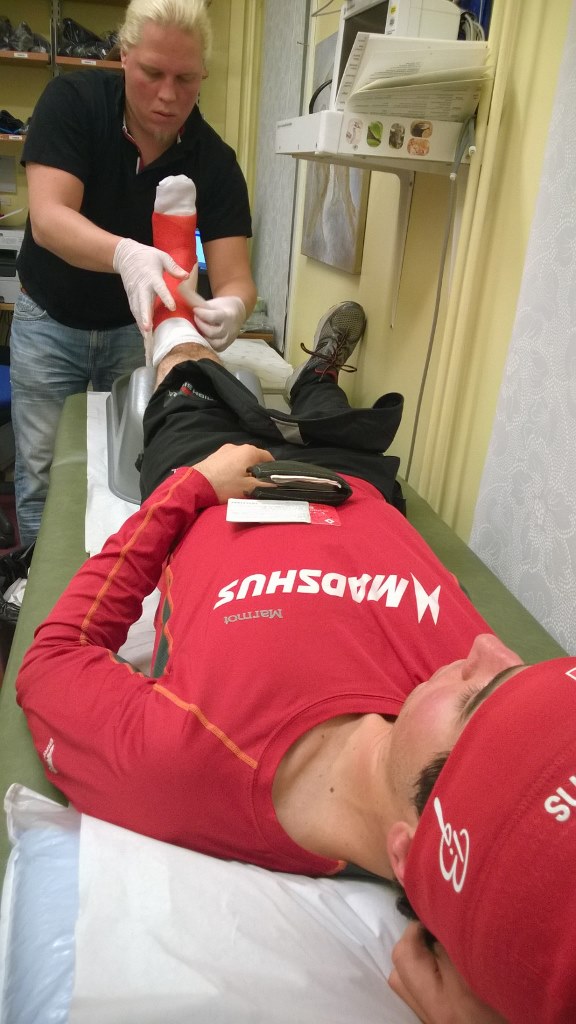
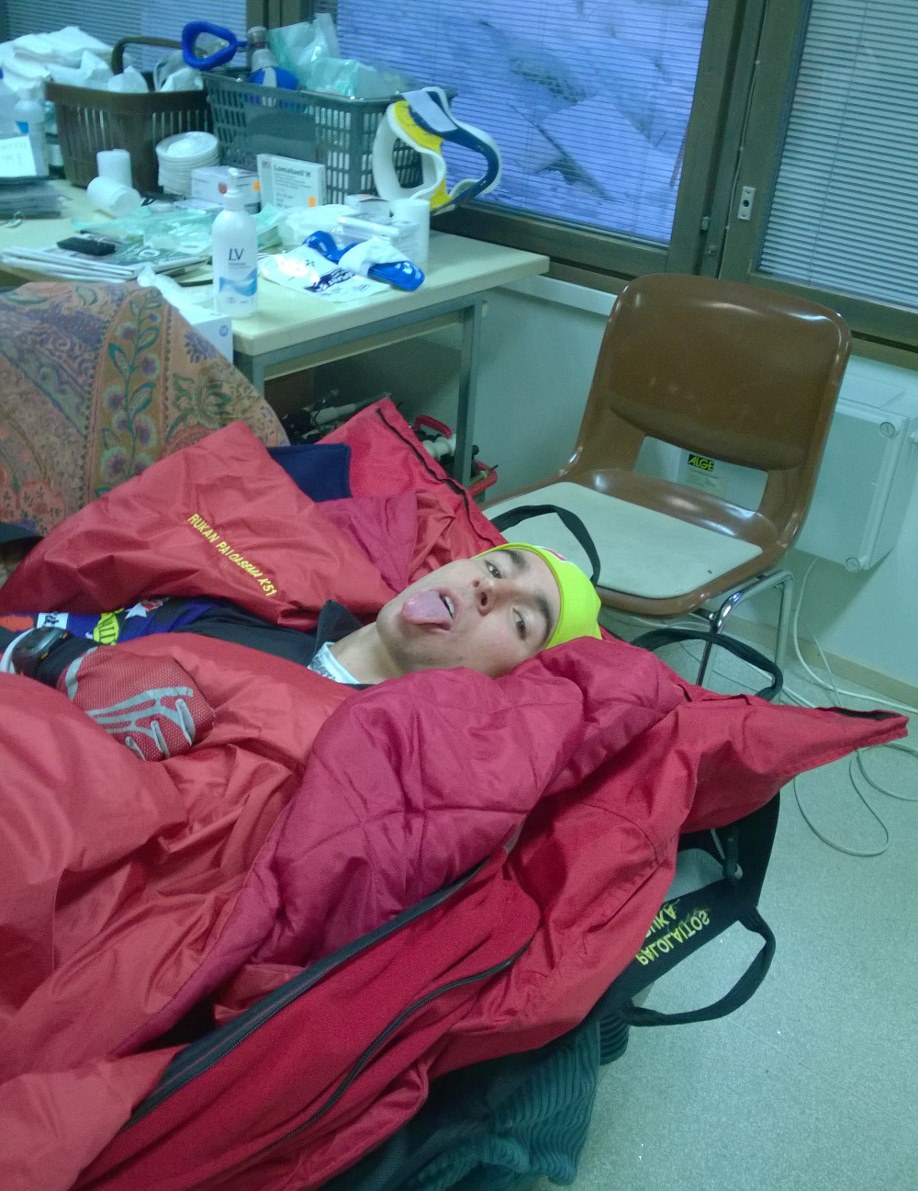
    Noah Hoffman at the Ruka clinic in Kuusamo, Finland, on Sunday after breaking his fibula in the 15 k classic. He and physical therapist Peter Dickinson had to wait in the clinic while waiting for an ambulance to take them to a nearby medical center for X-rays. "We were only going half a kilometer and I thought the ambulance was overkill," Hoffman wrote on his blog. (Photo: NoahHoffman.com)
    Noah Hoffman on Sunday at the Ruka clinic in Kuusamo, Finland, after breaking his fibula in the 15 k classic. He and physical therapist Peter Dickinson waited in the clinic for an ambulance to take them to a nearby medical center for X-rays. “We were only going half a kilometer and I thought the ambulance was overkill,” Hoffman wrote on his blog. (Photo: Peter Dickinson via NoahHoffman.com)

    Never fail, on Monday afternoon during a flight from Frankfurt to Denver, Noah Hoffman blogged. And not just any quick update, almost a whopping 2,000 words.

    The U.S. Ski Team’s top male distance skier emerged from a one-day online hiatus to explain exactly what happened Sunday in Kuusamo, Finland, where he fell hard with slightly less than 2 kilometers left and did not finish a World Cup race for the first time in his career.

    Hoffman explained he aimed to start the 15 k classic — the first distance race of the season — conservatively, and he settled after the first kilometer. Waiting patiently to get a ride, he saw his opportunity with Norway’s Pål Golberg, who went on to place ninth, after the first lap around 5 k. As Hoffman accelerated to catch him up the big climb and did so about halfway up, he found shortly after that the effort was too much, too soon.

    “For several kilometers I had to focus on being smooth and recovering. I lost a ton of time,” Hoffman wrote on his blog on Monday.

    At the end of the second lap, Finland’s eventual third-place finisher Sami Jauhojärvi caught Hoffman. He saw that as another opportunity and stayed with Jauhojärvi around the stadium and up the big climb, but “just like the lap before, the effort was too much for me. He dropped me and I was blown,” Hoffman wrote. “I was suffering for the rest of the race. I was not skiing fast. At the 13.1 kilometer split station, which was right before I crashed, I was in 52nd place, not where I want to be.”

    Hoffman went down on a sharp-righthand corner at the bottom of a fast downhill. He expected it to be icy and wasn’t intimidated by it and didn’t think it would be a problem. When he crashed on his third lap, no one was near him and he explained he wasn’t trying to be aggressive. If anything, he wondered if he should have tried to carry more speed through the turn.

    “I’m not sure exactly what happened. I slid on the ice, went into the snowy berm, lost control and slammed into the fence,” he wrote.

    What he thought was his right ski snapped in half as it hit the solid paper or plastic lining the bottom half of the fence. The top part was made of alpine netting. His other leg punched through the solid material and was tweaked with his left ski still in the fence. He kept sliding and injured his knee and ankle.

    “I knew almost immediately that I was hurt,” Hoffman recalled. “I got up and glided about a hundred meters down the trail. I needed to get out of the way of other racers and I needed to get to some people who could help me.

    “I couldn’t put any weight on my left leg,” he continued. “I knew I couldn’t finish the race, which is significant because I’ve never previously dropped out of a race. I’m bummed that I had to end that streak yesterday.”
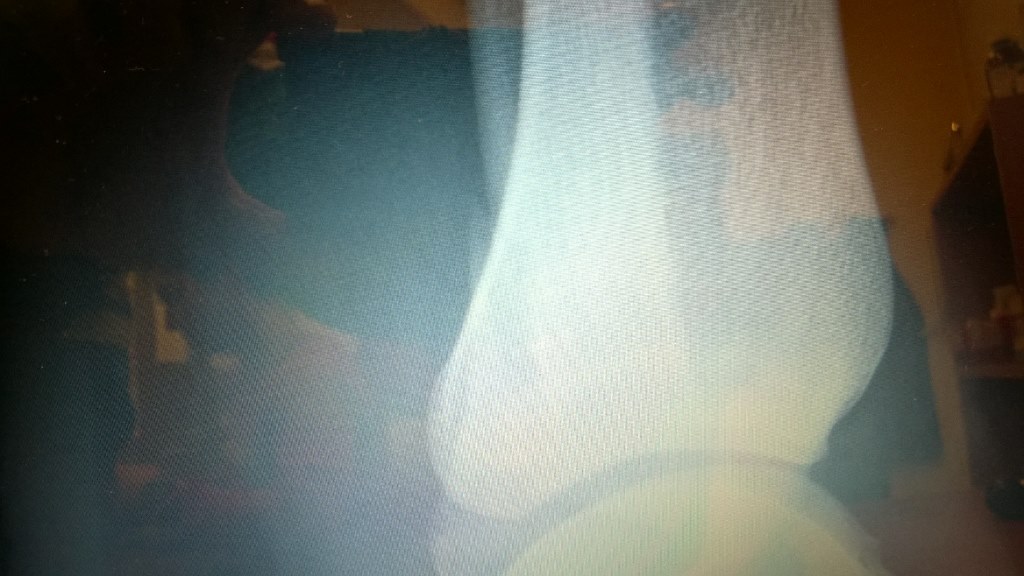
    A photo of Hoffman's X-ray taken by Peter Dickinson. "It didn’t turn out super well but you can see the fracture in the fibula behind the tibia, at least that’s what I’m told," Hoffman wrote on his blog. (Photo: Peter Dickinson via NoahHoffman.com)
    A photo of Hoffman’s X-ray taken by Peter Dickinson. “It didn’t turn out super well but you can see the fracture in the fibula behind the tibia, at least that’s what I’m told,” Hoffman wrote on his blog. (Photo: Peter Dickinson via NoahHoffman.com)

    Hoffman’s blog post was titled, “Broken Fibula,” and he included an X-ray taken at a medical center near Ruka venue, which showed a fracture in his fibula behind the tibia (shin bone), “at least that’s what I’m told,” he wrote.

    “The plan then immediately became for me to get back to the U.S. as fast as possible,” he continued. “There wasn’t really any discussion about it, and I didn’t have any say in the matter. They put me in a hard cast for the travel.”

    Hoffman and the U.S. team’s physical therapist, Peter Dickinson, who accompanied him to the clinic, took a taxi 300 meters to their condo “because Pete wouldn’t let me crutch down the icy stairs and hill,” he explained.

    “Things happened really fast once I got back to the condo. I got on the phone with the U.S. Ski Team travel agent to try to re-book my ticket,” he wrote.
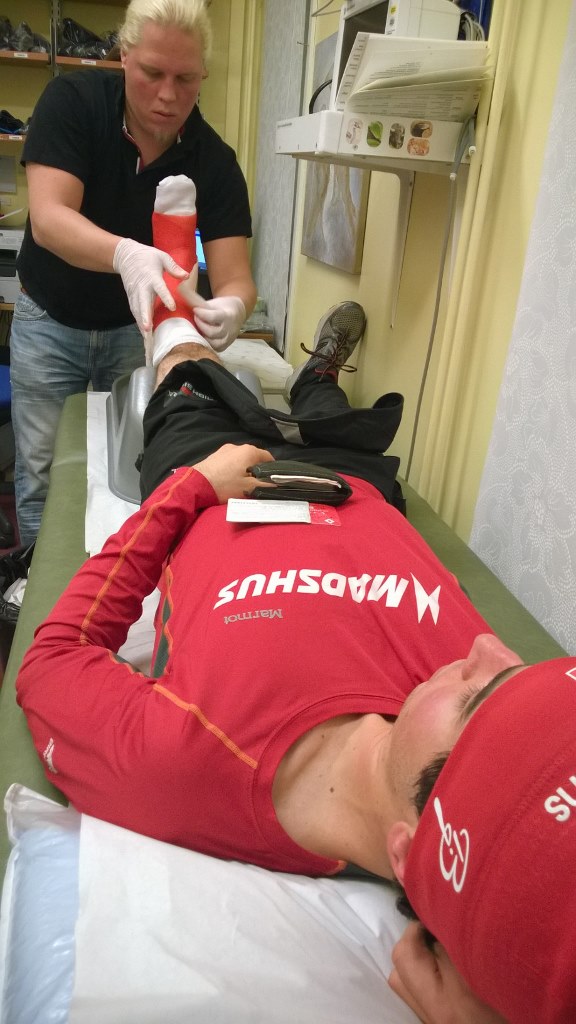
    Hoffman getting a hard cast on his left leg for travel. (Photo: NoahHoffman.com)
    Hoffman getting a hard cast on his left leg for travel. (Photo: NoahHoffman.com)

    His previously scheduled return was after the Tour de Ski in early January, departing from Munich and arriving in Hartford, Conn. Last night, he wanted to leave northern Finland for Denver on the earliest flight. Unable to re-book, he found the cheapest option was buying a new ticket for $1,000 dollars. But there weren’t any seats available in most of the airports near Kuusamo.

    “When we kept striking out I started doing some research on my own and amazingly found an award ticket option through United but on partner airlines out of Lulea, Sweden,” Hoffman wrote. “The only ticket available was in business class for 70,000 miles. Luckily I had that many miles available and it sounded better to me to spend them than paying $1,000, so I purchased it at 6 O’clock last night. The flight was at 6:20 this morning. Lulea is 5 hours from Kuusamo.”

    From there, two of the team’s wax techs JP Laurin and Oleg Ragilo drove him to Luleå. They were headed there anyway with a cargo van full of skis en route to Lillehammer before next weekend’s World Cup. Hoffman squeezed up front with them in the three-person bench seat.

    “Oleg and Jp were ready to depart before I even booked the flight and I hadn’t packed, eaten dinner or showered. Also, my leg was quite painful,” he wrote. “Luckily I have incredible teammates. They did everything for me. I took a washcloth bath while Simi and Ida packed my duffel bag and Liz made me four peanut butter and jelly sandwiches for dinner. I got out of the condo in less than 15 minutes.

    “As we took off on the long drive I had to make a ton of phone calls, organizing things at home. I talked to my coaches and parents, started the process of setting up doctor’s appointments and organized transport with [my girlfriend] Emilia for when I land in Denver,” he added. “The drive was long and monotonous on snow covered roads.”

    But they got to Luleå at midnight, 1 a.m. Kuusamo time. Hoffman wrote he slept fairly well despite keeping his leg elevated.

    “I made it to the airport without issue, although crutching while rolling a duffel is a challenge,” he wrote.

    At the airport, Scandinavian Airlines couldn’t find his ticket number. Hoffman spent a half hour on the phone with United sorting it out and almost missed his flight.

    “Since then the travel has gone very smoothly,” he added. “I’m ashamed to say I’ve been getting pushed around airports in a wheelchair.”

    Once airborne, he enjoyed business class and his first time with internet access in a trans-Atlantic flight.

    Hoffman is currently on blood thinners and Aspirin to reduce the risk of a blood clot. After flying into Denver, he was headed to Breckenridge, Colo., Monday evening and hoped to see a specialist at The Steadman Clinic in Vail on Tuesday.

    “Then I can start making plans for my recovery and my return to racing,” he wrote.

    “Because I haven’t posted anything, I didn’t know anybody knew about my crash yesterday,” Hoffman noted. “Apparently I was wrong. I just turned on my computer for the first time, and I’m overwhelmed by the number of get well messages. I feel incredibly lucky to have so much support! Thank you all.”
  • Hoffman Seriously Injures Lower Leg in Kuusamo, Headed to U.S. for Diagnosis (Updated)

    Hoffman Seriously Injures Lower Leg in Kuusamo, Headed to U.S. for Diagnosis (Updated)

    (Photo: Angus Cockney)
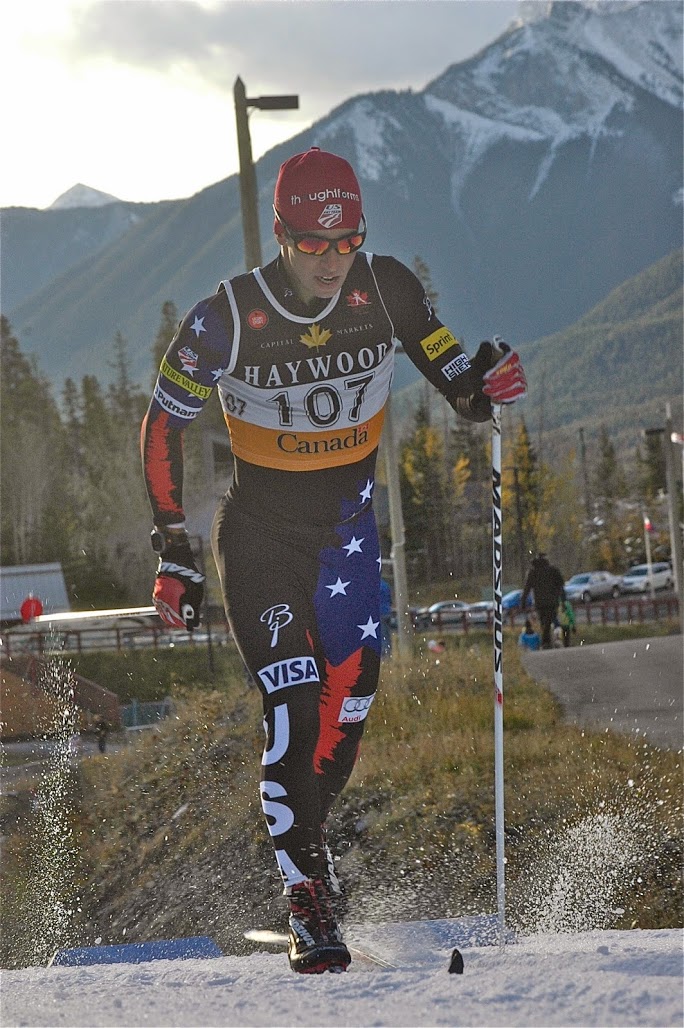
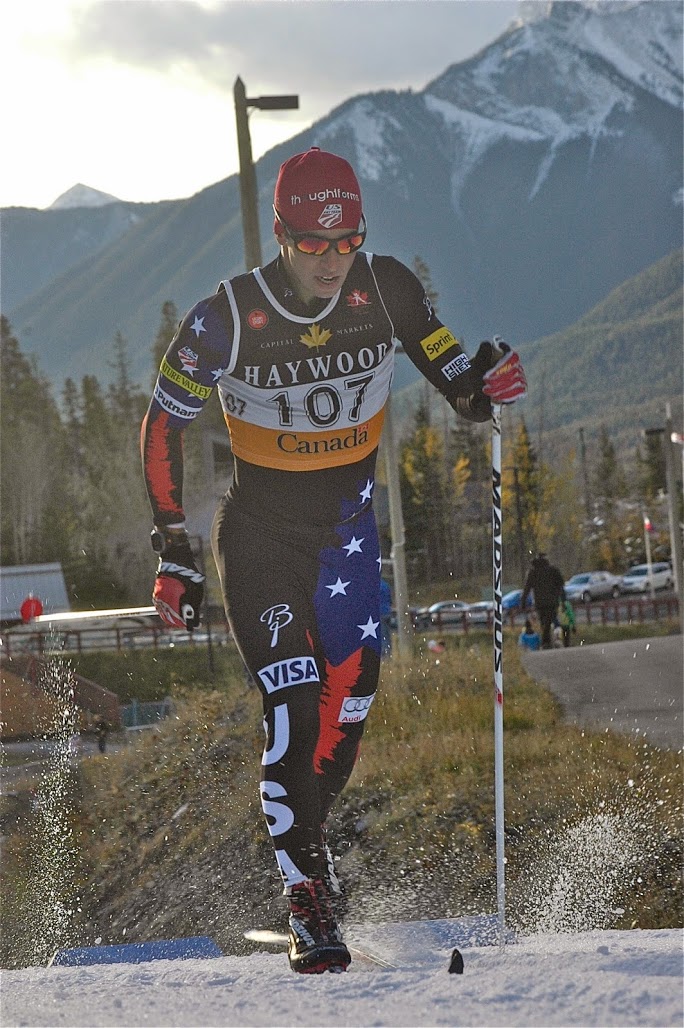
    Noah Hoffman in his first unofficial race of the season in Canmore, Alberta, at the Frozen Thunder classic sprint on Oct. 24. Just over a month later, Hoffman suffered a serious lower-leg injury on Sunday in his first World Cup race of the season in Kuusamo, Finland. (Photo: Angus Cockney)

    (Note: This article has been updated to clarify the type of coverage U.S. Ski Team athletes have for medical emergencies, and in Hoffman’s case, a flight back to the U.S.)

    Noah Hoffman didn’t have a chance to update his blog by late Sunday night after the first World Cup distance race of the season: the men’s 15-kilometer classic individual start in Kuusamo, Finland. Not that he writes and posts original photos every day, but devoted followers know the 25-year-old U.S. Ski Team member is pretty religious about it.

    On Sunday afternoon, Hoffman crashed hard on one of the last big descents of Kuusamo’s three-lap course. He was on his last lap, skiing around 52nd with about a kilometer to go until the finish.

    According to Canadian Alex Harvey, who came up quickly on Hoffman while he was being transported off the course in stretcher, the corner was “super icy” and one where a lot of racers fell. U.S. Ski Team Women’s Coach Matt Whitcomb, one of the responders, estimated there were a few crashes there each lap of the men’s race.

    “It’s a corner that ices up and the guys always start second, so it’s had the most traffic with people warming up,” Whitcomb said on the phone late Sunday. “So by the time the men are on their third lap, it’s pretty washed out, icy at times. There’s a big powdery berm that builds up, and I understand what happened is, Noah got really close to the fence and lost his line, hit the fence and his foot punched through the fence.”

    Whether or not that caused the injury to the lower part of Hoffman’s left leg, Whitcomb couldn’t say. U.S. Ski Team Development Coach Bryan Fish, who was giving splits about 100 meters farther up the trail, responded first and notified others of the accident via radio. They called for a jury member and snowmobile, and the Americans’ physical therapist, Peter Dickinson, of Winthrop, Wash., was one of the first on the scene.

    “He was great; he was able to kind of orchestrate the Finnish medical crew from the Ruka venue … and we were able to let them know that we wanted to go with them to ensure that the treatment was up to snuff,” Whitcomb said. “Finland has great medical care so it’s not something you generally need to worry about, but it was really nice to have Pete there today.”

    The responders kept Hoffman warm until the snowmobile arrived then stabilized his leg with an inflatable splint, which covered the length of half his femur to his foot.

    “He was in a lot of pain, a lot of pain in his ankle, lower-leg region; it seemed pretty serious,” Whitcomb said.

    He was placed in a back brace and loaded onto a stretcher in a snowmobile cart, then brought to a local clinic for X-rays.

    “There’s been no real official diagnosis from a specialist yet, so at this point it’s just a lower-leg injury on his left leg,” Whitcomb said. “He was treated as if it’s a serious injury and he’s been cleared to travel tomorrow.”

    Late Sunday, Hoffman was in a cargo van with two of U.S. wax techs, Jean-Pascal Laurin and Oleg Ragilo, who were driving him about 400 kilometers to Luleå, Sweden. According to Whitcomb, Hoffman plans to board a plane at 7 a.m. Monday morning and arrive in Denver at 3 p.m.

    “He was able to buy that ticket on miles, I understand, and I think he was even able to get a business-class ticket, so that’ll be nice to elevate his leg,” Whitcomb said.

    As a B Team member Noah is responsible for his flights. This includes ticket changes,” he later explained an email. We are supported by Global Rescue, an entity that assists our team in case of a medical emergency in a foreign country. For GR to cover his flight, he needed to spend a night in a hospital. Noah was fortunate in that he found a business class ticket for 50 bucks and 70,000 miles. We spent a couple hours on several phones and computers with flickering internet last night making these arrangements.

    While Whitcomb said he wasn’t sure which specialist Hoffman would see upon arriving back in the U.S., he explained the U.S. Ski team has some connections with The Steadman Clinic in Vail, Colo. Hoffman is from nearby Aspen.

    On Sunday afternoon, Mike Trecker of Aspen tweeted about Hoffman’s broken fibula. Whitcomb said he couldn’t confirm that was the injury since Hoffman hadn’t received a specialist’s diagnosis.

    What he did know is that Hoffman, the team’s top distance skier, can be extremely positive when facing adversity.

    “I’ve seen Noah disappointed before and have big setbacks — not necessarily less severe than this with his shoulder — and he clicks into a really positive gear and just gets incredibly efficient and figures out what the plan is,” Whitcomb said. “In many ways, he’s the most positive guy to be around when he’s under this sort of circumstance.”

    On Monday, the U.S. Ski & Snowboard Association (USSA) medical staff and Hoffman’s coaches and parents will work together while he’s en route to the U.S. to figure out what’s best for him, Whitcomb added.

    During the race, Harvey had a close call with the snowmobile assisting Hoffman on the course.

    “I came down there just flying and there was a snowmobile with a stretcher,” he recalled. “I almost crashed there, too, in the last lap.”

    Harvey didn’t fall and ended up an impressive seventh overall. After the race while walking back to Canada’s wax cabin, Harvey saw Hoffman in the snowmobile stretcher pass by him. He hadn’t realized it was Hoffman being evacuated at the time.

    “I was like, ‘Oh, sh*t!’ like, I didn’t know,” Harvey said. “But he kind of gave me a thumbs up … like, it’s OK.”

    Whitcomb said it’s an unfortunate accident that just happened to occur on a dicey corner and thought the course was fair.

    “If this were an injury that regularly happened, I would probably have a strong opinion about the corner, but while it may be a little bit dangerous, I don’t think it’s uncalled for,” he said. “I think it’s very fitting with where the sport has been for many years. It banks well, it just gets icy and it’s fast.

    “You’re on classic skis with low boots that aren’t necessarily that supportive, and crashes happen,” he added. “It’s a part of ski racing and I think it keeps it exciting. I’m not necessarily opposed to corners like that. It is unfortunate that occasionally injuries do happen, and we ended up on the wrong side of that today.”

    Sadie Bjornsen, who led the U.S. on Sunday in 17th in the women’s 10 k classic, said she and some teammates recently questioned whether the sport is becoming more dangerous.

    “Do you think that’s because of our courses, or because of the weather, or because of our inability to fall well?” she asked rhetorically. “I wonder where that’s coming from? Or if it’s all just a big chunk of bad luck.”

    On Oct. 31, her brother Erik Bjornsen, also on the U.S. Ski Team, got into a serious-skiing collision with Alaska Pacific University (APU) teammate Scott Patterson. While Bjornsen suffered a concussion, two twisted ankles and an inflamed tendon in his hand, Patterson made out even worse. He was impaled by a broken ski in his upper leg, and about five days later, developed a pulmonary embolism – blood clots in his lungs – as a result of the trauma to his leg, his sister Caitlin Patterson explained in an email. He is now restricted to walking for exercise and will be on blood thinners for several months while slowly returning to training and racing.

    “It was kind of a wake up call to see really how easily something bad can happen,” Erik Bjornsen wrote in an email on Sunday, after placing 52nd in the 15 k. “I feel very sorry for Scott. I hope he can have a quick recovery. He was in GREAT shape before the crash happened.”

    On Sunday, American Reese Hanneman fell on the same “famous sketchy downhill S-turn,” he explained in an email after placing 82nd in the 15 k.

    “It was a high speed crash right before one of the only gliding sections, so that was kind of a bummer,” Hanneman wrote. “I was being caught on the monster climb as we approached this downhill by a couple A-seed guys including a Finn; the crowd was going nuts for him, and then when we started sending it down the downhill, he started yelling at me from behind and I wasn’t sure what side he wanted me to go on.”

    Hanneman wasn’t able to get across the trail for the best line along the powder berm, so he slipped and went down on the icy inside corner. But he was glad he could get back up.

    “Poor Hoff! My thoughts and prayers go out to him, I hope he has a speedy recovery,” Hanneman added.

    — Lander Karath contributed reporting