From the FasterSkier archive — posts syndicated from athletes’ and coaches’ own blogs between 2004 and 2012, kept online as published. Current coverage is at fasterskier.com.

Tag: peter hale memorial

  • Small Montana Town Working to Create a Big Nordic Ski Vision

    Small Montana Town Working to Create a Big Nordic Ski Vision

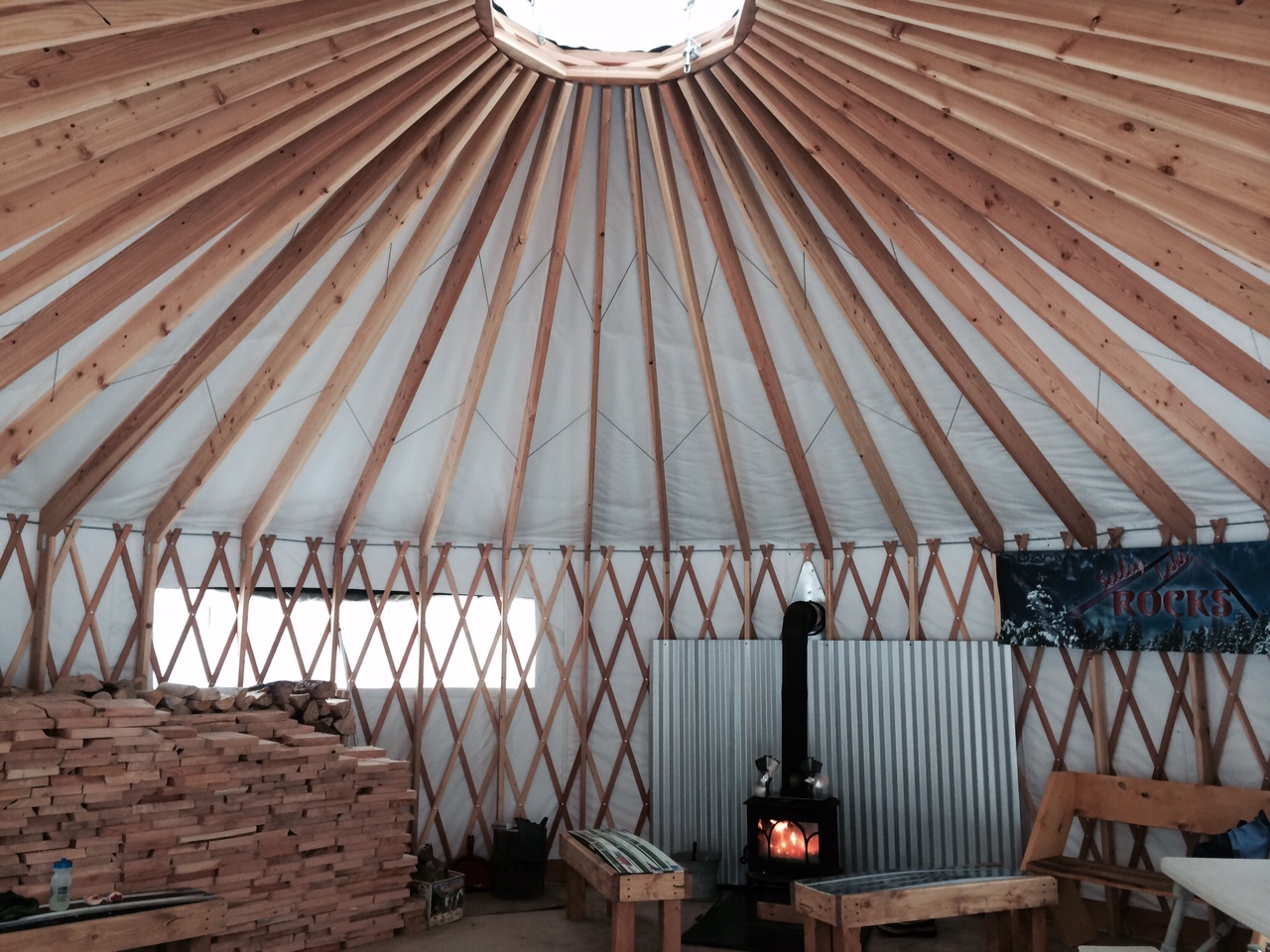
    Inside the Seeley Lake ROCKS new warming yurt in Seeley Lake, Mont.
    Inside the Seeley Lake ROCKS new warming yurt in Seeley Lake, Mont.

    SEELEY LAKE, Mont. — Inspired by the birth of the Maine Winter Sports Center, a group of Seeley Lake (population 1,659) residents formed the Seeley Lake Regional Outdoor Center for Kinetic Sports (ROCKS).

    That was in 2010.

    In the spring of 2015, ROCKS will file an application for a Special Use Permit with the United States Forest Service (USFS) to build a new Seeley Lake nordic-ski venue, which is “intentionally being designed to international race-ready specs, fully homologated, with both the skier and spectator in mind,” according to ROCKS President Chris Lorentz.
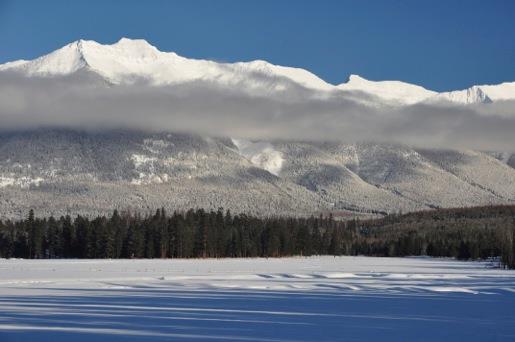
    Swan Range forms the backdrop for the Seeley Lake ski trails. (Photo: Seeley Lake Nordic)
    Swan Range forms the backdrop for the Seeley Lake ski trails. (Photo: Seeley Lake Nordic)

    Lorentz said the Forest Service will review the permit application, perform an environmental analysis (including a mandatory 90 day public input period) and provide a decision by October 1, 2016.

    “We believe the (process) will result in a positive decision notice,”  Lorenz said.

    ROCKS hired John Morton, owner of Morton Trails, to provide both a feasibility study (2011) and course design (2012) for the new Seeley Lake venue. According to a report issued by Morton Trails to the USFS, Morton states that efforts have “resulted in a workable concept for what offers to be a nationally, and even internationally, recognized cross country skiing venue … suitable for hosting Continental Cup races such as US Junior Olympics, US Nationals, North American races [i.e. Super Tour], as well as regional races where participants can be awarded FIS points for international ranking.”

    Morton’s design would meet specifications for D-category homologation, making Seeley Lake one of six venues certified to this level in the United States. A D-certification allows a venue to host all events, including mass-start freestyle races. The only event requiring a designation beyond a D category is the skiathlon, which requires two separate courses (used concurrently).  Soldier Hollow in Midway, Utah, is the only course in the US which currently has this designation.

    To provide Seeley Lake with an advantage in bidding for major events and training camps, and to keep the door open for a possible World Cup event bid, Morton designed the course to “comply to a World Cup standard – which will make this venue truly representative of courses hosting the most elite competitions.”  The most recent FIS Homologation Manual would have allowed for certification with a 25-meter climb; however, Morton chose to exceed this standard and comply with the World Cup’s 30-meter requirement.
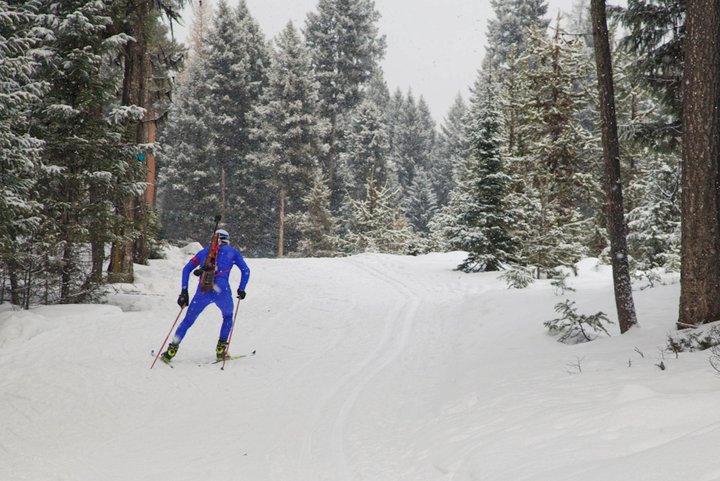
    In January, Seeley Lake hosted its 8th annual biathlon, with 115 racers participating in three events. (Photo: Seeley Lake Nordic)
    In January, Seeley Lake hosted its 8th annual biathlon, with 115 racers participating in three events. (Photo: Seeley Lake Nordic)

    Morton’s design includes a 15-point biathlon range and identifies a location for a 30-point range (meeting the IBU World Cup requirements) that could be installed with some additional construction. The course design for the five-kilometer loop is “spectator friendly” allowing  spectators to view competitors five to seven total times, or 10 to 14 times for a 10 k race.

    While USFS permit approval, new venue construction, and hosting of events at the new venue are years in the future, Seeley Lake, is not waiting for course completion to continue taking steps forward.  Recent ROCKS activities have clearly energized the town which has a long standing nordic ski racing tradition.

    The town’s existing nordic ski trails at Seeley Creek have seen an upsurge in use following the installation of a new yurt (installed by Seeley Lake ROCKS) at the trailhead.

    “The yurt is way more popular than we expected,” Lynn Carey of the Seeley Lake Nordic Ski Club said. “Our metal ranger now takes in more money than any other ranger in the state.”
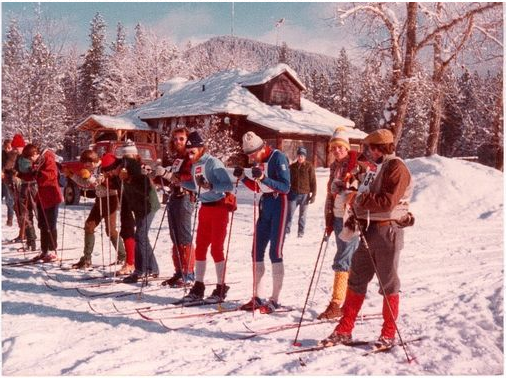
    Seeley Lake, Montana, has a long history of ski racing.  This is a photo of the start 1983 OSCR race. (Courtesy Seeley Lake Pathfinder)
    Seeley Lake, Montana, has a long history of ski racing. This is a photo of the start 1983 OSCR race. (Courtesy Seeley Lake Pathfinder)

    ROCKS founder Karen Pratt notes, “The idea is that you need a culture shift to bring in an elite race [to Seeley Lake] and get enough interest in town to support it.  An international race is a lot of work!”

    The ROCKS plan seems to be working.

    “There has already been a big culture shift in Seeley,” Pratt said. The Seeley school system started a ski program where any student above the 3rd grade can access free skis, transportation and ski instruction. Twenty students have caught the ski bug and joined the school’s newly formed nordic ski racing team.

    According to Pratt, many local parents are learning to ski as a result of the new youth programs.  She is convinced that the increased activity is improving community health.  “It’s not a good thing when the people in Seeley don’t get out of the house in the winter,” she said.
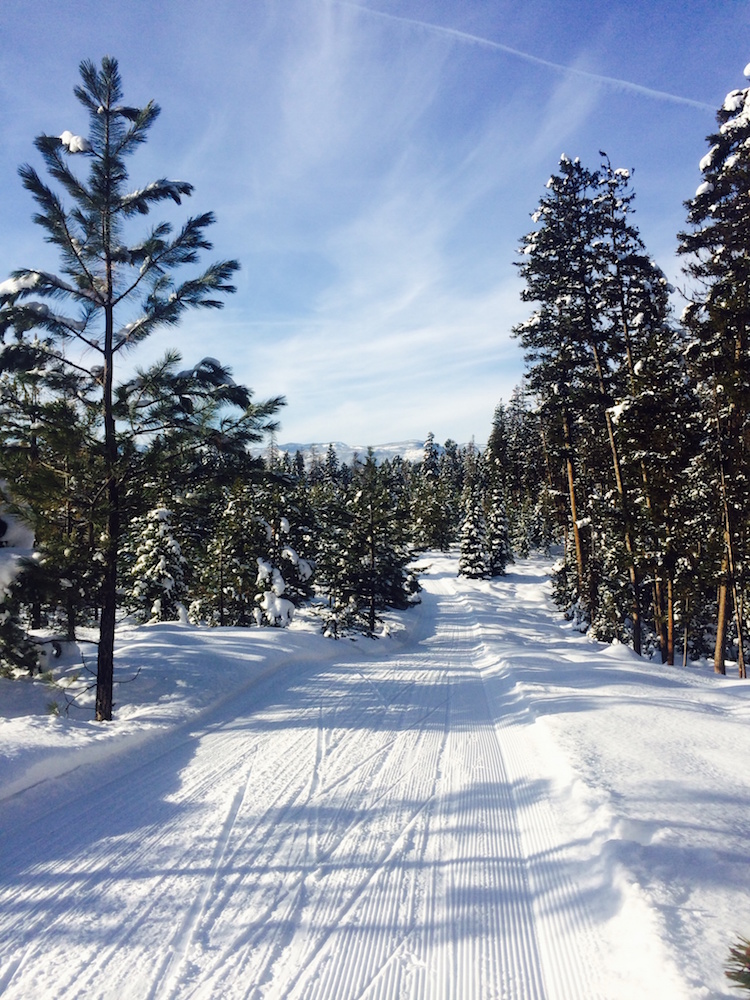
    Seeley Lake's existing ski trails at Seeley Creek. (Photo: Mark Vosburgh)
    Seeley Lake’s existing ski trails at Seeley Creek. (Photo: Mark Vosburgh)

    Grooming the 23-kilometer Seeley Creek trail system is now conducted daily, and several trails that had been abandoned or rarely groomed have been re-opened.  The rolling trail system, designed by Olympian Jon Elliott, is seeing a resurgence in use and the trails are receiving rave reviews from regional skiers.  The eighth-annual Seeley Lake biathlon had 115 entrants this year, nearly double last year’s count, according to race director Cheri Thompson.

    Once the new trails at Fawn Creek are open, ROCKS organizers hope that overnight visits and resulting economic benefits to Seeley Lake will increase with skiers spending two days in the  Seeley Lake area in order to ski both trail networks.

    Pratt credits generous donations from the late Peter Hale and his estate for supporting the Seeley Lake ski program with skis, waxing supplies and equipment. Hale’s connection to Seeley and his passion for skiing is in part responsible for at least one concrete example of increased economic activity sought by ROCKS.
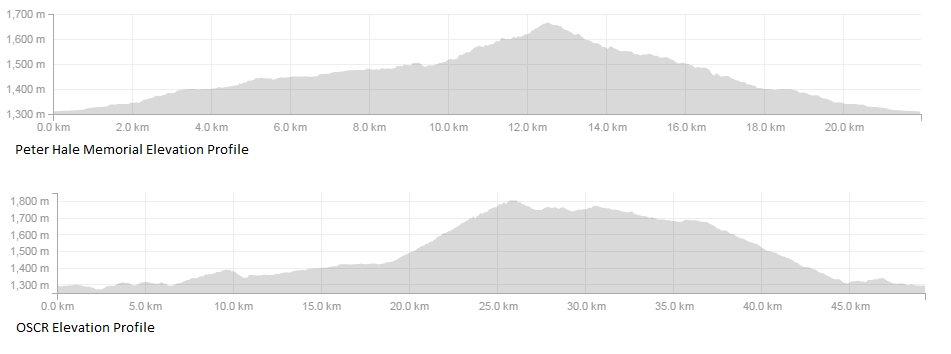
    Elevation profiles for Seeley Lake's signature nordic ski races, the Peter Hale Memorial and OSCR.
    Elevation profiles for Seeley Lake’s signature nordic ski races, the Peter Hale Memorial and OSCR.

    In 2012, Mike and Cathy Kahnle opened Seeley’s first bike-and-ski shop, Rocky Mountain Adventure Gear. Describing how he came to a decision to start the business, Mike said, “ROCKS was happening … Peter Hale contacted me prior to putting this business together and just filled my ear… It was pretty evident his love for skiing was overwhelming.

    “Peter basically talked me into running Madshus skis in a shop that didn’t exist,” he continued. “You couldn’t have a conversation with him without feeling better about yourself and life in general.”

    A passionate endurance athlete, Kahnle was also attracted to Seeley by its reputation for challenging endurance events like the Over Seeley’s Creeks and Ridges (OSCR, pronounced “Oscar”) 50 k ski race.

    Describing the race, Kahnle said, “No matter what level athlete you are, you are going to have the opportunity to push yourself to find the limits of what you’ve got.” Referring to the nearly 800 meters of elevation gain in OSCR, he added, “If you want an easy race, go somewhere flat because we are not going to have it for you here.”

    Carey, OSCR race director since 1991, agreed: “OSCR [founded in 1981] is a damn-tough race. It always has been, and we are proud of it … really it’s an adventure more than a race.”
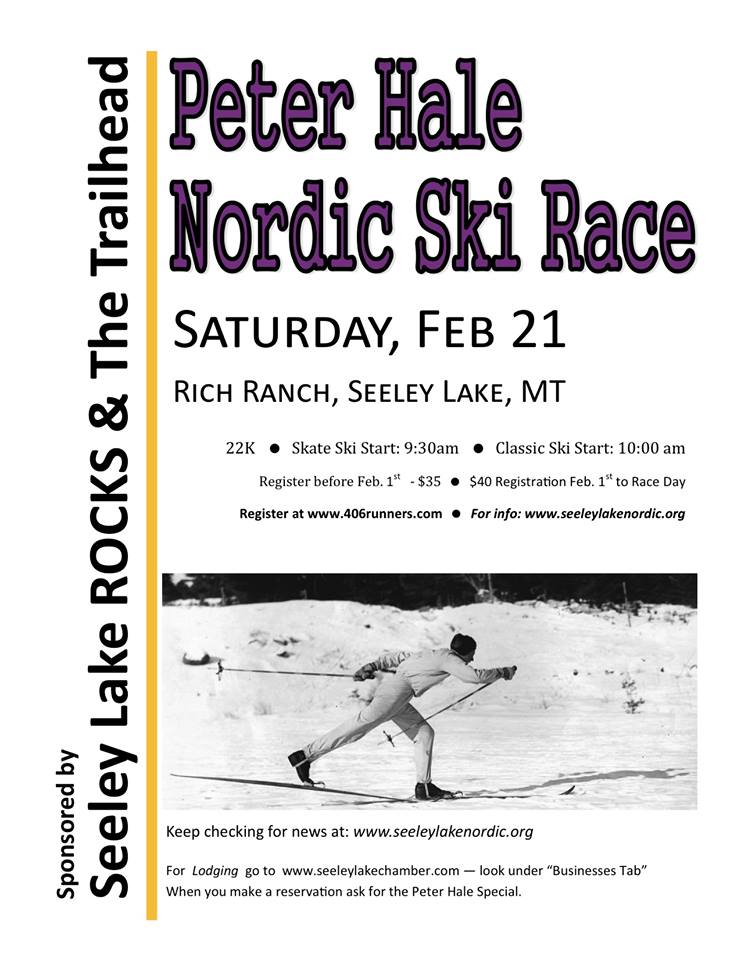
    Peter Hale 2015 Race Poster
    The second Peter Hale Nordic Ski Race will be held Saturday, Feb. 21, in Seeley Lake, Mont.

    ROCKS will hold the Second Annual Peter Hale Memorial 22 k Ski Race on February 21, 2015.  With an elevation gain of nearly 400 meters, the race is not easy.  In honor of Hale’s love of classic skiing, both classic and freestyle races are offered.  Inaugural race feedback (in spite of frigid temperatures) was positive with about half of the participants choosing the classic event.  Pratt anticipates that the race entry will need to be capped after this year’s event due to capacity limitation of the venue.

    With momentum building in Seeley Lake, the ROCKS vision for a national and international caliber ski venue is moving forward.  “The focus is on the new course right now because it has to be,” Pratt said.

    While not everyone in Seeley Lake is optimistic about the outcome of the ROCKS effort, Pratt stated, “If we did have a venue that brought in a week’s worth of high-end racers, it would mean us [in Seeley Lake] having a larger number of people who would have a larger vision about what is possible.”

  • Fear Not the Training Plan: CXC Academy Explained

    Fear Not the Training Plan: CXC Academy Explained

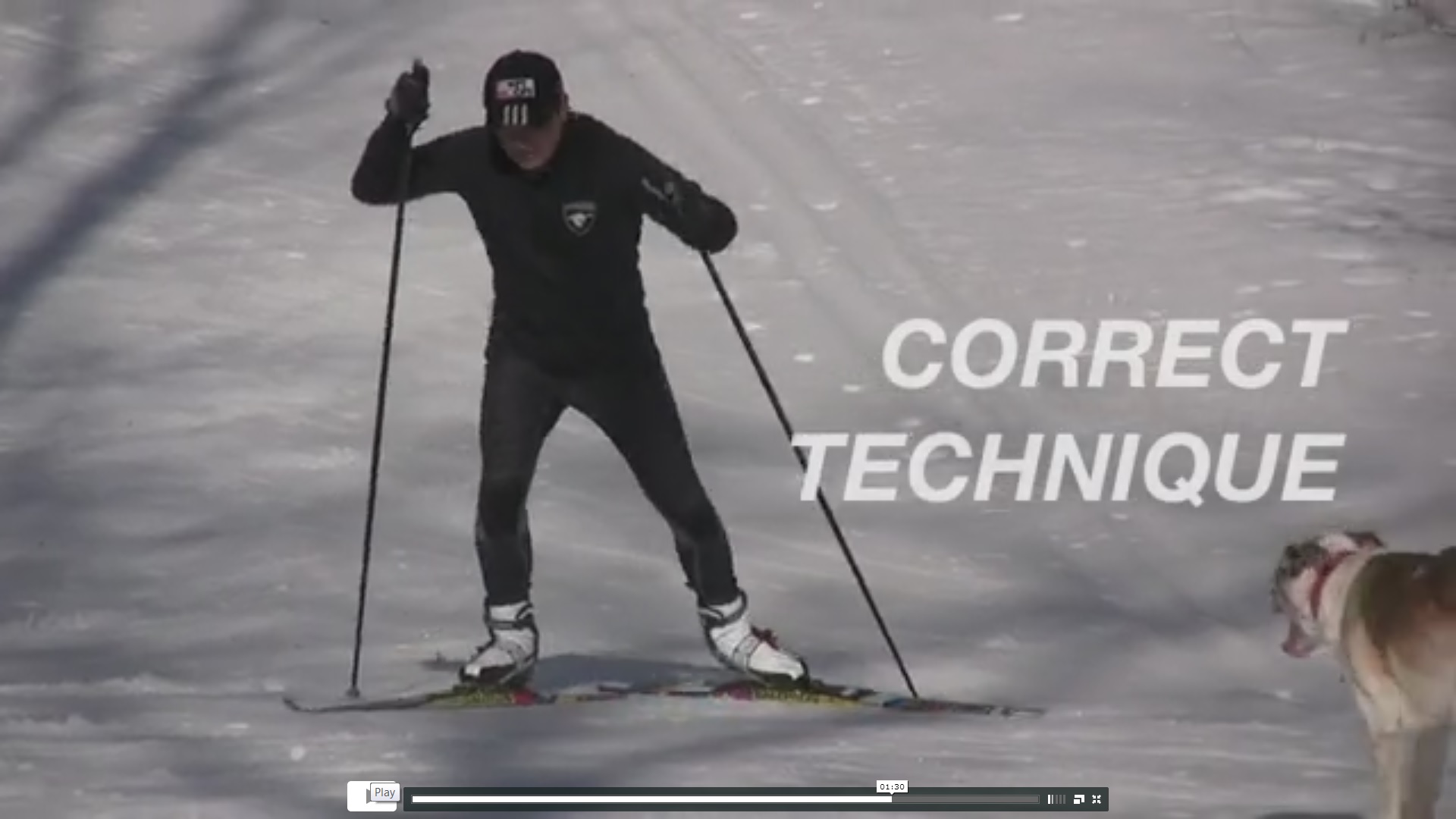
    Yuriy Gusev, Executive and Athletic Director of the Central Cross Country (CXC) Ski Association, demonstrating proper V1 technique in a CXC Academy video.
    Yuriy Gusev, Central Cross Country (CXC) executive and athletic director, demonstrating proper V1 technique in a CXC Academy video.

    You read FasterSkier so it’s probably a safe bet that you would like to, well … ski faster!

    And so if, as you recover from the recently concluded race season, you are already thinking about how to improve your race times next year, Yuriy Gusev has a plan for you. A training plan that is.

    Intrigued by the CXC Academy, I called up Gusev, executive and athletic director of the Central Cross Country (CXC) Ski Association.  The Academy is described on the CXC website  as “an online subscription service that provides professional training plans for cross country skiers of all ages and skill levels.”

    Gusev explained that was Academy was started in 2007 by himself and former CXC elite coach Bryan Fish (now the U.S. Ski Team development coach) as a way to share the state of the art ski training expertise that Gusev and Fish compiled while developing the CXC elite program.

    “Bryan and myself made a lot of connections with sports professionals in strength and conditioning and sports science and medicine,”  Gusev said.  “We started brainstorming what can it [the Academy] be and who can it serve.”

    CXC Academy promotional material with a good summary of its offerings.
    CXC Academy promotional material summing up its offerings

    In its early stages, the Academy was envisioned as at tool to share information for training elite athletes.  While the Academy still contains an elite-level plan (plans similar to those used by CXC elite-team alumni Brian and Caitlin Gregg, Matt Liebsch, and Jessie Diggins), the program quickly expanded to include novice, intermediate and elite level format.

    “Initially we thought it would work just for coaches, but it has developed pretty quickly that it can be used by anyone all over the world,” Gusev said.

    So how was the elite plan modified for intermediate and even novice skiers? “We had a lot of discussions after the first year … what we did is simple, really,” Gusev explained. “We minimized number of workouts per week and number of hours and that mostly takes care of different levels. For example, somebody who trains 260 hours per year who just wants to ski the Birkie … [they don’t] need to do two Level 4 workouts a week.  They might just need to go at Level 3 just above their comfortable pace for an hour and half once a week.”

    I explained to Gusev my difficulty in researching how to train for two 50-kilometer citizen races (the Seeley Lake, Montana OSCR and West Yellowstone Rendezvous) last winter.  My research left me overwhelmed about how I should incorporate various training elements such as intervals, strength training (I decided strength must be important after watching Kikkan Randall do pullups with weights strapped to her waist) and my first-ever pair of rollerskis, into my race preparation.

    While chatting with Gusev, I discovered I wasn’t the only one lacking a training plan. “Believe it or not, we just had a coaches conference in November with about 50 coaches, both club and high school coaches, and I asked pretty straight forward question: How many of you give your athletes a day-by-day training plan?” Gusev recalled. “And probably two or three hands went up.”

    He went on to explain CXC’s philosophy regarding training plans.  “What we believe in our organization is that any structured plan is better than no plan,” he said. “We have athletes on that plan. We have heard from high school coaches to masters skiers to senior level athletes that they have had the best seasons ever … and they still continue to improve season after season.”

    Gusev added that the Academy is for everyone from those training for marathons or short-distance races, from a high-school skier to someone who’s qualified for nationals.

    “Any structured plan is better than no plan.” — Yuriy Gusev, CXC Executive Director

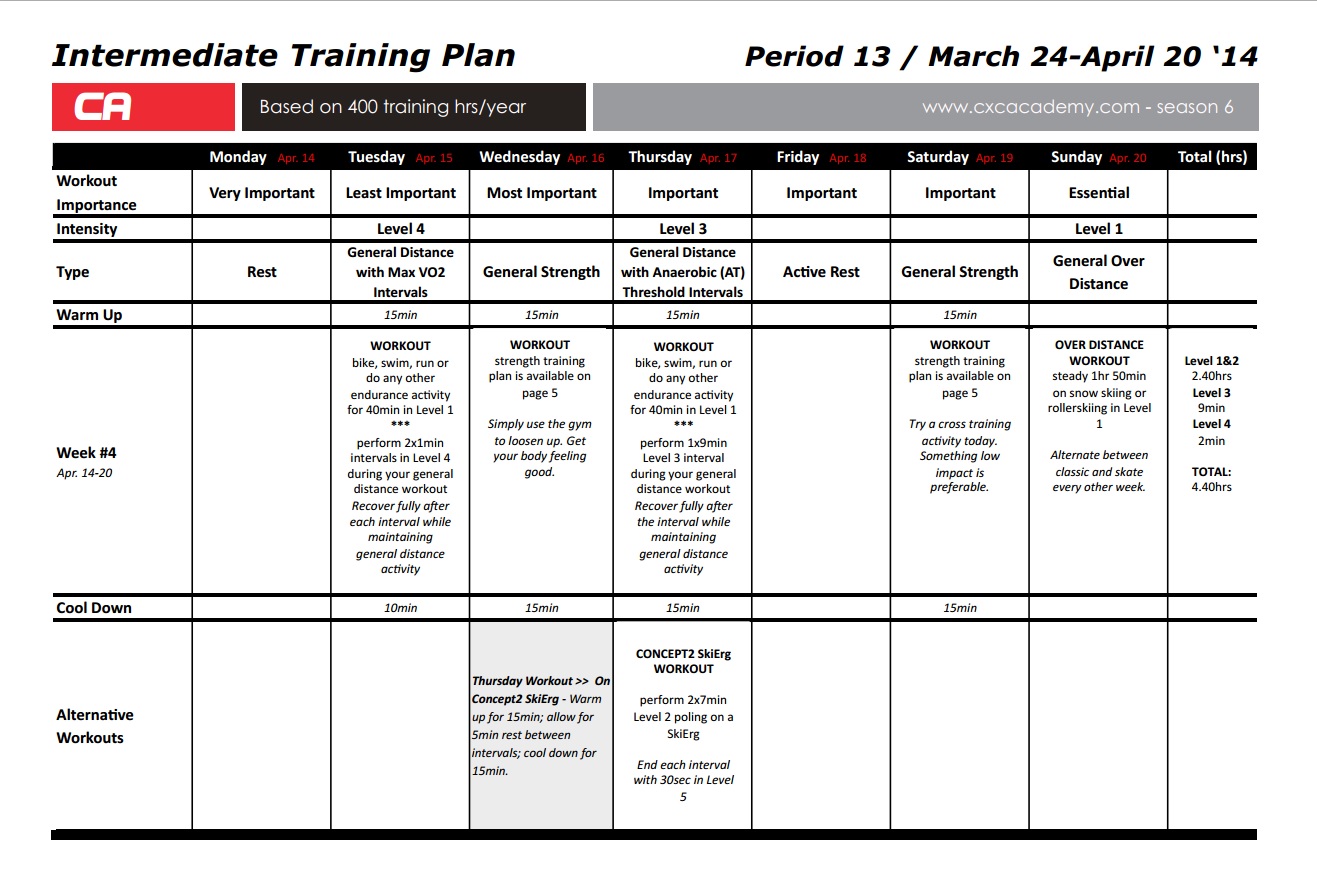
    Sample CXC Academy training plan layout.
    Sample CXC Academy training plan layout

    I told Gusev that most of my resistance to training plans was what I perceived as their inherent rigidity. I have friends who love nothing more than to see their training laid out before them on a neat, orderly grid with a little box in the corner to check when the workout has been completed.  I am not one of these people.

    To me working out is essentially goofing off, an escape from demands of work and life.  I live in Missoula, Mont., if the weather and my work schedule allows for a short mountain-bike ride on the same day when the training plan calls for strength workout in the gym, I’ll dump the plan in a heart beat.

    I asked Gusev about how his training plan can work for people with busy lives.

    “From the user side, what we’ve heard is that some people follow it like a bible, literally day by day, and some people try to adapt it to work and family and other things,” he said.  “What we suggest to people is that this is a road map … you know, its just getting those pieces done some time during the week. That’s what’s really important and everyone has a different way of how to structure the week around training.”

    Cost of CXC Academy:
    – 5-day trial: free
    – 1 month: $14.95
    – 1 year: $119.40

    Regarding alternate training activities, Gusev said, “That’s the perfect situation, if someone can do other activities, whether you are an elite athlete or you want to be a wave Birkie skier … you just do those workouts by bike or kayak or by foot or the swimming pool but you follow the plan to build your training. Obviously, the more specific you can be the better it is.  Some people might choose to rollerski once a week, and some may choose to not rollerski until September or October … so everyone is different.  Even at the elite level there is no single formula out there that will make you fast.”

    I discovered the Academy midway through my ski season and signed up for my free one-week introductory membership. My next race was the Peter Hale Memorial, a 22 k race with over 1,000 feet of climbing so I watched an Academy video on V1 technique.  In the video, Gusev demonstrated the importance using both legs equally regardless of which side you are poling on.  I focused on that single tip during my entire race.  I told Gusev that I finished ahead of two racers who had beaten me [quite easily] in a race two weeks earlier.  It was the first time I had ever finished ahead of one of them!

    I asked Gusev if my focus on his tip could have made the difference for my improvement.  “It could be, easily,” he replied. “We have a lot of people email us literally a week before the Birkie, and they say, ‘I didn’t train at all — I just want to make it through.’   You’d be amazed at how many people there are like that, and you know, there’s no magic wand to make them better, but there’s some things you can tell them, some basic tips just like what you talked about with V1.

    “I’ve heard from a lot of people that we’ve given advice and they said it was magical,” he added.

    CXC Academy video library.
    CXC Academy video library

    CXC Academy has a video library which Gusev said sets them apart, providing both technical advice and a visual demonstration of how it should be done.

    “What we learn with a technical sport like cross-country skiing that the most important part for people to understand is what they should be doing …  and how the technical elements [of skiing] make them more efficient and faster,” he said. “I haven’t seen anything else out there that gives that advice.”

    The Academy video offerings are extensive and include sections on strength training, on-snow skiing for both skate and classic, rollerskiing, dryland training, waxing and equipment.  The videos are tightly integrated with the training plans.   For example, the intermediate training plan for April calls for one day of general strength training per week.   A video demonstrating all recommended exercises is linked to the plan.  On a recovery day during the race season the plan might recommend that you get some wax into your ski bases and a link to a waxing technique video is provided.

    The CXC Academy offers a free five-day trial period.  A one-month subscription is $14.95 and one-year subscription costs $119.40.

    “Those paying members … help us pay the cost of servers, the cost of hosting videos. There is cost in everything,” Gusev said.   “We we give complementary memberships to Paralympic team members and high level para-athletes.  Those paying memberships allows us to have this resource, and without them we couldn’t help those Paralympic athletes and organizations like National Nordic Foundation.”

    Gusev said the Academy’s support of the U.S. Paralympics Nordic program wasn’t planned, but there was a need.

    “We were at Park City at the National Ability Center ski camps and they had development athletes from all over the country … and they didn’t have one centralized place for getting a plan,” he explained. “For some of them, if you have an adult who has never done any athletic training in the past, now with a disability trying to do a competitive sport, for them a training plan is like, they don’t even know from what side they need to look at it.”

    Since I’m just getting started following the intermediate training plan, I asked Gusev what I can expect next ski season.

    “You will go faster when you want to go faster and it will be a lot more enjoyable to go faster,” he responded. “I don’t race any more, I don’t have time …  but I enjoy when I go ski and I can go up a good hill at a good pace and enjoy it.  I can go ski for three hours if I want to.

    “Really, what [the Academy] does is builds all components of training, from anaerobic to aerobic and speed and endurance, so it gets to the point where you can do anything you want to,” he added.

    I told Gusev that I race mainly to provide goals to get me out exercising and skiing. While I love skiing, I don’t consider myself to be a racer. I asked if his training plan is appropriate for someone like me.