From the FasterSkier archive — posts syndicated from athletes’ and coaches’ own blogs between 2004 and 2012, kept online as published. Current coverage is at fasterskier.com.

Tag: Petr Novak

  • Brooks Narrowly Misses Overall FIS Marathon Cup Victory, 10th in Ugra

    Brooks Narrowly Misses Overall FIS Marathon Cup Victory, 10th in Ugra

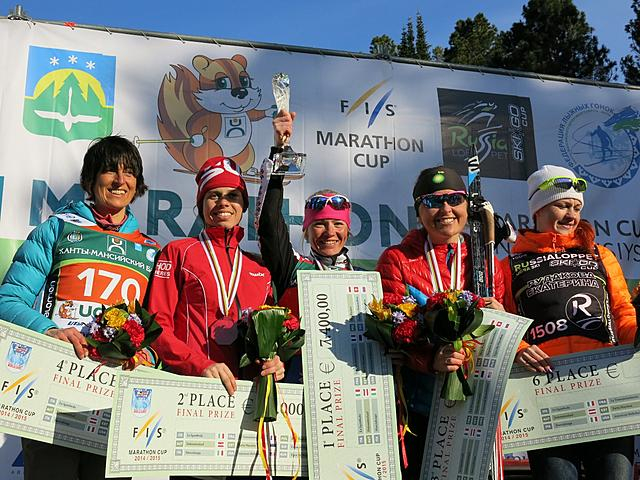
    Holly Brooks (2nd from the right) was third in the 2015 FIS Marathon Cup, after finishing 10th in the final event, the 50 k freestyle race Ugra Ski Marathon in Siberia, Russia, on Saturday. Tatjana Mannima of Estonia (center) won the overall Marathon Cup, and Aurelie Dabudyk of France was second (2nd from the left). Photo: FIS/Worldloppet
    Holly Brooks (2nd from the right) was third in the 2015 FIS Marathon Cup, after finishing 10th in the final event, the 50 k freestyle race Ugra Ski Marathon in Siberia, Russia, on Saturday. Tatjana Mannima of Estonia (center) won the overall Marathon Cup, and Aurelie Dabudyk of France was second (2nd from the left). Antonella Confortola of tally (left) was fourth overall, and Ekaterina Rudikova of Russia (right) was sixth overall. Photo: FIS/Worldloppet

    With her 10th-place finish in the Ugra Ski Marathon in Siberia, Russia, on Saturday, American Holly Brooks was third overall in the 2015 FIS Marathon Cup, only 15 points short of first overall.

    “Today I fell a bit short of a season-long goal but hey, that’s part of the sport,” APU’s Brooks said in a comment on her Facebook page, explaining that she was just missing the power in the tough spring conditions in the freestyle race this weekend. Originally slated as a 50 k, the course was shortened to 30 k due to warm conditions.

    “It was tough skiing out there: deep, dirty slush and a relentless ‘tropical’ headwind,” she wrote. “When I tried to apply the gas, it was like trying to drive a car on an empty tank. Today I felt as if I was a corpse on skis, as it turns out that 500k of racing and four months of ‘living on the road’ away from home was a bit too much for a strong finish.”

    Brooks had been leading the overall FIS Marathon Cup going into the Ugra, but only had a narrow 4-point lead to Tatjana Mannima of Estonia, and a 51-point lead to Aurelie Dabudyk of France. The 26 points netted from her 10th-place finish were not enough to hang onto the lead. Mannima won the series with 496 points after placing fifth, while Dabudyk rode a strong second-place finish in the race to pass Brooks in the rankings as well. Dabudyk finished with 484 points and Brooks was third with 481 points overall.

    Mannima also won the series in 2012-2013. Brooks’ third place is the top North American result in the overall FIS Marathon Cup to date. Now she is looking forward to come home to Alaska.
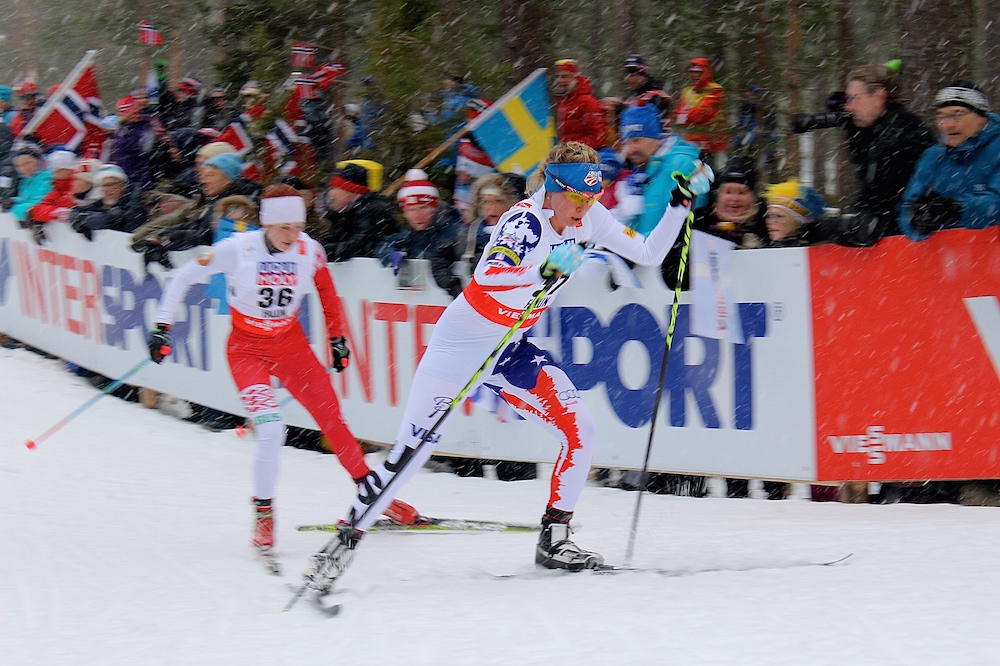
    Jessie Diggins (U.S. Ski team) leads Ekaterina Rudakova of Belarus, whom Diggins passed, up "little" Mördarbacken early in the women's 10 k freestyle individual start at 2015 World Championships in Falun, Sweden. Diggins went on to take silver for the best-ever U.S. women's distance result at an international championships; Rudakova placed 39th.
    Jessie Diggins (U.S. Ski team) leads Ekaterina Rudakova of Belarus, whom Diggins passed, up “little” Mördarbacken early in the women’s 10 k freestyle individual start at 2015 World Championships in Falun, Sweden. Diggins went on to take silver for the best-ever U.S. women’s distance result at an international championships; Rudakova placed 39th.

    It was defending Ugra champion Ekaterina Rudikova of Belarus who took home the race win by almost a minute, clocking in at 1:19:46.4, while Dabudyk of France finished in 1:20:42.9; Antonella Confortola Wyatt was third. Brooks crossed the line in 1:27:38.9.

    Her win was not without controversy. Women do not have their own starting waves in FIS Marathon Cup races, but are not allowed to work with men to set the pace or block for them. Some alleged that Rudakova did just that.

    “I was accused of having pacemakers at the race and it made me mad and gave extra power,” she told FIS. “I wanted to prove [to] everyone that I can win. It really gave me good motivation throughout the whole race. The course shortening did not affect me, I had lot of power in me and could have gone on. Next year I maybe try to win the overall FIS Marathon Cup.”

    And that wasn’t the only drama.

    The Russian website skisport.ru reported that the race was poorly organized and that this in fact may have affected the results:

    “According to eyewitnesses, the competition took place on a low organizational level. Due to weather conditions, the organizers had to change the route of the race, which failed to prepare properly. The start was delayed, but the most important thing – none of the participants had been warned before the start that the distance was reduced, and instead of accelerating loops and three laps of 15 km, the finish was after three laps of 7.5 km. Many participants… did not expect so much rapid completion of the marathon, and expected another 20 km struggle. Some, like Anton Gafarov, went out for another lap from which they had to return.“

    Gafarov, a World Cup podium finisher, and the racer who at the Sochi Olympics became U.S.-media famous after receiving a ski from Canadian coach Justin Wadsworth after breaking one in the sprint semifinals, finished 27th.

    The Ugra was also the smallest of the WorldLoppet marathons, with only 400 competitors completing the race.

    The men’s race came down to a sprint finish. Swiss World Cup skier Toni Livers won the race in 1:13:39.0, 0.4 seconds ahead of Aliaksey Ivanov of Russia. Evgeniy Belov of the Russian national team was third, finishing in 1:13:51.1.

    “The race course was difficult and hard as the snow was very soft,” Livers told FIS. “I saw that some of the athletes had some difficulties. There was a small group for a while and then me and another skier were able to make a gap. We worked well together all along and there were only 2 of us in the end. I was able to cross the finish line in front. It was really great!”

    Petr Novak of the Czech Republic had a comfortable lead in the overall Marathon Cup prior to the event, and was able to hold on to that lead even with a seventh place finish. Benoit Chauvet of France was fifth in the Ugra, but beating Novak by two spots in the final race was not enough to snag the overall title. Novak still won by 50 points total, collecting a total of 442 points. Chauvet was second overall with 392 points, and Livers was third with 268 points.

    Ugra Ski Marathon Results: men / women

    FIS Marathon Cup final standings: men / women
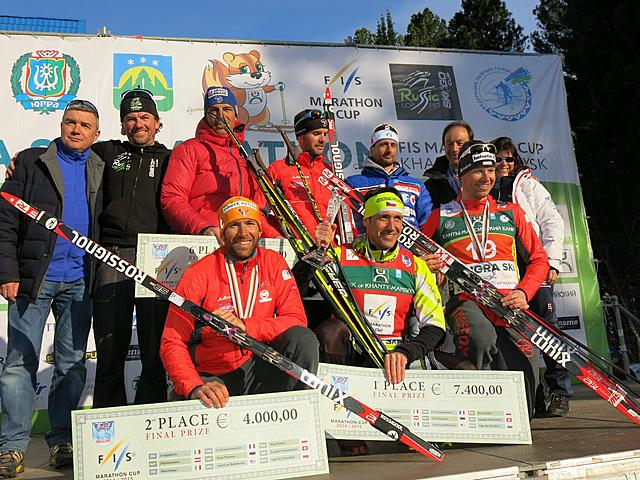
    Petr Novak of the Czech Republic won the 2015 FIS Marathon Cup, with Benoit Chauvet of France in second place, Toni Livers of Switzerland in third. Photo: FIS/Worldloppet
    Petr Novak of the Czech Republic won the 2015 FIS Marathon Cup, with Benoit Chauvet of France in second place, Toni Livers of Switzerland in third. Photo: FIS/Worldloppet
  • Brooks Wins Second Birkie; Bonaldi Takes Men’s Race in Dramatic Finish

    Brooks Wins Second Birkie; Bonaldi Takes Men’s Race in Dramatic Finish

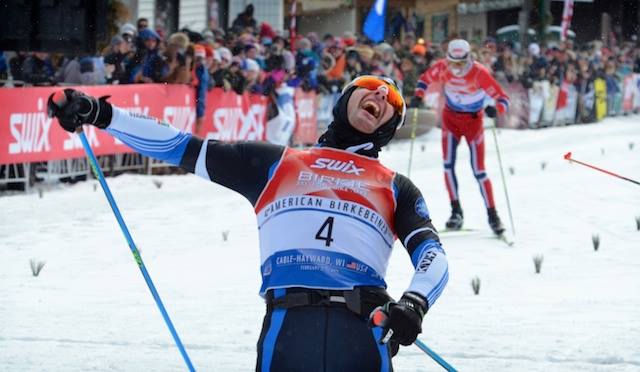
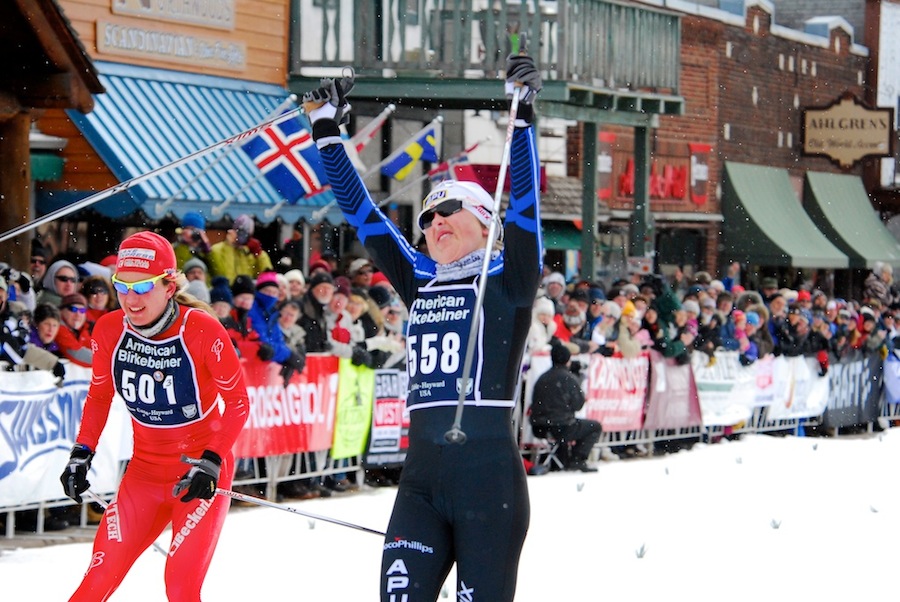
    Segio Bonaldi celebrates after winning in a sprint finish at the 2015 American Berkebeiner. It is Bonaldi's second Birkie title. (Photo: American Birkebeiner Ski Foundation)
    Italy’s Segio Bonaldi celebrates after winning in a sprint finish at the 2015 American Berkebeiner in Hayward, Wis. It was Bonaldi’s second Birkie title. (Photo: American Birkebeiner Ski Foundation)

    The 2015 American Birkebeiner in Hayward, Wis., was spared the most frigid weather gripping the Eastern U.S., as temperatures hovered around 15 degrees Fahrenheit when Saturday’s 51-kilometer freestyle elite race began. And despite three to four inches of new snow, even the sun made an appearance during the race.

    In was in these conditions that American Holly Brooks, of Alaska Pacific University in Anchorage, Alaska, won her second Birkie, claiming victory in a time of 2:34:33.

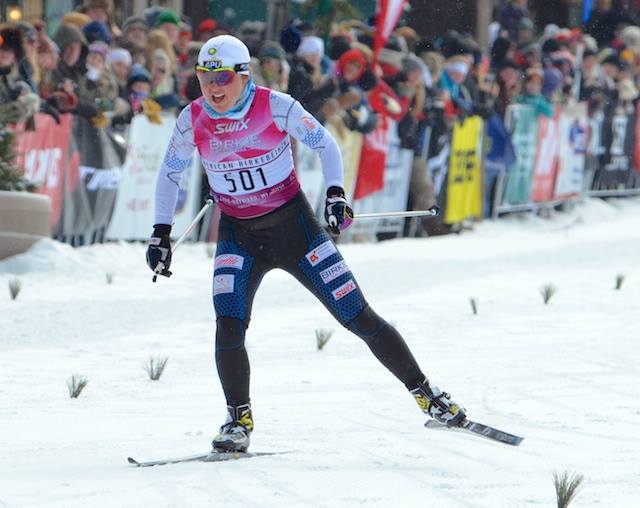
    Holly Brooks racing to her second Birkie victory on Saturday in Hayward, Wis., which she won by nearly 30 seconds to reclaim the FIS Marathon Cup overall lead. (Photo: Darlene Prois/ABSF)
    Holly Brooks racing to her second Birkie victory on Saturday in Hayward, Wis., which she won by nearly 30 seconds to reclaim the FIS Marathon Cup overall lead. (Photo: Darlene Prois/ABSF)

    However, she first had to ward off Aurelie Dabudyk of France, who stuck with Brooks until she began her final push on the flats of Lake Hayward, a few kilometers from the finish.

    Brooks came into the race second overall in the FIS Marathon Cup, but reclaimed the lead after Saturday’s win.

    The 32 year old told FasterSkier that the top four women were together for most of the race. At “B*itch Hill” – a steep climb about 40 k into the race – she said she heard a second snow machine behind her.

    “I looked over my shoulder and there was the sea of men who had caught us,” she explained. “I knew it was a now-or-never moment.”

    As the leading men passed the first four women, Brooks decided to make her move. She tagged onto the group of men and managed to break from the group.

    However, she was surprised to find Dabudyk was able to hang behind her.

    “I did not want to leave it to the finish sprint and therefore pushed as hard as I could on Lake Hayward. I did not dare to look back before the finish line to be sure not to lose any seconds,” she explained to the press. “I didn’t want to be ‘that skier’ who looked back and lost the sprint because you miss a crucial pole plant or something.”

    As usual, she said Main Street in Hayward was incredibly loud and festive.

    “It would have been fun to grab a flag and celebrate a bit but ensuring the win and reclaiming the red bib was more important!” she said. “I am really happy that I could win the Birkie again today!”

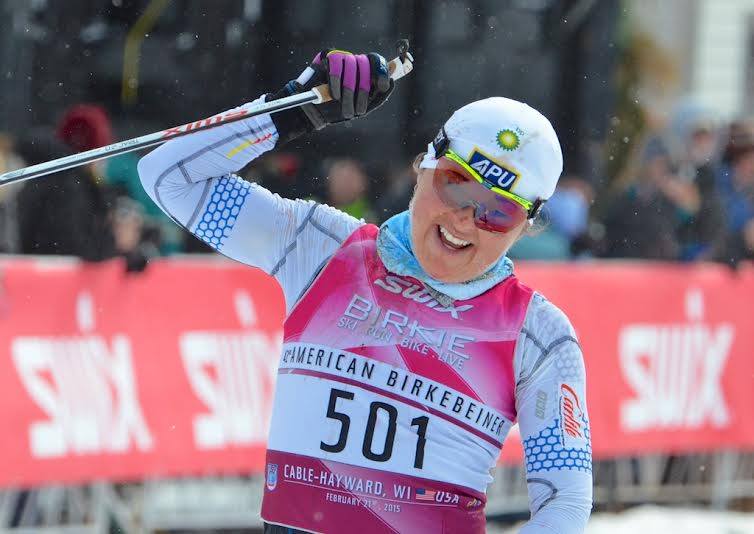
    Holly Brooks celebrates after winning her second American Berkebeiner on Saturday in Hayward, Wis. The win put her back in the lead of the overall FIS Marathon Cup. (Photo: American Birkebeiner Ski Foundation)
    Holly Brooks celebrates after winning her second American Berkebeiner on Saturday in Hayward, Wis. The win put her back in the lead of the overall FIS Marathon Cup. (Photo: American Birkebeiner Ski Foundation)

    Dabudyk went on to finish second, 28.1 seconds behind Brooks. Tatiana Mannima of Estonia was nearly two minutes back in third (+1:59.9), barely holding off German Anja Gruber, who placed fourth (+2:02.1).

    Mannima has won the last two FIS Marathon Cup races, while Gruber is coming off three podium finishes earlier this month in SuperTour races in Craftsbury, Vt.

    Dabudyk said to the press that she wanted to stay with Brooks until the finish, though down the stretch Brooks had too much power for her.

    “But I am really happy with my second place,” she added.

    Mannima said that she pushed hard from the start to see which skiers could hold onto her speed. She was able to stay in the lead group until Brooks and Dabudyk finally took off with 10 k to go.

    “At Lake Hayward, I was trying to stay behind Gruber, as it was pretty windy on the lake. I hoped to pass her before the finish line, which I did,” she explained, adding that she is happy to just be on the podium.

    American Caitlin Patterson (Craftsbury Green Racing Project) ended up fifth (+9:31), after winning the SuperTour 20 k classic mass start in Craftsbury late last month.

    Bonaldi wins second Birkie in exciting fashion 

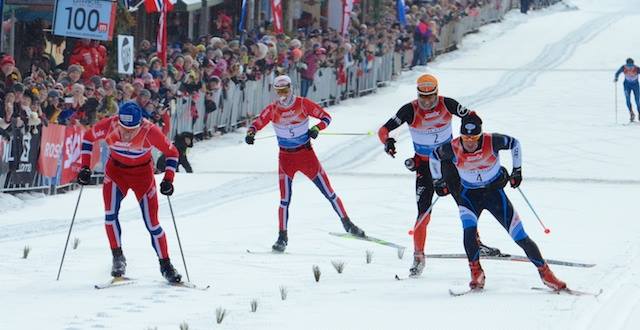
    Italy's Segio Bonaldi (r) outlasts three Frenchmen en route to his second American Birkebeiner victory on Saturday in the 42nd annual Birkie in Hayward, Wis. (Photo: Darlene Prois/ABSF)
    Italy’s Segio Bonaldi (r) outlasts three Frenchmen en route to his second American Birkebeiner victory on Saturday in the 42nd annual Birkie in Hayward, Wis. (Photo: Darlene Prois/ABSF)

    The men’s race offered a more dramatic finish, as Italian Segio Bonaldi outsprinted three Frenchmen to win by less than a second.

    Bonaldi, Birkie winner in 2013, finished in 2:12:21.1. He passed France’s Christopher Perrillat-Collomb in the final 100 meters to win by just 0.5 seconds. Benoit Chauvet and Mathias Wibault were also in the lead group, and Chauvet finished in third (+1.7) while Wibault faded to fourth (+5.0).

    Chauvet told the press that he tried to break out of the lead group of 20 at the first climb, but no one was willing to break with him. However, the racers slowly began to spread apart at about the 35 k point, and Chauvet was able to work with Perrillat-Collomb.

    “At this point all were thinking about winning the race,” he said.

    Chauvet explained that his tactics failed him, however, and that Bonaldi was smarter and stayed behind the others until the final stretch. Chauvet said he probably made his final sprint too early, as he tried to be first coming off the new bridge that drops the skiers into downtown Hayward and the final straightaway to the finish.

    “I did not feel so well until 15 k before the finish,” Bonaldi said. “My skis were also not very good so I tried to stay behind and to wait for the finish sprint. I kept energy for that.”

    The 36 year old added that he really wanted to win this year, especially after finishing third last year, but was not sure he would have a clear shot at victory until 100 meters before the finish line.

    “I am very happy!” he said.

    “I am little bit disappointed to be third as I wanted to win. I have to come back for the victory next year,” Chauvet said.

    The top American, Lex Treinen (APU), finished nearly 20 seconds after Wibault in fifth and was 24.5 seconds from the win. Last year, he placed 10th in the Birkie. American Brian Gregg (Team Gregg/Madshus) finished in eighth (+1:51.4).

    FIS Marathon Cup leader Petr Novak of the Czech Republic came through in 11th (+5:51.4).

    “I had the worst skis of my life. I lost so much on the downhills. It was a mental fight for me all the way through and right until the end!” Novak said in a statement to the press. Despite his rough day, he still retains the lead in the overall FIS Marathon Cup standings.

    American Matt Liebsch (XC United/Team Strong Heart), 2009 Birkie winner, finished 10th (+3:10.8), while 2012 Birkie winner Tad Elliott (Ski & Snowboard Club Vail Elite) took 16th (+10:29.5).

    Naryshkina, Mork take classic titles

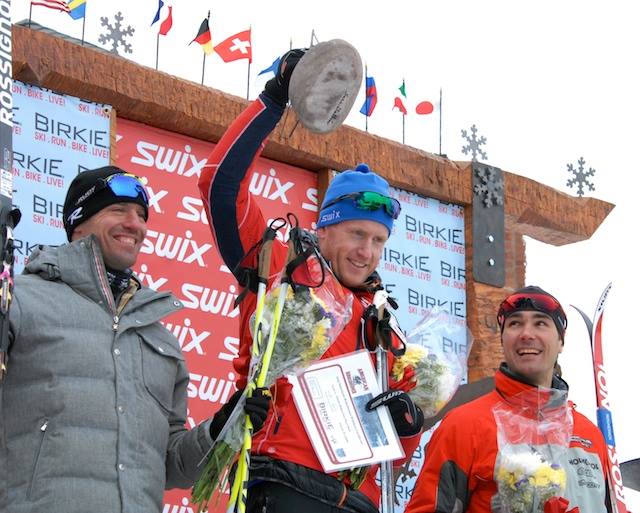
    Men's 55 k classic Birkie winner Ole Christian Mork (c) is with second-place finisher Torin Koos (l) and Thomas Seidel (r), who placed third. (Photo: ABSF)
    Men’s 55 k classic Birkie winner Ole Christian Mork (c) is with second-place finisher Torin Koos (l) and Thomas Seidel (r), who placed third. (Photo: ABSF/Facebook)

    In the 55 k classic race, Natalia Naryshkina of Russia and the CXC Team took the women’s win in 3:19:20.2, while Norway’s Ole Christian Mork won the men’s race in 2:54:22.1.

    Naryshkina beat runner-up Josie Nelson of Medicine Lake, Minn., by 3:44.9, and Kelly Sillicorn of Winona, Minn., by 3:50.9. Isabel Caldwell, younger sister of U.S. Ski Team member Sophie Caldwell, placed fourth (+6:14.8).

    Mork, of Oslo, outlasted four-time U.S. Olympian Torin Koos by 8.8 seconds and Thomas Seidel, of Salt Lake City, in third by 14.7 seconds.

    Complete results

    51 k skate results: Men | Women

    55 k classic results: Women | Men

  • 2015 American Birkebeiner Preview: Bridges, Brooks and More

    2015 American Birkebeiner Preview: Bridges, Brooks and More

    Holly Brooks winning the 2012 American Birkebeiner, four-tenths of a second ahead of Caitlin Gregg (l), for her first Birkie title. (Photo: Darlene Prois/American Birkebeiner) http://fasterskier.com/article/brooks-outsprints-gregg-for-birkie-victory/
    Holly Brooks winning the 2012 American Birkebeiner, four-tenths of a second ahead of Caitlin Gregg (l), for her first Birkie title. (Photo: Darlene Prois/ABSF)

    Each year, leading up to the third week in February upward of 11,000 people get sick. It isn’t a sickness that would cause a widespread panic, but rather one thousands of Midwesterners actually looked forward to each year, and it’s called Birkie fever.

    The 42nd running of the American Birkebeiner takes place Saturday, starting in Cable, Wis., and ending some 30 miles (or 50-plus kilometers) south in Hayward, Wis. The race filled up in November, with all 10,500 allotted entries accounted for before the first of the year. In total, 10,517 skiers from 18 countries were registered for the three Saturday races, almost 7,000 of them are entered in the 51 k skate race. That’s a big change from 1973, the first time the Birkie was held. Back then, there were 34 men and one woman as race participants.

    The race course has gone through several changes since 1973, from the direction skiers raced to the length of the race. This year’s race has a few changes that will add a some interesting twists. For one, the race is longer. The classic race is now 55 k and the skate race now 51 k. The extra distance was due to a relocation of the final aid station and the extension of the finish line, pushing it farther down Main Street.

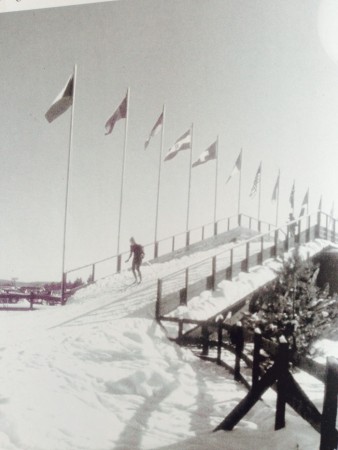
    The International Bridge was a fixture in the Birkie before. - Photo: American Birkebeiner Foundation
    The International Bridge was a fixture in the Birkie before. (Photo: ABSF)

    The biggest change that has garnered some of the most attention is the new bridge the American Birkebeiner Ski Foundation (ABSF) finished assembling on Wednesday over Highway 63, a kilometer from the finish.

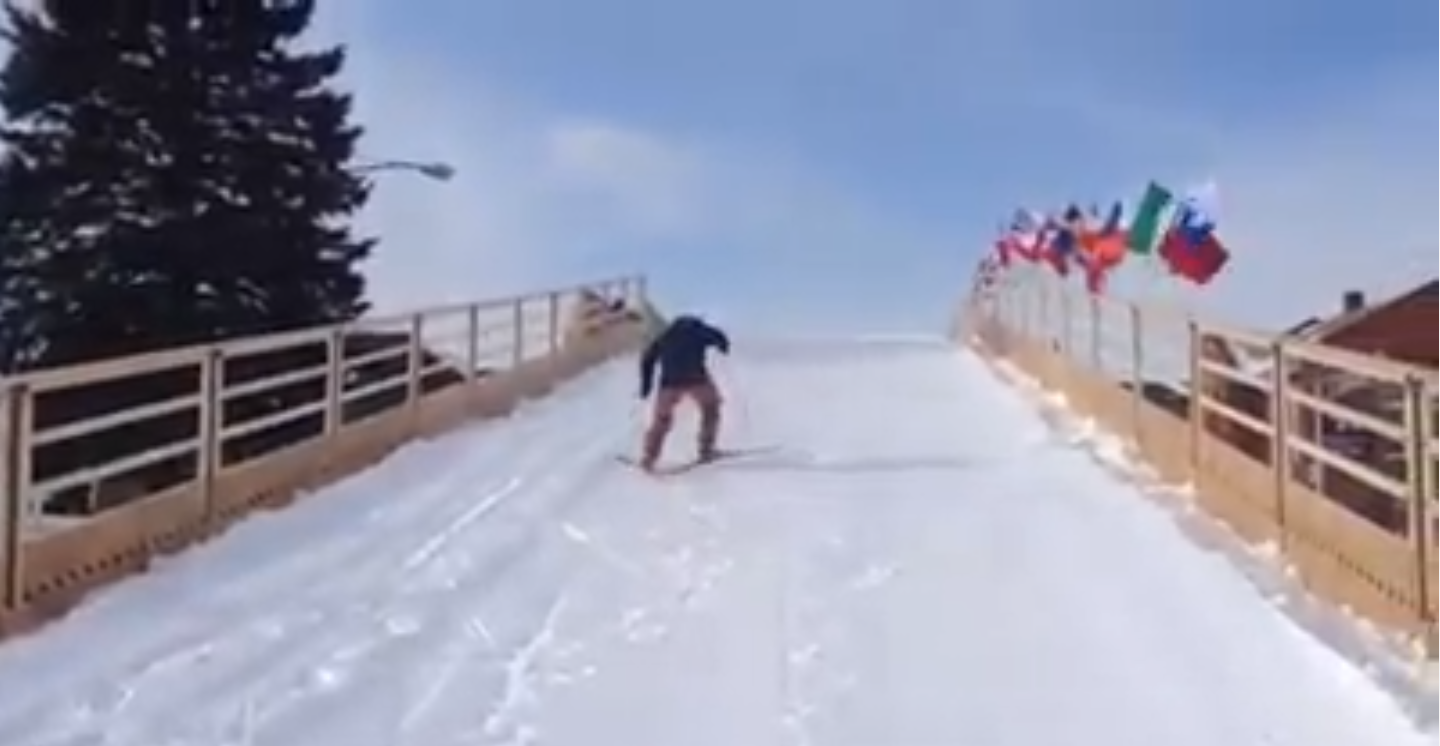
    The International Bridge adds no length to the race, but it does add a 17-vertical-foot hill before the finish. Previously, once skiers were five kilometers from the finish, it was a flat ski to Main Street. The new manmade hill adds a 10-percent climb to legs that already have some 50 kilometers of climbs in them.

    This isn’t the first time the International Bridge has been a fixture on the Birke course. In the late ’70s and early ’80s when the race finished at the Telemark Resort in Cable, the bridge was the last hill skiers needed to climb before they finished. The temporary bridge is 100-feet long and spans 30 feet over the highway.

    The bridge was needed to eliminate the traffic congestion problems the race brought during the weekend. Funding for the ramp and other changes is a part of phase one of the ABSF’s multiple-year fundraising program.

    The new International Bridge before the finish of the American Birkebeiner in Hayward, Wis. (Photo: American Birkebeiner Ski Foundation Facebook)
    Testing the new International Bridge near the finish of the American Birkebeiner in Hayward, Wis. (Photo: American Birkebeiner Ski Foundation Facebook video)

    Birkie Draws FIS Marathon Cup Contenders 

    The past two years, the Birkie has been a part of the FIS Marathon Cup, a season-long international competition that crowns a winner with the highest points after a series of races of 42 k or farther. This means it attracts some of the world’s best long-distance racers and this year’s women’s field is a reflection of that. In the elite wave, the top four women in the FIS Marathon Cup are entered: Tatjana Mannima of Estonia, American Holly Brooks, Aurelie Dabudyk of France, and Antonella Confortola of Italy. Confortola finished second in last year’s Birkie.

    Brooks was leading the FIS Marathon Cup, but skipped last week’s stop at the Tartu Marathon in Estonia to head to Hayward to prepare for the Birkie.

    “I’m really excited for this year’s Birkie,” Brooks wrote in an online message this week. “It’s been a couple of years since I’ve been here and it’s great to be back — both at the Birkie and on ‘home soil!’

    “I’ve been bouncing from country to country racing marathons and I decided last fall that I would spend two weeks here in Hayward,” she explained. “I have great friends that I’m staying with and it feels fabulous to be in a house [rather than a hotel].”

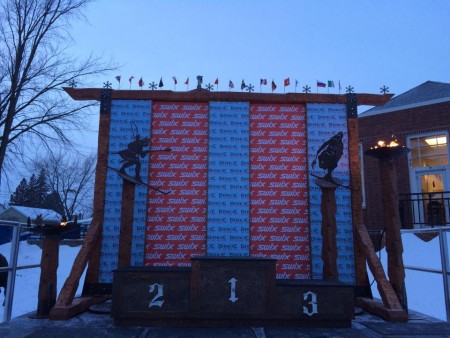
    The new podium awaits for the winner of this years race - Photo: American Birkebeiner Foundation
    The new podium awaits for the winner of this year’s race. (Photo: ABSF)

    Coming into the race, Brooks ranks second in the overall FIS Marathon Cup standings, just seven points behind Mannima. Brooks won the Birkie in 2012 and knows the course well.

    “I‘ve seen the whole thing start to finish… both at distance pace and race pace. That’s more than I can say for some of the courses I’ve raced this winter!” Brooks wrote. “Not sure how much of a true advantage it gives me but it puts my mind at ease a bit. I know where people including myself have made moves.”

    Two year ago at the Birkie, Mannima lost a photo finish and placed second to three-time Birkie champion Caitlin Gregg, who is currently in Sweden representing the U.S. at the FIS Nordic World Ski Championships in Falun. American Caitlin Patterson (Craftsbury Green Racing Project) finished third in 2013 and seventh last year, and could prove to be a threat in this year’s elite race.

    In an email on Wednesday, Patterson wrote that she was looking forward to skiing part of the Birkie trail on Thursday, refreshing her memory “of some of its notable features, and seeing the new bridge and finish line if possible.

    “My preparations have been going well — mostly I’ve been focused on recovering after recent Craftsbury Supertours, building up my energy, and actually keeping my training skis pretty short and easy,” she explained. “At this point in the season I have to trust the endurance and fitness I’ve built up during the past year, and mostly just stay sharp and excited for the race, which I most certainly am!”

    In terms of her goals and expectations for Saturday’s race, Patterson felt anything was possible.

    “The past two years of racing the Birkie have taught me that it’s a race in which you have to test your limits but where you never quite know what will happen, where you must always be thinking quickly and ready to react throughout all 50+k,” she wrote. “I believe that I’m in very good shape, so my goals are to trust my fitness, ski with confidence and enjoyment of the sport… and to make it onto the podium!”

    “I’ve seen the whole thing start to finish … I know where people including myself have made moves.” — Holly Brooks on her Birkie advantage

    The men’s field is also competitive. Most of the FIS Marathon leaders didn’t race last weekend’s Tartu Marathon to fly to the U.S. to prepare for the Birkie. Overall FIS Marathon Cup leader Petr Novak of the Czech Republic is racing along with France’s Benoît Chauvet, who sits in second place, only 85 points behind Novak. Second-and-third place finishers from last year’s Birkie, Simone Paredi and Sergio Bonaldi of Italy, are also listed to start. Bonaldi won the Birkie in 2013.

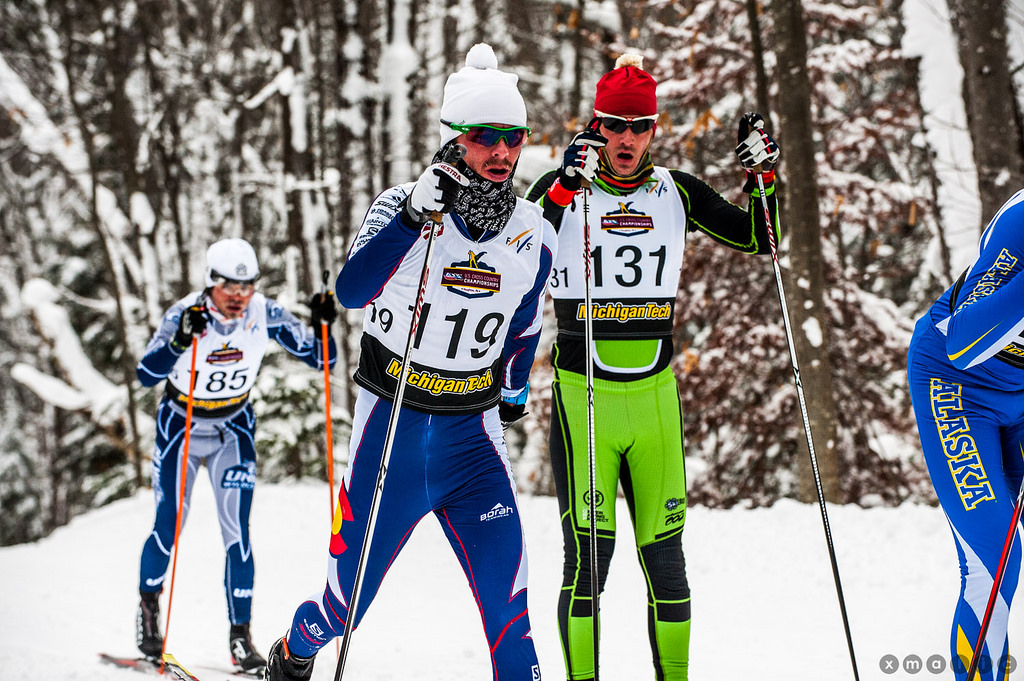
    SSCV's Tad Elliott (119) and Craftsbury's Andrew Dougherty (131) Men's 30 k classic mass start at U.S. Cross Country Championships in Houghton, Mich. (Photo: Christopher Schmidt)
    Tad Elliott (119) racing in the men’s 30 k classic mass start at U.S. Cross Country Championships in January in Houghton, Mich. (Photo: Christopher Schmidt)

    For the U.S., Birkie winners Tad Elliott (Ski & Snowboard Club Vail Elite) and Matt Liebsch (XC United/Team Strong Heart) will be racing, along with 2014 U.S. Olympian Brian Gregg. Elliott won in 2012 and Liebsch took first in 2009.

    This trio has had a pretty intense history in the Birkie. When Elliott won in 2012, Liebsch placed second and Gregg took third. The difference between first and third was only 14.8 seconds.

    In a phone interview, Liebsch mentioned how team tactics played a part in previous Birkies, but that would not be the case this year.

    “In the past, you would have these teams come over with five or six guys and it would essentially be like a cycle race,” Liebsch said. “The fast sprinters would just sit in the back while his teammates did all the work up front setting the pace and sending guys off the front to disrupt the flow of the race. This year is a little different because there aren’t the multiple-person teams.”

    Liebsch added that the style of racing here is different than at European marathons.

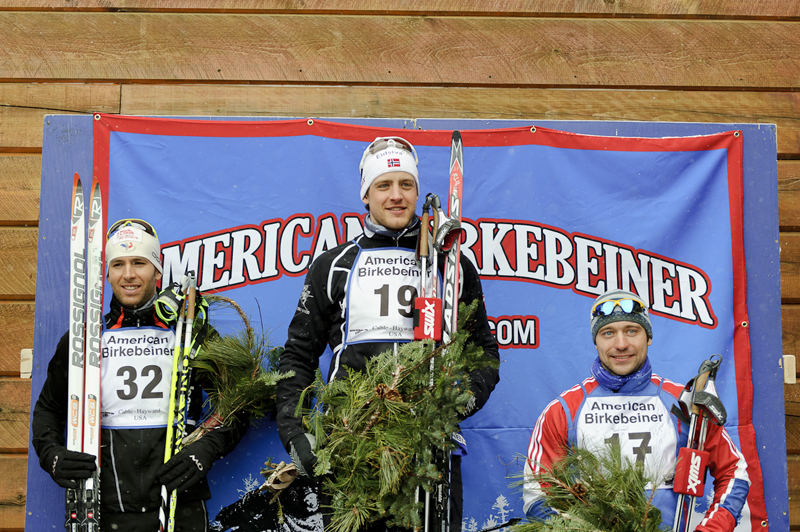
    The 2011 American Birkebeiner men's podium (from left to right): with France's Benoit Chauvet in second, Norway's Tore Martin Gundersen in first and Russia's Andrey Tyuterev in third. (Photo: Andy Caniff/Swix Sport USA)
    The 2011 American Birkebeiner men’s podium (from left to right): with France’s Benoit Chauvet in second, Norway’s Tore Martin Gundersen in first and Russia’s Andrey Tyuterev in third. (Photo: Andy Caniff/Swix Sport USA)

    “In Europe, the pace is extremely fast due to the fact that teams have ten or eleven guys,” he said. “Here in the United States, the pace is slower and many of the Europeans don’t like that pace so they would send guys off the front if the pace got to slow.

    “Most of the European guys are here to get FIS points to improve their standings for the overall FIS Marathon Cup title,” he added.

    Chauvet is currently second in the overall FIS Marathon Cup and has the biggest team entered in the Birkie with four total teammates, while the overall leader, Novak will race solo.

    “The strategy for most of the European guys will be to stay up front, in the top eight, get points and then head back to Europe,” Liebsch said. “This could really help out the fast American guys like Tad, Brian, me and Lex [Treinen] because the pace won’t be crazy fast like most European races can be.”

    In an email, Treinen predicted that U.S. guys would have a good showing: “Matt looks like he’s in good shape and he and [Brian] Gregg would love to take home a Midwest victory here,” he wrote. ” … I have been training specifically for the Birkebeiner for at least two weeks and I even did some intervals recently, so I feel like I am in better shape than ever before.”

    Elliott has spent some time in the Midwest and won last month’s Seeley Classic race that was held on the Birkie course.

    “I am excited to race the Birkie,” Elliott wrote in an email. “It will be three years since I last raced here! I am looking forward to a great event. I have had some health issues again sneak in this last month, but I have a few tricks up my sleeve. My twin brother is also my wax tech coming with me from Colorado. Hoping [he] can keep me in the race this year!”

    The biggest factor going in the weekend is the weather. There was a concern of a lack of snow but over the last few weeks the area has gotten enough snow to make the course set up nicely for the race. The wind and cold temperatures are an immediate concern. On Tuesday, organizers canceled Thursday’s elite sprints because of the predicted well-below-zero temperatures at the scheduled start time. Early predictions show Saturday morning’s temperatures to be around 4-degrees Fahrenheit.

    The Birkie can been viewed live on Saturday, starting at 8 a.m. Central time, via the race organizer’s live stream (http://new.livestream.com/xcountrylive/birkie). Follow athletes via the Birkie’s live athlete tracker and check FasterSkier for a post-race recap.

    Elite start lists: Women | Men

  • Wild Card on the FIS Marathon Cup, Brooks 2nd in La Sgambeda

    Wild Card on the FIS Marathon Cup, Brooks 2nd in La Sgambeda

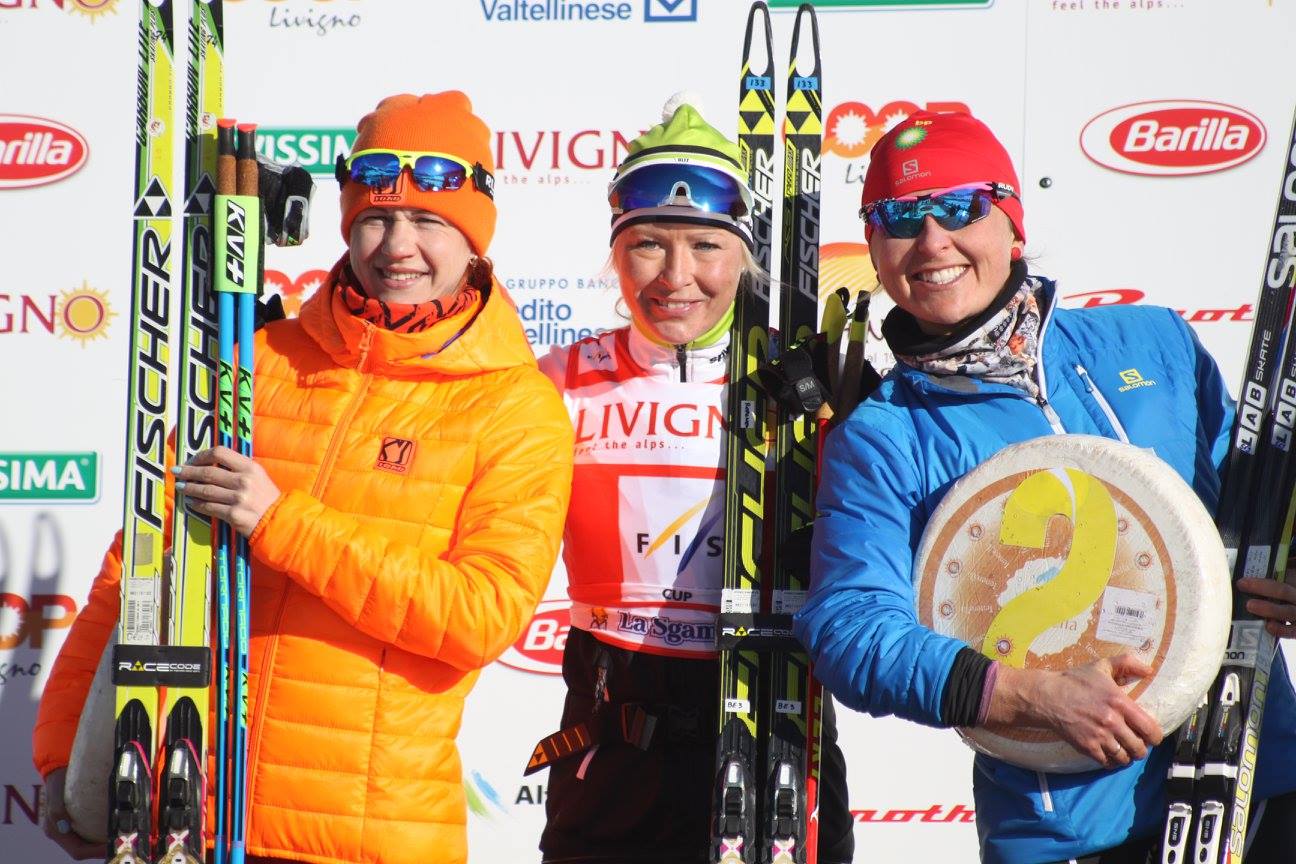
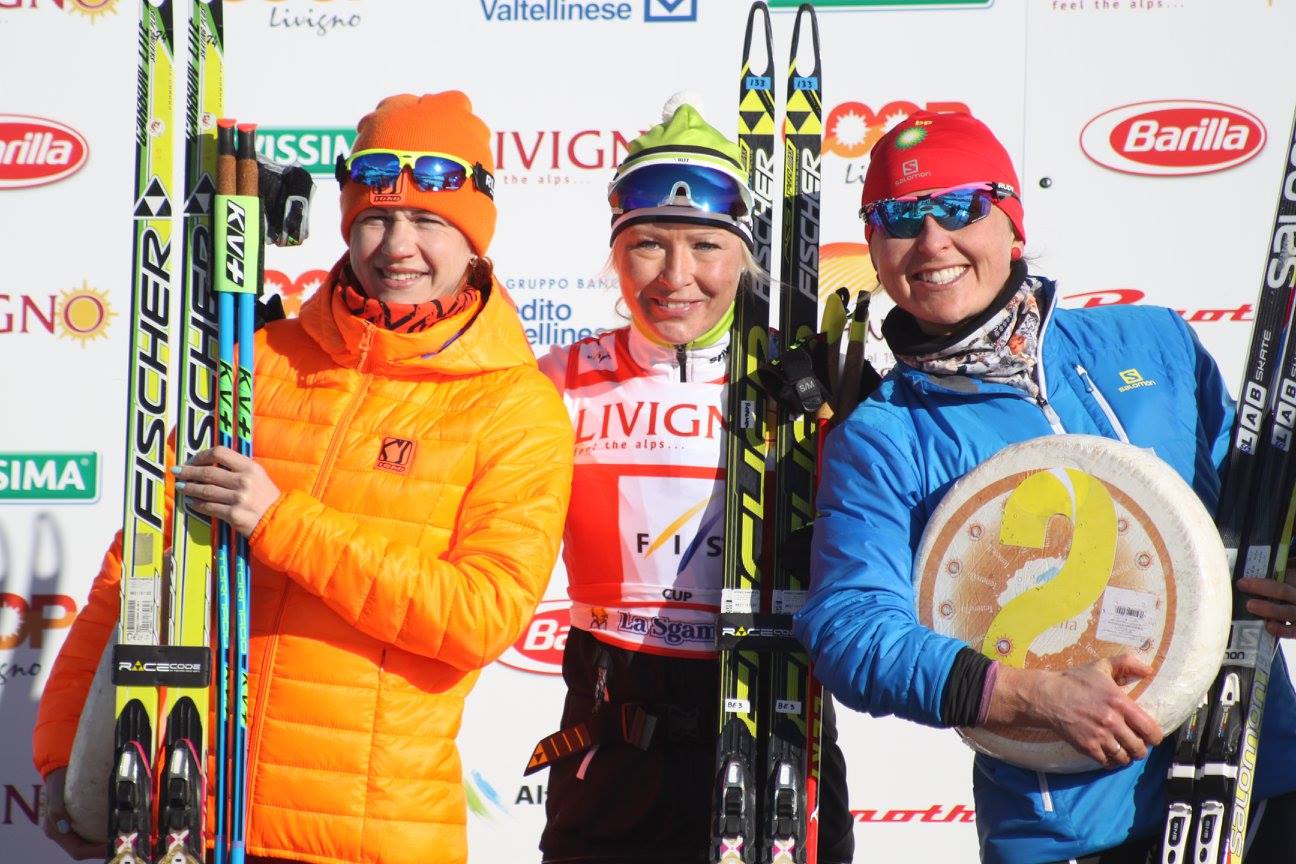
    The La Sgambeda women's podium on Friday in Livigno, Italy: with Finnish winner Riitta-Liisa Roponen (c), who notched her third-consecutive victory at La Sgambeda, American Holly Brooks (r) in second, and Ekaterina Rudakova of Belarus in third. (Photo: Worldloppet/FIS Marathon Cup)
    The La Sgambeda women’s podium on Friday in Livigno, Italy: with Finnish winner Riitta-Liisa Roponen (c), who notched her third-consecutive victory at La Sgambeda, American Holly Brooks (r) in second, and Ekaterina Rudakova of Belarus in third. (Photo: Worldloppet/FIS Marathon Cup Facebook)

    They called her a wild card — the International Ski Federation (FIS), that is. And according to Holly Brooks, she wasn’t sure what she was capable of, either.

    “The marathon world is a new can of worms for me, and I’m essentially going to a race which I know nothing about,” Brooks, a two-time Olympic cross-country skier and former U.S. Ski Team member, explained in an email earlier this week.

    “I don’t have a team, or a regular wax tech for that matter,” she added. “But, I’ve met some great people through the process already, and I have a certain amount of faith that it will all work out.”

    Without an early season race to test the waters, Brooks, 32, dove right into La Sgambeda on Friday: a 42-kilometer freestyle mass start in Livigno, Italy.

    “I was nervous!” she reflected after the race. “It was the first race of the season for me and I usually don’t wait this long to start racing.”

    She flew into Zurich last Saturday and spent her first few days training in Davos, acclimating to the time difference from Anchorage, Alaska.

    “It almost felt like ‘coming home’ because of all places in Europe, I’ve spent a lot of time in Davos,” she wrote in an email. “It was also really nice to see all my World Cup friends and of course the U.S. team. It provided a nice transition before heading out into the ‘unknown.’ ”

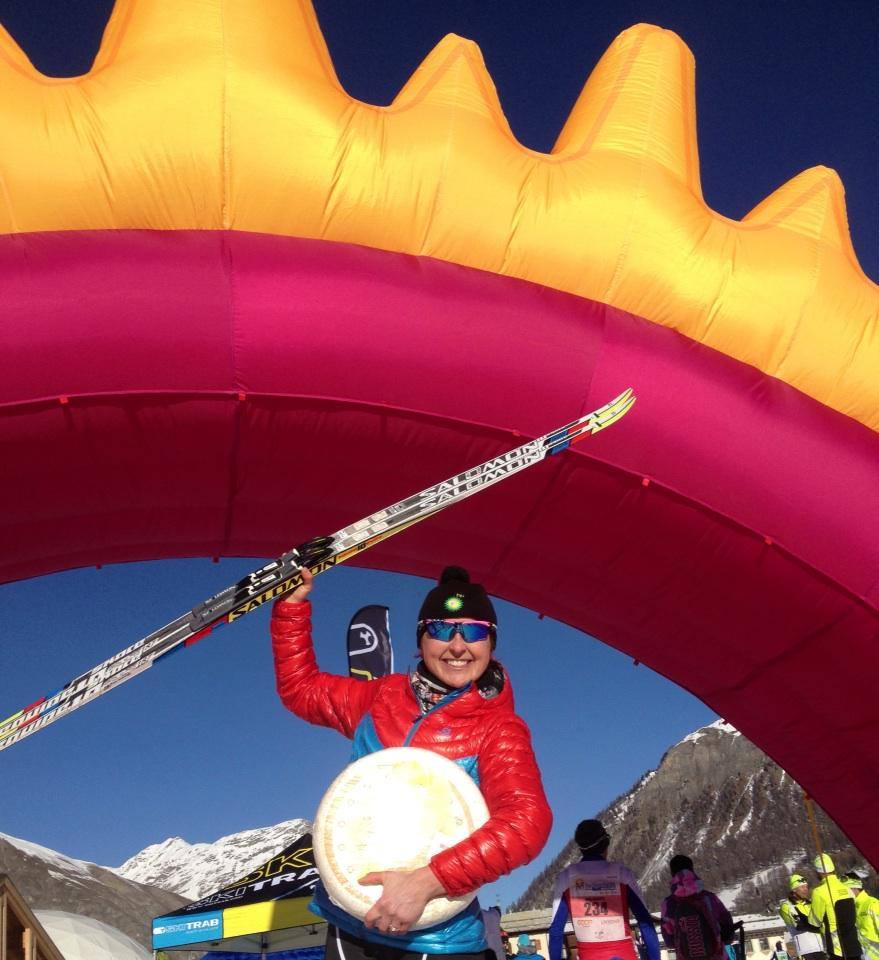
    La Sgambeda runner-up Holly Brooks with her skis and the 15-pound wheel of cheese, which she received as a prize on Friday in Livigno, Italy. (Photo: Holly Brooks/Facebook)
    La Sgambeda runner-up Holly Brooks with her skis and the 15-pound wheel of cheese, which she received as a prize on Friday in Livigno, Italy. (Photo: Holly Brooks/Facebook)

    For Brooks, that mysterious-and-nerve-racking first race was all about chasing Finland’s Riitta-Liisa Roponen, the defending FIS Marathon Cup champion who had one the two previous La Sgambedas.

    “Unfortunately I was never in contact with Riita Lisa,” Brooks explained. “She had a faster start than me and she got lost in the crowd of men. There were tons of people between the two of us and I couldn’t weave through to catch her.

    “Many of these marathons don’t have women’s waves so a big part of the race is eluding the other women,” she added. “I would prefer our own wave but in the meantime I will have to work on my mixed-gender racing tactics.  Once gaps open up in the big groups, it’s impossible to ‘ski up’ without a good draft.”

    Brooks managed to ski up to second-best for second place overall. While she was 3 minutes, 12.1 seconds behind Roponen (who won in 1:40.42.8), Brooks outlasted Ekaterina Rudakova of Belarus by 8 seconds for silver and a 15-pound cheese wheel.

    Three-and-a-half seconds later, Olga Mikhailova of the Russian marathon team finished fourth (+3:23.6) and France’s Aurelie Dabyduk took fifth (+3:39.4).

    “Whenever you land on the podium it’s a good day,” Brooks wrote. “After a couple years of racing World Cup you forget what it feels like and honestly, it’s really fun.”

     “After a couple years of racing World Cup you forget what it feels like and honestly, it’s really fun.” — Holly Brooks, after placing 2nd in first marathon of season at La Sgambeda on Friday

    Benoit Chauvet claimed the La Sgambeda men’s crown in 1:32.11.4, just four-hundredths of a second ahead of fellow Frenchman Robin Duvillard and the Czech Republic’s Petr Novak, who tied for second.

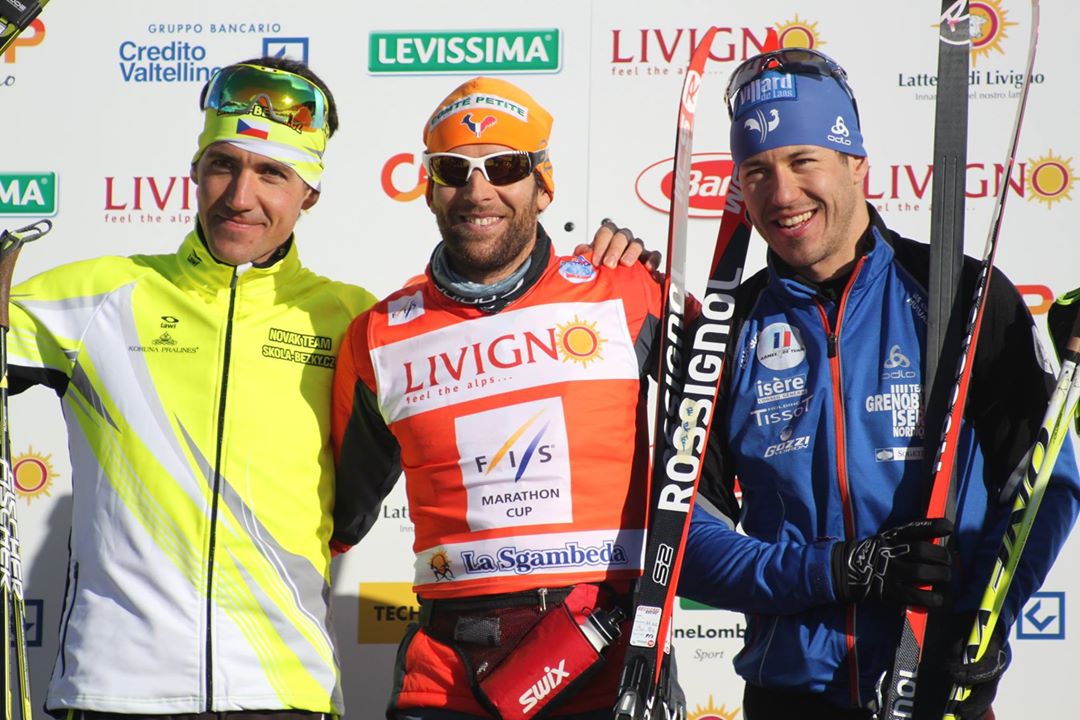
    The La Sgambeda men's podium on Friday in Livigno, Italy: with French winner Benoit Chauvet (c), Petr Novak (l) of the Czech Republic and France's Robin Duvillard, who tied for second. (Photo: Worldloppet/FIS Marathon Cup Facebook)
    The La Sgambeda men’s podium on Friday in Livigno, Italy: with French winner Benoit Chauvet (c), Petr Novak (l) of the Czech Republic and France’s Robin Duvillard, who tied for second. (Photo: Worldloppet/FIS Marathon Cup Facebook)

    Switzerland’s Toni Livers was another 0.6 seconds back in fourth, Sergei Dolidovich of Belarus was fifth (+1.9), and the top-11 men all finished within 8.8 seconds of one another.

    “The conditions were AMAZING,” Brooks explained. “Livigno is picturesque – perfect!  Pure sun, gorgeous mountains, really perfect.  My skis were awesome too… but it was a stressful situation leading up to having great skis.”

    The night before the race at the captain’s meeting, she still wasn’t sure who would wax her skis. Fortunately, she found some “local Italians” who were up for the job — a man named Enzo, who spent 16 years on Italy’s national-ski team, was one of them, she explained. She repaid him with an iPhone.

    Brooks, who switched from the World Cup circuit to the Worldloppet and FIS Marathon Cup this season, is one of the racers receiving a lot of international attention on the eve of the Marathon Cup opening.

    “It will be interesting to see how Holly Brooks, who is fully concentrating on the long-distance scene this season, will do,” a FIS and Worldloppet press release stated before the first race of the season.

    Marathon weekend

    There are three races this weekend, including the 15 k ProTeam Tempo classic “prologue” on Saturday and 35 k classic on Sunday, both of which are part of the Swix Ski Classics.

    Brooks is competing in all three, after recently signing with a Pro Swix Ski Classics team. “But more on that later,” she wrote. Before she knew she’d race the prologue, she was aware two marathons in one weekend was ambitious.

    “Sunday’s race course is somewhat of a double-pole derby, and honestly, I’m looking at it as more of a training race for me,” she explained. “Many of those girls train specifically for double-pole, which I do not do.”

    While Brooks is viewed as a serious contender for the long-distance events, she’ll have plenty of experienced competition in her quest for an overall podium at the end of the season.

    Italy’s Antonella Confortola, who has competed on the FIS Marathon Cup for years, is no doubt hungry for the overall title and reported to be in killer shape again.

    Veteran favorite Seraina Boner of Switzerland will definitely be a very strong contestant for the overall title, but how she does could depend on how many races she enters. The same goes for Roponen, last year’s overall FIS Marathon Cup winner, according to FIS.

    Men’s outlook

    On the men’s side, last year’s overall winner Tom Reichelt of Germany is not racing after his team dissolved in September. Chauvet, who won Friday’s La Sgambeda and was second overall last year, is eager to make it to the top of the overall podium this season. So is Novak, who was second at last year’s La Sgembeda and second again on Friday.

    Aliaksei Ivanou of Belarus, who was third last year, Italy’s Sergio Bonaldi and Simone Paredi, as well as France’s Christophe Perrillat Colomb and Adrien Mougel also raced Friday and all of them finished in the top 15 (with the exception of Paredi in 25th).

    Including the World Cup racers

    Scheduling La Sgambeda for the day before the World Cup in Davos, Switzerland, on Saturday and Sunday allows World Cup racers to race La Sgambeda, as Davos is fewer than 70 kilometers from Livigno.

    Accordingly, several World Cup skiers entered the race this year. France’s Jean Marc Gaillard followed teammate Duvillard (who was second) in sixth. The two teamed up for bronze from last year’s sprint relay at the Sochi Olympics. Livers is another World Cup regular, along with Dolidovitch, Spain’s Imanol Rojo, Denmark’s Martin Moeller, and Estonia’s Madis Vaikmaa.

    Norway’s Peter Northug won the race last year but did not compete on Friday — no Norwegians did.

    Tough but scenic course

    The 42 k marathon consisted of two laps on a 21 k course that runs along the Spöl river and winds through all the villages along it: Florin, Pont Lonc, Limina, Tresenda, and runs as far as Campaciol. From the Hotel Forcola at 12.5 k, the course turns back toward the cross-country stadium, which marks the start, finish and halfway point.

    Livigno, normally known as having snow from early November on, had to work hard last year to put the 21 k course together as snow was hard to come by. However, this year, conditions were notably better.

    “Livingo is amazing. More North Americans should come here!” Brooks summed up.

    Next FIS Marathon Cup: The Dolomitenlauf 42 k freestyle on Jan. 18 in Austria

    In total more than 220,000 Euros ($274,000 dollars) will be distributed as prize money this season. Each race offers a minimum of 21,000 Euros ($26,150 dollars) worth of prize money per race. Additional prize money of over 31,000 Euros ($38,600 dollars) will be handed out to the top six men and women in the overall FIS Marathon Cup at the end of the season.

    Like every year, the FIS Marathon Cup kicked off with La Sgambeda in the Italian valley of Livigno.

    This season, the FIS Marathon Cup consists of nine races total, with a new final in Russia: the Ugra Ski Marathon 50 k skate in Khanty-Mansiysk, Siberia, caps the season in mid-April. Khanty-Mansiysk is best known for its biathlon World Cups and World Championships.

    Friday’s La Sgambeda results: women | men

    FIS Marathon Cup 2014/2015 calendar

    1. La Sgambeda (Italy)
    Friday, Dec. 12
    42 k freestyle

    2. Dolomitenlauf (Austria)
    Jan. 18, 2015
    60 k freestyle

    3. Marcialonga (Cavalese/Val di Fiemme, Italy)
    Jan. 25
    70 k classic

    4. La Transjurassienne (France)
    Feb. 7
    56 k classic

    5. Tartu Marathon (Estonia)
    Feb. 15
    63 k classic

    6. American Birkebeiner (Cable/Hayward, USA) 
    Feb. 21
    50 k freestyle

    7. Bieg Piastow (Poland) 
    Feb. 28
    50 k classic

    8. Engadin Ski-marathon (Switzerland)
    March 8
    42 k freestyle

    9. Ugra Ski Marathon (Russia)
    April 11
    50 k freestyle