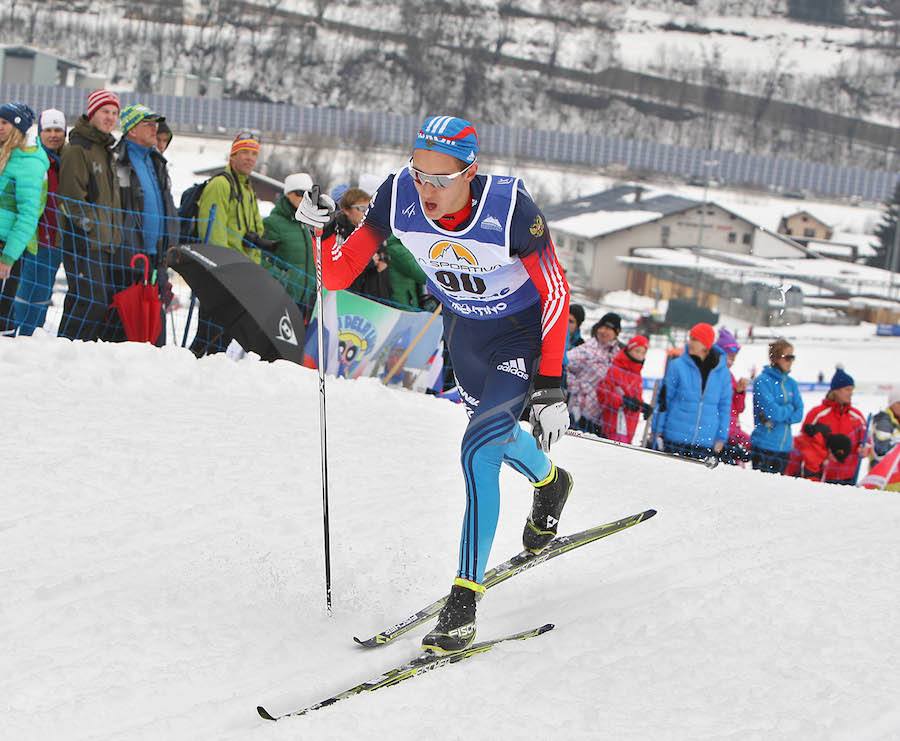
Tag: Petter Reistad

  • Saturday Rundown: NCAA Champs; Holmenkollen 50 k; Kontiolahti Relays

    Saturday Rundown: NCAA Champs; Holmenkollen 50 k; Kontiolahti Relays

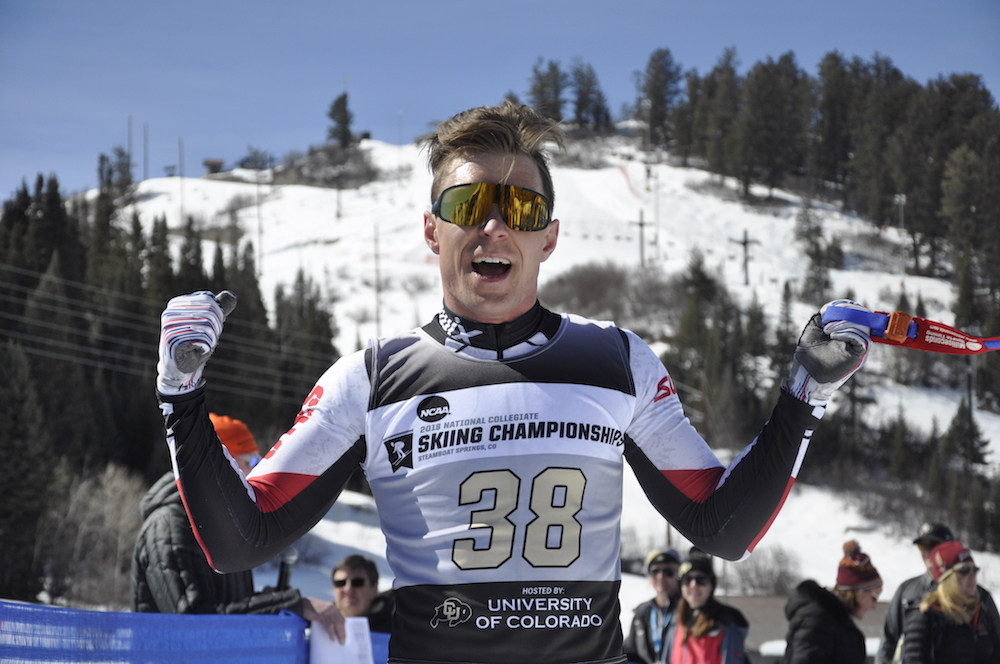
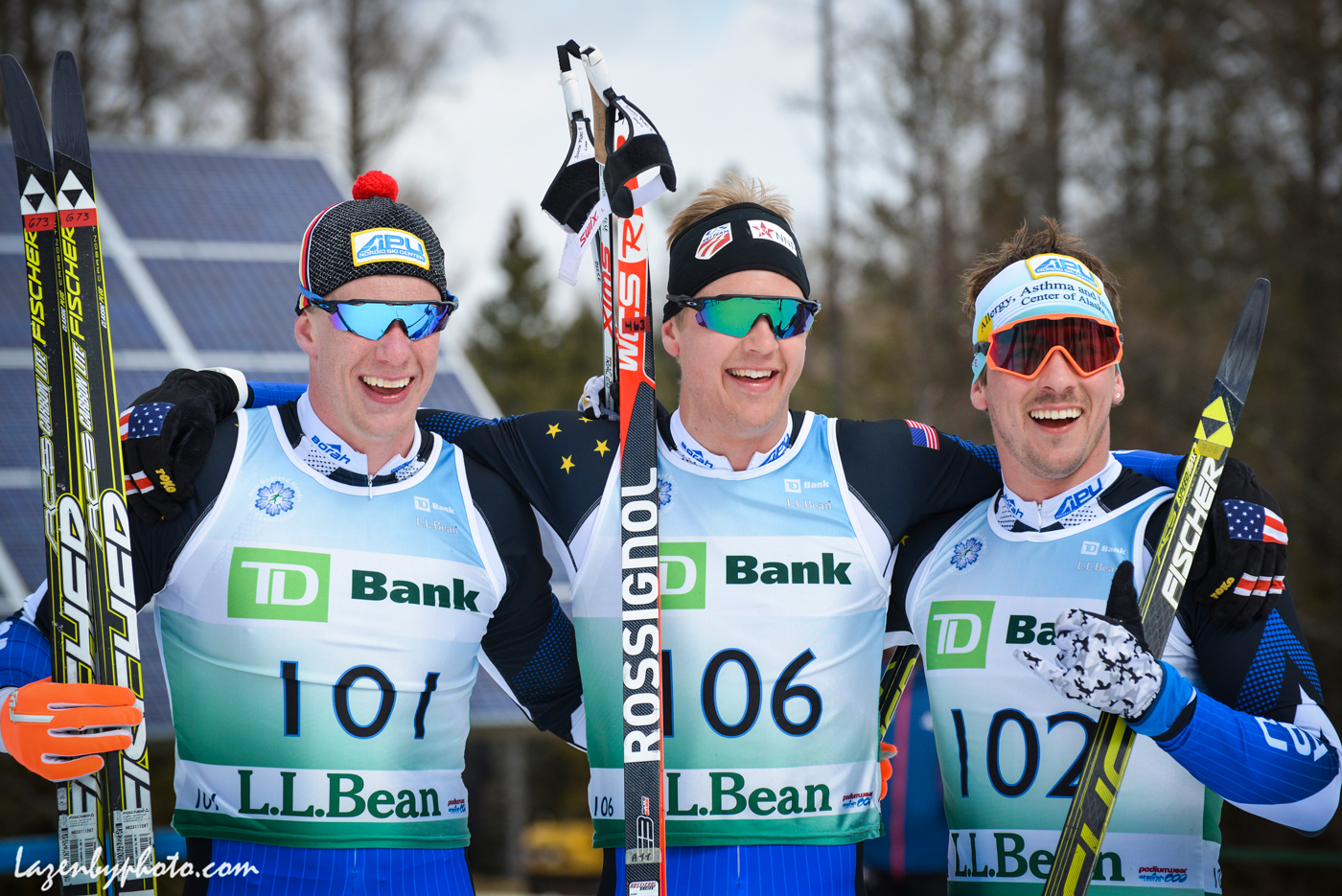
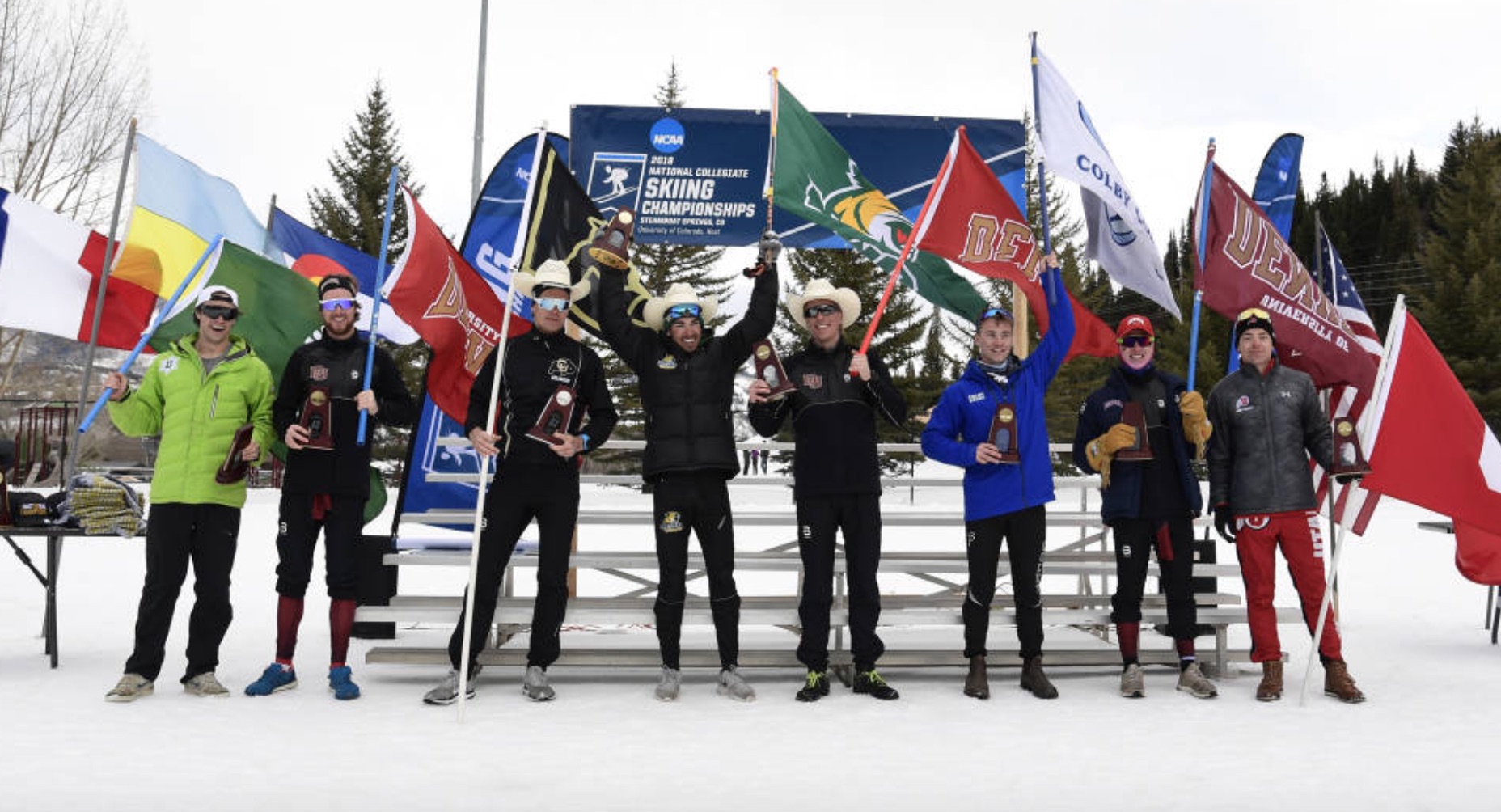
    The top finishers in the men’s 20 k freestyle mass start at 2018 NCAA Skiing Championships in Steamboat Springs, Colorado, with Northern Michigan University’s Ian Torchia (c) in first. (Photo: Dartmouth Sports/Clarkson Creative)

    NCAA Skiing Championships (Steamboat Springs, Colorado): 15/20 k freestyle mass starts

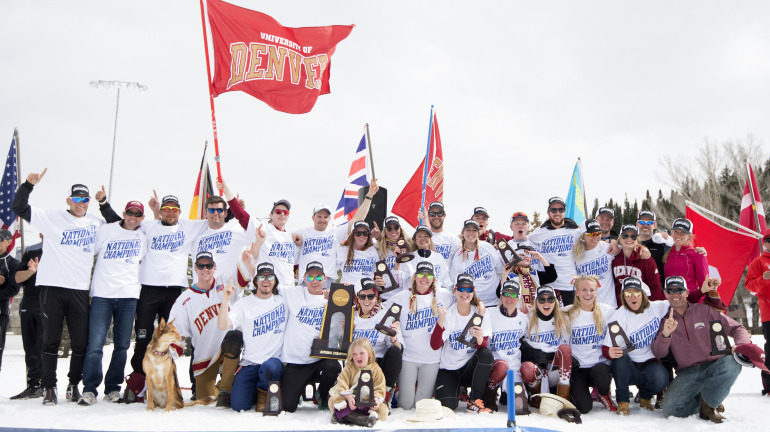
    On the fourth and final day of NCAA Skiing Championships at Howelsen Hill in Steamboat Springs, Katharine Ogden skied to her second-straight national title, Ian Torchia became an NCAA champion and the University of Denver (DU) won its 24th NCAA National Championship.
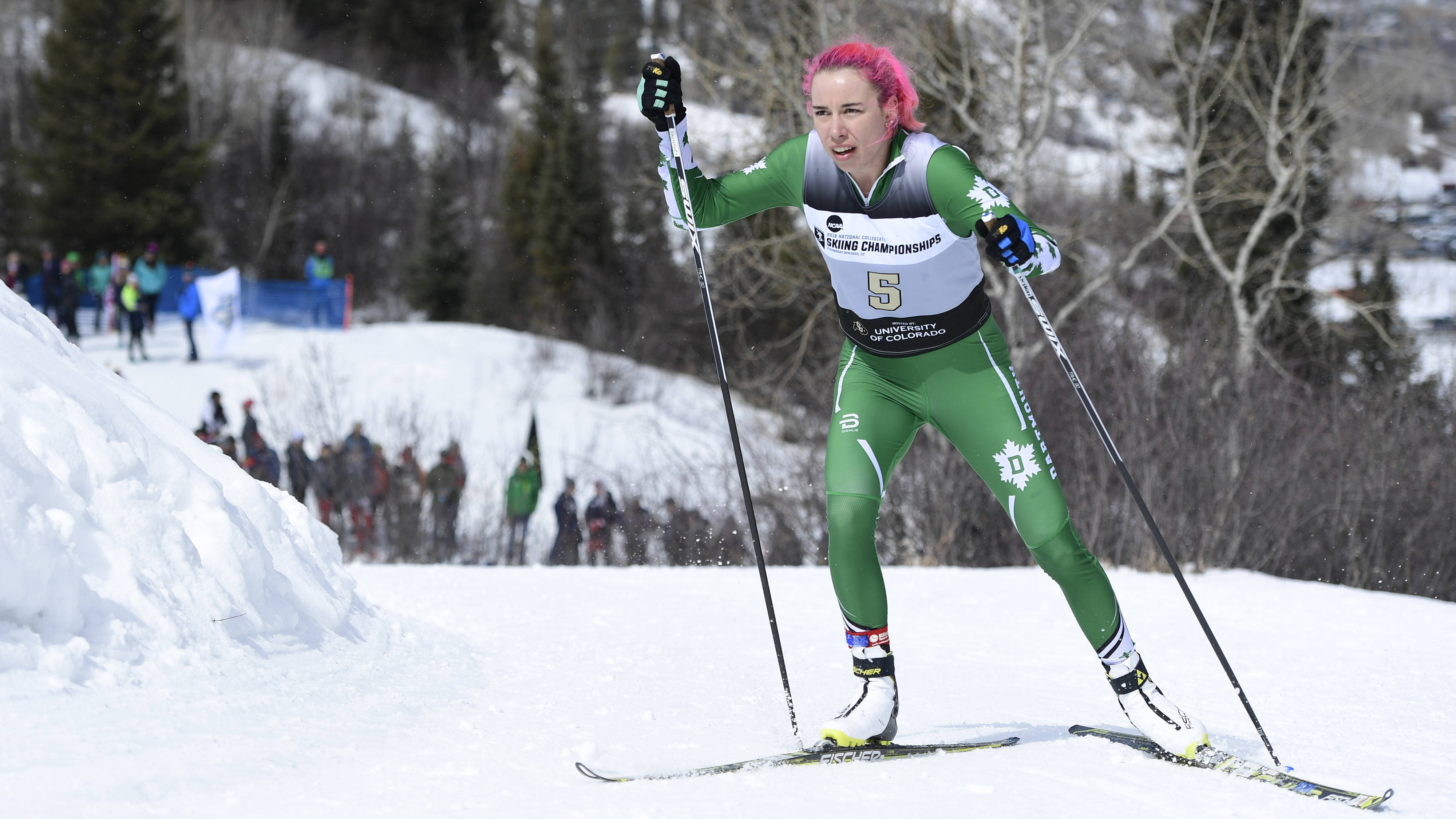
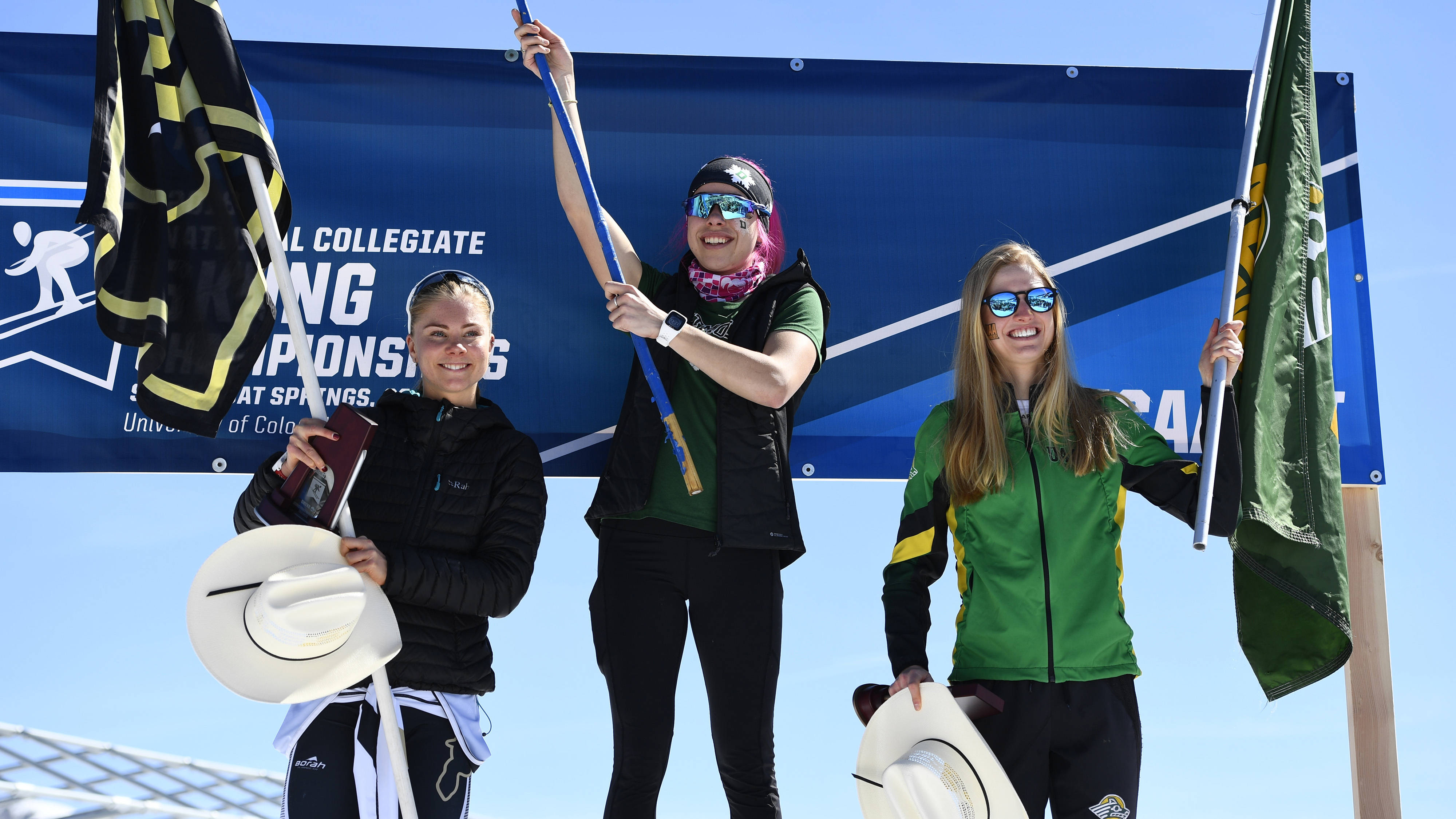
    Dartmouth freshman Katharine Ogden racing to her second-straight victory of the 2018 NCAA Skiing Championships in Steamboat Springs, Colorado. She won Saturday’s 15 k freestyle mass start by more than 38 seconds. (Photo: Dartmouth Sports/Clarkson Creative)

    Ogden, a Dartmouth College freshman, raced to a 38.4-second victory in the women’s 15-kilometer mass start, finishing in 43:22.0 minutes for her second win in as many races at 2018 NCAA Championships. She won the 5 k classic on Thursday and with her win on Saturday, she became the first Dartmouth skier in 56 years to win two national titles in the same year, according to a Dartmouth press release.

    On the second of three laps, Ogden broke away early with close to 10 k to go. According to the press release, she had a “quick fall” near the end of the second lap, but that didn’t derail her as she had time to grab sunglasses from Dartmouth men’s coach Brayton Osgood and a Dartmouth Lone Pine flag before the finish.

    At this year’s championships, Ogden’s two titles are accompanied by victories from Dartmouth men’s alpine skiers Brian McLaughlin (who won the giant slalom) and Tanguy Nef (who won the slalom). This marked only the second time that Dartmouth’s Big Green won four individual titles in a single NCAA Championships; that also occurred 61 years ago.

    “Katharine absolutely wanted this one, and she really likes to win,” Dartmouth Director of Skiing and Women’s Nordic Head Coach Cami Thompson Graves said in the press release. “She wasn’t about to let a fall slow her down, she has such a great competitive fire. But she also showed her playful side grabbing Brayton’s glasses and smiling all the way to the finish line!”

    Hailey Swirbul of the University of Alaska Anchorage placed second and Linn Eriksen (DU) reached the podium in third (+46.3). Denver had three in the top 10 with Jasmi Joensuu in ninth and Taeler McCrerey in 10th. Also landing in the top 10 for All-American honors were Guro Jordheim of the University of Utah in fourth, Emma Tarbath (Montana State University) in fifth, Petra Hyncicova of the University of Colorado Boulder (CU) in sixth, Christina Rolandsen (CU) in seventh, and Lauren Jortberg (Dartmouth) in eighth.

    Torchia, an Northern Michigan University (NMU) junior and U.S. Ski Team Development Team member, became the seventh NCAA champion in NMU Wildcats nordic skiing history, according to an NMU press release. Fredrick Schwenke was the Wildcats’ last nordic champion; he won the 2015 NCAA Championships 20 k classic.

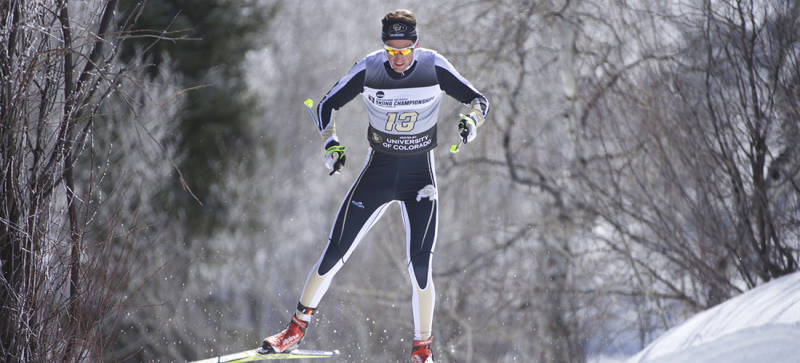
    Torchia drew bib 1 for Saturday’s 20 k freestyle mass start and crossed the finish line first in 54:21.0, just 2 seconds ahead of CU’s Alvar Alev. Eivind Kvaale (DU) finished just four seconds back in third, and Denver had three in the top seven with Dag Frode Trollebø in fourth and Lars Hannah in seventh. Darmouth’s Cal Deline placed fifth, Zane Fields of Colby College finished sixth, and the 20 k freestyle’s 2017 NCAA champion Martin Bergström (Utah), who also won Thursday’s 10 k classic, placed eighth.  CU’s Petter Reistad and Sondre Bollum finished ninth and 10th, respectively.

    In the team standings, Denver beat Colorado by 41 points for the overall win with a total of 604 points between the nordic and alpine events at this year’s championships. Dartmouth placed third, 114.5 points behind Colorado, and Utah was another 63 points back in fourth.

    According to a DU press release, Denver has won at least one national championship in each of the last five athletic seasons (skiing: 2013/14, 2015/16, 2017/18; hockey: 2016-17; men’s lacrosse 2014/15), joining only Stanford on the list of schools that have done so in the last five seasons. (Oregon, West Virginia, Penn State, Oklahoma, Ohio State and Florida could potentially join that list later this year.)

    “It feels incredible,” said DU head coach Andy LeRoy said in the press release. “I am so happy for all of our athletes, they’ve been training all week and all season and to do it in Steamboat in front of our crowd is special.”

    Results: Women | Men| Team 

    Photos

    ***

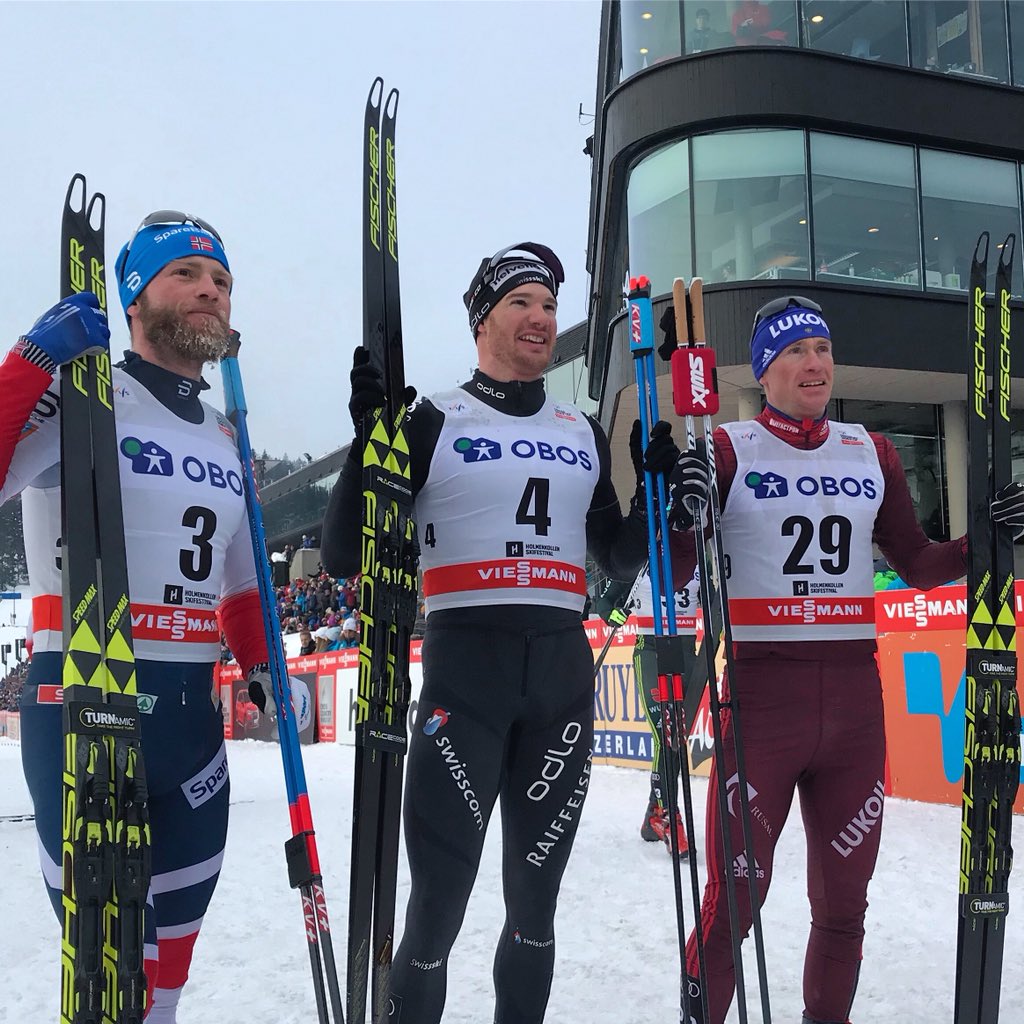
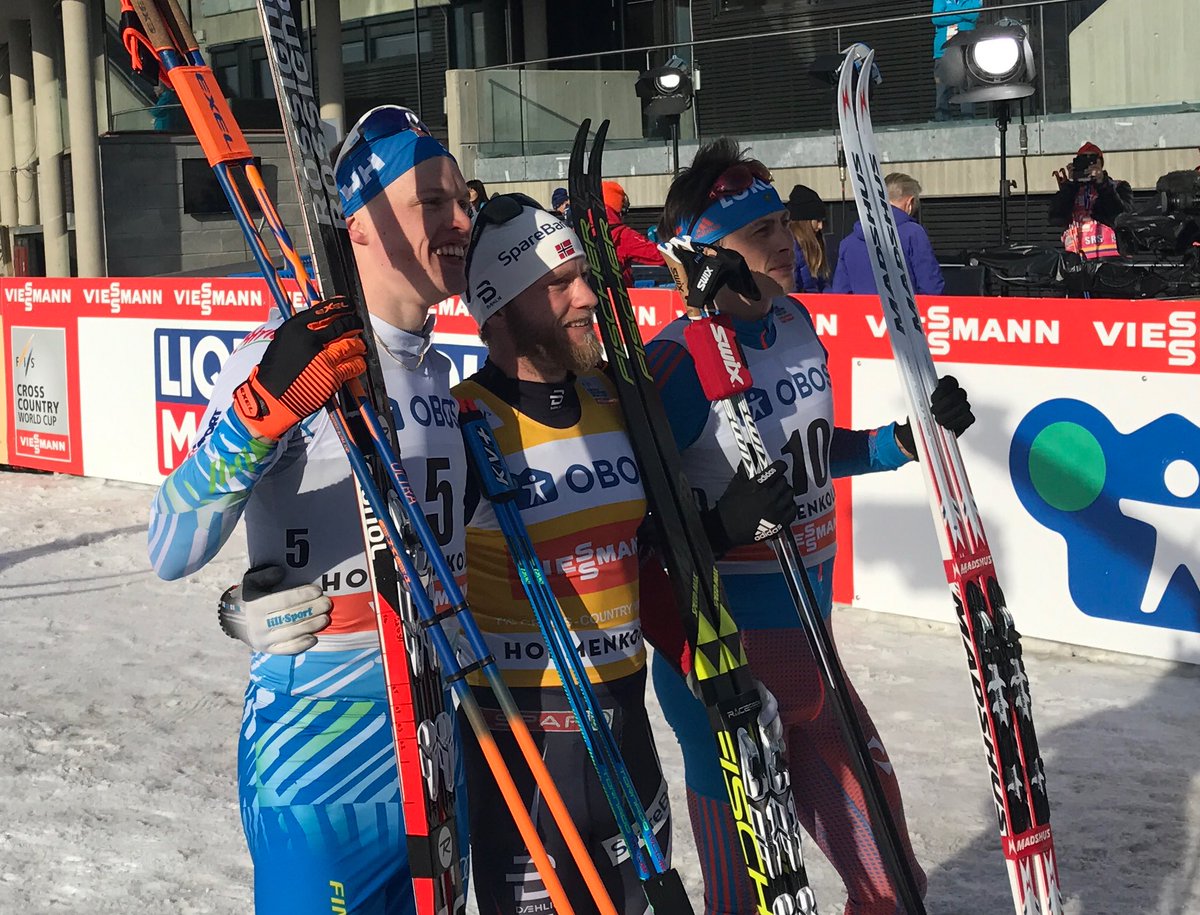
    The Holmenkollen men’s 50 k freestyle mass start podium on Saturday at the World Cup in Oslo, Norway, with Switzerland’s Dario Cologna (c) in first, Norway’s Martin Johnsrud Sundby (l) in second, and Russia’s Maxim Vylegzhanin (r) in third. (Photo: FIS Cross Country/Twitter)

    FIS Cross Country World Cup (Oslo, Norway): Men’s 50 k freestyle mass start

    Full report

    A four-time Olympic champion, Dario Cologna of Switzerland won his first 50-kilometer World Cup race on Saturday, topping the podium in the famous Holmenkollen 50 k freestyle mass start after outlunging Norway’s Martin Johnsrud Sundby (who won the event last year) for the win in 2:01:48.1. Sundby finished one-hundredth of a second behind for second place, ahead of Russia’s Maxim Vylegzhanin, who was 1.1 seconds back in third in his first World Cup race since November of last year.
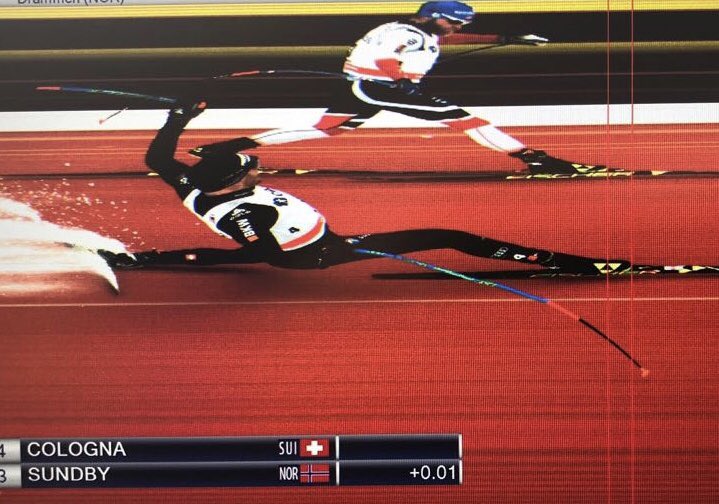
    The photo finish for first between Switzerland’s Dario Cologna (near) and Norway’s Martin Johnsrud Sundby at the Holmenkollen 50 k freestyle mass start on Saturday in Oslo, Norway. Cologna got it by 0.01 seconds. (Photo: FIS Cross Country/Twitter)

    Norway’s Sjur Røthe came out on top in a race for fourth (+4.2), ahead of Russia’s Denis Spitsov in fifth (+4.4) and his Norwegian teammate Hans Christer Holund in sixth (+4.5). Great Britain’s Andrew Musgrave followed in seventh (+15.1), Germany’s Florian Notz placed eighth (+25.9) and Canada’s Alex Harvey finished ninth (+32.4), ahead of France’s Robin Duvillard in 10th (+33.5).

    Scott Patterson led the U.S. in 16th (+56.3) coming off an 11th place in the 50 k classic mass start at last month’s Olympics, and Canada’s Devon Kershaw finished in the points in 28th (+3:43.6). Just outside the top 30, Canada’s Graeme Killick finished 34th (+4:55.1).

    Also for the U.S, David Norris placed 38th (+6:19.7), Paddy Caldwell was 46th (+8:12.3), Noah Hoffman 49th (+10:27.9), Kevin Bolger 52nd (+12:44.2), and Simi Hamilton did not finish.

    Canada’s fourth man in the race, Andy Shields finished 47th (+8:13.6).

    Results

    ***

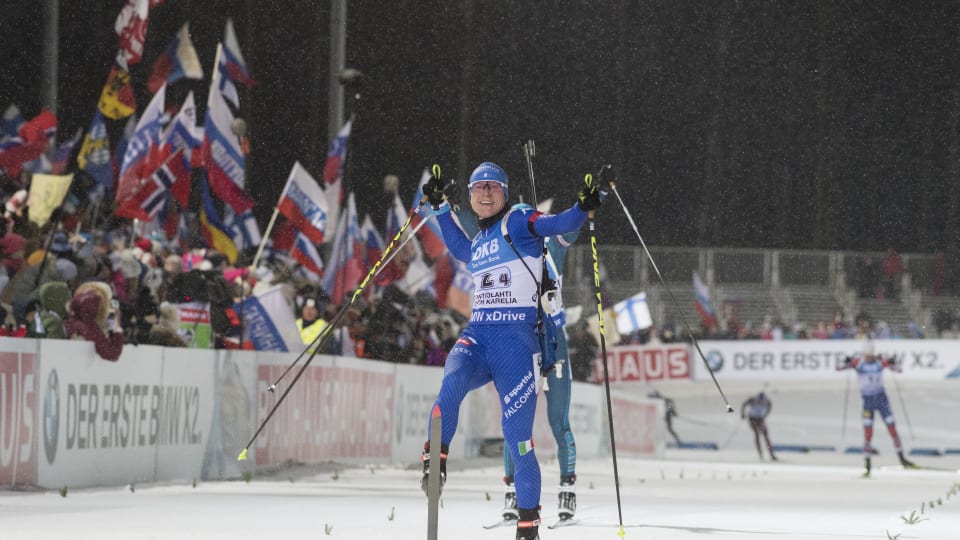
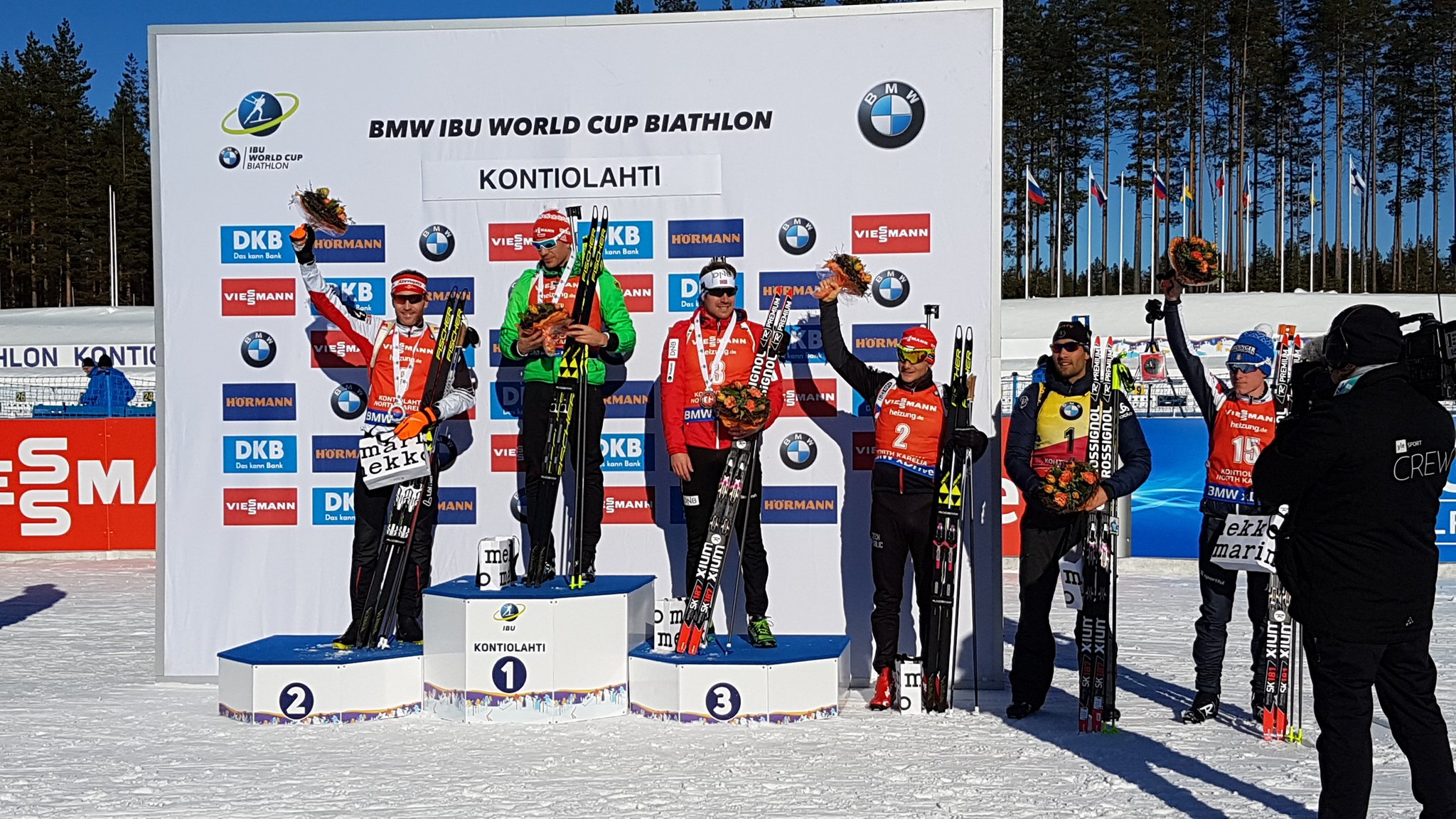
    Italy’s Lukas Hofer celebrates his team’s win in Saturday’s mixed relay at the IBU World Cup in Kontiolahti, Finland. (Photo: IBU/Biathlonworld)

    IBU World Cup (Kontiolahti, Finland): Single mixed relay & mixed relay

    (Note: This rundown has been updated to include comments from Christian Gow and Sean Doherty.)

    In the last single mixed relay and mixed relay of the International Biathlon Union (IBU) World Cup season, France and Italy came out on top, with France winning the two-person single mixed relay and Italy taking first in the coed mixed relay.
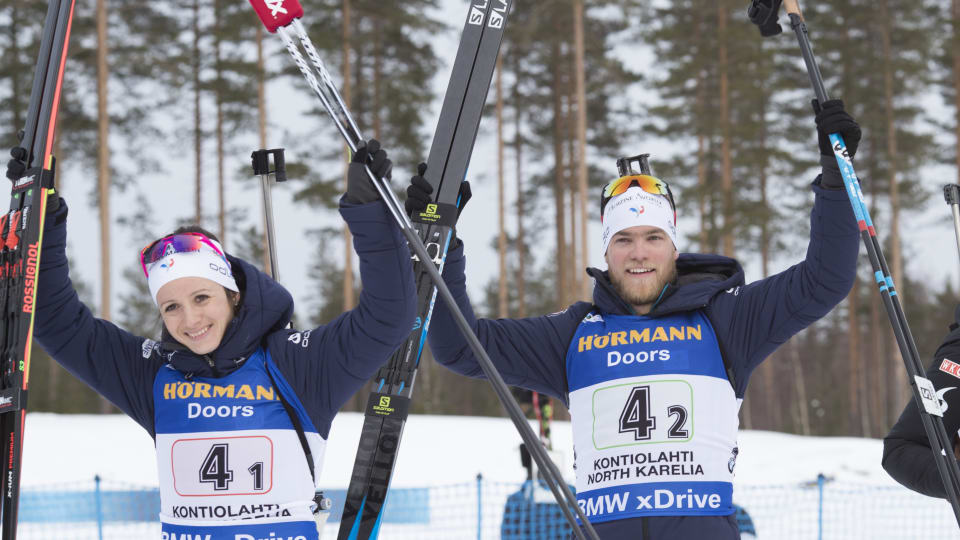
    France’s Anaïs Chevalier and Antonin Guigonnat after winning Saturday’s single mixed relay at the IBU World Cup in Kontiolahti, Finland. (Photo: IBU/Biathlonworld)

    France’s Anaïs Chevalier and Antonin Guigonnat combined for zero penalties and six spares to finish first in the single mixed relay in 33:29.1 minutes. Guigonnat as the team’s anchor secured the win by just 2.4 seconds over Austria’s Julian Eberhard while Norway’s Johannes Thingnes Bø finished 4.4 seconds back for third.

    Chevalier put France in fifth after the first leg, 15.5 seconds behind Ukraine’s Iryna Varvynets in first. Guigonnat used just one spare on his first leg to move them into fourth, 9.2 seconds back while Norway led at the second exchange. On Chevalier’s second leg, she shot clean in both stages to lead through the final exchange, with Ukraine skiing just 6.2 seconds back in second.

    On the final leg, Guigonnat used two spares and stayed out of the penalty lap, keeping the team in first through the finish. Eberhard skied the second-fastest course time on that leg to elevate Austria (with Lisa Theresa Hauser) from fourth at the tag to second place at the finish, and Bø skied all the way up from eighth to third place for Norway (with Marte Olsbu) with the fastest course time.

    Ukraine’s Artem Tyschenko used just one spare but slipped to fourth with the 11th-ranked course time on that leg, as he finished 10.8 seconds behind Norway.

    Behind Russia in fifth and Italy in sixth, Canada placed seventh (+23.8) with Rosanna Crawford and Christian Gow. The duo combined for zero penalties and six spares, and put themselves in third place early in the race. Crawford skied them into third on the first leg, using just two spares and tagging Gow 7.4 seconds out of first.

    Gow went on to take the lead after cleaning prone without any spares, and he cleaned standing as well but slipped back to third while Bø took the lead. Gow tagged Crawford in third, 8.9 seconds behind Norway in first.

    “I didn’t think too much about being tagged in third,” Gow recalled in an email to FasterSkier. “It was exciting for sure, but I let it fade to the background so that I could focus on my job both on the track and in the range.  It was great to leave prone in first place! It was also surprising, but it was a good place to be in.

    “My skiing was ok today,” he continued. “It is a really challenging and demanding race format that we don’t get a lot of practice with.  I was sick after the Olympic Games and only finally coming around the past couple days.  The Sprint race was horrendous for me, so today was much better than that. In the range I just focussed on myself and trusted my shooting.  I tried my best not to get caught up in the race going on around me and it worked to my benefit.”

    Crawford then slipped to seventh and 21 seconds back with three prone spares, but avoided the penalty lap, and Gow held onto seventh through the finish, using just one spare and skiing the eighth-fastest course time on that leg.

    “We are both happy with this result,” Gow wrote. “I think that we are both looking at the 23 second gap to first and thinking that if things had worked out just a bit better we could be there.  It can be both exciting and frustrating to be that close to the podium.  We know we can do it, it’s just a matter of putting it together on the right day. We are happy with 7th, but hungry for more.”

    Susan Dunklee and Lowell Bailey finished 14th for the U.S., 1:13.0 out of first with one penalty and 14 spares. The penalty came on Dunklee’s first leg during her standing stage, after she had cleaned prone without any spares. She tagged Bailey in 14th and he brought them up to 11th, using three spares on that leg, then Dunklee came through the final exchange in 13th after using four spares to clean. Bailey lost one place on the final leg, using four spares but staying out of the penalty lap.

    Twenty-six teams competed in the single mixed relay, compared to 23 in the mixed relay that followed.
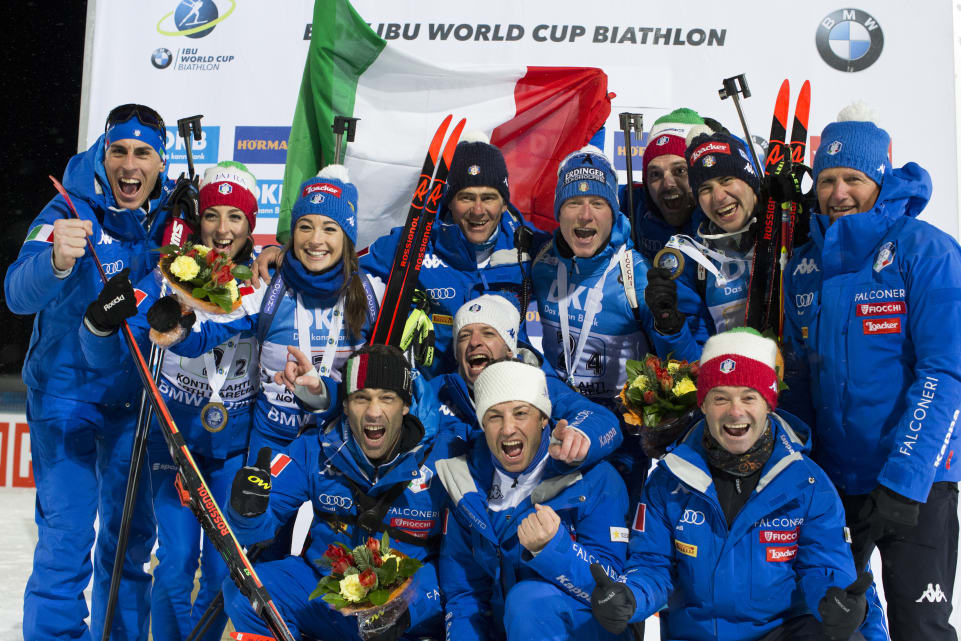
    Team Italia celebrates its win in the IBU World Cup mixed relay on Saturday in Kontiolahti, Finland, with its relay members Dorothea Wierer, Lisa Vittozzi, Dominik Windisch, and Lukas Hofer. (Photo: IBU/Biathlonworld)

    In Saturday’s 2 x 6 + 2 x 7.5 k mixed relay, Italy nabbed a 1.5-second victory over Ukraine in 1:15:08.3. Dorothea Wierer, Lisa Vittozzi, Dominik Windisch, and Lukas Hofer — the same Italian team that took bronze in the mixed relay at last month’s Olympics, although in a different order — combined for the win with one penalty and 13 spares.

    Ukraine, with Anastasiya Merkushyna, Vita Semerenko, Artem Pryma, and Dmytro Pidruchnyi, had zero penalties and just three spares throughout the whole race. For the second-straight relay on Saturday, Norway placed third (+9.1) with Synnøve Solemdal, Tiril Eckhoff, Henrik L’Abée-Lund, and Tarjei Bø totaling zero penalties and nine spares.

    Italy’s lone penalty came in Vittozzi’s second leg, but it didn’t derail the team as it improved from sixth to fifth with Vittozzi, who skied the third-fastest course time on that leg. She tagged Windisch 6.8 seconds out of first, and Windisch, who had anchored the team in the Olympics, took the lead by the final exchange after using two spares to clean. Hofer left the exchange just 3.3 seconds ahead of Norway’s Bø but used just one spare and skied the second-fastest anchor leg to finish first, beating his rivals up Kontiolahti’s infamous climb known as “The Wall”. Ukraine’s Pidruchnyi also shot clean with a single spare and clocked the fastest anchor leg to move his team from fourth to second place. Bø lost one place and finished third after using one spare as well and skiing the third-fastest anchor leg.

    Russia followed in fourth, France fifth, Sweden sixth, Germany seventh, Austria eighth, and the U.S. ninth (+2:48.4). The U.S. team, with Clare Egan, Joanne Reid, Tim Burke, and Sean Doherty, had one penalty and 11 spares. Egan cleaned her first prone but had to ski a penalty lap after her standing stage, tagging Reid in 17th, 58.7 seconds out of first.

    Reid used three spares on the second leg and moved up to 13th by the second exchange, and Burke used three spares as well to pick off one more place and tag Doherty in 12th. Doherty skied the eighth-fastest anchor leg and used two spares to clean to put the team in ninth at the finish.

    “I don’t consider two spares to be anything special, but today it was enough to make up some ground,” Doherty wrote in an email to FasterSkier.”I felt strong skiing, more like myself which is fun even if it’s a little late in the season. We had very good skis which always helps. I have done quite a few laps on this course over the years so the lines and transitions are pretty refined, so that is where I made time on the course.

    “I am happy with my leg. I enjoyed my little battle for 9th,” he continued. “I can’t speak too much for the other members of the relay tonight but I think 9th is a solid effort.”

    Canada finished 17th (+4:34.9) with Emma Lunder, Julia Ransom, Scott Gow, and Brendan Green combining for one penalty and 13 spares. Lunder put them in 12th at the first exchange and Ransom skied up to 10th, but Scott Gow had a penalty on his standing stage to drop to 16th. Green lost one more place on the last leg despite only requiring two spares.

    Results: Single mixed relayMixed relay

  • Thursday Rundown: Ogden, Bergström NCAA Champs; Kontiolahti Men’s Sprint

    Thursday Rundown: Ogden, Bergström NCAA Champs; Kontiolahti Men’s Sprint

    The women’s 5 k classic podium at 2018 NCAA Skiing Championships in Steamboat Springs, Colorado, with Dartmouth’s Katharine Ogden (c) in first, Colorado’s Anne Siri Lervik (l) in second, and University of Alaska Anchorage’s Hailey Swirbul (r) in third. (Photo: Clarkson Creative/DartmouthSports.com)

    On the first day of NCAA Skiing Championships at Howelsen Hill in Steamboat Springs, Dartmouth College freshman Katharine Ogden and University of Utah senior Martin Bergström were crowned champions in the women’s 5-kilometer and men’s 10 k classic races, respectively.

    Ogden won the women’s individual-start race by a whopping 46.9 seconds, finishing in 14:47.2 minutes to become Dartmouth’s first female cross-country skier to win an NCAA title, according to a Dartmouth press release. Anne Siri Lervik of the University of Colorado Boulder (CU) placed second and Hailey Swirbul, of the University of Alaska Anchorage (UAA) and a two-time individual medalist at this year’s Junior World Championships, placed third (+51.0).

    “There isn’t much more to say about Katharine’s performance today other than she absolutely crushed it!” said Dartmouth Director of Skiing and Women’s Nordic Head Coach Cami Thompson Graves, according to the Dartmouth press release. “It was such a treat to watch her perform so well.”

    Martin Bergström (University of Utah) after winning his third-straight NCAA Skiing Championships title with a win in the 10 k classic on Thursday in Steamboat Springs, Colorado. (Photo: University of Utah)

    CU, this year’s NCAA Championships host, had three women in the top 11 with last year’s classic champion Petra Hyncicova placing sixth and Christina Rolandsen finishing 11th.

    The CU Buffs took the lead in the team standings on Thursday by nine points over the University of Denver (DU). Utah is currently 41 points back in third, Dartmouth moved up to fourth, and the University of Vermont, which led after Wednesday’s Day 1 alpine races, slipped to fifth.

    In the men’s race, Bergström, who won both races at last year’s NCAA Championships, posted an 8.5-second victory over CU’s Petter Reistad with a winning time of 27:37.1. Dag Frode Trollebø of DU placed third (+14.7) ahead of his DU teammate Eivind Kvaale in fourth (+38.9). On his 22nd birthday, Ian Torchia, of Northern Michigan University and the U.S. Ski Team Development Team, was the top American finisher in fifth (+46.2).

    Alpine slalom races will take place on Friday, while NCAA Championships will conclude with 15/20 k freestyle mass starts on Saturday.

    Results: WomenMen

    Team results (through Day 2 of 4)

    ***

    IBU World Cup (Kontiolahti, Finland): Men’s 10 k sprint

    First, a little geography lesson. Kontiolahti, Finland, is only about 100 kilometers from the Russian  border, so most of the International Biathlon Union (IBU) World Cup (and World Championships) events held there attract a mostly Russian crowd.

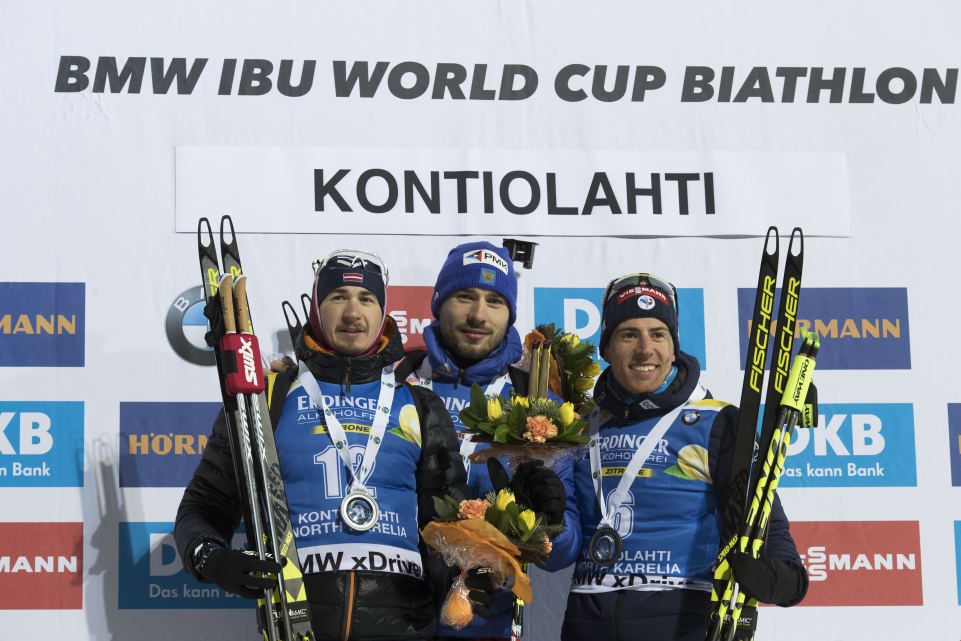
    The men’s 10 k sprint podium at the IBU World Cup in Kontiolahti, Finland, with Russia’s Anton Shipulin (c) in first, Latvia’s Andrejs Rastorgujevs (l) in second, France’s Quentin Fillon Maillet (r) in third. (Photo: IBU/Biathlonworld)

    And here’s a little more background: Russia’s Anton Shipulin showed up for Thursday’s IBU World Cup in Kontiolahti raring to go after having been barred from last month’s Winter Olympics in PyeongChang, South Korea.

    So Shipulin hadn’t raced since Jan. 21 in Antholz, Italy. The International Olympic Committee’s decision to ban him from the 2018 Games went public on Jan. 23.

    Back in action in Kontiolahti, in front of Russian fans, Shipulin delivered a 5.8-second win in the men’s 10-kilometer sprint, shooting clean and finishing in 23:51.6.  It was the 31 year old’s third non-relay podium of the season and first World Cup win of 2017/2018, and he did so on a relatively moderate evening by Kontiolahti standards (at -6 degrees Celsius, or 21 Fahrenheit) with a “stiff breeze” on the range, according to an IBU press release.

    “I felt very good on the tracks and shooting and today it was enough to win,” Shipulin told the IBU. “I am very happy about this … all of the Russian fans gave me a lot of support on the tracks.”

    Latvia’s Andrejs Rastorgujevs tied his career best in second place, after shooting a perfect 10-for-10 as well. He acknowledged his mom and women in general after the race.

    “This is very important for my team,” Rastorgujevs told the IBU. “I would also like to congratulate all of the ladies and especially my mom on International Women’s Day.”

    France’s Quentin Fillon Maillet also shot clean to place third (+17.3) for his third non-relay World Cup podium of the season.

    Fillon Maillet was one of the earliest starters in bib 6 yet held off Norway’s Johannes Thingnes Bø, the 30th starter, by 1.7 seconds for the last spot on the podium. Bø had been a race leader after cleaning prone but missed two standing targets (0+2) to slip out of contention and into fourth at the finish (+19.0).

    Germany’s Olympic sprint champion, Arnd Peiffer placed fifth (+27.4) with one miss (0+1), and France’s Simon Desthieux finished sixth (+28.3) with one prone penalty (1+0), and Germany took seventh and eighth with Erik Lesser (+30.6; one penalty) and Simon Schempp (+32.0; two penalties), respectively. Italy had two in the top 10 with Lukas Hofer in ninth (+35.2; one penalty) and Dominik Windisch in 10th (+38.3; one penalty).

    Lowell Bailey of the U.S. posted his best sprint result of the season in 16th (+48.4) after cleaning prone and missing one standing target (0+1). After starting 22nd, he recorded the 13th- and 14th-fastest overall shooting and range times, respectively, and 23rd-ranked course time.

    After the Olympics, Bailey returned home to Lake Placid, N.Y., for a brief training block. Despite a hefty amount of travel over the last week and a half, he explained in an email that he felt good in his first race back.

    “I felt better than I have for most of the season.  Sometimes that can happen.  I guess that’s the part of the unpredictability of biathlon,” Bailey wrote of Thursday’s race. “The conditions were great today; hard tracks and calm winds on the range.  There was a bit of wind, but compared to the three weeks in South Korea, it seemed pretty tame.

    “Shooting felt solid today,” he added. “That missed shot in standing was sooo close, but not close enough!”

    Overall, Bailey stated that he was happy with his performance and looking forward to the rest of the races in Kontiolahti.

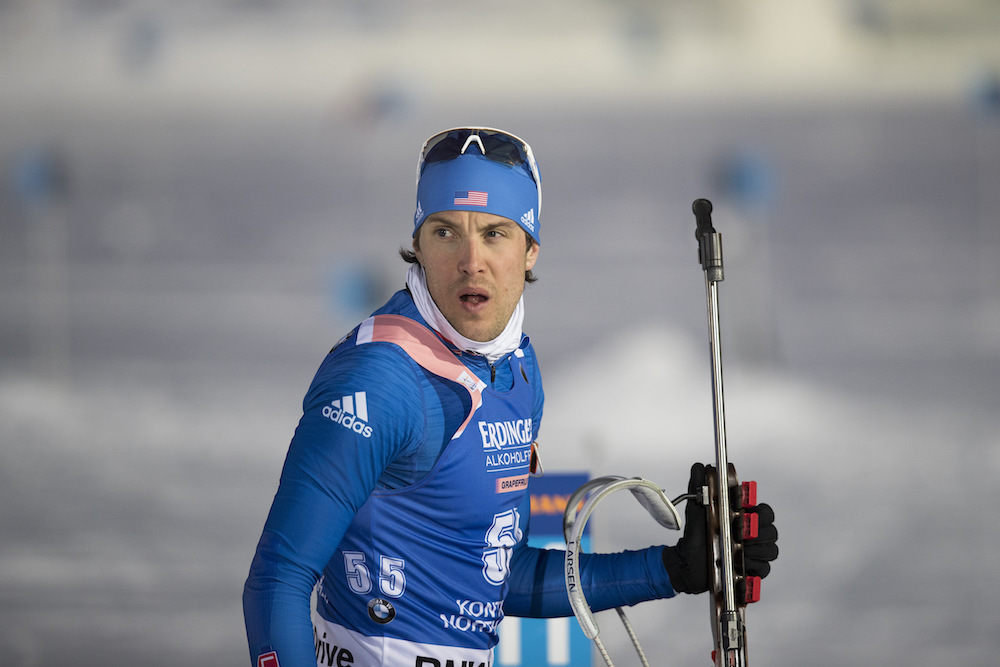
    Leif Nordgren (US Biathlon) raced to 17th for his best result in three seasons on Thursday in the men’s 10 k sprint at the IBU World Cup in Kontiolahti, Finland. (Photo: USBA/NordicFocus)

    His teammate Leif Nordgren finished just one place behind him in 17th (+49.9) for his best result in three years. A later starter in bib 55, Nordgren also cleaned prone and missed one standing (0+1) with the fifth-fastest shooting time and seventh-fastest range time. Overall, his course time ranked 28th out of 100 finishers. Nordgren’s individual career best on the World Cup is 16th in a sprint in February 2015. He has finished 17th three times; the last time was in a pursuit in March 2015.

    Brendan Green shot clean to lead the Canadian team in 34th (+1:29.5). American Sean Doherty followed in 35th (+1:29.7) with three penalties (1+2), and Tim Burke placed 38th (+1:36.1) for the U.S., also with three misses (1+2).

    In his World Cup debut, American Alex Howe finished 68th (+2:23.1) with two misses (1+1).

    Canada’s Christian Gow finished 79th (+2:47.4) with two penalties (1+1), and Scott Gow was 86th (+3:01.7) with three misses (1+2).

    This year’s Kontiolahti World Cup does not include a pursuit race. The women’s 7.5 k sprint is scheduled for Friday at 11:45 a.m. EST in Kontiolahti, and the single mixed relay and mixed relay will follow on Saturday. Racing in Kontiolahti will conclude with men’s and women’s mass starts.

    Results

  • NCAAs Photos: Men’s 20 k Skate Mass Start

    NCAAs Photos: Men’s 20 k Skate Mass Start

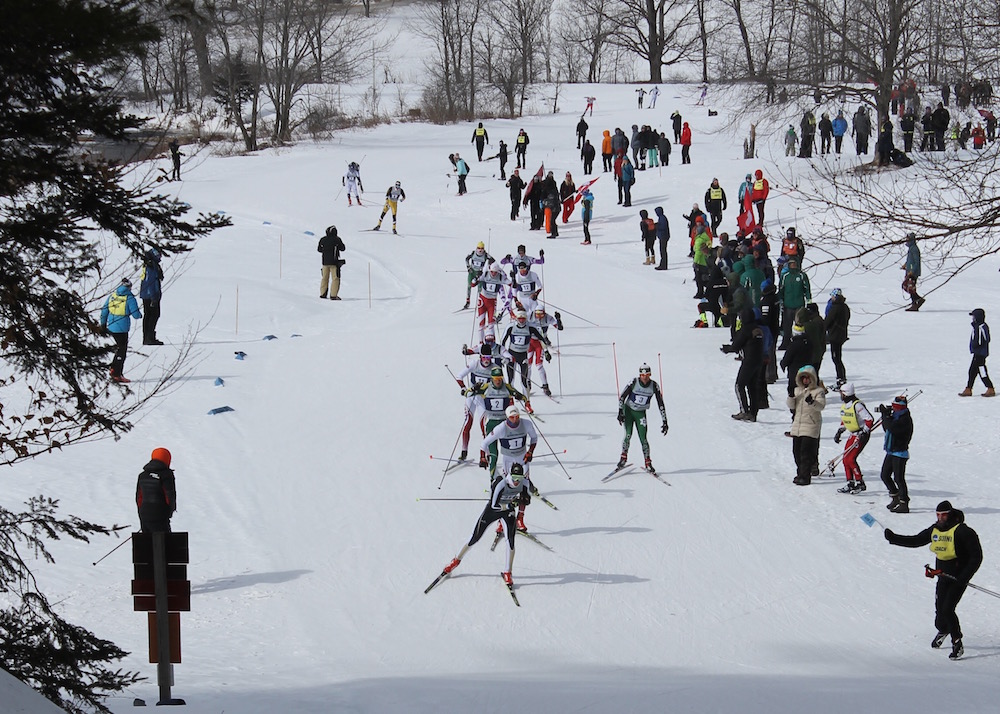
    Photos from the final day of the 2017 National Collegiate Athletic Association (NCAA) Championships, with the men’s 20-kilometer freestyle mass start taking place on a 5 k loop at the Jackson Ski Touring Center in Jackson, N.H.

    Read more about the races and click here for professional photos by FlyingPointRoad.

    (Click each photo to enlarge)

  • Utah Rallies for NCAA Title; Bergström, Hyncicova Double Champs

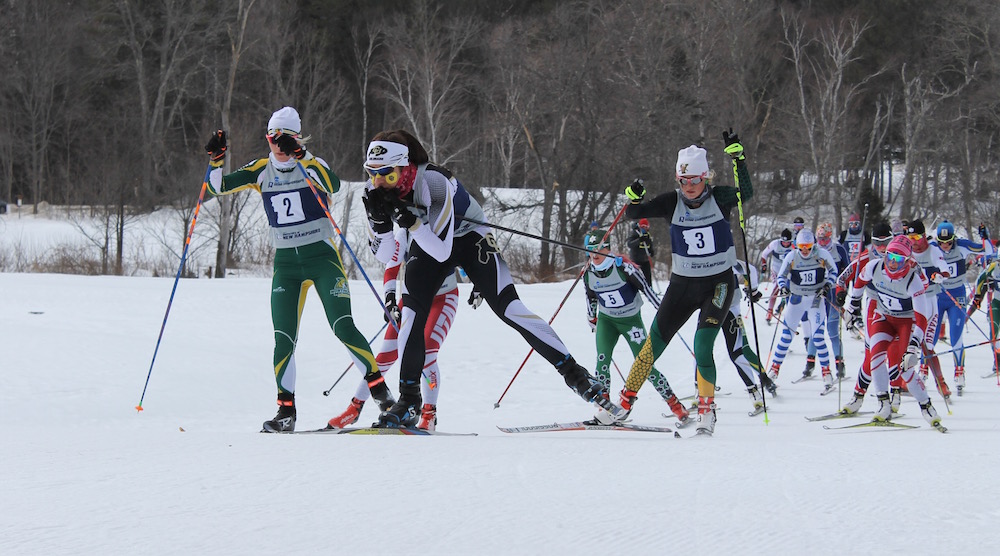
    Petra Hyncicova of the University of Colorado-Boulder leading the women’s 15 k freestyle mass start out of the start on Saturday, the last day of NCAA Skiing Championships in Jackson, N.H., with Northern Michigan’s Nicole Schneider (2) and UVM’s Alayna Sonnesyn (3) right there with her.

    JACKSON, N.H. — Two years ago, Martin Bergström quit skiing.

    A month ago, Petra Hyncicova took three weeks off skiing following U23 World Championships due to a painful bursa between her Achilles tendon and heel bone.

    Less than a week after resuming training, Hyncicova, a 22-year-old Czech Republic native and University of Colorado-Boulder (CU) junior, raced to two National Collegiate Athletic Association (NCAA) Skiing Championships titles — the first of her career — in Jackson, N.H.

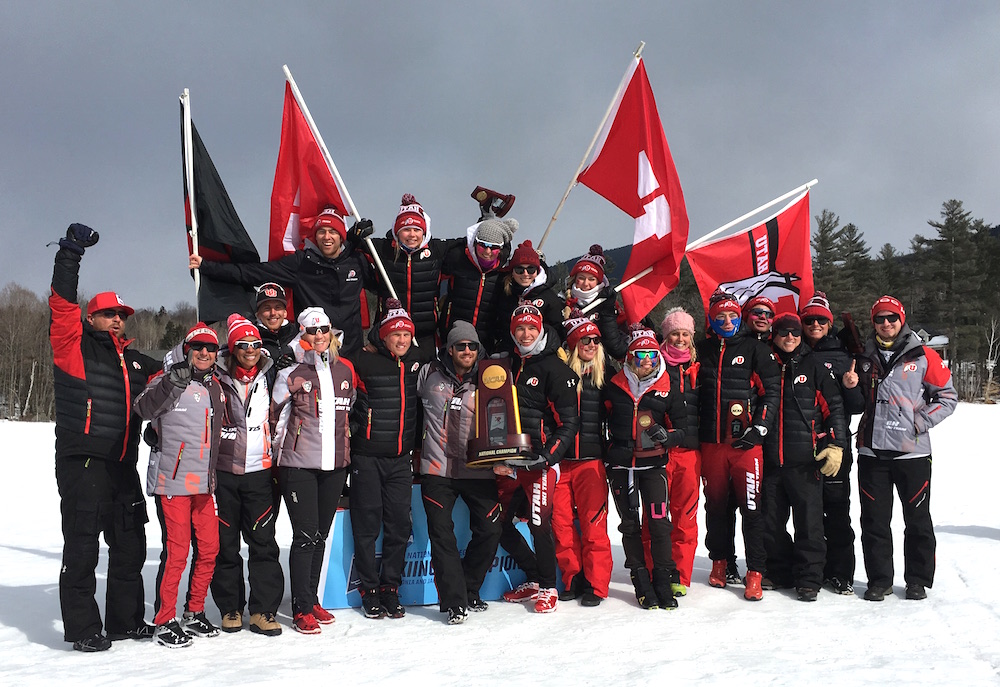
    The University of Utah ski team celebrates its first NCAA title since 2003 on Saturday, March 11 at 2017 NCAA Skiing Championships in Jackson, N.H. (Photo: Flyingpointroad.com)

    Bergström, a 25-year-old Swedish freshman at the University of Utah, did the same, winning both nordic races at 2017 NCAA Championships and leading the Utah Ski Team to its first team title since 2003.

    Both started off with decisive victories in the women’s 5-kilometer and men’s 10 k classic individual starts last Thursday, with Hyncicova topping the former by 18.7 seconds and Bergström winning the latter by 26.8 seconds.

    Then on Saturday, with temperatures hovering just above the legal racing limit of -20 degrees Celsius (-4 Fahrenheit) and winds ripping across the field that served as the stadium, the two international skiers completed their championships sweep with wins in the women’s 15 k and men’s 20 k freestyle mass starts.

    “When the season started, I figured that I was in really good shape this year,” said Hyncicova, whose previous best NCAA Championships result was second in the skate race last year in Steamboat Springs, Colo. “I was hoping that I could be on the podium again at NCAA’s and maybe hoping that I could win the skate race, but after winning the classic race and after the injury and everything I can’t believe it. It’s insane for me.”

    “Two years ago, I quit skiing back in Sweden and I took one year of just studying,” Bergström said. “And then a friend of mine was on the [Utah] team, and he said there were spots open and that I should try a different environment of skiing and studying and that I could come over here. So I talked to the coaches, and eventually went for this trip and have had so much fun and made many friends. I’m just so happy I came here.”

    On Saturday, Bergström led three Utah men in the top 10, with Martin Mikkelsen placing eighth and Kevin Bolger 10th. The three scored 84 points and their women’s team emerged as the second-highest scorers in the second race of the day to give the Utes a 16.5-point win over Colorado (CU) to end the championships.

    Reflecting on his win on Saturday, before the women’s 15 k, Bergström anticipated it would be a tall order to win the team title.

    “It’s been amazing, and it’s an amazing team,” he said of his season with Utah. “All the training we’ve done and the work we’ve put in this fall and winter. I’m just so happy. Hopefully there’s a slim chance the girls can pull off an amazing race. We’ll see.”

    Utah Director of Skiing Kevin Sweeney later explained just how difficult it was to come from second place on Friday to take the win over CU and Denver University (with Denver finishing third, just one point behind Colorado). In the last decade of NCAAs, Colorado has placed first or second seven times, according to a press release. Denver is next in line with six top-two finishes (including five titles) since 2008.

    “We’ve been crunching numbers and have been able to beat Denver and Colorado by about 30 points on a really good showing during the RMISA [Rocky Mountain Intercollegiate Skiing Association] season, but didn’t know if we could do it in the championships,” Sweeney said, according to a Utah press release. “Bergström was skiing at a whole new level this week, and Mikkelsen had stepped it up, and I knew Kevin Bolger could get top 10. I was also confident in the women, who have been skiing awesome, so I felt good there. It’s awesome to be able to take this new trophy back to our new ski building.”

    Bergström’s Late Move

    The men’s 20 k came down to a five-way sprint to the line, with Bergström taking the win by 0.5 seconds over Mads Ek Strøm, CU senior and two-time 2016 NCAA champion.

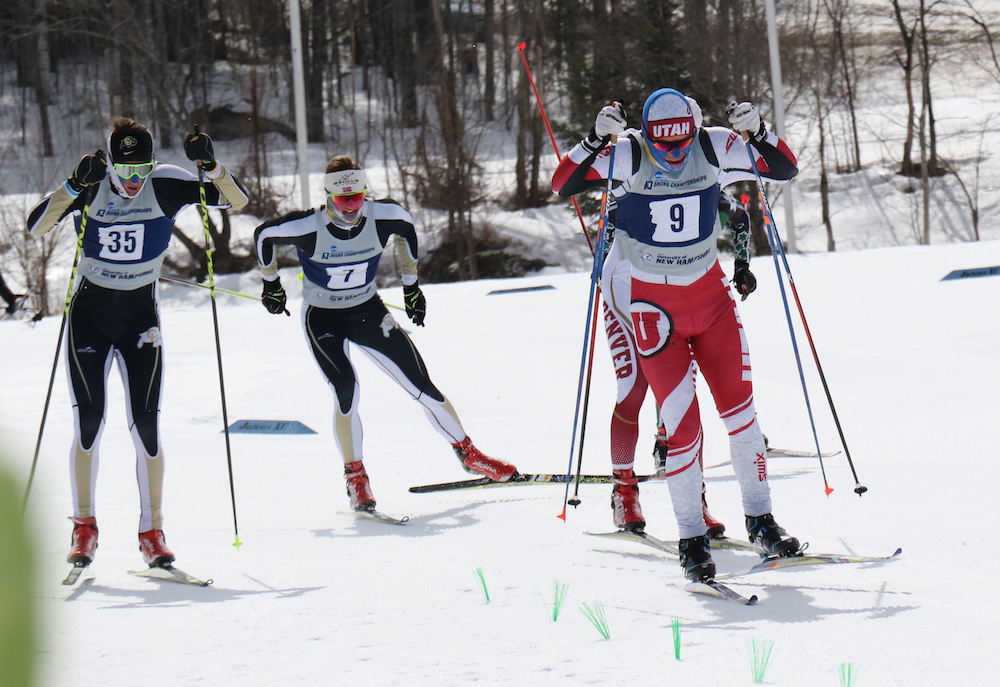
    Utah’s Martin Bergström (9) leading CU’s Mads Ek Strøm (35) and Petter Reistad (7) and DU’s Moritz Madlener (behind Bergström) down the finishing stretch of the men’s 20 k freestyle mass start at 2017 NCAA Skiing Championships on Saturday in Jackson, N.H. (Photo: Karen Brown)

    After Denver’s Moritz Madlener led most of the race, Bergström moved to the front on the start of the fourth and final lap. With 5 k remaining, six men remained together: Bergström, Madlener, Strøm, Adam Martin of Northern Michigan University (NMU), Fabian Stocek of Dartmouth College, and Petter Reistad (CU). On the final lap, the group began to string out and Bergström opened up the narrow lead he needed to win at the finish, crossing in 46:02.8 minutes.

    “I just went for it,” Bergström said. “Tried to check who still had power in the legs. Moritz just answered when I upped the tempo, and he continued my push in the second lap, and I knew I was faster in the finish than Moritz, so he had to make his move before the sprint. As an old sprinter, I feel pretty comfortable making a pass. I can maneuver pretty efficiently. I was just happy too see that it was a high-tempo, pack finish, and with the wind and everything, I think it was smart to go a little before the final stretch.”

    On the final lap, Strøm, the defending champion who won both races at last year’s NCAAs, tried to position himself near the lead going into the first climb out of the stadium, just in case someone attacked.

    “They went kind of fast up there, but not too fast, and I was in fourth and I felt pretty good,” Strøm, a 25-year-old Norwegian, said. “Adam Martin caught me sleeping, and gave a gap, so I had to pass him.”

    With about 2 k to go, Strøm said about four men remained in the front group before his teammate, Reistad, pushed to latch back on.

    “Petter came back up, and I was like, ‘Come on dude, just use the speed and try to move up and take the lead,’ and he did,” Strøm said.

    On the pivotal last A-climb at the top of the course, Strøm found himself in third and unsure of his next move.

    “I wasn’t sure how strong the people in front of me were,” he said. “I should have done something sooner, over the last hill of the race. It’s kind of short, the last stretch of the race. I felt pretty good so I’m a little disappointed in second.”

    Saturday stood as Strøm’s second skate race of the season. He had appendix surgery in January.

    “I hadn’t raced much this year,” he said. “At first, I felt pretty good, actually.”

    He started Thursday’s 10 k classic in bib 1 and double poled to eighth place.

    “We decided on double poling and I started bib 1, and I got pretty screwed by that because I had to plow all the snow out of the way,” Strøm said. “I knew the shape was good, and today I was just… I mean second place is OK, but I wanted to win.”

    Just 0.1 seconds behind Strøm on Saturday, Madlener, a 23-year-old German senior who placed second and third at NCAA’s last year, achieved his first podium of the week, 0.6 seconds out of first.

    Reistad finished fourth (+1.2), Stocek fifth (+1.9) and Martin, who was in podium contention until the final lap, sixth (+18.7).

    Asked what his skiing plans are now, Bergström wasn’t sure.

    “I started a civil engineering program back home, and I have two years of eligibility here, but I don’t know,” he said. “I took a chance, and came here, but I haven’t decided if I’m going to stay or not, but we’ll see.”

    Hyncicova Goes For It

    Petra Hyncicova (University of Colorado-Boulder) celebrates her second-straight 2017 NCAA Skiing Championships title on Saturday after winning the women’s 15 k freestyle mass start at the Jackson Ski Touring Center in Jackson, N.H. (Photo: Flyingpointroad.com)

    Two-time 2017 women’s champion Hyncicova, who broke away from the pack with the University of Vermont’s (UVM) Alayna Sonnesyn halfway though the women’s 15 k, said coming to the U.S. was one of her best decisions.

    “I’m so glad I went to the U.S. Every year I’m more and more glad,” she said. “This year was actually supposed to be my last year. I have one more year of NCAA eligibility so I applied for a master’s program so I can be here next year also and I’m so excited.”

    She raced to a 21.1-second victory over Sonnesyn on Saturday in 39:21.6. The next-closest finisher, Hyncicova’s CU teammate Christina Rolandsen, crossed 17.8 seconds later in third (+38.9).

    “Starting with bib 1, it’s easy to be first out of the start,” Hyncicova said of leading out of the start.

    After setting the pace for the first 5 k, she tucked behind Rolandsen, a Norwegian sophomore, to start the the second lap.

    “I was trying on each lap to make a little bit smaller group, and I saw my teammate Christina so I was trying to get her in the group [so] we could go together,” Hyncicova added.

    When she noticed Rolandsen tiring on the second lap, she surged back to the front.

    “Then I took off a little bit,” Hyncicova said. “It wasn’t intentional, but Alayna stuck with me, so I was like, ‘OK, we can do it together. It will be nice to go just in two.’ ”

    Sonnesyn, a junior from Minnesota, led the two-woman breakaway for roughly four kilometers, up until the final A-climb of the race.

    “Coming through this field, it’s so windy, no one wanted to be up front,” Sonnesyn reflected. “I knew that she didn’t want to take the lead, I could tell, but I thought that if I sat back and didn’t take the lead either, the other girls were gonna come back and catch us and I didn’t want that to happen.

    “I kind of knew what was going to happen,” she added of Hyncicova’s game-changing move on the last hill. “She made a really great move up one of the hardest hills up to the high point and I was so impressed with how fast she could ski. I wanted to stay with her, but I just couldn’t. … I mean, she just took off. It was impressive.”

    While the women’s race included several downhill crashes on a hard-packed course, including a close one from Sonnesyn while she was leading on the second lap, Hyncicova said she wasn’t afraid to send it.

    “I love downhill skiing on nordic skis, so for me, it was really fun,” Hyncicova said. “I’m not scared and I enjoyed it.”

    For Sonnesyn, second place marked her second podium of 2017 NCAAs after placing third last Thursday. In two NCAA appearances before that, she had yet to crack the top 20.

    “I am so happy with the way things went,” Sonnesyn said on Saturday. “I definitely had some high goals for this week. I haven’t had the best luck with my NCAA experiences in the past and so I knew I could be competitive this year, but I didn’t know how competitive I could be.”

    She made a point to focus on how she was feeling and not worry about anyone else, both in Thursday’s individual start and Saturday’s mass start.

    “It’s tough to break away on this course, so I knew that if someone was going to break away I didn’t want to be the one to do it, but I wanted to be with them,” she added. “And that’s kind of exactly how it happened. I’m just so happy with the way things went this whole week. … I feel like I’ve improved so much over these last few years with Patrick Weaver as a coach. He’s helped me so much just to become a better skier. I love the sport and I’m just so excited for next year.”

    After Anika Miller of Montana State University (MSU) placed fourth (+44.0), Utah took fifth and sixth with Merete Myrseth (+1:01.5) and Guro Jordheim (+1:16.1), and was the only women’s team with all three in the top 14 with Natalia Müller in 14th (+1:32.1). In all, the Utah women scored 73 points (behind Colorado with 77) to help their program notch its 11th NCAA Skiing title.

    “The turning point of today is when Guro broke a pole, and she was back in the 20’s, and she and Natalia were skiing together,” Sweeney said, according to the press release. “We told them that they had to go and they busted out and made a big move. The men’s results were tremendous, but whether or not we were going to win was based on those guys making the move. It was exceptional athleticism and gutsy performances.”

    Behind Utah with 541.5 points, CU (525) and DU (524) in the top three, Dartmouth placed fourth (400), UVM fifth (355), and MSU sixth (320) in the four-day alpine-nordic, season-ending series.

    Saturday’s results: Men | Women | Team

  • Saturday Rundown: Holmenkollen, Kontiolahti, Jackson, and Lake Placid (Updated x4)

    Saturday Rundown: Holmenkollen, Kontiolahti, Jackson, and Lake Placid (Updated x4)

    The University of Utah ski team celebrating its first NCAA title since 2003 on Saturday at 2017 NCAA Skiing Championships in Jackson, N.H. (Photo: Jason Clay/Colorado)

    NCAA Skiing Championships (Jackson, N.H.): 15/20 k freestyle mass starts

    On the final day of the National Collegiate Athletic Association (NCAA) Skiing Championships in northern New Hampshire, the University of Utah pulled out a 16.5-point victory over the University of Colorado-Boulder (and finished 17.5 points ahead of the University of Denver) in the team standings, and the two previous NCAA champions from Thursday’s 5/10 k classic races, Martin Bergström and Petra Hyncicova, achieved their second-straight titles in as many nordic races this week.

    On a frigid Saturday morning in Jackson, N.H., with temperatures just below zero Fahrenheit for the start of the men’s 20 k freestyle mass start, Bergström, a Utah freshman from Sweden, outlasted the University of Colorado’s (CU) Mads Ek Strøm, a Norwegian senior and two-time 2016 NCAA champion, by 0.5 seconds to win his second-straight race in 46:02.8 minutes. Moritz Madlener, a German senior at Denver University (DU), placed third (+0.6). Just behind him CU’s Petter Reistad, of Norway, finished fourth (+1.2), and Dartmouth College’s Fabian Stocek, of the Czech Republic, placed fifth (+1.9).

    While temperatures warmed up to about 1 degree for the women’s 15 k freestyle mass start and the wind picked up to about 15-20 miles per hour, the women raced three laps around the Jackson Ski Touring Center’s race loop and navigated even faster downhills that caused a few crashes.

    Hyncicova used her love for downhills and skate races to capture her second consecutive NCAA title, breaking away with University of Vermont (UVM) junior Alayna Sonnesyn on the second lap. The Czech Republic native and CU junior attacked on the A-climb at the top of the course and won by 21.1 seconds in 39:21.6. Sonnesyn, of Minnesota, bested her third place from Thursday’s 5 k with a second-place finish on Saturday. CU’s Christina Rolandsen, of Norway, finished third (+38.9), ahead of Idaho native Anika Miller of Montana State University (MSU) in fourth (+44.0).

    Utah took fifth and sixth with Merete Myrseth (+1:01.5) and Guro Jordheim (+1:16.1), and had two other men in the top 10 (Martin Mikkelsen in 8th and Kevin Bolger in 10th) to achieve the alpine-nordic team title.

    In the women’s race, the Utes were the only team with all three women in the top 14, with Natalia Müller in 14th (+1:32.1).

    “The turning point of today is when Guro broke a pole, and she was back in the 20’s, and she and Natalia were skiing together,” Utah Director of Skiing Kevin Sweeney said, according to a team press release. “We told them that they had to go and they busted out and made a big move. The men’s results were tremendous, but whether or not we were going to win was based on those guys making the move. It was exceptional athleticism and gutsy performances.”

    The NCAA team title was the 11th for Utah and its first since 2003.

    “I am stunned with the win today,” Sweeney added. “In all my years of coaching, it was one of the most challenging four days of competition. I say that because the weather was incredibly cold and windy, and challenging from both a waxing perspective, as well as visibility and conditions. I know all the teams had to deal with it, but it really beat us up. It took a lot of perseverance and gutsy performances for us to win. We struggled a little bit in the slalom, but they were going for it and came up short.

    “We’ve been crunching numbers and have been able to beat Denver and Colorado by about 30 points on a really good showing during the RMISA season, but didn’t know if we could do it in the championships,” he continued. “Bergström was skiing at a whole new level this week, and Mikkelsen had stepped it up, and I knew Kevin Bolger could get top 10. I was also confident in the women, who have been skiing awesome, so I felt good there. It’s awesome to be able to take this new trophy back to our new ski building.”

    As for those earning All-American status on Saturday with a top-10 finish, Utah had five (Bergström 1st, Myrseth 5th, Jordheim 6th, Mikkelsen 8th, Bolger 10th), Colorado had four (Hyncincova 1st, Strøm 2nd, Rolandsen 3rd, Reistad 4th), Denver had two (Madlener, Dag Frode Trollebø 7th), MSU had two (Miller 4th, Johanna Talihärm 7th), Dartmouth had two (Stocek 5th, Luke Brown 9th), UVM had one (Sonnesyn 2nd), Northern Michigan University (NMU) had one (Adam Martin 5th), the University of Alaska-Fairbanks (UAF) had one (Sarissa Lammers 8th), UNH had one (Lizzie Gill 9th), and Bowdoin had one (Hannah Miller 10th).

    Stay tuned for a more in-depth report with quotes and photos from Saturday’s skate mass starts.

    Results: Men | Women | Team

    ***

    USSA Cross Country Junior Championships (Lake Placid, N.Y.): Freestyle team relays

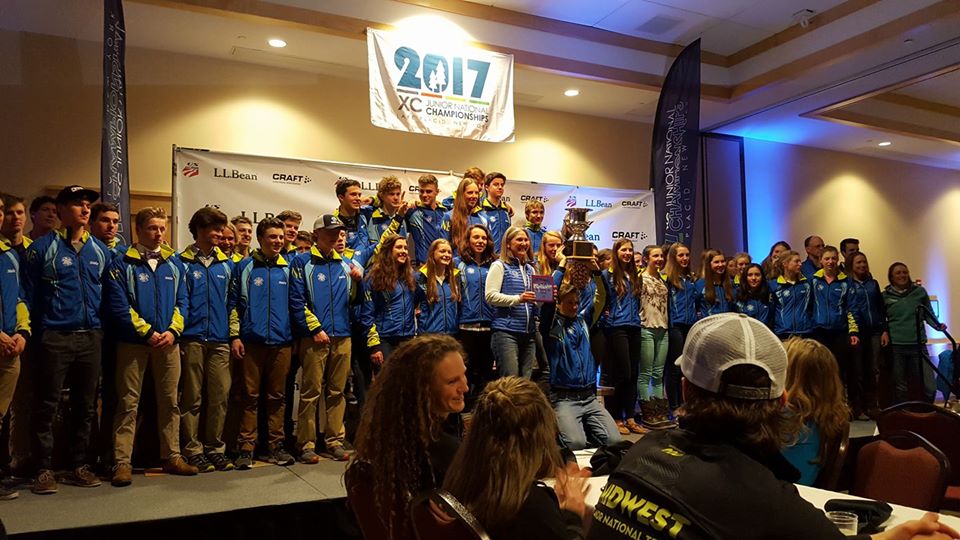
    The 2017 U.S. Junior Nationals Alaska Cup winners, New England, at the awards ceremony on Saturday in Lake Placid, N.Y. (Photo: XCJuniorNationals2017/Facebook)

    [UPDATED] For the final day of 2017 U.S. Junior Nationals in Lake Placid, N.Y., regional divisions formed three-racer teams for the U16, U18 and U20 freestyle relays.

    Intermountain swept the U16 team events with Lane Myshrall, Skylar Patten and Johnny Hagenbuch winning the U16 boys’ relay by 3.6 seconds over the Midwest’s James Schneider, Alexander Nameth and Peter Moore in 23:00.4 minutes. Another 1.1 seconds back, Alaska reached the podium in third (+4.7) with Eli Hermann, Zander McMullen and George Cvancara.

    Intermountain’s U16 girls’ team of Sarah Morgan, Annabel Hagen and Sydney Palmer-Leger posted a 53.7-second victory over New England’s Charlotte Ogden, Anna Lehmann and Abigail Streinz, winning in 26:21.4. The Pacific Northwest finished 18.1 seconds later in third place (+1:29.9) with Fiona Max, Gretta Scholz and Annie McColgan.

    Alaska won the U18 boys’ relay with Luke Jager, Canyon Tobin and Gus Schumacher finishing in 21:42.9, 7.5 seconds ahead of New England’s Elliot Ketchel, Adam Glueck and Ben Ogden in second. The Midwest’s Anders Sonnesyn, Patrick Acton and Luc Golin rounded out the podium in third (+22.2).

    Rocky Mountain topped the U18 girls’ relay with Katja Freeburn, Ezra Smith and Maddie Donovan crossing first in 25:47.3. Just 5.8 seconds back, Intermountain’s Brooke Dunnagan, Anna Gibson and Sofia Schomento placed second, and the Midwest secured third (+16.7) with Margaret McCollor, Luci Anderson and Anja Maijala.

    The U20 men’s relay title went to New England, with Kam Husain, Koby Gordon and Daniel Streinz pulling out a 1.3-second win over Alaska’s Tracen Knopp, Logan Mowrey and Hunter Wonders in 21:53.1. Intermountain followed in third (+8.8) with Eli Jensen, Peter Wolter and Nathan Wells.

    The Midwest came up big in the U20 women’s relay, with Abby Jarzin, Hannah Rudd and Margie Freed finishing 10.1 seconds ahead of New England’s Alexandra Lawson, Mary Kretchmer and Mackenzie Rizio in 25:41.4. Another 1.1 seconds back, Intermountain’s Leah Lange, Maddie Morgan and Marin Coletta placed third (+11.2).

    New England won the Alaska Cup with 325 points, the same point total as Intermountain in second. Alaska placed third in the overall team competition with 295 points, just five points ahead of the Midwest in fourth.

    Results: U16 boysU16 girlsU18 boysU18 girlsU20 menU20 women | Alaska Cup

    ***

    FIS Cross-Country World Cup (Oslo, Norway): Holmenkollen 50 k classic mass start

    (Race report)

    Left to right: Finland’s Iivo Niskanen, Norway’s Martin Johnsrud Sundby and Russia’s Alexander Bessmertnykh after placing second, first and third, respectively, in the Holmenkollen World Cup men’s 50 k classic mass start on Saturday in Oslo, Norway. (Photo: FIS Cross-Country/Twitter)

    In a historic Holmenkollen, Norway’s Martin Johnsrud Sundby took his second 50 k win in a row, claiming this year’s title in a time of 2:02:59.7 (he won last year’s Holmenkollen in a time of 2:08:41.9). Sundby is now the only male skier to win two consecutive World Cup Holmenkollen 50 k competitions. 

    Crossing behind Sundby in second was Finland’s Iivo Niskanen, 9.9 seconds back from the race winner’s time. In a three-way photo finish, Russian Alexander Bessmertnykh bested Norwegians Niklas Dryhaug, and Sjur Røthe in the lunge to the line, with Bessmertnykh taking third (+1:15.2), Røthe fourth (+1:15.2) and Dryhaug fifth (+1:15.2).

    Canada’s Alex Harvey was just two tenths of a second behind the three-way lunge, finishing in sixth (+1:15.4). Norway’s Christer Hans Holund crossed 2.2 seconds later in seventh (+1:17.2). Three more Russians rounded out the top ten, with Sergey Ustiugov finishing in eighth (+2:35.0), Andrey Larkov two tenths of a second behind in ninth (+2:35.2) and Sergey Turyshev in tenth (+2:42.2).

    The top U.S. skier for the day was Scott Patterson (Alaska Pacific University), earning World Cup points in 28th (+7:18.8). Canada’s Devon Kershaw crossed 33rd (+2:11:59.1) and American David Norris (Alaska Pacific University) finished 35th (+9:56.4).

    Two more Americans competed in Saturday’s Holmenkollen, with Noah Hoffman finishing in 38th (+11:02.6) and Ben Lustgarten 46th (+18:44.7). Canadian Russell Kennedy was the final North American to finish in 47th (+20:16.3).

    Results

    ***

    IBU World Cup Biathlon (Kontiolahti, Finland): Men’s & women’s pursuits

    (Race report)

    The IBU World Cup men's podium after the 12.5 k pursuit in Kontiolahti, Finland, where Arnd Peiffer of Germany outsprinted Simon Eder of Austria for the win. (Photo: IBU/Twitter)
    The IBU World Cup men’s podium after the 12.5 k pursuit in Kontiolahti, Finland, where Arnd Peiffer of Germany outsprinted Simon Eder of Austria for the win. (Photo: IBU/Twitter)

    After one day knocked down to the second spot of the podium, it was back to the usual winning ways for Germany’s Laura Dahlmeier in the 10 k pursuit. Dahlmeier caught Norway’s Tiril Eckhoff, who won Friday’s sprint, early in the race after Eckhoff had one penalty in the first prone and second-starter Dahlmeier cleaned. While Eckhoff picked up five more penalties as the race went on, finishing 15th (+1:12.0), Dahlmeier had just one – and cleaned when it counted, on the final shoot with France’s Marie Dorin Habert and the Czech Republic’s Gabriela Koukalova right there with her. Dorin Habert missed one shot and held on to second place (+16.5) despite the penalty loop, while Italy’s Lisa Vittozi picked up her first individual podium in third (+19.9).

    The win secured the overall World Cup title for Dahlmeier, her first. “That makes me really speechless,” she told Germany’s ARD broadcaster. “This is an amazing moment.”

    Susan Dunklee collected four penalties and dropped from fifth place to 14th (+1:02.8) for the United States. Teammates Clare Egan and Joanne Reid finished 45th (+3:24.7) and 52nd (+4:07.0), respectively.

    For Canada, Julia Ransom finished 53rd with three penalties (+4:14.0) and Emma Lunder 58th with four missed shots (+6:20.7).

    Results

    Earlier in the day, Martin Fourcade had started the men’s race in bib one and set out to win the men’s 12.5 k pursuit, but was undone by four errors on the shooting range. No matter: the French biathlete still picked up the World Cup crystal globe for the pursuit discipline after finishing fifth (+25.5 seconds) and now he’s skipping tomorrow’s mixed relays to go be with his wife, who is about to have their second child.

    Capitalizing on Fourcade’s errors were a group of chasers, among whom Arnd Peiffer of Germany managed to shoot 20-for-20. The race came down to a sprint finish between him and Simon Eder  of Austria; Peiffer took a 0.3-second win for his eighth career victory. Emil Hegle Svendsen of Norway finished third, +2.3 seconds, and Andrej Moravec of the Czech Republic fourth, +9.8.

    Besides Peiffer, the only other man in the field to shoot clean was Sean Doherty of the United States. That allowed Doherty to jump from 44th at the start to a season-best 18th (+1:19.5) at the finish, the top result for the American team. Lowell Bailey finished 27th (+1:57.2) and Leif Nordgren 43rd (+3:24.4) with three and four penalties, respectively.

    Christian Gow led Canada with just one penalty and a 37th-place finish (+2:36.0), a big improvement from his 50th-place starting position. Brendan Green placed 50th with three penalties (+4:47.3).

    Results

  • Thursday Rundown: Bergström, Hyncicova Take NCAA Titles on Day 1 in Jackson

    The men’s 10 k classic podium and award winners at 2017 NCAA Skiing Championships on Thursday at the Jackson Ski Touring Center in Jackson, N.H., including Martin Bergström (Utah) in first, Dag Frode Trollebø (DU) in second, and Martin Mikkelsen (Utah) in third. (Photo: FlyingPointRoad.com)

    NCAA Skiing Championships (Jackson, N.H.): 5/10 k classic

    The universities of Utah, Colorado and Denver occupied five of six of the podium spots between the men’s and women’s races on the first day of nordic racing at the 2017 National Collegiate Athletic Association (NCAA) Skiing Championships on Thursday in Jackson, N.H. University of Utah freshman Martin Bergström won the men’s 10-kilometer classic individual start and Petra Hyncicova, a junior at the University of Colorado-Boulder (CU), took the title in the women’s 5 k classic.

    Originally from Sweden, Bergström captured his first NCAA title in 25:33.1 minutes, 26.8 seconds ahead of Dag Frode Trollebø, a University of Denver (DU) junior from Norway, in second. Utah had two on the men’s podium with Martin Mikkelsen, a Norwegian freshman, in third (+52.6).

    The women’s 5 k classic podium and award winners at 2017 NCAA Skiing Championships on Thursday at the Jackson Ski Touring Center in Jackson, N.H., including Petra Hyncicova (CU) in first, Merete Myrseth (Utah) in second, and Alayna Sonnesyn (UVM) in third. (Photo: FlyingPointRoad.com)

    In the women’s 5 k, Hyncicova, of the Czech Republic, notched her first NCAA victory (after placing second last year) in 14:55.5, 18.7 seconds ahead of Utah freshman Merete Myrseth, of Norway, in second place. University of Vermont (UVM) freshman Alayna Sonnesyn placed third (+19.8) and was the top skier outside of the Rocky Mountain Intercollegiate Ski Association (RMISA) on the first of two days of nordic racing at NCAA Championships.

    In terms of All-Americans (top 10), CU have five on Thursday (Hyncicova 1st, Christina Rolandsen 4th, Petter Reistad 4th, Jesse Knori 8th, Mads Ek Strøm 8th) Utah had four (Bergström 1st, Myrseth 2nd, Mikkelsen 3rd, Guro Jordheim 5th), Denver three (Trollebø 2nd, Moritz Madlener 5th, Lars Hannah 10th), Northern Michigan University three (Vivian Hett 6th, Fredrik Schwencke 6th, Adam Martin 7th), UVM two (Sonnesyn 3rd, Ian Moore 9th), the University of New Mexico one (Krista Niiranen 7th), UNH one (Lizzie Gill 9th), and Dartmouth one (Lauren Jortberg 10th).

    After Day 2 of the NCAA Championships (with the first day of alpine races taking place on Wednesday), Utah leads the team standings with 301.5 points, followed by Denver in second (265) and Colorado in third (240). Montana State dropped from first to fourth with 177 points and Dartmouth ranks fifth (170).

    Results: Men | Women 

  • Myrseth, Madlener Win RMISA Mass Starts in Anchorage

    Myrseth, Madlener Win RMISA Mass Starts in Anchorage

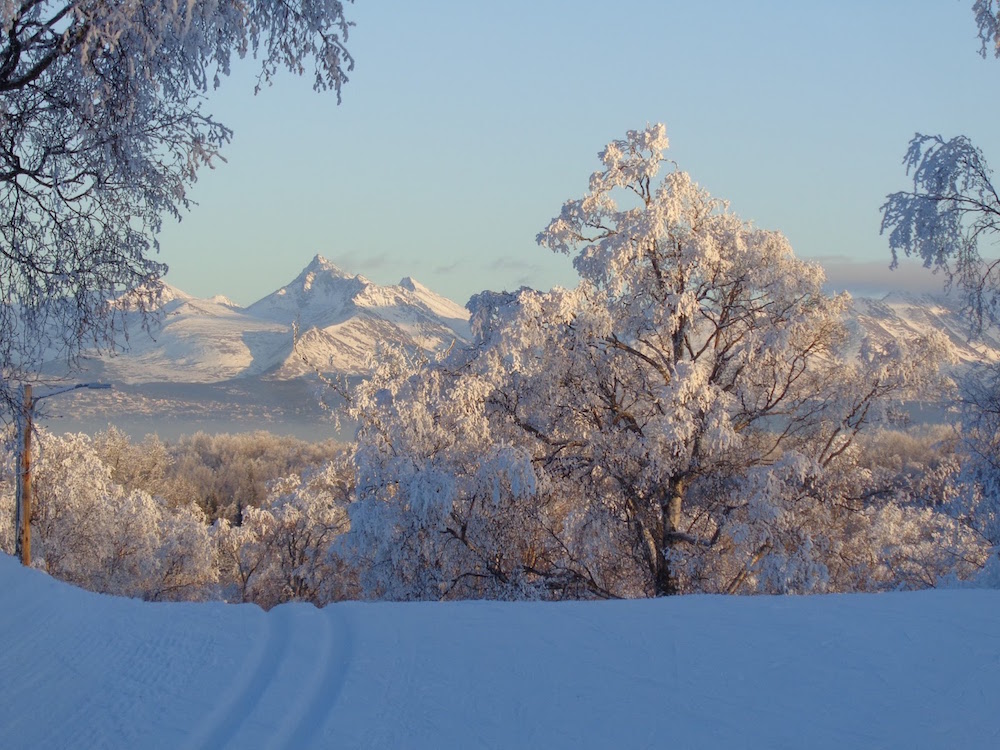
    The Chugach Mountains as seen from the Lekisch Loop, part of the course for the weekend’s races, at Kincaid Park in Anchorage, Alaska. (Photo: Adam Verrier)

    ANCHORAGE, Alaska — So how cold was it at Kincaid Park Sunday morning for the last of four Rocky Mountain Intercollegiate Ski Association (RMISA) races held in the Anchorage area this week?

    “It’s f—ing cold,” said women’s winner Merete Myrseth of the University of Utah. “It was cold,” said men’s winner Moritz Madlener of the University of Denver. “Now we fly back to Denver and get warm.” [Unavailable for comment] were the two skiers who required an ambulance for cold-related injuries following the women’s race.

    For the record, temperatures were consistently at or above zero degrees Fahrenheit all morning, so readily FIS-legal. (The International Ski Federation, which sanctioned all of this week’s races, has a temperature cutoff of -20° C, or -4° F, in order for a race to be held.) The real problem was the wind, which blew steadily from the north at around 10mph all morning.

    Unless the real problem was the humidity. The city of Anchorage is, well, a natural anchorage, bordered by Cook Inlet to the north and Turnagain Arm to the south. The Kincaid stadium is well under a kilometer away from the shores of the ice-choked Pacific Ocean; athletes were within 150 meters of the Turnagain Arm beach at one point on Sunday’s race course. Humidity was over 90% all morning. By any measure, conditions were somewhere between “raw” and “brutal.”

    At least atmospherically speaking. The ski trails were in superb shape following 30″ of snow in the month of January, if slow due to temperatures below zero Saturday night into Sunday morning.

    The first race of the day, the men’s 20-kilometer freestyle mass start, saw its start moved one hour later due to cold conditions. In that time the temperature rose from -2° F to zero.

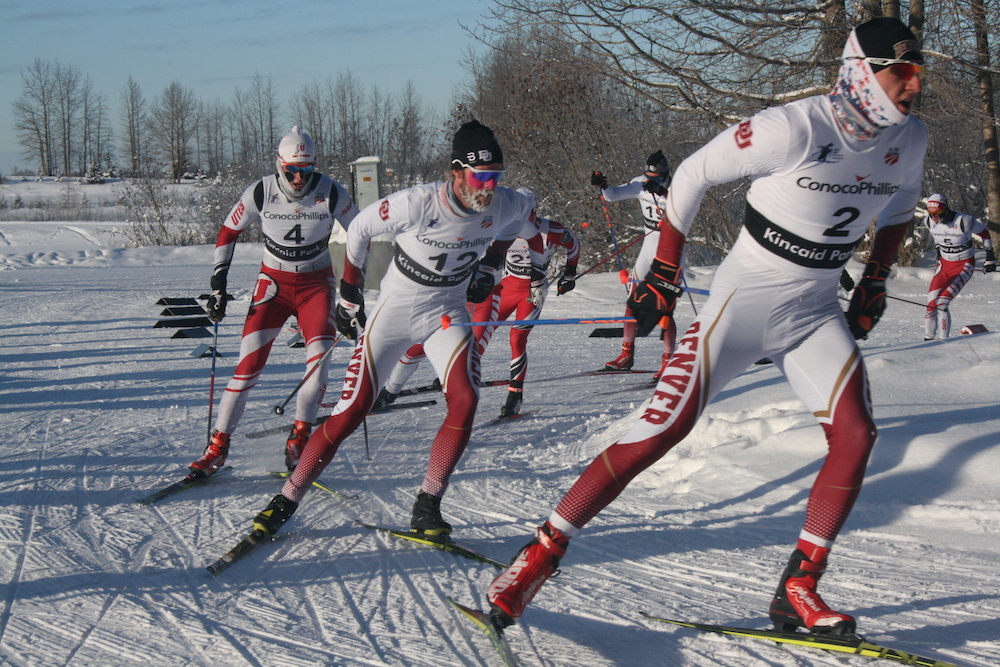
    Denver’s Moritz Madlener (2) leads Dag Frode Trollebø of Denver (12) and Kevin Bolger of Utah (4) in the men’s 20 k skate at Kincaid Park in Anchorage, Alaska. (Photo: Adam Verrier)

    When the race started, Denver’s Madlener quickly moved near the front as the field of 42 racers headed north out of the stadium to make their way up Elliott’s Climb. (For Anchorage readers, or anyone else familiar with Kincaid: the course went up Elliott’s and down Rollercoaster; up and down the Gong Hill; through the lower tunnel out to Mize’s Folly; take the first right onto Hairpin; take the first left at the top of Hairpin onto the 2.9 k Lekisch. Men did two laps of this, for 15 k, then a final 5 k lap that cut out Elliott’s. Women did two laps of the 7.5 k course for 15 k total.)

    “I was in the front pack pretty much the whole race,” Madlener recounted in an in-person interview with FasterSkier. “Tried to, you know, set the pace every now and then to get rid of people. Which worked pretty well; I think four of us got away after maybe 12 [kilometers]. And then we stayed together for the rest of the race, and then the last couple hills we kind of separated.”

    Madlener ultimately crossed the line in 52:39.2, edging teammate Dag Frode Trollebø by 2.6 seconds. Martin Bergström of the University of Utah followed in third (+10.4). “That’s a great feeling” to share the podium with a teammate, Madlener told FasterSkier.

    Madlener recalled that he had “a really good start” to his season at U.S. nationals – he earned two podiums there, second in the classic sprint and third in the 15 k skate – before he got sick “and had to catch up. And the races so far here in Alaska weren’t that great,” he continued, “so I was very happy to win today.”

    This week marked Madlener’s second time racing in Alaska; he previously competed in the last RMISA race series held in Anchorage, in early 2015. That week was marked by warm weather, rain, and shortened courses.

    Madlener is a fan, of Alaska in general and particularly the full courses that athletes got to race on this year.

    “I think it’s beautiful,” Madlener said of Alaska. “It’s like – I would say it’s like a big theme park; people are surfing and flying around and fishing. I really enjoy it. And the courses – again, two years ago, were not so great, but this year there’s a lot of snow, they’re pretty amazing courses. Like a rollercoaster.”

    Merete Myrseth of Utah enters the stadium approaching the finish in the women’s 15 k skate at Kincaid Park in Anchorage, Alaska. (Photo: Adam Verrier)

    Sunday’s race course featured a total of eight A-climbs for the men in 20 k, and six A-climbs for the women in 15 k. There was an average of 34 meters of climbing per kilometer on the main 7.5 k loop.

    Four racers, roughly a tenth of the field, were DNFs in the men’s race, likely due to a combination of the hills and the cold. Two skiers did not finish the women’s race. An additional eight opted not to start.

    The first words out of Madlener’s mouth when asked about his race were, “It was – first of all it was cold, obviously.” Myrseth, the women’s winner who skis for Utah, voiced similar sentiments: “It was cold, really cold,” she began her race summary. (By the time of the women’s race start at 12:30 p.m., temperatures had climbed to 1.6° F.)

    “I was unsure if I would start the whole race because it was so cold, actually too cold for me,” Myrseth told FasterSkier in a brief in-person interview while shivering in the windy stadium soon after her finish. “But it went really easy in the first half of the lap,” she continued, and she felt good. “So I decided to speed up when I came to hills”; there Myrseth created a gap that she kept all the way to the finish.

    But not without difficulty. “I didn’t feel good,” Myrseth said. “My feet, I couldn’t feel my feet, it was so cold. So I had to just, like, double pole over the hills, I was so tight in my feet and lost my balance, it was just so hard to keep balancing. But I made it to the finish line. And I am so happy that Guro took the second place.”

    Merete Myrseth of Utah (l) in the finishing chute en route to the narrow victory over Guro Jordheim of Utah (106) and Christina Rolandsen of Colorado (109) at Kincaid Park in Anchorage, Alaska. (Photo: Adam Verrier)

    Myrseth crossed the finish line in 46:28.3 for 15 k, double poling the last few meters to the finish. As she noted, she was followed by teammate Guro Jordheim in a close second (+0.5). Christina Rolandsen of the University of Colorado was not far back in third (+1.8). There was then a 30-second gap to a chase pack containing places fourth through sixth. 32 skiers finished the women’s race.

    This week marked Myrseth’s first time racing in Anchorage or even visiting Alaska. So what did she think? “I love it,” said the native of Øverbygd, Norway. “It’s f—ing cold, but it reminds me of Norway, my home. I’m used to it. But it’s so nice; I really like it here.”

    Sunday’s race marked the fourth race of the week in the Anchorage area for RMISA athletes. Recaps of the first three races follow below.

    Sunday results: FIS men and FIS women NCAA-only results

    ***

    1.4 k freestyle sprint

    On Tuesday, February 7, RMISA athletes, plus a handful of skiers from Alaska Pacific University (APU) with sterling sprint credentials, raced a 1.4-kilometer freestyle sprint at Kincaid. Conditions were impeccable, with pure blue skies, temperatures in the high teens, and last month’s fresh snow mixed in with the base of manmade snow covering the sprint loop.

    In the women’s race, Merete Myrseth of Utah posted the fastest time in qualifying, 3:25.77, followed by Becca Rorabaugh of APU (+2.14) and Utah’s Guro Jordheim (+3.65). All three skiers made the A-Final, where Myrseth took her first victory of the week. The overall podium, which was also the college podium, was Jordheim in second and Anika Miller (Montana State) in third. Casey Wright (UAA), Rorabaugh, and Jasmi Joensuu (Denver) were fourth through sixth.

    Times were not available for any of the heats.

    In the men’s race, Dag Frode Trollebø (Utah) set the pace in qualifying in 2:48.80. He was followed by APU’s Logan Hanneman (+1.52) and Utah’s Martin Bergström (+3.33).

    Three of the six skiers in the men’s A-Final were locals (in the broad sense of being from Alaska; the Hanneman brothers are from Fairbanks, not Anchorage). And it was the Hanneman show in the final, as the elder Reese Hanneman took the victory over his younger brother Logan. Trollebø was third. Kevin Bolger of Utah, last seen winning the classic sprint national championship at Soldier Hollow, Bergström, and APU’s Forrest Mahlen rounded out the final finisher spots in that order.

    The collegiate podium for the men’s race was Trollebø, Bolger, and Bergström. (APU is not an NCAA-affiliated athletic program.)

    While sprinting may be on the horizon for NCAA skiing in general, it had yet to make an appearance on the RMISA circuit.

    This was the first sprint that I know of in my, what – 10 years of RMISA coaching now and we’ve never had just a straight invitational sprint,” University of Alaska Anchorage Head Nordic Coach Andrew Kastning told FasterSkier in person following Sunday’s distance skate races.

    Kastning said that the addition of a sprint in Anchorage stemmed from a desire for a change of pace, and to avoid repetition in a single week with four races. “So when we sat down last spring and were deciding the schedule,” he said, “we’d been hearing for a few years now from our athletes that the fives, 10s, 15s, and 20s [kilometer race format] every weekend just kind of got boring, and we wanted to mix it up. So we counted the qualifying round as an invite at U.S. Nationals, and then we ran the full sprint [this week] and counted that. … So we just wanted to mix it up a little up here. Especially with four races in a short period of time, you don’t want to be doing all the same distances and the same courses.”

    So did the college athletes appreciate the chance to contest a sprint race in the middle of the RMISA race season? “Some of them do,” Kastning said. “There’s always a sprint specialist in the crowd who gets to shine. And I know there were kids on the podium, or in the top-10 at least, that aren’t normally in a distance race. So it allows some athletes to play to their strengths and shine a bit when they maybe wouldnt in a 20 k race, they can in a sprint.”

    On the non-collegiate side, APU skier Reese Hanneman, a sprint specialist, was thrilled to have a mid-season sprint race with high-level competition on his adopted home course. “I wish there were more sprint races in the middle of the season,” Hanneman told the Alaska Dispatch News.

    Full FIS results: men and women | | NCAA-only results

    ***

    4 x 5 k classic relay

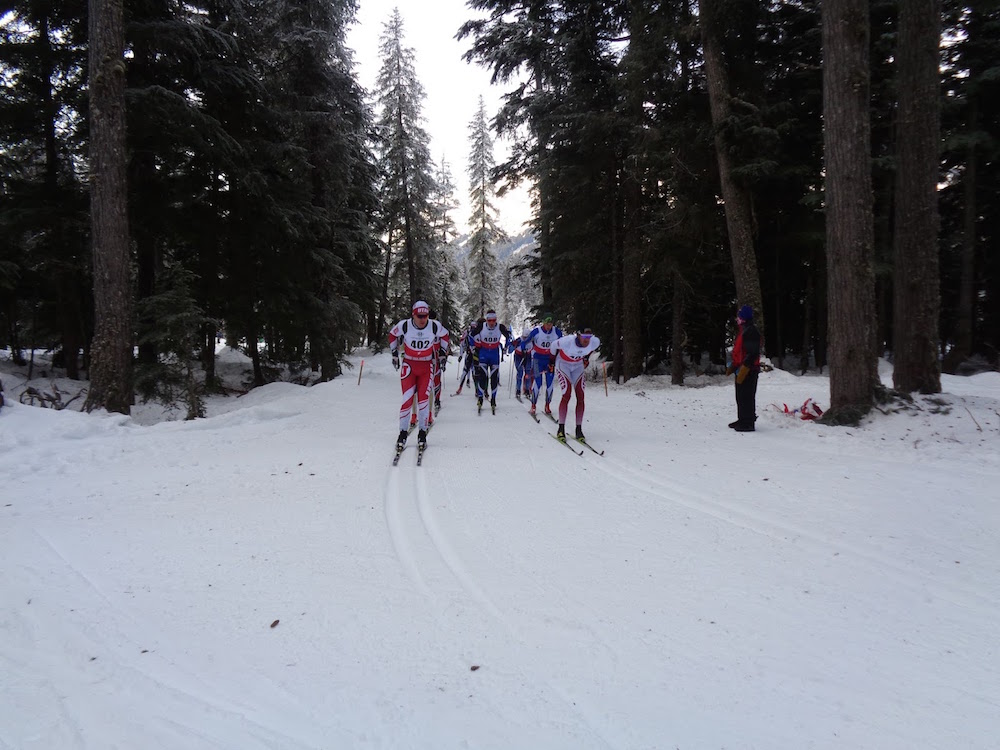
    Utah’s Martin Bergström (402) leads Denver’s Dag Frode Trollebø (right) and APU’s Reese Hanneman (center) at the start of the mixed-gender classic relay in Girdwood, Alaska. (Photo: Adam Verrier)

    The next day, Wednesday, February 8, skiers made the 45-minute drive down Turnagain Arm from Anchorage to Girdwood for a classic relay race. Girdwood is perhaps best known in ski circles as home to the Alyeska Resort alpine area, which boasts an average annual snowfall of 669″ and (when it’s clear) sweeping views of the mountains and glaciers overlooking Turnagain Arm. Publications as diverse as Powder magazine and National Geographic have lauded Girdwood as a quintessential locals ski town (“Best For: Off-the-beaten-path powder hounds with an aversion to glamour”).

    Girdwood also has a proud nordic heritage, though you have to look a little harder to find it. It is home to APU skier Chelsea Holmes, who will be competing at World Champs in Lahti later this month. And it hosted the 1969 Junior Nationals, on trails cleared from the continent’s northernmost coastal rainforest for this purpose.

    As discussed in more detail on former U.S. Ski Team member Tim Kelley’s invaluable blog, Alaska Lost Ski Areas Project, the trails faded back into the woods at some point during the 1970s. High-level nordic skiing in Girdwood then languished for over thirty years, until the early part of this decade, when the Girdwood Nordic Ski Club oversaw construction of a new 5 k loop. The reborn nordic trails have since hosted a handful of local high school races in periods of poor snow conditions in Anchorage, but it is safe to say that Wednesday’s relay was the most significant cross-country ski race held in Girdwood since 1969.

    APU (1st), Colorado (2nd), and Utah (3rd) make up the podium for the mixed-gender classic relay in Girdwood, Alaska. (Photo: Adam Verrier)

    Athletes raced in a mixed-gender 4 x 5-kilometer classic relay in the epochal event, man/woman/man/woman. It was once again APU leading the way, as the team of Reese Hanneman, Rosie Frankowski, Logan Hanneman, and Rorabaugh crossed the finish line for the victory in 57:33.7. Second overall, and first among collegiate teams, was Colorado (Mads Ek StrømJesse KnoriPetter ReistadChristina Rolandsen), 25.6 seconds back. They were followed by Utah (Bergström, Jordheim, Bolger, Myrseth) (+1:02.6). Fourth overall, and third for the NCAA podium, was Denver (Trollebø, Linn EriksenMoritz Madlener, Joensuu) (+1:25.4).

    “Everybody was psyched on a new format and a new trail in a beautiful location,” Kastning told FasterSkier of Wednesday’s race.

    Kastning added that the relay, like the previous day’s sprint, was new territory for RMISA racing. “We’ve never had a relay that’s counted for anything,” he said. “I think the relay captures college skiing well, with the mixed gender and the team aspect, men and women working together to try and reach the podium.”

    Full results | NCAA-only results

    ***

    5/10 k classic individual start

    Three days later, Saturday, February 11, skiers were back in Anchorage for individual start distance classic races, 5 k for the women and 10 k for the men. Race time was moved forward from 10 a.m. to noon, which allowed temperatures to rise from 2° F up to 8°.

    Saturday’s course was by some measures the hilliest of the week, clocking in at a healthy 39 meters of climbing per kilometer of distance. The upper limit for FIS homologation is 40 m/km. (The course covered the final two-thirds of Sunday’s 7.5 k course  notably Gong Hill, Mize’s Folly, Lekisch.)

    Merete Myrseth of Utah (103) leads Denver’s Jasmi Joensuu (126) and Taeler McCrerey (108) in the women’s 15 k skate at Kincaid Park in Anchorage, Alaska. (Photo: Adam Verrier)

    Rorabaugh started near the end of the field in the women’s 5 k classic, which had 39 starters. Two A-Climbs later she crossed the finish line in 15:47.0, which held up as the fastest time of the day. Colorado skier Knori was second (+4.2), followed by her teammate Rolandsen in third (+8.2). Jordheim of Utah (+13.8) was fourth overall to round out the collegiate podium, just ahead of APU’s Frankowski in fifth (+15.0).

    It was Rorabaugh’s first 5 k classic FIS race in this country in over five years.

    The men raced two laps of the same course for a 10 k classic. Denver’s Trollebø was again on the podium, posting the day’s fastest time of 26:51.60. He was followed by Utah’s Bolger in second (+15.0) and Colorado’s Reistad in third (+19.3). Utah skier Bergström (+29.2), immediately followed by Denver skier Madlener (+29.4), rounded out the top five.

    Full FIS results: men and women | | NCAA-only results

    ***

    Overall team results

    The week’s four races were technically scored as parts of two college invitational race series. In the Seawolf Invitational, encompassing the sprint and relay from the first part of the week, plus two alpine races held at Alyeska in January, the University of Utah took the overall team title with 665 points. The University of Denver (569 points) and the University of Colorado (549 points) followed. The order was the same if the standings are broken out by exclusively nordic results: Utah, Denver, Colorado.

    The weekend’s distance races combined with two other January alpine races to make up the week’s second race series, the UAA Invitational. Combined standings were unchanged here, as Utah (661 points) took the victory over Denver (636 points) and Colorado (544 points). On nordic results alone the ranking was the same: Utah, Denver, Colorado.

    RMISA racing continues with the RMISA Championships/NCAA West Regional in Colorado in late February, then (for qualifying skiers) NCAA Championships in New Hampshire in March. Nordic races will be held at Jackson Ski Touring Center.

    Kastning explained that RMISA schools take their biennial trip to Alaska in years when NCAA Championships are set for the East Coast, “because it’s lower elevation. So other teams like to get some sea-level racing,” he said. “And so it helps our whole region do better I think at NCAAs, because you get some tempo racing, a different kind or style of racing than you do when you’re racing at 9,000 feet.”

    From left, Dag Frode Trollebø of Denver, Moritz Madlener of Denver, Kevin Bolger of Utah, and Martin Bergström of Utah enter the stadium in the men’s 20 k skate at Kincaid Park in Anchorage, Alaska. (Photo: Adam Verrier)
  • Saturday Rundown: Ruka, West Yellowstone & (Not) Beitostølen (Updated x4)

    Saturday Rundown: Ruka, West Yellowstone & (Not) Beitostølen (Updated x4)

    The Ruka stadium from above in Kuusamo, Finland. (Photo: Toko)
    The Ruka stadium from above in Kuusamo, Finland. (Photo: Toko)

    Welcome to The Rundown, your quick primer of need-to-know information about the day’s racing. We’ll be updating this digest as the day goes on with additional results, photos and quotes. The Rundown is NOT a race report; stay tuned for complete race reports later today with interviews from the day’s top racers.

    ***

    West Yellowstone FIS Races: 5/10 k classic 

    Scott Patterson (APU) double poling to the win in the men's 10 k classic FIS race on Saturday in West Yellowstone, Mont. (Photo: Ian Harvey/Toko)
    Scott Patterson (APU) double poling to the win in the men’s 10 k classic FIS race on Saturday in West Yellowstone, Mont. (Photo: Ian Harvey/Toko)

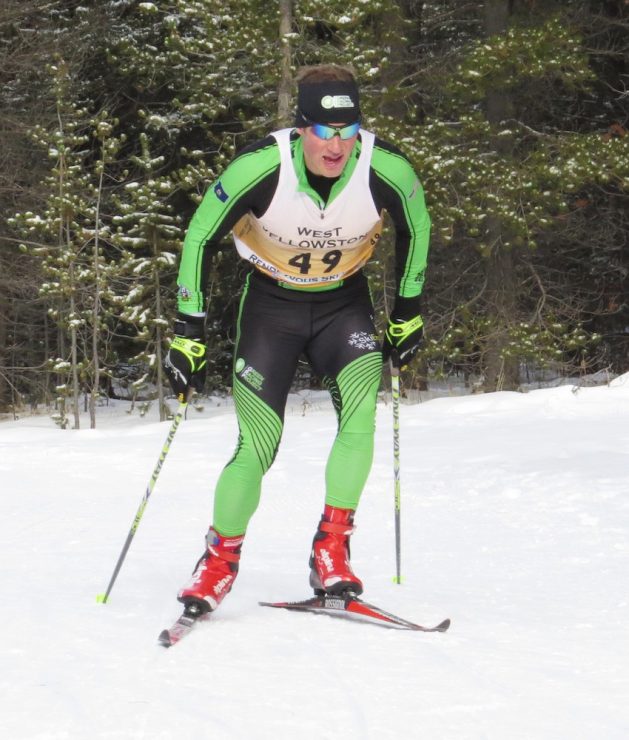
    Scott Patterson of Alaska Pacific University (APU) continued his winning streak on Saturday, topping the 10-kilometer classic FIS race at the Rendezvous Ski Trails in West Yellowstone, Mont. (In the two FIS races he’s competed in — the other being a 7.5 k freestyle last weekend in Fairbanks, Alaska — Patterson is undefeated.) He won Saturday’s classic race in 22:12.2 minutes, more than 20 seconds ahead of runner-up Matt Gelso, of the Sun Valley Ski Education Foundation (SVSEF), who placed second (+20.8). Ben Lustgarten, of the Craftsbury Green Racing Project (CGRP), improved on his fifth-place finish in Friday’s 10 k freestyle, reaching the podium in third (+23.4).

    David Norris (APU) placed fourth (+30.0), Kevin Bolger (University of Utah) was fifth (+33.1), and Ben Saxton, of the Stratton Mountain School (SMS) T2 Team, was sixth (+38.9). Petter Reistad, of the University of Colorado-Boulder (CU), finished seventh (+45.7), Daniel Streinz (Mountain Endurance Sports) took eighth (+49.9), Friday’s winner Paddy Caldwell, of SMS, Dartmouth College and the U.S. Ski Team (USST), was ninth (+56.0), and Martin Mikkelsen (Utah) placed 10th (+1:00.8) out of 70 male finishers.

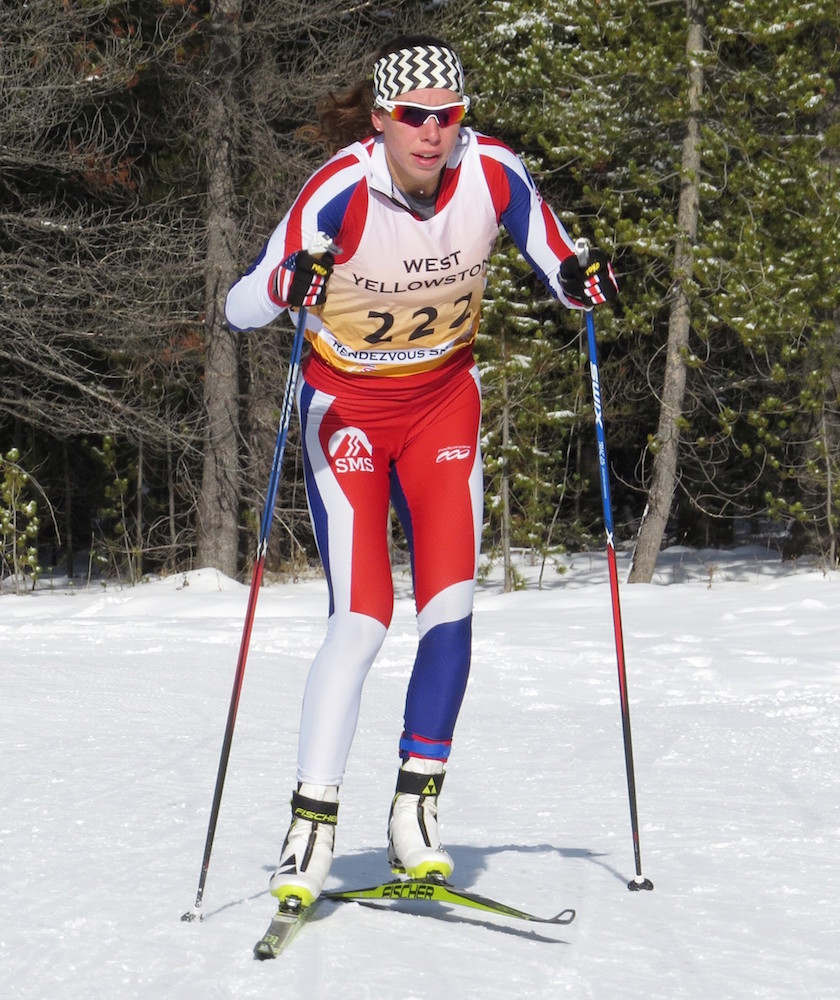
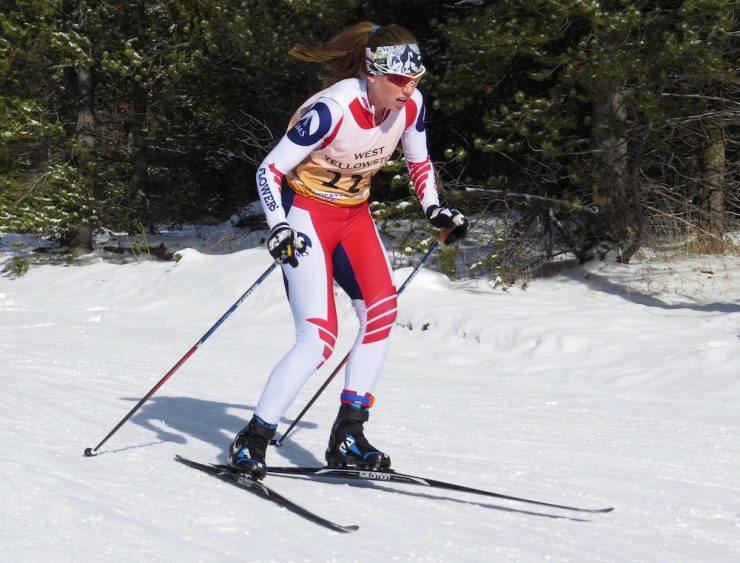
    In the women’s 5 k classic, Craftsbury’s Liz Guiney took the win in 13:06, edging Utah freshman Merete Myrseth by just 0.3 seconds. Friday’s 5 k freestyle winner, Katharine Ogden (SMS/USST) reached the podium again in third (+11.1), Jesse Knori (CU) was fourth (+13.5), and Erika Flowers (SMST2) fifth (+18.2) on her 27th birthday.

    Kaitlynn Miller (CGRP) took sixth (+21.8), Christina Rolandsen (CU) was seventh (+21.9), Petra Hyncicova (CU) eighth (+24.1), Guro Jordheim (Utah) ninth (+28.9), and Jennie Bender, of the Bridger Ski Foundation, 10th (+31.2), out of 74 female finishers.

    While this weekend’s FIS races are over, West Yellowstone will host again next weekend, as Bozeman SuperTour organizers announced Friday afternoon that it was moving its races to West, its southern neighbor, because of a lack of snow. Next weekend’s SuperTour races will be the first of the season, featuring the originally planned freestyle sprints on Saturday, Dec. 3, and 10/15 classic races on Sunday, Dec. 4.

    Results

    ***

    FIS Cross-Country World Cup in Ruka: Classic sprint:

    Women’s report | Men’s report | Kikkan Randall interview

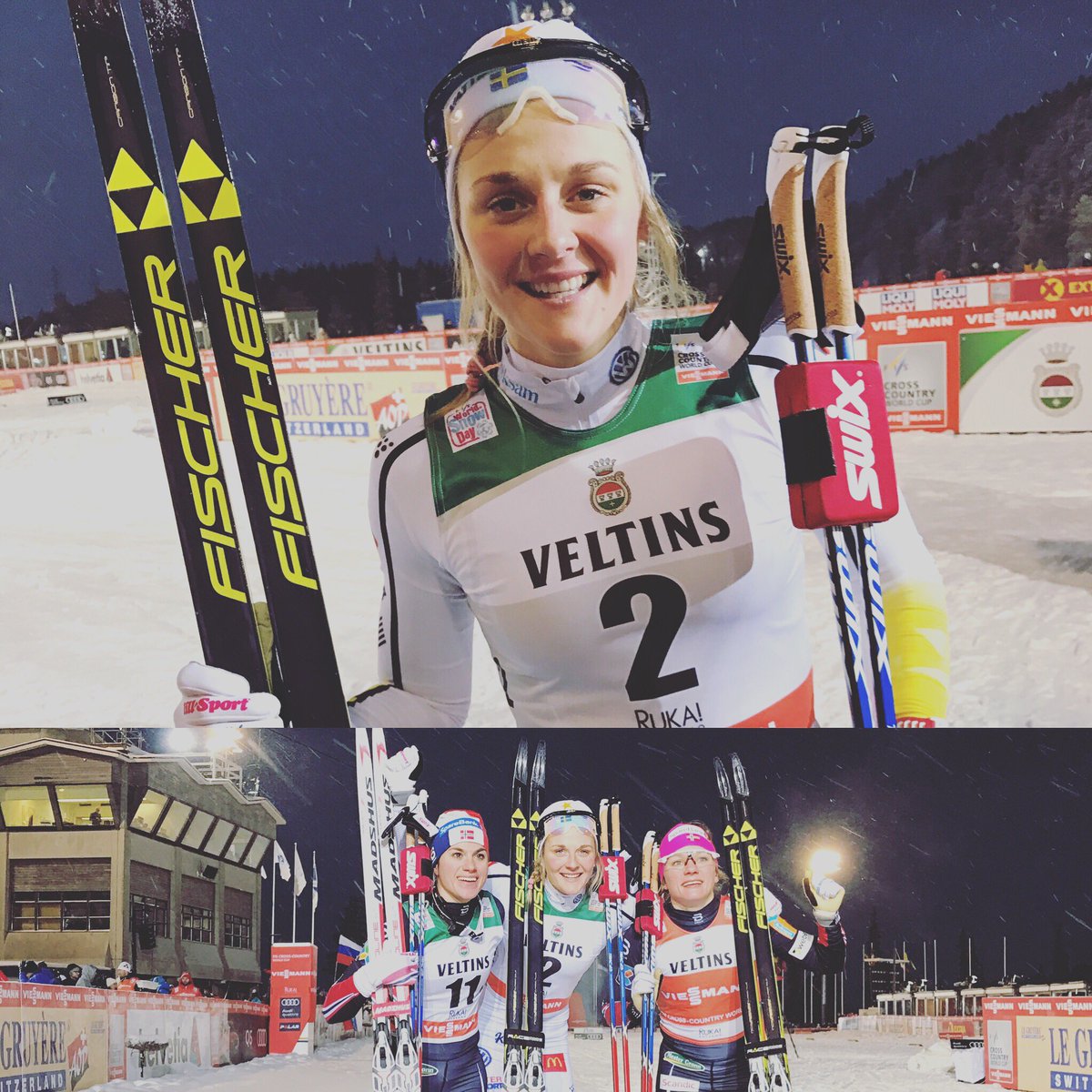
    Sweden's Stina Nilsson (top and bottom center) won her first World Cup classic sprint on Saturday in the first race of the 2016/2017 World Cup season. Norway's Maiken Caspersen Falla (bottom right) placed second and Heidi Weng (bottom left) was third. (Photo: FIS Cross Country Twitter)
    Sweden’s Stina Nilsson (top and bottom center) won her first World Cup classic sprint on Saturday in the first race of the 2016/2017 World Cup season. Norway’s Maiken Caspersen Falla (bottom right) placed second and Heidi Weng (bottom left) was third. (Photo: FIS Cross Country Twitter)

    Sweden’s Stina Nilsson and Norway’s Pål Golberg emerged as the big winners on Saturday in the first race of the 2016/2017 FIS Cross-Country World Cup season, winning the women’s and men’s 1.4-kilometer classic sprint finals, respectively, in Kuusamo, Finland.

    After qualifying second, Nilsson won both her quarterfinal and semifinal before dethroning Norway’s Maiken Caspersen Falla in the final. Falla had not lost a World Cup classic sprint since February 2015 (two seasons ago in Östersund, Sweden). Falla won her quarterfinal and placed third in her semifinal, advancing to the final as a lucky loser with Finland’s Krista Parmakoski. There, Nilsson held off Falla by 0.17 seconds and won the final in 3:21.61. Heidi Weng was the second Norwegian on the podium in third (+0.69), finishing ahead of two Russians, Natalia Matveeva (4th, +3.18) and Yulia Belorukova (6th, +8.94) and Parmakoski (5th, +5.12).

    “This is also my first victory in classic so I’m very, very happy,” Nilsson told FIS in an on-air, post-race interview.

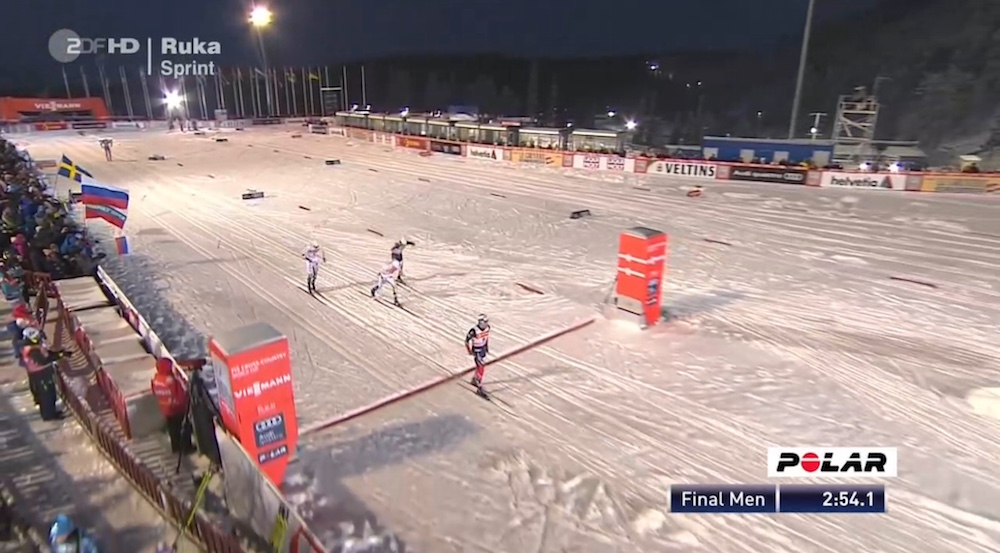
    Norway's Pål Golberg crossing the finish line a few ski lengths ahead of his competition in the men's classic sprint final on Saturday at the World Cup opener in Kuusamo, Finland. Sweden's Calle Halfvarsson placed second, and Norway's Johannes Klæbo edged Sweden's Teodor Peterson for the final podium spot in third. (Photo: NRK screenshot)
    Norway’s Pål Golberg (r) crossing the finish line a few ski lengths ahead of his competition in the men’s classic sprint final on Saturday at the World Cup opener in Kuusamo, Finland. Sweden’s Calle Halfvarsson placed second, and Norway’s Johannes Klæbo edged Sweden’s Teodor Peterson (l) for the final podium spot in third. (Photo: NRK screenshot)

    In the men’s final, Golberg surged past his competitors on Ruka’s infamous final climb and held off Sweden’s Calle Halfvarsson by 0.75 seconds for the win. Golberg found out on Wednesday of this week that he had been tapped for the sprint, after fellow Norwegian Petter Northug opted out of this weekend.

    “I knew my shape was good, but the skiers from the national team are good skiers so that’s why I wasn’t supposed to be here but Petter got sick so that’s why I’m here,” Golberg told FIS in a post-race interview. “In the quarterfinals, I had a pretty bad climb [on the final hill]. I lost a few spots so I decided to stay more in the back in the semifinals and that worked out.”

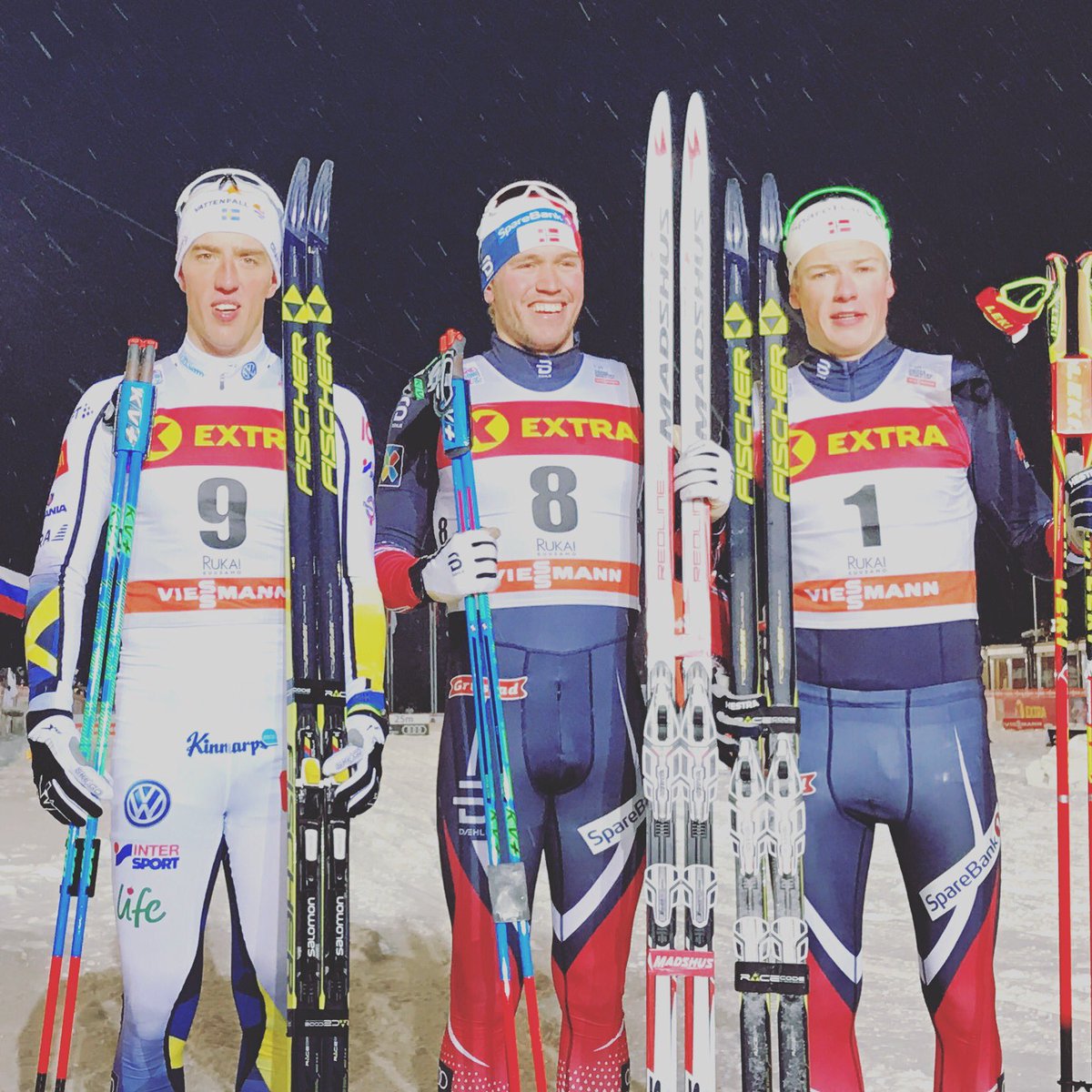
    The men's classic sprint podium in the first World Cup race of the season on Saturday in Kuusamo, Finland: Norway's Pål Golberg (c) placed first, Sweden's Calle Halfvarsson (l) was second, and Norway's 20-year-old Johannes Klaebo (r) was third. (Photo: FIS Cross Country Twitter)
    The men’s classic sprint podium in the first World Cup race of the season on Saturday in Kuusamo, Finland: Norway’s Pål Golberg (c) placed first, Sweden’s Calle Halfvarsson (l) was second, and Norway’s 20-year-old Johannes Klaebo (r) was third. (Photo: FIS Cross Country Twitter)

    After placing fourth in his quarterfinal, Golberg advanced as a lucky loser. In the semifinals, he placed second to ensure his spot in the final. He won the final in 2:54.12, Halfvarsson was second (+0.75) and Norway’s 20-year-old Johannes Klæbo captured his first World Cup podium in his second-ever World Cup in third (+0.87). Sweden’s Teodor Peterson narrowly missed the podium in fourth (+1.06), Russia’s Alexander Panzhinskiy was fifth (+8.22), and Norway’s Finn Hågen Krogh finished more than a minute later in sixth (+1:12.58).

    In her comeback season after having a baby last December, Norway’s Marit Bjørgen placed 10th after finishing fifth in her semifinal (she qualified in 10th and was second in her quarterfinal). Another top Norwegian, Ingvild Flugstad Østberg placed seventh on the day after placing third in the Bjørgen’s semifinal.

    The top American, Sadie Bjornsen posted the seventh-fastest qualifying time then finished the day in 17th overall. She placed fourth in her quarterfinal. Also for the U.S. Ski Team, Sophie Caldwell placed 20th (after qualifying in 30th then placing fourth in her quarterfinal), Ida Sargent was 23rd (qualified 23rd and was fifth in her quarterfinal), and Jessie Diggins 26th (13th in the qualifier, sixth in her quarterfinal).

    The lone North American man in the heats, Alex Harvey of Canada placed 25th overall after qualifying in 28th then placing fifth in his quarterfinal. The two men directly ahead of him in his quarterfinal, Russia’s Anton Gafarov and Golberg, placed third and fourth respectively, and advanced to the semifinals as lucky losers.

    In the morning’s sprint qualifier, Parmakoski and Klæbo posted the top times.

    Parmakoski notched a 1.14-second qualifying win, ahead of three Swedish sprinters. Nilsson and Ida Ingemarsdotter finished second and third, +1.14 and +2.40 respectively. Their teammate Hanna Falk qualified in fourth (+3.70) ahead of Justyna Kowalczyk of Poland (+3.93). Østberg was the top Norwegian, qualifying in sixth (+4.05).

    Sadie Bjornsen led the U.S. team by qualifying in seventh (+4.41). Three teammates joined her in the quarterfinals: Diggins (13th, +6.27), Sargent (23rd, +10.28), and Caldwell (30th, +11.84).

    A fifth U.S. Ski Team (USST) member, Rosie Brennan missed the heats in 44th (+15.28), and in her return to the World Cup after a year of maternity leave, Kikkan Randall (USST) finished 52nd, tied with Craftsbury’s Caitlin Patterson (+19.75). For Canada, U25 Team skiers Dahria Beatty raced to 50th (+18.80), followed by Cendrine Browne in 62nd (+26.05).

    Klæbo eked out a narrower victory in the qualifier, edging Russia’s Panzhinsky by just 0.81 seconds. Marko Kilp of Estonia qualified third, +2.01, followed by two Finns: Ari Luusua (+2.18) and Anssi Pentsinen (+2.22). Peterson of Sweden rounded out the top six (+2.31).

    The lone North American qualifier was Harvey in 28th (+6.94). His Canadian teammates were left out of the heats: Len Valjas 54th (+11.28), Devon Kershaw 63rd (+12.28), Knute Johnsgaard 69th (+13.46), Bob Thompson 80th (+17.64), Jesse Cockney 83rd (+19.52), and Andy Shields 91st (+25.07).

    Simi Hamilton did not start for the U.S., and according to U.S. coach Matt Whitcomb, he is fighting a small cold. Andy Newell led the team in 40th (+7.74), shortly followed by Erik Bjornsen in 42nd (+7.81). SuperTour leader Eric Packer of Alaska Pacific University finished 78th (+17.30).

    The World Cup continues Sunday with the 10/15 k classic individual starts in Ruka.

    Qualifier results: men | women

    Final results: men | women

    ***

    FIS Nordic Combined World Cup in Ruka: Individual Large Hill/10 k

    In the first Nordic Combined World Cup competition of the season, also in Kuusamo, Akito Watabe of Japan won the jumping round with a total of 145 points. Johannes Rydzek of Germany jumped into second. After jumping Bryan Fletcher was sitting in 32nd place for the U.S. and Ben Berend in 38th. The Americans started the cross-country race 3:54 and 4:08 behind Watabe.

    In the 10 k Gundersen start, Fletcher improved to 23rd and Berend did not start. Fletcher finished 4:06.5 behind the winner of the day, Rydzek, who won in 27:31.7. Germany took the top two spots on the podium with Eric Frenzel in second (+34.1). Frenzel skied the fastest course time in 26:52.8, moving up six spots after ranking eighth in the jump.

    Norway’s Jørgen Graabak placed third (+45.6) and Watabe ultimately finished seventh (+1:23.5). The World Cup continues Sunday in Kuusamo with another large hill/10 k individual competition.

    Final results

    ***

    IBU Cup Beitostølen: 7.5/10 k sprint

    The IBU Cup in Beitostølen, Norway, has been canceled for the day due to strong winds. The men’s and women’s sprints are rescheduled for Sunday.

  • Friday Rundown: West Yellowstone FIS Racing; Bozeman Canceled

    Friday Rundown: West Yellowstone FIS Racing; Bozeman Canceled

    Katharine Ogden (SMS/USST) racing to an 11-second win in the women's 5 k freestyle FIS race on Friday in West Yellowstone, Mont. (Photo: Ian Harvey/Toko)
    Katharine Ogden (SMS/USST) racing to an 11-second win in the women’s 5 k freestyle FIS race on Friday in West Yellowstone, Mont. (Photo: Ian Harvey/Toko)

    The first official cross-country ski races of the season in the Lower 48 were held Friday in West Yellowstone, Mont., and for the first time in a long time, they weren’t U.S. SuperTour races.

    But they were International Ski Federation (FIS) sanctioned and once again a big part of the West Yellowstone Ski Festival, which has been known to attract 3,500 skiers and has been an early season tradition for more than 30 years.

    Paddy Caldwell, of the U.S. Ski Team’s D-team, Dartmouth College and the Stratton Mountain School (SMS) T2 Team, won the men’s 10-kilometer freestyle on Friday at the Rendezvous Ski Trails. He bested nearly 90 in the men’s race, putting down the fastest time in 20:32.4 minutes, which was 26.7 seconds ahead of runner-up Rogan Brown, of the Sun Valley Ski Education Foundation (SVSEF). Mads Strøm, a Norwegian-born University of Colorado-Boulder (CU) senior and two-time NCAA champion, placed third, 31.1 seconds behind Caldwell.

    Just 0.2 seconds off the podium, Sun Valley’s Jack Hegman placed fourth (+31.3), and Ben Lustgarten, of the Craftsbury Green Racing Project (CGRP), was close behind in fifth (+32.4), as was Silas Talbot, of the Bridger Ski Foundation (BSF) Elite Team, in fifth (+37.4).

    Rounding out the top 10, Karsten Hokanson (Montana State University) placed seventh (+53.6), Patrick Johnson (Far West) was eighth (+56.7), and Norway’s Petter Reistad (CU) and Welly Ramsey (Farmington Ski Club) tied for ninth (+57.6). Oscar Ivars (University of Utah) took the next spot in 11th (+1:01.5).

    In the women’s 5 k freestyle, Katharine Ogden, another U.S. Ski Team (USST) D-team member who trains with SMS, took the win. She beat out CU’s Petra Hyncicova, originally from the Czech Republic, by 11.8 seconds with a winning time of 11:45. One of Ogden’s training partners, Erika Flowers (SMST2) placed third (+13.3).

    Craftsbury’s Liz Guiney took fourth (+19.4), Jennie Bender (BSF) was fifth (+22.4), Mary Rose (SVSEF) sixth (+27.0), Anne Hart (SMST2) seventh (+32.8), Christina Rolandsen (CU) eighth (+34.7), Kaitlynn Miller (CGRP) ninth (+36.5), and Hannah Halvorsen (Sugar Bowl Elite Team/USST D-team) 10th (+36.8) in a tighter women’s field, which included 76 finishers.

    FIS racing continues at the Rendezvous Trails on Saturday, with 5/10 k classic races scheduled.

    In related news, the first SuperTour races of the season — which were supposed to take place next weekend, Dec. 3-4 — were canceled. At the top of the Bridger Ski Foundation’s SuperTour event page, it now reads: “Bozeman SuperTour Cancelled: Due to lack of snowfall the races are not able to be run.” The SuperTour opener doubled as the first races of the Canadian NorAm season as well.

    Just like in the U.S., Cross Country Canada (CCC) intended to use Bozeman as part of its selection races for 2017 World Championships and the Continental Cup leader (COC) World Cup spots. Now instead of considering an athlete’s best three results out of seven race days, CCC will consider three out of five.

    “Bozeman was part of our NorAm COC series selection process; however now that Bozeman is cancelled it’s not in the picture,” CCC High Performance Director Thomas Holland wrote in an email to FasterSkier on Friday night.

    UPDATE: On Friday afternoon, the Yellowstone Ski Festival announced on Facebook that it would be hosting the SuperTour in Bozeman’s place.

    “Are you ready for some more West Yellowstone fun? ‘Cuz we’re hosting the SuperTour next weekend December 3 & 4,” the post read. “Saturday Freestyle Sprints, Sunday 15k/10k Classic; 5k U16 Classic. Registration site is in progress but will be on ysfraces.athlete360.com. And can you volunteer? Send us a message at info@skirunbikemt.com to give us your info. Thanks!”

    “The altitude at West Yellowstone is too high to use it as a selection race for the Canadian team – will not count for the FIS COC series,” Holland wrote.

    We’ll post more information as it becomes available.

    Friday’s complete results

  • Wednesday Workout: Crust Cruising with CU’s Petter Reistad

    Wednesday Workout: Crust Cruising with CU’s Petter Reistad

    Petter Reistad (front), who recently finished his freshman season at the University of Colorado-Boulder, crust cruising in 2013 in Sognefjellet, Norway. (Courtesy photo)
    Petter Reistad (front), who recently finished his freshman season at the University of Colorado-Boulder, crust cruising in 2013 in Sognefjellet, Norway. (Courtesy photo)

    Itching for an excuse to say ‘Sayonara’ to scheduled skiing and ‘Hello’ to more impromptu spring-skiing experiences? Look no further as this week, FasterSkier provides an ideal Wednesday Workout for the nordic wanderer, courtesy of Petter Reistad of the University of Colorado-Boulder (CU).

    ***

    Sunscreen, sunglasses and snow. When it comes to spring workouts, it’s not just the freeing feeling of skiing around in Ray-Bans and beach-like weather that makes crust skiing an essential workout for this time of year, it’s also the satisfaction that spontaneous skiing provides after a season of structured ski training.

    Petter Reistad, coming off his freshman season a CU and an All-American in both races at this year’s NCAA Skiing Championships, says the best training plan for the spring is no plan at all.

    “What I like about spring is that you can do what you want, you don’t have to follow a plan anymore,” said Reistad, a 21-year-old from Bærum, Norway, on the phone. “It’s really nice to, instead of following a trail for a 15 k loop, to just go and aim for a mountain. You can ski up [to the top] and then ski [back] downhill where ever you like.” 

    For those lucky enough to have mountains and snow nearby, Reistad’s spring training regimen proposes a simple schedule: Pick a peak and send it.

    Petter Reistad (r), taking advantage of the last bit of snow during a crust cruising trip in Skeikampen, Norway back in 2011. (Courtesy Photo)
    Petter Reistad taking advantage of the last bit of snow during a crust-cruising trip in Skeikampen, Norway, back in 2011. (Courtesy photo)

    “Going for a trip like that is a little bit more of an expedition, than just a normal workout,” Reistad said. “But nothing is like being free on skis and the spring crust gives you an awesome opportunity to do so.”

    In terms of snow crust, the spring season also provides the cream of the crop. For Reistad, spending a few spring workouts trekking mountain tops on skis is not only about the novelty of blazing trails where none were before, but also experiencing some of the season’s premium crust-cruising moments.

    The reason why [this workout] is also a good thing to do in the spring is that during the rest of the season, you have more snow and different cold kinds of snow,” he said. “But in the spring, colder temperatures up in the mountains [combined with] the snow heating up during the day, forms this really nice crust.”

    While Reistad has done plenty of crust skiing in Norway, this year will mark his first adventure cruise on Colorado snow crust. Before making moves for the mountains, however, he plans to first catch up on schoolwork. Predicting that snow will stick around in the Rockies until mid-May, he and a few other CU teammates, including fellow Norwegian, Mads Strøm, who won both men’s nordic races at this year’s NCAA Championships, will set out for Crested Butte, Colo. 

    “It has been a really good year,” Reistad said regarding his first year of college ski racing in the U.S. “I’ve been second in some races this year and I must say, it’s really good to have [Strøm] on the team. Having good teammates is important because you can both train with them and compete even harder with them … it is more fun when you give them something to think about during the race … and I would really like to beat [Strøm] once next season. That’s a goal for next year.”

    Reistad will have that chance next ski season, during his sophomore year and Strøm’s senior year at CU. 

    The Workout

    – Start sometime early in the morning, 7 a.m. seems a solid choice, according to Reistad

    – Spend an undetermined amount of time skiing snow crust

    – Mid-workout, stick a bottle of soda in the snow for later

    – Spend more undetermined amounts of time skiing snow crust

    – Stop and enjoy a cold soda (if you can recall its original location)

    – Re-apply sunscreen and spend a little more time crust cruising before the sun makes the snow too soft to ski on

    Total Workout Time: Depends on when you start and how strong the sunshine is, but Reistad estimates 3-4 hours should do the trick

    Reistad’s Crust-Cruising Checklist

    In order to find freedom within the spring crust cruising workout, Reistad recommends shedding training schedules and sticking to the bare minimum. A few items he suggests as indispensable to a spring ski trip are listed below, followed by the workout itself. 

    1. Sunglasses and Sunscreen: Carrying cases of clothing is less of a priority for the CU skier when it comes to cruising snow crust. “I’m excited because you don’t need that much clothes as in the regular season because it’s just heating up so amazing in the spring,” Reistad said. “So sunglasses and sunscreen are the most important things [to pack] because you get so sunburnt.”
    2. Oranges and Chocolate: Not your average culinary combination, Reistad argues that the mixture of sweet and tangy makes for the most desired treat during a spring trip to the mountains. “In Norway, a very typical thing to eat around this time of year — Easter and spring — is oranges,” he said. “So I will pack some chocolate and some oranges. That’s just a great combo.”
    3. A Bottle of Coke: Share a soda on snow crust. Nothing is like a cold Coke on a trip like that,” Reistad said. “Make sure to make it cold in the snow in the middle of the trip before drinking it.” 
    4. A Camera Phone: For any cross-country skier looking to make the crust-cruise workout complete, Reistad also says shameless self-promotions on social media make the workout all the more worthwhile. “You should probably bring your phone, too, to make sure to Instagram the whole thing after,” he said. “A trip gets so much better when you can show it off to everyone.” 

    (Ed. note: FasterSkier recommends having a phone with you at all times during workouts in the event of an emergency.)

  • With Bjornsen at the Helm, APU Sweeps SuperTour Finals Classic Sprint

    With Bjornsen at the Helm, APU Sweeps SuperTour Finals Classic Sprint

    Erik Bjornsen (106) celebrates his classic sprint victory on Tuesday at SuperTour Finals in Craftsbury, Vt., after holding off APU teammate Reese Hanneman by 1.28 seconds. Logan Hanneman completed the APU podium sweep in third, 4.35 seconds back. (Photo: John Lazenby/lazenbyphoto.com)
    Erik Bjornsen (106) celebrates his classic sprint victory on Tuesday at SuperTour Finals in Craftsbury, Vt., after holding off APU teammate Reese Hanneman (102) by 1.28 seconds. Logan Hanneman (not shown) completed the APU podium sweep in third, 4.35 seconds back, while Michigan Tech’s Didrik Elset (in yellow) missed the podium by 0.34 seconds in fourth. (Photo: John Lazenby/Lazenbyphoto.com)

    Earlier this year at U.S. nationals, Alaska Pacific University (APU) narrowly missed a podium sweep in the classic sprint in Houghton, Mich., taking first, second and fourth in the men’s final. But on Tuesday in Craftsbury, Vt., in the 1.5-kilometer classic sprint at SuperTour Finals, the APU men pulled it off, putting four men in the final and sweeping the top three.

    The APU contingent consisted of Eric Packer (the defending national champion in the classic sprint), Reese Hanneman (the SuperTour sprint leader for Period I who spent the rest of the season on the World Cup in Europe), his younger brother Logan Hanneman (the fastest qualifier of the day in 3:07.24), and Erik Bjornsen (who recently returning to the U.S. after racing a full season on the World Cup circuit).

    They were joined by two Norwegians competing as collegians in exchange programs: Didrik Elset, 22, of Michigan Tech University and Petter Reistad, 21, of the University of Colorado-Boulder (CU). Elset broke up the APU sweep at nationals, placing third in the classic sprint. Reistad helped CU to a runner-up team finish at NCAA Skiing Championships, double poling to ninth in the 20 k classic mass start.

    On Tuesday, the two Norwegians, Elset and Reistad decided to double pole the qualifier as well as the heats, making it all the way to the final. The rest of the field opted to stride the heats. On a wide track with five classic tracks covering most of the course, racers were pleased with a fair-and-minimally tactical course.

    In the final, Reistad blasted out of the gate and Reese Hanneman tucked in just behind. Heading up the decisive climb on the course, Reese jumped into his own track and surged ahead of Reistad. Bjornsen covered the move and the two gapped the field as they headed toward the slight incline into the finish. Hanneman tucked behind Bjornsen to be sheltered from the headwind and matched his pace, but couldn’t overtake him. Bjornsen secured the win in 3:02.4, beating Reese by 1.28 seconds.

    After gaining on Elset and Reistad on the climb, Logan Hanneman overtook the double polers in the final stretch to notch third (+4.35), just 0.34 seconds ahead of Elset in fourth. Fatigued from double poling with little rest between heats, Reistad faded to fifth (+7.31).

    Notably missing from the podium, current SuperTour leader Packer placed sixth (+50.95) after a crash in the final.

    “I fell on the big downhill in the final, and ended up sliding off course into the dirt and leaves,” wrote Packer in a post-race email. “There was no contact or anything — I just caught an edge and went down. It was a bummer for sure but I am looking forward to the next two races, and defending my Supertour lead in the 50 k.”

    Bjornsen Pushes Through

    The APU men swept the classic sprint podium at SuperTour Finals on Tuesday in Craftsbury, Vt. Erik Bjornsen (c) led the team in first, ahead of brothers Reese (r) and Logan Hanneman (l) in second and third, respectively. (photo credit: John Lazenby/lazenbyphoto.com)
    The APU men swept the classic sprint podium at SuperTour Finals on Tuesday in Craftsbury, Vt. Erik Bjornsen (c) led the team in first, ahead of brothers Reese (r) and Logan Hanneman (l) in second and third, respectively. (photo credit: John Lazenby/Lazenbyphoto.com)

    Although Bjornsen was considered a favorite heading into the race, he was pleasantly surprised with the victory.

    “It was not exactly what I was expecting, I was happy to have enough in the final to take the win,” Bjornsen, 24, said in a post-race phone interview. “I am not feeling great right now, it is not my best shape, but I’m trying to race through it and enjoy the racing in the U.S.”

    After posting the sixth-fastest time in the qualifier, about 2.98 seconds behind Logan, Bjornsen progressively gained momentum, winning both his quarterfinal and semifinal.

    “The legs especially are not responding, just kinda feeling dead,” he described. “I felt pretty good in the heats today. I tried to ski behind people and make my move in the last 60 seconds or so and I think it worked and helped me conserve energy for the final.”

    Reese in second overall was also pleased after feeling beat up after the season-ending World Cups in Canada.

    “It was good. I was just so dead after Ski Tour Canada and I didn’t really know what to expect,” he said on the phone. “I pretty much just felt dead for a week after Canmore and then I had a really, really bad race hack for a long time so I didn’t race [on Monday]. I felt pretty good, the skiing was really nice, they did an awesome job with the course.”

    Although fatigue resonates through all the racers, Reese highlighted that at this point of the season, it is a mental challenge more than anything.

    “Being really tired is kind of a given at this point in the year. … We are all just all a bunch of tired people racing each other,” he said. “It doesn’t necessarily mean that you can’t do well, I think it is important to learn to race when tired because it is not indicative of the result, it’s just mentally hard to get fired up.”

    Although little glory is generally given to sprint-qualifier winners, prize money for the fastest qualifier in Craftsbury placed a bit of incentive for the morning prelim. With that in mind, Logan set an intermediate goal for the day: winning the qualifier. The decision to stride instead of double pole paid off as he claimed the top qualifier in 3:07.24, just 0.71 seconds faster than his brother Reese.

    Logan Hanneman (APU) racing to a 0.71-second qualifying win in the men's classic sprint on Tuesday at SuperTour Finals in Craftsbury, Vt. (Photo: John Lazenby/Lazenbyphoto.com)
    Logan Hanneman (APU) racing to a 0.71-second qualifying win in the men’s classic sprint on Tuesday at SuperTour Finals in Craftsbury, Vt. (Photo: John Lazenby/Lazenbyphoto.com)

    Logan went on to win the first quarterfinal, then advanced as a lucky loser in the semifinal after placing third behind Bjornsen and Reistad, respectively.

    “I went out and in typical Logan fashion, slow out of the start,” Logan said on the phone after.” I was fifth pretty much the whole way until the stadium and I caught and passed the two double polers on that last stretch.”

    Completing the podium sweep was part of his motivation heading down the homestretch.

    “That was cool,” he said. “That was one of my incentives for catching those people. And we had four in the top six. Packer took a little detour off course in the final, which wasn’t quite the fastest detour.”

    Packer echoed the significance of the strong APU showing. “It was really cool to see my teammates sweep the podium today…,” he said. “I think it reflects the training we do in Alaska.  We’re all pushing in training, and that’s starting to show through in the results.”

    Despite missing the podium by 0.34 seconds, Elset in fourth said he has enjoyed racing and training in the U.S. with Michigan Tech and credits coach Joe Haggenmiller and the team with his success.

    “I chose skate skis. It worked pretty well, especially for the quarterfinal and the semifinal but in the final, the APU guys were going too fast for me up the climb and I was getting tired so it was rough,” Elset said. “I was hoping to be on the podium today but being able to ski with these guys who are so fast and be competitive is fun and it gives me a lot of confidence that I am doing something right.”

    Results: Qualifier | Final resultsBrackets

  • In Steamboat, a Denver Kind of Day as DU Wins NCAA Championships

    In Steamboat, a Denver Kind of Day as DU Wins NCAA Championships

    The University of Denver celebrates its victory during NCAA Division I Men's and Women's Skiing Championships at Howelsen Hill in Steamboat Springs, Colo. (Photo: Jamie Schwaberow/NCAA via DenverPioneers.com)
    The University of Denver celebrates its victory during NCAA Division I Men’s and Women’s Skiing Championships at Howelsen Hill in Steamboat Springs, Colo. (Photo: Jamie Schwaberow/NCAA via DenverPioneers.com)

    After the University of Denver (DU) alpine team pulled the Pioneers into the lead on Friday, surpassing Montana State University (MSU) by 15.5 points with one day remaining in the NCAA Skiing Championships, the DU nordic team took that lead and ran with it on Saturday for Denver’s 23rd national skiing title.

    DU won the four-day 2016 championships with 567.5 points, 76 more than the University of Colorado-Boulder in second and 82.5 ahead of University of Utah in third. Colorado (CU) hosted the championships at Howelsen Hill in Steamboat Springs, Colo., with two days of alpine racing interspersed with two days of nordic.

    “Alpine set us up with a lead that we were able to build on, so this was a balanced team win with both alpine and nordic adding almost the same points to the team total,” Denver Head Nordic Coach Dave Stewart said, according to a DU press release. “Alpine has had a dominant season and it was very special to put it all together this week at NCAA’s.”

    The men’s 20-kilometer and women’s 15 k classic mass starts ended the championships on Saturday, with CU sophomore Mads Strøm winning his second NCAA title in as many races at this year’s championships (and third overall in the last three years).

    Denver sophomore Linn Eriksen skied away from the 39-woman pack to win in 54:37.6 minutes, 19.9 seconds ahead of Kati Roivas of the University of New Mexico (UNM). Ane Johnsen (CU) placed third (+21.2) to round out the podium, while Denver had three in the top 12 with Aja Starkey in sixth (+42.9) and Taeler McCrerey in 12th (+1:10.0).

    In the men’s race, Strøm edged Denver’s Moritz Madlener by 1.7 seconds at the finish, winning the 20 k in 49:41.9 and thus becoming the third CU athlete in history (and sixth skier) to win at least three individual NCAA titles, according to a CU press release. Another 17 seconds back, Niklas Persson (Utah) placed third (+18.7). For Madlener, it was his second podium in as many races after placing third in Thursday’s 10 k freestyle.

    “I really had to focus – I’m happy that I had that rest yesterday,” Strøm said of Friday’s off day for nordic. “A lot of things happen when you win a race. A lot of people want to talk to you. I just had to recover a little bit and try to find some good skis again and just have a smart tactic. I just like to stay behind people, let them do the work and finish strong.”

    The 24-year-old Norwegian explained he switched up his strategy when his teammate Petter Reistad chose to double pole.

    “He didn’t use any kicks, so he had to go hard from the start and just try to ski away from people,” Strøm said. “That really helped me out because other teams had to chase him and I could slip in behind and just ski with them until they eventually caught him. I could just stay in a pack and just save as much energy as possible. My skis were really good and on the last lap I saw there were pretty much only three guys left. I knew all of us were pretty good sprinters so I just tried to tire them out a bit all the way to the top.”

    Mads Strøm racing to the first of his two consecutive wins at 2016 NCAA Skiing Championships: Thursday's 10 k freestyle in Steamboat Springs, Colo. Strøm won the men's 20 k classic mass start on Saturday by 1.7 seconds. (Photo: CUBuffs.com)
    Mads Strøm racing to the first of his two consecutive wins at 2016 NCAA Skiing Championships: Thursday’s 10 k freestyle in Steamboat Springs, Colo. Strøm won the men’s 20 k classic mass start on Saturday by 1.7 seconds. (Photo: CUBuffs.com)

    Coming into the final descent, Strøm told himself that second wouldn’t cut it.

    “I said, ‘OK, I’m going to sacrifice everything. Either I go down or I’m just going to gap,’ and I gapped.  I looked back, and I said, ‘OK, just sprint from here. Just go for it,’ ” he said.

    Reistad placed ninth (+1:35.4) as a freshman and the second CU Buff in the top 10. In the women’s race, Colorado had two skiers in the top five, with Johnsen in third and Jesse Knori in fifth (+36.2).

    Contributing to the team win, Denver had three men in the top 13 with Dag Frode Trolleboe in 10th (+1:42.3) and Lars Hannah in 13th (+2:21.3).

    Aside from winning the overall, Denver also had 15 All-Americans, the most of any team this year, according to an NCAA press release. On Saturday, Eriksen and Madlener were named to the women’s and men’s classical first teams, respectively, while Starkey and Trolleboe earned second-team honors.

    “I am so incredibly proud of the young men and women on our team,” Stewart said. “They came into this championship knowing that it would take nothing less than their best to win a title for DU, and they did just that. The conditions were challenging today with rising temperatures through the morning, but everyone brought such composure and focus to the race that I believe the tough conditions worked in our favor.

    “Moritz and Linn have led the team all year and they did it again today,” he added. “Moritz just missed his first individual national title in a close sprint finish, but his two podium performances this week were huge for the team. Linn skied a masterful race, leading from start to finish, breaking away on the last lap to ski to a solo win. Aja had the race of her life in sixth and Dag Frode had his two best races of the season when the team needed him.”

    Stewart added that the championships came during exam week, requiring every member of the team to take their final exams in advance.

    “These guys are truly model student-athletes and it is my pleasure to be able to coach them,” he said. “We are thrilled to be bringing our 23rd national title back to DU! To end the championship with two exceptional nordic performances, with both men and women winning the team score, was the best ending to the five championships wins I have been a part of over the last 10 years. This one tops them all!  To have all six of our nordic athletes earn All-American honors is just incredible. I’m speechless.”

    Results: Men’s 20 k | Women’s 15 k

    Top 10 men (20 k classic mass start)

    1. Mads Strøm (CU) 49:41.9
    2. Moritz Madlener (DU) +1.7
    3. Niklas Persson (UU) +18.7
    4. Ian Torchia (NMU) +40.2
    5. Adam Martin (NMU) +57.8
    6. Eli Hoenig (Williams) +1:01.3
    7. Kevin Bolger (UU) +1:05.5
    8. Jack Hegman (UVM) +1:07.6
    9. Petter Reistad (CU) +1:35.4
    10. Dag Frode Trolleboe (DU) +1:42.3

    Top 10 women (15 k classic mass start)

    1. Linn Eriksen (DU) 54:37.6
    2. Kati Roivas (UNM) +19.9
    3. Ane Johnsen (CU) +21.2
    4. Veronika Mayerhofer (UU) +28.4
    5. Jesse Knori (CU) +36.2
    6. Aja Starkey (DU) +42.9
    7. Nichole Bathe (UAF) +44.5
    8. Emilie Cedervaern (UNM) +44.9
    9. Olivia Amber (Colby) +53.1
    10. Eva Severrus (UNM) +1:02.2

    Thursday, March 10 

    Men’s Freestyle First Team

    1. Mads Stroem, CU

    2. Ian Torchia, NMU

    3. Moritz Madlener, DU

    4. Adam Martin, NMU

    5. Sawyer Kesselheim, MSU

    Second Team

    6. Petter Reistad, CU

    7  Nick Hendrickson, UU

    8. Lars Hannah, DU

    9. Jake Brown, NMU

    10. Jack Hegman, UVM

    Women’s Freestyle First Team

    1. Anika Miller, MSU

    2. Petra Hyncicova, CU

    3. Sloan Storey, UU

    4. Cambria McDermott, MSU

    5. Emilie Cedervaern, UNM

    Second Team

    6. Natalia Müller, UU

    7. Taeler McCrerey, DU

    8. Linn Eriksen, DU

    9. Ane Johnsen, CU

    10. Mary Kate Cirelli, UVM


    Saturday, March 12

    Men’s Classical First Team

    1. Mads Strøm, CU

    2. Moritz Madlener, DU

    3. Niklas Persson, UU

    4. Ian Torchia, NMU

    5. Adam Martin, NMU

    Second Team

    6. Eli Hoenig, WIL

    7. Kevin Bolger, UU

    8. Jack Hegman, UVM

    9. Petter Reistad, CU

    10. Dag Frode Trolleboe, DU

    Women’s Classical First Team

    1. Linn Eriksen, DU

    2. Kati Roivas, UNM

    3. Ane Johnsen, CU

    4. Veronika Mayerhofer, UU

    5. Jesse Knori, CU

    Second Team

    6. Aja Starkey, DU

    7. Nichole Bathe, UAF

    8. Emilie Cedervaern, UNM

    9. Olivia Amber, COL

    10. Eva Severrus, UNM

  • Patience Pays Off: Blackhorse-von Jess Wins SuperTour Classic Sprint

    Patience Pays Off: Blackhorse-von Jess Wins SuperTour Classic Sprint

    (Left to right): Sixth place finisher Petter Reistad (University of Colorado-Boulder) fifth place Niklas Persson (University of Utah), third place Tyler Korfield (APU), first place Dakota Blackhorse-von Jess, second place Reese Hanneman (APU), and fourth place Eric Packer (APU) after the men's SuperTour classic sprint on Saturday in Sun Valley, Idaho.
    The men’s SuperTour classic sprint podium on Saturday in Sun Valley, Idaho: (from left to right) sixth-place finisher Petter Reistad (University of Colorado-Boulder), Niklas Persson (University of Utah) in fifth, Tyler Korfield (APU) in third, winner Dakota Blackhorse-von Jess (Bend Endurance Academy), Reese Hanneman (APU) in second, and Eric Packer (APU) in fourth.

    SUN VALLEY, Idaho — Patience and sprinting go hand-in-hand, or so says the men’s SuperTour 1.3-kilometer classic sprint winner, Dakota Blackhorse-von Jess.

    “Being patient can often serve you really well,” said Blackhorse-von Jess (Bend Endurance Academy) during a post-race interview on Saturday on the Lake Creek trails.

    “I learned a lot about how I was feeling, how the course was feeling, and how my skis were feeling in that first quarterfinal. Patience was really the name of the game and I kept it all day,” he explained.

    After placing third in last weekend’s SuperTour skate sprint in West Yellowstone, Mont., both Blackhorse-von Jess and his coach, Ben Husaby believed that the proper composure would put Blackhorse-von Jess back at the top in Sun Valley.

    “The game plan [going into Saturday’s race] was to improve upon last week’s results,” Husaby said.

    “Historically he’s gone out pretty hard in all the rounds, so it was nice to see him work his way through each of his heats from fourth or third place up to the front,” he added. “I think he was confident and he skied really smart all the way through today.”

    Dakota Blackhorse-von Jess (Bend Endurance) (r) moves to the outside to get around David Norris (APU), Tad Elliot (SSCV) and Kevin Bolger (University of Utah) during the men's SuperTour 1.3 k classic sprint on Saturday in Sun Valley, Idaho.
    Dakota Blackhorse-von Jess (Bend Endurance Academy) (r) moves to the outside to get around David Norris (APU), Tad Elliott (SSCV) and Kevin Bolger (University of Utah) during the men’s SuperTour 1.3 k classic sprint quarterfinal on Saturday in Sun Valley, Idaho.

    With confidence and patience, Saturday’s SuperTour classic sprint winner skied through the rounds in the middle of the pack — rather than charging the front.

    Even up until the final 100 meters of his quarterfinal, Blackhorse-von Jess trailed David Norris of Alaska Pacific University (APU) and Kevin Bolger (University of Utah).

    With the pressure on in the finishing straight, Blackhorse-von Jess made his move, stepping out of his lane to ski around Bolger and Norris on the outside.

    The three then lunged for the line, with Blackhorse-von Jess ultimately winning the quarterfinal in 3:05.98, just 0.18 seconds ahead of Bolger and 0.75 seconds ahead of Norris.

    The semifinal played out similarly, as Blackhorse-von Jess sat back while Miles Havlick of the Sun Valley Ski Education Foundation (SVSEF) and Eric Packer (APU) lead the heat until the final downhill.

    What Blackhorse-von Jess called “phenomenally” fast skis helped him catch Havlick and Packer by the last turn into the finish, where he passed the two — again on the outside — for the semifinal win in 3:04.37, edging Packer by 0.62 seconds and Havlick by 0.78 seconds.

    In another close and stacked semifinal, APU teammates Reese Hanneman and Tyler Kornfield (who would go on to place second and third in the final) lunged for first and second, respectively, with 0.28 seconds separating them. Hanneman won the heat in 3:04.23.

    Taking the opposite tactic of Blackhorse-von Jess, Hanneman led his semifinal from the first climb until he crossed the finish line.

    “I tried to ski at the front and control [the semifinal],” Hanneman explained. “I wanted to pace myself a little bit for the final, because I knew I was going to see Dakota there and I wanted to have a good chance to throw down against him.”

    Reese Hanneman (APU) (l) and Mads Strøm out of the start during their quarter final in the men's SuperTour 1.3 k classic sprint on Saturday in Sun Valley, Idaho.
    Reese Hanneman (APU) (l) and Mads Strøm (University of Colorado-Boulder) out of the start during their quarterfinal in the men’s SuperTour 1.3 k classic sprint on Saturday in Sun Valley, Idaho.

    Though Hanneman’s front-runner tactic differed from Blackhorse-von Jess’s, his belief in the power of patience did not.

    “I classic ski really well if I can keep it relaxed,” Hanneman, 25, said. “So I focused on stretching it out and using the terrain to stride big.”

    Kornfield also found staying calm during Saturday’s rounds helped him to the podium.

    “I like to take it off from the back and see how the field is skiing,” Kornfield, 24, said. “I start a little slower and pick my way up as the course goes on.”

    Also advancing to the final from Hanneman and Kornfield’s fast semifinal were two lucky losers, Petter Reistad (University of Colorado-Boulder), who was 0.37 seconds back in third and Niklas Persson (University of Utah), 0.52 seconds back in fourth.

    Despite the stacked sprint finalists toeing the line, Blackhorse-von Jess, 29, managed to maintain his winning composure through Saturday’s final.

    After the gun, he positioned himself in third behind Packer and Hanneman  until the top of the last hill. Blackhorse-von Jess then maneuvered into a tuck behind Hanneman for the final downhill, and once more took the outside corner for the overall win in 3:00.45.

    Hanneman finished 1.13 seconds later in second and Kornfield was 4.11 seconds behind Blackhorse-von Jess in third. 

    Rounding out the final was Packer in fourth (+6.02), Persson in fifth (+9.06), and Reistad in sixth (+35.21).

    With his first SuperTour win of the season under his belt, Blackhorse-von Jess said he would continue tapping away at other season race goals.

    “What I’d really like to do is get back in the rounds at the World Cup and have some success,” he said. “If I could bring this racing there, that’s the dream of being a ski racer.”

    Results

  • Russia Reigns Junior Worlds 5/10 k Classic; Two Canadians in Top 15 (Updated)

    Russia Reigns Junior Worlds 5/10 k Classic; Two Canadians in Top 15 (Updated)

    Russia Roman Kaygorodov racing to his first Junior World title on Sunday in the 10 k classic individual start in Val di Fiemme, Italy. (Photo: Fiemme2014)
    Russia Roman Kaygorodov racing to his first Junior World title on Sunday in the 10 k classic individual start in Val di Fiemme, Italy. (Photo: Fiemme2014)

    Note: This article has been updated to include comments from Canadians Ricardo Izquierdo-Bernier, Scott Hill and Katherine Stewart-Jones.

    Russia went out on a high note on the last day of individual racing at Junior World Championships in Val di Fiemme, Italy, with Natalia Nepryaeva and Roman Kaygorodov winning the women’s 5- and men’s 10-kilometer classic individual starts, respectively, on Sunday.

    Russia's 18-year-old Natalia Nepryaeva celebrates her 2.7-second victory in Sunday's 5 k classic individual start for her first title at Junior World Championships in Val di Fiemme, Italy. (Photo: Fiemme2014)
    Russia’s 18-year-old Natalia Nepryaeva celebrates her 2.7-second victory in Sunday’s 5 k classic individual start, her first title at Junior World Championships in Val di Fiemme, Italy. (Photo: Fiemme2014)

    For Nepryaeva, 18, the victory was her first at the world championships and she did so by edging Sweden’s Sofia Henriksson by 2.7 seconds in 14:05. Another Russian, Anastasia Sedova rounded out the podium in third, 13.6 seconds after her teammate.

    “I am exhausted, but winning a gold medal in a world championship is an incredible satisfaction,” Nepryaeva told FIS after the race. “I kept focused on my pace throughout the whole race, although I wasn’t sure I was going to be able to climb the last uphill. There was another girl in front of me and I kept skiing really close to her to keep control of my pace. I am really happy for the other girls in my team too, it’s a great day for Russia.”

    For Henriksson, 19, the silver marked her first individual podium at her fourth Junior World Championships.

    “I feel so happy today because I have been struggling for this medal for so long,” she told FIS. “In 2012 in Erzurum in the 5km Classic I finished fourth, only one second behind the bronze medal. It feels good to break up the three Russians.”

    As Nepryaeva and Henriksson passed through the intermediate checkpoints, it was clear they were gunning for top two. Nepryaeva narrowly prevailed on a hilly and challenging course at Lago di Tesero, leading four Russians in the top six, with Alisa Zhambalova in fourth (+16.4), Germany’s Julia Belger in fifth (+24.2) and Russia’s Yulia Belorukova in sixth (+27.4).

    In the men’s race, Kaygorodov, 18, won his first race at the championships in 26:36.9 for his first title (and podium) as well, beating Swedish runner-up Jens Burman by 5.5 seconds. Norway’s Petter Reistad was another 0.3 seconds back in third.

    “I can’t believe it!” Kaygorodov told FIS. “In the first part I didn’t want to push too much, the snow was pretty slow and I wanted to save most of my energy for the last lap. When I finished this race I was totally exhausted, and for me this result will be unforgettable.”

    Burman said he felt like he had good power and energy throughout his race.

    “I think that was a good race for me,” he told FIS. “I don’t do anything in particular to get encouragement or motivation, I only think I have to go fast.”

    Canada's Ricardo Izquierdo-Bernier leads a teammate at 2014 Junior World Championships in Val di Fiemme, Italy. (Photo: Ricardo Izquierdo-Bernier)
    Canada’s Ricardo Izquierdo-Bernier leads a teammate in the 20 k skiathlon on Jan. 31 at 2014 Junior World Championships in Val di Fiemme, Italy. (Photo: Ricardo Izquierdo-Bernier)

    France’s Jules Lapierre and Valentin Chauvin were fastest through the first checkpoint, but Kaygorodov picked it up for the last half of the race and put time into his competitors over the final kilometers.

    Lapierre ended up fourth (+12.9) and Chauvin placed seventh (+18.4), while Sweden’s Simon Lageson placed fifth (+13.5) and Marcus Ruus took sixth (+16.9).

    Monday’s relays were the final races on the schedule, with Sweden winning the women’s 4 x 3.3 k, defending their title from last year with Anna Dyvik, Henriksson, Maja Dahlqvist, and Jonna Sundling.

    Canada placed 10th with Frédérique Vézina, Dahria Beatty, Anne-Marie Comeau, and Katherine Stewart-Jones. The Americans finished 12th of 14 teams with Nichole Bathe, Marion Woods, Stephanie Kirk, and Sloan Storey.

    Norway won the men’s 4 x 5 k with Eivind Krane Heimdal, Reistad, Johan Hoel, and Eirik Sverdrup Augdal. The U.S. men placed 12th of 18 teams, with Adam Martin, Lars Hannah, Thomas O’Harra, and Patrick Caldwell Canada was 13th with Ricardo Izquierdo-Bernier, Alexis Dumas, Scott Hill, and Benjamin Wilkinson-Zan.

    Two Canadians in Individual Top 15

    Izquierdo-Bernier (Fondeurs Laurentides), who’s living in France with his family until August, when he’ll return to Montreal, notched 14th in the 10 k on Sunday.

    In an email, he xplained his goal was top 20 in one race at his first Junior World Championships.

    “I had identified the skiathlon to be my best chance to accomplish it, but bad skies in the classic part ruined my race … it’s part of cross country,” he explained of the preceding race, in which he placed 57th.  “Sunday morning I had no expectations, my only goal was to do a good race in classic and keep a steady pace for the 2 laps. Up to now this year in classic, I didn’t have any good race and the result of Sunday morning surprised me a little!”

    Throughout the 10 k, he focused on managing himself and his effort.

    “I knew that I had a good race but I was not expecting to finish in the top 20,” Izquierdo-Bernier wrote. “After the race I was watching the screen with the timings, as the other skiers were ending their race and my time was staying tin the top ones. As the last racer  finished, I was very happy and my goal was achieved.”

    Izquierdo-Bernier moved to the French Alps, specifically the Vercors, for his father’s sabbatical year.

    “Last summer I trained at the training center in Québec and when I came to France I trained 2 months with some French athletes and had finalised my preparation alone with a personal coach,” he explained.

    Dahria Beatty (Alberta World Cup Academy) racing to 29th in Friday's 10 k skiathlon at Junior World Championships in Val di Fiemme, Italy.  She notched 15th in the 5 k classic on Sunday. (Photo: FlyingPointRoad.com/Proceeds go to the National Nordic Foundation)
    Dahria Beatty (Alberta World Cup Academy) racing to 29th in Friday’s 10 k skiathlon at Junior World Championships in Val di Fiemme, Italy. She notched 15th in the 5 k classic on Sunday. (Photo: FlyingPointRoad.com/Proceeds go to the National Nordic Foundation)

    The lone Canadian man in the top 40, he shared a personal best in the top 15 with Dahria Betty of the Alberta World Cup Academy (AWCA), who was 15th in the women’s 5 k.

    For Beatty, 19, the result was her best in three world championships after she placed 20th in the freestyle sprint on Jan. 29. She explained in an email that her goal was top 15.

    “I am really happy to have achieved that,” Beatty wrote. “The 5k classic was the race I was most looking forward to as I prefer classic races to skate races. I’d like to think I can be both a sprinter and a distance skier, and I hope that I showed that with my 20th place finish in the skate sprint the first day!”

    Her plan for the 5 k was to start fast but relax on the climbs, then push hard over the remaining parts of the course.

    “I didn’t push enough on the second last climb in the skiathlon Friday so I made sure not to make that mistake again today and went all all out up the climb at 3.5km,” she wrote. “All along I was getting splits that I was leading at my bib, which is what I was hoping for. It’s always great to cross the line in first and see your name with a 1 beside it even if you know it won’t last. I had the chance to sit in the winners chair for a minute too which is always great!”

    The 2014 U.S. women's Junior World Championships team (Photo: Sloan Storey)
    The 2014 U.S. women’s Junior World Championships team (Photo: Sloan Storey)

    Two Americans tied for the best U.S. result of the day in 26th: Nichole Bathe (University of Alaska-Fairbanks) and Adam Martin (Northern Michigan University). For both, it was their first top 40 at their first world championships.

    “My goal going into to today’s race was to top 40 and to just feel like I was skiing strong and to really leave it all out there,” Bathe wrote on Sunday. “I didn’t know what place I was in while racing, I went off third so there where only two girls started ahead of me so I just went out as hard as I could and tried to hold on and set down a time that would hold to a certain extent.”

    After breaking through with her first podium at U.S. nationals a month ago, Bathe explained that results like third-place in the nationals classic sprint gave her confidence, but she also knew she would be racing at another level internationally.

    “I knew … these girls … are the fastest juniors in the world and that it was going to be tough to even hang in there,” she wrote. “I’m feeling pretty good about where I am at, I’m looking ahead to the next couple weekends of racing leading into the end of the collegiate year knowing that those are going to be some tough races so I’m just gonna try and keep everything going for another month and a half and hope that it all goes well.”

    Martin wasn’t sure how he’d stack up in the 10 k after placing 40th in the preceding 20 k skiathlon on Jan. 31. He thought top 30 “would be cool,” but tried not to dwell on results — instead focusing on having a strong race in difficult conditions. He remembered seeing the thermometer read 8 degrees Celsius (46 Fahrenheit) at one point.

    “The race was back seeded with the best ranked skiers starting last, so I tried not to think too much about splits, but they did help me gauge that I was picking up a few spots towards the end,” Martin wrote. “I was pleased when I saw that I was 26th. More so,  I was happy that I was 1:24 off of the leader. While this certainly is a notable amount of time back in a 10k, it seems like a margin that I can hopefully work with.”

    About 3 1/2 seconds after Martin, Caldwell (Dartmouth College) placed 29th. Two days earlier, he notched 10th in a 20 k skiathlon.

    Woods, a University of Vermont freshman, placed 34th, and her U.S. teammate Storey (University of Utah) was 43rd.

    Canada’s Katherine Stewart-Jones (Nakkertok) finished 36th, Anne-Marie Comeau of the Pierre-Harvey Training Centre (CNEPH) was a second behind in 38th. Also of CNEPH, Vézina finished 51st of 72 women.

    Stewart-Jones wrote in an email that she was aiming for top 25 and felt good before falling on a downhill after the first 2 k.

    “After that I really picked it up,” she added. “I have had a lot of fun so far. … I also improved my placings in every single race, so it is encouraging to see that improvement!”

    Comeau, 17, wrote than her goal was to have fun and give 100 percent. She had already placed 21st in the 10 k skiathlon, and two years ago at Junior Worlds, she was 18th in the skiathlon.

    “I’m happy about the result,” she wrote Sunday. “I felt good during my race and I gave all that I had! I think that’s important.”

    Also for Canada, Hill (NDC Thunder Bay) placed 45th, Dumas (Skibec) was 1.2 seconds behind in 46th, and Wilkinson-Zan (NDC Thunder Bay) placed 66th of nearly 100 men.

    “Going into this season I had my sights set on a top 10 at world juniors,” Hill wrote in an email. “Unfortunately I wasn’t feeling that great leading into the championships and I knew that I wasn’t going to get to the top 10 unless I was in good race shape.

    Rain before his race, which made the snow wet and heavy and ruined the tracks on the hill made things tougher.

    “I knew I wasn’t capable of reaching my original race goal but I was still hoping for a top 30 so I was disappointed with where I ended up,” he explained. “I have been disappointed with my racing in Italy but I really like the venue and courses, more than last year in the Czech Republic. This year I was solely focused on my racing and results compared to last year where I was more just trying to get experience. My season has been good up until now and I hope I can rest up and finish the season on a strong note at nationals.”

    Among the U.S. men, Hannah (Steamboat Springs Winter Sports Club) finished 57th in the 10 k and Cole Morgan (University of Vermont) was 68th.

    Sunday’s 5/10 k classic results: Women | Men

    Monday’s relay results: Women | Men