
From the FasterSkier archive — posts syndicated from athletes’ and coaches’ own blogs between 2004 and 2012, kept online as published. Current coverage is at fasterskier.com.

Tag: physical therapist

  • Wednesday Workout: Cueing the Glutes — The Penguin Walk and White Line Drill (with Video)

    Wednesday Workout: Cueing the Glutes — The Penguin Walk and White Line Drill (with Video)

    Wednesday Workout with Dave Cieslowsk: cueing and engaging the glutes while skate skiing.
    Wednesday Workout with Dave Cieslowski: cueing and engaging the glutes while skate skiing.

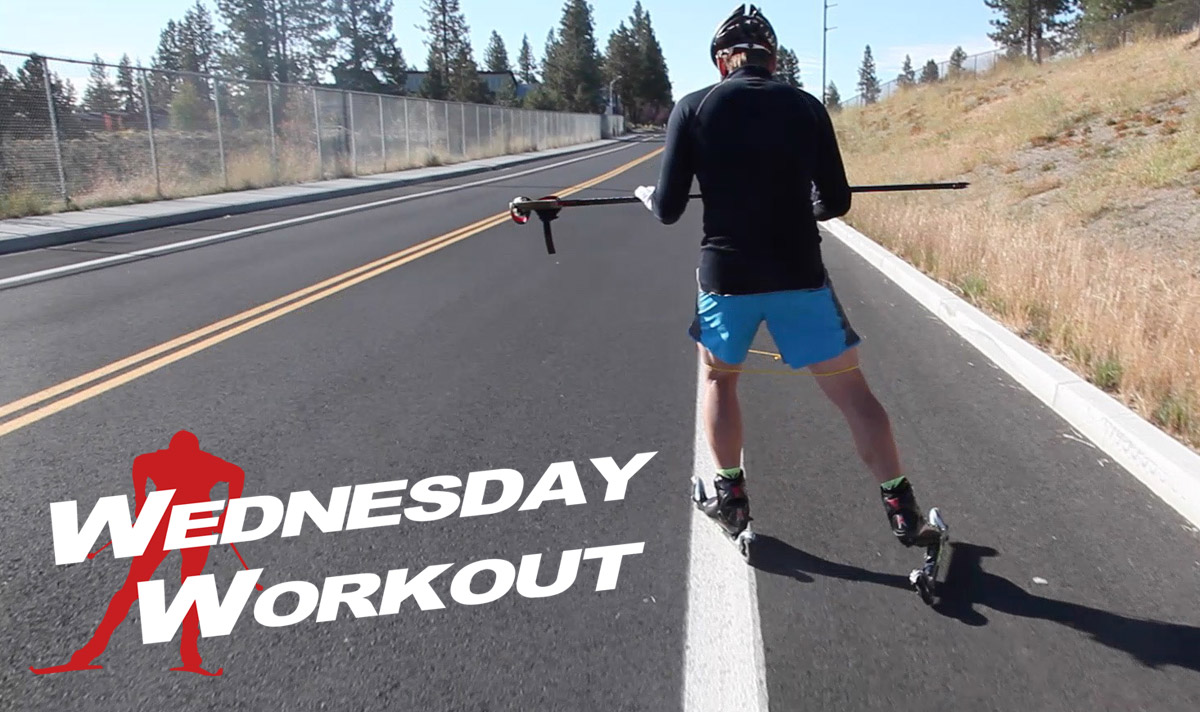
    From the penguin walk to what physical therapist Dave Cieslowski calls the “white line drill”, now is the time to embrace strength and efficiency in your skate skiing. But with snow not exactly flying in abundance yet, it’s also time to break out the rollerskis for a disciplined workout to hardwire some specific biomechanical cues.

    This Wednesday Workout is an extension of Cieslowski’s Wednesday Workout #1 where we learned how to increase skiing efficiency by engaging the glutes. If on-snow or pavement, Cieslowski advises to start slowly, skate skiing at an intentionally slow speed to feel the glutes firing.
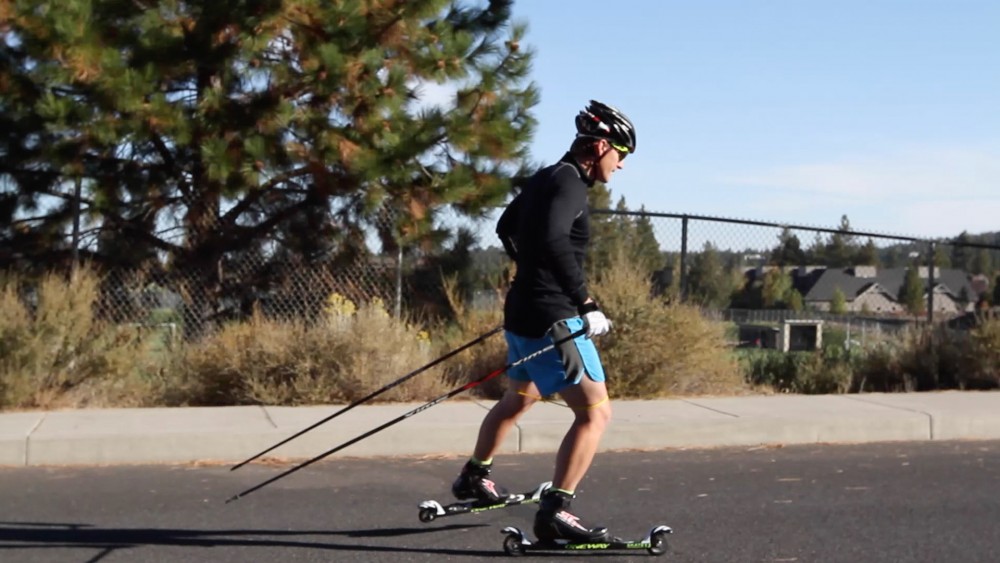
    Dave Cieslowski uses a therapy band above his knees to help cues the glutes to fire while skate/roller skiing.
    Dave Cieslowski uses a therapy band above his knees to help “cue” the glutes to fire while skate rollerskiing.

    The Workout

    Part 1:

    1. The penguin walk — a simple back and forth motion using a therapy band stretched around the top of the knees (see video below) — allows the athlete to “cue up” the glutes. In other words, you’ll begin to understand how it feels when the glutes are indeed firing.
    2. Rock back and forth on the skis for two to three minutes. You’re trying to “teach” the glutes to help stabilize your body while on skis.

    Part 2:

    1. Without poles go ski while still using the therapy band above the knees. When you come up onto the ski, try to the get the glutes to fire (squeezing the glutes together), keeping the hips high, and remain on the ski a bit during the glide phase.
    2. Do the same drill with poles.

    Part 3:

    1. Find a gradual uphill suitable for no-pole, V2 and V2 alternate skiing.
    2. While still using the therapy band, and without poles, ski uphill keeping the white line of the bike lane as centered as possible. The objective is to move up the hill without what Cieslowski calls significant “lateral translation”. You want your force going “down the trail”.
    3. Repeat with poles using V2 and V2 alternate technique.


    Dave Cieslowski is a DPT (Doctor of Physical Therapy), CSCS (National Strength and Conditioning Association Certified Strength and Conditioning Specialist). He also works with the U.S. Nordic Combined Team in and out of the competition season.

  • Wednesday Workout: Taming Compartment Syndrome (with Video and Mini Podcast)

    Wednesday Workout: Taming Compartment Syndrome (with Video and Mini Podcast)

    Taming Compartment Syndrome in this Wednesday Workout
    Bend-based physical therapist and strength/conditioning coach Dave Cieslowski demonstrates an exercise to help tame compartment syndrome.

    BEND, Ore. — Two letters for better or for worse that we often associate with the negative sides of too much skiing are PT— as in physical therapist. Based in Bend, Dave Cieslowski is a licensed physical therapist and certified strength and conditioning coach. He has a core group of cross-country skiers who take his word on injury prevention and treatment — that group includes the U.S. Nordic Combined team.

    One common overuse injury is compartment syndrome, or what specifically is called exertional compartment syndrome. Painful? Yes! If you don’t take my word for it, just read this post from former U.S. Ski Team member and distance skier Kris Freeman.

    OK, it’s painful, but according to Cieslowski, it may be preventable and treatable in some cases without surgery.

    Here are some basics: pain and/or numbness may develop when a muscle becomes swollen during exercise and the compartment containing the muscle does not expand. For skiers, this most often occurs in the lower leg where there are four muscle compartments — commonly, when compartment syndrome is suspected in a skier, symptoms are often evident in either the calf or shin area.

    According to Cieslowski, the onset of compartment syndrome that specifically affects the shin is more likely in skiers who raise their toe up during the return phase (just after the leg push off) while skate skiing. That action, the toe raising, may eventually cause pain in the shin area.

    Here’s a short podcast episode in which Cieslowski describes the reasons for the following exercises (press the play button below).

    What You’ll need for exercise #1:

    • 2 x 3 ft. resistance tubing
    • A secure structure to anchor the resistance tubing
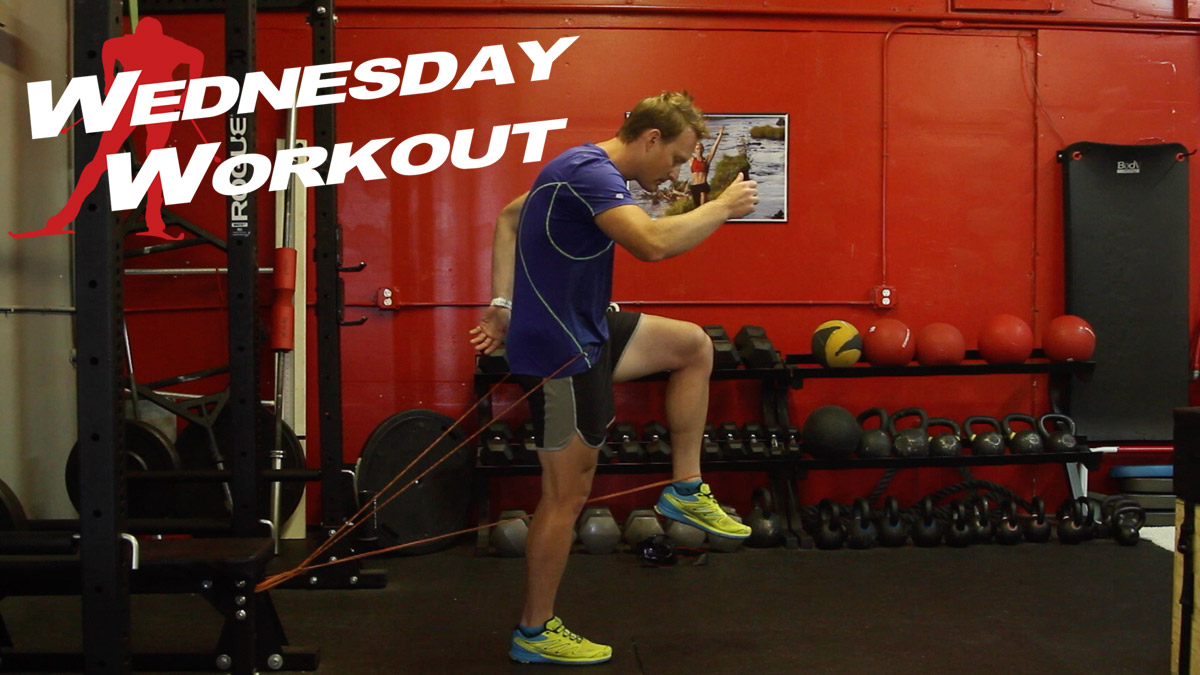
    • Place one piece of tubing around the top of your hips, the other around one ankle
    • Watch the video for more specific details about how to proceed

    What You’ll need for exercise #2:

    • 1 x 2 ft. resistance tubing, both loose ends knotted together to form a circle
    • Step through tubing and position just above the knees
    • Dumbbell and weights appropriate for a single leg step up onto an approximately foot high box
    • Watch the video for more specific details about how to proceed

    For both exercises, use caution and determine the proper number of sets to ensure you are fatiguing the appropriate muscles. You’ll note in the video that Cieslowski’s cycle rate is slow — that is on purpose. These are not meant to be high cycle rate exercises.