From the FasterSkier archive — posts syndicated from athletes’ and coaches’ own blogs between 2004 and 2012, kept online as published. Current coverage is at fasterskier.com.
Author’s note: From the PT: a Look at Chronic Exertional Compartment Syndrome is a good introduction to the current article and includes a more detailed description of the anatomy, pathophysiology, and associated research. Since it was published on FasterSkier in 2022, that article has served as a resource for the Nordic skiing community, and I have fielded multiple requests for guidance from skiers around the world with CECS. In that article, I suggested that conservative treatment has potential; however, I was still more optimistic about surgical intervention based on the available research. The published research hasn’t changed, but my experience has, and now I’d like to make the case for non-surgical treatment of CECS. As with any medical information found on the internet, this article should be taken as the opinion of the author and not a replacement for direct consultation with a medical provider.
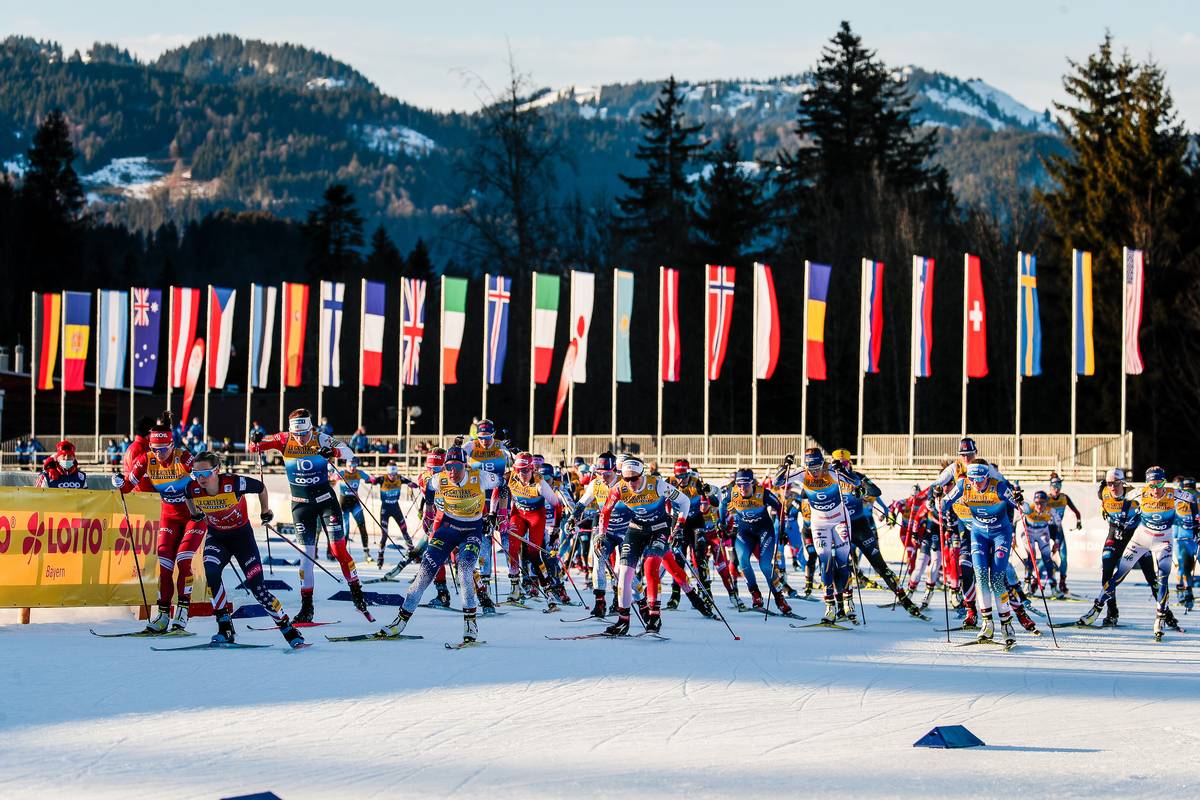
The start of the women’s 10-kilometer mass start free during Stage 3 of the 2021/22 Tour de Ski in Oberstdorf, Germany. (Photo: NordicFocus)
The primary symptoms of Chronic Exertional Compartment Syndrome (CECS) include pain, weakness, and/or numbness that only occurs with exertion. These characteristics are fairly distinct, although there can be enough overlap with other soft tissue disorders, namely tendinopathies, that CECS remains a diagnosis of exclusion when everything else has been ruled out. In Nordic skiers, symptoms affect the anterior, lateral, and/or posterior compartments of the lower legs and are most common with (often exclusive to) skating. Typically, or at least initially, these skiers will be symptomatic with high-intensity skating, but will be asymptomatic with classic skiing and running even at the same intensity.
The physiology is relatively straightforward: our muscles are wrapped in a thin layer of connective tissue called fascia. As muscles repeatedly contract, especially at high intensities, they become enlarged; however, fascia is not elastic and does not stretch. If the muscle size exceeds the volume of the fascial compartment, blood flow is constricted, oxygen delivery is decreased, and the muscle gets strangled. This hypoxia in the muscle triggers a pain response, which is usually a good defense mechanism to make us stop doing something that the body perceives as harmful.
The why is far more complex: some theorize that the fascia is just wrapped too tightly. Others suspect that the muscles are too big for the fascia. In either case, the common solution is a surgical fasciotomy where an incision is made in the fascia to increase the size of the compartment and decrease its stranglehold on the muscle.
The why with skiing is even more complex. With CECS occurring with skate vs. classic, the initial theories centered around the ski retrieval phase. This makes sense with the work being done by the tibialis anterior muscle, which dorsiflexes the ankle while the ski is brought back to its glide phase position. Except that CECS can affect other lower leg muscles/fascial compartments which would not be active during the retrieval phase. Arguably the biggest difference between skate and classic techniques, at least as far as the muscles of the lower leg are concerned, is the stability demand of balancing on the gliding ski: the muscles must work much harder with skating.
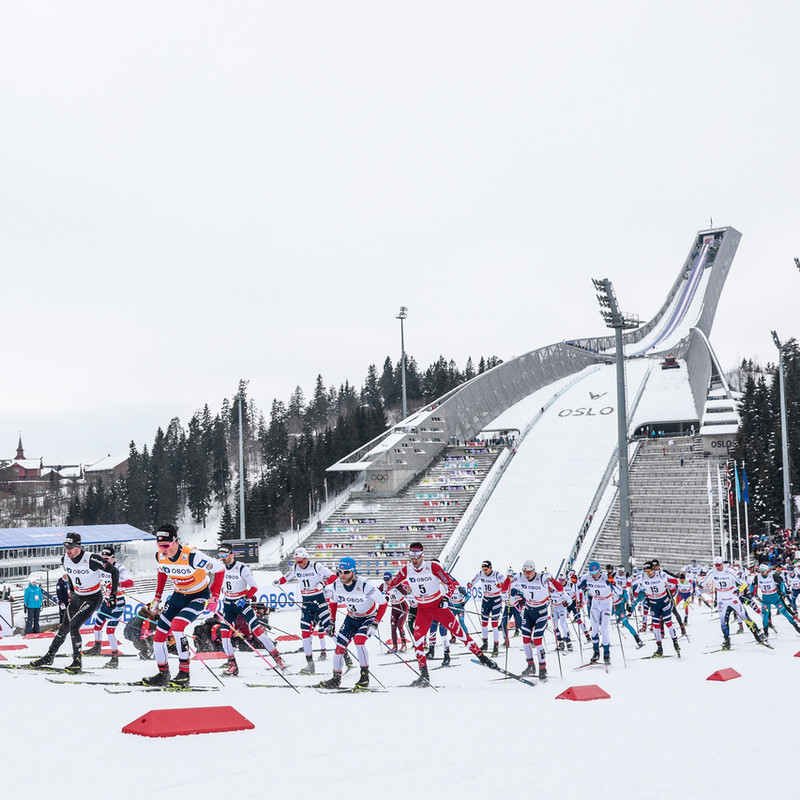
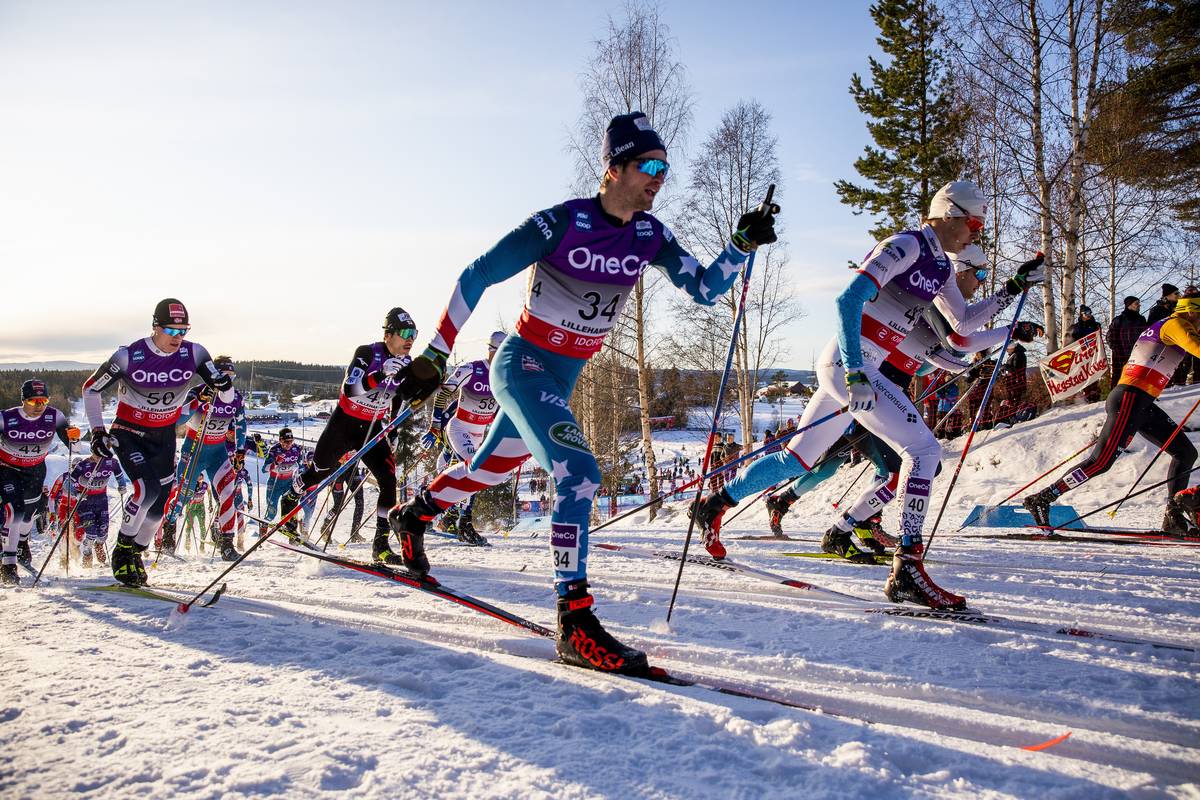
A dense field of men’s skiers during Saturday’s 15 k mass start classic in Falun, Sweden. (Photo: NordicFocus)
A case study
The patient in our story is an 18-year-old male skier. He is a very competitive skier regionally and would have qualified for Junior Nationals had his skate races not been disrupted by leg pain. We had our initial physical therapy visit in mid-January, mid-race season. He reported pain, progressing to numbness, in both shins, which only occurred during high-intensity skate skiing. Symptoms were first noticed the previous winter during a skate race in icy conditions, but he didn’t have any additional episodes for the remainder of that season or during the summer. In October, however, symptoms returned during a skate interval session, persisted with any high-intensity skating, and got progressively worse through the race season. He was unable to finish his last skate race due to severe pain.
In physical therapy exams and diagnostics, we are keen on reproducing patients’ symptoms. If we can do this in specific ways, we can begin to rule in or rule out anatomical structures which may be involved. For better or worse, I was unable to reproduce the patient’s symptoms in the clinic. This would likely rule out a muscle strain or tendinopathy, both of which tend to be painful with resisted tests (assuming we can make the tests both hard enough and specific enough). Differential diagnosis still included lumbar radiculopathy (nerve irritation at the spine leading to symptoms in the leg) or a bone stress injury (a.k.a. stress fracture), but neither of these fit the picture of symptoms being exclusive to high-intensity skating and absent at rest or especially with other modes of exercise. The symptoms really fit the pattern of CECS. To confirm, the gold-standard diagnostic would be compartment pressure testing; however, this testing is quite painful, fairly inconvenient (unless you have a rollerski treadmill in the clinic), and primarily aimed at determining if the patient is a candidate for surgery. Since this patient was looking to salvage his race season and avoid, or at least delay, surgery, we opted to skip the pressure testing but assumed that he was dealing with CECS.
The remainder of the physical exam focused on ski technique, or at least the static components we could observe in the clinic: hip strength (fair), balance (compensated with lateral trunk lean), ankle dorsiflexion range of motion (appropriate), and foot stability (notable flexibility and forefoot varus). These findings were significant enough to suspect that the patient’s lower leg muscles were working very hard to maintain balance on his glide ski. The hip weakness and compensated single-leg balance made me suspect that if he was lacking stability from the top down, then he was having to work much harder from the bottom up, thus overloading the muscles at the ankle and leading to CECS.
The root cause of any musculoskeletal symptoms can be described as an imbalance between load being placed on the body and the body’s ability to tolerate that load. In physical therapy, we are looking to balance that equation. Sure, we can decrease load by telling patients not to do things that are painful, and some of that may be required in the short term, but we’re not in the business of telling people to stop doing fun things. Thus, much of the work we do is aimed at improving the patient’s ability to tolerate load. The trick becomes sorting out where there is room for improvement and how to get there.
His first round of exercises focused on balance without compensation (single-leg stance with a Pallof press and lateral hops to balance on one leg) and hip strength (side plank variants and fire hydrants). On the load mitigation side, we discussed using more supportive insoles, which he had only recently acquired, and training modifications with skating limited to short bouts of low-intensity skating and all high-intensity work done in the classic tracks.
At his second PT appointment, we were very fortunate to have the involvement of his ski coach who attended the visit with the patient. We continued exercise progressions for balance and hip strength; but we also got much more technique specific, identifying areas for improvement and providing corresponding cues: “heel down” (when asked to stand as if he was balancing on the glide ski, he was over-exaggerating the very common “hips forward” cue and shifting his weight so far forward that his heel was no longer on the floor. Arguably this is okay on steep terrain but not in this context), “tripod foot” (equal pressure on the inside, outside, and heel of the foot), and “weight shift with the hips” (get the center of mass over the glide ski via the pelvis vs. leaning to the side). He and his coach then took these cues to technique sessions and eventually higher intensity intervals.
At our next appointment a few weeks later, the patient reported zero symptoms with hard L4 skate intervals. Unfortunately, the rapid melt-off of snow in the West ended the race season before he could fully test the effectiveness of the intervention. However, as of the time of this writing, he has been skiing and training for five months without symptoms.
The critical reader (and all readers should be critical) might point out that we have a false sense of accomplishment because he hasn’t raced. I would argue that he has had plenty of pain-free training sessions that would have previously been symptomatic. The reader might say that this is simply a case study and an N=1 is pretty weak research. That is certainly true. A randomized, double-blind, placebo-controlled study with a very large population would be ideal. But a case study is not nothing. Not all skiers with CECS are going to respond to the same intervention. But if we have seen that it is possible to effectively treat CECS without surgery, then we might want to consider exhausting our non-invasive options first. The reader might further pick holes by saying that without compartment testing, we don’t even know for sure if this skier had CECS. That is also very true and should be acknowledged. In the name of science, I should have subjected the patient to the very unpleasant testing before and after our intervention to both establish a baseline and to prove that he was cured. But in the name of practicality and the patient’s well-being (along with the patient’s and family’s input), I declined.
Again, the story of one skier’s ability to overcome CECS without surgery does not mean that all skiers with CECS will have the same success. But it’s very much worth a try. If you are reading this article because you are a skier with CECS, I would encourage you to take a very detailed look at your skating technique and be very specific about your approach to changing it. This likely means working on the component parts in a low-complexity setting (not on skis) and progressing to technique sessions on skis with a heavy emphasis on the cues that you and your support team (coach, PT, trainer, etc.) have identified. Hopefully this can be a path back to fun, fast, and pain-free skiing.
Help Support Our Coverage!
FasterSkier is independent, reader-supported, and free to read. If health and training coverage like this is worth something to you, a voluntary subscription keeps it coming.
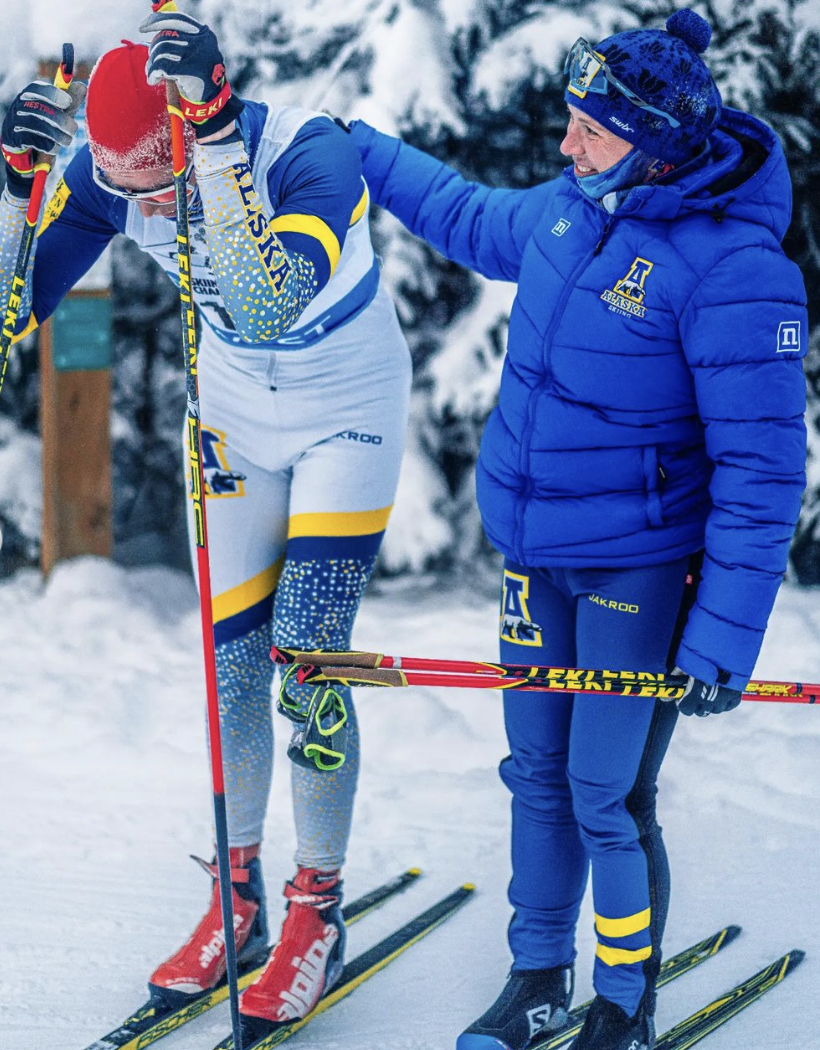
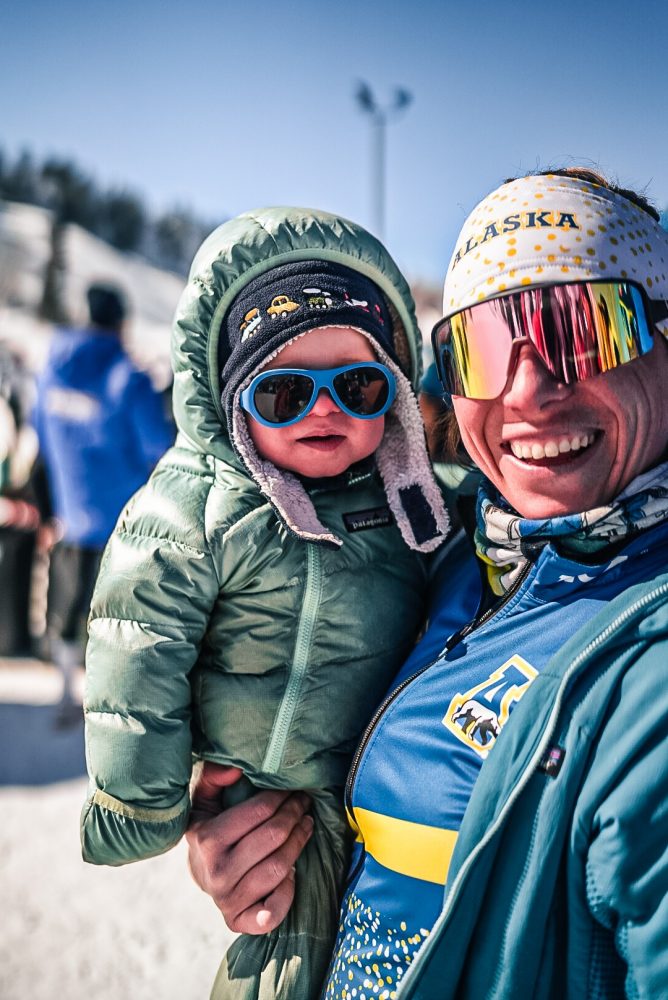
The journey into motherhood, though challenging, has also been rewarding for UAF head coach Eliška Albrigtsen. (Photo: Tobias Albrigtsen / @untraceableg)
Part 1 of this story details Eliška’s experience coaching through pregnancy and the birth of her son. Keep reading to learn about the challenges she, like many women, experienced during the postpartum recovery process, and what it took to navigate year one of life on the road with baby Viggo.
Expectation versus reality.
When preparing to interview Eliška Albrigtsen about her experience pairing NCAA coaching with new motherhood, I expected the challenges she faced during her transition to primarily be focused on the balancing act of managing a demanding job with frequent travel and a new baby. Maybe a few relatable stories of airport meltdowns, sleepless nights in hotels while on the road with the team, and inopportune timing of diaper blowouts. Or any number of other ways societal systems in the US seem to be structured in opposition to new moms in the workplace.
But Eliška’s passion for her job and dedication to her athletes were abundantly clear throughout the conversation; coaching is where she thrived. Her grit and energy allowed her to problem solve bringing baby Viggo on the road with the team – perhaps paired with the added fortune of a husband whose skill set includes waxing and ski testing and a well placed mother-in-law eager to help care for her grandson. And the team embraced its new member without hesitation.
In reality, the biggest challenges Eliška faced in returning to coaching postpartum were connected to the physiological impacts pregnancy and delivery had on her body. In short, it was a discussion on the shortcomings of our healthcare system and the myriad of ways the current standard of postpartum care falls short of what many women require to restore their body to full function.
Her story highlights a few key takeaways for programs looking to support women coaches surrounding pregnancy; in particular, there’s much more to the return to coaching than navigating who will care for your child while you’re out training with athletes and traveling to races. Respecting the timeline of a slow return, and perhaps offsetting the costs of postpartum physical therapy, may be an essential component of an improved and holistic support system.
Eliška Albrigtsen in action at US Nationals in Soldier Hollow, UT. (Photo: Tobias Albrigtsen / @untraceableg)
Postpartum Recovery
A theme of Eliška’s narrative of her perinatal experience was the ways in which her “athlete mindset” served and hindered her ability to roll with the punches.
While women like Kikkan Randall, Marit Bjørgen, Aino-Kaisa Saarinen paved the way for women looking to begin their family before retiring from professional skiing in many ways, Eliška said that the ease with which they outwardly seemed to rebound beyond their previous levels of fitness was, in some ways, a disservice to women like herself who did not experience as smooth a return. In her mind, she had expected a comparable experience given her athleticism and good health, but quickly learned that women might be better served using caution when extrapolating from outliers.
“You see these professional skiers having babies and then coming back and winning gold medals at [the] Olympics,” she said. “And you’re like, ‘Oh, yeah, that’s gonna be me.’ But no one really sees the giant support team they have behind them.
“They have professional doctors, physical therapists, and strength and conditioning [specialists] to go through their pregnancy with them, monitoring everything, having them at the birth, and then jumping right into the recovery. As a coach, you don’t get that. You probably have the same amount of on-ski hours as professional skiers – not the same quality of course, but you can’t do your job without being there. So I think that’s how most of our ski community sees pregnancy – so easy and you are an even better athlete afterwards, because all these women did it…
“For me, it was the opposite. It was hell. I can’t wear the clothes that I wore when I was pregnant because I have extreme PTSD from that… it was such a, not just physically but painfully, impacting experience.”
Though expectation and reality could not have been more different, her drive to recover from the injuries sustained from pregnancy and birth, and the creativity required to adapt during the recovery process, mirrored her general approach as an athlete more broadly.
“I think the athlete mindset in me was, ‘Okay, I had this baby. Now I put myself through physical therapy, and I’m gonna recover’… Just like after having a shoulder dislocation or having a torn iliopsoas, all those pretty crazy injuries – I knew that eventually you get better, and you get back to yourself.”
What Eliška identified as the biggest physical challenge she faced after the birth of her son was the repair of a condition called diastasis recti (DR), which is a separation and consequential loss of function and strength of the rectus abdominis muscles.
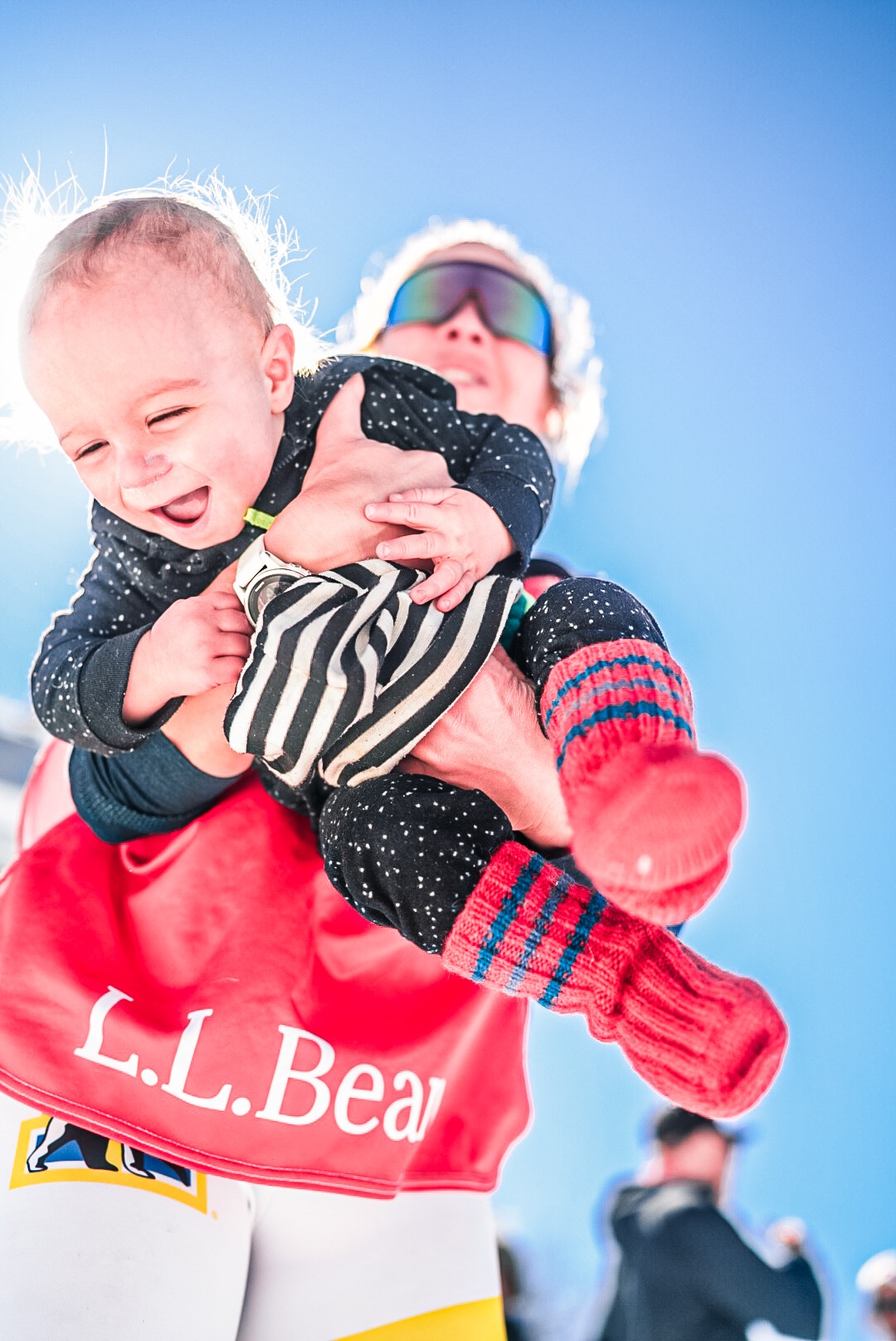
Happy baby and happy mom. (Photo: Tobias Albrigtsen / @untraceableg)
During pregnancy, as a woman’s belly expands to accommodate the growing baby, the muscles of the abdomen are forced to stretch. The deeper muscle layers, known as the transverse abdominis, are structured like a corset wrapping around the belly, giving them a greater capacity to expand. However, the rectus abdominis muscles, better known as the “six pack” muscles, run vertically while connected by fascia, and have significantly less ability to adapt to the expansion.
Instead, the outward pressure and growth of the belly causes the rectus abdominis muscles to separate, thinning and weakening the fascia as it stretches, or in extreme cases, tearing it.
“When I was the most pregnant, my six pack was under my armpits.”
This connective tissue cannot simply snap back to its original state after delivery. As fascia lacks the blood flow of muscle tissue, it is slow to heal, leaving many women with a gap between muscles known as a diastasis. All women experience some amount of ab separation during pregnancy, but if the gap of two or more finger widths between the muscles persists postpartum, she is diagnosed with DR.
Because of the combination of her stature, a short torso, and the size of her baby, Eliška found herself with an extreme separation.
“Basically, you could stick your whole fist into my stomach. That was the biggest problem for me because I basically lost my core. And my core was a big part of me as an athlete – not just as a skier, but as an athlete. So that was really hard.”
As she hopes for a second child down the road, any surgical repair options were contraindicated, and instead, Eliška dedicated herself to a physical therapy regimen. She felt lucky to have access to a Fairbanks-based Osteopathic medicine expert, Dr. Todd Capistrant, who specializes in the Fascial Distortion Model and was therefore primed to help Eliška improve her diastasis.
“I saw him basically on a weekly basis.”
She also met regularly with a pelvic floor physical therapist, both to work on the diastasis, and to restore appropriate function to the muscles of her pelvic floor. Her PT identified that her pelvic floor was hypertonic, meaning the muscles carried tension chronically, rather than contracting and relaxing in functional patterns. Like holding a flexed arm hang and then being asked to knock out a set of chin-ups, this chronic low-level tension leads to fatigue in the pelvic floor muscles, preventing them from outputting the strength and tension required to support the organs sitting inside the pelvic girdle and interact appropriately with surrounding musculature when recruited during activity.
With the guidance of the PT and a set of progressive exercises to relax and engage her muscles appropriately, Eliška saw progress, but it took time for her muscles to function in coordination subconsciously.
“It took me probably around eight months to incorporate the mental [and neuromuscular] connections back. I was able to [engage the muscles] when I wanted to, but all the muscles of the pelvic floor, everything that’s sitting in the pelvis, they were not working with the rest of my body.”
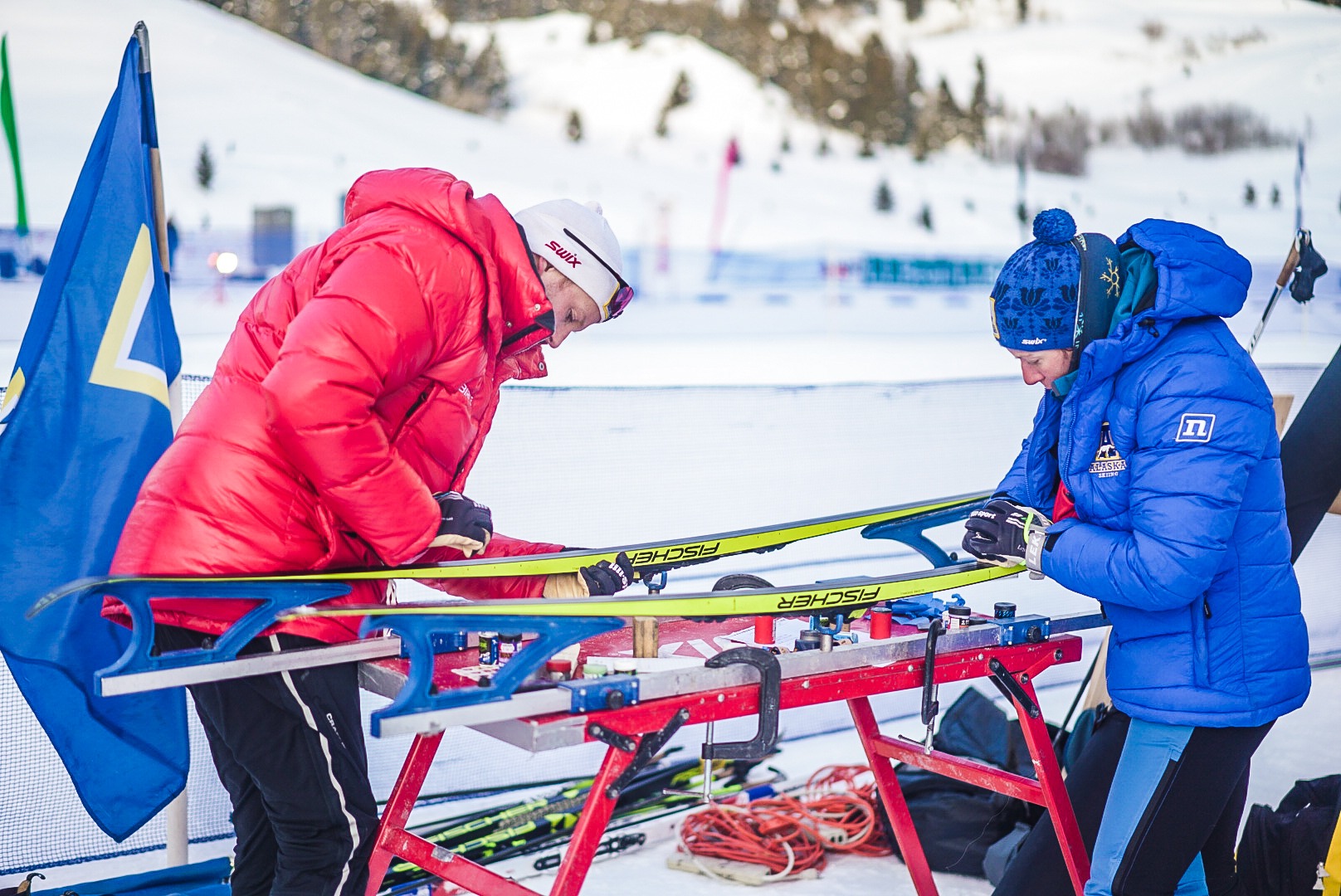
On the bench: Eliška Albrigtsen prepares skis for the UAF athletes. (Photo: Tobias Albrigtsen / @untraceableg)
She expressed feeling lucky to have access to high level care in Fairbanks, including her therapist who could incorporate a variety of techniques to help her recover, including deep tissue massage, cupping, electrical muscle stimulation, and biofeedback.
“I think biofeedback for athletes just works the best. Because we’re such strong willed people. Like, if we see it happening, we can really focus on making it happen more.”
An unexpected benefit of time and resources being placed into learning how to strengthen and reintegrate her deeper core musculature trickled down to her athletes. She recognized that several of her athletes, who had complained of back pain surrounding core workouts, were not sufficiently engaging their transverse abdominis muscles, instead relying too heavily on the outer rectus abdominis or other smaller core muscles. Teaching the techniques she learned through PT helped improve the form of her athletes, relieving the back pain they had experienced previously.
“It definitely deepened my understanding of how the core should work, and how we use it when we ski.”
As she navigated her own challenges, she became aware through talking with friends of how common these experiences are amongst mothers. Describing herself as “someone who says everything”, she felt it was important to both be open regarding the challenges she’s faced, and the resources and options available for women to make progress toward recovery, rather than accept the conditions as permanent.
Most women only receive one postpartum checkup, approximately six weeks after delivery. As my own pelvic floor PT described it, these visits typically only check to see that the tissues have healed and that there are no visible pelvic organ prolapses, but most midwives and OB/GYN practitioners do not have the depth of knowledge to assess muscle function, hence the need for an evaluation from a pelvic floor PT. However, quality pelvic floor physical therapy is not universally available, and as it is not always covered by insurance, making it cost-prohibitive for many women to continue care long enough to make sufficient progress.
“I think the most tragic experience post-pregnancy that I had was the realization that women are left being damaged from bringing life to the world.”
As she discussed her own experience with the women in her community, in turn, many of them shared that they continued to suffer from the impacts of ab separation or pelvic floor dysfunction from pregnancies, including friends who were more than ten years postpartum. Some of these women had given up activities they had enjoyed previously, like running, because they felt as though they were “spilling their guts” out of their bellies due to a lack of core function.
“How is this okay for women to live this way? That was just mind blowing to me.”
Imparting the knowledge she gained in the process, and advocating for women to find their own ways to make it work, she offered up suggestions.
“I was just like, ‘Hey, if you can’t go to physical therapy, this is how you tape your belly, so at least you can start hiking fast.”
At roughly 13 months postpartum at the time of the call, Eliška recognized the improvements she’s made, while still acknowledging she has not fully recovered.
“It’s [been] more than a year, and I feel functional. I still have pains and I would not go and enter a race, because my brain can push much harder than my body can, so I know I would hurt myself. But I’m so much better than most of my friends that, you know, [had to] just give it up…”
Eliška Albrigtsen lead the UAF Nanooks to an historic seventh place finish at 2022 NCAA Championships following the birth of her son in February 2021. (Photo: Tobias Albrigtsen / @untraceableg)
As she worked with athletes through the fall and winter, Eliška found ways to adapt her ski technique to avoid putting unnecessary strain on the musculature she was working to rehab, and work instead with the muscles that already had the necessary strength. In particular, she needed to change her doublepole technique.
By returning to the older style of doublepoling, which involved less of a crunch through the abdomen than modern technique, instead increasing the bend at the waist and relying more heavily on the arm and shoulder muscles.
“I don’t have the strength there anymore [to crunch]. My muscles are two three packs, they’re not connected. So I go into doublepole and I tighten my lower belly, but then I pull my butt up kind of like into downward dog instead, and work with my arms again.”
Multitasking: Eliška Albrigtsen feeds her son trailside while on the road for competition. (Photo: Tobias Albrigtsen / @untraceableg)
Another lingering problem she has experienced is a result of the endocrinological changes experienced surrounding pregnancy. To allow the body to grow during pregnancy and a widening of the hips for delivery, the body releases an aptly-named hormone called relaxin, which acts on cartilage and other soft tissues to allow expansion and increased joint mobility to occur. The production of relaxin typically declines after delivery, but remains higher than normal for the duration of breastfeeding.
While beneficial for pregnancy, it also puts perinatal women at a higher risk of joint instability and consequently injury.
Eliška shared that she seems to produce an above average amount of relaxin, which has continued to affect her postpartum as a nursing mom. She experienced joint pain, particularly in her pubic symphysis joint at the front of the pelvis, with unexpected movements – like slipping on ice or mud. “And it’s always slippery here. Like 10 months out of the year.”
“On skis, I don’t have a problem. Because everything’s gliding and I already have the natural anticipation of gliding. But walking and slipping – I try to catch myself and my muscles, my joints, my tendons are just too loose.”
Reflecting on her journey through the first year postpartum, the lack of care available to most women remained at the forefront of her mind. The impact of these types of conditions, which linger if left untreated, affects more than just the level of activity a woman can enjoy. As those who have experienced it (waves hand) can attest, the emotional toll affects quality of life more broadly.
“I would absolutely fight for every woman to be able to have a year of free PT [after pregnancy]. You just need your life back.”
Life on the Road
There’s a commonly used phrase when it comes to raising children: “It takes a village.” This resonated as Eliška shared insights into what support was necessary to allow baby Viggo to travel with the team through the competition season.
While children under two-years-old are typically able to fly for free on their parents’ laps, the travel of the person who would care for Viggo while Eliška was working is not. Fortunately, her husband Tobias was already incorporated as a volunteer assistant coach, and had both the skillset and the NCAA certifications to play a variety of roles during travel, which also got him on the payroll to offset travel costs.
“I’m lucky that my husband’s quite good tester and waxer as well. And traveling with a full team this year, six [women] and six [men], I knew that we will need more than two coaches to wax.”
And, conveniently, Tobias’ mother is based in Boulder, CO. “She was able to actually drive to all the races and babysit when we were ski waxing and racing.”
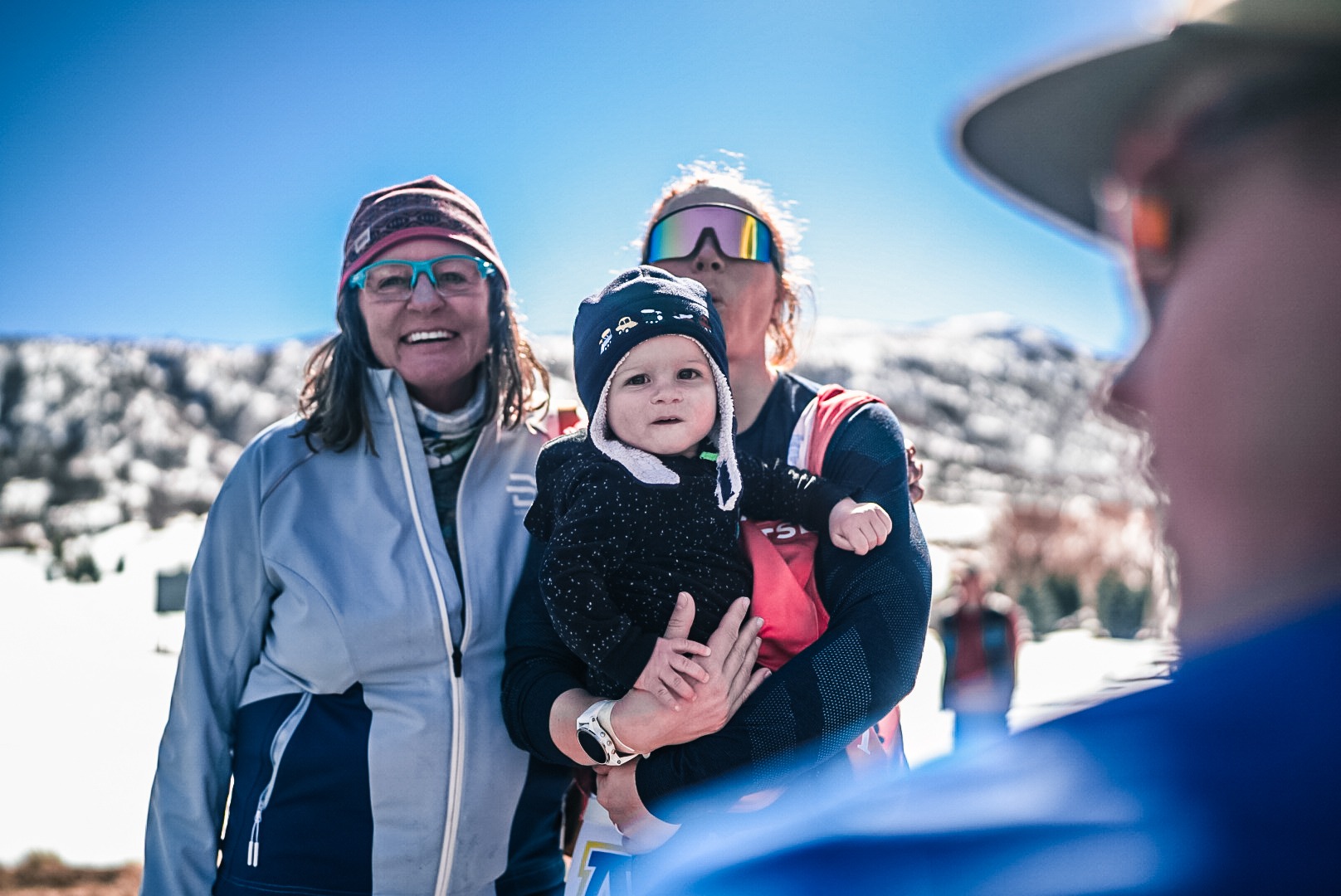
The village: Eliška Albrigtsen has help from her mother-in-law during the RMISA Championships in Steamboat Springs, CO. (Photo: Tobias Albrigtsen / @untraceableg)
For US Nationals, UAF collaborated with other Alaskan clubs to wax, but it was still useful to have an extra driver to bring athletes back and forth to the venue. Consequently, they paid out of pocket for the flight, but Tobias was able to get a per-diem salary as a driver. “So we got at least the food covered,” she laughed.
For other RMISA and SuperTour races where UAF was only waxing for their own athletes, Tobias could have his travel expenses fully covered in exchange for his work. It’s perhaps a model that’s hard to replicate for other mom-coaches, but still demonstrates that with some creativity and determination, bringing the family along for the ride is possible.
“We call it the primary. He’s the primary on the baby when we have training days, where me and my assistant go with athletes and train. And then when we were testing and race waxing, grandma was the primary. And oh my God, bless her heart — she paid for all of her gas and her accommodation and food. She would just come to the house where we were staying when we had to leave and just babysat for us… So that’s the way that we made it work, but it’s a very, I think, exceptional situation.”
Was traveling back and forth from Fairbanks to Colorado and Utah challenging with a toddler? Yes. But Eliška knew it was something they would need to navigate as a family regardless of her career.
“I know living in Alaska, he’s gonna fly anywhere he goes. That’s just what it is. So that was just like one thing that we were like, ‘Yeah, there’s no way around it.’ We did have to travel with more things. Because you have to have the car seat, we have to have the crib, we had to have a bunch of diapers with us.”
The system worked for the first year, but it will need to be modified for next season. The full RMISA calendar has not yet been set, however, the regional championships will be held in Anchorage, which will make at least one competition easier to travel to.
From there, it will be running the calculus on what makes sense financially. She laughed that Viggo is already a squirmy baby to keep on their laps on the plane and will need his own seat next year, but she is also not sure whether he will still be nursing, which may make it easier for her to leave him behind with Tobias.
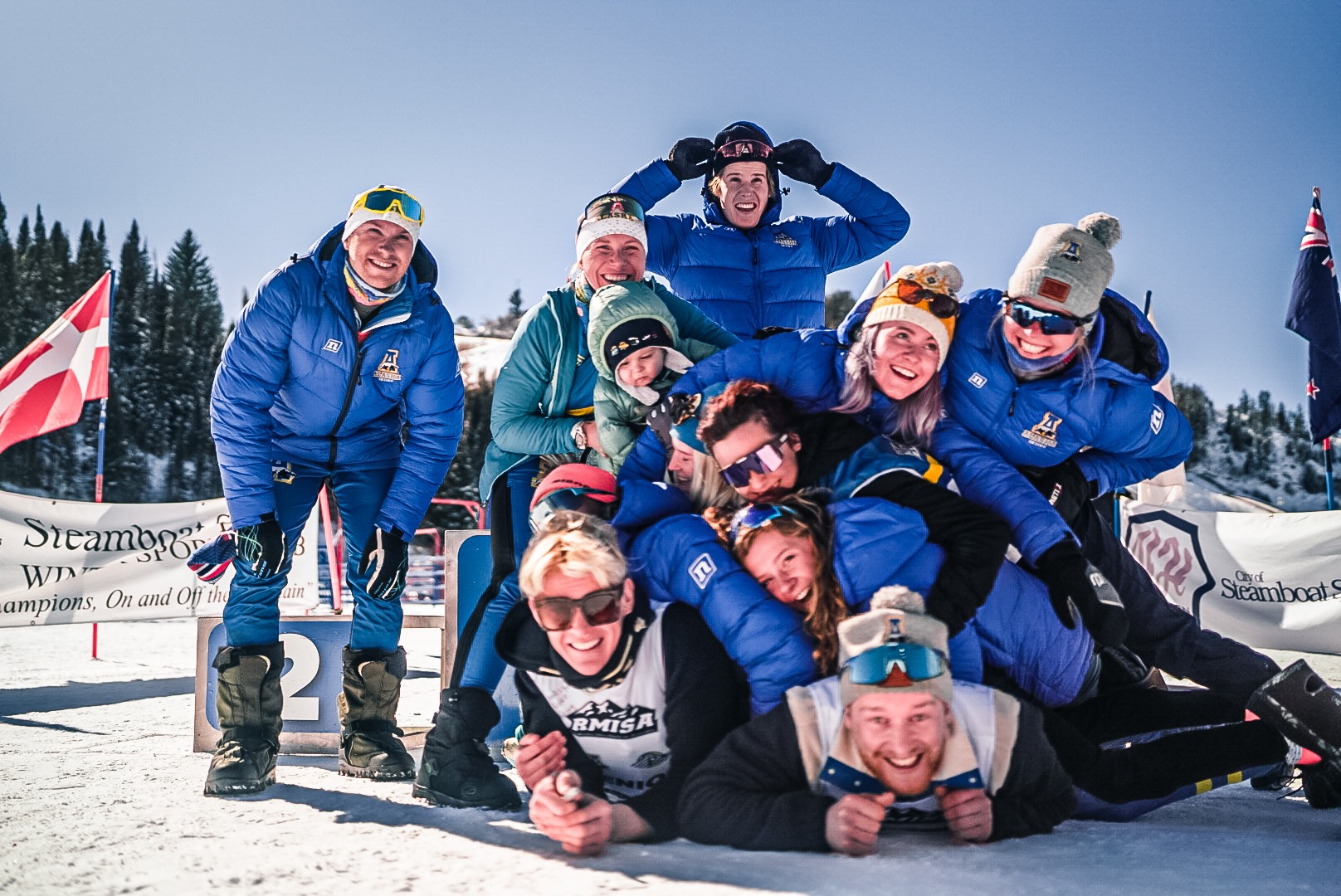
Just another member of the team: the UAF skiers pose with coach Eliška Albrigtsen and baby Viggo at the RMISA Championships in Steamboat Springs, CO. (Photo: Tobias Albrigtsen / @untraceableg)
In terms of the impact to the team, better worded as the lack thereof, Eliška felt Viggo’s presence on the road improved the atmosphere. Rather than lamenting their littlest teammate, they found humor and joy in his presence.
“When you’re stressed before the race, and you’re having breakfast and you’re barely putting the oatmeal into your mouth [because of nerves], and the baby in front of you is just like throwing the food and laughing… I think that it helped with the team atmosphere, for sure.”
In addition to helping distribute the weight of ski, wax, and baby gear when navigating through the airport, the athletes also served as an extra set of eyes in the team house.
“The team, in general, was super helpful as well. When we would be waxing in the garage, they were playing with Viggo, and he believes they’re all his brothers and sisters, I’m pretty sure.”
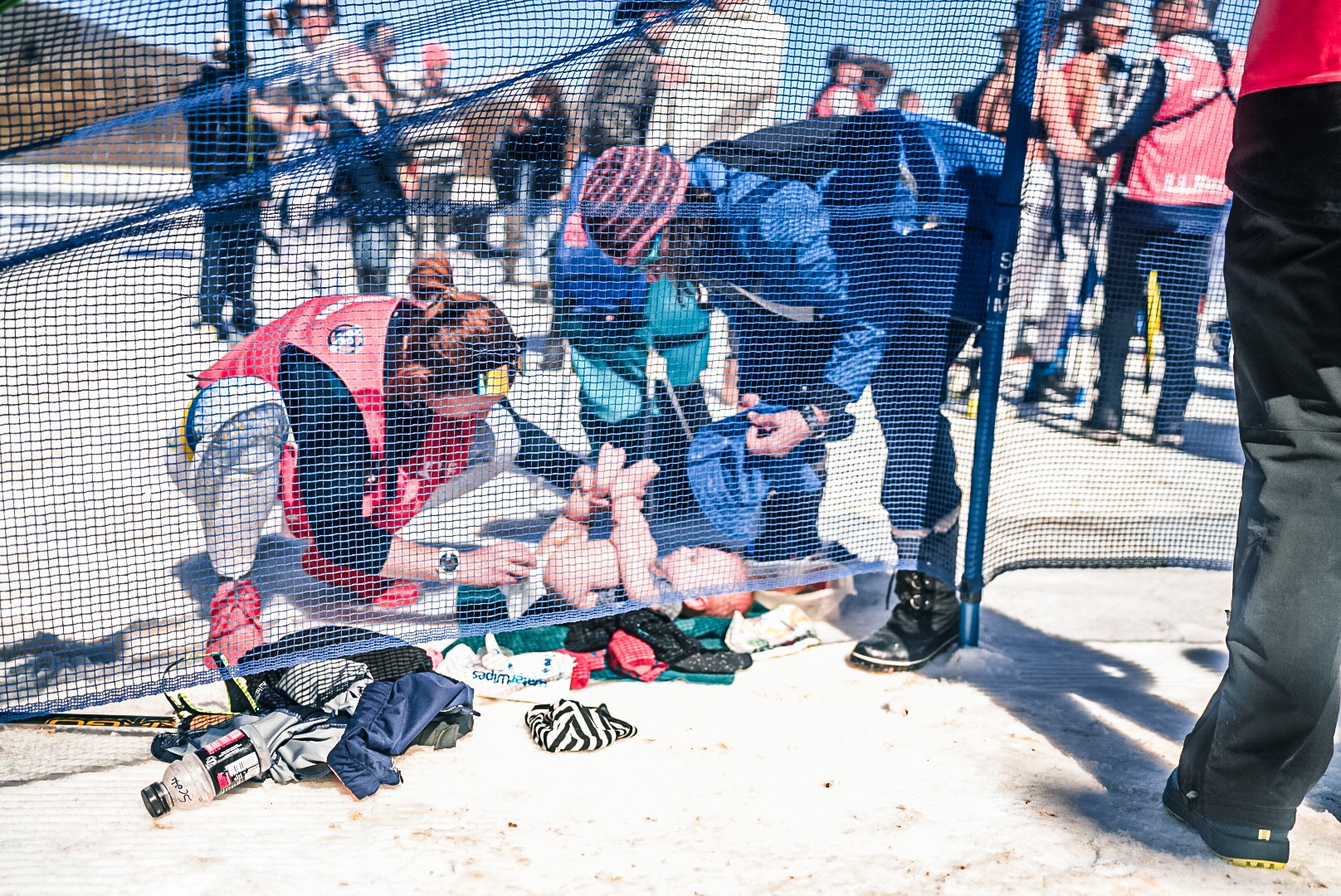
A relatable image: the al fresco diaper change during a competition weekend. (Photo: Tobias Albrigtsen / @untraceableg)
Reflections on the Experience Thus Far
Praising the community in Fairbanks, Eliška was grateful for the help and support she received through her perinatal journey, which allowed her to not only continue as head coach, but help the team to new heights this season. Rather than holding her back, becoming a mother enhanced her ability to lead the Nanooks program.
“I also feel like my season was so much more successful this year because I really wanted to go home to my baby. So I was really trying to work smarter and more efficiently, and I think the athletes probably had that push too.”
While some might fault a woman who shares that her priorities have shifted since having a child, Eliška explained the number of ways this desire to optimize practice time served her team.
“I was always driven for success – I love being successful. But now it’s more like, ‘Yes, I will be successful so then I can spend more time with my child.’”
University of Alaska Fairbanks head coach Eliška Albrigtsen shares her experience with pregnancy, postpartum recovery, and life on the road with baby Viggo in tow. (Photo: Tobias Albrigtsen / @untraceableg)
As to whether there was anything she would have done differently, Eliška’s answer was more focused on reducing barriers to mom-coaches as a group surrounding pregnancy.
“I think the side that no one ever talks about is: how fit coaches should actually be able to do their job well.”
Because her insurance cycle was aligned with the school calendar, her deductible reset in July. Having maximized her out of pocket expenses with prenatal care and delivery, this meant the physical therapy treatments she needed were essentially free for the first four months. However, after the plan turned over for the new year, each pelvic floor PT visit cost $60–70, and she was looking to go twice per week to continue to make steady progress. This adds up quickly, particularly for a family relying on one salary, which happens to be a ski coaching salary.
While nationwide free postpartum PT for all women would be the ideal, Eliška proposed that these costs should, at minimum, be offset by the school or program.
“That is something I would definitely fight for women coaches. Talk to your boss, or whoever, and tell them, ‘If you want me to come back to the same level of coaching, you need to pay for occupational therapy for me to recover.”
ZHANGJIAKOU, CHINA — Just about everyone involved with the U.S. Ski Team has a story about physiotherapist Zuzana Rogers fixing some weird corner of their body.
“I had a dislocated cuboid bone, and she diagnosed it over Skype and essentially talked me through repositioning it, and I was better,” said Holly Brooks, the retired Olympic cross-country skier from Alaska. “It was insane.”
Eli Brown, one of the team’s ski technicians, thought he had an Achilles tendon problem.
“She worked on me for five minutes and gave me this, like, grab-onto-the-side-of-my-groin type of claw move, and it fixes it all the way down,” he said. “It’s like magic voodoo.”
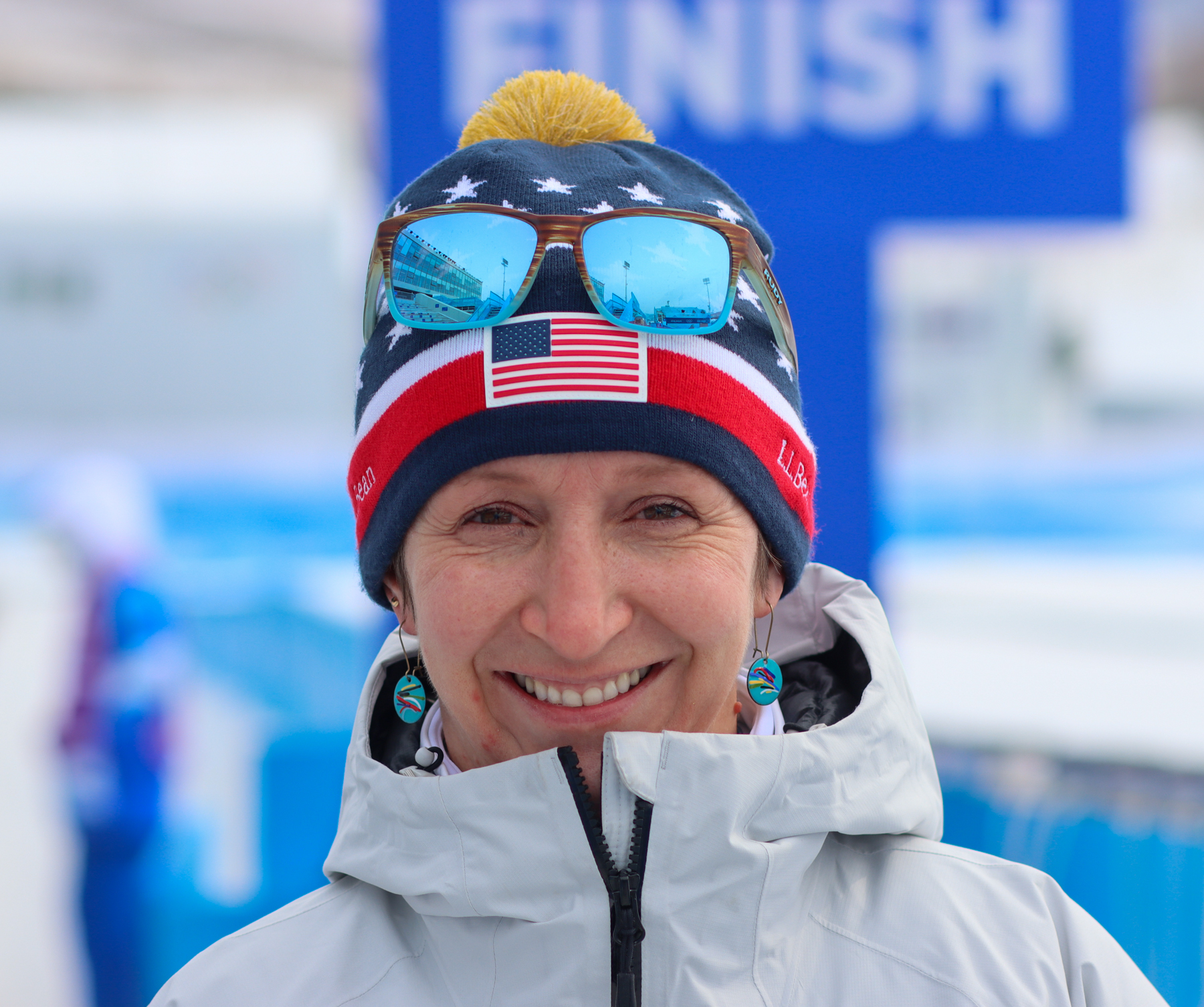
Zuzana Rogers, an Alaska-based physical therapist, poses for a photo at the finish line at the cross-country skiing venue at the Beijing Winter Olympics, where Rogers is volunteering with the U.S. Ski Team. (Nathaniel Herz/FasterSkier)
Eleven-ish months out of the year, Rogers operates an Anchorage physical therapy clinic that caters to runners and skiers.
But she’s also become a trusted asset of the U.S. Ski Team, which flew her to China for a volunteer gig working with cross-country athletes at the Olympic Games this month. She’s one of some 20 Americans working with the team behind the scenes — coaches, support staff and ski technicians who athletes call indispensable to their performances here.
As the team’s physical therapist, Rogers helps the Olympians recover from injuries, strains and the inevitable tweaks that crop up over two-and-a-half intense weeks of racing.
Volunteer physical therapist Zuzana Rogers snaps a picture with Jessie Diggins and her crystal globe, after Diggins earned the overall World Cup title in March 2021. (Photo: Instagram @zuzana.rogers.physio)
The job also involves an array of less glamorous tasks, like carrying athletes’ bags, choreographing start times and logistics and making sure people are fed and hydrated.
“It’s a very stressful vacation,” Rogers said. “A working and very rewarding vacation.”
Rogers took a circuitous path to her work with the ski team, which she’s been doing for about a decade.
She grew up as a downhill ski racer on socialist Czechoslovakia’s and Slovakia’s national team, then was recruited to compete for University of Alaska Anchorage. She still doesn’t know what exactly led to UAA’s coach to cold-call her at home.
“I didn’t speak any English,” Rogers said. “So, I graciously deferred for one year and made an effort to learn a little bit more.”
The call was a huge opportunity to leave the country, and Rogers ended up as a three-time all-American. Afterward, she took her interest in medicine to physical therapy school, and she started working with skiers through Alaska Pacific University’s club team, which has brought her to camps on the Eagle Glacier above Girdwood.
The work with the U.S. team at events like the Olympics and the Tour de Ski are a chance for her to get experience with elite athletes — and to trade knowledge with other members the squad’s medical support staff, like massage therapists and doctors.
It’s also a chance to watch the athletes perform from a few yards away.
“It gives you that adrenaline rush — especially knowing the background of the athletes and how much work they put into it,” she said. “It gives me shivers down the spine.”
Athletes at the Games said that Rogers, in addition to being a skilled physical therapist, adds a warm and reassuring presence to the U.S. team — particularly for younger skiers in the frenetic environment of the Olympics.
“She’s just really confident — she’s been around for so much,” said Luke Jager, 22, a U.S. sprinter competing at his first Games.
Luke Jager races a freestyle sprint in Davos, Switzerland in December, 2021. (Photo: NordicFocus)
“You come to her after a race, or between a qualifier and heats, and she’s like, ‘Here’s what we need to do,’” said Ben Ogden, 22, another Olympic rookie.
Coaches said that physical therapists like Rogers can also be an important outlet for athletes.
“They’re some of the people that have the best opportunities, sometimes, to talk. Because the athletes are just on the table,” said Matt Whitcomb, the U.S. Ski Team’s head coach at the Olympics. “A lot of times, particularly on a race day, the coaches are up at the venue. And maybe the athletes don’t want to talk to us.”
Whitcomb called Rogers a “catch” who he hopes will keep working with the American team for another decade. That seems likely, even if Rogers is only a volunteer.
“We don’t get paid with money, but we get paid with other means,” Rogers said. “And I would not change it for anything.”
The team behind the medal. Physiotherapist Zuzana Rogers (bottom right) celebrates Jessie Diggins silver medal performance in the 30 k skate with the US squad. (Photo: NordicFocus)
When I began skiing halfway through high school, I remember my coach telling our team that cross-country skiing was a “lifelong sport”. Now, more than a decade and a half later, I don’t have to look far to see the truth in that statement. While out for a ski on local trails, I might see a 65 year old retiree who is training for the Korteloppet, a 50 year old former bike racer who has taken up skate skiing in the winter, a 75 year old skiing in jeans on fish scales, and a 17-year-old Junior Nationals hopeful. I might also see (or be) a parent towing their child(ren) in a chariot, a beginner working up the courage to “pizza” down a hill, or a former NCAA racer kicking and gliding effortlessly up the track. Each of us with unique starting points, individual differences in technique, and physiological strengths and weaknesses, the ski community encompasses a wide spectrum of athletes.
One of the authors favorite spots on her local trails at Spring Gulch near Carbondale, CO.
The beauty of a low-impact sport is that it can be forgiving on the body, despite the cardiovascular toll it might require. At the same time – yes, it’s a low-impact sport, but “low-impact” does not mean cross-country skiing does not put a large strain on the body. It requires strength, balance, repetitive movement, and at times might involve an uncomfortable crash or two onto unforgiving hard packed snow.
Whether you have performance or fitness goals, are simply looking to improve technique and efficiency, or are looking for a path to return to a pain free ski experience following an injury, it’s likely that a question has run through your mind while out for a ski that you wish you had a physical therapist by your side to field.
We’ve got your back.
FasterSkier is excited to introduce a new reader-driven series: “Ask the PT”. You ask, we answer.
So who is the PT?
Already a familiar face on this site, Ned Dowling is a physical therapist based in Salt Lake City, UT. Most recently, Ned authored the “Building a Better Skier” series, focused on biomechanics, as well as articles on heart rate variability and an upcoming piece on SkiErg technique.
Though he had spent time on skis previously, Ned became hooked on cross-country skiing after moving to Salt Lake City a decade ago. With an extensive background in cycling, Ned worked as a physical therapist for a pro cycling team for several years, which gave him insights into the professional endurance sport world that have now transferred into his work with skiers.
After attending a U.S. Ski & Snowboard conference on ACL repair several years ago, Ned connected with some of the strength and conditioning coaches working at the Center for Excellence in Park City, and began learning more about the teams who trained there. These connections eventually led to a call in January 2020 asking him to travel to work with the U.S. Cross Country Team.
Ned Dowling out for a ski in Sjusjøen, Norway with Jessie Diggins and Matt Whitcomb. (Courtesy photo)
In March 2020, as the pandemic loomed, Ned traveled to meet the team in Lillehammer, Norway, following Ski Tour 2020. (If, like us, you feel the last two years have been a blur, Ski Tour 2020 was a six-stage tour that began in mid-February in Östersund, Sweden and ended in Trondheim, Norway. The women’s Tour was won by Therese Johaug, with Pål Golberg taking the overall win for the men.)
Ned has since continued his relationship with the U.S. Ski Team, and more recently assisted with athlete care during the team’s fall training camp in Park City, UT. Ned is also slated to join the team for the final two weekends of World Cup racing which are scheduled to take place in Falun, Sweden and Tyumen, Russia.
So how will this work? Shoot us your biomechanics and physical therapy-related questions to AskThePT@fasterskier.com. We’re aiming for a monthly article where Ned tackles a reader’s question, which hopefully benefits the broader nordic community as well. For other content related questions or comments, feel free to email info@fasterskier.com.
Rosie Brennan powers through the final meters for a commanding second place finish in Stage 4 of the 2021 Tour de Ski. (Photo: NordicFocus)
This is Part 4 of a series delving into how biomechanics and movement patterns affect skiing technique. If you haven’t already, start with the introduction, Part 1 which introduces the concept of a neutral spine posture, Part 2 which describes spine stability and mobility, and Part 3 on single limb stability.
Let’s take a closer look at the structures and muscles involved in the upper body during the various poling motions of skiing.
The muscles that comprise the shoulder girdle can be roughly divided into two groups: the stabilizers and the movers. Coordinated motion requires “dynamic stability”, i.e., for the two groups to together such that the stabilizer muscles control extraneous joint motion while the movers perform the primary action.
The shoulder has a tremendous amount of motion available and relies heavily on the coordinated effort of multiple muscles to maintain proper alignment and movement of the joint. At the same time, it is capable of generating large amounts of power, whether that’s throwing a 90mph fastball, hammering a nail, or repeatedly pushing on a ski pole.
The shoulder stabilizers can be further divided into those acting on the glenohumeral joint (the primary ball-and-socket shoulder joint) and those supporting the scapulothoracic joint (shoulder blade on the ribcage).
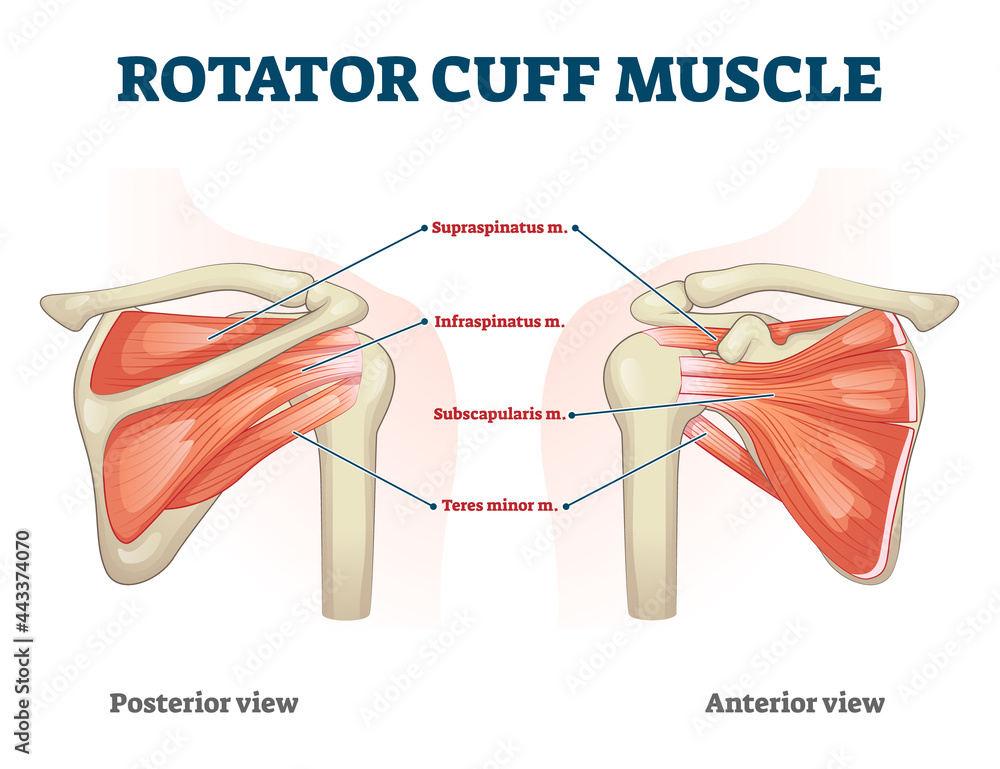
The rotator cuff is a group of four muscles — supraspinatus, infraspinatus, teres minor, and subscapularis — that attach to both the scapula and humerus in close proximity to the joint. They are not particularly strong muscles, but they play a vital role in coordinating the movement of the glenohumeral joint.
A diagram of the muscle group involved in the shoulder’s rotator cuff. (Photo: www.freepik.com)
The only rigid or bony attachment of the arm to the body is via the collarbone. This small bone is not enough to support the load of push ups, pull ups, or double poling. The base of support truly lies in the muscular attachment of the shoulder blade to the ribcage. For the sake of the simplicity of this article, we’ll limit the discussion to four muscles, one of which doesn’t count. (Side note: a classic physical therapy trivia question is to name all 17 muscles that attach to the scapula–clearly I’m skipping a few here.)
The primary stabilizers of the scapular are lower trapezius, middle trapezius, and serratus anterior. I’ll contend that the upper trapezius is a stabilizer but doesn’t count because it tends to exert force in the wrong direction (and is frequently overactive so needs little in the way of direct strengthening).
The trapezius muscles stabilize and move the scapula along the ribcage. (Photo: www.freepik.com)
As with any dynamic stability in the body — abdominal muscles for the lumbar spine, glutes for the hip, or the aforementioned muscles in the shoulder girdle — strength is important but intermuscular coordination is key. This is especially true at the shoulder due to its wide range of available motion and corresponding muscular complexity.
The following are exercises targeting the stabilizers, both at the shoulder joint and scapula.
Exercises for the Stabilizers:
(The intent of these exercises should be thought of more as activation drills and less about the heaviest weight you can find. Yes, we are looking to induce some fatigue but the emphasis is not on power.)
Side Lying External Rotation: Lie on your side. Keep the top elbow bent at 90° and against your side. Rotate about the shoulder until your forearm is at about 45° to the horizontal. Try not to pull with your shoulder blade. A little bit of weight goes a long way.
side lying ER 1
side lying ER 2
External Rotation + Uppercut: With a resistance band anchored on the opposite side, elbow fixed at 90°, and forearm against your belly. Rotate the forearm away from the belly to a neutral position (knuckles pointed forward). Then raise the arm by spinning through the shoulder. Again, the elbow should stay at 90° throughout. Only raise the arm to shoulder height. Motion should be isolated at the shoulder joint — don’t let the shoulder blade move. Finish by lowering the arm down and rotating the forearm back to the belly.
ER + uppercut 1
ER + uppercut 2
ER + uppercut 3
Scaption: Raise both arms up your sides at 45° (not in front, not to the side, but halfway in between). Stop at shoulder height. Keep the shoulder blades fixed down and back. Start with light weights.
scaption 1
scaption 2
Wall Slides: Loop a very light resistance band around both hands and stand facing a wall. Place both hands on the wall at about shoulder heights with elbows bent and palms facing inward. Stretch the band by squeezing your shoulder blades down and back, not just pulling from the arms. Keep the shoulder blades pinned down and back, band tensioned, and slide your hands up the wall until your elbows are at about shoulder height. Slide back down to the starting position. Ideally, the shoulder blades stay retracted throughout the set of repetitions, but you can stop and reset them between reps or as needed.
wall slide 1
wall slide 2
Serratus Punch: The serratus anterior muscle attaches to the ribcage, inserts on the scapula, and, acting alone, protracts the scapula, or pulls it forward. As a stand alone movement, this scapular protraction is not especially functional unless you are a boxer hitting with a jab. However, the serratus anterior is a team player and becomes very functional when co-contracting with the posterior scapular muscles (especially middle and lower trapezius) to stabilize and coordinate movement of the scapula. The exercise will work the serratus anterior independently.
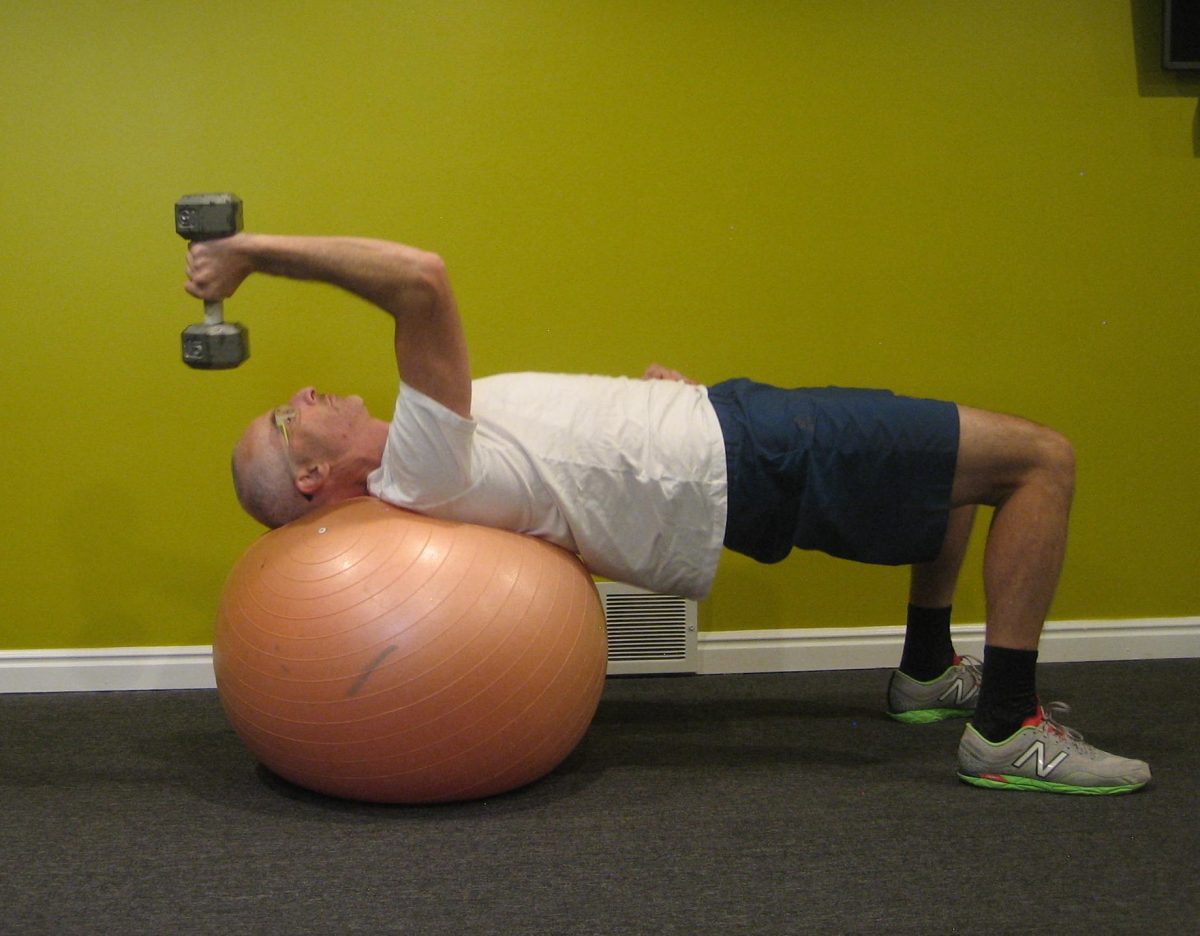
Lie on your back holding a dumbbell in each hand. Knees are bent and elbows are straight. Push the dumbbells towards the ceiling by moving the shoulder blades forward on the ribcage. This is the opposite of the motion described in Wall Slides. The neck and thoracic spine stay relaxed. This can also be done with a resistance band.
serratus 1
serratus 2
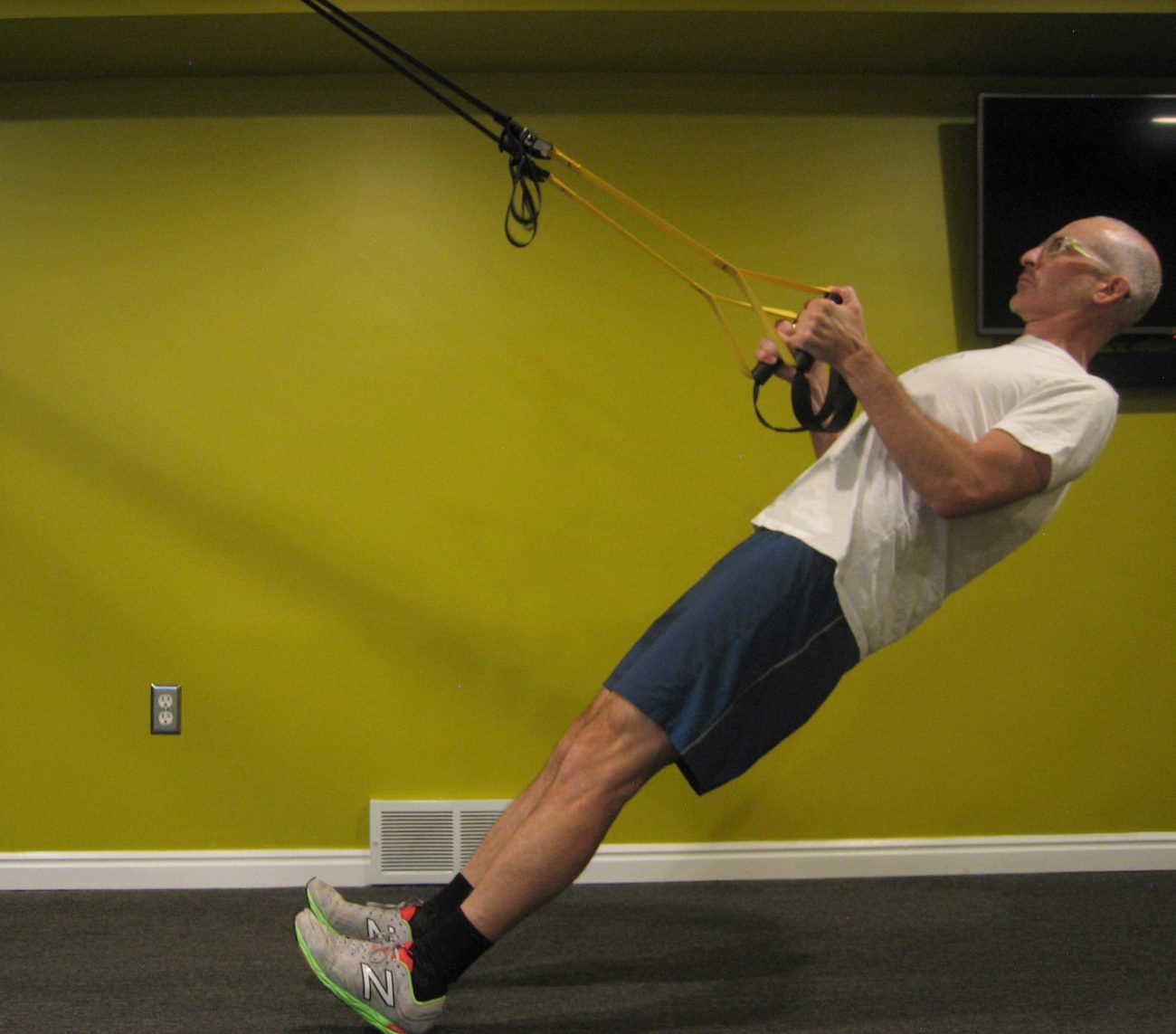
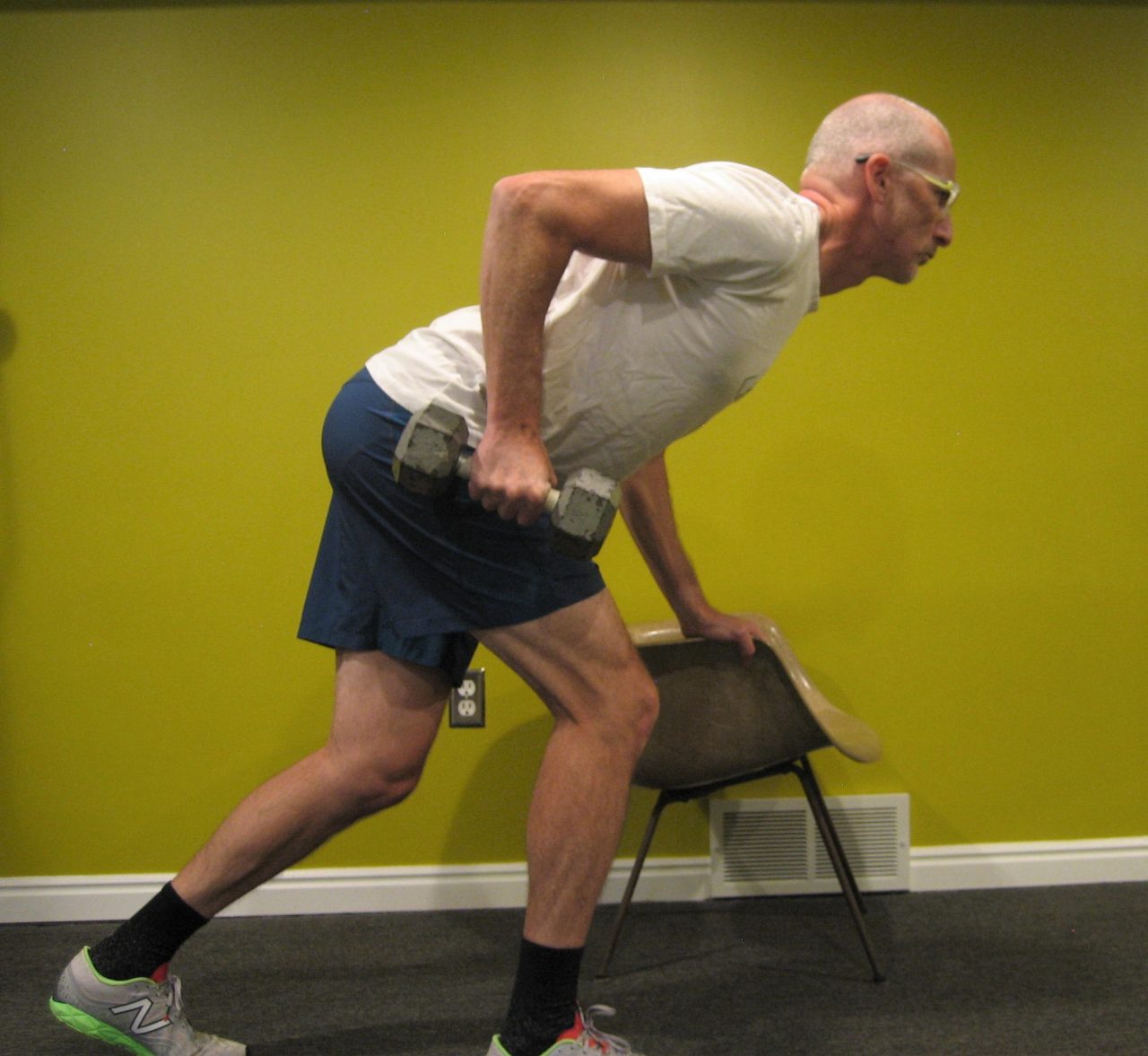
Rows: The emphasis of the rowing motion is on squeezing the shoulder blades down and back as you pull the resistance towards you. This is the same motion described in Wall Slides and the opposite of the Serratus Punch. There are multiple means of adding resistance to the movement: resistance band, cable machine, single dumbbell/kettlebell, TRX, etc.
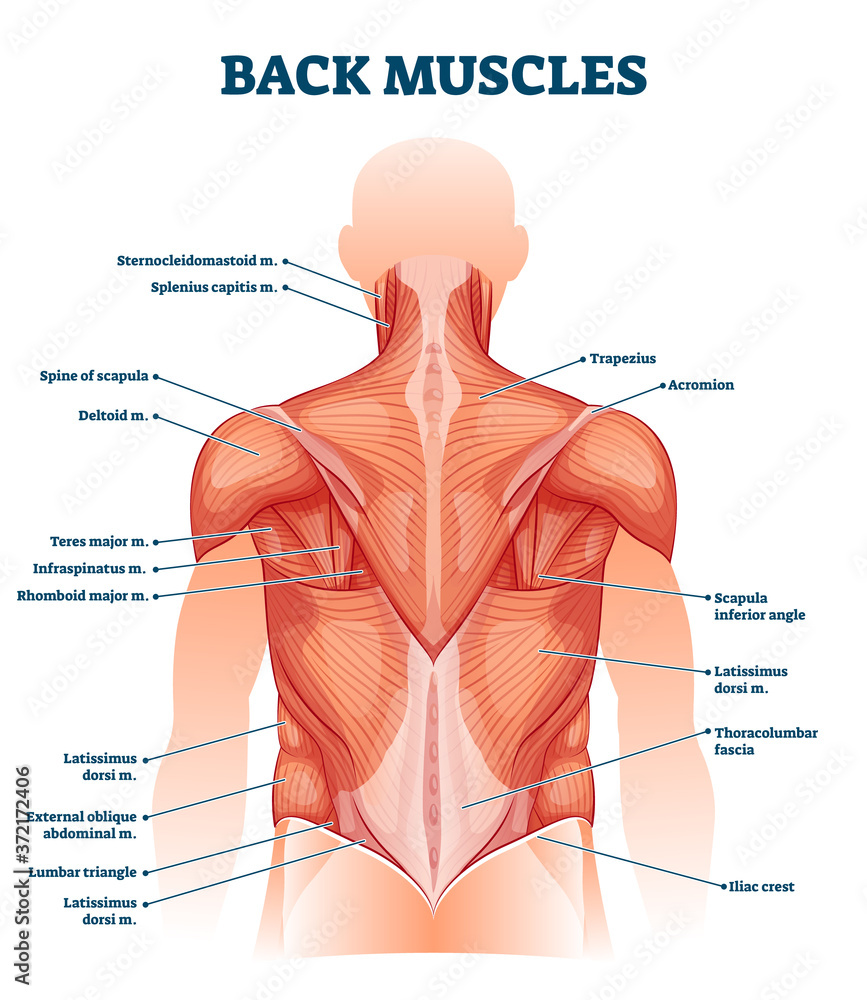
In the propulsive phase of poling, the prime mover at the shoulder joint is the latissimus dorsi — often referred to as the “lats”. This big, broad muscle extends the shoulder, pulling an outwardly extended arm to the side as in freestyle swim strokes and pull ups. The lats are aided by the posterior portion of the deltoid muscle and teres major.
A diagram of the back muscles, including the latissimus dorsi. (Photo: www.freepik.com)
The elbow joint is also involved with the triceps playing a rather complex role. This muscle, or more technically speaking, this group of muscles has a common insertion on the ulna and acts to straighten the elbow. However, the long head of the triceps, attaching to the scapular vs the humerus, is also able to play a role in shoulder extension. I say the triceps play a complex role because motion about the elbow varies with technique and terrain. In Skate V1 and V2 alternate and in Classic striding, there is a fair amount of elbow extension. However, in V2 and uphill double poling, there is very little motion at the elbow.
Notice how little motion takes place at the elbow during V2.
A clinical case study: (Disclaimer: the subject of this case is the author, a potential duplicity that is frowned upon in academia.) In the lead up to ski season, I began doing “budget SkiErg” workouts double poling with resistance bands. After several weeks of twice a week workouts, I began to develop left posterior elbow pain. It didn’t take much to figure out I had irritated the insertional tendon of the triceps. So I stopped the workouts and focused on eccentric strengthening of the triceps, which has become the standard of care in the treatment of tendinopathies.
Come ski season, I could skate without any problems, but I continued to have elbow pain with more than about 45 minutes of classic. One night at dinner I was venting to my wife about my now chronic elbow pain. Ever the voice of reason, she asked what I would do if I was seeing myself in the clinic. What would I, the PT, do differently for a patient who is not responding? I replied that I would examine, biomechanically, how the patient is poling. So I started to think about how I was doing what I was doing.
My hypothesis was that I was using my triceps too much to generate shoulder extension. I started doing shoulder extension exercises with my elbow fixed at 90°. I focused on leading the motion with the back of my elbow, not my hand. Within a couple of weeks, the elbow pain was gone. The lesson from my mistake is that functional movement patterns often require a high degree of coordination. Because of our bodies’ anatomical redundancy, it is easy to fall into a suboptimal pattern that is inefficient in the best case and in the worst has potential for injury.
Interestingly, the biceps appear to be very active during double poling, which seems counterintuitive since the action of the biceps is in the opposite direction of the propulsive phase of poling. The biceps do contribute to shoulder flexion so they are likely involved during the return phase. But, more likely, the majority of their action is co-contraction with the triceps to stabilize the elbow and hold it in the desired position. Perhaps this is rationale to include some biceps strengthening for more than just filling out the sleeves of your cycling jersey.
David Norris models single-stick poling technique during a skiathlon in Lillehammer, Norway in December, 2019. (Photo: NordicFocu)
Exercises for the Movers:
Shoulder Extension: This is most easily done with a dumbbell, but a resistance band will work as well. As described in the case study, keep the elbow locked at 90° and focus on spinning at the shoulder joint by leading with the back of the elbow.
shld ext 1
shld ext 2
Strengthening the Triceps: Like with Rows, there are numerous ways to work the triceps with no single exercise being the best. Resistance band, cable machine, dumbbell, push ups, and dips are all appropriate.
Strengthening the Lats: The basic lat workout is pull ups. If these are too difficult to do at least 3 reps, then put your feet on a chair or on a long resistance band loop attached to the pull up bar (just make sure the band stays on your feet and not in between them!). Lat machines in the gym are a great alternative as you can select resistance that is lighter than body weight (or more than body weight if you can whip out 10+ regular pull ups)
Epilogue: The goal of the Building a Better Skier series has been to identify some key biomechanical and kinematic components of cross country skiing and to provide exercises with the specific intent of facilitating these movement patterns and strength requirements. By no means has the depth of these articles been exhaustive. Nor have the lists of exercises covered all possibilities. Hopefully, these articles have been easy to follow and the exercises have been included in your twice weekly strength/dryland/pay-to-play routine. Even better, I hope the work done now will pay dividends when the snow falls this winter. Best of luck with the remainder of summer (the heat, the smoke, the pandemic), the glorious autumn, the struggles of shoulder season, and the winter we’ve all been waiting for.
Dave Cieslowski, a physical therapist based in Bend, Ore., demonstrates a glute-firing workout.
BEND, Ore. — Dave Cieslowski comes with an alphabet soup of suffixes after his name. There’s DPT (Doctor of Physical Therapy), CSCS (National Strength and Conditioning Association Certified Strength and Conditioning Specialist). He also helps the U.S. Nordic Combined Team in and out of the competition season.
As all that education implies, Cieslowski, of Bend, nerds out on the neuromuscular and biomechanical aspects of sport. Yeah, you guessed it, if you don’t already know of Dave, and since this is primarily a cross-country ski site — Cieslowski admittedly could spend days analyzing the minutia of how we ski and how we could ski more efficiently.
Cieslowski is at once both a powerful and graceful skier. His style distinct: a dash of ballet like grace, a big sprinkle of Force = Mass x Acceleration. And he possesses an upright skate ski motion. He’s not dead vertical — his knee and ankle flex look textbook.
When it comes to skiing wellness, Cieslowski emphasizes strengthening and engaging the glutes.
In this Wednesday Workout, Cieslowski offers up a unique, not exactly simple, exercise that focuses on ski-specific use of the glutes.
If you want to improve balance and power on the ski or are dealing with any lower extremity, hip or lower-back injury having to do with skiing, this workout may be what you are looking for.
What you need:
– SkiErg
– Two pieces resistance tubing. One piece around both legs just above knee level, the other wrapped around the waist (just below the pelvic bone) and held in place with tension…note the kettlebell four feet behind Dave on the SkiErg
– Kettlebell or dumbbell to hold resistance tubing around pelvic bone in place
– 12″ x 12″ x” 2 inch block, placed under “leading foot” while simulating V1
Here’s a video of Cieslowski in action. In it you’ll see the exercise setup and how to properly align the body to “fire” the glutes.
The workout can be incorporated into SkiErg interval sets or a longer slower endurance type SkiErg session. One thing is certain, you must engage the glutes.
And lastly in this Wednesday Workout multimedia extravaganza, here’s the podcast interview. Press the play button (the arrow) to have a listen.
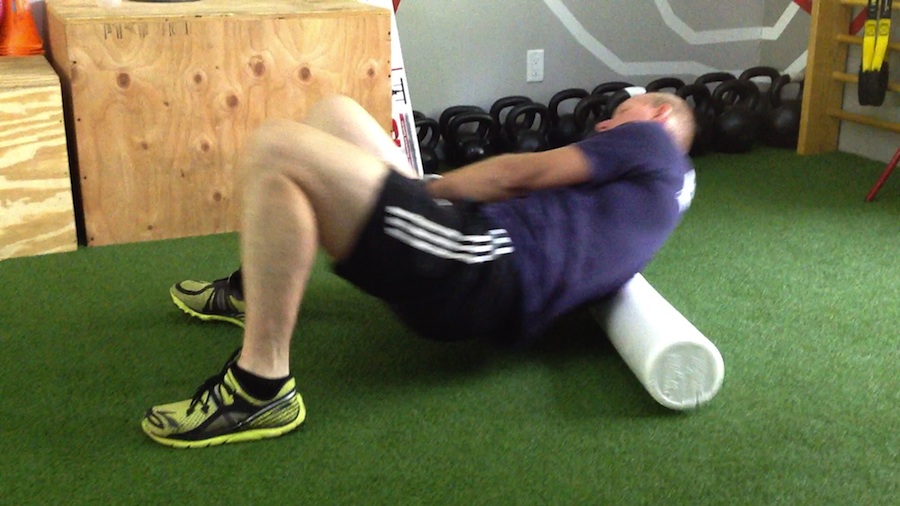
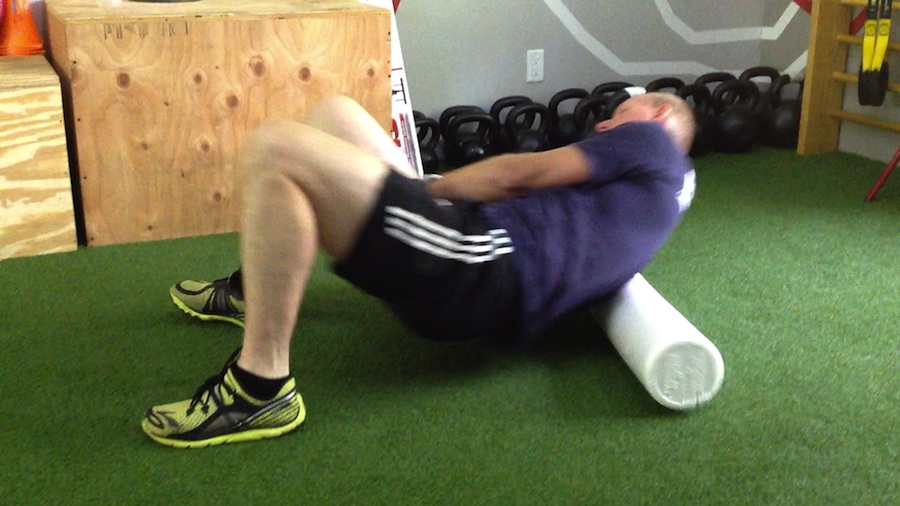
Author Stuart Kremzner demonstrates one way to use a foam roller to work out the kinks along the spine and back.
Editor’s Note: Wednesday Workout fans, you’re in luck! The following article complements Bill Pierce’s recommendations for stretching, agility and self-massage. Not exactly sure how to use a foam roller? Stuart Kremzner, exercise physiologist,owner of E3 Sports Performance, nordic skier and coach, explains.
***
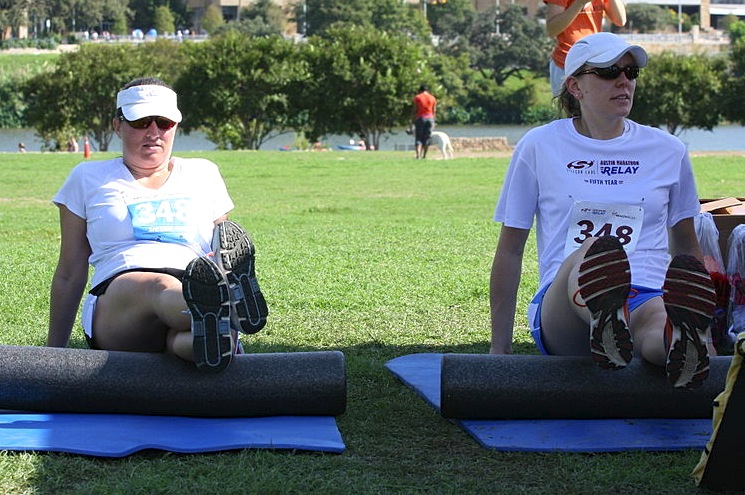
Many of us have been to training centers and weight rooms and seen the foam rollers in the corners. Maybe even seen someone using it moving around on it and usually grimacing, puffing, and cursing it. Foam rollers are a tool to be used in preparation for exercise to limber us up. You will find after foam rolling, you will usually have an increased range of motion, and your muscles will feel suppler.
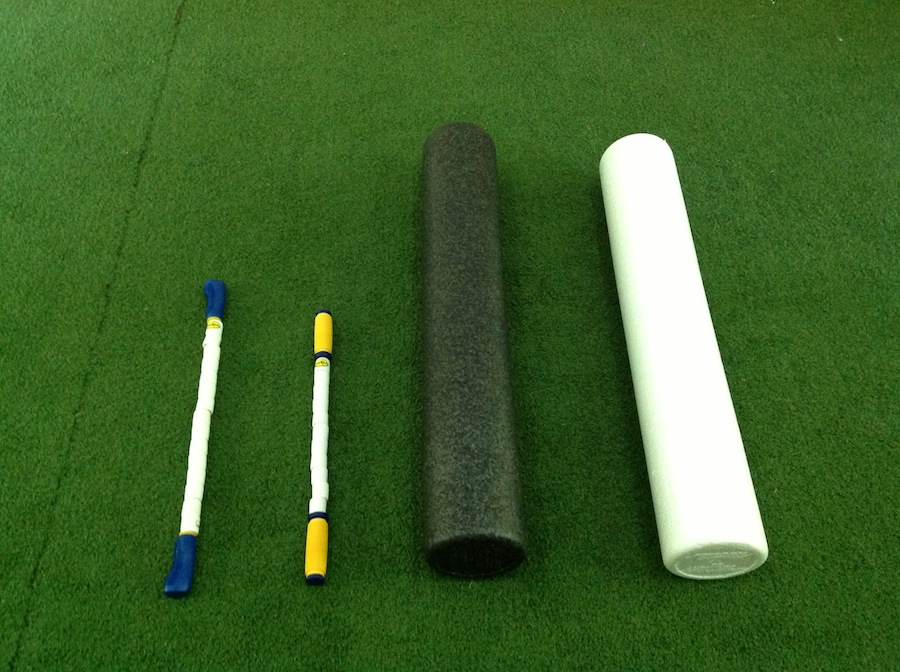
Stick rollers (l) and foam rollers.
The purpose of foam rolling is to achieve the same outcomes as from tissue massage or other physical therapy techniques such as manual therapy or active release therapy (or the more scientific term myofascial release), just without the masseuse or therapist working on you.
The goal is to loosen up those tight muscles and trigger points (“small areas of muscle that act differently … this increases tension throughout the entire muscle and can cause pain in another area of the body,” according to physical therapist and author Gray Cook).
We all know what tight muscles feel like. Rolling can release these areas of tightness just like massage will, and can give you some short-term improvements in muscle range of motion. Rolling out can also help with recovery after a workout. Like many of the warm-up and warm-down tools you need to try it to see if it works well for you and if you feel better in your workouts when utilized. Like with most training methods you will have responders and non-responders. My experience has been most athletes benefit from this as part of their warm-up and warm-down routine.
Foam rolling can help ease sore muscles after a race and aid in recovery after a workout. (Photo: Wiki Commons)
How to use it?
Rolling out is best done as the first and last step in a workout. For general loosening up roll over one muscle group back and forth 10-15 times. If you find a knot or trigger point roll over that area in shorter, lighter strokes until it releases or feels less tender.
Stick vs. Foam Rollers:
Sticks: smaller muscle groups (i.e. back, arms, front of shin)
Foam: larger muscle groups (i.e. lower body, legs, back).Start with basic low- to mid-density foam roller before trying a harder or textured one.
There are a variety of rolling devices. Fifteen years ago there were about two – now any fitness catalog will present a mind-numbing variety; it is like trying to buy shampoo in Wal-Mart!
The primary two are the stick rollers and foam rollers. Sticks are best for work on harder to get areas, and smaller muscle groups (back, arms, front of the shin). The foam roller pretty much does the same thing but you move your body over it versus rolling the stick over your muscles. Since a foam roller is wider it can hit a bigger area.
I find sticks are best when you have less time to roll out and are also more portable, so you can pack it for a race so you are not trying to roll out in an icy or sandy parking lot. That said, the foam roller will feel great for those larger muscle groups, primarily in the lower body and back (where you can’t reach with a stick by yourself). After a while you will find both come in handy.
Rollers also come in various densities and textures, start simple with a basic low- to mid-density foam roller and then once you get used to it try a harder or textured roller.
It’s a great way to start and finish your workouts as part of your warm-up and warm-down routine.