From the FasterSkier archive — posts syndicated from athletes’ and coaches’ own blogs between 2004 and 2012, kept online as published. Current coverage is at fasterskier.com.

Tag: physiology

  • What Predicts Nordic Combined Success? Study Finds Out

    What Predicts Nordic Combined Success? Study Finds Out

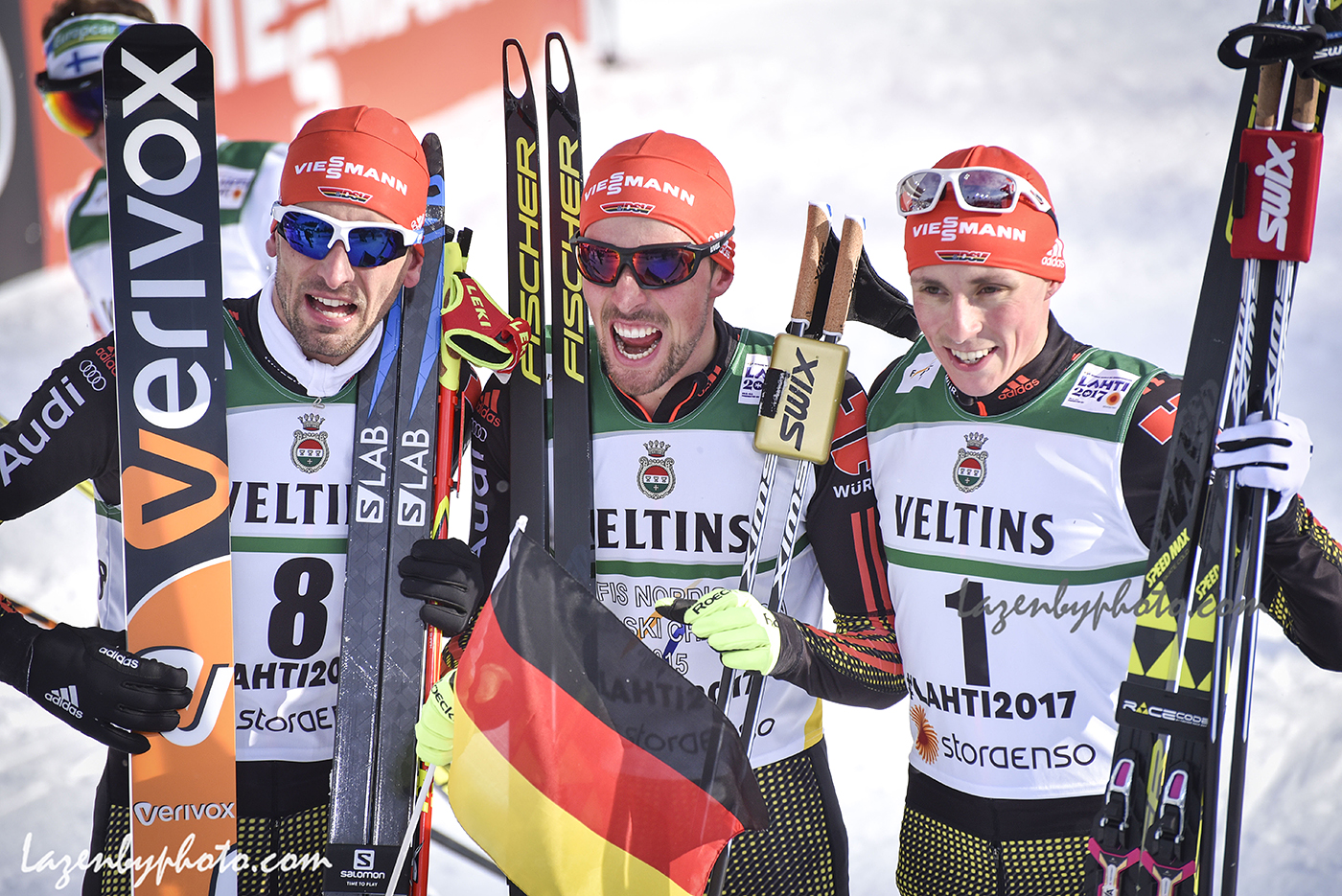
    German nordic-combined stars Johannes Rydzek (c), Eric Frenzel (1) and Björn Kircheisen (8) after taking gold, silver and bronze, respectively, in the individual normal hill/10 k Gundersen at 2017 World Championships in Lahti, Finland. (Photo: John Lazenby/Lazenbyphoto.com)

    What are the physiological capacities of nordic-combined athletes and can laboratory tests predict performance capabilities on the World Cup?

    Those are the questions that a team of Norwegian researchers set out to answer by testing 12 competitors from eight different countries before a 2015 World Cup competition in Trondheim, Norway.

    The study, led by Vegard Rasdal of the Norwegian University of Science and Technology and the Norwegian Olympic Sports Center, was recently published in the academic journal Plos One. It is an open-access journal, so you can read the paper here.

    “The sport is always evolving,” Rasdal wrote in an email to FasterSkier about the results. “Today it is no longer enough to be ‘just’ a strong ski jumper or cross-country skier, you really have to excel in both in order to be successful in terms of podiums. Johannes Rydzek and Eric Frenzel, the two most successful athletes last season, were not only two of the best jumpers last season but also the fastest skiers.”

    Indeed, they found that the best skiers in the nordic combined field have VO2Max capacities close to those of the best cross-country skiers, period – and even higher than those of Olympic medalist sprinters. Furthermore, this was a good predictor of World Cup results in the Trondheim competition.

    Variability in Abilities and Physiology

    There have been plenty of physiological studies on top cross-country skiers and some on ski jumpers, but the fascinating aspect of nordic combined is that two very different sports are combined. That creates uncertainty about what the ideal physiology for a competitor might actually be. Should they be light and explosive, for jumping? Strong and enduring, for skiing?

    And do nordic-combined atheltes have as much explosive power as ‘special jumpers’, or as high aerobic capacities as cross-country skiers?

    “As with most endurance sports, you will find a strong association between VO2Max and performance when the study group is heterogeneous, as e.g. a study group of 200 college students,” Rasdal explained. “Overall, VO2max is widely accepted as the most important factor for endurance performance. However, in a more homogenous study group, such as elite cross-country skiers, all athletes may have a ‘high enough’ VO2max to perform well at an elite level. Thus, other factors such as skiing efficiency becomes a stronger determining factor.”
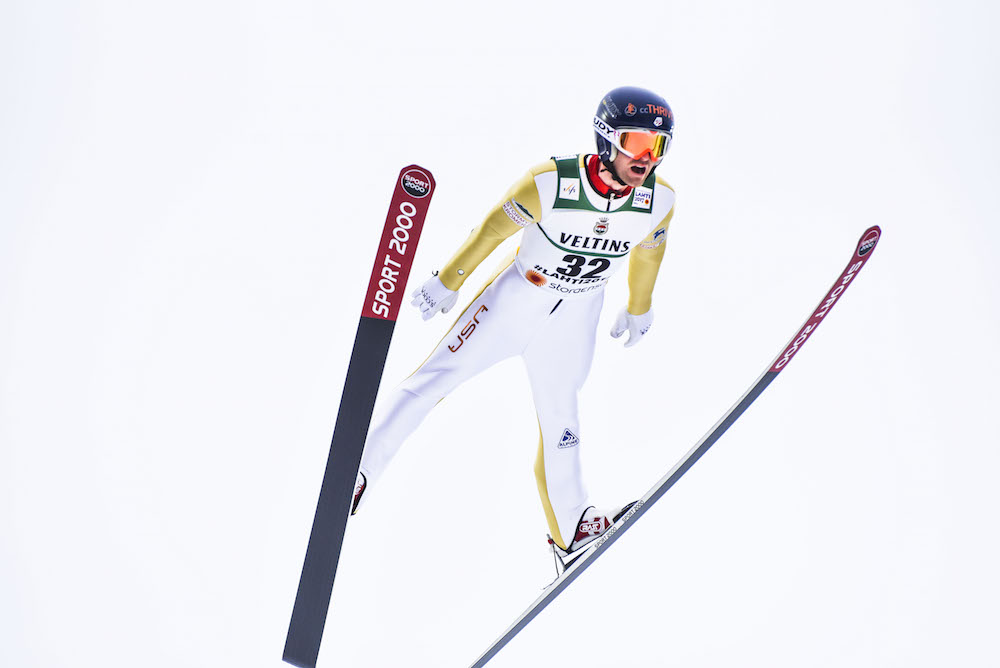
    U.S. Nordic Combined skier Bryan Fletcher jumping to 31st on the large hill at 2017 Nordic Combined World Championships in Lahti, Finland. At the end of last season, he was the top-ranked American in the overall World Cup standings in 34th. (Photo: John Lazenby/Lazenbyphoto.com)

    Rasdal and his co-authors wondered whether nordic-combined athletes fell into the first group, with moderately variable VO2Max, or the second group, where all had such high capacity that they had to be distinguished by some other characteristics.

    Because some athletes get their start in ski jumping, and all must also train for jumping, the athlete selection process and training background from young ages is different than for cross-country skiers and could lead to more variability among individuals.

    “It is not given that all nordic combined athletes have a ‘high enough’ VO2max or vertical jump capacity,” Rasdal wrote. “The shortcomings in one may to some degree be compensated with higher level in the other.”

    To address that question, the research team partnered with the International Ski Federation (FIS) to conduct laboratory tests on athletes the day before a World Cup competition.

    “FIS was responsible for the invitation of athletes, and each nation in the World Cup was invited and encouraged to participate with two athletes to be tested,” Rasdal explained. “To collect data on the very best athletes in the world is always a challenge, especially so close to an important international competition. We as a research group are extremely grateful that so many World Cup athletes chose to participate in the data collection.”

    The athletes ran the gamut from being ranked second to 66th in the previous season’s overall World Cup standings, and included the eighth-best skier and second-best ski jumper.

    About Endurance Capacity, and World Cup Success

    The hypothesis that nordic-combined athletes were more variable in their physiology compared to single-sport specialists was largely upheld.

    “Among the athletes we studied, a VO2peak range of 66.9-80.8 could be found, which does illustrate the heterogeneity in nordic combined,” Rasdal wrote. “This may make subordinate factors such as skiing efficiency relatively less important (although still important) than VO2peak.”

    The upper measurements of VO2Max among the 12 athletes are close to those of cross-country skiers.

    “In the papers by Saltin and Åstrand (‘Maximal oxygen uptake in athletes’) and Tønnessen et al. (‘Maximal aerobic capacity in the winter Olympic endurance disciplines: Olympic medal benchmarks for the time period 1990-2013’), only a few athlete-groups possess VO2Max values above 80 ml/kg/min,” Rasdal noted.

    Furthermore, it was clear that the athletes on the lower end of the VO2Max spectrum were somewhat less successful on the World Cup. At least at this World Cup event, the overall ranking at the end of the day was strongly correlated to an athlete’s VO2Max and ski performance.

    “This study together with the study by Tønnessen et al. may indicate that a body-mass normalized VO2Max in the region of 75 ml/kg/min is a sufficient capacity for a strong cross-country performance in Nordic Combined, whereas 80 is at very highest percentile,” Rasdal explained.

    However, the Trondheim World Cup course is not necessarily representative of all World Cup venues. And poor cross-country skiing could have been penalized even more at this venue than usual.

    “Trondheim is a special arena compared with other courses in the World Cup, with many steep uphills and fast downhill terrain,” Rasdal wrote. “In addition, 2015 was a bad winter in Trondheim, and the course was salted and ice hard. This made the event well suited for technical good skiers with strong upper-body capacity. It is therefore necessary to investigate the impact of ski jumping versus cross-country skiing on overall performance, as well as the associations to laboratory capacities, also at other venues and conditions.”

    And About Those Jumps
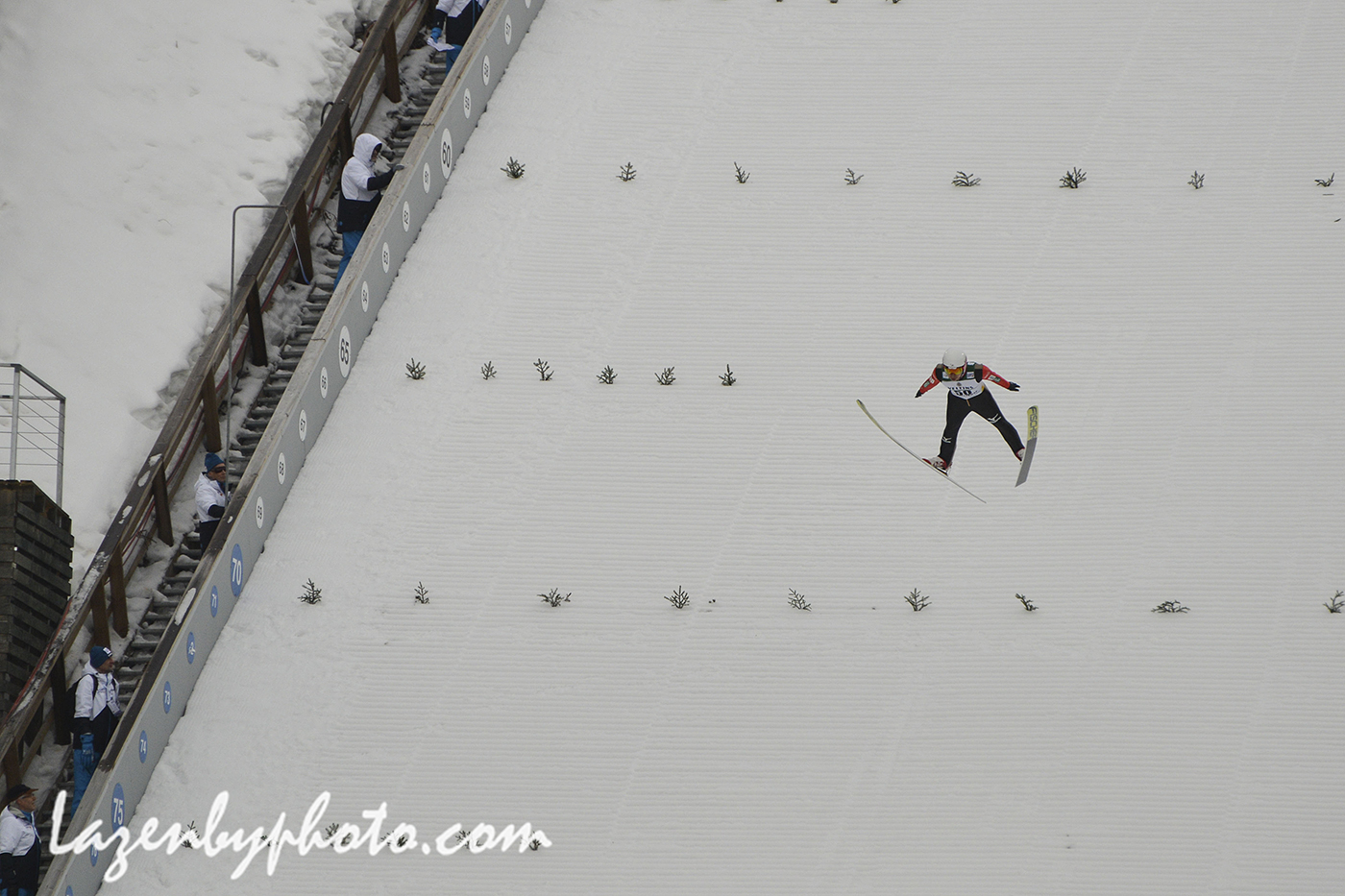
    2017 World Championships jump training on Feb. 21 in Lahti, Finland. (Photo: John Lazenby/Lazenbyphoto.com)

    The implication is that perhaps at a different competition, the association between ski jumping performance and overall competition ranking might be stronger.

    “Unpublished data does show that [across a whole season], the regression line for ski jumping to overall performance is similar to that of cross-country and the correlation coefficients are similar,” Rasdal explained.

    When it came to benchmarking, the researchers also identified laboratory measurements that could predict ski jumping performance by nordic-combined athletes. They tried two measurements: a straight, simple squat-jump, and an “imitation jump” where the athletes were asked to start in the same position they would on a ski jump ramp. The jumping style and technique varied from athlete to athlete.

    While it seems logical that these would be good predictors of ski jumping performance, it actually wasn’t a trivial matter. Such measurements have mainly been validated on straight ski jumpers, and because of their different body mass and physiology the relationship between squat jumping and performance, for example, could very well have been different among nordic-combined athletes.

    “The time available at the take-off in the [ski jump] hill may present a greater challenge for NC athletes than specialist ski jumpers as two-thirds of the NC athletes’ annual training consists of endurance training,” the authors wrote in the paper. “This does not only leave less time available for power and [jumping-] specific training compared to the specialists, but endurance training may lead to negative effects on muscle strength and power.”

    But in the end, the same measurements did predict ski jump performance.

    “The jump capacity in the sport-specific imitation jump distinguished performance level better than the general jump capacity in squat jump,” Rasdal wrote. “That supported the argument for sport-specific testing at an elite level.”

    Still, the imitation jump wasn’t perfect at predicting actual ski jump performance.

    “The upper range of the lowest ranked performance group touches the lower range of the highest ranked performance group,” Rasdal said of the imitation jump measurements. “There is not necessarily a continuous linear relationship with performance. At some level, the ability to utilize the capacity in the field as well as other factors become more determining for performance, e.g. body mass, transition to flight (minimize the loss of speed), flight performance, etc… Ski jumping is an extremely challenging technical task to be performed in less than 0.35 seconds, and where a well execution may compensate more for a lack of physical capacity.”

    And then there’s money.

    “In ski jumping the equipment plays an important role, and the nations with the highest budgets may for instance have better suits which makes them jump farther,” Rasdal said of other potentially confounding factors in predicting jump performance.

    What to Shoot For

    At the end of the paper, the authors summarized the ideal characteristics of a nordic-combined athlete: high VO2Max, a strong upper body, a good vertical jump, and low body mass. Hitting all those different metrics at the same time is a tough calculus, but it’s what is required to be a champion these days.

    “Although the relative importance of ski jumping to overall performance has varied in the sport over time, the pendulum today appears to lean more towards ski jumping,” Rasdal noted. “That’s both as a result of regulations (e.g. increase of meter-value in large hills in 2015), and also an increase in overall performance level where the best ski jumpers also ski fast.”

  • Nordic Nation: Training and Intensity with Dr. Stephen Seiler

    Nordic Nation: Training and Intensity with Dr. Stephen Seiler


    May 1 marks the symbolic start of the annual training cycle for many year-round nordic skiers. With that in mind, we recently spoke with Stephen Seiler. A Texas native, Seiler, 51, is a professor of sports science at the University of Adger in Kristiansand, Norway.

    Stephen Seiler, a professor at the University of Adger in Kristiansand, Norway, specializes in exercise science. (Photo: uia.no)

    Seiler has researched, written and spoken extensively about physiological adaptations as it relates to endurance athletes. Seiler’s mantra — the 80/20 Rule — the easy to hard intensity ratio when it comes to training sessions, has been well publicized. Seiler believes easy days should be truly easy, meaning walking the hills may be mandatory. If the easy days are easy, then the hard days are hard. He espouses a fidelity to training models with little, if any, in-between efforts; that means no middle-of-the-road intensity. And his observations come straight from Norway.

    “… They know what gets you on the podium,” he said of the Norwegians’ tried-and-tested training principles. “And they know that there are no shortcuts. They don’t fall for the latest trend, the latest trick because they know how you get there. The magic is there is no magic in Norway.”

    But we’ll let Seiler speak for himself.

    Here’s a link to the video referenced several times in the podcast.

    (To subscribe to the Nordic Nation podcast channel, download the iTunes app. If you have iTunes, subscribe to Nordic Nation here.)

    Have a podcast idea? Please email nordicnation@fasterskier.com.

  • Revisiting Training Hours: How Many Do You Need?

    Revisiting Training Hours: How Many Do You Need?

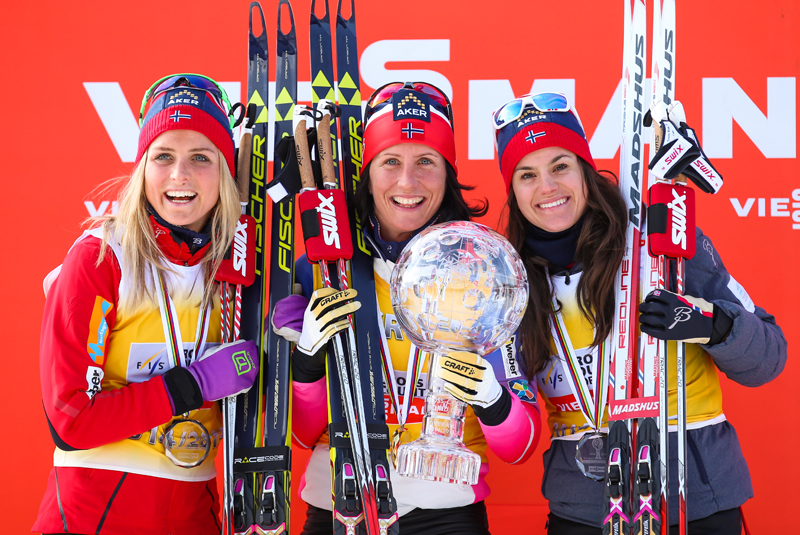
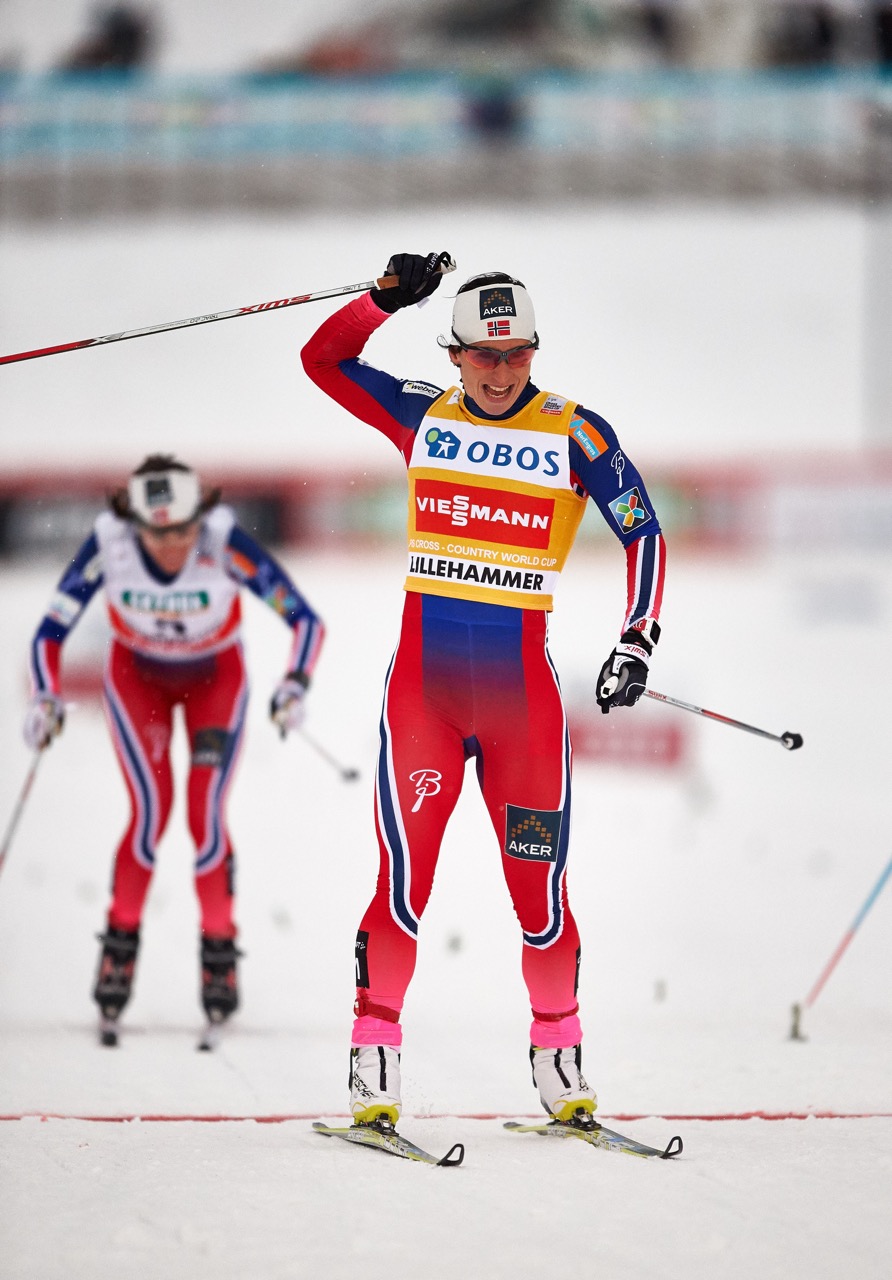
    Marit Bjørgen won the overall FIS World Cup title for the fourth time in 2014-2015, also taking home the Sprint Cup and Distance Cup globes. Along with Therese Johaug, who won it in 2015-2016 (left) and Heidi Weng, she trains more than you. (Photo: Fischer/NordicFocus.com)
    Marit Bjørgen won the overall FIS World Cup title for the fourth time in 2014-2015, also taking home the Sprint Cup and Distance Cup globes. Along with Therese Johaug, who won it in 2015-2016 (left) and Heidi Weng, she trains more than you. (Photo: Fischer/NordicFocus.com)

    Note: FasterSkier has carried many articles of training hours before, including a 2010 discussion with Marty Hall, Eli Brown, and Pete Vordenberg, and a 2012 piece by Pete Phillips. With recent discussion of training loads by elite Norwegian athletes, it seemed time to bring the topic up again. We got in touch with Jodi Hawley, an exercise physiologist formerly based at the Canadian Sports Institute in Calgary. She now works for PacificSport Columbia Basin doing community development work.

    A recent research paper revealed not only the physiology, but also the basic training regimens of six Norwegian women – who happen to be the six best cross-country skiers in the world.

    Among the revelations? The year before the study was done, superstar Marit Bjørgen had trained 980 hours, while the six women as a group averaged out at 920.

    That’s a lot more specificity than fans and lower-level racers typically get about elite training loads. While Norwegian World Cup champion Martin Johnsrud Sundby talks about training over 1,000 hours a year, for most of the rest of the field all one can see are averages reported in various papers.

    Upwards of 900 hours per year is more than had been previously reported in such papers. For instance, a 2013 paper looked at the training loads of Norwegian and Swedish cross-country skiers who had won Olympic gold medals in the last decade. In general, the sprint specialists trained 750-850 hours per year, and the distance specialists about 50 hours more.

    Another paper, published in 2014, assessed Norwegian gold medalists in cross-country skiing and biathlon. The eleven athletes had averaged 770 hours of training in their gold medal seasons.

    “Most people on the World Cup – and I don’t think there’s a big difference between men and women – most people who are consistently finishing in the top 15 are probably training somewhere between 675 and 900 hours,” said Jodi Hawley, a sports physiologist who formerly worked with the Canadian National Ski Team. “The range is that wide.”

    All other factors being equal, Hawley said in an interview last weekend, the athlete who trains the most will be the fastest. But all other things are not equal, including genetics, personal history, injury and illness, resources, and training partners.

    Training 980 hours won’t necessarily make a mediocre skier a Marit Bjørgen – and training less than 980 hours won’t necessarily keep them from success, either.

    “Some people will get faster by going slow, by training their efficiency,” Hawley explained. “Other people will get faster by training their power. So it depends a little bit on what kind of person you are. If you are the kind of person who gets faster by training your efficiency, you’re going to end up training more hours. The kind of training you need to do takes more time to get a training effect.”

    Women Working Hard

    Norway's Marit Bjørgen (c) celebrates her 15th World Championships gold and record-setting 30th overall medal (between Olympics and World Championships) with a classic-sprint win at 2015 World Championships in Falun, Sweden. "It took years for her to build up to doing [980 hours]," said Hawley. (Photo: FlyingPointRoad)
    Norway’s Marit Bjørgen (c) celebrates her 15th World Championships gold and record-setting 30th overall medal (between Olympics and World Championships) with a classic-sprint win at 2015 World Championships in Falun, Sweden. “It took years for her to build up to doing [980 hours],” said Hawley. (Photo: FlyingPointRoad)
    There are a few reasons that the top Norwegian women are, across the board, training at very high volumes – probably close to the maximum loads that are physiologically possible.

    One is that all of them came up through a development pipeline which led them to this point, and all thrived under it.

    “In Norway, they tend to have a system that they employ,” Hawley explained. “It’s like hockey in Canada. Everyone does it in school… you can implement your system, and you see who copes best. Those kids get picked to move on. The ones in the end who float to the top are the ones who cope best with the system, rather than the ones who potentially could have been as fast or faster if they had been exposed to some other system.”

    But the system isn’t static. As of 2010, Norway’s Petter Northug was training just over 850 hours per year and Sweden’s Marcus Hellner closer to 750. Five years later, Hellner is training closer to 900 hours, but for various reasons has seen nowhere near the level of success he experienced in 2009-2012, when he won Olympic and World Championship gold and placed second in the Tour de Ski.

    Training loads evolve for senior-level athletes because they must continue to push against new limits to get an adaptation and training effect.

    “You never ever as an endurance athlete get to a point – doing the same thing again next year never works as well as it did the first year,” Hawley said. “Just like in the rest of your life, you need to change the stress in order to get adaptation.”

    Thus even athletes in their mid-20’s or mid-30’s. U.S. skier Noah Hoffman, for example, announced on his blog that he plans to train 1000 hours this season, a big jump at age 26.

    But the second piece is that skiing is changing, and so is training. Bjørgen’s hours are a great example of that, said Hawley.

    “In 2003 and 2006, think about what Marit Bjørgen supposedly did at that time,” she said. “She was lifting a lot of weights, she was doing tons and tons of intensity, and she was doing it in blocks, of several days of intensity training in a row, and then a rest.”

    And she was extremely successful. But that was the beginning of a period with more and more sprinting, mass starts, and racing that worked more like pack cycling with field sprints and changes of pace. Teams began to leave behind the ‘old’ style of training, designed partly around interval-start races, and innovate. The level of competition in these new formats has surged.

    As has Bjørgen, who is now the most decorated female winter Olympian of all time.

    “Now, she says that she does a little bit of sprints and a little bit of VO2Max kind of training, and a lot of long slow skiing,” Hawley said of Bjørgen. “She’s not really doing a lot of the things that she did a lot of almost 15 years ago now. I think that’s a pretty good representation of how nordic ski programs have approached the requirements of racing over the last 15 years… It took years for her to build up to doing [980 hours].”

    Everyone’s Different

    Big numbers impress. So when Sundby says he is training 1200 hours, Bjørgen says over 900, or Hoffman aims for 1000 – those are the numbers that jump out.

    But there are also extremes at the other end.

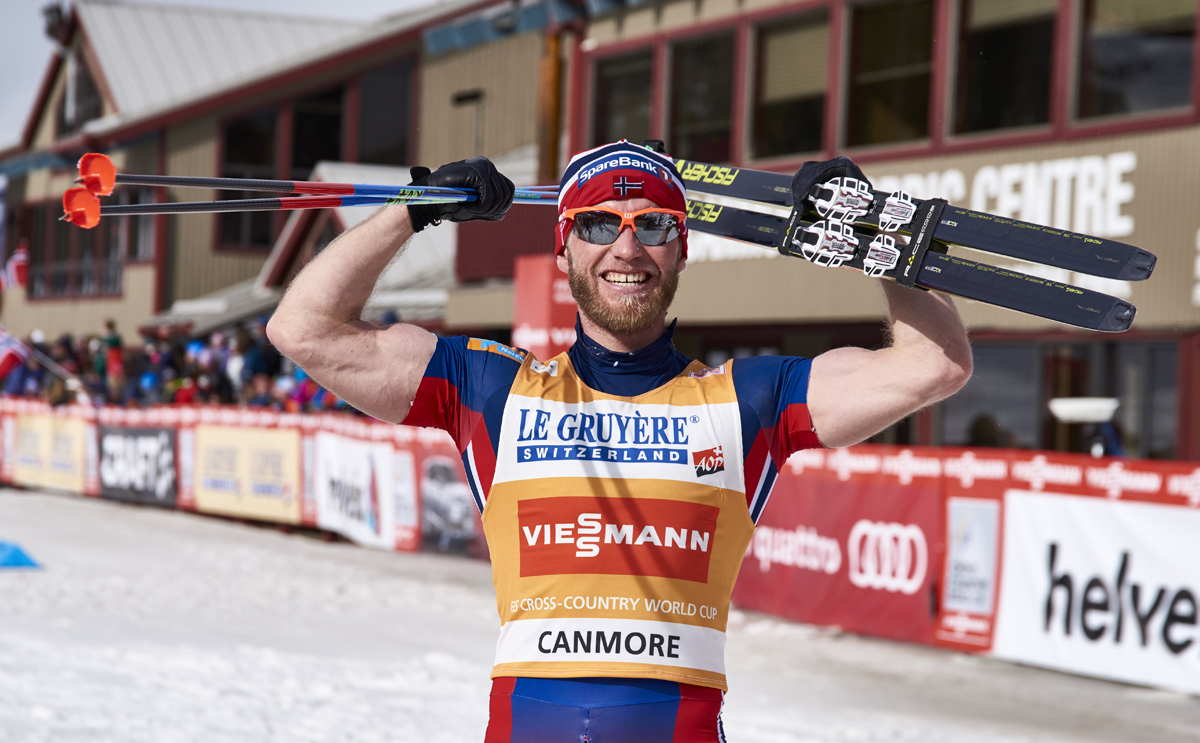
    Norway's Martin Johnsrud Sundby: king of hours. (Photo: Fischer/Nordic Focus)
    Norway’s Martin Johnsrud Sundby: king of hours. (Photo: Fischer/Nordic Focus)

    “There’s people on the World Cup who do not train as much as you would think someone on the World Cup ‘should’,” Hawley said. “But they seem to manage, and if you ask them to train more they would probably find it really difficult to cope and may get slower, and would certainly get sick more of the time. If I look at that end of the extreme, there are people who are training more like junior or U23 hours, that would be like 550 or 600 hours.”

    In a country like Canada or the United States, there is not such a big pool to pull potential skiers from. Thus, Hawley said, when an athlete of particular talent comes around a lot of work goes into figuring out what makes them tick: do they respond to training power, or efficiency?

    Answers to those questions – gathered and discussed by all the coaches in an athlete’s life, as well as physiologists, biomechanists, and more – will determine the training character for an athlete, and what their focus is. That will then cascade towards decisions about training hours.

    Although there’s an obvious need for individualization among athletes, the U.S. Ski Team and Cross Country Canada have traditionally posted “pathway” models for how many hours a skier should be training at different ages.

    For instance, the U.S. Ski Team recommends training 500 hours per year by age 17 and 700+ hours per year by age 22. As of 2010, Cross Country Canada was also recommending 500 hours by age 17, but even more later: 800 by age 23 and 850 a few years later.

    The same paper that described the training of Bjørgen and her teammates also assessed six national-level Norwegian skiers, two of whom had World Cup top-15’s that season. Those women – who were also in their mid-20’s – averaged just over 700 hours per year.

    Is It Enough?

    Americans with the International Junior Camp in Oslo, Norway, in 2015. We no longer have to assume North American juniors are far behind their peers in training hours, Hawley said. (Photo: Bryan Fish)
    Americans with the International Junior Camp in Oslo, Norway, in 2015. We no longer have to assume North American juniors are far behind their peers in training hours, Hawley said. (Photo: Bryan Fish)

    There’s often soul-searching in North America as fans, coaches, and athletes themselves seek to understand what separates them from competitors on the World Cup or at World Junior Championships.

    A familiar refrain comes up: are we not training enough?

    Hawley firmly rejects that assumption, at least for athletes who are in their national teams’ sights.

    “I actually don’t think that our junior athletes now, in the last few years, are training less than their international peers,” Hawley said. “They might be training less than the extremes, but other countries are starting to have the debates that maybe those extremes are actually not good long-term for the athletes.

    “When they are 14 or 15 years old, what’s being recommended by Canada is at least as many hours as what’s recommended by Sweden, by Norway,” she continued. “It’s in line. Even at the 18- or 19-year-old range, we’re recommending more. What impact that’s having on our junior skiers, I don’t know.”

    Hawley admitted that she had read a “perhaps depressing” number of papers about training for elite athletes. As a physiologist, she worked not only in endurance sports; people like her should be able to design training for athletes in many sports. Hawley worked for the Scottish rugby team before heading to Calgary and nordic sport.

    Around the world, she said, people with her (former) job face the same challenges. And she learned to be able to decipher the differences between training plans coming from outside of North America, and interpret what they would mean in her own team’s context.

    “We definitely have a very clear understanding of what the difference is between how different countries, where they draw the line between zone three and zone four, for instance,” she said. “We know that, so when we are talking with each other we understand what we’re saying… That’s not the issue, that it’s not being measured the same way.”

    So the Norwegian women’s training loads don’t come from accounting errors.

    Those hours come from planning – and from six individuals being at the extreme end of human talent and determination.

    “Those six women are head and shoulders above the rest of the world,” Hawley said. “You’re looking at the extreme.”

  • Johaug, Weng and Teammates’ Physiology, Training Described in New Paper

    Johaug, Weng and Teammates’ Physiology, Training Described in New Paper

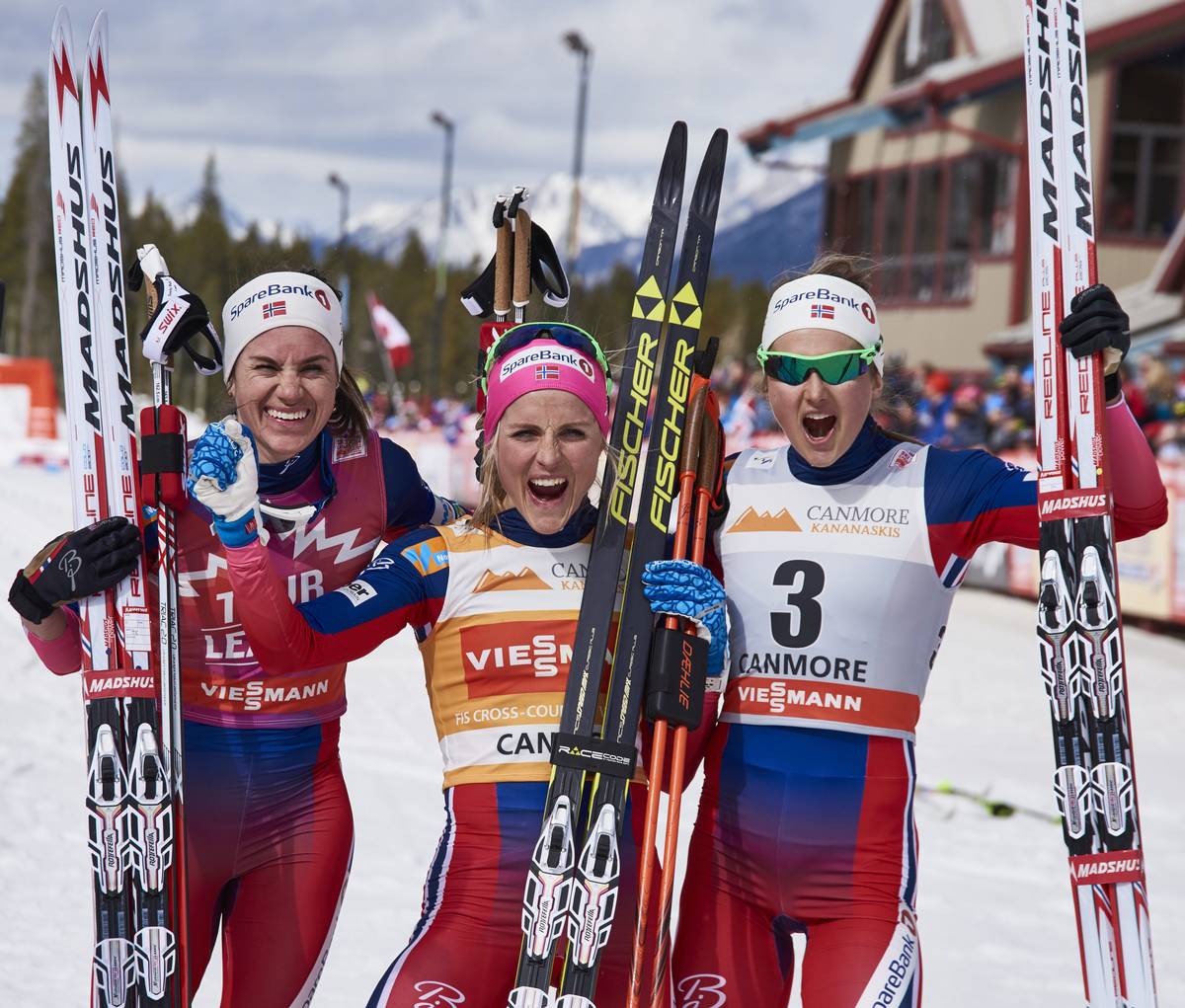
    What makes the Norwegian women so dominant? The top six women from the 2014-2015 World Cup were put through their paces on a ski treadmill, and their physiology - as well as their year-round training - was described in a new paper. That includes Ski Tour Canada winner Therese Johaug (c), runner-up Heidi Weng (l), and third-place and Ingvild Flugstad Østberg (r).  (Photo: Madshus/NordicFocus)
    What makes the Norwegian women so dominant? The top six women from the 2014-2015 World Cup were put through their paces on a ski treadmill, and their physiology – as well as their year-round training – was described in a new paper. That includes Ski Tour Canada winner Therese Johaug (c), runner-up Heidi Weng (l), and third-place and Ingvild Flugstad Østberg (r). (Photo: Madshus/NordicFocus)

    What truly separates the best skiers in the world from the rest of the pack? A team of Norwegian physiologists set out to answer that question, taking advantage of the fact that in the last few years all of the best women on the World Cup have come from Norway.

    Dr. Øyvind Sandbakk’s lab at the Norwegian University of Science and Technology gathered top six women from the 2014-2015 season – Marit Bjørgen, Therese Johaug, Heidi Weng, Ingvild Flugstad Østberg, Ragnhild Haga, and Maiken Caspersen Falla – and compared their physiology to that of six national-level competitors. The results are being published in the journal Medicine and Science in Sports and Exercise.

    The national-level women had average FIS points of around 72, similar to top-20 distance skiers or top-six sprinters among the U.S. women; two of them had achieved top-15’s on the World Cup that season. Women in both groups were mostly in their mid-20’s with Body Mass Indices around 22, although the World Cup women were shorter and lighter while achieving the same ratio.

    After submaximal and max-effort rollerski treadmill tests – completed just before the beginning of the 2015-2016 season – the researchers compared the women’s numbers.

    In the submaximal tests, where the treadmill was set to 3 meters per second at a gradual incline for double-poling and 2.25 meters per second on a steep incline for diagonal striding, the World Cup stars were operating at a much lower capacity than the national-level women: 74 compared to 85 percent of their maximal heart rates while double-poling, or 84 compared to 94 percent while striding.

    The paper also included a specific description of Marit Bjørgen, noting that she had trained 980 hours the previous year: "Although her V˙ O2peak values normalized to body mass were not outstanding, the combination of high absolute V˙ O2peak, skiing efficiency, and ~O2 deficit values allowed her to be one of the best WC skiers during the 3-min test with either technique." (Photo: Fischer/Nordic Focus)
    The paper also included a specific description of Marit Bjørgen, the most successful female winter Olympian of all time, noting that she had trained 980 hours the previous year: “Although her VO2peak values normalized to body mass were not outstanding, the combination of high absolute VO2peak, skiing efficiency, and O2 deficit values allowed her to be one of the best WC skiers during the 3-min test with either technique.” (Photo: Fischer/Nordic Focus)

    “The submaximal stages with either technique were less demanding for our WC skiers, even though the oxygen cost and skiing efficiency did not differ and the group differences in submaximal cycle characteristics were minor,” the authors wrote. “These findings are in contrast to previous observations on submaximal skiing, where the efficiency with which metabolic energy is transformed into work rate and speed together with cycle length differ between skiers of different levels of performance.”

    The World Cup regulars also had lower blood lactate levels, and in diagonal striding took longer striding cycles, covering on average a quarter of a meter more per stride.

    In the maximimal tests, it was apparent which athletes belonged to which group as the World Cup top-six covered both more distance (by a margin of six to seven percent) and hit significantly higher speeds during 3-minute timed tests.

    In double-poling, this was because about a minute into the maximal tests the speed of the national-group skiers began to decline. The World Cup women were able to maintain their speed for about a minute longer before a drop at the end of the test. They did so by keeping significantly higher cycle rates (i.e., tempo) than the national-group skiers through the final two minutes of the test.

    “In the case of [striding], neither cycle rate nor length differed significantly between the two groups, indicating that our WC skiers combine these two factors more effectively than NC skiers to achieve higher speed,” the authors noted.

    The World Cup skiers also showed higher VO2Peak: 65 mL min-1 kg-1 compared to 58.8 for the national-level women while double-poling, and 70.9 compared to 65.0 while striding. Measurements of 75 and 71 mL min-1 kg-1 by World Cup skiers were believed to be the highest ever recorded by female skiers in a ski-specific exercise (as opposed to running on a treadmill, for example).

    What gave rise to the differences? Any inherent differences between the athletes were compounded by differences in training. According to training diaries, the top six women reported training on average 532 hours between May and October; for the national-level skiers, that number was 411 hours. When training time during the competition season (November to April) was added in, the totals raised to 920 hours for the World Cup skiers compared to 709 for the national level skiers.

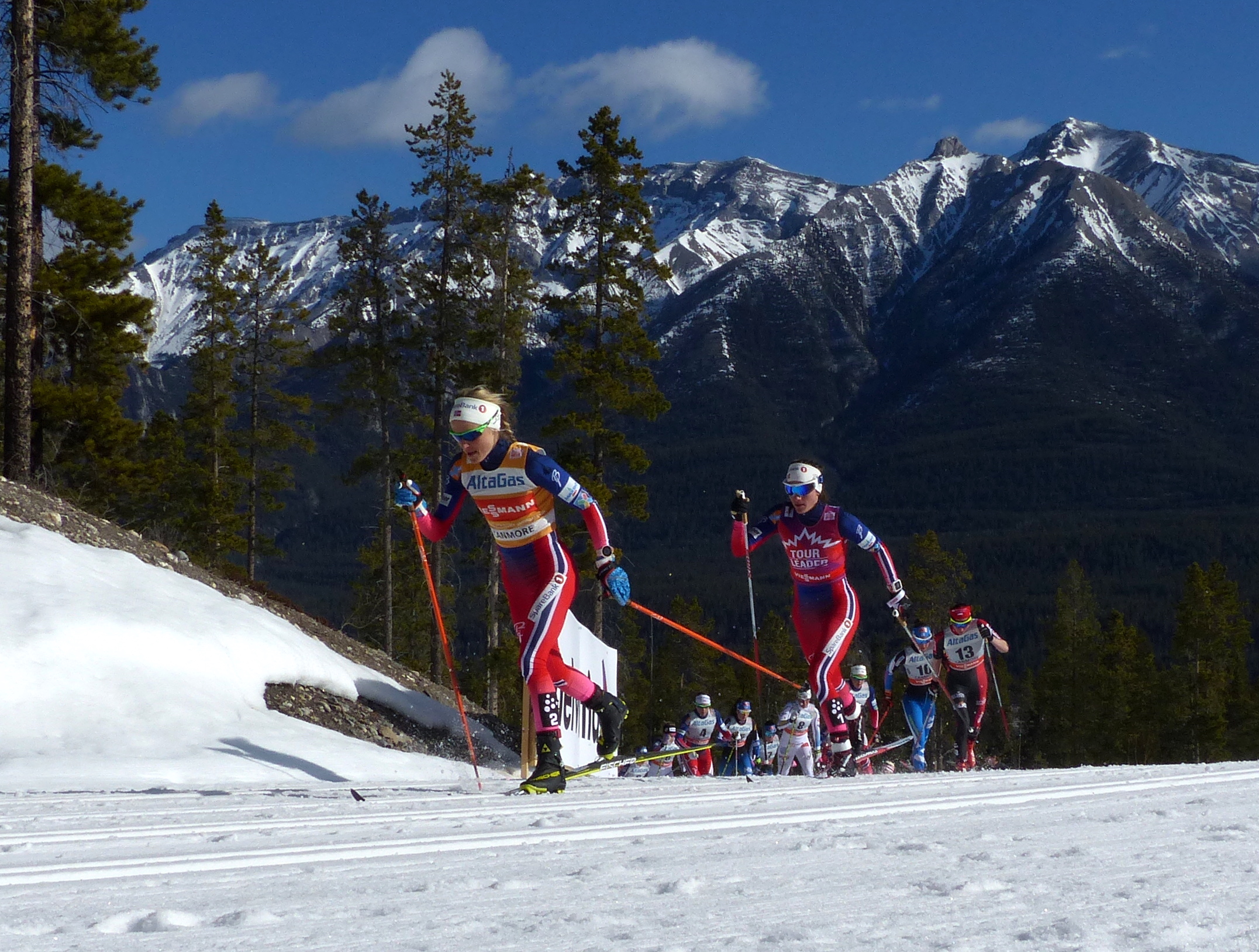
    Therese Johaug leading Heidi Weng in the Ski Tour Canada. (Photo: Peggy Hung)
    Therese Johaug leading Heidi Weng in the Ski Tour Canada. (Photo: Peggy Hung)

    Modes of training also differed. The World Cup elite did about 26% more low-intensity endurance training than their national-level counterparts, and more mid-level and speed training but less high-intensity endurance training. The World Cup skiers also did more strength training, and their training was a stable 80-95 hours from June to October while the national-level skiers gradually increased in hours over the course of the off-season.

    “Our present observation that the amounts of low- and moderate-intensity endurance training by the two groups differed provides further support for the proposal that such training constitutes the preparatory foundation for competitions in cross-country skiing,” the authors wrote. “Our present observations do not bring the importance of high-intensity training into question, although it can be speculated that in such highly trained athletes as ours, the quality of each session (i.e., optimization of physical, technical, and mental aspects) is more significant than the total number.”

    One possible reason for the difference in high-intensity sessions between the two groups is that the World Cup skiers spent nearly twice as much time at elevation: on average, 42 days spent living about 1,500 meters (~5,000 feet). Time at elevation is often spent more on low-intensity than high-intensity training.

    Finally, the World Cup skiers spent 33% more time running and 40% more time training skating technique, but no more time classic skiing or rollerskiing than the national-level skiers. For both groups, just over half the training time during the off-season was dedicated to ski-specific training (defined by the authors as skiing or rollerskiing), with the rest accomplished by running, cycling, kayaking, and other activities.

    “This variation between sport-specific training and cross-training may help athletes to tolerate such large amounts of training during the preparation period, as well as lower the risk of injury,” the authors noted. “Our cross-country skiers varied their mode of low-intensity training considerably, whereas their moderate and high-intensity training was more ski specific.”

  • Fast Start Wins the Race? Increasing Effort, Not Pace, is Key

    Fast Start Wins the Race? Increasing Effort, Not Pace, is Key

    A recent study published in the European Journal of Applied Physiology showed that in a 10 kilometer race, skiers slow down over the course of consecutive 2.5 kilometer laps and do not match the speed of the opening lap.

    The study used eleven Norwegian cross-country skiers who were training 12 to 15 hours per week and had competed at the national level. They had plenty of experience racing and deciding how to pace themselves over the distance for the best end result. So what was going on? Were they starting too fast, to the detriment of their performance?

    The answer, it seems, is not necessarily. While it’s a commonly-stated goal for athletes to have even or negative splits (i.e., the last lap faster than the first), research across different endurance disciplines shows that most commonly, especially in interval-start events, a quick start gives way to a steady, but slower, rest of the effort. And that doesn’t necessarily mean a slower overall time.

    Research in speedskating shows that in distances from three up to 10 kilometers, competitors slow their lap times over the course of a World Cup race. This was true for both the slower athletes and the race winners.

    And in running, a study found that competitors slow after a fast start in a 10 kilometer time trial – but that the speed drops much more abruptly over the course of the competition for lower-performance athletes than for top athletes. Both groups, however, kicked it in for the final 400 meters.

    The key may be the individual-start nature of the races in the cross-country skiing paper. When racing against the clock, there’s not necessarily a benefit to having a strong finishing sprint, as long as a competitor is fast throughout the whole race.

    The limited prior research into pacing in ski races has shown that this is true even in sprint qualifiers: in a study using nine elite Swedish skiers, the second lap of a two-lap sprint qualifier time trial was 3% slower than the first lap.

    “… the overall time of the winner needs to be faster in absolute terms (racing against the clock) because the best athletes are not directly competing against each other,” wrote the authors of the speedskating study. “According to this, energy that is left at the finish is useless. As a consequences, ice speed skaters may self-select a pacing strategy that does not allow to hold some energy back.”

    Indeed, the authors of the more recent skiing study found that while the pace declined over the course of the 10 kilometer time trial, effort did not. Skiers’ heart rates remained more or less constant, and then went up in the final 2.5 k lap of the race. That last lap was slightly faster than the middle two, but not to a statistically significant extent.

    Furthermore, the one skier who adopted a different pacing strategy suffered for it. Despite the fact that the sixth- and tenth-ranked skiers had similar VO2Max values, they ended up in very different positions. The authors believe this was because the skier who ended up tenth tried increased his pace in the second lap of the race, only to run out of energy later. They called this a “non-appropriate pacing strategy.”

    A Case Study

    While the women’s 10 k freestyle at 2015 World Championships in Falun, Sweden, was influenced by weather, the men’s 15 k was not to the same extent. Looking at pacing over the two 7.5 kilometer laps of the race could test whether the pacing found in the recent study holds true in high-stakes racing. Johan Olsson of Sweden won the race (results here).

    While the lengths of the two laps aren’t necessarily exactly the same – the start and finish lines were not evenly distributed on the lap – one can make the assumption that this slight difference affects all skiers the same way. So while a slower second lap might be due in part to the extra length of the finishing chute, differences in the amount slower the second lap is are still representative of skiers’ different pacing strategies or abilities.

    First of all, a strong first lap was generally indicative of success in the World Championships 15 k.

    firstlapAnd furthermore, being fast on the first lap did not necessarily lead to a bigger slowdown on the second lap. Skiers throughout the top 26 finishers had varying differences between the speed of their first lap and their second lap, and it had little relation to what place they ended up. The one exception was Canada’s Ivan Babikov, who skied a much faster second lap. That pacing strategy did not prove ideal, as although he had one of the faster second-lap times he still finished 20th.

    slowdownBecause this variation in how much skiers slowed down was distributed evenly throughout the field, the relationship between second-lap time and finishing result looked fairly similar to that of first-lap time and finishing result. The skiers were slightly reshuffled on the plot, but the same general pattern held.

    secondlap

    Takeaway

    Prior research has looked at how to adapt pacing to terrain in cross country skiing, for example, adopting a higher intensity on uphill sections with the assumption of recovery on downhill. This type of information feeds back into training strategies, as athletes can prepare themselves for shorter, harder efforts within a long race and train themselves to recover as much as possible in short intermediate sections.

    But there has been very little research into pacing strategies over longer time periods and multiple laps in distance racing. Thus, the results of the new study carry some weight.

    The author’s conclusions are upheld by a look at data from 2015 World Championships: starting at a fast pace and maintaining a more-or-less even effort – not necessarily an even time – seems to be a better strategy in an individual-start race than starting at a strikingly slower pace and saving energy to speed up in the final kilometers.

  • More Than Just Sports Fans, It’s Muscle Cells Who Remember Past Doping

    More Than Just Sports Fans, It’s Muscle Cells Who Remember Past Doping

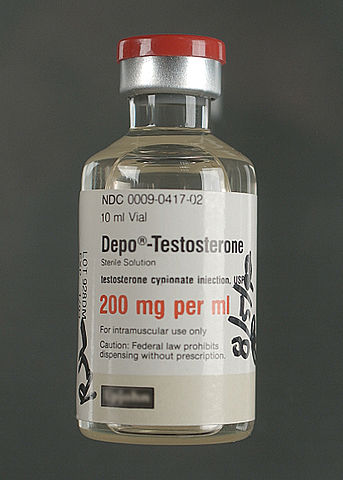
    Testosterone can have long-lasting effects on muscle cells. Photo: wikimedia commons.
    Testosterone can have long-lasting effects on muscle cells. Photo: wikimedia commons.

    As the World Anti-Doping Agency moves from two-year bans to potential four-year bans for doping violations in its updated 2015 Code, at least a few people think that’s not enough.

    Oslo researchers Dr. Ingrid Egner, Dr. Jo Bruusgaard, Dr. Einar Efterstøl, and Dr. Kristian Gundersen found last year in mice that a 14-day dose of testosterone had notable effects on muscle cells long after they had stopped administering the drug.

    How this works in humans isn’t a completely straightforward conclusion, but Dr. Gundersen said in a University of Oslo press release at the time that testosterone and other anabolic steroids could easily have effects for a decade or longer after drug use had ceased.

    “The specific time aspect is of course challenging to extrapolate from mice with a lifespan of two years to humans who live for 80 years,” he said. “However, the cell nuclei in humans are known to be very stable. If the muscle memory mechanism in humans is similar to what we observe in mice we could be talking about several decades of advantageous effects.”

    The specific mechanism for the long-lasting effects appears to be a proliferation of nuclei in muscle cells. There is yet to be a testosterone scandal in nordic sports, but this opens the door to the idea that other performance-enhancing substances which induce hypertrophy, or the enlargement of muscles, may have similarly long-lasting effects.

    As explained in The Journal of Physiology, both testosterone propionate (administered by a pellet inserted under the skin) and overload exercise (simulated by shortening the muscle itself) caused an increase in the cross-sectional area of muscle fibers. The increase in muscle size were greater with testosterone than with overload training. Similarly, both treatments increased the number of myonuclei in muscle cells.

    The difference between training and drug use emerged later. After giving the mice a 14-day dose of testosterone, the researchers then waited three months, during which both the drugged mice and the control group received no treatment. After that rest period, there were still 42% more mynuclei in the muscle cells of the drugged mice than in the control group. The cross-sectional area, meanwhile, was indistinguishable between the two groups.

    So why do nuclei matter? Each nucleus has associated structures which can synthesize the proteins the cell needs. This could help with muscle repair after damage, for instance.

    The study proved a long-standing scientific hypothesis: that there is some sort of “muscle memory” that allows muscles that have previously been trained to more easily regain mass if they are trained again later. No other researchers had ever found the mechanism for this, but it appears to be the myonuclei.

    The researchers pointed out that this finding may have many beneficial applications – for instance, in helping reduce frailty in an aging population. If hard exercise and/or drug application can produce long-lasting effects, then we might develop public health strategies that could reduce injuries to octogenarians.

    But the implications for sport are not as positive.

    “Our data demonstrate that in least in mice, an episode of testosterone use may recruit a long lasting pool of excess myonuclei, and a persistent increased ability to regain muscle mass by resistance exercise in the absence of further steroid exposure,” the authors concluded. “Thus, the benefits of even episodic drug abuse might be long lasting, if not permanent, in athletes. Our data suggest that the World Anti-Doping Code calling for only 2 years of ineligibility after a conviction for steroid use (WADA, 2009) should be reconsidered.”

    Furthermore, while the study only addressed testosterone, an anabolic steroid, the effect may be similar for other performance-enhancing substances currently banned by WADA.

    Insulin-Like Growth Factor I (IGF-I) has long been banned in sport and recently came to the fore when it was mentioned in the records of a South Florida clinic providing performance-enhancing drugs to baseball players.

    While there is yet to be any work done specifically examining whether IGF-I increases the number of myonuclei, it does contribute to the proliferation and differentiation of muscle cells – and many researchers (for example, here) have concluded that this by definition means increasing the myonuclei.

    Furthermore, human growth hormone (HGH) increases the circulating levels of IGF-I, leading to the same effects. Thus doping with HGH or IGF-I could, potentially, also have very long-lasting effects.

    In other words, it’s a good thing that Andrus Veerpalu isn’t returning to competition, and instead is merely assisting Alexey Poltoranin.

    One thing that might be comforting to nordic fans? Because erythropoietin (EPO) is not associated with muscle hypertrophy, there are unlikely to be long-lasting effects of previous EPO doping – at least through this mechanism. On the other hand, proof of the existence of a long-term cell memory mechanism suggests that other such mechanisms are not out of the realm of possibility.

  • Skiathlon Explained: Physiological Differences from Classic to Make Transition Tough

    Skiathlon Explained: Physiological Differences from Classic to Make Transition Tough

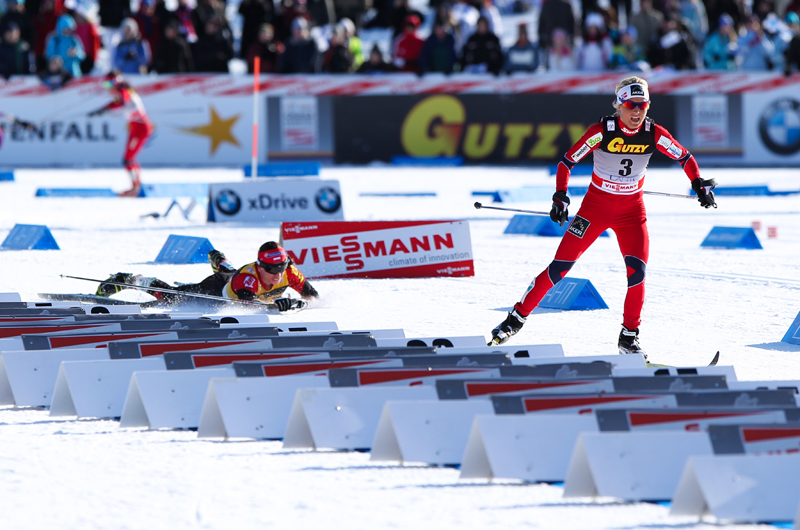
    Don't do this: Therese Johaug (NOR) and Justyna Kowalczyk (POL) come into the transition during the skiathlon in Lahti, Finland.  Kowalczyk's fall cost her valuable seconds.  Photo: Fischer/Nordic Focus.
    Don’t do this: Therese Johaug (NOR) and Justyna Kowalczyk (POL) come into the transition during the skiathlon in Lahti, Finland. Kowalczyk’s fall cost her valuable seconds. Photo: Fischer/Nordic Focus.

    When you step out of your classic skis and into skate skis in a skiathlon, there’s a brief period where skiing feels very strange: the shorter skis, the lack of tracks, and the longer poles are all a distinct change from the previous style, as your body says, “what are you DOING?”

    This is the subject of a recent study by researchers from University of Franche-Comté in France and Mid Sweden University. One of the researchers, Sarah Willis, is an American who previously skied for Gustavus Adolphus College.

    “To our knowledge, no previous researchers had examined skiathlon performance and we were intrigued by this as well as investigating the impact of an initial period of classic skiing on subsequent skate skiing,” she explained in an e-mail. “Realizing the effect of one bout on another is similar to research performed in the sport of triathlon, we used some previous triathlon studies as a ‘guide’ for an initial skiathlon study.”

    Classic skiing is generally recognized to involve greater oxygen uptake and greater muscle mass involvement than skate skiing. Thus when a racer transitions to skating halfway through a skiathlon, their body is coming out of a very different physiological stress than it would have been from a skate race of the same distance.

    The team worked with eight national-level Swedish skiers, who were asked to participate in two 6 k time trials on a rollerski treadmill. In one, they classic skied for 3 k, then switched gear and skated for 3 k. In the other they skated two 3 k sections, stopping for a brief time in the middle to simulate an equipment change.

    Interestingly, they found that the time for the second portion of the time trial was unaffected by the previous section’s technique.

    “In my opinion, it is interesting that the performance times were similar,” Willis wrote. “However, it is understandable in some ways since we, as skiers and athletes, race at race pace and alter our effort based on what we can do while giving our best in each moment. Sometimes we make alterations or changes in our technique, breathing, pacing strategy, etc., while our effort and outcome may be the same as we give all we can. We are well-trained machines and our mental approach to pacing the effort has a lot to say about our performance outcome.”

    However, just because the times were more or less the same did not mean that the team didn’t find some effects of the initial classic portion of their simulated skiathlon.

    For instance, in the first three minutes after the transition in the classic-to-skate time trial, VO2 and minute ventilation had higher increases than during the skate-only time trial. The cadence of the skating strides were also faster in the initial section of the skate portion of the skiathlon time trial, than in the skate-only time trial.

    (What is minute ventilation? “Minute ventilation is literally the volume of gas you breathe into your lungs (inhale) in one minute, so, basically, a parameter of how much air you can move into your lungs,” Willis wrote.)

    Some part of this might be fatigue. But it also seems likely that the difference in technique makes it difficult for skiers to immediately find a good and efficient rhythm when they snap into skate skis.

    “Skiers may notice that it takes about 3-5minutes to get into a good rhythm, including cardiovascular and respiration (ability to increase heart rate and rhythm with breathing), and their natural technique (biomechanics of skating) before they really feel they can perform ‘normally’ in skating,” Willis wrote.

    And the physiological differences, too, she chalked up to technique.

    “There are alterations in the muscle requirements and biomechanics of the new technique,” she explained. “A combination of alterations in oxygenation and extraction of the blood, or simply the consumption of oxygen is most likely involved in the explanation of some factors affecting the transition from a cardiopulmonary standpoint.”

    One thing is clear: skiathlons present a novel physiological challenge that athletes never encountered before the invention of the two-discipline race format.

    To make the transition and subsequent skating section easier, Willis had a few suggestions: lower the pace in the final minute of the classic section to facilitate a good transition, and adjust the pace and effort during the initial phase of the skate section.

    But like everything else in sport, it also simply comes down to training.

    “[You can do] specific training to increase ability to perform skate after classic, at race speed or during an endurance session with higher speed before and after the transition,” she wrote.

  • Arms and Legs Aren’t Equally Efficient, But Improving Ski Technique Can Help Lazy Arms

    Arms and Legs Aren’t Equally Efficient, But Improving Ski Technique Can Help Lazy Arms

    How can you get faster at double-poling? One key might be adjusting technique so that your arm muscles can recruit more oxygen.
    How can you get faster at double-poling? One key might be adjusting technique so that your arm muscles can recruit more oxygen.

    Any skier knows that what we do is a full-body sport. After a race or a training session, your legs will be tired – but so will your arms, and maybe your back and your core, or many more specific and sometimes illogical muscle groups that got a workout.

    But being a full-body sport doesn’t mean that all of these muscles are contributing equally. In fact, there are some cheaters: your arms. Earlier this year, a team from the University of Salzburg in Austria and Mid-Sweden University in Östersund, Sweden, set out to further investigate something suggested by previous research: that the arms just aren’t as efficient at extracting oxygen during exercise. Their results in double-poling strongly supported this existing pattern of research.

    All of this is despite the fact that trained endurance athletes are known to be better at extracting oxygen from the blood to their muscles, which contributes to efficiency. The ability to send more blood coursing around the body with fresh oxygen helps, but the ability of muscles to extract that oxygen is also important. If there isn’t oxygen available, then muscles can’t use it – and in aerobic exercise, they need to use it. Oxygen is an essential input in the process that breaks down glucose into ATP, little energy-blocks for muscles to run on.

    So what does it mean for skiers, who rely on both arms and legs to propel themselves themselves through the snow? Perhaps, a change in technique. After exploring some mechanisms for what was limiting oxygen extraction by the arms, the researchers found that the same characteristics of double-poling that were found in the fastest skiers also allowed arm muscles the best chance to overcome their limitations and gobble up more oxygen from the bloodstream.

    Why Are Arms So Inefficient?

    For some reason, the arms just aren’t as good at extracting oxygen as the legs are. It’s not a ski-specific problem, having been demonstrated in studies that assessed arm-specific and leg-specific exercises separately and as part of other full-body activities. And it’s a matter of debate whether or how much training even helps – some studies have found that upper body training increases oxygen extraction significantly, but others have found that it doesn’t make much of a difference.

    For skiing, oxygen extraction by arm muscles depends to some extent on the technique. Take, for instance, a 2010 paper by the same authors: Glenn Björklund, Thomas Stöggl, and Hans-Christer Holmberg. They studied oxygen extraction in the arms and legs during diagonal striding, using nine elite-level male skiers and a rollerski treadmill. The team found that at both threshold and maximal effort, arms had lower oxygen extraction and higher lactate levels – but that after reducing the effort, lactate was cleared from arm muscles faster.

    In diagonal striding – which we often consider to be a leg-heavy technique – the arms still generate over half the body’s propulsion. But the force generated by the legs is actually higher. As intensity and workload increases, the force from the arms stays mostly the same, while most of the gains in speed and power come from ramping up the force generated by the legs as we stomp our hardwax into the snow and drive our hips forward.

    So in striding, it’s maybe not surprising that the arms don’t play as efficient a role. Even though they are important, the legs are what make a difference in speed. But what about double-poling? The 2013 study by these authors, published in the Scandinavian Journal of Medicine and Science in Sports, actually focused on this, and found some surprising results.

    Even though the upper body generates practically all of a skier’s propulsion in double-poling, oxygen extraction is still lower than in the legs in this technique, and didn’t seem to change with exercise efficiency. Furthermore, oxygen extraction in the arms was, on average, lower during double-poling than in some previous studies on striding. And this was even using highly trained skiers.

    Double-poling should be your arms’ time to shine, and it draws into question how important upper-body strength really is or how much long sessions of double-pole training might help.

    How To Maximize Your Arms

    Stöggl et al.’s most recent paper poses a possible mechanism for this drop in oxygen extraction by the arms in double poling.

    First, they thought about the overall differences in oxygen extraction between arms and legs. Back in 2005, Holmberg and another team had come up with a few possibilities for causes. For instance, in the legs, there are more capillaries (small blood vessels) per size of muscle fiber. There also may be unevenness in the way that blood is distributed to different muscle groups or even to different parts of the same muscle.

    More specifically to skiing, the group hypothesized that because the forces generated by the legs in striding (and skating) are greater and the time producing this power is shorter – think of a powerful push from your legs compared to the long swing of a poling cycle – the legs might have more fast-twitch muscles, which are known to be less efficient at producing ATP. As such, they need more oxygen and have adapted to extract more of it from the blood.

    Next, they thought about the differences between striding and double-poling: specifically, why is oxygen extraction lower in double-poling? The force when the pole hits the snow is much higher in double-poling than in striding, and generates a lot more forward power. So the arms, which are built with more slow-twitch muscles, become less efficient. The authors proposed a mechanical hindrance to oxygen extraction: the speed of the cycles themselves limit oxygen distribution to the muscles.

    This was supported by their data on oxygen extraction during recovery. If a skier was double-poling at maximal effort and then slowed down, the legs reduced their oxygen extraction and cleared the lactate that had accumulated. The arms did not. Apparently, just propelling the skier along, even at an easier pace, is enough to inhibit oxygen extraction by the arms.

    This, along with the fact that more training did not necessarily mean better oxygen extraction, isn’t exactly great news for hardworking racers. But in the final portion of their study, the researchers did find something interesting. The key to maximizing oxygen extraction by the arms seemed to be allowing more recovery time during the poling swing cycle. In addition, skiers who deployed their peak force later in this cycle allowed their muscles more time to develop this application of force, and then to recover.

    “Skiers who exerted large and well-timed pole forces together with even less muscle activity, while generating sufficient propulsion to allow longer recovery times with even less muscle activity, could extract more O­2,” the authors wrote.

    They also noticed that skiers who used their legs more in double-poling – keeping the body high and extending and flexing the hips, knees, and ankles – were able to extract more oxygen from both the upper and lower body.

    What is more, this is exactly the style of double-poling that several previous projects assessing the mechanics and power generation of elite skiers found was used by the fastest athletes. In other words, the best technique maximizes oxygen extraction, although of course they couldn’t make the causal link that having higher oxygen extraction by the arms was the limiting aspect in speed or caused the improvements.

    In short? Just training your upper body for strength or endurance may not really overcome some of the physiological constraints on getting those muscles to work well. But spending some long hours double-poling, as long as the focus is placed on good, efficient, and powerful technique, may enable physiological improvements, too.

    Links to the Research Papers

    Bjorklund, G., Stoggl, T., and Holmberg, H.C., 2010. Biomechanically influenced differences in O2 extraction in diagonal skiing: arm versus leg. Medicine and Science in Sports and Exercise 42:1899-1908.

    Calbet, J.A.L., Holmberg, H.-C., Rosdahl, H., van Hall, G., Jensen-Urstad, M., and Saltin, B., 2005. Why do arms extract less oxygen than legs during exercise? American Journal of Physiology – Regulatory, Integrative, and Comparative Physiology 289:R1448-R1458.

    Stoggl, T., Bjorklund, G., and Holmberg, H.-C., 2013. Biomechanical determinants of oxygen extraction during cross country skiing. Scandinavian Journal of Medicine and Science in Sports 23:e9-e20.

  • How Paralympians Train: Interview with Sean Halsted

    Sean Halsted trails Dan Cnossen in the 12 k sit ski at 2012 U.S. Nationals in Rumford, Maine.

    With the 2012 Paralympics starting in London in roughly a month, adaptive athletes who compete in summer sports are putting the finishing touches on their trainings. And winter athletes, too, are hard at work, training just as intensely as their able-bodied counterparts, if a little bit differently.

    This spring in Bend, Oregon, FasterSkier chatted with Sean Halsted, a veteran member of the U.S. national team who finished seventh, ninth, and tenth in the sit-ski races at the Vancouver Paralympics. A college rower at Washington State who went on to join the Air Force, Halsted fell from a helicopter in 1998 and was paralyzed from the waist down. He started skiing in 2001 and is now one of he team’s stalwarts.

    It’s no secret that sit skiers need an efficient and powerful double pole to get around a race course – and then best move very, very fast (in 2011, FasterSkier posted a video of Halsted starting U.S. Nationals). But besides adapting technique to best accommodate the different angle with which they plant their poles, adaptive athletes are also challenged by coming up with a training plan that prepares them physiologically without wearing out a few key sets of muscles.

    The following is an edited excerpt from a longer interview.

    FasterSkier: Do you do the same kind of periodization that the able-bodied skiers do throughout the year?

    Sean Halsted: Yes. And the interesting part is trying to mirror that on the adaptive side, with how much volume is good volume is good volume, how much strength is good strength. For example, we’re talking about doing a great workout, but then you need to do an alternate workout [in the afternoon] using the same muscles? You can’t go for a run. You can’t switch it up to do the lower body. It’s all upper body.

    FS: What’s a typical workout for you guys in the spring here in Bend?

    SH: Out here, we try to get on snow and maximize that snow time. There’s a lot of that technique that you have to get down, and a lot of us just don’t have it. It’s not so much – I’d like to say that standing on skis is a lot harder than a sit ski, but there’s things about that sit ski that are harder than standing. And I think part of what that comes down to is the frustration level, in that you see a hill, and my hill is nowhere near what a standup skier thinks of as a hill. Turns, a standup skier doesn’t even think of it as a turn, but I think of it as a challenge. So you have to be comfortable with how that ski works on a downhill, on an uphill, what does the pole plant mean, you have to have a much more efficient double pole than a standup skier could get by with.

    FS: So you’re just trying to get as many hours on snow as you can?

    SH: Pretty much. You’re trying to maximize that with your strength workouts and your endurance workouts. You’re trying to do it on snow, and then saying, okay, you just did a strength workout, do you have enough strength in your arms to do something in the gym?

    FS: If you’re skiing a lot in the mornings, what do you do in the afternoons?

    SH: It’s been nice because the Athletic Club of Bend has opened their doors for us, and they have also been very accommodating. You basically go in and they ask what you want, and they try to make it happen, which is really cool. We’ve been at places before where the place wants to be accommodating, but how? They don’t know what you need, so they just wait for you to ask, and you don’t know what they have to offer. Maybe it’s a hotel and they say they have a weight room, but their weights are ten pounds and the room is the size of a closet.

    So having the gym in town, they have a big weight room, they have cardio stuff that we can use, they have a SkiErg. It just gives you so many opportunities. They have tennis courts, even. Not that we’d play tennis, but it’s a big flat surface that you can use, and that you can’t really replicate anywhere else. They have a pool, which is what I’ve found is one of the best cross-training things. I’ve really fallen in love with swimming.

    FS: So is it just based on how you feel each afternoon, you have to figure out what your body is capable of doing?

    SH: They give us a schedule, and then you do a little bit of, “what can I do?” Yesterday was an alternate workout, just an easy workout, something. So I went in and went swimming. And then I meandered and saw what was available, and did some stretching.

    FS: It sounds like the coaches aren’t always telling you exactly what to do – like you have to make some of those decisions yourself.

    SH: Since I started [with the national team] in 2006, we have gone through three different coaching staffs, so each time they have to be introduced to what adaptive sport is. You think you can just take a coach from anywhere, and it doesn’t always work that way. There’s a lot of figuring out that goes along with this and what is expected of you is very vague. As an athlete you get vague feedback, and you’ve got to be able to find a way to stay in a positive place, not just a positive attitude but positive towards success, towards exertion and all this, so that you are doing the right thing at the right time, and not overexerting yourself or underexerting yourself.

    FS: Do you feel like doing it since 2006 is long enough that you can do that for yourself?

    SH: It’s still a challenge. You find enough that you now know that you don’t know anything, whereas before you were just basically ignorant, but you didn’t know it. But I think I do have a pretty good handle on a lot of stuff and what needs to be done. Having said that, there have been people on the team who just have that brain for the physiology that just puts me to shame. So I don’t want to say that I have bested them by any stretch of the imagination.

    FS: What was your athletic background before you picked up adaptive skiing?

    SH: In high school, I joined the cross country team to get myself in shape for soccer, and that’s what I ended up focusing on, cross country and track. And in college, I was a lightweight rower. When I joined the Air Force I went into a career field where we had to be selected. So it’s interesting to go from the performances with cross country where it’s still exertion, but it’s for a finite amount of time, and rowing the same sort of thing, to the Air Force where you have to extend that exertion over a much longer period of time, so you cannot do a max effort, but there’s no water breaks…. it’s a different kind of exertion.

    FS: Does that help you mentally in skiing?

    SH: Yes. Oh yes. And I’ve seen that in some of the athletes that we’ve tried to recruit, where they’re like, “oh, I gave it my all,” and, no, not so much. But it’s not their fault. They grew up differently. Some of the kids who have grown up with a disability have never been challenged because they have never been given the opportunity to be challenged. They don’t have any equals.

    So I do think I have a good concept for it, and obviously there are people who have a stronger sense of competition and always have to be first. There were a couple guys on the team who retired in the last two years who were like that, they had to be first for everything. I wasn’t like that. But I loved being with them, and I liked being on their coattails, and pushing them and having them push me.

    FS: Can you use a rowing ergometer?

    SH: We can, depending on our level of injury. Most of us can, but we’re doing arms-only. For me, it’s very frustrating as a rower. It’s one of the reasons that I’m not rowing. People keep asking me, well why didn’t you go into adaptive rowing? It’s because I know what I can do, and I can’t do that anymore. But it’s still an alternative workout, so you’re using other muscles.

    You wish – people are on bikes, and you want to jump in with them, but you can’t. You want to go play basketball, and you can, but it’s totally different in the chair. One guy on the team wanted to play ultimate Frisbee, and it seemed awesome, but you can’t use a chair in the grass. We could play on the tennis courts, but the other thing we have to watch out for is that our everyday chairs are not designed for sport. So we can have some very big spills. We could be dumping ourselves out of our chairs, and the last thing you want to do is break your chair.

    FS: Coming from being a lightweight rower, you must have had to bulk up a lot to do this, huh?

    SH: Actually no. But I am allowed to eat, which is different! It’s kind of a similar body mass. The difference is that we did a lot more squats, and now it’s all upper body.

    FS: Do you do weights?

    SH: Yeah. We try to do as much as we can. And that depends on what equipment is available that allows you to do those things. Can your chair fit into that frame or rack or apparatus? And then for a lot of us, it has to do with the ability to transfer [in and out of the chair] or not. It limits some people – they might have an athletic mind, but because their body makes it so hard to get around, they can’t attain the level that they could be.

    We try to work a lot on the lats and that pulling motion, without overdoing the muscle on one side. Dips are a good example. You can’t just go to a dip bar because a lot of us can’t stand, so how do you get up to a dip bar? And then you’re up there, but you’re maxing out, so finding those machines that allow you to do those things is important. It’s fun… you don’t want to be the guy who’s saying “I can’t do that.” You’ve got to have an open mind about how to do as close to an exercise as possible. That’s what having coaches helps you with – you can easily shut yourself down, or go on the wrong track because you’re sure that something is great for you, even when really it’s not. They can help with finding the things that will work, and then are you doing them correctly. So finding something that mimics a pull up, or working on curls to counteract all of those triceps and the pulling down and a way motions. Plus we try to focus on the core.

    FS: Yes, I assume that would be really important.

    SH: For some of us, it’s really easy to say, okay, well I don’t have any core so I can’t use it. And that’s true, but, you have something. What we need to do is to get your brain to stop thinking and just start reacting. So all these balance things, like the balance ball and stuff like that are actually pretty good because it makes you do stuff that you don’t think you can do. Or you’re firing a muscle that you don’t think will help, like one that’s way up high on your stomach, and it can be doing the job of the one down below that you don’t have.

    FS: So you’re creating new ways to achieve the same thing.

    SH: It’s amazing – that’s one of the things that blew my mind. You’re watching guys that have a higher level injury, so theyir function is a lot less, maybe where they’re neurologically functional is right below the chest line, so they have no abs whatsoever, but they’re on their ski doing stuff that you never thought you could do, and you have abs.

    A really good exercise for us is kayaking, actually. It teaches you about the core, and you’re going, I have to stay up because I don’t want to get wet, so you’ll do whatever it takes to stay up. And then next thing you know you’re firing muscles that you didn’t know about.

    FS: That’s a cool idea for motivation.

    SH: You can throw a ball at somebody, and they’ll say, well, I’m just not going to catch it. It will bounce off the wall. But in a kayak, they can’t just say no.

    FS: It seems like a lot of the training is very individual for each of you. Is that a challenge?

    SH: It is. It’s a total challenge, because we want to go off what is tried and true, but what is tried and true works for the standup athletes. There’s all kinds of literature about it, and we don’t have that. We have to come up with something that mimics that without doing it wrong. There are so many things that we could do that wouldn’t be right because we would overwork something. And then as well you have to play around with the level of injury and what is possible for this person. So there’s a lot of the coach coming up with an idea of what needs to happen, that he knows from his experience and research, and then okay, how does that apply to Sean, how does that apply to Jeremy, how does that apply to Dan. There’s a lot of flexibility. Which opens the door for somebody to either be complacent, or go too hard. It’s a balancing act all around.